Mail: 111 Gordon Baker Rd., Suite 400, Toronto, ON M2H 3R1
Subscription rates:
Canada – 1 yr $17.50 CDN USA – 1 yr $26.50 USD Foreign – 1 yr $36.00 USD
From time to time, we at Drainage Contractor make our subscription list available to reputable companies and organizations whose products and services we believe may be of interest to you. If you do not want your name to be made available, contact our circulation department in any of the four ways listed above.
All advertising is subject to the publisher’s approval. Such approval does not imply any endorsement of the products or services advertised. Publisher reserves the right to refuse advertising that does not meet the standards of the publication.
Should recommended design drainage coefficients be increased?
How a young Manitoba entrepreneur has found success.
A look at the tile drainage activities currently taking place in Wisconsin.
Honorable mentions from our inaugural cover photo contest.
ON THE WEB:
Additional funding for farmers working to reduced phosphorus runoff in Lake Erie
The governments of Canada and Ontario increased funding available to farmers who are taking on projects to reduce phosphorus entering waterways connected to Lake Erie. Through the Lake Erie Agriculture Demonstrating Sustainability initiative, more than 70 additional projects will receive support – on top of the 270 projects already approved this year.
Read more at www.drainagecontractor.com
Spotlight on the drainage industry
Putting the drainage industry on display
by Stefanie Croley
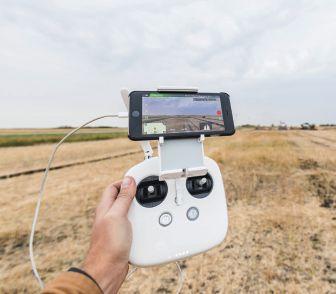
When you're in the middle of a busy season, it's easy to get caught up in the day-to-day tasks and forget to give yourself credit where it's due. That's why this spring, Drainage Contractor launched its inaugural Cover Photo Contest, sponsored by the Plastics Pipe Institute. Running through the summer and into the early fall, we asked you to submit photos that best showcase your work in the agricultural drainage industry, for a chance to stand in the spotlight on the cover of our November edition – and you delivered.
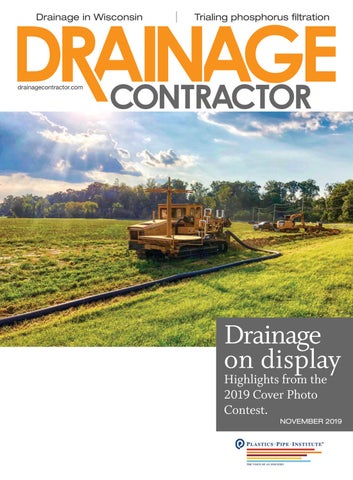
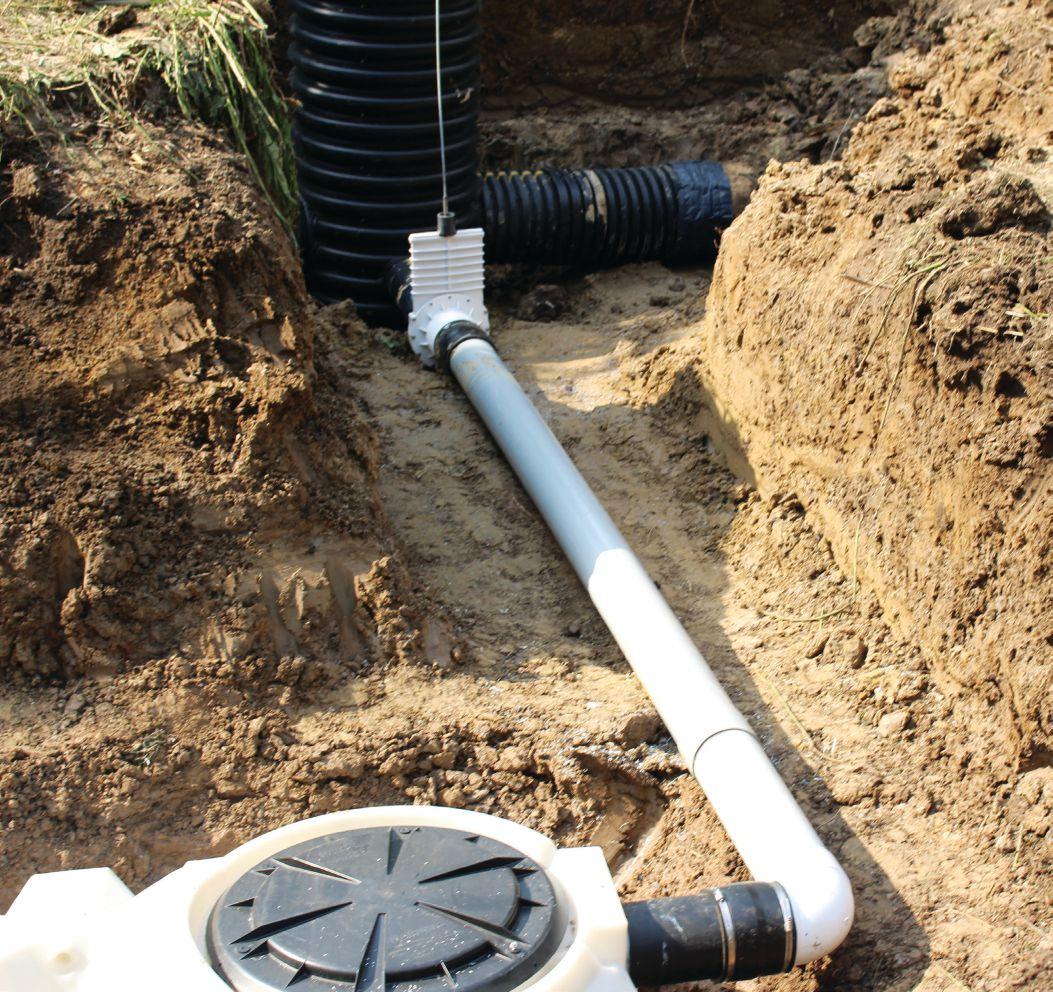
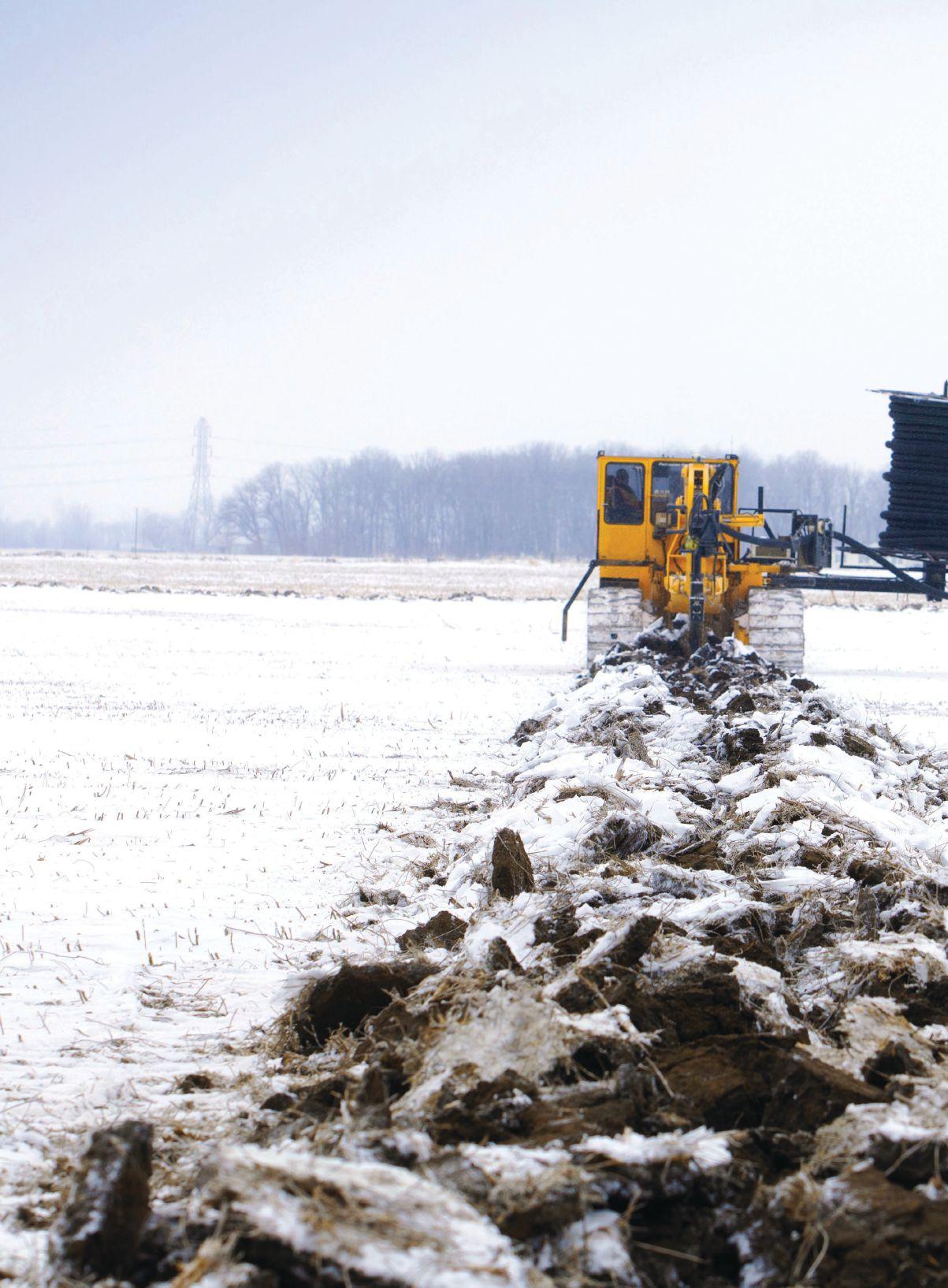
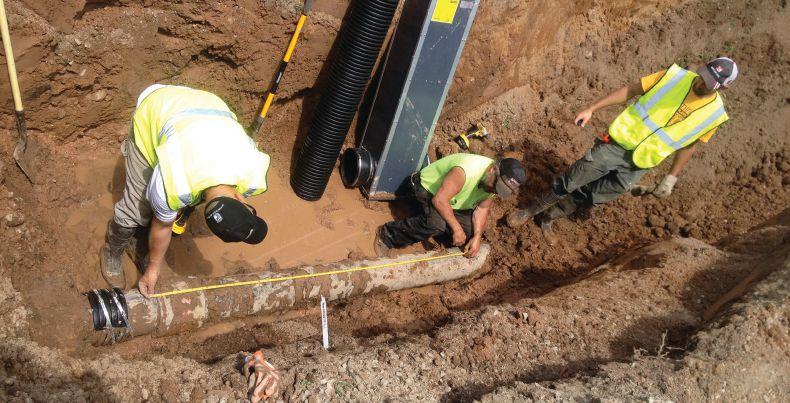
The winning November cover photo features an installment in Tennessee by McCain Bros. Excavating, LLC.
The winning November cover photo was captured by Corey Getz of DIGS Associates in Moweaqua, IL. Getz says the company partners with industry professionals throughout the state of Illinois to provide a host of services, including full-scale watershed assessments, soil classification reviews, field analysis and prioritization of subsurface water management. McCain Bros. Excavating, LLC, was the contractor involved in this project – installing a sub-main for the University of Tennessee at the Tennessee Agricultural Experiment Station. DIGS Associates provided technical support and mapping for the project, Getz says. "Working with contractors, such as McCain Bros., makes our job enjoyable and stress-free."
On behalf of our team at Drainage Contractor, as well as our sponsor, the Plastics Pipe Institute, thank you for submitting your photos and sharing your work with us. It was our pleasure to have an insider glimpse into the industry. Be sure to check out some of the great submissions on page 36, and watch for more highlights on our website and social media. You can find us online at www.drainagecontractor.com, on Twitter
@DrainageContMag or on Facebook at facebook. com/DrainageContractor.
In our efforts to get to know you further, we're launching another initiative this fall and winter. Like any industry, the agricultural drainage and land improvement sectors must continually adapt to meet changing needs and demands. We strive to do the same for our audience, which is why we need to hear from you. Please visit drainagecontractor.com/ survey and answer our brief questionnaire. Let us know what's happening in your corner of the world to help us paint a better picture of the drainage industry. Is it business as usual, or have you had to go beyond drainage and expand your portfolio as a land improvement contractor? Submit your thoughts and you'll be entered in a draw to win a $500 CAD cash prize for sharing your input. The survey will close March 31, 2020. We intend to use your input from the survey to better provide you with the resources you need to serve your clients well, and we look forward to hearing your thoughts and views.
Launching new projects can be a daunting task – especially when your plate already feels full. But we hope you find inspiration among these pages to take a leap and try something new in your business too. And when you do, don't forget to let us know so we can celebrate with you. DC
RECYCLED PIPE YOU CAN DEPEND ON
We Can’t Explain Why Flat Earthers Seem To Be On The Rise.
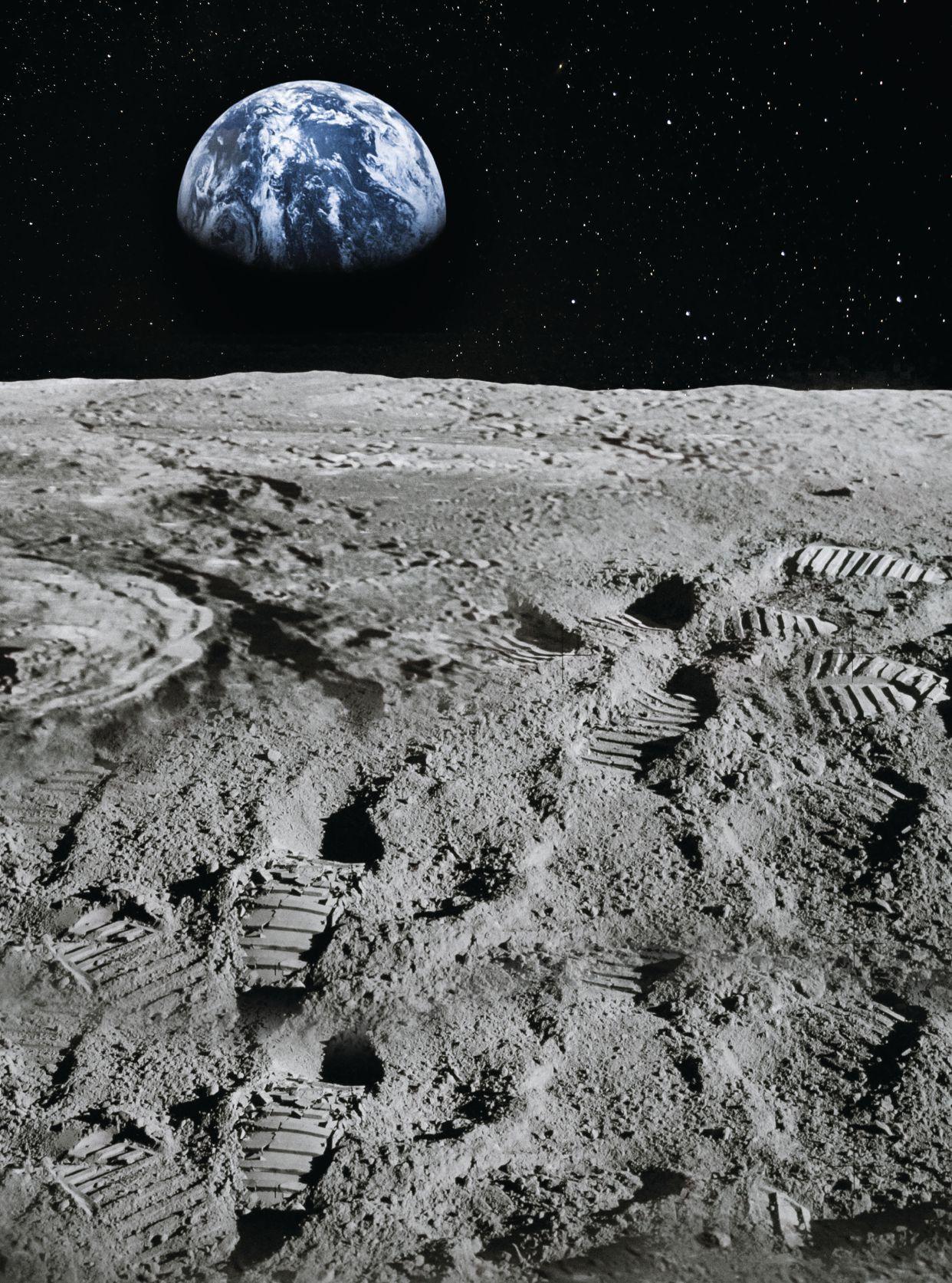
Or why people seem to think we never made it to the moon. Or why some assume that recycled pipe is inferior. But we can speak to the years of research and development that lead to our proven blends of recycled resin.
Designed for operational reliability and economic advantage, R-Series provides an environmentally-conscious solution you can count on. So don’t believe the conspiracy that all recycled pipe is substandard. Try R-Series, and believe in the Fratco promise.
INDUSTRY NEWS
USDA ANNOUNCES WATER QUALITY STUDY IN VERMONT’S LAKE CHAMPLAIN BASIN
The U.S. Department of Agriculture (USDA) is launching a multi-year study to assess the impact of voluntary conservation practices on water quality in two Lake Champlain Basin watersheds.
These studies – established with other state and federal partners – help USDA’s Natural Resources Conservation Service (NRCS) quantify the outcomes of conservation efforts of farmers who are taking steps on their land to improve water quality and conserve natural resources.
“This study will help agricultural producers in Vermont learn more about the measurable outcomes of their conservation efforts, which impact not only the resources on their own operations, but also the streams and watersheds in their communities,” said Bill Northey, USDA under secretary for Farm Production and Conservation, at an event with partners in Burlington near the shores of Lake Champlain.
This study, funded through NRCS’s Conservation Effects Assessment Project (CEAP), is a joint effort with the University of Vermont Extension and leverages additional support from Vermont Department of Environmental Conservation, United States Geological Survey (USGS), Vermont Agency of Agriculture, and USDA’s Agricultural Research Service.
The study will examine two watersheds with USGS gaging stations placed throughout the Dead Creek Watershed and Headwaters of Little Otter Creek. The study will provide insight into the potential for innovative conservation practices and planning tools to be used together to reduce agricultural sources of phosphorus, nitrogen, and sediment in streams. The total maximum daily load in the Lake Champlain Basin caps the maximum amount of phosphorus allowed to enter the lake and still meet Vermont's water quality standards. A 2007 study conducted for the Lake Champlain Basin Program estimated that about 38 percent of phosphorus load is from agricultural land.
NRCS launched CEAP in 2003, and it has furthered the understanding of how NRCS-led conservation efforts are improving watershed health, wetlands, wildlife and working lands. CEAP project findings are used to guide USDA conservation policy and program development and help conservationists, farmers and ranchers make more informed conservation decisions. In total, CEAP assessments have been conducted on 51 watersheds across the nation.
Currently, there are 23 active projects working to quantify water resource and soil health outcomes of conservation in agricultural and rural watersheds. Findings from CEAP watersheds assessments have been used to inform conservation program design and delivery approaches and refine conservation strategies for greater benefits.
For example, in critical conservation areas, such as the Western Lake Erie Basin and the upper Midwest, NRCS is using insights gleaned from CEAP about phosphorus and changes in hydrology to develop more effective conservation practices and systems to intercept and treat water resource concerns. In the Mississippi River Basin, potential impact of innovative practices has been assessed to evaluate conservation strategies.
This CEAP study in Vermont is one of three that NRCS is starting to fund this year. In two new projects in California, NRCS will expand CEAP work on drought and water availability, studying conservation practices for nitrogen and water management and groundwater recharge and their outcomes on both water quality and availability.
“We are looking forward to working with our state and local partners, and with farmers, to dive deeper into our conservation strategy and see what works and what can be improved,” NRCS chief Matt Lohr said.
ADVANCED DRAINAGE SYSTEMS ACQUIRES
INFILTRATOR WATER TECHNOLOGIES
Advanced Drainage Systems (ADS), a manufacturer of corrugated pipe and other water management products, acquired Infiltrator Water Technologies (Infiltrator), a manufacturer of products for on-site septic wastewater treatment systems, for approximately $1.08 billion from an affiliate of the Ontario Teachers’ Pension Plan and other stockholders.
ADS manufacturers products for commercial, residential, infrastructure and agricultural applications, and will now expand into the wastewater treatment industry with this new acquisition. ADS and Infiltrator have worked together for years prior to the announcement, with Infiltrator a long-standing customer of ADS products.
The companies say the “acquisition will add to the combined company’s distribution networks and increase availability of products to customers.”
Infiltrator is a national provider of plastic leach field chambers and systems, septic tanks and accessories, primarily for use in residential applications. Infiltrator products are used in on-site water treatment systems in the U.S. and Canada and Infiltrator has been a supplier and customer of ADS for over 15 years.
The acquisition combines Infiltrator’s position in on-site septic wastewater management with ADS’ storm water-focused platform and extends ADS’ opportunity into the attractive and related on-site septic business.
Infiltrator also brings significant recycled raw material sourcing capabilities, in both polypropylene and polyethylene, with 75 percent of their collective products sourced from recycled resin, which equates to approximately 150 million pounds of recycled plastic annually.
And so it begins...
The quest to complete the history of farm drainage and the LICA contractor publication has begun.
By Allison Hack, National LICA director of communications
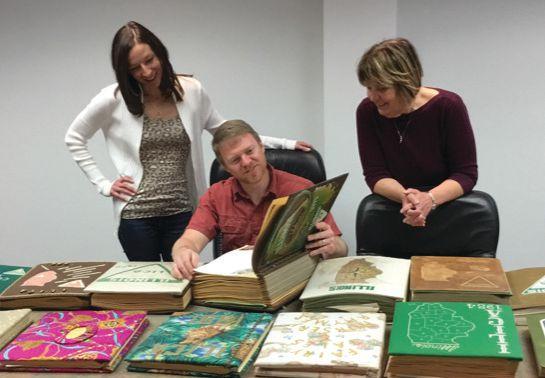
The National Land Improvement Contractors Association (LICA) has begun to compile additional information to complete the leather-bound book version of The History of Farm Drainage and the LICA Contractor
During a week in early May, the executive committee began reviewing the additional information they had received. National LICA chief executive officer, Jerry Biuso, national chief financial officer, Eileen Levy and national director of communications, Allison Hack were pleased to host three visitors to our new office.
The first was Ryan Arch, Illinois LICA executive director, who brought 17 scrapbooks from Illinois LICA.
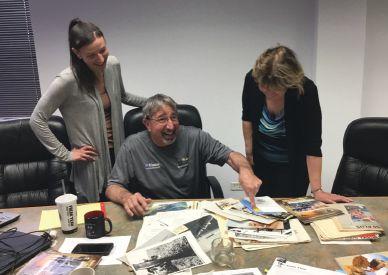
The second was Ron Schlatter of Schlatter Inc. from Francesville, IN. Ron proudly presented over 1,700 slides with fascinating drainage history, which included: photos, brochures, books and articles. Ron expressed a great deal of excitement over the project and returned for a second visit with Peter Darbishire. Darbishire was the editor of Drainage Contractor magazine from 1976 to 2008.
There is still much to learn and we are looking for any history that may be available. If you have information that could contribute to this project, please contact the National LICA office at nlica@aol.com or call: (630) 548-1984. DC
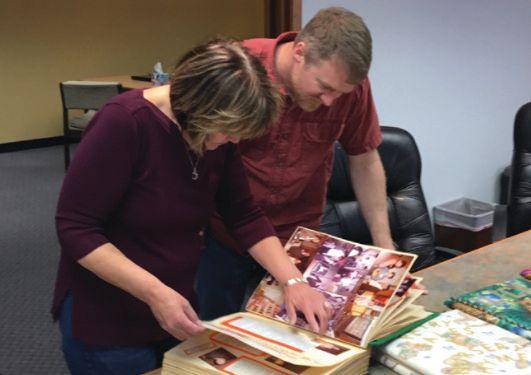
TOP: Ryan Arch, Illinois LICA executive director, reviews 17 Illinois LICA scrapbooks with Allison Hack, national LICA communications director and Eileen Levy, national chief financial officer. MIDDLE: Eileen reminiscing with Ryan while reviewing materials.
BOTTOM: Ron Schlatter reviewing a variety of historical material with Allison and Eileen.
DRAINAGE MANAGEMENT SYSTEMS
INTERCEPTING PHOSPHORUS
Researchers explore nanoparticle filtration.
An innovative new project will test a unique nanoparticle filtration system for its ability to remove soluble phosphorus from agricultural runoff.
by JULIENNE ISAACS
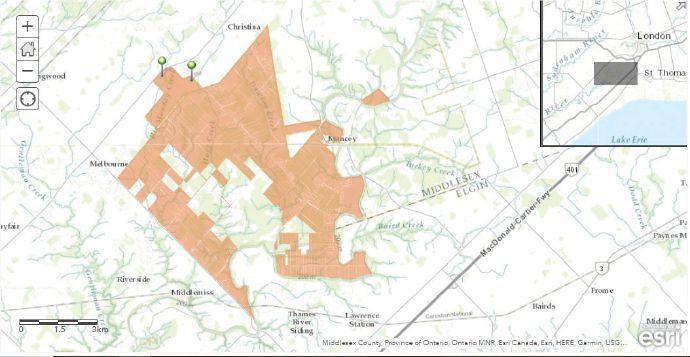
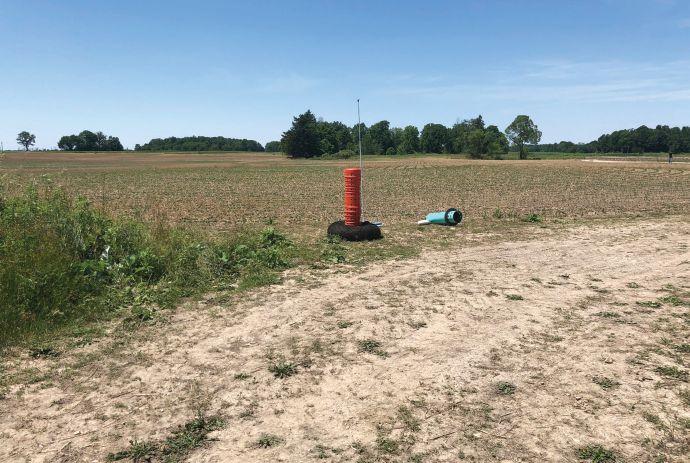
The site of the project is on 70 acres of land belonging to the Chippewas of the Thames First Nation and leased by a grain farmer. The filtration system will target tile water flowing into a municipal drain outlet.
The Chippewas experiment is one of seven new demonstration projects led by the Thames River Phosphorus Reduction Collaborative (TRPRC) that aim to intercept and remove phosphorus runoff from agricultural systems in order to limit algal blooms on the Thames River and in Lake Erie. Five of these projects, including the Chippewas project, were implemented in spring or early summer 2019, with another two set to begin by 2020.
The TRPRC represents a collaborative effort between many groups, including the Ontario Federation of Agriculture (OFA) and the Great Lakes and St. Lawrence Cities Initiative, the drainage industry, farm organizations, environmental groups and First Nations groups, says Charlie Lalonde, project director for the TRPRC.
The collaborative is funded through Environment and Climate Change Canada’s Great Lakes Protection Initiative as well as the Canadian Agricultural Partnership, a federal-provincial-territorial initiative; an additional ten groups contributed funding, according to Lalonde.
Most of these organizations have identified agricultural runoff as an important issue –for example, OFA is involved in 4R Nutrient Stewardship, and Grain Farmers of Ontario is involved in cover crop and soil health initiatives, says Lalonde – but this is the first initiative that brings the industry together to focus
on the role of drainage in contributing to the P load in Lake Erie.
“As a result, we oriented these projects exclusively in that space,” Lalonde says. “Together we wanted to look at potential solutions to reduce agriculture’s impact on Great Lakes water.”
PROJECT SITE
Lalonde says the TRPRC wanted to find sites representing diverse agricultural settings for its projects.
The Chippewas project is located on a grain operation with a corn-soy-winter wheat rotation, and both the farmer and the Chippewas of the Thames First Nation (COTTFN) were interested in understanding how agricultural runoff impacts water quality in the region, says Emma Young, senior environment officer for COTTFN.
COTTFN community members have participated in the TRPRC since the beginning, she says.
“We do a lot of projects internally in our community, and a lot of that is focused on water,” Young says. “Since 2016 we’ve started a regular benthic testing regime in the spring and fall, and we do fish sampling each year. We also worked with the Canadian Environmental Law Association to look at our source water.”
The First Nation’s drinking water comes from the Thames, and it’s considered ground water under the influence of surface water, says Young. Last year, in collaboration with Western University, COTTFN began testing water samples, targeting areas surrounded by agricultural land before and after the wastewater treatment plant to monitor P and nutrient loading.
“Our numbers were high – above the government recommended P quantities for water,” she says. “This paired perfectly with the work Charlie wanted to do. We looked at potential locations the project could go, and we wanted it to be on one of the areas where we have been doing P testing because we already have some data. The puzzle pieces fit together quite well.”
Once a drain enters First Nations land, it’s no longer considered a municipal drain or subject to the Ontario Drainage Act, says Young, which means COTTFN has the power to implement projects affecting drain water within its territory. Nevertheless, the TRPRC has
involved the municipality throughout project development and implementation to ensure the hydrological flow was not impeded. Young says both the municipality and the farmer leasing the land have been supportive of the project since the beginning.
FILTER DESIGN AND MONITORING
Gary Walker is owner of GA Phosphorous Solutions (GAPS) and former general manager of Silt Sock Environmental (SSE), the erosion control company that manufactured and installed the filter at the Chippewas site. Walker says the design and technology behind the filter was developed by
American-owned ESSRE Consulting.
The filter was installed in June in an edge-of-field closed drain system at the site. SSE diverted a 12-inch main that drains the 70 acres into a 1,250-gallon plastic septic tank modified to allow drained water residence time in AbTech Smart Sponge and MetaMateria PO4 sponge installed within the tank.
PO4 Sponge is a porous material containing iron-oxyhydroxide nanocrystals that provide “an extremely large number of sites for phosphate ion sorption,” according to MetaMateria’s website.
“PO4 sponge gives you a huge, huge
Installation of the filtration tank.
DRAINAGE MANAGEMENT SYSTEMS
CONTINUED FROM PAGE 11
surface area. A thousand times greater than any other absorption technology out there,” Walker explains.
Phosphorus capture is effective in PO4 sponge at both high and low concentrations, MetaMateria claims; capture at concentrations below 0.03 mg/L is possible.
Walker says the material is pricey but worth it. “It’s similar to your mortgage – you can amortize it over 20 years. We have testing showing that you can take out the sponge, clean it and reuse it up to 20 times. The capture of P allows for reuse and is the beginning of a circular economy.”
GAPS will be responsible for ongoing monitoring and maintenance at the site, says Walker. So far, not much water has been running through the filter, but the real test of its mettle will come during heavy runoff periods in winter and spring. Remote monitoring technology is available but not installed at this site, which means Walker will visit the site after multiple days of precipitation to test for soluble P and nitrates.
Eventually, Walker intends to collaborate with Western University researchers and ESSRE Consulting to investigate potential applications for reusing the concentrated P collected from the filter – in commercial greenhouses, for example, or home gardening.
According to Lalonde, the TRPRC project doesn’t stop at nanomaterial, but will also test biochar and other filtration materials at two additional sites beginning next year.
Walker says the idea of using nanotechnology sponge has been tested in the U.S. but, until now, hadn’t yet been tried in Canada.
He believes that in the absence of meaningful incentives, the material is likely too expensive to be a feasible option for farmers. However, its effectiveness in tests makes it an option worth exploring.
“I’m confident that with the environmental movement, we’re not going to have any alternatives down the road other than to do something like this,” he says. “Awareness of this technology will give drainage contractors a leading edge.”
The nanoparticle filtration system will target tile water flowing into a municipal drain outlet.
Experiment site locations are indicated with pins.
MASTENBRI O IEK
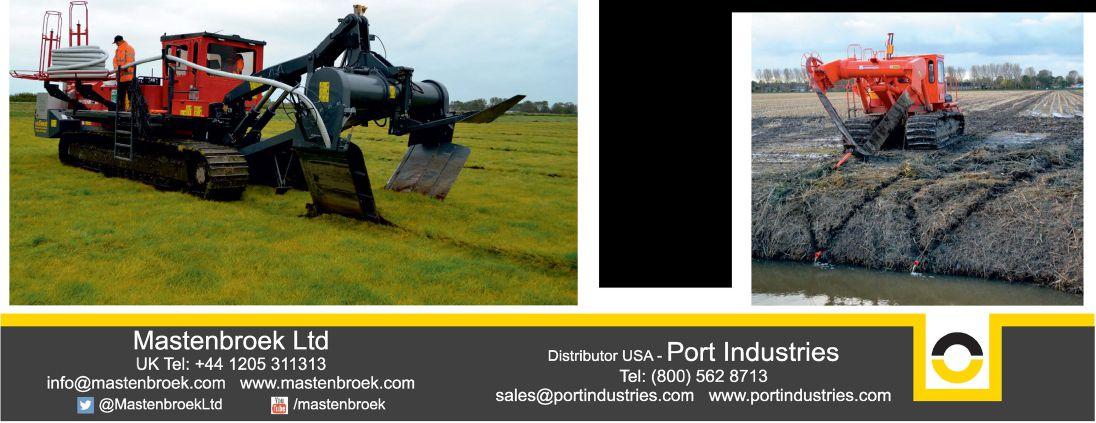
V-blade plow minimizes soil disturbance for optimum drainage results
DRAINAGE MANAGEMENT SYSTEMS
As far as the effort to clean up Lake Erie goes, Lalonde, Walker and Young agree industry-wide collaboration and communication is the only way forward.
“Water impairment in Lake Erie is a serious issue and it’ll take considerable effort to bring about some changes,” Lalonde says. “On the one hand, cities have to do their part to improve water quality, but we have to do our part in agriculture as well.”
Young says the effort will require, “everyone coming together.”
“I don’t think just the scientific community or the drainage industry or First Nations will solve it. We all have strengths that when we pull together are so much stronger.”
ADDITIONAL PROJECTS
The Chippewas experiment is one of seven new demonstration projects led by the Thames River Phosphorus Reduction Collaborative (TRPRC) that aim to intercept and remove phosphorus runoff
from agricultural systems in order to limit algal blooms on the Thames River and in Lake Erie. Five of these projects were implemented in spring or early summer 2019, with another two set to begin by 2020.
Boudreau Pump Station
Site: The Boudreau pump station is located on Merlin Road in ChathamKent, ON. It services approximately 340 acres of land in row crop production. Two fields are systematically tiled and drain via two channels. These deliver mostly tile water to the pump station, where it’s pumped from the municipal Deary drain to Jeanette’s Creek, which discharges into the Thames River. The soils vary from a Brookston clay to a silt clay loam. Soil P readings are moderate to high (20 to 47 ppm) and the soils have high organic matter (4.7 to 7.6 percent).
The Lower Thames Valley Conservation Authority (LTVCA) has monitored this site under the Great Lakes Agricultural
Stewardship Initiative (GLASI) since 2016. Water quantity and quality data is available.
Partners: LTVCA, Waterloo Biofilter, Thames River PRC
Research description: Waterloo Biofilter is the technology provider. The system is based on electro chemistry to coagulate dissolved P followed by a foam filter to support biological digestion. The electro chemistry will transform dissolved P into particulate for the digestion phase.
Measurements: Pounds of P removed will be the metric, and calculated using data on total P.
Progress: Initial samples taken in late 2018.
Roesch Farm
Site: A 100-acre farm situated east of Chatham, ON. Crops are seed corn, soybeans, specialty beans and winter wheat. There is a pig barn on the farm, and crops receive manure from it annually.The 100acre field is tiled, with a 12-inch outlet on each 25-acre lot that empties into the municipal McKinley drain, and then to the Thames. The soil is a very fine clay loam with phosphorus (P) readings of 50 to 65 ppm. It has a very slow infiltration rate (hydrologic soil group D).
Partners: Ontario Ministry of Agriculture, Food and Rural Affairs responsible for the model to calculate P recovery and water flow. Lower Thames Valley Conservation Authority maintains the 25-acre site, conduct sampling and have the water analyzed. Thames River PRC providing funding to support sampling.
Research description: One 25-acre field is being used to measure P removal using a Filtrexx Nutrilock sorption material. Testing began in April 2018. Tile water is channeled through two tanks where P is absorbed. In the fall of 2018, modifications were made to the tile to channel water to the treatment tanks by Gillier Drainage. A weather station will be added in 2019.
Measurements: Pounds of P removed will be the metric, and calculated using data on total P and dissolved P for the technology’s efficiency.
Progress: Installation and start-up in April, 2018. DC
Finding efficiencies
by Jacqui Empson Laporte Environmental specialist, Ontario Ministry of Agriculture, Food and Rural Affairs.
How can drainage contractors minimize waste without sacrificing productivity?
My spouse works in automotive manufacturing. We often talk about the differences and similarities of our workplaces. In manufacturing, the focus is put on time and process. Could we use the same thinking in agricultural drainage to find efficiencies in the way we do things, but stay true to the values that make our industry so unique?
LEAN is a continuous change philosophy that forces us to change the way we think and how we operate. Its practitioners promote value to the customer through continuous improvement and respect for people. Fundamentally, the premise attempts to minimize waste without sacrificing productivity or value.
Our group at the Ontario Ministry of Agriculture, Food and Rural Affairs is taking a bit of creative license from the traditional forms of waste, so that we can look at it from the perspective of agriculture drainage. Our industry experts identified nine forms of waste with some agricultural partners who were interested in looking at their operations in a different way.
Over-production: Making more of something or something of higher quality than actually required. A good example is manure – do we know how much manure we really need, or can we find a partner who can use the extra? Applying more manure than is required for crop growth is an example of waste.
Movement: Unnecessary movement of materials, information or equipment. Anyone who has moved equipment to one location, only to have to pick it up and move it somewhere else understands this frustration.
Motion: Any movement that doesn’t bring value, such as walking to and from a place. Do you have the tools that you routinely use? Are they located in a handy spot? Or, do you have to walk from place to place to find them?
Wait time: For equipment, tools, people or
parts. In some cases, like this year, waiting for the field to dry up.
Inventory: Too much paperwork, information or equipment for what is needed. You have to find the balance between ordering what you need and capitalizing on sales or bulk discounts. A more obscure example of this might be purchasing a new piece of equipment with bells and whistles that won't actually be used to make decisions in your operation.
Processing: More steps in a process than is needed to achieve the required result.
Under-utilized people: Mismatching or failing to properly use the skills and experience of the people on your team. A farmer colleague of mine admitted that while he is the “machine shop guy,” he is terrible at paperwork. It takes twice as long as it should and it frustrates him. It was much better for him once he partnered with someone who was “the numbers guy.”
Energy: Including electricity, waste management and water conservation. This can be as simple as a fan left running or machine idling, or as complex as maintaining equipment within operating specifications to maximize efficiency.
Correction: Steps in a process that don’t address inaccuracies or improve quality, or a flawed process that requires more review.
There may always be a place for traditional financial incentive programs, but there are always opportunities for process improvement. Ask your employees, “What bugs you?” The root cause of frustration is often a form of waste. Look at your operation with a fresh set of eyes.
We want to continuously improve how we deliver value items to our customers – the efficiency of tile installation, construction of an open drain, or erosion control for example. Continuous improvement requires us to look beyond the basic needs of the customer and identify changes on the horizon that will change our industry for both us and the customer. DC
www.rwfbron.com
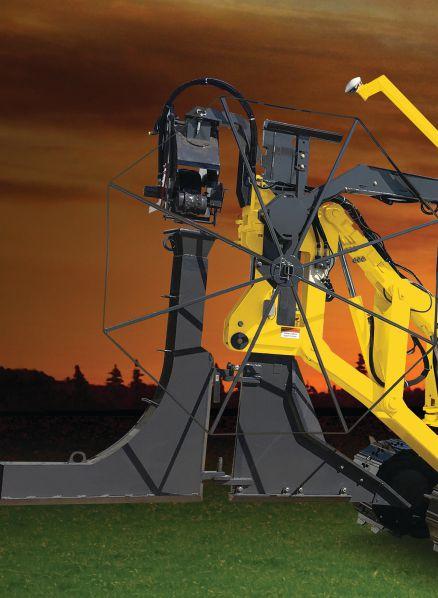
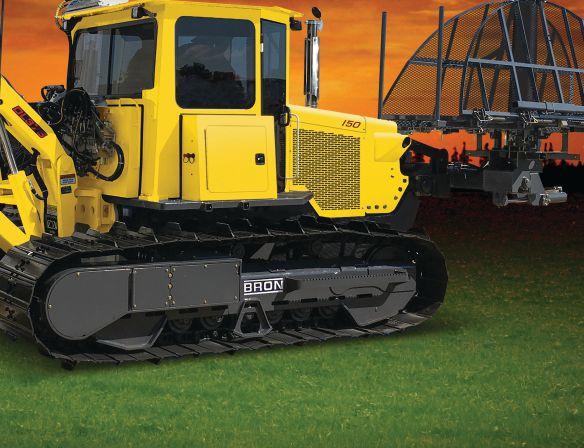
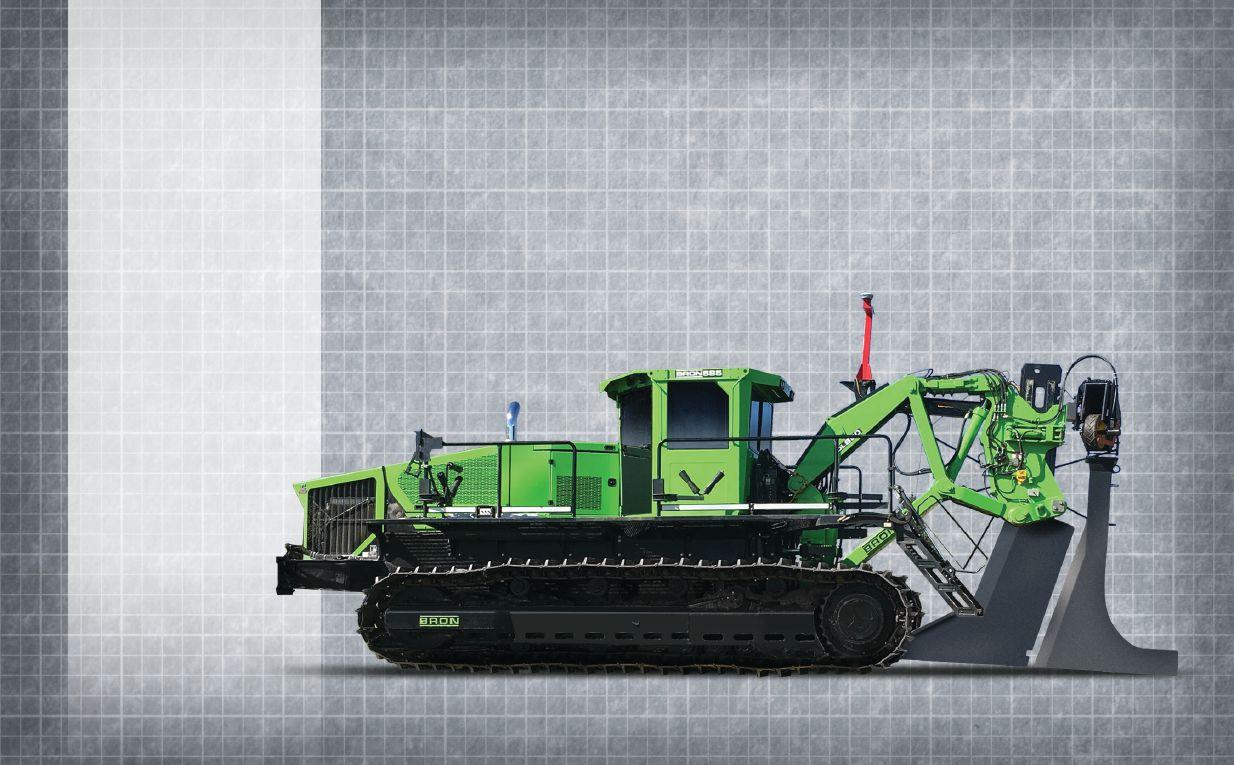
■ Five Core Cooling System exceeds cooling for Tier 4 engine standards
■ Quieter Reconfigured Cab Interior for Operator comfort
■ Standard DL 850 Drainage Plow increased strength & durability
■ LED Light Package for increased visibility for those long days in the field
■ Improved swing mechanism for the Onboard Reel for smoother reel speeds & consistent torque
■ Optional hydraulic rear step raises out of the way when plowing and lowers when required.
■ Standard oscillating track frames.
■ Fluid Samples for All Fluids
■ 150 Point Machine Inspection
■ Internal Inspection All Drivetrain Components
■ Required Factory Repairs
■ New & Used Equipment Sales
■ Parts & Service all BRON Products
■ Selected All Makes Parts for Construction Equipment
■ Certified Rebuilds on BRON Products
■ Custom Fabrication
■ New Paint
■ Factory Tested
■ New Certified Serial Number Assigned
■ 6 Month Warranty Assigned
■ Repairs on all Drainage Plows & selected Construction Equipment
■ Parts Facility in Marine City Michigan
■ Road Service for all BRON Products & other selected Equipment
■ Parts Facilities in Woodstock ON and Marine City MI.
DRAINAGE MANAGEMENT SYSTEMS
DRAINAGE COEFFICIENTS
Comparing cost and benefit.
There were several large rainfall events this spring in Illinois, often on successive days, that left water ponded on even intensively drained fields for what seemed like forever.
by RICHARD COOKE
Drainage systems in the state are typically designed using a 0.375 inch or a 0.5 inch drainage coefficient. The drainage coefficient is the depth of water removed from the soil in 24 hours, from a soil with an elliptic water table that initially touches the soil surface midway between the drains. This raises the question as to whether or not recommended design drainage coefficients should be increased. The answer lies in the realm of economics –optimizing cost and benefit. Such optimization requires an understanding of the hydraulic performance of various design options, among other things.
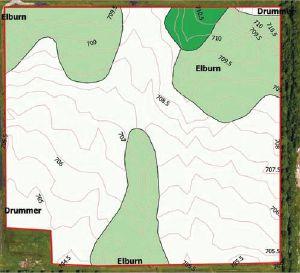
A hydraulic analysis of the performance of three different drainage systems for the selected field are shown in Figure 1. This field is typical of many fields in Illinois – flat with a mixture of hydric soils that require drainage to be productive. In this instance the design is done for Drummer, the state soil and the
most ubiquitous soil in the state. Because there is a ditch next to the field, the mains are short. Longer mains change the economic calculus, but the hydraulic analysis is very representative.
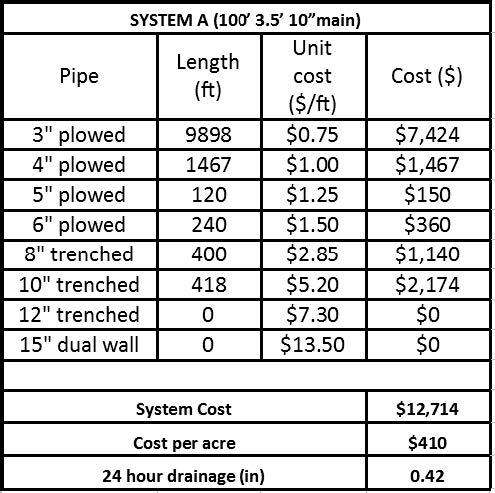
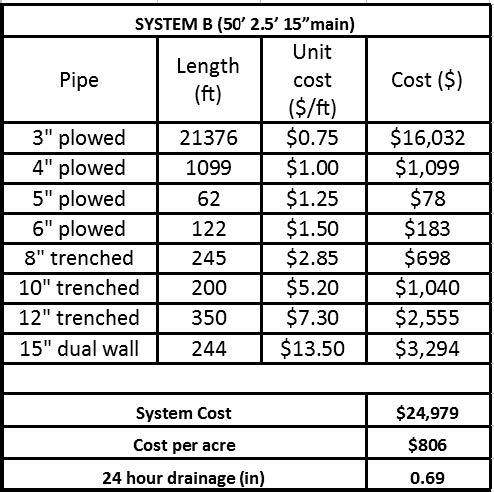
System A is a typical design for Drummer. The tiles are spaced 100 feet apart and put at an average depth of 3.5 feet. The resulting drainage coefficient is 0.375 inches. The tile spacing in System B (50 feet) is half that of System A, and the tiles are shallower (2.5 feet). This system represents a trend towards installing narrower, shallower systems with higher drainage coefficients, 0.91 inches in this instance.
In System C, the drainage coefficients are uncoupled, with 0.375 inches and 0.91 inches used for the laterals and mains, respectively. The analysis was performed for the first 24 hours after an event that saturates the soil and causes the water table to be flat at the soil
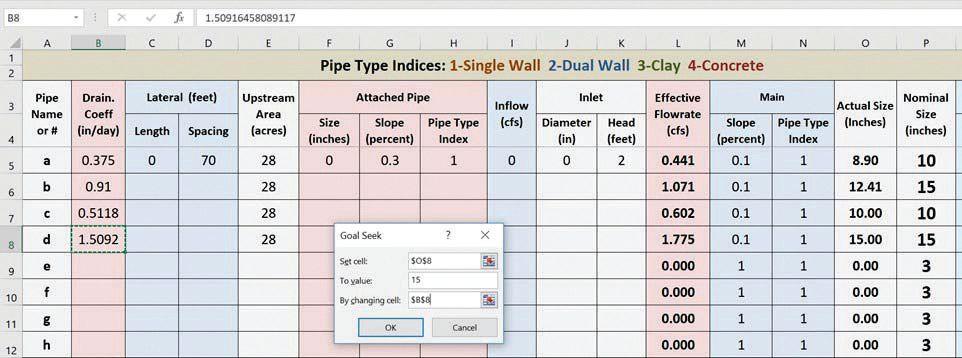
LEFT: Figure 1. Field used for hydraulic analysis of three drainage system designs. RIGHT: Figure 3. Layout and pipe sizes for drainage systems used for analysis.
DRAINAGE MANAGEMENT SYSTEMS
surface. This scenario is likely after a rain event that exceeds the capacity of the main. The capacity of the main is not necessarily the same as the design drainage coefficient.
The relationship between design drainage coefficient and main capacity is shown in Figure 3. The main capacity corresponding to a 0.375 inches drainage capacity is 8.9 inches (Pipe a). However, since pipes sizes are standard, a 10 inches pipe would be used for this system. The main capacity for this 10 inches pipe is the drainage coefficient that makes the actual pipe size the same as the nominal pipe size (Pipe c). This value (0.512 inches) can be found by trial and error, or by using the goal seek function in the main sizing, Excel worksheet as demonstrated in Figure 3.
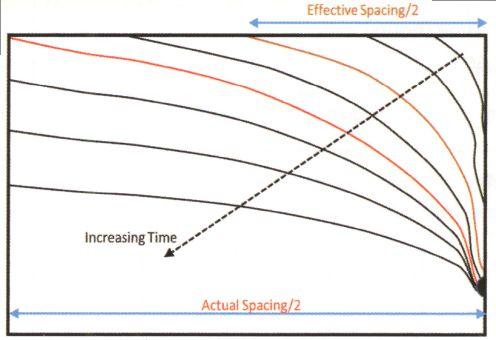
The capacity for the 15 inches main was 1.51 inches in this instance. A schematic of water table profiles from draining a flat water table is shown in Figure 4. Firstly, the extent of the drawdown region, called the effective spacing, increases until it extends to midway between the drains. At this instant the effective spacing is the same as the actual drain spacing (red line in Figure 4). As time increases, the mid-plane water table height decreases. When the effective spacing is less than the actual drain spacing, the instantaneous drainage coefficient exceeds the design drainage coefficient.
The maximum rate at which water leaves the profile
is governed by the capacity of the main. At the instant the effective spacing equals the actual drain spacing, the instantaneous drainage coefficient is equal to the design drainage coefficient. As time progresses and the mid-plane water table height decreases, the instantaneous drainage coefficient is less than the design drainage coefficient.
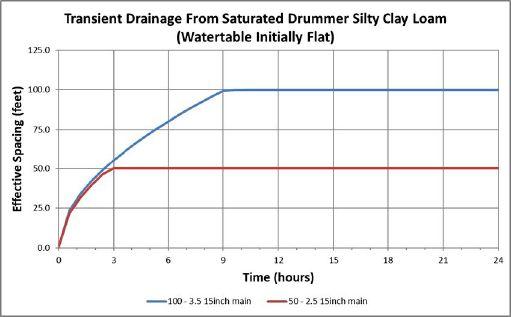
The evolution for the effective spacing for Systems A and B are shown in Figure 5. For the deeper wider system, System A, it takes approximately nine hours for the effective spacing to equal the actual spacing. The corresponding time for the narrower, shallower system, System B, is approximately three hours.
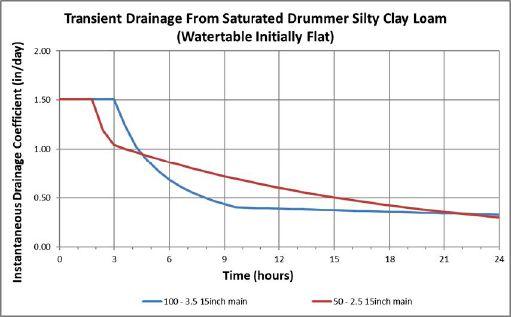
The instantaneous drainage coefficients for the first 24 hours of drainage are shown in Figure 6. The capacity of the main controls the drainage for the first 3.0 hours and 1.8 hours, respectively, for Systems A and B. After these times the drainage rate is dictated by the transport properties of the soil.
The drainage rate in the deeper, wider system equals or exceeds that of the shallower, narrower system for the first 4.8 hours. After 24 hours, the drainage rate from the two systems are approximately equal, but drainage rate from the shallow system decreases faster than that for the deeper system.
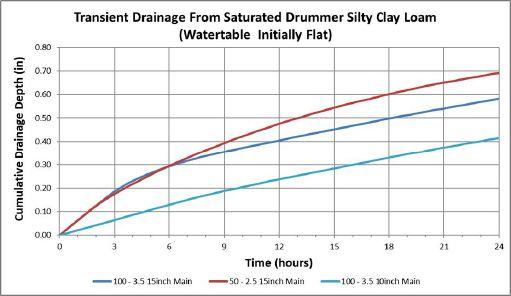
The depth of water removed over the first 24 hours by each of the three systems is shown in Figure 7. The cumulative
Figure 4. Water table profiles on one side of a lateral resulting from draining an initially flat-water table.
Figure 5. Effective spacing versus time from draining an initially flat-water table.
Figure 7. Instantaneous drainage coefficient versus time from draining an initially flat-water table.
Figure 6. Instantaneous drainage coefficient versus time from draining an initially flat-water table.
depths are 0.42 inches, 0.69 inches, and 0.58 inches, respectively, for Systems A, B, and C.
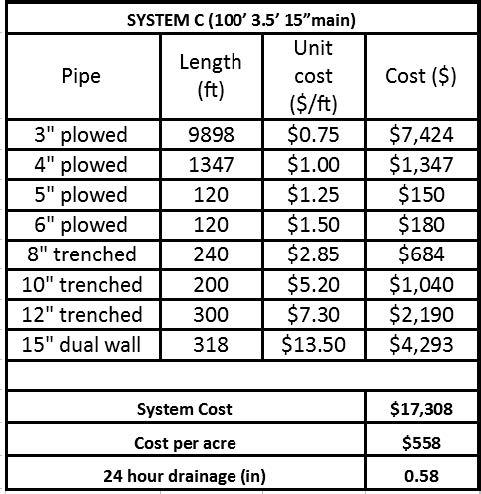
System costs and 24-hour drainage rates are shown in Table 1. The unit pipe costs are representative industry standard. Unit pipe cost is often dependent on job size, decreasing as job size increases. The cost does not include the cost of making connections or of moving equipment. As mentioned earlier, these systems have short mains as they are next to a ditch. In reality, main costs can be significantly more, depending on the distance to be travelled to an outlet.
The systems were designed using three inch laterals were possible. With the laterals being steep and much shorter than the lengths that would cause them to flow at capacity, it is unlikely that the laterals will restrict flow, even at high instantaneous drainage rates. However, four inch laterals are much less likely to restrict flow than three inch laterals, so that might be a design consideration. The most cost effective of the three systems seem to be System C, in which the drainage coefficients for mains and laterals were uncoupled. This should be a consideration in designing drainage systems for faster drainage after large events. Another option would be to increase the depth of narrower systems. In this instance, for example, if the narrow system were placed 3.5 feet deep, the drainage coefficient would be 1.34 inches, which is less than the 1.51 inches limit for a 15-inch main. The cost, therefore, would not change much. However, the 24-hour drainage would increase to 1.0 inches, a 45 percent increase over the 24-hour drainage of the shallower system with the same spacing.
In many cases system depth is limited by the depth of the outlet. In instances where this is not so, it seems that designing the system with a drainage coefficient that equalizes the actual and nominal pipe sizes would be the most cost effective. Cost effectiveness could also be increased by uncoupling the drainage coefficients for mains and laterals. DC
Richard Cooke is an associate professor of agricultural and biological engineering at the University of Illinois.
One of his focus areas includes optimizing subsurface drain-
age system design, where he works to increase the efficiency of drainage-related best management practices and develops protocols for their design. He also develops techniques to simplify the extraction of elevation data from a pulsed laser system (LiDAR) images, and creates rainfall harvesting systems to extend cropping into the dry season in Sierra Leone.
He has proposed developing two routines for the design of subsurface drainage systems, which will maximize soil storage volume without adversely affecting crop yields.
100% Virgin Resin
Table 1. Drainage Systems Costs.
by JULIENNE ISAACS
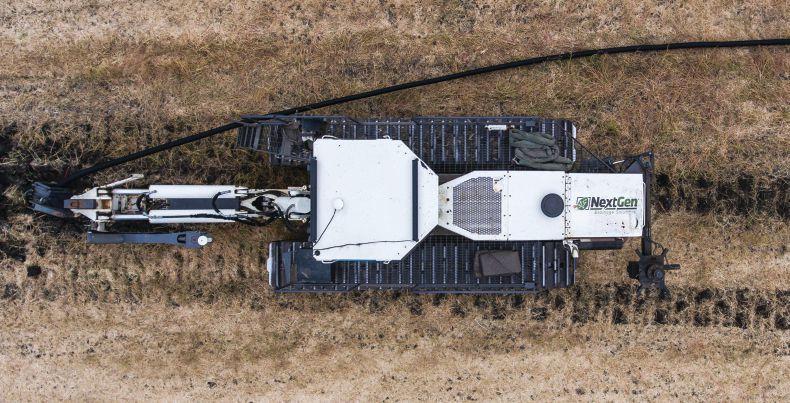
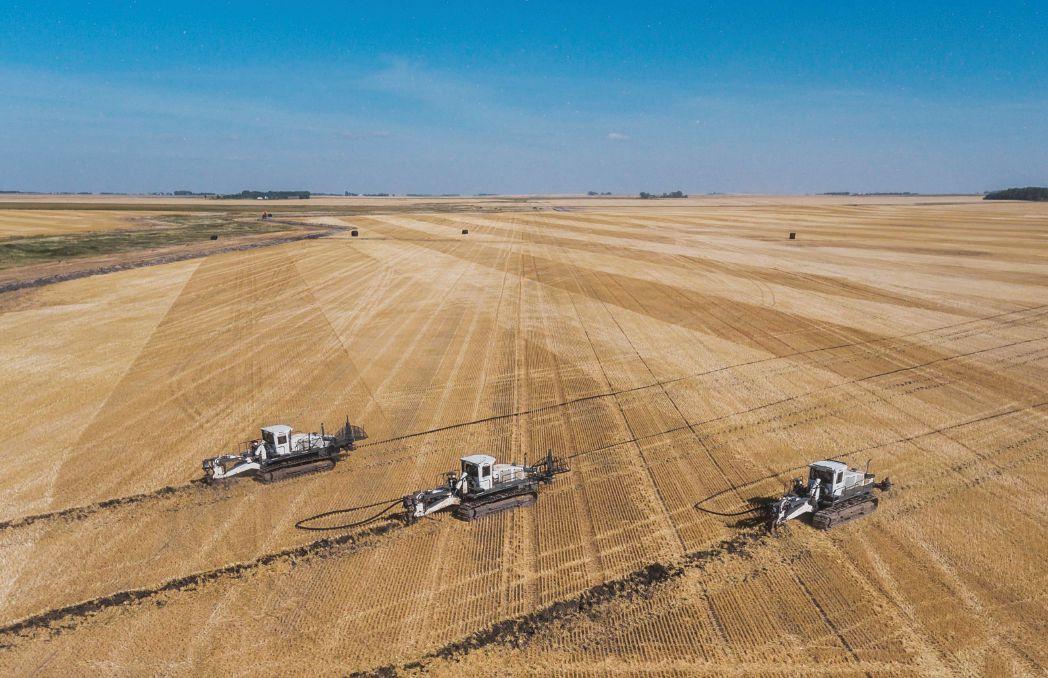
The company installs pattern tile projects anywhere from 20 acres to 1,200 acres in size; they’ve worked throughout the Prairie provinces but these days are focused on Manitoba and Saskatchewan.
DRIVING GROWTH
NextGen Drainage: a prairie success story.
He’s the president of NextGen Drainage Solutions, one of Canada’s top 500 fastest-growing companies, but Brett Sheffield didn’t have the most conventional start in the drainage industry. In fact, he started in another industry altogether.
“Initially I was going to be a gym teacher,” he says. “Then I went to university and ended up traveling abroad before coming back to our farm. I wasn’t a big fan of cattle farming, so I started purchasing and renting land and got back into grain.”
Sheffield quickly grew the family farm at Pilot Mound, MB, from 500 to 4,200 acres while studying agriculture at the University of Manitoba. He also purchased a local fitness club and started investing in other businesses. While studying drainage under Don Flaten in the department of soil science, Sheffield grew inspired by what he learned. He enrolled in drainage programs at the University of Guelph, Ohio State University and North Dakota State University to broaden his knowledge of research and issues impacting the industry.
“I started to see that there might be a business opportunity in drainage,” he says.
Along with his wife, Jen, Sheffield registered his company, NextGen Drainage Solutions, in 2012.
Sheffield’s initiative attracted notice, and that year he won Enactus Canada’s 2012 Student Entrepreneur National Championship. He went on to represent Canada at the Global Student Entrepreneur Awards and placed third globally.
Industry connections followed hot on the heels of Sheffield’s success. Roger Ellingson, owner of Minnesota-based Ellingson Companies, became Sheffield’s mentor and an early investor in NextGen Drainage, as well as a member of an advisory board Brett and Jen set up to get the business headed in the right direction.
CONTRACTOR AT WORK
It wasn’t long before Sheffield took over full ownership of the company. Since 2012, NextGen has gone from two full-time employees – Brett and Jen – to more than 20 full-time employees in 2019, including a complete management team and a group of experienced installers.
The company’s rapid growth earned its achievement as one of Canada’s top 500 fastest-growing companies, but Sheffield says NextGen has reached its ideal size for now.
“We’ve grown from a mom and pop shop to a mid-sized company,” he says. “Quality is so important to us and we use LEAN management [processes] to install more acres per machine while maintaining that quality. We can offer the best quality and still be profitable at this size.”
PARTNERSHIPS AND EDUCATION
NextGen offers turnkey services to its customers, “everything from working with growers to surveying, tile drainage
design, permitting and installation of tile drainage,” Sheffield explains.
The company installs pattern tile projects anywhere from 20 acres to 1,200 acres in size; they’ve worked throughout the Prairie provinces but these days are focused on Manitoba and Saskatchewan.
Earlier this year, NextGen partnered with Farmers Edge to offer data-driven water management and soil moisture tools to its client base.
“We added in end-point management, so we use NDVI drone and satellite imaging to monitor water coming off the field, so we know how our systems are working,” he explains. “We use NDVI to look at how crops and soil types are reacting to spacings, especially for warranty, if there’s a break. That’s just one tool that we use.”
The arrangement is one of many strategic partnerships NextGen has undertaken over the years. Sheffield works hard at maintaining and growing industry connections in order to deliver
the best service to NextGen’s customers. But these days, he says, NextGen can provide most services in-house.
It’s the company’s track record in customer service, however, that Sheffield is most proud of.
“We’ve been aggressive and have focused on customer service and built up repeat customers. NextGen has a very high customer return rate, with the majority of customers building long-term plans for multiple projects,” Sheffield notes.
But NextGen has another important focus: they also offer government relations, working with all levels of government to offer education on tile drainage and iron out permitting issues.
Installation permitting represents a huge challenge for the drainage industry, Sheffield says. Problems with permitting in Alberta led NextGen to pull out of the province altogether. In some cases the company has been waiting on permits in Alberta for more than two years, he says.
Along with his wife, Jen, Brett Sheffield registered his company, NextGen Drainage Solutions, in 2012.
TILE DRAINAGE IN WISCONSIN
A glance into drainage activity in the Badger State.
Wisconsin may lag behind other Midwest states in total running feet of installed tile drainage, but it is a leader in helping farmers make good drainage decisions.
by MADELEINE BAERG
Due to the variability of Wisconsin’s landscape and soil, drainage tile patterns across the state are often mixed.
“Wisconsin is a very progressive state,” says Eric Cooley, co-director of the University of Wisconsin’s (UW) Discovery Farms. “We’re also one of most regulated states from an agricultural standpoint. The rules that dictate agricultural production here are some of most stringent in the country. And, the fact is that we’re a heavy dairy state, so a lot of land receives manure application, which means we really have to be careful about drainage.”
Together, he says, those factors mean Wisconsin is making important steps forward in installing tile drainage right.
Farmer-led UW Discovery Farms is one of multiple water-quality focused initiatives in the state, complimenting the work of locally run conservation projects. The program, which offers a variety of resources, events and extension initiatives, unites researchers and farmers
in the common goal of optimizing agriculture while minimizing nutrient run-off, conserving soil and supporting healthy waterways.
“Farmers are the ones who are out there; they know the intricacies of their land. They want to do the right things. We’re just giving them the tools to be able to,” Cooley says.
According to Cooley, it’s surprisingly hard to estimate how much of Wisconsin’s farmland is tile drained today. That’s because there is no central record of drainage installation. Instead, most calculations depend on farmer's estimates, which can be problematic.
Multiple studies have tried to estimate drainage infrastructure across the Midwest using different data collection methods, however results from various studies have returned very different. What is certain is that, compared to other states, Wisconsin has a relatively low
PLOW & WHEEL TRENCHERS
Wolfe Heavy Equipment continues to set the tone for powerful agricultural and commercial trenching equipment. Wolfe’s versatility, superior manufacturing and expert service along with reduced fuel consumption provides increased profitability.
CONTRACTOR AT WORK
percentage of tile-drained agricultural land. Whereas farmers reported in the 2012 Census of Agriculture that approximately eight percent of total agricultural land in Wisconsin was tile drained, their counterparts across most of the rest of the Midwest reported four and five times as much drainage: Illinois, Minnesota and Michigan all reported over 30 percent and Ohio, Indiana and Iowa reported over 40 percent.
Most of Wisconsin’s tile drainage is installed along the state’s eastern and southern edges that drain into the Lake Michigan Basin. The land in that area is characterized by huge variability. Different regions – often even different parts of individual farms – feature highly variable topography, challenging subsurface drainage issues like potholes and restrictive layers, and soil types varying from shallow to deep and from sandy to heavy clay.
“There’s a real mix of reasons we tile here,” Cooley says. “Mostly, it comes down to the fact that eastern Wisconsin, which is where most of the tile drained land is, was a glaciated area. A glacier came and scraped everything off and then dumped it back. We have all these diverse features to our landscape, there’s nothing consistent. We have hills and valleys, potholes without outlets, and very variable
soils. That’s why having someone experienced and trained to help design and install your drainage is such a priority.”
Given that variability of Wisconsin’s landscape and soil, it’s not surprising that drainage tile patterns are mixed across the state and often even on individual farms. On flat and consistent land, farmers tend towards pattern (gridiron) tiling. In potholed and sloped areas, they often use a natural pattern: a main trunk with branches that drain isolated depressions. In hilly areas, the most effective option is a herringbone pattern to drain valleys and narrow depressions. That said, herringbone is seldom used because it is more expensive and challenging to install.
“Tile is a good thing. It’s a wonderful thing. It reduces surface soil loss and nutrient run-off, but you need to do it right. If it’s not put in correctly, it can give a black eye to tile drainage on the environmental side by causing very problematic downstream effects. There are a lot of challenges to installing drainage in Wisconsin that even experienced tilers can struggle with,” Cooley says.
Much of the tile work currently underway in the state is to fix and replace clay and concrete systems installed in the 1960s.
“The systems that were installed 60
or more years ago are hitting the end of their life expectancies. As they start to degrade and deteriorate, what we’re starting to see is a lot more tile blowouts,” Cooley explains. “Farmers are fixing and fixing until that just doesn’t make sense, and then they have to break up the old and replace it.”
According to Cooley, today’s tough economic times mean fewer farmers are investing in tile drainage.
“A lot of contractors say they’ve had a tough time keeping up with demand in recent years, but we’re going through a bit of a dip recently,” he adds. “When you have extra money to make improvements, then you are more likely to spend it. Right now, a lot of people are just trying to stay afloat.”
Expect that to change looking forward. As farm land values increase and margins tighten, tile’s impact on a farm’s bottom line will become more and more attractive.
“When you drive a yield monitor over an area that has drainage tile, you can often see the yield bump because of how much of a biological improvement is going on in those areas,” he says. “Payback is typically as low as about five and as long as about 20 years, due to the yield increases and improved field accessibility that tile drainage allows.” DC
LEFT: Most of Wisconsin’s drainage tile is installed along the state’s eastern and southern edges that drain into the Lake Michigan Basin.
RIGHT: Eric Cooley is the co-director of the University of Wisconsin’s Discovery Farms. Farmer-led UW Discovery Farms is one of multiple water-quality focused initiatives in the state, complimenting the work of locally run conservation projects.
Streamline Your Tiling Projects with the WM-Drain® Farm Drainage Solution
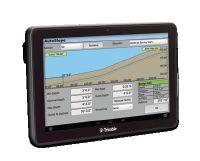
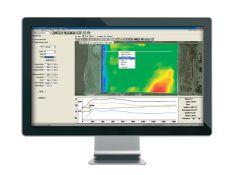
Our integrated subsurface drainage toolset provides concept to completion coverage for every step of the tiling process: survey, analysis, design, install and mapping. The WM-Drain solution ensures optimal 3D drain placement, which improves crop yields by lowering water tables, optimizing root depth, maximizing planting and harvest seasons, and minimizing nutrient loss. Learn more at ag.trimble.com/ wm-grower-solutions
West Lafayette, IN
Battle Creek, NE
West Lafayette, IN
NEW PRODUCTS
HYPRO LARGE TILE FEEDER
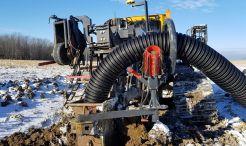
The HyPro Large Tile Feeder, developed by Knorr Manufacturing Ltd. and Hypro Equipment, offers assistance with installing large diameter single-wall and dual-wall flex pipe from 8” up to 15”.
The hydraulically powered with soft rubber fins ensure a smooth quality install, feeding the tile into the tile boot with power feed rollers, which eliminates tile stretch from occurring. Numerous adjustment positions allow you to adjust the position of the feeder according to the size of the loop in the tile.
The Hypro Large Tile Feeder comes with a mounting bracket that can be welded to the rear side of a tile boot, allowing for the unit to be used to install tile from the right or the left side of the drainage machine. This new machine easily couples into an existing 4” power tile feeder with standard quick couplers, allowing the ability to adjust roller speed using the same power speed control knob.
For more information, visit: hyproequip.com
JCB ELECTRIC MINI EXCAVATOR
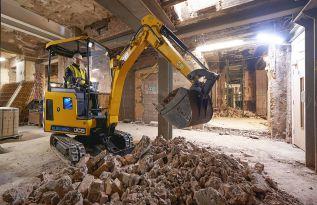
JCB is now offering its North American customers an electric excavator option. The 19C-1E mini excavator is powered solely by lithiumion batteries, yet delivers the same performance as dieselpowered excavator. Weighing 1.9 tonnes, the mini excavator
produces zero emissions and one-fifth the noise of its diesel counterpart, making the machine ideal for emission and noise-sensitive environments.
The 19C-1E shows that JCB is again leading the way; we’re merging more than 70 years of experience building the world’s toughest construction machines with the latest electric technology, to build the machines today’s customers need.”
The 19C-1E mini excavator offers a 48-volt electric driveline generating peak power up to 27 hp (20 kW); Bosch Rexroth load-sensing hydraulic system for digging performance to a maximum dig depth of nine feet three inches (2.82 meters); An on-board charger with standard, domestic 110V input for 12-hour recharging; and a retractable undercarriage to negotiate narrow spaces and doorways.
For more information, visit: jcb.com
COBRA SCREENING BUCKET
Ransome Attachments has finalized a deal with Cernos Oy to add the Cobra
2019-10-18 11:43
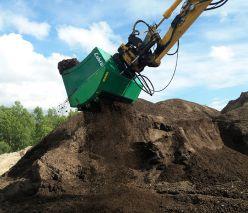
Screening Bucket to its lineup of multi-functional attachments. For top soil screening with no crushing action, the Cobra Screening Bucket is designed for compact machinery and fits both compact and heavy equipment.
The Screening Bucket can screen and crush construction debris and soft rock materials. The end product is often used for stockpiling and pipeline backfilling and padding. Ransome will offer the full line of Cobra models to fit various applications within the composting, topsoil, recycling, demolition, landscaping, pipeline, and general construction markets.
All Cobra models feature either a single or twin hydraulic drive with chain transmission. A double-acting hydraulic circuit allows the operator to screen and crush in forward or reverse, eliminating the potential for clogging. The drum configuration can either be vertical (K Series) or horizontal (XS, S, and L Series) to fit almost any need. For more information, visit: ransomeattach.com/ products/screening-buckets
RANSOME ATTACHMENTS NAMED DISTRIBUTOR OF DITCH DOCTOR
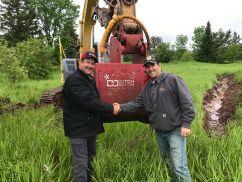
Ransome Attachments of Lumberton, NJ, supplies durable, cost-effective, multifunctional attachments to the forestry, landscaping, recycling, municipal, demolition, and general construction markets. Its diverse mix of attachments – including wood splitters, screening buckets, grapples, concrete pulverizers, post drivers – fit both compact and heavy equipment. Ransome Attachments was recently announced as the first and
only American distributor of the Ditch Doctor.
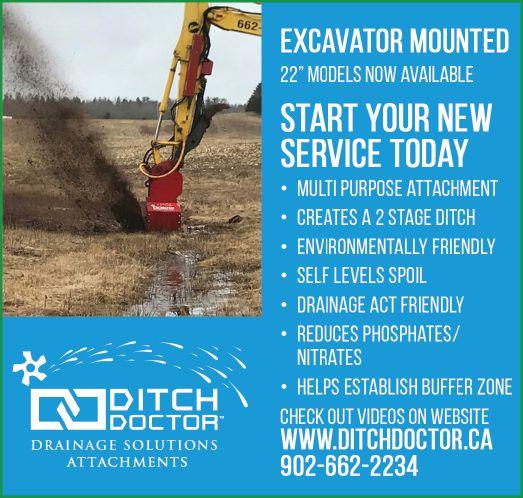
The Ditch Doctor is the product of a Canadian specialty excavating company that was looking for an alternative to ditching with the conventional excavatormounted bucket method. Instead of leaving a stockpile of dirt that must be hauled away or flattened with a bulldozer, it projects the material away from the ditch, allowing it to self-level.
A patented detachable outer scroll case allows the Ditch Doctor to be used for dry ditching, but it can also work in up to three feet of water. The company plans to add additional scroll cases that can be swapped for different work tools, allowing it to become a multifunctional attachment. The Ditch Doctor can handle any material, including dirt, sand, sludge, vegetation, ice, and even rocks. The attachment is designed to chatter upon hitting rock to notify the operator and can function as a bucket to move even the largest boulders from the ditch.
There are two Ditch Doctor models available, both of which are custom manufactured to fit specific makes and models of excavators from five to 22 tonnes. Both include a quick attach and can be hooked up within a minute. The attachment itself is manufactured in Canada, but the actual assembly and shipping is done by Ditch
• 8” & 10” riser with patented 8" & 10" combination Tees. Also 6” square & round risers with patented reducing Tee.
• Constructed of heavy-weight, high-density polyethylene.
• Parts highly adjustable & interchangeable with others on the market
• Orifice plate placed at tee level or at ground level.
• Exclusive locking device on each part. • User Friendly-Priced effectively.
• Adaptor available to repair old metal or broken intakes.
Doctor in its Nova Scotia shop. For more information, visit ransomeattach.com
VFD controls allow the pump to increase/ decrease speed as the water level rises & falls inside the lift station VARIABLE
Plug & Go Systems that are the easy solution to your drainage
JOHN DEERE REVAMPS ENTIRE 110-195 HP 6M SERIES CAB TRACTORS FOR 2020
The John Deere 6M Tractors, one of the company’s most versatile tractor series in the 110-195 hp range, is getting a significant makeover for 2020. The eight cab models of the 6M Tractors will feature improvements in comfort, visibility, maneuverability and technology not previously available in the mid-spec 6 Family Tractors, which are ideal for handling a wide variety of loader and PTO-driven operations.
John Deere has updated the cab comforts for all 6Ms to include new styling and a digital corner post display for improved visibility of machine functions. In addition, two of the more popular models, the 6110M and 6120M, have been redesigned with a 94.5-inch (2.4m) wheel base that’s seven inches (17.8cm) shorter with a sloped hood that provides an 18-foot (5.5m) front view distance for improved visibility for loader work.
The 140-hp 6140M model has also been added to the lineup, which addresses a sweet-spot in size, horsepower and capabilities that is most often requested by livestock producers and diversified ag operations.
Machines can be ordered loader-ready from the
factory and matched with the John Deere 600R Loader. These loaders are designed to be small enough to match the design of the new 6110/6120M tractors and include more LED lights, a curved boom and underslung leveling links that improve overall loader performance for all types of operations. The 600R Loaders have over 4,100 pounds (1,860kg) of lift capacity and 154 inches (3.9m) of lift height with cycle time of less than six seconds.For more information, visit JohnDeere.com.
ALL-NEW 1CXT COMPACT BACKHOE LOADER
The 1CXT compact backhoe loader was launched by JCB in October. It has a 60 percent smaller footprint than a full-size backhoe loader yet delivers impressive performance. It is the only tracked backhoe loader in North America – delivering superior climbing capability, pushing power, stability and soft ground performance – and offers loader bucket breakout force up to 5,180 lb and maximum dig depth of 10 feet-one inch.
With a transport weight under 9,600 lb, the 1CXT can be towed between job sites without a Commercial Driver’s License (subject to local regulations). The machine is equipped with a 49 hp engine that requires no aftertreatment. For more information, visit www.jcb.com.
BUSINESS DIRECTORY
AD INDEX
Investing in new metal
by Rob Burtonshaw
Purchasing new drainage equipment is a big decision.
At some point all contractors must be brave, bite the bullet and dig deep to invest in new metal. Machinery of all types, especially drainage machines, lighten the pocket. They are sophisticated and complex machines and as such do not come cheap. Any investment is a risk and cannot be taken lightly. There are many persuasive reasons just to carry on with the old machine. No one has a crystal ball and, in our business, demand can move quickly in both ways. The price of agricultural commodities
bounces sharply and I remain amazed about how few orders we received in a drought and how many we received when the heavens open up. Our customers are making an investment, which we all hope will last at least 20 years, but last month’s weather seems to be a critical part of the decision-making process for farmers. None of which we can control.
In the past, we have taken the option to try and squeak out a few more years from our existing assets by sending them back to the manufacturer for an overhaul. This has been
motivated mainly by the cost of replacement and, in fairness, has worked well but delays the evitable. I’m sure there are exceptions but the older the machine the more likely it is to break down and the harder it is to repair.
Our workload is not spaced out neatly over the course of the year. Often crops are standing or the ground is too wet. For a few months after harvest every day counts as two and a breakdown, especially one which takes time to repair, can have a noticeable impact on profit. Eventually you reach the point when the risk of breakdown becomes a factor in your decision making.
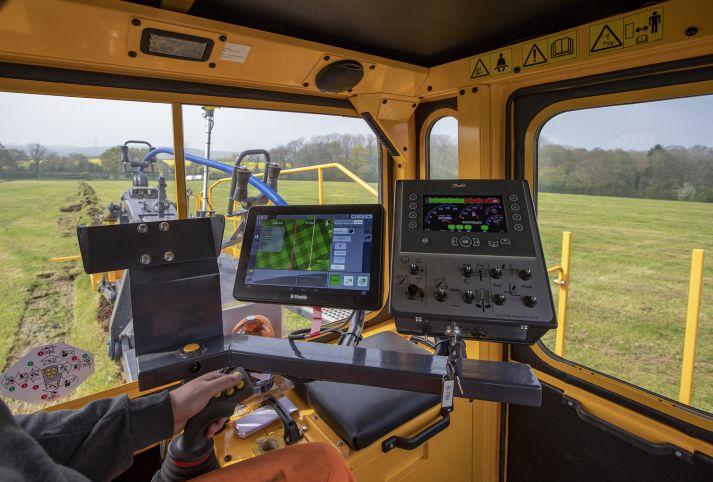
So, the time has come and we have recently taken delivery of a new Mastenbroek 40/20 drainage plow. It is a big step up for us and we have taken our time thinking it through. The last couple of years have been reasonably good, so a case for investment can be made. The availability of a European Union business investment grant certainly helped. However, the counter argument is strong too, here in Britain, as I’m sure you know, we are experiencing a time of political turmoil. No one knows what will happen. Maybe nothing. Maybe the biggest change to agricultural policy in 70 years. It is hardly the ideal backdrop to make one of the largest investments a drainage contractor can make.
Ultimately, I feel that we cannot stand still. The easy opinion is to wait and see, but every month and year we wait we fall further behind. Investing has a cost but so too does not investing, it’s just less visible. The difference in performance from our old machine to our new machine is stark. We are quicker and more efficient than ever before and if things take a turn for the worse, being more efficient can only help. Any investment is a risk but I believe that a contractor has very little choice but to invest. Yes, this investment needs careful consideration. Yes, it must not be reckless but at some point it has to be done. We have made this brave decision. Time will tell if it is the right decision. DC
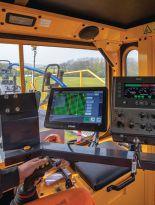
The interior view of the Mastenbroek 40/20 drainage plow.