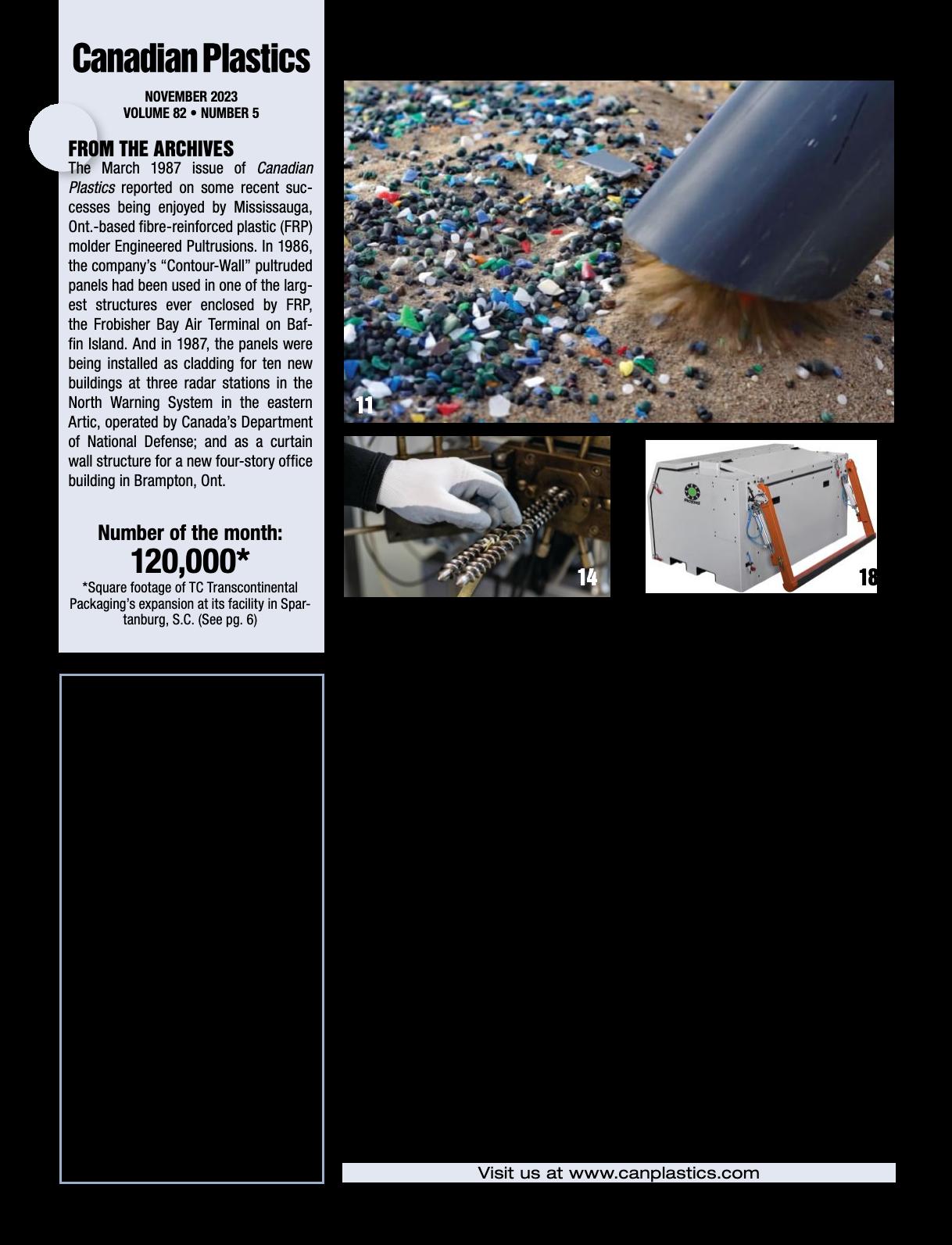
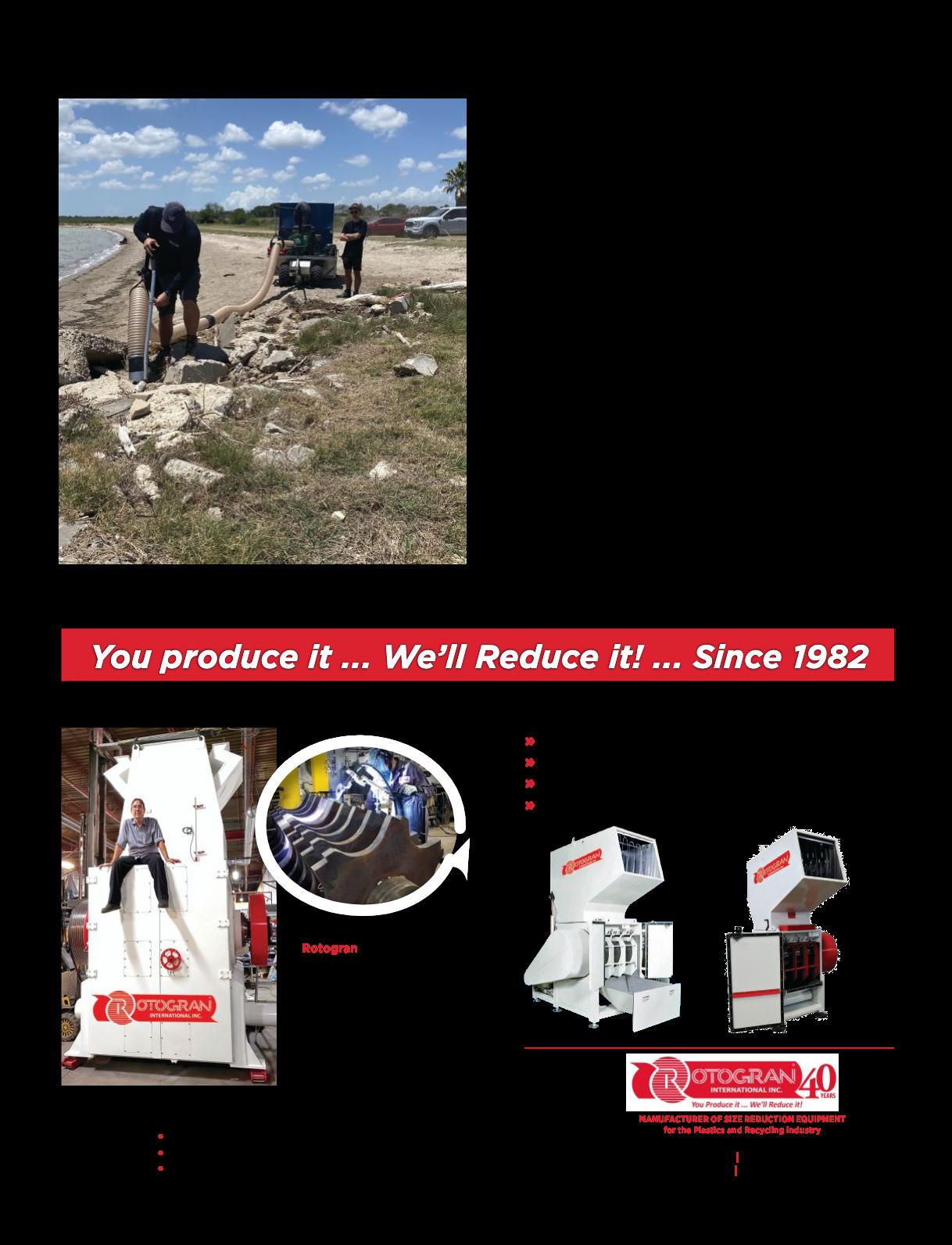
the a rch ipelago, a nd H W F welcomed the in itiative “T hey told us that they had no problem in recover ing the bigger plastic items f rom the beaches, but they couldn’t recover the m icroplastics, so we saw th is as ou r oppor t un ity,” La nt agne sa id
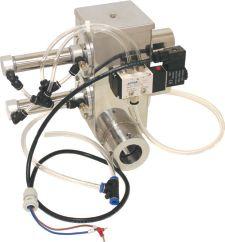
A f ter severa l months of resea rch a nd testing in Sherbrooke, the tea m f lew to Hawa ii in Apr il 2019 to demonst rate thei r invention in a rea l-world envi ron ment Tr ia ls showed that the device – dubbed the HO M icro – could clea n th ree ga llons of sa nd a m inute, a nd it ultimately collected a whopping 230 p ou nds of m ic roplast ics i n t wo we ek s T he st udents t hen donated it to H W F, wh ich has been using it ever since
ODP E DB S HMF S GD OPN S N S X OD
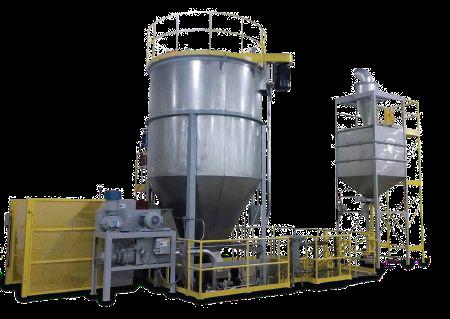
T he proje ct’s suc c ess le d to t he for mat ion of Ho ola O ne Te chnolog ies lat er i n 2 019 by L a nt ag ne a nd t wo ot her memb er s of t he i n it ia l t ea m, i nclud i ng cu r rent co - ow ner Jea n-Fel i x Tremblay, w it h f i n a nc ia l sup p o r t f r om t h e C a n a d a E c onom ic D evelopment for Q ueb e c Reg ions agency a nd ot her a ssist a nc e f rom Espac e -i nc, a busi ness ac c eler ator ba se d i n Sherbro oke T he compa ny’s na me is a t r ibut e to it s ea rly suc c ess i n Hawa i i – “Ho’la O ne” mea ns g ivi ng l i fe back to t he sa nd i n t he Hawa i ia n la ng uage. Bu i lt i n Ho ola O ne’s headqua r t er s i n Q ueb e c Cit y – where t he compa ny move d f rom Sherbro oke i n 2 021 – t he cu r rent ver sion of t he HO M ic ro is a fou r-mo du le mach i ne t hat’s more ef f icient at re cover i ng m ic ropla st ics t ha n ot her clea n i ng t e ch nolog ies, L a nt ag ne sa id, b e cause it sco ops up pa r t icles t hat a re a s sma l l a s 0 05 m i l l i met er s dow n to a dept h of 7. 5 c ent i met er s; is less i nt r usive to t he e cosyst em; work s on a ny t y p e of soi l; a nd ca n b e use d on r ugge d shores, where ot her devic es fa i l
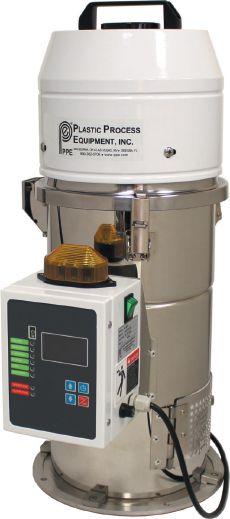
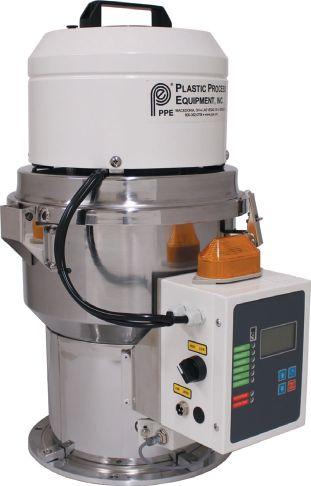
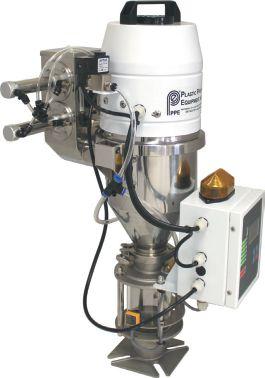
I n addition to the HO M icro, the compa ny has developed a nd bui lt two ot her di fferent, but complement a r y, vacuum clea n ing devices: the HO Wrack, wh ich is Hoola One’s ma in com mercia l tech nology, is a single-module sieving un it that collects m icroplastics with in a desi red ra nge wh ile ret u r n ing ever y th ing outside of that ra nge to the shore, a nd wh ich ca n be used in factor ies a nd pa rks in addition to beaches; a nd the HO Backpack is a sma ller por table collection un it that feat u res a ha nd-held vacuum device that collects m icropa r ticles f rom a reas that a ren’t ser ved by roads, a nd wh ich a re then brought back to either the HO M icro or HO Wrack cent ra l un its Hoola One pla ns to br ing a new com mercia l version of the HO Backpack to ma rket in July 2024, a nd a new version of the HO Wrack to ma rket in December 2024
AP : MBGHMF NT S
A f ter focusing for severa l yea rs on beach clea n ing a nd building a customer base a mong non-prof it orga n izations, beach clea nup g roups, a nd loca l a nd federa l author ities – including Envi ronment Ca nada – Hoola One bra nched out in 2021 into the recover y of spilled resin pellets on outdoor a reas of plastics processi ng a nd c onver t i ng pla nt s. “ Two of t he big sou rc es of m icroplastics a re pellets spilled due to plastic production pla nt
S gd uWbttl sdbgmnknfx Ws vnqj -
lea kage or du r ing t ra nspor t ation, a nd wh ich then f ind thei r way into the envi ron ment,” La ntagne sa id “We’d a l ready noticed du r ing ma ny of ou r beach clea nups that some of the m icroplastics were act ua lly vi rgin pellets, so th is was a nat u ra l prog ression for us ” T he HO Wrack system is well-suited for these jobs, La ntagne expla ined. “It’s the optima l tech nology for pellet collection because it accesses ha rd-to -reach places outside
CxmY Otpfd opnuhcdr opnctb s Ymc sdbgmhbYk rtoonps athks nm nudp 0. xd Ypr ne hmmnuYshnmNtp btrsnldpr dminx sgd hmctrspxzr lnrs deedb shud bnlldpbhYk otpfhmf bnlontmcr! ntsrsYmchmf btrsnldp rdp uhbd Ymc pdkhYakd pdrtksr RsYps r Yuhmf shld Ymc hmbpd Yrhmf opn’sr sncYxPdptdrs R eqdd r Rloid ne 8wmR Dtqfd Rmc rdd enq wntqrdi
8hranudq sgd 8heedqdmad744 4.6 7630 vvv-cwmRotqfd-anl CUM? OTPED hr Y
THE POWER OF PURGING
Ax LWqj Rsdogdm’ dchsnq BnlldqbhWk otqfhmf bnlontmcr lWx gW ud addm bqdW sdc enq hmidbshnm lnkcdqr* ats sgdx lWjd W kns ne rdmrd enq dwsqtcdqr snn-
Then plastics manufacturers thin k about purging, a lot of them probably also thin k about injection molding. And no wonder: Com mercial purging compounds (CPCs) were originally designed and marketed to the injection molding industr y, and it remains the dominant process for CPC usage But purging ma kes as much sense for extr usion, which is a continuous process Mea ning that, once conta m ination begins, it’s almost impossible to stop it without the kind of aggressive intervention that a purging compound provides.
But that’s the irony – precisely because it’s a continuous process, CPCs have, historically, been used less frequently in extr usion than injection molding, which has long been considered more natural and easier for purging because it’s cyclical.
That thin king isn’t just old school, it’s from the school they tore down to build the old school. Extr usion systems can have areas with little or no polymer f low where material can build up after colour and material changes, leading to fr ustrating production challenges, including higher scrap rates, more downtime, and lower quality of finished products. Add that to the challenges that even the best-r un extr usion shops are facing today –such as long r uns and high outputs, heavy reliance on just-intime processing, and increased pressure for cost savings on materials – and the case for perfor ming a proper extr usion purge has never been stronger
The good news is, most CPC suppliers offer a full product line of purging grades that address different resins as well as purging issues; and more and more have for mulations that have been developed speci f ica lly for ext r usion, i ncludi ng more aggressive glass- and mineral-filled grades.
SGNTFG SR NM PDRHM : MC PDFPHMC
CPCs can be used for a wide ar ray of extr usion processes – pipe, profile, tubing, sheet, film, compounding, and extr usion blow molding – and there are some things to consider in order to choose the best product for your system, beginning with the ageold strategy of purging with either production resin or regrind In the right situations, some CPC suppliers say, both can work, with perhaps the best-case scenario being pipe extr uders r unning dedicated lines without colour or material changes. “Since these machines have bigger orifices and bigger and less intricate dies
than other types of extr uders, non- CPCs can usually do the job as purging agents,” said Jeff Lewis, sales and technical manager with Slide Products “And with supply chain challenges and resin prices going up, regrind is becoming a more popular choice than it used to be – a lot of plants these days are generating a lot of regrind, and if they don’t have a source to put it back into, it ma kes sense to purge with it.” For these same reasons, some CPC suppliers say, purging with production resin may not be as smar t a move as it was a just few shor t years ago, when extr usion shops used to be okay with using resin for purges even though it took longer because its cost was cheap compared to CPCs. “Given high prices and deliver y problems, maybe the only rationale for using production resin these days is if a job is cancelled and the resin for it can’t be used anywhere else,” Lewis said.
And economics aside, a caveat is that for extr usion processes with frequent changeovers and more complicated dies, using leftover production resin or regrind may not tur n out well for the simple reason that, at the end of the day, they aren’t designed to clean machines “Under the wrong circumstances, purging with production resin just creates another layer over the existing resins, colour deposits or carbonized material within the bar rel and on the screw, and these layers build up to become additional sources of contamination,” said Graziano Pestarino, business development director for ther moplastics with Chem-Trend.
A nother popula r option is using a gener ic CPC for the extr uder, which can also work “Injection purges may work in extr usion depending on the problem and the machines, considering that both have bar rels and screws in com mon,” said Hector Sanchez, national sales manager with Asahi Kasei Plastics Nor th America. But, some CPC suppliers caution, these grades may not be right for ever y situation “An injection molding grade CPC may not be ver y effective on a complex extr usion die because it’s designed to work with high pressures and lots of agitation, and these factors don’t occur in extr usion,” Graziano Pestarino said.
M : PPNVHMF HS CNVM
Finding the right CPC for the job begins with factoring in the characteristics of a specific extr uder, including the type of extr usion process and the size and processing temperatures of the machine “Different extr uders have different cha racter istics, accessories, and restrictions that require different purges,” said Hector Sanchez. “Some purges deal better in low-pressure environments and difficult zones to reach; others have viscosities and additives that scr ub better, and the machine forces and f low patter ns require purges to be easier to displace.”
Since using the wrong chemicals or tools can damage screws and lead to production issues and since purging procedures for the extr usion process var y depending on the grade you’re using, it’s best to reach out to the CPC supplier directly if you’re unsure how to most efficiently clean your extr uder “Your CPC provider should have standard procedures for using their products,” said Bob Grzegorek, global technical ser vices manager with Shuman Plastics, which supplies the Dyna-Purge line “We recom mend r unning initial trials to optimize the procedure for your equipment, and we provide technical suppor t on-site to assure the most efficient procedure.”
Another par t of this decision is choosing the type of CPC to use, of which there are th ree categories: mechanical, which relies on pressure and agitation to clean out the resin or any other contamination in a molding machine; chemical, which requires a soa k time to clean by using chemical reaction; or hybrid, which cleans using the components of both mechanical and chemical purge types And the tr uth is, different CPC suppliers offer, and recom mend, different categories “Typically, mechanical purges work ver y well for extr usion, and we also have a fast-acting chemical/mechanical hybrid for polypropylene that requires no soa k time,” Grzegorek said The only problem, some CPC suppliers say, is that some mechanical CPCs may contain par ticles that could possibly lodge and block areas of the process such as extr uder screens A chemical purge or a mechanical purge that
foams or expands works extremely well in low-pressure and lowf low environments, which are often hard to reach and clean, these suppliers say, and may prove useful in cleaning the dead areas that are com mon in dies – the areas that, if neglected, can result in the most serious contamination. “But our r ule of thumb is, if the par t defect is bad enough that you can see it, a chemical purge is the better choice,” Jeff Lewis said
RBPDVR : MC A: PPDKR’ : MC ADXNMC
How often to purge an extr uder depends on a variety of factors “Any extr usion process involving frequent material or colour changes will require more frequent purging,” said Br uce Ger vason, senior technical sales manager with Purgex Purging Compounds. Traditionally, this meant profile extr usion and compounding, where changeovers were more frequent and the resins, colours, and additives were more varied But some CPC suppliers are now repor ting a rise in usage among film sheet and extr usion blow molders. “Both of these processes have added lots of colours lately to become more cosmetic, and additives to become more durable; and especially with sheet, extr usion shops are adding f lame retardants, which ma kes the plastic almost like taffy, and ver y difficult to get out of the die without an effective purge,” said Jeff Lewis
For most extr usion processes, cleaning the machine is accomplished by f lushing the system with clean resin or a purge mate-
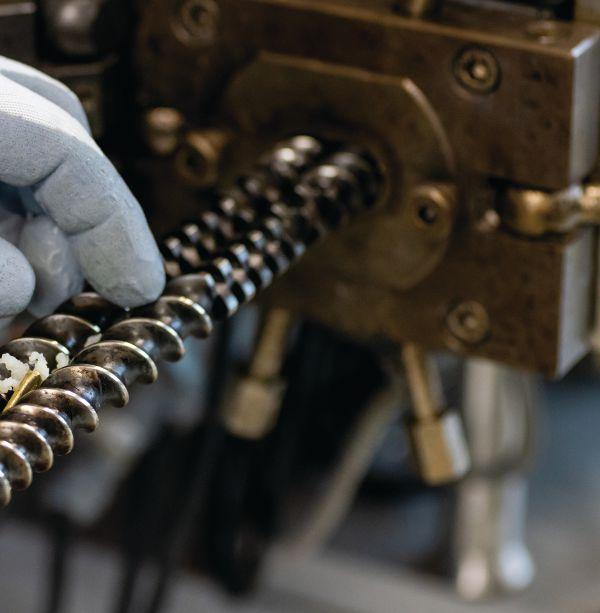
rial until the system is no longer contaminated The purge time could be as shor t as a couple of volumetric exchanges or as long as severa l hou rs, depending upon ext r ud e r s c r ew/ ba r r el we a r, t h e d ie design, the presence of f low in h ibitors in the system such as static m ixers, a nd the type of conta m ina nt. P u rging the screw a nd ba r rel is typica lly easy a nd st ra ightfor wa rd, C P C suppl ier s say, a nd t he pu rging inst r uctions a re a lmost a lways the sa me for a ny pa r ticula r CPC T he compound should be fed slowly in order to ensu re that a ll the f lights a re f ull, a nd the screw speed is then increased to the ma ximum sa fe r pm once the pu rge st a r ts to come out of the mach ine.
During the purge, periodically stop the screw and allow the purge to settle into any “dead” areas, and then, after a few minutes, star t rotating the screw slowly, and then go back up to high screw speed This stop-and-go purging – sometimes called a “disco purge” – adds turbulence to negative f low areas, and is the oldest and possibly easiest method of extr usion cleaning. “The disco purge can be a ver y ef fe ct ive me cha n ica l t e ch n ique, a nd works especially well for stubbor n carbon buildup and colours that are more difficult to remove,” said Bob Grzegorek. After continuing this process until most of the compound is purged from the bar rel, the pile should be inspected. “The extr uder is clean and the process complete when the pu rgi ng compou nd com i ng f rom t he machine is free of contaminants,” Graziano Pestarino said
A problem with disco purges, some CPC suppliers say, is that shops don’t always perfor m them properly. “The operator who’s been trained to do the disco purge may not always be the operator on that machine when it’s being done, and anytime you’re changing heats and speeds and pressures, you can r un into problems,” sa id Jeff L ewis. A nd chem ica l CPCs now are so efficient, Lewis continued, that there’s no reason anymore to do a disco purge in lieu of a chemical purge.
Some a rea s of a n ext r uder ca n b e especia lly cha llenging to pu rge “Adapter t ubes – wh ich is a set up that requi res resin to t ravel for a long dista nce – t ra nsition a reas, melt pumps, a nd dies a re a ll
a reas that need to be pu rged ver y ca ref ully to prevent resin buildup a nd deg rad at ion,” sa id Br uc e G er va son Some CPCs have no problem passing th rough melt pu mps, wh ich a re h igh-pre cision devices, but some CPC suppliers wa r n aga inst using glass-f illed pu rges for the job. “T he recom mendation is to a lways che ck wit h you r pu rge suppl ier,” sa id Hector Sa nchez
T h e d ie i s u s u a l ly ve r y b ig a n d a lways i nt r icat e, a nd t herefore t y pica l ly t he most d i f f icu lt a rea of t he ext r usion l i n e t o cl e a n. B o t h c h e m i c a l a n d me cha n ica l CP Cs t hat foa m or expa nd a re capable of clea n i ng t he dead a rea s t hat a re com mon i n d ies, even t houg h m o s t of t h e s e c o m p o u n d s p r o b a bly a ren’t desig ne d to b e d ie clea ner s p er se T he key is to move t he pu rge to cover t h e wh ole d ie, He c t o r Sa n ch ez s a id. “ T h is mea ns c reat i ng enoug h pressu re to reach t he d ie e dges, a nd somet i mes t emp er at u re a nd gauge adjust ment s ca n i nc rea se t he pu rge ef fe ct ivit y here,” he sa id Sp e ci f ica l ly, some CP C suppl ier s say, r a isi ng t he d ie t emp er at u res by up to 50° F or 10° C may help sof t en a ny dep osit s wit h i n t he d ie, but t h is shou ld n’t b e at t empt e d when r u n n i ng heat-sensit ive resi ns.
Vented bar rels are another par t of the ext r uder that ca n be diff icult to clea n because the vent is an area of lower pressure and agitation “Sometimes a standard purging procedure will work, and other times you can feed the purge through an open vent to improve cleaning of the vent a rea,” sa id Bob G rzegorek “I n cases where the purge is f lowing out of the vent, you m ight need to allow the purge to harden in the vent before proceeding, or you may need to close off the vent ”
NTMBDR NE OPDU DM SHNM
Many extr usion shops use purging compounds only when absolutely necessar y, but est ablish ing a reg ula r prevent ative maintenance program will prevent contamination buildup and other problems in the first place – and it typically only ta kes between one to two bar rel capacities of purging compound to prevent contamination, CPC suppliers say. “Even if you’re r un n ing the sa me mater ia l a nd colou r
24/7, we recom mend doing a preventative maintenance purge at least once a month to remove buildup in low-pressure areas,” Grzegorek said.
Also, extruders should be purged before tempora r y or extended machine shutdowns, especially over weekends or holidays. “I recommend purging any type of machine that has a barrel and screw before extended shutdown, including extruders,” said Jeff Lewis. “If you don’t, you risk allowing the last thing you’ve r un to degrade in the barrel I recommend purging the extruder and then adding a bit more compound and shutting down full, which keeps out the oxygen that would otherwise allow degradation to occur. Even for extrusion shops that mainly purge with regrind and only use a CPC once in a while, a shutdown is the best time to use it ”
And last but definitely not least, follow the instr uctions that come with the CPC “Each CPC manufacturer has its own procedures that work best with its own compounds, and it’s imperative to follow these to get the best results,” said Br uce Ger vason. “This is probably the most impor tant factor in successful purging.”
Given the many headwinds of today’s competitive plastics industr y, using CPCs for ther moplastic processing should no longer be up for debate And that definitely includes extr usion, where processors can benefit substantially from the material and time savings in downtime and scrap that CPCs offer
OCRLTO C IERS
; r Zgh I Zr dh OkZr s hb r M np s g ; l dphbZ
’ OYqrhooYmx+ M - I-(: v v v-YrYbkdYm-bnl: 7 / / 676 3 2 3 7
Bgdl Sp dmc K -O- ’ G nvdkk+ Lhbg-(: v v v-bgdlsqdmc-bnl: 406 4 3 4 68 7 /
C x mZ Otp fd Chu- .RgtlZm OkZr s hb r Hmb-
’ C dodv+ M -W-(: v v v-c xmYotqfd-bnl: 7 5 5 5 /6 763 2
Otp fdw Otp fhmf B nlontmc r ’ G ntrsnm+ Sdw-(: v v v-otqfdwnmkhmd: 7 / / 7 / 2 5 131
Rkhcd Op nctb s r Hmb- ’ V gddkhmf+ Hkk-(: v v v-rkhcdoqnctbs r-bnl: 7 / / 21 2 5 3 2 2 ;b dSp nmhb Hmct r s phZk B nms p nkr Hmb’ LhrrhrrYtfY+ Nms-(: v v v-Ybdsqnmhb-bnl: 8 / 4 4 5 3 61 16
Fere’s a question: why would n’t a plastics pa r t molder ta ke its scrap proc essi ng a s s e r iously a s p ossible?
A f ter a ll, a bet ter size reduction system creates h igh- qua lity reg r ind that reprocesses eff iciently a nd wit h t he prop er cha racter istics, such as st rength a nd optica l qua lities It should be a no -bra iner, but to o m a ny pla st ics m a nu fa ct u r er s t reat size reduction as a n a f ter thought, even when the rest of thei r line conta ins well- conceived systems.
Typica lly, processors use g ra nulators to reprocess mater ia l into a size a nd density sim ila r to vi rgin resin – or, as fa r as densit y goes, of ten lower t ha n t hat of vi rgin resin, especia lly for f la ke – so it ca n be fed di rectly into processes such as injection molding, ext r usion, blow molding, a nd ther mofor m ing; a nd /or sh redders to r ip la rge pa r ts into sma ller chun ks of about two to fou r inches in size, in a cost- ef fective a lter native to cut ti ng up pa r ts ma nua lly before g ra nulating
W hether you’re using either or both, a go o d si z e re duct ion syst em ca n help ma ke the difference between boom or bust. Here’s some of t he most re c ent tech nology updates, as well as t rends that some exper ts a re seeing
FD S S HMF V H S G FP : MTK :S NPR
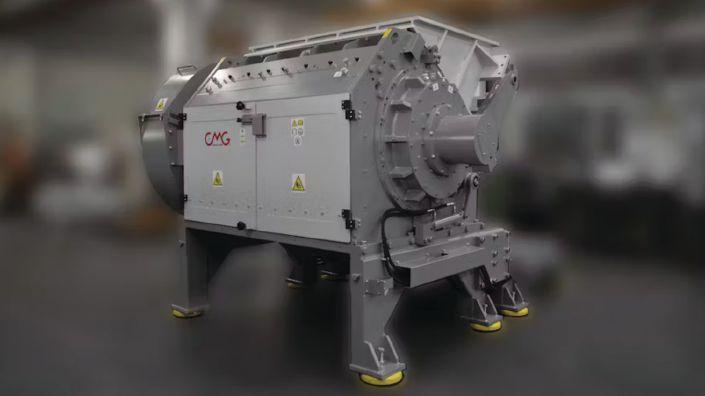
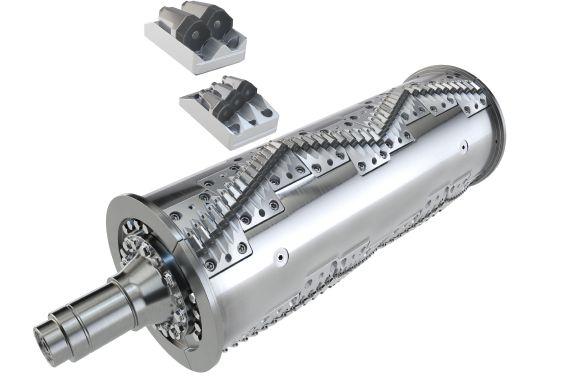
CMG SpA, owned by Piova n SpA a nd ava ilable in Nor th A mer ica th rough Piova n’s Un iver sa l D y na m ics subsid ia r y, has redesigned the cut ting cha mber on its new Evolu z ione ser ies of g ra nu lator s, wh ich consists of the EV916 a nd EV616 models, to provide more precise cut ting, accom modate h igher mater ia l volumes, a nd ensu re easier ma intena nce. Cha nges to the cut ting cha mber design include a new rotor that lets blades cut plastic feed-
stock in a per pendicula r di rection aga inst t he b e d blades. A nd rotor blades a re mounted on the edge of the rotor holding modules instead of on a holding block, giving quick access f rom the f ront of the g ra nulator for blade cha nges a nd ma intena nce Both Evoluzione g ra nulators util i z e a 36 -i nch- d ia met er, 63 -i nch-long, open-type rotor a nd have a capacit y of 6,6 0 0 to 11, 0 0 0 pounds per hou r T he ser ies is suitable for wet or d r y applications, CMG off icia ls sa id.
Cumberla nd, a division of ACS G roup, has made a big cha nge to one of its X ser ies g ra nulator models to bet ter ser vice its sheet a nd ther mofor m ing customers. “T hese applications a re ach ieving more th roughput by going wider, so we’ve followed suit,” sa id Joe Platek, ACS G roup’s bu si ne ss d evelop m ent m a na ge r, si z e reduction “T he X ser ies now has a new version of t he X180 0 model, wit h a n expa nded cut ting cha mber of 24 by 72 inches ” A nd as a result of the US$1 7t r illion federa l spending package passed
last yea r in the U S , Platek sa id, other C u mb erla nd cust omer s a r e ext r ud i ng more pipe tha n ever before for f ibre optic conduits for inter net a nd telecom mun icat ions ser vice for new i n f ra st r uct u re developments a nd expa nsions. “For these processors, we’ve custom ized some of ou r in feed hoppers to a llow operators to more sa fely feed longer sections of reject pipe,” he sa id
T he new G C V ser ies f rom G enox USA is the compa ny’s f i rst combination u n it, feat u r i ng a V ser ies si ngle-sha f t sh redder mounted on top of a G C ser ies g ra nulator in a compact, single un it that elim inates the need for conveyors. T here a re fou r models in the G CV ser ies T he sma llest is the G CV6 0 0T, wh ich has a sh redder with a hopper open ing of 47. 2 by 42 9 inches, a cha mber size of 23 6 by 19 7 inches, a 24 -hp ma in d r ive motor, a nd a 3-hp hyd raulic power pack; a nd the la rgest model is the G CV120 0T, with a hopper open ing of 74 8 by 56 3 inches, a sh re dder cha mb er mea su r i ng 47. 2 by
32.1 inches, a 74 -hp ma in d r ive motor, a nd a 7-hp power pack un it Genox off icia ls sa id t he G CV ser ies ca n ha ndle scrap plastic, la rge plastic f ra mes, pu rges, pipes, a nd cable. T he cut ting cha mbers on both the sh redder a nd g ra nulator a re easily accessible for ma intena nce A lso, t he cont rols a re i nt eg r at e d, a nd rotor designs ca n be custom ized for different mater ia ls
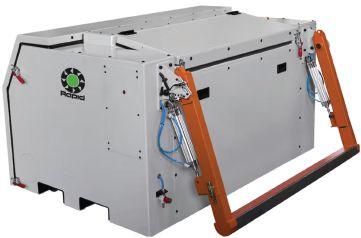
Rapid G ra nulator’s new patent pending GT ser ies is designed specif ica lly to ha nd le i n-l i ne p ro c essi ng of skelet a l waste f rom sheet a nd f ilm ther mofor ming lines, a nd ca n accom modate scrap w idt h s r a ng i ng f r om 2 t o 6 5 fe et Mach ines in the GT ser ies a re designed to operate 24/7, a nd operator access has been optim ized to m in im ize downtime for tasks such as k n ife cha nges or cleanout when colou r cha nges a re per for med; a nd t he ent i re cha mber sl ides out for complete access f rom one side for easy clea n ing a nd ser vice. T he GT ser ies is built for robust, long-lasting ser vice, with u s e r-f r iend ly f u nc t iona l it y a nd opt im ized cut ting tech nology, compa ny off icia ls sa id.
M i ke C y r, p r esid ent of Rot og r a n I nter nationa l, sees severa l size reduction t rends emerging, begin n ing with more cu st om e r s r e qu e st i ng a P r e - St a r t up Sa fety Review ( PSSR) with thei r equipment pu rchase. “T h is ser vice is typica lly provided by a t h i rd-pa r t y engi ne er i ng f i r m that works di rectly with both the OEM a nd the customer to ensu re ma ximum worker sa fety,” Cyr sa id “Across the count r y, PSSR repor ts a re f requently re quest e d b efore a f u l l-si z e re duct ion l i ne or processes go es i nto op eration;
Q Wohc F q WmtkWsnq!r F S rdqhdr hr cdrhfmdc rod bhehbWkkx sn gWmckd hm khmd oqnbdr rhmf ne rjdkd s Wk vWr sd eqnl rgdds Wmc ehkl sgdqlnenqlhmf khmdr-
V hs slWmm!r V hB nmmdb s Woo Wkknvr nvmdq r ne hs r R L W w fq WmtkWsnq r sn bnlltmhbWsd vhsg sgd bnloWmx!r r Wkdr Wmc rdq uhbd sdWlr hm qdWk shld-
they’re not ma ndator y yet for new g ra nulators a nd sh redders, but more engineers responsible for sign ing off on equipment a re now push ing for them ” Second, Cyr sa id, get ting good qua lity reg r ind is now more impor ta nt tha n ever for a g rowing number of processors “Just keeping the blades sha r p doesn’t a lways cut it,” he sa id. “One way to get bet ter qua lity is by preventing the creation of f ines, wh ich a re mostly caused by excessive heat in the g ra nulator created by la rge volumes of pa r t ia l ly pro cesse d mater ia l i n t he cut ting cha mber that m in im ize the ava ilable su r face a round the mater ia l for heat to dissipate. Using a properly sized a i r evacuation system with the g ra nulator to keep it cool is one way to ach ieve th is ” Optiona l water- cooling jackets that add additiona l mater ia l cooling capacity a nd oversizing the g ra nulator for the application to a llow more eff icient heat dissipation a re two other possible solutions, Cyr sa id T h i rd, Rotog ra n is now using A 2 tool steel for its replaceable wea r inser ts in h igh ly abrasive applications. “We used to coat inser ts with t ungsten ca rbide, but
it ca n ch ip upon di rect impact,” Cyr sa id “A 2 g r a de st e el p er for m s b et t er t ha n t u ngst en- coat e d i nser t s b e cause of it s go o d ba la nc e of toug h ness a nd wea r resista nce ”
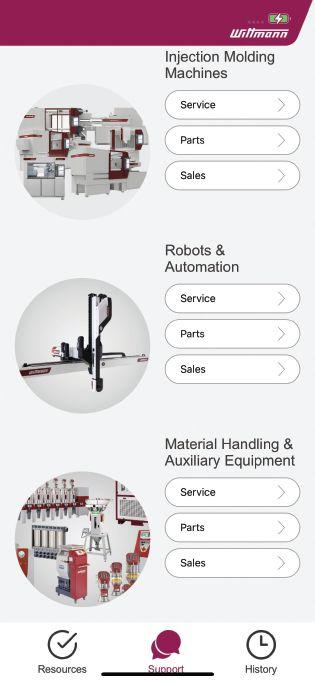
Fina lly, Wit tma n n has redesigned its Wi Ba Con nect app, now ca lled WiConnect! I nt roduced in 2014, the customer ser vice app enables plastics processors –including owners of Wit tma n n’s S-Ma x ser ies of beside-the-press g ra nulators –t o c om mu n icat e w it h t he c ompa ny’s sa les a nd ser vic e t ea m s i n rea l t i me. Redesigned based in pa r t on su r veys of customers a nd existing users, Wit tma n n off icia ls sa id that WiCon nect! reta ins the best f unctions of the or igina l app wh ile add i ng some new feat u res: Users ca n now send photos a nd videos with in the C hat f u nct ion, for exa mple, a nd t he Resou rc es t ab ha s qu ick l i n k s to t he c om p a ny’s YouTub e ch a n n el, wh ich includes inst r uctiona l videos for g ra nulators a nd other Wit tma n n mach iner y T he H istor y log, mea nwh ile, enables users to see wh ich depa r tment a nd division they contacted last, so they ca n con nect aga in with a single click T he new WiCon nect! app is ava ilable as a f ree down load in the Apple App a nd Google Play stores, with lin ks on Wit tma n n’s website
RGP DCCHMF H S
Designed for genera l pu r pose applications, Cona i r G roup’s GP ser ies singlerotor sh redders a re i ntended to be a n ent r y-level line of sh redders for processors that need to reduce ha rd scrap too la rge for a g ra nu lator, but at a lower th roughput a nd pr ice tha n a la rger sh redder Well-suited for ha ndli ng sma ll to mo der at e t h roug hput s of pu rg i ngs, a s well as pipe a nd prof ile a nd sheet scrap, the sh redders a re ava ilable in two models: the GP 924, wh ich has a 24 -inch cutting cha mber; a nd the GP 935, wh ich has a 35-inch cha mber T he rotor on both mo d els is m a d e of 8 7-i nch- d ia met er steel, a nd is equipped with fou r-sided, indexable cut ting k n ives that cut aga inst a f ixed-blade k n ife that has dua l cut ting edges. Both the f ixed-blade a nd indexable blades ca n be unbolted a nd rot ated to keep a f resh edge in action between
sha r pen
ings T he sh redders have a la rge, open-top in feed hopper that ca n accommo d at e gaylord-si z e bat ch fe e ds a s a st a nd a rd fe at u r e; a low-m a i nt ena nc e hyd raulic ra m to d r ive scrap into the cutting cha mber; a nd h igh cut ting torque at relatively low rotor r pm, a llowing them to cut even th ick scrap with lim ited noise
For Vecopla n, a n a rea of continued focus is reduci ng power consu mption. “We no longer have gea rboxes on a ny new Vecopla n sh redders, wh ich reduces t he p ower consu mpt ion a nd a lso t he a mount of ma intena nce,” sa id G reg Pa rent, the compa ny’s Ca nadia n sa les representative. “A lso, a ll cont rols use va r iable speed d r ive to ma inta in the proper torque for what’s requi red for the application: O n ou r H iTorc ele ct rom ag net ic d r ive option, a 20 0 -hp motor – wh ich Vecopla n has on its la rger sh redders – is on ly d rawing 8 or 9 a mps, wh ich is the equiva lent of the d raw of a vacuum clea ner.”
Ve copla n’s newest sh re dder s a re a lso h igh ly con f ig u rable, Pa rent cont i nued, with different d r ive a nd rotor options.
“We even offer options to cha nge the size of the cut ters on the rotor, wh ich has never be en ava i lable before,” he sa id. “T he cut ters a re on bolt- on plates, with multiple cut ters per plate, so customers ca n now switch back a nd for th for easy sh redding of different pa r ticle sizes a nd / or different mater ia ls ”
Sh redder ma ker Weima will be pa r t of a tea m of compa n ies ha ndling recycling duties at the upcom ing N PE2024
t rade show, the la rgest plastics show in Nor t h A mer ica, wh ich is exp e ct e d to produce hund reds of tons of plastic products f rom mach ines r un n ing at ex h ibit sta nds Weima will join recycler Comm ercia l Pla st ics Re cycl i ng, r e cycl i ng systems ma ker Erema Nor th A mer ica, a nd auxilia r y equipment ma ker Cona i r G roup a s compa n ies i nvolve d i n t he r e cycl i ng i n it ia t ive, wh ich a i m s t o ach ieve 10 0 per cent plastic recycling, even down to mater ia ls li ke the plastic cover ings used for booth ca r pet protection du r ing set up. L ocated at the O ra nge County Convention Center in O rla ndo, F la., N PE2024 will include what Weima is ca lling “a m in i ma nufact u r ing cent re” beh ind the show f loor to recycle plastic products made on-site T h is a rea wi l l feat u re re cycl i ng e qu ipment t hat wi l l sh red, g ra nulate, a nd ext r ude plastics at the show Com mercia l Plastics Recycling will have a crew of about 6 0 people at the show to ha ndle movement of mater ia ls a nd sh ipment to the compa ny’s recycling facility in Ta mpa, F la.
And Zerma’s newest model of its ZRS series pipe shredder can process plastic pipes with a diameter of up to 2.2 meters and a length of up to 7 meters. The pipes are fed in horizontally through an enclosed feeding trough, and the shredding process automatically starts as soon as the heavyduty hydraulically operated cover is closed and locked The feeding hopper can accept various sizes of pipes, even cascading multiple pipe diameters The rotors have a
diameter of 1 3 meters and a width of 2 6 meters, and are driven by a gear combination consisting of two gearboxes with 55 kW motors each. The machine has a control panel with a separate operator panel that lets the user monitor and control the operation. This operator panel offers an intuitive touchscreen user interface, allowing complete control and monitoring of the process to maximize productivity. This newest model in the ZRS pipe shredder series will be put into operation this year at an unnamed North American pipe manufacturer, Zerma officials said. B O K
OCRLTO C IERS
;B R E p nto.BtladpkZmc ’
B nmZhp E p nto ’BqYmadqq x Snvmrgho+ OY-(: v v v-bnmYhqfqnto-bnl: 613 4
/ / ;t whokZr s Hmb- ’ UYqdmmdr+ Ptd-(: v v v-YtwhokYrs-bnl: 7 5 5 8 1 1 17 8 3 Chdp Hms dp mZs hnmZk OkZr s hb r Hmb- ’ T mhnmuhkkd+ Nms-(: v v v-chdqhmsdqmYshnmYk-bnl: 305 108 / 4 / 8
Stp mdp E p nto Hmb- ’ R dYs skd+ VYrg-(: v v v-stqmdqfqnto-mds: 1 / 5 65 8 26/6
E dmnw T R ; ’ R s- Odsdqratqf+ E kY-(: v v v-fdmnwtrY-bnl: 613 8 5 / 003 5
PZohc E p ZmtkZs np Hmb- ’ Jdds rcYkd+ OY-(: v v v-qYohcfqYmtkYsnq-bnl: 613 4 7 3 41 1 / CBtad ’ L nmsqdYk (: v v v-cbtad-b Y: 403 161 / 4 / /
Pn s nfp Zm Hms dp mZs hnmZk Hmb- ’ A nksnm+ Nms-(: v v v-qnsnfqYm-bnl: 8 / 4 62 7 /0/0 Hmct r s phdr K Ze dp phdp d ’ L Yrbntbgd+ Ptd-(: v v v-hmctrsqhdrkYedqqhdqd-b Y: 3 4 / 36 6 7 7 7 /
T mhudp r Zk C x mZlhb r Hmb- . OhnuZm BZmZcZ ’ LhrrhrrYtfY+ Nms-(: v v v-ohnuYm-bnl: 8 / 4 5 1 8 7 71 1
Ud bnokZm K KB ’ @ qbgcYkd+ M -B-(: v v v-udbnokYmkkb-bnl: 2 2 5 3 36 2 462
E p df OZp dms: 305 567 /04 3
VdhlZ ; l dphbZ Hmb- ’ E nq s Lhkk+ R -B-(: v v v-vdhlY-bnl: 7 7 7 3 3 / 606/
V hs s lZmm AZs s dme dkc BZmZcZ Hmb’ Q hbglnmc G hkk+ Nms-(: v v v-vhs slYmm fqnto-b Y: 8 / 4 7 76 4 2 4 4
Wdp lZ ; l dphbZ ’ E nq s L dxdqr+ E kY-(: v v v-ydqlY Yldqhb Y-bnl: 1 2 8 108 00/ / Dm,OkZr Hmb- ’ Snqnmsn(: v v v-dm okYrhmb-bnl: 305 17 5 2 / 2 /