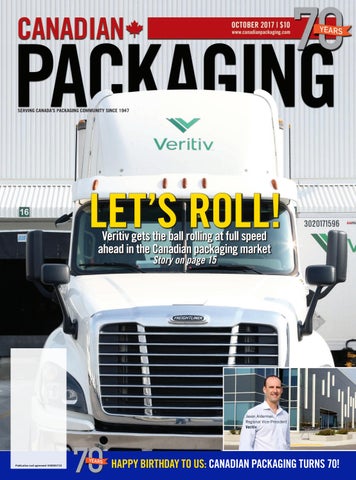
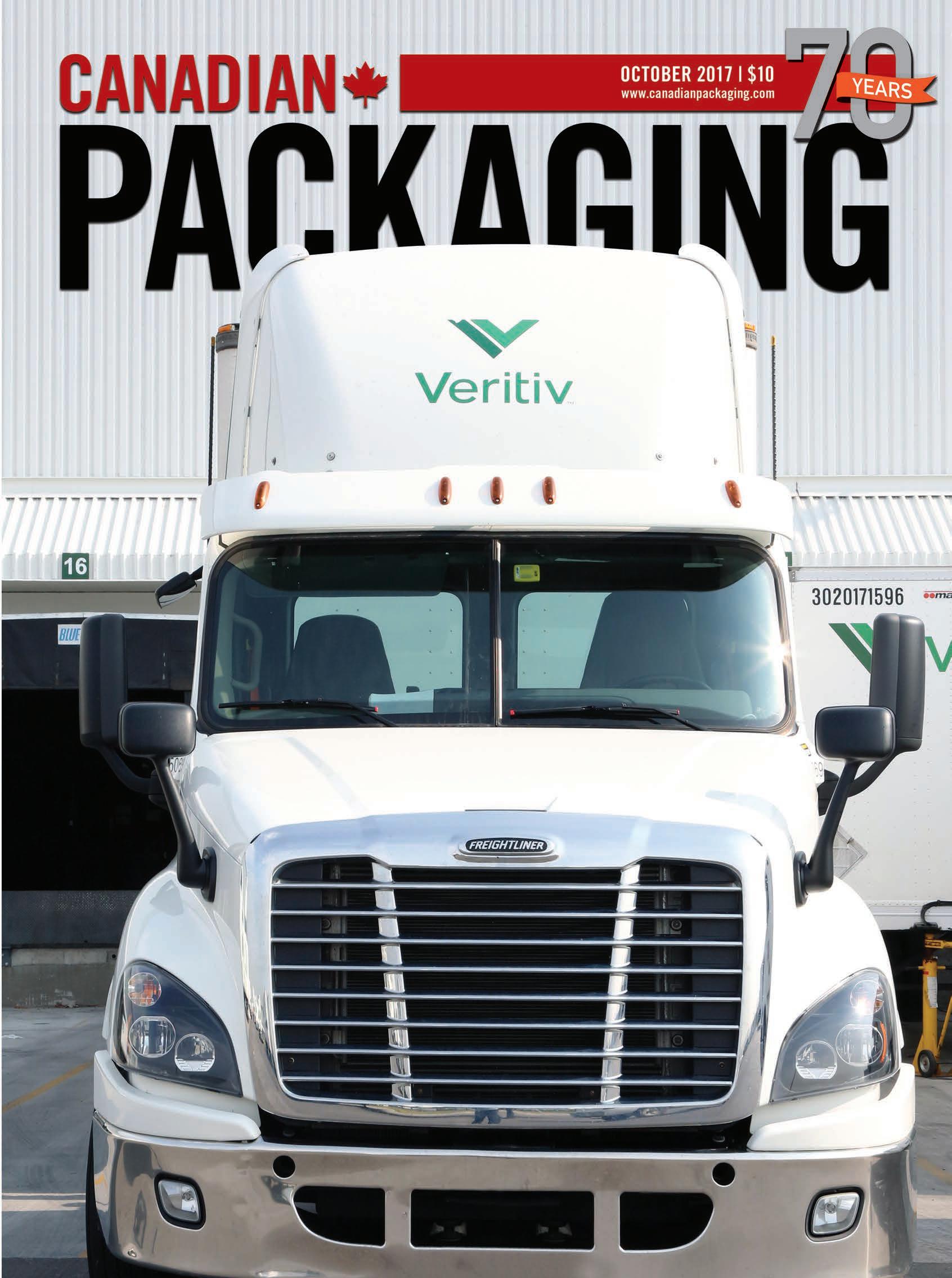
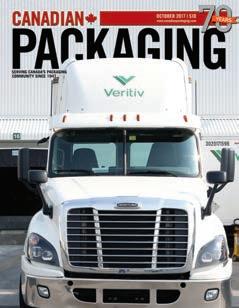
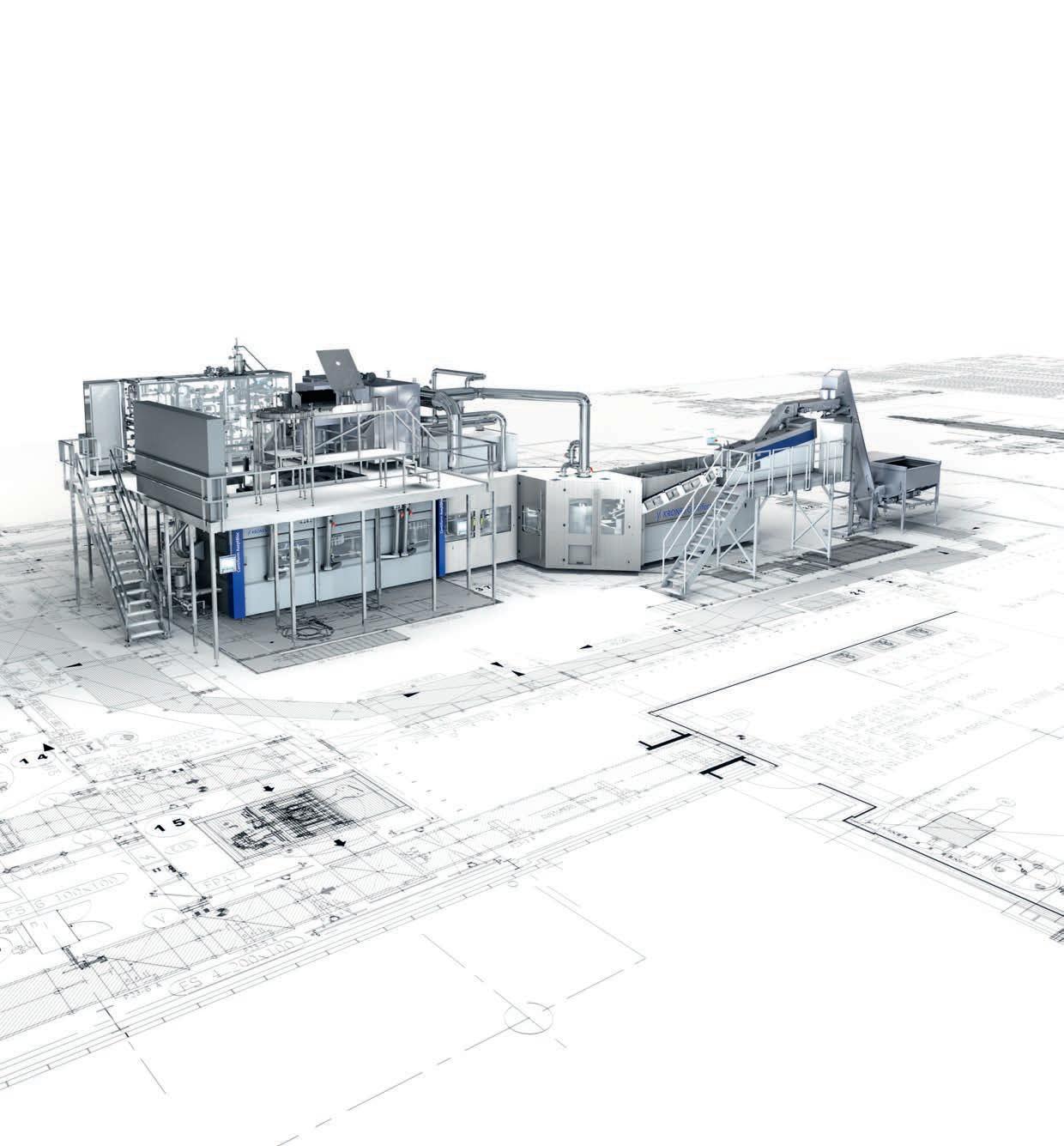
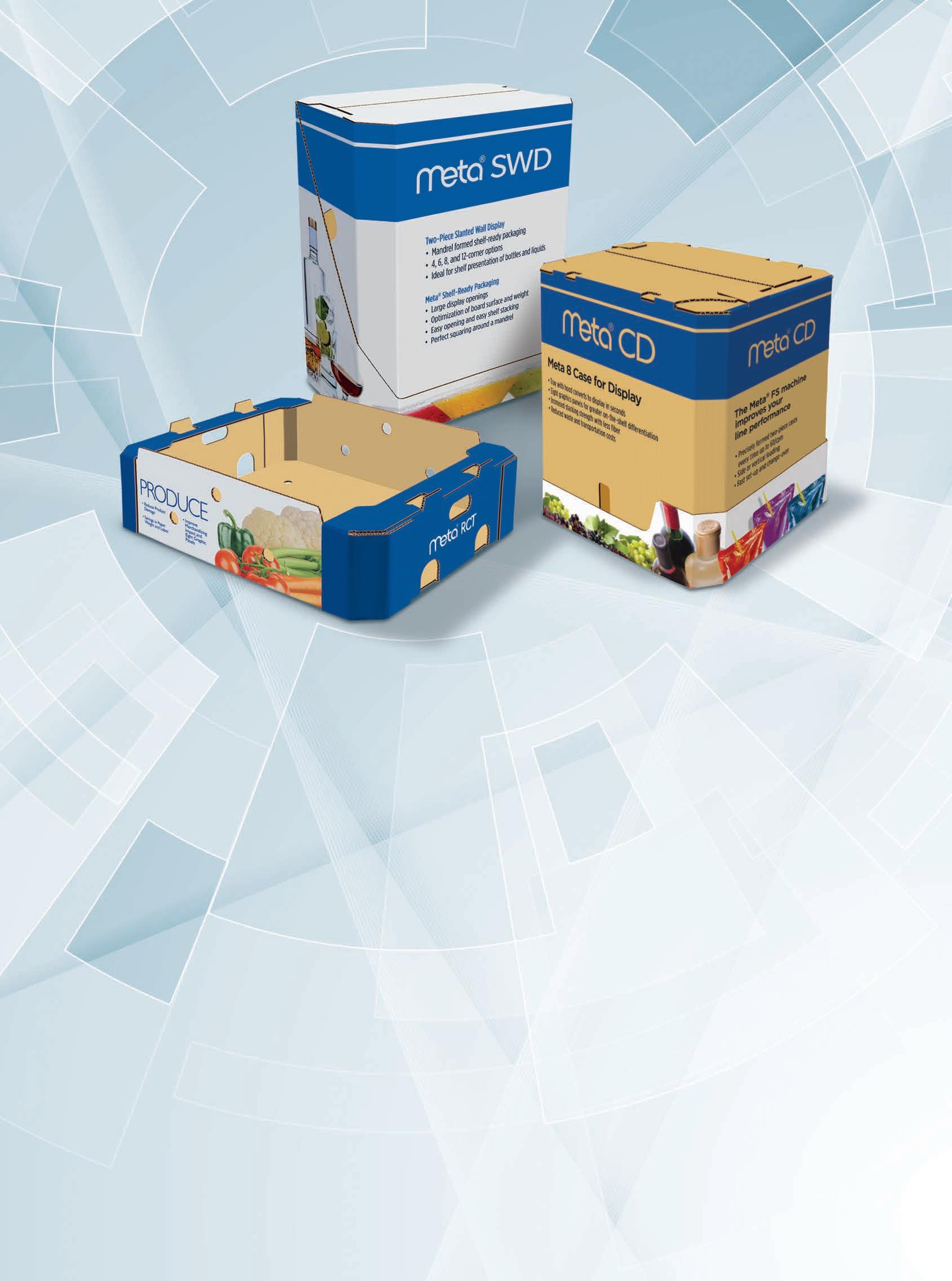
Veritiv gets the ball rolling at full speed ahead in the Canadian packaging market Story on page 15
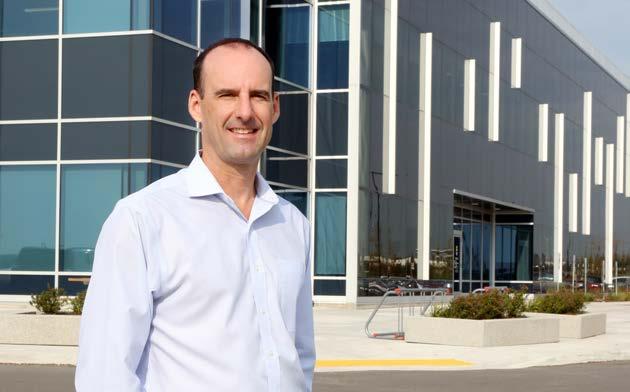
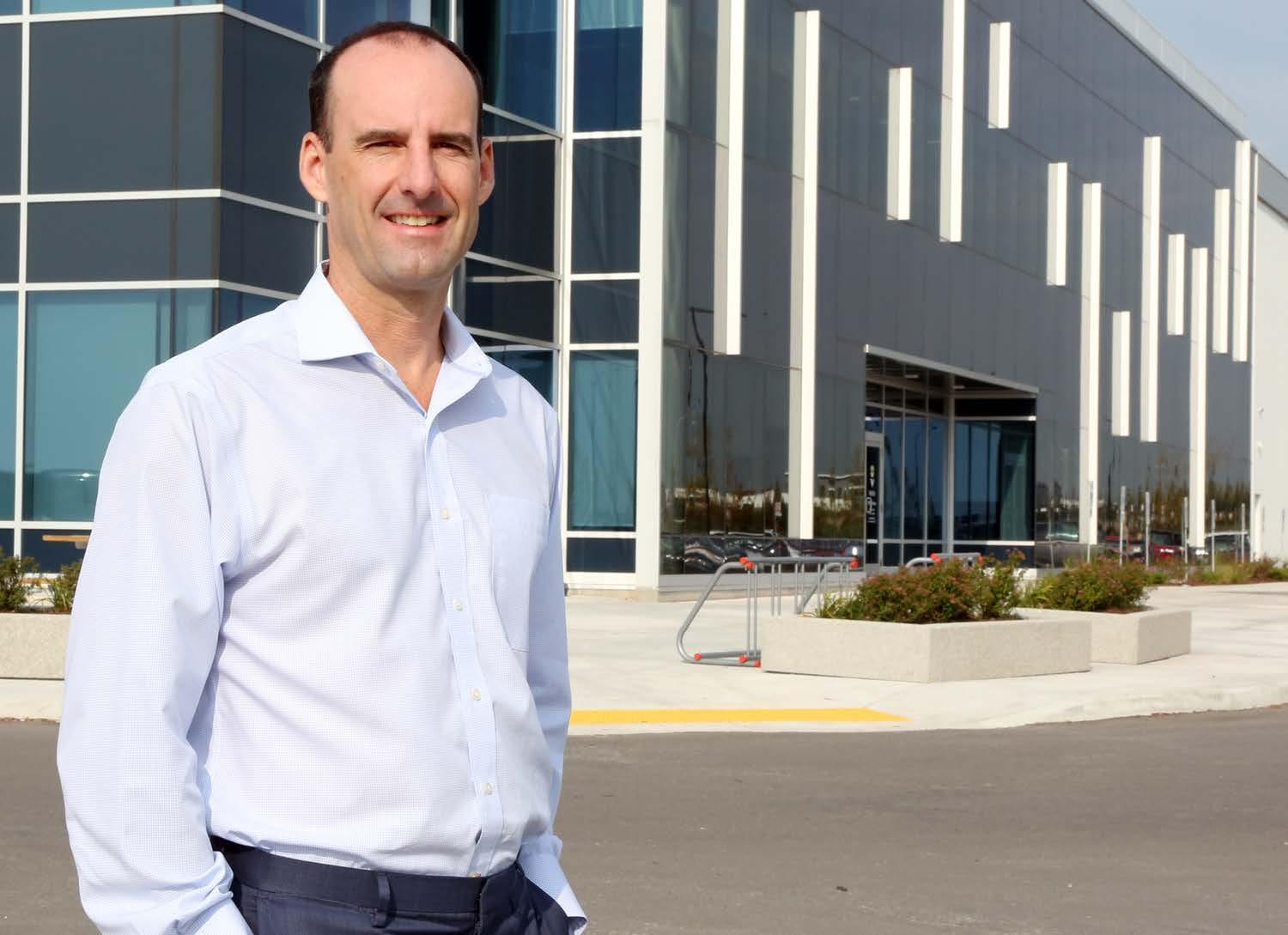
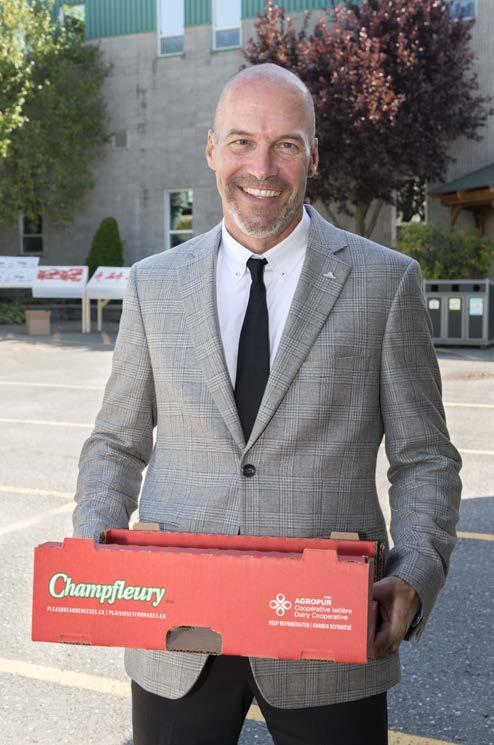
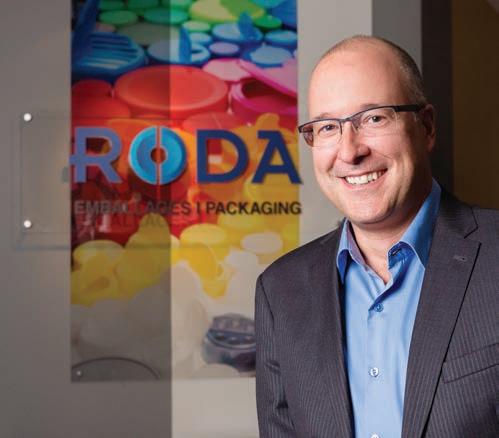
Jason Alderman, Regional Vice-President Veritiv
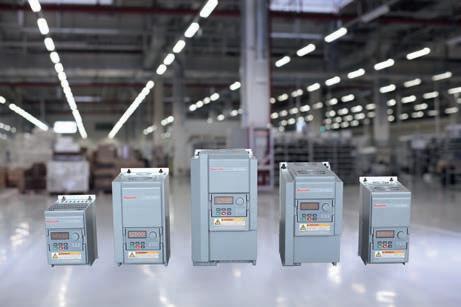
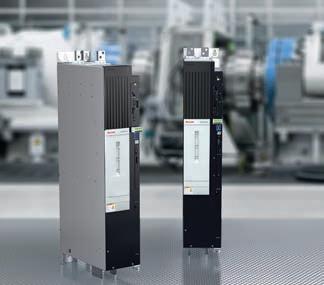
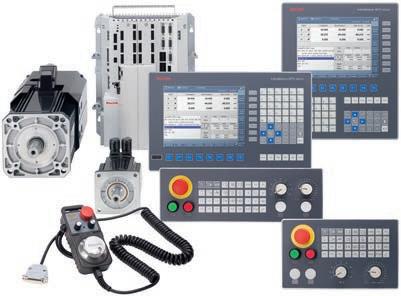
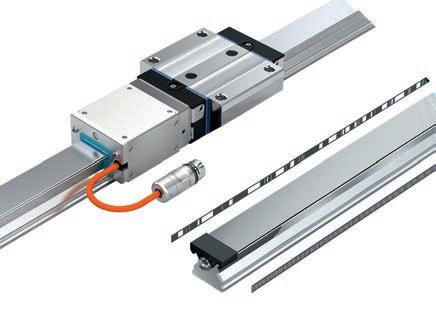
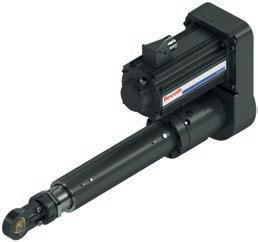
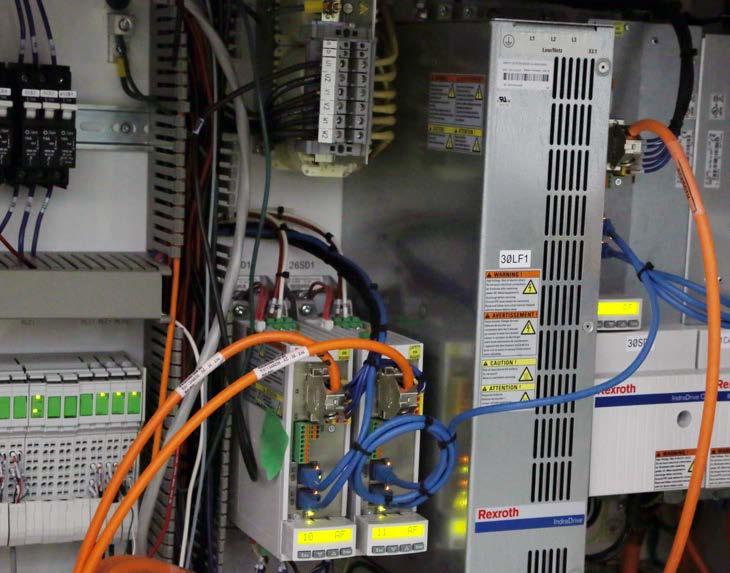
Electric Drives and Controls, Linear Motion Technology, Assembly Technology, Tightening Systems: World-class automation solutions for advanced manufacturing.
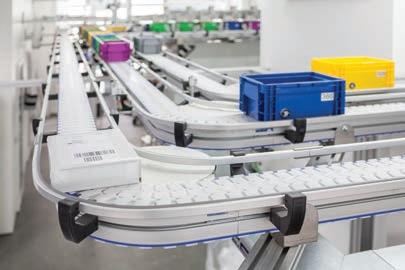
Rexroth’s automation solutions drive your manufacturing performance with maximized productivity throughput, precision, repeatable and efficient motion control, and maximum uptime. We’re set to help you achieve this with the industry’s most advanced conveyor technologies, electric drives and controls, linear motion components and systems, as well as production tools and tightening systems. All are equipped for fast changeovers, and ready for Industry 4.0.
Smarter, more productive automation starts with the right technology. Make your move to Rexroth’s automation solutions.
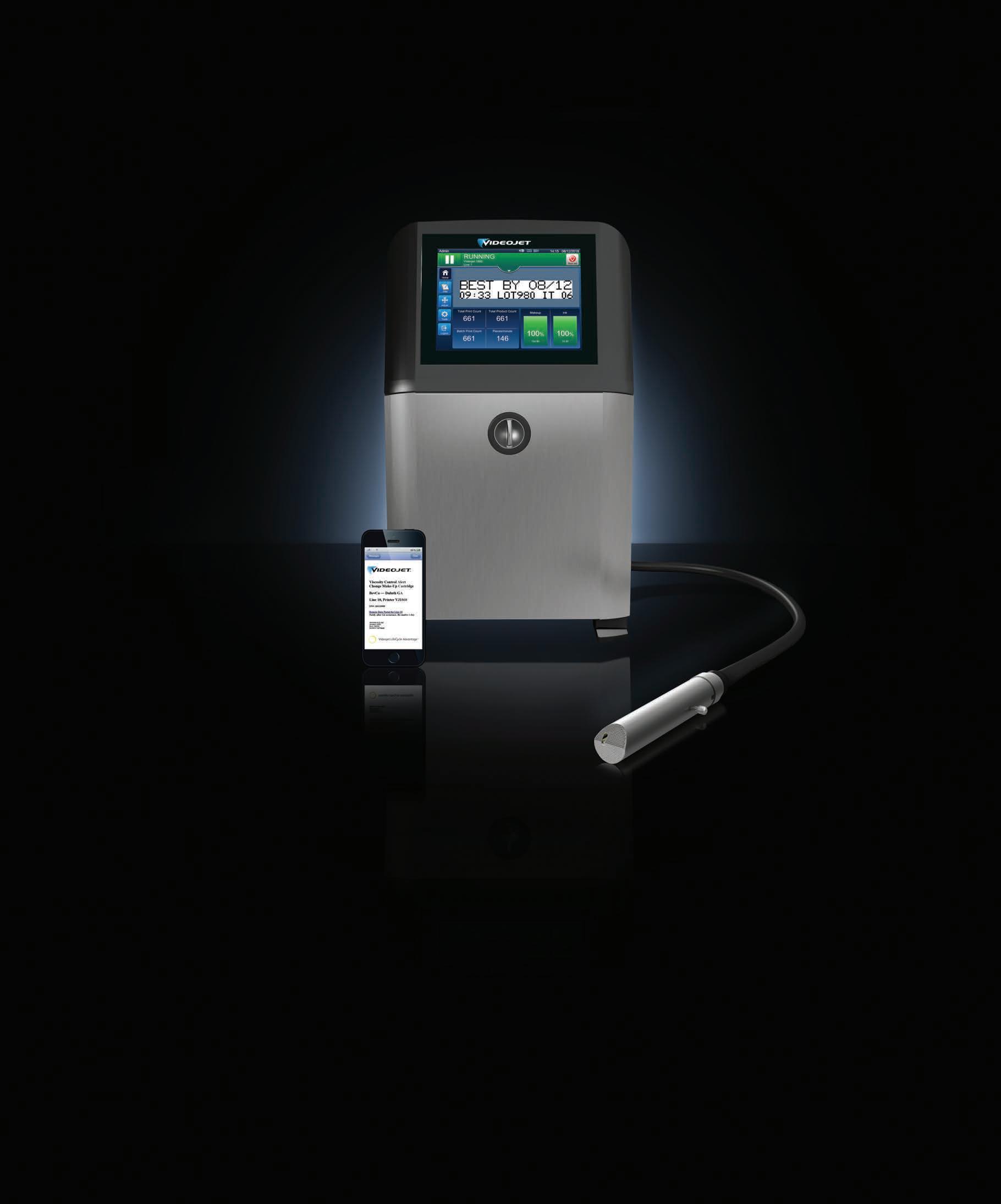
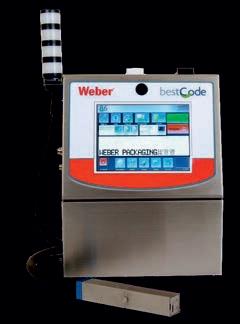
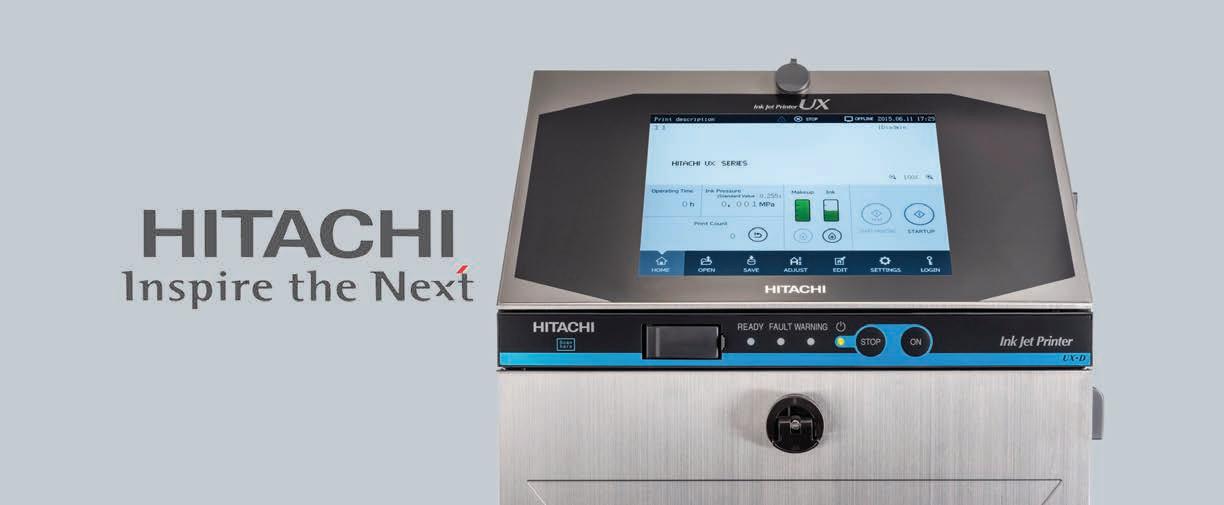
CIJ innovation
True predictability
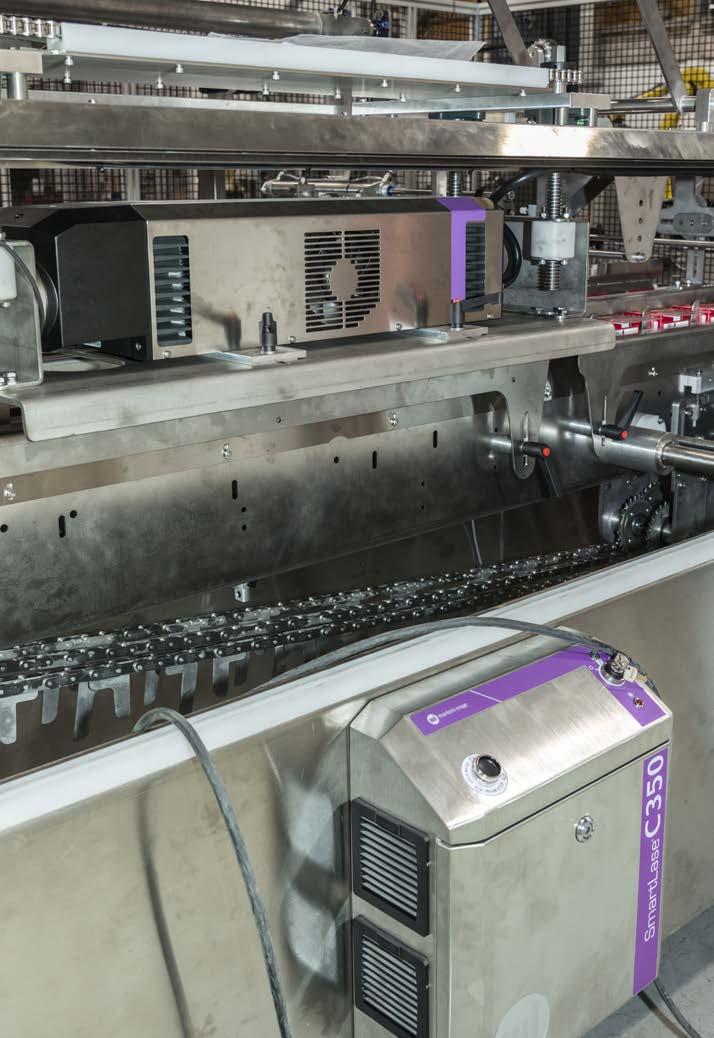
Industry-first ink build-up sensor provides true predictability and warnings of possibly degrading print quality, even before a fault occurs.
True remote services*
Multiple access options (Ethernet™, WiFi) and secure VPN communication meet highest standards in the industry as part of VideojetConnect™ Remote Service, and help to improve machine uptime and customer experience.
* Subject to availability in your country
True IP rating
Optional IP66 rating for entire cabinet and hygienic design following industry guidelines; easier integration with slanted printhead design.
True scalability
Workflow modules help to customize the printer to perform the exact need required. It is easy to adapt the printer with new capabilities and functionalities, and to meet growing demands.
OCTOBER 2017 VOLUME 70, NO. 10
SENIOR PUBLISHER
Stephen Dean • (416) 510-5198
SDean@canadianpackaging.com
ACCOUNT MANAGER
Adnan Shah • (416) 510-5117 AShah@canadianpackaging.com
EDITOR
George Guidoni • (416) 510-5227 GGuidoni@canadianpackaging.com
FEATURES EDITOR
Andrew Joseph • (416) 510-5228 AJoseph@canadianpackaging.com
As many of our esteemed readers may have figured out by now, 2017 is a special year for the Canadian Packaging magazine—marking the 70th anniversary of the publication’s first-ever issue.
And while modesty may be one of our our strongest suits, it’s hard for us to ignore what is by any measure a fairly remarkable feat of longevity—especially at a time when many consumer and business print magazines are struggling to stay afloat in the increasingly digitalized media marketplace where print is increasingly treated with benign indifference, if not outright contempt, by the new breed of media buyers obsessed with online analytics and social media notoriety.
That being the case, turning 70 is a happy milestone that we are particularly keen to share with the Canadian packaging community—namely by inviting our readers to submit their thoughts on what they think have been the biggest innovations, transformations and trends over the past few decades that have made the Canadian packaging industry the vibrant and exciting sector that it is today.
As someone who has served as editor of this magazine for more than a quarter of its existence, I am often humbled by the quality and caliber of our loyal readership, along with the sheer volume of innovation taking place in our industry on a virtually daily basis.
Having witnessed first-hand the breathtaking
growth of flexible packaging, the advent of sustainable packaging, the introduction of digital printing technologies, the birth of online shopping and its impact on revitalizing the containerboard sector, the ongoing robotics revolution and, more recently, the emergence of Industry 4.0 as a new blueprint for the future of CPG (consumer packaged goods) industries, the sheer volume of technological and intellectual capital invested into the Canadian packaging industry by companies large and small is a highly gratifying experience for yours truly on a both professional and personal level.
So that said, please consider this to be a personal invitation to send us whatever great packaging insights you think are deserving of a place in our upcoming historical retrospective on Canada’s packaging industry, and we’ll do our best to share it with the rest of our readership across this great country of ours.
Better yet, for those of you able to attend our upcoming annual Top 50 Packaging Ideas tabletop exhibition at the Mississauga Convention Centre on October 24, 2017, please take a few minutes to drop by our booth and share your thoughts on what makes Canadian packaging an industry like no other out there—we’ll be happy to hear all about.
Happy Birthday to us!
George Guidon Editor
80 Valleybrook Drive, North York, ON, M3B 2S9; Tel: (416) 510-5198; Fax (416) 510-5140.
Canadian Packaging, established 1947, is published 10 times per year except for occasional combined, expanded or premium issues, which count as two subscription issues.
SUBSCRIPTION PRICE PER YEAR (INCLUDING ANNUAL BUYERS’ GUIDE): Canada $74.50 per year, USA $130.95 US per year, Outside Canada $149.00 US per year, Single Copy Canada $10.00, Outside Canada $27.10.
From time to time
new phase of accelerated market growth and penetration with a stunning new distribution center stocked with a vast product inventory and leading-edge packaging innovation. Cover photography by Naomi Hiltz
20
TIME WELL SPENT By George Guidoni Leading Canadian containerboard producer completes an extensive capital investment project to boost manufacturing capacity and extend its market reach.
By Megan Moffat
27 DRIVEN TO SUCCEED By George Guidoni Ontario manufacturer of injection blowmolding machines leveraging innovative automation technologies to simplify machine design and improve throughput and performance.
34 END OF THE LINE By Andrew Joseph Quebec packaging machine-builder earns industry-wide acclaim and growing market share through strong technological competencies and superior customer service.
41 FOOD CHAIN REACTIONS By George Guidoni
Ongoing disruptions in the retail marketplace driving food-and-beverage companies to hop on the digitalization express.
44 TAKING THE HIGH ROAD
An innovative tankless hot-melt adhesive applicating system makes sure the good times keep on rolling for a thriving U.S. craft brewer.
NEWSPACK
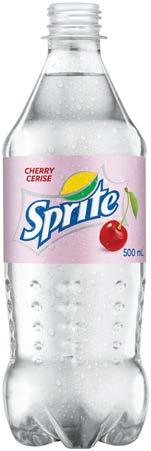
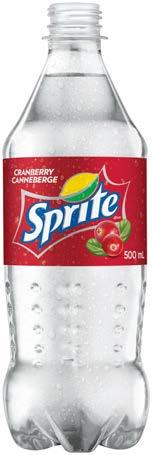
TWO NEW SEASONAL SPRITE FLAVORS ARE BOTH A GENUINE PEOPLE’S CHOICE
It’s never easy to please everyone, but the popular Sprite brand lemon-and-lime-flavored soft-drink created by The Coca-Cola Company just may be on to something really special with the Canadian launch of two new fall flavors aimed at helping the brand’s loyal fans to get over the end of summer.
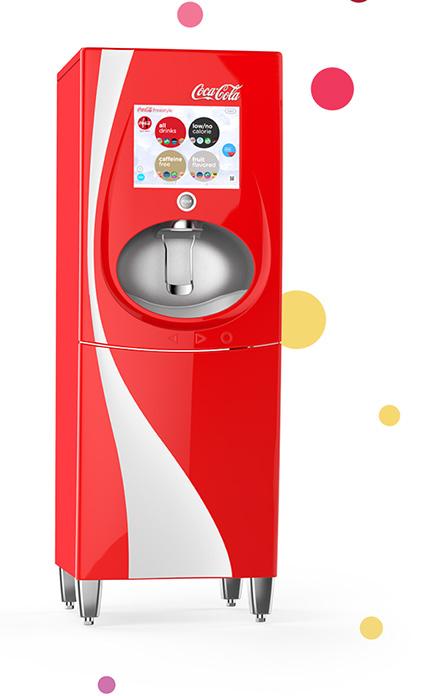
Available across Canada through the end of 2017 while supplies last, the Sprite Cranberry and the companion Sprite Cherry were both picked as this fall’s limited-edition flavors on the basis of consumer-generated data collected through the Coca-Cola Freestyle system, Coca-Cola’s proprietary self-serve machine that offers more than 100 beverage choices.
Retailing in 500-ml and two-liter plastic bottles, with Sprite Cranberry also offered in 355ml can 12-packs, both flavor varieties are said to be on-trend with Canadian consumer preferences across all key age groups, according to the Toronto-headquartered Coca-Cola Ltd.
“We always listen carefully to what Canadians are saying they want, and they have been consistently telling us loud and clear they love cranberry and cherry,” says Coca-Cola’s senior brand manager Melanie Isaac.
“Sprite Cranberry is back by popular demand to offer Sprite fans a burst of delicious cranberry flavor just in time for the cool,
crisp fall weather,” says Isaac, noting that cranberry is currently the fastest-growing carbonated beverage flavor in Canada, increasing by 34 per cent in the last year.
As for the Sprite Cherry debut, Isaac says that cherry is the Number One “added flavor” in Canada for sparkling soft-drink beverages served on Coca-Cola Freestyle machines.
“At the same time, lemon-lime is the Number Two carbonated soft-drink (behind colas) choice in Canada with teens and millennials,” Isaac points out.
“Altogether, our research shows that Sprite with cherry is a winning combination among young Canadians,” says Isaac, noting that both new options are clear, caffeine-free beverages made with 100-percent natural flavors.
In addition to using engaging packaging artwork created by the Toronto-based graphic designers Perennial Inc., Coca-Cola Ltd. has also teamed up with the professional basketball superstar LeBron James to promote the two new flavors through an integrated marketing campaign (IMC) comprising out-of-home advertising, paid search, mobile and social media/online content.
Says Isaac: “I’m excited that we’re offering Canadians more of the great lemon-lime Sprite taste they love with a twist of something new and delicious for the fall season: cranberry and cherry.”
EDGY NEW PERT BOTTLE DESIGN UPDATE IS ALL PART OF THE MANE EVENT
For legions of busy guys who just don’t have the time or patience to put their hair through a time-consuming, multistep grooming ordeal every morning, the PERT shampoo brand has long offered a quick, simple and highly effective way to shampoo and condition their hair in one easy step ever since its North American launch back in the early 1960s.
And while the brand’s straightforward two-in-one simplicity remains its main calling card, Canadian men have never been as spoilt for choice since the brand’s major new update earlier this year— including the launch of several new formulations targeting specific hair types and a bold package redesign featuring new upside-down green bottles with an ergonomic grip and a large cap to keep the container firm and upright throughout its use.
Created by the internal packaging design team of the El Paso, Tex.-headquartered personal-care products manufacturer Helen of Troy, the new bottle design aims to appeal to the active 25- to 44-year-old males “with a no-nonsense attitude” to life, work and play, according to the brandowner.
“We replaced the former curves with bold, sharp angular edges, which makes the bottle easier for men to grip and hold,” says PERT Canada brand manager Loren Kocis. “The bottle also has a non-slip design to make it easier to use in the shower, while the graphics were enhanced with sharper colors and a bolder, more prominent PERT brand logo.
“In addition, the previous PERT Plus brand logo was shortened to just PERT,” Kocis explains, “to be consistent with the whole message of simplicity of, ‘All you need is PERT.’
“It’s a bold masculine design that is simple and easy to use without losing history,” says Kocis, citing outstanding consumer feedback to the updated and expanded PERT product line.
Ranked as Canada’s leading middleweight MMA fighter, the 28-year-old Elias (The Spartan) Theodorou was selected as the official spokesperson for the rejuvenated PERT brand of one-step shampoo products through the end of 2017.
Retailing across Canada in one-liter, 500-ml and 50-ml travel-size PET (polyethylene terephthalate) containers, the PERT shampoo line has also been expanded with several new formulations infused with special ingredients—including various vitamins, bamboo extract and caffeine, among others—to help guys get clean, hydrated, strengthened, thickened and volumized hair that best suits their image and style.
While the PERT Classic Clean formulation remains the brand’s bestselling product, according to Kocis, the four new varieties launched into the Canadian market this year are expected to broaden the brand’s appeal among the targeted demographic.
To that end, PERT Canada has recently teamed up with a rising Canadian MMA (mixed martial arts) star Elias Theodorou (aka The Spartan) to be its official spokesman through to the end of this year.
“Not only is he known for having the best hair in
the MMA world,” says Kocis, “but he is also a modern, active male that perfectly represents our target market.”
Despite only being introduced to martial arts at the age of 20, Theodorou has amassed a 14-1 record since turning pro, while also attracting a lot of publicity and exposure as a result of his dominant run on the televised The Ultimate Fighter Nations: Team Australia vs. Team Canada competition, where he was declared the inaugural ‘Canadian Middleweight Ultimate Fighter.’
In addition, The Spartan’s likeness has been featured on eight Harlequin romance novel covers, and he’s acted and performed stunt work in The Listener, Played and Netflix’s upcoming The No. 1 Contender, as well as appearing on Dragon’s Den and competing on The Amazing Race
Says Theodorou: “I am really excited about this partnership with PERT Canada and couldn’t be more thrilled to be the official spokesperson for the brand— engaging in some exciting multiplatform opportunities across Canada over the next few months.
“The PERT brand’s new packaging is a sleek and edgy combo with a new bottle that now really keeps up with an active lifestyle—throwing punches in bunches with many new scents.”
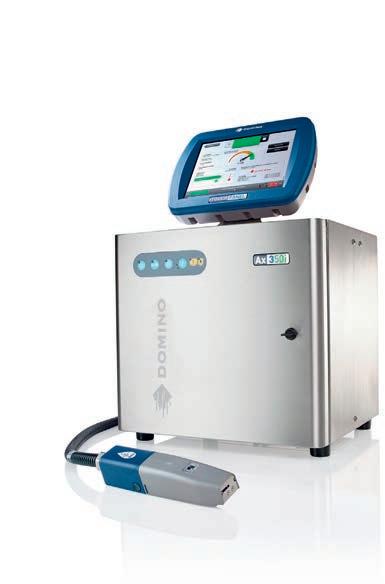
Express Packaging Chooses the Ax-Series Inkjet for a Reason.
Reason.
"It [the Ax350i] saves us money, it runs faster for us and we have clearer print. We've used other suppliers in the past but no one has equalled the production that a Domino printer puts out and the service that Domino technicians back it up with."
-
Fred Hartzler, President, Express Packaging
“It [the Ax350i] saves us money, it runs faster for us and we have clearer print. We’ve used other suppliers in the past but no one has equalled the production that a Domino printer puts out and the service that Domino technicians back it up with.”
- Fred Hartzler, President, Express Packaging
To find out more or to book a demo, visit www.ax-series.com
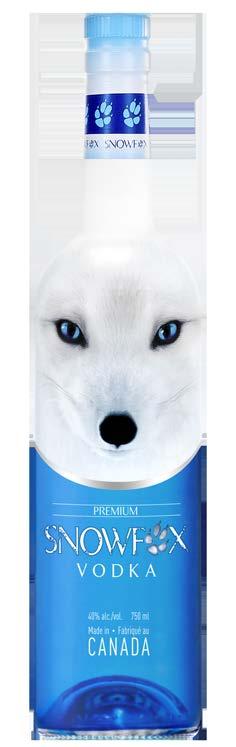
It takes a special recipe and very special packaging to break into the high-end segment of the distilled spirits market nowadays, but the Moncton, N.B.-based Port Royal Distillers clearly has it sights set high for the company’s SnowFox brand of premiumquality vodka.
Drawing its inspiration from a cunning, playful and beautiful furry creature native to the Canadian Arctic, SnowFox Vodka is quickly winning over fans in all the right places, having recently picked up the Silver Medal at the New York Wine & Spirits Festival and a Gold Award the flexible packaging category of the annual Canadian Print Awards competition.
Claimed to be the most successful spirit product launch in New Brunswick’s history, the 750-ml glass bottles of SnowFox Vodka are decorated with full-bodied shrinksleeves incorporating a stunning cold-roil visual enhancement developed for the brand by Rahway, N.J.-based foil-stamping experts API Foils, Inc.
Applied to the front graphic panel of the shrink label printed on a 10-color Gallus EM5 10S 20-inch flexographic printing press by the Mississauga, Ont.-based labeling converter Spectrol, Inc., the API 1000 TA foil perfectly complements the brand essence of the drink with the piercing gaze of the iconic Canadian snow fox.
“We wanted to create an effect that wasn’t already available on the shelf, and the result, with the amazing blue eyes of the snow
“It’s one of the most visually arresting labels we have ever produced,” says Sahadeo, pointing out the finely detailed close-up of a snow fox gazing out from above an icy bluelabeled area.
The result is a striking glow-in-the-dark effect causing the electric-blue eyes of the snow fox to illuminate dramatically in low-lit areas such as nightclubs, drawing the attention of consumers.
On the lower blue area of the label, the API foil produces an air of textured high quality by creating a doming effect on the drink’s name and by representing the second ‘O’ in SNOWFOX banner as a paw print. (See Picture)
“Originally, we were using a different foil and experiencing some problems,” Sahadeo relates, “but since switching to the foil from API, everything clicked into place.
“Both the foil product and the level of support from API were highly impressive,” Sahadeo states.
“Since we had never printed onto a shrink label before, we required a lot of guidance at first,” he explains, “and the API representative was always on-site with helpful advice.
“This was invaluable, saving us what would have been a lot of downtime while we worked things out for ourselves.
FIRST GLANCE
LOGICAL OUTCOMES
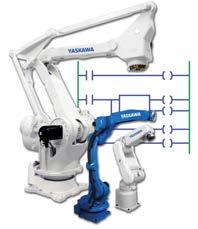
Developed by Yaskawa Motoman to enable superior inte gration of Yaskawa robots and programmable logic control lers (PLCs) in a standard PLC programming environment, the new-generation MLX300 software eliminates the need to learn a specific robot programming language, according to the company. With all program execution performed by the selected PLC—including the CompactLogix ControlLogix and GuardLogix models—and motion con trol handled by the superior kinematic algorithms of the Yaskawa robot controller, this ‘unified controls’ approach is said to significantly simplify safety design by eliminating redundant electrical interfaces and consolidating hardware to optimize floorspace. The MLX300 software comes with a comprehensive set of robust Add-On-Instructions (AOIs) programming tools and application-specific HMI (human-machine interface) screens for operator-friendly control of the robot’s configuration, motion and state of operation such as jogging, setting tools, user frames, interference zones, shifts, joint/linear motion, etc. Compatible with any Yaskawa DX200 material handling robot or YRC1000 GP series robot, a single MLX300 system can handle any combination of up to four robots and positioners.
Yaskawa Motoman
THE BAGGING RIGHTS
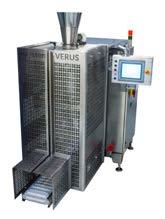
The new VERUS intermittent vertical form-fill-seal (V/F/F/S) machine from the Hayssen Flexible Systems division of Barry-Wehmiller features an advanced sanitary design and many value-added features for highly efficient high-speed filling of a wide range of bag formats, sizes and shapes. Constructed in stainless steel and alum-
We’ll do the jobs you don’t want to. From pesticides to plant food and everything in between. Give us a call today.
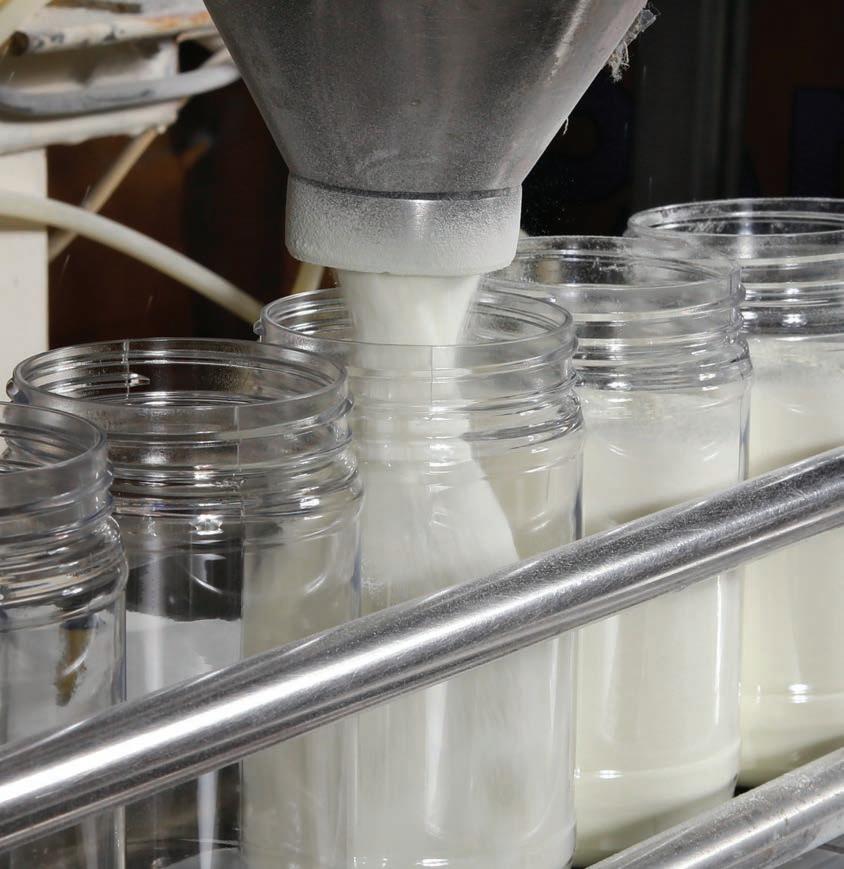
FORMULATING FILLING
Contract packaging of powder and granular products.
NEW GABLETOP MILK CARTONS A NATURAL WIN-WIN
It’s hard to understate the importance of teamwork in the advancement of sustainable packaging products, as a recent collaboration between Norwegian packaging supplier Elopak and Swedish paperboard producer Stora Enso vividly underscores with the launch of the first gabletop carton made from natural brown unbleached paperboards.
Developed to help organic products maximize their all-natural appeal with packaging that accurately projects their natural composition, Elopak’s new Pur-Pak
Contiform AseptBloc, Canadian Packaging, 200x273 mm, CC-en31-AZ0?? 09/16
gabletop cartons—made with Stora Enso’s Natura Life paperboard— retains the natural brown color of the wood fibers with a visible fiber structure a naturally different, sustainable and authentic package that meets growing consumer demands for more ethical, ecological and organic products.
AseptBloc
We do more.
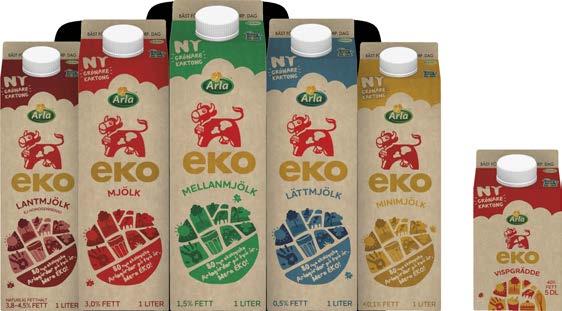
Available in 500- ml and one-liter sizes, the new Pur-Pak cartons are already being used by leading dairy co-op Arla Foods to launch of several products in its organic EKO brand range in the Swedish market.
“We believe that the new PurePak carton will grab attention as it communicates organic values and also by being totally different to anything else in the increasingly complex chilled dairy segment,” says Arla Foods sustainability manager Anna-Karin Modin Edman.
With the majority of fibers sourced from Swedish and Norwegian forests, the 100-percent recyclable cartons can run on existing filling lines for both fresh and ESL (extended shelf-life) products without modifications or changes in machine settings, according to Elopak.
“All liquid packaging board sourced from well-managed forests is environmentally friendly, but this paperboard reaches whole new levels in climate-responsible packaging,” says Ivar Jevne, Elopak’s executive vice-president of board and blanks supply.
“This innovation is the result of bringing together the best of expertise, competence and experience from our collaboration with Stora Enso,” Jevne states.
“The Natura Life is not just another paperboard for our PurePak cartons, but a totally new concept,” adds Jevne.
“We are happy about the cooperation with Elopak and excited to introduce the new unbleached liquid packaging board Natura Life to the market,” says Annica Bresky, executive vice-president of Stora Enso’s Consumer Board Division.
“What makes this paperboard unique is that it is brown on the inside as well as on the outside,” Bresky points out.
“This will enhance the organic appearance of carton packaging and make it really stand out on the shelves.”
CALL FOR ENTRIES
Join leading brand owners, design innovators, agency leaders, package makers and their suppliers by entering your brilliant design craftsmanship into the PAC GLOBAL LEADERSHIP AWARDS to earn you one of the industry’s most prestigious awards.
THE PAC GLOBAL LEADERSHIP AWARDS LEGACY
PAC Packaging Awards have been setting the industry standard for recognizing design achievement and celebrating craftsmanship since 1952. PAC’s Global Leadership Awards includes expert judges from around the world.
CELEBRATION OF DESIGN DINNER AND AWARDS GALA
Join us as we commemorate the recipients during the 2018 BXP Live Conference! February 27, 2018 in Bonita Springs, FL.
EVENTS
Oct. 19
Toronto: Ontario Craft Brewers Conference (OCBC) & Suppliers Marketplace 2017, by Ontario Craft Brewers. At Beansfield Centre.To register, go to: www.ontariocraftbrewers.com
Oct. 20-21
Niagara Falls, Ont.: Meat Industry Expo, meat and poultry industries exhibition by Ontario Independent Meat Processors (OIMP). At Scotiabank Convention Centre. To register, go to: www.meatindustryexpo.ca
Oct. 23-24
Toronto: Grocery Innovations Canada 2017, grocery industry trade show and conference by the Canadian Federation of Independent Grocers (CFIG). At Toronto Congress Centre. To
register, go to: www.groceryinnovations.cfig.ca
Oct. 24
Mississauga, Ont.: Top 50 Packaging Ideas Expo, tabletop exhibition and conference by the Canadian Packaging magazine. At Mississauga Convention Centre. To register, go to: www.top50packagingideas.com
Oct. 31 – Nov. 3
Birmingham, U.K.: IPEX 2017, global printing technologies expo by Informa Exhibitions. At NEC Birmingham.To register, go to: www.ipex.org
Nov. 2-3
Amsterdam, Holland: Active & Intelligent Packaging World
Congress, by the Active & Intelligent Packaging Industry Association (AIPIA). At Congress Centre Beurs van Berlage. To register, go to: www.aipia.info
Nov. 7-10
Shanghai, China: Shanghai World of Packaging (SWOP), packaging technologies exhibition by Messe Düsseldorf. At Shanghai New International Exhibition Center. In Canada, contact Messe Düsseldorf (Canada) at (416) 598-1524; or go to: www.mdna.com
Nov. 9
Brampton, Ont.: State of the Industry, a Canadian food industry conference and forecast by NSF International. At Pearson Convention Centre. To register, go to: www.nsflearn.com
Nov. 14
Cologne, Germany: Cosmetics Packaging 2017, conference by Applied Market Information (AMI). At Maitim Hotel. To register, go to: www.amiplastics.com/events
Nov. 15-16
Houston, Tex.: Automation Fair 2017, industrial automation technologies showcase by Rockwell Automation. At George R. Brown Convention Center. To register, go to: www.rockwellautomation.com
Nov. 16-17
Barcelona, Spain: Holography Conference, by the International Hologram Manufacturers Association (IHMA). At the Catalonia Plaza Hotel. To register, go to: www.holographyconference.com
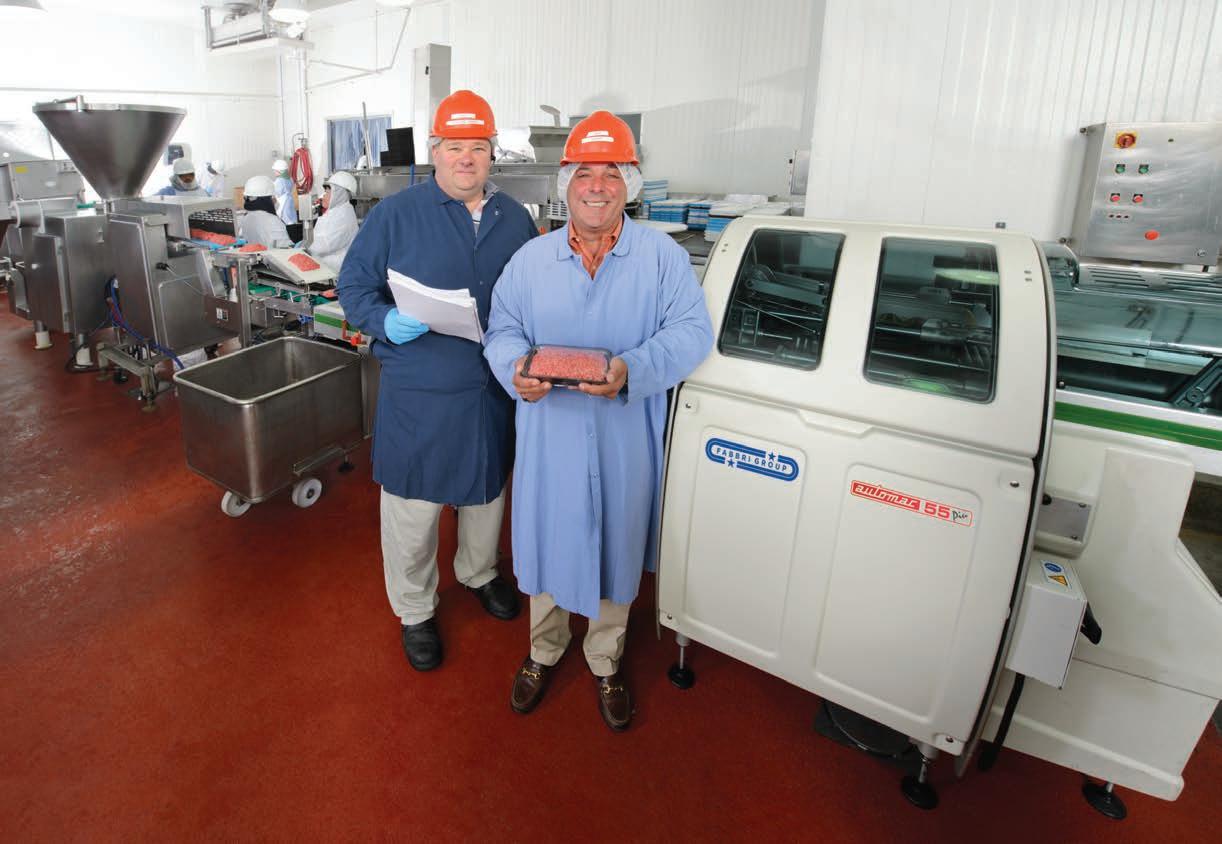
“At AVA, we are a major supplier of case ready meats to supermarkets and other retailers throughout the Northeast. We help our customers with just-in-time case ready beef and pork programs. The advantage we provide is that all of our products look as if they were produced at store-level.
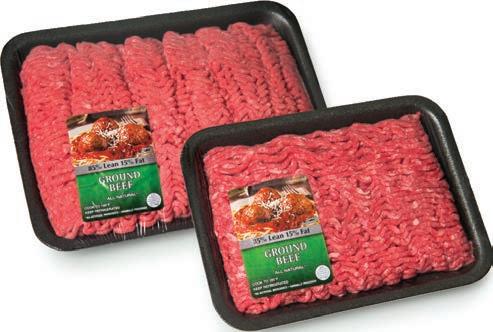
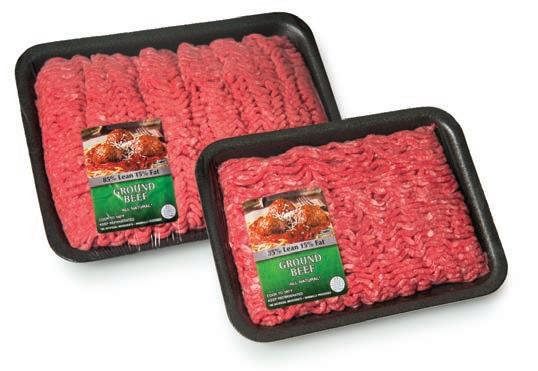
“We achieve that ‘wrapped in-store’ look using Fabbri Stretch Wrappers from Reiser. Our high-speed Fabbri machines consistently produce superior packages that ‘scream’ fresh. And when we combine Reiser’s Vemag MMP ground beef portioner and tray handling equipment with the Fabbri system, we have a fast and efficient case-ready solution.
“Fabbri Stretch Wrappers make a superior package that retailers love because it appears to be wrapped in-store.”
“The bottom line is that Reiser is one of our most valuable and trusted partners with nearly 80% of the machines in our plant from them. Reiser equipment is perfectly suited to our mission of producing products that appear to be wrapped in-store. Plus, Reiser service and support is second to none –we feel they are just as committed to our success as we are!”
Lenny Lombardi, Vice President
Nov. 16-19
Toronto: The Gourmet Food & Wine Expo, by Town Media. At Metro Toronto Convention Centre. For more information, go to: www.foodandwineexpo.ca
Dec. 5-6
Calgary, Alta.: Canadian Food & Drink Summit 2017, conference on the future of Canada’s agriculture, food and beverage sectors by The Conference Board of Canada. At TELUS Convention Centre. To register, go to: www.conferenceboard.ca
Dec. 5-7
Accra, Ghana: Agrofood and Plasprintpack West Africa 2017. Concurrent exhibitions by Fairtrade Gmbh & Co. Both at the Accra International Conference Centre. To register, go to: www.fairtrade-messe.de
Dec. 5-8
Shanghai, China: Labelexpo Asia 2017, exhibition and conference by Tarsus Group. At Shanghai New International Expo Centre. To register, go to: www.labelexpo-asia.com
) Alex Halterman, Plant Engineer (R ) Lenny Lombardi, Vice President
INVENTORY MEETS INNOVATION
Veritiv’s new Canadian facility a hub of innovation and practical packaging solutions for the company’s customers
Have you traveled the northwest corner of the Highway 401 and Highway 10 in the Toronto area and noticed a new distribution complex? From the outside, the building may appear to be a traditional distribution center (DC). Upon closer review, however, there is more than meets the eye. This facility is one of the latest opened by Veritiv,
a Fortune 500 company and leading North American business-to-business distributor of packaging, facility solutions, print and publishing products and services, along with logistics and supply chain management solutions.
The new state-of-the art facility in Mississauga offers a compelling example of Veritiv’s commitment to making the necessary strategic investments to better serve its customers.
The location is a veritable innovation hub, as well as a strategic Canadian-based access point to Veritiv’s
PHTOTOS BY NAOMI HILTZ
Jason Alderman, regional vice-president for Veritiv’s Canadian operations, strikes pose in front of the company’s gleaming new headquarters and distribution center in Mississauga, Ont., opened for business during the past summer.
COVER STORY
global network of packaging designers, engineers, automation specialists and material experts.
The new Mississauga facility has enabled Veritiv to consolidate three smaller facilities throughout the Toronto market area—fostering employee and customer collaboration, while delivering greater efficiency for the business.
Canada is an important market for Veritiv, and the company plans to accelerate growth across the country. According to the Organisation for Economic Co-operation and Development, the Canadian economy has improved in recent years, and is ex-
pected to continue growing by about two per cent through 2017 and 2018.
While this growth spells opportunity, it also presents new challenges for many companies, particularly manufacturers, to keep pace by growing sales and increasing operational and supply-chain efficiencies, while minimizing product damage.
Innovative packaging solutions can help address many of these challenges. In the past, packaging was often considered a last-minute process before products went to market. It was part of shipping, plain and simple. Nowadays, leading brands are leveraging packaging and supply-chain efficiencies as a competitive advantage.
By making packaging part of the product development process and implementing strategic improvements throughout the supply chain, businesses across Canada and around the world are boosting their top and bottom lines through strategic packaging.
And Veritiv aims to be at the forefront to help these businesses thrive. The new Mississauga facility—part of Veritiv’s network of 14 DCs across Canada and one of their largest in North America—is making it easier than ever for customers to solve their most pressing packaging and business challenges.
The new DC—housing approximately 410,000 square feet of warehouse space and another 42,000 square feet of office space—gives Veritiv customers access to packaging and facility supply products and services, along with paper and print offerings, from one of the largest inventories in the country, all sourced from best-in-class suppliers.
While this facility’s massive inventory is impressive, its real differentiating value lies in the packaging experts, sales representatives and customer support specialists who collaborate with customers to develop and implement innovative packaging solutions.
The new Mississauga facility is the birthplace of new ideas and innovations, where Veritiv works with client businesses to understand their goals and objectives then align the right experts to develop an effective solution. For example, in its packaging business:
• Veritiv’s corrugated specialists evaluate a customer’s current packaging to provide guidance for more effective design and sourcing strategies.
• Packaging equipment specialists perform on-site
surveys and help deploy automated packaging equipment that can help speed up the process and reduce labor requirements.
• Creative and structural designers improve packaging design to protect products, promote the brand, entice buyers and create a positive unboxing experience.
• Unit Load Containment Specialists identify ways to help reduce breakage, damage and loss so more products get into the hands of consumers.
All of these professionals, and many more like them, frequent the hallways at Veritiv’s Mississauga facility, providing customers with a central source for hands-on guidance and personal service.
Each customer’s products, goals and resources are different, so Veritiv believes each packaging solution should be too. Rather than selecting from a limited assortment of materials, Veritiv packaging designers take a material-neutral approach.
This involves researching a wide array of conventional and emerging substrates—from essential corrugated and progressive PaperFoam to recycled PET (polyethylene terephthalate) and everything in-between—to find the right solution for each package.
Moreover, Veritiv’s team of design engineers, equipment technicians and supply chain experts work with customers to identify and resolve operational inefficiencies by analyzing every detail of their packaging operations— from sourcing and manufacturing to delivery and unboxing.
Veritiv then collaborates with the customer to develop packaging, processes and ideas that boost efficiency and cut costs, while protecting their products and elevating their brand.
This strategic approach is helping deliver new benefits to customers as they work to capture market share in a growing economy.
Veritiv’s holistic approach to packaging design and supply chain optimization helps businesses across Canada unlock efficiencies, significantly improve profitability and evolve as they grow.
So next time you are cruisng on the 401 express and pass the large white building with the green Veritiv logo showing prominently on the outside, you’ll no longer need to wonder what’s going on inside— it’s a hub of packaging innovation.
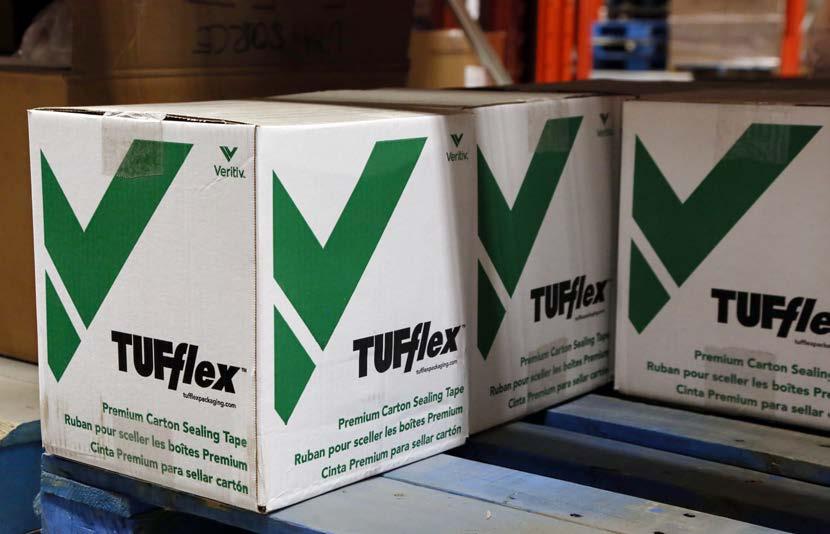
The TUFflex range of packaging tapes is one of Veritiv’s bestselling packaging supplies.
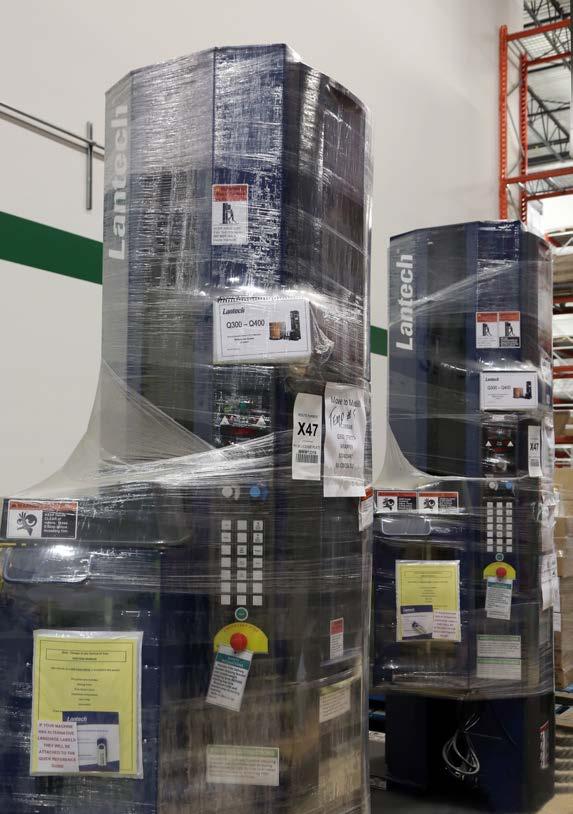
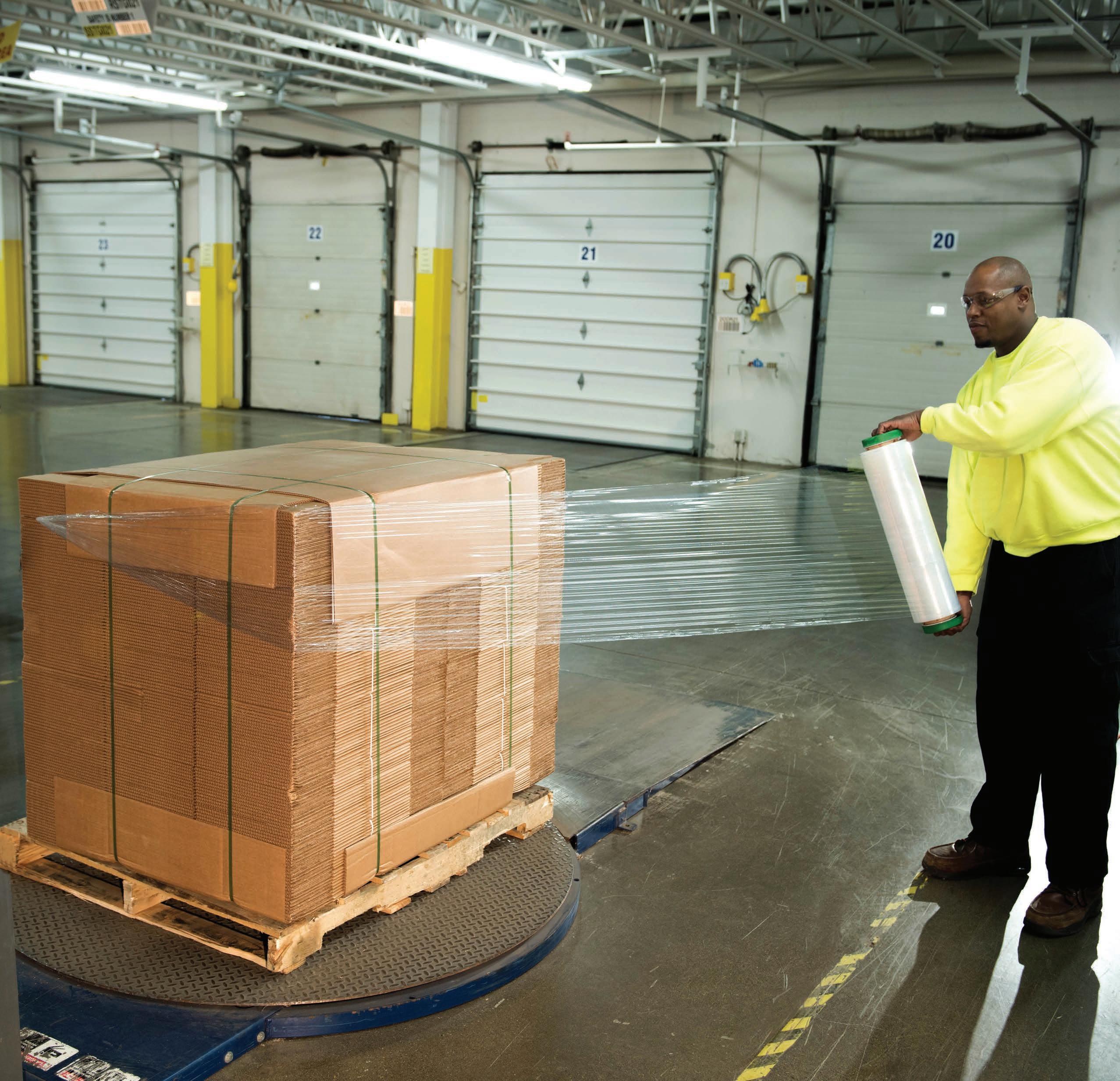
Veritiv is the official Canadian distributor of Lantech automatic stretchwrappers and other high-performance end-of-line packaging systems and equipment.
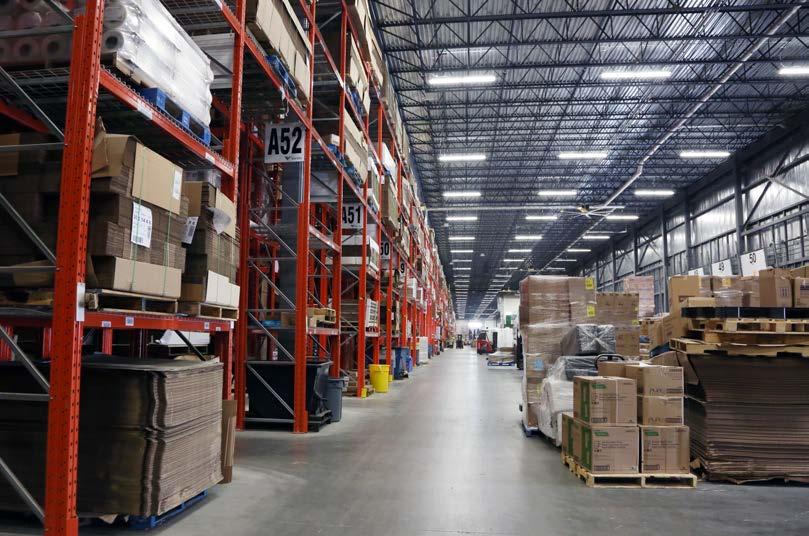
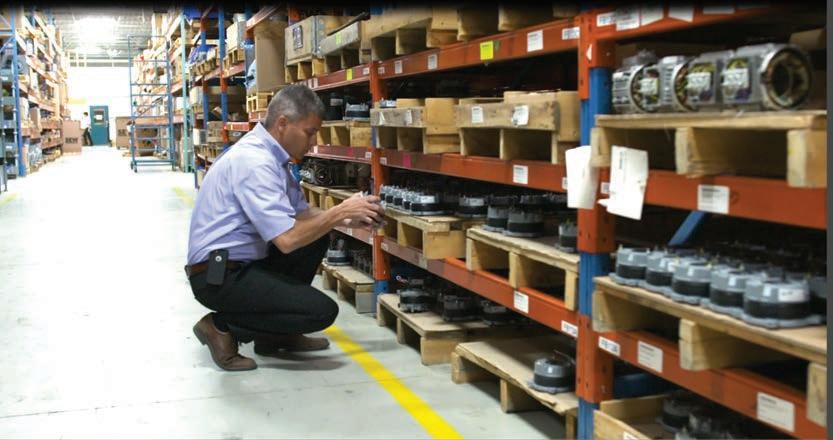
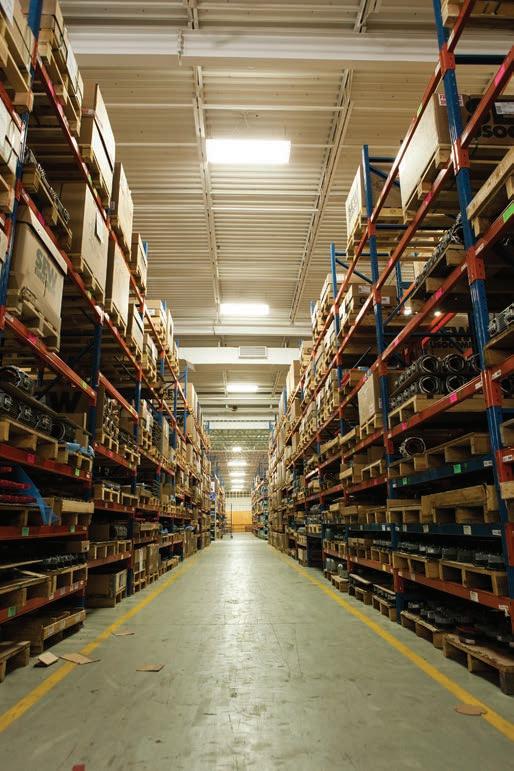
The Mississauga DC carries a staggering inventory of packaging supplies and equipment.
LET’S GET BUSY!
Veritiv’s new Canadian headquarters hits the market running with expansive product offering and superior customer service excellence
BY GEORGE GUIDONI, EDITOR
As regional vice-president for the farflung Canadian operations of leading packaging, print and facility supplies distributor Veritiv Corporation, Jason Alderman is one really busy person.
Which is just how Alderman and his colleagues at Veritiv’s new, 450,000-square-foot Canadian headquarters in Mississauga, Ont., like it—for many good reasons.
“While may not be the biggest Veritiv facility in North America in terms of square footage, it is the busiest,” Aldreman told Canadian Packaging on a recent visit to the sprawling, well-stocked Mississauga distribution center (DC) opened up for business with much fanfare and high expectations this past summer.
“We receive about 65 to 70 inbound truck loads each week and handle thousands of inventory items on any given day,” Alderman says, “and we have a fleet consisting of 30 delivery trucks, which we use along with third-party logistics providers to distribute products sourced from this facility, which is already running five-days-a-week, 24-hours-a-day.”
Built as part of a plan to consolidate three other former Veritiv operations located in the Greater Toronto Area (GTA) region, the new DC employs about 350 people, according to Alderman.
“Moving three facilities into one always presents challenges,” Alderman notes, “but we are steadily working through those to create a smooth-running operation with quick turnaround and exemplary
customer service for clients in each of Veritiv’s major business segments.”
Notably, if not entirely surprisingly, it is the robust rate of growth in the packaging part of the business that has Alderman excited about the future prospect for Veritiv’s new Canadian headquarters.
“Our packaging business has been growing since we have opened the new Mississauga facility,” Alderman relates, “and we are expecting this growth to continue in the future.”
As Alderman points out, Veritiv’s new Mississauga DC has everything in place to benefit from this expected growth in the packaging business—much of it closely tied to the ongoing boom in the fast-growing e-commerce industry across major North American markets.
HAPPY TO HELP
“We are very happy both with the location and the size of the new facility,” he states. “This facility was built for growth, particularly on the packaging side,” says Alderman, citing the building’s close proximity to major transportation routes.
“It’s also great to be able to stay in Mississauga,” says Alderman, noting that finding the required amount of available real estate to accommodate both the building’s dimensions and its demanding logistic requirements was a challenge in its own right.
“When we first started looking, the main priorities were having good access to the transportation system and staying close to our customer base,” he says, “and we were fortunate to find a spot in Mississauga that
met our needs.”
Says Alderman, “With Toronto being a de facto manufacturing center of Canada, we have the opportunity and the space, to expand beyond our traditional expertise in end-of-line packaging and commodity products; and now broaden our customer base in custom packaging solutions.
“It’s great that we were able to combine all of Veritiv’s business segments in the GTA region under one roof,” Alderman points out, “alongside our customer service and sales team.”
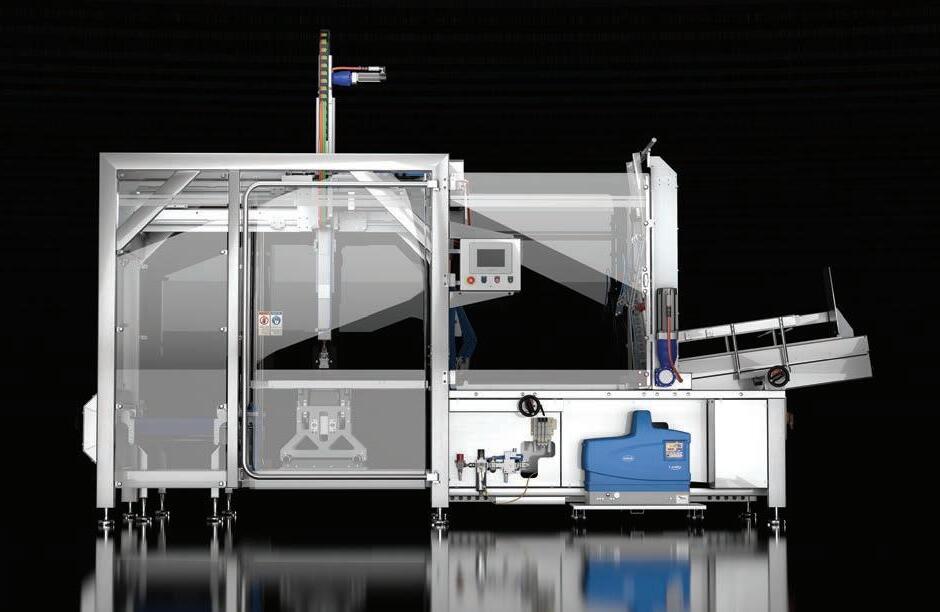
Along with traditional end-of-line equipment offerings such as stretchwrappers, shrink tunnels, caserectors and taping machines,Veritiv’s Mississauga DC also supplies commodity-type packaging products such as packaging tapes, corrugated boxes, folding cartons and bottles—offering many of its customers one-stop-shop convenience backed up by impeccable service support capabilities.
Employing close to 1,000 people at 14 strategically-located DCs across Canada,Veritiv serves a vast and growing customer base of manufacturing and industrial clients with clockwork JIT (just-in-time) reliability, according to Alderman.
“We also provide a growing number of custom packaging solutions,” Alderman adds.
“For example, we supply one of our baking industry clients with some specialty widgets that are used solely for applying icing onto a cake, which we source strictly for that customer.
“That’s the kind of custom packaging solution that Veritiv is keen to tap into on a greater basis,”
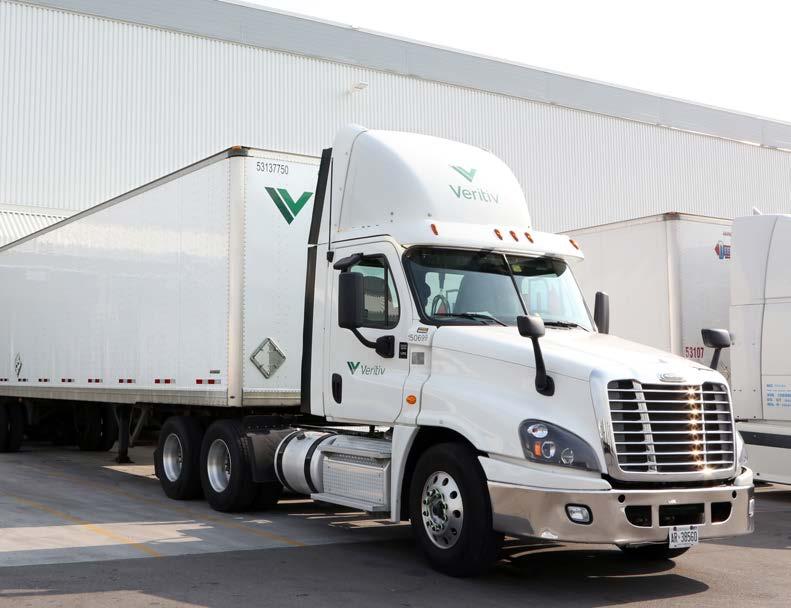
One of the 30 delivery trucks owned by Veritiv used to distribute the company’s wide range of products and equipment to the company’s vast Canadian customer base.
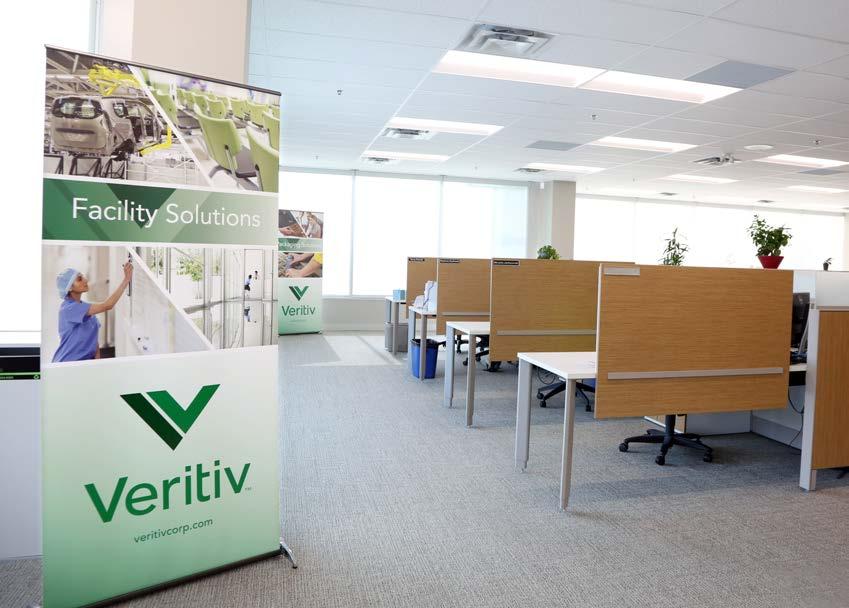
The well-lit offices inside the new Canadian Veritiv headquarters in Mississauga, Ont., are designed to encourage creative interaction and ideas exchange among sales staff.
says Alderman. “We are working hard to increase our offerings of unique solutions that are not your basic off-the-shelf product offerings.”
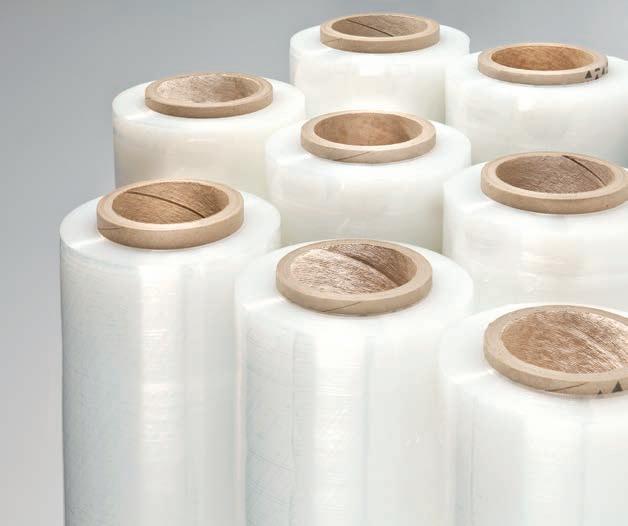
According to Alderman, the booming e-commerce business will provide many additional new growth opportunities for Veritiv to move into that direction in the future, as well as increase the sheer volume of corrugated packaging, tapes, pallet wrap and many other key packaging supplies widely used by online distributors to protect their shipments.
“The e-commerce sector will not only help us accelerate our growth in these capabilities,” he says, “but it will also help us to develop core competencies in accommodating the inherent seasonality in demand for that sector.
“Most of our e-commerce customers do about 60 percent of their annual sales in a short time period between middle of November and leading up to Christmas,” he says,” so it is our job to help them keep making their deliveries and operating as efficiently as possible during that busy time.
“We have the space and we have an inventory management system that is second to none,” Alderman asserts.
“So even though we have already established good relationship with many leading e-commerce players over the last five to six years, there are plenty of additional opportunities ahead for further growth,” he adds.
BRISK GROWTH
With online food sales growing at a brisk pace, Alderman sees the food-and-beverage sector as an example of one important source of further packaging innovation and advancement for Veritiv.
“Food manufactures are continuing to look for bold new ways to distinguish themselves from competition on the shelves,” he says, “which results in new technologies coming online all the time to support that trend.
“As we strive to keep up with the latest from a contact packaging perspective, what makes that food look good, what promotes better shelf-life, and all the other things that go into getting a product off the processing line onto a store-shelf in the most appealing packaging solution,” he states.
Contrary to popular belief, Alderman contends that major retailers have not eased up in pressing their vendors and suppliers to continue to reduce the amount and the weight of packaging sent to their retail outlets in recent years.
“Helping manufacturers improve their supply chain to protect their product with less packaging is one of Veritiv’s core strengths that we are very proud to have,” states Alderman, while acknowledging that that a significant increase in the amount of products purchased on-
line in the future, especially food, will drive overall demand growth for more packaging.
“There is no getting away from the fact that as consumers continue to buy more products online, there will be a greater need for packaging to make sure their purchases arrive to their homes safe and sound,” Alderman reasons.
CHAIN REACTION
According to Alderman,Veritiv is currently going through a comprehensive company-wide IT systems upgrade that will significantly enhance its supply chain efficiencies and data acquisition capabilities.
Says Alderman: “We are still going through a process of
internal integration of our assets and brand recognition, and while we are still finding out who we are as Veritiv, we know that we have a fantastic customer base.
“It is our job to cultivate that base beyond just the procurement side of the business to provide solutions and services that will enhance their marketing and product development activities and efforts.
“It certainly is an evolution for Veritiv.” Alderman sums up, “but evolving as a company is the only way to be able to attract new customers in the future to support our growing business and market ambitions.
“And our new Mississauga facility is a good example of how we are planning for the future.”
PRIMARY PACKAGING SOLUTIONS
TIME WELL SPENT
Leading Canadian corrugated producer keeps in step with changing market needs through proactive capital investment and a formidable manufacturing skillset
It always takes time to see massive new capital investment start earning its keep with concrete bottom-line results: the key is using that time wisely.
In this light, the last year-and-a-half has been a masterstroke of brilliant time management at the Cascades Inc. corrugated packaging products plant in Drummondville, Que.
Today housing one the fastest corrugating machines in the world, along with one of the fastest sheetfed printing presses on the planet, the 350,000-squarefoot containerboard facility makes a compelling case for the virtues of proactive investment in production capabilities, plant modernization and skill training as prerequisites for long-term success in one of the most fiercely
competitive packaging market segments out there.
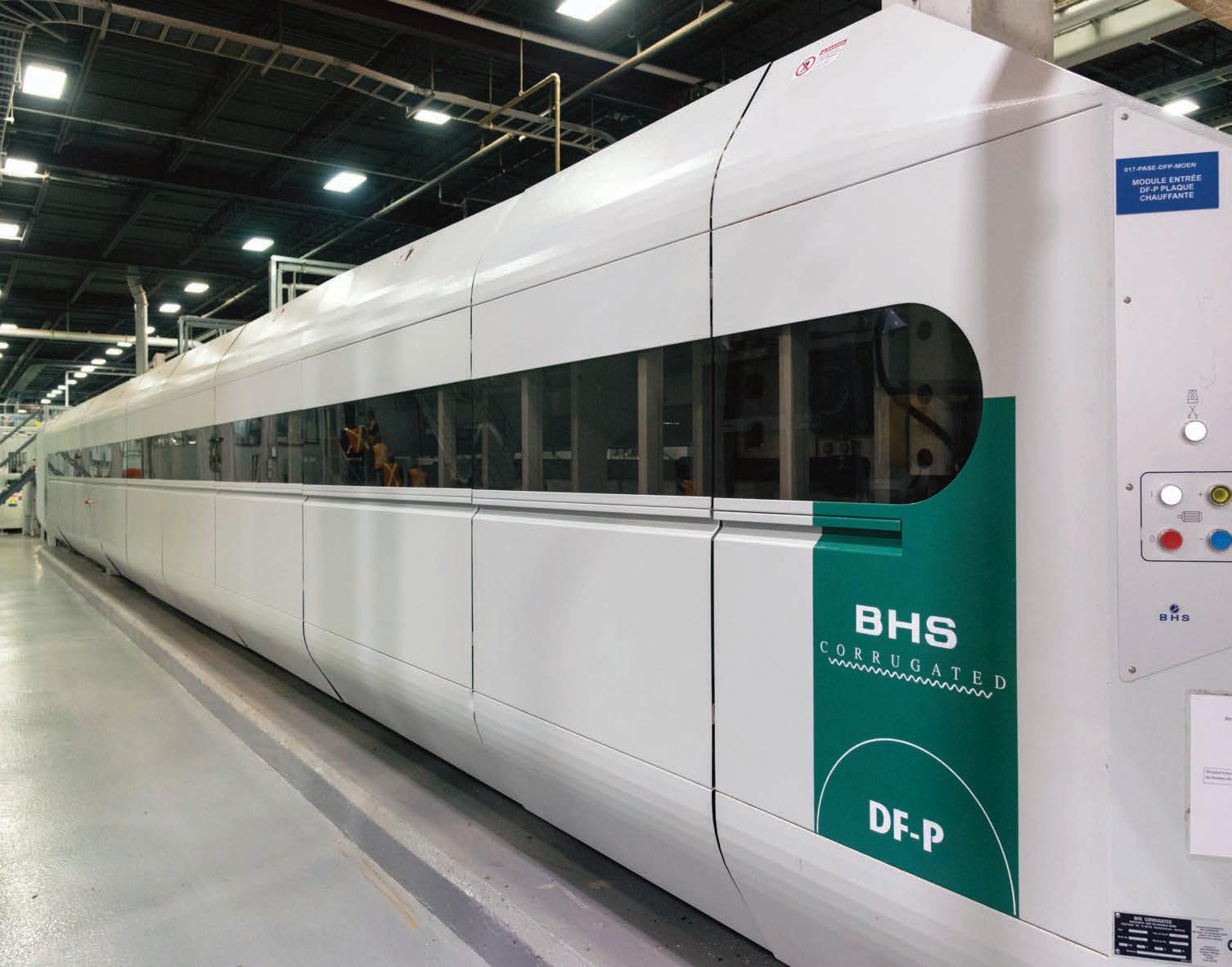
Originally started up back in 1985, the Drummondville plant has undergone an estimated $26.4 million in various capital upgrades in the last three years—partly aided with a $6-million loan from the province’s Investissement Québec agency—including a 45,000-square-foot plant expansion required to accommodate installation of a mammoth 332-meter-long BHS Corrugated -built corrugator with the capacity to produce over 2.4 billion linear feet of high-quality corrugated board per year.
“The Drummondville expansion is a concrete example of our continuing efforts to modernize our manufacturing equipment,” Mario Plourde, presi -
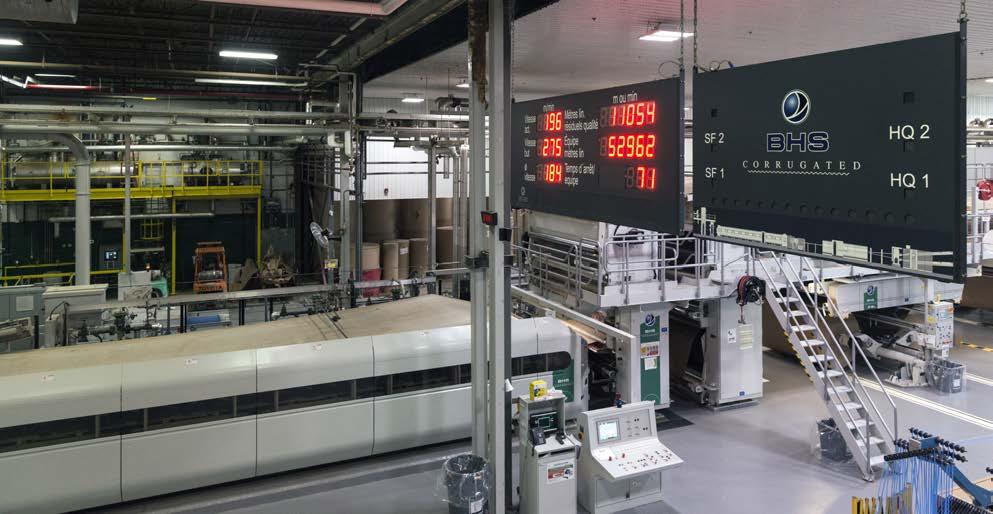
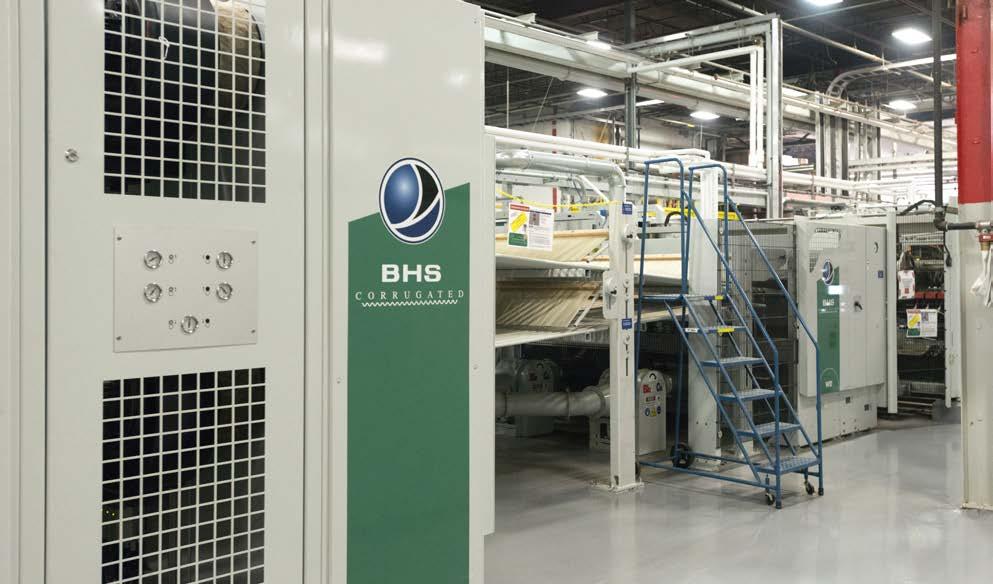
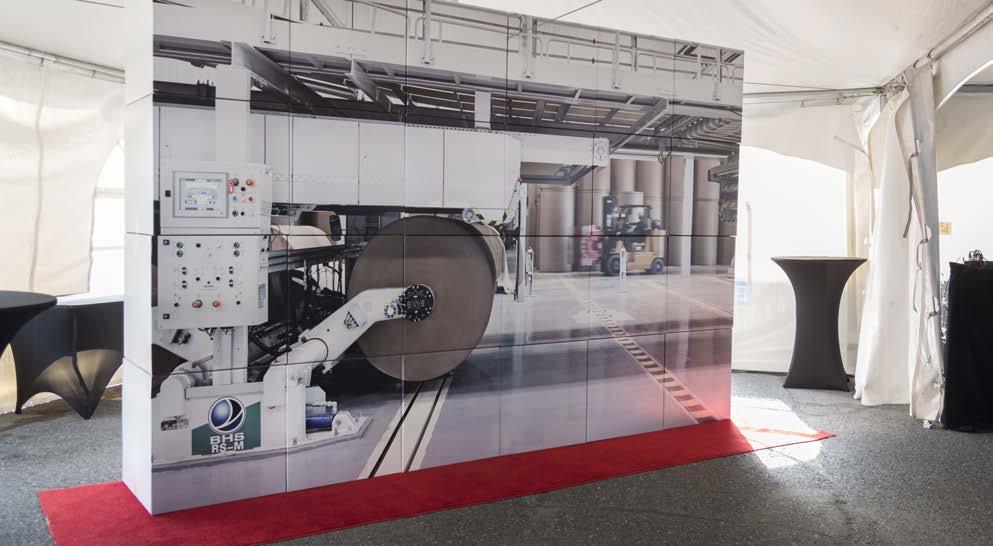
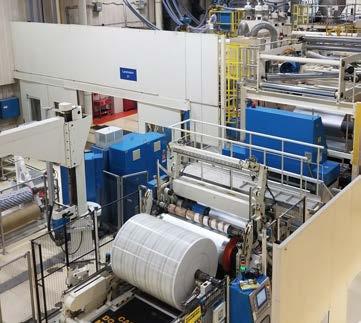
Boasting capacity to produce over 2.4 billion linear feet of high-quality containerboard per year, the high-speed corrugating machine supplied to the Cascades Drummondville plant by BHS Corrugated is the centerpiece of a comprehensive $26.4-million capital investment upgrade project carried out at the facility over the past three years.
•
•
www.RegalBeloit.com
CORRUGATED PACKAGING
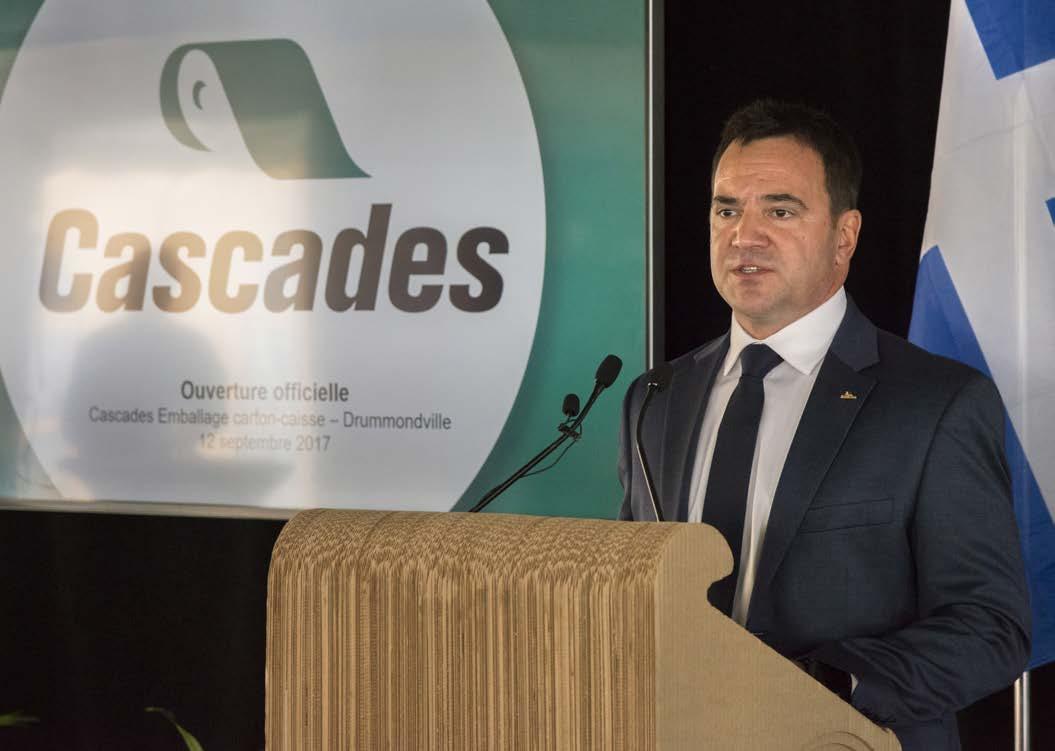
dent and chief executive officer of the Kingsey Falls, Que.-headquartered paper packaging and tissue products group stated at last month’s official unveiling of the plant’s new technological prowess to its customers, suppliers, media and key government officials.
“By investing in high-performance and state-ofthe-art technology such as that used in Drummondville, the company not only consolidates the plant’s 214 jobs, but also its position as a leader in containerboard packaging in Canada and the northeastern
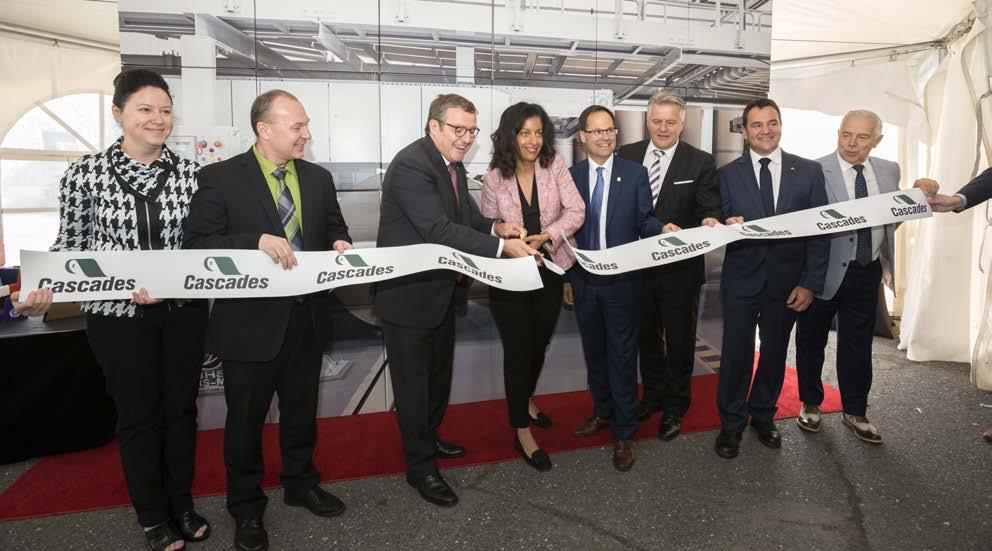
U.S.,” Plourde told attendees to the inauguration ceremony, which also included the province’s minister of economy, science and innovation Dominique Anglade and Laurent Lessard, provincial minister responsible for the Centre-du-Québec region.
As one of Quebec’s leading manufacturers and exporters, Cascades generated revenues of just over $4 billion in 2016, with the Container Packaging Group accounting for 34 per cent of that total—slightly ahead of the tissue business (32 per cent) and well above the
company’s Specialty Product Group (15 per cent) and its European boxboard assets (19 per cent).
Currently ranking as the sixth-largest containerboard producer in North America, the group employs more than 3,400 people at five linerboard and corrugated medium mills and 18 converting plants across Canada and northeastern U.S.—using primarily recycled fibers to manufacture its products.
With the lower Canadian dollar helping the containerboard business grow its exports to the U.S., the Drummondville plant looks well-positioned to benefit from the successful infusion of new production capabilities and a more efficient work process related to the significant investment in the facility’s infrastructure.
According to Cascades Containerboard Packaging president and chief executive officer Charles Malo, “This new equipment allows us to produce higherquality packaging and increases our efficiency and flexibility to better serve our customers.
“Along with the purchase or construction of new plants in Connecticut and New Jersey, this investment demonstrates Cascades’ desire to grow and gain market share,” said Malo, while also acknowledging “the outstanding dedication of employees and partners who helped make this project possible.”
With maximum running speeds of up to 1,500 feet per minute (440 meters per minute), the towering 110-inch-wide BHS corrugator was naturally the focal point of
Cascades Containerboard Packaging president Charles Malo addresses invited guests attending the commemorative ceremony. Drummondville plant manager Marco Buist.
the plant’s comprehensive capital upgrade that has helped turn the Drummondville plant into a high-volume operation running a flat-out 24/7 production schedule, stopping only for the required machine maintenance.
“In addition to buying the corrugator from BHS, we also bought their full training program for the machine to enable our mechanics to keep the corrugator in perfect running condition at all times,” Drummondville plant manager Marco Buist told Canadian Packaging during last month’s facility tour.
“It is a very high-quality machine, loaded with the best technology in the market,” said Buist, stressing the importance of each of the four fiveperson rotating teams operating the corrugator in 12-hour shifts using exactly the same steps, procedures and processes to ensure maximum machine uptime and productivity levels.
As Buist pointed out, the BHS corrugator has already boosted the plant’s output levels by 2.5 times since replacing the original older-model corrugator, while also achieving notable energy and water consumption savings.
It has also proven to be very efficient in terms of waste, whereby less than eight percent of the paper used in board production ends up left behind as trimmings—ready to be recycled again as OCC (old corrugated cardboard) to make yet more boxes.
Working in tandem with the plant’s five heavyduty printing presses—including the new superhigh-speed EVOL flexo-folder-gluer (FFG) from Mitsubishi Heavy Industries (MHI) reaching speeds of up to 35,000 sheets per minute—the new corrugator has enabled the Drummondville plant to generate record revenues of about $125 million in the last year, according to Buist.
As Buist explained, the Drummondville plant uses its presses to convert about a billion square feet of corrugated board into finished boxes onsite, while shipping the rest of its output in stacks of sheets to its sister plants in Victoriaville, Que., and Montreal—to be turned into other, more high-graphics corrugated boxes and displays requiring additional colors and special varnishes or other finishes.
As for the finished boxes made at Drummondville, two-thirds of them are shipped to the company’s clients in the food and healthcare industries throughout Quebec, Ontario and parts of northeastern U.S.
According to Malo, the high-volume, highspeed Drummondville operation offers a model blueprint for other new containerboard facilities operated by Cascades, including the new US$80million containerboard and packaging plant that the company plans to open up next year in Picataway, N.J.
“This is what we see as the future in this industry—high volume, high quality and very quick turnarounds,” Malo said, adding the Drummondville plant is also looking to expand its digital printing capabilities to handle shorter production runs without the expense of printing plates.
“The BHS corrugator is a very efficient machine providing us with the high-quality product and the fast time-to-market that are essential to succeeding in this industry—producing a strong
CORRUGATED PACKAGING
Running flat-out on a 24/7 schedule, the new BHS corrugator at the Cascades containerboard manufacturing plant in Drummodville can achieve super-fast operating speeds of up to 1,500 feet per minute.
A special display depicting a giant roll of corrugating medium being loaded onto the BHS corrugator inside the Drummondville facility was assembled with digitally-printed blocks of corrugated board produced at the high-volume operation.
Manufactured in Germany by BHS Corrugated, the new high-speed corrugating machine running the full length of the plant floor has enabled the Drummondville containerboard facility to boost its daily output levels by 150 per cent since startup.
CORRUGATED PACKAGING
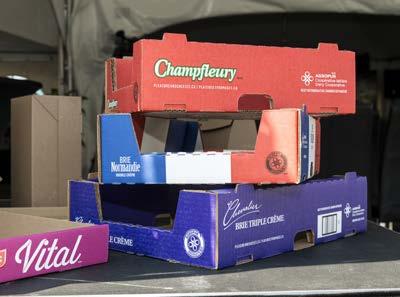
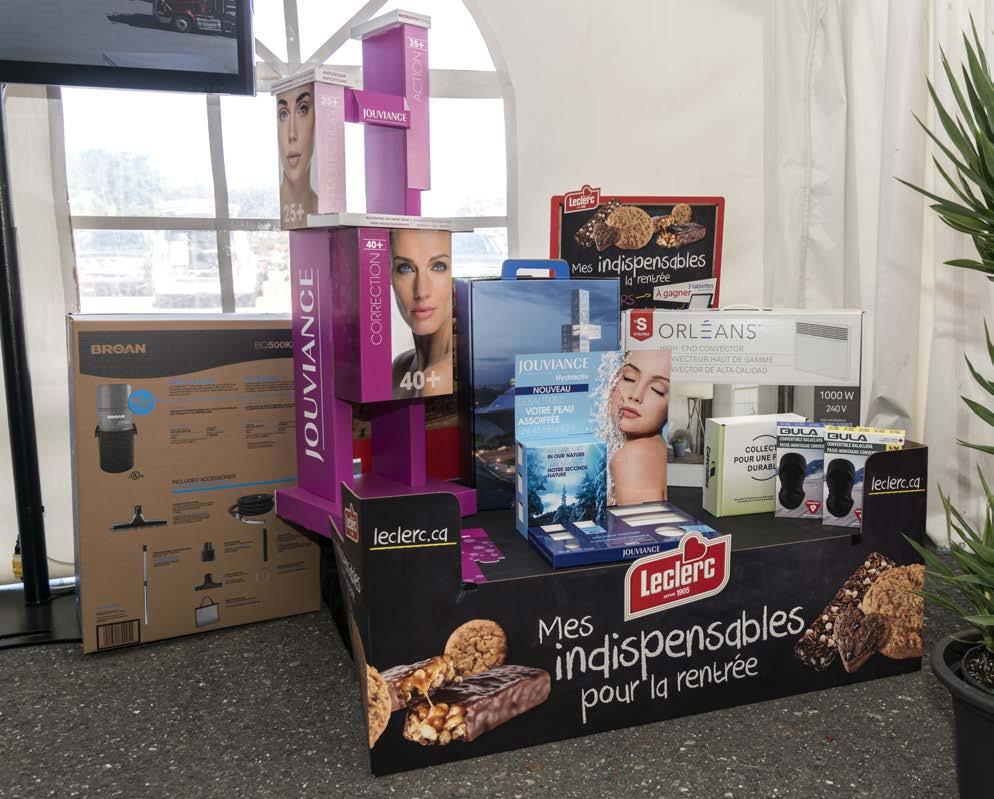
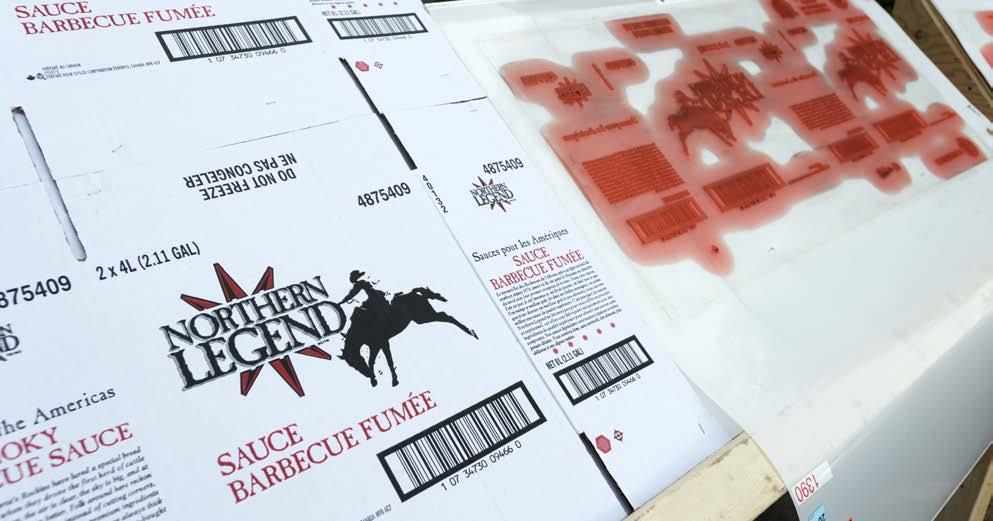
A sampling of the high-quality corrugated containers produced and printed at the Cascades containerboard manufacturing facility in Drummondville and used by some of Quebec’s leading brand-owners to ship their products to market.
Quebec’s minister of economy, science and innovation Dominique Anglade ( dignitaries in a ribbon-cutting ceremony commemorating the Drummondville plant’s successful capital upgrade completion.
A close-up of white-top corrugated containers produced at the Drummondville facility that are printed with some recentlyiinstalled digital printing equipment that does not use traditional printing plates to generate text and logos on the boxes.
A NEW LEVEL OF 360 INTEGRATED SOLUTIONS FOR PACKAGING FOODS
In an industry with dynamic environments and diverse packaging needs, companies are looking for partners that provide agile solutions to ensure compliance, maximize efficiency and minimize cost. As the world's leading marking and coding experts, we are the vendor of choice for companies of all packaging needs and sizes across the globe.
Why Markem-Imaje
High Quality Code
Line Efficiency
Compliance
Traceability
Software Integration
Cost Reduction
GS1 verifiable symbology
Unique technologies for 100% readable high contrast codes
Up to 99.9% availability ratio
Increase speeds without compromising quality
GS1 and regulatory retail compliant
One stop solution: site audit through lab samples to FAT
Drive compliance needs, anti-counterfeiting efforts and product promotions
CoLOS networking provides centralized data control
Integrates into existing production systems
Industry leading TCO
Fully integrated solutions lead to less waste and reduced operator errors
Market Perspective
marketing@markem-imaje.com
Scan here to learn how Markem-Imaje's food-grade coding solutions are used for
edge food safety at Ippolito Fruit and Produce
“Markem-Imaje has an excellent feature that will allow us in the future to integrate our traceability into the ERP system, track back to the acreage and provide full traceability on the produce” Doug Alexander. Director of Engineering, Ippolito Fruit & Produce.
AUTOMATE NOW DRIVEN TO SUCCEED
New-generation electric drives allow stretch blowmolding equipment manufacturer to reduce machine design complexity and improve its motion control capabilities
Canadians know—thanks to W. Amsler Equipment Inc. of Richmond Hill, Ont.
Building heavy-duty machines to produce mass quantities of everyday packaging necessities like plastic bottles around the clock is a job bestsuited for a rather elite group of companies in the global packaging machinery business. And it’s a group where Canadian technical and engineering skills are widely renowned and celebrated far more than the average
Founded in 1994 by Werner Amsler, the family-owned company has consistently displayed a remarkable knack for making high-quality stretch blowmolding equipment over the years, which has earned it a very special place and plenty of respect in the market traditionally dominated by large overseas manufacturers of far greater size.
To compete in this highly competitive marketplace, Amsler’s Richmond Hill operation boasts a wealth of technological prowess and expertise driving the daily
BY GEORGE GUIDONI, EDITOR
PHOTOS BY NAOMI HILTZ
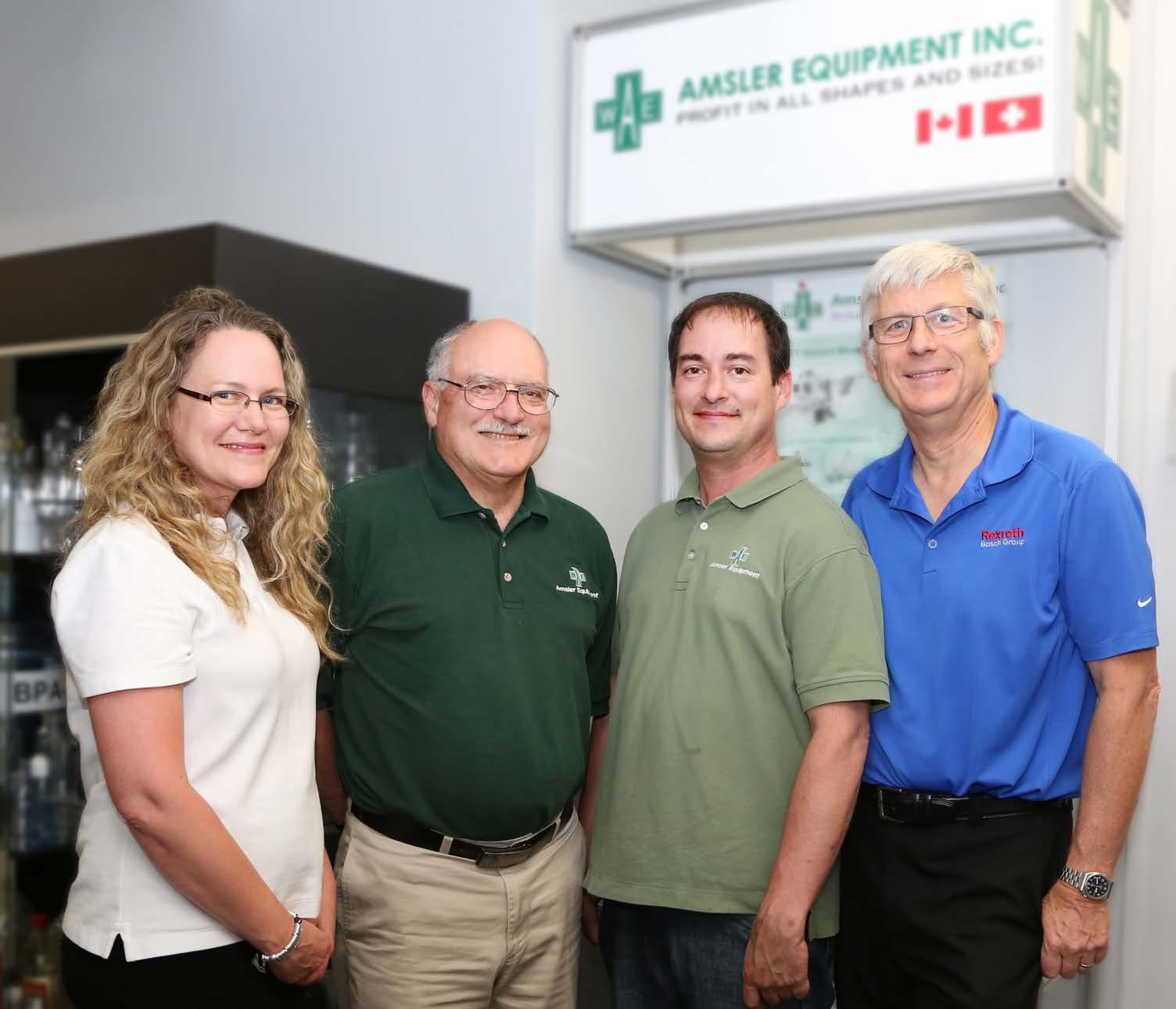
From Left: W. Amsler Equipment sales and marketing manager Heidi Amsler, company founder Werner Amsler, director of operations Jason Amsler, and Bosch Rexroth Canada’s technical consultant Paul Thiele pose for a team photo in the reception area of the company’s Richmond Hill, Ont. plant, which manufactures high-quality stretch blowmolding machines for customers across North America.
AUTOMATE NOW
design and manufacturing excellence packed into every high-speed blowmolder and other related machines assembled there.
“We take pride in our unique status of being the only North American manufacturer of all-electric linear PET (polyethylene terephthalate) stretch blowmolding equipment,” sales and marketing manager Heidi Amsler told Canadian Packaging on a recent visit to the company’s lively 20,000-squarefoot facility just north of Toronto.
In addition to blowmolders, the Richmond Hill plant also manufactures empty bottle leak testers, spin trimmers and various downstream filling equipment for leading custom bottle blowmolders like Berry Plastics, Amcor and other key suppliers of PET plastic containers to the global beverage, cooking oils, agrochemical, health-and-hygiene, and other industries always in need of a steady supply of strong, well-made plastic containers to ship and market their products.
“The machines are designed and built right here in Canada with the primary idea of providing our customers as much machine uptime, and requiring as little maintenance, as possible,” Amsler explains.
VALID POINT
“The whole point is to enable our customers to run as many bottles as they can to increase their revenue and improve their bottom line,” she says, “rather than spending their time on maintenance and changeovers.”
As Amsler explains, the company manufactures three types of PET stretch blowmolders to accommodate the production of almost all the popular types of plastic bottle shapes and sizes, including:
• Small-neck bottles with 20-mm to 63-mm neck finishes, used for miniature single-shot liquor bottles to peanut jars, in volume capacities ranging from 20-ml up to five liters;
• Wide-mouth jars, with neck finishes from 70mm to 120-mm, to produce two- to five-liter PET bottles;
• Bulk jar s ranging from five liter water jugs up to 22-liter containers used as beer kegs and bulk food containers widely used in the foodservice and hospitality industries, as well as for packaging all sorts of household care and industrial cleaning products.
“Depending on the model, our machines can achieve output rates ranging from 1,500 to 1,800 bottles per hour per cavity,” Amsler states, noting the company offers its machine in one-, two, three- and, more recently, four-cavity versions to suit the endusers’ varying production needs.
“Many bottle manufacturing sites run our machines flat-out run on 24/7 schedule.”
“Customers are always looking for maximum reliability and output: in other words machines that will deliver the most uptime and reliable, highly repeatable production,” says Amsler, “which is why we are using a lot of Rexroth servomotors and servo drives in our machine design to optimize the stretch blowmolding process.”
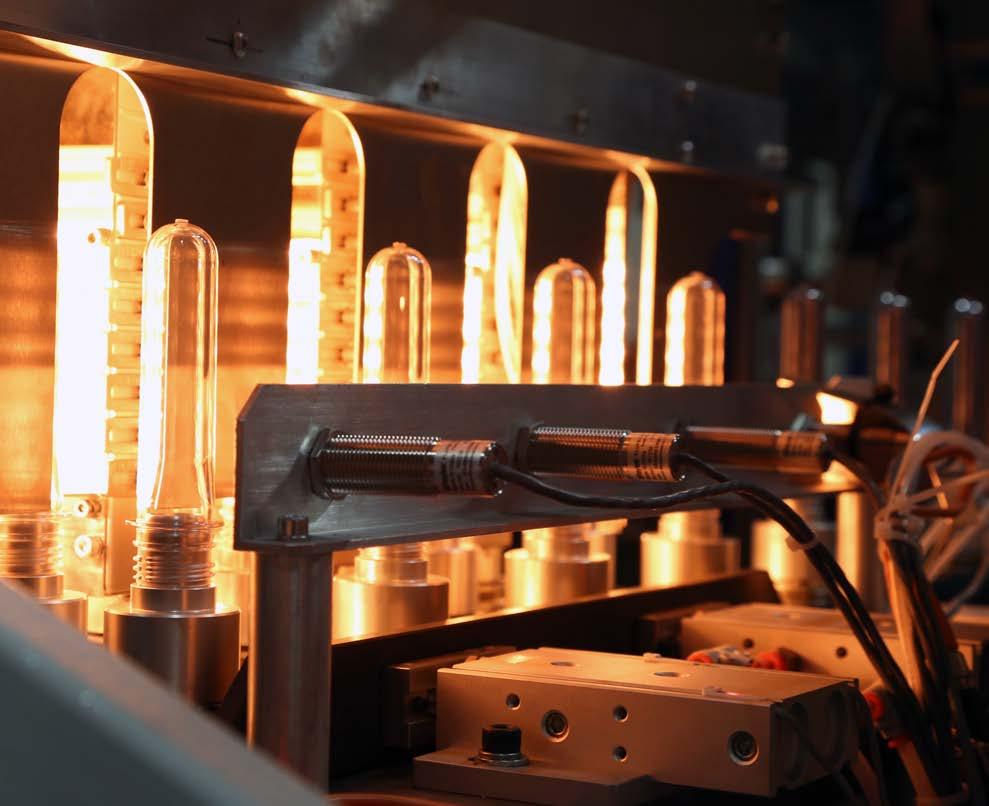
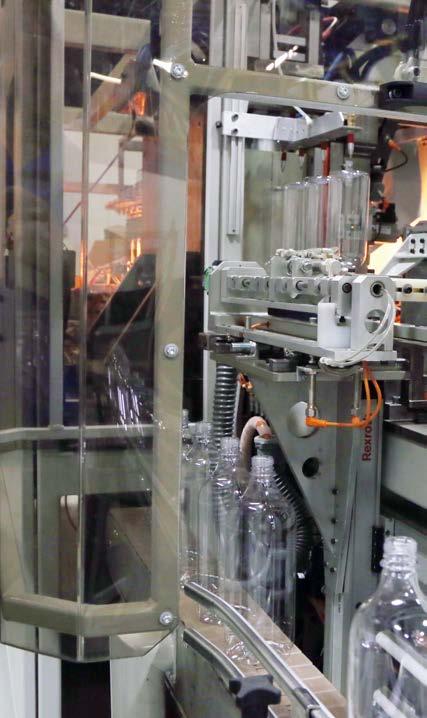
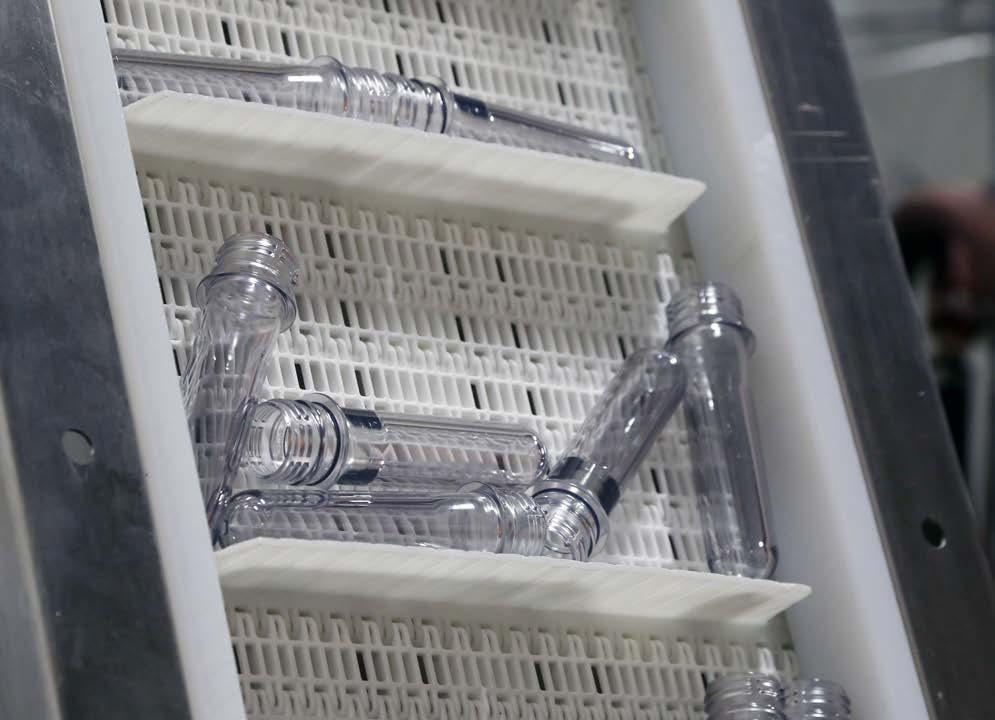
Amsler machinery uses the so-called two-step stretch blowmolding process, whereby its machines are fed pre-made, test-tube-shape PET preforms that are transferred inside the machines’ ovens—heated via high-intensity infrared lamps—and placed into molds.
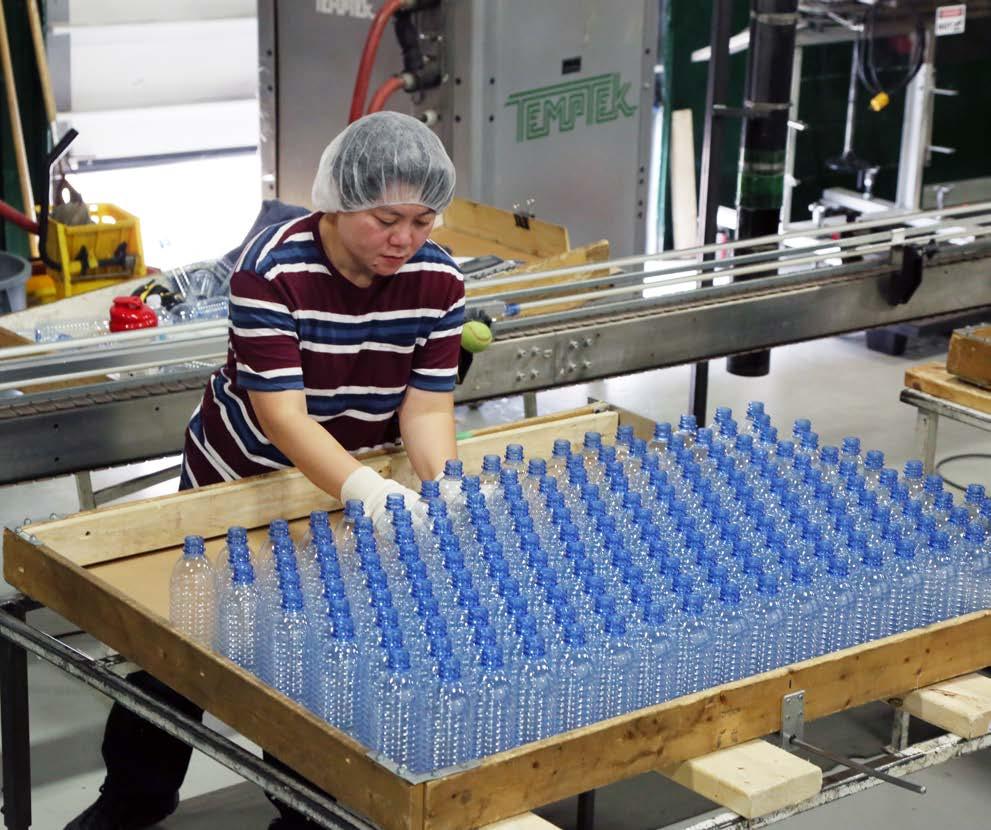
An Amsler plant employee preparing a layer of freshly-formed plastic bottles coming off the four-cavity model L42X liner stretch blowmolding machine for palletizing.
The high-intensity 1000 W infrared lamps inside the oven of the new L42X blowmolding machine manufactured by Amsler are automatically regulated to ensure even heat distribution in all the right places for each and every preform.
AUTOMATE NOW
A metal stretch rod then pushes the plastic, forcing it to stretch to the length of the mold cavity, which then balloons out by compressed air and internal pressure, stretched in hoop and axial directions, and adheres with the shape of the mold walls.
After it cures and cools down, the newly-formed bottle is ejected from the mold, with the whole process taking mere seconds to finish.
The stretch blowmolding process allows for the use of many complex designs to produce a broad variety of attractive, fully-recyclable cylindrical, rectangular or oval PET containers, with the round two-liter beverage bottles being one of the most commonplace end products made using this process.
TIMELY RESPONSE
Like all machine manufacturers, Amsler Equipment is continuously upgrading its machinery offering to respond to evolving market demands and customer expectations in timely manner—working with many technology partners to
Amsler’s sales and marketing manger Heidi Amsler (above left) worked closely with Bosch Rexroth Canada’s technical consultant Paul Thiele (above) in the design and development of the new four-cavity linear LX42 blowmolding machine manufactured in Richmond Hill, Ont.
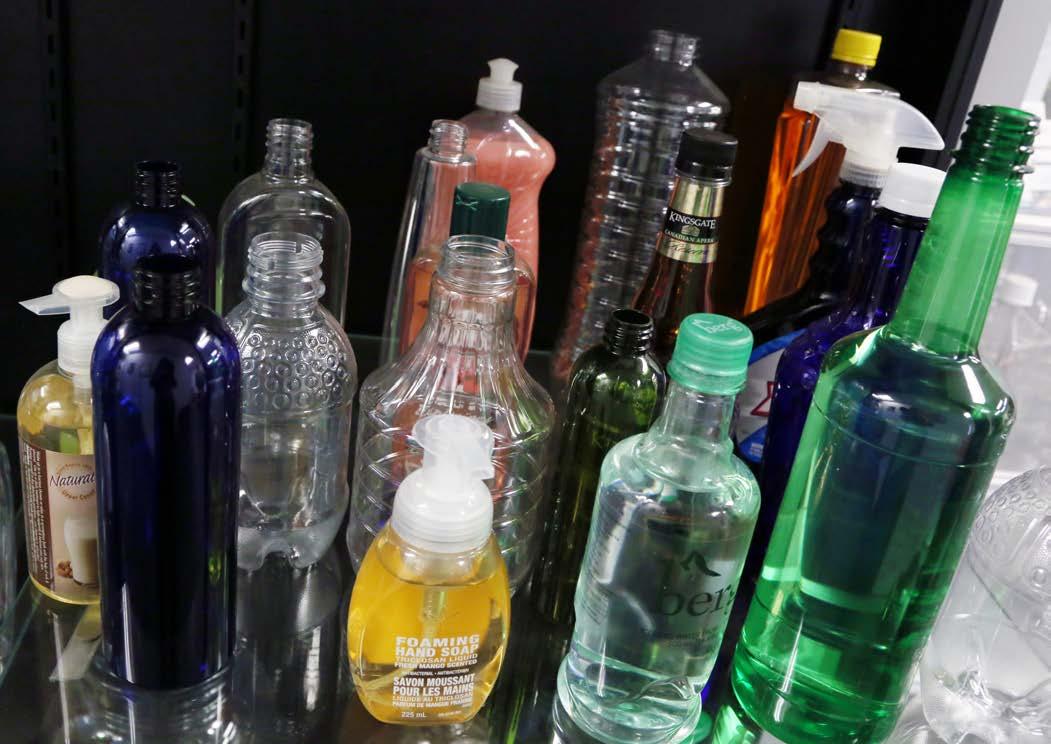
A sampling of the different bottle shapes and sizes produced on Amsler’s equipment.
AUTOMATE NOW
improve its product offering.
Over the last 20 years, Amsler has built a tight partnership with Burlington, Ont.-based industrial automation specialists Bosch Rexroth Canada Corp. by incorporating many Rexroth servomotors, drives and other electrical system components into its equipment to ensure optimal motion control for all the many different moving parts inside the machinery used to turn preforms into finished bottles.
“Over the last 20 years or so, Rexroth has been a very good partner for us in terms of providing outstanding service, technical support and engineering assistance,” Amsler relates, describing Rexroth’s significant role in helping Amsler develop its next-generations L42X four-cavity linear stretch blowmolding machine, launched earlier this year.
“We have recently redesigned our four-cavity L42
machine into a next-generation system that has many more servos, more speed and a lot more control over the whole process,” she says.
Like its L42 model predecessor, the L42X can blow bottles up to two liters in size using four cavities, Amsler explains, and bottles up to five liters in two cavities, but whereas L42 could only achieve maximum diameter of 48-mm, the L42X can handle larger diameters of up to 63-mm.
Featuring upgraded 1,000 W heating lamps and oven controls, along with a double-acting clamp to move both mold halves away from the centerline upon opening, the L42X machine makes optimal use of Rexroth’s all-new IndraDrive Mi drives—combining a drive and a motor in a single compact package— to implement game-changing transformation in the machine design, simplicity and performance.
Paul Thiele, technical consultant with Bosch Rexroth Canada Corp. in Burlington, Ont., has worked closely with Amsler for nearly 18 years, helping in the development of the original L22 model blowmolder and all the subsequent machine updates and reiterations.
As Thiele explains, incorporating the Rexroth IndraDrive Mi servo drives into the L42X model blowmolder enabled Amsler to eliminate the need for an external control cabinet that would have been remotely wired to the machine—enabling for a much smaller control cabinet to be placed inside the machine itself.
Amsler agrees: “One of the big advantages of being able to reduce the cabinet size is that instead of having a separate cabinet outside of the machine, we have it placed inside, while also vastly reducing the amount of
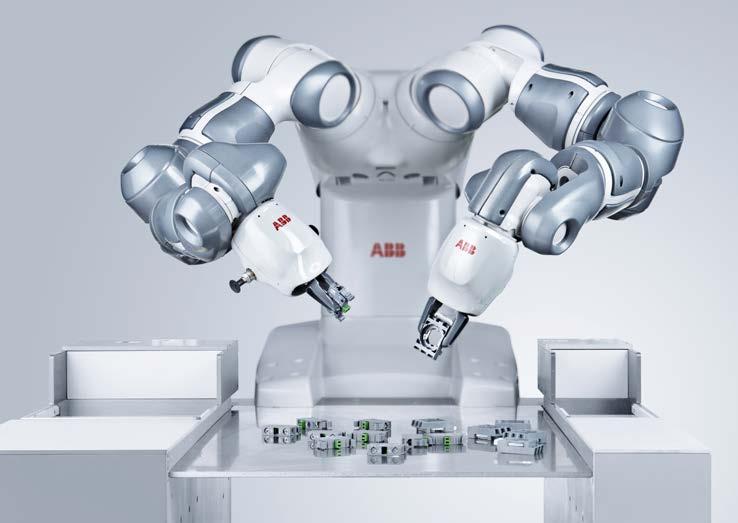
You and Me Writing the Future Together
See how YuMi - the industry’s first truly collaborative dual arm robot - can facilitate to numerous applications side by side with your employees. YuMi stands for “You and Me, working together”, and with a 500 Gram load per arm paired with a 500 Millimeter reach, YuMi is ideal for efficiently working in hard to reach areas with accuracy. www.abb.com/robotics
Freshly-formed PET bottles smoothly exiting the L42X blowmolder in a single file for palletizing. A close-up of the Rexroth MLC controller and related components inside the L42X machine.
wiring we had before.
“This allows end-users a much faster startup in the field,” she says, “and it makes machine positioning much simpler because they don’t have to worry about where they should place the stand-alone cabinet.”
Says Amsler: “The new servo systems has made the machine faster, reduced its maintenance requirements, and freed up extra space inside to enable us to include new value-added features such as preferential heating and automatic neck orientation, which is something that our customers have been asking for.”
Adds Thiele: “One of the Mi motor’s most important advantages is that it is actually a drive and motor package whereby the drive is mounted on the motor,, which dramatically reduces the required cabinet space.
“Because Amsler’s machines are designed for a compact footprint, in the past there was not enough cabinet space inside the machine to put all nine servos in. “Now there’s just one power source in the cabinet that power all nine motors/drives, instead of one for each axis.
“So one of the key advantages is the significant reduction in the costs of installing wires, wire trays and the wire cabinetry,” says Thiele,. Moreover, the new blowmolding machine is controlled by a Rexroth MLC (motion logic and control) controller that provides all the software architecture to control all the motion, logic and power distributed to the proper I/O (input/output) connectors.
“These benefits provide operators with the ability to make any necessary changes from one single source, so when they set up a new bottle for different sizes, they can download very
AUTOMATE NOW
the plastic test-tube-shaped preforms are transferred to the LX42 blowmolding machine via an inclined plastic conveyor at controlled speeds to ensure smooth and continuous machine operation.
quickly all the parameters to the drives and off they run with the new different set-up.
“It’s all very fast and very efficient,” he states, “thanks to the Rexroth MLC’s ability to have coordinated motion.
“This dramatically decreases the cycle time by overlapping motions to make the most efficient use of time and motion,” he states.
According to Heidi Amsler, the Rexroth IndraDrive Mi
drives enabled Amsler to replace all the pneumatic systems and components used on previous machine models to control preform loading, unloading and rotating inside the ovens with the more precise and repeatable Rexroth servo control.
All in all, these enhancements add up to about a 10-percent improvement in the new machines overall performance, according to Amsler.
Adds Thiele: “Using the Rexroth Mi family of drives
mk North America believes in offering not only a better product, but also a better solution. We can help guide you through the process of automating your packaging line.
Shipped to the Amsler production facility in bulk,
Bosch Rexroth supplied the linear modules and variable-speed drives used to provide smooth and swift bottle transfer.
AUTOMATE NOW
allowed Amsler to reduce the cabinet space by 85 per cent—making shipping and field startup much simpler and quicker—while also reducing the amount of field wiring by 85 per cent.
“Instead of having two wires going into each of the machine’s axes as before, there is now just one single cable that daisy-chains across all the different axes,” he says, “which in turns saves a lot of machine assembly time and all the related costs.
“Basically, the cable inside the machine goes inside one Mi motor, exits and goes on to the next axis, and repeats the sequence through all the nine drives, rather than having 18 cables running throughout the machine to control the drives.
“This also eliminates the need to install additional components such as starters and contactors,” he adds, “further freeing up more space to accommodate other new machine functions or features.”
In addition to the Mi drives, Bosch Rexroth also sup-
plied the linear modules used to guide the finished bottle out of the blowmolder onto the exit conveyor, Thiele notes, as well as a Rexroth VFD (variable-frequency drive) with Sensorless Vector Control to power the exit conveyor.
THE NEXT LEVEL
Above all, Thiele points out that incorporating the Rexroth IndraDrive Mi technology into the new blowmolder makes the L42X machine perfectly compatible with the emerging new Industry 4.0 working environment based on the constant exchange and analysis of machine data between all the different pieces of automated equipment employed at modern manufacturing plants.
“The Amsler L42X is ready for the Industry 4.0 workplace, where data collection from the machine will not only be possible, but will also be an important part of the bigger plant picture,” Thiele explains.
“Also, when Amsler is remote-accessing the machine for troubleshooting, they have the ability to look into
each of the drives and their motion profiles to see if there is a problem on any specific axis.
“This is made possible because of the Rexroth MLC control software that provides the full view of the whole system,” Thiele adds.
“With the ability to see and analyze each axis,” Thiele continues, “Amsler can compare that data to previous data and recorded cycle times and see if there are any changes that may have been caused by a mechanical prob lem or a motor issue, to use as an example.
“The more you can see, the better you can service and support the machine.”
Says Thiele: “This enables Amsler to do very detailed analysis on these machines and to make whatever tweaks are necessary to re duce cycle-times.
“It may only be a small tweak amounting to 10 milliseconds, but if you can reduce the heating time or blowing time from a threesecond cycle to 2.99 seconds, it all adds up when you’re talking about multiple cavities, several machines, and continuous 24-hour operation.
“Industry 4.0 is all about information, quality control and process improvement,” he states, “whereby machines all talk to each other back and forth to generate more de tailed information that can be analyzed and used to improve the overall performance lev els.”
Adds Amsler: “When we were looking to develop this new machine we contemplated the idea of perhaps using other automation suppliers, but given our long and successful history with Bosch Rexroth Canada we decided that they were the best option for us.
“The outstanding work they have done with our new L42X machine fully validates our decision,” Amsler states.
“Working with Amsler for the last 20 years has been a great experience for Bosch Rexroth,” Thiele concurs.
“It is a company that’s demanding on itself as it is on its suppliers—always raising the bar for service and technical excellence.
“It’s often a lot of work,” he sums up, “but it’s always worthwhile.
“And as Bosch Rexroth continues to bring advanced next-generation technologies to the table, and as Amsler continues to expand its markets, we are looking forward to maintaining our mutually beneficial long-time relationship well into the future.”
Amsler’s blowmolding equipment has been extensively used by custom blowmolders across North America to create a broad assortment of PET plastic bottles in a wide variety of shapes, size, colors and neck finishes to help brand-owner achieve effective shelf impact.
TUESDAY, OCT 24, 2017 | 9AM-3PM
sdean@canadianpackaging.com
Leading packaging suppliers under one roof at the same time – ONE DAY ONLY! Network, discuss, and exchange ideas so you can drive your business forward!
Meet some of the most innovative suppliers of the best new packaging materials, containers, machines and automation options in:
• Package Design
• Packaging Automation
• Food Safety
• Package Decoration & Coding
• Retail Ready Packages
• Augmented Reality in Packaging
• Packaging Machinery
END OF THE LINE
Keeping things in-house allows end-of-line packaging equipment designer and manufacturer to maintain in full control of its automated marvels
BY ANDREW JOSEPH, FEATURES EDITOR
PHOTOS BY PIERRE LONGTIN
As William Shakespeare’s Juliet once pondered, “What’s in a name?”
Sometimes the answer is as simple and sweet as it is obvious.
For the Vaudreuil-Dorion, Que.-headquartered Consolidated Technologies Inc., what’s in its name is simple—a consolidation of all the different types of end-of-line packaging machines a company needs.
Opening its doors in 1998, Consolidated Technologies might call Canada home, but its machines adorn manufacturing facilities across North America.
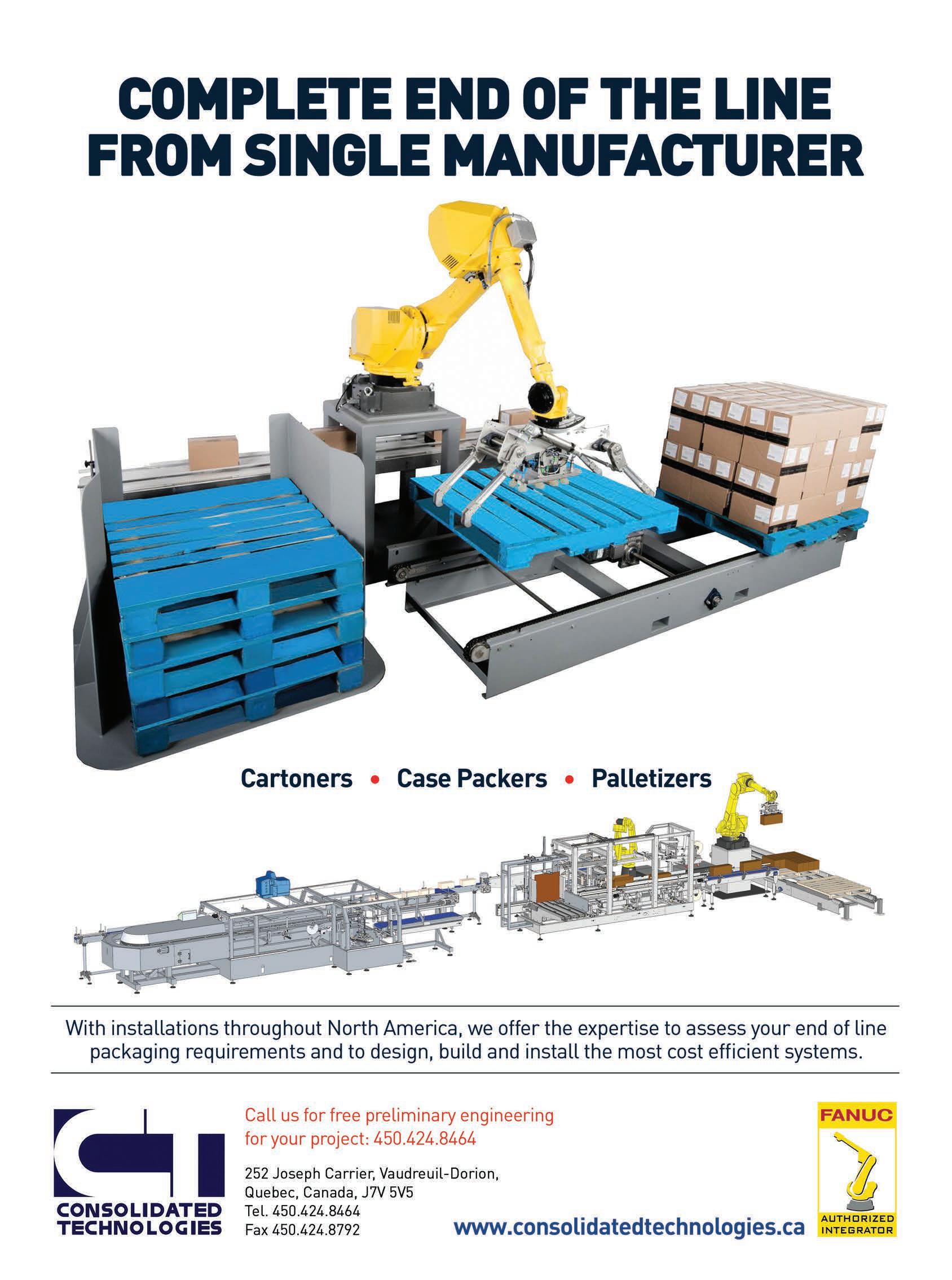
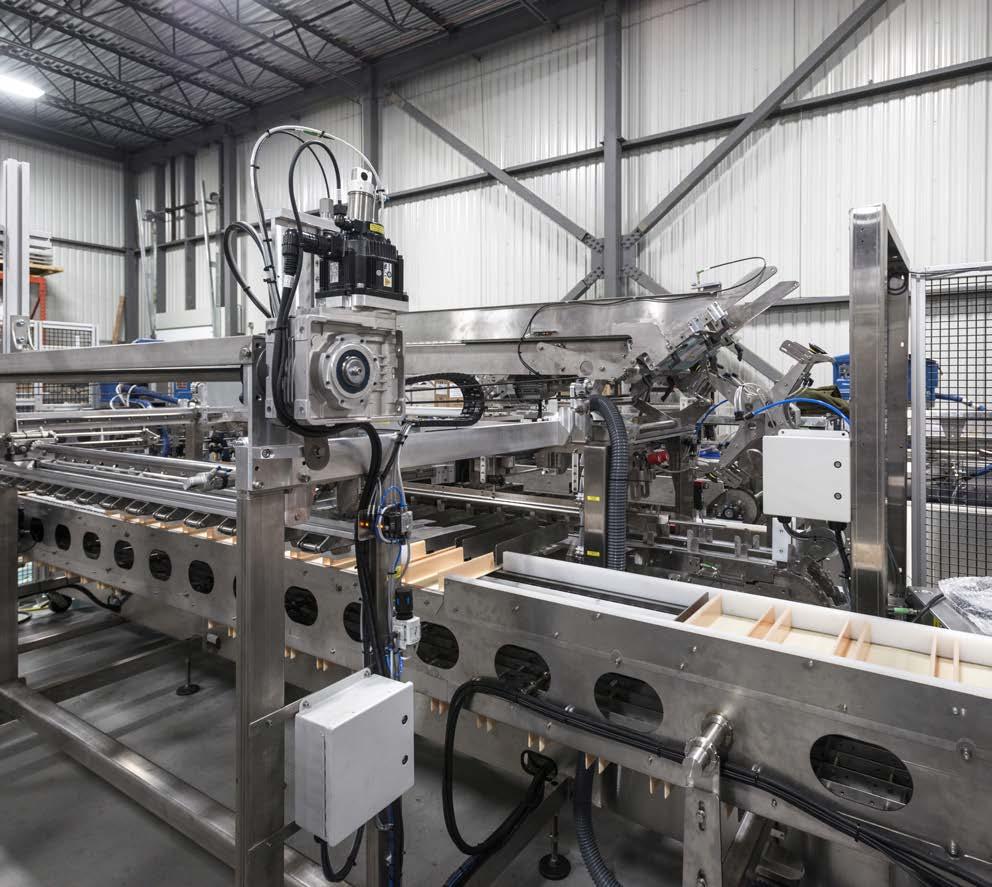
A North American leader in the design and production of well-thought out end-of-line machines, the company offers customers a full range of equipment from cartoners, case-packers, sleevers and palletizers selling individually technologies, or consolidating them into a multi-faceted, turnkey packaging solution.
During a recent visit to the tidy, 30,000-square-foot facility with approximately 35 employees, Canadian Packaging talked with Consolidated Technologies sales manager Christian Lapointe, who told the magazine that the key to his company’s success is to “continue to offer an above-average product for an average price.”
Boris Shvab is the owner of Consolidated Technologies, a hands-on automation expert who has also been running his Robot Industries business since 1982.
In the mid-1990s, an industry colleague complained to Shvab about the state of the packaging equipment sector, noting how there were the very expensive machines, but very few quality pieces of equipment at an affordable price.
“With his strong background in automation, Boris took the challenge and built a quality cartoner for a mid-range price, sold it, built another one, sold it and then started up Consolidated Technologies,” states Lapointe.
When Lapointe joined Consolidated Technologies in 2001, he says that while the company had sold a few cartoners since 1998, his job was to heavily promote the packaging equipment.
“Since that time, “I’m proud to say that Consolidated Technologies has earned a well-deserved reputation for our quality equipment at the affordable price,” says Lapointe.
While the company mainly focuses on the Canada and U.S. market territory, Lapointe says that they also have customers in Europe and South America, picked up via word of mouth or from trade show attendance.
“Right now about 70 percent of the business is from the food and beverage industry, 20 percent industrial, and the remaining 10 percent is from the cosmetic and pharmaceutical segments,” explains Lapointe.
He points out that even though Consolidated Technologies has many customers from large national and international food and beverage processing companies,
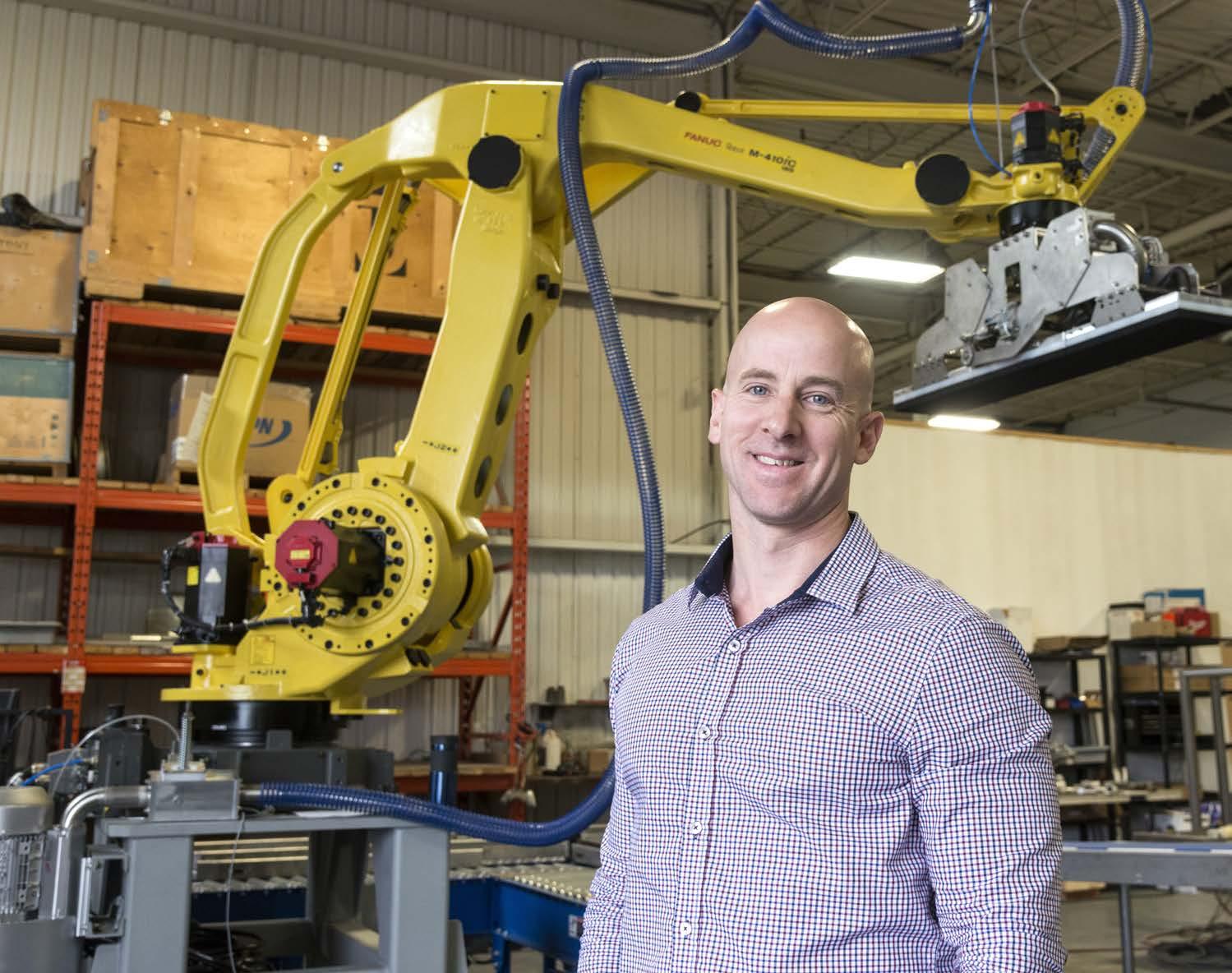
Consolidated Technologies sales manager Christian Lapointe in front of a FANUC robotic end-of-line palletizing solution.
“We don’t actively search out such business.
“We love working with the big companies, of course, but its imperative for us to realize that our strengths revolve around mid-range companies and affordable quality,” Lapointe relates, “and not with extreme high-speed machines at higher price-points.”
The busy Consolidated Technologies shop often handles up to 15 machine builds at a time, with Lapointe pointing out that while everyone usually works a common work schedule, the people in the machine shop tend to put in extra time everyday in an effort to ensure delivery times to the customer are met or exceeded.
While Consolidated Technologies may have made its name designing and manufacturing cartoners, Lapointe notes that it is no longer the main selling equipment at the company.
“The cartoner is probably a victim of its own success,” says Lapointe.
“Our customers want to continue to automate, and next will purchase a case-packer and later still a palletizer,” he says.
“For them, the single source for a complete end-ofline means not only a single responsibility, but efficient service and standardized spare parts and purchased components.
“It’s why case-packers and palletizers are big sellers for us and now dominate our manufacturing floor over all else,” Lapointe relates.
He adds that while the company offers specific models of machinery, each equipment unit it sells is modified specific to the customer’s predetermined need.
That, along with being one of the few Canadian companies to present the customer with such a wide range of end-of-line equipment, is why Lapointe says Consolidated Technologies has been and continues to be a successful company.
“It’s important for us to manufacture the products we sell,” offers Lapointe. “We could have simply purchased palletizers from a reputable company, but then it means I am beholden to them to ensure it is up to the same standards as our own equipment.
“We’re not integrators,” Lapointe states. “We design and manufacture, and have faith in our own equipment and possess the necessary skills to trouble shoot should a problem arise.
“It’s our machines—our responsibility,” says Lapointe. “It’s not just a one-stop shop for a hodgepodge of equipment, customers know they are purchasing from a one-stop shop of our equipment.”
Lapointe emphasizes that as a one-stop end-of-line shop, Consolidated Technologies builds every machine in-house from ‘A-to-Z’.
“The only thing we don’t do, is laser-cut the machine’s frames,” he notes. “But everything else is pretty much all Consolidated Technologies.
“Doing it ourselves allows us to have more control over the final product,” points out Lapointe. “That way when a product leaves our facility, we can have every confidence that the customer is going to get a machine that not only works, but works well performing at the levels the customer expects and needs.”
He says that initially, when a request for a quote comes through, it is up to the sales personnel to properly determine what it is the customer wants, but even after a project is started, the proper details—and quotation— are adjusted to ensure the customer is happy.
“We are always ready to go and see the customer when they are ready to proceed with a project,” says Lapointe adding that he is only too happy to jump on a plane to get the project moving in the correct direction.
AUTOMATE NOW
A Consolidated Technologies cartoner in the process of being built at the Vaudreuil-Dorion, Que. Facility.
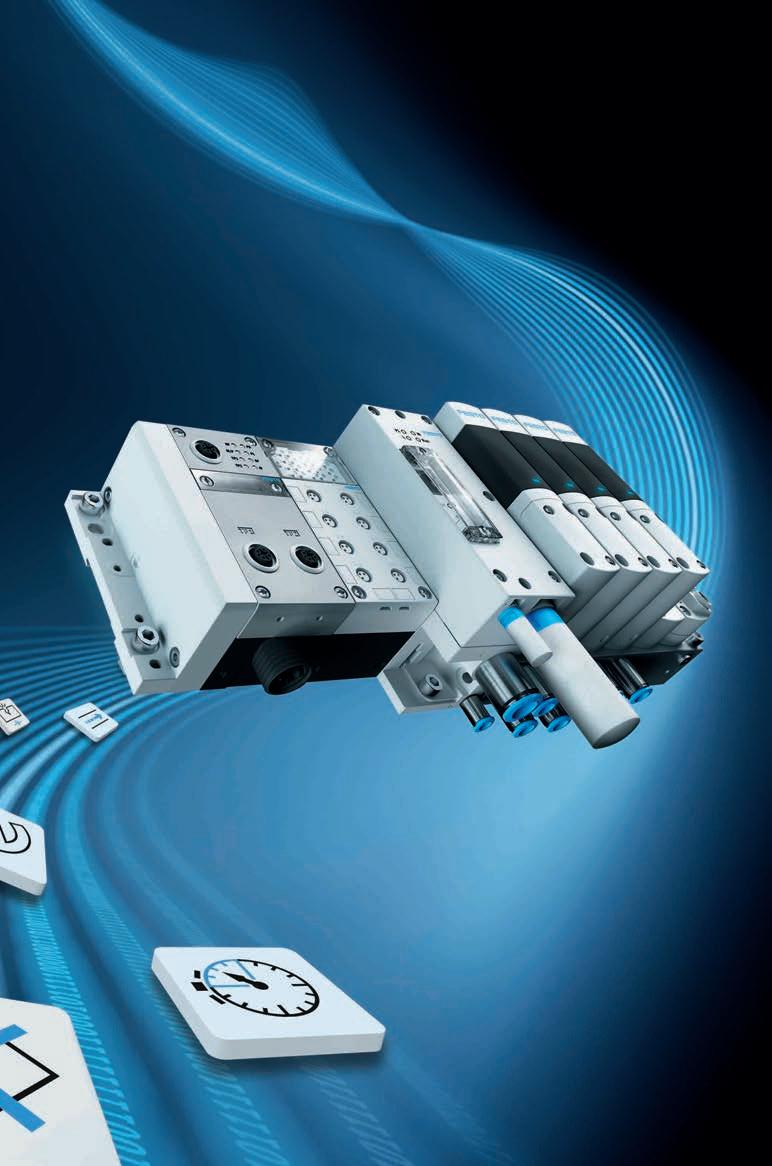
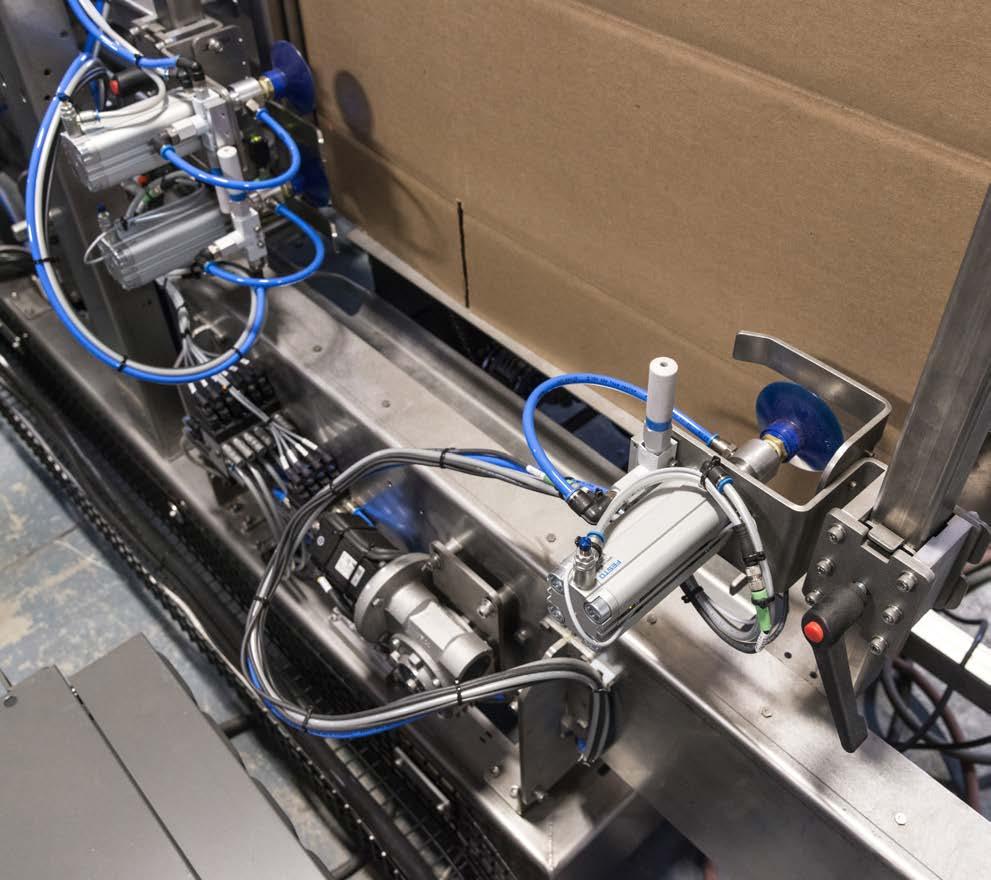
Case-packers manufactured by Consolidated Technologies are equipped with pneumatic products produced by Festo.
AUTOMATE NOW
For 2016, Consolidated Technologies enjoyed its mostsuccessful year in sales to date, even doubling its 2015 sales figures, which were also pretty good by Lapointe’s reckoning.
“Roughly 50 percent of our sales are repeat business from our customers, year after year,” Lapointe reveals.
“It’s easy to build a machine, but I believe that its due to the reliability of our design and manufacturing capabilities as well as the after sales service we provide our machines across North America are key components to our success,” he says.
“Even for installations of our machines in California, for example, our people, and our people alone from this Quebec headquarters, go to the site and instruct them on the start-up, and how to operate the machine the best way for their needs,” Lapointe notes. “We do not subcontract our services when it comes to our customers.
“We know how the machines operate—how they are assembled—it just seems that if we teach the customer and service the machines ourselves, it’s just an easier time for the customer.”
Another way the machine manufacturer keeps things simple for the client is by maintaining a pretty steady work force, with the majority of its employees having been with Consolidated Technologies for many years.
“Maintaining a steady employee base is important,”
suggests Lapointe. “Not only does it keep training costs down, but since we are so hands on with our customers, they can be sure that if there is a problem with a machine, they can be sure that we will send one of the actual people who built the machine to their facility to provide the best possible solution to get them up and running.
“The customers certainly seem to appreciate that level of service.”
As the purchase order is issued, and the project put into production, Consolidated Technologies has a meeting involving its engineering, electrical and programming departments to discuss the project requirements.
After the machine is built, quality assurance tests are run, to debug it before the customer is invited to the facility to see and physically try the machine themselves.
It is only after everyone is satisfied—including Consolidated Technologies—that the equipment is shipped to the customer where on-site training can commence.
“About 80 percent of the machines built here are standardized based on one of our latest models,” relates Lapointe. “The remaining 20 percent of the machine is customized, predicated on the customer’s products, production speed and facility environment.
“We design and manufacture standardized equipment that is individually customized and adapted to the customer’s needs.”
The standardized equipment offered at Consolidated Technologies are:
• Cartoners: HC-120, HC-3200, HC-4100, VDC2900 and TSF-60—offered in semi-automatic and automatic, vertical and horizontal, and continuous indexing;
• Case-packers: UNICEL-20R, SLP-25, and WAP25—featuring robotic top load, side loading and wrap around options;
• Sleever: US-120;
• Single- and multi-line robotic palletizers: R-PAL 30
The R-PAL 30 palletizer features a FANUC Robotics-built M-410ic 185 industrial robotic system, programmed by Consolidated Technologies, that is available with manual or automatic pallet handling.
“Of course, regardless of the set-up, the R-PAL 30 palletizer is easy to use,” mentions Lapointe. “The control and interface are user-friendly with operator and maintenance screen.”
“We designed the R-PAL 30 to be an efficient system with low energy consumption and with low maintenance requirements,” he continues.“And the servo-powered FANUC robot is a thing of beauty that is highlyreliable that can work without needing a break to ensure palletizing operations are done in a timely fashion.”
Like the rest of Consolidated Technologies equipment,
End-of-line packaging systems manufactured by Consolidated Technologies are equipped with Markem-Imaje coders, such as the SmartLase C350 unit.
the R-PAL 30 is a high-quality machine at a mid-range price, engineered to the client-driven value.
“All of our equipment is built with stainless steel and tubular welded platforms,” says Lapointe. “When there’s something we can’t—and shouldn’t build ourselves—we seek out the best equipment to work with, which is why our robotics system uses FANUC Robotics.”
FANUC actually designed the M-410ic 185 to be a four-axis palletizer-specific unit, which shouldn’t be too surprising since the company did build the first-ever palletizing robot.
According to FANUC, the compact M-4190 series featuring a reach of 3,143mm and a load capacity of 185 kilograms, increases throughput on palletizing and handling applications, providing a high-speed palletizing, assembly, machining and parts transfer applications.
Lapointe also mentioned the robotic system possesses a universal end-of-arm tool, and that its slim arm and wrist assembly offer excellent maneuverability in confined space.
Along with using Fanuc robotics for the palletizing options, Consolidated Technologies use Fanuc robots on its case packers, and work with Markem Imaje to integrate its inkjet, laser printer, print-and-apply, case coder options and more within our line.
“However, I can not overstate that what separates us from the competition is our ability to provide multiple aspects of end-of-line equipment to a customer,” relates Lapointe. “Many a competitive company has found its niche producing one type of machine, while we have found our producing multiple types of end-or-line equipment,” Lapointe explains. “And we’re very good at what we do—and that’s based on all the repeat business we do.”
But all that success and knowing its niche has not gone to the collective head of the folks at Consolidated Technologies.
It is always looking at ways to improve its end-of-line machines in ways a customer would appreciate—and sometimes that means tempering the expectations of said customer.
AUTOMATE NOW
When it comes to technology, Lapointe provides interesting commentary on the current hot-button topic of Industry 4.0, and how it relates to the packaging industry.
“It really does depend on what one considers Industry 4.0 technology to be,” Lapointe sighs. “In my opinion, most people who talk about Industry 4.0 don’t really know what it means.”
He may have a point. Until the Industry 4.0 term was coined about a decade ago, there was no defined Industries 1.0, 2.0 or 3.0.
In fact, even such illustrious magazines as The Econo-
mist were, in 2012, calling the new industrial revolution: Industry 3.0
While Industry 1.0 refers to what we generally acknowledge as the Industrial Revolution sparked by the invention of Eli Whitney’s cotton gin, it wasn’t until about 10 years ago that a German think-thank coined the 4.0 designation, and gave reference to the other eras in between.
“The problem is, that too few people actually know that Industry 4.0 refers to Cyber Physical Systems (CPS) where a machine sends performance data about itself— not the production line—to the Cloud, where software provides detailed analysis and tells the machine how to adjust itself so it can continually provide optimal performance for its owner,” explains Lapointe.
“Most people seem to think it’s as simple as using a smart phone to perform remote access check-in on a machine’s production line performance—I can see it is operating at a rate of 100 units per minute,” he says.“But, that’s not really what Industry 4.0 is really about.’
He points out that with most things that become popular or viral, people and companies often refuse to take the time to fully understand the ramifications of using terms they don’t understand.
“While we may one day provide real Industry 4.0 technology with our equipment, it certainly isn’t costefficient to do so at this point in time,” he sums up, “especially with too many other unknowns, such as cyber security.
“But, at least our customers know that when Consolidated Technologies talks about end-of-line equipment, we actually know what we are talking about.”
Prior to shipping to a customer in Oregon, Consolidated Technologies tests the Fanuc M3ia robot pick-and-place system at its 30,000-square-foot Quebec facility.
AUTOMATE NOW
DIGITAL OVERDRIVE
Evolution and revolution in automation technologies necessitate hybrid digitalization strategies for obtaining maximum Industry 4.0 payback
The globalized markets are rapidly placing two key requirements on the manufacturing enterprises: greater speed in all entrepreneurial processes on the one hand, and a broader range of individual options for the end consumer on the other.
With the consumers’ need for individual design of their products giving rise to entirely new product worlds, dealing with this complexity and the increased speed of product development pose a great challenge to legions of manufacturers across the whole industrial spectrum, including automation suppliers themselves.
As information and communication technologies are continuing to merge with classical industrial mechanics to yield a whole new breed of cyber-physical systems, digitalization (aka Industry 4.0) is opening up new interactive spaces to facilitate more seamless interaction between customers and manufacturers, according to Dr. Ansgar Kriwet, member of the management board of sales with prominent German industrial automation technologies manufacturer Festo AG.
“The high speed of software development is a driving force in hardware development for machinery and plant construction. In parallel with this, cost-efficiently manufactured and rapidly available mass-produced goods are needed to cater to the quickly growing world population,” Kriwet said at the 16th annual International Festo Press Conference in Paris, France, this past summer.
“Supplying the steadily growing world population with the necessary goods can only be ensured by a highly automated production world,” Kriwet pro-
Dr. Ansgar Kriwet is member of the management board of sales with German automation supplier Festo AG & Co. KG
Festo’s Technology Plant just outside of Stuttgart in Scharnhausen, Germany, is designed as a showcase of the ‘smart factory of the future’ enabled by rapid digitalization of manufacturing processes to cut costs and improve productivity.
Production, logistics and sales functions are all integrated into a single network as virtual twins in a digitalized working environment that is the hallmark of the new Industry 4.0 production process based on real-time machine data analysis.
For Festo, which serves a global customer base of 300,000 industrial customers with a vast product portfolio comprising more than 33,000 products, adapting to this accelerating development has meant creating new organization units stressing the significance of digitalization as a core strategy for long-term competitiveness.
“We have very carefully examined and analyzed our standing as a leading supplier of automation solutions for factory and process automation to conclude that we must, on the one hand further develop our existing structures, products and processes, but at the same time we also need to develop completely new technologies, products and solutions,” Kriwet related.
To address this issue, Festo has developed a number of new ‘digitally-extended’ products, such as the recently-launched Festo Motion Terminal, aimed to accelerate and optimize the customers’ processes—from machine design right down to after-sales service.
According to Kriwet, a growing trend toward more individually-adaptable products places heavy demands on the flexibility of existing production environments.
“The end consumers want to design and configure products for themselves— beginning with the car and on through wearables, such as watches or glasses, and up to the personalized dispensing of medicines and to self-designed pasta,” Kriwet said. “This is all made possible by digitalization.”
As Kriwet related, Festo is advancing its own transformation process in two directions.
“While the core product range for high-quantity series production is still important, long-lasting success can only be achieved together with the customers,” Kriwet noted.
“Reduced manufacturing costs and the preservation of resources are innovations that generate lasting added value, which is why Festo is focusing its innovative power firstly on the development of new products for the more rapid, simplified manufacture of bulk goods,” he explained.
“At the same time, Festo is advancing digital penetration within the company in order to benefit from the advantages of the Industry 4.0 production environment.
“For Festo, evolution also means using investments in the infrastructure to secure lasting added value in a highwage country such as Germany,” Kriwet pointed out.
To that end, the company has established one of the world’s most modern production lines at its Technology Plant operations in Scharnhausen, near Stuttgart.
Thanks to its modular structure, this
facility is optimally prepared both for fully automated high-volume production and for highly flexible production in small batches
Because Festo manufactures its own products in its own factories, the company always knows exactly how its products perform in everyday use by virtue of real-time data acquisition and analysis enabled by its digitalization initiatives, according to Kriwet.
“For all these developments, the human nevertheless must remain at the center of attention,” Kriwet asserted.
“While robots should be used wherever they can be used to relieve the burden on the human operator, the employees must be encouraged to acquire the new skills required for the production of the future in an integrated learning facto-
ry and at training stations, where humans and new-generation robots can form collaborative teams,” Kriwet explained.
“However, the leap into the future cannot be achieved by evolution alone,” he added. “In order to survive, fundamental new concepts must be introduced in the product range.”
As Kriwet related, Festo’s approach to developing revolutionary new products is in large part based on addressing several fundamental questions, such as:
• How can largely mechanical products be transferred to intelligent cyber-physical systems?
• How can we boost our productivity and accelerate the supply chain?
• What additional benefits and what added-value models will these new products offer customers in the future?
It’s more than just a box.
It’s Food Safe.
It’s Reliable.
It’s Recyclable.
It’s a Billboard.
AUTOMATE NOW
Collaborative robots are a key component of Industry 4.0-enabled manufacturing.
Right: Loaded with state-of-the-art informtion technology to activate a multude of new machine functions with software apps enables the new Festo Motion Terminal to be used by machine developers to create a basic machine type and equip it with other different features as necessary to suit the end-user’s specific application requirements.
1 18/08/2017 3:17:55 PM
• How can new tasks be assigned to machinery in the course of regular operation?
• How can the operator communicate with them better and make them even more versatile?”
Covering all of these bases has facilitated Festo’s successful development of the Festo Motion Terminal that, according to Kriwet, “will turn automation technology on its head.”
Using software apps to replace over 50 individual machine components the Festo Motion Terminal combines piezo technology with integrated stroke and pressure sensors in a compact package that dramatically simplifies the entire value chain with a single piece of hardware.
“The Festo Motion Terminal is set to revolutionize automation technology by opening up entirely new perspectives for machinery and plant manufacturers,” Kriwet said, likening its potential impact to that of a smart phone in the mobile communications market.
“The fusion of mechanics, electronics and software featured in the Festo Motion Terminal will transform a pneumatic product into a true Industry 4.0 component to enable truly flexible production, whereby all changes in pneumatic functions and adaptations to new formats are controlled via apps by changing parameters,” he said.
According to Kriwet, the manner of cooperation with customers is also rapidly changing, with Festo customers increasingly using the company’s online product catalogue alongside the traditional sales channels.
“This catalogue shows in digital form all of the contact points–from the engineering process with CAD tools, product selection, configuration, and virtual initialization, right up to monitoring over the entire product life-cycle,” said Kriwet.
“Digitalization enables our customers to design, simulate and operate their production systems as a virtual twin,” Kriwet said, “so that they already know in advance whether the modules of their systems will work together as desired.”
As Kriwet explained, “The data acquired during operation of the production systems operating in Industry 4.0 environment open up completely new insights into the processes and machinery conditions.”
With Cloud applications processing the resource data into valuable information in real time, manufacturers can quickly take effective predictive maintenance steps to reduce the risk of machine downtime and production losses, according to Kriwet.
“Surveillance of temperature curves, compressed air consumption, wear data or mixing ratios, and locating leakages are just some examples of the many new possibilities now open to machine operators,” he said, “whereby a ‘machinery memory’ of the processes is automatically generated to provides the basis for optimal machine configuration and parameterization—made controllable through integrated intelligence that is the hallmark of manufacturing digitalization.
Above:
Above
FOOD CHAIN REACTIONS
Why food and beverage producers must embrace digitalization to remain relevant in the fast-changing
changing retail landscape
BY GEORGE GUIDONI, EDITOR
Learning to walk before running is a sound piece of ancient wisdom that, for a multitude of reasons, seems more often ignored than it should in today’s intensely competitive global manufacturing industries looking for a quick silver-bullet solution to boosting their competitiveness against relentless offshore competition.
And while there are some examples of compelling overnight success stories to be found in many modern manufacturing sectors competing on a global basis, most self-made industry tycoons would agree that hard work, continuous skill training and proactive investment in new capital equipment and production technologies generally form a better foundation for long-lasting commercial success than random blind luck or a timely game-changing invention.
Which is why many of the world’s leading automation companies spearheading the relentless drive to adopt the so-called Industry 4.0 modus operandi across manufacturing industries in Europe, North America and other industrialized regions are investing billions of dollars to entice their manufacturing customers to upgrade their industrial IT infrastructure to meet the demands for real-time data acquisition and analytics required for genuine transformation of their businesses into genuinely smart factories of the future through relentless digitalization of their production processes.
Not surprisingly, global industrial powerhouse ABB Group finds itself at the very front lines of this seismic to connected and digital manufacturing.
Boasting a wealth of accumulated knowledge and expertise in industrial automation technologies and services, along with a far-flung global installation base and vast product portfolio ranging from industrial robots and motors to control systems and enterprise software solutions—the Swiss-headquartered ABB is making a concerted effort to spread the Industry 4.0 gospel through the North American food-and-beverage industry.
According to Markus Brettschneider, general manager for food and beverage applications with ABB Inc. in Cary, N.C, food and beverage producers are well behind other goods-producing industries along the journey to digitalization—despite the fact that they arguably have the most to gain from it.
“Five years ago, many of us would not have guessed or conceived the idea of Amazon expanding their business to brick-and-mortar fresh food stores and buying Whole Foods Market,” Brettschneider says.
“After all, what would an Internet retailer and Cloud services giant want with fresh produce and shopping carts?”
Plenty, it appears.
Soon after completing the US$13.4-billion deal to acquire the upscale organic-foods retailer this past summer, the e-commerce giant implemented across-the-board price-cutting that lowered the price of an average food basket by 14-percent, with further price cuts to come.
While some of that may be attributed to the Whole Foods’ legacy of high prices that earned
While food and beverage producers are continuing to invest in robotic technologies to help boost their production volumes, they are still not obtaining the full benefits of process digitalization that comes only with company-wide machine-to-machine communication.
Robots such as ABB’s high-speed pick-and-place systems help food and beverage manufacturers obtain the flexibility needed to handle diverse products with no downtime.
it the ‘Whole Paycheck Market’ moniker, Brettschneider says it is also an accurate reflection of the reality that most consumer products purchased online are on average 15-percent less expensive than those bought from the traditional brick-and-mortar retail operators.
According to Brettschneider, Amazon’s game-changing foray into the grocery business will unleash multiple pricing pressures on leading retailers across North America and, by extension, the food-and-beverage (F&B) producers stocking their shelves.
All of this points to a growing imperative for F&B companies to embrace the ongo-
AUTOMATE NOW
Intentionally designed to resemble a human body, ABB’s popular YuMi collaborative dualarm robot is designed to work right alongside with humans without any machine guarding across a broad range of parts assembly, bagging packaging and other applications.
ing transition of modern manufacturing industries to the highly-digitalized Industry 4.0 production environment based on the premise of using real-time data acquisition and analysis to lower the costs of production right across the value chain, including the
According to Brettschneider, this trend will have as much impact on smaller-sized
The model IRB 910S SCARA (selective compliance articulated robot arm) robot from ABB is particularly well-suited for operating designed specifically for operating in confined footprint environments commonly encountered at food and beverage production plants.
F&B operators as on leading multinational brand-owners.
“Looking at the larger manufacturers, we all read about the impact that investors are having on companies like Nestle, Unilever and Danone,” Brettschneider says.
“Investors are taking aim at these large manufacturers’ efficiency, across the complete supply chain, and these companies are now looking across their manufacturing and ordering processes to identify where they can increase or improve efficiencies.”
As Brettschneider explains, F&B producers have many good reasons to invest in new digitalization solutions incorporating advanced automation and robotics solutions, including:
• Cost Pressures. “As globalization continues to drive creates local and regional pressures on costs, companies must become more cost-competitive from production right through to the distribution,” Brettschneider states.
“Leading retail chains have to contend not only the active investors wanting bigger returns, but also consumers wanting high quality and low prices,” adds Brettschneider, citing the disruptive impact of the “surf-service” e-commerce technology driving demand for more lot sizes and SKUs (stock-keeping units).
Says Brettschneider: “This goes hand-in-hand with the way that our homes are being transformed, as the devices we use on a daily basis are all become connected so that our TV’s now get automatic OS (operating system) upgrades and so that we can see the contents of our refrigerators on our mobile phones.”
• Safety and Skills. According to Brettschneider, people employed in repetitive, difficult and dangerous work environments have to be supported with increased automation and robotics.
We supply the latest Eagle PI X-ray technology to your site, operated by our certified Plan Automation Product Inspection technicians.
Our technology & support services will quickly help you inspect and reclaim your nished goods
INSPECT YOUR FINISHED GOODS, CASE OR PRIMARY PACKAGE:
• Food & Beverage
• Meat & Poultry
• Cosmetics & Pharmaceutical
• Consumer goods
• Industrial
We also sell new equipment and offer lease to own or long term rentals.
“Making those jobs digital through automation will resolve the labor shortage by overcoming the reluctance by young people to work in a difficult environment of an F&B plant,” he says.
“It will also help the resolve the long-term shortage of labor by attracting new talent and interest in a career in the F&B industry.”
• Quality. As Brettschneider explains, “Digitalization empowers accountability with the rigorous tracing and tracking of product data throughout the entire supply chain, while robotics are essential for facilitating more hygienic and environments with the help of robotics.”
• Sustainability. Says Brettschneider: “With food security and climate change being so interlocked today, digitalization can be used to address important cost reduction factors that also drive progress in sustainability, such as reductions in energy and water consumption.”
According to an extensive multisector industry survey conducted by ABB last year, 90 per cent of surveyed manufacturers expect digitalization to increase their competitiveness in coming years, with 60 per cent saying that implementation of new digital technologies will be the main source of their bottom-line impact.
At the same time, 70 percent of surveyed companies said they were “not yet well prepared” to benefit from digitalization, citing deficiencies in skill levels, performance management metrics, IT infrastructure and a defined strategy.
By sector, F&B companies were least prepared to benefit from digitalization (26 per cent), according to the survey, lagging well behind the electronics sector (45 per cent) and the overall cross-industry average of 33 per cent.
However, 68 per cent of F&B responders said they expect to be Industry 4.0-ready
in five years’ time, compared to the 72 per cent average for all 10 industries.
To help those F&B companies get started on the right track, ABB has developed the ABB Ability portfolio of digital Cloud-connected technologies comprising over 180 industrial Internet solutions for implementing digitally-connected devices, systems and services into their work processes.
According to ABB, the ABB Ability platform is an open digital-industrial ecosystem that brings together customers, suppliers and developers using the flexible, enterprise-grade Microsoft Azure Cloud-computing architecture for superior connectivity through four key layers of the digitalization hierarchy:
• Devices and Sensors, for sensing, measuring and connecting real-time data from machines and equipment;
• Automation Systems, including process control, automation and robotics solutions;
• Plant and Enterprise Software, used for data control, analysis and action/ response;
• Cloud, for data storage and Cloud services.
As Brettschneider explains, it is important for F&B companies not to get ahead of themselves by concentrating on Cloud connectivity before they have digitalized all their plant floor assets such as motors and sensors.
“Digitalization is a journey rather than a race,” Brettschneider points out, “which is why our ABB platform is designed to help our F&B customers to embark on that journey by first closing the loop with sensing, measuring and connecting on the plant level.
“Historically, motor maintenance was performed on a regularly scheduled basis or, more commonly, whenever the motor failed—causing machine downtime and loss of production,” Brettschneider explains.
“To address that problem, we’ve developed the ABB Ability Smart Sensor solution, which can be easily installed on existing motors to become, in essence, a fitness monitor for that motor,” he relates.
“Once done, key operational data such as motor temperature and vibration levels are monitored and transmitted to a secure Cloud service where data can be analyzed.
“The result is that your plant engineers can quickly and easily see the health status of those connected motors—changing maintenance mindset from reactive to proactive by being able to replace or repair the motors before they fail, during planned downtime.”
As Brettschneider points out, this fairly simple step provides multiple new opportunities for F&B companies to predict the service and maintenance needs, reduce downtime and improve energy manage-
ment through constant data measuring and analytics.
AUTOMATE NOW
“Looking at larger changes like adding a new picking and packing line, the ABB Ability portfolio provides the capability to create a 3D model of the new line where we can not only simulate the operation of the robots, but can also program the automation process and robots at the same time,” Brettschneider adds.
“We can then test and verify performance of the robots before doing and after that do the physical installation—saving time, lowering the risk levels, and minimizes disruptions on the plant floor.”
Says Brettschneider: “The digital journey begins by improving on-floor tactics for a long-term vision of success
through better management of entire supply chain, bottleneck management and connecting production cells, less outof-stock, better just-in-time delivery and stock management, and better transparency by reducing unforeseen stops.
“ABB has many years of experience in digitalization across many industries,” Brettschneider notes, “and the one constant we have found is that the size of the company does not matter. What matters is having a clear strategy supported by employees and identifying clear improvement targets.”
For further information on ABB Ability solutions for the food-andbeverage industry, please contact George Sabbagh of ABB, Inc. at (514) 713-6410; or via email george.sabbagh@ca.abb.com
Ink Jet Printer
UXSeries
Next-generation leadership performance
Hitachi’s UX Series continuous inkjet printers represent the pinnacle of innovation in marking and coding technology, all while showcasing Hitachi’s reputation for Reliability, Efficiency, and Ease of Use.
ECOLOGY
Environmentally friendly while realizing a low running cost
High reliability, and reassured maintenance and service networks
Simple touch panel operation and maintainability
ADHESIVES
TAKING THE HIGH ROAD
Fast Growing Brewery Uses Innovative Hot Melt Technology to Meet Production Demands
Located in Stratford, Conn., Two Roads Brewing Company is one of the fastestgrowing microbrewers in the northeastern U.S., despite only starting up in the craft brewing market five years ago.
Operating out of the beautifully-restored, 100-yearold U.S. Baird Building once used to make slide-form machinery for the metalworking industry, the upstart brewer made swift gains in the local markets with the launch of several well-received, innovative beer brands such as Ol’ Factory Pils, Unorthodox Russian Imperial Stout and the Honeyspot Road White IPA, among others.
Also operating an on-site tasting room and a beer garden, Two Roads has been riding a wave of local fanfare and popularity all the way to the bank—boosting its annual production to well over 120,000 barrels per year, compared to 30,000 back in 2012, thanks to installation of the latest state-of-the-art brewing and fermenting equipment.
Like all industry newcomers, however, Two Roads Brewing has had its share of technical challenges to overcome—notably problems related to the outdated, tank-based glue applicating equipment used to seal the cardboard cases used to package its bottled and beer products.
Causing enough line stoppages and other downtime problems to jeopardize the brewer’s production goals, the outdated equipment became an urgent production issue needing quick resolution.
After diligently exploring the various options out in the marketplace,Two Roads ultimately resolved the problem with installation of the InvisiPac tank-free hot-melt system developed by Graco Inc., Minneapolis, Minn.-headquartered manufacturer of precision fluid-handling systems and product for a broad range of industrial applications, including packaging.
According to Two Roads, the upgrade proved to be a wise investment that significantly reduced the brewer’s downtime, freed up operations personnel for more productive tasks, and improved the efficiency of the entire packaging process.
As Two Roads packaging manager Doug Concialdi explains, after the corrugated boxes are unfolded by a case-erector on the second floor of the building, the bottom of each box is glued and sent down to the bottling line below.
After the bottles are filled, they are sent to another machine to be loaded into cases, which are then sealed on top using another hot-melt unit.
According to Concialdi, the old glue system inherited by Two Roads had a number of issues,
For one thing, the system took nearly an hour to heat up—putting unnecessary pressure on the already busy production schedule.
Moreover, the whole gluing process was hampered by frequent incidence of charring—by far the biggest problem in any hot-melt application system—where-
by the char occurs when the properties of the adhesive are altered through thermal and oxidative degradation.
Because excessive charring produces hard clumps that have lost their thermoplastic properties and will not let the adhesive flow properly, the dispensing nozzle would often get clogged and, ultimately, bring the whole packaging process to a standstill.
In addition, the system was also prone to human error, according to Concialdi
“The operators frequently had to ask whether someone turned the glue machine on and off, and the long startup time resulted in a loss of valuable production time if the machine hadn’t been turned on,” he recalls.
To make matters worse, the vendor told Two Roads that the system was being phased out and they would not be able to buy replacement parts.
“I asked our glue supplier for a recommendation for a new unit, since there is a marriage between the materials and machinery,” said Concialdi.
Chester Duff, adhesive division manager at As-
tro Chemicals, Inc. in Sringfiled, Ma., says that he jumped at the chance to help Two Roads update its equipment with more advanced technology.
Duffs relates that Astro had previously helped Two Roads with a labeler and packaging equipment, as well as supply the brewer with glue and other chemicals used in beer manufacturing, along with various
Two Roads Brewing uses a new InvisiPac tank-free hotmelt adhesive system manufactured by Graco Inc.
cleaning agents.
As Duff recalls, he was already investigating Graco’s InvisiPac tank-free hotmelt system, which showed promise in improving productivity and ease of operation in hot-melt applications.
Not only was the system designed to reduce char and completely eliminate the frequent plugging of nozzles in glue applicators, he recalls, but also to stabilize glue consumption rates and reduce both adhesive waste and waste in the form of boxes that need to be repacked or resealed because of an inadequate seal.
“Glue nozzle plugging is an industrywide issue that had previously been considered a given,” says Duff.
“To deal with it, companies like Two Roads have just had to keep plenty of nozzles on hand and stop the line whenever they needed changing.”
Duff says the brewer’s older equipment had to be changed three times a week and, being a four-nozzle applicator, it had a major impact on downtime.
“Having to stop the line for packaging issues can result in a significant time loss, with this type of packaging downtime translates to a huge amount of lost revenue,” Duff says.
“Breweries have a production schedule to keep that may involve, perhaps, three different beers that must be canned or bottled on a particular day,” he points out, “and once the beer is in the filler it cannot be stopped, or else it backs up the whole system.”
While the cost of downtime varies, Duff estimates it can range from about US$2,000 to $10,000 per hour, depending on the size of plant.
“If a nozzle is plugged once a week and takes 15 minutes to fix, that is equivalent to an hour a month or 12 hours a year. “At a cost of say $3,000 dollars an hour, that would be $36,000 per year,” Duff says. “If it happens two to three times a week, the costs really add up—especially if the plant runs on a 24/7 schedule.”
When he first saw the new InvisiPac system, Duff was not an instant convert—demanding conclusive proof it was going to work before recommending the system to customers.
However, he soon became a believer after installing the technology at a nearby glass beer bottle manufacturing plant with extremely challenging conditions.
The company had such severe plugging that it used and discarded two nozzles each day, according to Duff, but from the moment that InvisiPac went online the new equipment performed flawlessly—virtually eliminating downtime due to glue nozzle plugging.
Duff reasoned if the system could perform so well in a harsh environment polluted with airborne contaminants, it would be a good fit for the sparkling
shiny new facility that was Two Roads.
ADHESIVES
The InvisiPac technology incorporates an integrated vacuum feed, Tank-Free melter, heated hoses, an innovative applicator, and process control technology that provides easy, remote system analytics.
With the Tank-Free system, adhesive is used on a FIFO (first-in first-out) basis—reducing adhesive residence time, so there is essentially no char.
Better adhesive quality leads to improved bead weight repeatability. Less char, combined with the no plug applicators, means adhesive beads can be right-sized, resulting in less adhesive consumption and improved quality assurance.
“This is technology that I believe will revolutionize the industry, which has been dependant on what I call the “crock pot” system for 70 years,” says Duff.
The analogy refers to the fact that most glue systems sit with glue in the unit like pot roast in a crock pot—slowly cooking for hours and leaving a residue of grease around the pot; with the hot melt system, the glue cooking for many hours causes charring that leads to nozzle plugging.
Astro Chemicals arranged to bring in the technology at no charge to demonstrate its effectiveness. If the system did not perform as promised, Astro agreed in advance to remove it and replace it with Two Roads’ old system. The arrangement
ADHESIVES
reduced the risk for Two Roads, ensuring positive results before they made the investment in new equipment.
They installed one InvisiPac hot melt system in December 2013 and added another unit in August 2014. Since they pushed the button the first time two years ago, the technology has worked like a charm. Two Roads has never even had to change the filter or replace a plugged nozzle.
Only after switching to the new equipment did they realize how much smoother its process went without having to live with the constant issue of plugged nozzles.
The feature Two Roads actually appreciates most is that the unit takes a mere 10 minutes or less to warm up, compared to their hour-long wait with the old system.
If there is a human error (someone forgets to turn on the glue unit) it takes just a few minutes to rectify the mistake and move forward. In addition, there is no more need to assign valuable personnel to check on adhesive levels and keep them properly filled.
Rather than constantly starting and stopping and performing glue nozzle replacement, the new system frees up operator manpower for more productive upstream or downstream tasks.
According to Concialdi, the automated aspects of the new equipment are a huge help, protecting the production line from human error.
For example, if the unit does not dispense glue within an hour, it automatically shuts off. Before, there were instances where the unit could be running at high temperature over the weekend.
Most recently Two Roads added an InvisiPac Pattern
Control System, which gives them better control over glue dispensing to seal major and minor flaps on its corrugated cartons.
The new integrated pattern controller allows operators to accurately place precise amounts of adhesive and save money by converting from a solid bead to a stitched bead with the push of a button.
The integrated pattern controller is another key automation feature, with all of the programming, startup and shutdown right at the operator’s fingertips.
“For the glue pattern, we can just type in numbers. We now have recipes and the machine remembers everything. We have the ability to change things on the touchpad rather than dealing with dials and just hoping to get the settings right.
“The complete automation of the Graco unit is something we are really loving.”
Installation was quick and painless. Graco provided the equipment as a complete plug-and-play unit, and the old system was easily removed.
After training, Two Roads was given operating manuals and contacts for technical assistance.
The only time they’ve had to call, it turned out to be a user error, but operators appreciated that someone is available to help with any issue at any time.
Since the installation at Two Roads, Astro Chemical’s Chester Duff reports that he has installed numerous systems.
“There’s a significant wow factor,” he says. First of all, the equipment has a sleek industrial design—he says it looks like an ATM or perhaps R2D2. It comes up to temperature so fast, which is a boon to many plants.
Rather than having to pay overtime for a production person to come in to turn on the system to be ready for an 8 a.m. shift, an operator can flip the switch and a low application temperature hot melt can come up in just a few minutes.
“The other wow factor is down the line when you realize you don’t have to touch it. It’s called InvisiPac system for a reason. It is invisible to the operator. You
never have to touch it. You can go about your business and do other things.”
While energy use was not a specific issue for Two Roads, the equipment’s reduction of energy costs is drawing a great deal of attention at other plants.
The new technology uses much less energy on startup. The hoses use less energy than industry standard; additional hose insulation provides up to 66°F cooler surface temperature, resulting in less lost energy to the environment.
The system’s features allow users to improve their production sustainability, demonstrating they are leaving a smaller footprint when manufacturing a product.
Concialdi concludes by saying that Two Roads has been extremely satisfied with the Graco equipment, support and service. He gave a special shout-out to Anthony Horelik, Graco’s local area sales manager, who personally oversaw installation and would not leave until the customer was up and running.
He jokes that Horelik thinks of the machines as his babies, and comes back from time to time to check on how they are doing, while Horelik insists he stops by for the beer.
“I believe he would do anything for us, but his products run so well that he doesn’t have to. I have recommended these units to plant personnel at other breweries, and I especially like to point out how their automation solves the problem of human error.”
SUPPLIERS
Inc.
are
and customized. Our service professionals provide global support in all matters of functional safety in all industry sectors. From Risk Assessment to Safety Design to CE Marking. Profi t from our high level of knowledge of national regulations and standards! We reduce risk, implement technical machinery safety and take responsibility with the certification services we provide.
Graco,
nGlobal aseptic packing product group Tetra Pak has announced successful completion of an extensive US$40-million capital investment projects—including installation of a new state-of-the-art laminator—at the company’s Packaging Material Converting Factory in Denton, Tex, which supplies both the U.S. and Canadian markets with the company’s signature beverage cartons. “These upgrades will position our Denton factory as one of the most advanced in our global operations,” says Carmen Becker, president and chief executive officer of Tetra Pak’s U.S. and Canadian operations.
“This new technology will allow us to produce an expanded portfolio of packages out of this facility and better serve our customers,” says Denton, noting the investment will enable Tetra Pak to move some production currently done in Mexico into the upgraded Denton facility. “This will offer many of our Tetra Pak customers improved service, reduced lead times and other logistical efficiencies.”
nAccording to Burlington, Ont.headquartered automation supplier Bosch Rexroth Canada, Bosch Rexroth’s Got Focused Delivery Program has continued to grow for the fourth straight year since being launched in Canada, now offering more than 5,000 different drive and control products for fast delivery in 10 days or less from order placement. The Got Focused Delivery Program is continually optimized and updated, so that the product offering remains fresh and reflects the latest technologies while continuing to grow, even as
older or less popular products are rotated out of the program,” says Bosch Rexroth Canada’s marketing director Karen Maiden. While hydraulics remain the biggest single category in the growing product portfolio, adding more than 100 new components last year, the electric drives and controls portfolio also experiences a significant expansion in the latest Got program update, introducing new product offering that include the new-generation IndraDrives family of servomotors and drives.
CANADIAN PACKAGING IS AN INTEGRAL PART OF OUR MARKETING EFFORTS
“The stories and advertising we have done with Canadian Packaging supported our sales efforts. The feedback we have received is stimulating and has helped lead to sales.
“We consider Canadian Packaging as a key strategic partner for our marketing efforts.”
“See you at the Top 50 Packaging Ideas Table Top Expo at the Mississauga Convention Centre on October 24.”
CHECKOUT JULIE SAUNDERS
PRESERVE PACKAGING PLAYS FOR KEEPS
As summer turns to fall, my mind quickly starts turning to wards preserves—the perfect way to keep enjoying the taste of the sun through the inevitable cold fronts coming our way. And since I’ve not yet tackled my goal of learning how to pickle and preserve the fruits and veggies from my garden myself, I’ve been shopping and stocking my pantry with some real packaged gems for the winter, assembling a fastgrowing assortment of different packaging design strategies used by brand-owners to give their products a special competitive edge on the shelves.
One of my favorite pickle jars belongs to the Maille Gherkins with Caramelized Onions brand. It’s an attractive glass jar, gently rounded at the shoulder and tapered at the base, whose lovely gold-and-black lid looks very much a key part of the fine French food product it is. But arguably the best thing about the packaging is the immensely practical pickle retrieval device inside—a perforated plastic tray with a central handle that runs up to the top of the jar. When pulled, it lifts the pickles right up for easy access, with most of the brine instantly draining right back into the jar below. Bravo!
Our own made-in-Canada Strub’s Banderilla Skewers are another product that has really thought through all the intricacies of practical pickle extraction. Ingeniously, the pickled goodies are neatly arranged in vertical orientation on white plastic skewers, ensuring equitable and balanced distribution of the assortment of pickled veggies and an easy way to remove a perfect portion from the jar for immediate enjoyment. The no-nonsense white lid and simple label design instantly bring to mind the simple joys of a summer picnic.
For a private-label product, the PC Splendido La Cucina Italiana Sliced Sun-dried Tomatoes in Seasoned Oil has really raised its packaging game with a distinctive square jar that really stands out from the rest of the nearby, primarily cylindrical jars filling the shelves. I was less enamored, though, with the needlessly oversized wraparound product label that hides the bulk of the contents inside the jar. For all the commendable graphic flourishes designed into the label, I can’t help thinking how much more effective it would be if it was half the size and applied only to the front panel of the container—set against a rich red background of the sun-dried tomatoes inside. As always,
bigger is not necessarily always better. Ironically, the PC Peperoncini Piccanti brand uses a noticeably smaller label to accentuate the vivid red glow of the chili peppers inside. While the straightforward typography on the product label nearly gives away the product’s private-label credentials, the use of a beautiful black-and-white photograph taken from a hilltop overlooking a charming old Italian city gives the package a tasteful touch of visual elegance and product authenticity.
For sheer practicality, the wide-mouth jars of Jesse Tree Alla Contadina Artichokes facilitate nice no-fuss access to the delectable contents inside—brilliantly accentuated by a golden-tinted metallic lid—with its narrowish wraparound band label making a simple branding message of goodwill and intent simplicity itself. Likewise, the Jesse Tree Nocellara Sweet Sicilian Olives are similarly packaged in a large wide-mouthed glass jar with an attractive gentle taper. The label design— featuring sans serif font and the deep brown color—projects upscale sophistication, while effectively setting off the jewel tone of the green, neatly-stacked, blemish-free olives inside.
The narrow dimensions of the Aurora Hot Pickled Eggplants in Oil brand, relative to its sizeable height, are not very helpful for extracting the slippery eggplant slices contained within. Moreover, I was surprised that the label didn’t have a more prominent warning for the hot version of the product: the thin red band around the base of the label didn’t readily draw my eye from the multitude of other competing elements of the label design. If there’s one thing I want packaging to tell me, it’s whether a product may be too hot for my taste before cheerfully biting into it.
In contrast, the tall narrow jar housing the Fragata Capers brand only look like they may present some difficulty for extracting its contents. As it turned out, the tiny soft capers were surprisingly easy to fish out with a fork, scoring extra points for the uniquely-shaped slim container deftly decorated with a faux metal wraparound label perfectly positioned around the middle—leaving plenty of room above to admire the tasty little green tidbits inside.
Julie Sounders is a Toronto-based freelance writer specializing in healthcare communications.
PHOTOS BY JULIE SAUNDERS
Prepare to Improve Safety and Ensure High-Quality Food
Compliance is a fluid topic which needs to be under constant evaluation. As the markets and your business change, so do your requirements and responsibilities.
To learn more about how you can choose the right level of compliance for your business and deliver on consumer expectations, download our new Food Regulatory Guide today by visiting www.mt.com/ind-food-regulatory-guide