readers FOUR SERIES DIAPHRAGM GAS PUMPS USE INNOVATIVE DRIVE TECHNOLOGY
400 LB-RATED DIGITAL RECEIVING SCALE WITH REMOTE DISPLAY
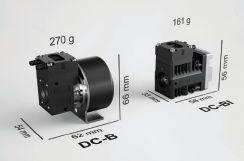
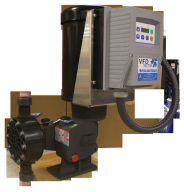
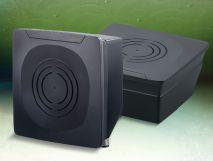
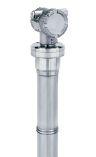
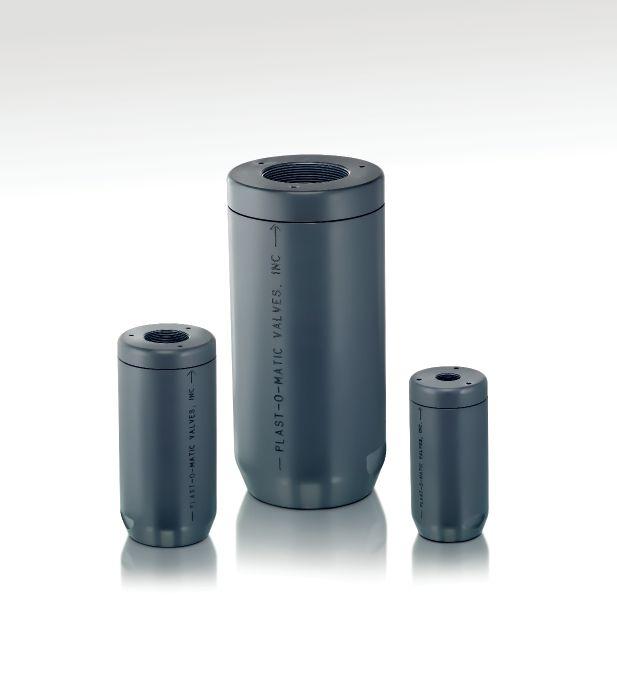
Previously only available as a project option, KNF has launched four compact pump se ries that are using new DC‑BI motor technology. The new KNF Direct Current Brushless Integrated (DC BI) technology drives the four new series NMP 830 DC BI, NMP 830 HP DC BI, NMP 850 DC BI, and NMP 850 HP DC BI. For the first time, the motor is integrated directly into the pump hous ing, with an expected lifetime of over 20,000 h. In addition to their mechanical advantages, the use of an advanced, proprietary BLDC motor is said to enable parameterization such as speed range, starting behavior, control characteristics or thresholds. Depending on the specific series, the new pumps achieve a flow rate of up to 7 l/m, an ultimate vacuum of down to 220 mbar and a maximum pressure of up to 3 bar. KNF
www.knfusa.com
WIRELESS SYSTEM FOR REMOTE ACCESS TO MEASUREMENT DATA
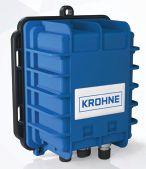
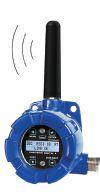
Krohne has introduced the Optibridge 3880 IIoT data logger for remote data services, acquisition, and evaluation. It is a fully autonomous, bat tery or grid powered wireless communication system for remote access to measurement data, aimed at the water and wastewater industry. Using mobile communication via 2G, 3G and 4G, the unit offers a wide range of remote data management options — from simple data logging to internet connectivity and storage for maintenance, process visualisation and data evaluation. Using supplied integra tion software, data can also be integrated into SCADA or other software systems by using such as OPC UA, and CSV. The customer has full control over their data, the company says, as it is hosted on their own local server and send with end to end encryption. Krohne
www.krohne.com
POLYPROPYLENE FLOW METER FOR NEUTRAL AND AGGRESSIVE MEDIA
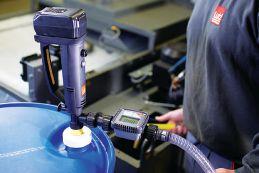
Lutz Pumps has introduced the model TR3 flow meter. Available in polypropylene or PVDF, the unit mounts on all drum and container pumps, the company says. The symmetrical measuring chamber allows it to be used for all flow directions and measures low viscosity, non flam mable media, the company says. PP units are suitable for neutral and aggressive media. Lutz Pumps
www.lutzpumps.com
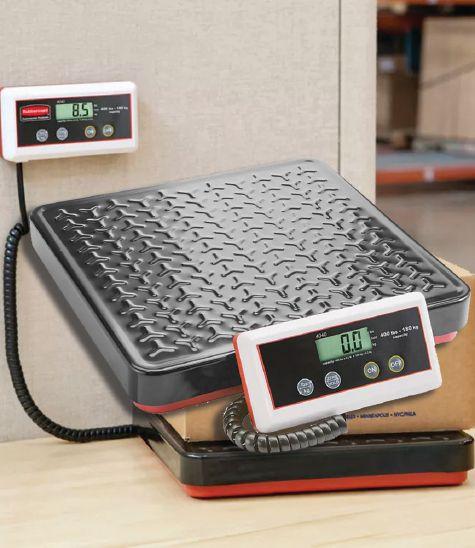
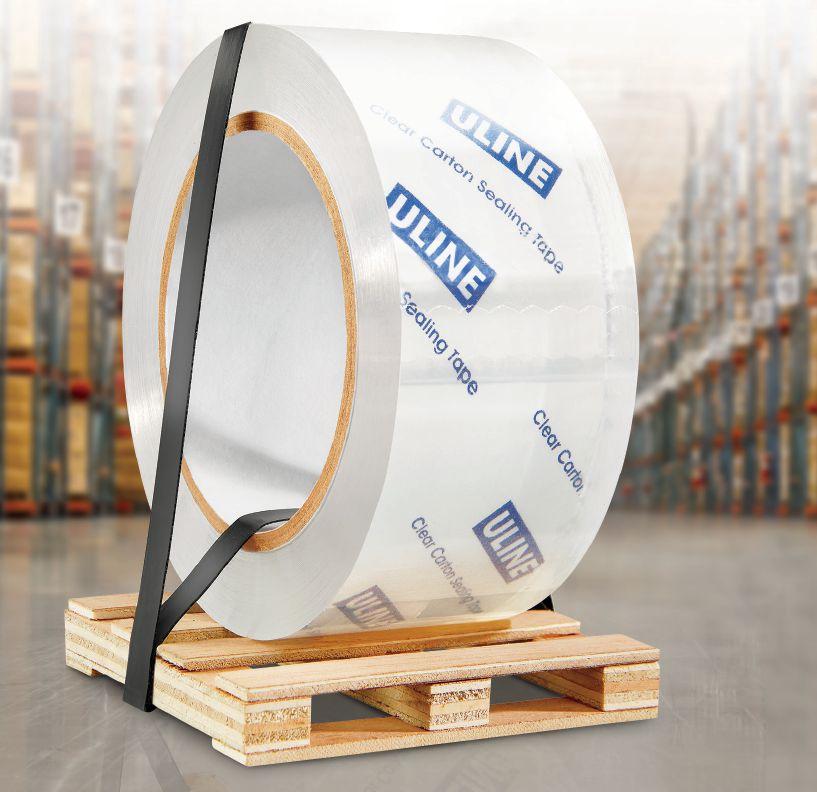
The Rubbermaid model H 479, 400 lb. rated digital receiv ing scale from Uline features a remote, ½ in. LCD display with a wall mounting bracket and 9 ft cord for reading in both pounds and kilograms from any angle. The remote design is suitable for weighing larger objects that might otherwise cover up the readout. In addition, the scale’s tare function, which removes the weight of a container be fore weighing, it is also suitable for that need to weigh up food produce and other ingredients. The receiving scale’s 12 x 12 in. platform has a durable, non skid grid design to prevent packages from slipping off. The scale can be pow ered with either a 110 Vac adapter (included) for frequent sustained use or a 9 Vdc battery (sold separately) if the scale requires moving to a different location for use. An au to off feature helps reduce battery usage.
Uline
www.uline.ca
Straining & Filtering supplement
CAUTION VALUE OVERLOAD!
CPU units starting at only $97
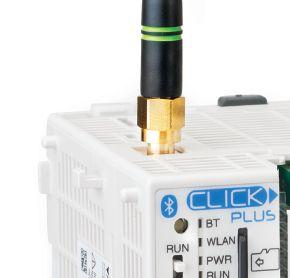
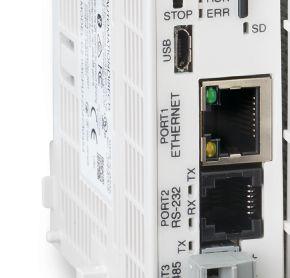
CLICK PLUS PLCs provide the same simple, practical control the CLICK PLC line is known for but with some surprising bells and whistles. Data logging, Wi-Fi connect-ability, MQTT communication, and increased security measures are just a few of the impressive features offered with the CLICK PLUS PLC series.
Using the same FREE streamlined PLC programming software as its predecessor, CLICK PLUS PLCs provide straightforward, no-learning-curve programming. Combine that with a starting at price of just $97.00 and the CLICK PLUS PLC is undoubtedly the unmatched value leader!
Fast free standard shipping* is available for most orders over $49 U.S., and that includes the brokerage fees (when using an AutomationDirect nominated broker). Using our choice of carrier, we can reach most Canadian destinations within 2 to 3 days.
*Free shipping does not apply to items requiring LTL transport, but those shipments can take advantage of our negotiated super-low at rates (based on weight) that include brokerage fees.
See Web site for details and restrictions at: www.automationdirect.com/canada
Built-in Option Module Slot
For custom stand-alone PLC I/O con gurations that exactly match your application (option module sold separately).
Use any CPU with option module(s) as a complete PLC for small systems or expand the I/O with stackable I/O modules for larger applications.
Orders over $49 get FAST FREE SHIPPING
Our shipping policies make it easier than ever to order direct from the U.S.!
DISTRIBUTED REMOTE
CPX AP A is the new line of distributed I/O from Festo where modules are attached with in a terminal. CPX AP I is the company’s de centralized I/O where modules are connected via cable at distances of up to 50 m between modules. AP (Automation Platform) mod ules, whether on terminal or individual, are IP65/67 rated and can be in cabinets, in clus ters around the cell, individually placed, and separated at great distances. Every AP module features a real time backplane transmission rate of 200 Mbps full duplex. The AP ecosys tem is said to make it efficient for end users to add functionality to their machines or work cells as needs arise. As the functionality and capabilities of the system climb with the addi tion of modules, the company says, the over all distributed and decentralized I/O system becomes simpler to create and maintain. Festo www.festo.com
ALUMINUM FILTER REGULATORS ENHANCE PROCESS EFFICIENCY
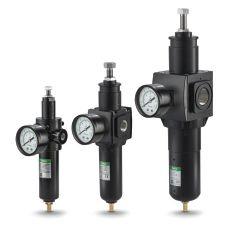
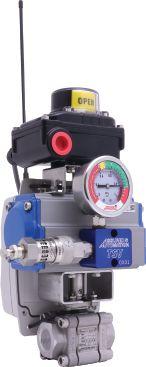
Emerson has launched the ASCO series 641, 642 and 643 aluminum filter regulators, said to maximize process effi ciency and reduce un planned downtime in a broad range of process applications. An alter native to stainless steel filter regulators, the series completes the company’s suite of valve piloting technolo gies. Flow rate capabilities are up to 370.8 standard ft3/min, the three tiered regula tor line provides a .25 to 1 in. coverage and are customizable. Process manufactur ers can choose advanced features such as Quick Relief, the company says, which en hances safety and operational certainty by exhausting downstream pressure if supply air pressure is lost, as well as low tempera ture and low copper variants, manual and automatic draining, global certifications, and many other options that serve specific applications, in the chemical, oil and gas,
energy and utilities, food and beverage, and water and wastewater industries.
Emerson
www.emerson.com
COMPACT MAGNETOINDUCTIVE FLOWMETER
The Kobold MIK flow meter is used for mea suring and monitoring small to medium sized flows of conductive liquids in pipes. The sen sor operates according to the electromagnetic measurement principle. The flow rate will be calculated based on the cross sectional area of the pipe. The measurement is not dependent
on the process liquid and its material properties such as density, viscosity, and temperature. The device may be equipped with a switch, frequency, or analog output. The device also has a univer sal compact type elec tronic which features two configurable outputs and a rotatable
play.
Kobold www.koboldusa.com
Pat Lorusso joins Canadian Process Equipment & Control News this issue as brand sales manager. Pat brings with him more than 10 years of B2B sales experience and has a solid track record of helping marketers promote their products and services to their customers.
So, if you’re a marketer, please feel free to email or call Pat to schedule a meeting to dis cuss your 2024 advertising program. Pat can be reached at 416 518 5509 or e mail PLorusso@ annexbusinessmedia.com.
And just as Pat has joined us, I must say fare well myself.
Since 1972 when I came east from Kitimat, BC, to study electronics engineering in Toronto, my life has been spent communicating with en gineers, technologists, and technicians. For ten years in manufacturing, in Canada’s telecom in dustry.
Most of my career, however, has been an ed itor serving readers in the telecom, electronics, mechanical engineering, and finally, your pro cess industries. It’s been a gas!
Happy trails,
Mike Edwards, Editor
Innovate today for a new tomorrow
your vision with Festo’s approach to smart automation. Partner with Festo today.
51
READER SERVICE
Print and digital subscription inquiries or changes, please contact Angelita Potal Customer Service
Tel: 416-510-5113
Fax: (416) 510-6875
Email: apotal@annexbusinessmedia.com
Mail: 111 Gordon Baker Rd., Suite 400, Toronto, ON M2H 3R1
WEIGHING INDICATORS CONNECT SMART SENSORS TO SYSTEMS
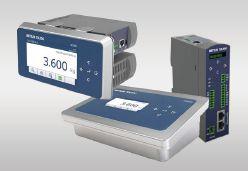
Mettler Toledo has in troduced the IND360 weighing indicator designed to connect to widely used PLCs and DCS platforms. Integrated condition monitoring and the company’s Smart5 alarm feature to ensure the weighing system is performing as expected and lets users react quickly when issues arise, it says. For ease of use, indicators use certi fied automation interfaces and include sam ple programming code, it adds. Detailed doc umentation and automation drivers including Rockwell EDS, AOPs and Siemens function blocks save time and money on implementa tion and maintenance. Preprogrammed appli cations for semi or fully automated weighing processes including tank/vessel weighing and filling/dosing are available.
The indicator includes the following features: up to 960 Hz ultra high cyclical PLC update rate; up to 7 simultaneous floating point variables; PROFINET, Profibus DP, EtherNet/ IP, EtherCAT, CC Link IE Field Basic, Modbus TCP, Modbus RTU automation buses and 4 to 20 mA/0 to 10 Vdc; operator display and net work status LEDs, web interface for service and monitoring; and CalFree and CalFree Plus, as well as automatic PLC/DCS driven calibration of precision scales. Mettler Toledo Group www.mt.com/IND360
RFID STANDALONE R/W UNIT INTEGRATES INTO ETHERNET/ IP INTERFACE
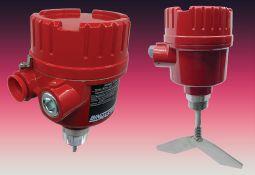
solids and powders to prevent bin overfills, dry runs, or to shut off a process. The indica tor has no printed circuit board, so it’s imper vious to moisture and vibration found in many tough processing environments. By alerting to full and empty vessel conditions, the com pany says, it prevents waste and saves time when handling bulk materials stored in bins and silos. It is designed for materials with a bulk density of 2 lb. to over 100 lb./cu. ft. for use in ordinary storage and processing condi tions. The unit is suitable for process control by wiring it to a light or horn to alert status has changed from uncovered to covered or vice
versa. The bin indicator can alert to high levels to prevent spills or mounted low in the bin to know when it’s almost empty to prevent batching errors and dry runs. Use it to detect overload ed or empty conveyors, or let you know when a chute gets clogged with material, it adds. BinMaster www.binmaster.com
AutomationDirect has added an all in one RFID stand alone R/W unit to its Barcode/RFID/ Vision product category. The unit comes with an RFID R/W device, antenna, and EtherNet/IP interface built in and is designed for easy integration into an existing EtherNet/ IP network. The standalone unit has a maxi mum read/write distance of 220 mm depend ing on the type of tags used, operates on RFID high frequency of 13.56 MHz per ISO 15693, and features an IP67 protection rating. AutomationDirect www.automationdirect.com
ROTARY BIN LEVEL INDICATOR TACKLES BULK MATERIALS
The BinMaster BMRX 100 rotary level indi cator is an electromechanical device used in
AIR QUALITY MONITOR DETECTS PARTICULATE MATTER, POLLUTANTS
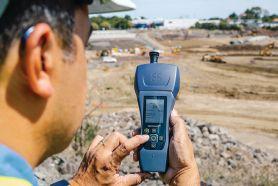
The Aeroqual Ranger available from Cameron Instruments is a re al time, battery operated, ac tive sampling handheld air quality monitor. A simple, flexible, and cost effective alternative to tradi tional air quality monitors, the company says, the unit can be con figured with a wide range of easily swappable sensor heads for partic ulate matter (PM) and 28 common indoor and outdoor hazards and pollutants. Wi Fi connectivity and cable data transfer enables users to understand conditions at a job site. All logged data is backed up on the Ranger Cloud service, in re al time, wherever Wi Fi is avail able. Users can sign up to receive automatic alerts and react to un
safe conditions and data loss. Cameron Instruments www.cameroninstruments.com
ACOUSTIC IMAGER IDENTIFIES CONVEYOR SYSTEM ISSUES
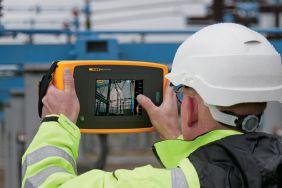
The Fluke ii910 Precision Acous tic Imager with the new MecQ Mode allows maintenance tech nicians to quickly scan large ar eas and visually pinpoint techni cal issues before they become critical. With the imager, the company says, technicians can now see what they can’t hear to easily identify problems across large conveyor systems. It is spe cifically designed for mechanical maintenance professionals to fo cus on specific areas of interest, it adds, ensuring precise detec tion and targeted maintenance.
It filters out industrial noise to ensure reliable detection even in challenging conditions. And be cause the device features con tactless scanning, it allows tech nicians to safely access hard to reach areas from a dis tance, reducing risks on the job. Fluke Corporation
www.fluke.com
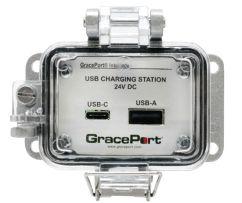
COMPONENT PERMITS USB-C POWER CONNECTIVITY
The GracePort with USB C charging functionality from Grace Engineered Products al lows service technicians and PLC programmers to safely charge their laptops and other handheld devices from outside the door with a USB C cable. The 24 Vdc powered USB C charging op tion, and by removing 120 Vac power through the panel, users can eliminate shock hazard risk and a unique ability to transition from their current GFCI protect ed accessory outlets, the compa ny says, to a much safer and compact option with minimal wiring complexities. With the ad vent of the new USB C standard, laptops and other electronic de vices are now able to be quickly charged using the charging port available through Turck Canada. Turck Canada www.turck.ca
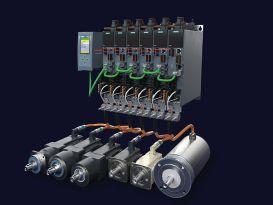
SERVO-DRIVE SYSTEM UPGRADES MID-RANGE PRODUCTS
With the Sinamics S210 ser vo drive system, comprising a digitally native drive with wide range of corresponding motors and gearboxes, Siemens is said to bring a new level of high dy namic, motion control in mid range operation to stand alone and multi axis machines. The system offers safety and security to discontinuous motion control
in the mid range segment, as well as moving, processing, and positioning functions on a wide assortment of packaging, print ing, labeling, pick and place, stacking, assembly, chip sorting and filling machines, with an emphasis on food and beverage and pharmaceutical applications, the company says, owing to the availability of stainless steel mo tor and planetary gearbox op tions. The system offers DC link coupling on 3 phase units for increased power efficiency on multi axis applications, it adds. Corresponding Simotics synchro nous motors feature 22 or 26 bit absolute encoders, single or multi turn. One cable connectiv ity is standard and all motors and feature IP64, IP65, IP67 or IP69X protection. Siemens www.siemens.com
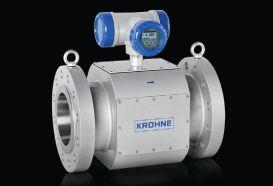
ULTRASONIC GAS FLOWMETER FOR CUSTODY TRANSFER
Krohne has introduced the Alto sonic V12 ultrasonic gas flowme ter. The flowmeter is said to offer high accuracy, making it suitable for custody transfer applications. The unit has 12 measuring chords, two of which are solely dedicated to diagnostic functions. Once commissioned, it continuously checks the operating status. The positioning of the chords in five horizontal parallel planes com pensates for swirl and thus, the company says, provides reliable measurements, even with highly distorted flow profiles. Krohne www.krohne.com
We understand how it is important to efficiently extract and process precious metals and minerals.
PROCESS + PROTECT
You save valuable resources while keeping your employees and the environment safe.
Improve your processes with our comprehensive portfolio of measuring instruments, solutions and services:
Gammapilot FMG50: Compact two-wire radiometric transmitter for point level blockage detection, continuous level, interface and density measurement.
Smart water network management
Smart water network management
Optimize and automate your water network – anywhere, anytime.
Do you want to learn more? www.eh.digital/3P0rVOH
Netilion – Inventory Management Solutions
Netilion – Inventory Management Solutions
Reduce inventory costs and increase productivity with complete inventory visibility - 24/7
EDITORIAL ADVISORY BOARD:
Maintenance advances with technologies across industrial operations
By Sada Haque, Wajax
In the rapidly evolving landscape of man ufacturing and process operations, un derstanding customer challenges and ad dressing their needs is paramount to driving innovation and enabling operational excel lence.
As technology continues to reshape the in dustry, many organizations have positioned themselves as industry leaders by deeply com prehending the pain points faced by their cus tomers.
In this article, we will explore how a custom er centric approach empowers manufactur ers to overcome their challenges and achieve transformative results in maintenance, reliabil ity, and operations.
Emerging Technologies: Unleashing Innovation
The manufacturing and process sectors are witnessing the emergence of several transfor mative technologies that promise to shape the future. Drone inspections enable remote and efficient monitoring of facilities and assets, re ducing inspection time and enhancing safety.
In an example of one such potentially trans formative technology, the Wajax TechIQ wire less based monitoring platform started its journey by focusing on augmented and virtual reality (AR/VR), technologies that are revolu tionizing training, maintenance, and product design — offering immersive and interactive experiences. Elsewhere, additive manufactur ing (3D printing) is driving customization, rapid prototyping, and supply chain optimization. These technologies, combined with AI and data analytics, create new possibilities for in novation, agility, and sustainability.
Connected Systems: Seamless Integration and Interoperability
In the Industry 4.0 era, connected systems also play a crucial role in enabling end to end visibility and seamless integration across the manufacturing value chain. From supply chain management to production planning, from quality control to logistics, interconnected systems enable efficient communication and data sharing. This level of connectivity fosters streamlined operations, reduces bottlenecks, and enables real time optimization. Addi tionally, it lays the foundation for interopera bility between different technologies, paving the way for holistic solutions and agile deci sion making.
Robotics and Automation: Transforming Processes
Another fascinating trend is the rise of robotics and automation, and how they have redefined manufacturing processes — driving efficiency, accuracy, and productivity to new heights. Ro bots are increasingly taking on repetitive, dan gerous, and labour intensive tasks; freeing up human workers to focus on more complex and creative endeavors.
Collaborative robots (cobots) work along side humans, enhancing safety and productiv ity on the shop floor. Advanced robotics tech nologies, coupled with AI, machine vision, and natural language processing, enable adaptive and intelligent automation, transforming the manufacturing landscape.
Addressing Maintenance and Reliability Challenges:
With TechIQ, Wajax recognizes that mainte nance and reliability are critical factors influ encing operational efficiency for manufactur ing companies. With a focus on cutting edge technologies, companies can enable proactive maintenance practices that reduce unplanned downtime, optimize asset performance, and extend equipment lifespan.
By leveraging real time data analytics and predictive algorithms, manufacturers can be empowered to shift from reactive to proactive maintenance strategies, resulting in improved productivity and cost savings. One of the ways
to achieve this is by getting equipment to com municate automatically and instantly with one another.
Connected Equipment: Revolutionizing Maintenance and Reliability
The rise of connected equipment, enabled by the Industrial Internet of Things (IIoT), is rev olutionizing maintenance and reliability prac tices. By embedding sensors and connectivity into machines, manufacturers gain real time insights into their operational performance. This data driven approach allows for predic tive and preventive maintenance, reducing unplanned downtime and optimizing asset lifespan.
Furthermore, the integration of machine learning and AI algorithms enables intelligent decision making, empowering manufacturers to identify patterns, optimize workflows, and increase efficiency. One of example of how to materialize these concepts are wireless sen sors.
Industrial machinery, with its complex and dynamic nature, is susceptible to wear and tear, leading to inefficiencies, unplanned downtime, and potential safety hazards. Tradi tional wired vibration sensors have limitations in terms of installation, scalability, and mainte nance.
This is where wireless vibration sensors come into play, addressing these challenges, and providing a holistic solution. By leveraging
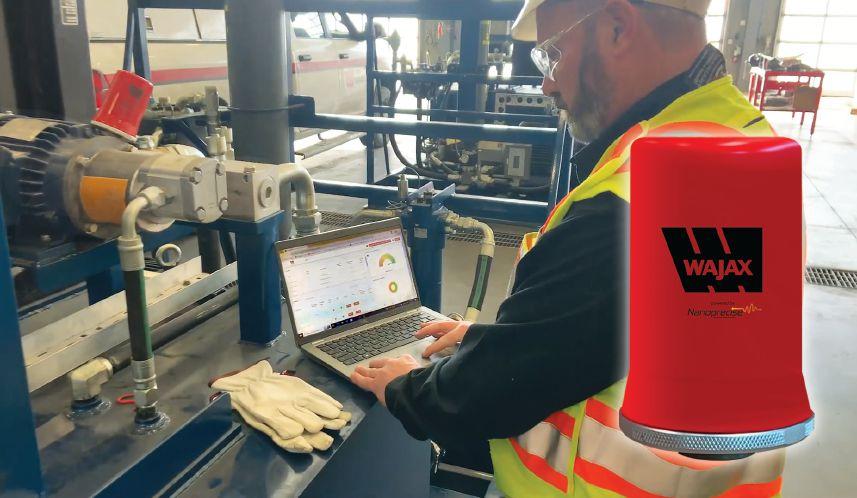
TechIQ condition monitoring sensors (inset, right, and left on motor) leverage wireless connectivity to enable real-time monitoring, early fault detection, and predictive maintenance.
wireless connectivity, these sensors enable re al time monitoring, early fault detection, and predictive maintenance; thereby mitigating risks, optimizing operations, and enhancing overall productivity.
Connected People: Empowering the Workforce
The convergence of technology and connec tivity is not limited to machines — it also ex tends to the workforce. Connected people, equipped with wearable devices, smart tools, and augmented reality (AR) glasses, have ac cess to real time information and remote as sistance. This enhances productivity, safety, and knowledge sharing among teams. By connecting workers to the digital ecosys tem, manufacturers unlock new opportunities for collaboration, skills development, and im proved decision making, fostering a culture of innovation and continuous improvement.
Collaboration and Knowledge Transfer
Industry players recognize the importance of collaboration and knowledge transfer in addressing customer challenges. The group fosters an environment of open communica tion, actively engaging with manufacturers to understand their pain points, goals, and aspi rations.
For example, through workshops, training programs, and ongoing support, Wajax TechIQ ensures that their customers are equipped with the necessary knowledge and expertise to leverage technology effectively.
By fostering a culture of continuous learn ing and sharing best practices, they empower manufacturers to embrace change and maxi mize the value of their solutions.
Harnessing the Power of Emerging Technologies
It is also key to recognize the service indus try’s commitment to understanding customer challenges extends to harnessing the power of emerging technologies. Industrial service providers are actively exploring and adopting innovative solutions such as robotics, artificial intelligence, augmented and virtual reality, drone inspections, additive manufacturing, and Industry 5.0 concepts.
By staying at the forefront of technological advancements, Wajax TechIQ ensures that their customers can leverage these tools to drive innovation, improve agility, and achieve sustainable growth.
Enhancing Safety and Worker Experience
The TechIQ team understands the importance of safety and worker experience in manufac
turing environments, as all of them have ex perience working in industrial settings. By em bracing augmented reality and virtual reality, they create immersive training programs and simulations that enhance safety practices and improve worker skill sets.
Additionally, by leveraging robotics and au tomation, they are exploring ways to reduce the exposure of workers to hazardous tasks, mitigating safety risks. Their commitment to creating a safe and engaging work environ ment ensures that clients can achieve higher levels of productivity, while prioritizing worker well being.
Conclusion
Taking a client centric approach, when coupled with an expertise in emerging technologies, can position a company as a disruptive force in the manufacturing industry. By understanding client needs, leveraging emerging technolo gies, and driving efficiency, productivity, safety, and sustainability, you can empower clients to stay ahead of the competition.
The author, Sada Haque, is Director of Innovation & Technology at Wajax.
Remote Access – Real-life security lessons to learn
By Barry Turner
When thinking about remote access, secu rity is, and should be, top of mind. Controls engineers are fundamentally changing how they do their job, from being onsite to 1,000 miles away and simultaneously managing mul tiple sites without a single truck roll. However, there are sever al challenges associated with implementing a remote access solution that is easy to use and provides robust security mea sures, preventing unauthorized access.
The biggest hurdles once de ployed, are ensuring the solution will block all unauthorized access and any infrastructure changes made during installation don’t leave open security loopholes in the architecture.
There has been a long stand ing belief that ease of use and security are on a sliding scale. Solutions can be very secure, or they can be easy to use but not both. This is not true.
Unfortunately, implementing a complex solution can leave em ployees feeling overwhelmed, resulting in shortcuts and cre ative workarounds. These work arounds may include leveraging non sanctioned software tools or merely skipping steps to save time, which ultimately opens the door to security vulnerabilities.
Security Best Practices
Not conforming to security best practices is also a common challenge. For example, when IT mandates password policies where users must change their password every 30 days, many users increment their password by a digit or write the password down and keep it near the com puter. Neither workaround con forms to security best practice, but it’s easy and fast for the user. Recently there was a cyber at tack against a water treatment facility in Florida. In the attack, a perpetrator remotely accessed and gained complete control of
RED LION’S SECURE REMOTE ACCESS PLATFORM
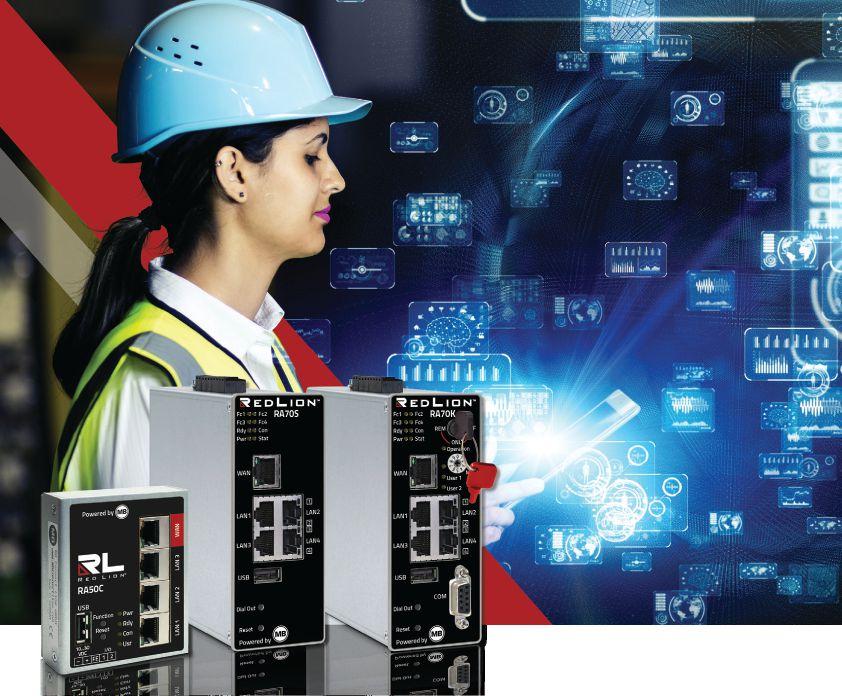
Red Lion Controls offers a next generation Remote Access Platform that meets the most demanding secu rity requirements of modern industrial applications. Red Lion’s Secure Remote Access Platform centralizes the management of routers, allowing customers to quickly implement a policy based approach, manage users, and ensure devices are operational. The ability to remotely access, monitor and manage diverse equipment helps to lower operational costs and downtime by reducing site visits and dramatically improv ing response times.
the automation system using shared employee credentials of a software based remote access solution.
The attack targeted a chem ical dispensing system within the water treatment facility to increase the sodium hydroxide levels, which would have been disastrous to the water supply. Thankfully, this real world attack was stopped by an observant controls engineer, who noticed the abnormal change in the chemical dispensing system and immediately took action.
How could this have been pre vented, and how can companies protect their assets when they have remotely deployed sys tems?
The first option is to airgap or physically silo control systems by physically disconnecting them from the Internet. While this may be secure, the reality of managing these sites becomes nearly impossible. With no re al time data feeds, monitoring and managing assets in real time is impossible.
Layered Security
A better option is a layered secu rity approach that adheres to user security protocol “best practices” together with security enabled software and hardware. This lay ered approach makes it signifi cantly more difficult for a mali cious actor to attack the system.
An example of a “best practice”
for a user security protocol is re quiring two factor authentication (2FA) for user email access. Email and any remote access should re quire multiple “keys” to authenti cate a user to prevent the sharing of keys and compromised securi ty. Additionally, selecting the right remote access hardware and software solution can provide re al time data monitoring without compromising system efficiency and access.
This article was contributed by Barry Turner, Technical Business Development Manager, Red Lion Controls. Red Lion Controls www.redlion.net
At the core of control system design are standards, standards, and standards
The best practices for control system design extend to pursuing a standardized approach to configuring any Distributed Control Sys tem (DCS)
As the famous saying goes, the three most important factors in real estate sales are location, location, and location. For Distributed Control Systems (DCS) used to control sophisticated processes in many Canadian industries, the equivalent can be just as easily summed up as “standards, standards, and standards.”
A DCS system serves as the hub of a Canadian processor’s operations and controls and monitors key variables such as flow, applied tempera tures, pressure, level, and material conveying/handling. The DCS’ HMI collects all the data from the production equipment and presents it in a highly “human factored” manner for an operator.
Still, for there are infinite variables related to the type of equipment, the material being processed, the operator’s actions, and the control sys tem. The DCS must therefore be designed to handle common, expected disturbances as well as unexpected anomalies in a predictable way.
Unfortunately, designing a DCS application from scratch is like star ing at a blank sheet of paper; it can be configured in almost any way imaginable. This is a two edged sword that can lead to a robust system that delivers precise and predictable control if done carefully, or it could lead to lost product, process interruptions, and even safety issues when done poorly.
The potential for poor configuration only accentuates the need for es tablished standards and best practices in DCS design. Many professional organizations and associations define the standards and best practices for process control systems. However, most provide only general guide lines that can be applied to any distributed control system.
But as Robert M. Ard, Director of Applications Engineering at Valmet
explains, there are many other ways to achieve a level of standardiza tion in the programming and design to create a robust DCS. Valmet is a leading global developer and supplier of process technologies, automa tion, and services for the pulp, paper, energy, marine, and other process industries. In January of 2023, the company completed the acquisition of the popular D3 Control System from NovaTech Automation.
“Standardization begins with a commitment to a shared design phi losophy, adoption of best practices, and utilization of tools and tech niques that reduce programming complexity and time for similar pro cessing equipment,” explains Ard.
Start with a Well-Defined Design Philosophy
According to Ard, every application configuration should begin with a well defined design philosophy. Most DCS applications are created and maintained by teams of engineers, so they should all be rowing in the same direction.
“The best results can only be achieved when all contributors to the overall process control application follow the same best practices and techniques,” says Ard.
When this is not the case, the result is unintended process errors and a system that is difficult to maintain.
“Every engineer contributing to the application should strive to write their logic in the same way. The standard practices used should be well documented and taught to everyone responsible for the control system,” adds Ard.
In fact, it would be an appropriate indication of a well designed DCS application if control systems engineers cannot identify the specific pro grammer by looking at the program logic or by observing its execution.
One specific area of DCS design that illustrates the benefit of an estab
The Valmet D3 interface, for example, displays real-time process information in a complete customer-oriented graphical HMI.
lished, shared philosophy is alarm management. In process automation, an alarm is defined as an audible and/or visible means of indicating to the operator an equipment malfunction, process deviation, or abnormal condition requiring an operator response.
Poorly designed and maintained alarm management systems can overwhelm operators with chattering and nuisance alarms under normal conditions and debilitating alarm floods when abnormal states emerge. When this occurs, it can be difficult for operators to ascertain and act on the most critical alarms, contributing to abnormal situations, lost produc tion, and even serious accidents.
Recently, organizations like ANSI (American National Standards Insti tute) and ISA (International Society of Automation) have released updat ed guidelines related to alarm management. The ANSI/ISA 18.2 Standard addresses the entire lifecycle of alarm management from design and con figuration through performance monitoring, auditing, and enforcing for the life of the control application.
“Basically, what the ISA committee determined was that an alarm should only be used if it requires an operator’s response,” explains Ard. “And that is probably the number one thing most processing plants vio late. They use alarms for all kinds of notifications, alerts, and reminders.”
Leading process automation companies like Valmet have incorporated more of a standards based approach to application development, focus ing on differentiating alarms that require immediate attention from less urgent notifications, alerts, and messaging.
According to Ard, Valmet’s D3 DCS is designed to meet or exceed the requirements outlined in the ISA 18.2, albeit with slightly different ter minology. This includes limiting alarms, supporting alarm prioritization, alarms by classification, and allowing dynamic alarm management.
Standardization of the HMI
To facilitate operator monitoring and control, DCS utilizes Human Ma chine Interfaces (HMI) for a visual overview of process systems and to monitor critical status and control information.
The Valmet D3 interface, for example, displays real time process information in a complete customer oriented graphical HMI. With standardization at top of mind, even seemingly minor details in the design of the presentation of the information have been considered in Valmet’s high performance HMI layouts. Examples include consistent alarm notification terminology and phrasing, location on the screen, and color coding.
“A properly designed graphical user interface improves situational awareness, reduces workload, and enables the operator to view the entire process at a glance so they can focus on mitigating abnormal situations,” says Ard.
Although the best practices for any control system have at its core pursuing a standardized approach to configuring the application soft ware, the challenge of designing a system from the ground up is ad mittedly a daunting task.
Ard is writing a comprehensive guide to control system design to
assist processors in this endeavor, tentatively titled “How to D3.” The book is expected to be published in Q4 of 2023. Among other general guidelines control system engineers should know or consider when tackling any DCS project, the book elaborates on the critical role of standardization and gives specific examples of Unit Relativity and pro gramming specific to the Valmet D3.
“It’s clear that a properly designed DCS can deliver robust and pre dictable control with constant monitoring of process conditions, clear and concise communications with operators, and smart alarm man agement as long as we keep in mind the three most important factors, it’s all about standards, standards, and standards,” says Ard. This article was contributed by Espoo, Finland-based Valmet Oyj. The company has five locations in Canada —Edmonton, Thunder Bay, ON, Ville Saint-Laurent, QC, Vaughan, ON, and Trois-Rivieres, QC.
Valmet
www.valmet.com
A properly designed DCS can deliver robust and predictable control with constant monitoring of process conditions.
A DCS system serves as the hub of a processor’s operations and controls and monitors key variables such as flow, applied temperatures, pressure, level, and material conveying/handling.
Industry News
BAKELITE SYNTHETICS ANNOUNCES AGREEMENT TO ACQUIRE LRBG CHEMICALS
Bakelite Synthetics of Atlanta has announced that it has entered into a definitive agreement to purchase and acquire LRBG Chemicals, Inc., a resin manufacturer and developer with facili ties in Longueuil (Montreal), Quebec.
With the completion of this acquisition, Bakelite Synthetics is said to add to its strong portfolio of products and customers, as well as builds on its growth strategy of sustainably de livering innovative solutions to customers.
LRBG Chemicals manufactures high quality resins and derivative products that are used in a wide variety of applications serving the build ing and construction, transportation, industrial and chemical intermediate markets worldwide. The combined company consists of approxi mately 1,500 associates and 21 manufacturing sites operating in 12 countries.
LRBG Chemicals
https://lrbgchemicals.com/ Bakelite Synthetics
https://bakelite.com/
BLACK & VEATCH JOINS PROPOSED FLOATING NATURAL GAS PROJECT
Black & Veatch of Overland Park, KS, a lique fied natural gas (LNG) infrastructure solutions provider, in collaboration with Samsung Heavy Industries (SHI) of South Korea, has announced it has been awarded a front end engineering design (FEED) contract for the Ksi Lisims LNG nearshore floating production facility in north west BC.
The Ksi Lisims LNG project represents the
next generation of LNG export design, the company says, re inventing the industry for environmentally sensitive and green house gas constrained development situa tions.
Developed jointly by Western LNG, the Nis ga’a Nation, and Rockies LNG, it is said the proj ect will be one of the most significant Indige nous led infrastructure projects in Canadian history. Ksi Lisims (pronounced “s’lisims”) will be hosted by the Nisga’a Nation on its wholly owned treaty land.
The project will use a floating LNG design that improves the project economics, minimiz es land impacts, and reduces construction re lated risk. With commercial operations antici pated to begin in 2028, Ksi Lisims LNG will be designed to produce up to 12 million metric tons of LNG per year for export to overseas markets.
Rockies LNG
www.rockieslng.com/lng-project Western LNG
www.westernlng.com
Black & Veatch www.bv.com
ENDRESS+HAUSER ANNOUNCES CHANNEL PARTNERSHIP WITH CONTRO VALVE EQUIPMENT
Endress+Hauser Canada of Burlington, ON, has added Contro Valve Equipment Inc. as a full service channel partner for select sales territories in Ontario, Quebec, and the Atlan tic provinces.
“Contro Valve is recognized throughout the process sector for its well respected brand and close ties to customers,” says Anthony Varga, GM of Endress+Hauser Canada. “It has a strong technical instrumentation background, which is important to us, and a significant presence in key industries that are cornerstones of our business.”
Based in Brossard, QC, near Montreal, Con tro Valve has a network of over 140 employees operating from 9 sales offices and five service locations.
“The Endress+Hauser line is complementary to our current product line of well established, and high quality equipment manufacturers with international reputations,” states Michael Wilson, president of Contro Valve.
Contro Valve is a provider for valves and in strumentation that serve process sector needs such as fixed gas detection, process gas analy sis, level detection, flow and pressure measure ment and data recording.
CANADIANS LEND HAND TO INTERNATIONAL ROBOTIC RESEARCH PROJECT
The FLAIROP (Federated Learning for Robot Picking) research project, sponsored by the German Federal Ministry for Economic Affairs and Climate Action, was concluded recently at Festo in Esslingen Berkheim. At the event, all project participants – as well as interested public — were on site or presented their re sults live from Canada.
Over the past two years, Festo has been con ducting joint research with the Karlsruher In stitut für Technologie (KIT) and partners from Canada (University of Waterloo, Darwin AI) to make picking robots more intelligent using dis tributed AI methods. To do this, the partners investigated how robots can learn from each other without sharing their training data. This approach — called Federated Learning — al lows to develop more robust and efficient AI than it would be possible with data from just one robot — without handing out sensitive company data.
Federated Learning is a machine learning technique to create privacy preserving AI ap plications. Instead of sending the training data of the robotic arms in the picking cells to a cen tral server to train the model there, the train ing takes place at many different locations.
Festo www.festo.com
FLAIROP
www.flairop.com
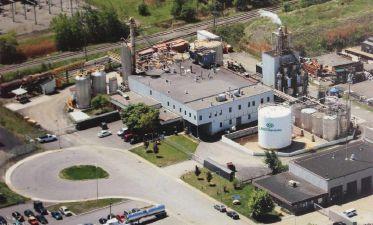
The LRBG Chemicals resins and derivatives plant near Montreal.
Rendering of the floating LNG project in northwest British Columbia.
Anthony Vargas (left), GM of Endress+Hauser Canada, and Michael Wilson, president of Contro Valve Equipment.
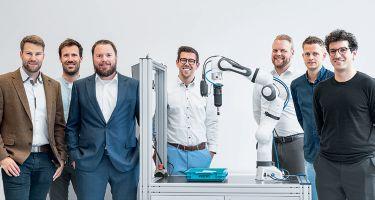
The FLAIROP project team.
HEXAGON ACQUIRES REMOTE CONTROL MINING TECHNOLOGY COMPANY HARD-LINE
Hexagon’s Mining division has acquired Sudbury, ON based Hard Line, a global developer in mine automation, remote control technology, and mine production optimization.
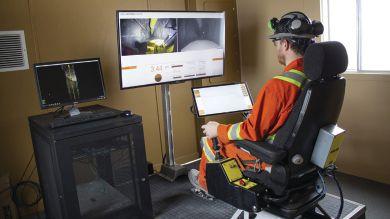
Hard Line specializes in remote control solu tions and network infrastructure, allowing for the tele remote operation of heavy machinery from a control station in a safe area on the sur face or underground, regardless of distance.
Hexagon
https://hexagon.com/ Hard-Line
www.hard-line.com
NOVA CHEMICALS AND PLASTIC ENERGY TO STUDY RECYCLING PLANT FEASIBILITY
NOVA Chemicals Corp. of Calgary and Ma drid based Plastic Energy have entered into an agreement to explore the feasibility of develop ing a pyrolysis driven advanced recycling facility in the Sarnia, ON, region.
“Post use plastics offer tremendous value to furthering the circular economy, and our teams at NOVA Chemicals work daily to innovate new and collaborative ways to extend the lifecycle of our products and plastic packaging,” said Greg DeKunder, VP, NOVA Circular Solutions.
According to Carlos Monreal, founder and CEO of Plastic Energy, “we aim to reduce the amount of plastic waste ending up in landfills, incinera tion, or as leakage into the environment.”
NOVA Chemicals
www.novachem.com
Plastic Energy
https://plasticenergy.com/
NSF 61 & 372 Certified
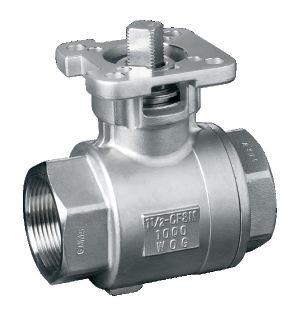
The NS Series ball valves are available in sizes 1/4”-6” with threaded, socket weld, butt weld (3-piece) and flanged (2-piece) connections.
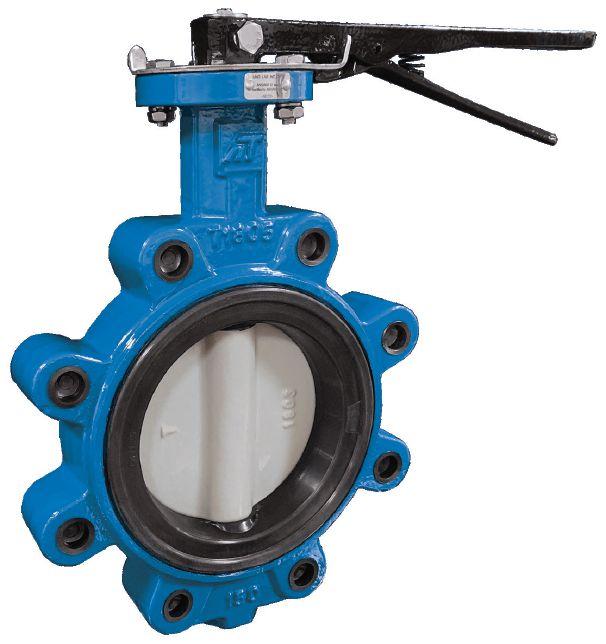
The NS Series butterfly valves cover 2”-24” sizes in wafer and lug style.
APPLICATIONS
• Water Treatment
• Potable Water Service
• Reverse Osmosis
• Desalination
A person remotely operating an LHD (load-hauldump) using Hard-Line’s TeleOp system.
Greg DeKunder, VP, NOVA Circular Solutions (left), and Carlos Monreal, Founder and CEO of Plastic Energy.
Straining & Filtering supplement
DRAWER MAGNETS SUITABLE FOR MECHANICAL AND GRAVITY FLOW APPLICATIONS
Bunting’s HF series drawer magnets are said to provide powerful magnetic separation suitable for mechanical and gravity flow applications in all industries. The drawer magnets are equipped with magnetic cartridges, configured with ar rangements of two or more cartridge trays that are staggered to increase contact with the prod uct stream. Material moves in a zig zag pattern from one cartridge tray to the next, achieving exceptionally thorough cleaning because of intense magnetic separation. Units are available in utility, food, and sanitary con structions with multiple cleaning options and stainless steel housings. The drawer magnets are available in manual standard, manual self cleaning, pneumatic self cleaning, and pneumatic continuous self cleaning mod els. All models are designed to facilitate effective removal of tramp metal contamination, including fines, while being easy to operate and maintain. Inside dimensions of 8 x 8 in. to 24 x 24 in. are available.
Bunting Magnetics
www.buntingmagnetics.com
VACUUM PUMP INLET TRAPS FEATURE SPECIAL PURPOSE FILTRATION
A line of vacuum foreline traps that can protect vacuum pumps in processes ranging from semicon ductor manufacturing to a wide range of industrial applications has been introduced by Mass Vac, Inc. MV MultiTrap vacuum inlet traps feature 304 stain less steel construction with a knock down stage and two additional stages of user selectable filter car tridges to offer filtration for a wide range of man ufacturing processes. Units are available in a 12 in. diameter model that uses two stages of six filters and a 16 in. diameter version that uses two stages of eight. Providing up to 99.9999% filtration efficiency, depending upon filter type and application, the vacuum inlet traps can be supplied with filter cartridges made from AmoniaSorb for ammonia and amines, MerSorb for mercury vapours, Potassium Permanganate to filter hydro gen peroxide, stainless steel gauze for heavy particulates and condens ables, and polypropylene from 20 microns down to 0.1 micron. All come in 4.5 and 9 in. sizes.
Mass-Vac, Inc.
www.massvac.com
TANGENTIAL FLOW FILTRATION SOLUTION FOR LARGE SCALE PROCESSING
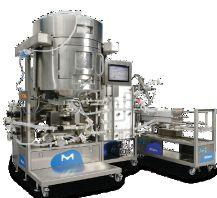
Processing large batch sizes in one run using sin gle use equipment is a challenge, according to MilliporeSigma. The company’s Mobius TFF 80 system has been specifically developed for large scale tangential flow filtration. It provides a com bination of single use Flexware assemblies and hardware specifically designed for efficient con centration and diafiltration of proteins at large scale. The system is said to maximize the production yield and allows to achieve high concentration factors, minimizing unrecoverable volume.
MilliporeSigma
www.sigmaaldrich.com
FILTERING FANS DESIGNED TO KEEP CABINETS COOL AND PROTECT MACHINES
Pfannenberg has introduced it series of Fil terfans, designed to circulate and cool air in cabinets through forced convective cooling. In energy applications, two applications in clude cooling the conversion machinery in side the wind turbines and cooling battery charging stations. Products in the series in clude Filterfans 4.0 standard Type 12, while a Slimline version is suitable are for installation in enclosures with limited depth. Other products in the series serve more specialized applications, such as outdoor weather re sistance (NEMA 3R), installation on top of enclosures, protection against electromagnetic interference, and the Datawind Filterfans is designed to be externally mounted on IT equipment on the factory floor.
Pfannenberg
www.pfannenbergusa.com
Handling industrial wastewater treatment surprises with automatic scraper strainers
For industries in Canada, wastewater treatment is required to comply with regulations that set standards for in dustry and national water quality criteria for pollutants in surface waters.
Although treatment options like settling tanks and automatic backwash strainers are commonly used, these have substantial lim itations when conditions are unpredictable.
The problem for industrial wastewater treatment is that no fluid processing or filtra tion system remains static. Treatment con ditions continually change due to variable factors such as pressure, particle size, solids loading, and even the presence of sticky bi ologicals.
“The flow rate and volume of suspend ed solids in the fluid changes depending on production demands and the equipment used as well as the time of day, day of the week, and seasonal factors,” says Robert Presser, VP of Acme Engineering Products, a North American manufacturer of industri al self cleaning strainers. The company is an ISO 9001:2015 certified manufacturer of en vironmental controls and systems with inte grated mechanical, electrical and electronic capabilities.
Fortunately, a separation technology de signed to tolerate variability — automat ic scraper strainers — is being used after settling tanks and before further process ing when reliable, economic, low mainte nance water treatment is necessary. These self cleaning scrapers filter out both tiny particles and larger debris, utilizing a blade and brush that work together to keep all straining surfaces fully effective and free of obstruction.
The technology assures reliable straining that facilitates regulatory compliance. The approach also virtually eliminates manual maintenance as well as equipment clogging and fouling issues with downstream water treatment processes such as membrane fil tration, reverse osmosis, or ozone disinfec tion.
Settling Tank Challenges
In Canadian industrial and municipal set tings, settling tanks, also called clarifiers, are often used for treatment when wastewater needs to be cleared of suspended solids, ac cording to Presser. Since settling tanks rely on gravity, the natural separation process can take a very long time to occur.
Flocculants are also often added to facil itate the agglomeration and settling of sus
pended particles out of the wastewater to the bottom. The particles are then removed as sludge. Depending on the volume of sol ids in the wastewater, however, the amount of flocculant must change. In addition, the “size” of the solid particulate is also contin ually changing, which makes balancing the process more difficult.
Large settling tanks must be regularly emptied and washed down as well. This re quires replacing a large volume of water or other processing fluid at great expense.
Unpredictable factors such as algae blooms can further compromise traditional treatment. Plant operators must periodically clean algae and other undesirable materials from the weirs, baffles, and troughs of set tling tanks.
“Algae can grow at a surprisingly fast rate, particularly in summer, until it impairs tank function,” says Presser.
“If an algae bloom flows over the top of the settling tanks, you cannot let it compro mise the downstream equipment. When operators use a high pressure hose to wash down the rims of the settling tank, it releases a substantial amount of algae and contami nants that must be captured.”
In industrial wastewater settings, typical automatic backwash strainers are particular ly challenged by sticky biologicals like algae, which can harbor other contaminants like
grease, scum, sludge, and foam. The accu mulation can continually shrink the usable open area of the strainer until it is no longer effective and must be cleaned.
“Algae can adhere to the screen and cre ate a ‘cake’ that the backwash arm cannot remove since it decreases pressure and suc tion. It is ironic that you need a relatively good open area on the clean side of your screen for backwash units to function,” says Presser.
Backwash design also relies on a substan tial amount of constant pressure, which can compromise reliability if not always avail able. “Backwash units do not operate well in backwash mode below 30 PSI. To compen sate, some utilize complex, pressure induc ing tactics, but these do not always resolve the issue,” he adds.
Additionally, conventional backwash units are not designed to effectively remove larger or irregularly shaped solids.
“Oversized solids that are larger than the gap between the screen and the backwash arm (do not fit within the cleaning mecha nism, so) remain in the vessel and must be removed manually.”
Today, automatic scraper strainers like Ac me’s are designed to tolerate surprises while meeting water treatment requirements flex ibly and reliably. The company’s motorized unit is designed to continually remove both
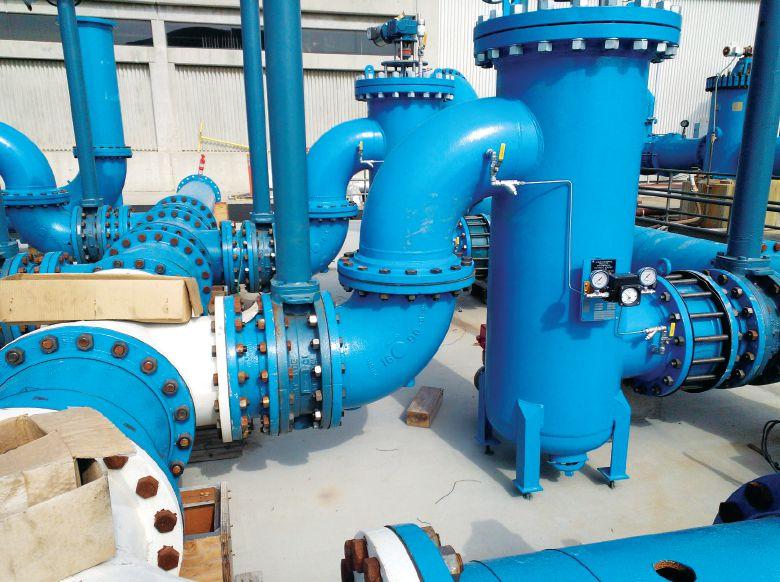
The flexible and reliable design of automatic scraper strainers helps protect downstream equipment while effectively processing wastewater.
very large and very small, suspended solids from wastewa ter. Cleaning is accomplished by a spring loaded blade and brush system, managed by a fully automatic control system.
Four scraper brushes rotate at 8 rpm, resulting in a clean ing rate of 32 strokes per minute. The scraper brushes get into wedge wire slots and dislodge resistant particulates and solids. This approach enables the scraper strainers to resist clogging and fouling when faced with large solids and high solids concentration. It ensures a complete cleaning and is very effective against organic matter “biofouling.”
For wastewater treatment after settling tanks, 200 micron Acme automatic scraper strainers can be used to filter up to 6,000 gpm of the water and spillover. After washdowns, the technology can effectively capture even sticky biologicals like algae and other contaminants that are washed loose. This can protect additional downstream processes such as membrane filtration or ozone disinfection equipment, which can be utilized if further purification or pathogenic organism inactivation is required.
An advantage of automatic scraper strainers is that the technology does not require continuous water pressure to keep the screen clean. Unlike backwash strainers, scraper strainers do not rely on a pressurized backwash to remove solids from the screen. Instead, a blade and brushes provide more reliable cleaning under varying conditions.
“The blade and brushes scrape the screen clean, and the small brush filaments get into the slots. So, if a solid is stuck in a slot between the wedge wire, the filaments will push the solid through,” says Presser.
He explains that scraper strainers allow the solids to ac cumulate at the bottom of the vessel, where the blowdown valve will open periodically to clear them out. “Since a gate valve isolates the solids collection area, the wastewater flow continues in the regular section of the strainer.”
Blowdown occurs only at the end of the intermittent scraping cycle when a valve is opened for a few seconds to remove solids from the collector area. Liquid loss is well be low 1% of total flow.
The blowdown can operate without moving parts and can even perform from the suction side of a pump. These ca pabilities, which are not possible for a backwash unit, aid design flexibility and can facilitate installation at space con strained facilities.
Unlike a manual strainer, it is not necessary to open and clean an automatic scraper strainer. No one needs to man ually blow down the solids. Since it is automatic, it is essen tially a set and forget type of system that lets operators walk away and focus on other aspects of the facility, which helps to reduce overall labour costs.
Industrial wastewater treatment conditions can change along with production and the seasons, so it is important for companies to utilize technology that can flexibly and reliably meet compliance requirements and protect downstream equipment. Automatic scraper strainers are designed to do so and can tolerate the inevitable surprises and variability while also helping to minimize maintenance.
This article was contributed by Acme Engineering Products Inc. based in Mooers, NY, with a Canadian office in Montreal. Acme Engineering Products www.acmeprod.com
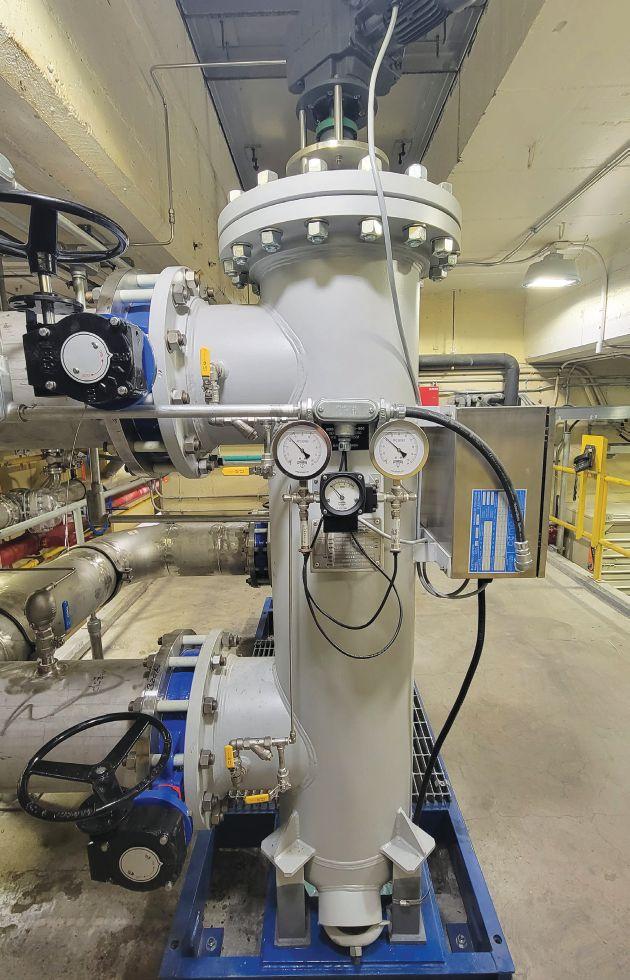
The automatic scraper strainer like that from Acme Engineering Products resists clogging and fouling when faced with large solids and high solids concentration.
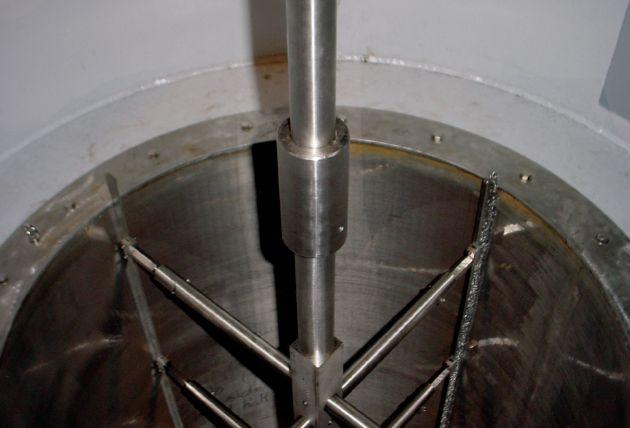
The self-cleaning scrapers filter out both tiny particles and larger debris, utilizing a blade and brush that work together to keep all straining surfaces fully effective and free of obstruction.
NOVEMBER 7-9, 2023 | TORONTO CONGRESS CENTER
BOX CONVERTS CONDUIT
SIGNAL WIRING TO M12 CABLE WIRING
The S series con verter box an nounced by Blue White is a junction box specifically de signed to ease the installation of the company’s S series chemical meter ing pumps in applications where the conduit runs to the pump. The converter box will con vert conduit signal wiring to M12 cable wiring and comes with Six M12 cables. Units accept incoming ½ in. conduit and simplifies installa tion when transitioning from legacy pumps, or replacing pumps that have integral conduit connections.
Blue-White www.blue-white.com
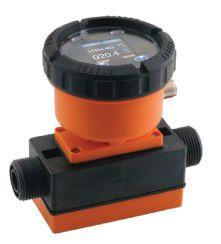
DIGESTER GAS FLOW METER FOR WASTEWATER TREATMENT, BIOGAS, LANDFILL GAS
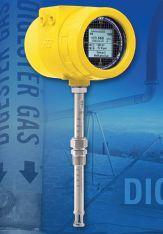
The ST80 series thermal flow meter from Fluid Components Interna tional has been intro duced for accurately measuring gas produc tion from digester tanks at municipal or industri al wastewater treatment operations. The unit’s insertion style configuration for wastewater digester gas is a single point meter for pipe diameters greater than 2 in. It operates over a flow range of 0.25 to 1000 SFPS. Flow accu racy is ±1.0% of reading, 0.5% full scale, and repeatability is ±0.5% of reading. It operates over a broad turndown ratio that is normally factory set and is field adjustable from 2:1 to 100:1 within the calibrated flow range. The meter’s transmitter’s outputs are a match to user DCS, PLC, SCADA, recorder, or alarm system.
Fluid Components International www.fluidcomponents.com
FACTORY FLOOR INTEGRATED GRAPHIC TERMINALS SUPPORT GESTURES
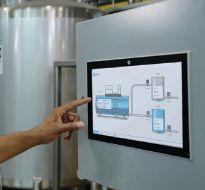
Rockwell Automa tion has announced OptixPanel graphic terminals designed to provide a PC like user experience in a sealed HMI appli ance. Available in Q3 2023, there is no operating system to secure
and smaller applications can benefit from the superior price performance ratio, it says. The graphic terminals will be available in a wide range of screen sizes, bezel options, aspect ratios and touch screen technologies that sup port gestures, such as swipe and pinch, for eas ier integration on a factory floor. Screen sizes vary from 4.3 to 21.5 in.” The terminals run Fac toryTalk Optix and FactoryTalk Remote Access software, providing flexibility, scalability and en hanced connectivity. Applications can be devel oped independently with a local desktop editor, or collaboratively in the cloud on FactoryTalk Optix Studio through a web browser. Built in drivers support connections to different types of controllers. SaaS enabled workflows will en able teams to collaborate anytime, from any where, the company says, with change tracking and versioning that automatically keeps track of who did what and when.
Rockwell Automation
www.rockwellautomation.com
SOLUTIONS FOR CONNECTING MULTI-PORT VALVE BLOCKS
Valve specialist GEMÜ is launching two new solutions for connecting single use multi port valve blocks. The first solution means that it is now possible to control the pneumatic locking of the valve block via locking cylinders thanks to a valve block sunk into the skid surface. The second solution consists of using a valve block placed onto the skid surface, where the valve body is manually connected to the actuator unit via a detachable hand lever. This second type offers greater flexibility for the spigot layout. The blocks themselves are produced by ma chining and can therefore be tailored to each specific application. There are several benefits to using single use technology: Eliminating the need for conventional cleaning cycles and the associated costs for power, cleaning media, waste disposal and peripherals while increas ing protection against cross contamination. It also improves the flexibility and effectiveness of single use solutions in the medical and phar maceutical technology sectors in comparison with conventional solutions. In addition, the use of single use technology reduces negative environmental effects by eliminating energy in tensive cleaning cycles.
GEMÜ
www.gemu-group.com
PROGRESSING CAVITY AND PERISTALTIC PUMPS TARGET LITHIUM BATTERY PRODUCTION
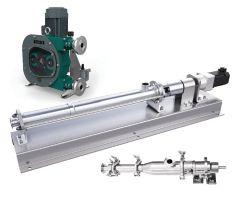
Netzsch Pumps USA has announced Nemo pro
gressing cavity pumps and Peripro peristaltic Both pumps can trans fer complex fluids and provide accurate and repeatable metered flows of viscous, shear sensitive and solids laden materials which is said to make them well suited for lithium battery production. Progressing cavity pumps are said to excel in electrode coating and slurry mixing applications, as well as precisely meter or transfer ceramic slurries, electrolytes, adhe sives, resins, and many other battery process fluids including those with aggressive solvents. Peristaltic hose pumps have a heavy duty con struction for demanding applications, suitable for complex fluids, such as abrasive, corrosive, viscous, and delicate products. These pumps are suitable for lithium battery manufacturing due to a compact, seal less design, so no haz ardous emissions can escape, the company says. The hose material has excellent chemical resistance and is provided in several elastomer ic choices, it adds.
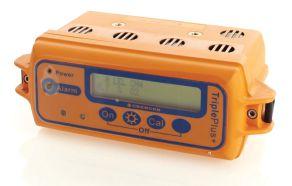
The Triple Plus + IR portable multi gas moni tor from CEA In struments is now offered along with the Triple Plus +. The unit offers UL, CSA, and numerous other approvals for use in hazardous areas, is water and dust resistant to IP65, and floats if it falls into water. A backlit display provides simultaneous view ing of all gas readings and gives warnings of the presence of gas when hazardous levels are detected. Intelligent, user changeable sensor modules that are pre calibrated for a wide range of gases to allow “plug and play” opera tion are said to provide easy customization for different applications. Sensors are available for oxygen, flammable gas, and a range of tox ic gases, including hazards commonly encoun tered in confined spaces. For testing confined spaces prior to entry, the Triple Plus + IR can be specified with an optional built in electric sampling pump or used with a separate man ual aspirator. A built in datalogger stores infor mation and the available software provides access to this data, as well as user configura tions via computer.
CEA Instruments www.ceainstruments.com
PERISTALTIC PUMP DOSING SYSTEM OFFERS EXTRA SAFETY
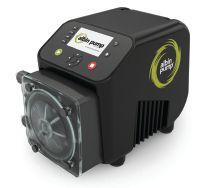
Albin Pump, an Inger soll Rand business, has launched KB and KM series cased drive benchtop per istaltic pumps. Tar geting the industrial and municipal mar kets, respectively, the new pump range can support a wide variety of chemical and wa ter treatment processes. Pump models are offered with a maximum pressure level of 110 psi and flow rates up to 160 gph. Units provide a suction lift of up to 30 ft and turn downs of 200:1 (KB series) and 10,000:1 (KM series). Both peristaltic metering pump rang es, which feature self priming capabilities, are said to be defined by their high precision flow performance, with each rotation trans lating into exactly the same displacement and resulting in the delivery of a smooth and con sistent chemical feed.
Albin Pump
www.albinpump.com
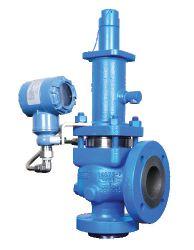
for bellows in PRVs, the company says, while providing balanced operation against backpressure to lower cost of ownership and enhance performance. The sec ond technology is Bellows Leak Detection, enabling remote de tection of bellows ruptures in PRVs, with the capability to re duce and accurately calculate volumetric emissions in real time. The Cros by Balanced Diaphragm design extends the backpressure limits from 60% to 80% and increases the Kb backpressure correction
factor by up to 15%, expanding the application range of spring loaded PRVs. The Bellows Leak Detection consists of a backup piston and a Rosemount wireless or wired pres sure transmitter. The backup piston can reduce emissions by over 90% in the event of a bellows rupture. Up grade kits for existing Crosby J Series PRVs are available for both new tech nologies, and new PRVs can be purchased with these features pre installed.
Emerson
www.emerson.com
SPEED SWITCH FOR BELT CONVEYORS,
BUCKET ELEVATORS
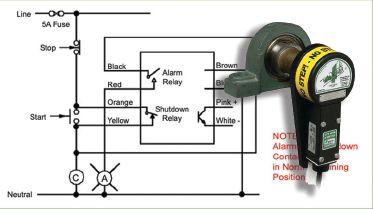
The M800 Elite Speed Switch announced by 4B Components is designed to detect belt slip, belt underspeed, stop motion, low speed or zero speed on bucket elevators, conveyors, air locks, mixers, fans, grinders, and other rotating machines. Sealed and said to be simple to cal ibrate, an inductive sensing device located in the nose of the switch enclosure will detect a metal target. This target can be an existing bolt head or device attached to a shaft. During in stallation the unit is set to the normal machine shaft RPM by calibrating with the magnet pro vided. The internal microprocessor sets the alarm and shutdown relays.
4B Components
www.go4b.com
PRESSURE RELIEF VALVES IMPROVE PERFORMANCE AND REDUCE EMISSIONS
Emerson has announced the release of two technologies for the Crosby J Series pressure relief valve (PRV) product line. The first is a Bal anced Diaphragm, which eliminates the need
OIL-SEALED ROTARY
VANE VACUUM PUMPS
SHORTEN CYCLE TIMES
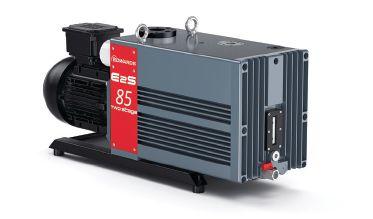
Edwards Vacuum has launched a new oil sealed rotary vane vacuum pump. The E2S series for low and medium vacuum in in dustry and research is suitable for various applications. The rotary vane pump is said to shorten cycle times and increases production capacity. The pumping speed of the series is 90 m3/h and enables an ultimate vacuum of 3 x 10 3 mbar. For special performances, the company offers optional combinations of two stage series pumps that include a mechanical booster. The series is offered in three pump sizes and is primarily suited for vacuum drying and degassing, heat treat ment and vacuum furnaces; as well as for coating applications, research and develop ment, and analytical applications.
Edwards Vacuum www.edwardsvacuum.com
POINT-TO-POINT WIRELESS
PROCESS SIGNAL TRANSMISSION BRIDGE
The Precision Digital PDW30 available from Al pha Controls & Instrumentation is said to provide a simple, straight forward way to transfer an analog, discrete, or Modbus signal. The point to point wireless bridge is packaged in a rug ged, weather tight housing designed to meet the demands of industrial installations. The primary unit accepts an analog, discrete, or Modbus input and wirelessly broadcasts it to the secondary unit. The secondary unit then recreates that signal at its location — any where in the field wherever there is a pro cess signal and 24 Vdc power, the company says. Fixed or remote antenna modules as well as a wide range of accessories are avail able, including mounting kits, antenna relat ed accessories, and repeaters. The antenna may be directly attached or remotely locat ed. High gain directional antennas are also offered.
The Canadian Process Control Association (CPCA) is an organization dedicated to the promotion and advancement of the process control industry in Canada. It serves as a professional association for individuals and companies involved in various aspects of process control, instrumentation, automation, and related fields. Join today! cpca-assoc.com
THERMO-KINETICS
Thermo-Kinetics has been a member of the CPCA since 1978. We find the benefits of this association are far reaching. The information is more timely than anything we receive from Stats Canada, and it is information we can use to make decisions on the fly. The events afford us the opportunity to network with other industry personnel in a relaxed atmosphere.
FRANÇOIS GAGNÉ
ENDRESS+HAUSER CANADA
We have been an active member of CPCA for 10 years. Besides the ability to grow your network, the data and statistics are so important. They’re very industry specific, Canada specific and detailed around instruments and technologies. This is information that’s hard to get, if not impossible to get, anywhere else. If it wasn’t for the CPCA you wouldn’t have visibility on that.
KATHERINE DROLET-VIVES METTLER-TOLEDO
I attended the CPCA Conference for the first time this year. What I liked most about the event was the networking, meeting people from different industries and hearing inspiring people give really interesting talks. Merci beaucoup!
MAIER EVEREST AUTOMATION INC.
As a long-standing member, I have enjoyed the many benefits from being a part of the association. Some of the key aspects include the numerous reports that we participate in and receive, networking opportunities and our involvement with the regulatory bodies which affect the products with which we go to market.