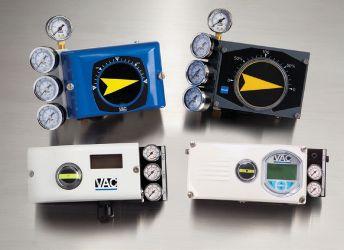
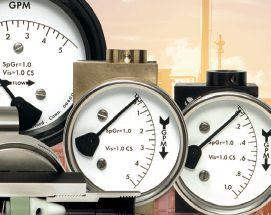
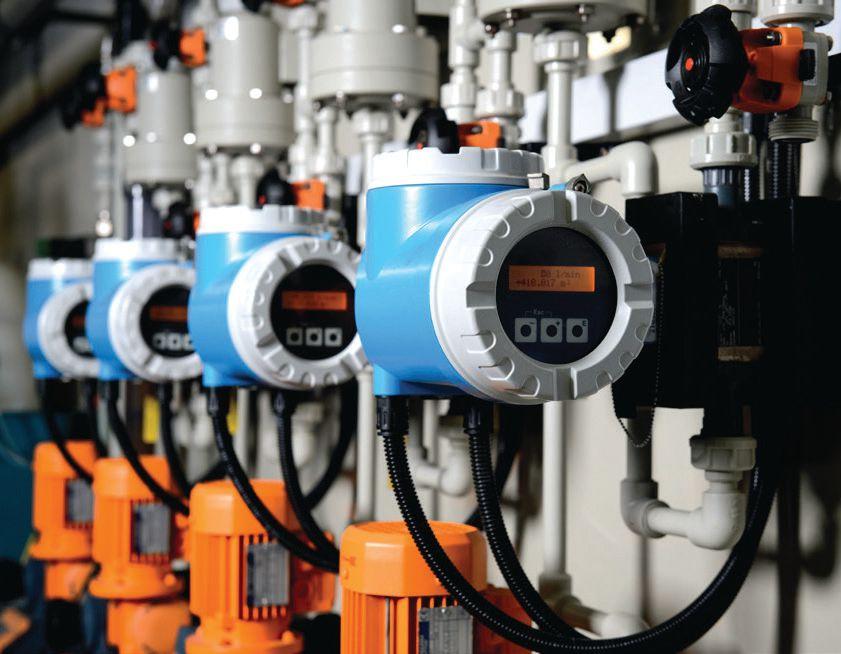
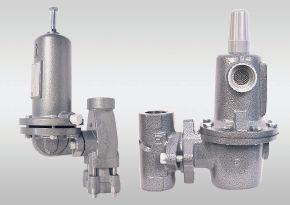
Valve Accessories and Controls positioners for controlling actuators are available through Belletek Controls. Units include the V100, V200, the digital D400 and advanced digital D500. The V100 positioner has a cast aluminum, polyester housing that is NEMA 4X rated, with stainless steel retained fasteners and a bottom plate that helps absorb vibration. Calibration is via screwdriver slots in the span and zero ferrules, along with an external zero adjustment The all-in-one die cast aluminum housing NEMA 4X V200 positioner allows for an internal input, switches and a 4 to 20 mA transmitter. Both Zero and Span calibration can be adjusted without removing the cover. The digital D400 positioner is a microprocessor-based product where NEMA 4X is standard and IS and Ex products are available. The product is stocked with Hart communication and a variety of accessories and mounting kits. The NEMA 4X, IP65-rated D500 microprocessor based positioner features local push buttons and LCD display to operate a pneumatic actuator and/or control valve package to provide fast, accurate, and consistent control with low air consumption, the company says Belletek Controls
www.belletek.com
ANTI-SIPHON VALVE HAS BROAD FLUID APPLICATIONS
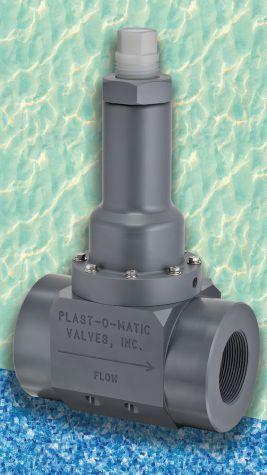
Plast-O-Matic Valves, Inc. has introduced an automatic valve that performs multiple functions in a piping system, including pressure relief, back pressure control, pump bypass, and anti-siphon protection. This product has applications in water/wastewater pump control, back pressure control in ultrapure water & chemical distribution ystems, pressure relief in liquid piping ystems, and siphon prevention in potable water treatment. The design features a non-wetted spring to control back pressure in a piping system. The set-point is adjustable, and once the set pressure is reached, he valve begins to open. It will allow the ated full flow at approximately 40% over he set pressure. This operation enables the valve to provide a controlled obstruction in a piping system as needed. This is invaluable in providing back pressure on a pump, or back pressure to maintain flow to points of use, the company says Plast-O-Matic Valves
www.plastomatic.com b n a t r t
Sensor Technology
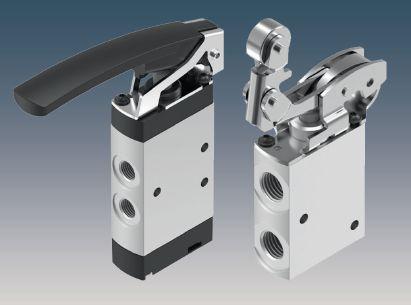
Festo VMEF/VHEF directional control valves can be actuated by a single finger or hand, or a workpiece making contact with a trigger mechanism. The valves are based on touch actuation with minimal force — there is no energy to convert, no long cables or additional response time. They perform functions that directly result in a follow-up action, like clamping or closing safety doors (if manually actuated) or acting as a signal generator (if mechanically actuated). The actuated stem switches the valve and triggers that next step in the process. For manual actuation, the VHEF offers a choice of “triggers” — a finger, handle or toggle lever or a pushbutton. VMEF offers a stem, roller-lever or one-way roller-level actuation. All configurations are available as 3/2 way and 5/2 way valves with G1/8 and G1/4 connections as well as NPT variants. More variants like 5/3 way valves are available, depending on model selected. Festo Canada www.festo.ca
DUEL-USE STATIONARY WASTEWATER SAMPLER
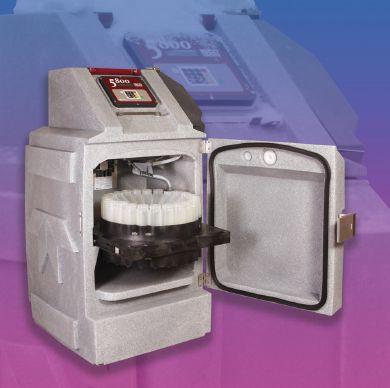
Avensys Solutions has introduced the ISCO 5800 sequential/composite sampler, available from Hoskin Scientific. The unit can perform stationary sampling in both municipal and industrial wastewater applications. The refrigerated sampler has user-friendly controls and task accommodating features, the company says. Features include a controller that actively regulates and displays the sample compartment temperature, as well as a 24-hour summary to confirm proper sample cooling. Specifications include: an operating range of -29° to 49°C without additional heaters; weather and corrosion resistant; EPA-recommended line velocity of at least 0.6 m/s; and, 2-year warranty Hoskin Scientific www.hoskin.ca
Get the word out without spending a fortune with industry-tough LED message displays from AutomationDirect. ViewMarq LED message displays can display preformatted and real-time factory floor data messages controlled by a PLC, PC, or other master device.
Each display includes multiple options for communicating vital information:
• ASCII strings through the RS232 or RS485 port
• Modbus RTU messages through the RS232 or RS485 port
• Modbus TCP messages through the Ethernet port
Two-line display starting at: $719.00 (MD4-0212T)
The affordable ViewMarq line also offers:
• One-, two-, and four-line displays
• Right, left, up and down message scrolling options
• Viewing distances up to 400 feet and 140 degree viewing angle
• (1) RS232, (1) RS485 and (1) Ethernet port standard on all models
• FREE ViewMarq configuration software (online download) used to configure the display; create, preview and send messages from a PC; or create ASCII strings for PLC control
• NEMA 4 / NEMA 12 extruded aluminum housings suitable for harsh environments
• Mounting hardware, cable glands and Ethernet cable included
Orders over $49 get FAST FREE SHIPPING
Our shipping policies make it easier than ever to order direct from the U.S.!
Fast free standard shipping* is available for most orders over $49 U.S., and that includes the brokerage fees (when using an AutomationDirect nominated broker). Using our choice of carrier, we can reach most Canadian destinations within 2 to 3 days. Order by 6pm ET and in-stock orders ship the same day!
*2-day free shipping does not apply to drop-ships, or orders requiring LTL transport, but those shipments can take advantage of our negotiated super-low at rates (based on weight) that include brokerage fees.
See Web site for details and restrictions at: www.automationdirect.com/canada
UNIVERSAL CONNECTION PLATFORM FOR PRESSURE HOSES
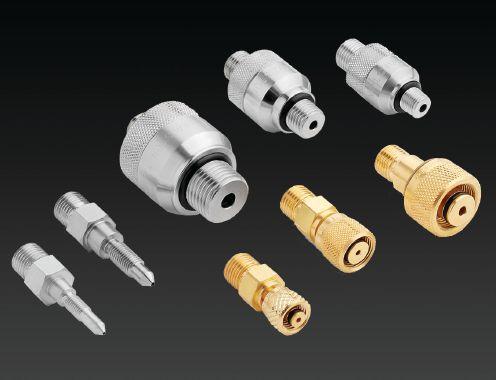
The Quick-test Connection Platform from Ralston Instruments is a universal pressure hose system engineered said to facilitate fast, leak-free connections for pressure testing, calibration and leak testing. The design of the hoses and adapters offers secure, time-saving connections — without the need for a wrench or thread tape — for low volume, high pressure connections to virtually any device being tested, the company says. The hoses have a smaller inner diameter than most hoses, which makes them suitable for transmit-
ting high pressure without wasting large amounts of compressed gas or fluid. Made with a polyamide-reinforced inner core, units can twist and bend without losing volume across the hose, it adds. Adapters that complement the hoses allow direct connection to male or female NPT, BSPP, tube fittings, metric, AN 37° Flare and CGA 580 fillings without any additional tools or thread sealant. The adapters are said to also vent pressure while still connected.
Ralston Instruments
www.ralstoninst.com
SELF-PRIMING LOW-PULSATION LIQUID DIAPHRAGM PUMPS
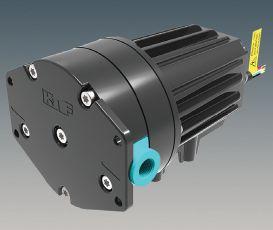
With the introduction of new FP 150, KNF has expanded its line of low pulsation liquid diaphragm pumps. The line of products is said to combine the pulsation level previously only achieved by gear pumps with advantages of diaphragm pump technology — self-priming, safe to run dry, and long service life. Pulsation at the nominal flow rate for the smaller FP 150 is less than 150 mbar directly at the pump outlet. Peak-to-peak pulsation levels far below this are achievable, depending on system materials, configuration, running speed, and other damping methods. The pump delivers up to 1.5 L/min of liquid at back pressure up to 29 psig (2 barg), with complete linear control of flow between ~10% and 100% of the nominal flow rate (0.2 to 1.5 L/min). Pump flow is fully stable with fluid viscosities ranging between 1 and 150 cSt, the company says. The pump can also handle viscosities up to 500 cSt with some flow rate reduction.
KNF Neuberger knfusa.com/FP150
CARBON STEEL ENCLOSURES REPLACE OLDER LINES
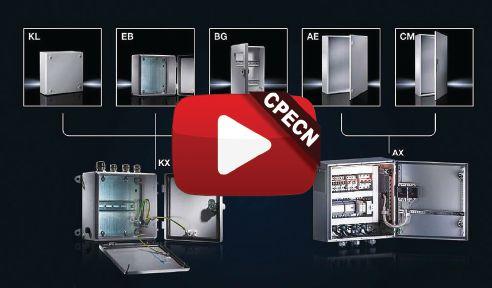
Rittal Systems has announced that it is replacing its AE and CM compact enclosures with the new AX enclosures, and the KL, EB and BG small enclosures with the new KX enclosures. Only the AX and KX Carbon Steel enclosures from Rittal Systems are available for order now. (The AX and KX Stainless Steel enclosures will be launched at a later date in North America. There is no change in the Rittal Wallmount [WM] product line, which will still be available.) The company has also introduced a simplified AX KX Conversion Tool on its global AX/KX microsite for the range of products available in Canada in the form of an Excel spreadsheet. This file lets specifiers know what is available locally, and what the key differences are between the old and new product, if applicable. Rittal AX KX videos can be viewed at https://bit.ly/2zbOtZW. Rittal Systems
www.rittal.ca
Editor’s Forum
Sand Hanitizer.™ That's what one of my daughters calls the sterilizing substance du jour in her humorous way — and there's no trademark listed as far as I know (that's my contribution to the gag).
Of course, the pandemic is no joke. But I have to say it has been heartening to see how individuals, organizations and manufacturers have stepped up to the plate with tips, tricks and innovations to make our lives a tad bit safer.
There are too many to mention, but if you turn to page 10, you'll find
just a few that have retooled, rejigged or just plain donated to combat COVID-19. Who knew personal protective masks would become such a hotbed for designers, not to mention a trending fashion statement that is likely to be "in our faces" for the next year as we crawl out from isolation.
The Centers for Disease Control in Atlanta even posted a pattern PDF for sewers, something that spurred my wife into dusting off the old sewing machine. I know, the end results aren't ICU-certified, but at least when anyone in the family ventures out
in physically-distanced public and sneezes, the dirty looks won't be so venomous.
The New York Times reports that German coffee and vacuum machine filter maker Melitta has combined materials from both divisions and retooled to create face masks that are comfortable and efficient. However, it cautions, don't attempt to use one in you coffee maker.
I guess retro-retrofitting Melitta products would be too much to ask.
Mike Edwards medwards@cpecn.com
We bring color into view!
Compact
Founder
Blair
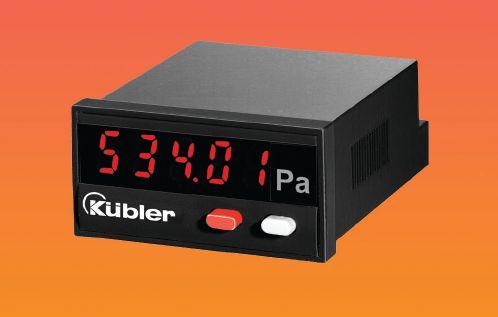
The Kubler Codix 534 from Turck Canada is said to be a cost-effective standard signal display for front panel mounting with scalable, bright, 5-digit LED process display. Due to 14 bit resolution, the unit can offer accurate measured value display range with minimum and maximum value acquisition and scalable totalizer for time-controlled summation of the reading, the company says. The display can be set for V/mA, with automatic min/max acquisi-
tion and has galvanic isolation with polarity protection. Dimensions are either 48 x 24 mm or 45 x 22 mm and supply voltage is 10 to 30 Vdc. Product features include: an input range with 1 current measuring input, 1 voltage measuring input; display range is 19 999 to 99 999 with leading zeros suppression and programmable decimal point; and, measuring time of max. 0.1 s. Turck Canada www.turck.ca
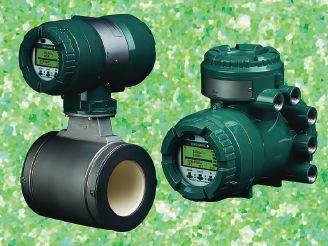
ETHERNET/IP TYPE MAGNETIC FLOWMETER
The ADMAG TI series AXG magnetic flowmeter from Yokogawa has EtherNet/IP communication capability. Units have an operation authority level setting for ensuring safety, process data trend display, display backlight flashing (Squawk) function, and data store/restore function with display unit internal memory or microSD card available. Stable measurement is said to be ensured with the company’s dual frequency excitation method. In addition, diagnostic functions contribute to preventive maintenance of the plant are installed. Diagnosis of the device (verification function) that can be executed without demounting from piping. Yokogawa Canada www.yokogawa.com/ca/
HIGH CAPACITY GLOBE CONTROL VALVES
LONG-TIME, RELIABLE, RUGGED A-T CONTROLS OFFERS THE
NS SERIES
The NS Series ball valves are available in sizes 1/4”-6” with threaded, socket weld, butt weld (3-piece) and flanged (2-piece) connections.
The NS Series butterfly valves cover 2”-24” sizes in wafer and lug style.
APPLICATIONS
• Water Treatment
• Potable Water Service
• Reverse Osmosis
• Desalination
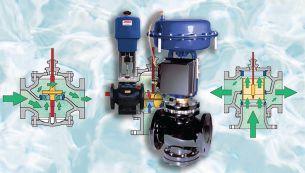
Assured Automation has announced GH series high capacity general purpose globe control valves. The series, constructed of cast iron bodies, are said to provide excellent modulating control for pressure, temperature, level and flow of a wide variety of fluids in from -20° to 400°F. Units are available with a variety of plug styles and trim materials to suit nearly any application. Features and benefits include: bottom post guide adds stability allowing for higher pressure drops; PEEK bearings provide low friction guidance and stability while protecting packing from debris ingression; and, spring loaded V-ring packing with low friction and self-adjusting for maintenance free operation. Functions can be 2-way flow control, 3-way mixing and 3-way diverting. Specifications include: ASTM D1784 and ANSI B16.5 standards; 2-1/2 to 8 in. Class 150 flange and 2-1/2 to 8 in. Class 150 flange sizes; flow capacity up to 360 Cv; 400 psig maximum pressure; and range of 50:1. Assured Automation
https://assuredautomation.com/GH/
RUGGED PLC CONTROLLERS AND COUPLERS
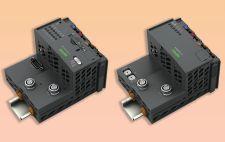
WAGO Canada has added two Generation 2 PFC200 PLC controllers along with two Generation 4 Ethernet based couplers to its XTR line of products. The new devices are designed to work in the harshest environments and provide solid performance in extreme conditions. The 7508212/040-010 and 750-8213/040-010 XTR controllers have two configurable M12 Ethernet ports and an onboard SD card slot for additional data storage for program updates. The 750-8212/040010 has one configurable RS232/485 port, while the 750-8213/040-010 comes equipped with one CANopen port to connect to engine parameters via J1939. The 750-364/040-010 MODBUS TCP/UDP and 750-364/040-010 EtherNet/IP couplers each boast two M12 Ethernet ports with the rotary switches configuring the last byte of the IP addresses.
WAGO Canada
www.wago.com
Keep workers safer when transferring flammable and combustible liquids
By Nancy Westcott
Every day industrial workers transfer potentially hazardous chemicals, such as solvents, acetones, lubricants, cleansers, and acids, from large drums into smaller containers, or into machinery. Traditionally, such potentially flammable or combustible liquids have been tipped and poured. Today such spill-prone, VOC emitting methods are no longer considered acceptable, safe, or compliant – not when a fire or explosion can result.
In particular, younger workers, having seen the resulting physical injuries, chronic respiratory ailments, and even deaths endured by parents, grandparents and friends want much safer working conditions. Consequently, there is now a call for greater safety and regulatory oversight to protect vulnerable workers and their families as simply and efficiently as possible.
“It can be catastrophic to a company if toxic or highly flammable material is accidentally released at the point of use,” says Deborah Grubbe, founder of Operations and Safety Solutions, a Chadds Ford, PA-based consulting firm specializing in industrial safety.
“When tipping a heavy drum, it is extremely difficult to pour a liquid chemical and maintain control,” adds Grubbe. “Companies have to assume that if something can go wrong during chemical transfer, it will, and take appropriate precautions to prevent what could be significant consequences. Because there is no such thing as a small fire in my business.”
Although the dangers of transferring flammable and combustible liquids are very real, protecting workers from harm can be relatively straightforward. This includes proper safety training, the use of personal protective equipment (PPE), and the use of engineering controls to prevent dangerous spills.
A Lethal Situation
During a manufacturing process on Nov 20, 2017 at Verla International’s cosmetics factory in New Windsor, NY, an employee transferred hexamethyl disiloxane (flash point of 6°C) from a drum into another container and then wiped down the chemical drum.
The friction from wiping created static electricity that caused the drum to become engulfed in flames within seconds. The resulting fire and explosions injured more than 125 people and killed one employee.
In a flammable liquids fire, it is the vapours from the liquid that ignite, not the liquid. Fires and explosions are caused when the perfect combination of fuel and oxygen come in contact with heat or an ignition source. Based on their flash points, that being the lowest temperature at which liquids can
form an ignitable mixture in air, flammable liquids are classified as either combustible or flammable.
Flammable liquids (those liquids with a flash point <100oF) will ignite and burn easily at normal working temperatures where they can easily give off enough vapour to form burnable mixtures with air. As a result, they can be serious sources of a fire hazard. Flammable liquid fires burn very fast and frequently give off a lot of heat and often clouds of thick, black, toxic smoke.
Combustible liquids (those liquids with a flash point > 100oF) do not ignite so easily but if raised to temperatures above their flashpoint, they will also release enough vapour to form burnable mixtures with air. Hot combustible liquids can be as serious a fire hazard as flammable liquids.
Both combustible and flammable liquids can easily be ignited by a flame, hot surface, static electricity, or a spark generated by electricity or mechanical work. Highly volatile solvents are even more hazardous because any vapour (VOCs) released can reach ignition sources several feet away. The vapour trail can spread far from the liquid and can settle and collect in low areas like sumps, sewers, pits, trenches and basements. If ventilation is inadequate and the vapour trail contacts an ignition source, the fire produced can flash back (or travel back) to the liquid. Flashback and fire can happen even if the liquid giving off the vapour and the ignition source are hundreds of feet or even several floors apart.
The most obvious
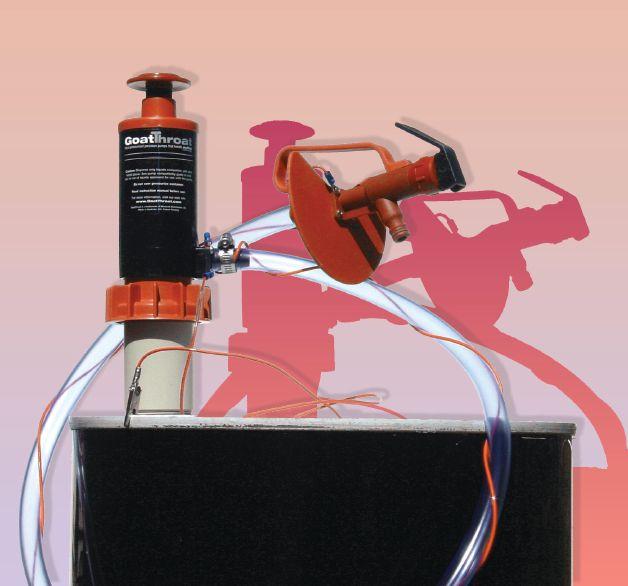
GoatThroat hand pump products and hazardous material pump products can be used for both corrosive and flammable liquids.
harm would be the danger of a fire or explosion. “If the vapour is ignited, the fire can quickly reach the bulk liquid. A flammable vapour and air mixture with a specific concentration can explode violently,” according to information on the topic posted online by the Division of Research Safety by the University of Illinois at Urbana-Champaign.
Consequently, minimizing the dangers of handling flammable and combustible liquid chemicals requires proper training and equipment.
Safe Handling
Without proper ventilation, the handling of flammable substances has a good chance to create an explosive atmosphere. It is essential to work only in well-ventilated areas or have a local ventilation system that can sufficiently remove any flammable vapours to prevent an explosion risk.
Because two of the three primary elements for a fire or explosion usually exist in the atmosphere inside a vessel containing a flammable liquid (fuel and an oxidant, usually oxygen), it is also critical to eliminate external ignition sources when handling such liquids. Sources of ignition can include static discharge, open flames, frictional heat, radiant heat, lightning, smoking, cutting, welding, and electrical/mechanical sparks.
When transferring flammable liquids from large containers (>4 L), to a smaller container, the flow of the liquid can create static electricity which could result in a spark. Static electricity build-up is possible whether using a pump or simply pouring the liquid. If the bulk container and receiving vessel are both metal, it is important to bond the two by firmly attaching a metal bonding strap or wire to both containers as well as to ground, which can help to safely direct the static charge to ground.
When transferring Class 1, 2 or 3 flammable liquids with a flashpoint below 100°F (37.8°C), containers must be grounded or bonded to prevent electrostatic discharge that could act as an ignition source.
Engineering Controls
Beyond PPE and proper ventilation, it is absolutely critical for workers to use regulatory compliant, engineered controls to safely transfer flammable and combustible liquids at the jobsite. Codes account for safeguards to eliminate spills and leakage of Class 1, 2 and 3 liquids in the workplace. This begins with requirements surrounding the integrity of the container, but also
extends to the pumps used to safely dispense flammable and combustible liquids.
Point of Use Containment
According to Gary Marcus of Justrite Manufacturing in an article posted on the EHS Today web site, “Drums stored vertically are fitted with pumps instead of faucets for dispensing. Use of a pump is generally considered safer and more accurate. Some local codes require pumps for all drums containing flammable liquids.”
A fast-growing approach to flammable liquids storage is to keep as much liquid as possible close to the point of use because it is efficient and saves time. Workers can minimize their exposure to potential ignition sources if they replenish their solvent supply from a drum near their workstations, rather than from the solvent room a quarter-mile away.
In most workplaces, supervisors and facility managers have been recommending rotary and hand suction pumps to transfer flammable liquids for decades.
However, they are increasingly turning to sealed pump systems designed for Class 1 and 2 flammable liquids, which are a more effective engineering control tool for protecting employees and operations.
Conventional piston and rotary hand pumps have some inherent vulnerabilities. These pumps are open systems that require one of the bungs holes to be open to the outside atmosphere. The pumps dispense liquids from the containers using suction, so it requires that a bung be open to allow air to enter the containers to replace the liquid removed. Without this opening, either the container will collapse, or the liquid will stop coming out.
Typically, there is also a small gap between the container opening (bung) and the pump dip tube that allows air to enter. This opening also allows some vapour release into the atmosphere
when the pumps are unused and connected to the container. The gaps may allow an explosion to occur at a temperature near the flashpoint. This can cause a high-velocity flame jet to vent near the bung, which could injure personnel near the container.
In addition, using the piston and rotary pumps to remove liquid from containers can allow some spillage since there is no flow control device. If a seal fails, liquid can also be sprayed from the pump and onto the user and the floor.
As a solution, the industry has developed sealed pump dispensing systems that enhances safety by eliminating spills and enables spill-free, environmentally safe transfer that prevent vapours from escaping the container.
These systems are made of groundable plastic and come complete with bonding and grounding wires. The spring actuation tap handle can be immediately closed to stop liquid flowing preventing any spills.
The design of this sealed pump system also prevents liquid vapours from exiting the container when the pump is unused. These characteristics significantly reduce the chance of an ignition event.
Now that the hazards of transferring flammable and combustible liquids are clearly recognized, proactive industrial facilities are beginning to protect their workers and their families by implementing safety training, PPE use, and sealed, grounded pumps. This will help their operations stay compliant, mitigate insurance risks while minimizing the risk of fire and explosion due to spills, vapours and static shock.
Nancy Westcott is the President of GoatThroat Pumps, a Milford, CT- based manufacturer of industrial safety pumps and engineered chemical transfer solutions that keep companies in regulatory compliance.
MOTOR CONTROL RELAYS AND INTRINSICALLY SAFE RELAYS
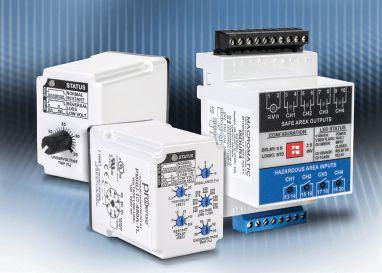
ProSense phase monitor motor control relays from AutomationDirect provide protection against phase loss, phase reversal, phase unbalance, undervoltage and overvoltage. The 10 A-rated relays, with LED indicator(s), are compatible with Wye or Delta systems and are available in a range of voltage inputs. The 120 Vac-rated relays are available in SPDT or DPDT configurations using an onboard switch selects alternating or single-load operation. Pump seal failure relays monitor the shaft seals of submersible
pumps. The relay output can be used to give an alarm indication of a leaking seal. The relay will automatically reset when the fault condition clears. Macromatic intrinsically safe relays allow control of up to four loads with up to four corresponding discrete input devices (switches, sensors, etc.) in hazardous areas. The onboard SPST relays operate at either AC or DC coil voltage ratings.
AutomationDirect www.automationdirect.com
COMPACT CYLINDER OFFERS MOUNTING FLEXIBILITY
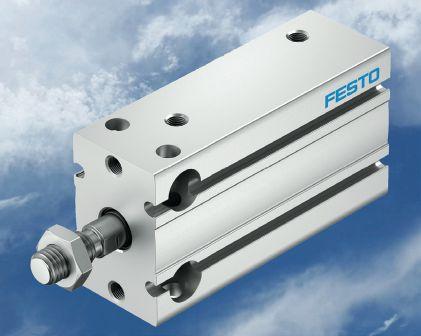
The DPDM Multimount compact cylinder is said to Festo’s smallest, lightest and most economical choice yet in its class. The product is suitable for many applications compact cylinders perform, such as stopping or stabilizing small work pieces or work platforms in light manufacturing. The unit is noticeably smaller than the company’s DMM compact cylinder and unique for the variety of ways it can be fastened in place directly. It can be mounted at the front or rear, vertically or horizontally. Additionally, all mounting interfaces of the DPDM are compatible with those of the DMM, so it can be considered as a
Tate & Lyle has announced an addition to its line of Claria Clean Label Starches with the introduction of Claria Everlast. The product is said to be a breakthrough clean label starch that delivers superior shelf stability that helps preserve food quality especially extreme storage conditions. The line now includes cook-up and instant starches made from corn and tapioca starch. The introduction of the latest product complements the line by solving the formulation challenges related to refrigerated and freeze thaw stability in categories such as frozen meals, gravies, sauces and yogurts.
Tate & Lyle www.tateandlyle.com
replacement for the latter in some applications. The DPDM is available in single- and double-acting versions, with or without protection against rotation, in a variety of common diameters and stroke lengths. There is a variant with heat protection up to 120ºC, and a magnetic piston option for position sensing. The DPDM also can be ordered with a through piston rod for connections at both end of the cylinder, or with a hollow piston rod, which can be used to carry vacuum or compressed air.
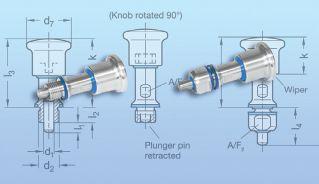
JW Winco has expanded its Hygienic Design line to include GN 8170 indexing plungers. The wiper between pin and guide keeps the mechanism sealed and the free of dead-space mounting prevents dirt from adhering. The indexing plungers are intended for use in hygienic areas. The identification FH satisfies hygienic requirements on the knob side. For applications in which the plunger pin is also subject to hygienic requirements, the identification VH with an additional sealing nut is used. Indexing plungers with lock-out are used for applications where the plunger pin needs to stay in its retracted position.
JW Winco www.jwwinco.com
MIXER/BLENDER PROVIDES UNIFORM PARTICLE DISTRIBUTION
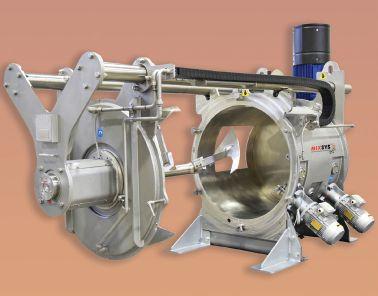
Mixing and blending technology manufacturer Mixsys has developed the Extractashaft mixer quick clean system to facilitate quick mixing campaign change over, enhanced operator safety and food safety. The mixer system can be used with either plowshare, paddle or hybrid mixing tools and is based on a horizontal, cylindrical mixing chamber with a rotating mixer shaft. The speed of the mixer can be variable based on the need of mixing/blending of the product. The system is said to deliver well-balanced uniform particle mixing and ex-
cels at trace ingredient distribution. The mixer can efficiently mix from 70% of its geometric capacity down to 15% for batch flexibility in both batch and continuous models. The units offer direct access to the internal parts of the mixer chamber for cleaning that allows for quick changeover and verifiable results, the company says. Systems are available in capacities up to 700 cubic feet.
Mixsys
www.mix-sys.com
CHAIN CONVEYOR ELIMINATES CHEMICAL PROCESSING SAFETY RISKS
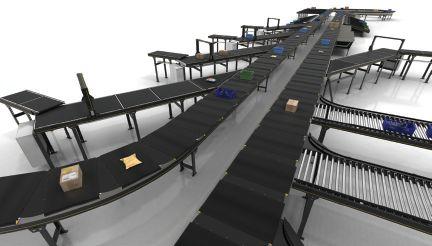
In response to industry demands for an enclosed, hazard-free, durable solution for conveying all types of chemical product materials, the SaniLux tubular chain conveyor from Luxme International is designed to meet the unique requirements of the chemical processing industry. By enclosing materials, the conveyor reliably contains dusty and hazardous materials, safeguarding workers at the same time as protecting the conveyed material from external influences. It is also resistant against internal pressure buildup and helps to contain propagating flame, making it suitable for handling potentially
HYGIENIC VISUAL FLOW INDICATOR CLAMP
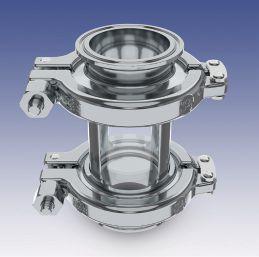
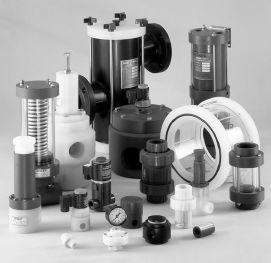
L.J. Star has introduced a design concept to visual flow indicator assemblies. Designed for hygienic/sterile applications in pharmaceutical, food/beverage, brewery and biotech industries, the clamp type sterile visual flow indicator, or CT-SVFI, uses a patent-pending design to prevent the O-ring seal gaskets compression issues that lead to contamination associated with conventional screwed or threaded fittings. The unit uses a mechanical stop design rather than screw threads said to apply precisely controlled compression to O-rings every time. The product also provides up to 34 percent greater view area with the standard faceto-face dimensions. Units maintain an EN10204 3.1 certification, along with FDA and USP Class VI certified O-rings and is fully compliant with the requirements of the European Pressure Equipment Directive 97 / 23 / EC. The product uses SF4 (15Ra EP) 316L stainless steel, with full material traceability. EPDM is the standard O-ring material, with silicone and other options available in tube OD sizes from ½ to 4 in. Glass material is made from borosilicate.
L.J. Star www.ljstar.com
SAFETY ENCODERS HELP BOOST PERFORMANCE
Ralston ControlPak
explosive chemicals. The conveyors are built with chemical-grade stainless steel and FDA-approved components. By using a low horsepower motor, energy consumption is considerably less than the traditional pneumatic conveyors, the company says. The USDA Accepted CIP (clean-in-place) conveyor ensures the system is free from residues between batches without adversely affecting the product quality or line efficiency. Watch video demonstration at https://youtu.be/vgD5TWzWrLw. Luxme International www.tubularchainconveyors.com
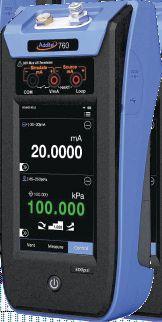
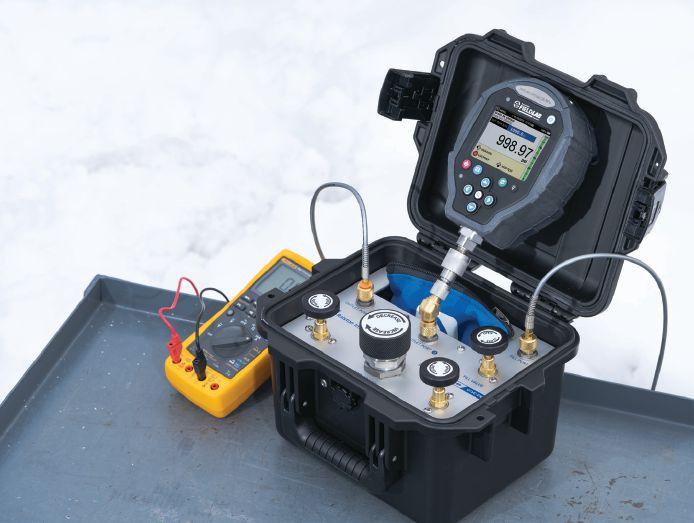
Manual Pressure Controller
Precision manual pressure controller built for the way you work
• Engineered specifically for calibrating pressure instruments with compressed gas in the field
• Compact and portable — controls are in one light-weight, compact unit with included storage space for hoses, adapters and accessories
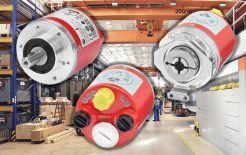
The 843ES CIP Safety over EtherNet/ IP absolute encoders from Rockwell Automation are said to be the first on the market capable of up to – and including – SIL 3/PLe safety applications. The encoders can satisfy needs in a range of industries and safety applications that require speed, direction, or position-monitoring functions. The encoders can be used to improve performance as part of an integrated safety system that includes GuardLogix controllers. The IP67 washdown units offer 15-bit single-turn safety resolution and 27-bit multi-turn safety resolution or offers 18-bit single-turn standard resolution and 30-bit multi-turn standard resolution. Features include: feather key solid shaft to prevent relative rotation; blind-hollow shaft available with stator coupling; clamping, synchro, and square flange options for solid shaft; and, dual Ethernet ports to support linear and Device Level Ring topologies. Rockwell Automation Canada www.rockwellautomation.com
• Extremely precise, finger-tip control of pressure at 0.03 psi (2 mbar) to 3,000 psi (210 bar) with the pressure-balanced, fine adjustment piston
• Rugged and durable plastic case that will stand up to use in the mud, sun, and cold weather better than bench-mounted volume controllers
• Quick setup and breakdown with Ralston Quick-test™ hand-tightening outlet connections, hoses and adapters — without the need for thread sealant or a wrench
Industry News: COVID-19 Special Edition
LOCAL AND GLOBAL TEAMS STEP UP TO FIGHT CORONAVIRUS ON THE FRONT LINES AND BEYOND
The following companies and organizations represented in Canada have put aside daily business activities in big ways and small to join the battle against COVID-19 through donations, innovations and manufacturing savvy. This is not intended to be a comprehensive list, so let CPECN know if there are others you'd like to see acknowledged in the next issue.
Shell Canada ramps up IPA production
Shell Canada has helped the Canadian healthcare sector by donating 125,000 litres of isopropyl alcohol, or IPA, to the Government of Canada free of charge over a three month period. IPA makes up about half the content of hand-sanitizing liquids, and Shell’s donation is approximately enough to create nearly one million 12-oz bottles of hand sanitizer for use in hospitals and medical facilities.
The IPA being donated is made at Shell’s Sarnia Manufacturing Centre in Corunna, ON. "Over the past month, the team there has been working especially hard to meet the surge in demand for IPA," states Shell Canada president and country chair Michael Crothers.
"It’s our way to thank healthcare workers who are truly some of the unsung heroes in this crisis."
Student sisters create mask prototype
Kayla Tomkins, a practical nursing student at Georgian College in Barrie, ON, has seen that N95 respirator masks can cause painful facial bruising, dark red lines and cuts, but the fact that they filter at least 95 per cent of airborne particles means they are needed in the fight against COVID-19.
Kayla and her sister Amanda, an electrical and biomedical engineering student in the iBioMed program at Montreal's McMaster University, responded to a challenge to students who had expressed interest in helping with the university’s COVID-19 research initiatives. The task was to design a mask similar to an N95 mask, with a tight seal but at the same time, be comfortable enough to wear for hours without bruising.
The sisters saw an opportunity to collaborate, drawing on the unique knowledge each has gained in their postsecondary programs. They also looked to their mother’s sleep apnea machine, which has an air-tight mask made of a silicone material.
Anti-fatigue mats for front line workers
Edgewood Group of Richmond Hill, ON, a custom matting company, recognizes the Canadian first responders on the front lines who are working diligently to keep us all safe. But the physical demand of said standing for long durations does not come without consequence.
The company decided to allocate anti-fatigue mats to its new hygiene product distribution buying organization Balpex for member companies to donate to those on the front lines.
Balpex members responded and there are now over 400 mats sent across the country to help those standing for countless hours on end and serving our most in need citizens.
Ventilators and protective gear initiatives
"We are also finding other ways to give back to Canadians during this pandemic. In close to 15,000 Shell gas stations across more than 30 countries, including sites across Canada, we’re providing free food and beverages to healthcare professionals, such as nurses and doctors, who are working tirelessly on the front lines of this pandemic.
“She can wear it for 12-plus hours without getting any bruises or marks on her,” said Kayla. After building the first model with some blue clay they had at home, Amanda put together a proposal and sent it to her professor. A team at McMaster is currently in the process of developing a prototype, based on Kayla and Amanda’s model, that will be tested. They’re also reaching out to manufacturers for partnership opportunities.
Festo has launched focused coronavirus mitigation projects, according to Carlos Miranda, CEO, Festo North America. “Among several initiatives, the first is to ensure that orders for components
Amanda (left) and Kayla Tomkins.
One skid of anti-fatigue mats ready for distribution to front line workers.
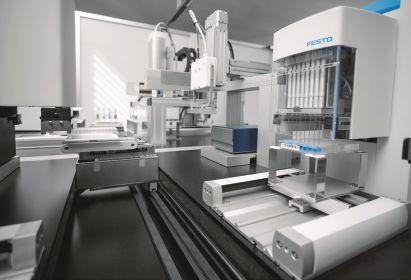
Festo LifeTech Business Unit components are used in highspeed automated laboratory devices that are essential for the types of screening envisioned for sample analysis during the pandemic.
and systems used in medical devices receive priority treatment and are processed and shipped rapidly.
“A large research and development team is working full time on a design for a quick-to-manufacture emergency respiratory ventilator. Another team alongside a partner firm is developing a concept for automated production of protective masks. This team envisions a complete production system that can be setup and shipped within a standard transport container.”
Festo LifeTech Business Unit components are used in high-speed automated laboratory devices that are essential for the types of screening envisioned for sample analysis during the pandemic. Festo LifeTech components are also used by certified respiratory equipment manufacturers. Festo does not manufacture that equipment itself.
In addition to the medical and manufacturing sectors, Festo is keeping its overall production and logistics systems sound for the pharmaceutical, food and beverage, and packaging industries as well as for washing systems for hospitals and care facilities.
Field respirator collaboration
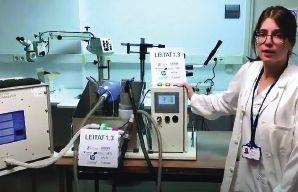
Rittal has collaborated in the manufacture of a field respirator, the Leitat 1.3 in Spain (above).
The ground-breaking project to manufacture a fully functional field respirator, designed by Leitat's senior engineer, Magí Galido and medically validated by the team of Dr. Lluís Blanch, from Parc Taulí de Sabadell, an expert in mechanical ventilation. This is the result of an alliance between the Free Zone Consortium (CZFB), Hewlett Packard, Leitat (Tecnio) together with CatSalut, through the Consorci Sanitari de Terrassa (CST) and the Hospital Parc Taulí de Sabadell. Rittal has contributed its recently launched AX enclosure technology.
In just over a week, the design of the first LEITAT 1 field respirator has been fully operational. This was corroborated by the first tests carried out on a patient affected by the COVID-19 virus, at the Hospital Parc Taulí.
COVID-19 test quality program
Microbix Biosystems of Mississauga, ON, and Vancouver-based Oneworld Accuracy have announces a strategic collaboration to provide a global external quality assessment (EQA) program to support clinically-effective COVID-19 testing. Based in Canada, this program will be made available to all governments to underpin their public health responsibility to ensure accurate and reliable COVID-19 testing. In every country and more than ever, political leadership, medical professionals, and the public need to have confidence in patient test results.
UV lighting for sterilization
Markham, ON-based Lind Equipment, an LED lighting company, has created a new product with UV-C LED lights specifically for the healthcare industry.
Healthcare professionals can use UV-C light to decontaminate personal protective equipment
(PPE) and to decontaminate high traffic areas such as: hospital rooms, ambulances and more.
Not traditionally a UV-C lighting company, it has made the Lind Apollo UV-C Light and is re-tooling its Beacon360 Blaze area light. The lights will be following the requirements of the University of Nebraska protocol, which establishes a standard method for decontaminating PPE.
Automation agility addresses medical device shortage
ATS Automation Tooling Systems of Cambridge, ON, is utilizing its specialized life sciences capabilities to expedite the production of medical equipment to address the COVID-19 healthcare crisis.
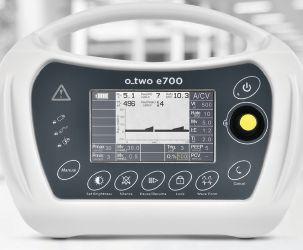
The ATS Life Sciences team is working with O-Two Medical
Technologies (ventilator below) in Brampton, ON, to assemble critical ventilator components at ATS’ facilities.
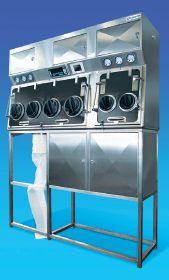
In Italy, Comecer is developing an automated bio-decontamination system for hospitals based on the same technology used in Comecer’s aseptic isolators (below). This would allow fast decontamination of hospital rooms and equipment, and potentially enable reuse of devices such as N95 masks, which would otherwise be disposable, thereby helping to mitigate shortages.
ATS is also working with a large automaker in the U.S. to reconfigure its manufacturing facility, and has delivered equipment to enable the wide scale production of Filtering Facepiece Respirators (FFR) masks.
Industry News
CPCA POSTPONES WHISTLER AGM TO JUNE 24-27, 2021
Given the ongoing uncertainty of the economy and travel restrictions, the board of directors of the Canadian Process Control Association (CPCA) has decided to postpone its annual general meeting (AGM) until next year. This was not a decision taken lightly, the association said in a statement, but a necessary one to ensure the safety of delegates and to make sure it hosts a successful event for members.
The CPCA wants to ensure members that the event will be back in its entirety in 2021. Typically this time of year is much more expensive in Whistler, BC — the site of the postponed meeting — but the association has been able to negotiate the same pricing offered for its 2020 event. June will allow delegates to truly enjoy all the fantastic outdoor activities this location has to offer, the statement adds.
VALVE WORLD EXPO 2020 DUSSELDORF EXHIBITOR REGISTRATION IS NOW OPEN
Exhibitor invitations have been sent out and interested companies can now register as exhibitors at the industrial valves and fittings exhibition, Valve World Expo in Düsseldorf, Germany.
December 1-3, 2020 will see the holding of the 12th Conference and Exhibition for Industrial Valves and Fittings in Halls 1, 3 and 4 of Düsseldorf Exhibition Centre. Around 700 companies are expected to occupy a total area of 19,000 square metres.
In 2018, 12,000 trade visitors came to the exhibition halls on the Rhine River to find out about the latest products and services in the fields of industrial valves and fittings.
For the first time, the new, ultra-modern Hall 1 will be part of the expo. A multifunctional exhibition space spanning 12,027 square metres and catering to up to 10,000 people, Hall 1 will provide new presentation possibilities for exhibitors.
The accompanying Valve World Conference will take place in the new Hall 1 while the Valve World Forum, once again managed by KCI, will be held in the neighbouring Hall 3. Beyond this, an innovation plaza is planned where young companies and start-ups can introduce themselves.
Valve World Expo www.valveworldexpo.de
COLLABORATION FORMED TO CREATE OPC UA COMPANION SPECIFICATION FOR CIP
Ann Arbor, MI-based ODVA has launched a joint working group with the OPC Foundation to develop an OPC UA companion specification to the Common Industrial Protocol (CIP). The collaboration between ODVA and the OPC Foundation was created to provide a reliable, secure communications between devices that are a part of a CIP-enabled Industrial Control System (ICS) and other OPC UA enabled applications allowing communication between CIP devices and OPC UA devices as well as with cloud and enterprise level services.
Common tasks required for cloud gateway appliance management will be enabled, and CIP devices will have unimpeded access to leading cloud services. The OPC UA companion specification will address the challenge of moving industrial communication and control data from the factory floor to the cloud via gateways. “Connecting manufacturing process and control data from EtherNet/IP devices to OPC UA servers will enable valuable factory floor information to be made available at the edge and beyond for enterprise wide analysis,” stated Dr. Al Beydoun, president and executive director at ODVA. ODVA www.odva.org
JW WINCO OPENS BRANCH OFFICE IN CANADA
•
JW Winco, Inc., a supplier of standard industrial machine components, including for hygienic applications, based in New Berlin, WI, has recently opened a new branch and distribution centre in Canada.
The J.W. Winco Canada, Inc. branch and distribution centre is located in Woodbridge, ON. The branch has more than 6,000 square feet of warehouse space and over 2,300 square feet of office space.
“We have over 2,500 individual items in stock to improve our service to our customers in Canada,” says Peter Aulich, the branch’s GM. J.W. Winco Canada www.jwwinco.ca
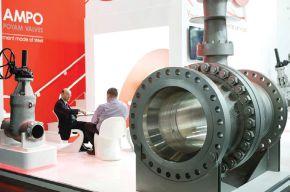
A hall has been added to accommodate exhibitor demand at Valve World Expo.
Dr. Al Beydoun of ODVA
Advanced tools ready to assist when instrument maintenance is required
By Jon Dietz
In many process plants, maintenance of instrumentation falls into one of two categories.
The first is “too little, too late,” where instrumentation fails due to a lack of preventive maintenance, often shutting down processes.
The second category is “too much maintenance,” where companies remove, calibrate, clean and service instrumentation that doesn’t need it, at a high cost for parts, labour and equipment downtime (Figure 1).
Some instrument vendors now offer capabilities and services to help end users manage maintenance through on-line diagnostics, asset management, proper scheduling of maintenance tasks, and automatic alerts when problems come up.
This article describes how end users can exploit these technologies to simplify maintenance, lower costs, reduce parts inventories, and prevent unexpected equipment failures.
Instrumentation diagnoses itself
Smart flowmeters and other process instruments have been available for years in “smart” versions, providing vital information for maintenance. For example, 4 to 20 mA HART devices have been available since the 1980s. HART superimposes 35 to 40 digital parameters onto the 4 to 20 mA signal, which can include device status, diagnostic alerts, configuration parameters, and so on. Fieldbus instruments provide much of the same information through various protocols such as Ethernet/IP and Profibus PA.
Unfortunately, more than 60 percent of instruments are used only to measure the primary process variable, with the status and diagnostic data ignored by the control system. Maintenance technicians often have to access the data with handheld devices that plug into the flowmeter. A lack of understanding, training and useful software to process the data might account for maintenance departments not taking advantage of this capability.
Instrument suppliers recognized the problem and have gone to great lengths to equip flowmeters and other devices with on-board diagnostics, status information and other secondary device parameters that are needed by maintenance people—and they’ve provided the software needed to make all this data easily accessible and usable.
For example, flowmeters from Endress+Hauser (E+H) are typically equipped with Heartbeat Technology, which provides a wealth of status and diagnostic information, and performs vital functions such as condition monitoring and insitu verification.
Condition monitoring recognizes if the measurement performance or the integrity of the flowmeter are impaired. The monitoring values are transmitted to an external condition monitoring system, such as E+H’s PC-based FieldCare software. This application can be used to recognize trends in the secondary measured values, and to evaluate relationships among individual parameters.
Legal requirements may call for flowmeters or other instruments to be verified calibrated periodically. This is normally done by removing the
flowmeter from the process, taking it to a flow lab or calibration rig, and quantitatively comparing it to a traceable standard.
With modern instruments, the flowmeter’s transmitter electronics continuously run a qualitative assessment so all relevant components which influence the device function and integrity are checked. This confirms and can document by verification that none of the meter components have drifted outside original calibration tolerances. If the flowmeter calibration frequency can be extended, this represents a tremendous savings in labour and process down time. (For more details, go to www.us.endress. com/flowmeters-perform-self-verification.)
Maintenance management
Modern instrumentation provides status and diagnostic information, but processing all of this data is often a problem. For example, a chemical plant in Gendorf, Germany, has more than 4,000 instruments measuring level, flow, temperature, pressure and other parameters. Having its control systems read all the diagnostic information from all 4,000 devices, analyze it for problems, and issue instructions to the maintenance department would be a daunting problem for the plant’s control system programmers. It would also burden the control system with data not relevant to its primary task, which is real-time process control.
Instead, instrument manufacturers have developed software packages that perform all those functions. The packages fall into two basic categories: Instrument management programs, which analyze real-time information from instrumentation; and asset management software, which keeps track of every instrument in the plant and stores vital data, such as manuals and parts lists.
Instrument management programs perform several functions to aid maintenance departments, including:
• Configuration — helps maintenance configure new instrumentation during initial installation or when replacing an existing instrument
• Condition monitoring — as noted above, used to analyze real-time data coming from instrumentation, look for problems, and notify the maintenance department when a device needs attention prior to failure
• Life cycle management — tracks the entire life cycle of an instrument, from initial configuration to calibrations and repairs, and provides information for audits and safety regulations
While a particular instrument manufacturer can provide information for its own instruments, what about all the other instruments in a plant from different manufacturers? Fortunately, standardization across the instrumentation industry makes that information available.
Device Description (DD), enhanced device description language (EDDL), Device Type Manager (DTM), and HART and fieldbus configuration files are available from all manufacturers, can be accessed easily from various web sites, and then loaded into the instrument management program.
Continued on next page
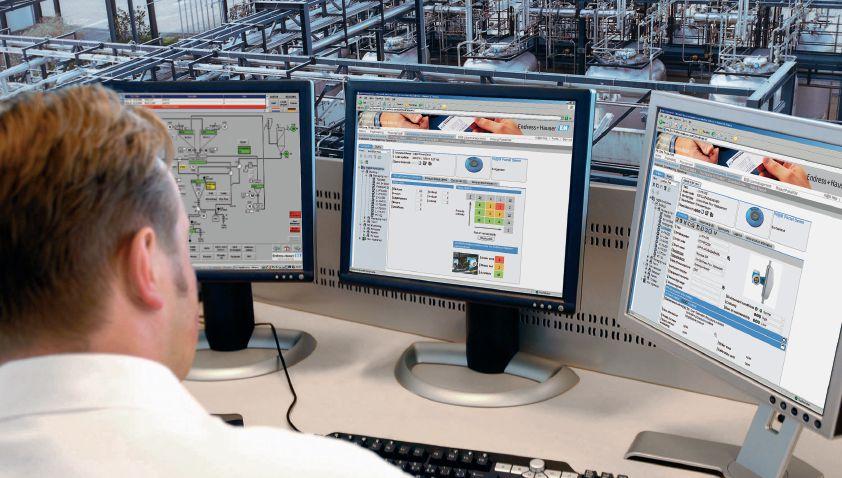
Figure 1: Modern instrumentation provides diagnostic and status information and specialty software helps the maintenance department use it for preventive maintenance.
Continued from previous page
Thus, a program like FieldCare software not only has information about its own instruments, it can support over a thousand process instruments and analyzers from other manufacturers.
Asset management
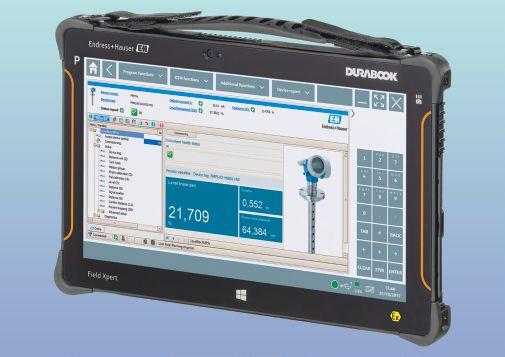
When a plant has thousands of instruments, keeping track of manuals, parts lists, audit reports, maintenance schedules and other information can be a nightmare. A maintenance asset management program gathers all this information, digitizes it, and makes it available to maintenance technicians via handheld devices (Figure 2 right).
An asset management program typically provides:
• Instrument Manuals — Modern manuals are available in digital form and are easily downloaded into the data base; older paper manuals can be scanned
• Parts lists — Like manuals, parts lists can be downloaded or scanned
• Compliance — The software tracks all instrument activities, including calibrations, verifications and maintenance performed to meet various industry and government regulations
• Documentation and reports — The software can produce audits and regulatory reports that meet government and industry standards
• Maintenance management — Determines when instruments need to be serviced, calibrated or verified, and notifies maintenance
• Communications — The software can share data with other maintenance management programs, historians, spreadsheets, etc.
All this information can be kept onsite or in the Cloud, where it can be accessed from a workstation (Figure 3 above) or a portable handheld device.
Getting started
Many plants do not have sufficient information regarding their installed base of process instruments and analyzers, and over time the plants are modified and instruments change, worsening the situation.
One of the best ways to address this issue is by implementing a maintenance management program, often with the aid of a major instrument vendor. Most such vendors can come to a process plant, do an assessment of the instrumentation installed base, and make management recommendations on what needs to be done to improve the current situation.
devices to enable further transparency, regardless of manufacturer
• Assess device criticality and maintainability — Define and classify critical measuring points and its maintainability to ensure maintenance tasks can be performed easily and effectively
• Recommend adequate maintenance strategy — Evaluate current maintenance activities and recommend improvements to achieve a balanced maintenance program
• Identify obsolete equipment — Includes a migration plan to modernize the plant
• Reduce complexity — Includes recommendations to standardize instrumentation and minimize spare parts
can then be quickly accessed, including the right operating manuals, ordering information, maintenance reports, software drivers and spare parts.
At the completion of the assessment, the instrument vendor will address its recommendations by providing key information to facilitate relevant decision making regarding the maintenance and quality improvements, obsolescence and spares management of respective installed base assets. If the plant agrees, the project begins by implementing the new maintenance program within the scope of a service agreement. The data describing each instrument is entered into the database and maintained over time to enable the user to continuously access to an up to date information at any time and from any location.
For example, E+H can perform an Installed Base Analysis, which consists of:
• Instrument inventory — Find and list all on-site
As noted above, the software may already have most of the data needed, such as DD and DTM files, manuals, etc. In some cases, old manuals and parts lists may have to be found and scanned in. Eventually, the data base will be populated.
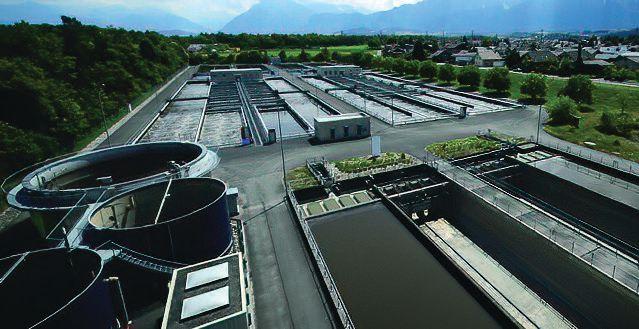
A wastewater treatment plant in Thun, Switzerland (Figure 4 far left) had E+H conduct an IBA, and then installed W@M Life Cycle Management software.
Once the data had been recorded, a connection was established to the control system. The visualization program allows the plant to quickly identify a measuring device needing attention. The necessary information
The chemical plant mentioned above also conducted an IBA and adopted such a program to maintain its 4,000 instruments. In the old days, documents such as calibration reports had to be scanned and filed manually. Today, this information is available whenever and wherever it is needed. The plant is now able to identify every one of its devices and react quickly in the event of a malfunction.
Summary
Modern instrumentation and related maintenance strategies are making it much easier for process plants to perform preventive maintenance, eliminate process shutdowns from failed instruments, and save time and money by avoiding unnecessary maintenance activities.
Initial implementation of an instrumentation management system can be a daunting task, but instrument vendors can provide assistance as required.
Jon Dietz is the national field service manager for Endress+Hauser and has national responsibility for all after-sale customer field support.
Endress+Hauser Canada www.ca.endress.com
Figure 2: Asset management programs provide equipment manuals, parts lists and other information to handheld devices, such as Endress+Hauser’s Field Xpert SMT70. Watch video demonstration at https://bit.ly/32YgvTp.
Figure 3: Instrument data from asset management software such as Endress+Hauser’s W@M program can be accessed from workstations or handheld devices.
Figure 4: After an audit, this wastewater treatment plant in Switzerland installed Endress+Hauser’s W@M Life Cycle Management software.
Sensor Technology supplement
PROCESS FLOWMETERS MEASURE
AND DRY GASES
VORTEX FLOW SENSORS TACKLE WATER APPLICATIONS
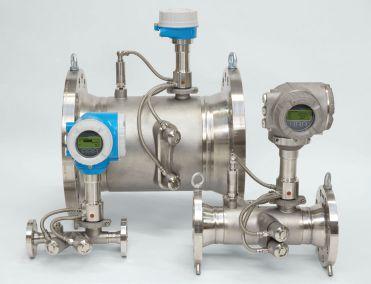
The Endress+Hauser Proline Prosonic Flow G 300/500 flowmeters with optional integrated pressure and temperature sensors are said to provide highly accurate, real-time values in even the most demanding environments. The flowmeters measure both dry and wet gases — natural gas, process gas or gas mixtures, either offshore or onshore — using ultrasonic flow measuring technology. The units’ technology is said to ensure measured values to ±0.5% with unmatched repeatability, even when process and ambient conditions fluctuate significantly. The flowmeters provide this accuracy in process temperatures up to 150°C and pressures up to 1450 psi. Units are constructed with high grade stainless steel for all wetted parts and the entire sensor body. An innovative sensor concept is equipped with a special drainage system that immediately dissipates any condensate forming in the sensor pocket area, assuring reliable measurement without any degradation of signal quality, the company says.
Endress+Hauser www.ca.endress.com
VISION SENSOR INSPECTS FILLING LEVELS ON THE FLY
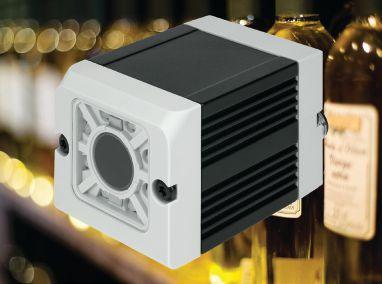
The Festo SBSI vision sensor series is said to be economical and provides quick and easy installation and commissioning, even for someone lacking expert knowledge in industrial vision systems. The vision sensor series can be commissioned in three steps: adjust the image with auto functions, select detectors and define the output. Everything needed for optics, lighting, evaluation and communication is fully integrated in the device. The SBSI-B variant can serve as a high performance code-reader for 1D or 2D codes, even hard-to-
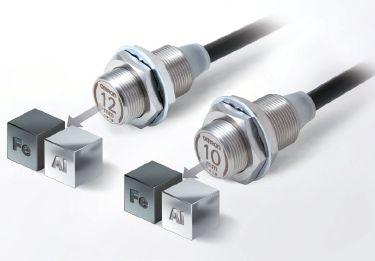
Non-ferrous metal detection is becoming more widespread thanks to trends toward lighter metals like aluminum. Detecting these metals typically requires short detection distances, which can increase potential for sensor damage.
read data matrix codes. As an object sensor, the SBSI-Q variant can carry out simple quality checks. Depending on the model, there are various focal lengths/ image areas and lighting colours available. External lighting can be directly connector to the unit using a model SBAL external light. The sensor is said to be a reliable option for checking filling levels, confirming the presence of a cover, doing label or marking or completeness checks and more. Festo Canada www.festo.ca
Omron’s E2EW series metal face proximity sensors are said to minimize sensor damage and equipment downtime by supporting both ferrous and non-ferrous metal detection with factor 1 sensing at exceptionally long distances. The new sensors also feature weld immu-
nity and IO-Link. Key features of the series include: 1x, 3x and 4x sensing ranges for M18 and M30 barrel sizes; Factor 1 sensing — the 3x and 4x sensors can detect non-ferrous metals at the same distance as iron; weld field immunity; and, increased spatter resistance with a proprietary coating that reduces slag buildup and is said to last 60x longer than previous spatter coated models.
Omron Canada https://automation.omron.com/en/ca/
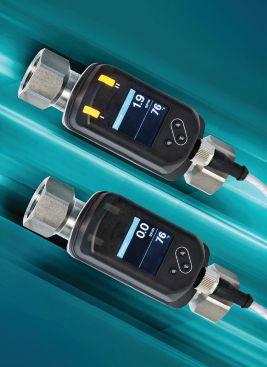
AutomationDirect has introduced ProSense VFS series vortex flow sensors said to offer a cost-effective solution optimized for monitoring water and deionized water flow in industrial applications. Vortex flow sensors are a reliable alternative to other flow sensing technologies, the company says, and are a simple, low cost, and proven method for measuring flow of water-based liquids that is independent of the liquid's pressure or temperature fluctuations. Using the pushbuttons and display, the VFS series can be easily set up to measure both flow rate and temperature. The series is available with 1/2 or ¾ in. NPT process connections. The VFS (-1001) series offers two separate outputs that can be used either as a flow or temperature limit switch or to monitor continuous flow rate or temperature. The VFS (-1002) series offers two analog flow/temperature monitoring outputs. The TFT color display and switch point LEDs are used during configuration and operation to provide clear indication of both flow and temperature measured variables simultaneously.
AutomationDirect
www.automationdirect.com
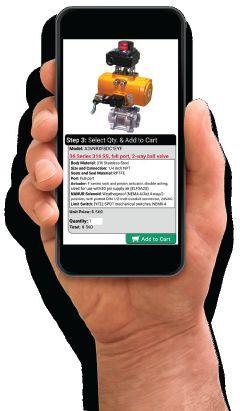
Build it, See it, Price it, Order it.
Point and click or tap to specify valve type, end connections, actuator, and accessories. Model number, price, description, and photo all update instantly!
Medical facility protects valuable research asset with predictive maintenance
Most public buildings rely on air handling units (AHUs) to provide a continuous supply of clean and comfortable air. In medical research facilities, they are especially critical to maintain optimal laboratory environment conditions. Medical research can be very temperature sensitive and any unplanned downtime can cause millions of dollars in damage and destroy years of research.
At one such Canadian facility, after a recent incident, the facilities management team began searching for a solution to protect valuable research, prevent a re-occurrence and eliminate problematic downtime.
The solution selected, provides live data on fan operating conditions and indicates when a fan is starting to degrade. The solution helps hospital maintenance staff ensure 100 percent uptime for an essential system.
Solution benefits:
• Real-time visibility into the air handling unit’s condition eliminates costly, time-consuming 3rd party inspection
• Improved predictive maintenance scheduling for fans takes the burden of maintenance engineers
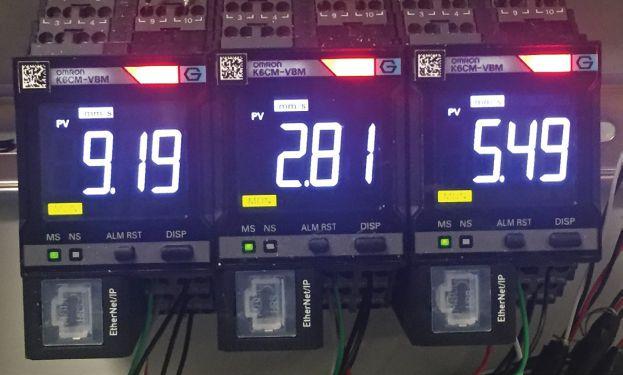
The Omron K6CM motor condition monitoring devices are connected to the fan rear bearing, front bearing and motor (shown left, centre and right in photo) in the medical research facility's air handling system.
• 100% uptime of a critical system ensures acceptable laboratory air quality
The facility, one of Canada’s most research-intensive medical locations, was having problems with AHUs failing unexpectedly and causing issues in its 750,000 square-foot research tower.
Downtime at a medical research facility can have more than just financial implications, since airflow is critical to ensure the integrity of biomedical research material. In this specific situation, the three most critical AHUs are installed on the cooling system for the research tower, which is responsible for protecting years’ worth of temperature-sensitive biomedical research materials.
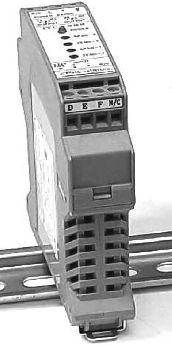
Dual Output Isolated Signal Conditioner or Loop Extender
(Isolated)
#1 (Isolated)
#2 (Isolated)
The ITC-XXX-XX-DC is a signal isolator with dual outputs providing high isolation from Input to Output1, to Output2, and to Power in a small easy to install package. It’s universal DIN rail mount makes it possible to install right next to the instrument that is to be isolated. The many different input and output configurations allow it to be used in a great variety of applications ranging from PLC front end conditioning to adding an extra loop with lots of drive to an existing, almost fully loaded loop.
101 Freshway Dr., Unit 57, Concord, Ont., L4K 1R9
Phone (905) 660-5336 Fax: (905) 660-4068
Challenge
Prior to discovering a way to prevent the AHU failures, the facility employed a third-party vendor to perform vibration analysis on a regular basis with the goal of predicting motor failures. In addition to being costly, this preventative maintenance work occurred at specific points in time and did not take into account any status information between testing dates. It also relied on skilled engineers to analyze the data and recommend maintenance timing. Using this method, it is difficult to prevent motor issues caused by degradation and the continued, unexpected downtime of the fans made it clear that a continuous monitoring solution was necessary.
For critical HVAC systems such as medical research ventilation, downtime must be avoided completely. Predictive maintenance relying solely on human observation may not always catch an impending problem in time.
To ensure thorough predictive maintenance, it is essential to use a monitoring system that can provide real-time data on the status of the system’s key components — in this case, motors and bearings on air handling units — and alert status when those components are beginning to degrade.
Solution
The facility turned to Omron Automation Canada for its predictive maintenance
solution and now uses the K6CM Motor Condition Monitoring Device to perform continuous, real-time monitoring of the AHU status. The K6CM observes the acceleration, velocity and temperature of a motor to detect the early signs of degradation and indicate the need for service, repairs or replacement before a failure occurs. Threshold value settings allow technicians to now understand the motor’s maintenance timing without having to rely on an engineer interpretation.
The facilities maintenance staff installed a total of 9 vibration sensors. Three K6CM units on each air handling unit measuring the vibration and temperature of the motor itself and front and rear bearings. One sensor on the motor would be sufficient for this particular application thanks to the sensor’s advanced sensitivity, but because the fans perform such an important function, they implemented a more comprehensive solution with sensors on the rear and front bearings to prevent unscheduled downtime.
Designed to quantify the status of a threephase induction motor, the K6CM is suitable for performing continuous, real-time monitoring of essential systems. It works by observing the motor’s current load, vibration, temperature or insulation resistance to detect early signs of degradation and indicate the need for repairs or replacement before a failure occurs.
Because the K6CM provides threshold value setting, technicians can understand the motor’s maintenance timing without depending on an engineer, adding to its value as a cost-effective, user-friendly solution.
Results
Since installation, the facility has not experienced any motor failures in its AHUs. In the event of performance degradation, the facility now has the ability to detect failures before they result in unscheduled and costly downtime. With clear visibility into the historical vibration and temperature data on each motor, they no longer rely on an incomplete snapshot in time of the data measurement from a third party. Alarms from the sensors are integrated into the building’s automation system to provide 24/7 monitoring and alarm paging to the facilities personnel.
This article was contributed by Omron Automation Canada. Omron Automation Canada http://automation.omron.com/en/ca/
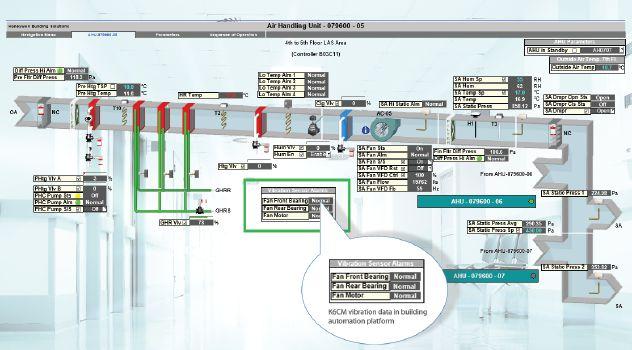
Schematic of Canadian medical facility air handling unit control system. Outside and inside air temperatures are constantly monitored, along with fan vibration sensor alarms.
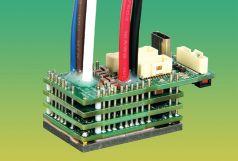
Advanced Motion Controls has announced six additions to its FlexPro servo drive family with Extended Environment capabilities. These include three FlexPro PCB-mount drives (denoted FXE) and three FlexPro machine-embedded drives (FXM).
DRIVES
Designed with compact form and power density in mind, the micro-sized drives can outperform larger-sized digital servo drives and still be integrated into tight spaces, the company says. Features include: FXM060-25-EM ambient operating temperature range of -40°C to 95°C; thermal shock resistant for -40° to 95°C within 3 min; operates in 0 to 95% non-condensing relative humidity; can handle vibrations up to 25 Grms for 5 min. in 3 axes; and, resistant to contamination up to pollution degree 2.
Advanced Motion Controls
www.a-m-c.com
ENERGY MANAGEMENT
THREE-PHASE POWER ANALYZER
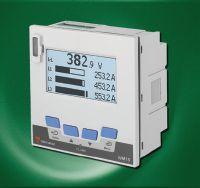
Carlo Gavazzi has announced the WM15 three phase power analyzer designed to monitor and manage energy costs. The unit is a Class 1 (kWh) 3-phase power analyzer which can be used for single, two and three phase systems, as well as wild-leg systems. It can measure most relevant instantaneous electrical variables, energy consumption and harmonic distortion. The product is an alternative when traditional analog meters need to be replaced, providing users with a visual indication of the current values by means of the three bar graphs shown on the matrix LCD display. The features of the analyzer include: a self-powered version 208 to 415 VLL AC; an auxiliary power supply version 208 to 600 VLL AC; current inputs of 5 A by CT connection; 3-phase/4-wires, 3-phase/3wires, 2-phase, 1-phase systems; optical port for configuration via OptoProg (Bluetooth or USB); and, digital output for pulse or alarm outputs. Carlo Gavazzi www.gavazzionline.com
DATA CAPTURE PLATFORM DIGITALIZES FACILITIES, ASSETS
Efficient, Economical Motionless Mixing
STATIFLO MOTIONLESS MIXER... the modern, cost effective answer to a wide range of process problems – mixing, blending, dispersion and emulsion formation, mass transfer, laminar flow heat exchange and chemical reactions – in a wide range of industries, including:
• Water and Waste Water Treatment
• Hydrocarbon and Chemical Processing
• Food and Pharmaceutical Production
• Pulp and Paper Production, and more
Get the Statiflo advantage
• Guaranteed complete mix without moving parts
• Improved process control and product quality
• Virtually maintenance free
• Low pressure drop
The Geomap IWMS (Integrated Workplace Management System) platform integrated with Leica Geosystems building site data capture solutions are said to provide the ability to extend the life of assets, assess maintenance remotely, provide managers accurate and reliable information and use geospatial information for indoor navigation and location-based services. The integration also creates the opportunity to connect digital twins in a cloud IWMS platform. Geomap www.geomap.cloud Leica Geosystems
https://leica-geosystems.com
StatifloAd.indd 1
From
“Strange times are these in which we live” — Plato I hope this June issue finds you all safe and healthy. We’ve heard a lot about our frontline health care workers and emergency workers going the extra mile to keep us safe and healthy and it is all very much deserved. Even our politicians have stepped up and shown their mettle, making some very tough decisions based on the expertise of others.
I’d like to recognize our readers who have gone to work every day to keep our lights on, our water safe, and producing the toilet paper that apparently is worth hoarding! Think about it, the Process/Resource industries are the essential services we really need to survive. Without them we’d be sitting in the dark, cold, hungry and wearing a diaper, if we could find one! Thanks to you all!
so many other things that bring us pleasure but not without our friends in the plants providing us with the basic necessities of life. They Rock!
We also continue to provide solutions to the industries problems in our print issues and E newsletters every second Wednesday. Our Process & Automation Shows have been postponed until the fall, but we will be back in your town (or close to it) by the end of the year. Be sure to check our web site www.cpecn. com for new dates. We’ll also send you email reminders and mail you an invitation for the show in your area. I am looking forward to seeing you all this fall, it’ll be like a reunion.
I think/hope the isolation beard will be gone by then and bliss will return to the Sommerville household.
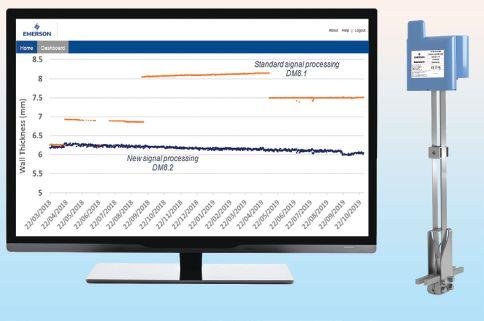
DataManager software v8.2 from Emerson helps refiners monitor corrosion of hydrofluoric (HF) acid alkylation units to prevent costly, unplanned shutdowns and maximize profits and productivity. DataManager Analysis Software for Rosemount Wireless Permasense corrosion and erosion monitoring systems offers continuous sensor monitoring that provides early detection of corrosion in HF acid alkylation units and mitigates the risk of loss of containment. The new version of the software is said to help refiners gain a better understanding of the correlation between corrosion rates and upsets or changes in process conditions.
Emerson Electric Canada www.emerson.com/en-ca
Also thank you to our advertisers who repair and fix those plants when they breakdown. I’ve learned through this; we can survive without sports (barely), restaurants and
Stay safe and healthy and take care of each other. Virtual high fives to all of our process workers.
Cheers, Rob Sommerville
CABINET COOLERS WITH DIGITAL CONTROL
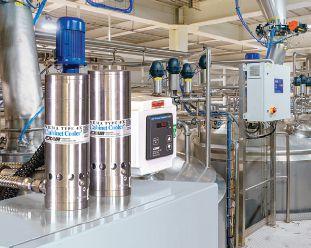
Dual 316 stainless steel Cabinet Cooler systems with ETC (Electronic Temperature Control) from Exair keep electrical enclosures cool with -7°C air while maintaining the NEMA 4X rating of the enclosure and removing the heat that could adversely affect the internal components. The digital ETC capability is said to provide precise temperature control for the electrical enclosure that is constantly being monitored by a quick response thermocouple. The new systems are available with cooling capacities of 3,400 to 5,600 Btu/h. All systems are UL listed and CE compliant. Applications include cooling control panels used in food processing, pharmaceutical, foundries, chemical processing and other corrosive locations.
Exair Corporation https://exair.co/316ccetc
NSF/ANSI 61 & 372 CERTIFIED BUTTERFLY VALVES
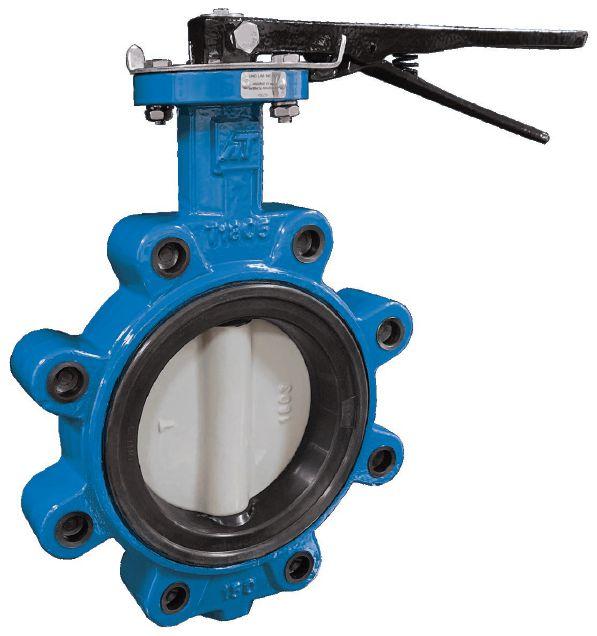
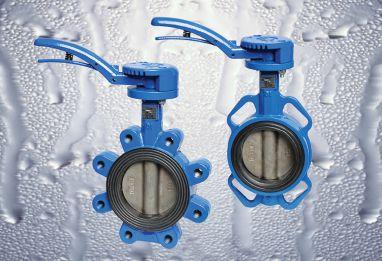
Flomatic has introduced the model Sylax 3 Lug style and wafer style butterfly valves. The model has a ductile iron valve body, 316SS Disc standard, EPDM seat and stainless steel stem. The valve is rated for 250 psi bidirectional and dead end rating and has a 110°C maximum temperature rating. The valve is NSF/ANSI 61 & 372 certified for use with ANSI 125/150# flanges with standard curved and ergonomic handle for easy operation and ISO 5211 top flange for easy actuation. Units are available with gear box or several other actuator options. The model is MSS SP.67 compliant, and can be used in booster pumping systems, HVAC systems and other industrial applications. Two Sylax wafer type butterfly valves are available, the model S3W wafer type and model S3L full lug type in sizes from 2 to 12 in. with standard lever handle or optional gear operation or electric actuation.
Flomatic www.flomatic.com
DUAL-PORT GAS DETECTION CONTROLLER
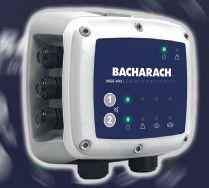
Bacharach has announced the MGS-402 gas detection controller for refrigerant, toxic and combustible gas detection applications. The system is designed for safety compliance in mechanical rooms, cold storage facilities, walk-in freezers, and cold room applications to -40°C. The MGS-402 is part of the MGS-400 series gas detectors that connect through Modbus to up to two remote MGS-410 gas detectors at up to 1000 ft. The MGS-402 is powered by 110-240 Vac and provides three 10 A output relays (fault, low alarm, high alarm) to initiate auxiliary ventilation or restrict refrigerant flow, two analog outputs for interface to a BMS or fire/ safety panel packaged in an IP66 enclosure.
Bacharach
www.mybacharach.com
Isolation beard; movember to the extreme.
BARTON REPLACEMENT CRYOGENIC LEVEL GAUGES
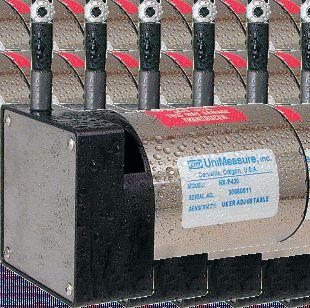
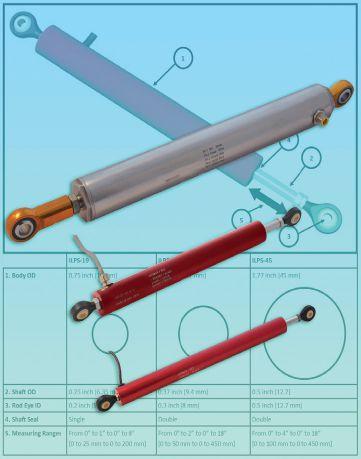
LVIT LINEAR POSITION SENSORS FOR HEAVY DUTY APPLICATIONS
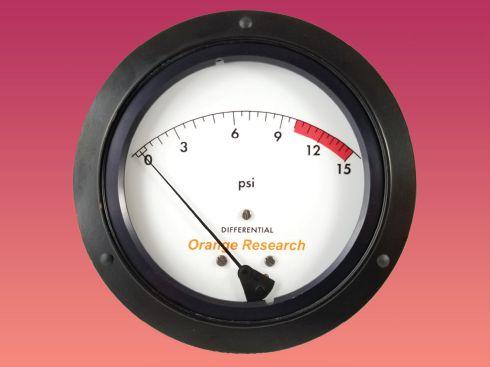
Orange Research has announced what it says are a simple, innovative solution to replace expensive Barton level gauges on cryogenic tanks, without moving piping or changing mounting brackets. The company has been supplying the model 1516 to replace Barton level gauges on cryogenic tanks for decades, but for older tanks, or for distributors with many tanks in the field, service or replacement often requires changing the mounting configuration and moving the piping to accommodate a different level gauge. By adding a manifold, the new model 1536 mimics the back of the Barton gauge. An operator can remove the Barton gauge and install model 1536 in minutes. Like the 1516, the same, easy-to-read, 150 mm (6 in.) diameter dial clearly presents the user with the level information while allowing many standard features, the company says.
Cameron Instruments
www.cameroninstruments.com
HEAT EXCHANGERS FOR LOW VISCOSITY MATERIALS
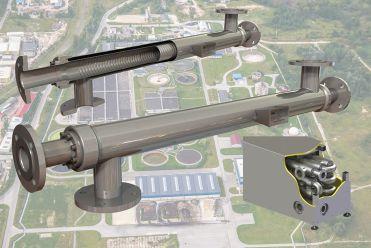
The DTR series of double tube heat exchangers from HRS Heat Exchangers is designed to maximize direct (product-to-product) energy recovery from low viscosity materials such as wastewater, sewage, effluents and sludge. The exchangers are said to allow valuable heat to be recaptured before the effluent enters final treatment or is discharged to the environment. The tube-in-tube design means that the series copes well with fluids that contain particles, the company says, without the worry of blockages impeding the flow of product or heating medium. Special stainless steel corrugated tubes are used to increase heat transfer and reduce fouling, making the series more efficient than similar smooth tube heat exchanger designs. The inner tube of the series is removable for inspection, cleaning and maintenance, meaning that both the tube and shell sides can be inspected and cleaned, while the corrugated tube technology is said to improve heat transfer, yet reduce potential fouling compared to standard smooth tube heat exchangers. For large installations, multiple units can be interconnected and mounted in a frame, and a range of options, including thermal insulation and cladding in materials including stainless steel are available.
HRS Heat Exchangers
www.hrs-heatexchangers.com
CROSSBELT SORTER CAN PROCESS UP TO 20,000 CONVEYED GOODS PER HOUR RELEASED
The MX 025H crossbelt sorter from Interroll offers an increased conveying speed of up to 2.5 m/s compared to 1.8 m/s for the company’s ST 6160 model. The new sorter enables throughput rates of up to 20,000 conveyed goods per hour. At the same time, the its is able to transport goods weighing up to 50 kg. In addition, the width of the carriers has been increased by 50 percent. Maintenance for the system has been simplified because the drive chain has been replaced with a rubber belt, eliminating the no need for lubrication and making belt replacement faster. The sorter operates at 67 dB (A) or less using a direct drive principle, in which the drive units can be positioned flexibly. The entire drive system offers power efficiency rates of over 85 percent. Compared to electrical sorting systems operated with traditional linear motors, energy savings of up to 50 percent can be achieved, the company says. Interroll
www.interroll.com
Harold G. Schaevitz Industries has introduced the ILPS45 series inductive, contactless linear position sensor using LVIT Technology. The linear position sensors are designed for measuring applications requiring rugged devices, whether measuring position of steam turbine valves, mounted in a paper mill head box or calendar roll stand, or outdoors fastened to a building, bridge or structure. The sensors use a proprietary inductive technology that allows them to replace traditional DC-LVDTs in most applications. A simple coil design permits the sensor to be both shorter and more rugged than its DC-LVDT counterpart while operating over a wider temperature range, the company says. The series is available with optional mounting flanges, rod eye ends, connector or cable terminations, and a captive connecting rod assembly that cannot break loose. The SenSet range adjustability feature allows the user to scale the sensor’s zero and full span output to the actual range of motion of the workpiece being measured after the sensor is installed. Features include and operating range from -40º to 85ºC, distance ranges from 4 to 18 in. and double shaft seals to keep dirt and grime out of the bore.
Harold G. Schaevitz Industries www.hgsind.com
Corrosion Resistant
Innovative Solutions for Tough Water/Wastewater Applications!
• Manual, automatic and actuated (pneumatic & electric) valves; relief, check, diaphragm, ball, solenoid, and shut-off. Also pressure regulators, metering pumps, basket strainers, sight glasses, and gauge guards.
• 100% inspection and individual testing of each product, to ensure dependable performance and long-life.
• PVC, CPVC, Polypropylene, PTFE and PVDF. Valves from 1/8'' to 3'',Sight glasses to 8'' and Basket Strainers to 14''.
ControlAir has introduced the Type 1227 and Type 1230 high flow gas pressure regulators to its gas regulator product offerings. The two types are direct-operated, pressure-reducing regulators suitable for use with compressed air, natural gas or an assortment of other inert gases. The gas pressure regulators help maintain consistent inlet pressure to downstream equipment, allowing for the accurate control of distribution system pressures, the company says. The Type 1227 is available with outlet ranges that span from 5 to 150 psi and can be ordered with a variety of orifice sizes and materials. The Type 1230 utilizes a similar design to the Type 1227 but provides a much broader offering of output pressure ranges and valve disk materials. The Type 1230 is available with output pressures that span from 50 to 500 psi, making it suitable for use across a range of applications, especially those utilizing regulators in series for controlled pressure reduction across multiple stages.
www.controlair.com
BULK BAG FILLERS OFFER HIGH ACCURACY, LOW MAINTENANCE
Bulk bag fillers manufactured by Best Process Solutions are designed to fill any size bulk bag with high accuracy, while offering years of trouble-free maintenance. The model BBF loader features an inflatable fill head that offers a dust-free seal when loading, dust port with dust cartridge and manually adjustable bag supports for varying bag heights — suitable for lower ceilings. Many options are available. The company manufactures a line of custom-engineered, bulk-processing equipment and systems for a wide variety of dry processing industries from chemicals and food to aggregates and recycling. Best Process Solutions www.bpsvibes.com
CUSTOM GEARBOXES FOR HARSH AND WASHDOWN ENVIRONMENTS
Special design gearboxes are offered by DieQua. In addition to a variety of standard components and custom machining capabilities, a specially designed and manufactured gearbox for specific applications is something the company is frequently called upon to create.
A custom option or special design can be for applications such as: special environmental conditions; washdown applications; dimension modifications; high-speed applications; special shaft designs; special materials; unique mounting requirements; multiple shaft outputs; custom painting; plating options; special ratios; and, special lubrication. Where a standard product doesn’t fit a special application, send in some details about it so the company can review them. View video demonstration here https://bit.ly/2TiBJbw. DieQua Corporation www.diequa.com
THERMAL FLOW METER OPTIMIZED FOR BIOGAS
The ST80 series thermal flow meter from Fluid Components International (FCI) is for biogas flow measurement applications. Units have international approvals for Div.1/Zone 1 and are SIL compliant. The units feature the company’s Adaptive Sensor Technology (AST), a patented hybrid sensor drive that combines constant power (CP) and constant temperature (CT) thermal dispersion sensing technologies in the same instrument. The flow meters are suitable for pipe diameters from 25 to 2500 mm and air/ gas temperatures up to 454°C. They feature accuracy of ±1% of reading, ±0.5% of full scale and repeatability of ±0.5% of reading with flow rates as low as 0.25 up to 1000 SFPS (0.07 to 305 NMPS) and 100:1 turndown. Standard outputs include dual, NAMUR NE43 compliant 4-20 mA analog outputs, HART (version 7), Modbus 485 and a USB port. Fluid Components International www.fluidcomponents.com
A 2-page, colour brochure from Force Control Industries details a lineup of clutches, brakes and clutch/brakes for food and beverage processing applications. Innovative oil shear design allows millions of cycles require no adjustment or maintenance, the company says. Various mounting and actuation methods are available. Totally enclosed sealed housings resist heat, cold, water, humidity, and caustic spray. Washdown options include nickel plating, white epoxy, Steel-it stainless steel epoxy and corrosion resistant hardware. The clutches, brakes and clutch/brakes are suitable for use on conveyors, stackers, palletiz-
ers, indexers and feeders. Specially formulated food grade transmission fluid is used for cooling and provides a hydroviscous fluid film between the friction disc and the drive plate during the dynamic phase of engagement.
Force Control Industries www.forcecontrol.com
ELECTRICALLY-ACTUATED PRECISION SPRAY SYSTEMS
Model 1000 and 2000 FlexFlow control panels from John Brooks are suitable for any industrial process where expensive compounds or ingredients need to be sprayed directly onto the process target. Each model 1000 control panel can be used as a standalone system — or be upgraded to the 2000 model to integrate with existing plant operations. The systems can be used for applying flavorings, coatings, mold inhibitors, antimicrobials, preservatives, release agents, and moisturizers with exceptional accuracy. A Siemens PLC and associated hardware operates the nozzles. Spray zones can be triggered manually, or they can be triggered automatically using digital inputs from process sensors. User-adjustable signal delays provide the most accurate spray timing functionality, the company says.
John Brooks
www.johnbrooks.ca
SURGE RELIEF SYSTEM FOR OIL AND GAS LIQUID PIPELINES
Spartan Controls has introduced SpartanPRO Surge Relief, a surge control system specifically designed to meet the increasing demands of industry for a more accurate and reliable loading system for liquid pipeline surge relief. The system allows operators to maximize product throughput by enabling operation closer to pipeline pressure limits while eliminating setpoint drift associated with regulator-based systems. Additionally, the system reduces operating costs by lowering nitrogen consumption, minimizing unnecessary relief events by using reliable and fault-tolerant system components, and allowing full 2-way connectivity to manage pipeline control to optimal levels. Spartan Controls www.spartancontrols.com
The model LP from Conveyor Components is a spring-loaded, rubber wiper single-blade type belt cleaner which is said to provide maximum cleaning effectiveness for a very economical price. The belt cleaner works on a variety of carryback materials ranging from construction materials such as rock, sand or gravel, to left-over process materials such as beet pulp or wet sewage treatment plant sludge. The unit automatically self-adjusts after the initial installation, until the blade stop assembly is activated. At which time, the wiper blade can be flipped over and used for an additional amount of time. The cleaner uses 80 durometer rubber and the wiper blade is easily changed when required, the company says. Urethane (90 durometer) wiper blades are also an option. The mounting flange allows for adaptation to most conveyor rails, and the compact version is said to fit in size-challenged spaces. Conveyor Components www.conveyorcomponents.com
The TG5000 gas monitor introduced by MSA Safety detects oxygen, combustible and toxic gases in applications such as wastewater treatment, industrial plants and commercial buildings. The
monitor offers a variety of gas sensor options and installation configurations. The modular single or dual sensor mechanical design offers application flexibility and helps to reduce wiring costs. The intuitive design of the local interface is said to make it simple to install, use, and maintain. The OLED multilingual display and LED indicators reveal instrument status (power, fault or alarm), the gas readings, and its Bluetooth connection. A touch button interface provides tool-free, rapid access to all instrument settings and functions. Units can operate on a stand-alone basis or can be connected with a 4-20 mA output to a control system. Digital HART communication also is available. The unit also can be configured for remote monitoring applications, where the installation area requires that the sensor be separated from the electronics.
MSA Safety www.msasafety.com
The SM Instruments BATCAM 2.0 available from ITM Instruments is said to be a compact and rugged ultrasonic and acoustic sound camera that helps users quickly and easily identify a variety of undesirable industrial conditions. With pinpoint accuracy, the units can clearly measure minute air, gas leaks and electric arcs, the company says. Instantly visualize audible and ultrasonic noises that are hard to detect, it adds, with 112 MEMS-based precision microphones help users find what they’ve been missing.
ITM Instruments www.itm.com
Bionomic Industries has announced availability of its Series 7000/8000 in an integrated pre-engineered package with recirculation pump, piping networks, instrumentation, and automated controls
— all factory assembled and tested. Units destined for outdoor installation are available with a freeze protection package for operation in cold weather climates. The pre-engineered systems come with necessary dimensional, weight and instructional information along with a system P&ID and process flow diagram giving all material balances. The integrated scrubber packages are versatile enough to enable meeting PM 10 and PM 2.5 particulate emission standards and offer trouble-free low maintenance operation, the company says. Systems are also available in a variety of materials to enable operation on corrosive or erosive gas contaminant streams. An advanced throat design and diverging section provides high collection efficiencies at reduced pressure drops. Throat sections are available for manual operation or can be equipped with an optional automatic adjustment mechanism.
Bionomic Industries www.bionomicind.com
Hardy Process Solutions has introduced two UL–rated intrinsically safe weighing indicators designed for hazardous areas. The HI 8100IS and the HI8200IS are high-performance weighing instruments designed to operate in all Classes, Divisions, and Groups in accordance with U.S. UL and American National Standards Institute (ANSI) and with CAN Standards. Both instruments feature two available power options: AC line power for permanent installation in the hazardous area; or external rechargeable battery packs that are can be switched out for recharging in the safe area. Both instruments have optional serial communication interface delivered over two fibre optic ports to bring data out to a safe area or to daisy chain the instruments to an optional remote display. The HI 8100IS is a basic five-button indicator, while the HI 8200IS is an advanced indicator with check weighing features. Each instrument supports up to four 350-ohm load cells suitable for interface with IS-certified floor scales or tank and hopper scales. The instruments feature IP6X, 304 stainless steel construction.
Canadian Process Contro l Association
Plant problem? Discover the solution
We’re bringing world class experts to your neighbourhood for one day only at our
• Face to face access to national and local experts in their field
• Try out products right at the show
• Save time and visit as many companies as you like in one day
• Compare technologies and pricing from leading companies
“Solved a problem we’ve had for years... now I don’t have to worry about it anymore”