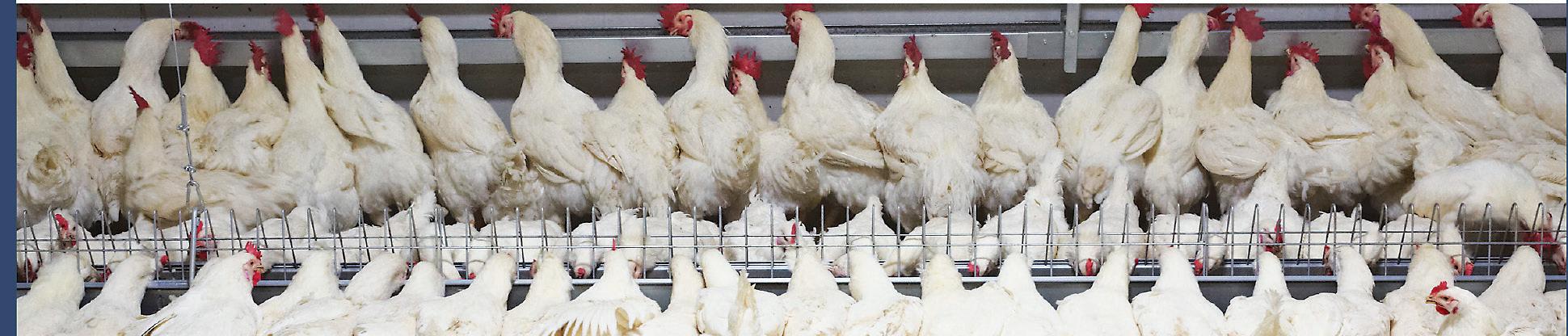
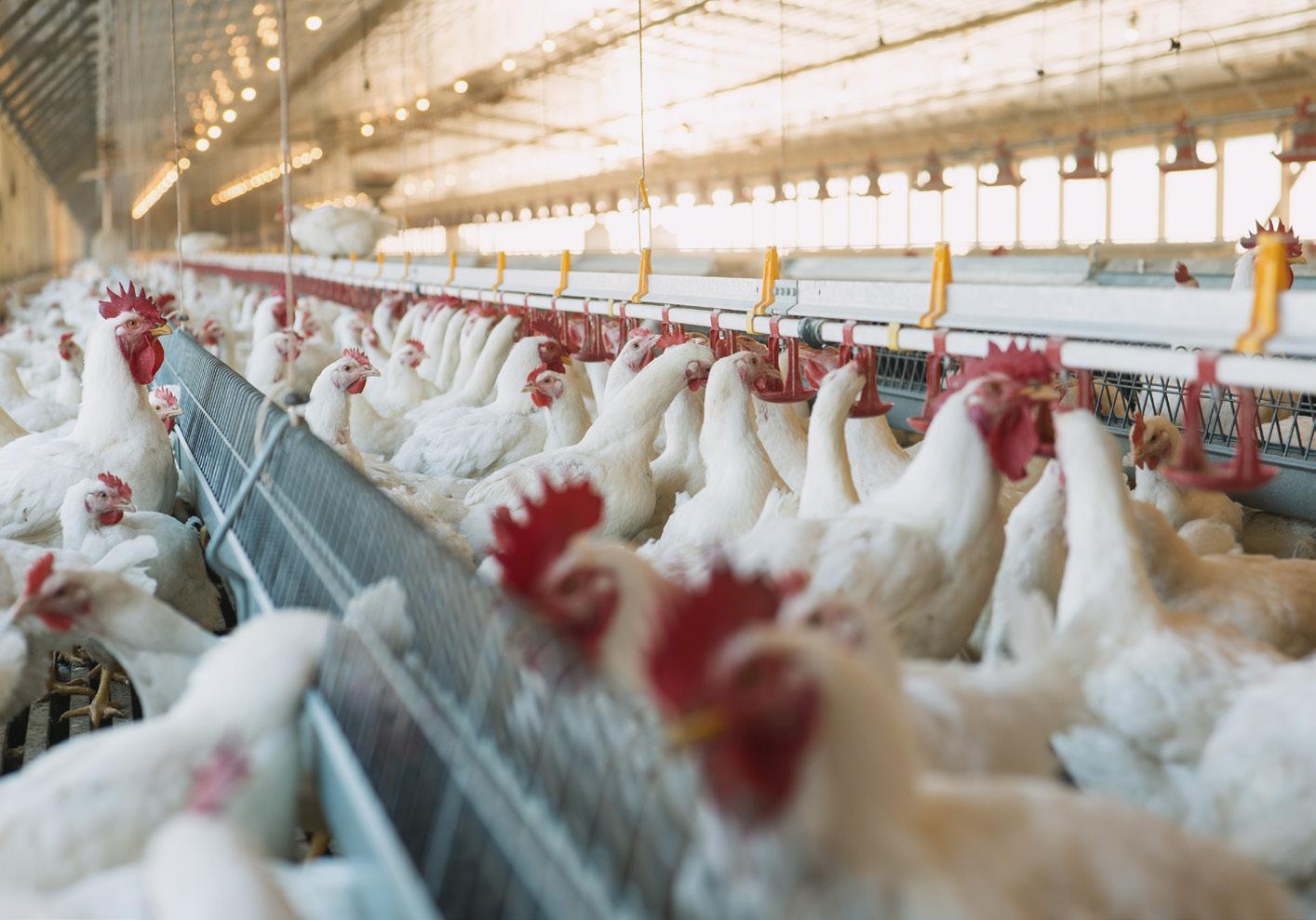
A new study shows how water quality directly affects broiler breeder performance and mortality. COLUMNS
From the Editor
by Brett Ruffell
A year of reflection – and rising momentum
As we turn the page on 2025, it’s a good time to pause, reflect, and take stock of where Canadian poultry is headed. Our i naugural Canadian Poultry Industry Survey offers a valuable snapshot of how producers see their businesses and the broader sector evolving – and the results tell a story of resilience, innovation, and cautious optimism.
Despite the squeeze of rising input costs, most respondents continue to invest in efficiency.
“This year’s results tell a story of resilience, innovation, and cautious optimism.”
Nearly three-quarters said they’ve upgraded barn technology or automation in the past year – a clear signal that smart systems are becoming standard tools for productivity and precision. While labour shortages remain a challenge, automation is helping close the gap, with almost 80 per cent saying it has eased pressure or improved workflow.
Supply management also re -
mains a pillar of stability. Sixty per cent of respondents said the system effectively supports Canadian producers – a reminder of how vital predictability is in a time of global uncertainty. And when it comes to the future, producers aren’t just focused on surviving; they’re looking to thrive. Sustainability scored highly across the board, with the majority calling it important or very important to their operations and citing waste reduction, energy efficiency, and feed sourcing as top priorities.
This issue – fittingly, our annual Water Issue – highlights how resource stewardship continues to define modern poultry farming. From improving water systems and protecting flocks through extreme weather, to ongoing research linking water quality with flock health, innovation runs deep across the sector.
As you flip through the pages ahead, take a moment to look back on a year of progress – and forward to one full of opportunity.
Read the full 2025 Canadian Poultry Industry Survey Report now at canadianpoultrymag. com.
canadianpoultrymag.com
Reader Service
Print and digital subscription inquiries or changes, please contact Angelita Potal, Customer Service Rep.
Tel: (416) 510-5113
Email: apotal@annexbusinessmedia.com
Mail: 111 Gordon Baker Rd., Suite 400, Toronto, ON M2H 3R1
CEO Scott Jamieson sjamieson@annexbusinessmedia.com
PUBLICATION MAIL AGREEMENT #40065710
Printed in Canada ISSN 1703-2911
Subscription Rates
Canada - Single-copy $10.00
Canada – 1 Year $33.15
Canada – 2 years $56.61
Canada – 3 years $78.54 (plus applicable taxes)
USA – 1 Year $93.33 CDN
Foreign – 1 Year $105.57 CDN
GST - #867172652RT0001
Occasionally, Canadian Poultry Magazine will mail information on behalf of industry-related groups whose products and services we believe may be of interest to you. If you prefer not to receive this information, please contact our circulation department in any of the four ways listed above.
From the first day your chicks and poults are placed, water is one of the first things they look for, and for decades farmers and poultry have relied on our drinkers for a consistent flow of fresh water.
Our drinkers provide poultry the single most important ingredient for the BEST POSSIBLE START, AND HEALTHIEST LIFE DURING LAY PERIOD AND GROW-OUT.
Glass-Pac Canada
St. Jacobs, Ontario
Tel: (519) 664-3811
Fax: (519) 664-3003
Carstairs, Alberta
Tel: (403) 337-3767
Fax: (403) 337-3590
Les Equipments Avipor Cowansville, Quebec
Tel: (450) 263-6222
Fax: (450) 263-9021
Specht-Canada Inc. Stony Plain, Alberta
Tel: (780) 963-4795
Fax: (780) 963-5034
What’s Hatching
OECD urges gradual reform of supply management
The OECD’s Agricultural Policy Monitoring and Evaluation 2025 report recommends Canada gradually reduce price supports for dairy, poultry and egg producers, arguing such protections distort trade and stifle innovation. The organization also calls for larger production quotas, lower tariffs, and stronger long-term climate adaptation measures in agriculture, noting Canada’s sector remains largely exempt from emissions pricing and overly focused on short-term risk management.
Hendrix raises $90K for children’s nutrition
Employees at Hendrix Genetics in Ontario raised and pledged $90,006 to support Nutrition for Learning and The Children’s Foundation. The annual campaign, supported by employee, partner, and company contributions, helps provide nutritious meals for children in need. The initiative reflects the company’s ongoing commitment to community well-being and its mission to help address global food challenges. The funds will directly benefit local students across the communities where employees live and work.
Chore-Time adds new engineering and service leaders
Chore-Time has strengthened its engineering and customer support teams with two new appointments. Taliesin Larsen joins as Plastics Process Engineer, supporting machinery and product development within the company’s Plastics department. Corey Green has been named Area Technical Service Manager, providing customer support and training across Canada and the eastern U.S. Both bring extensive technical and poultry experience to enhance Chore-Time’s product performance and customer service capabilities.
Ontario invests $10.5 million to expand poultry research capacity
is the size of Ontario’s total investment in the new poultry centre, which will support 1,200 chicken and turkey producers and 432 egg farmers.
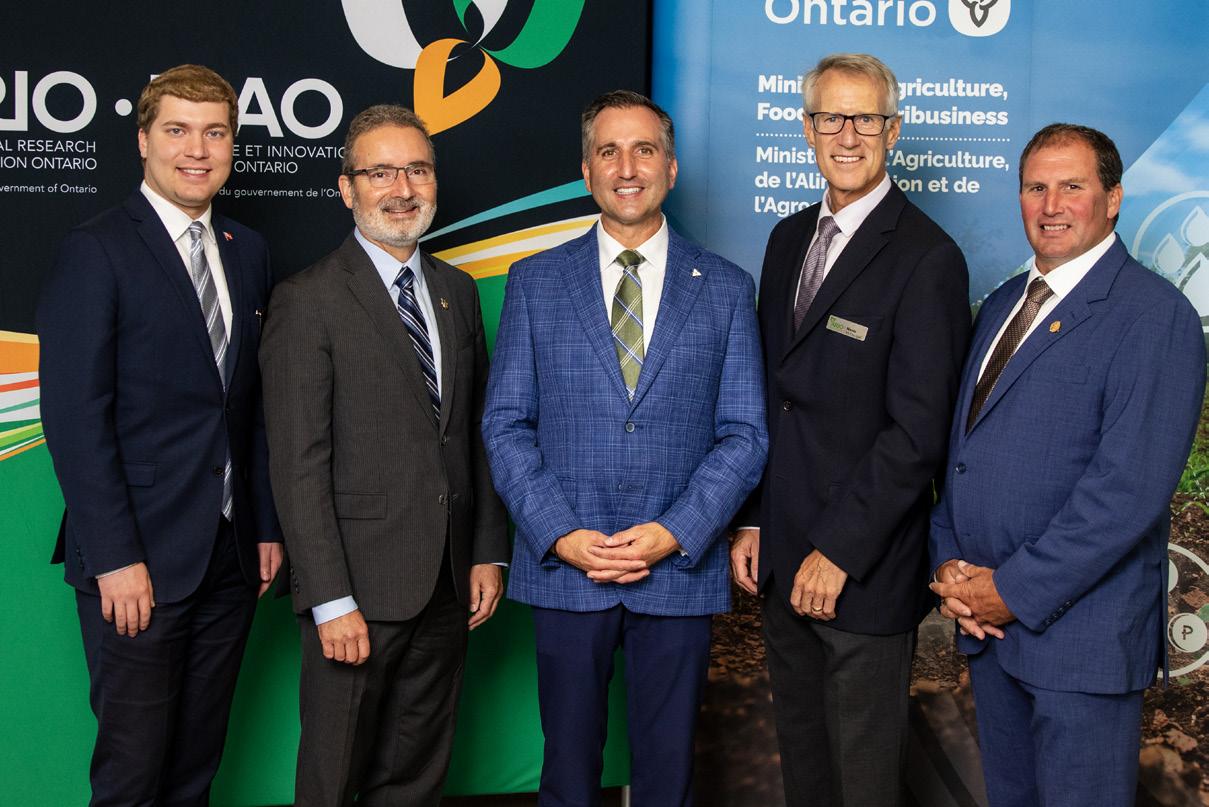
Ontario is making a major investment in poultry research, committing $10.5 million in new funding for the Ontario Poultry Research Centre at Elora Research Station. The announcement is part of a broader $41-million provincial investment to modernize Agricultural Research and Innovation Ontario (ARIO) facilities across the province.
The new poultry centre will strengthen research on animal welfare, reproduction, and meat quality and safety, supporting Ontario’s 1,200 chicken and turkey producers and 432 egg farmers. With this latest investment, the province’s total contribution to the facility now stands at $24 million.
“This investment will strengthen our ability to manage risk and prevent disease, while also opening new doors to enhance on-farm efficiencies and advance sustainable practices,” says Murray Opsteen, Board Chair of
Chicken Farmers of Ontario.
The poultry centre is part of Ontario’s strategy to build research capacity in key agricultural sectors amid heightened trade pressures, including U.S. tariffs. “Through investments in research and innovation, we are ensuring farmers and business owners have the best solutions to remain competitive against tariffs,” says Trevor Jones, Minister of Agriculture, Food and Agribusiness.
The Elora site will also benefit from a $15.5-million investment in the new Ontario Feed Innovation Centre, which will support micro-scale nutritional research for swine, poultry, small ruminants and aquaculture.
ARIO oversees a network of 14 research stations across Ontario, with 5,600 acres and more than 200 buildings dedicated to advancing innovation in livestock, crops, aquaculture, greenhouse production and soil health.
From Left to right, MPP Joseph Racinsky, Dr. Rene Van Acker, Minister Trevor Jones, Nevin McDougall, MPP Paul Vickers.
SUSTAINABILITY IN ACTION
How Canadian Chicken Farmers Are Reducing Their Environmental Footprint
Canadian chicken farmers are proving that sustainability isn’t just a goal — it’s part of how they farm every day.
The latest Life Cycle Assessment (LCA), conducted by Groupe AGÉCO for Chicken Farmers of Canada, shows real progress. Since 2016, the carbon footprint of producing one kilogram of chicken has dropped by 6%, thanks to smarter feed use, barn improvements, and ongoing innovation on the farm.
Chicken is already one of the lowest-carbon emitting animal proteins—but we’re always looking to do better,” says Tim Klompmaker, Chair of Chicken Farmers of Canada.
“This report shows how farmers’ commitment to continuous improvement is paying off.
Learn more at chickenfarmers.ca.
Today, chicken production accounts for just 0.4% of Canada’s total greenhouse gas emissions—and farmers continue to invest in upgrades like smart automation and improved ventilation to keep moving forward.
Supported by Canada’s supply management system, farmers have the stability to plan ahead and invest in sustainability for the long term—so Canadians can feel good about choosing chicken raised right here at home.
What’s Hatching
CFIA streamlines hatching egg rules as part of broader regulatory overhaul
The Canadian Food Inspection Agency (CFIA) has introduced regulatory changes to cut red tape and modernize oversight for poultry and hatching egg producers. A key update reduces traceability labelling requirements for hatching eggs and chicks, aligning rules with current industry practices.
CFIA says the change will reduce paperwork for hatcheries while maintaining food safety standards. Imports of hatching eggs from the U.S. will now require Salmonella enteritidis testing – the same rule
is the number of regulatory modernization actions identified under Canada’s Red Tape Reduction strategy
applied to Canadian production –creating a level playing field and improving biosecurity. CFIA also streamlined its process for updating animal import rules to reflect new science and international standards more quickly.
“These regulatory changes protect Canada’s reputation for quality and safety while clearing the way for innovation and flexibility,” says Minister of Health Marjorie Michel.
The Product Roundup
What’s new with water systems
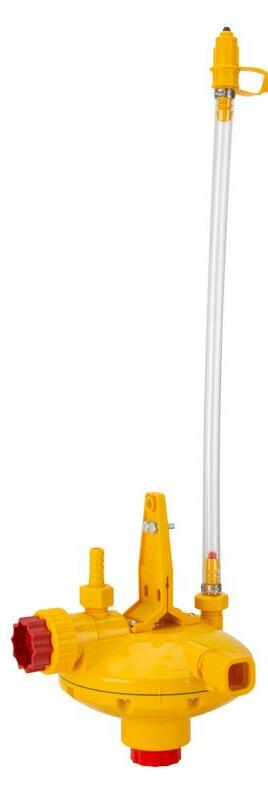
Optima E-Flush Regulator
The Optima E-Flush regulator offers poultry and egg producers full control of water flow with just a half turn, while optional solenoids integrate seamlessly with the Lubing LCW Touch Controller for automatic flushing. It’s a drop-in replacement for the Optima regulator and works with all existing accessories, providing flexibility across production types. Each unit includes an aluminum profile hanger mount, single 22 mm outlet transition, water supply transition, 18-inch breather tube, and mounting hardware.
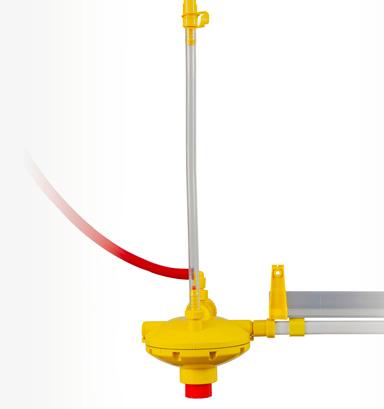
Springless Sight Tube and Breather Unit
Lubing’s redesigned springless sight tube and breather unit delivers improved durability and visibility with chemically resistant clear tubing that retains its shape. The flexible PVC seal allows airflow while preventing leaks, and a stainless-steel crimp ring locks the cap securely in place. The springless design also improves handling during routine checks. By eliminating the outer spring, the new design is easier to clean and ensures accurate water-column monitoring.
Canadian Hatching Egg Producers (CHEP) chair Brian Bilkes says the group welcomes the updates, which reflect producer input and reduce unnecessary administrative burden while maintaining strong animal health standards.
The measures are part of the Government of Canada’s Red Tape Reduction strategy, which identified nearly 500 actions to modernize outdated regulations across agriculture.
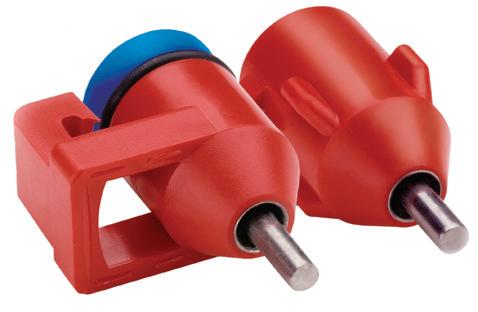
Max6 Drinkers
Ziggity’s new Max6 drinker is engineered for today’s fast-growing broilers, matching modern genetics with precision water delivery. Its internal geometry meters water flow exactly to each peck, reducing waste and keeping litter drier for healthier paws. With 360° access and a cup-free, hygienic design, Max6 promotes natural drinking behavior and retrofits easily into existing watering lines through Ziggity’s upgrade saddles.
The regulatory changes reduce red tape and modernize rules for hatcheries and producers.
Brought to you by DOES THE FUTURE OF AGRICULTURE SEEM GREY TO YOU?
Agriculture in the Classroom is cultivating curiosity by providing hands- on, immersive learning experiences to educate and engage students. The next generation of farmers, policy-makers, and innovators is in the classroom today. Together, we can inspire young people to drive our industry forward.
Change the future at aitc- canada.ca
Poultry Spaces
Sanders Poultry
Poultry Spaces highlights new and renovated poultry facilities. Do you know of a good candidate to be featured? Let us know at poultry@annexweb.com.
The business
Sanders Poultry is a new venture owned by Alison and Mark Sanders near Kerwood, Ont. Alison represents the third generation in her family to raise chickens. Her grandparents began farming in the 1960s, and her parents, Connie and Mike Vanden Heuvel operate Mi-Con Farms with both broilers and layers. Sanders Poultry, launched in 2025, focuses exclusively on laying hens, with Alison doing the daily gathering and hen monitoring, and Mark looking after barn maintenance and operations while they raise their three young children together.
The need
When new space-allowance regulations for layer housing came into effect, the Vanden Heuvell family needed to modernize and redistribute their quota. Alison and Mark took the opportunity to expand the family business onto their own 50-acre property, transferring some quota from Mi-Con Farms and building a modern facility that meets the latest animal-care standards.
The barn
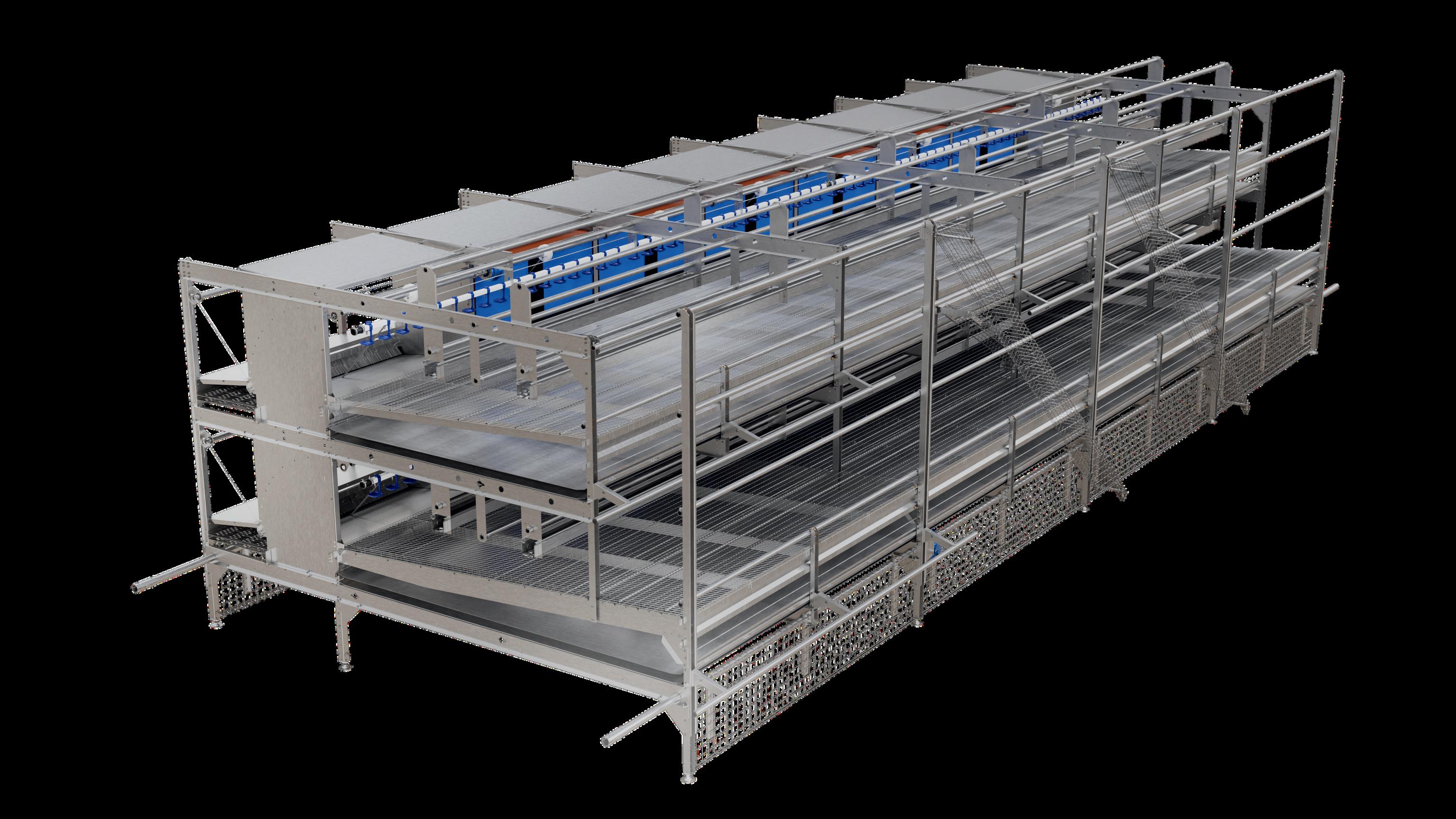
The 32,000 layer barn, which allows for future growth, features the Tecno Plus 94 enriched housing system supplied by Clark Ag Systems. Four rows with four tiers of cages include multiple perches, durable scratch pads, nesting boxes with red privacy curtains, and LED lighting to encourage natural bird behaviour. “The hens quickly learned to use the nesting boxes, which keeps the eggs clean and lowers cracks,” Alison explains.
Eggs move to the front of the barn on Lubing conveyors feeding a MOBA Mopack100 packer – complete with a MOBA stacker and a Meggbot TP100 palletizer supplied by J. Dean Williamson – allowing hands-free tray stacking and pallet loading at speeds of up to 36,000 eggs per hour. The barn also incorporates Genius iTouch controls for remote monitoring and cross-ventilation with ceiling inlets designed by Exacon to maintain air quality yearround. “It’s efficient, comfortable for the birds and a perfect fit for our family,” Alison says.
Alison and Mark Sanders with their three children outside the new barn.
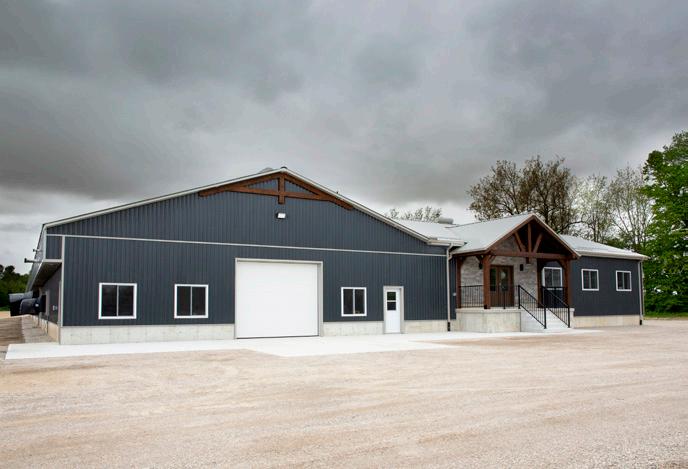
The new 32,000-bird layer barn near Kerwood, Ont., opened in 2025.
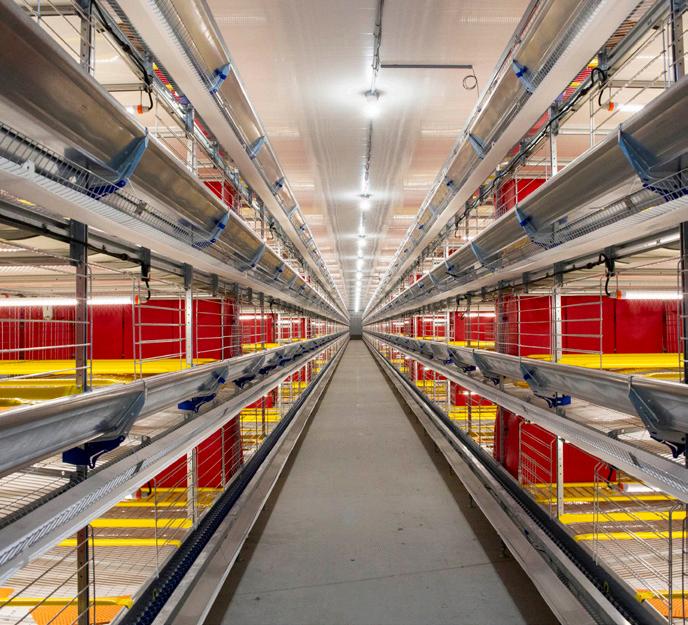
Four rows of Tecno Plus 94 housing provide a bright, efficient work environment.
PHOTOS: CLARK AG SYSTEMS
Aviary Systems Installed Globally
50 Million Birds Raised
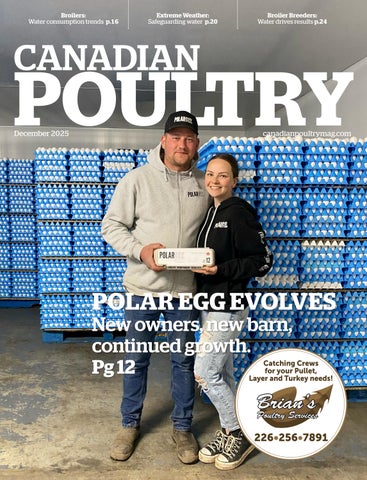
Polar Egg evolves
With new ownership, management, and a second barn, this northern farm continues to grow.
By Treena Hein
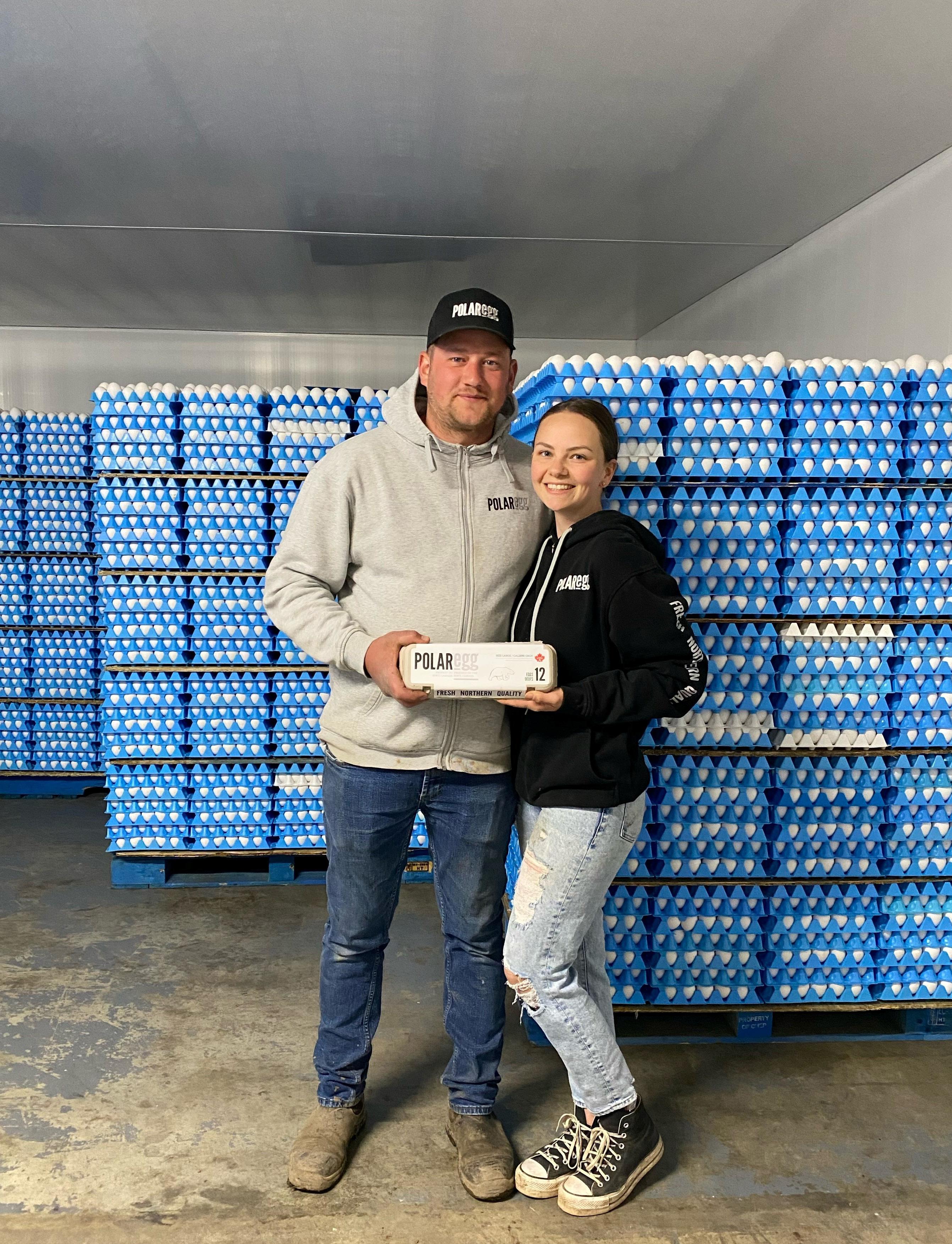
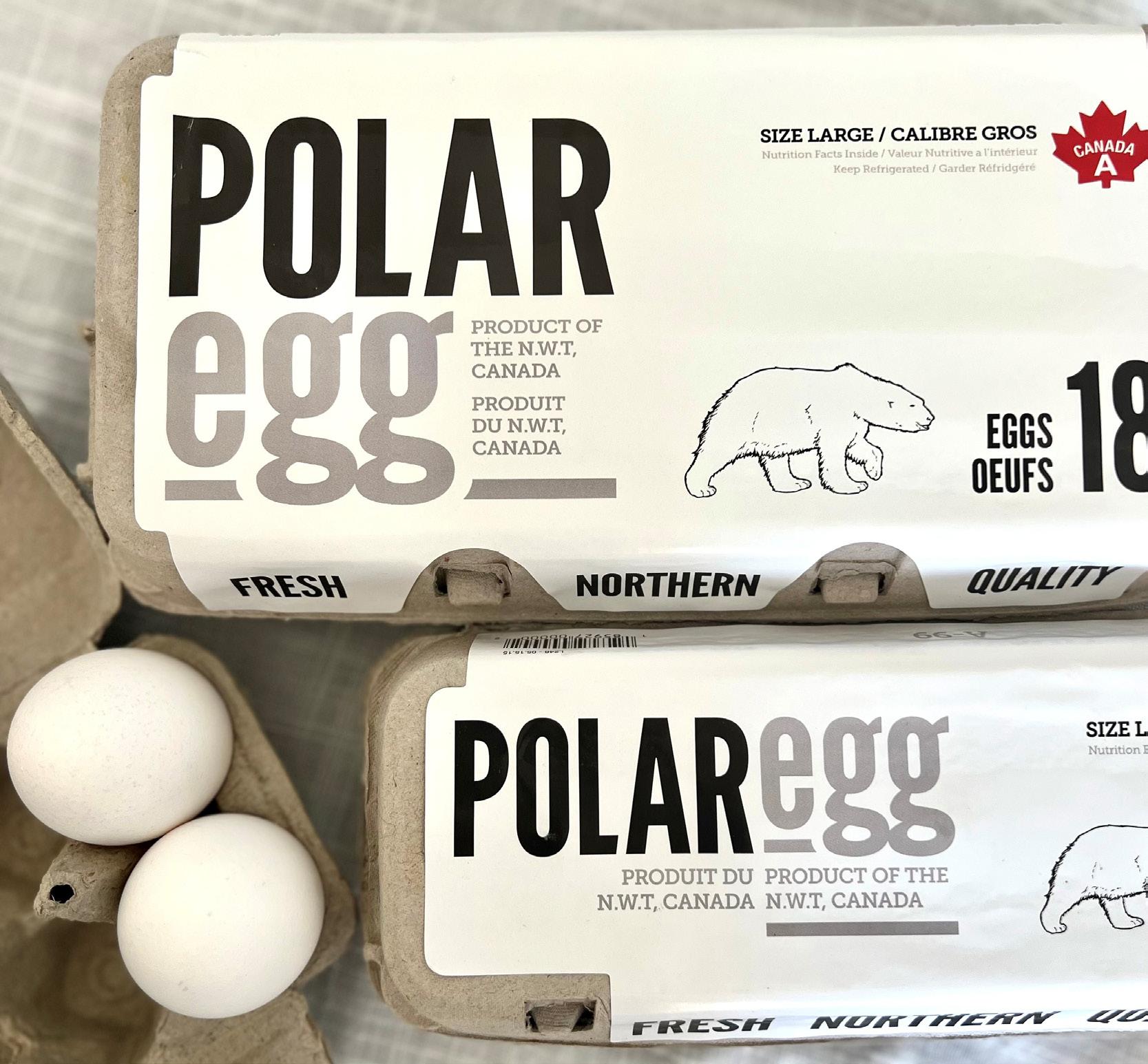
For more than 12 years, Polar Egg has supplied the Northwest Territories (NWT) with locally produced and graded eggs from its base in Hay River. Since 2023, under the new ownership of Matt Vane and Jeff Bisschop of B.C.-based Knutsford Ventures, the brand has expanded its reach, with cartons now stocked in more than two dozen stores across the Territories.
Egg production has been going on in the NWT since the 1990s. At their peak, two larger operations called Hay River Poultry Farms and Choice North Farms reportedly produced about 37 million eggs per year. Before 2012, without a local grading station in the territory, all eggs were shipped south for grading and distribution. But at that point, the owners of those farms added a grading station and launched Polar Egg for NWT consumers.
This was welcomed by all – the public, municipal and territorial leaders, and Egg Farmers of Canada. The NWT and federal governments contributed $150,000 to the grading station, helping with the purchase of equipment, employee training and so on. In 2023, Vane, who farms in B.C., was approached to take over the operations. “We got on a flight to see the operation and discuss details,” he says. “I thought it could be a good opportunity and decided to proceed.”
Prior to purchasing the operation, Vane recalls that the first thing on his list was to hire an excellent operations manager. “I needed someone with solid experience with both equipment and bird management,” he explains. “We were very pleased that Melvin accepted the position.” He’s referring to Melvin Schellenberg, who has moved with his wife Sydney and their three kids to Hay River from Chilliwack, B.C.
Vane describes Schellenberg’s experience in the poultry industry as “extensive.” Open to new opportunities, the move to a small town was appealing, and the family is really enjoying their new community.
Four other staff members round out the operation, carrying out a variety of duties from egg collection to grading operations.
Expanding the market
There are three other commercial egg producers in the territory, all of which produce eggs for Polar Egg. The eggs are white, primarily pro-
duced by Babcock and Lohmann hen breeds.
As mentioned, Polar Egg eggs are currently carried in over 25 grocery and retail locations, and Vane is continuing to work on expansion of the market, and not just in the NWT. “The Polar Egg brand is well-recognized here, so we have that solid foundation to build on,” he reports. “We intend to distribute our eggs all across the North.”
The new barn
After hiring an operations manager, the next thing on the list was to build a new barn. A larger facility would add production capacity and allow Polar Egg to use all its quota. Construction started in the summer of 2023 and ended just recently in May 2025. Everything went smoothly for the most part, says Vane, “but the challenges of building in the north are real, and things certainly take longer than expected. There was a nearby forest fire in August 2023 which set the build back six
Polar Egg Operations Manager Melvin Schellenberg and his wife Sydney at the Hay River facility, where local grading and expanding capacity are powering growth across the Territories.
weeks and of course, during the extreme-cold days of the winter, it’s not possible to do construction. But we finished on schedule.”
The new barn features enriched colony housing, which Vane says is a first for the NWT and the first enriched system he’s built. The producer researched various housing firms and settled on Hellmann, as they presented a good price and quality and were also good to work with.
The other Polar Egg barn has conventional housing, and Vane says he’ll replace that with alternative housing in the years to come. Both barns are heated with propane and have tunnel ventilation. And though the new barn build is complete, Polar Egg is currently in the midst of building a new grading station.
Bird health and management
The pullets for the new barn arrived in May from Alberta (as does feed on a continual basis) and Vane says the new flock is looking great. “We’ve had no disease in the new barn or in our other barn since we took ownership,” he explains. “We want to keep it that way. It is a plus of farming in the north that disease risk is very low. We still worry about avian influenza, but there’s diminished risk. At the same time, we keep biosecurity tight.”
Overall, Vane notes that egg farming is both very different in the north but still the same in many ways. There are no poultry veterinarians in the NWT, but they can contact vets in B.C. or Alberta for remote services as needed. “There are weather issues in the north that I don’t have in B.C., for example, and managing feed inventory and egg pick up is a little different,” he says. “But egg production is the same.”
Food in the north
Vane is very pleased at his decision to join northern food production. “We are incredibly grateful for the support we receive from the local community here in Hay River,” the farmer says. “Also, our working relationship with the territorial government and its Agriculture Products Marketing Council is very productive. All the support is much appreciated, and I think leaders in government and beyond absolutely recognize the significance of egg production as a big part of northern
agriculture.”
Schellenberg is a member of the Council and believes having protein production in the form of eggs is an important part of the food security mix. “I believe egg production in the north is a huge source of pride, not only for the local community here in Hay River but for NWT as a whole,” he says. “The amount of
support for what we do here has been immense, and locally produced products in the north are becoming increasingly sought after.”
Council chair Janet Dean, who is also executive director, Territorial Agrifood Association, notes that the NWT’s agriculture sector is still in its infancy. The cost of production is high because the north sits at the end
Welcome - TFC’s New Executive Director. Bienvenue - Au nouveau directeur exécutif des ÉDC .
Turkey Farmers of Canada is pleased to announce Adam Power as the new Executive Director. Adam has served on the TFC Board since 2018 and brings extensive experience in the Canadian poultry industry, including within the processing sector.
We look forward to Adam’s leadership in supporting our farmers and the Canadian turkey industry. Please join us in welcoming Adam Power to his new role!
Les Éleveurs de dindon du Canada sont heureux d’annoncer la nomination d’Adam Power au poste de directeur exécutif. Adam siège au conseil d’administration des ÉDC depuis 2018 et possède une vaste expérience de l’industrie avicole canadienne, y compris dans le secteur de la transformation.
Nous attendons avec impatience le leadership d’Adam pour soutenir nos éleveurs et l’industrie canadienne du dindon. Veuillez vous joindre à nous pour souhaiter la bienvenue à Adam Power dans son nouveau rôle!
of a very long supply chain. In addition, distribution within the territory can be challenging. At the same time, she notes that “we are also a place of great opportunity and ease of entry.” Dean also points out that besides food production, Polar Egg also contributes to the economy by creating jobs and fostering regional investment.
In terms of government investment in local food production, in February 2025 at the Territorial Agrifood Conference, the NWT Canadian Northern Economic Development Agency announced federal investments totalling over $4 million towards five local food initiatives. They will enhance infrastructure to produce, harvest, process and
distribute local and country foods.
The agency stated that these initiatives include “projects like production facilities and country food processing plants, ensuring greater access to food for communities and the entire territory…to help create more diverse, resilient northern economies and reduce dependence on southern food systems.”
Indigenous country foods (e.g., meat from hunting and fish) are the focus of research into their integration in NWT pre-school and school food programs.
Drs. Kelly Skinner, Sonia Wesche, Sonja Ostertag, and Tiff-Annie Kenny led this work through a CanNor Northern Food Innovation Challenge Grant, conducting a scan of existing programs and engaging daycares, schools, children, parents, and Elders. In schools, students have even created cookbooks that celebrate country food.
Together, these efforts highlight both the challenges and the promise of food production in the North.
For Vane, Schellenberg, and their team, Polar Egg is more than just an egg operation – it represents resilience, partnership, and community pride. With a new barn built and more cartons reaching store shelves across the Territories, the company is carving out a lasting role in strengthening food security and shaping the future of agriculture in the region.
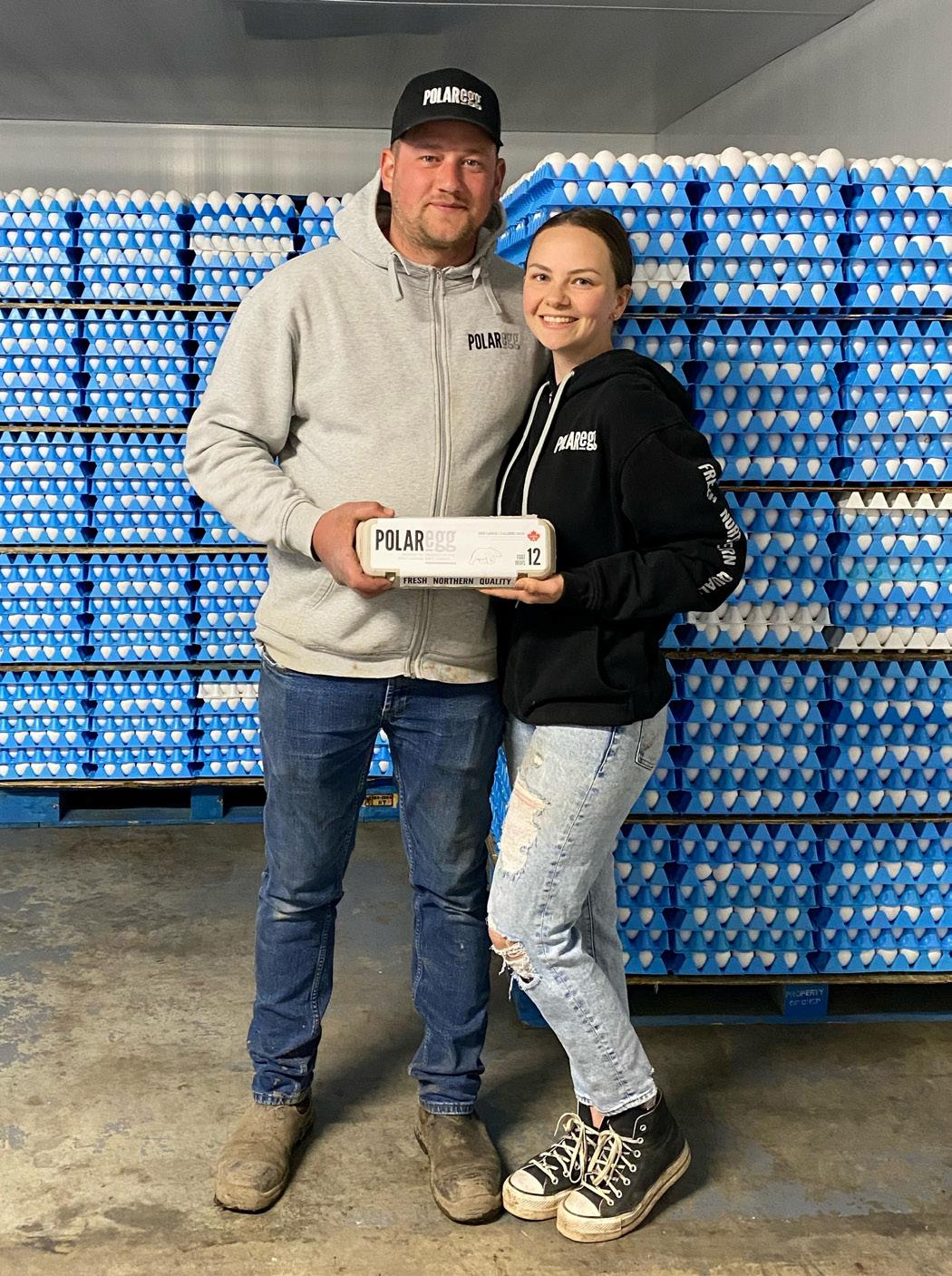
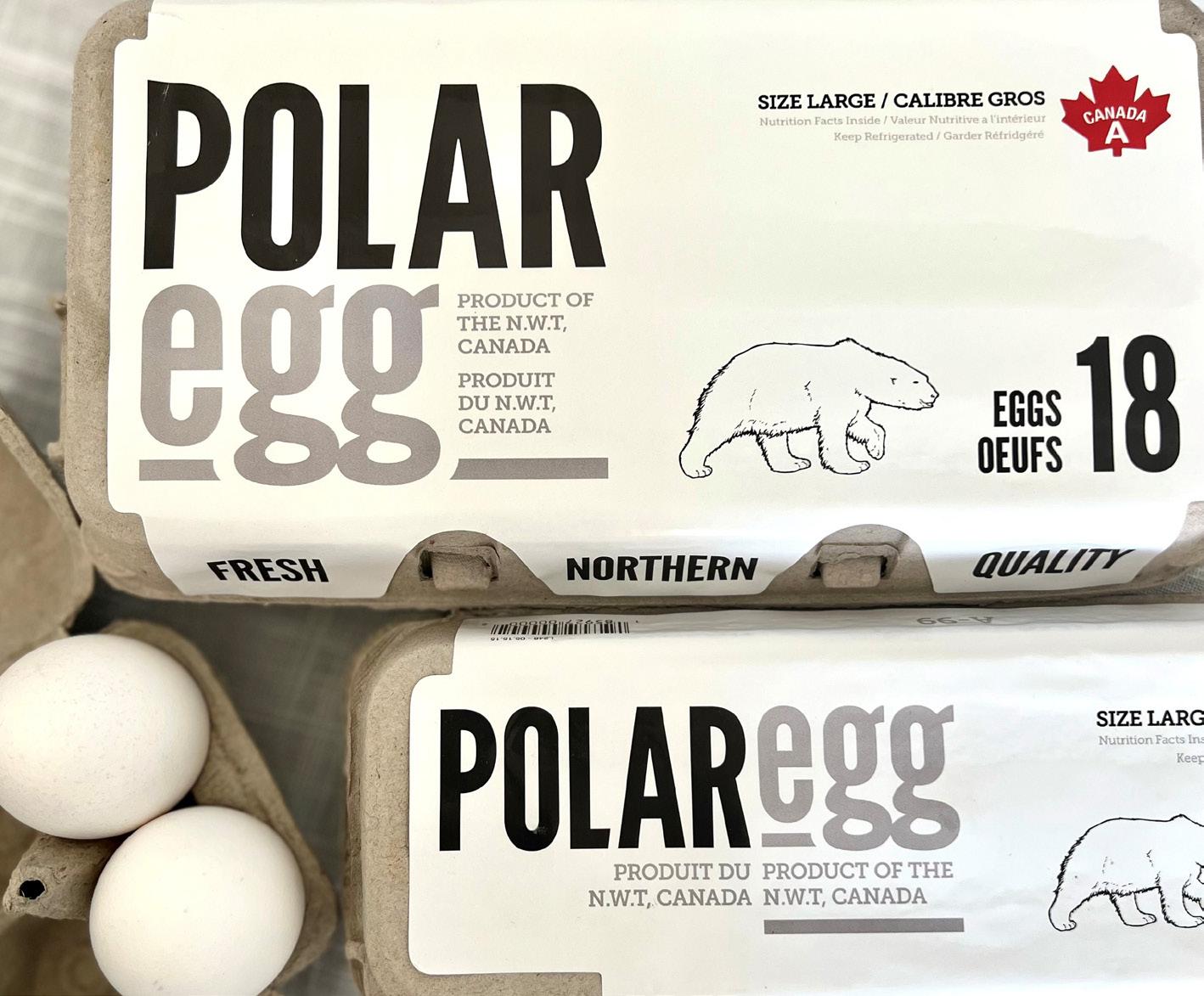
A carton of Polar Egg eggs, graded locally in Hay River and now stocked in more than two dozen northern retail locations.
Drink up
Broilers making more efficient use of water, new research finds. By Jane Robinson
The trend of raising broilers to heavier weights comes with the need for more resources to grow them to 60 days.
Water is one of those key resources required to raise healthy, productive birds.
In parts of the U.S. where water is becoming an expensive commodity, researcher Jeremiah Davis wanted to get a better handle on how much these heavier broilers are consuming, and if there have been improvements in how efficiently the birds used water over time, based on advances in genetics, housing and drinker equipment.
Davis leads the National Poultry Technology Center (NPTC) at Auburn University in Alabama that works on ways to help poultry producers improve efficiency in all aspects of production. His PhD student Carson Edge recently completed a project in collaboration with the USDA-ARS Poultry Research Unit in Mississippi to look at water consumption trends in broilers raised to nine weeks.
Many broiler producers in Canada might not put water at the top of the list of precious commodities for their operation, but where Davis works, water is becoming a valuable commodity that’s vital for bird health.
“We know for every unit of feed consumed, broilers are drinking two units of water,” says Davis. “Water prices are rising and some farmers are paying $3 to $16 (USD) per thousand gallons of water,” says Davis. “We need good quality water and it’s our number one resource that we have to be able to manage to ensure we have enough.”
Many of the past studies on water consumption for broilers were based on a two to three kilogram finished bird. Davis’s team wanted to find out how much birds are consuming when they are grown to four kilograms.
Weighing in
The NPTC conducted a controlled study to track water consumption in broilers raised to nine weeks of age. They weighed
water consumption – instead of using a water metre – to get a more accurate measure of consumption that included what the birds drank and what was spilled.
The study included two flocks of 2,160 broiler chicks that were randomly distributed in eight pens. Birds were grown from hatch to 63 days, with a target weight of 4.1 kilograms/bird. Water consumption was measured daily to calculate water consumed per pound of body weight – a ratio that could shed light on improved production efficiencies for the birds.
One of the drivers behind this project for Davis is the increasing demand for water in areas of the U.S. “We are big water consumers, but with more data centers being built in Alabama that require a lot of water for cooling systems, it’s going to be an increasing challenge to have enough quantity of clean water,” says Davis. “We’re trying to come up with new ways for poultry producers to get the most out of the resources we have.”
The study measured water use in broilers raised to nine weeks to assess efficiency and management practices.
PHOTO: JEREMIAH DAVIS
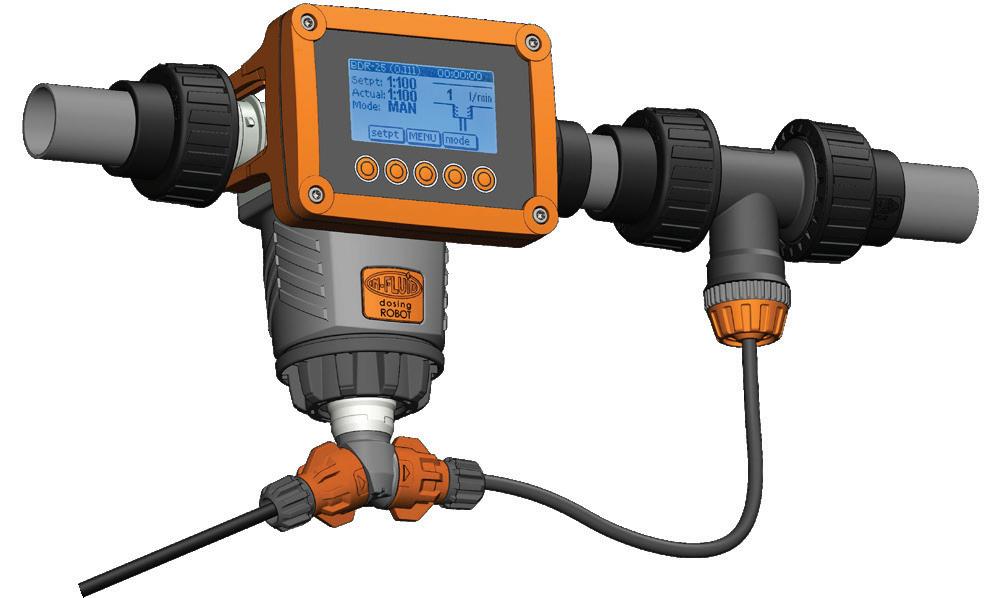
BYPASS DOSING ROBOT (BDR-25)
IS A STATE-OF-THE-ART DOSING DEVICE DESIGNED TO PROVIDE PRECISE WATER FLOW REGISTRATION AND PRODUCT DOSING SIMULTANEOUSLY.
The BDR-25’s unique electronic sensor technology boasts an impressive flow detection capability, starting from as low as 100 mL per minute (3.5 oz/min).
Offering unmatched flexibility, the BDR-25 can be programmed with various dosing options, including scheduled time dosing, low flow dosing for start-ups, and regular dosing ratios ranging from 1 to 50,000. Its intuitive digital screen simplifies pump control and monitoring, allowing you to easily track settings, view information, and review history.
KEY FEATURES:
•Magnetic driven piston, low energy consumption (60W/24V)
sales@county-line.ca 800-463-7622 (x 4 for Hickson) www.county-line.ca
Listowel and Woodstock
Water to meat ratio
One of the most interesting study findings for Davis was that broilers at eight weeks of age consumed 27 to 46 per cent more water (litres per thousand birds) than in the past – or about 14,600 litres per thousand birds. But that increase doesn’t tell the real story.
“The increase in water consumption isn’t really a fair comparison if you just take it at face value,” says Davis. “With our improved genetics, housing and feeding systems, broilers are actually using water more efficiently when you look at water consumption per pound of meat produced.”
Broilers spend about three per cent of their day drinking – “so there is a small window to have a positive impact on water consumption,” says Davis.
On-farm management tips
As one of the most important resources in broiler production, water is a vital nutrient that must be managed to maintain bird health. Davis believes water management can always be
“Higher water consumption doesn’t mean less efficient production. In fact, as an industry, we’re doing everything we can to improve our drinking systems.”
- Jeremiah Davis
improved. “I don’t think water management is well understood and as farms get bigger, maintenance becomes more important and that means we need to be more diligent.”
For Davis, a good place to start is with a simple question – are you willing to drink a glass of water out of the water lines in your barn? If not, you know there are issues. Here are some tips he offers for producers to keep a closer watch on water quality, and in turn, flock health and productivity.
Check your drinkers for issues that could be impacting equipment and bird performance. “If drinkers aren’t flushed out, water quality can become an issue,” says Davis. He reminds producers to also be sure they are managing the height of drinkers as birds grow.
Clean your system . “It’s not enough to just check that there is water in the lines. You need to be flushing the lines so water doesn’t sit in the system where biologicals can build up, especially in warmer weather.”
Use a water meter to track fluctuations in water consumption that might be an indicator that something else is going on with the birds.
Follow the feed/water ratio. “We know that broilers have a roughly 2:1 ratio of water to feed consumption,” says Davis. “Farmers can use the info they know about usual water use, compared to feed. If birds are drinking less, they can start pinpointing issues that may be affecting bird performance – it could be something like lighting or a disease challenge.”
Davis is really encouraged by the findings of this project. “It’s really important to showcase that broilers are using water more efficiently because higher water consumption does not equate to less efficient production systems. In fact, as an industry, we are doing everything we can to improve our drinking systems.”
Jeremiah Davis, director of the NPTC at Auburn University, led the research examining how broilers use water as they grow to heavier market weights.
Weathering the water challenge
From floods to heat waves, how to protect your flock and keep water systems running clean and steady.
By Treena Hein
Having enough high-quality water is obviously critical to the health of your flock and to steady production levels at any time of year. But extreme weather events can add extra water management challenges, both inside and outside the barn.
This winter, take extra care to ensure water lines are always at the proper height, as excess spillage can increase ammonia and humidity levels in the barn – but also use the expert information here to better prepare for any extreme weather impacts your farm may be subjected to next year as the weather warms up. It’s all about preventing problems and putting mitigation plans in place ahead of time.
With regard to general water testing, Al Dam, provincial poultry specialist at the Ontario Ministry of Agriculture, Food & Agri-Business (OMAFA), provides some important cautions. That is, besides the E. coli and coliform tests required once per year
(and recommended four times a year if you have a surface water source), thorough testing at least once a year is wise to uncover any potential issues.
“For under $100, you can get a complete package, including minerals, pH, hardness, total dissolved solids and bacteriological analysis,” Dam notes. “Contact your local water testing lab for pricing and packages. This gives you the baseline of what remediation you may need to do beyond the biological. Do you need to soften the water? Add an iron filter? Adjust the salt content in the feed? Is the sulphur content too high?”
In short, Dam concludes that “just because your water looks clean does not mean it is.”
Flooding
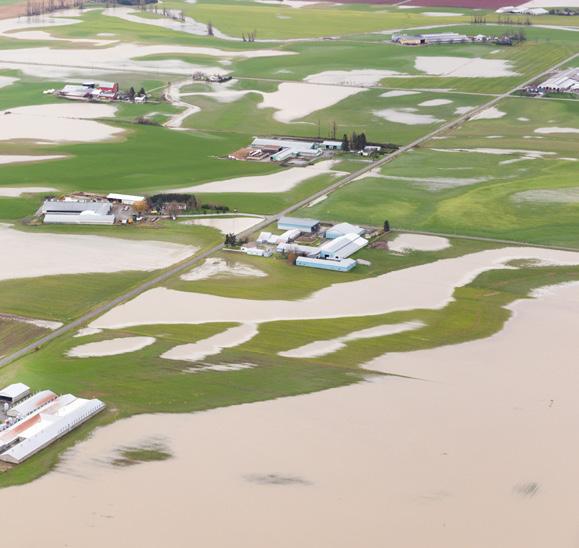
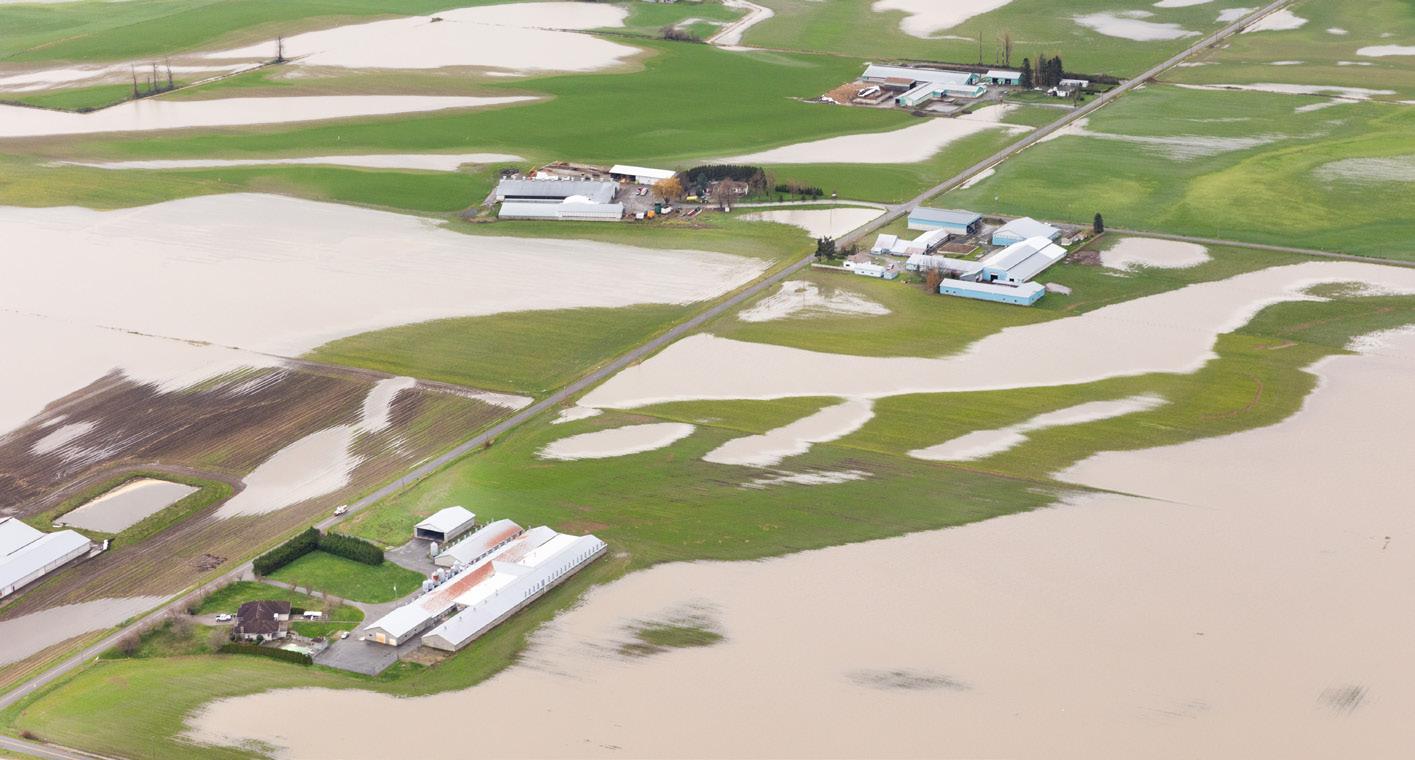
In 2021, the shocking floods in lower mainland B.C. resulted in the death of almost 630,000 commercial poultry birds. In November that year, historic rainfall records were broken on 20 days. However, excess rain, or river flooding due to extreme snow-
melt or a dam malfunction, can occur any year and could affect your farm a little or a lot, depending on its location.
During times of heavy rainfall and flooding, some experts recommend walking the inside perimeter of the barn just to make sure there has been no intrusion of water through the foundation. That daily check will give you peace of mind. With flooding, the big concern is mainly contamination of your well from runoff from fertilizer, manure from nearby fields or even just debris. If your well is contaminated, it will need an immediate and thorough clean and sanitization.
Dan Ward, poultry systems engineer at OMAFA, notes that while drilled wells tend to be more secure than surface water wells in terms of contamination risk, farmers should check their well, no matter the type, to ensure the well casing down to the water table is well sealed. He also asks, “Is the well casing the minimum height above grade – it’s 40 cm in Ontario – and built up so that if there is rainwater pooling around the casing,
Maintaining water quality and access is critical during extreme weather events.
Visit eggs.ca for festive favourites and quick and easy meal inspiration with made-in-Canada eggs.
Happy holidays from Egg Farmers of Canada!
Consultez lesoeufs.ca pour obtenir des idées de plats festifs incontournables et trouver l’inspiration pour préparer des repas simples et rapides avec des œufs produits au Canada. Joyeuses fêtes de la part des Producteurs d’œufs du Canada! eggfarmers.ca producteursdoeufs.ca
Barn Management
Weatherproofing your water system
Both during and after weather extremes like flooding and heat waves, step up your inspection of water system components and also step up water testing.
To ensure you have enough water for heat waves, carefully calculate how much you’ll need for barn cooling if you have cooling pads, and for bird consumption. Bird water consumption data can be found at: www. ontario.ca/page/water-requirements-livestock
Ensure you have a backup water system in case your well is contaminated or otherwise made ineffective.
To prepare for heavy rain situations, ensure your well casing is sealed to prevent contamination. During heavy rains, walk the inside perimeter of the barn daily to make sure there has been no intrusion of water through the foundation.
To help prepare for weather emergencies or other emergencies that could affect bird health and safety, use the Poultry Industry Council’s Poultry Farm Emergency Planning Guideat emergency.poultryindustrycouncil.ca (also available in hardcopy form).
you can prevent surface water from infiltrating into the well?”
If rainwater roof runoff is kept in cisterns on your farm, Ward also notes that a bypass for the first few dozen litres should be in place to flush out water contaminated with wild bird waste that’s on every roof. He adds that this water source, as with surface water sources, has to have rock solid disinfection and filtration.
Heat waves
Again in 2021 in B.C., a “heat dome” incident in June caused the death of at least 651,000 commercial birds – and more extreme-heat days per year and longer heat waves are becoming more common across Canada.
As Ward explains, in hot weather birds can double their water consumption. In litres/1,000 birds/day, that means laying hens and broiler breeders go from a consumption of 180 to 320, and broilers at market weight from 345 to 770. With turkeys,
sumption in broiler turkeys to heavy toms can shoot from 296 to 1,139.
But besides enough capacity to supply water to all your birds in the heat (do calculations for market weight, just to be sure), you must also consider the requirements of the barn if you have a water-based cooling system.
Dr. Luke Nickel, a poultry veterinarian who leads the B.C. office in Abbotsford for Alberta-based Poultry Health Services, says “a lot of producers here have installed cooling pads and tunnel ventilation, and I have this on my farm.
“There has been a huge increase in the use of these systems in this region. Most new barns are being built with cooling pads.”
Once you have your bird consumption (and barn consumption as needed; work with the cooling equipment supplier to calculate), ensure your well capacity matches. Ward urges you to find out the maximum flow rate of your well and its recovery time. “And before you add another barn or other draws to the well, a pump test may be warranted,” he says.
Ltd.
AGRO-DESIGN CONSTRUCTION
• All Poultry Related Buildings & Sheds
• All Poultry Related Buildings & Sheds
• Serving South Central Ontario-East of Hwy. #6
• Serving South Central Ontario-East of Hwy. #6
Similarly to electricity, a backup water supply is also critical. Wells are never completely dependable in quantity or quality of water. Municipal water may be able to be used as a backup, says Nickel, or producers can add an additional well or a large water tank. Ordering an extra pump for your well is also a good precautionary step in case the main one burns out during a high-demand
Flushing in the heat
Bill Snow, sales and marketing manager at
Properly maintained water systems help ensure bird welfare through floods, heat waves and drought.
Lubing USA, recommends frequent flushing of waterlines in the heat to help reduce bacteria build-up in the lines. “Flushing will also encourage your flock to drink water during hot weather,” he says.
Because drought can change the composition of the water underneath your farm, you may want to conduct additional water testing during a prolonged period of heat to ensure your well water quality has not been impacted. Analysis of a sample will note any changes to odour or colour of the water, as well as other water test parameters.
Extreme heat can affect well water pH and other water quality parameters, says Dr. Darko Mitevski at Poultry Health Services in Alberta, especially in dug-out wells.
“No matter the type of well, do a test right after the heat wave to see where you are at,” he says. “Also in high heat, you’re pulling a lot of water rapidly from your wells, and you’re therefore likely stirring up debris, so you want to check your filters and have extra filters on hand, or check your filtration system often. If your tests show you have bacteria, sanitize and test the entire system at several points. Testing after sanitizing is a good idea because sanitization effectiveness can be affected by water pH. You should also ensure your sanitizer product is effective at the pH you have.”
General water system integrity and maintenance
Dam also notes that pressure settings with your regulators can impact how your water system performs under any conditions, normal or extreme. “Too high and you may have leaky nipples, too low and the birds at the end of the water line cannot get enough water during heat stress periods,” he explains. “Barn water systems are low-pressure systems, and so even the level of a waterline over its run can impact its flow rate.”
Old or worn-out nipples can also cause water leakage, Dam observes. “The strikes at a water nipple are measured in millions of hits over its lifetime and they do get worn out,” he says. “Chemicals injected into the water can also impact lifespan. Biofilms, hard water calcification buildup, water additives, etc., can also increase leakage.
WorkWell APP
WorkWell is a FREE multilingual mobile app designed to support agricultural temporary foreign workers in Canada by improving their health, safety, and job awareness.
Clean water, clear results
A
major study shows how water quality directly affects broiler breeder performance and mortality.
By David McCreery
It doesn’t seem that long ago our biggest concern about water was whether we had it. If there was water coming out of the drinker, we were good to go. Several researchers have shown that what is in the water makes a difference.
In 1996, Dr. Lionel Barton tested the water chemistry at 300 broiler farms and 100 turkey farms within the state of Arkansas. The results were compared to the farm’s live performance. Barton showed that nitrates in the water resulted in a detrimental effect on overall performance.
Calcium was shown to decrease feed conversions while magnesium increased feed conversion. Dissolved oxygen, bicarbonate, hardness, calcium and magnesium were all positively correlated with adjusted weight while nitrates had a negative correlation with adjusted weight.
Calcium and potassium were negatively correlated with livability, but calcium and nitrates were positively correlated with condemnation.
Expanding the study
To build on Barton’s research, I conducted a similar study focused on broiler breeders. I sampled water at 387 broiler breeder farms across the southern and midwestern United States and compared the results to
live performance data. These farms were part of 15 different integrator complexes.
I analyzed the water for pH, iron, calcium, magnesium, nitrates, sulfates, sodium and chloride. I also collected both liquid and swab samples from the drinker lines and measured aerobic bacteria plate count (APC), Escherichia coli, coliforms, and yeasts and molds.
The liquid samples represented the organisms active in the water, while the swab samples measured the microbial levels in the biofilm coating the inside surface of the water lines. A biofilm is a tiny, diverse community of living organisms bound in a matrix of minerals, yeasts, molds, bacteria
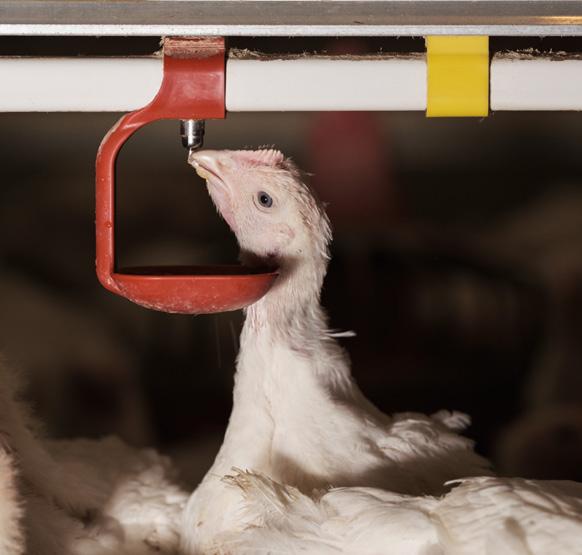
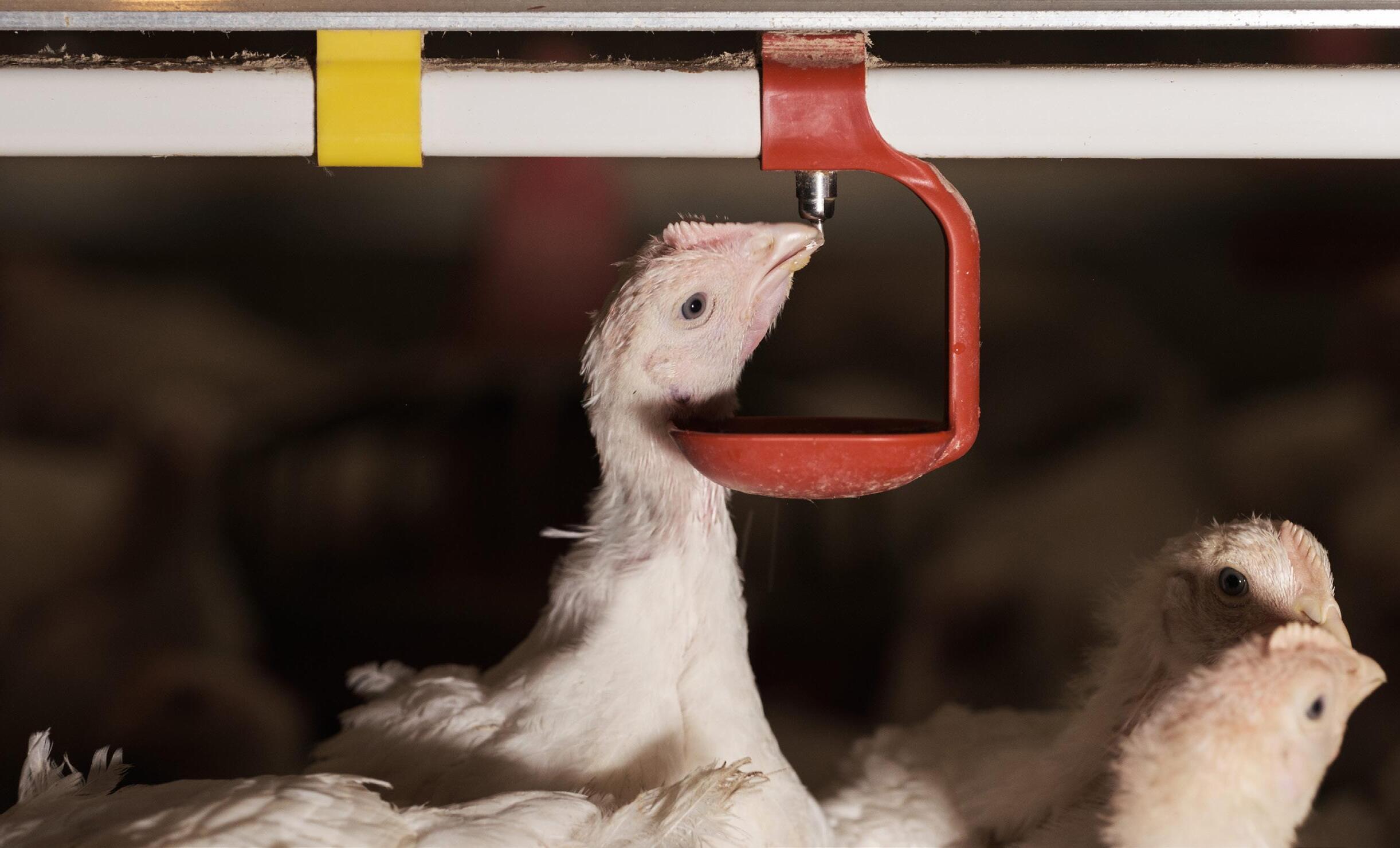
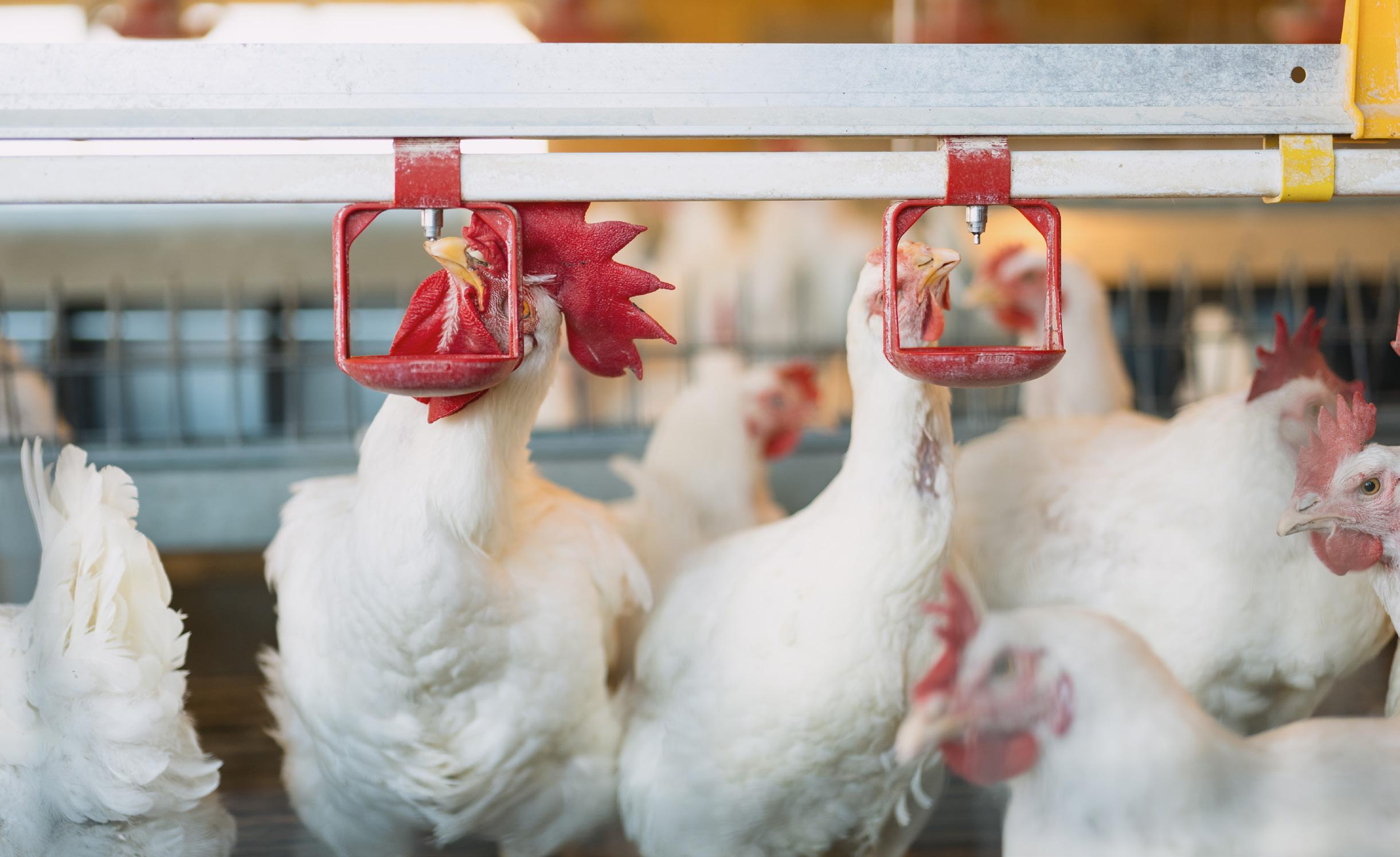
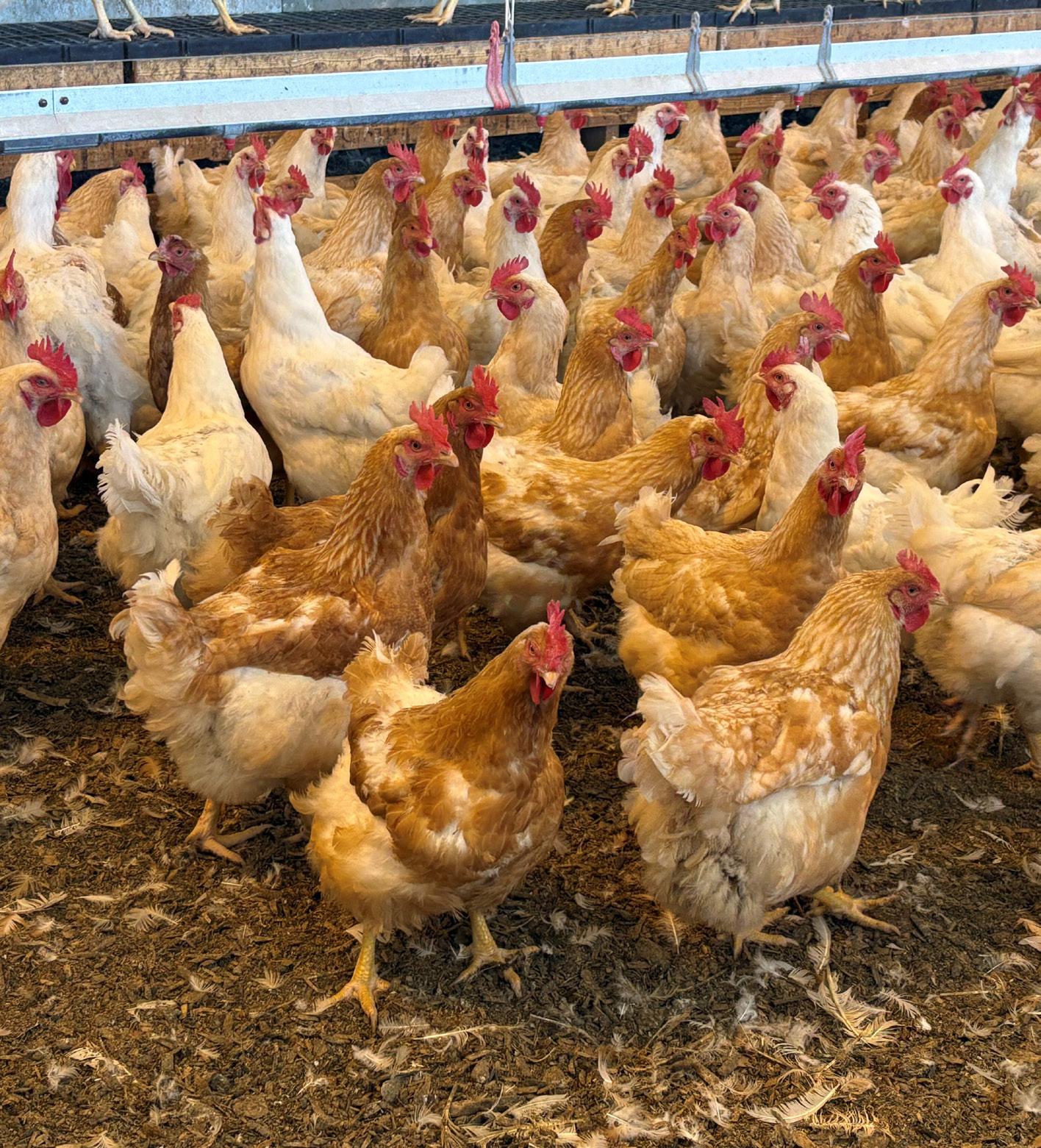
Clean, properly managed drinking systems can significantly improve broiler breeder performance and reduce mortality.
PHOTO: DAVID MCCREERY
DRIVEN BY GENETICS
IPPE LAYS SOLUTIONS AT
YOUR FEET
Crack open the future of poultry, egg, feed and meat innovation! From game-changing tech to global networking, this is where ideas hatch and you discover thousands of innovations for your business directed at bird health, housing, logistics, packaging and more.
Jan. 27 - 29, 2026
& JOIN US
Meller Poultry Equipment Inc.
826 Nanticoke Creek Parkway, Jarvis, Ontario, N0A 1J0
Call us on: 519-587-2667
Or visit our website: www.mellerpoultry.ca
Authorized dealer VDL Jansen VDL Agrotech
CHAINOVATION - CHAIN FEEDING SYSTEM
The Chainovation chain feeding system can be used for a wide range of applications, enabling the most effective set-up for every type of poultry house (breeders rearing, production and layers). The Chainovation chain feeding system, developed in cooperation with breeding associations, is an extremely reliable system. Feed can be distributed at various speeds (max. 3000 kg/hour) through the feed trough, giving all the birds almost simultaneous access inside the poultry house and promotes animal welfare and animal health.
The Matrix feeding system for males improves animal health and welfare, as there is more space and comfort for the males. The males eat simultaneously and receive equal portions of feed. They eat side by side, this is less stressful for males and females.
The Rotra mini spinfeeder to distribute small portions of feed in the scratch and litter area of poultry houses. Aimed at improving wellfare by stimulating natural behaviour, resulting in better technical performance. The Rotra mini spinfeeders are made of durable material, including a stainless steel rotating disc, galvanized steel frame and synthetic outlet with feedstorage tube.
and viruses. These organisms adhere to the water line surface and are not removed by normal water flow. I collected all swab samples from the ends of the lines to ensure representative results.
Performance results
I analyzed live performance parameters including male and female mortality, peak production percentage, hatch percentage, total eggs per hen housed, feed pounds per dozen eggs, and cull egg percentage. Perhaps the strongest correlation found between water quality and performance was that of hen mortality and the APC of the swab sample. Figure 1 (see online) shows this correlation to be true at thirteen of the fifteen complexes tested. APC is measured in colony forming units (CFU) per millilitre. One CFU is one live, viable bacterium capable of reproduction.
Dr. Susan Watkins, a distinguished professor and poultry researcher at the University of Arkansas, has led extensive work on water quality and flock health. Her research has established a target of less than 10,000 cfu/ml in swab samples and a maximum level of 100,000 cfu/ml. Figure 1 (see online) shows increasing
hen mortality over the course of a flock as biofilm levels of bacteria increase. This can be corrected through cleaning of the water lines between flocks and a daily water sanitation program that could include chlorine, chlorine dioxide, hydrogen peroxide or UV light.
Coliform contamination
Coliforms are a type of bacteria universally present in the gut of warm-blooded animals. When found in water, they indicate contamination, usually from feces. This contamination affected performance of broiler breeder hens, increasing hen mortality and feed pounds per dozen eggs, while decreasing peak production and total eggs per hen housed (Figures 2, 3, 4 and 5 – see online).
I managed coliforms using the same bacterial control strategies but also investigated the source of contamination. One of the most common sources was a well head located in a pasture. The area around the well head can become a shallow depression that collects rainwater, which seeps down the outside of the well casing and enters the well. If manure is present in the pasture, this can introduce coliforms
into what would otherwise be a clean well. It’s important to note that E. coli is a type of coliform. Fortunately, very few farms contained E. coli in the water, but whenever it was found at any level, production suffered on that farm.
pH and sodium effects
I found that the pH of the water also affected hen performance. Peak production percentage, hatch percentage and total eggs per hen housed were all maximized when pH was about 7 (neutral). As water became either more acidic or more basic, performance declined (Figures 6 and 7 –view online).
Water pH can be lowered through acidification and raised through the addition of products like soda ash.
I also observed that sodium affected hen performance by decreasing peak production and total eggs per hen housed, while increasing feed pounds per dozen eggs (Figures 8, 9 and 10 – see online).
Proper sodium levels for chickens have been estimated by various researchers as a maximum of 50–150 ppm. Reducing or removing sodium is best accomplished using a reverse osmosis system. Watkins’ research also showed that chickens can absorb nutrients through the water equally as well as through food. Therefore, a strategy may be to reduce sodium levels in the feed.
Putting it all together
This data was not compiled through controlled, scientifically designed trials. Rather, it compares performance to each farm’s water content and identifies trends and commonality. Other factors such as environment and management also affect performance.
Poultry production requires four inputs: feed, light, air and water. A lot of thought and effort is put into feed formulation as well as lighting and ventilation programs. A grower who wants to be successful and maximize production must put that same thought and effort into a water program.
Dr. David McCreery joins CSA Animal Nutrition as Poultry Nutritionist.
Properly managed drinking lines support healthier broiler breeders, reinforcing the study’s findings on water quality and flock outcomes.
Our Holiday Thanks to Turkey Farmers
Wishing you a wonderful holiday season with Canadian turkey. Thank you to the farmers whose hard work brings locally raised turkey with high food safety and animal welfare standards to tables across the country.
Nos Fêtes grâce aux éleveurs de dindons
Nous vous souhaitons un merveilleux temps des Fêtes avec le dindon canadien. Merci aux éleveurs qui, grâce à leur travail acharné, font en sorte que le dindon élevé localement respecte des normes élevées de salubrité des aliments et de bien-être des animaux partout au pays.
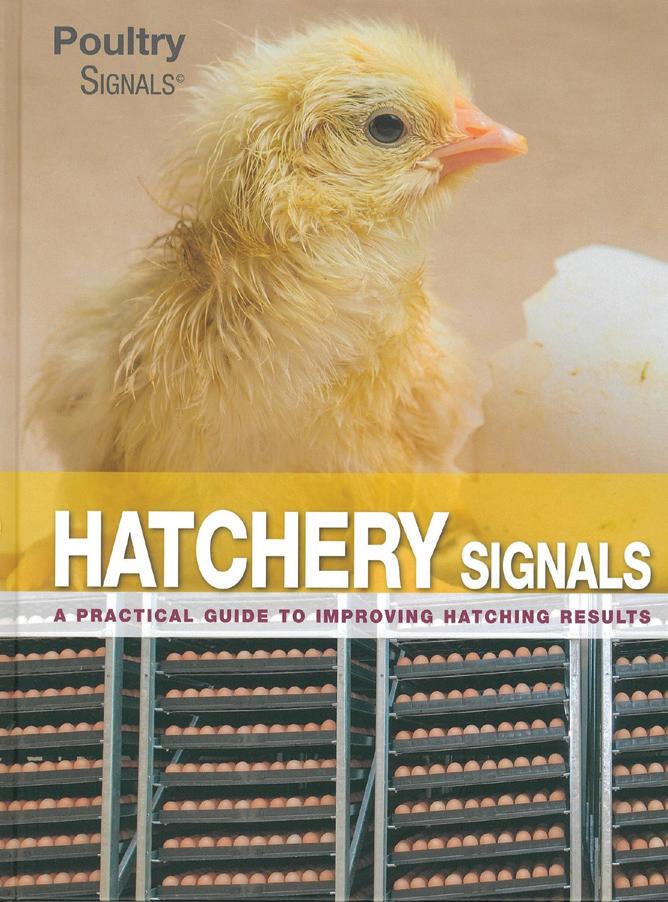
Good hatchability and optimal chick quality is the result of a sound basic knowledge of climate control techniques and the biology of the avian embryo. Hatchery Signals shows the art of the incubation process. Based on the look-think-act approach, it provides practical tools and insights to further improve and optimise hatch results, chick quality and offspring performance in a commercial hatchery environment.
Hatchery Signals is essential for hatchery workers, breeder farm managers, broiler farmers, advisors and students.
Building Bridges
By Crystal Mackay
Reflect and connect
As this year comes to an end, it is a great time to reflect and recharge personally and professionally. Do you make New Year’s resolutions or perhaps set some annual goals for you, your farm or business? How did you score on progress towards those goals?
When I look back on the January 1st version of me, I barely recognize that unrealistically ambitious woman! It seems the new normal is “so many things to do with so little time,” with new demands added to our lists regularly. Now is a great time to carve out some time for you and reflect on your year and the progress you have or haven’t made, whether planned or unexpected.
Check in on your relationships
This should include a quick check-in on business and personal relationships. How many bridges have you built or crossed together with other people?
Are you overdue on a call or visit with someone you keep meaning to “get around to”?
It’s a great time to recharge and fuel up, and the best way to do that is by connecting with others. I know my introverted friends will disagree, saying they prefer the barn or the birds and someplace quiet! While we can and should charge our internal batteries with quiet time, our positive
energy also needs to be fueled with connections with others.
Investing in people
I firmly believe we are all in the people business, regardless of your job title. It’s best summed up in the book title by Porter Gale, Your Network Is Your Net Worth . Gale advocates that a network of authentic relationships is one of the most important assets one can have – for financial gain and for overall success and happiness.
“A rising tide lifts all boats.”– J.F.
Kennedy
We created our business, LOFT32, in 2019 with the goal to elevate the people who work in agriculture and food. My partner, Maggie Van Camp, and I thought about what problems we could solve and what difference we could make to help the agri-food sector grow
and thrive. The definitive answer was to invest in people –with training and resources to increase confidence and collaboration, their farms and businesses will be more successful.
Level up your connections
Do you feel you need to grow your network and level up your connections? The best place to start is to make it a priority and show up. Here are a few hints:
• The gold star standard for connection is in person, and even better with some food or drinks. Phone and online forums can work too, but take a little longer
• Go where the people are that you should know, or create opportunities to get to know them
• Go beyond the weather
and business transactional talk to share some interest in them as humans
• What’s exciting in their world? What are they most proud of? What interests or values do you have in common? And for those of you who have a great network and deep list of solid relationships in the poultry industry, take a look around you. Who are the future farmers and business leaders in the poultry sector? How can you help them level up and get to know more people?
So while you’re doing your year in review, don’t forget the social capital and priceless value of good people and community around you. I sincerely hope you are rich beyond measure.
Crystal Mackay is CEO of LOFT32 and co-founder of UTENSIL.ca, the unique online toolbox of training resources for people in agriculture and food. She is passionate about fueling the people who feed the world and delivers this message on connection and collaboration as a keynote speaker and trainer.
Building meaningful connections can fuel personal well-being and strengthen agriculture’s workforce.
*Protection against GA08, GA13 and DMV/1639/11 IBV types.
A live monovalent bronchitis vaccine. Every droplet of Cevac IBron™ carries a tidal wave of protection against the DMV isolates of the avian infectious bronchitis virus. This live, monovalent bronchitis vaccine can be administered using coarse spray application or the gel spray route for rapid uptake.
Cevac IBron™ is the latest example of Ceva’s continual commitment to research and innovation, both today and in the future. Contact your Ceva representative today to turn the tide on avian infectious bronchitis, with IBron™.
Introducing Poulvac® Procerta™ HVT-IBD. Timing is everything in a poultry operation, and Zoetis created its newest vector vaccine to put time back on your side. Backed by the latest science resulting in excellent overall protection, studies found that Poulvac Procerta HVT-IBD protected chickens fast against classic IBD and AL-2.1-3 It’s a quick way to full protection from infectious bursal disease. Contact your Zoetis representative or visit PoulvacProcerta.com.