
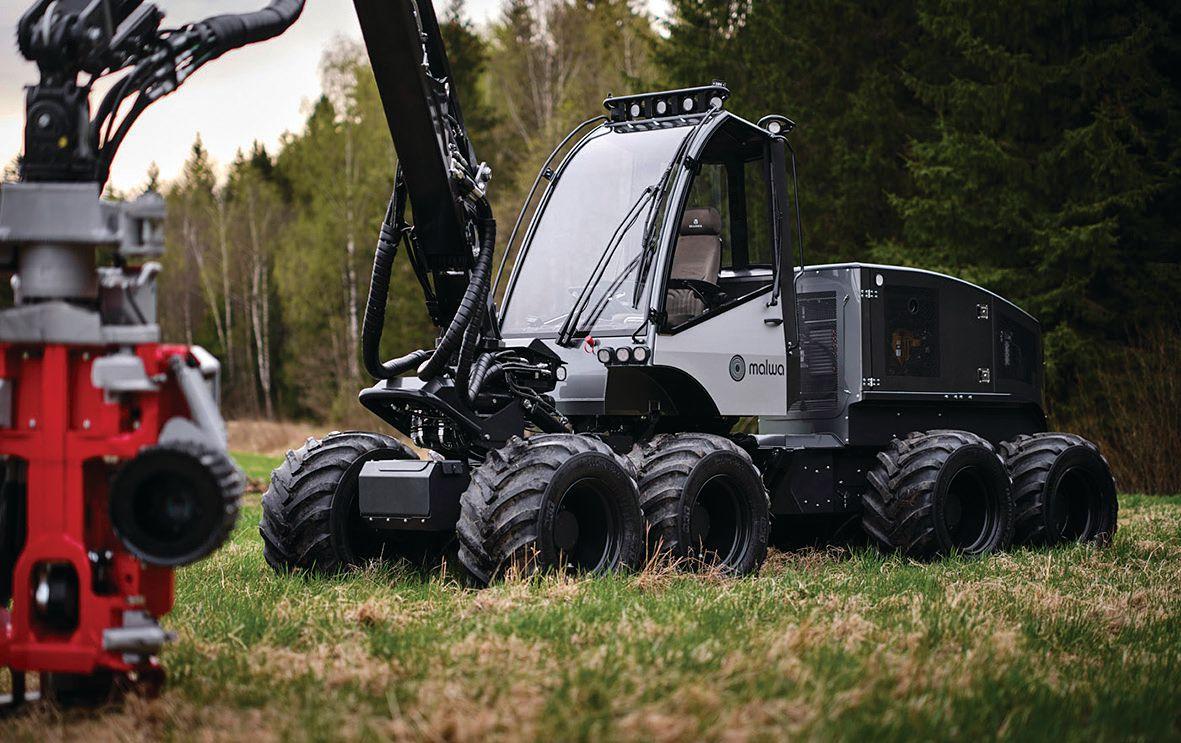

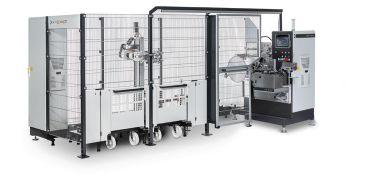
With ‘ecological forestry’ being the topical word and taking the forefront in silviculture discussions, trends today are leaning towards optimizing and salvaging small diameter wood fiber, the question still remains, how can this be done efficiently? Malwa Forest AB has the answer. Over the past few years, Malwa has developed standoperating purpose-built wheeled machines that have proven to be productive and viable.
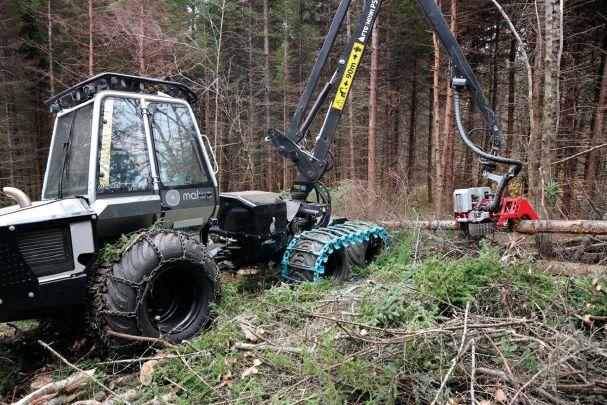
Whether the prescription is thinning plantations with rapid growth, naturally overstocked stands or storm-felled damaged forests, you now have the ability to process stands more efficiently while consuming less fuel.
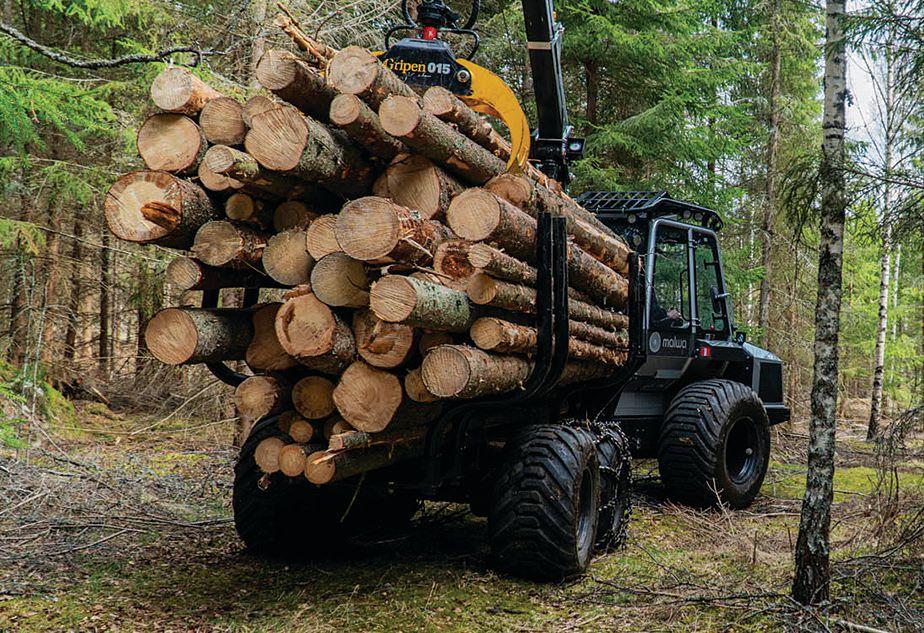
Experience versatility and a much gentler, more effective final harvest or thinning process while minimizing ground disturbance.
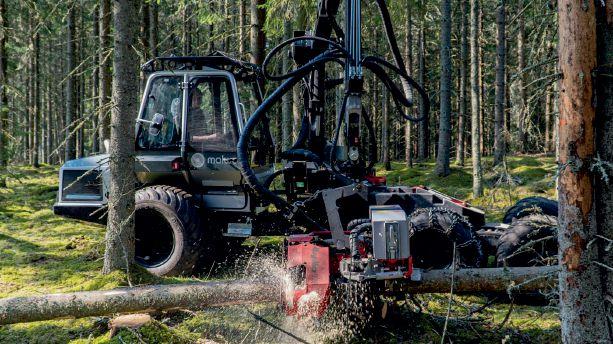
Invest in your forestry future- ‘weed the garden’, encourage tree growth and improve the overall health of your forest with Malwa.
For more information on the Malwa product line, please contact Log Max Forestry Inc. at 506-869-2325.

www.malwaforest.com
www.logmax.com










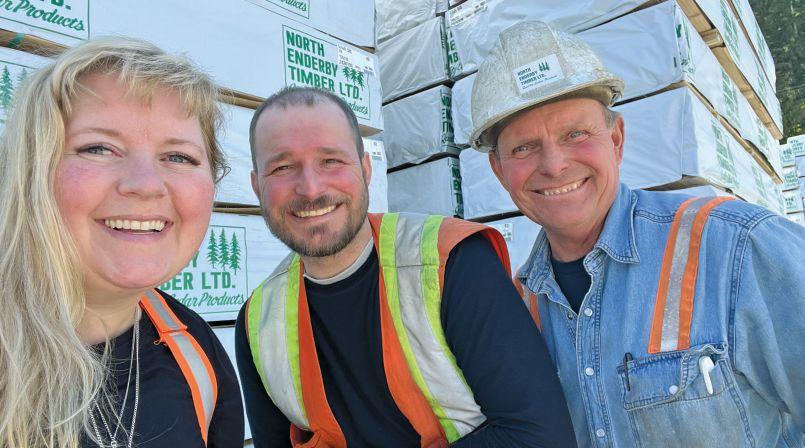
North Enderby Timber, a multi-generational family-run sawmill in Enderby, B.C., discusses its past, present and future goals.
CCR building a business case for biomass harvesting. A
Coopérative Ferland-Boilleau acquires Lac-Saint-Jean Sawmill.
Tariffs from the perspective of a European sawmill owner in Canada.
Celebrating 80 years of innovation.
B.C. Saw Filers Convention coming to Kamloops.
Today’s plate needs to be as perfect as possible.
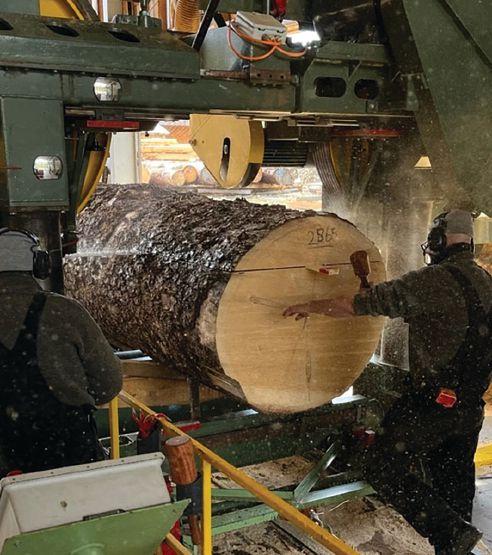
North Enderby Timber has been generating employment and supporting Enderby, B.C. for 40 years. For the full story, turn to page 18. Photo: North Enderby Timber.

Will B.C.’s Minister of Forests help the ailing sector?
To put it politely, the current Government of B.C. and the forest sector have not always gotten along.
Canadian Forest Industries
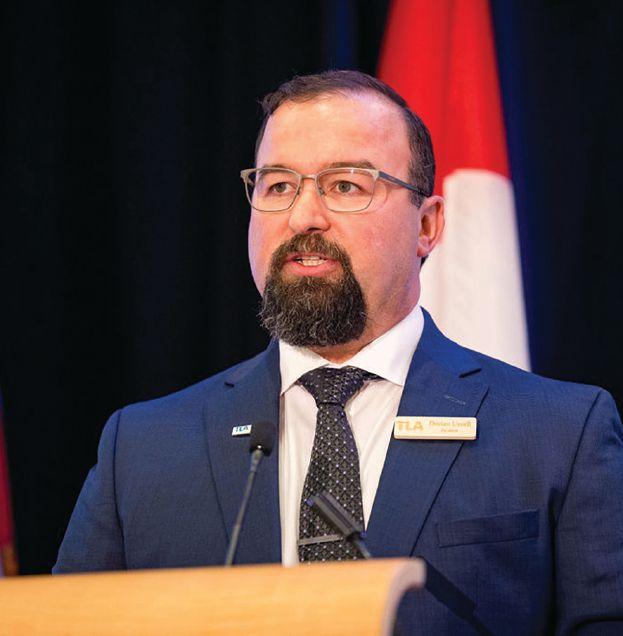
Many professionals in the forest products sector have stated that the province’s policies have hampered the forestry sector’s ability to grow. One of those people is Truck Loggers Association (TLA) president Dorian Uzzell, who stated, “B.C. policy that is being implemented is creating inefficiency, leading to the creation of uneconomical forests to operate in. And one has to wonder if perhaps this is the agenda of those opposed to forestry in B.C.,” during the TLA’s 80th Convention in Vancouver earlier this year.
During the same convention, the Government of B.C.’s new Minister of Forests Ravi Parmar spoke to the TLA membership and acknowledged their frustrations and concerns.
“We know that you are frustrated with the Premier, with government, with policies. We know that you’ve got concerns and frustrations, and I want you to know I get it. It’s one of the reasons why I asked for this job,” Parmar told the crowd. “As far as I’m concerned, I’ve got one job, and that is to get this industry back on its feet. So, the real question we should be asking ourselves is how do we do that?”
Parmar stated that politicians need to look beyond the four-year political cycle to ensure a healthy forestry sector for generations to come.
“What do we want our forest sector to look like 100 years from now? For me, early on in this role, I’m looking for a forest sector that puts people and communities back at the heart of forestry. I’m talking about your workers. I want to be able to stand here a year from now and say that in the face of challenges, of adversity, of uncertainty, we work together to bring forestry right to the top and instead of letting change happen to us, while hurting workers and families in the process,” he said.
The challenges facing B.C.’s forestry sector were also mentioned in Parmar’s speech, including uncertainty regarding softwood lumber duties; record
numbers of wildfires; the end of the beetle kill harvest; and conservation measures affecting annual allowable cuts (and now additional U.S. tariffs can be added to the list).
Parmar stated the government is increasing its efforts to support the forest sector by increasing the rate of salvage logging of wildfire damaged wood in the fibre recovery zones on the B.C. coast, and by reducing raw log exports close to 60 per cent, protecting local jobs.
Discussing long-term planning to protect and grow a sustainable forestry sector, Parmar stated that the government is working through its forest landscape planning tables, working alongside industry, First Nations communities, and labour, to “establish a new balance between addressing forest sector needs and keeping our forests healthy and productive into the future.” The forest landscape planning tables have allowed for new fibre harvesting opportunities within the central and north regions of Vancouver Island, Parmar added.
The minister also announced that a review is underway of BC Timber Sales (BCTS), which manages 20 per cent of the province’s AAC for Crown/public timber across 33 communities. Parmar stated that he has assembled a task force to work with him to find opportunities to “leverage BCTS to set B.C.’s forest sector up for the next 100 years.”
He added that the B.C. government will be doubling the amount of BCTS volume dedicated to value-added manufacturers from 10 to 20 per cent, and that will account for 1.1. million cubic metres in 2025.
While Parmar appears to want to genuinely help support B.C.’s forest sector, the New Democratic Party of British Columbia have not had the best track record for showing support for the ailing sector. Will the new Minister of Forests help the B.C. forest sector turn things around, working with industry to find ways to build towards long-term economic sustainability? Only time will tell.


Forest products associations and producers from across Canada have been dealing with the news of potential 25-per-cent tariffs on all exports announced by U.S. President Donald Trump earlier this year. These tariffs would include forest products that are already subject to 14.54-per-cent tariff rates imposed by the U.S. Department of Commerce, which already raised the tariff rates on imports of Canadian softwood lumber products from 8.05 per cent to 14.54 per cent in August 2024.
“The U.S. President’s move to place broad-based tariffs on Canadian exports is unjustified and unilaterally breaks the terms of the existing US-Mexico-Canada Agreement. It is also deeply disappointing in that it runs counter to the principles of trust and collaboration that the Canada-U.S. relationship has been built on for generations,” stated Forest Products Association of Canada president and CEO, Derek Nighbor, who added that the tariffs will damage “a long- and well-functioning integrated forest products supply chain that runs two ways and benefits Americans and Canadians alike.”
The Ontario Forest Industries Association (OFIA) has deep concerns regarding the tariffs, as almost all the province’s forest products are sold in the U.S.
“Ontario’s forest sector is highly trade-exposed, exporting $7.9 billion CAD globally in forest products annually. Of these exports, 97 per cent go to the United States,” said Ian Dunn, president and CEO of OFIA.
J.D. Irving stated that the additional 25-per-cent tariff would have a major impact on the forest sector across New Brunswick.
“More than 80 per cent of New Brunswick’s forest products exports cross the U.S. border and include softwood and hardwood lumber, pulp and
paper products, shingles, fibre and oriented strandboard, and even Christmas trees. For U.S. customers, tariffs will lead to higher prices and could lead to fewer choices for Canadian forest products,” the company stated. “It will also create business uncertainty on both sides of the border and will drive up costs for building materials and everyday household products for Americans.”
The BC Council of Forest Industries also stated its opposition to the tariffs and stated that it’s “a move that threatens the competitiveness of B.C.’s forestry sector, jobs in local communities, and the affordability of essential goods for Americans.”
U.S.-based associations have also stated concerns related to additional tariffs on Canadian forest products.
After President Trump announced a one-month tariff delay until April 2, 2025 for all products from Mexico and Canada covered under the Canada-United States-Mexico Agreement (CUSMA), the National Association of Home Builders (NAHB) was successful in securing a lumber inclusion in the delay of Mexican and Canadian tariffs, despite there being no specific language in the CUSMA addressing Canadian softwood lumber.
“If the new tariffs on Mexico and Canada go into effect next month (the tariffs on China have already been imposed), they are projected to raise the cost of imported construction materials by more than $3 billion. NAHB has received anecdotal reports from members that they are planning for tariffs to increase material costs between $7,500 and $10,000 on the average new single-family home,” NAHB stated, adding that it opposes tariffs because of their detrimental effect on housing affordability.
“In effect, the tariffs act as a tax on American builders, home buyers and consumers,” the NAHB stated.
Reader Service
Print and digital subscription inquires or changes, please contact Angelita Potal, Customer Service Tel: 416-510-5113
Email: apotal@annexbusinessmedia.com
Mail: 111 Gordon Baker Rd., Suite 400, Toronto, ON M2H 3R1
EDITOR - Andrew Snook (416) 510-6801 asnook@annexbusinessmedia.com
GROUP PUBLISHER - Anne Beswick (416)510-5248 • Mobile: (416) 277-8428 abeswick@annexbusinessmedia.com
ACCOUNT COORDINATOR - Shannon Drumm (416) 510-6762 sdrumm@annexbusinessmedia.com
MEDIA DESIGNER - Alison Keba akeba@annexbusinessmedia.com
AUDIENCE DEVELOPMENT MANAGER Barb Adelt (416) 510-5184 badelt@annexbusinessmedia.com
NATIONAL SALES MANAGER - Josée Crevier Ph: (514) 425-0025 • Fax: (514) 425-0068 jcrevier@annexbusinessmedia.com
WESTERN SALES
Tim Shaddick 1660 West 75th Ave Vancouver, B.C. V6P 6G2 Ph: (604) 264-1158
Kevin Cook lordkevincook@gmail.com Ph: (604) 619-1777
CEO - Scott Jamieson sjamieson@annexbusinessmedia.com
PUBLICATION MAIL AGREEMENT #40065710 RETURN UNDELIVERABLE CANADIAN ADDRESSES TO CIRCULATON DEPARTMENT.








CIRCULAR SAW GUIDES
BAND SAW GUIDES
HAMMERS
ARBORS
SLEEVES
3-PHASE MOTORS
PLCs
HMIs
CIRCULAR SAWS
BANDSAWS

Saw Grinding
Saw Tipping
Tensioning & Leveling
Knife & Surface Grinding
Saw Guides
Saw Guide Design & Engineering
Saw Working Tools
Consumables & Accessories

DEBARKER PARTS
CHAINS & ROLLERS
CHIPPER ANVILS
J-HOOKS
PULLEYS
SHEAVES
SHREDDER TIP
SAW PLATES

HOLLOW GROUND CIRCULAR SAWS


PRESS DOWN ROLLS
PINEAPPLE ROLLS
KNURLED ROLLS
KILN WHEELS
KILN TRUCKS
MILL CHAIN
DOUBLE END CHAIN
SHARP CHAIN

SAW SHARPENING
CHIPPER PLANER KNIFE GRINDING
RE-TIPPING & BALANCING
HOLE SAWS
CHIPPER & PLANER KNIVES
DIAMOND WHEELS
SPECIALTY CUTTING KNIVES & TOOLS
TONGUE & GROOVE CUTTERS
ROUTER BITS
HOLE SAWS
HOLE SAWS
SAW TENSION & LEVELING
GRINDING & BORE MODIFICATION
TOOL REPAIRS
ROTARY SURFACE GRINDING
TOOL SHARPENING
CUSTOM MANUFACTURE KNIVES
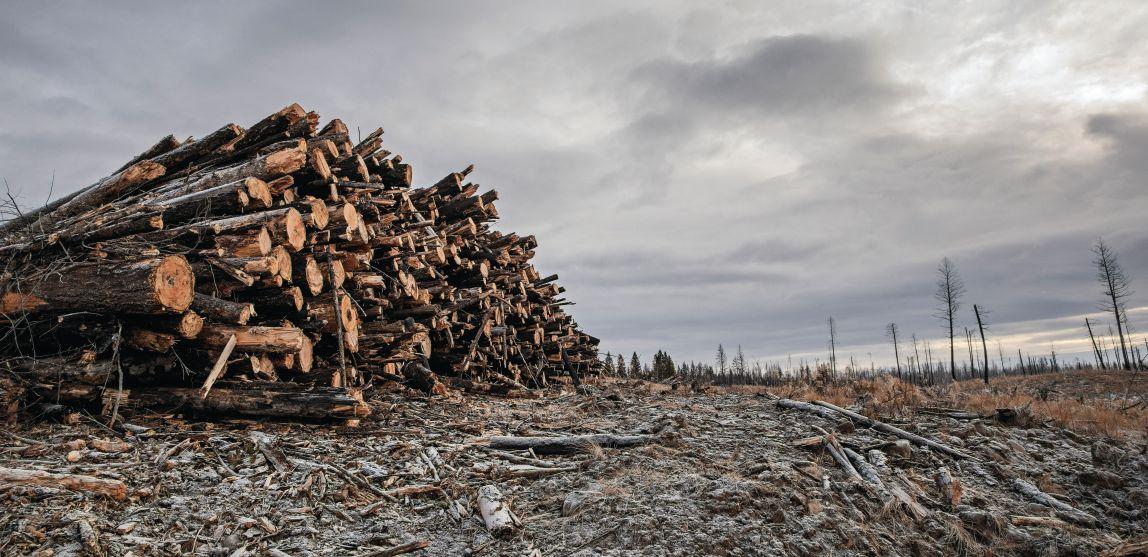
CCR is rehabilitating forests while building a business case for biomass harvesting in the B.C. Interior
BY ANDREW SNOOK
Anyone living in a remote, heavily forested community in British Columbia is well acquainted with the mountain pine beetle, and the destruction it has brought to the province’s vast forests. Couple that with the past decade’s record numbers of forest fires, and the rehabilitation efforts necessary to transform these burnt stands of dead trees to productive forests becomes a massive undertaking.
Despite how daunting this task appears, there are companies and communities working diligently on returning their forests back to their natural splendor. One of those companies is Central Chilcotin Rehabilitation Ltd. (CCR), which was formed in the spring of 2017 to address more than 100,000 hectares of
dead pine in the Chilcotin region and to rehabilitate those stands into productive forests.
CCR was started up by two First Nations communities, Tŝideldel First Nation and Tl’etinqox Government, with the help of a $3.4-million grant from the Forest Enhancement Society of BC (FESBC) to help rehabilitate mountain pine beetle- damaged forests near Alexis Creek, a little over 100 kilometres west of Wiliams Lake in the heart of the B.C. Interior.
“We were able to get funding to start some projects focused on the rehabilitation among mountain pine beetle because there are thousands of hectares out there that are not being rehabilitated that are low value, beetle-infested, and have other diseases, so
no logging company would go in and harvest those areas,” explains Percy Guichon, executive director of CCR. “We were able to get some funding to go in with equipment to remove the dead trees and utilize the fibre that was left. But more importantly, it was about trying to get the area back up and productive as soon as possible because it wasn’t doing anything. It was a wildfire hazard, and wildlife were not really using it.”
CCR’s focus on how it rehabilitated forests changed dramatically in the summer of 2017 when the B.C. Interior experienced the massive Plateau Fire.
“It really changed the scope of what we were doing. While we remain dedicated to rehabilitation, our focus has shifted to addressing the urgent situation of rehabilitating the burned stands,” Guichon says. “The Plateau Fire was around 800,000 hectares. So, we felt that we needed to adjust and pivot there and try to focus on utilizing the fibre.”
Some of the stands destroyed were comprised of Douglas fir trees, which did not have a long life after the fires (three to four years) for the sawmills to utilize the fibre before they became worthless.
“It was about utilizing that burnt wood and replanting those areas, trying to get it back up and growing as soon as possible,” Guichon says. “We were heavily dependent on FESBC funding to carry out a lot of our projects.”
CCR successfully applied for additional funding
through the FESBC and was awarded approximately $34 million in additional grant funding, which was instrumental in the company’s rehabilitation efforts. The company also has a long-term agreement in place with Natural Resources Canada through the 2 Billion Trees Program. Additionally, at the end of 2024, the Yunesit’in Government joined the First Nation partnership and added its massive traditional territory to the collective.
“That’s really been helpful to help us continue our work and plant as many trees in Chilcotin as we can,” Guichon says.
CCR is now evolving into the primary forest management entity for its three First Nation owners, taking the lead in all land-use planning initiatives with the Province of British Columbia. This develop-
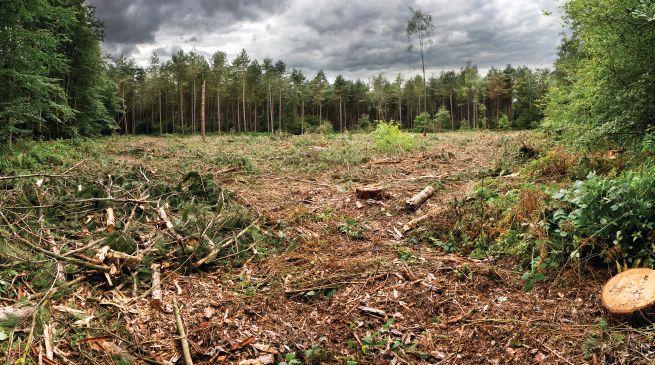
CCR’s focus on how it rehabilitated forests changed dramatically in the summer of 2017 when the B.C. Interior experienced the massive Plateau Fire.







ment signifies CCR’s growing role and responsibility in managing forest resources and ensuring sustainable practices.
The company’s forestry operations are supported by several local partners, including Tsi Del Del Biomass Ltd, Dechen Ventures, Consus Management Ltd., and Eniyud Community Forest. These collaborations help CCR implement effective forest management strategies and contribute to the overall health and sustainability of the region’s forests.
Daniel Persson, forestry superintendent of CCR, says the secret to their success is that they think outside the box and are willing to take on the hardest jobs.
“We do projects that nobody else will,” he says. “CCR is a company that takes risks to do what we need to do.”
Persson says taking on these economic risks to utilize the wood in heavily damaged stands with low economic value while returning the forests to productive stands is a big challenge.
“The runway to get this to work is so short that nobody’s done it before. We’re taking on projects that are pretty hard to pull off and taking a lot of risk doing it. We’re working with equipment. We’re working with fibre sales, and we’re going through hundreds of thousands of dollars from one month to the next,” he says.
Rehabilitating damaged forests can be costly and presents the dilemma of managing the dead fibre removed from the stands. Traditionally, this dead fibre would be piled and burned to reduce fuel loading in the new forest. However, CCR has challenged this approach by seeking alternative uses for the fibre.
“We felt we might as well branch off a little bit and experiment with the biomass, reduce emissions into the atmosphere, utilize slash piles and create jobs,” Guichon says. “Williams Lake is well positioned to have options for where we can send our biomass.”
The main biomass buyers are the Drax Williams Lake Pellet Plant, Atlantic Power, which buys hog fuel to generate power, and pulp mills in Kamloops and Quesnel. The most challenging aspect of the biomass business has been building capacity.
“We’re doing something new that’s definitely made an impact in our communities in terms of training and creating long-term employment, and so, that definitely helps reduce social issues in our communities,” Guichon says.
Joe Webster, manager of Tsi Del Del Biomass, says the expansion of CCR into the biomass sector was a natural progression for the company.
“As Tsi Del Del Biomass proved to be competent and were able to fulfill contracts on time and deliver, it was easy to do because, as I always say, ‘If you build it, they will come.’ That’s what happens in this
industry, especially with secondary manufacturers. If you’ve got fibre and can deliver it, they want it,” Webster says.
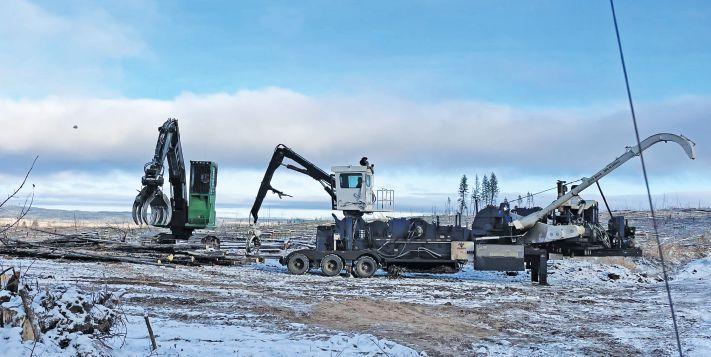
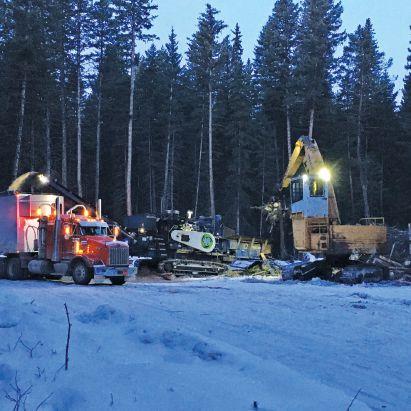
While the amount of biomass being harvested varies from year to year, Tsi Del Del Biomass typically processes in the range of 300,000 cubic metres annually. The company regularly operates three grinders – two Peterson 4710 horizontal grinders, a CBI 6800CT horizontal grinder, a Peterson 5000G mobile chipper, and 20 trucks hauling biomass.
The biomass division currently employs eight or nine people in the bush and around 20 truck drivers and contractors.
“It’s usually pared down a little bit smaller than that. I like to run a small crew and be able to spend the time with the guys as much as possible, just to make sure they’ve got what they need to do their jobs,” Webster says. “The senior guys have been around for a while. There’s not much management of them needed. You just keep giving them work, and they do the work. It’s pretty seamless that way.”
Finding skilled drivers for hauling biomass can be challenging.
“There are two types of drivers out there: a highway chip truck driver, and then there’s a log truck driver,” Webster says. “If you get a log truck driver, he refuses to shovel or do anything like that, but his skill off-highway far surpasses the highway driver. The highway driver will roll his tarps and shovel if the load is stuck, but their skill level in the bush or off-highway is lower.”
While challenges remain for growing the biomass side of the business, Webster says there’s plenty of opportunity to grow with the help of the Ministry of Forests to adjust permitting to assist with harvesting.
“In B.C., we’re running out of saw logs, but there’s no shortage of fibre for biomass. We have a glut,” he says. “If we can get the Ministry on board, and they’re definitely coming around, and maybe we adjust the permitting process… they’ll get it adjusted so that it works well for biomass.”
The main biomass buyers are the Drax Williams Lake Pellet Plant, Atlantic Power, which buys hog fuel to generate power, and pulp mills in Kamloops and Quesnel.
TRADITIONALLY, DEAD FIBRE WOULD BE PILED AND BURNED TO REDUCE FUEL LOADING IN THE NEW FOREST. HOWEVER, CCR HAS CHALLENGED THIS APPROACH BY SEEKING ALTERNATIVE USES FOR THE FIBRE.
BY ANDREW SNOOK
The Truck Loggers Association’s (TLA) annual convention and trade show in Vancouver this past January marked a massive milestone for the organization. The TLA has been giving independent logging contractors throughout British Columbia a voice for 80 years, pushing for a healthier forestry sector while sharing information with loggers to help them improve their methods and bottom lines.
“The TLA believes that a strong and sustainable working forest will generate long-term prosperity for the people of British Columbia, and that the people who work in our forests must share in that prosperity,” said TLA president Dorian Uzzell, who is also a partner of Wahkash Contracting in
Campbell River. “Our convention theme this year, ‘Advancing innovation for 80 years,’ was chosen because loggers have been key innovators in the forest industry since the evolution of logging began in the 20th century. We have a long and successful history using modern technology to transform logging into data-driven, precise operations; boosting productivity and safety; reducing environmental impact and enhancing sustainability.”
Uzzell acknowledged the uncertainty and challenges facing the forestry sector throughout B.C.
“The entire sector is suffering, and that should not be a surprise to anyone who follows the industry,” he told the crowd. “While the news of mill closures garners media attention, there’s little said
about the small, independent operators who employ a small number of people. These are our members who are downsizing and shutting down, and are the backbone of a healthy forest economy and the small rural communities of B.C. Policy that is being implemented is creating inefficiency, leading to the creation of uneconomical forests to operate in. And one has to wonder if perhaps this is the agenda of those opposed to forestry in B.C.”
He stressed the need for the entire B.C. forestry sector to be operating in a healthy manner to ensure success.
“The sector needs to be viewed as having a symbiotic relationship across the entire supply chain. Otherwise, instead of having the have and have-nots of the past, we will all become the have-nots,” Uzzell said.
One of the highlights of the conference was the Leader’s Luncheon with keynote speaker Premier of British Columbia David Eby.
The Premier offered the crowd a response to U.S. President Donald Trump’s decision to apply 25-per cent tariffs on a wide variety of goods across Canada.
“For our B.C. response, there are three components. One is that we will respond. We’re standing shoulder to shoulder with Premiers across the country to say, ‘If you’re going to do this to our families, you’re going to feel it, too.’ We’re supporting retaliatory tariffs against key Republican districts in the United States to make sure that those decision makers understand the influence and impact of Canadian consumers on key products,” he told the crowd.
Eby added that his government is also advocating that the federal government consider export taxes, or restriction on exports, of key commodities in a strategic way to minimize impact on B.C.’s economy and maximize the impact on key American districts.
The second component of the province’s response was of great interest to the crowd, which was strengthening the provincial economy by ensuring the acceleration of permit approvals to reduce bureaucratic delays in ensuring that resources are available, whether it is timber, metals, minerals, energy, or any

other land-based activity. Eby added that provincial governments are also working on removing internal trade barriers across the country.
The third component of the province’s response to the new U.S. tariffs is
diversification. Since many of the U.S. tariffs proposed are international in scope, other countries will also be looking for solutions, and Canada and B.C. can work together with those countries on those solutions, Eby said.
An interesting panel discussion about how to keep forestry contractors sustainable with less than 50 per cent of the allowable annual cut included a presentation by Chris Duncan, MNP partner and national leader of forestry and forest products services. Duncan specializes in working with logging contractors, value added wood processors and various other forest-related businesses in B.C. and is a regular contributor to Truck LoggerBC magazine.
MNP was recently hired for a unique and challenging project: create an hourly rate for forestry equipment and then tie in productivity to that as part of a second phase. The project was originally announced two years ago at the TLA convention in 2023. The project was announced as a co-project between the TLA, the Interior Logging Association (ILA)

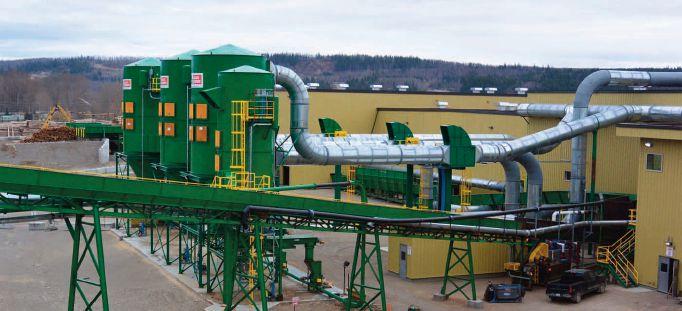
Allied brings 49 years experience to help you meet current NFPA Standards with: system design/documentation, spark detection, isolation, grounding, PLC, venting, blast path management, clean-up systems and duct audits — CWB certified and member SMACNA. Sawmill – Biomass – Boardplants – Pulp & Paper – Power Generation – Mining 50 years of Industrial Air Systems www.alliedblower.com
and the North West Loggers Association (NWLA), and would be partially funded by the Government of B.C. MNP was awarded the contract in the fall of 2024.
“The goal of the project is to support a balanced and transparent, trusting commercial relationship between contractors and licensees,” Duncan told the crowd.
“What we’re trying to do is create a model that will be a win-win for all parties involved, and we’ll continue to make sure that the contracting business and the forest industry can be a thriving and profitable business for all parties involved.”
The hourly rates will be based on validated capital and operating cost information, and then in Phase Two, will have productivity for a wide variety of equipment and processes that are used in the industry tied into the formula. The ultimate goal is to develop a dynamic and easy to use model that anyone in the industry can use, Duncan explained.
“It’s going to be an updatable database, so users will actually be able to input some of their own data to modify it, depending on the circumstances of their business and the productivity data is
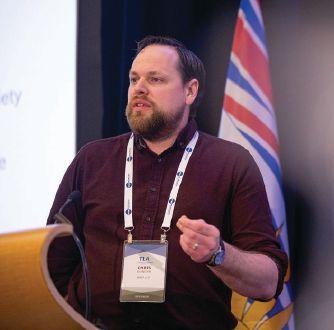
going to reflect a variety of situations and activities that are commonly experienced by contractors out in the field,” he said.
The model will be able to be used in all regions of the province to create an estimate of a fair rate, which could then be used for the basis of future negotiations.
“This will give everybody a starting point on negotiations to start talking when folks come to the table to determine logging rates,” Duncan told the crowd.
MNP plans on creating the model through a collaborative approach where everyone that’s involved in the industry has a part to play in the designing the rate model. To help build this model, MNP has formed an advisory committee with representatives from across the industry including logging contractors, contractor associations, the BC Council of Forest Industries (COFI), other licensees, and First Nations communities.
To help ensure the project has high-quality data, a random sample of contractors will be generated from a combination of TLA, ILA and NWLA member companies, as well as MNPs 400 contractors in forestry businesses across British Columbia.
“We’re building a random sample of contractors, so we’re not picking and choosing the contractors with the lowest numbers or the highest numbers. This is completely random chance, so that the accuracy of the data is that much stronger,” Duncan said.
The project will involve collecting the administrative data on the equipment (what the contractors are experiencing) as well as drawing from the equipment
The Northeast’s biggest and best forest industry show returns to Bangor, Maine in May 2025!
Thousands of hard-working people are planning to gather in May to conduct some serious business and to have some fun. The LOGGERS’ EXPO features a wide array of supplies and services, heavy equipment and trucks — for loggers and land clearers, tree care professionals and firewood dealers, sawmillers and landowners. This year’s show also features the Weiler Log Loading Competition, the Komatsu Forwarder Competition, and the famous Axe Women Loggers of Maine
MAY 16-17, 2025 CROSS INSURANCE CENTER, BANGOR, MAINE
For information about attending or exhibiting at the Loggers’ Expo: visit northernlogger.com email expo@northernlogger.com call 315-369-3078
Sponsored by
manufacturers’ telematics data and the data that the equipment manufacturers have on historical operations of their equipment.
“This will strengthen the financial data, because we’re using a variety of sources rather than just one source,” Duncan said. “We’re trying to remove any bias from the process.”
After the initial rates are created, the model will require regular updating moving forward to ensure contractors have the most up-to-date data available to be able to pull from.
The project will be completed over two phases.
“We’re currently in phase one, which is developing the model and the actual platform we’re going to use,” Duncan said. “We’ve gone out and reached out to our first group of contractors that have been randomly selected to provide information. We’re also having conversations with the equipment suppliers right now about telematics data and things like that. So ultimately, what we’re going to do in phase one will be building the industry list and selecting survey participants.”
The next step is designing the hourly rate model for the equipment, taking the collected data and inputting it into the model.
“After that we’ll be performing the validation of the rate model. So, that will be working with our advisory and working group panels to validate that the information that the model is giving us is actually accurate and usable,” Duncan said.
They are currently in the process of doing the survey while also concurrently building the online platform in which the users will be able to retrieve the applicable rates from. The online platform will likely be made available through the three participating associations.
“They’ll be accessible to their members, and then there will also be an Excel version that folks can put onto a laptop and take out where they want to, and a print version, which won’t have the same power as the interactive model that the Excel or the web-based platform will have,” Duncan said.
Phase one is expected to be completed by April 1, 2025. Once that goes live, the project will move into phase two, which is incorporating productivity. The second phase is expected to be complete by June
2026.
“Productivity has a lot more factors than just the equipment hourly operational costs. So, we will be taking a little bit more time on that part of the project,” Duncan said.
He reiterated to the crowd that if they have received an email requesting their participation in the survey that they consider being part of the project.
“I can’t reiterate enough, answer the surveys that are coming out of that, if you’ve gotten one. We’re also doing some
in-person interviews, if people aren’t as comfortable with computers,” he said. “Developing the model, that’s ongoing. It’s all parallel to the survey. We’re going to be moving into the validation process very quickly, and then we’ll have the interface, and hopefully by April 1, there will be a model out there working that the associations will announce. And then we’ll be moving into productivity, which we’ll see a whole other group reached out to, as far as contractors to start building productivity data.”
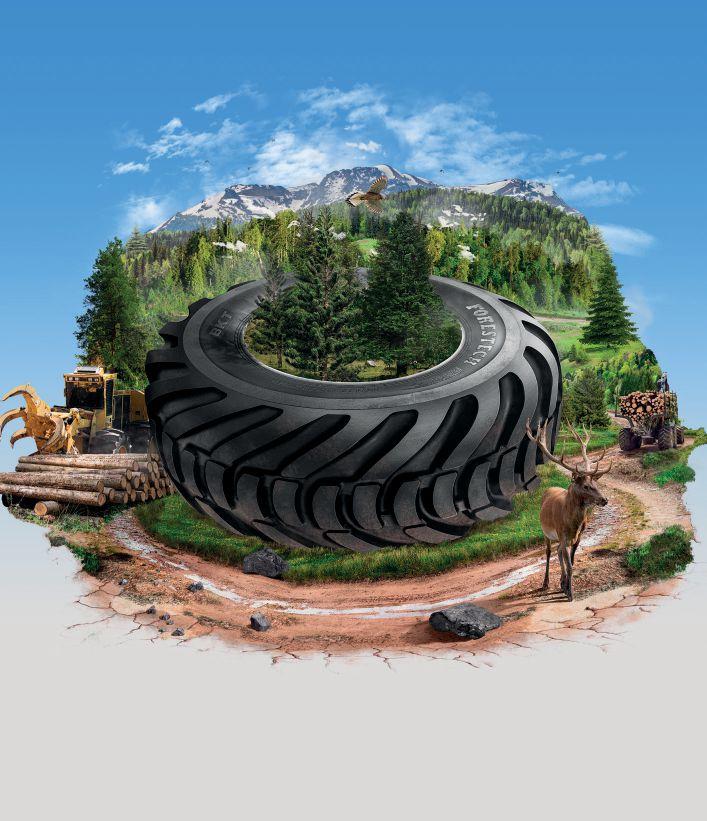
FORESTECH is a BKT bias steel-belted tire, suitable for forestry applications with forwarders. It provides excellent traction even in heavy-duty service and applications. Its strong bead and shoulder area ensure high puncture resistance as well as a longer tire life cycle. As a result, you can deal with the toughest working conditions in the forest without concern.
Choose the BKT range for forestry applications!
Eastern Zone Manager
Directeur
BKT Tires (Canada)
Cell: 514-792-9220
Web: www.bkt-tires.com
BY SARAH STOTLER
Like many other small, rural British Columbia cities, Enderby has a long and interesting history in the forestry industry. Going back to the 1900s and the early days of the city, log driving along the Shuswap River was the only way to transport logs to the town’s sawmills, which fuelled the city’s growth.
Starting at the local lakes, logs were driven into the mouth of the Shuswap River and then travelled downstream to Enderby’s sawmills. One difficulty the log drivers faced was the Shuswap River Rapids, locally known as “The Chucks.” To get the logs through them, the water’s depth had to be perfect. Too low and the logs would get wedged against the bottom; too high and the river’s fast current would wash the logs onto the riverbanks. Today, things in Enderby look a little different; logs are transported by truck, and any people floating down the Shuswap River are on inner tubes rather than logs. The river is very popular for tubing in the summer months! However, Enderby’s sawmill still plays a major role in the city’s economy and
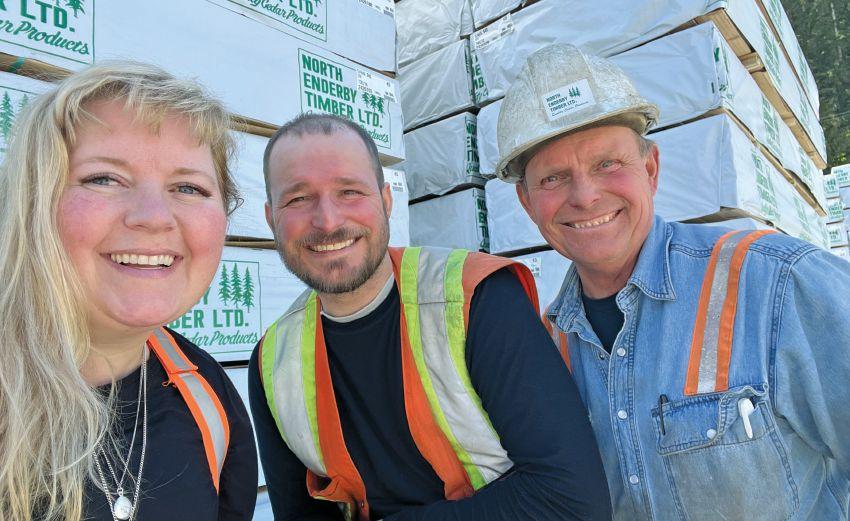
MAIN: (L to R) Benita, Cory, and Larry Poggemoeller. In 2020, Cory and Benita, became the third generation of owners for the family-run sawmill.
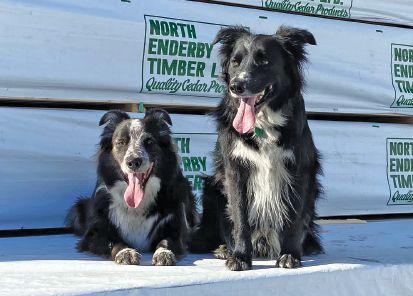
ABOVE: Operations at the mill are closely supervised by Benita and Cory’s two dogs, Deadbolt and Padlock.
community. North Enderby Timber is a major employer in Enderby and is highly involved in the local community.
North Enderby Timber was originally built in 1984, just a few minutes outside the city of Enderby, alongside the Shuswap River, by William Poggemoeller. The mill has been a family-owned and operated business for three generations. In 1985, William’s son, Larry, took over and expanded and modernized the operation. In 2020, William’s grandson, Cory Poggemoeller, along with his wife, Benita Poggemoeller, became the new owners. Cory is no stranger to the wood industry, he has been heavily involved in Richwood, a remanufacturing facility on North Enderby Timber’s sawmill site that produces patternstock, including tongue and groove panelling and beveled products, for many years. This March, North Enderby Timber celebrated a significant milestone – its 40th anniversary.
Enderby is situated halfway between the larger cities of Vernon and Salmon Arm, B.C., in a bioregion known as the Interior Wet Belt. It’s characterized by warm, wet conditions caused by weather systems from the Pacific Ocean moving inland towards the Columbia and Rocky Mountains. The Wet Belt creates forest ecosystems that closely resemble the lush coastal rainforests.
“Our location gives us access to very nice raw materials, additionally, it is a prime location to provide excellent logistical support to our customers, whether they are in Vancouver, Eastern Canada, or the U.S.,” Benita explains.
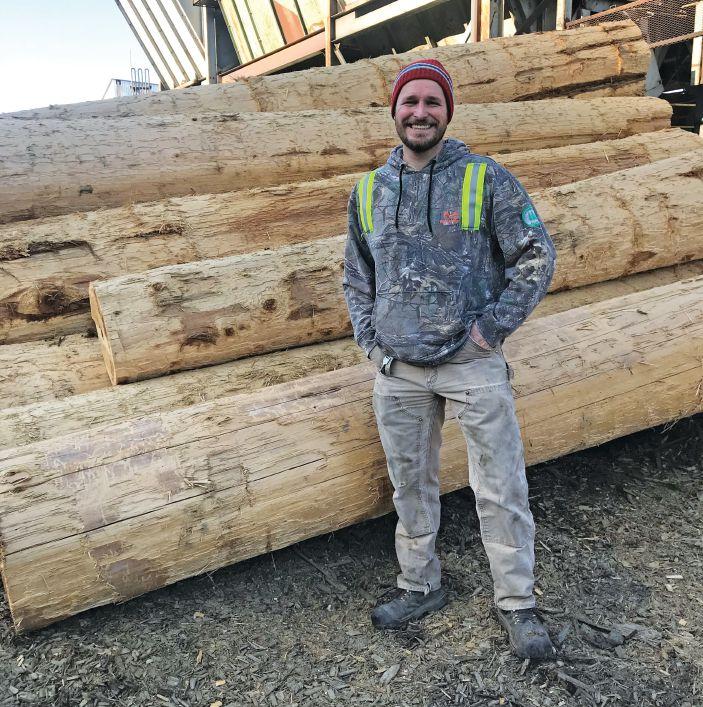
North Enderby Timber runs a single shift, and while it primarily processes secondgrowth Western Red Cedar, it also processes Douglas Fir and ESLP (Englemann SpruceLodgepole Pine) logs up to 27 inches at the large end. The sawmill produces blanks for North Enderby Timber’s decking program and its remanufacturing plant. Products, which include 5/4x4, 5/4x5, and 5/4x6 decking, 2x4, 2x6, and 2x8 decking, as well as premium Douglas Fir boards, primarily remain within the Canadian market. Benita remarks, “As a family-run business, we are dedicated to meeting our customer’s needs. Since we run a small team, we are able to

maintain an exceptional consistency, ensuring a superior finish and grade of our products.”
North Enderby Timber’s sawmill features two lines: a small log line and a large log line. On its small log line, logs first go through a 22” Nicholson Debarker before being processed on the company’s Forano Canter System. Large logs are directed to another 27” Nicholson Debarker and then through a customized C-Frame system.
As boards come off the lines, they are sorted using the mill’s tailored j-bar slant sorter system, configured as a large 52-bin inline sorter that includes a full-length USNR scanner. Boards are dried in one of several Wellons kilns. Depending on the intended products, the dried lumber is further processed using the mill’s McDonough and Forano resaws, its Stetson-Ross 6-10 planers and moulders, sanders, and finish equipment. Using this setup, North Enderby Timber produces a variety of high-end visual and appearance-grade products.
North Enderby Timber works closely with local farmers and the agricultural industry to utilize a significant portion of residuals from the mill. The remaining residuals are processed offsite to generate electricity and create tissue and paper products.
Operations at the mill are closely supervised by Benita and Cory’s two dogs, Deadbolt and Padlock.
“They are at the mill with us every day! We call them our log patrol,” Benita says.
Benita notes that fibre supply is North Enderby Timber’s biggest challenge. It is a non-tenured sawmill with 100 per cent of its fibre supply coming from the open market.
“As a non-tenured mill, we are on an uneven footing with our tenured counterparts, who have longer-term contracts with the government and fibre supply,” remarks Benita.
However, North Enderby Timber has recently been able to take part in BCTS’ (BC Timber sales) Value-Added Manufacturing program. The program was started in 2023 to ensure that small and medium-sized untenured or minimally tenured processing facilities in B.C. have access to timber harvest opportunities. In
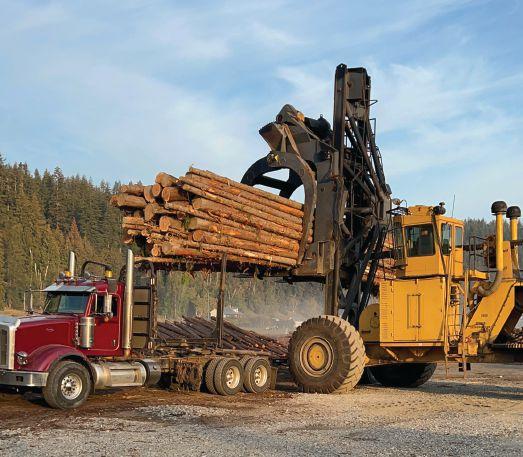
2025, the amount of BCTS volume that is dedicated to value-added manufacturers will be doubled from 10 per cent to 20 per cent, which is equivalent to about 1.1 million cubic metres. The current economic climate presents significant challenges.
“We hope the B.C. Government recognizes the need to support a floundering forest industry and also recognizes the fear of people who have relied on the forest sector for their livelihood,” Benita states.
Despite these hurdles, North Enderby Timber remains resilient.
“We have an amazing team that is innovative, determined, and committed to both the company’s and their own future success, we continue to develop and strive through difficult market conditions and current economic conditions.” Benita says. “Just like our customers, we know some things are out of our control, so we focus on what we can control and push ourselves to never stand still and keep growing. By supporting other businesses in many other rural communities, we are creating economic opportunities and being proactive. Our partnerships have always been valued, sustainable, and long-term.”

BY GUILLAUME ROY
“We’re going to ship the wood from Lignarex to Bois Lac-Saint-Jean, and we need some clarification on the drying recipe for 2x4s,” Éric Rousseau, general manager of Coopérative Ferland-Boilleau, told one of his employees just before we met to discuss his cooperative’s consolidation project.
After several months of negotiations, Coopérative Ferland-Boilleau has acquired the Lac-Saint-Jean Sawmill, which processes 180,000 cubic metres of wood (45 million board feet) in Métabetchouan-
Lac-à-la-Croix, Que., and its planer mill, Bois LacSaint-Jean, which processes 60 million board feet in Hébertville, Que.
The amount of the transaction has not been disclosed, but Rousseau assures that he paid “the right price” to achieve a “win-win” transaction.
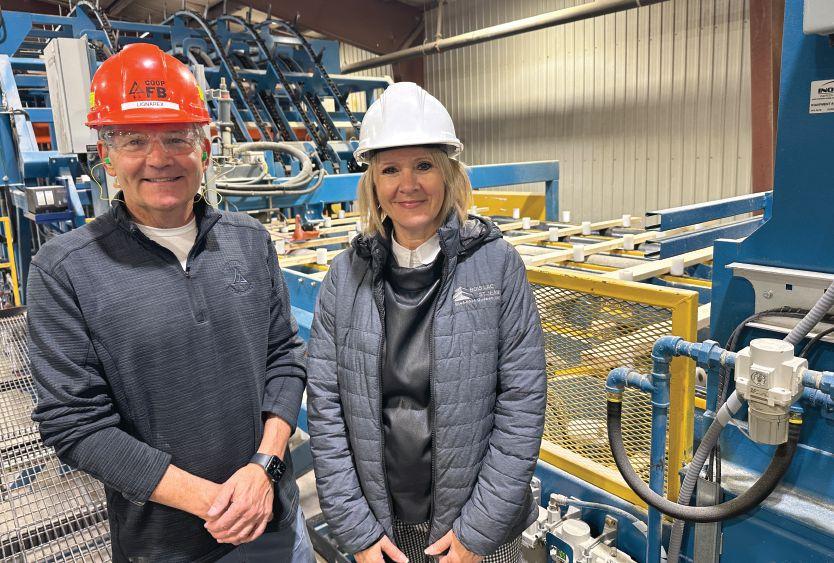
“We’re very happy with the transaction because we managed to find a team that we like and that reflects who we are,” notes Manon Simard, who headed the Lac-Saint-Jean sawmill group with her brother,
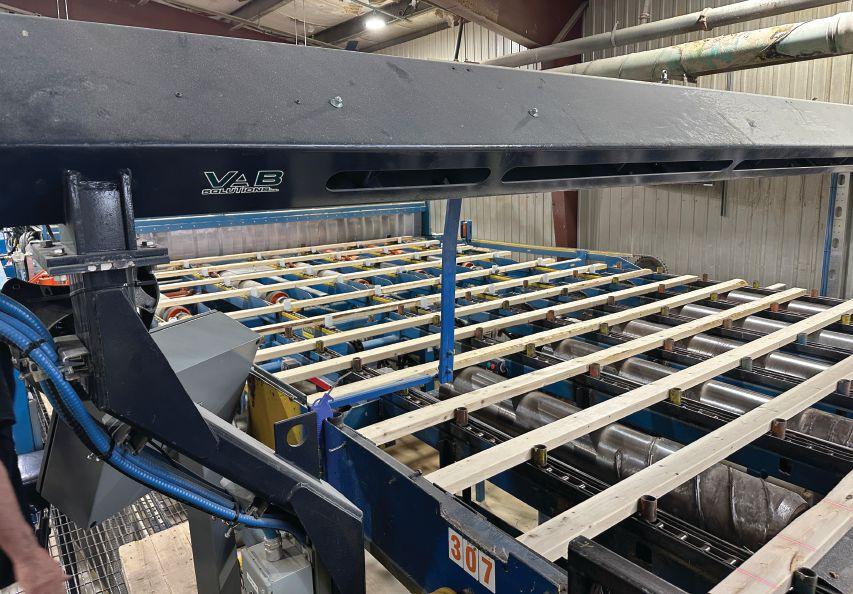
from its boards, with an MSR grading system and a VAB optimizer, as well as ASP Automation systems.
Claude. “We share the same values and we really wanted to sell to local people.”
Manon, who took over the family business launched by her parents, Jean-Guy Simard and Solange Laroche, in 1985, did not want to sell the factory to be dismantled.
By selling to a cooperative established in the region 63 years ago, the Simards are ensuring the sustainability of operations in the region, which will continue within a forestry cooperative.
Opérations Forestières took advantage of the announcement of the asset sale to visit the Bois Lac-Saint-Jean planer mill.
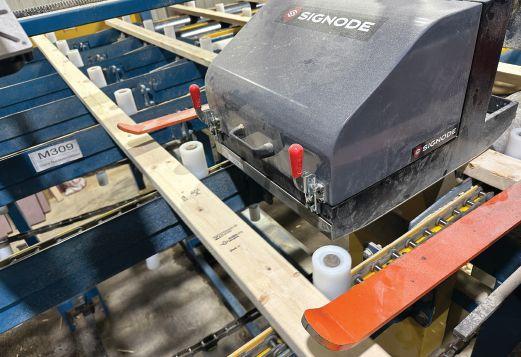
“We had an investment plan of nearly $4 million dollars by 2023,” Manon says. At that time, the company invested in a new trimmer and an automatic Inotech stacker, in addition to adding 21 cases. There is also a new strapping system and a Signode printer. “Signode is even conducting tests to print barcodes directly on the boards,” she says.
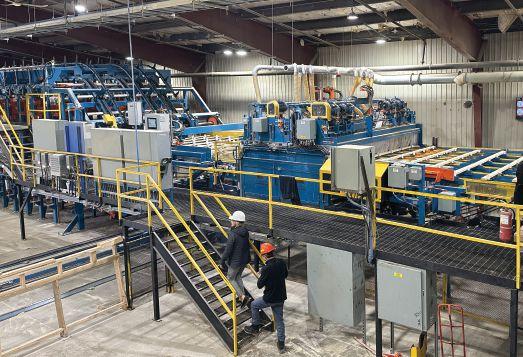
Bois Lac-Saint-Jean is well equipped to extract maximum value from its boards, with an MSR grading system and a VAB optimizer, as well as ASP Automation systems.
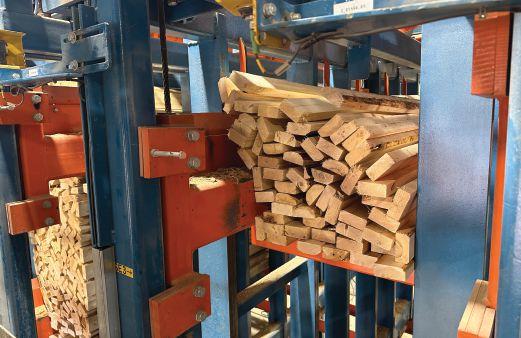
“Systematically, all the spruce produced will come here,” Rousseau adds. Instead of simply covering costs with standard lumber, it’s possible to make a little money with premium lumber, which makes all the difference.
A few years ago, a fire ravaged the Bois Lac-Saint-Jean kilns. The boiler that ran on shavings was then replaced with a Cathild Industrie direct-fire kiln system that runs on natural gas. The kilns have been refurbished and a heat recovery system added.
During a discussion about the prices paid for natural gas, the two managers shared their respective strategies, and Rousseau noted that the long-term contract signed for the Alexandre Coté Ltée. mill in Scott, Que. wasn’t a winning one.
“If we have to make investments, it would be at the Lac-Saint-Jean

sawmill, but we will start by setting up and evaluating everything before doing anything,” Rousseau says.
“The synergies will allow us to streamline our process, and keep more money in our pocket,” notes Rousseau, who wants to leverage the group’s various assets to maximize the benefits.
It’s worth noting that the Coopérative Ferland-Boilleau is also a shareholder in the Groupe Lignarex sawmill in La Baie, Que., and in the Alexandre Coté Ltée. mill in Scott, Que. The wood will be able to be transported to the best location to generate maximum value.
“We’ll be able to compare our facilities to implement best business practices,” Rousseau says.
The Lignarex sawmill notably lacked drying capacity, which can now be done at Bois Lac-Saint-Jean. Given that the Scott mill produces fencing boards, this could help optimize a portion of the 2 x 6s produced at the Lac-Saint-Jean sawmill. The wood previously harvested by the Lac-Saint- Jean in the Valins Mountains could also be moved to La Baie to reduce transportation costs. In short, the opportunities are numerous.
• 48” diameter Shingle Saws
• Jointer Saws
• Inserted Tooth Cut-Off Saws to 96” diameter
• Jumbo “R” and Gullet Style Carbide
• Custom surface grinding
Éric Rousseau with Manon Simard, who headed the Lac-SaintJean sawmill group with her brother, Claude.
“All jobs will be retained,” notes Rousseau. “We will continue our development by sharing the best business practices that are in place.”
The volumes of wood allocated to the mills also guarantee work for harvesting operations, the raison d’être of the Ferland-Boileau forestry cooperative.
“Together we are stronger,” says Rousseau. “In our management unit, we have become the largest player in softwood lumber with a guaranteed supply of 300,000 cubic metres.”
Despite the announcement of increased tariffs earlier this year, and the likely imposition of the federal decree on the woodland caribou, Rousseau remains positive about the future, as there is a serious shortage of housing, which will have to be built sooner or later. The cooperative’s financial partners have the same understanding, as they have always supported this important development project, he adds, highlighting the assistance of Investissement Québec, the National Bank, the Fonds régionaux de solidarité FTQ, and the Chantier de l’économie sociale trust.
“If we were worried about the future, we wouldn’t have made this acquisition. We have confidence in our group and in the future of forestry,” concludes Rousseau.
• Smooth Trimmer Saws hollow ground to 60” diameter
• Solid Tooth Cut-Off
• Hammering, repairs and sharpening
• Shake Band Saws
• SawTooth Sales
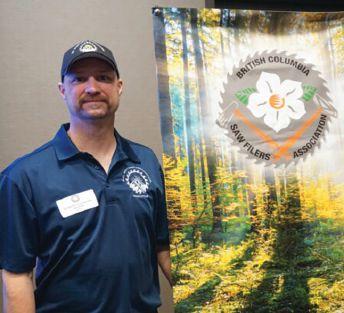
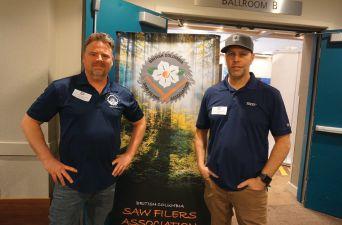
The BC Saw Filer’s Association is headed back to Kamloops for its annual conference and trade show, taking place from May 9 to 10 at the Coast Kamloops Hotel and Conference Centre.
“On behalf of the executive, I would like to thank everyone for their support in attending our conferences. As an association we have a long, proud tradition. The continued existence of the convention lies in the support of our vendors and membership. Thanks again and see you in Kamloops,” stated Sean Wright, president of the BC Saw Filers Association.
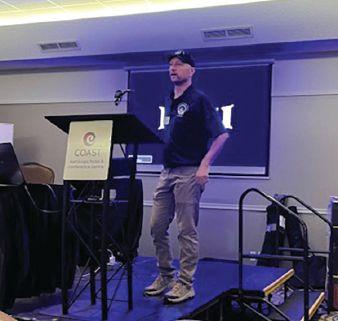
The convention will feature two days of seminars for saw filing professionals to attend. The seminars will take place on Friday, May 9 from 9 a.m. to 1 p.m., and Saturday, May 10 from 9 a.m. to 11 a.m.
A few of the sessions include:
• Warren Myrfield, president of SawADD will be doing a presentation on their latest technology surrounding canters and chipping heads. The automated system will control feed speeds based off of arbor deflection and slowdown.
• SkilledTradesBC will be discussing enrollment rates and trends for appren-
tice saw filers in all three levels. They will also discuss any changes to the program or to the evaluation process.
• Optimil will be doing a presentation on modern canter lines.
The BC Saw Filer’s Association’s annu-
al general meeting will take place at 11 a.m. on May 10.
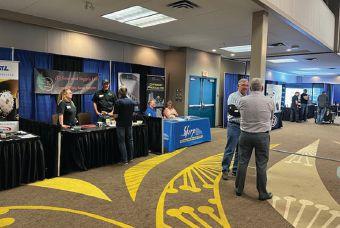
The trade show portion of the conference will run on both days this year, taking
place from 12 p.m. to 5 p.m. on May 9 and 1 p.m. to 4 p.m. on May 10. The trade show is open to all filers, mill managers and maintenance supervisors.
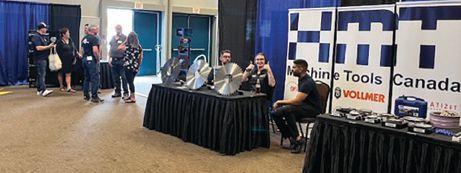
One of the highlights of the trade show component of the convention will be Thode Knife & Saw Ltd. showcasing an Iseli profile band saw grinder.
“Building on the success of the last few years, this year once again promises to be a great exhibition of all the latest in technology, products, and services,” Wright said.
Additional events taking place at the conference will include a buffet dinner with entertainment on the evening of Friday, May 9, featuring comedian Stuart Jones (tickets will be $60); as well as a luncheon on May 10 provided by Burton Mill Solutions (filers and families only). Membership fees will be $25.
Andritz
The Sharp Tool Co.
Corbilt Group of Companies 4. Williams and White Equipment 5. Supersaul Chemmex
Burton Mill Solutions
USNR 8. Promac Equipment
Tru-Cut Sharpening
Streifel Industries
Carbide Tool Works
Saw-ADD
Optimil Machinery
14. Premier Bandwheel & Equipment
15. SiCam Systems
16. DK-Spec
17. Peerless Saw Company
18. Sawco Industries
19. HMT Machine Tools Canada
20. Thode Knife & Saw Ltd.
21. Precision Machinery
22. Key Knife
23. Fuchs
24. Northern Metalic
25. Voestalpine
26. Star West Petroleum
27. Petro-Canada
BY JOHN LAMMERTS VAN
BUEREN, OWNER AND GENERAL MANAGER OF TOUCHWOOD PACIFIC SAWMILLS
Following the unrest on tariffs, I wrote down my perspective as a European owner of a sawmill in Canada. It may be somewhat different from the running opinions in Canada but it’s hopefully food for thought and consideration.
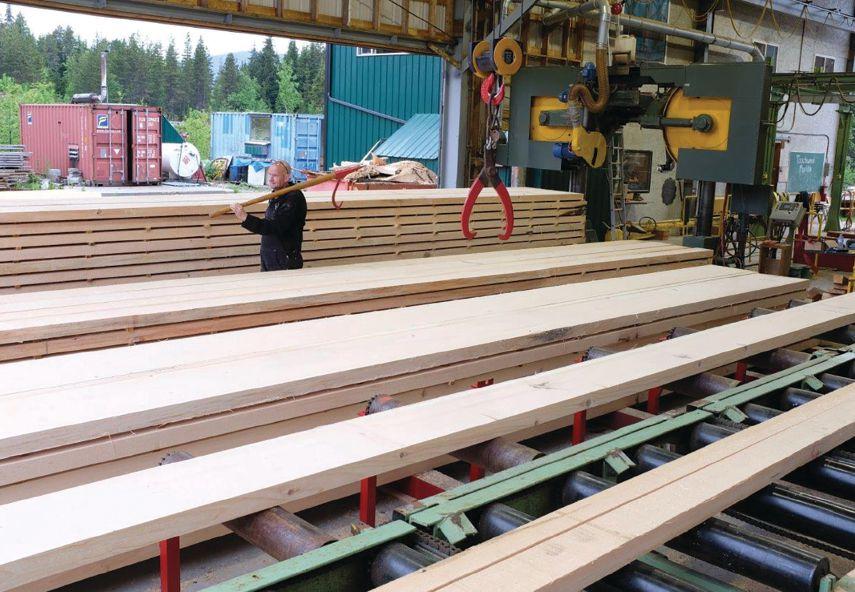
Our sawmill in Terrace, B.C. is a wholly owned subsidiary of our company here in The Netherlands. We specialize in Sitka spruce and Yellow Cedar, and we supply Canadian products to boatyards, spar builders, musical instrument and aircraft manufacturers around the world.
The tariff situation with the U.S. is not new and has now led us to stop exporting to the U.S. from Canada. For smaller mills like ours, the instability of the trade agreement between Canada and the U.S. is nerve wracking. Add to that the bureaucracy on the Canadian side and the required bonds to cover the tariffs on the U.S. side. The sum of it all made me conclude that doing business with the U.S. is simply not worth the hassle. This led to
more upset on the U.S. side than ours, as for some of our products, there is simply no mill in the U.S. able to substitute our production.
The real worry for us here in Europe is that there is no clear and robust ruling whether Canadian products, especially the harvest from the B.C. coast, is regarded legal under the EUDR regulation. The lack of clarity on the EU side and the lack of a pro-active lobby from the B.C. government poses a real threat to our industry. The market here has already moved away from WRC and substituted it for thermally modified wood for siding. This was not driven by tariffs but is due to ever increasing cost and lack of added value capacity in B.C. The Canadian mills didn’t seem to mind as the U.S. would absorb their production anyhow. That could possibly change in the near future.
I am deeply concerned that the U.S. tariffs will lead to a decline in Canadian sales. Now combine that with the apparent non-compliance with the new EU-DR regulations, as well as the instability of the Chinese market, and the inevitable conclusion is that we are heading for a very serious decline in the B.C. forest industries. Canada has no influence on the market situation in China, nor will it be able to build on a government which tears up the agreements they recently heralded as the best deal ever. Meanwhile, the market in Europe remains reasonably good, but the EU-DR regulations will kick in on January 1, 2026, and it seems that the Canadian industry is utterly unprepared and at risk of a serious decline of sales in that market, too.
In my view, Canada will need to expand their geographical spread of sales while reducing its dependability on the U.S. This means expand as well as build on existing trade relations with markets, especially Europe and Asia.
The key to such expansion will be added value production as well as compliance with EUDR regulations. When it comes to added value, Canadian industries will need to invest heavily in know-how and equipment, as right now Canada is more than a decade behind in technology. If Canadian industries get it right than this will lead to a decline in volume and an increase in value whilst retaining the much-needed jobs in the forest industry. In a time the number of (coastal) timbers sales is at an all-time low, this combination of factors could well help to rebuild the forest industry to a sustainable business model.
This is not a revolutionary pipe dream or recipe for disaster. On the contrary, it is the trend which the other serious timber producing regions such as Scandinavia, Asia, South America and West Africa have followed for more than 25 years. I have worked in the forest industry in all the mentioned regions and have witnessed a change for the better firsthand. The results speak for themselves.
My perspective is one of a European company owning a Canadian company. A perspective of someone who ran or consulted small and medium sized sawmills around the globe. The timber industry is my life, my passion, my everything. I know that if the people of Canada could make a change for the better. All I can do is hope they will.
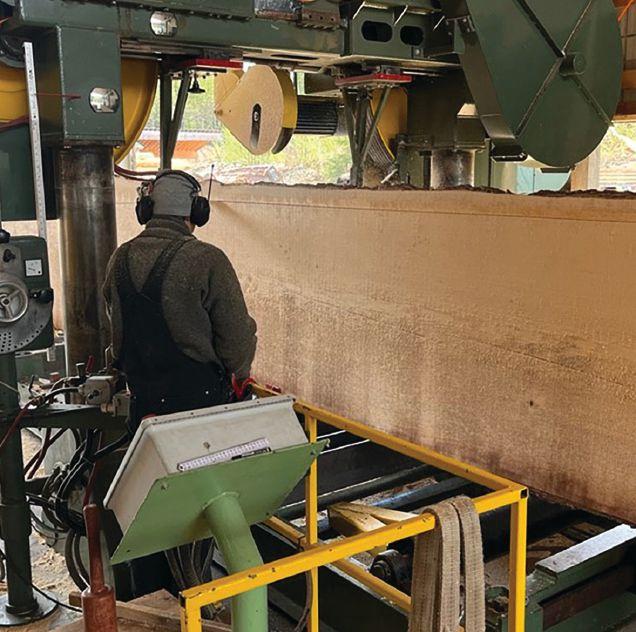
Touchwood Pacific Sawmills owner John Lammerts van Bueren is deeply concerned that the U.S. tariffs will lead to a decline in Canadian sales, and when that is combined with the apparent non-compliance with the new EU-DR regulations, as well as the instability of the Chinese market, the inevitable conclusion is that we are heading for a very serious decline in the B.C. forest products sector.
PAULsmith
Paul Smith is a saw filing consultant and founder of Smith Sawmill Service, now part of BID Group. You can reach him at paul.smith@bidgroup.ca.
In the early seventies, when my career started, the saw plate itself was not much to address. Other than getting it flat, that was about all we were shooting for. We did put emphasis on the tooth itself. The kerf was wide enough to take care of any big imperfections in the plate. RPMs were slow enough and plates were thick enough, not to worry too much about tension. Time has a way of changing things; during these early times we put about 90 per cent of the work in the tooth and 10 per cent in the plate. Today, because of equipment and technology I expect the plate and tooth are equally important to the “perfect” saw if there is such a thing. Today’s modern filing room equips the saw filer with the tools and machinery needed to put on, grind in and maintain saw teeth to perfection. In today’s time, there are no or very few excuses to not have a well-formed, sharp tooth. The tooth itself can be measured and veiwed the same way with each individual filer. No guessing or chance in today’s filing room in getting the tooth correct, or at least knowing if its correct.
On the other hand, the plate is a different story. Today’s plate needs to be as perfect as possible to stand up to the abuse it is put through. Today’s plate is thinner, and therefore, more pliable than what we worked with when I started filing saws. And curve sawing was never mentioned, or if and when it happened, it wasn’t intentional. It is my belief that the biggest issue with thin plate today is getting the plate flat to start with. At times, the tensioning process is started before the plate is flat; allowing problems to be hidden until the saw is in the cut. With today’s thin plate, thin kerf, high rpms, and fast feed speeds, it takes an experienced filer to get the plate where it needs to be. If the tensioning process starts before the plate is flat, the tension can hide the knots and increase the dips. Therefore, when the saw reaches the correct rpms, and the saw stands up straight, the knots will rub the cant causing the plate to heat up during the cut.
The filing room equipment manufacturers have produced amazing machines to flatten saws and tension saws, but without the experienced saw filer,
the automatic machines cannot be expected to just be turned on and let loose. In manufacturing a new saw from a new plate, I would expect the saw filer to determine flatness and start the tensioning process. It is my opinion that the bandsaw levelers and tensioners have the process down fairly well and are dependable. There are also some circle-saw levelers that will do an excellent job, if given the time and are well maintained for accuracy. However, a tensioner that is just programmed to put a certain number of rolls, a certain distance apart, cannot be depended on to finish a tensioned plate correctly. The new plate, directly from the manufacture, can vary the way it needs to be put through the leveling machine to produce a good running saw.
We have found that after the plate has gone through the proper process and tensioned to correct rpms for your mill, it is much easier to maintain. Many mills today have the saw filer and equipment to turn raw plate into great running saws. However, if the filing room lacks in either one of these assets, it is better for the mill to purchase ready to run saws. Many saw filers will prefer to purchase a flat saw and add tension themselves. This way, they can check the plate first for flatness before adding the tension that the mill requires for the saw to run well.
An experienced saw filer will use a few different straight and tension edges along with a few other secrets of the trade. When moving, hammering, or stretching plate it is always good to do it under a good film of light oil. This helps protect the plate from stretcher rollers and blows from the hammering process. When working most saw plates, they will have to have a certain amount of hammering to fine tune where they need to be. Be aware to put up a saw plate to where it operates at its best it must have some hammer activity. The saw plate may be one of the cheapest ingredients to manufacture a good saw, while the important part continues to be the saw filers themselves and the time they put into each saw. The expense of the plate plus the experienced saw filers time can escalate the price of the finished saw.
Tigercat recently launched the 6500 chipper after more than a year of successful field operations involving multiple retailed units. The 6500 is a heavy-duty down-swing drum chipper designed for high production and maximum flexibility. Rotor speeds are adjustable based on infeed material density and desired chip length – ranging from 12 to 50 mm (0.5 to 2 in.) – to maximize throughput and product quality. With a frame that pivots on the undercarriage, the operator is able to adjust the infeed angle for varying feedstock or raise and lower the discharge height to adjust the chip pile size or accommodate top load trailers. The pivoting upper frame also allows for transport on a 46 cm (18 in) lowboy trailer without the need to fold the discharge conveyor to maintain transport height under 4.11 m (13 ft. 6 in.).
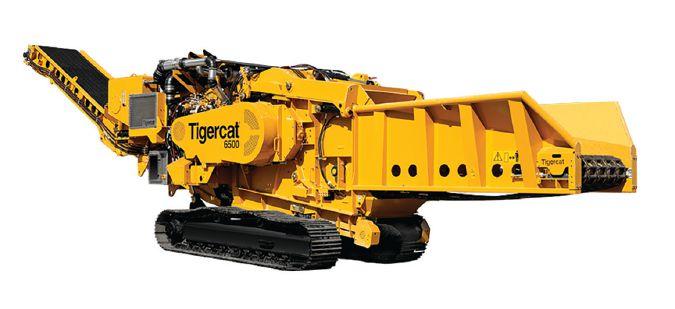
Maintenance is made easy with convenient service access. The split hog box opens over centre to fully access the rotor and screens for simple knife changes. The grate frame is hydraulically retractable for inspection, service or impact detection.
The single discharge conveyor is open on the bottom for clean operation and easy servicing. A tool storage area mounted on the side of the machine hydraulically raises and lowers for added convenience. An optional large diameter magnetic head pulley is available to effectively remove metal from the end product. The machine is also prepared to accept over-band magnet systems.
www.tigercat.com
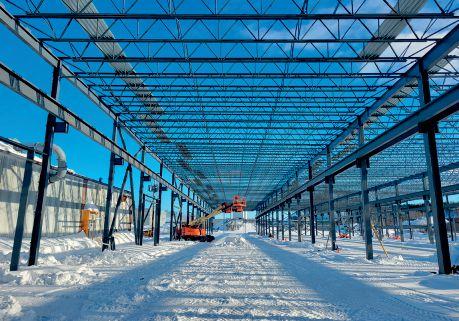
THE FUTURE IS TAKING SHAPE WITH A NEW PLANT FOR 2025.
BY ALEXANDRA SKINNER, WORKSAFEBC
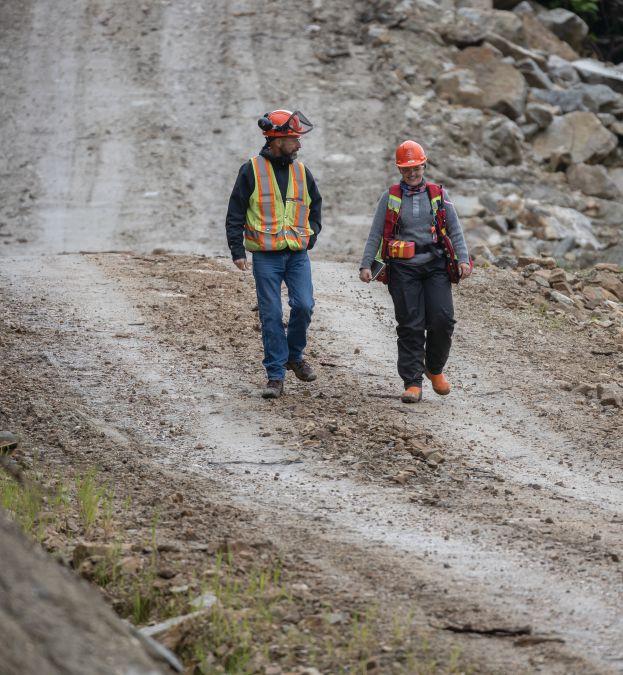
Working in forestry can be challenging, not just physically, but psychologically as well. That’s why WorkSafeBC is advising forestry employers and workers about the importance of paying attention to psychological health and safety.
Managing psychological health and safety in the workplace is as important as managing physical health and safety. A psychologically healthy and safe workplace prevents harm to workers’ mental health and promotes mental well-being. While many factors outside the workplace can affect mental health, it is an employer’s responsibility to address the factors that are within the control, responsibility, or influence of the workplace.
Psychological health and safety involve how
people interact with each other daily, how working conditions and management practices are structured, and how decisions are made and communicated.
In the forestry sector, workers face unique psychological challenges, including financial stress from an unstable market, job instability, social isolation, and the impact of climate change and severe weather conditions. Additionally, the high-risk nature of the industry, with 695 serious injuries and 43 fatalities in B.C. alone over the past five years, means forestry leaders and colleagues often
provide grief and bereavement support.
“There is a lot of grief and stress for forestry workers to cope with, and some might turn to unhealthy coping tools like drinking or other forms of self-medication,” said Amenda Kumar, manager of consultation and education services at WorkSafeBC.
A survey by Deloitte showed that each week, about 500,000 people in Canada miss work due to psychological health issues, leading to an annual economic cost of at least $50 billion and indirect costs related to lost productivity as high as $6 billion.
In addition to lost productivity, psychological ill health can cost employers through burnout, staff turnover, and workers’ compensation claims.
These three principles help to create, support, promote, and maintain a psychologically healthy and safe workplace:
1. Show leadership commitment.
2. Develop supportive managers and supervisors.
3. Ensure worker participation.
Many employers already operate according to these principles, which are outlined in detail in WorkSafeBC’s framework for success. Those who effectively promote psychological health and safety have greater productivity and employee engagement. Their workers experience less conflict and higher morale and are less likely to leave.
The approach to managing psychological health and safety is similar to the approach for managing risks to physical health and safety: understand the risks, implement safety measures, communicate safety information, and monitor measures for effectiveness.
Step 1: Identify psychosocial hazards in your workplace, such as:
• Unclear job expectations.
• High or low job demands.
• Toleration of disrespectful behavior.
• Lack of harassment prevention policies.
• Exposure to violence or trauma.
• Inadequate support for psychological health.
Consult workers, possibly through anonymous surveys, to assess risks at each location. Prioritize the highest risks and involve safety committees or workers.
Step 2: Implement controls, including:
• Developing a psychological health and safety policy.
• Preventing and responding to harassment and violence.
• Encouraging open communication.
• Addressing mental well-being in return-to-work plans.
• Providing peer support programs.
Step 3: Communicate safety information
• Ensure workers are aware of your psychological risk management program.
• Train managers, supervisors, and workers on control measures.
• Establish a process for reporting psychosocial hazards.
• Inform workers about filing mental health condition claims.

Step 4: Monitor and update
• Regularly monitor and improve control measures.
• Identify new risks with changing work conditions.
• Include psychosocial hazards in safety inspections. Early intervention is key to preventing injuries — both physical and psychological. By following these steps, employers can create a supportive work environment that addresses both physical and psychological health needs.
Work is central to mental health. For many, work is a primary source of well-being and community that is critical to financial and emotional security. While a psychologically healthy and safe workplace can protect and enrich mental health, the inverse is


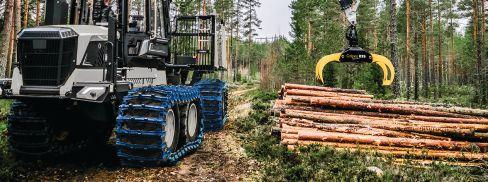
As North America’s premiere wholesaler of forestry equipment, Wallingford’s offers the industry’s most trusted brands in the business.
From high-performance forestry tracks and tire chains to durable harvester bars, saw chains, buncher teeth, grapples and more. We supply top-tier products designed for professionals who demand strength, efficiency, and longevity. Our commitment to quality ensures you get the BEST equipment at competitive prices.
Photo: © wpw / Adobe Stock
also true: a psychologically unhealthy or unsafe workplace can contribute to or cause poor mental health.
“It can be difficult to overcome the stigma associated with psychological health,” says Kumar. “Workers might feel ashamed and hesitant to seek help. It often seems easier to explain a physical injury like a broken arm than to speak up about psychological stressors in the workplace that are impacting someone’s ability to work.”
Challenging the stigma starts with leadership from employers and fostering a culture that encourages seeking help and ensures workers are connected to available social support.
It is important to note that psychological injuries can be prevented and treated effectively. For employers, early awareness, access to resources and support, and appropriate and timely response can greatly reduce the impact of symptoms, promote mental well-being, and help people remain at work.
WorkSafeBC’s role as a regulator is to lead British Columbian employers in promoting and supporting psychological health and safety in the workplace — through training and education, by involving workers in the discussion of risks and solutions, and by preventing psychological injuries — just as we work to prevent physical injuries.
For more information, visit WorkSafeBC.com.
Please visit Wallingfords.com for our complete product catalog, or call our knowledgeable sales reps: Lydia Stone : 207-250-3284 (français, english) JD Moore : 548-887-2626 (english)
John Deere enhances its tracked feller bunchers, harvesters and shovel loggers
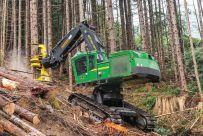
John Deere introduces new operator assistance features and enhancements on its 900 M-Series tracked feller bunchers, 900 MH-Series tracked harvesters and 900 ML-Series shovel loggers. With a focus on customer productivity, the updates include an enhanced Dedicated Travel system, which has been updated for greater efficiency and is now a new feature on the 900 M-Series machines. Additionally, the new Return-to-Level functionality and further undercarriage improvements help to enhance durability. These operator assistance feature updates help improve the overall customer experience in variable operational applications.
The Dedicated Travel system isolates the travel functions from the other functions on the machine. This enables the operator to focus on the task at hand by not allowing boom and swing operations to interfere and slow down the travel functions. In addition, the power balance and availability has been optimized and can be adjusted between the upper and travel functions, allowing priority to the needed operations. Dedicated Travel is standard on the 859M, 953M, and 959M feller bunchers, as well as the 959ML shovel logger. It remains optional on 853M and 903M feller bunchers and 859MH and 959MH harvesters.
The new one-touch Return-To-Level functionality combines multiple leveling system adjustments into one push-and-hold operator input. As the machine moves to a different slope, the rotating upper can be brought to a level position (based on the parameters of the leveling system) by utilizing a simple button function on the joystick. The individual leveling control buttons will remain. This new operator assistance feature has been combined with the field-proven John Deere Slope Monitoring system, which actively measures and displays the slope of the terrain to the operator. These two advanced features allow the operator to focus more on the application machine adjustments. They are available as the new Slope Management System, which is available as an optional upgrade on all John Deere 800 and 900 Series levelling feller bunchers, harvesters, and shovel loggers. www.deere.com
Waratah Forestry Equipment launches forestry grapple line
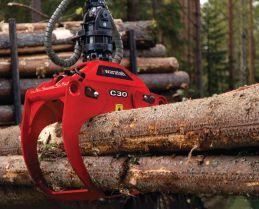
Waratah Forestry Equipment has introduced its new line of forestry grapples, designed to deliver performance and reliability across a wide range of forestry and non-forestry applications. With focuses on productivity and versatility, the 15 new grapple models are engineered to deliver the same durability and trusted reliability as Waratah’s harvesting, processing and felling heads.
The Waratah forestry grapple line includes three model
categories to cover all types of forestry and non-forestry applications.
C Models (C21, C26, C30, C36, C36HD, C42, C46, C46HD) are designed for traditional forestry applications and machines such as forwarders, log loaders, shovel logging machines, and bioenergy recovery.
Large C-Models (C60HD, C80, C100) are built for heavy-duty tasks, such as use in woodyards, ports and other large-scale operations.
E Models (C21E4, C30E4, C42E5, C46E4) are purpose-built for handling slash, logging residues, stumps and bioenergy applications. These grapples offer specialized features for use with forwarders and chippers. www.waratah.com





If you’ve ever asked yourself “where did this DHA thing suddenly come from and why is it so important?” or “Why is there such a push for all facilities to have a completed DHA?” Well, you’ve come to the right place. In the world of combustible dust, the DHA has been a hot topic for years.
The easy answer to this is compliance with codes and standards, predominately the many NFPA guidelines. Digging into the specifics of NFPA 652, section 7.1.1.2 states that “for existing processes and facility compartments, a DHA shall be completed by September 7, 2020.” Section 7.1.4 goes on to say that the DHA should be review and updated at least every five years. Regulation can differ by jurisdiction. There we have it. Case closed! Codes and standards say it must be done, so it must be done! Not so fast. I’m all for following directives, but I’d like to know why I have to jump on board before I do! So, let’s put the mandated reasons aside and let’s look at the practical side of things.
In my 20-plus years in the industry, I have witnessed a fair amount of jaw dropping things done (or not done) around combustible dust. Often than not productivity, cost, or convenience are prioritized over safety. This pertains to all aspects of combustible dust: electrical area classification, dust collection, interlocks, safeties, design, start ups, the whole gambit. So, who are these malevolent actors, callously putting their people at risk? The unfortunate truth is that it’s not in one area, or one industry, it’s uniform across the board. Due to the complexity of it, combustible dust really is not an area where you want things to be done poorly or by the uninformed. When we look back at the most consequential combustible dust incidents of the past century the common theme is decisions that were uninformed, cheap or outright reckless. If you don’t believe me, do a YouTube search for “combustible dust explosions.”
This brings us back to the questions of the importance of a DHA. First, the objective. A DHA is a fact-finding mission to help us understand combustible dust risk. In my opinion the objective of the
DHA is not to fix problems but to inform of current hazards and risk witnessed during the DHA. This pertains to process and procedure around combustible dust hazards (both explosion and fire). The objective is to identify the hazards, communicate where the highest risks are, and provide rough ideas on what actions are required to mitigate the risk. The report will not to solve all the combustible dust hazard issues. It will however assist the diligent reader in what the problems are, where to start, and ultimately how to move the facility towards a safer work environment. If completed and compiled correctly the DHA is a very useful and powerful tool in the hands of a diligent employer.
To recap. Combustible dust is in a lot of industries, and the risk is typically handled and protected against poorly. To protect against that risk, we start with a DHA report. The objective is to outline what the hazards are, what the highest risk is and a general path forward to mitigate those hazards. I think you can start to see how the pieces fit together. Think of it as a (explosion proof) flashlight in a dark, dusty room. Yes, the DHA is something that is mandated to be completed, but it should not be thought of as just checking a box. If done correctly, it can be used to outline where issues in a facility are and how to keep the people (foremost), property and process safe. This knowledge is ultimately the importance of a DHA.
Diane has spent the past 20-plus years working with the design, installation and retrofitting of dust collection systems in industries ranging from sawmills and grain installations to food and beverage and specialty chemicals. Diane’s expertise covers all aspects of dust collection systems from troubleshooting system issues, upgrading systems to meet current codes and standards. Diane has also assessed hundreds of dust collection systems for combustible dust hazards using the latest NFPA codes and standards and completed numerous dust hazard assessments. She can also provide advice and design experience for explosion protection systems, vessel retrofits, Pred verification, and static bonding and grounding.
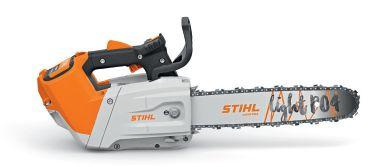
The STIHL MSA 220 T is the most powerful top-handle chainsaw in the STIHL battery-powered lineup, boasting power and performance similar to professional gas top-handle chainsaws. Featuring high chain speed and durable parts such as the magnesium motor housing and a brushless motor, the MSA 220 T is designed for a heavy workload. An LED operator display provides quick status updates to help keep pros moving. The MSA 220 T provides the power and dependability professional aborists trust from STIHL chainsaws.
Note: Top handle chainsaws should only be used by trained arborists.

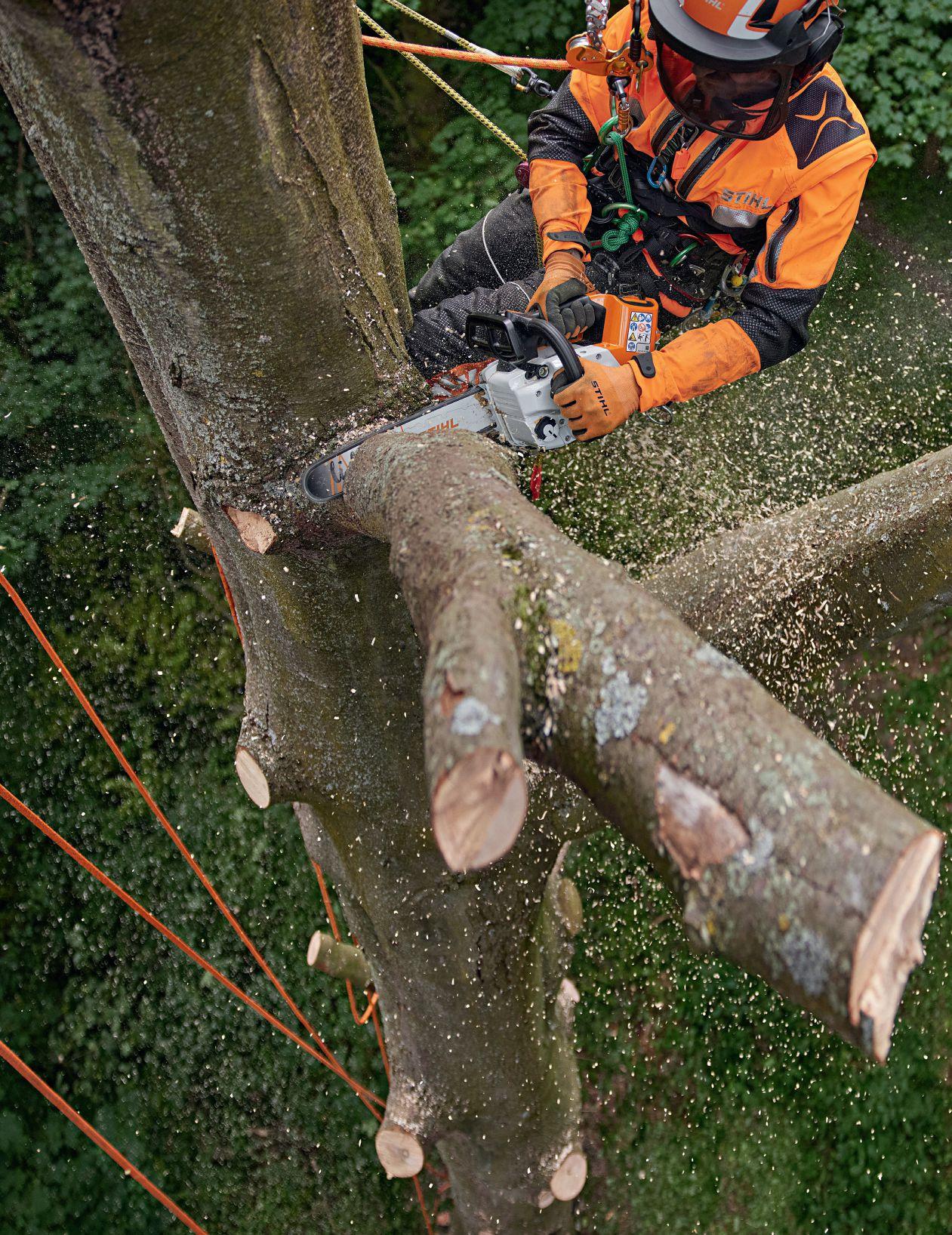


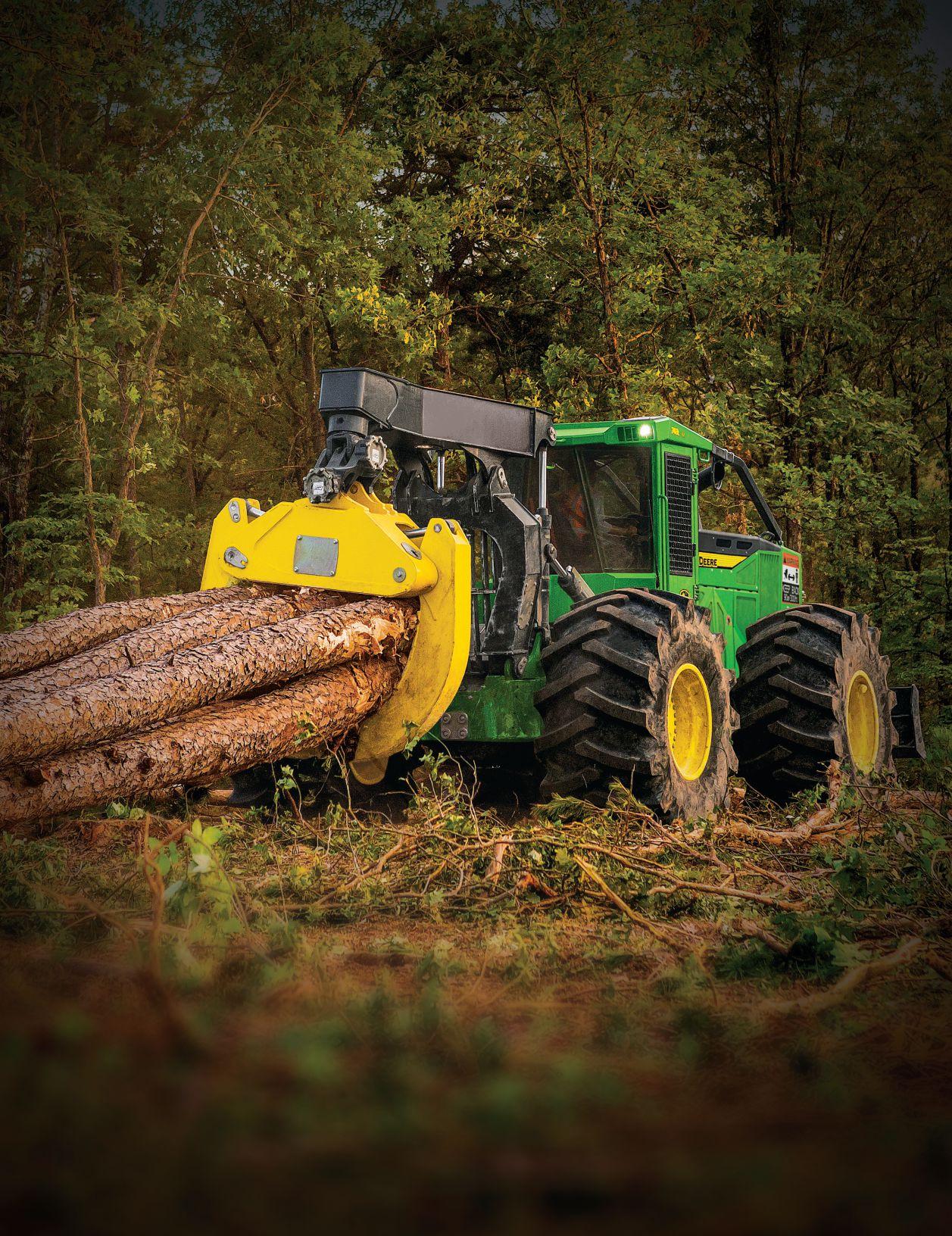

Ready to gain even more advantages in the woods? At no additional cost, our Skidder Transmission Assurance Program covers warrantable transmission repairs and replacements on qualified John Deere skidders for six years or 12,000 hours, whichever occurs first.1
It’s just another way we’re helping you OUTRUN expectations, whatever you’re up against. JohnDeere.ca/skidders
6-YEAR/12,000-HOUR SKIDDER TRANSMISSION COVERAGE