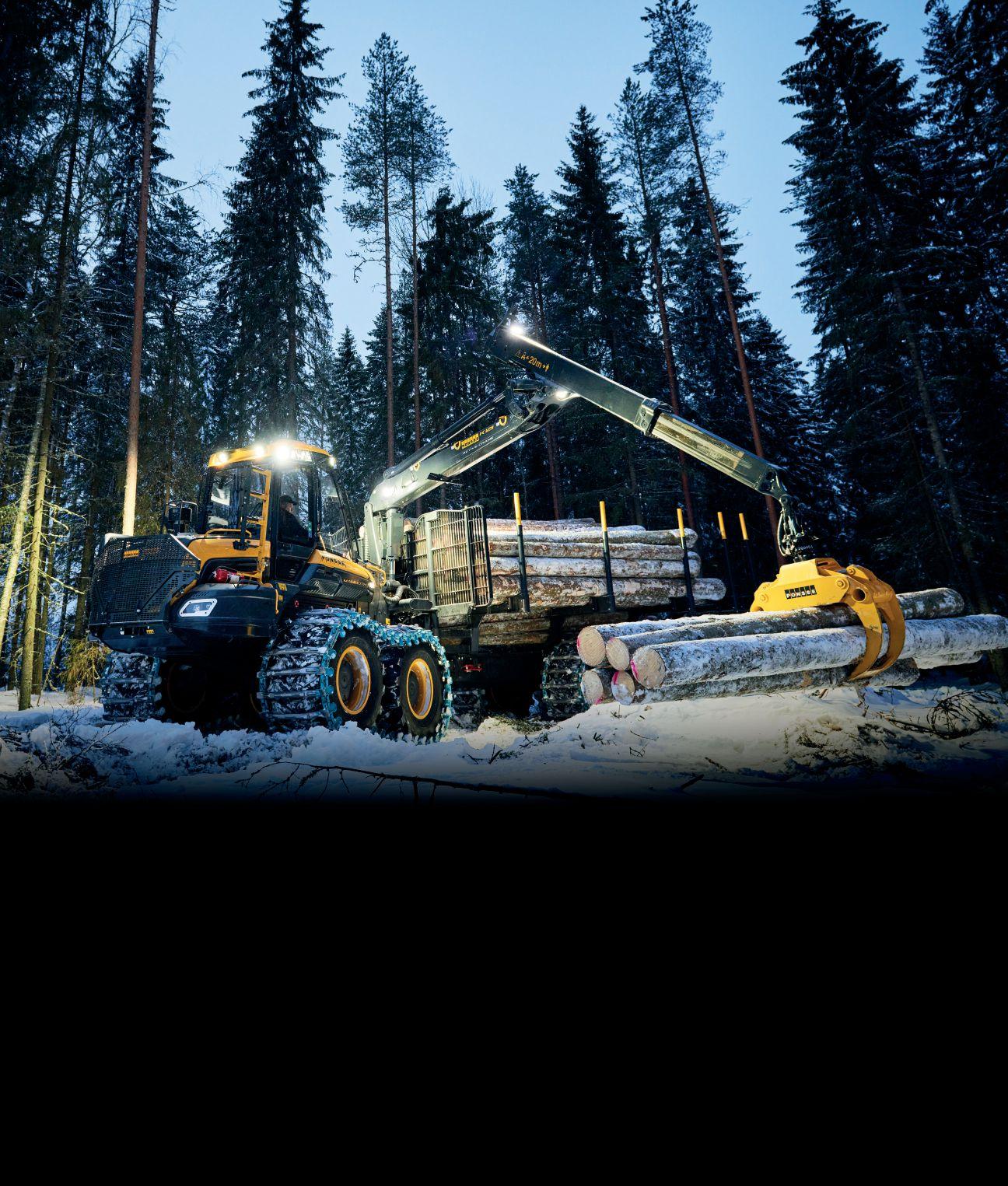
ATCO thrives through self-sufficiency and innovation
In-forest connectivity
Digital
Evolving and adapting
Growing
A road map for mapping
When 10 m isn’t good enough anymore
The value of collaboration
Unique partnership towards sustainability Cutting edge
CFI’s annual saw filing supplement
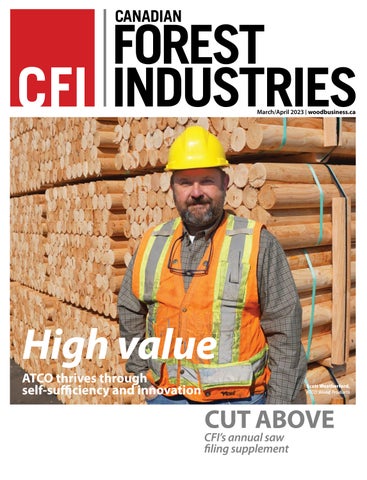
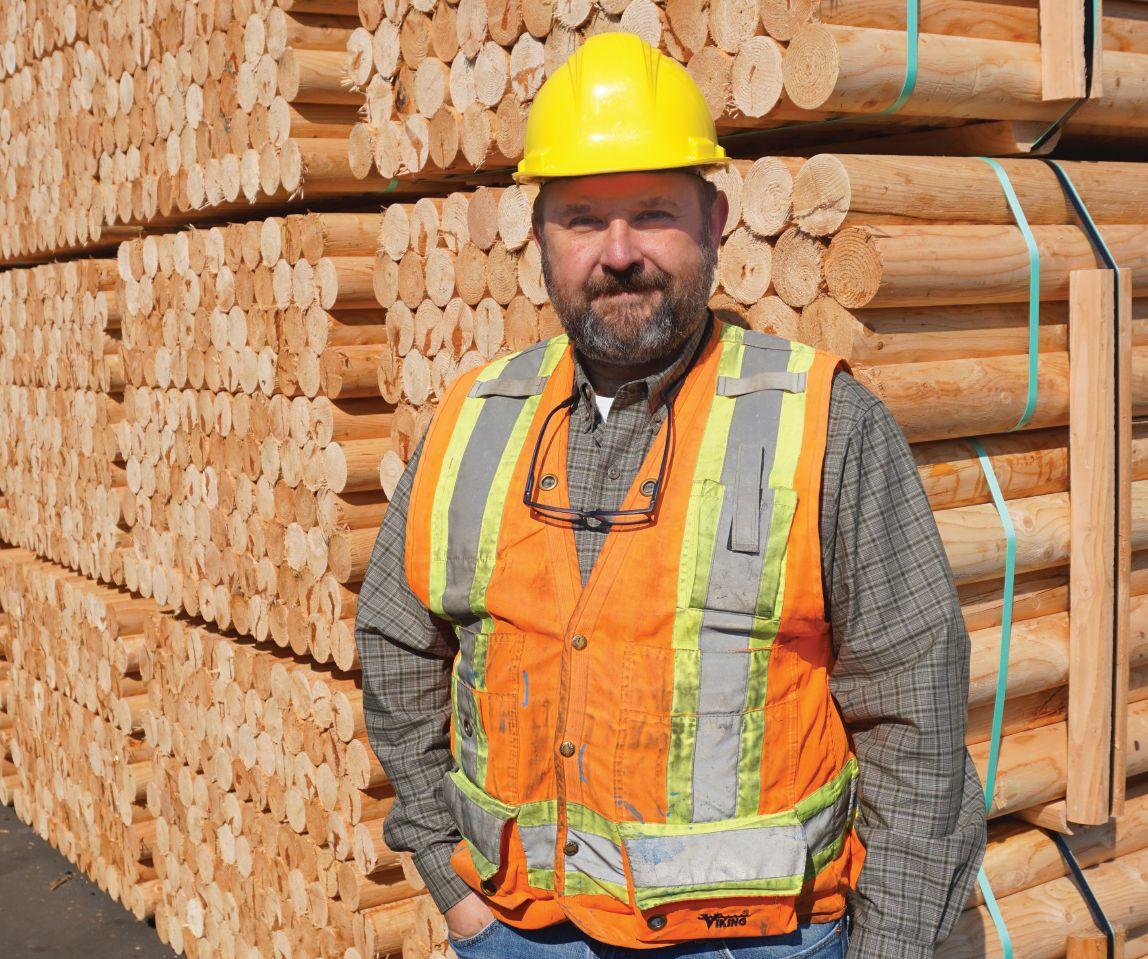
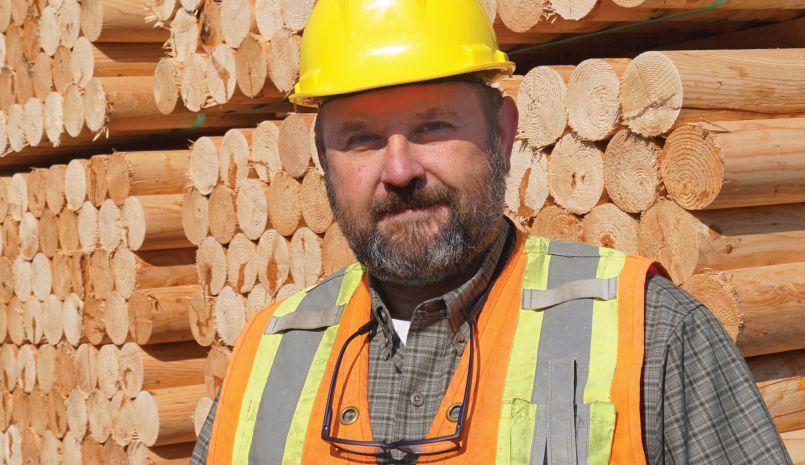
Scott Weatherford is the CEO of ATCO Wood Products, based in Fruitvale, B.C. Specializing in softwood veneer has helped the company survive the downturns. Read all about it on page 28.
Reliability that counts
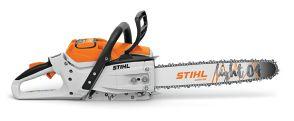
NEW MSA 300 battery chain saw
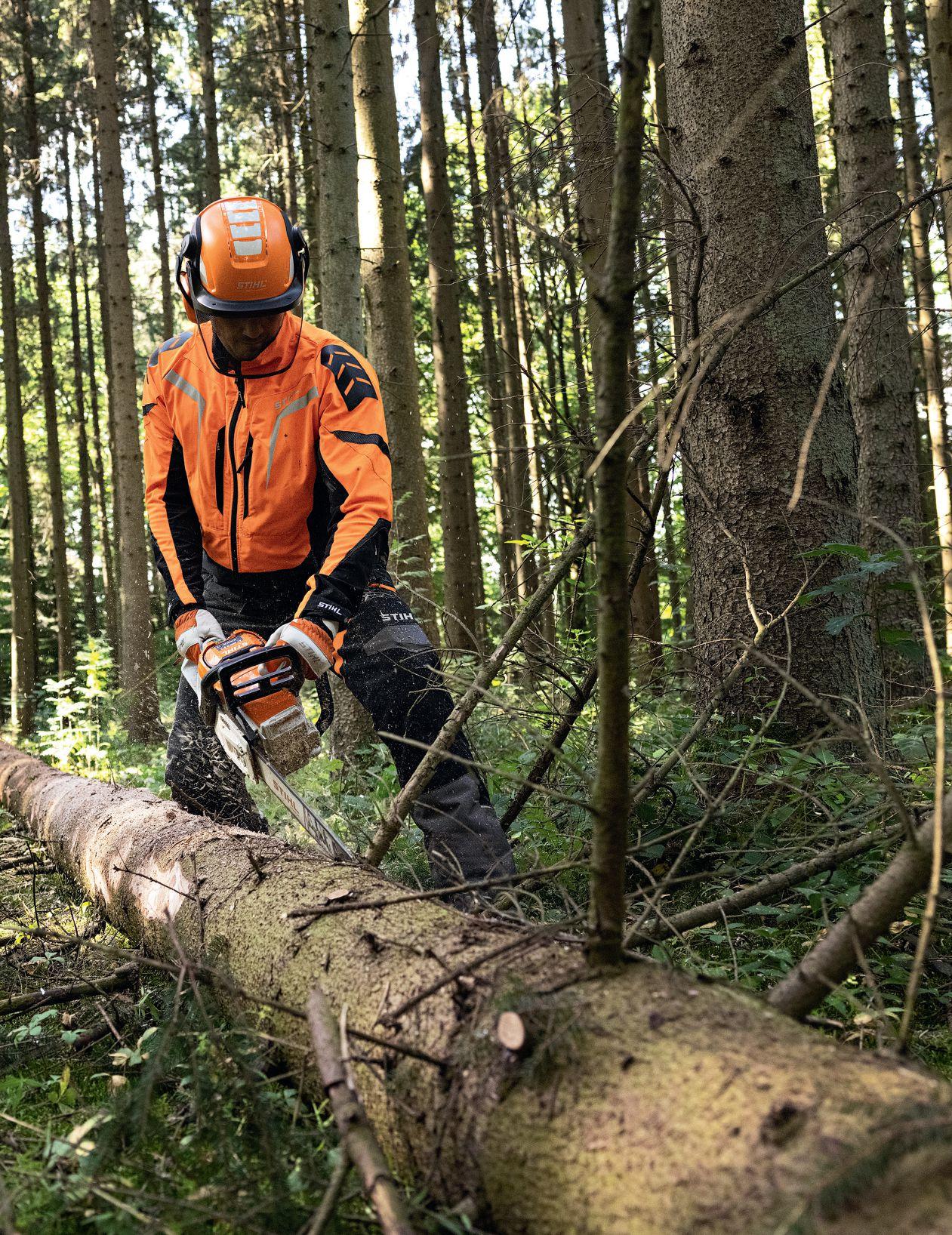
Powerful to the max, extremely rugged and ergonomically balanced, the MSA 300 has earned its reputation as the world’s most powerful cordless chain saw. With a chain speed of up to 30 m/s and three operating modes for felling, delimbing, and cutting to length or building with timber, it can handle any job while keeping noise to a minimum. Its slim design and anti-vibration system make it the perfect solution for keeping everything under control – regardless of wind or weather thanks to professional ergonomics and weatherproof design. The MSA 300 realizes its full potential in combination with the new AP 500 S, our professional battery that’s the first of its kind, and guarantees maximum endurance, service life and performance to meet any challenge.
Temperature-resistant design is weatherproof for all applications and conditions
• Sturdy tank housing
• Smart operator cockpit for status indication and three operating modes
• Compatible with Smart Connector 2 A
• Low-vibration
Battery Power. Made by STIHL.
SPECIFICATIONS
RATED VOLTAGE 36 V
BAR LENGTHS 16", 18" & 20
WEIGHT ② 9.9 LB
① Battery and charger sold separately. ② Weight with powerhead only.
JOIN THE CLUB
first cut
JENNIFERellson
jellson@annexbusinessmedia.com
Spring into action
The March madness of industry events has started
Ah, spring.
The time of the year when we have more daylight, snow is finally melting, and temperatures are gradually climbing.
There are many signs of life after the harshness of winter, and here’s to hoping these signs of life flow over to towns where local mills shut operations.
Spring is also when the March madness of industry events restarts.
CFI, together with our sister publications Canadian Biomass and Pulp and Paper Canada, kicked off March with our successful Women in Forestry Virtual Summit, drawing more than 800 participants from more than 20 countries.
I am currently writing this from Quebec City, where we just held a successful one-day education forum, OptiSaw. It’s our annual closed-door event exclusive to those driving the future of sawmilling: owners, management, process engineers, optimization staff, researchers and design consultants.
Listening to presentations about cutting-edge technologies in sawmilling was mind-blowing. It was easy to forget we were in a room full of sawmillers, and not medical staff, as I listened to the latest innovations in X-rays and CT scans. There were times when it felt like it was a meeting among Hollywood bigwigs as BID Group and Finnos talked about AI-powered automation and robots talking to each other via fingerprint technologies.
During his presentation, MiCROTEC’s CTO described it as a “room full of nerds, and I am the chief nerd,” to the laughter of the room full of some 50 people. In fact, one nerd, I mean presenter, described himself as a Jedi-level engineer as he presented about Big Data and IoT technologies.
One thing that was very noticeable, though, was the lack of more female nerds in the industry. There were only three women in the room – two were staff, myself included – and the other was Heather Boyd, executive director of the Forestry Sector Council in Nova Scotia, who uncannily enough spoke about recruitment strategies in the forest sector during our
Women in Forestry virtual event.
“Inclusion is not just about checking boxes,” Heather said. “It’s about ensuring all people in your workforce feel like they belong.” A diversity, equity and inclusion (DEI) strategy is a good place to start, but that needs to be a working document, consistently reviewed and not shelved, she said. I am certainly hoping that future OptiSaw and other events will see more female nerds.
I received a lot of uplifting and positive comments about the event, and the industry, at OptiSaw, but one that really stuck was from a presenter, UBSafe’s Ian Rood, who said, “conference talks are great, but in-person networking is even better.”
Indeed, the COVID-19 pandemic has caused numerous cancellations of in-person networking and learning events, but now full in-person conferences and trade shows seem to be coming back with a bang after last year’s slow return with pandemic-enforced virtual or hybrid events.
In fact, this issue we nicknamed the “conference issue”, because you will probably be picking this up at the BC Council of Forest Industries’ convention in Prince George, B.C., the Montreal Wood Convention, both happening in April, or at the BC Saw Filers’ Association conference in Kamloops, B.C., in May.
CFI is thrilled to be at these events. Check out our event previews to help you plan for these conventions and exhibitions.
And as always, there is lots to digest in this issue. For our feature story, I visited ATCO Wood Products in the beautiful small village of Fruitvale in the Kootenay region of B.C., where I met the inspiring Weatherford family who keeps on keeping on despite many challenges. And talk about inspiring – our managing editor Maria Church sat with the ever-inspiring and charismatic Lenny Joe, the new CEO of the B.C. First Nations Forestry Council.
So let’s keep on inspiring each other, and see you soon at one of the industry’s in-person events.
NEWS upfront
B.C. reacts to Biden’s ‘Buy American’ stance
The B.C. Lumber Trade Council (BCLTC) has expressed concerns over the recent announcement made by United States President Joe Biden during his state of the union address signaling that new standards limiting the use of non-American lumber in U.S. infrastructure projects will be introduced.
“While this is concerning and we are seeking to better understand what this means for Canadian producers, our focus remains
on working on both sides of the border to maximize the opportunity Canada has in providing the sustainably produced, low-carbon lumber products we know American homebuilders, consumers and construction workers want and need,” said the council’s president Linda Coady.
She added that the U.S. was only able to produce 70 per cent of its overall lumber demand in 2021, a gap she said was largely filled by imports from Canada.
CANADIAN MILLS UPDATE: MARCH 2023
Provinces invest in skilled trades programs
A couple of Canadian provinces have recently launched programs to ecourage skilled trades and apprenticeships.
Alberta is providing $10.7 million to Women Building Futures to support women looking to build a career in the skilled trades. The money, announced in the 2023 budget, will be spread out over the next three years.
In Saskatchewan, an additional $500,000 has been made available for Indigenous apprenticeship courses, mentoring and career exploration projects that help attract people into the skilled trades. This is in addition to the $400,000 in funding to the Indigenous Apprenticeship Initiatives program for training in designated trades that supports
Indigenous people.
Meanwhile, Ontario is investing $224 million to build and upgrade training centres to prepare workers for in-demand careers like electricians, welders and mechanics.
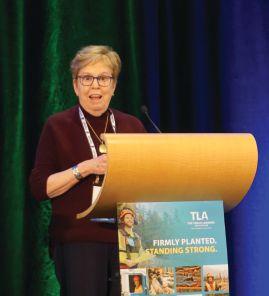
BCLTC president Linda Coady
Reader
Industry needs youth engagement to tackle labour shortage
The forestry sector is experiencing a labour force and skill shortage that is preventing it from realizing its full economic potential, said Ontario’s Ministry of Natural Resources and Forestry. If left unchecked, this shortage could negatively impact
Lake Babine Nation to take back control of prime lands
The B.C. government and Lake Babine Nation have signed a new land transfer agreement that will enable the Nation to take back control of 20,000 hectares of waterfront and prime forestry lands in their territory. This transfer of lands will enable the Nation to expand its forestry business and drive economic opportunity in the regional economy.
the socio-economic standing of hundreds of communities across the province of Ontario for years to come.
To address this issue, Forests Ontario and the Ontario Forest Industries Association, with support from an advisory committee, collaborated on Bridging the Gap Between Ontario’s Youth & the Provincial Forest Sector, an Employment On-
tario research project funded in part by the federal and provincial governments. According to Bridging the Gap research, to effectively compete with other industries and attract and retain a workforce that can sustain continuous growth, the forestry sector will need to build better awareness and engagement with youth, so they consider forestry as a viable, enticing option when choosing their career paths.
Quebec gives $7.5M to Chantiers Chibougamou
The Quebec government has announced the allocation of $7.5 million in financial support to Chantiers Chibougamau towards its expansion and modernization project at the Chibougamau facility.
The $20-million project started in 2019 and includes the automation and optimization of the sawmill and engineered wood manufacturing plant using artificial intelligence and Industry 4.0 technologies.
Saskatchewan leads Canada in building construction
Saskatchewan is seeing continued growth as it leads Canada for investment in building construction, according to Statistics Canada. Investment in building construction saw strong year-over-year growth, with a 21.5 per cent
increase compared to January 2022 (seasonally adjusted). This is the highest growth among the provinces.
There was a total of $399 million invested in building construction in January 2023.
Wolastoqey Nation, AV Group sign MOU
AV Group NB and the six Wolastoqey First Nations signed a memorandum of understanding (MOU) that outlines a path toward mutually-beneficial forest management and economic development opportunities. The parties have agreed to pursue a greater collaborative approach to forest management and explore alternative forest tenure models that will incorporate meaningful input into decision-making processes. One of the first deliverables from the MOU, which was put into effect Feb. 16, 2023, will be creating a mutual guiding principles document for developing a forest co-management model. The MOU also includes the transfer of a parcel of land that will be determined by feedback from the Wolastoqiyik.
416-510-5113
Email: apotal@annexbusinessmedia.com
Mail: 111 Gordon Baker Rd., Suite 400, Toronto, ON M2H 3R1
EDITOR - Jennifer Ellson (438) 483-7451 jellson@annexbusinessmedia.com
MANAGING EDITOR - Maria Church (226) 931-1396 mchurch@annexbusinessmedia.com
GROUP PUBLISHER - Anne Beswick (416)410-5248 • Mobile: (416) 277-8428 abeswick@annexbusinessmedia.com
Tim Shaddick 1660 West 75th Ave Vancouver, B.C. V6P 6G2 Ph: (604) 264-1158
Kevin Cook lordkevincook@gmail.com Ph: (604) 619-1777
PRESIDENT/COO
IN-FOREST CONNECTIVITY
Digital transformation and enhanced safety in forest operations
BY MITHUN SHETTY
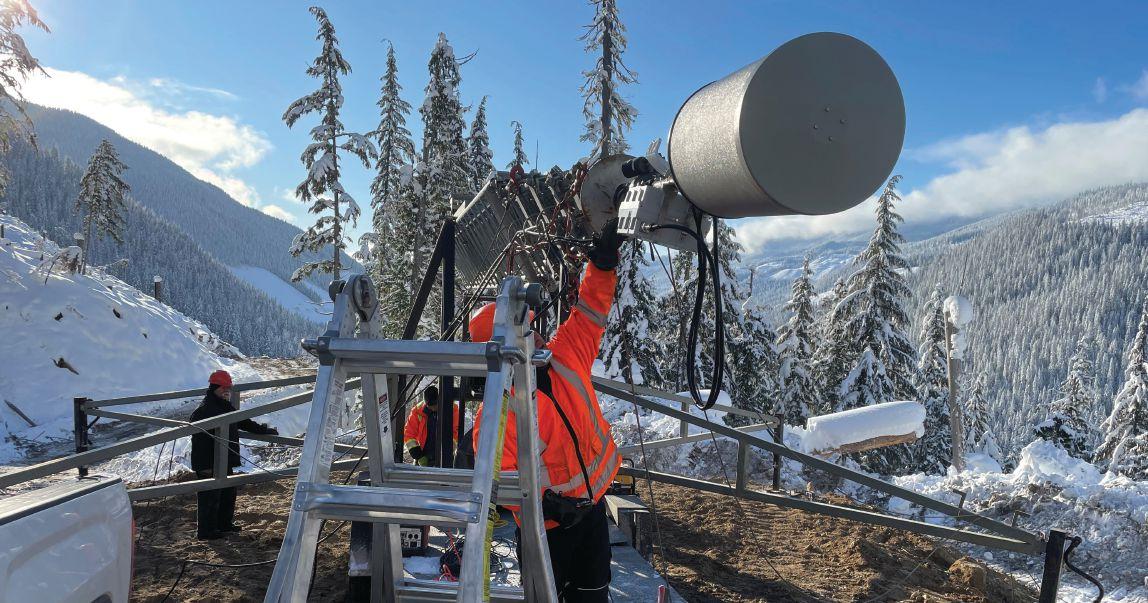
History has been created in forest operations. For the first time, a worker made a phone call via portable cellular network from a remote location to office staff in town during an operational trial. With the trial’s success, now is the right time for the industry to join forces with telecom providers to scale up implementation.
Progress have been made over the past months in bringing this technology to forest operations. In the newest development, work has moved from research to implementation where Tolko Industries, an FPInnovations industry partner, has taken con-
trol of the deployment of the portable cell towers as required for autonomous deployment. Let us revisit the need, challenges, achievements, collaborations, trial locations, applications, and scaling up strategies of this project.
NEED FOR ADVANCED CONNECTIVITY IN THE FOREST
More than 50,000 people work in remote forests in Canada and most of these operating areas lack cell coverage. The connectivity for making calls and transferring data is limited with the use of GEO-
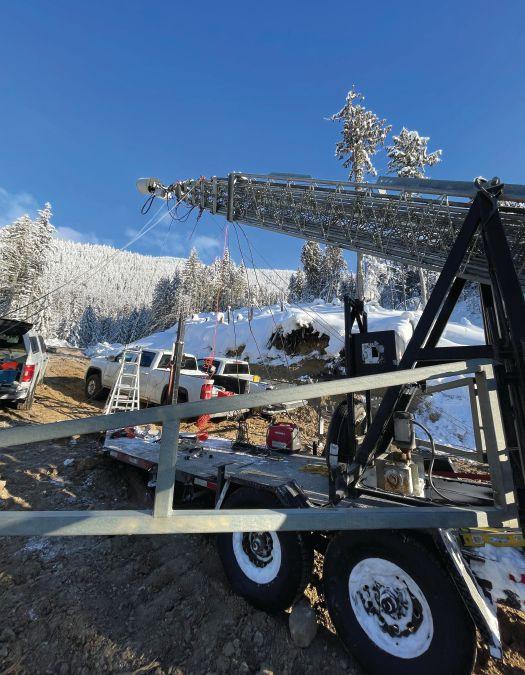
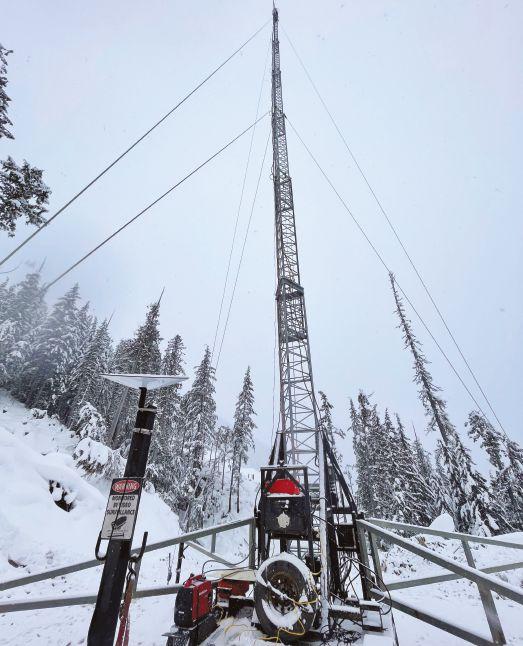
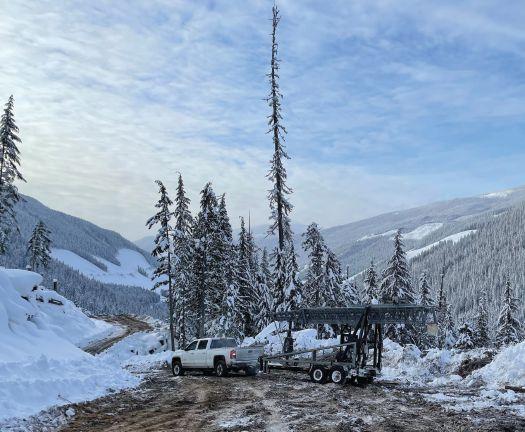
A 100-ft. tower deployed in Tolko’s Sugar Lake operation. Photos courtesy of FPInnovations.
based satellite and VHF (very high frequency) radios. Digital transformation opportunities cannot be fully realized until advanced connectivity is brought to forest operations.
CHALLENGES IN BRINGING CONNECTIVITY
Forestry is unique due to its dynamic operations (moving around everyday and not coming back to the same place for 70 years), remote locations, challenging terrain, and heavy vegetation, all of which heavily influence the cell signal coverage from the tower. Locations of operations are temporary and can be easily moved beyond the coverage from a single tower, which makes portability and ease of set up key for implementation. In addition, when access to power from utilities is unavailable, the power needs to come from a portable generator, which would ideally be powered from a clean energy source.
OVERCOMING CHALLENGES AND ACHIEVEMENTS TO DATE
The recent introduction of high-speed internet using LEO constellations with a satellite terminal for backhaul has helped bring internet into forests in a cost-effective way. The 100-ft. tower helped transmit signals above the treeline. The use of a tower-mounted amplifier helped reduce the imbalances between the downlink and uplink coverage, and the vehicle-mounted cell boosters helped extend the coverage in the forest environment. The tower location at a high point and combinations of the above tools helped bring wide-area coverage with a radius of up to 10 km in the forested areas.
CO-OPERATORS AND PARTNERS’ SUPPORT
Our industry partner, Tolko, was the early adopter and pioneer of this technology. The role of Tolko, its contractors, Innovation Science Economic Development, and our technology partners in the development of this solution was crucial as we hit a few roadblocks along the project; however, with strong collaborations and teamwork we were able to overcome these roadblocks and now we have a solution that is ready for the industry to implement in its operations.
TRIAL LOCATIONS
The research trials started in Tolko’s Cariboo division near Williams Lake, B.C., and has now been deployed near Sugar Lake, B.C., in Tolko’s Southern Interior division, as part of a longer-term operational trial. This area has been a challenge for communications as the VHF repeater did not provide complete coverage and resulted in areas without any cell coverage, until now. One 100-ft. and one 30-ft. portable tower were deployed in the operations. Some planning is required to find the high point for the tower location that is accessible by road and provides the required coverage for the operating area. Simple tools in Google Earth, such as viewshed and elevation profile, have proven useful for finding the appropriate locations for the tower deployment.
APPLICATIONS
ENABLED BY ADVANCED CONNECTIVITY
There are limited applications that can be used for forestry operations, but now with a reliable and more cost-efficient connectivity solution, programmers will be able to develop more. Connectivity in operations will open up opportuni-
A quick deployable 30-ft. portable tower.
A 100-ft. tower deployed in Tolko’s Sugar Lake operation.
A CUT ABOVE THE REST PROTECTOR ULTRA
ties for improving operational safety and efficiency.
Many ideas for new apps arose during the operational trials. The most critical one would be a phone and messaging app for communication among all forest workers within the remote cellular coverage and the rest of the connected world. Other critical needs would focus on equipment diagnostics, determination of real-time locations, and transmission of machine data, which will be important for digital transformation. The list for app developments keeps growing as more users are getting used to having connectivity where it hasn’t been a reality before.
SCALING UP CONNECTIVITY SOLUTIONS
> European Cut Protection Class 2
Telecommunications providers could offer the integrated solutions on lease to the industry; however, sending the support team for deployment in the field will make it cost prohibitive. Therefore, partnering with industry for deploying this solution will be the key. This project proved that the industry is capable of operat-
ing, moving, and maintaining the cell tower. This tower will soon be an essential tool that would be moved as the equipment moves to new locations. To scale up the connectivity solutions, the forest industry could partner with wildfire agencies and First Nations communities in remote areas to have shared portable network towers in forests.
Advanced connectivity will act as a game changer and will help to bring digital transformation and enhanced safety to forest operations. FPInnovations encourages the industry and telecom providers to work together to build the connectivity infrastructure that will bring revolution in the industry.
Mithun Shetty is a senior researcher with FPInnovations’ Transportation and Infrastructure group. He is a professional engineer registered in B.C. and has a master’s degree of applied science in forestry from UBC. He has around 20 years of experience in the transport sector with expertise in Intelligent Transportation Systems and has lead several innovation projects including in-forest connectivity project.
Advanced connectivity will act as a game changer.
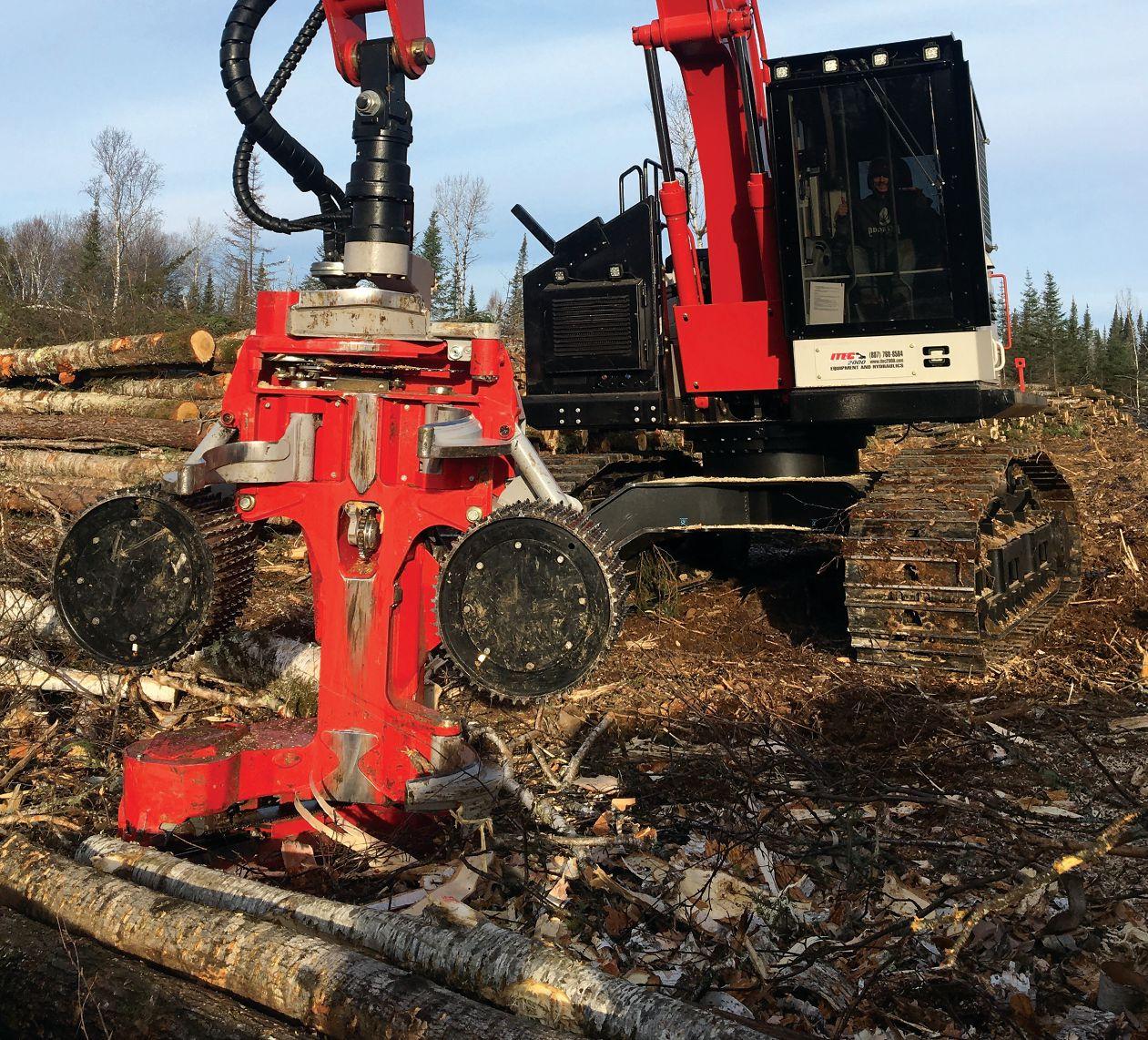
Not being one to shy away from trying something new, Stéphane Dubé Slashing’s most recent purchase certainly falls into that category. His purchase - a new Log Max 7000 Xtreme with top saw and a new Linkbelt 3240 carrier from Thunder Bay dealer Itec 2000 Equipment and Hydraulics was finalized in the Fall of 2021.
Originally from central New Brunswick, Stéph Dubé moved with his family to Ontario 33 years ago and started slashing with Timrick slashers in the Geraldton area, just north of Nakina and 3 ½ hours Northeast of Thunder Bay. Somewhat isolated to say the least.
That said, in just 14 months Stéph and his team have been able to clock over 5,000 hours on the package! “Our guys work double-shift and will harvest standing timber or process felled timber depending on the inventory. It’s a great package. Its good and strong and I’m really happy with the support from both Log Max and Itec”.
FORESTRY mapping
A ROAD MAP FOR MAPPING
When 10 metres isn’t good enough anymore
BY SAM ECKART
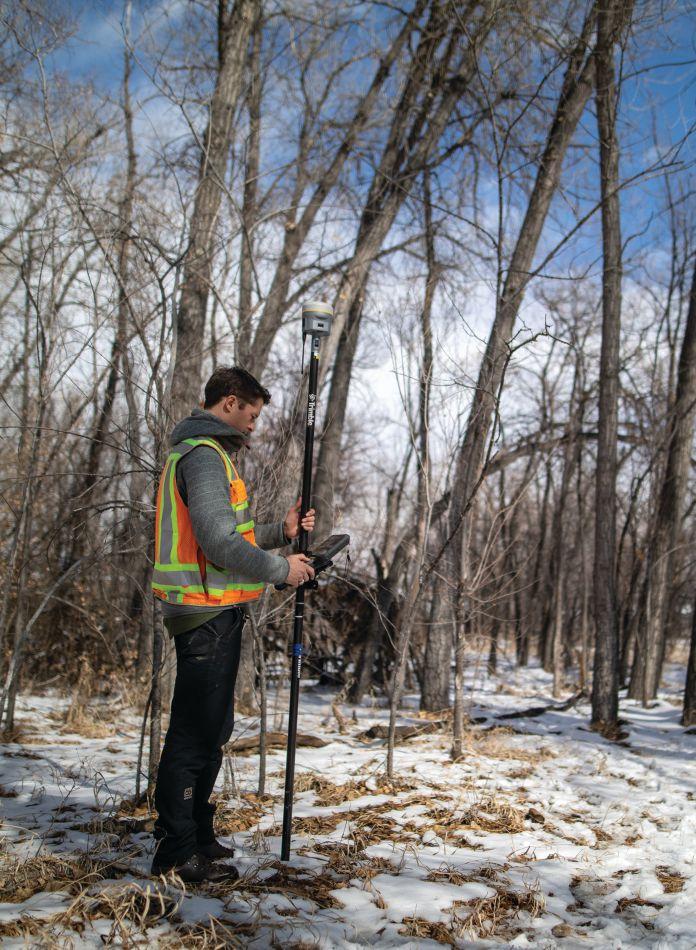
Mapping technology has advanced considerably since 2008, which was also the last time the B.C. Ministry of Forestry updated their accuracy requirements. But it’s only a matter of time before rules and regulations get at least within spitting distance of modern technology, which will bring greater accuracy requirements and impact virtually all silvicultural tasks – cut blocks, timber cruising, harvest mapping, and so forth.
Survey videos released as recently as 2021 can be found where key operators are still relying on long-outdated technology. Some forestry professionals are stuck even further back in time, relying on familiar but antiquated chain compasses and paper maps. Even if or when a provider is ready to make the leap to 21st century technology, they frequently don’t leap far enough –choosing outdated GPS devices and mobile devices (tablets) that are still years behind the technology curve.
Old consumer-grade GPS devices still limit you to a 15-30 metre accuracy, which was good enough in 2008, but still well behind lead-
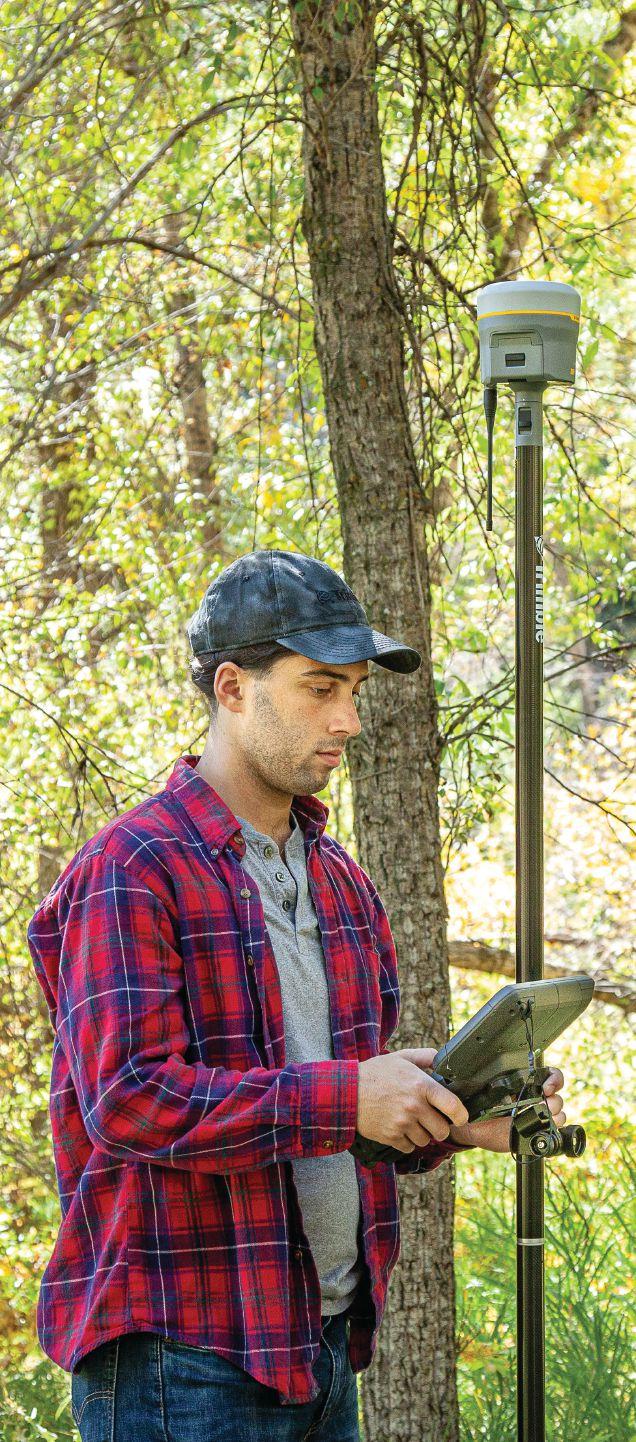
New technology can dramatically improve efficiency. You’ll be able to work faster, more reliably, and more efficiently. Photos courtesy of Trimble.
ing-edge technology – technology that near-future regulatory changes will almost certainly require.
The dangers of cutting over an inaccurately established cut line are obvious: a potential quagmire of complex legal headaches, delays, and the considerable expenses needed to deal with all of them. The other side of the coin is potentially short-changing yourself. If you have a 10-metre buffer to your cut line and less accurate methods add another 5-10 metres inside of that, you could inadvertently leave a lot of harvestable land (and money) on the table.
COMMON EQUIPMENT
The 2008 stalwarts – iPads running mapping software paired with consumer GPS devices — are still popular go-to
SOME FORESTRY PROFESSIONALS
ARE STUCK FURTHER BACK IN TIME, RELYING ON FAMILIAR BUT ANTIQUATED CHAIN COMPASSES AND PAPER MAPS.
Mapping technology has advanced considerably since 2008.
devices, as are older GNSS (global navigation satellite system) models that only connect to single satellite constellations. Or, they may only connect to a GPS system instead of GNSS systems. In a dense canopy, particularly in mountainous regions of B.C., they could encounter significant difficulty making reliable connections.
Even if you’re using older GNSS systems, newer GNSS options and technological advances can still greatly improve your overall accuracy with stronger, faster connections that deliver better results.
SOME PROFESSIONALS AND ORGANIZATIONS
AREN’T AWARE OF WHAT TECHNOLOGY IS AVAILABLE, OR THEY MAY BE OVERWHELMED BY OPTIONS.
Bottom line: If you can only establish connections to three or fewer satellites from a total of 10 available in open sky, you will not be able to get a position at all. However, if you have up to 30 satellites available, your chances of connecting to four or more increase significantly and you are more likely to get a position – and the more you can see, the more your accuracy will improve.
SO WHY AREN’T PEOPLE UPGRADING?
Holdouts aren’t upgrading for three main reasons:
• They don’t have to. There are no regulations/requirements to force them to, so why spend thousands of dollars when you can rely on older, cheaper tech?
• They don’t know. Some professionals and organizations aren’t aware of what technology is available, or they may be overwhelmed by options.
• They don’t want to. Sometimes, old practices get perpetuated from the top-down, where the “top” may be industry veterans sticking to old methods and technology.
SO WHY CHANGE NOW?
While you may not be forced to change, there are plenty of good reasons to get ahead now instead of waiting for regulatory changes to force your hand.
• First, new technology can dramatically improve efficiency. You’ll be able to work faster, more reliably, and more efficiently.
• You’ll be able to deliver more accurate results with greater confidence, which in turn leads to …
• Delivering better, faster, and more accurate outcomes for customers. Sam Eckart has been a forestry account manager with Cansel since 2020. After completing his degree in geography at the University of Lethbridge, he worked with Alberta Agriculture and Forestry as part of the HAC wildfire team in Fort McMurray.
A LONG WAY TOGETHER
FS 216
FS 216 is BKT’s response to your needs even under the most critical operating conditions in forestry
EVOLVING AND ADAPTING
It’s never been more challenging to grow a forestry business
BY MIKE FRIEDERICI
How do loggers better prepare for the challenges ahead? In many cases, evaluating your forestry equipment is a great place to start ¬– there has never been a better time to get smarter and more adaptable.
Investing in equipment that can be rebuilt, leveraging new technologies and partnering with trusted, informed dealers can all help support your current and future business needs. With the right maintenance and fleet strategy you can leverage your equipment to help retain and attract
operators, improve productivity, reduce costs, and increase safety, all while meeting current and future sustainability goals.
REPLACE INVENTORY WITH INFORMATION
Improving productivity and reducing expenses are top goals for any logger. But knowing how to get there can be the biggest challenge. Technology advancements in forestry equipment, like telematics, can capture real-time data – helping you complete projects with greater insight, collaboration and
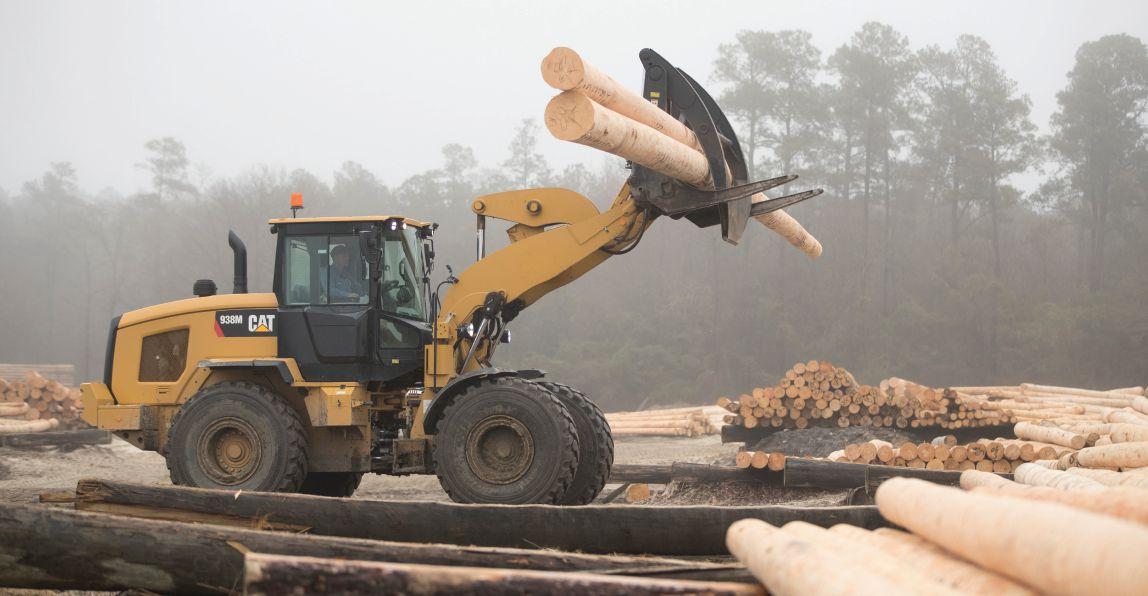
Photos courtesy of Finning
Improving productivity and reducing expenses are top goals for any logger.
WITH THE RIGHT APPROACH, YOU CAN LEVERAGE YOUR EQUIPMENT TO KEEP COSTS DOWN, STAY PRODUCTIVE AND PREPARE YOUR BUSINESS FOR ANYTHING.
efficiency. And as technology continues to improve, connectivity for remote forestry locations is easier than ever before. Software updates can be sent directly to the machine on the jobsite without having to wait for a technician to arrive.
When leveraged properly, data has enormous potential – it can unlock meaningful insight to help reduce costs, minimize downtime and identify problem areas or operator-induced fault codes on your equipment. The right dealer can support you on this journey by setting up instant alerts, monthly reports and identifying areas of opportunity or improvement.
As technology has advanced, so has the quality of equipment. Longer oil change intervals and filter quality is extending machine life, helping to lower operating costs. And as fuel costs soar, more manufacturers and dealers are investing in hybrid and electric machines that can support alternative fuels such as diesel blends to help lower operating costs. Hydraulics are also getting smarter. These new enhancements are making good operators great, while also keeping them safe, comfortable and happy.
The right equipment can help you stay productive, but it can also help attract and retain operators by improving working conditions and safety. And in a time where every industry is experiencing labour challenges, keeping employees safe and happy is an important part of your recruitment and retention strategy.
GETTING THE MOST OUT OF YOUR EQUIPMENT
Ever increasing environmental regulations and
stricter emissions standards mean companies need to work smarter to achieve sustainability targets. Gone are the days of trading in machines for a shiny new piece of equipment earlier than needed. Forestry companies of all sizes can make a big impact by opting to rebuild equipment, instead of buying new. A rebuild involves replacing parts, changing out components, calibration and adjustments, with the end result being a like-new machine.
Rebuilds reduce overall waste and minimize raw material used to produce new parts and equipment. This is crucial as companies are accounting for the carbon output that’s the result of purchasing a new machine. Plus, equipment can be rebuilt multiple times and owners have the choice of keeping legacy tier emission standards or rebuilding to a higher tier emission standard. This means equipment stays in production for multiple lives and it saves non-renewable resources from the landfill, while reducing equipment costs and contributing towards sustainability goals.
New machine availability and machine value prior to the rebuild also play a factor in your decision. Understanding your equipment’s history, its condition and what maintenance it may or may not need, can provide both cost savings and environmental benefits. A dealer can work with you to understand machine analytics, value, overall condition and whether a rebuild is worth the cost.
Timing is also an important consideration if you’re considering a rebuild. Supply chain disruptions combined with labour shortages are increasing lead times for new equipment across the globe.
LEADERS IN 3D WOOD SCANNING AND QUALITY CONTROL
LMI Technologies is a global leader in the advancement of 3D scanning technology for lumber applications. We design and deliver the sensors that mill operators use to carry out accurate, efficient, high-speed log and board breakdown optimization in the harshest mill conditions.
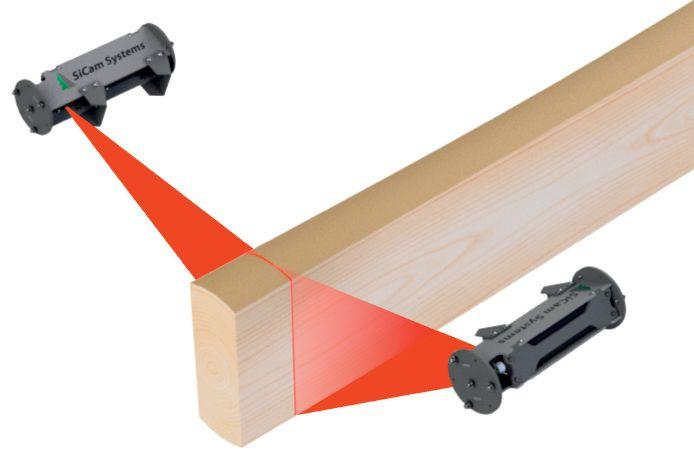
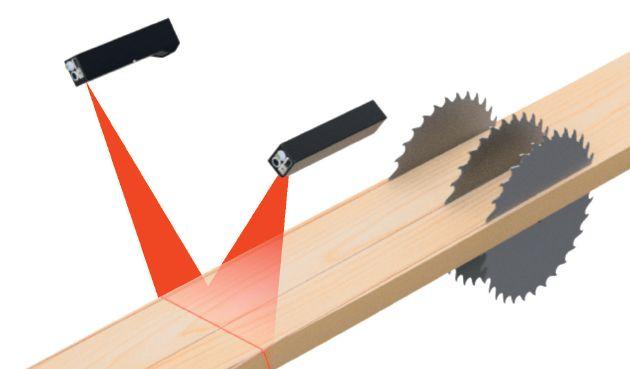
Our advanced 3D wood scanning solutions span a wide range of capabilities including profiling wood for size and shape, building high resolution color images for defect inspection, full tracheid measurement for improved knot detection, and even machine monitoring in size control solutions like those designed by SiCam Systems.
“The Gocator 2490 helps SiCam achieve better results in the most demanding QC applications through faster scan rates and improved resolution.”
- Kevin Brown, Vice President, SiCam Systems
Take your quality control program to the next level with SiCam’s proven RealTime Closed Loop Size Control. Reduce variation, cut closer to target and get better results from the machinery you already have. Improve quality and realize improved profitability.
Control Quality using SiCam:
• Measure: Trend and report size, face, wane and shape variation for user feedback
• Analyze: Compare SiCam to Optimizer data to determine the required adjustment
• Adjust: Make controlled adjustments to cutting tools and track movement
CLOSED LOOP
Meet
Performance, reliability, and versatility all in one.
• 200 Hz full frame up to 5 kHz
• X Res: 0.0098 - 0.0433” (0.25 mm to 1.1 mm)
• FOV: 54.724” – 78.740” (390 mm – 2000 mm)
• Web-based interface
• Built-in multi-sensor networking
• Versatile and deployable across wide range of wood scanning and optimization applications
Maintaining or growing a logging business has always been hard – and today, it’s even harder.
This is especially challenging in an industry like forestry where customers are accustomed to walking into a dealer and buying new equipment on the spot for whatever job they have coming up. So, planning ahead and creating an equipment strategy is as important as ever.
RELATIONSHIP WITH DEALER IS IMPORTANT
The forestry industry is no stranger to hardships and has always had to adapt to the ever-changing economy. Just when one crisis seems over, another one hits. If it’s not a beetle outbreak or forest fire then it’s a looming recession, mill closures or supply chain issues. Maintaining or growing a logging
business has always been hard – and today, it’s even harder.
But, imagine a world where you’re better equipped to meet current and future challenges. Your business is productive, efficient and profitable. Having a dealer that works with you means everyone – financing, parts, technology, service and sales – is working together to find the right solutions for your business. Today’s dealers have evolved beyond simply supplying equipment to customers. End-to-end solutions are helping to provide advanced data insights, driving value and return on investment.
Now is the time to think about your relationship with your dealer. Is it meeting your business needs in an open and transparent way? Does it help prepare you for future growth while mitigating risks? Although there doesn’t appear to be a light at the end of the tunnel just yet, evolving and adapting to a new way of doing business can help ensure a bright future for Canada’s forestry industry. That means investing in quality equipment that can be rebuilt, while leveraging new technologies to help drive efficiency and increase productivity, while keeping costs down.
Mike Friederici is the industry manager, forestry and earthmoving at Finning Canada.
The award-winning Loggers’ Expo returns to the Cross Insurance Center in Bangor, Maine in 2023! Join thousands of the hardest-working people you’ll ever meet to conduct some serious business. The Loggers’ Expo is the largest and best exposition of supplies and services, heavy equipment and trucks –for loggers and land clearers, tree care companies and firewood dealers, sawmillers and landowners.
If you’re serious about the forest products industry – this is the show for you. Contact us for information about exhibiting at or attending the 2023 Loggers’ Expo: visit northernlogger.com email expo@northernlogger.com call 315-369-3078
Maximum Productivity
Get things done right the first time with
More Intuitive
IBC offers simple functionality for new
Ultimate Support
Backed by Brandt, true 24/7/365 support minimizes downtime and saves you money.
FOREST partnerships
The value of collaboration
Unique partnership towards sustainable forest management
BY DAVID FLOOD AND CHRIS MCDONELL
Nearly 1.7 million people in Canada identify as First Nations, Metis and Inuit. They live in over 600 communities across the country, and the vast majority depend on forests for food sovereignty and security, medicines, clean water, and spirituality.
At the same time, there is an increasing dependence on forests for wood fibre as demand rises worldwide, requiring a healthy balance between industry, conservation and Indigenous rights. While challenging, this balance is very much achievable – and one example can be found in the boreal forests near Chapleau, Ont., east of Lake Superior.
There we find Wahkohtowin Development, an Indigenous-led social enterprise rooted in sustainable forestry that serves its three First Nations owners: Brunswick House, Chapleau Cree, and Missanabie Cree. It pursues its mission with the respect and collaboration of GreenFirst Forest Products, a local forest products company committed to sustainable forestry.
This strong relationship is built on trust, in part owing to the fact that GreenFirst has held Forest Stewardship Council (FSC) certification for nearly 20 years – thus committing to upholding Indigenous rights. The FSC standard has proven to be a tool by which GreenFirst has
There is an increasing dependence on forests for wood fibre as demand rises worldwide, requiring a healthy balance between industry, conservation and Indigenous rights.
deepened its relationship with Wahkohtowin, allowing them to better understand First Nations perspectives and goals, and reconcile their practices with Indigenous interests in mind.
This partnership has shown demonstrable impact, with both Indigenous and non-Indigenous industry perspectives integrated into a shared goal of sustainable forest management. GreenFirst and Wahkohtowin have worked together to safeguard the conservation of land for important cultural purposes, including birch syrup production and moose habitat protection.
As part of the Wahkohtowin Guardian program, Indigenous youth have also been engaged to survey and assess the land in a joint effort to improve forest renewal – participants whose feedback and ideas in turn grant GreenFirst unique perspectives on the land it harvests.
SUPPORTING FREE, PRIOR AND INFORMED CONSENT
It is commonplace today for forestry companies to have policies in place about how they must work with nearby Indigenous communities. Still, it is requirements, such as those found in the FSC standard’s Principle 3, that help create lasting engagement and meaningful relationships.
This engagement is enshrined with FSC’s
commitment to free, prior and informed consent (FPIC), a right that pertains to Indigenous Peoples, now recognised in the United Nations Declaration on the Rights of Indigenous Peoples (UNDRIP).
FSC requires all certified forest owners or managers to uphold its principles in order to earn and maintain certification. Through this, each Indigenous community grants, withholds or withdraws its consent on projects and activities that impact their rights – in accordance with UNDRIP and the International Labour Organization’s Convention 169.
By implementing UNDRIP and FPIC into the new national forest stewardship standard both globally and domestically, FSC not only opens the door for economic opportunities and participation from communities, but also drives ecosystem resiliency by holding industry players accountable for taking action. Indeed, when consumers see the FSC logo, they know they are supporting a company that doesn’t just follow the status quo, but pursues a sustainable global model for how forestry should be.
A SYMBIOTIC APPROACH
For GreenFirst, it took time and commitment to work in step with Wahkohtowin to achieve
MANY INDIGENOUS PEOPLES HOLD CLOSE THE SEVENTH GENERATION PRINCIPLE – THAT TODAY’S DECISIONS MUST LEAD TO A SUSTAINABLE WORLD SEVEN GENERATIONS FROM NOW.
THERE’S AN INCREASING DEPENDENCE ON FORESTS FOR WOOD FIBRE AS DEMAND RISES WORLDWIDE, REQUIRING A HEALTHY BALANCE BETWEEN INDUSTRY, CONSERVATION AND INDIGENOUS RIGHTS.
a symbiotic approach to sustainable forestry. And the results speak for themselves: economic benefits, cultural revitalization, community growth, and with effective conservation and monitoring, the chance to leave a legacy of healthy forests for future generations.
Kevin Tangie (Big Knife), the lands and resources economic development portfolio holder for Brunswick First Nation, shares his perspective on Wahkohtowin-industry partnerships and
Combustible Dust Specialists
what he has seen play out over the past several years.
“The main thing for our people is to have protections in place, and the ability to regain some control and oversight on our lands and the activity that is happening out in the field,” Tangie says.
“Wahkohtowin is helping us obtain more sovereignty in terms of our influence on these lands, including forestry, developers, resources, extractions, and a number of environmental factors. Along with our First Nations partners, we are better able to align our forestry management techniques and become active partners in resource development projects.”
Many Indigenous Peoples hold close the Seventh Generation Principle – that today’s decisions must lead to a sustainable world seven generations from now. Those decisions are best made jointly by all stewards of the forests, which can be described in policy, but which need decisive action and trusted partnerships – like that seen with Wahkohtowin and GreenFirst – to achieve lasting positive impact.
David Flood (Strong Wolf) is a member of the Ojibwe Nation, and the general manager of Wahkohtowin Development.
Chris McDonell is chief forester for Ontario at GreenFirst Forest Products.
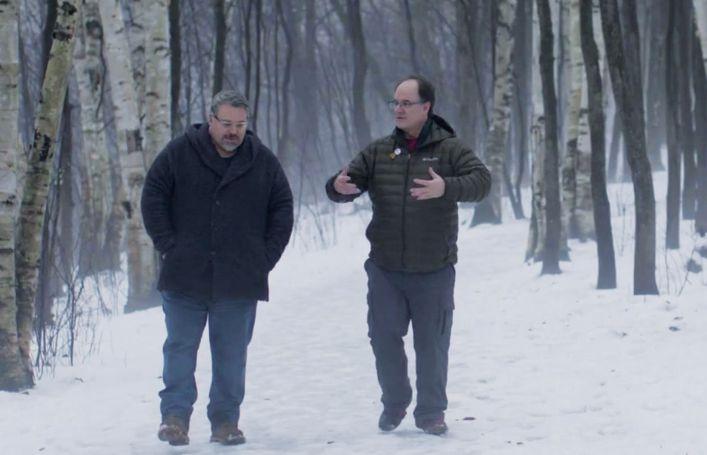
(L-R): David Flood and Chris McDonell. GreenFirst and Wahkohtowin have worked together to safeguard the conservation of land for important cultural purposes. Photo courtesy of FSC. Canada.
WOODPRODUCTS CANADIAN
HIGH VALUE
BY JENNIFER ELLSON
Longevity. Resilience. Innovation. Survival.
There’s a family-owned business in the heart of B.C.’s West Kootenays that checks all those boxes.
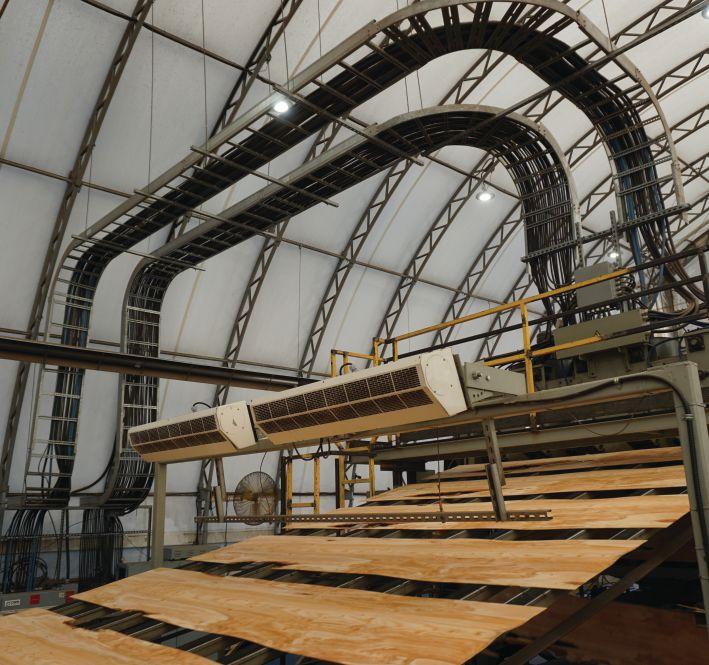
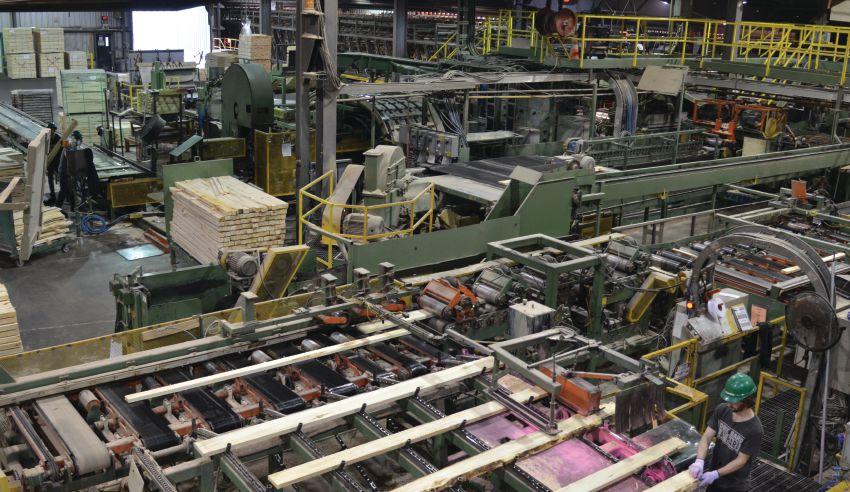
ATCO Wood Products has evolved over the decades from its humble sawmilling roots to a cutting-edge manufacturer of specialized softwood veneer and other wood products.
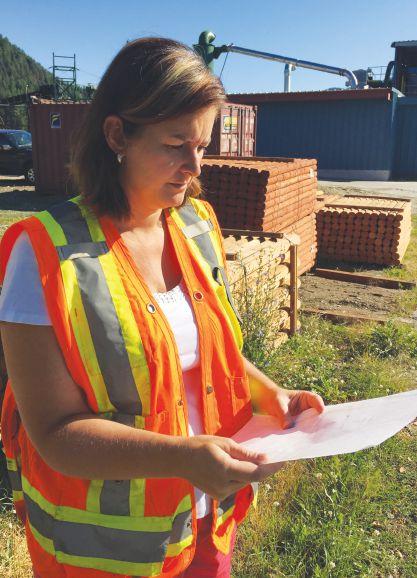
Rebecca Weatherford is the third-generation owner and president of ATCO, in the picturesque village of Fruitvale. At the company’s helm as CEO is Rebecca’s husband, Scott Weatherford.
THREE GENERATIONS OF SUCCESS
ATCO’s story begins in 1923, when Rebecca’s grandfather, Atle Nelson, immigrated to Canada from Sweden. Coming from a sawmilling background, Atle immediately got involved in the local timber industry, eventually establishing his own sawmill with his sons in 1959, naming it ATCO Lumber ¬– a combination of ‘Atle’ and ‘company’.
In the early 1970s, Atle’s sons decided to add a factory that made softwood veneer using a rotary
lathe. In 2002, ATCO officially exited the lumber business by closing the sawmill to focus exclusively on making softwood veneer and the associated products that come from that process.
Over the next years, ATCO would be passed on to Atle’s sons, from oldest to youngest, until 2007, when the youngest son Ted retired and sold the company to his daughter, Rebecca.
Coming from the hotel management sector in Washington state, Rebecca approached the new family venture cautiously. Scott was in the heavy equipment industry at the time and almost moved the family to Shanghai, China, for a job opportunity.
“But we decided to move to Fruitvale instead in 2007 to raise our kids and run the family business,” says Scott. They renamed it ATCO Wood Products.
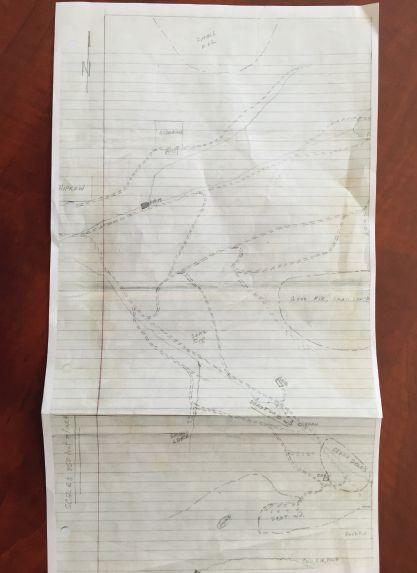
A few years ago, while going through some old boxes in the office, Rebecca came across an old handwritten map that belonged to her grandfather Atle. Circled in red pen, and with her grandfather’s handwriting, were the words “good fir” on a part of the map. Rebecca said it was an area that Atle
An old handwritten map belonging to the first generation owner and founder, Atle Nelson. Photo courtesy of Weatherford family.
harvested in the late 1950s.
“I took my daughter on a hike to that very spot, and in that moment, I felt a deep connection to this company, the community, and my family’s heritage here,” Rebecca says.
Those trees are ready for harvest again, she says, and realizing that her 19-year-old daughter and 16-year-old son could have the same experience in 30 years is one reason why she loves the business.
STAYING POWER
“For over 60 years, since my grandfather founded ATCO, we have grown, evolved and weathered the ups and downs of wood products markets,” explains Rebecca.
Canadian Forest Industries joined the Weatherfords and their team for a tour of the Fruitvale facility last year, where they shared the secret to the family venture’s longevity: never stop innovating and creating high-value specialized products.
“Our customers are shrinking due to consolidation. We ourselves survived decades of consolidation by specializing,” Scott explains.
SELF-SUFFICIENCY IS KEY
Self-sufficiency is also a huge factor, Scott adds, and ATCO achieves this by being fully integrated.
ATCO has a forest management arm that controls the two Crown forest tenures it owns in the Arrow Forest District and Kootenay Lake Forest District. ATCO also has several private land management contracts, and its location close to the Canada-U.S. border has proven to be beneficial as it is also involved in the timber market in nearby northern Washington State, in addition to southern B.C.
ATCO’s belief in being self-sufficient made it invest in a short-line railroad in 2011 as a vital part of their transportation strategy. It connects the ATCO mill to the Burlington Northern Santa Fe network in the U.S. With the addition of a reload facility at Columbia Gardens in the nearby community of Trail, B.C., ATCO started loading lumber and other wood products from other mills in the area to get them to the U.S. Since it is an American line, there’s no need to
change rail carriers.
“We add assets that make sense,” Scott says. “The railroad used to be a cost centre for us, but now with innovation and investment, it looks after its own costs and even generates some return.”
Part of being self-sufficient is also being able to do your own repairs and lately, even machine rebuilds.
“We are remotely located, so we built a machine shop onsite where we do our own repairs, or we contract locals to design and rebuild some equipment for us,” Scott explains, adding that his engineering background, combined with the deep talent at ATCO in fabrication, mechanical design and project management, are serving the company well.
“Being remote, we are prone to having supply chain issues, so we try to fabricate as much as we can onsite. In fact, we can venture into the equipment and heavy machinery business anytime,” he jokes.
INVESTING IN THE BUSINESS AND THE COMMUNITY
ATCO employs 120 out of Fruitvale’s population of less than 2,000 people. It directly employs 70 and hires 50 full time contractors throughout mill maintenance, woodlands and rail operations. The plant produces some 125 MMsf (3/8-inch basis) of softwood veneer (8-foot and 10-foot veneer lengths in thicknesses ranging from 1/10 to 1/6) annually.
Cores left over once the veneer has been stripped from the logs are used for landscaping ties. They are shaved on the top and bottom and are sometimes stained per customers’ requests. Bark becomes high-grade ground cover. Logs that are not used are turned into firewood.
Wood chips go to Mercer’s Celgar mill in neighbouring Castlegar and to other regional pulp mills, while biomass goes to Avista Utilities, an electric and natural gas company in Kettle Falls, Wash., for production of green energy, as well as the local landscape market.
Timber – mostly Douglas fir, larch and spruce – are sourced from ATCO’s harvesting operations on Crown and private lands, open market timber purchases, as well as timber trading with other regional companies of harvested timber not used in their respective mills. ATCO works primarily with three logging
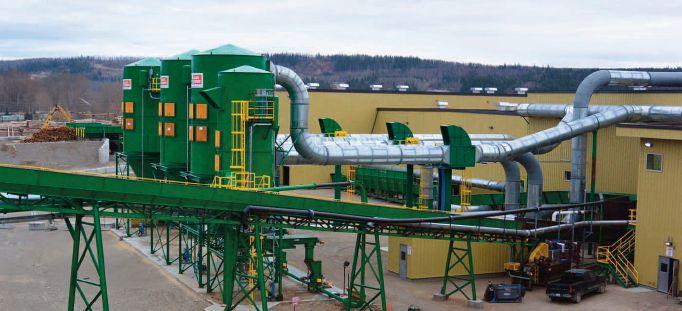
From its humble sawmilling roots, ATCO has evolved to a cutting-edge manufacturer of specialized softwood veneer and other wood products. Photo: Annex Business Media.
contractors operating on their Crown and private land operations.
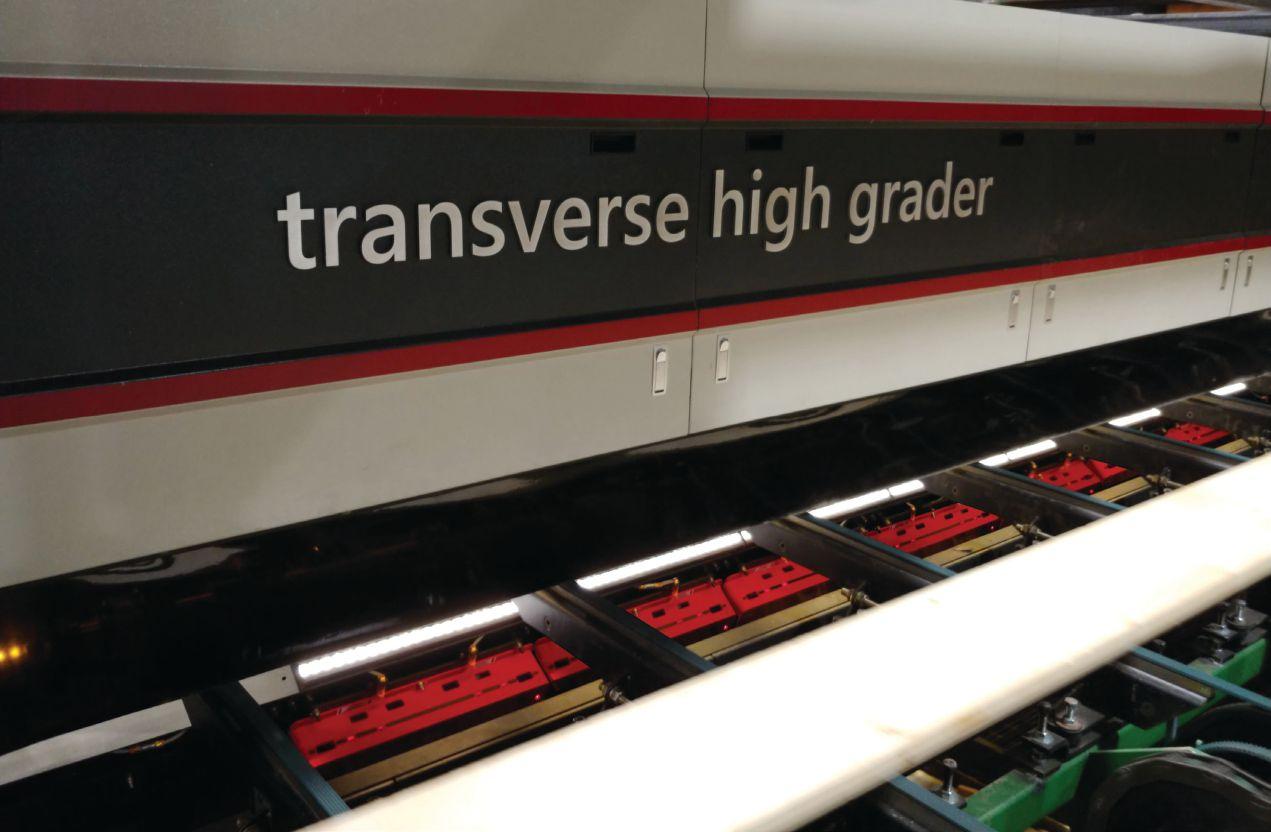
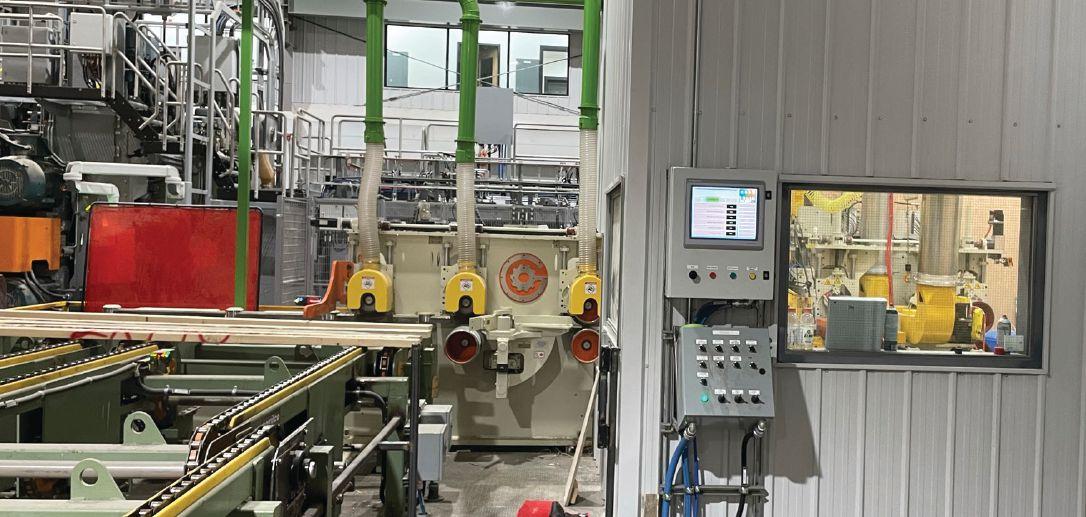
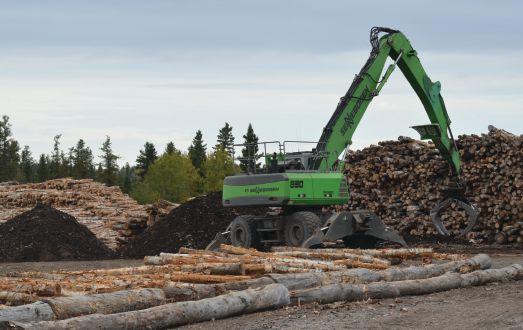
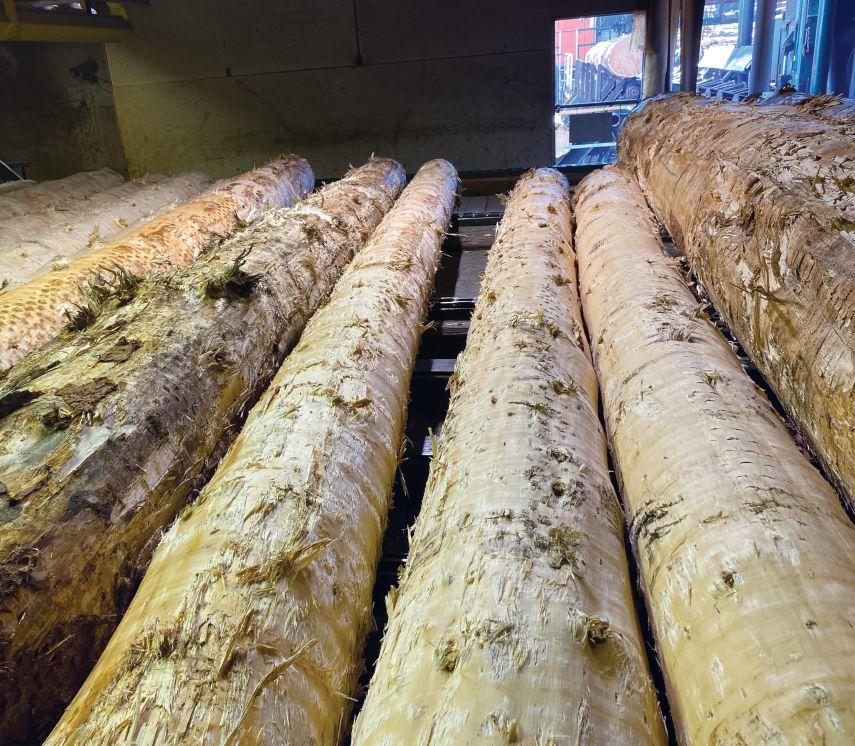
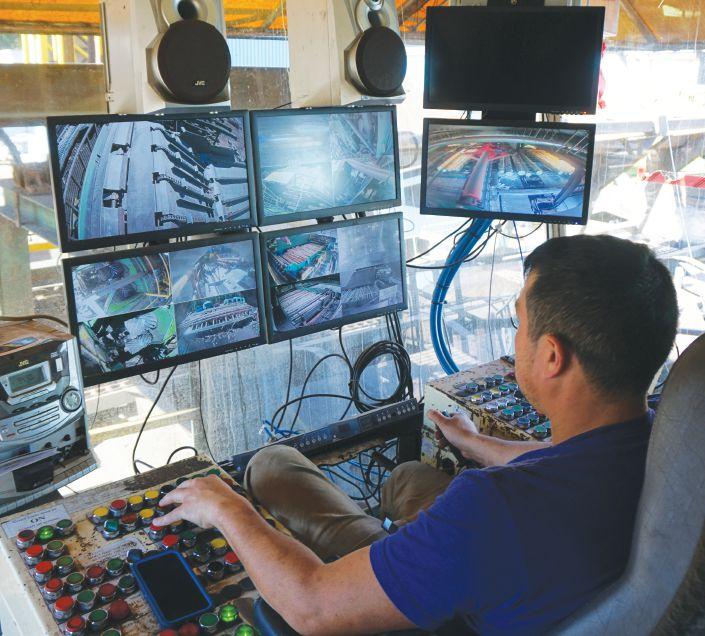
Once the logs are brought to the mill, the production flow start in the log yard equipped with a Cat 980H wheel loader. The logs then pass through a VK Kodiak double ring 36-inch debarker with a with Brunette Machinery drum chipper, and BM&M chip screen. Once the blocks are the correct length, they are fed into the peeler bins and go through the conditioning system comprising hot water chests and a Windsor steam chest.
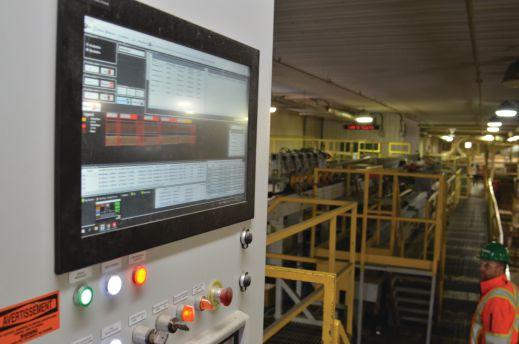
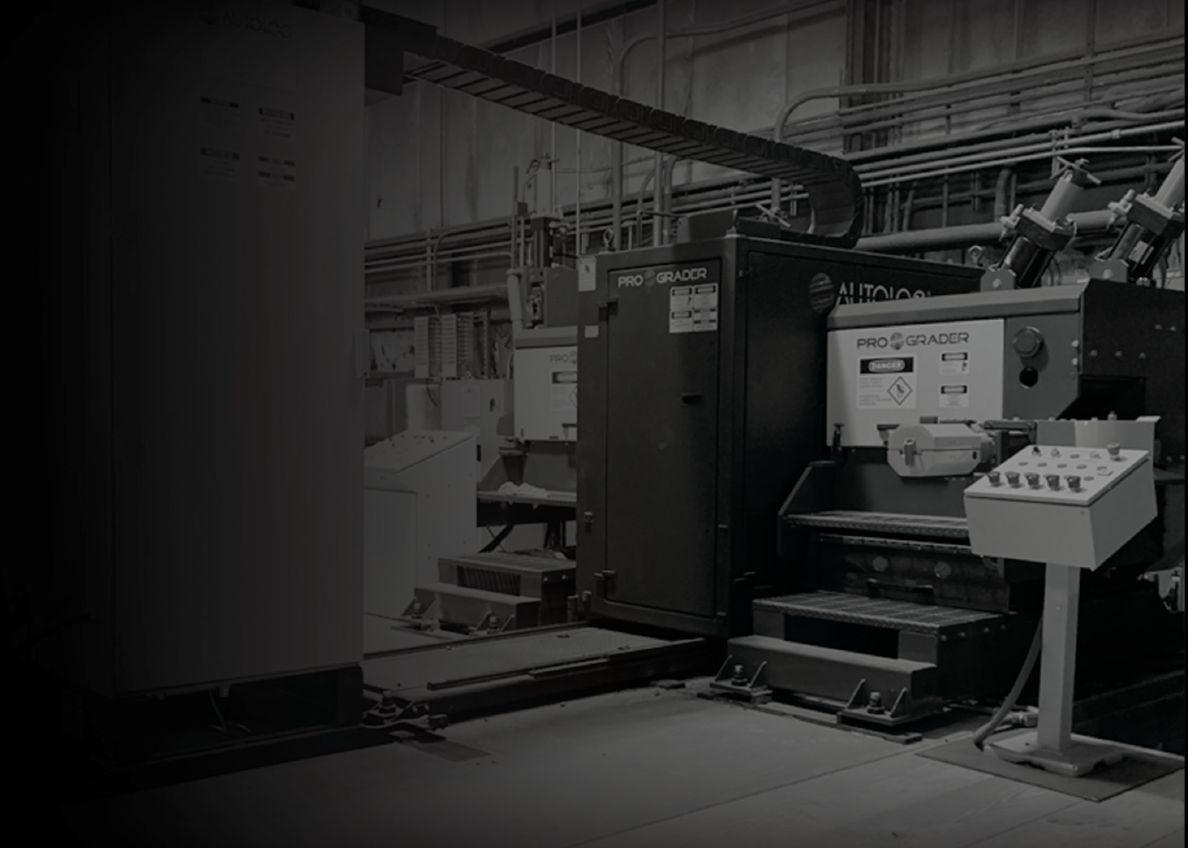
After softening, blocks are sent to a Raute charger and then to a Premier Gear lathe with COE core drive and Elite Automation controls, followed by a Ventek GS2000 scanner that checks for defects prior to a clipper, a Ventek MPDS diverter, a Raute 4 bin full sheet stacker and an Acrowood veneer chipper with BM&M chip screen.
In recent years, ATCO completed investments in the facility’s conditioning systems and lathe upgrades. In fact, just before the COVID-19 pandemic disrupted the world, ATCO invested in a second veneer line: a spindleless lathe
from a Chinese equipment supplier that the ATCO team redesigned and rebuilt onsite.
“The line has several improvements and modifications – designed, constructed and implemented in-house. Our style of innovation works for us – we have a good track record,” Scott says.
“We have a long history of reinvesting strategically in projects that will improve safety, productivity and quality or will introduce new products for us, and that has allowed us to remain competitive.”
NAVIGATING TURBULENCE
B.C.’s Premier David Eby said it himself: “The forest industry is in crisis.” The problem of the lack of economic fibre and other uncertainties have forced several mills to shut operations both temporarily and permanently. In fact, some mills in the West Kootenays have been affected.
“With the economic and wood product market uncertainty, we are spending more time developing our strategy and long-term capital plan and will be more focused on analyzing new
capital deployment while wood products markets remain unsettled,” says Scott.
Rebecca agrees: “We maintain our passionate commitment to forest stewardship, and deep connection to our communities and employees. Wood is the most sustainable and environmentally friendly building product we can use, and its role in helping fight climate change makes me optimistic for the future of our industry.”
“Still, as more land in B.C. is set aside for non-forestry purposes, the shrinking timber harvesting land base is threatening the ability of small, familyowned forestry businesses to be viable for the next generation,” explains Rebecca.
“Innovation to create high-value wood products and increased utilization of the timber resource is the key to a strong future in our industry,” she says. “But we also need decision-makers in B.C. to be bold and courageous in their support of the forest industry to ensure that we have a working forest to provide timber for our family forestry companies to survive and continuing benefiting our communities and our environment.”
HIGH PERFORMANCE
LIGHT CURTAINS MADE FOR SAWMILLS
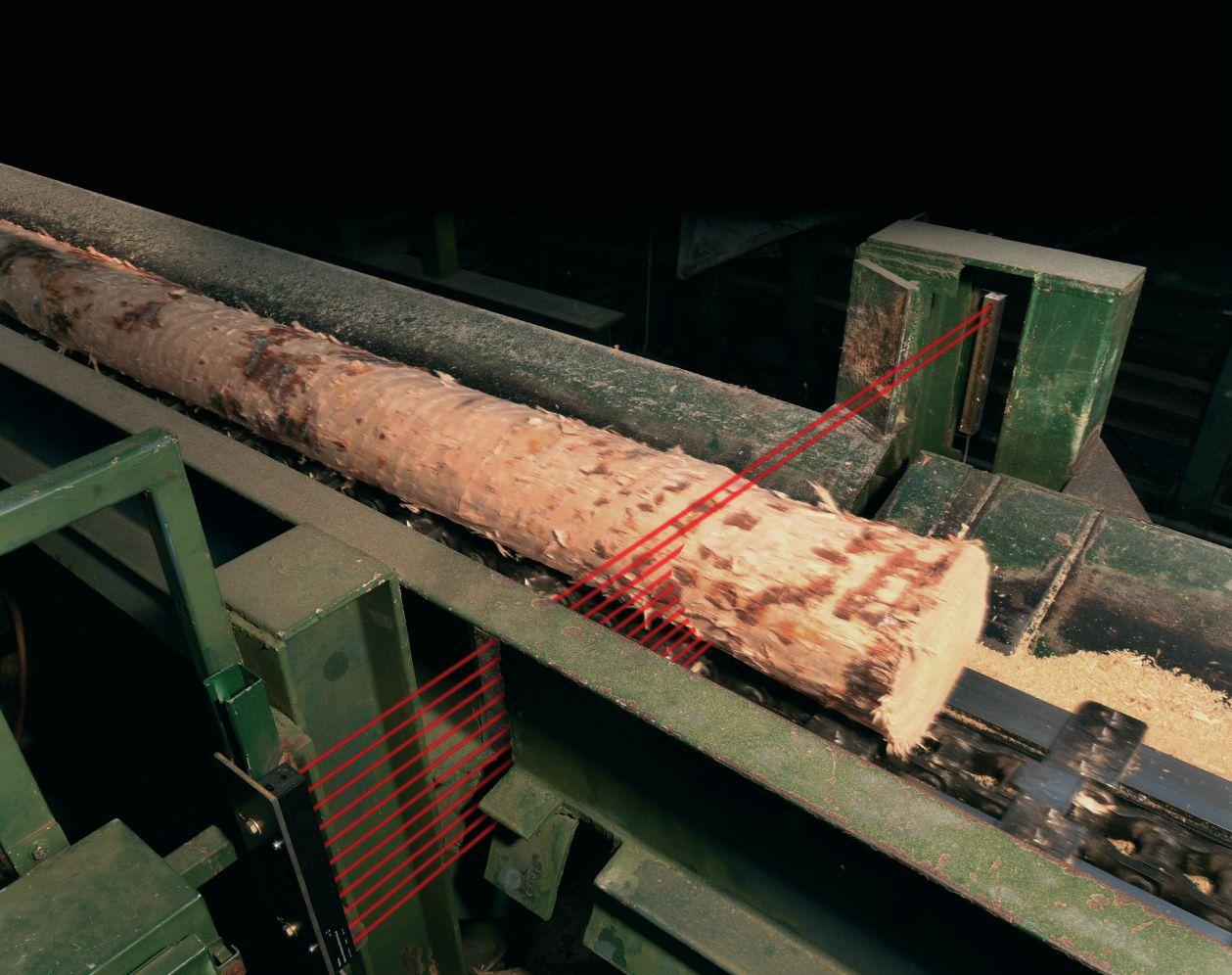
Telco Sensors has been supplying high-performance photoelectric sensors for the harshest, most demanding applications in the wood products industry for over 30 years. Simply put, Telco works where others fail.
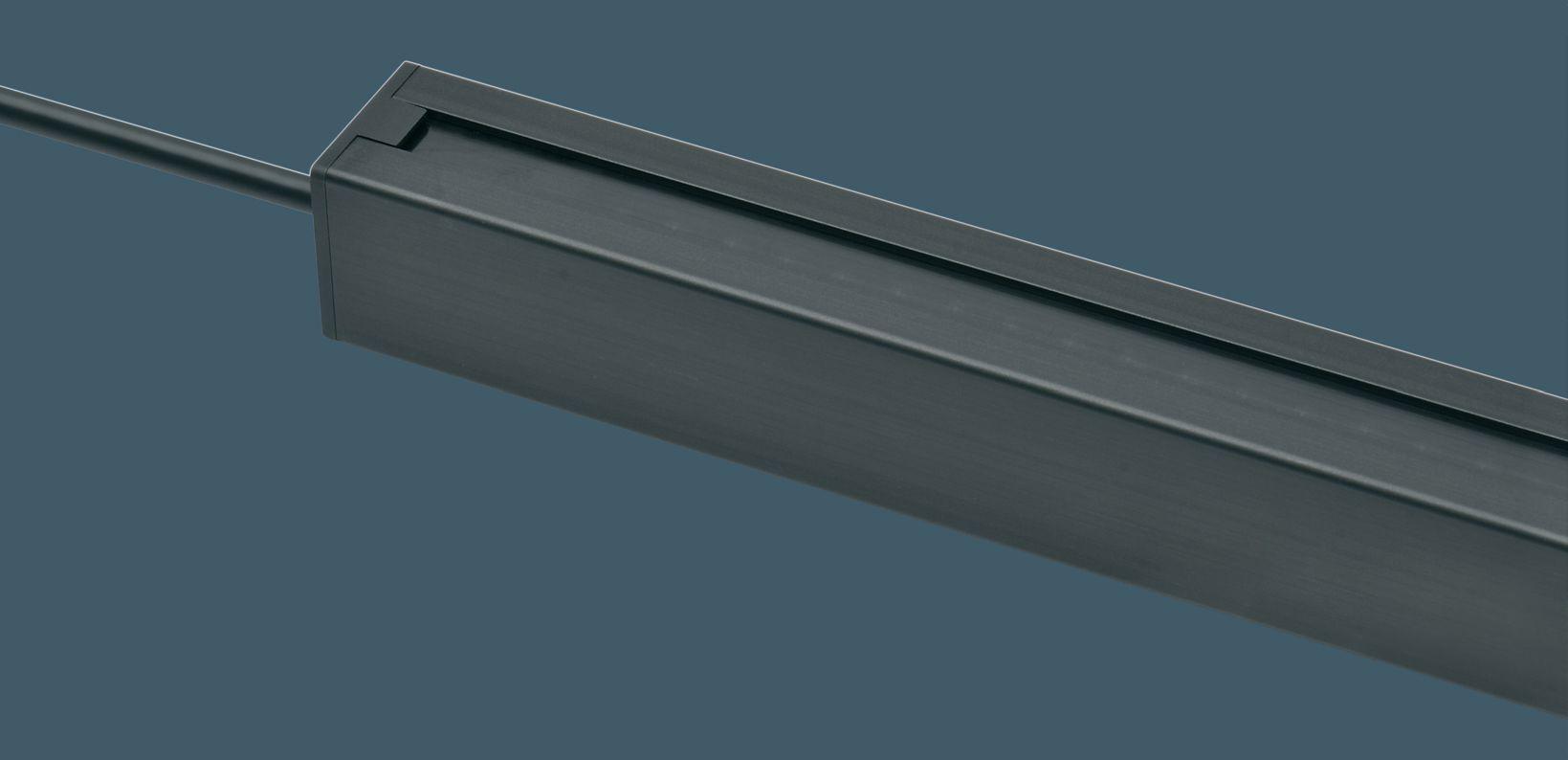
Like all Telco products, our new SpaceScan series light curtain is designed and built around 5 core values: water resistance, extreme penetration power, resistance to shock & vibration, easy alignment and immunity to sunlight. All Telco products carry a full 3-year warranty.
Telco offers light curtains in discrete, analogue, RS485, IO-Link and diffuse proximity models.
Telco Sensors Inc.
Toll Free: 800 253 0111
Email: info@telcosensorsusa.com
Web: www.telcosensors.com
WOODPRODUCTS CANADIAN
INVESTING IN WHITE ‘YELLOW BIRCH’
BY GUILLAUME ROY
TRANSLATED BY
JEAN-FRANÇOIS GINGRAS
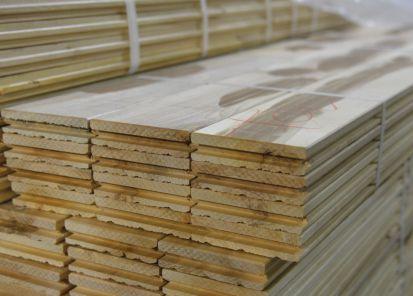
White “yellow birch”. This is the unique name used to sell the white birch floors produced by Bois Francs Bio Serra. After all, why shouldn’t white birch deserve the same fame as yellow birch by increasing its popularity with a high-value wood name?
This year, the entire hardwood sawmill in Sainte-Monique, Que., will undergo a facelift with a $20-million investment.
Currently, the mill processes only 150,000 cubic meters of wood, while it has a guaranteed supply of 250,000 cubic meters, which includes 30 per cent of trembling aspen. Bois Francs Bio Serra has asked the government to maintain its supply guarantee, but consisting entirely of birch, because the investments will make it possible to extract more value from the white “yellow birch”, explains Mario Lemay, director of the Sainte-Monique plant in Lac Saint-Jean.
MAIN: The sawmill currently transforms 140,000 metres of wood.
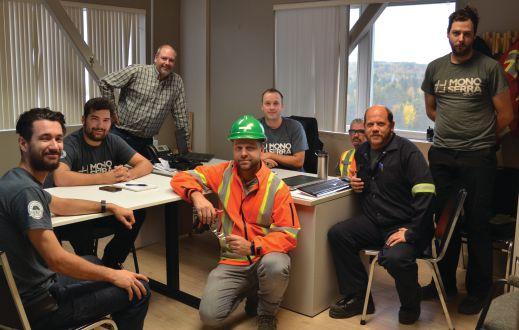
ABOVE: The Mono Serra Group is a vertically integrated company from the forest to market, selling products directly to customers. Photos: Annex Business Media.
MAJOR RENOVATIONS TO COME
Currently the bottleneck – all the equipment at the back end the plant – will be replaced. “We can’t go one step at a time because the plant is not designed for that,” Lemay says.
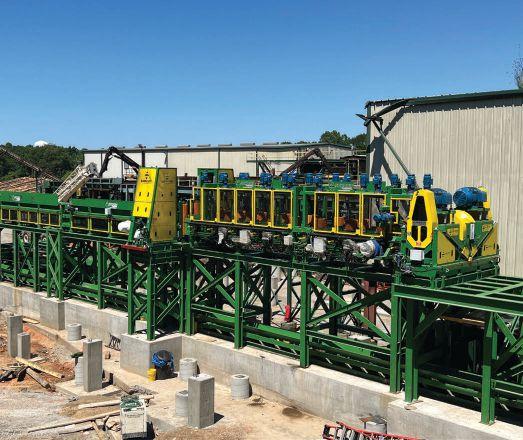
A new JAMEC trimming line will be installed, along with a Comact TrimExpert optimizer, specialized for hardwood. Supplied by SmartMill, a Smart Trim 3-in-1 loader, fence and trimmer will also be installed.
“This machine allows us to cut in two and trim precisely to optimize each piece of wood,” says Lemay. For example, one section of a board could be cut for flooring while the other would go for pallet production.
This equipment will make it possible to pre-sort the pieces before entering the flooring factory. Currently, nearly 50 per cent of the pieces are rejected at the infeed.
“We dry 50 per cent of the wood for nothing because we cut logs the old way and don’t detect the defects,” adds the director, who hopes to reduce these losses by 60 per cent. This gain will drastically lower drying costs and time, currently at 12 days. Bois Francs Bio Serra is also working with FPInnovations to improve their drying protocol.
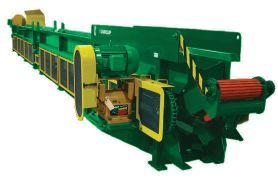
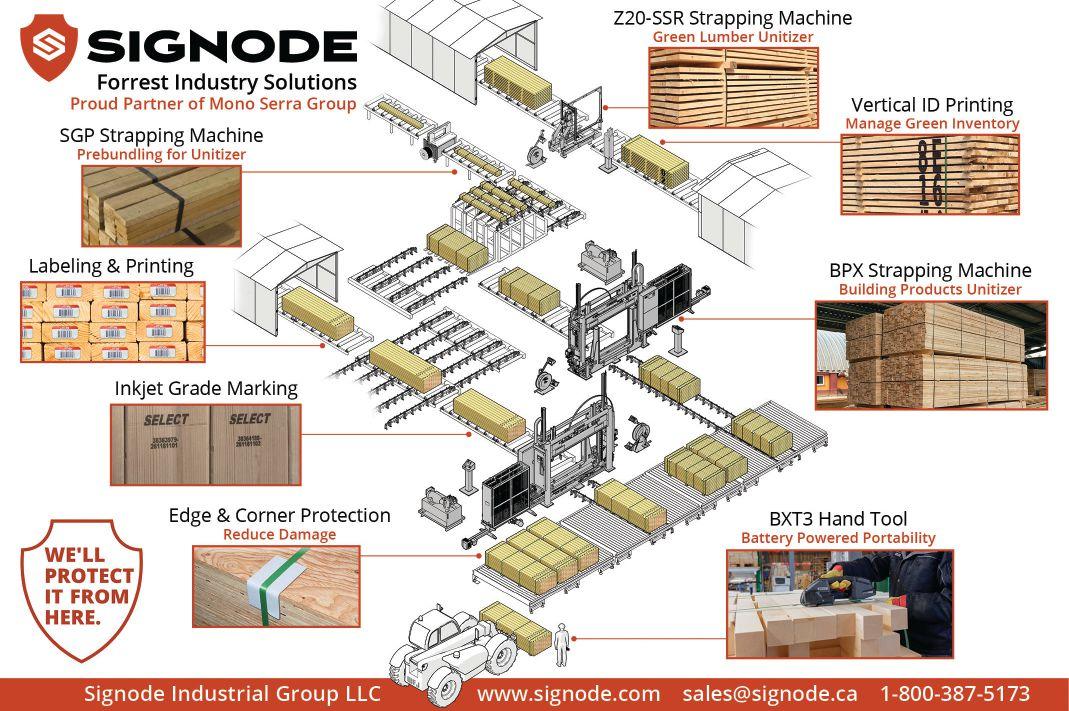
In addition, a Novilco double bin sorter with 30 baskets will be installed to optimize space and the number of products. Finally, an FP Machine stacker and a Signode strapper will be added.
At the mill infeed, a second slasher will be added to cut highgrade 16- to 17-foot logs in half, representing 30 to 40 per cent of the supply. At the same time, another slasher operator will optimize the 4- to 8-foot logs to optimize fibre recovery with a second saw.
“Birch is often crooked, so the shorter lengths you cut, the more fibre you recover,” points out Lemay, adding that there are no specific target log lengths for flooring.
A second saw line, a Sawquip purchased from an J.D. Irving mill in Nova Scotia, will also be installed to saw small-diameter (3 to 8 inches) logs. The other Forano line will continue to saw medium- and large-diameter logs, up to 27 inches. With hardwood logs, different cutting tools are used to saw at specific angles and speeds compared to softwood.
A SiCam Systems continuous profiler will be added on the Sawquip line to continuously scan the canter output and provide positioning feedback.
HARVESTING MORE BIRCH IN THE FOREST
These mill upgrades will transform harvest operations because the new equipment will be able to process smaller, crooked wood that was once considered pulpwood, explains Lemay.
“It’s going to give us the opportunity to recover volumes that were going to end up 100 per cent as chips, to create more value,” he says.
Currently, 45 per cent of the birch in the forest measures 16 cm or less, and so the plant must adapt to this reality.
INVESTING IN SAWMILLING 4.0
“In one step, we’ll move forward 30 years,” claims Lemay. With the modernization project, the company will rely on continuous data monitoring throughout the plant with technology and services from PMP Solutions. Monitoring gauges will be installed
throughout the sawmill as decision-support tools.
A logistics planning system including inventory management is being implemented.
“It will allow us to plan the entire supply chain from here to Montreal,” Lemay says.
The PMP WeDry system, designed to manage moisture content during drying, will also be installed.
PRODUCING LESS BY-PRODUCTS
Currently, only 24 per cent of the wood that enters the SainteMonique plant is sawn, while 76 per cent ends up as by-products. These figures may seem startling for people in the softwood
Mario Lemay (centre, in hard hat) with his team of supervisors.
industry, but the fact that birch is often crooked generates a high proportion of by-products. With the major mill investment next year, the plant expects to increase the sawn proportion rate to 40 per cent.
“This will ensure the sustainability of the plant,” notes Lemay. When the upgrade is completed, production will increase from 12 to 25 million square feet of product.
It should be noted that nearly 60 per cent of the wood entering the factory is transformed into pallet wood. To recover its own residues, the company intends to restart the production of compressed wood firelogs. In addition to the sawmill, there is also a flooring production facility in Sainte-Monique. Last year, $4.2 million was invested in this plant, including the addition of an Inspector B scanner from EBI Electric and a Powermat 2400 moulder from Weinig.
All these investments will make it possible to produce additional Mono Serra flooring, which is in high demand and distributed through an extensive network. “Our problem right now is not sales, it’s production,” Lemay adds.
Labour shortage also limits productivity at the current time. This is why Bois Francs Bio Serra relies on international recruitment to address this issue. Seven Tunisian employees are already part of the work team and seven more will be added in the coming months. The company even bought the local guest house to provide these employees with a home.
These mill modernization projects will not create new jobs, but there is still a shortage of labor to meet all needs, especially with upcoming retirements.
Bois Francs Bio Serra plans to restart the manufacturing of compressed wood firelogs made from by-products.
WOODPRODUCTS CANADIAN
HIT BY A LOG
BY HEIDI SCHMIDT
When a customer sends a message saying a camera got hit by a log, a replacement is usually in the cards. Sawmills are inherently harsh environments and electronic equipment doesn’t typically have a long life there. And yes, sometimes cameras get hit by logs on debarkers – no surprises there.
But when that message goes on to say the camera is perfectly fine and still in working condition, that is a surprise.
We know that at sawmills, equipment must endure a lot: dust, vibration, wood splinters, extreme temperature variations, and more. However, a camera getting hit by a log is something worth looking into.
THE AFTERMATH OF A BRUTAL ENCOUNTER
As scientists, we’re always interested in pushing
products to their limits. Cameras undergo hundreds of tests before being released to the public. Still, we know the limitations of these tests – they rarely compare with real-life situations.
But in real life, one customer’s camera took a direct hit by a log. When an outstanding incident like this happens, our scientific minds are all fired up, calculating force, pressure, speed, and more.
Luckily, the customer sent us a photo of the camera and vibration mount after the incident, and this helped us put together a case study for our research and development team. The first thing we noticed was that the bracket around the camera took most of the hit.
The bracket needed to be replaced, but that comes with a tiny cost compared to that of the camera itself and, more importantly, to the cost of interrupted feeds in a sawmill. That camera is still up and running, no replacement needed.
CAMERA SURVIVAL
If you operate a sawmill, you’ve probably gone through a few dozen cameras already, especially if you opted for offthe-shelf equipment instead of industrial cameras. Debris-filled and high-vibration environments don’t mesh well with sensitive electronic equipment.
Cameras are some of the most delicate pieces of equipment. Their lenses are fragile and their stability, along with the quality of their feed, can easily be affected by high vibration levels, dust, humidity, and temperature variations – pretty much everything you’d find in a sawmill.
Off-the-shelf cameras fail the endurance test in sawmills in months, and sometimes weeks. Ruggedized cameras, on the other hand, are specifically created to withstand all the harsh conditions a sawmill throws at them.
Even ruggedized cameras don’t survive being hit by a log too often. For that to happen, a few conditions must be met. Photos: Annex Business Media.
Nonetheless, even ruggedized cameras don’t survive being hit by a log too often. For that to happen, a few conditions must be met.
First and foremost, the camera enclosure needs to be made of a strong alloy. Titanium works best in environments where such incidents are common. Aside from protecting the camera from mechanical shocks, the enclosure also needs to be perfectly sealed to prevent moisture from creeping in.
One of the often overlooked factors that improve the lifespan of sawmill cameras is the mount. Stabilization is extremely important in a sawmill. The high level of vibration won’t just affect the quality of the feed but also the camera’s durability and resistance to shocks.
Take the client’s example: the mount needed to be replaced, yes, but only because it took most of the hit. It was designed to do this, to soften the blow and protect the camera.
INTRODUCING NEW CAMERAS IN SAWMILLS
Some pieces of technology can significantly
improve operations, safety, efficiency, and mitigate costs, like sawmill cameras.
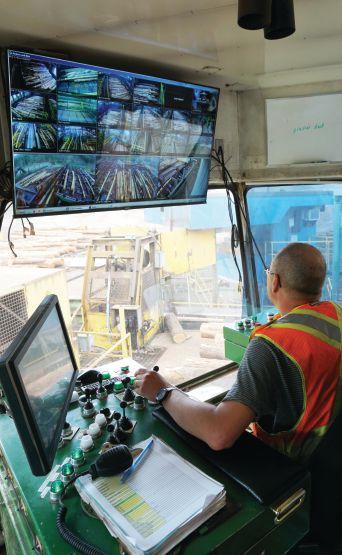
Naturally, sawmill operators’ first concern is the safety of their staff. Video monitoring can help with that by spotting accidents and incidents before they happen. A continuous live feed from your sawmill can be monitored from a safe distance by an operator who can look out for issues before they shut down the line.
Operators can also look for repeat problem areas and opportunities for improvement. Is there a better way to process the lumber? Are your processes prone to accidents? How can you prevent equipment malfunction and the costly downtime associated with it?
All of these questions are far easier to answer by an operator who has the advantage of a bird’s-eye-view. But in order to get to this vantage point, you need the right video monitoring system in place.
It’s crucial that you install industrial, ruggedized cameras that are specifically created for sawmill use. Very few other cameras can operate in these challenging conditions.
It’s crucial that you install industrial, ruggedized cameras that are specifically created for sawmill use. Very few other cameras can operate in these challenging conditions.
But ruggedized cameras, just like any other piece of equipment, are only as good as the way you use them. Choosing the right places to install cameras is just as important as picking the right cameras. Sawmill operators should work with suppliers with a background in the logging industry who understand the challenges, constraints and opportunities of a sawmill to get the most out of any system that you install.
We’ve been a leading force in air flow design for almost 3 decades, with 4-, 6-, 8-, and 12-bladed propellers, designed and manufactured exclusively for the lumber industry. Now, they are even more capable with higher- temperature capacity for certain applications. We combine this technology with unsurpassed customer service, design consultation and technical expertise, so whatever your air flow need, you can trust SmithCo to deliver.
There are endless camera options out there and thousands of possible combinations in a video monitoring system. The advice of someone who knows the equipment well, but also the needs of a sawmill operator specifically, can make the difference between installing an ROI-generating safety-enhancing video monitoring system or a money-guzzler that needs constant replacement.
Heidi Schmidt has worked in the video technology space for almost 20 years, building expertise in CCTV, industrial video applications, new product development, video network solutions, and more. At Opticom Technologies, she helps implement robust video monitoring solutions for unique and harsh industrial environments.
SPECIAL saw filing section
Photo
As a sharpening service you
meet a
As a sharpening service you need to meet a multitude of requirements – and do so quickly, reliably and with a high level of precision. VOLLMER supports you: with a large portfolio of innovative sharpening machines, specially adapted to meet your requirements. With an extensive accessories catalogue – and, last but not least, strong services. For the highest possible quality
sharpening service you need to meet a multitude of requirements – and do so quickly, reand with a high level of precision. VOLLMER supports you: with a large portfolio of innosharpening machines, specially adapted to meet your requirements. With an extensive accessories catalogue – and, last but not least, strong services. For the highest possible quality and level of efficiency.
As a sharpening service you need to meet a multitude of requirements – and do so quickly, reliably and with a high level of precision. VOLLMER supports you: with a large portfolio of innovative sharpening machines, specially adapted to meet your requirements. With an extensive accessories catalogue – and, last but not least, strong services. For the highest possible quality of results and level of efficiency.
sharpening service you need to meet a multitude of requirements – and do so quickly, reand with a high level of precision. VOLLMER supports you: with a large portfolio of innosharpening machines, specially adapted to meet your requirements. With an extensive accessories catalogue – and, last but not least, strong services. For the highest possible quality results and level of efficiency.
a sharpening service you need to meet a multitude of requirements – and do so quickly, reliably and with a high level of precision. VOLLMER supports you: with a large portfolio of innovative sharpening machines, specially adapted to meet your requirements. With an extensive accessories catalogue – and, last but not least, strong services. For the highest possible quality results and level of efficiency.
of requirements – and do so quickly, reliably and with a high level of precision. VOLLMER supports you: with a large portfolio of innovative sharpening machines, specially adapted to meet your requirements. With an extensive accessories catalogue – and, last but not least, strong services. For the highest possible quality of results and level of efficiency.
www.vollmer-group.com
As a sharpening service you need to meet a multitude of requirements – and do so quickly, reliably and with a high level of precision. VOLLMER supports you: with a large portfolio of innovative sharpening machines, specially adapted to meet your requirements. With an extensive accessories catalogue – and, last but not least, strong services. For the highest possible quality of results and level of efficiency.
WOODPRODUCTS
CUTS LIKE A KNIFE
PAULsmith
Paul Smith is a saw filing consultant and founder of Smith Sawmill Service, now part of BID Group. You can reach him at Paul.Smith@bidgroup.ca.
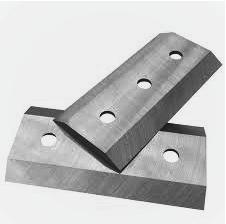
One of the biggest breakthroughs in our time, or certainly my time, for sawmill and lumber production and manufacturing, may well be knives and their applications for chipping. Once the old bent knives and round back knives were replaced with disposable knives, the market was open to faster speed feeds, increased lumber production and yield. As most remember, the old bent knives and round back knives would push and pull cants causing thick and thin lumber, and other issues and problems.
Equipment manufacturers quickly jumped in and made these disposable knives a very important mainstay in lumber producing mills. New mills being built changed from modular to straight line mills because of the high recovery and faster feed speeds this new product and process allowed.
Today, the vast majority of lumber production is made from these new mills. The new conical heads and chip heads allowed the chipper knives and the saws to work side-by-side manufacturing lumber efficiently. This breakthrough with the knives allowed for attack angles and knife angles to be changed as needed. Also, the precision that the heads and knives are manufactured to today create smooth running heads that will operate very well, producing good sawn lumber and quality chips at fast speeds. Because these new disposable knives are smaller and thinner than the old bent knives and roundback knives, they are manufactured much more precisely, and with better heat treat process that allows for better knife quality. Correct hardness for knives increases knife life.
Although it may sound easy to pair the knives and the saws to run together, there is a process. To pair the chipping knives with saws together for best results, it does take some orchestrating and knowledge of RPM, feed speed, log diameter and maximum depth of cut to determine exactly what is required for best performance. The quality of chips produced is critical for both production and profits.
There are many different types of chipping heads with a growing number of manufacturers getting in
the business of also manufacturing the knife itself. I have had the privilege to see different heads and knives manufacturers get started and create success for themselves and the wood industry. Most of these manufacturers are successful and can help any mill with chipping issues, including producing the correct chip size needed for optimal profits.
Smith Sawmill Service saw this breakthrough for our sawmill industry in the late 1990s and helped to introduce Key Knife in the South; changing bent knives and chip-n-saw knives over to the disposable Key Knife system. This worked out well for us and the customers for a few years until Key Knife went direct. We then came up with our own system. The knife was as small as disposable knives, but could be sharpened and babbitted. This ensured the knife location would be the same after every change. Now, we are a part of the BID Group and working sideby-side with Comact providing saws to pair up with Comact’s new knife system. It’s our belief that each company suppling these conical, cylindrical and profiling heads with their knife systems will all have their own advantages.
If any mill is having problems with chipping, knife life, yield and lumber quality, I suggest you reach out to some of these knife manufacturers for help. I personally see pros and cons for the different knives offered today in the wood industry. Depending on the application and your needs, it will be possible for you to select the knife and heads that will best perform in your mill.
Most equipment manufacturers will let you pick the knife of your choice to be in their equipment. Make sure you get all the information you need to help determine the knife you choose to use. Of course, if you decide to mix the equipment manufacturer with a different knife and head manufacturer, I suggest you have them in the same room to determine what will be expected from both. Most knife and equipment manufacturers will work very well together for your best interest.
▪ CIRCULAR SAW GUIDES
▪ BAND SAW GUIDES
▪ HAMMERS
▪ ARBORS
▪ SLEEVES
▪ 3-PHASE MOTORS
▪ SERVO MOTORS
▪ PLCs
▪ HMIs
Saw Grinding
Saw Tipping
Tensioning and Leveling
Knife and Surface Grinding
Saw Guides
Saw Guide Design and Engineering
Saw Working Tools
Consumables and Accessories
▪ DEBARKER PARTS
▪ CHAINS AND ROLLERS
▪ CHIPPER ANVILS
▪ J-HOOKS
▪ PULLEYS
▪ SHEAVES
▪ SHREDDER TIPS
▪ TIPS
▪ SAW PLATES
▪ PRESS DOWN ROLLS
▪ PINEAPPLE ROLLS
▪ KNURLED ROLLS
▪ KILN WHEELS
▪ KILN TRUCKS
▪ MILL CHAIN
▪ DOUBLE END CHAIN
▪ DRAG CHAIN
▪ SHARP CHAIN
WOODPRODUCTS CANADIAN
DON’T EXPECT, INSPECT
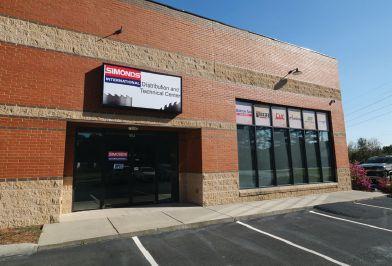
At the Simonds International Tech Center for sawfiler vocational training, we use a number of slogans or phrases to encourage students to remember to focus on the fundamentals. One of those phrases is “Don’t expect, inspect.”
Simply loading a saw blade onto a CNC or conventional sharpening machine and pushing the start button is no guarantee you will produce a sharp, ready-to-run blade. The proper amount of material removal from the top, face, and gullet of each saw tooth is one critical element for an uninterrupted run on the mill. Too little material removal and you will return a dull saw blade to service or one prone to gullet cracks. Remove an excess of material and run the risk of damaging the blade by burning the saw tips or gullet, needlessly high abrasive costs, and premature retipping or swaging.
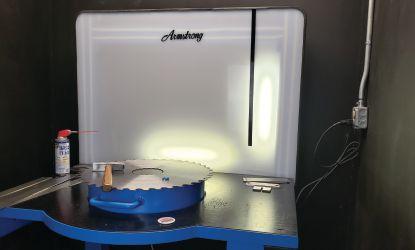
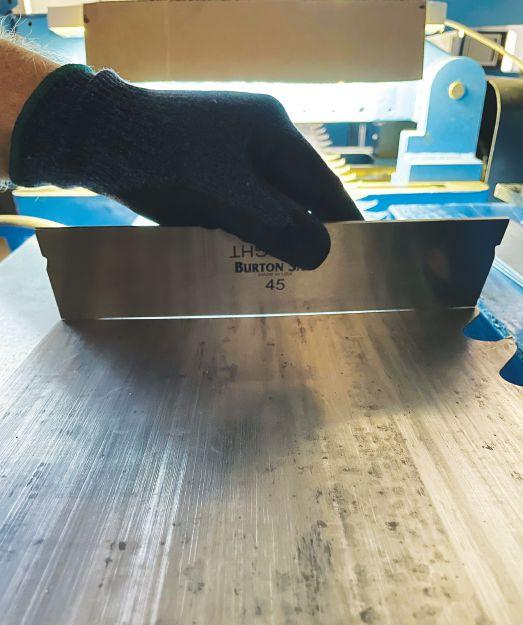
So how does one quickly check that a saw blade queued up for its next production cycle is properly sharpened for the intended run time? One technique is to regularly take a critical visual inspection of blades classified as ready-to-run. Use a penlight for this quick visual inspection. Check the saws out as if you or your team did not put them up. Inspect it as if you had not already reconditioned it. The cutting edge of a sharp saw blade
will not reflect light. If you observe a reflection on the cutting edge of the blade, that is an indication the edge still has a radius or flat on it. To get a feel for this technique, inspect your blades after their run and prior to reconditioning them. This can help the learning with just how much material must be removed from the saw tip to get it sharp enough to properly function on the mill. This is also an opportunity to monitor for material handling abuse. Are those corners intact and sharp?
Another area in the filing room that can lead to unnecessary saw changes or short blade life is the slow and inevitable degradation of wear parts of
DAVEpurinton
Dave Purinton is the vice-president for marketing and the director of Saw Filer Training Center at Burton Mill Solutions.
The cutting edge of a sharp saw blade will not reflect light.
Regularly take a critical visual inspection of blades. Photos courtesy of Burton Mill Solutions.
If your saws are not behaving like you expect, it may be time to inspect.
your tools. Even those fancy CNC and automated blade reconditioning machines have wear parts that require monitoring! At the Simonds International Technical Center, we have learned from many students that maintaining proper maintenance records is too rare. Most of us rely on a decal on our vehicle windshield to remind us when the next oil change is due. Why would we do anything less for the equipment and hand tools in our filing rooms? Maintenance records must be maintained and easily accessible for review when things “don’t go right.”
This activity applies to basic hand tools as well. Saw hammers, straight edges, tension gauges, stretcher roll components, and even leveling blocks are all wear parts. One challenge with maintaining hand tools is that the wear can be very gradual. A filer may even subconsciously adapt to the tool wear – and cause him or herself extra work in the process. Each of these hand tools should be inspected on a recurring basis. And like changing the oil in your vehicles, the inspection dates should be recorded in a log. If one cannot remember the last time the hand tools were inspected, that is likely a good sign the task is overdue. Logbooks are also useful for sharing the inspection frequency with others in the department. One technique for a visual inspection of the tension gauge or straight edge is to observe the light pattern either on a saw blade or levelling block. Then rotate the tool 180 degrees and observe the exact same spot. The look should be identical. If the shape of the light varies, it is time to take the next step and evaluate the tool with your inspection gauge. “Don’t expect, inspect.”
Inspection gauges are not used in daily saw maintenance and not subject to wear. These straight edges and tension
gauge tools can be like a friendly port in a storm of frustration in the filing room. Ask yourself: when was the last time you calibrated your dial indicators too? If your saws are not behaving like you “expect,” it may be time to “inspect” the tools and machines you are using to perform the blade reconditioning task and ensure that they are not causing you more work than benefit. Sawfilers who maintain good control of the variables under their control can help prevent even a few unscheduled saw changes.
Maintenance applies to basic hand tools as well.
WOODPRODUCTS CANADIAN
SPONSORED CONTENT
SAW+ADD
Technology for measuring radial forces on an arbor caused by sawing and friction on the saws has proven to be an asset on many installations. This USNR (distributor) hands-on display demonstrates how Saw+ADD achieved this from outside the saw-box. Once excess forces are detected, a closed loop process immediately starts to adjust the feed speed of the cutting piece. The result is as much as 15 per cent increased throughput with no stuck cants, reduced deviation and reduced saw consumption among other benefits.
saw-add.com
SAWCO INDUSTRIES
Sawco Industries has modernized with new saw filing equipment and business systems to improve productivity and customer service. In addition to new automated filing equipment, we’re adding staff knowledgeable and keen to run the technology. It offers incredible process improvement, allowing us to increase service level and turn serviced saws around more quickly and at a higher level of precision. sawcoindustries.com
WILLIAMS & WHITE
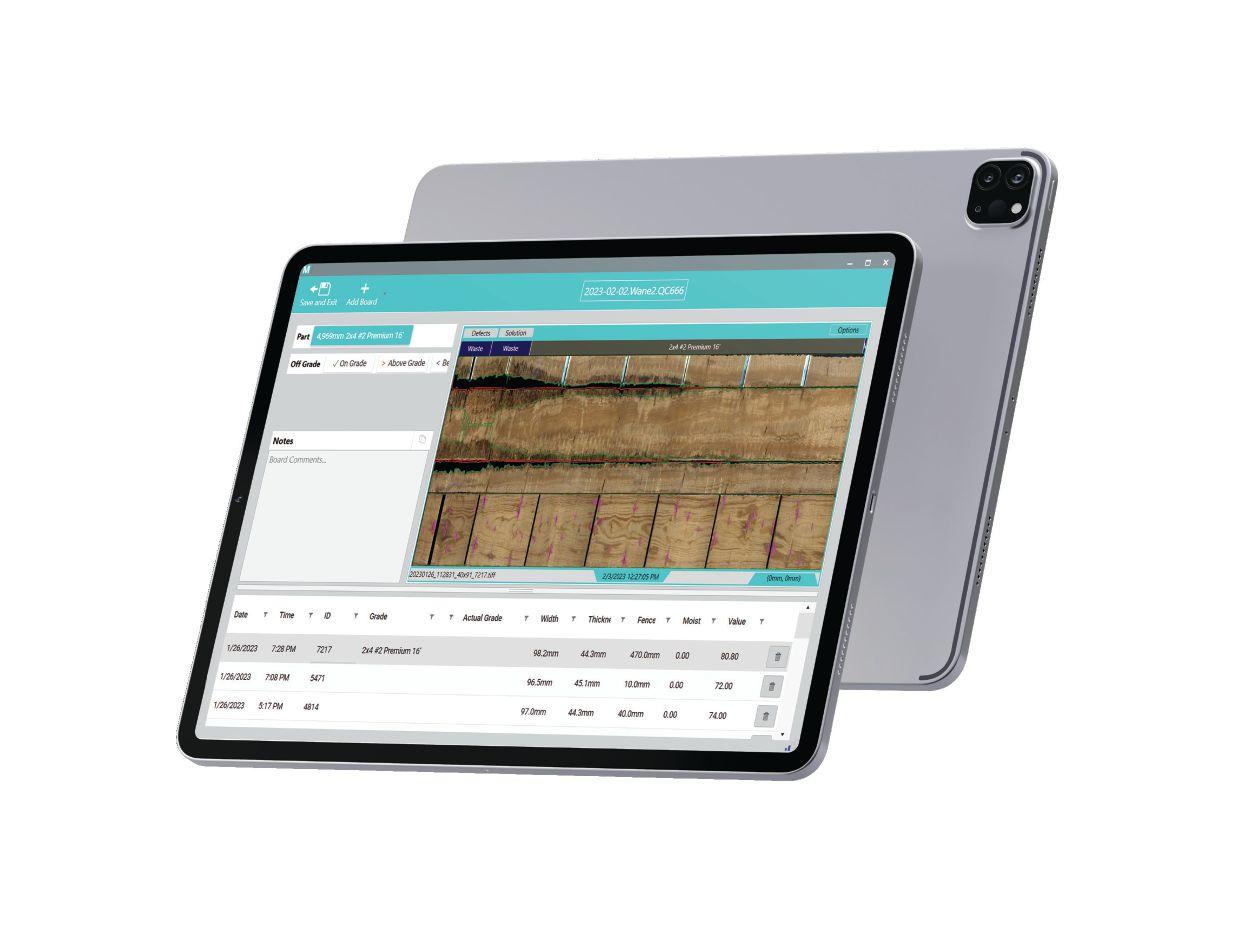
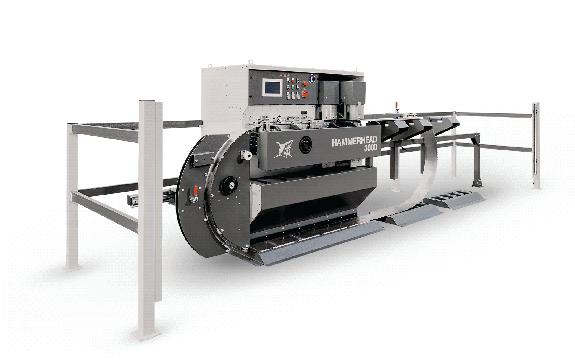
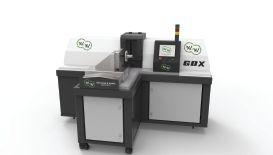
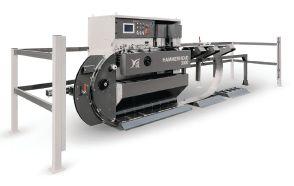
The Williams & White Hammerhead 3000 auto bench is an allin-one band saw processing centre designed to automatically tension and level a band saw with ease. Standout features include: an easy saw load system featuring hide-away clamps, independent rigid tension and level heads,intuitive touch screen control with teach functionality, and a full light curtain safety system. The precision measuring systems for level, tension and back allow the Hammerhead 3000 to efficiently work the band saw to exacting specifications. williamsandwhite.com
STREIFEL INDUSTRIES
Streifel Industries manufactures precision quality saws for the forest industry. Its corporate philosophy, highly regarded management, enhanced by its skilled tradesmen, give Streifel Industries its competitive edge. The saws are manufactured using nickel steel with high carbon content, heat-treated to specifications, which gives the highest quality precision saws made today. streifelindustries.com
SUPERSAUL CHEMMEX
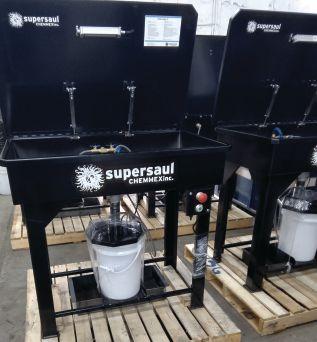
Supersaul’s rugged parts washer is easy to clean and built heavy. One thing that’s always annoyed us is cleaning a parts wash tank. So, this past year we decided to do something about that, incorporating the things we want to see – easy to change parts wash fluid; well-lit, heavybuilt, automatic off. If you use our Supersaul 3 it’s very gentle for the user and easy to dispose of.
supersaulchemmex.com
BID CUTTING TOOLS
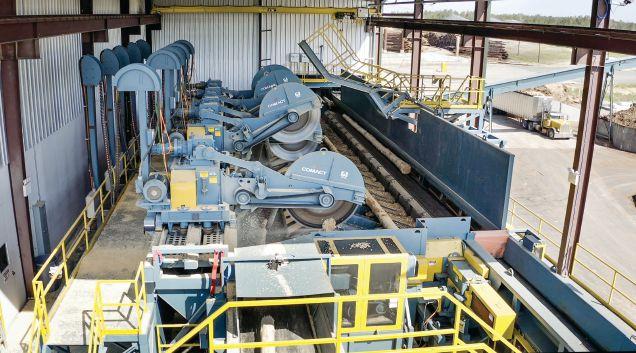
Based on its vast experience as a sawing equipment manufacturer, BID understands the challenges you face to reach high performance while maintaining quality for the finished products and wood chips. That’s why BID decided to design and manufacture its own cutting tools. BID manufactures conical heads, cylindrical heads and profiling heads. We can install complete head assemblies on equipment from other suppliers.
As an OEM and cutting tools provider, BID gives you access to a large network of sawing specialists and a high-quality service so you can be sure all your concerns will be addressed.
bidgroup.ca
NEW SHARPENING DUO FOR THE CARBIDE-TIPPED CIRCULAR SAW!
The brandnew grinding machines CS 860 (for tooth faces and tops) and CSF 860 (for tooth sides) from VOLLMER are designed for machining carbide-tipped circular saw blades with diameters up to 860 mm (34”) in a single clamping operation. Thanks to uniform and intuitive operation, users can learn how to program the machine in no time. Automation for lights out unmanned machining is possible with the VOLLMER ND handling systems which can combine up to 3 grinding machines and can be equipped with up to 650 saw blades. vollmer-group.com
CANADIAN
WOODPRODUCTS
A WORLD OF CHAOS
PAULsmith
Paul Smith is a saw filing consultant and founder of Smith Sawmill Service, now part of BID Group. You can reach him at Paul.Smith@bidgroup.ca.
No one in business or even at home likes to run out of something, especially something we consider critical. Well today, this happens more often than not and it’s not always any one person’s fault.
When it comes to operating a sawmill, I’ve always said it’s called a SAWmill for a reason. That reason is because, to operate at all, one has to have saws and since the trend has moved to narrower kerf and thinner plate, your mill better have plenty on-hand and on-order!
So whose responsibility is it to make sure the mill has plenty of saws and why has it become an issue? When I started Smith Sawmill Service over 30 years ago, in Southern U.S., saw plates lasted months, even years at some mills. These saw plates were thicker, kerf was wider, mills didn’t run 24/7, and most mills weren’t curve sawing or running the high production of today’s mills.
nationwide shutdowns has led to disruptions that we are experiencing today and will probably have to deal with for years.
Since the trend has moved to narrower kerf and thinner plate, your mill better have plenty on-hand and on-order.
Photo courtesy of BID Group.
Manufacturing changed to meet the needs of mills when curve sawing and thin kerf technology came on the scene and saws were usually delivered to the mills in six to eight weeks. As mills added shifts and ramped up production, we in the industry observed delivery dates fluctuate. Ten to 12 weeks was a long lead time in most situations, until approximately two years ago.
The world of chaos caused by COVID-19 and
We are a smart industry, and we’ve maneuvered through log scarcity, natural disasters, endangered species and of course politics, but the international supply chain and logistics interruptions we’ve had to endure have changed how we plan, purchase, operate and, yes, even overstock the items we deem critical. Today’s lead times aren’t given in weeks but rather months. Machinery dates are out this year and in 2024, and saws can be as well. So planning has become everyone’s responsibility, especially the head filer. Planning for normal wear and tear, unscheduled changes, and saw failure has always been built into how many sets of saws a mill had. Now that same filer has to plan for logistical chaos as well – steel shortages, shipping shortfalls, labour shortages, and supply chain disruptions. Filers are forced to make their existing saws stay in production, many times beyond their best performance.
Today’s head filer has to work closely with management and their vendors to make sure saw inventory is sufficient, not only at the mill, but in the storeroom, as well as at the manufacturers and suppliers. The head filer and the mills’ purchasing department should be making sure that they have scheduled saw deliveries for all operations: head saws, trimmers, edgers, gangs. If it cuts wood at your facility, make sure you have it ordered. Don’t wait until you need it because your supplier may be waiting on their delivery as well. A good supplier is working with you to make sure they have raw plates, tips, saws in process and some saws ready to go. But remember, like everyone else, their supply chain has been affected too!
What is a good number? How do you determine how many saws to order? Work together, look at data, and in case your mill is looking at any line changes that will affect your saw design, get that info to your supplier early in the process – but that’s a whole different article. Today’s planning is tomorrow’s smooth sawing!
WOODPRODUCTS
B.C. SAW FILER’S ASSOCIATION CONVENTION
The B.C. Saw Filers Association Convention and Trade Show is back in Kamloops, B.C. this year on May 26-27. Returning to the Coast Kamloops Hotel and Conference Centre, a slew of topics will be discussed at the convention.
“Speakers will talk about innovative tools, methods and ideas pertinent to saw filing,” BCSFA vice-president Scott
Courtney tells CFI.
“In the afternoons the trade show will open, and vendors will be welcome to showcase their new equipment, tools and services. Friday evening will have a dinner, as well as entertainment in the form of a comedian followed by a live band,” Courtney explains.
“It’s the perfect blend of education, business and socialization!”
AGENDA HIGHLIGHTS
The convention kicks off Friday, May 26, with the trade show beginning at noon and running until 6 p.m. The show will open again Saturday from 1-6 p.m.
The conference portion of the event will be on both mornings. Courtney is expecting to have speakers talk about the evolution of the sawmill, as well as discussions on supply chain and labour shortage issues, and new technology advancements in the trade.
Friday night will see the usual buffet dinner and entertainment, this year featuring comedian Leland Klassen, followed by a dance with music from a live band.
FILE WEEK 2023
CFI is excited to be attending the 2023 Kamloops show and will be sharing live updates and product news from the show floor as part of our annual File Week coverage. Follow along on our website and on social #FileWeek for all the cutting edge action. Register for the event by emailing bcsfa2020@gmail.com.
WOODPRODUCTS CANADIAN
2023 Q1 UPDATE
Ongoing harsh winter weather at the start of the year has put a dampening effect on construction activity across the continent, thus on lumber sales. Prices of lumber have responded accordingly.
In February there was some strength to demand resulting in price moving upward, but this level dropped down in the beginning of March.
Waffling up then down this year so far, in the week ending March 3, the price of benchmark softwood lumber item Western Spruce-Pine-Fir 2x4 #2&Btr KD (RL) was US$400 mfbm, which is down $17 or 4.0 per cent from the previous week, when it was $417 mfbm. This is down by $56, or 12 per cent, from a month ago when it was $456.
Compared to the same week last year, when it
• 48” diameter Shingle Saws
• Jointer Saws
• Inserted Tooth Cut-Off Saws to 96” diameter
• Jumbo “R” and Gullet Style Carbide
• Custom surface grinding
• Smooth Trimmer Saws hollow ground to 60” diameter
• Solid Tooth Cut-Off
• Hammering, repairs and sharpening
• Shake Band Saws
was $1,330 mfbm, the price of Western S-P-F 2x4s was down by $930, or 70 per cent. Compared to two years ago when it was $1,040, that week’s price is down by $640, or 62 per cent.
Due to this late-arriving spring, customers were only covering short-term needs and filling holes in their inventory. Most were not stocking up on supply, preferring instead to hold off purchasing to see if prices would drop further.
Sawmill order files remained at about two weeks at most facilities in the West and were out to about three weeks in the East. There was plenty of inventory in the field, so customers felt no urgency to buy. Indeed, some secondary suppliers were offering such discounts – just to make sales – that they sold below current replacement costs.
Expectations are for a shorter building season this year than has been in the previous three years. As such, when spring does finally arrive there could be a brief run on lumber sales, with prices popping up in response, followed by a lull as summer comes on.
As for the all-important housing market, in 2022 the U.S. began building 1.55 million homes, just a three per cent drop from full-year 2021. Single-family starts in 2022 totalled 1.01 million, down 10.6 per cent from the previous year. The latest data available for January 2023 shows starts down slightly compared to December, which is normal for the time of year.
However, permits for both total and single-
KETAkosman
Keta Kosman is the owner of Madison’s Lumber Reporter, a premiere source for North American softwood lumber news, prices, industry insight, and industry contacts.
family are essentially flat. This after a big jump of 11 per cent for single-family permits in December. Building permits are generally submitted two months before construction begins, so this explains the expectations for a burst of home building activity come April and May.
Housing completions posted a 1.0 per cent annual gain, rising to an estimated annual rate of 1.406 million housing units. Continuing the drops of recent months, there were 1.673 million units under construction. Of those, 752,000 were single-family homes, compared to 769,000 in December 2022.
January data showed sales of new single-family homes in the U.S. increased for the fourth month in a row, at 670,000 units, which is up more than 7.0 per cent from December’s upwardly revised 625,000 and is a 19 per cent drop compared to January 2022 when it was 831,000 units.
Houses under construction accounted for 52 per cent of the inventory sold, with homes not started making up 26 per cent. Completed houses accounted for 23 per cent of the inventory, a big improvement from 15 per cent the previous month.
The trend line of panel prices is often a good forward indicator of what could be coming for dimension lumber. In the week ending March 24, Canadian softwood plywood 3/8” FOB Toronto was C$644 msf, down by $34, or 5.0 per cent, from the previous week when it was $678, and is down by $33, or 5.0 per cent, from one month ago when it was $677.
For it’s part, OSB 7/16” Ontario was flat from the previous week at $340 msf and down only $5, or 1.0 per cent, from one month ago when it was $345.
These levelling-off plywood and OSB prices could suggest that as true spring construction weather finally comes on across North America, dimension lumber prices might also start to flatten out. At what level? Will the 2023 trend for softwood lumber prices be around the $500 mark, or higher?
Given that the historically lowest-price time of year, in the depths of winter and around year-end, has just gone by; there is a good possibility that the spring price level for softwood lumber will be higher than it is at the end of March. Only the next month or two will tell.
Continuous wood drying greatness
“The TC kiln saves up to 50% energy, compared to traditional batch kilns”
JD Irving, Canada
Valutec’s state-of-the-art TC continuous meets the highest standards of drying quality with minimal moisture content variation and risk of cracks. They also provide fast drying processes, low energy consumption and high flexibility. All covered in a robust stainless-steel construction with no need for re-skinning. No wonder they have become the most exciting choice for future-oriented sawmills in North America. Read more at valutec.ca
EVENT preview
Montreal Wood Convention
Come for the convention and in-person networking, or attend virtually
BY JENNIFER ELLSON
Now in a three-day format, the Montreal Wood Convention (MWC) is giving attendees plenty of time to attend sessions and do a lot of in-person networking, or attend virtually if they really can’t make it to Montreal in person.
“People are ready to get out on the road and network in person. When you look at the list of exhibitors and people who have already registered, you have to ask yourself: ‘How can I not be there?’” event director Sven Gustavsson tells CFI.
Previously done over two days, MWC will be held at the Fairmont Queen Elizabeth in Montreal, Que., from April 18-20.
The event officially starts on April 18 with a welcome reception, followed by two full days of insightful sessions.
The industry seminar on economy and markets on April 19 will give the most up-to-date information on the key issues affecting the lumber industry and the wood products trade.
The day’s first speaker is CIBC Capital Markets deputy chief economist Benjamin Tal, who is well-known for his ground-breaking published research on topics such as labour market dynamics, real estate, credit markets, international trade, and business economic conditions. Other speakers include Paul Jannke, principal of Forest Economic Advisors and one of the industry’s top economic analysts, who will give his take on the evolution of global trade flows in wood products.
Alison Coughlin and Tom Crane of the Chicago Mercantile Exchange will talk about the development of the futures market and the new truck-load-based contract. Greg Kuta and Alex Mead, brokers from Westline Capital and StoneX Financials, respectively, will then try to demysti -
fy the apparent disconnect between the cash and futures market.
“MWC will give you insights on important topics for the year to come in the wood industry. This year, we’ve gathered an impressive team of CEOs for the industry panel that will give participants fresh information on major short and medium trends in the market,” Gustavsson adds.
The panel will be moderated by André Beaulieu, a seasoned sales executive from J.D. Irving. Panellists include Do It Best’s Dan Starr, who has a finger on the pulse of the private repair and remodelling sector in the U.S. and Mexico. He will answer the question: Are there any decks still left to be built or replaced in the Midwest in 2023?
Another panellist is Ted Ellis, CEO of Idaho Timber. As a part of the Hampton Group, his experience spans from western operations and trade while still focusing on Idaho’s legacy operations in value-added wood products, servicing industrial customers and other sectors.
Finally, Taiga is a leading independent wholesale distributor of building materials in Canada and the U.S., and the CEO, Russ Permann, covers a wide range of products from engineered lumber to cladding materials.
The event’s keynote speaker is Super Bowl champion Laurent Duvernay-Tardif, who will deliver an inspirational 30-minute speech covering his impressive career in the NFL as a lineman with the Kansas City Chiefs and the New York Jets while studying at McGill University’s faculty of medicine. LDT, as he is known by his peers and fans, will be available to answer questions at the end of his presentation.
Learn more about the event and register at: www.montrealwoodconvention.com
EVENT preview
COFI CONVENTION
Focusing on partnerships, resiliency, modernization, and sustainability
BY JENNIFER ELLSON
The annual BC Council of Forest Industries (COFI) convention returns to Prince George, B.C. with the theme “Sustainability is Growing”.
“A lot has changed since COFI held our last convention in Prince George in 2018 and we’re looking forward to being back in the heart of the interior forest industry in British Columbia,” says COFI president and CEO Linda Coady. “We will be gathering with industry, suppliers, as well as Indigenous, government, community and workforce leaders to focus on what we can do together to address current challenges and opportunities.”
From April 12-14, speakers will highlight the importance of B.C.’s leadership in helping the forestry sector shape a sustainable future for the province, including B.C.’s Premier David Eby who will be addressing the delegates for the first time since assuming office in October 2022.
“One thing we do know for sure is that demand is going to be growing locally and globally for the type of products our industry is capable of providing – products that are renewable, sustainable, and can help fight climate change. So, discussion at the COFI convention this year will also focus on what kind of role the forest sector in B.C. wants to play in meeting that demand and creating more value moving forward,” Coady explains.
It is no secret that the B.C. forest industry is struggling. At the Truck Loggers Association convention in January, Eby described the industry as being “clearly in crisis. But crisis precipitates change, and we have to find new ways of doing business.”
The COFI convention is intended to be a forum to discuss those new ways of doing business.
“The B.C. forest sector is facing a major market downturn amidst elevated uncertainty over access to economic fibre. And recent curtailments and closures demonstrate that companies, workers, and communities across B.C. are feeling these effects right now. But forestry is a resilient indus-
try. With the right decisions made today, we can be better positioned to be a stronger and more diverse and innovative industry going forward,” Coady says.
The three-day event will kick off with an ice-breaker event on April 12. The next two days are filled with sessions on different issues surrounding the sector, including:
• The Declaration on the Rights of Indigenous Peoples Act: Where we’re at and where we’re headed with Regional Chief Terry Teegee, B.C. Assembly of First Nations.
• A conversation with B.C. Minister of Forests Bruce Ralston.
• Supply chain reality check: Building resilient networks with speakers from CN, the Prince Rupert Port Authority and Arrow Transportation System.
• New expectations in B.C. and Canada – hear current data and analysis on the key issues people care about today from CEO and founding partner of Abacus Data, David Coletto.
• A panel discussion on modernizing and growing sustainability in B.C.’s forest industry.
• A conversation with panellists about carbon and timber – competition or collaboration?
• A panel discussion with industry CEOs. Find the full agenda and register to attend the event at www.cofi.org/2023-convention
Linda Coady. Photo courtesy of COFI.
FORESTRY leaders
Tip of the spear
Q&A with First Nations Forestry Council’s Lenny Joe
BY MARIA CHURCH
Lennard Joe, the new CEO of the B.C. First Nations Forestry Council, likes to be called Lenny because it’s more familiar, and familiarity or intimacy is one of the three components of the trust equation. Trust, he says, is not just a feeling, it’s measurable.
Lenny is a registered professional forester with more than 30 years of natural resources and business experience. He is member of the Nlaka’pamux First Nation and is among the first dozen Indigenous graduates from UBC’s forestry school.
CFI sat down with Lenny to get to know him, his mission for the organization, and what Indigenous inclusion in forestry means to him.
CFI: WHAT DREW YOU TO FORESTRY?
I grew up on the Shackan Indian Reserve, on a ranch. I really grew up on the back of a horse –tending cattle. We grew up working hard, and
we made work fun. Work was family and it was rewarding.
Without realizing it, I was learning by doing and seeing. When we’d bring salt blocks to the range, I was learning about the land, noticing the rose hips were out so the salmon will be running soon. I was immersed in that world and at the same time, I was not realizing the impacts of residential school and the impact of INAC [then called Indian and Northern Affairs Canada] at the time – government rules and regulations that were creating the world I grew up in.
My father took on the role of Chief of our community in 1971. With that he became the eighth Chief of Shackan since 1860. So we grew up exposed to the politics and it became a strong part of who I am today.
I grew up playing hockey and was pretty good. I got to the point of talking to scouts to go to university under a scholarship. Unfortunately I
The new BCFNFC CEO likes to be called Lenny because it’s more familiar. Photo courtesy of Lenny Joe.
blew my knee and didn’t go to a U.S. university but fortunately, for me as a forester, ended up in Selkirk College for wildland recreation. It was the first time I was isolated from where I grew up. There were no First Nations at all in Castlegar, but I loved it there and excelled and learned how to learn.
Before I went to Selkirk I was a wildland firefighter, but during my years there I worked as a park ranger in the Valhallas, and I loved it. Park ranger life was great, but I started thinking about my future and going home. I started getting into wildlife and research and was working with biologists on a CP Rail project. They told me if I wanted to do what they do, I had to go to university.
I took some time to see the world and travel after Selkirk. I started realizing how small this blue planet really is and how connected things were. I realized how beautiful my territory is, and the importance and responsibility of looking after it. When I came home, I went straight in to the UBC
Faculty of Forest Conservation program, it was brand new at the time.
CFI: WHAT WAS YOUR EXPERIENCE IN UNIVERSITY?
When I got to UBC – I think that was 1993 – I saw that there were only three First Nations people who had gone through the forestry who were registered professional foresters. I had a handful of others there with me while I was going through it.
I joined the American Indian Science and Engineering Society (AISES). I remember at an AISES meeting I said something I’ll never forget, “We’re the tip of the spear. Everything will come behind us.”
We were doing something important, and we were looking at the opportunities ahead of us. There was no real Indigenous consultation process at that time – no shared decision making. It was a very different environment. But we were becoming educated and our awareness was growing.
I GREW UP ON THE SHACKAN INDIAN RESERVE, ON A RANCH ... WE GREW UP WORKING HARD, AND WE MADE WORK FUN.
Lenny Joe (left) and Chief Robert Dennis of the Huu-ay-aht First Nation at the 2023 Truck Loggers Association convention in Vancouver, B.C. Photo: Annex Business Media.
•
•
•
•
•
•
•
•
•
My first forestry summer job was with Canfor and I went up to Fort St. John to work on a biodiversity study. I had a certain amount of plots to take measurements and data. I finished everything they had assigned early so they put me into the layout and development crew. That’s when I realized that the biggest impact to our land was the forest industry. I knew at that moment it was very important to do that right.
That’s when I changed my career path. I stayed with the conservation program, but started taking the extra courses to become a registered professional forester – to make some changes.
I liked what I learned up in Fort St. John, but I didn’t like that I was working on someone else’s traditional territory and didn’t have a strong relationship with them, and I was homesick. The next summer, I got a job with Weyerhaeuser and I got to work at home.
During my time in Merritt, our tribal council was working to create an effective referral process and access to forest tenures. The Chiefs asked me to layout an [illegal] block for them off reserve land so they could build a portable mill and make lumber for a houring project, and I agreed. There I was, laying out this block, thinking I just invested how many years into becoming a RPF and I may never become one because I am now taking civil disobedience to a whole new level. We never ended up harvesting that block and worked out an agreement with the province to access a non-replaceable forest license on behalf of the Nicola Bands. West Bank First Nation had also laid out and logged a block, gone to court and won. Now we were having discussions with the provincial government and creating a foothold in forestry.
CFI: WHERE DID YOUR CAREER TAKE YOU AFTER YOU BECAME AND RPF?
I told Weyerhaeuser during an interview that I would work for them for a few years, and then I wanted to start my own consultant business because what I wanted to do wasn’t invented yet and that was what I called First Nations forestry. When I started Grizzly-Man Resource Management, one of the first things that we had access to was woodlots. I had contracts to develop and harvest about 16 different
woodlots, and at the same time continued to work closely with Weyerhaeuser and continued to build our relationship.
During this time, the Indigenous world was waking up to this industry and really becoming more and more involved. We started recognizing that we needed measurables for our values. Our food security and our very existence meant that we had to learn how to quantify and create these measurables.
Over the last 30 years, we’ve been developing mutual trust. That’s what I value a lot. I work with the trust equation. Like everything, it’s measurable, it’s not just a feeling. Trust is credibility plus reliability plus intimacy, divided by self-orientation. How credible are they? How reliable are they? How intimate are they? And that self-orientation is about how much they’re doing it for themselves versus for us.
FOR YEARS WE’VE HAD TO FIGHT FOR THE RIGHTS, BUT NOW FIRST NATIONS ARE IN AN ENVIRONMENT OF RESPONSIBILITY.
CFI: WHERE DO YOU SEE INDIGENOUS PARTICIPATION LEVELS AT NOW?
My grandfather always used to say, “Look after your house, know who your guests are and treat them well. But don’t let them move the furniture.” That’s our responsibility, really. Over the years, we looked after our house, we treated our guests well, but a lot of our furniture has moved.
Then UNDRIP [UN Declaration on the Rights of Indigenous Peoples] came and it’s really a declaration for when laws aren’t there yet. And B.C. took that very seriously – they passed legislation [Declaration on the Rights of Indigenous Peoples Act – DRIPA]. So now, all past, present and future laws in B.C. must have the intent of UNDRIP.
But now we have to understand and take on that responsibility. We really need those relationships and that trust now. And for everyone to come to the tables to do the work that needs to be done.
For years we’ve had to fight for the rights, but now First Nations are in an environment of responsibility. Now we’re looking after our house, and we need to still treat our guests well. They live in adjacent communities. Our house has evolved into a modern world.
I’m conditioned to be a very good forester. My grandfather used to say, if we’re going to survive, we’re going to have to think like a white man. What I think he meant is that we need to know what they’re thinking. I’ll say it lightly, but I think I’m pretty good thinking like a white man! I went to the schools. I was immersed in it. But thank goodness I’ve held onto enough of where I come from. Now I say to non-First Nations, for you to survive, you have the learn to think like an Indigenous person. It will take a lot of work. But when we do come together, I think it will be very unique and I think globally it will be reflective of who we are as British Columbians.
CFI: AS THE NEW CEO OF THE B.C. FIRST NATIONS FORESTRY COUNCIL AS OF LAST AUGUST, WHAT ARE YOUR GOALS IN THE ROLE?
Forestry is very important to us. It’s in our backyard. It creates employment. And we want healthy workplaces to create healthy people, families and they create healthy communities. I think that’s everybody’s goal.
It will be really interesting with the role that I play with the B.C. First Nations Forestry Council, to help create that environment so that we can move forward in a healthy way to create healthy communities, look after our house, the land, water, foods and medicines, and that really is reflective of us as British Columbians.
We don’t speak for the 200 plus bands, but we are working to create that environment and space for effective government-to-government dialogue.
Another very important goal is to increase our First Nations youth to take on the responsibility to be stewards of the land.
To build capacity. We want 2,000 to 2,500 Indigenous youth to come into the forest industry in the next 10 years.
CFI: WHAT DO YOU SEE AS THE BIGGEST CHALLENGE AND BIGGEST OPPORTUNITIES FOR FIRST NATIONS PLAYERS IN THE B.C. FOREST SECTOR?
Where I see us going is that we will, for the first time, start incorporating our knowledge, our values, our ways, into legislation and laws. We are now moving the goal posts. For the first time in history, non-First Nations laws will truly reflect everybody. Our roots stayed intact and they were deep enough to come back. But now we as Indigenous peoples need to reflect on what we’ve been conditioned to believe and what is the true natural laws of where we come from. That will take time, capacity and work.
There is a capacity issue. Forestry is just one facet of everything that’s happening with reconciliation and DRIPA. There’s only so much capacity in First Nations communities. If we are going to incorporate who we are and what we are into forestry, we need to fill rooms and that’s going to take non-First Nations to be a part of that. It’s going to take us all.
We have to get into those rooms with mutual trust and respect. Carbon and climate change and the effects of that are threatening and pressuring all of us. But I’m optimistic in that sense, and I have to be. Our very world depends on that.
There’s a long way to go, but I don’t think it will take as long as we think. It will just take the right people.
“Forestry is very important to us. It’s in our backyard. It creates employment. And we want healthy workplaces to create healthy people, families and they create healthy communities.” Photo: Annex Business Media.
COLUMN final cut Comfortable with being uncomfortable
Let’s make it OK for people to misstep or make mistakes
HALEIGHcallison
“One of the guys!”
A statement I have lived by pretty much my entire life.
Has it served me in many ways? Absolutely. Do I feel in 2023 it is the right approach for our world to move forward? I do not.
When I entered the lumber industry, coming from professional hockey, it was right around the #MeToo movement, which was a massive moment in time for me, and how I viewed myself and other women.
I decided that just because something doesn’t offend me, doesn’t mean it shouldn’t, for the bigger picture.
I am an optimist at heart, I believe in people, and I believe most people have good intentions. This does not mean I am naïve. These are choices I have made for how I wish to look at the world. I recognize these choices are possible for me due to my own privilege.
We are at a time in the world right now where everyone is afraid to say anything, for fear of being cancelled
Few days go by when I don’t hear someone say, “Well, I guess I can’t say anything anymore.” I understand the sentiment and frustration, and I feel we need to work to create a space for people to say what they think without fear or retribution.
Trying to have some of these conversations in the moment can, and will be heavily charged emotionally, as the reality is, we are all a sum of our own experiences. It is extremely difficult to not respond defensively with, “I didn’t mean it that way!” or “I wasn’t talking about you personally!” Again, due to our own experiences, how something lands is personal, we are all human.
A goal of mine is to work with people and help them in taking steps towards a place of being OK with making mistakes, saying the wrong thing, and learning how to move forward from that. This will only be possible if both sides of the conversation work towards this goal.
It needs to be OK for people to change their opin-
ions, minds, and approaches, regardless of what they have said or done in the past.
An example of this that hit home for me was a fellow female friend who has worked in our industry for decades.
A situation happened where there were misogynistic and inappropriate comments made about another woman at an event. She shared with me her struggle around knowing if it was OK for her to call it out now. She knew calling it out was the right thing to do, but questioned who is she to do that, as she has allowed this language to happen for years without saying anything, and at times joining in or laughing along.
“WE ARE AT A TIME … WHERE EVERYONE IS AFRAID TO SAY ANYTHING FOR FEAR OF BEING CANCELLED.”
With all of my heart, I understood her position. However, as I shared with her, if it’s not ok for her to change what she feels is acceptable and call it out, well, then, we are screwed.
I learned a great lesson when I was struggling with something at work and said, “I shouldn’t feel this way.” A former manager and friend stopped me and said, “Haleigh, there is no ‘should or shouldn’t feel’. If you feel something, you feel it. We need to work to understand why you feel that way, and what we can do to change that.”
So this is my challenge to everyone regardless of your position, title, age, or gender: when someone comes to you and that they are struggling with something, try to not get defensive. Instead, be curious to understand why that person is feeling the way they are.
It is time for us to get real comfortable with being uncomfortable. Then, we can take sincere steps forward.
Haleigh Callison is an Indigenous woman from B.C. working as a lumber trader and cedar specialist for Olympic Industries. She has recently completed her dual Executive MBA through Cornell & Queens and is passionate about helping to build others up, be seen and amplify voices that are not always heard.
JOHN DEERE PROTECT™
PROTECTED FOR THE LONG RUN
Choose a service plan that’s right for you.1 Purchase with an extended warranty and experience these powerful benefits with a dealer-serviced John Deere Protect Service Plan.
Prefer to conduct your own maintenance? Go with a customer-serviced John Deere Protect Parts & Fluids Plan and get the same benefits while having your own technicians take care of the service and labor.