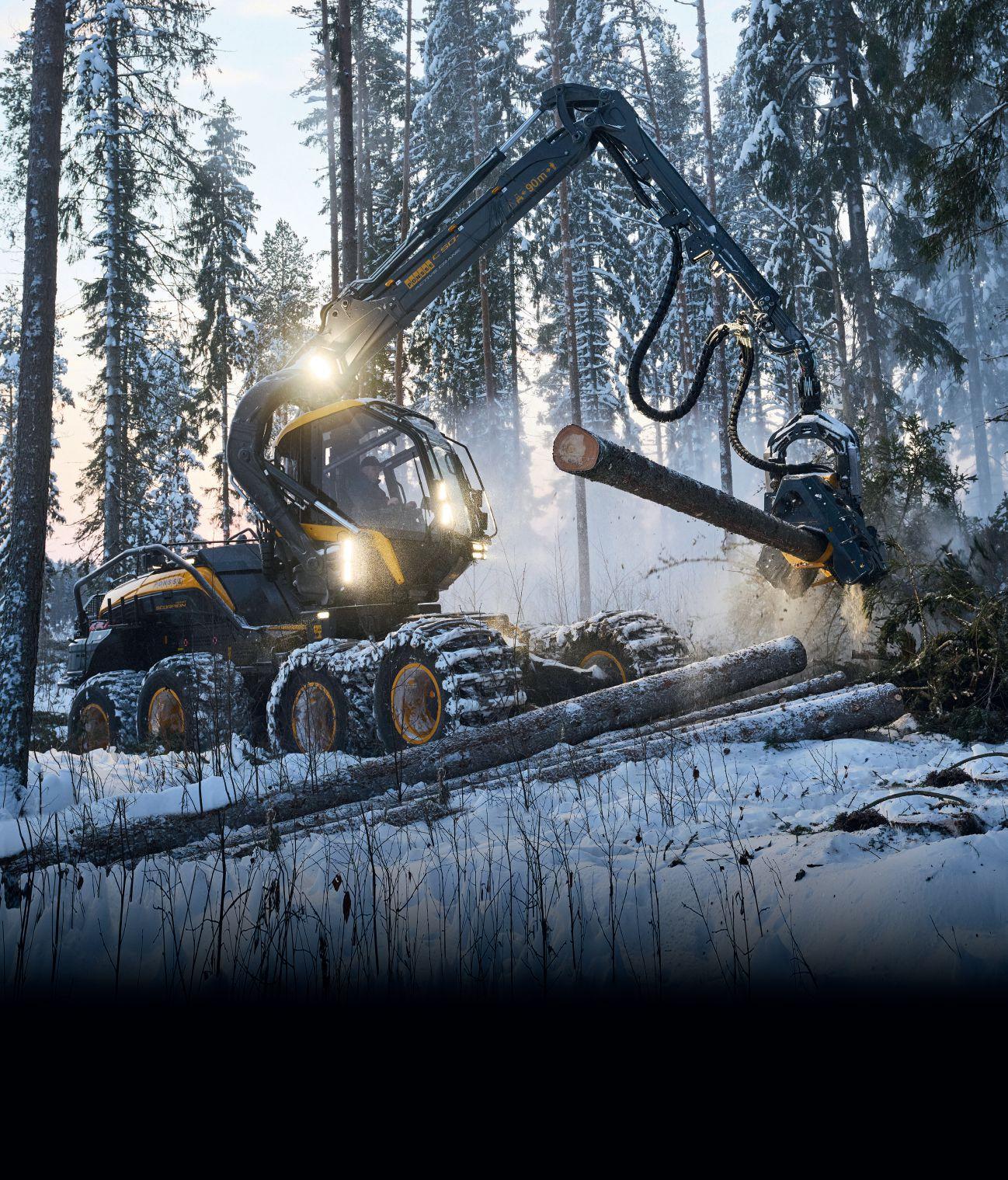
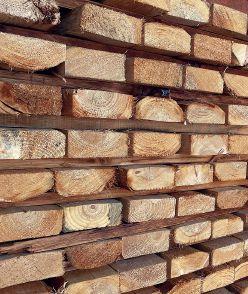
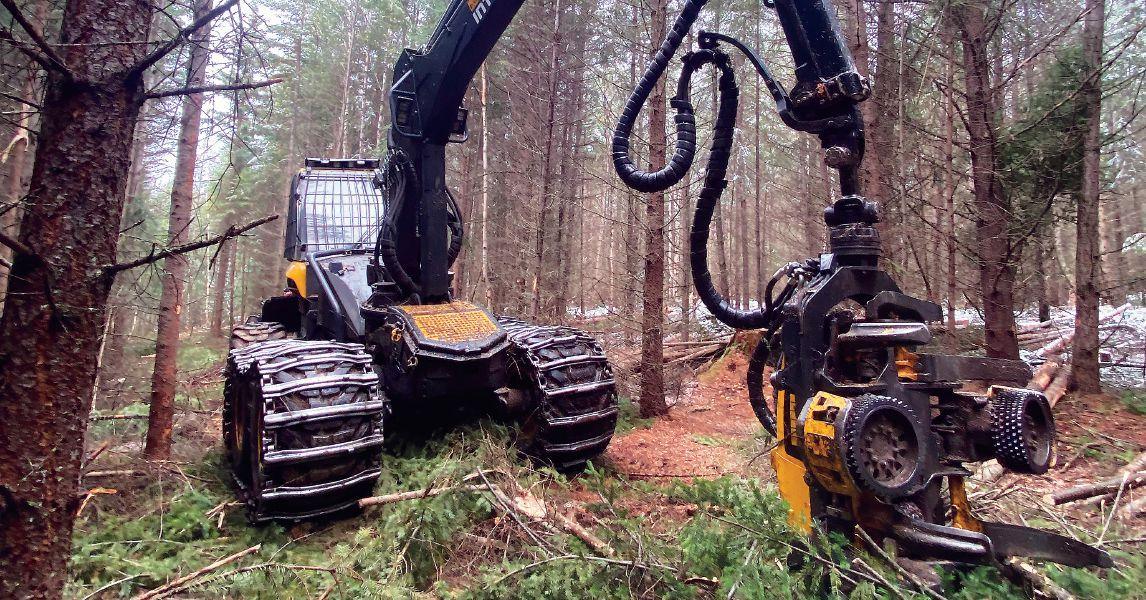
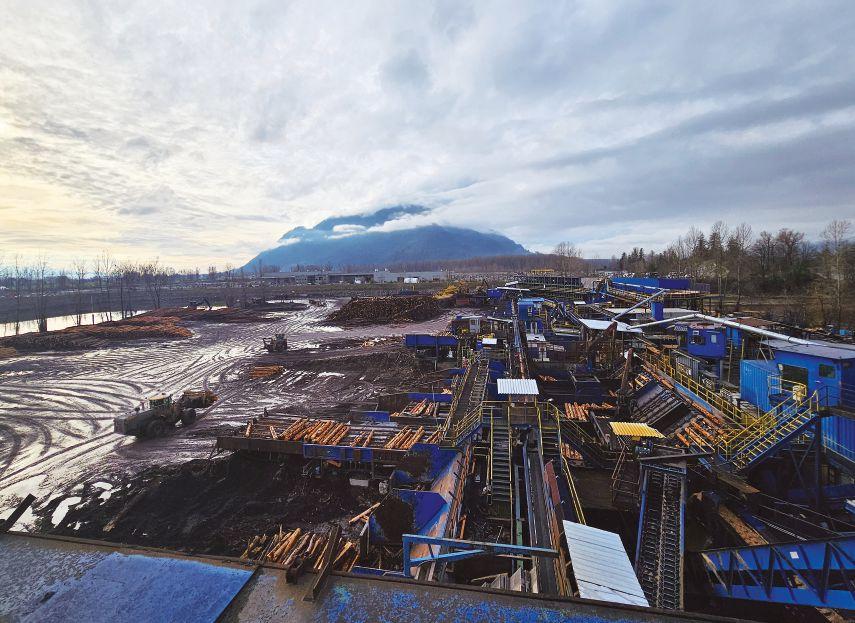
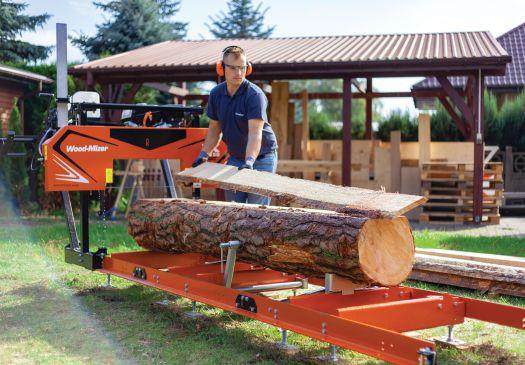
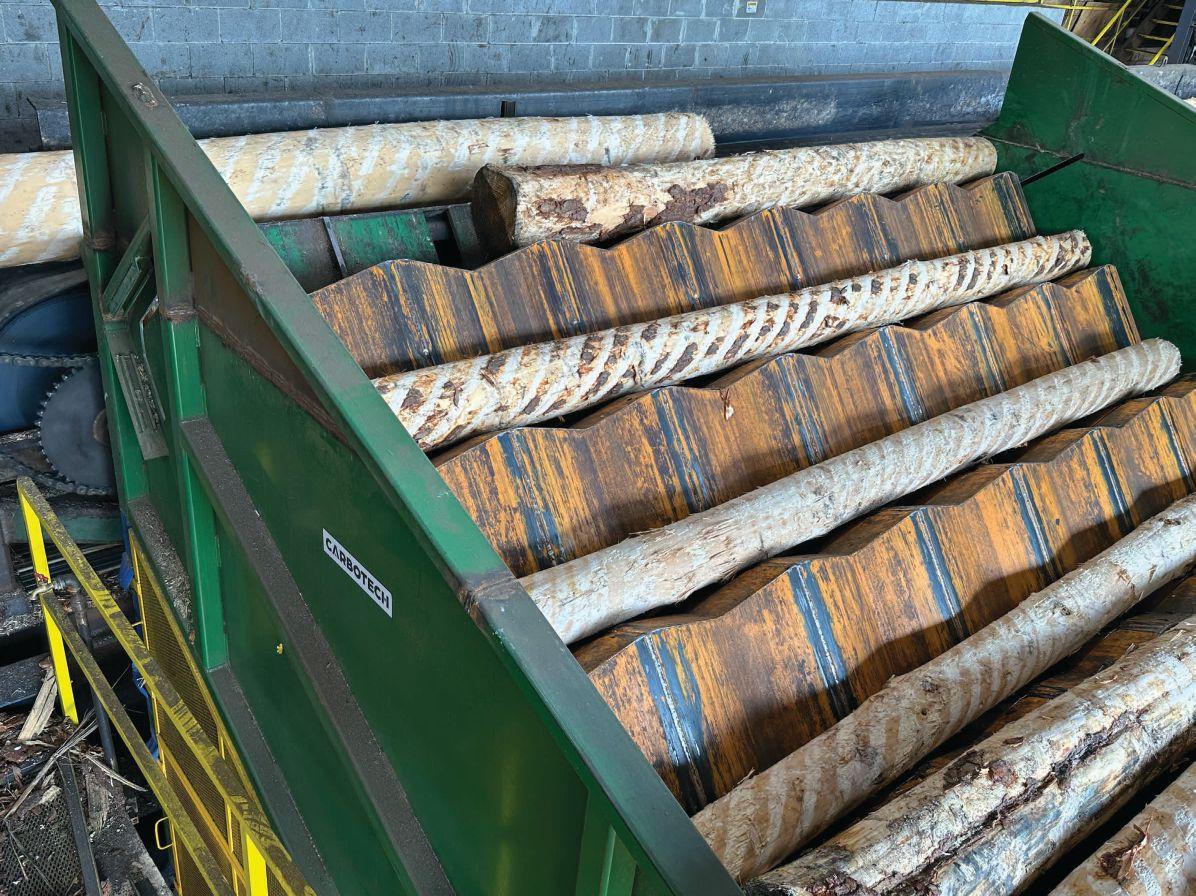
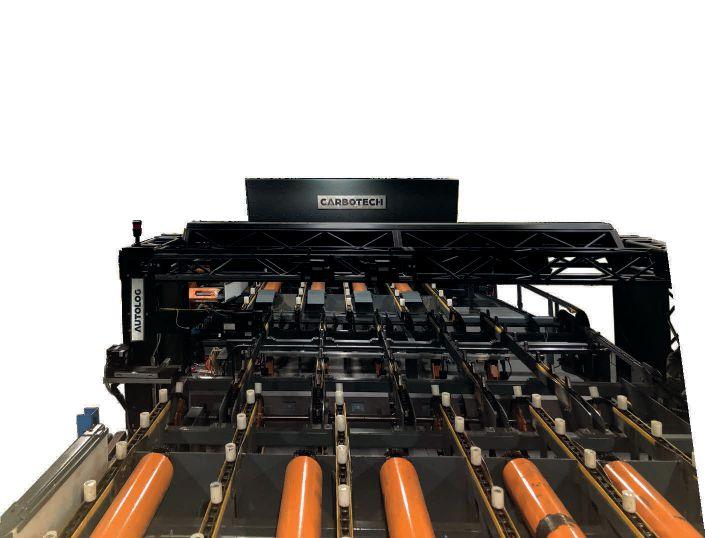
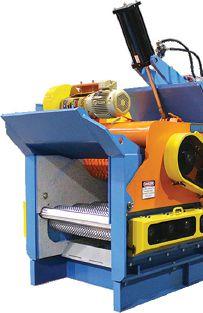
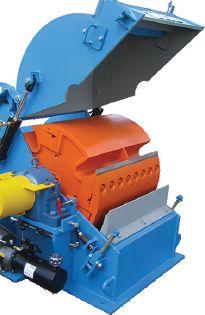
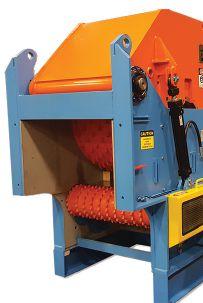
Log diameter 4“ to 23“ Suitable for crooked logs in various species
Ideal for production of pallet components
Forest Products’ four decades of
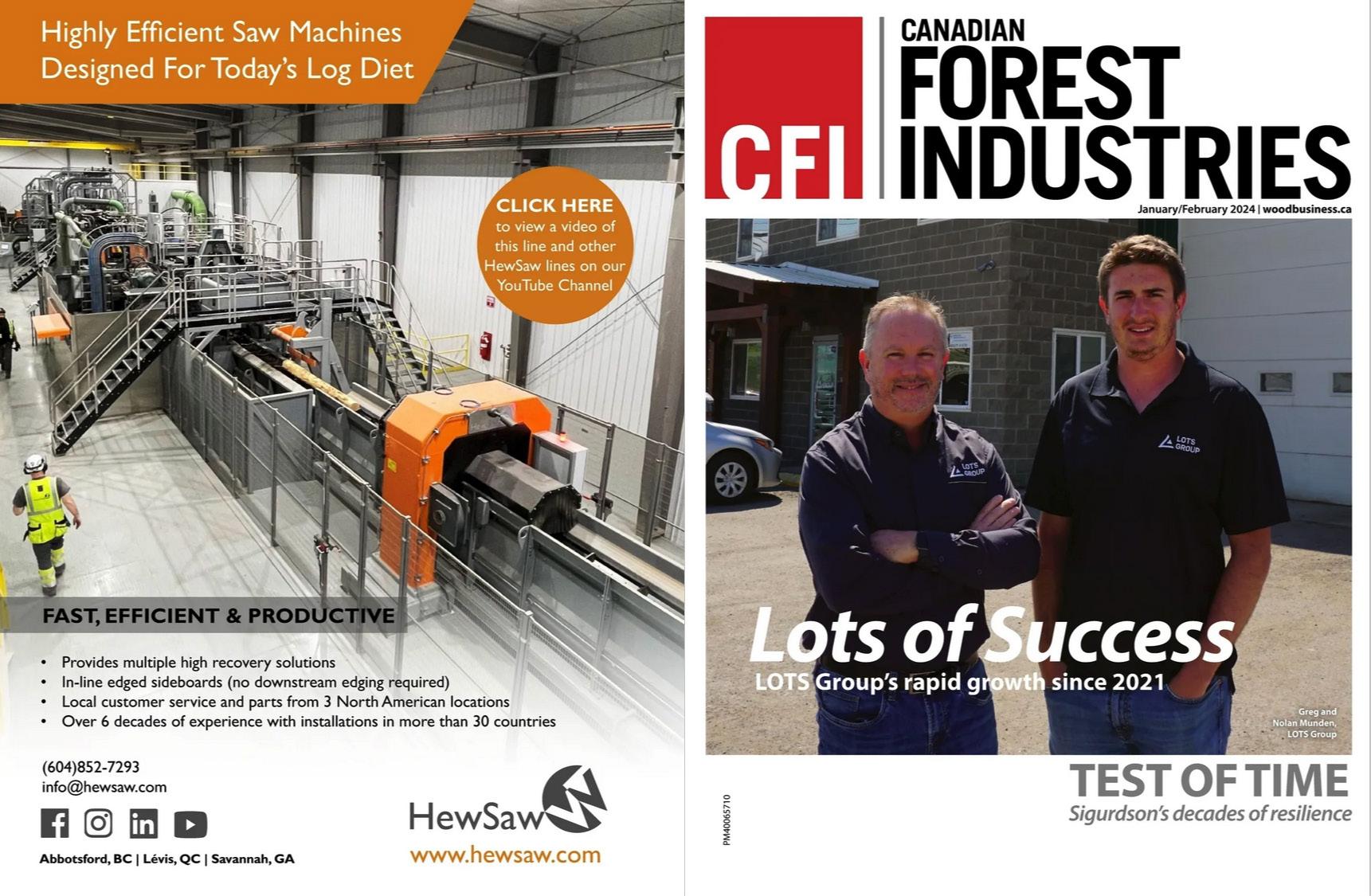
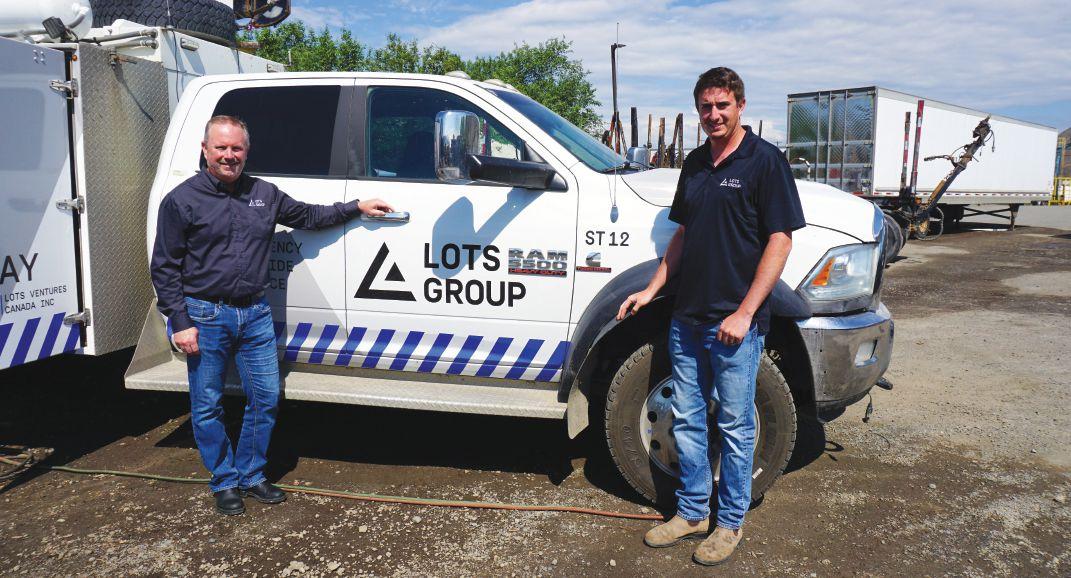
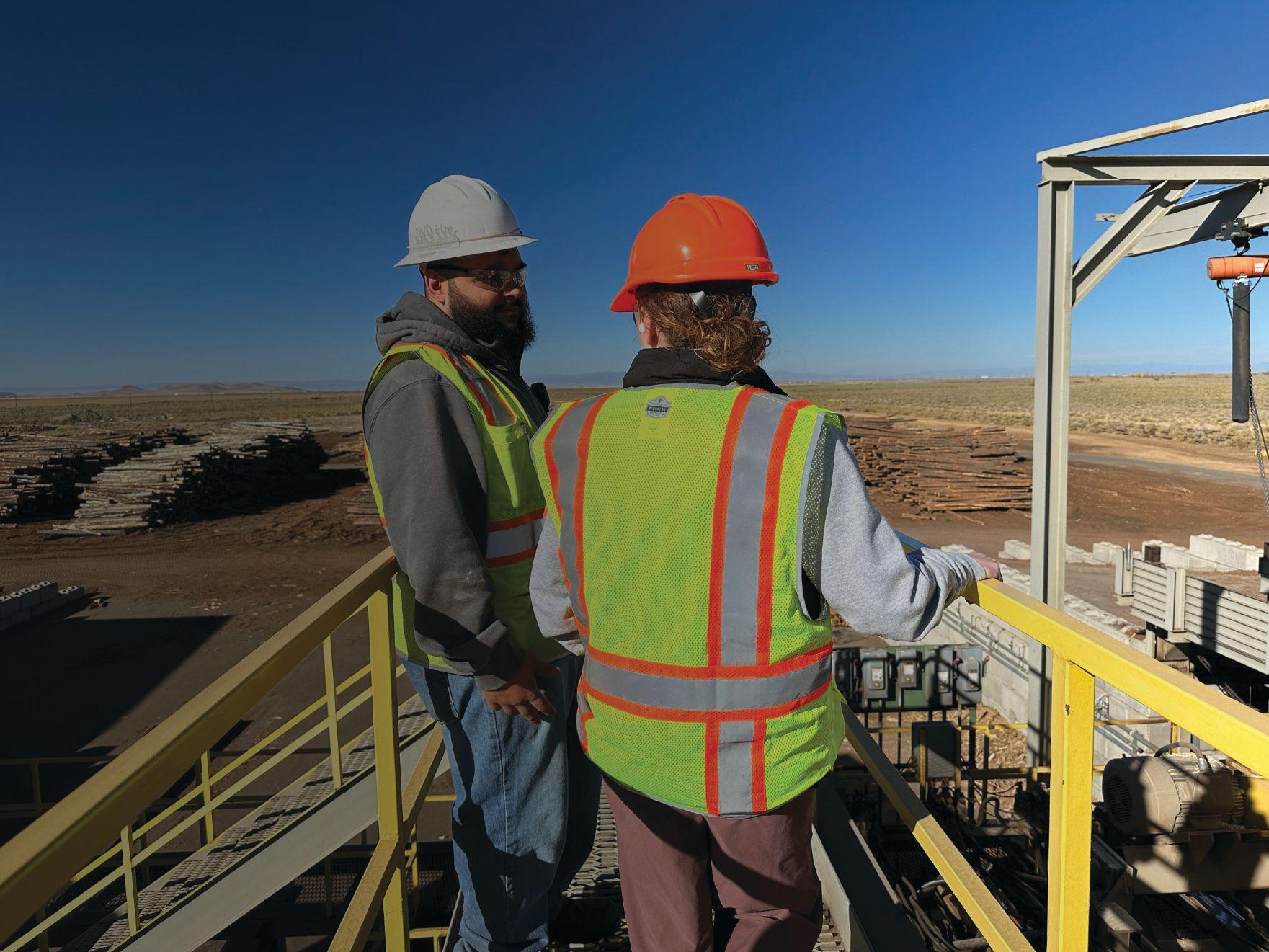
LOTS Group Canada’s Greg Munden, strategic advisor for Canadian operations, and his son Nolan Munden, director of
CFI their growing operations in Kamloops, B.C. Read
Photo: Annex Business Media
Forestry is a challenging industry, with operational, trade, environmental and regulatory requirements constantly evolving. That’s why it helps to have an advisor who is not afraid to get their boots dirty. With deep roots in the forestry sector, our advisors deliver a fresh perspective and advice to improve and streamline your operations.
first cut
JENNIFERellson jellson@annexbusinessmedia.com
Unlocking prosperity
Can our sector prosper in the auspicious Year of the Wood Dragon?
Enter the dragon. Specifically, enter the wooden dragon. According to the Chinese lunar calendar, 2024 is the Year of the Wood Dragon.
Wood represents vitality and creativity, while the dragon is related to success, signifying that the year will be brimming with ingenuity, prosperity and good fortune. It is seen as an ideal period for fresh starts and laying down the groundwork for lasting success. Sounds like a good omen for the forest industry! So, is the wood sector poised to embody the wood dragon’s symbolic vision, strength and good luck?
The TLA convention in January hinted at a promising start, with the B.C. premier voicing support for the sector. You can read all about it on page 27. The real question though, as TLA executive director Bob Brash ponders in his column, is whether leadership is ready to seize them.
We feature two companies who are dragons in their fields. LOTS Group Canada and Sigurdson Forest Products went from being small family-run businesses to becoming major industry players. Companies are encouraged by pundits to seize opportunities for growth and innovation this year, but these two companies have already had a head start in turning challenges into triumphant successes last year, with plans to continue growing.
The dragon also represents boldness and we have a feature on the bold new era of forestry emerging in B.C., where contractors are focusing on innovative techniques for fire hazard abatement.
There’s one aspect of the dragon’s mythical persona that gives the forest industry a cause for concern though – its association with fire. In light of the industry’s recent struggles, particularly the record-breaking 2023 wildfire season, the last thing we want is for the dragon’s fiery connotation to manifest in destructive flames. Can the dragon help us extinguish this threat? Perhaps not in a literal sense, but the symbolic essence of the dragon’s boldness and strength can inspire the industry to implement robust fire prevention measures, innovative technologies, and sustainable practices. By
harnessing the dragon’s spirit in a proactive manner, the forest industry aims to quell the flames of uncertainty and ensure that the Year of the Wood Dragon becomes synonymous with not just prosperity but also responsible stewardship of our precious forests.
The dragon is believed to be able to foster growth and progress. Wood dragons are said to be full of energy and dream of changing the world – exactly what our column on page 36 in empowering women, womxn and all individuals for a sustainable, low carbon future is all about.
The last Year of the Wood Dragon was 60 years ago, in 1964. That year, “Beatle-mania” gripped the world, Sony introduced the first VCR, the U.S. Civil Rights Act became law, and Canada’s fisheries department wrote in its annual report that “a tremendous expansion was evident during 1964 in B.C. forest industry … several of the many new pulp mills to be established in the interior of the province are now under construction at Prince George and Kamloops. The companies have agreed to incorporate the most modern facilities to reduce biological oxygen demand and toxicity of the effluent to safe levels for salmon.”
Sounds to me like a fab year!
With history as our guide, we hope 2024 repeats the success.
As the Year of the Dragon begins on Feb. 10, we eagerly anticipate the industry’s journey, and with the Year of the Green Wood Snake on the horizon for 2025, the future seems just as promising. Wood dragons and green snakes – a fortuitous duo for the forestry landscape.
Photo: Garnar / Adobe Stock.
NEWS upfront
West Fraser to permanently close Fraser Lake sawmill
West Fraser Timber has announced it will permanently close its sawmill in Fraser Lake, B.C., following an orderly wind-down, citing its inability to access economically viable fibre in the region.
The closure will impact some 175 employees and will reduce West Fraser’s Canadian lumber capacity by approximately 160 million board feet.
West Fraser anticipates record-
ing restructuring and impairment charges of approximately $81 million in the fourth quarter of 2023 related to facility closures and curtailments due to availability of economic fibre sources in B.C.
CANADA CHALLENGES U.S. SOFTWOOD LUMBER DUTIES ANEW
Canada is challenging the latest U.S. decision to maintain duties on exports of Canadian softwood lumber, Trade Minister Mary Ng said in a statement.
In November last year, the U.S. International Trade Commission decided to maintain anti-dumping and countervailing duties on Canadian softwood lumber. The decision came after the North American Free Trade Agreement Chapter 19 panel directed the U.S. Department of Commerce to review key aspects
Mountain pine beetle in steep decline in Alberta
The mountain pine beetle is the most destructive pine insect pest in Alberta, and its populations have declined 98 per cent since their peak in 2019, said the Ministry of Forestry and Parks.
Cold winters paired with Alberta’s aggressive control program have led to striking progress in preserving the health and resilience of the province’s forests.
Alberta uses management measures like population monitoring, risk assessments, cutting and burning infested trees, and harvesting highly vulnerable pine to reduce the impact of mountain pine beetle.
The beetle has the capacity to kill large tracts of mature pine. It carries a blue-stain fungi that clogs and destroys the conductive
of its dumping determination in October.
Canada filed a notice of intent to challenge the decision on Jan. 17 under Chapter 10 of the Canada-United States-Mexico Agreement.
“Canada is disappointed that the U.S. continues to impose unwarranted and unjust duties on Canadian softwood lumber products. These duties impact our innovative Canadian softwood industry. And with the significant current challenges in housing supply and affordability, these duties also harm U.S. consumers and businesses that need Canadian lumber,” Ng said.
tissue of an affected tree when the beetle burrows into the tree to feed and take cover. There are 5.5 million hectares of pine in Alberta that is susceptible to mountain pine beetle with a value of more than $11 billion.
Photo: Annex Business Media
Photo: milehightraveler/ Getty images
B.C.
appoints new sustainable forestry
innovation minister
British Columbia Premier David Eby has named Andrew Mercier as Minister of State for Sustainable Forestry Innovation to support Forest Minister Bruce Ralston.
“Minister Mercier will be a key partner in government to help address the urgent demand for timber supply from industry, while working to ensure that wood products are value added to help create and protect jobs in the forestry sector,” said Eby.
Photo: B.C. Government
B.C. transfers land back to Snuneymuxw First Nation
B.C. has completed the transfer of 212 hectares of land on Te’tuxwtun, known as Mount Benson East, to the Snuneymuxw First Nation. This is the first step in the implementation of the Snuneymuxw First Nation and British Columbia Land Transfer Agreement (2020), with the remaining 2,882 hectares planned for transfer to Snuneymuxw in the near future. This land transfer is an important tool to support the
Ontario invests $9.4M in biomass innovation
The Ontario government is investing more than $9.4 million in 14 research, innovation and modernization initiatives to develop the untapped economic potential and environmental benefits of new and emerging uses of underutilized wood and mill by-products, collectively known as forest biomass.
Thunder Bay Pulp and Paper Mill is receiving $5 million to upgrade equipment and
Fire engulfs Cree Lumber sawmill in Quebec
A devastating fire has destroyed the recently opened Cree Lumber sawmill in Waswanipi, located in northern Quebec.
No injuries were reported and the cause of
implementation of the Saarlequun Snuneymuxw Treaty of 1854.
The Mount Benson East land is a heavily forested area south of Nanaimo within Snuneymuxw territory and is in relationship with Snuneymuxw’s villages and waterways. The land being returned is now part of the Nation’s Petroglyph Development Corp. land holdings and is part of the Nation’s forest management program.
modernize the mill’s electrical system, enabling future measures to expand green energy production, reduce emissions and increase forest biomass usage.
FPInnovations will receive $250,000 to advance forest sector integration by identifying business opportunities among a biorefinery, forest operations and production facilities to support the development of a new wood biorefinery.
Reader Service
Print and digital subscription inquires or changes, please contact Angelita Potal, Customer Service Tel: 416-510-5113
Email: apotal@annexbusinessmedia.com
Mail: 111 Gordon Baker Rd., Suite 400, Toronto, ON M2H 3R1
EDITOR - Jennifer Ellson (438) 483-7451 jellson@annexbusinessmedia.com
MEDIA DESIGNER - Graham Jeffrey gjeffrey@annexbusinessmedia.com
GROUP PUBLISHER - Anne Beswick (416)510-5248 • Mobile: (416) 277-8428 abeswick@annexbusinessmedia.com
Tim Shaddick 1660 West 75th Ave Vancouver, B.C. V6P 6G2 Ph: (604) 264-1158
Kevin Cook lordkevincook@gmail.com Ph: (604) 619-1777
COO - Scott Jamieson sjamieson@annexbusinessmedia.com
PUBLICATION MAIL AGREEMENT #40065710 RETURN UNDELIVERABLE CANADIAN ADDRESSES TO CIRCULATON
the Jan. 21 blaze is still unknown.
Cree Lumber opened just more than a year ago as a result of a collaboration between the Cree Nation of Waswanipi, Mishtuk Corp., and Chantiers Chibougamau, with funding for a total of $20 million from various federal and provincial agencies.
Alberta invests in drones, forests, hydrogen
Alberta’s government is investing more than $3.6 million to help post-secondaries advance research driving innovation and technology development and to propel the province forward. The latest round of successful applications includes projects ranging from advancements in unmanned flight and environmental restoration to developments in energy storage and agricultural technologies, including NAIT’s Boreal Research Project that will expand research and help Indigenous communities develop plant and seed technologies, forest reclamation and peatland restoration. Photo: pcess609 / iStock / Getty Images Plus
LOTS OF SUCCESS
LOTS Group Canada started as a family venture with its roots in Kamloops, B.C.
BY JENNIFER ELLSON
Nestled in the vibrant city of Kamloops, British Columbia, LOTS Group Canada emerges as a beacon of success within the Canadian forest industry. Originating as a humble local venture, it has evolved into a key player within an international integrated transport company, revolutionizing the provision of state-of-the-art transport solutions for the forest and other industries.
INCEPTION TO ASCENSION
LOTS Group Canada’s modest beginnings to unyielding expansion is a shining example of a thriving forest industry enterprise. Originally known as C. Munden Transport Ltd., the company started in 1967 as a log hauling operation and expanded into
third-party commercial vehicle maintenance, inspection and repair services. Under Greg Munden and his wife Kim’s leadership, the business continued the growth that started under Greg’s parents, Jim and Linda, as Munden Ventures. Fast forward to 2021, Munden Ventures and its forestry arm, Peak Forestry, co-owned with his brother Chad and wife, were acquired by Sweden’s LOTS Group, propelling them into a trajectory of relentless growth. From being the owner and managing director, Greg now serves as strategic advisor for the Canadian operations.
“LOTS Group has enjoyed rapid growth in line with the goals of the Swedish-based organization entering Canada,” Greg tells CFI while showing the massive fleet scattered at its lot in the sunny
south-central part of B.C. last summer.
Greg adds that despite lumber market challenges, LOTS maintained and bolstered its forestry operations, increasing annual production through steadfast partnerships with core mill customers in B.C.’s Interior.
EXPANDING FLEET, NEW HORIZONS
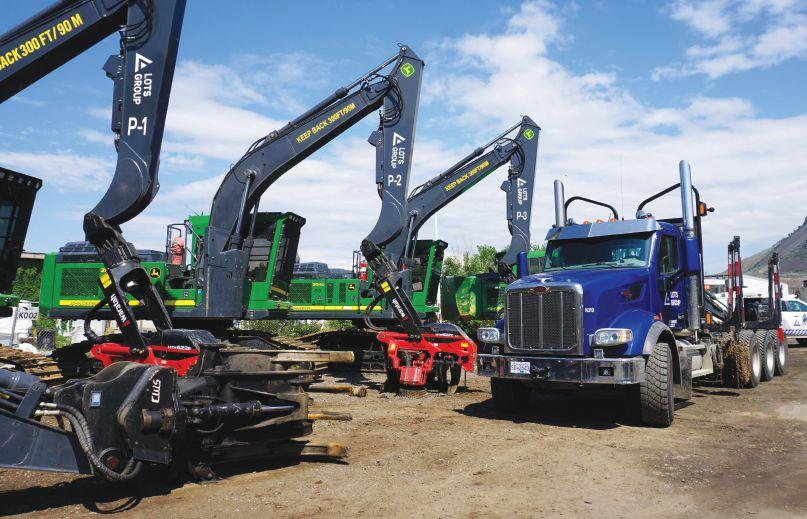
The trucking fleet surged from 14 to 52 dedicated logging trucks, plus additional subcontractors, spanning the B.C. Interior, and in Port Alberni and Campbell River on Vancouver Island. Growth stemmed from strategic acquisitions and organic expansion, responding to heightened volume demands from existing customers.
Greg’s son Nolan is director of assets and services – a role that suits him since he has a mechanic red-seal license. LOTS employs 25 mechanics for its customers and to maintain the company’s 52 truck and trailer units hauling both long and short logs, as well as harvesting powerhouse machines comprising two John Deere 953M bunchers, a John Deere 848 and a 948 skidder, three John Deere 2154 processors with Waratah heads, two John Deere 2656G hoe chucker and road builders, a John Deere 2654G loader,
a Hitachi 260 log loader, a John Deere 850J dozer, and a Hyundai R140 excavator.
Simultaneously, LOTS expanded its commercial repair and parts business. The Kamloops shop grew, and a new facility in Port Alberni opened, mirroring the model of maintaining a hauling fleet while offering parts through a dedicated CBS distributor parts store. LOTS provides repair,
inspection, and preventative maintenance services to third-party customers.
LOTS has also modernized its digital operations, expanding use of tools such as telematics and JD Link. Greg reflects on the transformative impact of managing the business through data, saying that daily monitoring of Key Performance Indicators (KPIs) is a game-changer. This approach,
Every two years thousands of hard-working people gather at the Champlain Valley Exposition to conduct
The Loggers’ Expo features a wide array of supplies and services, heavy equipment, and trucks – for loggers and land clearers, tree care professionals and firewood dealers, sawmillers and landowners. If you’re serious about the forest products business – you need to exhibit or attend.
visit
email
call
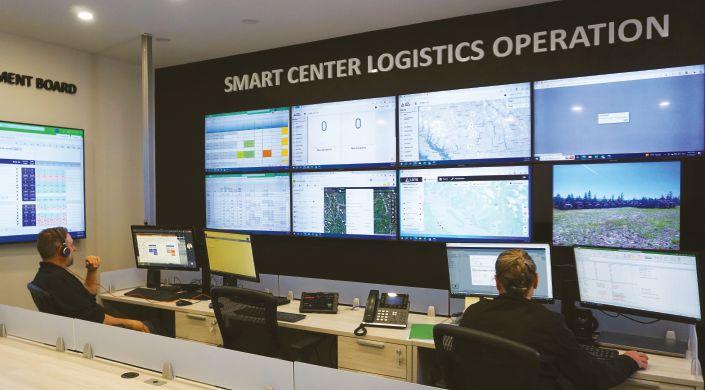
The company has modernized its digital operations, expanding its use of tools such as telematics and JD Link. The team works out of a state-of-the-art control towers.
uncommon in the industry, replaces the previous energy-intensive process of gathering data. Now, the team working out of the state-of-the-art control towers can swiftly review KPIs from the previous day and take immediate action, ensuring that any areas in the red today are set to be in the green tomorrow, making everyone accountable to deliver action plans.
HIRING AND RETENTION PROWESS
In tandem with its operational expansion, LOTS witnessed a workforce surge, growing
from 50 to 110 employees. This growth, amid industry-wide recruitment and retention challenges, underscores the company’s resilience and ability to attract and retain a skilled team during a transformative period.
“We consider ourselves fortunate to assemble an exceptional team, especially in an industry marked by challenging recruitment and retention,” Greg says.
To attract top talents, the company prioritizes innovation in their hiring approach, customizing perks such as flexible shift patterns in shop operations to align with
A LONG WAY TOGETHER
FORESTLAND
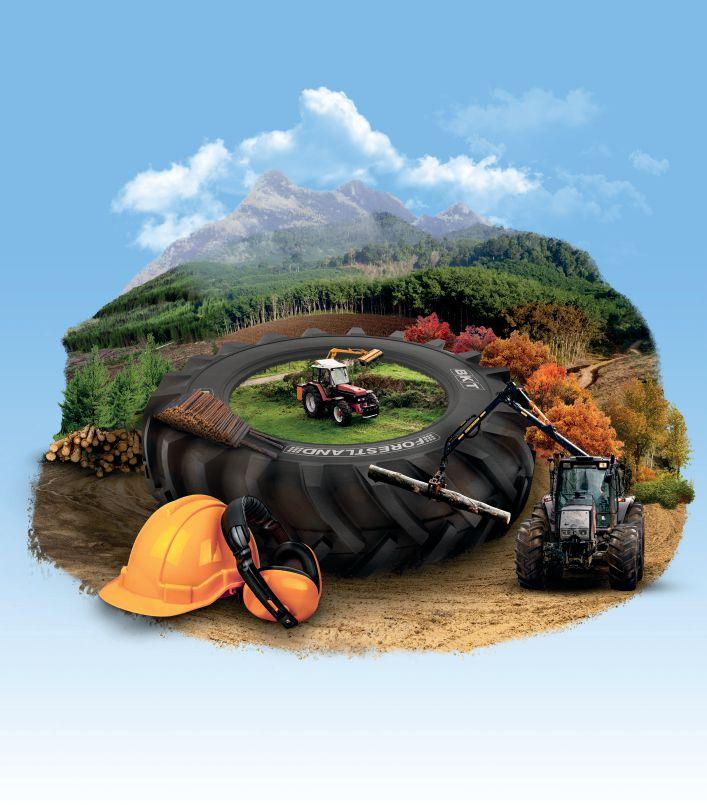
Designed for the most demanding applications, FORESTLAND is BKT’s most recent and innovative bias tire for the agro-forestry sector, but it can also be employed in some agricultural operations such as landscaping and light mulching. Its polyester carcass and specific tread compound make it particularly cut-and-chip resistant, while the robust sidewall ensures a long product life cycle. FORESTLAND’s key features are excellent traction on soft terrain, good grip on any ground thanks to stiff and reinforced tread lugs, a high level of stability thanks to the strong bead construction and top self-cleaning properties. For info: 514 -792-9220
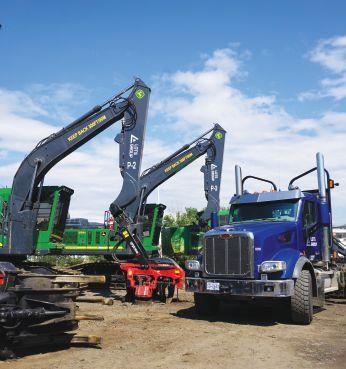
LOTS Group Canada’s trucking fleet surged from 14 to 52 dedicated logging trucks since its acquisition in 2021.
employees’ schedules.
“We have to adjust the mind-set and adjust cycle times. We’re working with customers to think differently, like exploring the use of reload yards to more effectively manage the length of day required for drivers,” Greg explains. Additionally, LOTS offers competitive compensation and benefits exceeding industry standards.
Last year, Greg’s team launched LOTS Driving Academy, a comprehensive training program that welcomed eight new drivers, including two females. This initiative aligns seamlessly with LOTS’ commitment to fostering diversity and inclusion.
FUTURE VISION
Trish Kohorst, director of transportation and harvesting activities, outlines LOTS’ strategy to draw in new drivers for the forest industry, including targeting recent high school graduates considering a trucking career, and individuals contemplating a career change. LOTS has had success in upskilling professional drivers working in other areas of trucking, but want to join the elite class of professional log haulers. Greg’s visionary outlook hints at transformative shifts: with an awareness of changing workforce preferences, the prospect of truck sharing emerges as a dynamic solution. In an era where lengthy shifts are less appealing, the company’s commitment to adaptability shines through.
“These days, workers are no longer interested in 14-hour shifts, so again we have to adjust our mindset,” Greg muses.
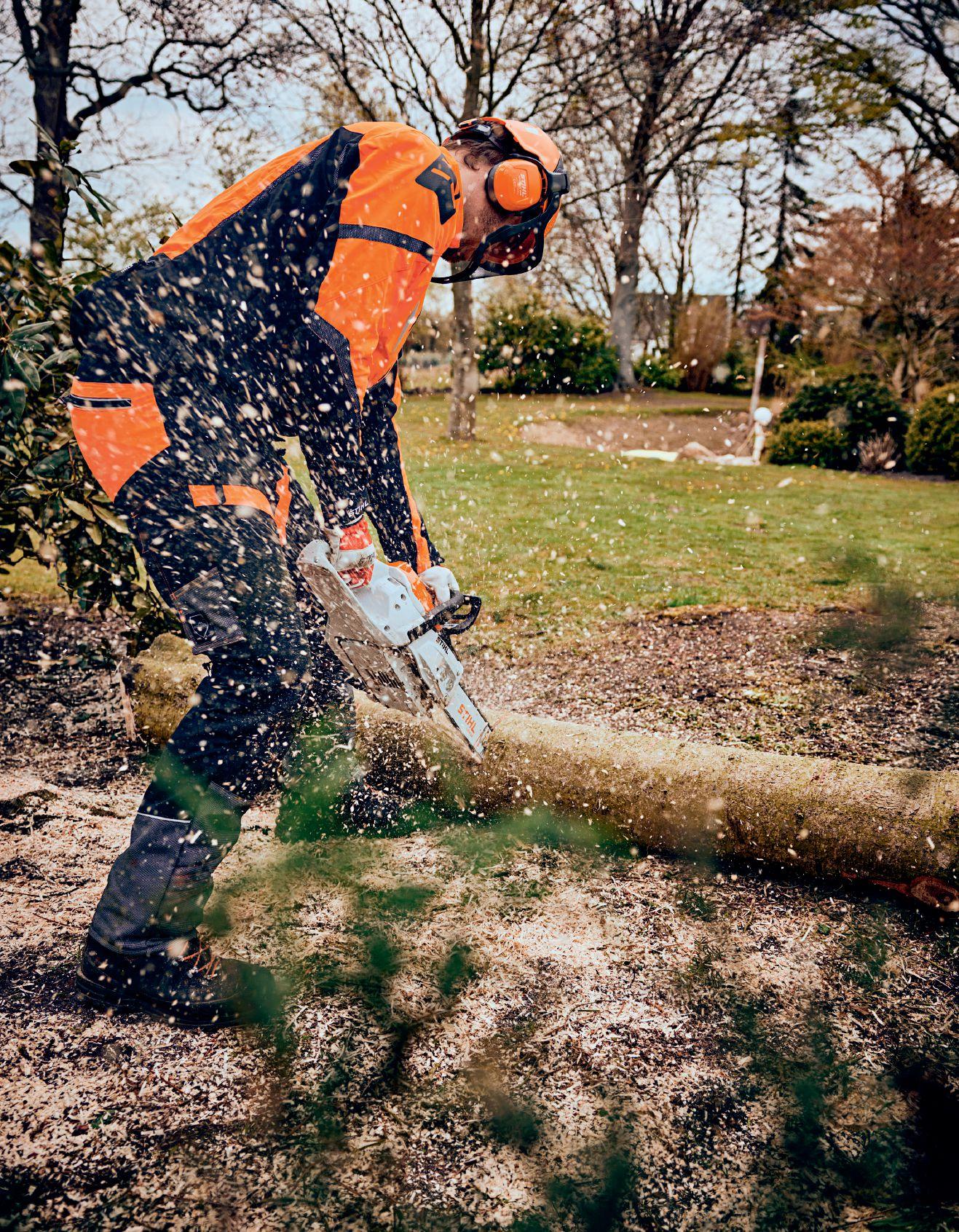
With a chain speed of up to 30 m/s and three operating modes for felling, delimbing, and cutting to length or building with timber, it can handle any job while keeping noise to a minimum. Its slim design and anti-vibration system make it the perfect solution for keeping everything under control – regardless of wind or weather thanks to professional ergonomics and weatherproof design.
Revolutionizing B.C. forests
Focusing on sustainable practices for fire-resilient communities
BY QUENTIN STEFANI AND SIG KEMMLER
In the beautiful expanses of British Columbia’s 54 million hectares of forests, a new era of forestry is emerging. As the importance of our forests becomes even more evident, the industry is at the forefront of this revolution, employing innovative techniques and equipment to promote commercial thinning and fire hazard abatement. Let’s look at the benefits of thinning from below as opposed to the traditional thinning from above, with focus on gaining social license and of communities.
Forests are not just static timber reserves; they
are dynamic ecosystems that require careful management to maintain their health and biodiversity. We just experienced the largest forest fire season in modern times. The importance for fire-proofing every community across Canada cannot be overstated. We have the option of spending billions to fight or invest millions in prevention.
The forest industry faces the challenge of balancing economic viability with ecological stewardship and community well-being. Our commitment extends beyond the forests to the communities that
Forests are not just static timber reserves; they are dynamic ecosystems that require careful management to maintain their health and biodiversity.
surround them, ensuring their voices are heard and their surrounding forests endure.
Our approach is powered by state-of-theart equipment including wheeled harvesters, forwarders, and custom-built mini feller bunchers. These complex machines are more efficient and designed to minimize environmental and local impact: quiet, low ground pressure, extremely fuel efficient. This is not reinventing the wheel – we are applying systems, tools and technology that has been proven for decades in Scandinavia and the rest of Europe. They allow for precise cuts, reducing unnecessary damage and promoting quicker forest recovery. There is no need for any large clear cuts or openings.
Thinning from below involves removing smaller, suppressed trees and underbrush. They are less commercially valuable, but may contribute to fire fuel loading. We leave the large trees. This has several advantages over the traditional thinning from above where larger, dominant trees are removed:
• Enhanced forest health: By reducing competition for limited resources, we help promote a more resilient forest.
• Fire hazard reduction: Reducing dense undergrowth significantly mitigates risk
and intensity of forest fires.
• Biodiversity preservation: preserves the canopy and the habitat it provides, maintaining the forest’s biodiversity.
• Sustainable yield: Focusing on smaller trees ensures improved growth and productivity of the forest, aligning with long-term conservation goals.
Gaining social license goes beyond mere legal permissions – it’s about earning the trust and support of the people in communities surrounded by forests. Professional foresters must engage with local residents, Indigenous groups and stakeholders to understand their concerns and incorporate their insights into planned forestry practices. The threat of wildfires is a pressing concern, and thinning practices could play a crucial role in protecting adjacent communities by reducing fuel loads, crown closure and creating buffer zones, while protecting water resources. Anytime a large forest fire is prevented, a significant immediate carbon and particulate release has been stopped. Canada has 12 per cent of the world’s land-based carbon reserves. In 2023, 18.4
million hectares of Canadian forests were burned. Canada is now ranked as the 11th highest in the world for GHG emissions. It is important to note that the international agreement for calculating GHG emissions includes only human sources.
Total carbon emissions from wildfires across Canada totaled 290 megatonnes between Jan. 1 and July 31, 2023, showing that the prevention of extreme forest fires is now more important than ever – we can get the sense of the impact our forest practises could have on future actual GHG emissions. These figures are hard to imagine – one megatonne equals one billion kilograms. For comparison, the CN Tower weighs 0.1179 megatonnes.
Fire hazard abatement can lead to a more fire resilient, sustainable forest, and more prosperous community. The public, policy makers and politicians need to be aware of the options that exist. The path we choose now will define the future of our forests and communities.
Quentin Stefani, TFT, and Sig Kemmler, FT, are managing partners for the Integrated Operations Group, based in Campbell River, B.C.
THE LEGENDARY FORESTRY GRAPPLE
Hultdins has long been a world leader in highly engineered by-pass style grapples. SuperGrip SG Grapples are the forest industry standard on log trucks and forwarders. Our traditional SuperGrip SG Grapple models have become common on excavators for tree service, land clearing, feeding chippers or grinders, and part time logging. All SG Grapples are equipped with Indexator GV Rotators. Links are available to match any forwarder, log truck, or excavator mounts. Since its launch in the mid-1990s, we’ve continually improved the SuperGrip to meet increasing productivity demands.
Distributed By:
www.hultdins.com (519) 754-2190
info@olofsfors.com
TEST OF TIME
BY SARAH STOTLER
British Columbia’s Cariboo Chilcotin Coast region, known as the land without limits, is where Sigurdson Forest Products got its start. In 1984, brothers Brian and Layne Sigurdson founded Sigurdson Brothers Logging. In 1994, the first mill took shape in Hanceville, B.C., designed, engineered, and built from the ground up by the duo with just a little help from an electrician and a handful of contractors.
At start-up, the operation was a basic single-line scragg stud mill. Numerous upgrades were made over the years, including the installation of a secondhand Kockums Cancar Chip-N-Saw Mark III, and a merch deck engineered by Layne and built by the brothers. They worked closely with local First Nations to build a committed workforce – their hard work and dedication was integral to their success. In 2003 the mill began to run two shifts. Brian and Layne had their minds on expansion, so they hired
their brother Barry, who had expertise as plant manager for a much larger operation. The brothers purchased what is now Sigurdson’s Williams Lake mill from CNC Forest Products. It was chosen for its kiln drying capacity and planer mill. They wasted no time in upgrading the planer to a Stetson-Ross 6-12 to efficiently manage the flow of lumber from both mills. Brian’s son Nate, the current COO, explains, “Williams Lake is a sawmill-heavy town, and this time was the height of the pine beetle infestation so good green pine logs were expensive and relatively hard to come by. We carved out our niche by taking a lower quality deadlog and getting the optimum recovery.”
While the Hanceville mill was a robust operation, thriving on 8- to14-inch diameter logs, it was limited in speed and quality for smaller diameter logs. The brothers dreamed of building a high-speed small log mill. In 2006, they decided to add a simple,
single-line mill to handle small logs at Williams Lake. Featuring two Valon Kone VK450 debarkers inline with a Kockums CanCar Chip-N-Saw Mark II, and an edger, the company’s objective was clear: build the simplest mill with the highest production capability possible.
Meanwhile, Brian had an innovative idea – if they could finger joint, they could significantly improve recovery out of dry, cracked logs. Brian would often point at boards with a one-inch or twoinch wane dip and say, “Look, with a finger jointer you would get 90 per cent recovery out of that board that is otherwise sold as economy.” This led to the acquisition of a state-of-the-art Ultimizer scanner for the chop line, along with the installation of a Western Pneumatics finger joint line. These upgrades enabled Sigurdson to produce three high-value products: nine-foot stud, eight-foot stud, and nine-foot finger jointed stud.
Unfortunately, the 2009 financial crisis hit hard. While managing to save Williams Lake, they lost the Hanceville mill. Sigurdson had a nearly year-long shutdown, only running a small whole log chipping operation with just a few key employees.
A push by the Canadian government for lumber trade with China and a favourable log cost allowed Sigurdson to resume operations in 2010 on a single-shift basis. Soon they added a second shift, and in 2012 they restarted the finger jointer. Years 2012 to 2017 were prosperous, marked by stability, improved log availability, and consistent, high-value production.
In 2017, grappling with log supply challenges, Sigurdson shifted to processing burnt fir logs. This necessitated the reconditioning of an old head rig that had been shut down since the 1980s. Despite uncertainties, they were able to work through the issues, reprogram it with today’s technology, and get it up and running. It consisted of an original Rosser Head debarker and Klamath bandwheel. During the modernization, they added a PHL 10-inch dual arbor gang edger for the cants and a USNR RoboGuide lineal optimizer board edger. Nate shares, “2017 to now have been difficult years, and finding a log supply that fits our operation has been a struggle. Although the COVID pandemic was good at the time for profitability, it took away many baselines and normality that had been in place regarding log purchasing, finding good employees, and even lumber sales. We hope 2024 will bring a little more stability to the markets.”
Today, the Williams Lake mill operates with 70 employees, running one shift on their sawmill, planer, and finger jointer. Primarily processing mountain pine beetle-infested logs and burnt Douglas Fir with a small amount of burnt SPF, the mill has a capacity for 120 million board feet annually but is currently producing approximately 50 million board feet annually. Their main products are 2x4 and 2x6 stud lengths, as well as finger joint products. Their SPF #2 studs go mainly to the Vancouver market, while finger joint products go to Texas, and other products are shipped anywhere from Calgary to Alabama. The mill’s residuals are transported offsite; shavings are sent to Drax Global to be converted into biomass wood pellets, hog fuel is directed to Atlantic Power Corporation’s biomass-fired generating facility in Williams Lake, supporting the community’s energy grid, and chips are sent to Harmac Pacific’s pulp mill near Nanaimo, B.C.
At the Williams Lake mill, the log processing journey starts at the merchandising deck. Here 18-foot or 20-foot logs are cut
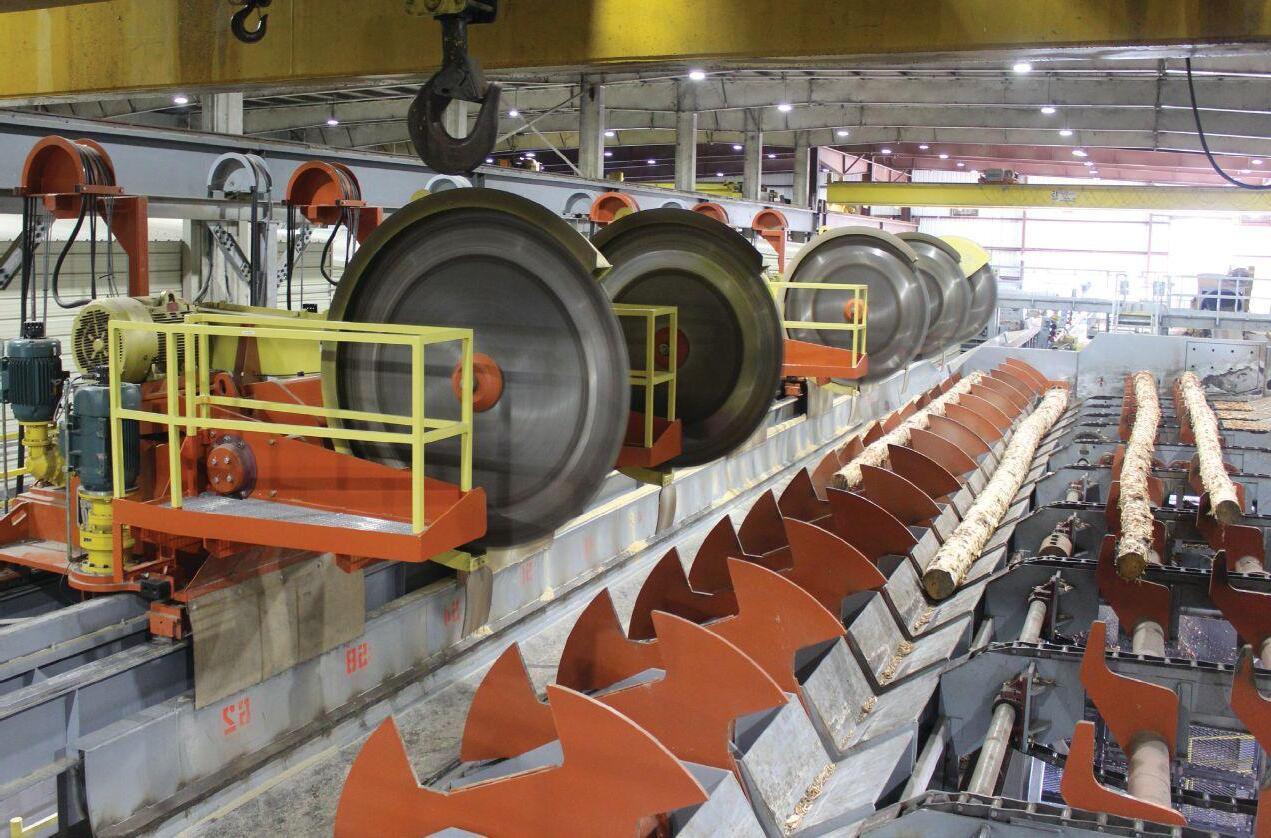
to 9- or 10-foot lengths, respectively. The logs are then sorted by diameter to be batch run through the mill. The canter line, a Kockums Cancar Chip-N-Saw Mark II, ribbon feeds the small logs at a speed of approximately 45 logs per minute. An inline vertical double arbour removes two or three 2x4 boards. From there they run a 2x6 solution at a speed of approximately 28 logs per minute. Any larger logs are split in the vertical double arbour with a top and bottom recovery board before being transferred to the Schurman edger to be sawn into 2x6s.
In 2022, Sigurdson installed a Raptor FX85 scanner onto their sorting line. It directs any off-grade lumber to their USNR RoboGuide lineal optimizer board edger. At the board edger, boards are run down the belt and scanned. The saws adjust to cut the best solution out of the board, with slough and skew capabilities. The board edger was also upgraded with a Raptor lineal scanner.
All products undergo moisture sorting; dry products proceed directly to the planer mill, while those requiring additional drying are routed to one of three dry kilns before planing. Any off-grade lumber is pulled off inline to undergo further processing at the Ultimizer scan and chop line and transformed into finger joint blocks. The blocks are then sent to the Western Pneumatics finger joint line.
Nate attributes the mill’s success to the simplicity of the operation and an amazing and hardworking core group. Many of the mill’s employees have been there for over 15 years.
While building Williams Lake, a longstanding plan to expand
WOODPRODUCTS CANADIAN
came to fruition last year with the purchase of the Ledcor sawmill in Chilliwack. Nate explains, “Knowing that Ledcor Forest Products would be our main competitor for logs, you can imagine our interest when we heard they were shutting down ... when we approached Ledcor, they were very accommodating in working together to keep the mill operational.”
Ledcor was just two weeks away from finalizing a deal to scrap the mill. Sigurdson had a short window to view the mill and assess its viability. Sigurdson officially acquired the Chilliwack mill in Aug. 2023 and after three months of downtime, the mill was back up and running by October. It currently operates with 30 employees, running a single shift on the sawmill and two shifts on the merchandising deck. Logs, which are second-growth Hemlock, brought in as tree lengths, are cut anywhere between 8-16 feet at the merchandising deck. They are then sorted by diameter and stored in the log yard before moving to an older model HewSaw R200 A.1, equipped with a mechanical prefeeder. To maintain efficient log flow, four staging decks feed the HewSaw, enabling a feed speed of up to 475 ft/min with a three-foot gap between logs. The resulting cants are then fed into a 43-bin Newnes trimmer and sorter. The mill produces 4x4, 4x6, 6x6, and 6x8, targeting 50 million board
feet of production into cants annually. All products are treated in the mill’s dip tank with an anti-stain chemical to prevent mold. Lower-grade (#3) products are sold directly out of the mill, while high-grade products are sent to remanufacturing plants. Residuals are shipped off site with chips going to Howe Sound Pulp and Paper and hog fuel to Valley Carriers for multiple uses.
Nate explains that they are currently focused on addressing the intricacies that go along with a start-up – finding markets for their products, getting production numbers up to par, establishing relationships with timber management companies, and building a team with mutual respect and trust.
“The acquisition has gone great. Ledcor has been a pleasure to work with and the hard work, integrity, and values they have instilled show through.” Nate discloses that all of Ledcor’s employees were laid off and compensated when the mill closed. “Because we were starting back up on a much smaller scale, we were able to call back 30 employees; this crew is amazing and without them, this transition would have been much more painful. The best thing about this mill aside from the obvious aspects, the crew, and the log quality, is the HewSaw. Having only been around chip-n-saw style canters, I am blown away by the HewSaw. Its consistency, reliability, low maintenance requirements, and chipping capabilities make it a very impressive machine for small logs.”
As Sigurdson makes headway with their Chilliwack mill, 2024 is looking to be an exciting year for the family-run operation. It marks 40 years since their humble start in the Chilcotin. The company is still owned by brothers Brian and Layne. They form a tight-knit team along with their sons Nate and Dustin, Brian’s wife Violet, and their brother-in-law, Ted Beddington. The family members oversee various aspects of the business; Brian focuses on sales, logs, and finance, and Layne handles the mechanical and engineering aspects of the operations. Nate as the COO brings his insights to steer the company forward. Dustin, Layne’s son, is deeply involved in operations, mechanical work, and engineering. He has spearheaded all upgrades, projects, and improvements for the company over the past five years. Violet plays an integral role as the company’s controller. Ted is the operations manager at the Williams Lake mill and has contributed significantly to the company’s success since its early years. Together they are committed to moving the company into the future.
Looking forward into 2024 and beyond, Nate expresses his vision, “I often think about the future for our company. It’s interesting, I’m not seeking significant growth, while slow and steady growth is essential, it doesn’t take the front of the line. What truly matters to me is sustainability, a company that stands the test of time, with a workforce that is happy and proud to work for Sigurdson. I envision walking through our operations and seeing employees who are safe, happy, productive, and treated with the respect they deserve. Additionally, I am committed to ensuring responsible management of our B.C. forests, to promote sustainability and growth in our industry.”
MARKETS UPDATE
MADISON'S REPORTER - LUMBER PRICES INDEX VS NEW LUMBER FUTURES
Madison's Lumber Prices Index
Lumber Futures (weekly close)
BY KETA KOSMAN
In the final weeks of 2023, the full trendline for the year showed some real stability for North America construction framing softwood lumber prices. Indeed, the weekly price of both benchmark Western S-P-F and Southern Yellow Pine East Side 2x4s landed almost exactly where they were one year ago. For their part, customers, whether home builders or lumber retailers, continued to show reluctance to make purchases beyond immediate needs.
After all the uncertainty of recent years, lumber buyers were concerned that prices might fall, thus have been holding off stocking inventory. The muted housing construction activity for the second half of last year also suggested caution in keeping extra volumes of wood on hand. However, the discipline exhibited by sawmills across Canada and the U.S. to curtail when demand was soft had done a lot to keep the level of supply in balance with demand.
Western S-P-F suppliers in the United States reported a reserved market overall as the holiday
Sources: U.S. Census Bureau and Madison’s Lumber Reporter.
break approached. There was still some preparatory winter buying, but the number and volumes of orders were small as customers only wanted enough hand-to-mouth coverage to squeak through into 2024. With sawmills in good shape to close out the year and getting ready for holiday shutdowns, there was a slight feeling of undersupply in the market. No urgency was exhibited on the side of buyers however, as they felt no pressure from their own charges with construction activity seasonally slow.
Sales of Western S-P-F lumber in Canada continued to enter hibernation mode. Producers were in the process of tapering off their operations for the holiday break and demand was flat to down as buyers increasingly retreated to the sidelines. Those customers who needed material pronto had little trouble finding specific mixes and LTL loads from secondary suppliers for quick shipment. Weather in much of Western Canada remained comparatively clement for the time of year, keeping transportation disruptions at lower-than-normal levels.
Housing starts exploded higher in Nov. 2023, surging by nearly 15 per cent to a 1.56 million unit annualized pace, the best reading since May and second-best in a year and a half. The new housing market remains underpinned by an acute shortage of previously owned homes available for sale.
After a bit of volatility in recent months, total housing starts in the U.S. for Nov. 2023 skyrocketed by 15 per cent to 1.560 million units, compared to the 1.359 million units reported for Oct. 2023, and were up nine per cent from the Nov. 2022 rate of 1.427 million units.
Building permits meanwhile, an indicator of construction activity to come, showed a decline as is the normal seasonal cycle for winter, down 2.5 per cent, at 1.460 million units, from the October rate of 1.498 million. This is more than four per cent above the Nov. 2022 rate of 1.402 million. These permits will eventually become starts and will help to underpin residential construction. November starts of single-family housing, the largest share of the market and construction method which uses the most wood, also shot up by 18 per cent to a rate of 1.143 million units, from 969,000 units in October. Single-family authorizations were at 976,000 units, which is almost one per cent above the October figure of 969,000 units. Building permits are generally
submitted two months before the home building is begun, so this data is as indicator of November construction activity.
As we go forward in 2024, the usual processes of running a sawmill: hiring loggers, contracting truckers, making a lumber production schedule, and so on, will be less fraught with uncertainty and confusion than it was during the past three years. In this new landscape of bigger changes happening more quickly, compared to how sawmill operations were five years ago, the big question of “what will business be like in 2024?” looms large.
This latest U.S. housing construction data looks promising, however there remain many unknowns with macroeconomic conditions. That said, demographics clearly point to ongoing increased demand for housing. What will that housing look like? Regardless of whether it will be more standard detached homes or more condos and apartments, the reality is that demand for wood will not drop.
Keta Kosman is the owner of the weekly Madison’s Lumber Reporter, the premiere source for North American softwood lumber news, prices, industry insight, and industry contacts. Established in 1952, it publishes current Canadian and U.S. construction framing dimension lumber and panel wholesaler pricing information 50 weeks a year and provides access to historical pricing as well.
WOODPRODUCTS
DESIGNING CIRCLE SAWS
Today’s sawmill has the same goals as the mills of yesterday. For the most part, it is to produce as much high-quality lumber as fast and as safely as possible.
In some circles, no pun intended, some feel we have just about reached the limits of our saw bodies where feed speed is concerned. There is no argument, the faster feed speeds and thinner kerf in today’s mills require better performing saws, experienced filers and well-maintained equipment. Because of advanced technology, computer driven systems and modern and more reliable components the machines may be pushing saws to their limits
Looking at new start-ups for 2024 saws are holding up with good runs at feed speeds of approximately 600 feet per minute. For years, circle saw expectations have been pushed to their limits and re-designed to meet new expectations. Our industry has met and/ or exceeded what the mill needed when it came to saws when machinery sped up, stricter tolerances were introduced and even when log quality changed (I know I remember the first curve sawing.)
So where can we push the saws of this decade? We still have the knowledge and technology to reduce kerf. And that still adds to the mill’s bottom line. But like I mentioned earlier, high RPMs and increased rim speeds may have our feed speeds close to a max. One may overcome the limits on “rim speed” by utilizing plasma hard tips. Unlike a braze in tip, this plasma hard tip becomes part of the saw, so the tip is more likely to stay in at high RPMs.
Another hurdle would be designing a saw body with enough teeth that also had enough gullet space for removing the sawdust. Your sawfiler has to be able to find the sweet spot when tensioning for the higher RPMs. It’s no longer just about the formulas and mathematics. The filer, millwright and both mill and filing room maintenance personnel must work together and communicate. They must use previous experiences and be able to safely test new ideas.
Today, the industry is cutting boards in a manner that yesterday’s calculations wouldn’t even allow. Manufacturers are producing bottom, top and
double arbor machines. Some are climb cut, some conventional, but all high-tech and designed to push saws to their limits and beyond. Load indexes are being surpassed as saw kerf is thinner and feed speeds are increased. In the not-so-distant past, the load index was the calculation that determined if a saw would stand up under the RPMs and feed speeds.
Of course, great care is being used when experienced filers and professionals put saws in the cut that may not follow the old conventional wisdom.
Manufacturers and saw designers will always suggest not changing multiple variables at once. And with most high-production in-line sawmills, there is little opportunity to remedy a problem without stopping the entire line. For a shift to be productive, the mill manager happy, and the circle saw to be considered a success, it must be designed and maintained to cut boards for the entire shift, or until a scheduled saw change.
I personally feel one of the advantages we have in the industry today is the collaboration between the mill manufacturers and saw companies. This relationship allows us to provide mills with a saw that we know will perform well and machinery that will work with the circle saws we provide.
I am pleased that we can now have control over quality and able to provide all aspects needed both with saws and filing equipment. I have to say I rely on top experienced sawfilers all across the country for help and insights and to bounce my own ideas off from. And may I say, utilizing these seasoned filers for help has certainly paid off for me. I would like to take this opportunity to thank just a few (definitely not all) of the guys I go to for expert advice on saw design: Franklin Goforth, Michael Smith, Mike Halterman, Mike West, and a few retired and semi-retired filers.
I look forward to meeting future circle saw needs and working with our next generation of saw filers. Because of the sawfilers’ apprenticeship program in place today, I expect tomorrow’s filer to be better educated and ready for even faster feed speeds and thinner kerf.
PAULsmith
Paul Smith is a saw filing consultant and founder of Smith Sawmill Service, now part of BID Group. You can reach him at Paul.Smith@bidgroup.ca.
WOODPRODUCTS CANADIAN
NUDGING IN SAWMILLS
In this interview, we chat with Alexander Harald, behavioral design specialist and partner at Krukow, a behavioral design consultancy based in Denmark.
Our focus is on how behavioral design and nudging can make sawmills safer.
Let’s dive into the practicalities of these concepts within the sawmilling sector.
CFI: WHAT EXACTLY IS BEHAVIORAL DESIGN?
Alexander: Behavioral design draws on principles from psychology and design thinking to understand how people make decisions.
By looking at how our surroundings – both social and physical – affect and influence our behavior, we can find out why people behave a certain way.
CFI: AND WHAT ABOUT NUDGING?
Nudging is about subtly guiding people’s behavior without forcing them.
We make small changes – nudges – in the design of our surroundings. Some examples include intuitive safety signage, shadow boards, alarms, reminders and instant feedback, and rewards to make surroundings align better with human instincts. These are changes that can help make locking out, handling high risk machinery, and others, easy.
CFI: REFLECTING ON YOUR TEAM’S TIME IN A CANADIAN SAWMILL LAST YEAR, WHAT DID YOU OBSERVE?
During our field visit, we mapped out everyday workflows and noticed that stacker, trimmer, and sorter operators work in very high-paced and mentally demanding environments.
The machinery design and layout leaves a lot of room for improvement. It is a very highperformance environment where small human errors can cause serious injuries, set the production back and negatively influence the entire sawmill production line.
CFI: HOW CAN WE USE NUDGING TO IMPROVE SAFETY IN SAWMILLS?
Our nudging techniques focus on setting up the physical and digital surroundings, such as signage, alarms, visual icons, and digital interfaces on machinery, to make safe and efficient choices second nature. Make the safe choice the default option.
A fundamental rule of thumb in behavioral design is if you want to change behavior in a certain way, make that behavior the easiest. Doing so requires a behavior-led approach, where data collection, field visits, observations and interviews creates the foundation for the development of nudges.
CFI: CAN YOU GIVE EXAMPLES SPECIFIC TO SAWMILLS?
Take a sawmill trimmer job where quick decisions are essential. If the surroundings don’t immediately and intuitively guide the trimmer operator to place their hands and flip the boards in the right way, the risk of injuries increases.
We humans are biased toward simplicity and are predisposed to choose products and experiences that minimize our cognitive load, so if we must think too much to make the safe choice, we skip it, and the risk of injuries increases.
CFI: SO, YOU’RE SAYING THAT WORKERS IN HIGH-PACED POSITIONS MUST MAKE QUICK DECISIONS AND THAT’S WHY THEY’RE GETTING HURT?
Not necessarily, we need to discuss how the mind works regarding nudging and the fundamental ways our brains work when making decisions.
There are two systems in our brain that determine our everyday decisions:
• The subconscious and automatic system which determines approx. 90 per cent of our decisions. This automatic part of the brain is constantly reacting to the design of our surroundings to guide everyday habits and workflow. It is used
PATRICK McDonald
Patrick McDonald is a safety specialist at Canfor, with over 15 years of experience working as a safety professional in Canada. He specializes in developing safety solutions in the industrial manufacturing industry.
for simple, routine tasks and decisions that over time, do not require much mental effort, i.e., walking, brushing our teeth, and flipping boards. The subconscious decision process base choices on human instincts, gut feeling and immediate impressions from our surroundings – the machinery we interact with, the signage we see, the sounds we hear and how our co-workers behave.
• On the other hand, we have the conscious and analytical decision system. This system comes into play when we’re learning something new such as operating a board edger for the first time or learning a new complex lock out procedure. The analytical system allows us to be very alert and learn from new experiences. However, as the analytical system is used for more complex decision-making and is more accurate and reliable than the automatic/subconscious system, it requires more mental effort and quickly drains our mental energy. Biologically, our brain is wired to save as much energy as possible. So, we may be more reflective when using the analytical system, but it comes at a higher cost where we lose blood sugar, become tired and unfocused very quickly.
CFI: HOW CAN WE HELP WORKERS MAKE THE RIGHT DECISIONS AT THE RIGHT TIME?
In high-pace workplaces there are various ways of using a behavior-led approach to make the right decision easy. However, we recommend starting by ensuring a two-step basic nudge structure:
• Developing a behavior/nudge-led framework ensuring a high level of mental energy throughout long workdays. For workers to stay safe and efficient, it’s crucial to always ensure mental surplus. In sawmills this means making sure workers get enough rest, stay hydrated, and take breaks at the right times. Fatigue sets in when workers do not have enough sleep or breaks, increasing the risk of injuries during quick decisionmaking scenarios.
• To always ensure a high level of mental surplus, we therefore recommend developing a behavior-led framework, outlining when and how to set up food, water and breaks during a long workday. Once the mental surplus is ensured, we recommend a basic optimization in the design of the surroundings e.g., starting with making sure workstations intuitively guide workers to place their hands correctly, the right way to stand, flip boards, use the pike pole etc. To do so, we use techniques where we - together with the sawmill - point out all the designs that are doing workers a disservice and the potential touch points where behavior change can be useful. Once we are aligned on that, we systematically start changing the colors, visual images, icons etc. in these areas – making the safe choices easy.
CFI: WHAT CHANGES IN THE WORK ENVIRONMENT CAN NUDGE SAFE BEHAVIOR?
To nudge to safe decision-making in sawmills, we use what we
Continued on page 28
COLUMN forests
John Mullinder is the author of Little Green Lies and Other BS: From “Ancient” Forests to “Zero” Waste, and Deforestation in Canada and Other Fake News. A former TV reporter in his native New Zealand and foreign correspondent for Maclean’s magazine and the Financial Post, he ran Canada’s Paper & Paperboard Packaging Environmental Council (PPEC) for 30 years, achieving a number of North American firsts in waste reduction and recycling. www.johnmullinder.ca
Deforestation in Canada and other fake news
Unfortunately, there is widespread public (and media) confusion about what deforestation is and isn’t. From the dictionary, it would be easy to conclude that deforestation is simply about removing trees, and that reforestation is about growing them back again. That’s what the commonly displayed images all show: a stark clear-cut, or a young green spruce stretching skyward. But for people whose job it is to track deforestation and to do something about it, it’s a lot more complicated than that. The world’s forest scientists through the United Nations make a key distinction when it comes to removing trees from forest land. When trees are removed and replaced by agricultural crops, grazing land, residential subdivisions, or flooded to make hydro reservoirs, the forest is unlikely to come back to forest. That is called deforestation.
But if that forest land is regenerated as forest, either naturally or artificially through tree planting or direct seeding, then that is not considered to be deforestation. The land remains forest land where trees will be grown again. Logging by itself then is not deforestation. Only if the land is not returned to forest.
This is not an industry definition nor a Canadian one. It is how 236 nations report data to the UN so that global and individual country rates of deforestation can be uniformly tracked, assessments made, and remedial action taken. Canada has one of the lowest rates in the world (0.01 per cent).
The major cause in this country is the conversion of forest land to agriculture, followed by mining, oil and gas exploration, and what’s called built-up (industrial/commercial and municipal development including residential subdivisions). Forestry’s specific contribution is minimal (two per cent), mainly through the creation of permanent forest access roads.
This national and global tracking exercise includes guidelines on how countries should measure deforestation. And environmental groups can legitimately point to an instance where some logging scars in part of Ontario have not sufficiently reverted to forest over many years. For that failure, the land owner, the province, is clearly responsible.
The logging scars in question arise from what are called landing areas where full trees are sometimes dragged from the stump to the roadside so that merchantable logs can be separated from the waste wood. But forestry experts say that extrapolating estimates from 27 study sites in one region to the total harvest area of Ontario is problematic.
That’s because most of these study sites were harvested using full-tree harvesting two or even three decades ago when stroke de-limbers first came into use. Today, waste wood (tops and branches) is piled and burned instead, or chipped for pulp and energy in a nearby mill. It should also be noted that not all harvested areas in Ontario are forests that have never been harvested before. The forest losses claimed in the study, then, should not be extrapolated to the whole of Ontario, and especially not to those areas that already have an existing road network.
These landing areas are not included in Ontario’s deforestation estimates because they are on forest land, and deforestation technically occurs only when forest land is converted to non-forest land. They are also small areas, and Canada follows the Intergovernmental Panel on Climate Change guidelines on measuring these too. Any small “change events” (less than one hectare in size, such as landings) are to be excluded from deforestation estimates. This exclusion of small areas works both ways, however. If new forest is added, but the area is not large enough to meet the guidelines, it too is excluded from the estimates.
Even if the assumptions about the Ontario landing scars in question were valid and included in the current deforestation estimates, and could be extrapolated nationally, preliminary research indicates that Canada’s overall annual rate would still be less than half of one percent (0.4 per cent). That doesn’t let Canadians off the hook. Canadians share responsibility for the major causes of global deforestation: consuming palm oil, soy, and cattle and wood products provided by supply chains linked to deforestation in other (mainly tropical) countries. We can and should be doing a lot more about that.
JOHNmullinder
coverage
NAVIGATING CHALLENGES: TLA 2024
BY JENNIFER ELLSON
At the 79th Truck Loggers Association (TLA) Convention, attendees emphasized key challenges faced by the forestry sector in British Columbia. These include a shortage in fiber supply, a global decline in prices for wood products, and uncertainties surrounding the province’s policies on old-growth and biodiversity protection. The message to government officials was clear: urgent attention is needed to address these issues.
Held in Vancouver from Jan. 17-19, Tracey Russell, vice-president of Inland
Truck and Equipment, conveyed the industry’s sentiments on Day 2, stating, “we’re in dire straits right now,” as he introduced B.C. Premier David Eby on stage, seizing the opportunity to communicate the sector’s concerns directly to the premier. Russell shared real-world struggles, highlighting job losses and the dire situation the industry currently faces.
Russell underlined the disparity between the industry’s sentiments in the room and the government’s actions, emphasizing the downsizing impact on the
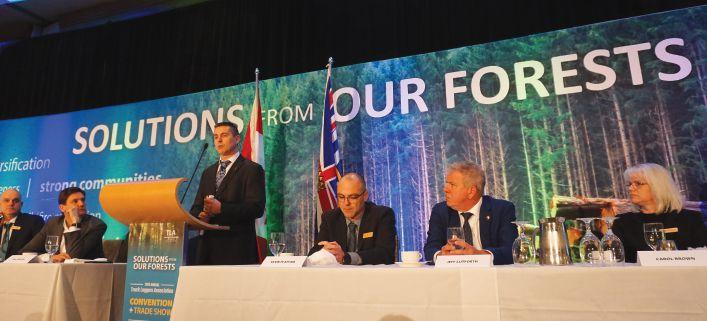
Tracey Russell (standing), vice-president of Inland Truck and Equipment, conveyed the industry’s sentiments to B.C. Premier David Eby (seated second from left) at the 79th TLA Convention in Vancouver, B.C. Photos: Annex Business Media.
Continued from page 25
call behavior change principles. These are generic behavior change principles that guide basic human instincts across work functions, age, gender etc. Principles like:
• Feedback mechanisms: using rewarding sound or images to give positive feedback or negative alarms to give negative feedback;
• Reminder systems: Visual reminders like images of workers drinking water to remind workers to drink;
• Visual guides: Using visual arrows, icons, light, footprints etc. to highlight certain functions or show workers where to place their hands.
Behavior change principles are generic, however, since the layout of workstations vary from each sawmill the design of the actual interventions has to be adapted to match specific job functions, work cultures etc.
“ALERT WORKERS ARE SAFE WORKERS ... IF YOU WANT TO ENCOURAGE THE RIGHT BEHAVIOR, MAKE IT EASY AND REMOVE OBSTACLES.”
CFI: ANY SUCCESSFUL EXAMPLES OF NUDGING IN SAWMILLS?
Successful examples of nudging in sawmills can be found at Canfor’s Radium sawmill where we developed large, high contrast PPE and pedestrian maps, and signs for parking lots, mill areas and selected workstations.
These signs created a very visual and consistent way of reminding and nudging workers into making the right decisions – such as walking in designated paths and wearing the proper PPE – throughout the workday. These nudges, amongst other initiatives, have helped greatly reduce injuries.
To sum it up, alert workers are safe workers. Making small changes in the work environment can significantly improve safety. If you want to encourage the right behavior, make it easy and remove obstacles. Improve your understanding and contribute to creating safer sawmill environments.
sector. He pointed out that the reduction in harvesting rights is a significant setback, likening the industry’s current financial situation to the challenges faced during the 2008 financial crisis.
“There is a disconnect between how people in this room feel and how the government is downgrading the industry, making it smaller,” Russell said.
Eby addressed the full house, expressing optimism about the future of forestry.
“It is not part of the plan to reduce your industry,” Eby stated. “There is no question in my mind that forestry is the answer to so many of B.C.’s challenges,” he enthused.
“The future of forestry is a strong one. Currently it’s a challenging one and I want you to know that I know that,” he added.
Eby reiterated his government’s committment, stressing the importance of longterm agreements between First Nations and companies on old-growth protection, logging and forest landscape planning; retooling mills with a $150 million manufacturing aid fund that has so far created 355 jobs and saved more than 700 jobs; and exploring new overseas markets – most recently in Japan – to mitigate the impact of the U.S.-Canada softwood lumber dispute.
The premier announced the appointment of Andrew Mercier as the new sustainable forestry innovation minister whose role is to troubleshoot and bridge gaps between the trees that are available, and those with access to the tenure and fiber supply across operations in the province.
“His job is to free up the trees so there can be predictability .. I’m dedicated to have the minister work with you to get results,” Eby said.
Despite these measures, concerns were raised during the Q&A session about the
instability caused by long-term forest landscape planning, biodiversity issues, and old-growth policies.
The industry appealed to Eby for assistance. Questions arose about changing the perception of tree cutting, to which Eby expressed openness to new ideas and aid to help the sector transition through difficult times.
“How do we change the perception?” Russell asked the room. “We have to get through to the community that it’s okay to cut down trees … that’s the challenge to Premier Eby here … where is the government in being a proponent of the industry?” Russell asked Eby.
With “solutions from our forests” as this year’s theme, the industry acknowledged the premier’s efforts on some fronts during the Q&A session. However, the industry is still cautiously hopeful for additional support to address ongoing challenges in this crucial sector, said Russell.
“We’re reliant on the forests. The only way that our message will be heard – the only way to get the facts to the government – is through the associations such as TLA,” he added.
Eby said he is ready to listen and take action, but noted the annual allowable cut would probably never return to historical levels similar to 10 years ago.
My success in politics has been listening and getting things done,” he said. “I rely on you – the industry and the association – to tell me what’s going on.”
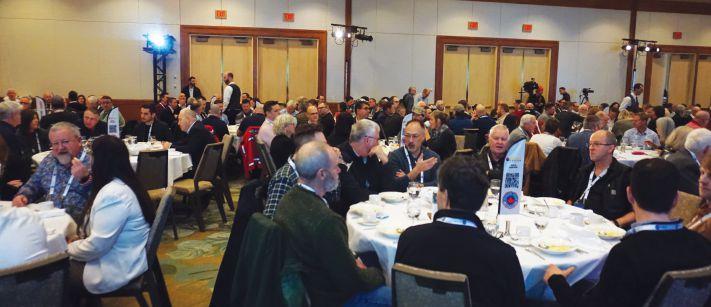
It was a full house at the TLA convention held in Vancouver from Jan. 17-19.
FORESTRY leaders
SPEAKING UP:
Q&A with Forest Nova Scotia’s executive director Stephen Moore
BY MARIA CHURCH
Stephen Moore, one-year-in executive director of Forest Nova Scotia, wants to see the sector at the decision table when it comes to the future of forests in the province.
Moore’s political and polling background is driving some wins for the association, which has a mammoth task of helping the industry navigate a period of transition.
CFI chatted with Moore about his priorities and thoughts on what’s needed to ensure a sustainable forest sector.
CFI: WHAT IS YOUR BACKGROUND AND WHAT LED YOU TO FORESTRY?
Moore: I began working in politics around 2010
and I’ve been engaged in that world in a variety of roles. I worked for [past] Premier Stephen McNeil for a while. I ran a polling company, provided government relations advice, then I ended up here at Forest Nova Scotia.
I’m originally from Glace Bay. That’s a mining and fishing town. Very resource focused, resource based. I saw people in my family really impacted by the closures of the mines and the downturn of fishing operations. I have first-hand, personal experience for what happens when a resource sector doesn’t start to evolve; doesn’t look to the future as effectively as possible. When everything started to shut down, I would have been in high school. You saw what it meant for people without jobs. You
Stephen Moore is the executive director of Forest Nova Scotia.
Sandstorm –Sep. 17, 2008 –
Photo by Mark Wilson.
saw standards of living change.
Knowing that forestry is going through a tough period in Nova Scotia, it really resonated with me in that way. That was a big reason I got interested. The more I researched the sector in Nova Scotia, I already understood the economic importance, but I came to have a better understanding of the positive environmental impact that forestry can and does have as well.
A lot of what I thought was missing from forestry in Nova Scotia was a political voice, a more positive narrative, and a willingness to push back. When I saw that gap, I thought this position aligned well with what I do. I’m not a forester, I’m very rookie in that space. I frequently refer to myself as a really effective talking head. That’s what I do.
CFI: WHAT HAS BEEN YOUR EXPERIENCE WITH THE INDUSTRY AND ITS MEMBERS SINCE TAKING ON THE ROLE OF EXECUTIVE DIRECTOR OF FOREST NOVA SCOTIA?
I just passed my first year this October. I wanted my first year to be listening and acting in a ways around public opinion and ensuring of public support. We did a massive consultation. I would have spoken to over 1,000 Nova Scotians both inside and outside of the sector about forestry. We conducted a lot of market re-
search to find out what people thought.
One thing that I found is that a lot of people who work in forestry didn’t feel they could go down to Tim Hortons and be proud of what they did for a living. And that was eye opening to me. I’m a political staffer by trade so I’m used to not being liked, that’s fine! You get used to that over time. But for someone who works in the woods, who works in forestry, knowing the impact of the sector, for them to not feel proud about what they do for a living I thought was really heavy for people.
When we did the public opinion research, we found over 70 per cent of people approved of our sector. Over 70 per cent of people thought that we were environmentally responsible. That is positive. We started sharing that with our members and with politicians of all stripes.
One of my theories coming into it when I was interviewing for this job is that the loud voices weren’t representative of the broader views – and it’s true. You have a few groups who have been very effective at capturing the media, but don’t represent the views of the vast majority of Nova Scotians. That was an early sign that we have more leeway to do what we thought we needed to do.
I think one of the things that forestry has lacked is political muscle and we’re slowing growing that. Part of what we’ve
been working on over the last year is more effective engagement with decisionmakers, provincially and federally. We’ve had some success, pushing back on problematic herbicide spraying rules for the sector. We mobilized hundreds of letters sent in 24 hours and we achieved that policy change. We submitted our proposal to the province’s protected areas strategy, and it’s been very well received. We’re expecting to see more things come out over the next 12 months.
The year has been quite busy, but it’s been about building up support and trying to push our positive narrative, push solutions, but also push back against a lot of the false narratives that exist.
CFI: HOW DO YOU VIEW THE SHIFT IN NOVA SCOTIA’S FOREST INDUSTRY OVER THE PAST FEW YEARS FOLLOWING SOME PRETTY SIGNIFICANT CHANGES?
In the last five years, with the Northern Pulp situation, we’ve seen the number of buyers for wood products in Nova Scotia decline 20 per cent. We’ve seen the contractor capacity in the province reduce by 40 per cent. Those are pointing to a lot of very serious issues. Northern Pulp purchases well over one million tons of lowgrade fibre every year. That is one massive economic hit to sector, not just the jobs at the mill by the effects for the sawmills, the woodlots and the contractors. That’s a very serious challenge.
When we talk about challenges, there are couple closely related to that: the decline in contractors, and of the workforce and the challenge of capital. But there are things that can be done, and these are the things we are talking to the province about as well.
The Lahey Report has added to the uncertainty. We as an organization endorse the report. The Lahey Report is a really delicate balance – you need all aspects of it that were agreed upon in order to ensure both economic and environmental sustainability. You need both of those. My biggest concern is that we’ll see the report selectively implemented.
There has been a tremendous focus on conservation and that’s fine up to a point. But too much conservation isn’t good either – less provincial revenues, less effective carbon capturing in the forest,
A public opinion research showed that 70 per cent of Nova Scotians approved of the forest sector.
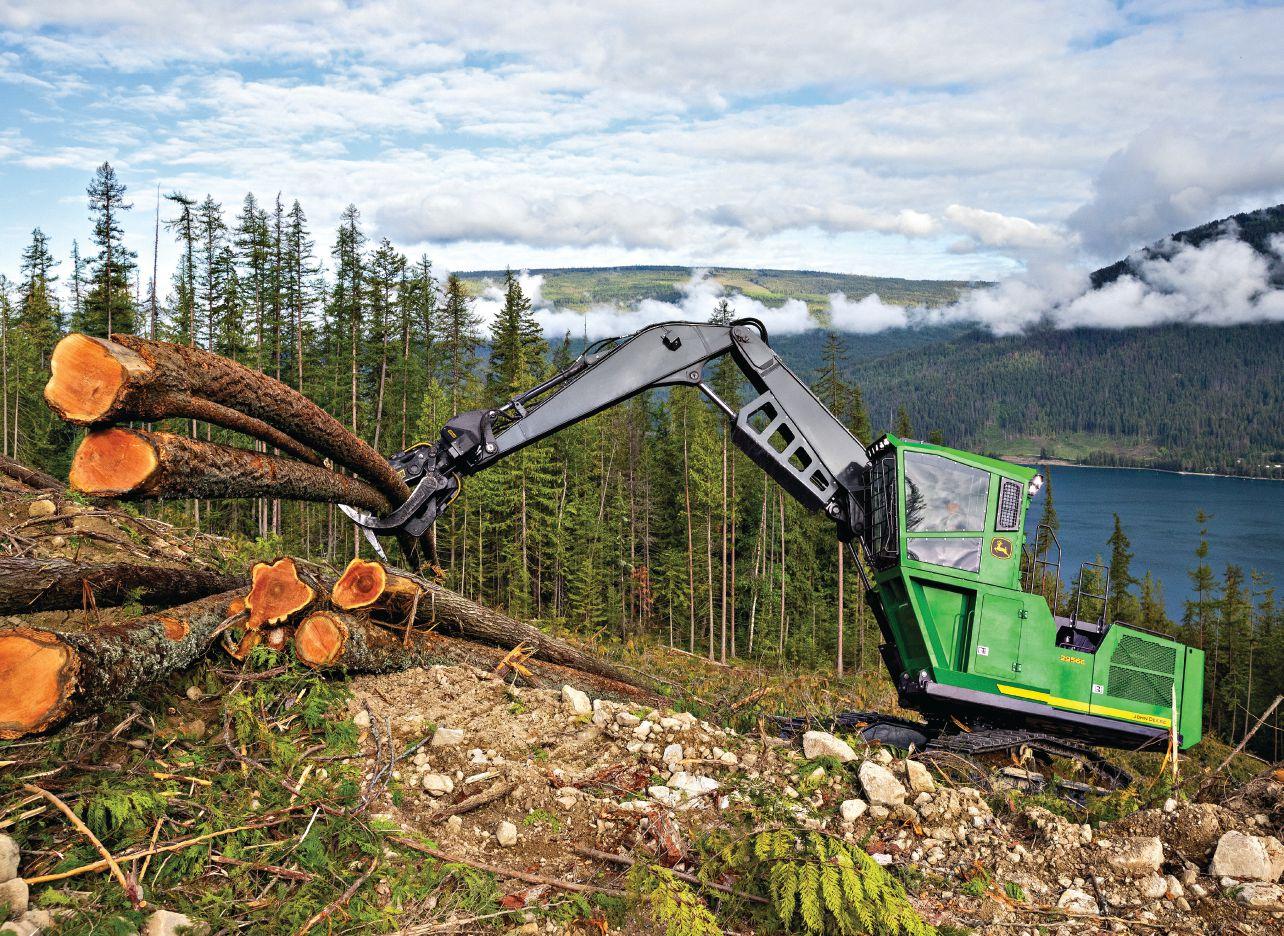
The all-new 2956G Swing Machine can handle whatever you face in the forest and is available in log loader and harvester configurations.
More Productive
Increased horsepower and hydraulic flow allow greater efficiency and speed when loading trucks.
More Versatile
Operating weight without attachments under 90,000 lbs eases transport and speeds machine mobility.
More Support
Backed by Brandt – the besttrained support team around, available 24/7/365 so you can keep working.
and increased wildfire risk. I think Nova Scotians are starting to understand that. One of the more frustrating things is that the Lahey Report came out and said concerns around herbicide use are not based on science, and yet we still have to fight this all of the time. The report even said the province should fund the use of herbicide on Crown land, which they have decided not to do.
CFI:
WHAT’S YOUR TAKE ON THE FOREST INDUSTRY’S SO-CALLED SOCIAL LICENSE IN NOVA SCOTIA?
Anybody who has heard me speak in a room knows how grumpy I get when we say we need to work to get social license. I’ve been involved in polling now for almost 20 years. If you have seven out of 10 people agreeing on something, that is rare. I don’t know exactly what social license looks like, but I know seven out of 10 is as close you are going to get. We spend too much time trying to achieve consensus and appeasement. I don’t think they create good strategy for anybody.
There are some groups that are never going to be happy so long as we’re cutting a single tree. There are groups that fundraise to stop us from existing. The idea that we are going to win them over is silly. But we come back to what the facts are: we take more carbon out of the en-
Combustible Dust Specialists
vironment than we put into it. We create essential products that are addressing some of the biggest problems: from building homes to combating energy poverty. Those things need to happen, but some people don’t want to see it happening where they go for hikes.
This past year, we launched the Our Trees campaign and that was by far the largest advertising campaign in Forest Nova Scotia’s history – in forestry’s history potentially in Atlantic Canada. It was substantial. We reached 75 per cent of Nova Scotians. We were on television, we were on podcasts, we used Instagram influencers. We ran digital ads, billboards, print. Basically, if there was a spot in the province, we were able to advertise we were there.
We also gave away 16,000 seedlings that families could plant. We were trying to get people connected to what it is our members are doing every day. I like the idea that, in 10 years, you can look out your window and see the seedling that you planted with your kids and remember that you got it from that weird forestry group at the local farmers market. Through this campaign, we grew our list of supporters more than tenfold. It numbers almost 10,000. We anticipate that to keep growing.
I say we have social license. We need to stop worrying about playing nice with everybody. We need to focus instead on what we need to do to move the sector forward. We’re trending in the right direction.
CFI: WHAT GETS YOU UP IN THE MORNING IN YOUR NEW ROLE AS A LEADER IN THE FOREST SECTOR?
I love the work, to be honest with you. People are built to do certain things and I’m built to be a political animal. But that’s not what gets me up.
The more folks I get to meet in the sector, the more I feel like I’m around and kitchen at my grandparents’ place. These are good, hardworking folks who just want to get up, day in and day out, to do good job, help their families, and help their communities. But they need to have a voice. I want to make sure that they have an effective voice. With my skill set, that’s the best way I can help. I want them to be proud of what they do.
Forestry is going through a tough period in Nova Scotia.
COLUMN inclusion
Cultivating change
Empowering women, womyn and all individuals for a sustainable, low-carbon future
In the heart of Nova Scotia’s boreal forests, the Forestry Sector Council is sowing the seeds of a workforce that mirrors the rich diversity of the forests it aims to nurture. As the sector evolves with incessant challenges, changing seasons, and shifting market demands, it is time to shed light on the transformative role that women, womxn, and individuals of all backgrounds play in Nova Scotia’s forestry industry, particularly as we navigate and embrace this low-carbon era and the shift to ecological approaches to forest management.
In the intricate tapestry of forestry, the imperative need for a diverse, equitable, and inclusive workforce has never been more critical. The Forestry Sector Council, guided by its core values of collaboration, sustainability, and diversity, stands as a beacon of change in an industry traditionally seen as male-dominated. For too long, the narrative surrounding forestry has been one-dimensional. It’s time to dismantle stereotypes, break down barriers, and empower individuals of all genders, ages, races, and abilities to thrive in an industry that is not just about trees but about fostering a workforce as resilient and diverse as the very forests it sustains.
The council’s commitment to Diversity, Equity, Inclusion, and Accessibility is not just rhetoric; it is a rallying cry for action. By actively promoting careers in forestry as a space for everyone, the council is opening doors wider to a pool of talent. The industry’s transformation is not just about embracing diversity; it is about embracing a low-carbon era that opens conversations, demands innovation, and fresh perspectives of all people craving meaningful work.
Imagine a future where women, womxn, and all individuals contribute their unique perspectives to an industry at the forefront of ecological forestry practices. The low-carbon era necessitates a paradigm shift, and we need people to bring a fresh lens that aligns with the sustainability goals of our changing world.
Why“womxn”? It is one of a few lexical and social phenomena, including the adoption of ‘x’ in naming gender non-conforming individuals, genderqueer
folxs, two spirit people, femmes, transgender folxs, and non-binary people. Womxn acknowledges that gender identity exists in a sphere and one word has room for multiple gender expressions without weighing one more important than another. To ensure accessibility for all people, the council is actively engaged in providing human resource support for small- and medium-sized enterprises (SMEs). Recognizing the struggling owner/operator contractors, and that not all businesses have dedicated human resource departments, the council steps in to bridge the gap, offering guidance, best practices, and supports to ensure employers have the tools and guidance needed to foster diverse and inclusive workplaces.
As we navigate through a period of workforce shortage and departure of workers due to retirements, the urgency of this mission is underscored. To fill these gaps, we must tap into the full spectrum of talent available, ensuring that no one is left behind in the transition to a low-carbon future.
Strategic training opportunities form another cornerstone of the council’s approach. By encompassing the entire supply chain, the Forestry Sector Council is equipping the workforce with the skills and knowledge needed to navigate the challenges of tomorrow during the shift to ecological forestry in a carbon-conscious manner. Through this, all humans are not only welcomed into the industry but are provided with the tools to excel in a sector that champions sustainability.
We implore readers to embrace this transformative journey. The forests of Nova Scotia stand as a living testament to the beauty of diversity and interconnectedness. It’s time for the forestry industry to mirror this beauty, fostering an environment where every individual, regardless of gender or background, can grow and thrive in a low-carbon era.
Let’s embark on a journey of empowerment, breaking down stereotypes, and building a forestry sector that not only embraces diversity but actively promotes careers aligned with the principles of the low-carbon era. The future of Nova Scotia’s forests and its workforce depends on this holistic commitment to change.
HEATHERboyd
Heather Boyd is the executive director of Nova Scotia’s Forest Sector Council. She is the first female chair on the Maritime College of Forest Technology’s board of governors
A Forest of Opportunities?
The beginning of a new year brings with it the persistent and eternal optimism in all of us working and involved in our forest sector. While we all ponder the ongoing challenges and how to solve them, we’re equally devoting our thoughts to the opportunities available on the short- and long-term horizons to move businesses and the sector forward.
In these tumultuous times, what and where are such opportunities?
Let’s start with managing for less wildfire risk. Frankly, our loggers are the best in the world so when it comes down to adopting innovative harvesting techniques and the systems needed to reduce wildfire risks and the magnitude of fires, it’s a given that we can deliver.
For carbon sequestration, active management and harvesting of the forest resource is the pathway to maximizing carbon capture of the forests. In fact, other countries have increased harvest levels while also increasing their overall carbon stocks.
There is a need for a whole lot of housing in our country and wood is the core material to deliver on the supplies needed to fulfill that challenge. Whether the movement is towards more CLT and engineered type materials or our current construction methods, what other material is better suited for building in terms of climate change, sustainability, certifiable forest practices, and energy efficiency?
And that’s only the beginning of the opportunities. Research abounds delving into all the possibilities and new frontiers that wood can offer such as sustainable and recyclable packaging, biomass energy, technically advanced materials down to the nano-technology levels, and exotic new uses like wind turbine towers of wood or wooden satellites. The list can go on and on.
The real question is whether the leadership is in place to capitalize on this forest of opportunities. Over the decades, our forests and their management have been subject to the proverbial pendulum of management regimes swaying to the extremes of protection versus maximizing returns. Today’s policy and legislation pendulum (at least in BC) swings a decided proclivity towards protectionism, with their actions at odds with government’s professed
promises of encouraging a globally vibrant forest sector, chockablock of innovation, certainty, and more jobs.
And all of this is meant to occur while the annual harvest rockets downwards, uncertainty escalates, and legislative changes add new levels of complexity with consequential negative impacts on investor confidence. Additionally, each day sees the onslaught of articles and editorials professing the need by some to stop all harvesting, as if that will be the saviour towards climate change and other woes. Unfortunately, many in leadership positions responsible for crafting legislation or reporting news buy into these often-rhetorical assertions far too readily.
Many recent news stories have also been about the general concern with the overall health of the Canadian economy, our competitive position, government spending/revenues/deficits, and our diminishing gross domestic product per household. While some would consider it oversimplistic, what has always mattered and continues to matter for our economic well-being is the health of our resource sectors and the first jobs they create. The forest sector is one of those key resource sectors that create the jobs that create the wealth from our resources that fuel the support and service sectors and the jobs they in turn create. These jobs fuel the core government revenues needed to support the social and welfare programs we all support and need.
Our forest sector can continue to deliver upon the opportunities in front of us. The ingredients needed are not that complex once boiled down: a pragmatic and scientific approach to the future versus dogmatic alarmist rhetoric; a clear and consistent framework of policy and legislation; an invigorated investment climate; a renewed globally competitive sector; and a collective vision endorsed and supported by all involved.
These tasks in front of us all in the forest sector are decidedly challenging in today’s environment but it is also incumbent upon us to do our job of helping our citizens better understand our sector, better inform decision-makers, implementing new levels of innovation, and seizing our forest of opportunities.
BOBbrash
Bob Brash, RPF, is the executive director of the Truck Loggers Association in B.C.
COMACT HAS TURNED 100!
WE’RE CELEBRATING A CENTURY OF CARVING OPERATIONAL PERFORMANCE AND EXCELLENCE.
Discover a legacy etched in the rings of time with the Comact brand’s centennial celebration—a century of unwavering performance, relentless innovation, and steadfast commitment. BID Group is thrilled to toast this amazing milestone.
Explore the stories behind Comact’s 100-year journey, the team’s pioneering spirit, and the visions that propel the company forward. Scan the QR code to learn about the festivities and find out why Comact’s history is just the beginning of the future of wood processing.
Thank you to our highly valued employees, customers, partners, and communities who have placed their trust in the Comact brand and BID Group all of these years! We look forward to you being a part of our next 100 years!
Fire Chief Tim Sendelbach Loveland (CO) Fire Rescue Authority
FireBox & BurnBoss®
Air Burners® air curtain technology enables clean burning for safe, eco-friendly waste disposal. Our portable FireBox, available in models like the towable BurnBoss or a RollOff design, provide controlled burns on site, eliminating vegetative debris and slash 40x faster than open burning while drastically reducing emissions. Residual biochar can either be recycled onsite, enriching soils, or bagged as a product for sales. From storm debris to agriculture waste, our systems convert material into biochar and ash without grinding or hauling. Trusted worldwide, Air Burners offers the most cost-effective, earth-conscious solution for organizations to sustainably manage biomass and reduce waste. Contact us for a quote today.