2024 CONTRACTOR SURVEY



The 2024 Canadian Contractor Survey offers a snapshot of the logging industry that’s anything but static. As the sector grapples with shifting dynamics, the survey highlights both the challenges and opportunities that will shape its future.
A key theme emerging from the data is the aging workforce. Nearly a quarter of contractors are now over the age of 65, signaling a pressing need for effective succession planning. While some are already preparing for the next chapter, many still lack clear plans for the future, raising concerns about a leadership gap that could disrupt the industry in the coming years.
At the same time, the operational landscape is changing. Logging hours are declining, and many contractors are adjusting their harvest periods to account for economic pressures and labour shortages. But despite these shifts, the resilience of the industry is clear. Contractors are adapting, finding ways to stay competitive, and continuing to drive the sector forward.
Financial pressures are another recurring theme, with rising costs for machinery, fuel, and labour. While there have been slight improvements in profit margins, many contractors are still struggling to maintain profitability. The message here is clear: the industry needs to explore innovative ways to cut costs, streamline operations, and boost efficiency.
Technology is increasingly playing a role in these efforts, with tools like GIS mapping and mobile apps becoming commonplace. However, many contractors feel that the industry has room to grow when it comes to adopting cutting-edge technology. Embracing these advancements could unlock greater productivity, safety, and environmental benefits, and help Canada’s logging industry remain competitive on the global stage.
Regional differences also paint a varied picture. Contractors in Alberta and Quebec enjoy profit margins higher than the national average, while those in B.C., Ontario and Atlantic Canada struggle with lower rates, on average.
Regional disparities are also reflected in succession planning, with family succession being more common in certain areas, while others are considering selling or winding down their operations.
Despite the challenges, contractors remain committed to adapting to change, embracing new opportunities, and ensuring the long-term viability of the industry. The findings in this survey serve as both a wake-up call and a roadmap, offering valuable insights into what needs to be done to secure the future of Canada’s logging industry.
PRESENTED BY
MANY THANKS to our generous sponsors for making this detailed research possible. It is fantastic to be in an industry where manufacturers like this step up as industry partners.


EDITOR - ANDREW SNOOK (416-510-6801
ASnook@annexbusinessmedia.com
GROUP PUBLISHER - ANNE BESWICK (416) 510-5248
abeswick@annexbusinessmedia.com
NATIONAL SALES MANAGER
JOSÉE CREVIER (514) 425-0025
jcrevier@annexbusinessmedia.com
CEO - SCOTT JAMIESON sjamieson@annexbusinessmedia.com

Amplify by Annex is a full-service custom content studio, helping companies share their story, build brand awareness and garner trust through original content. There are so many ways to reach a target audience. We’ll craft you content for any medium:
• Thought leadership – long-form or short-form articles
• Blogs, whitepapers, infographics and case studies
• Webinars, podcasts and video
• Tradeshow marketing content, with in-house commercial printing services
• Automated content marketing supported by first-party data ....and so much more!
With nearly one in four participants over the age of 65, succession planning remains a priority to ensure the sustainability of the logging sector, but other challenges including low profit margins, and increased cost centres add to a challenging environment for most logging contractors.
The 2024 Canadian Contractor Survey offers a comprehensive look at the state of logging contractors across the country, continuing a tradition of in-depth research that began in 2016. Conducted online from April 16 to June 3, 2024, the survey invited logging contractors, forest company
employees, and other stakeholders to share their perspectives on the challenges and opportunities shaping their industry. With responses gathered from coast to coast, the survey reflects the diverse realities of Canada’s forestry sector, from the rugged landscapes of British Columbia to the Atlantic shores of Nova Scotia.
P articipants had the option to complete the survey in either English or French, ensuring representation from key forestry regions and linguistic communities. The data reveals ongoing shifts in the sector, with Quebec and the B.C. Interior once again accounting for the highest proportions of respondents. Nova Scotia saw notable growth in participation compared to previous surveys, highlighting the province’s increasing engagement in the national dialogue on forestry. Meanwhile, New Brunswick’s representation has decreased, pointing to potential regional fluctuations in contractor activity.
A closer look at respondent demographics underscores the evolving profile of the Canadian forestry workforce. With nearly one in four participants over the age of 65, the industry’s leadership is aging rapidly – a trend mirrored by the rising average age of respondents, which has climbed from 49 in 2018 to 55 in 2024. Among owners, partners, managers, and supervisors, the average age was 55, with 74 per cent of this group aged 46 or older. These findings raise critical questions about succession planning and the need to attract younger generations to forestry careers.
The survey also shed light on operational trends. Across the country, logging operations are scaling back slightly, with the average operation running 64 hours per week in 2024 — down from 68 hours in 2020 and 70 hours in 2018. While the reasons behind this decline are multifaceted, they may reflect ongoing economic pressures, labour shortages, or evolving industry practices. Despite these changes, the majority of respondents continue to identify as owners or partners of logging contractors (61 per cent), followed by employees in forest company woodland operations (17 per cent) and operator/driver/mechanics (10 per cent).
As in past years, the survey highlights the resilience and adaptability of Canada’s logging contractors. From managing large-scale operations in the B.C. Interior to navigating unique challenges in Nova Scotia, contractors remain a cornerstone of the nation’s forestry sector. This year’s findings offer valuable insights into the trends shaping the industry and underscore the importance of proactive planning to ensure its continued success.
Many thanks to our premium sponsor, Link-Belt Forestry and our gold sponsor, John Deere, for making this research possible.
Many contractors across the country experienced an overall increase in logging rates over the past five years. However, there was a significant variance in the percentage of contractors that experienced these increases from province to province, with the majority of Alberta and B.C. Interior contractors experiencing higher logging rates.
2018 2020 2024
Percenetage of contractors reporting some rate increase compared to 2018 and 2020.
In the 2024 Canadian Forest Industries’ Contractor Survey, we asked respondents whether their logging rates have increased, stayed the same, or decreased compared to the rates their operations were paid five years ago.
An encouraging 65 per cent of respondents indicated that their logging rates have increased during this period – 20 per cent more respondents than in CFI’s 2020 Contractor Survey. Of these, 35 per cent reported an increase of five per cent or less, 16 per cent saw their rates climb by more than five per cent, while 14 per cent of respondents said their rates went up by more than 10 per cent.
Logging rate increases were experienced from coast to coast. In Alberta, 80 per cent of contractors experienced rate increases; while the B.C. Interior
had 78 per cent of the respondents seeing varying rate increases; followed by Quebec (69 per cent of contractors); Ontario (61 per cent of contractors); B.C. Coast (58 per cent of contractors); and Atlantic Canada (44 per cent of contractors).
However, not all respondents have experienced growth – 17 per cent reported that their rates have remained unchanged over the last five years, down from 27 per cent in 2020 and 36 per cent in the 2018 Contractor Survey.
In 2024, seven per cent of the respondents indicated a decrease in their logging rates, down from 14 per cent in 2020, and 11 per cent in 2018.
The remaining respondents were either unsure of their rate changes or worked with companies that have not been in existence for the full five years.
2024 data showed an increase in average estimated revenues of $1 million or less, with 44 per cent reporting to be in this range. However, there are significant regional differences.
The average annual estimated revenue among respondents was $6.35 million. Just under one-quarter of respondents (23 per cent) indicated revenues of $5 million or more, roughly the same as 2020 (24 per cent), but less than 2018 (32 per cent).
Quebec had by far the largest number of respondents with average annual revenues under $100,000 (24 per cent), with 60 per cent of contractors in the province reporting revenues of $1
million or less. However, 9 per cent reported revenues of more than $20 million.
The B.C. Interior had the greatest number of respondents with average annual revenues of over $5 million (39 per cent), and almost one in five (19 per cent) with average annual revenues of over $20 million.
Notably, no contractors in Alberta reported average annual revenues under $1 million, while no contractors in Atlantic Canada reported average annual revenues greater than the $5 million to $10 million range. On the
B.C. Coast, half of the respondents reported average annual revenues between $1 million to $5 million. In Ontario, 42 per cent of respondents reported
annual revenues of $1 million or less, while 6 per cent reported annual revenues of over $20 million (24 per cent of respondents in Ontario declined to answer).
While overall operational hours declined slightly compared to 2020, many contractors are continuing to personally put in long hours to keep their operations running efficiently.
As the demands on Canada’s logging industry evolve, so too do the operations that keep it running. Over the past few years, contractors have been adjusting their hours and schedules to meet shifting market needs and economic pressures. The number of hours worked each week is slightly down, and the length of active harvest periods is shrinking, reflecting changes in resource management and seasonal constraints. However, the personal workload
of contractors is rising, with many pushing past the 70-hour mark each week to keep up. Despite these pressures, the structure of logging operations has remained relatively stable, with “stump to dump” and multiphase operations still at the forefront. These trends point to a workforce that’s both adapting and working harder than ever, underscoring the need for conversations around operational efficiencies, and supporting the people at the heart of the industry.
The average logging operation in Canada now runs 64 hours per week, a slight reduction from 68 hours in 2020 and 70 hours in 2018. This continued decline may reflect evolving industry practices, economic pressures, or workforce challenges. Despite this shift, many contractors are maintaining robust schedules to meet demand.
Active harvest periods see changes
The survey found that 73 per cent of operations were
active for more than 30 weeks in 2024, a decrease from 84 per cent in 2020 and 82 per cent in 2018. This trend could be influenced by shorter harvesting seasons, changes in demand, or adjustments in operational strategies to optimize resources and minimize costs.
Respondents reported working an average of 56 hours per week during the operation season, slightly higher than the 52 hours reported in both 2020 and
2018. Notably, 14 per cent of participants indicated working more than 70 hours per week, highlighting the demanding nature of the industry and the personal sacrifices made by logging contractors and their teams.
Operation types remain consistent
The survey also explored the types of operations
represented. Nearly half (49 per cent) of respondents identified their operations as “stump to dump,” while about 26 per cent described their operations as multiphase. These figures remain consistent with the 2020 data, suggesting little change in the structure of logging operations over the past four years.
While profit margin expectations are up in most regions, the reality of profit margins lags behind across the country.
Since 2016, we have been asking CFI Contractor Survey respondents what a fair profit range is for an established, productive logging contractor. We defined profit margin as return on
revenue as a percentage, or profit before income tax divided by total revenue. For example, $5,000 of profit on $100,000 of revenue represents a five-percent profit margin.
T he lumber market remains precarious due to cost pressures, changing policies, wildfires, and dwindling fibre supply. It’s no surprise that profit expectations among logging contractors have only seen a slight increase. Nevertheless, contractors’ expectations vary significantly from province to province.
In our 2024 survey, 72 per cent of respondents across the country felt that an 11 per cent or higher profit margin was fair – up slightly from 70 per cent in 2020 and 68 per cent in 2018. The overall trend shows a modest increase in profit expectations, but the outlook varies sharply by region.
For instance, the negative outlook is most acutely felt by logging contractors on the B.C. Coast, where the percentage of those who feel that 11 per cent or more is a fair profit margin has dropped to 74 per cent, down significantly from 95 per cent in 2020. In contrast, Alberta remains steady, with 100 per cent of respondents continuing to view 11 per cent or more as a fair profit margin, reflecting no change
from the 2020 survey.
Meanwhile, contractors in the B.C. Interior have seen stable profit expectations, with 78 per cent feeling that 11 per cent or more is fair, consistent with the 2020 figures.
In Ontario, however, there has been an increase in expectations, with 59 per cent of contractors now considering 11 per cent or more to be a fair margin, up from 50 per cent in 2020. Quebec has also seen a modest rise, from 61 per cent in 2020 to 66 per cent in 2024.
Lastly, in Atlantic Canada, the percentage of contractors who feel that 11 per cent or more is a fair profit margin has increased to 69 per cent from 51 per cent in 2020.
A major concern for the industry is the discrepancy that exists between profit margin expectations and the actual profit margins experienced by contractors, as one in five contractors report making little or no profit, highlighting the continued challenges faced by the industry.
Alberta and Quebec contractors reported the only estimated averaged profit margins above the national average of 5.4 per cent, with 9.9 per cent and 6.2 per cent, respectively.
As in previous years, CFI’s 2024 Contractor Survey asked respondents about their profit margins compared to two years ago. The results reveal mixed outcomes, with some contractors maintaining stable margins while others report declines.
Eight per cent of respondents chose not to disclose their profit margin or were unsure – a decrease from 10 per cent in 2020. Thirty-four per cent of contractors report similar profit margins compared to two years ago, while 20 per cent say they are slightly lower, and 25 per cent claim significantly lower margins. Only 12
per cent of respondents report slightly or significantly higher margins, showing limited upward movement in profitability.
Regional insights Alberta continues to stand out as one of the more profitable regions. Notably, 10 per cent of contractors
in Alberta report profit margins of 20 per cent or higher, with another 20 per cent earning between 11 to 15 per cent. Meanwhile, 40 per cent of respondents in the province claim profit margins of 6 to 10 per cent, and no contractors reported making zero profit – an encouraging sign of resilience. Alberta also has the highest average profit margin across regions.
In Quebec, 18 per cent of contractors report profit margins of 11 per cent or higher. However, 21 per cent report a profit margin of 3 to 5 per cent, while another 27 per cent of Quebec contractors indicate margins in the 1 to 3 per cent range, and nine per cent report no profit.
Ontario remains a challenging region for contractors, with 28 per cent reporting no profit – though this is an improvement from the 38 per cent seen in 2020. While 11 per cent of respondents claim margins of 6 to 10 per cent, and 6 per cent reported margins of 16 to 20 per cent, no contractors reported a profit margin between 11 to 15 per cent, or over 20 per cent, and Ontario’s overall average profit margin remains below the
national average of 5.4 per cent at 3.5 per cent. Similarly, contractors on the B.C. Coast and in the B.C. Interior are facing struggles. Twenty-five per cent of B.C. Coast contractors report no profit, while 34 per cent in the B.C. Interior face the same issue. Profit margins above 10 per cent remain scarce, with 15 per cent of contractors in the B.C. Interior reporting higher profitability, compared to zero on the B.C. Coast.
These figures show that only a small number of contractors are meeting the fair profit margin of 11 per cent or higher. In fact, while 74 per cent of contractors across Canada believe 11 per cent or more is a fair profit margin, only 15 per cent of respondents reported profit margins in this range. While Alberta contractors are faring better overall, the industry still faces significant pressure, with many regions reporting lower profitability or stagnant margins. With continuing challenges related to costs, market shifts, and policy changes, contractors remain cautious in their outlook for the future.
Overall operator and driver rates are up 10 per cent compared to 2020, but massive variance exists by region with estimated averages ranging from $24 per hour to $43 per hour.
Results from CFI’s 2024 Contractor Survey show that forestry equipment operators and drivers across Canada are, on average, earning $33 per
hour – a notable increase from the $30/hour reported in 2020.
Operators and drivers in the B.C. Coast continue to
earn the most, with an average rate of $43 per hour, while Alberta and the B.C. Interior follow closely with $39/ hour. Meanwhile, operators in Atlantic Canada continue to earn the least, with operators and drivers reporting an average of $24/hour.
The survey also revealed that the proportion of companies paying their operators and drivers over $30 per hour has increased significantly, rising from 36 per cent in 2020 to 54 per cent in 2024. This shift reflects both the rising demand for skilled operators and the ongoing nationwide labour shortage.
Regional differences remain stark. In the B.C. Coast, 33 per cent of contractors pay between $36-$40 per hour, with 25 per cent paying $41-$45 per hour, and a remarkable eight per cent offering over $50 per hour. In contrast, in Nova Scotia, 60 per cent of operators earn between $21-$25 per hour, and no operators reported earning more than $30/hour.
Operator benefits are up overall across most of the country, reflecting the need to offer more incentives to retain and attract skilled operators and drivers during a time of significant labour shortages within the industry.

The 2024 Contractor Survey reveals virtually no change in the percentage of contractors offering some form of employee benefits across Canada compared to 2020 (61 per cent), although most provinces experienced an increase
in overall benefits offered. The most common benefits indicated were medical/dental insurance (50 per cent), followed by life insurance (29 per cent).
In British Columbia, 77 per cent of contractors in the Interior offer
benefits (down from 89 per cent in 2020); while 83 per cent on the B.C. Coast reported offering benefits in 2024 (up from 75 per cent in 2020).
Alberta experienced an increase with 70 per cent of contractors providing benefits compared to 64 per cent in 2020.
Ontario and Quebec have both experienced increases in contractor-provided benefits with 53 per cent of Ontario contractors and 48 per cent of Quebec contractors offering benefits in 2024, compared to 44 per cent and 43 per cent, respectively, in 2020.
In Atlantic Canada, 50 per cent of contractors provide benefits, showing a slight increase from 46.5 per cent in 2020.
With the exception of the B.C. Interior, the number of contractors providing employee benefits is up across the country.
Contractors are feeling the squeeze from increased cost centres over the past three years across all regions, making profitability increasingly challenging.
Operating costs are rising across the forestry sector, driven by a range of factors affecting day-to-day expenses. CFI’s 2024 Contractor Survey reveals that the financial pressure on contractors has intensified, with not only machinery and equipment costs climbing but also substantial increases in hauling, fuel, labour, and financing expenses.
The majority of contractors (94 per cent) reported higher machinery parts and service costs over the past three years, with substantial increases observed
across all regions.
Similarly, 90 per cent of contractors reported increased machinery purchase costs over the past three years – the biggest change compared to 2020 was the proportion indicating a significantly higher increase – 77 per cent vs. 55 per cent in 2020.
Fuel costs have also spiked across Canada with 73 per cent of owner/managers reporting significantly higher expenses compared to three years ago. An additional 19 per cent of respondents reported slightly higher fuel costs, bringing the total number
Percentages of logging contractors reporting higher costs.
of contractors reporting higher fuel expenses to 92 per cent compared to three years ago.
Finance costs are another major factor with 53 per cent of contractors noting significantly higher increases, and 29 per cent reporting slightly higher increases (82 per cent in total reporting increases compared to three years ago). Only 5 per cent of respondents reported lower finance costs, while 13 per cent reported they stayed the same.
Insurance costs are significantly higher for 43 per cent of respondents, while an additional 42 per cent report slightly higher costs. Four per cent of respondents reported lower insurance costs while 11 per cent stated they stayed the same.
Roughly four in five manager/owners reported
labour costs increasing in the past three years: 35 per cent significantly higher (30 per cent in 2020), and 43 per cent slightly higher (54 per cent in 2020), with 52 per cent indicating increases in supervision expenses (13 per cent significantly higher, 39 per cent slightly higher).
Workers’ compensation rates have risen for 48 per cent of respondents (11 per cent significantly higher, 37 per cent slightly higher).
Hauling costs have also increased significantly over the past three years with a total 84 per cent of respondents reporting increases. Of these increases, 49 per cent were reported as significantly higher while 35 per cent were reported as slighter higher costs.
While profit margins are up, cost increases have cut into profitability for the majority of contractors across all regions.
Profit margins
The estimated profit margin among respondents has shown a gradual increase over the past three survey periods, rising from 4.5 per cent in 2018 to 5.0 per cent in 2020 and 5.4 per cent in 2024. Despite this upward trend, one in five companies reported making little to no profit, indicating ongoing financial challenges for many contractors.
Despite the overall upward trend in profit margins, many contractors reported declining margins with 45 per cent of respondents stating their profit margins are lower than they were two years ago. Of these, 25 per cent reported their margins as significantly lower, while 20 per cent indicated they are slightly lower.
Cost centre changes
Across all major cost centres, forestry companies have experienced significant increases in expenses over the past three years. The rising costs of machinery, fuel, and labour are particularly notable.
Fuel:
Roughly three-quarters (73 per cent) of respondents reported significantly higher fuel costs compared to three years ago, a sharp increase from the 28 per cent who reported similar increases in 2020.
Labour:
Labour costs were up for 78 per cent of respondents, with 35 per cent experiencing significantly higher costs (down from 54 per cent in 2020) and 43 per cent reporting slightly higher costs (up from 30 per cent in 2020).
Machinery – purchase:
Nine in ten respondents reported higher machinery purchase costs, with 77 per cent noting significant increases—a dramatic rise from 55 per cent in 2020.
Machinery – parts and service:
Nearly all respondents (94 per cent) indicated increased costs, with 81 per cent reporting significant increases, up from 50 per cent in 2020.
Finance costs:
Finance costs have surged, with 82 per cent of respondents noting increases, including 53 per cent reporting significantly higher costs—up sharply from 2020.
Hauling:
Nearly half (49 per cent) reported significantly higher hauling costs, compared to 26 per cent in 2020, while an additional 35 per cent noted slightly higher costs.
Insurance:
Insurance costs have remained relatively stable, with 43 per cent reporting significant increases – similar to the 46 per cent noted in 2020.
Workers’ compensation rates:
About half of respondents reported higher rates, with 11 per cent noting significant increases and 37 per cent reporting slight increases.
Supervision costs:
Supervision costs have risen for 52 per cent of respondents with 13 per cent of contractors stated that costs are significantly higher while 39 per cent report slightly higher costs. Close to half of respondents (43 per cent) stated that supervision costs are the same while 6 per cent reported lower costs.
The data underscores a challenging financial environment for forestry contractors, with nearly all major cost centres showing significant increases. Rising fuel, machinery, and finance costs are among the most pressing concerns, with many respondents citing these as critical to their profitability. While profit margins have shown slight improvements on average, the burden of increased costs risks offsetting these gains for many operations. Strategic cost management and operational efficiency will remain key priorities for forestry companies aiming to navigate these economic pressures.
services, many contractors plan on updating their fleets with replacements averaging 3.1 machines, consistent with 2020.
Alberta and the B.C. Interior lead with the largest estimated fleets with an average of 22 machines, followed by Ontario (17), B.C. Coast (16), Quebec (9), and Atlantic Canada (7). Fleet updates remain modest with those planning
replacements averaging 3.1 machines, consistent with 2020. Of those looking to replace machines in their fleet, 30 per cent of contractors reported planning on replacing two machines; followed by 20 per cent looking to replace between three to five machines;
16 per cent looking to replace one machine; 10 per cent looking to replace six to 10 machines; 2 per cent looking to replace more than 20 machines; and 1 per
cent looking to replace 11 to 20 machines. Twenty per cent of contractors reported they were not planning on replacing machinery over the next two years.
The average number of pick-up trucks owned by contractors is eight. However, the majority of contractors reported owning between two and five trucks (42 per cent); followed by one truck (21 per cent); and six to 10 trucks (17 per cent); 11 to 20 trucks (13 per cent); 21 to 50 trucks (7 per cent); and more than 50 trucks (1 per cent).
Contractors in Alberta averaged owning the most pick-ups in their fleets with 14 trucks, followed by the B.C. Interior (12 trucks) and B.C. Coast (10 trucks).
Nearly half of contractors across Canada reporting that over 90 per cent of their work takes place on Crown land — an increase from 43 per cent in 2020.
When it comes to principal harvest species, over half (57 per cent) of contractors focus primarily on softwood species, underscoring their dominance in Canada’s forestry industry. Mixed wood operations account for 35 per cent, providing a balance of both hardwood and softwood harvesting, while only 8 per cent of contractors report operations predominantly centred on hardwood species.
Land base operations also reveal significant trends, with nearly half (49 per cent) of contractors reporting that over 90 per cent of their work takes place on Crown land—an increase from 43 per cent in 2020. Crown land remains a critical resource for forestry, with public land management playing a pivotal role in sustaining operations.
In contrast, 20 per cent of contractors stated that they operate on a land base that is over 90 per cent
private land, emphasizing the varied operating structures within the industry.
Harvesting methods are shifting as well, with over half (54 per cent) of operations now using a 100 per cent cutto-length system, up from 49 per cent in 2020. Another 17 per cent report mostly using cut-to-length methods, further signaling its growing adoption.
Nearly three out of every 10 contractors surveyed (29 per cent) stated they are planning on buying new harvesting equipment.
Among those considering new investments, cut-to-length systems remain the most popular choice, with 25 per cent planning to purchase one, compared to only 4 per cent expressing interest in full-tree machines.
The survey also shows workforces on average have
Percentage of contractors considering buying new harvesting equipment. Below: Percentage of contractors harvesting softwood, hardwood and mixed wood.
asked in 2018.
remained consistent with the average company employing an estimated 20 workers, a figure consistent with 2020 but lower than the 27 employees reported in 2018.
However, nearly two-thirds (62 per cent) of contractors have 10 or fewer employees, marking a steady increase from 55 per cent in 2020 and 43 per cent in 2018.
Contractors are embracing a wide range of technologies to improve operational efficiencies while combatting rising costs and labour shortages.
As the logging industry continues to evolve, technology plays an increasingly vital role in improving operational efficiency, safety, and environmental sustainability. In 2024, various digital tools and technologies have been adopted across Canada’s logging operations, with notable regional variations in their implementation. These tools
include geographic information systems (GIS), mobile applications for field data collection, automated logging equipment, telematics systems for fleet management, and more. Analyzing the adoption of these technologies provides insight into the industry’s current technological landscape and highlights areas of both progress and opportunity.
There is room for improvement, but progress is being made
is well-equipped with cutting-edge technology
lags behind other sectors, hindering efficiency and competitiveness I am not sure/I do not have enough information to answer this question
The most widely adopted technology across the industry is GIS for mapping and spatial analysis, used by 58 per cent of respondents. GIS tools enable logging companies to better plan harvests, monitor forest health, and track environmental changes.
Reported use of GIS was above the national average in Alberta (80 per cent), Atlantic Canada (71 per cent), B.C Interior (67 per cent) and Ontario (67 per
Percentages of contractors offering opinions on current level of technology adoption by region.
National percentages of contractors offering opinions on current level of technology adoption.
cent) with the lowest adoption of this technology reported in Quebec (33 per cent).
Following GIS in popularity are mobile apps for field data collection and reporting, adopted by 39 per cent of survey participants. These tools allow for more efficient data collection, enabling logging contractors to record information in real time and access it instantly in the field. In Alberta, and the B.C. Interior,
*Percentage of contractors with technologies and digital tools currently in use. New question in 2024 mobile app adoption is particularly high, with 80 per cent and 57 per cent of respondents, respectively, using these tools.
Automated logging equipment was also being implemented into operations by 39 per cent of contractors surveyed. This technology is especially prevalent in Ontario (60 per cent), Quebec (57 per cent), and Atlantic Canada (48 per cent).
Telematics systems for fleet management and equipment tracking are another critical tool, with 37 per cent of respondents utilizing them. These systems offer real-time monitoring of equipment performance, location, and fuel usage, helping operators optimize their fleets’ efficiency and reduce downtime. Adoption rates for telematics systems also varied by region with the B.C. Coast and B.C.
Interior reporting the highest usage at 78 per cent and 57 per cent, respectively. This technology is adopted at much lower rates throughout Eastern Canada in Ontario (27 per cent), Quebec (20 per cent) and Atlantic Canada (19 per cent).
Other technologies, such as remote sensing technologies (e.g., LiDAR and drones) and logging software for inventory management and planning, also see adoption, though to a lesser extent. Remote sensing technologies are used by 22 per cent of respondents, with Atlantic Canada showing the highest adoption rate at 33 per cent. Logging software for inventory and planning is adopted by 17 per cent of respondents, with Alberta and Ontario seeing the highest usage at 40 per cent and 27 per cent, respectively.
Percentage of contractors with technologies and digital tools currently in use. New question in 2024
The least adopted technology in the survey was wearable technologies for worker safety and monitoring, which only four per cent of contractors reported currently using in their operations. The highest adoption rate was in Ontario (13 per cent), while no respondents in Alberta or Quebec reported using this technology.
Despite the progress made in adopting these tools, opinions on the overall level of technology adoption in the logging industry are mixed. When asked to reflect on the state of technology adoption within the industry, 38 per cent of respondents indicated that while progress is being made, there is still room for improvement. This sentiment was particularly strong in regions like Alberta, where 60 per cent of respondents believe further technological advancements are needed to enhance
efficiency and competitiveness. This view contrasts with the 28 per cent of respondents who feel the logging industry is already well-equipped with cutting-edge technology, a sentiment strongest in Atlantic Canada (40 per cent) and Quebec (39 per cent).
Another 13 per cent of contractors believe the sector lags behind other sectors in terms of technological advancements, potentially hindering efficiency and competitiveness. This opinion was strongest in Alberta (20 per cent), Ontario and the B.C. Coast (both at 17 per cent).
Notably, Ontario also has a substantial proportion of respondents (39 per cent) who are unsure or lack enough information to answer questions about technology adoption in the industry.
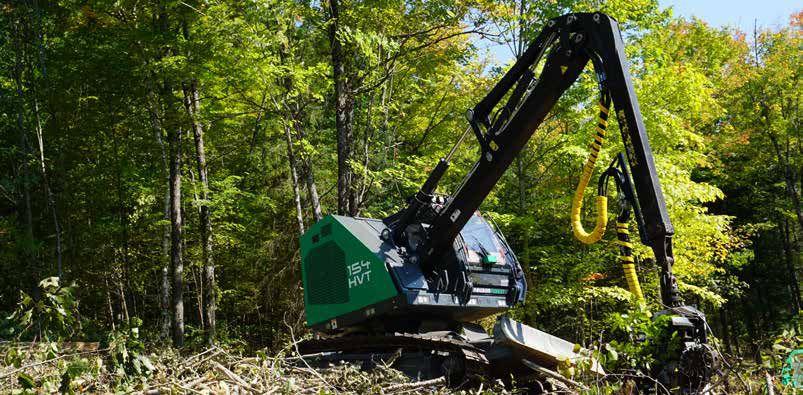
Despite the average operation running slightly less hours in 2024, personal workloads remain consistent with 2020 data.
The past few years have been challenging for loggers, with ongoing pressures on fibre supply due to changing policies, pests, wildfires, and an unstable lumber market that led to sawmill closures. While the industry started to show signs of recovery post-pandemic, market conditions have continued to fluctuate, impacting the work-life balance of contractors across Canada. As a result, contractors are working fewer weeks and fewer hours compared to 2020.
Results from CFI’s 2024 Contractor Survey reveal significant shifts in operating seasons. The number of companies harvesting more than 30 weeks in a year was 73 per cent, compared to 84 per cent in 2020 and 82 per cent in 2018.
The percentage of operations harvesting between 31 and 40 weeks has dropped to 2018 levels at 28 per cent, compared to 40 per cent in 2020. In contrast, the number of year-round operations has remained consistent at 45 per cent, similar to 2020’s 44 per cent, which dropped from 54 per cent in 2018.
Regionally, the trend toward shorter seasons is most evident in Quebec, where 21 per cent of contractors report harvesting fewer than 20 weeks per year.
In Atlantic Canada, 76 per cent of respondents reported to be working 41 to 52 weeks a year, followed by 56 per cent of respondents in Ontario. The B.C. Interior had the smallest percentage of contractors reporting 41 to 52 weeks of active harvest at only 16 per cent. However, the region also had the highest number of respondents working 31 to 40 weeks at 59 per cent.
The weekly hours worked showed a slight decline. Among operations surveyed, the average operation runs 64 hours per week. This compares to 68 hours in 2020, and 70 hours in 2018.
In 2024, 37 per cent of operations report working between 51 and 70 hours per week, up from 35 per cent in 2020. The percentage of operations working more than 70 hours has continued to decline, from 35 per cent in 2020 to 31 per cent in 2024.
However, the trend toward shorter work weeks is also evident in the number of operations working fewer than 30 hours per week, which has risen from four per cent in 2020 to 10 per cent in 2024, particularly in Quebec (21 per cent).
Percentage of weeks, on average, operations actively harvest.
Percentage of contractors' operation running times by region.
On the other end of the spectrum, four per cent of operations report working more than 130 hours per week, compared to 5 per cent in 2020.
In terms of average weekly hours, contractors in Alberta reported the highest average at 90 hours per week, followed by Quebec (65 hours). The estimated average across all regions is 64 hours per week, which is slightly lower than the national average of 68 hours in 2020, and 70 hours in 2018.
Despite operations running for fewer hours than in 2020 or 2018, the average weekly work hours have remained largely consistent. In 2024, respondents reported working an average of 56 hours per week during the operational season, which is a slight increase compared to the 52 hours noted in 2020 and 2018. Notably, 14 per cent of loggers indicated that they worked over 70 hours a week, highlighting a significant proportion of
Percentages of contractors' personal workloads based on hours per week worked.
Personal workloads measured by hours per week at the national level.
the workforce putting in extensive hours.
When breaking down the data by weekly work hours, the largest group of respondents (57 per cent) reported working more than 55 hours per week. This is almost identical to previous years, where 59 per cent worked over 55 hours in 2018 and 58 per cent in 2020. The 51-to-55-hour category saw a slight increase, with 12 per cent of workers in 2024 compared to 10 per cent in 2020. On the other hand, the percentage of loggers
working between 46-50 hours per week dropped to 9 per cent from 15 per cent in 2020.
In Atlantic Canada, a remarkable 76 per cent of loggers reported working more than 55 hours per week, the highest of any region. In contrast, only 41 per cent of workers in the B.C. Coast reporting over 55 hours per week. Meanwhile, Alberta saw a significant drop in long hours, with 70 per cent of loggers reporting more than 55 hours, compared to 91 per cent in 2020.
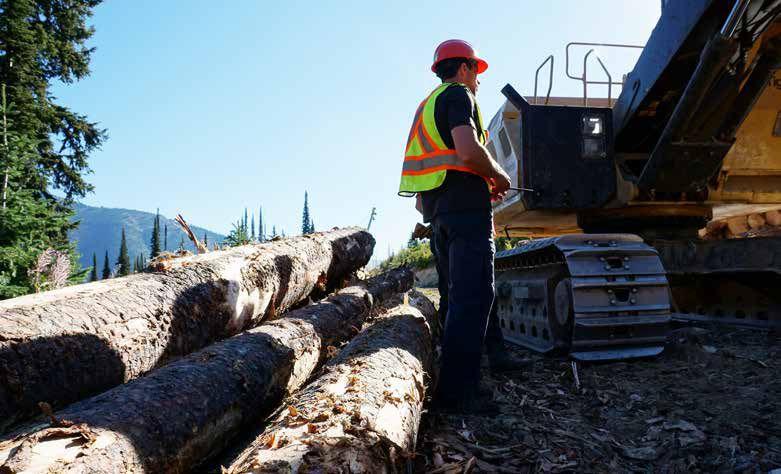
The average age of survey respondents continues to climb, as contractors continue to struggle with attracting a younger workforce to the industry across most regions.
The 2024 Contractor Survey results reveal that the trend of an aging workforce in the logging industry is intensifying, with the average age of respondents increasing to 55 years, up from 52 in 2020 and 49 in 2018.
Alarmingly, 24 per cent of survey respondents are now over the age of 65, up from 18 per cent in 2020, and 12 per cent in 2018. This shift highlights the growing challenge of succession planning in the sector as the retirement wave accelerates.
Regional differences in age are notable with the
B.C. Interior’s average age the highest at 59 years. In contrast, Ontario and Quebec both maintain an average age of 52 years. These variations highlight the diverse regional outlooks.
When asked about their roles, 61 per cent of respondents identified as owners or partners of logging businesses, with another 17 per cent working for forest company woodlands operations. The remaining roles were filled by operators, drivers, and mechanics (10 per cent) and managers or supervisors (eight per cent).
The estimated average age of logging contractor
owners, partners, managers, and supervisors was 54, with Quebec having the youngest average age in this group at 50. The B.C. Interior and Alberta contractor
group had the oldest respondents with average ages of 58 and 56, respectively.
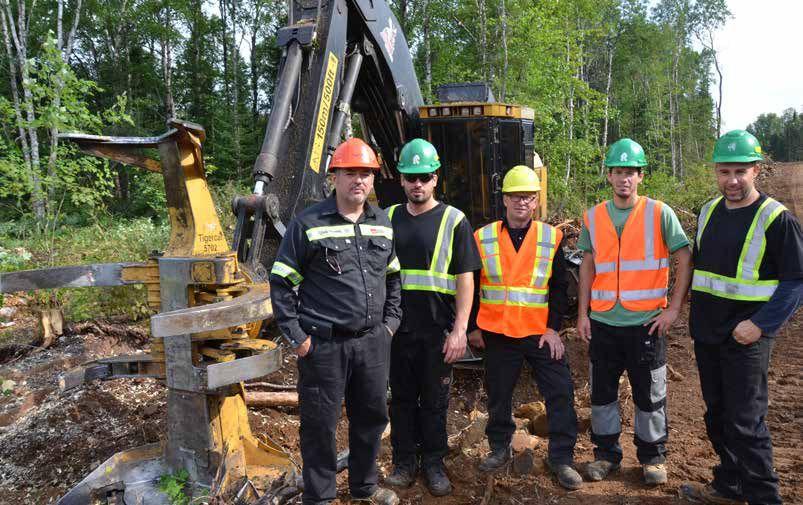
While succession planning has improved slightly over the past four years, more needs to be done to ensure the long-term viability of the logging industry.
For many years, the Canadian forest industry has faced a significant challenge: an aging workforce and the uncertainty surrounding who will take over as loggers retire. With the average age of Canadian logging contractor owners, partners, managers, and supervisors now sitting at 54 years, the question of succession remains front and centre. While some progress has been made in planning for the next generation, many contractors continue to
face an uncertain future, with no clear pathway for transitioning their operations. The issue of succession is not only about the transfer of ownership but also about sustaining the long-term viability of the industry, ensuring continuity in leadership, and addressing the workforce shortages that come with retirements.
In recent years, succession planning has gained more attention, and some contractors have already
begun to implement strategies for the future, but a large proportion still lack concrete plans. The 2024 data reveals that while there is a steady movement toward preparing for transitions, the pace is slow, and significant gaps remain.
When contractors were asked how many more years they plan to remain in the industry, the results showed a wide range of expectations depending on the region. On average, Canadian logging contractors plan to stay in the industry for another 12 years. However, this figure varies greatly across provinces, with certain regions reporting much shorter or longer plans.
• The results in Quebec were the most concerning as 48 per cent of respondents do not currently have a succession plan. Only 21 per cent expect their children to assume control, while another 6 per cent have managers interested or planning on taking over.
• B.C. Interior contractors reported an average of just nine years remaining before retirement. In the region, 26 per cent of respondents currently have no succession plans, while another 26 per cent expect their children to assume control, and another 13 per cent have managers
interested or planning to take over.
• Contractors based in the B.C. Coast appear to be fairing slightly better than those in the Interior in terms of succession planning with 33 per cent expecting their children to assume control of their businesses, while another 17 per cent have managers interested or planning on taking over.
• In Alberta, 30 per cent of contractors have no succession plans in place compared to 20 per cent that expect their children to take over the business. Another 20 per cent have managers interested in, or planning, to take the reins.
• In Atlantic Canada, contractors reported an average of just over 13 years before retirement. Alarmingly, 36 per cent of contractors in the province have no succession plans in place, and another 32 per cent planning on selling their equipment and shutting down. Only 20 per cent expect their children to take over the business, while none of the respondents stated they have managers interested in or considering taking over.
• Ontario’s contractors reported an average of 13 years before retirement. Contractors in the province reported the highest levels of succession planning with 41 per cent expecting thier children to assume control. Another 6 per cent had managers
interested in taking over the business, while 24 per cent currently have no succession plans in place.
These differences in timelines are important as they signal regional disparities in how contractors are preparing for the future and transitioning their operations. Contractors who plan to exit the industry sooner may need to act more quickly in creating succession plans to ensure their business’ future viability.
Overall, 34 per cent of contractors reported having no plan for what will happen to their business after they retire. While this figure represents an improvement compared to previous years (36 per cent in 2020 and 40 per cent in 2018), it remains a major concern for the industry. The lack of succession plans is a significant barrier to the sustainability of logging operations and represents a pressing need for action.
Around 26 per cent of contractors plan to pass their operations on to their children, which indicates a strong commitment to keeping businesses within families. This family-oriented approach is more common in certain regions, such as Ontario (41 per cent), the B.C. Coast (33 per cent), and the B.C. Interior (26 per cent). This trend shows the importance of family involvement in the industry, especially in regions where contractors
face challenges related to labour shortages and market pressures.
While family succession is a common path, other contractors are looking to sell their businesses or shut them down entirely. Approximately 29 per cent of respondents expect to either shut down their operations and auction off assets (17 per cent) or sell to another contractor (12 per cent). The decision to sell or liquidate assets may be driven by various factors, including financial constraints, personal preferences, and market conditions.
One encouraging sign is that eight per cent of contractors have managers interested in taking over their operations. This percentage, while still relatively low, is a hopeful sign that some contractors have invested in developing leadership within their businesses. Alberta and the B.C. Coast are the regions where this trend is most visible, with 20 per cent and 17 per cent of contractors, respectively, reporting that managers are interested in taking over. This trend suggests that leadership development within companies could be a critical factor in ensuring smooth transitions in the future.
Family involvement remains a key factor in succession planning, as contractors often want to keep their operations within the family. Just under
three in 10 respondents (28 per cent) reported having children involved in their businesses, with:
• 15 per cent having children currently working in the
operation who are likely to take over in the future.
• 13 per cent hoping that their younger children will eventually join the business.
While this family-oriented model is popular, it’s important to recognize that it’s not the only approach. Some regions, such as Quebec, Atlantic Canada, and Alberta, show higher proportions of contractors without any succession plans in place.
Quebec has the highest percentage of respondents without succession plans (48 per cent), followed by Atlantic Canada. However, Atlantic Canada stands out with a combined 68 per cent of contractors reporting no succession plan in place (36 per cent), and who plan to sell or auction their equipment (32 per cent) and shut down their businesses after retiring.
The differences in succession planning are significant across Canada. In regions like the B.C. Interior and
Quebec, contractors are facing serious challenges, including fibre supply issues, market volatility, and uncertainty about the future. These factors make it difficult for contractors to plan long-term and, in many cases, lead to a higher proportion of contractors who are unsure about their succession plans. While the overall trend in succession planning is slightly improved from previous years, it’s clear that more work is needed to address the gaps. Contractors must continue to develop clear, actionable plans for transitioning their businesses, whether by passing them on to family members, selling to interested buyers, or finding other ways to ensure continuity. Given the aging workforce, the need for proactive succession planning is critical for the sustainability of the forest industry.
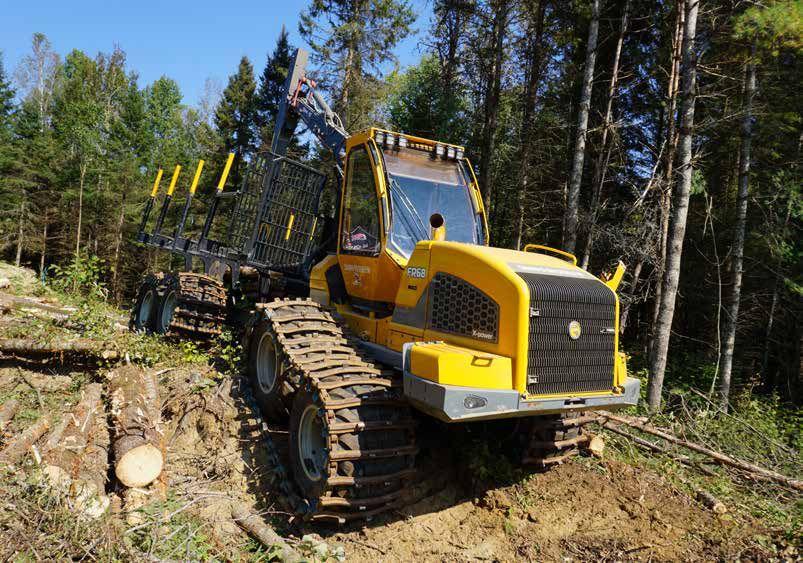
Improved co-operation with governments and forest companies top area noted for improving operations, while interest in partnerships with First Nations communities is growing.
Contractors identified several key areas where opportunities for improving operations and profitability exist. As in previous surveys, the most frequently mentioned opportunity is improved co-operation with governments and forest companies, with 63 per cent of respondents highlighting this as a critical factor. This has been a consistent theme since
2018, reflecting a long-standing need for stronger collaboration among contractors, government agencies, and forest companies to streamline operations, resolve issues, and improve access to resources.
In 2024, there was a notable increase in partnerships with First Nations communities
Percentage of contractors that see improved cooperation with
being recognized by contractors as an important opportunity to improve operations and/or profitability. This year’s survey had 32 per cent of respondents note this as an opportunity compared to 18 per cent in
2020 and 13 per cent in 2018. This was most common in the B.C. Interior and B.C. Coast where 53 per cent and 42 per cent of contractors noted this opportunity, respectively.
While co-operation with government and forest companies remains the top priority, other opportunities were also cited by contractors. Increased efficiencies on the operations side (44 per cent) and on the business management side (33 per cent) were identified as significant areas for improvement. Streamlining operations and improving management processes can lead to cost savings, enhanced productivity, and better overall profitability. The adoption of new technology (39 per cent) also remains a key opportunity, with contractors seeing the potential for increased efficiency and innovation through digital tools and modern equipment. There was also a strong recognition of the need for improved or more frequent operator training, with 30 per cent of respondents emphasizing this as a critical area for growth. This indicates a desire to enhance skill levels, improve safety standards, and ensure that operators are equipped to handle increasingly complex machinery and forestry tasks.
In terms of regional differences, contractors in Ontario and the B.C. Coast were the most likely to mention opportunities for co-operation with government and forest companies, with 81 per cent and 75 per cent, respectively, recognizing the importance of this.
Contractors in Atlantic Canada (52 per cent) and Quebec (57 per cent) were the least likely to note improved co-operation with government and forest companies as an opportunity.
While the opportunity for improved cooperation with government and forest companies remains the top priority, 2024 saw a significant increase in the recognition of partnerships with First Nations communities as a key avenue for improving operations and profitability. With technology, training, and operational efficiencies also highlighted, contractors are looking at a broad range of strategies to strengthen their businesses and increase profitability in the years to come.
While many contractors enjoy working in the woods, financial compensation and employment stability continue to be noted as the top areas where improvement is needed.
In 2024, the aspects of the business that contractors find most enjoyable are largely centered around the hands-on nature of their work. The ability to work in the woods remains the most frequently cited reason for enjoying the role, with 62 per cent of respondents indicating this as a key motivator. The variety and challenge of the role (46 per cent) and independence (45 per cent) are also significant draws, highlighting the appeal of both the diversity
of tasks and the autonomy within the industry. These findings underscore the personal fulfillment that many contractors derive from their work, emphasizing the industry’s connection to physical labour and selfreliance.
However, while many contractors find joy in their roles, there are significant areas where the industry could improve to attract replacement contractors and retain current contractors.
Financial compensation continues to be the most frequently cited area for improvement, with 69 per cent of respondents highlighting this as a critical need. Employment stability (47 per cent) and the simplification of regulations and procedures (39 per cent) also rank highly as areas requiring attention. These top concerns are consistent with previous surveys, though employment stability has become an increasingly important issue, rising from 31 per cent in 2018 to 47 per cent in 2024.
Co-operation with wood buyers and mills (37 per cent) also remains a critical issue, particularly for contractors who rely on stable, long-term partnerships to ensure profitability. Improvements in these areas are essential for the future of the industry, suggesting that without addressing these challenges, the sector may struggle to attract new talent and maintain its workforce.
Contractors also rated several operational challenges as “very important” for the upcoming years. Logging rates (82 per cent) and the cost of machinery (79 per cent) were the top challenges highlighted, with these two factors remaining key considerations since previous surveys. The overall
health of the Canadian forest industry (78 per cent) also emerged as a major concern, a significant increase from 62 per cent in 2018, but down from 82 per cent in 2020. This shows a growing sense of urgency regarding the sustainability and future of the industry, which is increasingly seen as a critical issue for long-term viability.
Notably, the ability to attract and retain employees was cited as “very important” by 70 per cent of respondents. This reflects a continued concern about the industry’s workforce, which remains a challenge that contractors are seeking solutions for, echoing findings from previous years. Conversely, access to markets has become less of a priority, with only 56 per cent of respondents indicating it as “very important,” down from 65 per cent in 2020. This shift suggests that while access to markets remains a concern, it may not be as pressing as other challenges contractors are facing.
Access to fibre and the quality of fibre also remains a key issue with 63 per cent of contractors marking it as “very important,” which is identical to the 2020 survey response.
While challenges such as access to finance (39 per
cent) and the ability to maintain or improve productivity (62 per cent) remain important, their significance has remained relatively stable in recent years.
The importance of contractors being able to attract buyers for their businesses has decreased slightly from 25 per cent of respondents in 2020 to 21 per cent in 2024, indicating that it is not a major concern for most of the industry.
Contractors are enjoying the hands-on nature of their work but are increasingly concerned about financial compensation, employment stability, and regulatory processes. The top challenges – machinery costs, logging rates, access to quality fibre, employee retention, and the overall health of Canada’s forest industry – are critical to the industry’s future success and its ability to attract new contractors and sustain current operations.
Contract logging employees far less likely to remain in the industry in five years, highlighting aging workforce concerns.
Responses from contract logging employees –comprising operators, drivers, mechanics, and others – highlight key trends in terms of work experience, regional distribution, and perspectives on the future of the industry.
Regional distribution and demographics<sh>
The highest proportion of contract employees responding to the survey were based in Quebec (37 per cent), followed by the B.C. Interior (21 per cent). This distribution reflects the continued concentration of contract employees in these regions.
The estimated average age of respondents in 2024 is 55, compared to the 45-year-old estimated average in 2018, highlighting the aging workforce within the contract logging sector. Notably, the largest groups of respondents were between the ages of 56 to 65 (26 per cent), and over 65 (26 per cent), further emphasizing the industry’s reliance on an experienced and aging workforce.
Contract employees in 2024 had extensive experience in the logging industry, with 74 per cent of respondents having been in the industry for over
20 years. Only five per cent of respondents reported being in the industry for 10 years or less. The average number of years worked across all regions was estimated at 30 years. However, there were regional variations:
• B.C. Interior: 32 years
• B.C. Coast: 16 years
• Alberta: 28 years
• Ontario: 13 years
• Quebec: 35 years
• Nova Scotia: 30 years
These figures reflect the varying levels of experience in different regions, with Quebec contractors generally having the most experience, while Ontario has a notably less experienced contract workforce with an average of just 13 years in the industry.
Contract logging employees were most likely to cite the ability to work in the woods (53 per cent) and independence (42 per cent) as the most enjoyable parts of the job. These factors are consistent with the hands-on nature of logging work and the appeal of autonomy within the role, suggesting that personal
fulfillment plays a significant role in retaining workers within the industry.
When asked about areas for improvement, financial compensation and employment stability were the most frequently cited concerns, with 63 per cent and 58 per cent, respectively, mentioning these issues. While financial compensation saw a slight decrease compared to 2018 (68 per cent) and 2020 (67 per cent) levels, employment stability has gained prominence,
Percentage of logging employees that responded that improving these areas would help attract highlevel employees
National estimated age range percentages of contract logging employees.
reflecting a substantial increase from 37 per cent in 2018 to 57 per cent in 2020, to 58 per cent in 2024.
Looking ahead, 37 per cent of contract employees felt it was “very likely” they would still be working in the industry in five years, far less than in 2020 when 67 per cent noted they were very likely to remain. However, 37 per cent of respondents indicated they were “somewhat likely,” to remain in the industry – a substantial increase from only 10 per cent in 2020. Additionally, 26 per
Perks
Percentages of employees expecting to remain in industry in five years.
cent thought it “very unlikely” they would still be in the industry – with 21 per cent stating they will be retiring – illustrating the industry’s concerns about its aging workforce and the long-term sustainability of the sector.
Contract employees’ perspectives on the industry environment reveal mixed sentiments. Thirty-nine per cent felt the industry environment had become a better place to work in 2024, while 50 per cent believed it had
worsened. Only 11 per cent felt the environment had remained unchanged.
While contract logging employees remain a highly experienced and dedicated part of the workforce, concerns around financial compensation, employment stability, and the overall work environment are significant. The industry faces challenges in retaining experienced workers and attracting new talent, particularly as more contract employees retire from the workforce.
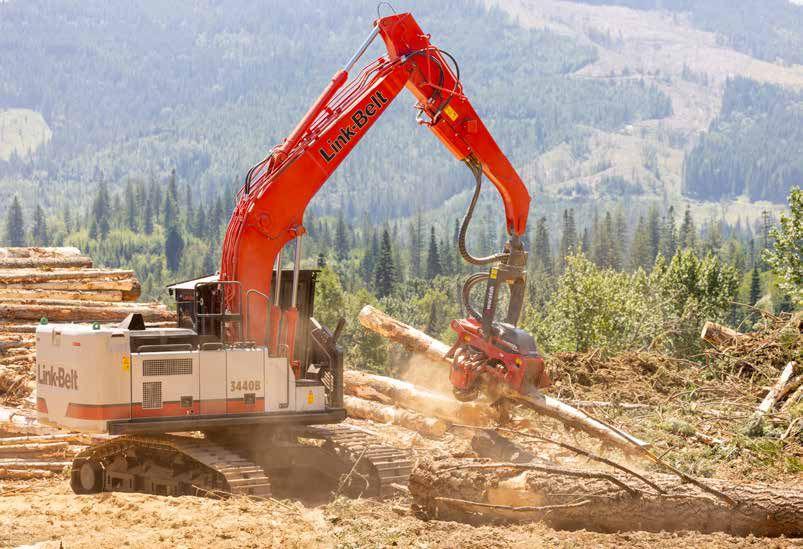
Logging rates top woodlands operations main concerns in 2024. Employee retention, health of Canadian forest industry, and abililty to attract buyers also key areas needing attention.
The 2024 survey results from forest company woodlands operations reveal significant insights into the challenges and opportunities faced by the sector, with respondents from various regions highlighting different priorities for improvement and areas of focus.
Regional distribution and demographics
The highest proportion of participating woodlands operations were from Quebec (37 per cent), followed by the B.C. Interior (21 per cent) and Atlantic Canada (16 per cent). These regions continue to dominate the landscape for forest
company woodlands operations, reflecting regional concentration.
New Brunswick, which represented one-fifth of respondents in 2020, was absent from this year’s survey, with no respondents in 2024.
The estimated average age of respondents in the woodlands sector remained consistent at 56 from 2018 to 2024. However, there was a noticeable shift in the proportion of older respondents. The over 65 age category of respondents comprised 31 per cent in 2024 (up 10 per cent from 2020), followed by 56 to 65 years of age at 22 per cent (down 16 per cent from 2020), 36 to 45 years of age at 22 per cent (up five per cent from 2020), and 46 to 55 years of age at 19 per cent (up 15 per cent from 2020). This suggests that woodlands operations are increasingly reliant on an older workforce, a trend that warrants attention given the industry’s ongoing succession challenges.
When asked about the most important challenges, logging rates emerged as the most pressing issue,
with 83 per cent of respondents marking it as “very important” – a sharp increase from 54 per cent in 2020. This reflects the growing pressures contractors face related to compensation rates and overall efficiency in logging operations. The overall health of the Canadian forest industry remains a major concern, with 76 per cent of respondents deeming it “very important,” which is consistent with 2020 figures.
The ability to attract and retain employees remains a consistent challenge for woodlands operations, with 89 per cent of respondents in 2024 rating it as either “fairly important” or “very important.” However, the proportion who consider it “very important” has decreased steadily from 83 per cent in 2018 to 49 per cent in 2024.
Additionally, the ability to attract buyers for their business continues to be a concern, with 43 per cent of respondents deeming it “fairly important” and 34 per cent marking it as “very important.”
While the proportion of respondents who deem it “very important” has remained fairly stable since 2018, the number of respondents who consider it “not overly important” has changed from 40 per cent in 2018 to 21 per cent in 2020, and then back
up slightly to 23 per cent in 2024.
Financial compensation and employment stability were again highlighted as the most critical areas for improvement, with 57 per cent and 54 per cent of respondents, respectively, ranking these as needing attention. These two factors have consistently topped the list of priorities for improvement in 2018, 2020, and 2024, reflecting ongoing concerns about contractor recruitment and retention.
Cost of machinery continues to be a significant concern for woodlands operations, with 58 per cent of respondents marking it as “very important” and 39 per cent as “fairly important.” This reflects the increasing financial burden on woodlands operations, and the sector’s ongoing challenge in
managing equipment costs.
Similarly, the importance of fibre availability has grown substantially, with 65 per cent of respondents now considering it “very important,” a notable increase from 42 per cent in 2020.
The ability to maintain or improve the productivity of operations was another area of focus, with 51 per cent of respondents marking it as “very important” for the future, underscoring the industry’s emphasis on improving efficiency to stay competitive.
In conclusion, while forest company woodlands operations face a variety of challenges, the most pressing issues revolve around financial stability, employee retention, and the overall health of the Canadian forest industry. With a workforce that is aging and facing increasing pressures, addressing these issues will be crucial for the sector’s longterm viability.
Fair profit margin expectations for logging contractors do not match the reality of contractors’ reported 2023 profit margins.
In 2024, the survey results on what constitutes a fair profit range for an established, productive logging contractor reveal some regional variations and significant insights into the industry’s expectations for contractor profitability.
Regional profit range insights
The most common profit ranges deemed fair for an established logging contractor in 2024 were between 6 to 10 per cent, and above 20 per cent (both with 31 per cent of respondents). While the
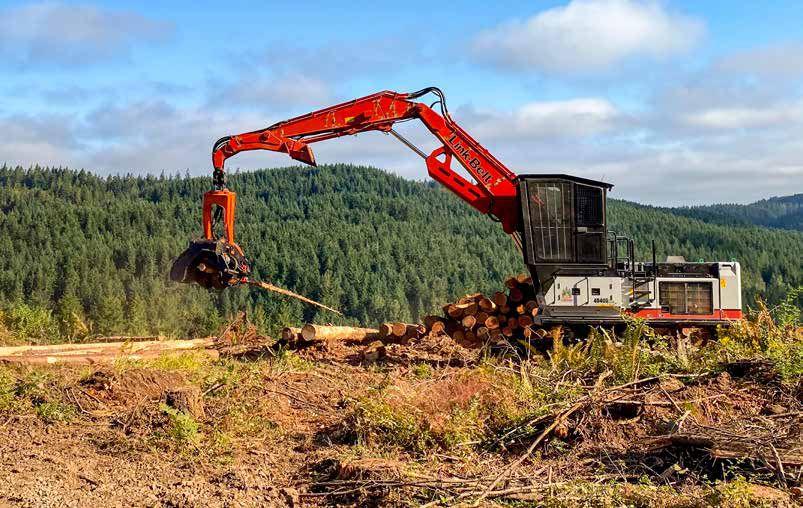
percentage of respondents in the 6 to 10 per cent range was consistent with 2020 and 2018 responses, the number of people who felt a fair profit range for contractors was above 20 per cent jumped to 31 per cent in 2024 from 8 per cent in 2020.
Another 22 per cent of respondents stated that a profit range of 11 to 15 per cent was fair (down from 33 per cent in 2020); followed by 17 per cent of woodlands operations responding that 16 toa 20 per
cent was a fair profit range for contractors. Notably, no respondents in the 2024 Contractor Survey stated that a profit between 0 to 5 per cent was a fair profit range, compared to 8 per cent in 2020, and 4 per cent in 2018. The estimated national average for a fair profit margin for a productive logging contractor in woodlands operations was 17 per cent, well below the reported estimated average of contractors’ 2023 profit margins of 9 per cent.
On the B.C. Coast, logging contractors reported profit margins in 2023 significantly below the national average. Respondents reporting an estimated average profit margin of 4.2 per cent, compared to 5.4 per cent nationally. Approximately 33 per cent of respondents stated they had profit margins ranging between 6 to 10 per cent in 2023, while 25 per cent answered “Profit, what profit?” Another 16 per cent reported profit margins between 1 to 5 per cent. Highlighting the struggles of low profit margins on the B.C. Coast was the fact that no contractors reported a profit margin above 10 per cent. However, one in four contractors (25 per cent) stated that they preferred not to state their profit margins or didn’t know what they were.
When asked how these profit margins fared to two years ago, 50 per cent of respondents stated that their profit margins had decreased, while another 33 per cent noted it was in a similar range. No contractors reported higher profit margins on the B.C. Coast (17 per cent stated they preferred not to say or didn’t know).
Expectations as to what a fair profit margin is on the B.C. Coast matched the national estimated average of 15
per cent. The most common answers were 11 to 15 per cent, and 16 to 20 per cent, which were tied at 33 per cent of respondents. Another 17 per cent stated that 6 to 10 per cent was a fair profit margin, while ranges of 3 to 5 per cent, and above 30 per cent, each received 8 per cent of respondents’ answers.
The adoption of newer technologies to enhance operational efficiencies varied greatly on the B.C. Coast, noting that some contractors are attempting to navigate low profit margins and increased costs by introducing new technologies into their fleets.
The most commonly adopted technology currently in use reported by B.C. Coast contractors is telematics systems for fleet management and equipment tracking, which was more than double the national average of 37 per cent at 78 per cent, leading all regions in the use of this technology.
Contractors in the region are also heavily investing in geographic information systems (GIS) for mapping and spatial analysis with 56 per cent stating they have implemented this into their fleets.
Other technologies being adopted in the region included mobile apps for field data collection and reporting (33 per cent, compared to 39 per cent nationally); automated logging equipment (22 per cent, compared to 39 per cent annually); logging software for inventory management, planning, and optimization (22 per cent, compared to 17 per cent nationally); wearable technology for worker safety and monitoring (11 per cent, compared to 4 per cent nationally); and remote sensing technologies for forest inventory and monitoring, such as LiDAR and drones (11 per cent, compared to 22 per cent nationally).
Operators in the region are the highest paid in the country with an average estimated rate of $43 per hour. They are also the most likely to have benefits with 83 per cent of contractors reporting offering some form of benefits compared to 61 per cent nationally. The most common benefits reported were medical and dental insurance (83 per cent); followed by life insurance and paid sick days/personal days (both at 50 per cent); followed by matching pensions plans (25 per cent); and paid
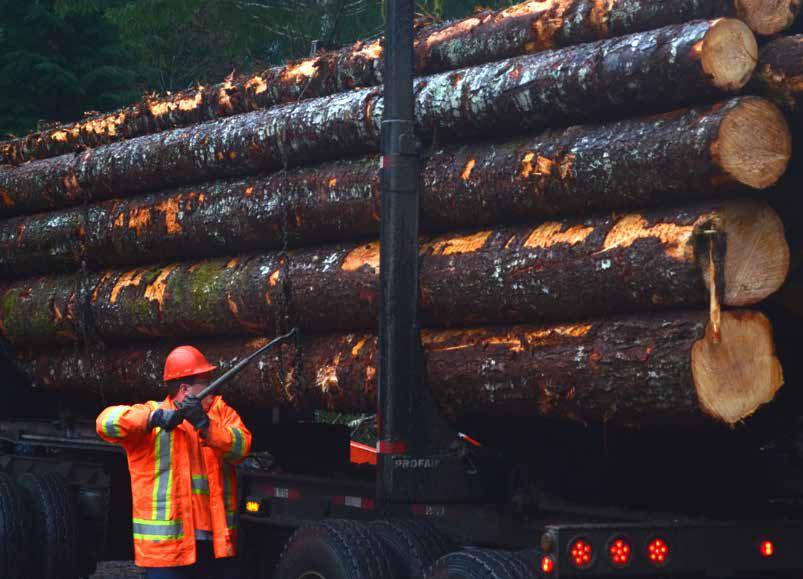
vacation days beyond legal minimums (17 per cent).
The average estimated annual volumes harvested by logging contractors in the B.C. Coast was 162,000 cubic metres, second only to Alberta, where contractors reported an annual estimated average of 223,000 cubic metres.
The largest number of respondents reporting harvesting between 100,001 to 250,000 cubic metres, and 250,001 to 500,000 cubic metres, with each comprising 27 per cent of respondents in the region.
Half of the average annual revenues in 2023 for logging contractors in the region fell between the range of $1,000,001 to $5 million, with 33 per cent reporting revenues
between $2,000,001 to $5 million, and 17 per cent reporting revenues between $1,000,001 to $2 million.
Approximately 16 per cent of contractors in the B.C. Coast reported average annual revenues of $500,000 or less, while 17 per cent reported revenues between $10,000,001 to $20 million.
About 17 per cent of respondents stated that they preferred not to disclose their annual revenues or did not know what they were.
Contractors in the B.C. Coast reported employing an average of 21 employees in their operations, just above the national average of 20 employees.
Fleet sizes for contractors in the region were comparable to the national average with an estimated average of 16 machines per fleet,
compared to 14 nationally. One in four contractors (25 per cent) reported owning one to three machines, while 17 per cent reported owning seven to 10 machines, and another 17 per cent reporting between 21 to 50 machines in their fleets. Unique largely to the hand felling needs of the forestry sector on the B.C. Coast, 17 per cent of contractors reported being a 100-per-cent manual operation. The B.C. Interior was the only other region reporting having 100-per-cent manual operations (3 per cent).
B.C. Coast contractors reported an estimated average of 10 pickup trucks in their fleets, above the national average of eight trucks.
The average age of the workforce in the region continues to be concern
with the average age of owners, partners, managers and supervisors reported at 54 years old, identical to the national average.
The largest age ranges reported fell between the ages of 46 to 55 (42 per cent, 9 per cent above the national average); 56 to 65 years of age (25 per cent, 3 per cent above the national average); and 65 and older (17 per cent, compared to 20 per cent nationally). Approximately 8 per cent of the respondents in the region reported an estimated average age of 35 years or younger (compared to 9 per cent nationally).
While this data shows the average age of B.C. Coast contractors at the national average, it is still a concern that needs to be addressed in the immediate future, as a significant number of contractors are planning their retirements over the next decade. While the B.C. Coast has a significant number of contractors only planning to retire in the next 11 to 15 years (42 per cent), 41 per cent are planning to exit the industry in the next 10 years.
The majority of contractors in the B.C. Coast have stated that they have some form of succession plans in place. Approximately 58 per cent of contractors in the region have succession plans in place with 33 per cent stating that their children will assume control; 17 per cent with managers interested in/planning on taking over the business; and 8 per cent expecting to sell to another contractor. Keeping these businesses within the family remains key to
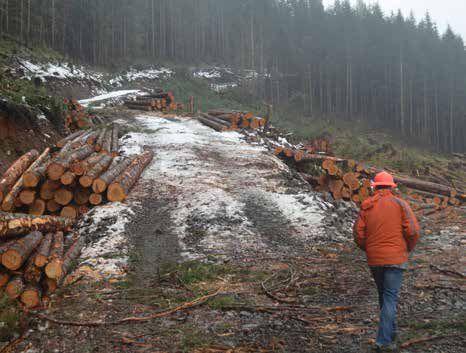
succession planning in the B.C. Coast, with only Ontario reporting more contractors planning to turn their businesses over to their children (41 per cent).
Another positive note for the industry in the B.C. Coast is that only 17 per cent of contractors in the region reported not having a succession plan in place, compared to 34 per cent nationally.
The biggest concerns noted by contractors in the B.C. Coast were the overall health of the Canadian forest industry (an overwhelming 92 per cent); logging rates (83 per cent); access to quality fibre (83 per cent); access to markets (75 per cent); cost of machinery (58 per cent); and the ability to attract and retain employees (58 per cent).
Lower than average profit margins continue to be a struggle for
contractors in the B.C. Coast, who have significant hurdles in front of them with an aging workforce and low profit margins. While the workforce is aging and it is a concern that needs to be addressed, contractors are implementing succession plans at levels significantly better than the national average.
When asked what should be done to replace aging contractors, 83 per cent of contractors stated that better employment stability was key; followed by financial compensation (75 per cent); and a decrease or simplification of regulations and procedures (58 per cent). One interesting note was that the B.C. Coast was the only region to have no contractors suggest that an improvement in workload or working hours would help attract replacement contractors, suggesting the industry enjoys its current work-life balance.
Just like in 2020, this year’s CFI Contractor Survey gave respondents the opportunity to add their own thoughts to the conversation about the challenges facing Canada’s logging contractors. Here’s a sample of what they had to say. Multiple contractors spoke about a lack of market for fibre, financial challenges, and government intervention.
Climate change is a very important issue.
Politically driven sustainability, timber ownership, and a lack of understanding of sustainable forestry by NGOs.
Being a stakeholder in the fight against climate change. The government (owner of the forests) must invest in fire mitigation or other silvicultural treatments to enhance forest resilience.
Cost of fuel falls under government policies, but the carbon tax has eaten up any profit we would have made this year. We’re constantly told there’s a housing crisis, yet every product we make goes to the housing market, and we’re penalized with this tax. New technology hasn’t been beneficial either. New machines with emission controls sit parked because they’re not designed for harsh Canadian winters. We only use old technology because it’s reliable in the weather.
Forest fires are shortening the logging season and have a significant impact on wood supply.
The diversity of the marketplace is the biggest challenge in Nova Scotia. The distance to mills and the unpredictable workload prevent us from investing in longterm productivity. improvements.
“I would like to see each province designate a portion of its land base as a working forest. This would allow the forest industry to have a say in the development and management of the forest, using new and improved technology to streamline the implementation of negotiated practices. It would also provide stability for the current and future workforce, supporting the continued development of our industry.
Finding employees who are both capable and interested in the forest industry.
The public needs to appreciate good forest management, such as not turning everything into a conservation area.
Entrepreneurs are not making profits and are struggling to survive.
We need to focus more on selective logging, thinning, and silviculture work to increase forest productivity and reduce fire hazards.
With 71 per cent of contractors planning on exiting the industry over the next decade, work needs to be done to fill their boots.
While the B.C. Interior is home to some highly profitable and successful logging contractors, the majority of contractors in the region still struggle with turning a profit in their operations.
In the 2024 Contractor Survey, 34 per cent of contractors in the region answered, “Profit, what profit?” when asked about their 2023 profit margins. This was the most common response in region, with another 35 per cent of respondents stating that they had profit margins between 1 and 5 per cent in 2023, meaning nearly 70 per cent of contractors are battling low profit margins. The estimated average profit margin for contractors in the region was 5.1 per cent, below the national average of 5.4 per cent.
The reality of profit margins for contractors in the region differs greatly to their expectations of what a fair profit margin should be. When respondents in the region were asked what they felt was a fair profit margin, no contractors answered that a profit margin of 5 per cent or less was fair. The most common answers from contractors about what a fair profit range is were 11 to 15 per cent (45 per cent of respondents); followed by 6 to 10 per cent (23 per cent); and 21 to 25 per cent (13 per cent). Only 6 per cent of contractors in the B.C. Interior reported a profit margin between 11 to 15 per cent. This was also the case for those that reported a profit range of 6 to 10 per cent. Nine per cent of respondents reported a profit margin over 20 per cent.
The low profit margins that contractors experienced came at the same time that 58 per cent of respondents reported increased logging rates in 2023 compared to 2020. Rising costs have played a prominent role in the lower profit margins of contractors in the region who reported rising costs for all cost centres. The most
prominent cost increases that contractors reported experiencing over the past three years were the purchase of machinery (83 per cent of respondents); machinery parts and service (80 per cent); fuel (70 per cent); finance costs (60 per cent); and hauling (60 per cent). Another 40 per cent of contractors noted increased labour costs, while 33 per cent of respondents stated their insurance costs have increased.
To counter rising costs and labour challenges, contractors in the B.C. Interior have been investing in a variety of technologies to enhance their operations, significantly above national trends. The most commonly reported technology adopted into operations by contractors in the region is geographic information systems (GIS) for mapping and spatial analysis, with 67 per cent of contractors reporting that they have implemented this technology, above the national average of 58 per cent. Mobile apps for field data collection and reporting and telematics systems for fleet management and equipment tracking tied for second place with 57 per cent of contractors reporting their use in operations, compared to national averages of 39 per cent and 37 per cent, respectively. The only technology that contractors in the region were significantly slower to adopt compared to the national average was automated logging equipment (such as harvesters and forwarders), with only 20 per cent reporting implementing these technologies into operations, compared to a national average adoption rate of 39 per cent. It is arguable that the combination of rising machine costs and low profit margins play a role in the slow adoption of this technology.
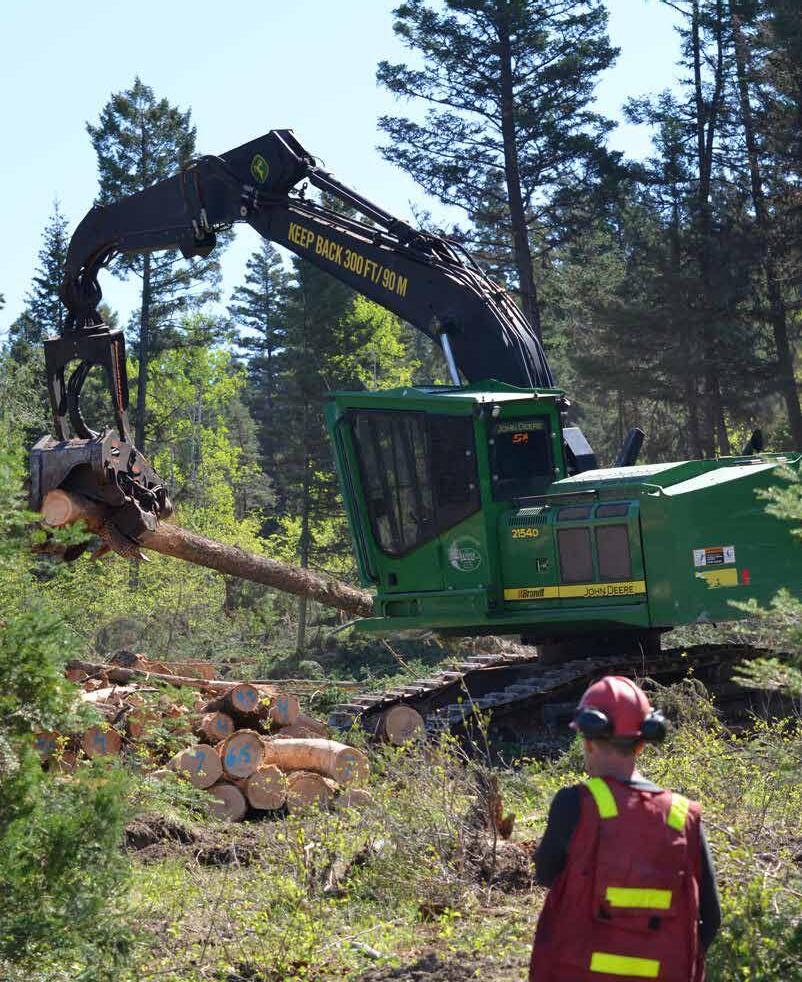
The quicker technology adoption rate in the region over the national average is reflected in contractors’ opinions on the level of technology in the logging industry. When asked about the industry’s current state of technology, more than half of respondents (52 per cent) answered that there is room for improvement in the adoption of technology within the logging industry, but progress is being made. Another 23 per cent of respondents answered that the logging industry is well-equipped with cuttingedge technology that enhances efficiency and productivity, while only 16 per cent answered that the logging industry lags behind other sectors in terms of technological advancements, hindering efficiency and competitiveness. About 10 per cent of respondents answered that they did not have enough information to answer this question, well below the national average of 21 per cent.
Operators and drivers in the B.C. Interior enjoy average hourly rates of $39 per hour, well above the national average of $33 per hour. Only operators in the B.C. Coast reported a higher average hourly rate ($43 per hour), while operators in Alberta also reported rates of $39 per hour.
The number of operators in the region with benefits also was above the national average with 77 per cent of logging contractors reporting offering some form of benefits compared to 61 per cent nationally. The most common benefits reported were medical and dental insurance (71 per cent); followed by life insurance (45 per cent); paid sick days/personal days (35 per cent); and matching pensions plans (35 per cent).
The average estimated annual volumes harvested by logging contractors in the B.C. Interior was 156,000 cubic metres with the largest number of respondents reporting harvesting between 100,001 to 250,000 cubic metres (31 per cent of respondents). This volume is significantly above the national annual estimated average of 125,000 cubic metres harvested.
Average annual revenues for logging contractors in the region were spread out across a wide range with the most common ranges reported being $501,000 to $1 million, $2,000,001 to $5 million, and $20,000,001 to $50 million, with each category receiving 16 per cent of respondents’
answers. Approximately 38 per cent of contractors in the B.C. Interior reported average annual revenues of $1 million or less.
Contractors in the B.C. Interior reported employing an average of 25 employees in their operations, above the national average of 20 employees, and second regionally only to Alberta, where the estimated average number of employees was 35. Despite averaging less employees than Alberta, both regions led the country in size of equipment fleets with an estimated average of 22 machines in their equipment fleet. BC Interior contractors were also second only to Alberta in the number of pick-up trucks in their fleets with an estimated average of 12 trucks per operation.
An aging workforce continues to be a concern in the region with the average age of owners, partners, managers and supervisors reported at 58 years old, above the national average of 54 years of age. The largest age groups reported fell between the ages of 46 to 55 (41 per cent, 8 per cent above the national average); 56 to 65 years of age (28 per cent, 6 per cent above the national average); and 65 and older (22 per cent, compared to 20 per cent nationally). None of the respondents in region reported an estimated average age of 35 years or younger (compared to 9 per cent nationally).
This data shows a pressing need for contractors in the region to attract a younger workforce to replace those who will be retiring in the near future. When asked how many years they plan to be in the industry, 26 per cent of owners, partners, managers and supervisors replied five years or less, while another 45 per cent intend to exit the industry in the next six to 10 years. This means the B.C. Interiors logging industry is at risk of losing 71 per cent of its owners, partners, managers and supervisors over the next decade, the highest percentage of any region in the country.
One bright spot for the future of logging in the B.C. Interior is that the number of contractors with some form of succession plans in place are slightly above the national average. Approximately 55 per cent of contractors in the region have succession plans in place with 26 per cent stating that their children will assume control; 16 per cent expecting to sell to another contractor; and 13 per cent with managers interested
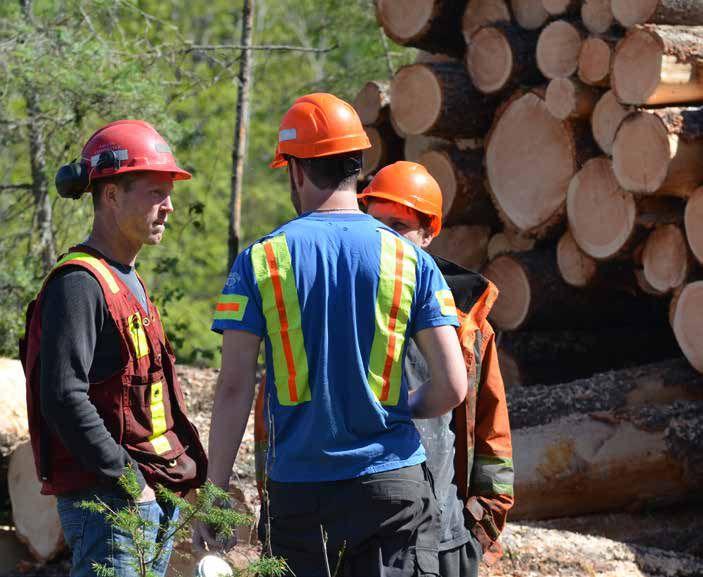
in/planning on taking over the business. This compares to the national average of 46 per cent of contractors having some form of succession plan in place. Another 19 per cent of contractors in the region plan on selling off their equipment and shutting down their operations, while 26 per cent currently have no succession plans in place (compared to 34 per cent having no plans nationally).
Contractors in the B.C. Interior have significant hurdles in front of them with an aging workforce and low profit margins.
The biggest concerns noted by contractors in the B.C. Interior were the overall health of the Canadian forest industry (83 per cent); logging rates (80 per cent); cost of machinery (80 per cent); the ability to attract and
retain employees (77 per cent); and access to quality fibre (70 per cent).
However, the outlook is not entirely negative. The region’s trend of adopting to the latest technologies should help counter some future cost increases. The region’s contractors are also acknowledging its aging workforce, as many contractors either have succession plans in place, or are in the process of building these plans.
When asked what should be done to replace aging contractors, 77 per cent of respondents stated that improved financial compensation is needed, reflecting the lower profit margins in the region. Another 60 per cent of contractors stated that better employment stability would help; followed by improved co-operation with wood buyers (47 per cent); and a decrease or simplification of regulations and procedures (39 per cent).

With major hurdles related to access to markets and profitability, many contractors are embracing automation in their operations to improve operational efficiencies and lower costs.
Ontario’s logging contractors are dealing with the lowest profit margins of all regions across the country. The estimated average profit margin for contractors in the province was 3.5 per cent, far below the national average of 5.4 per cent.
In the 2024 Contractor Survey, 28 per cent contractors stated that they made no profit in 2023, while 33 per cent stated they preferred not to say or were no sure of their profit margin. Twenty-two per cent of contractors reported profit margins of 1 to 3 per cent, while 11 per cent had profit margins ranging from 6 to 10 per cent. Another 6 per cent reported profit margins ranging from 16 to 20 per cent.
When asked about how their profit margins compared to two years ago, 39 per cent of respondents stated they were in a similar range, while another 39 per cent stated their profit margins had declined with 28 of the 39 per cent having “significantly lower” profit margins. Only 6 per cent of contractors reported experienced slightly higher profit margins. Another 6 per cent of respondents were a new company, and 11 per cent preferred not to say or were unsure.
When asked about what they felt a fair profit margin would be, Ontario’s contractors responded with an estimated average of 12 per cent, which was the lowest by any region (three per cent under the national estimated average profit margin of 15 per cent). The most common response was a profit margin range of 11 to 15 per cent
(35 per cent of respondents); followed by ranges of 6 to 10 per cent and 3 to 5 per cent (each with 18 per cent of respondents). Only 24 per cent of contractors stated that an average profit margin above the national average of 15 per cent was fair, with 12 per cent responding that 16 to 20 per cent was fair, and another 12 per cent stating that 21 to 25 per cent was fair.
The lower and stagnant profit margins for most of Ontario’s contractors could be attributed to rising costs for the majority of cost centres over the past three years. The most prominent cost increases that contractors in the province reported experiencing over that time were machinery parts and service (82 per cent of respondents); the purchase of machinery (72 per cent); fuel (67 per cent); hauling (59 per cent); and finance costs (47 per cent). Another 41 per cent of contractors noted higher insurance costs, while 28 per cent reported labour costs increases.
Contactors in Ontario have begun to adopt specific technologies to enhance their operations. The most popular technology implemented in fleets in Ontario are geographic information systems (GIS) for mapping and spatial analysis, which 67 per cent of respondents stated they have in their operations (above the national average of 58 per cent); and automated logging equipment (harvesters, forwarders, etc.), which 60 per cent of
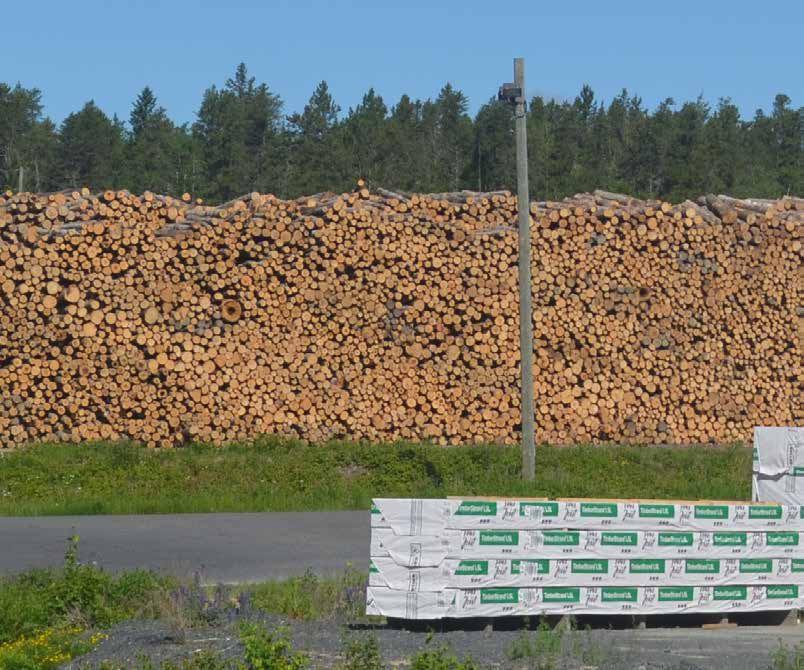
contractors stated they currently have in their fleets (the highest adoption rate of any region). Other technologies adopted by Ontario’s logging contractors above the national adoption rate include logging software for inventory management, planning, and optimization (27 per cent, compared to 17 per cent nationally); and wearable technologies for worker safety and monitoring (13 per cent compared to 4 per cent nationally).
Compared to the national adoption averages, Ontario’s contractors have been slower to adopt mobile apps for field data collection and reporting (13 per cent of respondents, compared to 39 per cent nationally); telematics systems for fleet management and equipment tracking (27 per cent, compared to 37 per cent nationally); and remote sensing technologies like LiDAR and drones (13 per cent, compared to 22 per cent nationally).
Operators and drivers in Ontario have average hourly rates matching the national estimated average of $33 per hour, with the largest group earning between $26 to $30 per hour (39 per cent of respondents). The second-biggest group of respondents earned between $36 to $40 per hour (28 per cent), while 17 per cent stated they do not hire operators or drivers.
Slightly over half of the logging contractors in Ontario offer benefits (53 per cent), below the national average of 61 per cent. The most common benefits reported were medical and dental insurance (53 per cent); followed by life insurance (49 per cent); and matching pensions plans (24 per cent).
The average estimated annual volumes harvested by
logging contractors in Ontario was 118,000 cubic metres, slightly under the national estimated average of 125,000 cubic metres. However, the majority of contractors in the province harvest far less than the average, with 82 per cent of logging contractors harvesting 100,000 cubic metres or less. The largest number of respondents reported harvesting between 25,001 to 50,000 cubic metres (25 per cent of respondents).
65 per cent plan to leave the industry within the next 10 years.
Average annual revenues for logging contractors in Ontario were spread out across a wide range with the most common range reported being $500,001 to $1 million (24 per cent of respondents); followed by three ranges ($251,000 to $500,000, $1,000,001 to $2 million, and $5,000,001 to $10 million) each receiving 12 per cent of respondents’ answers. Nearly one in four contractors (24 per cent) preferred not to state their average annual revenues or did not know what they were.
Logging contractors in Ontario reported having an average of 18 employees in their operations, slightly below the national average of 20. The majority of contractors surveyed stated that they had between one and five employees (53 per cent), followed by 16 per cent employing six to 10 people, and another 16 per cent with between 21 to 50 employees.
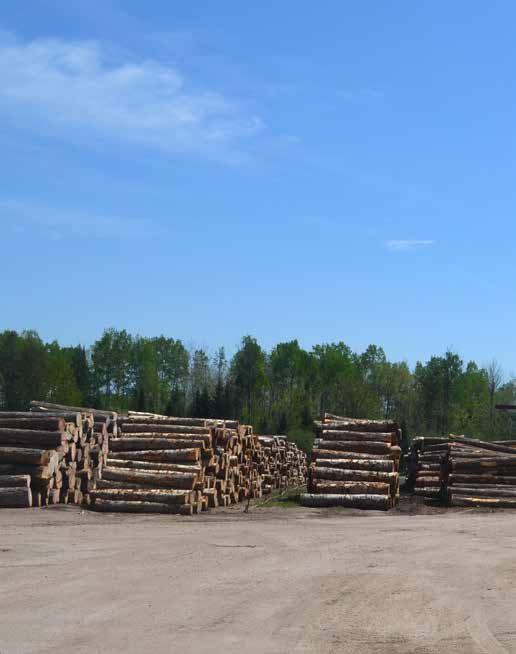
While the workforce in Ontario is fairly old with an average age of owners, partners, managers and supervisors at 53 years old, it is just under the national average of 54 years of age. This is largely due to 33 per cent of respondents in the province being 45 years of age or younger, and another 22 per cent between the ages of
46 to 55. However, 44 per cent of respondents were between 55 and older with 22 per cent over the age of 65, so the industry still needs to work on attracting more young workers. When asked how many years they plan to remain in logging, 30 per cent stated 5 years or less, while 65 per cent plan to leave the industry within the next 10 years.
While many of Ontario’s logging contractors are planning on leaving the industry within the next decade, many of them are planning on passing their businesses on to their children. When asked about their succession plans, 41 per cent of contractors replied that they expect their children to assume control of
their businesses. Another 12 per cent plan on selling their business to another contractors, while 6 per cent have managers interested in, or planning, to take over.
The most challenging aspect of logging for Ontario’s contractors is figuring out how to combat profit
margins significantly lower than the national average. The aggressive investment in automated logging equipment may be one of the ways that contractors are trying to optimize efficiencies and control rising costs.
The biggest concerns noted by contractors in Ontario over the next three years were logging rates (81 per cent); cost of machinery (76 per cent); and the overall health of the Canadian forest industry (76 per cent). Access to markets also ranked as a big concern for 75 per cent of respondents, which makes sense since the Ontario forest products industry is almost entirely reliant on the U.S. market.
When asked what parts of the industry should be improved to attract replacement contractors, 63 per cent of respondents stated that improved financial compensation is needed, again reflecting the low average annual profit margins in the region. Another 56 per cent of contractors stated that improved co-operation with wood buyers was needed; while 38 per cent listed opportunities for growth and employment stability as areas that require improvements.
The province’s succession plan data offers a more positive outlook for the future of logging in Ontario, as only 36 per cent plan on selling off their equipment and shutting down, or have no succession plan in place, compared to 51 percent of logging contractors nationally. With a younger than average workforce, and contractors embracing the implementation of automated equipment into their operations, the long-term outlook for the province looks bright, despite current challenges.
With higher than average profit margins, the youngest workforce, and the embracing of automation, Quebec’s logging contractors are well-positioned for a bright future.
While logging contractors in Quebec have work to do for ensuring a smooth transition from one generation to the next, the industry is in relatively good shape with fairly healthy profit margins and the youngest workforce in the country.
In the 2024 Contractor Survey, contractors reported an estimate average profit margin of 6.2 per cent, above the national average of 5.4 per cent, and the second-highest in the country next to Alberta (9.9 per cent).
Profit margin ranges were fairly spread out with the largest percentage of respondents reporting profit margins of 1 to 3 per cent (27 per cent of respondents), followed by 3 to 5 per cent (21 per cent); and 6 to 10 per cent (15 per cent).
An additional nine per cent of contractors reported profit margins in the range of 11 to 15 per cent, while another nine per cent reported profits margins greater than 15 per cent. Nine per cent of contractors reported making no profit, while another nine per cent preferred not to say or didn’t
know what their profit margins were.
While profit margins in the province are healthier than most regions of the country, many contractors reported lower profits compared to two years ago (42 per cent of respondents). Another 42 per cent of contractors reported that profit margins fell within similar ranges to two years ago. Nine per cent of respondents reported “slightly higher” profit margins while no contractors reported significantly higher profits. Six per cent of respondents were either new companies, preferred not to comment, or did not know the answer.
Rising prices across all cost centres almost certainly played a role in lower profit margins for logging contractors, as respondents reported higher costs over the past three years in all categories. Areas where higher costs were most commonly reported were the cost of machinery parts and services (78 per cent); machinery purchases (75 per cent); fuel (59 per cent); finance costs (52 per cent); and insurance (50 per cent). Another
42 per cent of contractors noted increased hauling costs, while 38 per cent of respondents stated their labour costs have increased.
Technology adoption
Logging contractors in Quebec have been adopting automation into their operations to optimize efficiencies and lower costs.
When asked about which
technologies and digital tools they currently have implemented into their operations, the most common answer from contractors in the region was automated logging equipment (57 per cent of respondents). This technology is being implemented at a faster pace in Quebec than the national average (39 per cent). Contractors in the region are also implementing remote sensing technologies for forest
inventory and monitoring – such as LiDAR and drones – at a faster rate than the national average (30 per cent of respondents, compared to 22 per cent, nationally).
Technologies where Quebec’s logging contractors have been slower to adopt into operations than the national average included mobile apps for field data collection and reporting (27 per cent, compared to
39 per cent, nationally); telematics systems for fleet management and equipment tracking (20 per cent, compared to 37 per cent, nationally); logging software for inventory management, planning, and optimization (10 per cent, compared to 17 per cent nationally); and wearable technologies for worker safety and monitoring, which no contractors reported using
(compared to 4 per cent, nationally).
About two-thirds of contractors surveyed (66 per cent) had a positive opinion of how technology are being adopted in the logging industry, with 39 per cent stating that the logging industry is well-equipped with cutting-edge technology that enhances efficiency and productivity; and another 27 per cent reporting that there is room for improvement in the adoption of technology within the logging industry, but progress is being made. Only 9 per cent of contractors felt the industry lags behind other sectors in terms of technological advancements, while another 24 per cent stated they were unsure how to answer or did not have enough information to answer the question.
Operators and drivers in Quebec earn average hourly rates of $32 per hour, just under the national average of $33 per hour, with most contractors stating they pay in the range of $26 to $40 per hour (75 per cent). A small percentage of contractors reported paying $41 to $45 per hour (3 per cent), while 6 per cent stated they pay $20 per hour or less. Another 15 per cent of contactors stated they do not hire operators or drivers.
Operators and drivers in Quebec are offered the least number of benefits of any region, tied with Atlantic Canada, with less than half of contractors offering benefits (48 per cent). Of those offering benefits, the most common were paid sick days/personal days (30 per cent); medical and
dental insurance (24 per cent); life insurance (24 per cent); and matching pension plans (21 per cent). Profit sharing was the highest reported of any region with 12 per cent of contractors stating they offer this benefit, above the nationally reported average of 4 per cent.
The average estimated annual volumes harvested by logging contractors in the Quebec was 106,000 cubic metres. This volume is significantly below the national annual estimated average of 125,000 cubic metres harvested. The largest number of respondents reported harvesting less than 10,000 cubic metres (30 per cent of respondents), followed by 10,001 to 25,000 cubic metres (15 per cent), and 100,001 to
250,000 cubic metres (15 per cent).
Average annual revenues for logging contractors in the region were spread out across a wide range with the most common ranges reported being under $100,000 (24 per cent); $251,000 to $500,000 (15 per cent); and $501,000 to $1 million (15 per cent); $1,000,001 to $2 million (12 per cent); and $5,000,001 to $10 million (12 per cent).
Logging contractors in Quebec reported an estimated average of 17 employees in their operations, below the national average of 20 people, with 45 per cent of respondents employing between one to five people. Many contractors also work solo in the region, with 18 per cent reporting they work by themselves.
Equipment fleets in the region were significantly under the national average
Contractors in Quebec have youth on their side in comparison to those in other regions of the country.
of 14 machines, with contractors reporting an estimated average of nine machines per fleet. More than half of contractors reported having between one to three machines in the fleet (52 per cent), while about one-third (33 per cent) had between four to ten machines in their operations.
Contractors in Quebec have youth on their side in comparison to those in other regions of the country. With an average age of owners, partners, managers and supervisors reported at 50 years old, the region reported the youngest workforce in Canada. The largest age groups reported fell between the ages of 46 to 55 (33 per cent, identical to the national average); 36 to 45 years of age (27 per cent,11 per cent above the national average); and those over the age of 55 (24 per cent, compared to 36 per cent, nationally). Another 12 per cent of contractors reported being 35 years of age or younger.
More than half of the contractors in Quebec stated that they have currently have no succession plans in place or are planning to sell their equipment and shut down once they retire (54 per cent). While this is likely to be partially due to having a younger workforce overall, 30 per cent of contractors plan on exiting the industry within five years, while another 27 per cent plan on exiting in the next decade, so there
may still be some work to be done to ensure the long-term sustainabilty of the industry. However, Quebec’s logging contractors do appear to be in better shape overall than many other regions.
The biggest concerns noted by logging contractors in Quebec were the cost of machinery (79 per cent); logging rates (72 per cent); the overall health of the Canadian forest industry (63 per cent); and the ability to maintain or improve the productivity of operations (60 per cent).
The combination of Quebec’s younger contractor workforce and profit margins above the national average offers a positive outlook for companies active in the region. While slow to adopt certain technologies into their operations, Quebec’s contractors are investing in automated logging equipment to improve efficiencies at a significantly faster pace than most regions (57 per cent compared to 39 per cent, nationally). It is arguable that the willingness to adopt fleet automation could be connected to the larger number of younger people within the workforce, with 39 per cent of contractors between the ages of 16 to 45 years old (compared to the B.C. Interior, for example, where only 9 per cent of contractors fall within this age range, and only 20 per cent of contractors reported investing in automated logging equipment).
With the majority of contractors battling low profit margins, and many contractors planning on exiting the industry, much needs to be done to sustain the logging sector in this region.
Logging contractors in Atlantic Canada face challenges in terms of lower-than-average profit margins, and a need to build stronger succession plans. However, there are some contractors running profitable operations within the region.
In the 2024 Contractor Survey, contractors in Atlantic Canada reported an estimate average profit margin of 4.3 per cent, below the national average of 5.4 per cent.
Profit margin ranges were fairly low for 60 per cent of contractors with the largest percentage of respondents reporting profit margins of 1 to 3 per cent (36 per cent of respondents), followed by those reporting no profit (24 per cent). While more than half of the contractors in the region appear to be struggling to make significant profits, 16 per cent of contractors reported making profit margins ranging between 11 to 15 per cent, while another 12 per

cent reported profit margins ranging between 6 to 10 per cent. Another 8 per cent of contractors reported profit margins between 3 to 5 per cent, while 4 per cent preferred not to say or did not know what their profit margins were.
Rising prices across all cost centres over the past three years were likely partially responsible for lower profit margins for logging contractors, as respondents reported higher costs over the past three years in all categories. Areas where higher costs were most commonly reported were the cost of fuel (96 per cent); machinery parts and services (83 per cent); machinery purchases (83 per cent; hauling (54 per cent); and
finance costs (50 per cent). Labour cost increases were the lowest in this region with only 25 per cent of contractors noting higher labour costs over the past three years.
Logging contractors in Atlantic Canada are leaning on the latest technologies to assist in optimizing their operations and controlling costs. According to the 2024 Contractor Survey, they are currently leading the country in the adoption of geographic information systems (GIS) for mapping and spatial analysis with 71 per cent adopting this technology into their operations, well above the national average of 58 per cent of contractors.
Contractors in the region are above the national average for the adoption of remote sensing technologies, such as LiDAR and drones (33 per cent compared to 22 per cent, nationally); automated logging equipment (48 per cent compared to 39 per cent, nationally); logging software for inventory management, planning, and optimization (19 per cent compared to 17 per cent, nationally).
Contractors reported adopting mobile apps for field data collection and reporting at a rate of 38 per cent, just under the national average of 39 per cent; and wearable technologies for worker safety and monitoring at a rate of 5 per cent, just above the national average of 4 per cent.
The only technology that contractors in the region have been significantly slower to adopt than the national average was telematics systems for fleet management and equipment tracking (22 per cent compared to 37 per cent, nationally).
Operators and drivers in Atlantic Canada have significantly lower hourly rates than anywhere else in the country. The estimated average hourly rate reported by contractors in the 2024 Contractor Survey was $24 per hour, far below the national average of $33 per hour. The majority of contractors reported paying in the range of $21 to $25 per hour (54 per cent), while another 25 per cent of contractors reported paying in the range of $26 to $20 per hour. Atlantic Canada reported the highest percentage of contractors paying $20 per hour or less at 13 per cent of respondents.
Less than half of the operators and drivers in Atlantic Canada are offered benefits with 48 per cent of contractors reporting they offer them. The most commonly offered benefits were medical and dental insurance (36 per cent); and paid vacation days beyond legal minimum requirements (16 per cent).
The average estimated annual volumes harvested by logging contractors in Atlantic Canada was 86,000 cubic metres. This volume is significantly below the national annual estimated average of 125,000 cubic metres harvested. The largest number of respondents reported harvesting 25,001 to 50,000 cubic metres (32 per cent of respondents); followed by 50,001 to 100,000 cubic metres (28 per cent); and less than 10,000 cubic metres (16 per cent).
Average annual revenues for logging contractors in the region were spread out across a wide range with the most common ranges reported being
$501,000 to $1 million (28 per cent); $2,000,001 to $5 million (20 per cent); $251,000 to $500,000 (16 per cent); and $1,000,001 to $2 million (12 per cent). No contractors in the region reported average annual revenues surpassing $10 million.
Logging contractors in Atlantic Canada reported an estimated average of 15 employees in their operations, below the national average of 20 people. The majority of contractors reported having between 1 to 20 employees with 48 per cent of respondents employing between one
to five people; 20 per cent employing six to 10 people; and 16 per cent employing 11 to 20 people.
Equipment fleets in the region were significantly under the national average of 14 machines, with contractors reporting an estimated average of seven machines per fleet. Approximately 36 per cent of contractors reported having between one to three machines in the fleet, while about one-third (32 per cent) had between seven to 10 machines in their operations. Another 16 per cent of contractors reported having between
11 to 20 machines, while the remaining 16 per cent operated between four to six machines in their fleets.
The estimated average age of owners, partners, and managers in Atlantic Canada have an estimated average age of 53.5 years of age, just under the national average of 54 years old. The largest reported group fell between the ages of 56 to 65 years old (28 per cent); followed by 46 to 55 years of age (20 per cent); and contractors over the age of 65
One major concern in the region is a lack of succession planning by contractors, as 71 per cent currently have no succession plan in place or plan to sell their equipment and shut down their businesses.
(20 per cent). While the workforce is aging, there is a significant number of owners, partners, and managers that are 45 years old or younger (32 per cent).
One major concern in the region is a lack of succession planning by contractors, as 68 per cent currently have no succession plan in place (36 per cent) or plan to sell their equipment and shut down their businesses (32 per cent). With 60 per cent of contractors planning on exiting the industry over the next 10 years (32 per cent within the next five years), work needs to be done to build succession plans to prevent the region from experiencing significant labour shortages in the future.
Labour shortages appear to already be worrying contractors in Atlantic Canada. One of the biggest challenges noted by contractors in the region over the next three years is the ability to attract and retain employees (84 per cent of respondents); only slightly trailing logging rates (92 per cent) and the cost of machinery (88 per cent) in contractors’ main concerns. Additional challenges noted by most contractors included access to markets (76 per cent); the ability to maintain or improve the productivity of their operations (76 per cent); access to fibre/quality of fibre (72 per cent); and the overall health of the Canadian forest industry (76 per cent).
Lower than average profit margins coupled with higher operating costs present significant challenges for contractors in the region. Significantly lower operator and driver rates are likely presenting challenges for additional challenges for the retention and attraction of employees to the industry. This comes at a time when labour shortages are a concern and many contractors will be exiting the industry over the next five to 10 years. While these challenges are significant, contractors are attempting to overcome them by investing in automation and other types of new technologies for their operations. There is evidence that some contractors are finding ways to succeed in this challenging region as 28 per cent of respondents reported making profits margins above the national average; and 16 per cent of contractors in the region reporting higher profit margins than two years ago.