Under the guidance and support of Triton and limited resources, Kingston Police were able to deploy a fully functioning replacement solution within a few weeks. The new solution allows us to streamline processes, realize efficiencies, and reduce processing times.
Records & Systems Manager, Kingston Police PERSONALIZED MOBILE APP
Making community support even easier.
ONLINE REPORTING
Online platform to report crimes and incidents to keep your community safe.
Retail crime cases Non-emergency reporting Municipal bylaw enforcement
RECRUITMENT SCREENING
We screen smarter, so you hire faster. Secure hiring decisions powered by trusted data and inhouse experts.
Turnkey pre-employment screening Designed for law enforcement
VIRTUAL FRONT COUNTER
Triton adds automation and innovation to the online record check process to help improve productivity and the community experience. We provide multiple ID verification options and live, Canadian based customer service.
Recruiting the right people in a rapidly evolving world
Every year around this time, I find myself speaking with a wide range of members in the Canadian police and peace officer community, from constables to chiefs and police board members. It’s how I like to prepare for the year ahead and shape our broader focus for Blue Line. You don’t work in a vacuum, and neither should our editorial calendar.
Year after year, themes may shift, fade and reemerge. Other themes remain consistently visible. Once again, in the conversations I’ve had this year, the topic of recruitment kept coming up.
For years, the challenge had been about how agencies could attract more people, but this year the focus has shifted slightly to how they can attract the right people. We all understand that the days of piles of resumes cluttering a recruiter’s desk are gone. Today, police services across the country are working hard to attract a new generation of policing candidates while also dealing with budget constraints, increasing demands on police personnel, and constantly changing public perception.
It’s about ensuring that new recruits not only want to don the uniform and badge but also truly grasp the immense responsibility that comes with them.
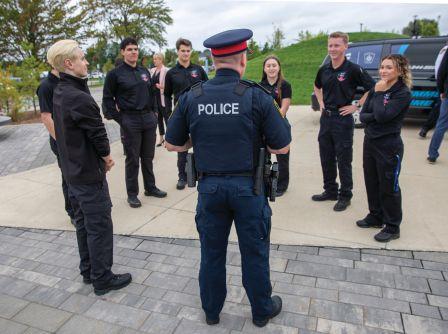
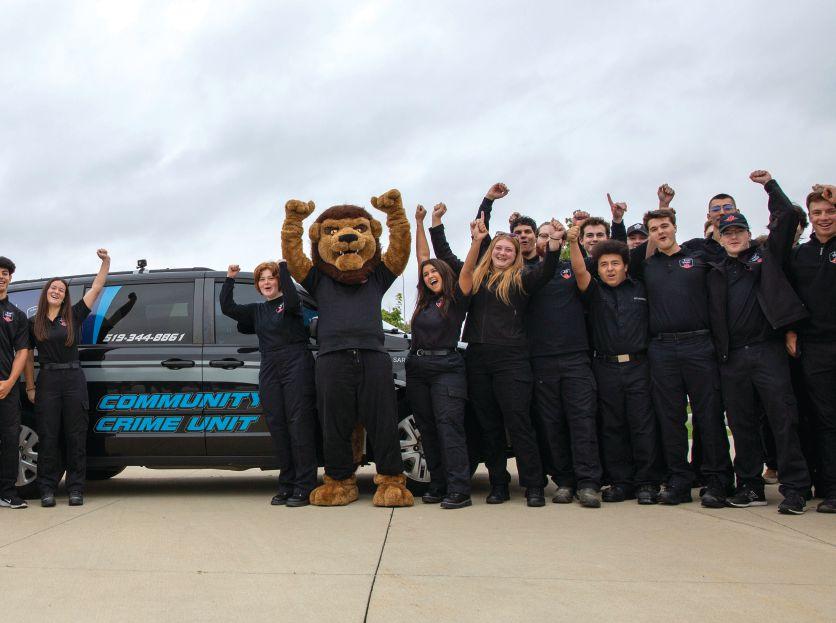
way to attract applicants for sworn and civilian roles. By offering students real-world experience through a position in the newly established Community Crime Unit, they can determine if a career in policing suits them. In this way, the Sarnia Police Service is creating new pathways to recruit and reminds us that innovative ideas often don’t need large budgets or sweeping reforms. Sometimes, it just requires a willingness to try something different. You can read the full story on page 8. And speaking of bringing fresh energy into your organizations with new recruits, it’s time again for Blue Line’s Rookie of the Year award. We’ve opened nominations and will accept them until Dec. 12, 2025. Every year, this award is one of my personal favourites to share, as it allows the policing community to highlight incredible new officers stepping into this profession with passion, integrity and heart. So, if you know someone deserving of being named Rookie of the Year for 2026, be sure to send the nomination package to me before the deadline.
www.BlueLine.ca
Reader Service
Print and digital subscription inquiries or changes, please contact customer service
Angelita Potal
Tel: 416-510-5113
Fax: (416) 510-6875
email: apotal@annexbusinessmedia.com
Mail: 111 Gordon Baker Rd., Suite 400 Toronto, ON M2H 3R1
GROUP PUBLISHER | ADAM SZPAKOWSKI aszpakowski@annexbusinessmedia.com
AUDIENCE DEVELOPMENT MANAGER BEATA OLECHNOWICZ | (416) 510-5182 bolechnowicz@annexbusinessmedia.com
CEO | SCOTT JAMIESON sjamieson@annexbusinessmedia.com
ANNEX BUSINESS MEDIA
111 Gordon Baker Road, Suite 400 Toronto, ON M2H 3R1 Tel. 416-442-5600 • Fax 416-442-2191
Publication Mail Agreement No. 40065710
ISSN 0847-8538 Printed in Canada
But it’s not just about the numbers. It’s about the culture of the organization, the connection and community within it. It’s about ensuring that new recruits not only want to don the uniform and badge but also truly grasp the immense responsibility that comes with them.
Unfortunately, when it comes to recruitment, there isn’t a one-size-fits-all solution, or at least none that have been discovered yet. However, it’s clear that we need to keep sharing ideas, and that’s what I hope to do with this edition of Blue Line.
In our cover story, we explore a solution gaining traction in Sarnia, Ont. Through a successful partnership with a local college, Sarnia Police Service has discovered a new
As always, I encourage you to reach out to me if there’s a topic you believe deserves attention, an officer you think should be featured, or a new initiative your police service has launched. Your input is invaluable in helping us cover the issues that matter most to this community. I can be reached at bschroeder@annexbusinessmedia.com.
Until next time, happy reading and be well.
SUBSCRIPTION RATES
Canada — 1 Year $32.13; 2 Year $53.55 plus tax USA — 1 Year $139.23 CAD
Occasionally, Blue Line will mail information on behalf of industry-related groups whose products and services we believe may be of interest to you. If you prefer not to receive this information, please contact our circulation department in any of the four ways listed above.
Pilot project to support Royal Newfoundland Constabulary
The Provincial Government is launching a new special constable pilot initiative to support the Royal Newfoundland Constabulary (RNC) and its efforts in the Northeast Avalon.
Through this new initiative, the RNC will hire special constables to perform low-risk duties, allowing front-line officers to use their full range of expertise more effectively. Duties include non-core police functions such as supervising detained individuals, guarding crime scenes, traffic control and assisting with administrative tasks.
Police leaders call for legislative reform, coordinated action to confront globalized crime
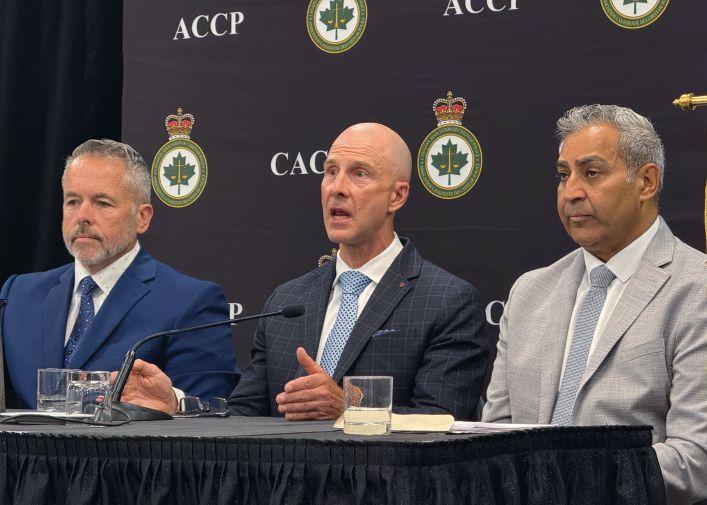
At the Canadian Association of Chiefs of Police (CACP) Annual Summit in August, held in Victoria, B.C., police leaders issued a unified call for the urgent modernization of Canada’s public safety framework amid increasing geopolitical instability and social unrest.
“Geopolitical instability and social unrest are driving a new wave of public safety threats,” said CACP President Commissioner Thomas Carrique. “Bill C-2, the Strong Borders Act, is a timely and necessary step as part of a sustained commitment to modern laws, modern tools and modern collaboration.”
Whether it’s human smuggling or the illicit exportation and importation of illegal drugs, precursors and firearms, Carrique indicated that organized crime groups are taking advantage of systemic blind spots, outdated statutes and digital platforms to victimize Canadians. He noted that Bill C-2 directly
BY THE NUMBERS
addresses long-standing CACP recommendations on lawful access, anti-money laundering, contraband trafficking and the integration of intelligence across agencies. He also referenced the tougher crime bill promised by the federal government in the fall as an essential way to hold high-risk repeat violent offenders accountable and to disrupt organized crime networks through tougher bail and sentencing provisions.
Victoria Police Chief Constable Del Manak, who retired at the end of August, stressed that these are not abstract national concerns. He noted that mail interception loopholes are enabling opioids to enter communities undetected, and financial crime networks are laundering illicit profits through increasingly sophisticated digital platforms.
Plenary sessions at the annual summit all reinforced the need for legislative reform, modern capabilities and coordinated interagency action.
“While geopolitics and social unrest may be beyond our control,” Carrique concluded, “our preparedness and our response, as Canadians, are not.”
The special constables will complete a 10-week training program, including six weeks of classroom instruction provided by the Atlantic Police Academy, followed by four weeks of on-the-job training with the RNC. About 10 to 12 special constables will then be assigned to platoons in the Northeast Avalon area. Recruitment starts this fall, and training will take place in the winter.
“Adding special constables supports the overall team, ensuring sworn officers are better able to focus on what they do best. With healthy and supported people, we will be better positioned to help the communities and residents we serve,” said RNC Chief Patrick R. Roche.
In 2023, the provincial government created a Policing Transformation Working Group to assess the province’s current policing model and offer continuous advice to ensure residents receive the most effective and efficient policing services possible. A key theme that emerged was the need to enable frontline officers to focus on core policing functions that require their full expertise and training. This new pilot was developed in response to feedback gathered through consultations.
In April 2025, Statistics Canada released recent data on Police-reported crime in rural areas of the Canadian provinces, 2023. For more information, please visit www150.statcan.gc.ca.
34 %
The police-reported crime rate was 34 per cent higher in rural areas than in urban areas.
7,317
incidents per 100,000 population in rural areas.
51 %
In 2023, 51 per cent of all police-reported violent crime in rural areas was perpetrated by an intimate partner or family member of the victim.
25 to 44
was the age group with the highest rate of persons accused.
BRITISH COLUMBIA
From left to right: Chief Pierre Brochet of Laval Police Service, Commissioner Thomas Carrique of Ontario Provincial Police, Chief (ret.) Del Manak of Victoria Police Department
PHOTO CREDIT: BRITTANI SCHROEDER
DISPATCHES
The Calgary Police Commission has appointed Katie McLellan as interim chief. McLellan joined CPS in 1987, and as she climbed the ranks, she spent time in investigative areas and was the first inspector of the Criminal Operations Section. She has been a key leader in developing community partnerships and changing the way that police respond to people in crisis.
Jason Blacquiere is the new chief of Summerside Police Service. A respected officer with over 25 years of service, Blacquiere brings a wealth of experience, leadership and a deep commitment to community safety. Since his appointment as deputy chief in Oct. 2022, he has played a pivotal role in driving operational excellence and advancing key initiatives within the department.
Mario Lagrotteria of the Niagara Regional Police Service has been selected as the newest deputy chief.
Lagrotteria began his policing career in 2001 and joined the NRPS in 2006. He served as a detective constable in the criminal investigation unit until 2013, when he was promoted to sergeant and then staff sergeant. In 2023, he was promoted to the rank of superintendent.
Chris Landry is the newest deputy chief for the South Simcoe Police Service. Landry brings over 30 years of policing experience with the Ontario Provincial Police to the role and is a people-centred leader who combines a strong track record of delivering results and empathic leadership. Landry began with the South Simcoe Police Service in April 2025.
Chief Superintendent Bert Ferreira was selected as the Officer-in-Charge (OIC) of the Lower Mainland District Integrated Teams. Ferreira began his career as a Mountie at the North Vancouver Detachment and, throughout his 29 years of service with the RCMP, has worked in several units and programs. Over the past five years, he has served as the OIC of the Pacific Border Integrity Program.
Michel Pelletier has been appointed as inspector of the Edmundston Police Force. Pelletier has been a member of the EPF for over 20 years. He started as a student bicycle patrol officer and has worked as a patrol officer, investigator, supervisory sergeant of the patrol section, and supervisory sergeant of the investigation section. Pelletier is a
great martial arts enthusiast and a seasoned instructor in the use of force.
After 37 years of federal public service, Deputy Commissioner Rob Hill has retired from the RCMP. Hill assumed command of the Alberta RCMP in early 2024. He served for over 27 years with the RCMP and several years as a medic with the Canadian Armed Forces. Prior to his role in Alberta, Hill served as the commanding officer of the Manitoba RCMP, following three years as its criminal operations officer.
After 45 years of dedicated service to Summerside Police Services, Chief Sinclair Walker officially retired in May. Chief Walker began his career in 1980, following his graduation from the Atlantic Police Academy in 1978. His
rise through the ranks was defined by commitment, integrity and exemplary leadership. Promoted to corporal in 1989 and sergeant in 1990, he served as deputy chief for 11 years before being appointed chief of police in 2022.
After eight years of dedicated service, OPP Canine Dance has headed for a well-earned retirement. She was one of the first Wilderness Search and Rescue (SAR) dogs trained in the OPP and has spent her career locating missing persons and human remains. Her determination and skills have made a lasting impact. Enjoy your well-deserved rest, Dance.
PROMOTIONS, RETIREMENTS, RECOGNITION • If you have an officer in your agency recently promoted or retiring or an individual you wish to have recognized (major award or recently deceased) you can let Blue Line magazine know by emailing: bschroeder@ annexbusinessmedia.com
CALENDAR
2025 Building Bridges: Evidence-Based Policing Conference
Date: Oct. 9 – 10, 2025
Location: The Blue Mountains, Ont. buildingbridgesebp.ca
28th Annual Fraud and Anti-Counterfeiting Conference
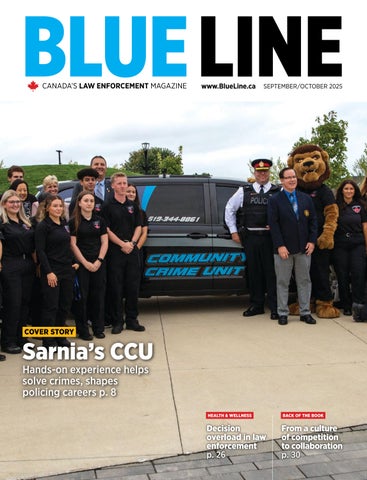
When Derek Davis was sworn in as chief of police in Sarnia in May 2022, one of his first major tasks was to develop a new business plan for the service, as their existing plan was set to expire in that same year. Part of this planning process involved hosting public town halls and distributing a community survey so that the new chief could better understand the community’s needs.
Although the survey covered many areas, one stood out. It showed that over 52 per cent of respondents said they had either been the victim of, or witnessed, a crime that went unreported. When asked why it wasn’t reported to police, 13 per cent thought the police were too busy, 17 per cent felt the crime wasn’t serious enough, 20 per cent believed reporting would take too long, and 41 per cent believed nothing would result from it. This underscored a community “crisis of confidence” in the SPS response to less serious offences.
From a practical community policing perspective, Davis recognized that many agencies seek workload efficiencies by not responding to “low priority” or “minor” offences. With limited resources, high call volume and a steady stream of higher priority calls for service, this approach made sense to SPS from a cost perspective. However, Davis also recognized that “If you’re a victim of a so-called minor crime,
careers
including theft or property damage, and call the police to report it, you want someone to do something about it.” The challenge facing the new chief and his leadership team was to provide better service to these victims of crime, using existing resources, and not increasing the already high workloads of front-line officers.
The Community Crime Unit
Informed by these new community expectations, Davis and the leadership team at Sarnia Police Service (SPS) developed their 2023 budget, knowing they needed to address this issue. Around the same time, Davis met with the executive team at Lambton College, a local post-secondary institution, and an idea was sparked. “What if we could collaborate on a new type of partnership? The College’s policing students are looking to gain a unique educational experience through SPS, and SPS wants to improve service delivery to our community. Together, we might find a win-win opportunity,” said Davis.
After extensive discussions, the concept for a Community Crime Unit (CCU) was finalized. Leveraging SPS’s web development expertise, a suite of student-oriented online tools was developed, enabling students to investigate crimes under the supervision of a sworn SPS member. These tools help CCU members investigate crimes that SPS members find more difficult to address among the larger surge of higher-priority emergencies.
Students interested in joining the unit must undergo an interview process and a background check for proper vetting beforehand. Once selected, they are required to sign an oath of secrecy and are treated like all volunteers in the police service.
“It’s their job to provide enhanced services to the members of the community who have been victimized by these lower-level crimes,” said Davis. “We wanted the students to be out in the community and interacting with the public. We wanted them to learn what information was important to gather in statements and the different pieces of evidence that police would need to collect in these cases. Essentially, we wanted them to be a part of the full process up until the point of contacting and interacting with the suspects.”
Once the students thoroughly investigate each case, their next step is to submit it to their supervising officer, who will then review their work and provide feedback. If the student has built a strong, successful case, it will then be passed to a police officer for further investigation or to make an arrest.
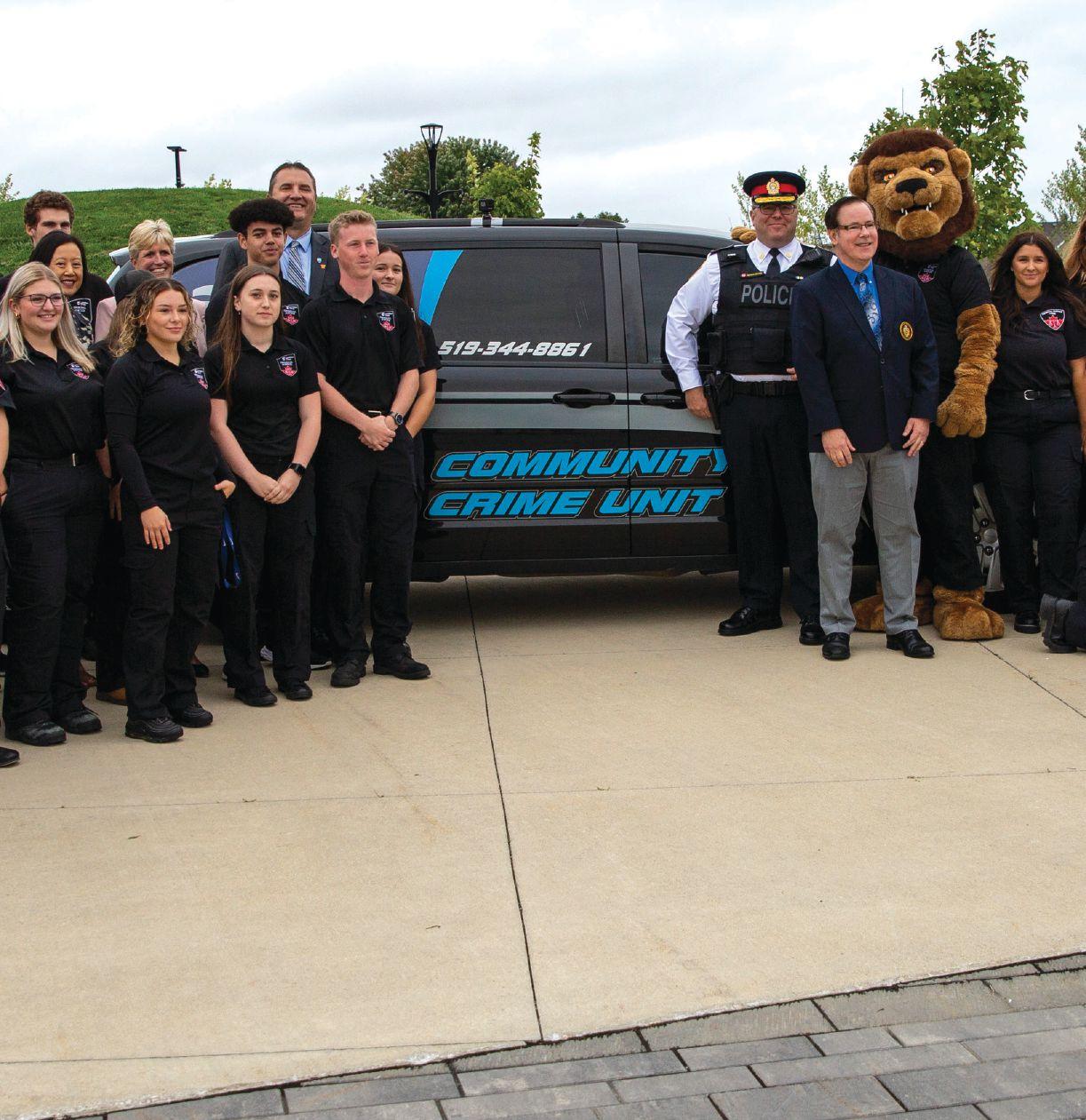
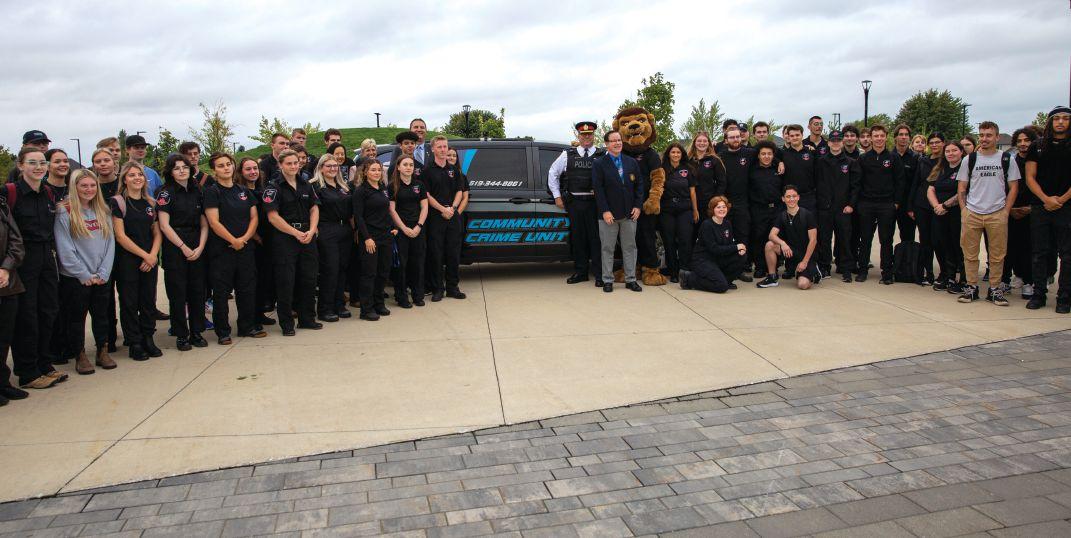
When the CCU was selecting its inaugural members, four students from the college were chosen. The unit was provided with office space, materials to establish a small investigation lab, and a dedicated vehicle to respond to victims in the community. The four students were divided into two groups, with each group working with SPS two days a week. Cases were assigned to individual students, which allowed a shift from the regular co-op model of experiential observation to active participation in policing functions.
“It’s important to note that this unit does not replace police officers. Instead, it frees up front-line officers for the higher priorities while addressing the types of calls that those same officers would have a difficult time getting to,” said Davis.
When considering the goals of the unit, a hope was for members to think about the social factors behind these crimes, such as mental health and addiction. Many of the offenders involved in “minor crimes” often have extensive histories of recidiv -
52% of survey respondents said they had either been the victim of, or witnessed, a crime that went unreported.
ism. Each interaction with police, especially in minor crimes, is a potential opportunity to connect willing offenders with necessary supports and resources. “It’s not just about blindly arresting someone and charging them, but looking holistically at holding the offender accountable, supporting victims and also exploring what might be the best way forward to prevent this individual from offending again. Each interaction is an opportunity to provide that offramp from criminality, if the person is willing,” said Davis.
Progress since 2023
In June 2024, Brad Murray, manager of crime and intelligence, assumed the role of supervisor of the CCU. He was initially attracted to the CCU as an innovative initiative providing a vital service to victims of crime.
“The CCU was already a well-oiled machine before I joined as the manager, but one of my goals was to broaden their perspective to acknowledge and focus on the connec-
“With the creation of this unit, we’re putting the community back into policing.” – Chief Derek Davis
tion between retail crime, the local criminal networks and organized crime globally,” said Murray.
Under Murray’s leadership, the CCU takes initial reports and provides personalized responses to “less serious” crimes, such as shoplifting, thefts from vehicles, mischief, and stolen bikes.
In one investigation, the CCU received several online shoplifting reports from a local retailer. Using images submitted by the retailer, CCU members identified the suspects, who were already known to SPS officers for other property crimes and drug offences. Sarnia Police’s Criminal Investigations Division took over the case, obtained search warrants, seized a loaded Glock 23 .40 calibre handgun, $15,120 in cash, 4 grams of fentanyl, 23 grams of methamphetamine, 4 grams of cocaine, and arrested three individuals.
In another case, the CCU received an online report from a resident whose golf clubs were stolen from his vehicle. With the CCU’s assistance, police were able to identify and locate the person responsible for the theft and determine where the property was being sold and/or traded. The initial investigation identified several individuals involved in theft and trafficking stolen property within the City of Sarnia. As a result, SPS launched Project Bobcat, which focused on property crimes in Sarnia and was led by the SPS Intelligence Unit. It has now resulted in charges against eight individuals.
Owing to the unit’s successes, SPS has increased the number of students from four to eight. “In policing, specifically intelligence-led policing, ‘work makes work,’ so it is important for the CCU to grow with the demands and current crime trends. It’s imperative that we plan for continued growth while maintaining our focus on the impacts of crime on our local residents,” said Murray. Over the two years since its launch, the CCU has exceeded expectations in several key areas. The unit has been successful in handling lower-level cases, leading to a high number of clearances, charges and arrests for crimes affecting everyday
citizens. Considering the numbers, the CCU has investigated 1386 occurrences that have resulted in 412 arrests and 831 criminal charges.
Sarnia Police continues to receive positive feedback from students involved in the CCU program. More importantly, the community response has been positive, especially for victims of crimes who see their cases resolved and property recovered. Benefits are also clear in recruitment, as CCU students are applying for both sworn and civilian positions. Alternatively, they may find other policing roles, such as dispatch or other critical non-enforcement roles that are of interest to them.
Students have been overwhelmingly positive about their experiences and the hands-on learning the unit provides.
Liam Chicoine, one of the CCU’s first student members, is now finishing his training at the Ontario Police College. “Working with the CCU
solidified my determination to become a constable with SPS. The CCU role helped me develop a realistic understanding of the job of a police officer and see how they can make a difference,” he shared.
“Learning how to make a difference in my community was incredibly valuable.”
The future of the CCU
An important aspect of the program to Davis is that it shows the Service’s ongoing commitment to finding effective and financially sustainable ways to provide policing services to their community. “This isn’t something that we purchased; it was an idea to address an operational need, to avoid negatively impacting already stretched resources, and to leverage existing partnerships in new and innovative ways,” he shared.
Sarnia Police are satisfied with their partnership with Lambton College and the results of the CCU program. As the program progresses, Davis and Murray aim to continually improve and structure it further. This evolution includes a quicker onboarding process as they welcome new students each semester.
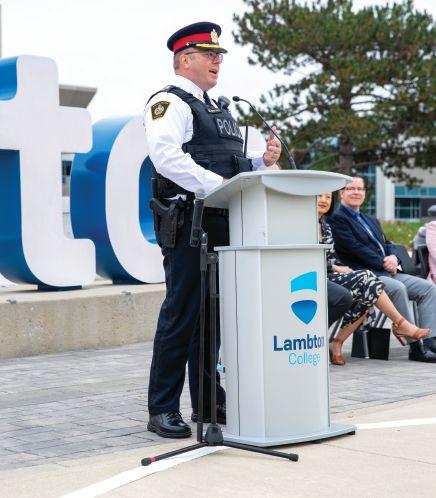
Chief Derek Davis addresses a crowd at the official launch of the CCU.
Filling the police recruitment bucket
Modern strategies for law enforcement staffing
By Neil Dubord and Cal Corley
In the complex landscape of contemporary policing, effective recruitment has emerged as one of the most critical determinants of a police agency’s success in tackling crime and co-producing community safety (IACP, 2024; Couto and Sweeney, 2025).
With myriad challenges, from the changing nature of crime/harm, to changing community demographics and expectations, police leaders face the transformative necessity of developing a workforce that is not only professional and well-trained but also reflects the tapestry of the communities they serve.
When recruitment is handled as a strategic, mission-critical function, its impact on the organization increases dramatically. A police recruitment system thoughtfully designed and executed extends its influence far beyond filling vacancies; it becomes a driver of organizational effectiveness, trusted community relations, and the agility required to navigate challenges.
Police leaders and their human resources professionals know all too well the daunting challenges they face in attracting and retaining highly qualified talent. “This is a critical time for policing in Ontario. Communities are evolving, expectations are changing and so are the demands placed on our police officers,” said Deputy Chief of Halton Regional Police Service, and Past President of the OACP, Roger Wilkie. He is leading the “Answer the Call” recruiting initiative in Ontario. Several other leaders have implemented innovative strategies, but for most agencies, the current situation calls for a significant paradigm
Merely filling vacancies is insufficient.
shift. Merely filling vacancies is insufficient. Rather, an integrated approach that promotes an inclusive workplace culture to actively attract, develop, recognize and retain top-tier talent is essential. With finite internal capacities, agencies would be well advised to concentrate on optimizing these interconnected systems and processes. This should be grounded in a well-defined organizing philosophy and a corresponding set of operating principles that guide the integration of these human resource systems.
The bucket analogy
Imagine the recruiting and retention system as a bucket. Police agencies face multiple simultaneous challenges: a widening hole due to attrition, a tightening faucet of qualified applicants, and an ever-expanding bucket of policing responsibilities. It’s an interconnected system, and it is difficult to talk about recruiting without mentioning retention and the changing job expectations. Police agencies must prioritize
recruitment and focus on attracting talent that commands respect and trust. By bringing in individuals who exemplify intelligence, empathy and critical thinking, organizations position themselves for sustained success and resilience in even the most demanding circumstances.
The bucket is leaking: Attrition Attrition operates as a persistent leak in the bucket, draining valuable human capital and undermining operational capacity. The impending retirement of the last of the baby boom generation threatens to accelerate this loss, stripping many organizations of the seasoned expertise that has long underpinned effective policing. Compounding this challenge, it may seem as though younger officers are increasingly prioritizing personal fulfillment and are more inclined than their predecessors to pivot toward alternative careers when organizational conditions do not align with their values and aspirations (COPS Innovations).
The bucket is getting larger: Expanding scope of duties
Contemporary policing is evolving, driving the need for sworn officers with new skills. Community-oriented policing has redefined police missions, from merely reacting to crime to actively building partnerships, solving complex problems and providing services, particularly in larger areas with high community expectations (COPS Innovations). Examples include partnering with others to attend to the unhoused or those in mental health crises.
The proliferation of new and emerging technologies in the hands of criminals is driving a new level of sophistication on the part of the police. As globalization and rapid technological change continue to reshape the landscape of crime, police agencies are increasingly confronted with novel criminal modalities ranging from cyber intrusion to transnational trafficking. This evolution calls for new knowledge, experience and skills not traditionally found in police services.
Filling the bucket with a tightening faucet: Recruiting challenges
Lately, that faucet has slowed to a trickle. Demographic shifts, tight labour-market conditions and internal constraints are all restricting the flow, so the bucket isn’t getting the qualified applicants it needs. Fewer individuals now satisfy the intellectual, physical and ethical thresholds for police service, and many Generation Z’ers seem to sample a range of professional experiences before committing to a vocation, which delays or diverts potential interest in police careers (Deloitte, 2024). Departments increasingly vie for talent by dangling signing bonuses, relocation stipends and lifestyle incentives that simply shuffle officers among jurisdictions rather than expand the overall pipeline (COPS Innovations).
Simultaneously, the occupational demands of modern policing have broadened to include technological fluency, cross-cultural competence and advanced problem-solving ability, thereby raising the entry bar for prospective recruits.
Compensation that once distinguished the profession now compares unfavorably with opportunities in other sectors, while internal factors such as limited promotional pathways, perceived inequities and opaque decision-making processes further discourage high-potential candidates.
Under mounting pressure, some jurisdictions have relaxed residency rules and fitness prerequisites, lowered educational requirements and overlooked minor drug or credit issues to grow their applicant pools. But there is a cost to such compromises.
Strategies for improving recruitment Strategies must start with a scan and a plan. Effective workforce planning starts with a data-driven review of the department’s
Police agencies face multiple simultaneous challenges: a widening “hole” due to attrition, a tightening “faucet” of qualified applicants and an ever-expanding “bucket” of policing responsibilities.
staffing needs. This means you must collect the data necessary to complete the analysis. Instead of informal comparisons or cop-to-pop ratios, leaders should analyze patrol workloads, forecast attrition and evaluate various scheduling plans to develop an evidence-informed staffing and deployment model. A diverse team, including community members and police leaders, can align these findings with budgetary constraints, departmental mission and local priorities, ultimately clarifying the desired skills and other qualities required in new recruits.
Once staffing targets are set and data-informed decisions are made, the focus shifts to recruitment. Successful recruitment involves a collaborative effort led by a specially trained and dedicated team that uses both external outreach and internal “feeder” groups. Regular reviews of pay, benefits and career development help identify key incentives for recruiting. Externally, leveraging social media, podcasts and blogs can boost a department’s brand by highlighting diversity, advancement opportunities and the public-service value of police work, especially appealing to women, minorities and second-career applicants (COPS Innovations).
Modern assessment tools can broaden the applicant pool. Written tests like the SIGMA Survey measure communication
and reasoning skills, while fitness standards verify job-related abilities (Recruitment Strategy 2020 Final). Selection processes increasingly prioritize “selecting in” resilient and adaptable candidates over merely “selecting out” those with disqualifying issues. Predictive models, such as those used by the Los Angeles Police Department, help identify candidates likely to succeed in training and on the job (COPS Innovations).
Can you get a full bucket?
A successful recruitment plan for today’s police agencies should begin with a data-driven staffing audit and move quickly into action.
• Map workloads and forecast attrition to set realistic hiring targets.
• Secure the budget to fund competitive pay, strong health and pension packages, and clear career pathways.
• Rebrand the department online and in the community, highlighting service, diversity and advancement so that younger and second-career candidates see policing as a meaningful option.
• Widen the talent pipeline by pairing validated cognitive and fitness tests with resilience and mental-health screens that “select in” adaptable, ethical applicants.
• Make recruitment a department-wide responsibility, with every officer acting as an ambassador, supported by a dedicated unit of specialists who leverage social media, community liaisons, and predictive analytics to engage under-represented groups.
• Strengthen engagement and trust by giving officers a voice in decisions and by partnering with community and civic stakeholders on outreach, assessment and feedback.
When executed together, these steps can plug the retention leak and refill the recruiting bucket with well-matched, mission-ready officers.
Neil Dubord is an accomplished law enforcement professional and thought leader with over 30 years of experience in policing and public safety. Cal Corley, MBA, is a former Assistant Commissioner of the RCMP, where he was head of the Canadian Police College and served as the RCMP Senior Envoy to Mexico and the Americas. Now, Cal is the CEO of the Community Safety Knowledge Alliance (CKSA), a Canadian non-profit that supports police, public health and social sector leaders.
“Training that works”
The impact of scenario-based police programs
By David Silverberg
Training officers with scenario-based programs can lead to less use of force without compromising their safety, a UK study found1, and several police training specialists across Canada shared how they’ve seen a maturity in how these scenes are reflecting today’s evolving communities.
A 2024 report, published in Justice Evaluation Journal, wrote how scenario-focused programs led to a 10.9 per cent decrease in the likelihood that officers used force in a given week, with the biggest reductions seen with
hands-on force such as restraining someone on the ground.
The study’s training programs focused on scenarios such as booking at custody, attending a domestic event, intervening in a fight in the street, performing a stop and search, and dealing with a vulnerable person.
As the study states, “As they respond to a mock-up of a house in the training environment, officers may find a bickering couple who are responsive to police requests or a highly aggressive individual, armed with a prop knife, who reports they have just assaulted their partner
– or anything in between. Officers are assessed on how they manage the role-players in front of them, what they do to de-escalate and what justification they have for using force if they choose to do so.”
Around 1,800 officers were trained during this study, coming from the Avon and Somerset constabularies. Since then, the training modules have rolled out to 43 constabularies across England and Wales.
“This is training that works,” says lead study author Michael Sanders, who is a public policy professor at King’s College
London’s Policy Institute. This type of training program, which stresses de-escalation techniques, “builds on conflict-management techniques and is effective in reducing force, without increasing the likelihood that an officer themselves is harmed,” he adds.
Scenario-based training (SBT), coupled with conflict management strategies, is at the core of what many police training programs in Canada have offered. Their strategies have shifted to identify key goals, mirror the exact incidents officers are most likely to face, and
refrain from using aggressive tactics.
Sergeant John Warin of Calgary Police Service’s Skills and Procedures Team says that while scenario-led programs have been taught to Canadian officers since the 1990s, they have matured in vital ways.
“Agencies have focused on specific goals with their training programs, and they’re using scenarios most relevant to the community’s common calls,” he says, “They are adding mechanisms to ask the questions about what officers are seeing on the ground and where use of force incidents can be improved.”
The programs he’s led have ensured the incidents are generating, according to Warin, “physical responses related to stress, and creating a fear or anxiety the officer will likely experience. You want them to deal with those fears to allow them to feel confident to control the situation.”
Decades ago, words like de-escalation never came up in training programs, remembers Darun Hurdowar, a training constable for Toronto Police Service’s Incident Response Training Section. “Now it’s everywhere, and I’ve seen how scenario-based training helps optimize learning and allows units to evaluate previous learning and build upon it.”
A 14-year veteran in the training department, Hurdowar says there
10.9%
decrease in the likelihood that police officers used force in a given week, with the biggest reductions seen with “hands-on” force such as restraining someone on the ground.
used to be a reigning “old-school mentality by training officers who were not necessarily trained to instruct scenario-based programs.”
While more aggressive tactics were taught in 1990s-era training programs, Hurdowar says, departments didn’t have the “less lethal options available to them for events such as crowd control,” he cautions.
Another consideration on why scenario-based training programs have matured is the widespread adoption of body-worn cameras. “That kind of scrutiny has evolved expectations by society on policing, and law enforcement has also changed,” Hardowar says.
Hurdowar has also adjusted TPS’s training programs to reflect factors such as the city’s main call types, rather than rare, extremely dangerous situations, which were often included in programs in the 1990s.
“People in crisis have been a major source of focus for us in the past 10 years, whether they’re a threat to themselves or others,” he says.
A 2024 study2 found that the more realistic these training scenarios
Decades ago, words like “de-escalation” never came up in training programs.
are to a department’s actual calls, the more effective this training regimen could be. “When the practice is premised on authentic SBT, it can be an important catalyst for changes to training,” write the authors of a report published in Frontiers in Education
When considering community members who may be facing a mental health crisis, experts argue that the focus should be on incorporating the viewpoints of those on the front lines.
“There is a well-defined necessity to involve community experts and stakeholders as partners in mental health crisis training design and production to advance training content that serves the needs of citizens and police,” according to the authors of the study3 published in the Journal of Police and Criminal Psychology.
Scenario-based training should also be tailored to a city’s cultural make-up. Hurdowar and Warin have guided scenario designs to ensure recognition is given to the shifting demographics in many major cities. “Bridging the gap is important when it comes to how some people outside of Canada carry fear about policing based on what they experienced in their homeland,” notes Warin.
What Toronto has developed are situations where language barriers cause confusion, Hurdowar says. “That’s where non-verbal de-escalation communication comes in, but it also starts at the top. You need to have officers coming from a range of communities, who can speak the language of those they seek to help.”
As for what’s next for SBT, Sanders wants to see de-escalation programs targeting jurisdictions where use of force has been problematic or unwarranted. “What we must learn is how this training works in various contexts, such as areas in the United States where they have a different pattern of use of force compared to the UK or Canada.”
For a full list of references, please visit www.blueline.ca/Training-that-works
David Silverberg is a freelance journalist who writes for BBC News, the Toronto Star, The Globe & Mail and MIT Technology Review. He also coaches journalists and creative writers.
Education & Training Directory 2025-2026
Annex Bookstore
Annex Bookstore provides education and training materials, reference books and texts to law enforcement professionals across Canada, providing the information they need to train, operate and successfully grow in their career.
Annex Bookstore is a division of Annex Business Media, a dynamic B2B company comprised of over 60 forward-thinking media brands. All of these brands are built to serve Canadian industries with timely and relevant information and resources. www.annexbookstore.com/police
BCIT Forensics
The British Columbia Institute of Technology (BCIT) offers the most comprehensive Forensic Science programming in Canada, with courses and programs that cover crime and intelligence analysis, digital forensics and cybersecurity, forensic science, fraud and financial crime investigation, and forensic health sciences. Professional development opportunities include courses, microcredentials, advanced certificates, and degrees. Many of our courses are offered online and some programs can be completed remotely, with multiple intakes per year. Learn more at bcit.ca/forensics.
CPKN – Canadian Police Knowledge Network
The Canadian Police Knowledge Network (CPKN) is a national not-for-profit that is committed to driving excellence in professional development for policing. Since 2004, we have developed relevant, cost-effective learning solutions that respond to the evolving needs of Canadian police and public safety professionals. As a collaborative network, we work
closely with the policing community to create educational resources that save on time, budget, and resources. CPKN offers an extensive catalog with over 160 courses that are informed and vetted by subject matter experts across the country.
To learn more: www.cpkn.ca.
Dalhousie University
Since 1993, the Dalhousie Police Leadership Program has been helping law enforcement professionals advance their careers with flexible, online learning. Our courses and certificates focus on today’s most critical topics in policing — financial crime investigation, occupational stress and resilience, municipal finance, and more. Designed for working professionals, our programs are practical, relevant, and immediately applicable on the job. Learn from expert instructors, gain skills that set you apart, and take the next step in your professional journey. For more information and to enroll visit www.dal.ca/openlearning or contact openlearning@dal.ca, 1-800-565-8867.
Georgian College
A leader in providing police and community safety education and training, Georgian College is pleased to offer a fully online Honours Bachelor of Police Studies degree program. Police professionals can fast-track with advanced standing. Qualified first class constables can receive up to 20 credits (50% of the program), with an additional exemption of 10 courses (25% of the program) for those with previously completed post-secondary education. Course faculty are highly regarded professionals in the field. Apply today, intakes offered each semester: https:// www.georgiancollege.ca/ academics/programs/honoursbachelor-police-studies/parttime/#program-information.
Lethbridge College
Are you ready to make a difference? Choose from oncampus or online learning with Lethbridge Polytechnic’s justice programs. Both diploma programs, Criminal Justice – Policing and Criminal Justice – Corrections, can lead you into our Bachelor of Criminal Justice, where you’ll learn through a blend of classroom theory, work-integrated learning and applied research opportunities. Already working in the field? Your experience could earn you prior learning credits. Learn more at lethpolytech.ca/justice
Red Tunic Insurance
Red Tunic Insurance was created specifically for RCMP (NPF) members to offer national discounted home and auto insurance rates for current and retired members. You protect and serve our communities, and we take pride in appreciating what you do by protecting you. As a broker, we offer you more choice, personalized service and the right coverage to meet your needs at the best price. Thank you for what you do. Learn more at www.redtunicinsurance.ca or call 1-833-673-7269.
Beretta Defense Technologies
Beretta Defense Technologies is a concept that has grown from the needs of government and law enforcement agencies to cover a wide range of complicated scenarios by providing a unique combination of services, weaponry and equipment - from firearms, ammunition, and optics – to match every operational need. BDT products are sold through Stoeger Canada (1990) Ltd, a
Beretta Group Company. Stoeger Canada is the exclusive Canadian distributor for Centanex, Burris and Ase Utra suppressors. For Canadian Agency and customer inquiries, please contact David Macdonald, Manager of Defence & Law Enforcement, at dmacdonald@ berettadefensetechnologies.ca.
Tirsia Tactical
Tirsia Tactical is an internationally recognized authority in law enforcement training in the use of defensive tactics and firearms for both law enforcement and security. Our program has been developed to enhance officers’ skills, knowledge and readiness, and our courses are designed and tailored to augment existing academy training programs in line with current industry best practices. The instructor cadre is made up of highly regarded professionals in the industry, and we offer officer and instructor programs around the world. Learn more at www.tirsiatactical.com or email Info@tirsiatactical.com
Trident Training Solutions
Trident Training Solutions has comprehensive training programs ideal for law enforcement and security agencies. Our training structure is scalable and flexible based on the client’s needs. We incorporate a blended program of virtual training sessions, an online school, and in-person instructor-led classes to allow flexibility. We specialize in de-escalation strategies, legislative authorities, defensive tactics and use of force with a strong focus on practical training. https:// tridenttrainingsolutions.ca/.
University of Guelph-Humber Part-time online degree. Earn your Bachelor of Applied Arts, specialization in Justice and Public Safety. Receive credit for work experience, training and postsecondary study. Complete in 2 to 2.5 years. Students in this program are police officers, paramedics, firefighters and other frontline public safety workers, and range from new employees to managers, command staff and senior executives. Apply by May 1, 2026, to start in September 2026. Open up opportunities: 416-798-1331, futurestudent@ guelphhumber.ca. uofgh.ca/jps
Wilfrid Laurier University Study when and where you want with one of our part-time or full-time online Policing and Public Safety degrees at the graduate or undergraduate level. With three start dates per year, what are you waiting for?
Explore our Centre for Public Safety and Well-Being, where we offer specialized police training developed by experts specializing in human trafficking, emergency management planning, police leadership and Gladue principles. For current offerings, visit www.wlu.ca/programs or email us at publicsafety@wlu.ca.
BEHAVIOURAL SCIENCES
BY MICHAEL QUINN AND PETER COLLINS
The bond you can’t explain: Losing a police dog
Police and military forces have used canines since the Middle Ages to track criminals and safeguard property. In fourteenth-century Scotland, bloodhounds were known as Slough dogs. The word sleuth is derived from slough. By the early twentieth century, dog handling became a more formal part of law enforcement.
The U.S. National War Dog Cemetery is a memorial to war dogs situated at the Naval Base on the island of Guam. It is the first official war dog monument in the United States. The cemetery honours the dogs—primarily Doberman Pinschers—that were killed in service with the United States Marine Corps during the Second Battle of Guam in 1944. Over time, the role of canines in service has evolved — not just in their tactical importance but also in how their contributions and bonds with handlers are understood. While dogs were once viewed solely as tools for law enforcement or warfare, conflicts like the Vietnam War revealed the depth and personal nature of the connection between handler and dog. This change in perspective eventually led to significant shifts in how military dogs are
treated after their service.
Interested in being listed in Blue Line’s 2026 Supply & Service Guide or the 2026-2027 Education & Training Directory?
Contact Janice Eaton (Janice@Blueline.ca) for more information.
Studies have shown that the bond between police handlers and their dogs can be even stronger than the bond between regular pet owners and their dogs. Canine unit officers often work with the same dog for the duration of the dog’s service, which strengthens trust and communication. Dogs that are consistently handled and involved in daily training or shared tasks have been found to be more obedient, less aggressive and better able to manage stress (Anglin, 2023).
This bond, while professional in function, is deeply emotional in reality, and when it’s broken, the loss is profound.
During the Vietnam War, the U.S. military did not fully grasp the bond between handlers and their dogs. Dog handlers played a crucial role in the conflict, working alongside their canine partners in various roles, including scouting, sentry duty and tracking. These teams saved thousands of lives, but sadly, most of the dogs were left behind when the war ended. Classified as equipment, many were either euthanized or abandoned in Vietnam. Leaving their dogs behind caused immense emotional distress for many handlers, and some chose to stay for additional tours rather than leave their canine companions. Due to the efforts of Vietnam War dog handlers, Robby’s Law was passed in 2000,
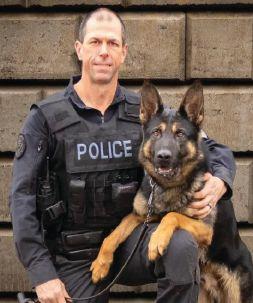
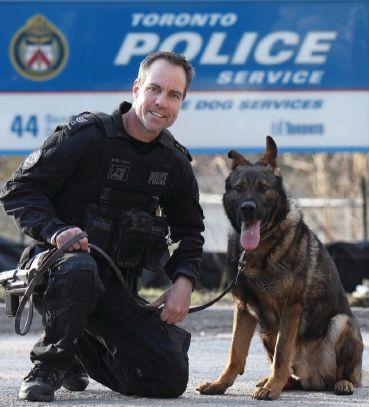
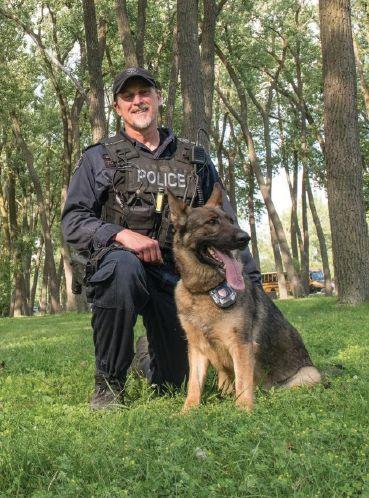
Together until the end. Sgt. Andrew Haynes and Police Service Dog Doc. PHOTOS:
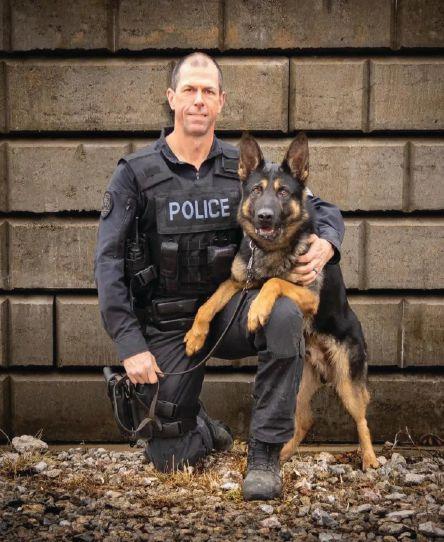
After 12 years of loyal service, PSD Devi is remembered by her handler, TC Brian Andrews, for a career marked by excellence and heart.
ensuring that adoptable military dogs are no longer euthanized after their service.
When the author (Peter Collins) served in Afghanistan with the Canadian Armed Forces, he befriended handlers and their dogs. The handlers were always, as per protocol, one military rank lower than their dog.
There is a part of this job that few outside the K9 world truly understand. We talk a lot about courage, teamwork and trust, but what we rarely talk about is loss.
On July 1, 2025, Toronto Police Service felt that loss in the worst conceivable way when we said goodbye to TPS Police Service Dog (PSD) Doc.
Doc was only three years old. He passed away after a sudden battle with cancer, an illness that crept in quietly and took him far too soon. For most people, it is easy to forget that our police dogs are not just tools or partners; they are family. For their handlers, they are everything.
Sergeant Andrew Haynes understood that bond better than most. For two years, Doc was his constant companion. They trained together, deployed together, and went home together. It’s a unique kind of relationship and hard to describe unless you’ve lived it. The dog doesn’t just
work with you; they live with you and become part of your family. Your kids grow up around them. They’re in the backyard, part of the daily routine, part of your life at home, and in between all of that, you rely on them with your life. That bond begins from day one. You meet this young, untested dog, and together you embark on an intensive four- to six-month training program. You take this blank slate and help shape them into a high-performing police dog—tracking suspects, finding missing persons, clearing buildings and locating evidence. It’s exhausting. It’s frustrating. It’s demanding. But it’s also how that bond is built: through time, patience and total trust.
was steady, reliable and an absolute professional; her passing marked the end of a remarkable chapter. These losses are shared by every handler who has gone through that heartbreak. It’s about watching a tough, capable police officer stand by their best friend, helpless in the face of illness or violence. It is about seeing a family lose a member, a unit lose a teammate, and a city lose a protector.
Sgt. Brandon Smith with PSD Bingo, who gave his life in the line of duty. Forever remembered for his courage and sacrifice.
The author (Michael Quinn) has also felt this loss. Several years ago, his first PSD, Odin, died from cancer at the age of six. It was devastating. You think you’re prepared for it, but you’re not. Losing a dog like that, especially one you have built your career and your life around, hits in a way that is hard to explain to anyone who hasn’t experienced it.
Unfortunately, loss in this line of work is not always from illness. In July 2023, PSD Bingo was shot and killed while searching for a murder suspect. It was a stark reminder that these dogs don’t just protect their human partners; they place themselves in harm’s way for the sake of public safety. They run toward danger without hesitation, and sometimes, tragically, they don’t come home.
They run toward danger without hesitation, and sometimes, tragically, they don’t come home.
On July 9, 2025, we also said goodbye to PSD Devi. She began her service with TPS in May 2015 as an explosive detection dog alongside her handler, Training Constable Brian Andrews. Devi was just a few months away from a well-earned retirement when she passed away of natural causes. Her career spanned a decade, marked by numerous deployments and contributions to public safety that many will never witness, but her absence is deeply felt by all who worked with her. She
Doc’s time on the road was too short, but his impact was large. From his first day of training, he showed heart, drive and the quiet determination that all our K9s possess. One moment that stood out was during a track with the Emergency Task Force (ETF) through multiple backyards and streets. As Doc pulled up a driveway, the backyard ahead was dense with trees and shrubs. His partner, Sgt. Haynes, let him off his leash, and Doc, true to his training and instincts, leapt a chain-link fence and quite literally stood on the suspect until ETF and Haynes could get there to secure them both. That is the kind of dog he was: fearless, determined and always doing exactly what we asked of him.
And when he left us, he left a hole that words cannot really fill. For the public, police dogs are heroes. For us, they are that and so much more. They are our police partners, our protectors, our responsibility. When we lose them, we grieve like any other pet owner, but they are more than just a family member. The bond between a handler and their dog is everlasting. It is one of the most powerful parts of policing.
Rest easy, Doc, Devi and Bingo. You have earned it.
References
Anglin, J. C. (2023). Down the leash: A phenomenological study of K9 officers’ stresses and rewards(Doctoral dissertation, Indiana State University). Sycamore Scholars. Accessed at https://scholars.indianastate. edu/etds/794.
Michael Quinn is a staff sergeant with the Toronto Police Dog Service and has been with TPS since 1996. He can be reached at michael.quinn@tps.ca.
Dr. Peter Collins was the Operational Forensic Psychiatrist with the Ontario Provincial Police for 30 years. He has been a member of the Toronto Police Emergency Task Force Crisis Negotiation team since 1992. He can be reached at peter.collins@utoronto.ca.
Developing robust operational plans
Mitigating VAWs at special events
The development of operational plans for special events has long been a challenging task for law enforcement. The events usually take place in large, sprawling sites that present a soft, target-rich, civilian environment, requiring a substantial protective presence. These highly public occasions can easily set the stage for malicious, exploitative attacks.
By Rino Belcamino
The use of vehicles as weapons (VAWs) is experiencing a resurgence, posing a concern in risk mitigation operations. Over the last 10 years, there have been 37 such attacks globally, with six of those occurring on Canadian soil. It is important for planners to consider some fundamental countermeasures to mitigate the threat to life.
The use of VAWs is a straightforward and effective means of creating a mass casualty event. It is a less sophisticated
attack methodology that requires very little preparation when used in its basest manner: ramming through a pedestrian crowd. VAWs can be used in a stealth or ruse configuration and could be used as an incursion tool to exploit gaps in the perimeter of the event or tailgate a legitimate vehicle through a control point. They may be used solely or in conjunction with an improvised explosive device (IED) to deliver an explosive payload to a
The NightRide 360 is a magnetic or suction cup mounted, remote controlled 360⁰ pan and tilt thermal camera, using heat signatures to give you a view 1/4 mile or more away dust, rain, snow, fog, smoke, and complete darkness.
Perfect for monitoring ongoing situations at night including stakeouts and looking for felons on the run.
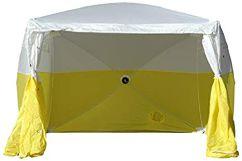
PORTABLE CRIME SCENE SHELTERS
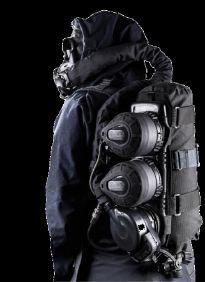
THE MOST ADVANCED MODULAR COMBINATION UNIT RESPIRATOR (CUR)
The Avon CS-PAPR™ is the newest generation of CBRN Powered Air Purifying Respirator (PAPR) designed for use in Combination Unit Respirators
The capability to change levels of protection dependent on the threat, now provides the wearer with increased duration on target and safer operation
Utilizing the Avon MP-PAPR module along with the patented combination hose module, the wearer can seamlessly switch between APR, PAPR and SCBA modes of protection The single air hose connection for all modes allows the wearer to retain a clear mask cheeks for optimum weapon sighting
The low profile shape of the Avon CS-PAPR delivers best in class integration with SCBA systems, benefiting the wearer with reduced weight and size compared to traditional systems
Modular Methodology allows the user to either add the Avon CS-PAPR APR and ST53 SCBA, use as back to the Avon
PORTABLE, NON-METALLIC, NO LOOSE PARTS, LIGHTWEIGHT AND FITS IN PATROL CAR TRUNK
Eflare Beacons are intensely bright
Can be seen from over 1 kilometer away without the night vision, point fixation and distance judgement problems associated with st robe and incandescent lights
Eflare Beacons are infinitely versatile
Available in a variety of one or two colour light combinations, steady -on or flashing, and in three light intensities Easily attaches to clothing, vehicles, cones and bollards Be seen and safe in almost any situation you can think of
Eflare Beacons are portable and simple to use
The largest model is 22 cm tall and weighs only 460 gm including batteries, making it easy to carry or st o w anywhere, and quick and simple to deploy in any situation Just twist the lens to turn on or off, and place one or mo re units around to provide a highly visible warning and safety zone around a person, work area, hazard or accident
Eflare Beacons double the safety
Eflares provide safety by ensuring max imum visibility, but unlike pyrotechnic flares there is no risk of fire or explosion, and there are no toxic fumes or residue
Eflare Beacons are extremely robust
Eflares are waterproof, dustproof and will survive a drop from a one metre height ont o a concrete surface
Eflare Beacons are HAZMAT accredited
Eflare Beacons are HAZMAT accredited for use in Class 1, Div ision 2 / Zone 2 hazardous areas
EFLARES First Responder Kits are found in Police cars across Canada.
From ballistic protection to blunt impact mitigation; in the trenches, on the water or atop the mountain; Team Wendy has a purpose-built helmet for your mission. Military, law enforcement, search and rescue, and adventure community professionals around the world to Team Wendy for helmet solutions.
EXFIL® BALLISTIC SL
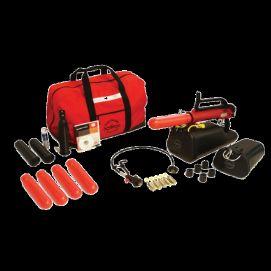
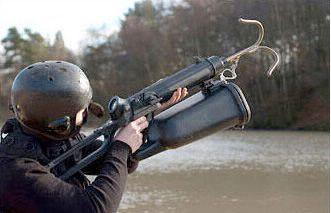
The Tactical ResQmax™ is the line thrower specifically designed for the tactical world of line-throwing As with all the ResQmax™ line throwers, the Tactical ResQmax™ is modular and can be used with a variety of accessories for horizontal or vertical line deployment When equipped with a grappling hook, a climbing line can be deployed to vertical distances up to 110 ft / 34 m, and a tactical ascending ladder can be deployed to vertical distances up to 50 ft / 15 m.
Entry points which would otherwise be inaccessible can be breached with ease for method of entry and ship-boarding operations in both land-based and maritime environments
destination point (slowly, quickly or while stationary). Used in this fashion, they can effectively weaken or breach a physical barrier or building to deliver an IED, causing damage to a vulnerable structural point and vital utilities. VAWs may also be used in a “Trojan Horse” fashion to replicate existing facility vehicles and undermine a safe, vetted fleet.
A record of all registered fleet vehicles linked to an event site should be maintained, with particular focus on recent thefts or auction sales.
I consider VAWs as a tactical tool, and all law enforcement should classify them as improvised, multi-velocity, impact weapons (IMVIW). As such, counterplans must factor in this flexible and robust threat.
The first steps in planning should be to limit vehicle access to the event site and exposure to attending crowds, and to deploy multiple layers of security redundancy. There should be a large perimeter established to aid in preventing access to unauthorized vehicles. Assessing landscape or terrain contours could help in layering the security makeup. Consideration should be given to reinforced fencing, permanent or temporary solid barriers, or the use and deployment of heavy equipment such as road-building machines or garbage trucks. Access control points are a traditional weak point in the event footprint, as they must be flexible enough to allow legitimate vehicular movement while still maintaining security. This would be an ideal consideration for the placement of a manned, road-building machine. To enhance this entry point, a serpentine barrier layout could help decelerate any vehicle incursion.
Here are some indicators that may help identify a pre-emptive attack and suspicious vehicles:
• A vehicle repeatedly circling the block or driving erratically
• Front and rear licence plates do not match
• Signs that the interior electronics, dashboard or ignition have been tampered with
• Extreme weight on one side or in the rear
• A vehicle abandoned in a non-parking or no-standing zone
• Extremely heavy tint to obscure visuals within
• Distinct odours emanating from the vehicle
• Commercial vehicles without signs on them
• Older government or police cars used to blend in with official vehicles
• The driver or passenger looks or acts suspicious
With the large number and variety of threats at special events, law enforcement must be prepared to respond and communicate in a timely fashion. Units should be broken down into small, quick reaction force (QRF) elements, spread strategically, to be able to penetrate massive crowds as well as support one another. These units should have the ability to conduct counter-ramming tactics. Mobile units, consisting of larger police vehicles, should be stationed at layoff points to allow for the interception of unauthorized incursion vehicles. Both overt and covert plain clothes officers should make up the contingency force. Attempts to achieve elevation superiority can be gained by using sentinel overwatch with magnified optics or employing multiple drone platforms.
Always consider an attack as part of a multi-tiered threat that could involve multiple vehicles and attackers. Law enforcement must be vigilant of low signature secondary ambush attacks on foot that may coincide with the main attack. Situational vigilance should consider these possible characteristics of armed attackers in the crowd or on the perimeter lines:
The use of vehicles as weapons (VAWs) is experiencing a resurgence. Over the last 10 years, there have been 37 such attacks globally, with six of those occurring on Canadian soil.
• Sagging jacket
• Obvious outline of a weapon being concealed
• Traditional pocket/sock carry
• In-hand approach carry
• Refusal to show hands
• Sleeves of jackets or sweaters hanging down further on one side
• Asymmetrical gait
• Clipped arm swing with the forearm close to the body
• Quick adjustments and uneven weight distribution
• Hands constantly on or checking concealed weapon
• Odd garment choices for the event environment
The responsibility of threat mitigation for law enforcement at these types of events has grown exponentially in recent years. It is incumbent on those tasked with developing the operational plan to consider the broad implications of the mission and to deploy the proper resources for a successful operation. Commanders must be direct and use plain language when briefing members on the operational plan and its objectives. Planning should detail that law enforcement is lawfully placed and acting in compliance with legislation, regulations, case law, standards and best practices. Officers must understand that all immediate actions shall consider the priorities of life, available options and tactics. Operational planning should address the question of whether decisions, planned or otherwise, are going to be necessary, risk-effective and acceptable (legally, civilly, morally).
We must learn from past incidents and think like insidious attackers. Create future threats in training scenarios to help solidify your operational planning and preparedness. Everyone deployed and tasked must be briefed on all contingencies to ensure they can carry out their responsibilities related to the protection of all innocents in attendance.
Special events... present a soft, target-rich, civilian environment, requiring a substantial protective presence.
Rino Belcamino is a 29-year veteran of the Thunder Bay Police Service. He spent 20 years as the tactical commander of the hostage rescue/SWAT team, as well as being the chief instructor. Currently, he is an NCO in the Immediate Primary Response Branch.
EXCEPTIONAL SALARY
Among Ontario’s highest paid officers.
EXTRAORDINARY SCHEDULE
2 weeks on / 2 weeks off = 6 months personal and family time.
EXPANDING OPPORTUNITY
NAPS is growing - so too are promotional and specialty
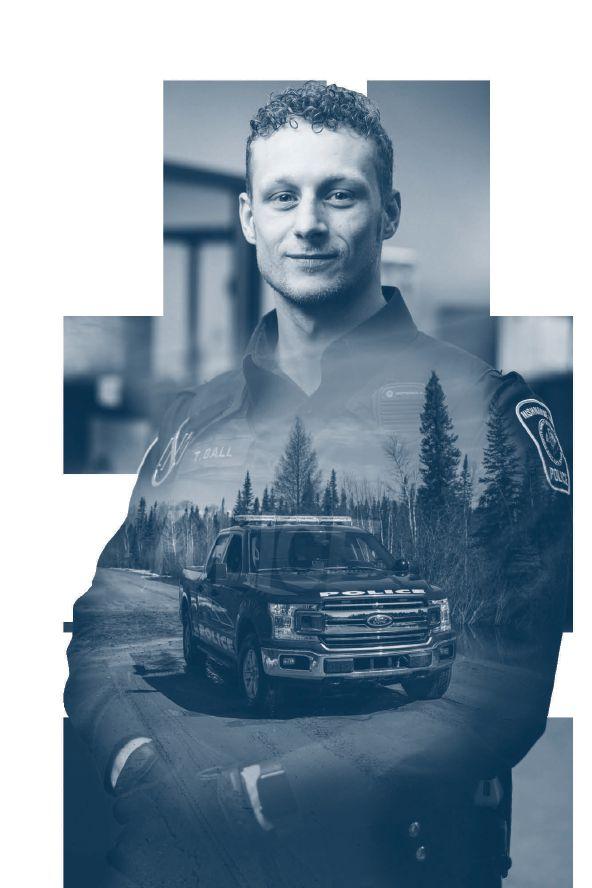
Explore Ontario’s true north
Q&A: Reducing stigma in crisis response
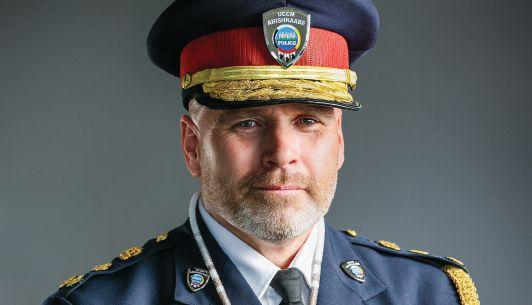
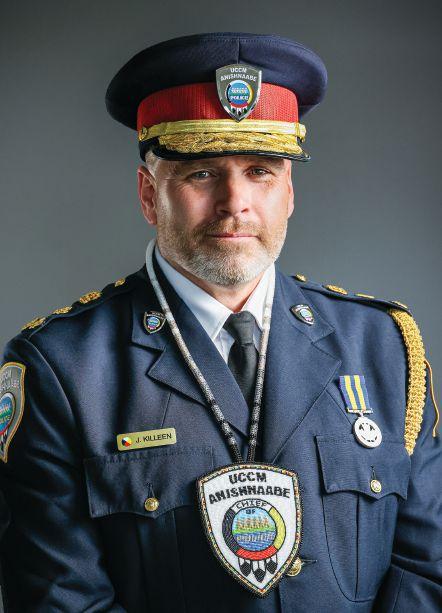
Recently, editor Brittani Schroeder spoke with Chief James Killeen of the UCCM Anishnaabe Police Service, about the new approaches employed by the Manitoulin Mobile Crisis Response Team (MCRT).
Q: Can you provide some background on the MCRT?
Leadership within the UCCM Anishnaabe Police Service (UCCM) identified that there was an increasing number of mental health-related calls and recognized the urgent need for a more supportive, trauma-informed approach. There was also an opportunity to ensure that this approach to the mental health crises was culturally responsive and integrated with community partners.
The initial discussions for the MCRT were spearheaded collaboratively between UCCM and key partners in local healthcare, including the Canadian Mental Health Association (CMHA) and Indigenous mental health service providers. As the idea evolved, it expanded to include discussions and collaboration with Health Sciences North, which played a crucial role in shaping the clinical and logistical framework of the response model.
There were several hurdles to overcome before the team could be operational. Securing sustainable funding was a major challenge—we had to align various funding streams from provincial mental health initiatives, First Nations policing resources and provincial grants. Interagency coordination was another hurdle, involving the establishment of protocols, clarification of roles between officers and mental health clinicians, and ensuring that all team members received cultural safety training. We also had to build trust within the communities and among partner organizations.
Finally, after we’d gone through all those hoops, the MCRT was officially established and operational in 2020.
Q: How does this team work together to provide a better approach?
Before MCRT, police were the default responders to mental health calls,
James Killeen with limited access to real-time clinical support. This often led to individuals being transported to hospitals or taken into custody, sometimes unnecessarily.
The MCRT pairs a police officer with a mental health clinician, responding jointly to crisis calls. This dual response ensures safety while providing immediate access to mental health expertise. The clinician can de-escalate situations, assess needs on the spot and connect individuals to appropriate services—all while reducing the stigma and potential trauma of a purely police-driven response.
In 2024, there were approximately 884 calls for the MCRT, which further highlighted the growing need for accessible, immediate mental health support across Manitoulin Island for our communities. This number includes both Ontario Provincial Police and UCCM calls, as well as calls
to the Manitoulin Health Centre for additional crisis services.
Though we don’t currently have data to confirm a decrease in apprehensions under the Mental Health Act, community members have reported feeling more supported and less criminalized during crises.
Q: Can you tell us about the recent updates in Spring 2025?
UCCM was able to donate a dedicated crisis vehicle for the MCRT through careful resource planning and leveraging targeted funding for mental health and wellness initiatives. It did not take away from frontline operational capacity. In fact, it was seen as an investment that ultimately reduces frontline workload by diverting calls that would otherwise require a uniform officer’s patrol response.
Our donation reflects our deep commitment to ensuring the safety and well-being of our communities. We are very proud to work hand-inhand with Health Sciences North and our other partners to provide care that meets people where they are, with the dignity and support they deserve.
Q: What are your hopes for the MCRT in the future?
Our hope is that the MCRT will continue to grow and become a permanent fixture in our crisis response framework. We envision expanding coverage across more remote areas, strengthening aftercare services and enhancing cultural support through partnerships with Elders and traditional healers. Ultimately, the goal is to create a holistic, community-driven model that keeps people safe, connected, and supported, without defaulting to criminal justice involvement.
Editor’s Note: This interview has been edited for clarity.
HEALTH & WELLNESS
BY ISABELLE SAUVÉ
Decision overload in law enforcement: Impacts on officer performance and public trust
Choice is often seen as a fundamental element of autonomy, independence and freedom.
The ability to make decisions, whether in personal or professional settings, is generally considered a form of empowerment. However, as psychologist Barry Schwartz argues in The Paradox of Choice: Why More is Less (2004), having too many options can actually obstruct decision-making rather than assist it.
Within the realm of law enforcement, this paradox has significant implications, affecting officers’ behaviour, agencies’ operational efficiency, stakeholder trust and the broader legitimacy of the criminal justice system. While discretion is integral to policing and allows for context-sensitive judgments, too much choice can result in inefficiency, hesitation, inconsistency and ethical dilemmas. Therefore, finding the right balance between autonomy and structure is crucial for effective policing, fair justice and maintaining public trust.
Schwartz’s theory suggests that having more options doesn’t always increase satisfaction. Instead, it can lead to greater anxiety, mental overload, decision paralysis and later regret. This is known as choice overload: more options can make decision-making harder or less effective.
To illustrate this, consider entering a smoothie shop with 200 different flavours. While the initial abundance of options might generate excitement, it can quickly turn into stress as someone struggles to decide which one to choose. After making a choice, they might then feel doubt or regret, which can lessen the overall enjoyment. This analogy, though perhaps minor, reflects the complexity of modern decision-making that can also appear in highstakes situations.
choices significantly increase the psychological pressures on officers, making the paradox of choice more relevant in policing.
Unchecked or excessive autonomy can weaken effectiveness, fairness and the legitimacy of policing.
Schwartz further argues that as the range of options increases, so does the fear of making a wrong decision. In policing, this hesitation can be dangerous. Officers need to act quickly in changing situations, deciding whether to engage a suspect, use force or de-escalate a confrontation. Extended hesitation, caused by too many choices, could endanger public safety.
on heuristics or subconscious biases to simplify choices. In law enforcement, this can unintentionally lead to differential treatment, contributing to systemic disparities and diminishing public trust.
Furthermore, the psychological burden of continuous decision-making can lead to decision fatigue, a state where the quality of judgments declines due to mental exhaustion. Officers experiencing decision fatigue may rely on habitual or procedural shortcuts, or may avoid making decisions altogether. This fatigue can result in various operational issues, such as inadequate responses to critical incidents, overreliance on routine procedures, or unwarranted use of force.
To address these risks, law enforcement agencies have increasingly implemented structured decision-making models. These frameworks aim to simplify choices and ensure consistency by removing unnecessary decision points and establishing clear procedural guidelines. For example, standardized use-of-force protocols and algorithmic decision-support systems can reduce ambiguity and help officers respond more effectively to complex situations.
Given these challenges, a comprehensive approach is essential to tackling the effects of the paradox of choice in policing. Key strategies include:
1. Mental health and stress management support
Nowadays, people often face such cognitive burdens, even in minor situations like choosing a meal or a playlist. In law enforcement, the stakes are much higher. Officers frequently need to make quick decisions with serious consequences. The intensity and possible outcomes of these
The paradox of choice directly relates to the idea of discretion in policing. While legislative frameworks and departmental policies offer broad guidelines, much of law enforcement relies on officers’ situational judgment. Discretion provides flexibility and adaptability, but too much discretion, combined with many possible responses, can lead to inconsistencies. For example, two officers of similar rank may reach different decisions in similar situations, which can undermine the perceived fairness and reliability of the criminal justice system.
Excessive discretion also introduces the risk of implicit bias. Research in cognitive psychology indicates that when faced with many decision points, individuals may rely
2. Scenario-based training and decision-making models
3. Technology-assisted policing tools
4. Clear and consistent policy guidelines
While choice is important, unchecked or excessive autonomy can weaken effectiveness, fairness and the legitimacy of policing. By recognizing and tackling the effects of decision overload, agencies can better manage the complex landscape of modern policing.
Isabelle Sauvé is a sergeant investigator with the Nunavik Police Service. She has an MA in psychology and is a PhD candidate. She is also an ultramarathon/endurance athlete and the Racing the Planet/4 Deserts 2018 Series winner as well as a Guinness World record holder. She can be contacted at: isabelle. sauve@hotmail.com.
From a culture of competition to collaboration
Over the past 25 years, I’ve had the opportunity to watch police leadership evolve. Although this evolution has been a step in the right direction, there is a lot of room left for improvement. When we start out our careers, policing truly feels like being a part of a team; everyone learns from one another and works toward a common goal. That feeling of teamwork and public service inspires you to do better as an individual and as a team.
The problems begin when an individual, as they move up the ranks, forgets the core purpose of policing and public service. Many start operating like golfers instead of hockey players—playing an individual game, focusing on their own score and measuring success in personal milestones rather than team accomplishments. The culture moves from collaboration to competition, from shared leadership to individual ambition.
That true leadership that fosters positive change isn’t about title or authority—it’s about influence, connection and engagement. The further removed leaders become from their people, the weaker that influence becomes.
When leaders become distant—when they stop showing up, stop listening and stop engaging—the people who do the work feel abandoned. Some of the best leaders I have worked with understood this intuitively. They knew that leadership isn’t about a title or a rank, it’s about presence.
Leadership isn’t about being seen at the top—it’s about being present where it matters.
Policing has always had a strong hierarchical structure, and with it comes a natural element of competition. Don’t get me wrong, rankbased leadership has its place in maintaining order and accountability, but in some cases, it can also create unintended consequences. While ambition and professional growth are important, I’ve observed that this process sometimes leads to a highly competitive atmosphere at senior levels. Rather than a team-based approach where leaders work together, leadership can become fragmented, with each person focused on their own responsibilities, personal growth and career trajectory.
This shift towards individuality affects policing functions, which in turn negatively impacts other service members. In doing so, we lose the trust of our members and the influence that is foundational to effective leadership. Leaders who become more concerned with status than service and start making decisions that protect their position rather than strengthen their people, in turn, become less willing to take risks, challenge ineffective systems or push for necessary change, because doing so might put them at odds with those above them.
One of the most influential leaders I’ve worked for made it a point to visit every part of the organization. This person stopped in at all units, whether they were uniform divisions, administrative units or specialty units. One of the key attributes of their leadership was their ability to listen to people and be equally engaged with internal members as with external stakeholders. This fostered trust in the workers and the community – this form of connection led to decisions being accepted and change implemented without resistance.
Comparatively, I have also worked under leaders who rarely left their office, who only engaged with frontline members when something went wrong, and only showed up when there was a PR opportunity. These were the leaders who struggled to earn respect. Simply stated, people don’t trust leaders they don’t see, and people don’t follow leaders they don’t respect.
The same principle applies across all levels of policing. Leadership should not be an administrative function—it should be an active, engaged role.
In my experience, the best leaders:
• Stay visible and accessible
• Encourage open communication
• Support and mentor others
• Prioritize trust over control
• Aren’t threatened by strong people
• Stand up for what is right
When leadership operates in this way, the entire organization and, in turn, the community, benefits. Decision-making across all sectors improves, morale gets stronger, and the people feel more connected to a
shared purpose. The most effective leaders develop and elevate talent, rather than suppress it. They know that their job is not to be the smartest person in the room—it’s to build a room full of smart, capable people who can take the organization to the next level.
While internal leadership dynamics play a crucial role in shaping police culture, there’s also an external responsibility that leaders can’t ignore. Just as effective leadership requires engagement within the organization, it also necessitates a similar connection with the community.
In the same way that frontline officers cannot build trust with leadership they never see, communities can’t build trust with police services that only appear in moments of crisis. The more engaged police leaders are with their communities, the more effective they can be in understanding concerns, identifying emerging issues and working together to find solutions. This is important as policing shifts toward a Community Safety and Well-Being (CSWB) model. Public safety isn’t just about law enforcement—it’s about recognizing that policing is only one part of a much larger system of community safety. Over the years, I have witnessed leadership in policing change. Although policing is moving in the right direction, some police leaders are not. But all is not hopeless; I have witnessed leaders who are committed to changing this.
Leadership isn’t about control—it’s about service. Leadership isn’t about personal success—it’s about collective progress. Leadership isn’t about being seen at the top—it’s about being present where it matters.
Leaders who show up, listen and lead from within and with their heart will always be more effective than those who lead from above.
Gregory Watts is a superintendent with the Toronto Police Service, whose career spans frontline policing, emergency management, crime prevention and leading major modernization initiatives, including the F.O.C.U.S Rexdale HUB and the Pan Am Games operational planning. Currently overseeing 911 Communications Services, he remains committed to collaboration across public, private and community sectors to enhance safety and well-being—a dedication recognized with the King Charles III Coronation Medal in 2025.