









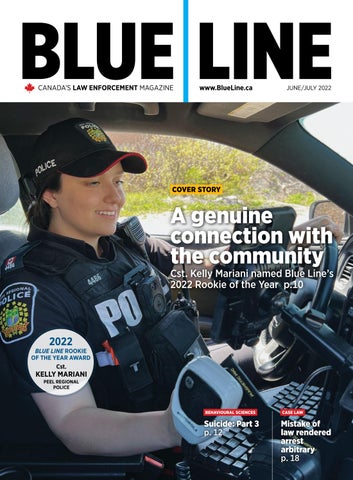
Every year, Blue Line selects one Rookie of the Year award winner, and one Lifetime in Law Enforcement Achievement award winner. Each year, these winners showcase such a significant commitment to their communities and a strong determination to serve and protect. The pool of nominees for each award has been growing in size as the years go by, and myself –along with the three other award judges – find ourselves honoured to be learning about such incredible members of law enforcement, whether they’re just starting out in their careers, or have been on the job for more than 15 years.
Throughout the last two years, police officers have been faced with many unforeseen challenges. Specifically, policing and serving their communities during a global pandemic. Officers had to learn how to stay involved in their community and make meaningful connections while also keeping their distance and wearing masks.
Intense scrutiny was also focused on law enforcement, especially after the tragic deaths of Breonna Taylor and George Floyd in 2020, among many other deaths of people of colour. Both peaceful protests and aggressive riots broke out across the globe, and officers were right there in the middle of it all.
pened in their many years as an officer. That is why this Blue Line issue is dedicated to all law enforcement members. We see you, and we thank you for your service during these trying times.
In this issue of Blue Line, you’ll find a variety of articles that will celebrate you, your fellow officers and the work you do every day.
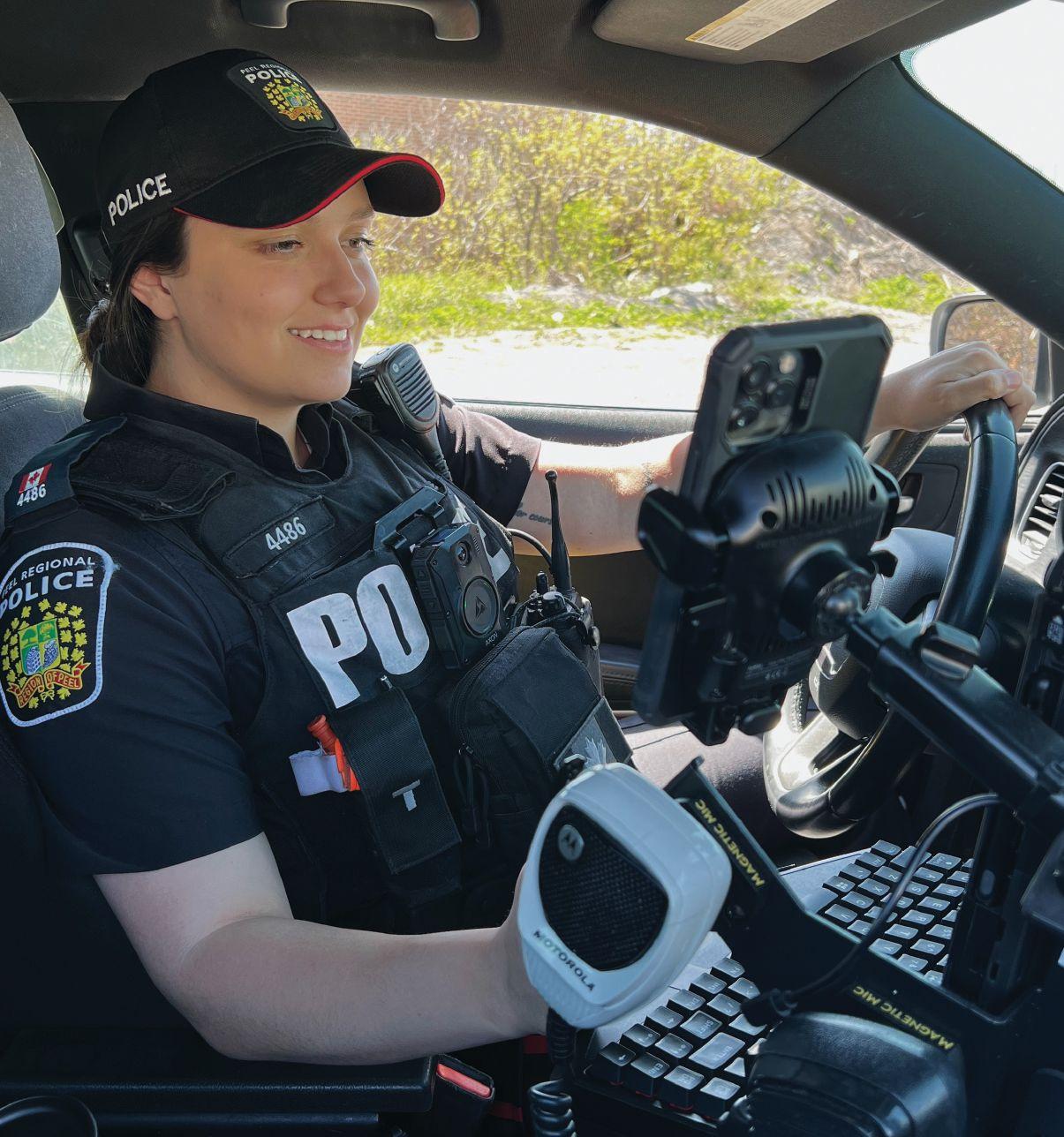
I recently had the opportunity to speak with this year’s Rookie of the Year, Cst. Kelly Mariani, from Peel Regional Police. As earlier mentioned, this year’s pool of nominees was plentiful, which made the winner selection process a difficult one. However, it was a unanimous decision by the panel to award this year’s Rookie of the year title to Cst. Mariani. You can read about her journey on page 10.
This Blue Line issue is dedicated to all law enforcement members. We see you, and we thank you for your service during these trying times.
I also connected with our Lifetime in Law Enforcement Acheivement Award winner, Mike Henderson of the Parks Canada Warden Service. Henderson has been with the warden service for almost 30 years, and for 18 of those he has been a dog handler, working with several canine partners. Henderson is the first Parks Canada Warden to be awarded this title. You can read the full story on page 14.
Reader Service
Print and digital subscription inquiries or changes, please contact
Beata Olechnowicz, Audience Development Manager
Tel: (416) 510-5182
Fax: (416) 510-6875
email: bolechnowicz@annexbusinessmedia.com
Mail: 111 Gordon Baker Rd., Suite 400 Toronto, ON M2H 3R1
GROUP PUBLISHER | PAUL GROSSINGER pgrossinger@annexbusinessmedia.com
PUBLISHER | ADAM SZPAKOWSKI aszpakowski@annexbusinessmedia.com
EDITOR | BRITTANI SCHROEDER bschroeder@annexbusinessmedia.com
EDITORIAL DIRECTOR
EMERGENCY SERVICES GROUP | LAURA AIKEN laiken@annexbusinessmedia.com
ACCOUNT MANAGER | JANICE EATON jeaton@annexbusinessmedia.com
MEDIA DESIGNER | LISA ZAMBRI lzambri@annexbusinessmedia.com
ACCOUNT COORDINATOR | KATHRYN NYENHUIS knyenhuis@annexbusinessmedia.com
COO | SCOTT JAMIESON sjamieson@annexbusinessmedia.com
ANNEX BUSINESS MEDIA 111 Gordon Baker Road, Suite 400 Toronto, ON M2H 3R1 Tel. 416-442-5600 • Fax 416-442-2191
Publication Mail Agreement No. 40065710
ISSN 0847-8538 Printed in Canada
During the pandemic, domestic calls also rose as more families were “locked down” and quarantined in their homes for much of their time. Halina Haag, a lead researcher on a study titled “The Shadow Pandemic,” concluded that the pandemic has intensified intimate partner violence (IPV) and increased challenges for service providers.
The rookies that have come on the job in the last two years likely experienced incredibly different situations than the rookie classes that came before them. Those who are close to retirement might be seeing events occur that haven’t hap-

When looking at the pandemic and how the role of police had to adapt, one thing that stayed constant was that they also had to deal with high levels of fraud. Cameron Field, retired Det. S/Sgt. of the Toronto Police Service, has written an article on what the battle against fraud has looked like in the 2020s. Read more on page 13.
If there is something you’ve encountered during the pandemic that you think fellow officers could benefit and learn from, please reach out to me at any time (bschroeder@annexbusinessmedia.com). Together we will learn from our experiences over the last few years and come out stronger in the end.
Until next time, happy reading and be well.
SUBSCRIPTION RATES
Canada — 1 Year $31.50; 2 Year $52.50 plus tax USA — 1 Year $136.50 CAD
Occasionally, Blue Line will mail information on behalf of industry-related groups whose products and services we believe may be of interest to you. If you prefer not to receive this information, please contact our circulation department in any of the four ways listed above.
Annex Privacy Officer
Privacy@annexbusinessmedia.com; Tel: 800-668-2374
© 2022 Annex Business Media. All rights reserved. Printed in Canada. No part of the editorial content of this publication may be reprinted without the publisher’s written permission. Opinions expressed in this magazine are not necessarily those of the editor or the publisher. No liability is assumed for errors or omissions. Readers are cautioned and advised that articles presented herein are edited and supplied for your personal awareness and should not be used for further action until appropriate guidance is received from a supervisor, Crown Attorney or other persons in authority. All advertising is subject to the publisher’s approval. Such approval does not imply any endorsement of the products or services advertised. The publisher reserves the right to refuse advertising that does not meet the standards of this publication.





EPS
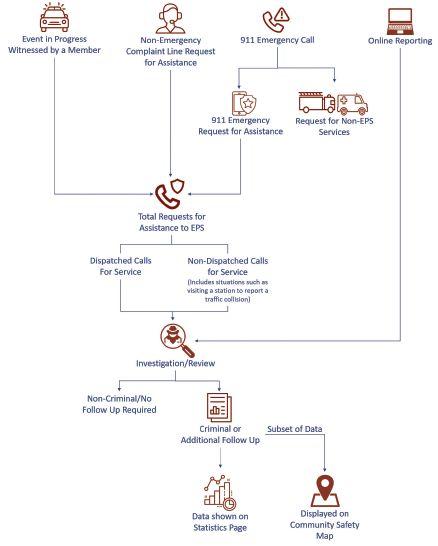
The Edmonton Police Service (EPS) has launched a new information sharing platform designed to increase transparency, facilitate community engagement and support the safety of their citizens and city.
The Community Safety Data Portal will offer access to comprehensive data including crime statistics and trends. In response to the feedback received concerning the limitations of the original crime map launched in 2009, EPS has developed a community safety mapping tool which provides detailed information and greater functionality, to better serve citizens of Edmonton.
The Community Safety Data Portal gives residents a glimpse of police activity in their neighbourhoods so that they may identify safety concerns.
EPS hopes the Community Safety Data Portal will encourage the public to take an active role in community safety and crime prevention.
PRP launches 2022 Project Noisemaker and ERASE Campaign
To address street racing and the noise pollution from excessively loud vehicles, Peel Regional Police (PRP) has launched Project Noisemaker and ERASE.
Road safety is a crucial policing function, and one which all members of PRP are committed to. Every day, officers enforce the speed limit, address aggressive and impaired driving, in addition to a variety of other road safety measures. For the next six months, these projects will target street racing activities in Peel Region and motor vehicles with modified and/or excessively loud exhaust systems. Drivers will be subject to charges and penalties for offences under the Highway Traffic Act (HTA) and breaking municipal by-laws; and could face seizure of their vehicles and a roadside suspension of their driver’s licence.
PRP has zero tolerance for dangerous driving behaviours and street racing activities.
QUEBEC
Repentigny’s pilot project for Quebec’s first all-electric emergency response patrol cars
The City of Repentigny and its police department (SPVR) have introduced Quebec’s very first all-electric police car, which will have all the features of a regular emergency response patrol car. The project, which has entailed converting a Ford Mustang Mach-E, has afforded the chance to rethink the vehicle’s components. Working with Cyberkar, the city and the SPVR have worked to improve passenger compartment ergonomics and thus better respond to the functional needs of police officers.
A police car that runs 24/7 uses a great deal of fuel and emits a significant amount of CO 2 . The new all-electric vehicle will thus allow the municipality to reduce its eco-footprint. It will be tested in a real environment to assess battery performance and efficiency under different conditions of use. The goal in the near future would be to put the innovative breakthroughs and gains in expertise at the disposal of other Quebec police forces interested in acquiring electric patrol cars.

The checkered visual pattern commonly known as “Battenburg markings” is based on several studies and is seen as a best practice for emergency response vehicles.
The vibrant colour scheme also serves as a symbolic reminder of the police’s role: to be strongly present in and ready to help the community. The design also bolsters safety for patrollers and citizens alike by lowering accident risks.
At present, Quebec does not have a visual standard for police vehicles. The new design may lead to many discussions.
In March 2022, Statistics Canada released recent data on police-reported hate crime in Canada, 2020. For more information, please visit www150.statcan.gc.ca.
2,669
police-reported criminal incidents were motivated by hate. This is the largest number recorded since comparable data became available in 2009.
62 % of all police-reported hate crimes were motivated by race or ethnicity.
1,143
the number of violent hate crimes rose from 865 in 2019 to 1,143 in 2020. This was partially the result of increases in common assault and criminal harassment.
37 %
the number of police-reported hate crimes increased 37 per cent during the first year of the pandemic.

The Peel Police Services Board has announced the appointment of Mark Dapat as Deputy Chief of Police. Deputy Chief Mark Dapat began his career with the Peel Regional Police (PRP) in 1997. He worked and held lead roles throughout the organization including uniform patrol, special enforcement bureau, intelligence services, internal affairs and criminal investigation bureau. He was a crisis negotiator team leader and is a certified critical incident commander. His most recent assignment was in community safety and well-being services. This branch of PRP oversees regional community mobilization, road safety services and diversity, equity and inclusion. Mark has led the development of the PRP – Community Safety and Well-being Strategy. This strategy establishes a foundation for action and is a critical step in the commitment to operate as a progressive, innovative and inclusive public safety organization. Mark was born in the Philippines and he grew up in Toronto. He is married and has two sons.
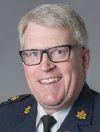
The Waterloo Regional Police Services (WRPS) Board has announced that Police Chief Bryan Larkin will retire from the Waterloo Regional Police Service after 31 years of dedicated service. Chief Larkin began his policing career with the WRPS in 1991, working as a front-line constable assigned to Division #1 in Kitchener and rising to the rank of superintendent of Central Division. During his tenure as Chief of Police, Chief Larkin has volunteered his time with national and provincial policing organizations, as well as several local community groups. He is currently the president of the CACP and also served as the OACP president. Chief Larkin is a strong believer of community volunteerism and is proud to support many causes. In 2013, he was awarded the Queen’s Diamond Jubilee Medal. In September 2016, he was invested as a Member of the Order of Merit of the Police Forces by his Excellency the Right Honourable David Johnston and, in July 2020, was advanced to Officer within the Order. Chief Larkin said, “It has been a true honour to lead this organization over the past eight years and serve beside the incredible members who commit themselves each and every day to public safety and wellness.”
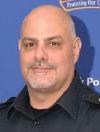
Rod Wilkinson has been named Woodstock Police Service’s next Chief of Police. Wilkinson is currently the deputy police chief and a 25-year veteran of the force. Wilkinson will step into the role of chief on July 9, succeeding Chief Daryl Longworth, who announced his retirement in February after serving three years in the position. Woodstock’s Police Services Board says Wilkinson has moved up the ranks during his time in the force, having served in various positions in several operational units. He is said to have extensive technical and supervisory experience when it comes to criminal investigations, and incident command and tactical operations. Wilkinson has thanked the board for “entrusting me with the leadership” of the police force. “We will continue to build on and maintain the trust of the Woodstock community. We will continue to work with our community partners and groups striving towards common goals,” his statement read.

After a 37-year career, Deputy Chief Constable Paulette Freill has retired from the Abbotsford Police Department where she joined in November 2017. She was the first female Commissioned Officer posted at a number of RCMP detachments including Surrey Detachment as the Inspector OIC of a General Duty Patrol shift; Coquitlam Detachment as the Operations Support Officer; and Superintendent at Dauphin, Manitoba where she was the District Commander of the West District. Throughout her career she has been in operational/investigative roles which included Patrol, Major Crimes, and the “E” Division Interview Team. Deputy Freill has taught Statement Analysis to police agencies all over the world and is recognized globally as an expert in this field. Prior to joining the AbbyPD, Freill was the Chief Superintendent, Officer in Charge of the RCMP’s Operations Strategy Branch with RCMP “E” Division. Paulette is the recipient of the RCMP Long Service Medal, the Queen Elizabeth II Diamond Jubilee Medal, and the Order of Merit for Police Forces (M.O.M).
NOTE TO READERS: check with all organizers as COVID-19 continues to affect events.
CACP National Human Trafficking Symposium
Date: June 5 – 7, 2022
Location: Toronto, Ont.
https://www.cacp.ca/cacp-nationalhuman-trafficking-symposium. html?mid=524
Coalition for Canadian Police Reform Conference
Date: June 14 – 16, 2022
Location: Virtual https://www.rebootcommunications. com/event/ccpr2022/
ICPSOM 2022: International Conference on Police Studies, Organizations and Management
Date: June 16 – 17, 2022
Location: Toronto, Ont.
https://waset.org/police-studiesorganizations-and-managementconference-in-june-2022-in-toronto
National Law Enforcement in Occupational Safety & Health Association Conference
Date: June 22 – 24, 2022
Location: Saint John, N.B. https://www.leosh.org/welcome-toconference-2022/
Illicit Fentanyl Webinar
Date: June 23, 2022
Location: Virtual
https://www.blueline.ca/illicitfentanyl-%e2%80%a2-webinar/
117th CACP Annual Conference
Date: August 7 – 9, 2022
Location: Quebec City, Que. https://cacp.ca/117th-annualconference.html?mid=222
Find more calendar events online at blueline.ca/events
Visit www.BlueLine.ca for the latest news, stories, products, videos, photo galleries and industry events.
PROMOTIONS, RETIREMENTS, RECOGNITION • If you have an officer in your agency recently promoted or retiring or an individual you wish to have recognized (major award or recently deceased) you can let Blue Line magazine know by emailing: bschroeder@annexbusinessmedia.com
By Stephanie Miloknay and Marc Laferriere
ISBN: 9781774620878
Navigating one’s personal challenges related to mental health can be very difficult and confusing, especially when it reaches a point where you need to ask for assistance. As the training lead for mental health, de-escalation and crisis resolution in the Incident Response Training Unit within the Toronto Police College, I have refined my skills in crisis intervention over the past 22 years, responding to
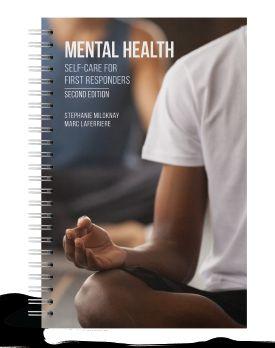
calls for service as a front-line officer, a mobile crisis intervention officer and a tactical officer. I understand all too well the issues that come from cumulative stress and compassion fatigue, the results of responding to numerous critical incidents. It is for this reason that I was excited at the opportunity to review Mental Health: Self-Care for First Responders, 2nd Edition. Mental Health: Self-Care for First Responders provides first responders with an awareness and a brief understanding of where they are on the personal mental health spectrum in order to ask the appropriate questions of themselves or a mental health professional. This will, in turn, assist individuals in establishing a personal self-care plan
for themselves by utilizing the fantastic tools provided in the “Self-Care Plan” section of this text. The many examples and personal stories shared in this edition of the book provide a very empathetic approach to the overall material, supplying context and an opportunity for readers to relate to the examples, assuring them that they are not alone and helping them to understand that what they may be feeling or experiencing is normal. I applaud the many contributors in this text for sharing their experiences.
I am very impressed with this text and encourage all first responders to obtain a copy for personal self-reflection. I further recommend that front-line emergency training academies and all police services consider using this text to inform or instruct all staff.