PolyStorm Fans
The PolyStorm fan series combines premium components with our roto-molded High-Density Polyethylene housing. Corrosion resistance features include fiberglass props, PVC shutters, and stainless steel mountings. At the core of every PolyStorm fan are rugged dual voltage motors with an industry-leading, 2-year warranty. PolyStorm fans are an excellent choice for new ventilation systems or lower-cost replacements fans.

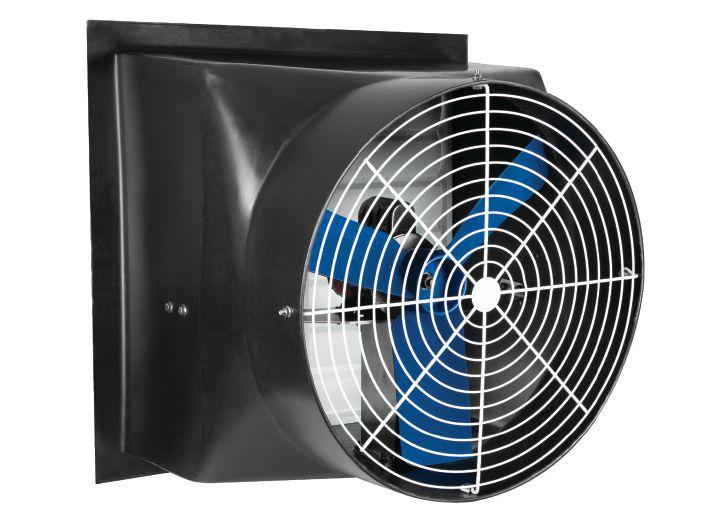
• Roto-molded High-Density Polyethylene plastic housing resists cracking or breaking.
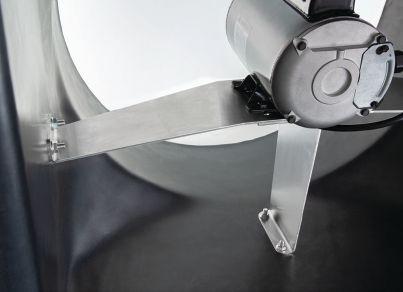
• Stainless steel mountings
• Corrosion resistance, composite fiberglass props
• Low maintenance, airfoil style PVC shutters with full-length spring steel rods
• Poly-coated wire guard
• Heavy-duty, dual voltage, 60/50 Hz motors with a 2-year warranty
PS-14EDDLP
X 21-1/2”
PS-24EDDLP 24” 27-1/4” X 27-1/4”


by Brett Ruffell
Engaging with today’s consumer
Have you ever had or observed an eye-opening conversation about farming and food and thought, we need to do more? Janelle Cardiff, a producer representative with Gray Ridge Eggs, posed this question to attendees at a Poultry Industry Council Producer Update this winter. For myself, it was recent coverage of rising poultry prices. This winter, the usual suspects – many of whom are uninformed – pinned the blame for inflation on supply management, calling for it to be scrapped.
This even though there are a range of other factors driving up prices and supply management has helped protect Canadian from some of the effects of the pandemic and avian influenza outbreaks. (See our feature on page 13 for more on this issue.)
During her presentation on “Engaging with Today’s Consumer”, Cardiff cited one experience that emphasized for her the need for everyone in the poultry industry to up the ante on the communication front. “I was on a train and there were a couple of girls talking about how white eggs were actually bleached at the grocery store,” she recalled. Cardiff, who in her role with Gray Ridge is a liaison between producers and graders, used her talk as a call to action. Her
purpose was to encourage more producers to talk to people about farming and food.
This is important, she said, firstly because consumers are more removed from farming than ever before, and people don’t trust what they don’t know. “When I’m at the dentist, I’m able to ask questions and educate myself as to why things are a certain where,” she said. “Whereas many people don’t actually know a farmer anymore.”
People are also often unaware about where to get reliable information on farming and food. This leaves them vulnerable to misinformation on Google and social media. “Nowadays, anybody can be a journalist and have an opinion on something that they really truly don’t know a lot about,” Cardiff said.
“Nowadays, anybody can be a journalist and have an opinion on something that they really truly don’t know a lot about.”
Additionally, it’s important to inform people about their food because they aren’t always just consumers – they’re lawyers, politicians, and decision makers. Many of them have deeper needs than simply wanting to trust the food they’re eating. They need to be
aware of how the poultry industry works.
Hoping to inspire her audience, Cardiff shared some of the interesting initiatives she’s worked on to help inform the public. Aside from her role with Gray Ridge, she’s also second vice chair with Farm & Food Care Ontario and a volunteer with Egg Farmers of Ontario.
For one project through the marketing board, she was featured in a one-minute video ad where she discussed the different housing systems egg producers use these days. She says the project only took her half a day. She’s also been interviewed for radio and television.
She urged producers to help with the industry’s communications efforts in whatever way they’re comfortable. For introverts, that could be simply sending some ideas to their marketing board.
In terms of topics, Cardiff highlighted the top five issues Canadians are worried about according to the most recent research from the Canadian Centre for Food Integrity. Unsurprisingly, the rising cost of food was the number one reason people think the food industry is headed in the wrong direction.
Cardiff said this presents poultry producers with a great opportunity to have an impactful conversation.
“We need to let them know why it’s not us the farmer –we’re not doing better than we were before. It was feed costs more; everything is costing more, which means that just goes down the chain.”
canadianpoultrymag.com
Reader Service
Print and digital subscription inquiries or changes, please contact Angelita Potal, Customer Service Rep. Tel: (416) 510-5113
Email: apotal@annexbusinessmedia.com
Mail: 111 Gordon Baker Rd., Suite 400, Toronto, ON M2H 3R1
Editor Brett Ruffell bruffell@annexbusinessmedia.com 226-971-2133
Brand Sales Manager
Ross Anderson randerson@annexbusinessmedia.com Cell: 289-925-7565
Account Coordinator
Alice Chen achen@annexbusinessmedia.com 416-510-5217
Media Designer Lisa Zambri
Group Publisher Michelle Bertholet mbertholet@annexbusinessmedia.com
Audience Development Manager
Anita Madden amadden@annexbusinessmedia.com 416-510-5183
President/COO
Scott Jamieson sjamieson@annexbusinessmedia.com
PUBLICATION MAIL AGREEMENT #40065710
Printed in Canada ISSN 1703-2911
Subscription Rates
Canada – 1 Year $32.50 (plus applicable taxes)
USA – 1 Year $91.50 CDN Foreign – 1 Year $103.50 CDN
GST - #867172652RT0001
Occasionally, Canadian Poultry Magazine will mail information on behalf of industry-related groups whose products and services we believe may be of interest to you. If you prefer not to receive this information, please contact our circulation department in any of the four ways listed above.
Annex Privacy Officer
privacy@annexbusinessmedia.com Tel: 800-668-2374
No part of the editorial content of this publication may be reprinted without the publisher’s written permission. ©2023 Annex Business Media. All rights reserved. Opinions expressed in this magazine are not necessarily those of the editor or the publisher. No liability is assumed for errors or omissions. All advertising is subject to the publisher’s approval. Such approval does not imply any endorsement of the products or services advertised. Publisher reserves the right to refuse advertising that does not meet the standards of the publication.

What’s Hatching
MPs vote in favour of bill that aims to block further concessions on supply management
A private member’s bill that aims to prevent further market access concessions for supply managed commodities in Canada was approved at second reading in the House of Commons in February and was referred to the Standing Committee on International Trade. Bill C-282 would amend existing legislation to prevent Canada’s trade minister from increasing tariff rate quotas — and reducing over-quota tariffs — for dairy, poultry, or eggs through international trade agreements.
Quebec poultry farmers rattled by winter HPAI outbreaks
An unprecedented winter outbreak of the highly contagious avian flu at several duck farms in the Montérégie region has the province’s poultry farmers on high alert. More than 38,000 birds had to be slaughtered at eight Quebec farms in February after the deadly H5N1 highly pathogenic avian influenza was discovered. Some of the farms are linked to the same producer, but not all of them, authorities said.
Food prices continue to climb even as inflation eases
As overall inflation slows, the cost of food continues to climb for Canadians – but experts say there should be some relief by the end of the year. Food prices grew by 10.4 per cent year-over-year in January, according to data released by Statistics Canada. That compares with an overall annual inflation rate of 5.9 per cent for the month. On a monthly basis, fresh or frozen chicken prices jumped nine per cent from December, marking the largest month-over-month increase since 1986.

Turkey industry and Bowl Canada collaborate on promotional campaign
In February, Think Turkey and Bowl Canada teamed up to get Canadian families rolling with the first ever Turkey Bowl, with $17,500 in prizes to be won.
Taking place February 18th to 20th, a holiday weekend in most provinces, Canadians were invited to visit their closest participating bowling centre for a chance to win.
The challenge? Bowlers had to score a “turkey” – known in bowling as three strikes in a row in a single game.
The first 250 Canadians to bowl a turkey and submit their entry received a $50 VISA gift card and were entered in a draw, along with all others who submit their entry, to win one of 10 $500 grocery gift cards to use towards their Easter turkey dinner.
“We’re thrilled to partner with Think Turkey to share the spirit of bowling through this family-friendly challenge,” says Bob McKay, marketing chair at Bowl Canada and owner of Woodlawn Bowl Family Fun Centre in Guelph, Ont.
Over 225 bowling centres participated in the challenge from coast to coast across Canada.
To submit an entry, bowlers simply had to snap a picture of their “turkey” on the digital scoreboard and share to a public Instagram or Facebook account with @CanadianTurkey and #ThinkTurkey tagged or upload it via the entry form at ThinkTurkey.ca.
“Turkey dinners and bowling have a knack for bringing friends and family together, which makes it a natural partnership,” says Darren Ference, Chair, Turkey Farmers of Canada. “We hope the event becomes an annual challenge that Canadians look forward to each February.”
The third weekend in February is the busiest weekend of the year for most bowling centres, and the Turkey Bowl added excitement for Canadians at their local bowling lanes.
“Bowling is a fun sport that anyone from three to 103 can enjoy, just like a turkey dinner,” says JeanMichel Laurin, president and CEO, Canadian Poultry and Egg Processors Council.
“We are excited about bringing Canadians together for this new and entertaining challenge.”
Over 225 bowling centres participated in the challenge from coast to coast.
Think Turkey and Bowl Canada hope to turn the Turkey Bowl into an annual event.


Building Bridges
By Crystal Mackay
www.utensil.ca with on-demand training programs and resources.
7 strategies for tackling tough topics
Everyone eats. Families and friends come together to share stories and celebrate special occasions with a good meal. For those of us who farm or work in agriculture, it’s helpful to remember that food is very personal and emotional. It’s not a ‘commodity’ or an ‘issue’ for most people.
I started my career with the Ontario Farm Animal Council, the predecessor to the Farm & Food Care organizations. I was so fortunate to be able to represent agriculture and present or work at public events like fairs with model farms for approximately 100 days each year. It was here, standing in front of hens in cages or sows in farrowing pens, that I learned how to have difficult conversations with people who may not have seen a live chicken before.
Here are a few of my favourite strategies you can use the next time you’re needing to have a tough conversation. Hint – these tips are helpful in any situation, at work or home!
1. Be authentic
Today more than ever, people are looking for credible information from people they can trust. Be comfortable in acknowledging where things are imperfect. If you always emphasize the positive only, you will be less believable and viewed as ‘selling’ versus ‘educating.’
2. Acknowledge the concern and connect with shared values
Don’t rush into the answer right away. Take a minute to think. It’s ok to say, “Wow, that is a hard question. I appreciate your concern.” Think about common ground or shared

values that might help bridge to some new information such as, “I chose to be a farmer because I genuinely care about animals too.”
3. Answer a question with a question
Understand their true concern before you start tackling what you think is the problem. Ask a few follow up questions to be sure you are clear on what they are asking or concerned about. “What specifically about how your food is grown are you worried about?”
4. Use the time technique – past, present, future
This is a good way to answer concerns that might be dated or inaccurate in Canada. It’s also a great way to acknowledge a real concern with a commitment to the future to improve. “In the past we did [insert response], and today we do [insert response], and in the future research will help us [insert response].”
5. Plan in advance
If you think about what tough topics you might be faced with in advance, it helps reduce nervousness when
When engaging with the public, be prepared to have difficult conversations with people who
may have never seen a live
chicken before.
they come up. Prepare by grouping tough topics into categories such as food safety, environment, animal care or biotechnology. Practice answering some tough questions and invest in some training to improve how to handle them more effectively.
6. Agree to disagree
“Just like an athlete, we all get better at these skills with coaching and practice.”
Learn to look for questions rooted in firmly held beliefs and strong opinions for or against something. Are they really interested in your view or looking for an argument? Save your energy for discussions with those interested in learning or exchanging information with you. Give yourself permission to say, “Sorry you feel that way, let’s agree to disagree.”
7. “I don’t know”
“I don’t know” is a powerful communications tool. All aspects of the food system are complex. No one can be an expert on all things. It’s always best not to speculate. Be the helpful expert and offer to find the answer, point them to credible resources, or bridge over to your area of expertise. “I don’t know much about that specifically, but I can find out and get back to you.”
Crystal Mackay is the CEO of Loft32, a company she co-founded with the goal to help elevate people, businesses and the conversations on food and farming. Her latest work includes an online training platform,

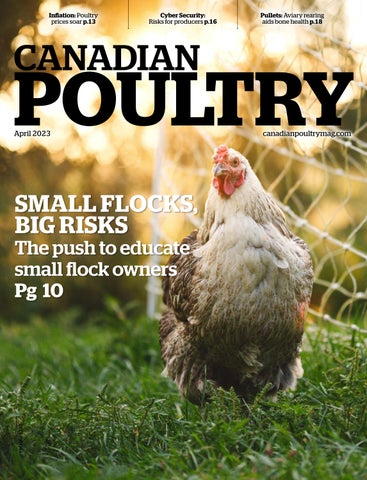
Small flocks, big risks
In the wake of HPAI, a look at biosecurity education efforts of small flock owners across Canada.
By Treena Hein
As everyone in the poultry industry well recalls, it was January 2022 when Canada’s first two outbreaks of the current highly pathogenic avian influenza (HPAI) strain were confirmed. Both sites were small flock operations in Newfoundland.
No one was particularly surprised. Wild birds are known to carry HPAI and it’s common for small flock operations to have small bodies of water where their poultry can mingle with wild birds. This was the case with these infected sites, both located on the Avon Peninsula.
At one site, 350 birds of various heritage breeds died of infection and another 60 (including geese, peacocks and an emu) were euthanized. At the other site, it was about 15 chickens and ducks.
Of course, as the number of outbreaks grew across the country, biosecurity became a strong industry focus, and the education of small flock owners was stepped up.
Well before the 2022 HPAI outbreaks, in 2018, Dr. Leonardo Susta
at University of Guelph found that backyard flock owners in Ontario were not following basic biosecurity protocols that prevent disease.
In Susta’s survey, fewer than 50 per cent of small flock owners reported having dedicated shoes or clothing for entering their coops. Less than five per cent of respondents reported using a foot bath to wash footwear, and more than 60 per cent reported allowing visitors into the coop or barn.
Many experts would say the same was occurring, and still occurs, in all parts of the world – on both sites with small flocks and also commercial barns. And while Susta stated at the time of his study release, “We wouldn’t expect backyard chicken owners to apply the same biosecurity practices used with commercial flocks, but there are certainly steps that flock owners should be taking.”
However, small flock owners in Canada can only access a limited number of bird health and biosecurity resources, explains Dr. Gigi Lin, a veterinarian at Canadian Poultry Consultants in Abbotsford, B.C., who works very closely with small flock owners in her province (and beyond, digitally). She adds that, “In addition to limited resources, small flock owners experience an overall lack of veterinary support as well.”
That’s why Lin started Small Flock Veterinary Care (within Canadian Poultry Consultants) in 2018, which not only offers vet services but also education for non-poultry veterinarians so that
they are better prepared to for poultry cases. Through the Canadian Animal Health Surveillance System program, for example, Lin will be launching an online course for non-poultry veterinarians in April, in collaboration with Dr. Victoria Bowes, an avian pathologist with the B.C. government. And in mid-2022, through a funding program offered to small flock owners by the Yukon govern-

ment (in which registered flock owners receive $1000 per year for vet services), Lin presented to these owners on biosecurity practices and HPAI.
These are only two of the expanded education efforts to help small flock owners in Canada prevent, recognize and deal with dis -
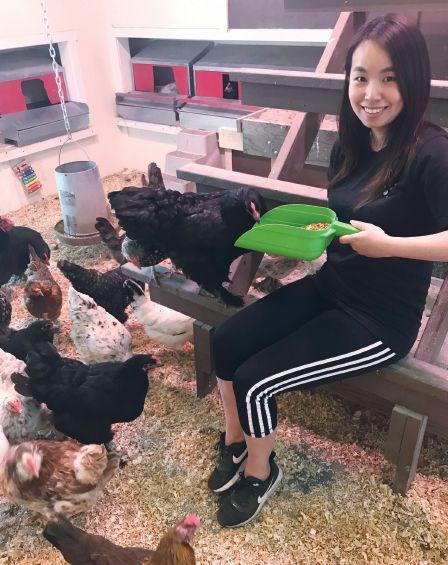
Dr. Gigi Lin is a veterinarian at Canadian Poultry Consultants in Abbotsford, B.C., who works very closely with small flock owners in her province.
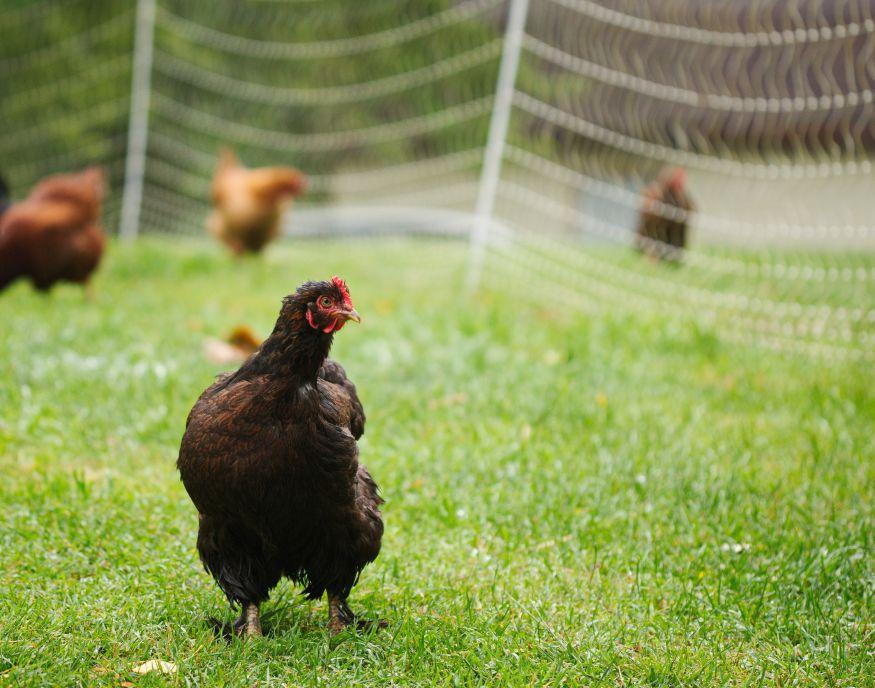
As the number H5N1 outbreaks grew across the country, governments and organizations prioritized educating small flock owners about biosecurity protocols.
ease and the threat of further HPAI outbreaks. And while education of small flock owners is primarily the responsibility of the provincial/territorial governments and related industry associations, the Canadian Food Inspection Agency (CFIA) also plays a role.
The CFIA website offers a range of biosecurity and AI prevention resources on its website for small flock owners, and also runs spring and fall awareness campaigns every year to encourage them to enhance their biosecurity practices in order to protect their birds. The CFIA is also working with industry, veterinary and government partners with outreach activities.
This includes meetings, information sessions and webinars across the country, such as a small flock HPAI webinar hosted by the Poultry Industry Council (PIC) in 2022.
Before and after
Prior to the first confirmed case of the current HPAI, staff at the Ontario Ministry of Agriculture, Food and Rural Affairs had provided backyard poultry owners with biosecurity, flock health and emergency management information. After the first declared case in Ontario, staff held weekly evening webinars in partnership with PIC for small flock owners and others, 26 webinars in all.
Speakers from a variety of organizations provided expert input, including the Canadian Wildlife Health Cooperative, the Canadian Wildlife Service, but also the Canadian Mental Health Association, to help those with poultry address the stressful situation. The ministry reports that others carried out further education and outreach to small flock owners, including feed industry representatives, the organic industry and Ontario’s
Factors affecting whether a small flock will experience HPAI
A CFIA presentation to small flock owners in March 2022 noted that their risk of HPAI infection is higher depending on the answers to a range of questions, including: Are migratory waterfowl present in the area?
Is there a flock confirmed with AI near by?
How close is the nearest poultry farm?
How close is this flock to a domestic waterfowl flock?
Are waterfowl present on this farm?
Do birds from this flock have access to outdoors?
How close is the nearest surface water (pond, slough) to the barn?
Do family members or employees have contact with wild waterfowl (e.g. hunting) on or near the premises?
Are wild birds such as starlings able to enter the barn and eat from the feeders?
ON-FARM POULTRY FEEDS with Make
birds and let them know how to
prevent, recognize and report the virus, as well as two virtual sessions open to anyone in the province.” The ministry also created a range of resources in response to the HPAI outbreak for backyard and commercial operators.
Specifically for small flock owners, the ministry also set up a help line for producers to ask questions about bird health and to access diagnostic testing services through its Animal Health Centre.
However, despite all this, the ministry notes that reaching small flock owners can be difficult, as most operate independently and are not represented by a provincial or regional association.
This can present challenges in keeping people up-to-date with information.
Indeed, some of the in-person workshops it offered were cancelled due to low registration, but the spokesperson says, “The ministry will continue its education efforts through our web resources, regional agrologists, farming networks and contacts.”
For her part, Lin is very pleased to see the increased number of biosecurity and health resources for small flock owners, especially compared to about five years ago. “It’s very positive,” she says, “and hopefully even more resources will be added.”
She adds, “I think
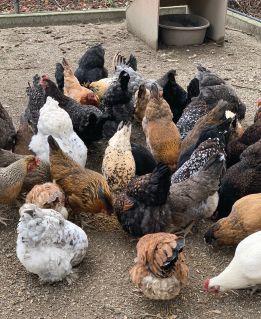
it would also be beneficial to both small flock owners and commercial operators in the future, if we had a more advanced reporting system for diseases observed in small flocks.
“Because small flocks are usually kept outdoors for at least part of the year, they are a sentinel for infectious diseases that also affect commercial operations, a sort of canary in the coalmine.
“I believe more surveillance and reporting of small flock disease issues would be helpful to everyone who farms poultry across Canada, large and small.”
The spokesperson adds, “The ministry will continue its education efforts through our web resources, regional agrologists, farming networks and contacts.”
PHOTO
Sticker shock
Some critics blame supply management but here’s what’s really causing poultry prices to soar.
By Mark Cardwell

To hear Canadian food distribution expert Sylvain Charlebois tell it, higher chicken prices are here to stay for the foreseeable future.
But he says the sticker shock that millions of Canadians got in January, when a picture of a package of chicken breasts selling for nearly $27/kg at a Loblaw store in Toronto circulated rapidly on the Internet, will soon fade.
“When things go viral, it distorts reality,” says Charlebois, a management and agriculture professor at Dalhousie University and a leading expert on Canadian food prices. “The truth is that, like with any commodity, the price of chicken varies.”
He notes that the price of skinless, boneless chicken in the GTA fell 20 per cent a week after the viral video. But that drop, which went largely unreported, failed to stem the tide of national news stories and coffee-table conversations that continue to reverberate about the high price of meat and eggs in Canada.
What’s to blame?
Some blame Canada’s supply management
system for the price hikes; others point fingers at food processors and big grocery chains, which in February reported doubledigit increases in profits in their fourth-quarter results for 2022.
Also in February, Statistics Canada released its inflation numbers for January, showing chicken prices rose nine per cent compared with December, the highest monthly increase since 1986.
“Among other factors, chicken prices rose amid stronger seasonal demand as well as ongoing supply constraints, elevated input costs, and issues related to avian influenza,” reads the StatsCan report.
For Charlebois, the truth about the reasons for higher chicken and egg prices lies somewhere in the perfect storm of inflationary and supply and demand issues that are driving costs to produce, process and market chicken and eggs in Canada inexorably higher – and that show no signs of abating.
“On the supply side, producers have to cope with higher prices for everything from feed to energy and transportation costs, and those prices won’t be coming down anytime soon,” Charlebois says.
Meanwhile on the demand side, he says poultry, which is part of what he calls a “meat trifecta” with beef and pork, is having a tough time competing with the latter in recent times.
“Right now, pork has the upper hand as the go-to value meat protein for consumers,” Charlebois says. “But it’s not an issue of costs and margins. Positioning at meat counters also plays a big role.”
Supply management defended
A spokesperson for Chicken Farmers of Canada (CFC) was quick to defend both producers and Canada’s supply management system for either causing or contributing to the viral January spike in chicken prices.
“Canadian chicken farmers don’t set the prices consumers pay – those prices are set by retailers and restaurants, and can be based on a number of factors such as regional influences, store locations, loss leaders, competition, and more,” says Lauren Kennedy, CFC’s director of public affairs.
According to Kennedy, Canadian chicken farmers receive only a small percentage of consumer food dollars. And those margins
Some blame supply management for rising poultry prices while others say the system has helped keep inflation in check compared to other countries.
haven’t changed recently, even though feed prices – the single most important component of the chicken farmers’ negotiated farm-gate minimum live price, which is currently set at $2.122/kg in Ontario – have continued to rise.
She also notes that on a 12-month rolling average, chicken prices in Canada have gone up seven per cent, while beef and pork have respectively risen 11 per cent and five per cent. By comparison, she says chicken prices in the U.S. have gone up 14 per cent over the same period, while beef and pork prices have risen 11 per cent and 12 per cent.
“That indicates that supply management has no impact on inflation (and) continues to ensure a steady supply of high quality, safe chicken raised with care that Canadians trust,” Kennedy says.
A processor’s view
For his part, Yannick Gervais, president and
chief executive officer of Olymel, Canada’s biggest pork and poultry processor, tells Canadian Poultry magazine that Canada’s supply management system enables poultry producers to increase their prices annually, forcing companies downstream to do likewise or see margins their shrink.
“Chicken producers have increased the prices for the live birds we slaughter for four consecutive years,” said Gervais, whose company accounts for roughly one million of the 12 million chickens that are slaughtered every week across Canada. “We use this as the base, and after that, if we have to we increase the price to make the margin. For us, as processers, if the live birds are pricier, and we have to do some movement on wages in salaries, and all the inflation on transportation costs, for us we just have to pass on the cost of those prices.”
Gervais also said he was surprised by the magnitude of the public reaction over the
sudden spike of chicken prices in January, given all the news about the high rates of inflation over the past year.
“To be honest, I saw the story but I don’t see the issue,” said Gervais. “Year over year it’s about a 20 per cent increase in the retail price. But the big thing with inflation is that it affects everyone along the chain. We’re not making more money than ever, despite what some people might think.”
When asked when and if chicken prices will fall, Gervais gave a one-word answer: “Impossible,” he said.
“Usually when there are increases, it’s pretty rare the price goes down. Maybe something we don’t see will bring the price back down.
“But again, with the quota system, there’s a specific amount of birds and it’s tough to get meat from the U.S. Still, chicken remains an affordable protein, compared to beef.”

The true culprits?
For Bruce Muirhead, a history professor and foreign trade expert at the University of Waterloo who is Chair in Public Policy for Egg Farmers of Canada, the hue and cry over the recent spike in chicken and egg prices has failed to zero in on the true culprits: greedy food retailers and extreme market volatility in a neoliberal global food system that has run amok over Russia’s ongoing invasion of Ukraine and continued COVID-related supply chain issues.
Even worse, he says opponents of supply management have used the price-spike issue to attack a system that he believes provides big benefits for both Canadian consumers and chicken and egg producers.
“It is just insanity to say that supply management is a hindrance,” says Muirhead, whose research for EFC focuses on the workings of supply management and how our system – the only remaining one
of its kind on Earth – functions and compares to comparable sectors in Australia, New Zealand and the U.S. =
“It is a data-less approach and an entirely ideological position to blame supply management for higher chicken and egg prices.”
In a recent op-ed article, Muirhead and fellow academic Jodey Nurse, a lecturer at McGill University’s Institute for the Study of Canada whose research focuses on agricultural marketing schemes, defended supply management as a model that allows local dairy, egg, and poultry producers to earn a decent living.
“Certainly supply-managed commodities have increased in price, and some have outpaced the average overall food price inflation,” they wrote.
“But there are many non-supply managed commodities that saw even more significant increases.”

They also noted that dairy, poultry, and egg prices have increased even more – in addition to egg shortages and deteriorating farming conditions – in several G20 countries, including the U.K., U.S. and Australia.
They also credited the supply management system for helping Canada avoid a more severe fallout from the avian influenza virus.
“As media critics well know, supply management is not a conspiracy to raise food prices but rather an effective system that has proven beneficial to both farmers and consumers for more than 50 years,” the op-ed reads.
“Beyond providing a bedrock of stability in rural Canadian communities, the system has worked effectively to mediate power asymmetries in supply chains, enhance Canada’s food sovereignty and security, and ensure safe, stable, and healthy domestic foodstuffs at a very fair price.”

Not a matter of if, but when Technology
Experts weigh in on cyber security risks on the farm.
By Lilian Schaer
Technology adoption in the farming sector is accelerating significantly as farms are looking for solutions to problems on the farm, from labour shortages to better animal health. Smart, connected devices of all kinds are collecting more data onfarm than ever before, and then analyzing that data to help farmers make better decisions and improve the productivity and performance of their operations.
“With the labour-intensive nature of agriculture, you see a lot of technology to make things more efficient –like cameras and heat sensors to monitor poultry health and well-being,” says Steve Brown, senior manager of cyber security at BDO. “Through the Internet of Things (IoT), everything can now speak to everything.”
According to Rozita Dara, associate professor in the School of Computer Science at the University of Guelph, technology can serve as an early warning of possible health problems in the barn by detecting disease or a change in behaviour. It can also collect information from other places to get historical or other data help decision-making.
“What this means is that you can take action to prevent disease introduction or spread – but you can also make better decisions to protect the supply chain, which is especially a problem for poultry due to Avian Influenza,” Dara says.
Identifying cybersecurity risks on the farm
All that connectivity and data collection isn’t without risk, and incidents of cyber security breaches – from compromised data to a system being frozen until a ransom is paid – are mounting. Agriculture is a particularly vulnerable sector, and experts agree that it’s not a matter of if but when a farm business will have a cyber security problem.

Rozita Dara, associate professor in the School
of
Computer
Science
at the University of Guelph, says technology can serve as an early warning of possible health problems in the barn.
These can result in disruptions of farm operations, financial losses for farmers, unauthorized access to sensitive information, and challenges to Canadian food security if the issue impacts the broader supply chain.
“There’s a lack of understanding of what hackers really want. They don’t care about your information but they know that you do so they’ll hold it so that you can’t use it and have to pay to get it back,” Brown says. “If you’re a farm that relies on payroll information or data on your livestock and you all of a sudden don’t have access to that system anymore because it’s a victim of a ransomware attack, that’s a problem.”
Although there is a lack of minimum cyber security standards in the sector, it’s not that cyber attackers are specifically going after agriculture, however; it’s that they will automatically go after the most vulnerable targets, notes Ali Dehghantanha, a University of Guelph Canada Research Chair in cyber security and threat intelligence.
“If your systems are connected to any network, you will be of interest to attackers. They pick the easiest, quickest targets and use them as the basis to attack other users,” he says, adding that his research has shown that a small business that is compromised has an 80 per cent chance of closing permanently after a significant attack. The biggest vulnerabilities stem from: outdated, un-
maintained systems, such as running old software that is no longer being updated; no data backups; lax approaches to who has access to systems on the farm; and a lack of awareness of things like phishing emails, where fake messages encourage users to click on potentially damaging links.
“In 90 per cent of farming systems, the last software update was years ago, and the business has no patching or updating policy. This is very common and the most profound issue we see,” Dehghantanha says.
To help get a better sense of cyber security readiness across the agriculture sector, the federal government is currently funding the multi-year Cyber Security Capacity in Canadian Agriculture project. It includes a literature review of digital systems in agriculture; interviews and focus groups with the ag sector; a producer survey; and resources specifically for farmers.
“One of the things we found in our is that we have a relatively low perception of risk and that there is no widespread knowledge of the threat landscape in agriculture,” says the project’s lead investigator Dr. Janos Botschner. “It isn’t currently a top priority for producers and although generally there are cyber security practices in place, they are uneven and not as strong as they can be.”
The project is entering its final year and a framework will be released shortly that focuses on opportunities to strengthen cyber resilience through partnerships, what Botschner refers to as a “cyber barn raising”.
Building up your protection
What steps can farms and others in the agricultural supply chain do to protect themselves? These experts agree that the goal should be to minimize risk. Here are their recommendations:
Understand your current situation. Make a checklist of all your current technology and make sure you’re using current software versions and that systems are up to date. Seek help if you’re not sure what to do or how to do it.
Educate the people using your systems. People are the number one risk, so this includes basic rules about what to do or not to do, and making sure people understand where threats come from. Free online videos are available for training.
Have a plan. Operate under the assumption of “not if but when” and know what to do for disaster recovery and continuity.
Ask questions of your suppliers. When someone is setting up a new system, ensure it is set up properly. Ask what security the devices have and whether data is encrypted.
Change passwords regularly. Avoid a single password for all users and make sure passwords are updated when an employee leaves the business.
Back up your data. This can reduce data loss and down time in case of a problem.
Install digital protections. This includes anti-virus software, firewalls and malware detection systems. Ensure you have a valid product license and that the programs are up to date.
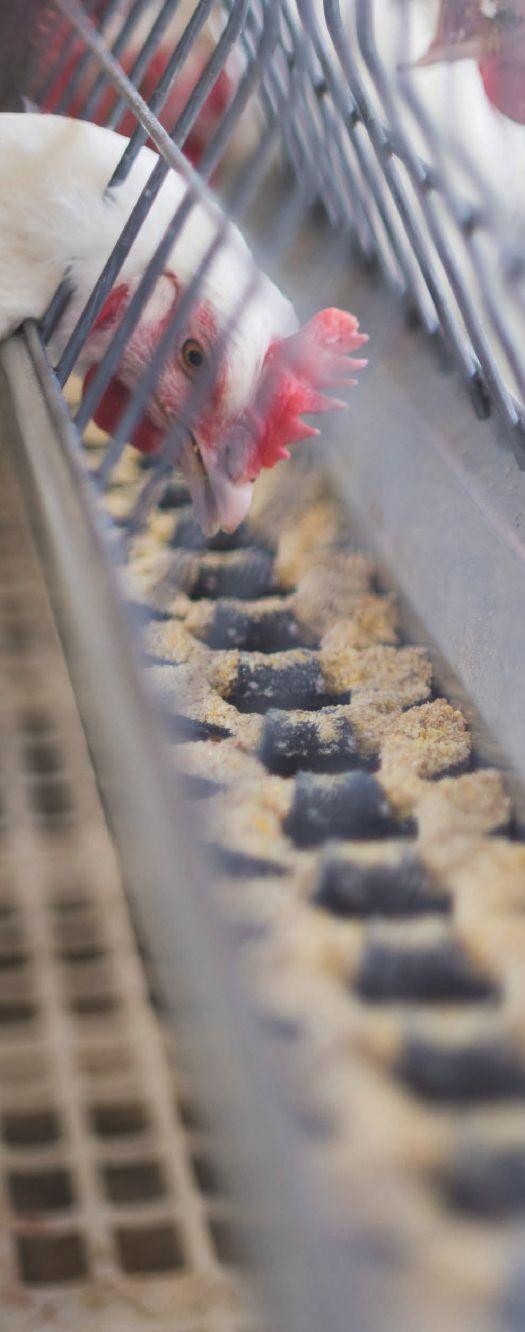
Big Dutchman’s oldest product, Champion® chain, is still feeding strong. First introduced in 1938, the original design has remained unchanged and can be used for any type of modern egg or poultry production.
Trust the feed chain champion with your poultry feeding needs today.
This research is funded by the Canadian Poultry Research Council as part of the Poultry Science Cluster, which is supported by Agriculture and Agri-Food Canada as part of the Canadian Agricultural Partnership, a federal-provincial-territorial initiative.
Bone benefits
Measuring the impact of aviary rearing on bone health in pullets.
By Jane Robinson
Of all the aspects researchers are evaluating to help laying hens adapt to alternative housing, very little is known about the effect of aviary rearing systems on bone health. A collaboration between human and poultry researchers is now applying state-ofthe-art technology to another piece of the puzzle to give producers useable insights into open housing designs and decisions.
Dr. Bettina Willie is a professor in the Faculty of Dental Medicine and Oral Health Sciences at McGill University in Montreal, and joined the university in 2015. She’s a bioengineer with a lab at the Shriners Hospitals for Children-Canada where she uses high resolution imaging to study bone fragility in young children.
“I became interested in laying hens as a relevant animal model for my work in children because hens are the most efficient land animal at being able to move calcium from their bones to daily egg shell production,” Willie says. “I knew the findings in chickens will be highly transferrable to human health.”
When Willie looked for poultry researchers to collaborate with, she connected with Dr. Tina Widowski, professor in Animal Biosciences and Egg Farmers of Canada Chair in Poultry Welfare at the University of Guelph. Willie joined Widowski’s multi-disciplinary research project looking at the impact of aviary rearing on various aspects of pullets, including behaviour and physiology. Willie and a McGill colleague Dr. Svetlana Komarova brought their expertise in human bone research to the poultry project.
A bone health baseline
“Bones constantly adapt to maintain their strength and integrity to support different daily activities,” Willie says. “We investigated how rearing birds in different styles of commercially available aviaries affects bone
“Bone health is so important for bird welfare.”
health and structure in white- and brown-feather pullets.”
Willie and her PhD graduate student Isabela Vitienes conducted two research projects using state-of-theart 3D imaging and equipment –that has never been used in poultry research – to examine the bone’s response to mechanical stimuli.
They started by determining if the bones of white- and brown-feathered pullets differ depending on the style of aviary they are reared in, to provide baseline information of bone health.
The scientists raised the pullets at the University of Guelph’s Arkell Research Station in three aviary styles, representing commercially available systems that provide varying levels, perches and ramps for birds to move about in.
They completed evaluations on bone health at 16 weeks of age after birds had time to adapt to the different environments.
To measure a baseline of bone health, Vitienes inserted sensors
PHOTO CREDIT: DR. BETTINA WILLIE
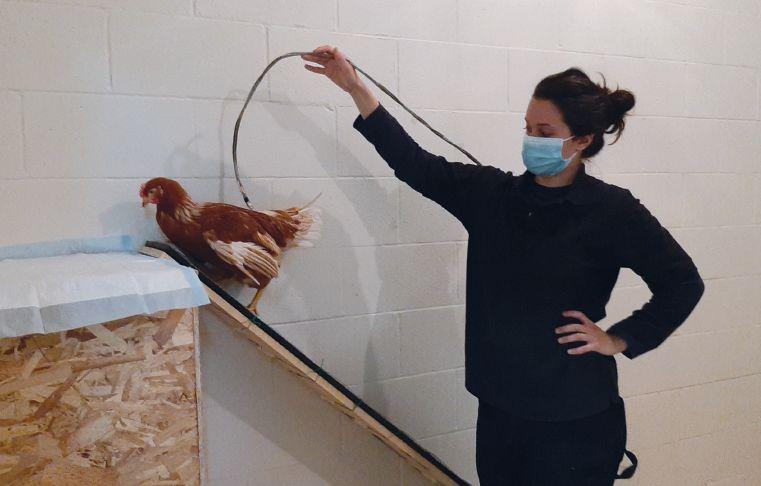
PhD graduate student Isabela Vitienes measuring baseline bone structure of pullets in an aviary rearing environment by tracking sensors attached to the leg bone.
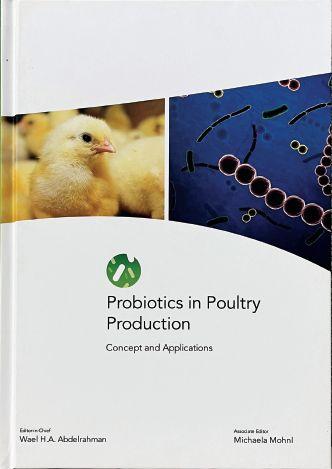

This book gives a comprehensive overview of the mode of action of probiotics and the theories behind it.
In addition, it highlights the main benefits of using probiotics in poultry production, such as maintaining gut health and integrity, reducing gut inflammation, modulating the immune system, preventing bacterial lameness, preventing reproductive tract infections, combating various enteric pathogens and improving performance. The chapters of this book illustrate various studies which show the efficacy of probiotics in reducing livestock and poultry diseases, potentially reducing the need for antibiotic intervention, in addition to improving production performance.



onto the leg bones of pullets to measure the birds’ bone mechanics.
Sensors tracked the amount of strain put on the leg bone during normal daily activities in the rearing environments – walking, running, perching, jumping, etc.
“One of the things we looked at was which activities best stimulate the bird to build bone mass,” Vitienes says. “We wanted to determine, for example, if birds need more vertical or horizontal space to get the level of physical stimuli they need for healthy bone formation.”
The depth of detail – including bone thickness, volume and curvature – provides indicators of fracture risk and overall bone health that affect the long-term health and wellness of laying hens.
Whites win again
What they found wasn’t entirely unexpected. Compared to conventional cages, avi-
ary rearing improved the bone structure of white-feathered birds, but not brown feathered.
“We have seen similar results in several parts of this projects,” Widowski says. “We know that white-feathered birds benefit the most from the complexity of aviaries because they are the only ones that use the space. And we saw that in the improved bone structure.”
The brown-feathered birds don’t benefit because they aren’t using the space. “It’s like giving people access to a gym – the only ones that benefit are those that use it,” Widowski says.
Any aviary style is a plus
When Willie and Vitienes looked for differences in bone structure between the aviary styles, they didn’t find any significant differences. “We see that aviary rearing improves bone compared to conven -

tional cages, but there was no difference between the different style of aviaries,” Willie explains.
“Thus, the level of complexity does not appear to be important for bone health, since all three aviaries we examined reached the necessary threshold of providing access to bone-stimulating activities.”
This also jives with what Widowski sees in other aspects of aviary rearing – any style of aviary will benefit birds compared to conventional cages.
Will workouts build bone strength?
The second project involved applying a mechanical load to one of the pullet’s leg bones. This artificial activity – performed for a few minutes, five days a week over a two-week period – was intended to represent more activity than the baseline measured in the first project. They were seeing how the bone responds to mechanical loading by giving the birds a workout to see if that extra activity might change/improve bone structure.
While the results aren’t in yet, Willie and Vitienes will be using micro CT imaging to compare the two leg bones – the one that got the added workout, and the one without – to see if there are differences in the bird’s ability to build bone based on the environment they are raised in, as well as genetic strain differences.
“We are hoping to be able to report which feather colour and aviary rearing style results in birds that better respond to access to exercise with stronger bones,” says Willie.
Building a whole bird picture
“Bone health is so important for bird welfare,” says Widowski, who recognized the unique opportunity to pair her poultry research knowledge with Willie and Komarova. “Being able to collaborate with human bone experts, and the sophistication of their facilities and equipment, is helping build a much more complete picture about what’s important in aviary rearing for the overall health and wellbeing of pullets.”










Barn Spotlight
Red Maple Farms
Location
Orono, Ont.
Sector
Layers
The business
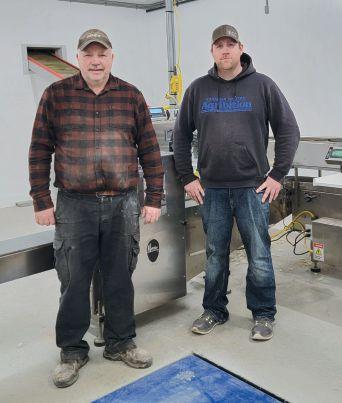
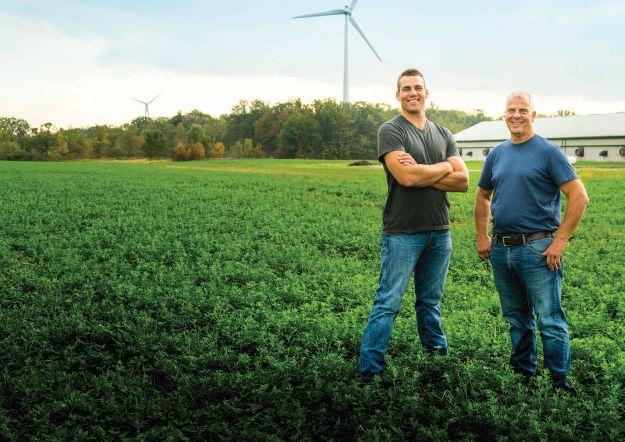
The Hollingsworth family has been in the layer business for over 50 years. Terry and Wendy Hollingsworth took over the farm from Terry’s father in 1988. Today, they farm with their son Brandon, housing 12,000-bird flocks in one barn in the eastern edge of Durham Region.
The need
In recent years, the producers were considering ways to improve ventilation in their old barn. But then they had second thoughts. “When the old barn was 50 years plus, it wasn’t worth putting money into it,” Terry says. “And so, we decided to build a new barn with enriched cages to keep up with the times.” They chose enriched cages over a cage-free system because they felt it would deliver better air quality.
The barn
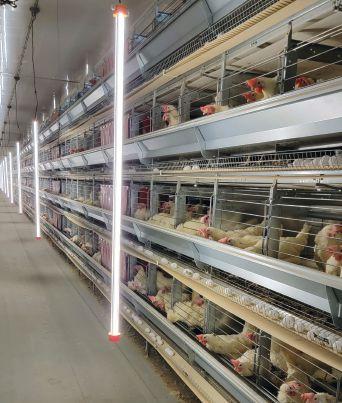
Last year, they opened a new barn with 20 per cent greater capacity. They went with a Hellmann enriched system since they were already familiar with the company’s equipment from their previous barn. Terry has noticed a remarkable improvement in air quality. “With this new barn, a mask will last me probably a week before I have to change it,” he says. Another aspect of the new barn that’s different is they hung six-foot-tall dimmable LED tube lights. What’s also new is they now have an elevator system for the eggs. “We like that because we used to have a conveyer going up and down to each row,” Terry says. “Now, we don’t have to worry about that – it just sits in one place.”
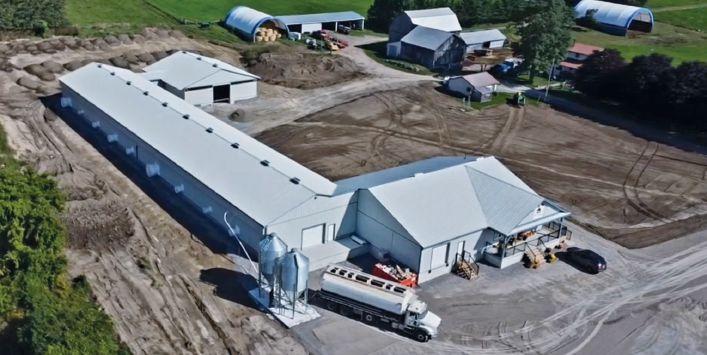
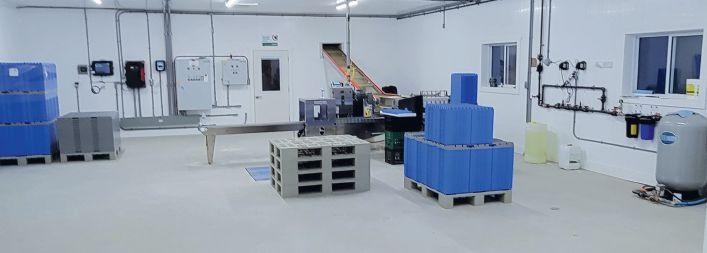
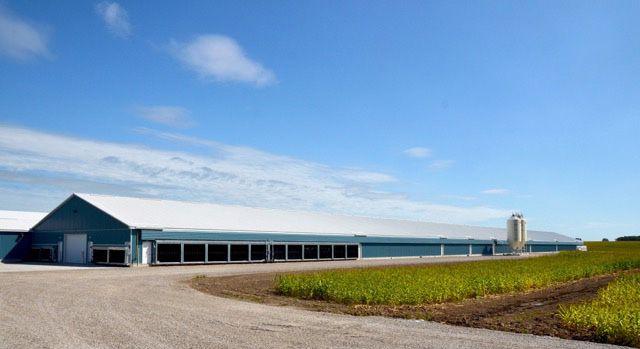
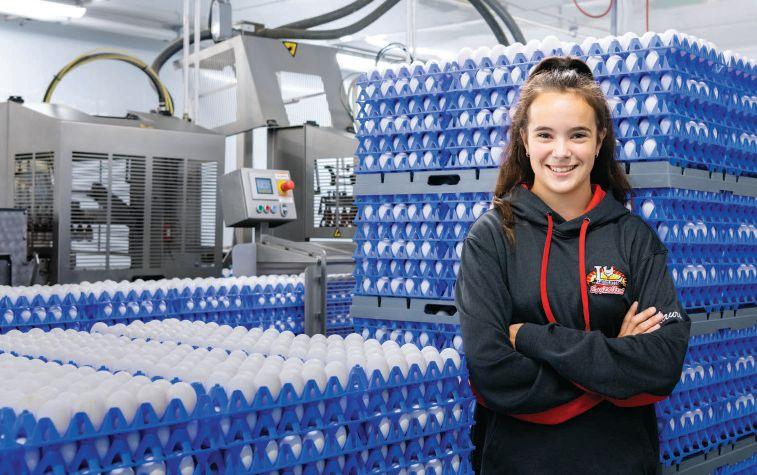
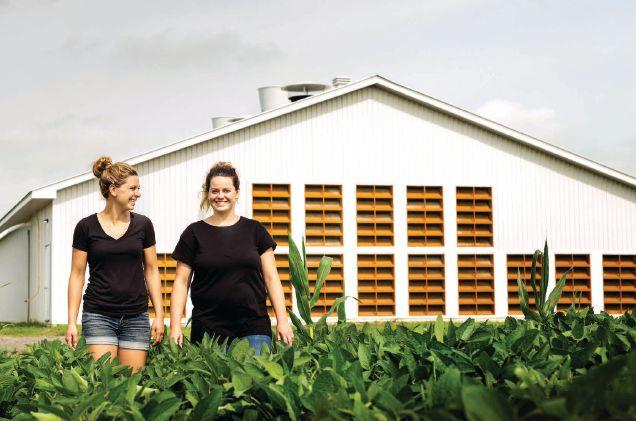
After 50 years in the same barn, the Hollingsworth family built a new facility with enriched cages that can house 20 per more birds to accommodate future growth.
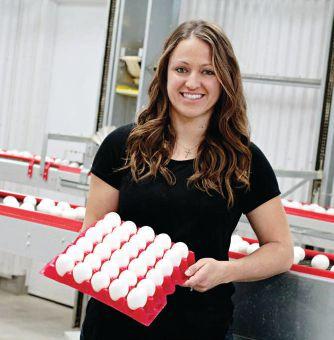
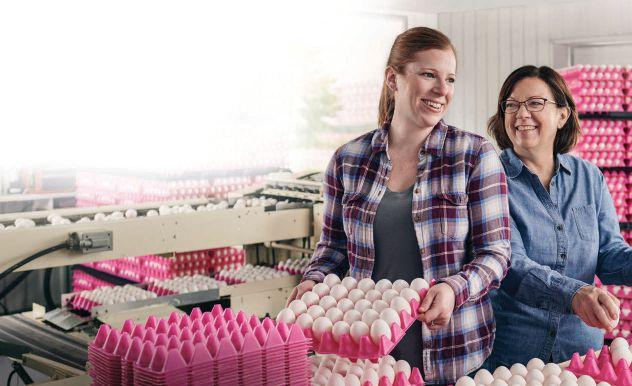
A new elevator system conveniently collects the eggs and brings them to the conveyer, which then transports the eggs to the packing room.
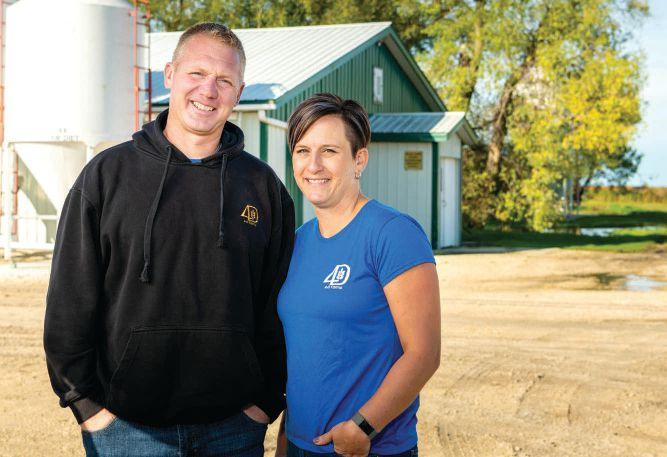
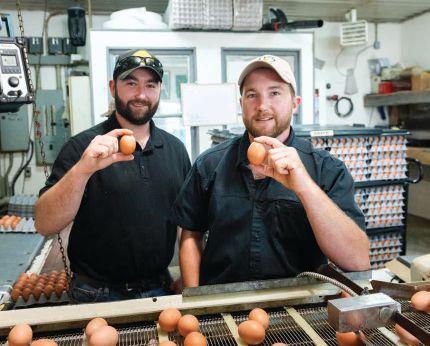
Terry Hollingsworth (left) works with his son Brandon (right) and wife Wendy (not pictured).
The new barn has dimmable LED lights hanging in the aisles and enriched cages from Hellmann.

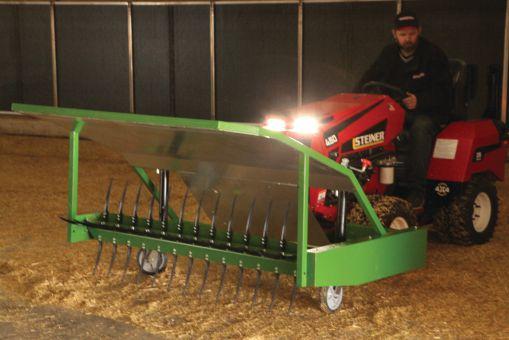
Quick Attach Bedding Management for Poultry Barns
Benefits of the Rotary Fork
• Use less straw (also works for shavings)
• Create a base that is nice and flat for waterers & feeders
• Save on fuel vs. blown in bedding
• Use less straw (also works for shavings) Save on fuel vs. blown in bedding
• Fast and easy process, can be done by 1 person
• Barn setup according to your own schedule, not dependent on weather
• Barn setup according to your own schedule, not dependent on weather
2 Sizes Available:
2 Sizes Available:
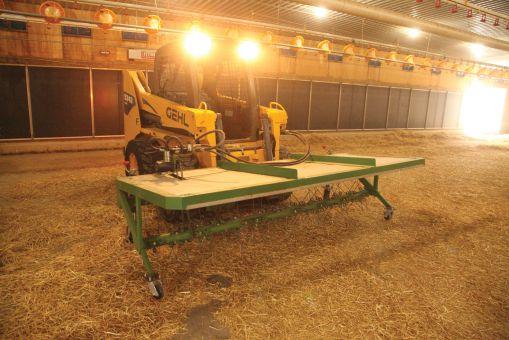
• 9’ (9’ 8” Overall Width)
• 9’ Fork (9’ 8” Overall Width)
• Available in Skid Steer, ALO & Manitou mounting configurations
•
• Hydraulically Driven using aux. machine hydraulics
• 5’ Fork (70.5” Overall Width)
• 5’ (70.5” Overall Width) Fits standard Ventrac / Steiner implement
• Fits standard Ventrac / Steiner implement mounting brackets
• Belt Driven using machine drive pulley
• Levelling jacks to set bedding depth
• Levelling jacks to set bedding depth
• Levelling jacks to set bedding depth
• Levelling jacks to set bedding depth
Visit our website for links to videos of the Rotary Fork in action
Visit our website for links to videos of the Rotary Fork in action
Another innovation available from:
Another innovation available from:
Another great product from:
Another great product from:

Another great product from: County Line Equipment Ltd. www.county-line.ca
County Line Equipment Ltd.
County Line Equipment Ltd.
8582 Hwy 23 N., Listowel ON N4W 3G6
County Line Equipment Ltd.
County Line Equipment Ltd.
8582 Hwy 23 N., Listowel ON N4W 3G6
PH. (800) 463-7622
PH. (800) 463-7622
8582 Hwy 23 N., Listowel ON N4W 3G6
www.county-line.ca
PH. (800) 463-7622
www.county-line.ca
info@county-line.ca
info@county-line.ca
PH. (800) 463 7622 -line.ca line.ca
www.county-line.ca info@county-line.ca