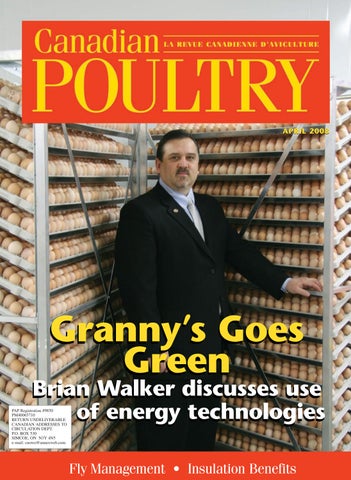
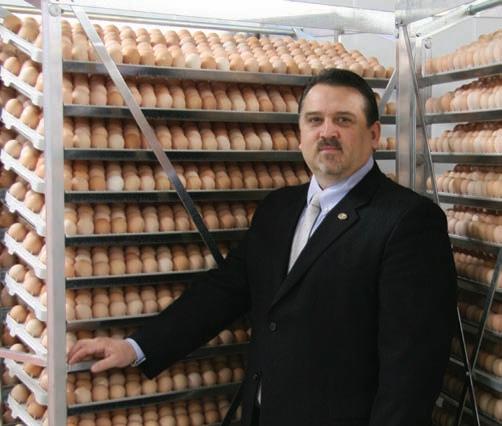
The Manitoba Poultry Co-operative greatly reduces its energy footprint by integrating new technologies
By Jim Knisley
WATERING SYSTEMS:Controlling Respiratory Disease By the Technical Team, Ziggity Systems Inc.
ENERGY:Insulation Benefits By Kristy Nudds
By Tim Nelson and Kimberly Sheppard
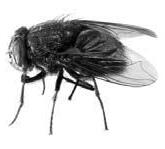
PEST CONTROL: Fly Management
All-natural fungal pesticide developed to control flies
By James D. Skinner, Dr. James J. Arends and John R. Struck
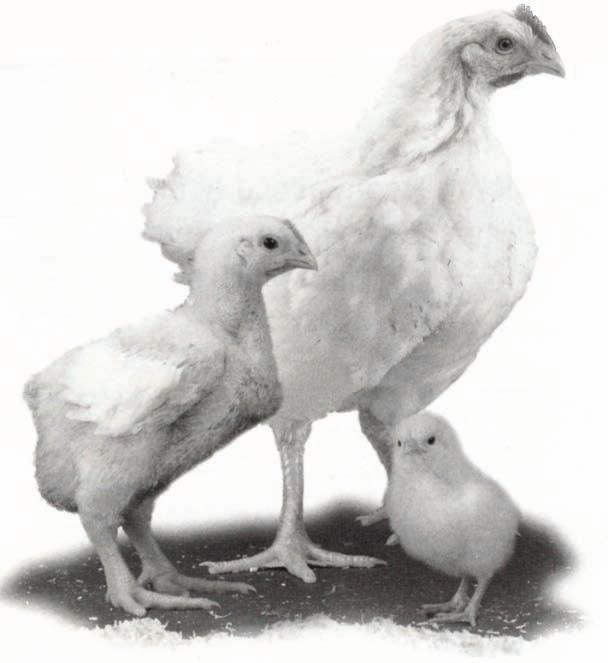
RESEARCH: Genetic Strain and Flock Age
Effects on hatching eggs, hatchability, saleable chicks and broiler performance
By Ana Franco , Gaylene Fasenko, Doug Korver, Erin O’Dea and Gita Cherian
HEALTH: SE Control A European
By Dr. Roy Mutimer, Cobb-Vantress
BY KRISTY NUDDS
A Changing Game
Although this issue of Canadian Poultry doesn’t touch upon welfare concerns, a recent incident has demonstrated the importance of this issue to livestock industries, and I felt it was important to discuss.
Recently, a large meat packer in the U.S., the California-based Westland/ Hallmark slaughter plant, was the subject of the largest meat recall in U.S. history. This recall – a staggering 143 million pounds of meat – was not initiated by the United States Department of Agriculture (USDA), but rather the Humane Society of the United States (HSUS).
A follower of the HSUS, a member of an “investigative team,” had a camera hidden in the button of his uniform and filmed downer cows being abused at the slaughter plant. The graphic video clearly showed abuse, but it also clearly demonstrated that downer cows were entering the food supply, which is not allowed (unless the animals are inspected) by the USDA over fears that downer cows have an increased risk of being ill or infected with Bovine Spongiform Encephalopathy (BSE).
It is fears over the food supply that the HSUS used, in this case, to its advantage. The group’s president, Wayne Pacelle, used the findings on the tape to question the safety of the U.S. food supply before the Senate appropriations subcommittee on agriculture.
After releasing the tape, the HSUS’s argument dealt more with the USDA’s perceived lack of inspection regulations than the abuse itself.
What this demonstrates is that the game is changing. Welfare advocates are
no longer satisfied with undercover-type operations or graphic images – they know that these will only get them a certain amount of publicity. They realize they’ll get more punch with the media and consumers if they use welfare concerns to question food safety.
What is more powerful than undermining the confidence of consumers with respect to the safety of their food?
Mr. Pacelle was successful in putting the USDA and Westland/Hallmark on the defensive over its lack of regulation, despite his twisting of the truth. Downer cows pose little risk for BSE when compared to the feed they eat, and as long as they are inspected by a veterinarian at the plant, downer cows can indeed safely enter the food supply.
I question, however, whether or not such a campaign would be successful for the poultry industry – that is, only if we continue to play our cards right. The industry in the U.K, the U.S. and in Canada has been under attack for the use of cages for egg-laying hens, and to a lesser extent, slaughter processes and transport for broilers.
Food safety is not a valid point for the cage debate, as research has shown that eggs are cleaner from birds housed in cages and the health of the birds themselves is greater and more easily managed than those in alternative systems.
However, the egg industry must keep this foremost in consumers’ minds. There are always going to be those that find cages inhumane, but it’s important that groups like the HSUS don’t find a reason to twist the truth to their advantage. Their game has changed, and we need to change ours. ■
April 2008
Vol. 95, No. 4
Editor
Kristy Nudds – knudds@annexweb.com
888-599-2228 ext. 266
Contributing Editor
Jim Knisley – jknisley@kwic.com
Publisher/Sales Manager
Marilyn White – mwhite@annexweb.com 888-599-2228 ext 237 • fax: 888-404-1129
Sales Assistant
Mary Burnie – mburnie@annexweb.com 888-599-2228 ext 234
Production Artist
Brooke Shaw
Editorial Director
Drew McCarthy – dmccarthy@annexweb.com
VP/Group Publisher
Diane Kleer – dkleer@annexweb.com
President Mike Fredericks – mfredericks@annexweb.com
Mailing Address
P.O. Box 530, 105 Donly Dr. S., Simcoe, ON N3Y 4N5
Publication Mail Agreement #40065710
PAP Registration #9850
RETURN UNDELIVERABLE CANADIAN ADDRESSES TO CIRCULATION DEPT., P.O. BOX 530, SIMCOE, ON N3Y 4N5.
e-mail: cnowe@annexweb.com.
Periodicals postage paid at Buffalo NY. USPS 009-324, ISSN 1703-2911. Published monthly by Annex Publishing and Printing Inc. US Office of publication c/of DDM Direct.com, 1223 William St. Buffalo NY 14240. US Postmaster send address change to PO Box 611 Niagara Falls NY 14304. Printed in Canada ISSN 1703-2911
“We are very pleased with our decision to purchase Hellmann Layer Cages with Manure Air Dry.Manure drying has eliminated flies in this layer house. “We have observed productivity gains and improved feed conversion. Mortalities are very low and the hens are staying at peak (production) for a longer period of time.”
Maximum Profit
Iwas impressed with Hellmanns’product engineering.The equipment is strong and easy to operate.The deep feeder troughs and reliable chain feed system are a bullet-proof combination.My weekly results consistently exceed the productivity charts.My production numbers are making me money. Money makes me smile.”
David Drain,Telford Egg Farms, Norwood,Ontario
Maximum Performance
“To date,we are very pleased with the results from our Hellmann system.Bird mortality and labor inputs are very low.As we know crews can be tough on cages,but the system strength and design of the Hellmann equipment eliminates any equipment damage concerns.The pullet inspection carts, which travel on the pullet trough,are awesome!!”
Fred & Sheila Fleischhacker Paynesville,Minnesota
Andre Merks,Merks Poultry Farms Ltd., Avonport,Nova Scotia
WHAT’S HATCHING HATCHING
Effect of Ethanol Policies
Pilgrim’s Pride Corporation announced March 12 that it will close a chicken processing complex and six of its 13 distribution centres in the United States in response to the crisis facing the U.S. chicken industry from soaring feed-ingredient costs resulting from corn-based ethanol production. These actions are part of a plan to curtail losses amid recordhigh costs for corn, soybean meal and other feed ingredients and an oversupply of chicken in the United States. The closings, which will be completed by June, will result in the elimination of approximately 1,100 jobs.
Additionally, the company announced that it is in the process of reviewing other production facilities for
potential mix changes, closure and/or consolidation in response to current negative industry fundamentals.
Two days earlier, Pilgrim’s Pride announced the sale of its turkey production facility and distribution centre in New Oxford, Pa., to New Oxford Foods, LLC, a subsidiary of Hain Pure Protein Corp.
“Our Company and industry are struggling to cope with unprecedented increases in feed-ingredient costs this year due largely to the U.S. government's ill-advised policy of providing generous federal subsidies to corn-based ethanol blenders,” said Clint Rivers, president and chief executive officer in a press release.
“The cost burden is already enormous, and it’s growing even larger. Based on
current commodity futures markets, our company’s total costs for corn and soybean meal to feed our flocks in fiscal 2008 would be more than $1.3 billion higher than what they were two years ago. We simply must find ways to pass along these higher costs.”
Rivers also said that the company believes that the recent impact of “food-based inflation, coupled with the need for food producers to continue to increase prices for their products, will further stimulate inflation, weaken consumer confidence and negatively affect demand for products in certain market channels.” He said this will require that the industry adjust its production output to levels commensurate with a reduced demand, at higher prices.
OBHECC Changes
and Lakeside Game Farm.
Four non white rock (NWR) producers became members of the Ontario Broiler Hatching Egg and Chick Commission (OBHECC) on Jan. 31 when they officially received restricted hatching egg market share and restricted breeder growing quota.
The four new members are: Frey’s Hatchery, Bonnie’s Chick Hatchery, Szender Farms
British Columbia-based biotech company IRI Separation Technologies (IRI) has signed an agreement with Vanderpol's Eggs Ltd (VEL) in which Vanderpol's will take over distribution and sale of all liquid and frozen egg products from IRI's Airdrie egg-breaking facility, and IRI will fully focus on the core part of its business, the extraction of antibodies from eggs. IRI will continue to use egg yolk from its egg-breaking facility, which will be transferred to its separation plant for extraction.
IRI specializes in the extraction of polyclonal immunoglobulin antibodies – antibodies that are derived from chicken eggs for use as a nutraceutical for human consumption.Initially, IRI intends to market the ingredient for use in foods as a yolk protein isolate.Later, the company will look at natural health products that can make health claims, once the necessary regulatory approvals are obtained.
Jim Rickard, OBHECC chair, told the group’s annual meeting Feb. 27, that discussions with the NWR producers had been ongoing since 2003. The discussions “resulted in new regulations and policies to guide the future development of NWR hatching egg production and chick sales.”
Bob Guy, general manager of OBHECC, said egg sets, hatch results and chick mar-
keting by the four NWR hatcheries were regularly reported to the commission in 2007. The appropriate national levies and provincial licence fees were collected.
Farm inspections were carried out to discuss standards and biosecurity, he said.
In June draft regulations were released and a revised version was adopted in December.
Allocation for this sector is calculated through broiler chick sales, he said.
Funding for
New Egg Product
The Saskatchewan Egg Producers have been granted $69,156 to develop a new processed value-added egg product.The project is one of four in the province that received funding in late February via Agriculture and Agri-Food Canada's
Advancing Canadian Agriculture and Agri-Food (ACAAF) program. The objective of the ACAFF program is to allow farmers to take advantage of new and innovative market opportunities.The Government of Canada is investing $665,551 in four innovative projects in Saskatchewan.
COMING EVENTS
MAY
May 15, 2008
Poultry Industry Council (PIC) Research Day, The Arboretum, University of Guelph. Registration starts at noon, followed by a wine and cheese at 4 p.m. For more information, telephone 519-837-0284; e-mail: pic@poultryindustrycouncil.ca, or visit www.poultryindustrycouncil.ca.
May 28-29, 2008
Ontario Association of Poultry Practitioners (OAPP) technical symposium, Holiday Inn, Scottsdale Dr., Guelph, Ont. Previous OAPP technical meetings have been very successful and afforded participants excellent opportunities for networking and learning more about important disease and industry issues. The symposium will feature several internationally recognized speakers. The first day will focus on antimicrobial use, development of antimicrobial resistance and alternatives for poultry production. The second day will include discussions on emerging diseases and animal welfare. For more information or to register, please contact Dr. Emily Martin at 519-824-4120, ext. 54523 or by e-mail at emartin@lsd.uoguelph.ca.
JUNE
June 8-10, 2008
Canadian Poultry and Egg Processors Council (CPEPC) annual convention,
SASKATCHEWAN
WHAT’S
HATCHING HATCHING
No Permit Needed
Poultryand hog producers no longer need a Canadian Food Inspection Agency permit to feed food products for what the agency called edible residual material (ERM), such as stale-dated bread, pasteurized milk and vegetable wastes to their livestock. The agency made the announcement on Feb. 20. The agency has previously
issued permits to livestock producers for the feeding of ERM under the federal Health of Animals Regulations.
The CFIA says that ending the Health of Animals permit system for products such as bakery waste, dairy processing byproducts and vegetables will “remove this regulatory burden which no longer serves a disease control role.”
Record Year for U.S. Exports
For the first time, exports of U.S. poultry, eggs and related products surpassed the $4 billion mark. According to the USA Poultry & Egg Export Council, exports of U.S. broiler meat (excluding chicken paws) in 2007 reached a record in both quantity and value. U.S. broiler exports totaled 2.6 million metric tons, an increase of 10 per cent over the previous year, while export value increased by 48 percent to $2.74 billion. Russia was the top market
for U.S. broiler exports in 2007, but strong demand in China for U.S. chicken made for the record year.
China was the secondleading market for U.S. broiler meat exports, with volume of 239,143 tons, a 24 per cent increase over the prior year, and value of $317.8 million, an 89 per cent increase over last year.
The third top importing country for U.S. chicken was Mexico, with a total of 1.3 million tons.
COMING EVENTS
Continued from page 7
Westin Bayshore Resort & Marina, Vancouver, B.C. Keynote speaker: Bernard Voyer, the first North American to reach the Seven Summits. The room block at the Westin Bayshore is now open for online booking. Visit www.cpepc.ca to book online or call the hotel directly at: 1800-WESTIN-1 and reference the CPEPC room block. Registration and sponsorship information will be available soon.
June 29- July 4th, 2008
23rd World’s Poultry Congress, Brisbane Convention And Exhibition Centre, Brisbane, Queensland, Australia . For registration information and agenda, visit: www.wpc2008.com; tel: +61 (0) 7 3858 5594
JULY
July 20-23, 2008
Poultry Science Association (PSA) Annual Meeting, Sheraton on the Falls Hotel and Convention Centre, Niagara Falls, Ont. The PSA is celebrating 100 years in 2008. For more information, visit: www.poultryscience.org/psa08/
We welcome additions to our Coming Events section. To ensure publication at least one month prior to the event, please send your event information at least eight to 12 weeks in advance to: Canadian Poultry, Annex Publishing, P.O. Box 530, 105 Donly Dr. S., Simcoe, Ont. N3Y 4N5; e-mail: knudds@annexweb.com or fax: 519-429-3094.
FEATURES - Web Exclusives
Annual Meeting Coverage
BY AL KINGSBURY, DAN WOOLLEY, MYRON LOVE AND KRISTY NUDDS
Annual meeting coverage from Nova Scotia, Manitoba, British Columbia and Ontario.
READFULLSTORYONLINE
Key Issues Facing Canada’s Food Manufacturing Industry
BY KRISTY NUDDS
A summary of the major issues facing meat processing, the biggest segment of the food manufacturing industry, as reported by the Conference Board of Canada.
READFULLSTORYONLINE
www.canadianpoultrymag.com
Notifiable Avian Influenza and Your Operation
The Canadian Poultry and Egg Processors Council, the Chicken Farmers of Canada, the Canadian Egg Marketing Agency, the Canadian Turkey Marketing Agency and the Canadian Hatching Egg Producers, along with provincial boards, have developed a guide to what you need to know when avian influenza is detected. A pdf of this document is available on our website under “industry.”
We asked the question: Do you think Canada’s biofuel policy is a good thing for Canadian agriculture? Fiftythree per cent of respondents said no, 40 per cent said yes, and seven per cent were undecided. Check our site to see new polls and blogs!
NEW PRODUCTS
D PRODUCTS
MixRite Injector
iversified Imports MixRite medicating injector is a multi-purpose injector used for administering vitamins, antibiotics and nutritional supplements.
The MixRite has been improved to have better lubrication, a more effective mechanism and stronger seals.
Operated solely by water pressure, the MixRite is easy to set up, operate and maintain. Dosage range is from 0.2 to 2 per cent, and it is set for the dosage to accommodate one
Improved RT Quick Change System
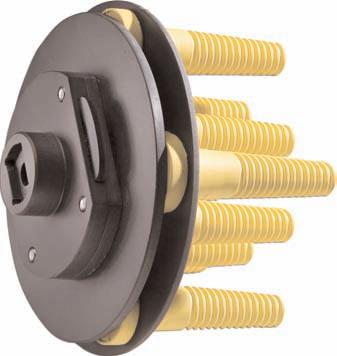
The Wm. Goodyear Co. patented RT Quick Change system for picking fingers is now made of aluminum with a hard-coat finish. The redesign makes the device much lighter and reduces bearing load.
The RT Quick Change system, which incorporates a centrifugal locking mechanism with a finger plate, now also features a secure-lock indicator. It shows when the front plate is securely attached and locked to the back plate.
The innovative system offers many benefits in the picking room. These include labour savings, increased safety, reduced ergonomic problems, extended
picking finger life, and improved sanitation.
Companies using the RT Quick Change will also realize increased safety records and reduced injuries, because the system does not require sharp instruments to remove spent picking fingers.
With the RT Quick Change system, fingers are simply pushed out of the RT disk. Ergonomically designed, the RT Quick Change also puts less stress on employees’ hands and arms.
ounce of medication per gallon of water. The nominal water pressure range is from 2.9 to 85 PSI, and flow rate ranges from 5.3 to 660 gallons per hour.
The durability of the MixRite medicating injector ensures long life in all weather conditions as well as resistance
Quick Change system.
Picking fingers receive more even wear with the system allowing them to be used for a longer period of time.
Existing picking machines can be retrofitted with the RT
Fingers are available in yellow, grey and black colours and are produced to the hardness required by each plant to assure maximum yield.
For more information, contact Wm. Goodyear Co. by telephone at 877-245-7427 or by email at sales@wmgoodyear.com.
to a wide range of chemicals and constant UV radiation exposure. Critical parts are made of Viton rubber and Hastelloy springs.
For more information, call 732-363-2333, fax 732-9057696 or e-mail info@diversifiedimports.com.
Inlet Damper With Optional Insulation
American Coolair introduces the next-generation Inlet Damper for the poultry industry. Available on all American Coolair size 48-inch and 52-inch wall fan units, the Inlet Damper allows for insulation.
The damper consists of four vertical doors that open automatically and come together when the fan is in use. A nearly unobstructed path is provided for the air stream.
The doors seal magnetically when the fan is off. A foam rubber gasket on the door frame minimizes leakage.
NEW
PRODUCTS PRODUCTS
When it is time for fan cleaning or maintenance, the damper does not need to be removed. By opening the large damper doors, ample access to the fan is provided.
American Coolair’s unique damper design allows for something that ordinary shutters and dampers don’t: insulation. Typically, thin aluminum shutters don’t provide adequate insulation from cold air. When
Ziggy Product Upgrade
With the latest saddle adapter developed by Ziggity Systems, Inc., producers can now upgrade virtually any watering system in their operation.
Ziggity designed this newest saddle adapter to work on round pipes
fitted with optional insulation, the American Coolair damper provides an air barrier and a heat barrier without affecting the aerodynamic performance of the fan package.
American Coolair Inlet Damper conversion kits allow for the replacement of an existing shutter on any 48-inch or 52inch Coolair fan in the field with minimum effort. Kits are also available for select non-Coolair fans. The Inlet Damper conversion kit includes the Inlet Damper, a housing extension box, and all the necessary hardware to assemble the new damper package.
supported by an aluminum profile. Producers only need to remove the old drinker and replace it with Ziggity’s saddle adapter. Ziggity’s newest technology Max3 TL drinker then snaps into the saddle. No special tools or gluing are required.
Ziggity focuses exclusively on poultry watering systems, and the advances it has made in drinker technology have increased demand for its products. Ziggity, however, recognizes that improvements in drinker technology do not help producers if they are costly to introduce. That is why the company developed its upgrade replacement line, making the benefits of Ziggity drinkers more accessible to producers without requiring they replace the entire watering system.
This newest product is one more in a line of upgrade products. Producers can find the ones they need at www.ziggity.com/upgrade.
Producers can further enhance their watering system by adding Ziggity’s pressure regulators and end assemblies. This means producers can benefit from stateof-the-art Ziggity drinker technology, as well as Ziggity’s effective flushing features that will keep systems free of biofilm and sediment year after year. The result is a greatly improved watering system with minimal labour, shipping and material costs.
For more information, write Ziggity Systems, Inc. at 101 Industrial Parkway, P.O. Box 1169, Middlebury, Ind. 465401169 USA, fax 574-825-7674, or visit www.ziggity.com.
Grabbits™
Grabbit Tool Company, a Littleton, Colo., firm, has developed a family of products that allow tarp users to manage tarps and protect property in ways never before possible. No longer are you obligated to use the ineffective, often torn (often cursed), grommet.
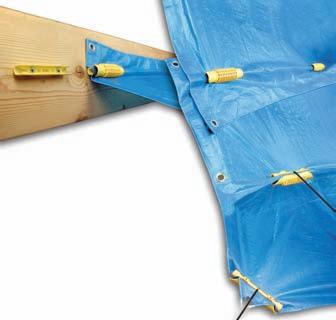
Offered in three sizes (20" Long Grabbit™, 6" EZ Grabbit™ and 1.5" Mini Grabbit™, Grabbits™ allow you to mount tarps to structures, seam multiple tarps together, replace torn grommets, and firmly and reliably grab tarps anywhere – all in seconds.
Using the patented technology of “linear grappling,” the two-piece Grabbits are remarkably easy to use. Simply place the “dogbone” piece precisely where you want to grab the tarp, roll the tarp around the dogbone, and slide the sleeve over the dogbone. A simple tug on a leader rope engages the two pieces together, trapping the tarp and creating a high-strength hold.
The dogbone can also be screw-mounted to an exterior wall, fence or vehicle allowing instant cover area for equipment, supplies,
livestock, feed, construction projects, disaster recovery, pet runs, sporting events, entertaining and campsites.
Grabbing a tarp over a linear edge distributes the load, allowing users to secure their tarps tightly without risk of tearing. Grabbits work equally well with poly tarps, canvas tarps, plastic sheeting, linens, vinyl signs or banners, mosquito netting, burlap, landscape fabric – any pliable fabric. They easily handle up to eight layers of poly tarp or four layers of canvas tarp at a time. Grabbits are available at the Home Depot and Canadian Tire.
Visit www.grabbittool.com for more information. Click the Product Videos tab and watch the demonstration videos to see exactly how Grabbits work.
Foam San Hand Sanitizer
Zep Inc. offers Foam San, an alcohol-free, perfume-free foaming hand sanitizer ideal for use in food processing facilities. The quat-based hand sanitizer kills 99.9 per cent of common bacteria such as Staphylococcus aureus, E. coli, pseudomonas, salmonella and listeria in less than 15 seconds.
Dispensed as a rich foam that disappears and dries after being worked into the hands, Zep Foam San sanitizes hands without drying them, leaving skin feeling soft and smooth without the need for rinsing or wiping.
Zep Foam San is available in 500-ml pump bottles, one-litre refills, and a new 2.5litre bottle designed for use in Zep’s tough new Gladiator dispenser.
Business Profile Granny’s Goes Green
Manitoba’s Granny’s Poultry Co-operative greatly reduces its energy requirements by integrating new technologies
BY JIM KNISLEY
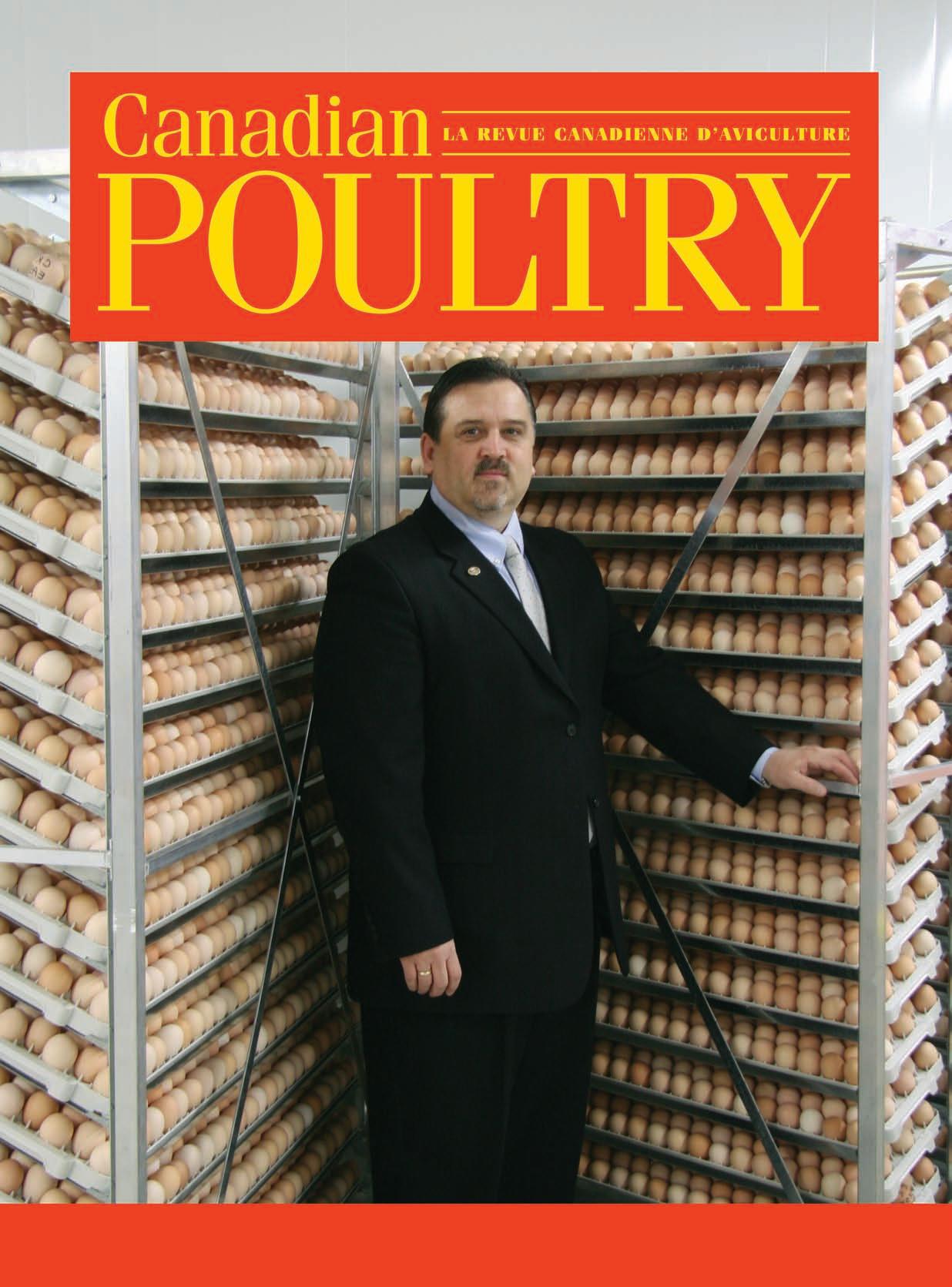
Granny’s Poultry Co-op has built and moved into the most energy-efficient hatchery and office complex on the planet.
Using a unique combination of geothermal energy, heat exchangers, a heat capture system in the hatchery itself and a state-of-the-art energy management control system Granny’s built a Winnipeg facility where the need for traditional heating is virtually eliminated even on the coldest days. By employing geothermal the system also cools the facility in summer, completely eliminating the need for traditional, energyintensive air conditioning.
Brian Walker, director of business development and marketing, said: “A lot of the technology has been used elsewhere but we’re the first to integrate it.”
In addition to integrating the energy measures the company installed new Chickmaster single-stage incubators that will provide improved results over the two-stage system in the company’s old facility.
The new system will improve hatchability and result in larger, stronger chicks because the environment will be precisely what they need.
The heat recovery system utilizes the
Brian Walker (above) says that Granny’s Poultry's new Winnipeg facility incorporates state-of-theart energy management, where the need for traditional heating is virtually eliminated even on the coldest days.
first air-to-air heat exchanger in a North American hatchery.
The impact and the energy savings generated by the integrated systems were clear the day Canadian Poultry magazine called.
Walker said the temperature in
Winnipeg was minus 29 degrees that February day. The heat exchangers and the geo-thermal system raised the temperature in the building to a comfortable 19 degrees. Not quite warm enough for the hatchery so supplemental heat was turned on to raise the temperature
Business Profile
The new hatchery will produce 12 million broiler chicks per year for the co-op’s 81 broiler producer members.
there to 24 degrees.
While supplemental heat was needed on the very cold day, the temperature in the building had been raised 48 degrees without turning on the heat.
In the summer the process can be reversed with hot air in the building being moved from the building into the ground by the geo-thermal units.
The whole system is computer controlled, which maximizes the efficiency and minimizes the overall costs.
Walker said the system should pay for itself in one year and after that Granny’s will generate nothing but savings from its reduced energy consumption.
“In the long term this will be extremely beneficial to us,” he said.
The company has also installed a closed loop water/wastewater system that will reduce water usage by up to 82 per cent.
That will result in a significant
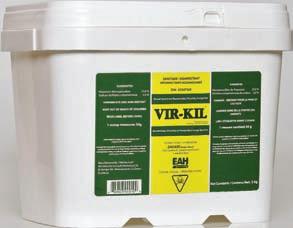
INTRODUCING VIR-KIL™
theReal Deal! New VIR-KIL™ is a premium quality, broad spectrum surface disinfectant designed for effective, sustained antimicrobial activity against a broad array of viruses, bacteria, molds and yeasts.
VIR-KIL’s powerful, sustained and synergized biocidal action makes it ideal for swine and poultry operations where biosecurity is a priority.
VIR-KIL:
• contains two active ingredients which work together in a powerful, synergistic manner to deliver sustained biocidal activity
• contains a detergent and water softener to cut through dirty surfaces when mixed with either soft or hard water
• will not corrode metals or plastics and is odourless
for a limited time, receive $20 OFF the retail price of every 5 kg pail of new VIR-KIL you purchase, or $80 OFF every 20 kg pail purchased. For all the details please see your farm supply retailer or veterinarian, or contact Engage Animal Health at 1-866-613-3336.
Business Profile
reduction in the company’s water and sewer bills by hundreds of thousands per year.
For the employees the building offers as much natural light as possible through the expansive windows. Walker said that having a pleasant, bright environment for company employees was a key consideration in the design.
“We’re doing all we can to make it a pleasant environment for our employees,” he said.
The company even designed the outdoor plug-ins needed on cold winter days to keep car batteries from draining and anti-freeze from freezing to make optimal use of electricity. The improved design of that system will cut energy use by 50 per cent without reducing effectiveness.
The use of energy-efficient lighting in the building saves another 50 per cent, he said.
“We have substantially reduced our energy footprint,” he said.
Overall the new 36,000-square-foot building cost $10.5 million. It is double the size of the old hatchery, is on 7.6 acres of land allowing for expansion and has a much better location in the southeast end of the city near the Perimeter Highway.
The old location, which Granny’s moved into in 1988, is on the west side of the city, was landlocked and not large enough for both the hatchery and the sales office.
In 2000, the sales staff moved to another office, to allow for an expansion of the old hatchery.
The new hatchery will produce 12 million broiler chicks per year for the coop’s 81 broiler producer members.
Granny’s Poultry Co-operative is Manitoba’s largest poultry processor and
A pleasant, bright environment for company employees was a key consideration in the design.
one of Manitoba’s fastest growing companies as demonstrated by a virtual doubling of sales in the past 10 years.
The company also operates a processing plant in Blumenort, Man., about half an hour southeast of Winnipeg. The 150,000-square-foot processing plant has 325 employees rising to 400 during peak periods.
The hatchery and sales staff total 40. ■
Watering Systems Controlling Respiratory Disease
Managing the poultry barn environment is key
BY THE TECHNICAL TEAM, ZIGGITY SYSTEMS, INC.
Respiratory disease represents a significant threat to poultry flocks. Strict adherence to good management practices throughout the poultry operation, especially the watering system, is the only way poultry producers can reduce the impact of respiratory disease on their flocks and profits.
If the birds are showing signs of infection, a producer can respond with medication. But all too often, the birds exhibit no signs of infection other than underperformance. Respiratory disease is not a single virus or bacteria; it generally is a complex of both, making prevention and treatment far more complicated. Even though farmers are vaccinating most flocks, respiratory lesions still turn up at slaughter on a regular basis; and these defects hurt weight gain and carcass quality.
The U.S. Department of Agriculture reports: “As we enter the 21st century, the single most important issue for poultry farmers will be how to lessen the direct and indirect cost of disease. A threshold has been reached where poultry farmers will have to either produce more birds to overcome the current cost of disease or produce the same amount of birds at a lesser cost with value-added disease control measures.”
The primary culprit in respiratory disease is ammonia, which is a result of moisture reacting with poultry droppings
Controlling ammonia in the barn is key for reducing the incidence of respiratory disease. One strategy is to keep the litter dry by preventing leaky drinkers, removing biofilm and maintaining correct pressure.
in the litter. Ammonia destroys the cilia in the chicken’s trachea. This leads to erosion of the tracheal lining. The irritated tracheal lining is more susceptible to infection by viruses or bacteria, and this can cause additional destruction of the trachea. Finally, E. coli bacteria from the litter gets into the trachea and the bird
develops airsacculitis.
One strategy for controlling ammonia is to keep the litter dry; a second is to remove ammonia with ventilation. Ziggity recommends a combination of the two.
Litter in a poultry barn will always contain a certain amount of moisture,
Watering Systems
most of which comes from the birds themselves. Birds retain only about 30 per cent of the water they drink. About 20 per cent goes into the air as the birds exhale, and they excrete the remaining 50 per cent in their feces.
While some moisture in the litter is inevitable, farmers should strive to keep the moisture content to a minimum –about 20 to 25 per cent. This will keep the litter friable.
The following are some tips on how to keep the litter dry:
• Prevent leaky drinkers. Establish a regular program of high-pressure flushing for the watering system. This will remove biofilm and sediment buildups that can clog drinkers and cause them to leak. Ziggity recommends using a hydrogen peroxide-based cleaner to scrub the interior of the water pipes before flushing. Also, replace leaky drinkers immediately.
• Have adequate ventilation, summer and winter. Another reason for wet litter is inadequate ventilation to dry the litter and move the moisture out of the poultry barn.
• In cooler weather, you’ll find it necessary to heat the barn, not only to protect the birds from cold, but also to continue the evaporation process. Too often, farmers will attempt to save money by cutting back on heating. Research by University of Georgia poultry scientists shows, however, that the money saved on fuel is far outweighed by the money lost on under-
performing birds as a result of elevated litter moisture and ammonia levels.
• Maintain correct pressure settings. During the drinking process, birds can only retain a certain amount of water in their beaks. If more water discharges from the drinker than what the bird can retain, the oversupply spills onto the litter. The key to achieving the correct pressure settings for your system is to take litter readings. Again, strive for friable litter.
• Many farmers use their watering system to vaccinate their flocks against respiratory disease. If you do, it is a good procedure to flush the water lines about 24 hours prior to vaccination to remove any biofilm and sediment in the lines. Then immediately after the vaccination, flush the lines again. This will remove any nutrients in the lines left over from the stock vaccine solution. Also, be sure that when you administer the vaccine, the lines are fully charged with the vaccine solution. ■
Ziggity Systems, Inc. is the only manufacturer 100 per cent focused on poultry watering for improved performance. For more information, write Ziggity Systems, Inc. at 101 Industrial Parkway, P.O. Box 1169, Middlebury, Indiana 46540-1169 USA, call +1 574.825.5849, fax +1 574.825.7674, or visit its website at www.ziggity.com.
meller
Cage Systems
MELLER R PULLET T CAGES
Meller brings you a world class pullet cage system proven in thousands of installations around the world, with features such as revolving belt manure removal roomy cages, solid galvanized dividers and adjustable front gate. Chain feeder or self propelled feed carrier with proportioner augers are available.
MELLER LAYING CAGES
Egg producers across the country have increased the efficiency of their operation with Meller Cage Systems, the Egg-Ease Egg Saver and faster egg collection. Sliding doors open the full width of the cage and the horizontal bars prevent feed spillage.
Energy Insulation Benefits
Utilizing proper insulation, including the floors, has shown big results for poultry farmers
BY KRISTY NUDDS
What began as an idea to solve his own energy efficiency problem turned out to be a booming business for Herman Schuts, who along with his son Alex, operates InstaInsulation in Scotland, Ont. The company is the largest foam insulation applicator in Canada and some of its most interested clients are poultry farmers.
After coming to Canada from the Netherlands and purchasing a dairy farm, Herman faced a dilemma: his son didn’t want to continue farming, and an ailing back and leg prevented him from continuing on alone. Selling half the quota relieved some of the workload but Herman faced another problem: his barn wouldn’t allow for silos and conveyors to be replaced with a drive-thru feed system and water was a major issue, preventing sale of the land and buildings and making the work tedious.
He says that he also had significant condensation problems in the barn due to fibreglass insulation, resulting in high energy costs. Still milking 100 cows and looking for a solution, he researched polyurethane foam insulation and decided to purchase a foam insulation sprayer to fix the problem himself. It worked so well and he started advertising in local papers, installing foam insulation to local farms and houses. By this time his son was finished high school and interested in the growing business, allowing for the sale of the remaining quota and a
full concentration on Insta-Insulation.
The demand for polyurethane foam insulation is so high that since 1993, Schuts says the business has grown 30 to 40 per cent each year. This is in part due to the Schuts’ confidence in the energysaving benefits of insulation and their desire to share these benefits with others. “The product is so good, but no one knew about it,” says Herman. It’s also based on customer satisfaction. “Customers tell me straight out that it works,” he says. “That’s what counts, and we’ve built our business on this.”
Schuts believes that most barns are not built with energy loss in mind or not insulated properly in the first place. What’s key is the type of insulation used. Most commonly used types of insulating materials, such as fibreglass, require an additional vapour and airtight barrier to protect the insulation, due to the fact that these materials do not insulate well against water and air. The insulating
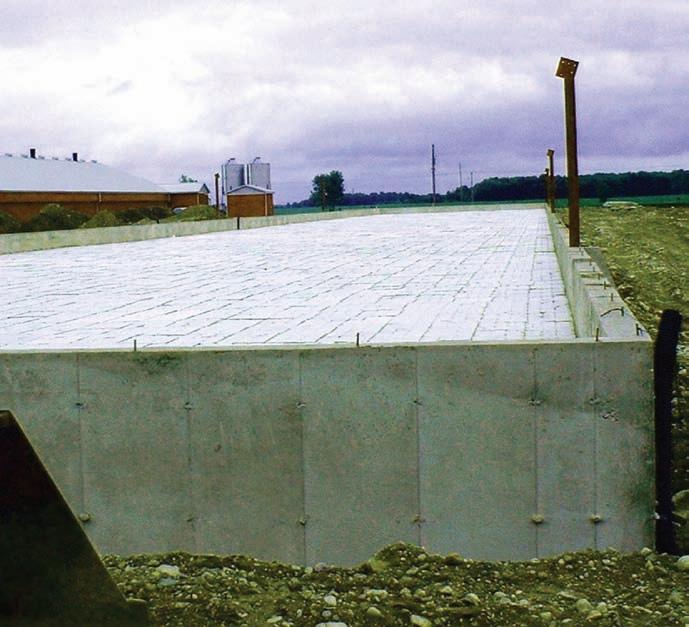
The use of foam insulation panels on new barn floors before concrete is poured significantly reduces energy costs, maintenance costs and can improve productivity.
properties of these materials are drastically reduced when they get wet. On the other hand, polyurethane foam, says Schuts, doesn’t absorb water and unlike other materials, its thermal insulation properties (i.e., R-value – The larger the R-value, the greater the thermal insulation) do not decrease for a very long time. These materials are also not airtight, and heat can be lost. Polyurethane foam is airtight and when blown into a wall or ceiling, it fills every space. It also doesn’t sag the way other materials can, says Schuts.
INSULATING BARN FLOORS
Schuts says it’s a misconception that heat rises. In actuality, it’s the difference in the densities between hot and cooler air that is problematic. Generally, heat energy moves from hotter to colder. “Heat follows cold,” says Schuts.
Contractors building barns and houses tend to concentrate on insulating walls and the roof, but rarely the floor. Schuts says that if a floor is insulated, heat in the barn will be drawn towards the floor. Instead of heating the ground below the barn floor (as would happen with an uninsulated floor), more of the heat remains in the barn and in the floor.
This is especially beneficial in the winter months, but equally effective in warmer months when used in conjunction with cellulose insulation in the ceiling. Proper insulation in the ceiling prevents heat from the roof, travelling through the ceiling into the barn, and a cooler, insulated floor also aids in this process. Schuts says that an R- value of 50 or 60 should be used in the ceiling to prevent the heat from getting into the barn.
It’s Insta-Insulation’s foam insulation boards known as Insta-Panels that are of greatest interest to poultry farmers, says Schuts. Insta-Panels are insulated R-12 foam panels made of rigid polyurethane foam one and three-quarter inches thick, covered in steel on both sides. They are from exterior door company and are the “cutouts” (for window placement) which would normally end up in a landfill. The panels have the same durability and benefits of sprayedon polyurethane foam, but have the advantage of being portable.
For the floor of a poultry barn, they are laid out before the cement is poured. Covering the panels with cement does not decrease their effectiveness, says Schuts. He says that his poultry clients have experienced lower mortality rates, increased production, lower maintenance and energy costs, and less “huddling” of the birds.
MA properly insulated barn that incorporates floor insulation results in warmer floors,
Cost Savings
iscellaneous costs for a broiler barn, two storeys with 10,000 square feet of floor space on each level and a bird density of 2.1 kg/ square foot, and 5.8 flocks per year. Research has shown that producers have noticed a 3 to 5¢ difference in energy costs between barns with insulated floors and barns without floor insulation. For this example, a 4¢ difference between barns was assumed.
Non-Insulated Floor
Heating 5¢
Hydro 3¢
Bedding 2¢
42,000 kg / flock
TOTAL = 10¢
Cost = $ 4,200 / flock
$ 24,360 / year
SAVINGS: $9,744 / year
Insulated Floor
.Heating 3¢
.Hydro 2¢
.Bedding 1¢
.42,000 kg / flock
.TOTAL = 6 ¢
.Cost = $ 2,520 / flock
.$ 14,616 / year
Floor insulation can cost as low as 45¢ per square foot. In the above example, this would mean a cost of $4,500 to insulate the floor, giving a payback time of 24 weeks, or less than three flocks.
Source: Insta-Insulation
which gives a better start for chicks, keeps litter dry (reducing bacterial loads and ammonia), reduces the amount of bedding needed, and results in less energy loss, says Schuts.
Jerry Vanham, who has a broiler operation near Tillsonburg, Ont., with his father Jack, has installed Insta-Panels in the floors of their four barns, built in 1999, 2002, and 2003/2004. They had heard of it being used in Europe, where it is actually part of the building code. “I won’t pour another concrete floor in my lifetime without it,” says Vanham, commenting on the Insta-Panels. He also had them installed in the walls.
He says the panels, along with proper ventilation management, keep the floors dry, and are especially helpful during changes in outside temperatures. “It totally eliminates sweat,” he says. “It’s a great aid to keep the floors dry.” It also eliminates ammonia in the barn and he finds that after cleanout, the barn dries up much quicker. He thinks they work so well that when he built a new house two years ago, he made sure to insulate the floor of both the basement and garage.
He also had an R-36 polyurethane insulation blown into the ceilings, and recently added another five to six inches of insulation to the ceilings to increase the R-value to between 46 and 50. He did this because he says that R-values can decrease over time, and with fuel prices increasing “I thought it would be beneficial to put some extra on.”
Poultry producer Steven Eastep of Wellington County in Ontario was a 2002 winner of the Environmental Farm Plan in Ontario for his use of Insta-Panels in his barn. Originally wanting to use Styrofoam insulation in the floor under the concrete, he used the exterior door byproduct as his as his insulation material, achieving an an R-value of 12.25 and costing him half of what it would have to install Styrofoam. He was recognized for this use of an economical and ecologically sound method of reducing energy loss.
Insulating the floor of a barn works so well that “I think the majority of barns should be utilizing it,” says Schuts. ■
Transplantation and cryopreservation of chicken gonads
BY TIM NELSON, EXECUTIVE DIRECTOR, AND KIMBERLY SHEPPARD, RESEARCH CO-ORDINATOR
Today’s commercial poultry are generally sourced from only one of two breeders. This means that commercial avian genetics are becoming narrower and genetic variation is being lost. It is important to preserve genetic material so that we retain the ability to be able to breed birds and adapt them for potential new production environments, disease resistance etc.
A common method of preserving genetic variation is to take genetic material (e.g., sperm) from living birds and freeze it for future use. However, avian genetic material is difficult to store by accepted methods.
As an alternative method of preserving avian genetic material, Drs. Yonghong Song and Fred Silversides at Agriculture and Agri-Food Canada, have been working on transplanting ovarian or testicular tissue to recipient chicks. Pilot work had suggested that transplantation of ovarian tissue in newly hatched chicks might be successful.
To test their theory, ovaries were removed from day-old White Leghorn chicks and replaced with ovarian tissue from Barred Plymouth Rocks (BPR). Some chicks were administered an immuno-
CONSERVING GERMPLASM
Drs. Fred Silversides (right) and Yonghong Song have successfully transplanted ovarian and testicular tissue between newly hatched chicks, and have frozen gonadal tissue, offering a new possible protocol for conserving avian germplasm.
suppressant, and all birds were raised to sexual maturity. The hens that received the ovarian transplants were inseminated with semen from BPR roosters (if the transplant was successful, this would result in black chicks). Black chicks were indeed produced – the first report of success using this technique.
In males, the testes were removed and
donor tissue was placed into the abdominal cavity or under the skin of the back or abdomen. Frozen/thawed tissue was also used for some of these transplants. All successful recipients of testicular tissue showed normal comb and wattle development. Once the birds were sexually mature, transplanted testes were removed from the hosts, cut into small
PICUpdate
pieces, and the fluid that seeped from the surface was collected. This fluid was used to inseminate BPR hens by surgically placing it in the oviduct. This prodecure produced fertile eggs resulting in black, donor-derived chicks.
A simple freezing protocol was also used to preserve testicular tissue from day-old BPR chicks. This was later transplanted into the abdominal cavities of nine castrated WL chicks. Insemination using sperm from one transplant produced 23 offspring.
What does all this mean? The researchers were able to successfully transplant ovarian and testicular tissue between newly hatched chicks, and freeze gonadal tissue using a simple protocol. These techniques provide simple approaches for the conservation of chicken germplasm and may provide a universal protocol for the conservation of avian germplasm of all species and lines.
To read more about this project visit: www.poultryindustrycouncil.ca and click on “Research Results.
The Researchers
Dr. Fred Silversides was raised in Saskatchewan where he completed an undergraduate degree in poultry science and a PhD in poultry genetics. In between his Saskatchewan degrees, he obtained an M.Sc. in animal genetics from the University of Massachusetts. After a year-long post-doctoral position in France, he taught at Universit? Laval before leaving in 1996 for British Columbia and eventually starting work for Agriculture and Agri-Food Canada in 2000. After three years in Nova Scotia, he relocated to the Agassiz Research Centre in British Columbia. Dr. Silversides was trained as a poultry geneticist but conducts research on poultry in a broad range of disciplines. His research activities include poultry nutrition and welfare, but his principal interests are in conservation of poultry genetic resources.
Dr. Yonghong Song received his bachelor’s degree in veterinary medicine and his M.Sc. degree in animal physiology and biochemistry, both from China. His PhD training was from the Department of Poultry Science, North Carolina State University under Dr. James Petitte, working on avian primordial germ cells. He came to Dr. Silversides’ lab as a visiting fellow in June 2004 to work on reproductive manipulation for genetic conservation. He is currently a research associate with Dr. Kim Cheng at University of British Columbia, and is continuing his research at Agassiz on ovarian and testicular tissue transplantation between different species of birds.
Risk Management for Manure
Development of management tools for reducing P availability in animal manures
DR. VALTCHO
JELIAZKOV, MISSISSIPPI STATE UNIVERSITY
COLLABORATORS: DR. CLAUDE CALDWELL, DR. BRUCE RATHBERGER, MRS. JEAN LYNDS
(DAIRY FARMERS OF NOVA SCOTIA)
The phosphorous (P) from plant-based poultry diets is difficult for poultry to utilize, so poultry diets are supplemented with inorganic P. As a result, the manure produced by poultry can contain up to four times more P than other types of manure. This increases the potential for P to escape into the environment and eventually into water courses. This in turn leads to the growth of oxygen-depleting plant life, which causes harm to other organisms – a process known as eutrophication. High levels of phosphate linked to agricultural practices, is already causing environmental problems in some jurisdictions. The application of P-enriched manure therefore increases environmental risk.
Dr. Valtcho Jeliazkov of Mississipi State University has been investigating argonomically, economically and environmentally viable methods of reducing P availability in manures. Research has shown that solubility of P in manure can be reduced by incorporating aluminum-based compounds. His studies looked at five different concentrations
of a wide variety of compounds mixed with three manures (liquid dairy, broiler, and layer) used to fertilize trial hay/ pasture plots using the pasture species Timothy. Two control manures were also used – one with nitrogen, phosphorous and potassium (NPK) added, and one without. Natural conditions were simulated, and available P as well as effects on Timothy yield, were tested.
His findings? In field experiments, mineral pre-treatments reduced extractable P content of manure and soil without negative effects on plant growth. Aluminum sulphate and ferric chloride compounds produced promising results, with all other manure and compound combinations producing results no different from controls. Pre-treated manures did not reduce Timothy yield. The results from this project contribute to the development of a feasible management tool for reducing P availability in dairy and poultry manure. To read more about this project visit: www.poultryindustrycouncil.ca and click on “Research Results.”
PICUpdate
So you’re either reading this at or you just got back from the London Poultry Show. You’ve had a great time, seen some new equipment, listened to four terrific speakers and caught up with some old friends. You’ve just read two brilliant short articles on some important research that you’ve helped fund and you’re wondering what’s coming next from PIC?
BIGSTEPFORWARD
With the advent of the strategy and the “outcome” focus of our work, the way in which projects are being supported by the feather boards is also changing. Each of the boards has signed a memorandum of understanding with PIC, locking in a set amount of funds each year “this MOU gives us the ability to be able to plan ahead for research investment and will give government and other co-investors the confidence that the industry is a serious partner in research” says PIC chairman Ed McKinley, “it also means that if industry is looking for some specific work to be done and we don’t receive a proposal for that particular work, we can commission the research. Its essentially given industry more flexibility and control” he said. ■
The PIC has signed a memorandum of understanding with each of Ontario’s poultry boards to set funds for research priorities each year. (L to R)Bill Laidlaw, Chicken Farmers of Ontario (CFO) general manager, chair Bill Woods, and PIC’s Ed McKinlay and Tim
Nelson.
Pest Control
Fly Management
All-natural fungal pesticide developed to control flies
BY JAMES D. SKINNER, DR. JAMES J. ARENDS AND JOHN R. STRUCK
The time when flies were deemed only a nuisance to employees or concerns about “speckled” eggs is long past. Today, fly problems, particularly periodic “explosions,” represent a major issue to producers. With urban communities encroaching on farm land, these home owners become active, vocal and litigious when confronted with a producer’s fly problem. In addition, recent research has indicated that flies may be the vector for the transmission of serious diseases.
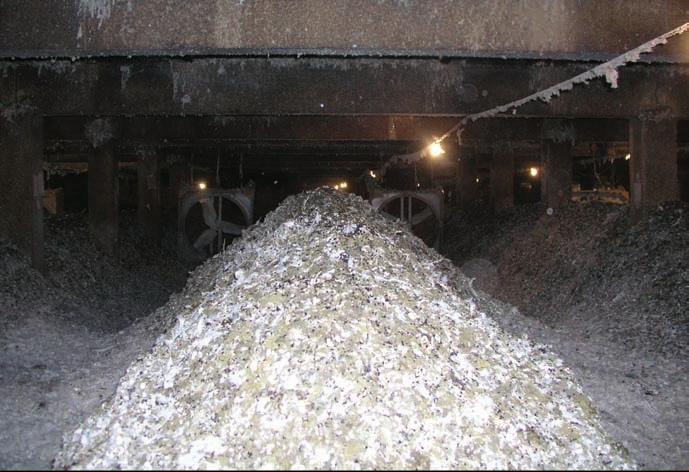
For all of these reasons, it is imperative that poultry producers maintain a wellplanned and executed insect management program to guard against fly problems. The challenge is to keep the poultry house in balance by employing proper manure management. Effective management keeps the manure dry to support the ability of the beneficial insects to control the flies. Dry manure, along with the use of an effective insecticide that kills flies while leaving the beneficial insects unharmed, is safe for the employees and leaves no chemical residue in the manure that adversely affects its desirability.
GOOD BUGS REMAIN
balEnce, a natural fungal pesticide, targets flies but not beneficial bugs. Maintaining dry manure (coning if necessary) also helps reduce fly populations.
any biological material that is decomposing. The eggs hatch within 12 to 24 hours. Larvae (maggots) need a moist organic environment and will not develop in a dry environment. Houseflies will develop throughout the year in poultry manure and develop and hatch dependent on the temperature. The warmer the larval environment, the faster the larvae develop to the pupae stage.
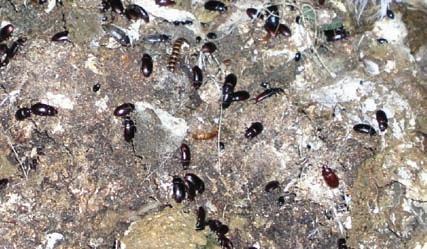
Beneficial insects such as Carnicops pumulio, the hister beetle, earwigs and parasitic wasps exist naturally in manure and eat fly eggs and larvae. Earwigs and a number of species of mites also eat fly eggs.
The housefly, Musca Domestica Linnaeus is the principal fly pest. Adult females lay between 300 and 1,200 eggs in manure that is between 60 to 85 per cent moisture, wet feed, broken eggs, dead birds or
Flies progress through four stages of development – egg, larva, pupa, and adult. Larvae pass through three size changes before crawling to a drier area where they change into a resting stage –pupa – before emerging as adults. The larval and pupal stages may last from 10 to 70 days for houseflies depending upon temperature.
The role of these beneficial insects to control flies in a poultry house is of great importance to the fly management program. These insects are very sensitive to insecticides and the use of any broadspectrum insecticide or larvacide in the house will potentially kill them. Pesticide used at cage level can drift and severely decrease beneficial insect numbers. As
Continued on page 35
BENEFICIAL INSECTS
FLY LIFE CYCLE
Pest Control
Continued from page 32
their numbers decrease, fly problems increase.
Beneficial insects need dry manure for reproduction while allowing them to be mobile as they search for fly eggs and larvae that serve as one of their primary food sources. Dry manure allows beneficial insect populations to function at their maximum for increased fly control.
MANURE MANAGEMENT
Flies multiply rapidly and uncontrollably in a wet environment; beneficial insects that eat fly eggs and larvae live only in dry manure – the drier the manure the smaller the breeding ground for the flies and the larger the breeding area for the beneficial insects that eat the flies. Managing the moisture level in the manure requires consistent ventilation.
INTEGRATED PEST MANAGEMENT
Long-term fly management using Integrated Pest Mangement (IPM) principles will provide the best control at the least cost. This type of program uses all available options to reduce adult flies and, therefore, fly breeding, while promoting beneficial species. It requires that manure be managed all year and that the control program is functioning year round. It begins with maintaining manure as dry as possible all year and utilization of an insecticide that kills only flies and leaves the beneficial insects unharmed. This promotes beneficial insect populations which, if maintained at a high enough level, maintains the fly population at acceptable levels with little added effort.
CURRENT TREATMENTS
Fly control has typically been based upon the use of chemical sprays and/or larvacides to kill the adult and larval stages of the fly. Choosing this approach should be the last choice. Once this choice is made and applications have started, the producer will be required to continue to treat
Pest Control
three to seven times a week until the manure can be cleaned out of the building. This can be a very expensive and labourintensive program.
Furthermore, flies may develop resistance to pesticides, particularly larvacides. The initial effectiveness of pesticides and larvacides to kill flies may be lost, leading to increased fly problems and/or increased use of chemical pesticides.
In addition, there are certain risks for employees associated with the use of chemical pesticides. These risks are greatest during handling and mixing of concentrates prior to application.
This product was developed by JABB of the Carolinas in the U.S.
A selective entomopathogen fungus, Beauveria bassiana, that infects adult flies but is safe for beneficial species, humans, poultry and the environment has been developed into a product called balEnce™.
A solution of balEnce is sprayed into the house on a regular basis, one to four times per week. Once balEnce is released into the manure storage pit area of the house, the spores are picked up by the fly adults where the spores germinate and enter into the flies’ bodies. The fungus grows until it has consumed and killed the fly. This process normally requires three to five days.
The key advantage of using balEnce is that it does not harm any of the beneficial species enabling these species to have their full impact on controlling the fly population and become a significant part of your IPM and fly management programs. Use of a fungal pesticide such as balEnce represents the first time that adult
fly management has been possible without negatively impacting the natural, beneficial insect segment of a fly management program.
balEnce can be used at any temperature, and can thus be used in a winter control program to eliminate fly breeding in the cold months and the spring fly “explosion.” balEnce has been approved by Health Canada’s Pesticide Management Regulatory Agency (PMRA) and the distributor, Terragena Inc., anticipates that it will be available in late April. ■
James D. Skinner is president and CEO of Terregena Inc., distributor of balEnce. He can be contacted by telephone at 919-789-0306, or by e-mail: jim@jskinner.com.
Dr. James J. Arends is president and CEO of JABB of the Carolinas and the developer of balEnce.
John R. Struck is a principal of Terregena and a consultant to the poultry industry in the U.S.
Borrowing solutions that fit
The right people with the right financial tools can help you make the most ofyouragricultural business.
At CIBC,you can count on us for insightful and practical advice aswell as flexible borrowing products* to fit your business plan:
• CIBC Farm Operating Loan
• CIBC FarmTerm Loan
• CIBC Farm Mortgage Loan
Talk to us about the solutions that are right for you. Call1-888-493-2422 orvisit cibc.com/agriculture.
*Subject to credit approval.Some conditions and restrictions apply.Credit limit and rates will depend on an assessment of each application.“For what matters.”is a TM of CIBC.
At CPSI we take pride in being a solution driven company. We are a Proactive, industry leader that provides long-term commitments to our Customers.
We offer 30 years of experience with a network of crews in various provinces.
We are always looking to expand our network, so whether you operate in British Columbia, Nova Scotia or any point in between, give CPSI a call!
Research Genetic Strain and Flock Age
Effects on hatching eggs, hatchability, saleable chicks and broiler performance
BY ANA FRANCO 1 , GAYLENE FASENKO 1 , DOUG KORVER 1 , ERIN
O’DEA 1 , AND GITA CHERIAN 2 , 1UNIVERSITY OF ALBERTA
2OREGON STATE
UNIVERSITY
Genetic selection to increase white meat yield has affected the reproduction efficiency of breeders, and some characteristics of the chicken embryo. However, the conditions under which eggs are incubated has not changed drastically in the past 20+ years. Considering how genetic selection has changed the growth potential of modern broilers, the incubation conditions under which these eggs are incubated may have to be modified to get optimal hatchability.
The yolk of a hatching egg has a high fat content, and provides about 90 per cent of the energy required for growth and development of the embryo. During incubation the embryo absorbs nutrients from the yolk via the yolk sac.
It is known that hatching egg characteristics change as breeder flocks age: egg size increases, and shell quality decreases. What remains unknown is how these
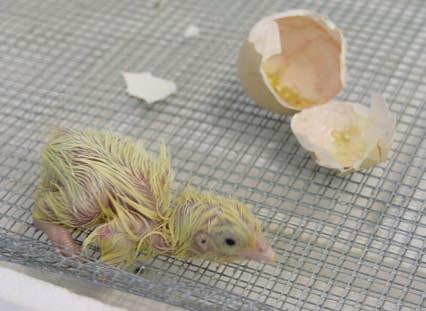
Chick quality and hatchability can be affected by breeder strain and flock age.
Research has shown that incubation and management practices may need to change to keep up with genetic change.
changes affect the embryo.
The hatchability of eggs laid at different flock ages is also different. Eggs from peak production flocks have the highest hatchability. Although bigger eggs hatch larger chicks, producers may not be
aware that when the hatchability of eggs that are larger than the average size (from the same flock at the same flock age) are compared, the large eggs have lower hatchability. This is because the cull rate in chicks from the larger than
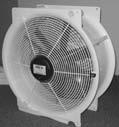
• A multi-position bracketallows youto tilt and lock the fan angle and air flow direction
“AIRCOOL” Centrifugal Cooling System
• A cooling system without using nozzles
• Adjustable water volume
• Mobile or stationary unit available
• Use for cooling air, humidity, recirculation, dust and odor control
RECIRCULATION FANS
Circular Recirculation Unit
• 16" and 20" diameters
• 3600 coverage using directional wind vanes
• Superb alternative to race tracking
• With Multifan or Performa+ Leeson motors
Circulating Fan
• 12" – 24" diameters • Polyethelyne housing
• with Multifan or Performa+ Leeson motors
The ‘Wave’Environmental Control
• Large 2.75" X 5" LCD Display Screen and 12 Quick Key Pads (to grouped settings) allows easy and precise Temperature, Humidity, Heating, Lighting and Airflow Management
• The ' Wave manages 4 variable stages and 8 or 16off/on relays for cooling, up to 8heaters, 4 clock outputs and up to 8 inlet zones
• Humidity control by increasing ventilation and heat activation
• History of water consumption, temperature, humidity and birdcount
Poultryhouse
Fan
• High quality material and aerodynamic air inlet
• Variable speed Performa+ motor
• Dual voltage, fully enclosed motor
• Low energy consumption and noise level
• 16" and 20" modelsproducing 2792 and 4770 cfm
• Includes hanging hardware
A SMARTER OPTION FOR ADMINISTERING SOLUTIONS INTO WATER SYSTEMS
• Select Doser performance yields highly accurate dosages all the time.
• Accuracy is 95+ percent, superior to water or electric powered pumps.
• Longer lasting with less maintenance than water powered dosers.
• A diagnostic tool for your watering system.
PSI
Unvented Unit Heater
• Total stainless steel construction
• Hi-Low switch
• Watertight enclosures
• Propane and natural gas
• Available in 20,000 to 225,000 BTU units
Totally Controlled Heat from
' The Ultimate Brooder '
• Maximum radiant surface area
• Reliable spark ignition
• Dual safety pressure switches
• Easy, unobstructed access to control components
• Various models for multiple applications (Farms, Garages, Workshops etc.)
Varifan®
• LX-641, LX-642 and LX-644 with optional SVM-1 (Smart Ventilation Inlet Module)
• DIP-1 digital Inlet Positioner
• ECS"M" Series 1, 2, 3, 4 and 5 stage controls
• IC-610 Programmable Logic Computer controls
• Plus numerous ‘Special Application’controls
• 2 yr.warranty
• Material polypropylene
• Will not harbour bacteria
• Easily cleaned
• Large 2' x 4' panels
• Reduces floor problems and breast blisters
• Keeps birds warmer, dryer, more productive
• Durable - minimal maintenance
• Easily installed
• Will not rust or corrode
LIGHT TRAP/ DARK OUT
• High light reduction
• Low resistance to air flow
• Simple Installation
• Easy to clean
• Uses P.V.C.snap release spacers
average size eggs is higher. Chicks from young breeder flocks tend to have a higher mortality rate in the first week than chicks from older breeder flocks.
Chick weight at hatching is also different between strains; flocks with higher breast muscle yield produce heavier chicks. Also as hens age, they lay heavier eggs (and bigger chicks). But again, these older hens produce more chicks with lower quality scores.
Although broiler producers prefer bigger chicks because they seem to be stronger and grow better, research has shown that chick weight at hatching is not a reliable indicator of final broiler body weights.
This led us to conduct research studies to determine the effects of genetic strain and flock age on: egg characteristics, hatchability, chick quality, and broiler performance.
EGG CHARACTERISTICS
In our first experiment, we looked at egg characteristics and chick quality in relation to strain and age of the flock. To do this, we used eggs from Cobb 500 (C) and Ross 308 (R) breeder flocks at 29, 45 and 59 weeks of age. The eggs were selected according to weight in three groups (Small, Average, Large).
At each age, egg characteristics (specific gravity and weight of egg components) were measured. Eggs were incubated under commercial conditions and saleable chick numbers determined. Saleable chicks were grown to 41 days, and mortality, body weight and feed consumption recorded.
The results that produced statistically significant differences were dependent on an interaction between both strain and age.
We found that yolk (%) increased and albumen (%) decreased with flock age. What this data suggests is that energy reserves (the yolk) for embryo development are greater in older breeder than in younger flocks.
Regardless of strain and age, all eggs had a specific gravity lower than 1.080,
Research
the industry minimum standard used to characterize eggs with good and poor shells. The fact that all eggs had a value lower than this industry standard suggests that modern strains have a poorer shell quality than eggs from strains used 10+ years ago, when the industry standard was set.
Fertility was higher at 29 weeks in R (96.8%) than in C (76.7%). However, fertility in C increased at 45 week and remained high at 59 weeks (94.4%), while it declined with age in R (79.3%). What this data means is that the C flock needed more time to reach good fertility rates. The R flock at a young age had good fertility but could not maintain high fertility as the flock aged.
Chick Weight
Our results showed that chick weight was affected by flock age. As expected, chicks from younger hens had the lowest weight (38.4 g) followed by chicks from 45 week flocks (43.6 g), the heaviest chicks hatched from 59 week old flocks (48.1 g). It was interesting to observe that at 21 d and 41 d, the chicks from the 45 week old flock had caught up to be the same weight as the chicks from the 59 week flock. Chicks hatching from the youngest flocks had the lowest weights all the way through production until the end of the growout period.
This data suggest that when grown out under the same conditions, chicks from young flocks do not have the same ability to reach market body weight (BW) as chicks from older parent flocks.
Body Weight (BW)
BW gain from 0 to 21 d was similar for the three flock ages in the R broilers (~725 g). Even though the broilers from the young C flock had the lowest BW gain (680 g), it increased significantly and was higher than the BW gain of broilers from the R flocks that were 45 and 59 week old (~771 g). The old R broilers had the poorest feed conversion.
Continued on page 44
CHICK QUALITY
CPRC Update
This article is the first of what will be a regular feature in Canadian Poultry magazine – a feature that will provide updates on activities of the Canadian Poultry Research Council (CPRC). These updates will be presented as a quick reference. Please feel free to contact us if you ever need more information. As an introduction, here is some background on what the CPRC is and what it does:
The CPRC was formed in 2001 following an in-depth study of Canada’s need and capacity for poultry-related research. The study was led by Dr. Roger Buckland of McGill University and sponsored by the Canadian Agri-Food Research Council and the Canada Branch of the World’s Poultry Science Association – it documented a large decline in the number of poultry scientists in Canada (especially those working in government laboratories) and identified a need for a national body to co-ordinate poultry research, education and technology transfer.
WHO WE ARE
In response to the study, the national poultry agencies formed the CPRC – its founding members are the Chicken Farmers of Canada, Canadian Egg Marketing Agency, Canadian Turkey Marketing Agency, Canadian Hatching Egg Producers and the Canadian Poultry and Egg Processors Council.
Our mission: CPRC’s mission is to address its members’ needs through dynamic leadership in the creation and implementation of programs for poultry research, which may also include societal concerns.
This mission focuses on: the co-ordination and enhancement of a more efficient Canadian poultry research effort, securing additional and matching funding, facilitating the establishment of national poultry research priorities.
SUPPORTINGRESEARCH
The CPRC has committed over $1 million to national research programs consistent with agreed priorities. These priorities are set during regular national workshops among representatives of industry, government and academe. Provisions have also been made to support research outside these priority areas, so long as it addresses an acute issue, relates to a significant scientific opportunity, and benefits the Canadian poultry sector.
The CPRC works to maximize every industry dollar spent on research. We work closely with several government organizations (notably the Natural Sciences and Engineering Research Council and Agriculture and Agri-Food Canada) that provide matching research funding – so far, funds from these and other sources have matched the CPRC’s industry dollars 3.8 to 1.
A complete list of CPRC-supported projects is posted on our website. Results are posted when they become available and
will be highlighted in future issues of Canadian Poultry. To date, the CPRC is supporting research projects in four priority areas:
Avian gut microbiology: The first projects funded under this program are nearing completion and have produced many interesting insights into the dynamics of gut microbes in the presence or absence of antibiotics and other feed additives. Results are being shared among industry stakeholders in an effort to improve the understanding of the physiological impact of antibiotics and what the repercussions of reducing their use might be, for both our poultry and the industry as a whole.
Environmental issues: Projects are underway dealing with a wide array of environmental issues ranging from land incorporation of poultry manure, to calcium and phosphorus flow in layers, to workplace exposures to pollutants, to environmental contamination from veterinary pharmaceuticals. Results from many of these projects are in, with the rest expected soon. The CPRC is currently calling for additional grant proposals to expand this important program.
Food safety and poultry health: To date four projects have been funded within this program area. Subjects covered are: immunization of broiler chickens against necrotic enteritis, immune responses to avian influenza virus in the chicken, development of RNA interference constructs against avian influenza virus, and novel multivalent vaccines for avian health. Results are expected through 2008 and 2009.
Poultry welfare and behaviour: Within this program area, four projects are underway covering the impact of ammonia on the welfare of laying hens: improving transport conditions for broilers, alternative methods of euthanizing turkeys, effects of lighting programs on leg weakness in broilers, and improving welfare for beak trimmed hens.
Poultry welfare cluster for Canada : In addition to supporting research projects, the CPRC, in conjunction with Agriculture and Agri-Food Canada (AAFC), has agreed to facilitate the development of a cluster of poultry welfare and behaviour expertise in Canada. The University of Guelph was chosen as the location for the cluster which, when fully implemented, will include an AAFC research scientist co-located at the University. This scientist will work alongside the many welfare and behaviour experts already there and will also play a co-ordinating role to raise mutual awareness among poultry researchers working in welfare, behaviour and related fields across Canada and beyond.
The above is only a brief summary of CPRC’s main activities. Watch for regular updates in future issues. For more information contact Gord Speksnijder at (289) 251-2990 or email: info@cp-rc.ca. ■
STAY TUNED...
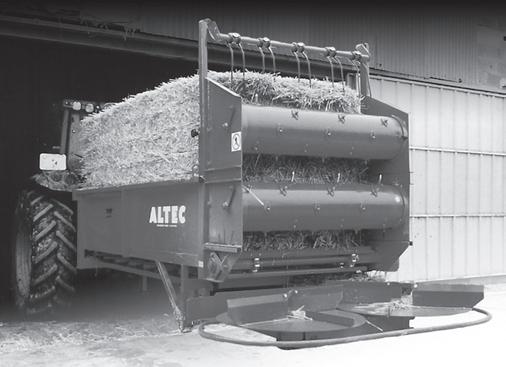
Since 1991 and over 6,000 in use around the world,the Altec DT120 is a leader in the spreading of straw,chopped straw and wood shavings in poultry barns.The Altec DT120 provides proven,efficient technology,along with reliable economy, saving you time and money
Continued from page 41
These results show that broilers produced by young R flocks are more efficient. Also the results showed that although the broilers from the young C parents have lower performance, their growth performance improves with flock age and remains at a higher level for a longer time than the R broilers.
Mortality
Chicks from the youngest parent flocks had higher first week mortality (1.0%) than chicks from 45 week (0.5%) and 59 week (0.1%) parent flocks. These results suggest that chicks from younger flocks may need different conditions at the barn to allow appropriate growth and prevent chick mortality.
Egg Fat Content
In an additional experiment, we wanted to determine if the fat content of the egg influences how well the embryo can use the yolk.
We used the hatching eggs collected from the same flocks as in the experiment previously described. Egg components were weighed in 10 eggs for every flock age/strain/egg size group. The yolk was analyzed for the different fatty acids (the building blocks of fat) it contained.
Chicks were hatched from each of the flock age/strain/egg size groups. The chicks were weighed, humanely killed, and the residual yolk sac (RYS – the yolk that is pulled into the body of the chick through the navel) was removed from the chick, weighed then analyzed for different fatty acids.
We found that age was the factor that most influenced the fatty acids (FA) in the yolk and RYS.
The RYS (% of BW) was smaller in chicks from the youngest parent flock (10.2%) than in the 45 and 59 week (16.1% & 16.4% respectively). What this means is that chicks from younger flocks have a smaller nutrient reserve at hatch than chicks from older ages, and this fact may affect the survival of the chicks.
Different FAs increased or decreased with age, not only in the eggs, but also
Research
in the RYS from the C and from the R strains, demonstrating that genetic selection has had an effect on the composition of hatching eggs, and on the metabolism and absorption of yolk fat in the embryos.
The most interesting result is that regardless of strain, the chicks from the young flocks had a higher proportion of certain FAs in the RYS that were low at the older flock ages. This fact indicates that the metabolism of fat in embryos from young parents is not as efficient as in older ages, and that the FAs are not completely absorbed from the yolk by the time these chicks hatch. This means that different incubation conditions could be required and that management practices, especially during the first week of the rearing period should be carefully monitored to prevent high mortality of the chicks.
Future Research
Yolk sac infection and chick quality: yolk sac infection (omphalitis) is the main cause of chick mortality during the first week of the rearing period. Future research will evaluate the effect of factors such as barn cleaning procedures, and navel condition in the onset of omphalitis. Bacteria involved in omphalitis will be analyzed, and the role of antibodies (proteins from the immune system that protect against disease) present in the yolk sac will be studied.
To determine whether or not there is a direct maternal (hen) effect on yolk sac infections the bacteria and the antibodies will be determined at different parent flock ages. By understanding the causes and characteristics of yolk sac infections, preventive measures could be implemented to minimize early chick mortality.
Three different experiments have been proposed in this research, and the first experiment began in the Fall of 2007. ■
This research was presented at the 2007 Poultry Service Industry Workshop (PSIW) meeting in Banff, Alberta.
Health
SEControl A European perspective
by Dr. Roy Mutimer, Cobb-Vantress
For many years, European authorities have promoted a “Farm-to-Fork” philosophy in an attempt to reduce human cases of salmonella food poisoning. Strategies that the European Union poultry sector has used in its feed mills, farms, hatcheries and processing plants in an effort to reduce all salmonella species and specifically eliminate Salmonella enteritidis from the products they supply have been vigorously pursued. These strategies have have proven remarkably effective but the fight against salmonella continues and the economic cost to the poultry industry has been significant.
FOOD SAFETY CONCERNS
For decades Swedish authorities have pursued an aggressive policy aimed at eliminating salmonella from their food supply chain. While the remaining member states of the EU have ranged in their commitment to salmonella control programs, there has been a universal application of a “Farm to Fork” philosophy and an increasing evel of consumer education and concern about the prevalence of and risks presented by salmonella contaminated products.
Strategies that the EU poultry sector have used in their feed mills, farms, hatcheries and processing plants in an effort to reduce all salmonella species and specifically eliminate S. enteritidis from the products they supply have been vigorously pursued.
While human life expectancy in Europe continues to increase and human health and nutritional standards continue to rise, a significant proportion of the European population remains genuinely concerned about the safety of their food. In some situations these concerns may be fanned into genuine fears by a media that can be overzealous in its line of reporting with a tendency to exaggerate the true risks. The adverse publicity arising from a food safety associated product recall can do massive damage to the reputation of a producer or retailer.
Against this background, governments and retailers place greater and greater pressure on the food manufacturing industry to supply salmonella-free products, which at the end of the day is a laudable goal.
While the epidemiology of salmonella infection of humans
is complex, I will review some of the strategies that the poultry industry has used to reduce the prevalence of salmonella species and specifically S. enteritidis in the food supply chain. In general terms the chicken (meat and egg) has come under more pressure than the turkey or duck sectors.
Raw Material Controls –
Feed milling practices have evolved significantly over time, often in an effort to reduce the risks of introduction of a contaminant (chemical or microbiological) into the human food chain via food animals. One of the first areas of control to be focused on was the feed raw material supply chain and most European countries would now have well-documented and rigorously enforced Good Manufacturing Practices (GMPs) and Codes of Practice to ensure that raw materials are stored and transported safely. Examples of controls would include rodent- and bird-proofing of raw material stores, restrictions on the range of materials that trucks are allowed to haul and genuine supplier audit chains to ensure traceability and appropriate quality of the raw materials themselves. While these controls were often not specifically aimed at salmonella control they have contributed to improved hygiene standards of raw materials.
Another extremely significant factor in reducing the salmonella load of raw materials has been microbiological screening of raw materials by feed mills. Pressure from the livestock sector has forced feed mills to have a genuine desire for salmonella-free raw materials and any supplier that consistently delivers salmonella contaminated raw materials eventually finds it difficult to find a customer for their products.
While these strategies have been effective at reducing the salmonella load in raw materials and in many countries virtually eliminating S. enteritidis contamination, occasionally (often as a
ANIMAL FEED
THE EU ZOONOSES DIRECTIVE HAS SIGNIFICANTLY INCREASED THE PRESSURE FOR
breach of GMP conditions) salmonella will enter the feed mill. Under these circumstances feed manufacturing controls come into play.
Some people believed that a switch to all vegetable rations would eliminate this risk but this has clearly been shown not to be the case. It should be noted that concerns arising from BSE also triggered a significant reduction in the use of animal proteins in feed mills.
Feed Manufacturing Controls – feed for European breeding flocks, particularly grandparent/great-grandparent flocks, is virtually always subjected to relatively aggressive heat treatment. A typical regime would involve conditioning feed to 82 C and ensuring it is held at that temperature for at least two minutes.
Some companies would adopt significantly more aggressive heat treatment regimes than this. Even for broiler flocks some member states would legislate that all feed must be heated to at least 81 C whereas other member states will legislate a hygiene outcome, e.g., <1 colony forming unit per gram of Escherichia coli in finished feed. It is essential to recognize that heat treatment is only effective if systems are in place to ensure that all of the feed is effectively heated and can be cooled back to ambient temperatures without re-contamination. Some early heat-treatment systems merely resulted in development of endemic salmonella contamination at the mill.
Organic acid feed additives, sometimes combined with formaldehyde are used to reduce the risks presented by recontamination but the efficacy of these organics continues to be debated. While products combining formaldehyde have greater efficacy, some member states are reluctant to sanction their use
because of health and safety concerns.
The table egg industry has been less enthusiastic about heat treatment and many flocks continue to be fed a non-heat treated mash but organic acids or organic acid/formaldehyde feed additives have been effectively used to reduce the risk of salmonella contamination.
“Environmental” Controls – modern European feed mills are designed to ensure that dust is minimized and “treated” feed cannot come into contact with “non-treated” feed during transport to and storage in the finished feed bins. These controls are carried through to the farm because feed delivery vehicles will not transport raw materials.
Considerable effort will go into ensuring that the feed mill has an effective pest management program to control insects, rodents and wild birds.
BIOSECURITY
Although the term biosecurity has only become popular relatively recently, for many years there has been a consistent effort to minimize poultry disease and improve food safety across Europe. This has generated a steady improvement in farm design and anagement practices so that modern poultry houses are relatively easy to clean and disinfect and farm personnel understand the need to control disease vectors such as mice, wild birds and insects. This has allowed many companies to place their birds in a salmonella-free environment and to maintain this freedom through the life of the flock.
SALMONELLA CONTROL ACROSS THE EU.
While some companies have managed to implement control strategies that have enabled them to produce S. enteritidis free products salmonella vaccines have been widely used in broiler breeder and table egg flocks in Europe. Whether the motive is to add an extra level of protection to a system that is already under control or to minimize the impact of contamination on an operation that has been unable to maintain an S. enteritidis free status, these vaccines have proven very effective in reducing the levels of S. enteritidis entering the food chain. This is demonstrated very clearly by the significant reduction in human cases of S. enteritidis gastro-intestinal following the adoption of widespread use of commercial inactivated S. enteritidis vaccines.
There is again wide variation in the programs followed in different member states. Some member states will not license live salmonella vaccines, e.g., France while others – e.g., Holland – still use SG9R vaccine and rely on crossprotection to control S. enteritidis However, in the vast majority of member states the egg and broiler breeder sector would use a combination of commercial inactivated and live vaccines.
Health
with S. enteritidis or S. typhimurium with antibiotics rather than automatically slaughtering them. If subsequent environmental monitoring shows that the flock has been cleared of salmonella the flock does not have to be killed. Antibiotics are not, however, routinely used to tackle salmonella contamination.
While not a particularly precise grouping, a multitude of products (such as probiotics, organic acids, etc.) have been launched that claim to make the chicken/turkey more resistant to salmonella infection and/or reduce the level of contamination should salmonella colonize the flock. While there is research data which tends to support some of these claims, in general, few of these products have been used commercially to any extent and, as far as I am aware, even when they have been used the main motive has not been salmonella control/reduction.
A range of CE products have been launched with some success and there is a significant body of research to suggest that CE products can help to protect the very young chick/poult to resist an early salmonella challenge and subsequently reduce the rate of salmonella shedding from infected birds. As a philosophy, CE has been most actively adopted in Scandinavian countries where neo-natal protection is the desired outcome.
While CE is also used to promote gut health, particularly after antibiotic therapy, very few people believe that CE products alone are capable of cleaning a flock which is contaminated with S. enteritidis.
Many EU countries give their poultry farmers the option of treating any breeder flocks that have become contaminated
Through greater attention to cleaning and disinfection and efforts to hatch product from salmonella-positive breeder flocks last, it proved possible to limit cross-contamination. However, the potential of the hatchery to spread salmonella through an operation remains an ever-present risk. The best option is clearly to have salmonella-free breeder flocks.
It is common practice in many broiler companies to collect environmental samples from the broiler house prior to depopulation and in the event of finding a salmonella-positive flock to schedule that flock as the last flock of the day to be processed. This both reduces the level of cross-contamination of salmonella negative birds/products and provides the opportunity for thorough cleaning and disinfection of the processing plant after the salmonella positive birds have been processed.
A recent EU pilot survey to determine the effectiveness of salmonella controls in the various EU member states highlighted a wide range in levels of salmonella contamination in different member states. This survey was followed by the recently implemented EU Zoonoses Directive, which will significantly increase the pressure for salmonella control across the EU. This directive standardizes the sampling and isolation methodologies that must be used, requires each member state to draft and implement a national control program and sets out clear targets for the level of salmonella contamination in layer, breeder and broiler flocks.
THE FUTURE
Health
This directive has also expanded the range of species whose prevalence must be reduced from S. enteritidis and S. typhimurium to include S. virchow, S. hadar and S. infantis as these are the five salmonella species most commonly associated with human illness.
One of the most interesting scenarios to play out over the next few years will be the potential food safety issues arising from the growth of the extensive poultry production sector. In a free-range environment, it is extremely difficult to maintain effective biosecurity, which raises the prospects of increased food safety risks against the perceived advantages of a more “natural” production system.
If one factors in the increased risks of H5N1 avian influenza disease breaks that free-range represent to this debate and the associated consumer fears about this virus, then it will be interesting to see what confidence the consumer eventually develops in free-range agriculture.
SUMMARY
Despite the many years of concerted action to eliminate salmonella from the food chain, no country (including Sweden) has managed to develop and maintain a food chain that is completely salmonella free. However, some countries have managed to achieve production systems which are completely S. enteritidis free and several others are very close to this goal.
As consumer awareness and concern continues to rise it seem likely that pressure will continue to grow for reduction of salmonella in the food chain and there seems very little appetite in Europe to adopt a strategy that includes intervention at the processing plant to control salmonella levels in the finished product, regardless of the salmonella status of the product leaving the farm.
While the “Farm-to-Fork” philosophy is certainly not the most economical way to deliver salmonella (or campylobacter free) food it remains the only approach that is acceptable to all European consumers. ■
❑
❑
❑
❑
❑
Mail: Canadian Poultry Magazine
c/o Annex Publishing & Printing Inc. P.O. Box 530, 105 Donly Dr. S. Simcoe, Ontario N3Y 4N5 e-mail: cnowe@annexweb.com
•
•
•
•
Info Market Group Lacombe
BROILER
Good location with 18,658 units broiler breeder quota. 1 grower barn and 2 layer barns. Newer home with 6 bedrooms. EDMONTON
10 acre broiler farm with 36,600 units broiler quota. 3 Barns and insulated and heated shop. Beautifully renovated log home with 5 bedrooms.
BROILER BREEDER FARM
60 acres with 2 barns (50’ x 300’ and 44’ x 289’), 9126 + 1300 units annualized quota.Vencomatic & Van Gent nesting & egg gathering systems. 1230 sq. ft. bungalow with 5 bedrooms.
If you are looking to buy or sell a poultry farm,Andries
N1A 1G2 Phone 905-774-7624 or Toll
BROILER BREEDER FARM WITH 10,000 H.E.M.S.: 5 Bedroom brick home. One brn operation. Auto nests.Ventilation and heating (NG). Egg room and service area. Eggs to Sunvalley.Vencomatic nests. Norsol ventilation. Plastic slats. Chain feeders. Separate rooster feeds. Alarm system.Call Jack.
MODERN BREEDER FARM WITH 19,500 H.E.M.S.: 2 Barns operation.Vencomatic nests, plastic slats, Big Dutchman feeders, Nipple drinkers. Auto standy power, eggs to Fleming, 4 bedroom home, 2- four piece baths, pond water, highway location, 2 feed bins/barn. 91 Acres - 57 workable, sandy loam, 37 acres brush. All Poultry equipment included. Call Jack
PRICE REDUCED TO $1,199,000.00! Award-winning broiler breeder farm for sale!
Situated on 167 acres in Western Manitoba, this feather farm boasts impressive credentials.Poultry barn, built in 1999, has a capacity for 5,700 birds. Automated feeding, egg collection, environmental and Opticon bird management systems.Heating system has capability for expansion of operation. 5,000 bird quota included.Home is a 2+2 bedroom bungalow.Off-site investment potential.
• maximize flocks and barns for maximum performance
• manage hen light, water, feed, heat, ventilation, vaccination, mortality
• work together as a team player
• implement effective bio-security measures
• collect and process daily data
• set high personal standards for working efficiently and carefully
Experience necessary, excellent working conditions, competitive wage. Contact us at acejd5@yahoo.com
GRIMSBY AREA: 32,000 sq. ft. of barns with auto generator. 3 bdrm century home, pool. 40x60x2 building used as retail outlet. Call Jack for more details.
NIAGARA AREA: 45,000 sq. ft. of barns, small acreage, 3+2 bdrm home, natural gas heat. Nipple drinkers, pan feeders, radiant tube heaters. 14,000 Quota available at market price. Indoor pool and paved road location.Call Jack.
EXECUTIVE FARM ON 30 ACRES: Brick 4 bdrm, 4 bath home. Hardwood floors and ceramic, full finished basement with 2nd kitchen. 2 car garage-workshop and large barn rented long term at $800.00/month. Paved road. Priced at $599,000.00 Call Jack.
QUOTA: 8,000 H.E.M.S available. 200,000 lbs Turkey Quota. Call Jack for details.
Canada.
Halchemix.
Hellmann North America.
Insta-Insulation.
Intervet.
J.Dean Williamson.
Jansen Poultry Equipment.
Jeni Mobile Wash.
Jolco.
L.B.J.Equipment.
Les Equipments Avipor.
Lubing.
Merial
Pestalto
PoultryFest Niagara.
Royal Building Technologies.
Specht-Canada.
St.George Company.
Steinbach Hatchery & Feed.
Stirdon Betker.
Surefoot Slat Systems.
United Agri Systems/Central Agri Systems.
University of Guelph.
Val-Co. .
Valli.
Ventrac by Venture Group.
Vétoquinol.
W.Murray Clark.
XXIII World Poultry Congress.
Yamasa Poultry Equipment.
50
Insert
21, 41
Alex Veens, Real Esate Broker Tel: 519-522-0667 Fax: 519-522-0668 aveens@tcc.on.ca
acearle@ripnet.com
33
43
21
43
39
25
31
31
49
27
25
44
9, 19, 34
50
23
30
The “Problem”and “What does it mean?”format makes this book easy to use and will make it a useful tool in staff training.My copy of this book will soon be well worn as I refer to it,and use it to explain the science behind our program to our hatching egg producers.
– Martin Dyck,Breeder Manager,Lilydale Foods,Alberta Robinson,Fasenko and Renema have taken highly technical information and presented it in a way that is both interesting and informative to a wide audience. New Developments in Reproduction and Incubation of Broiler Chickens is not only a useful reference,but also a valuable teaching tool for both the classroom and the field.It will be a practical guide for both academic and industry professionals.
– Dr.Derek Emmerson,VP Research and Development,Aviagen NA.
Item #:0973101237
Managing the broiler breeder is often considered more art than science.Thankfully, the team at the Alberta Poultry Research centre has succeeded in compiling their research efforts into a reference that brings understanding to the art as well as depth to the science.Great graphics and pictures,logical format and the "What does it mean?" section after each article make this valuable resource tool a 'must have' for the broiler breeder production and hatchery managers in the field. Item #:0973101210
ALL THINGS CONSIDERED
BY JIM KNISLEY
Life and the WTO
Make no mistake, if there is a WTO agreement that offers up supply management like a slab of meat ready for roasting the federal government will with great reluctance light the fire.
This may be why many provincial annual meetings featured discussions on what happened in Australia, life after supply management and various transition possibilities.
Rightly or wrongly, I still hold the position that Canada doesn’t matter much at the WTO talks and that supply management is virtually irrelevant in the worldwide scheme of things. If the talks collapse it won’t be because of supply management and Canada. If they go forward it won’t be because countries around the world decided to ensure that supply management disappears. We simply aren’t that important.
If the talks collapse or drag on into the next decade it will be because the Chinese, Indians, Russians, Europeans, South Americans and the U.S. can’t find common ground.
And even if they do find common ground getting any deal through what is looking to be a more protectionist U.S. Senate and signed by a more protectionist U.S. president is going to be difficult. This will be particularly true if the Democrats, who are sounding more and more skeptical about the benefits of free trade and prefer to talk about fair trade, end up with more than 60 seats in the 100-seat Senate. That type of majority would allow them to override any opposition and carry out a line by line review of a WTO deal and push through a host of amendments. They would also have enough votes to override any presidential veto.
proposed. If the Senate and the House of Representatives find their way to agreement on the farm bill and if they allow COOL to take effect I don’t see them tossing out those politically popular babies to sign a politically unpopular WTO agreement.
There is also a wild card out there that the WTO has so far been able to pretty much ignore – the environment. But this can’t and won’t last.
Europe is already moving to restrict the importation of some vegetable oils used in the production of biodiesel. The reason is that in the entire life cycle of the vegetable oils (fertilization, transportation, processing etc.) they add more CO2 to the atmosphere than they save by replacing regular diesel.
Meanwhile, Europe and elsewhere are adopting stringent environmental policies that carry an economic cost while the U.S., China, Canada and others propose to do next to nothing in the near term and very little over the long term.
This is even unacceptable to some U.S. states like California and New York, some provinces like British Columbia and is certain to grow as an issue. At some point regions with strict environmental measures are going to support their industries with subsidies or trade barriers or likely both. When they do, life at the WTO will become even more interesting.
In the presidential race it is likely that McCain or Clinton would be more receptive to a WTO deal than Obama
In the presidential race it is likely that McCain or Clinton would be more receptive to a WTO deal than Obama.
There is also the current U.S. farm bill. If anyone up here hasn’t noticed it is an absolute monster. Spending is pegged at $268 billion over the five years from 2008 to 2013 and that doesn’t include some other indirect subsidies – like ethanol subsidies – that also boost some crop prices.
It also doesn’t include COOL (country of origin labelling), which is set to take effect later this year and could become a major problem for Canadians and others who supply the U.S. market.
Both the new farm bill and COOL are pretty dubious even under existing WTO rules let alone the tougher ones being
Bottom line, the marketing boards are doing the right thing in warning producers about the potential impact of a WTO deal. They are doing the right thing in laying the groundwork for possible policy options if a deal does go through.
They are also doing the right thing because despite the very vocal support of supply management by all the major political parties, I suspect all of them would sign any WTO deal and then ask for forgiveness.
I just don’t see any deal being reached and ratified this year or even next year. That moves us to 2010 when the environment and energy policy will loom even larger worldwide, some crucial European elections will be held and there will be U.S. mid-term elections.
By that point it’s possible just about everyone will have forgotten about the WTO and will be increasingly focused on binational or regional trade deals. That would raise a whole host of other problems and give everyone something else to worry about. ■