Cabinet of Curiosities, Wunderkammer
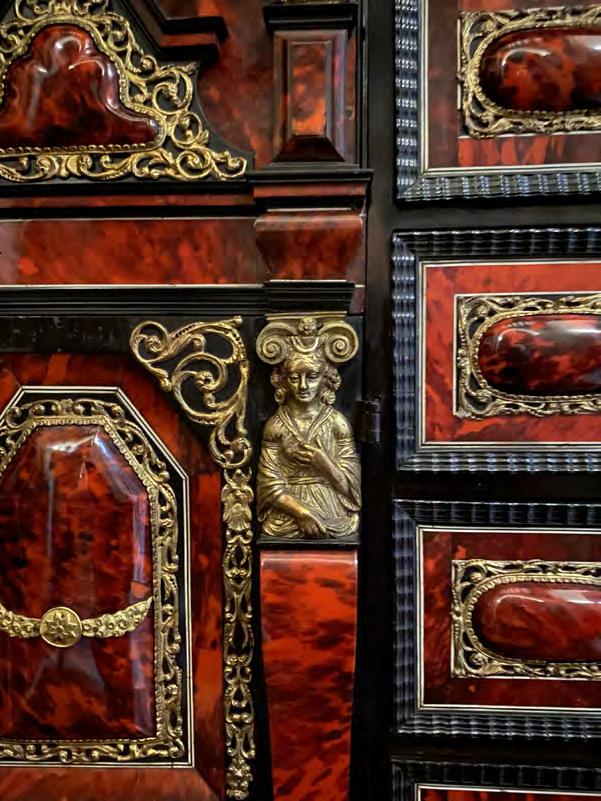
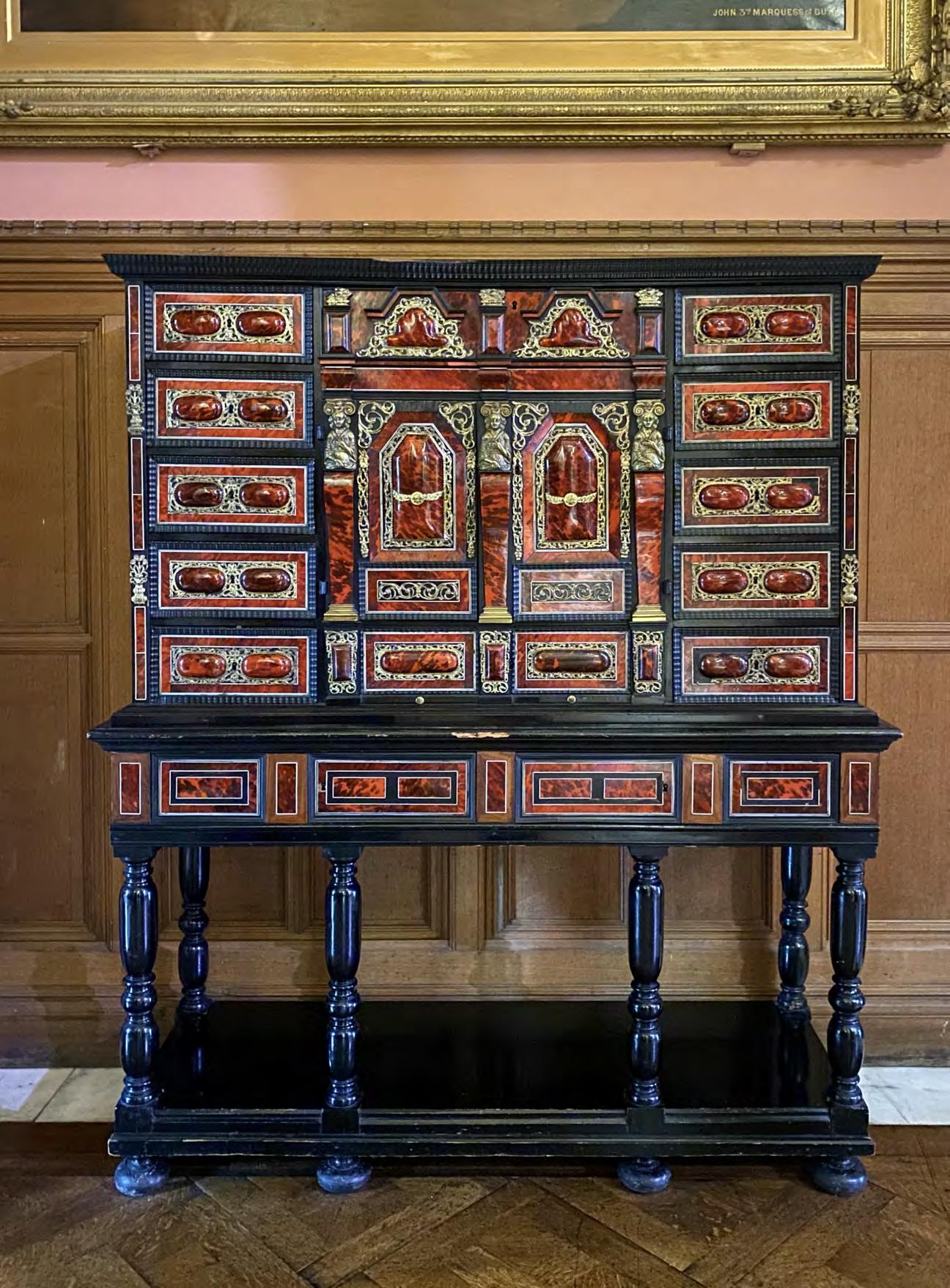
a singular structure which both stores and exhibits of a wide variety of artefacts of which are usually esoteric, eclectic and rare.
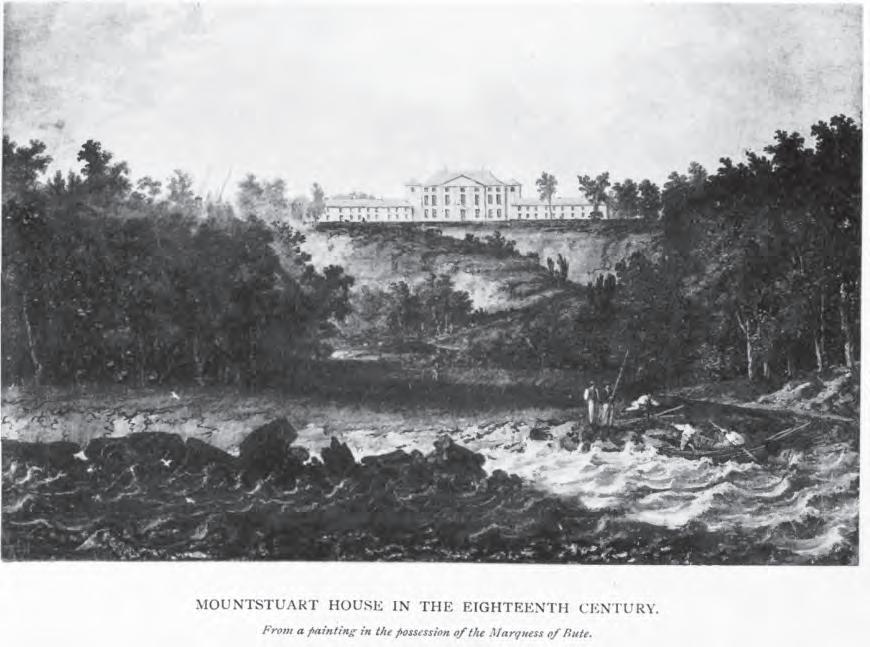
Mount Stuart, rebuilt in 1877 by the 3rd Marquess of Bute, John Crichton Stuart was a polymath and avid collector, with a deep interest in astrology, astronomy, art and mythology. It was designed with modern technology for the time including a heated indoor swimming pool, central heating and a telephone system. It is also accompanied by three distinct gardens and surrounded by a diverse range of locally and globally sourced forestry and foliage. The house consists of numerous rooms which are beautifully preserved that contribute to the rich history of Mount Stuart.
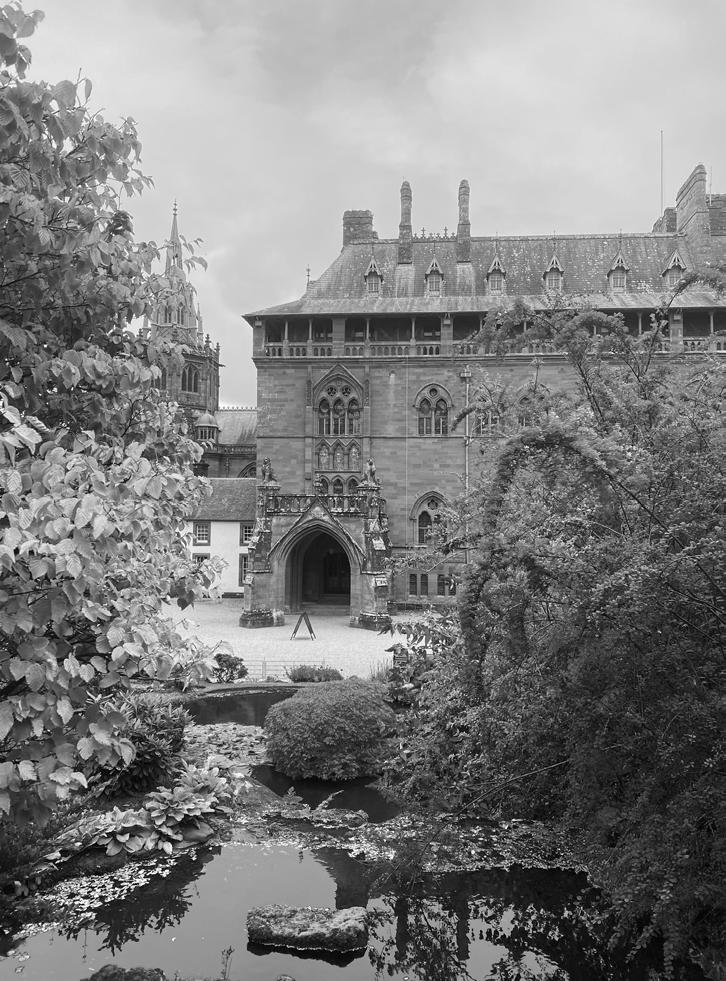
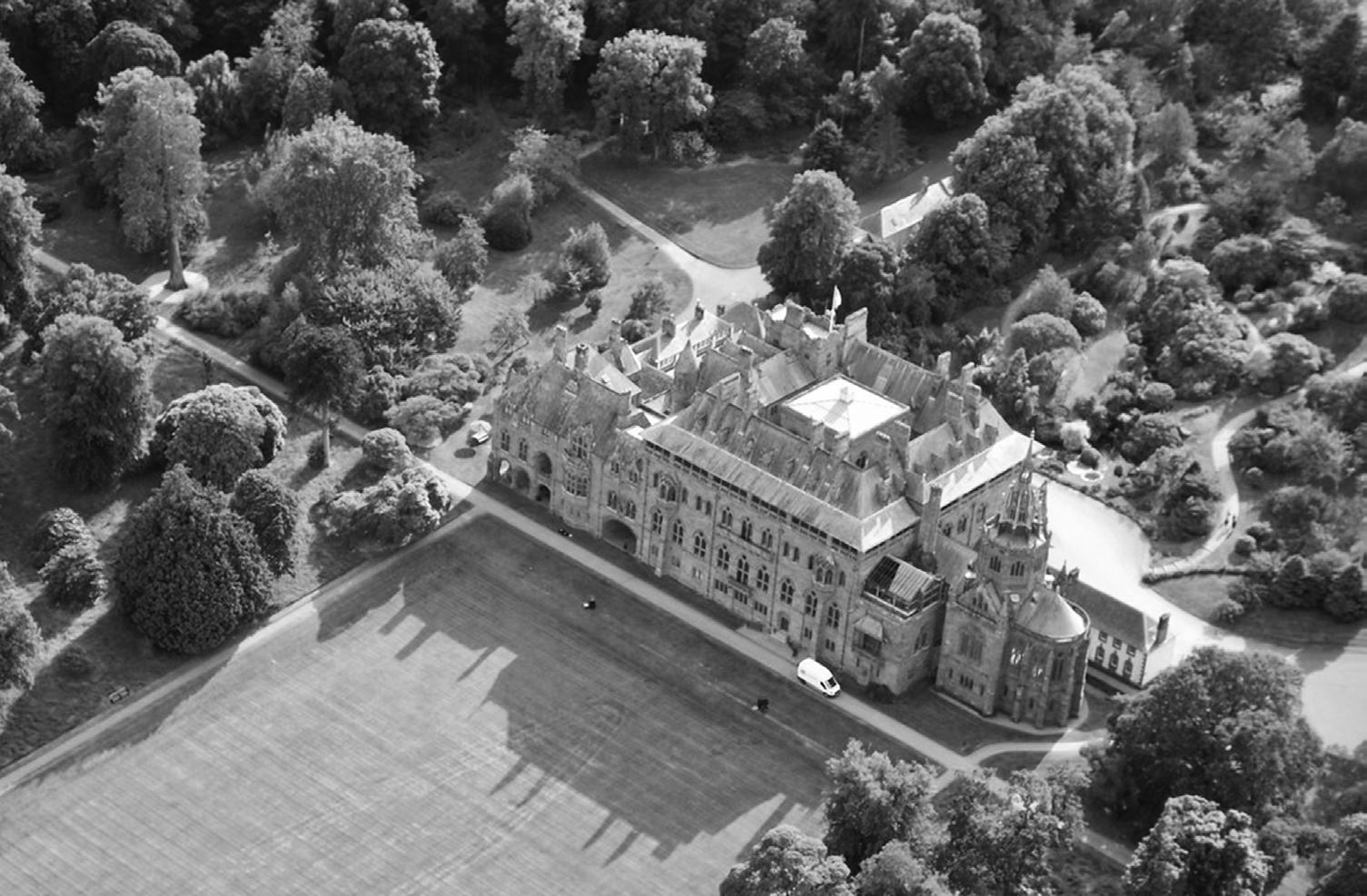
The term ‘Cabinet of Curiosities’ originally referred to a structure the scale of a room, rather than a cabinet, like nowadays. We propose Mount Stuart can be framed as a Cabinet of Curiosities, at the scale of an entire house. Individual rooms are compartments housing specific collections of objects.
Framing Mount Stuart as a Cabinet of Curiosities allows us to begin to reorganise the vast array of treasures that it holds.
Traditionally, the arrangement of a house’s artefacts is reflective of the organisation of the house. Each room holds a domestic function and therefore the objects within this space are of that nature. However, Mount Stuart’s bountiful collections depart from this logical understanding of the connection between objects, function and location. The collections of objects within Mount Stuart propose an investigation into the way in which objects can be exhibited in relation to their location.
Cabinet of Curiosities, Wunderkammer
Beautiful, rich, and at times strange, Mount Stuart sits on the edge of the Island of Bute. Enveloped by a vast and expansive landscape, the house has been informed by distant cultures and crafts, as well as the Island in which it is situated. Understanding and unpacking this cabinet is a complex endeavour which requires a deep understanding of Mount Stuarts and its context. We begin our research with an intensive process of inquiry into the house, its site, history, environmental and material conditions, and well as acquiring and understanding of its rich history.
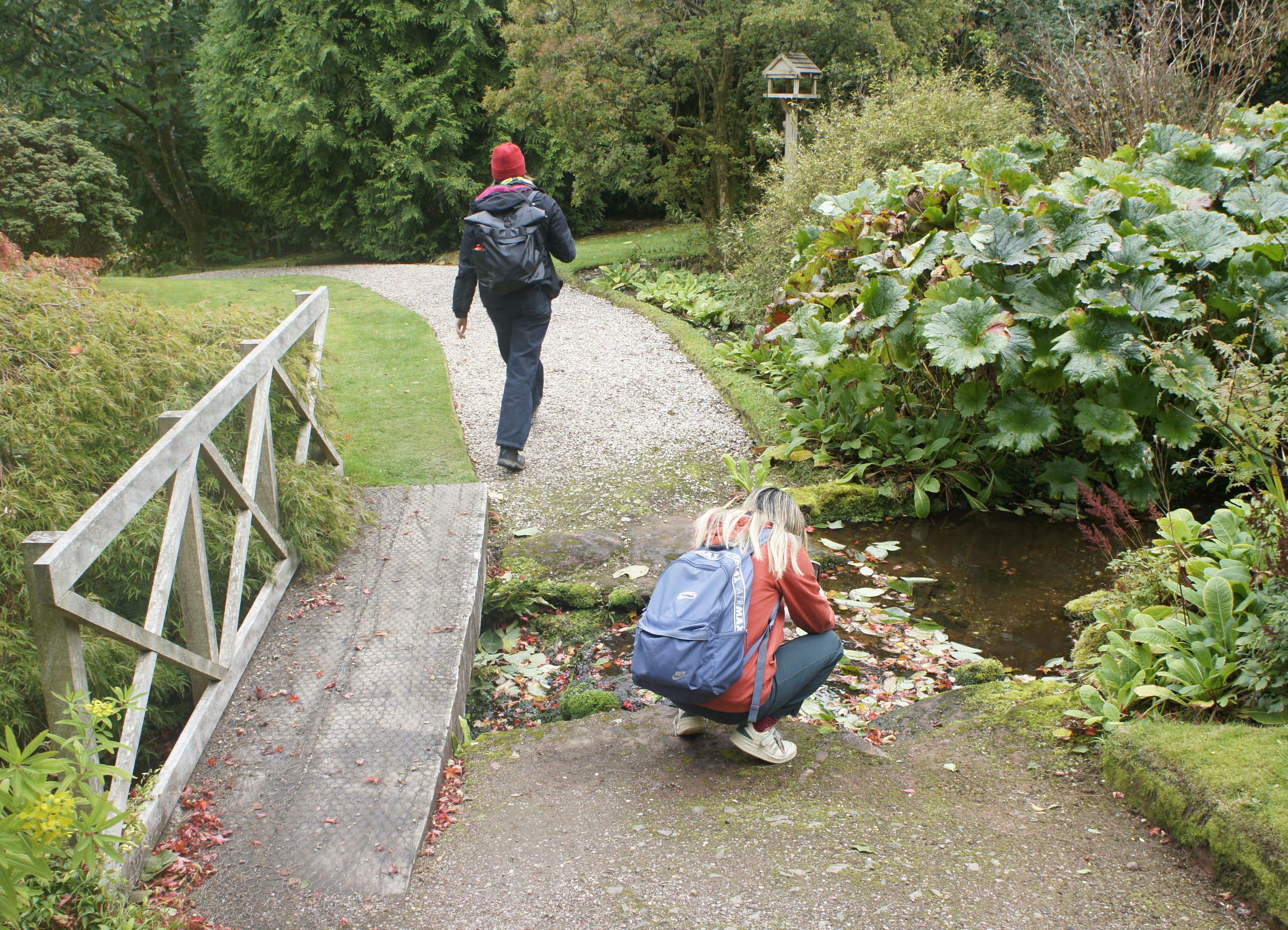
The Policy of the Rock Garden invites us to view the 3rd Marquess of Bute as a collector. This assemblage of rocks and botanics can be interpreted as an unexpected, non-traditional collection. This garden showcases the Marquess’ fascination with the natural world, particularly botanicals. With this understanding we begin to explore how this collection of plants and rocks came to be located at Mount Stuart from across the world.
The rock garden is located in close proximity with the house itself, and therefore can be seen as an extension of the house’s collections. This relationship is physically represented by the views from the Rock Garden to the House and vice versa.
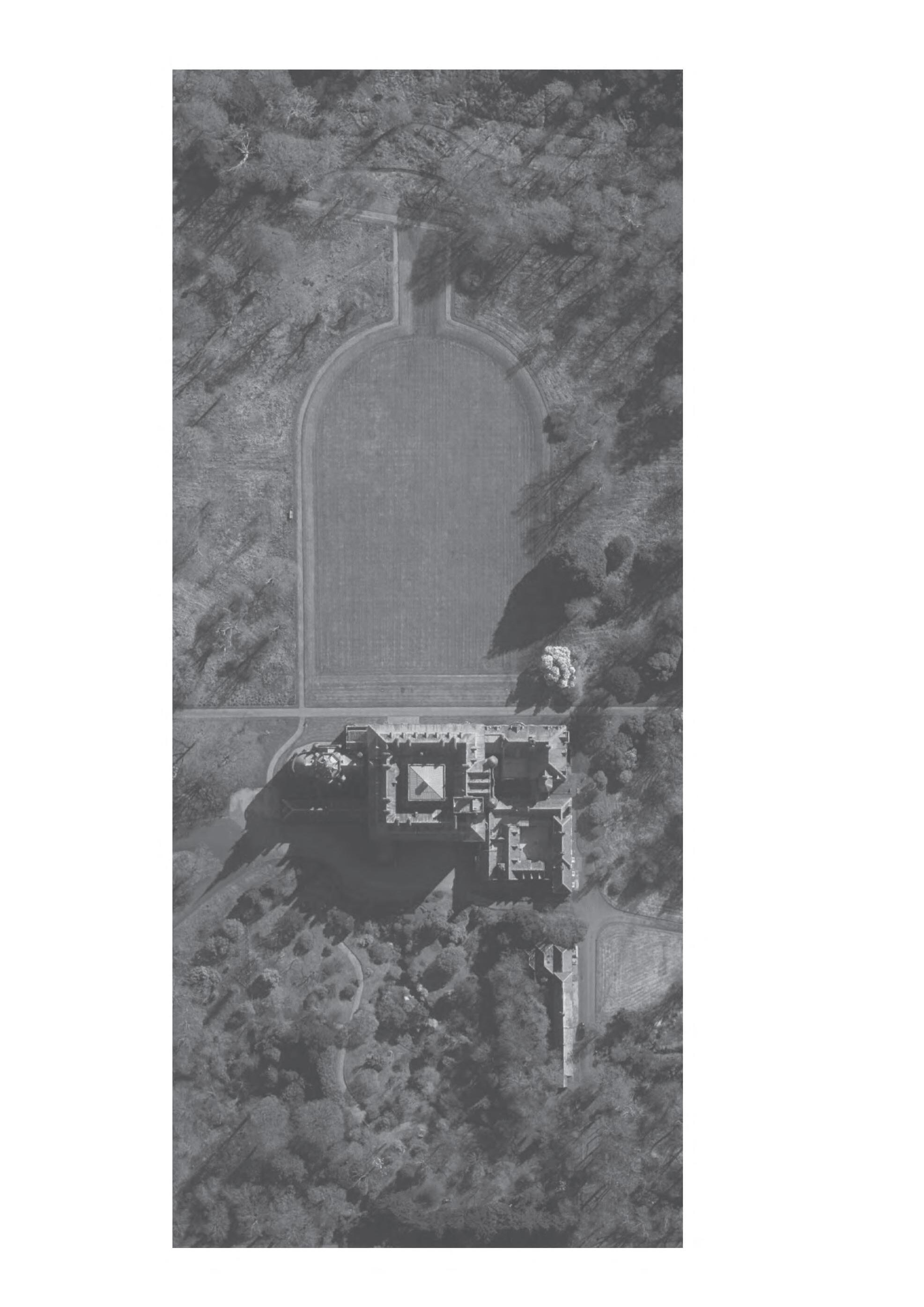
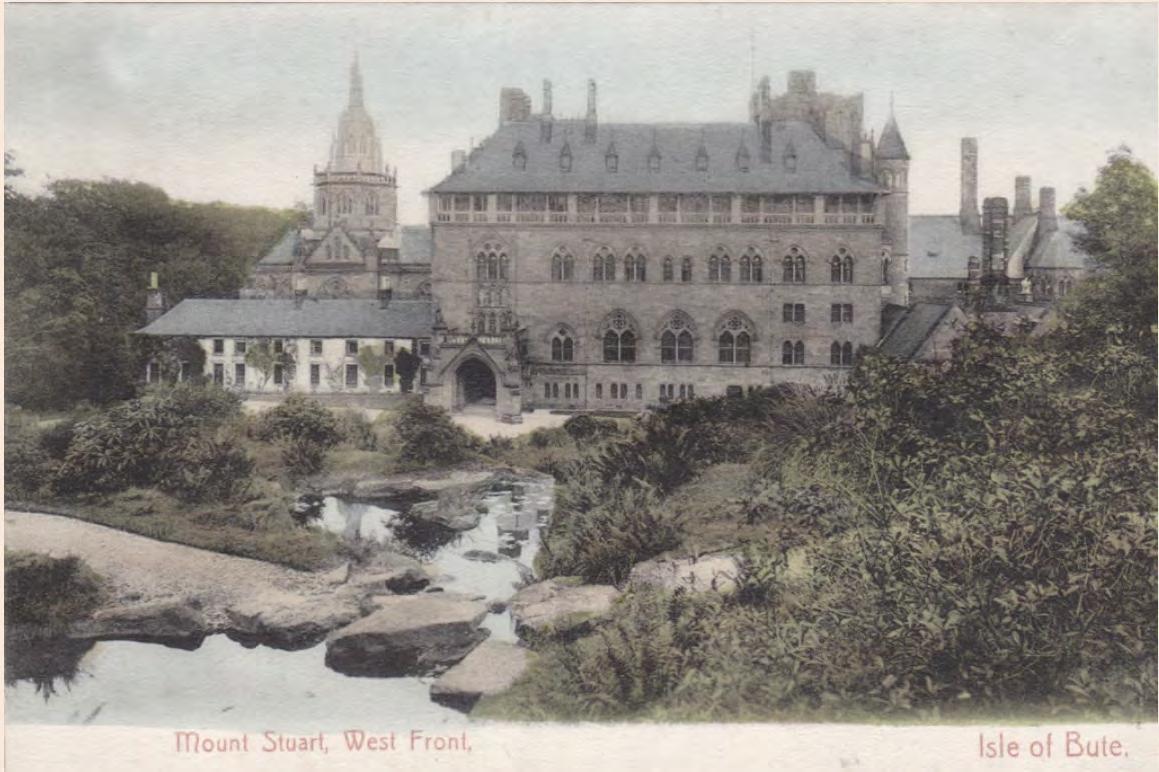
The rocks which form the foundations of the Rock Garden are sourced from the natural reserves of sedimentary rock on the Isle of Bute. However, the stone, also of the sedimentary variety, used in the construction of the house of Mount Stuart was imported from the mainland.
The red sandstone of Mount Stuart was chosen for its fine grain and red colour. Although sandstone is a material is soft and therefore relatively easy to carve and sculpt, in its application in Mount Stuart, it remains mainly unprocessed. This allows for a deeper appreciation for the material in its raw, unornamented state.
The sandstone at the time was a very popular choice for grand buildings in major international cities such as New York.

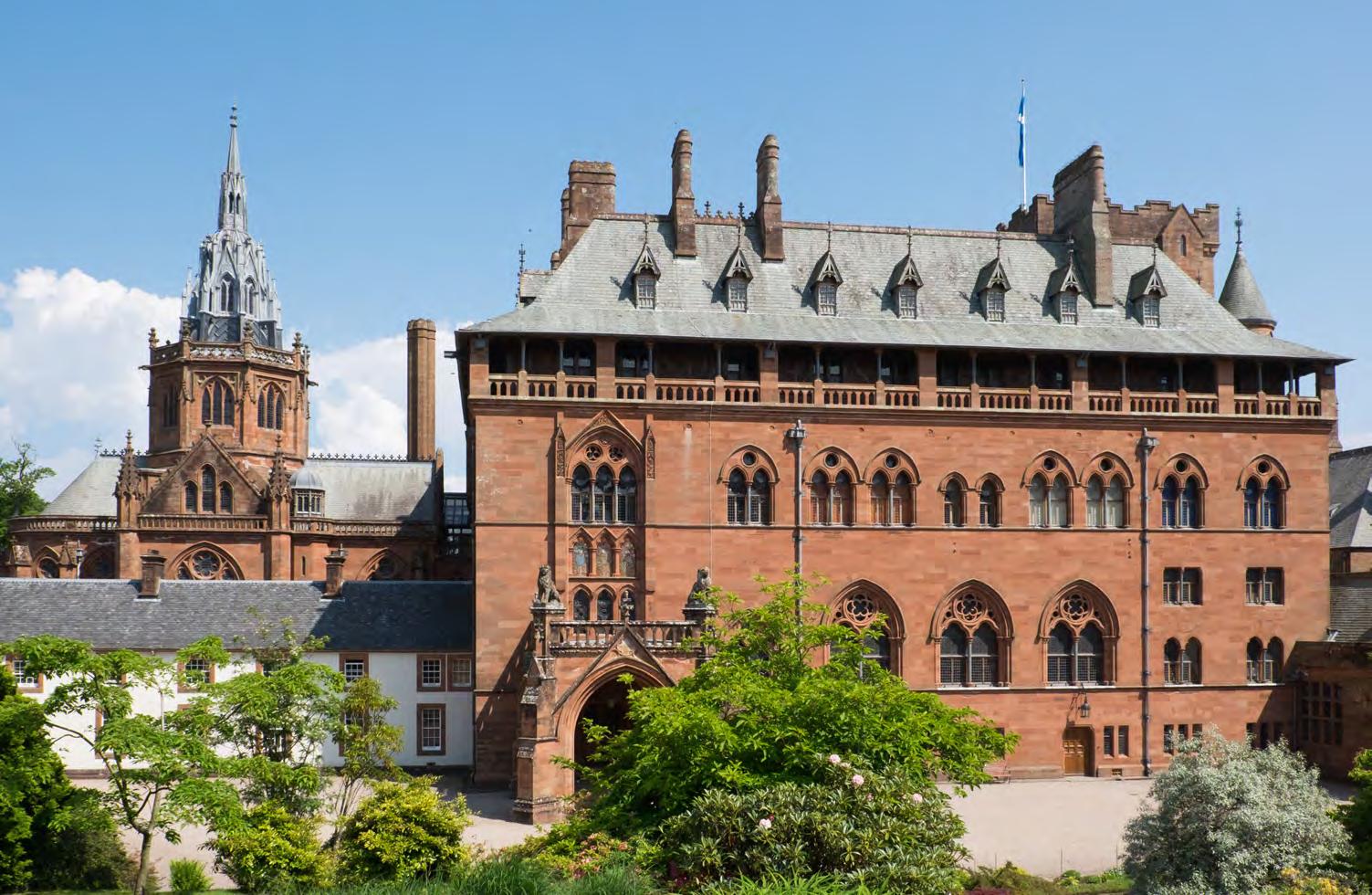
The original Mount Stuart house was all but demolished by a fire in 1877. The iconic red sandstone envelope of Mount Stuart was part of the 3rd Marquess of Stuart’s complex and extraodinary renovation plan.
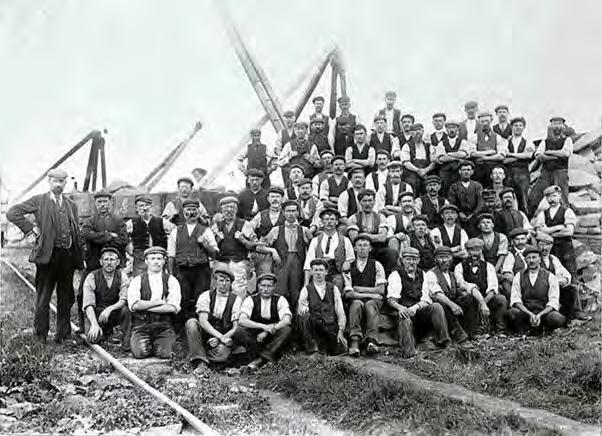
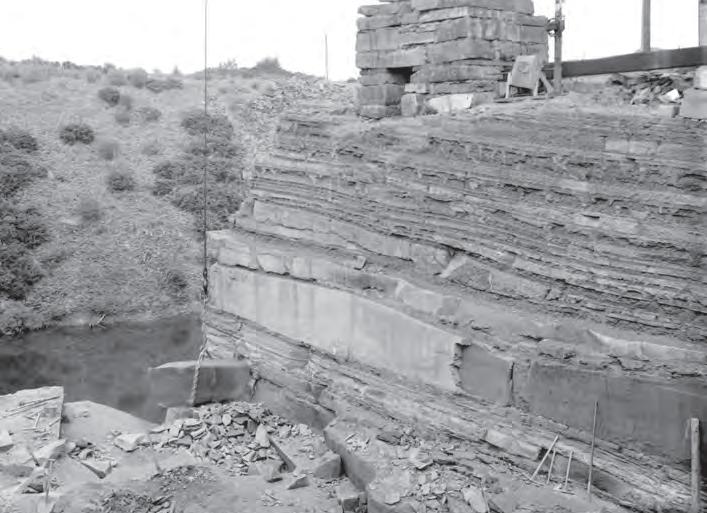
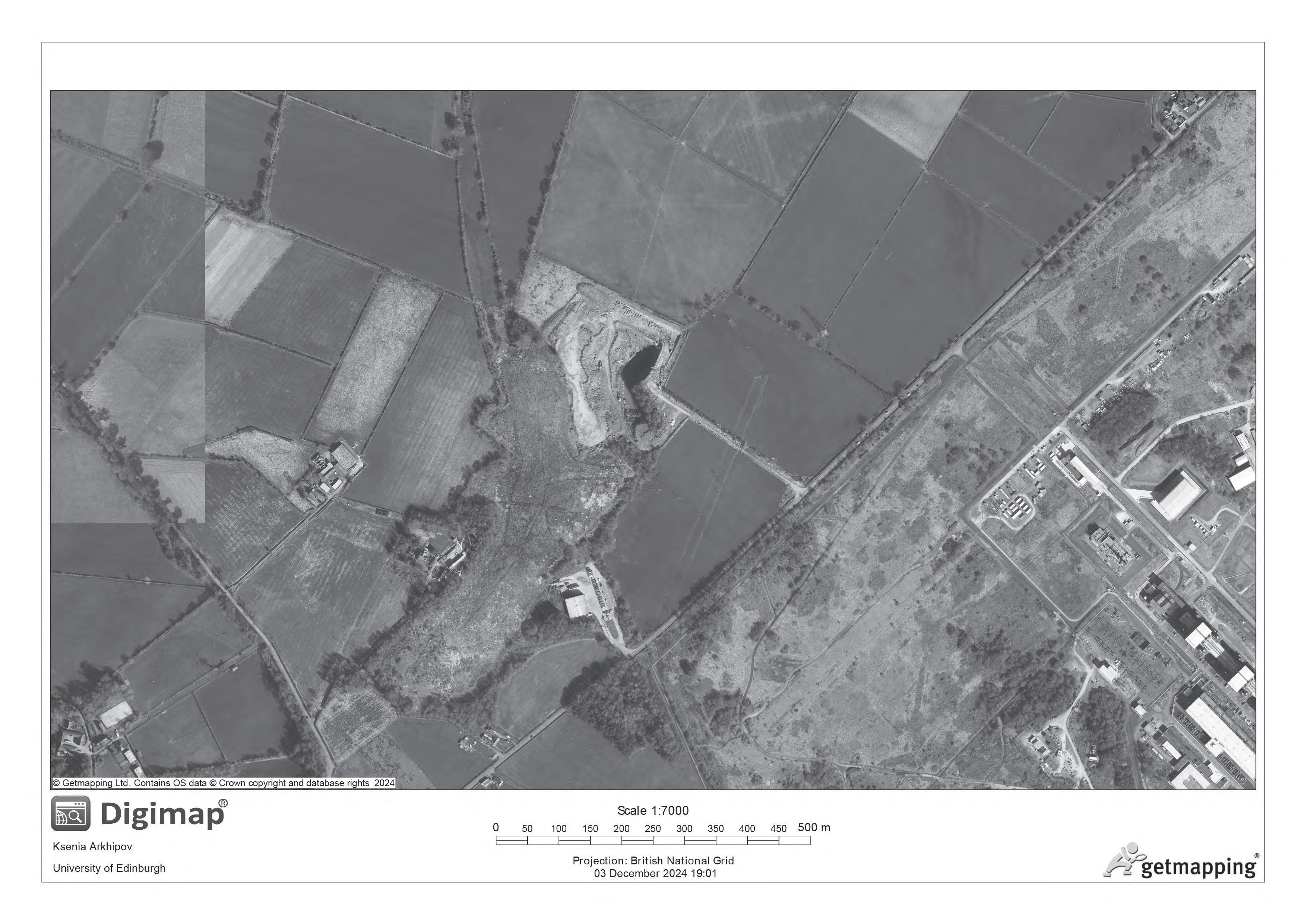
Our initial triptych documents the journey of the sandstone from where it was quarried, in Annan, to Kerrycroy Port, Bute, and then to the Rock Garden.
the Journey of Mount
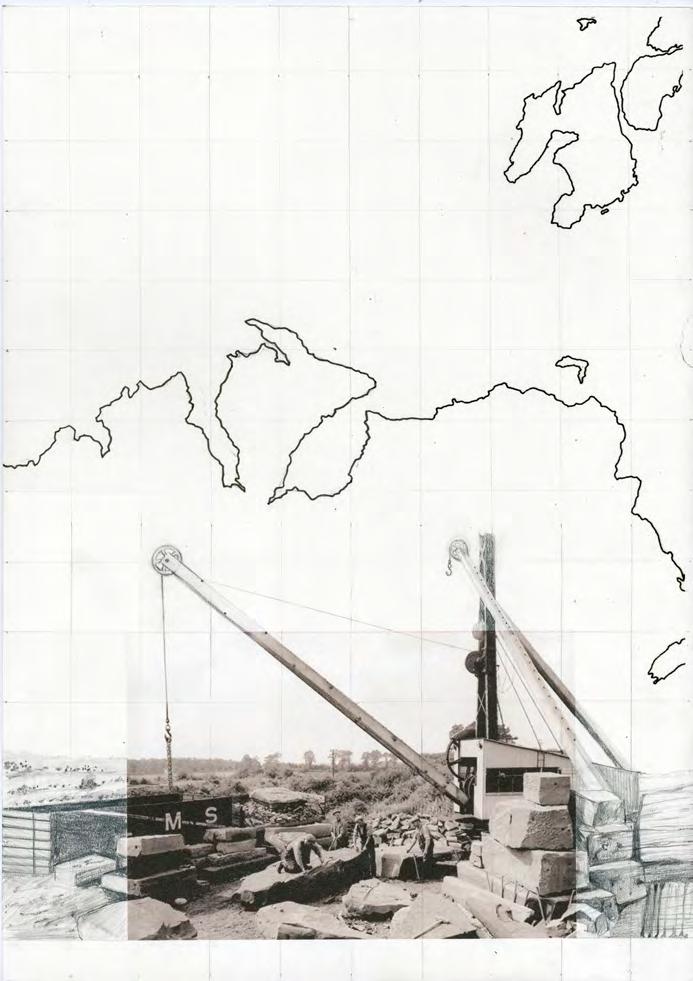
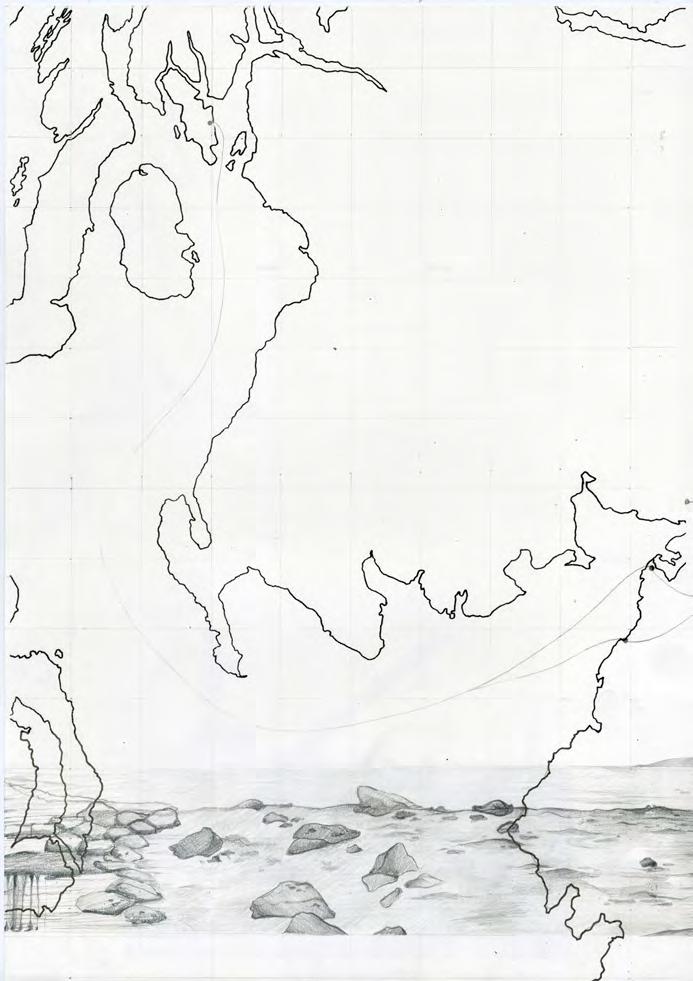
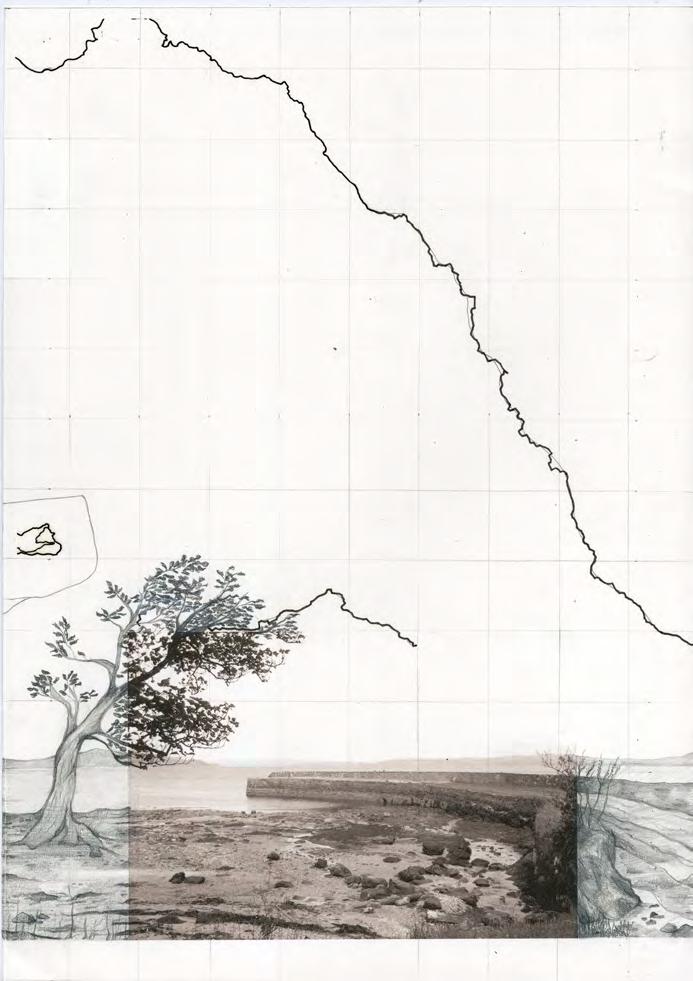
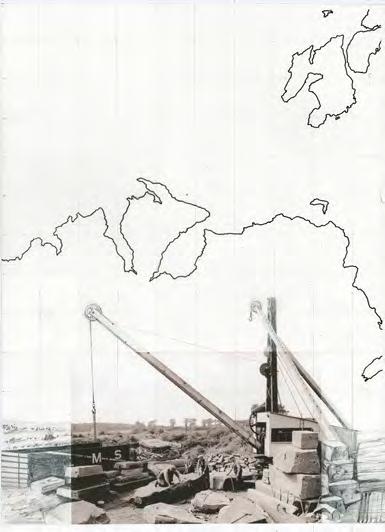
The Corsehill Quarry had a particular reputation for extremely high-quality, fine red-pink sandstone. The quarrymen would use wooden mallets and chisels to dress the stone by hand. The Quarry used new, contemporary technologies to blast, loosen and separate the stones, resulting in an extremely high-quality finish. This quality, prestige and attention to detail is a quality seen throughout Mount Stuart, from the organisation of the collections to the stones which make up its walls.
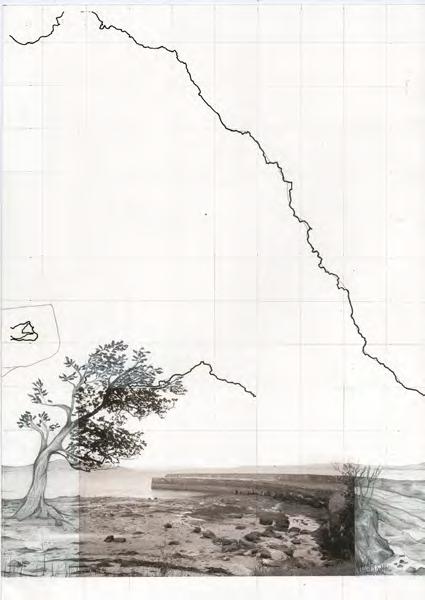
During the Marquess’ residence at Bute up until his death in 1900, Kerrycroy served as the main port on the island. The fact it is located on the estate of the Marquess evidences his importance, wealth and impact on the Isle of Bute.
His privately-owned port acted as a key point as it connected the Marquess to the Scottish mainland and the rest of the world, allowing him to grow his collections.
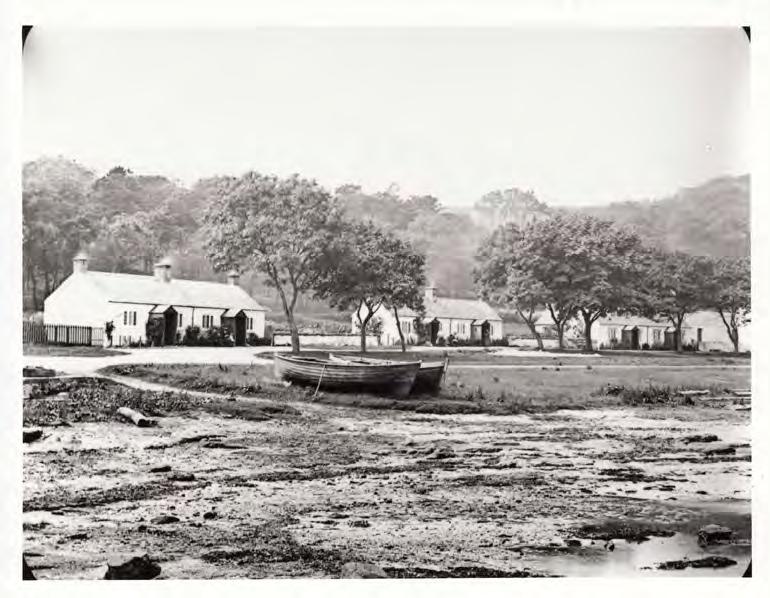
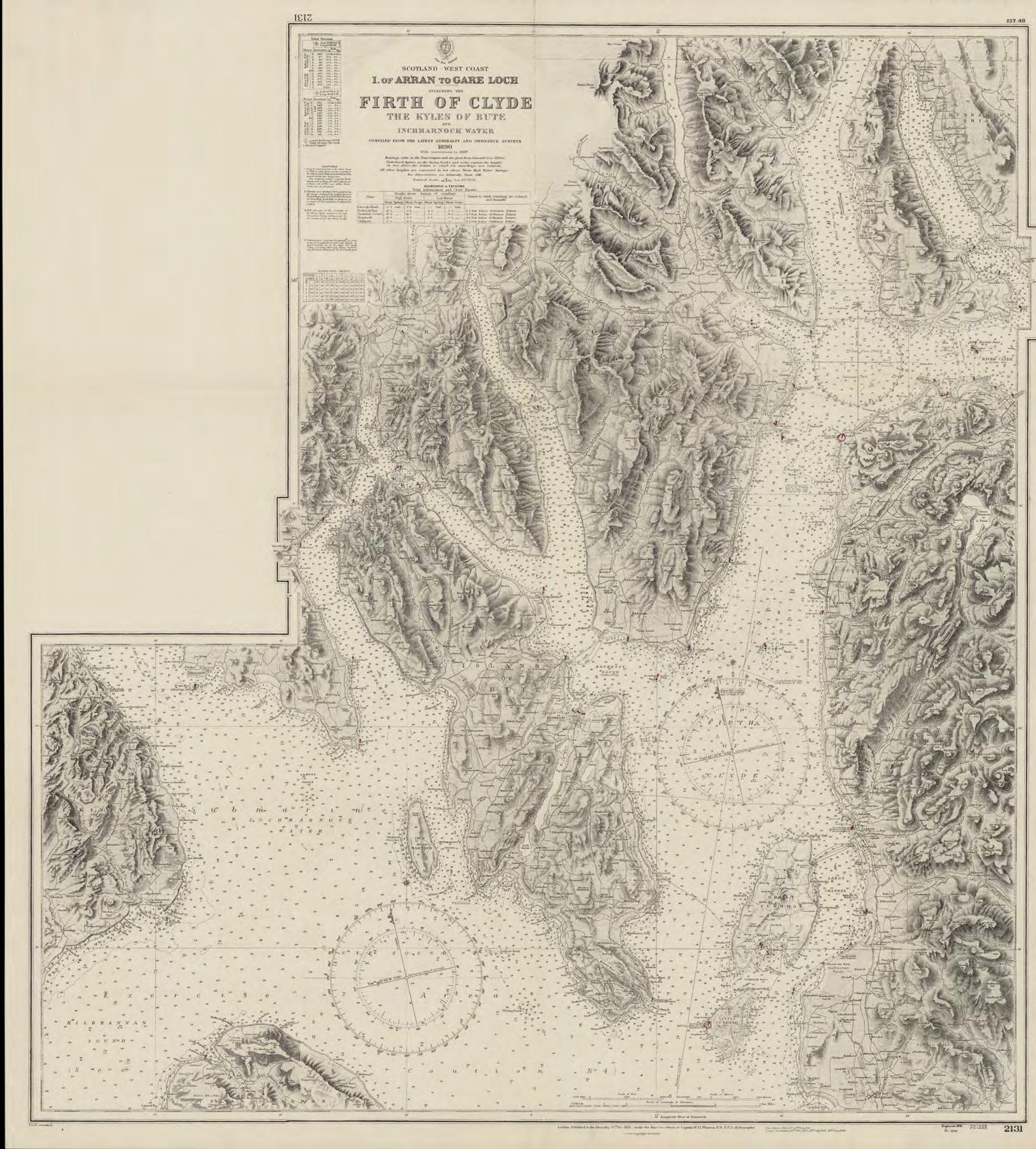
This wider contextual investigation provides us with a deeper understanding of the environmetal and cultural particularities of the Mount Stuart Estate. An appreciation for this creates an architectural design more respondent to its specific location.
Analysis of the Natural Enivronment of Mount Stuart and Beyond
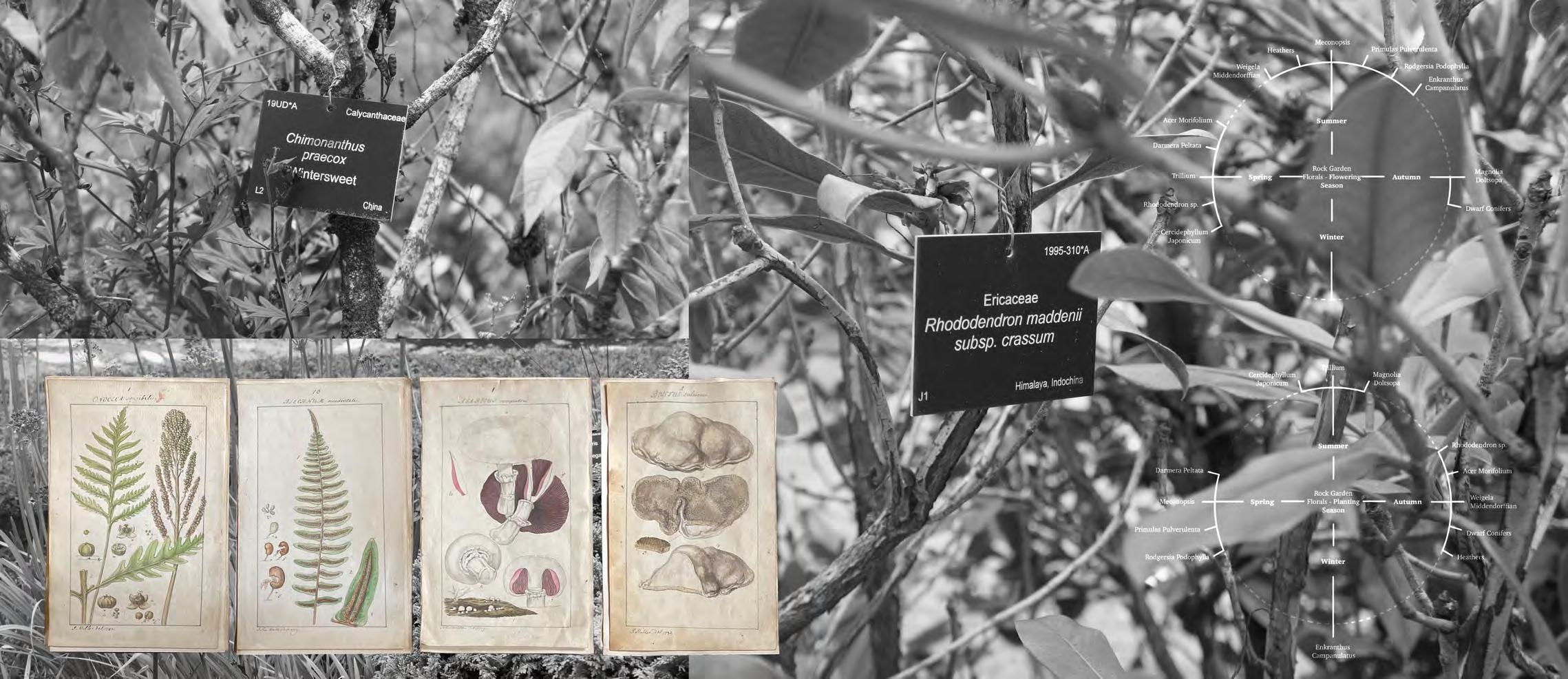
Due to the Marquess’ fascination with the natural environment, the landscaping of Mount Stuart Estate is particularly rich. By carefully selecting a wide variety of both domestic and foreign plants, the rock garden allows visitors to see botanics at different times of the year.
The plantation and flowering seasons are depicted in the circular diagrams for each year. The plantation seasons are fall and spring, whereas the majority of the flowering seasons are summer and spring.
Several botanics archives of books and artworks that provide information on both local and foreign botanic collections can be found at Mount Stuart’s libraries.
The interior decoration of Mount Stuart is heavily influenced by the natural surrounding landscape.
A Botanical Investigation
The Isle of Bute’s vegetation consists mainly of heather grassland, improved grassland, broadleaved woodland, inland rock and saltmarsh. At Mount Stuart, the main vegetation is improved grassland and broadleaves woodland.
Jennifer Bute, the second wife of the sixth Marquess of Bute, reestablished the rock garden with an Asian theme in the 1980s and 1990s, sourcing and introducing most of the plants and flowers there today. Some specimens were collected in the rural Bute landscape and brought back to Mount Stuart herself.
China, Japan and North America were among the countries from which the botanicals were transported. In order to maintain Jennifer Bute’s planting scheme, these botanics are still being maintained and expanded today. Because of this we can understand the Rock Garden as a truly unique environment, juxtaposing native Scottish heathers with Japanese maple trees.
Situating Mount Stuart in its Wider Botanical Context
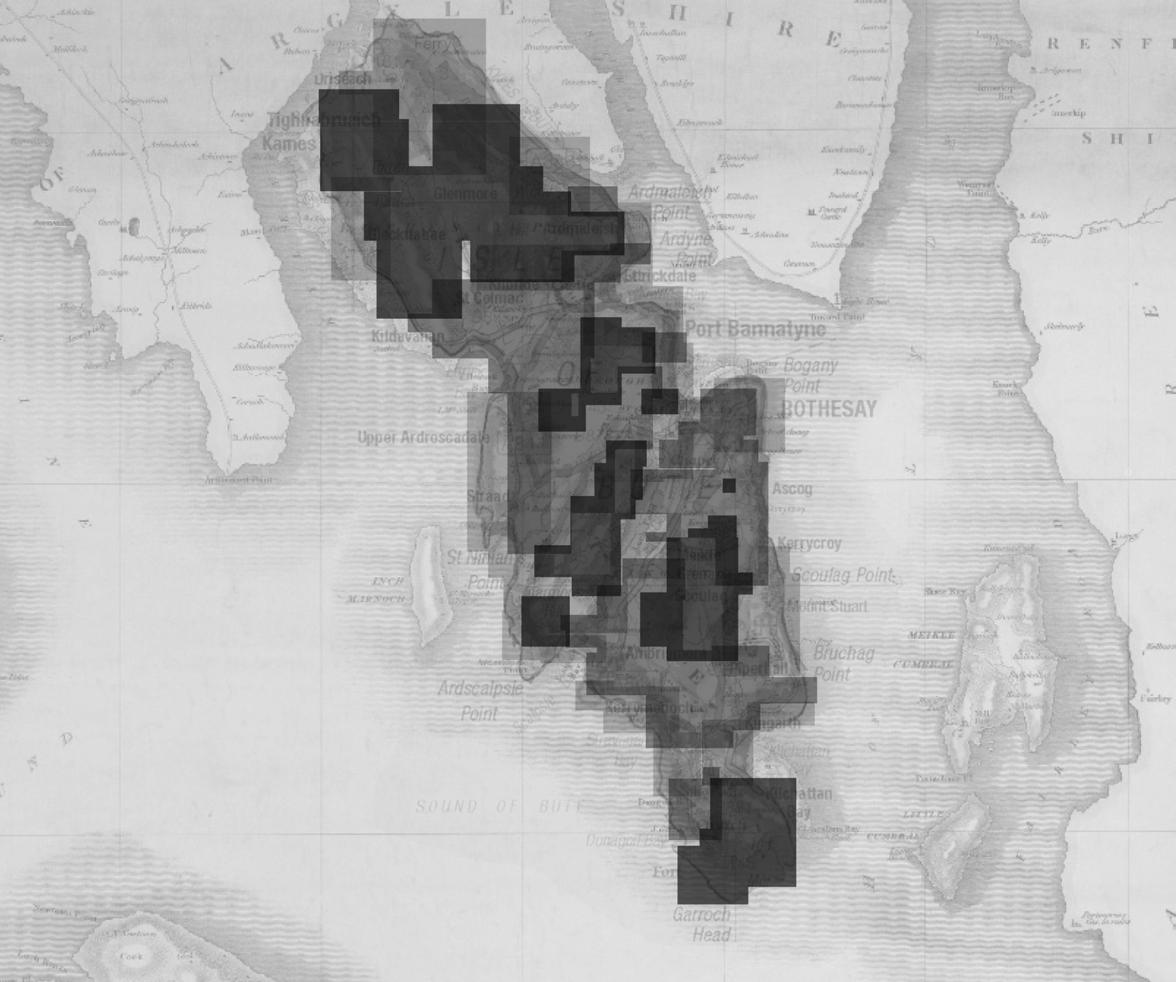

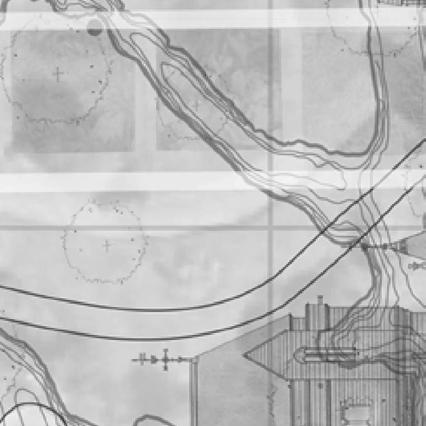
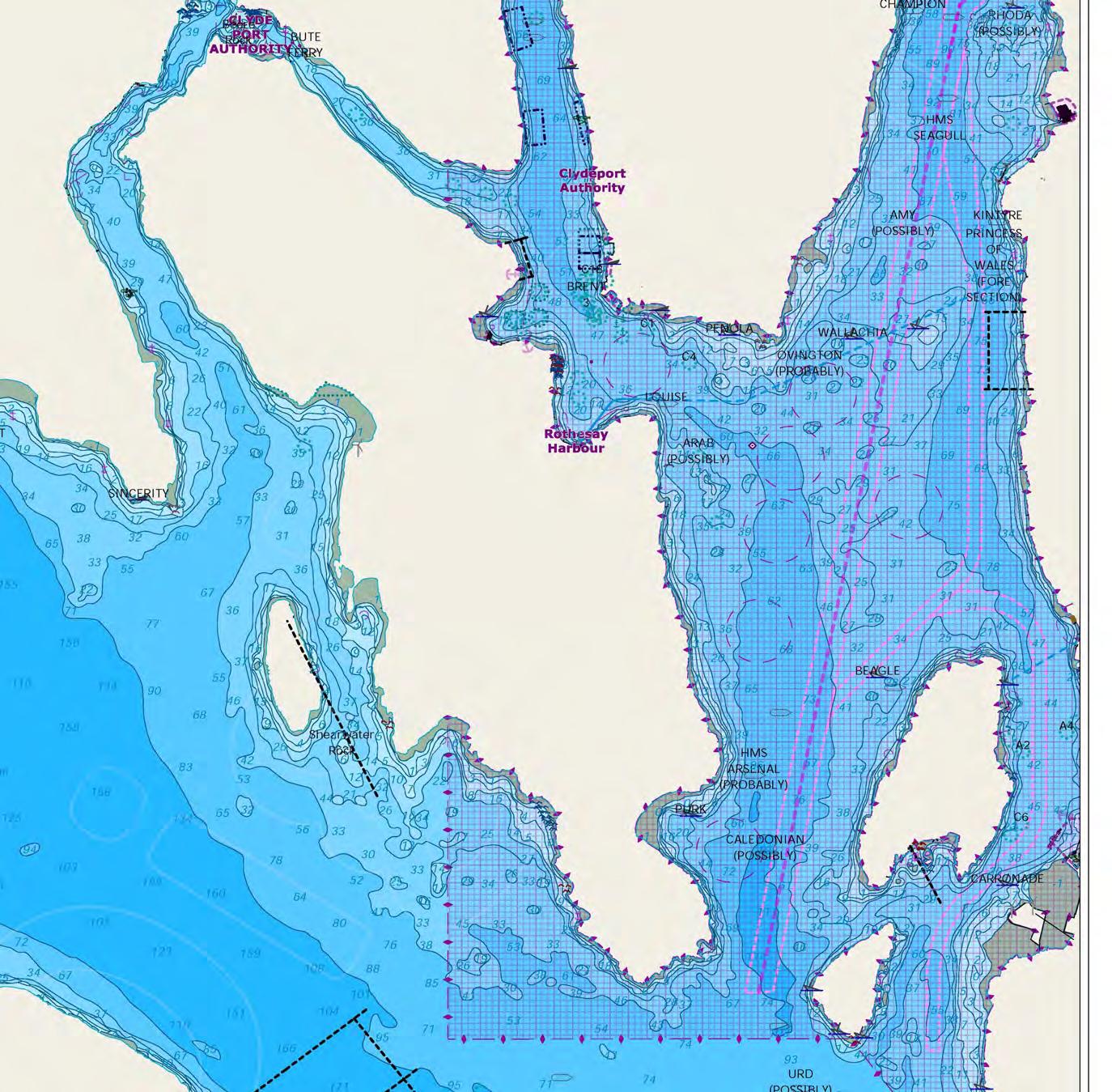
The marine contour map displays sea levels on the contours of the broader terrain that is surrounded by bodies of water.
Using contour lines to show different depths below sea level, these maps offer vital information about the seabed’s features, depth, and shape. This information was essential to understanding Mount Stuart’s numerous water interactions.
More broadly, they are significant drawings for environmental management to support ecological significance, marine research, and navigation.
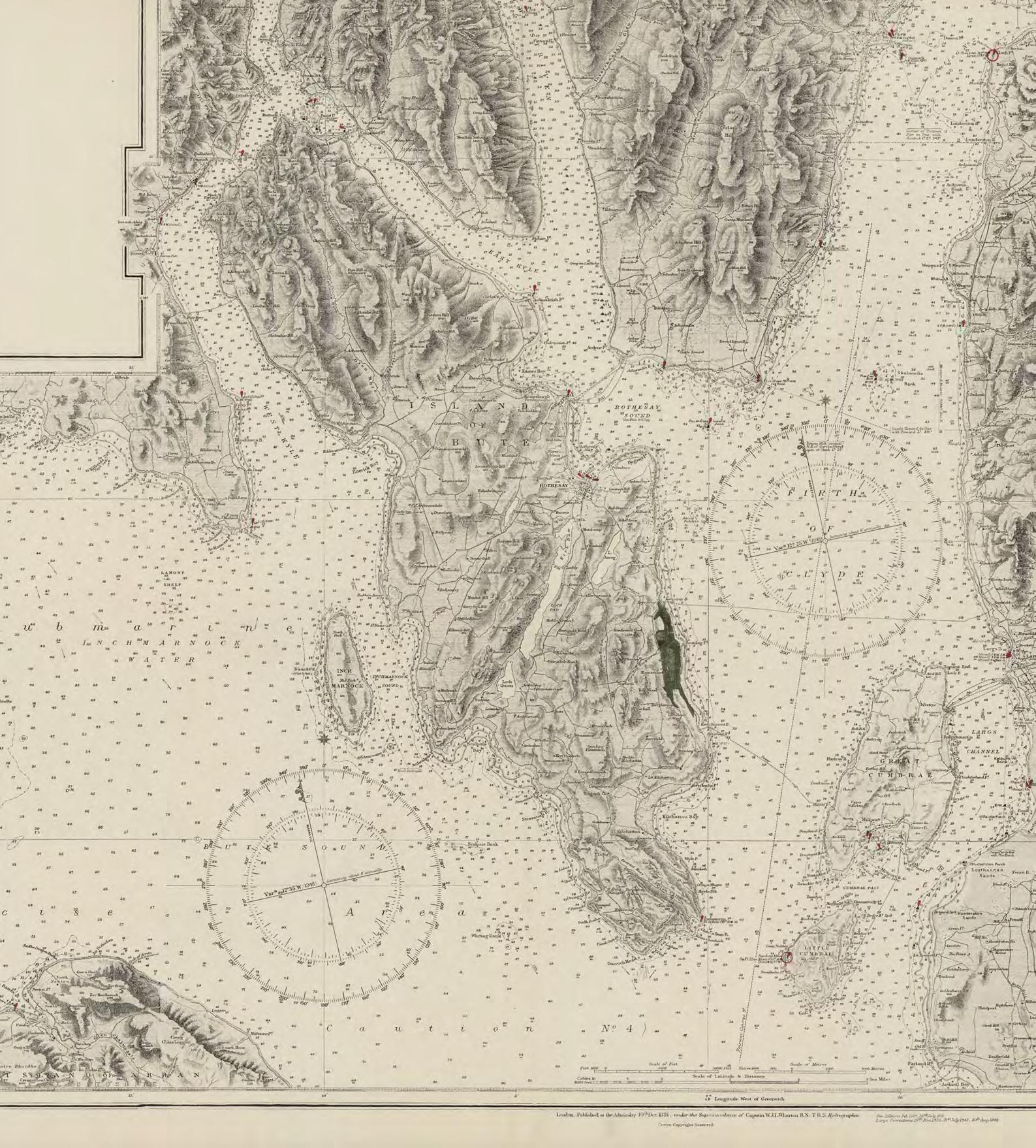
Through geological mapping, it became apparent that the Rock Garden of Mount Stuart sits against the larger geological backdrop of Bute, and Scotland. Mount Stuart is known for its thoroughly curated rock collection that reflects the island’s rich geological heritage.
The diverse rock types that serve as the island’s foundation of its diverse terrain are also shown on the geological map.
In light of Mount Stuart’s scenery, sedimentary bedrock was an essential part of our site studies too. The presence of sedimentary rock underpins the estate of Mount Stuart because the house itself is also constructed using an imported red sandstone.
Geological Mapping
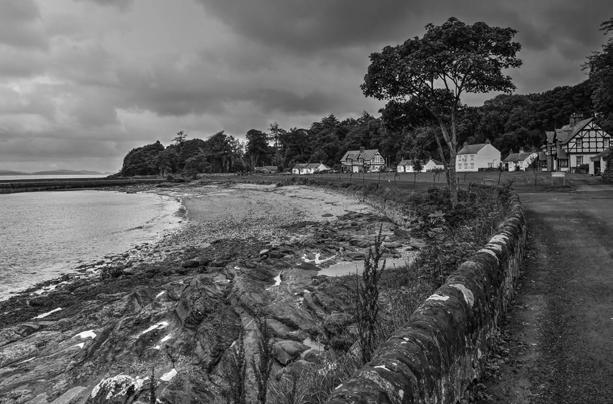
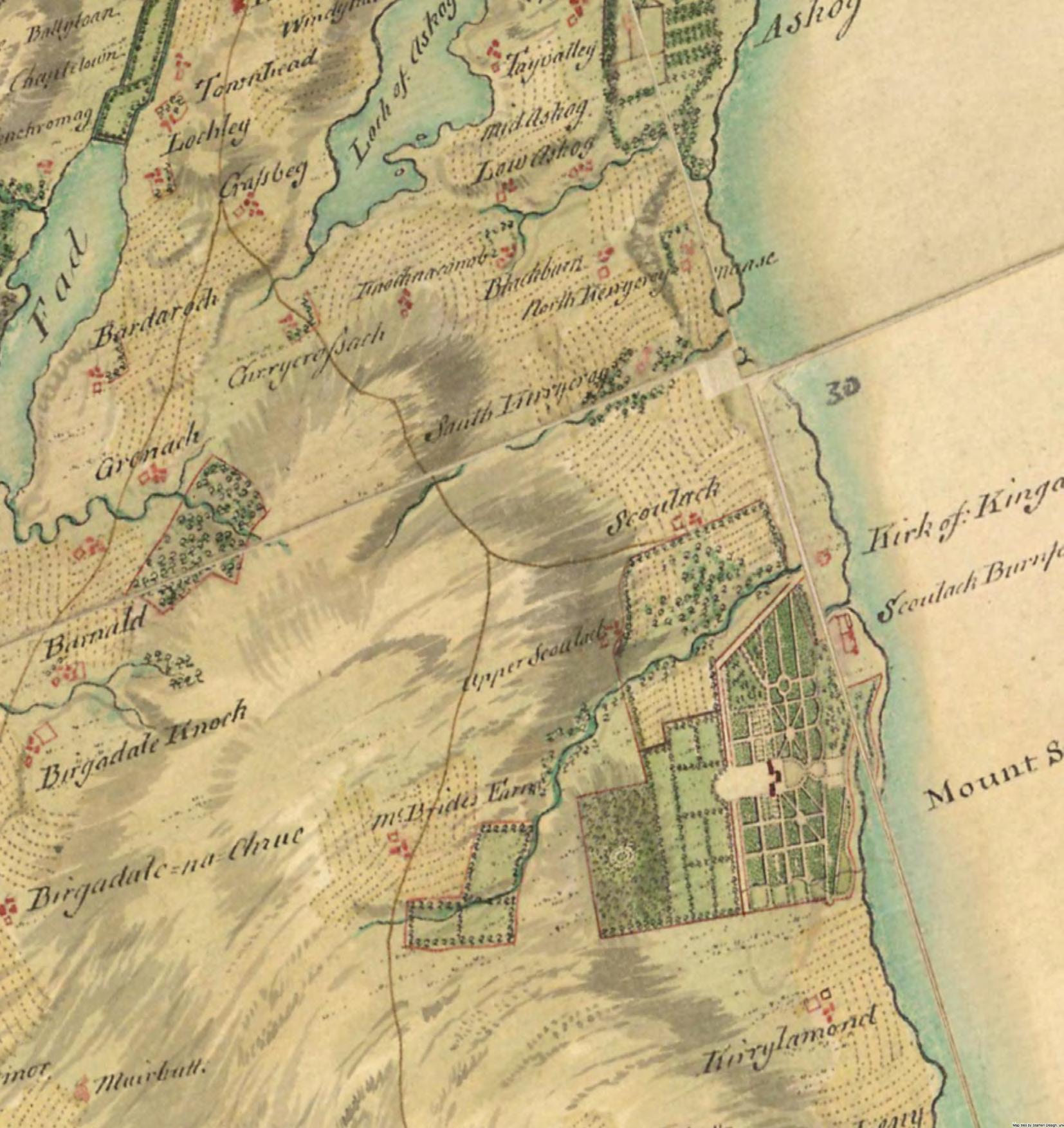
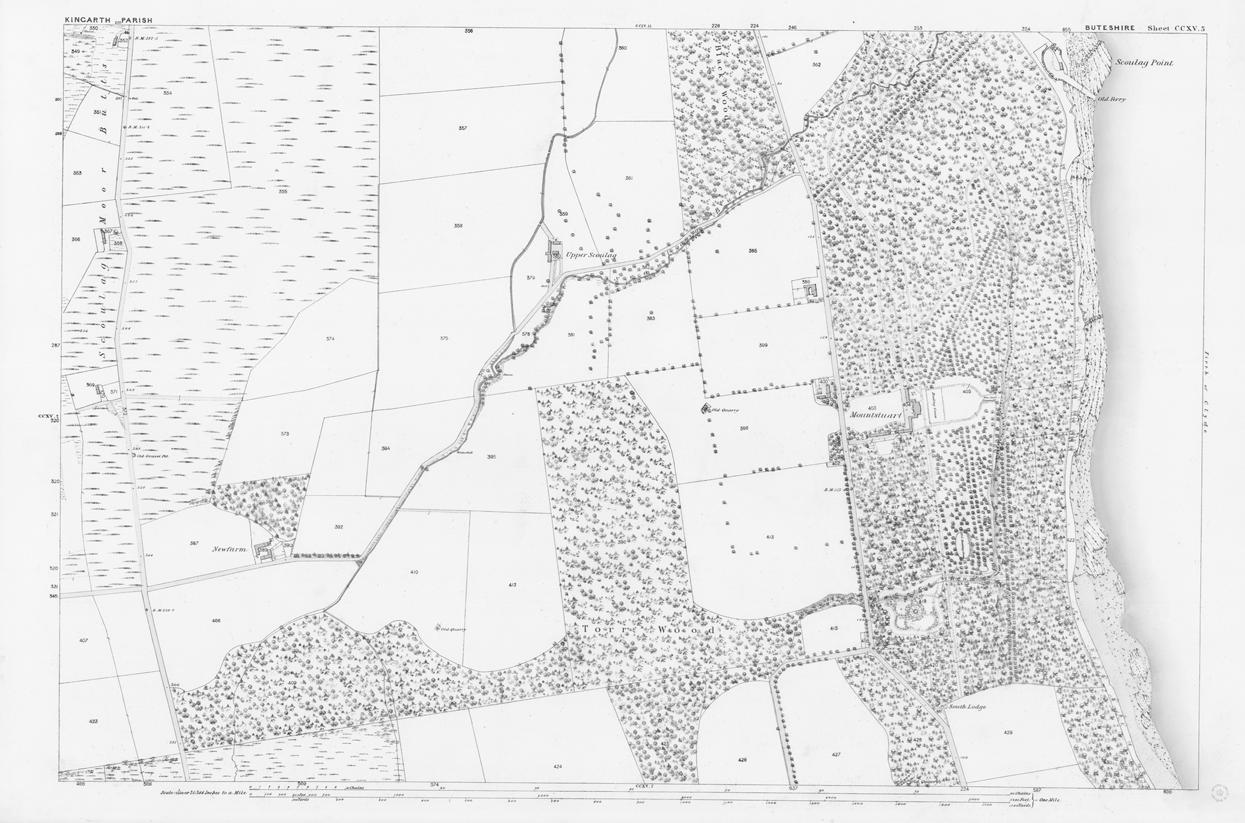
This triptych represents the passage of the rocks and explores their materiality and its relationship to the surroundings such as within the Corsehill Quarry and with the botanicals in the Rock Garden.
The triptych introduces the theme of materiality which characterises our project.
Investigating the Materiality of the Rock’s Journey
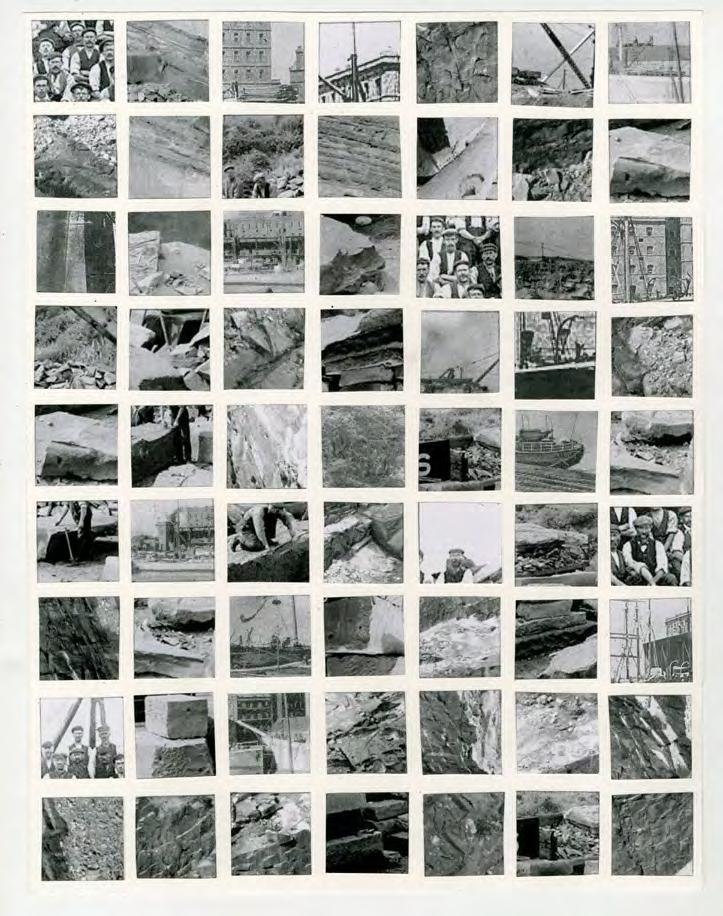
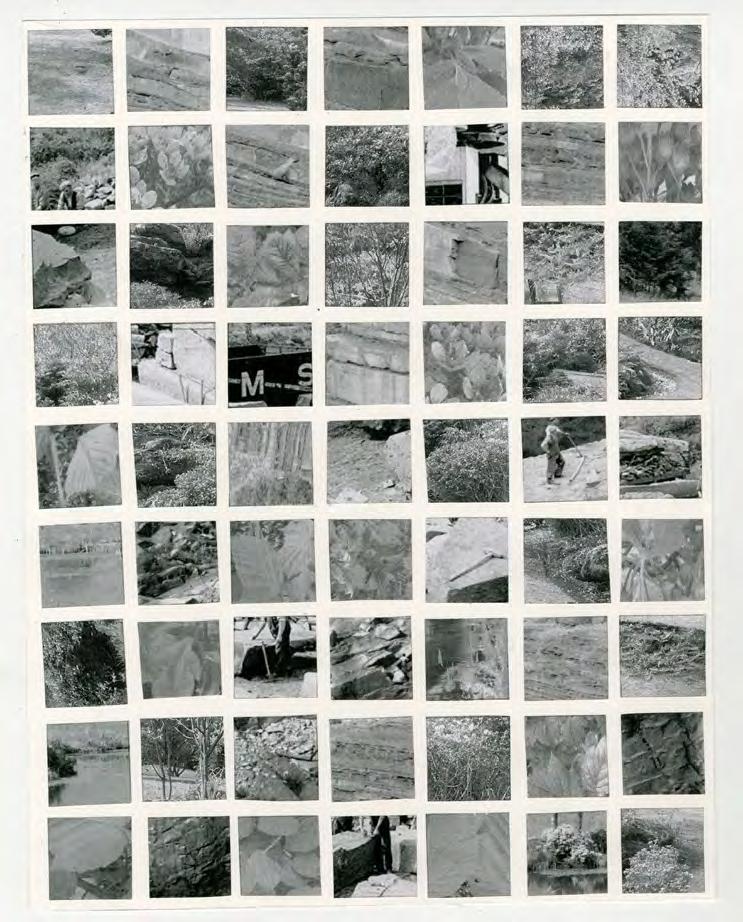
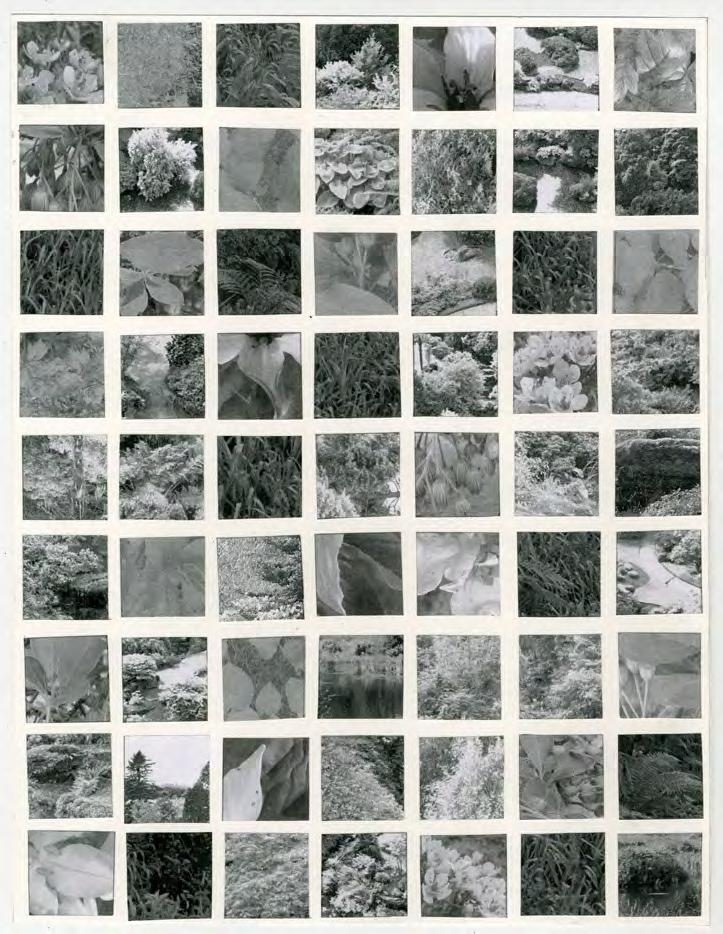
We were first drawn to the Rock Garden as a collection outside of the term’s traditional meaning. This collection of rocks and exotic plant species resides outside the house and is experienced through the physical interaction with the body, departing from the experience with traditional collections. Therefore the viewer becomes entangled with the collection and experiences it more deeply.
This section resituates the Rock Garden within its larger context: investigating its relationship with the existing rock of the Isle of Bute (the bedrock) and the cut sandstone of the house from Annan.
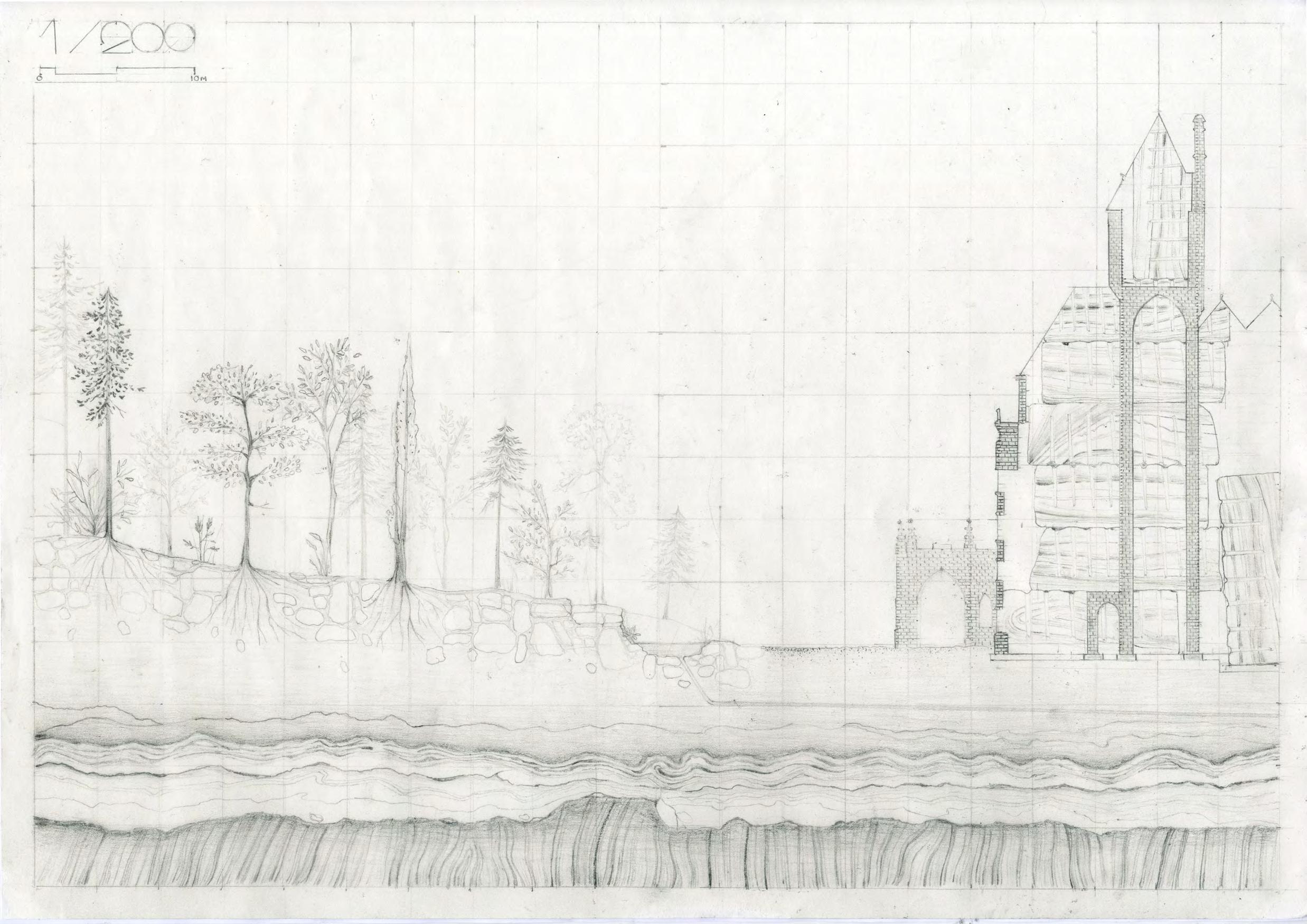
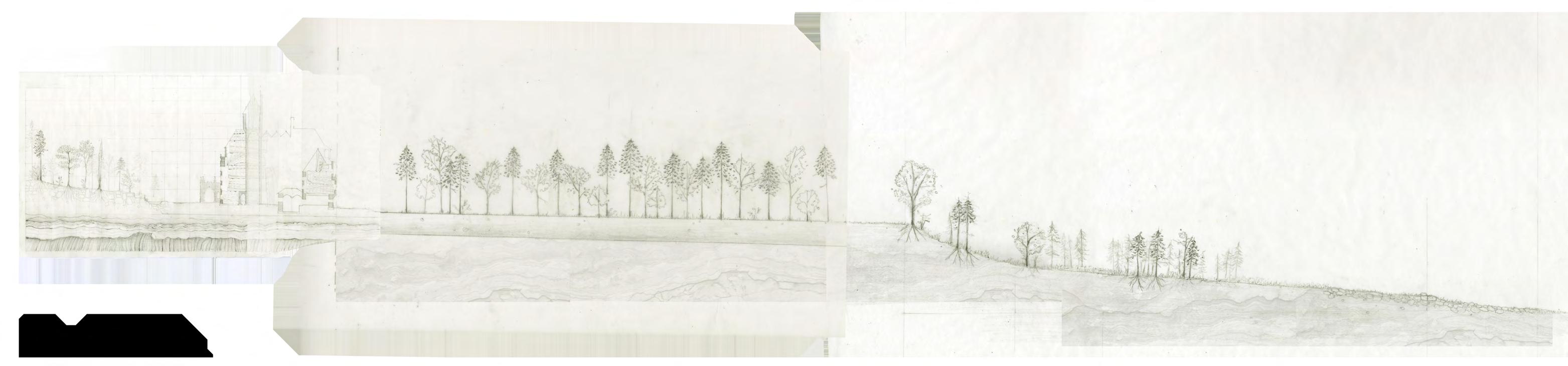

Section through the Rock Garden to the shoreline 50m
By extending the context in which the Rock Garden and the House sit, we are able to imagine a suitable landscape for our Observatories to sit within, thoroughly embedded within the Mount Stuart’s geological landscape.
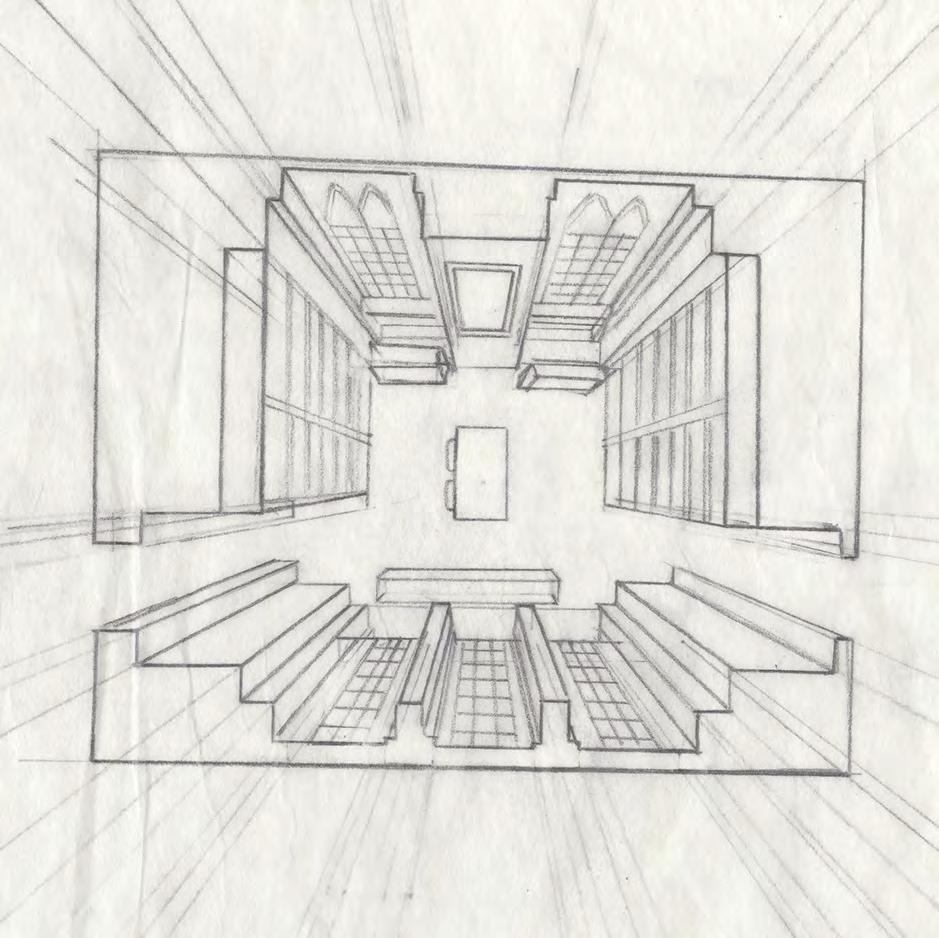
To begin the process of framing Mount Stuart as a Cabinet of Curiosities, it was necessary to imagine each room as a compartment with the cabinet. The selected rooms represent spaces which house particularly full and substantial collections.
Compartments within the Cabinet of Curiosities
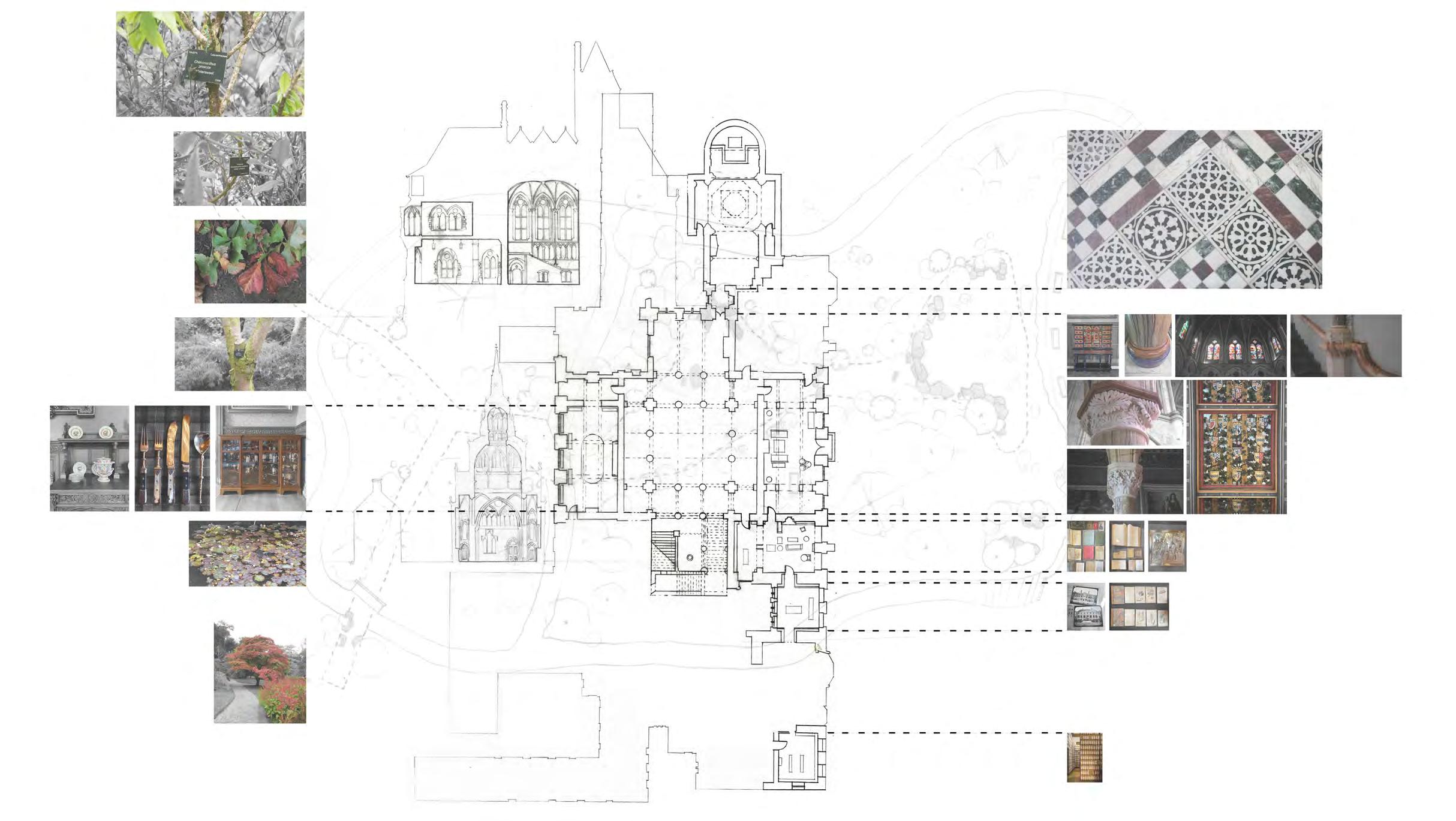
During the site visit to Mount Stuart, we were immersed within rooms filled with collections. Back in the studio, we began to identify where key collections were located within the house. We re-drew key plans and sections, only retaining rooms which housed the collections we had identified and were interested in. The objects which intrigued us could be loosely categorised into materials collections:
- Silver - Stained Glass
-Textiles
- Marble - Timber
-Paintings
-Pottery -Mica
Identifying Collections
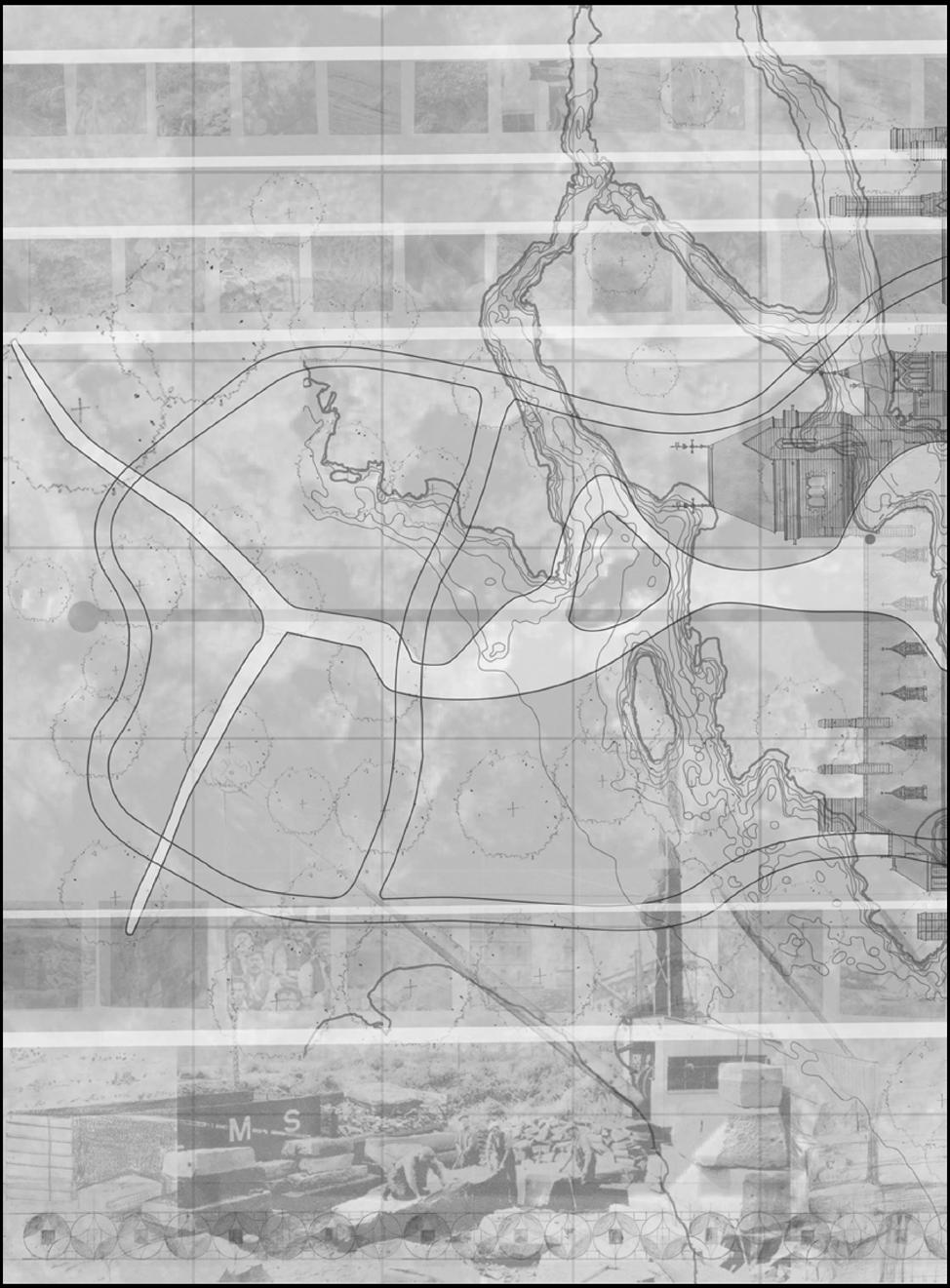
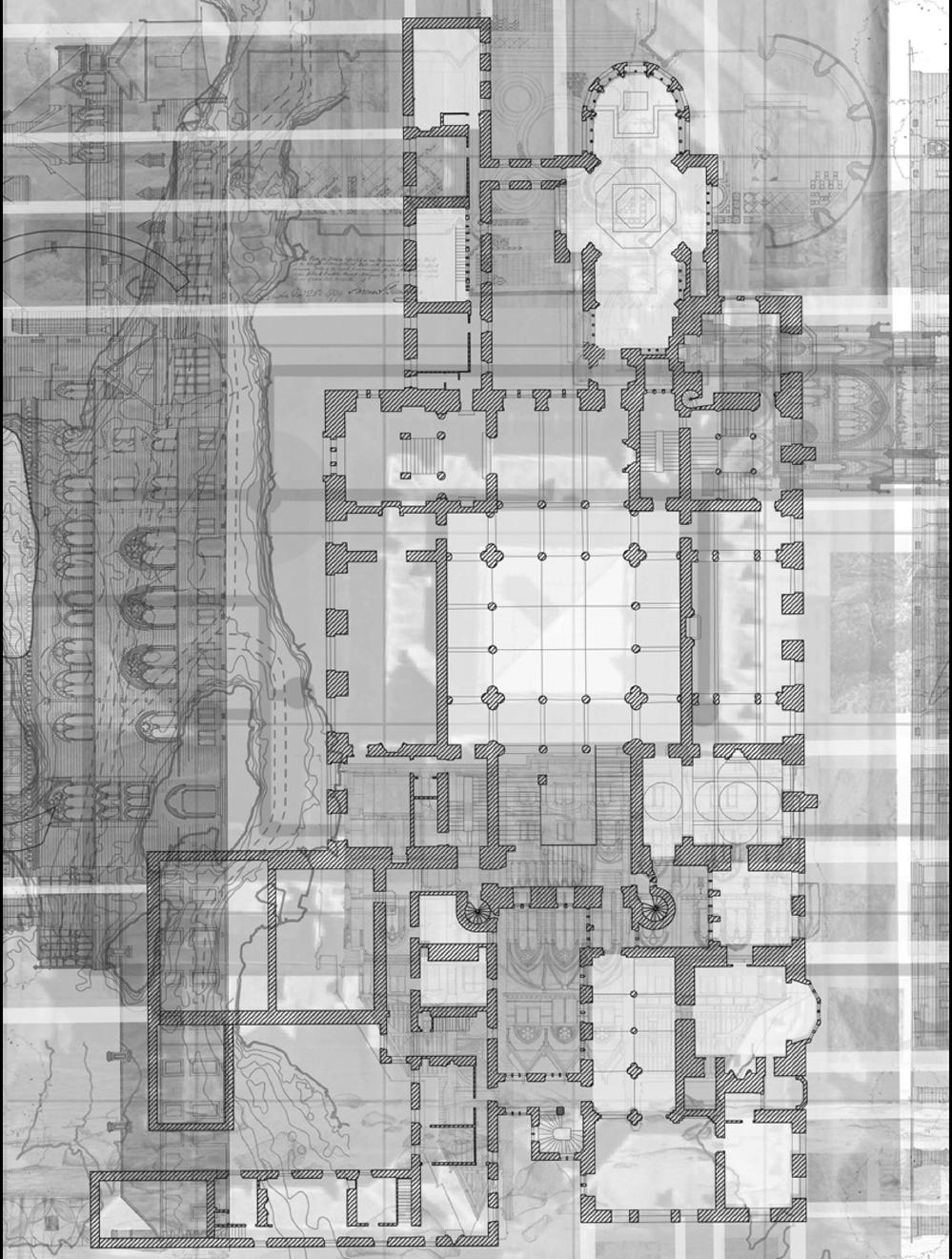
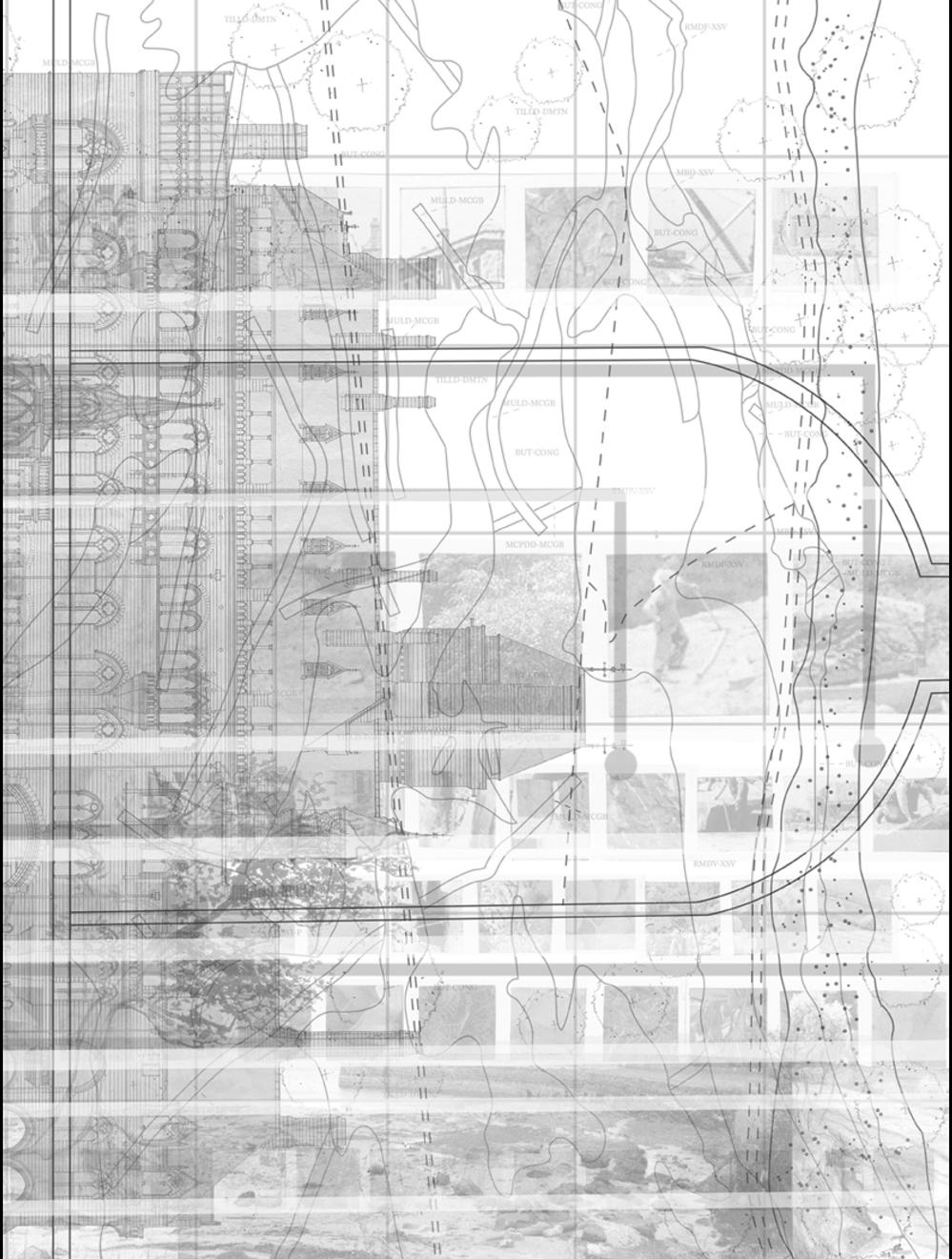
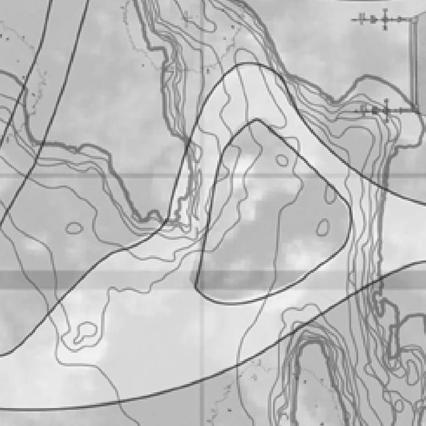
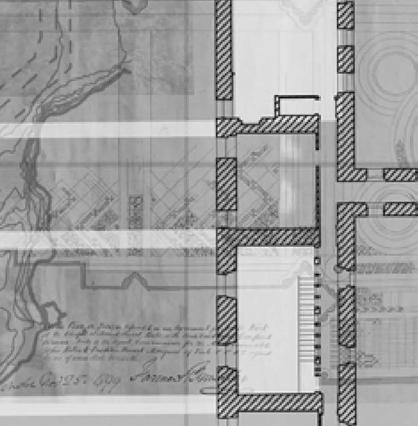
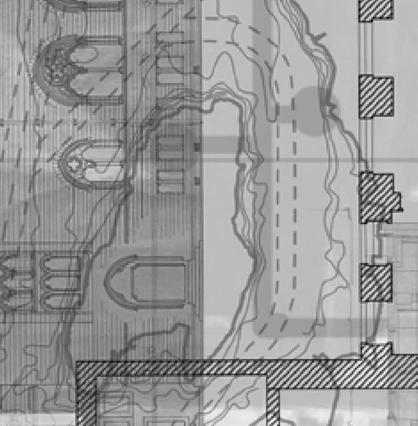
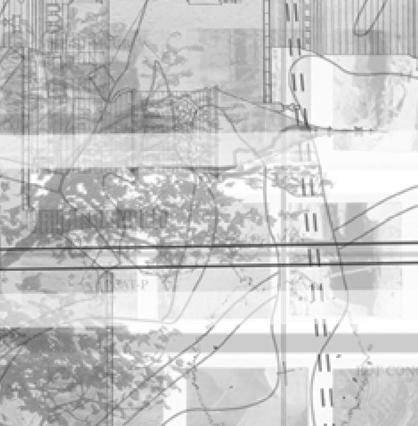
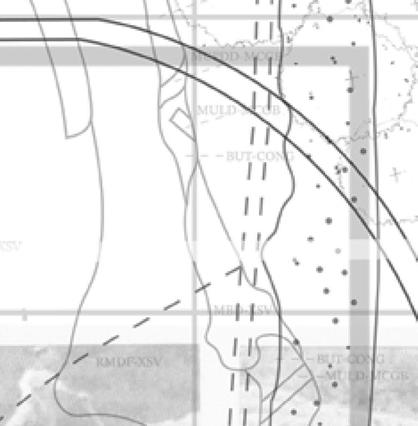
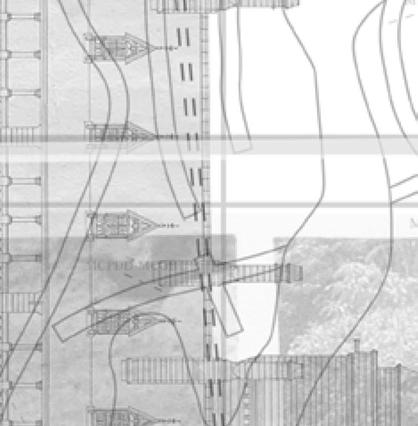
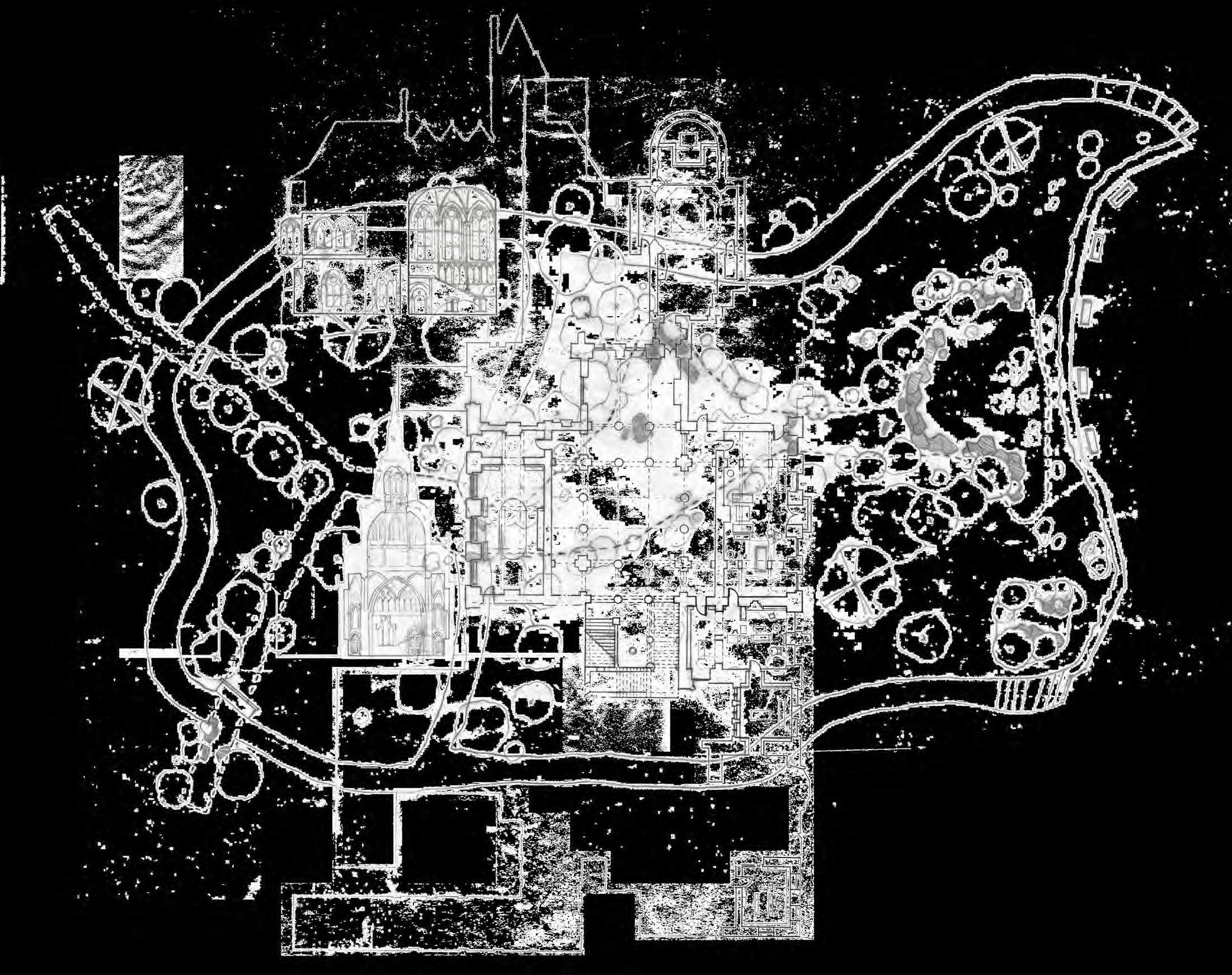
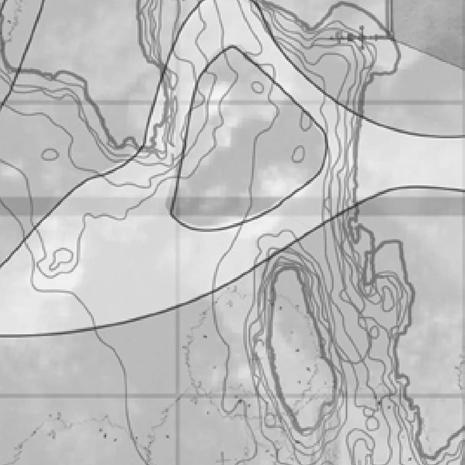
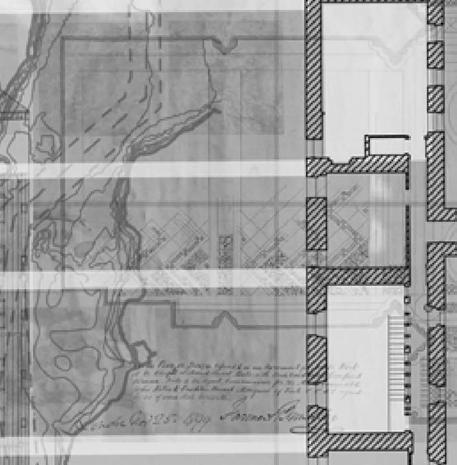
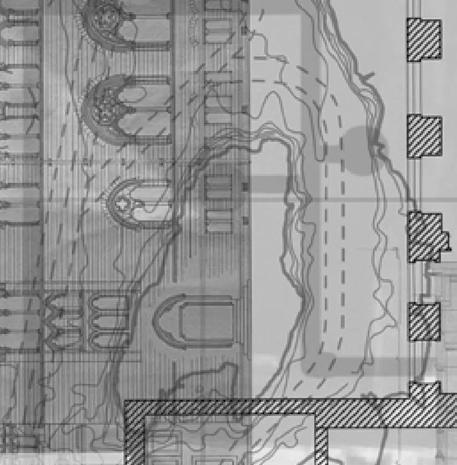
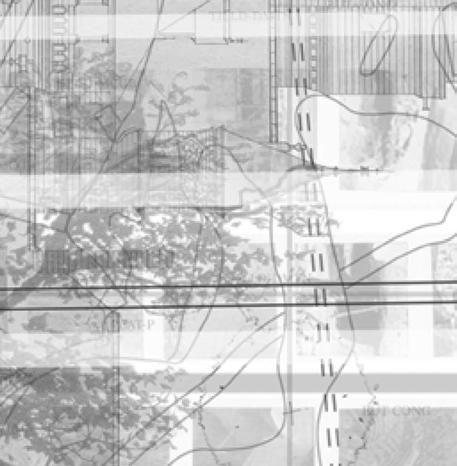
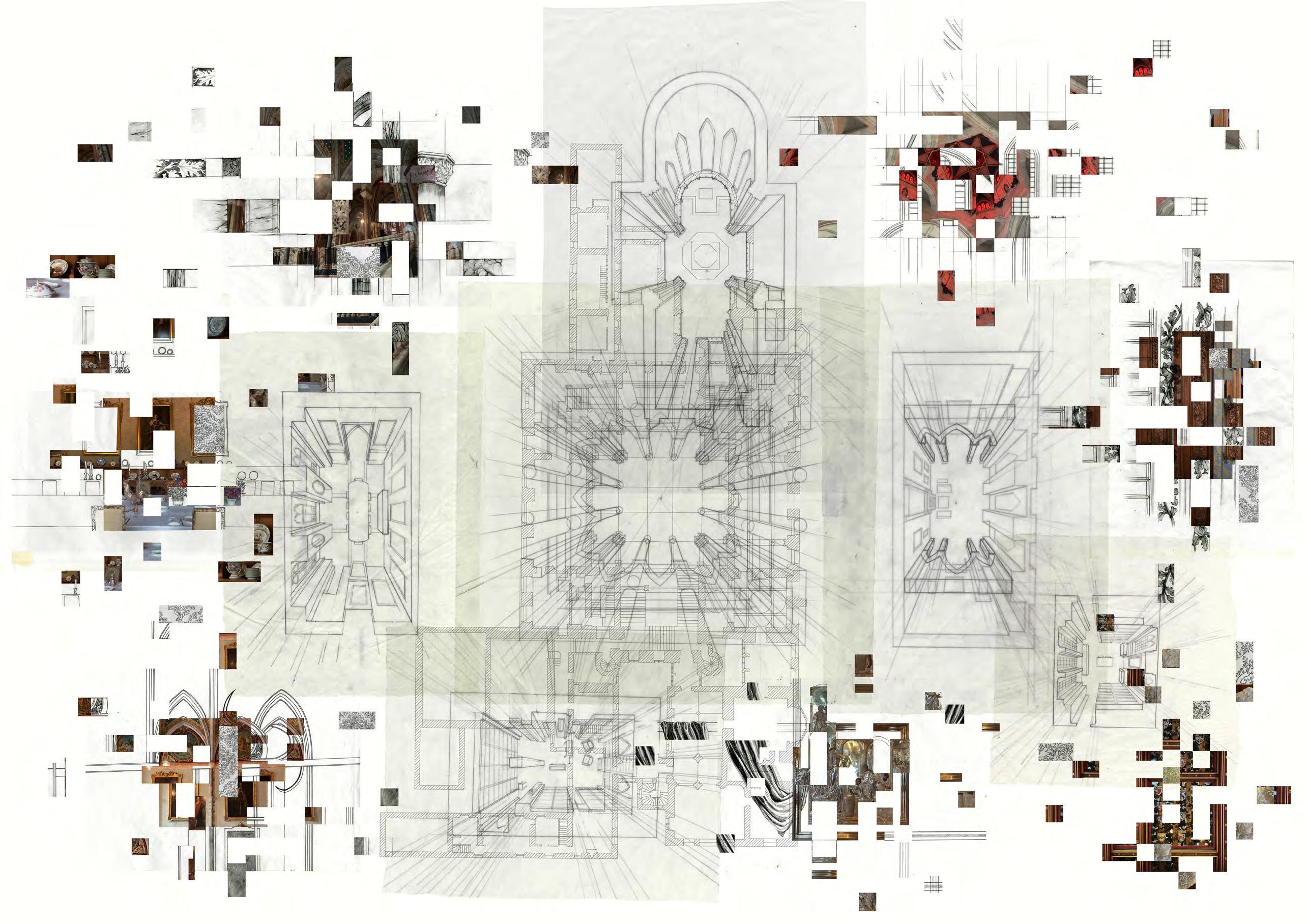
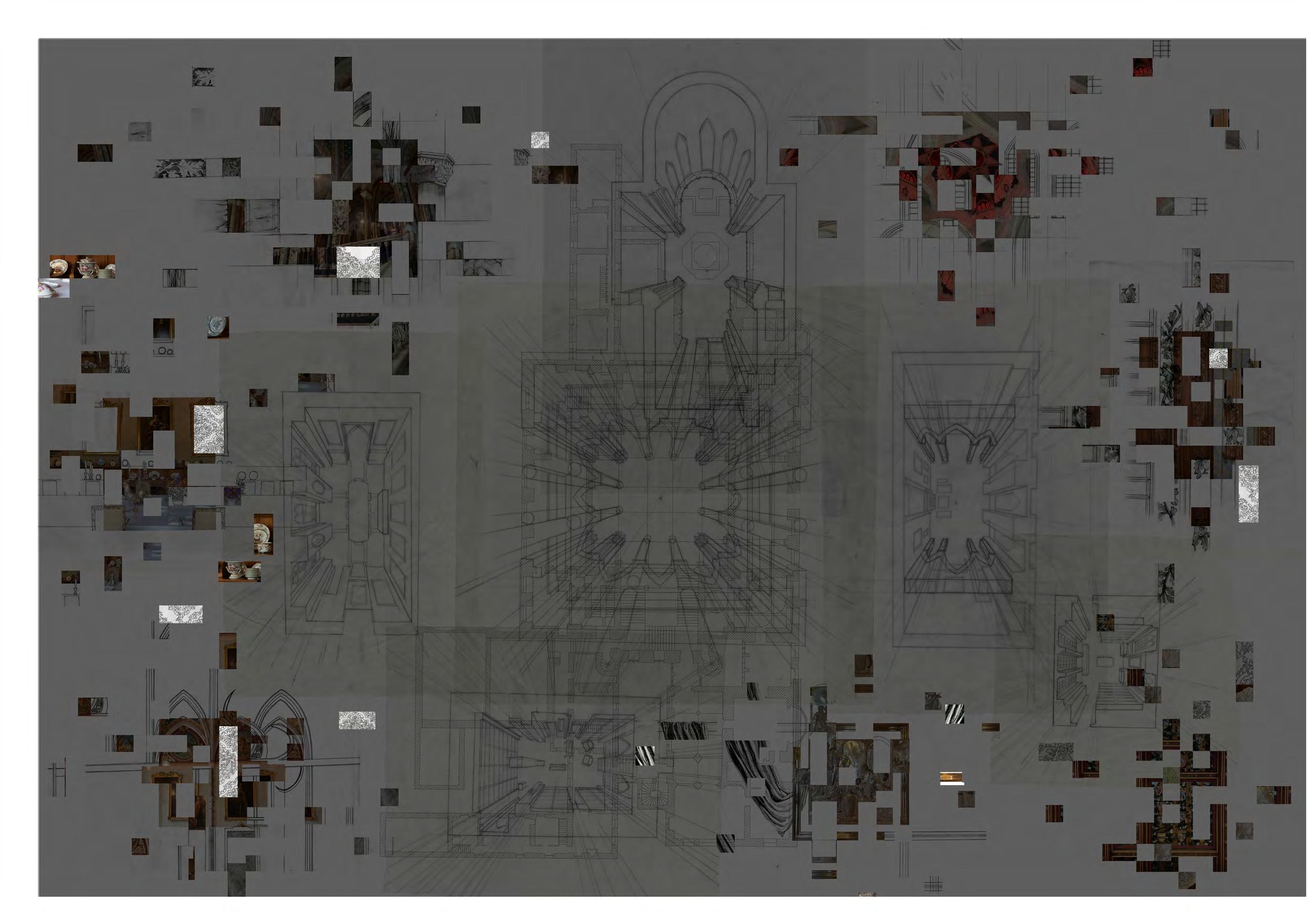
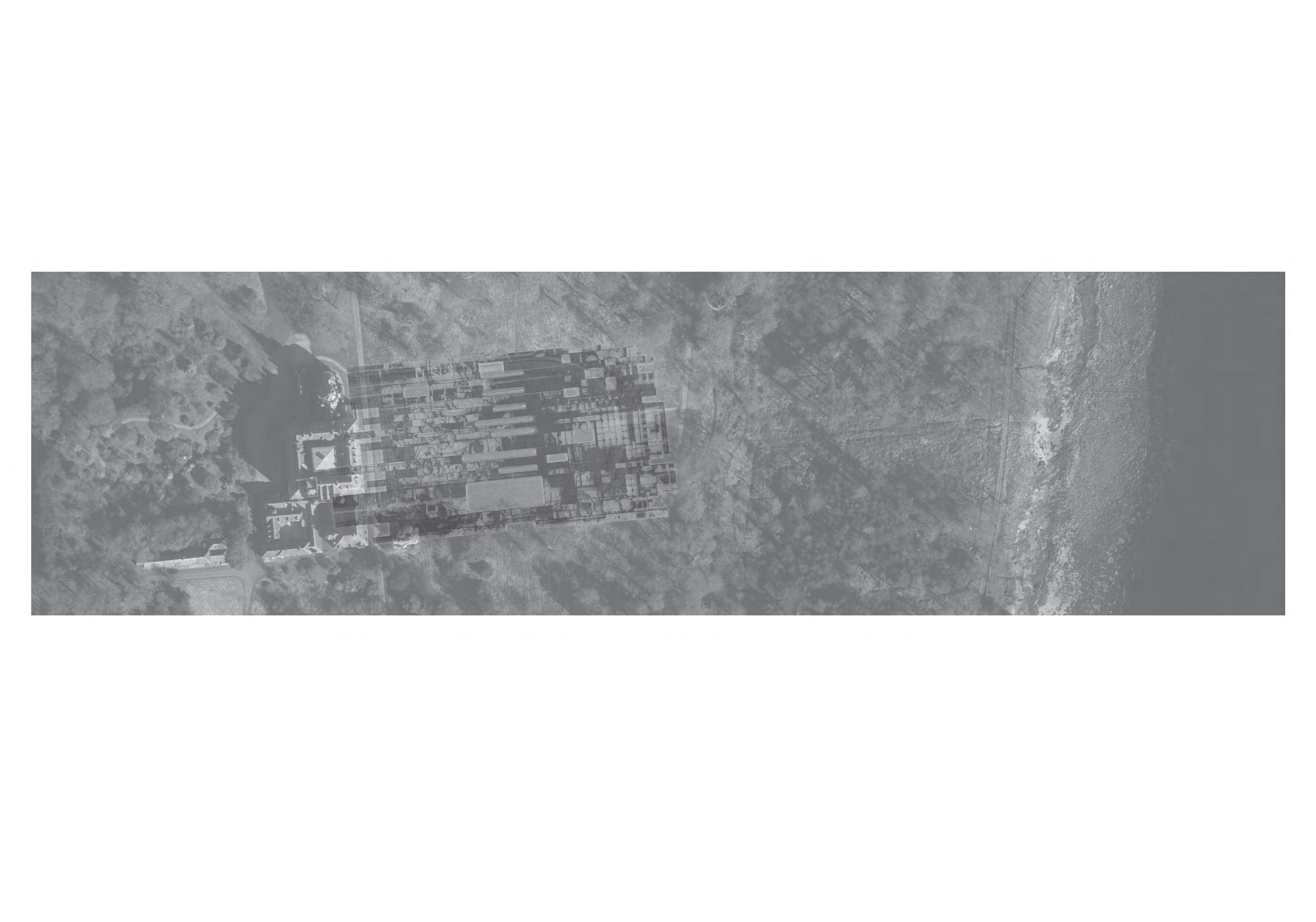
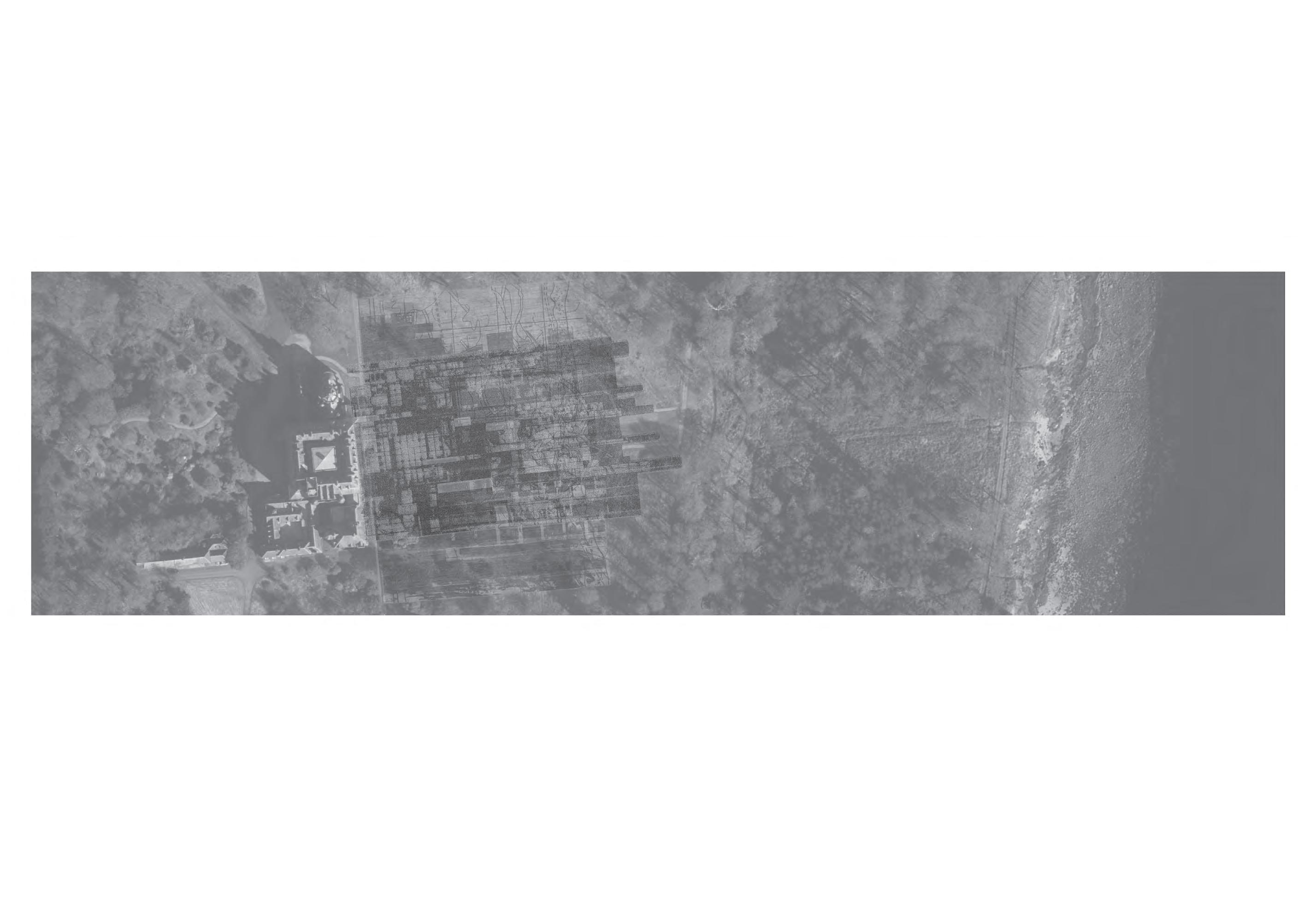
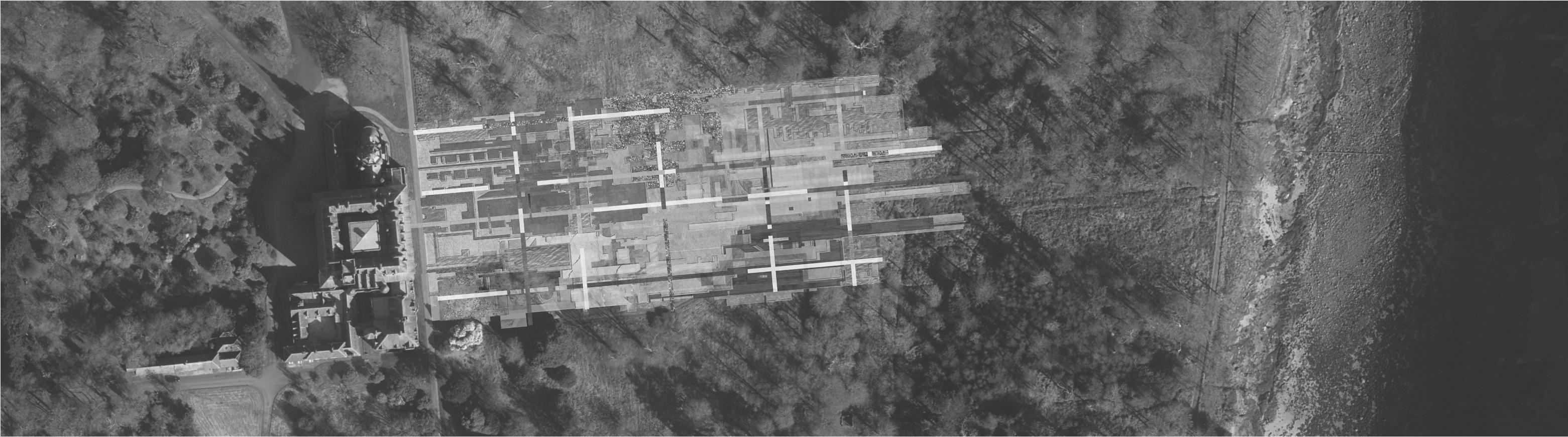
Our research into the material, geological and nautical context of Mount Stuart creates a rich foundation to begin designing an alternative landscape for our proposed observatories. This triptych represents a culmination of our research, cast onto the house of Mount Stuart and its immediate surroundings.
The horizontal lines demarcate the positioning of key collections, and begin to project them into the surrounding landscape of the house.
A Reimagined Landscape of Mount Stuart
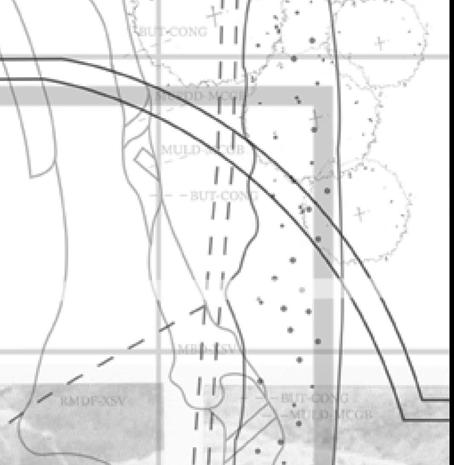
Material Adjacencies
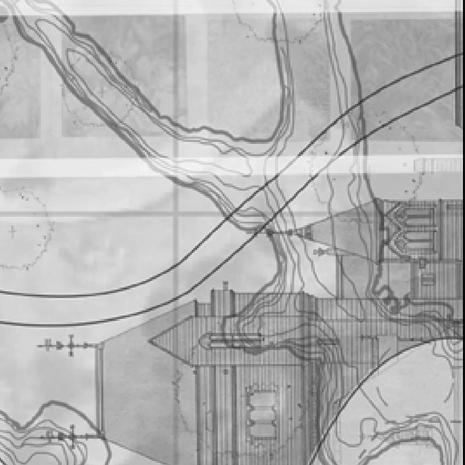
The triptych aims to identify new relationships between different elements of the Mount Stuart’s wider context. The combination of intricate granular qualities lead to rich textures and surfaces. The history of the Estate of Mount Stuart is imposed as shadows onto the physical structure of the house.
Moving from the outwards in, our focus shifts to the interior collections of Mount Stuart. Using the analogy of the Cabinet of Curiosities and extending it to a scale of the house, the rooms become individual compartments which store and exhibit unique and fascinating collections of objects.
This chapter documents our investigation into the interior collections of Mount Stuart. The investigation aims to understand the collections in detail, with a focus on their cultural and historical background, as well as their personal connection with the Marquess. Additionally, the location of the objects becomes important in understanding their current purpose as exhibition pieces.
Chapter 2: Within the Compartments
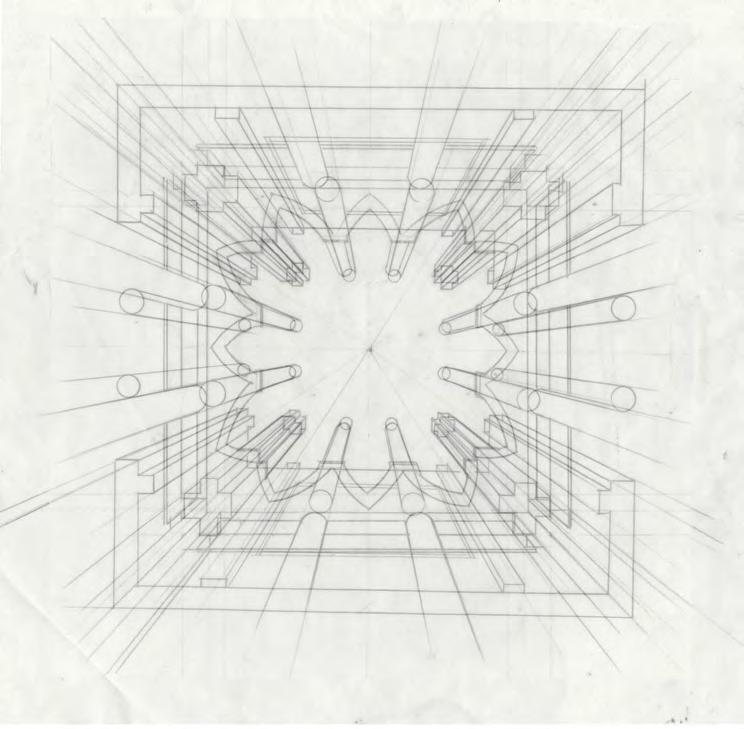
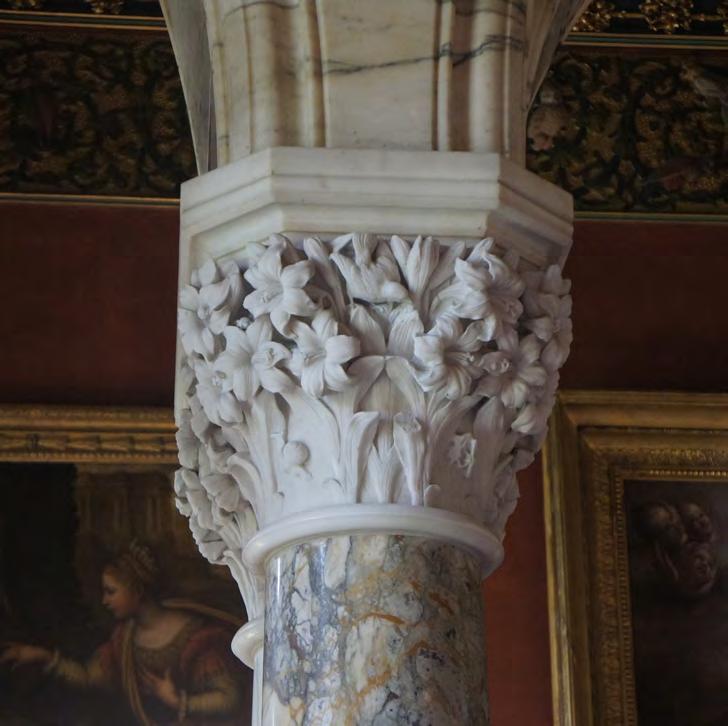
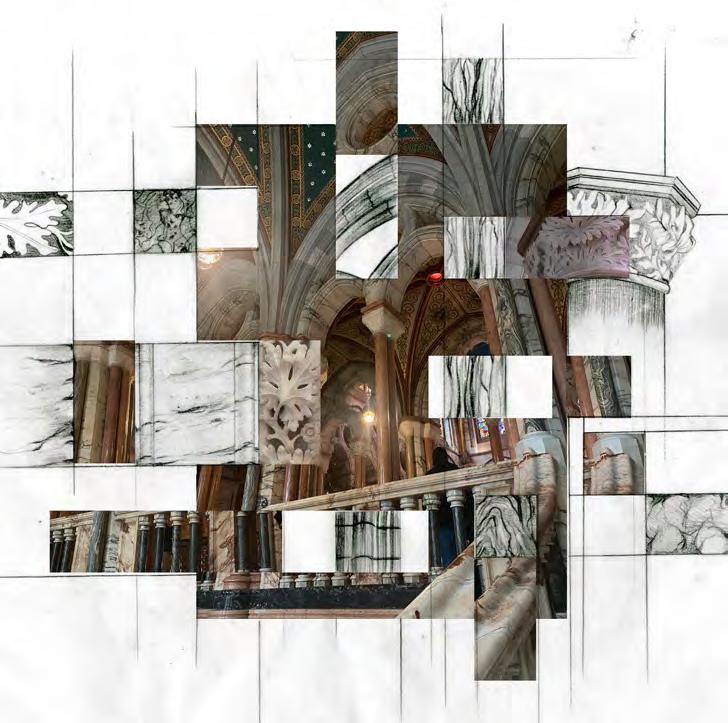
The House is filled with a variety of marble types. The Marble Hall houses a collection of marble of which originate from all over the world including Italy, Pakistan and Morocco. It can be seen in the floor, the columns, and the intricacies of the column heads and bases. As can be seen from the flooring, marbles are utilised as sheets, but they are also used as ornamental components, such as leaves and vines that are carved out to represent the surroundings.
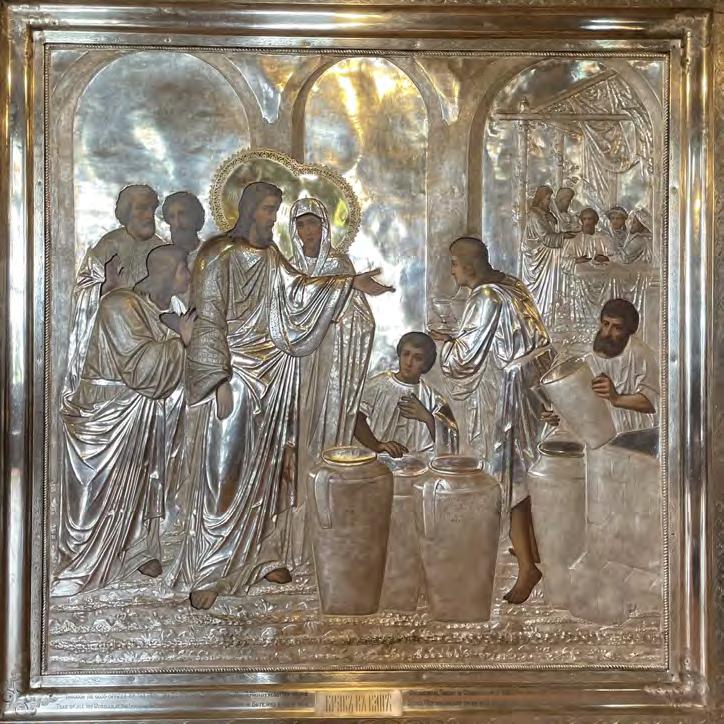
Silver is presented in a range of contexts throughout the house, hung on walls, or presented in cabinets in the dining room. In the case of the silver icon, it was commissioned from Russia by the Marquess as a present for his wife. It exemplifies his wealth, unique tase, and appreciation for fine art. Furthermore, the icon exemplifies the versatility of silver for engraving, moulding and shaping to produce such a detailed piece.
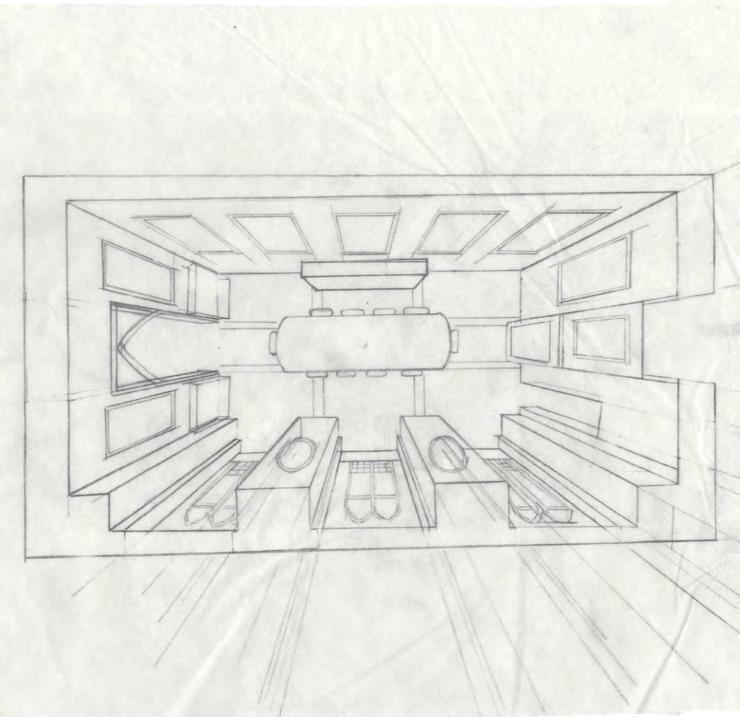
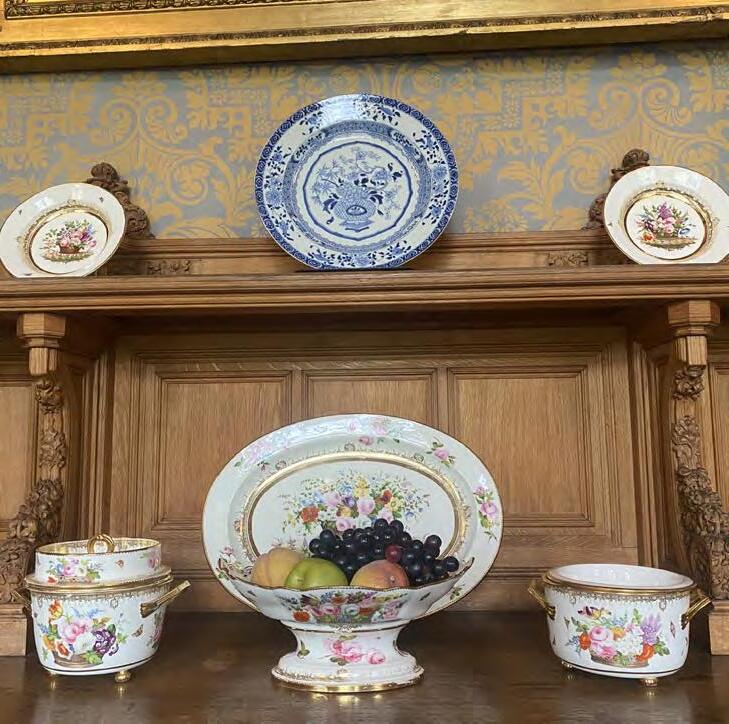
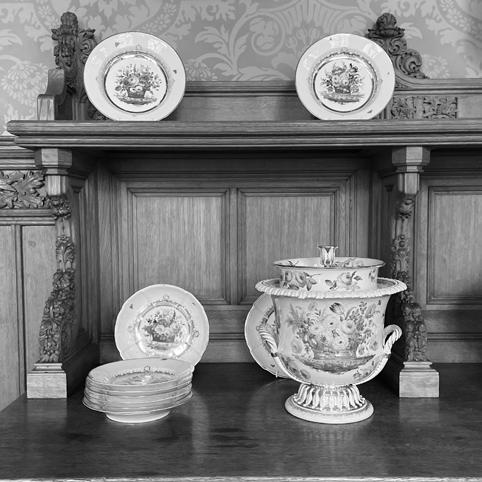
The 3rd Marquess of Bute accumulated a vast Welsh porcelain collection, important to him due to his proud Welsh heritage. The dining room hosts much of this collection and highlights the extreme wealth but also personal taste that the Marquess had.
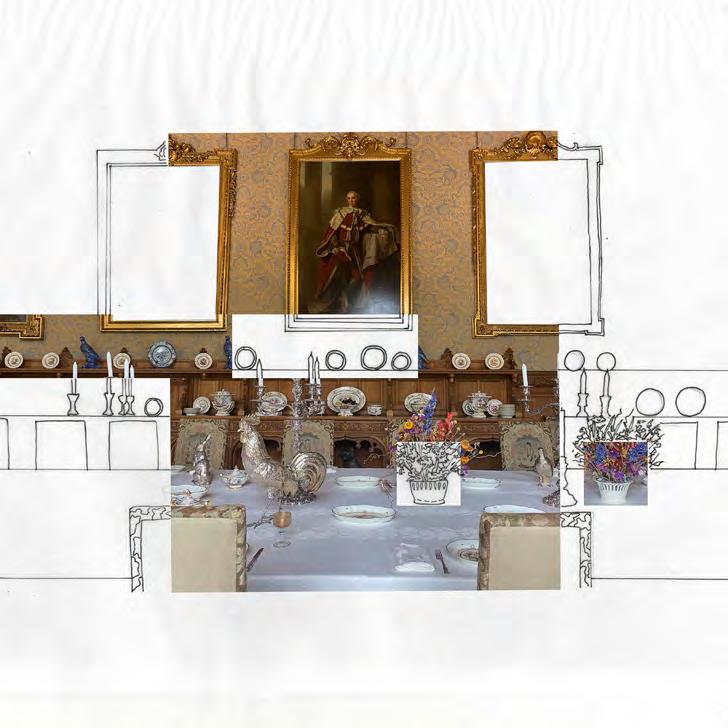
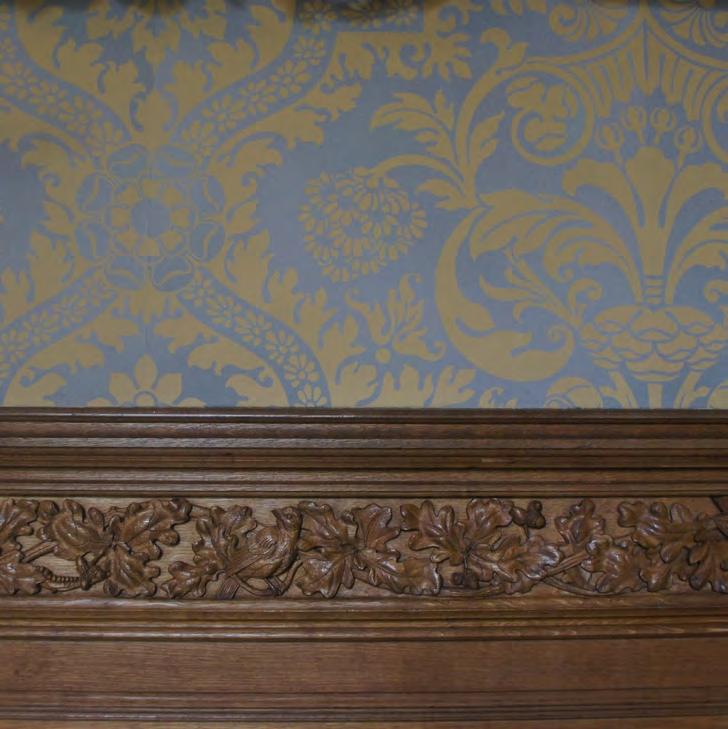
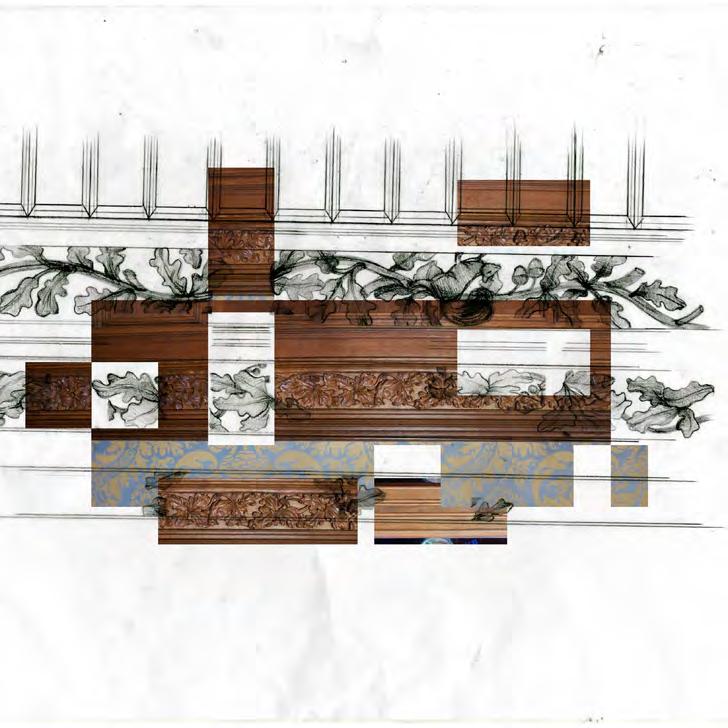
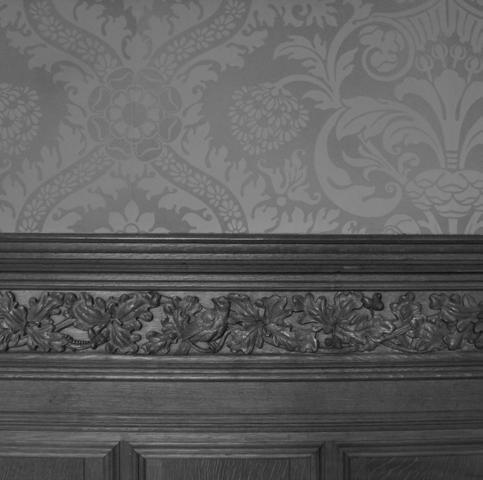
The timber carvings reference sculptural elements in the collections, including timber cabinets, panels and cornices. Similar to the other decorative components inspired by nature, the timber carvings depict various plants and animals that may be found in the Mount Stuart territory. The decorative pieces within the dining room, which is directly across from The Rock Garden, depict squirrels and sparrows, reflecting and uniting the interior and exterior.
Stained Glass
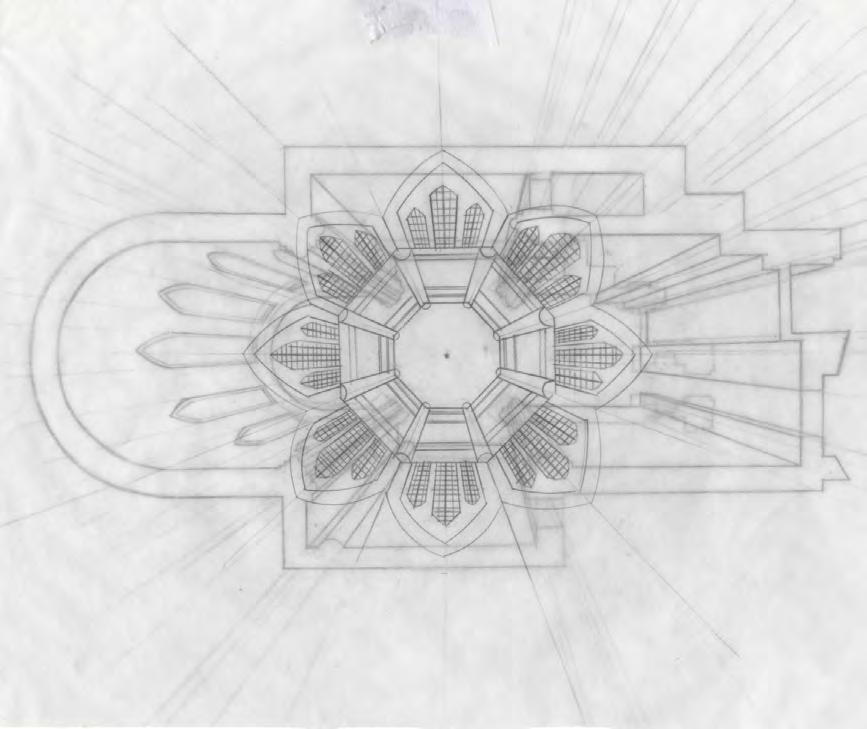
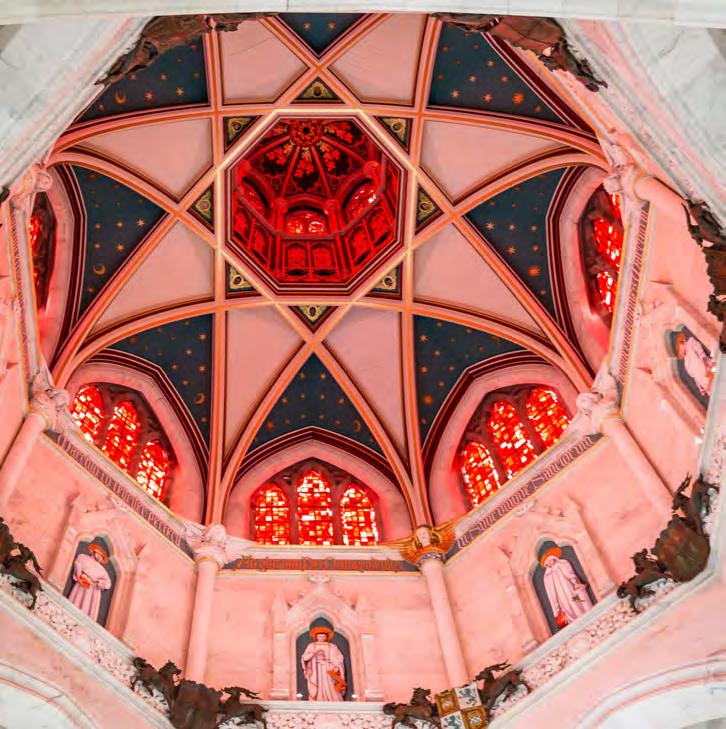
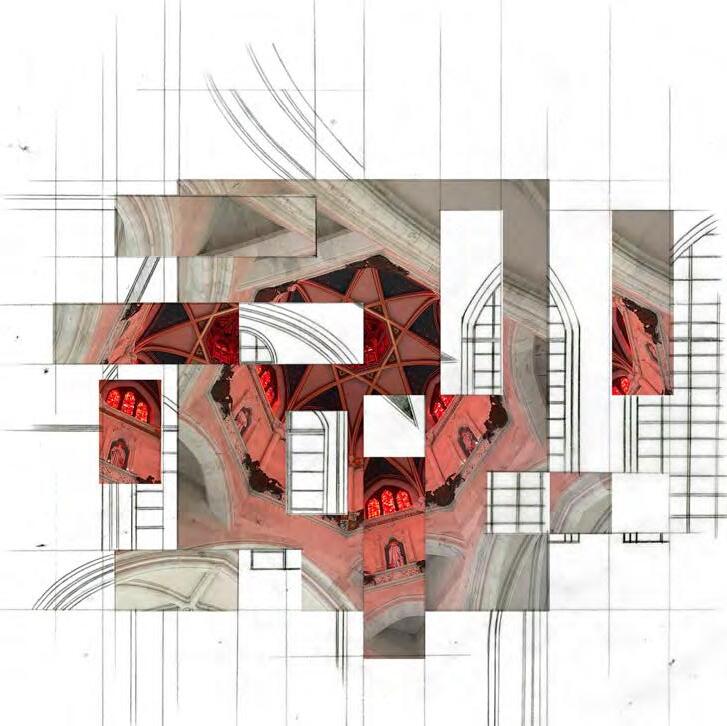
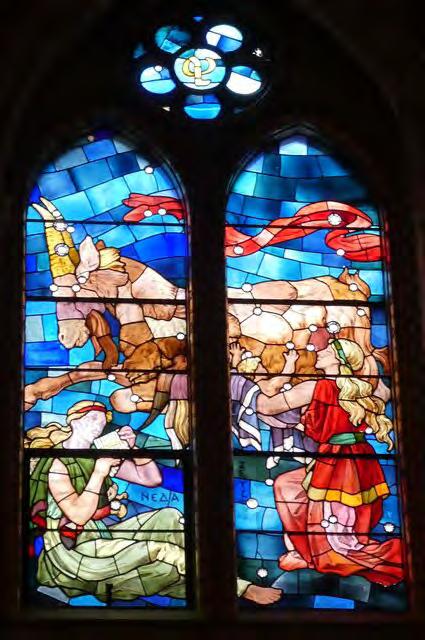
Stained Glass is used throughput the house to express the Marquess’ preoccupation with religion, astrology, and literature. They honour such subjects through a graphic, and figurative artform. This is yet another example of the Marquess’ celebration of graphic and iconographic art. The rich, quickly changing light creates a unique and spiritual atmosphere, particularly in the chapel.
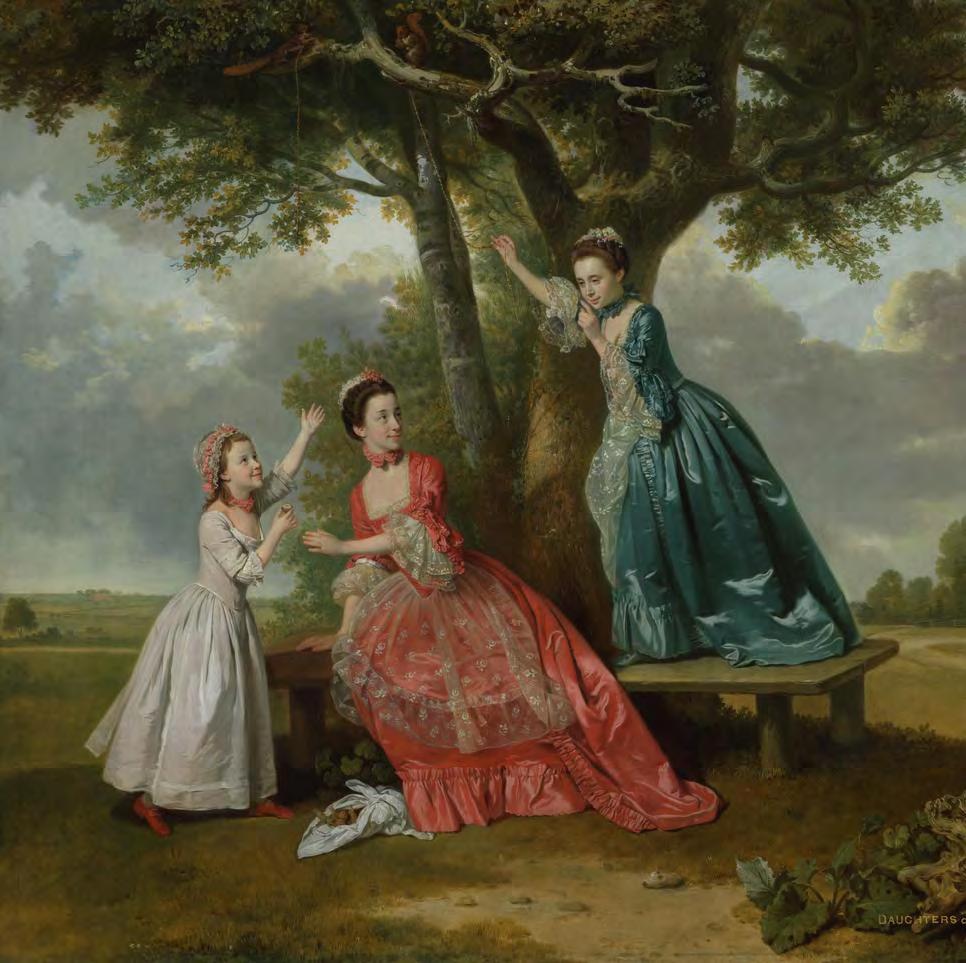
The Marquess had a great appreciation for art and collected and commissioned artworks from a range of international artists. We identified ‘The Bute Sisters’, by German painter Johann Zoffany, as the key piece for us to design around. The painting depicts his daughters, who he was extremely close with. For the period, the Marquess had progressive views on women’s education and decorated the house with portraits of famous and influential women. Highlighting this painting would emphasise the importance of women in his life.
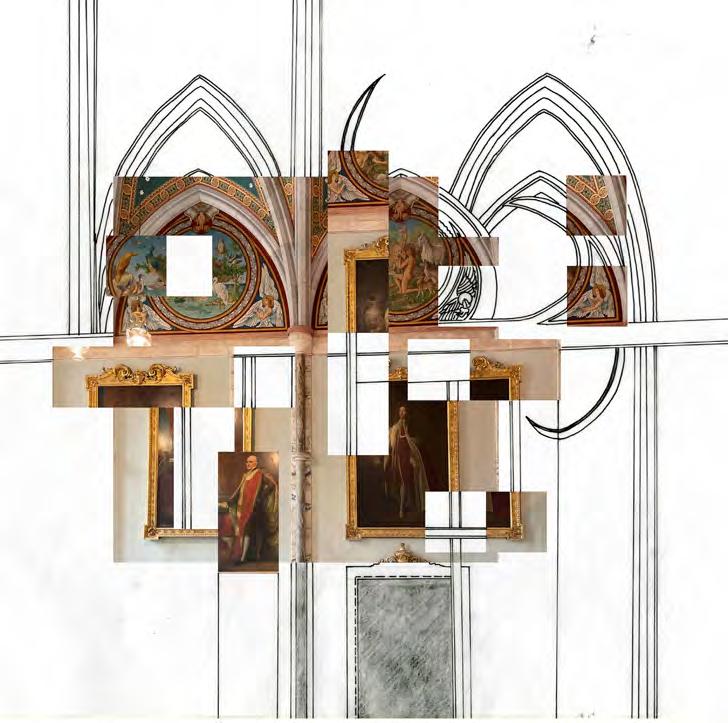
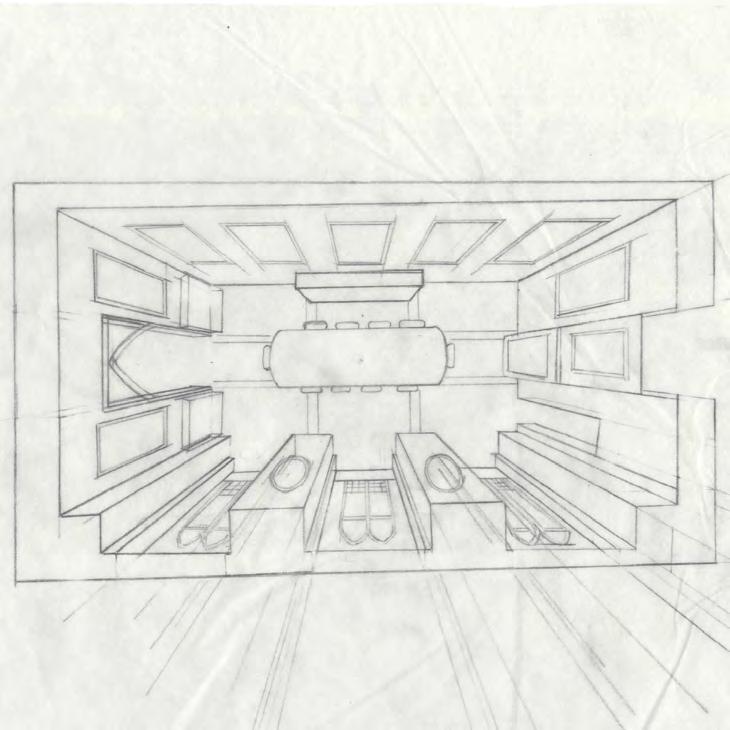
The Deconstruction of Collections happens throughout the project, but here it can be described as physically dismantling the original arrangement of the objects to create This leads to a further analysis of their material constituents.
Furthermore, Deconstructing the Collections means reorganising them in a way which is unique and nontraditional. We have studied them as they are presented currently at Mount Stuart, but now move on to consider how these conditions can be adapted to display new, material characteristics.
Deconstructing the Collections
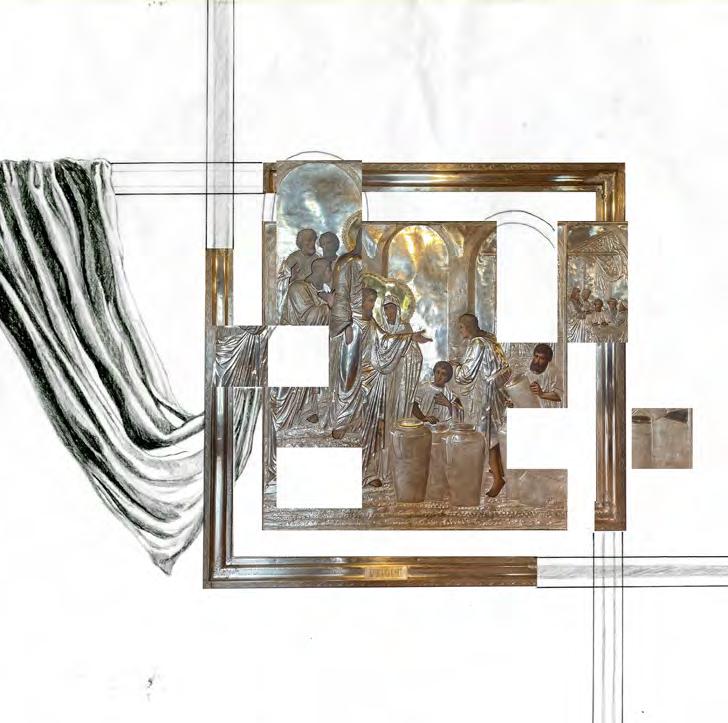
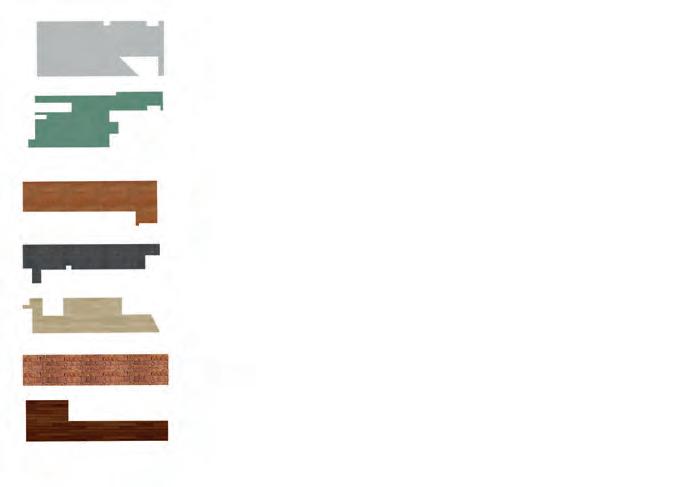
A robust analysis of the chosen collections was necessary to start to think about how they might be rearranged. In each collection, a key item was identified to represent the whole collection. The item was subsequently deconstructed to reveal and isolate specific qualities of its materiality and exhibition status.
The positioning of each collection within the house reveals more about its intended function and its relation to the house as a whole. An interrogation of these locations enabled us to make a more informed decision in how to perceive the collections. The visual quality of this deconstruction is important in producing a strong graphic identity representative of this action. Finally, we began to piece them back together, referencing architectural features in which they are situated as well as creating new ways in which they interact within the built space.
Deconstructing the Collections
This aspect of deconstructing the collections considered the material qualities of the collections. We considered the properties of each object and considered how they could be translated into a material proposal. We considered the way that materials reflected light, how they aged or their mineral composition.
We were interested in by how the porcelain reflected light and had an almost translucent quality when lit with direct light. We also considered examples marquetry and marble inlays in cabinets and tables around the house.
Marble comes in a range of colours, tones and textures throughout the house. It is a beautiful material on its own, presented in large slabs or columns, but we were also drawn to it as a decorative feature, whether sculptural column heads or geometric floors.
Furthermore, the plentiful collection of materials required careful consideration of material adjacencies and assemblages.
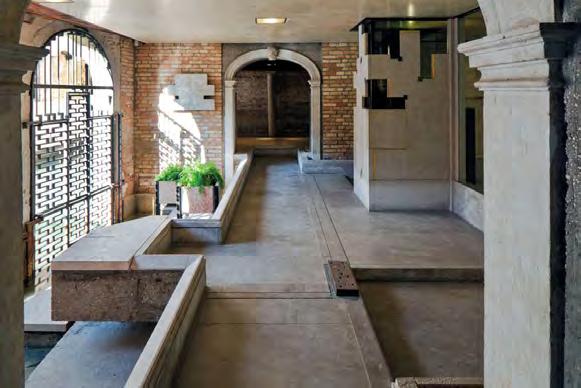
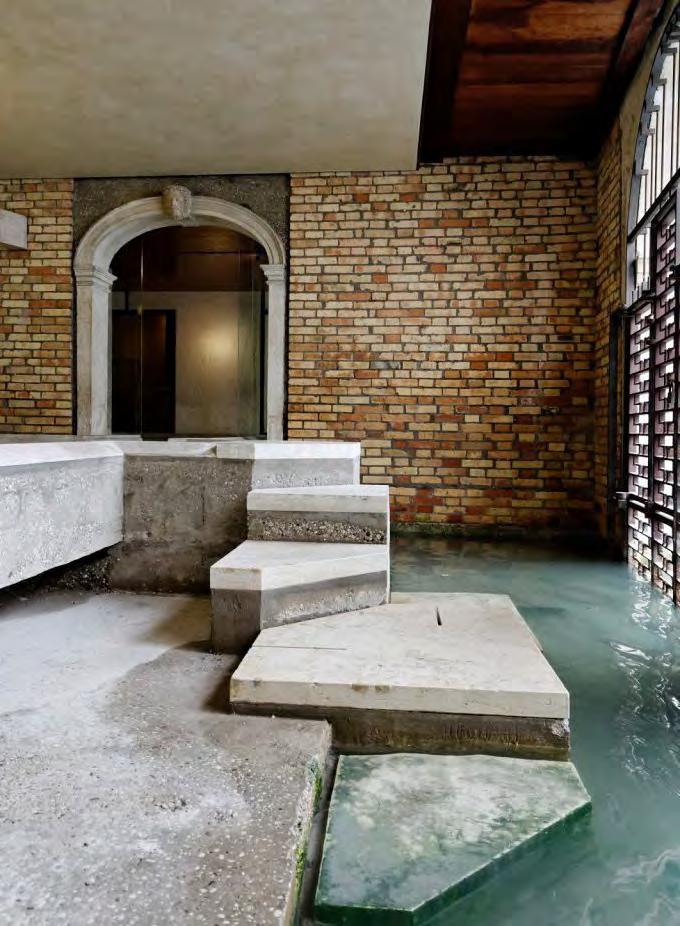
Carlo Scarpa’s Fondazione Querini Stampalia, utilises an assemblage of concrete, marble, brick and stone, to create walkways which are elevated from rising tides. This prompted us to consider marble as a material component which could be integrated into a patchwork of materials.
Investigation of Materials
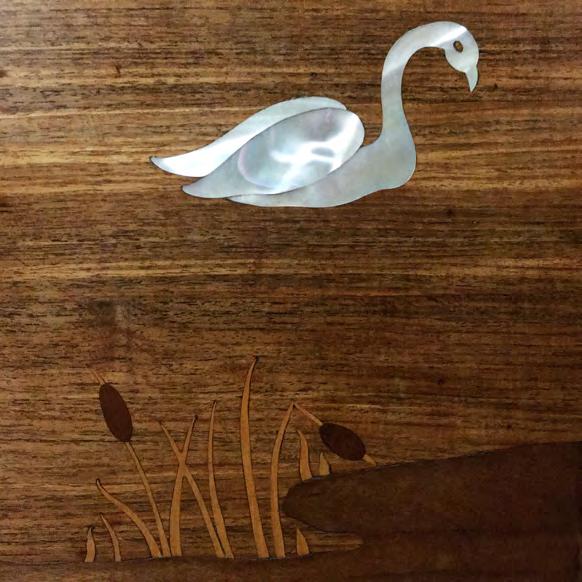
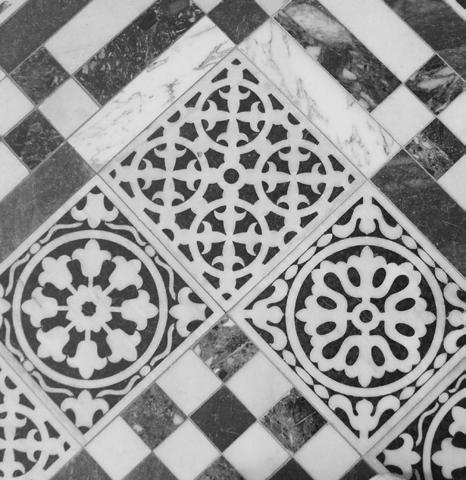
The use of timber throughout the house, it is a welcome reminder of the rich landscape in which the house sits. We were interested timbers organic textural qualities. Furthermore, its soft nature lends itself well to being carved, allowing for figurative imagery to be expressed through it.
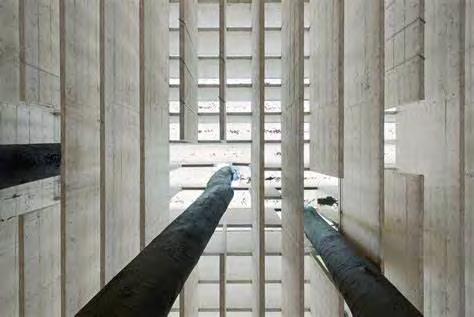
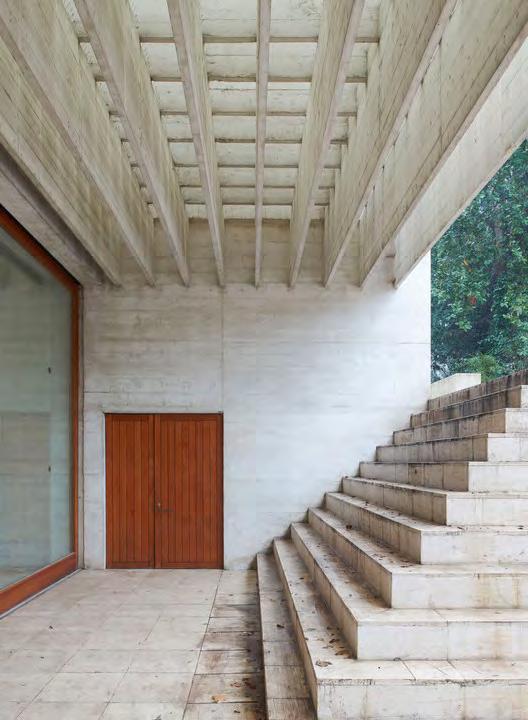
Contemporary uses of timber such as in Sverre Fehn’s Nordic Pavilion integrates manufactured timber with organic tree trunks, creating a clear juxtaposition between the material languages.
The main aspect of the stained glass that intrigued us was the rich and vibrant coloured light which permeated the house. Furthermore, we were attracted to the everchanging nature of the light throughout the day.
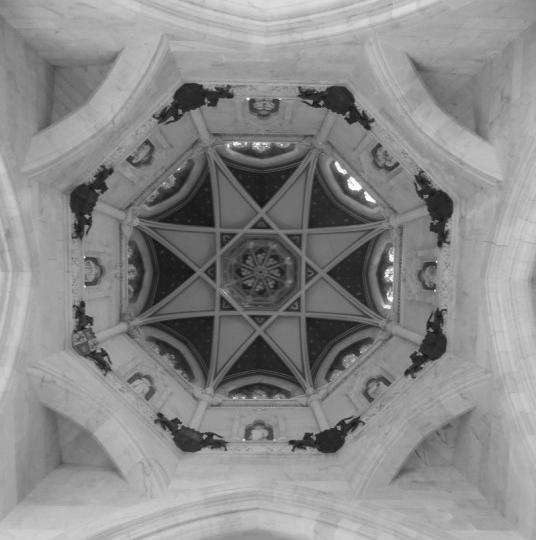
The act of uncovering and revealing the immensely bountiful history of Mount Stuart through the investigation of its collections has been rewarding and illuminating. Framing it within the concept of a collections allows us to narrow down the extensive estate to a considered selection of specific pieces.
The projection of the contextual knowledge of Mount Stuart onto the physical landscapes produces a novel way of deepening the connection between the site and its history. Through this projection, a reimagined landscape is revealed.
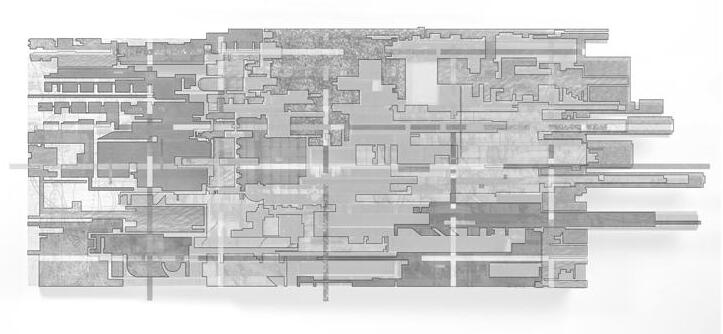
Addtionally this begins to form an architectural language which is rooted in a rich graphic texture. Its nature is rooted in horiztonality, interrupted by peculiar entities.

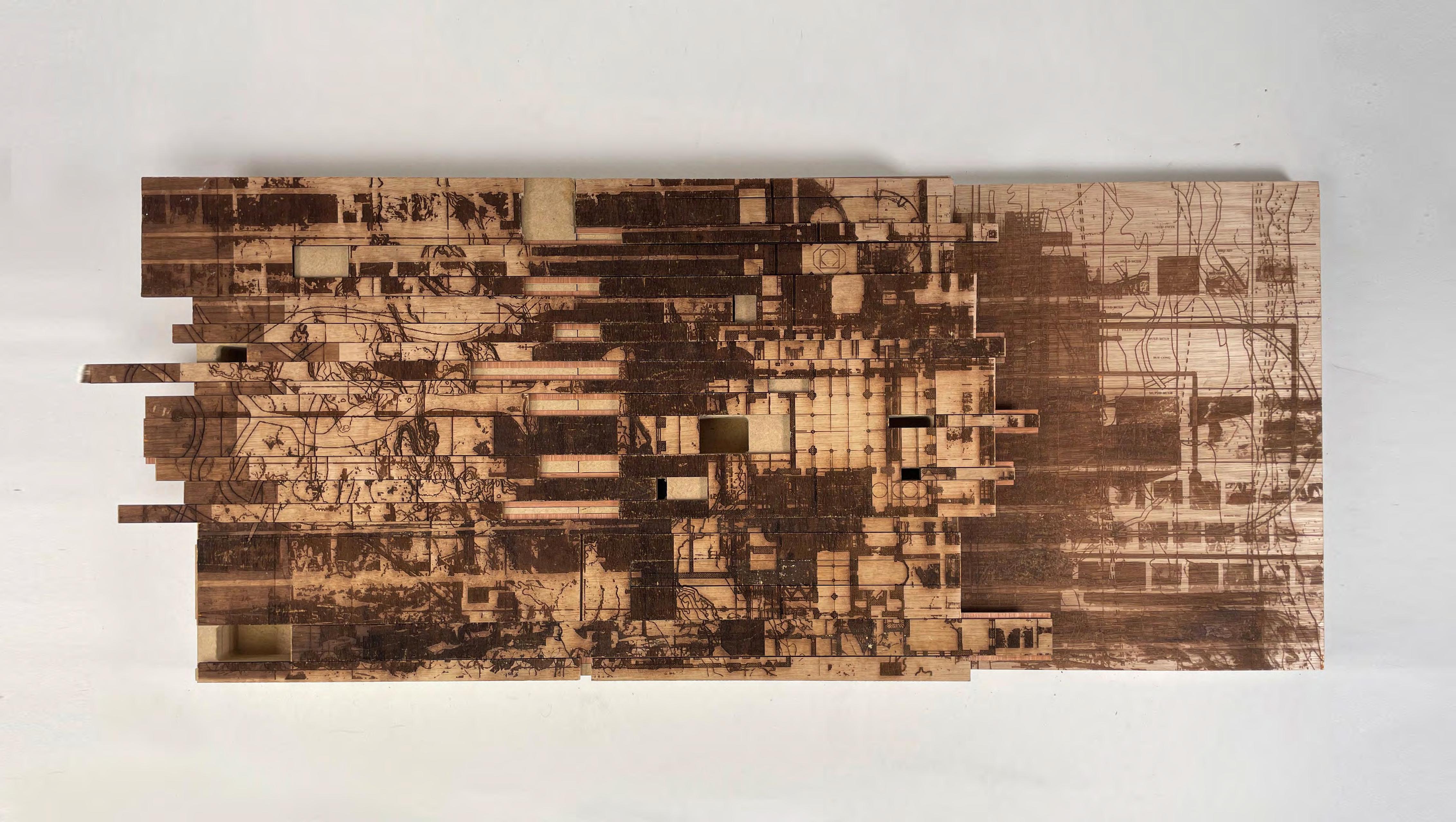
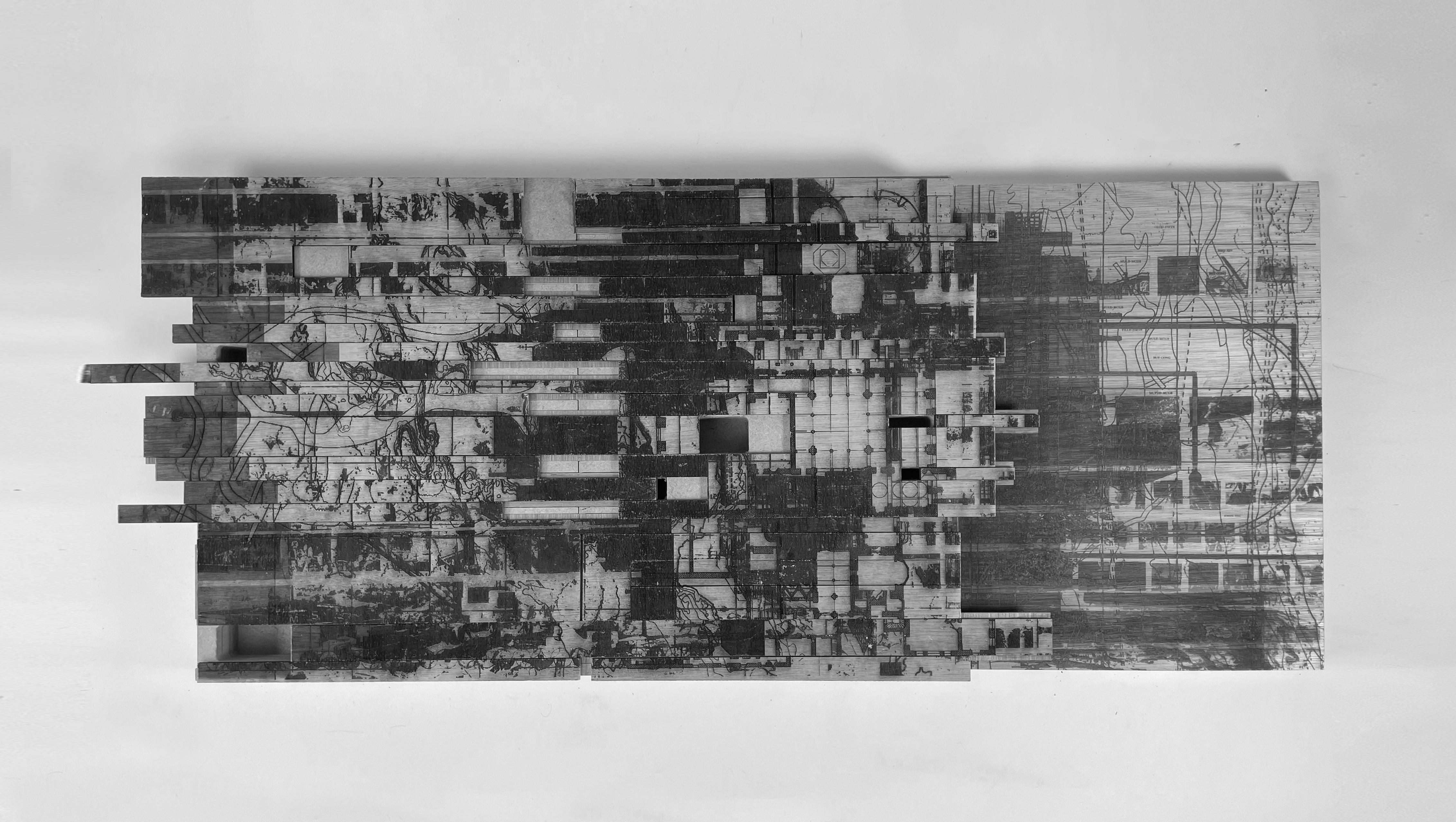
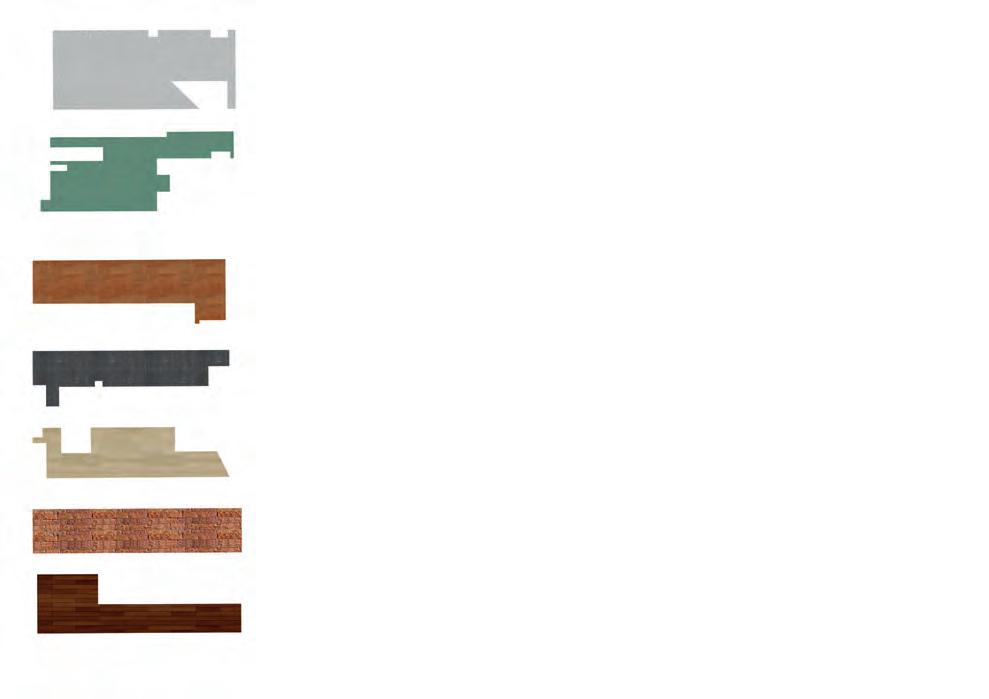
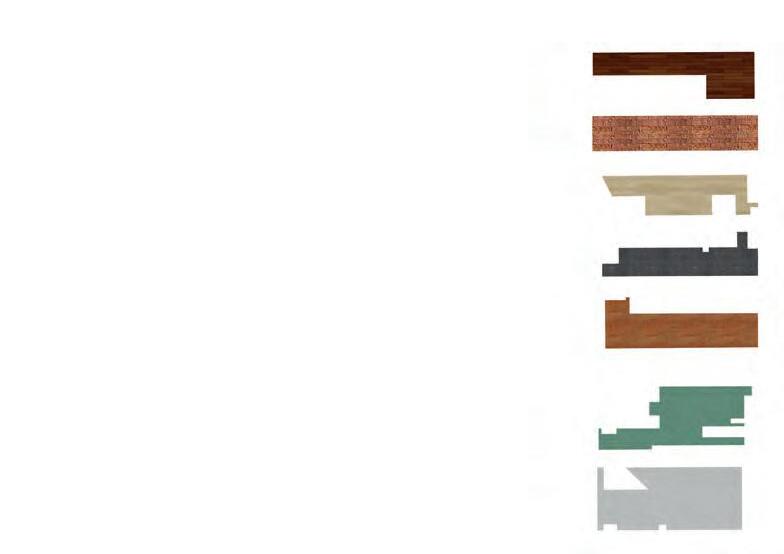
The slides are positioned in in direct reference to the previously identified location of the collections within the house. Therefore, the act of physically altering the position of the slides begins to deconstruct the location of the collections in a literal manner.
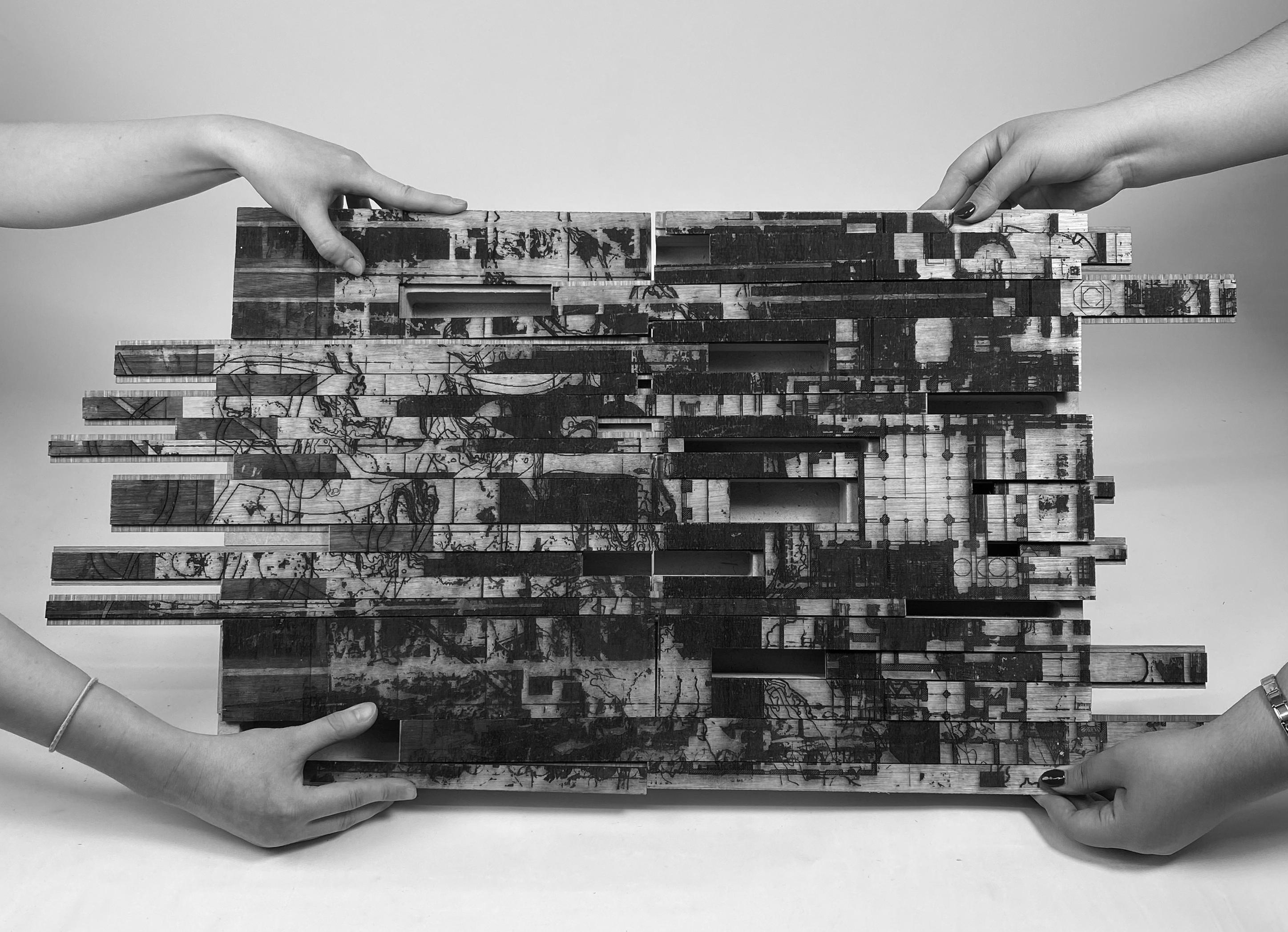
Translating a two dimensional drawing onto a three-dimensional object, provides us with a tool for a physical interaction, inquiry and discussion around the material qualities of the site.
In order to translate the triptych onto a physical surface we designed and constructed a box which would allow us to recalibrate the surface of the plan.
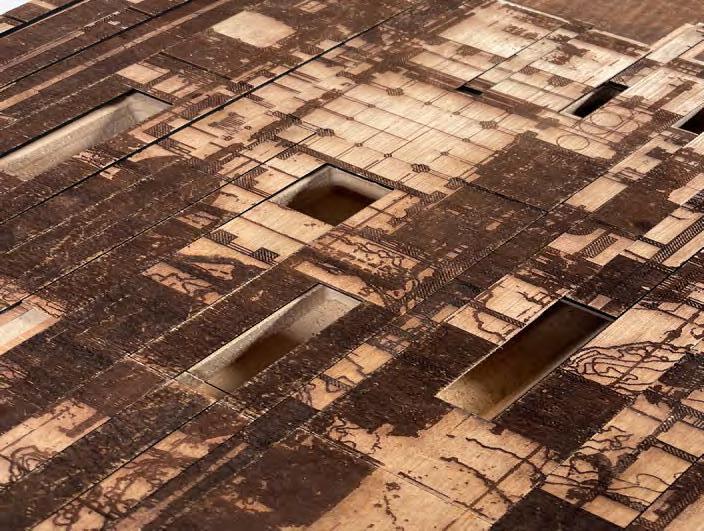
The box is comprised of plywood sliding strips, set within a MDF box which had channels, formed by the CNC machine, which corresponded with the selected strips. The triptych image was rastered on the plywood at varying depths, creating a rich and textured surface. Whilst we had initially planned to fix down the strips, we ultimately decided not to and embraced flexible nature of the box, by allowing us to recalibrate all pieces, not only the key strips.
Development of Box of Collections
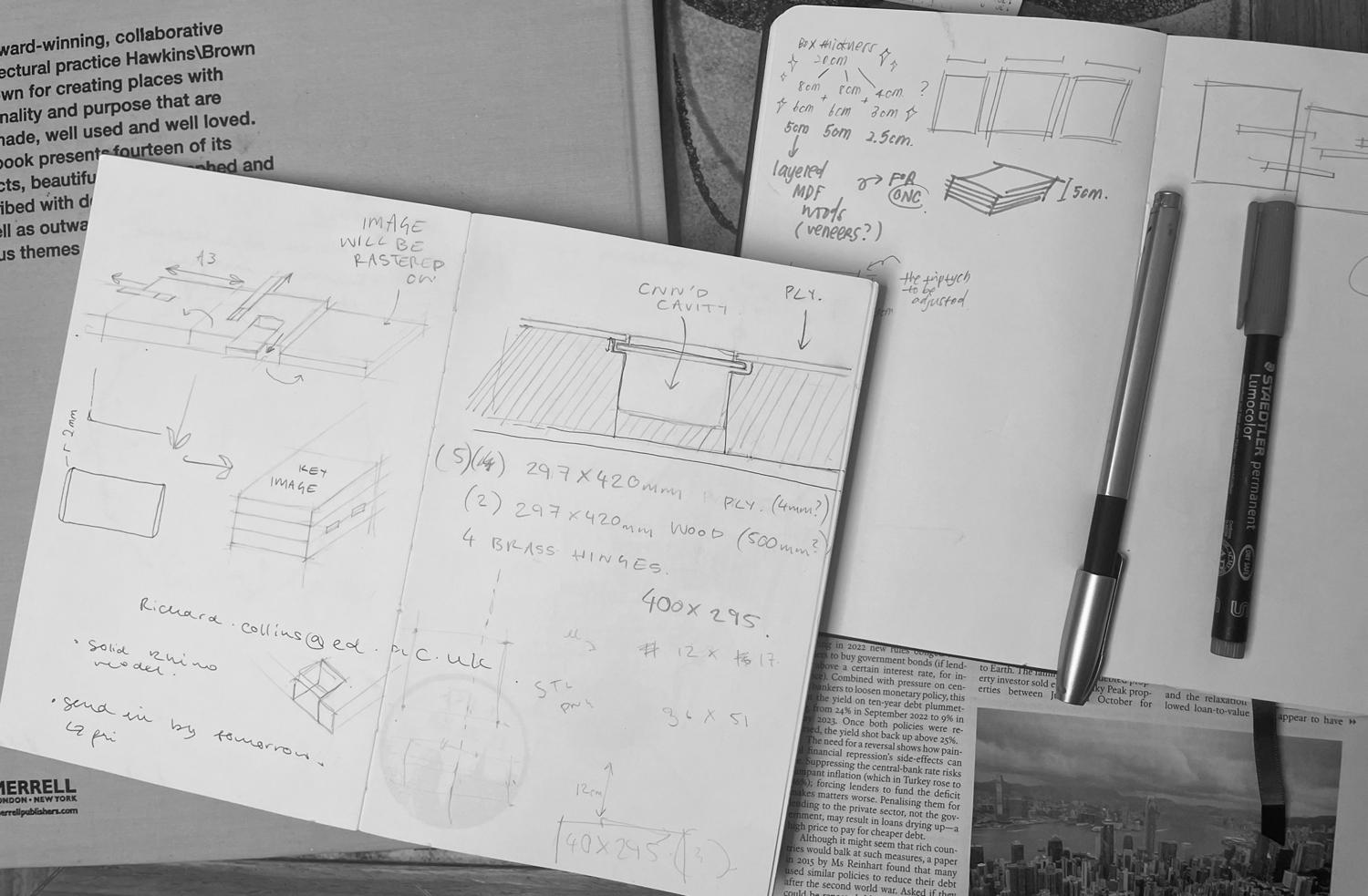
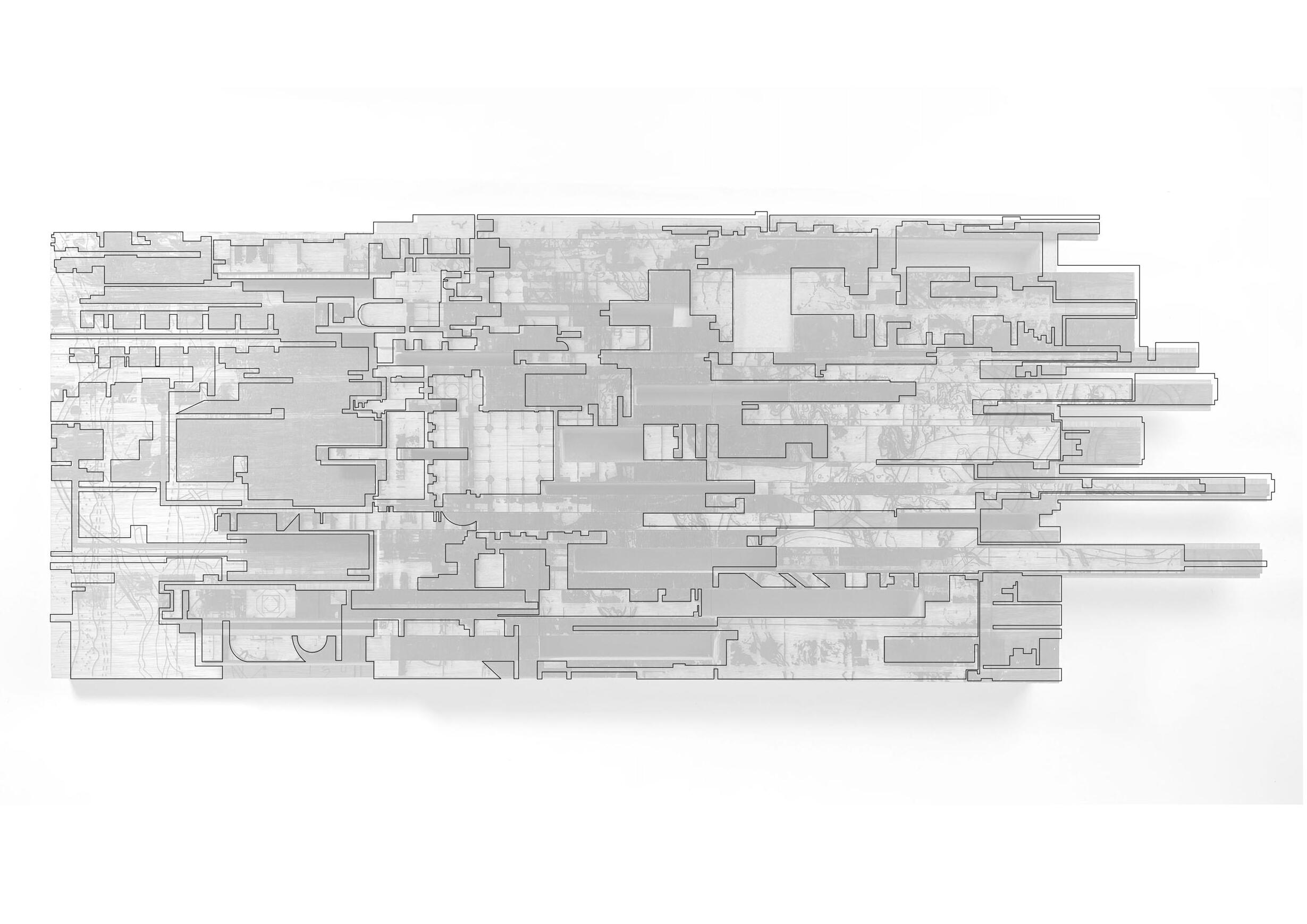
Translating our triptych onto a new surface transforms the quality, density and texture of the original image. The drawing is both precise, yet murky, a unique visual language which provides a new way of viewing the triptych.
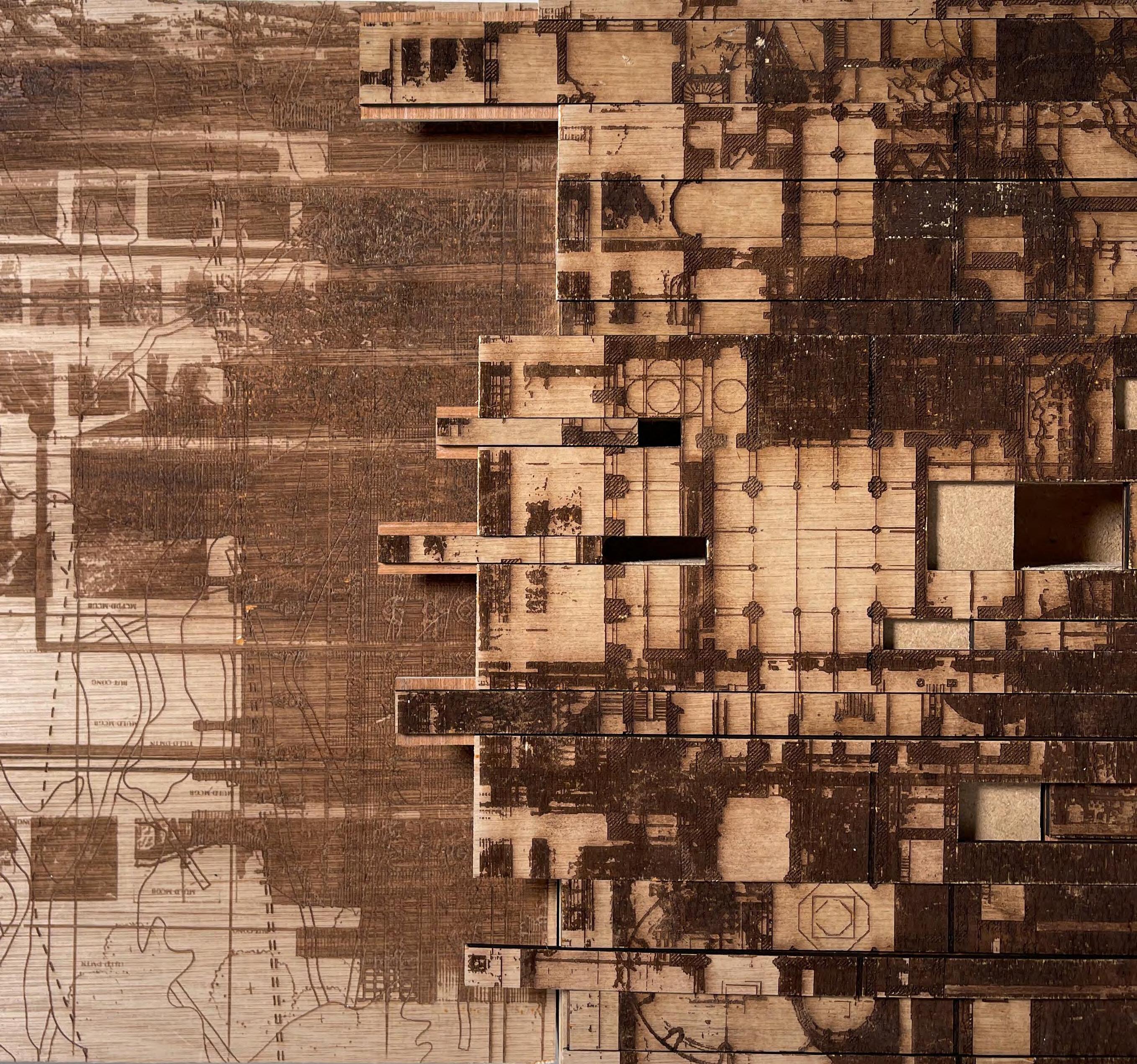
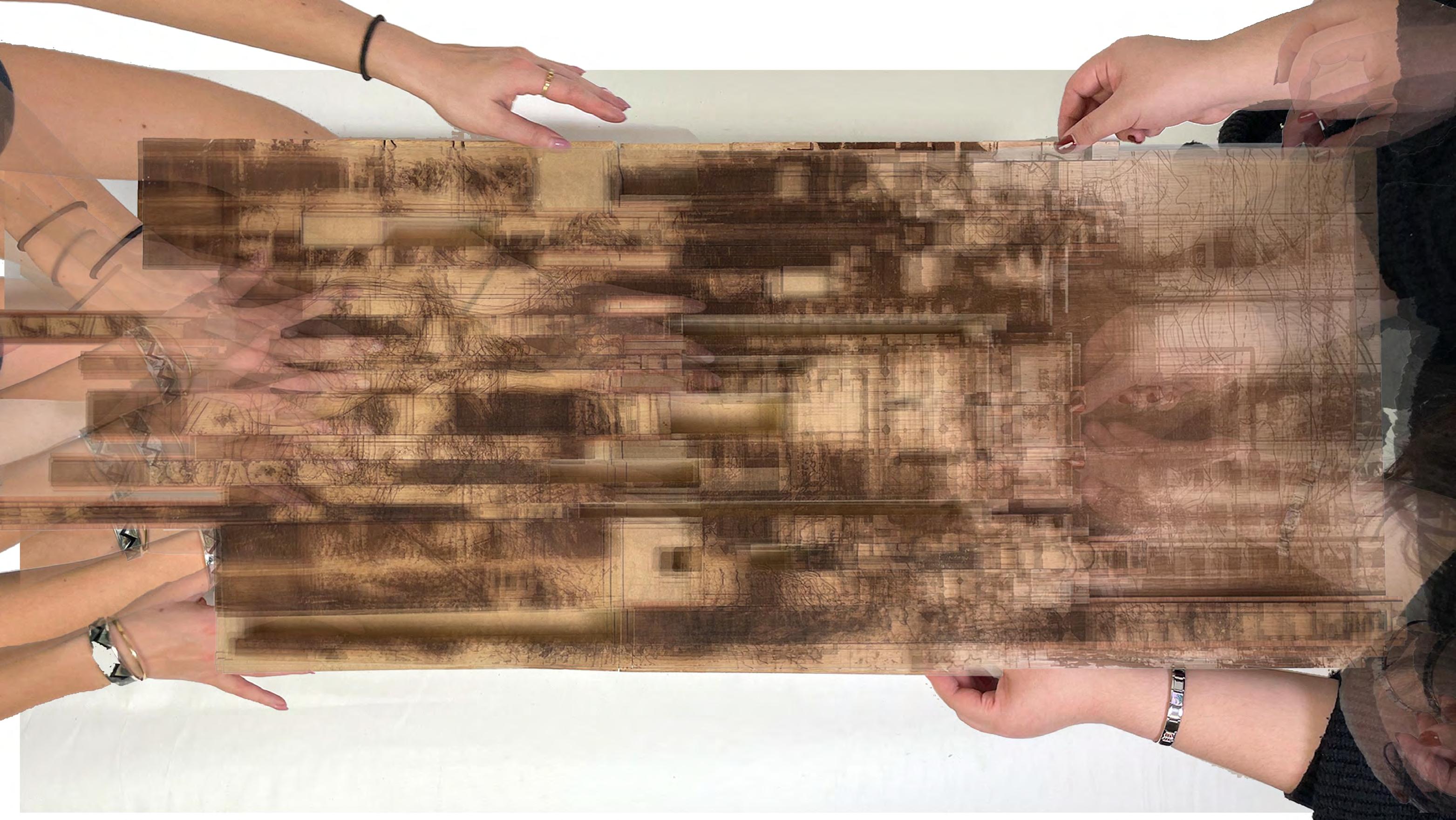
Our process of recalibration prompted a process of careful consideration which allowed us to identify new relationships and material adjacencies within the site. By projecting drawings and information onto a physical object, it allowed for physical interaction, inquiry and relationships with the materials. This fluid approach allowed us to make sensitive and intuitive adjustments to the site. The slides now become a tool for re-tuning the landscape in response to the existing location of the collections.
By casting our reimagined landscape onto a box, we are able to to create logical variations of the Mount Stuart landscape.
Due to the number of strips from the box, there are many possibilities arising from deconstructing the landscape. Through the process of sliding the box strips into different arrangements, we can create six logical iterations of the Mount Stuart landscape. This fine-tuning and recasting of the collections look at the connections between the different textural grains and the voids after the recalibration.
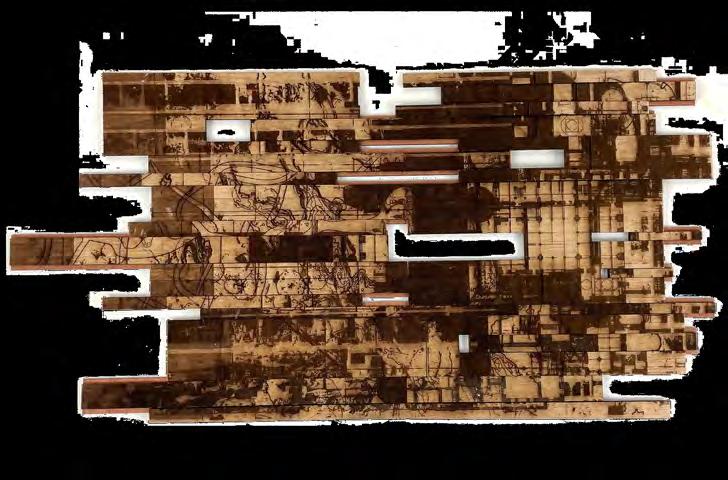
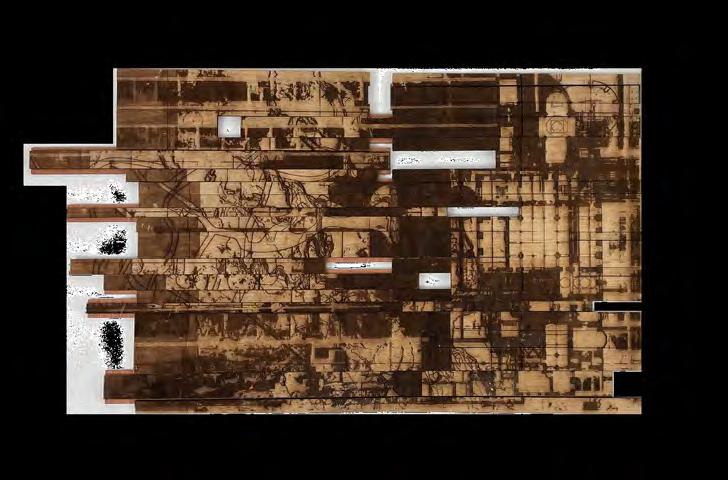
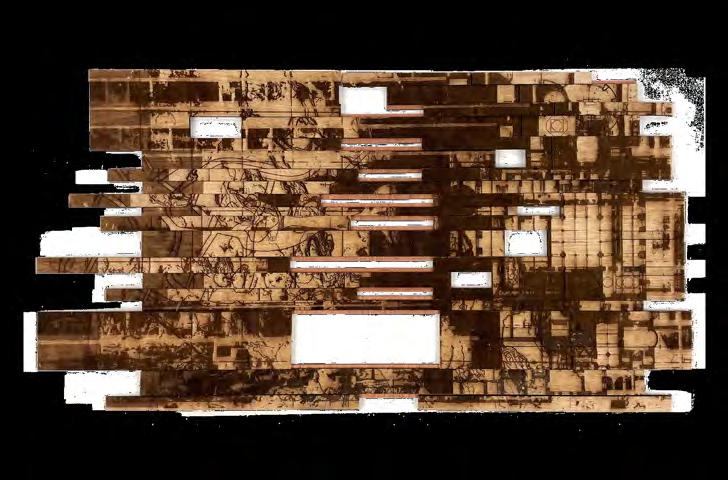
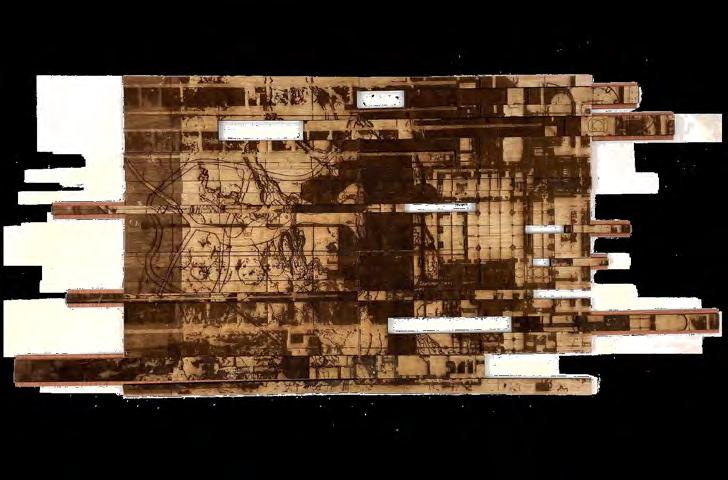
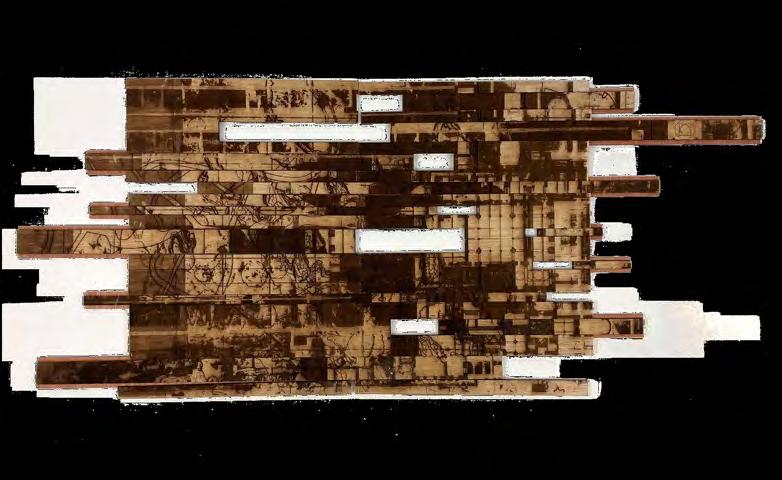
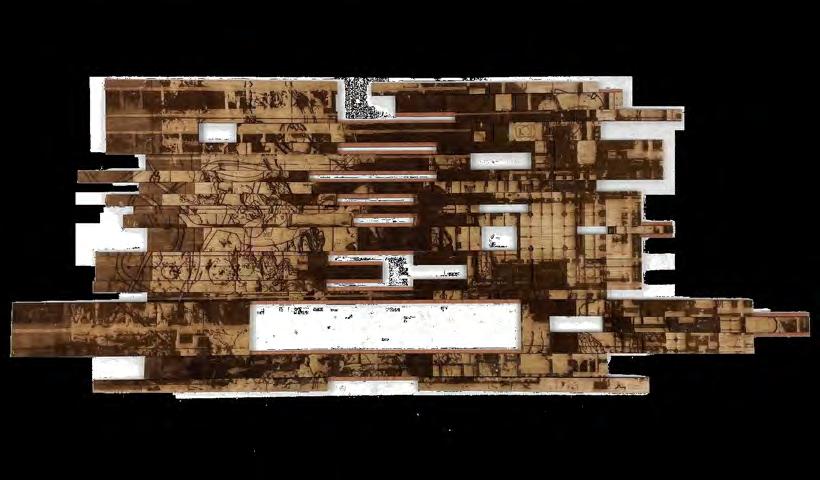
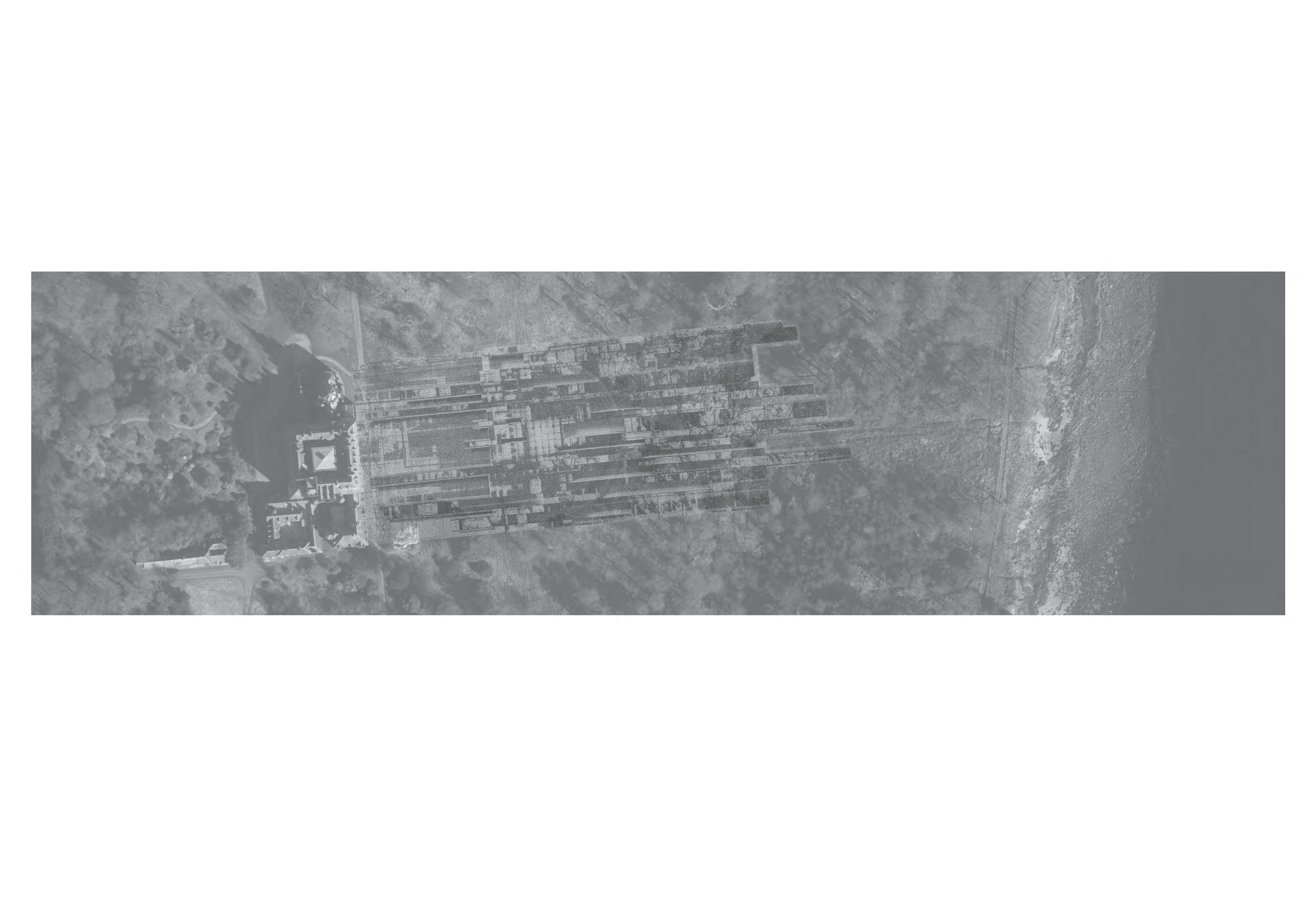
Situating the box on the Parterre allows us to envision the box as a tool for projecting the collections onto the landscape.
We began to translate the box into a plan which responded to the existing drawing on the box. The new plan was informed by the textural grain of the surface and aimed to rationalise the emerging forms of the surface, into the beginnings of an architectural language.
By establishing new forms and surfaces, we were able to project a new and transformed material surface upon the parterre.
Rationalising the Box Design
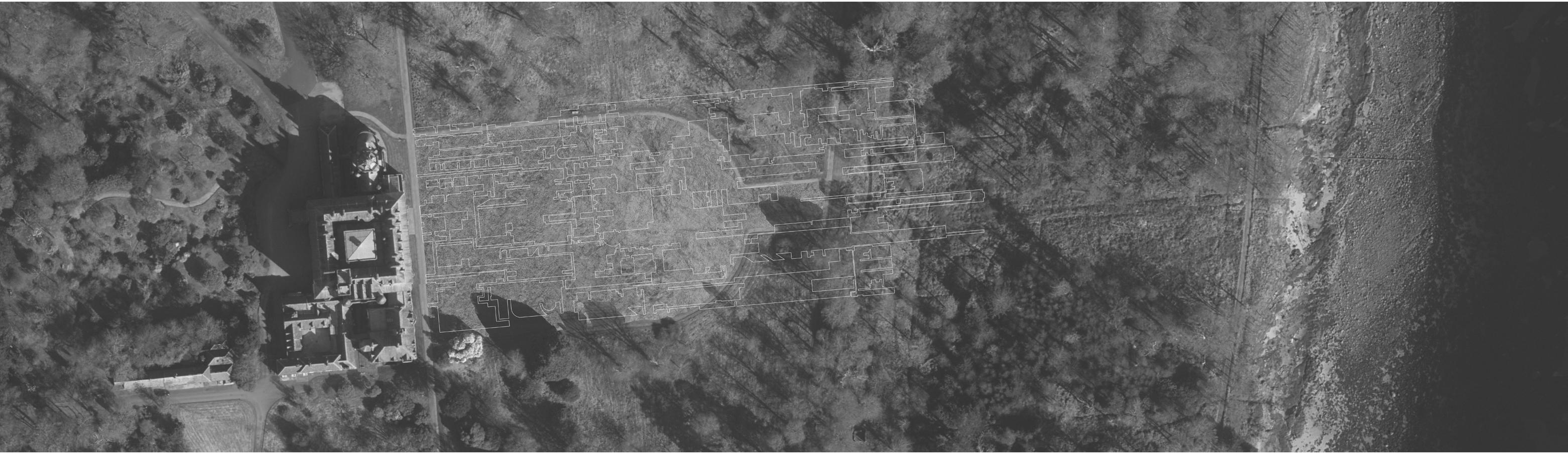
The transformation of the box into a rationalised design secures the box as a culmination of research and analysis of the Mount Stuart landscapes. Casting this representation onto the Parterre allows us to extend the essence of the house outwards into the immediate landscape.
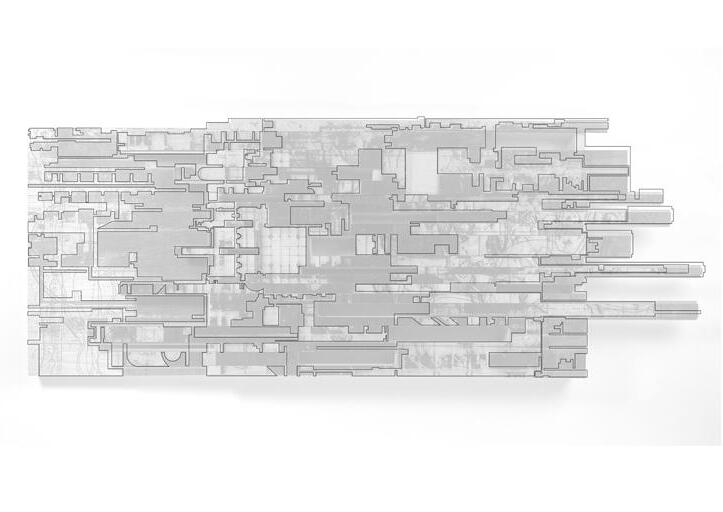
The Cabinet of Curiosities is extended by pulling a drawer onto the Parterre. The interaction between the interior collections of Mount Stuart and the external existing Parterre is strengthened by transferring the deconstructed collections onto the Parterre. This creates a comprehensive new landscape both above and below ground.
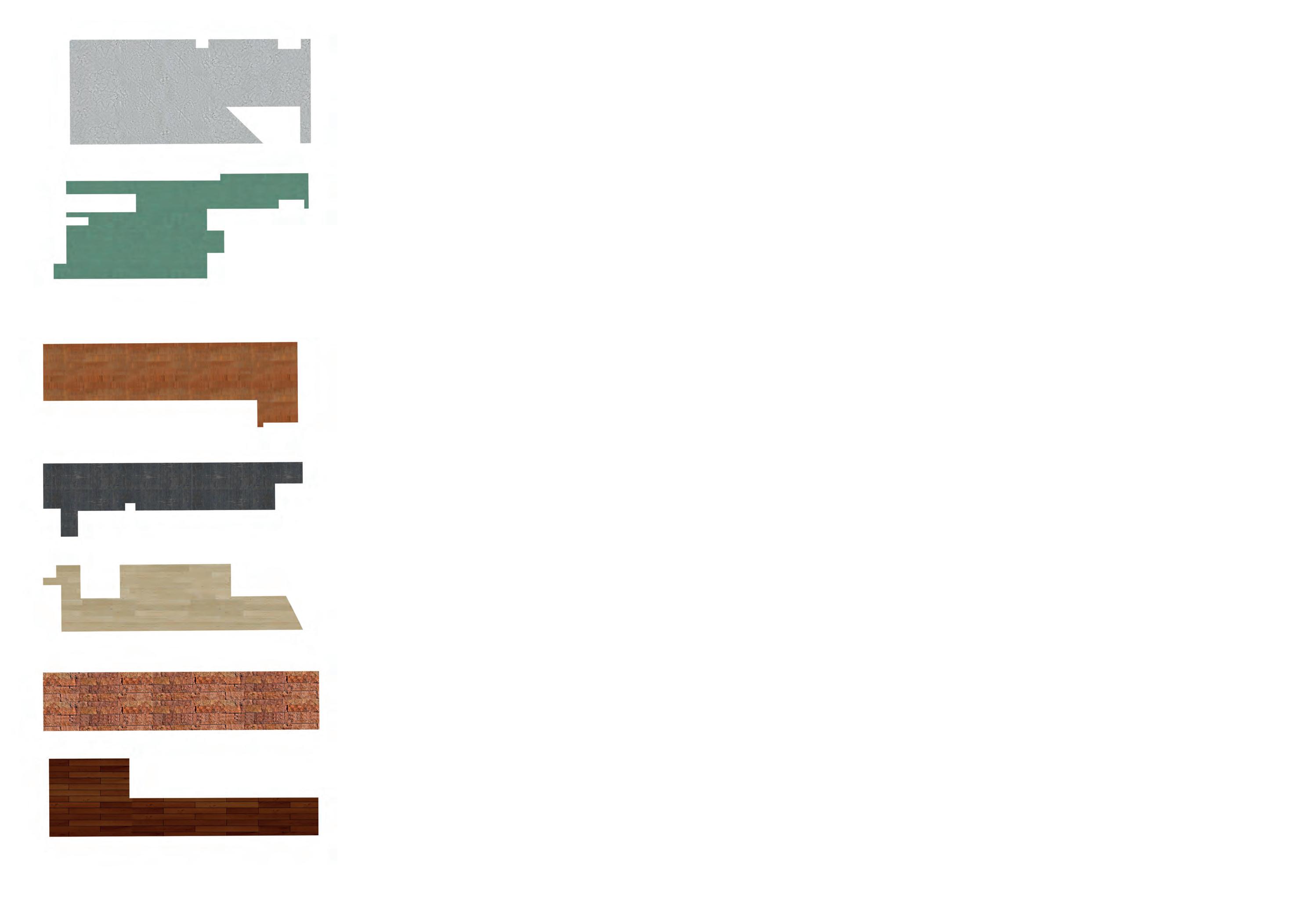
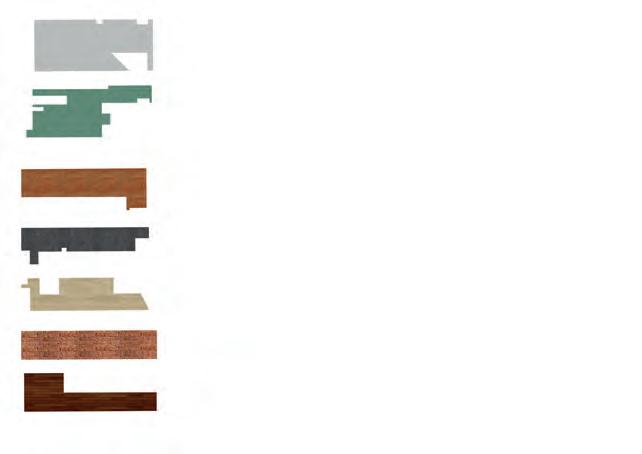
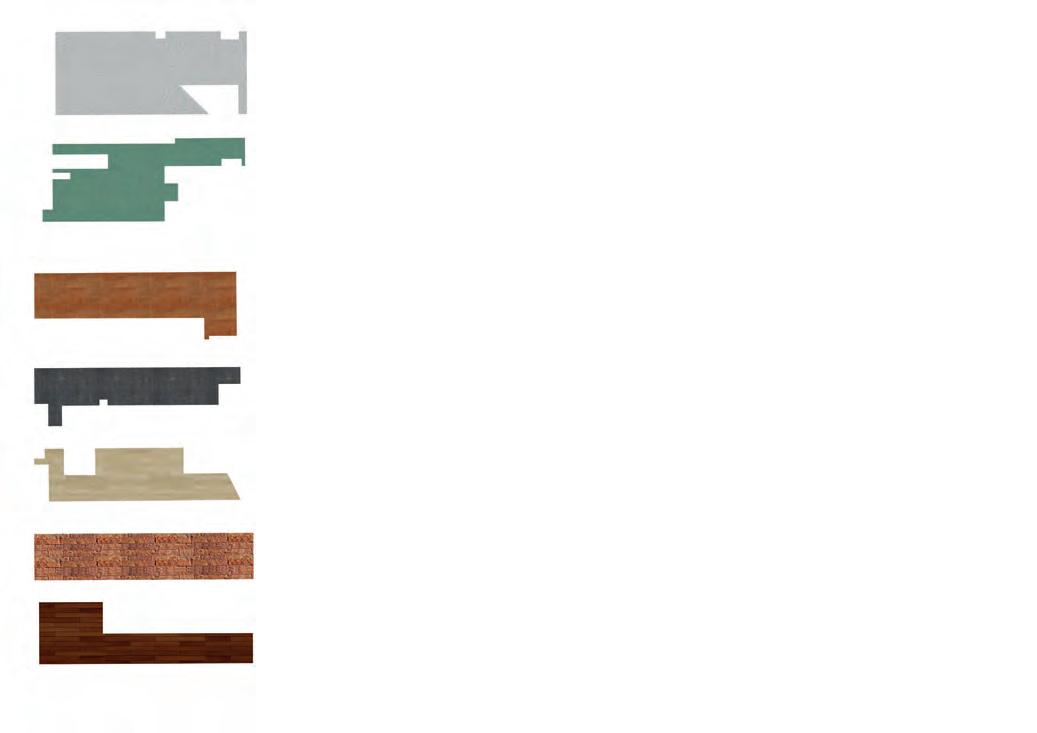
Stainless Steel emulates the tone and reflective nature of silver in a more durable and affordable material. It resists corrosion, allowing it to retain its contrast with the Corten steel.
Corten Steel relates to the Stainless Steel, but its dullness contrasts with the highly reflective stainless steel. Its tone also allows for a nice transition between the copper and stainless steel.
Corten Copper starts out as a highly reflective surface, similar to the mica in the house. As is corrodes, the tone and texture changes, and begins to emulate properties of marble.
Douglas fir trees are found throughout the estate, using fir panels ties our material landscape into the surrounding context. It is a durable softwood, and contrasts with the dark tone of the oak.
Oak is found throughout the house, on the floors, wall panels and sculptural elements. It is a durable and beautiful timber.
Feldspar is a mineral which is an essential component in rocks and porcelain. There are three main types: albite, orthoclase and anorthite.
Using marble represents the rich collection of Italian marble within the house, but the texture and reflectivity emulates many other surfaces such as the mica and mirrors.
Using recycled fabric bound with glue is an effective, low waste material. The variety of tones and textures emulates the complexity of the paintings and fabrics within the house.
Representing Collections through Materiality
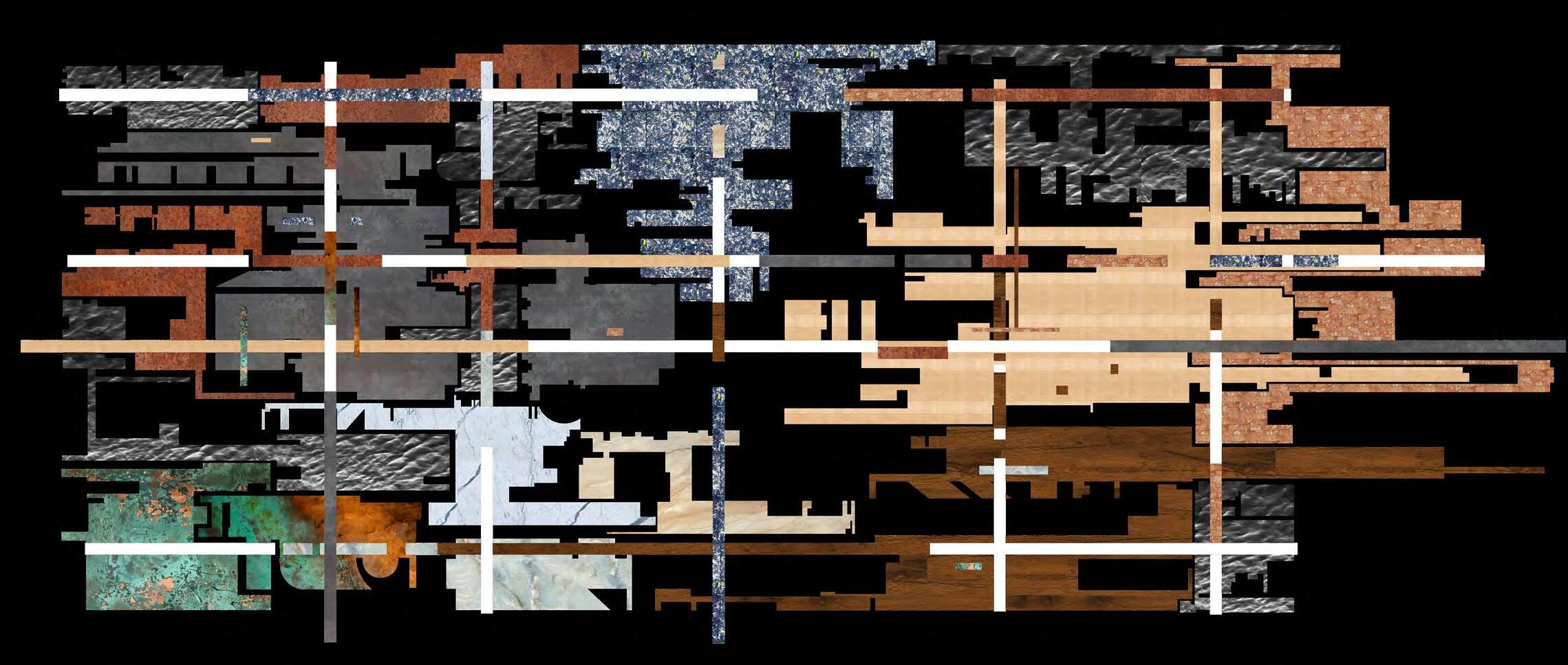
The selected materials are representative of the material properties and qualities previously identified in our research of the collections.
Proposing a New Material Language
We are able to transfer the collections out into the landscape of Mount Stuart in a symbolic way by using selected materials to inlay onto the Parterre. Each construction material represents a material collection.
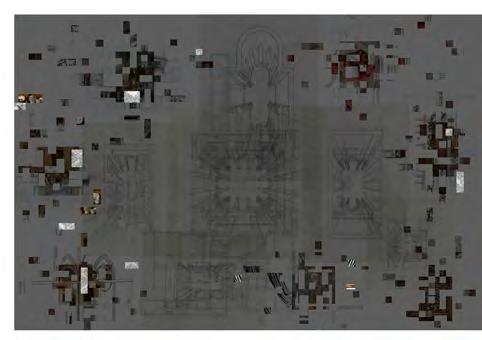
The images retrieved from the close analysis of the collections are repurposed as boundaries of zones, representing where each collection would be situated in our new landscape. Their positioning is based on where the slides of the original box were, coorepsonding to the location of collections within the house.
Positioning Collections within the Landscape
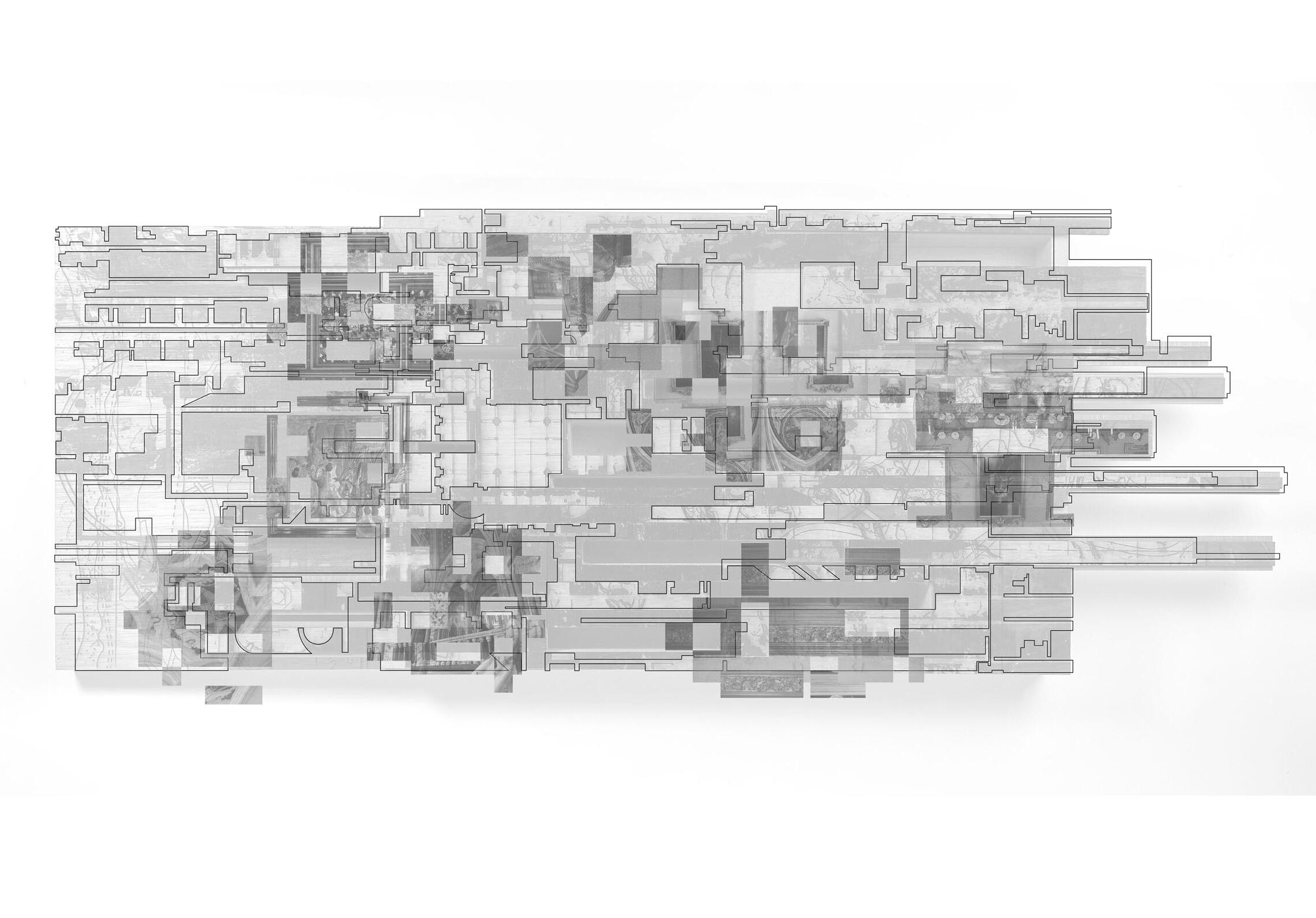
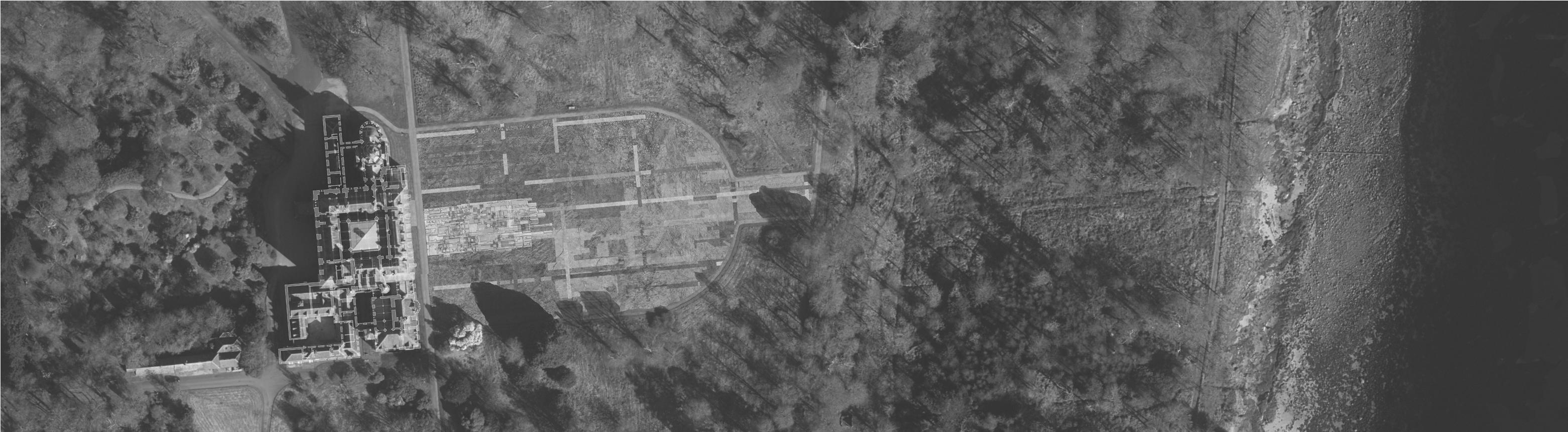
Resizing to the Marble Hall
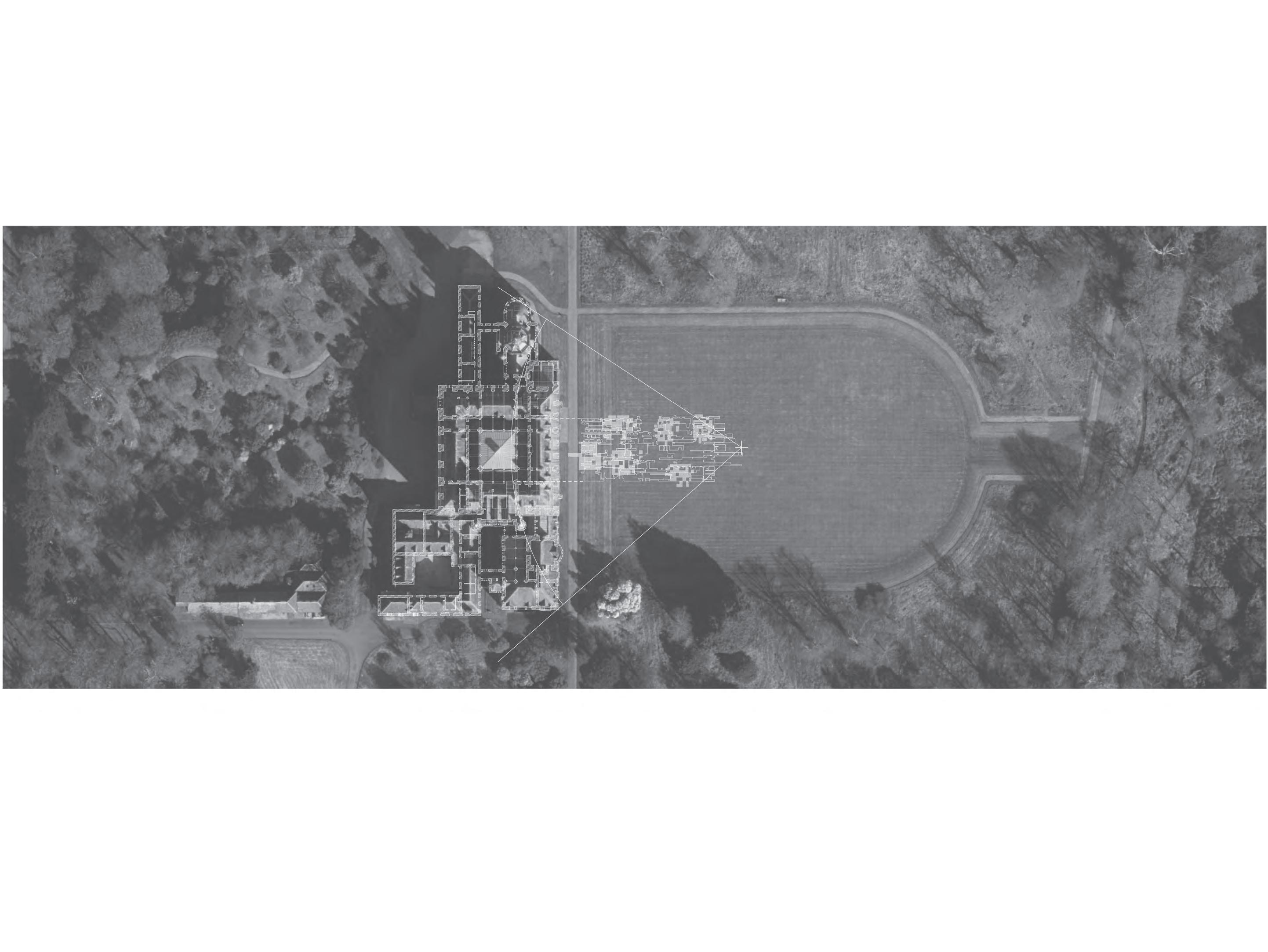
It was necessary to rescale the box to create a more intimate environment for the collections. Its size was chosen according to the proportions of the Marble Hall which creates a direct relationship with the proposed scheme and the existing house. The scheme acts as a drawer which extends the Cabinet of Curiosities onto the landscape.
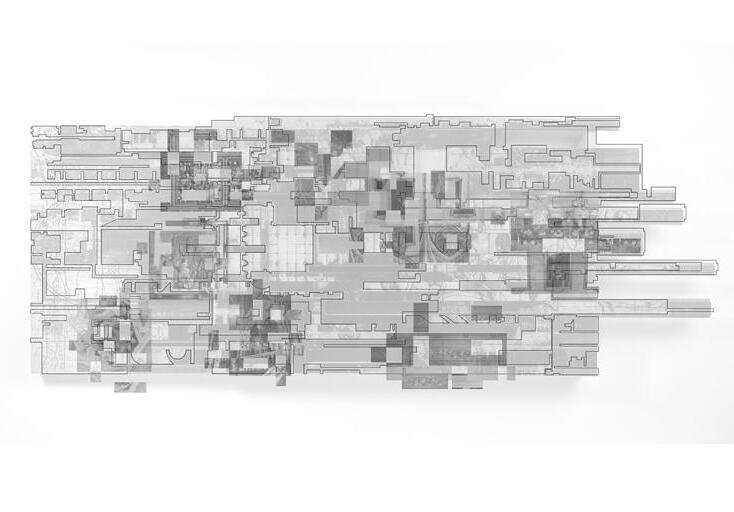
The cabinet opens up, pulling out the marble hall as though it is a drawer, and projecting the newly defined zones upon the landscape. The end of the drawer looks back over the house and situates the new observatories in direct relationship with the house. The horizontal lines are based upon the established collection location.
Transforming the deconstructed collections into simple architectures, allows us to reflect the material and physical properties of the collections in a unique structural form.
Physical Translation of Collections
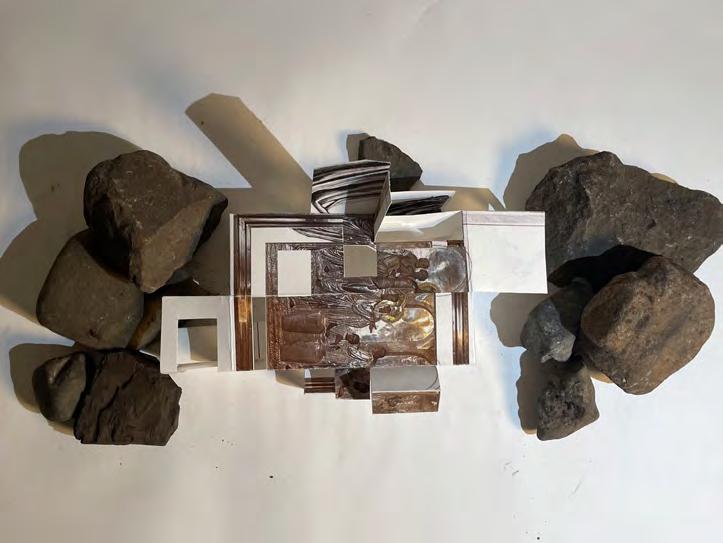
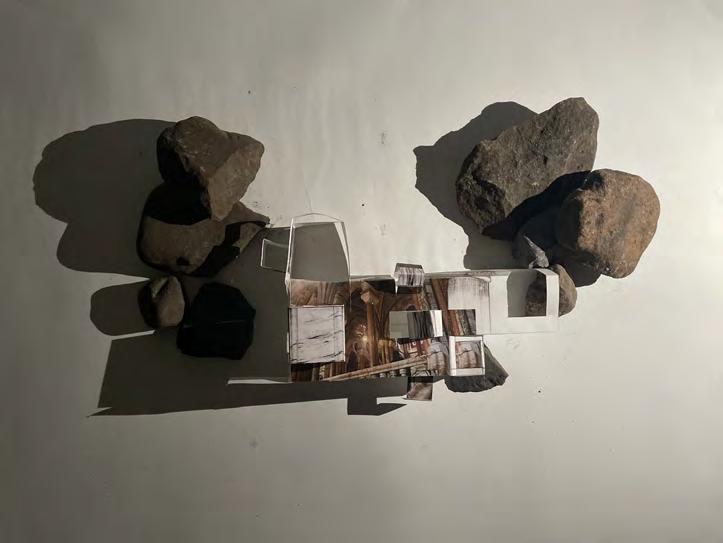
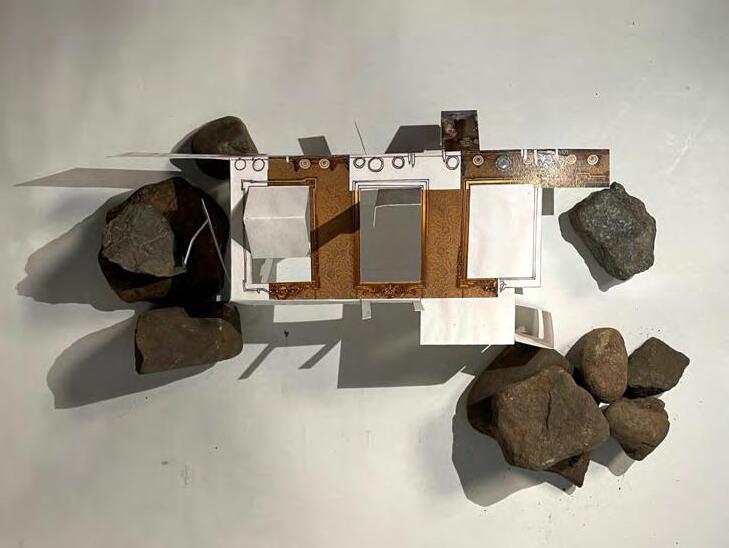
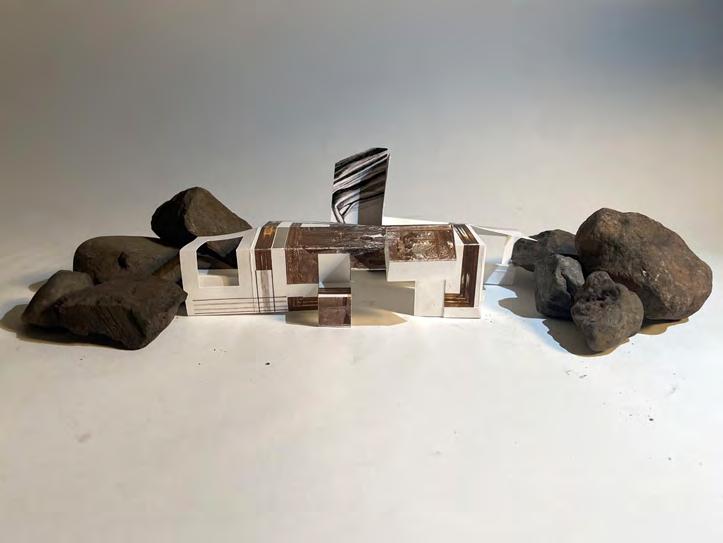
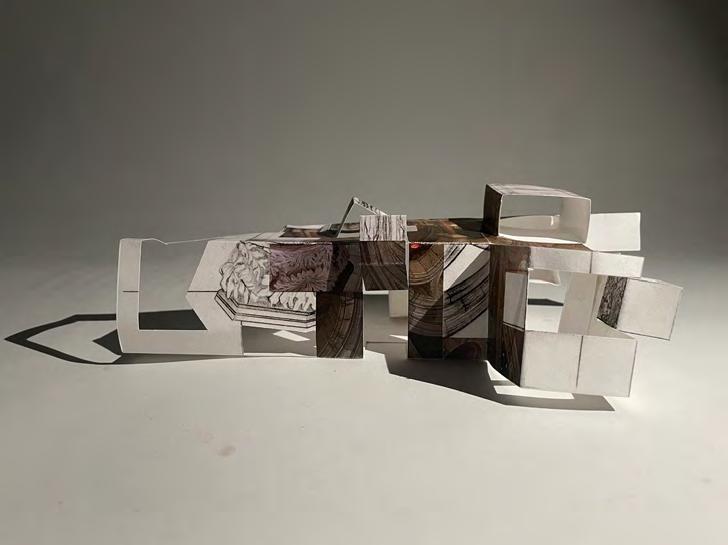
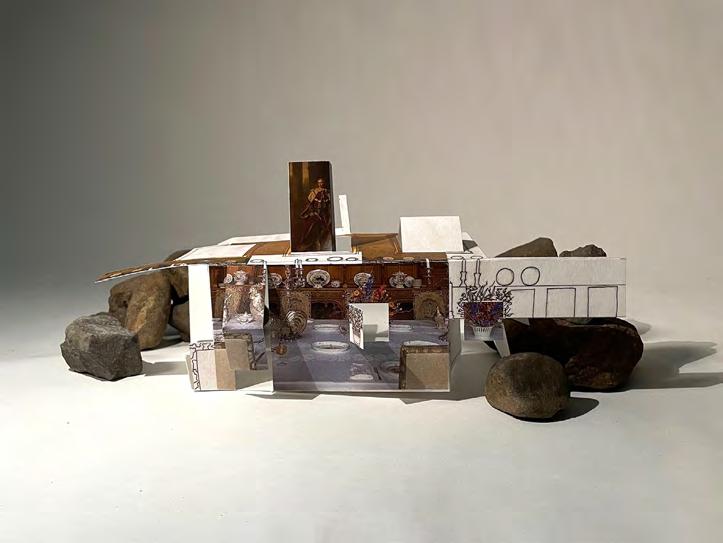
The models allowed us to understand the collections as physical architectures whilst also honouring the graphic qualities of the collections.
Physical Translation of Collections
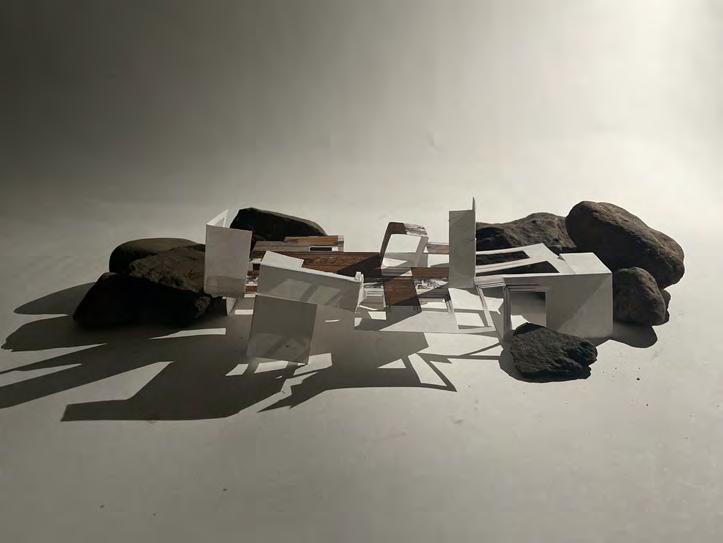
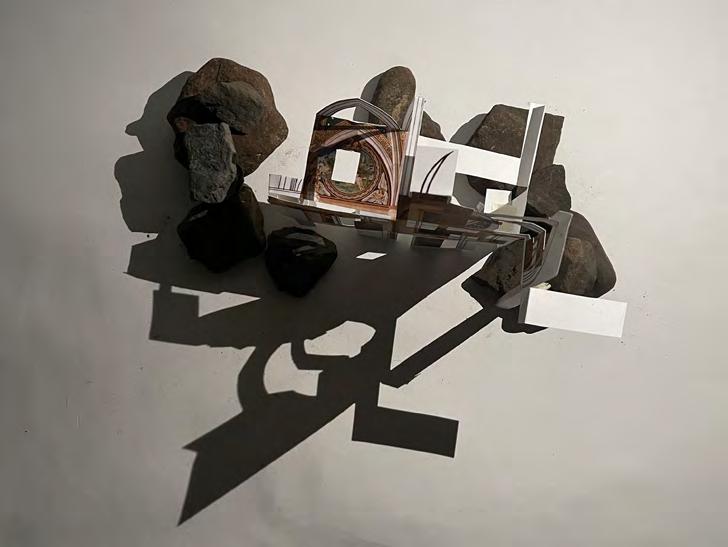
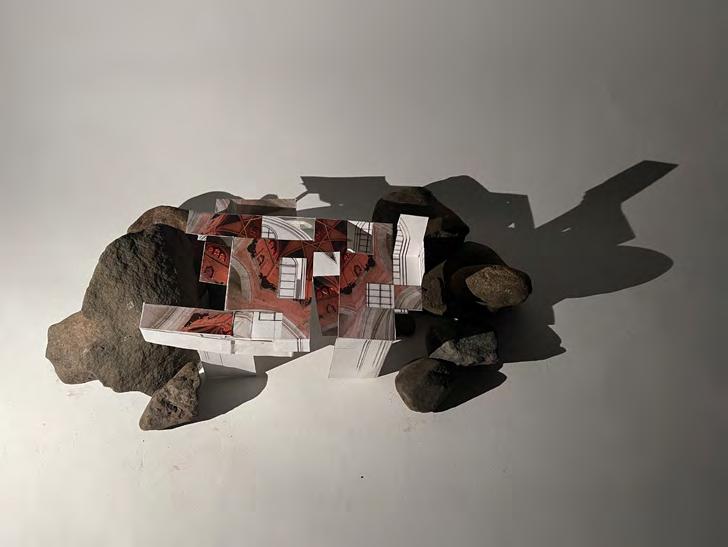
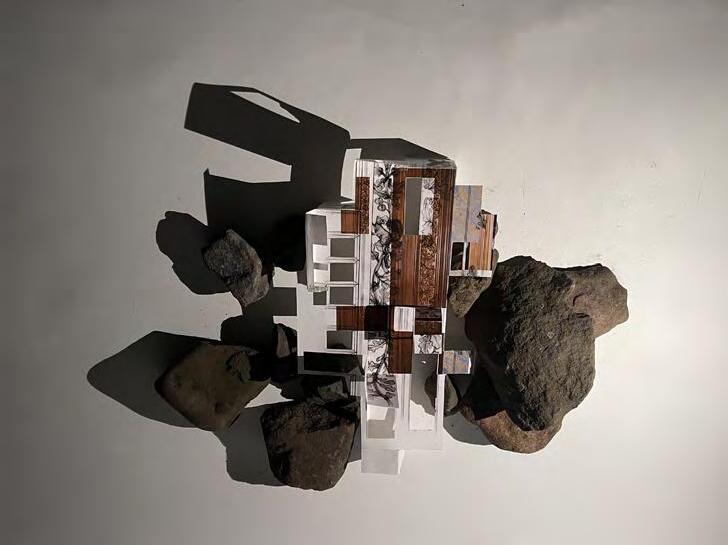
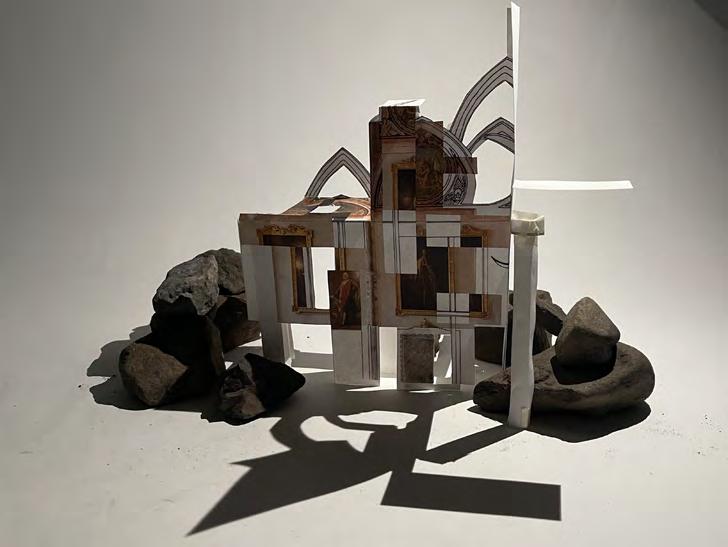
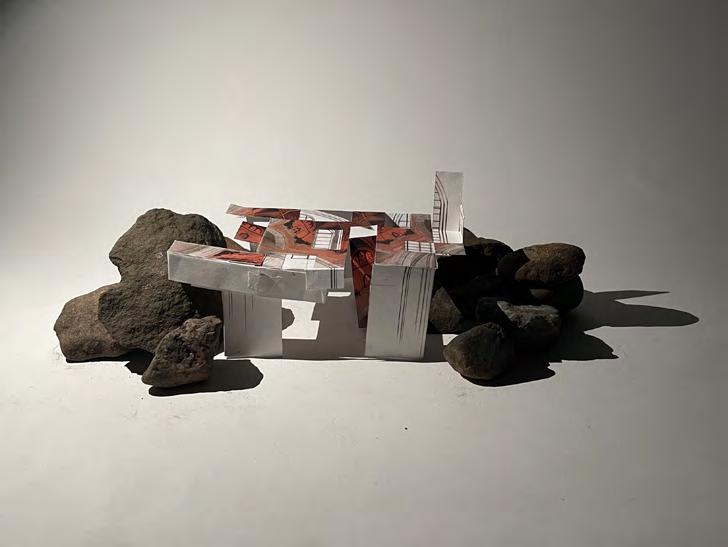
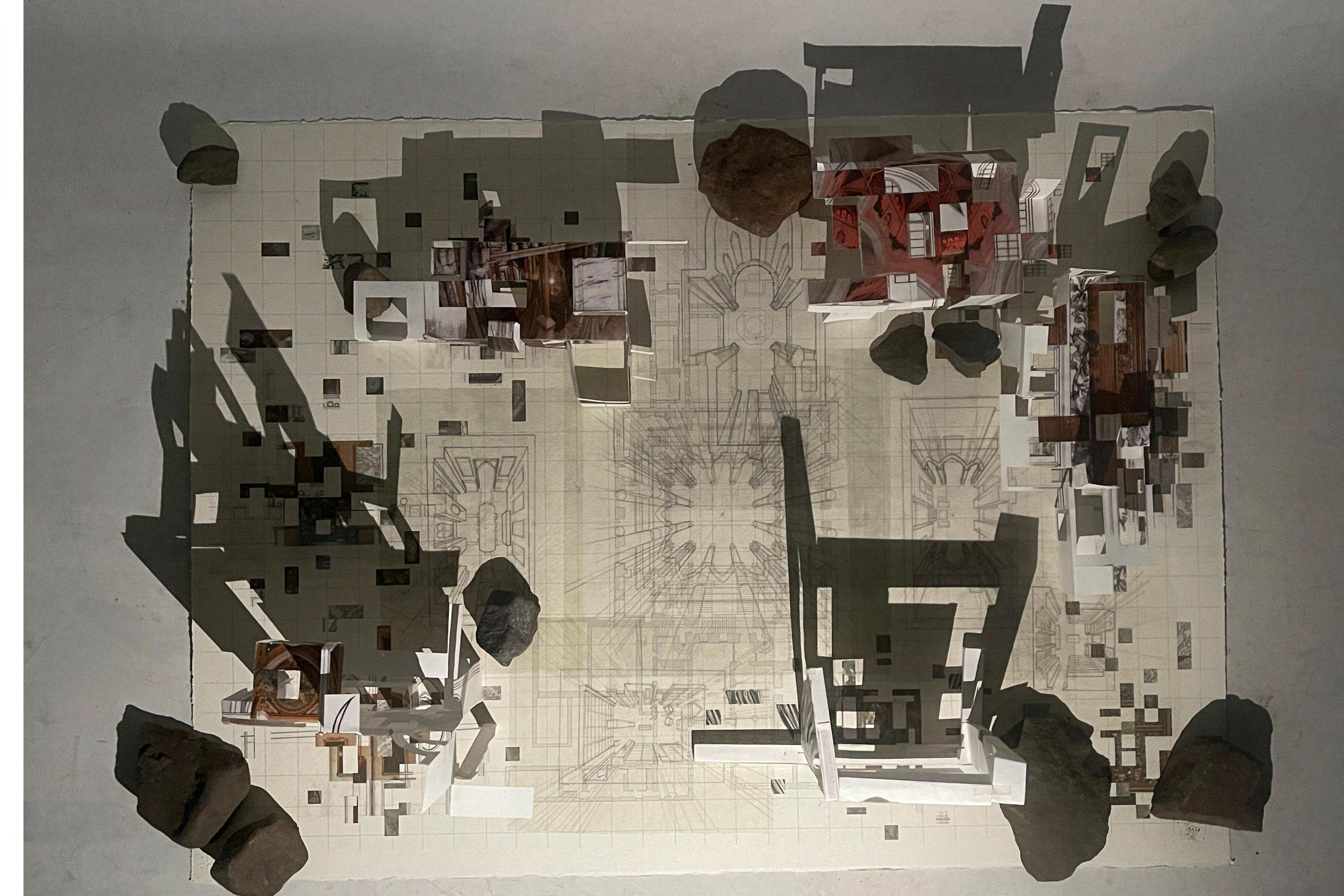
We begin to refine and develop the compartment sketch models into a physical form. The observatories develop in relation to the compartments and are constructed to house objects which are taken physically from the house, as opposed to the symbolic transferral of collections.
Designing the Observatories
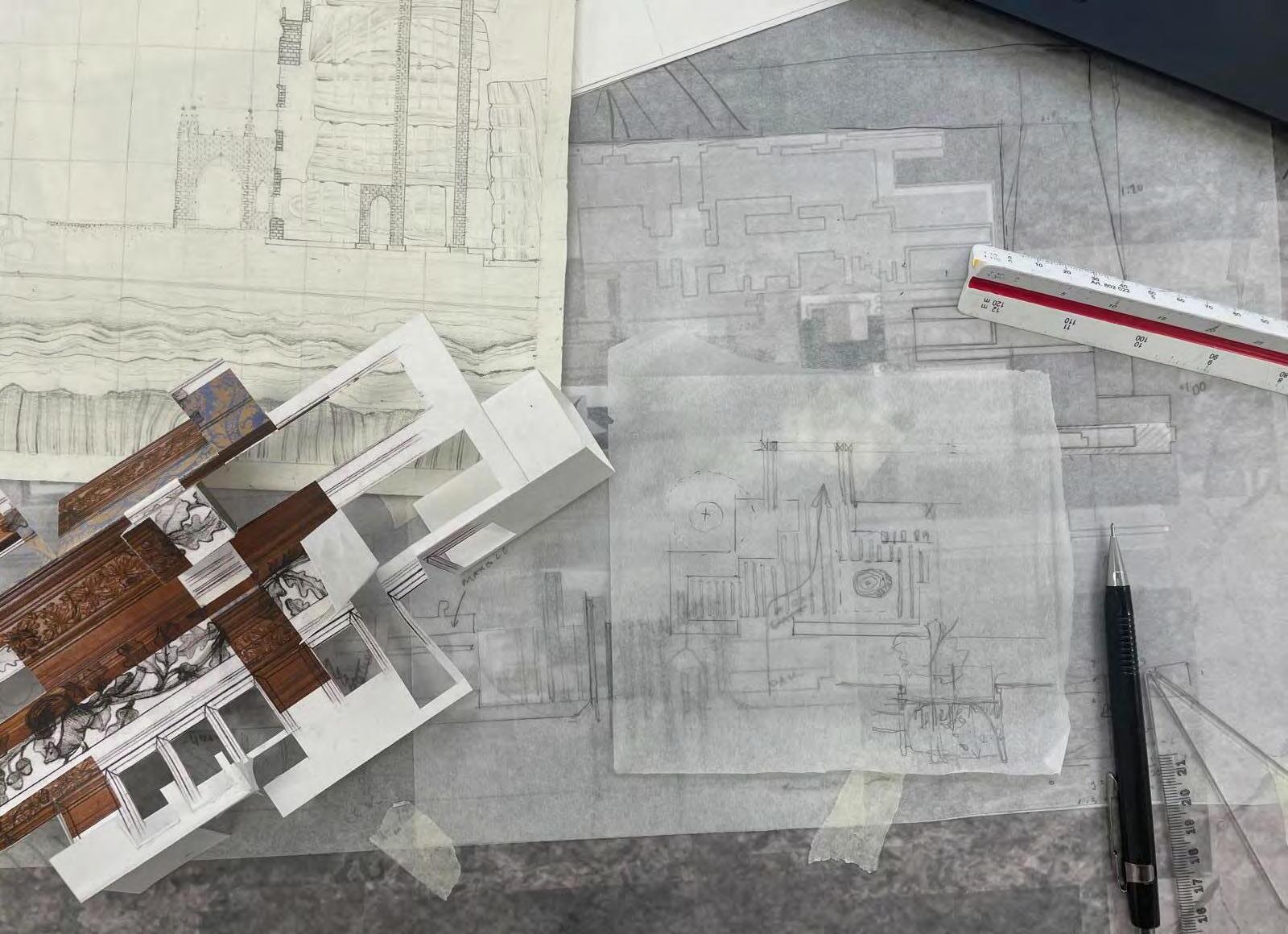
Each structure aims to explore an unconventional way exhibiting an object. In some cases, this leads to viewing or experiencing an unsual feature of the object which would not have been possible in its original location in the house.
Observatories in Detail
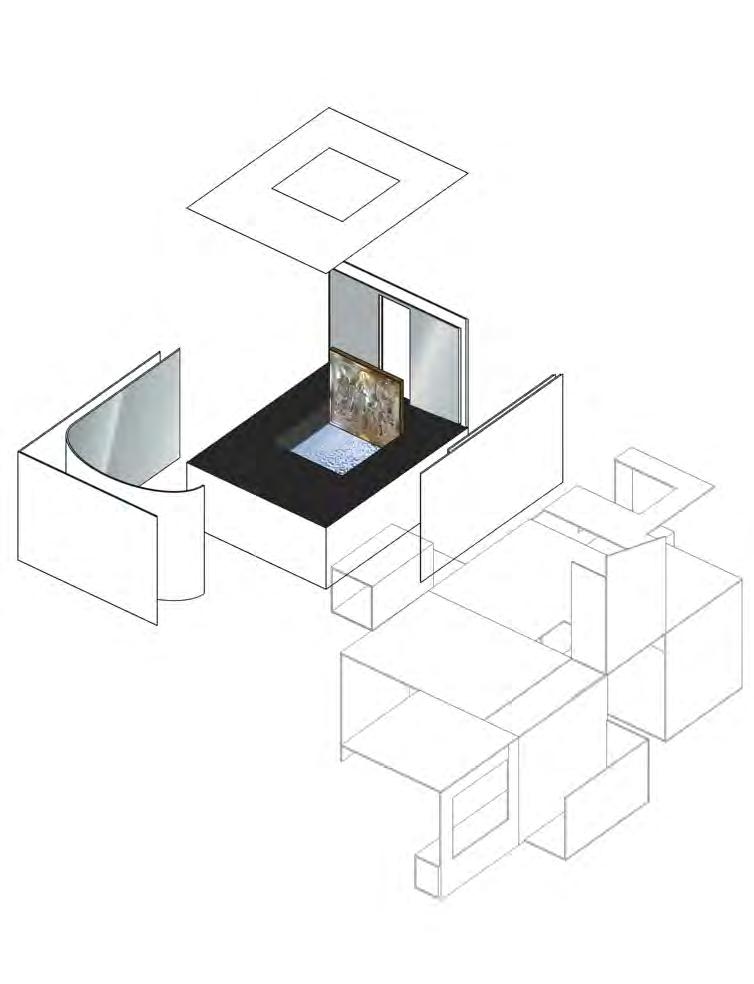
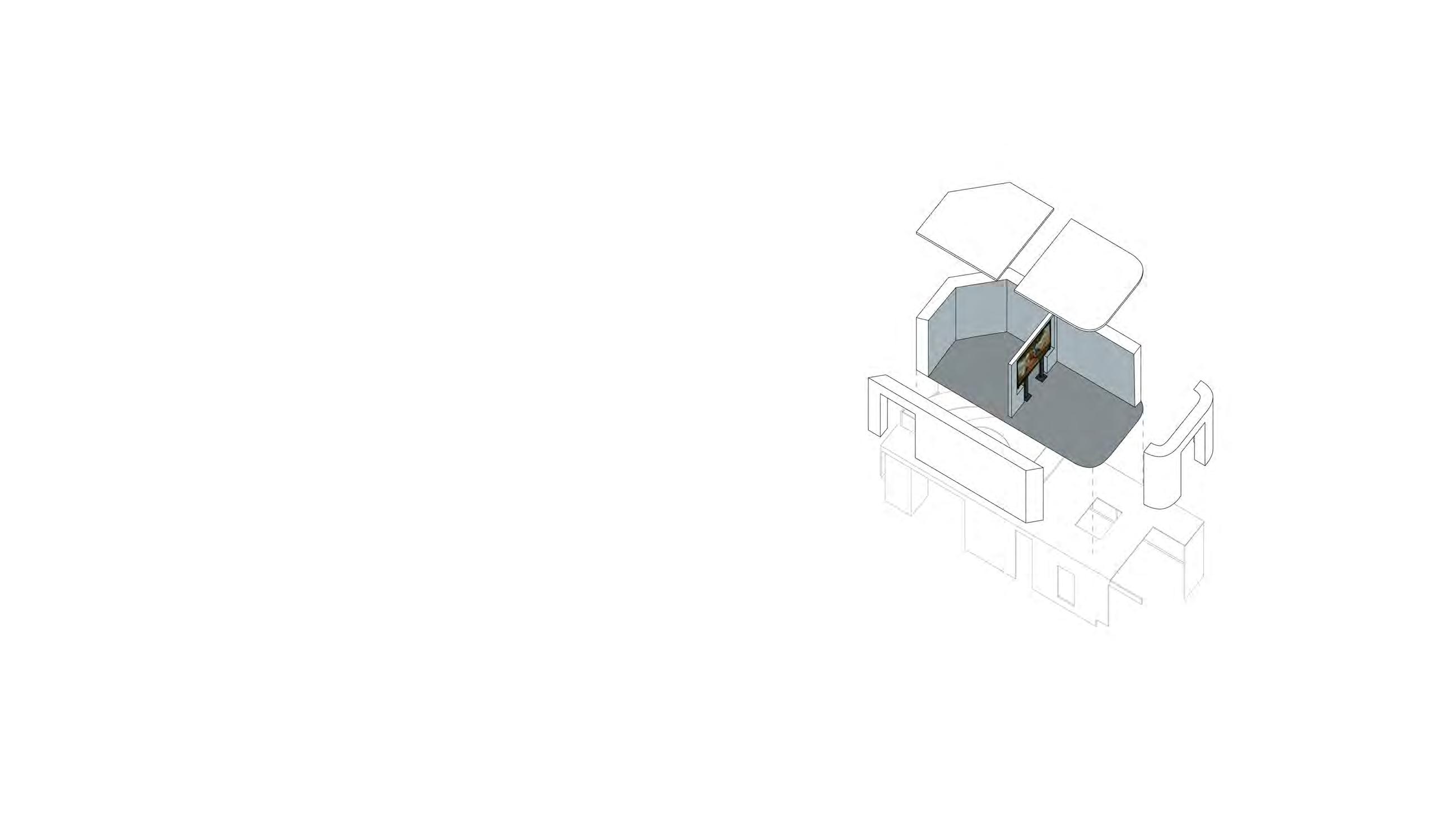
The following drawings present a more formalised understanding of the the experience of how particular collections might be experienced. This included a closer look at the interactions between people, collections, and compartments, demonstrating the interdependence of these design components.
Chapter 6: Re-Establishing the Cabinet
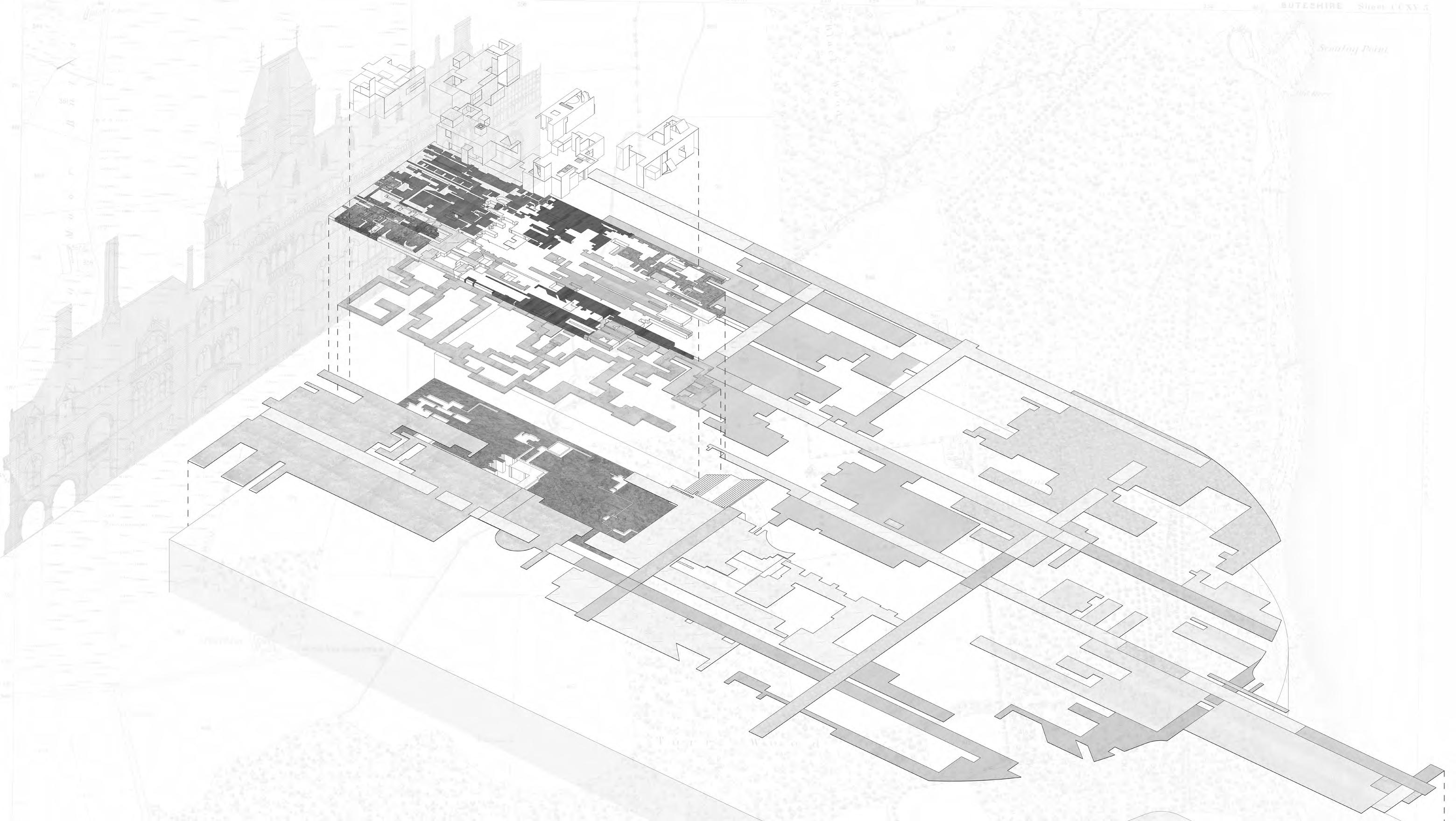
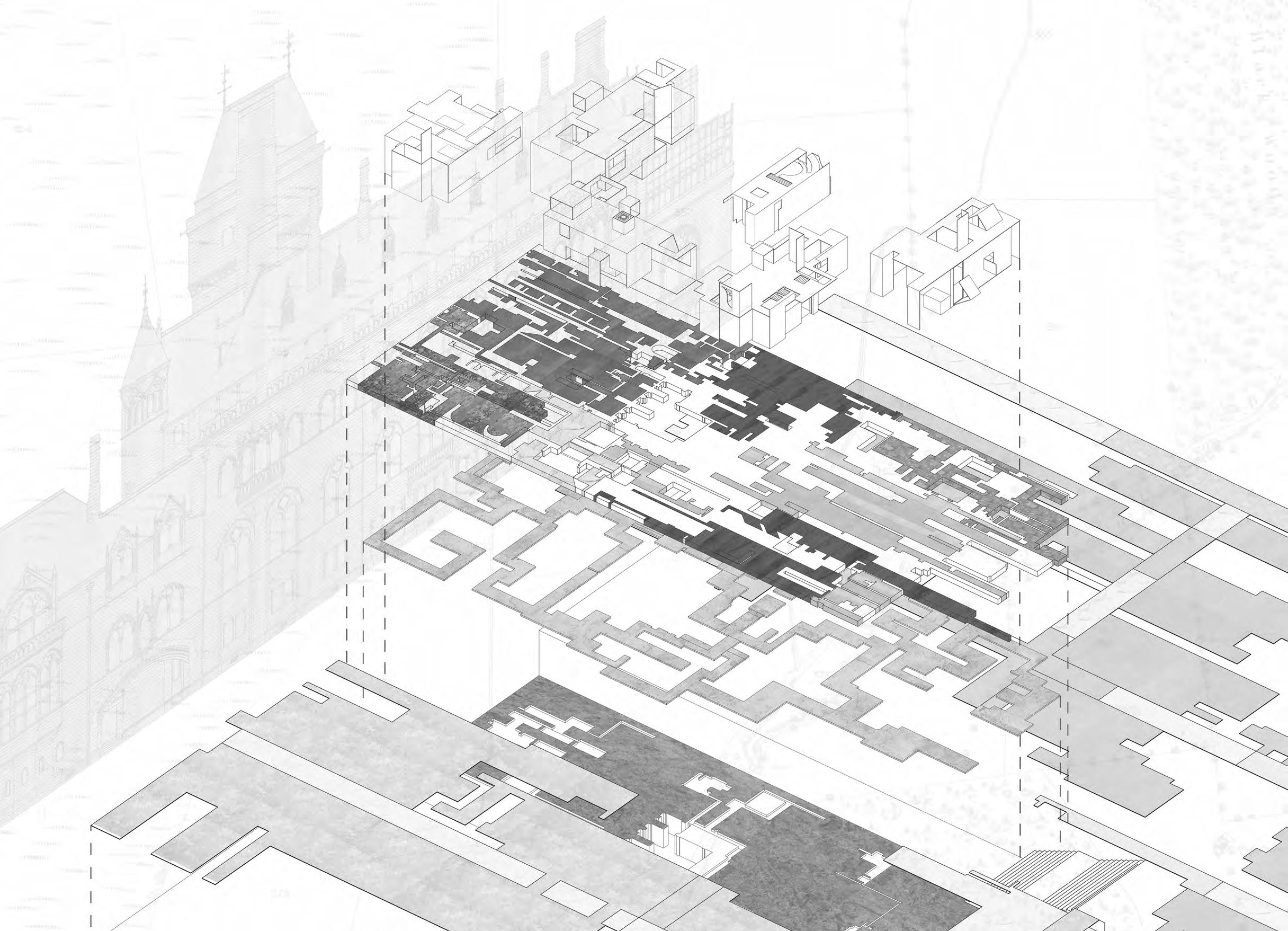
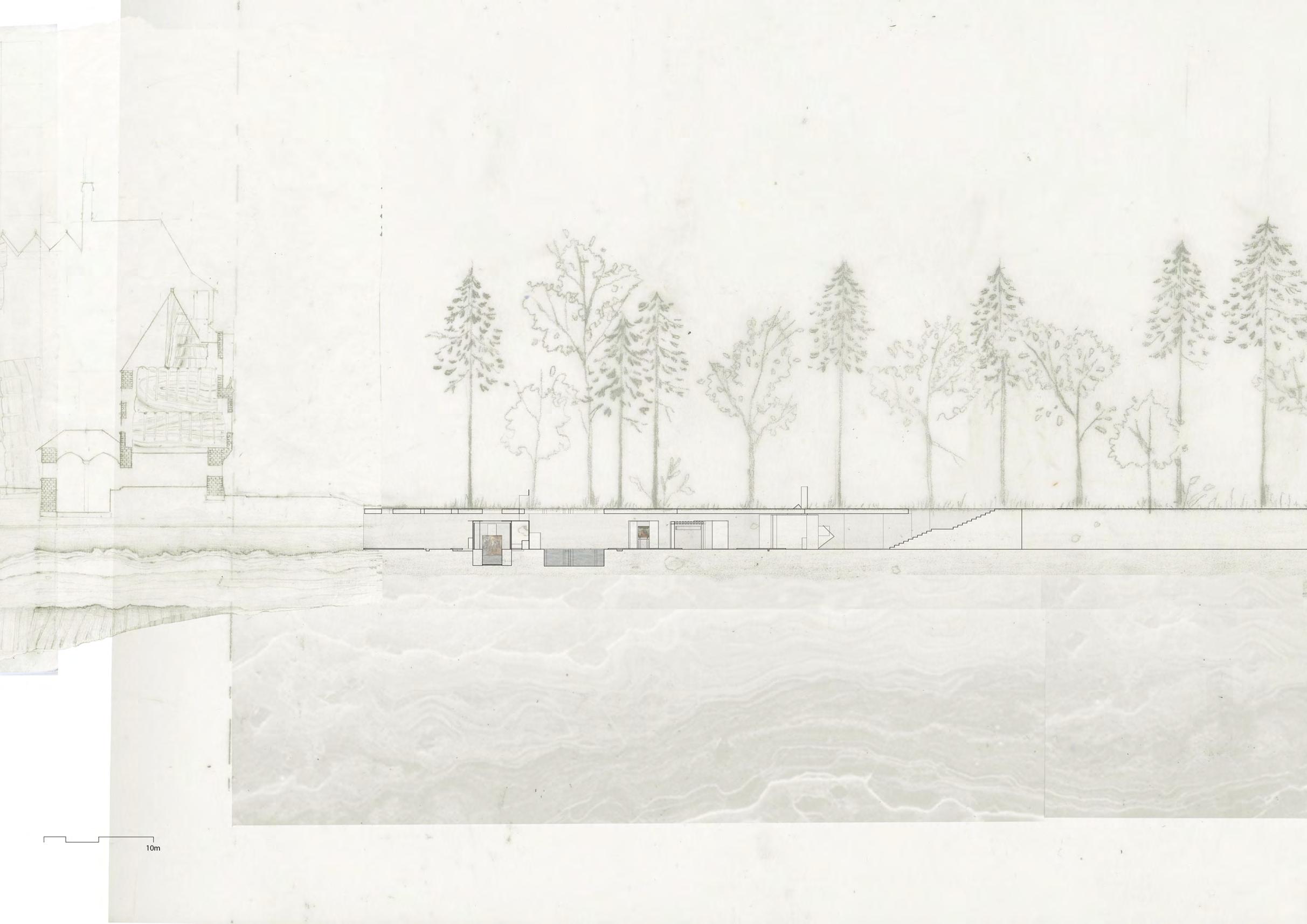
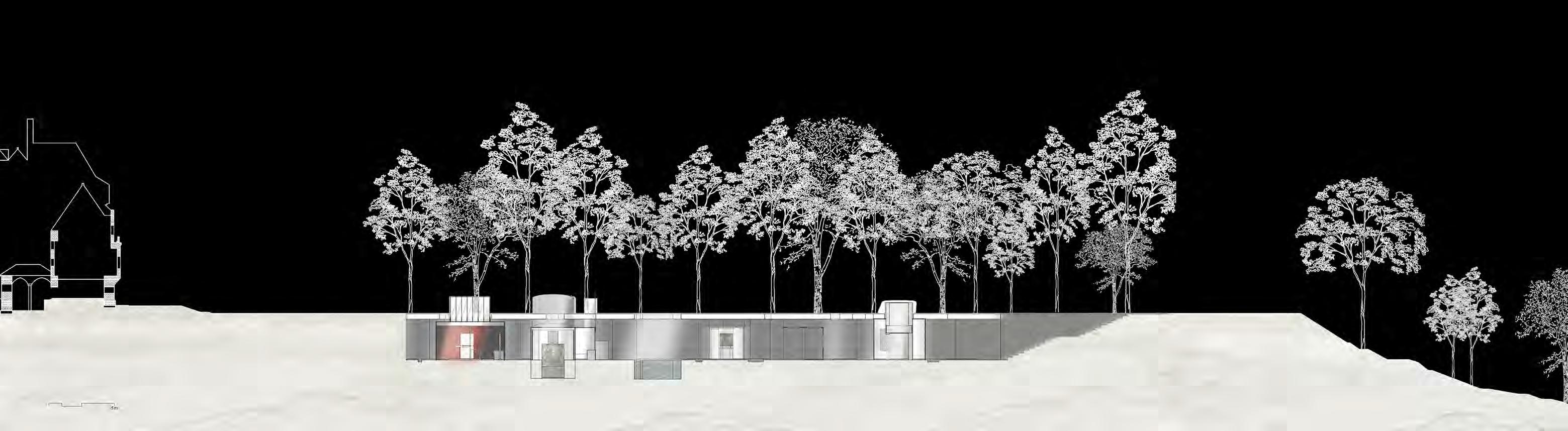
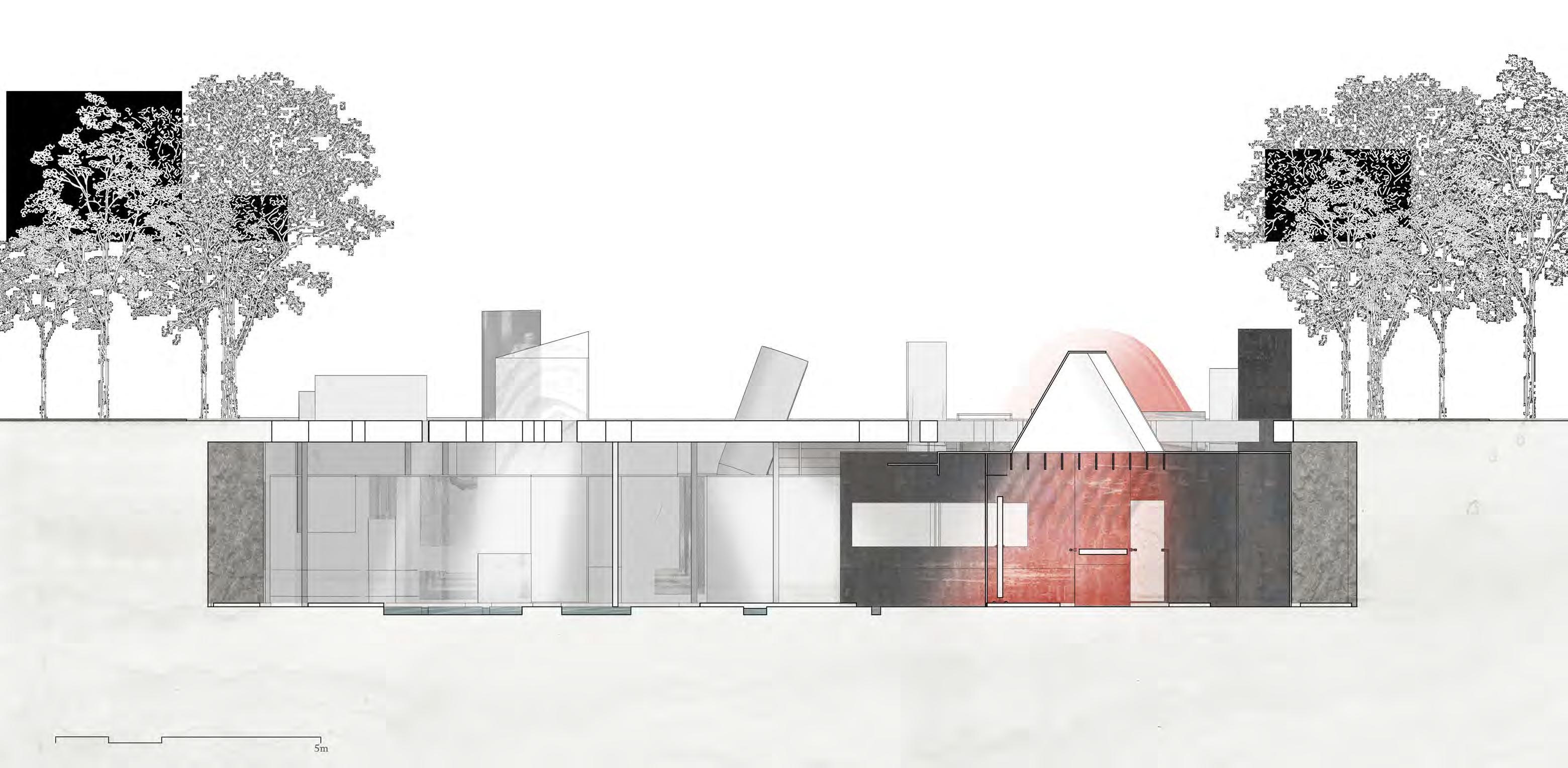
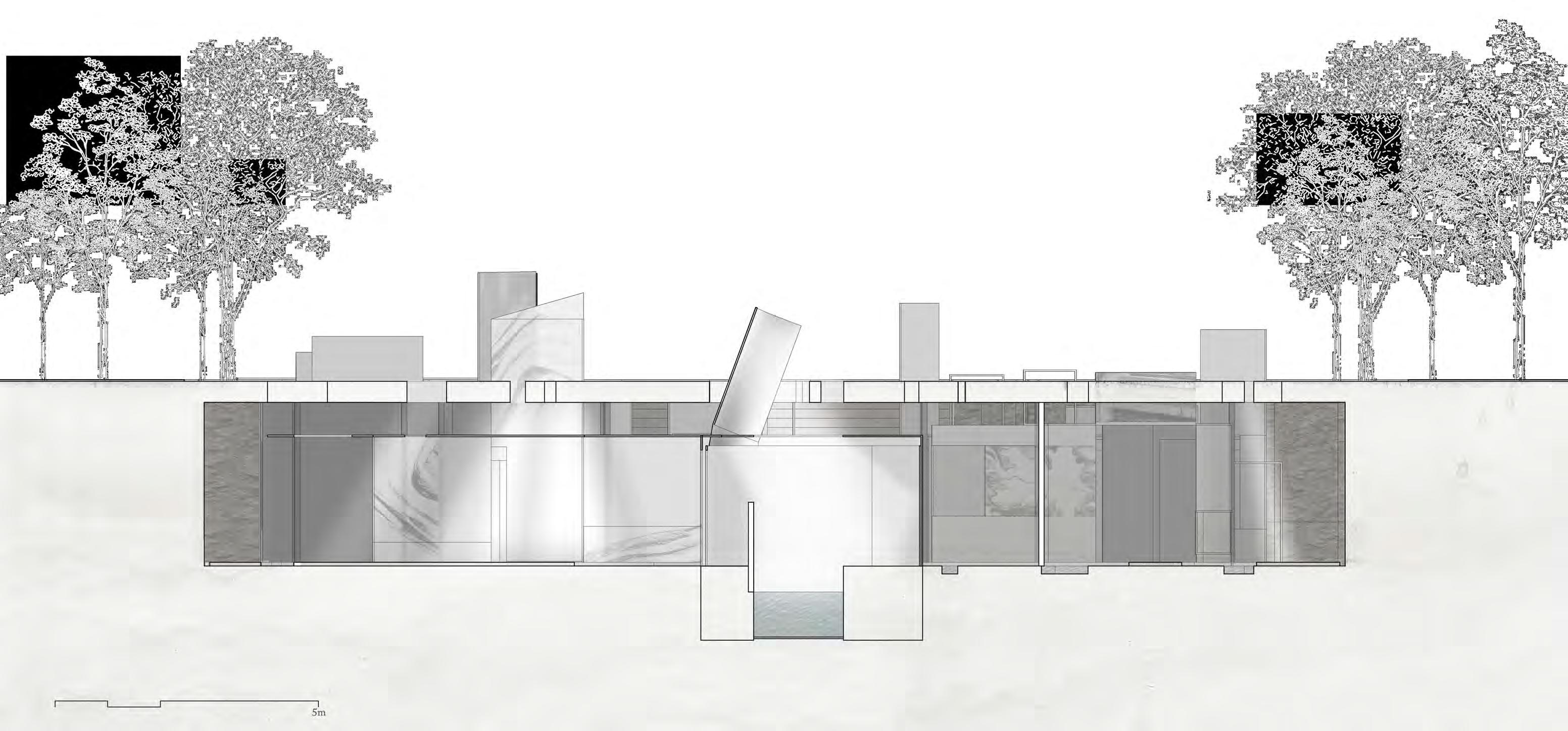
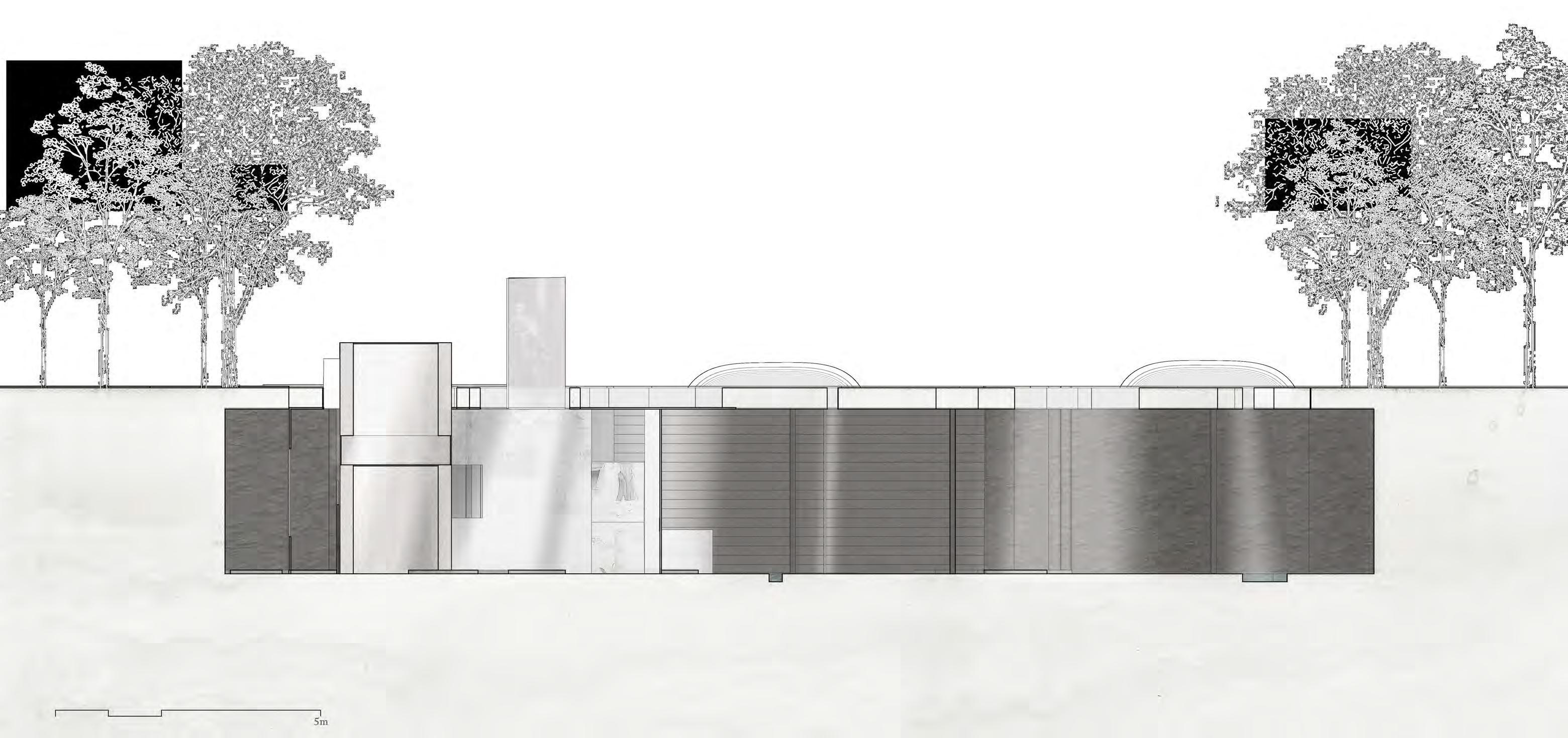
By situating the Observatories below the Parterre, we are able to reimagine the exhibition of the chosen collections, in a way which fully reflects their connection to the house. This section shows the act of extracting the collections by pulling out a drawer below the house.
The stream which travels from the Rock Garden to below the house is collected in a central pond within the scheme. This symbolises the linear connection between the three locations we have looked in detail at.
Section

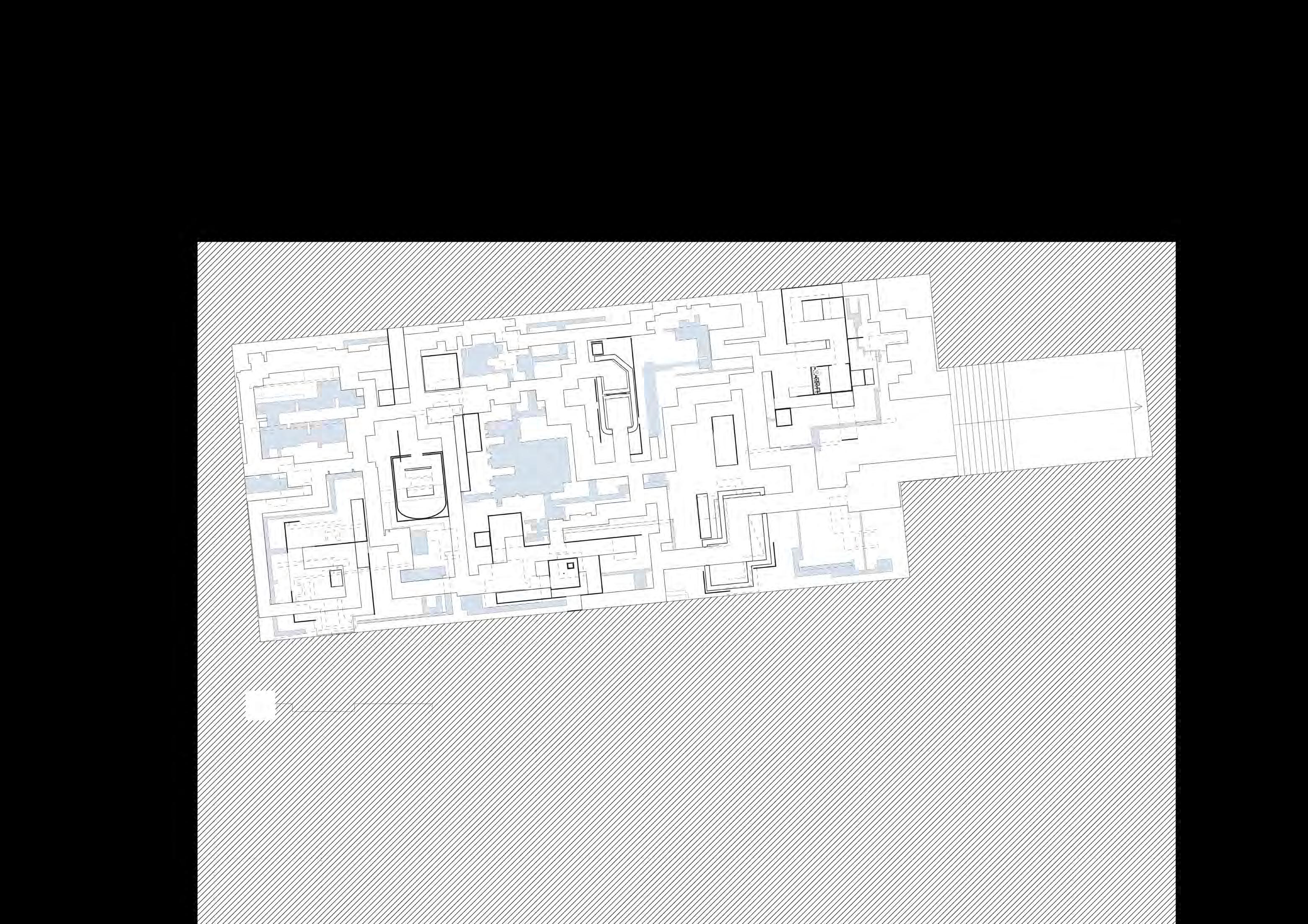
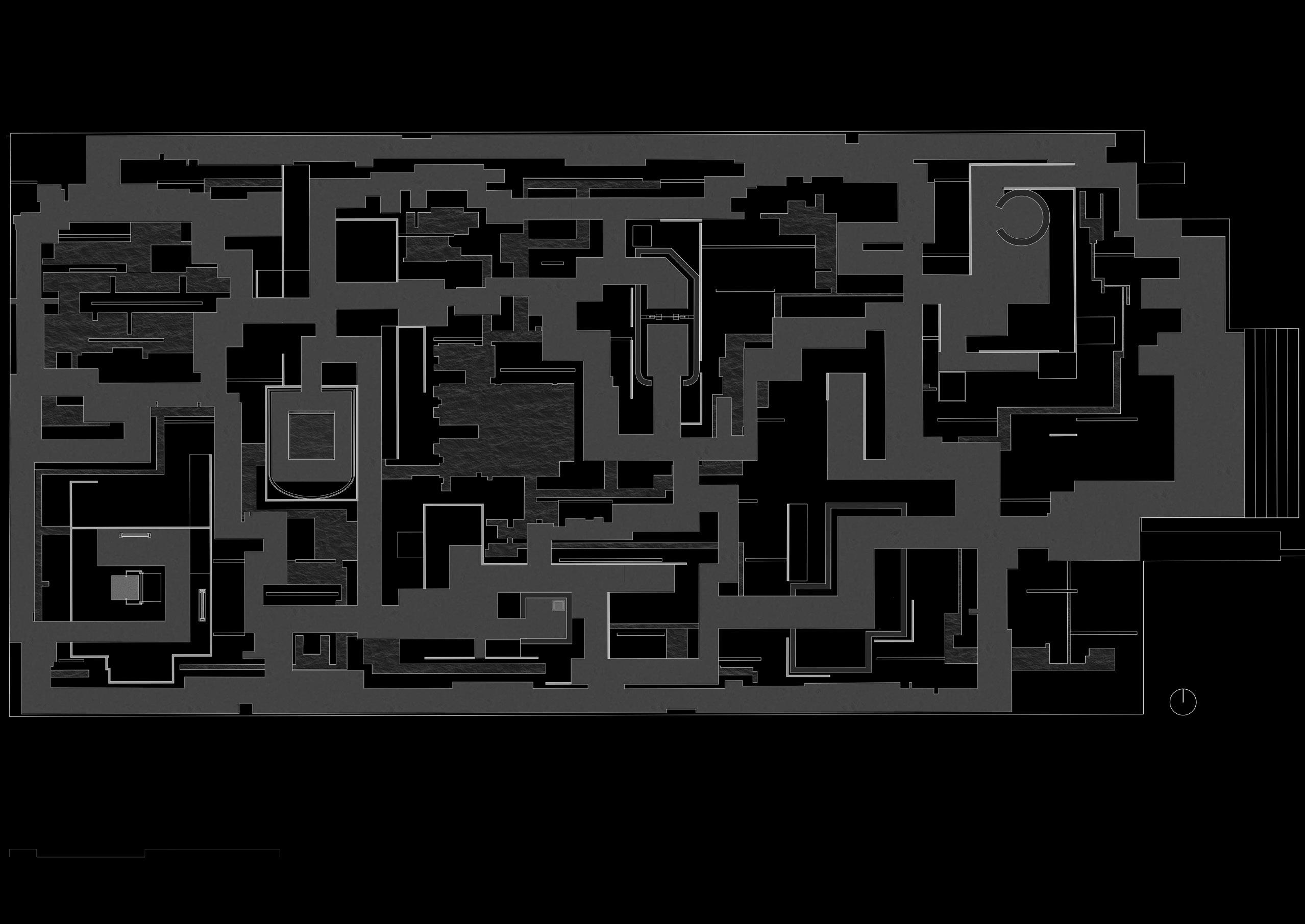
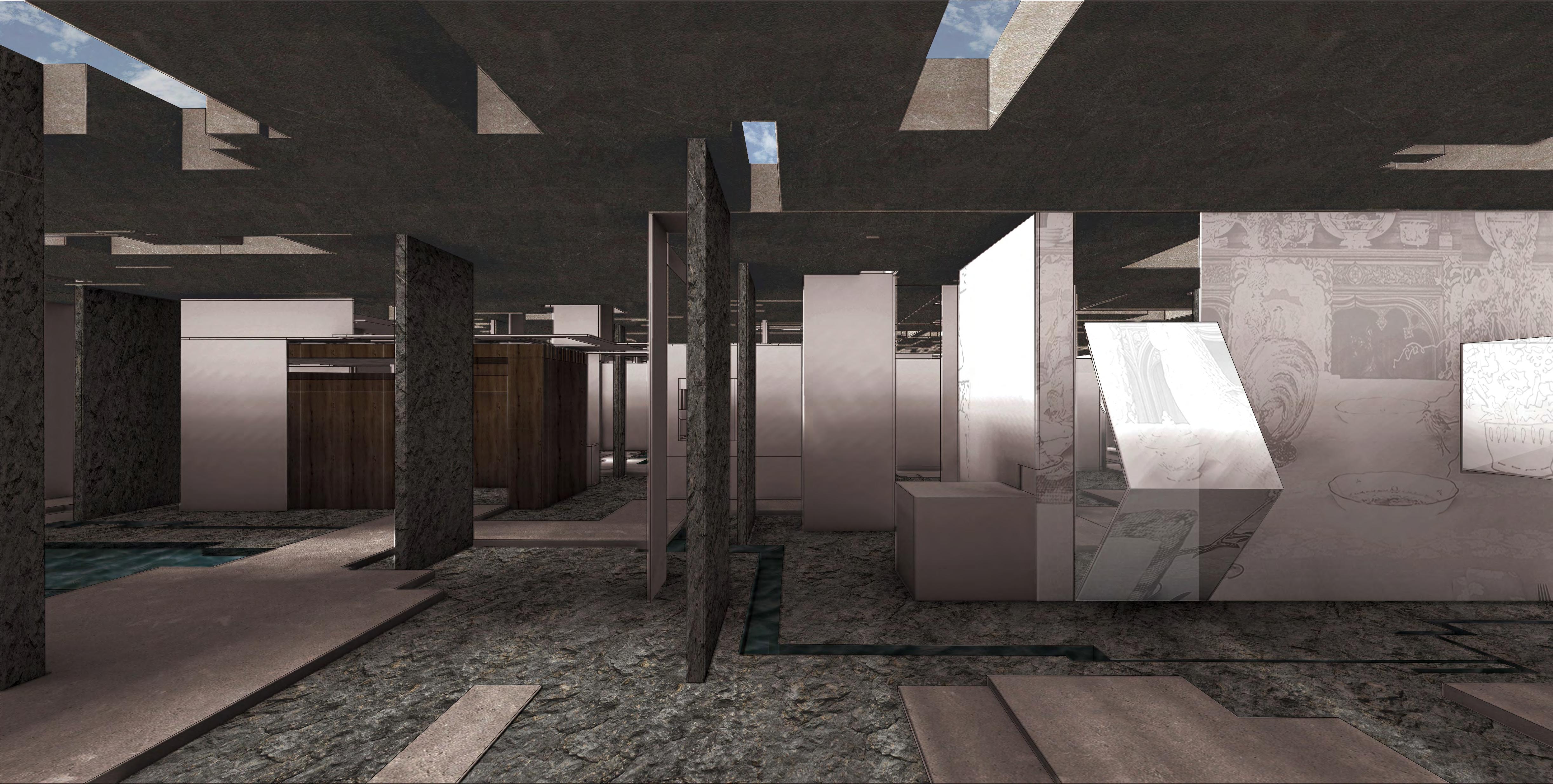
The location of the bedrock, pathways and waterways trace the projection of the box onto the landscape from above. This shows how our designed landscape embodies the wider history of Mount Stuart. The voids on the Parterre level bring natural light but also rainwater into the underground landscape. In overcast weather, the water channels can overflow and the heavy rain both work to flood the exposed bedrock, creating a secondary aquatic landscape. In drier times, visitors can traverse the bedrock and the formal paths to explore the observatories.


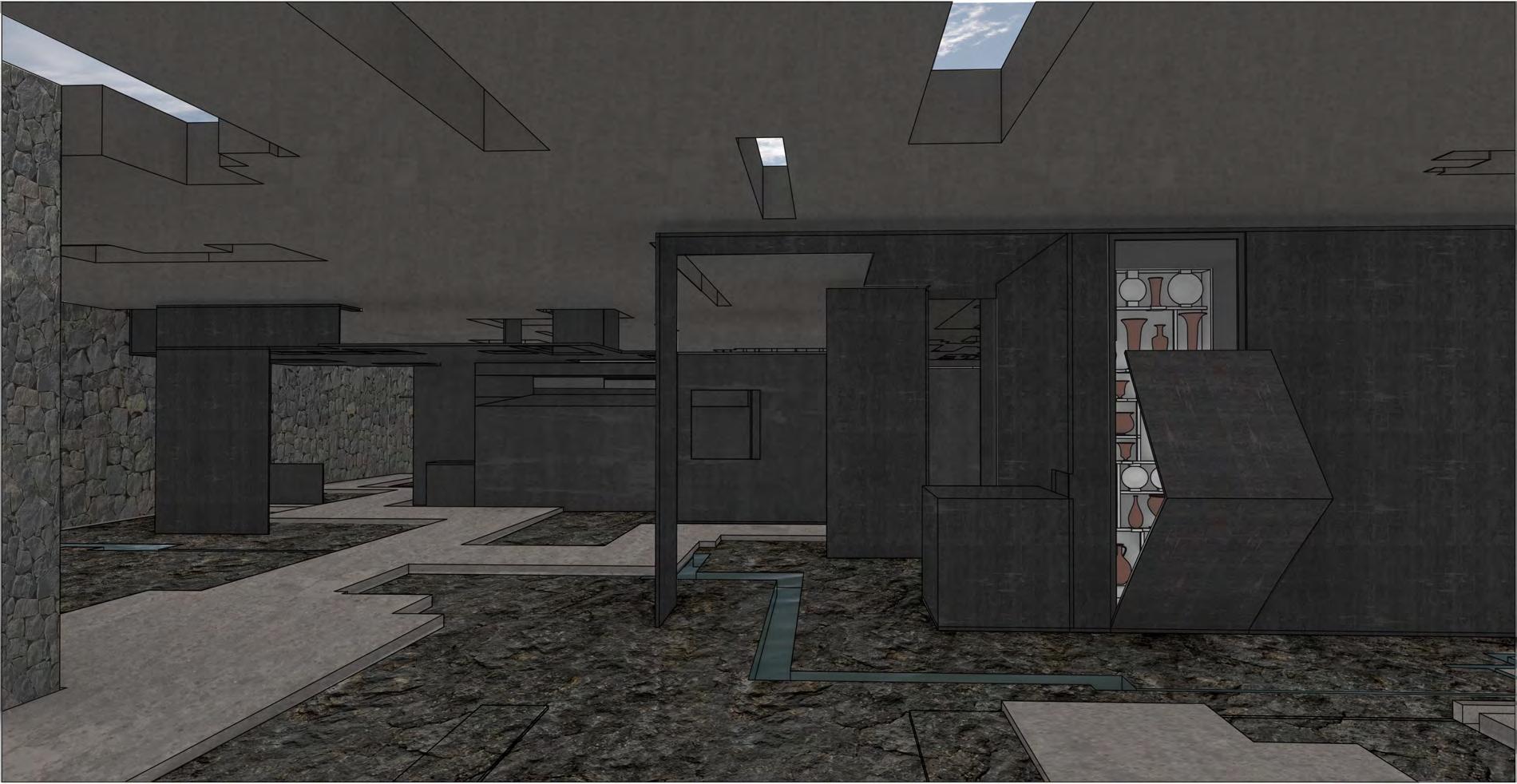
The materials chosen for the scheme create a dark atmosphere under the Parterre. However, this serves to accentuate the light brought in by the voids and highlights certain objects in the observatories.
Scarpa’s treatment of water in the Fondazione Querini Stampalia served as inspiration for how the walkways in our project interact with water. The close adjacency of the water and pathways create a strong relationship between the natural and man-made world. Our scheme includes voids on the Parterre which correspond with water channels below to increase the aquatic- effect.
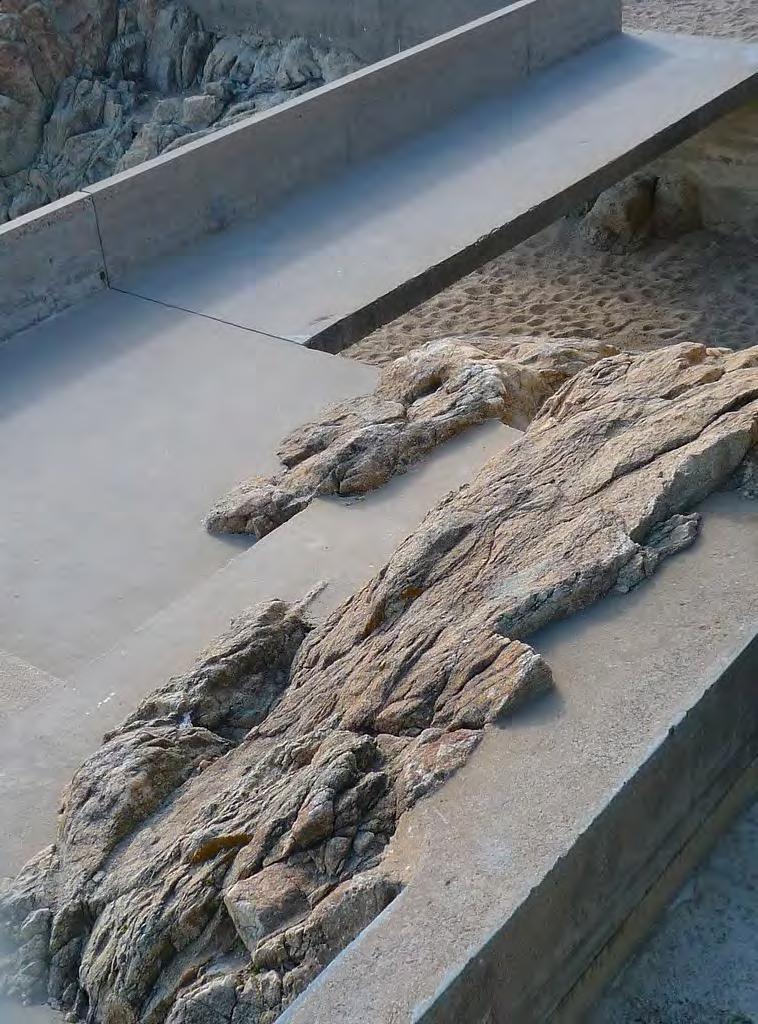
The richness in the materiality, rooted in the contrast between smooth concrete and coarse bedrock, in Siza Vieira’s work came through in our careful placement of the walkways in relation to the bedrock and waterways.
The use of concrete in the Nordic Pavillion creates a sense of lightness despite the material’s heavy properties. The use of large spanning but numerous beams create the sense of lightness which we aim to achieve in our own way through the cavities in the deck on the Parterre level.
Precedents
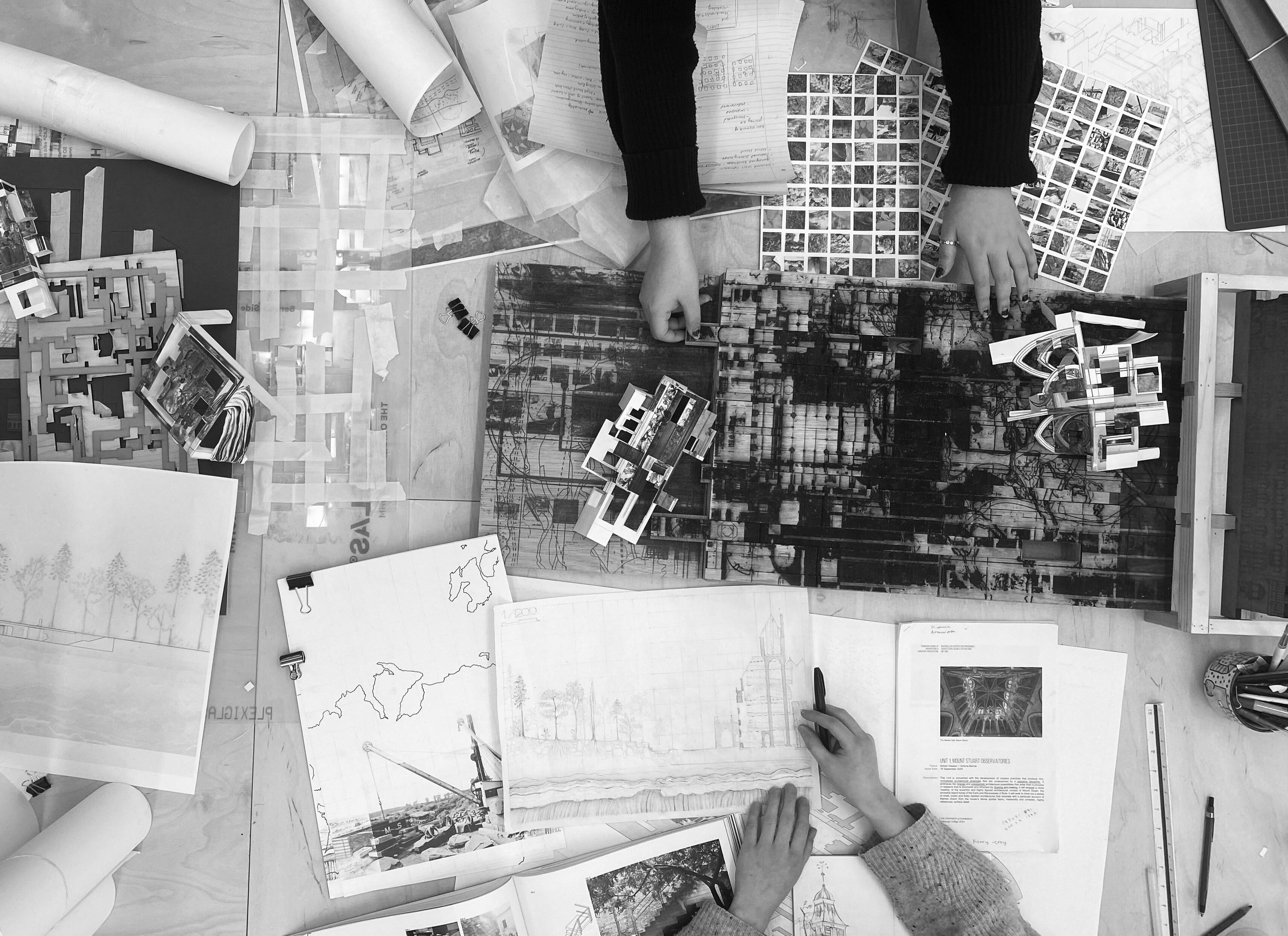
Our final review was a fantastic opportunity to collate and reflect upon our work. After the review, there were several key considerations which informed the refinement of our scheme.
• A refined calibration and understanding of how the components fit together.
• Define and realise the environmental and material conditions; particularly with and understanding of how light and materials impact the spaces.
• A greater consideration of the interaction between different material elements.
• Situate the design more firmly within the context of the Parterre.
Reflections on the Final Crit
The final stage in our process defined and clarified the new Cabinet of Curiosities.
‘reimagined curiosities’ refers to the outcome of the deconstruction process. The exhibition of the curiosities has been explored, deconstructed, and reassembled to provide a novel appreciation for their qualities.
The final scheme is reminiscent of pulling out of the drawer to reveal a cabinet of curiosities taken from within the house. It can be understood as an extension of the existing Cabinet of Curiosities. The physical form of the drawer, its lid and compartments fully embody the essence of Mount Stuart’s rich history.
Chapter 7: A Cabinet of Reimagined Curiosities

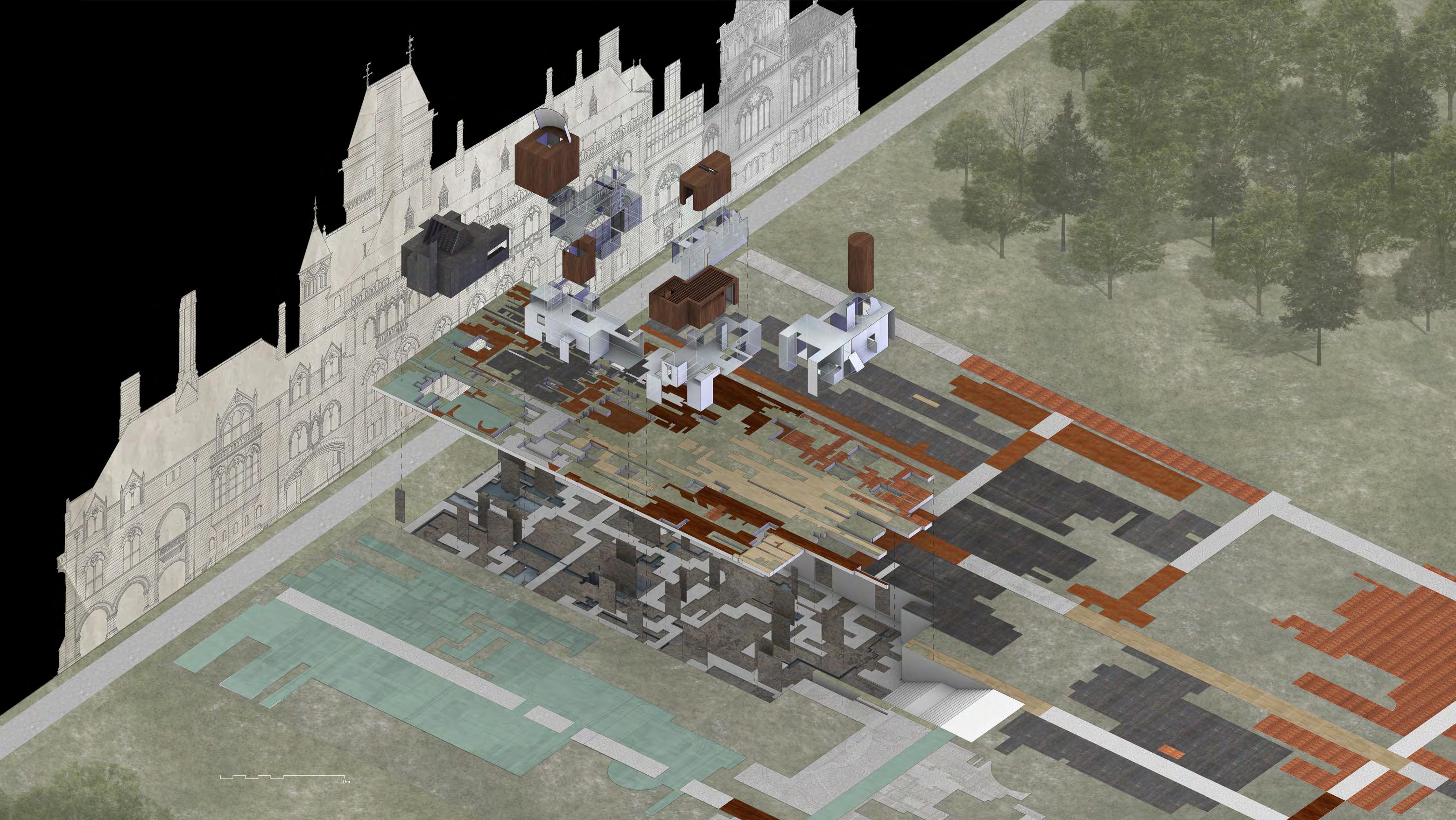
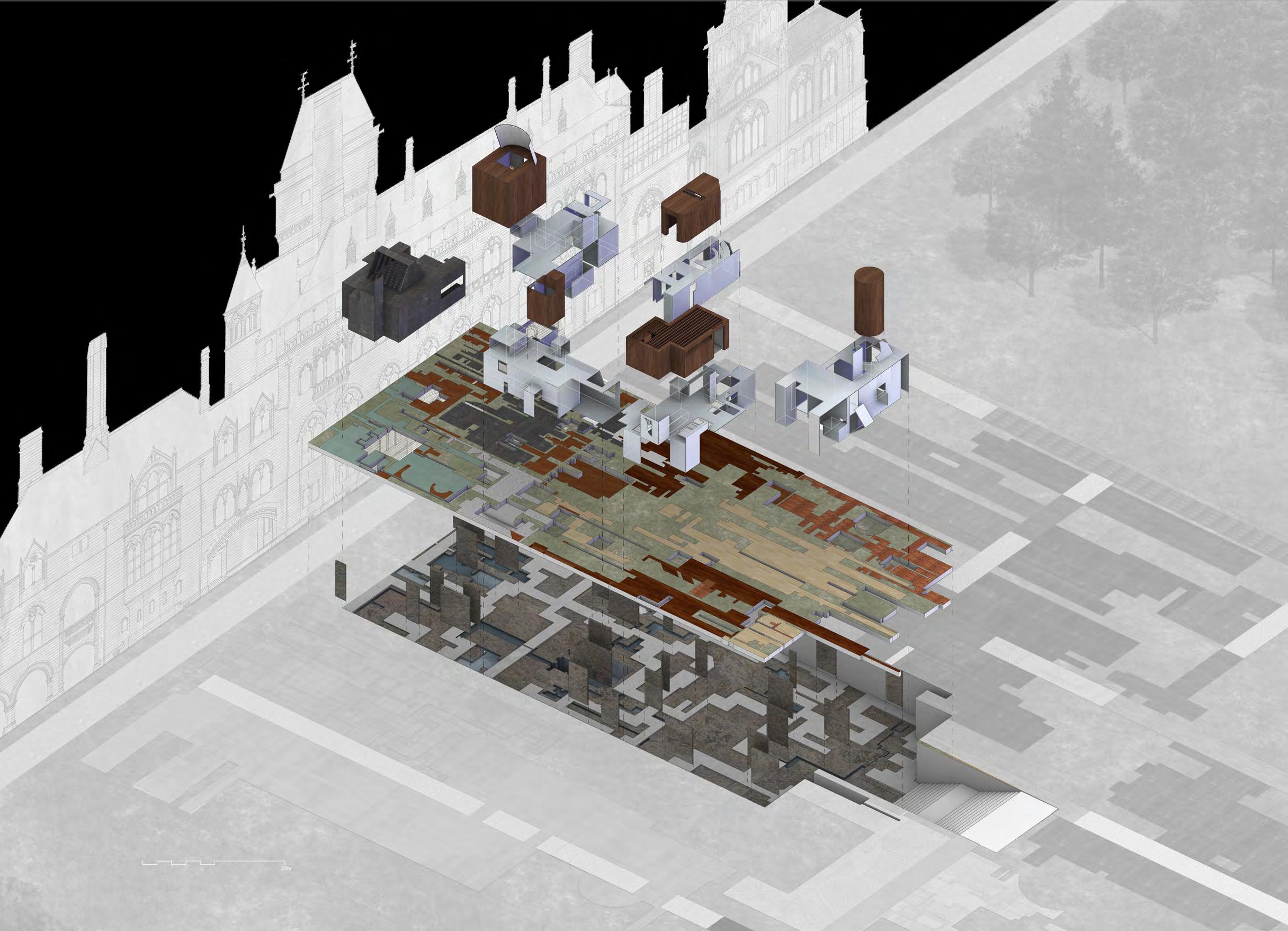
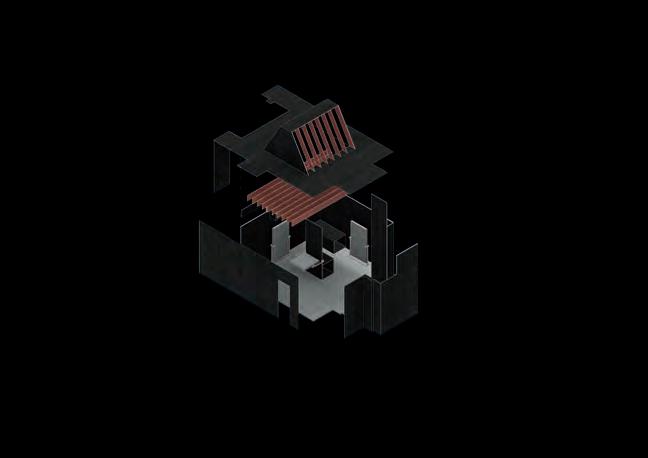
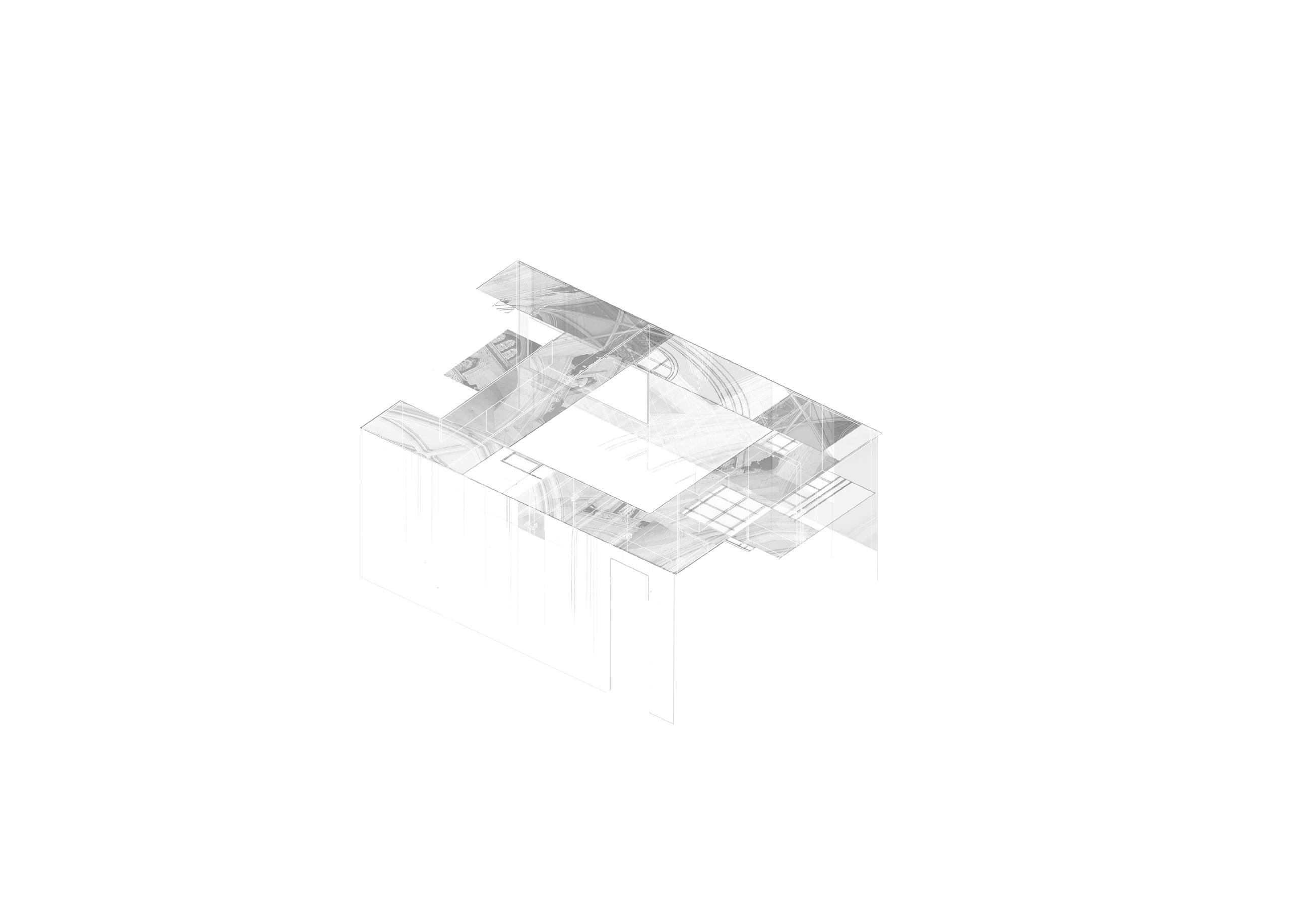
Pulling apart the landscape allows us to understand the scheme as four different layers.
1- The ‘New Parterre’; creating a new material landscape in which embeds the context, history, and culture of Mount Stuart into the landscape.
2- The Compartments; structures which house the collections and embody the collections, as they act as a physical translation of the deconstructed collections.
3- The Observatories; an intimate environment within which to view the collections and experience the objects and understand their material qualities.
4- The scheme is sunken within the landscape and is set upon the bedrock with inlayed polished stone paths, and horizontal strip walls, which act like fins which support the New Parterre.
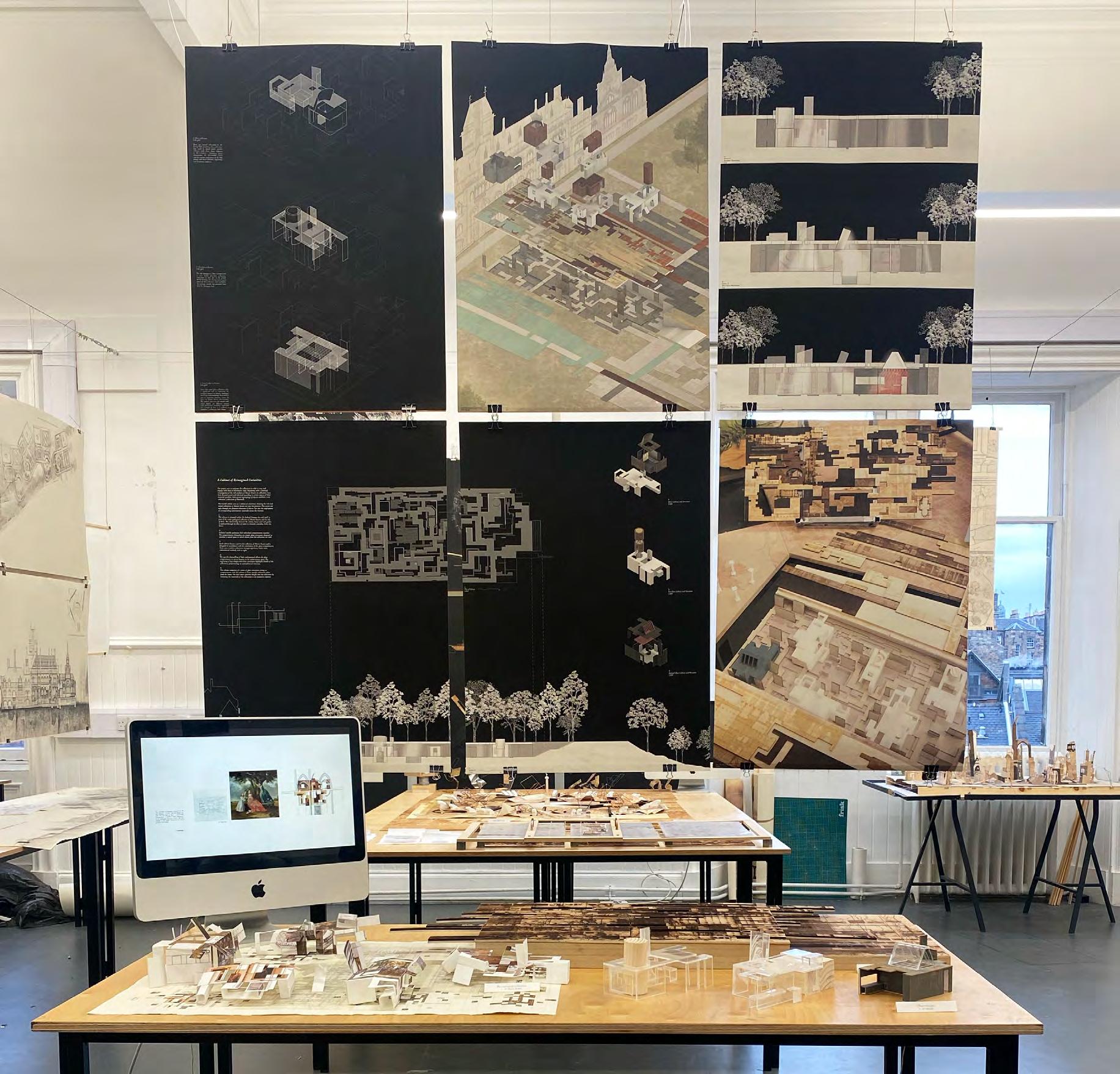
The material and contextual qualities of Mount Stuart are integral to the scheme and inform the use of engravings on the parterre, as well as the compartments, which express the graphic nature of the collections. This drawing explodes the box of curiosities, allowing us to understand the organisation of the compartments.
An individual is still able to walk atop the Parterre as previously done. They can navigate a range of materials inlayed into the landscape. The movement from above the Parterre to below is seamless as the central staircase sinks into the ground.
Mount Stuart Estate Isle of Bute
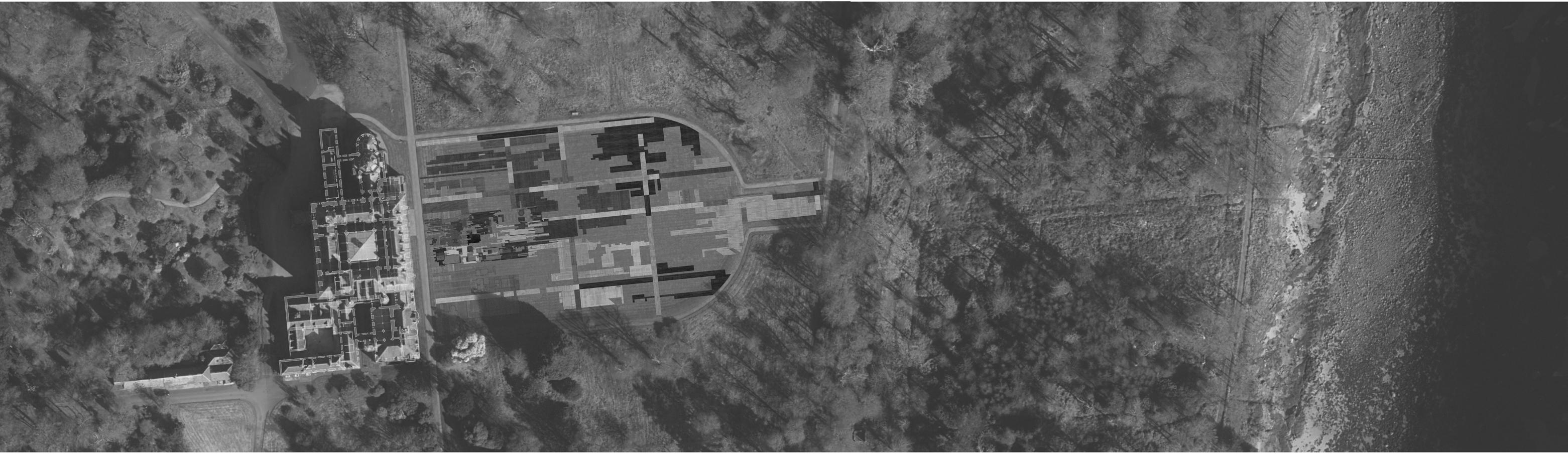
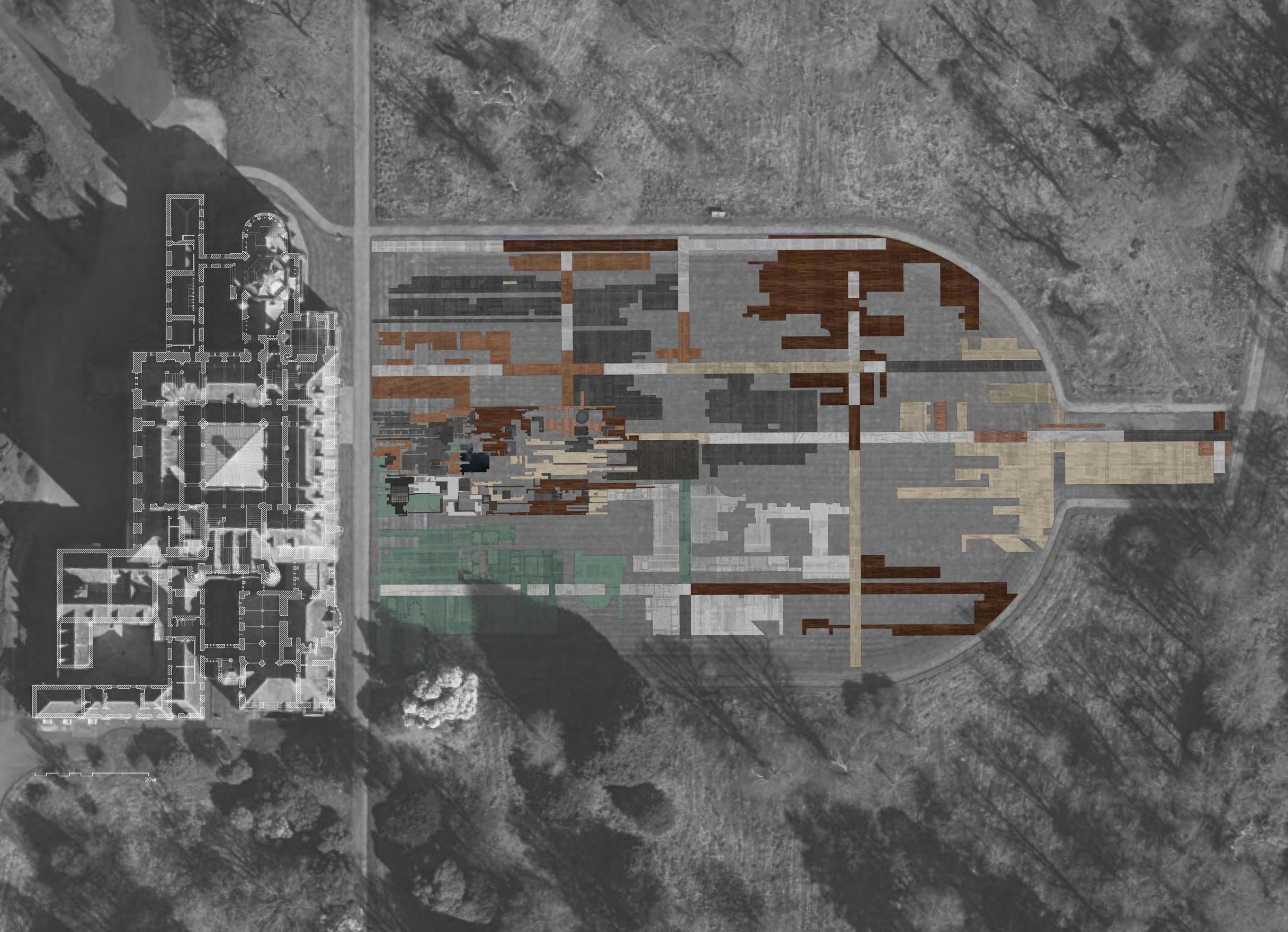
The new Parterre is a material system which sprawls out into the landscape, embedding the materials into the flat and refined plane of the Parterre. It also retains the graphic language by engraving contextual information on to the material pieces. Voids in the parterre permit controlled proportions of rainwater and light into the sub-parterre level.
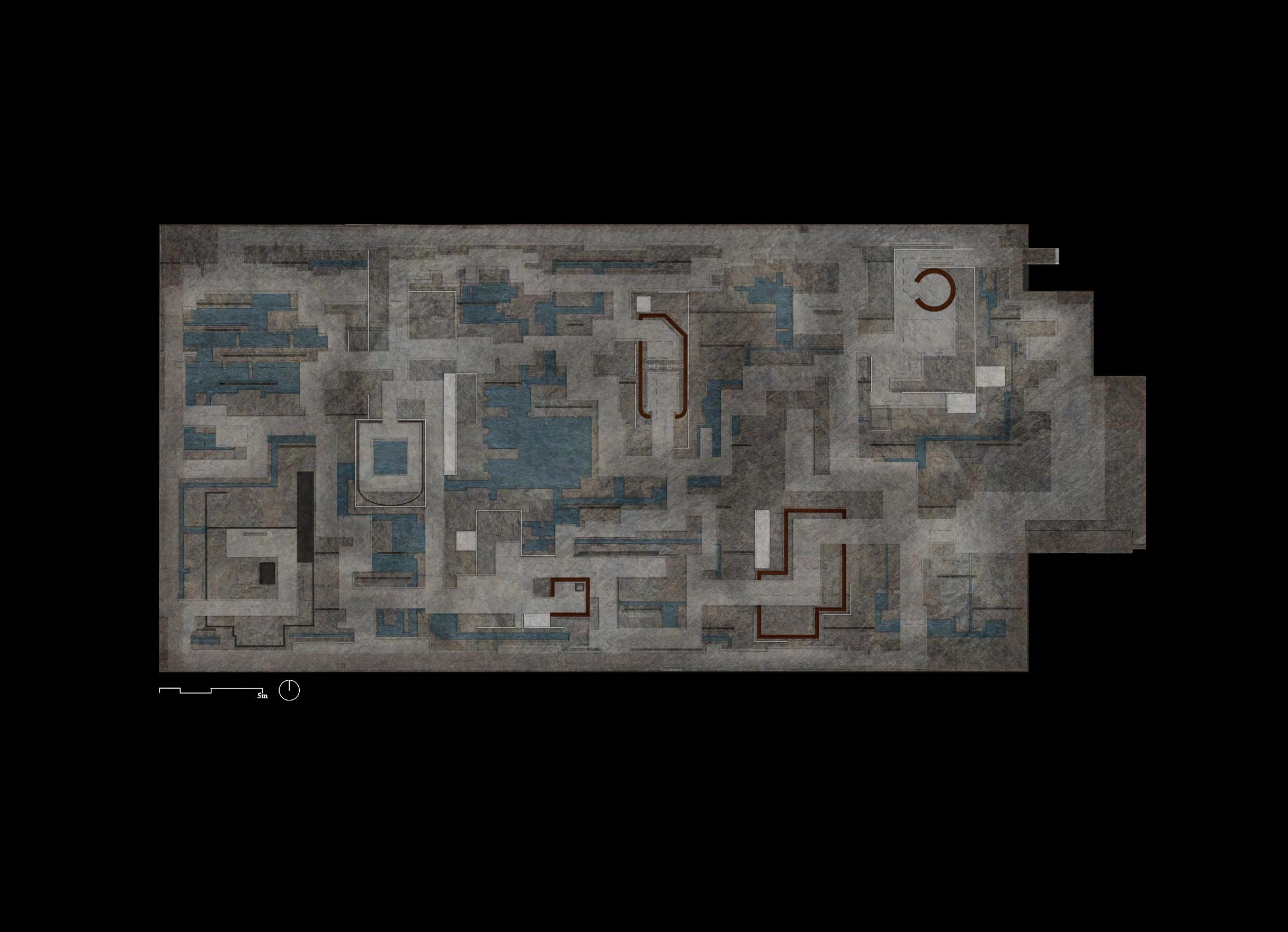
Thin water channels are excavated from the bed rock which creates intentional waterways which also have the ability to overflow. The waterways connect the parterre level with bedrock level, as the voids on the parterre allow rainwater to permeate. Furthermore, it relates to the water system at Mount Stuart which redirects the river, through the rock garden and passes under the house and up to the parterre. Smooth polished stone paths are juxtaposed with the rough bedrock and allow us to traverse this strange landscape. The Compartments are carefully slotted between the paths of the landscape, allowing for fluid movement between the observatories.

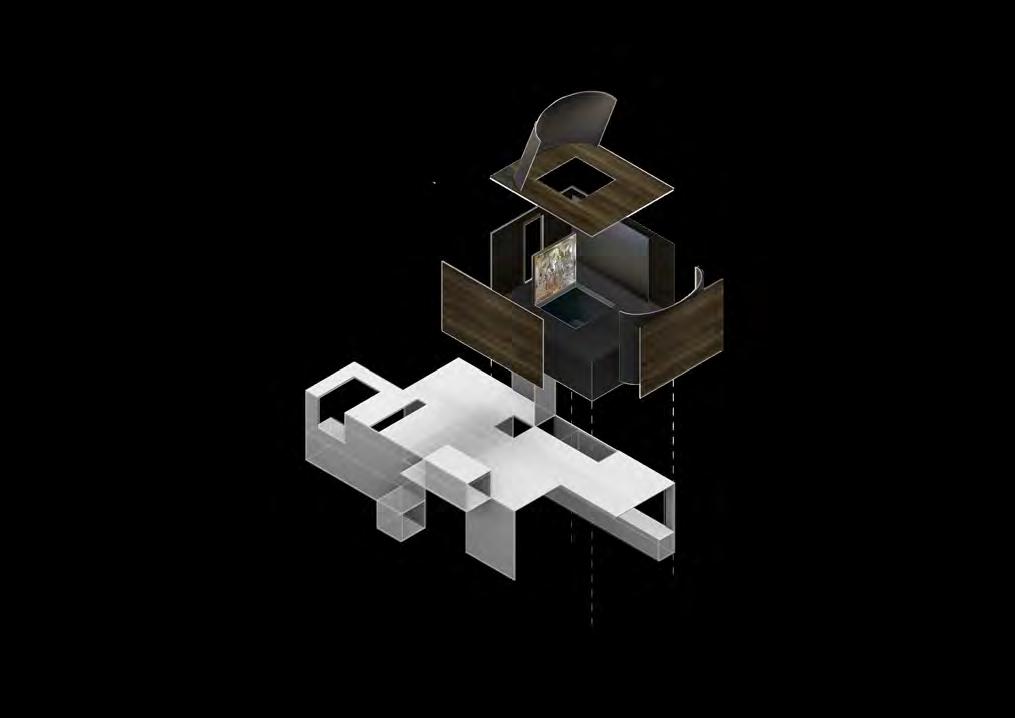
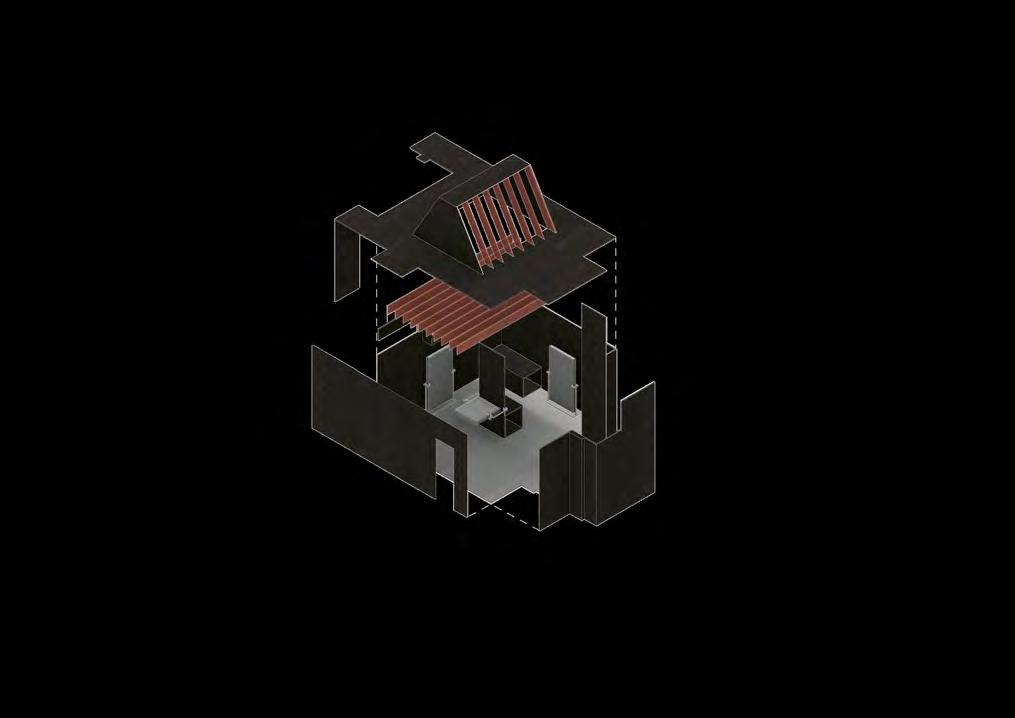
Details of the Cabinets
Exploded Isometric 1:50 @ A3
The cabinets have a direct relationship with the compartments and slot into place. Voids are strategically placed to permit specific and directional light. They both create different senses of enclosure, the compartment acts as a threshold space, and the cabinet acts as an intimate and enclosed space within which to experience the collections in a new way.
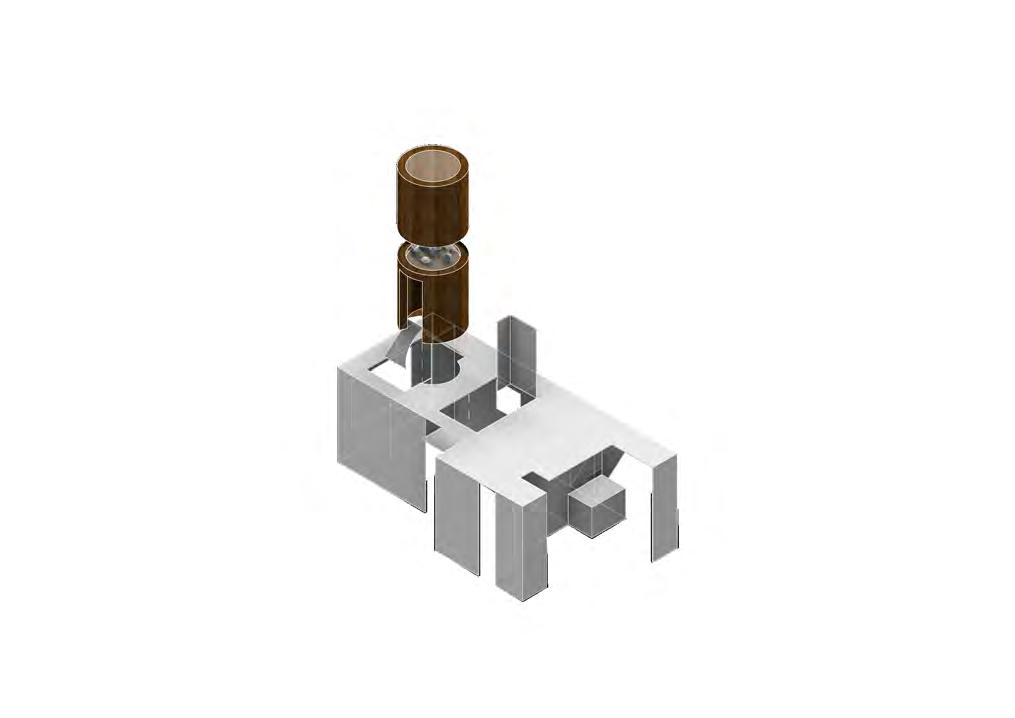
The Porcelain cabinet supports the objects on a glass ceiling, allowing the viewer to experience the objects in a new way, by examining the underside of the objects. It is also possible to view the ceramics from above when looking down from the Parterre. This disrupts the usual position of viewing ceramics: viewing from the side. The constricted exhibition space encourages viewers to look up, which creates a relationship between the Parterre level and below. The physical connection of these spaces through the use of a cylindrical lightwell provides necessary light to illuminate the porcelain and otherwise gloomy subterranean level.
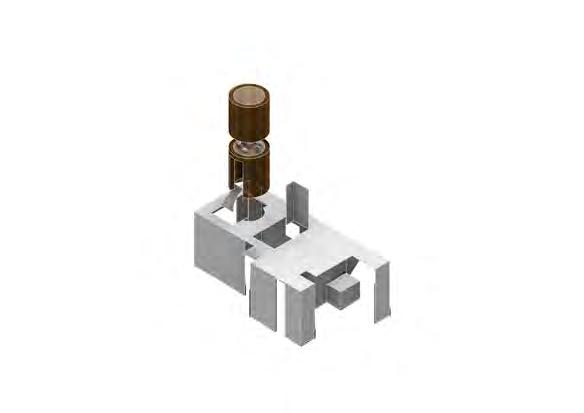
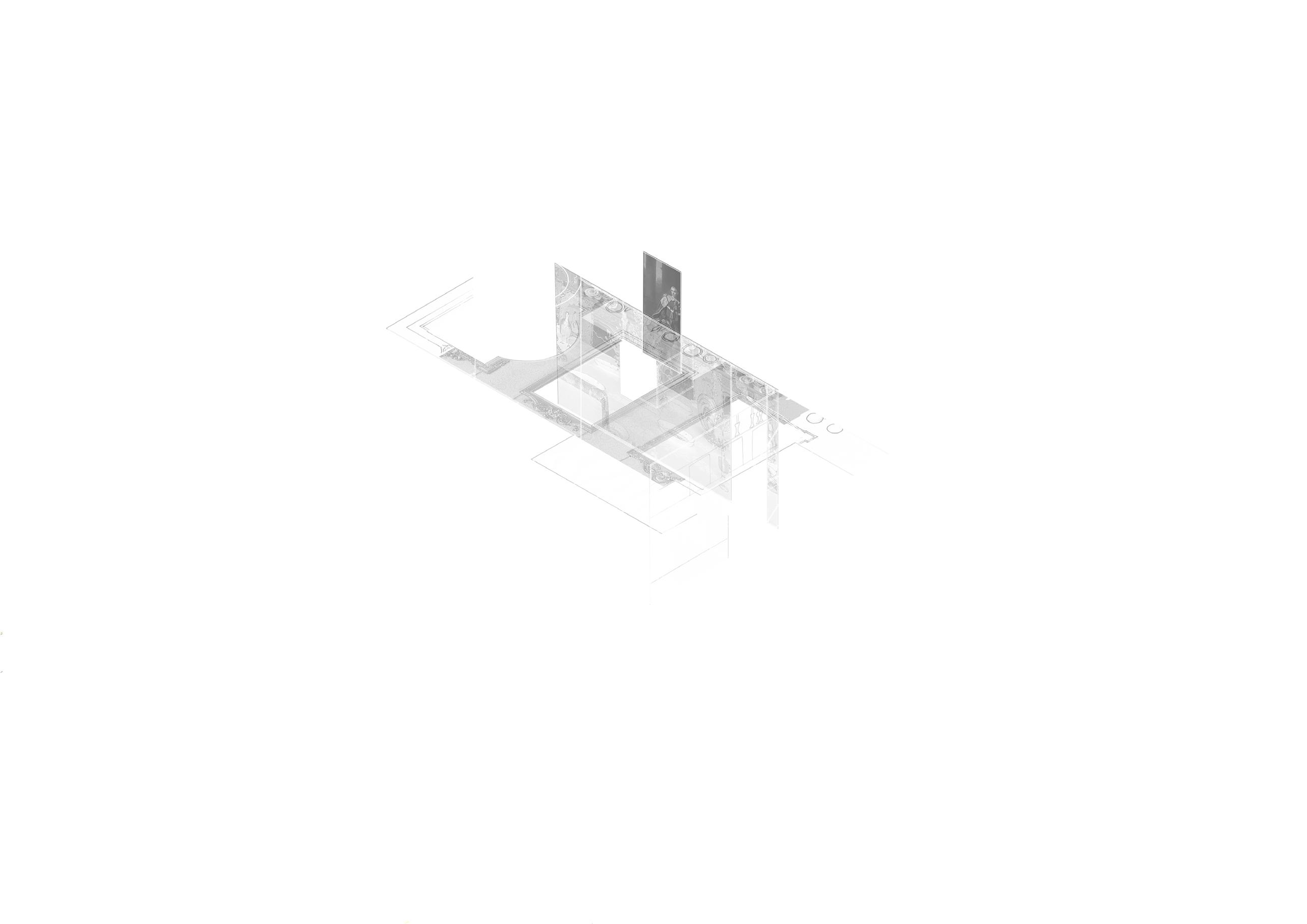
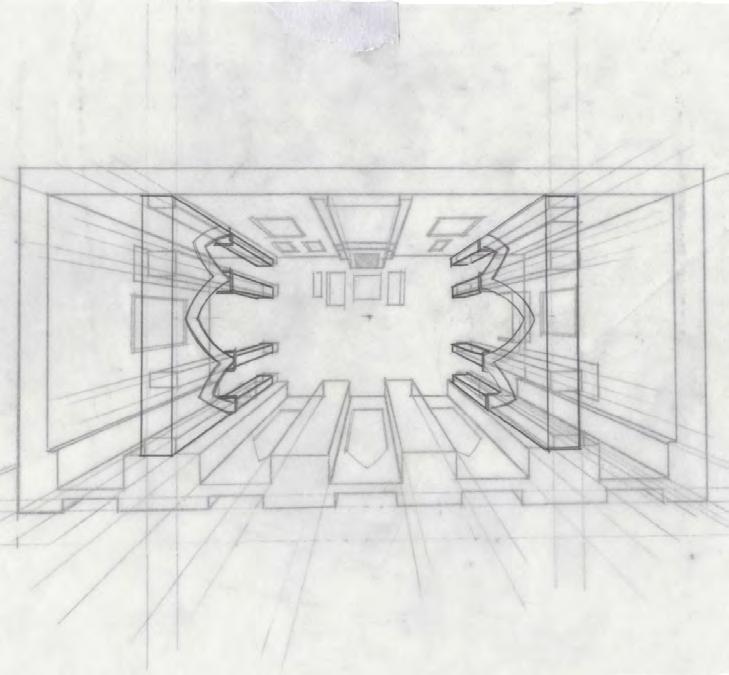
The Silver Cabinet exhibits the Marquess’ late wife’s Silver Icon.
The design of this cabinet promotes silver’s reflective material quality. Directed natural light, reflects from a mirror on Parterre level onto the Silver Icon. This light is cast onto a pool of water situated below the Icon; and then recast onto the mirrored walls. reflecting and refracting around the room. This process is sustained by the implementation of a curved back wall.
Therefore the Silver Icon is understood in an alternative way, through its material property, rather than its figurative subject matter. The importance of the material quality rather than the Icon as an object is stressed by its position facing away from the entrance. It is not revealed until one enters and surveys the room.
Silver Cabinet and Compartment
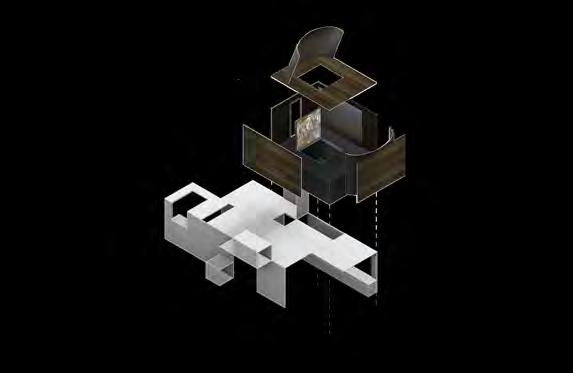
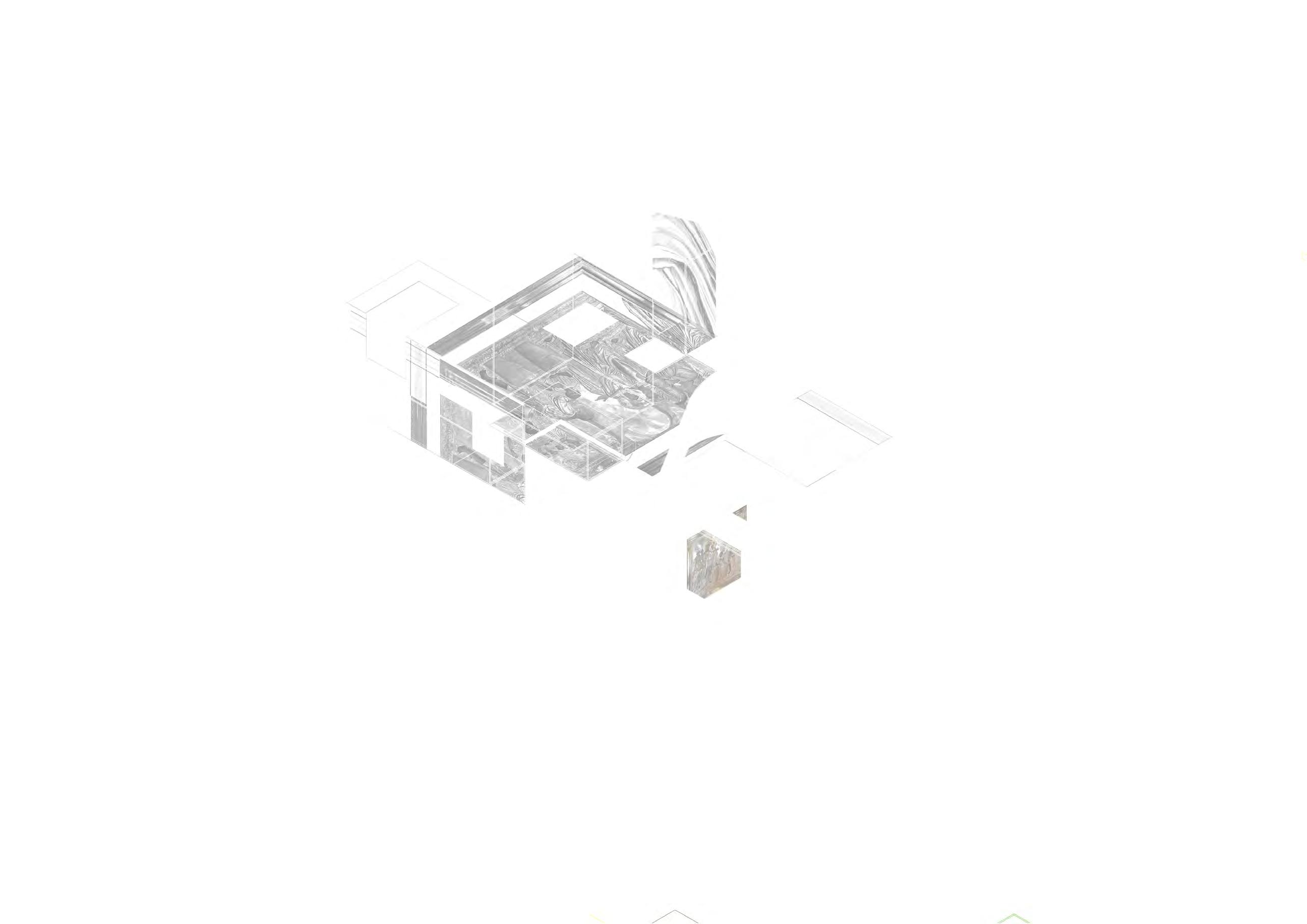
Stained glass by nature is an experiential object: it is usually understood through its interaction by light and the viewers’ relationship with it.
This cabinet seeks to create a new relationship between coloured light and other materials. The light interacts with marble and stone. The choice of exhibiting marble panels, alongside the polished stone pathways and raw bedrock, explores the percieved heaviness of these contrasting materials. The weightless and ethereal quality of coloured light and its interaction with stone, begins to transform the latter into something perceived as delicate and fragile.
The construction of the clerestory structure consists of trusses positioned in two variations of orientation and rotation. This creates a more complex and dynamic projection of light into the compartment.
View of Sub-Parterre Level from the Stairs
The light passing through the voids aims to illuminate the glass structures. The bedrock, waterways, and polished stone paths create a unique material landscape. The paths direct the viewer, around the space, and highlight unique perspectives of the observatories.
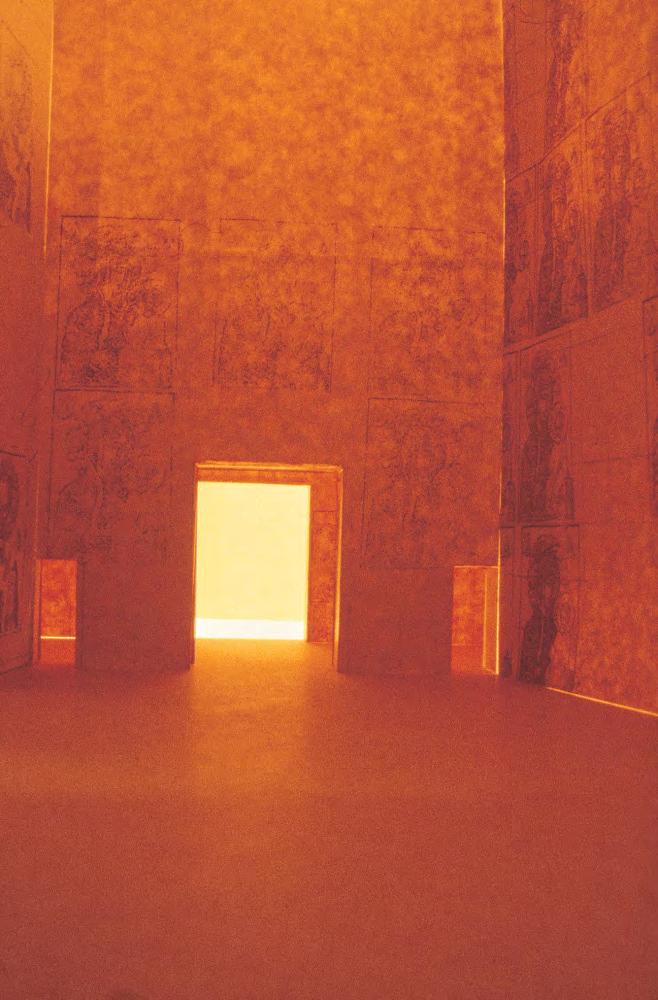
Herzog & de Meuron’s proposed Orthodox church engraved Greek Orthodox icons into sheets of marble. The design aimed to reflect the rich cultural and pictorial culture of the Greek Orthodox church, creating figurative representations of religious icons which are abstracted when viewed in close proximity. The marble sheets were intended to filter light through the space. We aimed to introduce similar material and graphic qualities into our work, by translating the rich visual qualities of the collections, and enhancing them through the use of light. We achieved this by etching onto the structural glass of the Compartments.
Proposed Greek Orthodox Church
Herzog & de Meuron
1989
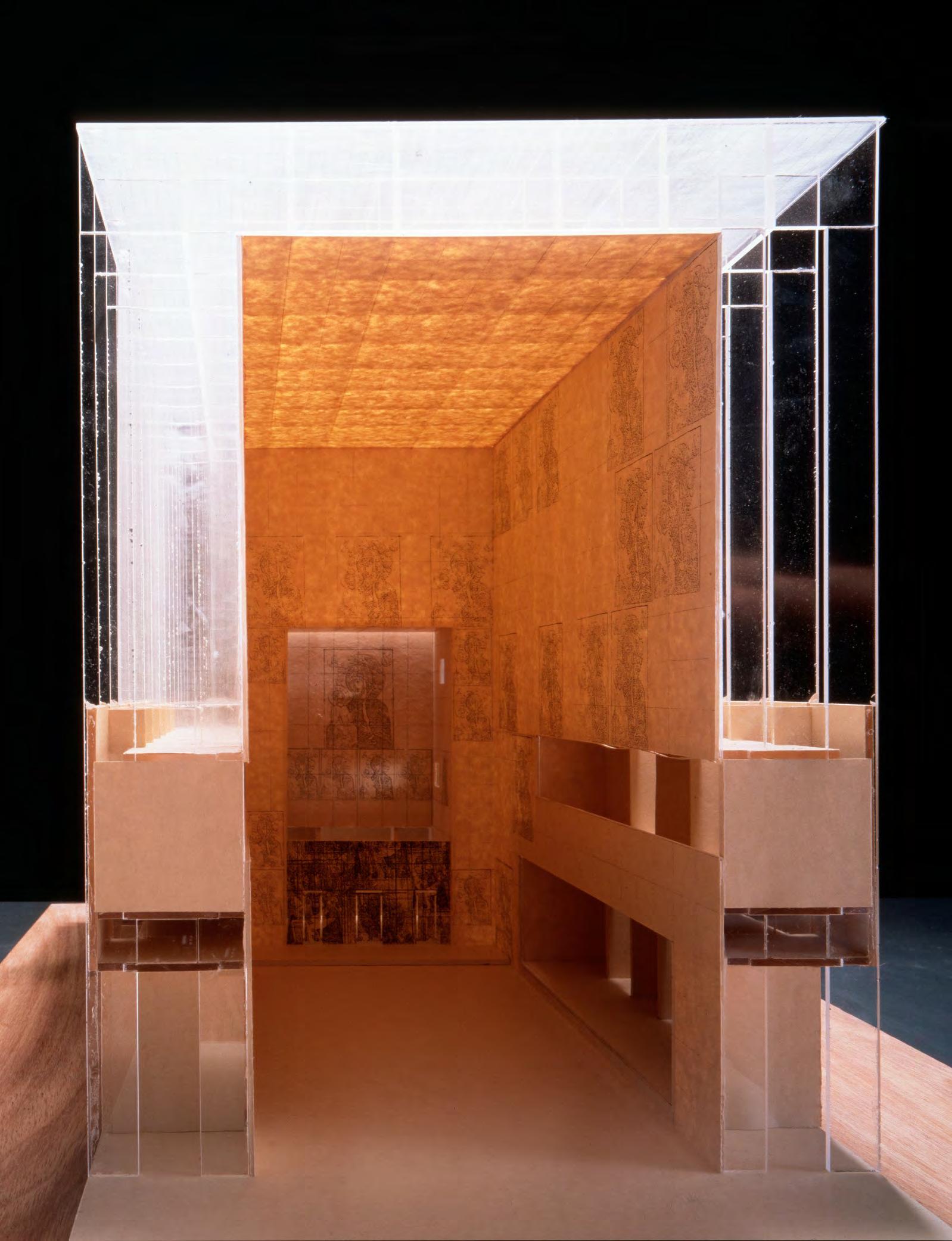
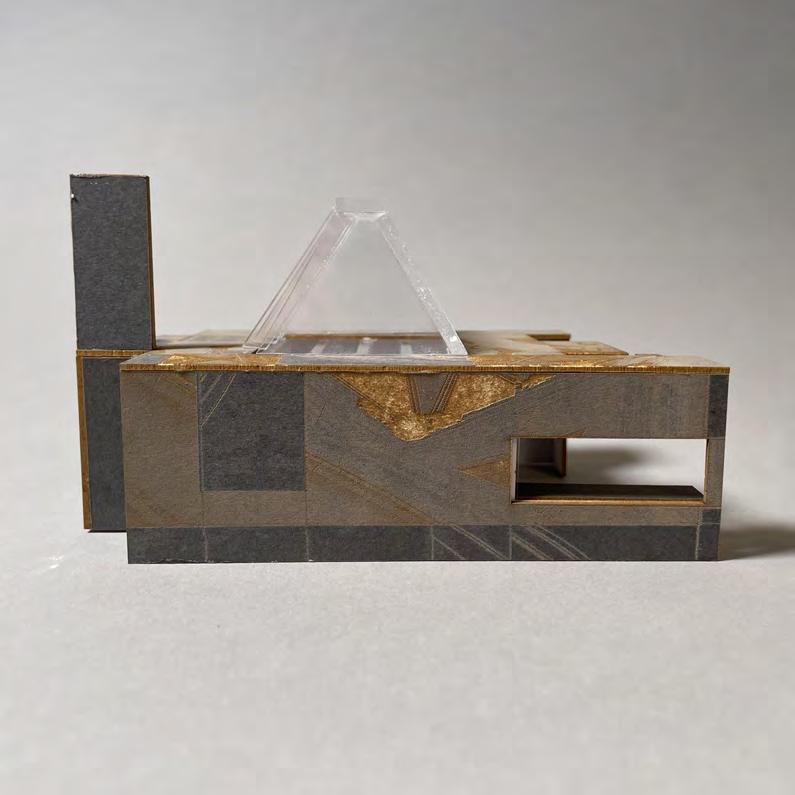
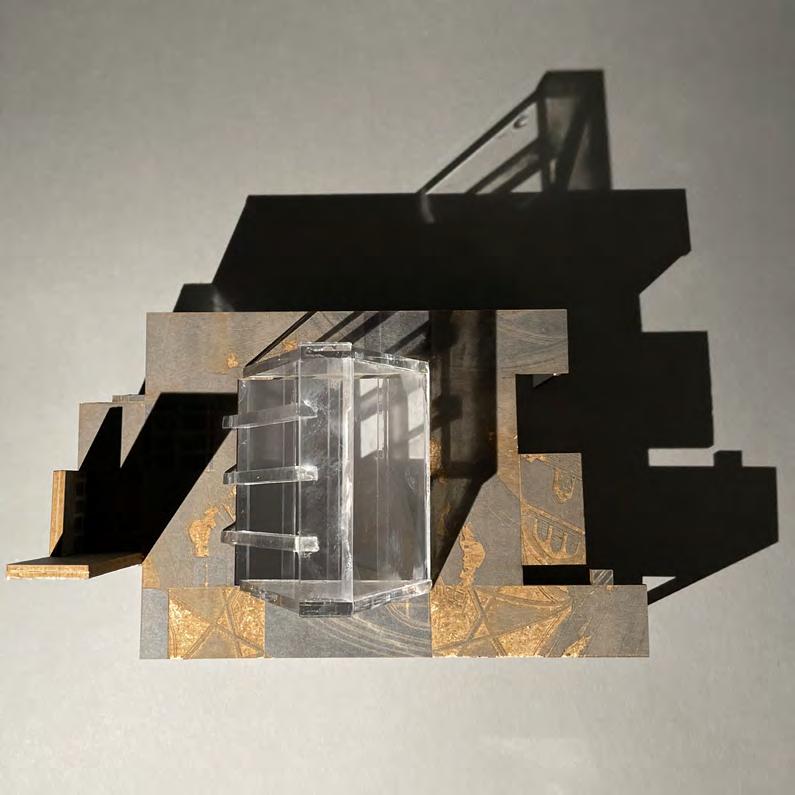
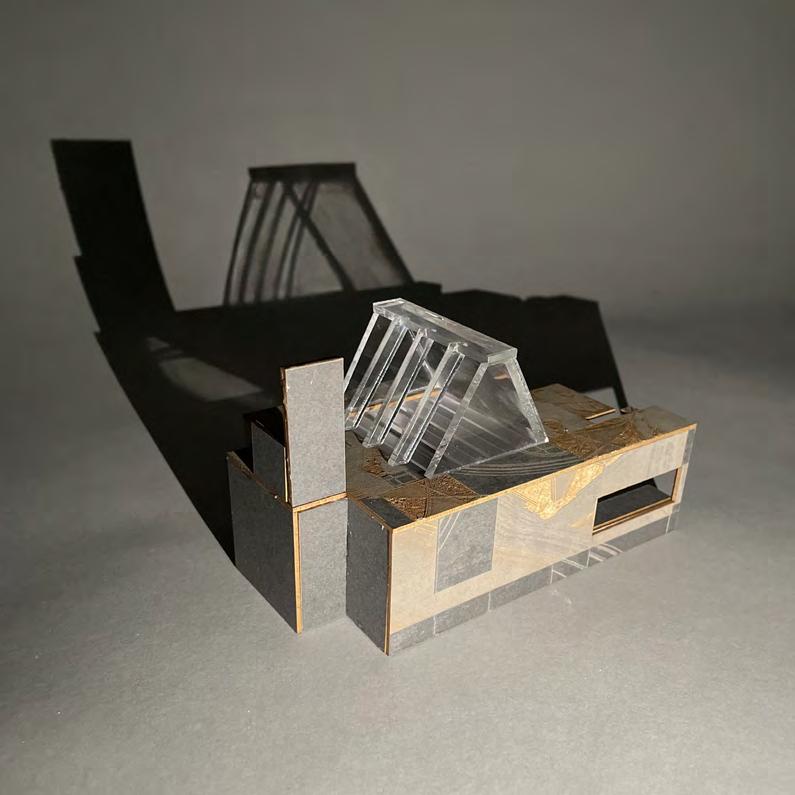
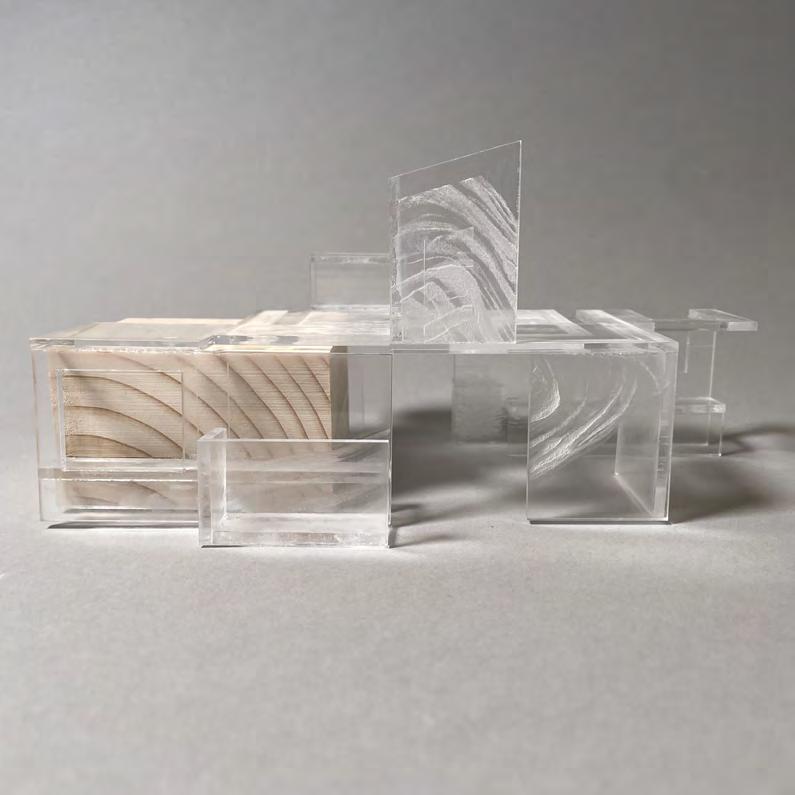
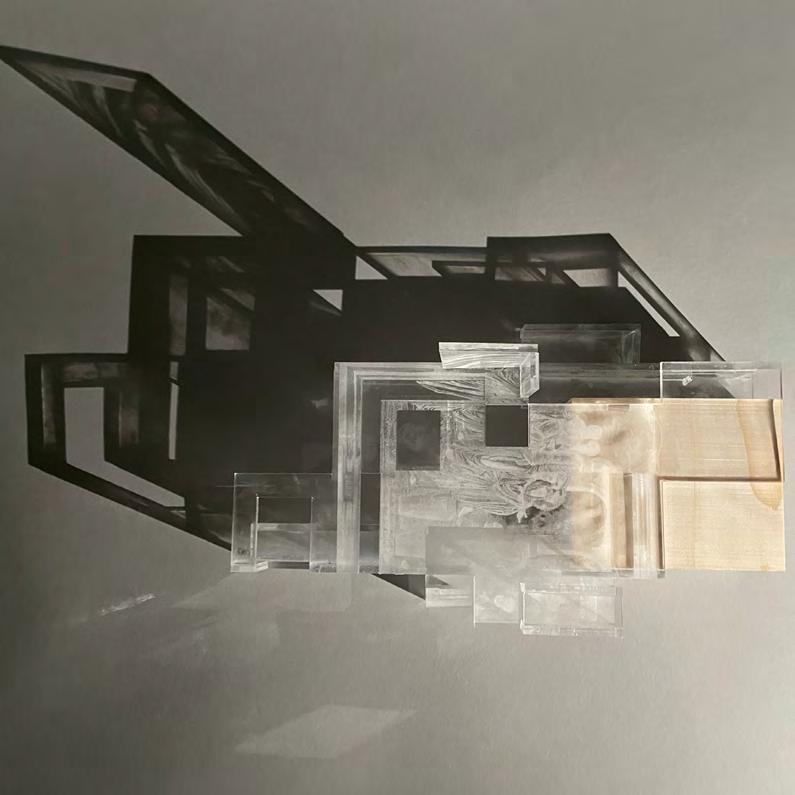
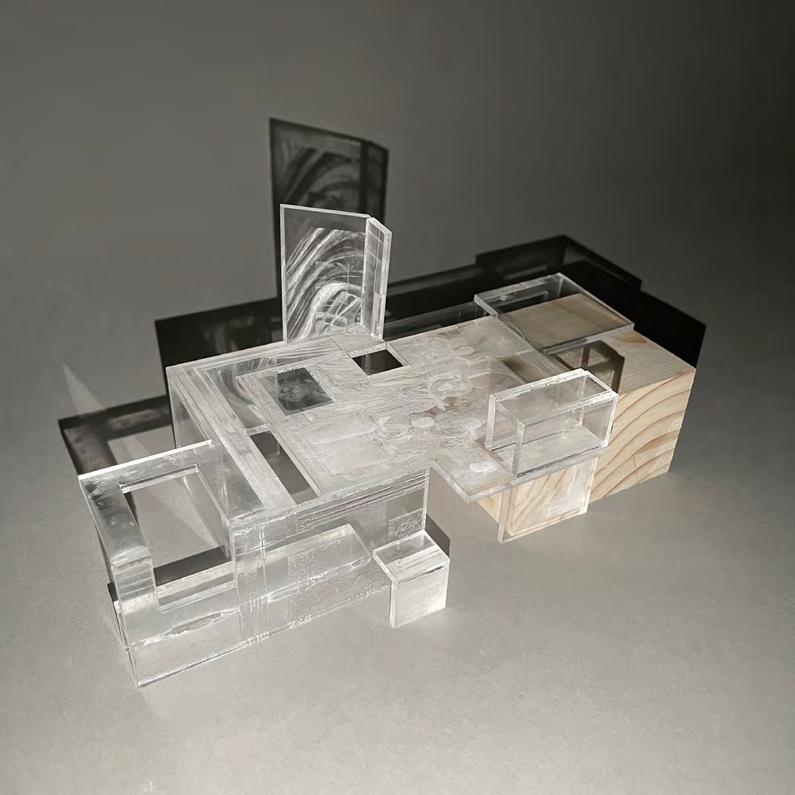
Final models of the compartments allows for the compartment designs to be rationalised and refined, whilst retaining the fluid and intricate graphic detail of the collections.
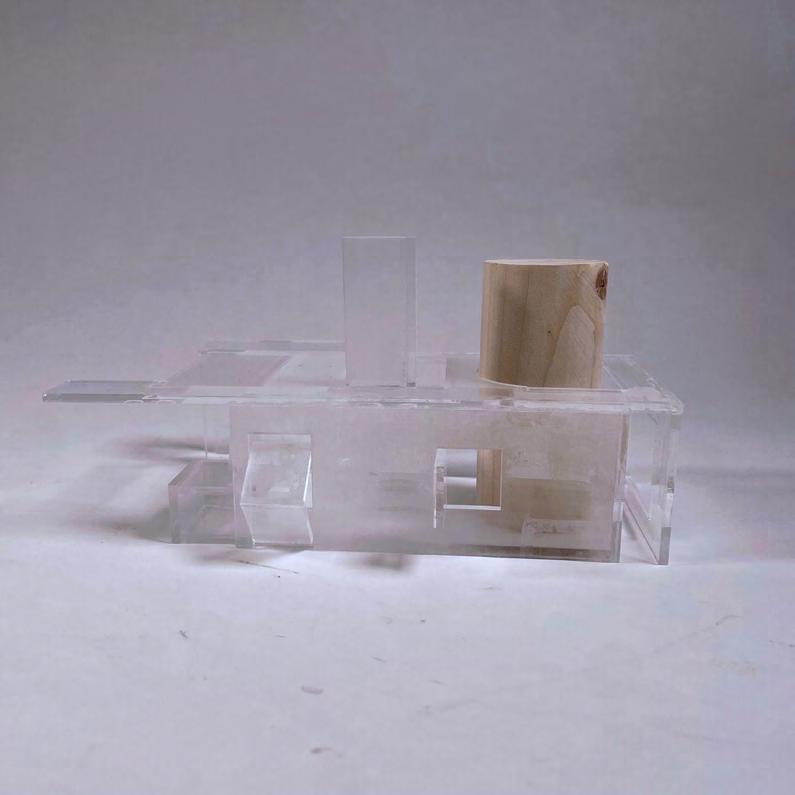
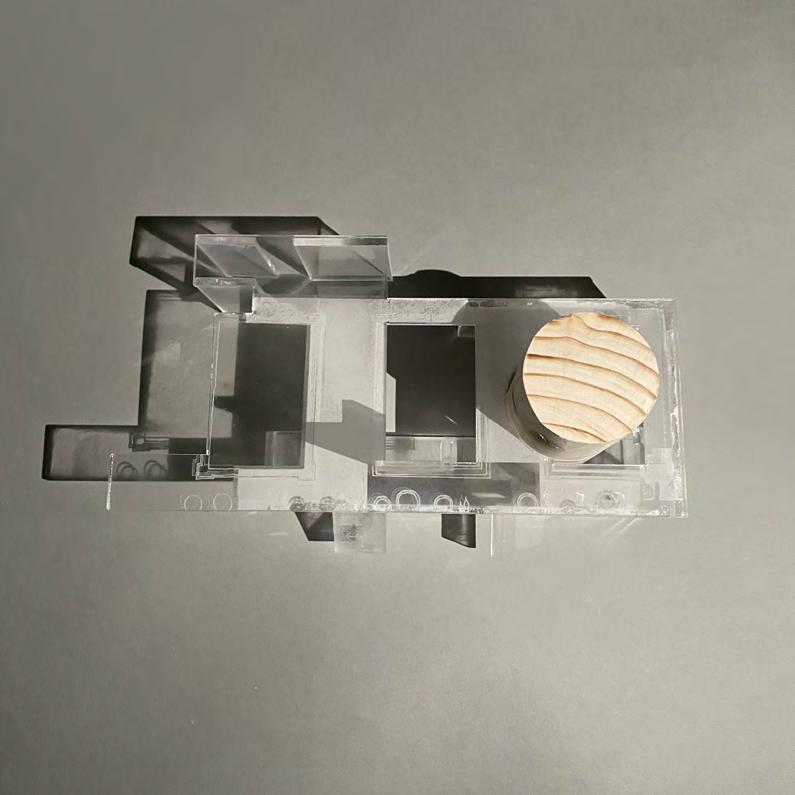
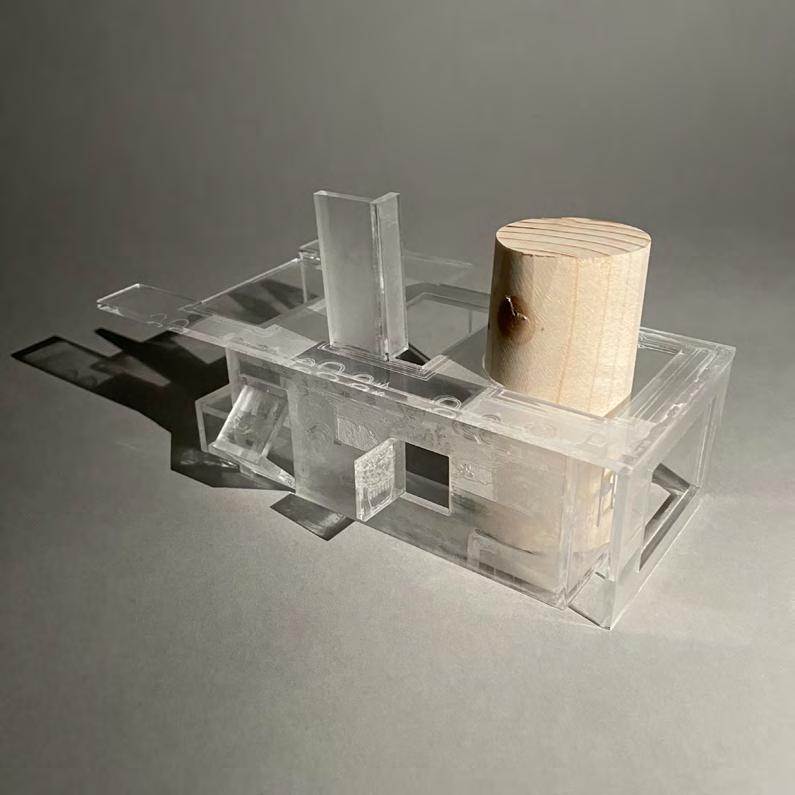
There were five varieties of timber veneers used on the 1:100 final model including:
Obeche Mahogany Walnut Basswood Spruce
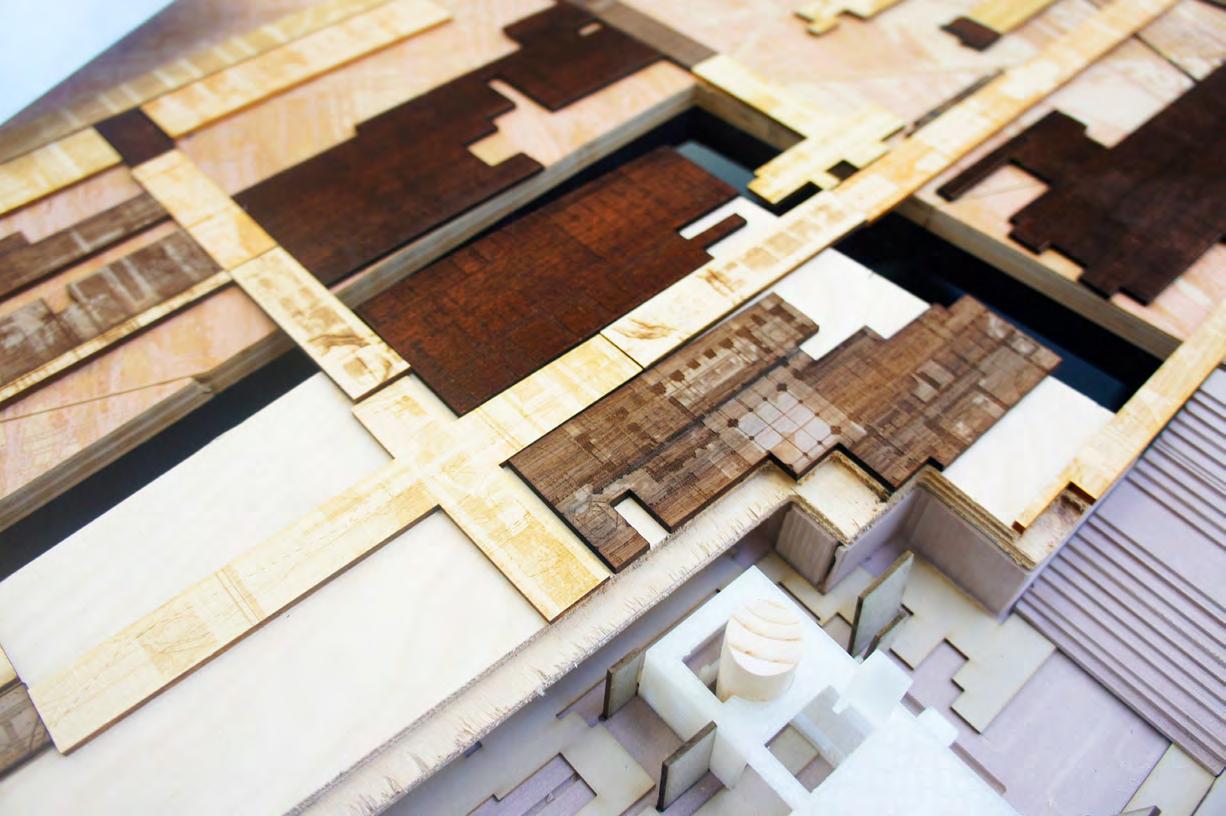
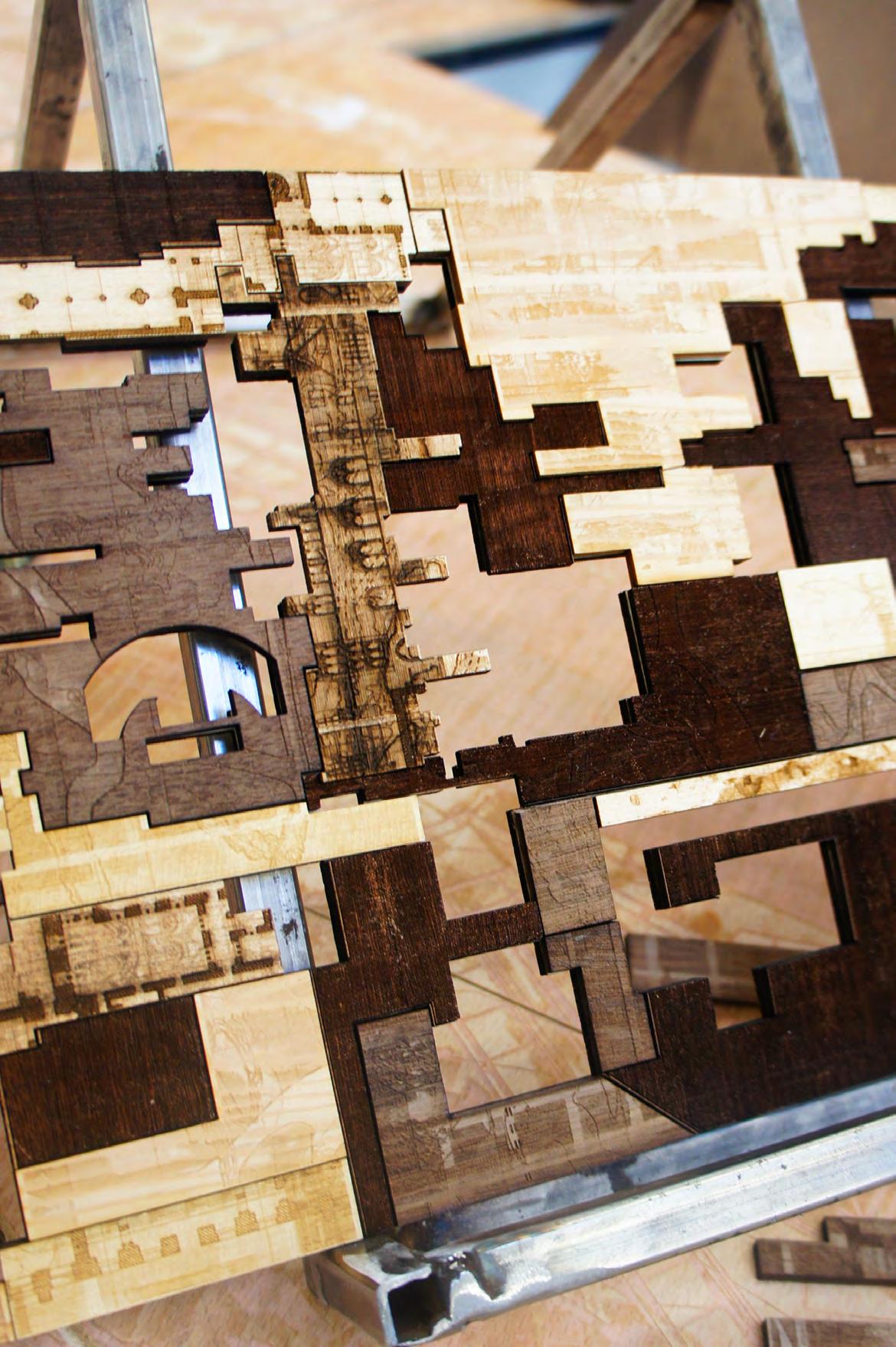
These were thoughtfully chosen to bring emphasis to the different timber tones, giving the Bute’s table and the triptych’s diverse rastering textures more depth. The mahogany wood symbolises grass, while the other timbers represent the rich variety of materials inlayed into the Parterre. The new Parterre acts as pedestrian roof, translating this into the model, the inlay is made with timber veneer. The pieces are slotted together to make the new Parterre; and also scattered out onto the Bute’s table, representing the wider Parterre.
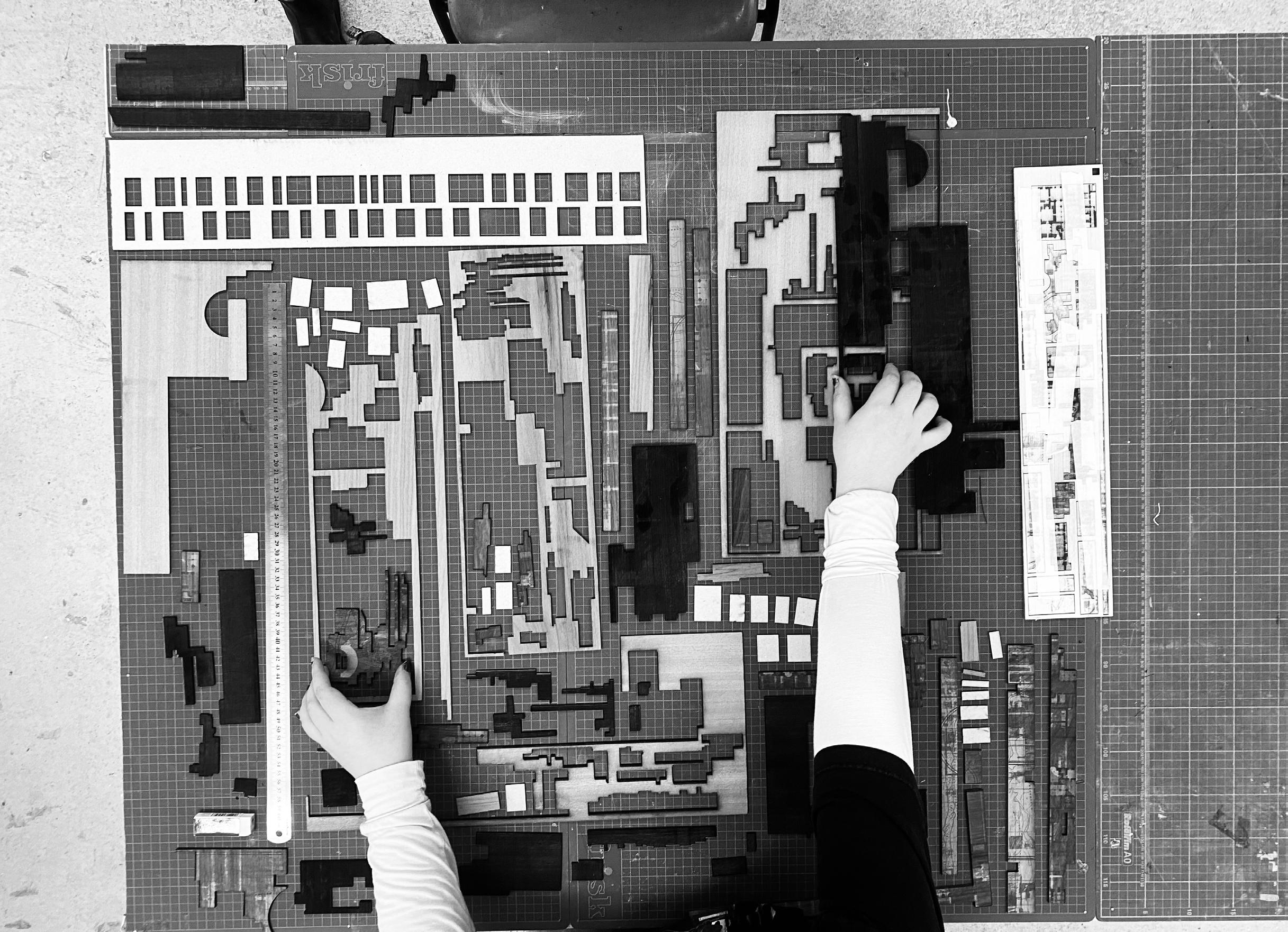
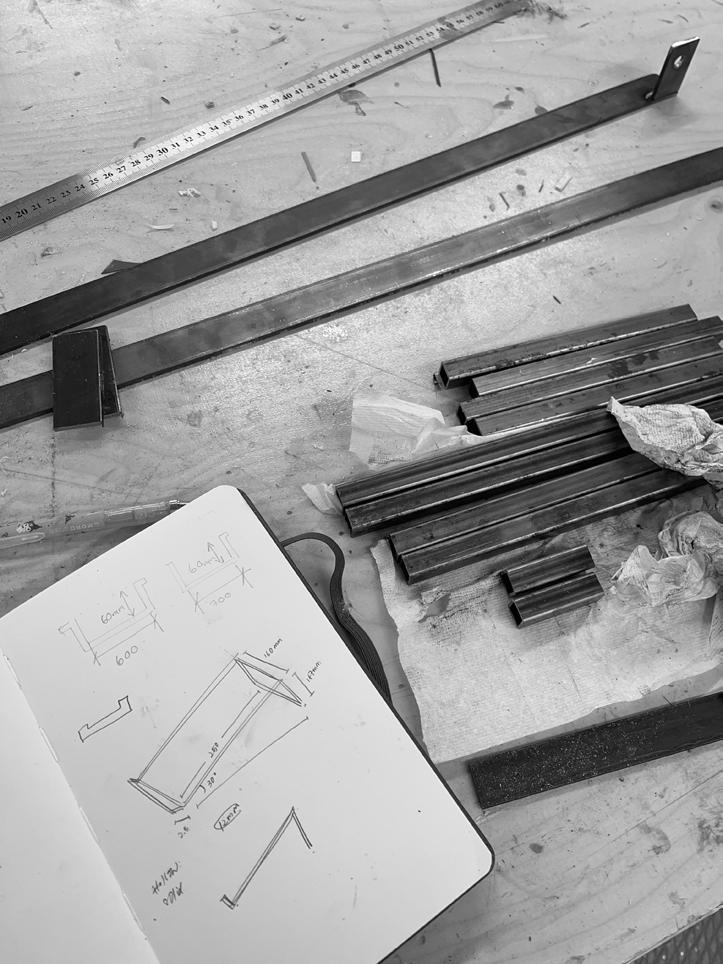
The workshop played an integral part in our design and development process. The use of digital fabrication was fundamental in realising and translating our complex ideas into a physical form.
Tools like laser etching, CNC, and 3D printing allowed us to express the intricate details of our scheme.
Furthermore, introducing a wide material pallet including timber, metal, paper, card, and plastics created a richness to our models and its material expression.
An understanding of the materials and tools which we have been working with has been integral for informing our designs and accurately translating our complex scheme into a physical form.
Model Making Workshops
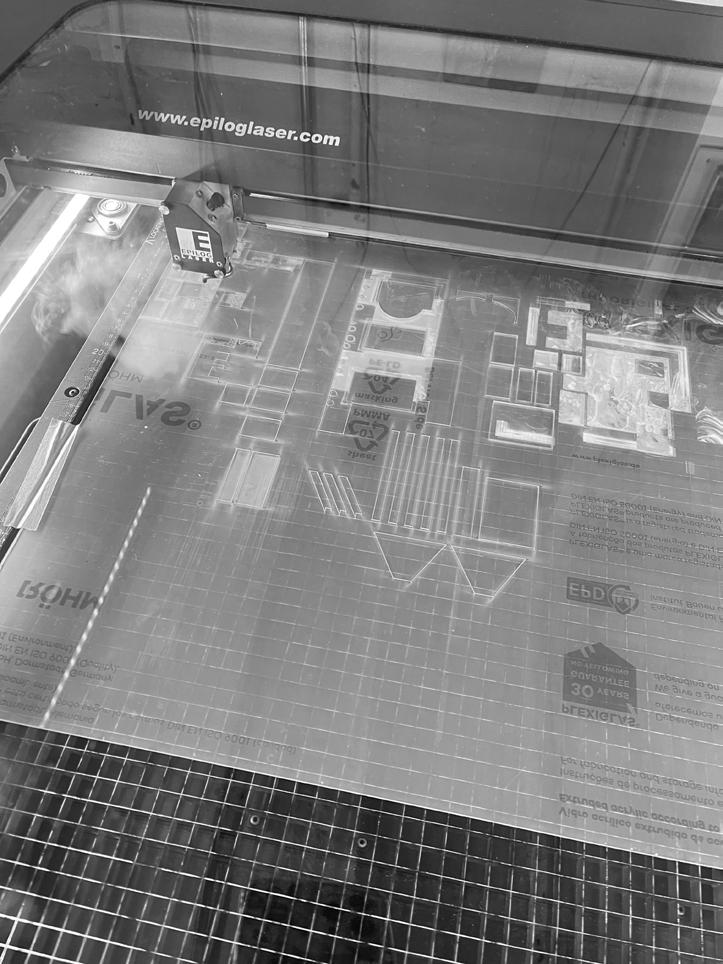
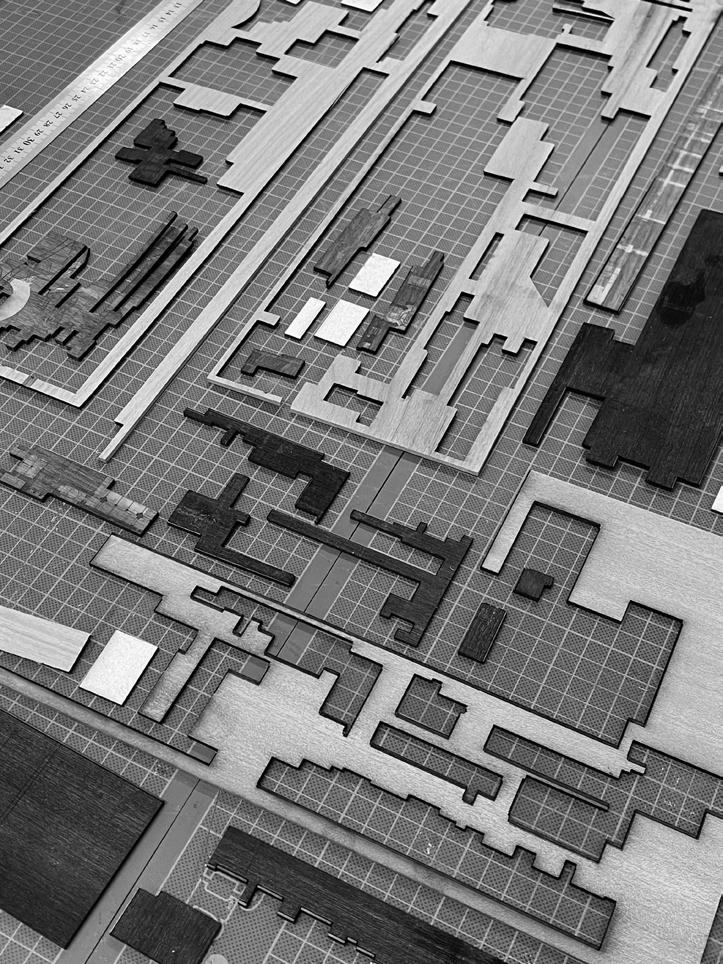
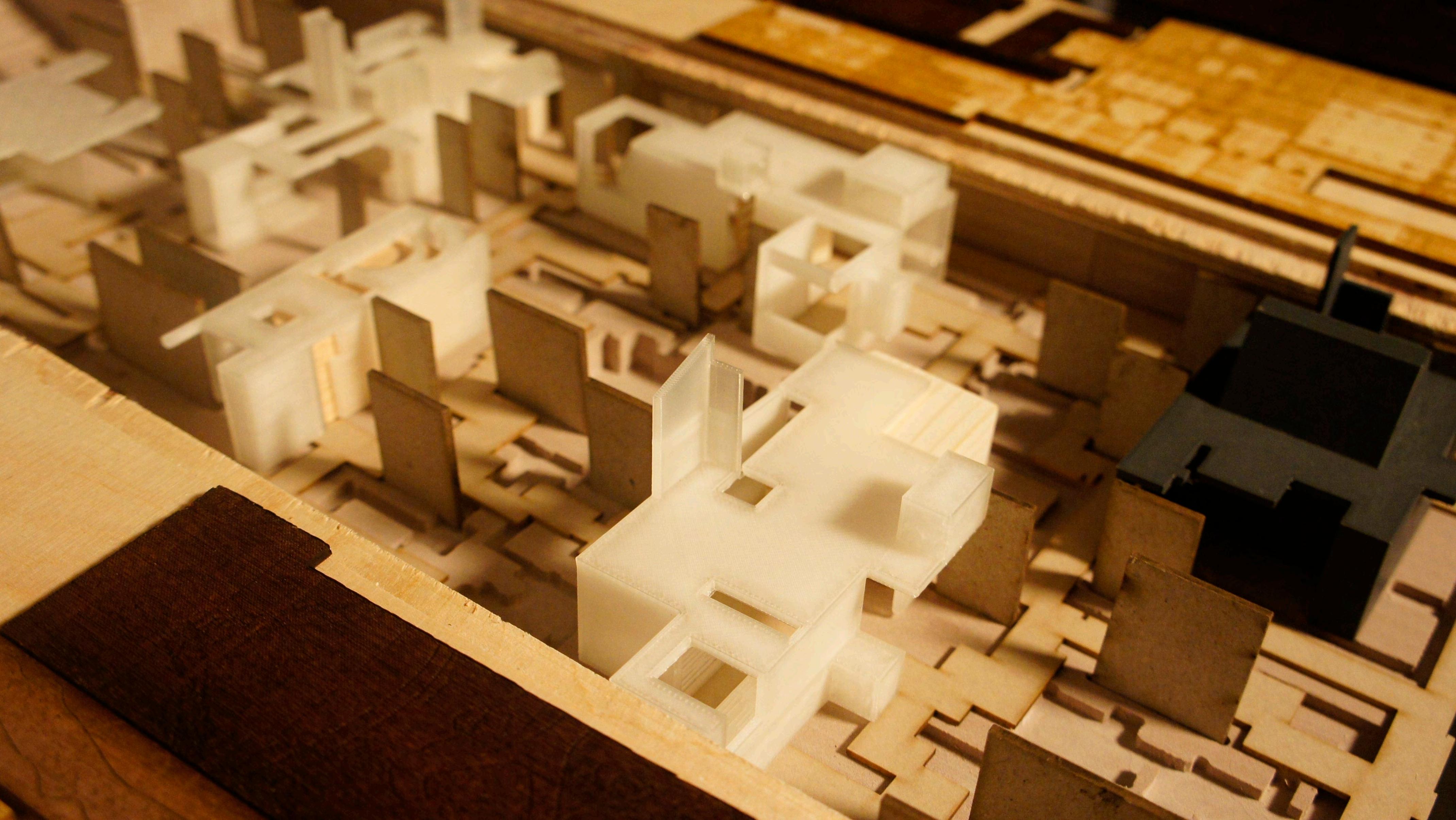
An interactive final model that is situated within Mount Stuart’s existing Parterre. The main part of the final model is shaped to fit a void within Bute’s tabl;e. It is carved from a polyurethane block to represent the existing sandstone bedrock. The intervention onto the surface of the Parterre are made with different types of wood veneer including Walnut, Mahogany, Basswood, Obeche and Spruce.
Parterre Model
1:100 Final Model
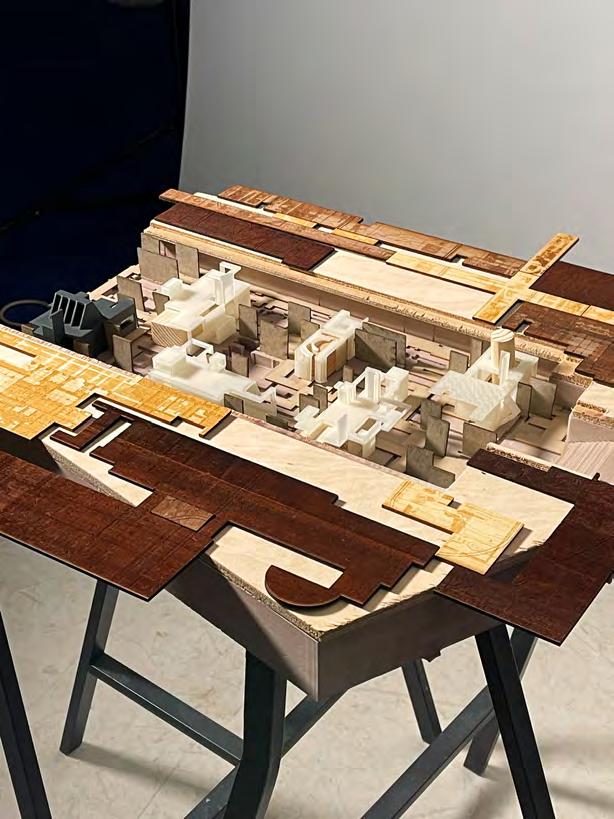
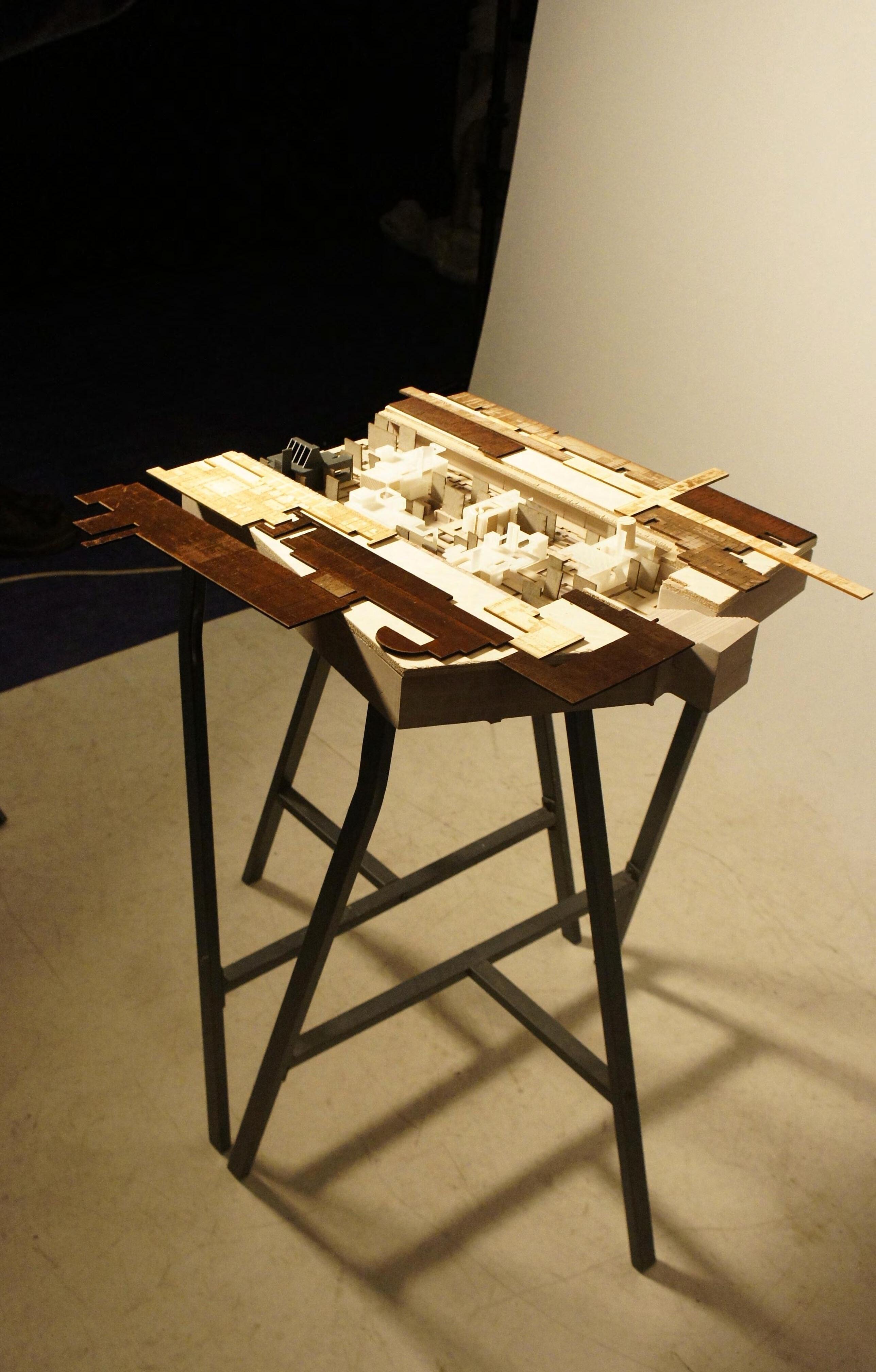
The roof of the model is designed so that it can be lifted off to view the internal spaces of the scheme.
It is carefully designed to allow light through the voids. Certain elements of the observatories cross the threshold of the Parterre, pulling light into the internal spaces further.
Different types of timber veneers represent the many materials inlayed onto the Parterre. These are rastered and engraved with the triptych in a scattered way to illustrates how the collections are rearranged throughout the new proposal.
Parterre Model
Interactive New Parterre Roof
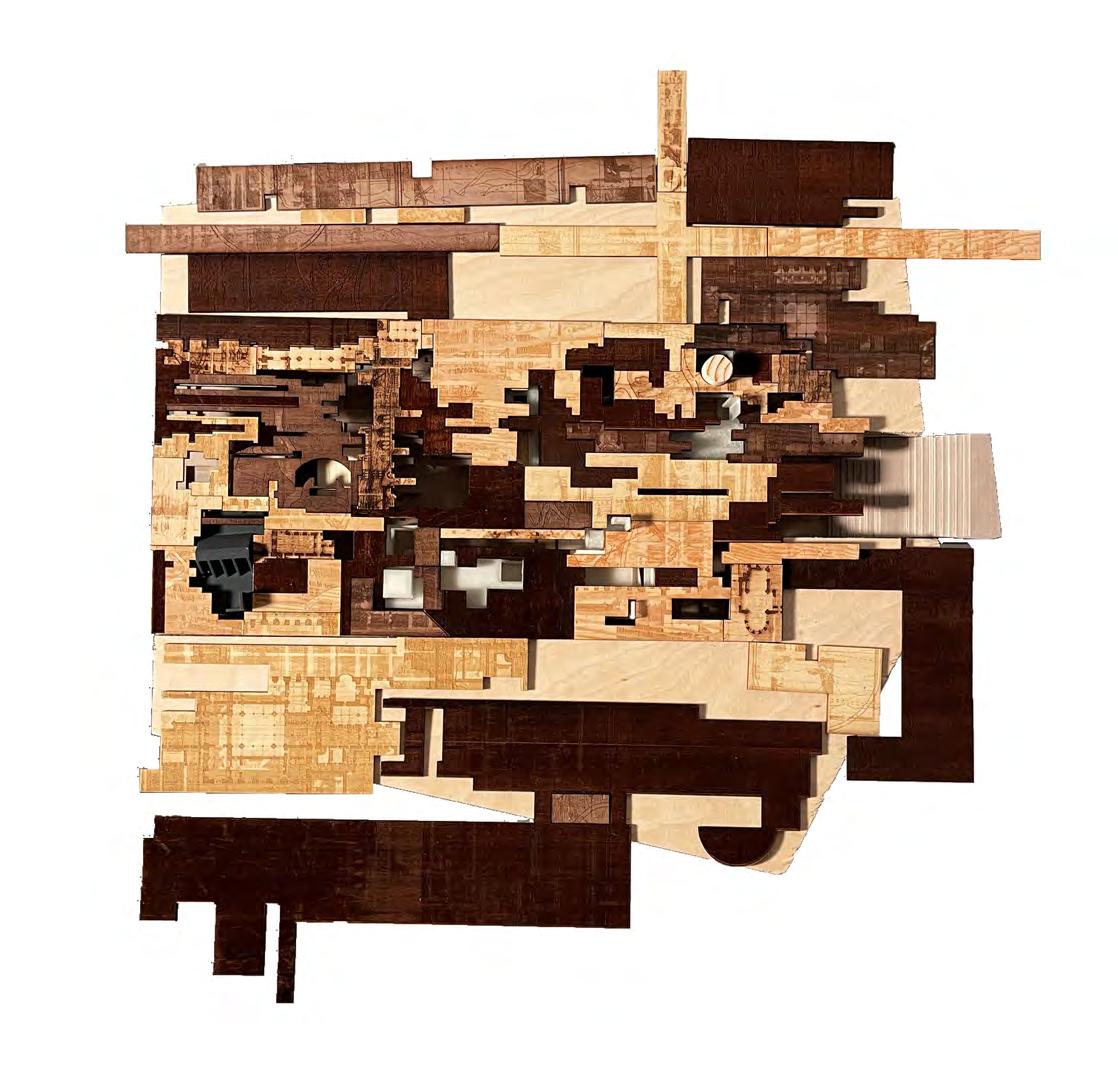
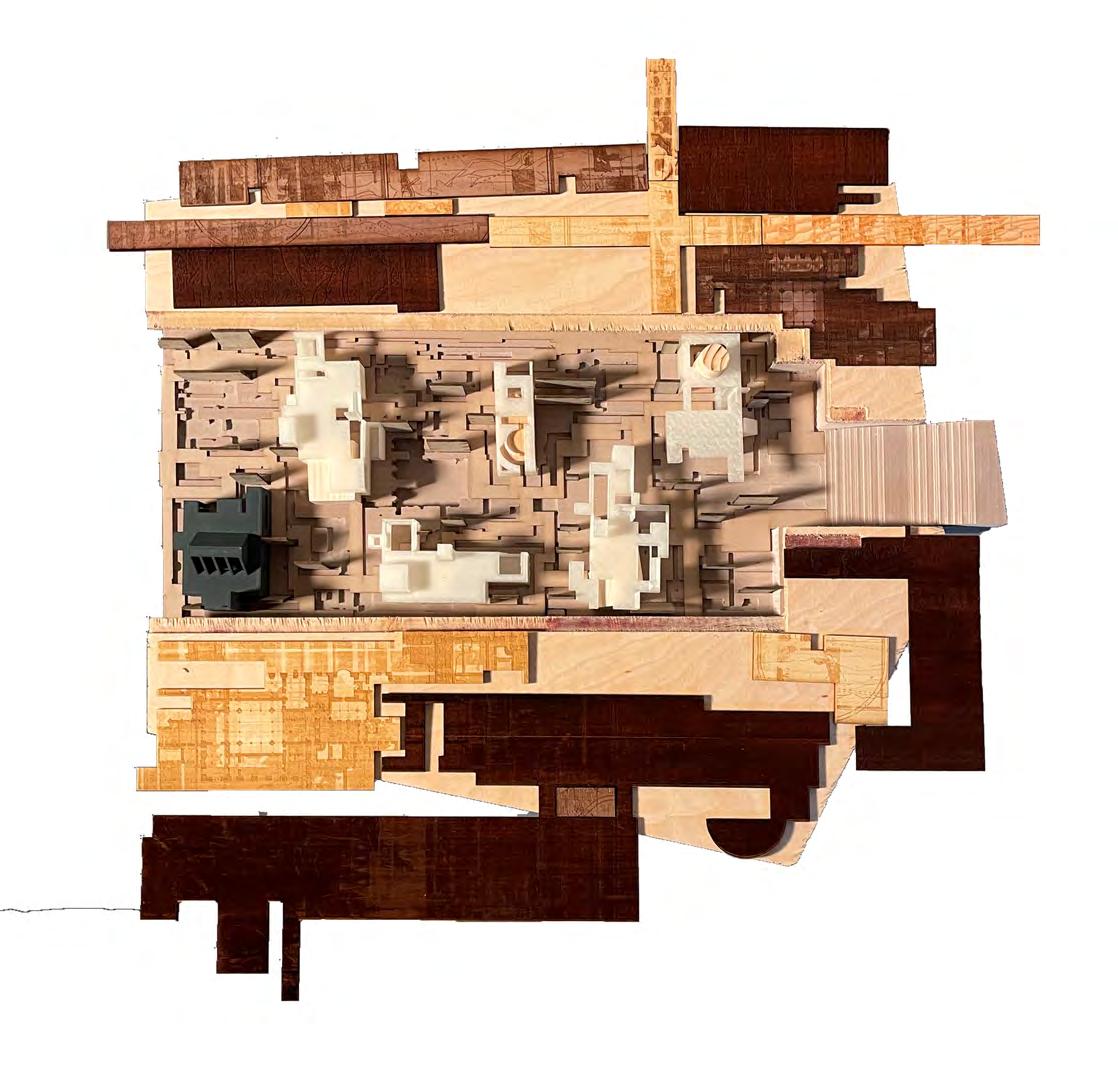
Through the different perspectives, complex thresholds can be seen where elements of the design interact above and below the Parterre.
Perspectives from the Model
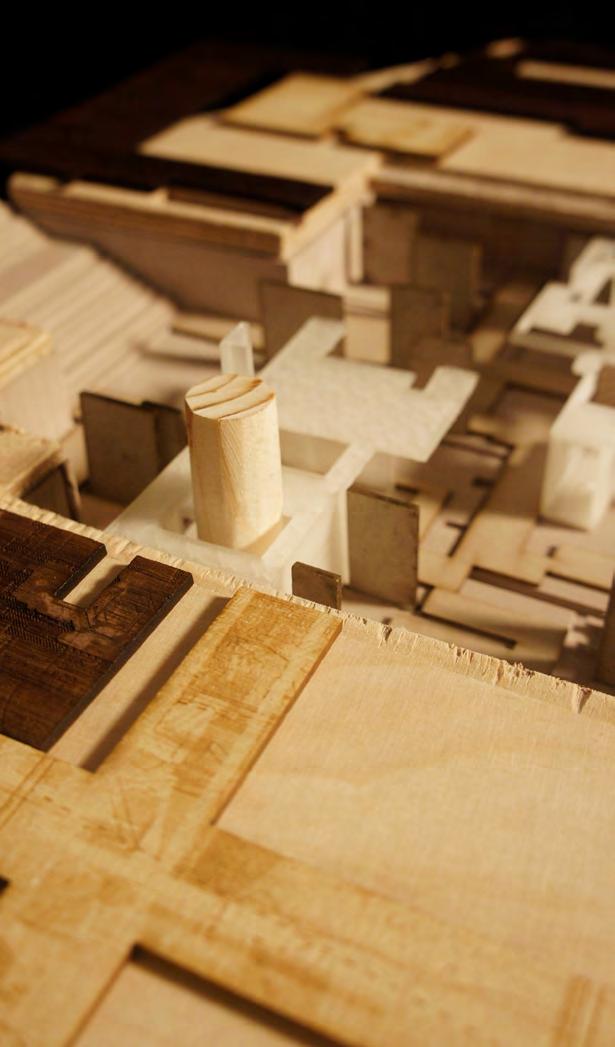
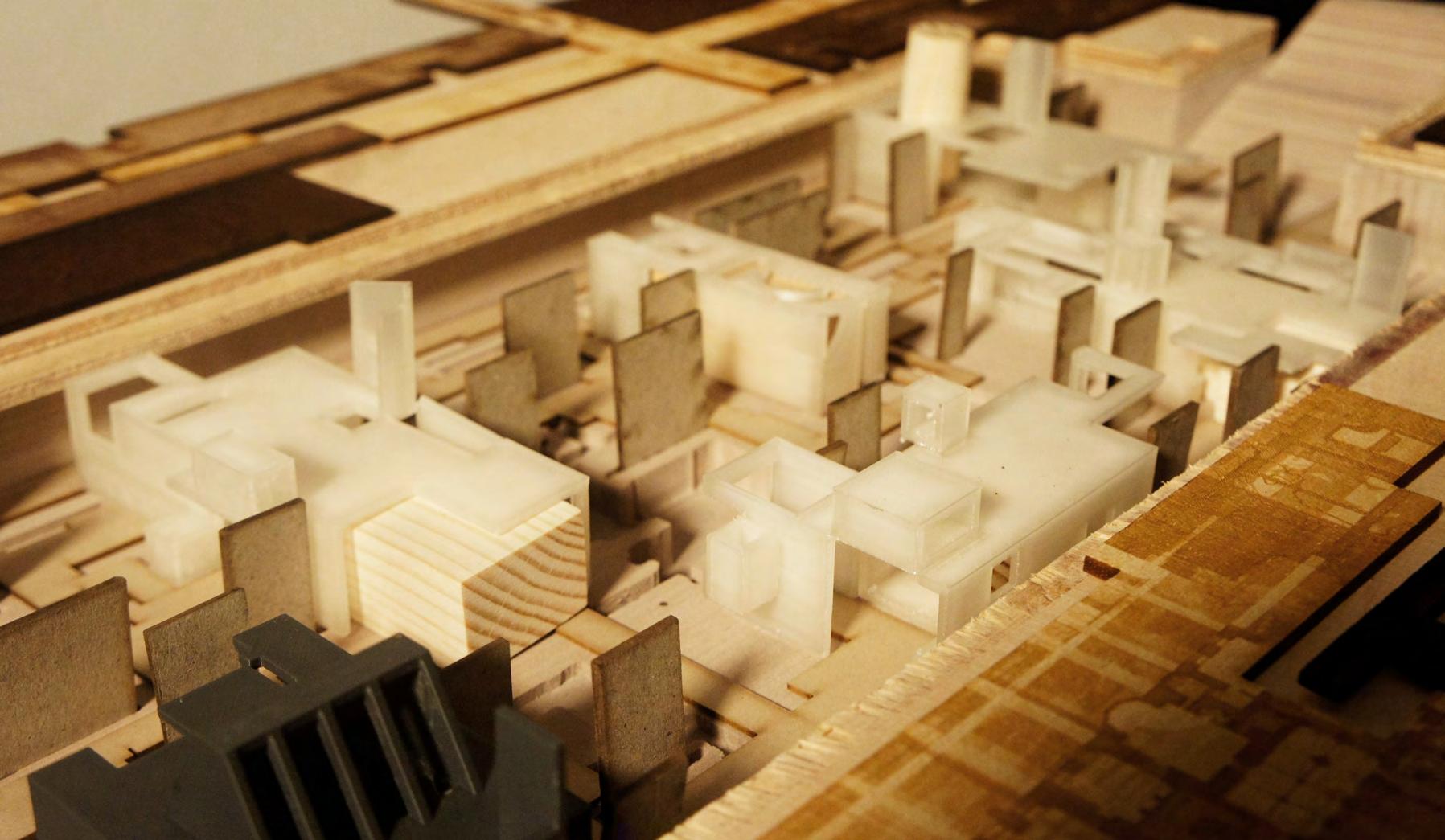
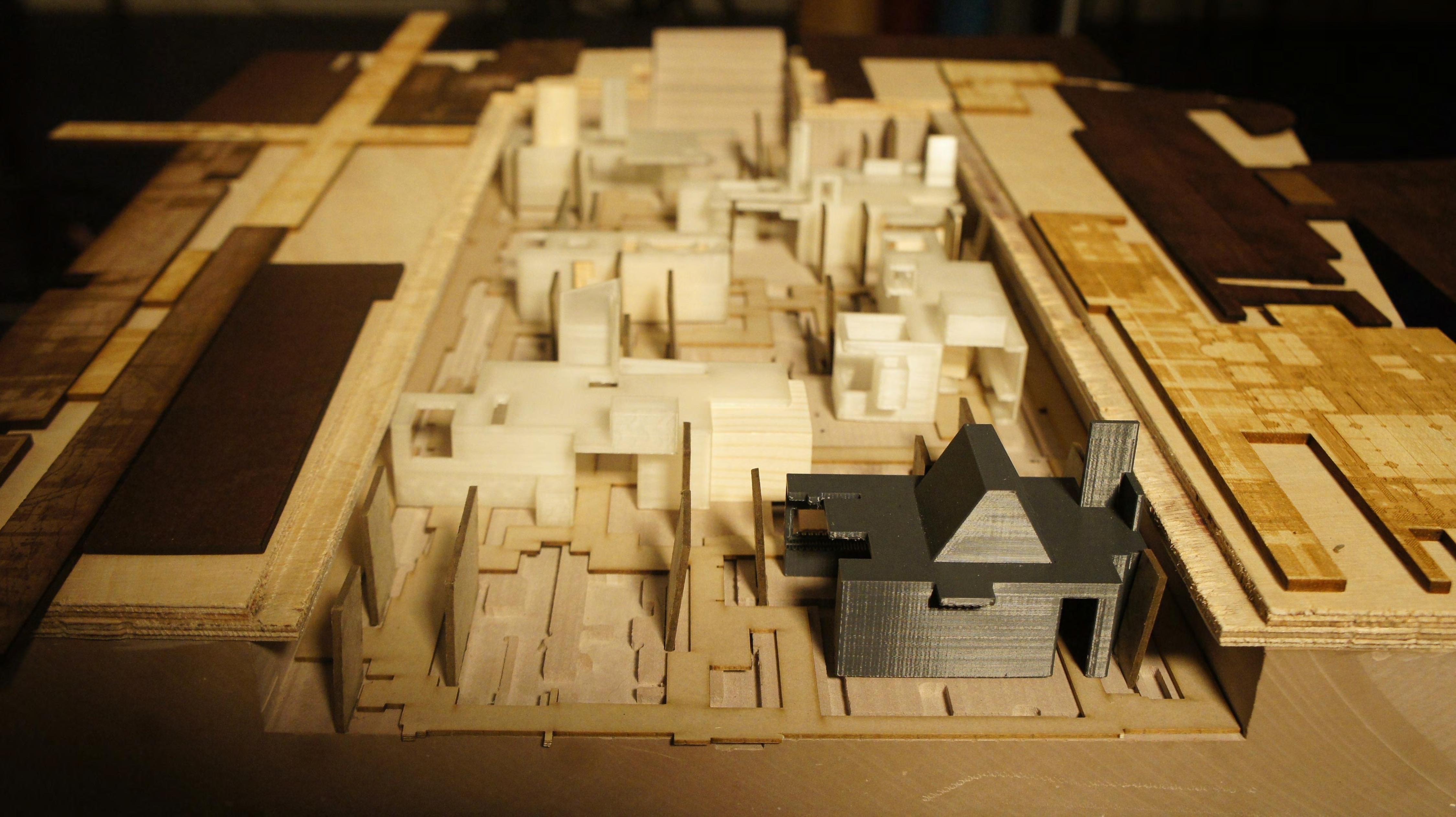
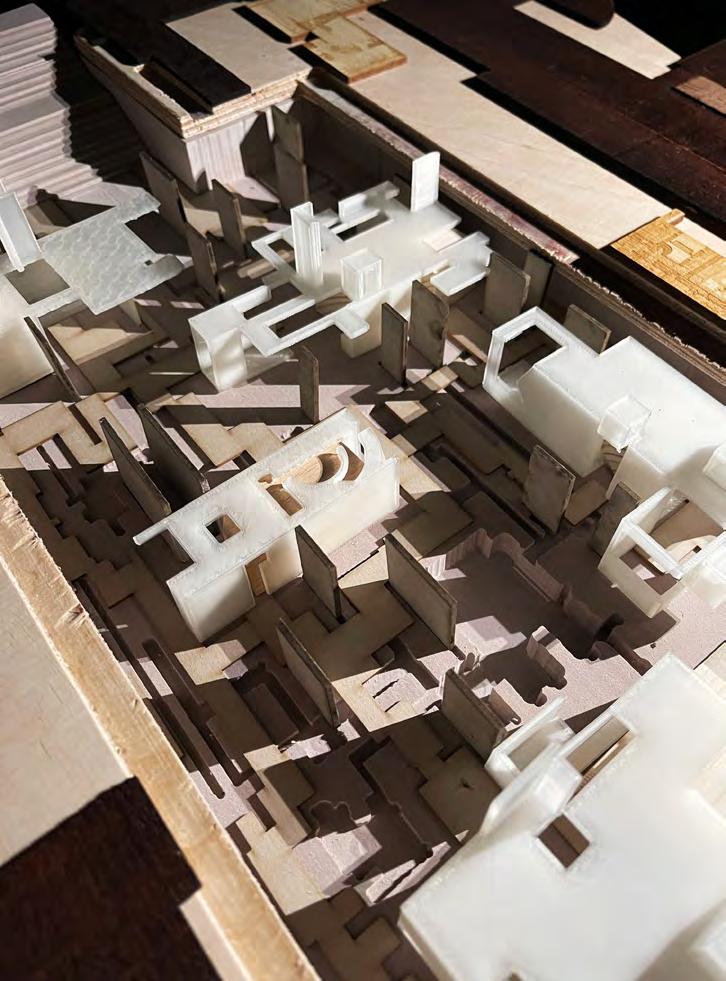
Voids on the Parterre create dramatic shadows cast by light interacting with the compartments and observatories.
The translucent 3-D printed model of the glass observatories illuminates as light shines on it, illustrating the idea of implementing the compartments as light sources to illuminate the area and the observatories.
The Effect of Light
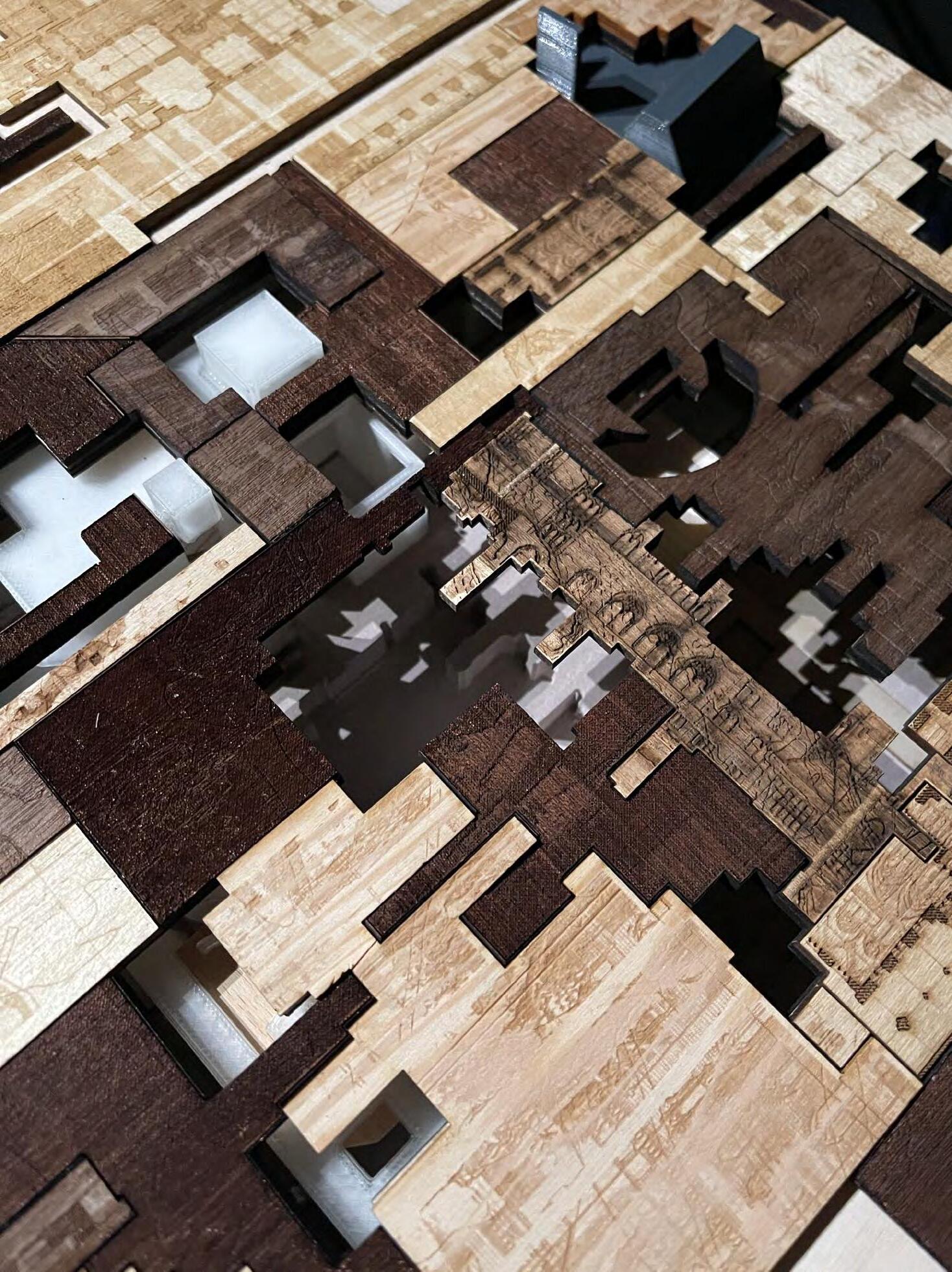
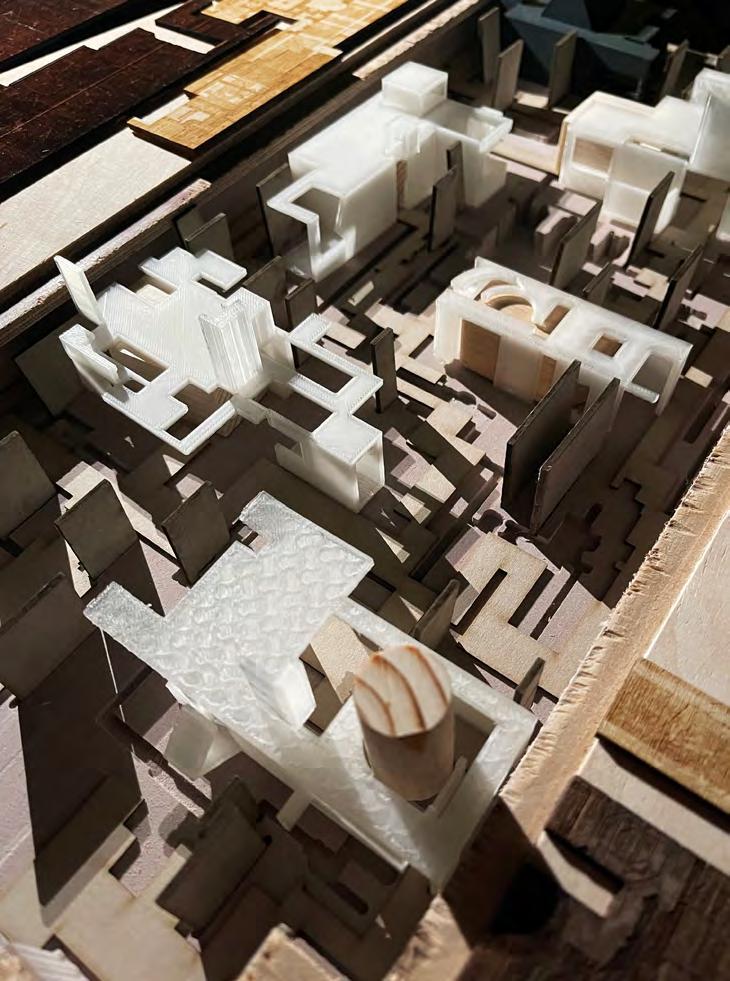
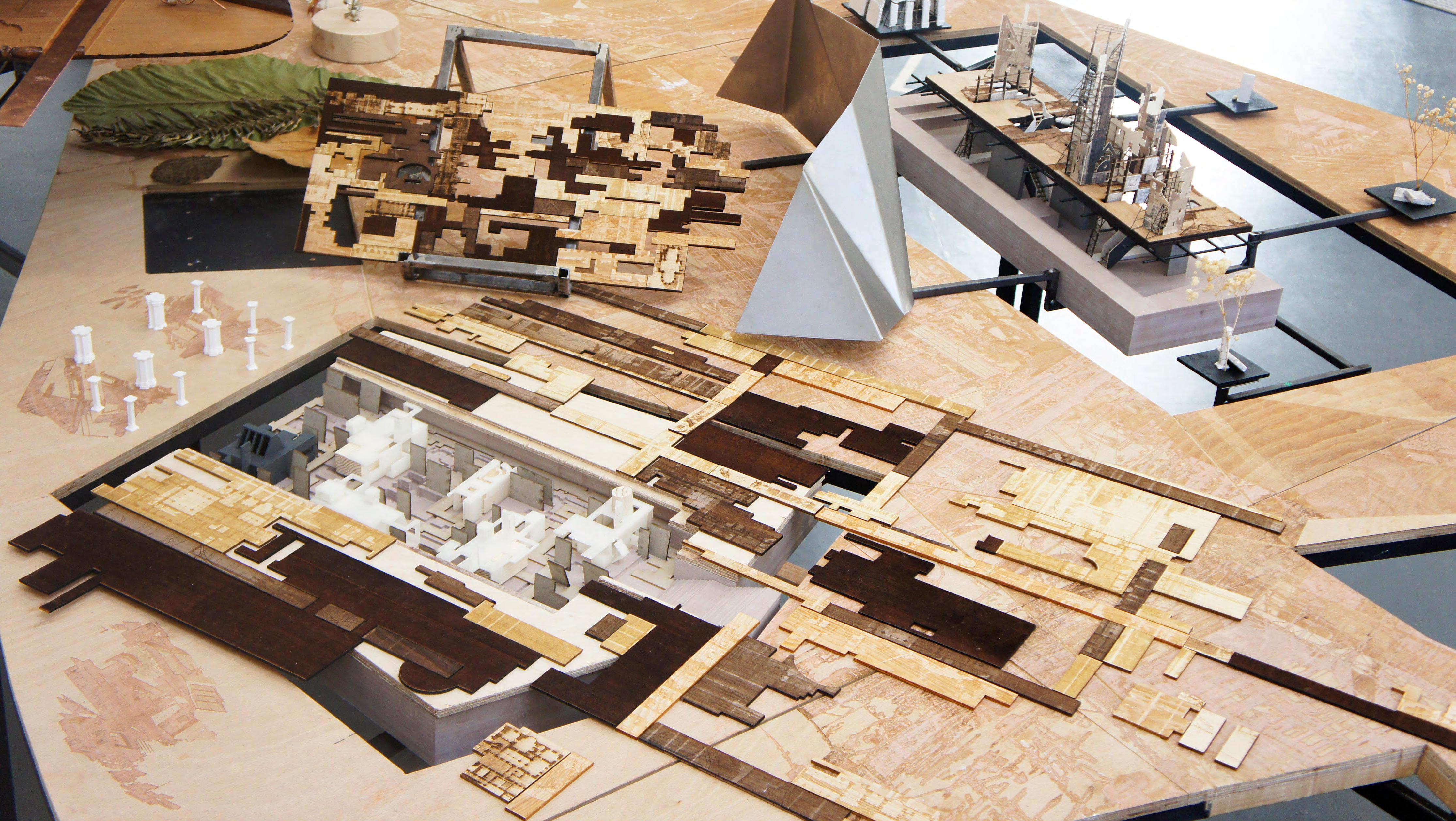
Other features of our model include a metal stand that was made to put the proposed Parterre on once lifted off. This accentuates the concept of armature used in several observatories.
3D printed columns from the Marble Hall are placed next to the final model to demonstrate the direct relationship between the Mount Stuart and the proposal.
Additional Features
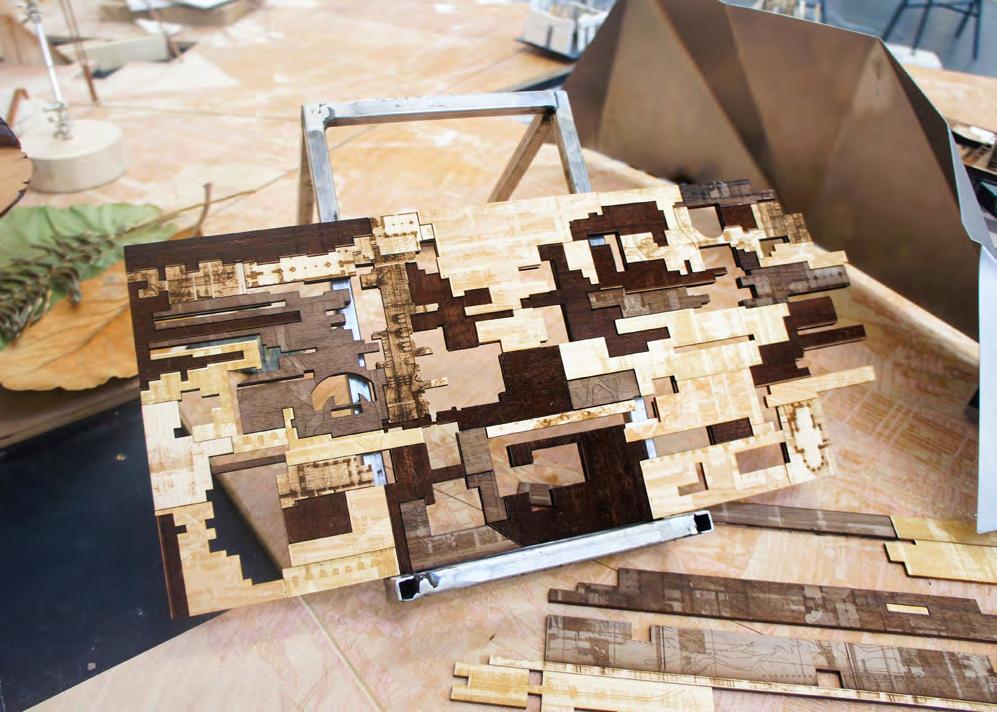
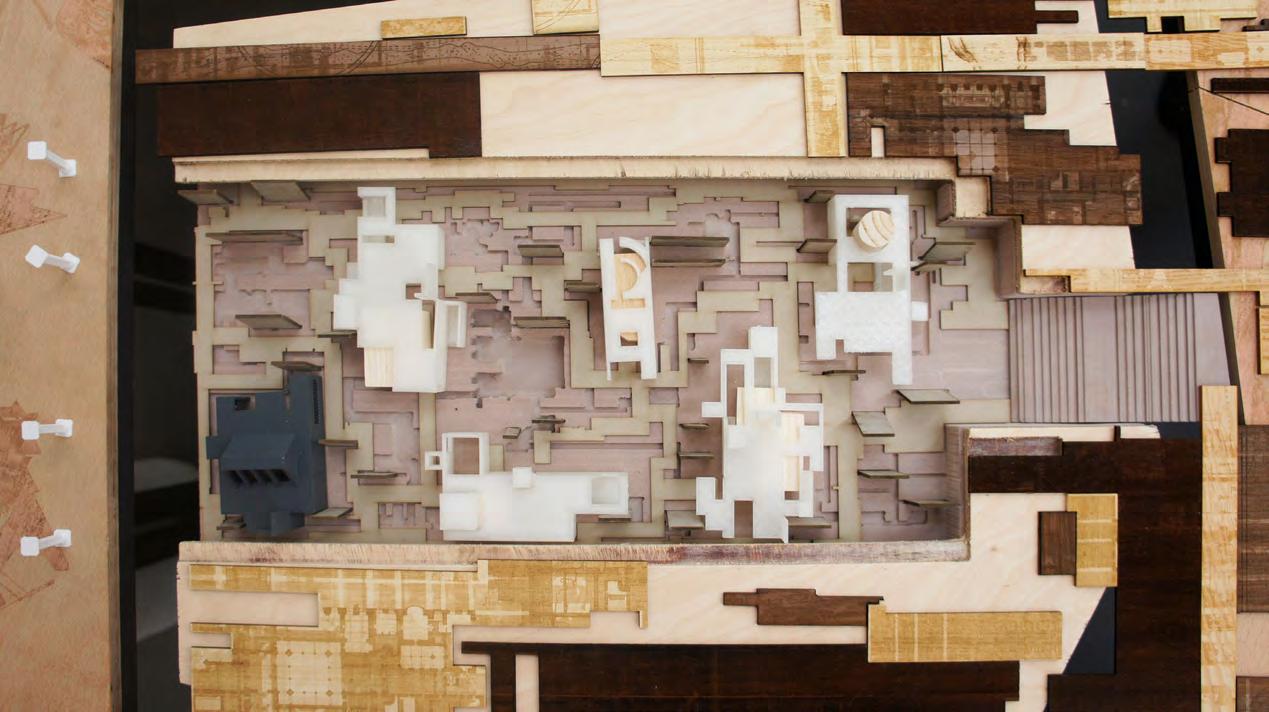
A similar graphic language to our original box design was rastered onto fragments of the Parterre. Rastering is utilised to illustrate the richness of Mount Stuart, situating our design more thoroughly in it.
The Visual Effect of Etching and Rastering
The process of interrogation, re-calibration, and deconstruction allowed us to examine Mount Stuart and its cultural and historical heritage. Deconstructing the collections provided us with a way to expand on our thematic concern: framing Mount Stuart as a Cabinet of Curiosities.
The ‘Cabinet of Reimagined Curiosities’ seeks not to replace the house but acts as an extension of it. It provides an environment which reframes the collections and allows for a greater analysis and examination of them. It is reliant on three key components: the new Parterre, the compartments and the observatories. We have developed several layers of enclosure, each with unique material, environmental, and spatial conditions.
The proposal creates an unconventional but attractive way of experiencing the objects specifically chosen from Mount Stuart vast collections through the interaction of design components which enhance the relationship between users, objects and spaces.
Overall, the course has expanded our understanding of how important the cultural and historical context of a specific place is. Additionally, it has expanded our process of design through the development of new skills, particularly in model-making.
Concluding Remarks