
REIMAGINING THE POSSIBILITIES IN A CHANGING ENVIRONMENT

REIMAGINING THE POSSIBILITIES IN A CHANGING ENVIRONMENT
I’m reading The Longest Winter: The Battle of the Bulge and the Epic Story of World War II’s Most Decorated Platoon, by Alex Kershaw. Yup, I love history.
Given my dismal sense of direction, I get pretty lost as Kershaw describes platoons, companies, divisions, etc., moving in and out of Germany, Belgium and Luxembourg. What resonates more with me is how these soldiers — most of them unfathomably young — responded under conditions such as hunger, illness, abuse and the constant threat of death.
A recurring thread of the book is that soldiers often perished alone and survived together.
It’s not true in all cases. But the American soldiers who fared the best while imprisoned in stalags were those who continued to engage with life in the midst of brutality. Author Kershaw wrote of soldiers forming a Toastmasters-style club to improve public speaking skills. They attended advanced spelling classes and geograpny classes. They played cribbage.
And 1st Lt. Lyle Bouck Jr., 20, noted that in the stalag, the soldiers didn’t curse. Deprived of so much agency, they controlled one of the few things left to them: their language.
On Nov. 28, the Centers for Medicare & Medicaid Services (CMS) published the final rule that rewrote Medicare competitive bidding and accreditation in ways that will drastically impact HME providers.
I asked industry leaders for their initial thoughts, and Noel Neil, JM, CDME, chief compliance officer at ACU-Serve, was measured in his comments.
“If fully implemented, these changes will impose higher compliance costs and greater regulatory scrutiny on suppliers while simultaneously reducing revenue potential,” Noel said. “Beneficiaries may face limited local options for essential items such as catheters, urological and ostomy supplies — products that are highly individualized and integral to daily living. Disruptions could lead to increased hospitalizations. Annual accreditation requirements and competitive bidding pressures will raise operational costs, disproportionately affect small suppliers and potentially reduce market diversity.”
I am not comparing HME’s situation to the Battle of the Bulge. But sticking together and working together is likely our best plan forward.
“While it is clear that some suppliers will face significant challenges in overcoming these hurdles — and some may ultimately be forced to exit the industry — I remain optimistic that the sector will evolve through improved operational efficiencies and continued diversification in both product offerings and payer relationships,” Noel said. “In the words of Winston Churchill, ‘…the optimist sees the opportunity in every difficulty.’” HMEB

Laurie Watanabe, Editor in Chief lwatanabe@wtwhmedia.com @CRTeditor
October-November 2025
hme-business.com
CO-FOUNDER & CHAIRMAN, WTWH MEDIA Scott McCafferty CEO Matt Logan
EDITORIAL VP, EDITORIAL DIRECTOR Tim Mullaney
EXECUTIVE EDITOR Bob Holly
EDITOR IN CHIEF Laurie Watanabe lwatanabe@wtwhmedia.com
ART VP, CREATIVE DIRECTOR Matt Claney mclaney@wtwhmedia.com
SALES
SENIOR VICE PRESIDENT & HEAD OF CONTENT STUDIO Patrick Lynch VP OF SALES Sean Donohue
INTEGRATED MEDIA CONSULTANT Randy Easton
HME Business (ISSN 1940-6479) is published 4 times a year: January/ February, April/May, July/August, and October/November, by WTWH Media, LLC., 1111 Superior Avenue, Suite 1120, Cleveland, OH 44114.
© Copyright 2025 by WTWH Media, LLC. All rights reserved. Reproductions in whole or part prohibited except by written permission. Mail requests to “Permissions Editor,” c/o HME Business, 1111 Superior Avenue, Suite 1120, Cleveland, OH 44114.
The information in this magazine has not undergone any formal testing by WTWH Media, LLC, and is distributed without any warranty expressed or implied. Implementation or use of any information contained herein is the reader’s sole responsibility. While the information has been reviewed for accuracy, there is no guarantee that the same or similar results may be achieved in all environments. Technical inaccuracies may result from printing errors and/or new developments in the industry.
Corporate Headquarters: WTWH Media, LLC 1111 Superior Avenue, Suite 1120 Cleveland, OH 44114 https://marketing.wtwhmedia.com/
Media Kits: Direct requests to Patrick Lynch, plynch@wtwhmedia.com, or Randy Easton (reaston@wtwhmedia.com).
Reprints: For more information, please contact Laurie Watanabe, lwatanabe@wtwhmedia.com.






Having worked with several accreditation organizations, Steve was looking for an AO with a DMEPOS program that made sense and was easy to follow. One that would work within his business model, help improve processes, and ensure Spectrum Medical met all CMS requirements.
“ DMEPOS Accreditation from The Compliance Team is one of the best decisions we ever made. After their onsite visit, we always have something that’s been improved.”
— Stephen Ackerman, CEO Spectrum Medical, Inc. Silver Spring, MD 16 years TCT accredited.

You have a choice. Choose TCT.

How to excel at resupply provision … while maintaining the all-important human touch
By Laurie Watanabe
On a sweltering Texas afternoon in September, a panel at the HME Business FUTURE conference — hosted at the JW Marriott Dallas Arts District — was tackling the topic of resupply.
At that time, the final home health rule from the Centers for Medicare & Medicaid Services (CMS) was still more than two months away. But the panelists — Gayle Devin, CEO, Home Care Delivered; Zach Mastrovich, vice president of process improvement & resupply, Performance Home Medical; and Russell Woods, vice president of account management, Parachute Health — were already looking toward a future where resupply would play an expanded role.
Describing successful resupply programs
“I started off my career working in auto insurance as an actuarial analyst,” Mastrovich told audience members. “So I was really, really excited to bring an analytical angle to what we do for our resupply program at Performance Home Medical.” The Kent, Wash.-based
provider focuses mainly on the sleep space, “so we do a lot of CPAPs, vents, O2, in the Pacific Northwest,” Mastrovich added.
Asked how he defines a good resupply program, he said, “At the end of the day, providing that good patient experience is the core foundation of not only our mission statement, which is patient first, but also how we run our resupply department. Our belief is that if you take care of your patients — if you’re timely with them, if you communicate well with them, if you provide them the supplies that they need on time, every time — everything else will take care of itself.”
Successful resupply programs can vary significantly, Mastrovich added.
“There’s a whole bunch of KPIs [key performance indicators] that I’d love to talk your ear off about; I think there are 1,000 different ones that are all relevant. But at the end of the day, a good resupply program takes that patient-first approach. Are we communicating with our patients? Are we accessing them where they want to be accessed: email, text, phone calls? If patients
want their supplies every three months, are we offering them that option so they don’t have to think about it and it just shows up to their door? So it’s really what do we do from a customer service level, from a patient-care level, that helps us elevate our patients, helps bring value to their lives?
“That’s our driving force. Take care of your patients. Everything else takes care of itself.”
Russell Woods is now a vice president at Princeton, N.J.-based Parachute Health, which works to simplify, accelerate and improve durable medical equipment (DME) ordering for home medical equipment HME) providers — and therefore, to also improve outcomes for clinicians, payers and ultimately, patients.
But before Parachute Health, Woods clocked 15 years of provider experience, knowledge he’s applied to building strong resupply processes for current suppliers.
“It was pretty manual back then,” Woods said of back office work. “But now it’s starting to close up some of the gaps that we’ve seen on the HME provider side of the business when it comes to making sure supplies are sent to patients as effectively and efficiently as possible. Like Zach said, if patient care is the North Star, and you’re setting
them up for success and getting those prescriptions filled as pain free as possible, and if the patient is not aware of what happens in the background because the supplies just show up — that means there’s a process in place. That physician can get that prescription signed and renewed, the order can be given to the HME provider to then dispense the product and then successfully bill for it.
“That’s what you want, without any problems, any delays, so that prescription can be adhered to, and nobody’s wearing dirty CPAP masks, nobody’s using dirty nebulizer kits or a dirty trach.”
One size doesn’t fit all Gayle Devin, the CEO of Home Care Delivered in Glen Allen, Va., joked that she’s been in the industry “since dinosaurs roamed the earth” and has therefore seen “the good, the bad and the ugly, working as CEO of respiratory companies and more recently, diabetic and medical supply companies, particularly PE [private-equity]-backed companies.”
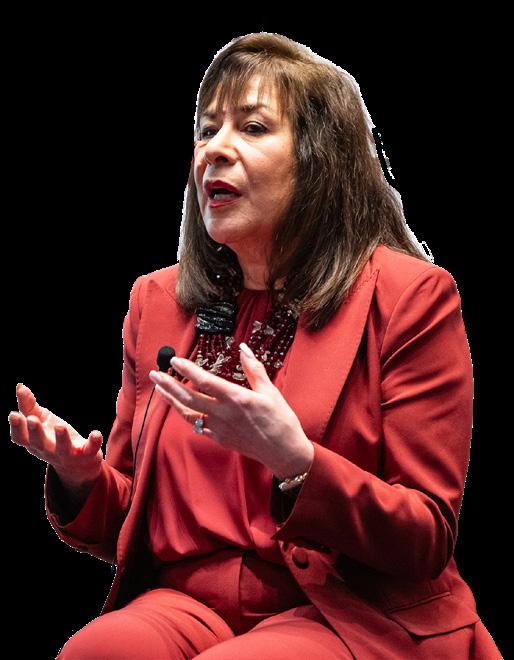
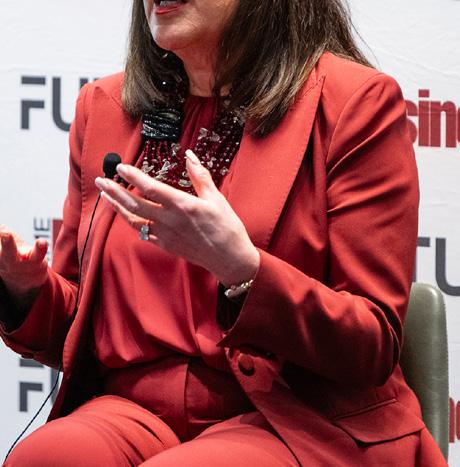
While she agreed with Mastrovich’s and Woods’s comments, Devin added a caveat: For resupply, one size does not fit all.
“ When resupply first became in vogue, it was CPAP resupply, with nebulizers,” Devin said. “But now it’s expanded beyond that to recurring medical supplies. Speaking of our experience at Home Care Delivered: We provide incontinence supplies, we provide urologicals, we provide ostomy supplies and wound care. And if I look at success, yes, it’s patient satisfaction. We’re a patient-centric organization.”
Beyond making efficient deliveries a priority, though, Devin added that successful resupply programs track patients and their journeys.
“It’s making sure that if a patient’s needs change as their disease progresses, that you’re making sure they’re in the right product,” she said “Specifically about incontinence: Getting the size and fit for an incontinence product is essential to meeting the patient’s needs.
“Someone may come on service at a certain weight, and their incontinence may be mild. But three months down the road, they’ve lost a lot of weight. The size is not going to fit. They’re going to have leakage.”
By that time, however, the patient might not remember who the provider is, and therefore might be unable to reach out from their end. And that scenario harms both the patient who is no longer using an appropriate product, and potentially the provider, if the patient loses interest in reordering.
Ultimately, Devin said, the success of a resupply program is “really based on what is your break-even point? I know it’s going to vary, depending on what your cost of goods is, what your cost of service is inclusive of freight and shipping.”
But when does a resupply patient become profitable? How many months of service does a supplier need to provide?
“There are benchmarks for different product categories,” Devin said. “For an adult incontinence patient, five years is kind of the benchmark. Depending on your cost structure, it could be that you break even at month four or month three. But if you lose that patient, then obviously you lose that revenue stream.”

To retain resupply patients, “Every third month, depending on the product category, we would call the patient,” Devin said. “We really saw a dramatic improvement in customer retention.”
Those calls give patients and suppliers the chance to catch up — which includes checking on how well those resupplied products are working. “When you lose weight, you lose weight in your face,” Devin said. “With CPAP masks, if that seal isn’t tight, there’s going to be leakage. There’s going to be a problem.”
Checking in personally with patients — even ones who appear to be happy reordering via automated systems — can strengthen patient-provider relationships.
“I think you really want to meet the patient where they are, or the caregiver where they are,” Devin said. “Text reorder may be great, IVR [interactive voice response] may be great. But there are times when that phone call to ensure that they’re in the right product as their disease progresses or as they’re at a different point in their continuum of care can ensure that patient stays sticky.”
Mastrovich said his team keeps close tabs on “our demographics and how [patients] respond to each channel of communication that we have with them. How do they respond to a given text or an email versus
if we call them? It’s tracking those sorts of metrics that — to expand what Gail said — meet the patient where they are.
“Some patients just want to order off their phone. Some patients need that extra push from someone calling them and asking them, ‘Hey, are your supplies still fitting? Are you noticing any leaks? Are you getting indents in your in your cheeks because you’re pulling your mask on too tight?’ It’s tailoring your approach to each patient, while still having a robust back end to be able to handle and process all the orders you’re getting to ensure quality patient care.”
Devin added that keeping in touch with patients also presents the opportunity to loop in other members of the health care team.
“Sometimes people don’t realize the value that we serve as suppliers,” she said. “We’re in touch with the patient more frequently than their doctor [is]. And we notice that a size has changed, we notice that they’ve lost or gained weight.”
And that observation can lead to reaching out to case managers or doctors, “because [the patient] may need to be seen. From the doctor’s standpoint, they view that as ‘This is a company I want to do business with, because they are not just shipping blindly. They really know what’s going on with the patient.’ It’s really led to more business from different referral sources for us, and from the payers’ standpoint as well.”


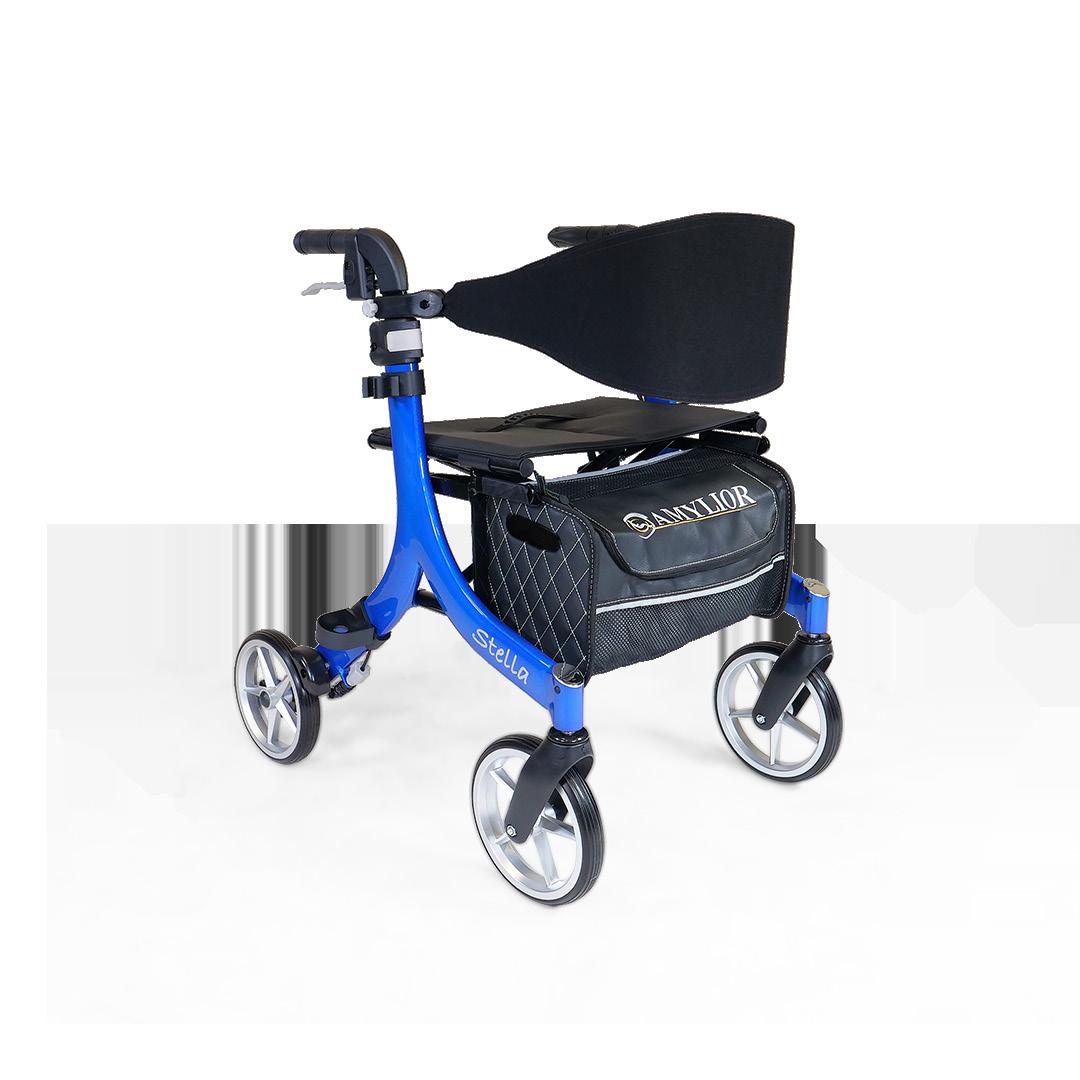
Our famous Stella Rollator is loaded with many convenient features :
• Reinforced seat
• Lightweight, starting at 14.75 lb (6,7 kg)
• Oversized height-adjustable backrest strap
• Height-adjustable handles with quick release
• Optional footrests, armrests and slow-down brakes
Building resilient resupply programs
There are many benefits to resupply. There are also many challenges, particularly as providers constantly look for ways to cut costs.
our role as a provider to help out and be that extra leg of patient education to their doctor. You cannot sacrifice that.”
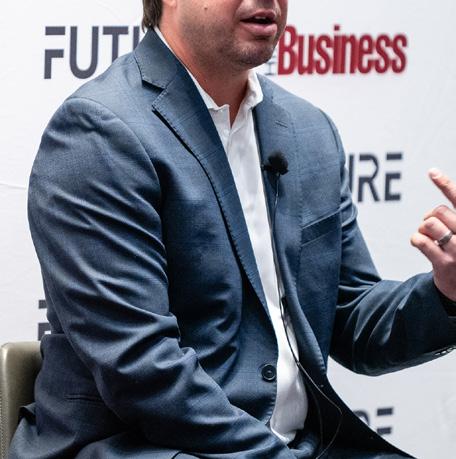

“I think over the years, you’ve seen a decline in hands-on service as the reimbursement rates have dropped, and competitive bidding has become a thing and soon will be again,” Woods said. “Fifteen to 20 years ago, there was an RT [respiratory therapist] in every home taking care of every oxygen patient, every CPAP patient. And then it was well, it doesn’t have to be an RT; it could be an LPN [licensed practical nurse]. And then: Well, it can be an unlicensed service tech. And then: We can just drop ship it; we’ll put a DVD in there. Now it’s a QR code.”
That migration away from providing expert education to patients, Woods added, isn’t necessarily what suppliers want. “I think it’s survival.”
Given the need to be cost effective, how can providers maintain great relationships with resupply patients, as well as with their referral sources?
“Ultimately, with the patient and any patient-facing interactions — I don’t think we can make changes there,” Devin said. “If you’re going to look at revenue flow, it’s retaining those patients. As we look at what we’re potentially faced with in competitive bidding, what other efficiencies on the back end are non-customer facing? From the revenue cycle standpoint, I think there could be opportunities there.
“How are you handling shipping? Have you looked at what you can do less expensively, if you use a 3PL [third-party logistics] versus handling it yourself, based on where you’re located and where [shipments] are going? I know the stance we’re taking is with any patient-facing activity, we can’t compromise.”
Saying that it would be “pretty hard not to” be thinking of compet-
Therefore, cost savings must be accomplished another way: “It all has to be back office efficiency,” Mastrovich said.
Good business up front
Woods said, “I think the smart thing that we see happening is getting good business up front. When I say ‘good business,’ that means good orders without back and forth — billable qualifying orders for all product lines. There’s no held revenue. There’s not as many write-offs, bad debt, things like that.
“And when those patients are due for the renewal piece, whether it be just a renewed prescription for oxygen or a new prescription to receive the next 90 days’ shipment of supplies, make sure that’s a very buttoned-up process. There are ways we can automate pulling that data out, sending it out, and plugging it back in. And I think what a lot of HME providers have seen so far in that process is it frees up their sales team to have real conversations in the field about patients they can help that day, new therapies on the market, new pharmaceuticals, etc. They’re not out there just chasing a bunch of papers that require addendums and new prescriptions that need to be fixed. And so that rep is out there actually selling to grow the business.”
As for what challenges they anticipate in the coming year, Mastrovich said, “AI [artificial intelligence] is really going to completely change the landscape. I called to order pizza the other night, and it took me two or three minutes [to realize] I was ordering through AI. I thought I was talking to a real person, I had no idea.
“Am I OK with this? I think so, it’s working. Where does that go from here? Can we start doing AI outbound calls? Will patients like that? Are we there yet? What does that landscape look like? Will patients prefer it? Maybe.”
Devin mentioned the challenges of rapidly changing technology, such as an Apple update that changed how spam texts and calls are handled by iPhones.
She noted such changes could be a big problem
I know the stance we’re taking is with any patient-facing activity, we can’t compromise
— Russell Woods
itive bidding’s impact on HME provision, Mastrovich said, “We’re always looking for ways of making our process better. That’s just core to what our business is about. How do we streamline?”
Competitive bidding, he added, is “only going to make our timeline quicker on that.” But Mastrovich said, in agreeing with Devin, “If we were to touch something on the patient interaction front, it would be [to make] an improvement. You cannot cut corners there. That is the whole crux of what makes this work. It’s

“because a lot of our demographic just doesn’t add our phone number [to their phones].” Home Care Delivered’s team has made an “all-out attempt to make sure” their customers have added the company’s phone number to their contact lists.
And as the industry begins to tread new policy ground, Woods noted the importance of “the ability to kind of bob and weave going forward with any changes that are coming down the pipeline in the next 12 months. Anytime there’s a sudden change in guidelines from CMS, we have to kind of put our ear to the ground and see what our customers want us to do. I think we’re poised to respond pretty well to any surprises.” HMEB

Home medical equipment (HME) companies are starting to test artificial intelligence to automate intake, streamline billing and help patients with adherence.
Looking ahead, industry leaders believe the next barrier won’t be code or algorithms. It will be culture, they predict.
“How do you create a conversation to drive organizational change?” AJ Kiefer, chief customer officer at Tennr, a New York–based software company that builds customizable workflow automation for post-acute providers, said at HME Business’s FUTURE conference. “You have to find anchors that translate KPIs into real-world impact to the end user, and how all of that culminates in delivering the best possible patient care.”
The FUTURE conference took place this past September in Dallas. The event features dozens of industry leaders, many of whom spoke on the topic of AI — a powerful force in health care, with HME being no exception.
On its end, Tennr’s technology is designed to fit each HME company’s existing structure, Kiefer explained. That’s because there are numerous unique factors to each business, including which payers a provider contracts with or what equipment they’re actually offering.
“All of these things — the way they built their business, their payer mix, their product mix, the regions they’re in — change the workflow,” Kiefer said.
Tennr’s platform, he added, “is almost infinitely customizable.”
“We can structure workflows to the actual problems we’re trying to solve,” he continued.
Addressing AI anxiety
Panelists at the HME Business FUTURE conference agreed that fear remains one of the biggest obstacles to adopting AI.
Erica Thomson, director of operations for Commonwealth Home Health in Danville, Va., echoed this idea during a recent HME Business executive outlook webinar (see QR code). Thomson discussed how Commonwealth Home Health was introducing a new AI tool to improve the provider’s daily workflows, giving everyone a morale boost.
Initially, it had the opposite effect for some, however.
“I thought it was going to be easy, fantastic for everyone involved,” Thomson said. “But once you bring those different technologies in –for example, with our CPAP compliance program and the different mask-fitting programs out there, our therapist’s first thought is, ‘You’re replacing me.’ And you have to explain to them, ‘No, we’re not.’”
In some ways, the messaging around AI and job stability needs to be “learn and adapt.”
“Generally speaking, I’m of the belief that AI won’t take your job,” Wayne Hudson of NikoHealth said at FUTURE. “But somebody who knows how to use AI may take your job. It’s not a tool for layoffs. It’s a tool for growth.”
NikoHealth is a software firm specializing in cloud-based HME management systems. Hudson — an HME Business Future Leader for the 2025 cohort — currently serves as the firm’s director of growth.
That message, other speakers said at FUTURE, needs to come from the top. As Valere Health CEO Dewey Roof put it, “If you haven’t embraced it, you probably have been left behind.”
These and other AI discussions suggest that the divide between HME organizations will increasingly hinge on how they integrate AI into everyday workflows. Companies with standardized processes and strong leadership buy-in will accelerate faster; those without risk lagging behind.
“The long-term vision,” Roof said, “is for every data point to be digitized and automated. Whether you’re reading a document or have a referral coming in, it’s being digitized and therefore can be captured. It’s going to allow HMEs to run better care companies.”
Looking at the overall U.S. economy and labor market, AI’s impact is undeniable.
And the influence on job openings is seemingly profound.
Since October 2022, the month that ChatGPT’s debut jump-started an accelerated investment boom in AI, total job postings have declined by about one-third. At the same time, the S&P 500 — a measure of how well the U.S. economy is doing — has increased 75%.
Writer, podcaster and author Derek Thompson highlighted this trend in an article published Oct. 23.
“For the last few decades, job openings have mostly tracked the rise and fall of the stock market,” Thompson wrote. “Nothing like the current divergence between equity returns and job openings has ever occurred in the history of the Job Openings and Labor Turnover Survey (JOLTS), which was first released in 2002.” HMEB — Robert Holly, executive editor

Scan this QR code to register for the webinar “HME Executive Outlook: Navigating an Evolving Industry,” as well as other webinars in the HME Business library.