WITS RESEARCH & INNOVATION REPORT 2024/25
1
2
7
13
8
14
19
25
3
9
15
20
26
4
10
16
21
27
5
11
17
22
28
6
12
18
23
29
See page 24
24
TABLE OF CONTENTS
1. SUSTAINING RESEARCH..................................... 2 Professor Zeblon Vilakazi FRS Vice-Chancellor and Principal
• Quantum entanglement and topology are inextricably linked • Printing 3D patches to heal wounds
2. RESEARCH. FOR GOOD...................................... 5 Professor Lynn Morris Deputy Vice-Chancellor: Research and Innovation
Better Healthcare for All................................... 20
3. PIONEERING POSTGRADUATES....................... 8 Professor Brett Bowman Director: Postgraduate Strategy 4. RESEARCH BY NUMBERS IN 2024.................... 10 Dr Robin Drennan Director: Research Development 5. 2024 RESEARCH SHOWCASE BY 16 STRATEGIC SCIENTIFIC THEME......................... Climate, Sustainability and Inequality.................. 16 • Sappi Chair marks a milestone year of climate action • Peco Power empowers rural community with Rent-to-Own electricity • Africa is no longer the carbon sink of the world
• Urgent TB vaccine trial kicks off in SA • Innovative app helps adolescents with depression • Causes of death in adults with HIV in Africa • African men have earlier and high risk of prostate cancer • Rising heat exposure threatens maternal and newborn health Future Economy and Work............................... 22 • ICESCO Chair for Innovation and Futures in Africa • Evaluating digital transformation in African youth-led enterprises Good Governance and Democracy................. 23 • New Fintech hub
AI, Innovation and Quantum.................................. 18 • MIND Institute unlocks intelligence • Affordable new AI device to monitor air pollution hotspots in real-time
11
1.
SUSTAINING RESEARCH PROFESSOR ZEBLON VILAKAZI FRS VICE-CHANCELLOR AND PRINCIPAL
SPACE, EARTH AND PEOPLE We launched the Wits Anglo American Digital Dome, a place of infinite possibilities and a 360° immersive experience, in November. The reimagined planetarium will serve as a modern teaching venue and a collaborative
2
" Wits remains
a beacon of hope, excellence and innovation in the world today.
"
From outer space to Earth and human and other intelligence, Wits researchers sustained research and innovation, for good, in 2024. The world is facing multiple challenges including global conflicts, humanitarian crises and a climate emergency. Closer to home we contended with the national challenges associated with deepening inequality, energy and water insecurity and slow economic growth. Wits researchers continue to contribute towards addressing these national and global polycrises in multiple ways.
Wits Anglo American Digital Dome
Meteorite
research space where scientists and students can visualise their work, be it in big data, astrophysics, the digital arts, artificial medicine, microbiology, or precision medicine. Another out-of-this-world event in 2024 was the spectacular entry of a meteorite into Earth’s atmosphere. Meteorites enable scientists to “sample” the solar system, providing them with material from other planetary bodies that they are otherwise unable to acquire. Wits scientists were part of the joint team with other universities that stepped up to collect valuable scientific data and meteorite fragments and to explain this natural event to the public.
Wits Research & Innovation Report 2024/25
A week later, we launched the Wits Machine Intelligence and Neural Discovery (MIND) Institute which marked a major step for Wits University and Africa’s AI landscape. Focused on pioneering AI research and innovation across disciplines, the Institute aims to address both local and global challenges, advance knowledge of natural and artificial intelligence, and drive progress in areas like healthcare, mining, and governance. By bridging Africa’s AI talent gap and fostering strategic industry partnerships, the MIND Institute positions Wits as a leader in AI research both in Africa and beyond.
3
SUSTAINABILITY GOALS In 2024, implementation of the Wits 2033 Strategic Framework entered its second year and we achieved much in what this strategy envisages: advancing academic excellence, enabling social impact, fostering a shared identity and ensuring our sustainability. Furthermore, implementation of the Wits Sustainability Strategy is underway, in which we envisage playing a pivotal role in a just and equitable transition to a nett zero-carbon economy by 2050. Over 90% of high-quality research published by Wits in 2024 is linked to the Sustainable Development Goals (SDGs), all of which Wits research addressed. The number of publications ranged from a minimum of 17 publications aligned to Goal 17 (Partnerships for The Goals) to a maximum of 1 947 publications aligned with Goal 3 (Good Health and Well Being). A significant number of publications aligned with Goal 5 (Gender Equality), Goal 13 (Climate Action), and Goal 15 (Life on Land) further demonstrates research impact. In this regard, Wits remains a beacon of hope, excellence and innovation in the world today as we continue to advance research excellence and innovation, for good. q
Wits authored publications in 2024 that aligned to one or more Sustainable Development Goals.
4
Wits Research & Innovation Report 2024/25
RESEARCH. FOR GOOD.
2.
PROFESSOR LYNN MORRIS, DEPUTY VICE-CHANCELLOR: RESEARCH AND INNOVATION
Wits University strengthened its position as a research-intensive institution through significant research and innovation excellence, internationalisation and postgraduate training in 2024. We continue to be ranked amongst the top 1% of universities in the world out of about 25 000 universities. The Centre for World University Rankings ranked Wits at #291 out of 20 966 universities in 2024, putting us in the top 1.4% globally.
Wits Research & Innovation Report 2024/25
Pioneering " research, fostering innovation and developing the next generation of scholars.
"
In 2024, we published 4 592 peer reviewed publications, which is 4% more than last year. The number of publications of all types indexed in Scopus (the largest index in the Department of Higher Education and Training accredited journals) indicate an average increase of about 237 items, or 7% per year over a 12-year period (with the exception of 2022, where the growth was 9%, and in 2023 when there was a 7% decrease in the number of publications, both believed to be a result of disruptions caused by the Covid-19 pandemic). The growth recorded in 2024 was once again close to the average annual growth over the last 12 years and probably indicates that the consistent growth pattern has returned.
5
INNOVATION We continue to make strides in innovation through the Wits Innovation Centre (WIC), which was established in 2023. The WIC is implementing the first Strategic Plan on Innovation, 2022-2027. This plan outlines how to encourage innovation across diverse academic and research disciplines. In 2024, the WIC strategically shifted Innovation Support (which works with both academics and student entrepreneurs), to focus on optimised processes, digitised operations, and knowledge management across faculties. This Unit helped Wits secure 13 patents in 2024, particularly in the fields of health sciences and bioengineering technologies.
Dr Ganesh Rathod in the School of Civil and Environmental Engineering, was granted a provisional South African patent for GEOGRIDS (Ganesh and Buragadda). Design registrations are underway in South Africa and accepted at the UK Intellectual Property Office. Geogrids are a construction material that stabilises soil in projects like highways, railways and foundations.
Professor Nosipho Moloto’s team in the School of Chemistry has created a groundbreaking multifunctional, nanotechnology-enabled wound care dressing to treat chronic wounds. This innovative dressing is designed to prevent infections and promote faster healing, promising to make a meaningful impact on the lives of ordinary South Africans.
We also progressed in the Digital Humanities, which foregrounds the integration of digital tech with humanities research to shape more inclusive, just and equitable digital futures. Digital Humanities broadens our understanding of the role of technology in society and re-centering Africa as a space of radical conceptual and technological innovation. Advancements in literature, scholarship, research and the arts over the past decade in Africa have begun to show how forms of knowledge that have been historically marginalised can offer pathways to reimagine more humane ways of interfacing with digital innovation. In 2024 in the Faculty of Humanities specifically, this included exploring different and potentially novel methodologies for studying the humanities in our context.
Zen Marie in Fine Arts, with Tamara Tesoriera, Tegan Bristow and Oluwarotimi Randle in Digital Arts, won the 2024 National Institute of Humanities and Social Sciences Awards Best Digital Humanities Visualization/Infographic category: Ellipses Issue 4: Architectures of the South: Bruising, Healing, Remembering and Returning.
PRODUCTIVITY We continued to produce a significant number of international peer-reviewed publications in 2024 and our publication count, using DHET units, increased by 3.3%. The continued effort to improve publications in the field of Science, Technology, Engineering and Mathematics, and across other fields, resulted in 47 more publications in the Web of Science Index. Significantly, this includes 85 ‘Highly Cited Papers’, which includes 17 ‘Hot Papers’, in 2024 (only 61 in 2023).
6
Wits Research & Innovation Report 2024/25
Wits Professors Andrew Forbes (physics), Shabir Madhi (vaccinology), and Derick Raal (endocrinology) are three of just 10 South Africans on the 2024 annual list of Highly Cited Researchers™. Of the world’s population of scientists and social scientists, Highly Cited Researchers are 1 in 1 000.
FUNDING The National Research Foundation and the South African Medical Research Council renewed several of our Centres of Excellence and Extramural Research Units. Several new Insert South African Research Chairs Initiative Chairs in the strategically important areas of Digital Humanities, One Health, and Drug Development were secured. We acknowledge the contribution and support of research funders, who in 2024 (aside from the University itself) included the following top five funders shown linked to the number of publication outputs: TOP FIVE FUNDERS AND THE PUBLICATIONS PRODUCED IN 2024
1
SOUTH AFRICAN NATIONAL RESEARCH FOUNDATION (642 PUBLICATIONS)
2
NATIONAL INSTITUTES OF HEALTH (252 PUBLICATIONS)
3
EUROPEAN COMMISSION (223 PUBLICATIONS)
4
HORIZON 2020 FRAMEWORK PROGRAMME (218 PUBLICATIONS)
5
NATIONAL NATURAL SCIENCE FOUNDATION OF CHINA (192 PUBLICATIONS)
PARTNERSHIPS Wits’ global research footprint expanded in 2024 with several new partnerships. Initiatives within the African Research Universities Alliance, the Consortium for
Wits Research & Innovation Report 2024/25
Advanced Research Training in Africa, the CIVIS European Universities Alliance, Uno European University Alliances and the South Africa Sweden University Forum helped deepen collaboration across continents. Our partnerships with Imperial College London, the University of Edinburgh, the University of British Columbia, the Carnegie Mellon University, Tübingen University, amongst others, highlight our growing role in shaping global academic and research agendas. In 2024, we joined the Upanzi Network, an Africa-based collaboration of engineering research labs working toward a secure and resilient digital transformation by focusing on innovation across the entire pipeline of open standard technologies for the public good. The initiative is with CMU-Africa (Rwanda), Al Akhawayn University (Morocco) and the University of Botswana.
PROGRAMMES Our partnerships contributed to progress in priority research areas in 2024, through programmes such as the Afretec Digital Transformation Programme. Afretec comprises a pan-African network of universities driving inclusive digital transformation in Africa. Together with the University of Edinburgh, we enabled several students to pursue their Master’s degrees in partnership with the Mastercard Foundation. We entered into a $150 million collaboration with Imperial College London (UK), the Australian National University, the University of California (Berkeley) and the University of British Columbia to form a Centre for Future Materials based at Imperial. The Centre is a multidisciplinary, global effort to deliver a step-change in the approach to materials extraction, use and reuse, in a more environmentally, economically and socially sustainable way in support of the just energy transition.
7
3.
PIONEERING POSTGRADUATES
PROFESSOR BRETT BOWMAN, HEAD: POSTGRADUATE RESEARCH STRATEGY, WESAF ACADEMIC DIRECTOR (WITS)
These wicked problems require an all-of-society approach that includes advanced critical thinkers, scientists and scholars, all of which characterise the postgraduate education journey and outcome. This further emphasises the global importance of postgraduate education access and advancement.
8
"
Postgraduate students apply to Wits because it is synonymous with research, scholarly and scientific excellence.
"
As the world increasingly transforms into a knowledge driven economy that collectively operates under the so-called quintuple helix of innovation, so advanced degrees will substantively increase in value and demand. Through the Sustainable Development plan, the global consensus is that the challenges that face the world are intertwined and complex.
Wits Research & Innovation Report 2024/25
Postgraduate students apply to Wits because it is synonymous with research, scholarly, and scientific excellence. This, paired with Wits’ reputation as a politically responsive institution committed to social justice, attracts exactly the kind of future leaders that we aim to graduate.
A KNOWLEDGE SECURE AFRICA The WESAF Doctoral Programme is a joint initiative by the University of Edinburgh and Wits University in partnership with the Mastercard Foundation. The programme aims to advance research capacity amongst African academics and higher education institutions on sustainability issues. At the 2024 WESAF Sustainability School, 50 doctoral fellows from 11 African countries attended the WESAF Sustainability and Inequality Symposium to address knowledge production and knowledge sustainability in Africa.
"
In 2024, the postgraduate research strategy was fully implemented, enhancing PhD training via the Wits Doctoral Academy, the Graduate Research Management system, Stats Central, and the GOLD Programme, an AI-enhanced online training platform. Improvements in enrolment numbers, throughput rates and publications were noted, as well as a decline in attrition rates attesting to the early effectiveness of the postgraduate strategy. Wits is committed to developing postgraduate programmes that lie at the cutting edge of knowledge and that are geared to respond to the world’s grand challenges. One of many postgraduate programmes that flourished in 2024 is the Wits Edinburgh Sustainable African Futures (WESAF) Doctoral Programme.
Wits University and the University of Edinburgh in partnership with the Mastercard Foundation have initiated their first collaborative Doctoral Programme in Sustainable African Futures (WESAF).
Wits Research & Innovation Report 2024/25
"
Dr Ntsoaki Mokala, Wits School of Education, 2024 Via Africa Emerging Researcher Award
Dr Orevaoghene Eterigho-Ikelegbe, a postdoctoral fellow in the School of Chemical and Metallurgical Engineering, was amongst the most highly cited in 2024
9
4.
RESEARCH BY NUMBERS IN 2024 DR ROBIN DRENNAN, DIRECTOR: RESEARCH DEVELOPMENT
RESEARCH QUANTITY AND DISTRIBUTION IN 2024 Peer-reviewed •
The total number of peer reviewed publications in 2024 was 4 592. This is 4% more than 2023.
1
https://www.elsevier.com/insights/metrics/ snowball-metrics
10
"
2024 was a special year for me personally, the last year in which I was privileged to lead the Wits Research Office before retiring, and the year that normal growth trends for Wits research were re-established after the Covid-19 disruption.
"
This analysis of the contribution made by Wits academic staff and postgraduate students to global knowledge is structured around quantity, quality and impact. Where possible the analysis uses Snowball metrics1, a bottom-up initiative owned by researchintensive universities to agree on reporting methodologies that are robust and meaningful.
Wits Research & Innovation Report 2024/25
•
The plot of the number of publications of all types indexed in Scopus (the largest index in the DHET accredited journals) shown below indicates an average increase of about 237 items (or 7%) per year over a 12year period. There are two notable exceptions to this consistent growth and they occurred in 2022, where
•
the growth was 9% and in 2023, where there was a 7% decrease. Both these artefacts are believed to arise from the disruptions caused by the pandemic. The growth recorded in 2024 is now again close to the average annual growth over the last 12 years, suggesting the return of a consistent growth pattern.
Plot of the number of peer reviewed publications in the Scopus index over time: 2012–2024
TYPES OF PUBLICATIONS
3 390
239
333
24
JOURNAL ARTICLES
CONFERENCE PROCEEDINGS
CHAPTERS IN EDITED BOOKS
MONOGRAPHS
Wits Research & Innovation Report 2024/25
11
Disciplinary Spread The disciplinary spread of these publications in 2024 is consistent with prior years and with what is expected of a comprehensive research-intensive university that embraces all knowledge fields as important. However,
17%
the predominance of health and social sciences reflects strategic research areas and producing research with impact, as showcased in this report.
Medicine Social Sciences 36%
9%
Physics and Astronomy Engineering
9%
Environmental Sciences 10%
19%
Other Subject Areas
Disciplinary spread of publications in 2024
Journals
"
Sixty-one percent of journal articles were published in open access journals, with 35% (1 192) in gold open access journals.
"
12
Wits Research & Innovation Report 2024/25
The 3 390 journal articles produced in 2024 were published in 160 different journals. THE FIVE MOST USED JOURNALS INCLUDED:
1
JOURNAL OF HIGH ENERGY PHYSICS (64, IMPACT FACTOR = 5.5)
4
BRITISH MEDICAL JOURNAL OPEN (32, IF = 2.3)
2
PLOS ONE (59, IF = 2.6)
5
PHYSICAL REVIEW LETTERS (31, IF = 8.1)
3
PLOS GLOBAL PUBLIC HEALTH (41, IF = 1.5)
The other 13% of the publications recorded in the Scopus index are categorised in six types including: Reviews (the majority of the 13% and particularly valuable); Editorials; Notes; Letters; Errata; and Other.
Research Units It remains important in the analyses of quantity to review the number of units of research as measured through the 2015 DHET policy on subsidising research outputs, not least because this policy is currently under review. Thus, using fractional author counts, Wits submitted 2 069 research units for publications in 2024 comprising:
UNITS FOR PUBLICATIONS
1 670
177
125
98
UNITS FOR JOURNAL ARTICLES
UNITS FOR MONOGRAPHS
UNITS FOR CHAPTERS IN EDITED BOOKS
UNITS FOR CONFERENCE PROCEEDINGS
This is 3.8% more than the number submitted in 2023 and shows an average growth of 4.3% over a five-year period.
Wits Research & Innovation Report 2024/25
13
RESEARCH QUALITY IN 2024
•
Scopus Index
•
Bibliometric data from the Scopus index reflects academic interest in Wits-authored publications and is a proxy for quality. The following Snowball metrics were recorded over a five-year period from 2020 to 2024:
Collaboration
• • •
23 121 publications 311 892 citations An average of 13.5 citations per publication
A field-weighted citation impact of 1.53 (1 being the global average) H5-index2 of 154.
Collaboration is also an indicator of quality. Collaboration with international authors normally attracts more citations than national collaboration and in turn, institutional collaboration. However, sole authored publications are no less important than multi-authored publications as shown in Table 1.
Number of publications
Number of citations
Citations per publication
Field weighted citation impact
International collaboration
13 633
254 825
18.7
2.05
Only national collaboration
4 137
31 133
7.5
0.86
Only Wits collaboration
2 823
17 177
6.1
0.70
Single authored publications
2 528
8 757
3.5
0.78
Table 1: Bibliometric data based on collaboration over a five-year period: 2020-2024 (from Scopus)
High Impact Journal Publications SCIENCE (IMPACT FACTOR = 49.7) TWO PUBLICATIONS NATURE (IMPACT FACTOR = 48.5) FOUR PUBLICATIONS NEW ENGLAND JOURNAL OF MEDICINE (IMPACT FACTOR = 78.5) FOUR PUBLICATIONS
RESEARCH IMPACT IN 2024 Altmetric Data Impact is the marked effect or influence of Wits research. Aside from research output aligned with the Sustainable Development Goals (of which Wits-authored publications in 2024 aligned with all 17, and often more than one), altmetric data (social media mentions about Wits research) are another measure of influence. Wits’ altmetric data in 2024 include: • • • •
Social media mentions News and blogs Academic sources Policy patents and guidelines
= 26 923 mentions = 5 625 mentions = 149 mentions = 67 mentions
Number of publications in high-impact journals in 2024 The Nature Index3 provides a more comprehensive review. This Index reviews about 140 journals which were selected, irrespective of publisher, by actively publishing researchers in the natural sciences that they regard as publishing only high-quality research. In 2024, Wits authors published 218 articles in the Nature index. That is more than a third (37%) of all articles published in the index by South African authors. 2 3
Using Sentiment Analysis, an AI model provided by Altmetric Explorer, these mentions can be analysed to provide insight into the kind of attention Wits research received in 2024. The table below categorises the percentage of mentions into seven classes ranging from Strong Negative sentiment through Strong Positive sentiment. Summarily, negative sentiment classes totalled 6% of all mentions and all the positive sentiments totalled 77%. The map below shows the global distribution of mentions related to Wits' research in 2024. Clearly, the influence of Wits’ research is global.
154 publications have five or more citations https://www.nature.com/nature-index/
14
Wits Research & Innovation Report 2024/25
Strong negative
Negative
Natural negative
Neutral
Neutral positive
Positive
Strong positive
1% of mentions
4% of mentions
1% of mentions
19% of mentions
21% of mentions
44% of mentions
12% of mentions
Sentiment analysis of Wits Research Altmetrics
Global distribution of mentions related to Wits' research in 2024
Patents, Clinical Trials and Major Grants Impact also arises from the utilisation of active patents, clinical trials, and major grants. The graph below shows the variation of these three elements between 2020 and 2024.
2024
28 Patents
2023
25 Patents
2022
2021
2020
18 Patents
18 Clinical trials
41 Major grants
26 Clinical trials
40 Major grants
25 Clinical trials
32 Patents 26 Patents
41 Major grants
35 Clinical trials 35 Clinical trials
50 Major grants 57 Major grants
Number of active patents, clinical trials and major grants
Wits Research & Innovation Report 2024/25
15
5.
2024 RESEARCH SHOWCASE BY STRATEGIC SCIENTIFIC THEME
STRATEGIC SCIENTIFIC THEMES Wits University pursues research and innovation to impact five broad strategic scientific themes: CLIMATE CHANGE, SUSTAINABILITY, AND INEQUALITY AI, INNOVATION AND QUANTUM
FUTURE ECONOMY AND WORK
BETTER HEALTHCARE FOR ALL
GOOD GOVERNANCE AND DEMOCRACY
This report showcases some of the research and scholars working within some of these areas in 2024 and gives a snapshot of Wits’ 2024 research output and postgraduate research.
CLIMATE CHANGE, SUSTAINABILITY, AND INEQUALITY SAPPI CHAIR MARKS A MILESTONE YEAR OF CLIMATE ACTION Wits researchers are spearheading sustainability efforts to bolster climate resilience in the forestry industry. Through the Sappi Chair in Climate Change and Plantation Sustainability (established in 2023), the forestry team at Wits has pioneered research and capacity-building initiatives that equip the forestry industry to navigate the challenges of climate change. With the southern hemisphere’s winter heralding a forecast of scant rainfall, the Chair provided insights to the forestry industry on El Nino impacts and the risk of increased wildfire prevalence in the 2024 fire season in South Africa’s plantation regions.
PECO POWER EMPOWERS RURAL COMMUNITY WITH RENT-TO-OWN ELECTRICITY Peco Power, a trailblazer in sustainable energy solutions developed in the School of Electrical and Information Engineering at Wits, introduced the innovative Rent-to-Own Electricity and Champion Model to the Nomzamo Agricultural Village in Mpumalanga, South Africa, in 2024. Peco Power is a South African renewable energy company that provides affordable, modular, off-grid solar power solutions, like
16
Isibusiso-Daycare-powered-by-Peco-Power
Wits Research & Innovation Report 2024/25
the PowerBrick™, to rural and un-serviced communities in Africa. The PowerBrick™ is a solar powered smart energy solution for communities requiring off-grid electrification. Nomzamo residents have access to a PowerBrick™ solution that offers safe lighting and reliable cell phone charging and the Champion Model launched in 2024 creates a unique opportunity for young and unemployed community members to become independent local agents of Peco Power’s PowerBrick™ solutions.
AFRICA IS NO LONGER THE CARBON SINK OF THE WORLD Research in 2024 from the Future Ecosystems for Africa programme based at Wits found that Africa transitioned from being a slight net carbon sink to a slight net carbon source, between 2010 and 2019. Until now, Africa has been producing about 4% of the anthropogenic greenhouse gasses (GHG) that leads to climate change, globally, the continent has also been offering climate services to the globe, largely through the intact ecosystems in the tropics, which have been sequestering more GHGs than were released through anthropogenic activities. While it still serves this purpose, in the last decade the rate at which carbon is being released from the continent has increased. This means that although Africa still hovers at around 4% of fossil fuel emissions, it emits nearly 40% of the global
Impala on a termite mound. Global termite methane emissions have been affected by climate and land use changes
emissions from land use, and is now, for the first time, contributing 3-5% of the growing amount of GHGs in the atmosphere.
WITS CHAMPIONS IN CLIMATE, SUSTAINABILITY AND INEQUALITY
Professor of Economics, Imraan Valodia, Pro Vice-Chancellor: Climate, Sustainability and Inequality, Director of the Southern Centre for Inequality Studies.
Professor of Ecology, Sally Archibald, Principal Investigator Future Ecosystems for Africa Program, Royal Society of South Africa medallist.
Professor of Animal, Plant and Environmental Sciences, Mary Scholes, internationally recognised authority on tree physiology and climate change, Sappi Chair in Climate Change and Plantation Sustainability.
Wits Research & Innovation Report 2024/25
17
AI, INNOVATION AND QUANTUM
MIND INSTITUTE UNLOCKS INTELLIGENCE The Wits Machine Intelligence and Neural Discovery (MIND) Institute was launched in November 2024. An African-based interdisciplinary AI research hub, the MIND Institute pushes the frontiers of the scientific understanding of machine, human and animal intelligence. MIND focuses on the fundamental science of intelligence to explore how AI is developed and connects with society. It aims to grow a much-needed critical mass of AI expertise on the continent and to create new knowledge in Africa, rather than simply consuming tech built elsewhere. Unique in its interdisciplinary approach, MIND brings together academics across disciplines including neuroanatomy, neuropsychology, philosophy, evolutionary science and ethics, to explore the relationship between humans and machines and how to embed AI values that are relevant to our region. It also addresses how
AFFORDABLE NEW AI DEVICE TO MONITOR AIR POLLUTION HOTSPOTS IN REAL-TIME
AI interfaces with society from an ethical and policy perspective, shaping governance and ensuring that AI development is safe, inclusive and beneficial to all.
In August 2024, a team of particle physicists rolled out the first inexpensive South African air quality monitoring system using AI to predict areas of high pollution. The health risks of poor air quality are known but it’s always been costly to set up monitoring stations to measure it regularly. A multidisciplinary team of particle physicists launched the South African Consortium of Air Quality Monitoring. They created, for the first time in South Africa, a cost-effective air quality monitoring system based on sensors, the Internet and AI. The vision is to place tens of thousands of these devices all over South Africa and about 20 have already been rolled out in Johannesburg. The devices are also being deployed to schools in Soweto. The goal is to improve air quality for people who are most affected by air pollution.
QUANTUM ENTANGLEMENT AND TOPOLOGY ARE INEXTRICABLY LINKED For the first time, researchers from the Structured Light Lab in the School of Physics, in collaboration with China’s Huzhou University, demonstrated the remarkable ability to perturb pairs of spatially separated yet interconnected quantum entangled particles without altering their shared properties. This connection between the photons was established through quantum entanglement, often referred to as ‘spooky action at a distance’, enabling particles to influence each other’s measurement outcomes even when separated by significant distances. This experimental milestone allows for the preservation of quantum information even when entanglement is fragile. The research was published in Nature Photonics on 8 January 2024.
18
Conceptual illustration of the entangled Skyrmion topology. Each photon contributes to the emerging topology that only exists as a combined entity of the two photons.
Wits Research & Innovation Report 2024/25
PRINTING 3D PATCHES TO HEAL WOUNDS
The 3D-Bioplotter can 3D print cellular matrices for applications in tissue engineering.
Advanced drug delivery is the science of developing 21st Century therapeutic interventions that ensure drugs can reach their target site of action in the body. This is beneficial because it improves the absorption and effect of medicines and significantly reduces sideeffects. The Wits Advanced Drug Delivery Platform (WADDP) focuses on advanced drug delivery for site-specific drug delivery; nanomedicine; and tissue engineering and regeneration. In 2024, the WADDP combined conventional treatments, such as antiinflammatories and painkillers, with biotech innovations (implants and 3D printable material) to heal wounds. This new tech targeting specific wounds will eventually help the body heal itself.
WITS CHAMPIONS IN AI, INNOVATION AND QUANTUM
Professor of AI, Benjamin Rosman, Director of the Wits MIND Institute, leads the Robotics, Autonomous Intelligence and Learning (RAIL) lab, and is the Chief Science Officer of Lelapa AI.
Distinguished Professor of Photonics, Andrew Forbes, Head of the Wits Structured Light Lab and Director of South Africa’s Quantum Tech Initiative.
Professor of Physics Bruce Mellado, Director of the Institute for Collider Particle Physics and the National Research Foundation’s iThemba Laboratories for Accelerator Based Sciences.
Professor of Pharmaceutical Sciences, Yahya Choonara, Head of Pharmacy and Pharmacology, Director of the Wits Advanced Drug Delivery Platform, SA National Research Foundation Chair in Pharmaceutical Biomaterials and Polymer-Engineered Drug Delivery Technologies.
Wits Research & Innovation Report 2024/25
19
BETTER HEALTHCARE FOR ALL
URGENT TB VACCINE TRIAL KICKS OFF IN SA
Mycobacterium tuberculosis are the bacteria that cause TB
The first jabs in a much-anticipated clinical trial of an experimental tuberculosis (TB) vaccine were administered at a clinical trial site at the Wits RHI in March 2024. The M72 study, sponsored by the Bill & Melinda Gates Medical Research Institute, will be conducted at 60 different sites in South Africa, Zambia, Malawi, Mozambique, Kenya, Indonesia and Vietnam, with an anticipated 20 000 participants. This large Phase 3 trial will evaluate whether the M72/AS01E vaccine candidate can protect older adolescents and adults from pulmonary TB. This landmark clinical trial could result in the first new TB vaccine in more than a century.
INNOVATIVE APP HELPS ADOLESCENTS WITH DEPRESSION
In South Africa, 20 to 30% of adolescents experience depressive symptoms, which hinder education, work and relationships. Despite effective treatments, most lack access. Digital delivery offers a solution. The Digital delivery of Behavioural Activation to overcome depression and facilitate social and economic transitions amongst adolescents study at Wits’ Agincourt campus developed Kuamsha, a culturally adapted app for rural, low-resource settings. Kuamsha is a six-module interactive narrative game, supported by peer mentor calls, based on Behavioural Activation (BA), which links actions to thoughts and feelings. BA’s action focus makes it easier to adapt across cultures. Developed with 160+ adolescents and stakeholders in South Africa and Uganda, Kuamsha launched in October 2024.
THE CAUSES OF DEATH IN ADULTS WITH HIV IN AFRICA
The Child Health and Mortality Prevention Surveillance (CHAMPS) network in May 2024 received a Bill & Melinda Gates Foundation grant to study causes of death in adults with HIV in Africa. Leveraging its labs and partnerships, CHAMPS will investigate deaths among adults aged 18–64 in Kenya, Sierra Leone, Mozambique and South Africa, where Wits University hosts a study site. Despite wider access to antiretroviral therapy, HIV-related deaths remain high in low-resource settings. While tuberculosis is a leading cause in advanced HIV disease, other contributors are poorly understood. Findings aim to guide prevention of future HIV deaths.
AFRICAN MEN HAVE HIGH RISK OF PROSTATE CANCER, EARLIER
Bioscience contributed to the largest African genomics study of prostate cancer, published in Nature Genetics. The study enrolled nearly 8 000 men from five African countries, half with prostate cancer and half as controls. Findings show
Researchers at Wits’ Sydney Brenner Institute for Molecular
20
Wits Research & Innovation Report 2024/25
that African men face higher risk, earlier onset and more aggressive disease, yet research has largely focused on European populations. By identifying genetic risk factors specific to African men, this work could refine screening
and treatment in the future. With screening rare in Africa, the study also offers unique insights into the disease’s natural history and genetic associations.
RISING HEAT EXPOSURE THREATENS MATERNAL AND NEWBORN HEALTH A landmark study came as world leaders prepared for COP29 in 2024 and it provided open-access insights that highlight the urgent need for health-focused climate policies. The study, published in Nature Medicine, was the largest systematic review of its kind. It assessed 198 studies across 66 countries for the impact of heat on maternal, foetal and neonatal health. Researchers at the Wits Planetary Health Research Division were amongst the authors, including the lead author. The review found that for every 1°C increase in heat exposure, there was a 4% increase in the odds of preterm birth across all the studies. During a heatwave, the odds of preterm birth increased by 26%. The review found marked increases in other adverse outcomes such as increased risk for gestational diabetes, stillbirths, congenital anomalies and obstetric
complications, with increasing exposure to heat. This research provides compelling evidence that heat exposure poses severe health risks for pregnant women and their babies, yet these risks are frequently underestimated.
WITS CHAMPIONS OF BETTER HEALTHCARE FOR ALL
Professor Lee Fairlie, Director: Maternal and Child Health at Wits RHI, Co-National Principal Investigator in the TB vaccine trial.
Dr Carl Chen, Researcher, Sydney Brenner Institute for Molecular Bioscience and co-author of the study Heterogenous genetic architecture of prostate cancer susceptibility in sub-Saharan Africa, published in Nature Genetics.
Professor Ziyaad Dangor, Clinical Research Director at the MRC/Wits Vaccines and Infectious Diseases Analytics Research Unit (VIDA) and Child Health and Mortality Prevention Surveillance (CHAMPS) South Africa co-director.
Dr Bianca Moffett, Mental Health Research Lead, MRC/WitsAgincourt and Digital delivery of Behavioural Activation to overcome depression and facilitate social and economic transitions amongst adolescents project manager.
Professor Matthew Chersich, Executive Director at Wits Planetary Health Research and coauthor of the study Systematic review and meta-analysis of heat exposure impacts on maternal, foetal, and neonatal health and published in Nature Medicine.
Wits Research & Innovation Report 2024/25
21
FUTURE ECONOMY AND WORK
NEW FINTECH HUB Wits University, in collaboration with the Liberty Group, launched a new FinTech research hub in May 2024. Located at the Liberty Group campus in Braamfontein, the Hub is a space for collaborators to develop optimal solutions to real-world problems. The Hub will tackle challenges such as how machine learning and AI can solve problems in finance. It will promote financial inclusion by developing new technologies and models specifically tailored to African markets and, vitally, fintech research will inform regulatory frameworks to balance innovation with consumer protection. The Hub forms part of the broader innovation ecosystem that Wits is building, which includes
EVALUATING DIGITAL TRANSFORMATION IN AFRICAN YOUTH-LED ENTERPRISES In July 2024, the African Engineering and Technology Network (Afretec) provided $250 000 in seed funding to Wits, the University of Nairobi and the University of Lagos for a project to investigate the role of micro,
the launch of the FirstRand Foundation Chair in Financial Data Science. Research in this emerging area can provide insights into how fintech can support small and mediumsized enterprises, which are crucial for job creation and economic diversification in African economies.
small- and medium- enterprises (MSMEs) in sub-Saharan Africa, specifically in the health, energy, environment and sustainability sectors across South Africa, Kenya and Nigeria. The comparative study aims to help create a more supportive environment for youth-led MSMEs in the face of contemporary challenges.
WITS CHAMPIONS IN FUTURE ECONOMY AND WORK
Associate Professor Dr Philip Adom, applied economist, energy, environmental, development economics and applied econometrics.
Emeritus and Visiting Professor Benjamin Fine, Academic economist, Wits School of Governance and most publications in Faculty of Commerce, Law and Management in 2024.
22
Wits Research & Innovation Report 2024/25
GOOD GOVERNANCE AND DEMOCRACY
ICESCO CHAIR FOR INNOVATION AND FUTURES IN AFRICA
Associate Professor Geci Karuri-Sebina, ICESCO Chair for Innovation and Futures in Africa
The Tayarisha Research Group in the Wits School of Governance has since October 2023 hosted the ICESCO Chair for Innovation and Futures in Africa. ICESCO is the Islamic World Educational, Scientific and Cultural Organisation (ICESCO). The Chair drives research, training, programming and partnering in Anticipatory Governance. In 2024, the Chair, which Associate Professor Geci KaruriSebina leads, developed an edited volume, Transforming Africa: Fostering a New Innovation Agenda, which will be Open Access. In collaboration with African Future Literacy Incubator partners, the Chair hosted an Anticipatory Governance keynote session at the International Conference on Theory and Practice of Electronic Governance (ICEGOV 2024). A concept note to establish an Anticipatory Governance and Foresight Programme and curriculum at Wits has also been developed.
" Tayarisha is a kiSwahili word meaning to make ready or to prepare; to make tayari which is a verb, signifying a process rather than a state. We have chosen this name to reflect our view of governance in times of rapid change as a process of continuous and dynamic learning, leadership and adaptation.
"
Wits Research & Innovation Report 2024/25
23
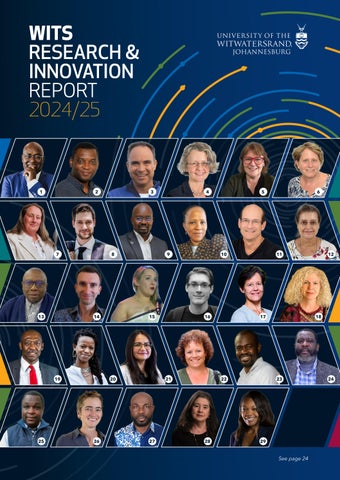
WITS RESEARCHERS ON THE COVER In addition to the Wits researchers featured in this report, researchers pictured on the cover are amongst those with the highest number of publications in faculties; high impact and highly cited publications; research funding secured; and global, national, and industry research recognition in 2024. Pictured on the cover from left to right: 1.
Achille Mbembe, Wits Institute of Social and Economic Research, first African to receive the 2024 Holberg Prize
18. Kathleen Kahn, MRC/Wits-Agincourt Rural Public Health, 26 publications in the Faculty of Health Sciences
2.
Adeola Oyenubi, Head of Economics Division, School of Economics and Finance, top three researcher in the Faculty of Commerce, Law and Management by publications in SJR Quartile 1 journals according to the Research Output Collection System
19. Kenneth Ozoemena, School of Chemistry, 12 peer reviewed publications in high impact journals; over R1.7m research funding from multiple grants
3.
Andrew Thatcher, School of Human and Community Development, most cited in Faculty of Humanities
4.
Anne von Gottberg, Clinical Microbiology and Infectious Diseases, 22 publications in Faculty of Health Sciences
21. Mandeep Kaur, School of Molecular and Cell Biology, R3m NRF research grant; R2.4m National Equipment Programme funding
5.
Ana Ferreira, Division of Languages, Literacies and Literatures, Wits School of Education, UK Literacy Association Book Award 2024
6.
Belinda Mendelowitz, Division of Languages, Literacies and Literatures, Wits School of Education, UK Literacy Association Book Award 2024
7.
Claudia Polese, Mechanical, Industrial and Aeronautical Engineering, NSTF-South32 Engineering Research Capacity Development Award
8.
Dannielle Cerbonne, School of Accountancy, a top three researcher in the Faculty of Commerce, Law and Management according to the Research Output Collection System
9.
Desmond Klenam, School of Chemical and Metallurgical Engineering, 10 publications in the Faculty of Engineering and the Built Environment
10. Elizabeth Mavhunga, School of Education, National Association for Research in Science Teaching Fellow Award 11. Francois Venter, Ezintsha, 22 publications in the Faculty of Health Sciences 12. Irvy (Igle) Gledhill, Honorary Adjunct Professor, School of Mechanical, Industrial and Aeronautical Engineering, NSTF-South32 Science Diplomacy for Africa Award 13. Ikechukwu Achilonu, School of Molecular and Cell Biology, 12 journal articles and a book chapter published; over R1m in research funding 14. Jasper Knight, School of Geography, Archaeology and Environmental Studies, 13 journal article publications 15. Jennifer Fitchett, School of Geography, Archaeology and Environmental Studies, NSTF-South32 Communication Award 16. Julien Benoit, Evolutionary Studies Institute, 11 peerreviewed publications in Faculty of Science
20. Kitso Lynn Lelliott, Wits School of Arts, 2024 Henrike Grohs Art Award, Faculty of Humanities
22. Marion Bamford, Evolutionary Studies Institute, 11 peer-reviewed publications in Faculty of Science; ERC Horizon Advanced Grant worth €2.5m over five years 23. Michael Bodunrin, School of Chemical and Metallurgical Engineering, 14 publications in the Faculty of Engineering and the Built Environment 24. Mulala Simatele, School of Geography, Archaeology and Environmental Studies, 17 journal articles in the Faculty of Science 25. Paida Mhangara, School of Geography, Archaeology and Environmental Studies,16 journal articles in the Faculty of Engineering and the Built Environment published; R2.4m Water Commission research funding 26. Penny Moore, Academic Head of the Divisions of Virology and Immunology, SARChI Chair of Virus-Host Dynamics, 22 publications Faculty of Health Sciences 27. Philip Adom, School of Economics and Finance, top three researcher in the Faculty of Commerce, Law and Management by publications in SJR Quartile 1 journals according to the Research Output Collection System 28. Ruksana Osman, Senior Deputy Vice Chancellor: Academic, secured major funding partnerships, Honorary Doctorate in Education from Bath Spa University, England 29. Tiisetso E Lephoto, School of Molecular and Cell Biology, 2024 Kambule-NSTF Award: Emerging Researcher category 30. Warren Maroun (not pictured), CA, School of Accountancy, Fellow of the Royal Society of South Africa, Board member on developing the International Standard on Sustainability Assurance 5000, General Requirements for Sustainability Assurance Engagements, and a top three researcher in the Faculty of Commerce, Law and Management and a top three researcher in the Faculty of Commerce, Law and Management by publications in SJR Quartile 1 journals according to Research Output Collection System.
17. June Fabian, Wits Donald Gordon Medical Centre, NSTF-South32 Clinician Scientist Award
24
Wits Research & Innovation Report 2024/25
READ MORE WITS RESEARCH STORIES AT www.wits.ac.za/curiosity/
WITS. FOR GOOD