PhD
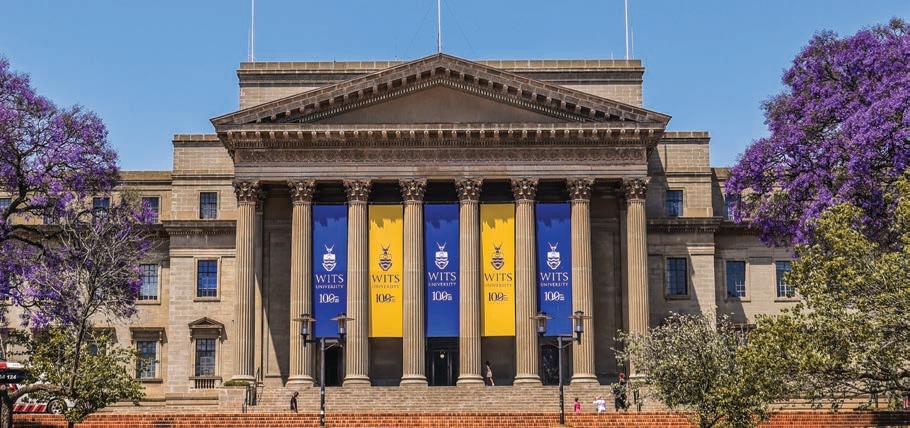
Graduation Ceremony
Date: 12 December
Time: 13:30
Venue: The Great Hall
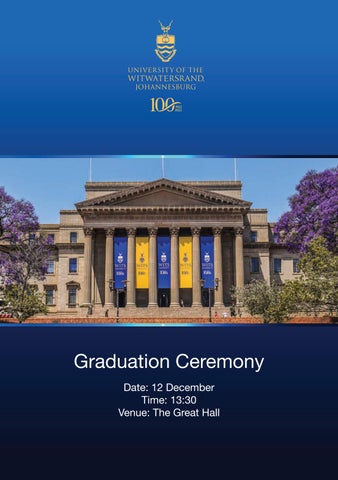
Date: 12 December
Time: 13:30
Venue: The Great Hall
CONGRATULATIONS! HALALA!
GO LEAD SOUTH AFRICA TO GREATNESS!
A hearty congratulations to the class of 2025! Some of you are the first graduates in your family, well done! May your light shine for those who come after you! For those of you who are continuing in your family’s tradition, thanks for not dropping the ball. Education is the best self-investment. The past year changed the world as we know it, with no less than 60 countries and more than 1.3 billion people globally going to vote, including our own country. The outcomes have changed geopolitics, with the Global North becoming more internally focused. The resurgence of economic protectionism has altered trade landscapes, causing ripples across global markets. The rise of artificial intelligence and big data further reshapes the balance of power, as nations compete for supremacy in these fields. Climate change, a universal threat, has become a catalyst for geopolitical tension. The race for control over natural resources, especially in the Arctic and other vulnerable regions, has intensified. South Africa has not been spared in the regional conflict, losing our own young fighters for peace in the DRC.
As the twentieth meeting of the Group of 20 heads to our shores, a first for the continent of Africa, we have chosen Solidarity, Equality and Sustainability as our G20 theme. This speaks to our recognition of the interconnected of nations. Our shared future depends on mutual understanding, cooperation, equality and stability across nations. As our future leaders you need to adapt to an uncertain world, embrace diversity, and foster dialogue. That will help you to craft a healthier, more balanced world for future generations.
As you venture into the world, take time to expand the depth and breadth of your knowledge. Read outside your specialisation, engage with people outside your comfort zone. Understand the plight of people less fortunate than yourself. Be the change you want to see in your country first then the world. Leaders who leave footprints worth emulating, are not only the brightest but also those who take time to learn from others, who are accountable for their actions and omissions, who use what they know and what they have, to make the world a better place. Leaders who care. Those leaders do this consistently with Humility and Integrity, Always. May you be those leaders! HALALA!
CONGRATULATIONS! HALALA! GO LEAD SOUTH AFRICA TO GREATNESS!
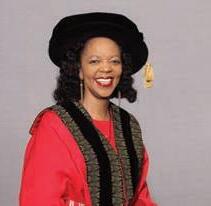
Dr Judy Dlamini Chancellor
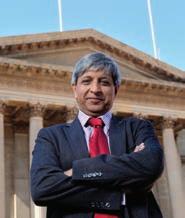
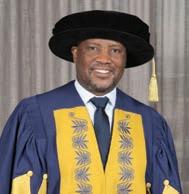
Dear Wits Graduate,
Congratulations on successfully completing your academic programme at the University of the Witwatersrand, the premier University on the continent.
You are now a member of an elite group of graduates of this august institution. More than 200 000 alumni at the cutting edge of excellence, both locally and internationally in business, the public sector, the academy, and in civil society have trodden this path.
Today, you become a member of this illustrious community.
Over the past 100 years, Wits has grown into one of the leading universities on the continent and a globally respected institution for its teaching and learning, knowledge creation and generation, and social impact. It has shaped the lives of many for the advancement of society. You are now an integral part of this proud and enduring legacy. Here at Wits, we actively pursue excellence and societal relevance in everything we do. From the abstract to the practical, our focus is on creating a space for the best thought, knowledge, and expertise to be unearthed and nurtured.
Wits is renowned for its intellectual leadership and for nurturing critical thinkers, creative innovators, problem-posers, and problem solvers. We have strived to match your ambition and drive to overcome the challenges thrown our way by the pandemic. Together we have reached the crest of the hill and proven, once again that excellence is achievable, even in times of uncertainty and adversity.
Your success has furthered our commitment to equipping the next generation of leaders with the skills and determination that you will need to find innovative and sustainable solutions to the pressing problems of the 21st Century.
As a Wits graduate, you had access to an exceptional educational experience. You have been exposed to a world-class academic and research programme and a vibrant community that makes you a true global citizen. You have been part of an institution that generates cutting-edge knowledge and innovation for South Africa and the world. It is now time for you to step into the world and use that experience, for good. We know that you will enter the next stage of your journey with the determination to build a better society tomorrow. I want to encourage you to remain a part of the Wits family by participating in our alumni programme and by further advancing the reputation of your alma mater.
Best wishes for the next steps of your journey and congratulations on being such a big part of the history of this illustrious institution.
Professor Zeblon Vilakazi, FRS Vice-Chancellor and Principal Wits University
Gaudeamus igitur
Juvenes dum sumus
Post jucundum juventutem
Post molestam senectutem
Nos habebit humus.
Ubi sunt qui ante nos
In mundo fuere?
Vadite ad superos
Transite in inferos
Hos si vis videre.
Vita nostra brevis est Brevi finietur.
Venit mors velociter
Rapit nos atrociter
Nemini parcetur.
Vivat academia
Vivant professores
Vivat membrum quodlibet
Vivat membra quaelibet
Semper sint in flore.
Vivant omnes virgines
Faciles, formosae.
Vivant et mulieres
Tenerae amabiles
Bonae laboriosae.
Vivant et republica et qui illam regit.
Vivat nostra civitas, Maecenatum caritas
Quae nos hic protegit.
Pereat tristitia, Pereant osores.
Pereat diabolus, Quivis antiburschius
Atque irrisores.
Let us rejoice therefore
While we are young.
After a pleasant youth
After a troublesome old age
The earth will have us.
Where are they
Who were in the world before us?
You may cross over to heaven
You may go to hell If you wish to see them.
Our life is brief
It will be finished shortly.
Death comes quickly Atrociously, it snatches us away. No one is spared.
Long live the academy!
Long live the teachers!
Long live each male student!
Long live each female student!
May they always flourish!
Long live all maidens
Easy and beautiful!
Long live mature women also,
Tender and loveable
And full of good labor.
Long live the State
And the One who rules it!
Long live our City
And the charity of benefactors
Which protects us here!
Let sadness perish!
Let haters perish!
Let the devil perish!
Let whoever is against our school
Who laughs at it, perish!
Nkosi sikelel’ iAfrika
Maluphakanyisw’ uphondo lwayo,
Yizwa imithandazo yethu, Nkosi sikelela
Thina lusapho lwayo.
Morena boloka setjhaba sa heso, O fedise dintwa le matshwenyeho, O se boloke, O se boloke setjhaba sa heso, Setjhaba sa, South Afrika — South Afrika.
Uit die blou van onse hemel, Uit die diepte van ons see, Oor ons ewige gebergtes, Waar die kranse antwoord gee,
Sounds the call to come together, And united we shall stand, Let us live and strive for freedom In South Africa our land.
The Wits Choir
The Wits Choir has been around since 1995. Their repertoire is colourful and vibrant. They perform regularly at graduations and important ceremonies. The Wits Choir has toured internationally as well as playing host to other choirs here. They are also active in the community, undertaking choral outreach programmes.
12 DECEMBER 2025 AT 13:30
The audience will rise as the academic procession enters the hall and will remain standing until the Acting Vice-Chancellor is in place
The Acting Vice-Chancellor will constitute the congregation
The Acting Vice-Chancellor will welcome the graduands, diplomates and guests
Address to the congregation
Conferment of degrees and granting of diplomas
The Acting President of Convocation will address the graduates and diplomates
The Acting Vice-Chancellor will dissolve the congregation
The audience will stand while Ihele is played
Members of the audience are requested to stand while the academic procession leaves the hall and not to leave the hall before the end of the ceremony.
In the event of load-shedding or power cuts, the Great Hall may become totally dark until the generator comes into operation.
DEAN: PROFESSOR SA MADHI MBBCh MMed PhD (Witwatersrand) FCPaeds(SA) MASSAf RSSAf TWAS CBE
GOVENDER, Adele Roxanne
RESEARCH REPORT: An investigation of the knowledge, attitude, and practices of public health medicine specialists on climate-related health risks
NDOMBI, Yarumia Ndombi
RESEARCH REPORT: Implementation of a mobile health application used by community health workers in Ekurhuleni Health District
KAPINGA, Ntumba Monica
RESEARCH REPORT: Association between quit attempt and other lifestyle behaviours among tobacco users attending a district hospital in Gauteng
MATYESHANA, Nonhlanhla Mbali
RESEARCH REPORT: An audit of the patterns of prostate carcinoma metastases in patients referred for PSMA PET/CT imaging at Charlotte Maxeke Johannesburg Academic Hospital
BADIMWENA, Tshunza Jacques Exposure and Health RESEARCH REPORT: Health risk assessment of exposure to heavy metals in soils near mine dumps
BANDA, Natasha Health Economics RESEARCH REPORT: Cost-benefit analysis of an electronic medical record system in an emergency unit based private practice in South Africa
CLARK, Candice Health Systems and Policy RESEARCH REPORT: Perceptions of service users of trauma-sensitive yoga as an adjunct treatment option for posttraumatic stress disorder (PTSD) in the South African setting
FUTSHANE, Zanoxolo
Health Systems and Policy RESEARCH REPORT: An exploration of the roles of environmental health practitioners in Ekurhuleni Health District, Gauteng Province
GWEBU, Nomthandazo Blessings Social and Behaviour Change Communication RESEARCH REPORT: Exploring healthcare providers' perspectives and experiences in the provision of oral PrEP for adolescent girls and young women in a sub-district in the city of Johannesburg, South Africa
KAPFUMVUTI, Kudakwashe Linton Health Economics RESEARCH REPORT: A comparison of tender prices and single exit prices for medicines in South Africa for the period 2018-2022
LETELE, Neo Catherine Health Systems Policy RESEARCH REPORT: Facilitators and barriers to the implementation of electronic health systems by health care workers at primary health care clinics in the city of Johannesburg
MALULEKE, Pamela
Social and Behaviour Change Communication RESEARCH REPORT: Integration of infant feeding in clinical undergraduate education: A case study of one South African university faculty
MAVENEKA, Tinotenda Nyasha
Social and Behaviour Change Communication RESEARCH REPORT: Instagram use and depression: A cross-sectional study among students at a South African university
MBANE, Zanozuko Exposure and Health RESEARCH REPORT: Acid mine drainage treatment in South Africa: Towards a harmonised policy framework
MOLOI, Mmakabea Felicity
Health Systems Policy RESEARCH REPORT: Exploring patients' experiences in accessing chronic care services during the COVID-19 pandemic in Ekurhuleni district, Gauteng Province
MORRISON, Alice Ruth (with Distinction)
Social and Behaviour Change Communication RESEARCH REPORT: Demographic, psychosocial, and motivational factors associated with SARS COV2 vaccine hesitancy among undergraduate students at a university in Johannesburg, South Africa, 2021
MSIMANGA, Baleseng Jeannette
Occupational Hygiene RESEARCH REPORT: Worker's knowledge and perception on occupational exposure related to emissions at wastewater treatment plants, in the City of Tshwane, South Africa
NDLOVU, Senziwani
Social and Behaviour Change Communication RESEARCH REPORT: Exploring experiences of the My PrEP decision support tool and counselling services among adolescent girls and young women in Johannesburg
NTAMEHLO, Hlubikazi Primrose
Health Systems Policy RESEARCH REPORT: Facilitators and barriers to accessing antenatal care experienced by adolescents in primary health care facilities at the City of Johannesburg district in the Gauteng Province
NTLATLENG, Aletta Molobane
Health Systems Policy RESEARCH REPORT: Exploring the relationship between nurses and community health workers and the perceived impact on service delivery in Lesedi Sub-District
RAMADI, Motshidisi Leah
Social and Behaviour Change Communication RESEARCH REPORT: Educator experiences of school violence and perceived effects on the teaching environment in public high schools in Soweto, South Africa
RWIGAMBA, Megan
Health Systems Policy RESEARCH REPORT: Factors influencing the adoption of a national integrated human resource information system in the South African health sector
SITHOLE, Samkelo Bhekinkosi Rural Health RESEARCH REPORT: Facilitators and barriers to antiretroviral therapy adherence among adolescents and young adults in rural South Africa
VAN BILJON, Muellatt
Mother and Child Health RESEARCH REPORT: Mothers' perspectives and experiences of kangaroo mother care in the Fezile Dabi Health District, South Africa: A qualitative study
DE FREITAS, Matilda Estela
Epidemiology and Biostatistics
RESEARCH REPORT: The relationship between household asset index (HAI), food insecurity and post-traumatic stress disorder (PTSD) among adults in rural, South Africa: 2021 -2022
DLAMINI, Sinothando Samukele
Field Epidemiology
RESEARCH REPORT: Effects of pyrazinamide and/or ethambutol resistance on tuberculosis treatment outcomes by whole genome sequencing, South Africa 2020 - 2022
FORGET, Ruvimbo Faith
Epidemiology and Biostatistics
RESEARCH REPORT: Characterising perinatal mortality in South Africa: A cross-sectional analysis using demographic health survey data
KABURISE, Michael Bandasua
Epidemiology and Biostatistics
RESEARCH REPORT: Factors associated with RTS,S malaria vaccine coverage in Northern Ghana from 2021 to 2022
MADIMABE, Metsekae Richard
Public Health Informatics
RESEARCH REPORT: Using supervised machine learning techniques to classify respiratory tract infections
MAPOSA, Sibonginkosi
Public Health Informatics
RESEARCH REPORT: Application of text mining techniques to extract leukaemia information from reports of flow cytometry investigations conducted between 2015 and 2019 at a Johannesburg academic hospital
MAYANJA, Moses Micah Biostatistics
RESEARCH REPORT : Differences between 2008 and 2017 in HIV prevalence and risk factors among young adults aged 15-24 years in South Africa
MBULI, Musawenkhosi Mzamo
Field Epidemiology RESEARCH REPORT: Factors associated with hospitalization of adolescents with COVID-19 in Eswatini, March 2020 to January 2022
MHONE, Friday Phale
Public Health Informatics
RESEARCH REPORT: Using supervised machine learning algorithms to predict prostate cancer cases: A case of Men of African Descent Carcinoma of the Prostate Consortium (MADCaP), South Africa
MKIZE, Nelisiwe
Epidemiology and Biostatistics
RESEARCH REPORT: The relationship between parent-child interaction and early childhood development in rural Limpopo Province, South Africa
MLOZINI, Prudence Nomusa
Biostatistics and Epidemiology
RESEARCH REPORT: Trends, socio-demographic characteristics and risk factors for malaria incidence and mortality in Umkhanyakude District Kwa-Zulu Natal 2014-2022
MLUNGWANA, Zamangema Nokulunga
Public Health Informatics
RESEARCH REPORT: Circumstances associated with injury related deaths and changes in causes of injury related deaths over three decades in rural northeast South Africa: Insights from text mining of verbal autopsy narratives from Agincourt
MOGONGOA, Lebogang
Epidemiology and Biostatistics
RESEARCH REPORT: Evaluation of the causal association and risk stratification of body mass index polygenic risk scores with cardiovascular risk factors in African populations
MOHLALA, Matshediso Ivy
Public Health Informatics
RESEARCH REPORT: Lung cancer incidence trends in South Africa from 2011 to 2022 and investigation of non-small cell lung cancer biomarkers using rule-based natural language processing
MOLELE, Thandi Celcious
Epidemiology and Biostatistics RESEARCH REPORT: Factors associated with tuberculosis among workers in South Africa: Cross-sectional analysis of the national income dynamics study, 2017-2018
NDABA, Gcinile Mbali Field Epidemiology RESEARCH REPORT: Comparison of viral load suppression among treatment-initiated HIV positive patients before and during COVID-19 in the Hhohho region, Eswatini 2018-2022: A repeated cross-sectional study
NYAHUMA, Munyaradzi (with Distinction)
Epidemiology and Biostatistics RESEARCH REPORT: Predictive modelling of risk factors associated with HIV infection among adults in South Africa in 2016 using supervised machine learning
POOVAN, Nicole Infectious Disease Epidemiology RESEARCH REPORT: Effectiveness and acceptability of urine tenofovir drug-level feedback on HIV pre-exposure prophylaxis adherence in young South African women
POTIANE, Lintle Bernadina Implementation Science RESEARCH REPORT: Prevalence of and factors associated with childhood malnutrition in Lesotho, 2018-2024
RWAFA, Tanaka Public Health Informatics RESEARCH REPORT: Unsupervised machine learning clustering of prostate cancer cases in Soweto using clinical, demographic, and socioeconomic variables (PSA, GS, TNM)
SAFI, Wa Safi Guy Roger
Epidemiology and Biostatistics RESEARCH REPORT: The HbA1c threshold for diagnosis of type 2 diabetes mellitus in an adult Black South African population: A cross-sectional study from 2016 to 2020
SEBOKO, Nare Tertia
Infectious Disease Epidemiology
RESEARCH REPORT: Epidemiology of intimate partner violence among adolescent girls and young women accessing HIV pre-exposure prophylaxis in South Africa, 2019-2022
TAPAMO, Dominique Adrienne
Epidemiology and Biostatistics RESEARCH REPORT: Factors associated with disease severity amongst children admitted with SARS-COV-2 infection in Gauteng and KwaZulu-Natal, 2020 to 2022
ALTRICHE, Nastassia (with Distinction)
Anatomical Sciences DISSERTATION: Macrophage mediation of stemness in hormone-dependent breast cancer cells under combined tamoxifen and cannabidiol treatment
BESSONG, Pascal Obong
Bioethics and Health Law RESEARCH REPORT: Ethical considerations of using geospatial technologies in community health research
CHINAKA, Tapiwa Tsitsi (with Distinction) Physiology DISSERTATION: Reporting of statistical results in the field of pain research
GANGAT, Faaiza
Bioethics and Health Law
RESEARCH REPORT: Ethical justification for gender reassignment surgery without parental consent for transgender youth aged 16 years and older in South Africa
GOVENDER, Merissa
Bioethics and Health Law RESEARCH REPORT: An ethical analysis of post clinical trial access in South Africa
GQWARU, Andile Exposure Science RESEARCH REPORT: Estimating health risk from exposure to volatile organic compound emission profiles from wastewater treatment technologies used in South Africa
KAMANGA, Noela Holo Bertha
Paediatrics and Child Health DISSERTATION: Risk factors and outcomes of infants with necrotizing enterocolitis: A case-control study
KEKANA, Constance Titi
Exposure Science RESEARCH REPORT: Evaluation of homogenous exposure grouping to estimate individual worker's exposure in South African gold mines, 2019-2022
KHANYE, Katleho
Physiology DISSERTATION: Impact of aortic pulse pressure determinants on the heart rate-aortic pulse pressure relationship: An intervention study in rats
LEPHUTHING, Tsholofelo Bonolo
Bioethics and Health Law RESEARCH REPORT: What comes next? The sustainability of donor funded HIV/AIDS programmes post funding cycle
LINDSAY, Alexandra Helen Forensic Medicine DISSERTATION: Decomposition dynamics and arthropod colonization patterns in shifting environmental conditions: Subaerial to freshwater aquatic transitions and vice versa
MACKADE, Thabang (with Distinction)
Anatomical Sciences DISSERTATION: Characterising the molecular and functional phenotypes of RAW264.7 macrophages under cannabidiol (CBD) and tamoxifen treatment
MADISHA, Pallo (with Distinction)
Physiology DISSERTATION: Investigating the potential antimicrobial and antipyretic properties of Aristea ecklonii
MAHLOKO, Mmotong Potego
Anatomical Sciences DISSERTATION: Effects of alcohol and combined antiretroviral drug interactions on pulmonary histomorphology in diabetic male Sprague Dawley rats
MAILULA, Michelle Koketso
Bioethics and Health Law RESEARCH REPORT: Ethical issues associated with the provision of medical advice by medical influencers on social media
MAIMELA, Thabiso Jerry
Exposure Science RESEARCH REPORT: BTEX concentration and risk assessment from biological active sludge in municipal wastewater treatment plants: Systematic review
MAKHUBELE, Hlayisani Exposure Science RESEARCH REPORT: Health risk assessment of sulphur dioxide emissions in Mangaung, Bloemfontein, South Africa (2023)
MANENTSA, Ncomeka Chunyelwa
Bioethics and Health Law RESEARCH REPORT: The ethical justifiability of the off-label use of hydroxychloroquine during the COVID-19 pandemic
MKHONZA, Nhlalonhle Bathandwa Buhlebenkosi
Bioethics and Health Law RESEARCH REPORT: Is the use of social sanctions during the corona virus pandemic in South Africa morally justified?
MMAMOGOPODI, Frengelina Mapogo
Exposure Science RESEARCH REPORT: Knowledge and practices associated with exposure to nail products among informal nail technicians in Braamfontein, South Africa
MNGUNI, Nkazimulo Nelisiwe (with Distinction) Physiology DISSERTATION: The effects of different modalities of a single bout of exercise on sleep architecture and food choices in overweight/obese young adults
MOHAPI, Kenneth Nyakallo Exposure Science RESEARCH REPORT: Physicochemical properties of PM2.5 emanating from gold mine tailings in the community of eMbalenhle, South Africa
MORABA, Mmanoko Irene
Anatomical Sciences DISSERTATION: An assessment of hyperostosis frontalis interna within a South African skeletal sample
MORELE, Boikano Molalelo
Anatomical Sciences DISSERTATION: Morphological sex estimation from low dose x-ray scans - an exploratory study
MPEQA, Palesa Petunia
Bioethics and Health Law RESEARCH REPORT: The ethical responsibility to increase access to non-invasive prenatal trisomy 21 testing for pregnant women in low socio-economic groups in South Africa
NDLAZI, Olwethu Blassin Physiology DISSERTATION: The association between isolated central systolic hypertension and target organ damage
NGOBENI, Setshego
Exposure Science RESEARCH REPORT: Respirable particulate matter concentrations at a waste disposal site in the Gauteng Province, South Africa
NGONDOH, Froodia
Clinical Microbiology & Infectious Diseases DISSERTATION: Effect of in vitro zinc depletion on carbapenemase activity in Enterobacterales clinical isolates
NGUBANE-MWANDLA, Nokukhanya
Paediatrics and Child Health DISSERTATION: A descriptive study of chronic kidney disease (stages 3-5) in children at Chris Hani Baragwanath Academic Hospital, 2000-2019
NKABINDE, Zolisa Brian Emergency Medicine RESEARCH REPORT: Personalized prognostication in paediatric TBI: A systematic review of machine learning approaches with multimodal data
RAKGOATHE, Rethabile
Anatomical Sciences DISSERTATION: The impact of binge alcohol consumption on the developing humerus of adolescent Sprague Dawley rats
ROTO, Lelethu Bioethics and Health Law RESEARCH REPORT: An ethical analysis of the impact of covid-19 vaccine patents on the accessibility of vaccines in developing countries
SAHIB, Mariam Bibi
Anatomical Sciences DISSERTATION: An analysis of avian trunk neural crest cell migration in vitro: Investigating the role and arrangement of actin in migrating neural crest cells
SENAI, Golebaone Exposure Science RESEARCH REPORT: Characterisation of occupational exposure to benzene, toluene, ethylbenzene and xylene associated with wastewater treatment plant in Gaborone, Botswana
TSHABALALA, Gugulethu Internal Medicine DISSERTATION: Exploring primary care providers' and patients' perspectives on barriers and enablers to cervical precancerous lesion detection in primary care clinic settings in Soweto
AHMED, Tayyabah (with Distinction) Physiology
ALLY, Atiyyah (with Distinction) Neuroscience
AMOD, Saabira Sidra (with Distinction) Human Biology
BAIA, Caitlin Jade (with Distinction) Physiology
BASEMENANE, Queren Nyamalumba Public Health
BOUWER, Marnél (with Distinction) Physiology
BREYTENBACH, Bianca (with Distinction) Neuroscience
CHABI, Blessings (with Distinction)
CHEN, Zhiyi (with Distinction)
CHILESHE, Kangwa (with Distinction)
CLEMINSON, Megan Melanie (with Distinction)
Health Systems Sciences
Health Systems Sciences
Health Systems Sciences
Medical Cell Biology
COKILE, Fezeka Nqobile Physiology
CUBE, Andile Cassius Physiology
DA SILVA, Chantel Singh (with Distinction)
Medical Cell Biology
DE LANGE, Aisling (with Distinction) Neuroscience
DEYZEL, Tatum Lea
DOBAS, Dimitri (with Distinction)
DOLLEY, Almaas (with Distinction)
Medical Cell Biology
Bioethics & Health Law
Medical Cell Biology
DONALDSON, Hannah Elizabeth (with Distinction) Physiology
GANDA, Charan Physiology
GOWAN, Jaina (with Distinction)
Bioethics & Health Law
HARTMAN, Estlien (with Distinction) Physiology
HUDSON, Cassidy Paige (with Distinction) Physiology
JONES, Sharika Veronique (with Distinction) Public Health
JUDEEL, Theunis Petrus (with Distinction)
KGOMO, Relebogile Nomhlekhabo (with Distinction)
KGOPE, Boitumelo Goodwell
KULANI, Phumla
Bioethics & Health Law
Medical Cell Biology
Medical Cell Biology
Human Biology
LANGA, Thando Ursula Public Health
LEMPE, Innocent Kagiso (with Distinction) Public Health
MABE, Mathapelo Felicia Human Biology
MADONSELA, Mthokozisi Bright (with Distinction) Medical Cell Biology
MAGATSELA, Retshepile Lekoba Health Systems Sciences
MALAPILE, Tshepo William (with Distinction) Physiology
MALULEKA, Tsakane Motlanalo (with Distinction) Public Health
MATHULWE, Letlhogonolo Anna Human Biology
MAYISE, Baneliswa Snothisiwe (with Distinction) Health Systems Sciences
MBONANI, Sphiwe Human Biology
MFOLO, Tumisang Vincent Physiology
MKANSI, Jennifer (with Distinction) Physiology
MKWANAZI, Nonhlanhla (with Distinction) Public Health
MLAMBO, Luyanda Mazwi Neuroscience
MNTHAMBALA, Tapiwa Dorothy Public Health
MOHLAKOLA, Tumelo Penelope Physiology
MOJELA, Minah Malifo
Bioethics & Health Law
MOKOENA, Wethu Prechet Primrose (with Distinction) Health Systems Sciences
MOTHIBE, Neo Kgomotso Angela Bioethics & Health Law
MOTSOAGAE, Onthatile (with Distinction) Neuroscience
MPHOGO, Shantel Public Health
MTHEMBU, Ntokozo Minenhle Public Health
MTHIMKHULU, Nqobile Passionate (with Distinction) Public Health
MWANSA, Nshimba Faith
Bioethics & Health Law
MYATAZA, Boitsheko Mda (with Distinction) Neuroscience
NTAI, Booki Tshepo Physiology
PATEL, Jyoti (with Distinction) Physiology
PHOCHANA, Katlego Maropeng (with Distinction) Public Health
PILLAY, Kirthanya
Bioethics & Health Law
PORTER, Bree Human Biology
RADEBE, Linda John (with Distinction) Neuroscience
RALINALA, Nakisa Tendani (with Distinction) Public Health
RAMATSETSE, Amogelang Physiology
RAPETSOA, Phuma Jackie Health Systems Sciences
SAMARIA, Darmell (with Distinction) Health Systems Sciences
SELEMELA, Mpho
Health Systems Sciences
SHWENI, Zusange Neuroscience
SINGH, Priyanka (with Distinction)
Bioethics & Health Law
STOWE, Phindile Nicola Public Health
SWAFO, Hellen Pheladi Physiology
SWANEPOEL, Carli (with Distinction) Neuroscience
TERBLANCHE, Ethan Cowan (with Distinction)
Health Systems Sciences
THULO, Puleng (with Distinction) Health Systems Sciences
TSHIMANGA, Kanjinga Naomi Medical Cell Biology
TSHIPUK, Ruth Kalong (with Distinction) Physiology
VAN WAMELEN, Bastiaan Joop (with Distinction) Human Biology
WILLCOX, Georgia Mae (with Distinction) Neuroscience
ABDULLE, Mohammed Ali Abdi Health Systems Sciences
ABRAMS, Liah (with Distinction) Biomedical
ADAMS, Sadia Biomedical
ANDERSEN, Claire Elizabeth Biomedical
ATANGA, Lum Anwi Health Systems Sciences
BHANA, Trezar Djavan Biomedical
BHIKHA, Kirti Biomedical
BIYELA, Chazani
Nursing System Sciences (Online)
BROODRYK, Ané Lydia Biomedical
BUDA, Lindokuhle Health Systems Sciences
BUYS, Hester Elizabeth (with Distinction)
Nursing System Sciences (Online)
BYERS, Kasia Aliya Biomedical
CAIN, Ruthilla Health Systems Sciences
CAMPBELL, Tyla Cassidy Biomedical
CELGOW, Jade Alexa Biomedical
CHABA, Motsatsi Deligent
Nursing System Sciences (Online)
CHADINHA, Lucinda Rosa Biomedical
CORREIA, Christopher Vicenté Health Systems Sciences
DAVEL, Thorina Biomedical
DAVIES, Lexi Fay (with Distinction) Health Systems Sciences
DAYA, Khadijah Biomedical
DE KOKER, Mikayla Lea Biomedical
DEVCHAND, Preena Pranay Biomedical
DEVINE, Kaylene Bronwynne
Nursing System Sciences (Online)
DOSTER, Bernelee (with Distinction) Biomedical
DU PREEZ, Amel Tristen Biomedical
DU TOIT, Brittany Amber (with Distinction) Biomedical
EMAMALLY, Aadil Biomedical
ESSACK, Amaarah Biokinetics
GAMSU, Stella Biomedical
GOUNDEN, Natassia (with Distinction)
GOVENDER, Hayley Clare
Nursing System Sciences (Online)
Nursing System Sciences (Online)
GOVENDER, Kaylene Biomedical
GREEN, Brayden Stephen Health Systems Sciences
HELLING, Erin Lindsey Biokinetics
HOLROYD, Christopher Clive (with Distinction) Biomedical
HUDSON, Caitlin Julianne Biomedical
JOSSIE, Juwairiyyah Biomedical
KAMRAJH, Kameena Biomedical
KENTANE, Abongiwe Somikazi Biomedical
KHAN, Zayna Biomedical
KWADI, Thato Omphile Biomedical
LAXA, Noluthando Khanyisile Health Systems Sciences
LAZARUS, Aaron Joachim Biomedical
LEMEKO, Mandisa Biomedical
LESEJANE, Stewart Kgalalelo Health Systems Sciences
LEVIN, Natalia Zahava (with Distinction) Biomedical
LEVY, Shayna Miriam (with Distinction) Biomedical
MABELANE, Kamogelo Warona Biomedical
MABENA, Keneilwe Health Systems Sciences
MABENGU, Sihle Health Systems Sciences
MABUZA, Jamela Roxanne Biomedical
MAFUNGA, Tawananyasha Paidamoyo Health Systems Sciences
MAGAMPA, Sharlotte Mosedi (with Distinction) Nursing System Sciences (Online)
MAHOMED, Sabina Health Systems Sciences
MAKHATHINI, Nala Khethelo Biomedical
MAKHOKHA, Vhahangwele Fiona Health Systems Sciences
MAKHUBALO, Hilda Mamello Nursing System Sciences (Online)
MALAN, Leney Biomedical
MALUKA, Xoliswa Righteous Biomedical
MAMMBURU, Wanga
MANGOLELE, Xihlovo Biomedical
MANZINI, Thando Health Systems Sciences
MAPHALALA, Phathwayinkosenhle Gabriela Biomedical
MAPHANGA, Nokuthula Rose Health Systems Sciences
MAPHUMULO, Ntokozo Alwande Biomedical
MARK, Kelsey Alyssa Biokinetics
MASHAMAITE, Selaelo Puledi Nursing System Sciences (Online)
MASWANGANYI, Ntshembo Tiyani
MATIANYI, Antoinette Furaha
MATLABA, Tshepiso Health Systems Sciences
MAVIMBELA, Nonkazimulo Health Systems Sciences
MBOKODO, Thandolwethu Chantelle (with Distinction) Health Systems Sciences
METSING, Thapelo Karabo Health Systems Sciences
MODIKOE, Esihle Biomedical
MOEKWA, Bridgette Matsie
MOHAMED, Amani (with Distinction)
MOKGOSI, Kamogelo Gabriella
MOKHOMO, Reatlehile
MOKONYANE, Aurient Matabogela Nursing System Sciences (Online)
MOLEDI, Tintswalo Tselane
MOLEFE, Neo Bongani Biomedical
MORAPELI, Lesedi Mosa Biomedical
MOYO, Lerato Nyasha Biomedical
MPHAHLELE, Leago (with Distinction)
MSIMANG, Lucilla
MTETWA, Thando Nkosingiphile
MTHEMBU, Sbusiso Jason Biomedical
MUSHWANA, Amokelane Angel Nursing System Sciences (Online)
MUVUNYI KAYITANA, Shafee Biomedical
MWEEMBA, Bumi Jewel Biomedical
NAIDU, Divaksha Biomedical
NDLHOVU, Omolemo Ayanda Biomedical
NDLOVU, Mbalehle Nicol Biomedical
NELL, Anke Biomedical
NELUSHI, Tsireledzo Health Systems Sciences
NGANGA, Stephen Khaemba Biomedical
NGWAKO, Sannah Maropeng Health Systems Sciences
NHLANGOTHI, Zamokuhle Biomedical
NJENGA, Lemayian Maxwell Ngugi (with Distinction) Biomedical
NKOSI, Nonhlanhla Biomedical
NTANZI, Amahle Zime (with Distinction) Biomedical
NTULI, Mbulelo (with Distinction) Nursing System Sciences (Online)
PALIAM, Priya Shakti Biomedical
PETERSEN, Destani Angel Biomedical
PHILLIP, Danika Biomedical
PIENAAR, Judith Virginia (with Distinction) Nursing System Sciences (Online)
PILLAY, Tamika Biomedical
POONEE, Aarya Biomedical
POSWA, Zozibini Joy Biomedical
PRINCE, Chanelle Biomedical
PROZZI, Isabella Elizabeth Biomedical
RAMABULANA, Mary Khathutshelo Health Systems Sciences
RAMLUKAN, Ashwin Biomedical
RAMONG, Baitebetse Mirriam
Nursing System Sciences (Online)
RAPETSWA, Dinah Khomotso Nursing System Sciences (Online)
RASEREMA, Maphefo Florah Biomedical
RATSOMANA, Lesedi Biomedical
RESNIK, Shaina Leiba (with Distinction) Health Systems Sciences
RICHES, Ariane Elizabeth Biomedical
ROBINSON, Matthew Alan Biomedical
SAHULA, Indiphile Biomedical
SATTAR, Saffa Biomedical
SEGAGE, Lethabo Biomedical
SELOWA, Mahlatse Othilia Biomedical
SEOTLO, Itumeleng Rachel Health Systems Sciences
SERUNYE, Kutlwano Biomedical
SESHABELA, Refentse Biomedical
SIBISI, Sincobile Loveness Rhandzani Biomedical
SIBIYA, Njabulo Neo Biomedical
SIKHAKHANE, Thinasonke Luyanda Biomedical
SIKO, Yonela Lumka Biomedical
SIMELANE, Thembisile Pricilia Health Systems Sciences
SLOM, Shayna Dalia (with Distinction) Biomedical
SMITH, Micaela Jayne (with Distinction) Biomedical
SOBOPHA, Zimi Biomedical
TAGUMA, Zoe Anesuishe Biokinetics
TALE, Matshweu Nursing System Sciences (Online)
TEFFO, Elizabeth Tlotlo Nursing System Sciences (Online)
THEART, Mareli Biokinetics
TSHABALALA, Nolithando Health Systems Sciences
VAN WYK, Alicia Mellisa Biomedical
VILAKAZI, Lebogang Sophia Nursing System Sciences (Online)
WEBER, Isabella Anne Fernandes Biomedical
WILMOT, Christopher Andrew Biomedical
WILSON, Jamie Sharon Biokinetics
WINGSON, Melissa Biomedical
XULU, Amahle Angel Health Systems Sciences
YONA, Nomathamsanqa Thami Biomedical
ZIMANDE, Phulwana Christen Biomedical
ZONDO, Noluthando Biomedical
ZULU, Palesa Biomedical
ZUMA, Phakamani Wandile Biomedical
ZWANE, Nonceku Linda (with Distinction) Biomedical
Postgraduate Diploma in Child Health
CREMONA, Elena (with Distinction) Neurodevelopment
NEWTON, Charity Neurodevelopment
SANYANE, Kgomotso Lovey Neurodevelopment
Postgraduate Diploma in Occupational Health
BOPAPE, Mantwa Evah
CHIDUMWA, Tatenda
CHISALE MABOTJA, Mantwa Christina (with Distinction)
MADLABANE, Samukelisiwe Memory
MATHOSA, Katlego Kgaladi Rebecca
MATLOA, Nndweleni Maxwell (with Distinction)
MBOKAZI, Irene Fikile (with Distinction)
MOKHAHLANE, Mpeile Catherine (with Distinction)
MPHAHLELE, Mathapelo Joy
NGONDWENI, Muriel Khanyisa
NGOVENI, Ntshembho Canon
NKOSI, Senzo Mbongeni Wiseman (with Distinction)
ROSSOUW, Helgard Muller (with Distinction)
SAO, Lebohang Auctovia
STRAUSS, Hermias Cornelius
TLHONGOLO, Modiri Peter
As a Health Professional graduand of the University of the Witwatersrand, I solemnly pledge that:
- I will dedicate my life to the service of humanity;
- I will exercise my profession to the best of my knowledge and ability in accordance with sound health practices and with compassion, conscience, integrity and humility;
- The health and well-being of all persons entrusted to my care and the well-being of the community will be my first consideration;
- I will respect the autonomy and dignity of my patient and will not knowingly do anything to their detriment or prejudice;
- I will not permit consideration of age, religion, nationality, politics, race, gender, sexual orientation, disability, disease, lifestyle, economic status, social standing or any other factor to interfere with my duty to my patient;
- I will not improperly divulge anything I have learned in my professional capacity;
- I will uphold and defend my professional independence;
- I will advocate for human rights and will not violate such rights and civil liberties, even under threat;
- I will conduct research on patients only in accordance with sound ethical principles and with the approval of a formally constituted ethics committee;
- I will embrace life-long learning to improve my professional knowledge and skills and will share my knowledge for the benefit of patients and the advancement of healthcare;
- In my relations with patients, colleagues and others, I will conduct myself as becomes a member of an honourable profession.
I make this pledge solemnly, freely and upon my honour.
Prizes to be presented at the Faculty’s prize giving ceremony
Ahmed and Reubina Wadee Prize for the most distinguished student in BHSc III:
Awarded to the most distinguished student in the third year of study for the degree of Bachelor of Health Sciences. Liah Abrams
BHSc Prize for Pharmacology:
Awarded to the student who achieves the highest mark (75% or more) for the course Pharmacology in the third year of the Bachelor of Health Sciences degree.
Liah Abrams
Dean's Merit List Bachelor of Health Sciences Year 3:
Citation for achieving an average of 75% in the third year of study for the degree of Bachelor of Health Sciences.
Liah Abrams
Claire Elizabeth Andersen
Trezar Djavan Bhana
Kirti Bhikha
Ané Lydia Broodryk
Lindokuhle Buda
Tyla Cassidy Campbell
Jade Alexa Celgow
Lexi Fay Davies
Preena Pranay Devchand
Bernelee Doster
Brittany Amber du Toit
Amaarah Essack
Erin Lindsey Helling
Christopher Clive Holroyd
Caitlin Julianne Hudson
Zayna Khan
Noluthando Khanyisile Laxa
Aaron Joachim Lazarus
Natalia Zahava Levin
Shayna Miriam Levy
Jamela Roxanne Mabuza
Leney Malan
Xihlovo Mangolele
Kelsey Alyssa Mark
Ntshembo Tiyani Maswanganyi
Tshepiso Matlaba
Thandolwethu Chantelle Mbokodo
Amani Mohamed
Reatlehile Mokhomo
Tintswalo Tselane Moledi
Lerato Nyasha Moyo
Leago Mphahlele
Lucilla Msimang
Thando Nkosingiphile Mtetwa
Omolemo Ayanda Ndlhovu
Tsireledzo Nelushi
Sannah Maropeng Ngwako
Lemayian Maxwell Ngugi Njenga
Amahle Zime Ntanzi
Priya Shakti Paliam
Aarya Poonee
Mary Khathutshelo Ramabulana
Shaina Leiba Resnik
Ariane Elizabeth Riches
Saffa Sattar
Lethabo Segage
Kutlwano Serunye
Yonela Lumka Siko
Shayna Dalia Slom
Micaela Jayne Smith
Mareli Theart
Alicia Mellisa van Wyk
Jamie Sharon Wilson
Nomathamsanqa Thami Yona
Nonceku Linda Zwane
Department of Anatomical Sciences Award:
This prize is awarded to the best student in the Bachelor of Health Sciences Honours in Neuroscience. Georgia Mae Willcox
John Cameron Allan Award:
This prize is awarded annually to the best student in Human Biology III. Jamela Roxanne Mabuza
The Ann Andrew Award:
This prize is awarded annually for the best student in Medical Cell Biology III. Shayna Dalia Slom
Nonceku Linda Zwane
The Bev Kramer Honours Award:
This prize is awarded to the best student in the Bachelor of Health Sciences Honours in Medical Cell Biology. Mthokozisi Bright Madonsela
The Duncan Mitchell Prize:
This prize is awarded to the student who achieves the highest mark (75% or more) for the Bachelor of Health Sciences Honours in Physiology.
Caitlin Jade Baia
The JC Allan Honours Award:
This prize is awarded to the best student in the Bachelor of Health Sciences Honours in Human Biology. Bastiaan Joop Van Wamelen
Chancellor
DR NJ DLAMINI MBChB (Natal) DOH (Free State) MBA (Witwatersrand) DBL (Unisa) PGCE (Witwatersrand) IEC (Stanford-USA)
Vice-Chancellor and Principal
PROFESSOR Z VILAKAZI BSc (Manchester) MSc PhD (Witwatersrand) FRS, FAAS, MASSAf
Chairman of Council
MR I SHONGWE BA (Wesleyan) MPhil (Oxford)
Senior Deputy Vice-Chancellor (Academic)
PROFESSOR R OSMAN BA (Witwatersrand) HDipEd BEd (Unisa) MEd PhD (Witwatersrand) MASSAf
Deputy Vice-Chancellor (Research and Innovation)
PROFESSOR L MORRIS BSc (Hons) (Witwatersrand) DPhil (Oxford) FRSSA FAAS MASSAf
Deputy Vice-Chancellor (Systems and Operations)
PROFESSOR IR JANDRELL BSc(Eng) GDE PhD (Witwatersrand) IntPE(SA) PrEng FSAAE FSAIEE SMIEEE
Deputy Vice-Chancellor (People Development and Culture)
PROFESSOR G STEVENS BA (Cape Town) BA (Hons) Psych MPsych (Western Cape) DLitt et Phil (UNISA), MASSAf
Registrar
MS CG CROSLEY BA HDipEd (Witwatersrand) BEd Hons (Unisa) MEd (Witwatersrand)
Chief Financial Officer
MS MM MANYAMA CA (SA) BCom Accounting (Cape Town) BCompt Hons (Unisa) BCom Hons Taxation (Pretoria) MBA (GIBS)
Dean of Student Affairs
MR JAP SEPTEMBER BA MPhil (Cape Town)
DEANS OF THE FACULTIES
Faculty of Commerce, Law and Management
PROFESSOR J COHEN BCom Hons PhD (Witwatersrand)
Faculty of Engineering and the Built Environment
PROFESSOR T MAJOZI BSc(Eng) MSc(Eng) (Natal) PhD (UMIST) CEng PrEng FIChemE FAAS MASSAf FWISA FSAAE
Faculty of Health Sciences
PROFESSOR SA MADHI MBBCh MMed PhD (Witwatersrand) FCPaeds(SA) MASSAf RSSAf TWAS CBE
Faculty of Humanities
PROFESSOR M MUSEMWA BA Hons (Zimbabwe) MA (Cape Town) PhD (Minnesota, USA) MASSAf
Faculty of Science
PROFESSOR N CHETTY BSc Hons (Natal) MS PhD (U. Illinois Urbana-Champaign) MASSAf MSAIP MRSSA
President of Convocation
MS K MUFAMADI BA LLB LLM (Witwatersrand)
The Faculty of Health Sciences at the University of Witwatersrand in Johannesburg, South Africa has been established for more than 100 years and is regarded as one of most reputable institutions for health sciences education in sub-Saharan Africa.
Ranked by the Shanghai Rankings in the top 300 in the world in subject rankings for clinical medicine and the top 150 in the world in subject rankings for public health, the Faculty holds its own amongst the top 400 universities internationally and prepares students for a future in the healthcare sector across the globe.
As South Africa’s largest and most comprehensive health sciences faculty, with around 7000 registered students, it offers undergraduate degrees in dentistry, medicine, medical and health sciences, nursing, occupational therapy, physiotherapy and pharmacy. It also offers a graduate entry medical and physiotherapy programme, Masters degrees in science and medicine and a PhD programme.
Teaching programmes in the Faculty are student-centred, internationally recognised, socially responsive and exemplify excellence in all dimensions. More than 1200 health sciences professionals graduate each year and are sought-after nationally, regionally and globally.
The Faculty provides excellent support and an intellectually stimulating environment for postgraduate study. Significantly, the Faculty has increased its postgraduate output in the last five years and boasts excellent postgraduate supervisors who participate in cutting-edge research in clinical, applied and basic sciences, providing fertile and varied fields of research to undertake.
The Faculty of Health Sciences is home to one Nobel Prize Winner; six research intensive Schools; nine NRF A-rated scientists; two Department of Science & Innovation (formerly the Department of Science and Technology) and the National Research Foundation’s Centres of Excellence (DSI-NRF CoEs); two African Network for Drug and Diagnostics Innovation Centres (ANDI); one Infectious Diseases and Oncology Research Institute (IDORI) – the only institute of its kind globally that examines the intersection between oncology and infectious diseases; and to eight Department of Science and Technology/National Research Foundation South African Research Chairs. There are currently 28 research entities based in the Faculty and two Research Thrusts (Diseases of Lifestyle and Molecular Biosciences). The quality of the Faculty’s research output ranks amongst the best in the country and is respected internationally. The Faculty publishes more than 2000 research papers each year.
A number of programmes for the training of the next generation of academics are provided through the Faculty. One such programme is CARTA (Consortium for Advanced Research Training in Africa), a multi-disciplinary programme aimed at growing professional, academic and research capacity in Africa in the field of public and population health. Its Pan-African focus of research includes reproductive health and sexuality as well as killer diseases in Africa, notably TB, HIV and malaria.
One of six Schools in the Faculty of Health Sciences, the School of Clinical Medicine is the largest with nine departments and about 40 divisions, which include sub-specialities. The School trains undergraduate and postgraduate students across a number of teaching platforms, including Chris Hani Baragwanath Hospital, the largest hospital on the Africa continent. Training is also undertaken at the Charlotte Maxeke Johannesburg Academic Hospital, the Helen Joseph Academic Hospital and the Rahima Moosa Hospital as well as 20 additional hospitals and clinics throughout Gauteng. The School prides itself on its high throughput of Bachelor of Medicine and Bachelor of Surgery students. It has three recognised research centres, with the Centre for Rural Health and the Steve Biko Bioethics Centre for Medical Bioethics being pillars of the Faculty’s social accountability stance, addressing matters of access to health care for all South Africans.
The School of Public Health enjoys an exceptional national and international reputation in teaching, research, academic service and partnerships. Full-time academics in the School are drawn from different disciplinary backgrounds that range from the social to the bio-medical sciences, enhancing multi-disciplinary approaches essential for public health. The School’s academic activities are also supported by more than 100 honorary staff members. The School has an impressive research record and hosts two MRC research units, the Agincourt Rural Public Health and Health Transitions Research Unit (Agincourt) and the Centre for Health Policy (CHP), both of which are internationally renowned with a long track record of supporting transformation initiatives to improve population health and the performance of the health sector. PRICELESS SA (Priority Cost Effective Lessons for Systems Strengthening South Africa) has produced translational research directly impacting health policy in the salt and sugar areas in South Africa.
The School of Therapeutic Sciences provides high-quality professional education for pharmacists, nurses, occupational therapists and physiotherapists who continue to make significant contributions to the national health sector by rendering professional services. With a focus on health and wellness, and exercise rehabilitation the School also prepares individuals for careers in biokinetics, exercise science and sports medicine. As a significant contributor to research excellence and output at the University, the School continues to produce meaningful research that serves communities, such as through its involvement with the Wits Research Institute for Malaria which provides an environment to enhance groundbreaking research into one of Africa’s deadliest diseases, and the Wits Advanced Drug Delivery Platform (WADDP) Research Unit which conducts and delivers innovative drug delivery research solutions such as RapiDiss Wafer Technology. Other research initiatives have contributed to the understanding of human movement, sports medicine and sports education.
The School of Pathology provides excellence in pathology in the form of service, teaching and research and contributes to the public health in South Africa through the provision of cost-effective, high-quality diagnostic laboratory services to the public sector. Research departments support diagnostic services and contribute to basic research in the understanding of disease processes whilst also allowing for R&D type research. The School teaches at both undergraduate and postgraduate levels. The School is home to a number of highly successful research entities including the Antiviral Gene Therapy Research Unit, the Wits Vaccines and Infectious Diseases Analytics Research Unit, the Wits Diagnostics and Innovation Hub, and the HIV Pathogenesis Research Unit.
The School of Oral Health Sciences is a leader in dental education on the continent graduating dentists, oral hygienists and specialists to make a significant contribution to the oral health of the community. Training is primarily undertaken at the Wits Dental Hospital, located within the Charlotte Maxeke Johannesburg Academic Hospital. Primary dental care is provided comprehensively by the undergraduate students of the School, who are under the close supervision of experienced faculty members. The School also supports extensive oral health care services to distant communities, through initiatives such as The Transnet-Phelophepa Health Care Train, hosted by the Transnet Foundation and via Mobile Dental Units.
The School of BioMedical Sciences, the newest school in the Faculty, serves as an exemplar in biomedical research and education by thoughtfully integrating different disciplines in health sciences, such as Anatomical Sciences, Physiology, Health Systems Science, and Medical Entrepreneurship. Each discipline is designed to offer specialised education and research opportunities while also contributing to the School's interdisciplinary objectives. The strategic organisational design enables collaborative research efforts, ensuring that the school achieves its mission and vision while contributing to the overarching goals of the Faculty and the University

1. In the event of an emergency and/or fire:
The presiding official (Chancellor/Vice-Chancellor/Deputy Vice-Chancellor) will make an announcement requesting guests, graduands and staff to keep calm and remain seated; The Ushers will assist guests to proceed to the nearest Emergency exits in order to evacuate the Great Hall in an orderly fashion; Emergency exit signs are visible in red above all exit doors situated on your left and right hand sides as well as the back of the Hall;
The Ushers will assist the elderly and disabled guests out of the building; The academic procession on stage must exit through the back stage door; Once outside the Great Hall all guests, graduands and staff must proceed to the main assembly point on the piazza.
2. In the event of a Bomb threat
All bomb threats will be treated as real in order to protect lives and property and the premises will be evacuated immediately.

Dear Wits Graduate,
There are a few defining moments in life – and it is without doubt that graduation is one of them!
Today, you enter the world as a graduate from one of the top universities on the African continent. You enter into a world filled with many challenges, but a world that is also filled with limitless possibilities. May you meet all the challenges and opportunities that await you with pride, drive, passion, innovation, social-conscience and positive-purpose.
In addition to earning the degree conferred upon you today, you have also earned the right to be associated with a special group of individuals – the Convocation of Wits University. Convocation represents all the degreed graduates of Wits and forms a vital link between the University and the global community in which it operates. Membership to Convocation is free and serves as an official channel, allowing you, the members, to convey to the University management your views about the University. This membership comes with several unique privileges, which include nominating the Chancellor of the University. The Convocation Executive has two members on the Wits Council (the governing body of the University) and maintains other regular contact with the University to ensure the voice of the Convocation is represented at the highest levels of The University.
There are approximately 250 000 Wits alumni worldwide. The distinction of our university is important to the prestige of our collective qualifications. We call upon you to nurture and enhance the value of your degree by promoting Wits’ image, preserving our values, and contributing towards our ongoing development, ensuring that we grow in stature as a globally competitive, proudly South African institution of higher learning. Please engage with us via our numerous social media channels and keep connected with us so you can access career support, receive invitations to events and reunions and have sight of all the latest news about Wits and prominent Witsies: www.wits.ac.za/alumni/updateyourdetails/
I would like to extend a warm welcome to you – you are now a #Witsie4Life!
Ms Kgomotso Mufamadi President of Convocation Wits University

Convocation is a statutory body that includes all graduates of the University. Convocation is the largest constituency of the University (since the founding of the University in 1922, graduates number over 200 000). Its statutory mandate is to “… discuss and state its opinion upon any matters relating to the University including matters referred to it by the Council” and allows for the views of graduates to be represented at the highest levels of governance of the University.
Words and music by S.B.P. Mnomiya
Anhom
Falalala
Obani labo?
Baphi Ahhom?
Ngibona beza
Beyikazela
Bathwel ‘ongiyane
Bavela kuphi na?
Obani labo?
Ongqondongqondo
Osibakhulu
Yibo labo hhom!
Yini na leyo?
Ihele
Ihele lezingwazi zakithi
Ahhom udwendwe
Ahhom
Udwendwe lwezingqwele zakithi
Nant’ ihele
Longqondongqondo
Nant’ ihele
Losibakhulu
Udwendwe
Udwendwe Iwezingqwele zakithi
Who are those? Which, Falalala?
I see them coming
Walking with swinging garments
They are wearing head rings
Where do they come from?
Who are those?
They are people with knowledge
They are people in authority
These are the ones
What is that?
It is a procession
A procession of our heroes
It is a procession
A procession of our champions
Here is a procession
Of people of knowledge
Here is a procession
Of people of knowledge
A procession
A procession of our heroes
Ihele is known as the ‘Black’ Gaudeamus Igitur. In song, the writer, Mnomiya uses very poetic language to describe a graduation ceremony. The soloist sings of the ‘strange’ procession of people in long robes and head gear. The choir responds by saying that these people are academics who read profound books of knowledge.
Mnomiya goes on to say that the graduates are an inspiration to all of us, and we will also graduate like them one day. The song goes on to wish the graduates well and it ends with a resounding “Halala” (well done!).
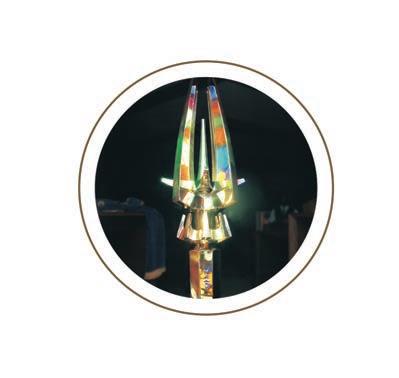
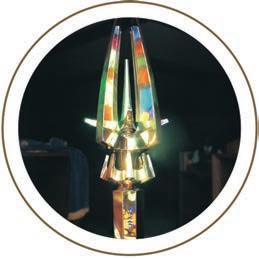
Maces were originally weapons of defence, designed to break through armour. In medieval times, bishops carried a mace instead of a sword into battle to enable them to defend themselves in accordance with the canonical rule that forbade a priest to shed blood. In time, the mace has come to be regarded as a symbol of delegated authority vested in a person or an institution. At this University, it is a symbol of the authority vested in the Chancellor and a reminder of the mandate given by the legislature of this country to the University to grant degrees.
The University mace is the work of the Edinburgh designer, silversmith and engraver, William Kirk, who designed and made the mace of the University of Stirling and of other institutions. It is silver-and gold-plated, is 1070 millimetres long and 180 millimetres broad and weighs seven kilograms. The heraldic devices used in the decoration reflect the character of this University as an institution of learning, set in a mining centre within the Republic of South Africa.
The head of the mace with its spreading vertical blades is symbolic of the horns of a springbok. The central vertical spike is representative of a rock drill on the mine, and the amber stone set in the head is intended as a tribute to a past Chancellor through its association with his name, Bernstein, which in German means amber stone. The heavy quality of the head is consistent with the traditional concept of the mace as a weapon of defence. The collar repeats the shape of the head. It consists of eight cogs which symbolise the cog-wheel in the University coat of arms and represents mining and industry. The shaft is octagonal and divided into three sections. The coat of arms of the University is placed on the shaft under the collar. Below this the words Universitas Witwatersrandensis Johannesburgi: are inscribed, followed by the date in Roman numerals – MCMLXXVI (1977) – which signifies the year of the dedication of the mace.
The mace is a symbolic portrayal of this University, this city, the Witwatersrand and the Republic of South Africa. It is a constant reminder to members of Council and Senate to uphold at all times the rights, powers and privileges of the University and its governing bodies.
The academic dress of this University is patterned on that of the Universities of Oxford and Cambridge, with modifications based on the model of the University of London and certain individual features, particularly in the costumes of office bearers and the hoods of degreesof bachelor and master.
Dress for Office Bearers
• The Chancellor wears a scarlet silk gown with a broad facing of black velvet down each side, embroidered in gold and a black velvet cap with gold cord and tassels.
• The Vice-Chancellor and Principal wears a blue silk gown with a broad facing of gold silk down each side, embroidered in blue, the sleeves being lined with gold silk. The cap is of the same design as that of the Chancellor.
• The Chairman of Council wears a black silk gown with a broad facing of red velvet down each side and around the neck, the sleeves being lined with gold silk. The cap is of the same design as that of the Chancellor.
• The academic dress of the Deputy Vice-Chancellors and the Executive Directors is the same as that of the Vice-Chancellor and Principal, except that the colour of the facing and sleeves of the gown and of the cord and tassels of the cap is silver-grey.
• The gown of the President of Convocation is of blue silk, with a broad facing of gold silk down each side, the sleeves being lined with white silk. The cap is the same as that of the Chancellor, but with a blue cord and tassels.
• The Registrar wears a black silk gown with a broad facing of blue silk down each side, bordered with gold braid. The cap is the same as that of the President of Convocation.
• A member of Council wears a black silk gown with a broad facing of gold silk. The cap is the same as that of the Chancellor.
• The gown of the President of the Students’ Representative Council is black with a broad facing of blue satin.
Graduands’ Gowns
• The gowns for all degrees of bachelor and master of the University are black, of the same pattern as the gown for a Master of Arts at the University of Oxford.
• The gown for the degree of Doctor of Philosophy is scarlet, after the University of London pattern.
• The gown for a senior doctorate is the same as that for the PhD, but with a gold satin facing on each side of the gown and with the sleeve button and cord in gold.
The Academic Hood
The academic hood is the principal feature of the costume for holders of our degrees of bachelor and master. The hood for the PhD is standard, regardless of the Faculty in which the degree was obtained. It is scarlet silk, lined with white silk.
Degree Colours
The hoods reflect the colour or colours of a particular degree or associated degrees.
As a 102-year-old public university in South Africa, Wits is proud of its record of achievement as a significant contributor to our society. We contribute capable people to society that are training in their chosen field that are engaged and able to tackle problems using evidence-based solutions. We also engage with our communities to share knowledge that we create so as to make a positive impact on the quality of life. Wits for Good.
Wits is a world-class research-intensive university based on our intellectual excellence, international competitiveness, and commitment to social justice; all of which have a measurable impact.
Here are a few of many differentiators:
• An international perspective that helps us maintain high standards in teaching and learning and research while not distracting us from our place in Johannesburg, South Africa, and Africa. In 2024 Wits authors published articles with co-authors from 199 universities, 94% of which were from countries other than South Africa.
• An intellectual hub of Africa, a founding member of the African Research University Alliance. In 2024 Wits published 2342 articles with co-authors in Africa, including 32 articles with Namibia, 61 with Botswana, 87 with Zimbabwe and 36 with Mozambique.
• An active and engaged community leader that takes a stand on social issues and is fully committed to the advancement of the public good.
• A growing contribution to the body of knowledge through peer reviewed academic publications: 4563 in 2024 and an average growth rate of 4% per year over the last five years.
• Knowledge contribution that is above global quality averages in several fields including: clinical and pre-clinical health studies (76% above global norms); arts and humanities (58% above global norms); life sciences (36% above global norms); physical sciences (12% above global norms).
• Wits is particularly associated with the study of the fields of virology, particle physics and the Higgs Boson, malaria, archaeology, paleontology, paleoanthropology, violence, local and regional politics, geochemistry, rock mechanics, deep mining, forensic anthropology, climate change, migration, social justice, and many more.
• Proud of the four Nobel laureates and the 99 Rhodes Scholars.
• Proud of our current 42000 students of whom 16600 (40%) are undertaking postgraduate studies and learning to make their own unique contributions to the global knowledge base.
• Proud of our more than 200 000 graduates. More than 90% of Wits graduates obtain permanent employment within 12 months of graduation.
• Proud of its ability to raise external funding to support and drive its research efforts, with contributions exceeding R 2 billion per annum.