






































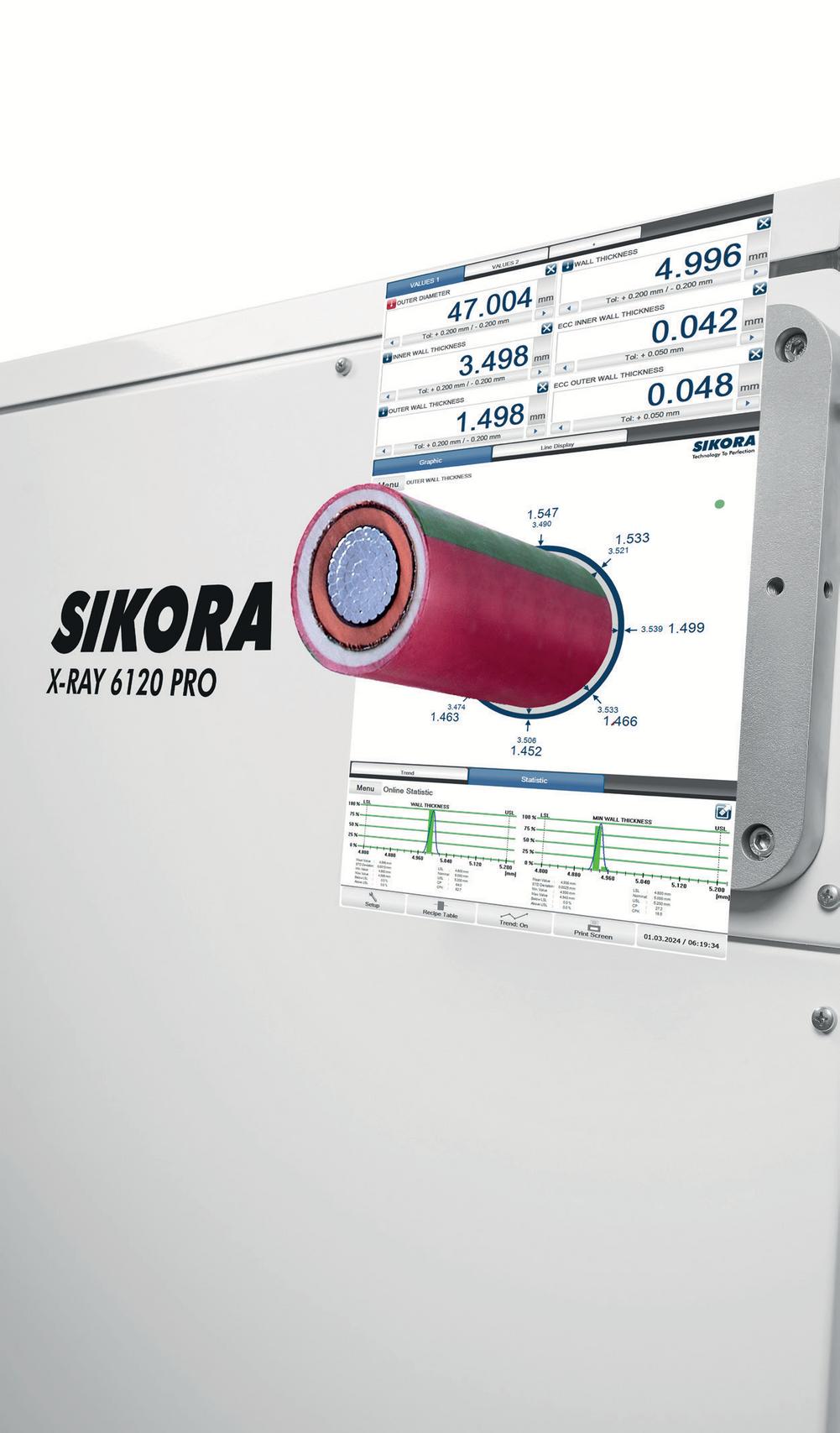
Measurement and control of wall thickness, diameter, eccentricity and ovality
Up to 3 layers of different materials
“One Button Operation” – no calibration, no parameters
Clear visualization of product parameters and data logging
Individual solutions for specific applications, e.g., THHN wires or foamed cables












































































COPPERWORKS BY THE NUMBERS
COPPERWORKS manufactures enough finished copper product each year to wire approximately:




2.22 MILLION AVERAGE-SIZED HOMES

2.36 MILLION BATTERY ELECTRIC VEHICLES








































3.46 MILLION AVERAGE-SIZED APARTMENTS

















87,000








Every day, COPPERWORKS is trusted to make copper rod that supplies the needs of the automotive, construction, energy, electronics, and other industries. Annually, we manufacture more than 430 million pounds of high-conductivity copper rod that becomes the wire vital for a wide range of products. By offering more choices with Advantage, Elemental, and our proven lowest-carbon-footprint Infinity Copper Rod and Wire, we meet the growing demands of copper wire manufacturing and lead the way in sustainability.
Call us to learn more about the infinite possibilities COPPERWORKS can offer you. THIS IS WHERE COPPER WORKS, SUSTAINABLY, FOR EVERYONE.
3-MEGAWATT ON-SHORE WIND TURBINES 260.748.6565 | COPPERWORKS.COM 1640 South Ryan Road, New Haven, IN 46774



An economical way to remove copper dust, excessive oil lubricant, dirt, and dust from primary wire or strand
•Stranding & Cabling Lines
•Take-Ups / Pay-Offs / Coilers
•Fully Automatic Re-Wind Lines
•Complete Extrusion Lines

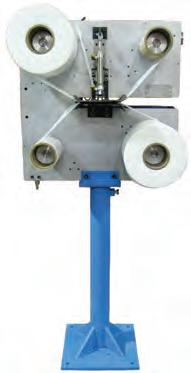
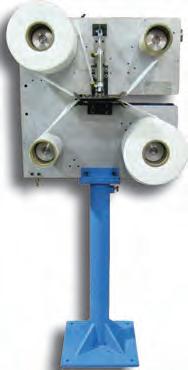
WIRE RANGE: Up to 0.098 in. (2.5 mm.) diameter
MAX. F/M: Approx. 8000 ft./m.
MATERIALS: Ferrous or nonferrous material / tinned, bare, or plated
FLOOR SPACE: 18” x 27”
•Reduce Spark Faults
•Improve Insulation Bond
•Easy to Install
•Improve Insulation Concentricity
•Increase Pre-Heater Sheave Life
•Environmentally Friendly
•Ultrasonic, Wet Blast, and Various Mechanical Cleaning Systems
•Drum Packers, Air Wipes, and Taping Lines


TYPICAL WIRE SIZE:
15 mm. (0.6 in.)
inlet down to .5 mm. (0.02 in.)
outlet
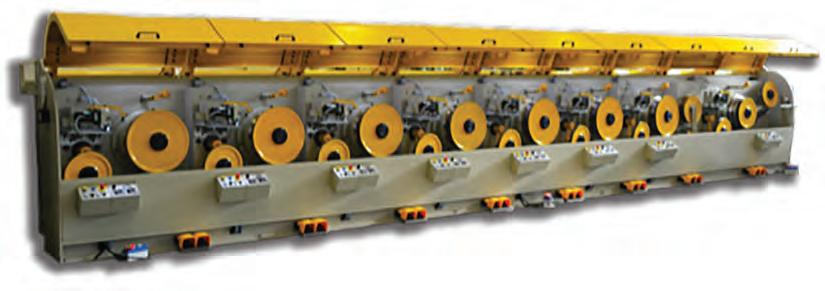
NUMBER OF BLOCKS:
Up to 15 blocks
LINE SPEED: 30 m./s. (6000 f/min.)
CAPSTAN COATING:
Tungsten Carbide or ceramic coating
•Forming / Welding / Sizing Lines
•Wire Drawing and Shaving
•Semi and Auto Re-Spooling


Tel: 914-834-8865 | Fax: 914-834-8903 info@cableconsultantscorp.com

914-240-6033 mmcclaugherty@cableconsultantscorp.com
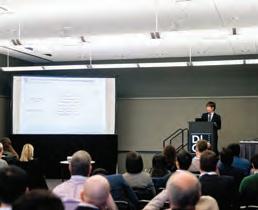
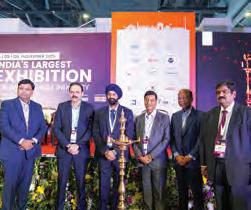
A new site, strong educational program and effective Supplier Exhibition™ made for a very good event.
Organizers report that the Nov. 4-6 staging at the Pragati Maidan in New Delhi was its best ever.
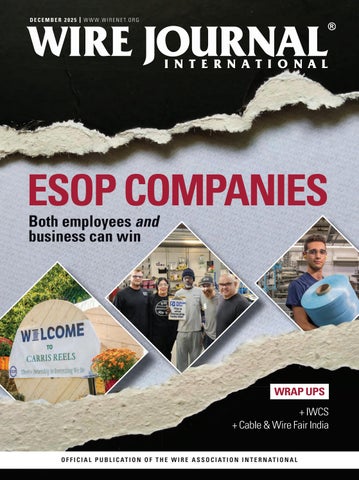
If just about every new employee can become an owner ... is that really a good thing? This report offers the perspective of three ESOP companies, and more.







Fast curing next generation primary coating technology providing improved consistency in optical fiber performance and draw tower process
Grant Sheridan, Todd Anderson, Katherine Roberts, Meng He, Brett Register and Eric Urruti



Ultra high-density microduct cables with Freeform Ribbons and applications
Shuhei Nakayama, Fumiaki Sato, Yohei Suzuki, Takao Hirama and Hitoshi Tsubakiyama
• Feature: The Year to Come
• Sector Update: Tapes, yarns and strength members
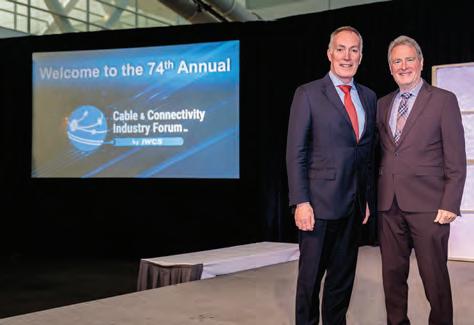
IWCS 2025 was bolstered by dependable program elements and a new location
The 2025 staging of the IWCS Cable & Connectivity Industry Forum at the David L. Lawrence Convention Center in Pittsburgh, Pennsylvania, once again presented a memorable education program. The event included its comprehensive education program and speakers, the Supplier Exhibition™ and a continued focus on theme sessions of demanding industry growth sectors.
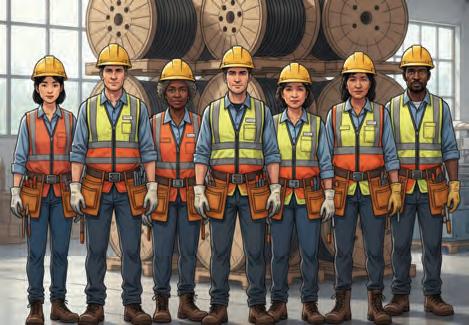
ESOPs: the shop floor dynamic changes when the staffers are also the owners
Though few in numbers, Employee Stock Ownerships Plan (ESOP) businesses in the wire and cable industry have largely fared well. Three companies—Carris Reels, Pelican Wire and Web Industries—provide their perspective on what the experience has meant. Being an ESOP does not guarantee success, but when everyone on the shop floor is also an owner, the data look good.






















































































































































































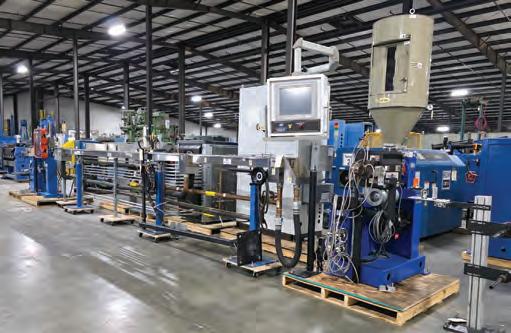
EXPL521
¾” Am Kuhne Lab Ext Line
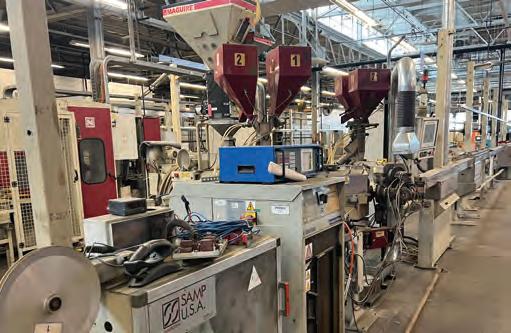
EXPL514
65mm SAMP Quick Color Change Ext Line (3)
EXPL523 – Davis Std 3”, 24:1 Ext Line, Nextrom EKP-50 TU
EXPL520 – Davis Std 3.5”, 24:1, Ext Line, Co Ext, Endex Drop Coiler
EXPL519 – 80mm Nokia Maillefer Ext Line w/Vert Ext, MP Capstan
EXPL517 – 65mm Maillefer Ext Line, Endex 630mm Dual Spooler (2)
EXPL513 – 4½” Entwistle Ext Line, Coext, 30” BWC, Syncro Barrel Packer
EXPL505 – 1½” Davis Std. Hi Temp Extrusion Line
EXPL504 – 2½” Davis Std. Hi Temp Extrusion Line
EXPL503 – 2” Sterling Primary Line, 24” PO, 18” Auto Dual TU
EXPL500 – 3½” D-S Jacket Line, 72” MGS POs, 2m Skaltek TUs
EXPL499 – 2½” TEC Optical Fiber Sheathing Line, 84” PO/TU
EXPL498 – 3½” Davis Std Optical Fiber Sheathing Line, 84” TEC PO/TU
RWD723 – Clipper SP-16 Respool Line, S/L PO
RWD718 – 48”-20” TEC Rewind Line, S/L PO, Dual Shaft TU
PAY2615 – 800mm SAMP S/L Driven Payoffs, Dancer (9)
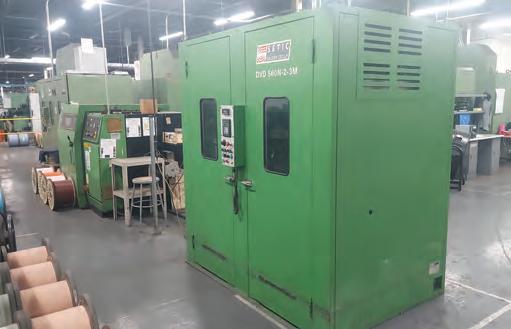
CBR1506
Northampton/Setic Cat BT Twinner (4)
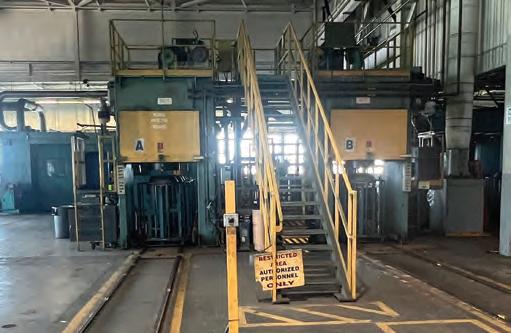
WRD1174
SAMP MT50.2 Dual Rod Line
WRD1188 – SAMP MT105.2X14.18, 28W Drawing Line, Annealer, Spoolers
WRD1187 – Niehoff 16 Wire Drawing Line, Annealer, (2) 800mm Spoolers
WRD1183 – Niehoff 8W Drawing Lines w/Annealer, 800m S/L Spooler (7)
WRD1179 – Niehoff 14W Drawing Line w/Annealer, (2) 800mm S/L Spoolers
WRD1178 – Syncro FX–13 Rod Breakdown Lines w/30” Deadblock Coiler (3)
WRD1176 – Syncro 18T10 Rod Breakdown Line w/30” Deadblock Coiler
CBR1502 – 24” TEC DTCA-24, Double Twist Twinners, Dual Shaft PO (2)
CBR1500 – 30” TEC DTC-30, Double Twist Cabler, Dual Shaft PO
CBR1496 – 1250mm Northampton Double Twist Buncher
CBR1495 – 1.00m Northampton DT Buncher, (3) 800mm Bekaert S/L PO
CBR1494.1 – Niehoff DT631, DT Bunchers, 800mm Bekaert S/L PO (2)
CBR1493.14 – Niehoff 630DT, Double Twist Bunchers, w/Payoffs (10)
CBR1492.14 – Kinrei HK630, Double Twist Bunchers, Year 1999, w/PO (15)
MSC3721 – RDI Model CCP100, Electron Beam, (3) Drop Coilers, DCFPO
The feature this issue, a first-ever for Wire Journal International, is about Employee Stock Ownership Plan (ESOP) companies, of which there are relatively few in the wire and cable industry. One is a wire manufacturer (Pelican Wire) and two are industry suppliers (Carris Reels and Web Industries). There are some others, but still, not very many, especially when you consider that thousands of companies nationwide likely could qualify to be ESOP operations.
Per the National Center for Employee Ownership (NCEO) and The ESOP Association, at one point in early 2025, there were 6,358 ESOP companies in the U.S. Of those, at least 25% were listed as manufacturers. Per NCEO, there are some 250,000 manufacturing companies in the U.S., and of those, between 30,000 and 50,000 could qualify as ESOPs. There’s no simple way to estimate how many companies (both manufacturers and suppliers) in the wire and cable industry could become an ESOP if they wanted to. Yet when one reads the experiences shared by the leaders of the three companies, it raises a big-picture question. What should a company want to be remembered for?
Co-location of Wire Expo 2026 is a plus for everyone
Wire Expo will once again co-locate with the Electrical Wire Processing Technology Expo (EWPTE) on May 6-7, 2026, at the Baird Center in Milwaukee, Wisconsin, USA.
The two events previously co-located in 2010. It’s not easy to co-locate, as events tend to be planned years in advance. This one is a very good fit as the EWPTE trade show covers the electrical wire harness, wire and cable processing industries. Its show floor will field some 200 exhibitors, and it will draw more than 3,000 attendees from 40-plus states and 25 countries.
Next May, attendees of Wire Expo and EWPTE will be able to experience both events. Per a 2024 study cited in Meetings and Conventions, co-locating is on the rise. The study, the Exhibition and Convention Executives Forum Pulse, reported that 44% of surveyed C-level event producers are either very or somewhat likely to begin co-locating a show with another within the next three years. They also found that nearly half of respondents (48%) were very or somewhat likely to continue their current co-location arrangements.
It may call for a bit more discipline in time management, but the idea of being able to visit two events with just one set of travel arrangements and expenses is most appealing.

Mark Marselli Editor-in-Chief, editor@wirenet.org
PUBLISHER Steven J. Fetteroll
EDITOR-IN-CHIEF Mark Marselli
GRAPHIC DESIGNER Charlotte Ashley
DIRECTOR OF SALES Shannon Timme
DIRECTOR OF INTERNATIONAL SALES & BUSINESS DEVELOPMENT
Anna Bzowski
DIRECTOR OF MARKETING & CORPORATE COMMUNICATIONS
Janice E. Swindells
WAI PUBLICATIONS COMMITTEE
Dane Armendariz, consultant
Ferruccio Bellina, TKT Group/President ACIMAF
Michael Crowle, QED Wire Lines Inc.
Tom Moran, consultant
Giulio Properzi, Continuus Properzi
Willem Sundblad, Oden Technologies Inc.
John N. Tomaz, Stolberger
Robert Wild, Niehoff Endex North America
W.T. Bigbee, Encore Wire Corp.
TECHNICAL ADVISORS
John Drummond, Scotia Group
R. M. Shemenski, RMS Consulting, Inc.
Images: Adobe Stock.
Wire Journal International (ISSN-0277-4275) published monthly by The Wire Journal, Inc., is a wholly owned subsidiary of The Wire Association International, Inc., which is located at 71 Bradley Road, Suite 9, Madison, CT 06443-2662, USA, and can be contacted at tel. 203-453-2777; fax 203-453-8384; Internet wirenet.org; e-mail editor@wirenet.org. Address all correspondence concerning advertising production, editorial and circulation to the above address. WJI is printed in the USA.
Subscription rates: $110 per year, USA; $120 per year, Canada and Mexico; other countries, $140 per year (includes air mail). Back copies: $10 WAI members, $15 non-members. Periodicals postage paid at Madison, CT 06443, USA, and at additional offices.
Wire Journal International grants photocopy permission to libraries and others registered with Copyright Clearance Center (CCC), 21 Congress St., Salem, MA 01970, USA, for a fee of $0.50 per article. Payments should be sent directly to the CCC. Requests for bulk orders or reprints should be sent to the Wire Journal International, 71 Bradley Road, Suite 9, Madison, CT 06443-2662, USA.
© 2025 by Wire Journal, Inc. All rights reserved. The Publisher of WJI assumes no responsibility for the validity of manufacturers’ claims made herein. Back issues of WJI are on microfilm and available from University Microfilm, 300 North Zeeb Road, Ann Arbor, MI 48106, USA. Phone: 313-761-4700.
POSTMASTER: Send address changes to Wire Journal International, 71 Bradley Rd., Suite 9, Madison, CT 06443, USA.




“Breaking down the subject matter into short, distinct videos focusing on each subtopic made the information much easier to understand.”








Start learning wire industry essentials at your own pace with WAI’s on-demand videos and see how quickly your achievements add up.
Led by industry experts, and built for individuals and teams, each course includes interactive content, a quiz, and a certificate of completion to track your progress.
New content is added regularly. Courses are offered separately or bundled; and WAI members get discounts.
Learn more with WAI https://wirenet.org/education/online-courses/ or contact: education@wirenet.org
Check out:
• Introduction to Ferrous Metallurgy
• Single-Layer Extrusion Overview
• Extrusion Applications
• Extrusion Materials
• Extrusion Special Process Considerations
• Manufacturing Safety EDUCATION
JAN. 13-15, 2026: Wire Tech Poland Nadarzyn, Poland. This event—the International Trade Fair of Cable and Wire Technology—will be held for the second time at the PTAK Warsaw Expo. Contact: PTAK Warsaw Expo Co. Ltd., tel. +48-518-739-124, rodo@warsawexpo.eu, www.warsawexpo.eu.
MARCH 3-5, 2026: Cables Düsseldorf, Germany. This event, organized by AMI, will be held at the Hilton Düsseldorf. Contact: AMI, tel. +44 (0) 117 924 9442, annabel.kerr@amiplastics.com, www.amiplastics.com.
APRIL 7-9, 2026: World Copper Summit Santiago, Chile. This event is organized by the CRU Group. More information and registration will be available at a later time at www.events.crugroup.com/copper/homes, and conferences@crugroup.com.
APRIL 13-17, 2026: wire Düsseldorf Düsseldorf, Germany. To be held at the Messe Fairgrounds. Contact: Messe Düsseldorf North America, tel. 312-781-5180, info@mdna.com, www.mdna.com.
MAY 6-7, 2026: Wire Expo & 96th Annual Convention Milwaukee, Wisconsin, USA To be held at the Baird Center, colocated with the Electrical Wire Processing Technology Expo (EWPTE). The WAI’s Fundamentals of Wire Manufacturing Course will be held May 5.
SEPT. 21-24, 2026: wire China Shanghai, China. This event will be held at the Shanghai New International Expo Centre (SNIEC). Contact: Messe Düsseldorf/Messe Düsseldorf (Shanghai) Co., Ltd., www.wirechina.net, www.mdna.com.
OCT. 7-9, 2026: SpringWorld Expo and Symposium Rosemont, Illinois, USA. This event, presented by the Chicago Association of Spring Manufacturers, Inc. (CASMI), and the Symposium, presented by the Spring Manufacturers Institute (SMI), will be held at Donald E. Stephens Convention Center. Contact: CASMI, tel. 414-908-4963, info@casmi-springworld.org, www.springworld.org.
OCT. 14-17, 2026: 75th IWCS Cable & Connectivity Industry Forum
Providence, Rhode Island, USA. To be held at the Rhode Island Convention Center. Contact: IWCS, tel. 717-993-9500, www.iwcs.org. WAI will be exhibiting at this event, so look for us there.
NOV. 30-DEC. 2, 2026: Wire India
Mumbai, India. This event, organized by Messe Düsseldorf India Pvt. Ltd, will be held at the Bombay Convention & Exhibition Center (NESCO). Contact: Messe Düsseldorf North America, tel. 312-781-5180, info@mdna.com, www.mdna.com.
MAY 4-6, 2027: Interwire & WAI’s 97th Annual Convention
Atlanta, Georgia, USA To be held at the Georgia World Congress Center, this event includes the trade show, technical programs and WAI’s 97th Annual Convention.
JAN 29, 2026: New England Chapter Annual Dinner
Uncasville, Connecticut, USA. The New England Chapter will hold its annual meeting at the Mohegan Sun Casino. See p. 32.
MAY 6-7, 2026: Wire Expo & 96th Annual Convention
Milwaukee, Wisconsin, USA. To be held at the Baird Center, co-located with the Electrical Wire Processing Technology Expo (EWPTE). The WAI’s Fundamentals of Wire Manufacturing Course will be held May 5.
MAY 4-6, 2027: Interwire & WAI’s 97th Annual Convention
Atlanta, Georgia, USA To be held at the Georgia World Congress Center, this event includes the trade show, technical programs and WAI’s 97th Annual Convention.
For more details on WAI/WAI Chapter events, go to www.wirenet.org then “events” and/or “chapter events.



“Every expert was once a beginner”
— R.B. Hayes



WAI’s on-demand video training courses are designed in manageable segments that are ready to go when you are. You set the pace.


Led by industry experts each course includes engaging interactive content, a quiz, and a certificate of completion to track your progress.


See how quickly you can achieve more career milestones.
New content is added regularly. Courses are offered separately or bundled; and WAI members get discounts.
Learn more with WAI https://wirenet.org/education/online-courses/ or contact: education@wirenet.org
Check out:
• Introduction to Ferrous Metallurgy
• Single-Layer Extrusion Overview
• Extrusion Applications
• Extrusion Materials
• Extrusion Special Process Considerations
• Manufacturing Safety
U.S.-based TriMas Corp. has entered into a definitive agreement to sell its aerospace segment to an affiliate of Tinicum L.P. for $1.45 billion.
A press release said that the sale marks a significant shift for TriMas, which has been actively evaluating strategic options to streamline its business portfolio. The Aerospace segment generated approximately $374 million in revenue over the past 12 months and includes nine manufacturing facilities and roughly 1,250 employees.
Fasteners are estimated to account for 60 to 70% of the segment’s revenue, underscoring their central role in the business. Per Precedence Research, the global aerospace fasteners market is expected to expand from $7.85 billion in 2025 to approximately $15 billion by 2034.
TriMas Aerospace supplies highly engineered fasteners and precision-machined components for mission-critical applications across commercial and defense aviation markets. Its brands include Monogram Aerospace Fasteners, Allfast Fastening Systems, Mac Fasteners, TFI Aerospace, RSA Engineered Products and Weldmac Manufacturing Co., among others. The company’s products have supported programs such as the U.S. Air Force’s T-7A Red Hawk training jet.
The deal will allow TriMas to focus its resources on higher-growth and more profitable operations, including its packaging and specialty products platforms. Posttransaction, TriMas plans to invest further in its remaining
segments, aiming to expand market share and enhance operational efficiency. TriMas executives said that the transaction is expected to close in early 2026.
“This agreement represents a compelling valuation and validates the high-quality nature of the business,” said Herbert Parker, TriMas board chair. TriMas will focus on its high-margin packaging platform and specialty products group that serves consumer and industrial markets.
Southwire announced that it is expanding operations at its plant in Heflin, Alabama, adding approximately 340,000 sq ft to the location’s footprint in a project that is expected to also result in more than 85 new jobs.
A press release said that Southwire’s Heflin Plant, which opened in 1996 as Forte Power Systems, was built to support medium- and high-voltage cable production. This will be the fourth expansion at the plant, highlighting the company’s ongoing commitment to reinvesting in core wire and cable operations.
Beyond the capacity and production expansion, the facility design includes comfort cooling and other efforts to provide a modernized team member experience as well as sustainability enhancements, like a rainwater collection tank for designated facility operations. Construction is expected to begin in late 2025 with equipment and capacity coming online in late 2027.
“Southwire has committed more than $1.8 billion into modernization efforts across our footprint thus far, and we continue to grow,” said Southwire President and COO Norman Adkins. “This expansion in Heflin reaffirms our
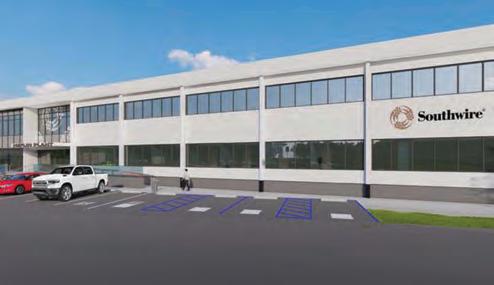
A WJI story in November said that Kinderhook Industries had sold SDI LaFarga COPPERWORKS to the Rhone Group. The company sold was Copperweld. Southwire’s Heflin plant will undergo a major expansion.
commitment toward creating an extraordinary place to work – today and for generations to come.”
“We continue to purposely invest in modernizationacross our facilities, equipment, systems, technologies and more, allowing us to best serve our customers and help power a more sustainable future,” said Southwire President & CEO Rich Stinson.
Prysmian recently marked the completion of a $63.8 million expansion of its Du Quoin, Illinois plant with a ribbon cutting ceremony attended by local leaders, state officials and company executives.
A press release said that the event, which also celebrated the facility’s 60th anniversary, highlighted the company’s ongoing investment. The project, which saw the addition of 100,000 sq ft of manufacturing space, is creating 80 new jobs. Prysmian’s investment is designed to ramp up production of renewable energy and electric vehicle (EV)
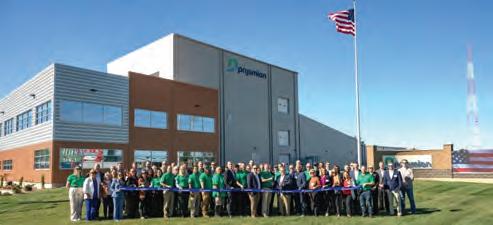
cables to keep pace with the growing demand, while also modernizing the plant and implementing an advanced Energy Management System.
A central element of the expansion is a new solar farm that now generates about half of the energy needed for the plant’s operations, reducing the carbon footprint and the energy required to make cables critical for U.S. grid improvements. Supported by the state’s Reimagining Energy and Vehicles in Illinois (REV Illinois) initiative, the project received praise from community and utility leaders
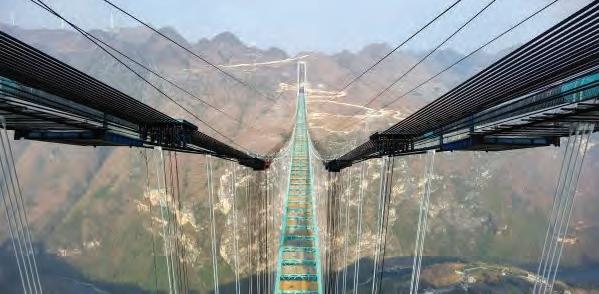
China Railway Major Bridge Engineering Group (part of CREC) used advanced steel wire technology for the main cables of what is claimed to be the world’s highest bridge.
Per CREC, the Huajiang Canyon bridge is a 1,420-meter-span steel truss stiffened suspension bridge with a 625-meter vertical distance between the deck and the water surface, making it the tallest bridge in the world. The bridge features 93 segments of steel truss girders weighing about 22,000 tons in total, equivalent to three Eiffel Towers. On January 17, the final steel truss girder weighing approximately 215 tons was precisely installed using China’s independently developed fourth-generation intelligent cable crane system.
Per CREC, the bridge employs two main cables made of steel wires each 5.7 mm in diameter, with a smart cable system where two strands in the cable have been replaced with
optical fibers to monitor temperature, humidity and stress to prevent rust and ensure durability. The steel wires are part of a forged saddle and cable system designed for high strength and resilience, with innovations in welding technology to ensure the microstructure density and integrity of the steel plates used.
Upon completion, the bridge surpassed the Beipanjiang Bridge on the Hangzhou-Ruili Expressway to become both the tallest bridge in the world and the longest-spanning mountain bridge globally. The steel truss girder structure, manufactured by China Railway
Hi-Tech Industry, consists of main trusses, main cross trusses, lower chords, and deck panels.
Per its website, CREC has a staff of about 290,000, including 85,000 skilled technicians, and carries out projects in more than 90 countries and regions around the world. It holds 18,568 valid patents, including 3,969 invention patents.
including ComEd and Ameren Illinois, who highlighted the facility’s importance to the regional clean energy economy and electric grid reliability.
Prysmian’s Du Quoin plant, established in 1965, produces specialized cables for wind, solar, EV charging and grid-hardening projects, further solidifying its position as a pillar of local manufacturing and a driver of innovation for both Illinois and the national clean energy transition.
South Korea’s LS Marine Solution announced that its subsidiary, LS Buildwin, will undertake a significant ultrahigh voltage (UHV) underground power grid project in Singapore valued at approximately $60 million
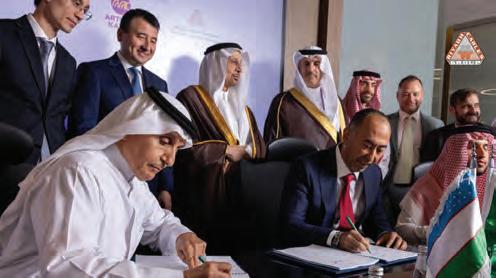
Per an MoU, Saudi-based Riyadh Cables Company may help Syria’s SMCC further its wire and cable manufacturing scope.
A press release said that the contract represents the final stage of a broader effort led by the LS Group to expand Singapore’s 230 kV underground power network to meet growing electricity demands from AI and data centers. The project highlights the integrated scope of the LS companies, with LS Cable & System securing the main contract and supplying the high-voltage cables, LS Buildwin managing the entire underground cable installation and LS Marine Solution overseeing the subsea cable construction. Per the parent company, LS Buildwin, established as a subsidiary of LS Marine Solution, specializes in underground cable installation and has a long track record with projects across Singapore, Qatar, Denmark, Britain, Saudi Arabia and France. LS Marine Solution’s broader construction expertise covers both marine and underground installations, and its recent order backlog totals approximately $525 million, reflecting rapid growth.
Earlier phases of the Singapore project involved LS Cable & System’s supply of high-voltage cables under contracts worth $147 million awarded in April 2025, followed by an additional contract in July valued at about $108 million.
Riyadh Cables Company, a subsidiary of Saudilisted Riyadh Cables Group, has signed a non-binding memorandum of understanding (MoU) with the Syrian Sovereign Fund to support the development of Syria’s cable manufacturing sector.
A press release said that the agreement, announced in early November, outlines plans to manage, operate, and develop the facilities of Syrian Modern Cable Company, one of the country’s few established cable producers.
Per a filing with the Saudi stock exchange (Tadawul), the MoU is valid for six months and aims to localize technical expertise and enhance Syria’s capacity to produce power and electrical cables. While the deal does not involve an acquisition, it marks a rare instance of foreign industrial engagement in Syria’s post-conflict economy.
Syrian Modern Cable Company, founded in 1996 and based in Adra Industrial City, has historically exported to Europe and the Middle East, but its scale remains modest. With annual production capacity of 10,000 metric tons, it is a prominent Syrian cable manufacturer. The company produces an array of electrical cables, including enameled wire and PVC granules. It maintains international quality certifications such as ISO 9001-2015 and BASEC.
The Syrian Sovereign Fund has been actively courting foreign partners to revitalize key sectors, particularly those tied to infrastructure and energy. Per Reuters and Zawya, Gulf states and Turkey have pledged over $40 billion in reconstruction investments since 2024.
Syria’s cable industry includes a handful of domestic players such as Union Electrical Group and Universal Electric, which already export to Iraq, Lebanon and Jordan. However, international sanctions, banking restrictions, and logistical hurdles have limited foreign competition.
China’s ZTT Group announced that it plans to invest approximately $100 million to establish a submarine and terrestrial cables manufacturing facility at Saudi Arabia’s Ras Al-Khair Port.
According to the Saudi Press Agency, the company signed a land lease agreement with the Saudi Ports Authority (Mawani) to set up the 80,000 sq m facility. The planned facility will have capacity to annually produce 500 km of submarine cables, 500 km of terrestrial cables and 12,500 km of fiber-optic cables. GCC Business News reported the cable will support large-scale renewable energy installations, bolster digital connectivity networks
and advance offshore infrastructure projects throughout the country and beyond, reported.
The partnership was described as essential for building Saudi Arabia’s submarine and terrestrial cable sector, directly advancing the National Transport and Logistics Strategy’s aim of making the kingdom a global logistics hub. Al-Mazrou described the project as a strategic move that would reinforce Ras Al-Khair Port’s role as an industrial center in the country. The collaboration would ioth help localize cable manufacturing and attract technologies that support Saudi Arabia’s growing telecommunications industry.
Per the ZTT Group website, the business—officially known as Jiangsu Zhongtian Technology Co., Ltd.—ZTT employs over 16,000 people and operates 80 subsidiary companies. It has more than 54 offices and 12 marketing centers overseas, with plants in India, Brazil, Indonesia, Morocco, Turkey and Germany. ZTT exports products to over 160 countries and regions worldwide.
Nexans has announced a strategic minority investment in Sensewaves, a French artificial intelligence start-up, alongside American Electric Power (AEP), a major U.S. utility.
A press release said that Sensewaves, founded in 2015, specializes in AI-powered analytics for power grids. Its flagship Adaptix.Grid platform is designed to unify data from disparate utility sources and deliver granular, real-time grid insights. The platform offers utilities advanced visibility and situational awareness for both low voltage and medium voltage networks, regardless of the level of digitization or data completeness. It can support optimization across the entire grid lifecycle, from planning to real-time operations and maintenance.
The goal is to drive Sensewaves’ growth, expedite the deployment of Adaptix.Grid, and support market expansion. The funds will bolster Sensewaves’ R&D, product teams, and business development, enabling accelerated innovation and strategic geographic expansion. The result
is a full-service offering for utilities seeking to modernize networks and meet the demands of the energy transition, including the integration of renewable generation and electric vehicle infrastructure.
Sensewaves’ CEO, Fivos Maniatakos, welcomed the partnership, stressing the complementary strengths of Nexans as a cable and turnkey systems company and AEP as an experienced grid operator. “The collaboration positions Sensewaves as a serious contender in delivering smart, scalable grid management solutions for the utilities sector.”
Italtrecce Srl, a business of U.S.-based International Wire Group (IWG,) has acquired Special Corde Srl, an Italian supplier of specialty conductors based in Gioia Sannitica, Italy.
A press release said that Special Corde Srl, founded in 2001, supplies wire and cable for power and distribution transformers, electric motors and associated electrical systems. The deal was made through IWG’s Italtrecce Srl.
“This acquisition is yet another opportunity to increase our presence in critical electrical infrastructure applications,” said IWG CEO Gregory Smith. “As the electrification buildout broadens, transformers represent a critical component of grid modernization. Special Corde will play an important role in supplying products used in these applications. In addition, Special Corde, with other recent IWG acquisitions, deepens existing customer relationships, playing a vital role in the burgeoning, global electrification needs.
“It is a great opportunity to partner with a global brand such as IWG,” said Dino Grandi, general manager of Special Corde. “It is an exciting time to be part of the electrification movement, and we look forward to playing our part in this journey.”
France’s Orange Marine has ordered two new cable laying and repair vessels designed for subsea telecommunications operations from Sri Lanka shipbuilder Colombo Dockyard PLC (CDPLC).
A press release said that the vessels to be made by CDPLC will be designed by Norway’s Vard Design AS. The vessels will have optimized hull forms and bow shapes to enable high speeds and reduce fuel consumption, meeting Bureau Veritas classification society standards and French Flag Authority regulatory requirements. Delivery of these new vessels is anticipated for 2028 and 2029.
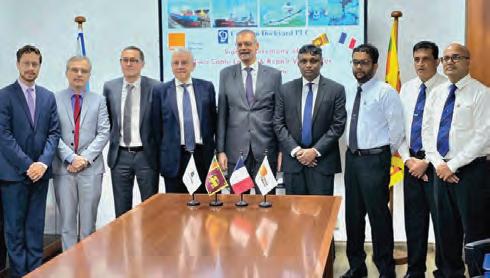
“These new vessels will allow (us) to operate the most modern cable ship fleet in the world, serving all our customers across the globe with an optimized environmental footprint,” said Didier Dillard, president of Orange Marine and Elettra Tlc.
The vessels will focus on cable laying, repair, and remotely operated vehicle (ROV) inspection duties. Each vessel will have an Orange Marine–designed ROV for cutting, inspecting, and burying subsea cables. The design prioritizes strong sea-keeping and excellent station-keeping performance while minimizing environmental impact, aligning with BV CLEANSHIP low fuel consumption standards.
Orange Marine, a global leader in submarine telecommunications, specializes in engineering, installation and maintenance of intercontinental and regional cable links. The company notes that its fleet represents 12% of the world’s cable maintenance ships.
Epsilon Composite has taken a major step in expanding its presence in the power transmission sector with the opening of the French company’s subsidiary, HindEpsilon Composite, headquartered in Chennai, India, and incorporated in October 2025.
A press release said that HindEpsilon Composite will focus on manufacturing high-temperature, low-sag composite core conductors (HVCRC®) designed to increase the capacity, efficiency, and reliability of overhead power lines. The subsidiary is the first step in Epsilon’s plan to establish a local factory in India that will produce composite cores and other high-performance parts, supporting the Indian government’s “Make in India” initiative.
Epsilon Cable, through HindEpsilon and collaborations with local partners, has already secured significant reconductoring projects in Indian states such as Uttar Pradesh, Uttarakhand, and Assam. The subsidiary has engaged with key Indian power sector stakeholders, including the Ministry of Power, Central Electricity Authority (CEA), and Power Grid Corporation of India Ltd. Epsilon has also
formed strategic partnerships with Indian stranders such as Transrail Lighting Ltd., Lumino Industries and Shashi Cables Ltd. to help supply and deploy HVCRC technology across the country.
Epsilon Composite’s headquarters and primary manufacturing facility remain in Gaillan-en-Médoc, France, where the company produces pultruded carbon fiber composite cores used in high-voltage conductors worldwide. It has regional offices in Japan, Central Europe, Mexico, and Italy, and HindEpsilon Composite will be the key subsidiary involved directly in wire and cable manufacturing and local production in India.
Epsilon has strategic partnerships with Indian stranders, including Transrail Lighting Ltd, Lumino Industries, and Shashi Cables Ltd, to help supply and deploy the HVCRC technology across the country.
South Korea’s LS Cable & Wire (LS C&W) announced that it will supply busducts to a large U.S. tech company that marks its full-scale entry into the global AI data center (AIDC) power market.
A press release said that the deal could be worth more than $340 million over three years. The order, from an unnamed U.S. customer, is for data centers “in North America and other regions.” To meet demand, LS C&W has strengthened its global busduct production in South Korea, North America and Vietnam.
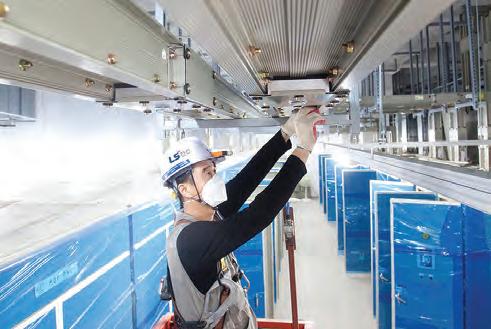
Last May, LS C&W announced it would build two new factories to make busducts and electric vehicle (EV) battery components on a 126,000-sq-m site in an industrial park. At that time, it also had busduct production plants in in Gumi, Wuxi, and Ho Chi Minh City. “The completion of the new plant currently under construction in Mexico is expected to further enhance supply efficiency and delivery competitiveness for North American customers.”


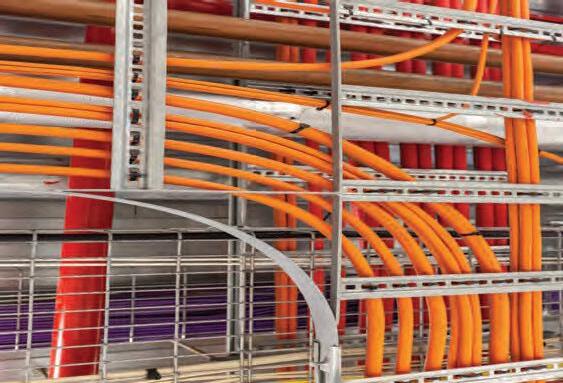
LS Eco Energy will cover the Southeast Asian market centered in Vietnam. In October, it supplied busducts to a 50 MW class hyperscale data center in Indonesia. The LS Cable & System Mexico plant will cover the North American market.
The company stated that its busduct activity could be even greater as LS C&W is in negotiations with another large global tech company. “We will secure the leading position in the power infrastructure competition in the era of AI,” said Kim Woo-tae, head of LS Cable & System’s Power Distribution Solution Division.
U.S.-based Primetals Technologies reports that it has received a Final Acceptance Certificate (FAC) from Celsa France for a major upgrade to the finishing end of the company’s wire rod mill in Bayonne, France.
A Primetals posting said that the company replaced a problematic finishing block and reform station “that had been supplied by a third party and had repeatedly caused unplanned downtime.” With the new equipment in place, Celsa France has significantly increased mill availability and production levels while improving product quality and reducing operational costs.
The upgrade included a new 10-stand Morgan Vee No-Twist Mill designed to operate at speeds up to 105 meters per second across low-, medium-, and high-carbon steel grades. The installation also included a 3-Hi speed increaser gearbox that links the new mill to Celsa France’s existing motor position, demonstrating the design flexibility and compatibility of the technology. The upgrade has already led to quicker, more efficient rolling, reduced maintenance costs, and shorter roll change times.
The project also saw the replacement of the 1,200 mm reform tub. Equipped with a patented ring distributor, the new tub minimizes coil height, eliminates stray rings, and ensures tangle-free payoff. These improvements have
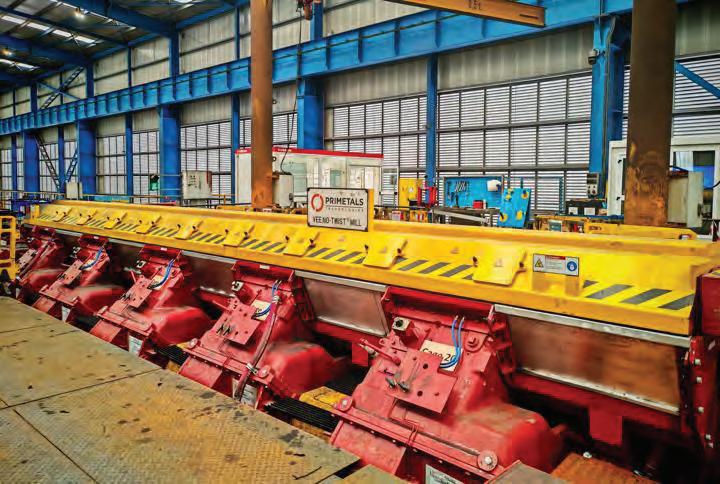
dramatically reduced delays in downstream processing, further enhancing overall productivity.
Celsa France was described as Europe’s first circular, low-emission steel producer, recycling ferrous scrap in electric arc furnaces to produce steel for construction, automotive, energy, and oil and gas sectors. The Bayonne upgrade strengthens this position by ensuring that the company’s wire rod production is both efficient and environmentally responsible.
According to Celsa France, the Bayonne facility produces about 550,000 tons of rolled products annually, primarily wire rod. The recent upgrade adds to an earlier €65-million investment that created around 140 direct and 420 indirect jobs across France and Spain.
Earlier this year. Italy’s Danieli reported that it has been chosen by Alter Steel to supply technology and equipment for a landmark electric steelmaking facility in Pinkenba, Queensland, Australia, that was estimated to cost $750 million.
Per Danieli, it will build the first greenfield steel mill built in Australia in more than 40 years. The project will use its MIDA QLP – Quality Long Product – technology and incorporate its Digimelter and Q-One power feeder for sustainable electric steelmaking. The plant will produce 500,000 metric tons (mt) per year of reinforcing bar, wire rod, hot-rolled mesh, spooled coil and bar, all from steel scrap. The endless casting-rolling process eliminates billet reheating, cutting energy use by up to 75%.
Per an article in greensteelworld.com, the facility is scheduled to be completed by late 2027. The project has secured Conditional Development Approval. The facility is designed for 100% renewable energy compatibility and will emit just 0.37 mt of CO2 per tonne of steel, an 80% reduction compared to traditional blast furnaces.
The International Wire Group (IWG) announced that it has acquired EMS Elektro Metall Schwanenmühle GmbH (EMS), a German supplier for engineering and manufacturing of customized busbars used in electrical power generation, transmission, distribution and storage.
A press release said that EMS provides products and services to meet the market needs of electrical infrastructure, data centers, battery storage, electrolysis, industrial applications, electric vehicles, and renewables.
“This acquisition leverages many existing customer relationships while expanding our geographic presence in the electrical infrastructure ecosystem,” said IWG CEP Gregory Smith. He noted that EMS expands IWG’s product portfolio in electrical infrastructure, energy storage, and power distribution markets.
New England Wire celebrated a sizeable expansion to its existing manufacturing plant in Lisbon, New Hampshire, on Sept. 22, 2025.
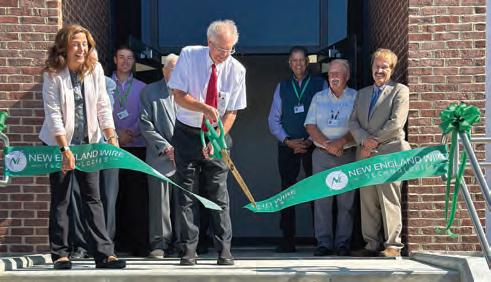
New England Wire Technologies President Tom White wields the scissors for the ribbon-cutting.
The company held an official ribbon cutting for the nearly 38,000-sq-ft expansion to the eastern side of the plant. The 78 ft by 487 ft addition houses machining and fabrication shops, specialty braiding and expanded silicone
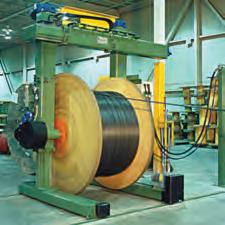
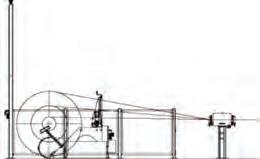
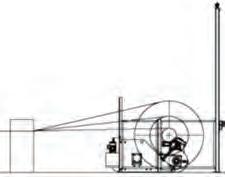
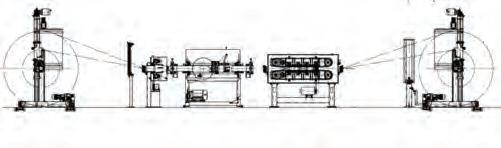
•Roteq's rewind lines efficiently transfer cable between reels of varying size, or from large reels to smaller coils or spools. Ideal for packaging custom lengths with speed and precision.
•Roteq's taping lines feature high-performance concentric or eccentric tape heads, integrated between pay-off and take-up units, typically of matching size. Designed for versatility, they handle plastic, mylar, and copper tapes with ease.
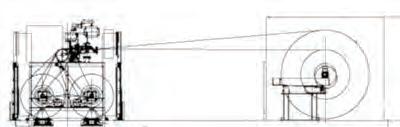
•Taping and rewind lines may integrate third party (customer supplied) components such as spark testers, printers, etc.
rubber extrusion, as well as having room for significant additional space for future capacity growth.
Moving the machine and fabrication shops together under one roof freed up almost 6,000 sq ft of space for future expansion and growth for the company’s tubing division, New England Tubing Technologies. Strategies are being formulated as to how best to use this additional space with both added capacity and new capabilities.
The Lisbon facility has seen multiple investment rounds over the past decade, reflecting continued demand for the company’s custom cable and tubing solutions in advanced medical, industrial, and telecommunications markets.
Madem-Moorecraft Reels USA, a subsidiary of the Madem Reels Group Brazil, announces a significant expansion of its wooden reel production capacity at its Tarboro, North Carolina facility.
A press release said that $7 million was invested in the project. It includes new production lines that use fully robotized machinery, enabling a 50% increase in the plant’s installed capacity.
Madem-Moorecraft already operates a solid logistics network with distribution centers in Texas, Georgia,




Arizona, West Virginia, Ohio and North Carolina. As part of its expansion plan, the company is considering opening new distribution centers in Colorado, Connecticut, Indiana, Louisianna, Missouri, Maryland and Pennsylvania, further enhancing its coverage and proximity to key customers. In addition to its Tarboro plant, Madem-Moorecraft also operates another industrial facility in Denton, Texas.
Madem Reels Group has manufacturing plants in Brazil, Colombia, Mexico, Spain and Bahrain. It supplies some 200 cable producers in 45 countries.
Denmark’s NKT has joined the First Movers Coalition (FMC), reinforcing its commitment to the advancement of low-carbon aluminum across global supply chains.
A press release said that FMC, led by the World Economic Forum, brings together industry leaders to accelerate decarbonization in sectors that are traditionally challenging to abate. By participating in the FMC’s aluminium sector, NKT pledges that by 2030, at least 10% of its annual primary aluminum purchases will be low-carbon, in accordance with the coalition’s stringent emissions criteria. This move marks a notable strategic step in NKT’s broader objective to reduce the carbon intensity of its power cables—a priority that supports both the company’s sustainability targets and the decarbonization goals of its clients.
This strategic move supports NKT’s broader goal to reduce the carbon intensity of its power cables, aiding both its sustainability targets and those of its clients. The company’s pursuit of lower-carbon materials is already underway, highlighted by its April 2025 agreement with Norwegian group Hydro for REDUXA 4.0 aluminum— produced using renewable energy and featuring a carbon footprint 75% lower than the global average.
NKT also secured first rights to Hydro’s upcoming REDUXA 3.0, furthering its role in Europe’s energy transition and grid modernization. The collaboration also sends a strong market signal, encouraging early adoption of climate technologies and reinforcing NKT’s position as a proactive force in the shift to greener infrastructure.
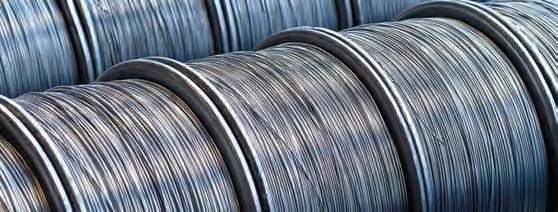
Nexans reports that its Halden plant in Norway marked a historic milestone as its cable-laying vessel, Nexans Aurora, departed with a record 9,731 tons of subsea cable.
A press release said that cargo represents the highest load ever in the company’s history, exceeding the previous record, set in 2023 for the Oseberg Project, by 256 tons. “This feat represents not only a record for Nexans Aurora but also for the Halden plant itself, which has been supplying large-scale cable solutions since its first delivery to Nexans Skagerrak in 1976.”
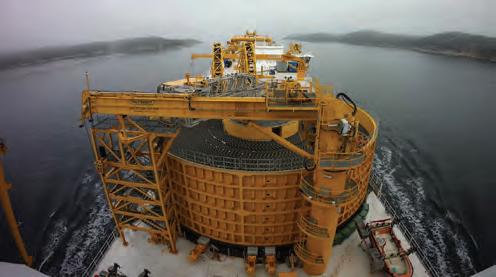
The Halden’s newly expanded high-voltage subsea cable facility, completed in early 2024, enabled this scale of operations, more than doubling its capacity for state-ofthe-art HVDC and HVAC cable production. The plant now employs around 1,000 people and houses the tallest building in Norway—its second extrusion tower—allowing simultaneous cable insulation across four production lines.
This latest record highlights Halden’s role as a cornerstone in Nexans’ global supply chain, supporting key offshore wind farm, interconnector, and electrification projects worldwide.
Suzhou-based Hengtong has won a contract for the Liaoning Huadian Dandong Donggang Phase I Offshore Wind project (Donggang) that calls for it to provide not just the cable but also the engineering, procurement, construction, and installation (EPCI).
A press release said that the Donggang contract site is located about 50 km offshore from Donggang City in China’s Liaoning Province. The project, owned by Huadian (Dandong) Offshore Wind Power Co., Ltd., a subsidiary of China Huadian Corporation, represents “a significant achievement” in offshore wind power transmission.
Hengtong will supply and lay more than 120 km of 500 kV high-voltage direct current (HVDC) XLPE submarine cables. The Donggang Phase I project will include 84 offshore wind turbines, each with a capacity of 12 megawatts, resulting in a total installed capacity of 1 GW for the first phase.
The full project aims for a total capacity of 2 GW over two phases. This transmission capacity was described as representing one of the largest and most advanced HVDC offshore power evacuation systems globally, enabling long-distance, high-capacity delivery of renewable energy.
Hengtong’s responsibilities include offshore installation and integration of the wind turbines themselves. The project demonstrates China’s accelerated commitment to decarbonization and sustainable development, showcasing HVDC technology’s pivotal role in expanding offshore wind grid integration.
Of note, Hengtong recently announced that it has completed a new type test for a 525kV HVDC high-temperature, large cross-section aluminium conductor land cable system, which is now fully compliant with European TSO specifications. “This achievement not only marks a technological first in China but also showcases Hengtong’s continuous leadership in advanced cable design, testing and manufacturing.”
Egypt-based Kemet Industries Group has signed a memorandum of understanding with Emirati-Chinese firm Al Qalaa Red Flag to invest up to $3.5 billion in three mega industrial projects, one of which is for manufacturing optical fiber cables.
A press release from the principals said that the projects will be located in the Ain Sokhna Industrial Zone, part of the Suez Canal Economic Zone (SCZONE).
The fiber optic plant will bolster Egypt’s expanding digital infrastructure sector, contributing to faster, more efficient highspeed networks.
Egypt has at least one major Egyptianowned and operated fiber optic cable manufacturing plant: Elsewedy Communications Cables Factory, which opened earlier this year in 10th of Ramadan City. That plant was described as the largest telecom cables manufacturing facility in Egypt and the Middle East,
producing both fiber optic and copper communications cables. Another fiber optic plant is run by Benya Cables, which operates in partnership with the Arab Organization for Industrialization and international technology partners. Benya, which is partly Egyptian-owned, is based in Egypt. Al Qalaa Red Flag is a consortium with Emirati and Chinese ownership focused on industrial investments in Egypt. The other two “mega” projects are for manufacturing steel pipe factory and tires.
(Industry News continued, see p. 20)


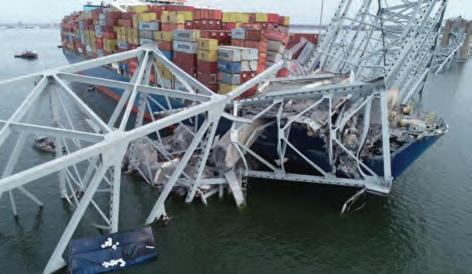
The National Traffic Safety Board (NTSB) reports that a single loose wire on the 984-foot-long containership Dali caused an electrical blackout on March 26, 2024, that led to the giant vessel veering and contacting the nearby Francis Scott Key Bridge in Baltimore, which then collapsed, killing six highway workers.
The report from NTSB said that a loose wire in the ship’s electrical system caused a breaker to unexpectedly open. That caused a sequence of events that led to two vessel blackouts and a loss of both propulsion and steering near the 2.37-mile-long Key Bridge. Investigators found that wire-label banding prevented the wire from being fully inserted into a terminal block spring-clamp gate, causing an inadequate connection.
After the initial blackout, the Dali’s began swinging to starboard
toward Pier 17 of the Key Bridge. Investigators found that the pilots and the bridge team attempted to change the vessel’s trajectory, but the loss of propulsion so close to the bridge rendered their actions ineffective. A substantial portion of the bridge subsequently collapsed into the river, and portions of the pier, deck and truss spans collapsed onto the vessel’s bow and forwardmost container bays.
A seven-person road maintenance crew and one inspector were on the bridge when the vessel struck, leading to the deaths of the highway workers. The NTSB found that the quick actions of the Dali pilots, shoreside dispatchers and the Maryland Transportation Authority to stop bridge traffic prevented greater loss of life.
JDR, which is based in the U.K. and is part of the TFKable Group, announced that it has an MoU with the Emdad Group to establish a Middle East service base.
A press release said that agreement with the Emdad Group— a Saudi-based industrial services company — reflects the importance of the partnership and shared commitment to providing localized support to the energy industry. It also noted that there are plans to expand operations to Saudi Arabia in the near future, further strengthening our regional capabilities.
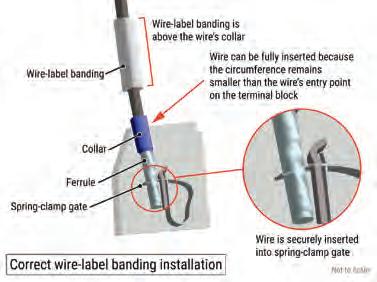
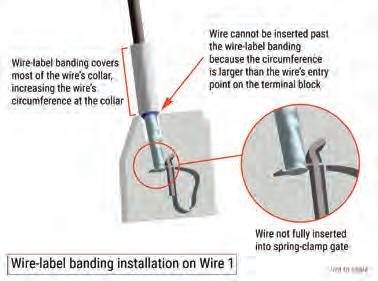
Above: how the wire label should have been placed and what the NTSB reported was done.
“Our investigators routinely accomplish the impossible, and this investigation is no different,” said NTSB Chairwoman Jennifer Homendy.
“The Dali, at almost 1,000 feet, is as
long as the Eiffel Tower is high, with miles of wiring and thousands of electrical connections. Finding this single wire was like hunting for a loose rivet on the Eiffel Tower. “But like all of the accidents we investigate,this was preventable,” she said. “Implementing NTSB recommendations in this investigation will prevent similar tragedies in the future.”
To be located within Emdad’s facility in Abu Dhabi (UAE), the new service base will provide access to skilled technicians, advanced equipment and faster mobilization, enabling immediate and efficient support for customers, the release said. The facility will serve as a regional hub for installation and termination services, equipment storage and rapid mobilisation of spares to support both existing and forthcoming projects.
“This new service base represents another step forward in JDR’s mission to deliver reliable, responsive, and innovative subsea cable and umbilical solutions, ensuring greater efficiency and customer focus in every project.”
and replacement of high voltage cables and joints
U.S. Patent No.: 12,407,152
Patent date: Sept. 2, 2025 Filed: April 30, 2025
Assignee: Brugg Kabel AG, China
Inventors: Ronny Steinhaus, Michael Junghans, Willibald Nägele, Simon Eberhart, Omar Abbara
A method of repairing or replacing a joint for high voltage polymer cables or a high voltage polymer cable (1c), comprises the steps of: a) removing a section to be replaced of the joint or the high voltage polymer cable (1c) such that two cable ends (1a, 1b) result, whereby the two cable ends (1a, 1b) are oriented toward each other and whereby the two cable ends (1a, 1b) are positioned in a separation distance (20) from each other and whereby each cable end (1a, 1b) comprises a cable conductor (10a, 10b), b) preparing the two cable ends (1a, 1b) by exposing the cable conductors (10a, 10b) of both cable ends (1a, 1b) over a first length c) connecting the two cable conductors (10a, 10b) with a connection piece (3) which comprises two receiving sections (31a, 31b) and a centre section (30) and which is electrically conducting, whereby a length of the centre section (30d) corresponds to the separation distance (20) and whereby the cable conductors (10a, 10b) are mounted in such a way to the receiving sections (31a, 31b) that a mechanical and an electrically conducting connection is established.
U.S. Patent No.: 12,407,130
Patent date: Sept. 2, 2025 Filed: Jan. 17, 2023
Assignee: TE Connectivity Solutions GmbH, China
Inventor: Raghunandan Shrikanth Shanbhag
A flat flexible cable (FFC) seal comprises an elastomeric body defining a generally hollow interior space. The body includes a first seal portion surrounding the interior space and comprising an outwardly extending first sealing rib. A cavity is formed into the first seal portion in an axial direction and is sized to receive a portion of a connector component. The body further includes a second seal portion surrounding the interior space and comprising an outwardly extending second sealing rib. The second seal portion extends in the axial direction of the body from an end of the first seal portion. The second seal portion is
foldable into the interior space of, and generally under, the first seal portion such that that second sealing rib extends inward into the interior space.
Connector for shielded electric wire, and wire harness
U.S. Patent No.: 12,407,117
Patent date: Sept. 2, 2025 Filed: Aug. 9, 2023
Assignee: Yazaki Corporation, Japan
Inventors: Daisuke Sugiyama, M. Higashitani, T. Hayakawa; Y. Chikamatsu
A connector for a shielded electric wire includes: a shield terminal connected to a braid on one end side thereof and grounding the braid by contact at a leaf spring on the other end side thereof; a first packing (sealing member) that seals between a housing and an object inserted into a through hole from an inner surface of the housing to an inner surface of the through hole; and a support member that is a resin ring exteriorly mounted on the shield terminal to be adjacent to the leaf spring and disposed inside the through hole in such a manner that an outer circumferential edge thereof is in contact with the inner surface of the through hole, thereby suppressing an offset of a central axis of the shield terminal with respect to a central axis of the through hole.
Insulated wire and preparation method thereof, coil and electronic/electrical device
U.S. Patent No.: 12,406,780
Patent date: Sept. 2, 2025 Filed: Dec. 30, 2024
Assignee: Well Ascent Electronic (Ganzhou) Co., Ltd., China
Inventors: Huimin Ye, Yuejia Zhu, Zuomao Zhu
An insulated wire and a preparation method thereof, a coil and an electronic/electrical device are provided. The insulated wire includes a conductor and an insulating layer at the periphery of the conductor. The cross section of the conductor is rectangular, a sunken part is formed in the insulating layer on at least one surface of the conductor, the sunken part extends in the whole length direction of the insulating layer, a convex part is formed in the left and right sides of the sunken part, the distance between the bottommost part of the sunken part and the surface of the conductor is L1, L1 is 50 μm-300 μm, the distance between
The most dangerous scam involves accusations of copyright infringement. A client contacted me last week and asked if the email she received accusing her of infringement was legitimate. Thankfully, she didn’t click the link. If she had, a Trojan virus could have been installed. These scams also appear in website comments. Other types include phishing attempts and payment requests. Other scammers impersonate YouTube or Shopify and send fake “copyright strike” emails. You click their login link, and they steal your account. My advice: don’t click on any links. Either ignore them or ask them to send the documents via snail mail.
Three trademark scams are circulating: two via email and one by phone. Both aim to scare you and steal your money. Don’t fall for them.
The first scam is an email that begins with URGENT: LOSS OF TRADEMARK RIGHTS. I receive several emails each month from clients who got this email. It appears to originate from a law firm representing a “client” attempting to register your trademark. It claims that if you don’t act quickly, you will lose your trademark. They state that their email is being sent “as a courtesy.” It employs one of the Seven Weapons of Influence from Robert Cialdini’s well-known book Influence: Scarcity: “Hurry, call us, or you will lose your trademark,” it declares.
They go on to state that “It’s important to note that, as stipulated in the Lanham Act of 1946, specifically §§ 1051 et seq, federal registration of
your mark is essential to establish and protect your ownership rights.”
The clearest red flag is a blatant ethical violation. (Yes, lawyers follow a code of ethics.) This lawyer is disclosing confidential client information. They are supposed to keep a client’s intention to register a trademark private. There is no client; it’s a trick.
The second issue is a clear misunderstanding of the law. Federal registration of your mark is not mandatory. In the U.S., common law rights protect your trademark even without federal registration. While federal registration has value, it is not required.
Then there’s the second email scam that claims to list your trademark in an international directory. I’ve lost count of how many times clients have shown me this one. This email offers (for a fee) to include your trademark in some international directory. There is no such thing as an international directory for trademark registration. It’s a scam. International trademark registration isn’t that simple. You need to apply for registration through the relevant authorities in the countries where you plan to do business.
The third type is the phone call that “Spoofs” the USPTO. A client told me he received a call from a “USPTO examiner” claiming his trademark was about to expire. He was just one credit card number away from “renewing” his registration for $2,400. However, there were two issues: his renewal wasn’t due for three years, and USPTO examiners will never call you to request money. Scammers use software to spoof

caller IDs, making the call look legitimate. It seems legit, and it feels legit. It hits business owners where they’re most vulnerable because your brand is personal. Threaten it, and your heart rate spikes instantly.
Patent scams involve fake “patent maintenance fee” invoices that closely resemble USPTO notices. These scammers exploit patent owners’ fear of missing a payment. Maintenance fees are only due at 3.5, 7.5, and 11.5 years, and only the USPTO collects them—never by mail or phone. If you receive a paper invoice, it is 100% fake.
Scammers can access your intellectual property details because they are publicly available. Your patent, trademark and copyright information are all online, along with your contact details. It’s easy for them to find out what IP you own, when fees are due, and who to contact. As you probably know, AI is making scams easier. I did a quick AI search for a client’s intellectual property, and it listed everything in seconds. With a little programming, I could easily create emails just like the scammers. If someone contacts you urgently, out of fear, or under legal pressure, stop. Scammers thrive on panic. If unsure, call your IP lawyer or the USPTO Assistance Center at 800-786-9199 or the Copyright Office at 877-476-0778. Don’t call the number in the email. That’s like calling the wolf to ask if he’s a sheep. Your IP is valuable, so scammers try to target it. Just don’t let them scare you into doing something you’ll regret.
-Bill Honaker
Bill Honaker has been an intellectual property attorney for more than 30 years, helping businesses—from Fortune 100 firms to individual entrepreneurs—protect their patents, trademarks and copyrights. A former Patent Office Examiner, he is a partner with Dickinson Wright, PLLC. He notes that he is especially good at keeping clients out of court. He can be contacted at whonaker@dickinson-wright.com, tel. 248-433-7381.
the bottom of the sunken part and the highest point of the convex part is L2, and the value that L1 is divided by the sum of L2 and L1 is greater than 1.3 and smaller than or equal to 10.
Telecom cable tension screening technique based on wave propagation and distributed acoustic sensing
U.S. Patent No.: 12,405,135
Patent date: Sept. 2, 2025 Filed: May 17, 2023
Assignee: NEC Corporation, Japan
Inventors: Yangmin Ding, Yue Tian, Sarper Ozharar, Ting Wang
A radio-controlled, two-way acoustic modem for operating with a distributed fiber optic sensing (DFOS) system including circuitry that receives radio signals including configuration information, configures the modem to operate according to the configuration information, and generate acoustic signals that are detected by the DFOS system. The acoustic modem includes one or more sensors that detect environmental information that is encoded in the acoustic signals for further reception by the DFOS system. The received configuration information may change the operating times, sensors or other operating aspects of the modem as desired an such information may be transmitted from a fixed location or a mobile vehicle.
luminescent cable
U.S. Patent No.: 12,404,979
Patent date: Sept. 2, 2025 Filed: Sept. 27, 2024
Assignee: Shanghai Lanhao Electric Co., Ltd., China
Inventors: Lei Zong, et al.
Provided is a passive luminescent cable. The passive luminescent cable includes a cable core and an outer sheath. The outer sheath is wrapped outside the cable core, and the cable core includes at least a power wire core, a ground wire core, an electromagnetic field energy
collection wire core and a light strip. The electromagnetic field energy collection wire core includes a magnetic conducting wire core and multiple first conductor wires. Each first conductor wire is wound outside the magnetic conducting wire core to form a coil, and two ends of the first conductor wire are respectively connected to two electrodes of the light strip to form a loop. The outer sheath and a protective sleeve of the light strip are made of a light-transmitting material.
U.S. Patent No.: 12,404,632
Patent date: Sept. 2, 2025 Filed: Aug. 3, 2021
Assignee: Fort Wayne Metals Research Products, LLC, USA
Inventors: Jeremy Schaffer, Robet Mitchell, Andrew Kritsch
Ultra-High-Strength (UHS) wires are suited to high strength wire, strands, cables and rope applications including robotics force transmission and other high-performance mono- and multifilament wire applications. The wires exhibit high strength, low stretch and fatigue durability. Exemplary UHS materials include binary molybdenum-rhenium or tungsten-rhenium alloys with between 20 and 50 wt. % rhenium. These alloys are processed from a moderate strength (<2 GPa) warm-drawn rod to drawn monofilament wire with extreme nanocrystalline grain refinement, high apparent fatigue durability, and ultimate strength levels exceeding 5 GPa in all cases, and up to 6.8 GPa at monofilament diameters ranging from 7 to 100 μm.
U.S. Patent No.: 12,404,392
Patent date: Sept. 2, 2025 Filed: Feb. 5, 2021
Assignee: Heraeus Electronics GmbHh & Co. KG Heraeus Materials Singapore Pte. Ltd.
(Patent Report continued, see p. 66)

A major step forward for Asia’s cable industry unfolded at the recent staging of wire and Tube Southeast Asia 2025 in Bangkok. The Association of Thai Cable Manufacturers (ATCM), newly formed by the nation’s five largest wire and cable producers, made its exhibition debut by signing a memorandum of understanding with the Malaysian Cable Manufacturers Association (MCMA) and joining the Asia Wire & Cable Industry Cooperation Alliance (AWCCA). Per media reports, industry leadership described the milestone as a unified effort to raise technical standards, boost safety and quality, and secure greater competitiveness for the region’s manufacturers.

At its 2025 Annual General Meeting, ATCM unanimously elected its first President: Pongsapak Nakornsri, Chief Commercial Officer of Bangkok Cable BCC, to lead the association for the 2025–2027 term.
The ATCM—whose membership includes Bangkok Cable, Thai Yazaki Electric Wire, Charoong Thai Wire & Cable, Phelps Dodge Thailand and Prysmian Thailand— brings together firms responsible for a substantial portion of Thailand’s cable market. The association’s founding reflects a sharpening focus on upgrading product quality and representing collective interests. President Nakornsri stressed the importance of collaboration, describing cables as essential not just for energy infrastructure but for the steady growth of entire economies.
MCMA, representing Malaysia’s chief cable manufacturers since 1980, partnered actively in the announcement. Vice President Tee Kok Hwa emphasized the reciprocal benefits of cooperation, with both countries standing to gain from joint technical programs, harmonized standards and shared market knowledge.
ATCM’s entry into AWCCA marks a coordinated push across Asia’s cable sector. AWCCA, now comprising more than 50 member companies and organizations from China, Taiwan, Vietnam, Indonesia, Malaysia and now Thailand, aims to support both regional innovation and global representation. The alliance is viewed as an important vehicle for sharing expertise, responding to regulatory challenges, and shaping infrastructure development.
Industry observers point to the growing importance of such alliances. Bringing competing firms together helps address market access issues, coordinate on new technology rollouts—such as green manufacturing or digitization—and build a more unified regional presence. With the energy transition and continued development of communications infrastructure across ASEAN, collaboration is set to play a defining role in the sector’s future direction. The joint announcement at wire and Tube Southeast Asia 2025 signals a promising shift for the Asian cable industry.
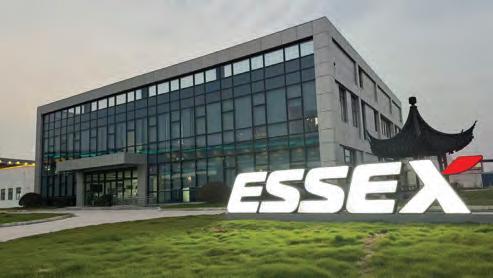
Essex Solutions has upgraded its facility in Suzhou—a major city located in Jiangsu Province in eastern China—a project that included a major office renovation, the relocation of key departments and the creation of additional production space to support future growth in the region.
Per the company, it transformed an existing office building into a fully functional production support facility. The quality department, engineering department, R&D center, EHS and production office were relocated from their previous locations in the workshop to the newly renovated space. This move was designed to bring together critical production support teams in one location to improve efficiencies while freeing up valuable square footage in the manufacturing facility itself.
The relocation of the laboratory to the new site resulted in production line employees spending significantly more time delivering samples, which reduced overall work efficiency. The facility introduced robots to handle the sample delivery. This was not a substitution for the incremental task, but a strategic upgrade that significantly enhanced efficiency. The robots not only eliminated the added time burden but also created additional capacity for employees to focus on higher-value tasks.
That extra capacity is already earmarked for new production equipment. With more space available, Essex Solutions is preparing to expand its production capabilities in Suzhou—an essential step in meeting the increasing demand for the company’s products across the region.
“The relocation project represents more than just a change of space,” said Zack Kim, president of Essex Solutions Asia. “It is a commitment to efficiency, collaboration, and growth. By optimizing how we use our facilities, we can better serve our customers in the region and strengthen our global network.”
The Suzhou expansion is closely aligned with Essex Solutions’ global strategy to enhance production capacity, strengthen operational excellence, and support long-term business growth. By creating space for new equipment and centralizing support departments, the company is building a stronger foundation for innovation and customer service in one of its most important markets.
As demand in China and the region continues to grow, Essex Solutions’ ability to adapt and expand will play a critical role in sustaining customer partnerships and delivering high-quality products. The recent office renovation and department relocation are key steps forward in ensuring the company remains agile, competitive, and prepared for the future.
Indonesia’s state-owned utility Perusahaan Listrik Negara (PLN) has completed the reconductoring of its 500 kV Suralaya Lama to Cilegon transmission line.
Per the utility, the 10.9-km double-circuit line was upgraded with Amsterdam size ACCC® Conductors manufactured by PT. Karya Mega Sarana (KAMESA) under license from CTC Global. In total, 288 km of conductor were supplied, supporting increased transmission capacity and more secure electricity flow to the region’s consumers. The locally manufactured conductors also reflect PLN’s broader efforts to support sustainability goals.
The quad-bundled 500 kV line was supported by steel lattice towers with spans up to 703 m. The project, engineered by PT. PLN PUSMANPRO and installed by PT. Centra Multi Elektrindo, was efficiently completed


in about five weeks per circuit using two coordinated stringing teams.
Per ACCC, what makes the project especially significant is the use of its conductor technology on a 500 kV line, one of the highest transmission voltage levels in operation anywhere in the world.
Linkers Industries Limited (LII) , a Malaysian manufacturer of wire and cable harnesses, announced that its subsidiary—Linkers Asia Pacific Limited—has signed a Share Sale and Purchase Agreement to acquire 20% of LPW Electronics Co., Ltd.
A press release said that LPW, incorporated in Thailand in March 2023, specializes in wire harness manufacturing and has developed a production facility in Pathum Thani. LPW’s established customer portfolio including multinational corporations in the automotive and industrial sectors.
The acquisition is expected to enhance LII’s customer base in the automotive and industrial sectors in Thailand, supporting its expansion in the region. LII’s core structure already includes wholly-owned companies like TEM SP Limited and TEM Electronics (M) Sdn Bhd, which are central to their manufacturing and operational reach. n







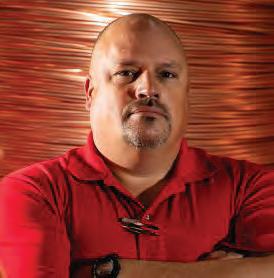
SDI La Farga COPPERWORKS has named Jerry Evans as its president. He joined the company in 2017 as operations manager. He has more than 20 years of industry experience, including roles in copper processing and manufacturing. Prior to joining SDI La Farga COPPERWORKS, he managed operations in metal recycling and plant technology. He replaces Kurt Breischaft, the former president. Based in New Haven, Indiana, SDI La Farga COPPERWORKS is a joint venture of Steel Dynamics and La Farga Group of Spain, producing copper rod, wire, and welding wire for varied industrial sectors.

Hubbell Incorporated announced the promotion of Richard Conner to vice president & general manager of the wiring business unit. He joined the company as vice president, product marketing, in 2024. Prior to that he had worked for eight years for Medtronic and before that 13 years for Honeywell. He holds a B.S. degree in electronic engineering and an MBA from the University of New Haven. Based in Shelton, Connecticut, Hubbell Incorporated provides cable assemblies and connectivity solutions for multiple sectors.

Paul Lorigan has been promoted to chief innovation officer at Benvic USA. He joined the company in 2024 as sales and technical director. He has more than 30 years of industry experience, having previously served as manager of technology and laboratory services at M. Holland Company, technical director of T&T Marketing Inc, and other positions at AT Plastics and BP America Chemicals Company. His career started as a product development engineer at Anaconda Wire & Cable Co. Based in Princeton, New Jersey, Benvic USA makes custom thermoplastic compounds to sectors that include wire and cable.

Priority Wire & Cable has named Jeff Smith as regional sales manager - utility. He has 15 years of industry experience, including 12 years with General Cable in positions that included regional sales manager - utility division, territory sales manager and inside sales - utility division. Based in Little Rock, Arkansas, Priority Wire & Cable manufactures a wide range of aluminum, copper, specialty, utility and low-voltage cables.
Aran Harper has been named project manager at Ridgway Machines Limited, tasked with managing customer projects. He previously worked in roles in other fields delivering custom engineering solutions. He holds a degree in mechanical engineering from Nottingham Trent University. Based in Long Eaton, United Kingdom. Ridgway Machines Limited supplies wire and cable machinery.


Southwire announced that Denise Voss has joined the company as senior vice president of services and high voltage, a new position that integrates its high voltage business into the Southwire Services team. She most recently was head of commercial operations of the Americas with Danish Wind Power Academy. Prior to that she worked in energy-related positions for RNWBL Training, about two years; Artera Services, for three years and GE Power for 16 years. She holds a B.S. degree in mechanical engineering from the University of Wisconsin-Madison. Based in Carrollton, Georgia, USA, Southwire is one of North America’s largest wire and cable manufacturers.
The owner who furthered the family success of Carris Reels and turned it into an ESOP
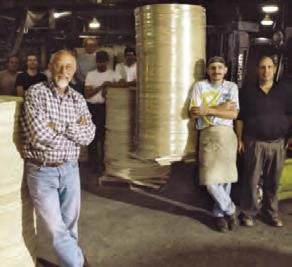
William Huntington Carris, the former president of Carris Reels— better known as just “Bill”—died Oct. 22 at age 81, leaving a lasting legacy as a visionary business leader, advocate and philanthropist.
In 1980, Bill Carris succeeded his father Henry as president and CEO of Carris Reels, guiding the Vermont company from a modest family business to a major international supplier of reels and wire products. In 1995, he implemented an employee owner-
Marinela Cirstea was named the global president of the Automotive Business Unit at Leggett & Platt. She has a background in finance and has been in the automotive industry for over a decade, including leadership roles at FORVIA (formerly Faurecia) and as group vice president for the Stellantis account. She worked for seven years at Schneider Electric, where she was in charge of financial performance for 10 European plants, plant finance director/CFO and cost-controlling manager. She holds a degree from ESCP Business School in France. Based in Carthage, Missouri, Leggett & Platt is a diversified manufacturer whose product lines include steel wire.


Kyle Koenig has been named chief commercial officer for Champlain Cable Corporation. He joined the company as a customer service/inside sales representative in 2007 and served over the years as inside sales manager, regional sales manager, director of sales and marketing in 2018, vice president of sales and marketing in 2020 and vice president of sales
ship model (ESOP), which remains central to the company’s success and culture today. See p. 44. He and his wife Barbara launched charitable programs that continue to benefit communities nationwide, with over $6 million donated under their guidance.
After retiring as CEO, Bill Carris remained on the board for two decades, serving the company for more than 50 years. A former junior Olympic long ski jumper, he was a three-term Vermont state senator, known for supporting small businesses, the arts and recovery programs, for crossing party lines with his warmth and humor and his boundless energy.
Per his posted obit, “Throughout his adventurous life (Bill) took on many roles: son, sibling, husband, father, business leader, politician, philanthropist, and all around badass.” He is survived by Barbara, his four children— Emily, Jesse, Jenne and Tracy—eight grandchildren, and an extended network of family and friends.

& marketing and Vermont operations in 2023. He holds a B.S. degree in business, management, marketing and related support service from Northern Vermont University. In July, the company also hired Jon Makhlouf as strategic account sales manager. He most recently was a project manager for Ecoclean North America, and has worked in management and/or engineering positions at Test Products, Inc., Pektron, Shiloh Industries, General Motors, Magnas Electronics and Mueller Industries. Based in Colchester, Vermont, Champlain Cable Corporation manufactures high-performance wire and cable products for sectors such as automotive, defense, marine and telecom.
Zumbach Electronics Corp. has promoted Mike Hullstrung to regional sales manager. He joined the company as a field service engineer in 2022. He previously worked for W.L. Gore & Associates. He holds a B.S. degree in mechanical engineering from the University of Delaware. Based in Mount Kisco, New York, Zumbach Electronics Corp. supplies testing and measuring equipment.

In October, the Fiber Optic Association (FOA) introduced a new standard titled “FOA Standard For Installing Fiber Optic Cable Plants” that fundamentally reshapes how best practices are documented and shared for every phase of fiber optic deployment.
This change marks the formal withdrawal of the ANSI/ NECA/FOA 301 standard, which had guided the fiber optics sector since 2000, most recently revised in 2016. FOA decided a more modern, open-source, and fielddriven approach was needed, as the old five-year ANSI revision cycle no longer fit the complexities and rapid changes the industry faces. Feedback from FOA advisors and instructors, along with global industry input, showed it was impossible to cover such a diverse sector with a single document. The growing range of installations—including data centers, rural broadband, FTTx, and LAN—made the need for flexibility clear. Because of this, the FOA completely rebooted its standards approach.
The new standard lets project teams select, modify and integrate parts of it as needed. The 61-pages detail everything from safety and construction methods to routing, topologies, splicing, termination, connectors, testing and documentation. Annexes provide specifics on loss budgets and practical field test requirements.
FOA’s open-source model frees the standard from the rigid five-year ANSI/NECA cycle. Instead, real-time updates ensure the information always reflects current technology and field conditions. It is practical guidance only, not a rule or regulation, so adoption is voluntary and not enforced by any government authority.
This standard works alongside technical documents from TIA and IEC, but the FOA focuses on real-world installation techniques and site protocols rather than manufacturing. It translates global codes for use in actual job settings and covers relevant electrical safety requirements. Testing procedures, including OTDR, insertion loss, and power measurement, are explained for hands-on use by installers.
No national agency sets mandatory practices or tracks new fiber optic plant builds in the U.S. Voluntary standards, local codes and customer requirements shape industry best practices. The sector’s rapid expansion—some 88 million homes were passed by fiber as of 2025—shows increasing demand for guidance, even if the number of new plants is not made public. FOA acted independently in developing the new standard to make it open for input, quickly adaptable, and available to the entire industry. To get a report copy, go to www.thefoa.org.
The TR45 air/hydraulic cold welder. Reliable, easy, energy-efficient. For material up to 45mm2 (0.0697sq. in.) cross-sectional area.
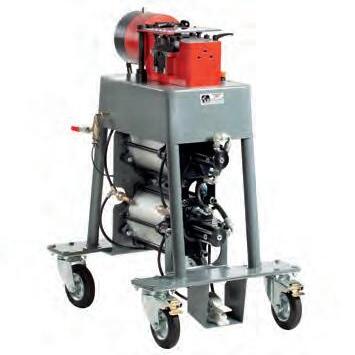
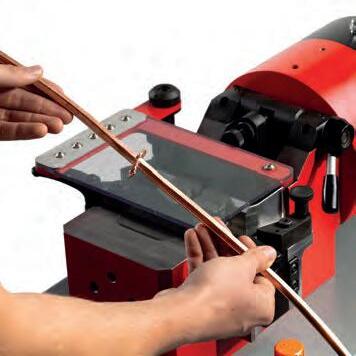

World leader in cold weld technology
North America inquiries: joe@jsnee.com
Pressure Welding Machines: sales@pwmltd.co.uk www.pwmltd.co.uk
Earlier this year, Spartan Fastener, a manufacturer and distributor of high-performance fastening solutions, acquired American Jebco, a supplier of specialty fasteners and rivets.
A press release said that the strategic acquisition strengthens Spartan Fastener’s product offering, manufacturing capabilities, and position in critical markets across North America. The financial terms were not disclosed.
Based in Trevor, Wisconsin, and founded in 1903, American Jebco serves industries such as automotive, construction/hardware, and fire safety equipment. Having recently divested from standard, high-volume rivets in 2015, American Jebco’s current focus is specialty parts. By integrating Jebco’s specialized products with Spartan’s extensive fastening solutions, the combined company will deliver greater value to customers through a broader product portfolio, increased manufacturing flexibility, and enhanced supply chain efficiency.
“This acquisition marks a major milestone in our growth strategy,” said Spartan Fastener CEO Tim Cash.
“American Jebco shares our commitment to excellence. Together, we are better positioned to serve our customers with industry-leading quality, shorter lead times, and
expanded offerings. The return of U.S.-based manufacturing, combined with our substantial production capacity, makes this the right time to join forces to capitalize on the opportunities in the fastener industry.”
Key leadership from American Jebco will remain in place, preserving institutional knowledge and customer relationships while benefiting from the expanded resources and scale of Spartan Fastener. “I am thrilled to be joining the Spartan Fastener team,” said Eddie O’Connor, vice president of sales. “We are combining our respective strengths with one over-arching goal: to better serve our customers. ... We are keeping our valued customer relationships intact, and with my brother Pete O’Connor staying on as materials manager, there’s a great sense of continuity.”
Spartan Fastener, founded in 1976 (as Anderson Manufacturing) serves a wide range of sectors that include appliance/housewares, automotive, electronics, medical, and general manufacturing. The company moved into a new 110,000-sq-ft, custom-built facility in 2019 in anticipation of growth, both organically and through acquisitions of fastener companies that have greater than $3 million in annual revenues.
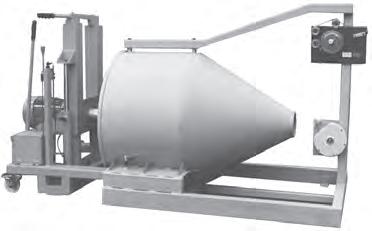
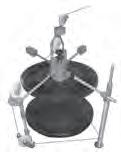
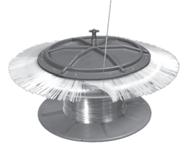

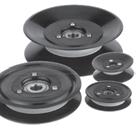
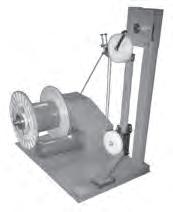
The following list includes new WAI members, renewing members and those who became Premium members through their companies.


Gil Baker Managing Director Confident Instruments Inc
Gre Caldwell Senior Plant Engineer Granite Falls Furnace
Jordan Dean CFO Mercury Wire Products Inc
Adrian DeMichele Junior Design Engineer Quabbin Wire & Cable Co Inc
Zack DiFronzo Process Engineer Quabbin Wire & Cable Co Inc
Piotr Kustra AGH University of Science & Technology
Jason Lenz Operations Manager Southwire Co
Jim Morris Quality & Operations Manager Kreher Steel
Giuseppe Napolitano HV Engineering Manager Prysmian
Jason Porter Vice President Sales Axjo America
Juana Angelica Ramos Metallurgy Chief Viakable
Radharaman Saraf Director Nirmal Wires P Ltd
Tim Schultz President Axjo America
Tiago Augusto Sousa Amarante Engineer Alubar Global Management
Joseph Spurlock Wire & Cable Engineer Copperweld Bimetallics
Anthony Vanoy Sales Axjo America
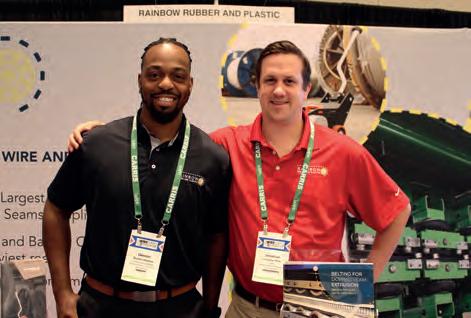
With six months to go, the Wire Association International is focused on making sure that key elements of the biennial event will match high expectations.
The May 6-7 Wire Expo schedule in Milwaukee, Wisconsin, is designed for maximum cross-attendance with co-located Electrical Wire Processing Technology Expo (EWPTE) at the Baird Center. The two events were previously co-located in 2010 at the venue now known as the Baird Center. The reunion comes at a time of industry growth and technological advancement, positioning the combined event as a catalyst for discovery and collaboration.
The EWPTE trade show attracts nearly 200 exhibitors and over 3,000 attendees from more than 40 states and 25
countries for the electrical wire harness, wire, and cable processing industries. The WHMA exclusively represents the cable and wire harness manufacturing industry Conference sessions for Wire Expo have been updated to a 20-minute format to accommodate a dynamic lineup of relevant topics, along with a soon-to-be-announced keynote speaker. The Education program development is well underway. The first wave of confirmed speakers, new product showcases, and preliminary agenda details will be announced soon. Further details, such as registration, housing blocks and attendee matchmaking opportunities, will be posted online at www.wirenet.org and in future WJI issues.
Show hours for Wire Expo will be 9 am to 5 pm on Day 1 and 9 am to 3 pm on Day 2. The WAI’s iconic Fundamentals of Wire Manufacturing Course will be presented on May 5.
Attendees will be pleased to see that both the conference and exhibits will take place directly on the show floor in Halls C and D. That will make for a seamless environment for learning, product discovery and networking. The Opening Reception will be held from 6:30 pm to 8:30 pm in the 4th Floor Ballroom.
More than 100 companies have already confirmed to exhibit, supported by a competitive package priced at $3,450 that offers an efficient, business-ready setup. The package includes: pipe-anddrape back wall (8 ft) and side wall (3 ft); skirted 6 ft table with two chairs; a trash receptacle; a company ID sign; 120 V electric hookup; 200 lb freight service in and out of facility; and carpet. Eventrelated advertising is available in WJI and the Show Program. Sponsorships are also in development.
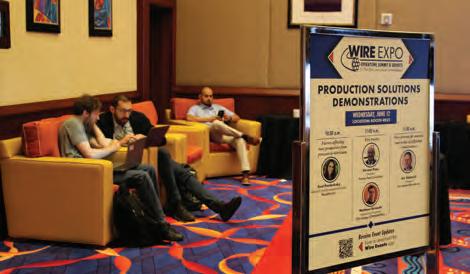
The Wire Association International’s Education Center has reached another important milestone with the release of the full packaged extrusion course, now available as a complete learning path for operators.
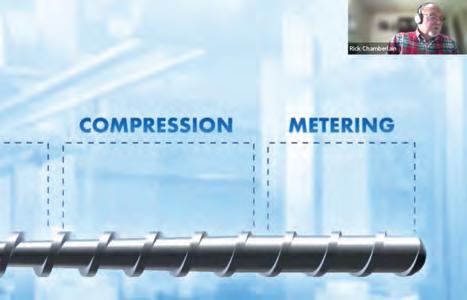
WAI Manager of Education John Markowski said that the new offering bundles all four parts of the extrusion curriculum (single layer extrusion overview, extrusion materials, extrusion applications, and special process considerations) into one comprehensive program designed to support skill-building of foundational knowledge. Each course will be available for separate purchase, enabling participants to also just focus on a specific area that matters most to their role.
To highlight the launch of the bundle, the Association recently hosted an “Extrusion Exploration” webinar, led by subject matter expert Richard Chamberlain, who guided the curriculum development. Attendance and engagement reflected growing interest in structured, accessible training for extrusion professionals.
“We’re beginning to see momentum build as more individuals and companies explore the platform,” said Markowski. “As we move into 2026, we’re looking forward to increased participation from learners and a steady rollout of new courses that will continue expanding the Education Center’s value to the industry.”
For more details on these opportunities, contact Director of Sales Shannon Timme at tel: 203-4532777, ext. 126, stimme@wirenet.org, or Director of International Sales and Business Development Anna Bzowski at tel: 203-453-2777, ext.119, abzowski@ wirenet.org.
WAI encourages participation from members of the wire and cable community. Individuals and companies are invited to get involved as well, by presenting at conferences, submitting technical papers, leading webinars, contributing as subject matter experts, or serving on committees such as the Education Committee or the Paper Awards Committee. These opportunities offer valuable ways for professionals to stay current on industry trends while strengthening industry connections.
The WAI New England Chapter will return to the Cabaret Theatre at Mohegan Sun Resort & Casino in Uncasville, Connecticut, on Thursday, Jan. 29, 2026, for its annual meeting.
Registration is open for the regional networking event, which also serves as a fundraiser for the WAI New England Chapter Scholarship Fund. Highlights of the event will include the dinner, the introduction of the officers for 2026, a raffle, photo booth and a look back at 2025, which likely will go down as a good one.
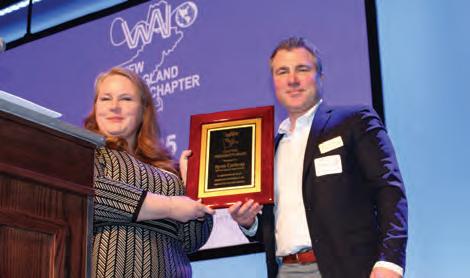
2025 New England Chapter President Annaliese Sviokla with 2024 President Ryan Carbray.
The New England Chapter returned to the Tunxis Country Club in Farmington, Connecticut, for its 31st annual golf outing on what proved to be an utterly gorgeous day for the 143 golfers.The event was won by the Lloyd & Bouvier team of Michael Tucker, Darren Tucker, Joe Yabba and Gibson Yabba that shot a very respectable score of 15 under par.
A healthy donation from the golf event went to the chapter’s scholarship program. The chapter also announced the six 2025 winners of its scholarship program. Those included: Jack Bienvenue, stepson of Walter Parsell, facility engineering manager, Prysmian; John Hartline, son of Christopher Hartline, vice president of operations, RichardsApex; Luke McComiskey, son of Thomas McComiskey, vice president, The MGS Group; Erin Mulligan, daughter of Alan Mulligan, sales representative, Vandor Corporation; Michael Russo,
son of James Russo, electrical engineer, MGS Manufacturing; and Ryan Delage, the recipient of the Intern Scholarship, sponsored by Gary Collette and Michael Renner of Sjogren Industries Inc. Each scholarship was for $2,500.

The meeting will also feature a very smart guest speaker. Dr. John Sviokla is a globally recognized authority on AI and digital transformation. An Executive Fellow at the Harvard Business School, where he earned his doctorate and MBA, he generated some of the earliest thought-leadership on the coming world of AI and digital competition. He has since guided senior executives through the full lifecycle of technology-led change. At the meeting, he will explain why every organization must move from human centric to a hybrid of human and AI intelligence and how to do it.
Sponsorship opportunities are available for this event at Bronze, Silver, Gold and Platinum levels. These can be purchased during event registration. Registration costs $160 for non-members and $135 for WAI New England Chapter members in good standing.
To register, visit www.wirenet.org. For questions or assistance with registration for the event, contact events@wirenet.org.
In 2025, the Midwest, New England, Southeast and Ohio Valley Chapters awarded 13 scholarships that had a combined total of $26,100.
WAI chapter members in good standing will be able to submit applications in for 2026. The chapter scholarship programs are educational opportunities for academically qualified high school seniors who are children, grandchildren or dependents of WAI members in good standing. The sponsor must be a chapter member.
The deadline for applications is March 31. Further details about award amounts and how to apply will be in the January issue. Questions can be e-mailed to WAI Program Manager Vanessa Lewis at vlewis@wirenet.org. n


Artificial Intelligence. Where human curiosity and technology meet.
If you are on a mission to learn how AI suits your manufacturing plans, turn to the Wire Association International’s educational resources for answers.
Meet experts at WAI conferences who will introduce you to AI and other advancements. Learn how to make faster, smarter decisions with AI to boost productivity. And see how companies use this new technology with proven results.
WAI’s programs embrace change...for the better. They are designed to help you meet your educational and manufacturing goals. That’s our mission and it has been for 95 years.
Connect with peers who are centered on AI. Use the QR code to reveal why members around the world rely on WAI. Not a member?
JOIN TODAY: www.wirenet.org

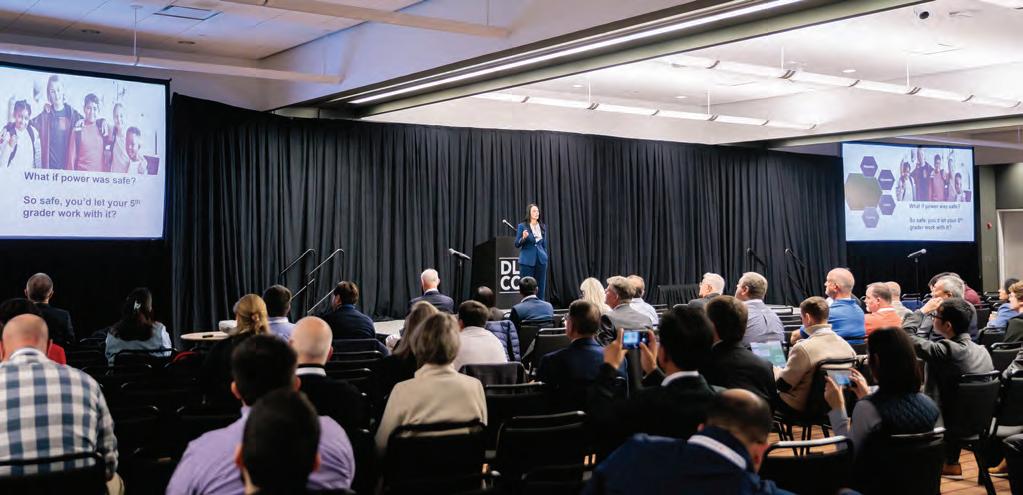
The combination of a new location, insightful industry speakers, the predictably high-caliber technical program, and the ease with which suppliers and attendees could meet at the Supplier Exhibition™ made for a resounding success for the annual IWCS Cable & Connectivity Industry Forum at the David L. Lawrence Convention Center in Pittsburgh.
The 2025 staging featured Cable Manufacturer Spotlight presentations and a continued focus on theme sessions, focusing on sustainability, AI and smart grid connectivity. The trend sessions (see opposite page) have been an emerging feature to IWCS in the last few years. The session format was familiar, featuring vital topics and speakers who provided fresh perspectives to the event, while the
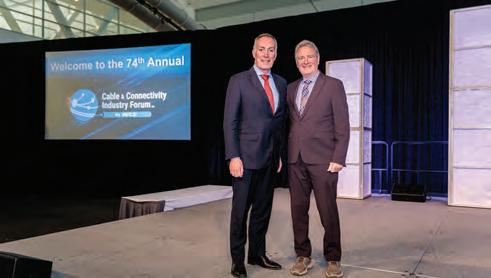
Supplier Exhibition™, with 87 exhibitors, offered many opportunities for attendees seeking technical discussions and new ideas. Many long-time exhibitors were present, but there were also 15 new participating companies.
“We were able to reach new levels of audience engagement with contributions from industry leaders beyond our traditional core technology sessions,” declared IWCS Chairman David Kiddoo, citing the three theme sessions (see next page) that were presented by compelling speakers who went into further detail in lively panel discussions.
“IWCS continues to evolve to be the forum to learn of these critical, trending industry technologies and network innovations that will enable our exciting future!”
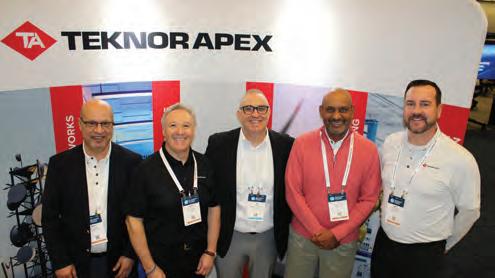
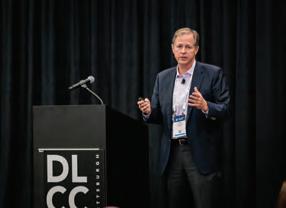
During the “AI/ML for Communication Network Infrastructure” special session at IWCS, industry leaders examined both the transformative power and technical pressures of AI and machine learning for communications networks.
Moderator Dr. Bianca Hydutsky (Chemours Company) underscored that “high-performance computing, edge processing, and real-time data flows require ultra-fast, ultra-reliable connections,” reminding attendees that “AI and ML are only as powerful as the infrastructure that supports them.” Four experts shared insights: Glenn
Bleiler (Corning) detailed the measurable benefits of AI in cable manufacturing; John D’Ambrosia (Futurewei Technologies) outlined the need for even faster Ethernet speeds to keep pace with AI-driven workloads; and Rich Baca (Relativity Networks) described how hollow core fiber is meeting unprecedented demands in data center connectivity. Roy Kusuma (Chemours) capped off the talks by highlighting high-performance materials vital for these environments.
The speakers agreed that the convergence of AI and advanced network infrastructure will transform entire sectors, from next-gen mobile and IoT to manufacturing and connected vehicles, triggering an estimated $17 trillion in new global opportunities by 2035. As rising AI complexity drives exponential data growth, maintaining robust, agile, and secure digital backbones will be critical for seamless, real-time operations and future innovation.
The “Sustainable Solutions for Power and Data Cables” special session at IWCS was part of the two most recent IWCS Forums. This one featured an expanded full-day schedule of presentations and interactive panel discussions highlighting the industry’s progress toward environmentally responsible cable manufacturing.
Major players—including Covestro, CommScope, Dow, Prysmian, and Senko Advanced Components—presented recent advances in material innovation, manufacturing processes, standards, and OEM strategies that support a circular economy. These five consecutive talks brought perspectives from across the supply chain, followed by an engaging Q&A panel and updates from the Sustainable Optical Fiber Industry Alliance (SOFIA). Concluding the session were four technical paper presentations from Prysmian and Teknor Apex on topics ranging from recyclable polyolefins to sustainable cable design and cable scrap.
Presenters emphasized moving sustainability beyond rhetoric into measurable, validated practices through collaborative data analysis, supply chain integration, and rigorous material research.
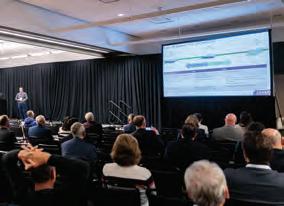
The forum’s wide participation reflected both growing industry consensus and an active commitment to integrating environmental metrics and transparent communication across every major supplier and value chain segment. The presenters shared actionable strategies and updates for guiding real-world progress and fostering collaboration for sustainable development in cables and connectivity.
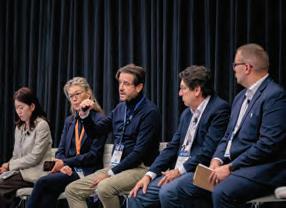
The final session, “Powering the Grid of the Future –Smart Connectivity, Resilience & Innovation,” focused on grid modernization. Keynote speaker Travis Kavulla (NRG) discussed prioritizing reliable residential power in emergencies, referencing the 2021 Texas power crisis and the need for smarter policies and technology to better manage sudden shifts in power use. In the smart grid panel, Rashmi
Varma (QuantaWatt), Kavulla, Chris Bondurant (SAC Wireless), and Sergey Golubtsov (Prysmian) emphasized collaboration across sectors to deliver greater reliability and debated whether policy or solutions should lead industry change.
Bondurant joined a second panel on using digital twins and AI in grid optimization with moderator David Kiddoo (IWCS/CCCA), Craig Cavey (Talon Aerolytics), and Rishi Sharma (Faclon Labs), where open data and reliable information were highlighted as key for resilient grid management. Spotlight talks from Golubtsov and Dr. Kevin Chen (Idaho National Lab/University of Pittsburgh) concluded the session with advances in sensor technology for intelligent, responsive grid infrastructure.
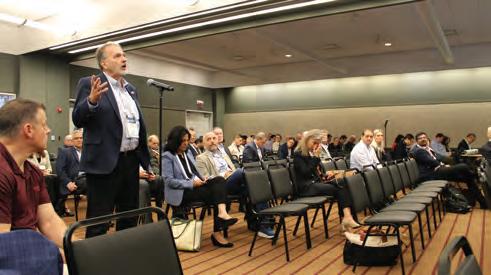
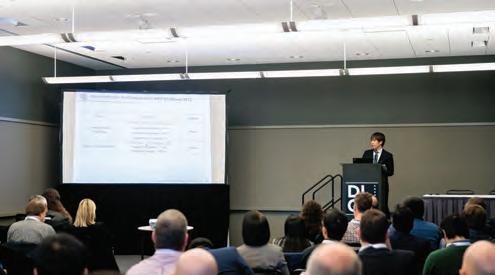
The technical presentations, the heart of IWCS, included more than 80 papers in 11 sessions.
The keynote address during the Plenary Luncheon, delivered by Donal Hanrahan of X3T in Ireland, examined the effectiveness of wholesale broadband infrastructure that balances public policy objectives to bridge the rural-urban divide with commercial viability.
During the Executive Session, expert speakers shared economic and supply chain outlooks, including a look at the effect of international tariffs on American cable production. One attendee, Taymer Machinery President Robert Kepes, said during a Q&A that there were some misperceptions, as his Canadian-based company did not fall under a tariff, a message he wanted to get out.
CRU analyst Aisling Hubert said that the metallic cable industry is still performing well with products such as power cables continuing to show the strongest demand as electrification and power-hungry applications such as data centres continue to emerge.” Fellow CRU Analyst Egest Balla said the U.S. optical fiber and cable industry has robust demand-side drivers, but local supply remains tight.

Executive speakers discussed data centers, the need for greater speeds and reliable connectivity, and how fault-managed power, known as Digital Electricity™, can complement traditional PoE transmission to support unparalleled demand and efficiency for energy and data.
The Technical Symposium featured more than 80 technical papers and posters over the course of four days. Authors presented their
research in 11 technical sessions categorized by topics or as poster displays. Those papers presented are available for ongoing research and education, with some presentations shared throughout the year in the IWCS Webinar Series.
The Supplier Exhibition included many long-time participants. “Teknor Apex had a fantastic experience, connecting with industry leaders and showcasing our latest innovations,” said Jon Mello, wire & cable market manager. “We appreciated the engaging discussions on sustainability, performance and new material solutions driving the future of connectivity.” The floor also hosted 15 new companies. Many suppliers have already reserved their booths for the 2026 edition of the IWCS Forum.
Attendees and exhibitors alike were pleased with the “Innovation Hub” that was centrally located within the Supplier Exhibition™. This area included the traditional Supplier Spotlight Presentations, which featured product presentations from 12 unique suppliers on topics including, but not limited to, materials for cables in data centers—to sustainable cable packaging—to optical fiber coatings. The next day, Cable Manufacturer Spotlights allowed Corning, YOFC and HFCL to update attendees on new challenges and opportunities affecting the cable industry and how their products can support growing needs.
The next IWCS Forum—its 75th—will take place Nov. 1-4, 2026, at the Gaylord Palms Resort & Convention Center in Orlando, Florida. The event will include special enhancements that commemorate the decades of innovation and networking IWCS has been able to facilitate.
IWCS Board Chairman Scott Wasserman observed that when the first IWCS was held in nearby Asbury Park, no one could have anticipated the technical evolutions of the wire and cable industry or the role IWCS would play in supporting and promoting that innovation. “As we look ahead to the 2026 event, we are excited to continue the recent growth of our programming to feature cuttingedge special sessions on topics such as AI and Machine Learning, sustainability, and the future energy grid with important presentations and panel discussions.”
For more information, including travel requirements, contact IWCS at www.iwcs.org. n
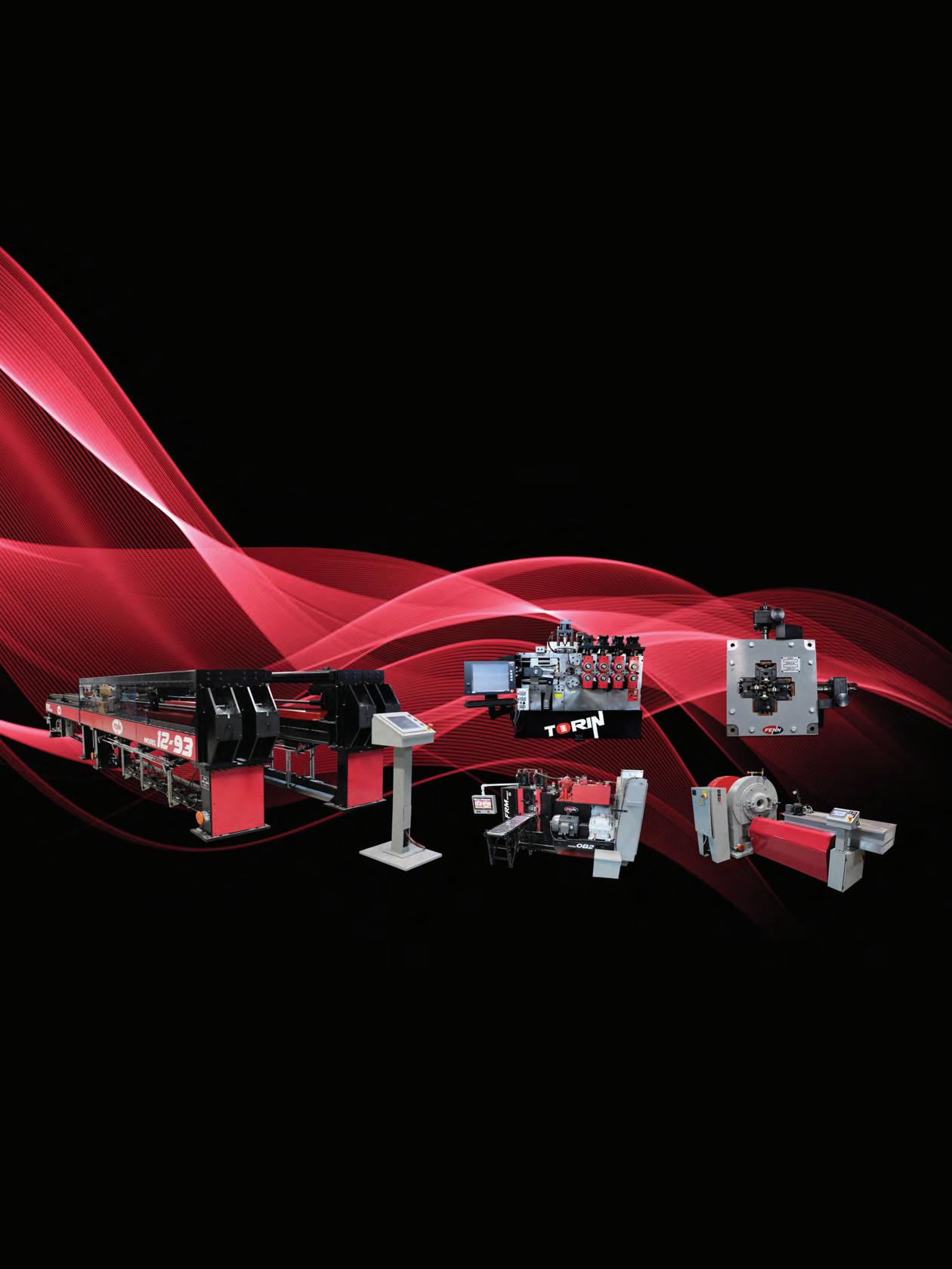
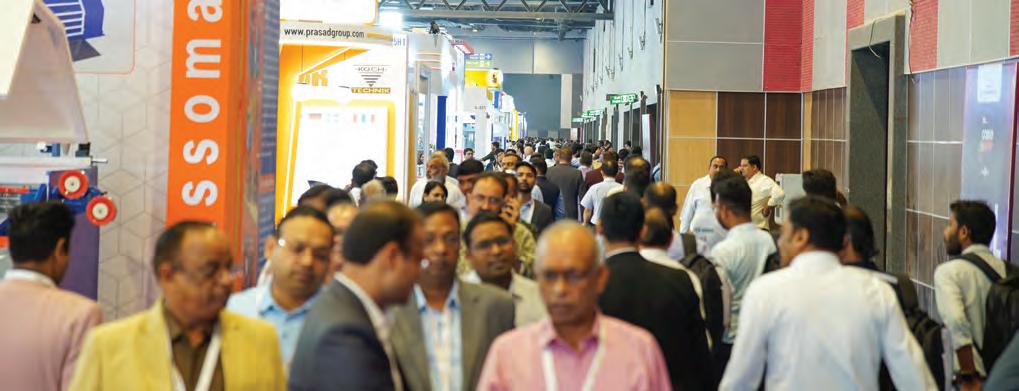
The 6th Edition of the Cable & Wire Fair (CWF) held Nov. 4-6, at Halls 2, 3, 4 and 5 of Pragati Maidan, New Delhi, India, was the event’s largest and most appreciated by the industry yet, declared a press release from organizer Tulip 3P Media Pvt. Ltd. It said that the event ended on a high note, having showcased the country’s fastest growing innovations and technologies by 424 exhibitors.
The release said that the co-located event—Tube & Pipe Fair— held in Hall 6 witnessed participation from 133 exhibitors, taking the overall exhibitor count to 557.
Spanning 35,000 sq m gross area, India’s largest international expo for the wire and cable industry witnessed a very strong visitor footfall of 16,393.
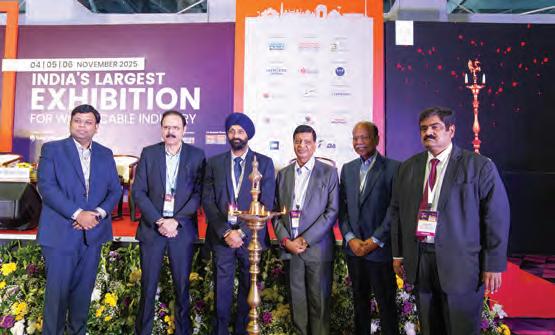
Dignitaries at the event included, from l-r. Priyank Jain, CEO, Tulip 3P Media.; Bhushan Sawhney, CRO, Aditya Birla Group; Jasvinder Singh, managing director, Supermac Industries (India) Ltd.; Anil Gupta, chairman & managing director, KEI Industries Ltd.; Nirmal Saraf, managing director, Nirmal Wires Private Ltd.; and Amit Bhatnagar, Founder, Diamond Power Infrastructure Ltd.
Since its debut a decade ago, CWF has evolved from 70 exhibitors in a mere 3,000 sq m space to a flagship event that spanned 35,000 sq m area. It has grown 12-fold since its launch. The scale of CWF this year was unprecedented, reflecting not only the Fair’s steady expansion but also the rising global stature of India’s wire and cable industry.
CEO Priyank Jain attributes the steady, rapid ascent to a focus on staying current. He said exhibitors and visitors are surveyed to ensure that each edition meets technical needs and mirrors shifting market trends. “Feedback has led to continual recalibration and innovation, making CWF the country’s fastest-growing showcase in the field.”
At the 2025 staging, visitors saw a show floor packed with machinery, including equipment for drawing, extrusion, cabling, coiling, stranding and more. Attendees could analyze process efficiency, output quality and technical specs firsthand, engaging directly with experts ready to field questions and discuss implementation. There was also a deep focus on materials: steel, copper, aluminum, specialty compounds, advanced polymers, and all manner of control, measurement, and testing systems were on display, along with finished product solutions such as steel wire, power cables, specialty cables and fiber optics.
CWF’s international profile continued to expand with 89 foreign exhibitors from 24 countries including Austria, Bahrain, Belarus, Belgium, Canada, China, Denmark, Estonia, France, Germany, Italy, Japan, Nepal, Netherlands, New Zealand, Norway, Oman, Singapore, South Korea, Spain, Sweden, Switzerland, U.K., USA and others. For visiting professionals, it was a rare opportunity to benchmark competing global technologies, products and solutions in one comprehensive venue.
The show consistently draws a cross-section of the entire sector: management, plant owners, executives,
senior engineers, R&D and procurement heads, and decision-makers from major cable users like railways, telecom, power, EPC and renewables. CWF provides a balance between a business marketplace and a center for technical insight.
Another key asset was CWF’s two-day Technical Conference and CEO Conclave, which run parallel to the main exhibition. The conference agenda directly aligns with what’s happening on the show floor, with sessions focused on emerging themes, from “Make in India” to “Made in India”: Competing in Global Cable Markets; Riding the Multi-Sector Growth Wave: Cable Demand Across India’s Expanding Economy; Future-Ready Power Networks: Smart, Safe, Green & Resilient; From BharatNet to 6G: Cabling the Next Wave of Connectivity; Steel Wire in a Growing Economy: Markets, Innovation & Competitive Edge; Smart Manufacturing: and Technology and Material Science Behind Cables. These programs provide

not only the latest knowledge but also a venue to network and brainstorm with industry leaders.

Jain said that what sets CWF apart is the balance of serious buyers and technical decision-makers that allows detailed product discussions without filtering through multiple layers. The event draws both domestic and international visitors, and exhibitors often open new export channels. “We are thrilled with the outcome of Cable and Wire Fair 2025,” said Jain. “The enthusiasm from our exhibitors and attendees reflects the vibrant state of the cable and wire industry. This event not only showcases innovations but also fosters collaboration and knowledge-sharing that will drive the industry forward.”
The dates for Cable and Wire Fair 2027 will be out soon. Industry professionals should prepare themselves for another exciting event filled with learning, networking, and exploration of the latest trends and technologies. For more details go to www.cablewirefair.com.
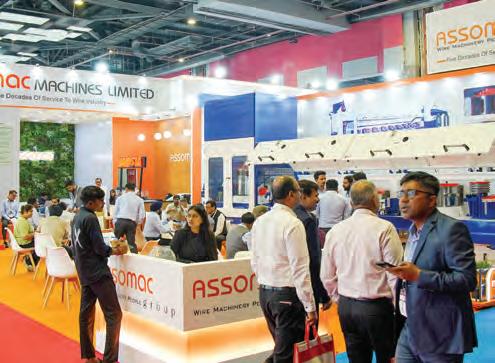
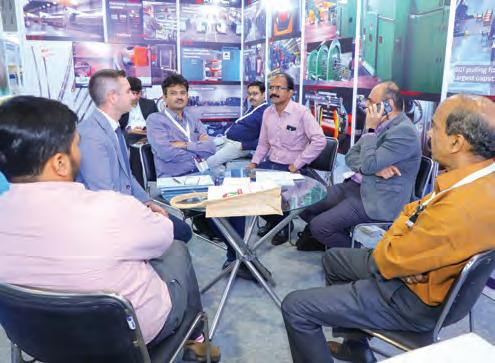
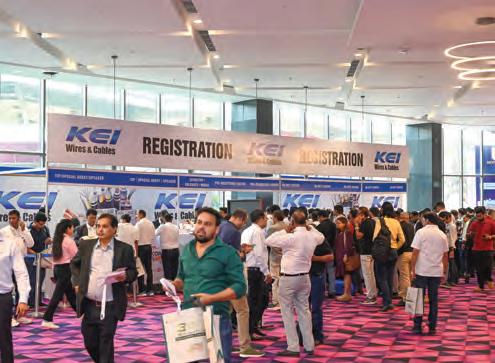
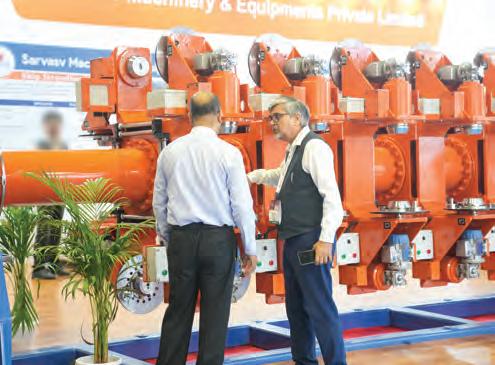
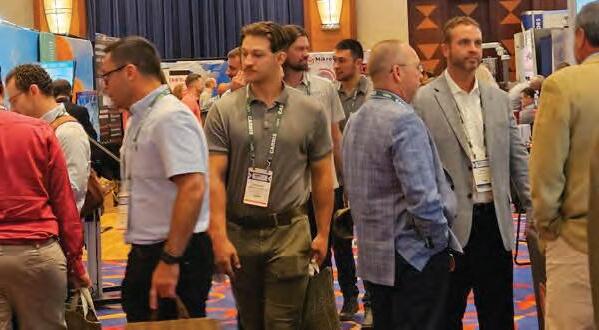
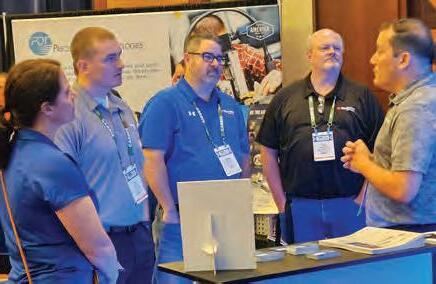
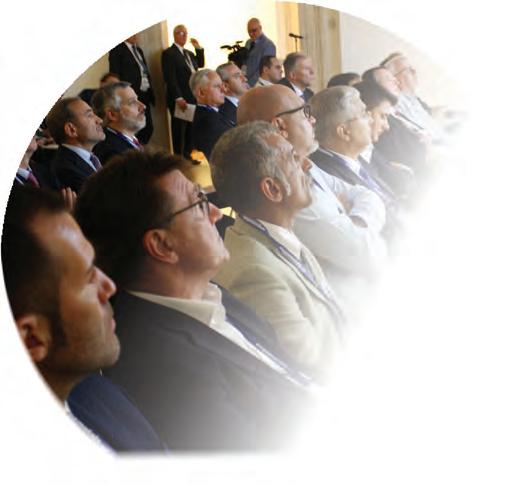




ADVARIS USA, Inc.
Align Production Systems
Amaral Automation
AWT Machinery Inc.
Axjo America
Bartell Machinery Systems
Bechem Lubrication Technology LLC
Blachford Corp.
Cable Components Group
Carris Reels Inc.
Cemanco LLC
Chase Wire & Cable Materials
Clinton Instrument Co.
Condat Corp.
Conneaut Industries Inc.
Continuus-Properzi SpA
Corrupal
Die Quip Corp.
Domeks Makine A.S.
Dynamex Corp.
Ebner Furnaces Inc.
Electronic Drives & Controls Inc.
Esteves Group USA
EUROBEND GmbH
George Evans Corp.
Fil-Tec Inc.
Filtertech Inc.
Flymca, Fluidos Y Mecanicas Cantabria SL
FMS USA Inc.
Foerster Instruments Inc.
Fort Wayne Wire Die Inc.
FUHR GmbH & Co. KG
Mario Frigerio S.p.A.
Graham Engineering Co. LLC
GMM Cable
HONTA Inc.
Howar Equipment Inc.
IDEAL Welding Systems, L.P.
InnoVites
B.V.
Joe Snee Associates Inc.
Joe-Tools
King Steel Corp.
Kinrei of America
KN Manufacturing Solutions
Krueger Steel
Lamnea Bruk AB
LaserLinc Inc.
Leggett & Platt
Lloyd & Bouvier Inc.
M. Holland Co.
Madem-Moorecraft Reels USA
Mathiasen Machinery Inc.
MFL Group
Morgan-Koch Corp.
Niehoff Endex North America Inc.
Nucor Wire Products
Nylon Corporation of America
Oden Technologies
P & R Specialty Inc.
Paramount Die Co.
Parkway Kew
Phifer Wire Inc.
Precision Die Technologies
Premier Wire Die
Properzi International
Proton Products Inc.
Q8Oils
QED Wire Lines Inc.
Quaker Houghton
Rainbow Rubber & Plastics
Reel Options by Vandor Corp.
REELEX Packaging Solutions Inc.
Refractron Technologies Corp.
RichardsApex Inc.
RMG, Inc.
Rosendahl Nextrom
Roteq Machinery Inc.
SAMP USA Inc.
Sark Wire Corp.
Schlatter North America
SDI LaFarga COPPERWORKS
Setic S.A.S. - Pourtier
SIKORA
Sincheer/Cablogic
Sonoco Products Co.
Spazzolplastica North America LLC
August Strecker GmbH & Co. KG
Super Seal Corp.
Taubensee Steel & Wire Co.
Technical Development Corp. (TDC)
Teknikor
The MGS Group
Thermoplastics Engineering Corp. (TEC)
WAFIOS Machinery Corp.
Wire & Cable Technology
International (WCTI)
Wire & Plastic Machinery Corp.
Wire Association International Inc. (WAI)
Wire Journal International (WJI)
Wire Lab Co.
Wire Machine Systems Inc.
Witels Albert USA Ltd.
WMC
Worth Steel
Zumbach Electronics Corp.
List as of November 17, 2025

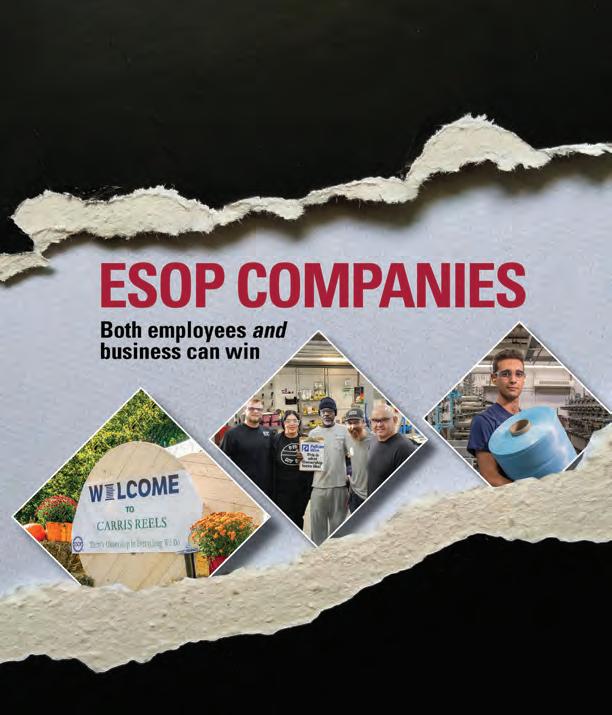
Dedication may feel distant on the shop floor, but at a handful of wire and cable companies, it’s grounded in something tangible: ownership through an Employee Stock Ownership Plan (ESOP). In this feature, Carris Reels, Pelican Wire, and Web Industries share what happens when employees have a real stake, not just in the work, but in the outcome. It also includes a Q&A with an ESOP association, and more.
ESOP firms grow 5.4% faster than comparable non-ESOPs due to higher employee engagement, retention, and productivity. The National Center for Employee Ownership (NCEO), 2025.
Publix Super Markets is the largest ESOP company, with over 200,000 employee-owners. MBO Ventures, 2025.
The ESOP implementation process in manufacturing averages six to 12 months, varying with company size, complexity, and regulatory requirements. Deliberate Directions, 2025.
About 140,000 U.S. companies employing 33 million people are estimated candidates for ESOP adoption. Aspen Institute, 2025.
Employee turnover is significantly lower at ESOP companies—voluntary quit rates are about one-third the national average. NCEO.
The smallest ESOP companies can have as few as 15-20 employees. ESOP Partners, 2022.
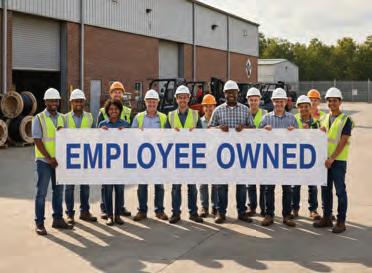
Top reasons for companies avoiding ESOPs include cost concerns, trustee complexities, financing challenges, seller payout timing, and loss of control fears. Merit Investment Bank, 2024.
More than 8 in 10 ESOP workers are confident they’ll retire comfortably—nearly double the confidence level of non-ESOP workers. John Zogby, 2025
Nearly 4,000 S corporation ESOPs cover over 1.2 million participants owning $183 billion in assets, emphasizing ESOP prevalence in S corps. ESCA, 2025.
Top ESOP industries include professional, scientific and technical services (20.8%), manufacturing (19.3%), and construction (17.8%). ESOP.org, 2025.
11 million active employees plus 4.2 million retired workers participate in ESOPs. Aspen Institute, 2025.
At a given point in 2025, there were 6,358 ESOP companies in the U.S., covering 14.9 million participants and holding over $1.8 trillion in assets. Harvard Business Review, NCEO.
If you’re not part of an ESOP plan—and there are relatively few in the wire and cable industry—here is an overview compiled from multiple sources: National Center for Employee Ownership, The ESOP Association, Rutgers Institute for the Study of Employee Ownership and Profit Sharing, Menke Group, PCE Companies, and the U.S. Department of Labor.
Employee Stock Ownership Plans (ESOPs) are a uniquely American model that gives employees the ability to own a stake in the companies where they work. While the idea of employee ownership is as old as American industry itself, the ESOP as we know it today traces back to “stock bonus plans” approved by Congress in 1921. These allowed employers to offer company shares as a retirement benefit. At one point in early 2025, 6,358 companies were reported to have ESOPs that covered nearly 15 million participants. They held more than $1.8 trillion in assets, a significant sum.
The early programs were important because they set the foundation for what was to follow, but they lacked the “empowerment” of true ownership. That was to come as ESOP plans would provide profit-sharing and stock grants that made the process more feasible and effective. Equally important, they made the concept of employee ownership a realworld business strategy.
ESOPs served nearly 14 million Americans, with $1.8 trillion in assets. .
The breakthrough came in 1956, when economist Louis O. Kelso pioneered the first leveraged ESOP at Peninsula Newspapers, Inc. For the first time, a company was able to borrow against future earnings to buy shares that were allocated to employees unable to invest directly. While not the first instance of employee ownership, Kelso’s innovation made it much more feasible for owners to sell to employees for succession planning, shaping modern ESOP practice.
A major shift came in 1974, when the Employee Retirement Income Security Act (ERISA) made ESOPs federally recognized benefit plans. This key legislation provided rules to protect employee interests, reporting requirements, and legal credibility nationwide. Subsequent laws in the 1970s, 80s and 90s added tax advantages, deductions, rollover options, and expanded eligibility. In 1997, Congress allowed S-corporations, a common private business structure, to adopt ESOPs, broadening the model to many smaller firms.
By 2000, there were about 8,800 ESOPs in the U.S. Those numbers plateaued as consolidations, mergers and rising compliance costs took effect. By 2020, about 6,500
Modern ESOPs are more structured, secure and accessible than earlier models. Today, an ESOP is typically established as a trust holding company stock for employees, with shares allocated over time based on payroll, tenure, or other criteria. Financing allows companies to borrow, often with pre-tax dollars, to fund share purchases, making ESOPs both retirement plans and succession strategies. S Corporation ESOP rules include tests for broad-based coverage to prevent concentration and ensure fairness. Participants are protected by ERISA’s fiduciary duty standards, allowing legal claims for mismanagement. ESOPs aren’t limited to large corporations. Nearly any privately-owned U.S. company, except partnerships and most professional corporations, can establish one. Many plans start with employees owning a minority (30-49%) stake, with opportunities to increase to majority or full ownership over time. This flexibility enables gradual transitions and liquidity options for retiring owners. Less than half of all ESOPs are 100% employee-owned, yet majority-owned firms continue to rise as shares shift from founders to staff.
A defining feature now is the link between company performance and employee benefits: employees accrue shares as the business succeeds, often at no personal cost. ESOP tax benefits include deferred taxes on allocated shares and deductions for dividends paid on ESOP shares. For S corporations, ESOP-held profits are generally exempt from federal income tax, making full ownership highly attractive.
Currently, efforts are underway to make ESOPs even more feasible. In 2025, Senate bills such as the Retire Through Ownership Act aim to clarify valuation rules and make ESOP formation safer with outside experts, while representation measures would give employee-owners a stronger voice. These reforms, which must get House approval and President Trump’s signature, could lead to more growth for American ESOPs.
The founders and early leaders of Carris Reels believed that employees should share in a company’s success, and chose a path 30 years ago that would lead them to becoming owners. They also knew the business had to be structured for sustained growth. Below, company President Alberto Aguilar discusses how the ESOP has evolved and furthered the business.
The story of how Carris Reels, Inc.— the ultimate small family business made good—came to be an Employee Stock Ownership Plan (ESOP) business traces back to its being launched 1951 in Rutland, Vermont, with just two employees: Henry Carris and his son, Bill.
Through steady growth—new plants in Indiana and North Carolina, strategic acquisitions in Connecticut and California—Carris Reels matured from a local enterprise to a national supplier. By 1995, Carris Reels had more than 700 employees and a reach that stretched across the U.S. wire and cable industry. By the time Henry retired in 1980, he had left “a legacy more enduring than any reel his shops produced.” Long before that, however, fate had intervened.
Bill Carris’s journey with Carris Reels was not a straightforward path of inherited leadership. At one point, he had left the company and worked for years outside the industry. It was only when Henry fell ill that Bill agreed to return. What was meant to be a short-term position evolved as he became more actively involved. He developed a personal sense of responsibility to guide the company into its next chapter, one that included his dream of transforming the business into an ESOP.
As company President Alberto Aguilar recalls, “Bill had questioned the traditions of family ownership. He wanted something lasting—something that honored the employees who made the company strong. His drive wasn’t just about profit—it was about setting people up for something bigger.” Bill’s wife, Barbara, was part of the whole plan— committed to seeing his dream live on, not just for the
family, but for everyone working there.”

Aguilar agrees that becoming an ESOP company is not simple. It takes considerable time to handle the regulatory, financial and communication elements, but he said the results are worth it. “I wouldn’t trade it. What makes it easier is the support system. Everyone is invested. Everyone wants to help each other succeed. That’s not something you can manufacture. It’s organic, and it’s powerful.”
Having help from an ESOP expert makes a big difference. Bill worked with legal adviser Deborah Olson, and the wheels were set in motion for a fundamental shift.
The initial ESOP plan was launched with a modest start: 10% stock transfer in 1995. Carris Reels would become employee-owned. “That opened the door to something bigger: a deliberate journey to full employee ownership over 10 years,” Aguilar noted.
Employees helped design the ESOP and the participatory system that now defines the company. “Our Long Term Plan Steering Committee had representatives from all plants and all levels—management and hourly employees—working shoulder-to-shoulder. The allocation structure was put to a company-wide vote. Governance decisions, big ones, were handed to groups that had never had such a say before.”
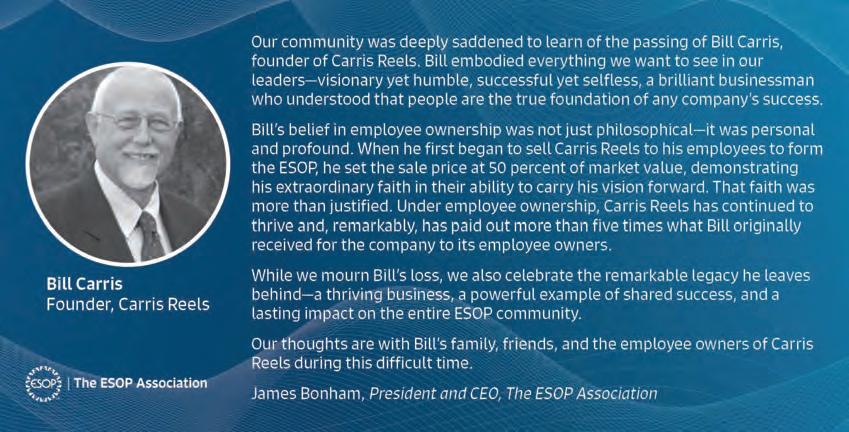
The impact was tangible, and swift. Before the ESOP, turnover was brutally high. It was 100% annually in Michigan and North Carolina. That has plummeted to around 20%, a very good rate for demanding work. Part of that is due to educating staff. The books are open. Employees meet monthly to review financials, talk safety, and make sure everyone knows exactly how the company is doing, how actions can result in gains.
“Everyone’s expected not just to work hard, but
to think and act like owners,” Aguilar says. Monthly incentives, annual profit sharing, above-market benefits… you see the connection between the team’s performance and personal stake.”
Emotional and spiritual elements are at the heart of life at Carris Reels. “We look out for each other. The Golden Rule is our code of conduct,” says Aguilar. “Belonging is real— staff wear hats and shirts, say they stayed because they belonged here. The ESOP is the vehicle, but engagement, accountability and learning are the engine.”
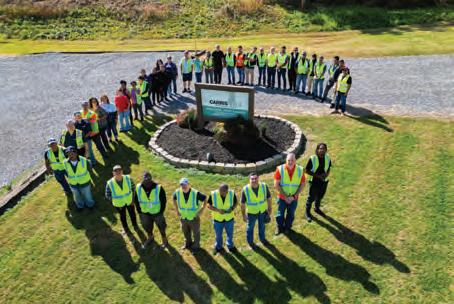
Aguilar, who was the first manager of the Carris Reels plant in Monterrey, Mexico, which began operations in 2000, was proud of how the ESOP plan—designed for U.S. businesses—was extended to their plant. The Mexican operation was incorporated under a “mirror” plan, with
employees credited for their time on the job ... not just from the ESOP’s start date, but back to when they started at the plant. “That approach made sure people who had invested years in the company were truly recognized—it was about honoring their history and commitment, not just checking a box.”
The journey had its share of bumps. Economic downturns, shifting markets and the hard realities of manufacturing all forced evolution. “The ESOP wasn’t a financial trick—it transformed how we live and work together,” Aguilar notes. Recognition followed: Employee Owned Company of the Year in 2008, ESOP Association awards for communication and national visibility at meetings and conferences. Employees now represent Carris Reels at ESOP events, connecting and sharing
The ESOP story is meant to be a positive one for companies that pursue it, yet sometimes that outcome can be totally unexpected ... for the employees. Below, Carris Reels Vice President Dave Fitz-Gerald— who chaired the ESOP Association in 2017-2019—recalls what happened when the company acquired a Texas competitor: Lone Star Reel in Texas in September 2016.

What happens when employees go to work and are told that the company has been sold, and that they are now part of an ESOP business? That led to a meeting of the approximately 100 employees at Lone Star Reel in Texas when Carris Reels acquired the business in 2016.
For many workers, it was an unfamiliar concept, recalls Carris Reels Vice President Dave Fitz-Gerald, who has long been involved with the ESOP Association. “We were there, and they’re just looking at us like, ‘What are you even talking about?’ It was such a foreign idea.”
Fitz-Gerald said that most had never heard of an ESOP, and it took time—and patience—for the meaning of employee ownership to sink in. Carris Reels invested heavily after the purchase, upgrading equipment, training workers, and honoring prior years of service for vesting. The company encouraged open discussions and gave the new owners practical education on how the ESOP worked. Only after several years and a few encouraging statements did people begin to see their accounts grow and understand what had changed.
Maintaining Lone Star ’s local identity was just as important as introducing the culture of shared ownership. Over the years, that culture took hold. “It couldn’t help but seep in,” Fitz-Gerald said. Some who were once skeptical have become its strongest advocates—proof that even an unexpected ESOP journey can become a source of pride and long-term wealth for the employees who live it. “It was a lot of transformation all at once and must have seemed daunting,” Fitz-Gerald says. “But the ones who stayed and stuck it out are probably light-years ahead of those who left.”
Shannon Hall was one of the Lone Star Reel employees at the 2016 transition meeting. Hired there in 2010, he and his colleagues did not know what an ESOP plan was, but they came to appreciate it.
The Carris Reels ESOP is very generous, said Hall, who is supervisor of production at the plant. He admits that, even now he is amazed and thrilled that his plan—and all others—were backdated to their start date at Lone Star.
In return, Hall said, the employees are the most motivated of employees: everyone wants to see the company—their business—succeed. When he has told friends about the ESOP, “their eyes bug out. They ask how they can join.”
best practices, “paying forward the lessons and successes we’ve earned.”
As a leader, Aguilar sees ESOP as more than policy, it’s a filter for quality. “If you ask if we have a better workforce, because of our ownership model, I can say yes. You don’t see weak links, you don’t see slackers. You don’t need to push people, they push each other. It’s different here. Responsibility is shared and meaningful.”
Veteran employees and new hires alike feel the impact. “When someone with six or seven years of experience at another company joins us, they notice it’s a different atmosphere. There’s pride, and it’s contagious. After five to six years, you start to see the value for yourself. Then you’re hooked.” All locations participate; allocation of benefits is based on time frame and commitment, not on which plant performs better. “It’s a good feeling knowing fairness really exists here.”
The ESOP transition also changed generational dynamics. Aguilar reflects, “There’s always a little skepticism from younger staff. Honestly, in your 20s, a job may seem like a stop—but after a few years here, it becomes part of your story. It’s tangible. And when you’re ready to retire, you realize how much you’ve built, alongside your colleagues.”
“For other companies considering ESOPs, Aguilar emphasizes intent and authenticity. “You need to want this for the right reasons. If you’re just chasing top dollar, an ESOP probably isn’t for you—there’s too much work, too much commitment required.” Funds and conventional buyers regularly approach longstanding owners with tempting offers, but Carris Reels’ story is about choosing community over short-term gain. “It’s hard, but if leadership truly wants it, it can work. Employees need to participate, feel empowered, take ownership, otherwise, it’s just another HR program.”
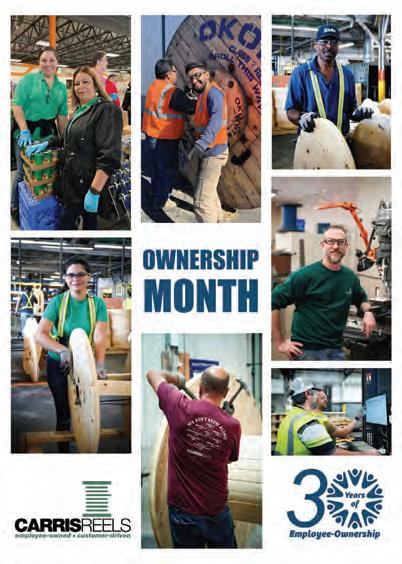
In October, Carris Reels saluted its ESOP status, an ongoing success on multiple levels.
Aguilar says that when he is asked by other companies about ESOPs, he stresses the importance of commitment. “I always say, ‘Make sure you’re ready for transparency. Make sure you want to build something that lasts. And remember, it only works with broad participation—not just control from the top.’ ”
The ESOP concept has proven its worth, Aguilar insists. “It’s solid, it’s valid, and when it’s done right, it’s more
Carris Reels’ Employee Stock Ownership Plan (ESOP) functions as a retirement plan in which employees build personal accounts as the company contributes shares each year. As the company’s value grows, so does each employee’s account. When participants retire or leave, they receive the cash value of their shares subject to the distribution policy. Retirees are paid in installments over five years, whereas terminees wait five years to begin installments.
All employee-owners have a stake in the outcome of every transaction and business decision. Equitable pay and above average benefits are part of the equation, which also includes annual profit sharing bonuses.
Governance balances participation with oversight. The Corporate Steering Committee (CSC)—made up of management and non-management members—guides company communications, culture, and employee engage-
ment. The CSC also provides input on governance, benefits, and strategic policy, and recommends non-management representatives for the Board of Directors.
Voting rights on major issues, such as mergers or acquisitions, are passed through to plan participants as required by law. The Board maintains fiduciary oversight, appointing officers, approving budgets, and monitoring the plan’s long-term sustainability, including future share-repurchase obligations.
Carris Reels advances employee ownership beyond the plan itself through continuous education, new-hire orientations, and regular company-wide financial reviews. It also sets annual caps for allocating ESOP shares to maintain fairness and prevent disproportionate rewards at the top, ensuring the benefits of success are widely shared across the company.
Like many cable companies, Pelican Wire started out as a very modest operation: a garage in Hebron, Illinois. Owners Larry and Teresa Bill started and built the company, and when circumstances made it time to sell, it became a family story, with a cast including its employees. Below, their son, Theodore “Ted” Bill, the company president, shares how Pelican Wire became an ESOP company.
Pelican Wire was founded by my parents, Larry and Theresa Bill, in the late 1960s. They moved to Naples, Florida, in 1976 because that’s where they wanted to live, and the company grew from there. I grew up in the business — literally. My dad had a cot in the front office, and you’d walk in some mornings and find him asleep with the dogs curled up beside him. It was a small operation then. When I left for college, we had maybe four or five employees.
I didn’t plan to come back. I had built a career at Disney, doing industrial engineering and large-scale IT implementations. But when my dad got sick, he had cancer, everything changed. He started thinking about succession, and we had a few suitors sniffing around. But none of them could guarantee the company would stay in Naples or protect our employees. That didn’t sit right with him. He was passionate about making sure the people who helped build the company had something to show for it. And he wanted to make sure my mom was taken care of. After he passed, I came back. I told my mom, “I’ll run the company, and we’ll figure out this employee ownership thing.”
We spent six months working with lawyers and advisors, trying to understand Employee Stock Ownership Plans (ESOPs). Larry had started the research, but we had to build it from scratch. Larry didn’t just want to sell the business. He wanted to pass it on in a way that honored the people who built it. He had read about ESOPs and saw them as a way to keep the company local, protect jobs and give employees a real stake in the future. He didn’t get to see it completed, but the vision was his. We just carried it forward. In September 2008, we went all in: 100% employee-owned. From zero to full ownership overnight.
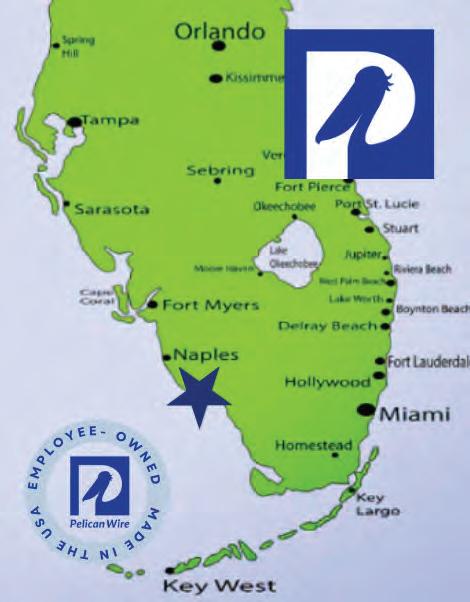
Now, 2008 wasn’t exactly the best time to do this. The economy was going over a cliff. We were a debt-free company, and overnight we became 100% leveraged. That’s what happens in an ESOP transaction: the company essentially buys
itself from the former owners. Whether you use bank financing or seller financing, you’re taking on debt. We chose seller financing. It was a rocky start, but we were committed.

We created two million shares and put them into a trust. Every employee got an account. New employees become eligible after a year and a certain number of hours. Shares are allocated annually and we recycle shares from departing employees back into the pool. The vesting period is five years. Payouts begin when you retire, or after a waiting period if you leave early. It’s regulated under ERISA, so it’s a retirement plan, not a quick cash-out. We’ve had employees retire with six-figure accounts. My goal is to retire our first employee millionaire. We’re close. One of our maintenance guys retired recently, and the ESOP made the difference between him being able to stay in Southwest Florida or having to move. That’s real impact.
Becoming an ESOP is one thing, but employees have to understand exactly what that means. When we launched the ESOP, we shut the company down for a day and trained everyone. My mom and I sat at a round table, explaining how it worked. One guy raised his hand and said, “So I’m an owner now? OK, Joe, you’re fired.” We had to laugh — and clarify. Ownership doesn’t mean management authority. It means shared responsibility and benefit.
We’ve built a culture of transparency and alignment. We do open-book management. Anyone can run our income statement or balance sheet. We hold monthly meetings to share financials and goals. It’s about helping people connect their daily work to long-term value. That’s not just a feel-good idea, it’s a discipline. It means showing up every day with the mindset that what you do matters, not just for your paycheck, but for the future of the company and the people around you.
Can you see the value of an ESOP? I see it on the floor all the time. When employees have a long-term financial stake in the business, it helps them believe that what they do every day makes a difference. I definitely believe that we have a dedication level from our employees that I would put up against any other business. Culture drives that, and that is a result of good leadership, but the ESOP is an accelerant. It gives employees a reason to care more deeply, to stay longer, and to push harder.
That’s especially important in manufacturing. We’re not a tech startup with beanbag chairs and kombucha taps. We’re a wire company. We make things. That means heat,
noise, precision, and repetition. It means showing up for second shift and making sure the equipment is clean, calibrated, and ready. It means knowing that if you cut corners, someone else down the line pays for it. When you’re an owner, you don’t walk past a problem, you fix it. That’s the mindset we try to build.
Retention is both very good, yet still tricky. Our turnover is high in the first 60 days, especially with operators, but that tends to change when they’ve finished three years. At that point, they’re usually here for life. We use Gallup’s engagement survey and ask two ESOP-specific questions: “Do you understand it?” and “Is it important to you?”
What’s fascinating is the psychology. Importance dips between years three to eight, then spikes after year eight. That’s when people start seeing real value in their accounts and realize they’re influencing that number.
The ESOP doesn’t replace the need to be competitive. We still offer market-based compensation and benefits. But the ESOP adds something powerful. On average, the value of shares employees receive annually can be equivalent to 15-20% of their compensation. And they don’t have to contribute anything. Compare that to a 401(k), where a good employer match might be 5%. It’s a massive step up. But it’s also invisible at first. You don’t see it in your paycheck. You see it in your statement. You see it when you retire. That’s why education is so important.
Bill cited one staffer who epitomizes the company’s ESOP story. Sheila Judd began her career in 2010 in the tape department on the third shift. After three years, she moved to the second shift. Today, she is individually certified to work in all but one department, a testament to her adaptability and drive to keep learning. Her philosophy has always been one of collaboration.
“Knowledge is not power. The power is in sharing that knowledge and taking pride in what you do,” Judd said. Known for passing along ‘Best Practices’ to make tasks easier, she has mentored many colleagues while balancing the challenges and rewards of manufacturing work.
“Our company has long believed in the value of diverse perspectives in technical roles,” Bill said. “Sheila’s journey is a reminder that skill, dedication, and collaboration have no gender. Her story is part of our proud tradition of encouraging women to build long, impactful careers here, as evidenced by our many female retirees. From mastering multiple departments to mentoring her peers, Sheila’s contributions to our company, including her employee owner mindset, have helped shape the culture at Pelican Wire. You are a role model, a leader, and a vital part of the Pelican Wire family and ESOP Community. We are grateful to call you Co-Owner, Teammate & Friend!”
I’ve had some other business owners ask me about ESOPs—most sole proprietors nearing retirement—but few go through with it. Some worry they won’t get top dollar. Private equity pays high multiples, and if you’re just looking to cash out, ESOP might not be the best fit. But if you care about your employees and legacy, it’s worth exploring. It’s not easy. You need legal, financial, and
trustee support. We worked with one company in Orlando that was fantastic, and it made a big difference.
You also need to know what you want. That may seem obvious, but it’s not. I’ve seen owners create an ESOP and then regret it. Maybe the business did well and they wished they’d held on longer. Or maybe it struggled and they felt they sold too high. You have to be clear on your goals. And you have to be ready to let go of control, not all at once, but enough to let the system work.
Governance is the key. What happens if someone wants to buy the company? We have policies for unsolicited and legitimate offers. If an offer is serious, it goes through management, then our board, then the trustee. If it’s a change of control, the trustee then would pass the vote to employees. If I was asked if we were for sale, I’d say no, but if someone like Prysmian showed up with $50 million, it would be our fiduciary duty to evaluate and consider it.
ESOPs aren’t common in the wire and cable industry. Wire and cable businesses are portable, so they’re attractive for consolidation. That may explain why more owners sell than transition to employee ownership. Also, some companies dabble in ESOPs and then pull back. I know one that put in a 20% ESOP and yanked it out after six months.
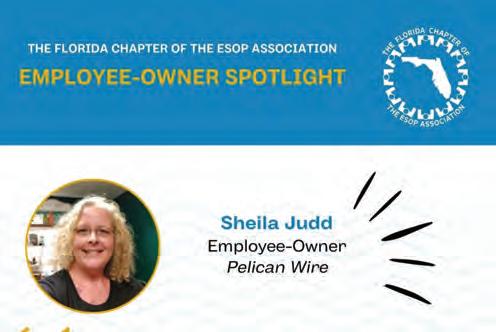
They said, “This is dumb. I’ve made my life more complicated.” My thought is that if you don’t build a culture around it, it doesn’t work. I know another company that had a 20% ESOP since the ’80s but never talked about it. When they finally went 100%, employees were shocked: “Wait, we’ve had this all along?”
My advice to someone considering this? Know your purpose. If you’re just looking to exit financially, ESOP might not be the best fit. But if you want to leave a legacy and take care of your team, it’s worth exploring. You don’t have to commit right away. Get an analysis done. It’s not expensive, so see if it makes sense. You can also sell to an existing ESOP if you find one aligned with your values. Looking back, I wouldn’t change a thing. Sure, it’s more complex than being a sole proprietor. You can’t just make snap decisions. But it’s helped us build long-term financial freedom for our employees. That’s something I’m proud of every day.
Robert “Bob” Fulton launched Web Industries in 1969 with a shoestring budget and a big belief in relationships, loyalty and teamwork. He also believed that success should be shared with those who build it. That basis led to the formation of an ESOP that would be lifechanging for many future employees. Below is an account of how one man could make a big difference.
On one level, the story of Web Industries is the quintessential example of a successful entrepreneurial American start-up company. The business was founded in 1969 in Boston, Massachusetts, by Robert “Bob” Fulton with $10,000 raised from family and friends. The company initially focused on serving the rolled goods slitting and spooling market in the greater Boston area. Yet his scope, and goals, went beyond that.
Disenchanted by the impersonal treatment he’d experienced at large corporations, Fulton wanted to build a business rooted in relationships. He was known not just as the man who supplied fillers, tape, and wraps, but as a leader who placed extraordinary value on loyalty and teamwork. He knew the names and stories of the people who worked for him, and he believed they were the heart of the business. As the company grew and succession loomed in the 1980s, this philosophy guided his decision to launch an ESOP in 1985. He passed away on Nov. 18, 2017, at age 86. His legacy, however, continues to be vibrant as the ESOP he launched in 1985 has resulted in hundreds of employee-owners enjoying a far more finan cially secure life.
Per recollections from the leadership team, it was Fulton who first initiated conversations about creating the ESOP. He was not looking for a quick succession plan; rather, he wanted to transform how work was valued and how rewards were shared.
“Starting the ESOP was the best thing I ever did,” he told Plastics News, noting the deep satisfaction he took in seeing the company’s success benefit those who truly built it. Web CEO Donald Romine described Fulton—who retired in 1991 but stayed active with the board—as “quite fearless in his vision and willingness to take risks to optimize the company’s potential. He had an unselfish desire to share the credit and the value of the company he built with his employees.”
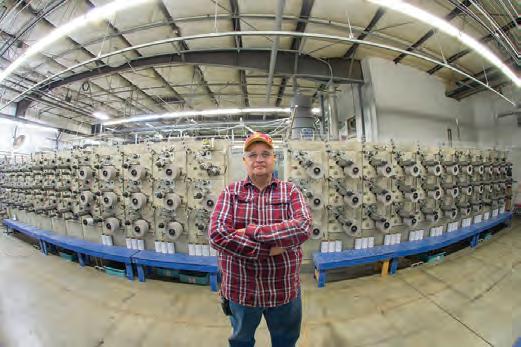
The ESOP launch and transition was far from a “one-anddone” exercise. It required a sustained commitment across practical, financial and cultural domains. Fulton recognized that the ESOP needed a better framework for continuous improvement and shared prosperity. In 1997, he hired Michael Quarrey as general manager of the Connecticut operation. He was the ideal person as he also brought
experience in ESOPs as he had worked at the National Center for Employee Ownership and for another ESOP company in California. He had conducted field research on the impact of shared ownership models and employee engagement on corporate performance. His master’s thesis compared traditional business models with ESOPs that emphasized teamwork and participation. He found that companies with high-engagement ESOP cultures consistently outperformed their peers in growth and productivity. Quarrey’s role evolved and he eventually focused on refining and building out the ESOP structure for continued growth. He adopted the Patrick Lencioni “Advantage” model that emphasizes that strong leadership teams must be both smart (engineering, finance, marketing, operations) and healthy (trust, communication, interpersonal relationships). “My focus was on democratizing information, breaking down financials in plain terms, and linking every improvement to real incentives.”
2003.

Web Industries formalized its employee-driven improvement process. The company empowered small teams of employee-owners to identify problems and implement solutions directly. Rather than tracking monetary value, the main metric became ideas implemented. In 2025 alone, more than 700 ideas were submitted, spanning safety, quality, service and cost.
By enabling employees to simply “see it, solve it,” without layers of bureaucracy or managerial approval, the company created one of the most tangible expressions of ownership in action. “We instituted monthly meetings where every shift saw our safety metrics, our monthly P&L, and progress toward annual goals. We empowered employees to lead project teams for efficiency initiatives, process upgrades, and even product development.”
Rather than top-down messaging, open-book systems enabled cross-functional teams to discuss results
candidly, ask questions and propose solutions. The goal was not just knowledge-sharing but building a shared sense of accountability for results.
Another change was creating peer-led “ownership teams” that facilitated communication between the floor and leadership. “Our goal was to ensure every employee understood their role not only as a producer but as a steward of the company’s value.”
Combining the ownership approach with structured tools made staff more effective at diagnosing issues, reducing variation and improving processes. Their effectiveness depends on the engagement of employee-owners themselves. “These systems build Web’s employee ownership culture,” Quarrey says, “providing a framework that helps people channel their expertise, collaborate effectively, and make this a great place to work.”
Today, Web Industries has eight manufacturing locations that serve industries as diverse as medical diagnostics, aerospace and industrial materials. Employee-driven initiatives led to the company’s entry into new markets, like the lateral flow immunoassay market, advanced composite solutions for aerospace OEMs and contract manufacturing for Covid-19 test kits during the pandemic. Every major expansion, including cash-funded acquisitions, followed rigorous internal review.
An ESOP culture provides realworld results on the shop floor in terms of productivity, Quarrey said. “You see an operator who stays late— not because they’re told to, but because they’re determined that no one on the next shift is blindsided by a change.”
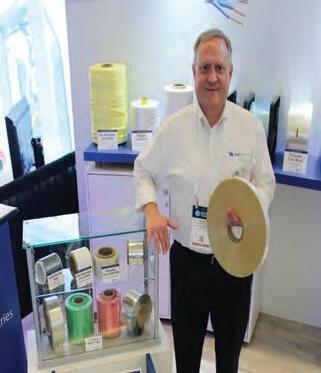
Importantly, employees have direct access to detailed financials, participate in planning and have a say in key capital investments. Improvements in productivity, retention, and quality are experienced as daily realities. Safety incidents have dropped significantly due to peer-led interventions. Voluntary turnover routinely sits well below industry averages, while employee retention rates - especially among those with a decade or more of tenure - are well above those of non-ESOP peers.
The financial impact for employees is tangible. ESOP account balances are almost 10 times the average American’s 401(k) account. Multiple retirees have entered the “Millionaire’s Club” for employees of Web Industries who have attained that status. The company records these stories to show new hires what is possible if they stay for the long haul. “We want people to see the impact, not just for management, but for everyone who commits to this journey,” he said. Still, the company works hard to weave ESOP education and culture into the daily experience, so employees appreciate long-term rewards from the very start.
One recent study found employee-owners aged 28–34 had 92% greater median household net worth compared to non-owners. Surveys and interviews with Web Industries’ teams reinforce these findings: employees report higher job satisfaction, increased opportunities for advancement, and greater pride in their work. “Everyone benefits when the company grows—if we win a new contract, everyone sees the impact in their ESOP statement,” said Archie Reed, a Web Industries employee-owner whose story was featured in Forbes Quarrey said that Web’s approach translates directly into business results. The company has met or exceeded the S&P 500’s growth rates since adopting employee ownership. “Owners push each other,” he said. “They
don’t need a supervisor telling them to care—they see the impact of their decisions every month.”
Employees become eligible for ESOP participation immediately, with retirement savings that often outpace a traditional 401(k) plan. ESOPs keep jobs local and the system builds loyalty: voluntary turnover is low, and promotion from within is the norm. When asked what makes Web Industries distinctive, most employee-owners mention “pride,” “relationships,” and “the chance to create something lasting together.”
Despite the ESOP success to date, Quarrey said that the program must continue to evolve. “The needs of the business change, markets change and so must the ownership model. We update our structures regularly, adding new training modules, refining how teams report results, and making sure new hires understand what ownership asks of them. There’s never a point where you can say, ‘We’re finished.’ ESOP, if done well, is a living system.”
Fulton’s vision, which has led to lasting opportunities for many others, has survived thanks to hard choices, gritty conversations and a commitment to long-term value. “Ownership isn’t just a word, but a framework for building value and fostering personal growth,” Quarrey said. “It is a continuation of Fulton’s enduring belief that “the essence of life is relationships,” a principle that is well defined by how employee-owners of Web Industries continued to work together.
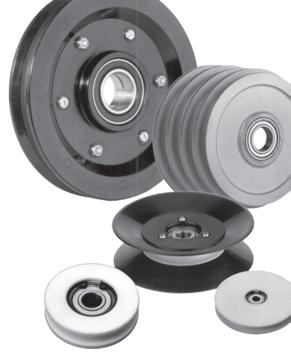




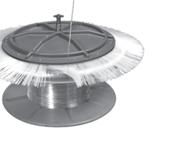
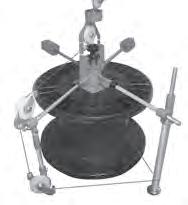
The ESOP Association (www.esopassociation.org) is the largest nonprofit dedicated to employee ownership advocacy in the U.S. It provides education, networking and resources for Employee Stock Ownership Plans (ESOP) companies and champions public policy to support them. Below, Demetrios Karoutsos, senior director of marketing and communications, shares his thoughts with WJI.
WJI: Why should a company want to become an ESOP?
Karoutsos: Transitioning to an ESOP provides many benefits to both business owners and the employees who have been instrumental in the company’s success.
For a business owner/founder, an ESOP is a highly attractive succession option or exit plan. For example, when selling to a competitor or strategic buyer, there are no guarantees the company will stay in the same location, retain all the employees, or remain a viable entity after the sale. In contrast, selling the business to employees through an ESOP preserves the founder’s legacy and the company’s values, while keeping jobs and wealth in the community.
An ESOP also allows a founder to sell all or part of their company, for which they receive fair market value in addition to incentives like deferral of capital gains taxes.
For employees, ESOPs offer a pathway to build real, long-term wealth while getting more than just a paycheck from their job. They receive equity shares through their ESOP account, which is a qualified retirement plan under ERISA and requires no out-of-pocket contributions. Shares are allocated on factors like compensation, length of service and company performance. When an employee retires or leaves an ESOP, the company is required to repurchase their stock at the value of their vested shares.
WJI: Is there an ideal candidate, or can just about any company become an ESOP?
Karoutsos: One of the greatest things about ESOPs is that they span almost all sizes and industries, although ESOPs may not be the best option for very small businesses and very large public companies. ESOPs are attractive as a business model because they align employees’ interests with the long-term interests of the company. The most successful ESOPs have what’s called an “ownership mindset” that is an integral part of their culture. With a real equity stake, employee owners share in the rewards
when the business grows and enjoy greater job stability from the improved performance and culture of an ESOP.
WJI: Are there common misconceptions about ESOPs?
(I think that a big one may be a seller will get a l-o-t less)

Karoutsos: For owners considering an ESOP as a succession plan, there is a misperception among some that they may receive less for their business than they would by selling to a competitor or a strategic buyer. However, while they may not get a premium by selling to an ESOP, a fair market value price combined with favorable tax treatment provides a great financial incentive, in addition to ensuring the business and the jobs stay local.
WJI: How challenging is the process of becoming an ESOP and how can your association help?
Karoutsos: Because ESOPs are a qualified retirement plan, they are governed by the Employee Retirement Income Security Act (ERISA) and regulated by the U.S. Department of Labor. The initial transaction must meet certain requirements, for example, that the ESOP does not pay more than fair market value for the owner’s shares. Once an ESOP is formed, there are other requirements like annual valuations and statements that must be provided to plan participants. These regulations exist to provide safeguards for employees and to ensure the ESOP is acting in their best interests.
However, there are many professional firms that specialize in providing services to ESOPs like valuation, legal, finance, accounting, and administration. The ESOP Association is always happy to facilitate introductions to
The ESOP Association works to empower passionate employee owners to become key participants in the political process. The Employee Ownership Action Network (EOAN), the ESOP Ambassador Program, the Advocacy Academy and the ESOP Political Action Committee (ESOP PAC) allow our community the opportunity to maximize our political strength and leverage the weight of our collective voice through mobilization and articulation of strong, clear, messages to policy makers. The ESOP Association’s mission is to educate about and advocate for employee ownership with an emphasis on ESOPs. The ESOP Association attracts more than 23,000 people annually to its 19 chapter and five national meetings—including the Employee Owned Conference in Las Vegas, Nevada, which is the largest ESOP event in the world.
expert advisors and to new ESOP companies that have gone through the process. We also have national and regional events and conferences throughout the year where business owners can learn more about ESOPs.
WJI: What is the track record of companies that have become ESOPs compared to those in their sector? Do most succeed?
Karoutsos: While we don’t have sector-by-sector data, there is a wealth of information that demonstrates how ESOPs perform vs. non-ESOP companies. Here are just a few examples:
• ESOPs have 2.3% higher sales, 10% higher profit margins, and more productive employees.
• ESOPs are 6 times less likely to lay off employees. And during the Great Recession, ESOP employment grew while falling across the U.S. economy.
• Employees at ESOPs have a 46% longer tenure than non-ESOP companies.
WJI: Your association posted a tribute to the late Bill Carris, the founder of Carris Reels: is that the quintessential ESOP success story? What did Bill do right that made it succeed so well?

Companies with Employee Stock Ownership Plans (ESOPs) help workers, communities, and the economy.
2 ESOPs fare better during economic downturns
During the COVID-19 pandemic, ESOPs were nearly 4x more likely to retain jobs. During the Great Recession, employment grew by 1.9% among ESOPs while it fell by nearly 3% overall.
3 ESOPs empower and invest in workers 25% more likely to be involved in company decisions 2x more likely to receive training from their employer
5 ESOPs improve company performance
6 ESOPs increase worker satisfaction 10% of employee owners report higher job satisfaction. Employee ownership increases workers’ intention to stay at their firm.
7 ESOPs improve retirement security
$158,000 the average amount an employee owner has accumulated in wealth from their stake, requiring no contribution on their part.
8 ESOPs promote greater worker engagement and motivation
ESOPs increase alignment between employees’ interests and companies’ longterm outlook by allowing workers to share in the success of the company.
10 ESOPs promote local economic prosperity
Karoutsos: Bill Carris believed what many ESOP founders do, that a business can serve a greater purpose and be a force for good without sacrificing success. To put it succinctly, Bill cared. Most successful businesspeople have talent, drive, and a unique vision. But the ones that achieve real greatness, like Bill, leave behind a legacy that continues long after they’re gone. One of the greatest testaments to Bill Carris’ impact on employee ownership is how involved Carris Reels continues to be in the ESOP community. For example, Carris Reels CFO Dave Fitz-Gerald is a former Board Chair of The ESOP Association and continues to serve on our Board as the Immediate Past Chair of the Employee Ownership Foundation.
WJI: Why do so few companies become ESOPs, and what advice might you share for those who may consider that path?
75% of ESOP companies also offer 401(k)s. 60-64 year old employee owners had, on average, 10x greater wealth than their peers.
9 ESOPs reduce inequality
Black ESOP employees have 3x the wealth of Black households nationally. Female employee owners earn 17% higher wages than their non-employee owner peers; this grows to 30% for women of color.
Karoutsos: The ESOP Association has been working to make it easier and less costly to form new ESOPs. We believe eliminating regulatory uncertainty for ESOP transactions and creating easier access to capital can help usher in a new era of ESOPs, and we are working very closely with Congress and the Administration to help make that a reality.
WJI: Any other thoughts you’d like to share?
Karoutsos: ESOPs are a powerful tool to increase financial security for American workers. The average employee owner has more than $150,000 in their ESOP account, without putting in any of their own money. And nearly 80% of ESOP employees feel they are prepared for retirement vs. only 50% of non-ESOP workers.
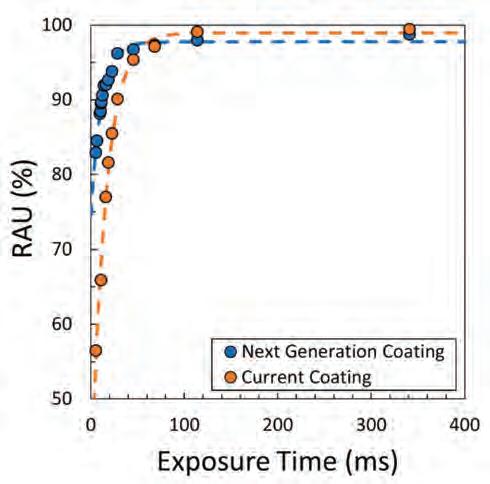
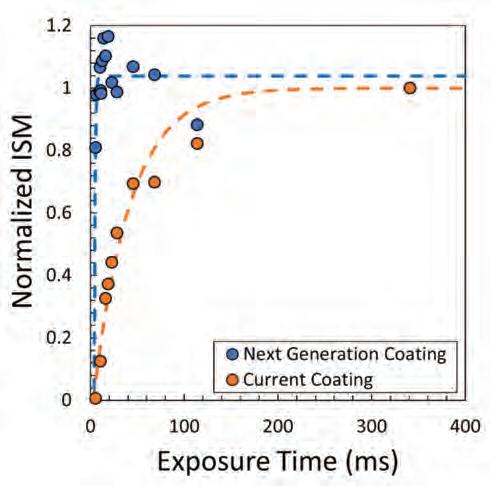
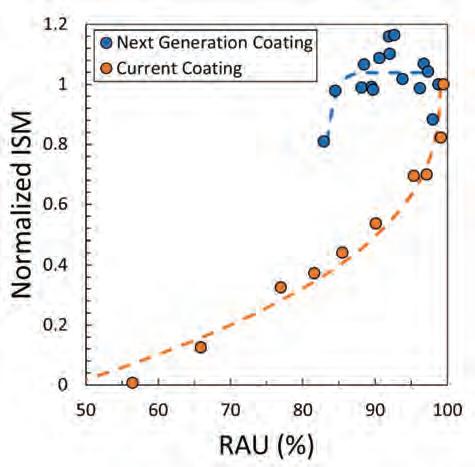

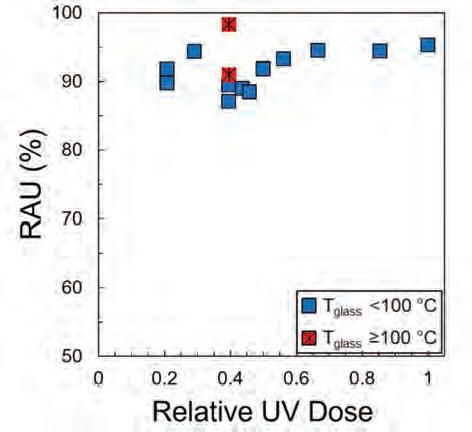
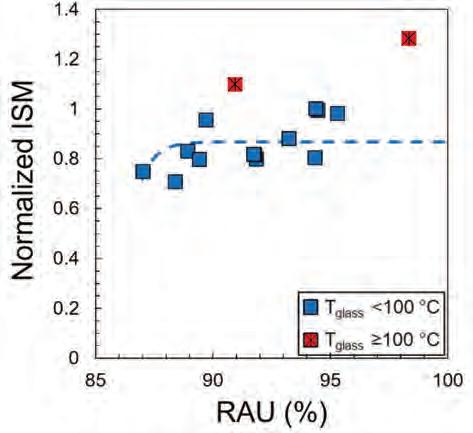
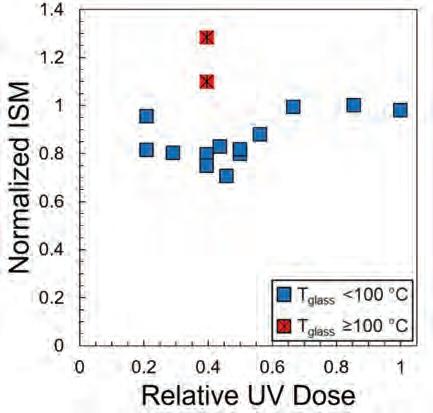
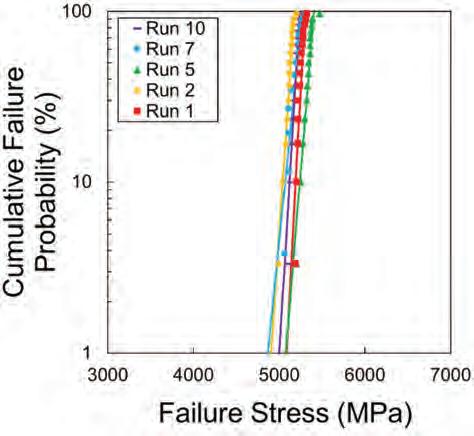
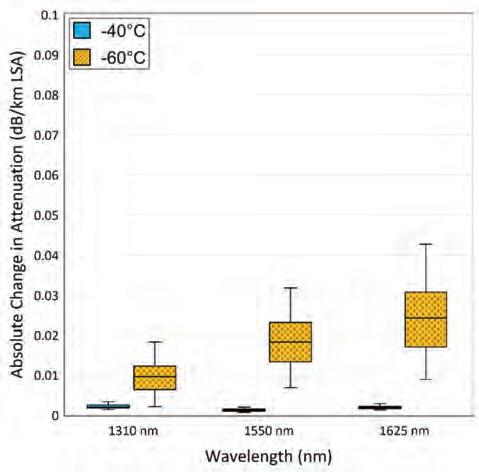











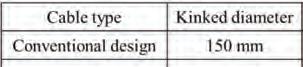








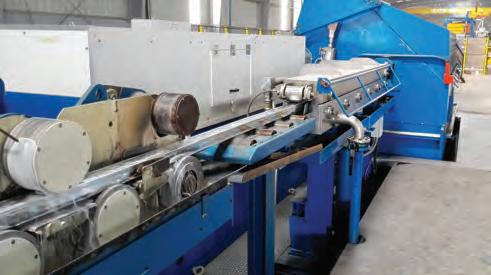
A typical Properzi CCR aluminum rod line.
What do you offer?
Continuus-Properzi has served the cable industry for more than seven decades; since company founder, Mr. Ilario Properzi, invented and patented the first aluminum rod line based on the ingenious method of continuous casting and direct rolling. Properzi, a leader for nonferrous wire rod production equipment, offers complete CCR lines including furnace sets (fumes treatments if required), casting and rolling equipment and double spoolers. Our unparalleled technology produces aluminum and copper wire rod worldwide. Copper rod can be made from cathodes or 100% low quality copper scrap yielding top quality rod.
What should readers know about your company?
1. Engineering. Our Engineering, Procurement and Construction (EPC) company has accumulated the broadest worldwide portfolio of complete lines as well as project engineering and/or full packages from finished foundations to plant in operation.
2. Spare parts services. We guide the customer in scheduling their original spare parts inventory, diminishing risk of emergencies. Economic annual spare parts packages are available for all our systems, guaranteeing their durability and operation.
3. Quality. Our experts know how to modernize a line by implementing a Total Quality and Zero Defects approach perfected by the demanding automotive Industry, which they have identified, implemented, and improved upon year after year.
Contact: Giuseppe Marcantoni, general manager, g.marcantoni@properzi.us www.properzi.com
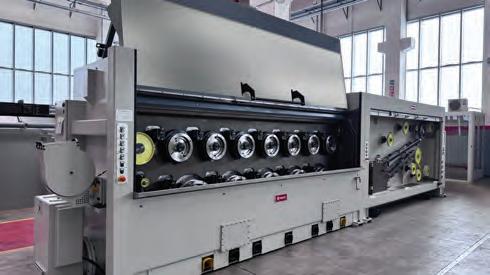
A Frigeco compact TS2 rod breakdown system for Cu and Al.
What do you offer?
MFL Group is a global provider of complete machinery solutions for wire, cable and rope manufacturers. Our integrated turnkey solutions are complemented by digital applications that maximize the value of industrial machinery. We also support customers wherever they are. In the U.S., we provide local sales/aftersales support through two entities: one for wire and cable, the other wire and rope.
What should readers know about your company?
1. One stop partner. Our wire & cable division offers a full range of rod breakdown equipment, from payoffs and drawing machines to annealers and take-ups. Machines can be customized with taper elongation to handle a wide variety of drawing ranges, ensuring maximum flexibility and process optimization. To meet every production requirement, we also offer stranding, extrusion and treatment lines, delivering integrated solutions under one roof.
2. Reliability. Backed by 125 years’ experience, our machinery ensures exceptional performance and wire quality. Minimized slippage, A.C. motors with frequency inverters and robust construction reduce maintenance needs, ensuring long-term stability
3. Energy efficiency. By minimizing slippage, our machines reduce friction between the wire and capstans. That lowers heat generation and energy consumption, delivering a more efficient and sustainable production process.
Contact: Tony De Rosa, Frigeco USA Inc., general manager t.derosa@mflgroup.com, www.mflgroup.com
For inclusion, submit your entries via the online form at https://bit.ly/WJISector. You can include a high-resolution image or logo (200 dpi min). Questions? Send them to editor@wirenet.org.
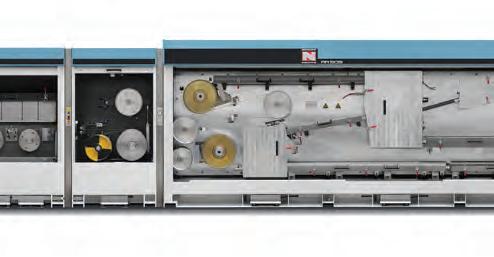
What do you offer?
Maschinenfabrik Niehoff, represented in the U.S. by Niehoff Endex North America Inc. (NENA), builds machinery for producing nonferrous wire that includes rod breakdown (RBD) lines. Niehoff’s next generation RBD line, the MSM 88, comes with torque motors and continuous resistance annealer type R 503. It uses High Efficiency Annealing Technology (HEAT) annealing technology and provides an improved recrystallization process that cuts energy costs 25% of conventional annealers. Less power needed increases possible production speeds while achieving enormous CO2 savings.
What should readers know about your company?
1. Sustainability. Niehoff is certified by the German Environmental Auditors Board EMAS, belongs to the Blue Competence sustainability initiative of the German Engineering Federation (VDMA) and cooperates with the international CSR platform for sustainability ratings EcoVadis.
2. Service. Niehoff’s service concept NIEHOFF LifeCycle+ combines numerous services ensuring that Niehoff machines can be used in the best way over their life cycle. The digital service platform myNIEHOFF is part of the concept.
3. On-site. NENA engineers/supplies customized North American electrical controls that meet UL & CSA requirements, with North American made brands and components.
Contact: Robert Wild, NENA president & CEO r.wild@niehoffendex.com, www.niehoffendex.com
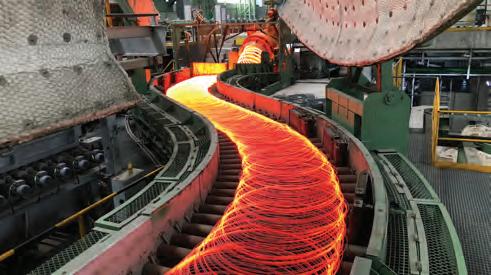
A Primetals Stelmor conveyor.
Primetals Technologies’ U.S. Long Rolling Center of Competence designs and manufactures advanced rolling mill equipment that produces the highest quality, valueadded finished rolled products to compete within higher value-added markets. Through continuous innovation, we unlock new potential to achieve higher production speeds, enhanced operator safety and the lowest OPEX costs. We partner with global customers throughout the complete process, from manufacturing and logistics to engineering and site services, offering dedicated expertise and support.
1. Best-in-class partner. We have over 135 years of industry experience in engineering, manufacturing, metallurgy, reconditioning, spare parts, site supervision and training to serve Primetals customers.
2. Highest product quality. Our Morgan Vee No-Twistopyrioght® in two places for the Mill (NTM) and Morgan Reducing/Sizing Mill (RSM) provide infinite processing flexibility and significantly improved utilization. The Morgan Stelmor® Cooling Conveyor optimizes product mechanical properties. Our Intelligent Pinch Roll & Laying Head provide self-adapting control and improved laying pattern.
3. Increased productivity. We provide the highest reliability high-speed operation, while single-family rolling thanks to the RSM reduces downtime for size changes –ensuring the lowest OPEX costs.
Contact: Paul Riches, vice president – long rolling, paul.riches@primetals.com, www.primetals.com
(Continued from p. 23)
Germany/Singapore
Inventors: Murali Sarangapani, et al.
A wire comprising a wire core with a surface, the wire core having a coating layer superimposed on its surface, wherein the wire core itself is a silver-based wire core, wherein the coating layer is a double-layer comprised of a 1 to 100 nm thick inner layer of nickel or palladium and an adjacent 1 to 250 nm thick outer layer of gold, characterized in that the wire exhibits a total carbon content of ≤40 wt.-ppm..
Moisture cureable polymer for flexible cables
U.S. Patent No.: 12,404,392
Patent date: Aug. 26, 2025 Filed: April 29, 2020
Assignee: Borealis AG, Sweden
Inventors: Kjell Fossum, Stefan Hellstrom, Bernt-Ake Sultan
The invention relates to the use of a polyethylene composition comprising one or more ethylene copolymer(s) wherein the ethylene copolymer is a terpolymer containing monomer units with polar groups and monomer units with hydrolysable silane groups, wherein the monomer units with polar groups are present in an amount of more than 5 mol. % based on the total polyethylene composition, and a silanol condensation catalyst in an amount of 0.0001 to 5 wt. %, based on the total polyethylene composition for improving the adhesion between a layer of a cable comprising the polyethylene composition and a polyurethane resin.
Method and control system for applying a polymer coating material to a wire using a coating apparatus
U.S. Patent No.: 12,403,503
Patent date: Aug. 26, 2025 Filed: Jan. 7, 2025
Assignee: Tau ACT GmbH, Germany
Inventors: Filipo Vegli, Piero Degasperi, Francesco Taiariol
A method of applying a polymer coating material to a wire using a coating apparatus and/or a control system. The method may include receiving coating material input to the coating apparatus at a first end of an elongate injection channel of the coating apparatus and supplying the received coating material to a coating chamber that is arranged at a second end of the injection channel. The
method may include feeding wire through the coating chamber of the coating apparatus so as to apply the coating material to the wire in the coating chamber through the movement of the wire through the coating chamber.
U.S. Patent No.: 12,401,182
Patent date: Aug. 26, 2025 Filed: Aug. 3, 2021
Assignee: Sumitomo Electric Industries, Ltd., Japan
Inventors: Kosuke Tanaka, Katsutoshi Izawa, Ryuta Saito
A wire harness including: an electric wire; an exterior tube that covers an outer periphery of the electric wire; a path regulator that extends along a lengthwise direction of the exterior tube while covering a portion in a circumferential direction of an outer periphery of the exterior tube, and regulates a path along which the electric wire is routed; and a fixing member that holds the path regulator and is fixed to a vehicle body.
power transmission cable
U.S. Patent No.: 12,400,772
Patent date: Aug. 26, 2025 Filed: Nov. 13, 2020
Assignee: Enertechnos Limited, Great Britain
Inventors: Manshour Salehi-Moghadam, Dominic Quennell, Ashkan Hajiloo
A capacitive power transmission cable, having at least two sets of conductive strands, the sets of strands being insulated from each other and in capacitive relationship, the one with the other: wherein the conductive strands are laid at least substantially in a multiples of six layer structure, with substantially equal numbers of strands of both sets; each layer has strands of one set alternating with strands of the other set; and the strands of the respective sets have different contrasting color.
Optical fiber cable with partitioned case for optical fiber cable
U.S. Patent No.: 12,399,336
Patent date: Aug. 26, 2025 Filed: Nov. 28, 2022
Assignee: Sumitomo Electric Industries, Ltd.,
Japan
Inventors: Takayuki Yokochi, Kenichiro Otsuko, Takayuki Shimazu
An optical fiber cable includes a plurality of first optical fiber cords including a trunk optical fiber cord and a branch optical fiber cord, a second optical fiber cord connected to the branch optical fiber cord, and a case covering a part of the plurality of first optical fiber cords and a part of the second optical fiber cord, where the case includes a first tube portion through which a trunk optical fiber cord is passed, a second tube portion adjacent to the first tube portion and through which a branch optical fiber cord is passed, and a partition wall partitioning the first tube portion and the second tube portion.
Optical fiber cable temperature measurement device
U.S. Patent No.: 12,399,066
Patent date: Aug. 26, 2025 Filed: Nov. 11, 2020
Assignee: LS Electric Co., Ltd., South Korea
Inventor: Hyungsuk Choi
The present invention relates to an optical fiber cable temperature measurement device, and more particularly, an optical fiber cable temperature measurement device that is applied to a multi-stage power device module such as a battery storage device. An optical fiber cable temperature measurement device according to an embodiment of the present invention is applied to a power device including a plurality of power device modules, and comprises: optical fiber cable measurement units that are provided in the respective power device modules; optical fiber cables inserted and installed in the respective optical fiber cable measurement units.
U.S. Patent No.:12,399,039
Patent date: Aug. 26, 2025 Filed: May 26, 2021
Assignee: NEC Corporation, Japan
Inventors: Shaobo Hana, at al.
A method for underground cable localization by fast time series template matching and distributed fiber optic sensing (DFOS) includes: providing the DFOS system including a length of optical sensor fiber; a DFOS interrogator in optical communication with the optical sensor fiber, said DFOS interrogator configured to generate optical pulses, introduce the generated pulses into the length of optical sensor fiber, and receive backscattered signals from the length of the optical sensor fiber; and an intelligent analyzer configured to analyze DFOS data received by the DFOS interrogator and determine from the backscattered signals, vibrational activity occurring at locations along the length of the optical sensor fiber; deploying a programmable vibration generator to a field location proximate to the length of optical sensor fiber; transmitting to the programmable vibration generator a unique vibration pattern to be generated by the vibration generator; and operating the programmable vibration generator to generate the unique vibration pattern transmitted; and operating the DFOS system and collecting/ analyzing the determined vibrational activity to further determine vibrational activity indicative of the unique vibration pattern generated by the vibration generator.
wire
U.S. Patent No.:12,398,477
Patent date: Aug. 26, 2025 Filed: May 26, 2021
Assignee: Panasonic Intellectual Property Management Co., Ltd., Japan
Inventors: Tomohiro Kanazawa, at al.
A tungsten wire that contains tungsten or a tungsten alloy is provided. An average width of surface crystal grains in a direction perpendicular to an axis of the tungsten wire is at most 98 nm. The tungsten wire has a tensile strength of at least 3900 MPa. The tungsten wire has a diameter of at least 100 μm and at most 225 μm.

Ultra-thin ultra-high strength steel wire, wire rod and method of producing wire rod
U.S. Patent No.: 12,398,450
Patent date: Aug. 26, 2025 Filed: May 26, 2021
Assignee: Panasonic Intellectual Property Management Co., Ltd., Japan
Inventor: Tomohiro Kanazawa
The present invention reveals an ultra-thin ultra-high strength steel wire, a wire rod for an ultra-thin ultra-high strength steel wire and its producing method. The chemical components of the wire rod comprise in percentage by mass: C 0.90˜0.96%, Si 0.12˜0.30%, Mn 0.30˜0.65%, Cr 0.10˜0.30%, Al≤0.004%, Ti≤0.001%, Cu≤0.01%, Ni≤0.01%, S≤0.01%, P≤0.01%, O≤0.0006%, N≤0.0006%, and the balance is Fe and unavoidable impurity elements. The wire rod for the ultra-thin ultra-high strength steel wire may be used as a base material for producing the ultra-thin ultra-high strength steel wire having a diameter in a range of 50˜60 μm and a tensile strength larger than or equal to 4500 MPa.
Integrated cable packaging, deployment and strumming mitigation system
U.S. Patent No.: 12,394,961
Patent date: Aug. 26, 2025 Filed: Nov. 2, 2022
Assignee: Raytheon Company, USA
Inventor: Joseph M. Misulia
A cable package for a line array and a method thereof including a first sheet of material, a cable wound in a serpentine shape, where a portion of the cable contacts the first sheet of material, and a second sheet of material attached to the cable and areas of the first sheet of material not occupied by the cable, wherein areas of the second sheet of material attached to the first sheet of material not occupied by the cable comprises scoring lines to enable separation under tension to form a plurality of strumming mitigation fairings, and wherein the cable with scoring lines in the areas of the second sheet of material attached to the first sheet of material not occupied by the cable is folded onto itself.
Earth wire including composite core and encapsulation layer and method of use thereof
U.S. Patent No.: 12,394,961
Patent date: Aug. 19, 2025 Filed: April 26, 2023
Assignee: TS Conductor Corp, USA
Inventors: Jianzhong Huang, Craig Adams, Rulong Chen
A method includes providing an earth wire including a core formed of a composite material, and an encapsulation layer disposed around the core. The encapsulation layer includes a conducive material and may be option-
ally pretensioned. The earth wire is hung between a first pole and a second pole. A suspension member may be coupled to the earth wire, and a set of conductors may be coupled to the suspension member such that a weight of the set of conductors is supported by the earth wire. A strength to weight ratio of the earth wire may be in a range of about 70 to about 500.
Prefabricated electrical cable, plug connector assembly, and method and apparatus for manufacturing an electrical cable
U.S. Patent No.: 12,394,917
Patent date: Aug. 19, 2025 Filed: Jan. 26, 2021
Assignee: Rosenberger Hochfrequenztechnik
GmbH & Co. KG, Germany
Inventors: Martin Zebhauser, Thoms Miedl
A prefabricated electrical cable comprises an outer conductor shield and an insulation element. The insulation element has a first longitudinal section in which the insulation element is exposed from the outer conductor shield, and a second longitudinal section which adjoins the first longitudinal section and in which the insulation element is enclosed by the outer conductor shield. A cross-sectional area of the insulation element in the first longitudinal section is changed with respect to the cross-sectional area of the insulation element in the second longitudinal section in such a way that the first longitudinal section of the insulation element can be inserted into a first longitudinal section of an outer conductor contact element of an electrical plug connector, and the insulation element is calibrated to the outer conductor contact element.
Cable preparation and injection systems and methods
U.S. Patent No.: 12,394,542
Patent date: Aug. 19, 2025 Filed: March 7, 2022
Assignee: Schlumberger Technology Corp., USA
Inventors: Joseph Nicholson, Oliver Booth Wayne Heigh
A method for preparing an electrical cable may include coupling an injection barrel to an electrical cable that includes one or more conductors surrounded by a porous insulating material. The method may also include injecting epoxy resin into a chamber of the injection barrel, and the chamber may be fluidly coupled to an end face of the porous insulating material. Additionally, the method may include pressurizing the chamber such that the epoxy resin is forced to penetrate into the end face of the porous insulating material and removing the injection barrel to expose an epoxy-injected portion of the porous insulating material.
U.S. Patent No.: 12,394,540
Patent date: Aug. 19, 2025 Filed: April 3, 2020
Assignee: Tokamak Energy Ltd., USA
Inventor: Robert Slade
A cable for carrying electrical current in a coil of a magnet. The magnet comprises an HTS transport tape and a shunt assembly comprising two or more HTS shunt tapes arranged side-by-side across a face of the transport tape. Each of the transport and shunt tapes comprises a substrate layer and an HTS layer of high temperature superconductor (HTS) material, the layers of the shunt tapes extending parallel to the layers of the transport tape.
U.S. Patent No.: 12,394,065
Patent date: Aug. 19, 2025 Filed: Dec. 16, 2022
Assignee: Schlumberger Technology Corp., USA
Inventors: Salma Benslimane, et al.
Systems and methods presented herein include a cable spooling system that includes a drum configured to rotate about a central axis of the drum to wind and unwind a cable onto and from the drum as the drum rotates. The cable spooling system also includes one or more cameras configured to capture images of the drum as it rotates. The cable spooling system further includes one or more markers disposed on one or more flanges of the drum. The one or more markers are configured to be in view of the one or more cameras during a portion of rotation of the drum. In addition, the cable spooling system includes a data processing and control system configured to estimate an angular velocity of the drum using the images captured by the one or more cameras.
U.S. Patent No.: 12,392,849
Patent date: Aug. 19, 2025 Filed: Dec. 6, 2022
Assignee: Koninklijke Philips NV, Netherlands
Inventors: Christoph Leussler, Christian Findeklee
According to the invention, a cable harness (7) for a magnetic resonance system is provided, wherein the cable harness (7) is adapted for being connected to a feeding point of a magnetic resonance radiofrequency coil device (1) on one end and for being connected to an input-output unit (6) for connecting the magnetic resonance radiofrequency coil device (1) with a control and analysis unit of the magnetic resonance system on the other end, wherein the cable harness (7) comprises at least one transmission line (8) for connecting the feeding point with the input-output unit (6) and multiple radiofrequency chokes (10) which are arranged within the cable harness (7). In this way, a bulky resonant RF traps can be avoided while still the B1-excitation field of the MR system can be compensated for and coupling to local nearby coils can be reduced.
High-voltage cable insulation material continuous extrusion processing characteristic evaluation and optimization method and apparatus
U.S. Patent No.: 12,392,701
Patent date: Aug. 19, 2025 Filed: Dec. 6, 2022
Assignee: Electric Power Research Institute, China Southern Power Grid, China
Inventors: Shuai Hou, et al.
The present application provides a high-voltage cable insulation material continuous extrusion processing characteristic evaluation and optimization method and apparatus. The method comprises: continuously extruding a material under test as a melt, measuring and recording an inlet pressure P, a mass growth rate w, and the diameter D′ of a melt sample strip, and obtaining apparent shear viscosity η.sub.a(t) (step A1); obtaining an outlet expansion rate δ (step A2); recording and displaying curves η.sub.a(t) and δ(t), and treating the time corresponding to an increase of a set percentage on the curves as a cross-linking starting time TX (step A3); selecting a reference sample for testing, and determining a cross-linking reaction starting time TS according to η.sub.a(t) and δ(t) curves of the reference sample (step A4); and defining an index α according to Tx and Ts.

Temperature sensor and wire harness
U.S. Patent No.: 12,392,669
Patent date: Aug. 19, 2025 Filed: April 14, 2023
Assignee: Yazaki Corporation, Japan
Inventors: Hiraku Tanaka, Tomohiro Matsushima, KentaTanaka
A temperature sensor applied to a wire harness includes a temperature-sensitive element, a main body part that holds the temperature-sensitive element, a clamp part, and a connector. The main body part includes a holding part that holds the temperature-sensitive element on the tip side in an insertion direction and is positioned inside the clamp part by being inserted into the clamp part along that direction. The clamp part includes a pair of window parts that allow the temperature-sensitive element to be exposed to outside of the clamp part. Furthermore, the holding part includes a pair of protection wall parts positioned by sandwiching a window part in a state of being inserted into the clamp part. An end part of the wall part on a tip side in the insertion direction is positioned by protruding more than an end part of the temperature-sensitive element on the tip side does.
Wire rod for cold heading having excellent delayed fracture resistance characteristics, parts, and manufacturing method therefor
U.S. Patent No.: 12,392,019
Patent date: Aug. 19, 2025 Filed: Dec. 15, 2020
Assignee: POSCO Co., Ltd., South Korea
Inventor: Byung-In Jun
Provided are a wire rod for cold heading having high resistance to delayed facture, a part having high resistance to delayed facture, and methods for manufacturing the wire rod and the part. The wire rod of the present disclosure has a chemical composition including, by wt %, C: 0.3% to 0.5%, Si: 0.01% to 0.3%, Mn: 0.3% to 1.0%, Cr: 0.5% to 1.5%, Mo: 0.5% to 1.5%, Ni: 0.5% to 2.0%, V: 0.01% to 0.4%, and a balance of Fe and other impurities, and the chemical composition satisfies the relational expression 1, wherein the high-strength wire rod has a microstructure including, by area %, 5% to 20% martensite, 0.1% to 1% pearlite, and a balance of bainite.
Cleaning systems for wire bonding tools, wire bonding machines including such systems, and related methods
U.S. Patent No.: 12,390,839
Patent date: Aug. 19, 2025 Filed: Jan. 30, 2019
Assignee: Kulicke and Soffa Industries, Inc., USA
Inventors: Peter Klaerner, Jason Fu, Masih Mahmoodie
A method of cleaning a tip of a wire bonding tool on a wire bonding machine is provided. The method includes
the steps of: (a) moving a wire away from the wire bonding tool such that the tip of the wire bonding tool is accessible to a cleaning station of the wire bonding machine; and (b) cleaning at least a portion of the tip of the wire bonding tool with the cleaning station after step (a).
Cable gland, use of a cable gland and contact element
U.S. Patent No.: 12,388,248
Patent date: Aug. 12, 2025 Filed: Nov. 1, 2024
Assignee: Pflitsch GmbH & CO. KG, Germany
Inventors: Martin Lechner, Robert Von Otte
A cable gland including a component and at least one contact element. The at least one contact element includes a plurality of substantially geometrically identically shaped windings. Each winding includes a retaining section for electrically contacting the component surrounding the contact element, at least one supporting section for electrically contacting a shield of a long-molded part, and a first and a second extending section. The retaining section, the first extending section and the at least one supporting section are arranged one after the other.
bonding wire
U.S. Patent No.: 12,388,044
Patent date: Aug. 12, 2025 Filed: Jan. 27, 2021
Assignee: Nippon Micrometal Corporation/ Nippon Steel Chemical & Material Co., Ltd., Japan
Inventor: Takashi Yamada
There is provided an Al bonding wire which can achieve a sufficient bonding reliability of bonded parts of the bonding wire under a high temperature state where a semiconductor device using the Al bonding wire is operated. The Al bonding wire is characterized in that the wire contains 0.02 to 1% by mass of Fe, further contains 0.05 to 0.5% by mass in total of at least one or more of Mn and Cr, and the balance includes Al and inevitable impurities, wherein a total content of Fe, Mn and Cr in solid solution is 0.01 to 1% by mass. The Al bonding wire contains Mn and Cr in addition to Fe, so that Fe, Mn and Cr can be promoted to form a solid solution in quenching treatment after the solution treatment. Accordingly, the Al bonding wire can achieve an effect of solid-solution strengthening of the wire due to the increase in the total content of Fe, Mn and Cr in solid solution and an effect of preventing recrystallization from proceeding during use of the semiconductor device at a high temperature for a long time. n
At IWCS 2025, U.S.-based Xaloy introduced TriMetalX™, a next-generation barrel solution engineered for processors working with highly corrosive resins, such as fluoropolymers.
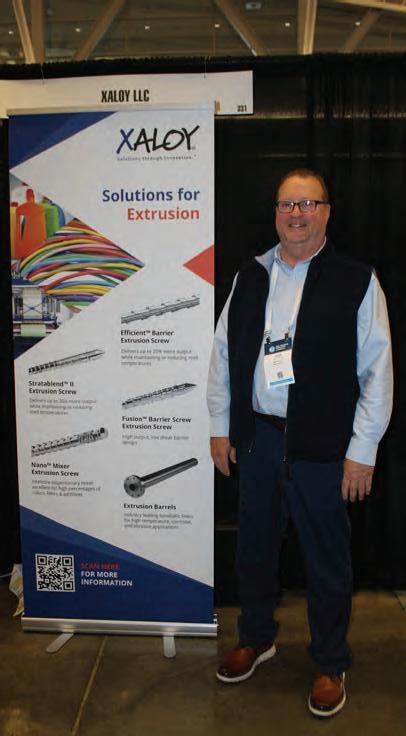
Per the company, the patent-pending technology is ideal for wire and cable manufacturing, where aggressive and abrasive compounds are commonly used for insulation and jacketing. TriMetalX uses advanced additive manufacturing to precisely apply a high-performance superalloy where it is needed. This targeted reinforcement maximizes durability and extends service life, especially in highwear zones found in demanding processing environments.
Unlike conventional barrels, which are limited by alloy size and often require excessive material use, TriMetalX enables the production of large, custom barrels without the constraints of traditional methods. This flexibility supports innovative extrusion equipment designs and allows for faster delivery to manufacturers.
Xaloy’s engineering team reports that TriMetalX™ eliminates the need for full-barrel or flange machining from corrosion-resistant materials. Instead, it applies protective materials only to essential areas, reducing waste and cutting lead times. The result is a barrel solution that delivers reliable performance, reduced maintenance, and consistent quality for processors working with aggressive, highly filled polymers, making it a strong fit for the wire and cable industry.
Xaloy can cast barrels with internal diameters as small as 16 mm to ultra-large barrels that weigh up to 15 tons. It also manufactures single and counter rotating twin barrels. It is capable of manufacturing screws that are ½ inch to 20+ inches, with complex flight and mixer geometries. It can also provide tungsten carbide barrels, tungsten carbide or ceramic coated screws, tri-metallic barrels, etc. Contact: Xaloy, tel. 330-726-400, www.xaloy.com, info@xaloy.com
U.K.-based KnitMesh Technologies has introduced a high-performance line of knitted wire mesh porous transport layers (PTLs) engineered to enhance efficiency, durability, and gas-liquid management in proton exchange membrane (PEM) and alkaline water electrolysis systems.
Per the company, the wire mesh PTLs—designed for use in hydrogen generation stacks—provide consistent electrical and thermal conductivity while maintaining high permeability and elasticity under compression. The flexible, spring-like structure of the mesh maintains intimate, even contact between the catalyst layer and the bipolar plate, distributing clamping forces uniformly across the active area.
This adaptability improves current uniformity, reduces localized stress, and supports long-term membrane durability. Additionally, the mesh’s two-phase transport characteristics promote rapid gas bubble evacuation and continuous electrolyte flow, improving energy efficiency under demanding operating conditions.
Cells using a KnitMesh PTL achieved a 33% increase in current density and a 74 mV reduction in cell voltage at 2 A/cm² compared with a conventional design.

These results highlight the material’s strong combination of conductivity, flexibility, and permeability, features essential for scalable, efficient hydrogen production. PTLs can be customized for porosity, thickness, wire alloy, and filament diameter to match specific electrolysis stack geometries and operating parameters.
Contact: KnitMesh Technologies, tel. +44-1352-717-600, info@knitmeshtechnologies.com, www.knitmeshtechnologies.com.
At IWCS 2025, Web Industries showcased its expanding range of laminated shielding tapes, PET core wraps, and water-blocking tapes, as well as large-format spooled cable components designed to optimize cable manufacturing.
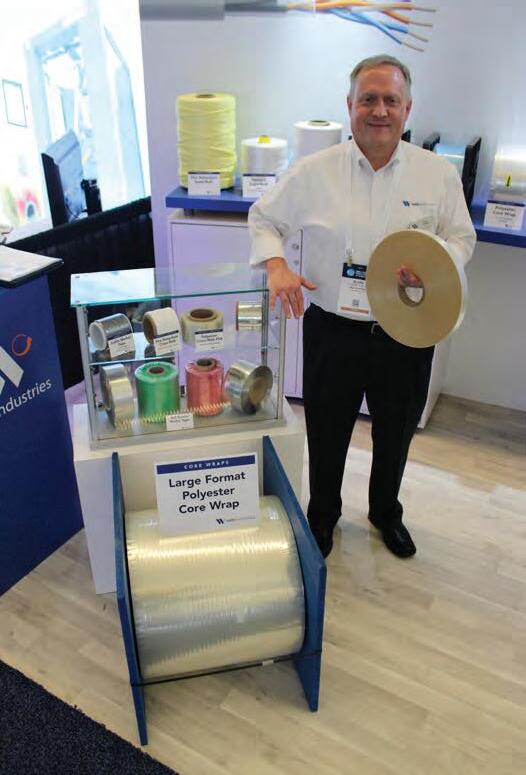
Per the company, Web Industries simplifies the wire and cable supply chain with its expanding portfolio of services.
“We provide specialty extrusion and converting of shielding tapes, core wraps, cable fillers, signal isolation tapes, and other custom applications,” said Jim Evans, business development manager, Web Industries.
Web’s laminated shielding tapes feature polyester and aluminum foil construction and are precision-made to customer specifications. The PET core wraps can be supplied in thicknesses ranging from 0.5 mil to 5 mil. The company has a long-standing track record as a trusted supplier of cable fillers, specifically its proprietary Superbulk polypropylene fibrillated cable fillers, as well as separator and signal isolation tapes, and narrow-width flat and fibrillated PP/HDPE-based tapes.
Web Industries also showed extra-large, traverse-wound spools measuring up to 24 inches in width and containing over 200,000 linear feet of product. “We have developed very large format spools for the wire & cable industry,” said Evans. “These offer cable companies increased line uptimes, better product consistency, and labor savings by reducing the number of material splice changeovers needed per production run. With manufacturers facing a shortage of skilled operators, solutions like these offer a muchneeded path to greater efficiencies.”
Web Industries has operations throughout North America and the EU. The company provides a quick response to customer demand for wire and cable components.
Contact: Web Industries, Inc., at tel. 508-573-7979. www.webindustries.com, sales@webindustries.com.
Italy’s Prysmian reports that the company’s BendBrightXS 160 µm single-mode optical fiber represents a breakthrough that enables cables to be much smaller and pack more fibres together.
Per the company, BendBrightXS 160 µm delivers exceptional fibre density in a significantly reduced diameter. After pioneering the first commercialized 200 µm bend-insensitive fibre in 2009 and the 180 µm version in 2019, Prysmian now sets a new industry milestone with the launch of this 160 µm product in 2025 that can serve an essential role for modern digital networks. Miniaturized, high-density cables allow network operators to fit more
data-carrying fibers into limited spaces—such as underground ducts, buildings, and data centers—making installation faster and more cost-effective.
The 160-µm fiber reduces the cross-sectional area by more than half compared to traditional 250 µm singlemode fibers, while maintaining a 125 µm glass diameter. Fully compliant with G.652 and G.657.A2 global standards, BendBrightXS 160 µm is compatible with all legacy single-mode fibers and features the advanced ColorLockXS coating system for superior bend performance and mechanical reliability.
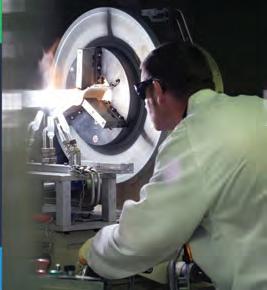
As network operators prepare for tomorrow’s connectivity needs, BendBrightXS 160 µm opens new opportunities for high-fiber-count cables that are compact, high-density, and easy to deploy, ensuring networks are ready for the future. The optical fiber empowers cable designers to dramatically reduce cable dimensions and achieve record-setting cable density.
“Our proprietary BendBrightXS technology has enabled us to achieve an unprecedented level of fiber miniaturization,” said Ian Griffiths, Prysmian’s vice president R&D, Digital Solutions.
Contact: Prysmian, www.prysmian.com.
Italy’s Vision Engineering has launched ProteQ VISO, a groundbreaking 3D digital stereo microscope featuring a fully integrated autostereo display.
Per the company, ProteQ VISO delivers true 3D visualization directly on a flat screen with no eyepieces required, setting a new standard for user comfort, collaboration, and imaging versatility in advanced inspection labs, product design, manufacturing, and prototyping.
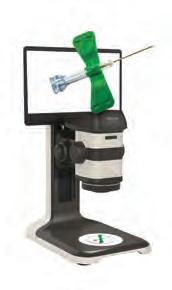
The system produces exceptional clarity and depth perception for demanding precision applications including electronics assembly and rework, printed circuit board (PCB) inspection, medical device prototyping, and aerospace component validation.
The microscope’s autostereo display technology uses twin cameras and intelligent eye-tracking to create vivid 3D imagery—no glasses or accessories needed—for
an immersive, fatigue-free viewing experience and unrestricted head movement. Users benefit from an upright viewing angle, adjustable screen, live magnification display, and a smooth 10:1 zoom range, all designed to maintain focus and comfort during extended sessions.
Other features include advanced stereo imaging for fine detail manipulation, quick switching to 2D mode for collaborative review, robust digital tools for image capture, streaming, annotation, and measurement, as well as seamless integration with popular software platforms for connected workflows. Optional upgrades include low-heat illumination, detachable display for cleanroom use, and 360° viewing.
Contact: Vision Engineering, tel. +44-1483-248300, www.visioneng.us.
At IWCS, Denmark’s Roblon A/S presented its Traversing Precision Coiling Unit (TPCU) as a major step forward in cable-coiling technology.
Per the company, the TPCU 7-30 model was designed with safety, high output, consistent coiling, and reduced labor in mind. The unit takes the traversing function away from the take-up, allowing any take-up—regardless of condition—to produce precision coiling. This not only
ensures uniform, damagefree winding but also creates a safer working environment by minimizing operator intervention.
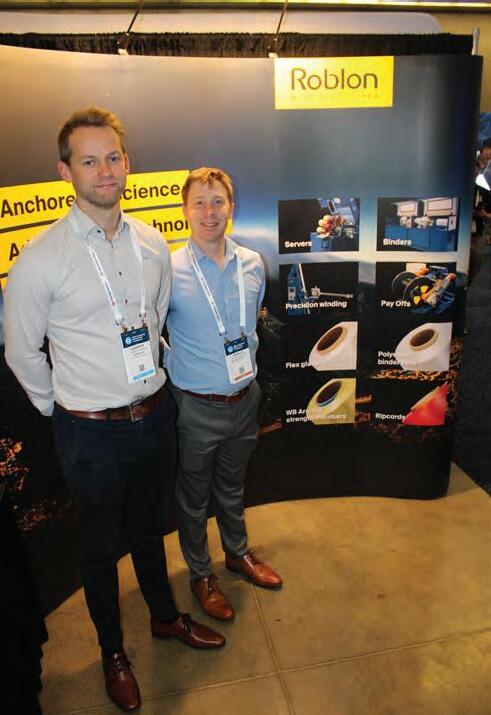
The TPCU’s independent traversing capability ensures precise, repeatable results with minimal reliance on take-up performance. Precision coiling enhances final product quality, optimizes reel capacity, and increases efficiency by fitting more cable on each reel—reducing storage, handling, and transport costs. It also minimizes damage caused by poor coiling, keeping products intact and ready for use. The TPCU 7-30 allows manufacturers to efficiently handle fiber optic cables, energy cables, bare conductors, wire, wire rope, plastic tubes and profiles. Whatever the application, the coiling unit delivers accuracy, safety, and high productivity.
Contact: Kasper Nielsen, technical manager, Roblon, tel. +45-2840-6031, kbn@roblon.com, www.roblon.com. n


















This section is part of an information agreement between Wire & Cable India (WCI), www.wirecable.in, and U.S.-based Wire Journal International.

Mr. Saurabh Khedekar, President & CEO of Specialty Alumina Business of Hindalco
Wire & Cable India: How is Hindalco’s Specialty Alumina business contributing to the transformation of the wire and cable industry?
Saurabh Khedekar: The wire and cable industry is being redefined by India’s infrastructure imperative and a fundamental recalibration of what constitutes acceptable risk. From rapid infrastructure scalingurbanization, electrification, and industrial expansion to high-growth
Wire & Cable India recently interviewed Mr. Saurabh Khedekar, President & CEO of Specialty Alumina Business of Hindalco. In this interview, he provides valuable insights into the transformation of India’s wire and cable industry, specifically focusing on Hindalco’s pioneering role in bringing Precipitated (PPT) Hydrate manufacturing to India for the first time. He discusses the company’s flask-to-factory innovation journey, its strategic approach to breaking import dependencies and how domestic manufacturing enables collaborative innovation with Indian cable manufacturers. Additionally, he sheds light on Hindalco’s sustainability leadership in specialty chemicals and the company’s commitment to making fire protection both clean and effective. Let’s explore his perspective on this transformative milestone.
applications such as data centers, EV charging systems, and renewable energy installations, all are unified by the need for best-in-class wires and cables, thereby necessitating transformative, safe, fire-resistant solutions. Growth is no longer incremental; it is transformative.
At Hindalco, we see our Specialty Alumina business as a key enabler of this transformation. Our InnoSafe Aluminum Trihydrate (ATH) solutions are trusted for their ability to retard fire, suppress smoke, and save lives – critical for modern infrastructure. With strong R&D and a dedicated coating application lab, we co-create with cable manufacturers to deliver customized ATH
grades that provide flame retardancy and smoke suppression in cable compounds, enabling India’s wire and cable industry to compete globally while building safer infrastructure at home.
Today, we elevate the transformation beyond safety by integrating performance and sustainability. Our Precipitated (PPT) Hydrate will enable halogen-free flame retardant cables – fire protection without environmental toxicity, reducing India’s import dependence for sustainable fire safety. As India’s first and only manufacturer of superfine PPT hydrate, we will make the future of fire protection both clean and effective.
WCI: India has been importing PPT hydrate for years. As the first domestic manufacturer, how significant is this milestone and how robust is the demand growth you are witnessing?
SK: Our flask-to-factory achievement in PPT hydrate addresses a longstanding gap. Let me put this in perspective – India’s PPT hydrate market, growing at ~10% annually, has been completely import dependent.
We have all witnessed the chaos. Pandemics brought supply chains to a standstill, freight rates went through the roof, and lead times stretched from weeks to months. Then came the container crisis, environmental crackdowns shutting down supplier plants, and geopolitical tensions adding another layer of uncertainty. Each disruption exposed how vulnerable manufacturers were to external shocks. Supply chain dependent wholly on imports creates dangerous concentration risk.
‘Atmanirbhar Bharat’ isn’t just policy speak, it is a business necessity. Domestic manufacturing means predictable supply, stability, and the ability to co-create alongside our customers.
HFFR cable adoption is accelerating across applications, driven by both safety regulations and sustainability mandates. We are entering this segment at a meaningful scale. With
an initial 30 KT (kilo tonnes) capacity and planned multi-phase expansion, we are set to redefine the PPT hydrate landscape.
WCI: Can you throw some light on the applications and industries of PPT hydrate?
SK: PPT hydrate represents advanced flame-retardant technology. Engineered through controlled precipitation, it delivers superfine particles with very high purity and performance.
Today, PPT hydrate anchors fire safety across industries, with power infrastructure driving the largest demand. In cable compounds, it enables halogen-free flame-retardant cables that are now standard across critical infrastructure, driving most global consumption. In high-voltage polymer composite insulators, it enhances tracking and erosion resistance while maintaining dielectric strength, reducing transmission losses and strengthening grid reliability.
From cables that carry power to insulators that safeguard it, PPT hydrate underpins safer, more efficient networks. Its superfine particle engineering also makes it indispensable in foams, where the precipitated superfine ATH helps in foam structure formation while adding to fire and smoke properties. In resins & coatings, it adds fire safety and
weather resistance for high-performance applications.
Whether enabling mass-scale safety in cables or driving niche innovations, PPT hydrate has become a critical ingredient – and with Hindalco, India will now have a reliable domestic source for this essential technology.
WCI: What shifts are you noticing in the wire and cable industry?
SK: The wire and cable industry is going through a fundamental rewiring, with three forces that are converging to transform how this industry operates. Safety isn’t negotiable anymore. Metro systems, commercial towers, data centers –everywhere you look, fire-safe cables have become the baseline, not an upgrade. When a single cable failure can shut down critical infrastructure or worse, endanger lives, fire retardance stops being optional. Sustainability is hitting equally hard, but it’s not just about being green – it’s about being smart. HFFR delivers the perfect equation: superior fire safety without environmental toxicity. While the industry scrambles to find cleaner alternatives, we have already solved it. Our PPT hydrate is produced at our Belagavi refinery, one of the greenest in the world, achieving a record-low GHG intensity of 0.44 tCO2e (YTD FY26) per ton of alumina. Belagavi ran entirely on renewable power this year for four



months straight; we have eliminated liquid discharge, and even our waste (red mud-bauxite residue) creates value. This isn’t just sustainable – it’s regenerative.
The third shift is regulatory convergence. Indian fire safety standards are rapidly aligning with international benchmarks, driving stricter flame retardancy requirements across infrastructure projects.
These aren’t three separate challenges. They are one integrated opportunity. Safety, sustainability, and standards are aligning to create a market where precision engineered solutions become essential.
WCI: Indian safety norms are evolving. How do our current HFFR standards stack up against international benchmarks, and what regulatory changes do you anticipate will drive further adoption?
SK: India is rapidly aligning its fire safety standards with global benchmarks. Internationally, cable standards like IEC 60332, UL1685, BS7629 define rigorous fire and smoke performance criteria. India’s
response has been encouraging – BIS introduced IS 17048:2018 for halogenfree flame-retardant cables aligning with these international standards. Across industries, specialized fire safety frameworks are emerging globally-railways, automotive, construction-each calibrated to sector-specific risk environments. India is embracing this targeted regulatory approach as well.
The regulatory momentum is undeniable. While critical infrastructure like metros, hospitals, and data centers are increasingly specifying HFFR cables, residential buildings, commercial properties, and public infrastructure still lag behind. To make India safer, we need stringent HFFR compliance for B&C segments.
As standards evolve, the bar for performance keeps rising – and that is a good thing. It ensures that only truly reliable, high-quality solutions are adopted at scale. Engineered solutions like Hindalco’s PPT hydrate are essential in this landscape, ensuring that India’s infrastructure not only meets evolving norms but leads in safety and reliability.
WCI: What is the USP of Hindalco’s PPT Hydrate?
SK: Our differentiation comes from multiple fronts. First, domestic manufacturing advantage: we are going to be India’s first PPT hydrate producer, our flask to factory innovation journey ending decades of import dependence.
Second, sustainability leadership: our PPT hydrate comes from one of the world’s greenest production processes at Belagavi.
Third, technical precision: our controlled precipitation, coupled with our mines to market fundamentals, delivers superfine particles with exceptional purity and customizable characteristics, enabling us to support diverse applications across the ecosystem.
The real value proposition is market enablement. Predictable availability, shorter lead times, local technical support, and the ability to co-develop solutions position us as a strategic partner in India’s infrastructure growth.
Minda Corp accelerates wiring harness growth, achieving a major EV milestone with its first passenger vehicle high-voltage order.
Minda Corporation’s wiring harness division delivered one of its strongest quarters, significantly outperforming the auto industry and reinforcing its leadership across key vehicle categories.
In a major development, Minda Corp secured its first high-voltage wiring harness order in the passenger vehicle (EV) segment, marking a strategic breakthrough. The order comes from a leading India-based global EV manufacturer, enabling the company to localize high-voltage harnesses that were previously imported. The division now supplies wiring harness solutions to multiple EV OEMs across 2W, 3W and 4W.
The company will be investing INR 2,000 crore as Capital Expenditure over the next five years.
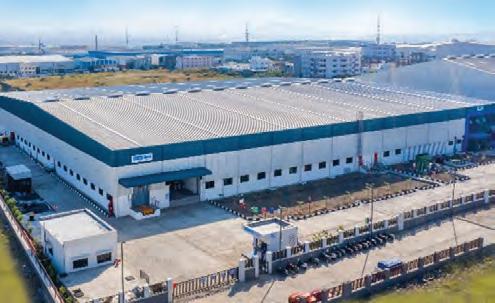
The company is establishing an Indian subsidiary, HindEpsilon Composite, that will enable local production of HVCRC® composite core conductors with optimized delivery times. The company will directly address the needs of Indian authorities and will establish its local presence.
Epsilon Composite has come up with an expansion plan, as India moves towards modernization of its power transmission network, targeting 500 GW of renewable capacity by 2030. The country is investing over EUR 26 billion in its grid infrastructure.
In line with this development, the company is establishing an Indian subsidiary that will enable local production of HVCRC® composite core conductors with optimized delivery times.
Epsilon Composite is already operating successfully in India across several markets and major projects. In collaboration with its local partners, Epsilon Cable has recently secured projects in several states, including Uttar Pradesh, Uttarakhand, and Assam, demonstrating the relevance of its HVCRC® conductors for the Indian market.
Commenting on the new development, Mr. Alexandre Lull, Deputy CEO of Epsilon Composite, said, “India is one of the most dynamic countries in the world, facing the immense challenge of electrification. The next-generation conductors are recognized as key enablers of this modernization. Until now, the limited competitive offer in this field has slowed the deployment of this technology, so authorities and grid operators are seeking reliable and
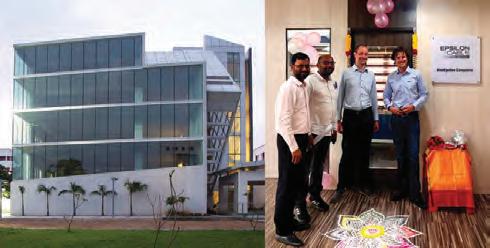
competitive suppliers. Epsilon Cable is proud to meet this need with a proven and high-performance solution, which will soon be produced locally in India to provide greater production capacity and shorter lead times to our local partners. Our mission fully aligns with India’s national grid strengthening strategy and the government’s target of reaching 500 GW of renewable capacity by 2030.”
The establishment of HindEpsilon Composite directly addresses the needs of Indian authorities. Epsilon Composite’s management has already met with the Ministry of Power, the Central Electricity Authority, and Power Grid Corporation of India to confirm its local presence.
Finolex Cables nears completion of preform plant, fiber draw facility; readies new FMEG and cable product launches.
Finolex Cables Ltd. is progressing rapidly on its major expansion projects, with both the new preform plant and the expanded fiber draw facility entering their final stages. According to the company’s Q2 FY26 earnings call, the preform plant is fully ready and will begin production trials within the next few weeks, marking a major step toward backward integration in optical fiber manufacturing. Meanwhile, the fiber draw plant building is nearing completion, with machinery expected shortly and full commissioning targeted by March 2026.
In the cables segment, the company continues expanding its fire-retardant, low-smoke, halogen-free, and longlife E-beam–cured cable ranges, supporting demand from high-rise and safety-focused applications.
Alongside these capacity additions, Finolex is also preparing a pipeline of new FMEG product variants, including new fan models, upgraded water heater designs, additional lighting options, and new switchgear variants slated for release over the next two to three quarters.
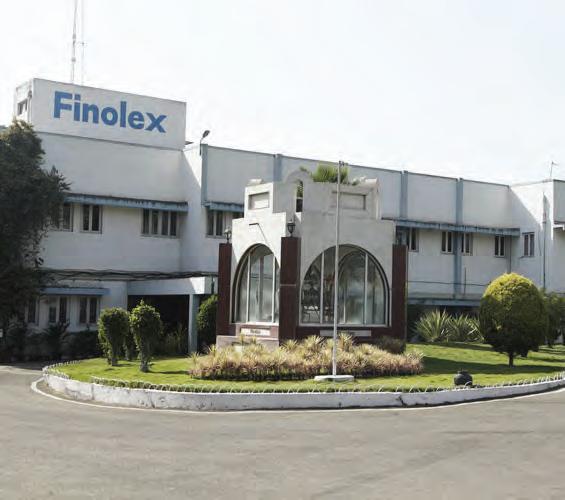
Wire & Cable India: How does compounding expertise drive your product innovation and offerings in the wire and cable segment?
Karan K Chandan: Competence in compounding has been central to expanding our product basket and driving innovation across segments. In the wire and cable vertical, we offer a diverse range of compounds in PVC, TPE, TPV, and related systems. With evolving demand and regulations, we have also developed low-smoke, low-acid FR PVC grades. In the halogen-free category, our K-Guard range complies with BIS and other relevant standards, offering short circuit-resistant HFFR compounds well-suited for new-age smart city projects such as building wires, lighting, and both armoured and unarmoured cables.
WCI: What kind of product developments and processing capabilities have you introduced to match customer requirements?
KKC: We have designed PVC and HFFR grades optimized for highspeed processing, tailored to customer equipment. Our compounds are also
In an exclusive interview with Wire & Cable India, Mr. Karan K Chandan, Executive Director of KK Kompounding Tech Giant Limited, shares how the company’s compounding expertise is fueling innovation in the wire and cable industry. From advanced PVC and HFFR compounds to thin-wall extrusions, silane-grafted XLPO, and the versatile K-Flex elastomer series, KK Kompounding is delivering solutions aligned with global CPR standards and India’s BIS compliance framework.
engineered for thin-wall extrusions in PVC, HFFR, and E-beam applications. Additionally, our R&D team has developed silane-grafted XLPO compounds, which are currently undergoing customer testing and approvals before commercial rollout.
WCI: How do your compounds meet global fire safety regulations such as CPR?
KKC: Our compounds are designed with CPR compliance in mind, one of the most stringent global standards. We have achieved smoke density in category s1 (BS EN 61034-2), ensuring high visibility during fire incidents. The compounds also prevent dripping, are selfextinguishing, release low heat, and form a stable char layer under fire. Furthermore, our halogen-free grades can be adapted from fireresistant to ceramifiable properties, while retaining mechanical integrity without cracking even under extreme fire conditions.
WCI: Which compliance frameworks guide your product portfolio for domestic and global markets?
KKC: For global customers, we align our compounds with CPR regulations, while for domestic markets, we ensure compliance with BIS standards.
WCI: Can you tell us more about your K-Flex elastomer series and its applications?
KKC: The K-Flex elastomer series is a showcase of engineering through polymer blends and alloys. These grades deliver unique properties for elastomeric cable applications such as robotics, mobility, elevators, marine, welding, and EV charging cables.
WCI: How do you collaborate with customers during product development and validation?
KKC: We work closely with customers from the first lab-scale trial samples to full-scale commercial runs. Our role is to provide end-toend support until validation is complete at the customer’s end. Typically, feedback focuses on achieving the right balance between mechanical strength, flame retardancy, and electrical properties, and we collaborate with clients to fine-tune formulations accordingly. n
We have designed PVC and HFFR grades optimized for high-speed processing, tailored to customer equipment. Our compounds are also engineered for thin-wall extrusions in PVC, HFFR, and e-beam applications
WAI MEMBERS seeking positions are entitled to free “Position Wanted” classified ads.
CLASSIFIED AD RATES: • $1.30 per word for WJI and on-line classifieds at wirenet.org (20-word minimum). • Blind box numbers, add $25. • Boldface headlines, add $6 per line (up to 18 characters per line). Specify category.
Process Engineering Manager
Prysmian is seeking a dynamic Process Engineering Manager in Marshall, Texas to lead the technical performance and continuous improvement efforts of our manufacturing operation. In this role, you will guide a team of process engineers and technicians, driving initiatives that enhance productivity, improve product quality, reduce waste, and elevate equipment performance. You’ll lead root-cause investigations, develop and maintain process standards, support capital project execution, and champion safe, reliable, and optimized manufacturing processes. Collaboration is key— you’ll work closely with Operations, Quality, Maintenance, and Materials to solve problems, streamline workflows, introduce new technologies, and support long-term capacity and growth plans.
What we’re looking for:
A results-driven leader who thrives in a fast-paced manufacturing environment, excels at building technical capability, communicates effectively across teams, and brings a strong commitment to improvement, innovation, and safety.
Qualifications:
• Bachelor’s in Engineering or 20+ years of engineering leadership experience
• 7–10 years of process or manufacturing engineering management Send resume to me. bethany.sergentkim@prysmian.com
BLIND BOX INFO: Address Blind Box responses to: WJI, Box number (as it appears in print or on-line), 71 Bradley Road, Suite 9, Madison, CT 06443-2662 USA.
PAYMENT POLICY: All ads must be pre-paid.
DEADLINES: Copy is due a full month in advance. Contact: classified@wirenet.org for more details.
AA ENTERPRISE. México. Proveedores e soldadoras eléctricas y manuales; impresoras y discos; cilindros, bandas y anillos para recocedores, bobinas/ carretes de plástico y acero; carretes p/ enmalladoras; bandas para caterpillar; tapes; conos y anillos de cerámica y tungsteno p/estiradoras; maquinaria p/ producción; cabezas de extrusión, etc.ayala1953@gmail.com.
FERROUS WIRE HANDBOOK. This 1,168 page, hard-cover, indexed publication is a definitive industry resource for ferrous wire, a reference tool for those in the steel wire or manufacturing, engineering or operations sectors. 36 chapters cover many of the equipment types, processes, and specialty applications of steel wire manufacturing. The book begins with a history of the steel industry and its evolution, followed by details on: continuous casting; controlled rod cooling; rod defects; pickling and coating; mechanical descaling; deformation in cold drawing; wiredrawing theory, machinery and finishing equipment; lubrication; heat treatment; stress relief; annealing; oil tempering; patenting; corrosion; galvanizing; statistical process control; bridge rope and strand; nails, barbed wire, mechanical springs. The price is $235, $195 for WAI members. Go to wirenet.org and click on The WAI Store.
WAI’S ELECTRICAL WIRE HANDBOOK, PART 3. The revised Electrical Wire Handbook has been divided into 3 handbooks: Part 1: Wire and Cable Production Materials, Part 2: Wire and Cable Production Processes, and Part 3: Types of Cables. The goal of the books is to provide basic but meaningful information to those people working in the wire and cable industry-especially those who are new to the field. The price is $45, $25 for WAI members. Buy at wirenet.org and click on The WAI Store. n

Reservation:
Materials:
Shannon Timme ext. 126 | stimme@wirenet.org
Anna Bzowski ext. 119 | abzowski@wirenet.org North America
Europe
U.K., France, Italy, Spain, Holland, Belgium, Denmark, & Scandinavia
Anna Bzowski ext. 119 abzowski@wirenet.org
71 Bradley Road, Suite 9 Madison, CT 06443-2662 USA Tel: 203-453-2777 www.wirenet.org sales@wirenet.org
Germany, Austria, & Switzerland
Detlev Melcher
Media Service Int.
Tel: 49-8801-914682
Fax: 49-8801-914683 dmelcher@t-online.de