we celebrate the people who make our industry great. The passionate professionals, apprentices, and family-run businesses who keep Victoria and Tasmania on the move. Their skills, innovation, and dedication continue to drive the industry forward.
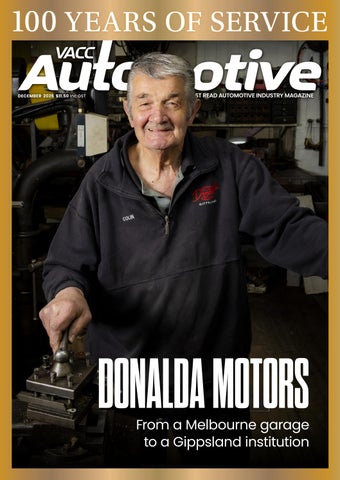
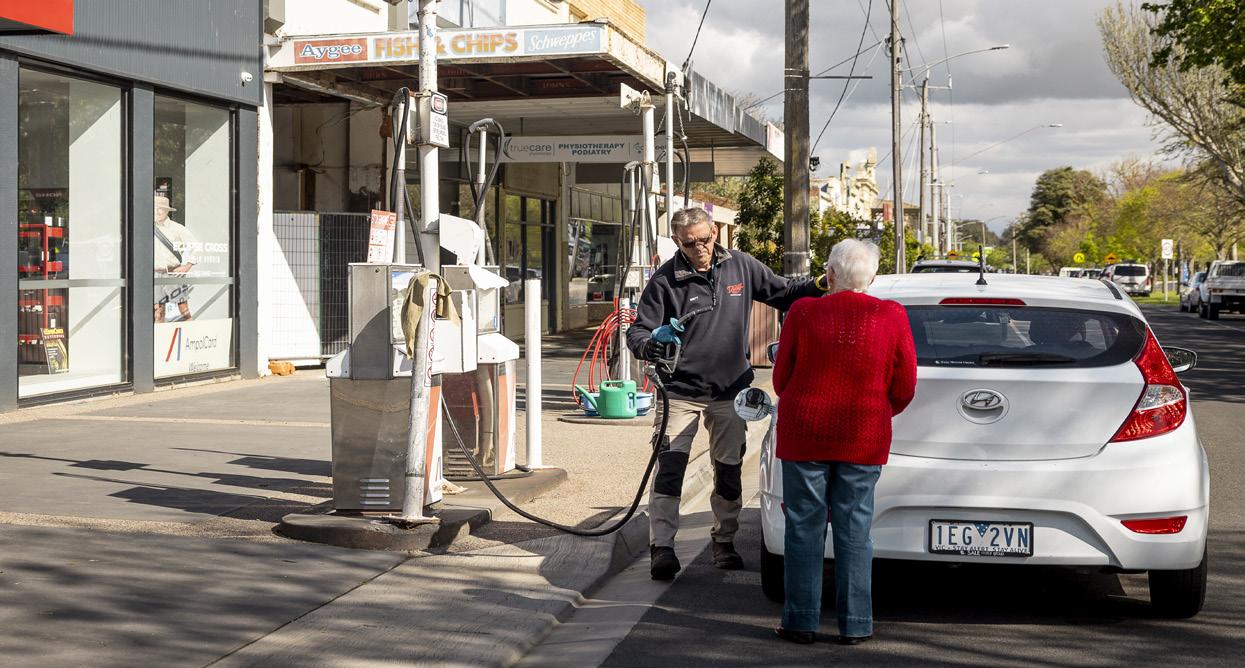
A standout story in this issue is Donalda Motors, a proud VACC member for 100 years. Their century-long commitment to excellence and community is a remarkable reflection of the values that unite us all.
As always, we’d love to hear from you. Share your feedback, story ideas or suggestions by emailing editor@vacc.com.au.
Your input helps us shape a magazine that continues to showcase the best of our members and the automotive community.
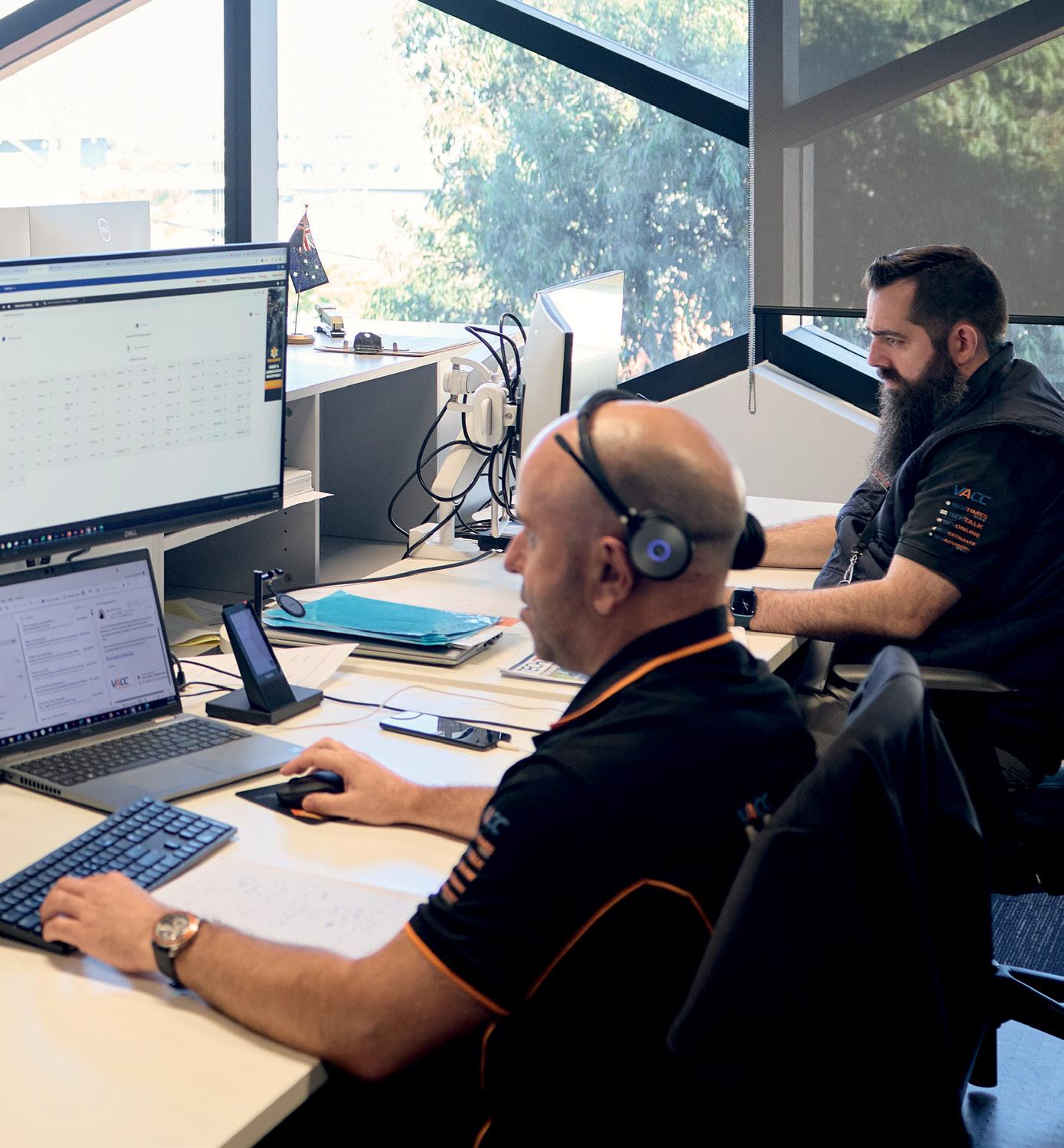
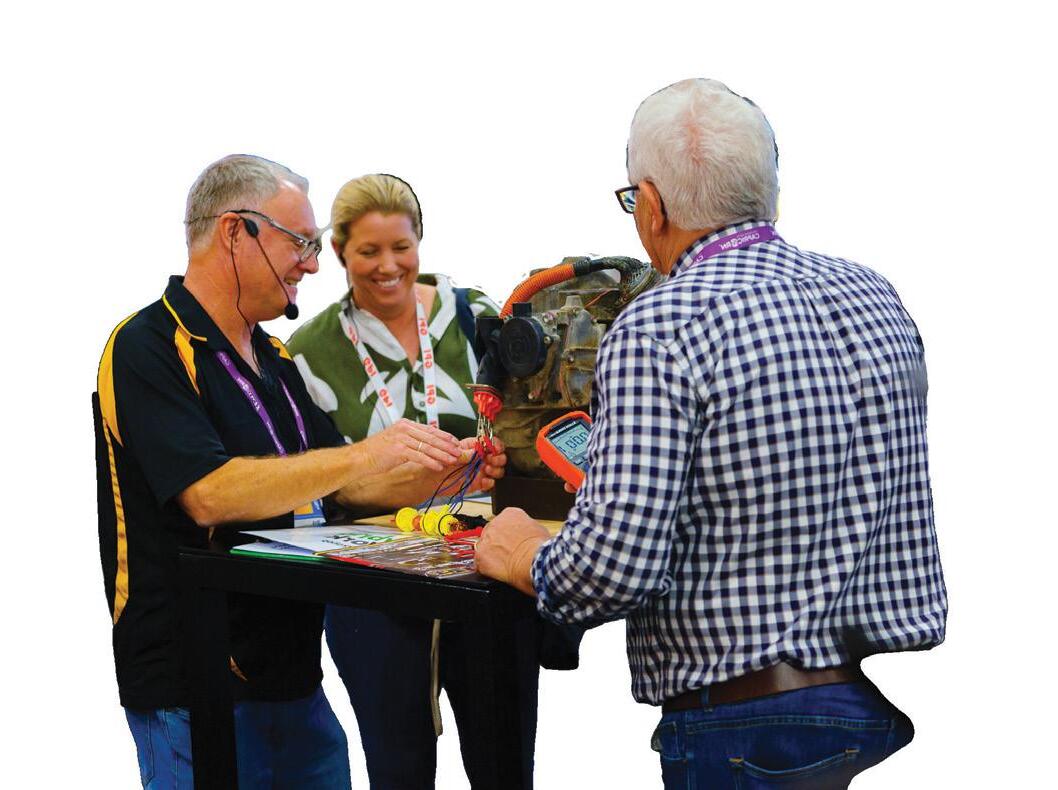
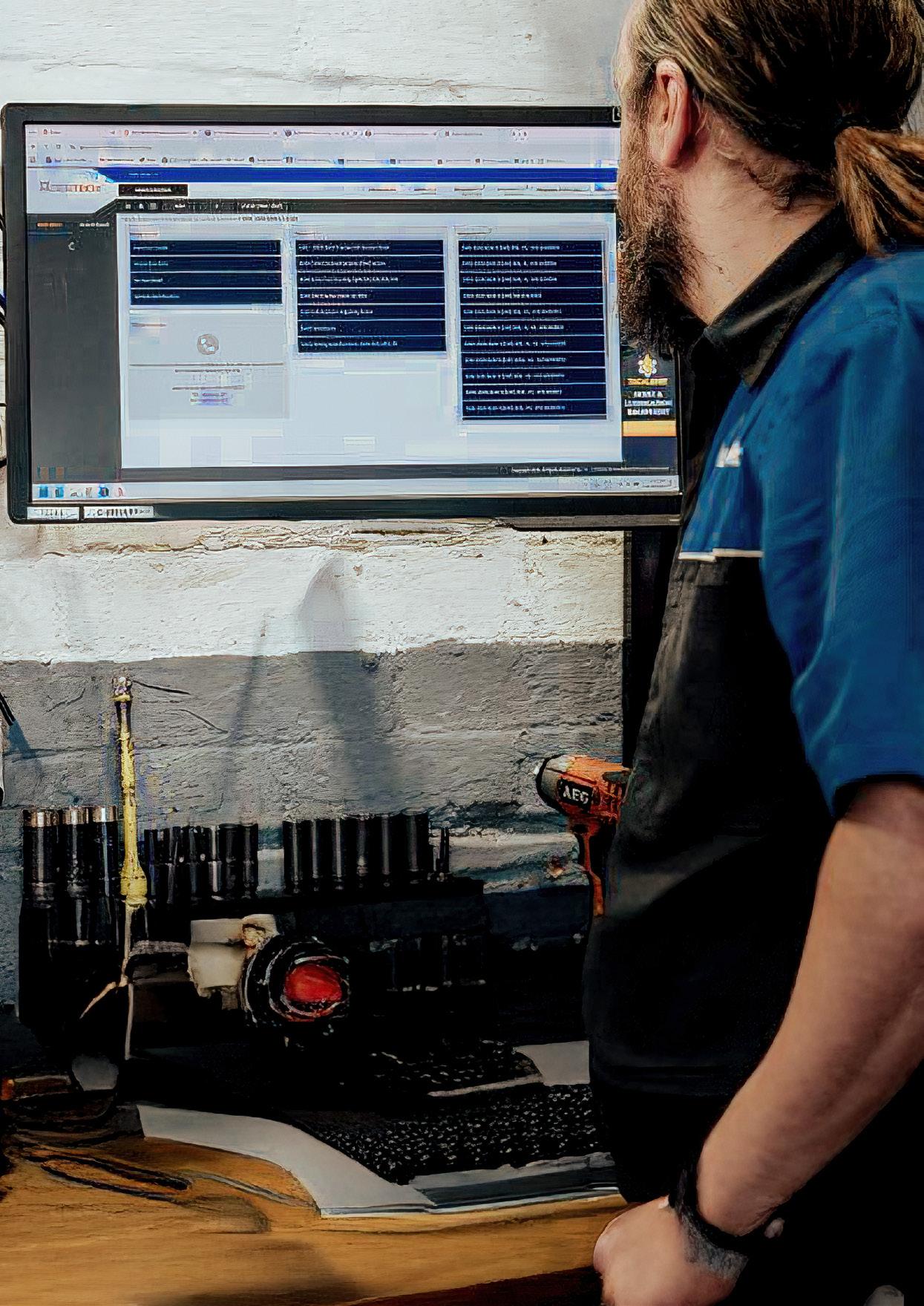
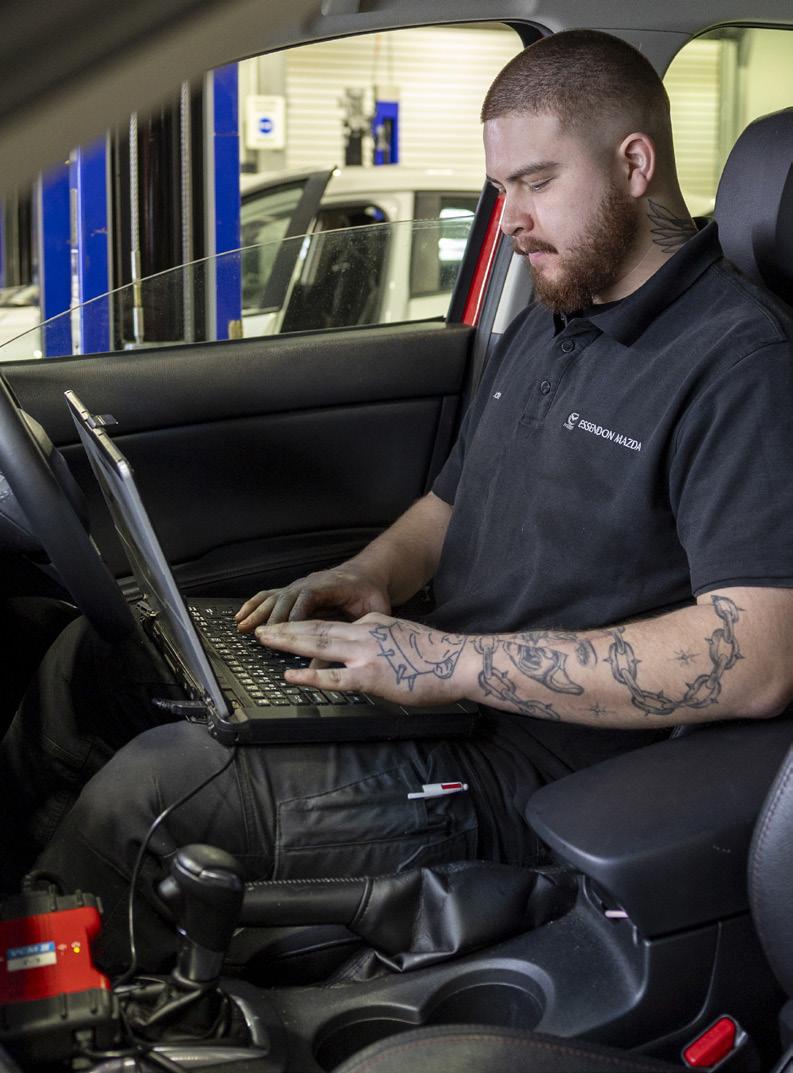
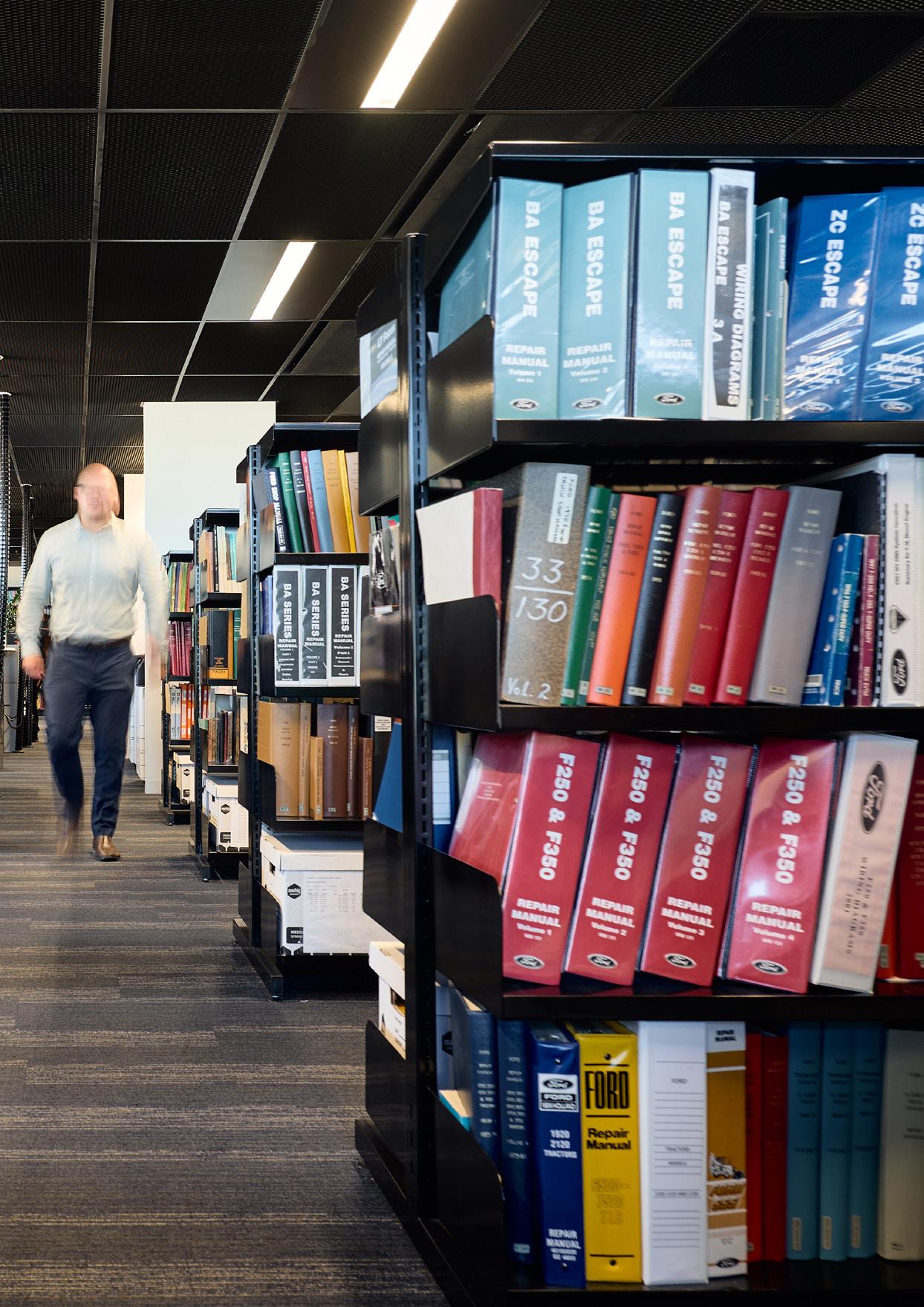
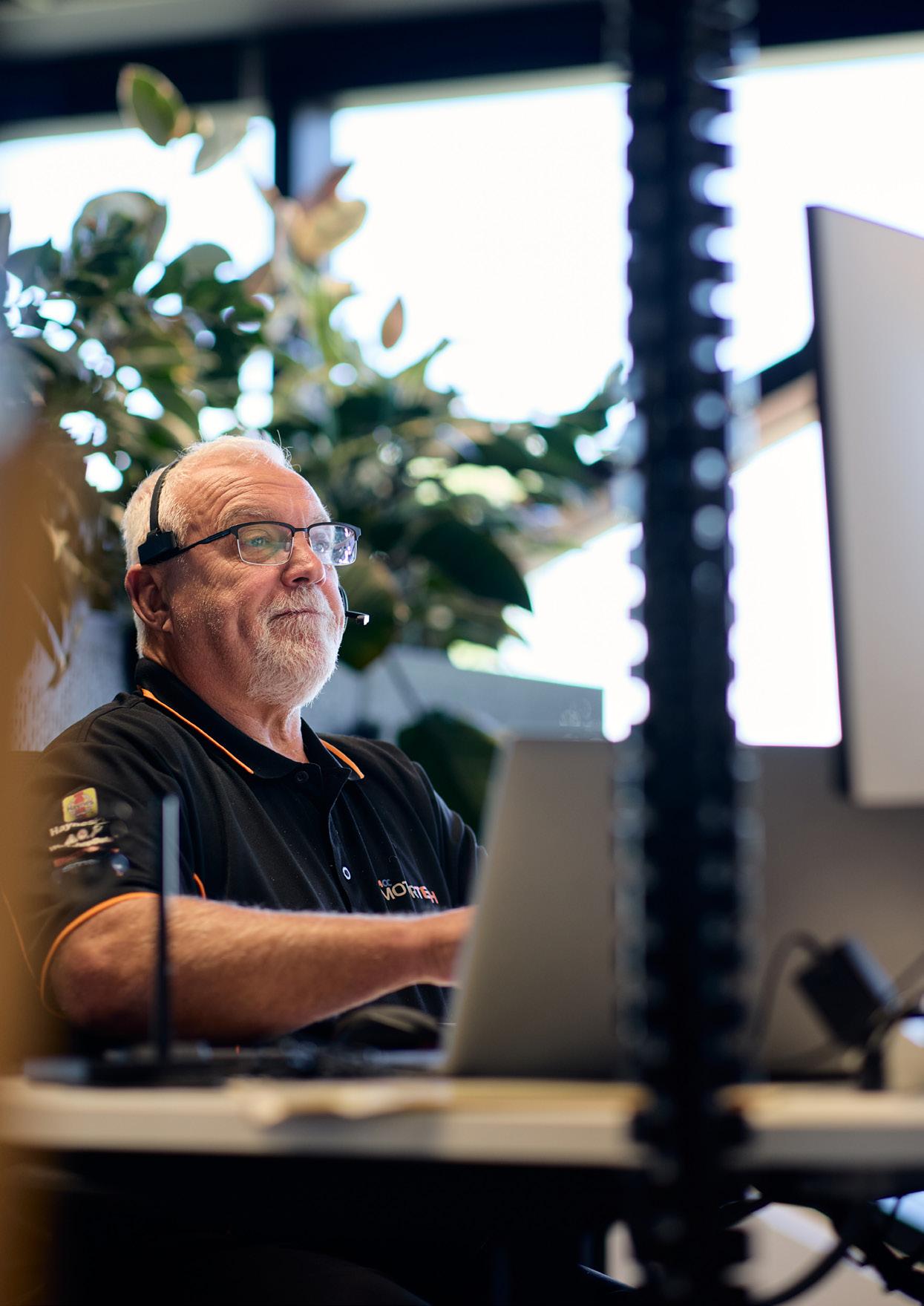
How to maximise your interaction with VACC’s expert technical team
We talk to Geoff about his extensive career in automotive.
MANAGING
Karla Leach | 03 9829 1247 vaccautomotive@vacc.com.au
SUB-EDITOR Andrew Molloy
DESIGNERS
Perrett | Gavin van Langenberg creativeservices@vacc.com.au
57, 672 READERSHIP
CONTRIBUTORS
John Caine, Andrew Molloy, Rod Lofts, Bruce McIntosh, Daniel Hodges, Nigel Muller
CORPORATE PARTNERSHIPS
John Eaton | 0407 344 433 jeaton@ourauto.com.au
PRESIDENT Craig Beruldsen
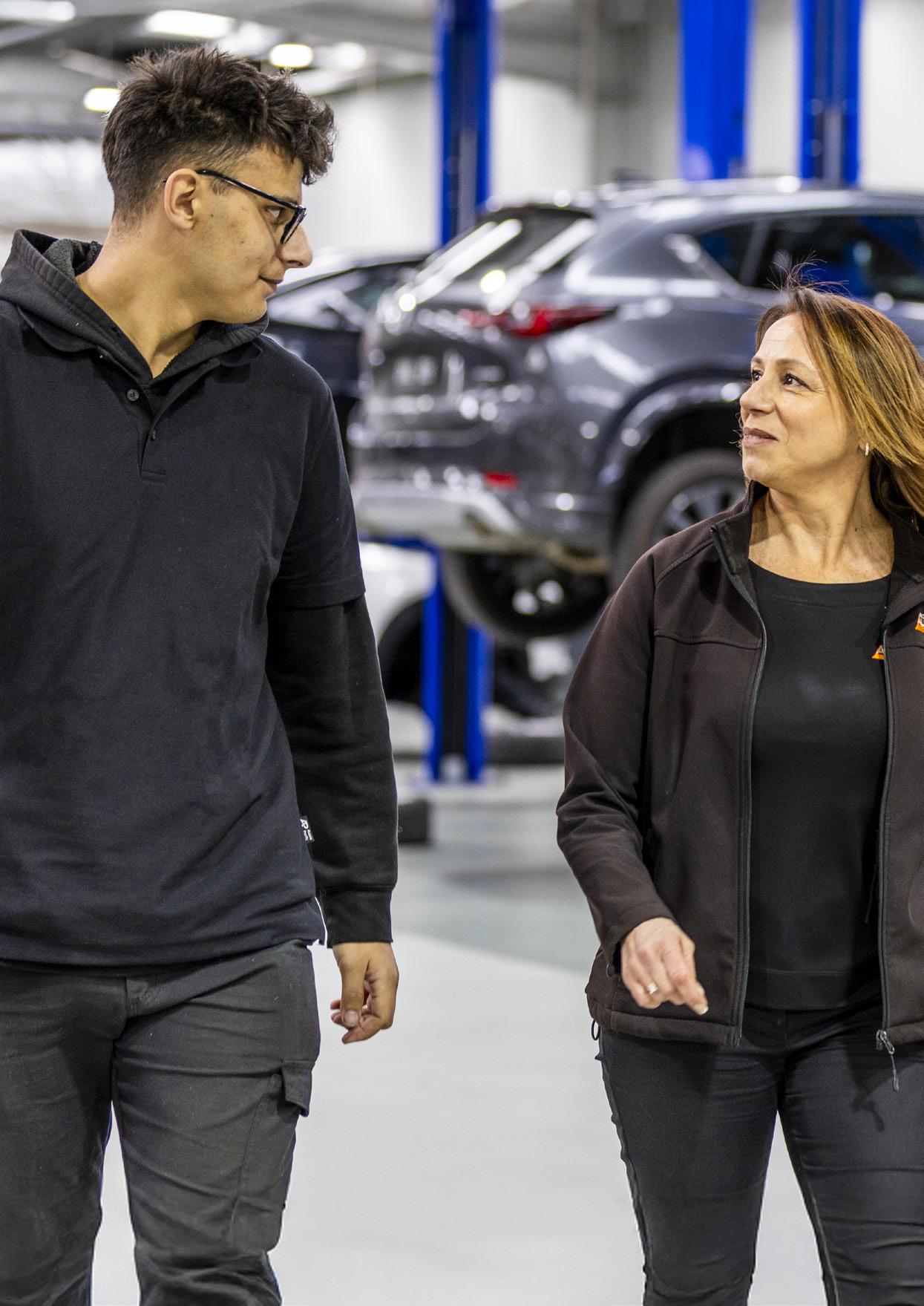
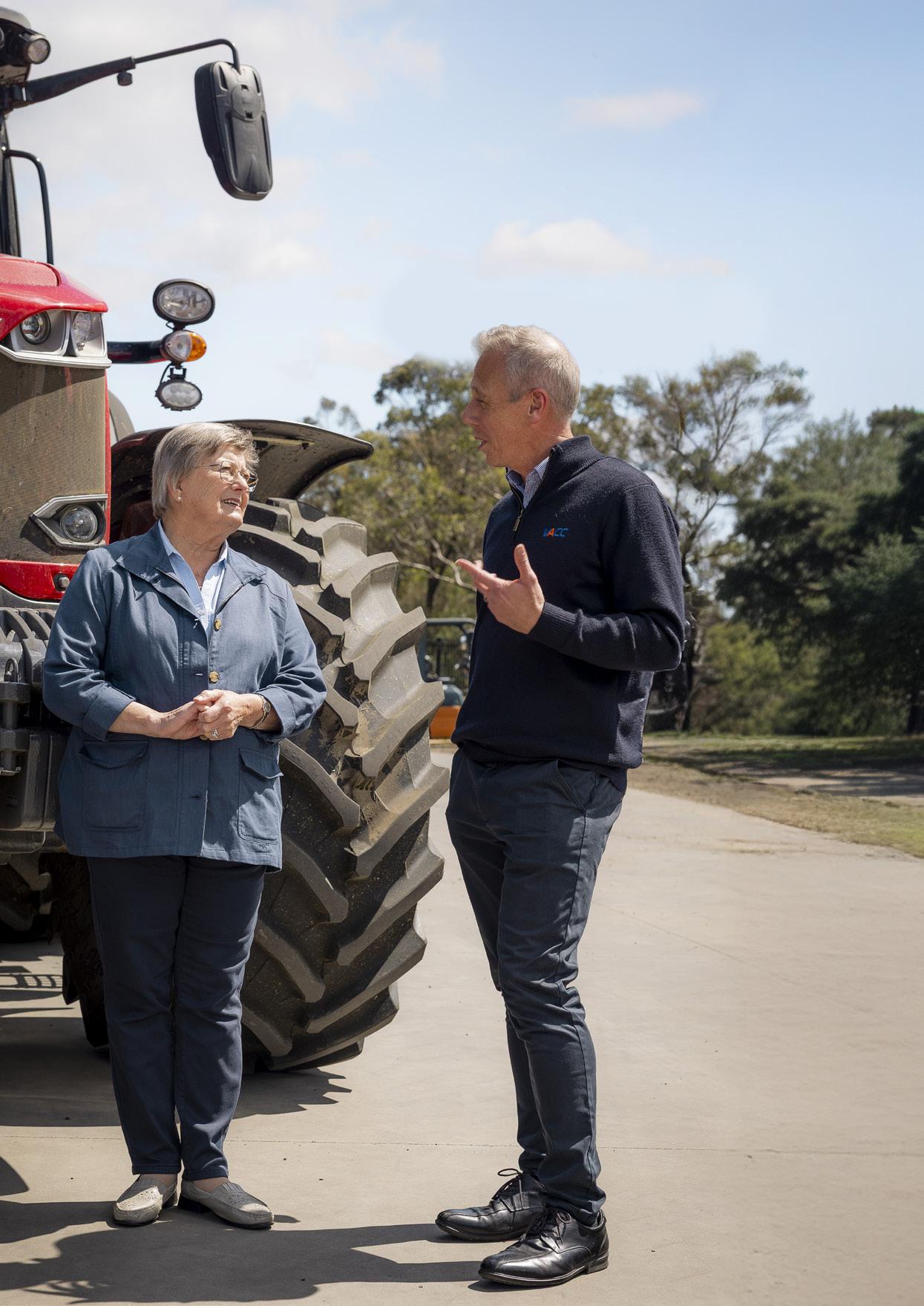
in the life of a VACC Area Manager.
CHIEF EXECUTIVE OFFICER
Peter A. Jones
Official publication of the Victorian and Tasmanian Automotive Chambers of Commerce
650 Victoria Street, North Melbourne VIC 3051 03 9829 1111 ABN 63 009 478 209
Connect with
Looking back, driving forward
"Our job is to make sure the organisation works as hard for our members as they do for their customers."
Peter A. Jones Chief Executive Officer, VACC
As 2025 draws to a close, I find myself reflecting on what has been an extraordinary ten months since joining the Victorian Automotive Chamber of Commerce. In that time, I have travelled across Victoria and Tasmania, meeting members from every corner of our industry. From long-standing family workshops to innovative start-ups redefining mobility, what has struck me most is the warmth, passion, and sheer dedication that our members bring to their craft every single day.
Wherever I have gone — from Geelong to Maffra, from Mildura to Hobart — the welcome has been genuine. There is a pride in being part of this community that you can feel the moment you walk through the door of a member business. It is a pride that comes not from size or scale, but from commitment: to customers, to apprentices, to quality work, and to the future of our industry. The true strength of the VACC lies not in its building or its logo, but in the people who stand behind it. Our members are the heartbeat of this organisation. They represent generations of skill and resilience, constantly evolving in an environment that is more complex, and more exciting than ever before. Whether it is tackling new vehicle technologies, embracing electric and hybrid service
requirements, or mentoring the next wave of apprentices, our members continue to prove why the automotive industry remains one of the most dynamic and essential in the economy.
These months have reinforced my optimism for the future. Despite the challenges, from regulatory changes and skills shortages to the fast pace of technological change, what I have experienced is an industry full of problem-solvers. People who do not wait for solutions but create them.
Workshops that have invested in training to stay ahead of the EV transition. Businesses that have modernised their operations while maintaining the personal service their customers value.
Employers who have taken on apprentices not just because it is good business, but because they believe in giving young people a start in life.
It is that same spirit that drives me, and the VACC team every day. Our job is to make sure the organisation works as hard for our members as they do for their customers. Over the past year, we have focused on strengthening that support — through our advocacy in Canberra and Spring Street, our investment in member services, or our partnership with the state associations through the MTAA. We have made progress, but there is always more to do.
Looking ahead to 2026, our focus remains clear.
To ensure that every member has a strong, sustainable future. That means continuing to fight for fair regulation and meaningful industry support. It means helping members adapt to new technologies and changing consumer expectations. And it means maintaining the proud reputation of our profession, built over more than a century, as a cornerstone of Australia’s transport and manufacturing sectors.
But beyond all of that, it means staying connected. The conversations I have had in workshops, showrooms, offices, and training centres, have shaped my understanding of what matters most to you. Those insights guide every decision we make.
Together, we are building the future for automotive, and I am proud to be part of that journey.
As this year closes, I want to thank every member for your trust, your honesty, and your incredible hospitality. You have shared your stories, your challenges, and your ideas with me, and I do not take that lightly. It has been a privilege to see firsthand the quality of your work and the depth of your commitment.
The road ahead is bright. With optimism, collaboration, and the same determination that has defined our industry for generations, I know we will continue to drive forward and be stronger together.
2025: The year the automotive industry shifted into high gear
As we head into December, there's palpable momentum building in the automotive training landscape. It's been the kind of year that reminds you why this industry matters, not just for the cars, but for the people building careers that keep our roads moving.
This year has been extraordinary for apprenticeships. Numbers have climbed steadily, and the energy coming through our doors has been infectious. Young people are recognising genuine opportunities here—that learning a trade in the automotive industry offers meaningful work and real job security. Increasing numbers are opting for apprenticeships over traditional university routes. For an industry grappling with talent shortages, it feels like a turning point. We're not content to rest on those laurels, though. Strategic planning is well underway to build on this momentum. Conversations with the government about apprenticeship incentives and support are more constructive than they've been in years. There's genuine recognition that skills development isn't just an industry concern—it's a national imperative. The real story has unfolded in our training departments. Recordbreaking numbers of technicians have moved through our EV and hybrid training programmes. This isn't coincidental. The industry
knows what's coming. More electric vehicles arrive on Australian roads every month, and our workshops require technicians who aren't only competent but also confident in this technology. Our training department has been working hard, delivering cutting-edge instruction on battery systems and electric drivetrains that are fundamentally different from what came before. Perhaps nowhere is this sense of purpose more tangible than in Tasmania. The new Hobart Automotive Training Facility has been a long time coming. There have been false starts and frustrations along the way—the kind of delays that would've derailed lesser projects. But here we are, watching it materialise. This facility represents something genuinely significant. It's not just another training space; it's recognition that Tasmania's automotive sector deserves proper investment and infrastructure. When those doors open, they'll open onto real opportunities for local technicians and apprentices. We're genuinely excited about what it'll mean for employment pipelines across the state and how it'll futureproof our industry with properly qualified technicians. Government engagement has been
Nigel Muller Training and TACC
Contact
constant across multiple fronts. Skills shortages remain a critical conversation. We're advocating for apprenticeship incentives that actually make a difference to young people considering their career paths. These conversations matter because they shape policy, and policy in turn influences opportunities.
Looking back on 2025, it's been the year the automotive industry stopped talking about its future and started building it through apprenticeships, training excellence, infrastructure investment, and genuine commitment to nurturing talent that'll define the next decade. The trajectory is clear. The industry is shifting into high gear, and it's worth celebrating.
If you're not already employing an apprentice, now is the moment to consider it. The talent pool is strong, and support structures are in place.
Equally, if your team hasn't engaged with EV and hybrid training, that conversation needs to happen soon. The transition isn't coming—it's already here. Our training programs help your technicians become genuinely confident with this technology. This is the year to invest in your people and futureproof your business.
autoapprenticeships@vacc.com.au
for more information.
VACC PARTNERS
for complete waste management solutions
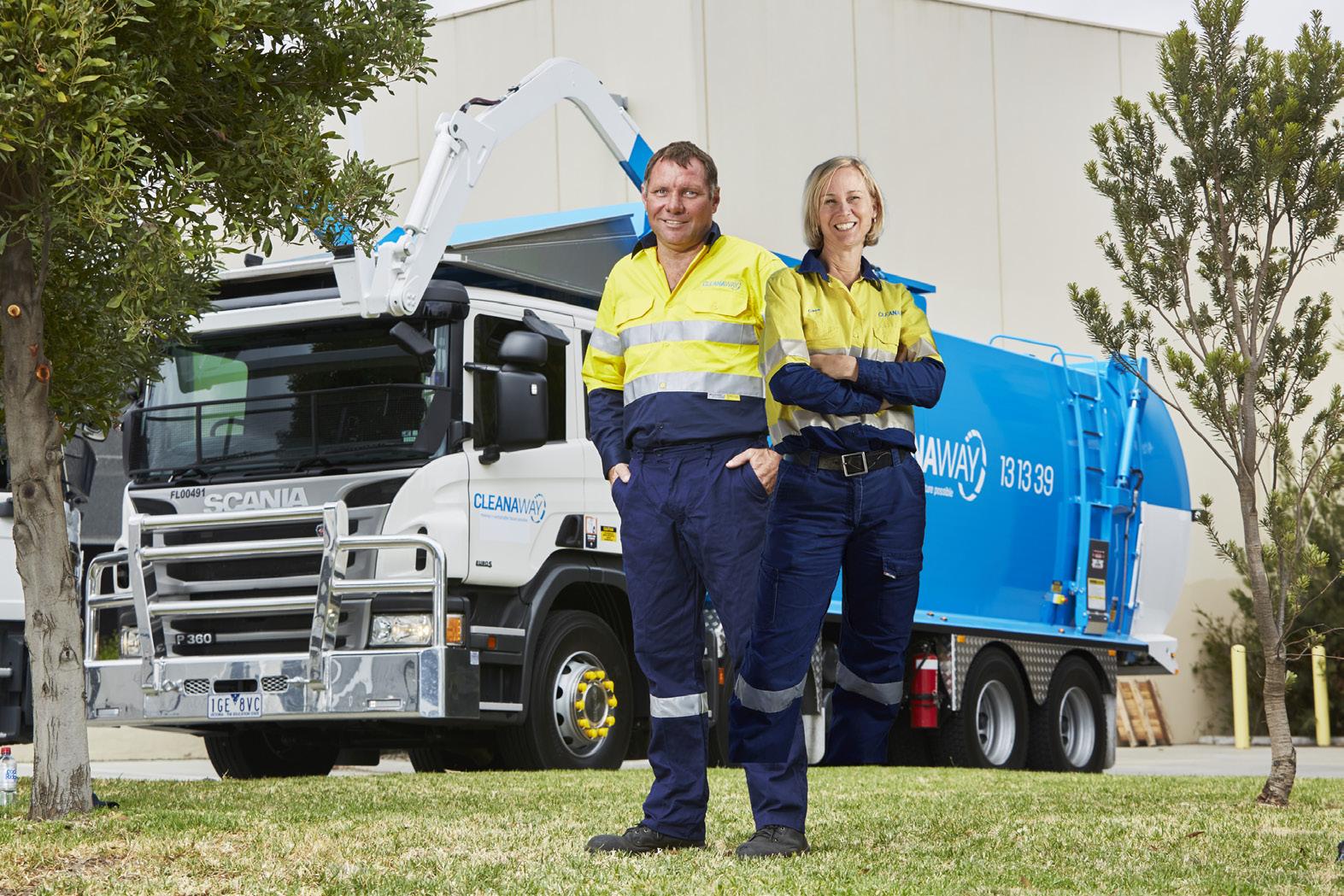
Cleanaway is Australia’s largest waste management provider and proud new VACC partner. With convenient locations across Victoria and Tasmania, we can build customised, competitive waste solutions for your automotive business, including:
General waste
Commingled recyclables
• Paper and cardboard
• Steel/aluminium cans and plastic
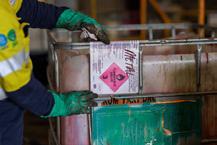
Liquid and hazardous waste
• Used mineral oil and oil filters
• Oily water, oily rags and other hydrocarbons
• Grease trap
• Pit and sump cleaning
Workshop and parts waste
Parts washer services
Industrial service capabilities
Call us today on 13 13 39 and mention VACC or visit our website.
A transformative year: setting the course for Australia's automotive future
The 2025 year will be remembered as one of the most transformative in the history of Australia’s automotive industry. With the New Vehicle Efficiency Standard (NVES) taking effect on 1 January 2025, the sector entered a new era, one where vehicle efficiency, technology, and sustainability are shaping every part of the automotive value chain. From manufacturers and dealers to repairers and recyclers, the NVES will continue to redefine how Australians buy, sell, service, and recycle vehicles for years to come. Few policy changes have had the potential to reshape the national car parc quite like the NVES. It directly influences consumer choice, vehicle pricing, and the product mix offered by Original Equipment Manufacturers (OEMs). The Victorian Automotive Chamber of Commerce (VACC) has been at the forefront of ensuring this transition delivers fair and practical outcomes for members, successfully advocating for dedicated federal funding for dealerships and repairers to install fixed and portable EV chargers, a critical enabler for the nation’s growing zero- and low-emission fleet.
VACC’s commitment to evidencebased advocacy has been unwavering. Over the past year, the organisation made more than 16 State and Federal submissions, including major responses to the Treasury’s Motor Vehicle Service and Repair Information Sharing (MVIS) Scheme review, the first since the Scheme’s implementation - ensuring repairers’ voices are included in shaping the future of information sharing and fair competition. The organisation also played a leading role in the independent review of the Motor Vehicle Insurance and Repair Industry (MVIRI) Code, working to strengthen fairness and accountability between repairers and insurers. Skills and training remained central to VACC’s mission, with the delivery of nationally accredited EV training through AURETH101 and partnerships with the AC Training Academy LLC. Complementing this was the launch of VACC’s Electric Vehicle Guides 1 and 2, developed for industry, by industry. These guides have become
John Khoury Industry Policy
essential references for workshops preparing to service and repair the rapidly growing EV fleet. Across every division, progress has been tangible. From securing new EV licensing categories for Licensed Vehicle Testers (LVTs) and expanding the Vehicle Identity Validation scheme, to advancing a national End-of-Life Vehicle (ELV) program for recyclers, VACC’s advocacy continues to deliver real outcomes that future-proof the industry.
As 2026 approaches, optimism is building. The policy frameworks are now in place, the technology is accelerating, and industry capability is catching up fast. The challenges of decarbonisation and digitalisation are immense, but so too are the opportunities. With the groundwork laid in 2025, the Australian automotive industry is poised to enter a new age of innovation, efficiency, and sustainability, and the VACC will continue to be its strongest advocate every step of the way.
Reach out to policy@vacc.com.au for more detail.
A year of transformation
Tasmania's automotive industry looks forward with renewed purpose
As 2025 draws to a close, the Tasmanian automotive industry can reflect on a year that, frankly, proved we're made of sterner stuff than the state's turbulent political landscape might suggest. It's been a year of genuine progress wrapped up alongside genuine challenges—and somehow, we've emerged stronger for it. When January rolled around, few could have predicted quite how much would shift beneath our wheels. The automotive world has undergone fundamental changes by the end of 2025 compared to its initial state. New brands arrived on our island roads. Drivetrains evolved in ways that seemed distant twelve months ago. For Tasmanian motorists, the simple act of choosing a new vehicle suddenly meant considering options that didn't exist a year ago. That's not just change, that's opportunity.
Yet alongside the industry's forward momentum came political headwinds that would have derailed lesser sectors. Tasmania's political turbulence this year was genuine, and the ripple effects were felt throughout the automotive sector. But here's the thing about our industry: we kept our foot on the accelerator regardless. We didn't pause. We didn't retreat. We adapted, we advocated, and we persisted.
The truth is, working around tight state budgets isn't new territory for us. Like most sectors, we
didn't secure everything we hoped for in the Budget papers. But we did secure something genuinely transformative: the new Hobart Automotive Training Centre. After years of false starts and disappointed hopes, it's finally underway. That feels significant. That feels like a win worth celebrating. This wasn't luck. It was the direct result of Industry, government departments and registered training organisations all working together to put the training future of Tasmania's automotive sector first. I want to thank every TACC member who attended meetings, shared their stories, and put real faces and voices behind industry challenges. Your presence mattered. Your feedback mattered. When government ministers heard directly from our members—from workshop owners navigating changing regulations, to apprentices and technicians worried about their future—it changed the conversation. Without doubt, direct member input doesn't just disappear into bureaucratic black holes. It shapes policy. It shapes outcomes as we engage with more young Tasmanians who see automotive as a genuine career pathway. More evidence that this sector invests in its people.
Bruce McIntosh TACC Manager
As the TACC inches towards its 2028 100-year centenary, we have an increased determination to ensure that more and more of Tasmania's 1,000 automotive businesses that contribute to the sector enjoy the benefits of automotive fellowship and membership. Our member events this year reflected that confidence also. October's gathering in Hobart was our largest yet, and the energy was palpable among all attendees. We've got more planned for 2026. These events remind us that we're not just individual businesses competing in isolation; we're a genuine community with a purpose. The automotive industry is going through profound change. The drivetrains are shifting, technology is accelerating, and the regulatory landscape is constantly evolving. That's real. But sitting here at year's end, I am convinced Tasmania's automotive sector is ready for it. We've demonstrated this year that we can navigate political uncertainty, work productively with the government despite budget constraints, and achieve tangible wins. We embrace change because we understand what's at stake, and what's possible. 2026 awaits. And we're ready.
You can contact Bruce at tacc@tacc.com.au
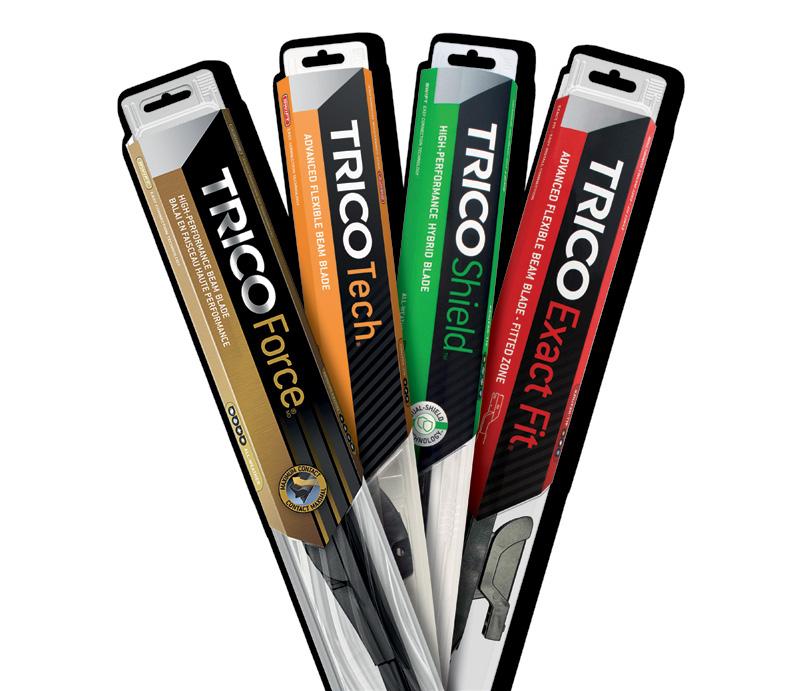
ENSURE CLEAR VISION WITH
OUR TOP 4 WIPERS
Force
®
Premium beam blades for 96% of fitments, designed for Australia
Tech®
Advanced frameless design for superior performance
WIPERS SAFETY CHECK
No matter the weather, ensure your wipers are inspected before you hit the roads!
tr icopr oduc ts.com.au
Tailored wipers that ensure a perfect match for your vehicle, maximising performance and ease of installation
TRICO’S UNMATCHED QUALITY
Trico are the only wipers tested to 3 x OE standards (1.5m cycles)
WIDE PRODUCT RANGE
Trico wipers fit more vehicles than anyone else!
SCAN THE QR CODE
to find the right wipers for your vehicle and check out our new website
Understanding major vs. minor failures under consumer guarantees
When a vehicle or service fails to meet consumer guarantees, the distinction between major and minor failures can make all the difference to your business and your customers’ rights. Understanding this crucial separation is essential for anyone operating within the automotive sector.
The question hinges on one fundamental issue: is the fault significant enough to warrant a full refund, or can it be remedied through repair?
The answer determines both your obligations and your customers’ entitlements.
Consider a practical scenario.
A customer purchases a new 4WD specifically for extended outback expeditions with a camper in tow, only to experience repeated breakdowns with identical recurring faults. Based on Victorian Civil and Administrative Tribunal (VCAT) precedent, such a situation would likely constitute a major failure. The customer would likely succeed in obtaining a full return and refund, particularly if the matter reaches formal proceedings. In these circumstances, it’s worth noting that manufacturers and importers should typically be joined to any application, given their responsibility for the product.
Similarly, a used vehicle that suffers catastrophic engine failure just a week after purchase, requiring five weeks of workshop repairs,
would almost certainly be deemed a major breach of consumer guarantees regarding acceptable quality and durability. Should the purchaser prefer a refund over repair, a decision-maker would likely rule in their favour. However, the picture becomes more nuanced with cumulative issues. A transmission that failed four times would individually appear minor, yet when considered collectively, VCAT has determined such repeated failures constitute a major breach warranting significant remedial action.
It’s worth emphasising that most consumers don’t pursue these formal avenues. The majority remain willing to allow dealers to carry out necessary repairs and accept their vehicles back once remedied, a pragmatic approach that suits all parties. VCAT has also clarified what doesn’t necessarily constitute a major failure. A complete engine replacement in a new vehicle, undertaken to reduce excessive oil consumption, was deemed minor because the solution proved more expedient than dismantling the original engine to identify and rectify the underlying cause. Similarly, a rebuilt transmission occasionally generating fault
John Caine Business and Consumer Affairs
Email
jcaine@vacc.com.au
codes—without actually breaking down or triggering “limp mode”— was also classified as minor. Time plays a pivotal role in determining whether failures qualify as major or minor. The Australian Consumer Law (ACL) defines a minor fault as one that is rectifiable within a reasonable timeframe. If you reasonably believe a fault can be fixed promptly, consumers must give you that opportunity. The ACL remains silent on what constitutes “reasonable time,” creating some ambiguity in practice.
The Victorian Automotive Chamber of Commerce (VACC) recommends erring on the side of caution here: treat “reasonable time” as “as soon as possible.” This approach protects both your reputation and your legal standing, ensuring you demonstrate a genuine commitment to resolving customer issues promptly rather than allowing matters to escalate unnecessarily.
Understanding these distinctions helps you navigate consumer obligations confidently whilst managing customer expectations appropriately.
The end of the year is a time to celebrate and recognise the hard work your team has put in — but it’s also a time when employers and employees need to be mindful of their legal duties and ethical responsibilities. A little preparation can go a long way to ensuring the festive season ends on a positive note for everyone.
Below are some key areas to consider as the holidays approach, from safe celebrations to payroll planning.
1. Celebrate responsibly: Managing alcohol at work functions
End-of-year gatherings are a great way to say thank you to staff, but if alcohol is being served, employers must not forget that they have a duty to provide a safe environment. Make sure your function:
Has clear start and finish times and ideally takes place at a licensed venue with trained bar staff.
Place appropriate limits on alcohol consumption
Includes plenty of food and non-alcoholic beverage options.
Has supervision — someone from management to check that apprentices and junior employees are over 18 years if they will be consuming alcohol; and who remains sober and can step in if behaviour becomes inappropriate.
Encourages safe travel home, such as arranging taxis, ride-shares, or public transport information.
Employees should also be advised that any after function activities are not part of, or an extension of, the employer organised function.
In addition, given the multicultural nature of Victorian automotive workplaces, employers should consider cultural diversity as well as any dietary requirements when selecting food and beverage options.
2. Setting the right tone: Remind all employees that usual workplace standards apply
The relaxed atmosphere of a celebration can sometimes blur boundaries. Employers should make it clear that respectful behaviour is non-negotiable, even if the function is held away from the workplace and after hours.
Consider some reminders for staff before your event:
• Reinforce that sexual harassment, offensive jokes, or unwanted contact have no place at work events.
Ensure all employees are familiar with the workplace bullying, harassment, and discrimination policies, including applicable issue resolution procedures, and organise refresher training or redistribute if necessary
Remind employees about the range of disciplinary actions that can be taken
Keeping it merry and safe
Tips for the holiday season
if they engage in bullying, discrimination or harassment
Encourage employees to look out for one another and speak up if they witness inappropriate behaviour.
Remind managers and supervisors of their role in leading by example and acting quickly if problems arise.
If an incident does occur, follow your issue resolution and disciplinary procedures promptly and fairly. Having clear processes helps protect both employees and the business.
3. Holiday pay and statutory obligations
Christmas and New Year can be a busy time for payroll. It’s important to make sure all leave and pay entitlements are processed correctly.
Employers should check:
Public holiday entitlements — ensure staff working on public holidays are paid the correct rates under the applicable award or agreement.
Annual leave loading — if payable, don’t forget to apply it.
Shutdown periods — if you close over Christmas, confirm you’ve provided adequate (e.g. 4 weeks) written notice and that employees have sufficient accrued leave or have agreed to take leave without pay for the balance of the shutdown period.
Casual and part-time hours — review rosters and communicate clearly about expected work schedules.
Planning ahead reduces the risk of pay errors, disputes, or compliance issues that can carry into the new year.
4. Duty of care: Beyond the party
Under occupational health and safety obligations, employers have a duty to ensure, so far as is reasonably practicable, that any workplaceorganised social function is ‘safe and without risks to health’ – with employees having a complementary
Daniel Hodges
Workplace Relations
duty to take reasonable care for their own health and safety, the health and safety of others, and to cooperate with measures put in place for their safety by their employer. Some practical measures include: Avoid encouraging excessive drinking or risky behaviour. Check that the venue is accessible and safe for all attendees.
Monitor fatigue if staff are working long hours leading up to Christmas.
5. The gift of communication
Good communication helps avoid most holiday headaches. In the lead-up to the break:
• Send a holiday communication or staff bulletin covering closing dates, pay schedules, and emergency contacts.
Remind everyone about appropriate use of social media when posting about work events.
Thank your team — recognition goes a long way to building morale and loyalty.
It’s also an ideal time to review workplace policies, ensuring they’re up to date and reflect current legislative and regulatory requirements – e.g. the new Victorian Psychological Health Regulations.
6. Plan for a fresh start
Once the festivities are done, consider how you’ll support a smooth transition into the new year: Ensure any carry-over leave balances are recorded correctly. Use the quieter period to review HR, payroll and safety protocols. Setting clear expectations, leading with care, and celebrating safely show your team that professionalism and fun can go hand in hand.
Final thoughts
The festive season should be a time of gratitude and connection — not complications. By preparing early, communicating clearly, and prioritising the wellbeing of your people, employers can help ensure the holidays end on a high note.
For more information, please contact VACC Workplace Relations team.
Contact ir@vacc.com.au for more information.
Driving
Anna Palermo, Field Manager Automotive Apprentices
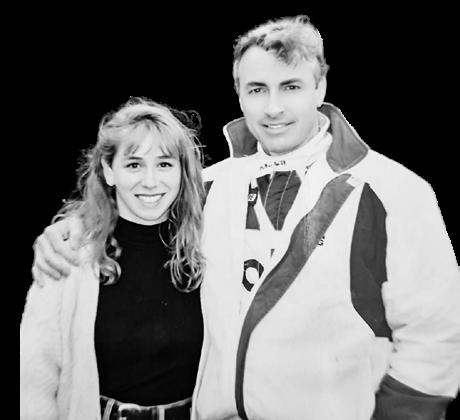
For three decades, Anna Palermo has been immersed in the automotive world. A career that began behind a reception desk has grown into a lifelong passion for helping others find their place in the industry. From reception to recognition Anna’s automotive journey began in 1995 at 4x4 Accessory Centre, where she started in reception before quickly working her way up to Victorian Sales Manager.
“I didn’t just find a job, I found an industry I loved,” she recalls. “The people, the energy, the cars. It all clicked.”
A chance conversation while having her car serviced led to the next big step. “I was chatting with the Operations Manager at the Bayford Group, asking if they had any roles available,” Anna says. “They did. I was lucky enough to get the job.”
That one moment launched a remarkable 20-year journey through dealership management. Anna held a succession of roles; Customer
Relations Manager, Finance Assistant, Warranty Manager, Service Advisor, and eventually Service Manager.
Her dedication and customer-first approach earned national recognition. While at Volkswagen, she qualified for the Service Qualification World Championship, was named among the Top Five Service Advisors in Australia and ranked #1 female nationally for Volkswagen Group Australia. She was also nominated for Most Progressive Employee within the Idom Group.
“I’ve always been driven by challenge and connection,” Anna says. “If you care about people and do things the right way, success tends to follow.”
A lifelong automotive enthusiast
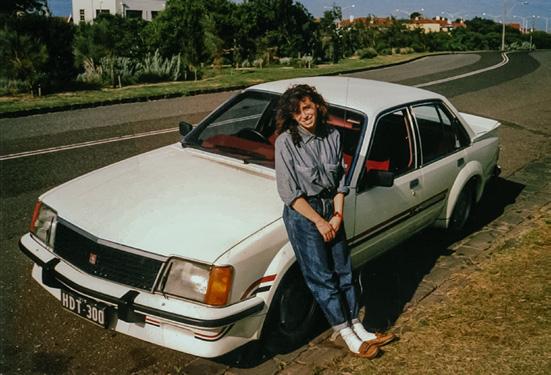
Outside of work, Anna’s enthusiasm for cars runs deep. A lifelong V8 Supercars fan, she once owned a VC Brock Commodore and a VK Group 3, helping to restore the VC into a show car displayed at events and HDT gatherings. “Peter Brock was a hero of mine,” she smiles. “That era of cars — the craftsmanship,
the heart — it’s something special.”
Joining the VACC: mentoring the next generation
After more than 30 years in the trade, Anna wanted to give back — to help young people build the kind of career that had given her so much.
That calling led her to the Victorian Automotive Chamber of Commerce (VACC) in July 2022, where she joined the Automotive Apprenticeships team as a Field Manager.
“I’d seen so many apprentices achieve their dream of becoming qualified mechanics,” she says. “I wanted to be part of helping others do the same — to mentor, guide, and encourage the next generation.”
Her role is diverse and hands-on.
Anna spends her days visiting schools, TAFEs, and workplaces, meeting with school-based apprentices (SBATs) and full-time trainees. She mentors apprentices, supports host employers, interviews future candidates, and builds strong relationships with Members across Victoria.
futures
“It’s about teaching employable skills and life skills,” she explains.
“Sometimes they just need someone to listen, to guide them, and to remind them that every challenge is part of their growth.”
Making a difference
Anna believes the VACC plays a vital role not only for apprentices but for the broader industry.
“The VACC genuinely has the apprentices’ best interests at heart,” she says. “We go above and beyond to help them achieve their goals, fulfill their dreams, and become remarkable employees. The additional training opportunities, like EV upskilling, are making them ready for the industry’s future.”
She sees every success story, every apprentice who transitions from school-based training to a full-time role, as a proud moment.
“When they succeed, that’s what drives me,” Anna says. “It’s seeing potential turn into achievement.”
The road ahead
Like many in the industry, Anna is fascinated by the rapid evolution of automotive technology.
“There’s a major shift underway, from combustion engines to electric vehicles, and the rise of AI in cars,” she says. “It’s exciting to see how quickly it’s advancing. The next generation of apprentices will need to understand both mechanics and technology and that’s the challenge we’re preparing them for.”
A message to members
Anna’s message to VACC and TACC members is one of gratitude.
“Thank you for supporting our SBAT and apprenticeship programs. For trusting us to place apprentices
“I didn’t just find a job, I found an industry I loved.”
in your businesses and for welcoming them as part of your team,” she says. “You’re not just giving someone a job, you’re shaping a career, a livelihood, and the future of this industry.”
After three decades, Anna still speaks about automotive with the same passion she had on day one.
“It’s an industry full of innovation, community, and opportunity,” she reflects. “And being part of helping others find their place in it, that’s incredibly rewarding.”
Bertoli Farm Machinery drives into the Greater Shepparton Business Hall of Fame
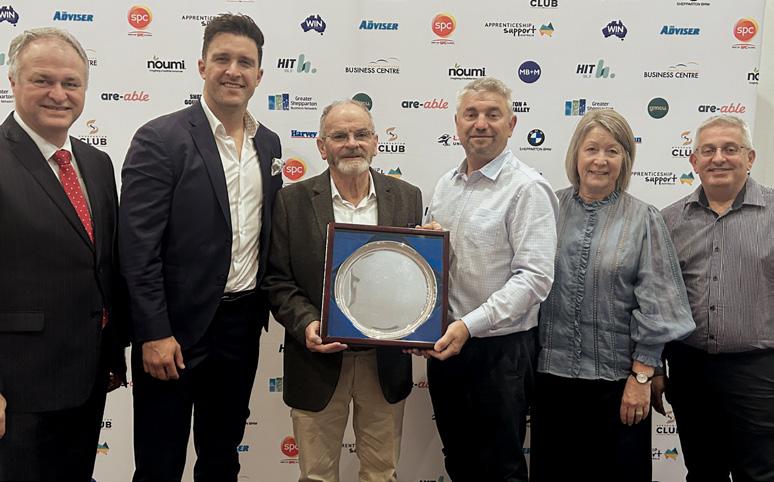
When Paul Bertoli set out nearly 50 years ago with little more than a Holden Ute, a toolbox, and an unwavering vision, few could have predicted that his modest venture would become one of the Goulburn Valley's most respected names in agricultural machinery. Yet here we are in 2025, witnessing Bertoli Farm Machinery take its place amongst the region's business elite, becoming the 17th inductee into the Greater Shepparton Business Hall of Fame. The honour, presented at Greater Shepparton SPC Business Excellence Awards, represents far more than a simple accolade. It's recognition of nearly half a century spent building a business that has become deeply woven into the fabric of regional commerce and community life.
What began in 1976 as a small workshop has transformed into a multi-site operation that now employs almost 50 staff across three locations— Shepparton, Albury, and Benalla. The group's dealerships stock leading agricultural and industrial machinery brands, a testament to how far the business has come since those early days. Yet despite this expansion, the organisation has managed to maintain the customer-focused ethos that characterised its founding. Speaking at the awards ceremony, Greater Shepparton Business Network president Stephen Schneider highlighted the significance of Bertoli's achievement. "Bertoli's has grown to become a trusted name not only in Shepparton, but across northern Victoria and southern New South Wales," Mr Schneider noted, emphasising both the longevity and the geographical reach of the organisation's influence.
However, Bertoli's contribution to the region extends well beyond commercial success. Paul Bertoli has long been a steadfast
"... Bertoli's has grown to become a trusted name not only in Shepparton, but across northern Victoria and southern New South Wales."
advocate for the agricultural machinery industry itself, serving as a member of the Victorian Automotive Chamber of Commerce (VACC) since 1982. In his current role as vice president and chair of the Farm, Industrial and Machinery Dealers Association Committee, he works alongside CEO Peter Jones and the board to champion and strengthen regional businesses—a commitment that speaks to his character and his genuine investment in the sector's future.
This broader vision extends into the community itself. Paul's commitment to the Goulburn Valley extends beyond his dealerships, with a strong focus on training, apprenticeships, and community initiatives that continue to contribute to the region's growth. It's this multifaceted approach to business—one that recognises obligations to employees, industry peers, and the wider community—that has earned Bertoli Farm Machinery its place in the Hall of Fame.
The Greater Shepparton Business Network hosts the annual Business Excellence Awards, supported by SPC, to celebrate enterprises that have made meaningful, enduring contributions to the local economy. The Hall of Fame honours businesses that demonstrate consistent excellence and community commitment across generations.
As Bertoli Farm Machinery approaches its 50th anniversary in 2026, the business stands as a compelling testament to the power of vision, hard woark, and genuine commitment to regional development. In an era when businesses often relocate or lose their local identity, Bertoli's remains a reminder of what dedication to place and purpose can achieve.
From a Melbourne garage to a Gippsland institution
The McDonald family's century of service
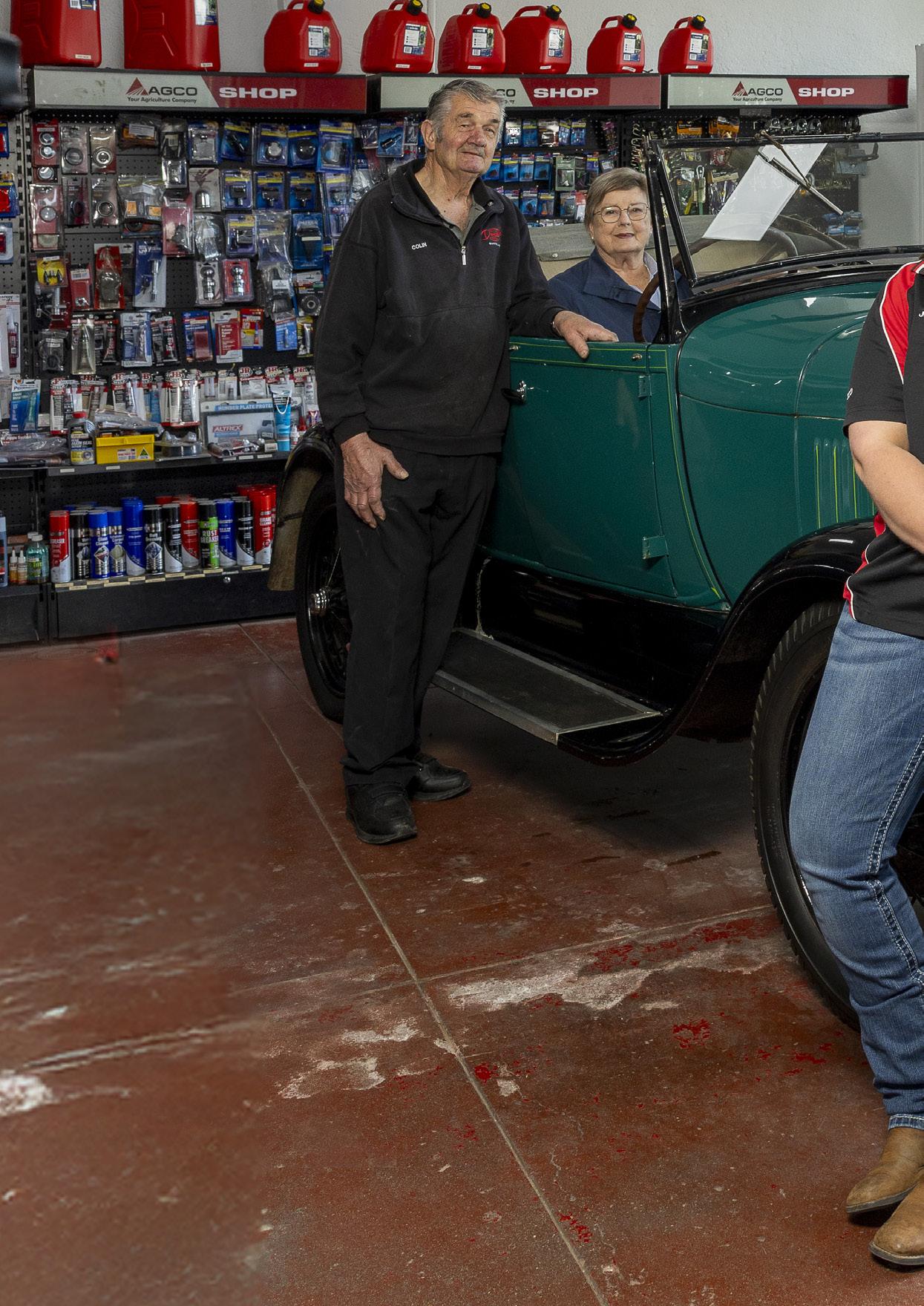
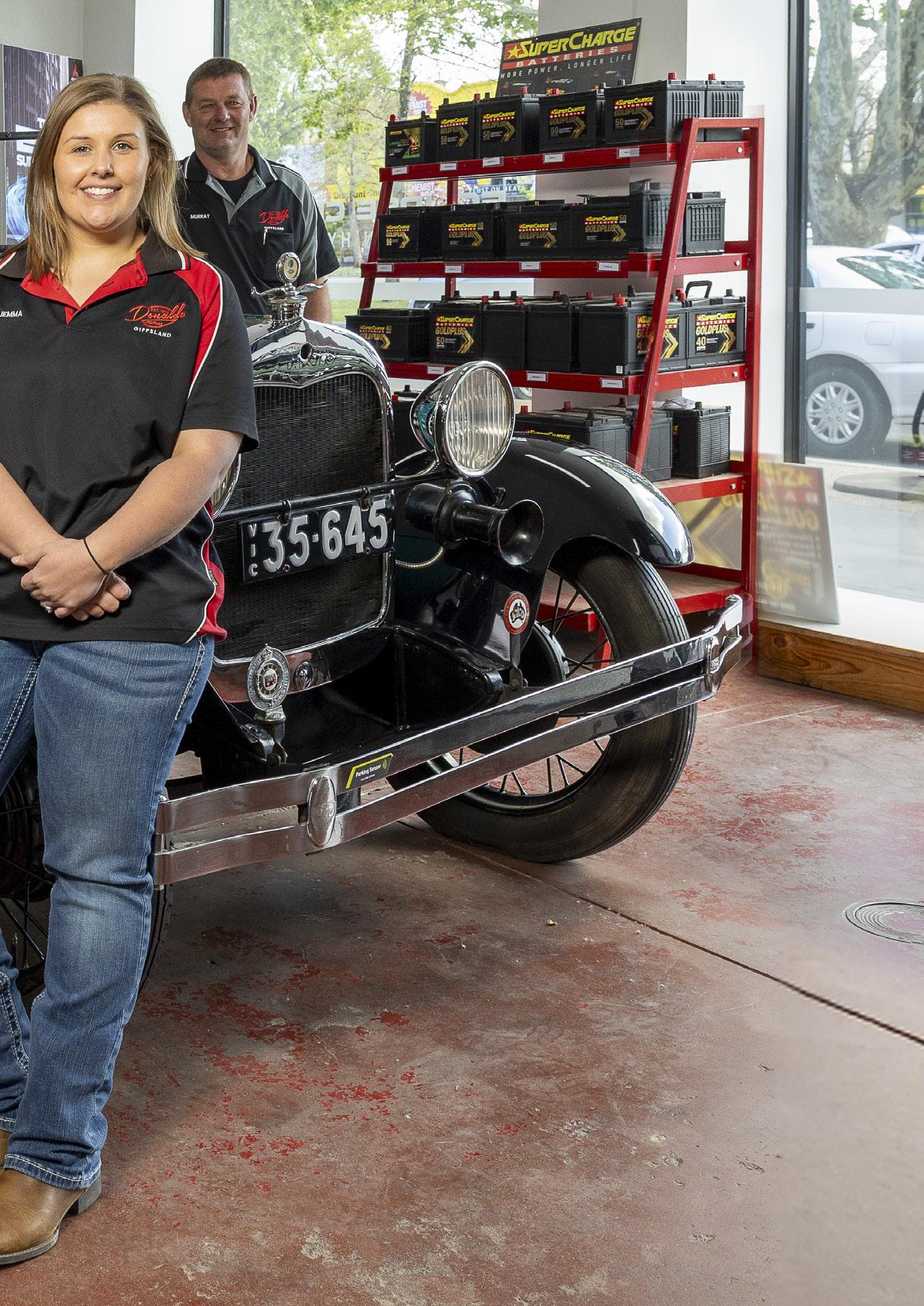
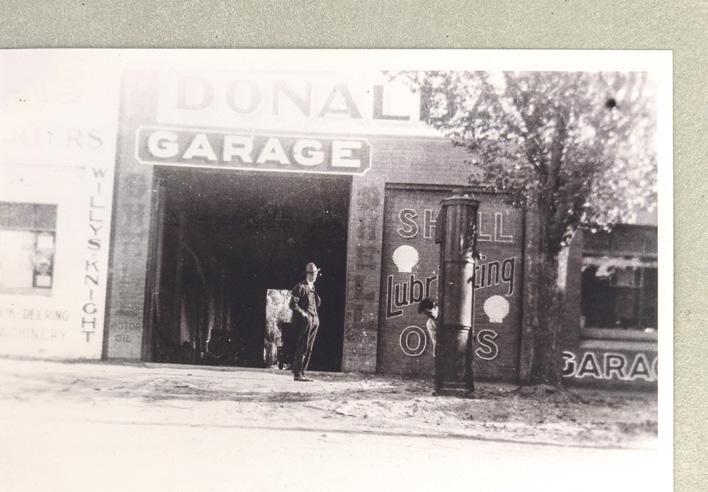
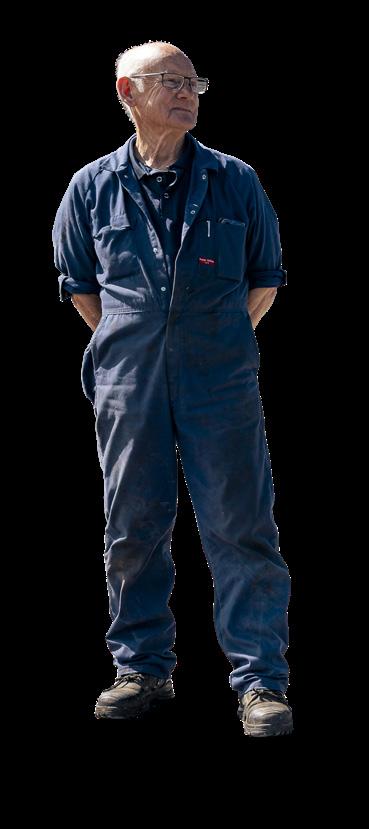
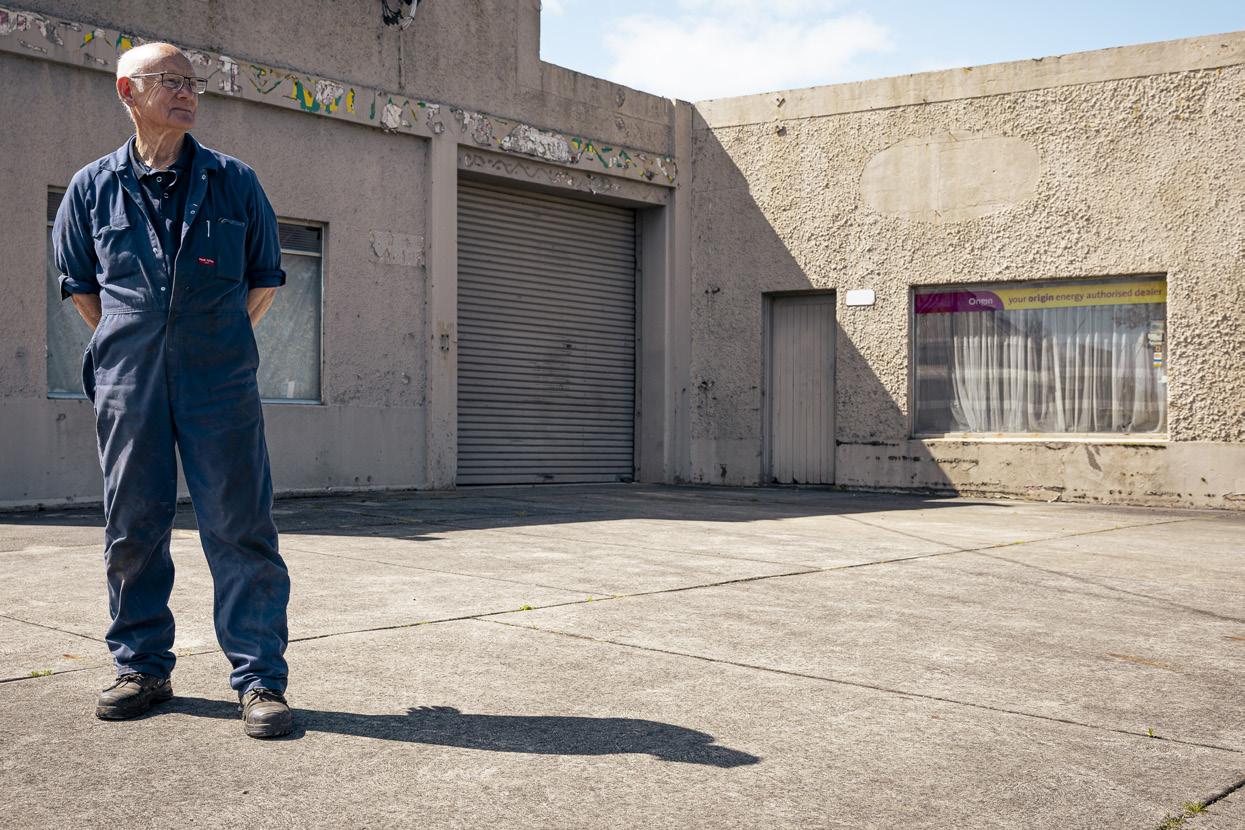
When Jock McDonald followed his girlfriend to Maffra in 1926, he didn't just relocate a garage. He planted the seeds of a legacy that would span nearly 100 years and shape the automotive landscape of Gippsland in both big and small ways. Today, that same business—Donalda Motor Service—stands as a testament to family values, community commitment, and the kind of steady, reliable service that has become increasingly rare in an era of corporate consolidation and rapid change.
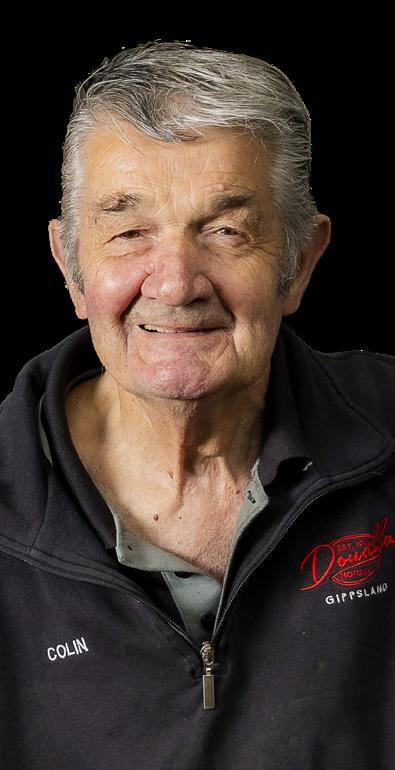
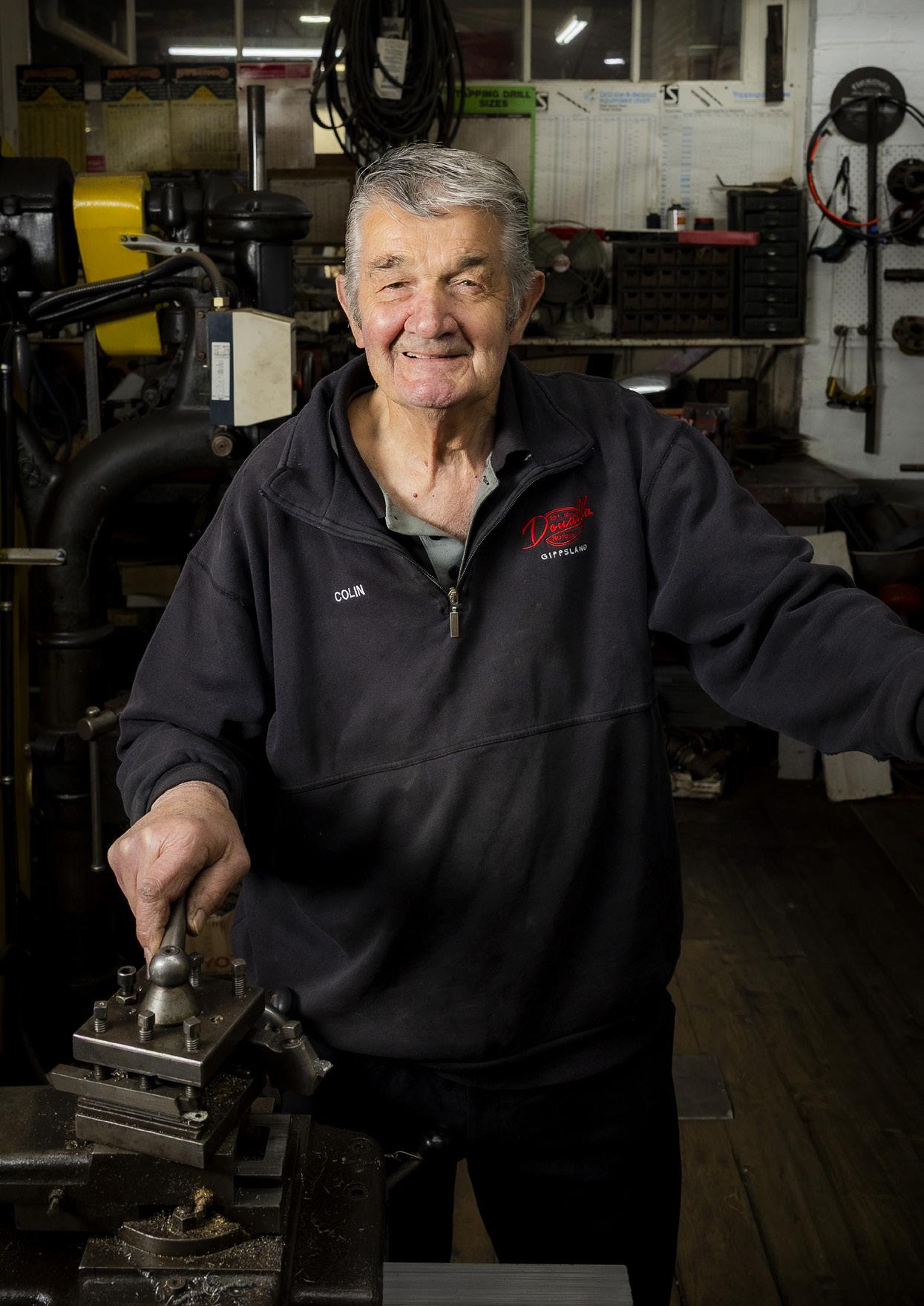
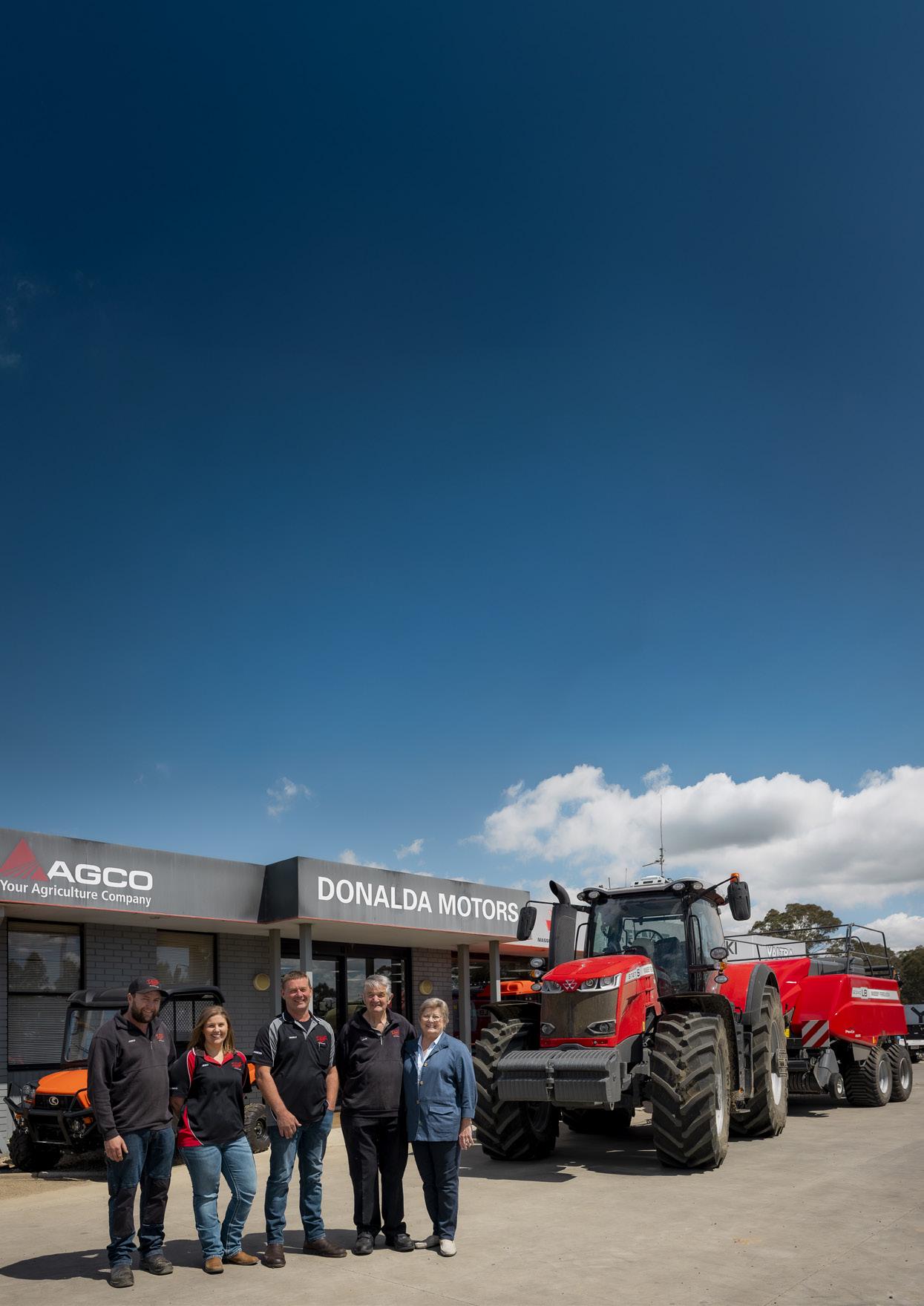
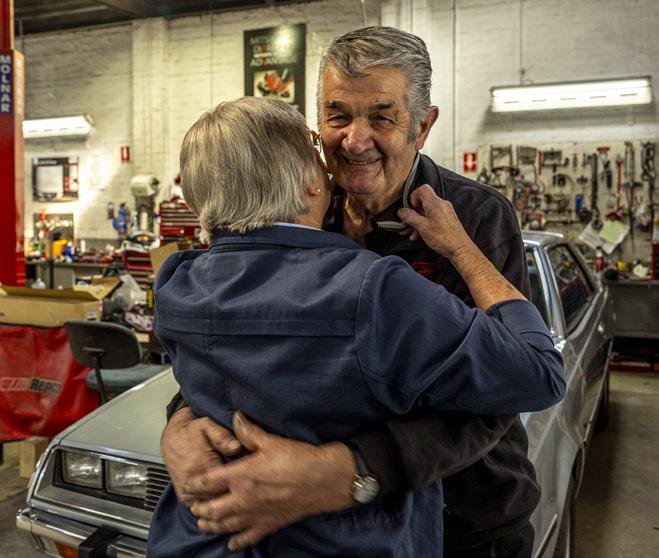
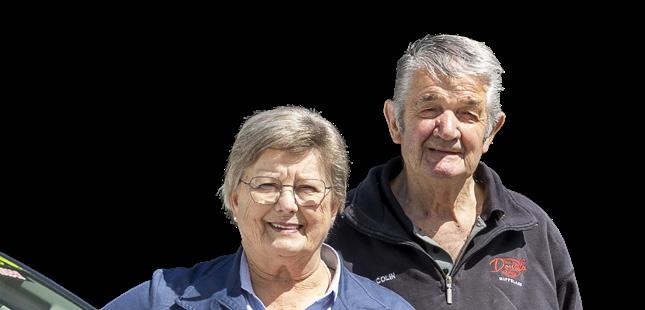
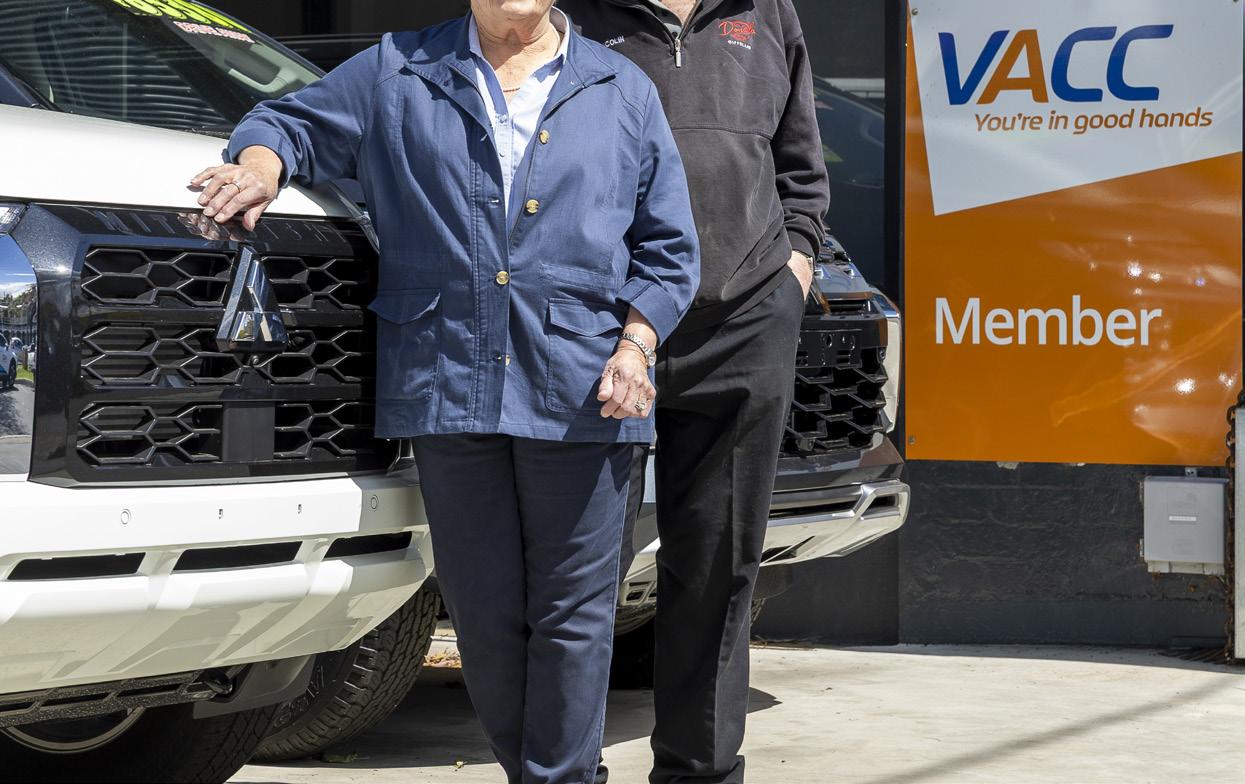
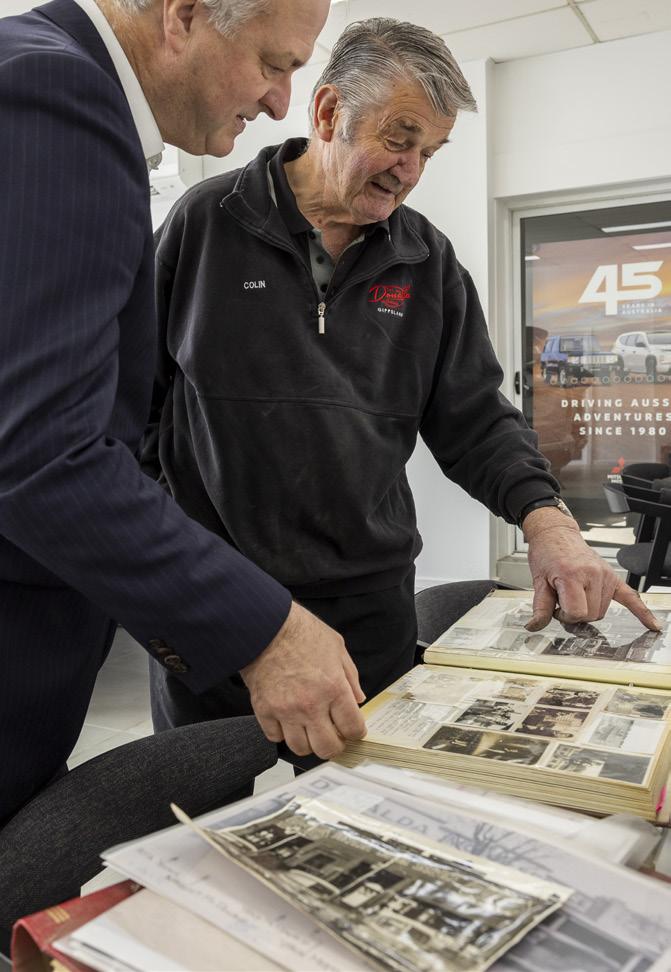
It's fitting that a business built on helping people keep their vehicles running has itself run so reliably for so long. And it's equally fitting that it remains in family hands, now overseen by Colin McDonald,
a man whose calm demeanour and problemsolving mindset perfectly embody the spirit that his predecessors established nearly a century ago. The story of Donalda Motors is, at its heart, a love story intertwined with automotive history. When Jock McDonald and his brother Naught left their jobs at Melbourne dealerships—Jock from a Dodge importer, Naught from a Rolls-Royce dealer— they carried with them the mechanical expertise that would become the foundation of their new venture. But it was Jock's decision to follow a young woman to this rural Gippsland town that set the entire trajectory of what would become one of Victoria's longest-serving automotive businesses.
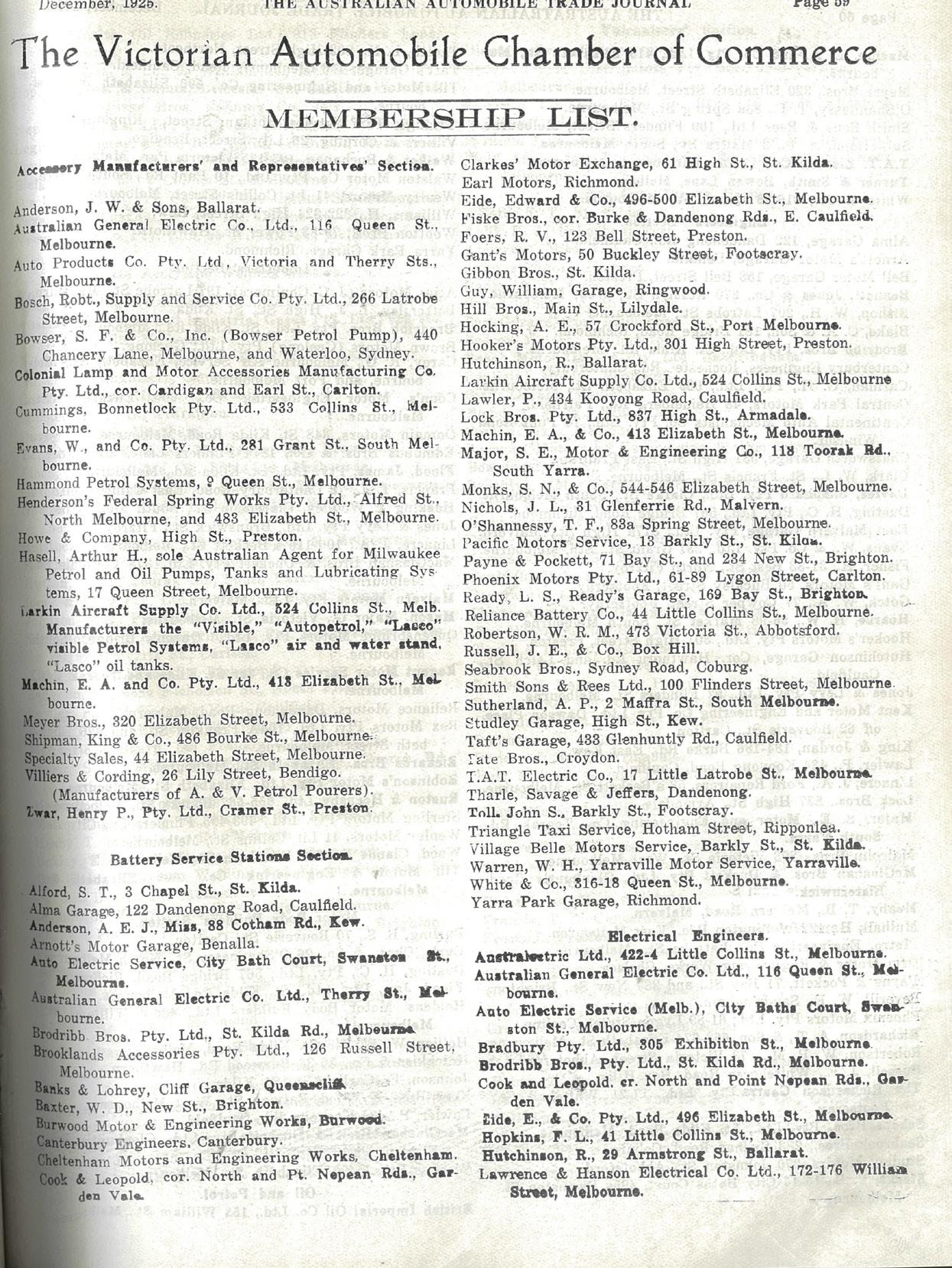
The timing couldn't have been better—or worse. Jock had joined the Victorian Automotive Chamber of Commerce back in Melbourne on September 23, 1925, as member number 7. Just months later, in February 1926, he relocated the operation to Maffra. The Great Depression would follow just four years later, a period so severe that it nearly crushed countless businesses, including Donalda. Yet through sheer determination, resourcefulness, and an unwavering commitment to their community, the McDonald brothers survived.
with the kind of reverence that comes from truly understanding where you come from. "They couldn't sell many cars, but people still needed their vehicles fixed. That's been our philosophy ever since: be indispensable to your community."
That philosophy has proven remarkably durable.
From installing Maffra's first petrol pump around 1926–27—a hand-operated contraption with a large glass bowl measured in gallons—to commissioning one of the region's earliest hydraulic hoists in
"The story of Donalda Motors is, at its heart, a love story intertwined with automotive history."
But if the Depression tested their resolve, the Second World War tested their very ability to keep the lights on. During the war years, six of Donalda's skilled employees joined the armed forces. Among them were Snowy McKeen and Colin Wilkinson, both taken as prisoners of war, and didn't return—a loss that haunted the business long after the fighting ended. Jack Slattery was also captured, though he returned home and continued working with his brother Jim after the war. Only Bill Withell and Norm Thompson returned to their regular roles at the workshop. The loss of such skilled hands at a critical moment could have crippled a smaller operation, but it forced the remaining team to innovate and adapt in ways that would shape the business for decades to come.
With petrol rationed and vehicles converted to run on "producer gas" generated from charcoal, Donalda pivoted to selling charcoal stored in bags— of all places—on the billiard tables. It was the kind of creative problem-solving that would define the McDonald brothers' approach to adversity.
"During the depression, the survival of Donalda Motors depended on repairs," Colin explains, referencing the business's own historical records
1928 (an innovation so novel that people drove from across Gippsland just to watch it lift a cow), Donalda has consistently been at the forefront of automotive innovation in rural Victoria.
Today, Colin McDonald is the keeper of that flame.
A skilled tool maker in his own right, Colin has gained respect throughout the industry not just for his technical expertise, but for his problemsolving approach to mechanical challenges. His work has been so impressive that Mitsubishi now shares some of his custom tools across their entire dealer network—a quiet recognition that speaks volumes about his capabilities.
"Colin's got this calm about him," says one long-time Donalda employee. "Nothing ruffles him. He'll look at a problem that seems impossible, think for a bit, and then figure out a solution that nobody else would have thought of. And he doesn't keep it to himself either—he's always teaching the younger blokes, wanting to mentor them. That's rare these days."
That mentoring spirit extends to apprentices throughout the region. Colin sees in young
"During the depression, the survival of Donalda Motors depended on repairs, they couldn't sell many cars, but people still needed their vehicles fixed."
mechanics the future of the industry and the continuation of standards that matter. He believes in training people properly, in passing on knowledge, and in showing them that automotive service isn't just about turning bolts—it's about taking pride in your work and respecting the customer's trust.
The family structure at Donalda reflects the complexities of succession in family businesses. Colin and his wife Jennifer have three children, but only one—their son Murray—works in the business. Yet the torch continues through the next generation: Jemma, Murray's daughter, has become instrumental in modernizing the business's front office operations. Her fresh perspective and willingness to embrace new systems have helped Donalda transition into the digital age without losing the personal touch that customers value.
Jennifer, meanwhile, manages the Donalda branch in Bairnsdale, extending the family's presence across the region and ensuring that customers in that community enjoy the same standards of service. It's a partnership—Colin and Jennifer running the operation, supported by Murray and Jemma—that represents a kind of modern family business model where roles are clearly defined, respect is mutual, and the shared commitment to the business supersedes individual ego. That commitment has been tested and refined over decades of industry change. When Mitsubishi became the franchise in 1981, it represented a shift from the Chrysler days that had characterised much of the previous era. But what truly distinguishes Donalda's role in the region is its position as a vital agricultural dealer. In the 1950s, when Ferguson tractors revolutionised farming through innovation and reliability, Donalda became the conduit for bringing this transformative technology to Gippsland's dairy and farming communities. Those years became some of the business's strongest, not because tractors are inherently more profitable, but because they're essential. A broken-down tractor during harvest season isn't just an inconvenience— it's a financial catastrophe for a farming family.
This reality has shaped Donalda's entire operational philosophy. The business maintains the capacity for after-hours farm machinery call-outs, recognising that agriculture doesn't operate on a nine-to-five
"When a dairy farmer's equipment fails at 2am during a critical period, Donalda answers the phone."
schedule. When a dairy farmer's equipment fails at 2 a.m. during a critical period, Donalda answers the phone. That commitment to the agricultural sector has become woven into the fabric of who they are. Today, Donalda continues to serve the farming and dairy industries that are the economic lifeblood of Gippsland. Colin understands that his workshop isn't just a repair facility—it's a lifeline to an industry that feeds the region.
"Jock moved here following his heart," Colin reflects. "But he stayed because he understood something fundamental: a dealership in a country town isn't about maximising short-term profits. It's about being there year after year, knowing your customers by name, understanding their needs, and delivering service that matters. When a farmer needs help, they need it now. That's what we do."
"TechTalk, that's real value. That's information that keeps us current, that helps us understand what's coming in the industry."
"Colin
sees in young mechanics the future
of the industry and the continuation of standards that matter."
That philosophy has guided recent business decisions too. In the past twelve months, Donalda has been transitioning customers from individual petrol accounts to Ampol cards—a modernisation move that improves financial tracking while maintaining the service-focused relationships that define the business. It's the kind of behind-the-scenes operational improvement that customers might not notice, but which reflects management thinking about the business's future.
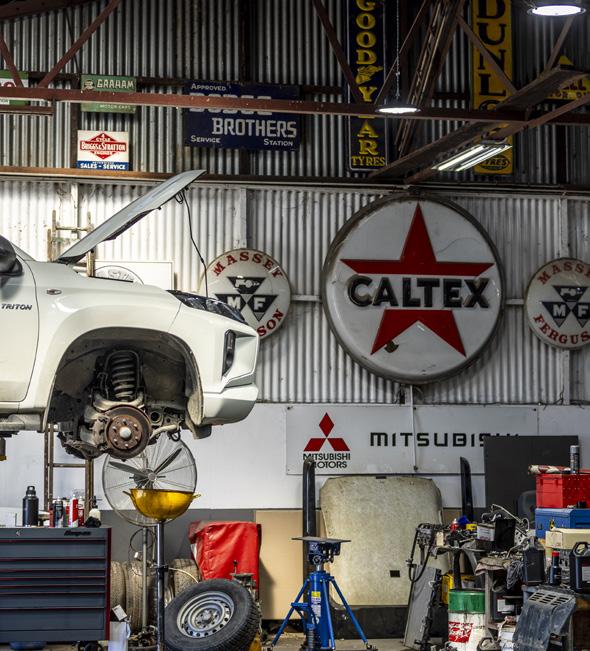
Jemma's work modernising the front office has been similarly crucial. She recognised that while the operational heart of Donalda needed to remain unchanged, the administrative systems needed updating for the digital age. Her efforts to streamline processes, improve customer communication, and professionalise the office have helped future-proof a business whose physical infrastructure dates back, in some cases, to 1919.
a billiard room complete with red gum blocks still supporting the space where nineteenthcentury gaming tables once sat—you're literally standing in automotive history. The workshop extension built in 1934, the twin service pits added in 1969, the separate showroom created in 1975—each addition represents a different era of automotive culture and customer expectation. Yet what strikes visitors most isn't the heritage; it's the sense that the business remains genuinely focused on its customers and its people. Staff turnover is low. Customers are loyal. The relationship with the local community runs deep and genuine, not manufactured.
Perhaps most tellingly, Colin has no plans to retire. When you ask him about
pump being installed in Maffra in 1926.
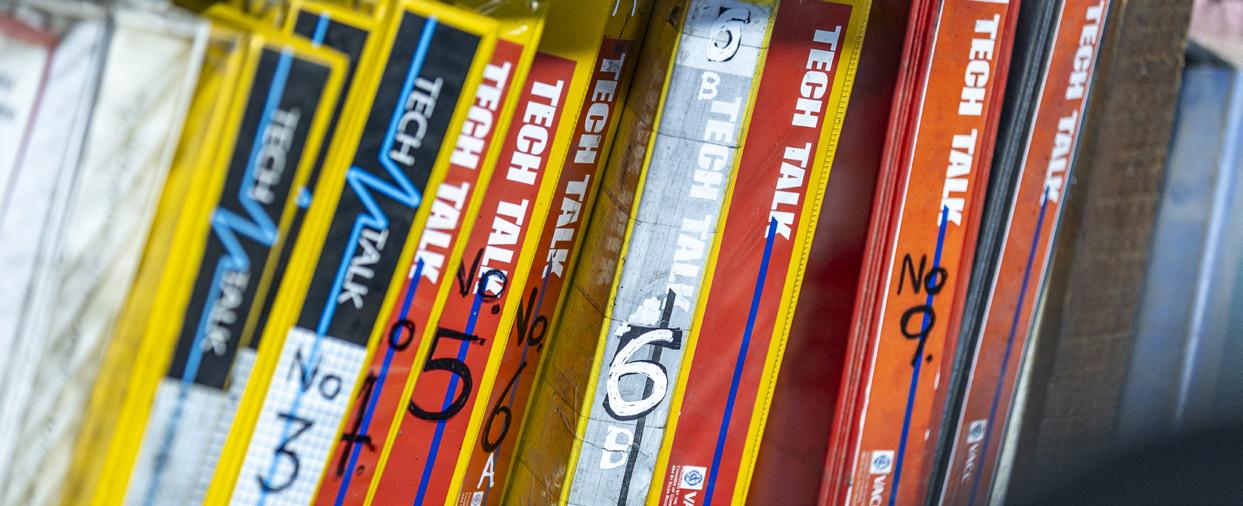
succession or slowing down, you sense something that's increasingly rare: a man who genuinely loves what he does. He loves problem-solving. He loves working with people. He loves Mitsubishi products and the partnership he's built with the brand. He loves that his family is involved. And he values—deeply values—the resources and connection that VACC membership provides. "TechTalk," Colin notes, referring to the VACC's technical publication. "That's real value. That's information that keeps us current, that helps us understand what's coming in the industry. After 100 years of membership, that connection still matters."
As Donalda Motor Service celebrates its centenary as a VACC member in 2025, that longevity speaks to something more than simple business survival. It speaks to a family's commitment to a community, to values that don't change with the market, and to the proposition that success isn't measured solely in quarterly earnings but in relationships built, problems solved, and people served well.
In an automotive industry increasingly dominated by corporate consolidation and online transactions, Donalda Motor Service remains defiantly, proudly local. The McDonald family—Jock, Naught, Colin, Jennifer, Murray, and Jemma—represents something that matters: the stubborn persistence of family business values in a world that constantly questions whether such things still have a place. A century of membership to the VACC isn't just a business milestone. It's evidence that some things— integrity, service, community commitment, and the kind of quiet excellence that doesn't announce itself— still endure. And in Maffra, that's the kind of legacy that keeps running, year after year, like a well-tuned engine.
Jock's first purchase, a vice in 1919.
Japanese Quality to the World
EXEDY offers a comprehensive range of automotive components, spanning clutches, steering components and Aisin auto parts. Our clutch line boasts high-performance products, catering to various vehicle types and driving needs, ensuring smooth engagement and durability. In steering components, EXEDY provides a diverse selection of parts manufactured by the famous Japanese brand 555 designed for optimal handling and responsiveness. Additionally, our partnership with Aisin enables access to a wide array of auto parts ranging from hydraulic components to engine cooling systems, renowned for their quality and reliability. Overall, EXEDY delivers top-tier solutions across these crucial automotive systems ensuring efficient and reliable performance.
Half a century of heartfelt service
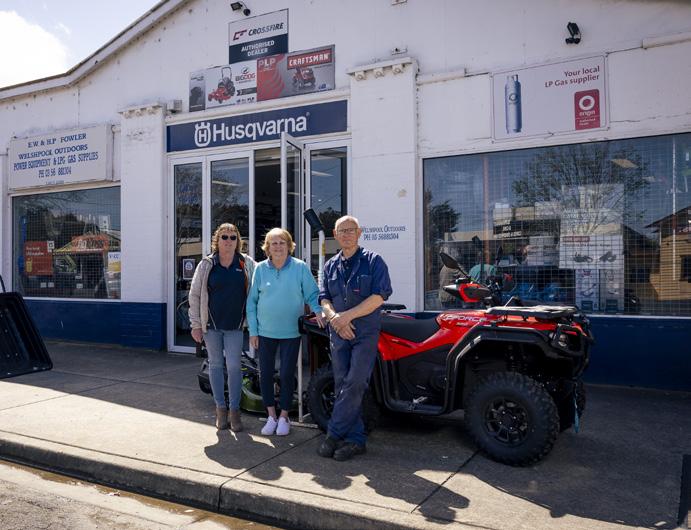
THE WELSHPOOL OUTDOORS STORY
In the quiet South Gippsland town of Welshpool, there’s a workshop that hums with purpose. For 50 years, Welshpool Outdoors has been the backbone of the local community, the place where farmers know their machinery will be fixed right, where locals trust their equipment is in capable hands, and where Ed Fowler still personally delivers gas bottles to families down the road.
operation—but it built something authentic. Their daughter Tania eventually joined the business, making it truly a three-generation commitment to Welshpool.
Seventeen years ago, Ed and Helen made another significant decision: they moved into a fully equipped modern workshop designed to deliver professional-grade service. The upgrade reflected their philosophy, invest in the best tools and training so customers get the best results.
It’s a story that reminds us why independent automotive businesses matter so much to rural Australia.
Ed Fowler was working brutal hours in someone else’s business when he had an epiphany. Why pour everything into building someone else’s dream? So when the opportunity arose to purchase a service station in Welshpool in 1974, he and his wife Helen took the leap. Helen, who’d grown up in nearby Port Welshpool, saw the potential. Neither imagined they’d still be there nearly half a century later.
“We thought we’d only stay a few years,” Ed might say with a knowing smile. Plans change when you’re doing something meaningful.
In those early days, the boundary between business and family life was deliberately blurred. They lived out the back of the original workshop, their personal and professional worlds intertwined in the way only true family businesses can achieve. It wasn’t always
Beyond mechanical work on bikes and ride-ons, the workshop is equally equipped to handle the outdoor equipment that defines rural life. Generators, chainsaws, trimmers, and all the machinery that keeps properties maintained, Welshpool Outdoors sells and repairs them all. But perhaps one of their most critical roles they play is helping to keep the dairy industry running.
This isn’t corporate speak. Across South Gippsland, farmers depend on the massive fleets of quad bikes and outdoor machinery that keep dairy operations functioning. Without reliable, expert mechanical support, those farms simply can’t operate. Welshpool Outdoors isn’t just a service provider; they’re a vital artery in the regional economy. When equipment breaks down during calving season or critical periods, Ed, Helen, and Tania are the people who make it right. What’s remarkable about Weshpool Outdoors isn’t just the variety of services they offer or even the professional calibre of their work. Behind the scenes, they’ve built a dedicated team that shares their passion for getting things right. These aren’t just employees clocking in hours, they’re locals who understand that when a piece of equipment breaks down, a farmer needs it back fast. That shared commitment to excellence is what transforms a family business into a community institution.
It’s their collective dedication to being present, to being invested, to being part of Welshpool’s fabric rather than extracting value from it, that truly sets them apart.
Fifty years ago, Ed and Helen took a chance on themselves and their community. Today, as they celebrate their 50 year VACC membership milestone, they represent something increasingly rare: a family business that’s not just survived but thrived by staying true to simple principles, excellent work, fair dealing, and genuine care for the people they serve.
Welshpool is fortunate to have them. Australia needs more stories like this.
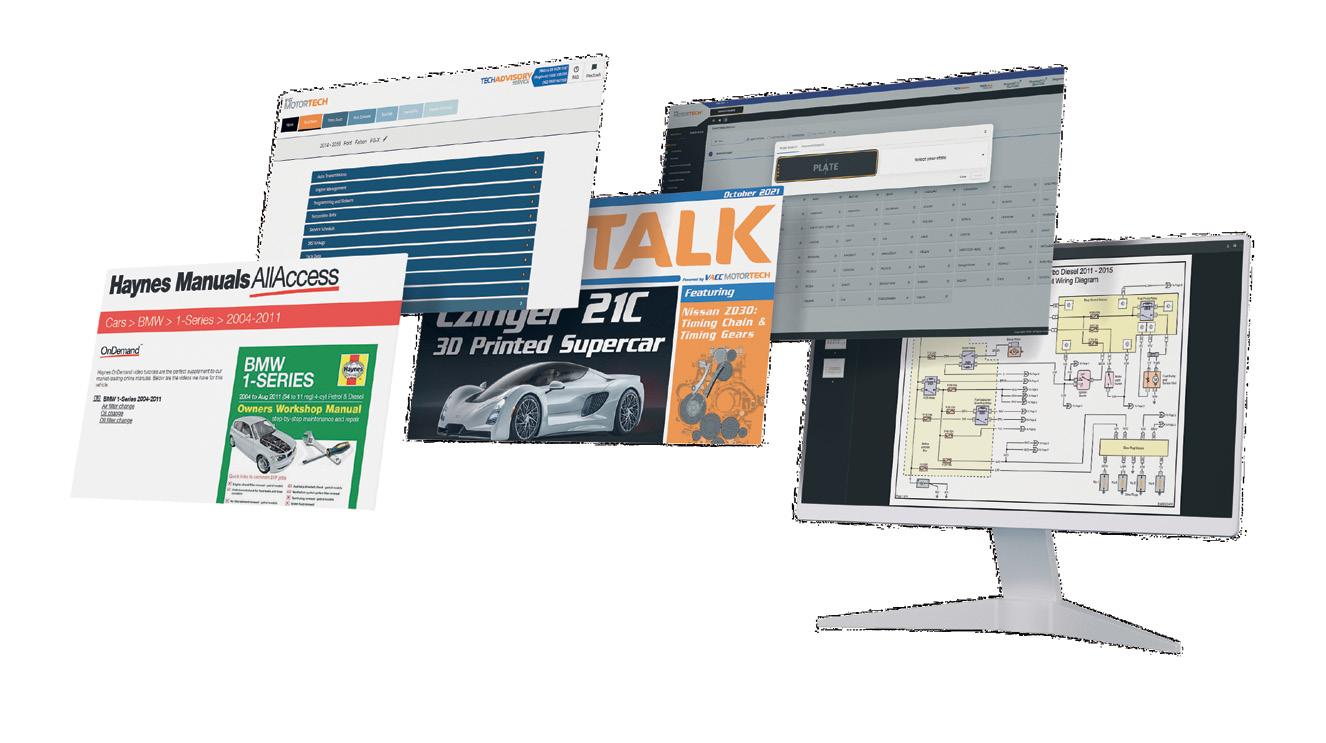
Access to multiple online technical information systems, including the all-new Rego Look-up feature
Access to VACC’s Melbourne-based TechAdvisory Service
Access to VACC’s TechTalk magazine
Stylemaster Panels
Where craftsmanship meets family legacy
Walking through the doors of Stylemaster Panels on Murphy Street in Richmond, you’re immediately greeted by something rather special—a striking mural that tells the story of three generations of automotive excellence. It’s not just decoration; it’s a visual testament to a family business that’s been shaping the local automotive landscape for more than six decades. Phil Stewart stands amidst the organised chaos of the workshop with the easy confidence of someone who’s spent a lifetime in the industry. As owner of Stylemaster Panels, he’s not just maintaining a business; he’s stewarding a legacy that began when his father, Keith Stewart, opened the doors on Burwood Road in Hawthorn back in 1959. Those were different times, with humbler beginnings, but the commitment to quality was every bit as unwavering then as it is today.
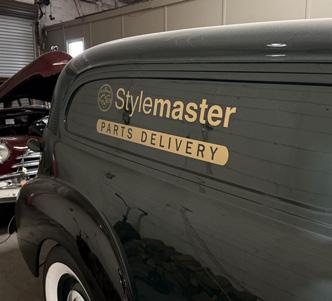
The business name itself pays homage to the Chevrolet Stylemaster—a nod to the classic American car that captivated a generation, and one that Phil’s passion for automotive heritage has kept alive. Fittingly, there are still some pristine Stylemasters that now reside in the workshop, tangible reminders of the golden age that inspired the family’s venture into panel beating all those years ago.
Phil’s journey into the family trade began in 1967 when he started his apprenticeship as a panel beater—or auto body technician, in modern parlance. “You learn the craft properly,” he reflects, “or you don’t learn it at all.” That philosophy has never wavered. When the business grew beyond its original premises, the move to Murphy Street in 1972 wasn’t about expansion for expansion’s sake; it was about ensuring they could
continue serving their clientele with the same meticulous attention that had built their reputation through word-of-mouth alone. What’s particularly noteworthy about Stylemaster Panels is how naturally the baton has passed between generations. Today, Phil works alongside his son Ben and daughter Emma, both of whom serve as managers. Ben represents the third generation of hands-on automotive expertise in the family, bringing a different skill set that’s proved invaluable. After fifteen years as a qualified auto body spray painter and seven more managing the office side of operations, Ben has become instrumental in balancing the traditional craftsmanship his grandfather established with the modern business practices a thriving enterprise demands.
The relationship between Phil and his children embodies something increasingly rare in today’s business landscape—a genuine partnership rather than a hierarchical hand-over. Emma and Ben aren’t simply inheriting a business; they’re actively shaping its future whilst honouring its past. It’s this dynamic that’s kept Stylemaster Panels relevant and respected within Richmond’s automotive community, even as the industry itself has transformed around them.
Fifty years as a VACC member speaks volumes about consistency and contribution. It’s not a milestone achieved by accident or good fortune alone. It reflects the choices made every single day—to maintain standards when cutting corners would be easier, to invest in people and training, to remain embedded within the local community rather than chasing trends toward the city’s outskirts.
The mural in their reception serves as a daily reminder that this isn’t simply a body repair shop. For the Stewarts, Stylemaster Panels represents something deeper: a commitment to craftsmanship, a dedication to their customers, and a tangible link between past and future. In an industry often characterised by rapid consolidation and brand homogenisation, the very existence of a multi-generational family business like this is something worth celebrating.
As Phil surveys his workshop— where Ben oversees technical excellence and Emma manages operations—there’s an unmistakable sense of continuity. The family that started with humble beginnings on Burwood Road half a century ago has evolved without losing its soul. That’s what true legacy looks like.
“...the commitment to quality was every bit as unwavering then as it is today.”
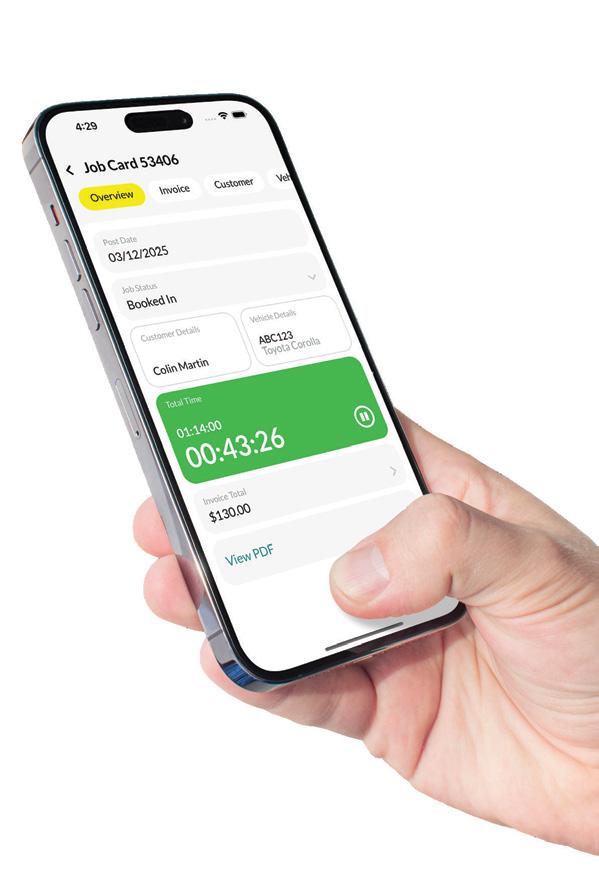
Mechanical workshop software made easy
Keeping you, your team and your customers together on the same page with centralised bookings, invoicing, time keeping, job history and customer messaging - all in one place.
Smarter tools, better results
Vehicle Inspections
Instant Technical Data
Import/Export Data
Business Intelligence & Reporting
Customer Portal
Stock Management
Book from your Website
Automatic SMS &
Email Reminders
Powerful Integrations & Searching Quick invoicing
Full workflow on Mobile
Registration Lookup
Streamlined Payments
3
* Conditions apply
Five decades of excellence
A pillar of Melbourne's automotive community
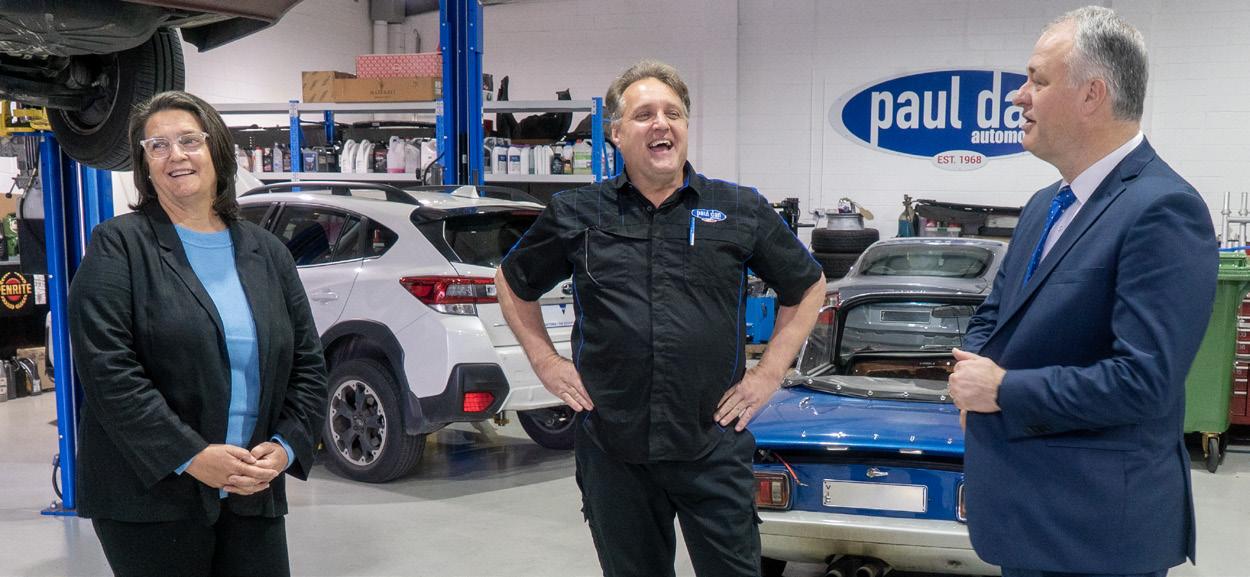
There's a particular kind of trust that builds over fifty years. It's the sort that doesn't advertise itself loudly, but instead shows up quietly in the small gestures – a mechanic ringing a customer mid-outback adventure to troubleshoot a problem, or taking the time to show someone exactly what's gone wrong with their vehicle whilst it's on the hoist. At Paul Dan Automotive in Nunawading, this trust isn't accidental. It has been carefully cultivated across three generations and over five decades of dedicated service to Melbourne's automotive community.
The story begins in 1968, when Matt and Tanya's father established the workshop with a vision that's clearly stood the test of time. What started as a single operation has evolved into a second-generation business, and now, with Matt's son potentially joining the fold, it's poised to become a third-generation family enterprise. That kind of continuity in an industry as dynamic as automotive servicing speaks volumes. It suggests not just survival, but genuine commitment to craft and customer care.
Located at 23 Metropolitan Avenue in Nunawading (having recently relocated from their long-time Hawthorn base), Paul Dan Automotive has built a reputation particularly
The workshop's service menu reads like a masterclass in comprehensive automotive knowledge. They're licensed roadworthy testers, they handle both standard and performance modifications, and they've got the kind of breadth of knowledge that means customers can genuinely trust them with whatever their vehicle throws up. But what truly sets Paul Dan Automotive apart is their approach to customer service. This isn't a workshop that simply fixes what's broken and sends you on your way. Matt and Tanya have cultivated an environment where customers, whether seasoned enthusiasts or those with minimal mechanical knowledge, feel genuinely welcomed and respected. The team takes time to explain problems, discuss options, and involve customers in decisions about their vehicles. For many, this accessibility and willingness to take the "extra mile" represent the most valued aspect of the service.
The commitment extends well beyond the workshop floor. Customers describe feeling comfortable ringing in with even the smallest concern, knowing it won't be dismissed or overcharged. Long-term clients praise Matthew for his availability outside regular hours, meticulous record-
checks, thorough diagnostics, and careful follow-up mean customers are never left wondering whether a problem has truly been resolved. This reliability has built genuine loyalty. Some customers have entrusted their vehicles to Paul Dan Automotive for over fifty years themselves – a remarkable testament to consistency and trustworthiness. Whether it's a customer seeking reassurance about their vehicle's health, or long-distance travellers needing confidence in their car's reliability, or families and business owners alike, Paul Dan Automotive has become the kind of workshop people return to not because they have to, but because they genuinely want to. What makes Paul Dan Automotive a true pillar of the local industry isn’t just their considerable technical capability—it’s their people-first philosophy, built on transparency, genuine care, and the understanding that in automotive servicing, the relationship matters as much as the repair. After fifty years, Matt and Tanya have kept something precious alive: the neighbourhood workshop that knows you, remembers your car, and genuinely cares about doing right by you. That spirit is reflected in their team too, with long-standing staff like Adam—who joined in 2002 as a
On-street EV charging trial Charging forward
Merri-bek—formerly the City of Moreland—is a municipality in Melbourne’s inner north, covering suburbs such as Brunswick, Coburg, Pascoe Vale, Glenroy and Fawkner. Close to the CBD and home to some of Victoria’s most densely populated neighbourhoods, many residents rely on street parking— making the area an ideal testing ground for new EV-charging solutions.
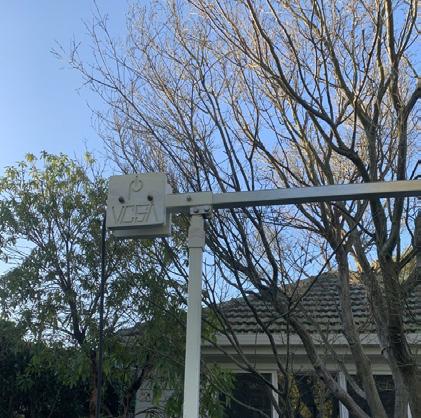
Merri-bek City Council has launched an innovative on-street electric-vehicle (EV) charging trial aimed at supporting residents who cannot install chargers at home. Instead of using public car parks or large charging hubs, the trial allows participating households to install a slim vertical pole on their property fitted with a retractable horizontal boom. When extended, it safely reaches a vehicle parked on the street; when not in use, it retracts to more than 2.5 metres, keeping the footpath clear. The system is installed by an approved provider and each site must meet strict safety and planning criteria, including pedestrian-access standards and being
located on Council-managed roads. Residents cover installation and permitting costs, and the setup does not offer exclusive or reserved parking rights. The aim is to provide home-style charging access without altering the nature or fairness of kerbside parking.
This trial responds to one of the biggest barriers to EV adoption in dense suburbs: the lack of off-street parking. Many homes in the area have small lots, narrow frontages or heritage constraints, making traditional home charging impossible. While the municipality already hosts public charging points, the Council recognises that convenient, nearhome charging remains essential to accelerating EV uptake.
For the automotive industry, this shift signals continued growth in EV ownership across inner-Melbourne. Workshops are already experiencing increased demand for battery diagnostics, high-voltage safety procedures and software-based maintenance. Independent repairers,
tyre specialists and smash repairers may also see more EV-related work as the local fleet modernises.
Throughout the trial, the Council will assess safety, community feedback, parking behaviour and how well this approach integrates into existing streets. The findings will help determine whether a broader rollout is viable and provide insights for other Victorian councils exploring similar challenges.
Merri-bek’s trial offers a practical, low-impact model for enabling EV charging in older, space-constrained suburbs—demonstrating how thoughtful design can help remove one of the final barriers to electric-vehicle ownership in Australia’s inner cities.
Cramp Bros Bodyworks
A Hobart legacy that still shines
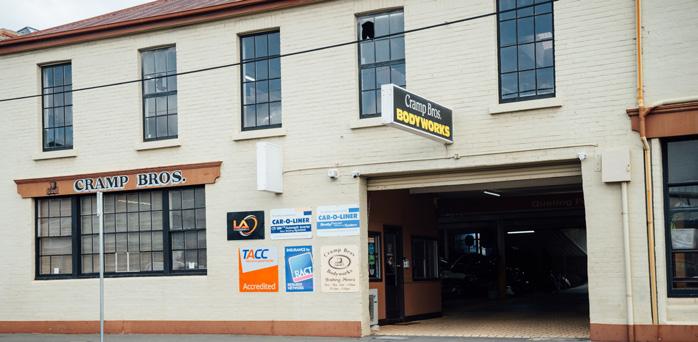
On Harrington Street in the heart of Hobart stands one of Australia’s longest continually operating automotive body repair and refinishing workshops — Cramp Bros Bodyworks. Established in the late 1890s as a carriage works, this heritage-listed site has evolved with Tasmania’s transport story, transitioning from the era of horse-drawn carriages to the modern motorcar. Today, it remains a living symbol of craftsmanship, innovation, and Tasmanian pride.
From carriages to cars
The Cramp brothers built their reputation on fine workmanship and integrity — values that have guided the business for more than a century. The rhythmic hammering of wheelwrights once filled the workshop; now it’s the hum of spray booths and precision repair tools. Through wars, depressions, and waves of technological change, Cramp Bros Bodyworks has never closed its doors — a rare feat in Australia’s automotive history.
A family legacy continues
In 2018, Jessica Roland took over ownership, carrying forward the legacy established by her parents, Brian and Petrina White. The Whites modernised the business through decades of change, investing in training, technology, and customer service. Their leadership ensured the business remained both innovative and community-minded — values that Jessica and her husband, Simon,
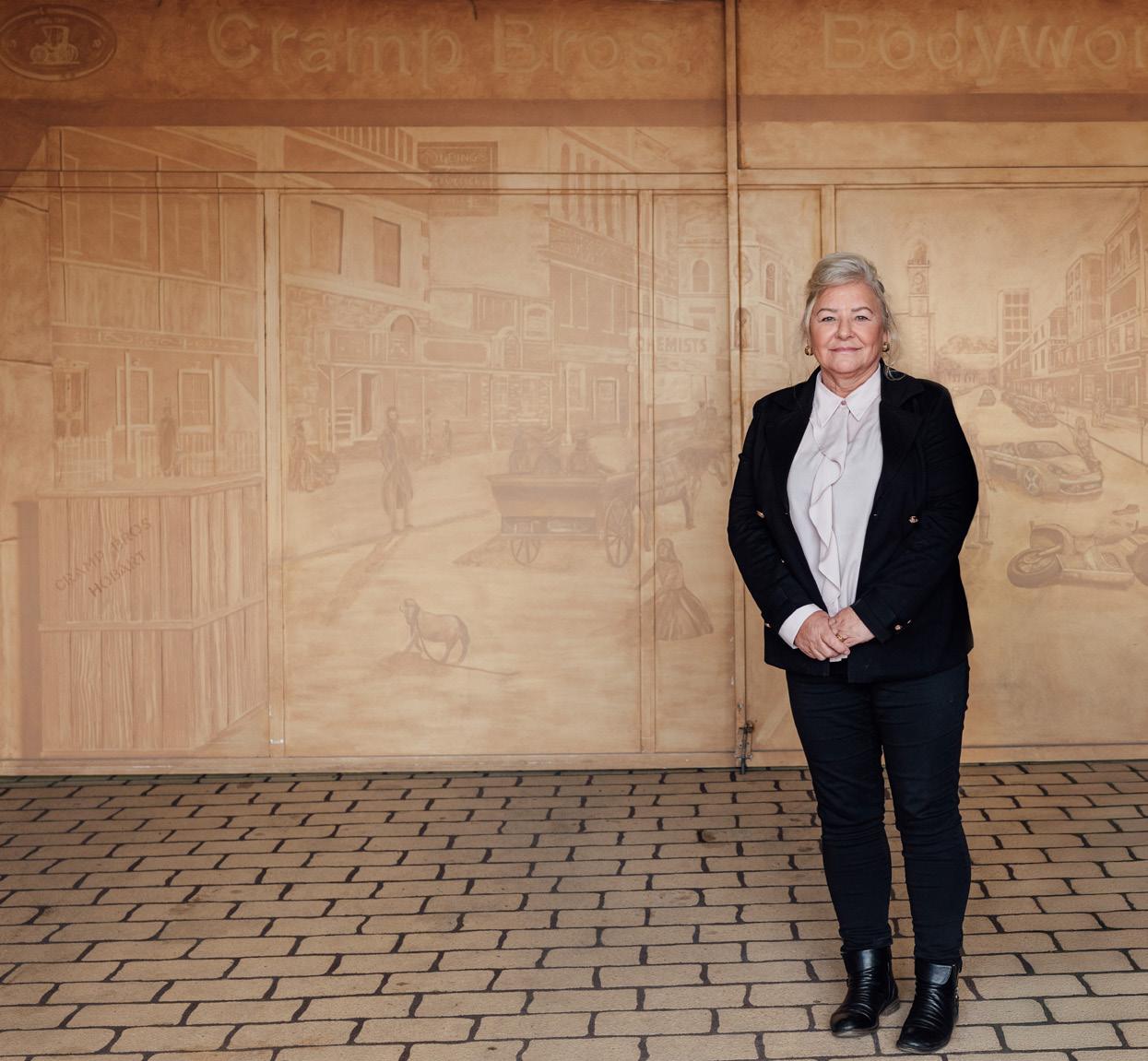
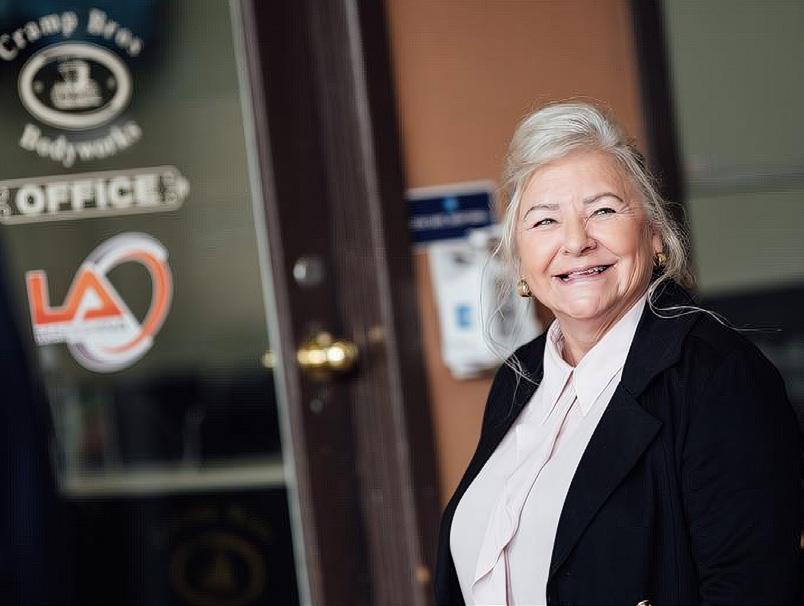
Petrina White stands in front of the striking mural on Cramp Bros Bodyworks’ front doors, which celebrates Hobart’s motoring heritage and honours the legacy of the White family.
now embody as they steer the next generation of the enterprise.
A key part of that legacy is Cramp Bros’ dedicated workforce. Many of the team have been with the business for more than a decade, some far longer — a testament to the workshop’s culture of respect, stability, and shared pride in workmanship. This long-standing tenure reflects Jessica’s commitment to investing in her staff and creating an environment where skill, loyalty, and care are recognised and rewarded. “Our family has always believed in doing things properly,” Jessica says. “We’ve never chased the cheapest way, only the right way. That’s what keeps our customers coming back.”
The workshop’s guiding philosophy — “Work up to a standard, not down to a price” — remains central to every repair, restoration, and customer interaction. It is a principle that has earned Cramp Bros Bodyworks generations of loyal customers and a reputation for quality that extends well beyond Hobart.
A mural with meaning
The workshop’s impressive façade tells its own story. After Mr White’s passing
in May, 2006, a local Hobart artist was commissioned to paint a mural across the expansive front doors. The striking artwork captures both the breadth and depth of automotive history and the intertwined heritage of Hobart itself. It depicts the city’s evolution — from the days of carriages and cobblestones to the modern skyline.
The mural has become a landmark in its own right — a tribute to the White family’s contribution to Tasmanian industry and to the endurance of a business that has served its community for more than a century. Locals often pause on the street to take in the scene, a piece of public art that celebrates both craftsmanship and continuity.
Innovation through La Macchina
Jessica and Simon have also expanded the business with La Macchina, an innovative workshop and creative automotive repair space, inside Cramp Bros Bodyworks. Today, La Macchina is a beacon of their evolving enterprise — blending restoration expertise with contemporary automotive design, technology, and culture. It is a space that celebrates passion for cars while pushing the boundaries of what a modern workshop can be.
The
spirit of Hobart
For Jessica, running Cramp Bros Bodyworks is as much about stewardship as it is about business. “Every day, I’m reminded of the incredible history within these walls,” she says. “But I’m equally motivated to make sure we build something that future generations can be proud of.”
Cramp Bros Bodyworks stands today as a rare fusion of past and present — a workshop where history, artistry, and innovation meet. From carriages to cars, and from heritage to modernity, it continues to embody the spirit of Hobart: resilient, skilled, and proudly Tasmanian.
Tasmania’s automotive training gets major boost
Tasmania’s automotive training gets major boost with new $2.35M Cambridge facility.
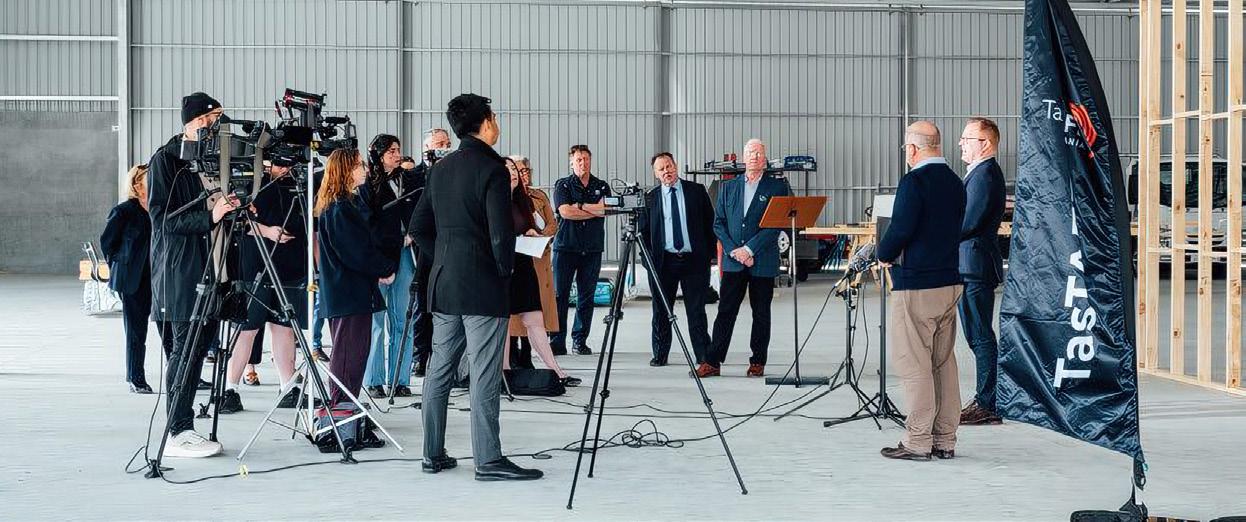
A strategic partnership between TasTAFE and the Tasmanian Automotive Chamber of Commerce (TACC) is delivering a significant win for the state’s automotive industry: a new, purpose-built $2.35 million training centre in Cambridge that will ensure Tasmania’s skills pipeline remains robust.
The announcement comes at a critical time for the sector. Following major flooding damage to TasTAFE’s automotive training facility at the Hobart Campbell Street campus in late 2024, which rendered the facility unfit for use, the new Cambridge Industrial Park location represents both recovery and reinvestment in vocational automotive education.
A modern facility designed for industry needs
The facility has been secured through a long-term lease agreement and represents more than just a replacement—it’s a purpose-built training environment designed in close collaboration with industry. Once
operational, the centre will feature an industry-standard automotive workshop complete with seven hoists (including a four-post hoist for wheel alignment), tyre fitting and balancing areas, and a layout that mirrors professional service centres. The fit-out will also include three flexible classrooms with AV technology, modern all-gender amenities, dedicated office spaces, and ample parking for staff and learners.
Interior fit-out work is expected to be completed within the coming months, with the facility ready to welcome learners studying Certificate III in Light Vehicle Mechanical Technology in Semester 1 of 2026.
“Today’s announcement represents a positive step forward for TasTAFE’s automotive training in Tasmania,” said TasTAFE Interim CEO, Will McShane. “It reflects a commitment to innovation and industry collaboration, ensuring we equip our learners with the best
possible skills and opportunities to build successful careers.”
More than just a workshop
For TACC, the new facility represents something deeper—a commitment to building Tasmania’s automotive future.
TACC CEO Peter Jones emphasised the broader significance of the investment.
“Apprentices need certainty, employers need confidence, and Tasmania needs skilled technicians to keep the state moving. Securing Cherokee Drive is a major step forward, and a strong outcome for industry and training in the south of the state,” Jones said.
“Automotive is not just another sector—it is essential to Tasmania’s economy. Nothing moves without skilled automotive technicians, and this facility will keep the skills pipeline alive.”
Jones also highlighted the philosophical importance of investing in training.
“TACC has always believed that skills are built, not borrowed. That is why investing in training matters. Apprentices are not just learning today’s technology; they are the people who will own the workshops of tomorrow.”
Expanding the vocational offering
Beyond the initial Certificate III program, the Cambridge facility will host additional vocational education and training courses throughout 2026. These will include motorcycle, mobile plant machinery, heavy vehicle, outdoor power equipment, automotive electrical, and electric and hybrid vehicle technology qualifications.
Industry unity made this possible
The delivery of this facility showcases what collaborative action can achieve in Tasmania’s automotive sector.
TACC and TasTAFE acknowledge the strong collaboration that
• Minister for Skills and Workforce
Growth Felix Ellis, his office and staff, for championing skills development and supporting the project
• Clarence City Council and Planning Minister Kerry Vincent, for facilitating the approvals and supporting the initiative
• Skills Tasmania, for their ongoing collaboration on workforce development in the automotive sector
• The Stewart Family, for rapidly making the Cherokee Drive premises available
Training equipment suppliers, for prioritising Tasmania’s needs and delivering industry-standard facilities Automotive employers in the south, for their resilience and ongoing support of apprentices
TasTAFE automotive teaching
teams across the north and south, for adapting under pressure and maintaining educational excellence
Tasmania’s automotive apprentices, for their patience, commitment, and determination throughout the transition
The infrastructure details
The Cambridge facility has been designed with operational efficiency and safety at its core. It features:
Automotive Workshop: Industrystandard space with seven hoists, including a four-post hoist for wheel alignment, tyre fitting and balancing areas, and a layout that mirrors professional service centres
Teaching Spaces: Three flexible classrooms equipped with AV technology and adaptable furniture for varied teaching styles
Amenities: Modern, all-gender facilities, student and staff breakout areas with kitchenettes, and dedicated office space
• Storage: Mezzanine-level storage and secure containment for flammables and hazardous materials
Safety and Accessibility: Clear pedestrian and vehicle access, 47 parking spaces, and a site layout designed for operational efficiency and safety
This facility represents not just a recovery from the 2024 floods, but a strategic investment in Tasmania’s automotive future—one that will keep the state’s essential skills pipeline flowing for years to come.
For more information about apprenticeship opportunities in automotive trades, visit TasTAFE or contact the Tasmanian Automotive Chamber of Commerce.
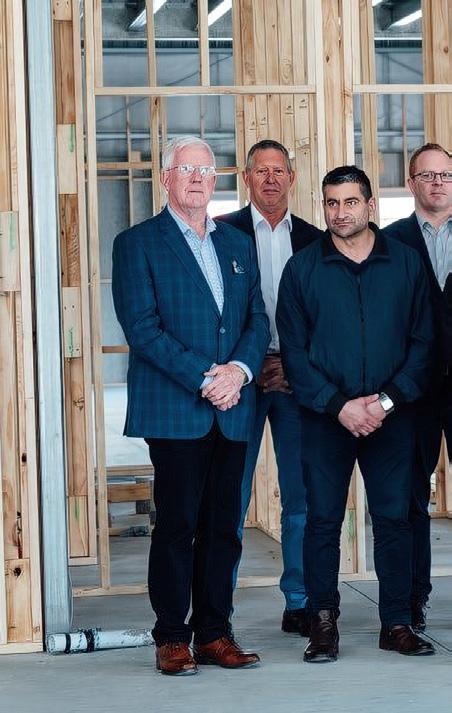
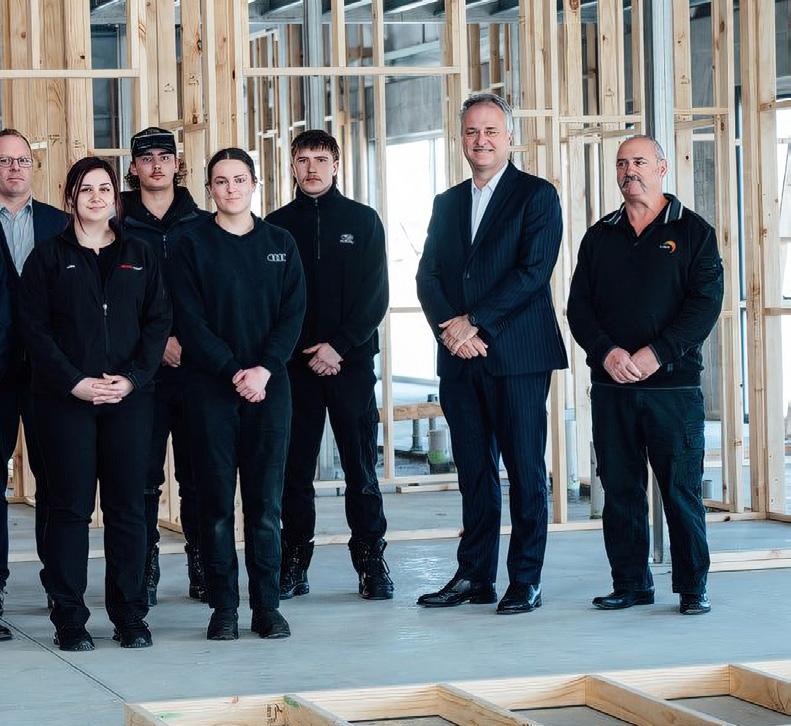
Left: Errol Stewart, Bruce McIntosh and Peter Jones with TasTafe staff and TACC auto apprentices at the opening of the new facility.
Driven by service.
The Industry SuperFund for the motor trades.
CareSuper is the Industry SuperFund that has been supporting the motor trades for over 30 years. From our roots as MTAA Super we’ve been by your side as the industry’s grown and evolved. Nationally we work with over 615,000 members and employers of all sizes to deliver better retirement outcomes—a responsibility we take very seriously.
As a profit-to-member fund, we operate solely to benefit members, not shareholders. That means we’re committed to o ering innovative products, expert advice and a genuine focus on your financial fitness and your overall wellbeing. We have a unique active investment strategy which helps deliver a smooth ride and strong long-term returns for members.
Whether you're just starting out, growing your career, or planning for retirement, CareSuper is here to support you every step of the way, with expert guidance and a commitment to caring for your future.
Learn more
One Voice, Real Impact
United MTA Advocacy drives action on illegal e-bikes
Australia is finally seeing meaningful progress on illegal, high-powered e-bikes – and it hasn’t happened by chance. It is the result of a united advocacy effort led by the Motor Trades Association of Australia (MTAA) and state Motor Trades Associations across the country.
Together, they have pushed for clear rules, fair enforcement, and nationally consistent standards to protect riders, families, pedestrians, and legitimate automotive businesses.
For more than a year, MTAs have warned governments that the rapid rise of modified and noncompliant e-bikes, particularly in the food delivery sector, has created a serious safety risk. Many of these machines resemble e-bikes,but operate more like unregistered motorbikes capable of high speeds, with no licensing, insurance, safety checks or accountability.
Workshops across Australia have reported the same pattern: unsafe, home-modified devices entering their workshops or appearing on roads, often with no clear legal guidance on how they should be treated. At the same time, legitimate bicycle retailers, mobility businesses and repairers have been losing out to a market flooded with cheap, unsafe imports.
Victorian Automotive Chamber of Commerce (VACC) CEO Peter Jones was an early and vocal leader on the issue, warning that public safety was being compromised and calling for decisive action.
“These aren’t harmless bicycles. Many of these are motorbikes – and they must be registered, insured and meet the same road rules as everyone else.”
– Peter Jones, VACC CEO
United advocacy drives action
The strength of this campaign lies in the alignment of messaging across every state MTA. Each association shared the same core priorities with ministers, policymakers and government departments across Australia, reinforcing one voice on behalf of members.
MTAs called for a practical and enforceable framework that supports responsible riders and retailers, while ensuring unsafe vehicles and unregulated modification practices are stopped at the source. With this unified pressure, governments are now actively reviewing import controls, e-bike classification, safety standards, and compliance mechanisms to help keep communities safe.
“We all support innovation, but it has to be safe and sustainable. Clear national standards will give legitimate businesses confidence to invest in the technologies of the future, while protecting consumers today.”
– Darrell Jacobs, MTA SA CEO
Queensland has also maintained a firm stance on the need for tougher laws and accountability to protect the public.
“We need stronger laws and stronger penalties. Illegal e-bikes are endangering riders, pedestrians and other road users.”
– Rod Camm, MTAQ CEO
MTA WA has been equally strong in its advocacy, highlighting the urgent need to close modification loopholes that allow backyard conversions to slip through regulatory cracks.
“In a backyard with a simple kit, an e-bike can be turned into an unregistered motorbike – that loophole must be closed.”
– Rhona Varkevisser, MTA WA Interim Group CEO
A
win for members, riders and communities
This outcome matters for everyone: for families walking to school, for delivery riders who deserve safe equipment, and for members who bear the consequences when unsafe vehicles operate outside the law.
The united MTA voice showed that when industry stands together, state by state, backed by a national strategy, governments respond.
Further reforms are expected through 2025 as federal agencies progress work on import controls, classification, safety standards and nationally consistent road rules.
A safer, fairer landscape is being built – and it happened because MTAs worked as one.
The four national reform priorities
The MTAs have advocated for four core reforms to protect members, riders and communities:
Stop illegal high-powered imports at the border
Ban tampering and unsafe modification kits
Treat high-performance devices as motor vehicles for licensing, insurance and safety
Apply nationally consistent road rules and penalties across all states
As Australia continues to embrace new forms of mobility, the role of MTAs remains clear: to champion innovation that is safe, fair and sustainable for everyone. By working together and standing firm on behalf of members, the MTAA and state MTAs have shown what united industry advocacy can achieve.
The journey isn’t over, but this progress proves that when the automotive sector speaks with one voice, real change follows.
CoolDrive builds for the future
A new era in automotive distribution
CoolDrive Auto Parts has broken ground on a state-of-the-art head office and national distribution centre in Boronia, Victoria — a project that signals both its rapid growth and longterm commitment to the Australian automotive aftermarket. Scheduled for completion in October 2026, the purpose-built site will consolidate three Melbourne warehouses into a single high-efficiency hub, equipped with cutting-edge technology and sustainability features
A vision 25 years in the making From humble beginnings in a family garage, CoolDrive has grown into one of Australasia’s leading automotive parts distributors. Executive Chairman John Blanchard said the new facility represents the next major chapter in the company’s evolution.
“CoolDrive has come a long way since my parents started the company from our family garage,” Blanchard said.
“When we moved into our current head office at Box Hill in 2000, it was a major leap forward. Now, 25 years later, this new development represents another exciting chapter –one that will secure CoolDrive’s place at the forefront of the automotive aftermarket for decades to come.”
Smarter, faster, greener
Covering 31,000 square metres of warehouse space and 2,300 square metres of office space, the new facility is designed to set a benchmark for modern logistics operations. The centrepiece of the design is advanced automation technology that will streamline order processing, increase accuracy, and dramatically reduce
delivery times for customers across Australia and New Zealand
Chief Executive Officer Gerard Belleville said the investment goes far beyond new infrastructure. “This is about ensuring we continue to deliver the highest quality of service and efficiency in the industry,” he explained. “The incorporation of automation will revolutionise our warehousing operations, improving speed, accuracy, and reliability for our customers and suppliers alike.”
The Boronia location offers direct access to Eastlink and the soon-toopen North-East Link, ensuring efficient transport connections throughout Victoria and beyond.
Chief Operating Officer Tim Blanchard said the project will allow CoolDrive to better serve its trade network. “With
a more advanced, automated, and efficient facility, we can respond faster, expand our product range, and uphold the service excellence CoolDrive is known for,” he said. “The new site will also unite our head office teams in one location, fostering greater collaboration and innovation.”
Driving sustainability
Environmental performance has been built into every stage of the project.
The facility is targeting a 4 Star Green Star Building rating and will operate entirely on 100 per cent grid-sourced renewable energy. It features include a 300 kW solar PV system with capacity for future expansion, smart LED lighting, electric vehicle charging stations, and large-scale rainwater harvesting systems
Construction practices will divert 95 per cent of waste from landfill, while the design prioritises natural light, air quality, and energy efficiency. These measures reflect CoolDrive’s broader sustainability goals, combining corporate responsibility with operational excellence.
Blending business and motorsport
In a unique integration of business and performance culture, the new complex will also house the Blanchard Racing Team’s Supercars
"Environmental performance has been built into every stage of the project. The facility is targeting a 4 Star Green Star Building rating and will operate entirely on 100 per cent grid-sourced renewable energy."
workshop — physically connecting CoolDrive’s corporate operations with its motorsport division. This alignment symbolises the company’s enduring passion for the automotive industry and its drive for continual improvement.
A collaborative effort
CoolDrive is working with leading partners Charter Hall, CBRE, JXC Group, URBIS, Watson Young, ABL, and
Are you getting the most out of your Membership?
VACC members have access to a Commonwealth Bank Relationship Manager who can arrange for you to receive information on:
• Everyday banking solutions including business accounts and eftpos terminals.
• For your eftpos – a Commonwealth Bank Relationship Manager can provide information on the Least Cost Routing options.^
• Funding options including Business Credit Cards, Car and Equipment Finance and Business Loans.
These solutions may help you manage cash flow and expand your business.
To find out how Commonwealth Bank can help your business move forward, contact VACC on 03 9829 1152 or email marketing@vacc.com.au and they’ll put you in touch with a Commonwealth Bank Relationship Manager.
Things you should know: As this information has been prepared without considering your objectives, financial situation or needs, you should, before acting on this information, consider its appropriateness to your circumstances. Eligibility criteria and other conditions applies. Applications are subject to credit approval. Full terms and conditions will be included in our loan offer. Fees and charges may be payable.
^ Least Cost Routing is also known as Merchant Choice Routing. A reference in the Merchant Agreement dated 1 April 2023 to Merchant Choice Routing is also a reference to Least Cost Routing. The target market for this product will be found within the product’s Target Market Determination, available at commbank.com.au/tmd.
VACC may receive a fee from the Commonwealth Bank of Australia for each successful referral. Commonwealth Bank of Australia ABN 48 123 123 124 AFSL and Australian credit licence 234945.
delivery partner Qanstruct to deliver the facility. Together, the project team is creating a world-class headquarters that blends innovation, automation, functionality, and environmental responsibility
As construction progresses toward its 2026 completion, the development stands as a powerful statement of confidence in the future of Australia’s automotive aftermarket.
Bunnings Trade has VACC Members covered .
Bunnings Trade has the VACC members covered with a new range of Automotive products coming soon in Bunnings stores from May. The range will include maintenance and cleaning products, including some of the industry leading brands such as Nulon, Meguiars, Turtle Wax, Bars Bugs, Mobil, Bosch, Exide, and many more!
Business Solutions
From build and fit out, to maintenance and cleaning – we’ve got you covered. And if we don’t stock it, we’ll do our best to find it.
Account Management
Tools
Manage quotes, invoicing and trransactions online through our PowerPass portal app.
Customised Pricing
Through PowerPass, we’ll add you to your organisation’s price list that’s better than the bassline.
Quick, Easy & Flexible Fulfilment
With locations near you, we offer convenient payment, pick-up and delivery options.
To sign up, or to link your PowerPass account scan the QR code or email OrganisationsVIC@bunnings.com.au
Industry factors impacting Australian transport and logistics insurance trends in 2025
There are a range of insurances, such as transport insurance, freight insurance and business interruption insurance that can protect operators, couriers and logistics businesses from risks like vehicle accidents, cargo damage and third-party claims. The insurance market for this sector has been challenging in recent years. Premiums have increased because of accident frequency, rising costs of repairs and replacement parts due to inflation.
Premium pressures in commercial vehicle and transport insurance
Most insureds in the transport industry have experienced insurance premium increases in 2025. Insurers have been offering higher policy deductibles to help alleviate premium increases for policyholders.
Factors driving premium increases, include:
Inflation and rising costs: Repair costs continue to exert upward pressure on insurance premiums following the supply chain challenges for vehicle parts during the pandemic.
Driver shortages: A significant shortage of drivers places additional pressure on existing drivers and can contribute to claims from inexperience or fatigue. Claims frequency and severity: Increasing claims frequency and severity in recent years combined with rising costs in general have increased the overall cost of claims for insurers. This consequently had a flow-on effect to premiums.
Workforce dynamics: The ongoing driver shortage and aging
workforce challenges can have an impact on the insurance market. The industry is grappling with attracting and retaining drivers, which can have implications on safety and insurance claims.
Supply chain disruptions: The availability of new vehicles appears to be settling after a prolonged period of supply shortages. This is particularly evident in the heavy transport space with manufacturers now having vehicles available within months of ordering instead of waiting over 12-24 months for a new vehicle to arrive. However, repairs are still proving costly and have been driving up premiums.
Top 4 insurance renewal tips for transport businesses
Insurers have been maintaining a cautious approach when it comes to insurance renewals, with continued premium pressures driven by rising claims costs and inflation. Our top 4 tips to help transport businesses navigate renewals effectively and potentially save on premiums are:
1. Demonstrate strong risk management: This includes documented safety practices, driver training/safety programs and effective fleet maintenance.
2. Technology as a risk mitigation tool: While the widespread adoption of technology in the trucking industry is still evolving slowly, new products and tools, such as advanced safety features and dashcams, are becoming increasingly available. The business case for technology continues to strengthen as insurers recognise its value in reducing risk, with operators
investing in such technologies being better positioned to achieve more favourable outcomes at insurance renewal or at the time of a claim.
3. Consider telematics data: Leveraging data from telematics and GPS tracking can help develop effective risk management strategies and may help reduce insurance costs.
4. Understand how insurers see your operations: Knowing the critical factors insurers focus on during the underwriting process can help in presenting your business and risk profile in the best light. Starting the renewal process early and working closely with your insurance broker is essential in ensuring insurers have adequate time to review your renewal information and underwrite your risks, and that you have adequate time to review quotations and coverage options.
Overall, starting early, demonstrating risk reduction, maintaining transparency and communication with insurers, as well as maintaining a clean claims history will enable you to navigate the evolving insurance market effectively and be best positioned to achieve favourable renewal results.
Ready to review your insurance?
To better understand your unique risks and insurance needs, and to ensure your cover adequately protects your business in line with today’s market influences, speak to a Our Auto Insurance today on 1300 441 474.
Explore our range of products or contact us to discuss how we can assist with your workshop. Free call 1800 685 577.
FLUID PUMPS
RAASM pumps have been an industry favourite for over 20 years. Ensuring performance and reliable flow throughout a workshop.
BULK STORAGE TANKS
Australian made twin skin tanks are fabricated to your unique site requirements.
PIPE WORK & HOSE REELS
Stainless steel pipework for air, water and oil all help ensure product integrity and distribution throughout the largest of workshops.
Getting the best from your
TECH ADVISORY CALL
How to maximise your interaction with VACC’s expert technical team
Three minutes. That’s the average time it takes VACC’s TechAdvisory team to assist members. And those three minutes can save you hours of research… Especially, if you know how to make the most of every call.
Meet your technical partners
When you call VACC’s TechAdvisory service at 1300 130 116, you’re not reaching a generic call centre. You’re connecting directly with trade-qualified automotive professionals who live and breathe technical problem-solving every day.
“Every advisor on our team has real workshop experience,” explains David Thomson – Team Leader, Technical Services.
“We understand the pressure you’re under when a vehicle is occupying a bay and you need answers fast. Our job is getting you the right information as quickly as possible.”
The team handles over 50,000 enquiries annually, covering everything from routine service specifications to complex diagnostic procedures for rare vehicles. But the quality of information you receive depends largely on how well you prepare for and conduct your call.
Before you dial:
Preparation pays off
First up, to use this service, you need to have an active VACC MotorTech subscription, even if you are a VACC member.
Once you are a subscriber, successful TechAdvisory calls start before you pick up the phone. A few minutes of preparation can transform a potentially lengthy back-and-forth conversation into a precise, efficient exchange.
Essential information checklist
Your details:
VACC Motortech Number
Workshop contact information for document delivery
Preferred delivery method (email, or phone guidance)
Vehicle identification:
Registration (We now have a vehicle search by registration number).
Make, model, and series (be as specific as possible)
Body type (sedan, wagon, hatch, convertible, etc.)
Engine details: ID code, capacity, turbo/ non-turbo, power output (kW)
Transmission: ID code, manual/ auto/CVT/DCT, number of gears, drivetrain type
Production date or model year
VIN number (if available)
“The more specific you can be about the vehicle, the faster we can get to the exact information you need,” says Matthew Tan, Tech Advisor.
“Saying ‘Toyota Camry’ could apply to dozens of different variants.
Saying ‘Toyota Camry ACV40R, 2AZ-FE engine, 2006-2011’ gets us straight to the right data.”
Know what you need
Before calling, clearly identify what type of information you’re seeking. Are you looking for routine service information such as maintenance schedules, fluid specifications, or service time guides? Perhaps you need diagnostic information including trouble code definitions, diagnostic flowcharts, component testing procedures, or sensor locations. Or maybe you’re tackling a repair job and require component removal procedures or perhaps dealing with
an electrical issue that demands circuit diagrams, or other details.
The more specific you can be about your exact requirements, the faster your advisor can navigate to the right section of VACC’s extensive resources. Rather than asking for “everything on this engine,” try requesting “the timing belt replacement procedure and torque specifications” or “the diagnostic flowchart for intermittent stalling issues.”
This focused approach allows advisors to deliver precisely what you need without overwhelming you with unnecessary information.
Your VACC MotorTech subscription level opens up more options for technical assistance coverage. VACC Motor Tech members can upgrade to access information on Trucks and Commercial vehicles, motorcycles, and Hybrid and Battery Electric Vehicles.
“We understand the pressure you’re under when a vehicle is occupying a bay and you need answers fast. Our job is getting you the right information as quickly as possible.”
Q uick Reference: TECHADVISORY CALL CHECKLIST
Before calling:
VACC MotorTech member number ready
Complete vehicle identification details
Specific description of what you need
Summary of steps already taken
Email address confirmed
During the call:
Be specific about symptoms
Mention relevant context
Ask about related information
Confirm delivery method
Note any follow-up actions
After the call:
Confirm documents received
Keep notes for future reference
Provide feedback on solutions
Apply information systematically
1300 130 116 motortech.com.au
During the call:
Communication best practices
It’s valuable to be specific about the symptoms with which you’re dealing.
Instead of: “The engine’s running rough”
Try: “Rough idle when cold, P0300 random misfire code, affects cylinders 2 and 4 primarily”
Instead of: “Customer says there’s a noise”
Try: “Grinding noise from front right wheel during braking, occurs at low speeds, customer reports recent pad replacement”
Mention previous steps
Save time by briefly outlining what you’ve already checked or attempted. This prevents the advisor from suggesting steps you’ve already completed and helps them understand the complexity of the issue.
For example: “We’ve already verified the basic codes and checked the obvious fuses. The customer mentioned the problem started after recent accident repairs to the front end.”
Ask the right follow-up questions
Don’t just take the first piece of information and hang up. VACC’s advisors often have additional insights that could save you time:
“Are there any known issues with this model that might be related?”
“What’s the typical repair time for this procedure?”
“Are there any special tools or precautions I should know about?”
“Is there updated information or technical bulletins for this problem?”
Making the most of expert knowledge
Tap into pattern recognition
VACC’s advisors see hundreds of similar problems across different workshops. They know which diagnostic steps are most likely to identify the root cause and which repairs commonly solve specific symptoms. In the case of more common problems, the VACC team may escalate the issue to create a TechTalk publication.
“Don’t hesitate to describe the broader context,” advises Tan.
“If you mention that this is the third similar vehicle this month with the same complaint, that pattern information can help guide us toward known issues or recalls.”
Understand platform relationships
For unusual or imported vehicles, advisors can often identify shared components or platforms that provide alternative information sources.
“We had a grey import Toyota where the exact model wasn’t in our database,” recalls Thomson.
“But we identified it shared the same engine and transmission with a more common model, so we could provide all the service specifications and diagnostic procedures the workshop needed.”
Get the complete picture
When advisors locate information for you, don’t just take what you originally asked for and hang up. This is your opportunity to tap into their broader knowledge and maximise the value of your call.
While they have the relevant section open, ask about related maintenance items you should check, or inquire about recommended replacement intervals for associated components. It’s also worth asking whether there are any updated procedures or revised torque specifications that might have superseded the original information. These follow-up questions can save you additional calls later and ensure you have the complete picture for the job at hand.
Getting documents delivered efficiently
Confirm delivery details
Double-check your email address spelling
Specify if you need information urgently Building a productive longterm relationship with VACC TechAdvisory
There are a few simple things to maximise the value our TechAdvisory service delivers.
Keep notes
Maintain a record of successful solutions for future reference. This helps when dealing with similar vehicles or problems and shows advisors you value their expertise. Provide feedback
When a suggested procedure solves your problem, let the team know. This helps them understand which solutions work best and builds confidence in their recommendations. Remember, the TechAdvisory service can’t provide a guided diagnostic service. We can only provide information so trained automotive technicians and auto electricians can make more informed decisions based on the repair data we have to offer.
The bottom line: A partnership, not just a service
VACC’s TechAdvisory team isn’t just an information source - they’re technical partners invested in your success. The more effectively you communicate your needs and utilise their expertise, the better results you’ll achieve.
“We want every workshop to succeed with every repair,” says Thomson.
“When you’re prepared, specific, and engaged during our conversation, we can deliver exactly what you need to get the job done right the first time.”
Remember: those three minutes on the phone can save hours of research, prevent comebacks, and keep your bays productive. Make the most of them.
“Three minutes. That’s the average time it takes VACC’s TechAdvisory team to assist members. And those three minutes can save you hours of research…“
Start with MotorTech Online, then call when you need more
Before reaching for the phone, consider starting your research with VACC’s MotorTech Online resources. MotorTech Online excels at delivering routine service specifications, basic wiring diagrams, component locations, and common diagnostic procedures. When you have time to research comprehensively, the online platform allows you to explore related information and build a complete understanding of the system you’re working on. This self-service approach can often provide faster results for straightforward enquiries while building your familiarity with the digital resources available. However, there are clear situations where calling TechAdvisory becomes the more efficient choice. When you’re working with unusual, imported, or older vehicles
that may not be fully covered in the digital database, the expertise of human advisors becomes invaluable. Complex diagnostic situations often benefit from expert interpretation, where advisors can guide you through decision trees and help prioritize diagnostic steps. The key is recognising when you’ve reached the limits of self-service research. If you’ve spent more than five minutes searching online without finding exactly what you need, or if the information you’ve found raises additional questions, that’s when TechAdvisory can provide the most value. This approach ensures you’re making the most of both resources while respecting the advisors’ time for situations that truly benefit from human expertise.
VACC MotorTech advisor, Geoff Chapman, looks back at a career under the bonnet
and counting
Geoff Chapman’s automotive life
Back in 1978, when Geoff Chapman rocked up to his first day as an apprentice at a South Melbourne workshop, his boss dropped a line that would prove prophetic:
“You might think this is just a job, but it’ll end up being your life.”
Teenage Geoff from Eltham in Melbourne’s outer northeast wasn’t having a bar of it.
“Not for this little bloke.”
Fast forward 47 years, and as Geoff prepares to hang up the tools at VACC this December, he’ll happily admit his old boss nailed it.
The accidental tradesman
But Geoff never actually planned to be a mechanic. He was eyeing off plumbing or electrical work, had his sights set on a basketball trip to America. Then he got asked to leave school in Year 11, nine months before the trip, and suddenly needed a trade. Fast.
The motor mechanic apprenticeship came through via his brother’s neighbour, who’d started a workshop specialising in German cars. Mercedes. BMWs. The proper European stuff. “You had to be a bit of a contortionist, sure. But I loved working on German cars,” Geoff says. From spanners to support After three and a half years learning his trade on German marques, a broken ankle playing footy sent Geoff closer to home. Thereafter, he spent 13 years at Eltham Tyre, plus stints at brake and fuel injection specialists plus extra time at a body repair shop. Then, health concerns threatened his hands-on career and an early exit from an industry he loved.
Instead, when VACC’s HR rep mentioned an opening in the Technical Advisory Service in 2009, Geoff jumped at it. Hasn’t looked back since.
For sixteen and a half years, he’s been one of the voices on the other end when VACC members ring the MotorTech service with everything from stubborn warning lights to head-scratching diagnostic puzzles. Geoff says in that time, the resources he and the MotorTech team can draw upon have changed dramatically— from outdated manuals and faxes to comprehensive digital databases— but the collaborative spirit hasn’t.
“We share information constantly,” Geoff explains.
“When we’re working out a customer’s problem, we get together and talk it over. It might be this, check that. That’s what makes it work.”
An industry unrecognisable
Ask Geoff about the most significant shifts in the auto industry and he doesn’t muck about: digitalisation.
“Plumbers still have the same toolbox they had 20 years ago,” he observes.
“My toolbox would be obsolete now. I used to laugh at people with old Imperial and Whitworth sets—now mine’s the same.”
Where general mechanics once ruled, Geoff now tells young people to specialise. Pick a make, pick a model, grab every scrap of knowledge you can. The pace keeps accelerating— VACC’s tech team does training courses just to stay current.
Yet Geoff remains bullish about the industry’s future, particularly with
the shortage of skilled tradies that’s been brewing for two decades.
“If that’s what a young person wants to do, I think it’d be fantastic. But you’ve got to expect the unexpected and open yourself to continuous learning.”
The upside? Mechanics won’t be replaced by AI anytime soon...
The payoff
What keeps someone engaged for 47 years? Says Geoff, the connections, mainly.
Members tell him: “That job would’ve taken us forever without you.”
Younger colleagues seek his advice, navigating the digital library—it takes them an hour to find what Geoff locates in minutes.
There’s also the satisfaction of solving puzzles that actually matter. Keeping workshops afloat. Keeping vehicles safe. Helping family businesses maintain independence against manufacturer consolidation pressures.
Next chapter
Come December, Geoff and his wife Lee-anne will trade his desk for a 17-foot caravan and an Isuzu MUX, exploring Australia from their Inverloch holiday house. Proper earned adventure for someone who’s spent nearly half a century keeping Australia’s vehicles moving.
“The boss was right,” Geoff reflects.
“It did end up being my life. And I couldn’t imagine doing anything else.”
Nuff said.
The VACC executive and staff extend their congratulations to Geoff Chapman, who retires from VACC’s Technical Advisory Service on December 4, after 16.5 years of service and 47 years in the automotive industry.
GRAB THE FUTURE WITH AUGMENTED REALITY
Neway Wheel Repairs is a family owned-and-operated company spanning three generations of knowledge and class-leading experience, servicing the automotive industry with trusted craftsmanship since 1950. We use state of the art equipment to remanufacture your wheels back to OM standard.
BYD unveils affordable new ATTO 1 and ATTO 2 EVs
BYD is expanding its Australian lineup with two new electric vehicles — the compact ATTO 1 and ATTO 2, both launching late 2025.
The ATTO 1, already a global success under names like the Dolphin Surf and Seagull, is set to become Australia’s most affordable EV. It features BYD’s acclaimed Blade Battery and offers two variants: Essential (30kWh, up to 220km range) and Premium (43.2kWh, up to 310km range). Both include DC fast charging (10–80% in 30 minutes), wireless smartphone integration, and BYD’s advanced safety suite.
Stepping up in size, the ATTO 2 enters the compact SUV segment with 130kW of power, 290Nm torque, and up to 345km range. Its Dynamic and Premium models include BYD’s DiPilot driver-assist system, with the Premium adding luxury features such as a 12.8-inch rotating touchscreen, heated and ventilated front seats, and an eight-speaker audio system.
“BYD’s mission is to bring advanced EV technology to the masses,” said BYD Australia COO Stephen Collins. “These vehicles deliver exceptional value and innovation at an attainable price.”
Expressions of interest are now open, with orders available from December.
New "S" variant sharpens up the 2026 Kawasaki Z650
Kawasaki has unveiled the 2026 Z650 S, a sportier and more aggressive evolution of its popular middleweight naked bike, already confirmed for the European market. While the core 649cc parallel-twin engine remains, the "S" variant significantly overhauls the bike's ergonomics and technology for a more engaging riding experience.
The new Z650 S features a more forward-leaning posture, thanks to a wider handlebar and repositioned footpegs. A redesigned, more cushioned seat further improves comfort for both rider and passenger. Visually, the bike boasts a muscular new look with a revamped front cowl and a three-part LED headlight. Technological upgrades are a major highlight. A new 4.3-inch TFT display brings smartphone connectivity and customisable layouts to the cockpit. For safety, Kawasaki Traction Control (KTRC) is now standard, and a new Continental ABS unit provides enhanced stopping power. Riders can also opt for a factory up-only quickshifter for faster gear changes.
Case IH delivers recordbreaking AF Series combines
Australian grain growers are now taking delivery of Case IH’s most powerful combines ever, the AF9 and AF10, ahead of this year’s winter harvest.
Launched at North America’s Farm Progress Show, the new AF Series builds on the legacy of Case IH’s Axial-Flow harvesters with major advances in power, capacity, and automation.
The flagship AF10 delivers an enormous 775 horsepower and a 20,000-litre grain tank – the largest header ever imported to Australia. The AF9 offers 634hp with a 16,000L tank.
Both models feature a new AFXL rotor, 50 per cent longer than previous designs, improving separation and throughput for highyielding crops. Case IH’s Harvest Command automation further enhances efficiency, automatically adjusting ground speed, engine load, and sieve settings using real-time data from onboard sensors. “These combines are built to handle more crop with faster unloading and improved efficiency,” said Marc Smith, CNH crop harvesting portfolio manager for Australia and New Zealand. With record horsepower, simplified maintenance, and advanced connectivity, the AF Series sets a new benchmark for broadacre harvesting performance.
Isuzu launches all-new 2025 truck range in Australia
Isuzu Australia has unveiled its completely redesigned 2025 truck range, marking the brand’s most significant update since 2007 and setting a new benchmark across the light-, medium-, and heavy-duty sectors.
The new lineup, including the next-generation F-Series (11–26 tonne GVM), delivers major improvements in driver comfort, visibility, safety, and efficiency. Enhanced cabin ergonomics, upgraded seating, and improved driver assistance systems reflect Isuzu’s focus on both operator well-being and productivity.
Built to meet Australia’s upcoming ADR emission and safety regulations, the range also introduces more advanced engines and transmissions aimed at lowering operating costs while boosting performance.
Isuzu says the launch represents “a new era” for Australia’s top-selling truck brand, aligning with global sustainability and technology trends.
For workshops and service providers, the changes bring new chassis configurations, wheelbases, and safety systems to consider, alongside growing demand for technical knowledge and diagnostic expertise. With its refreshed 2025 range, Isuzu reinforces its dominance in the Australian truck market, combining proven reliability with innovation to meet the evolving needs of transport, logistics, and construction operators nationwide.
The connectors
VACC’s Area Managers helping to keep Victoria’s automotive industry running
Most people never see them, but they’re everywhere. Crisscrossing Victoria’s highways and back roads, pulling into workshops in regional towns, sitting down with dealer principals in suburban showrooms, and troubleshooting problems over a cuppa in someone’s office. VACC’s area managers are the Chamber’s eyes, ears, and handshake across the state.
It’s a job that defies easy categorisation. Part business soundboard, part industry advocate, part trusted adviser, these professionals spend their working weeks embedded in the real world of automotive businesses. The territory is enormous. Collectively, the team covers everything from Mildura’s dusty
outback garages to Mallacoota’s coastal workshops, clocking serious kilometres five days a week. Jason Menzies also extends the Chamber’s reach across Bass Strait, managing relationships with Tasmanian automotive businesses through the TACC. But the distance isn’t just geographical—it’s about bridging the gap between industry resources and the businesses that need them most.
“It’s relationship-based work at its core,” explains Matt Devonish, who manages his own slice of Victoria’s automotive landscape. “You’re not just dropping off information packs. You’re genuinely invested in seeing these businesses succeed.”
That investment plays out in countless ways. When a mechanical repairer needs help with staff training requirements, the area manager knows exactly which VACC programme can help. When workplace disputes threaten to derail a family business, they can connect owners directly with the Workplace Relations team, who understand the nuances of the automotive industry. When compliance issues loom, they’re there to guide businesses through the maze of regulations and standards.
We service and repair for the general public, workshops and dealerships
The variety is relentless. One day might involve recruiting a newly established panel operation, understanding their needs and explaining how VACC membership delivers tangible value. The next could mean helping a longstanding member access technical repair information that stumps their best technicians. There’s no typical Tuesday for an area manager. What makes the role distinctive is its fundamentally human nature. These aren’t transactions, they’re conversations. The best area managers develop an almost intuitive understanding of their territory, recognising not just the business challenges their members face, but the personal pressures that come with running an automotive operation in an increasingly complex industry. The intelligence flows both ways. While area managers deliver VACC’s resources to members, they’re simultaneously feeding crucial industry insights back to the rest of the organisation. They spot emerging trends, identify skills gaps, recognise opportunities for new services, and provide a ground-level perspective that shapes VACC’s strategic direction. It’s this continuous feedback loop
that keeps the Chamber responsive and relevant. When area managers report consistent challenges around apprenticeship support or compliance confusion, VACC can develop targeted solutions. When they identify geographical gaps in services, resources can be redirected. The road warriors become the organisation’s reality check. For automotive businesses, the value proposition is clear. Membership isn’t just access to a services directory— it’s having someone who’ll actually show up, understand your specific situation, and help navigate whatever challenge you’re facing. Whether that’s connecting you with OHSE expertise, facilitating staff training, or simply being a sounding board when business decisions get complicated. In an industry undergoing rapid transformation through electrification, shifting consumer expectations, and evolving regulations, these human connections matter more than ever. VACC’s area managers aren’t just maintaining relationships—they’re helping businesses adapt, survive, and thrive through genuinely uncertain times. Five days a week, 12 months a year, they’re out there making it work. One workshop visit at a time.
www.agdiesel.com.au
“AG DIESEL have specialised in Diesel Fuel Systems and turbochargers for nearly 40 years”
AG Diesel has the latest diagnostic equipment, state of art testing and repairing facility with the highest level of qualified technicians to meet your requirements.