
























































































We can’t predict where interest rates are going or how long this buyers’ market will last. What we can do is help you buy or invest with long-term financial resiliency in mind— and be here whenever you’re ready for your next move.





© The South Florida Community Voice Magazine. All rights reserved. Reproduction in printed or digital form in whole or in part in any form without prior written permission is prohibited. The publisher reserves all right to edit all articles for clarity, space and editorial sensitivities. Submissions cannot be returned to sender. The South Florida Weekly Magazine is not responsible for the cash flow of any advertised product or service that appears in these pages. The South Florida Community Voice Magazine assumes no responsibility for the content of articles or advertisements in this publication, nor for the content of books that are referred to or excerpted herein.





























By Sivan Rahav Meir
Reflections at Ben Gurion Airport
I’d like to describe a small moment at Ben Gurion Airport recently. I walked next to the long moving walkway where, about two years ago, 255 photographs of our beloved hostages were placed. How many tears were shed, how many personal items were placed there, how many stickers were added, how many prayers whispered? How many times did families of hostages, on their way to yet another delegation abroad, stop to take pictures in front of those images? Now, the long stretch beside the walkway is almost empty.
Just as I passed, the body of Manny Godard was returned to

Israel, and only three photographs of fallen hostages remained. Many people stopped there, just as I did. I saw them saying a chapter of Tehillim, reflecting, taking pictures and sending them on. Tourists from abroad probably had no idea why an otherwise empty walkway had become such a meaningful, almost sacred, place.
But this time, I had a chance to look to the other side, at the wall opposite. For several months now, a new exhibition has been displayed there called “Netzach Yisrael,” The Eternity of Israel. It is worth seeing, and it also provides context for the story of our hostages within the larger national story. It is a series of murals presenting a fascinating journey through 3,000 years of our history: foreign empires trying to subdue us, rebellions, struggles, triumphs, Torah learning, steadfast Jewish identity, exile…
a glorious past and a promising present and future. At the moment, the wall ends at the Duty Free, but there are still many more images to add to the exhibition…
What Does a Deaf-Blind Person Feel at the Kotel?
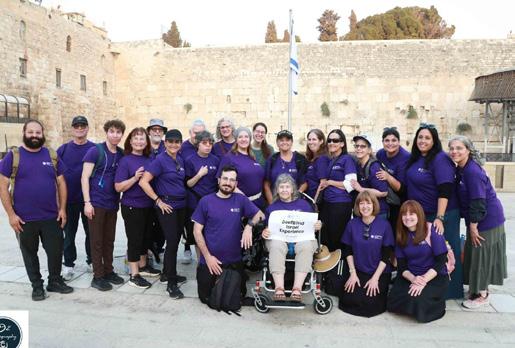
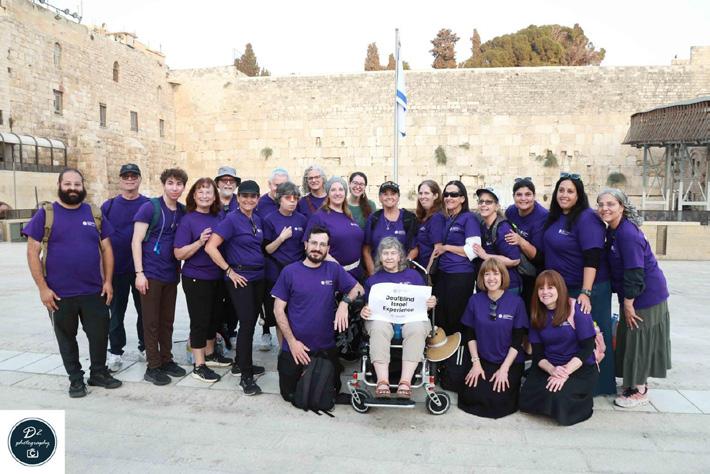
At the Kotel a few days ago, as I approached the stones to pray, I noticed a woman literally leaning her entire body against the wall, and then relying on another woman to help her step back. Around her, I saw several others doing the same.
One of the group leaders, Amian Kelemer, explained: “This is the first-ever delegation of deafblind individuals to visit Israel. Everyone in this group cannot see and cannot hear, but they feel. And they feel powerfully, perhaps even more than we do.”
It was extraordinary to watch them.
Rabbi Yehoshua Soudakoff, Chabad’s emissary to the deaf community, gathered them together to continue to the next stop, while Amian said, “We were at the Machane Yehuda market earlier, and from here we’re going to the site of the Nova massacre. At first glance, what’s the point of bringing them to these places if they cannot see or hear? But this journey has taught me how vital physical presence can be. It matters that they are here. This trip has made them feel that they are not on the margins, that they have a place within the Jewish

people, and that they are part of something much larger than themselves.
“And it isn’t only their experience. Everyone who encountered us in Israel was deeply moved. Suddenly I realized they have a mission. Waiters, people in the street, hotel staff — everyone stopped and asked questions. Even the bus driver told us he had never experienced anything like this in his life.”
Erin Ross, one of the participants, posted the following at the end of the trip: “There have been two facts about my life that I was always embarrassed about. The first is that I am deaf and also gradually losing my sight. The second is that I am Jewish. I always tried to hide, deny, or ignore both. Not anymore. I visited Israel for the first time as part of a deafblind delegation, and from now on I am proud of who I am.”
Thank you for this chance encounter, which reminds us that there are realities beyond the senses, beyond what we can see and hear. And thank you to Rabbi Soudakoff (chushim.org) and to the Jewish Connection Network (thejewishnetwork.org)
for organizing the visit.
A friend once wrote to us protesting the words of a popular song: “One who believes is not afraid.” He told us that as a believing Jew he had reason to be afraid. And the one thing that frightened him most was the thought of losing his faith.
Our friend is right. We are supposed to be afraid… of sinning. In our parashah, Yaakov prepares to meet Eisav. The

Torah explicitly notes his fear: “Yaakov became very frightened.” The commentators ask why was afraid since he had just received God’s specific promise. The Midrash explains: “Yaakov said, ‘Woe is to me; my sin may cause God’s promise not to be fulfilled.’” Yaakov was not afraid of the enemy, Eisav, but of his own spiritual inadequacy.


Disclaimer: This article is not based solely on this writer’s experience in any one particular day school or yeshiva; but rather through a confluence of credible and validated perceptions and experiencesasreportedbyinformed sources.
Over the past several years, I have written numerous articles, blogs and posts regarding the ongoing struggles, challenges and state of derech eretz, character development and middot of students attending our Jewish day schools and yeshivot.
These challenges are not new to our Jewish day school or yeshiva community. But, much to our disappointment, the lack of middot and derech eretz on the part of students in many of these schools are now becoming more prevalent.
Although it is somewhat rich or unfair for me to paint a portrait of our day schools and yeshivot with one single brush stroke, we do know that a growing number
By Dr. Chaim Y. Botwinick
yeshiva and day school educators, administrators, teachers and even parents when asked, report that our day school and yeshiva community is at a serious inflection point and crossroads as they relate to the state of derech eretz and middot of our students.
As an educator and consultant to numerous day schools and yeshivot, I ask the non-rhetorical questions – how has our day school and yeshiva community reached this stage? Where and how did we miss the boat? And finally, the ultimate question…. who is responsible for the current state of affairs and how do we get our schools and their students back on track?
The challenge of who is responsible to whom for the state of derech erectz, or lack thereof in our day schools and yeshivot is a challenge of monumental significance; and demands a response. In a modest attempt to respond to these challenges, I will not point fingers or play the proverbial “blame-game.” To be sure, there is indeed sufficient undeniable evidence and blame to go around, as painful, embarrassing and as disappointing as they may be.
It is no surprise that our Jewish day school and yeshiva community are now experiencing an increased proliferation of student middot that are absent respectful behavior or derech eretz –
whether it be in our schools, community or in our homes.
As I have indicated in numerous articles and posts, more and more folks are blaming this condition or state of affairs on our society and zeitgeist; and that disrespectful youth are viewed as “just another mirror image of society.”
Unfortunately, these excuses have become very stale and are no longer acceptable or palatable. In fact, as a Jewish community that believes, espouses and supports the concept of derech eretz kadmah l’torah, we are obligated do much better job.
Accepting the status quo or blaming the current matzav on societal norms and standards is a very slippery slope, convenient and familiar, as well as a dereliction of duty and responsibility on the part of our Jewish community, our families and our institutions.
The proliferation of less than desirable middot on the part of our youth, and the absence of derech eretz on the part of our students, is a condition which must be addressed, controlled and managed immediately. Full stop!
Although there is sufficient blame to go around, I put the onus for this unfortunate phenomenon mostly at the feet of parents who for years have unfairly relegated the responsibility for parenting best practices as well as teaching and modeling derech eretz and middot tovot to our schools.
The assumption here is that

schools, their faculty and administrators are better prepared, experienced and equipped to take on this awesome responsibility.
Those of us who work tirelessly in chinuch, know full well that these parental perceptions, and expectations are unfair and unfounded.
In addition, today, we are now witnessing a growing number of parents with larger families Baruch HaShem, who are timestarved due to child-rearing responsibilities and job-related obligations. As a result, these parents find it increasingly difficult and challenging to spend the desperately needed quality time and attention with their children. Therefore, they cannot possibly succeed in modeling derech eretz and middot tovot in a fashion that impacts directly and positively on their children.
Very few if any parents are actually trained to model derech eretz or middot tovot for their children.
Some people will posit that parental modeling is innate; others opine that parents must work long and hard to provide their children with role modeling behavior. Either way, the role and responsibility of parents to provide their children with a foundation upon which to build exemplary character and middot tovot remains an imperative.
This reality also holds true for a growing number of day school and yeshiva teachers and rabbeim who are in desperate need of training, skill, expertise and knowledge about how to engage students in meaningful and
healthy conversations regarding their attitudes and behavior in the classroom, at home and in the community.
This perception should not in an way suggest a lack of respect for our day school and yeshiva teachers, rabbeim or administrators; nor should it diminish our gratitude to them for their unwavering dedication and unswerving commitment to chinuch. Many are inspiring master teachers who themselves are very respectful, knowledgeable and passionate about their jobs, responsibilities and careers. And, must be respected as such.
Over the years, I have observed and supervised a growing number of rabbeim and teachers who inspire and encourage exemplary middot and derech eretz in their classrooms by providing their students with sincere empathy, understanding, positive feedback, and amazing kindness. Students
in fact recognize these teacher attributes and appreciate the manner in which they are treated and engaged. To be sure, it supports the contention that it is far more effective for teachers to encourage and attract respectful student behavior by offering them (students) “honey” (kindness and understanding) rather than by offering them “vinegar” (criticism and rebuke).
Is it easy? Absolutely not. We need more teachers and faculty who are trained in this fashion and who exhibit these characteristics and positive healthy dispositions.
Unfortunately, these teacher dispositions, attitudes and responses may not be commonplace in many of our day schools and yeshivot. In fact, a growing number of rabbeim and teachers suffer from stress and burnout due to student disciple issues, a lack of support from parents and a school administration which does not have strictly enforced student discipline policies or protocols. As a result, many even opt to resign from the school or worseyet, teaching profession, for less stressful working environments.
Although there are a wide array of in-service teacher training programs, workshops and seminars which focus upon student behaviors and discipline, and how teachers should navigate them in a meaningful manner, they are by and large temporary in nature and sporadic at best. Moreover, they hardly ever fully move the needle forward on the gauge.
When I approach teachers, rabbeim, select principals and heads

of school with this challenge, their responses are relatively uniform and consistent. Many are indeed frustrated, at a loss for solutions or ill equipped or prepared to respond to the challenge.
This sad reality holds true for limudei kodesh (Judaic studies) and limudei chol (secular studies) faculty and administrators.
As a result, we see the current situation spinning out of control as we witness tremendous turnover of teachers and rabbeim who no longer have the bandwidth, skill-set, fortitude, energy or patience to waste precious classroom time disciplining students or responding to the growing lack of derech eretz on the part of their students – whether they be in the classroom, in school lunchrooms,
on class trips, hallways, at assemblies or on our school basketball courts.
There are also a growing number of yeshiva and day school teachers, and administrators who are very reluctant to complain about their students for fear that they will either upset parents, be viewed by supervisors as teachers with poor classroom management skills or run the risk of being accused of “turning-off” students to Judaism and yiddishketit.
More recently, I even heard select principals and heads of school claim that disciplining their students for exhibiting a lack of derech eretz and middot in the classroom or school, minimizes the school’s ability to positively influence students and may even increase the likelihood that these
students will rebel and “go-offthe-derech.” Indeed a very lame, convenient and poor excuse for not confronting this challenge directly and head-on with wisdom, empathy and sensitivity anchored in best practices.
Yes, it is imperative to address these student behaviors, discipline issues and concerns with compassion, understanding, sensitivity and respect. But, they must be addressed and should never be swept under the rug, as so often happens for fear of upsetting parents or other day school/ yeshiva stakeholders or board members.
The other tremendously important unknown but nevertheless critical reality, is the negative impact these students have on other students who are well be-















haved, respectful, eager to learn and conduct themselves in accordance with school policy and expectations, and in accordance with the school’s commitment to the concept of derech eretz kadmah latorah.
With regard to parents, it behooves our day school and yeshiva community to begin holding parents more accountable for their children’s behavior in school. As just indicated, it is no longer “ok” or acceptable for parents to absolve or acquit themselves from this critically important responsibility.
Although this may sound obvious, the lack of parental responsibility and accountability regarding the behavior of their children in schools, at home and in the community is beyond daunting. At best, demands a serious response on the part of our schools and community.
The implications of this reality are significant, and suggest a variety of critically important strategies and responses which should be considered in partnership with the school and community. This is in addition to the undeniable evolving role and responsibility of parents.
First and foremost, as just indicated, parents must be held accountable for their children’s behavior and attitudes in school, at home and in the community.
With regard to the parent-school relationship, it is essential that parents take full responsibility when a child either misbehaves in school, addresses teachers with a lack of derech eretz, uses inappro-
priate language or behaves in a manner that is not in concert with the school’s policies, philosophy or hashkafa.
The role of the school must therefore be to ensure that there are direct and consistent consequences for a student’s misbehavior and lack of derech eretz. This also means that the school should not compromise on this requirement, irrespective of how difficult, vocal or “influential” a particular parent may be in the school community.
This requirement, albeit difficult to implement, can overtime potentially transform the manner in which schools comply with student standards of derech eretz, discipline, exemplary behavior and conduct. In fact, most of the senior educators I speak with or coach, strongly suggest that many schools do not have a serious or meaningful culture or approach to consequences. As a result, disrespectful student behavior in our schools is not viewed seriously by students and will only devolve into a continuous vicious cycle.
If this topic is of real concern, it must have traction, leverage and ‘teeth’. Otherwise, we will slip into a state of complacency, resulting in same-old-same-old.
In addition to this requirement, schools should be mandated to offer in-service training for their respective faculty, teachers and rabbeim which enforce these policies, best practices and a culture which demands compliance with the school’s student discipline standards.
This should include the mandatory requirement for parents to participate in ongoing parent-
ing workshops and seminars in real time or via zoom.
Implementation of these school policies will not be easy, especially when schools try to enforce consequences. This suggests that if these interventions and consequences are not realized or are successful, parents will be informed that their child will need special counseling or intervention or worse yet, expulsion from the school. Indeed, a very difficult and painful outcome or eventuality.
It is important to note that we owe these actions and requirements to the other well-behaved and respectful students who must never be denied a healthy and wholesome learning environment in which to grow, develop and flourish as students. We also owe it to their parents who invest hard-earned salaries in order to afford day school and yeshiva tuition for their children.
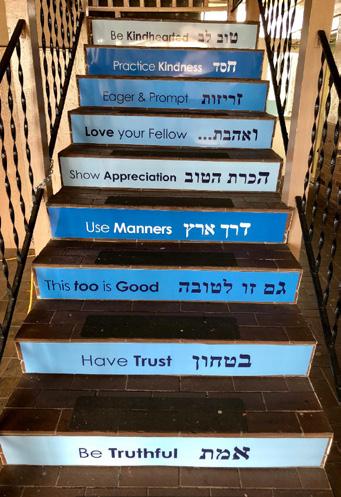
Other considerations for helping to improve the current status of student character development and student derech eretz and school cuture may include: the 100% prohibition of cell phone and social media devices in school, rewarding exemplary student behavior through public recognition; inviting guest speakers, scholars and lecturers to the school in order to address these challenges directly with students, faculty and parents; the display of signage throughout the school which remind students about the importance of middot tovot; the offering of special assemblies which highlight people and events that encourage, inspire and celebrate derech eretz, and, the creation, design and/or iden-



tification of solid curricula which teach about the critical importance of middot tovot and derech eretz as a way of life.
Finally, it is essential that our community and their respective schools have the commitment, understanding and resources in order to make these initiatives happen. Needed however is a true willingness and a sincere sense of urgency that the teaching and modeling of derech eretz, exemplary character and middot, are just as important and critical as the teaching of other important core academic subject areas.
Endnote:
As I conclude this article, I know full well that there will be those in our community who ve-
hemently disagree with several of my perceptions, contentions, assumptions or suggestions. Whether they disagree because my assumptions are incorrect or because of sensitive political expediency, only they will know the answers for sure.
Having said that, the undeniable fact is that our yeshiva day school system is in jeopardy and that unless we take bold, responsible and decisive action, we will continue to perpetuate a day school and yeshiva environment that begs for change and improvement. It must involve a true paradigm shift in its approach to instilling derech eretz, exemplary character and middot in our children.
Finally, we should require that all Jewish day schools and yeshiv-

ot create and implement a derech eretz and middot curriculum and culture conducive to the vision and philosophy of the school.
Teaching our students about exemplary middot, character and derech eretz can no longer be viewed as an appendage, or as a commentary to a particular piece of text, but rather as an important core subject area and as an organic cultural and curricular component of our Jewish day school and yeshiva system and educational experience.
It is imperative that these subjects translate into real time pedagogy – both in limudei kodesh and limudei chol. No compromises, no excuses, no wavering. Full-stop.
Moving forward, as we try desperately to respond to this daunt-

ing challenge, let us hope and pray that our Jewish day school leadership view these challenges with commitment, passion, a sense of urgency and due-diligence. The alternative can be potentially disastrous for the future health and
wellbeing of our students. This is an eventuality which we cannot afford to accept under any condition or circumstance.
The one who plants seeds of hope and promise, will be blessed to reap the benefits from its fruits.
About the Author:
Dr. Chaim Botwinick is a senior executive coach and an organizational consultant. He served as president and CEO of the central agency for Jewish education in Baltimore and in Miami; in addition to head of school and principal for several Jewish day schools and yeshivot. As a teacher Influencer, he has published and lectured extensively on topics relating to education, leadership, strategic planning and resource development. Dr. Botwinick is co-founder of LEV Consulting Associates and is the producer/host of the Chinuch Horizons podcast series. He is the author of Think Excellence, Brown Books, 2011.

(Also
By Dr. Yeshayahu (Yishi) Bick
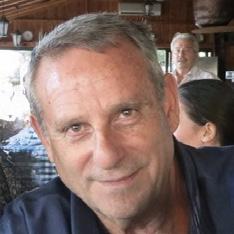
On October 20, 2025, President Herzog declared from the podium of the Knesset that his heart was “bleeding” because the President of the Supreme Court was not introduced (at the Knesset session with U.S. President Trump) as “President of the Supreme Court,” but merely as a Supreme Court Justice!
Herzog had a programmatic speech prepared to deliver before the Knesset at this festive session. Yet he chose not to deliver it. Instead of giving the speech that a president is obliged to present at the opening of the Knesset session, President Herzog preferred to scold Speaker Ohana and the government ministers, staging a dramatic performance of “My heart bleeds”!
This is the same president who awarded honors to the “Brothers in Arms” movement and did not condemn the acts of refusal before October 7 (to be precise, he condemned refusal only in an interview with Channel 14, and only after the outbreak of the war)
This is a farce and a degradation of the dignity of the presidency! Such a statement before the Knesset and before the guest of honor, President Trump, is nothing but a descent to the level of a mediocre politician. If the President of Israel does not respect his own office, what will his opponents say?
President Herzog knows very well that Justice Amit committed
building violations, and lied by claiming he had permits for construction deviations when none existed. Moreover, Amit misled the Tel Aviv court by presenting himself under his birth name, Gottfreund, in legal proceedings concerning property jointly owned with his brother. In the lawsuit, Amit used a different signature than his daily one—this is fraud! All of Amit’s conduct was reported in the newspaper Yedioth Ahronoth, which Herzog surely reads
At the same time, Justice Amit presided over other cases involving lawyers who represented him in his own legal proceedings, without informing the court administration. Since Amit did not appear personally and authorized his brother to represent him, no one realized that Amit was in fact Gottfreund, acting in blatant conflict of interest! (Conflict of interest is a criminal offense of fraud and breach of trust)
Curiously, the President’s heart does not bleed when the Prime Minister is dragged through bizarre trials with the political aim of ousting him! His heart does not bleed when the Prime Minister must appear in court four times a week while Israel fights for its survival!
In my view, there is no blood in the President’s heart, but other substances which, out of respect, I will not name here.
At that same Knesset session, President Trump turned to Herzog and requested, at that solemn moment, to pardon the Prime Minister. Herzog’s heart did not bleed! It is a heart of stone! It is also flawed thinking to believe that President
Trump will forgive him.
President Trump waited several weeks and then sent Herzog an official request to pardon the Prime Minister. For those following Trump’s moves, it is clear this was the second stage of his plan
In my opinion, there will be a third stage, in which Trump’s request will become an ultimatum demanding the immediate end of Netanyahu’s trial. In the fourth stage, Trump will forbid Herzog and his family from entering the United States and order the freezing of Herzog’s bank accounts and credit cards.
Does this sound far-fetched? Look at what happened to Brazil’s President Jair Bolsonaro!
This would be a humiliating slap in the face to Herzog, to Israel, and to the presidency itself. But it is foreseeable and obvious, and only someone with a heart of stone and a head full of political calculations fails to see the slope he is on.
President Herzog is a political figure calculating his path to lead the left-wing parties after his presidential term ends. Does he not realize that personal damage to “Isaac Herzog” will distance him from any political role in Israel?
We have no choice but to appeal to President Herzog and ask him to spare Israel disgrace and anguish, and to comply with the request of the President of the United States while it is still in his hands.
President Herzog, do not confront the President of the United States!!
Dr. Yeshayahu (Yishi) Bick yishybick@gmail.com November 13, 2025





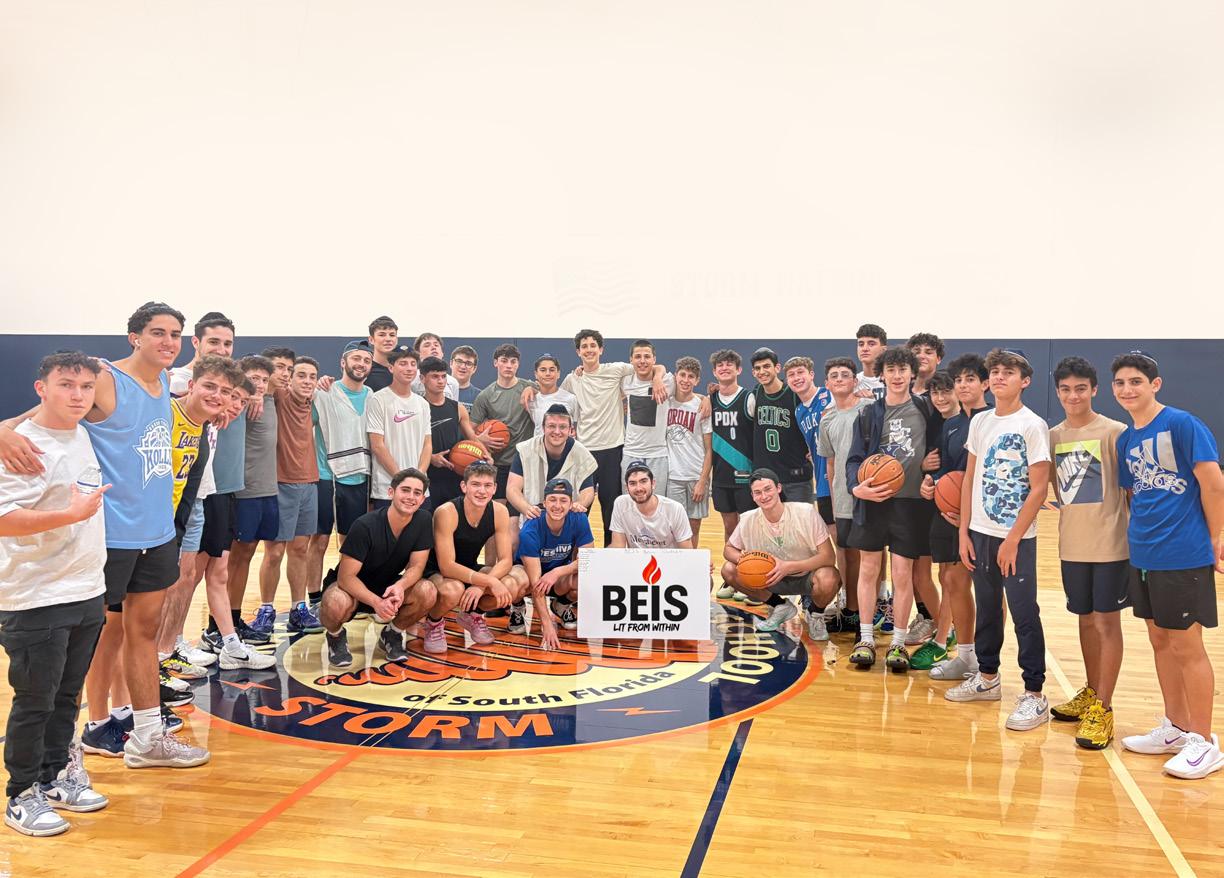
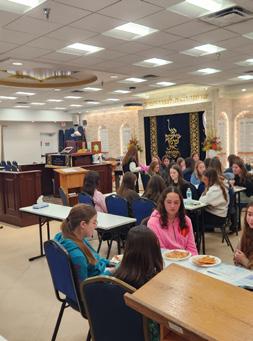
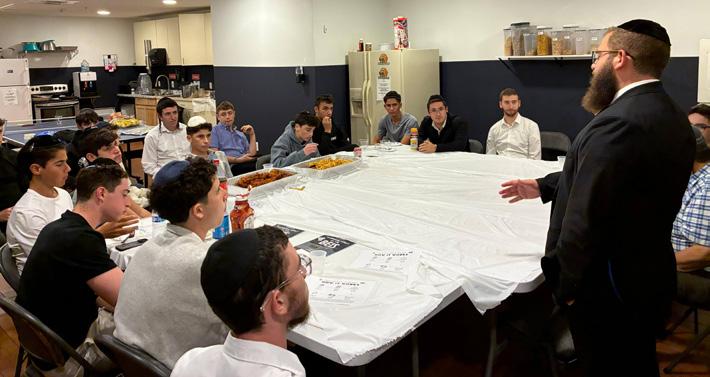
Over the past month, two remarkable SPRKS Shabbatons have sparked excitement the South Florida community, one for the guys of BEIS and one for the girls of 4G, filling homes, schools, and shuls with Torah, ruach, and a sense of unity that continues to shine.
These weekends each carried their own distinct energy, yet both reflected the same mission that drives Southern NCSY’s SPRKS initiative: building spaces of learning, leadership, and connection for Yeshiva day-school teens across South Florida.
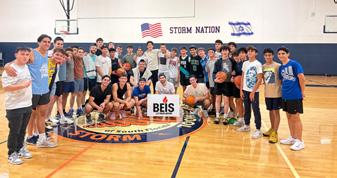
The BEIS Shabbaton, led by Rabbi Benyamin Bortz, launched with a packed Thursday Night in the BEIS at Yeshiva of South Florida, where a standing-room-only crowd filled the Beis Medrash for chaburahs, delicious food, and an inspiring kumzits with Rav Mordechai Willig. The energy carried into Friday morning chaburahs at KYHS and Ohr HaTorah, where singing and learning echoed through the halls, and into Shabbos at Boca Raton Synagogue, with a powerful Kabbalas Shabbos, lively Tisch on Montoya Circle, and a culminating 3-on-3 basketball tournament and Smash House dinner.
The 4G Shabbaton, led by Mrs. Bashie Bortz , brought the same spirit of inspiration to the girls’ division. The weekend began Thursday night with a beautiful Babka Bake, where laughter and creativity filled the room as participants connected over baking and inspiration. On Friday morning, 4G advisors led chaburahs at Hadar and

KYHS, sparking meaningful conversations about Torah, purpose, and growth. The energy carried into Shabbos with a warm Tisch on Montoya Circle, filled with singing and divrei Torah that highlighted the power of friendship and faith.
Shabbos morning featured Coffee and Chaburahs after davening, as girls gathered in smaller groups to learn, share reflections, and strengthen their connections with one another and their mentors.
The Shabbaton concluded with an exciting ice-skating party, where the ruach and smiles from the
weekend spilled over into a joyful and energetic finale.
Together, BEIS and 4G represent the heartbeat of the SPRKS movement, a year-round effort to connect teens through consistent programming, including weekly learning sessions: Thursday Nights in the BEIS at Yeshiva of South Florida and 4G Learning at Boca Jewish Center. Through these programs, teens not only grow in their learning and leadership but also earn scholarships toward NCSY summer experiences, reinforcing the idea that commitment and consistency open the doors to greater opportunity.
With each passing week, the spark of Torah and connection continues to grow brighter. Whether it’s the singing in a school hallway, the energy of a late-night Tisch, or the laughter of a Motzei Shabbos program, SPRKS is shaping a new rhythm of Jewish life in South Florida; one of community, inspiration, and unstoppable momentum.







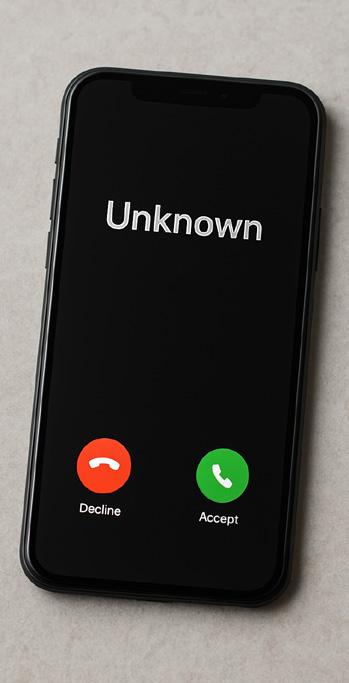
With all the scams and con artists in the world, people have to come up with ways to identify the truth and know if they’re really speaking to who they think they’re speaking to. A worker at a shipping store told me about a woman who came to mail an express letter to her grandson because he had called her urgently, asking her to send him money in the form of postal money orders. She’d gone to get them and was overnighting the package. The shipper suggested that perhaps this was a scam. She said she knew it was legitimate because she’d spoken to him directly, but then she called her grandson and found out that he didn’t know what she was talking about. She was embarrassed but grateful that the shipper had convinced her not to fall for the scam.
With technology, crooks are able to reproduce voices and sound very convincing. They can make a phone call and from the few words the person speaks, for example, when saying, “I’m sorry, you have the wrong number,” they can recreate entire conversations. So you need a way to tell if it’s legit or not.
Consumer Protection groups advise establishing a secret word within your family. If you get a call saying your son’s car broke down and he needs you to wire him $500 to fix it, you can express your concern, and then ask for your family password. Even if criminals can make it sound like the person, they likely won’t know the special word. Then you
By Rabbi Jonathan Gewirtz
know it’s not who they say it is. These special words connect your group, and ensure the closeness is real. You make them up when you’re in person, and the scammers are out of luck if they can’t produce the word.
I thought about this idea one week after I’d written my weekly Parsha sheet and dedicated it to a fellow whose Yahrtzeit was the following week. He didn’t have any family but I knew him and wanted to do something for his neshama. His last name was Pasternak, and I put that in my Parsha sheet. Then the strangest thing happened.
A short time later, someone mentioned a famous Russian novel to me. It is called Dr. Zhivago, and was written by a man named Boris Pasternak. It was so random and unusual that it made me take notice. What are the odds that I wrote the name Pasternak, and within a day, I had that name recited back to me? It was like that secret code word families share, except this wasn’t my family.
To me, it was like a special wink
from Hashem. I imagined He approved of my remembering this kind gentleman, even though perhaps no one else in the world did. I’m not sure what zechus this man has that I’ve remembered his Yahrtzeit and dedicated Torah to his memory, as well as said Kaddish, on multiple occasions for him. But Hashem knows, and I felt a special nod from Shomayim at this when I heard the name again. I once delivered the opening invocation at the New York State Senate. It’s a sort of prayer or blessing upon the beginning of a session. While we waited for the members to assemble, I spoke with several State Senators. One

of them excused himself for a few moments as he went to speak to a friend and colleague. When he returned, he mentioned a game these two played.
When one of them was going to give a speech, the other would give him some special word which he had to use in the talk. When he did, the other person would be the only one to know why this word was used, and they would be amused at their little private joke. Then he turned to me and said, “Sparrows! You have to use the word sparrows in your speech.” It was a challenge I didn’t intend to accept, as I had prepared my remarks well before I got there.
During the invocation, I spoke of Shlomo HaMelech, King Solomon the Wise. I was going to make an analogy between him and other leaders who should ask Hashem for wisdom to lead the people. As I mentioned his wisdom, I was inspired. “He was so wise, he could speak to the birds. He conversed with the robins; the sparrows…”
As I said that, the Senator’s face exploded into the largest grin. He was so pleased I’d played along and said the secret word. I felt we now had a deeper connection.
So it is when we find these secret words coming to us from the Universe. The name of someone we’ve helped; a phrase or concept

we’ve recently learned in the Torah; a reference to a positive act we’ve done. These are the special messages from Hashem reminding us that He is paying attention, and happy with the connection we have. We know these messages come from Him, and we take comfort in the knowledge that we know just Who is really talking to us.
2025 – All Rights Reserved
Did you enjoy this column? Feedback is welcome and appreciated. E-mail info@JewishSpeechWriter.com to share your thoughts. You never know when you may be the lamp that enlightens someone else.








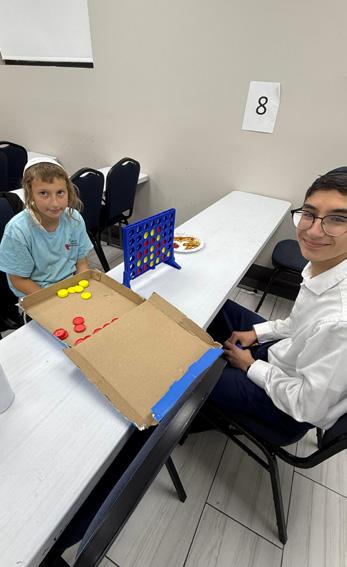




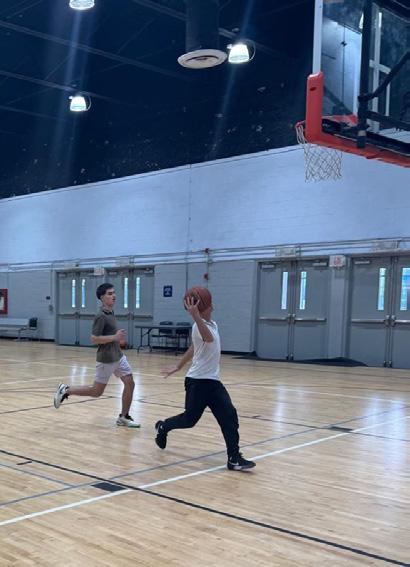


















In the months after October 7th, as Israel reeled from loss, shock, and pain, thousands turned to OneFamily, Israel’s national organization assisting victims of terror and war for nearly 25 years. Faced with an avalanche of need, the organization had to greatly - and immediately - expand the number of volunteers and coordinators. In a beautiful show of resilience, healing, and bravery, many who have been on the receiving end of OneFamily’s care stepped up to help the newly bereaved.
OneFamily’s therapeutic, financial, and emotional assistance is designed to accompany people through every stage of grief and rebuilding. It is a testament to the success of this commitment, that those once shattered by loss are now reaching out to help others.
Turning Pain into Purpose
Yael Shevach’s husband, Rabbi Raziel Shevach was murdered in a 2018 terror attack near their home in Havat Gilad. A mohel, rabbi, and senior paramedic, he was also a loving husband and father to six children.
“During shiva, OneFamily came to visit,” Yael says. “They told me that when everyone else goes home, they would stay. And they did. Every step of the way.”
At first, it wasn’t easy for Yael to accept help. “I was raising six kids alone. I was in survival mode. I didn’t know what I needed, or what my kids needed, and I

didn’t like having to accept help. But OneFamily kept reaching out, suggesting babysitting, inviting us to retreats. They didn’t give up, and they knew what we needed more than I did. Our first step in OneFamily was when my kids wanted to attend OneFamily camp. They came home glowing.”
Over time, Yael came to appreciate what the organization understood her needs before she did, and just how much help her family truly needed. She described how supported she felt, especially during COVID. “The whole country felt isolated. Everyone. But they made sure my children knew they weren’t alone.”
“OneFamily is completely unique in that they never made me feel like they were giving and I was receiving. They don’t just have a ‘menu of services’ that they offer people. They act like family—you help your loved ones with what they need, when they
need it. That’s what OneFamily does. They accompany you, not as a case, but as a person.”
After October 7th, Yael began visiting newly bereaved widows, just as others once did for her. Soon after, OneFamily formalized a new role for her as a “milava,” a special liaison to widows.
“I see this as a personal mission, a way to help others and express my profound gratitude to OneFamily,” she explains. “This is not just an organization to me. It’s home.”
Yael brings a rare emotional fluency to her work. “OneFamily never made me feel pitied. They didn’t just provide help. They walked with me, and I want to do the same for others. We are healing together.”
When Lazar Amitai’s wife was killed in a terrorist attack in Gush Katif 25 years ago, he suddenly became a single father to




four young children. During the shiva, OneFamily representatives visited and quietly promised to return “after everyone else has gone home.” And they did.
“Someone from OneFamily called and got to know us,” Amitai says.”My kids started going to OneFamily camps, traveling with them, and attending special Shabbatons. They were hooked. It gave them so much support.”
As his children grew up and built their own lives, Amitai felt called to give back. After October 7th, OneFamily urgently needed more coordinators to serve the influx of bereaved families. Lazar trained to become a regional coordinator for Israel’s south.
“Every time I meet a grieving family, I start by just listening. Then I give hugs. Only then do I explain what OneFamily can do to help,” he explains. “And every time I feel like I’m giving them what I received.”
One recent case weighed heavily on him: four siblings, aged 12 to 20, who lost their mother on October 7th, were being raised by their father—until he died in a car accident. “So many pieces in their situation require navigating bureaucracy and giving emotional support in a sea of change and tragedy. I can often connect with families more closely and earlier because of my own story. People know I’m not just anybody. I’m one of them.”
Though offered compensation, Amitai does not accept a salary. “I do it out of gratitude,” he says. “My experience gives me a unique ability to help others, and I need to use it.”
For Cheryl Mandel, OneFamily became her anchor after her son, Lieutenant Daniel Mandel, was killed in Nablus in 2003. At her first OneFamily event, Cheryl met co-founder Chantal Belzberg.
“I met her at a large event where OneFamily had a booth. I told Chantal my story and she started to cry,” Cheryl recalls. “I couldn’t believe that someone who spends every day hearing such stories could still care so deeply. That moment told me this organization was something different.”
What started with yoga classes and quiet companionship became a decades-long bond. “I met other bereaved mothers who were slowly rebuilding. Over time, I found that I could do the same,” Cheryl says.
Cheryl began going abroad on behalf of OneFamily, speaking on Israel’s Memorial and Independence days, two of the hardest days of the year for any mother of a fallen soldier. That led to additional speaking opportunities abroad where as a native English speaker, she could share Daniel’s story and advocate for the organization.
“When I speak abroad, I’m not just sharing Daniel’s memory. I’m giving voice to 25,000 bereaved mothers who can’t travel or speak for themselves. I consider it a privilege.”
Cheryl has also taught art and dance at OneFamily events over the years. “OneFamily has helped members of my family each in their own way,” she notes. “I would do anything for them as a
way to express my gratitude.”
Now two decades into her own journey through grief, Cheryl reflects: “Some of the people who supported me - my yoga teacher, my massage therapist - were also bereaved parents. They found a way to give back. I followed their example.”
The stories of Shevach, Amitai, and Mandel reflect a truth OneFamily has seen time and again: healing deepens when compassion is shared.
“When someone who has lived through tragedy walks into a shiva house or speaks to a newly bereaved parent, something powerful happens,” says OneFamily CEO Chantal Belzberg. “It’s not just empathy - it’s credibility. They show that life can go on, that love and purpose can return.”
Over the last two decades, dozens of current staff members, volunteers, and group leaders have come from within OneFamily’s community of survivors. It is the most profound measure of success imaginable, demonstrating the successful management of grief to growth, developing new roles and acts of purpose and meaning over time.
Belzberg adds: “These are people who were once on the receiving end. They still need and receive support, but now they are the ones leading the way…like members of a family, which is really what we are.”
To contact OneFamily Fund, reach out to Naomi Nussbaum at (646) 289 8600.




Shimon* had been the baal koreh in his shul for as long as anyone could remember. In the early years, the minyan was small—fifteen men on a regular Shabbos, twenty on a “big week.” He knew every face, every seat, every little detail in the room. Leining was second nature.
But neighborhoods have a way of changing. A few new homes went up… then a few more. Suddenly the once-cozy shul became standing-room-only. Rows doubled. The ezras nashim filled. And Shimon began to feel something he never expected: fear.
It hit him one Shabbos like a wave. His hands turned sweaty. His face went hot. He felt himself shaking as he said the brachah. By Sheini he was short of breath. By Chamishi he could barely think.
After a few difficult weeks, he finally visited his doctor. The diagnosis surprised him.
“You’re describing a panic disorder,” the doctor said gently. “It’s actually very common in people who perform in public. One treatment that works extremely well is clinical hypnosis. It teaches your body to relax so the anxiety doesn’t take over.”
Shimon blinked. “Hypnosis? Is that even allowed?”
The doctor shrugged. “From a medical standpoint it’s safe, standard, and effective. But ask your Rav if you’re unsure.”
So, he did.
The Rav Hesitates
When Shimon explained the suggestion, his Rav’s eyebrows went up.

“Hypnosis? I don’t know…” the Rav said slowly. “Is it a problem of kishuf? And if it puts you into some kind of trance—how can you lein for the tzibbur in that state?”
Not wanting to give a rushed answer, the Rav picked up the phone and called the Refuah B’Halacha Center, which he relied on often for complicated medical-halachic questions.
A Rav at the Center answered. “Refuah B’Halacha center, how can I help?”
The Conversation
“Here’s the situation,” the local Rav began. “My baal koreh is experiencing panic attacks. His doctor recommended hypnosis. But I’m nervous—what does halacha say about this?”
The Rav at the Center responded immediately. “You’re asking good questions. Rav Moshe Feinstein zt”l discusses this in Yoreh De’ah II:29 and III:44, and the Binyan Tzion as well in siman 67. Let’s go through it.”
“First,” he continued, “regarding kishuf: Rav Moshe zt”l and the Bin-
yan Tzion both write clearly that hypnosis, as practiced medically, has no element of kishuf whatsoever.”
“So that part is not an issue?”
“Correct,” said the Center’s Rav. “The only concern mentioned is based on the assumption—common in earlier generations—that hypnosis puts a person into a kind of sleep or lowered awareness. Rav Moshe zt”l was concerned about the vulnerability of a person in such a state.”
The local Rav hesitated. “But if he’s not fully aware… then how can he lein?”
“Exactly. But here’s the key point,” the Center’s Rav explained. “When this was clarified to Rav Moshe’s son, Rav Dovid Feinstein zt”l, he confirmed that modern clinical hypnosis is not like sleep. It’s actually the opposite.”
“How so?”
“During hypnosis, the body relaxes, but the mind becomes sharper and more focused. The person is fully conscious and fully aware. They cannot be forced to
LOCATION: South Florida (Miami-Dade, Broward, and Palm Beach Counties
ABOUT the ROLE:
We are seeking a highly experienced Construction Supervisor to act as the Owner’s Representative for our active portfolio of Single-Family Home (SFH) renovation projects (Fix & Flip). This role requires intensive field presence and a deep understanding of residential construction processes. The primary objective is to rigorously protect the owner’s interests by ensuring that all projects adhere strictly to established quality standards, budgets, and timelines.

LOCATION: South Florida (Miami-Dade, Broward, and Palm Beach Counties
ABOUT the OPPORTUNITY:
We are a dynamic and rapidly expanding real estate investment firm specializing in the acquisition, renovation, and disposition (Fix & Flip) of Single-Family Homes (SFH) across South Florida. We are seeking a high-caliber Chief Executive Officer (CEO) or General Manager (GM) to take full command of our operations. This is a critical leadership role requiring strategiv vision, a proven track record in the high-volume residential flpping sector, and uncompromising integrity.
PROJECT OVERSIGHT and INSPECTION:
Supervise and inspect multiple renovation projects concurrently, from planning stages through final delivery. Verify that all work performed aligns precisely with approved plans, specifications, and standards.
Budget Monitoring and Control:
Review Scopes of Work (SOW) and project budgets.
Continuously monitor ongoing work to ensure adherence to the pre-established budget, proactively identifying and reporting potential cost overruns before they occur.
Schedule Oversight:
Closely track project progress against the master schedule. Monitor and verify that contractors and subcontractors are meeting predetermined deadlines to ensure timely project completion.
Quality Assurance (QA/QC):
Conduct frequent, rigorous on-site inspections to ensure the highest quality of workmanship. Verify compliance with all local building codes, permitting processes, and safety regulations.
Reporting and Transparency:
Generate and deliver detailed weekly status reports to ownership for every active project. Reports must provide a comprehensive overview of renovation progress, budget adherence status, schedule compliance, and any identified quality issues.
Value Engineering and Design Input: Provide input on design decisions and material
selections to maximize the property’s value while remaining within budgetary constraints.
Contractor and Vendor Supervision: Oversee the activities of subcontractors and suppliers on-site. Ensure their performance complies with the terms, agreements, and quality standards agreed upon by the project managers.
REQUIRED QUALIFICATIONS:
Extensive Experience:
Significant experience supervising residential construction and renovation projects (SFH) in South Florida. Direct experience with Fix & Flip projects is strongly preferred.
Licensing:
A valid Florida General Contractor (GC) license is a significant advantage, or equivalent proven experience as a Senior Construction Supervisor or Owner’s Rep.
Technical Expertise: Proven ability in monitoring construction budgets and tracking aggressive schedules.
Construction Knowledge: Comprehensive understanding of all phases of residential construction and MEP systems (Mechanical, Electrical, Plumbing, HVAC).
Attention to Detail: A meticulous eye for detail, rigorous standards, and exceptional quality control capabilities.
Send Resume and Cover Letter to: henizahavimap@gmail.com
KEY RESPONSIBILITIES:
STRATEGIC LEADERSHIP & P&L MANAGEMENT:
Assume full Profit & Loss responsibility, develop and execute the company’s strategic plan, and drive sustainable growth and profitability.
ACQUISITIONS & DEAL SOURCING:
Oversee and optimize all acquisition channels (On-Market, Off-Market, Wholesale). Lead the team in underwriting potential deals, conducting due diligence, negotiating aggressively, and managing the closing process.
RENOVATION & PROJECT OVERSIGHT:
Provide executive oversight for the construction and renovation pipeline. Ensure projects are delivered on time, within budget, and meet high-quality standards, optimizing the value-add strategy for each asset.
DISPOSITION & SALES STRATEGY:
Define and manage the exit strategy for all assets, including oversight of staging, marketing, and final negotiations to maximize ROI on every transaction.
OPERATIONS & TEAM LEADERSHIP:
Lead, mentor, and scale a high-performing team encompassing acquisitions, project management, finance, and administration. Foster a culture of accountability and excellence.
REQUIRED QUALIFICATIONS:
PROVEN INDUSTRY EXPERIENCE:
Minimum of 5 years in a senior executive leadership role (C-Level, VP of Operations/Acquisitions) specifically within a high-volume residential Fix & Flip operation.
LOCAL MARKET EXPERTISE:
Deep, demonstrated knowledge of the South Florida real estate market (Miami-Dade, Broward, Palm Beach), including current trends, acquisition strategies, and construction costs.
END-to-END EXECUTION: A verifiable track record of successfully managing the entire lifecycle of flip transactions, from sourcing to profitable sale.
SKILL SET:
Exceptional negotiation skills, strong financial acumen, analytical capabilities, and the ability to make data-driven decisions quickly.
INTEGRITY:
Demonstrated ethical leadership, reliability, and a strong work ethic are paramount.
LANGUAGE SKILLS:
Fluency in English is required; proficiency in Hebrew is a significant advantage.
SEND APPLICATION & COVER LETTER TO: henizahavimap@gmail.com
do anything against their values. In fact, brain studies show that people under hypnosis often have more mental activation than people who are awake—and far more than people who are asleep.”
“So, the trance isn’t really a trance?” the Rav asked.
“Not in the way people imagine it. It’s an enhanced-focus state. For someone like a baal koreh—or even a baal tokeah—it can actually help them concentrate better. He can even be taught to enter a mild relaxation state on his own before leining.”
“So, he would be able to lein with full kavana?”
“Absolutely. And he would certainly be able to be motzi the tzibbur.”
The Rav let out a long, relieved breath. “Baruch Hashem. I’ll let
him know.”
Shimon went for the therapy. Within a short time he learned how to relax his body, quiet the anxiety, and restore the calm confidence he once had.
And soon enough, the familiar, steady voice of the baal koreh returned to the bimah—no shaking, no redness, no shortness of breath. Just clear, heartfelt reading of the Torah for a growing kehilla.
*Names and details changed.
At the Refuah B’Halacha Center, we are here to provide guidance for real-life challenges, big and small. Whether it’s a question about Shabbos, kashrus, or navigating difficult personal situations, our experienced Rabbunim are ready to listen and advise.
If you ever find yourself won-
dering about a medical halacha question — big or small, serious or just something that’s been on your mind — remember that you don’t have to figure it out alone. The Refuah B’Halacha Center is here to help, with experienced rabbanim available to guide you through even the most sensitive or confusing situations.
Our Rabbanim;
R’ Yaakov Forchheimer shlit”a
R’ Noach Isaac Oelbuam shlit”a
R’ Shmuel Fuerst shlit”a
R’ Uri Deutch shlit”a
R’ Micha Cohen shlit”a
R’ Moshe Zev Feldman shlit”a
R’ Baruch Hirshfeld shlit”a
R’ Daniel Neustadt shlit”a
R’ Avrohom Yaged shlit”a
We specialize in Mental health | Shabbos | Treatment issues Hospital stays | Fertility | Kashrus
We are here Sunday through Friday 8:00 am till 10:00 pm and erev Shabbos 10 minutes before candle lighting.










By Farley Weiss
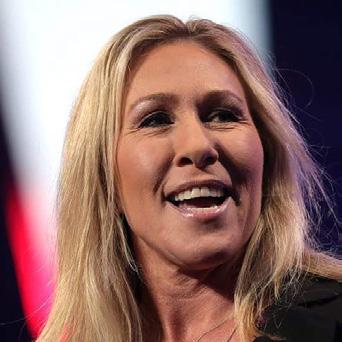
Politicians and podcasters play with semantics when the overwhelming evidence shows the many benefits Israel provides to America.
Suddenly, everybody is claiming that they aren’t antisemitic and that they oppose antisemitism. Far-right nationalist and Holocaust denier Nick Fuentes claims that he is not, and is furious at former Fox News host and current podcaster Tucker Carlson for calling him such. Other notable politicians—namely, Reps. Marjorie Taylor Greene (R-Ga.), Rashida Tlaib (D-Mich.) and Ilhan Omar (D-Minn.); and New York City mayor-elect Zohran Mamdani— insist that they are not antisemitic.
The Committee on Antisemitism and Holocaust Denial, a body within the International Holocaust Remembrance Alliance (IHRA), gathered in Budapest in 2015 and adopted the working definition of antisemitism. That definition was adopted before any of these people, except Carlson, were well known. A famous video years ago shows Carlson describing politician and political commentator
Pat Buchanan as antisemitic, with Carlson using as his understanding of Jew-hatred a similar definition consistent with the IHRA one.
The IHRA definition includes some of the following pertinent examples of what is considered antisemitism: “Accusing Jewish citizens of being more loyal to Israel, or to the alleged priorities of Jews worldwide, than to the interests of their own nations. Denying the Jewish people their right to self-determination, e.g., by claiming that the existence of a State of Israel is a racist endeavor. Applying double standards by requiring of it behavior not expected or demanded of any other democratic nation.”
The definition has been adopted by 46 countries and 35 states in the United States. It is the consensus definition.
In a letter on May 26, 2021, to then-U.S. President Joe Biden, Reps. Josh Gottheimer (D-N.J.), Elaine Luria (D-Va.), Kathy Manning (D-N.C.) and Dean Phillips (D-Minn.) presciently wrote, in part: “We … reject comments from members of Congress accusing Israel of being an ‘apartheid state’ and committing act[s] of terrorism. These statements are antisemitic at their core and contribute to a climate that is hostile towards many Jews … . Israel has long provided the Jewish people with a homeland in which they can be safe after facing centuries of persecution. Sadly, we have learned from our history that when this type of violence and inflammatory rhetoric goes unaddressed, it can fuel increasing hatred and
violence, and lead to unspeakable acts against Jews, even in the most civilized, modern societies.”
If they were to update this letter to Israel’s war agaisnt Hamas in Gaza after the terrorist invasoion on Oct. 7, 2023, it would be obvious that those claiming that Israel was committing genocide against Hamas when the casualty rate shows that by far less civilians were killed per enemy combatant in Israel’s war against the Hamas invaders then in any urban war in history (around 1-1 civilian to combatant as compared to 9-1 in many other urban conflicts) were also engaged in antisemitism.
Accordingly, the 20 members of Congress, including Tlaib and Omar, who signed onto legislation describing Israel’s actions in Gaza as genocide, are antisemitic. Mamdani’s calling Israel’s actions in Gaza during the two-year war started by Hamas on Oct. 7, 2023, as genocide is antisemitic. Furthermore, his opposition to the existence of a Jewish state is not only antisemitic but contrary to international law, as adopted through San Remo, the League of Nations, the Anglo-American Treaty, Article 80 of the U.N. Charter and repeated U.N. resolutions thereafter.
Greene’s calling Israel’s actions in Gaza genocide is antisemitic as well. Fuentes’s attempt to deny that 6 million Jews died in the Holocaust is antisemitic. Carlson’s claim that Zionism, which is the belief that the Jewish people should have a state of their own in their ancestral homeland, is antisemitic, let alone downright evil.







Fortunately, Trump has attacked two antisemitic Republican members of Congress: Thomas Massie of West Virginia and Greene. And he is also supporting a primary opponent of Massie and indicated that he would do the same for Greene, which led to her deciding to resign from her position in the U.S. House of Representatives in January. Unfortunately, the mainstreaming of antisemitism is on the rise in the Democratic Party, with the election of Mamdani, and as the genocide resolution signatories attest.
Former Israeli Strategic Affairs Minister Ron Dermer spoke at the recent Republican Jewish Coalition event in Las Vegas and pointed out that there is no better ally for the United States than Israel. He said as it relates to military allies, which includes a standing army, advanced military equipment and intelligence, that only England has a comparable army to any U.S. ally in the world, to Israel. He said that when including the economic benefits of new companies and products coming out of Israel that are assisting America and are changing the world, there is no comparison to what it is producing, looking at the current situation and future projection, as compared to England.

During the recent war with Iran, Israel gained air superiority in three days—something Russia has failed to do in three years in its ongoing war against Ukraine and efforts to gain more of its land.
Carlson predicted that a U.S. strike on Iran would lead to a major conflagration and potentially World War III, complaining about American Jews, like radio personality Mark Levin, supporting a U.S. airstrike on Iran. Trump decided in June that it was America’s interest to strike Iran’s nuclear facilities since it was obvious that Tehran was pursuing a nuclear weapon. It was the only country in the world without nuclear weapons that did not import nuclear fuel for nuclear energy, but was making its own. Burying their nuclear-energy program below a mountain in Fordow was another indicator.
Trump credits his decision to attack Iran’s nuclear-weapons pro-
gram to making the world safer and to help gain the release of the 20 remaining living hostages being held by terrorists in Gaza. He understood that peace comes from strength, not appeasement and isolationism.
Support for Israel is in America’s interest, militarily and economically. Those who make outrageously false allegations against the Jewish state, like calling its actions against Hamas genocide, engage in antisemitism. Those who claim they care about what is best for the United States but are against the alliance with Israel also engage in antisemitism, as the overwhelming evidence shows the benefits Israel provides to America
JUDAH MANDEL ESQ. ATTORNEY AT LAW



for Fix & Flip Deal Sourcing and Management
LOCATION: Broward, and Palm Beach Counties
THE BUSINESS OPPORTUNITY:
A well-capitalized and active real estate investment firm is seeking to expand its Fix & Flip activities involving Single-Family Homes (SFH). We are looking to engage top-tier Realtors, Wholesalers, and experienced real estate operators specializing in the South Florida market.
We are seeking professionals with proven expertise and capabilities in the Fix & Flip sector, specifically those who can identify high-potential deals and manage the renovation and sales process from start to finish. We compensate the professionals working with us with highly competitive management fees and commissions for their services.
We Are Looking for Brokers and Operators With: Expert Deal Sourcing:
A proven track record of identifying and securing below-market properties (Off-Market Deals, Distressed Assets) with significant value-add potential.
Renovation Management Experience: Demonstrated success in managing the renovation lifecycle, including contractor oversight, budget adherence, and preparing the asset for a quick and optimized sale.
Local Market Mastery:
In-depth understanding of local market dynamics, including accurate After Repair Value (ARV) analysis, renovation costs, and buyer preferences in Broward and Palm Beach counties.
Drive and Capacity:
Highly motivated brokers and operators interested in executing a high volume of transactions concurrently.
Funding Capacity: Full and rapid funding provided for both acquisition and renovation costs.
Attractive Compensation:
A competitive and straightforward management fee and commission structure.
Efficient Process: Streamlined decision-making process and supportive operational infrastructure.
Long-Term Relationships:
We focus on establishing long-term, transparent, and successful business relationships. If you are an expert in sourcing opportunities and have the operational capacity to manage the Fix & Flip process effectively, we want to connect with you.
Send Resume and Cover Letter to: henizahavimap@gmail.com






I walk beside a human, but I’m not just taking a stroll. I help them cross streets safely — guess my important role!
I don’t wear goggles underwater, but I can still “see” a hidden thing. I use sound to map the ocean like a living submarine.
I’m taller than your teacher, and taller than your dad. I help officers in busy places so crowds don’t get too bad.
I’m tiny but talented, my sniffing skills are prime. I help find dangerous objects without setting them off… every time.
My nose is like a superpower, I sniff what you can’t see. In forests, snow, or mountains, lost people look for me.
I roam around a warehouse and keep the snacks all safe. Mice run when they see me — catching them is my chase!
I buzz around the flowers, but my job is more than honey. Scientists train me carefully — I can smell danger like it’s funny!
I’m colorful and talkative, I can copy what you say. Sometimes I help people speak in a friendly, feathery way.
I never went to medical school, but I help people feel calm. A gentle pet on someone’s hand works better than a balm.
I stand watch in the field, protecting sheep from harm. I’m fluffy, loud, and brave — a bodyguard on the farm.
1. Guide dogs know over 40 commands!
They can stop at curbs, avoid obstacles, and even help their owner find an empty seat.
2. Police horses are taller than basketball players. Their height helps officers see far across big crowds.
3. Search-and-rescue dogs can smell 40 feet underground. Their noses are so powerful they can find people in snow, forests, or rubble.
4. Bees can be trained like puppies.
Scientists teach them to detect dangerous chemicals just from their super-strong sense of smell.
5. Therapy animals lower stress in minutes. Just petting a bunny or a dog can slow your heartbeat and make you feel calmer.




6. Navy dolphins can “see” with sound. They use echolocation — sound waves — to find objects hidden deep underwater.
7. Giant African rats save lives. They are light enough not to set off landmines and smart enough to sniff them out safely.
8. Warehouse cats are real workers!
Many stores keep cats to chase mice and protect food supplies.
9. Parrots can act as tiny translators!
Some parrots learn hundreds of words and help researchers communicate with people who have speech challenges.
10. Llamas protect sheep like bodyguards. Farmers use llamas to guard sheep from coyotes — they are brave, fast, and very loud when danger comes.

By Jamie Geller

Hassleback sweet potatoes turns ordinary into fancy and gourmet and all you need to do is cut some slices into the potatoes.
Ingredients
• 4 medium sweet potatoes
• 1 tablespoon olive oil
• 1 teaspoon minced garlic
• 2 tablespoons fresh parsley
• salt and pepper
1. Preheat oven to 425 degrees.
2. Wash sweet potatoes well and slice a small part off the bottom so it sits flat.
3. Cut thin slits in the potato stopping ¼” from the bottom.
4. Place on a baking sheet.
5. In a small bowl, mix olive oil with minced garlic, fresh chopped parsley, salt and pepper.
6. Pour over potatoes, pushing herbs down in between slices.
7. Bake for 40-50 minutes or until tender.
8. Serve with a dollop of sour cream or Greek yogurt if desired.
Jamie Geller is the Chief Media and Marketing Officer at Aish. She is also a bestselling cookbook author, celebrity chef, television producer, and businesswoman. She’s the author of eight cookbooks and the founder of Kosher Media Network.
Jewish telehealth therapist for anxiety & bitachon
Experienced serving the observant Jewish community. Insurance accepted.
TV wellness expert with new Florida practice. (303) 720-1424 l heather@drheatherhans.com
Low bulk, dynamic and comfortable. Excellent for balance, sports & pain relief. Adults & Children
Rochelle Silberman-Jawitz, Concierge Orthotist (917) 494-1111
Alterations, Dressmaking, including wedding clothes. Phone: (646) 413-4542
Job Opportunity - Jewelry Office Assistant
We are seeking a motivated and responsible individual to join our online-based diamond jewelry company as a full-time Office Assistant. This is an on-site position (no remote work). The hours are Monday–Thursday, 9:00 AM–5:00 PM, and Friday, 9:00 AM–2:00 PM. You will be responsible for helping to fulfill orders, manage inventory, and maintain office organization. This is a great opportunity to join a growing jewelry company!
If interested, please contact Yossi at 310-200-1192.
List your local business, services available, real estate opportunities, Help Wanted, & more!
Basic listing: $10/weekName, number and email address
Enhanced listing: $25/weekUp to 25 words (additional words $1/each)
Deadline:
Tuesday at 4pm for next week's issue
Contact: andrea@tsfcommunityvoice.com
In-Home Private Pilates for women to strengthen, realign, and ease pain. Personalized sessions and private events + Kosher Healthy Meal Prep. WellnessRena.com 305-404-3904 | WellnessRena@gmail.com
Computer, Laptop, iPad & iPhone Repair 954-367-3215
Free-Pickup-in-Aventura.FL
Coolstar Air
Service llc A/C Install & Repair (954) 200-1369 | coolstarair@yahoo.com
IT Tech Support & Low Voltage Services 561-331-1680 | barry@navonpro.com
Quick Diagnosis Telemedicine 561-299-0496 | myquickdiagnosis.com
Most affordable housing in the entire state Esformes Hebrew Academy of Ormond Beach NOW HIRING
• Elementary teacher • Office manager
• School Event Coordinator • Drama & Music, Coach Part-time and full-time positions
Quiet suburb School and shul community EsformesHebrewAcademy.org Email resume to chanidaytona@gmail.com
Realtor Mordechai Berkowitz 917-515-5967 | www.MaxSellsMiami.com
Wine News!
The new ‘Noble Wines’ catalog has arrived, featuring our latest selection of premium wines. Request your free copy by mail. Just text or email your address and we’ll deliver it straight to your door. Text: (845) 716-8306 or email: news@noblewinesinc.com
To place a Business Directory/Classified Listing contact: andrea@tsfcommunityvoice.com

















By Shmuel Shayowitz
Every year, right after Thanksgiving, I find myself watching the same patterns repeat itself. Black Friday hits, Cyber Monday follows, and suddenly the country is flooded with record-breaking spending. Retailers celebrate, analysts marvel, and consumers convince themselves that buying something on sale was a prudent financial move. And while I’m all for taking advantage of a good deal, it’s hard not to notice how many people walk into the end of the year with bags full of things they didn’t need… and a credit card balance they definitely didn’t anticipate. What makes this time of year so interesting is that it falls right at the moment when people should be doing the exact opposite, and that is, taking stock of their financial picture. We are heading into the final stretch of the year, and it’s the ideal time to do our financial planning and preparation for next year. Although the truth is, it’s not the deals that create the economic hardships, it is the lack of planning that does. Overspending doesn’t happen because something was 40% off, it happens because people don’t have a clear sense of what they can afford, what they value, or what they are working toward.
And that’s why I keep coming back to the same message over and over. Your financial life will improve the moment you get ahead of it instead of reacting to it. This is also why I’ve been so vocal about the importance of using real tools, real systems, and real guidance. Not theories. Not good intentions. And not fictional aspirations. It’s
all about good tools and resources. One of those resources is a new initiative I’m proud to be involved with: Kosher Debt Help, a program of Collective Kindness. I sit on the advisory board of CK, and I’ve seen firsthand the tremendous work that this organization is doing behind the scenes. They are definitely filling a gap that our community has needed for a long time. Kosher Debt Help offers a structured, confidential, and non-judgmental pathway for people who are overwhelmed by debt and don’t know where to turn.
They help individuals negotiate with creditors, restructure excessive balances, and build a plan to regain stability. This is all done without the predatory tactics or unrealistic promises that you see at so many other “debt relief” companies. Their team works handson with each client to review statements, outline options, and create a personalized roadmap. They also provide education and accountability, which, in my experience, are the two ingredients most people are missing when they’re trying to dig out of this hole. It’s a very practical and accessible approach, and it’s desperately needed. Visit www.KosherDebtHelp. com for more information.
Separately, and unrelated to Kosher Debt Help, I’ve been working on another project that I’m really excited about. For years, people have asked me for recommendations for a simple-to-use and economical budgeting tool. Something that helps them track spending, set goals, build habits,
and stay accountable without being overwhelmed by complicated technology or confusing jargon. That’s what led us to develop a new budgeting and money-management app designed specifically for regular people who want simple clarity and better control of their money.
Introducing: www.Zuz360.com, a fantastic money management app that includes goal-tracking, spending visibility, planning tools, and optional accountability checkins. And for a limited time, and for a limited number of users, we are opening a free-for-life waitlist for those who want early access. If you want to be part of that group, reach out to me directly and I’ll make sure you’re on the list. The bottom line is, now is the time to be aligning yourself with the right tools, people, and resources to position yourself for financial success in the year(s) to come. Today, it is a lot easier to make that decision to get a handle on your finances than in the past, so take action now!
Shmuel Shayowitz (NMLS#19871) is a highly regarded Real Estate & Finance Executive, Writer, Speaker, Coach, and Advisor. He is President and Chief Lending Officer of Approved Funding, a privately held national mortgage banker and direct lender that has facilitated over $3 billion in mortgage funding. Shmuel has over twenty years of industry experience and holds numerous licenses and accreditations, including certified mortgage underwriter, licensed real estate agent, residential review appraiser, and accredited investor, to name a few. Shmuel has successfully navigated through many changing markets and business landscapes, making his market insights and experience well-coveted within the real estate industry. He can be reached via email at Shmuel@approvedfunding.com.