A weekly glimpse into the Israel you won’t read about in the news
By Sivan Rahav Meir
We Are All Shluchim
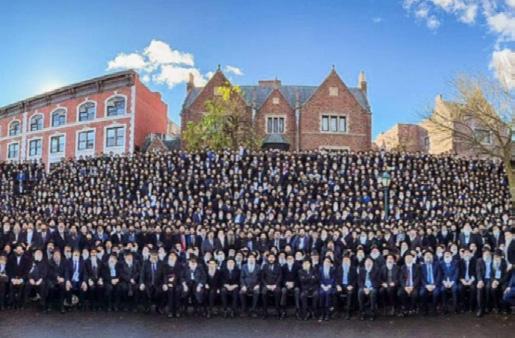
“Who are you, and where are you a shaliach?” That’s how every conversation began at the international conference of Chabad emissaries held recently in New York. Then came the answers, one after another: “Mendy, shaliach in Thailand.” “Yossi, shaliach in Tel Aviv.” “Shmuel, shaliach in Siberia.” After hearing this repeatedly, I found myself almost addressing other people the same way out of sheer habit.
But perhaps that instinct wasn’t mistaken. Maybe each of us really should be asking ourselves that very question: Who am I, and where am I a shaliach? Because in a deeper sense, every one of us is an emissary.
A mother preparing school lunches for her children is fulfilling a mission. So is a farmer working in his field. In every small action throughout the day, we can recognize this role. We were all sent into this world, a soul within a body, with a unique purpose that God has entrusted to us, shaped by the circumstances of our lives.
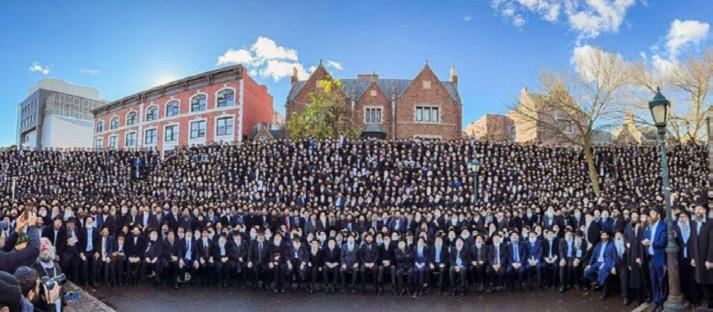
Many people walk away from this annual gathering struck by the scope and strength of the Chabad movement. And that admiration is well deserved. But the Lubavitcher Rebbe’s true innovation was the very concept of shlichut—that emissary work is not limited to the 6,500 official Chabad shluchim who pose for the annual group photo. Everyone who sees that picture is invited to ask themselves: Who am I, and where am I meant to be a shaliach?
Preserving the Unity
Rabbi Y.Y. Jacobson spoke at the special trip to the US for 53 bereaved families from Israel organized by Menucha VeYeshua and led by Mendy Kenig. Addressing the families together with local participants, he said: “I remember arriving in Israel after October 7th. I met a young man, a survivor from Kibbutz Be’eri, and he hugged me and said: ‘Every Jew I meet, I just want to hug him!’
“I remember the atmosphere then; there was a very distinct frequency in the air, a sense of Jewish unity, of a deep understanding of
COMMUNITY NEWS
who we are and who the enemy is. Despite all the differences among us, people genuinely wanted to embrace every Jew. That deep, shared Jewish point was revealed.
“It was a moment of great clarity, a moment of profound truth. I am asking all of us to return to that feeling. To preserve it.”
Grief and Celebration Interwoven
Lilach Vardi wrote to me that she has a story “about continuity and taking responsibility just like in the parashah.” This is what she shared:
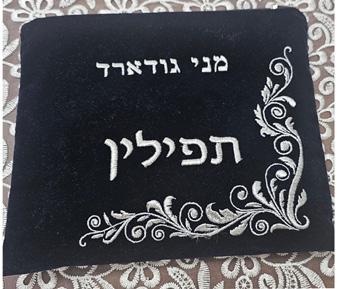
“Meni Godard, 73, one of the beloved figures of Kibbutz Be’eri, was kidnapped and murdered on October 7. A few months after his abduction, when the family still had no information about his fate, they joined dozens of other hostage families in the ‘Tefillin Campaign.’ They published a simple request: that any Jew who did not normally lay tefillin should lay tefillin in Meni’s merit.
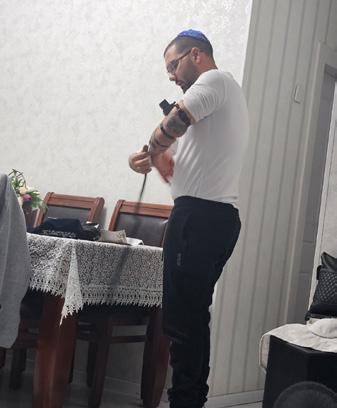
“My brother, Avichai Yosef, who typically did not put on tefillin, volunteered. He felt a deep connection to Meni and said, ‘For him, I’ll do it.’ He received the tefillin with emotion, and from that day on, he put them on daily, without missing a single morning (except, of course, on Shabbat). It became a quiet vow of love, brotherhood, and meaning.
“And now, two sentences that I can hardly believe I am writing one after the other: This week, Meni’s body was returned and he was laid to rest. This week, my brother, who had been searching for his other half, got married. On the happiest week of Avichai’s life, Meni’s body came home. His family sat shiva as
we celebrated the sheva brachot.
“I feel a thread connecting my brother, who lives in Bat Yam, with the people of Be’eri, binding joy to sorrow, and the parashah’s message of Jewish continuity to our own unfolding story.”
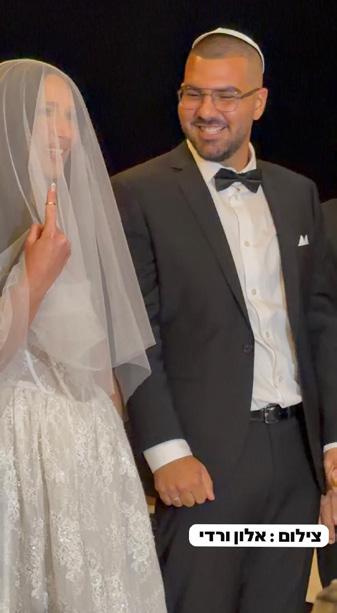
Condolences to the Godard family. And mazal tov to Avichai and Mor.
The Tent, the Well and the Ladder
Three powerful symbols are associated with our nation’s Avot: Avraham, Yitzchak, and Yaakov. Each one represents a different spiritual path, a different way of serving God, and a different message for our own lives.
Which image is most closely linked to Avraham Avinu? A tent. A tent open on all four sides to anyone who is hungry, thirsty, or weary. It is a symbol of hospitality and generosity, a home that is always open, where travelers find
food, comfort, and an introduction to faith, kindness, and tzedakah.
And Yitzchak? If Avraham’s tent is horizontal, spread wide to welcome the many wayfarers, Yitzchak’s symbol is vertical: the well. Yitzchak re-dug the wells his father had dug before him, teaching us perseverance and spiritual depth. The message endures: meaning often lies beneath the surface. Even when the path to inner clarity is blocked by sand or debris, if we keep digging and refuse to give up, sweet water awaits.
And Yaakov Avinu, whom we accompany to Charan in this week’s Torah portion, what is his symbol? After Avraham’s outward-reaching tent and Yitzchak’s inward-reaching well, Yaakov’s symbol is the ladder from his famous dream in which he saw “a ladder on the earth, and its top reached the heavens.”
Yaakov teaches that this world and the next need not be separate. There is a constant link between the physical and the spiritual, between what we see and what is hidden.
Rebbe Nachman of Breslov explains: “A ladder standing on the ground while its top reaches heaven—that is the essence of human striving.” Our task is to connect earth to heaven, to infuse the ordinary rhythm of our days with holiness and purpose.
Yaakov Avinu entrusts us with this mission. May we each succeed in elevating our daily lives and building our own ladders upward.
Want to read more by Sivan Rahav Meir? Google The Daily Thought or visit sivanrahavmeir.com
Translated by Yehoshua Siskin and Janine Muller Sherr
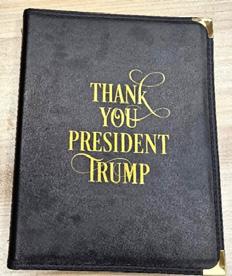
Thank You President Trump
By Moshe Friedman
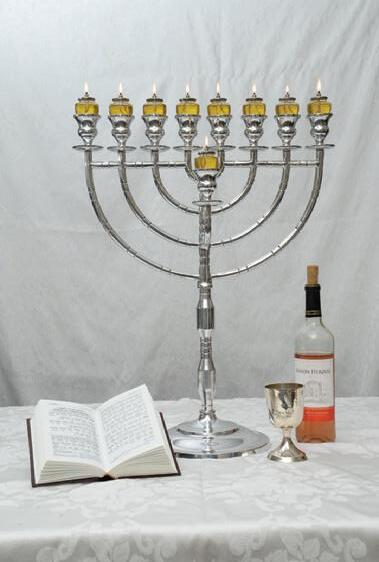
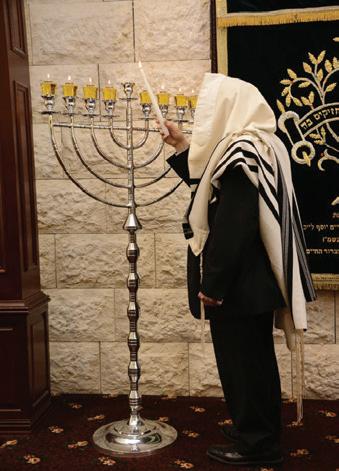
Every year the White House sponsors a Hannukah Celebration. Central to this event is the lighting of a special Channukah Menorah historically selected for its uniqueness, its history, or community significance. To date, the call for Menorah candidate submissions as well as the date of the event have not yet been announced
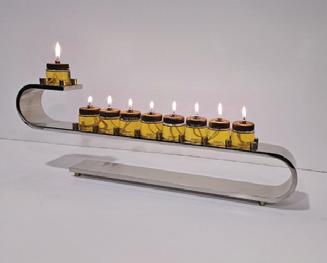
This document represents our offer of a MEGA Menorah (the Shul Menorah renamed) for this purpose and at the same time, if and when selected, present it to President Trump and the White House as our way of saying THANK YOU for his masterful handling of the situation in the Middle East and Peace around the world!
The following 4-page brochure presents another Great Deal for the President.
Page 1.
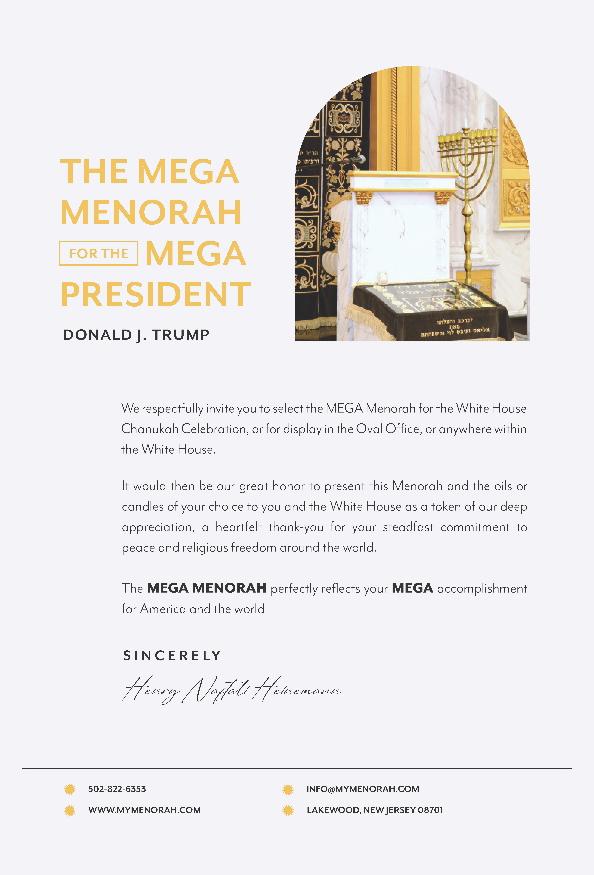
THE MEGA-MENORAH for the MEGA PRESIDENT
We respectfully invite you to select the MEGA-Menorah for the White House Channukah celebration, or for display in the oval Office or anywhere within the White House.
It would then be our great honor to present this Menorah and the oils or candles of your choice to you and the White House as a token of our deep appreciation, a heartfelt THANK YOU for your steadfast commitment to peace and religious freedom around the world.
The MEGA-Menorah perfectly reflects your MEGA accomplishments for America and the world.
Sincerely
Henry Naftali Heinemann
Page 2.
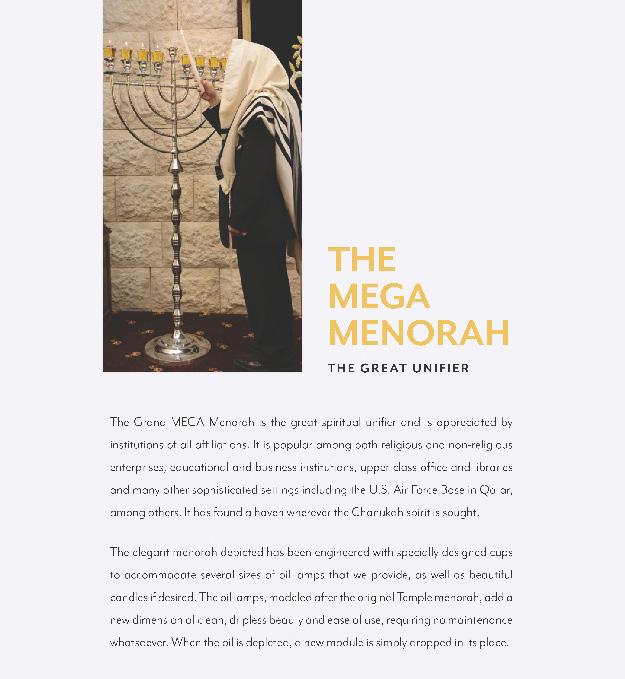
The MEGA Menorah – The Great Unifier
The MEGA-Menorah is the great spiritual unifier and is appreciated by institutions of all affiliations. It is popular among both religious and non-religious enterprises, educational snd business instiyuyions, upper class office and libraries and many other sophisticated settings including the U.S. Air Force Base in Qatar, among others. It has found a haven wherever the Chanukah spirit is sought.
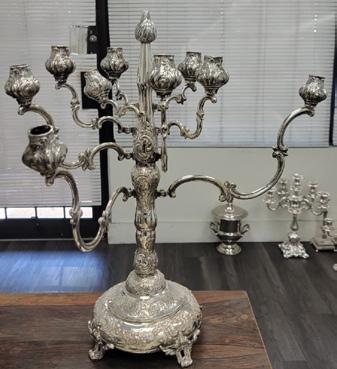
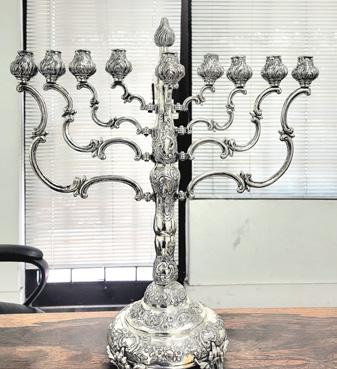
The elegant menorah depicted has been engineered with specially designed cups to accommodate several sizes of oil lamps that we provide. As well as beautiful candles if desired. The oil lamps, modeled after the original Temple menorah, add a new dimension of clean, dripless beauty and ease of use, requiring no maintenance whatsoever. When the oil is depleted, a new module is simply dropped in its place.
Page 3
The MEGA-Menorah’s messagePeace On Earth
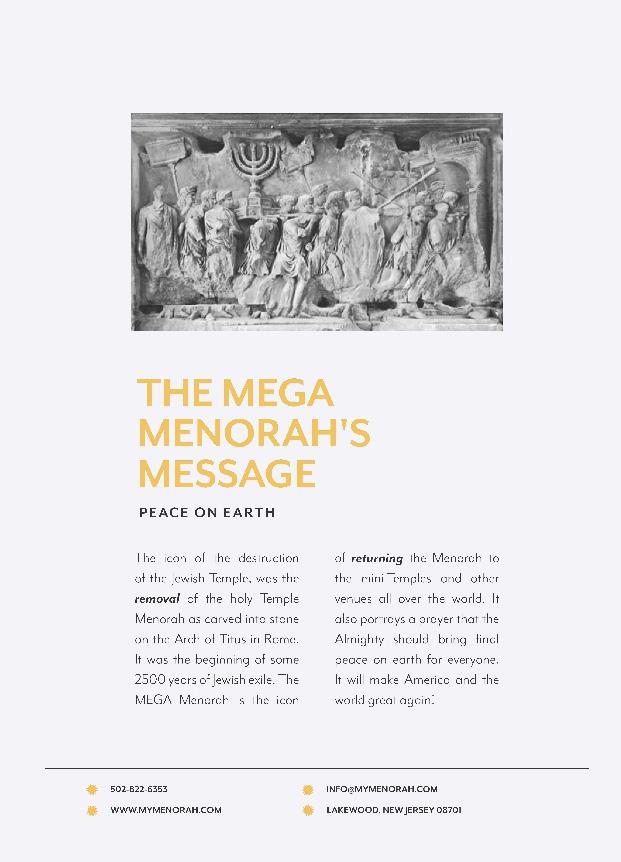
The icon of the destruction of the Jewish Temple, was the removal of the Temple Menorah as carved into stone on the Arch of Titus in Rome. It was the beginning of some 2500 years of Jewish exile . The MEGA-Menorah is the icon of returning the Menorah to the Mini Temples and other venues all over the world. It also portays a prayer that the Almighty should bring final peace on earth for everyone. It will make America and the world great again.
Page 4.
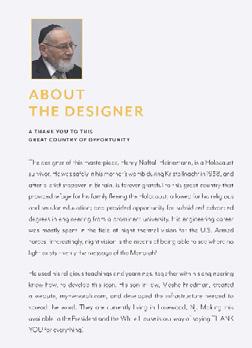
About the designer – A THANK YOU to this Great Country of Opportunity.
The designer of this masterpiece, Henry Naftali Heinemann is a Holocaust survivor. He was safely in his mother’s womb during Kristallnacht in 1938, and after a brief stopover in Britain, is forever grateful to this great country that provided refuge, for his family fleeing the Holocaust; allowed for his religious and secular education, and provided opportunity for subsidized advanced degrees in Engineering from a prominent university. His engineering career was mostly spent in the field of night thermal vision for the US Armed forces. Interestingly, night vision is the means of being able to see where no light exists – verily the message of the Menorah!
He used his religious teachings and yearnings, together with his engineering know-how to develop this icon. His son-in -law, Moshe Friedman created a website, mymenorah. com, and developed the infrastructure needed to spread the word. They are currently living in Lakewood, NJ. Making this Menorah available to the President and the White House is our way of saying THANK YOU for everything!
President Trump:
Page 4b . MEGA-Menorah Highlights
Height: 64 inches
Width: 31 inches
Base Diameter: 16 inches
Weight: 32 lbs
Material: Polished Aluminum
Always shining, does not tarnish
Easy assembly; under 3 minutes
Packaged in 2 foam cases
If you are interested in this offer please contact us at INFO @MYMENORAH.COM or call us at 502-822-6353, and we will be honored to provide you with your own exclusive MEGA Menorah. Thank You!
Lost Tallis & Tefillin Dramatically Rescued From FLL Airport Dumpster
In an extraordinary chain of events at Fort Lauderdale–Hollywood International Airport, a traveler was reunited with his Tallis and Tefillin after they were accidentally discarded — and nearly lost forever. What followed was a fast-moving rescue effort involving Chaveirim, the Broward Sheriff’s Office, airport administrators, and even Waste Management, all working together to save two sacred items from destruction.
A Sudden Realization Before Boarding
On Sunday afternoon, New York resident Tovy Schwartz was preparing to board his flight from FLL to JFK when he realized something was terribly wrong: his Tallis and Tefillin were missing. Unsure whether they were misplaced or removed during cleaning, he reached out to Chaveirim for help. Volunteers searched throughout the terminal, but as time passed, it became clear the items might not simply be “lost.”
A Breakthrough From Airport Surveillance
With growing concern, Schwartz turned to the Broward Sheriff’s Office. Deputies reviewed security footage and made a startling discovery — an airport cleaning crew had mistakenly thrown the bag into a garbage container. By the time this was uncovered, the airport’s trash had already been collected and was on the way to be processed.
This turned the situation into a
true race against the clock. Rabbi Eckstein Steps In Schwartz contacted Rabbi Eli Eckstein, the airport chaplain and Chabad Rabbi of Dania Beach. Understanding the urgency, Rabbi Eckstein immediately reached out to his contacts in airport operations and Waste Management. Within minutes, he was able to secure a temporary hold on the garbage truck before it reached its final destination — a critical move that kept the contents from being permanently destroyed.
A Search Through Mountains of Waste
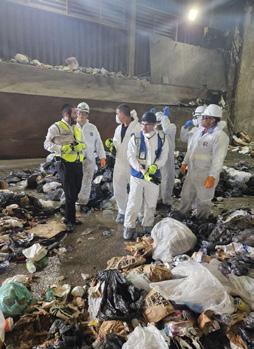
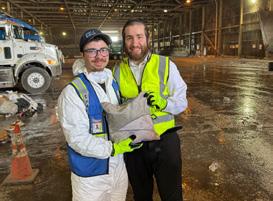
With the truck stopped, Chaveirim of South Florida arrived onsite and began the painstaking task of sorting through a massive dumpster filled with airport refuse. Volunteers spent hours sifting through bags and debris, determined to locate the sacred items.
Their persistence paid off.
On Tuesday, at the Waste Management facility on State Road 7,
the Tallis bag — with both Tallis and Tefillin still inside — was recovered just in time, hours before the dumpster was scheduled to be emptied.
A Community Effort, A Powerful Outcome
Schwartz expressed deep gratitude for every person and agency involved. He emphasized that without Rabbi Eckstein’s swift coordination, the recovery simply would not have happened. “So many people came together and refused to give up,” he said. “It was a true Kiddush Hashem.”
More Than a Lost-and-Found Story
Beyond the dramatic timeline and the unlikely rescue, the incident served as a meaningful reminder of community, collaboration, and the respect shown toward objects of spiritual importance. What could have ended as a painful loss instead became a powerful moment of unity and determination.
Healing Hearts Unveils Kosher Room at St. Mary’s
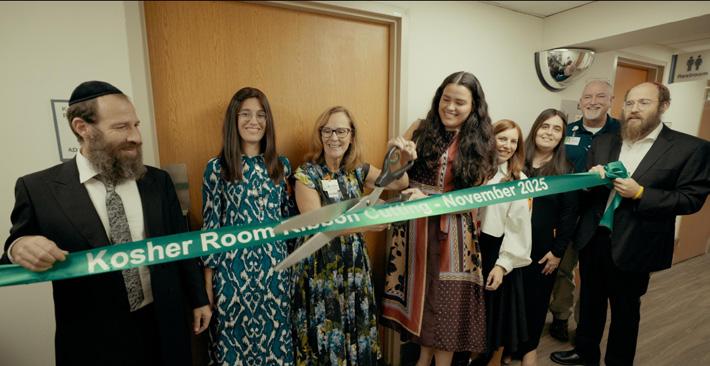
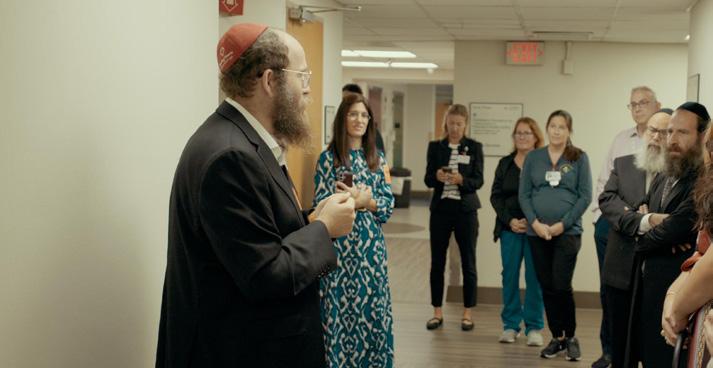
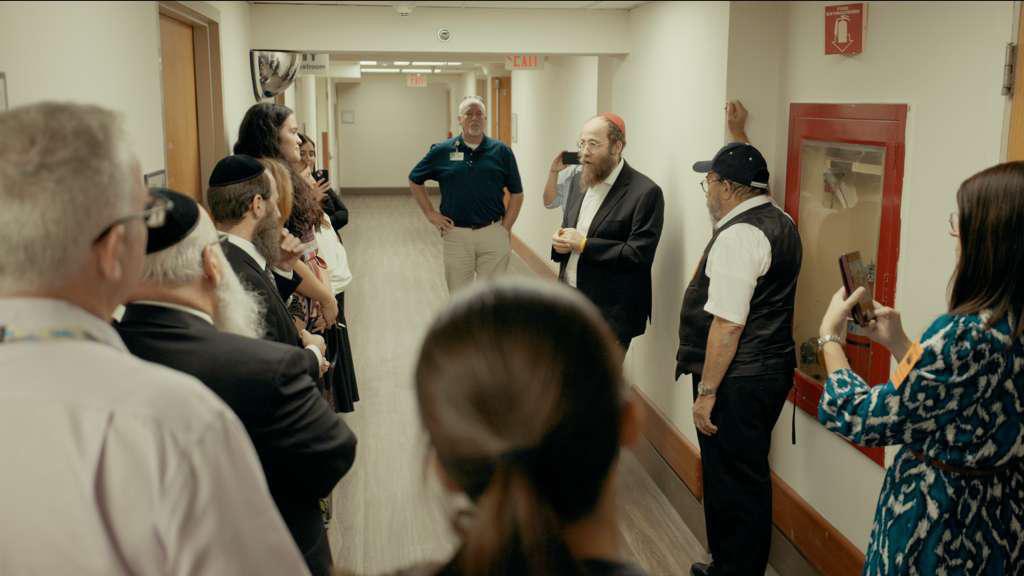
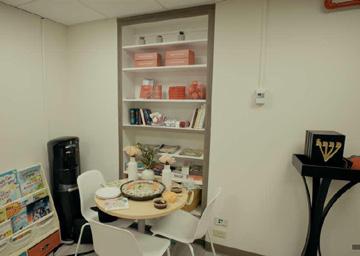
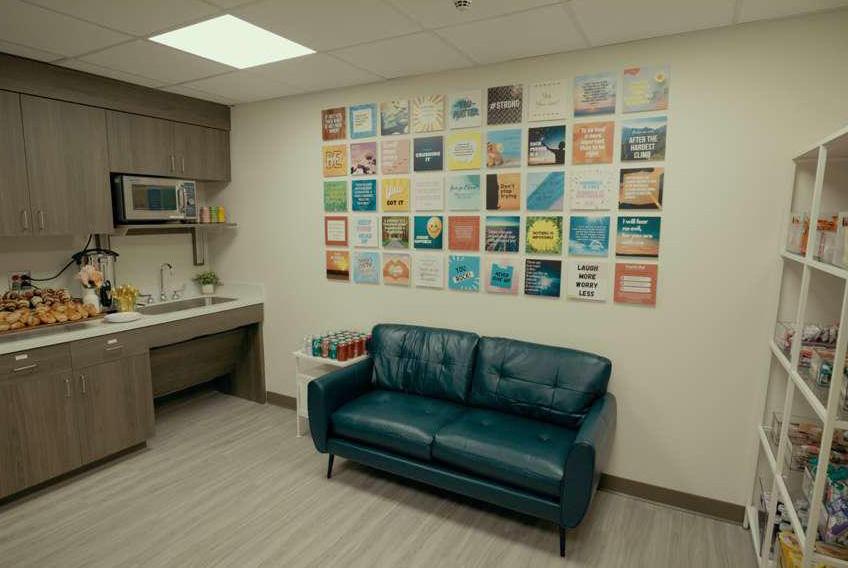
On Wednesday, November 19, a meaningful milestone was celebrated in the South Florida Jewish community as St. Mary’s Medical Center held a ribbon-cutting ceremony for its brand new kosher lounge. St. Mary’s is located in West Palm Beach and is famous for its world-renowned Paley Institute, which welcomes people from around the globe who come for the innovative and life-changing orthopedic surgeries for limb lengthening and limb deformity correction. The ceremony brought together hospital leadership along with medical staff, the Healing Hearts team, Rabbi Yoel and Chaya Gancz of Chabad of West Palm Beach, and other rabbis including Rabbi Shaya Richmond of Aitz Chaim and Rabbi Gross of Chai Lifeline.
While the hospital previously had a kosher room, it was not regularly stocked. Additionally, the room itself was narrow and difficult to access—especially for wheelchair-bound patients. The new room was brought to life through a collaborative effort between Chabad of West Palm Beach and Healing Hearts. It is located on the ground floor of the main building and features an extra-wide doorway, making it easily accessible for all patients. Thoughtfully designed and warmly welcoming, the new kosher room offers Jewish patients and their families a space to tend to both physical and spiritual needs. It is fully stocked
with Glatt Kosher and Cholov Yisroel meals, snacks, and drinks, and provides comfortable seating, prayer books, and uplifting reading materials.
This marks the 16th kosher room established by Healing Hearts across Miami-Dade, Broward, and Palm Beach counties— continuing their mission to bring comfort, dignity, and support to every member of the community in their moment of need.
Healing Hearts is a non-profit chesed organization that helps individuals and families in the South Florida Jewish Community who
vides
Solomon Leadership Program: Learning the Pillar of Tolerance
By Ariela Greenwald, Eliav Eichler, Hadar Cohen and Dr Sarah Rosanel, MD
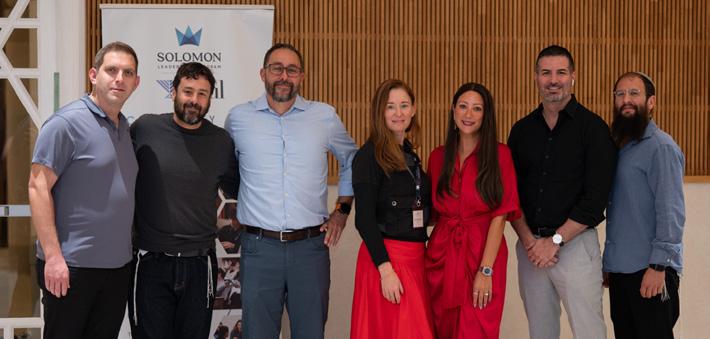
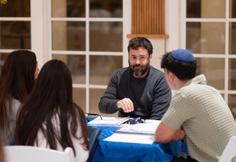
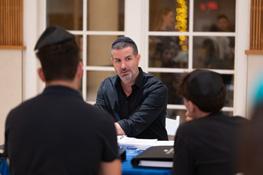
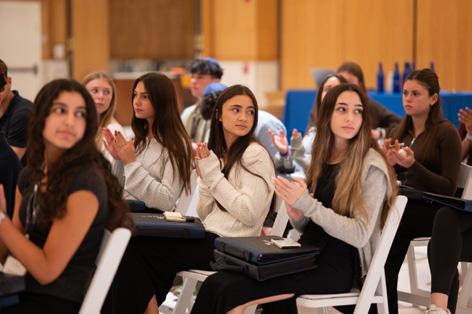
The Solomon Leadership Program, held at The Shul of Bal Harbor under the leadership of Rabbi Zalman Lipskar, unites outstanding high school students who are committed to growing into thoughtful, ethical leaders. With chapters nationwide, the program guides teens in building strong character through its curriculum of seven core leadership pillars.
This week, under the guidance of Dr. Sarah Rosanel, fellows Ariela Greenwald, Eliav Eichler, and Hadar Cohen wrote this reflection on the pillar of Tolerance, begin ning with lessons grounded in To rah values and Jewish tradition.
The session started with our chapter director, Rabbi Shaya Far kash, and assistant director, Av romel Hayman, who shared deep insights into the meaning of tol erance from a Torah perspective. Avromel connected this idea to the week’s parsha, describing the relationship between Yaakov and Esav.
Their message set the tone for the week: tolerance can uplift others and inspire real change.
Guest Speaker: Dr. Gabe Vorobiof on Lessons of Tolerance
Although Yaakov recognized Esav’s challenges and negative tendencies, he also understood the value of patience, empathy, and responsibility. Instead of rejecting his brother, Yaakov chose to engage with him thoughtfully. Over time, Esav’s character softened, reminding us that genuine influence comes not from dismissing others, but from meeting them with understanding.
Later, we welcomed Dr. Gabe Vorobiof, a cardiovascular imager, who shared his unique perspective on tolerance, both as a physician and as someone raised during difficult social tensions in South Africa. Without diving into politics, he helped us explore how intolerance shows up in everyday life, and how true tolerance requires strength, clarity, and humility. Dr. Vorobiof explained that while many people assume education alone leads to tolerance, real life shows that it’s not always enough. He reminded us that even highly educated environments can struggle with understanding and acceptance. He also discussed how forcing people to be “tolerant” through rules or pressure does not always lead to genuine respect.
Instead, he turned to a Jewish perspective. He described how Avraham embodied kindness and openness, Yitzchak represented discipline and inner strength, and Yaakov brought both qualities together to form tiferet: a beautiful balance that defines true leadership. As Yaakov is also called Yisrael, Dr. Vorobiof reminded us that mastering this
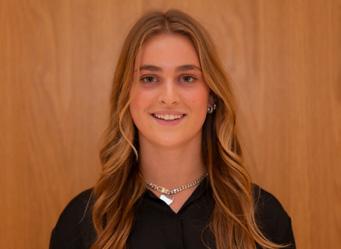
Ariela is a junior at Lubavitch Educational Center. Born in New York and raised in Florida, she enjoys many sports, including surfing, running half-marathons, race car driving, and skiing.
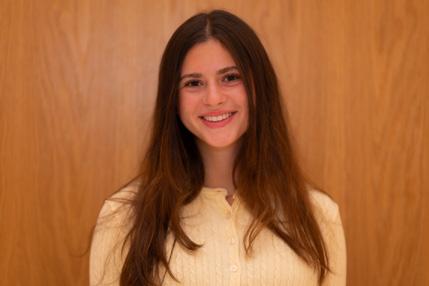
Hadar Cohen was born in Miami and lives in Bay Harbor. Her family is originally from Argentina. She is currently a senior at Bais Yaakov.
Eliav Eichler is a 17-year-old student at Jewish Leadership Academy. He enjoys music and spends his free time playing tennis or weightlifting.
balance is part of our identity.
His final message was simple yet powerful: We can disagree with ideas without rejecting people. Tolerance means respecting another person’s humanity even when we do not share their views.
Mentorship Circles: Bringing the Lesson Close to Home
Our mentors: Mrs. Dina Kranz, Mr. Diego Goldfarb, Mr. Jake Bengio, and Mr. Alexander Rindner and Dr Sarah Rosanel guided us in breaking down these concepts and applying them to real-life situations. They encouraged us to
reflect on how tolerance shows up in our friendships, families, and communities.
In Dr. Sarah Rosanel’s mentor group, as recounted by Ariela Greenwald, we began by sharing one thing we liked and one thing we struggled with from the speaker. This helped us practice critical thinking and honest reflection skills that are essential for leadership.
We discussed how tolerance starts with humility: the ability to admit when we may be wrong and to choose truth over “winning” an argument. We also spoke about
COMMUNITY
how tolerance becomes difficult when disagreements are emotional or personal. For example, when two friends see a painful event in completely different ways, the hurt can feel like betrayal.
Yet, we learned that tolerance does not require agreement.
She shared stories from Jewish history showing how people who once experienced deep conflict were later able to rebuild neighborly relationships, not by erasing the past, but by recognizing each other’s humanity.
Finally, Dr. Rosanel taught us that tolerance also requires boundaries. A leader can respect a person while disagreeing with a choice. She gave examples from her own medical practice, where she treats patients compassionately even when she disagrees with some of their habits or decisions.
Leadership means knowing when to be accepting, when to stand firm, and how to balance the two with kindness.
Growing as Future Leaders
This week’s exploration of the pillar of Tolerance helped us understand that leadership is not about having all the answers, it is about listening, learning, and staying grounded in values. Tolerance is powerful, but it must be paired with wisdom and boundaries.
As Solomon Leadership fellows, we are grateful for the opportunity to learn from our mentors, speakers, and tradition. We hope to carry these lessons into our homes, our schools, and our community, striving to lead with empathy, strength, and respect for every person we meet.
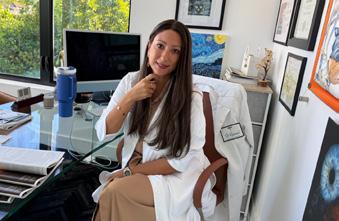
Dr. Sarah Rosanel, MD FACC Physician Leader | Internal Medicine Specialist & Clinical Cardiologist | Mentor, Educator & Entrepreneur Founder & CEO, Dr. Rosanel, MD Concierge Practice @Rosine.18 • info@DrRosanel.com
Dr. Sarah Rosanel is a Miami-based concierge physician specializing in internal medicine and cardiology, serving an international patient base across the U.S., Canada, France, Dubai, and Israel. Born in Casablanca and raised in
to attend Yeshiva University, where she graduated cum laude in Biochemistry. She went on to earn her MD with honors from the Technion Israel Institute of Technology, followed by an Internal Medicine residency and Cardiology fellowship at Maimonides Medical Center.
After serving as a Cardiology Attending at Memorial Regional Hospital, Dr. Rosanel launched her boutique concierge practice, offering deeply personalized, hightouch care tailored to high-profile patients worldwide.
A respected physician leader, she holds prominent roles with the American College of Cardiology, the American Society for Preventive Cardiology, and serves on the advisory boards of JOWMA, Magen David Adom, and United Hatzalah of Florida. She is an associate pro-
fessor at Yeshiva University’s Stern College and a mentor in the Solomon Leadership Program, guiding the next generation of leaders.
Dr. Rosanel is also a keynote speaker, South Florida Magazine contributor, and moderator of complex cardiac cases at the national ACC conference. Her recognitions include the Women in White Coats Heroes Award, JOWMA’s Physician Leadership Award, the Lifelong Physician Leader Award, and selection to Cardiovascular Business’s “Forty Under 40.” She was also named a Featured Doctor in Cardiology and Internal Medicine by Best in Florida Magazine for 2025.
Dr. Rosanel resides in Miami with her husband, Yossi, and their three children, Ariel, Zev, and Shirley.
“Medical History in Shidduchim:
Do You Need to Tell?”
Rivki was finally settling into her routine. After an intense, unforgettable year of seminary in Eretz Yisroel, she started a fulltime job which had been a real adjustment. She was learning how to balance the 9-to-5 world, with doing shopping, helping her mother, and now—on Erev Shabbos—she was actually excited to get home and help out with the preparations.
She got into her car, turned on the familiar roads toward home, and pressed the play button on her voicemail. The first couple of messages were the usual: her mother reminding her to pick up onions, a friend asking if she was going to a vort next week. Then came the third.
A warm, slightly unfamiliar voice introduced herself.
“Hi, this is Mrs. Goldstein. I’m calling from out of town. I was given your number as a reference for a friend of yours named Devory… We’re looking into a possible shidduch for my son and would appreciate a call back, thank you.”
Rivki’s foot nearly slipped off the gas pedal.
Devory?! Her Devory? Her best friend since sixth grade, the one who practically lived in her house? Sweet, fun, wonderful, the girl who stayed up all night with her before finals reviewing notes? Devory—the girl everyone loved. Then the cold wave hit.
Appendicitis— a common, onetime infection of the appendix
that causes sharp abdominal pain and is treated with a short surgery, she recovered quickly. Baruch Hashem, she had recovered. This was back in tenth grade, she remembered it vividly. One minute they were in class learning, and the next, Devory was sent home doubled over in pain. Within hours she was in the hospital, undergoing emergency surgery. The entire school had davened. There had even been a tehillim chain organized by the teachers. Baruch Hashem, after a few days she was back home, and after about a week she was back in class, smiling as usual, the scare behind her.
Rivki hadn’t thought about it in years.
But now… this?
Should she tell the potential mother-in-law that Devory once had appendicitis? Would hiding it be wrong? Would saying it be lashon hara? Was this considered a “medical issue” that must be disclosed in shidduchim?
Rivki’s hands began to tremble. She always knew this kind of question might come up one day. Every girl knows. But she never prepared for how it would feel when it was about someone she loved.
And so, like many before her, she did the sensible thing: before even pulling into her driveway, she dialed the Refuah B’Halacha Center. This needed someone who understood both medicine and
halacha.
A rav answered, warm and calm. “What can I help you with?”
Rivki took a breath and explained the situation.
The rav listened carefully and then began to clarify. The rav explained that he was well-acquainted with this condition and appreciated exactly what she was dealing with. Knowing that the rav truly understood helped Rivki feel calmer as they discussed the halacha.
The background
The rav began reviewing the basic halachic framework with her.
First, he quoted the Sefer Chasidim, siman 507, which says that if there is an illness in a family that is relevant and could affect the future, it must be revealed to the other side.
Then he brought the words of the Chofetz Chaim in hilchos rechilos, Klal 9, that if a person sees a shidduch taking shape and knows that one side has real flaws or issues that could cause harm, he is obligated to say something, provided it is done within the guidelines of to’eles.
He continued with the wellknown ruling of the Chelkas Yaakov, who tells the story of a twenty-year-old bachur who unfortunately had cancer, and whose doctor knew he would not live another year. When the doctor asked whether he must dis-
close this to the kallah’s side, the Chelkas Yaakov ruled clearly that yes—such information must be told, because of the severe consequences and the level of harm involved. Similarly, the Tzitz Eliezer chelek 16 simen 4 was approached by a doctor who wanted to know if he should reveal medical information about a severely ill person. The rav replied that he most defiantly should.
But then the rav shifted to another category entirely.
He referenced Shulchan Shelomo, Archai Refuah, chelek 3, page 63, which discusses temporary medical events that are fully resolved. There he writes that if a condition is not recurring, not genetic, and has no impact on the person’s future health or marriage, there is room to say that it does not need to be voluntarily disclosed—unless the other side specifically asks.
As the rav explained these categories and distinctions, something inside Rivki finally settled. The fear and confusion that had hit her so suddenly began to quiet. She now understood the framework, the differences between serious future-impacting conditions and one-time, resolved events, and where a situation like this fit
into the halachic map.
By the end of the conversation, Rivki had clarity—real clarity— about how to move forward.
The Callback
Later that afternoon, Rivki dialed the number and reached Mrs. Goldstein.
They spoke warmly. Rivki described Devory the way she truly was: loyal, emotionally mature, sincere, growth-oriented, always ready to help. A girl with depth and simchas hachaim, who treated every person with respect and every responsibility with seriousness.
Toward the end of the call, Mrs. Goldstein asked: “And health-wise, she’s doing well?”
Rivki answered honestly, just as the rav advised.
Just like in all medical–halachic questions — especially in the delicate world of shidduchim — one must speak to a competent rav who understands the full picture. Rivki was grateful she had reached out, and even more grateful that such a resource exists to guide people through moments exactly like this.
At the Refuah B’Halacha Center, we are here to provide guidance for real-life challenges, big
and small. Whether it’s a question about Shabbos, kashrus, or navigating difficult personal situations, our experienced Rabbunim are ready to listen and advise.
If you ever find yourself wondering about a medical halacha question — big or small, serious or just something that’s been on your mind — remember that you don’t have to figure it out alone.
The Refuah B’Halacha Center is here to help, with experienced rabbanim available to guide you through even the most sensitive or confusing situations.
Our Rabbanim;
R’ Yaakov Forchheimer shlit”a
R’ Noach Isaac Oelbuam shlit”a
R’ Shmuel Fuerst shlit”a
R’ Uri Deutch shlit”a
R’ Micha Cohen shlit”a
R’ Moshe Zev Feldman shlit”a
R’ Baruch Hirshfeld shlit”a
R’ Daniel Neustadt shlit”a
R’ Avrohom Yaged shlit”a
We specialize in Mental health
Shabbos
Treatment issues
Hospital stays
Fertility Kashrus
We are here Sunday through Friday 8:00 am till 10:00 pm and erev Shabbos 10 minutes before candle lighting.
Refuah B’Halacha Hotline: 732 755 0851 or email us at www.refuahbhalachacenter.org
JUDAH MANDEL ESQ. ATTORNEY AT LAW
C:
P:
F:
HEBREW ACADEMY
MAYOR OF BAL HARBOUR
YACHAD KYHS
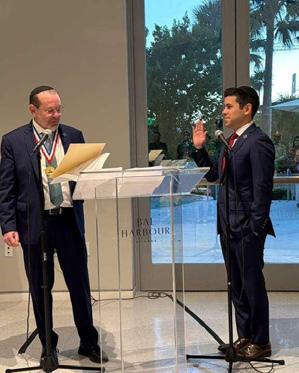
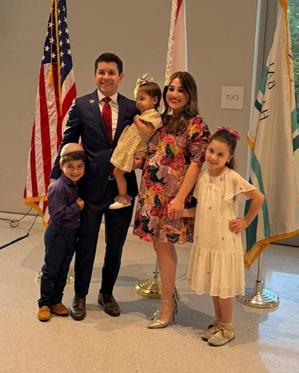
Hebrew Academy Miami Alum Becomes Mayor of Bal Harbour Mazal tov to Hebrew Academy parent and alum Seth Salver (‘06) on being sworn in last night as the next Mayor of Bal Harbour, joined by his wife and faculty member Perla Salver, and their children Anna Rebeca (3rd), David (K), and Yael (N2)!
Operation Inspiration: Out of Order
While at a bookstore one day, a friend showed me a book he had picked up for his grandchildren. It was a colorful picture book with laminated pages for easy cleaning, and looked very enjoyable for the kiddies. However, he was returning it, and showed me why. He opened the book at about the midpoint, and showed me page 18. Then he pointed to the facing page and it showed 23. I imagined it was missing pages, but that wasn’t exactly the case.
When he turned the page, I saw page 24, then page 27. After that came 22, 19, and several others in a number salad that could make your head spin. I have no idea how that happened at the printing house, and I felt terrible for the author as well as the booksellers. I’m sure this would be a terrible loss of money, having to throw them all out.
As I pondered this, I came up with a great idea. Why not make stickers with new page numbers and paste them over the incorrect page numbers?! Then it would go from 18, to 19, to 20, and so on. Problem solved! Of course, this is actually a ridiculous idea. While it could work if there were an incorrect price on the cover, and they could just cover it with a gold sticker with the correct price, that wouldn’t solve the issue with the page numbers.
While the pages would technically be “in order,” the story would be all messed up because it’s not just the page numbers that matter, but what’s happening on those pages. When the page numbers were printed on those colorful pages, they had a specific order they needed to be bound in so a reader would see each one in the proper time and sequence. Without it, the whole thing becomes nonsense.
By Rabbi Jonathan Gewirtz
It got me to thinking about how so many of us look at the events in our lives. We expect things to be in a certain order, on a certain schedule, and that the things we go through should make sense to us. The problem is that this is just like putting number stickers over the page numbers so we see a neat, orderly progression, but we’re not the ones writing the story.
There’s a famous story about a community that had commissioned a new Sefer Torah and they decided to allow women in the community to sew a special cover for it. They would hold a vote and choose the nicest one to adorn their new prized possession. The women were very excited and worked diligently, creating beautiful mantels.
When the time came, they chose one that was considered the most elegant, beautiful, and respectful. However, as they tried to put it onto the Torah, it became glaringly obvious that the cover was too short for the new Torah. Reluctantly, they moved on to the runner-up, and used that to cover the Torah.
Just then, the woman who had made the winning cover came running up. “I have an idea!” she exclaimed. “Just cut off the bottom of the Torah and it will fit perfectly!”
The moral of this story is that
when people try to make the Torah fit their ideals and wishes, they just end up mutilating it. The Torah-true Jew believes that the Torah is supernatural and is applicable for all time, in all places, and for all people. It doesn’t need to change to match our opinions; our opinions need to change to match the Torah.
And that’s the same thing with the book. No one would be crazy enough to argue that if you renumbered the pages the story would unfold as it is meant to. I mean, maybe I’m wrong, as there are plenty of crazy people out there pretending to be rational thinkers, but for the most part, I think I’m right. That’s why it doesn’t make sense for us to complain about things that go on in the world as if they make no sense because all we can see are the page numbers. We have no idea what plot twist the Author has in store for us but the story really IS going according to plan.
Instead, we have to accept that Hashem, the “Publisher” of the world, doesn’t make mistakes. If He says this page of the story follows that one; that this villain rises to power or this libelous allegation gains traction, it’s His story to write, which one day will be OUR history. For now, we should just pay attention to the details, look for foreshadowing clues of future events, and hold our questions until the end. When we reach the final page, everything will make perfect sense. All the loose ends will be tied up in neat little bows, and we will live happily ever after.
2025 – All Rights Reserved
Did you enjoy this column? Feedback is welcome and appreciated. E-mail info@JewishSpeechWriter.com to share your thoughts. You never know when you may be the lamp that enlightens someone else.
A Sterling Reputation
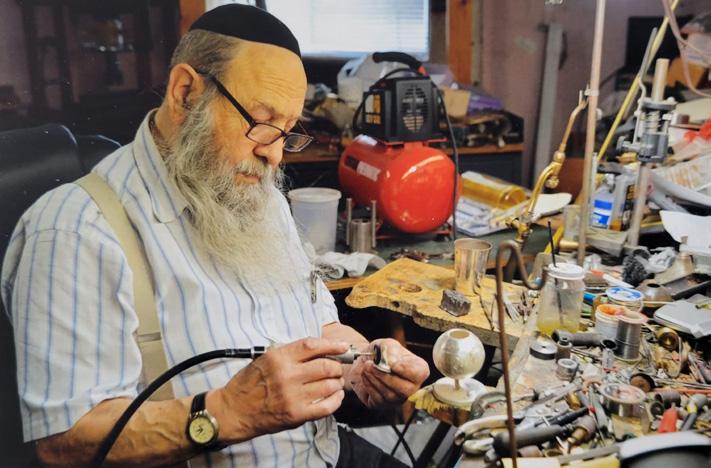
By the time most children were learning to ride a bicycle, Moshe was already learning to hold a jeweler’s saw steady enough to cut a perfectly straight line.
He grew up in London England in the 1960s, in a home where silverwork wasn’t just a craft — it was the family heartbeat. His father Zvi of blessed memory possessed a rare talent, the kind that couldn’t be taught in schools. Before creating a ring, pendant, or Kiddush cup, he would paint it to exact size and scale. Those drawings were so lifelike that visitors would pause, certain they could lift the painted ring right off the paper. “Superhuman precision,” people said. They weren’t exaggerating.
Moshe’s apprenticeship began the way many childhood stories don’t: on his father’s lap at the jeweler’s bench. At seven or eight years old, he couldn’t reach the height of the table, so his father pulled him close and put tiny tools into his hands — files, saws, bits of brass. For pocket money, his father lined up big English pennies and challenged him: “Cut this line perfectly straight without breaking a blade — and they’re yours.”
He cut the line.
He collected his pennies.
And he unknowingly stepped into a lifetime in silver.
By twelve or thirteen, he was already soldering and welding. Soon after, his father began trusting Moshe with genuine silver. The house itself transformed: a couple of rooms became workshops, where students came to learn the trade from the master who saw art
A World of Silver
in precious metal.
His father’s childhood was a little different than his. Born in the Ukraine in 1936, survived the second world war as an only child, after losing his father at a very young age and his mother had become not well enough to look after him, with a heavy heart she made a decision to send him to his relatives in Birmingham England with the hope of joining him there shortly after, unfortunately she passed away before being able to join him, his relatives looked after him and brought him up.
As a young man he attended the Gateshead and Manchester Yeshivot, he met his wife Tzivia Lefcovitch, they got married in 1961 he then enrolled in college and studied metalwork and silversmithing. His pieces were chosen for a prestigious exhibition — and then stolen. “You know someone is talented,” family members joked, “when thieves want the artwork more than the gallery does.”
A Boy on a Jumbo Jet
When Moshe was eleven his father planned a business trip to a jewelry trade show in New York City, being Moshe was a curious and a mischievous boy, his mother insisted: “Take him with you.”
So off they went — on a Pan Am or TWA jumbo jet, the kind that made an impression on a young boy who’d barely left London.
During the 7 hour flight, the airplane bathroom became an unexpected adventure. Moshe didn’t need to use it; he simply wanted to see how things worked. When he locked the door and the light clicked on automatically, he was fascinated. “When I get home,” he decided, “I’m installing this in my bedroom.” He never did.
Then he found the soap dispenser.
One bar… then another… then another. How many were in there? He emptied the whole dispenser into his pockets. Eventually the soaps warmed up in his overloaded
pockets from body heat, and panic set in. He hurried back and returned every bar to the dispenser — probably the only child in aviation history to refill a plane’s soap supply.
During the trip they had a private audience with the Lubavitcher Rebbe to discuss his business endeavors, The rebbe discussed business issues and told his father to make sure to engrave his signature on all items that he made, and about a specific ring painting his father made, a design that wasn’t selling, the rebbe counted the stones in the painting and mentioned there were 17 stones in the ring, and suggested he should add another stone to make it 18 in total. BH, the design sold and went into production.
Then the Rebbe turned to young Moshe and began asking him about tzitzis — how many knots, how many strings. With the nervousness only an 11-year-old can feel in such a setting, Moshe answered as best he could.
On the flight home, he stared at the enormous Jumbo 747 and announced, “I’m going to be a pilot.”
His father laughed kindly. “Go ahead,” he said. “Why not?”
But the future had already been shaped.
A Life in Silver — and Song
After studying in Yeshiva in Israel for some years, Moshe returned to England and threw himself into silver restoration and custom made items. At the same time, he discovered another gift: music. He had always loved it, but now he realized he had a talent that drew people in. Soon he was performing on his Yamaha keyboard at weddings, bar mitzvahs, and community events which he still does today, playing music at simchas. What began as a passion has grown into decades of simchas — a second career that complements the calm precision of daytime silverwork.
In 1984 Moshe and his family moved the silver business to Brooklyn, New York. In 1990 he met his wife Rachel. They married, built a life in Brooklyn NY. In the year 2000 they moved to Pittsburgh, Pennsylvania where he continued his silver works and music while raising their family. When the children began marrying — and moving to Florida.
Slowly, lovingly, the children began pulling. “Come join us,” they urged.
And in 2017, Moshe and his wife did just that.
Miami Shines Bright
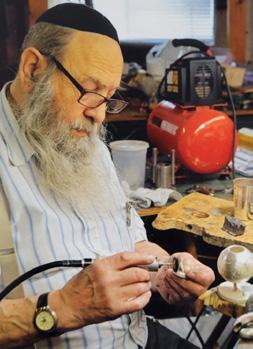
Today, Moshe runs a bustling silver restoration workshop in North Miami Beach. It’s not just a local business — it’s a hub for heirlooms from across the United States. Menorahs, Candlesticks, Kiddush cups, Torah ornaments, antique pieces handed down from great-grandparents — all arrive in padded envelopes and carefully wrapped boxes.
Miami Beach. Aventura. North Miami Beach. Hallandale. Hollywood. Boca Raton. And beyond.
The work is nonstop, especially before Yom Tov. “People always wait until the last minute,” Moshe says with a laugh. “A week before Chanukah the phones start ringing: ‘Can I still bring in my menorah?’” He tries to encourage early drop-offs — but silver, like people, tends to show up right before the deadline.
Still, the demand speaks for itself. Real silver restoration and custom silverworks — meticulous, authentic, expertly executed — is nearly impossible to find in South Florida. Communities are grateful. Families are relieved. And Moshe? He’s continuing the legacy of the little boy who once sat on his father’s lap, learning to file, cut, polish, and appreciate the beauty in every faint shimmer of metal and is now teaching his youngest son Yehoshua, a third generation apprentice all the tricks of the trade.
A world of silver.
A sterling reputation.
And a lifetime dedicated to transforming the old into the shining — exactly as his father taught him.
Contact Moshe at 412 606 7458
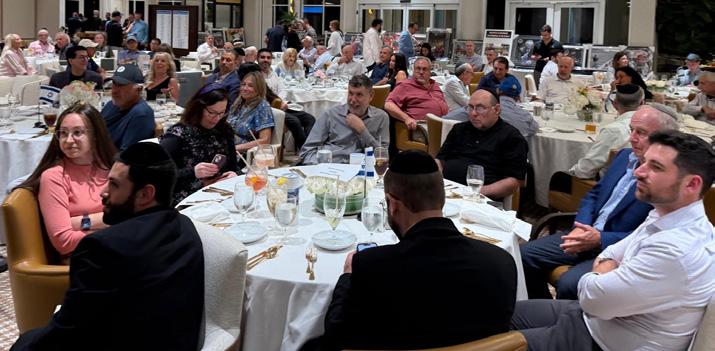
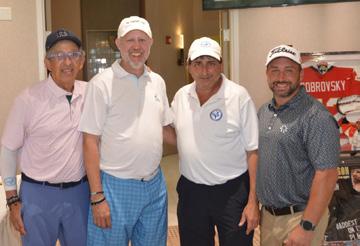
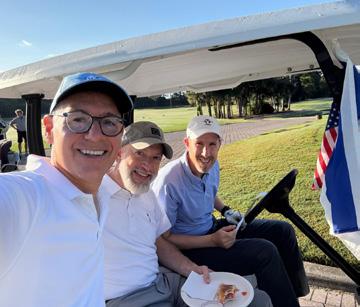
Helping Israel Fund’s Annual Golf Tournament was nothing short of incredible this year.
With over 200 golfers and dinner guests coming together in support of our mission, the event was a powerful reflection of community, unity, and unwavering dedication to Israel’s soldiers, families, widows, and orphans who rely on our support.
Golfers enjoyed a relaxed day on the course, filled with friendly competition and a shared commitment to supporting IDF soldiers and Israeli communities.
The evening dinner program was a powerful reminder of why Helping Israel Fund exists. Guests heard from a special active-duty soldier who shared his firsthand experience working with HIF during a critical moment. He spoke emotionally
about a time when his unit urgently requested essential items. While others were unable to assist, HIF delivered everything, within just 24 hours.
He explained that in that moment, he understood that Helping Israel Fund wasn’t just another organization supporting soldiers from the outside, but truly felt how connected HIF is to the soldiers and how genuine the care and responsiveness are.
His words deeply moved the room and reaffirmed the organization’s mission: to stand with Israel’s defenders swiftly, compassionately, and without hesitation.
The evening continued with a si-
lent auction, raffle, and updates on HIF’s ongoing initiatives. Beyond the funds raised, what made the event truly unforgettable was the palpable sense of gratitude, resilience, and unity shared among everyone present.
As Helping Israel Fund continues its vital work, the success of this year’s Golf Tournament and Dinner serves as a testament to what can be accomplished when a community comes together with heart and purpose.
For more information about our work and ongoing initiatives, visit https://helpingisraelfund.com/ and follow us on Instagram and Facebook at @helpingisraelfund to follow our impact.
Is It Time To Return Home?
By Dr. Chaim Y. Botwinick
As I was preparing to write this article, I tried desperately to collect and organize my thoughts as I do prior to writing articles, blogs or posts. But, this time it was a bit more difficult; very difficult. My thoughts were scattered all over the map. To be sure, writing this article was beyond challenging on many levels. For the very first time in my professional career as an educator, I was painfully struggling with an inability to clearly and succinctly articulate my feelings, thoughts and emotions following over two years of relentless anti-Semitism, Jew-hatred and violence against our Jewish communities.
On that infamous dark morning of October 7th, acheinu bnai yisrael felt the earth tremble and shake beneath our feet. Our feelings and emotions were numb and shattered by the horrific reports and images of October 7th. It was the worst tragedy to befall Israel and our Jewish world since the Holocaust.
Never in my life would I have imagined that in the year 202324, the State of Israel, our dear and precious homeland, the birthplace of our ancestors would we be fighting an existential war against our enemies.
All this is being realized as we experience an explosive tsunami of violent anti-Semitic demonstrations and Jew-hatred rallies and demonstrations as they gain momentum and traction around the globe with slogans of unadulterated hatred such as “death to the Jews”, “free Palestine” and “from the river to the sea” are being chanted.
These are ugly and disgusting phrases now being fashionably chanted at anti-Israel and anti-Semitic rallies and demonstrations by ignorant individuals and groups who have absolutely no sense of history, civility or moral clarity. To be sure, these people live in their own fantasy bubble of progressive left-wing hatred and on the other side of history with disdain and racial hatred.
About a year ago, upon exiting my synagogue on Sabbath morning following, tefilla, I overheard a conversation between three elderly synagogue members.
The conversation focused on the horrific events of October 7th, the war between Israel and Hamas and the resurgence of global anti-Semitism. The conversation was heart- wrenching in light of the fact that two of the gentlemen were holocaust survivors and one
of them had relatives who sadly passed away on the battlefield in Gaza.
As I slowly walked by the group, I heard one gentleman say to the other, “in light of the rapid spread of anti-Semitism in the United States, maybe now is the best time to make aliyah, before it’s too late for all of us.” The other gentleman responded, “What makes you think or believe that we are better off or even safer living in Israel?”
This kicked off a heated and animated conversation, between the three of them. Within very short order, I decided to no longer eavesdrop and proceeded on my way.
As much as I truly wanted to hear the rest of the conversation, or maybe even participate, I was running late for a Shabbat lunch with my family and needed to move on.
This brief exchange remained in my head throughout the entire Shabbat. It kept on playing over and over in my mind. The phrase “maybe it’s time” was so real and palatable. It engendered a feeling of uncertainly and insecurity. It reinforced everything I learned as a child. It reinforced the notion that Am Yisrael are on a very difficult and arduous journey, and how truly temporary our homes are while living in Galut (outside of our homeland, Israel).
In my mind, I kept hearing my teachers repeat the phrase “we are all strangers in a foreign land”.
COMMUNITY NEWS
This phrase was reinforced as a child by my father z”l who would often repeat the phrase “it can happen here.”
My father z”l of blessed memory, was a senior Chaplain in the US Army, stationed in Germany during World War II. He was one of the first Americans to enter and liberate several Nazi concentration camps and was one of the first Jewish American heroes in the US Army to actually witness firsthand the horrendous atrocities of the Shoa.
This experience left a profoundly indelible impact on my father who throughout his rabbinic career fought tooth and nail against anti-Semitism in Europe and whenever or wherever it raised its ugly head in the United States.
As a ten year old child, the words “it can happen here” rang hollow in my mind. But today, it strikes a very raw and sensitive chord of unimaginable proportion, based on real facts on the ground and an unfortunate new harsh world reality. It was as if my father was haunted by a sixth sense that our future in America does not and will not guarantee safety or calm for our Jewish community and that our lives in the United States are indeed temporary or tenuous at best.
Many of my colleagues, friends and select family members posit that we should never consider making aliya out of fear or because we are “escaping or running away from the fire” of increased anti-Semitism in the diaspora. And, then there are others who feel that we should make aliya as soon as possible while we physically still can.
The overarching rational for
making aliya now is based on the belief and conviction that Israel is our true Jewish homeland and therefore offers us, our families, our loved ones and acheinu a place for protection, safe refuge and an opportunity to live, breath and flourish with our own people in our own homeland. This is in addition to the beautiful commitment, mitzvah and obligation of aliya and yishuv eretz yisrael.
Yes, there are many dangers in Israel; and the country is indeed surrounded by our enemies who are committed to our complete and total annihilation. But these dangers, as challenging as they appear to be, are far less daunting then the realities which millions of Jewish women, men and children faced during the Shoa, as they were being herded away in cattle cars and exterminated in gas chambers.
As long as Israel remains strong and steadfast, we will, with HaShem’s oversight and protection, never again be led into gas chambers and crematoria like sheep going to their slaughter; nor will we ever again experience being
crammed into cattle cars on a journey to what was then our final destination – Nazi death camps.
Where was the civilized free world at that time? Where was the outcry? Where was the moral clarity? And, where were the protests against genocide of our Jewish people? Better yet, where were our “friends”, neighbors and so-called supporters?
Unfortunately, they were nowhere to be found! They were deadly silent, as they are again today.
Just imagine the outcome, if the State of Israel was in existence during World War II - a Jewish State with its own powerful army, air force and an unswerving and unwavering commitment to protect and defend Jews throughout the world. A country which prides itself as the only democracy in the Middle East and a true undeniable protector and defender of Jews throughout the world.
Since then and even more recently, we have learned several harsh lessons. ….namely, that American and diaspora Jews cannot and must not rely on other countries for our security or for
Miami's One Stop Chosson Shop
COMMUNITY NEWS
our protection. At the end of the day, we only have ourselves to depend upon, to trust and to protect us.
Just look at how the world turned its back on us immediately after October 7th. It was like flipping a switch with no hesitation. It is shocking, hurtful and beyond disbelief.
The level of hatred, benign neglect and consternation exhibited by governments towards Israel remains daunting. They turned a blind eye towards our Jewish state then, and continue to do so today.
When it comes to support for Israel, we always hear people talk a good game, but demonstrate very little action. Support and empathy for Israel immediately following October 7th was strong and pal-
pable. But within very short order, following this catastrophe, it began to run thin. Very thin….especially with all of the new demands being forced on the government of Israel. Even members of our own Jewish community sadly began to criticize Israel and started to question their commitment, support and allegiance to our precious Jewish state and homeland.
This shocking phenomenon and Chillul HaShem was also experienced in the halls of government, on college campuses and universities and in select communities and Jewish-sponsored institutions.
Today, there are many members of our Jewish community who are confused, undecided, frustrated, bewildered and tormented
by their inability to make a decision regarding their unwavering support for Israel or their aspirations for aliya to Israel against a backdrop of increased anti-Semitism. This is especially the case for those who have a yearning to make aliya, yet do not have the psychological mindset or resources which would help them socially in their transition. As a result, they continue to remain supportive of Israel philanthropically and politically and are very strong advocates for Israel’s well-being and welfare, but are unable to make the leap and commitment to make aliya.
Israel’s poor public relations apparatus (hasbarah) did not help matters. In fact, the country is still in desperate need of an ef-
• DINE-IN
• SUSHI PLATTERS
• CATERING SETUP
10% DISCOUNTIF YOU BRING IN THE COMMUNITY VOICE MAGAZINE
• LIVE SUSHI STATION
• DELIVERY & PICKUP
fective public relations “reset” – a topic of grave concern and for a separate conversation.
Friends, nn the final analysis, it’s important to note that there are no right or wrong responses when it comes to making aliya.
Although I am a too young to have directly experienced the horrible ravages of the Shoa, I do have many family members who either experienced or survived the Holocaust or who perished at the hands of Nazis in Eastern Europe. I have also been blessed to meet and work closely, personally and professionally with many holocaust survivors throughout my career. They are true heroes and tzaddikim who against all odds, have committed themselves to transforming and rebuilding
their lives and the lives of others into a positive and meaningful optimistic experience and reason for being.
Virtually every survivor I speak with today, and unfortunately they are becoming fewer in number, repeat their real life stories about how today’s events including the anti-Semitic fires now raging in our own back yards, are sadly reminiscent of what they and their families and communities experienced in Nazi Europe. But, they nevertheless, remain optimistic and steadfast, as they demonstrate an amazing level of resilience, inner strength, emunah and bitachon in HaShem.
For many American Jews, we continuously yearn and romanticize about our love for Eretz Yisra-
el. Whether it represent a familiar location for a family vacation, a visit for Yom Tovim, a family simcha, a son, daughter or grandchild learning in a seminary or yeshiva, or a relative proudly serving in the IDF, we are each connected in some way and in some fashion to Israel.
This kesher (connection) is anchored in our historical birthright, beautiful legacy and mesorah and the powerful magnetic splendor of Eretz Yisrael, as well as its centrality to our lives while living in the diaspora.
My friends, colleagues and select relatives inform me that to live, understand and truly appreciate the centrality of Eretz Yisrael, one needs to eat, drink, sleep, learn and live in the country.
COMMUNITY NEWS
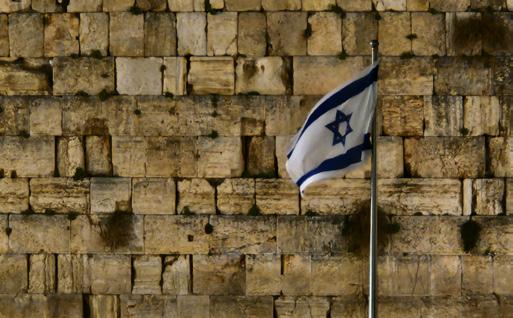
Every time I daven (pray) at the Kotel, I ask myself the burning question – where do we really belong? Where do our families really belong? And, where would I feel safer, comfortable and welcome as a Jew? And finally, I ask myself the question – what is my true destiny as a Jew living in the diaspora?
Following these questions, I then ask myself the ultimate question - These feelings may be palpable and real, but are they real or convincing enough for me to consider making aliya a true reality? Are they in fact realistic and achievable?
The question of whether “they are realistic or achievable” currently plagues and haunts many of us who continuously yearn to make this ultimate move. This question becomes even more prevalent and profound every time we hear or experience acts of Jew-hatred and anti-Semitism.
Can it be that we are just so entrenched in our diaspora comfort zones that making Aliya to Israel is just too much of a leap of faith, irrespective of increased anti-Semitism and Jew hatred throughout the world?
Bottom line, there is absolutely no escaping this harsh reality.
Friends, as we know, it is far easier for me to write this piece while sitting in the comfort (for now) of my home in the States. But, I and others must continuously ask the burning question – for how much longer do we have this freedom of choice? Could time be running out? Could this be a calm before the storm? And, when will the “window” begin to close as it
did in Nazi Germany, and in the Warsaw Ghetto for millions of Jews just prior to the Shoa.
These are very daunting and perplexing questions; but in reality, only HaShem has the answers.
We must therefore engage in hishtadlut (due diligence) for ourselves and for our families, communities, and for acheinu.
With family, children and grandchildren living in the States, we ask the question….how and when to make aliya? And, if not now when?
Returning to the discussion of those three gentlemen following Shabbat tefilla…….
I can vividly recall one of them asking the question ….What makes us think or believe that it is safer in Israel than it is in the streets and neighborhoods of New York, Florida, England, France, Canada or Chicago?
One of the gentlemen responded “just look at what happened on October 7th….it can very easily happen here GD forbid.”
At the end of the day, for many of us, there is a significant gap between our deep yearning and desire to make aliya to Israel and the pragmatic realities which are preventing that move from happening.
But, as indicated, there are no right or wrong actions or responses.
Many of us living in the diaspora feel that we can contribute to Israel’s viability and strength by advocating our positions from the States. Yet, there are others who feel that the only way to truly support Israel is through actual aliya.
Putting physical safety and
survival to aside, there are many who sincerely believe that we can do more for Israel from the States…..especially those of us who are approaching retirement.
Sure it would have been easier to make Aliya when our children and family were younger and more adaptable. But as we know, many of us at that time required greater assurances, a mindset and financial security in order to make this transformational life-changing decision for ourselves and for our families.
As the war against Israel continues; as we pray for the safety of our soldiers and as we continue to experience increased Jew-hatred and global anti-Semitism, let us hope and pray to HaShem that we are all granted the opportunity to make aliya at the proper and right time for ourselves and for our families.
What and when that “right time” actually is, remains totally unknown and remains to be seen and experienced.
But, when it does happen, I am certain we will GD willing feel it, experience it, know it and celebrate it.
Am Yisrael Chai.
ABOUT THE AUTHOR
Dr. Chaim Botwinick is a senior executive coach and an organizational consultant. He served as president and CEO of the central agency for Jewish education in Baltimore and in Miami; in addition to head of school and principal for several Jewish day schools and yeshivot. As an Influencer, he has published and lectured extensively on topics relating to education, resource development, strategic planning and leadership development. Dr. Botwinick is the co-founder of LEV Consulting Associates, and producer/host of Chinuch Horizons podcast. He is author of “Think Excellence: Harnessing Your Power to Succeed Beyond Greatness”, Brown Books, 2011
Why Using a Travel Planning Service Can Transform Your Next Vacation
By Ben Robbins, Bespoke Kosher Travel
With Chanukah and Yeshiva week approaching – are you thinking about your next vacation?
Planning a vacation should be exciting — a chance to dream, to explore, to unwind. Yet for many travellers, the process of turning that dream into reality often feels overwhelming. Accommodation, transfers, kosher meals, Shabbat arrangements, activities, insurance, safety… the list goes on. One small detail missed, and an experience you’ve looked forward to for months can turn stressful very quickly.
That’s where using a professional travel planning service makes all the difference. At Bespoke Kosher Travel, we believe vacations should be about freedom, not frustration. With over twenty years of experience crafting meaningful, memorable travel experiences around
the world, we handle every detail — so you can truly relax and enjoy the journey.
1. Expertise You Can Trust
The biggest advantage of using a travel planning service is expert knowledge. Our team doesn’t just book hotels — we curate journeys. We’ve personally experienced many of the destinations we recommend, met with local guides, and tested kosher suppliers and accommodations. That insider knowledge means we know what works — and what doesn’t — saving you endless hours of research and uncertainty.
Want to know which safari lodge in South Africa offers the best private chef service? Which is the best tour of Venice? Or which islands in Greece are easiest for kosher travellers? We already know the answers — because we’ve been there.
And when things change (as they often do in travel), we’re ready. Our close relationships with global partners mean we can solve problems quickly, adapt itineraries on the spot, and make sure your plans stay smooth from start to finish.
2. Personalisation Beyond Compare
No two travellers are alike, and neither should any two vacations be. Whether you’re a family celebrating a milestone, a couple craving adventure, or a group organising an educational trip, every itinerary we create is designed around you.
We take the time to understand what truly matters to you — your interests, your pace, your food preferences, your standards of comfort, and your expectations. The result? A trip that feels effort-
COMMUNITY NEWS
less, authentic, and completely aligned with who you are.
Perhaps you want to explore Japan but are nervous about the language barrier and kosher availability. Or you’ve dreamt of Iceland’s Northern Lights but need reassurance about travelling around. Maybe you’re planning a once-in-a-lifetime safari or a cruise with family. Whatever the scenario, we make it happen — seamlessly, thoughtfully, and creatively.
3. Worry-Free Kosher Travel
For kosher travellers, there’s an extra layer of complexity in planning: making sure every meal, every location, and every transfer aligns with your needs. This is where Bespoke Kosher Travel truly stands apart.
We specialise in ensuring your trip remains 100% kosher, without compromise. From arranging meals in exotic locations to coordinating all your Shabbat needs with the hotels, we handle it all — often in destinations you might never have thought possible.
That peace of mind is priceless. It means you can focus on the sights, the experiences, and the people around you, knowing everything behind the scenes is taken care of.
4. Value That Might Surprise You
Many travellers assume that using a professional travel service must be expensive. In reality, it’s often not as costly as you think.
Because we work directly with trusted global suppliers — hotels, local tour operators, and kosher caterers — we can often secure*preferential rates or added-value perks that aren’t available online. More importantly, we help you avoid costly mistakes, hidden fees, and wasted time.
When you consider the hours saved, the expert planning, the onthe-ground support, and the enhanced quality of your experience, working with us isn’t an indulgence — it’s a smart investment in your peace of mind.
5. 24/7 Support — You’re Never Alone
A great trip doesn’t just start when you arrive — it’s supported every step of the way. With Bespoke Kosher Travel, you’re never left alone. Our clients have a direct line to our team throughout their journey. Whether a tour needs to be adjusted, an activity rescheduled, or you simply want a restaurant recommendation, we’re there.
That level of care is something you can’t find from an online book-
ing site. It’s the reassurance that someone who knows you, your itinerary, and your needs is always looking out for you.
6. Turning Dreams into Real Journeys
Perhaps the biggest benefit of using a travel planning service is intangible — it’s about confidence. When you know every element has been thought through by experts, you can travel with a sense of calm and curiosity. You can immerse yourself in the experience rather than worrying about logistics.
At Bespoke Kosher Travel, our motto is simple: Tailored. Thoughtful. Totally You. Whether you’re exploring the wonders of South Africa, the markets of Morocco, or the fjords of Norway, we transform travel dreams into beautifully managed, kosher-friendly realities. Your next vacation doesn’t have to be complicated — or out of reach. With the right guidance, the right support, and the right people behind you, it can be everything you’ve imagined — and more.
Discover how we can help you plan your perfect journey.
Call us today on 917 336 1182, email info@ bespokekoshertravel.com or visit www. bespokekoshertravel.com or get in touch to start your next adventure — the easy, elegant, worry-free way.
KIDS ZONE KIDS ZONE
RIDDLES ABOUT
THANKSGIVING
I’m cooked in the oven until I’m golden and yummy, People fight over my legs, but I don’t have a tummy.
I’m green and tiny, round as can be, Some people love me, others say “Not me!”
I’m fluffy and light, I melt in your mouth, Add marshmallows on top, and kids head south.
I’m cold and jiggly, red as can be, I wiggle on your plate — try not to laugh at me!
I’m a basket that’s full of fruit and grain, I sit on the table like a horn-shaped train.
I’m a parade star floating high in the air, Huge and colorful — please don’t stare!
I’m not a door, but I have a handle, I shine on the table like a bright, gold candle.
I’m the game you play after eating too much, Toss me around — just don’t lose your lunch!
I’m the feeling inside when you think of the good, You say it each year — you know you should.
Thankful / Gratitude
I’m long and soft and baked just right, Butter me up — I’m gone in one bite!
Dinner roll
A:
Peas
Football
KIDS ZONE KIDS ZONE
DID YOU KNOW THAT...
FACTS ABOUT THANKSGIVING
1. Turkeys can run up to 20 miles per hour!
2. The first Thanksgiving lasted THREE days — a huge feast and celebration.
3. Pumpkin pie wasn’t served at the first Thanksgiving — no ovens yet!
4. Corn was one of the main foods at the first Thanksgiving, and Native Americans taught the Pilgrims how to grow it.
5. Thanksgiving became an official U.S. holiday in 1863, thanks to President Abraham Lincoln.
6.The very first Macy’s Thanksgiving Day Parade was in 1924, with real animals from the zoo!
7. Only male turkeys “gobble.” Female turkeys make a different sound.
8. Americans eat about 46 million turkeys on Thanksgiving Day every year.
9. Mashed potatoes are one of the most popular Thanksgiving sides in the U.S.
10. Thanksgiving is the biggest football day of the year, starting back in 1876 with a Yale vs. Princeton game.
KIDS ZONE KIDS ZONE
BABY MAZE
UNSCRAMBLE THE FOLLOWING WORDS RELATED TO
STWEE TPAOOT SCSEORLEA
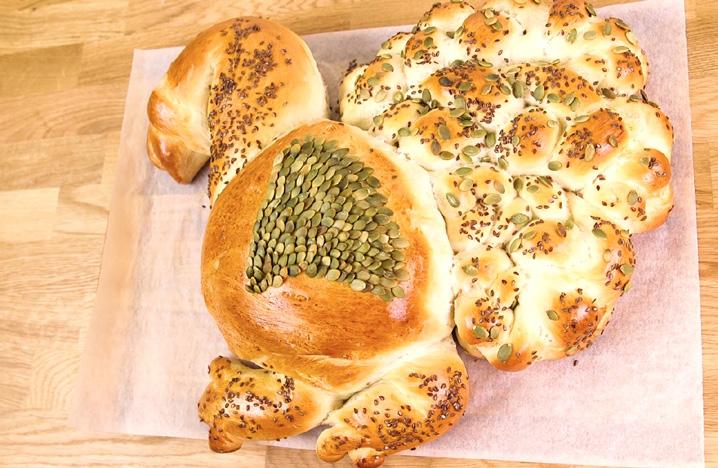
Turkey Shaped Challah
By Jamie Geller
Turn your Thanksgiving challah into a turkey. We started with 2 pounds of Jamie’s perfect every time challah dough and shaped it into a festive and delicious centerpiece for the big meal.
Ingredients
• 2 pounds Jamie Geller’s challah dough
• 1 cup shelled pumpkin seeds
• ¼ cup brown flax seeds
• 1 whole clove
• 1 egg beaten with 1 tablespoon water (egg wash)
Preparation
1. Start with Jamie Geller’s Challah Dough recipe.
2. Lightly grease a baking pan.
3. After dough has completed the first rise, place on a floured surface and divide the dough ball into 3 sections. Divide so that the middle section is bigger than the two ends (see photo).
BODY:
1. Roll the middle/largest piece of dough into a ball shape about 5 to 6 inches across. Place on prepared pan.
FEATHERS:
1. Divide one of the smaller sections into 3 pieces and roll into balls. Divide each of those balls into 3 more pieces, you’ll have 9 total pieces.
2. Roll each ball into a 6- to 8-inch rope. Braid 3 ropes together. Repeat for a total of 3 braids. Place the 3 braids next to each other to the right side of the turkey’s body on the prepared pan (see photo).
HEAD AND FEET:
1 Divide last section into 2 pieces. Roll one piece into a thick 10- to 12-inch rope that’s slightly fatter on one end. This will be the head. Curve into a backwards “S.”
2. Snip ½-inch off the thinnest end, and flatten. This is will be the turkey’s waddle. Place across the head (see photo).
3. Place the thinner end under the turkey’s body on the prepared pan.
4. Divide the remaining piece of
dough in half. Roll each into a 5to 6-inch fat rope. Using kitchen shears or a sharp paring knife, snip one end of each rope into 3 “toes.” Place the unsnipped end under the body (see photo).
DECORATING AND BAKING:
1. Cover dough with a clean towel and rise for 1 to 2 hours, or until the dough has doubled in size.
2. Preheat oven to 350°F.Brush turkey with egg wash. Decorate body, neck, and feathers with pumpkin seeds and flax seeds. Add 1 whole clove for the turkey’s eye. See video for decorating inspiration.
3. Bake at 350°F for 15 minutes. Then rotate pan and bake for 15 minutes more. Cool slightly before serving.
Jamie Geller is the Chief Media and Marketing Officer at Aish. She is also a bestselling cookbook author, celebrity chef, television producer, and businesswoman. She’s the author of eight cookbooks and the founder of Kosher Media Network.
BUSINESS DIRECTORY & CLASSIFIED
Jewish telehealth therapist for anxiety & bitachon
Experienced serving the observant Jewish community. Insurance accepted.
TV wellness expert with new Florida practice. (303) 720-1424 l heather@drheatherhans.com
CUSTOM MADE FOOT ORTHOTICS
Low bulk, dynamic and comfortable. Excellent for balance, sports & pain relief. Adults & Children
Alterations, Dressmaking, including wedding clothes. Phone: (646) 413-4542
Job Opportunity - Jewelry Office Assistant
We are seeking a motivated and responsible individual to join our online-based diamond jewelry company as a full-time Office Assistant. This is an on-site position (no remote work). The hours are Monday–Thursday, 9:00 AM–5:00 PM, and Friday, 9:00 AM–2:00 PM. You will be responsible for helping to fulfill orders, manage inventory, and maintain office organization. This is a great opportunity to join a growing jewelry company!
If interested, please contact Yossi at 310-200-1192.
BUSINESS DIRECTORY & CLASSIFIED
List your local business, services available, real estate opportunities, Help Wanted, & more!
Basic listing: $10/weekName, number and email address
Enhanced listing: $25/weekUp to 25 words (additional words $1/each)
Deadline:
Tuesday at 4pm for next week's issue
Contact: andrea@tsfcommunityvoice.com
In-Home Private Pilates for women to strengthen, realign, and ease pain. Personalized sessions and private events + Kosher Healthy Meal Prep. WellnessRena.com 305-404-3904 | WellnessRena@gmail.com
The new ‘Noble Wines’ catalog has arrived, featuring our latest selection of premium wines. Request your free copy by mail. Just text or email your address and we’ll deliver it straight to your door. Text: (845) 716-8306 or email: news@noblewinesinc.com
To place a Business Directory/Classified Listing contact: andrea@tsfcommunityvoice.com
Yosef a poor man came to the big city of Minsk and went to ask for Tzedaka by Shaya the Gvir When Shaya was told the purpose of his visit he responded "I can see that you are definitely not from our city " " You are right" replied Yosef "In that case I can' t give you charity as it says “aniyei irchah kodmim," Yosef thought a moment and said "Fine, but how did you know living in a city with thousands of Jews that I was not from this city?"
"It was obvious, all the people in my city already know that I don' t give any one charity "
(954) 662-5054 | Info@tsfcommunityvoice.com
You Got Tofes Arba – Now What?
By Gedaliah Borvick
After guiding thousands of overseas buyers, we’ve found one question comes up time and again: What happens after Tofes Arba? This guide walks you through the process.
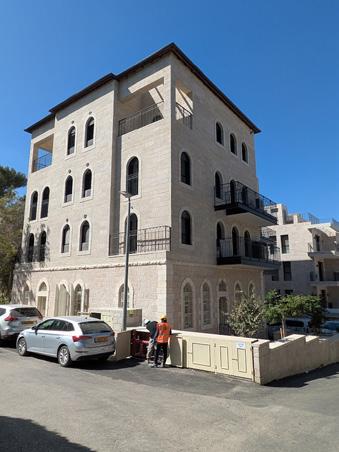
After years of anticipation, the big moment has finally arrived: the building has received Tofes Arba, the official Certificate of Occupancy. For buyers who purchased “on paper,” this milestone marks the end of construction - and the beginning of ownership. But as many quickly learn, getting the keys isn’t a single event; it’s a process involving coordination, documentation, and final payments.
Tofes Arba. Tofes Arba is issued by the municipality once a building meets all safety and infrastructure standards. It authorizes permanent electricity, water, and occupancy - the signal that the property is ready for handover. In simple terms, it’s when the apartment becomes livable, though a few steps remain before the buyer actually receives the keys.
Once Tofes Arba is granted, the developer notifies buyers that handovers will begin. Before receiving keys, buyers must make their final payment, open water, electric, and arnona (municipal tax) accounts, obtain home insurance, and sign the management agreement for the vaad bayit (condo fees).
Protocol. After these steps are complete, the buyer or their representative conducts a walk-
through inspection of the apartment. This step is crucial: during the walk-through, a punch list of issues - called a “protocol” - is created, and the developer fixes them after handover. If any defects prevent occupancy, they must be repaired before the keys are released.
Timing. Typically, the period between Tofes Arba and key delivery lasts a few weeks, depending on how quickly buyers finalize payments and paperwork. For overseas clients, delays often come from logistics such as wiring funds, signing documents, or scheduling the walk-through.
Possession. Once the keys are handed over, ownership officially transfers, and the buyer is responsible for managing the apartment - including utilities, taxes,
and maintenance. The next steps usually include setting up communications (internet, cable, and phone), opening a gas account, and coordinating deliveries and installations such as furniture, appliances, and light fixtures. Buyers should also keep the contact list provided by the developer, which includes details for each subcontractor - for systems such as air conditioning, heating, doors, kitchens, and solar water heaters. These contacts are often needed for setup and service calls.
Property
Manager. Many overseas buyers use a property manager to handle all of this - from dealing with Israeli bureaucracy to coordinating deliveries. If a designer was involved in your apartment, they usually oversee items that fall within their scope. For those renting out their apartment, your property manager will guide you on which responsibilities belong to the owner and which to the tenant. The building management company maintains the common areas - cleaning, elevators, landscaping, and security - but not inside the apartments. Overseas owners often hire private property managers to oversee their unit, prepare it for visits, and handle tenant needs if rented out.
Israeli Bank Account. For buyers with an Israeli mortgage, an Israeli bank account is required and many mortgage brokers can help clients open the account remotely. Those without a mortgage
can typically pay ongoing fees such as arnona, management, insurance, and utilities using an international credit card.
Handover. For purchasers who can’t be in Israel for the handover, it’s essential to appoint a trusted representative - a lawyer, property manager, or friend - to attend the walk-through, record any issues, and collect the keys. Power of attorney can be granted if documents need to be signed. Importantly, “I’ll be in Israel in four months” isn’t a reason to delay payment; once Tofes Arba is issued, the apartment must be delivered, even if the buyer isn’t present.
Receiving the keys after years of waiting is thrilling - but it’s a process. The better prepared you are, the smoother it will go. With professionals guiding you, you’ll avoid nearly all the headaches.
Gedaliah Borvick is the founder of My Israel Home, a real estate agency focused on helping people from abroad buy and sell homes in Israel. To sign up for his monthly market updates, contact him at gborvick@gmail.com. Please visit his blog at www.myisraelhome.com.
In the Blink of an Eye
By Shmuel Shayowitz
As usual, President Trump has been spending a lot of his time on foreign geopolitical efforts. He recently hosted several foreign dignitaries, including a high-profile and highly publicized meeting with Saudi Crown Prince Mohammed bin Salman. But beyond that headline visit, there was another guest at the White House… someone who has suddenly become the talk of the town. There seems to be a growing buzz around this enigmatic figure, a man who has been on a full-scale political offensive.
In fact, before even setting foot in Washington, he had already made more than twenty diplomatic trips to foreign countries over the past year. People are whispering about the possibilities and wondering how his conversations with Trump, along with other presidents and prime ministers across the globe, might reshape the geopolitical landscape.
But here’s the part you might not have predicted... This highly welcomed leader once joined an Islamic insurgency, formed a regional Al-Qaeda faction, and openly embraced jihad. Moreover, just a few days ago, he was still on a global terrorist sanctions list. And less than twelve months ago, this same individual had a $10 million bounty on his head from the United States. But these days, Ahmed al-Sharaa, the current Syrian president, is being wined and dined at the White House, where President Trump described him as a “young attractive guy with a very strong past.”
It’s the kind of twist you almost can’t wrap your head around. One day, the world sees a militant insurgent, and the next, he’s being treated like a noble statesman. Of course, none of this truly happened overnight, but it certainly feels like it. And that’s the part that fascinates me: how quickly a narrative can shift and how circumstances can reverse in the blink of an eye.
Most of us tend to believe transformation is slow and complicated. We tell ourselves we need ideal conditions or some perfect moment before anything meaningful can happen. Change often arrives long before we feel ready, which is why preparation matters far more than timing.
And frankly, it’s not just with world leaders, it’s with everyday people all around us, too. We look at a friend, a neighbor, a colleague, someone who seems to be thriving, and we convince ourselves it must have happened overnight. But we rarely see what it took to get there. We don’t know the sweat, the failures, the late nights, the funds that fell through, the deals that didn’t work, or the moments they questioned everything and were about to throw in the towel.
I see this constantly in real estate, in business, and in people’s personal finances. Someone will tell me they’ve been wanting to buy their first investment property “one day,” and then the right opportunity appears, but then they freeze. Or a person has been meaning to get their finances un-
der control, and then rates shift, but they aren’t in a position to take that first step. Or someone dreams of launching a side business, and an opening finally comes along, but they never laid the groundwork and can’t move forward.
The reality is that opportunity rarely announces itself in advance. Markets shift, conditions change, and openings appear without much warning. The people who capitalize are the ones who have been quietly working all along without any fanfare. So my advice is that this is the time to set your goals, organize your finances, learn the landscape, and decide what you want. Start with the end in mind. Set your big, audacious goal, and reverse engineer the tiny micro steps that it will take to get you there. Then, all you have to do is take the first step, then the second, the third, and so on. And if you need help with those plans, I am a phone call away.
Shmuel Shayowitz (NMLS#19871) is a highly regarded Real Estate & Finance Executive, Writer, Speaker, Coach, and Advisor. He is President and Chief Lending Officer of Approved Funding, a privately held national mortgage banker and direct lender that has facilitated over $3 billion in mortgage funding. Shmuel has over twenty years of industry experience and holds numerous licenses and accreditations, including certified mortgage underwriter, licensed real estate agent, residential review appraiser, and accredited investor, to name a few. Shmuel has successfully navigated through many changing markets and business landscapes, making his market insights and experience well-coveted within the real estate industry. He can be reached via email at Shmuel@approvedfunding.com.
It’s a community built on caring for one another’s health, not a business built on making money from people’s medical struggles.
As a non-profit Health Care Sharing Ministry, United Refuah exists to help families access the best possible care at the lowest sustainable cost. That’s why we offer:
• No network restrictions — with strong reimbursement levels and low member responsibility as outlined in the Sharing Guidelines. You can choose any doctor, specialist, or hospital you trust.
• No bureaucratic denials — our goal is to help our members, not search for clauses that let us say “no.” Eligibility for sharing is clearly outlined, and our focus remains on our members’ health and wellbeing.
• A process designed to avoid long or frustrating delays. Sharing is personal, efficient, and compassionate.
When major or complex needs arise, members receive a dedicated case manager who understands their situation and guides them with genuine care. This level of personal care is rare in healthcare. And throughout it all, monthly contributions have remained consistent for over 7 years. In that time, United Refuah has saved Klal Yisroel an estimated $170,000,000 — with some families saving more than $30,000 every single year.