The Montana Department of Agriculture (MDA) is announcing the opening of the FY2026 funding cycle for the Noxious Weed Trust Fund (NWTF) Grant Program.
Established by the 1985 Montana Legislature, the Noxious Weed Trust Fund grants provide funding for noxious weed research projects, development projects, state and community education, and on-the-ground management through a landowner cost share.
Applicants may apply for funding up to $75,000 per project. Applications are due Tuesday, January 6, 2026, via WebGrants.
To apply, please visit: https://mtagr.webgrantscloud.com/ index.do.
To learn more about Noxious Weed Trust Fund opportunities, please visit the Noxious Weed Trust Fund website at: agr.mt.gov/NoxiousWeedTrustFund or contact Greta Dige, NWTF Program Coordinator, at 444-7882 or greta.dige@ mt.gov.
AUCTIONS
PRODUCTION SALES
2026,
Feb 7, 2026, Hill 70 Quantock Ranch,
Feb 9, 2026, Prickly Pear Simmental Ranch
Unit Cost of Production Workshops
Nebraska Extension will host Unit Cost of Production workshops in central Nebraska in December and January to provide hands-on learning experiences for producers in calculating the unit cost of production for a cow-calf operation. Workshops will be held at two locations. Both days will run from 9 a.m. - 4 p.m. CT.
The first workshop will be held on December 8 and 9 at Community Center (small room) in Atkinson, Nebraska. The second workshop will be on January 27 and 28 at the Legion Hall in Burwell, Nebraska.
Pre-register one week in advance. Call the Nebraska Extension office in Holt County at 402-336-2760 or email Bethany Johnston at bjohnston3@unl.edu.
Each location is limited to 25 people. The cost is $50 per participant and includes meals and materials for both days. Contact Aaron Berger at 308-235-3122 with questions about the workshops.
“Having information to make effective business decisions is important for ranch success. Enterprise analysis and unit cost of production (UCOP) are tools that can help ranchers identify where value is being created on the ranch, where costs are occurring, and what changes could be made to improve profit,” Berger said.
While it takes time to set up and calculate a UCOP, the benefits are:
Knowing what present costs are.
Projecting what unit cost of production will be in 2026.
Identifying opportunities to improve profitability.
Getting It Right crop production webinars
Farmers and crop advisers looking for up-to-date, research-based crop production recommendations are encouraged to participate in NDSU Extension’s Getting It Right crop production webinar series.
The series is sponsored by the North Dakota Soybean Council, Northarvest Bean Growers Association, National Sunflower Association, North Dakota Corn Utilization Council and Northern Canola Growers Association.
“From December 2025 to March 2026, these educational webinars will provide research updates and management recommendations to help farmers make informed production decisions for the 2026 growing season,” says Ana Carcedo, NDSU Extension broadleaf crops agronomist.
Each session will be held via Zoom and will feature presentations from NDSU Extension specialists, including Brady Goettl, NDSU Extension soil science specialist; Joe Ikley, NDSU Extension weed specialist; Janet Knodel, NDSU Extension entomologist; and Frayne Olson, NDSU Extension crops economist.
Topics will include agronomic best practices, pest and disease management, market forecasts and more. Each webinar will conclude with a live Q&A session, providing participants with the opportunity to engage directly with the speakers.
Participation is free, but preregistration
is required. Registered participants will receive an email with instructions and a Zoom link to join the webinars.
The webinar schedule is:
December 3 – Soybeans (ndsu.ag/GIRsoybeans25)
December 16 – Corn (ndsu.ag/GIRcorn25)
January 13, 2026 – Sunflower (ndsu.ag/ GIRsunflower26)
February 14, 2026 – Dry Bean (ndsu.ag/ GIRdrybean26)
March 19, 2026 – Canola (ndsu.ag/ GIRcanola26)
Certified Crop Adviser (CCA) continuing education credits will be available for those attending the live sessions.
For more information, contact Ana Carcedo at 701-831-5796 or email a.carcedo@ ndsu.edu.
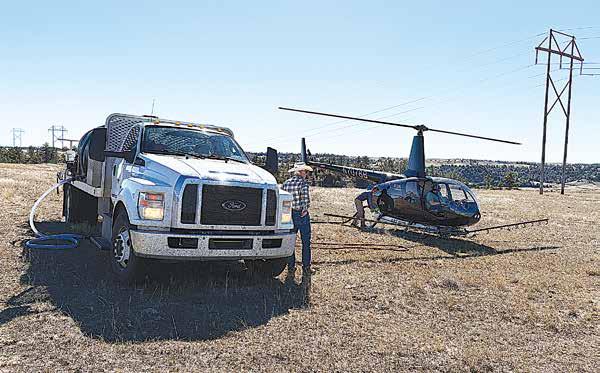
The crew for Hammond Helicopter LLC loads the Rejuvra herbicide before treating acres in the wildcat Hills for cheatgrass. Photo by Bob Smith. See article on page A8
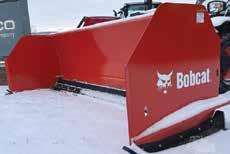
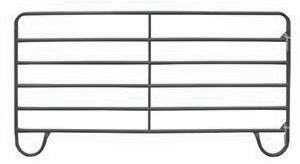
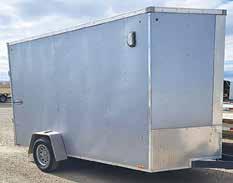
6-ft. 8” x 13-ft.
Phone Chuck Rein at (406) 930-2828
Answer: In 1843. It was
by John Horsley.
Home Alone is the highest-grossing Christmas movie of all time?
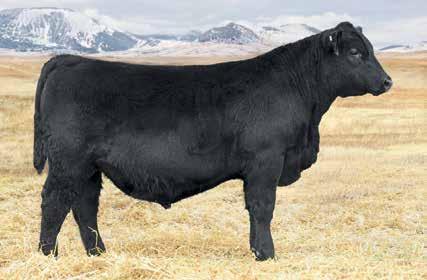
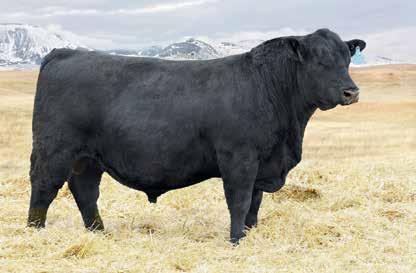
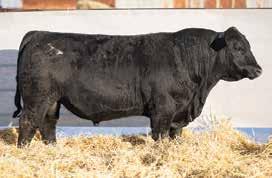
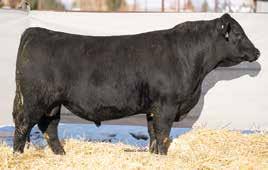
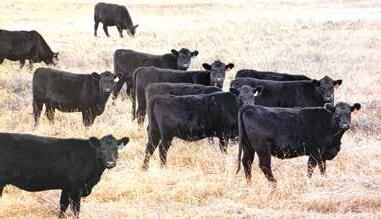
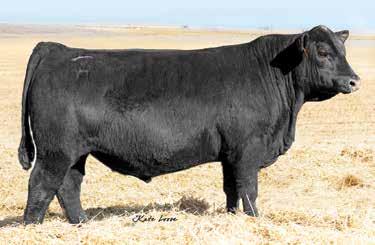
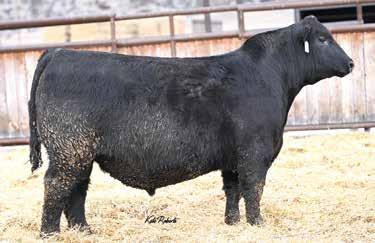
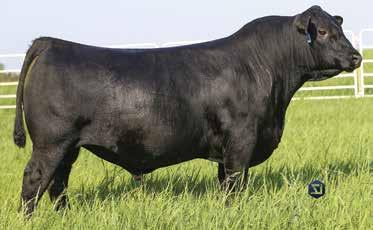
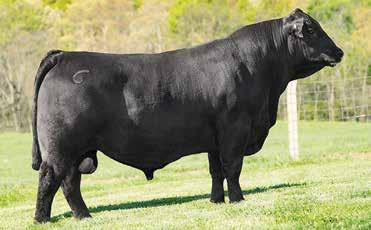
BLACK ANGUS BRED HEIFERS
70 head bull-bred for end of February for 30 days
All bulls were sons of Car Legendary 026. Heifers are on killed reproductive vaccination program.
Preg tested in August and again October 30
Located between Park City and Columbus, Montana
Unit Cost of Production
Using information to make management and marketing decisions.
Participants in this workshop will work through a sample ranch to determine the economic profitability of four common ranch enterprises: cow-calf, stockers/breeding heifers, hay, and land. They will go through the steps of analyzing costs and calculating what it costs to produce a unit of product for each enterprise. Participants will also learn how to identify how changes could improve ranch profitability. Again, pre-register one week in advance for both locations. Call the Nebraska Extension office in Holt County at 402-336-2760 or email Bethany Johnston at bjohnston3@ unl.edu.
Ladies Who Ag gather
Join other Ladies Who Ag for a fun holiday gathering to learn more about beef tallow, flower arranging, and Montana Farmers Union’s work to support family farmers and ranchers from 5:30-8 p.m., December 11, at Heart to Heart Home Care in Belgrade, Montana.
Montana Farmers Union is sponsoring the public event, which is being held in partnership with Heart to Heart Home Care, V Bar Montana, and Perfect Harmony Florals. Cost is $10 for MFU members or $20 for non-members.
Interactive presentations include:
Beef Tallow rendering for skincare with Valerie Gravage, owner of V Bar Montana. How to render beef tallow properly, and make your own unique tallow skincare to keep!
Flower arranging hands-on workshop with Kelli Duncan, owner of Perfect Harmony Floral.
Updates and opportunities from MFU.
Network with women in agriculture.
Registration is required and closes Monday, December 8. Visit www.montanafarmersunion.com to sign up and learn more.
Questions? Contact Samantha Ferrat at 406-949-0869 or sferrat@montanafarmersunion.com.
Fungal Fever
A medieval staple was bread made from whole-grain wheat, rye or barley flour. That may sound healthy, but unsanitary kitchens and ovens introduced other ingredients that weren’t so wholesome, including insects and mold. The mold brought another problem: outbreaks of ergotism, a fatal illness caused by a substance called ergotamine found in a fungus that often infected rye grain. When baked into bread, the ergotamine chemically transformed into a deadly hallucinogen. Victims experienced tingling, dizziness, hallucinations, psychosis and, eventually death. The symptoms of ergotism, according to some theories, may have caused some sufferers to be accused of witchcraft.
DEADLINE FOR JANUARY ISSUE Wednesday, December 31
Private applicator training for rangelands
SDSU Extension will host a free private applicator training for rangelands on December 17, 2025, from 1:30 - 4:30 p.m. CT (12:30 - 3:30 p.m. MT) focused on managing pests in rangelands. Participants have the option to attend online or at various locations across the state.
Agenda
Attendees must be online/present for the full agenda in order to receive credit for attending. People attending inperson need to bring a government-issued photo ID and private applicator certification card if they have one.
Before the meeting: in-person attendees should arrive 15 minutes early; online attendees join 5 minutes early to test sound setup.
1:15 p.m. – Attendance check-in
1:30 p.m. – Regulatory Update: Valerie Mitchell, South Dakota Department of Agriculture and Natural Resources and Katie Nold, South Dakota Department of Agriculture and Natural Resources
2:10 p.m. – Break
2:15 p.m. – Prairie Dog Management: Jameson Brennan, Assistant Professor & SDSU Extension Livestock Grazing Specialist
2:55 p.m. – Break
3:00 p.m. – IPM in Rangelands and Common Noxious Weeds: Krista Ehlert, Assistant Professor & SDSU Extension Range Specialist
3:40 p.m. – Break
3:45 p.m. – Weed Control in Rangelands: Graig Reicks, SDSU Extension Weed Ecology Field Specialist
Online Registration
Participants have the option to attend online or at various locations across the state. Register online using the links below by 12:00 p.m. CT (11:00 a.m. MT) on December 17, 2025. Online attendees may watch in groups no larger than five (5) to a device for a single registration. In-person seating is limited.
For questions about registration or the content of this program, contact Mae Mohror, SDSU Extension Pesticide Program Assistant, or Stephen Robertson, SDSU Extension Pesticide Education Field Specialist. For questions about your license, contact the South Dakota Department of Agriculture and Natural Resources (DANR).
Winter grazing
By Jerry Volesky, UNL
Grazing stockpiled winter range or pastures has several benefits. It is much less costly compared to feeding hay. On native range, there is little risk of damage to the grasses because they are dormant and winter stocking rates can be somewhat higher compared to the summer. Often times, you will notice that native pastures only grazed during the winter are the most vigorous and productive.
It is important though, that you closely monitor body condition of the cows during the winter grazing period. Crude protein is generally the most limiting nutrient during winter grazing. The crude protein content of dormant warm-season grasses will be around 5 to 7% and will slowly decline through the winter months from weathering and as the cattle selectively grazing the higher quality forage in a pasture.
Stockpiled cool-season grass pastures are those that have been only lightly or not grazed during the growing season. These pastures may have slightly higher crude protein levels, but that quality will also decline as the winter progresses. Feeding the right amount of protein supplement while winter grazing will allow the cows to effectively utilize that winter forage and maintain the desired body condition.
A possible grazing management strategy that can be used is to do simple rotational grazing where cattle are periodically moved to a new winter pasture. This will allow for a more consistent diet quality when winter grazing.
Whatever your strategy, though, consider carefully what kind of nutrition animals are getting from the pasture so you neither underfeed nor overfeed expensive supplements. And be sure to provide salt, calcium, phosphorus, and vitamin A free choice at all times.
Winter grazing is a great opportunity to reduce winter feed costs. With proper management, it can help you meet many of your feeding goals.
Schweitzer elected to lead MFU for fourth term
Walter Schweitzer will serve a fourth two-year term at the helm of Montana Farmers Union as the grassroots organization’s president.
Schweitzer and other board members were elected during MFU’s 110th Annual Convention held recently in Lewistown. New to MFU’s board is John Wicks from Ledger, who will serve as District 2 Director for a three-year term. The position was previously held by Rollie Schlepp. Schlepp, a longtime board member who also served as MFU’s vice president, has announced his retirement from MFU leadership.
Incumbents Mark Siderius from Kalispell (District 6) and Ben Peterson from Judith Gap (District 5&6 At Large) were elected to retain their current seats for three-year terms. Doug Crabtree was elected to the role of Conductor and Heather Siderius as Doorkeeper.
Montana Caise, Tammy Copenhaver, Ryan Gunderson, Carissa McNamara, Beau Milton, Heather Siderius, and Grayce Siderius will represent MFU as voting delegates during National Farmers Union’s Annual Convention in the coming Spring.
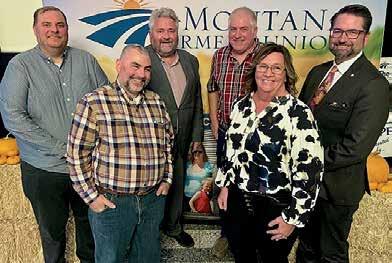
Pictured are members elected to leadership positions during Montana Farmers Union’s 110th Annual Convention held October 30-November 1 in Lewistown. From left, rear: John Wicks, Walter Schweitzer, Mark Siderius, Ben Peterson. From left, front: Doug Crabtree, Heather Siderius
Wildcat Hills wildlife and livestock to benefit from cheatgrass grant
By Chabella Guzman, PREEC Communications
The Wildcat Hills have had several wildfires in the past few years, and while dry conditions have contributed to the wildfires. An annual invasive brome grass, commonly known as Cheatgrass (Bromus inermis), has played a significant role. Cheatgrass grows quickly in the spring, competes with native grasses for resources, and affects the native ecosystems on many acres in the Nebraska Panhandle.
Dr. Mitch Stephenson, Nebraska Extension Range Management Specialist, has been working to better understand cheatgrass management on rangelands in the Panhandle since 2015. “Cheatgrass often creates dense patches of highly flammable fine fuels, especially later in the summer,” he said.
Stephenson, in a study with the USDAAgricultural Research Service, found that targeted cattle grazing in the spring could be used to reduce cheatgrass seed production. In this study, cheatgrass seed biomass was reduced by 30-77 percent, depending on the year and grazing location. Cattle in this study consumed cheatgrass for an average of 38 days in the early spring before plant maturity reduced palatability. While grazing is a viable management practice, the short grazing window, given cheatgrass’s rapid growth, poses a challenge for targeted cattle grazing. Additionally, cattle also consumed cool-season and native perennial grasses in springtime grazing.
Through collaboration, Stephenson also began to explore the role of herbicide options for cheatgrass management. One herbicide that showed real promise was Indaziflam (tradename: Rejuvra), a cellulose biosynthesis inhibitor that essentially prevents the root from emerging from the seed. Stephenson worked with local ranchers, such as Gary Darnall, to perform research on their rangelands.
“They (Stephenson’s Lab) did several demonstrations with us. They sprayed it in the fall, and then we ran cattle in the spring on that ground, and as a result, the cattle grazed the sprayed part,” Darnall said. He also noted that the range appeared to have at least twice as much forage, and the cattle ate twice as much as on the non-sprayed range.
Bob Smith, Platte River Basin Environments (PRBE) Manager, also witnessed the test trials on other producers’ land and on Platte River Basin properties. “I was astounded, they were just unbelievable. So, we (PRBE) were really impressed and wanted to do some more land.”
This is where they hit a snag: the cost of the herbicide can be prohibitive. Smith said the herbicide is around $70 an acre, and not many producers can afford it. “So we were trying to think of possibilities in grant funding. We had worked with the Nebraska Environmental Trust before on different grants, and after talking with the people at ENVU, the company that produces Rejuvra. We thought it would be a good idea for us to apply for a grant.”
In 2025, Platte River Basin Environments received a 2025 Nebraska Environmental Trust grant to treat 4,000 acres of cheatgrass in the Wildcat Hills area. The grant’s goals included protecting deer, elk, and bighorn habitat by increasing plant diversity and increasing livestock forage. This would be accomplished by treating the project areas with Rejuvra herbicide in the fall to provide long-term control of the cheatgrass seedbank and release the native vegetation and soil function.
“Annual grasses like cheatgrass are very susceptible to this active ingredient at very, very low levels. So essentially, we can go and aerially apply Rejuvra across a pasture. It keeps that cheatgrass seed from germinating for 4 to 5 years. It allows the native vegetation to take advantage of that window of not having any competition and regrow,” said Noe Russo, Envu.
On October 9, 2025, an aerial spraying crew, Hammond Helicopters LLC, from Nephi, Utah, arrived at the Wildcat Hills to spray cheatgrass. Using GPS technology, the helicopter pilot used satellite imagery to spray the mapped out cheatgrass areas. In the Spring of 2026, producers will be able to see how effective the application was when the grasses begin to grow.
Smith said if everything goes well, they would like to apply for another grant in 2026 to cover more acres in the Wildcat region.
Montana State to host Crop and Pest Management School
Montana State University Extension and its Integrated Pest Management Program will host a Crop and Pest Management School January 14-15, 2026, in the Strand Union Building Ballrooms on the MSU campus in Bozeman.
The event will include updates on areas of new and proven agricultural techniques and emphasize sustainable management systems. Participants will learn to recognize damage caused by pests and integrate management methods in decision-making.
From the MSU News Service includes lunch and parking each day. The registration deadline is Monday, December 22; more registration information is online at https://ecommerce.montana.edu/ pspp_crops/. Questions may be directed to Integrated Pest Management Program Director Tim Seipel at timothy.seipel@ montana.edu.
#####
Session topics include soil fertility, nutrition and health; forages and noxious weeds; precision agriculture; agronomy; pesticide education; cropland weeds; and integrated pest management diagnostics, diseases and insects.
Certified crop adviser and pesticide continuing education units will be available.
The agenda, session descriptions and speaker biographies are online at www. montana.edu/extension/ipm/croppestschool.html. Registration is $225 and
Mary Sue was an avid golfer. She looked forward to her weekly game with the enthusiasm of a six-year-old on Christmas morning. However, one day, she came home looking haggard. Her husband, who was obviously concerned, asked what happened. “It was terrible,” Mary Sue responded. “On the fifth hole, Ellen had a heart attack and died instantly. “That’s awful!” her husband empathized. “You’re telling me,” Mary Sue said as she lay down on the sofa. “For the rest of the round it was hit the ball, drag Ellen. Hit the ball, drag Ellen. It was exhausting?”
SDSU Extension hosts Sustaining the Legacy Conferences
South Dakota State University Extension will continue to assist farmers and ranchers with long-term planning through its Sustaining the Legacy conferences across South Dakota this winter.
These conferences help farmers and ranchers evaluate their current estate plans and determine if they need to make any changes to them.
The next conference is at the SDSU Extension Winner Regional Center on December 4, 11 and 18, 2025. Early registration is $70 per person up to two weeks before each conference, or $80 after that. Registration is limited, so register early to ensure your chair.
Additional conferences will be held in Mitchell on January 8, 15 and 22, 2026; Aberdeen on February 3, 10 and 17, 2026; and Watertown on March 3, 10 and 17, 2026. Registration is required at the SDSU Extension Events page and search “legacy”.
A significant aspect of the planning process involves making decisions and conducting financial planning for long-term care considerations, said Heather Gessner, SDSU Extension interim Agriculture and Natural Resources Program Director and Livestock Business Management Field Specialist.
“It’s hard for farms and ranches to pass to the next generation if there isn’t a plan in place to cover the living expenses, including long-term care situations. Planning for these expenses and needs is part of the process,” Gessner said.
She said the transition of the farm or ranch to the next generation encompasses a wide range of aspects. Bringing the next generation back to the farm includes thinking about where all families will live, and if updates and improvements for walkers or wheelchairs need to be made to the house as the older generation ages.
Another consideration is how any assisted care or long-term care facility expenses will be paid. The costs of these facilities can place a significant financial burden on the family operation.
The conference is designed for farming and ranching families at all planning stages. Participants will learn methods to pass on farm and ranch assets and businesses and provide a financial inheritance to nonfarming and ranching children. Estate planning and ranch transition attorneys, along with other industry experts, will present the material.
Topics will include:
• Trusts
• Business structures, LLCs, LLLPs and corporations
• Life insurance
• Wills and probate
• Titling property
• Contracts
• Retirement planning for landowners
• How to access retirement benefits (Medicare, Social Security)
• Elder and end-of-life care planning
“After the participants invest the time at the Sustaining the Legacy conferences, I hope they have increased their knowledge about the process and tools involved and also have the confidence to have tough conversations with their family and get started with the plan,” said Gessner.
For more information, contact Heather Gessner, SDSU Extension interim Agriculture and Natural Resources Program Director and Livestock Business Management Field Specialist,.
#####
In 1941, Pronto Pup, a vendor at the Minnesota State Fair, was the first to sell corn dogs. They coated a hot dog with cornmeal and then fried it. Many vendors contested this and claimed to be the creator of the corn dog
New SDSU wheat variety combines high yield, quality, drought tolerance
By Allie Arp, South Dakota State University
The South Dakota Agricultural Experiment Station and South Dakota State Foundation Seed Stocks Division have released a new wheat variety to seed producers. The new hard red winter line will be available for farmers to purchase for fall 2026 planting.
SD Vivian is a variety named for a small town in the heart of South Dakota’s wheat country that combines the best traits from two varieties. It is a cross between SY Wolf, a variety that covered nearly 30% of all South Dakota wheat acres in the 2010s and was known for its high yield potential, and Ruth, a University of Nebraska-Lincoln variety that adds quality in the form of higher protein content and drought tolerance.
“Even being a higher-yielding wheat, Vivian keeps above-average protein con-
tent, thus maximizing both grain yield and grain protein at the same time,” Sunish Sehgal, SDSU winter wheat breeder, said. “In addition, Vivian demonstrates moderate to good resistance to drought, stem rust and Hessian fly. It has a broad adaptation and has been proven to thrive throughout the state.”
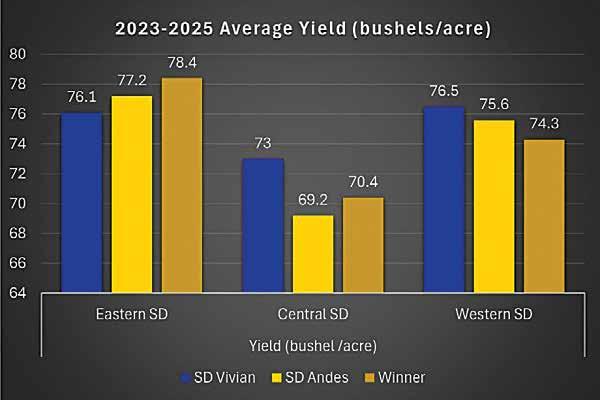
Thrive it did. In 31 field trials conducted across the state during three growing seasons (2023-25), SD Vivian was No. 1 in yield in the central and western parts of South Dakota and third in the eastern part of the state.
In field trials conducted across three growing seasons, SD Vivian had the highest average yield in the central and western portions of the state and the third-highest yield in the eastern portion of the state compared to nearly two dozen varieties.
“Looking at the data, you can see SD Vivian really stands out,” Sehgal, a professor in the Department of Agronomy, Horticulture and Plant Science, said. “It has way above average protein and baking quality for the yield it has.”
The protein composition of SD Vivian outperformed nearly two-dozen varieties based on data collected from more than 30 locations around South Dakota over a three-year span.
Despite being a high-yielding variety, in field trials conducted across three growing seasons, SD Vivian’s protein composition remained high compared to the nearly two
dozen varieties tested. In the eastern part of the state, SD Vivian was in the top half, coming in ninth overall. In both the central
The graph shows average yields for three wheat varieties in three parts of South Dakota. In the eastern South Dakota, the rankings were Winner with 78.4 bushels an acre, SD Andes at 77.2 and SD Vivian with 76.1. In central South Dakota, SD Vivian with 73 bushels an acre, Winner with 70.4 and SD Andes with 69.2. In western South Dakota, SD Vivian with 76.5 bushels an acre, SD Andes with 75.6 and Winner with 74.3.
The graph shows the average protein composition for three wheat varieties across three parts of South Dakota. In the east, SD Vivian and Winner tied at 13.3%. SD Andes came in third with 13.1%. In the central part of the state, SD Vivian came in first with 13.4% protein compared to Winner with 13.1% and SD Andes with 13%. In the western part of the state, SD Vivian was first with 12.7% protein followed by Winner with 12.5% and SD Andes at 12.1%.
Fraser’s Oil Inc.
New SDSU wheat variety combines high yield, quality, drought tolerance
• Increased early season vigor
• Phosphorus and Zinc to drive rooting & cold start the crop.
• Zinc to help with early season hormone production, ie. Auxin for root and shoot growth.
• Convey Technology to help with early season stresses, such as cool soils and excess moisture. It also improves nutrient use efficiency.
• Other essential nutrients target at each specific crop, ie. Boron for cell wall strength; Manganese for efficient photosynthesis.
• Second chance for a starter fertilizer
• Formulations are targeted at early season root growth (more root = more efficient moisture and nutrient uptake).
• Proactive way of managing the crops nutritional requirement.
• Convey Technology helps with early season stresses such as cool soils, excess moisture, and drought. Also improves nutrient use efficiency.
• Speeds up recovery from herbicide hangover - the correct supply of nutrients helps the crop metabolize the herbicide more quickly.
• Contains novel Phosphorus nutrition, providing increased nutrient uptake and movement within the plant.
• Targeted at the reproductive phse of the plant.
• Proactive way of managing the crops utritional requirement
• Contains other essential nutrients targeted for each specific crop, ie. Boron to aid pollen tube growth, Zinc to help produce Auxin, to ensure healthy pollen tube growth.
and western parts of the state, SD Vivian had the fourthhighest protein composition of all varieties. Other highyielding varieties like SD Andes and Winner came in in the middle or bottom third of composition rankings. Varieties that came out on top for protein composition yielded 1.3-13.6 bushels an acre less than SD Vivian, depending on location. The field trials showing Vivian’s success were conducted on producers’ farms and two more on South Dakota experiment stations. All locations are no till and follow producer practices in order to ensure the greatest results for South Dakota farmers.
“South Dakota producers fund our program, so I want to return a quality product back to them,” Sehgal said. “The success of the varieties belongs to them. I am just the inventor. They are the ones who should benefit from it.”
South Dakota is split nearly evenly, growing both hard winter and spring wheat, with winter wheat averaging a little more than 55% of acres each year. Both types of hard wheats grown in South Dakota, red and white, are used primarily for bread making.
The full winter wheat variety trial results are available online. Regular updates about the SDSU winter wheat breeding program can be found at the X account, @WheatInnovation.
A field trial of SD-Vivian hard red winter wheat. You can see rows of wheat in segmented blocks.
South Dakota State University is releasing a new hard red winter wheat variety to seed producers that combines high yield with high protein and drought tolerant traits. SD Vivian has performed well across South Dakota and will be available for farmers for fall 2026 planting.
National
Lager Day
Date celebrated: Every December 10th
There are few things that are able to put a wonderful cap at the end of a day like an ice-cold beer. And there are those that would argue that the only thing better than a normal beer is a beer that found its start in the cold. A lager is the perfect combination of these two traits!
It is one of mankind’s oldest fermented beverages that is combined with a long, slow maturation process in the cold.
Learn About the Lager
Born in the 19th century, Bavaria Lager was the result of brewers who were experimenting with the benefits of storing beer for long periods of time in very cold environments. The word lager itself speaks of this method, being derived from the German word lagern which means “to store”.
Brewed using bottom-fermenting yeast, this beer would then be transported to places where the temperature remained low, first in cellars, and then moved to the dark caves of the mountainous Alps.
Deep within the frozen cellars of the Earth, this beer would be packed on ice harvested from the mountains or lakes and left to “lager” over the summer.
This process of brewing and storing allowed all of the sediments and yeast to settle to the bottom of the beer, leaving only a clear, crisp golden liquid that had a purity of taste that was unmatched anywhere else at the time.
In the 19th century, even this process resulted in a much darker lager than beer drinkers are used to today, which was partially as a result of the heavier waters of the area and other factors.
Eventually, the refinement of the process led to the beautiful golden beverage that many lager lovers drink today.
The world’s first golden lager was created in Plzen (now Czech Republic) in 1842. For those seeking a more traditional flavor, the darker version of this beer, which is known as Dunkel or Dunkles, can still be found brewed in Bavaria to this day.
History of National Lager Day
National Lager Day started as a community movement that started informally as collections of beer lovers sought to have a unique day set aside for their favorite styles of beer. Online records of this special beer event date back to at least 2010.
Beefin’ up the Bobcats
By Tom Hogan, Snappy Jack Cattle Company
Snappy Jack Cattle Company of Broadview, Montana with the assistance of Montana State’s Athletic Department Assistant AD for Compliance Sean Dotson is working to Beef Up the Bobcat’s by providing two players with their All Natural Angus beef through the NIL Program.
“We know that beef is one of the best sources of protein and iron and these young men need a quality source of protein to build muscle and stamina. Likewise we know there is no better beef than Montana Angus Beef” says Mr. Hogan. The NIL is a new NCAA program that allows players to accept money or services in exchange for Name, Image or Likeness promotions of the provider’s goods & services. In this case the players promote high quality Montana beef through posts on their social media pages in exchange for the beef itself.
Ms. Ivie explains, “Rather than just donate beef to the athletic department and have it get lost in the mix, we felt this was a better way to help out the team while promoting Montana Beef. We were fortunate enough to meet Braden last season while he was red-shirted. That started the friendship that subsequently included Hudson who is Braden’s roommate. Now we are all one big happy Montana Angus Beef family. Go Cats Go”
Grazing standing milo as a low-cost winter feed
By Ben Beckman, UNL
Looking for ways to stretch feed supplies and lower winter feed costs? One option that’s gaining attention is grazing standing milo. Instead of harvesting the crop, cattle are strip-grazed through the field, using temporary fencing to allocate a small section each day.
University of Missouri research shows this approach can dramatically cut feed costs compared to feeding hay—often less than half the daily cost. Standing milo provides a consistent, high-energy feed source that works especially well for fall-calving cows when paired with a protein supplement. Plus, direct grazing saves fuel and equipment time, and returns nutrients right back to the soil.
Most systems use daily fence moves, giving cows access to about 10 to 13 pounds of grain and the accompanying fodder each day. Proper management helps prevent grain overload, encourages full plant use, and keeps labor to about half an hour a day—even for large herds.
You can find more information in the University of Missouri publication, Strip-Grazing Milo as a Low-Cost Winter Forage.
Pictured here left to right; #72 Braden Zimmer starting left tackle for the Cats, Tom Hogan & LaVerne Ivie of Snappy Jack Cattle Company and #98 Hudson Wiens Cat’s defensive tackle. Both players are Montana natives and big enough to eat a beef apiece.
“When you need the job done, and you need it done right....... Feel free to give us a call during the day or at night!”
Plow in your water lines, gas lines, etc.
ALSO SEE US FOR
Up to 4” in diameter and up to 6-ft. deep Fencing Now Available. Call for details..
Morrisett, Glacier County 4-H beef breeding member, collected a tissue sample on his heifer for parentage verification and participation in the genomics project, receiving Zoetis Inherit Select analysis results.
Ranchers and 4-H beef members delve into livestock genomic testing
By Kari Lewis, MSU Extension – Glacier County
Eighteen 4-Hers from Glacier, Toole, Pondera, and Blackfeet 4-H programs recently completed a beef cattle genomics project. Thanks to support from the Montana 4-H Foundation and Zoetis, participants had the opportunity to collect tissue samples from their or their family’s cattle herds and submit them for genetic analysis of economically relevant traits. In total, families submitted samples from 31 cattle.
Samples were analyzed using the Inherit Select test, a genetic testing tool for commercial females. Nearly 1.5 million straightbred and crossbred animals have been evaluated through this test, which provides rankings for 20 different traits, three economic indexes, and predictions for crosses of eight major breeds.
After results were processed, each 4-Her received an individual report showing rankings for growth, maternal, and carcass traits, as well as economic indexes and breed composition percentages. Jed Hutchison, Zoetis Genetics Account Manager for the Western U.S., met virtually with participants and their families to review the results. He explained that the test helps identify which animals will be most profitable over their lifetime, allowing for improved marketing, breeding, and benchmarking decisions. The test can also match calves to sires, helping ranchers identify which bulls are producing the best or poorest calves. One rancher commented, “It’s an economical way for commercial operations to avoid keeping poor-performing heifers as mother cows.” Another rancher noted they plan to begin tissue sampling heifers at branding as he felt this would be a good way to make genetic progress as AI isn’t feasible for them.
Through the project, 4-Hers learned how to collect tissue samples from live animals, gained understanding of genetics technologies available to commercial cattle producers, and discovered how to use genomically enhanced EPDs for selection, mating, and marketing decisions.
Three-fourths of participants said they plan to use genomic testing in their future cowherds. “I learned so much, and it was super cool!” one 4-Her shared. Another added, “I’d like to do this again—especially as we have calves born from the ones we tested—to see how the genetics have improved.” Participants also enjoyed seeing how their cowherd compared to others in the national database.
This project had lasting impacts on both 4-H youth and ranch families, demonstrating a successful collaboration between 4-H, private industry, and local producers.
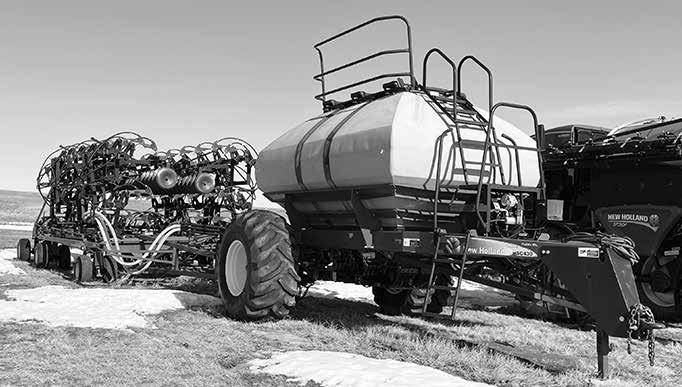
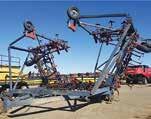
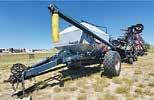
Case IH Flex Hoe 700 air drill with Precision Air 3430 TBT cart, 70-ft., 10” spacing single shoot, walking beam rubber tire packers, 4” spread carbide opener.
$109,900
Morris Contour II drill with tow between 8450 cart, 61-ft., 10” spacing, precision (independent hydraulic trips), single shoot, 3 tank, 450 bushel, variable rate, TopCon X35 monitor.
$89,900
2014 John Deere 1890 disk drill (no tank), TBT configuration, 60-ft. 10” spacing, Needham spoked closing wheel, Needham packing wheels, John Deere all-run blockage sensors, hydraulic down pressure. Just In
K.L. Slagsvold Herefords
Lars (406) 584-7571
McMURRY CATTLE
Genetic Balance Trait And Carcass Value ONLY THE BEST SELL Private Treaty Bull Sales
Thomas Herefords receives Montana Leopold Conservation Award
Thomas Herefords of Gold Creek accepted the 2025 Montana Leopold Conservation Award® during the 106th Montana Fam Bureau Annual Convention at the Hilton Garden Inn in Missoula. The award honors ranchers, farmers, and forestland owners who go above and beyond in the management of soil health, water quality, and wildlife habitat on working land. They receive $10,000 for being selected for this prestigious award.
Thomas Herefords, owned by Bruce and Tammy Thomas and Richard and Shirley Thomas have prioritized conservation practices that could improve biodiversity and water quality, leading to healthier cattle, fish, and wildlife. Their vision was set into motion in the early 2000s by enrolling land into an Environmental Quality Incentives Program (EQIP) contract and collaborating with several public agencies and private non-profits.
The ranchers diverted from flood to pivot irrigation, installed wildlife-friendly fencing, prioritized soil health and used rotational grazing to improve the quality and quantity of grass. The improvements helped triple the carrying capacity of the ranch’s pastures.
Given in honor of renowned conservationist Aldo Leopold, the award recognizes farmers and forestland owners who inspire others with their dedication to environmental improvement. In his influential 1949 book, A Sand County Almanac, Leopold advocated for “a land ethic,” an ethical relationship between people and the land they own and manage.
Montana landowners were encouraged to apply, or be nominated, for the award last
year. Applications were reviewed by an independent panel of Montana agriculture and conservation leaders. The Montana finalists were Franck and Kari Groeneweg’s Living Sky Grains of Three Forks, and Bart and Wendy Morris’ Oxbow Cattle Company of Missoula.
Montana Farm Bureau Executive Vice President Scott Kulbeck, who served on the review panel, noted, “It is rewarding to a see long-time Farm Bureau family being recognized and rewarded for their work to increase the health of their land and the water sustaining their livestock and wildlife on the land. One of the aspects in their application that I found most impressive was they have spent their career sharing their conservation strategies with university students and their community.”
The Montana Farm Bureau Annual Convention ran through November 20, 2025.
The Montana Leopold Conservation Award is made possible through the generous support of American Farmland Trust, Montana Department of Natural Resources and Conservation, Rangeland Resources Program, Sand County Foundation, AgWest Farm Credit, Montana Grazing Lands Coalition, USDA Natural Resources Conservation Service, Montana Farm Bureau Federation, Ranchers Stewardship Alliance, Soil and Water Conservation Society, Western Landowners Alliance, Western Sustainability Exchange, and World Wildlife Fund.
For more information on the award, visit www.leopoldconservationaward.org. #####
Chrysanthemums are the national flower of Japan. The flower is printed on Japanese passports
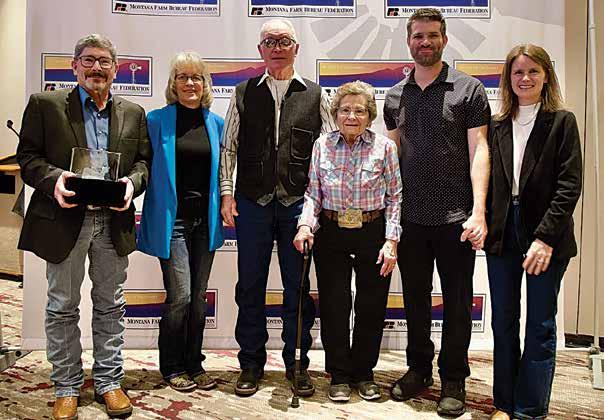
The family members from Thomas Herefords Ranch accept the prestigious Montana Leopold Conservation Award during the Montana Farm Bureau Federation Annual Convention in Missoula.
Lee Jeans
At the turn of the 20th century, Henry D. Lee was one of the Midwest’s biggest wholesalers of groceries, work clothes, and other items. In 1911, because he wasn’t getting shipments of work clothes on time, he decided to build his own factory. In 1924 he started making jeans for cowboys. In 1926 Lee made the first jeans with zippers.
TRACTOR FOR SALE
2013 Case IH 500 Quadtrac, 3340 hours, 30” tracks, high flow hydraulic pump, 4 remotes.
Has full auto guidance with Pro700, Nav II, and 372 receiver, luxury cab with leather and full LED lights. Stored inside. Deleted and power turned up to 550 horsepower, 16 speed powershift transmission with front and rear differential locks. Field Ready $199,000 obo Phone (406) 390-6477
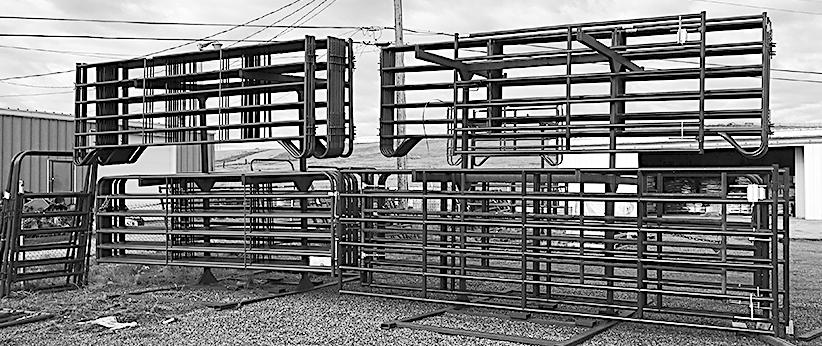
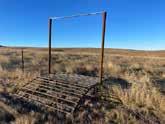
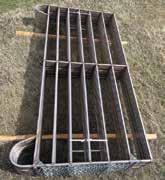
PANELS FOR SALE
Can beef cows graze corn that sprouted in a corn field?
By Rick Rasby, Extension Specialist; Mary Drewnoski, Nebraska Extension Beef Systems Specialist
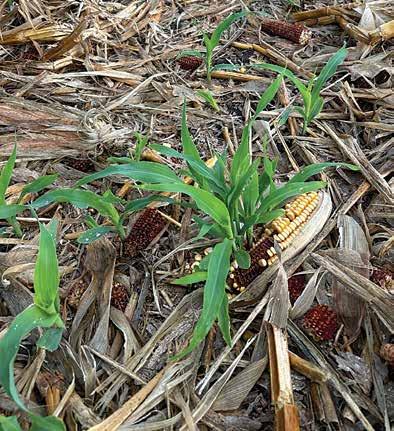
Every year brings its own weather challenges in Nebraska, and late summer and early fall of 2025 have been no exception. Early-planted corn was harvested in late September and early October, some of the earliest harvest dates in recent memory. Favorable late-summer rains and warm temperatures provided the “right” combination for excellent regrowth in bromegrass pastures. However, these same conditions also led to widespread germination and sprouting of corn kernels in harvested fields.
While a few sprouted kernels are common every year, this fall many early-harvested fields have dense green growth of sprouted corn plants ranging from 3 inches to more than a foot tall. The following management tips can help producers safely and effectively graze corn residue fields with significant sprouting.
Management Tips for Grazing Corn Fields with Sprouted Corn
Assess Ear Drop and Residue Conditions
Before turning cows out, walk the field to estimate ear drop per acre. If there are more than 15 ears total in three 100-ft rows, management to reduce grain intake is needed.
Recognize the Risk of Nitrates in Sprouted Corn Sprouting is common, but this year’s extensive regrowth increases potential risk.
Collect representative samples and test for nitrate concentration before grazing.
Sample fields separately (irrigated vs. dryland) and from various random locations.
Clip plants at ground level, placing small plants (≤8 in.) in one plastic bag and taller plants (>8 in.) in another.
Remove air, seal, freeze, and send promptly to a commercial forage laboratory for analysis.
Dealing with Nitrates
Lush, high-quality forages such as these corn sprouts are typically lower risk of toxicity than hay but can still be toxic, careful management is essential. See Reducing Nitrate Concerns When Grazing Forage Cover Crops.
Adapt cows gradually by limiting initial access or feeding a palatable feed source to reduce intake of high nitrate corn sprouts.
Providing energy (grain) can help reduce risk; fields with moderate ear drop may be safer than those with only scattered kernels since cows will preferentially eat ears.
Fill cows up before grazing. Even if nitrate levels are low, ensure cows are not hungry when turned out. Feed hay first to prevent rapid consumption of sprouts.
Remember that freezing temperatures do not reduce nitrate levels in plants.
Time Turnout Carefully. Turn cows out after noon, once they have eaten hay. This timing allows observation during daylight hours and reduces risk of overconsumption.
Key Takeaway
With more sprouted corn than usual in 2025, it’s essential to evaluate fields before grazing, test for nitrates, and manage turnout carefully. These steps will help minimize risk while making effective use of valuable fall residue.
Dakota Gardener: A little nudge
By Joseph Zeleznik, NDSU Extension forester
As far as I’m concerned, it’s been a gorgeous fall. The trees put on a great color show and then dropped their leaves in showers of yellow, red, gold and orange. Around here, they’re mostly yellow.
Some of the lilacs were a bit weird, though. They flowered or sent out some small leaves. It was just a few shrubs, but they shouldn’t be blooming in the fall.
This year’s wet weather created perfect conditions for a foliar fungus called Pseudocercospora. Lilacs around the state got hammered by this disease. The shrubs lost their leaves early and went into a dormant state. When moderate fall temperatures arrived, some of them flowered.
Bizarre.
To help the lilacs, all we can do at this point is rake and destroy the leaves as best we can. We can hope that next year will be drier, but that one’s out of our hands.
Trees and shrubs usually prepare themselves for winter just fine. They store up energy in late summer and fall, and gradually harden off for winter.
But we can help here, too. Watering conifers late into the fall helps them get hydrated. That’s important for minimizing “winter injury.”
Winter injury can have a number of causes and isn’t understood very well. Nevertheless, getting trees hydrated before winter is key to managing this issue.
Late-fall watering isn’t as critical for the deciduous trees as it is for the conifers.
Perhaps the most important winter prep I do relates to my archenemies: rabbits.
Rabbits – and voles – kill more trees each winter than cold temperatures do. The animals eat the bark off of younger trees, especially fruit trees, to get to the sugar-rich phloem tissue just below the bark.
If a tree loses bark all the way around its circumference, it’s as good as dead. I’ve lost a number of apple trees over the years, and I’ve begun to take some extreme measures.
White plastic pipes and wraps do a good job of preventing this type of damage, but only as high as the pipe goes up the stem. When there’s a lot of snow, those pests climb the drifts and girdle the branches. What took years to develop can be gone in one season.
It’s frustrating.
I’ve now taken to putting a wire fence around my apple trees. It’s a bit of a project to set this up, but the fence is really effective against rabbits … as long as there are no major snow drifts. And if I set up the fence far enough from the tree trunk, the deer will be held back, too.
I’ll do what I can and hope for the best. I can’t control nature. The best I can do is try to give it a little nudge.
#####
Lord, this is the last time I grocery shop with two preschool grandchildren. I loaded my cart as fast as I could but then I had to leave it behind as I ran after the boys so they wouldn’t dart into the parking lot. Will you keep my cart safe until I get back to it?
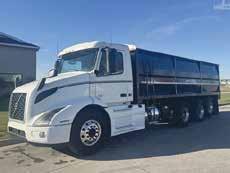
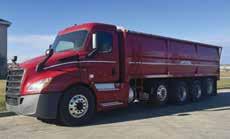
lb. rear axles, 7 miles.
Stock #82765
$184,900 $173,900
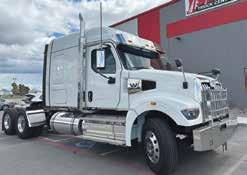
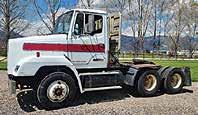
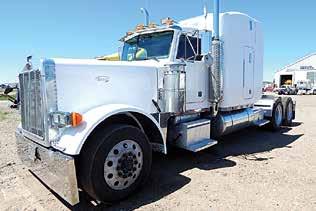
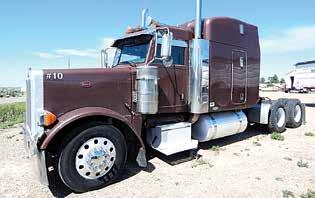
2025 Freightliner Cascadia
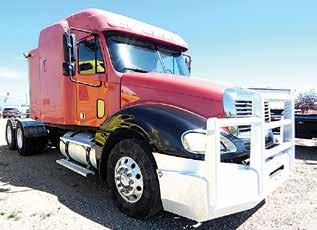
126 Detriot, DD15, 455 hp, DT12, air ride, all aluminum wheels, 229” wheelbase, 13,300 lb. front axles, 40,000 lb. rear axles, 2108 miles.
Stock #827654
$184,900 $173,900
2025 Freightliner Cascadia
126 Detriot, DD15, 455 hp, DT12, air ride, all aluminum wheels, 229” wheelbase, 13,300 lb. front axles, 40,000 lb. rear axles, 184 miles.
Stock #827658
$184,900 $173,900
.#####
Long lasting and easy to store, Tootsie Rolls were a standard item in GI ration boxes in World Warr II.
#####
Originally, there were five flavors of Tootsie Rolls: chocolate, cherry, grape, orange, and raspberry.
Dakota Gardener:
By Esther E. McGinnis, Horticulturist, NDSU Extension
We are in the waning days of pumpkin season. I’ve consumed pumpkin spice lattes, cake and even lager. Now, we are looking forward to Thanksgiving and eating pumpkin pie. Before we transition to eggnog and candy canes, let’s celebrate all things pumpkin with some little-known facts.
Pumpkin is a fruit. Technically, pumpkin, squash, zucchini and cucumber are all botanical fruits because they developed from a pollinated flower and contain seeds. From a cook’s viewpoint, pumpkin is hard to definitively classify as a vegetable or fruit because it can be prepared either as a sweet dessert or a savory dish such as soup.
All pumpkin varieties are squash but not all squash are pumpkins. Squash is a broader category that encompasses three or four commonly grown species in the Cucurbita genus. The term, pumpkin, is based on its appearance and traditionally refers to a ribbed squash that is usually round and orange. However, white, green, gray and blue pumpkins exist if you like a more novel appearance.
Canned pumpkin that we use in our pies may not technically be from a true pumpkin. The FDA allows commercial canners to pack squash (or a mixture of squash and pumpkin) and label it as pumpkin.
Pumpkin and squash are old. Archeologists studying fossilized dung discovered that North American mastodons and woolly mammoths ate small squashes. This was a mutually beneficial relationship because these large mammals transported the seeds to new areas and excreted them with a generous amount of fertilizer. This gardening relationship sadly ended with the mastodon and mammoth extinction. Fortunately, for squash and pumpkin, humans took an interest in the fruit, first for its storage qualities. Archeological evidence shows the first signs of human domestication 10,000 years ago in Mexico and other regions. Humans first came to appreciate the nutritious seeds. Eventually, indigenous peoples started selecting fruits with sweeter-tasting flesh and cultivating the seeds.
Squash played an important role in regional agricultural history. The Mandan, Hidatsa and Arikara peoples practiced the four sisters gardening method which was described by Buffalo Bird Woman, also known as Maxidiwiac. This method included planting corn to grow vertically to provide support for pole beans. In exchange, the beans produced nitrogen for the corn. Squash leaves covered the ground to shade out weeds and to retain soil moisture. The fourth sister, a row of sunflowers, provided a windbreak to the north and attracted pollinators. Arikara squash and Mandan green and white squash seeds are available for those who want to grow a bit of history.
Finally, the earliest pumpkin pies were served without a crust. The seeds were extracted and the pumpkin shells were filled with a mixture of spiced milk and honey. The whole fruit was then roasted in a fire.
I hope you have a renewed appreciation for your pumpkin pie.
Music for the season
On the radio was playing music for the season
But I didn’t sing along
I am sitting here thinking this year
Everything is going wrong
The house will be awfully quiet
And there’s no use getting a tree
It’s not my year to have the kids
At another house is where they’ll be
On the bright side of things
The front room, I won’t have to rearrange
Cause there won’t be no one here
With presents to pass around or exchange
Sitting here quietly, in the dark
I thought I heard a noise outside the door
On a small stack of gifts, a note said
“The kids will be back next year, then I’ll bring more”
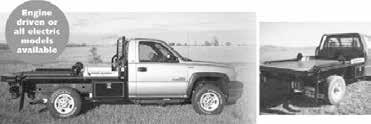
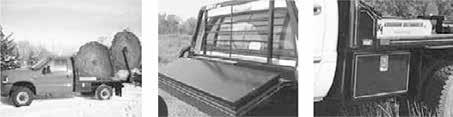
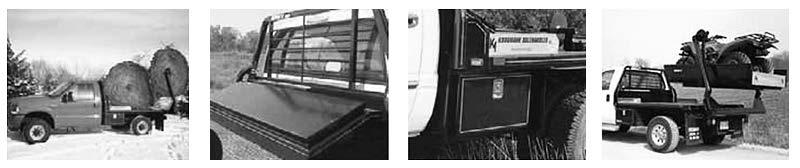
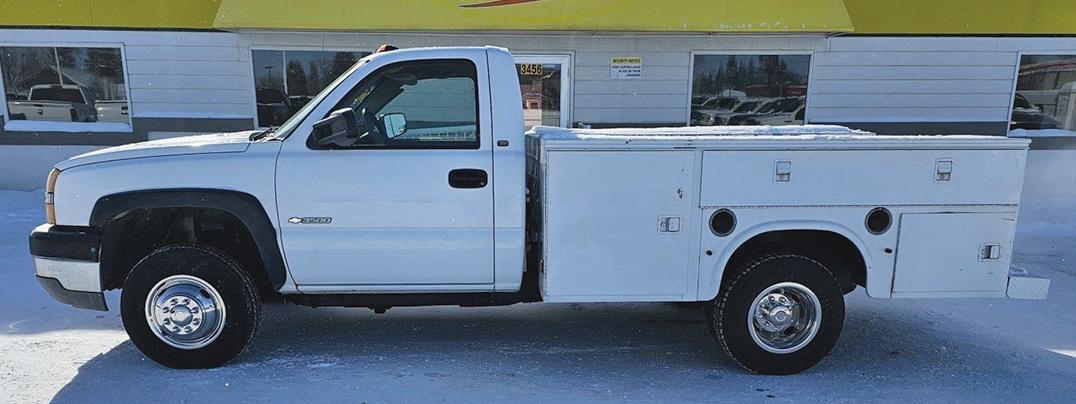
6.4L Powerstroke, AT, PS, PB, AC, one owner, tow package, enclosed service body with drawers on both sides, 60% tires, 189K miles, runs and drives great. $16,500
2002 ASV R50 Tracked Skid Steer
65” bucket, forks, 50% tracks, 3800 hrs. rebuilt engine @ 1550hr., pre-emissions, weights 6200#, joystick controls, runs and works great.
Collaboration trains future veterinarians and journalists
By Josh Babcock, College of Veterinary Medicine
A collaboration between Washington State University’s College of Veterinary Medicine and Edward R. Murrow College of Communication is equipping veterinary and journalism students with the skills to effectively communicate about infectious disease outbreaks and bridge the gap between science and public understanding.
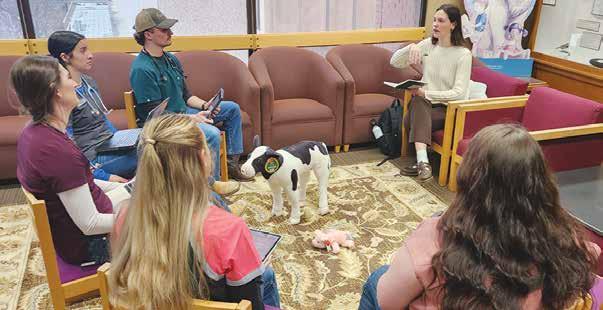
The Diagnostic Challenge is an immersive simulation in its 34th year this week in which second-year veterinary students train using simulated clients. It has long focused on veterinarian-client communication but has adapted to include the journalism student element.
“It’s important for journalism students to learn how to work with sources and understand the stories that they’re trying to tell and why they’re trying to tell them,” said Wendy Raney, scholarly assistant professor in the Murrow College of Communication. “In the Diagnostic Challenge, the thing I’m emphasizing with my students is you want to build a relationship with veterinarians because they can provide public service in situations where there might be an outbreak that concerns people, and rather than creating panic, you can educate, but you need these expert sources to do that.”
Lauren Rendahl (‘25 Journalism), who is now the digital news producer at The Seattle Times, was among the first students to take part in the Diagnostic Challenge last year. Her case focused on a contagious respiratory disease that is often fatal to horses. The disease is so contagious that in many states, including Washington, cases of the disease are reported to the state veterinarian.
Former WSU journalism student Lauren Rendahl poses for a picture in front of the Seattle Times building.
Lauren Rendahl, who earned her journalism degree from WSU in 2025, poses in front of The Seattle Times sign in Seattle (photo courtesy of Lauren Rendahl).
“It not only gave me an inside look at what they were doing, but it also gave them an inside look at what journalists do, and so I think it was super beneficial for both parties to learn what each other does and what that working relationship looks like,” Rendahl said. “I just don’t think I would have had that experience had this opportunity not been presented to me.”
Rendahl had previously covered the Washington Legislature for The SpokesmanReview and later reported on community news while working at the university’s student newspaper, The Daily Evergreen. She said The Diagnostic Challenge introduced her to an entirely new news topic — one that could benefit the lives of animals and their owners.
“Looking back, I think it’s so important to train people early on to understand what it looks like to communicate with the media, so that then the general or broader public know what’s happening,” she said.
On the flip side, Raney said, in a time the media is more and more scrutinized, it gets Murrow students acclimated to the challenges of reporting and provides valuable interview experience.
“There’s a certain amount of distrust toward the media in general these days and our students have to learn how to navigate that,” said Raney.
Professor Jeff Abbott, director of the Diagnostic Challenge, said just as beneficial as it is for journalism students, it also helps veterinary students get over potential fears of working with the media and shows how beneficial relationships with local media can be.
“At the end of the day, both veterinarians and journalists serve the public,” Abbott said. “The Diagnostic Challenge shows our students that when they work together, they can build trust, share accurate information, and ultimately make communities stronger and safer.”
Second-year veterinary students answer questions as Lauren Rendahl, a journalism student, interviews them about their infectious disease case at the WSU Diagnostic Challenge last fall in the Owen Science Library on the WSU Pullman campus (photo courtesy of Rachel Halsey).
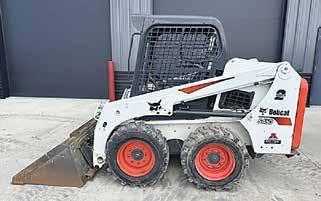
2021 Bobcat 5600 Toolcat, Brand-new engine with 0 hours and warranty! Deluxe cab & high flow. stk# 32095. $69,000 (G)
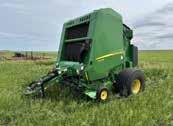
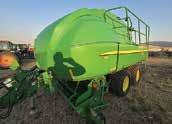
New Holland RB560 laced belt, net/twine, 1000 PTO, caster, standard density, manual hydraulic pickup, 21.5LX16.1, roller windguard, extra wide pickup, declutcher, deluxe wrap monitor. stk# 29809. $35,200 (L)
2018 New Holland RB560 laced belts, ISO monitor, net only, hydraulic ramp, 1000 PTO with cut out clutch, bale count of 10,479. stk# 22242. $34,900 (L)
John Deere 568 shed kept, great condition, laced belts, monitor included, single axle, wrap/twine, 1000 PTO, wide pickup, tires 21.5L-16.1 SL. stk# 32789. $13,900 (G)
2010 John Deere 568 baler, twine, 1000 PTO, roller windguard, large float tires, 19,886 bales. stk# 31510. $9900 (G)
2017 New Holland LM7.42 Elite telehandler, 460/70R24 Mich., reverse fan, rear hydraulic coupler, exterior tool box, continuous flow auxiliary hydraulic, bluetooth and auxiliary radio work, SO station. stk# 22833
$95,000 (L)
Bobcat HB980 breaker. stk# 24408.$10,036 (G)
Quick Attach 68” angle blade. stk# 32129. (G)
Bobcat 68” angle broom. Good bristles. stk# 32128. (G)
Bobcat 68” angle broom for skidsteer. stk# 32384 (G)
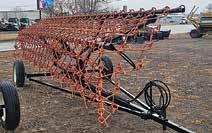
Maybridge 15 green, bar included 15-ft 5/8 chain drag. stk# 30510. $2250 (G) 2023 NEW Kirchner 8-ft plow, Cat II, 3-pt. unit with 16” sweeps. stk# 30802. $7090 (L)
John Deere 18-in. planer, 14 pin control, carbide teeth, high flow. stk# 31623. $9900 (G)
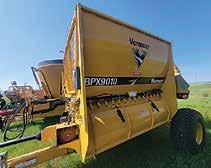
2023 Vermeer BPX9010 R&S processor, 1000 PTO, right hand discharge. stk# 29565. $29,900 (L) Vermeer BPX9000 round/square processor, right hand discharge, knobby tires. stk# 29294. $19,800 (L)
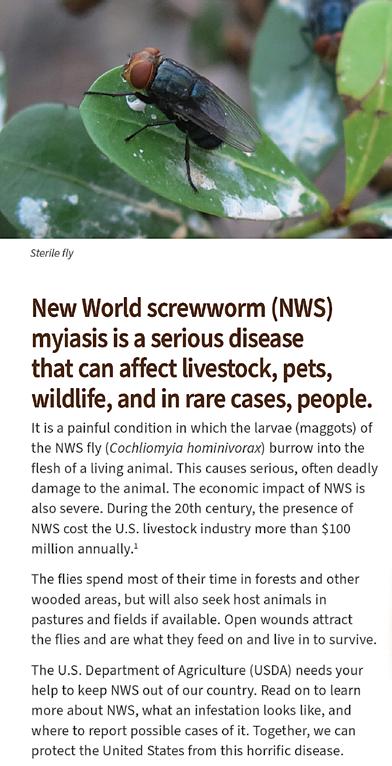
What is New World Screwworm?
New World Screwworm (NWS) is a devastating pest of livestock and other mammals. Screwworms are a fly larvae, or maggots, that burrow into the flesh of living animals causing serious, and even deadly, damage to the animal.
For USDA updates, visit: www.aphis.usda.gov/livestockpoultry-disease/cattle/ticks/screwworm
Why are we worried about New World Screwworm today?
NWS is endemic in Cuba, Haiti, the Dominican Republic and countries in South America, with cases spreading north to Costa Rica, Nicaragua, Honduras, Guatemala, Belize, El Salvador and Mexico.
Although the United States Department of Agriculture (USDA) eradicated NWS from the United States in 1966 using sterile insect technique, there is a constant risk of reintroduction into the United States.
Since 2006, the United States and Panama have maintained a barrier zone in eastern Panama.
This barrier zone prevents NWS from moving north from South America to screwworm-free areas in Central and North America.
In 2023, APHIS confirmed an unprecedented number of NWS cases in Panama. Since then, cases have been detected in every Central American country and Mexico.
NWS can threaten the livelihood of livestock producers. It can cause millions of dollars’ worth of production losses and economic damage. Screwworm also pose a threat to humans in infested areas.
During the 20th century, the presence of NWS cost the U.S. livestock industry more than $100 million annually. Another incursion into the United States could cost millions of dollars from livestock losses, trade embargoes and eradication work.
Pets, livestock, wildlife and even humans may suffer and die from screwworm myiasis.
What to look for?
Look for the following signs in livestock or any warmblooded animals:
Irritated behavior
Head shaking
The smell of decay
Presence of maggots in a wound
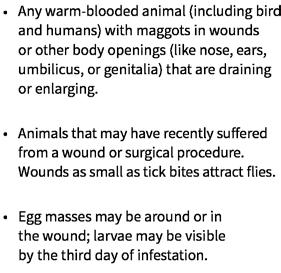
Egg masses may be around or in the wound; larvae may be visible by the third day of infestation.
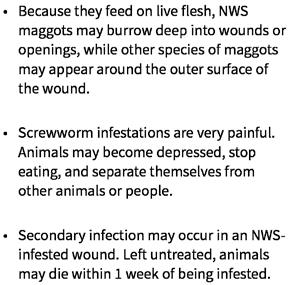
Because they feed on live flesh, NWS maggots may burrow deep into wounds or openings, while other species of maggots may appear around the outer surface of the wound. Screwworm infestations are very painful. Animals may become depressed, stop eating and separate themselves from other animals or people.
What do I do if I suspect an animal has New World Screwworm?
Immediately report any suspicious wounds, maggots or infestations to a local accredited veterinarian, your State Animal Health Official or USDA (www.aphis.usda.gov/ contact/animalhealth).
What if there’s an infestation in my area?
In areas where NWS is found, measures should be implemented to prevent animal wounds and avoid NWS myiasis. For example, to the extent possible, eliminate or delay performing wounding procedures such as dehorning, branding, shearing, ear notching, tail docking and castration.
Untreated umbilical cords of newborn animals and foot lesions are commonly infested sites. Immediately treat all wounds with approved insecticides; it may also be prudent to follow up with precautionary spraying of animals with insecticide before transport.
According to the USDA NWS Disease Response Strategy, quarantines and movement controls will be a primary strategy of NWS response efforts. USDA may impose a federal area quarantine and restrict interstate commerce from the infested states, asking the states (or adjoining countries) to provide resources to maintain and enforce the quarantine. State quarantines may be placed on individual infested animals or premises with infested animals.
Of most importance is the control of livestock movement within and out of an infested area, using a system that requires inspection for wounds and myiasis. This may include permit requests for permitted movement.
All decisions in regard to quarantine and movement control will be based on science-based assessments of the current extent of NWS infestation, risk of spread and the interaction of other factors, such as seasonal climate and weather conditions.
You’ve moved plants indoors: Now What?
By Pat Melgares, K-State Research and Extension news service
Cold temperatures have come to Kansas in bits and spurts this year, but enough so that many gardeners have moved cold-sensitive plants indoors recently.
It begs the question: Now what?
“Hopefully, you were able to transition your plants to the indoors (by gradually introducing them to less light), but if not, they may go through a period of shock,” said Kansas State University horticulture expert Cynthia Domenghini. Symptoms of shock may include yellowing leaves, dieback and wilt, she said.
“Some plants won’t survive the shock if it’s extreme,” Domenghini said. “Others will recover over time and with proper care.”
Domenghini offers tips for helping plants survive their new indoor environment.
Water and fertilizer
Whether indoors or out, the amount of light decreases from fall to winter, resulting in slower plant growth. “This means the fertilizer and water needs will decrease,” Domenghini said.
She suggests only providing water when the soil is dry about one-inch deep. Fertilizer can be applied at one-fourth the recommended rate in November, then again in February.
We have chippers log grapples available.
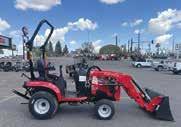
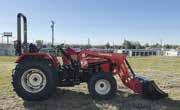
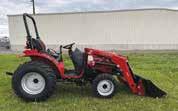
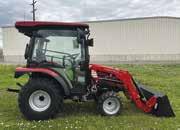
Kioti RX7320PC tractor with KL7320 loader, cab, heat, A/C, power shuttle transmission, 4WD, Cat II 3-point, 540 PTO. 1 in stock
Kioti DK4720SEHC tractor with KL5521 loader, cab, heat, A/C, HST transmission, Cat I 3-point, 540 PTO, 47 hp. 1 in stock
Kioti DK5320SEHC tractor with KL5521 loader, cab, heat, A/C, HST transmission, 4WD, 3-point, PTO. 1 in stock
Kioti CK3520SSHC tractor with KL4030 loader, cab, heat, A/C, HST transmission, 4WD, Cat I 3-point, 540 PTO, 35 hp. 1 in stock
Kioti DK4720SEH tractor, KL5521 loader, 4WD, HST transmission, Cat I 3-point, 540 PTO. 1 in stock
Kioti CK3520H tractor with KL4030 loader, 4WD, HST transmission, Cat I 3-point, 540 PTO. 1 in stock
Kioti CK2610H tractor with KL4030 loader, 25 hp, 4WD, Cat I 3-point, 540 PTO, HST transmission. 1 in stock
Kioti CX2510H tractor with KL5510 loader, 25 hp, 4WD, Cat I 3-point, 540 PTO, HST transmission 1 in stock
Kioti CS2210H tractor with SL2410 loader 2 in stock
Kioti CS2210H with SL2410 loader, 50” SSQA bucket, 4WD, 540 PTO, Cat I 3-point, 22 hp, 42 hours and 5 year warranty Comes with 50” back blade.
$12,000
Farmall 504 tractor with Ford HD post pounder. $5500 John Deere S100 lawn tractor with snowblower. Like new $4500 Ford 860 tractor, good condition $3500 Oliver 88 project tractor. $1000
“Plants in smaller containers often require water more frequently, but less fertilizer because they have less soil,” Domenghini said. “This varies based on species, so do your homework and research individual plant needs.”
Temperature
If the air temperature drops below 50 degrees Fahrenheit, the leaves of more sensitive plants may begin to yellow. “Keep this in mind if you adjust the thermostat during times when nobody is home, such as vacations,” Domenghini said.
Humidity
When the humidity is lower, plants release more water from the leaves. Many common indoor plants prefer high relative humidity.
“To increase the relative humidity, you can create a microclimate by grouping plants closer together,” Domenghini said. “Another option is to place a shallow container below each plant and fill it with water. Elevate the container by placing some gravel in the saucer so that the plant isn’t soaking directly in the water.”
Misting plant leaves is recommended by some, but Domenghini says it is not a practical strategy to effectively increase humidity.
Light
Indoor plants should receive bright, indirect light either from a window or grow lights. Avoid placing plants too close to windows that are drafty, or next to heat vents.
Some indicators that plants are not receiving enough light include:
Elongated internodes (space between leaf/stem unions).
Pale foliage color on new leaves.
Dieback of older leaves.
Domenghini and her colleagues in K-State’s Department of Horticulture and Natural Resources produce a weekly Horticulture Newsletter with tips for maintaining home landscapes and gardens.
Interested persons can subscribe to the newsletter, as well as send their garden and yard-related questions to hortsupport@ksu.edu, or contact your local K-State Research and Extension office.
Question of the Week
We had to have a large limb removed from a tree after it experienced damage from a storm. Can the remainder of the tree be saved?
We receive questions regularly about wheather or not a damaged tree should be removed or saved. This is not surprising since most homeowners recognize the value trees bring to their landscape, and the time required for a tree to reach maturity.
In most cases, your local extension agent is going to recommend contacting a certified arborist to evaluate the safety of the remainder of the tree, especially if it is in an area where people are frequently present or if structures are nearby. Safety is the priority.
Whether you give the tree a chance to survive or remove it, consider planting a replacement tree as soon as possible to fill in the canopy over time.
GREYN FERTILIZER
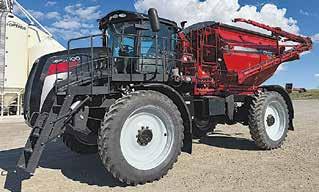
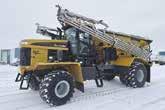
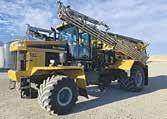
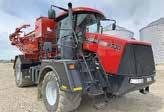
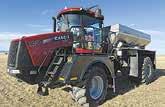
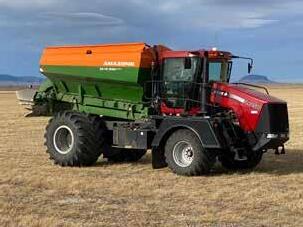
2020 Case IH Titan 4540 810 Flex air, 70-ft. boom, electric roll tarp, Viper 4, Auto Steer, 2511 hours.........$173,000 $189,500
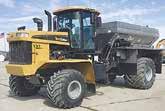
2014 Case IH Titan 3530 Litter Bed, diesel engine, Raven Viper Pro Smartrax Autosteer, Chandler CL fertilizer, litter, compost, shavings spreader, 16-ft. length, twin hydraulic spinners, 3255 hours. Cracked front windshield. $142,000
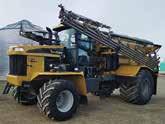
2015 RBR Venturi 350, 8.9L Cummins diesel engine, Pre DEF, Allison automatic transmission, Case 810 70-ft. air boom, triple bin, 4WD, Viper 4, auto steer, 3211 hours. $132,500
wheel steer, 4 wheel drive, electric roll tarp, 1890 hours....$199,500
triple bin, electric roll tarp, Viper Pro, light bar, 3512 hours. $108,000
2021 TerraGator TG8400C diesel, CVT trans., Raven Viper, 4+ controller,RS1-SBAS GPS, electric roll tarp, LED light pkg., New Leader NL4500G4 Edge -14-ft. with 4 bin Multibin Applier. Ask about converting to a single bin with tailgate, to spread lime & fertilizer, 1847 hours. 2 to choose from $175,000
1966 Flint Steel, 18,000 gallon NH3 anhydrous storage tank, 42’ 2” long. National Board Number 53876. Located in Prescott, WA. Ask about other tanks and transports that are available $36,000
2012 B-B pintle hitch sprayer trailer, tandem axle dual wheeled, air brakes, manual outriggers, rear fold down ramps, winch boxes..............$12,000 $15,500
2011 Merritt MVT 38.5-ft. tender trailer, rear hydraulic discharge conveyor, under hopper conveyor, outer controls, electric roll over tarp,
wheel drive, air ride, RA-885 Salford 3 bin bed, 72-ft. spread width, electric roll over tarp, Alliance flotation tires, fenders, lightbar,
Viper4, 2724 hours $153,000 2018 John Deere F4365 with AB485 Twin Bin Air system, 70ft. booms, 4740 Gen 4 Integrated display, tarp, Lincoln lube system, premium cab and radio, LED field lights, beacon light. New fan & housing, 2724 hours. $149,000 $199,500
NMC 240 loader, John Deere diesel engine, single speed hydrostratic drive, OROPS canopy, self leveling bucket, joystick controls. Year is unknown but believed to be a late 90’s. $22,000
1990 International 9400 dry fertilizer tender truck, 3406 Cat diesel, 10 speed trans, tandem axle full screw, air ride suspension, Willmar stainless steel hydraulic dry rear auger tender box, odometer reads 472,304 miles.$23,000 16-ton Wilmar self contained trailer $21,000 Sold separately or together
Grove 50’ ton capacity, 39ft. Minimum boom length, 96-ft. Maximum boom length, Deutz lower and upper engines,
1992 Featherlite flatbed trailer, 45-ft. aluminum bed, side winches, tandem axle, air ride suspension. $9800 2007 Kenworth T300 LP truck, Cummins diesel engine, 6 speed transmission, single axle, air
Kessel Construction, LLC
Harvesting and roasting sunflower seeds
K-State Extension news service
It is sunflower season in the Sunflower State and harvest is just around the corner, starting mid-September into October.
As seed heads begin to ripen, protecting them from birds is essential. said Kansas State University horticulture expert Cynthia Domenghini, who recommends covering the heads once the petals begin turning brown with a paper sack or cheesecloth and securing the cover with a rubber band.
“This will not only help keep the birds out, but will prevent ripened seeds from dropping out of the head,” she said.
Maturity is indicated by shriveled florets in the center of the flower disk, the backside of the head turning a lemonyellow color and heads facing down. “The ultimate check is to pull a few seeds to see if they have turned black with white stripes, the typical color,” Domenghini said.
If there are empty shells, this usually indicates a lack of pollination earlier in the year, she added.
To harvest the seeds, cut the heads and place them in a paper sack, or leave a foot of stem attached and hang the heads upside down to dry. Cover the heads to prevent seeds from dropping as they dry. Once the heads dry, seeds can be removed by rubbing gently.
Roasting
Prepare the seeds for roasting by removing the shell and covering with salted water (2 quarts of water to one-fourth to 2 cups salt). Then, bring them to a boil and simmer for two hours, or soak in the salt solution overnight. Then, it is important to drain and dry the seeds on absorbent paper.
To roast the seeds, spread them in a shallow pan in a 300 degree Fahrenheit oven for 30-40 minutes, stirring occasionally. Remove the seeds from the oven when they appear golden brown, according to Domenghini.
Domenghini and her colleagues in K-State’s Department of Horticulture and Natural Resources produce a weekly Horticulture Newsletter with tips for maintaining home landscapes and gardens.
Interested persons can subscribe to the newsletter, as well as send their garden and yard-related questions to Domenghini at cdom@ksu.edu, or contact your local K-State Research and Extension office.
Flooding brings risk and reward for people and ecosystems
By Pat Melgares, K-State Extension news service
Flooding across parts of the United States has made headlines in recent months, causing widespread damage to homes, infrastructure and natural resources. But while floods often leave behind costly destruction, a Kansas State University expert says these high-water events also play a valuable role in nature’s cycle.
On a recent episode of the K-State podcast, Fins, Fur and Feathers, K-State aquatics specialist Joe Gerken joined co-host Drew Ricketts to explore the causes and consequences of flooding.
“Flooding is simply when there’s too much water in places we don’t want it,” Gerken said. “But not all floods are created equal.”
According to Gerken, four key factors influence flooding: timing, duration, magnitude, and intensity.
Spring floods might stem from snowmelt, while summer floods are often tied to heavy rainfall. Some floods rise quickly and disappear just as fast — known as flash floods —while others build over time as rivers exceed their banks.
Flash floods, Gerken noted, have been especially destructive this year.
“They’re driven mostly by rainfall, and recent warming in ocean waters — especially in the Gulf — has loaded the atmosphere with more water that is colliding with cooler air and dumping large amounts of rain,” he said.
Levees, dams, storm sewers and other human-built infrastructure aim to contain rivers, but urban development has created impervious surfaces like roads and parking lots that prevent water from soaking into the ground. That water moves quickly into storm drains and rivers, often worsening flood conditions.
Vegetation also plays a vital role.
“The plants that we have near a river can be really important,” Gerken said. “But when we remove that vegetation, especially near rivers, sediment washes away more easily and contributes to flooding.”
Still, floods aren’t always bad.
“Floods are a form of ecological disturbance,” Gerken explained. “If we take out some of the negative side effects to humans and property…flooding can serve the same role as prescribed fire and snow and ice. Over time, Mother Nature might reclaim some of those areas to regrow new trees. And that process is important, too.”
Also, floodwaters can carry nutrients into surrounding flood plains, replenishing
some of the world’s most fertile farmland. The process, called lateral connectivity, helps rivers connect with adjacent wetlands and forests, enriching soil and encouraging biodiversity.
Gerken said flooding can also benefit aquatic life. “Some fish, like alligator gar and freshwater drum, take advantage of these shallow, flooded areas to spawn,” he said. “They lay eggs on vegetation in temporarily submerged fields. It’s an incredible process.”
Even so, Gerken urges landowners to stay alert after flood events.
“Monitor your pond for unwanted debris or invasive fish species,” he said. “If there’s any damage to your dam or embankments, act quickly. Fixing a small problem right away is much easier than addressing a major failure later.”
He adds: “There’s always going to be a balance (between the negative and positive forces of a flood). Floods challenge us, but they also shape the world we live in, for better and worse.”
We’d appreciate it if you tell an advertiser you read his ad in the Trader’s Dispatch.
National Candy Cane Day
Date celebrated: Every December 26th
Fort Benton Realty
LLC
Fort Benton Realty LLC
1426 Front Street, Fort Benton, Montana 59442 www.fbrealty.com • fbrealtyl@gmail.com
1426 Front Street, Fort Benton, Montana 59422 www.fbrealty.com • markpyrak@gmail.com
We offer the BEST of Montana's BIG Sl(Y COUNTRY!
''We offer over 40 years of real estate experience!''
YOUR MONTANA FARM & RANCH REAL ESTATE BROKERS OVER 45 YEARS EXPERIENCE
A lot of things have their own day dedicated to them; one you may not have known about is the candy cane. Yes, this veritable symbol of tasty festivity has a dedicated day, so if you ever needed an excuse to stockpile them or indulge, now you have one.
The festive period gives us the perfect opportunity to indulge in all of our favorite treats, but make sure you leave some room in your stomach for a few candy canes. Today, we see them on Christmas trees throughout the festive period, with a lot of people also giving candy canes as gifts too. So let the deliciousness begin!
MarkPyrak 406-788-9280
Mark Pyrak 406-788-9280
Specializing in Equestrian & Horse Properties, Farms & Ranches, Lots & Land, Commercial & Residential, Auctions and Real Estate Consulting. Valerie Morger 406-750-2866
Specialing in Listing and Sales, Land Auctions and Real Estate Consulting
Shane Ophus 406-788-6662
Reach out to one of our real estate experts TODAY!
Mark Pyrak: 406-788-9280 • Valerie Morger: 406-750-2866
Shane Ophus: 406-788-6662 • Roger Axtman: 406-899-4098
Dennis Franz: 406-788-1163 • Katie Schuler-Richter: 406-788-8370
ANDY SWENSON RETAIL SALES MANAGER - MONTANA (406)
History of National Candy Cane Day
Candy canes are so ubiquitous during the holiday season that they are practically considered part of Christmas itself. However, very few people know when, where or how candy canes came into existence, though it is a very interesting story. According to German folklore, the first candy canes were made in the 17th century when a choirmaster in Cologne, Germany, needed to find a way to keep the children quiet during the exceptionally long Christmas Eve Mass.
So he ordered peppermint-flavored candy sticks from a local confectioner, but with a few twists of his own, steeping them in religious symbolism. Firstly, he requested the sticks to be on the shape we know them so they could be a visual representation of sorts of the canes that the shepherds coming to visit the baby Jesus might have had. Some also say that when turned upside-down, the candy cane becomes the letter J, which stands for Jesus.
Furthermore, the choirmaster asked for the sticks to be white (to represent the sinless, pure life Jesus lived) and red (to represent the blood Jesus lost when he was crucified for the sins of mankind). Of course, there is no solid evidence for this, and modern candy cane historians, or whoever looked into it, have disputed the ideas presented here. Luckily, however, you can enjoy the candy cane on its special day with or without this kind of expert knowledge.
Now is the best time to upgrade your equipment. Don’t wait until you’re in the thick of the busy season to realize that your equipment isn’t going
2022 John Deere X9 1100 w/Signature Edition-Ultimate cab package, Active Yield with moisture sensor, ProDrive XL transmission, Dyna Flo cleaning shoe, regular wear grain handling, 31-ft. folding unloading auger, extra fine chopper, 750/65R26 rear tires, 1100/50R42 front tires, axle spacers. Stock #84935
$667,500 (1)
COMBINES
See our large selection of after season combines and be ready for next year’s harvest.
2023 John Deere S780 w/singles, chopper, yield monitor, Contour Master (lateral tilt feeder house), Power Cast Tailboard, power folding bin extension, premium technology pkg:, StarFire 6000 SF1, premium residue, Advanced Power Cast Tailboard: 28.5-ft. unloading auger. Stock #94025
$560,000 (12)
2022 John Deere S780 w/premium cab w/leather, Active Yield w/moisture and yield sensors, 4600 command center, Combine Advisor, Pro Drive w/HarvestSmart, TriStream Rotor, power folding GT covers, 28.5ft unloading auger, Advanced Powercast tailboard w/fine cut chopper, 12 inch axle spacers. Stock #88898 $470,000 (1)
2023 John Deere S770 W/Command Touch feederhouse (5 speed), TriStream rotor, Pro Drive, premium Visibility Select cab (non-leather), Active Yield, Combine Advisor (parts in Great Falls), 28.5-ft. unloading auger, power folding tops, premium fine cut Advanced Tailboard, 520/85R42 duals, 600/70R28 rear, general purpose shoe, side hill performance kit, small wire concaves. Stock #87942
$475,000 (14)
2021 John Deere S780 w/TriStream (bullet) rotor, IF520/85R42 duals 750/65R26 rear, Gen 4 Command Center w/premium 3.0 activation & extended monitor, 6000 receiver w/ SF1, Combine Advisor, Active Yield, Advanced Powercast tailboard, premium cab w/Leather Seat, premium radio, premium LED lights w/extremity, 28.8-ft. unloading auger, power folding grain tank covers, side hill performance kit. Stock #94253
$365,000 (14)
2021 John Deere S780 w/premium cab, active yield w/moisture and yield sensors, combine advisor, guidance, tri stream rotor, reg wear grain handling, power folding covers, 28.5 ft. unloading auger, fine cut chopper with Advanced Powercast, 12 inch axle spacers. Stock #92421 $335,000 (1)
2024 John Deere X9 1000 w/Ultimate cab pkg, Active Yield w/moisture sensor, Ultimate suspension pkg, Signature edition, guidance, dyna flow XL cleaning shoe, regular wear handling pkg, 31-ft. unloading auger, VF 750/65R26 rear and VF 710R/42 rear w/duals, many more features. Stock #92177
2022 John Deere 8R 310 w/Signature Edition, IVT, AT ready less receiver, Ultimate Comfort Cab w/active seat, 6 SCVs, 1000 PTO, CAT 4 3-pt hitch, dual 480/80R50 rear and dual 420/85R34 front tires, MFWD, independent link front suspension, front fenders, front and rear weights. Stock #91695 $378,000 (1)
$690,000 (12)
2023 John Deere 9RX640 w/30 inch track, 6 SCVs, dual hydraulic pump, Active Command steering, Intelligent Power Management, Ultimate Cab, 1000 PTO, 20 front weights. Stock #91048
2023 John Deere 9RX540 w/E18 transmission, 30 inch tracks on 87 inch standard spacing, PTO, Ultimate Cab, cab suspension, ultimate visibility, 7000 receiver, 4600 display w/extended monitor, Premium 3.0 Activation, 5 remotes (standard flow hydraulics 55 GPM), Cat 5 drawbar. Stock #94809
$545,000 (14)
2022 John Deere 7R 290 w/Signature edition, IVT, AT ready less receiver, Ultimate Comfort Cab w/air seat and cab suspension, 6 SCVs, 1000 PTO, 3 point, dual 520/85R46 rear and single 480/70R34 front tires, front fenders, triple link front suspension, cold weather pkg, 24 front weights, rear weights. Stock #91693 $328,000 (4) 2024 John Deere 6R 215 w/IVT 40K, dual motion seat, cab suspension, Ultimate Cab pkg, CommandArm, 155 L/MIN hydraulic pump, 5 ESCVS, PTO, 480/80R50 dual rear tires, 480/70R34 front tires, cold start pkg, reversible fan. Stock #93634 $305,000 (1)
2018 Versatile 610DT w/605 HP, 16 speed power shift transmission, 36 inch track, Deluxe Cab, LED lights, guidance ready w/receiver and 10 inch display, differential lock, 6 SCVs, 2 sets of low pressure couplers. Stock #91193
$400,000 (12)
2011 Versatile 535 w/16 speed Powerhift, deluxe cab, high flow hydraulics (dual pumps), 6-1/2” EH couplers, 3-3/4 inch couplers, 900/50R42 tires, TopCon GPS, front and rear weights. Stock #93003
$195,000 (14)
2023 John Deere 8R340 340 HP row crop tractor w/Signature Edition, IVT w/RH reverser, guidance less receiver, 6 SCVs, 1000 PTO, 3 pt. hitch, 480/80R50 rear tires w/duals, ILS, 420/85R34 front tires w/duals, cold weather pkg, front and rear weights. Stock #90253 $412,500 (15)
2022 John Deere 8RT370 track tractor w/160 inch track spacing w/16.5 inch 6500 series belts, poly mid rollers, 6000 receiver w/RTK activation (no radio), 4600 display w/ automation 3.0, Signature Edition, Ultimate Cab, Ultimate lighting, 40K IVT w/RHR, IPM, 6 Remotes w/high flow pump, 22 front weights, 12 side mount weights, radar, ½ inch power beyond, 20,000 lbs 3-pt hitch, Cat 4 swinging drawbar. Stock #87612 $408,000 (15)
2022 John Deere 5090E w/cab w/ air suspension seat, 24/12 power reverser transmission, corner post exhaust, 3 rear and 2 mid SCVs, 18.4R30 rear R1 tires and 12.4R24 R1 front tires, MFWD, loader ready. Stock #91857 $69,500 (16)
2023 John Deere 6110M w/PowerQuad+ 24F/24R transmission, Isobus ready, less receiver and display, 3 SCVs, 540/1000 PTO, Cat 3N/3-pt. hitch, 480/70R 38 rear and 420/70R24 front tires, MFWD, cold start pkg, Panorama roof, loader ready-3 function. Stock #93208 $140,000 (4)
2023 John Deere 6155M w/20F/20R CommandQuad Plus, 4 ESCVS, PTO, 3PT, 650/65R38 rear tires, 540/65R25 front tires, MFWD with triple link suspension, turnable front fenders, Premium light pkg, AutoTrac ready. Stock #91843
$207,500 (12)
BALE FEEDERS
Predictions are that winter is about to hit. Make sure you are
2014 Haybuster 2650 w/scale kit, right hand discharge, hydraulic deflector, flotation tires. Stock #90177
$17,000 (4)
2008 Haybuster 2650 round bale processor, right hand discharge, hydraulic deflector, 1000 PTO. Stock #95147
$12,500 (11)
2013 Haybuster 2800 bale processor for round and square bales, w/dual action loading arms. Stock #94783
$18,500 (4)
2021 Haybuster 2800 large square and round bale processor, right hand discharge, 1000 PTO. Decent shape, cosmetic issues. Customer had used for two seasons. Stock #94851
$27,000 (4) #90253
#94878
2021 Haybuster 2800 like new, only 20 bales throught it. Handles large squares and small round bales, 1000 PTO, left hand discharge. Stock #94878 $37,500 (14)
Highline BP7000 with left hand discharge, Central City scale Model 715. Stock #95046
$8000 (1)
Bale King Vortex 3000 round bale processor, left hand discharge, hydraulic deflector chute, 1000 PTO. Fully functional above average condition. Stock #92911 $8500 (4)
2023 New House C5000 bale chopper/feeder, like new condition. Holds 6-9 mid squares or 4-6 large squares, 1000 RPM PTO, requires 80 PTO hp or more. Stock #93307 $86,500 (16) 2024 NDECO U700D new vertical mixer, twin auger, front conveyor with right hand dog leg discharge, scale, tandem axles. Stock #84434 $78,000 (11)
2015 Jaylor 5850 HD mixer with dual scrrew, scale, front unload, handles 2 large round bales, 1000 PTO, mixer level gauge, four inline 15.0/5517 tires, 125 minimum hp. Stock #94897 $24,500 (14)
1998 Supreme 700T HD mixer w/twin screw, side discharge, large 1000, Weigh-Tronic scale. Stock #94898 $24,500 (14)
#91048
#93636
#93003
2020 Jiffy 928 like new bale feeder, right hand discharge, 16.1 tires, 1000 PTO. Stock #85863
$23,000 (15)
Recipe Patch by Geri
Here are some recipes to try for maybe something new for the holdiays.
Spiced Tea
Mix:
¼ cup instant tea
¾ cup sugar
1 cup Tang
½ tsp. cinnamon
¼ tsp. cloves
Store in tightly covered jar. Mix in boiling water as needed. 1 tsp. per cup.
Strawberry Sparkle Punch
Rinse, hull and sieve 2 cups fresh strawberries. Reserve. Dissolve 3 oz. pkg strawberry jello in 1 cup boiling water. Then add 6 oz. can frozen lemon concentrate. Stir until melted. Add 3 cups cold water and the strawberry puree. Add 1 quart cranberry cocktail. Pour into large punch bowl over large block of ice.
Just before serving, carefully add 1 large (1 qt. 12 oz.) bottle of ginger ale. (Two times this recipe fills large punch bowl. Use Barcardi rum for added interest.
Classic Eggnog
6 eggs, separated
½ cup sugar
2 cups light cream or whipping cream
1/8 tsp. salt
2 tsp. vanilla
Nutmeg
2 cups milk
Beat eggs yolks and sugar until thick and lemon colored. Beat in cream, milk, salt and vanilla. Beat egg whites until they hold stiff peaks; fold into egg yolk mixture. Serve in chilled punch bowl. Sprinkle with nutmeg. Yield 2 ½ quarts.
Peanut Butter Rocky Road
½ cup margarine
1 cup peanut butter
1 cup butterscotch chips
1 cup coconut
¾ cup chopped nuts
1 pkg. 10 ½ oz. miniature marshmallows
Melt margarine, peanut butter, chips over low heat, stirring all the time. Cool. Add marshmallows, coconut and nuts. Stir. Put into 9x13 inch buttered pan. Chill until firm. Cut into 1 inch squares.
Rocky Road Fudge
½ cup margarine
1 ½ cup powdered sugar
1 cup broken nuts
3 ½ oz. flaked coconut (Use more if needed)
2 squares unsweetened chocolate
1 egg, beaten
6 ¾ oz. pkg. miniature marshmallows
Melt butter and chocolate over low heat, stirring constantly. Cool slightly, then stir in sugar and egg. Cool, then fold in nuts and marshmallows. Stir until coated with chocolate. Shape into 3 rolls, coat rolls with coconut. Wrap in foil and store in freezer. Cut into slices to serve.
Celebrity Fudge
4 ½ cup sugar
4 Tbsp. butter
1 can evaporated milk
¼ tsp. salt
12 oz. chocolate chips
1 pt. marshmallow cream
1 Tbsp. vanilla
12 oz. sweet chocolate (broken up)
2 cups walnuts
In large heavy saucepan combine sugar, milk, butter and salt. Over medium heat bring to a boil (full boil). Let boil 6 minutes. Stir carefully so sugar won’t scorch. Measure remaining ingredients into large bowl. Pour boiling syrup over. Stir until chocolate is melted and blended. Pour fudge into 2 buttered 8x9 inch square pans. Chill.
2021 Bobcat 5600 Toolcat, Brand-new engine with 0 hours and warranty! Deluxe cab & high flow. stk# 32095. $69,000 (G)
New Holland RB560 laced belt, net/twine, 1000 PTO, caster, standard density, manual hydraulic pickup, 21.5LX16.1, roller windguard, extra wide pickup, declutcher, deluxe wrap monitor. stk# 29809. $35,200 (L)
2018 New Holland RB560 laced belts, ISO monitor, net only, hydraulic ramp, 1000 PTO with cut out clutch, bale count of 10,479. stk# 22242. $34,900 (L)
John Deere 568 shed kept, great condition, laced belts, monitor included, single axle, wrap/twine, 1000 PTO, wide pickup, tires 21.5L-16.1 SL. stk# 32789. $13,900 (G)
2010 John Deere 568 baler, twine, 1000 PTO, roller windguard, large float tires, 19,886 bales. stk# 31510. $9900 (G)
2017 New Holland LM7.42 Elite telehandler, 460/70R24 Mich., reverse fan, rear hydraulic coupler, exterior tool box, continuous flow auxiliary hydraulic, bluetooth and auxiliary radio work, SO station. stk# 22833
$95,000 (L)
Bobcat HB980 breaker. stk# 24408.$10,036 (G)
Quick Attach 68” angle blade. stk# 32129. (G)
Bobcat 68” angle broom. Good bristles. stk# 32128. (G)
Bobcat 68” angle broom for skidsteer. stk# 32384 (G)
Maybridge 15 green, bar included 15-ft 5/8 chain drag. stk# 30510. $2250 (G) 2023 NEW Kirchner 8-ft plow, Cat II, 3-pt. unit with 16” sweeps. stk# 30802. $7090 (L)
John Deere 18-in. planer, 14 pin control, carbide teeth, high flow. stk# 31623. $9900 (G)
2023 Vermeer BPX9010 R&S processor, 1000 PTO, right hand discharge. stk# 29565. $29,900 (L) Vermeer BPX9000 round/square processor, right hand discharge, knobby tires. stk# 29294. $19,800 (L)
Recipe Patch by Geri
Graham Cracker Bars
2 ½ cup graham cracker crumbs (36 crackers)
1 ¼ cup melted margarine ½ cup sugar
Mix the above well. Pat firmly in a jelly roll pan which has been lightly greased.
In the same bowl mix:
2 ½ cup flaked coconut
1 can sweetened condensed milk
Mix well. Gently spread over first layer and bake at 350° for 20 minutes.
Frost with:
¼ cup melted butter which is a golden brown. Take off heat and add 1 tsp. vanilla and a dash of salt. Stir in 3 ½ to 4 cups powdered sugar and evaporated milk to spreading consistency.
Crunchy Cereal Patties
5 cups assorted unsweetened crisp ready to eat cereals.
4 cups miniature marshmallows
1/3 cup peanut butter
¼ cups butter
½ cups semi-sweet chocolate pieces.
Put cereals in large, greased bowl. Melt together next three ingredients in top part of double boiler over hot water, stirring occasionally until smooth. Pour over cereal, stirring until evenly coated. With buttered hands, shape mixture in fifteen 3 inch patties; put on waxed paper. Melt chocolate and decorate tops. Chill.
Mounds Bars
2 cups graham cracker crumbs
½ cup melted butter
½ cup sugar
Put in 9x13 inch pan. Bake at 375° for 8-10 minutes.
Mix:
1 cup sweetened condensed milk
8 oz. flaked coconut
Spread over crumbs and bake 15-20 minutes longer.
Frosting:
6 oz, chocolate chips
1 Tbsp. peanut butter
1 Tbsp. butter
Melted together in double boiler.
Frosted Peanut Butter Bars
1 cup brown sugar
½ cup shortening
½ cup peanut butter
1 tsp. vanilla
Cream together
1 ½ cup flour
1 tsp. baking soda
¼ tsp salt
Sift together. Combine with creamed mixture and mix well. (Optional – ½ cup quick oatmeal, blend in well. This makes a drier bar) Pat firmly into 10x15 inch pan. Bake at 375° 12-15 minutes. Cool and frost with the following.
Frosting:
2 Tbsp. butter
4 Tbsp. peanut butter
1 1/ cup powdered sugar
Dash salt
2 ½ Tbsp. milk
Butterfudge Fingers
2 squares unsweetened chocolate
1/3 cup butter
1 cup sugar
2 eggs
¾ cup sifted flour
½ tsp. baking powder
½ tsp. salt
½ cup nuts
Heat oven to 350°. Melt chocolate and butter in double boiler. Beat in sugar and eggs. Sift dry ingredients together and stir in. Add nuts and spread in greased 8 inch square pan. Bake 30-35 minutes until top has dull crust. Cool slightly.
Topping: Brown ¼ cup butter over medium heat. Blend in 2 cups sifted powdered sugar, 2 tablespoons cream and 1 teaspoon vanilla. Spread over warm brownies. When cool and set, melt 1 square unsweetened chocolate and 1 tablespoon butter and spread over icing.
ROUND BALERS
(2) 2025 John Deere 561M round balers, level 4 heavy duty with Grease Banks, net wrap, moisture sensor, Cam clutch, approximately 6000 bales. Each.
$62,000
(2) 2024 John Deere 561M round balers, heavy duty with Grease Banks, net wrap, scale & moisture sensor, Cam clutch, variable core valve. Stock #94158, 5132 bales, Stock #94159, 6130 bales. Each.
$62,000
2024 John Deere 561M round baler, heavy duty with Grease Bank, net wrap, moisture sensor, Cam clutch, 4363 bales. Stock #94160.
$60,500
2019 New Holland RollBelt 560 round baler, MegaWide, net wrap, 1000 PTO, 10,915 bales. Stock #92963. $34,000
& HEADER
2023 John Deere 8RX 370 IVT transmission with right hand reverser, 24” tracks, 85 gallon per minute hydraulic pump, 6 SCVs, Ultimate cab with air seat and cab suspension, 954 hours. PowrTrain Warranty. Good till January 2027 or 2500 hours. Stock #92170.
$529,000
#92094
MISCELLANEOUS
$145,000
2024 John Deere 8R 370 tractor with cab, MFWD, IVT transmission, right hand reverser, ILS suspension, 84 gpm pump, 22 front weights, 1500# rear weights per side. 787 hours. Stock #93637
$505,000
2025 John Deere 6R195 tractor, IVT transmission with left hand reverser, Auto Trac ready, Ultimate cab, loader prep package, hydraulic cab suspension, 5 SCVs, MFWD with triple link suspension, approximately 615 hours. $295,000
$462,500 (2) 2024 John Deere 8R 340 tractor with IVT transmission, right hand reverser, air seat, cab suspension, autonomy prep package, six selective control valves, 84 gallon per minute hydraulic pump, 420/85/34 front tires with duals, 480/80/50 rear tires with duals, 1500# each side rear, 22 front weights, 1300 hours. Stock #94390 & 94391. Each
2024 John Deere 6155M cab tractor MFWD with 640R loader & grapple, 20 speed PowrQuad with left hand reverser, AutoTrac ready less receiver, 3 SCV, beacon and work lights, triple link front suspension, mechanical cab suspension, Panorama roof, 2-450# weights each side, liquid ballast. Factory Warranty good till 7-25-2026 or 2000 hours, PowrGard Warranty good till 7-23-2030 or 4000 hours. Stock #93779, 233 hours. $215,000
$429,000
2023 John Deere 8R 340 Signature Edition, IVT with RHR, ILS, full GPS, 6 SCVs, 380/90R54 rear tires with duals, 380/80R38 front tires with duals, 291 hours. 6 year/4000 hour extended PowrGard Warranty. Stock #90254
2024 John Deere 6155M cab tractor MFWD with 640R loader and grapple, 20 speed PowrQuad with left hand reverser, AutoTrac ready less receiver, 3 SCV, beacon and work lights, triple link front suspension, mechanical cab suspension, Panorama roof, 2-450# weights each side and liquid ballast. Factory Warranty good till 7-25-2026 or 2000 hours, PowrGard Warranty good till 7-23-2030 or 4000 hours. Stock #93780, 403 hours.
$433,000
$215,000
$373,000
2022 John Deere 8R 310 IVT with RHR, ILS, full GPS, 6 SCVs, 480/80R50 rear tires with duals, 420/85R34 front tire with duals, 1257 hours. 6 year/4000 hour extended PowrGard Warranty. Stock #90255.
John Deere 6430 tractor with 673 self leveling loader with bucket and grapple, 16 speed transmission, 3 SCVs, 4800 hours. Stock #95146
$67,500
2023 Deere 324G skidsteer, pilot controls, 70 hours, 2 speed, 78” bucket, open cab. Stock #94676. $60,000
2018 New Holland L-234 skidsteer, cab, A/C, heat high flow, EH controls, flotation tires, 84” bucket, 425 hours. Stock #90353 $61,000
2016 John Deere 333E skidsteer, cab enclosure, EH foot and hand controls. Does ISO and H patter on hand controls, hi-flow hydraulics, Ride Control, 2 speed, wide rubber tracks, 84” construction bucket, reversing fan drive, EH performance pkg, precleaner. Stock #94645 $52,500
2023 John Deere 6110M cab tractor, MFWD, 24 speed PowrQuad with reverser, 3 SCVs, 30 gpm hydraulic pump, rack & pinion rear axle, cast wheels, 3 function loader ready, mechanical cab suspension & Panorama roof. Factory Warranty good till 4-182026, Powertrain Warranty good till 4-17-2030 or 4000 hours. Stock #93207.
$142,500
2023 John Deere 6110M cab tractor, MFWD, 24 speed PowrQuad with reverser, 3 SCVs, 30 gpm hydraulic pump, rack & pinion rear axle, cast wheels, 3 function loader ready, mechanical cab suspension & Panoram roof. Factory Warranty good till 4-182026, Powertrain Warranty good will 4-17-2030 or 4000 hours. 502 hours. Stock #93208.
$140,000
2023 John Deere 6105E cab tractor, MFWD with H-310 loader and grapple, air seat, 3 SCVs, 24/12 transmission, rear wheel weights, and ballast in rear tires, 427 hours. $114,500
2023 John Deere 5090E cab tractor, MFWD, 12/12 transmission with left hand reverser, loader ready, air seat, 3 SCVs, approximately 700 hours. Factory warranty good till 10-2025, Powertrain good till 10-2028 or 3500 hours. Stock #91752. $68,500
2008 John Deere 2305 tractor, 25 hp, MFWD, open station, front end loader with bucket, plus 260 backhoe, 1622 hours. Stock #94974. $12,000
2018 New Holland T6.170 cab, MFD, 16 speed, Dual Command transmission, 845TL loader & grapple, 888 hours. Stock #86681. $126,000
New Holland T6.165 cab tractor, MFD, 16 speed Powershift transmission, 3 SCVs, 855LA 2 function loader 1220 hours. Stock #92103. $110,000
2015 New Holland T7.210 T4A MFD, 165 hp, Powershift, 3 SCVs, 2380 hours. Stock #91852. $120,000
‘26 Vermeer 605S baler ............... COMING IN Vermeer 605N, In-Monitor Moisture Sensor, Auto Greaser, pickup clutch, 540 or 1000 PTO .....NEW
2-Vermeer R2800 updated pivots $28,000 Massey-Ferguson 9635 swather, 1865 hours, new cutter bar
3-Highline CFR650 with feed chopper.
YEAR END SAVINGS ARE HERE!!
Terminating a verbal farm land lease
By Jessica Groskopf, Nebraska Extension Ag Economist | Dave Aiken, UNL Ag Economist
Some farm leases are not written but are verbal or “handshake” agreements. Because nothing is in writing, the parties may have different recollections of their agreement, making lease disputes more difficult to resolve. The most common legal issue associated with verbal farm leases is how a lease may legally be terminated. For verbal leases in Nebraska, six months advance notice must be given to legally terminate the lease. In contrast, the termination of a written lease is determined by the terms of the written lease. If the lease does not address termination, the lease automatically terminates on the last day
Terminating verbal leases
For verbal leases, the Nebraska Supreme Court has ruled that the lease year begins March 1. Notice to a tenant to vacate under a verbal or handshake lease (legally referred to as a “notice to quit”) must be given six months in advance of the end of the lease, or no later than September 1. This rule applies regardless of the type of crop planted. Those with winter wheat should consider providing notice before it is time to prepare wheat ground for planting.
For example, for the lease year beginning March 1, 2026, and ending February 28, 2027, notice from the landlord that the lease will be terminated would have to be received by the tenant no later than September 1, 2025. The lease would then expire February 28, 2026, with the new tenant (or new buyer) able to take over the lease March 1, 2026. If, however, the notice to quit were given (or received) after September 1, 2025, the existing tenant would have the lease until February 28, 2027.
Notice should be provided to the tenant for either lease termination or changing lease provisions. A verbal termination notice might be adequate but could be difficult to prove in court if litigation were necessary to enforce the lease termination. It is recommended that the farmland lease be terminated by Registered Mail™. This means that the person receiving the letter signs for it, providing evidence that the termination notice was received. The University of Nebraska-Lincoln does not provide sample lease termination letters. If you need guidance, consult your attorney.
Pasture Lease Terminations
Handshake or verbal leases are different for pastures. The typical pasture lease is for the five-month grazing season rather than the entire year. The lease is only in effect for that time, so the lease is terminated at the end of the grazing season; however, different lease length arrangements can be made in a written lease, and that would be followed if in effect.
Importance of Good Communication Regardless of the type of lease - written, verbal, or even multiple year - the landlord should have clear communication with the tenant. By sending a termination notice before September 1, even for written leases, you can avoid any miscommunication or pitfalls.
Written Leases
In all instances, written leases would be preferred over oral or “handshake” leases. Sample leases are available in the Document Library at aglease101.org and can help both parties start thinking about the appropriate lease conditions for their situation before they consult an attorney to draft a lease or review a proposed lease. The Ag Lease 101 site was developed by university extension specialists in the North Central Region but is not a substitute for personal legal advice.
Five freaky facts about The Nobel Prize
• The first Nobel Prize ceremony was in 1901, five years after the death of Alfred Nobel, who had mandated the prizes in his will. Nobel was a Swedish chemist who once blew up his own factory while working with nitroglycerin.
• Wangari Maathai of Kenya was the first African woman to win the Nobel Peace Prize, in 2004.
• John Enders cultivated polio in a test tube, and in 1954, he–not Jonas Salk, who developed the vaccine–got a Nobel Prize for his work.
• Antonio Egas Moniz won the 1949 Nobel Prize in Medicine for developing the lobotomy.
• Gaston Ramon, a French veterinarian and biologist, was nominated for the Nobel Prize 155 times–but never won.
BEN TAYLOR INC.
CRYSTALYX Blueprint 30 with Bio-Mos 2 contains 30% crude protein from vegetable based ingredients, as well as non-protein nitrogen (NPN). It is designed to be fed to beef cattle on medium to lower quality forages to help improve forage utilization. Blueprint 30 is uniquely fortified with all highly bioavailable organic trace minerals and contains no inorganic trace mineral forms.
Benefits of BIO-MOS 2:
• Promotes performance at all stages
• Supports colostrum quality and newborn calf performance
• Contributes to gastrointestinal integrity and stability to aid in nutrient utilization
• Supports average daily gain
• Reinforces the health status of receiving cattle in the feedlot
• Supports economic returns
CRYSTALYX Blueprint 30 with BIO-MOS 2 supplement is designed for self-feeding to grazing beef cattle health.
Taylor’s Farm Store
Milk and microbes
Louis Pasteur wasn’t much of a student in his youth, but he developed an interest in the process of fermentation when he became a dean at Lille University in France in 1854. In 1865 he decided that there must be some sugar-fed organism in wine and beer that was busy reproducing and giving off gas, a microorganism so tiny that it was invisible to the naked eye. This came to be known as “germ theory,” and it led to Pasteur being dubbed “the father of microbiology.”
Soon everyone realized that bacteria, although you can’t see them, are everywhere and in everything. And they come in battalions, not as single little sneaky guys. You’ve got a bunch of them right now inside you: without them you can’t digest anything because they live, love, and work in your gut. They’re also what makes yeast work. Bacteriology was a shiny new science, and in its wake came a number of life enhancing developments.
Heat, Pasteur knew, kills bacteria; by experimentation, he found that heating milk or another food to 161.6 degrees F for 15 seconds and then cooling it quickly killed the bacteria. That way, disease-causing bacteria can’t be passed from the cow to the human who drinks the milk.
By the time Pasteur died in 1895, his name was everywhere. Almost all the milk sold in the United States and most of Europe was being routinely pasteurized. Result? A massive drop in the incidence of typhoid, diphtheria, dysentery, and tuberculosis. Today, almost all milk is pasteurized. Pasteur was also the man behind immunization. A large number of diseases are caused by an invasion of harmful bacteria. If the body’s own army of antibodies can’t get rid to them, you’re in trouble. “Why not send in reinforcements?” reasoned Pasteur. “Strengthen resistance by making the antibodies multiply. Theoretically, that would prevent diseases from developing.” And that is exactly what immunization does.
#####
Ancient Egyptian Pharaohs used their slaves as fly catchers. They would lather their slaves in honey, which would serve a dual purpose of attracting any flies to their slaves rather than themselves, as well as trapping and killing the flies.
1996 John Deere 644G loader, quick attach, 3rd valve hydraulics, 3.5 yard GP bucket or multi-purpose bucket, tight, clean, rust free one owner ex-municipal loader, 8300 hours Call
Case 580B backhoe loader, GP bucket, 4x2, ROPS, outriggers, nice old backhoe with all original paint and no rust, ex-city machine, 7600 hours, clean affordable backhoe Call
2008 Vermeer RT450 trencher, 6-way blade, front backhoe, shark tooth chain, excellent chain & sprockets, only 740 hours Call
1988 Case W14B loader, factory auxiliary valve, full cab, 5.9 Cummins diesel, excellent rubber, one owner, ex-city machine with only 2800 hours, very good tight clean affordable loader Call
2001 Ingersoll Rand P375 air compressor, 375 CFM, 3.9 Cummins diesel, hose reel and hose, ex-city machine with only 607 hours Call
2010 Genie S65 boom lift, 65-ft. reach, jib, diesel, AC generator, one owner, clean original machine, only 1,100 hours Call
dash, 48” midrise sleeper, 11R22.5 tires on Aluminum wheels, disc brakes, air slide 5th wheel, 280” wheelbase.
Invasive grasses threaten mule deer
By Jerod Merkle, UW Extension
If the spread of cheatgrass and other annual invasive grasses is left unchecked, mule deer will lose key habitat in northeast Wyoming, a new University of Wyoming study suggests.
The study, published in the journal Rangeland Ecology & Management, found that mule deer avoid places where invasive annual grasses such as cheatgrass are overtaking sagebrush and grassland habitats. If the spread of these weeds goes unchecked, the study predicts that mule deer may lose more than half of their high-quality habitat in northeast Wyoming in the next two decades.
Fortunately, the research also shows that targeted management of invasive annual grasses can reverse this trend.
“This is one of the first research studies to clearly assess the impacts of invasive annual grasses on mule deer habitat selection,” says Kurt Smith, lead author of the new study and senior research scientist at UW. “The picture is grim if we sit back and do nothing. But there’s plenty of hope that we can maintain big game populations if we strategically treat cheatgrass and other invasives.”
Mule deer rely on healthy sagebrush and other native perennial plants for food. Cheatgrass and other invasive grasses are less nutritious and provide poor-quality habitat for these big game, especially in the summer and fall, the researchers note.
To track how mule deer used the landscape, including in areas containing invasive grasses, Smith and his colleagues analyzed the movement of more than 100 animals with GPS collars. Then, they overlaid the animals’ movements with the type of vegetation cover using the Rangeland Analysis Platform.
Mule deer prefer habitats with low levels of invasive annual grasses, the researchers found. However, once invasive annual grasses covered more than 13% of sagebrush lands, mule deer began to use those areas less. When invasive grasses covered more than 20% of the land, mule deer strongly avoided those areas.
After compiling deer movement and vegetation data, the researchers forecasted what the future might look like under two scenarios: one where invasive grasses continued to spread across the sagebrush biome at current rates, and another where active management actions (like applying herbicides) reduced the weeds and allowed native perennials to recover.
If nothing is done to protect core sagebrush areas from the spread of these weeds, invasive annual grasses could potentially reduce high-quality mule deer habitat across northeast Wyoming by 62% in the next 20 years, the results suggest.
“Mule deer are already facing habitat loss and fragmentation across the West. Doing nothing isn’t an option,” says Jerod Merkle, Knobloch Professor of Migration Ecology and Conservation at UW and senior author of the study. “Luckily, we now have the tools, the science and the broad support to combat the spread of invasive annual grasses in Wyoming and beyond.”
According to the new research, if targeted treatments are applied in places already prioritized by existing conservation frameworks like the Sagebrush Conservation Design, the potential loss of habitat can be completely reversed.
These frameworks prioritize treating areas with only low to moderate levels of invasive grasses, as well as places near still-intact, core sagebrush landscapes.
“The predicted maintenance of high-quality mule deer habitat is stunning if we proactively defend core sagebrush from invasive annual grasses,” says Brian Mealor, director of the University of Wyoming’s Institute for Managing Invasive Grasses Invading Natural Ecosystems (IMAGINE) and co-author of the study. “It gives a lot of hope that we can protect wildlife while also improving rangelands as a whole.”
Partners across the West are collaborating on novel, winwin solutions for landowners and land managers interested in conserving sagebrush rangelands and the wildlife they support.
For instance, IMAGINE and the USDA Natural Resources Conservation Service’s Working Lands for Wildlife provide tools, funding and technical support for managing invasive annual grasses. The Wyoming Migration Initiative at UW — in collaboration with the U.S. Geological Survey, state wildlife management agencies and Tribes — provides migration maps and other science-based strategies that help prioritize where to treat weeds to best benefit the West’s iconic big game species.
Invasive grasses threaten mule deer
“Sagebrush rangelands support rural economies through ranching, hunting and recreation,” says Jeremy Maestas, an ecologist with the USDA Natural Resources Conservation Service (NRCS). “This research clearly shows that now is the time to defend and restore the sagebrush biome, not just for mule deer but for all the people and wildlife who live here.”
The research was supported by the Wyoming Game and Fish Department, USDA NRCS Working Lands for Wildlife, Western EcoSystems Technology, Inc., the Knobloch Family Foundation and the University of Wyoming.
To read the full paper, visit https://bit.ly/mule-deeriag-2025. Contact Merkle at jmerkle@uwyo.edu or (307) 766-5448 with questions.
More “Science” Museums
Paper House Museum
Location: Rockport, Massachusetts
Background: It took 20 years and 100,000 newspapers for the Stenman family to build this tiny house. It’s only one room, but everything is made entirely of newspapers. The wall are made of 215 layers of newspaper. Fireplace, chairs, table, desk–you guessed it–all out of newspaper.
Museum of Beverage Containers
Location: Goodlettsville, Tennessee
Background: In 1973 Tom Bates started to pick up empty cans on the walk home from school. Eventually he opened a museum, and it was even listed in the Guinness Book of World Records for its collection of 36,000 cans and bottles. Among the treasures: soft drinks with names like Zing, Zippy, and Zitz, a can of soda for pets and camouflage cans produced for the U.S. Army during World War II. Unfortunately, it has since closed, and we’re crushed.
Do you enjoy reading the Trader’s Dispatch? Have you found what you needed? Please, tell our advertisers!
low boy service
40-ton RGN trailer for hire to transport combines, tractors, sprayers, floaters, construction equipment, etc. Within Montana & surrounding states. We also have 48-ft. step deck trailers available. Pilot car service available. Insured & experienced. Call Roger at Roger Rader Inc., Sun River, MT 406-264-5475 or 406-799-5162 (Roger’s Cell) (MC# 170263 US DOT# 128029)
GLASS TRUCKING, INC.
• In business since 1960 • Visit
Successfully weaned calves –A hot commodity
By Karla Wilke, Nebraska Extension Cow/Calf Systems and Stocker Management Specialist
The weaned calf is at a critical juncture in development and currently is an expensive commodity whose health and growth should not be taken lightly. Photo credit: Karla Wilke
Whether calves are being retained after weaning, or they are arriving by the truckloads, the weaned calf is at a critical juncture in development and currently is an expensive commodity whose health and growth should not be taken lightly.
The Connection between the Nursing Calf and the Weaned Calf
Although there is much to focus on during weaning, a successful weaning is impacted by the nursing phase. In an ideal situation, the calf was born to a healthy cow on a good nutrition and vaccination program who provided high quality colostrum to the calf at birth. In addition to receiving good nutrition as a nursing calf, the calf also received two rounds of vaccinations in a protocol developed by a local veterinarian. Much like in humans, a series of vaccinations while the calf is young can prevent viral outbreaks throughout its life. Viral diseases are hard to treat and if a calf survives them, that calf is seldom a thrifty calf with a great rate of gain. Antibiotics are effective on bacterial infections, not viruses. Therefore, the idea of a vaccination program is to minimize the impact of viruses in the herd so that when an illness does occur, the likelihood it is a treatable bacterial infection is high. Establishing a working relationship with a local veterinarian before weaning helps determine any booster vaccines that need to be given after weaning as well as developing an antibiotic use protocol before signs of an illness occur.
The Transition Away from Mom
By the time a nursing calf is five months old, that calf is eating over 1% of its body weight in forage on a dry matter basis. Once the calf is weaned, depending on the quality of the diet offered and the size of the calf, that calf will eat between 2.3% and 3.0% of its body weight in forage. So, the goal is to get that calf’s consumption from 1% up to 2.3% of its body weight in feed as quickly as possible.
The more familiar things can be, the smoother the transition. A similar diet to what they were eating with the cow is familiar to the calf and can encourage intake. A calf out grazing with the cow is going to prefer a grass hay or grazing situation and may not be willing to eat a silage-based diet immediately after weaning. However, a calf who consumed a silage-based diet with the cow, will eat that very well at weaning.
Rumen Development, Nutrition, and Water
Good nutrition is the key to good health for the weaned calf. By the time a calf is 150 days old, the rumen is fully developed but is small compared to a yearling calf or a cow. Therefore, the diet must be highly palatable and highly digestible. A diet of poor quality roughage will not have a high passage rate out of the rumen, making it unlikely the calf can eat enough to meet its nutrient requirements.
In addition to energy, the weaned calf needs metabolizable protein to meet both the needs of the microbes in the rumen and the needs for tissue growth such as muscle and skeleton. Feeds such as distillers grains will contribute more to skeletal and muscle growth than feeds like alfalfa hay or soybean meal due to the type of protein they supply.
The importance of a good vitamin and mineral package should not be overlooked as several vitamins and trace minerals such as Vitamin A, copper, and zinc play a crucial role in the functioning of the immune system.
Water is the most critical nutrient for life but is often overlooked for its importance in the weaning calf. Not only is water important in the prevention of dehydration and general metabolic function, but it is also important for digestion in the rumen. Therefore, a calf who cannot reach the water, cannot figure out the waterer, or will not drink the water due to contaminants, will also not eat.
Predator vs. Prey
One of the most frustrating things about caring for weaned calves is not realizing a calf has a need for medical attention. Because calves see humans as predators, they will often try to appear healthy when they sense they are being scrutinized. Sick calves will often hide in the middle of a group of calves to avoid drawing attention to themselves. Moving the calves around to see who exhibits depressed posture or labored breathing, who moves back to the bunk and continues to eat, and observing a calf from a moderate distance when the calf is unaware of being watched, can help determine which calves need to be pulled in for treatment.
Summary
Managing weaned calves, especially at today’s value, can be a little stressful. However, proper nutrition, vaccination schedules, treatment protocols, and vigilance can increase the success rate tremendously.
Those wanting assistance with ration balancing for weaned calves can reach out to the University of Nebraska beef focused educators and specialists.
Seven natural wonders of the world
The Grand Canyon was created by millions of years of wind and water erosion from the Colorado River. The rocks of the canyon walls range from 250 million years old at the top to more than 2 billion years old at the bottom.
Paricutin Volcano erupted out of a Mexican cornfield on February 20, 1943. Located about 200 miles west of Mexico City, Paricutin grew to 10,400 feet in just nine years, making it the fastest-growing volcano in recorded history. Its lava destroyed two villages and hundreds of homes but caused no fatalities.
The Harbor of Rio De Janeiro in Brazil was first seen by Portuguese explorers on January 1, 1502. The Portuguese thought they had reached the mouth of an immense river and named their find River of January–Rio de Janeiro. The spectacular harbor’s landmarks include Sugarloaf Mountain and Corcovado Peak.
The Northern Lights, also called the auora borealis, occur when solar particles from the Sun collide with gases in Earth’s atmosphere. The energy created by the collision is emitted as photons (light particles)–and we see lights dancing across the sky.
K-State researchers target swine feed efficiency with soybean meal studies
By Pat Melgares, K-State Extension news service
Kansas State University researchers are shedding new light on swine nutrition, with findings that could help producers fine-tune diets for growing pigs — and improve both feed efficiency and economic returns.
Much of the recent work, to be presented at the university’s annual Swine Day on Nov. 20, centers around soybean meal — a major protein source in swine diets — and how it is best incorporated alongside synthetic amino acids.
K-State’s Swine Day features updates on the university’s research on nutrition, management, feed processing, feed safety and more. Information and online registration are available online at www.asi.k-state.edu/events/swine-day.
“Soybean meal is one of the primary protein sources for swine diets,” said Katelyn Gaffield, assistant research professor in the Department of Animal Sciences and Industry. “We are researching the consistency and quality of soybean meal so that we can integrate it appropriately into the diet.”
Gaffield and the university’s applied swine nutrition team have explored multiple quality parameters, including trypsin inhibitors, which can negatively affect swine performance. Controlling such factors, she said, could improve growth rates and feed efficiency.
Meanwhile, doctoral student Ron Navales is investigating the ratio of lysine to crude protein — a critical relationship in swine diets as producers increasingly use crystalline amino acids to meet nutritional needs.
“In the past, we formulated diets based on crude protein levels,” Navales said. “But now, with better technology and the availability of crystalline amino acids like lysine and methionine, we can more precisely meet amino acid requirements. However, aggressive use of crystalline amino acids can result in reduced crude protein in the diet, and in return, could potentially impact performance.”
Navales’ research, supported by the United Soybean Board, involved feeding more than 2,500 pigs across four experiments, adjusting lysineto-protein ratios from 85% to 115% of the current estimated requirements.
Among the most promising results is that while pigs maintained steady weight gain, they consumed more feed when dietary protein was lowered — that is, pigs are compensating to meet their nitrogen needs, which Navales said could have been supplied by an intact nitrogen source such as soybean meal.
“This shows there’s a limit to how much we can replace intact proteins with synthetics,” Gaffield said. “Going too low in protein might hurt feed efficiency, even if amino acid levels are technically met.”
Gaffield and Navales emphasize that their research is directly applicable to swine producers. Results from these trials will help guide dietary formulation — particularly the balance between soybean meal and synthetic amino acids — to avoid inefficiencies that could impact profitability.
“It’s practical research,” Gaffield said. “We’re identifying ratios that can be directly
implemented by producers and nutritionists.”
The research will also be validated on a commercial scale, Gaffield added, a next step that ensures the findings hold up outside of controlled university environments.
In addition, Gaffield’s team is conducting a nationwide survey — backed by the United Soybean Board — to evaluate the consistency and quality of soybean meal from 27-30 processing plants across the U.S.
“This will help define U.S. soybean meal quality and examine lab-to-lab variation,” she said.
Ultimately, Gaffield and Navales aim to help swine producers make more informed, costeffective nutrition decisions.
“Feed efficiency affects your bottom line,” Navales said. “If pigs grow the same but eat more to compensate for lower protein, that impacts economics.”
Their sessions at K-State Swine Day will detail both the research on soybean meal quality and the optimal lysine-to-protein ratios, offering producers new insights to take home — and implement immediately.
For questions about K-State’s 2025 Swine Day, contact Katie Smith at 785-532-1267 or katiesmith@ksu.edu.
• Verified
• No out-sourcing of ad creation and design
• Sales & Circulation departments located in MT Call today to place an ad or to subscribe! Office - (406) 271-5533
Fall grazing management: Balancing forage use and recovery
By Ben Beckman, Nebraska Extension Educator
After several years of dry conditions limiting fall pasture growth in cool season pastures, this year may look a little different. Moisture and moderate temperatures are setting up the potential for some extra grass growth heading into the fall. While it’s tempting to use this forage right away, taking time to think through fall grazing strategies can pay dividends for both short-term feed needs and long-term pasture health.
Stockpiling Opportunities
* 2024 Haybet Barley net wrapped, big round bales, low nitrates, high protein
One option is to let pastures rest this fall and stockpile growth for later grazing. Cool-season grasses like smooth bromegrass, Kentucky bluegrass, and fescue often respond well to cooler fall conditions, if moisture is present.
Stockpiling can provide high-quality forage for late fall or even winter grazing, reducing the need for harvested feeds. Fertilizing earlier in the season and allowing pastures to rest now sets up the best stockpiling response, but even without those steps, deferring grazing can build feed reserves. Research at the University of Wisconsin has shown that cool-season grass stockpiled with 40–60 lb N/acre can produce nearly a 75% increase in forage over unfertilized fields, depending on rainfall.
Fall Fertilization
Fertility is another tool to consider in the fall. Applying nitrogen in late August through early September can boost fall growth and improve stockpiling potential. While we are now on the back end of the ideal window, some benefit can still be seen if moisture is available to move nutrients into the soil profile. Beyond immediate growth, fall-applied fertilizer can also enhance early spring vigor by ensuring adequate nutrient availability as plants break dormancy.
However, nitrogen isn’t the only nutrient to keep in mind. Phosphorus and potassium applications are also worth considering. These nutrients don’t produce the same rapid flush of growth as nitrogen but play a critical role in stand persistence, root development, and winter hardiness. Fall can be a good time to correct deficiencies since soil tests taken after summer growth provide a clearer picture of nutrient status, and applications can be made ahead of next year’s needs. As a rule of thumb, aim to maintain soil test phosphorus above 15 ppm (Bray) and potassium above 120 ppm for cool-season grasses. Alfalfa and mixed stands may require higher levels.
On native range or warm-season species, however, fall fertilization is not recommended since these plants are headed
toward dormancy and won’t respond with additional growth.
Weighing Trade-Offs: Forage Now vs. Forage Later
The key question for many producers is whether to use the extra growth this fall or leave it for later. Grazing now can relieve pressure on other feed sources, but it comes with trade-offs. Grass plants need time in the fall to rebuild root reserves and set buds for spring growth. Over-utilization in September or October can weaken stands and reduce vigor next year.
Think back to this past spring. With slow green-up and delayed growth, early grazing pressure often left pastures short well into the season. Heavy use this fall could set us up for a repeat scenario. Leaving enough leaf area for photosynthesis and recovery heading into dormancy is critical to avoid slowing spring growth. A practical rule: if plants have less than 4 weeks of good growing conditions left after a grazing event, the chances of full recovery before dormancy are low.
Strategic Approaches
Rotate, don’t concentrate. If you choose to graze this fall, rotate quickly to avoid overgrazing any one area.
Watch residuals. Leave at least 4 inches of stubble on cool-season grasses to maintain plant health. For native range, leaving 6–8 inches is a safer target.
Target less sensitive acres. Native warmseason rangeland doesn’t respond as strongly to fall rest, but it also won’t provide much regrowth. Use caution if grazing these areas and avoid heavy pressure.
Plan for next spring. Pastures rested this fall will often be the first and most productive next spring. Factor this into your grazing plan.
If you’re leasing or custom grazing, discuss fall use and fertility decisions with the landowner to avoid conflicts over spring performance and/or conflicts with the current lease terms.
Bottom Line
This fall may offer a rare chance for some extra pasture growth. Using it wisely can either fill feed gaps now or set up strong forage supplies for the months ahead. The right choice depends on your operation’s forage needs, but keeping long-term recovery in mind is key. Fertility, rest, and careful use of available forage all play a role. Including cost-checks on fertilizer ROI and monitoring residual heights can help producers decide which strategy fits best. A little restraint today can mean more grass tomorrow.
Early planting to avoid heat doesn’t
match current spring wheat production
By Scott Weybright, College of Agricultural, Human, and Natural Resource Sciences
Planting wheat earlier in the spring to avoid crop damage from ever-hotter summers may not keep harvests on pace with current levels.
That’s a key finding from new research at Washington State University challenging assumptions that earlier planting could offset the effects of a warming climate. Researchers used computer modeling to show that moving crop plantings earlier in the season brings about other plant growth issues that could hinder productivity.
The findings were published in Communications, Earth, and Environment.
“Over the years, a lot of studies addressing climate change in agriculture have talked in
positive terms about earlier planting as a fix for increased heat,” said Kirti Rajagopalan, an assistant professor in WSU’s Department of Biological Systems Engineering. “We wanted to look at that more critically because it seemed very simplified. We thought the reality could be more nuanced, and that is reflected in our findings.”
Rajagopalan and her graduate student, Supriya Savalkar, are the lead authors on the paper. They studied spring wheat across much of the northern U.S., working with other scientists, including wheat breeders, to analyze planting windows and temperatures in the various regions. The team used high-
Early planting to avoid heat doesn’t match current spring wheat production
By Scott Weybright, College of Agricultural, Human, and Natural Resource Science
CONTINUED FROM PAGE B6
performance computing power to run simulations in every region.
Their data clearly showed that spring wheat could have less productivity than current levels even if the crop is fully grown before the height of summer temperatures.
“Yes, earlier planting has some benefits,” Rajagopalan said. “But we wanted to make sure we haven’t overemphasized those benefits compared to potential tradeoffs.”
Early planting can still, despite a changing climate, expose crops to less than ideal temperatures in other growth stages, which could limit growth.
“We looked at how the crops experience temperature ranges,” said Savalkar, who will defend her PhD dissertation in November. “You can reduce heat stress in some stages, but at the cost of exposing it to elevated heat or cold stress in other growth stages.”
Another impact of earlier planting is a reduction in the planting window. The USDA provides current planting windows for crops by region, and spring wheat currently has a window of around 11 weeks. Earlier planting may shrink that window down to one to seven weeks, Savalkar said.
“Shrinking the planting window is a nightmare for farmers,” Rajagopalan said. “It’s already challenging for them to get all their crop in the ground; having less time would be much harder.”
The study could have an impact on other facets of the agriculture industry, including wheat breeding. Mike Pumphrey, WSU’s O.A. Vogel Chair of Spring Wheat Breeding
and Genetics and a co-author on the paper, said it shows a need for wheat varieties that mature earlier while still producing high yields.
“We had no idea what the results of this study would be because nobody has really looked this in depth at the impact of early planting,” said Pumphrey, a professor in WSU’s Department of Crop and Soil Sciences. “Wheat has been produced from average conditions for over 100 years. Now, conditions are changing so significantly in such a short period of time that it’s hard to adjust.”
The paper only covered spring wheat generally and did not look at specific varieties. It did include one finding that may be helpful for growers in Washington. The only region that showed the potential for similar crop productivity between early planting and normal planting was the Pacific Northwest.
“Other spring wheat regions face more heat or cold stress,” Rajagopalan said. “Plants have a range of temperatures that work well for them, and most parts of the country are on the edges of those ranges. The Pacific Northwest has more leeway on that.”
The paper does not say early planting is all negative, it only points out some of the potential risks. Rajagopalan and Savalkar both hope to see more work done to help growers keep producing crops in a changing environment.
“Earlier planting is something that should and will be considered,” Savalkar said. “But there’s a lot of work to be done to make sure farmers can continue, or even increase, their production.”
By
Aaron Berger, Nebraska Extension Educator
Cow-calf producers are looking at the potential for exceptional levels of income for 2025 due to high calf prices. This income will give many cow-calf producers the opportunity to invest capital back into the operation in ways that can prepare them for future success.
The following are options, in no particular order, to consider when thinking about and planning for investments in the ranch or cow-calf enterprise.
Celebrate and reward the people who have made investments and sacrifice to make the ranch successful! Recognize the blood, sweat, tears and stress that family and employees have given and show them appreciation.
Visit with your banker and tax accountant about your current financial position and how income and investments can be managed to address tax liability for the 2025 year.
Invest in others and yourself! Is there a class or an educational experience that would help people be more knowledgeable and effective in their roles and responsibilities? Take a trip and go see other operations who are doing something you are considering or would like to learn more about. Great leaders and managers are lifelong learners. The greatest educational gains usually are at the edge of your comfort zone.
Explore retirement accounts as a tool for reducing taxable income. For operations without full-time employees, individual 401K accounts offer tremendous flexibility and the opportunity to borrow up to half of the balance of the account invested with a maximum of $50,000 borrowed per person. For a married couple this could be a total of $100,000. When exploring 401K providers to potentially work with, be an informed consumer and fully understand the fee structure as well as services provided before setting up an account.
Look at your management information system. Does your current recordkeeping and accounting system provide you with the information needed to make effective decisions? If it doesn’t, then an investment in the tools, training or hiring of help in this area could be extremely beneficial.
Hire an attorney to review and evaluate your current estate plan. If you have been putting off developing an estate plan, this may be the time to invest in completing one.
Consider how livestock water and monitoring systems could be improved. Water is frequently the first limiting factor for grazing management systems. A dependable water supply is critical for good grazing management. Technology has made remote water monitoring systems effective and affordable. Consider how an investment in this technology could benefit your operation.
Evaluate emergency power sources for wells and homes on the ranch. A backup generator that can be incorporated into the electrical grid for the ranch could be valuable to maintain ranch operations and deliver water to livestock when the power is out for an extended period.
Think about how additional permanent, temporary or virtual fences might be used to improve grazing management and increase forage utilization. Consider purchasing fencing supplies now when cash is available. Strategic use of electric fence tools and technology can provide rapid payback on investment through improved forage management. Virtual fence technology has made rapid strides. Consider where the use of virtual fence may offer opportunities where the cost or logistics of building fence is prohibitive.
Look at investments that could have a multiyear benefit, especially for improved pastures and hay meadows. Consider spending money on soil fertility and pasture renovations such as adding legumes that can cost-effectively improve the quantity and quality of forage produced over the long term.
Evaluate your ability to buy inputs in bulk. Frequently there are cost advantages to being able to buy truckloads of products or buy inputs seasonally when prices historically are lower. Would an investment in this area provide flexibility in purchasing an input and reduce the cost of production?
If you don’t have a scale as part of your operation, contemplate adding one. Being able to accurately know the weights of cattle has management and marketing benefits. Evaluate working and loading facilities. Could changes provide a safer environment and better working experience for cattle and the people who are handling them?
Invite a team of people to evaluate and give you feedback on your business. Find people who will challenge you and who think differently than you. The implementation of just one or two ideas could have a tremendous impact on long-
term business success.
Be careful to avoid paying taxes by purchasing equipment. Overhead costs associated with depreciation, interest, repairs, taxes, and insurance that comes with owning equipment are costs that should be minimized to the cowherd for long-term profitability. Consider investments that will help to reduce overhead expenses. If it isn’t a good business investment, it isn’t a good tax management strategy either.
This year will provide capital for reinvesting in the business for many cow-calf producers. Thinking ahead and coming up with a plan for strategic investment can increase the long-term impact on the bottom line and position the business for future success.
#####
Do you enjoy reading the Trader’s Dispatch? Have you found what you needed? Please, tell our advertisers! #####
The word “Halibut” means “holy fish”.
2023
One owner, 5x6, Pro Model with twine and mesh. Includes in-cab density system, without belt de-clutch, endless belts, overshot feeder, large overshot rotor feeder for less crop loss. on-board moisture sensor, 1000 PTO, and heavy duty cut-out clutch that disengages if it encounters a plug. This extra clean unit at less than half of
Both Motel 6 and Super 8 get their names from the original prices of the rooms. Motel 6 started at $6 in 1962, and Super 8 at $8.88 in 1974.
#####
While Christmas celebrates the birth of Jesus Christ, there is no mention of December 25 in the Bible. Most historians actually posit that Jesus was born in the spring. And his birthday itself didn’t become the official holiday until the third century. Some historian believe the date was actually chosen because it coincided with the pagan festival of Saturnalia, which honored the agricultural god Saturn with celebrating and gift-giving.
2025 CASE IH LB434XL SQUARE BALER DEMO UNIT. Equipped with CIH PRO, auto steer tandem axle, Twine Pro knotters (loop knots with no offcuts), folding bale chute with ejector, knotter fans, hydraulic jack, heavy duty pickup, large color monitor, bigger flywheel and heavy duty gearbox, abrasion resistant (ABR) packer tines, pickup augers, bale chamber and chute, heavy duty pickup wheels with flat proof tires. MSRP $261,996
SAVE -$41,166. MVE discount.
SALE
$220,830 and financing starting at 0% for 36 months O.A.C. Additional Savings: $6000 for Massey-Ferguson comparable trade and $10,000 for cash.
New Holland bale wagons. Model 1032, 1033, 1036, or 1037.
How winter rate of gain, implant strategy, and housing system impact growing calves
By Erin Laborie, Nebraska Extension Educator
This article was originally published in Progressive Cattle magazine.
The way calves are managed during the backgrounding phase can greatly influence cattle performance down the road. Winter rate of gain, implant strategy, and housing system all add to the complexity of backgrounding systems, which ultimately impact growing and finishing cattle performance.
Although implants increase average daily gain of beef cattle in all stages of production, implants are not as commonly used during backgrounding compared to the finishing phase. Calves wintered at a low rate of gain experience higher gains during the summer grazing period compared to calves wintered at a high rate of gain, which is referred to as compensatory gain. However, those calves typically do not catch up in weight to the calves wintered at a high rate of gain by the end of the summer grazing season.
To better understand the interaction of backgrounding system and implant use on growing calf performance, a recent study was conducted by the University of Nebraska-Lincoln. This two-year study explored how winter rate of gain and implant strategy during the backgrounding and summer phases influence steer performance, forage intake, and compensatory gain.
Winter Backgrounding Phase
Steer calves were backgrounded in pens or grazed corn residue for nearly 115 days. Winter rate of gain was targeted at 1 lb/d (low rate of gain) or 2 lb/d (high rate of gain). Steers grazing corn residue were supplemented with 2.2 lb (low rate of gain) or 6.4 lb (high rate of gain) of dried distillers grains plus solubles (DDGS) on a dry matter basis per head daily. For the steers backgrounded in pens, the low rate of gain was achieved by feeding 10% modified distillers grains, 86% smooth bromegrass hay, and 4% supplement. The high rate of winter gain was achieved by feeding 30% modified distillers grains, 66% smooth bromegrass hay, and 4% supplement. During the winter backgrounding phase, calves grazing corn residue were implanted with a Revalor-G® or received no implant.
The use of Revalor-G® in steers grazing corn residue and supplemented with DDGS increased winter gains by an average of 0.20 lb/d or about 12%. Steers wintered at a high rate of gain grazing corn residue had greater gains than those housed in pens (2.09 lb/d vs. 1.94 lb/d). However, steers wintered at a
low rate of gain had similar gains regardless of housing system.
Summer Phase
To measure forage intake, steers were housed in pens during the 103-day summer phase. The summer diet was developed to have a total digestible nutrients (TDN) content similar to grass pasture (55.2% TDN). The diet consisted of 40% corn silage, 25% wheat straw, 30% grass hay, and 5% supplement, which provided 20 g/ ton monensin. During the summer phase, calves were implanted with Revalor-IS® or received no implant.
As expected, steers wintered at a low rate of gain had greater gains during the summer due to compensatory gain. However, steers wintered at a high rate of gain maintained heavier body weights through the summer. Administering an implant to calves wintered at a low rate of gain did not make up for the difference in weight by the end of the summer. Steers wintered at a low rate of gain consumed more feed as a percentage of their body weight during the summer phase, suggesting increased intake is an important mechanism of compensatory gain.
Administering one implant during the summer phase resulted in the greatest gains followed by the use of implants in both the winter and summer phases. For steers wintered at a low rate of gain, the use of two implants reduced the percentage of weight that was compensated from 20% to 9%.
Housing system during backgrounding did not impact summer gains. Steers wintered at a low rate of gain grazing corn residue compensated by 23.4% compared to calves wintered at a high rate of gain. Steers backgrounded in pens compensated 19.25% during the summer, indicating that cattle performance in later phases of production is influenced by winter rate of gain and not by housing system.
Summary
This study demonstrated that increasing winter rate of gain from 1 lb/d to 2 lb/d results in more pounds of weight sold at the end of summer. The use of one implant either in the winter or summer phase can maximize pounds sold. However, for calves wintered at a high rate of gain, using two implants (one in each phase of production) reduces compensatory gain and allows producers to retain more of the weight gained during the winter through the end of the summer.
Testing for preharvest sprouting in 2025 crop malting barley
By Scott E. Heisel, AMBA President (414) 272-4640
Wet conditions during harvest can result in preharvest sprouting (PHS) in small grains. Nearly every year, there are regional issues with PHS in the US malting barley crop and 2025 is no exception. Mitch Konen, Montana barley grower and President of the National Barley Growers Association notes “North Central Montana, a primary malt barley growing region, has once again received rains prior to the harvest of the 2025 barley crop, resulting in PHS. There have been pockets of sprout damage in other regions as well”.
In the past year or so, there have been numerous reports of sprout damage numbers from official grades being significantly higher than what some buyers get for the same samples. While the tests are slightly different, values were typically close in the
past. “Accurate grading is important and getting consistent results can be a challenge for growers. Finding some continuity to the grading procedures used by independent and official grading agencies that align with the pertinent end user grading system is yet another hurdle that the barley producer must endure,” states Konen.
“If a grower or elevator is submitting samples for grading and suspect there may be a sprouting issue, they are encouraged to request the sample be examined for Injured by Sprout”, according to Scott Heisel, President of the American Malting Barley Association (AMBA). Heisel notes, “There are several methods to test for PHS and these can cause some confusion at times.” The USDA-Federal Grain
Testing for preharvest sprouting in 2025 crop malting barley
CONTINUED FROM PAGE B12
Inspection Service (FGIS) has approved methods for evaluating Sprout Damage and Injured by Sprout and the results can vary significantly between these two methods. Sprout Damage is a simple examination of the sample with little, or no, manipulation of the kernel. Injured by Sprout is measured by lightly pearling the barley sample and reporting the percentage of kernels without intact embryos. While these two methods normally correlate with each other, there are times when they deviate significantly, so having both tests helps ensure PHS is detected.
Ultimately, it is the buyer of the malting barley that determines whether there is evidence of PHS and the suitability of the barley for malting. The malting process requires barley that has a high percentage of vigorously germinating kernels to produce the quality of malt needed for the brewing, distilling, and food industries; and PHS can lead to sluggish or dead kernels. Special attention in storage may be warranted for barley that has very low levels of PHS as further quality losses
could occur to grain that went into storage with little or no outward appearance of having been adversely affected. Heisel states that “there are many sources for good grain
handling practices including the AMBA publication Harvesting, Drying, and Storing Malting Barley and those posted on the University of Minnesota Extension website (https://extension.umn.edu/ small-grains/small-grainsharvest-and-storage).”
Further information and advice can be obtained from your malting barley purchaser, county or state extension staff, or other agricultural specialist. AMBA is a nonprofit trade association comprised of brewing, distilling and malting members.
Which country started the tradition of putting up a Christmas tree?
Answer: Germany.
#####
What Christmas beverage is also known as “milk punch?” Answer: Eggnog.
#####
Americans spend an average of $942 per person on holiday gifts.
#####
“Jingle Bells” was composed in 1857 by James Pierpont.
There is a critical need for grain storage in North Dakota, as elevators are telling farmers they will not be able to accept soybeans due to lost storage space caused by summer storms.
“All storage options should keep the grain dry and provide adequate aeration to control grain temperature,” says Ken Hellevang, professor emeritus and retired North Dakota State University Extension agricultural engineer.
Grain must be at the recommended storage moisture content and cool when placed in alternative storage facilities because providing adequate, uniform airflow to dry grain or cool grain coming from a dryer is not feasible.
When considering alternative grain methods, it’s crucial to keep some key storage factors in mind.
Recommended grain moisture content
The length of time the grain will be in storage and the outdoor temperatures during the storage period determine the recommended grain moisture content. The recommended short-term storage period is when both the grain and outdoor temperatures are below 40 degrees Fahrenheit — typical of late fall and winter. Long-term storage assumes storage at warmer temperatures that occur during spring and summer.
The following are recommended moisture contents: corn, 15%-16% (short-term) and 13%-14% (long-term); soybeans, 13% (short-term) and 11%-12% (long-term); oil sunflower, 10% (short-term) and 7%-8% (long-term); malting barley, 12%; and wheat, 13%.
Structural issues of grain stored in buildings
Grain pushing against walls can damage buildings not built for grain storage. The wall must be anchored securely, and its structural members must be strong enough to transfer the force to the building poles or support structure without breaking or excessive bending.
“Typically, you’ll need additional poles and a grain wall to support the grain force in a pole building,” says Hellevang. “Hire an engineer to complete a structural analysis, or have a contractor follow exactly the building company’s recommendations to prevent a structural failure.”
Before placing grain in a building previously used for grain storage, look for anything out of alignment, such as wall bowing and distortions in the roofline. Bowing or bending indicates that the load on the building exceeded the load for which it was designed and built. This weakens the structure. Also examine connections for separation or movement and add a gusset or splice to reinforce the connection if necessary.
Storing in bags
Storing grain in poly bags is a good option, but it does not prevent mold growth in damp grain or insect infestations. Place grain in the bag at no more than the recommended storage moisture content based on the outdoor temperatures during the potential storage period. Heating and grain spoilage will occur if the grain exceeds a safe storage moisture content.
Grain in bags cannot be aerated to control the grain temperature. The average temperature of dry grain will follow the average outdoor temperature. If the monthly average temperature is 60 degrees, the average grain temperature will be 60 degrees.
Hellevang provides additional bag storage tips: Select an elevated, welldrained site for the storage bags. Run the bags north and south so solar heating is similar on both sides. Sunshine on just one side heats that side, which can lead to moisture accumulation in the grain and spoilage on the cool side.
Monitor the bags for damage. Wildlife can puncture the bags, allowing moisture in, which can lead to spoilage and the grain smell being released, which attracts more wildlife.
Monitor the grain temperature at several places in the bags.
Never enter a grain bag
Consider key factors when using alternative grain storage
CONTINUED FROM PAGE B14
because it is a suffocation hazard. If unloading the bag with a pneumatic grain conveyor, the suction can “shrink wrap” a person.
Grain piles
Grain placed in piles needs to be dry and cool, says Hellevang.
Precipitation is a severe problem for uncovered grain because grain is very porous. A 1-inch rain will increase the moisture content of a 1-foot layer of corn by 9% — from 14% to 23%. This typically leads to the loss of at least a couple of feet of grain on the pile surface, which is a huge loss.
For example, a cone-shaped pile 25 feet high contains approximately 59,000 bushels of grain. Losing just 1 foot of grain on the surface is a loss of about 13% of the grain — $39,000 if the grain value is $4 per bushel and $78,000 at $8 per bushel. Aeration and wind blowing on the pile will not dry wet grain adequately to prevent spoilage.
Use a cover to prevent water infiltration. Drainage, moving water away from the pile, is critically important to the success of any
grain storage. About 25,000 gallons of water will run off an area about 100 by 400 feet during a 1-inch rain. This water must flow away from the grain and the area next to it.
“When determining a location for a pile, examine the entire area to ensure that flooding will not occur during major rain events,” advises Hellevang.
The outdoor ground surface where grain will be piled should be prepared to limit soil moisture from reaching the grain. The storage floor should be higher than the surrounding ground to minimize moisture transfer from the soil into the grain. Make sure the ground surface is crowned so moisture drains out and away rather than creating a wet pocket that leads to grain deterioration.
Grain pile covers
A combination of restraining straps and suction from the aeration system holds grain covers in place.
Provide adequate airflow through the grain to control grain temperature. The goal
CONTINUED ON PAGE B16
Consider key factors when using alternative grain storage
CONTINUED FROM PAGE B15
is an adequate airflow rate to cool the grain as outdoor temperatures cool. Place properly sized and spaced ducts under the pile on the ground to pull air through the grain. A rule of thumb is that the duct spacing should be less than the grain depth.
Some storage options use a perforated wall for the air inlet.
“Minimize the amount of open area so the air does not ‘short-circuit’ to the fan,” says Hellevang.
Place perforated ducts on the grain under the cover to provide a controlled air intake for the aeration system and to provide airflow near the cover to minimize condensation problems under the cover.
Wind velocity determines the amount of suction needed to hold the cover down. Some control systems measure wind velocity and start fans based on the wind speed. Backup power can hold the cover down during power outages.
For grain piles with bunker or bulkhead walls, the walls should be examined for anything out of alignment. Any twisting, flexing or bending of a structural member may lead to failure. Also look for separation or movement in connections and material deterioration.
Cooling stored grain
Cool grain with aeration to extend the allowable storage time and reduce the potential for insect infestation. Temperatures below about 60 degrees Fahrenheit reduce insect reproduction. Insects are dormant below about 50 degrees, and extended exposure to temperatures below about 30 degrees can kill insects.
Cooling grain as outdoor temperatures cool will reduce moisture migration and the condensation potential near the top of the grain pile. Also, the grain should be cooled because grain moisture content and temperature affect the rate of mold growth and grain deterioration. The allowable storage time approximately doubles with each 10-degree reduction in grain temperature.
Aeration ducts need to have perforations sized and spaced correctly for air to enter and exit the ducts uniformly and obtain the desired airflow through the grain. The maximum spacing for aeration ducts is equal to the grain depth to achieve acceptable airflow uniformity.
Stored grain lifespan
Grain has an acceptable storage life before the quality is reduced enough to impact its value. Allowable storage time is cumulative, so consider the amount of storage life remaining when making management decisions.
For example, if corn is stored at 14% moisture and 60 degrees for two months (November-December), then cooled to 40 degrees for four months (January-April), then stored through the summer months (May-August) at 70 degrees, approximately 90% of the storage life has been used.
For more information, including allowable storage time tables, visit ndsu.ag/altgrainstorage.
National Brownie Day
This special day is always observed on December 8th
This holiday celebrates chocolatey, chewy brownies and is destined to become chewy and gooey. Brownie lovers, love chocolate. Conversely, chocolate lovers, love brownies. Therefore, it’s only natural, that we have a special day to celebrate brownies.
Today, you must take the good with the bad. The bad news is brownies are loaded with calories and carbohydrates, making them less than ideal for your health. But, every bite is ohh so delicious. As a matter of fact, they are so good that it is all but impossible to resist taking a second helping. This holiday comes just once a year. So, skip the calorie and carb counting for just one day. Your taste buds will thank you.
It’s fun and easy to enjoy on this special food holiday. First, select your favorite brownie recipe, and bake a batch of brownies. You can add nuts if you prefer. Topping the brownies with chocolate frosting is a good thing, too. Finally, eat them! You can have them for breakfast, lunch, dinner, or as a snack.
P.S. Don’t forget the glass of milk!
2014 New Holland SR 130 with new 16-ft. header, steel conditioners, draper ready, heated leather seats. cab and rear axles suspension, Intel View monitor and 372 receiver, LED
Bake Cookies Day
This holiday is always held on December 18
Bake Cookies Day comes at an opportune time. It arrives amidst the major December holidays. It serves as a reminder to bake holiday cookies if you haven’t done so already. People celebrate this day by baking their favorite cookies. Make a party of it, and bake cookies in groups with family, friends, kids, and grandkids.
Don’t stop at baking just one kind of cookie. Plan to bake several varieties of cookies. Try a new recipe, or two, or three, or….
‘Ya gotta just love Bake Cookies Day………
….. Christmas is for Christians
….. Hanukkah is just for Jews
…. Ramadan is for those of Islamic descent
….. Kwanzaa is for those of African origin
….. Native American Day is for American Indians
…. But, Bake Cookies Day is for EVERYONE!
#####
Keep a toothbrush around the kitchen sink – you will find it useful in cleaning rotary beaters, graters, choppers and similar kitchen utensils.
If you bake more than you can eat, good for you! Wrap up gift trays filled with cookies for friends and neighbors. Most cookies freeze well, too.
Written collaboratively by Jeff M. Martin, South Dakota State University (SDSU) Center of Excellence for Bison Studies and Chase Brooke, Texas A&M AgriLife Extension Service
North American bison (Bison bison) are an attractive, high-value livestock species that is growing in number and popularity across the United States. While bison ranching has some similarities with cattle ranching, there are significant differences that must be accounted for to ensure longterm sustainability and profitability. Bison are a hardy species that tolerate hot climates of southern Texas and cold climates of northern Canada, utilize a wide variety of native forages and forbs that may not be as palatable to cattle and require less handling than cattle. Furthermore, bison are not domesticated, and therefore they are more wild, larger and stronger than cattle, and they should be managed as such.
A few things to consider when starting with or converting to bison ranching: 1) bison largely remain a wild and undomesticated species — treat them as dangerous wildlife, 2) precipitation and drought will affect summer growth and gains — more drought will reduce growth rates and 3) mind your genetics, avoid inbreeding.
Getting started with Bison ranching
Introduction
Bison are a pillar of North American natural history — appearing on flags, official governmental seals and history books across North America, particularly in the United States. While bison are not domesticated like cattle, they make for an attractive alternative species for landowners across the Great Plains and surrounding regions. They are hardy and integrate well into native rangeland restoration and tolerate Texas summers and Canadian winters alike. Accordingly, private herd sizes have continued to increase over the years as markets and consumer demand grow, making bison ranching financially attractive (Bison Economics Tool).
Getting started in raising a bison herd requires adequate preparation along with the right management approach. A landowner should not expect bison to handle like cattle, and bison require a robustness of fencing, equipment and facilities that exceed typical cattle requirements. Once these topics are accounted for, bison can be readily reintroduced to the Great Plains and prairie landscapes they once ranged freely. Prior to 1868, between 30–60 million bison ranged across North America. Their populations were rapidly reduced to less than 1,000 remaining animals 20 years later. Recent reintroduction of bison for meat production has brought back herd numbers.
Bison Biology and Behavior INDIVIDUAL BEHAVIOR
In general, the internal workings of bison are similar to cattle, insofar as they are both ruminants with a four-chambered stomach. Bison retain many wild traits lost in cattle
that include large flight-zone distances, short tempers and overall minimal domestication traits. As a general rule, expect bison to behave more like wildlife than domesticated livestock. As such, low-stress, low-pressure stockmanship and ensuring that handling facilities are built to reduce animal stress will reduce the chance of injury to the animal and the handler. Bison are extremely sensitive to stress, which can lead to reduced animal performance at best and animal death at worst. In the field recognizing these elevated stress and defensiveness levels is critical and may be identified by the following: panting, raising of tail, or in extreme circumstances laying down, passing out and cessation of breathing (ultimately dying). Defensiveness (also stress-related) is exhibited by snorting, bellowing, tails straight up, pawing the ground, bluff charges, attack charges and trampling. However, bison are more resistant than cattle to extreme weather events, such as blizzards and heat waves. Given adequate nutrition, bison cows will produce calves annually after two years-of-age and live to be 20–30 yearsof-age. This longevity comes with a tradeoff in that bison grow more slowly than typical beef cattle due to a lower and more variable metabolic rate. This slower growth results in a prolonged market turn around (20–30 months) compared to beef cattle (~18 months).
HERD BEHAVIOR
Bison herd behavior is dictated by both size of herd and seasonal cycles. Small herds (fewer than 30 individuals) behave as a cohesive nuclear unit, led by the dominant hierarchy of elder matriarchal cows. The other members of the herd maintain a hierarchy of less-dominant females, such as betas who operate as herd sentries that monitor nearby threats and safety, as well as rank-and-file, sub-adult individuals, twolings, yearlings and calves. Satellite bachelor groups of young males (two-to-five years old) will form and the older males (greater than six years old) will often be solitary for most of the year. During rut (July–September), the males will regroup with the main herd for competition and breeding. Heightened herd aggressiveness is also exhibited during calving season, when cows are particularly defensive for their newborns. Anecdotally, total herd sizes greater than 30 individuals remain more calm than smaller herds.
GRAZING BEHAVIOR
Bison prefer to consume grasses, sedges, some seasonal forbs and may browse woody plants and other plants when preferred forage is unavailable. Like cattle and other bovines, bison only have lower incisor teeth and a hard-upper palette. However, unlike cattle, bison have different grazing habits. Whereas cattle will favor an area and heavily utilize it before moving on, bison will instead graze lightly while ranging over a larger area — thereby reducing grazing pressure at individual points relative to the whole pasture, but may also have favorite areas that are revisited more consistently. Additionally, due to their larger body size, bison have increased forage digestion retention time compared to cattle, which allows them to digest poorer forages more efficiently. However, basic stocking rate-based management is still critical—overstocked bison will still overgraze a pasture, just as cattle will.
WALLOWING
Another distinctive characteristic of bison is their wallowing behavior. By wallowing, bison expedite the shedding of fur while the dust helps protect their skin from irritation and pests. The shedding, or molting, of winter fur also helps to disperse seeds of both grasses and desirable forbs. These wallows are often found in the middle of a pasture and should be left on the landscape and not be filled in, as they often serve to add plant and animal variety to rangelands. Should these CONTINUED ON PAGE B19
Meridian HD 8-39-ft. with EFI Kohler 26.5HP- Fully equipped - electric clutch, reversing kit, light kit, shovel kit, gas tank, belt tensioner, battery, battery cables and engine.
Meridian HD 8-46-ft. with EFI Kohler 26.5HP- Fully equipped - electric clutch, reversing kit, light kit, shovel kit, gas tank, belt tensioner, battery, battery cables and engine Price $22,500
Meridian TL 10-39-ft. with EFI Kohler 38HP- Fully equipped - electric clutch, reversing kit, light kit, shovel kit, gas tank, belt tensioner, battery, battery cables and engine Price $24,000
Getting started with Bison ranching
bison wallows get filled, the bison will simply open a new wallow elsewhere. Thus, these wallows should be considered temporary sacrificial areas when determining stocking rates.
Bison Herd Health Management
According to the U.S. Department of Agriculture (USDA), 41% of existing bison operations experience bison death loss or euthanasia due to disease, injury, mishandling or austere weather — these deaths, however, only account for approximately 2% of the bison population. Bison death loss is largely explained by four top factors: 1) 61% are disease and health-related problems, 2) 23% are non-predatory injury and trauma, 3) 13% are handling-related problems and 4) less than 11% are weatherrelated. It is interesting to note that calvingrelated deaths are negligible in bison mortality reports, compared to 17% of beef cattle death losses are calving-related. As such, managing herd health is critical for reducing potential death in the herd.
Bison, like all animals, are susceptible to various pathogens, gastro-intestinal parasites and nutritional deficiencies and toxicities. Common diseases in bison include calf scours, Johne’s disease (Mycobaterium avium paratuberculosis), bovine respiratory disease complex (BRD; a.k.a. shipping fever), infectious bovine rhinotracheitis (IBR), parainfluenza-3 (PI-3), bovine respiratory syncytial virus (BRSV), Mannheimia pneumonia, Mycoplasma bovis, bovine tuberculosis (bTB), listeriosis, brucellosis, bovine virus diarrhea (BVD), internal parasitism (Cooperia, Haemonchus, Monezia, Nematodirus, Oesophagostomum, Setaria, Trichostrongylus, Trichuris), ostertagiosis,
anaplasmosis, coccidiosis, liver flukes, lungworm, Toxocara vitulorum, copper and selenium deficiencies, clostridial diseases, blackleg, anthrax, histophilus, malignant catarrhal fever (MCF), pinkeye, bluetongue virus (BTV) and epidemic hemorrhagic disease (EHD). The National Bison Association has an in-depth guide on bison disease that may be purchased through their online resources.
Common, tell-tale signs of unhealthy bison include emaciation, lethargy, coughing and voluntary seclusion from the herd. One of the field monitoring tools to compare herd and individual health is by using Body Condition Scores (BCS). On a five-point scale with “5” being obese and “1” being emaciated, conservation-oriented herds should strive for an average BCS of 3.1 for the herd, while production-oriented bison herds should strive for an average BCS of 3.8 for the herd. It is important to monitor these behavioral and body condition scores for changes out of normal. As an example, emaciated animals may be indicative of poor nutrition, gastro-intestinal parasite infestation or disease infection and should be used to make management decisions regarding health interventions for those individuals or the herd. Establishing a frequent and regular parasite monitoring program for your herd is important to become proactive, instead of reactive to health problems. Contact your veterinarian or local extension office for labs that can conduct this testing. As with any animal operation, dealing with animal carcasses is an important consideration. While this is an unfortunate part of operating animal herds, these carcasses
Getting started with Bison ranching
is an important consideration. While this is an unfortunate part of operating animal herds, these carcasses are still a wealth of information for your operation. It is often worth conducting a necropsy to learn the cause of death for the animal, because it may provide a deep look into what else might be ailing the rest of your herd. Working with your herd veterinarian is essential to correctly and safely conduct a necropsy. The Center of Excellence for Bison Studies has resources available to assist you in obtaining pre-assembled necropsy kits that you can purchase as a contingency, and it has a long shelf-life.
Managing Rangelands and Pasture for Bison Historically, bison ranged across almost all of North America and can acclimate to a variety of climates and ecosystems. As with any livestock, maintaining a healthy stocking rate compatible with your local carrying capacity is key for the long-term sustainability of the rangeland or pasture, as well as the herd itself. Overstocking a pasture can lead to degradation in forage quality, increased parasite and health issues and reduced soil productivity.
Determining stocking rate for bison is similar to other livestock species, as it is a function of the total number of animal units (AU) per acre of productive range or pasture. Bison are generally equivalent to cattle in terms of animal unit equivalents (AUE), with a bison cow and calf generally equating to one AUE. Appropriate stocking rates vary depending on forage type, precipitation and a number of other factors (collectively referred to as carrying capacity). For more information on appropriate stocking rates in your region, contact your local extension office. Also use this grazing calculator webtool.
Integrating bison into existing pasture and range management systems may be straightforward. Particularly, bison and prescribed fire are a traditional combination, which integrate well. Both history and research note that bison congregate and graze in recently burned areas, selecting newly sprouted grass shoots and churning the soil surface. This may lead to increased plant species variety and reduced soil compaction. Average daily gains on bison on rangelands average approximately one pound per day, compared to approximately 1.3–2.4 pounds per day in feedlot conditions.
One important consideration for managers looking to convert a property to raising bison is that bison perform poorly in digesting coastal bermudagrass and some other introduced forage species. This is primarily a concern in unfertilized monoculture bermudagrass pastures that are found in the southern Great Plains and surrounding regions, but nevertheless may cause severe and chronic issues with animal performance and mortality.
Considerations for Transitioning From Cattle to Bison Ranching
Ranching operations running cattle herds are
commonly found across the Great Plains and are typically well suited for transitioning to ranching bison. In many aspects, the two species of livestock require similar operational considerations and facilities, though there are notable differences that should be taken into consideration before transitioning. Comparing the economic feasibility of running bison, tracking local market outlets for marketable animals and changing fencing and handling infrastructure is critical for solvency and long-term success.
ECONOMIC FEASIBILITY OF BISON RANCHING RELATIVE TO CATTLE
The comparative economics of transitioning from cattle ranching to bison is dependent on the revenue prospects from selling higher value animals relative to the increased facility and transportation costs that are required for bison operations.
Overall, the number of bison in the United States has been remaining relatively constant, with recent trends showing an increasing number of bison from 161,917 in 2012 to 183,515 in 2017. Across the Great Plains region, the distribution of these animals has been greatest in the northern states relative to the central or southern ones. Around the same time, wholesale market carcass prices of bison generally outperformed cattle carcass prices from 2009 to 2019 and have outperformed cattle market prices since 2004 (Bison Economics Tool). However, this increased carcass price is offset by the lack of tax incentives present in the cattle industry, which increases total costs on bison producers.
Converting an existing livestock operation to accommodate bison comes with potentially substantial changes in infrastructure and planning that may impact operational costs. Because of the size and behavior differences relative to domesticated livestock, fences, handling facilities and loading facilities must be strengthened and renovated to accommodate bison. These conversion costs for equipment and perimeter fences may be limiting for many cattle ranchers to transform their properties for conservation, but cost-sharing programs, loans and grants via the USDA may offset some costs. Check with your local USDA Service Center to verify which programs may apply.
Separate from ranch infrastructure, ranchers should be aware that there are fewer bison sale and processing facilities in the country. This effectively means that purchasing bison requires more effort or distance than cattle. While many bison are sold via private treaty, national and regional/state bison associations may organize regular or sporadic auctions. Many traditional sale barns are not equipped for bison. Sale to terminal markets and processors also typically involved an individual contract, with the producer being responsible for delivering the animals to the facility. Some companies may be able to contract or
facilitate the delivery of the animals. CONVERTING FACILITIES TO ACCOMMODATE BISON
The two areas that require the most significant adaptation to handle bison are fencing and animal handling facilities. Bison are larger, more agile and more skittish compared to cattle. Their larger size allows them to simply shove their way through fencing, and adult bison can jump up to six feet high. Therefore, they require appropriate facilities and infrastructure that can accommodate those differences.
Fencing
It is important to understand that very few fences will prevent a sufficiently motivated bison from getting through it. Their large size and ability to jump normal-sized fences mean a three-strand, barb-wire fence good enough for cattle should not be expected to deter or hold bison. Thus, the objective is to utilize fencing and handling techniques designed to reduce the desire for a bison to want to go through the fence and to deter that desire if necessary.
As a rule of thumb, keeping the fence line at the eye level of bison (5–5.5 feet) may deter attempts to cross it. For barbed wire fences, threeto-five strands of high-tensile wire should suffice and may make for straight-forward renovation of existing cattle fencing. For woven wire fencing, 48-inch woven wire topped with two-to-three strands of high-tensile barbed wire may contain bison, while deterring access to pastures by predators (however, this may also unintentionally limit pronghorn, elk and deer access). Electric fencing can also be effective given good grounding and adequate charge capacity on the lines.
Handling facilities
Like fencing, handling facilities need to be robust enough to handle bison. Compared to cattle facilities, this requires higher pens, fences and panels, with an average height of at least seven feet. Sorting pens need to be larger; chutes need to be larger, and squeeze chutes must be custom made to accommodate the larger width and weight of bison. Specialty squeeze chutes and other handling equipment is available from several manufacturers or can be custom built.
More so than cattle, planning handling facilities to reduce animal stress is critical for bison herds. Placing chutes, alleys and pens with good forward visibility and blocked visibility of humans will allow bison to progress through the facility readily. Excessive stress during handling and leading can lead to animal and human injury, damage to the facilities and potentially animal death.
Programs and Resources
Finally, landowners interested in beginning a bison ranch should be aware that bison do not always qualify for the same incentives and programs that other livestock do. Generally, Bison qualify for USDA Farm Service Agency Wildfire and Hurricane Indemnity Program (WHIP) and Livestock Forage Program (LFP). Within the USDA Natural Resources Conservation Service, their Environmental Quality Incentives Program (EQIP) may be able to aid landowners interested in implementing best management practices. Information on these programs and coverage should be requested from your local USDA Service Center.
•
Tricycle with Wagon
End of cycle credit opportunities offered to private applicators in Northcentral MT
The Montana State University Extension Pesticide Education Program (MSU PEP) would like to announce multiple private applicator end of cycle credit opportunities for pesticide applicators in need of credits within private applicator training (PAT) District 3. Montana private applicators in PAT District 3 need six credits prior to the deadline of December 31, 2025, to avoid losing their pesticide certification. PAT District 3 includes Glacier, Toole, Pondera, Teton, Cascade, Chouteau, Liberty, Hill and Blaine counties (Fig. 1). Applicators can view their credit information online by entering their last and first name or license number. There are online courses, webinars and on-site trainings available for applicators requiring more private applicator credits.
Onsite Opportunities within Private Applicator Training District 3
Events sponsored by MSU are marked with an *.
*December 4. Fort Benton. Initial Private Applicator Training. Ag Center, 1205 20th Street. Topics include IPM, pesticide safety, private applicator license, reading the label, calibration, environmental fate, and pesticide laws. 6 PA credits. No fee. Register in advance by December 3rd by contacting the Chouteau County Extension Office at (406) 622-3751 or tyler.lane@montana.edu
December 10. Helena. Fall Recertification. Montana Wild Center, 2668 Broadwater Avenue. Topics include database and regulatory updates, soil health, spill response, weed ID, roadside management, and noxious weed updates. 4 PA credits. $30 fee. Contact Beth Thomas to register at (406) 444-3732 or beth.thomas@mt.gov, register online.
*December 16. Havre. Precision Ag Workshop: Emerging Technologies and On-Farm Experiences. Hill County 4-H Chuckwagon, 1676 US-2. Topics include variable rate application, targeted spray applications, and virtual fencing. 2 PA credits. No fee. For more information contact Ricardo Pinto (406) 994-6374 or ricardo. pinto@montana.edu.
Webinar Opportunities
An alternative to attending on-site programs are live webinars delivered to individuals attending online from their home or office. You must be present for all attendance checks to obtain pesticide education credits for these events. Events sponsored by MSU are marked with an *. November 18. 12:00 to 1:00 PM (MST). MDA Webinar. Vertebrate Pests and Public Health. MDA. 1 PA credit. No fee. Register
online or contact Beth Thomas (406) 4443732 or beth.thomas@mt.gov.
*November 20. 12:00 to 1:00 PM (MST). Montana IPM-Cultivating Healthy Plants Webinar. Houseplant Diagnostics. 1 PA credit. Register online or contact Brandy Moses (406) 461-5870 or brandy.moses@ montana.edu.
December 2. 12:00 PM - 1:00 PM (MST). MDA Webinar. Vegetation Management to Control Weeds and Help Bees. 1 PA credit. Register online or contact Beth Thomas (406) 444-3732 or beth.thomas@mt.gov. December 3. 9:00 AM to 2:15 PM (MST). Pest Control Technology (PCT) Magazine. Rodent Virtual Conference. 4 PA credits. $99 fee. Register online or contact Ed at (630) 768-1404 or ed@demaskmarketing. com.
*December 4. 12:00 to 1:00 PM (MST). MSU Extension Seminar. The Status of Precision Agriculture in Montana. 1 PA credit. Register online or contact Amy Bowser (406) 994-5178 or amy.bowser@ montana.edu.
*December 18. 12:00 - 1:00 PM (MST). MSU Extension Webinar. Pesticide Storage and the Montana Pesticide Disposal and Recycling Program. 1 PA credit. Register online or contact Amy Bowser at (406) 9945178 or amy.bowser@montana.edu.
Online Courses
Online courses consisting of modules and a corresponding quiz can be taken at any time from your office or home for credits. There are many online courses available for private applicator credits (usually 1) over a variety of pesticide education topics. Navigate to the mtplants Montana Department of Agriculture (MDA) course locator and select ‘Online.’ Select the course you are interested in and follow the instructions. For more information or questions contact the MDA Pesticide Program at (406) 444-3144 or agr@mt.gov.
End of Cycle Instructions
Each private applicator in District 3 should have received a MDA pesticide license renewal letter by email on November 10th, while the hard copy renewal letters will arrive via US post the third week of November for those not providing emails to MDA. Applicators who have not received a renewal letter by December 7, 2025 should contact their local MSU Extension PAT Coordinator or the MDA Licensing Program, Kyra Allison-Wright, (406) 4443691 (k.allison-wright@mt.gov; (406) 4443691). Applicators who have accumulated six or more private applicator credits or who passed a closed book exam in the last year of the cycle should sign the renewal letter and return to the MDA with the $60 license fee.
For More Information
Contact your PAT Coordinator for more information regarding other last chance programs in your area, or to assess your private applicator credits. For any other pesticide education question contact Cecil Tharp, Pesticide Education Specialist, at the MSU Extension Pesticide Education Program office (406-994-5067, ctharp@montana.edu).
Figure 1. Montana counties within Private Applicator Training District 3.
National Bacon Day
Date celebrated: Every December 30th
Admittedly, there are very few things in this world that don’t taste better when paired with a bit of bacon.
Whether it’s chocolate-covered bacon from the candy shop, bacon cheeseburgers, bacon-wrapped tater tots, or even bacon-covered chapstick, it’s hard to deny that bacon is a delicious tasty treat that had truly gotten its fingers into almost everything!
History of National Bacon Day
The origins of Bacon stretch back into the middle ages, with the name of this delicious meat originating in Middle English from the word “Bacoun”. Following it back, it can be found in France as Bako, Germany as Bakko, and even in old Teutonic as Backe.
All of these words mean “back”, and what does that reveal about bacon? That’s right. It’s made from the back of the pig! But those listed above are not even the earliest example of bacon. It seems that the first bacon was known to have come from the Romans, and was known as ‘Petaso’.
With a long and delicious history, making bacon has been a popular method of preserving meat and adding a certain flavor to it by soaking it in a specialized brine.
In fact, there were even certain breeds of pigs that were specially bred for their copious back meat, including breeds such as Yorkshire and Tamworth.
Although it wasn’t always just the back meat that was referred to as Bacon. At one time the word referenced any kind of preserved pork, but that usage fell out of practice in the 17th Century.
Even today, however, there remain some questionable definitions of “bacon”. For instance, what Americans refer to as bacon is different from their neighbors to the north, the Canadians. And in England, what Americans would refer to as just “bacon” would be called “streaky bacon”, “rashers” or “crispy bacon”.
But no matter the controversy or differences in terminology, bacon is beautifully tasty meat that certainly deserves its own day to celebrate!
2024 Wilson 50x102x79 Gunmetal gray, air ride with rear axle lift, electric tarp and hydro traps.
2022 Timpte 40x96x72 air ride Ag Hoppers. Quantity of 20.
2014 Wilson 48x102x84 Tri axle air ride, ag hoppers.
2020 Timpte 48x102x78 air ride, triple axle, electric tarp and hydro traps.
2011 Timpte 48x102x78 air ride, triple axle, electric tarp and hydro traps.
2009 Merritt quad axle livestock trailer.
2021 Wilson 29-ft. lead trailer, 25-ft. 6” pup with air operated expandable draw bar. Disc brakes on the set!
2020 Timpte 40x96x72 Conveyor
2018 Wilson livestock trailer, 53-ft. tri axle, 11-ft. nose, 16ft. rear, 26-ft. belly. Air ride with rear axle lift, crank up nose deck and tube gates, floors are 75%.
U of I key in PCN win
Nearly two decades after a quarantine pest of potatoes known as the pale cyst nematode (PCN) was first discovered in eastern Idaho, officials have confirmed their first success in eliminating it from a once-infested farm field.
Having passed the rigorous testing requirements of a federally funded PCN eradication program, a 118-acre field belonging to Shelley farmer and Idaho Farm Bureau Federation President Bryan Searle has been deregulated and is once again eligible for potato production.
Searle attributes the positive outcome in part to the efforts of University of Idaho agricultural researchers, led by Louise-Marie Dandurand, a professor in the Department of Entomology, Plant Pathology and Nematology and director of U of I’s PCN Project.
“Researchers at University of Idaho played a big role in helping us arrive at this monumental moment. We worked hand in hand with them on this issue, and they played a pivotal role in helping find a solution,” Searle said. “They are the experts and the ones who have done the research necessary to say we need to try this and this. Their role in all of this is greatly appreciated.”
PCN are microscopic, cyst-forming roundworms that can damage certain crops. Females form cysts that can hold 350400 eggs, which can be dormant for more than three decades while remaining viable.
U of I nematologist Saad Hafez, who retired as a professor in October 2024, discovered PCN in 2006 while testing the loose dirt in a truck hauling potatoes from a field in the Shelley area to a packing shed. After thorough testing of associated fields in the area, the U.S. Department of Agriculture’s Animal and Plant Health Inspection Service contained PCN to an 8.5-mile radius in eastern Idaho. It remains the sole location in the U.S. where the pest has been confirmed, though officials in New York have been battling a close cousin of PCN, the golden nematode, since 1941. In a 2016 study, “Economic Impact of Globodera Pallida on the Idaho Economy,” U of I researchers, Chris McIntosh, Phil Watson, Samjhana Koirala and Dandurand estimated the annual economic impact of PCN on the Idaho economy, including indirect and induced effects, at $30.38 million.
In addition to concerns about potential production losses, containing and eradicating PCN is crucial for protecting trade markets for Idaho’s famous potatoes.
Currently, 6,315 acres are regulated under the PCN program — including 3,420 acres that are considered infested and 2,895 acres that are regulated due to associations with infested fields.
To be deregulated, an infested field must pass through three steps. The first step entails confirming that no eggs in any cysts sampled from the field contain viable eggs. Unlike living eggs, dead eggs will absorb a stain and be readily observable under a microscope.
Dandurand’s laboratory conducts the second test, which entails raising potted susceptible potato plants with soil harboring cysts supplied by APHIS. The greenhouse test takes 16 weeks to complete and is repeated three times over a year and a half to confirm that no cysts are stimulated to reproduce.
The third test is conducted in the field, where the farmer must raise three seasons of crops planted to a susceptible potato variety, followed by testing to confirm no cysts with viable eggs have surfaced.
“Our regulatory program is extremely stringent and it’s very hard to get through. That grower has been out of production for 19 years and can finally get back into production,” Dandurand said of Searle’s accomplishment. “For that grower it’s an incredible achievement to regain access to that land.”
At Dandurand’s urging, Searle applied a mustard seed oil product that U of I tested, which proved to be highly effective against PCN. Dandurand and Searle also spoke regularly about potential crop rotation options in the field.
U of I has also conducted research targeting potato cyst and root-knot nematodes (RKN), funded with the $6.8 million Potatoes and Pests (PAPAS) grant (www.potatonematodes. org) from USDA’s National Institute of Food and Agriculture. The four-year PAPAS project is in its third year and may ultimately be extended for a fifth year. PAPAS is developing better molecular diagnostic methods for different pathotypes and races of nematodes, as well as decision-support models to help both regulators and growers determine the best strategies for reducing nematode populations in individual fields. The models include data and records from New York’s long-term golden nematode project.
Developing nematode-resistant potato cultivars is another key strategy of the PAPAS team. The resistance work began in 2015, but it can take up to 20 years before the first resistant
are
Preventive measures for liver abscesses in cattle
By Maribel Alonso, ARS
Researchers at the USDA’s Agricultural Research Service (ARS) are looking to help the U.S. food industry save millions annually by reducing liver abscess formations in cattle.
The prevalence of liver abscess formations in cattle continues to raise concerns among dairy and beef producers. This problem also remains a challenge for researchers, as the primary factors driving formations are not yet fully understood.
Reducing liver abscess formation is even more critical in calves born from dairy cows mated with beef sires (“dairy-beef crossbred cattle”). These crossbred calves are becoming a greater percentage of the total beef population in the beef industry and are also shown to be more susceptible to this problem [close to 50% vs 20% for traditionally raised beef cattle].
Rand Broadway, a research microbiologist with the USDA ARS’ Livestock Issues Research Unit (LIRU) and researchers at Texas Tech University, Kansas State University, and West Texas A&M University, has studied the relationship between liver abscess formation in dairybeef crossbred cattle for the past 5years in relation to diet type, ruminal acidosis (caused by high grain diet), and the bacteria community in the digestive system.
The researchers have made significant progress in isolating the primary drivers contributing to this problem through a series of breakthroughs, with their latest study disproving the long-held belief that acidosis and high energy diet intake are the sole cause for the development of liver abscesses.
“We confirmed that acidosis and aggressive grain feeding is not the only driver of liver abscess development, and our research indicates that pathogen presence alone is sufficient to cause an abscess,” said Broadway. “Therefore, if we can reduce the pathogen load and block its pathway to the liver, we can control the problem.”
Scientists are focusing next on identifying which bacterial pathogens are causing liver abscess formation, and where these bacteria can be found. Species of Fusobacterium and Salmonella bacteria were detected in the abscesses studied in the laboratory at LIRU. Since these bacteria can be found in the cattle environments, they can reach the animal’s liver if they gain access to the circulatory system through lacerations in any part of the animal’s digestive system.
Animals are particularly more vulnerable under some types of stress. This could be due to weather [heat/ cold] stress, gastrointestinal disruptions, illnesses, or the presence of other pathogens that cause inflammation of
the gastrointestinal tract. Management during weaning and relocation, most calves are shipped to new locations after weaning, may also trigger these conditions.
This study reveals that the nutritional management alone plays a less critical role in liver abscesses formations than previously believed. This insight helps producers make more informed decisions about diet management practices focusing on efficiency. Additionally, it allows researchers to redirect their efforts toward understanding the pathogens involved and the pathway(s) they use to enter the animal’s body [and get to the liver]. This shift in focus has become increasingly important for researchers and time is of the essence for producers, as every minute incurs costs.
#####
What is the significance of a Yule Log?
Answer: The popular cake symbolizes the log you should burn on Christmas Eve. If the log goes out before the morning, it is believed you will face bad luck in the new year.
Awareness to avoid health issues due to food allergies
By Pat Melgares, K-State Research and Extension news service
In the United States, an estimated 53% of people have a food allergy, food intolerance or food sensitivity, said Kansas State University food scientist Karen Blakeslee.
“Food allergies are life altering and can be fatal,” Blakeslee said. The U.S. Centers for Disease Control and Prevention reports that up to 200 people die annually from food allergies; others may experience serious health issues.
“While most food allergies are diagnosed in childhood, data has shown that at least 15% of patients are first diagnosed in adulthood,” Blakeslee said. “Diagnosing a food allergy early and strict avoidance of the food allergen is the best way to manage serious health issues.”
The top nine food allergens include milk, eggs, peanuts, tree nuts, soy, wheat, fish, shellfish and sesame. Tree nuts, peanuts, milk and shellfish are the most frequently reported food allergens.
Symptoms of an allergic reaction include hives, coughing, swelling of the face and tongue, difficulty breathing, and loss of consciousness. Anaphylaxis – characterized by difficulty breathing, swelling, low blood pressure and rapid heart rate – is the most serious reaction and requires an epinephrine injection immediately to stop the reaction.
Blakeslee said the Food Allergen Labeling and Consumer Protection Act of 2004 (FALCPA) and the Food Allergy Safety, Treatment, Education and Research Act of 2021 (FASTER), require food manufacturers to list any of the nine major food allergens on package labels.
She added that the allergens must be listed in parentheses following the ingredient, such as ‘lecithin (soy)’, ‘flour (wheat)’ and ‘whey (milk)’; or immediately after or next to the list of ingredients with the word ‘contains’ – such as ‘contains wheat, milk and soy.’
“Some food manufacturers may add an advisory statement, such as ‘may contain (allergen),’ or ‘Produced in a facility that also uses (allergen),’” Blakeslee said.
The nonprofit group, Food Allergy Research and Education, recognizes the week of May 11-17 as Food Allergy Awareness Week, emphasizing the risk of food allergens in the workplace.
“A food allergy reaction does not happen just at home, school or a restaurant; it can happen anywhere, including the workplace,” Blakeslee said. “Some examples at work include a shared kitchen, a party to celebrate staff, networking lunch or dinner, or traveling for conferences.”
More information and resources on workplace risks of food allergens are available online from the Food Allergy Research and Education organization.
Blakeslee reminds consumers that the best way to determine if you have a food allergy is to get a medical diagnosis.
“If you experience a reaction to a food, seek medical attention immediately,” she said. “Testing options include an oral food challenge, skin prick tests, blood tests or a diet that eliminates certain foods. The oral food challenge is the most accurate way to diagnose a food allergy. Self-diagnosis is not recommended.”
She adds that some children may outgrow food allergies to milk, soy, eggs and wheat, but “always consult medical advice” before adding these foods to a diet.
U of I key in PCN
win
CONTINUED FROM PAGE C4
“Resistance is really one of the most effective tools at reducing and keeping down nematode populations,” Dandurand said.
Finally, the PAPAS team is studying plant defense genes in litchi tomato, which is immune to PCN and RKN and introducing them into potato cultivars using biotechnology. Through the research, they hope to identify pathways in potatoes that may be activated to confer similar defenses. This plant also produces toxic compounds that kill the nematodes. They’ve identified some of those toxic compounds with the goal of developing new nematocidal chemistries.
Dandurand emphasized that researchers from USDA, Oregon State University and Washington State University, and Cornell University have also been key contributors in the PCN eradication effort.
#####
What is the number of children who celebrate Christmas around the world?
Answer: Around 700 million.
Great Used Equipment Along With Stand-Out Incentives
Day of the Horse
Date Celebrated: December 13th
The Day of the Horse was created to remember and pay tribute to the cultural, historic, and economic contributes that horses have made. Equine enthusiasts will often get together so that they can show their appreciation for these incredible creatures.
History Of Day Of The Horse
The Day of the Horse has been honored since 2004. People from all around the world take the time to honor this animal and consider the role that horses have played in making our countries what they are today. From thoughtful equine therapy to moving supplies and food in rural areas and helping with plowing fields; horses have a diverse and considerable role to play in our societies and this is something that we should most definitely recognise.
According to Oklahoma State University, it is thought that the first horses to be domesticated were in Asia between the years of 3000 and 4000 BC. Back in those days, horses were primarily used for meat and milk. Eventually, though, they joined oxen as a type of animal that was used for transportation.
Facts About Horses
• Horses are incredible creatures, and there are more than 400 different horse breeds. A horse can weigh as much as 998 kilograms and they can be as big as 175 cm from hoof
to shoulder. Of course, tiny horses are in existence too. The smallest breed of horse can weigh as little as 54 kilograms and be as small as 76 cm. You will find horses in every country across the globe, with Antarctica being the only exception to this.
• Horses live in groups known as herds, and they are very social animals. In the world, a herd can consist of anything from three to 20 animals. A stallion, which is a mature male horse, will lead the herd. The rest of the herd is made up of female horses and their young.
• Scientists believe that horses have evolved from much smaller creatures over the past 50 years.
• It is believed that there are approximately 60 million horses around the world.
• The quickest sprinting speed that has been recorded of a horse is 88 kph.
• Horses are capable of seeing almost 360 degrees at one time because their eyes are on the side of their head.
• Horses have larger eyes than any other type of mammal that is on the land.
• Horses are able to sleep both standing up and lying down.
• A 19th-century horse is said to have lived for 62 years; he was known as Old Billy. This is remarkable when you consider that domestic horses have a lifespan of approximately 25 years.
National Screwdriver Day
Celebrated on December 14th
The Screwdriver is a highball drink, offering a sweet, tangy and delicious flavor that is beloved by many all around the world.
History of National Screwdriver Day
Refreshing and easy to make, the origins of the Screwdriver cocktail can be a bit fuzzy as some different stories exist. Some say that this drink can be traced back to the 1940s when Americans working in the oil industry in the Middle East combined vodka with orange juice and, in the absence of any bar tools or spoons with which to stir their drinks, the story goes that they used a screwdriver.
Another tale, which may be as believable, is that American soldiers – or possibly airmen –stationed in the country of Turkey were responsible for the drink. Still others say that it originated on American soil, where Turkish spies and American engineers considered it a favorite to order at New York City’s Park Hotel.
How to Celebrate National Screwdriver Day
Enjoy some of these tips for getting involved with the day:
• Order a Screwdriver at the Bar
It seems that the first order of business in celebration of National Screwdriver Day might be to enjoy drinking one. It’s less advisable to start spiking the morning’s breakfast orange juice with vodka unless it happens to be the weekend!
• Make Screwdrivers at Home
A suggestion that many of the best bartending connoisseurs make is to be sure that the ingredients used are top shelf quality. Start out with freshly squeezed orange juice whenever possible, and avoid that juice that comes from concentrate. And don’t forget to serve a Screwdriver cold, over ice.
When it comes to choosing a brand of vodka from which to make screwdrivers, there remain many different opinions, even among the experts. This is probably a choice of personal taste, but here are some interesting suggestions to get started with:
• Grey Goose Vodka
• Sobieski Vodka
• Stoli Vodka
• Kalak Vodka
• Get Creative with Screwdrivers
Just because they’re simple doesn’t mean Screwdrivers have to be boring! It’s possible to come up with some unique and interesting variations on this classic drink with a little bit of experimentation. Try out some options that add a bit of flavor, such as Cucumber Vodka, Citron Vodka, or Vanilla Vodka in the mix to build a distinguished flavor. Or, for an even more interesting and hand-crafted version, consider using vodka that is infused at home with fresh rosemary and strawberries. Delicious!
Winter Wheat and Nitrogen: Decisions for 2026 Growing Season
Clarence Winter, SDSU Extension Agronomy Field Specialist
Additional Authors: Christopher Graham , David Karki
Nitrogen (N) fertilizer prices have been highly unpredictable in recent years, and after months of fluctuation, they have surged again over the past month (Figure 1). With fertilizer representing one of the largest variable costs in wheat production, inefficient N use can quickly erode profit margins. In fact, research in South Dakota and other Great Plains states show N fertilizer use efficiency in cereals is often below 40%, meaning most of the N applied never ends up in harvested grain (Sowers et al., 1994). This being said, an emphasis should be placed on how to improve nutrient management during the 2026 growing season, especially with fall planting of winter wheat starting in some areas of South Dakota. This article reviews recent South Dakota research on N response in winter wheat, explores ways to improve fertilizer use efficiency, and outlines how growers can balance yield, protein, and profitability in the 2026 growing season.
South Dakota Research
• At Wall in 2023, yield plateaued at 51 bushels/acre with 115 lbs. total N, returning roughly $1 per pound of N (Figure 3)
• At Sturgis in 2024, there was no yield response to applied N. This suggests that residual soil N was sufficient to meet crop demand (Figure 4).
In 2023 and 2024, SDSU researchers conducted winter wheat N response trials at Wall and Sturgis under no-till conditions. Pre-season soil N was measured, and four rates of N fertilizer (0, 50, 100, and 150 lbs./N acre) were applied. Results were fit to a model which illustrates optimal N rate in wheat, and the point in which added N resulted in a yield response that was minimal or zero. Key findings were as follows:
that all
by
• At Sturgis in 2023, yield plateaued at 61 bushels/acre with 135 lbs. total N (soil + fertilizer) producing an economic return of $0.84 (assuming $6/bushel wheat) per pound of applied N (Figure 2).
The above results clearly show two scenarios- in some years, yield response to added fertilizer is observed, while in other years, residual soil N and favorable environmental conditions can fulfill the crop’s nutrient requirements. Flat rate applications may carry a high risk of economic loss when variability is high.
Fertilizer
Use Efficiency and ROI
In responsive years, fertilizer recovery in our studies averaged only 30-40%. This aligns with USDA-ARS and regional university research that show cereals often recover less than half of applied N (Naser et al., 2020; Thomason et al., 1997). At current fertilizer costs ($0.60-$0.80/lb. N) these efficiency rates make it difficult to achieve a positive return on investment. To improve ROI, N management must account for both residual soil N and crop demand. Testing soil is the first important step in nutrient management plans. Soil test results need to be accounted for when using SDSU Fertilizer Recommendation Guide, while recognizing year-to-year variability in response.
Precision Agriculture
Using precision agriculture concepts have been shown to improve ROI and fertility efficiency. The main concepts outline right place, time, source, and amount. To achieve these concepts, combining spatial variability and crop yield in the form of a yield map will provide insight into problematic areas within a field. Once these problem areas are identified, soil samples can be collected to determine the general fertility that is present there. Pairing this information, a farming operation can avoid under or over fertilization and provide the most efficient outcome for your wheat crop.
Fertilization Methods
Split applying nitrogen in wheat is a common practice that can help with N use efficiency and economic decision making. Traditionally, this practice is completed to avoid excessive tillering in the fall, and to ensure nutrients are available in the spring, when the plant nutrient needs are high. This practice can also be beneficial from an economic perspective. For example, if a smaller dose of N fertility is used at planting when the N demand is low, and if the N prices subside the next year when demand is high while the crop has had ideal environmental conditions, a second application of N can be applied. This will inevitably increase ROI
Figure 1. Nitrogen fertilizer prices in $/pound from 2021 to present day, showing a peak in 2022 and recent increases toward the end of 2025.
Figure 2. Nitrogen response curve for winter wheat at the Sturgis research site in 2023. Maximum yield was achieved at 135 lbs of total soil N and 61 bu/ac.
Figure 3. Nitrogen response curve for winter wheat at the Wall research site in 2023. Maximum yield was achieved at 115 lbs of total soil N and 51 bu/ac.
Figure 4. Nitrogen response curve for winter wheat at the Sturgis research site in 2024. There was no yield response at this year, suggesting
N requirements
the crop were met by soil N.
Garbage Compactor, 3 dumpsters, power unit, very nice. $5000
Peterbilt Water Truck, Caterpillar C7
pillar, jakes, 9 speed, 4000 gallon water tank, new hose reel, 4 sprays, aluminum wheels, nice truck. $53,500
2013 Deere 250 G LC excavator, cab, heat, a/c, hydraulic thumb, 48” bucket, 3000 total hours, excellent condition. $119,500 Ford 2120 loader tractor, 4x4, shuttle shift, 40 horsepower diesel engine, quick attach loader and bucket, 3-pt. PTO, drawbar, new tires, 2400
Phone Nathan at 701-240-5737 or 1-800-735-5846, email: swensonrv@srt.com
Scott Schmiedeke (406) 240-2572
Victor, MT
Henry Kallis (605) 639-1904 Spearfish, SD
See us on the web: www.tte-inc.com
1991 John Deere 4255 9213 hours, 148 hp, 15-speed transmission, mechanical front wheel drive, enclosed cab with heat and A/C, A/C blows cold, GB 760 quick attach loader, new rear tires, front tires in excellent condition, very nice tractor overall. Located in Victor, MT. $52,000
Cattle Chat: Partnerships strengthen the beef industry
By Chevy-Lynn Vaske, K-State Extension
Collaboration across state lines is helping strengthen the U.S. beef industry as organizations navigate higher costs, workforce changes and evolving consumer expectations, according to Dave Maples, executive director of the Kentucky Cattlemen’s Association, and K-State’s beef cattle experts.
“The cost to run these organizations has just been harder — there are fewer dollars, so we have had to integrate and partner,” Maples said, speaking on a recent episode of Cattle Chat, a podcast produced by Kansas State University’ Beef Cattle Institute.
One example of that cooperation is a joint effort between Kansas and Kentucky to share a nutritionist who works with the Kentucky Cattlemen’s Association team. The partnership not only helps manage resources, but also broadens expertise across regions.
“You know, we kind of forget that the consumer pays for everything,” Maples said, emphasizing that the beef industry ultimately depends on consumer demand.
K-State veterinarian Brad White agreed, adding that the geography and population differences between the two states play a role in how cattle are raised and finished.
“Part of the reason we have feedlots here is because there aren’t a lot of people here,” White said. “And as much as people like to eat beef in Kansas, we aren’t the predominant customer from a population perspective.”
Through these partnerships, both Kansas and Kentucky are finding new ways to share information and support the next generation of beef professionals. Maples said that
at Kentucky’s Eden Shale Farm, the team has been able to provide hands-on learning experiences for their nutritionist, allowing her to better connect with producers while working cattle and understanding their operations firsthand.
The conversation also turned to the importance of welcoming new people into agriculture. Leaders emphasized breaking down barriers for those without an agricultural background, helping them gain experience and appreciation for the work that goes into beef production.
K-State veterinarian Scott Fritz highlighted the role of social media in that effort, noting that younger generations increasingly turn to online platforms to learn about farming and ranching. “That’s an opportunity for producers to show what they do,” he said.
Maples encouraged producers to take that outreach a step further “My approach is to get everyone out to the operation,” he said.
White agreed, adding that many consumers are deeply interested in the passion farmers and ranchers have for raising livestock once they see it for themselves.
Together, the beef cattle experts encouraged cooperation, transparency and consumer engagement, which remain vital to the future of the beef industry.
#####
According to surveys, 57% of Americans shower daily, 17% sing in the shower, 4% shower with the lights off, and 3% clean their pets by showering with them.
Winter Wheat and Nitrogen: Decisions for 2026 Growing Season
CONTINUED FROM PAGE C10
$67,500
2015 Gehl RS1055 2160 hours, frame tilt, 3-way steering, 55” reach, 10K pound lift capacity, auxiliary hydraulics, nice foam filled tires, 68” carriage, 72” forks, has been through the shop, recent service, extremely clean, low-hour telehandler. Located in Spearfish, SD.
2008 John Deere 310SJ 6245+/hours, enclosed cab with heat and air conditioning, cloth air ride seat, Power Shift transmission, 4x4, Extend-A-Hoe, switchable pilot controls, new rear tires, 24” backhoe bucket, diff lock, has been very well maintained, has been through the shop, recent service, excellent condition. Located in Spearfish, SD $52,500
2014 SkyTrak 6042 3225 hours, enclosed cab with heat, auxiliary hydraulics, manual coupler, 48” forks, 74” carriage, nice foam filled tires, 3-way steering, hydraulic frame tilt, 6000 lb lift, 42-ft. reach, has been through the shop all repairs have been made, just serviced, telehandler is in excellent condition. Located in Spearfish, SD $44,500
2019 Kubota SVL75-2, 995 hours, enclosed cab heat and AC, hydraulic coupler, 78” bucket with bolt on edge, 75 hp, 6570 pound tip load. Very nice condition. Located in Spearfish, SD $61,000
and fertilizer efficiency, while simultaneously aligning with the physiological response that is typical of a wheat crop. Additionally, crop varieties including winter wheat can have varying levels of nutrient use efficiency, which can contribute greatly to N fertilizer savings. A study on variety specific yield response to N is ongoing at SDSU.
Protein Content
Protein content is one of the most important characteristics in wheat, which directly affects market value, with most elevators requiring a minimum of 12% for winter wheat. Wheat protein below this level can lead to dockage (price penalty), while exceeding 12% may qualify for premiums. In a comparative study across Vivian, Wall, and Sturgis over 14 site-years, higher N rates generally increased grain protein. When applying this information to a probability model (Figure 5), an N application “floor” can be established that outlines the minimum amount of N needed to achieve 12% protein.
total N in soil as a probability model. As total N increases, the probability of falling below 12% decreases.
benchmark. The N supplied later in the growing season is not only helpful in protein enhancement but also meets other physiological need of a growing wheat crop.
The economic outlook for the 2026 growing season is poor when considering the price of grain commodities and the soaring cost of inputs. Producers cannot control fertilizer or grain markets, but they can control how efficiently N is used on their farms. Some key strategies for 2026 include:
• Testing soils and accounting for residual N
• At 76 lbs. total N/acre (residual soil N + applied N) provides a 25% chance of attaining 12% protein.
• At 111 lbs. total N/acre, there is a 50% chance of reaching 12% protein
These findings underscore the importance of N provision at the right time to meet adequate protein, while also establishing minimum application requirements for 12%
• Using precision agriculture tools to target applications
• Utilize split applications to manage both yield and protein values By integrating local research results, precision tools, and crop physiology insights, growers can reduce risk, protect margins, and make the most of every dollar spent on fertilizer.
Figure 5. Protein values in response to
National Tie Month
Pause and think a moment, imagine for yourself a powerful man in command of himself and the world. Respectable, dependable, and the very symbol of trustworthiness in a world that’s forgotten what being trustworthy means.
If you’ve just imagined a man in a suit and tie then you’ll understand why the noble necktie has been granted a holiday of its very own.
History of National Tie Month
That’s right, the tie is of such importance that it gets an entire month dedicated to it, unlike the poor sock which is only commemorated in No Socks Day for the wonder that is not wearing them. But why is the tie so important, and how did it come to mean power and distinction? Well, it all starts back in the 1600’s during the Croatian war, when the mercenaries cravat’s caught the Parisian attention, and became integrated into their fashion culture.
The cravat stuck around as an item of distinction, until they underwent a bit of a revolution and became the Steinkirk. The cravat had become so important that one wouldn’t think of going anywhere, not even to battle, without wearing one. So it was that the princes involved in the Battle of Steinkirk hurriedly put on their cravats and looped them through a button-hole. A little imagination can reveal the origins of the modern neck-tie in this simple adaptation.
The modern tie made its appearance in the late 1800’s, sometime after the ascot was created. In those hundreds of years the tie and its ancestors had been worn by the powerful, the influential, and thus it became associated with serious men on serious business. So it is that professors, CEO’s, the serious job-seeker all turn to one item when they want to show they’re up-standing men on upstanding business.
National Tie Month was founded to pay tribute to this fascinating piece of neckwear that has been slowly phased out in recent decades!
All projects will meet USDA-NRCS specifications.
• Licensed Professional Engineer
• Registered Technical Service Provider for USDA-NRCS
• Life time member of the Irrigation Association
• 40 years design and field experience. If you are looking for an independent, non-biased design based on your business needs CONTACT: Randy Pierce PE, Oxbow Engineering, LLC (406) 600-8528 or email Kinseyk1d51@gmail.com
Weaver Grain Bins
NDSU celebrates launch of Peltier Institute for Advancement in Agricultural Technology
North Dakota State University, the NDSU Foundation, NDSU College of Agriculture, Food Systems, and Natural Resources, and NDSU College of Engineering have announced the launch of the Peltier Institute for Advancement in Agricultural Technology. A medallion ceremony was held on Sept. 29 to honor new endowed faculty positions and recognize new student scholars.
The Peltier Institute will play a central role in shaping the future of agriculture by funding student scholarships, developing interdisciplinary academic programs and increasing opportunities for research and outreach. Through enhanced teaching and training, students will gain exposure to career pathways at the intersection of agriculture, engineering, data science and artificial intelligence.
The institute is named in honor of Joe ’51 and Norma ’23 Peltier for their lifelong involvement and philanthropic investment in NDSU.
Thanks to the visionary generosity of the Peltier family, NDSU has appointed Xin (Rex) Sun as the inaugural holder of the endowed chair for the Peltier Institute for Advancement in Agricultural Technology, and Matthew Olhoft has been appointed as the Endowed Professor of Practice for Advancement in Agricultural Technology.
“Dr. Sun brings a wealth of experience and a forward-thinking approach to this role,” said Greg Lardy, Joe and Norma Peltier Vice President for Agriculture. “His work integrates engineering, data science and agricultural production systems, aligning closely with the mission of the Peltier Institute.”
“This support opens the door to innovation and positions NDSU as a leader in agricultural technology,” said Sun. “It allows our NDSU community to work as a team to pursue ideas that not only benefit farmers
here in North Dakota but also have broader effects across the Midwest and around the world. When agriculture meets AI, the possibilities are endless.”
In addition, 10 students were selected as the inaugural cohort of Peltier Scholars. These students represent the next generation of ag tech innovators. The Peltier Scholars program will help fill a critical workforce need by introducing more students to the career opportunities available at the intersection of agriculture and engineering.
“Our students need to be on the cutting edge of what is new and how it relates to the future of agriculture, so student success is a major driving force for my work,” shared Olhoft.
“This endowed position will allow me to continue to recruit top students and bring excellent young farmers and agricultural employees to the region. Funding from the endowment will allow us to put the latest technology in the hands of our students.”
For more information on the research priorities and mission of the NDSU Peltier Institute for Advancement in Agricultural Technology, visit ndsu.edu/peltier-institute.
#####
Many Christmas customs are carryovers from pre-Christian celebrations. Hanging gifts on trees is supposed to stem from tree worship of the Druids, and the belief that the tree was the giver of all good things. The Druids are also partly responsible for the use of mistletoe at Christmastime. They regarded the mistletoe as sacred, made certain that it never touched the ground, and dedicated it to the Goddess of Love, which explains the kissing that goes on under it. Originally, when a boy kissed a girl, he plucked a berry from the cluster and presented it to her. When the berries were gone, so were the kisses.
Keeping Your Flock Safe and Healthy
Protect your birds from avian influenza and other germs.
Change your shoes when going into and leaving your chicken coop.
Clean your hands. Wash them with soap and hot water before and after handling your birds.
Clean boots and equipment, such as feeders and waterers, with soap and hot water or disinfectants.
Do not borrow equipment from other 4-H’ers or friends. If you do, sanitize it before using it.
Learn more about avian influenza
Do not allow friends to visit your birds unless they have on clean clothes and shoes and have washed their hands.
Have separate clothes and shoes just for working with your birds.
Keep birds new to your flock away from the others for at least 28 days. If your birds are getting sick or dying call MDARD at 800-292-3939.
#####
Never give in, never give in, never, never, never, never - in nothing, great or small, large or petty - never give in except to convictions of honor and good sense. — Winston Churchill
Youth recognized during MFU’s annual convention
Several youths were recognized for their engagement with agriculture and Montana Farmers Union Summer Camps at Arrowpeak during MFU’s 110th Annual State Convention held in Lewistown.
Madilyn de la Garza from Great Falls, Edward Green from Fort Benton, Ezra Krebs from Belt, and Febe Krebs from Belt were named the 2025 Mildred Stoltz Award recipients for demonstrating a positive attitude, kindness, strong verbal skills, and knowledge of cooperative principles during MFU’s Summer Camps at Arrowpeak Lodge this summer. In addition to the recognition during MFU’s Annual State Convention, the winners also received $50 and a camp scholarship.
“Mildred Stoltz was instrumental in developing MFU education. The award is selected by camp staff and the youth advisory council that recognizes young individuals as leaders with a positive attitude and kindness. These winners are exemplary of what MFU strives to develop in all our youth,” MFU President Walter Schweitzer said.
Each of the winners said they loved their camp experience, with Ezra saying the campfires were his favorite part. Febe said she most enjoyed free time with new friends. For Edward, doing dishes and working in the co-op store are the best parts.
“And you get to meet a lot of new friends,” Edward added.
The award recipients are part of record 240 campers who enjoyed activities like soap felting, nature survival lessons and trying out a low ropes course. Campers interacted with chickens, lambs, and an onsite greenhouse during the summer camp program at MFU’s Arrowpeak camp and events facility.
The Mildred Stoltz Award recipients epitomize the camp experience, MFU Education Director Jodi Koterba said.
“The camp experience builds campers’ character. The youth benefit from the nature, camaraderie, and social interactions,” Koterba added.
In addition to summer camps, MFU offers summer Day Camps, school programming, ag-based lessons, and educational workshops across the state as part of the organization’s commitment to education for Montanans of all ages. Learn more about MFU’s educational programming at www.montanafarmersunion.com.
#####
A ventriloquist is performing with his dummy on his lap. He’s telling a dumb-blonde joke when a young platinumhaired beauty jumps to her feet. “What gives you the right to stereotype blondes that way?” she demands. “What does hair colour have to do with my worth as a human being?” Flustered, the ventriloquist begins to stammer out an apology. “You keep out of this!” she yells. “I’m talking to that little jerk on your knee!”
Mildred Stoltz Award recipients are pictured with Montana Farmers Union President Walter Schweitzer during MFU’s 110th Annual State Convention held recently in Lewistown. From left: Edward Green from Fort Benton, Febe Krebs from Belt, and Ezra Krebs from Belt. The youths were recognized for demonstrating a positive attitude, kindness, strong verbal skills, and knowledge of cooperative principles during MFU’s Summer Camps at Arrowpeak. Not pictured is Madilyn de la Garza from Great Falls.
##### Why shouldn’t you feed Teddy Bears? They’re already stuffed.
##### What’s blue and smells like red paint? Blue paint.
#####
I’m very worried for the calendar. Its days are numbered.
Early
By Josh Wagoner, EDRR Coordinator, josh.wagoner@mt.gov
Introduction After prevention, early detection and rapid response (EDRR) is the most time and cost-effective way to manage invasive plants. Montana Department of Agriculture’s (MDA) EDRR Program works with partners across Montana to prevent widespread infestations of new threats, protecting agriculture, natural resources, and native ecosystems.
Summer 2025 saw both encouraging and concerning developments in these efforts. This post highlights a few EDRR endeavors, helping to raise awareness and hopefully contributing to continued or greater success in 2026.
Successes Dyer’s woad (Isatis tinctoria) has long been the Montana EDRR success story, which continued in 2025, but success is being seen with other species too. Tansy ragwort (Senecio jacobaea), mainly a problem in northwestern Montana forests plus a lone site in Lewis and Clark County, keeps declining in number thanks primarily to Lincoln County’s lead. Things are going so well with tansy ragwort that reclassification from Priority 2A to 1B is being considered. Scotch broom (Cytisus scoparius), limited to isolated populations in Sanders and Lincoln counties, is also being considered for reclassification from 1B to 1A, due in part to Montana Department of Transportation prioritizing right-of-way treatments. Finally, non-native common reed (Phragmites australis ssp. australis) was confirmed in Gallatin County, while three suspected sites in Flathead and Lincoln counties were determined to be native after genetic testing. It’s a success to catch this cryptic invader before it becomes widely established.
Concerns Rush skeletonweed (Chondrilla juncea) continues to slowly spread, and Palmer amaranth (Amaranthus palmerii) popped up in multiple locations this summer in Montana. Both species are very difficult to spot and treat, rush skeletonweed because it has so little plant material above ground and so much below ground, and Palmer amaranth because it looks similar to many other species in the Amaranth family, it grows quickly and produces abundant seed, and it easily develops herbicide resistance. Thankfully new rush skeletonweed sites found in Beaverhead and Broadwater counties were each only one or two plants, and Palmer amaranth plants were all removed before seed production. We are preventing or containing both species much better than many nearby states.
Learn More For a more in-depth update on these and additional EDRR species, join the Fall 2025 EDRR Webinar on Tuesday, December 16, at 9:00 a.m. Visit MDA’s EDRR Program and look for the agenda and meeting link in the “Events section at the bottom of the page.
National Pastry Day
This holiday is always observed on December 9th Indulge today and diet tomorrow. This holiday is a fun day, created to encourage you to make, and of course, eat your favorite pastries.
Enjoy a variety of pastries today. The holidays are on the doorstep. There will be lots of Christmas cookies, sweet treats, and of course fruitcakes. This may be the last time to enjoy pastries until after New Years. But, those holiday treats will continue to satisfy your sweet tooth and taste buds. How to Celebrate National Pastry Day
Beyond a doubt, this is a delicious holiday. Here are some ways for you to celebrate and enjoy this holiday:
• Don’t miss out. Get your fill of pastries on this very special day.
• Celebrate this day by making pastries.
• Don’t make just one variety.
• Make a variety of pastries. Creativity is big in the world of pastry making. Be sure to try your hand a creating a new pastry.
• Share your pastry creations with family and friends.
• Bring some pastries to work to share with your co-workers.
• Post your pastry creations on social media.
• Visit a bakery to get your fill.
Anish Sapkota studies water, soil and more in agricultural systems
By Reagan Cotton, MSU News Service
Emerging opportunities in the realm of precision agriculture are countless, examining earth, sky and everything in between. At Montana State University, faculty are delving into many of them with the goal of improving resources for the state’s agricultural producers.
Anish Sapkota is one of those faculty members, an assistant professor of precision agriculture in the College of Agriculture’s Department of Land Resources and Environmental Sciences. Precision agriculture involves the incorporation of the latest data and technology into agricultural production, and Sapkota’s breadth of research exploring precision management of water and fertilizer earned him the Western Society of Crop Science’s 2025 Emerging Scientist Award in June. Sapkota, who is originally from Nepal, joined the faculty a year ago, but he also received his master’s degree from MSU in 2018. He then completed a doctorate at the University of California, Riverside and postdoctoral research at the University of California, Davis. “I gained a diverse experience working in traditional agricultural systems and with new technologies, bringing those together to understand what’s happening below ground, near ground and above ground,” said Sapkota. “And then there comes this opportunity to be able to come here. I’m so excited to be back at Montana State.”
Sapkota’s research focuses on abiotic stressors, which are those that don’t come from living things such as pests or disease. Drought, heat and soil nutrients can present abiotic stress, he said, and precision agriculture presents a wealth of potential remedies. His work exploring stress in crops including wheat and alfalfa earned him this WSCS Emerging Scientist Award, presented to a young researcher who has made significant contributions to the scientific profession with particular impact in agricultural industries.
The more data researchers can collect from a field, the more precise management can become, Sapkota said, and with the amount of freely available data from satellites, drones and sensors, agricultural fields can be analyzed for everything from water to nutrient stress in different parts of the field. Then, producers can apply only what is needed at the right place and right time, whether that be water or fertilizer, exactly where it will have the most benefit. That practice, called variable rate application, allows farmers to save both money and products by not wasting them where they won’t be effective.
Sapkota is also collaborating with other MSU faculty and Montana growers to evaluate technology such as soil moisture sensors, drones and precision irrigation tool so that farmers can use the latest developments with confidence.
“Dr. Sapkota truly is an emerging outstanding scientist developing and applying new technologies to improve crop production efficiency in Montana. I am proud of his work and congratulate him on this well-deserving
recognition,” said Sreekala Bajwa, MSU’s vice president for agriculture. “Dr. Sapkota’s research is a great example of how the new investments our state is making in the Montana Agricultural Experiment Station’s precision agriculture programs are paying off.”
MSU continues to develop research programs and coursework in precision agriculture. As part of that effort, Sapkota has graduate students and research assistants working alongside him. He said that any interested student can find a place to conduct precision agriculture research at MSU, with the work constantly expanding both in geographic region and in topics of interest.
The opportunities are endless, he said, and Montana is fertile ground for exploration. Helping producers to make their operations sustainable and productive causes beneficial ripple effects across the state and the industry.
“Montana is very diverse in terms of cropping systems and practices. We need to understand these differences to better manage agricultural needs and inputs,” he said. “Agriculture is a major industry in Montana, so if we can contribute to addressing problems in agriculture, it means we create lasting impact across the region.”
We’d appreciate it if you tell an advertiser you read his ad in the Trader’s Dispatch.
Saturday, January 31 Shelby, MT
Register now for a full day of workshops designed to improve your bo om line!
Saturday, January 31, 2026 - 8 am - 5 pm - Shelby High School
Keynote Session with the “Shark Farmer” Rob Sharkey
Followed by 30 workshops to choose from including:
Crop Insurance, Healthcare Insurance Op ons, Succession Planning, Lender Priori es Livestock Reproduc on, USDA Programs, Livestock and Crop Marke ng, Big, Beau ful Bill, Financial Recordkeeping, EPDs and Replacement Selec on, Mental Health and more! Pes cide Points Pending
Registra ons due by January 20 for early bird discount
Final Registra on deadline January 27
Visit mtnextgen.com or call 406-873-2239 for registra on informa on Persons with disabili es who require accommoda ons to a end or par cipate in the conference should contact Lacy Roberts at 406-873-5618 or Federal Relay Service at 1-800-877-8339 by Jan. 27, 2026. Proudly brought to you by MSU-Extension, NACDC Financial Services and local Ag Industry Supporters
2000 Ford F750 flatbed with 7500 lb. crane, Cummins, 6 speed $17,500
1997 International truck 60-ft. bucket, 456 diesel, 8 speed....$20,000 $25,000 1999 Freightliner Cat, automatic with 80-ft.
The growing threat of tickborne disease in Nebraska cattle- anaplasmosis
By Brian Vander Ley, DVM Epidemiologist,
Great
Plains Veterinary Education Center;
Bethany Johnston, Nebraska Extension Educator; Matt Hille, DVM, MS, PhD Diagnostic Veterinary Pathologist and Nebraska Extension Specialist
Determining the cause of death in unexpected losses of adults cows can be challenging. However, anaplasmosis diagnoses are becoming more common in Nebraska and it is important for producers to be aware of what this disease looks like in affected animals – both alive and dead.
While anaplasmosis in younger animals isn’t as deadly, older cattle have a higher mortality rate. In young stock (less than 6 months old), infections are usually inapparent or show few or no symptoms. In cattle from 6 months to 2 years old, infections become increasingly severe, but are rarely fatal. In cattle greater than 2 years of age that are infected for the first time, risk of death can approach 50% of cases.
What is Anaplasmosis?
Anaplasmosis is a disease caused primarily by Anaplasma marginale, a red blood cell parasite of cattle. This parasite can be transferred through blood, mainly in three ways: tick bites from pregnant dam to the calf in utero mechanical transfer of blood via fly bites, needles used on more than one animal, tattoo equipment, and surgical instruments (castration knives, dehorning equipment, etc.)
Clinical Signs of Anaplasmosis
Once A. marginale enters the new host animal, animals can remain clinically normal for 7-60 days during the incubation phase of the infection. Animals in early stages of clinical disease show generalized signs of illness (off-feed, feverish, slow/depressed).
As the number of infected red blood cells climbs and removal of infected red blood cells by the immune system increases in attempt to eliminate the infection, animals begin to show signs of oxygen deprivation, including: Excitability, nervousness, and in some cases, aggression. Signs of jaundice. The yellow discoloration that gives anaplasmosis one of its nicknames, “yellow bag.” Jaundice is difficult to appreciate in black-hided cattle, but a close look at the whites of a cow’s eyes or the wall of the vagina will show yellow discoloration in cattle with advanced anaplasmosis.
Pregnant cows with severe anaplasmosis can abort their calves due to the oxygen deprivation (hypoxia) experienced by the growing fetus.
Diagnosis of Anaplasmosis
There are several methods available to diagnose A. marginale infections in cattle.
Blood examination. The most simple and inexpensive is by examining a sample of blood under a microscope for the presence of organisms within the red blood cells. While this method is cheap and easy, it is not very accurate and is only useful in confirming clinical infections.
Antibody Detection. Laboratory tests can be conducted to detect antibodies formed against A. marginale, which provides evidence of exposure.
PCR. Nucleic acid can be detected using PCR on samples of whole blood or spleen that confirm the infection.
Postmortem examinations of animals that have died from anaplasmosis usually show yellow discoloration throughout the body and an enlarged spleen.
Treatment of Anaplasmosis
Before initiating any treatment plan, be sure to consult your veterinarian to work out the best treatment approach possible.
Injectable oxytetracycline is a useful antibiotic treatment for cases of anaplasmosis. Antibiotics work best when administered early in the course of disease, but detection of clinically ill animals is usually very difficult.
Be aware, in later stages of anaplasmosis, handling excitable or aggressive cattle to administer antibiotics can cause enough stress to kill the animal.
If the cattle affected by advanced anaplasmosis are very valuable, blood transfusions can be considered as part of the therapeutic plan; however, antibiotics are still necessary and life-threatening transfusion reactions are possible.
Traditionally, it was thought that animals can be cleared of the infection with aggressive antibiotic treatments. However, it is now known that most (and likely all) animals with active infections will remain lifelong carriers, regardless of treatment.
The growing threat of tickborne disease in Nebraska cattle -
anaplasmosis
CONTINUED FROM PAGE C20
Prevention If Your Herd Has Anaplasmosis
As mentioned, cattle that become infected and survive will most often develop a lifelong, low-level infection with A. marginale known as the carrier state. A. marginale in carrier animals goes through cycles of increased numbers parasites followed by removal by the immune system. These cycles constantly stimulate the immune system and which usually prevents severe disease. Unfortunately, it is the carrier animals that then serve as the source of A. marginale for uninfected herd mates.
If an animal in your herd has been diagnosed with anaplasmosis, consider these to prevent other animals from becoming infected:
Change needles between each animal
Change sleeves between each animal
Disinfect equipment between each animal.
Several tools exist to aid in the prevention of clinical anaplasmosis. Biosecurity is critical to preventing clinical anaplasmosis cases and can be further divided into two categories: bioexclusion and biocontainment.
Bioexclusion describes the strategies used to prevent introduction of new diseases into a group of animals; in other words, the process of keeping things out. For anaplasmosis, bioexclusion entails preventing transmission into your herd by making sure new additions are negative for A. marginale and vectors such as flies that could travel from someone else’s infected herd to yours are controlled to the best of your ability.
Biocontainment describes the strategies used to prevent spread of diseases that already exist within your operation. For anaplasmosis, biocontainment entails changing needles frequently, cleaning and disinfecting surgical equipment, and controlling vectors to the best of your ability. Biocontainment may also require selective culling of cattle that are A. marginale carriers to eliminate them as a source of new infections.
CONTINUED ON PAGE C22
##### Alma, Arkansas claims to be the Spinach Captial of the World. It is the original home to Popeye Brand Spinach.
#####
In 1924, Oscar Meyer patented the first pre-sliced bacon. At the time, it was only available at butcher shops. Then in 1948, Oscar Meyer marketed the first cellophane-packaged bacon. Sales took off.
#####
The average American consumes 18 pounds of bacon per year.
Another tool that is useful in controlling anaplasmosis is antimicrobial therapy. Chlortetracycline fed to cattle has been shown to prevent clinical disease when used appropriately. However, chlortetracycline (CTC) is a veterinary feed directive drug, meaning it can only be used with a feed directive issued by your veterinarian. Extra-label use of feed-grade antimicrobials has been illegal for some time, but the veterinary feed directive will certainly increase scrutiny and enforcement pertaining to extra-label use of feed-grade antibiotics.
Finally, passive acclimatization can be used as a tool to manage clinical anaplasmosis. In areas where anaplasmosis is deeply established in both cattle herds and in vector populations, maintaining a negative herd is nearly impossible. By allowing cattle to acclimate by becoming infected early in life (before 6 months of age), clinical disease is limited because young cattle tend to have asymptomatic infections. These cattle go on to become carriers that maintain lifelong infections, but only rarely develop meaningful disease signed attributed to anaplasmosis.
Conclusion
Overall, one of the most important tools in a producer’s toolbox is monitoring. By working with your veterinarian to design a surveillance plan, you can base your management strategy on the status of both your herd and your region.
See the table below for a set of scenarios and possible control options that may be considered for infected or noninfected areas.
Resistance is futile
The demilitarized zone between North and South Korea requires constant surveillance, but South Korea has 655,000 troops to North Korea’s 1.2 million. So South Korea’s military is turning to the Samsung Techwin SGR-AI for help. This stationary robot is equipped with a camera and a highspeed machine gun. The camera scans the area and sends images to a control room; if there’s trouble, the robot can be ordered to sound an alarm or fire 45-mm rounds. Multiple SGR-AI are reported to be in place.
Cut Bank Tire
pests
By Greg Basky, Communications Coordinator, Canadian Light Source
A bane of farmers’ existence, it’s estimated that planteating pests are responsible for the loss of up to 40 per cent of pre-harvest yields globally. But a new generation of crop treatments that target only “bad” bugs could mean big gains for the Canadian agriculture sector, improving pest management tools in an industry that in 2024 generated over $142 billion.
Dr. Justin Pahara and his team at Agriculture and AgriFood Canada’s (AAFC) Lethbridge Research and Development Centre are designing new screening methods to learn whether current crop treatments are effective. Their end goal, however, is to develop a method for using nanotechnology to deliver specific chemicals into pests based on their unique DNA – without harming helpful insects.
For example, through methods developed and tested at the Canadian Light Source (CLS) at the University of Saskatchewan, the researchers found that lygus bugs contain regions of enriched minerals pointing to certain proteins that could one day be targeted with tailored agents to prevent them from eating crops. The lygus bug is a common agriculture pest that feeds on many crops, including canola. Pahara and his team’s innovative methods are published in the Canadian Journal of Chemistry.
“We all need food, and if farmers cannot grow their products efficiently and make a living out of it, it’s a problem,” says Pahara. “We need new tools for pest management. Insects are becoming more tolerant to chemicals in the same way antibiotic resistance works in humans.”
Developing targeted pest treatments would also make “carpet bombing” insects with harmful pesticides a thing of the past.
“The ‘spray-and-pray’ approach ends up also killing beneficial bugs such as pollinators, and predatory insects like spiders, wasps, and beetles that help maintain a healthy ecosystem,” says Pahara.
The first step was to study how pesticides get into pests in the first place, how the nanomaterials get into their bodies and where the substances accumulate, information that will help design better solutions.
Pahara and his team used the BioXAS beamline at the CLS to create X-ray images of cutworms and lygus bugs, showing what chemicals were present in the insects and where. Then, the group developed special software to explore the bug images in 3D models using virtual reality, so they can take an even “closer look” at the inside of the insects’ bodies.
“Designing new approaches is a very challenging problem and people have been working on it for decades, but with little success,” says Pahara. “Ultimately it’s our job at Agriculture and Agri-Food Canada to pass on what we learn to Canadian industry to solve key technical problems so industry can take over with less risks.”
Now that Pahara and colleagues know their screening test works, they are expanding their research to weeds and fungi pests and will be able to start testing the delivery of nanomaterials developed by both AAFC and the NANO division of the National Research Council of Canada into insects’ bodies.
Waterbed origin
The waterbed has actually been developed – unsuccessfully- numerous times. The first was more than 3000 years ago, when Persians filled goat skins with water, sealed them with tar, and left them out in the sun to warm the water. The next time was in 1832, when Scottish doctor Neil Amott filled a rubber-coated, mattress-sized piece of canvas with water, hoping to prevent bedsores. It wasn’t a big seller (even in hospitals), nor was it when English doctor James Paget copied the design in 1873. The main reasons: The beds leaked, and they were cold. But in 1926, scientists at B.F. Goodrich came up with a synthetic material that could make waterbeds both leakproof and warm: vinyl. Sold via main order, they were, once again, a commercial disappointment. Then in 1968, San Franciso State University student names Charles Hall was trying to create an ultra-soft piece of furniture. After rejecting a gigantic vinyl bag filled with Jell-O, he tried filling it with water. Hall called his creation the Pleasure Pit and patented it. Waterbeds finally caught on, at least with Bay Area hippies. They became a national fad in the early 1980s.
North Dakota 4-H members compete at 2025 State Range Judging Contest
North Dakota 4-H youth recently showcased their knowledge and skills in land and range management at the 2025 4-H State Range Judging Contest, held September 18 in Glen Ullin, North Dakota. The annual contest brought together youth from across the state to apply real-world decisionmaking skills in agriculture, ecology and natural resource management.
Senior division, individual 1st place High Individual – Devyn Fougner (Head of the Herd Award winner), 678 points
During the event, participants were challenged to “read the range” by analyzing land conditions and making informed management recommendations. Contest activities included evaluating appropriate beef cattle stocking rates, identifying sharp-tailed grouse habitat and recognizing a variety of native and invasive plant species. These critical skills are essential in maintaining healthy rangelands and ensuring that North Dakota’s ecosystems remain sustainable for both agricultural use and wildlife habitat.
2nd place – Maddie Abraham, 669 points 3rd place – KC Korslien, 618 points 4th place – Jude Dukart, 615 points 5th place – Audrey Dvorak, 581 points 6th place – Reagan Schmidt, 575 points 7th place – Bailey Schmidt, 574 points 8th place – Jetta Coombs, 549 points 9th place – Hailey Klym, 519 points 10th place – Kahlan Sorge, 485 points Senior division, team 1st place – Oliver County, team score: 2202
2nd place – Dunn County, team score: 1895
3rd place – McKenzie County, team score: 1707
4th place – Nelson County, team score: 1249
Junior division, individual 1st place High Individual – Jameson Dukart (Head of the Herd Award winner), 599 points
“The range judging contest is a valuable opportunity for youth to apply sciencebased knowledge in practical settings,” says Sara Clemens, North Dakota State University Extension 4-H outdoor education and shooting sports specialist. “By learning how to assess land and make management decisions, 4-H members are developing skills they can use in future careers, whether in agriculture, conservation or natural resources.”
2nd place – Lennon Hanson, 549 points 3rd place – Siena Dukart, 545 points
4th place – Jackson Topp, 532 points 5th place – Kelsey Haak, 509 points 6th place – Kylynn Boeshans, 506 points 7th place – Hailey Transtrom, 505 points 8th place – Sophie Price, 502 points
9th place – Brailyn Monson, 493 points
10th place – Bristol Schmidt, 486 points
The contest emphasizes hands-on learning and problem-solving — two key components of the 4-H educational experience. Through activities like this, members can gain a deeper appreciation for the stewardship of North Dakota’s rangelands while also building critical thinking and leadership skills.
The top individuals and teams are the following:
Junior division, team
1st place – Oliver County, team score: 1,993
2nd place – McKenzie County, team score: 1,797
3rd place – Stark-Billings County, team score: 1,451
4th place – Foster County, team score: 1,277
Cattle Chat: The data behind breeding season success
By Chevy-Lynn Vaske, K-State Extension
A successful breeding season doesn’t happen by chance. According to veterinarians at the Kansas State University Beef Cattle Institute, producers can improve herd performance by focusing on three essential steps: taking accurate records, making an intentional plan, and following through on that plan.
On a recent episode of the Cattle Chat podcast, BCI experts discussed how these steps work together to strengthen a herd’s long-term success.
“Good record keeping gives you the information you need to make smart management decisions,” K-State veterinarian Brad White said. “If you don’t know which cows calved early or which heifers bred on time, it’s hard to know where you’re succeeding or where you need to make changes.”
White emphasized that records are most valuable when they guide a plan built around specific goals.
“Once you’ve got your data, use it to set clear priorities,” he said. “If your goal is to shorten your calving season or improve conception rates, your breeding plan should reflect that.”
Veterinarian Bob Larson added that planning involves more than just picking bulls; he said it’s about understanding your herd’s current performance and setting realistic targets.
“A plan needs to be something you can actually implement,” Larson said. “Start
with where your herd is today and make step-by-step changes that get you closer to your goals.”
Implementing that plan, the team noted, requires discipline and consistency. “It’s easy to write a plan down,” White said “The real work is in following through, (including) making sure your nutrition, breeding dates and health protocols match the plan you made.”
The veterinarians agreed that reviewing the plan regularly helps producers adjust to changing conditions and maintain progress.
“The best plans are living documents,” Larson said. “You should revisit them every season to see what worked, what didn’t, and how your records can help guide the next round.”
The episode also addressed selecting and saving replacement heifers, reminding producers that planning early pays off later.
“If you’re saving replacements, think about what traits you want in your future cow herd,” White said. “Your records will tell you which animals are worth keeping, and your plan will keep you on track to build the herd you want.”
They also detailed the value of genetics and keeping back replacements.
#####
How long does it take a major-league fastball to reach home plate?
About 4/10th of a second.
#####
For summer parties fill ice tray 1/3 full of water, add a twist of lemon and freeze solid. Fill tray with water and finish freezing. This way lemon twists say in place.
#####
Almost any hot buttered vegetable tastes better with a squeeze of lemon mixed in. Especially good with green beans, spinach, asparagus, beets.
Prairie Fare: Healthy snacking without a first class ticket
By Julie Garden-Robinson, NDSU Extension food and nutrition specialist
“We are moving you closer to the front of the plane,” the flight attendant said to me.
Finally! After dozens of flights, I’m getting bumped to first class. I jumped to the wrong conclusion.
I was moved to a seat right behind first class… in the middle of the aisle. I had no place to store my backpack, purse or my feet. Did I even get an oxygen mask?
“I’ll take your purse,” the flight attendant said.
“Here’s my backpack, but I really want my purse near me,” I responded. Another passenger let me squeeze it in front of her seat.
People walked around my island of a seat. I ducked to avoid being whacked by purses and backpacks as people maneuvered around me. I was in the way.
I watched as the first class passengers received water bottles, and then the attendants passed around a basket of snacks to them before delivering cocktails in actual glasses.
I had a strong case of sour grapes. That’s the fable where the hungry fox can’t reach a bunch of juicy grapes and deems them sour, and therefore, undesirable.
In my head, I declared that all the snacks in the baskets up there were ultra processed and therefore linked to several chronic diseases. Maybe the plastic water bottles were leaching microplastics. Alcohol is connected to several types of cancer. So there.
Granted, I would have tried any of these items. Since the flight was fairly short, the rest of us received nothing to eat or drink. I was hungry and thirsty for anything. I had pistachio nuts in my backpack, but my backpack was locked in a compartment behind me.
The flight got me thinking about what really makes a good snack — one that satisfies without leaving you feeling deprived.
We usually suggest that people aim for snacks from two to three food groups. Well-chosen snacks can help fill nutrition gaps while helping you recharge your body. Try using MyPlate to inspire your snacks, and read the Nutrition Facts labels to learn more about your choices.
Grains
Choose whole-grain crackers or popcorn (without a lot of salt or butter). Make your own trail mix with your favorite cereal and dried fruit and/or nuts.
Vegetables
Any veggie will help us meet the 2 ½-cup daily recommendation for most people. Baby carrots, cherry tomatoes, cauliflower or broccoli florets or bell pepper strips provide crunch.
Fruits
Any fruit will help us meet the 2-cup daily recommendation for most people. Choose fresh, frozen or canned fruit (in juice) to provide sweetness, or opt for a fruit smoothie. How about some raisins, dried cranberries, dried apples or other favorites for a pick-me-up?
Dairy
String cheese and low-fat or fat-free yogurt provide protein, calcium and other nutrients to fuel your body and nourish your bones and teeth.
Proteins
Try making a zesty bean dip by mixing drained, rinsed black beans with your favorite salsa. Blend chickpeas with tahini, lemon juice and spices for a satisfying snack. Have a handful of lightly salted or unsalted nuts of any type for hunger-satisfying protein and healthy fats. Spread peanut or sunflower butter on crackers or apple slices.
Next time, I’ll keep my snacks in my jacket pocket instead of my backpack.
Although this snack will not make it through airport security, it is low-cost and makes use of fall’s bountiful apples. This recipe is courtesy of Iowa State University’s Spend Smart Eat Smart program. You can adjust it to your own preferences.
Homemade Applesauce
4 apples, peeled, cored and chopped
½ cup water
2 tablespoons sugar (as desired)
½ teaspoon ground cinnamon (as desired)
Combine apples, water, sugar and cinnamon in a saucepan. Cover and cook over medium to low heat until softened (about 15-20 minutes). Cool, then mash with a fork or potato masher.
(WI) Winner, SD
2.99% FOR
*30%DOWNPAYMENTOR
Track Units:
(BL)
LOADER TRACTORS
2023 John Deere 6R 155 (BE), Stk #80240, 152 Hours, 640R MSL Loader with 5 Tine Grapple, Extended Warranty Til 5-28 OR 2,000 Hours, 3 SCV’s, 4 Rear 450 lb. Weights, AutoTrac Ready $226,500 $199,000
2018 John Deere 333G (HA), Stk #84154, 1,201 Hours, Loaded with Options, 2 Speed, High Flow Hyd, Full Cab with HVAC, Radio, Ride Control, Rear View Camera, Reversing Fan, Deluxe Light Package
$60,900
2017 John Deere 331G (BF), Stk #88041, 893 Hours, New OEM Zig Zag Tracks, Cab with HVAC, Air Ride Seat with Heat, Ride Control & Self-Leveling Up, Power Quick Tach, Deluxe Lighting, Cold Start, 3 Sets Of Weights, 84” Bucket with Bolt On Edge
2024 John Deere 6155M (WA), Stk #84788, 272 Hrs, SL 640R with 8-ft. Bucket & 5 Tine Trapple, Extended Warranty Til 5-27 OR 1,500 Hours, 4 SCV’s, Large Hydraulic Pump, 4 Rear 450 lb. Weights, Cold Start Package $207,500 $189,500
$64,900
2022 John Deere 6R 145 (HA), Stk #79500, 2,504 Hours, 640R NSL Loader, No Grapple, 20 Speed PowerQuad Transmission, Electronic Joystick with Reverser On It, 3 SCV’s, Tires 75% with Fluid $182,500 $169,900
2024 John Deere 333G (WA), Stk #86691, 400 Hours, New 84” Bucket with Bolt-On Cutting Edge, Cab with HVAC, High Flow Hydraulics, 2 Speed, Air Ride Seat with Heat, Power Quick Attach, Rear View Camera, Switchable Controls
$84,900
2022 John Deere 333G (SU), Stk #89075, 989 Hours, Loaded, 1 Owner Local Machine, Cab with HVAC, Undercarriage Suspension, New John Deere Tracks, Hi-Flow, Boom Performance Package, Joystick Performance Package, Ride Control, Self-Leveling
$69,900
2022 John Deere 333G (WI), Stk #90178, 1,200 Hours, ISO Switchable Controls, 2 Speed Hi Flow Hyd, Self-Leveling, Cab with HVAC, Ride Control, JDLink, Power Quick Tach, New 90” Bucket with Serrated Cutting Edge, Rear View Camera
$69,000
$64,000
2020 John Deere 333G (BE), Stk #82153, 1,112 Hours, Good 1 Owner Machine, Runs & Drives Great, Tracks 70%, Great For Soft Conditions, Interior & Exterior Are Clean Cab with HVAC
$61,900
2020 John Deere 333G (BE), Stk #87444, 1,363 Hours, Only 200 Hours On Tracks, Hi Flow, 3 Counterweights Per Side, Cab with HVAC, Rear View Camera, Radio, ISO Controls, Power Quick Tach, Severe Duty Door, Air Seat with Heat, Deluxe Lights
$60,900
2018 John Deere 323E (BF), Stk #90494, 1,449 Hours, Local 1 Owner, Cab with HVAC, Air Ride Seat, Radio, Joystick Controls, Standard Flow Hydraulics, Triple Rear Weights, 2 Speed Transmission
$47,900
2017 John Deere 333G (HA), Stk #87845, 1,201 Hours, Nice Looking Unit, Has Air/ Heat, ISO Switchable Controls, Hi-Flow Hydraulics, Ride Control, Air Ride Heated Seat, Backup Camera, Pre-Cleaner, Radio, 3 Sets Of Counterweights, Reversing Fan
Wheel Units:
$59,900
2024 John Deere 6R 140 (WA), Stk #84570, 100 Hours, 620R Loader with 85” HD Bucket, 5 Tine Grapple, Extended Warranty Til 7-27 OR 1,500 Hours, AutoTrac Ready, 4 SCV’s, Large Hydraulic Pump, 24/24 AutoQuad Plus Transmission $202,500 $185,000
2024 John Deere 6R 130 (BE), Stk #80708, 234 Hours, 620R Loader with 8ft. Bucket & 5 Tine Grapple, Extended Warranty Til 5-28, AutoTrac Ready, Rack & Pinion Rear Axles, 480/70R38 Rears, TLS Front Suspension, 4 SCV’s $187,500
2023 John Deere 6155M (HA), Stk #80994, 580 Hours, Triple Link Suspension, AutoTrac Ready, AutoQuad Plus Transmission, G5 Universal Disp, Loader Ready with Joystick
$184,500 $149,000
2021 John Deere 6130R (WI), Stk #84877, 877 Hours, Barely Used Tractor with Like New 620R Loader, 8-ft. Bucket, 5 Tine Grapple, 24 Speed AutoQuad Transmission withLH Reverser
$158,500
2018 John Deere 6175R (PI), Stk #84089, 2,714 Hours, IVT Transmission, TLS, Premium Cab with Suspension, 4100 Display, 660R Loader with Electronic Joystick, 4 SCV’s $169,900
$59,000
2023 John Deere 330G (HA), Stk #90476, 1,054 Hours, 2 Speed, High Flow Hydraulics, Rear View Camera, Air Ride Seat, Full Cab with HVAC, 3 Counter Weights Per Side, 84” High Volume Bucket, Power Quick Attach, Heavy Duty Rear Grill
2020 John Deere 330G (BE), Stk #86798, 1,027 Hours, Serviced & Ready To Go, 84” Heavy Duty Bucket, 2 Speed, Hi-Flow Hydraulics, ISO Switchable Controls, Air Ride Seat, Rear View Camera, Pre-Cleaner
$59,500
2020 John Deere 330G (SU), Stk #86210, 1,367 Hours, Cab/Heat/Air, Air Ride Seat, Ride Control, Self-Leveling, Rearview Camera, Like New Tires, 84” Utility Bucket, Power Quick-Attach, Auxiliary Couplers with Hi-Flow, Radio
2010 John Deere 320D (SU), Stk #87747, 2,349 Hours, MECHANICS SPECIAL!! NEEDS AN ENGINE, Cab with HVAC, Air Ride Seat, Foot Controls, 72” Construction Bucket with Bolt On Edge, Very Good 12X16.5 Tires
WHEEL LOADERS
2024 John Deere 244 P (BE), Stk #88218, Only 65 Hours!, Bucket & Grapple PLUS Another 1.4 Yard Bucket, Has Skid Steer Attachment,
1958 Chevrolet 2-door, Posi-title, no engine. 2) 1958 Chevrolet 4-door, titles.
1952 Chevrolet 4-door, complete $1000
1946 Chevrolet Coupe, good body $1500
1935-36 International truck, complete $2000
1968 Buick convertible, runs good $3500
1977 Chevrolet Nova needs restored $1200
1949 Dodge pickup cab and front clip.
WANTED
5 speed transmission for 1993 2 wheel drive pickup and 22R engine.
Phone (406) 468-8301, Great Falls, MT
www.centrol-llc.com
Budgets tight? Did you sign up for a fertility ehnhancement program? Contact us today!
Know exactly what nutrients are in your soil and where with soil sampling from Centrol.
0-6 inch, 6-24 inch & 24-42 inch depths Composite or Zone Sampling with prescription writing.
3 GPS guided trucks available.
Standard Analysis, Complete Analysis, Soil Health and more Havre,
Independently owned, serving the Golden Triangle since 1985.
Jeff Farkell CPAg/CCA 406-788-4875
Joel Farkell CCA 406-581-6243 centrol_llc@outlook.com
Tax planning for cow/calf operations: Don’t let the snowball roll out of control
By Tina Barrett, Executive Director of Nebraska Farm Business Inc.
The past several years have been profitable for cattle producers. Cow/calf operations are amid a period of unprecedented high incomes—something that crop farmers experienced back in 2012 and again in 2022. Strong income years are a blessing, but they also bring challenges: larger tax bills, pressure to spend on prepaid expenses, and the temptation to push income forward or load up on depreciable purchases. There are some lessons that we can learn from the peaks of crop profitability that will hopefully avoid some of the pitfalls that come with a downturn that is inevitably ahead.
Early, proactive tax planning is one of the most valuable tools you have. Getting to your tax preparer sooner will allow you more time to make the adjustments that are right for your operation. Oftentimes, if you have just a few weeks to move a lot of income around, panic or quick decisions can turn into decisions you wish you hadn’t made.
Smart Spending vs. Quick Spending
The most common mistake I see is yearend panic spending. A producer says, “If I buy this piece of equipment, I’ll save on taxes.” But let’s step back and do the math. If you spend $100,000 just to save $30,000 in taxes, you still spent $70,000 you did not need to. It often makes more sense to have that $70,000 available to pay down debt, and shore up liquidity for the next downturn. Debt reduction cannot happen without taxable income, especially when that debt is carryover operating or land debt. To have money to pay principal (a non-deductible expense), your taxable income must be higher than your non-farm expenses, income taxes, and principal payments for the year. If it is not, you will have to borrow more money from your operating note to pay for your expenses.
Buying assets or breeding livestock should be a business decision first, and a tax decision second. When the order flips, that snowball of debt, depreciation, and future tax problems starts rolling—and it can grow faster than you think.
Using Depreciation Wisely
Accelerated depreciation can be an excellent tool, but it needs to be used with caution. We have two options to accelerate depreciation: Section 179 and Bonus (or Special) Depreciation. Both of these provisions received updates with the One Big Beautiful Bill Act passed in July of 2025. The bill enhanced Section 179 limits and made 100% bonus depreciation permanent.
Section 179: For 2025, producers can expense up to $2.5 million of qualifying purchases, with a phase-out starting at $4 million. That includes equipment, breeding livestock, and certain improvements. It does not include multi-purpose farm buildings such as a machine shed.
Bonus Depreciation: Bonus depreciation allows you to deduct 100% of the purchase price of almost all new or used farm assets in the year of purchase with no limit. This option includes pretty much all asset purchases including multi-purpose farm buildings.
The key difference between these two options is flexibility. Section 179 allows you to elect in through a $ for $ method. You can choose any dollar amount up to the limits that you want to use. With bonus depreciation you must elect out by asset life class (e.g., all 7-year assets), not just individual purchases. That makes it an “all or nothing” choice for each category.
Between these two tools, most farm assets can be written off in the year they are acquired. That’s powerful—but it also means you can run out of depreciation when you need it most. Stretching deductions across multiple years often makes more long-term sense, especially when you are financing the purchase. In future years when you need to make principal payments, you won’t have a deduction to offset that cash outlay. If you are paying for capital purchases with cash or recognizing gain on the sale of a traded asset, then using accelerated depreciation makes sense.
Prepaying Expenses
Another common tax strategy is prepaying expenses. IRS Publication 225 (the Farmer’s Tax Guide) allows prepaying certain ordinary farm expenses if they meet the following guidelines.
The expense must be for a specific quantity (e.g. 500 gallons of fuel, 50 tons of hay).
It must be for a business purpose, not just to reduce taxes.
The prepayment must not be a mere deposit—it must be for an actual purchase, not just money held on account.
Feed, seed, fertilizer, chemicals, fuel, and vet supplies are examples that may qualify. Prepaying can be a good tool when used deliberately, but don’t prepay just for the sake of lowering taxes if it strains your cash flow. Also, be sure to consider the impact that operating interest rates have on these decisions. With higher rates, the cost of carrying prepaid expenses can be significant and could be more than the actual tax savings. Planning prepaid expenses with a business first, tax decision second mentality can save your operation money in the long term.
Balancing Debt and Cash Flow
High-income years bring a unique temptation: borrowing money to “buy down” taxes. But remember—debt payments don’t go away just because income is lower next year (or 3 years from now). If you finance $200,000 in new purchases to save taxes today, you’ve committed to making those principal and interest payments for years to come.
That’s where liquidity and cash flow planning becomes critical. Having strong cash reserves gives you options when markets soften, interest rates rise, or other things out of your control impact the operation. Paying down debt in good years may not feel as exciting as driving home new equipment, but it often leaves your operation in a far stronger position. This has to be one of the biggest lessons we can take from crop operations. The high profit years led to increased spending and debt. When margins got tight, those debt payments were still waiting to be paid.
Final Thoughts
High-income years are opportunities to build lasting strength into your operation. By planning early, spending wisely, and using depreciation and prepay strategies with care, you can lower your tax bill without creating tomorrow’s snowball problem. Smart tax planning keeps that snowball from gaining speed and size. Done wrong, it can crash into your operation. Done right, it can melt into opportunities that keep you stronger for the long haul.
The goal isn’t just to reduce taxes—it’s to keep your ranch resilient, flexible, and ready for whatever the cattle markets bring next.
2023 Wilson 50’ X 72”, air ride, ag hoppers, R&P gates, 11-24.5 tires on aluminum,, S/S rear skin, rear axle lift $55,500
2025 Demco 40’, spring suspension, steel wheels, 11-24.5 tires, catwalk front and back, ag hoppers $38,000 $36,000
2018 Wilson 50’ X 66” X 96”, black sides, spread axle air ride, aluminum wheels, 11-24.5 tires, good brakes, strap traps $42,500
with hrs,
Soybean residue for forage
By Ben Beckman, UNL
Bean fields are opening up after harvest and cows may be moving in to get them off pasture when other forage options are unavailable. Soybean residue or stubble can occasionally be baled and used in rations. Before we use it however, we need to set expectations. Is soybean residue a quality forage?
Soybeans themselves are very high in protein and fat. They are about 40% Crude Protein and about 20% fat which is why soybean residue can be perceived as great feed. With such a high fat content, too may beans can cause issues with the rumen, so any spilled piles should be cleaned up before animals are sent out to graze.
Soybean residue itself however has a much different feed composition. The empty pods and stems contain only 4 to 6% CP and the TDN is only 35 to 45%. The leaves are slightly higher in protein at 12%, but break down quickly after plants reach maturity and harvest has taken place.
These feed values will not begin to support the nutritional requirements of a dry cow even if there is some grain left in the field. So, while soybean residue can be grazed and can be used to move animals from overused pasture, supplemental feed is required.
2429 W HOLLY STREET
SIDNEY, MT 59270
TRI-CNTY.COM
New Haying Equipment
When baled, soybean residue can be worked into a ration as a roughage source if other sources are less available. Just like grazing, baled soybean residue does not even come close to providing the feed value of corn stalk bales. Producers should also consider if removing litter from already lightly covered bean fields is worth the effort and potential erosion risks.
Case IH RB 565 Premium New Coming Soon Farmall 75L, 40C & 25C Case IH WD 1505 Windrowers
Used Harvest
2429 W HOLLY STREET
SIDNEY, MT 59270
TRI-CNTY.COM
New Track Loaders
Wacker Neuson ST45
Wacker Neuson SM120
New Wheel Loader
Soybean residue may not be the quality we often think. Residue alone will not even meet a dry cow’s nutrient requirements, so supplementation will be need.
Case IH 475 Speed Tiller, 27ft Case IH 475 Speed Tiller, 21ft Used Tractors
2012 Case IH Puma 185 CVT with loader, 3072 hrs, $138,000 2020 Case IH Puma 165 with loader, 1075 hrs, $165,000
Consigned AG
W
New Tractors
Case IH Puma 240
Case IH Puma 185
Case IH Maxxum 150 New Tillage
New Compaction
Wacker Neuson RTLX-SC3
Trench Roller
Wacker Neuson BS62 Rammer
WAcker Neuson WP1550 Plate Compactor
New Excavator Wacker Neuson ET42
New Track Dumper Wacker Neuson DT12
W
New Haying Equipment Case IH RB 565 Premium New Coming Soon Farmall 75L, 40C & 25C Case IH WD 1505 Windrowers Used Harvest
New Tractors
2012 Case IH Puma 185 CVT with loader, 1075 hrs, $165,000 2019 John Deere 1023E, 117 hrs, loader, Back Blade, $15,500 New Harvest Case IH 8250 AFS MacDon FD2-40
2019 John Deere 1023E, 117 hrs, loader, Back Blade, $15,500 New Harvest Case IH 8250 AFS MacDon FD2-40
Case IH 475 Speed Tiller, 27ft
Case IH 475 Speed Tiller, 21ft
2014 Case IH 9230 1750 sep hrs, $125,000
Used Tractors
Case IH Puma 165
New Haying Equipment
New Telehandler Wacker Neuson TH627
Case IH RB 565 Premium
New Coming Soon Farmall 75L, 40C & 25C
New Track Loaders
New Telehandler Wacker Neuson TH627
Wacker Neuson ST45 Wacker Neuson SM120
Case IH WD 1505 Windrowers
New Track Loaders Wacker Neuson ST45 Wacker Neuson SM120 New Wheel Loader Wacker Neuson WL38
2012 Case IH Puma 185 CVT with loader, 3072 hrs, $138,000
Case IH Maxxum 150
2020 Case IH Puma 165 with loader, 1075 hrs, $165,000
Wacker Neuson SM100 Wacker Neuson ST31
2020 MacDon FD 145, case adapter $95,000 Freeform Plastics Canola Roller, MAcDon M150 $2,500 2015 FD75-45, $75,000 (2) 2023 FD245, $135,000 Used Ag
Used Tractors
2021 John Deere 1025 RCab loader & mower. $24,000
• 2011 Case IH 1210 3-pt 123R22, $35,000
• H&S 14 Wheel Rake, $15,000
New Tillage
Case IH 475 Speed Tiller, 27-ft. Case IH 475 Speed Tiller, 21-ft.
• 2007 Case IH SRX 100, 90ft Booms, $15,000
• 2012 Case IH RB 564, 20,000 Bales, $12,000
New Haying Equipment
Case IH RB 565 Premium
New Misc AG
Case IH WD1505 windrower
• Case IH 1200 Planter 12R30, $50,000
• Parma 30ft Mulcher
New Harvest
• Unverferth 1020 Seed Tender
New Misc AG
• 2007 Drago 1230 Cornhead Case Adapter
Case IH 8250 AFS
• Grasshopper Mowers
• Parma 30ft Mulcher
• Twin Star G3-7 Rake
• Unverferth 1020 Seed Tender
• Westfield 8-36 Auger
• Grasshopper Mowers
• Morris Hayhiker 1400
• Twin Star G3-7 Rake
• Great Plains 1006 NT Drill
• Westfield 8-36 Auger
• Morris Hayhiker 1400
• Great Plains 1006 NT Drill
New Haying Equipment Case IH RB 565 Premium New Coming Soon Farmall 75L, 40C & 25C Case IH WD 1505 Windrowers Used Harvest 2014 Case IH 9230 1750 sep hrs, $125,000 2020 MacDon FD 145, case adapter $95,000 Freeform Plastics Canola Roller, MAcDon M150 $2,500 2015 FD75-45, $75,000 (2) 2023 FD245, $135,000 Used Ag 2010 Haybuster 2650 Processor, $15,000
2019 John Deere 1023E, 117 hrs, loader, Back Blade, $15,500
Case IH Farmall 25SC with cab, mower and loader.
New Excavator
Wacker Neuson ET42
Wacker Neuson EZ36
2020 MacDon FD 145, case adapter $95,000 Freeform Plastics Canola Roller, MAcDon M150 $2,500 2015 FD75-45, $75,000 (2) 2023 FD245, $135,000 Used Ag
2010 Haybuster 2650 Processor, $15,000
New Harvest Case IH 8250 AFS MacDon FD2-40
2011 Case IH Magnum 340, Power Shift, 2100 hours. $180,000 Massey Ferguson 50 utility tractor. $5000
Used Harvest
2023 FD245, Case IH adapter. $140,000
New Misc Construction
New Light Towers Wacker Neuson LTT6
2010 Haybuster 2650 Processor, $15,000
• Danuser Pallet Forks (48ft, 4000lb), Hydraulic Post Hole Digger & Augers, Hammer Post Pounder, T3, T7, & T8 Hornet Post Pounder, Intimidator Tree & Post Puller, Mega Mixer
Used Haying Equipment Morris Hay Hiker 1400. $35,000 Used
• Twin Star G3-7 Rake
• H&S 14 Wheel Rake, $15,000
Danuser, Legend, Haugen & Jenkins Attachments Available For Order!
• Danuser Pallet Forks (48ft, 4000lb), Hydraulic Post Hole Digger & Augers, Hammer Post Pounder, T3, T7, & T8 Hornet Post Pounder, Intimidator Tree & Post Puller, Mega Mixer
• Danuser Pallet Forks (48ft, 4000lb), Hydraulic Augers, Hammer Post Pounder, T3, T7, Intimidator Tree & Post Puller, Mega Mixer
• Danuser Pallet Forks (48ft, 4000lb), Hydraulic Post Hole Digger & Augers, Hammer Post Pounder, T3, T7, & T8 Hornet Post Pounder, Intimidator Tree & Post Puller, Mega Mixer
• Danuser Pallet Forks (48-ft., 4000 lb.), Hydraulic Post Hole Digger & Augers, Hammer Post Pounder, T3, T7 & T8 Hornet Post Pounder, Intimidator Tree & Post Puller Mega Mixer.
• Case IH Snow Pushers & Buckers Danuser, Legend, Haugen & Jenkins Attachments Available For Order!
• Garfield EDS10-T Box Blade
• Case IH Snow Pushers & Buckers
• Case IH Snow Pushers & Buckers
New Telehandler
Student excels in NASA Research Program
Drea Hineman, a University of Wyoming student from Gillette, has earned regional recognition for her innovative space-farming research supported by NASA.
Hineman is a senior majoring in plant production and protection in the UW Department of Plant Sciences. As a Wyoming NASA Space Grant Consortium research fellow, she studies sustainable food production in reduced-gravity environments—in other words, farming in space.
The Wyoming NASA Space Grant Consortium sponsors education and research programs in support of NASA missions. Hineman’s fellowship project addresses a key problem astronauts face when cultivating lettuce plants in space: salt accumulation in the soil.
Reduced gravity also means reduced drainage. Aboard the International Space Station, water—and salts dissolved in that water—don’t drain away like they would on Earth. Instead of exiting the growing pod, salt accumulates in the soil, stressing the plants.
Starting in July 2025, Hineman designed and executed a series of ongoing experiments examining salt tolerance in lettuce exposed to environmental stressors present in reduced-gravity environments.
To mimic water movement under reduced-gravity conditions, she used an automatic sensor-based irrigation system at the Laramie Research and Extension Center greenhouse.
Hineman first learned to operate the system as a research apprentice in Assistant Professor JJ Chen’s lab. A faculty member in the Department of Plant Sciences, Chen later became Hineman’s mentor in the NASA fellowship program.
“She was working on a specialty crop project [in my lab], then she started to cultivate her own ideas about salinity [that were] relevant to the fellowship,” he recalls. “This is her own idea, her own research.”
The NASA fellowship program is very competitive, he adds. Of the 29 undergraduates who applied for the 2025 fellowship, Hineman’s application was ranked first.
Last month, Hineman presented her research at a regional event in Boise, Idaho, organized by the educational nonprofit Spacepoint. The organization’s mission is to raise awareness of and encourage participation in the space industry, says founder and director Kyle Averill.
The recent Spacepoint symposium featured the theme interplanetary life, with the goal of sparking interest in careers related to the space industry. While open to the public, the event was designed primarily for high school students, college students and mid-career professionals.
Presentations and research posters, including Hineman’s, highlighted “examples of work, research and development going on in the industry, from propulsion to food production…how to get there, how to survive, how to thrive,” Averill explains.
As a plant scientist, Hineman brought a unique perspective to the conference, introducing some participants to space farming for the first time.
That’s just what Spacepoint events are intended to do, CONTINUED ON PAGE C33
Drea Hineman, a UW senior from Gillette, tends to plants undergoing a salinity trial at Laramie Research and Extension Center. Photo by Paulo Mella P.de Neto, UW Ph.D student and member of JJ Chen’s lab.
Student excels in NASA Research Program
Averill says—make the space industry accessible to a wider audience by connecting it to their interests on Earth.
“As the only agriculture major student invited to present at the conference, Drea effectively communicated to attendees from Washington, Idaho, Montana and California that students can meaningfully contribute to science and space exploration,” says Chen.
Hineman is currently conducting a second round of trials investigating whether inoculating lettuce plants with fungi can help mitigate the effects of increased salinity.
“I never thought that I’d be capable of this,” she reflects. “When you think of Wyoming, you don’t think, ‘Oh yeah, I can go to college and do a space farming research project’… But once I found out what I was really interested in, that’s when I realized my drive.”
To learn more about space-farming research projects conducted in Chen’s lab, contact him at jchen20@uwyo.edu. For more information on the Wyoming NASA Space Grant Consortium, visit www.wyomingspacegrant.org
Five freaky facts about Albert Einstein
• When he was little, Einstein didn’t talk much, and the family’s maid referred to him as “the dopey one.”
• For years, he thought of his work in physics as a hobby and regarded himself as a failure..because he really wanted to be a concert violinist.
• As a teenager, he failed his college entrance exam. He tested well in physics and math, but his scores in other subjects, such as language and botany, were too low.
• While Einstein (who was Jewish) was living in Berlin, the Nazis burned his treatises and seized his belongings, including his violin. He fled Germany in 1932, just before Adolf Hitler came to power.
• He bequeathed the rights to his name to Hebrew University of Jerusalem, which trademarked it and made $10 million from licensing fees annually.
Whole raw soybeans cost competitive protein supplement for cows and calves
By Aaron Berger, Nebraska Extension Educator
Current market conditions for raw, whole soybeans are making them price competitive in parts of Nebraska with other protein sources, such as distillers grains and alfalfa hay, to be used as a protein supplement for cows, as well as weaned calves.
The following are some principles to remember when feeding raw, whole soybeans to cattle.
Soybeans are approximately 40 percent crude protein and 20 percent fat and should be introduced gradually into the diet. Because high fat levels in cattle diets can negatively impact fiber digestion, they should not be fed at a level higher than needed to meet protein requirements in the diet. In growing calves, limit soybeans to 7 percent of the diet or less, and 5 percent or less in finishing diets. Raw soybeans contain a trypsin inhibiting enzyme. This enzyme is important for protein digestion in nonruminant and monogastric animals. Because of this trypsin inhibiting enzyme, raw soybeans should not be fed to nursing calves and calves less than 300 pounds. Raw soybeans also should not be fed to animals receiving a diet containing urea. Soybeans contain the enzyme urease, which breaks down urea into ammonia at a very rapid rate. Toxicity occurs when the rate of ammonia entering the bloodstream overrides the liver’s capacity to filter it out.
The protein in soybeans is approximately 70 percent rumen degradable and 30 percent rumen undegradable. Growing calves being fed corn silage and other feeds that are low in rumen undegradable protein show improved average daily gain performance when protein sources such as distillers grains that are high in rumen undegradable protein are utilized to meet protein needs. Feeding raw whole soybeans in the place of distiller’s grains to meet protein needs in a diet that is predominantly corn silage would result in decreased animal performance.
Raw whole soybeans have a total digestible nutrient value of 91 percent. While they are a price-competitive protein source at current commodity prices, there are other sources of energy that are more economical. Therefore, they should be used primarily to meet protein requirements. For mature cows on forage-based diets, soybeans should not be fed at more than 10 percent of the diet on a dry matter basis. This would be approximately 2-3 pounds per day. Cows needing 0.4 of a pound of supplemental crude protein per head per day could be fed two pounds every other day and meet their protein requirement.
Raw whole soybeans can be an excellent protein source when utilized as a supplement. Producers looking for an economical protein source for cows to complement low-quality forage should consider the potential of using raw whole soybeans this fall and winter.
Edwards Ranch recognized as Centennial Ranch
It’s no accident The Edwards Ranch has been in operation for more than 100 years. Hard work, ingenuity, and perseverance kept the ranch going through the decades, world wars, Great Depression, low prices, and severe weather.
In recognition of the achievement, The Edwards Ranch was named a Centennial Ranch during Montana Farmers Union’s Annual State Convention held recently in Lewistown.
“Families who have been able to keep their farm and ranch operations in the family through good times as well as the bad times deserve recognition,” MFU President Walter Schweitzer said. “The Edwards family is a prime example of how that can be done and someday will be celebrating their bicentennial on the family ranch.”
“It means a great deal for the recognition of what our ancestors did. It’s a tribute to what my husband did because he was so proud of his heritage. And it’s a tribute to the difficulties that our ancestors went through,” said Diana Edwards, who dedicated the award to her late husband, Francis.
The Edwards family is credited with being one of the first families to bring sheep into what is now Powder River County. In 1880, John Edwards and his family travelled by covered wagon from Illinois to Washington before trailing 4,500 head of sheep from Walla Walla to Eastern Montana. Losses forced the family to move to Nebraska in 1887 before they returned to the Little Powder River area in the early 1900s.
John and one of his sons, Byrd, ranched together, while another son also ranched. Byrd’s descendants survived hard winters and droughts over the years by raising sheep and cattle, leasing land, and selling dairy and wood products. Over time, they purchased neighboring land.
Diana and Francis mark the fourth generation on The Edwards Ranch. Their three sons are the fifth and their sons the sixth on the ranch since 1881.
“You just have to take advantage of what comes available, whether it’s buying land or dealing with the weather and the amount of help you have on the ranch,” Edwards said. The resilience of their forebearers means her family continues to operate the ranch today. Sometimes that resilience looked like having to sell part of the ranch, sometimes that looked like raising geese to sell down pillows and quilts, sometimes that looked like skinning beavers to sell the pelts to pay doctor bills, sometimes that looked like diversifying livestock. It always looked like trying again.
“Everybody went through the same thing, but they found some way to keep going. I think that’s the way it is now. It’s just instilled in our sons and our grandsons that you just keep going; you take care of things one day at a time,” Edwards said.
Just how hard homesteading was hit her when she watched the TV series 1883, Edwards said.
“I loved it. And then I realized Harriet Edwards came in 1881 and the things she went through – driving the wagon, raising two little boys, hauling water, tending to medical needs, shooting whatever they needed for meals. I can’t imagine how tough that lady was. And she was a lady; she wasn’t born and raised on a homestead.”
Despite all the travails her family has withstood, Edwards said ranching is a wonderful way of life that gives freedom and connection with neighbors. “We’ve toughened through all the storms, and we’re still here. It’s a beautiful place to raise your family.”
The Edwards family is pictured with Montana Farmers Union President Walter Schweitzer. The Edwards Ranch was recognized during MFU’s 110th Annual Convention in Lewistown as a Centennial Ranch, having been in operation for more than 100 years.
AG & STEEL SUPPLY
We’ve got a lot to be thankful for - strong cattle prices, hardworking ranchers, and the chance to invest in the future. We are proud to serve ranchers with top-quality steel, fencing, and ag solutions that last. Hedman, Inc. - grateful for today and helping you build for tomorrow.
CATTLE HANDLING & LIVESTOCK EQUIPMENT
Guards | Constructed with all
material. CaGle guard kits available.
Dakota Gardener: Growing giants
By Emily How, Horticulture agent, NDSU Extension – Ward County
“This is huge, it’s taller than the garage!”
The plant in question was a sunflower. And it was, in fact, taller than the garage. What started as a pack of seeds I had gotten for 50% off at a local garden store and just tossed into a bare spot of my garden was now the first thing people noticed.
The sunflower variety was not an ornamental variety, like the ones I had growing in my other flower beds. This one is called Mammoth Grey Striped sunflower and from the name I should have guessed that it would be huge! But it’s hard to imagine what an eight- to ten-foot-tall plant looks like from one tiny seed. The Mammoth Grey Striped sunflower is an heirloom variety that produces a single flower on one stalk. Mind you, it is a single flower that can be up to 14 inches
As the sunflower grew, I watched as it tracked the sun. This process is called heliotropism. Young sunflowers will track the sun turning from east to west before reorientating themselves back to the east during the evening, waiting again for the morning sun to rise. Once the flower becomes more mature, the flower will stay facing the east. This allows the sun to warm the flower quickly making it a popular spot for male bumblebees to use it as a resting spot to sleep throughout the late summer and early fall.
In the late summer, my Mammoth Grey Striped sunflowers and my prettier, ornamental sunflowers provided a reliable source of food for pollinators. Bees of all varieties swarmed to them for food. These plants also provide habitat for many beneficial insects, such as lady beetles and soldier beetles which prey on pests in the garden.
Sunflowers offer more than just food and habitat for pollinators; after the growing season is over, the sunflowers can be harvested for seeds. Sunflower seeds are high in oil and are great for roasting. In the winter, the seeds also serve as a valuable food source for native birds when protein sources are scarce
Sunflowers have their benefit in the garden as well. They belong to the Helianthus family, making them a great plant for crop rotation. Because sunflowers have taproots, they make for a great cover crop in areas with compacted soil.
While the flower is the most noticeable part of the mammoth sunflower, the second most noticeable part is the flower stalk. The stalks are not only tall, but thick to support the weight of the flower. These sturdy stalks are useful beyond supporting the sunflower. If you let them dry over the winter, they can be used as a trellis support for vining produce such as tomatoes, peas and cucumbers. The stalk can also be added to your compost pile.
Not only are sunflowers versatile in use, they are native to the North Dakota and the rest of the continental U.S. Next year plant a sunflower, you never know what beauty they may add to your garden.
The Mammoth Grey Striped sunflower is an heirloom variety that produces very large flowers (up to 14 inches) on one stalk. (NDSU photo)