Guided by a commitment to the principles of a High Performance Culture and tethered to our core values of Integrity, Teamwork and Performance, the groundwork set by our late Chairman & President, Mr. Said KHoury, lives on through CCC, and through the achievements of its professionals and leaders Wael, Tawfic & Samer Khoury.
Focusing on the needs of our client is paramount to our success. CCC has always taken pride in ensuring that the most competent and best-equipped professionals handle all its projects and facilities, and this has helped us grow into the largest construction company in the Middle East.
Employing over 110,000 people in 50 counties, the secret to our success and rampant growth since our induction in 1952, are the meticulous and driven personnel who execute our business and the wishes of our clients on a daily basis.
Unequalled in their efforts to satisfy their needs and see their visions brought to reality, our professionals, partners and suppliers have given us the tools to go from strength-tostrength in a highly competitive industry.
It is a thrilling time for CCC, and we eagerly anticipate another 60 years developing our vision and values, and to meeting our clients’ evolving needs.
We look forward to shaping the future with you.
Regional Managing Director Operations UAE, Oman, Jordan & Palestine
MR. WALID SALMAN
AN INTRODUCTION TO MIDFIELD TERMINAL BUILDING
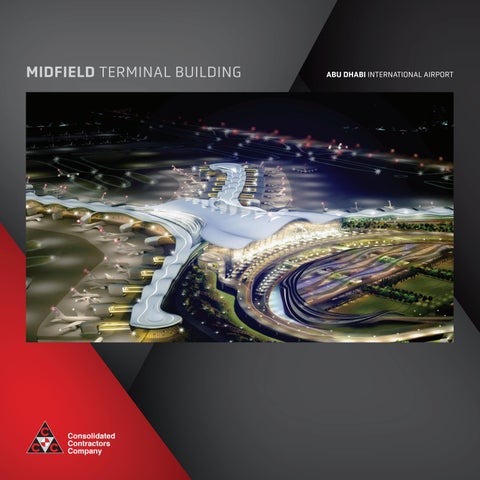
THE CENTREPIECE OF ABU DHABI INTERNATIONAL AIRPORT’S (ADIA) MULTIBILLION-DOLLAR INVESTMENT PROGRAMME, THE MIDFIELD TERMINAL BUILDING (MTB) IS A 1.1 KILOMETRE LONG, SIX-STOREY WORLD-CLASS STRUCTURE THAT IS DESIGNED FOR A CAPACITY OF UP TO 30 MILLION PASSENGERS ANNUALLY.
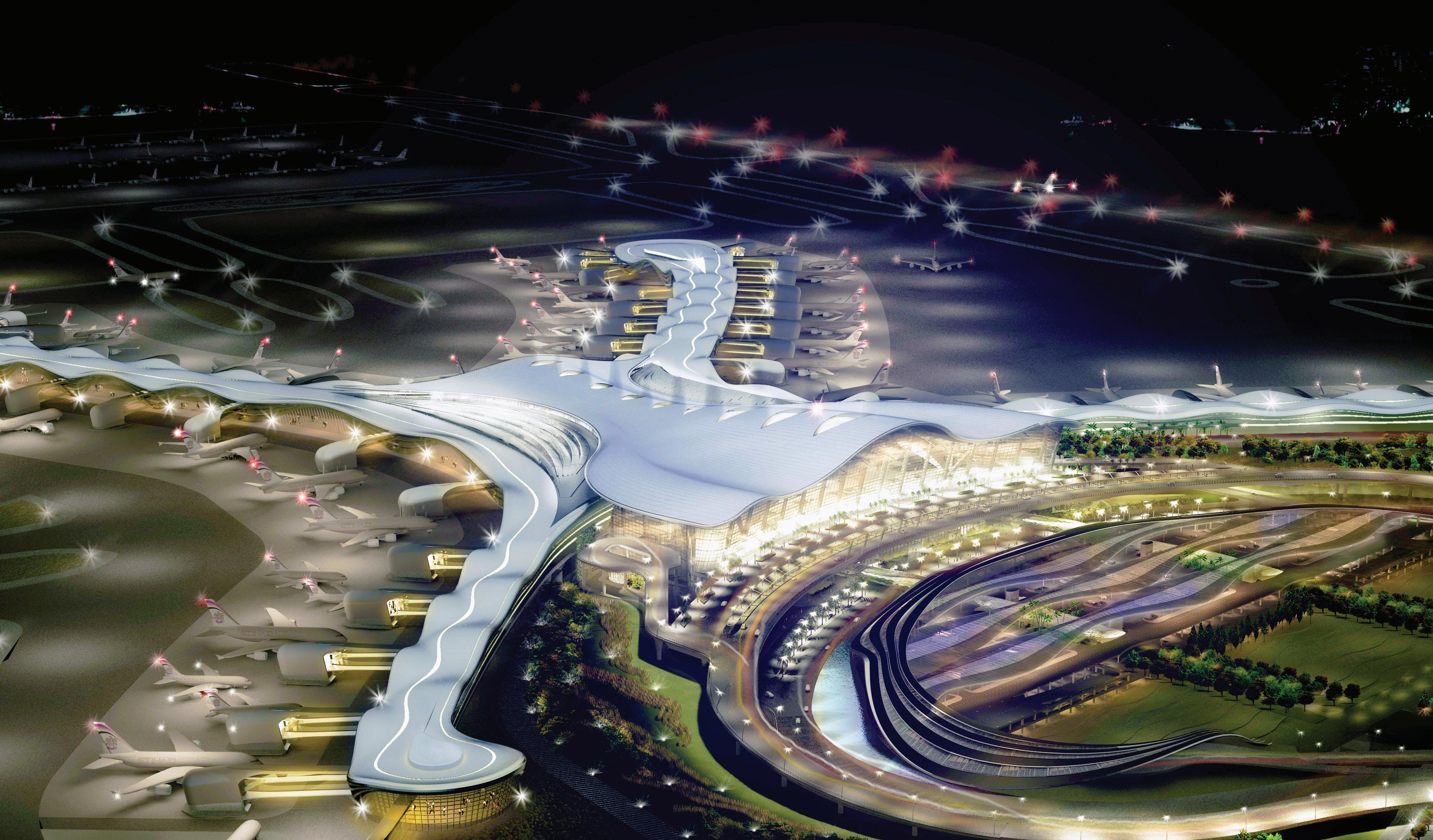
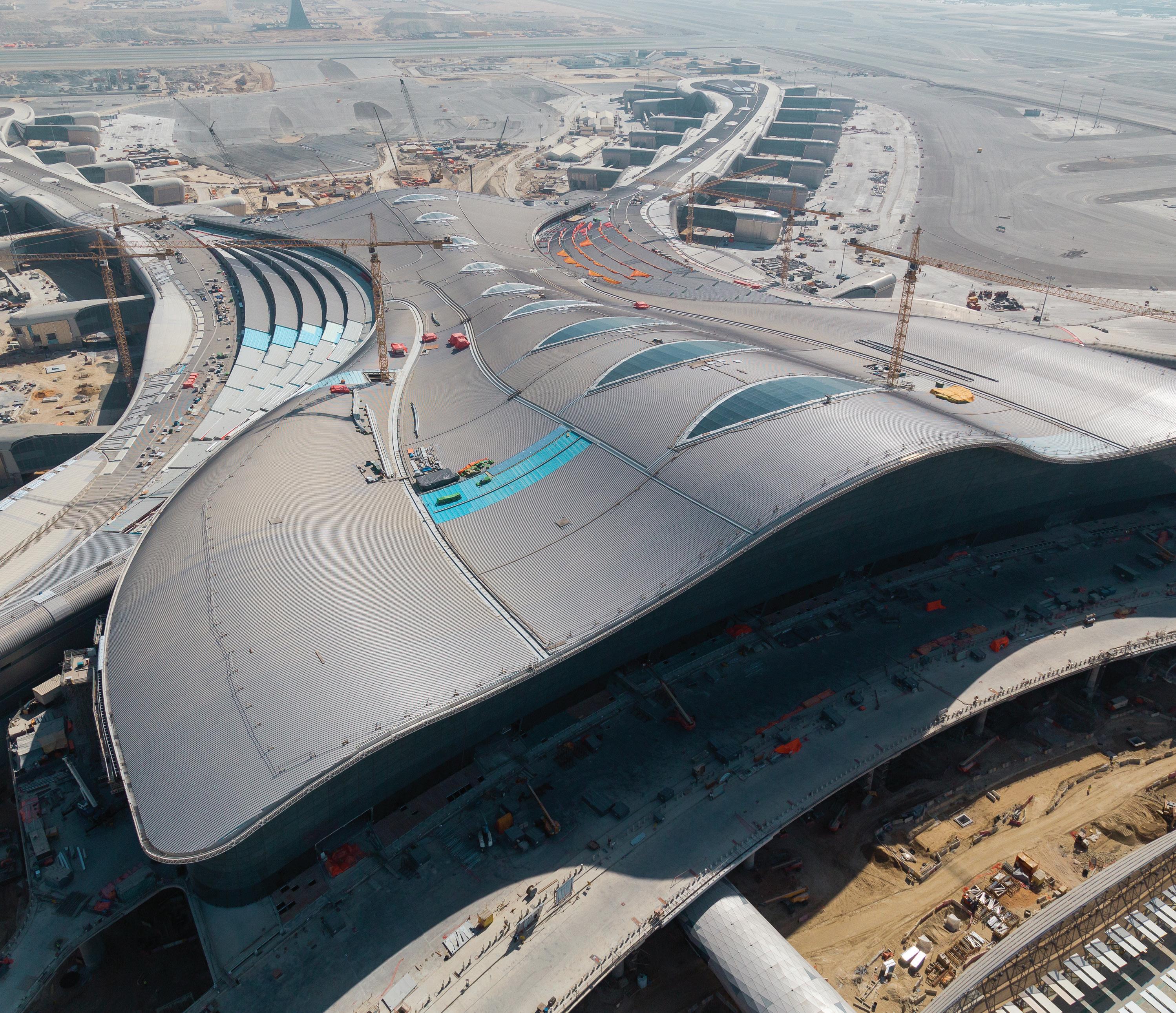
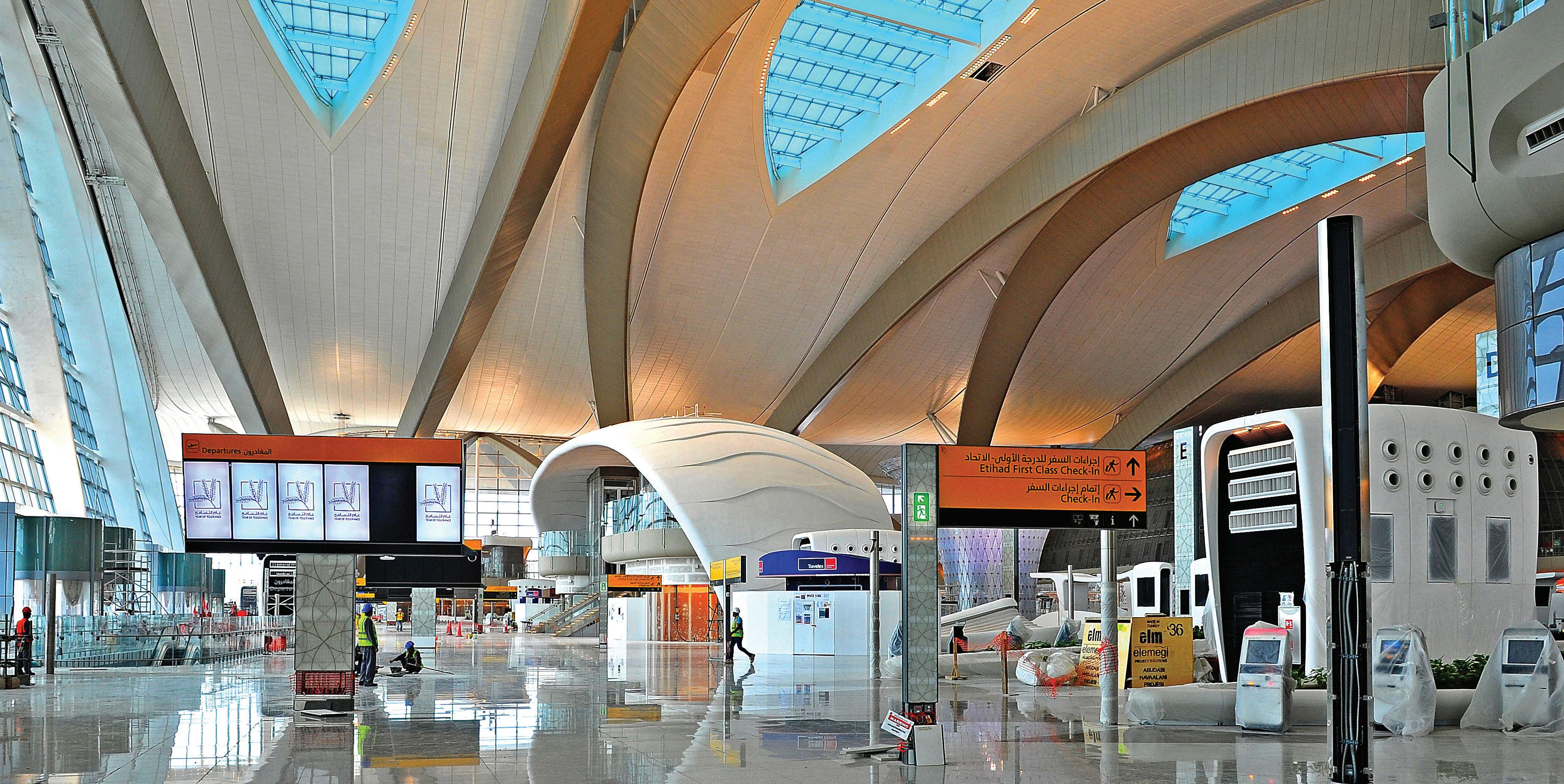
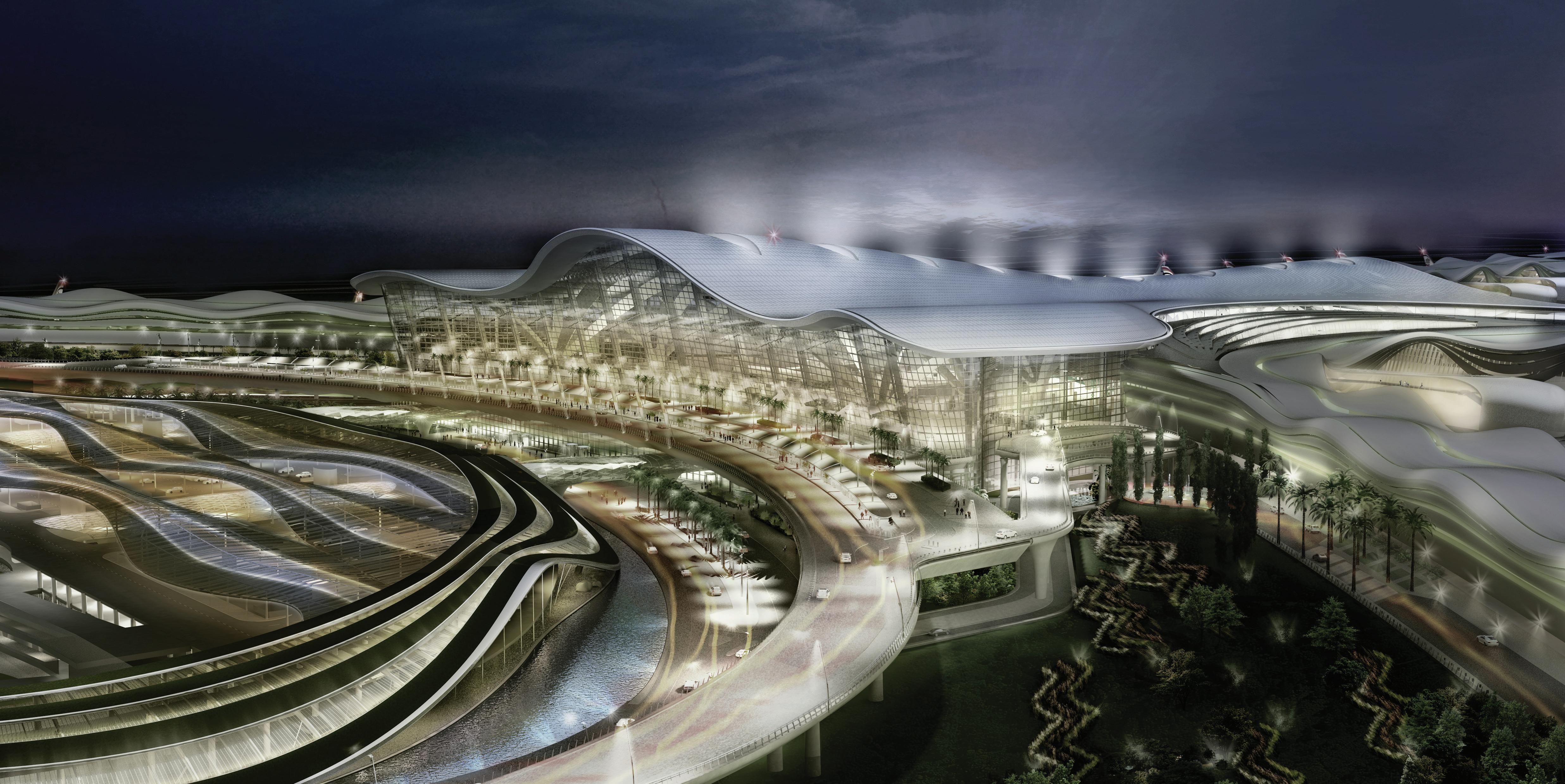
The unique X-shaped building will be located between the two runways, hence the name ‘Midfield’, and will be used as an origin, destination, and transit point for international and domestic journeys. The 50-metre high building covers an area of 700,000 square metres and has been designed to provide an open and spacious environment.
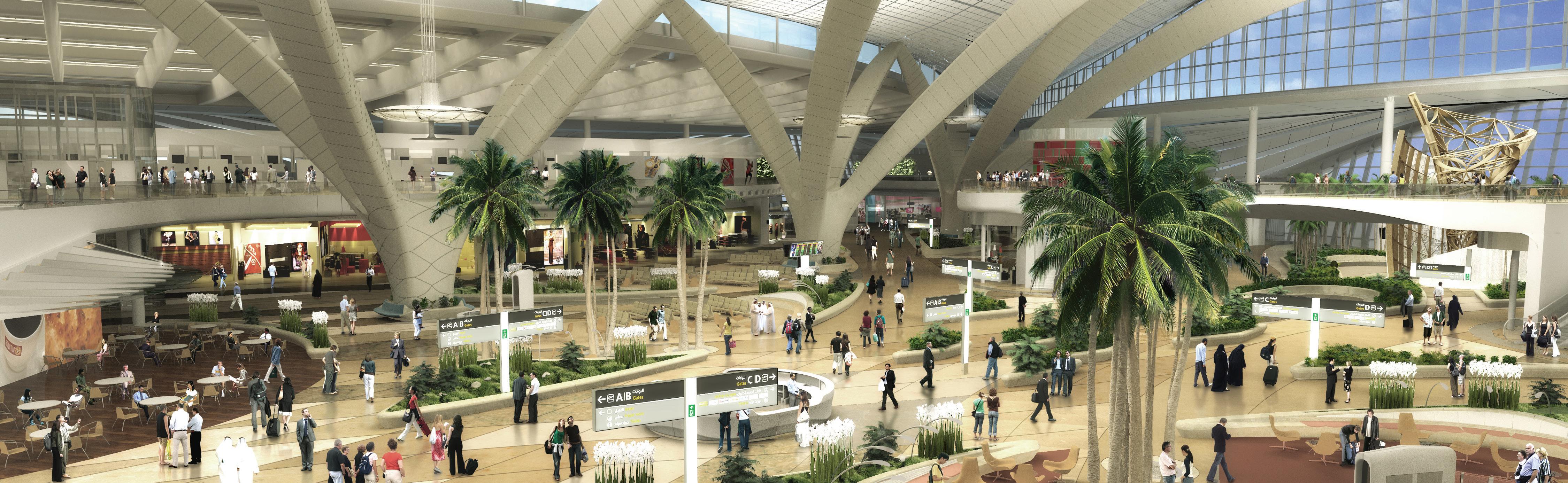
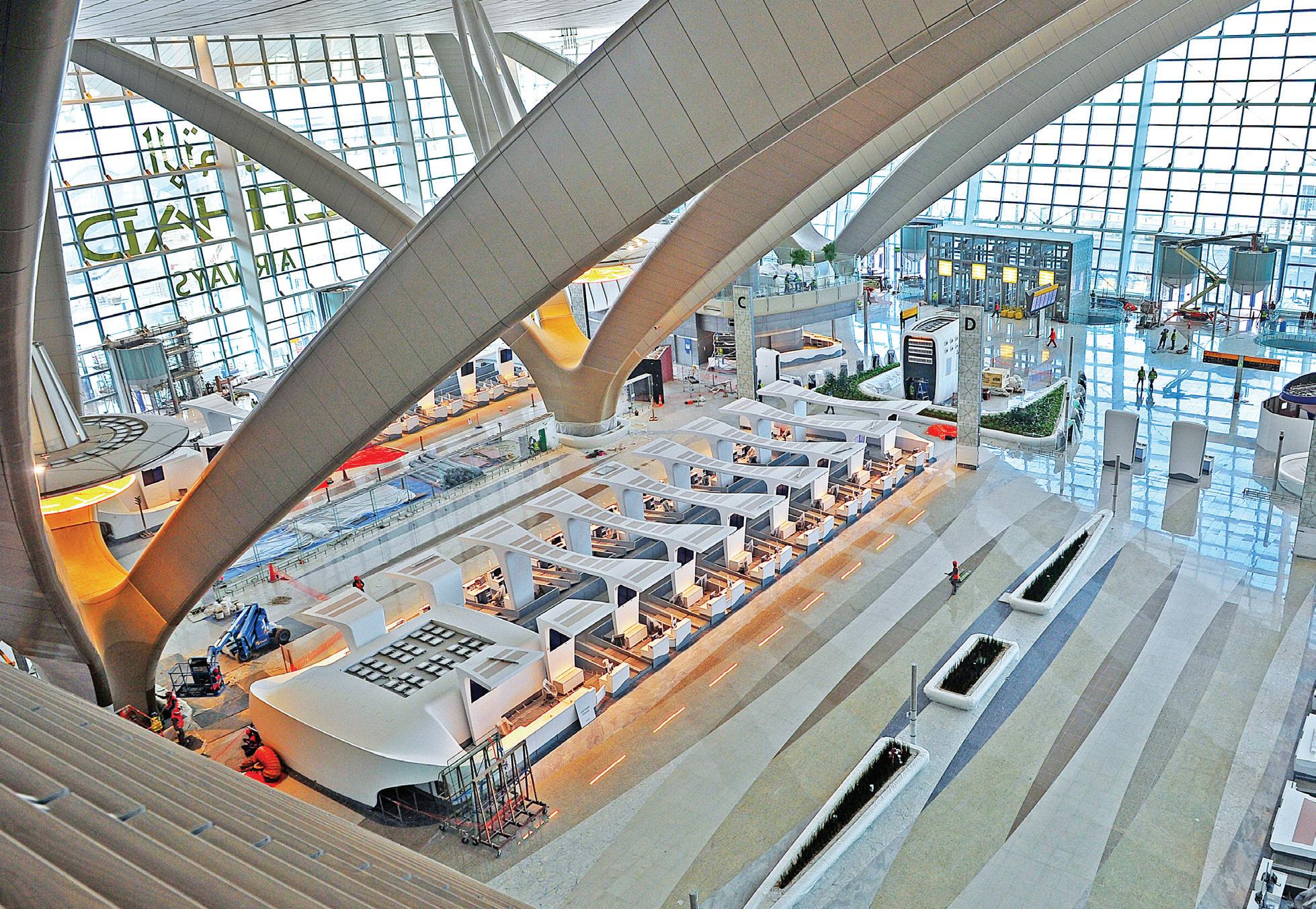
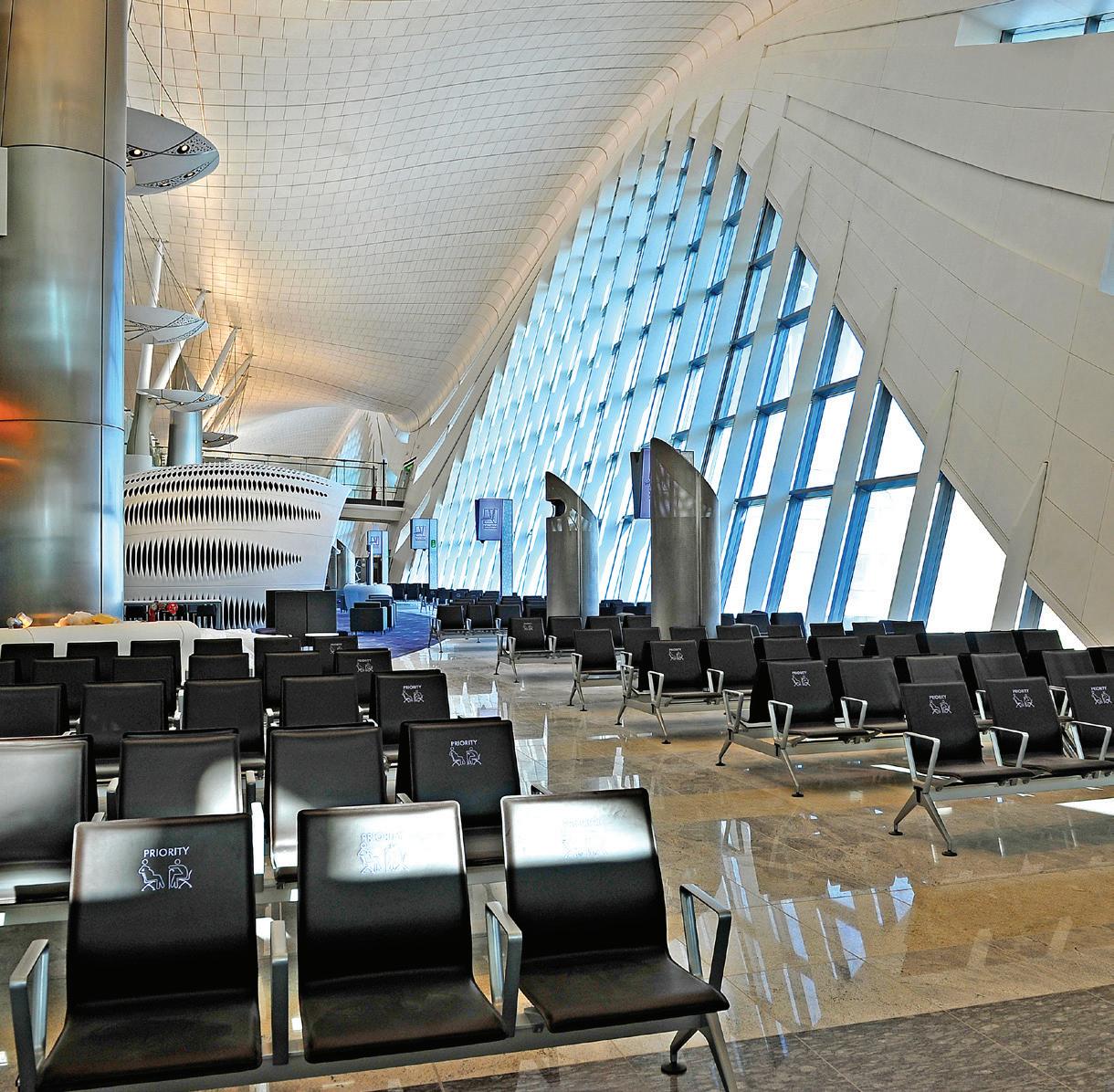
MTB features large column-free zones with inclined steel arches supporting a soaring roof, with a large hall leading passengers to the core of the building, containing a 3-star hotel and spa, executive lounges, restaurants, cultural outlets, stores, as well as a park-like garden. There is also an indoor parking area.
Abu Dhabi Airports Company (ADAC) and the jointventure of TAV, CCC, and Arabtec, three major players in the construction of airports in the region, signed a contract in June 2012 for the construction of MTB, with work commencing in the last quarter of 2012. Constructed by an international multicultural team, including experts that have played crucial roles in some of the most important airport developments of recent years, over 1,000 staff from the three joint-venture partners have been active on the project leading and directing a workforce that peaked at approximately 20,000 labourers. In constructing this major project around 680 items of various kinds of equipment, including 42 tower cranes and 35 mobile cranes were in use for the duration of the construction period.
The construction of MTB is part of the Government’s Plan: Abu Dhabi 2030, an emirate-wide strategy to cater for Abu Dhabi’s business and tourism growth.
10 MIDFIELD TERMINAL BUILDING
HISTORY IN THE MAKING
THE UAE IS HOME TO SOME OF THE MOST IMPRESSIVELY DESIGNED AND CONSTRUCTED STRUCTURES IN THE WORLD AND IN THIS TRADITION MTB WAS DESIGNED TO IMPRESS IN ADDITION TO PROVIDING A HIGHLY FUNCTIONAL AND ENJOYABLE PASSENGER EXPERIENCE. MTB WILL BE THE LARGEST TERMINAL IN THE EMIRATE OF ABU DHABI VISIBLE FROM MORE THAN 1.5 KILOMETRES AWAY. THE CENTRAL SPACE WITHIN MTB COULD HOLD THREE FULL-SIZED FOOTBALL PITCHES AND FEATURES A CEILING 52 METRES TALL AT ITS HIGHEST POINT AND A ROOF THAT SPANS 319 METERS AT ITS WIDEST POINT.
The unique X-shaped building will be located between the two runways, hence the name ‘Midfield’, and will be used as an origin, destination, and transit point for international and domestic journeys. The 50-metre high building covers an area of 700,000 square metres and has been designed to provide an open and spacious environment.
MTB features large column-free zones with inclined steel arches supporting a soaring roof, with a large hall leading passengers to the core of the building, containing a 3-star hotel and spa, executive lounges, restaurants, cultural outlets, stores, as well as a park-like garden. There is also an indoor parking area.
Abu Dhabi Airports Company (ADAC) and the jointventure of TAV, CCC, and Arabtec, three major players in the construction of airports in the region, signed a contract
in June 2012 for the construction of MTB, with work commencing in the last quarter of 2012. Constructed by an international multicultural team, including experts that have played crucial roles in some of the most important airport developments of recent years, over 1,000 staff from the three joint-venture partners have been active on the project leading and directing a workforce that peaked at approximately 20,000 labourers. In constructing this major project around 680 items of various kinds of equipment, including 42 tower cranes and 35 mobile cranes were in use for the duration of the construction period.
The construction of MTB is part of the Government’s Plan: Abu Dhabi 2030, an emirate-wide strategy to cater for Abu Dhabi’s business and tourism growth.
ARCHITECTURE
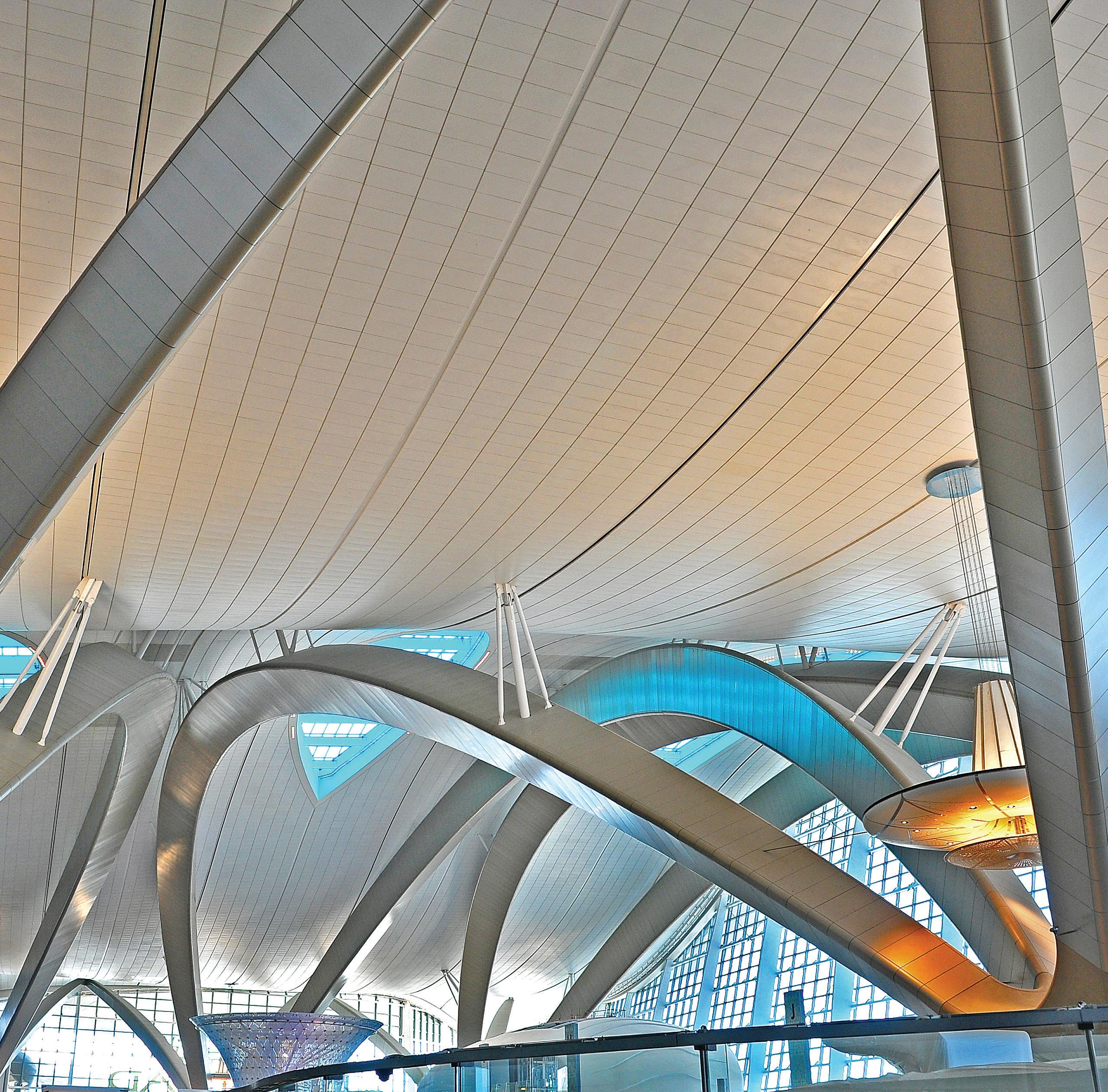
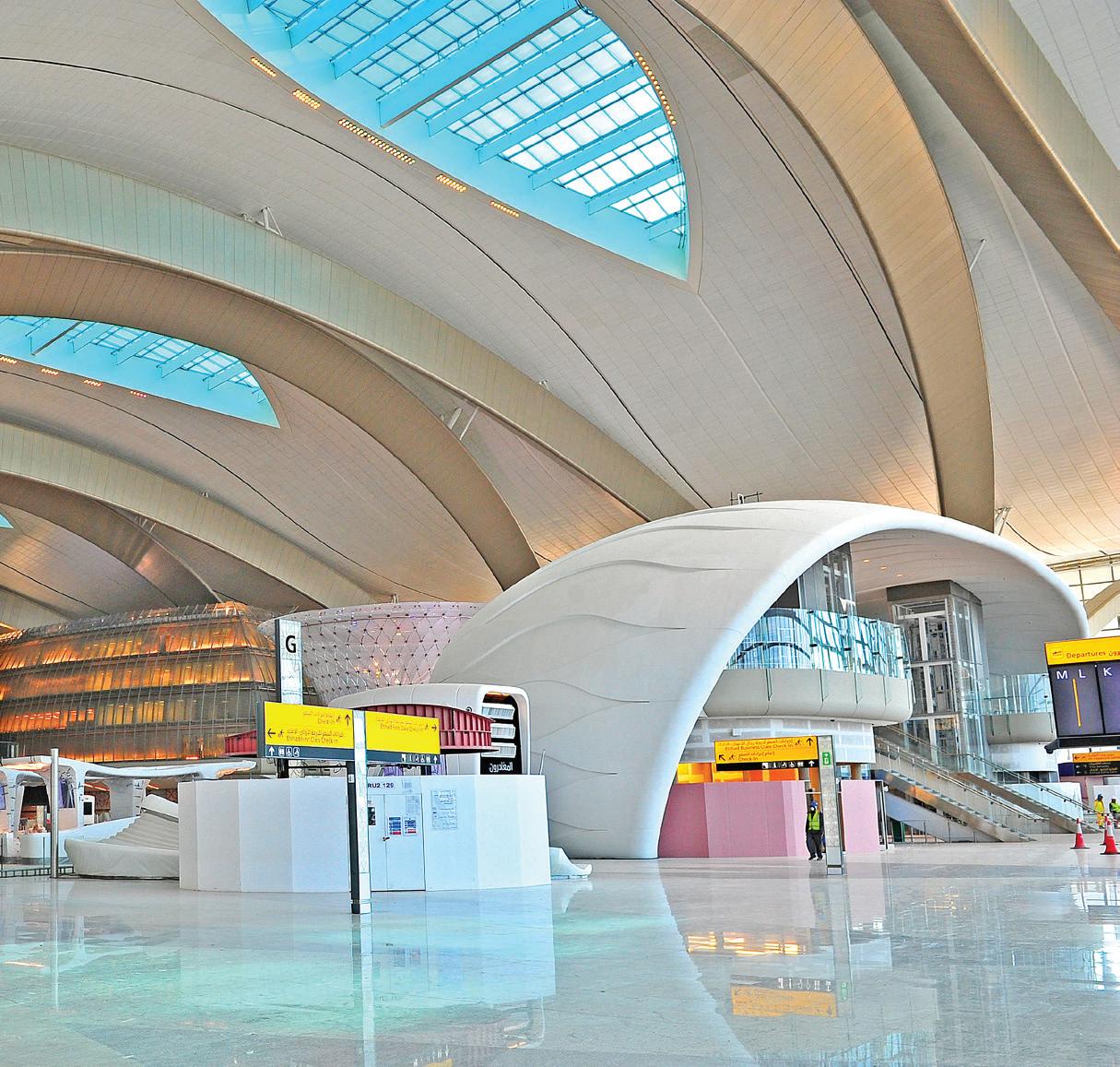
THE MTB HOUSES SOME ARCHITECTURALLY IMPRESSIVE STRUCTURES DESIGNED ON ONE HAND TO IMPROVE THE FUNCTIONALITY OF THE AIRPORT AND TO ADD ON THE OTHER HAND TO THE EXPERIENCE OF THE PASSENGERS. THE USE OF ARCHES RESEMBLING THE BEAUTY AND SYMMETRY OF THE SAND DUNES THAT DEFINE THE ABU DHABI DESERT LANDSCAPE MEETS THE PASSENGERS AS THEY ENTER THE DEPARTURE HALL.
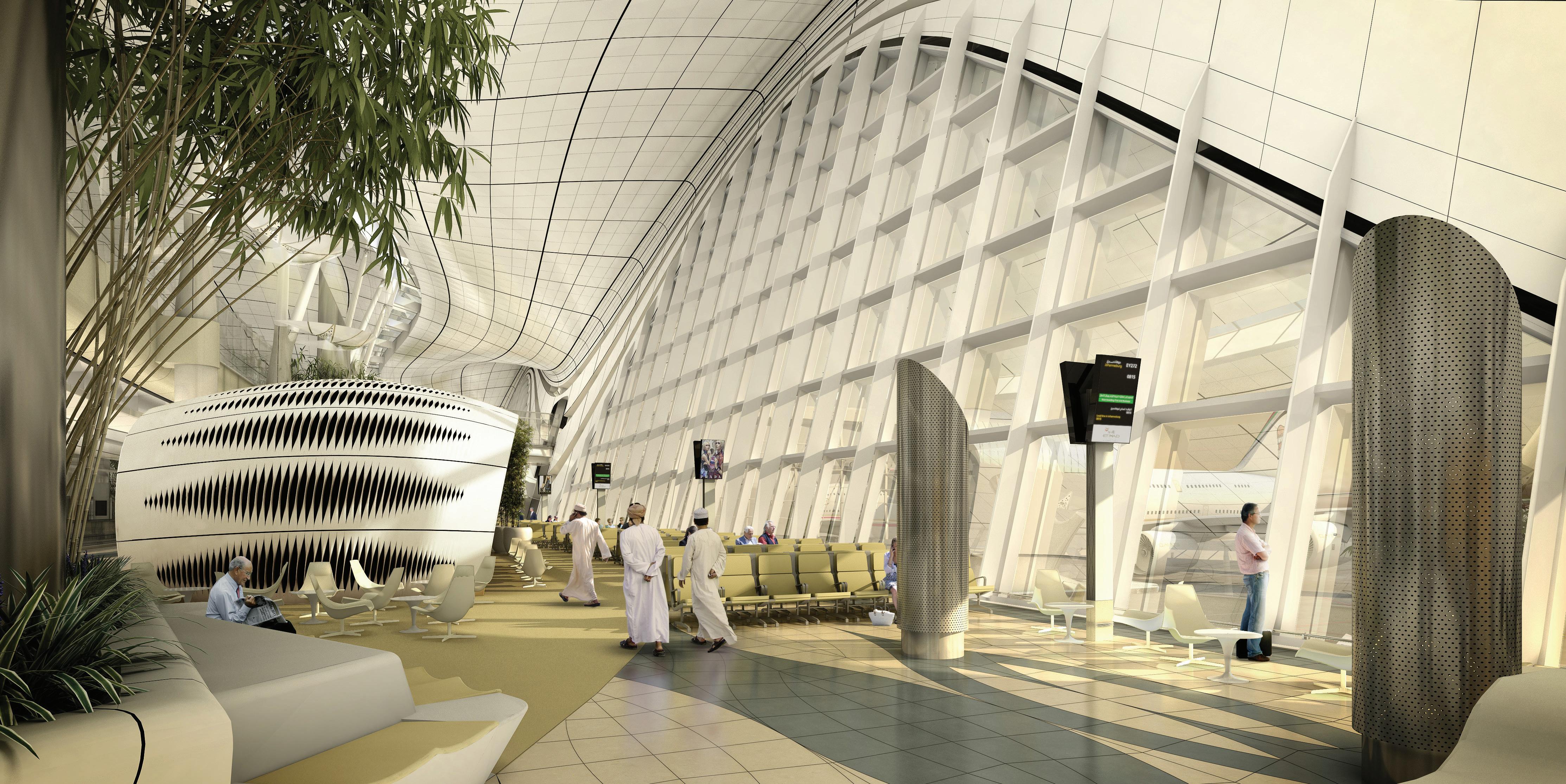
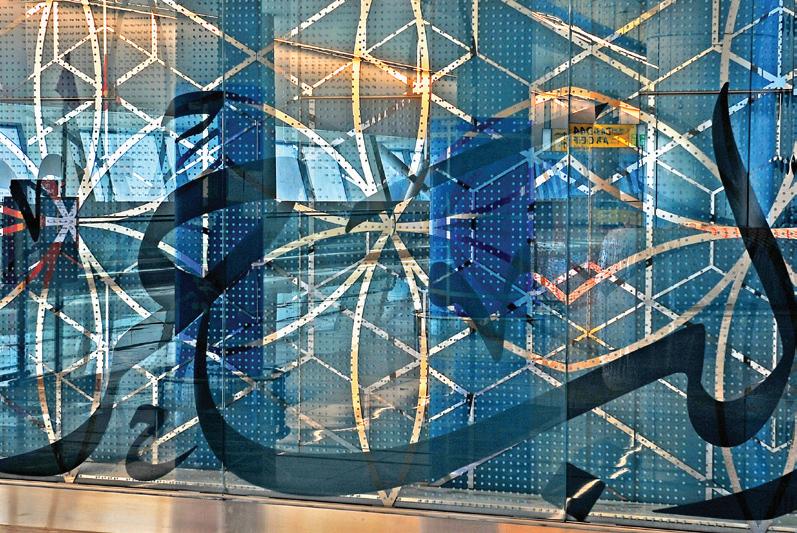
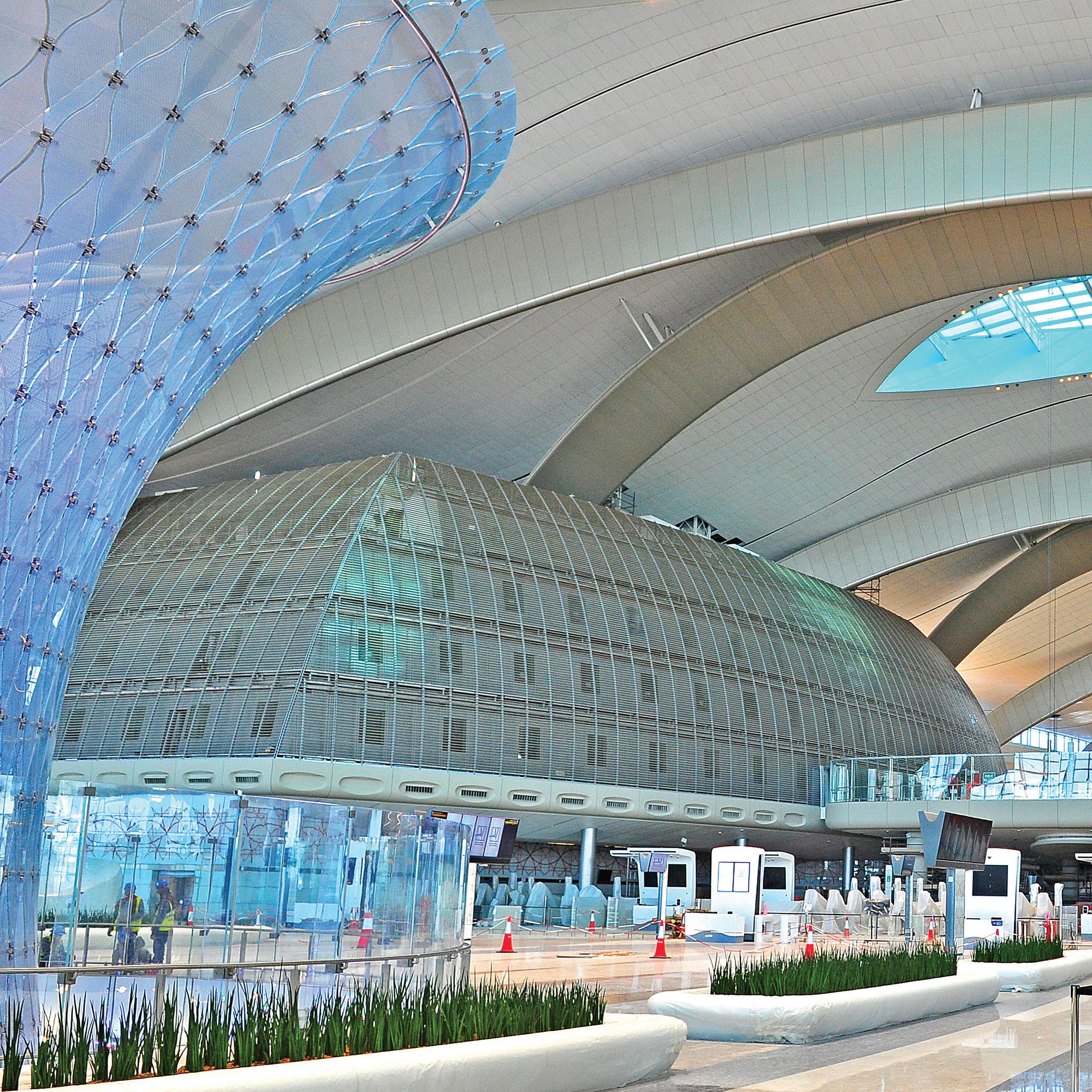
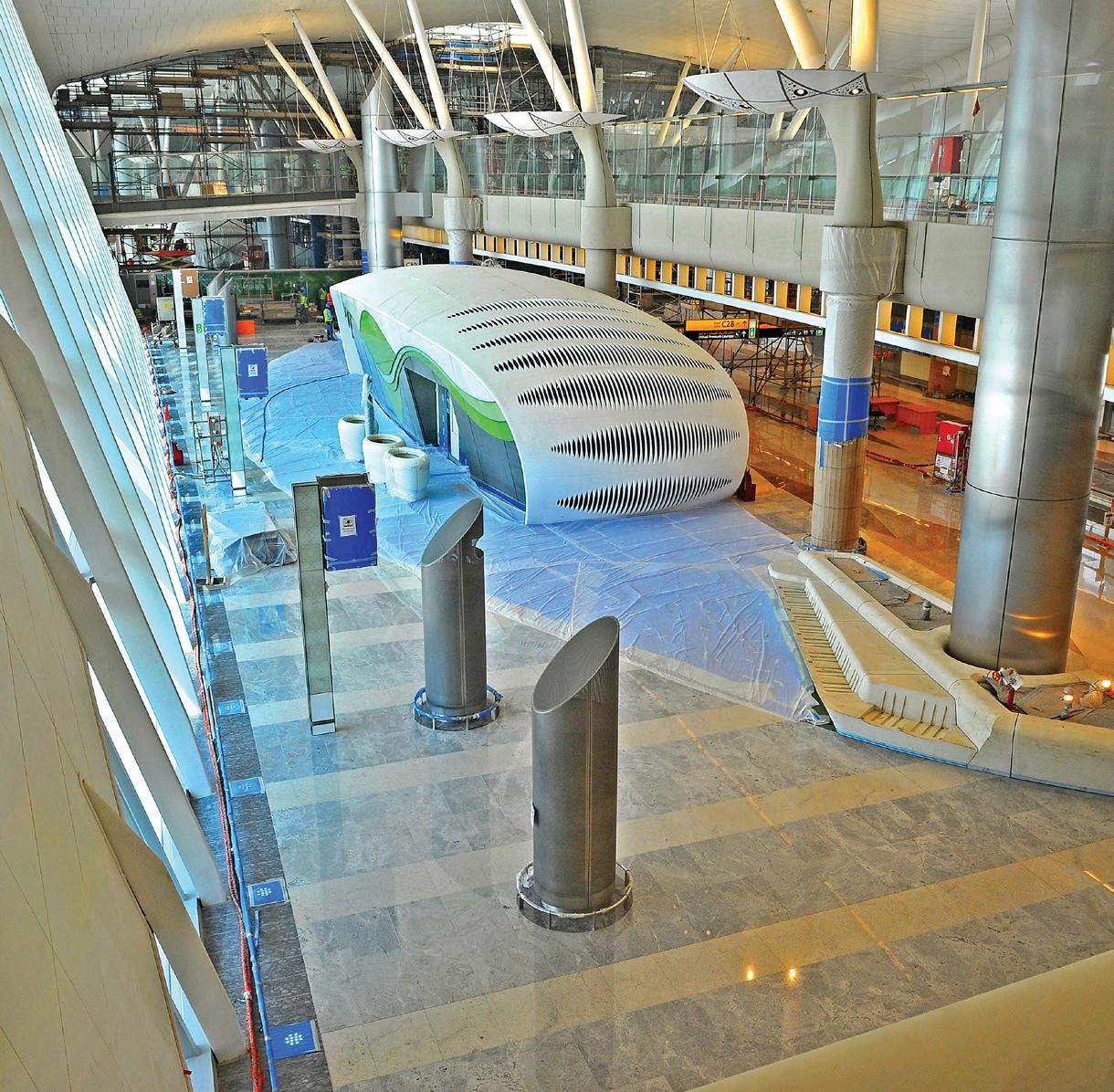
A majestic structure clad in delicate blue glass transports natural light entering through the large glass façade of the Departure Hall to the Arrivals Hall and baggage reclaim area two storeys below allowing at the same time for air to flow between the two floors unimpeded. This structure is a landmark for both the Departure and Arrival Halls.
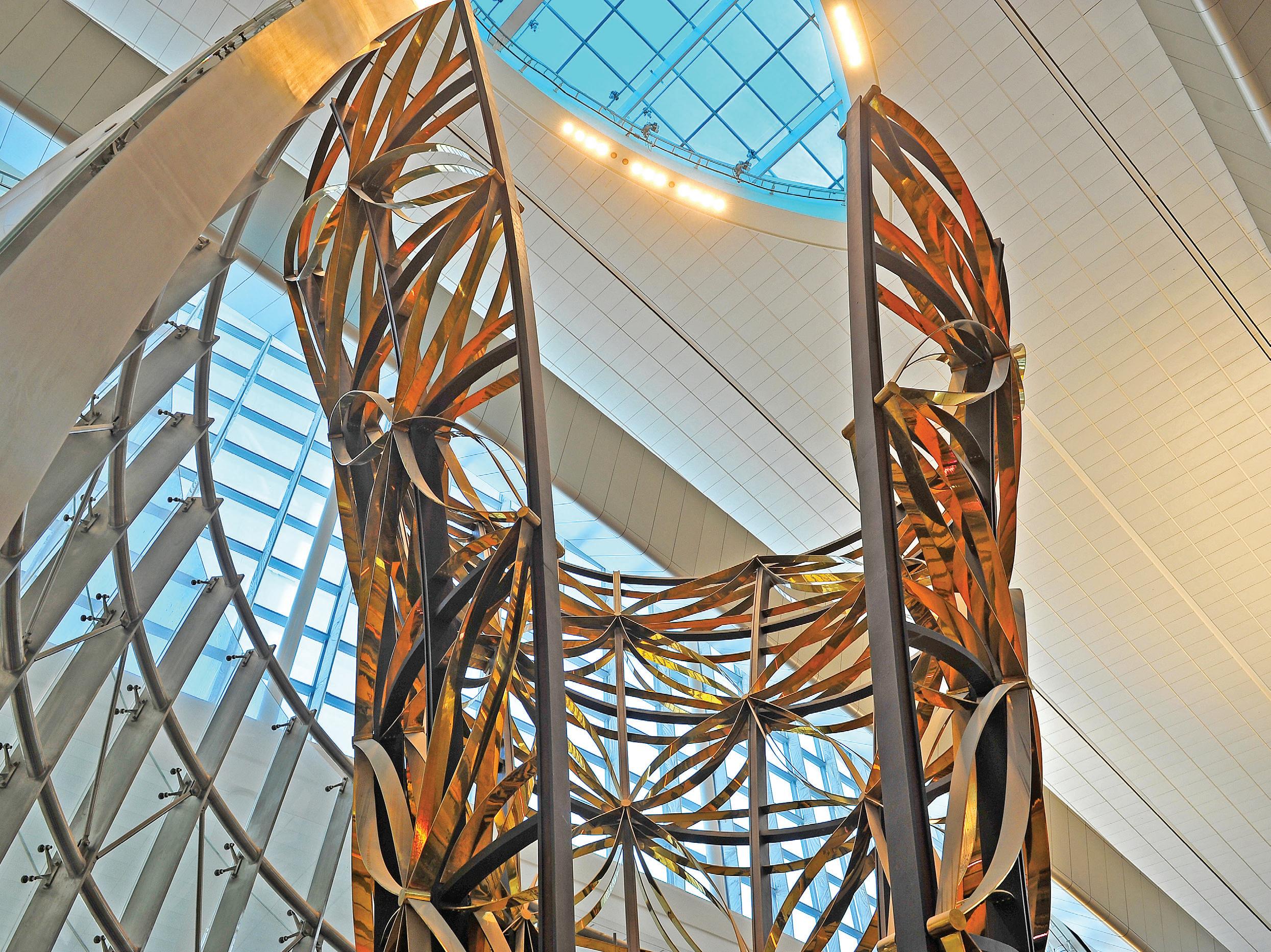
A space in the Departures floor has been assigned to a Heritage Museum that invites the visitors to explore the heritage submerging them into true Emirati culture and its origins, and highlights Abu Dhabi’s shared heritage, with the region and wider world. At the core of this space is an eye catching sculpture adding to the experience of the passenger.
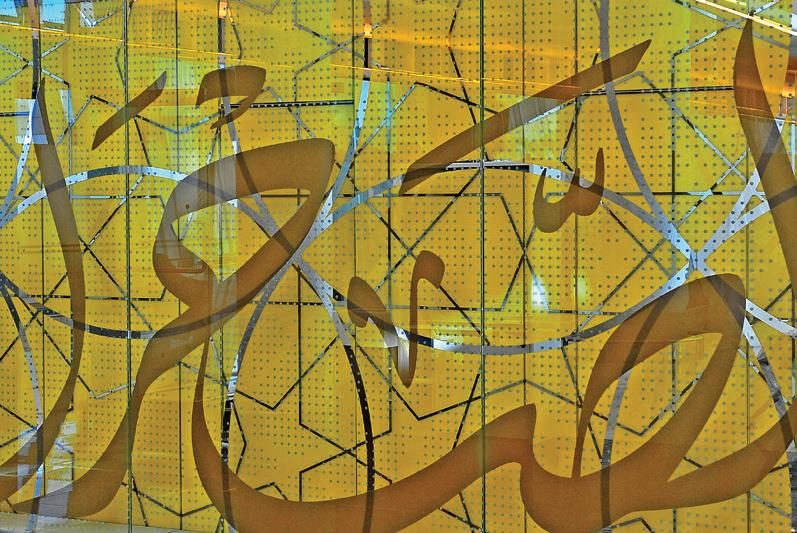
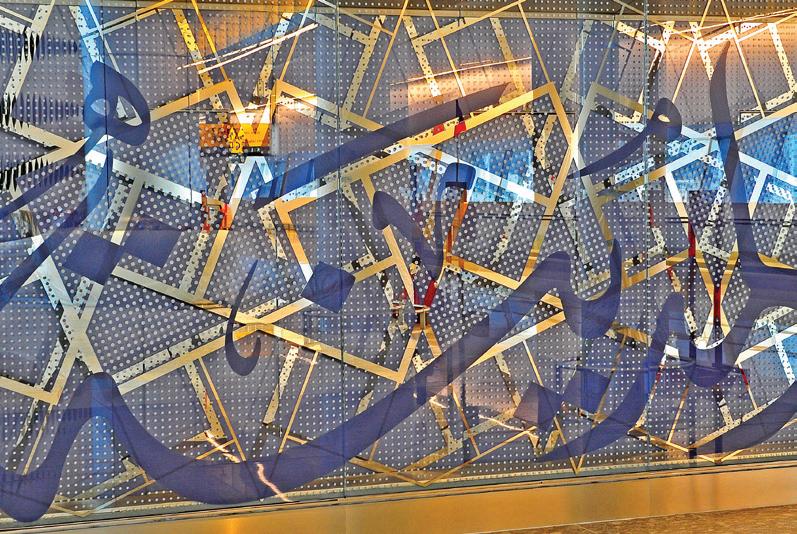
A conceptual premise in the design of the MTB was to look into sources of inspiration that are intrinsic to its identity, where the colour and pattern schemes were derived from the physical orientation to generate four positions in space, to locate oneself both within the airport and in relation to the city. The use of colour and pattern in each concourse has been inspired by its position in the attributes of Abu Dhabi, hence Concourse
A reflects the colour of the illuminated city skyline, Concourse B the colour of the sunrise from the desert, Concourse C the greenery of the oasis and Concourse D the colour of the mangroves on the coast of Abu Dhabi.
TERMINAL EXTERIOR
The 700,000 square metre terminal building is situated between the north and south runways, making it possible for more aircraft stands along with a quicker, smoother experience for passengers.
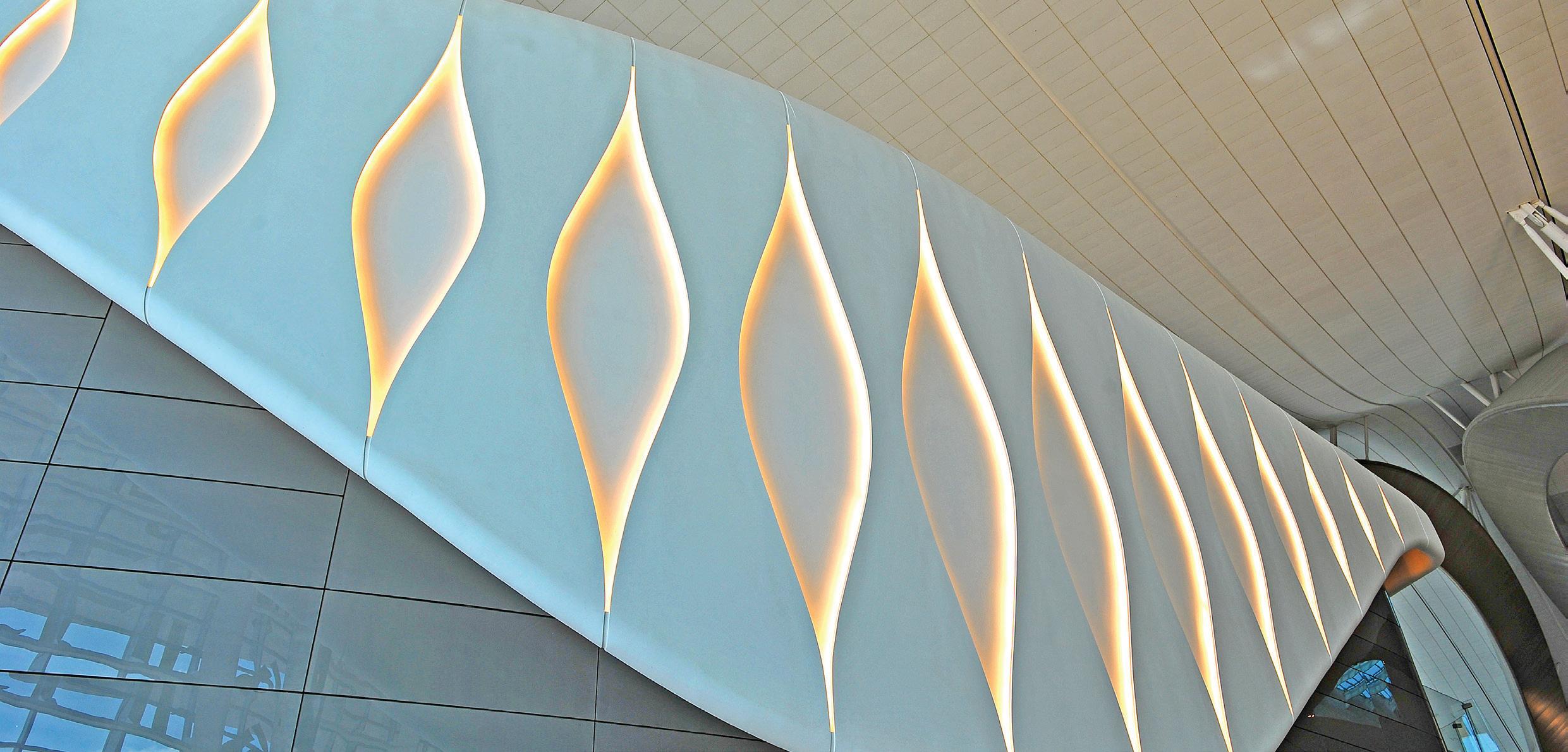
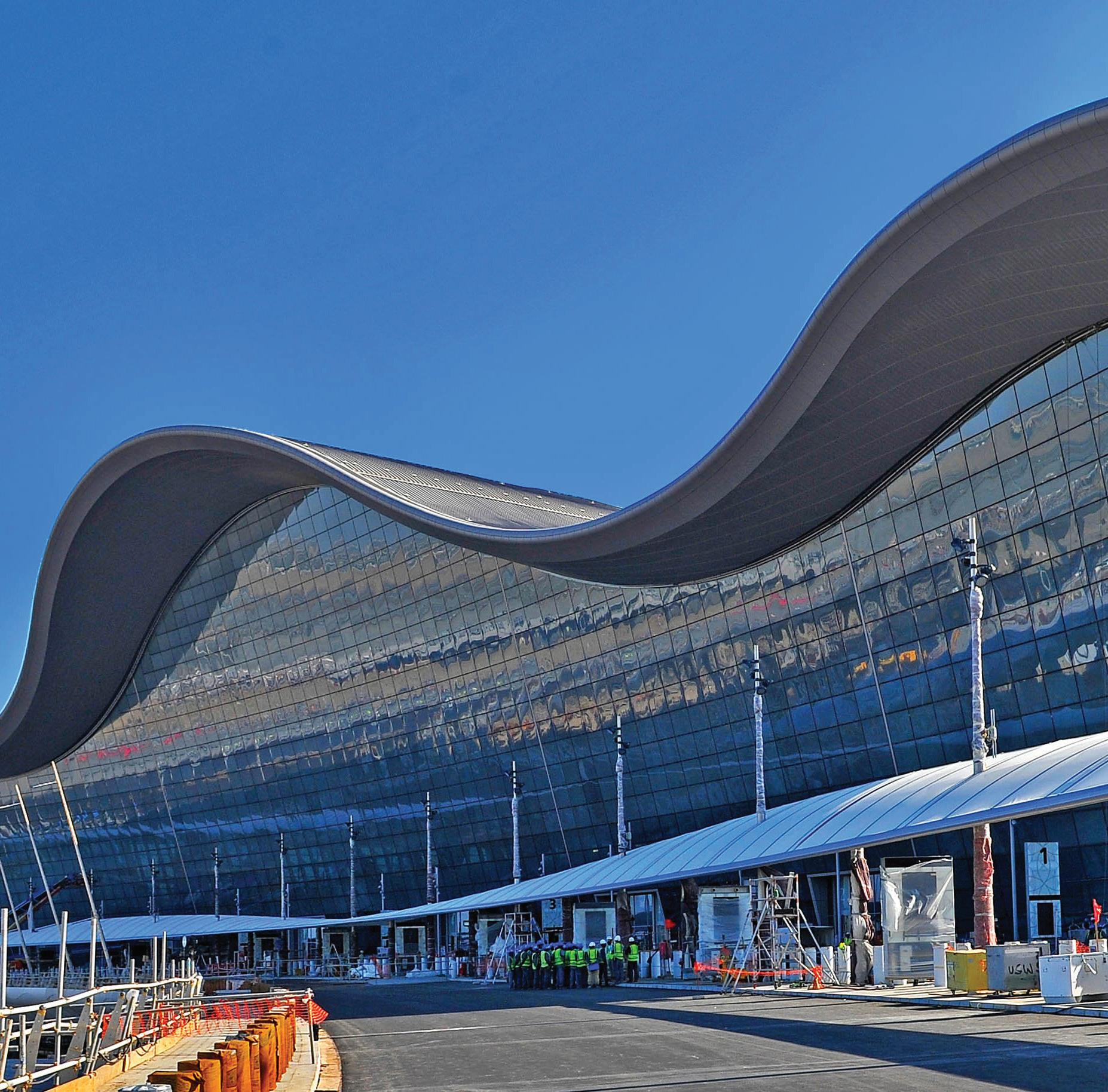
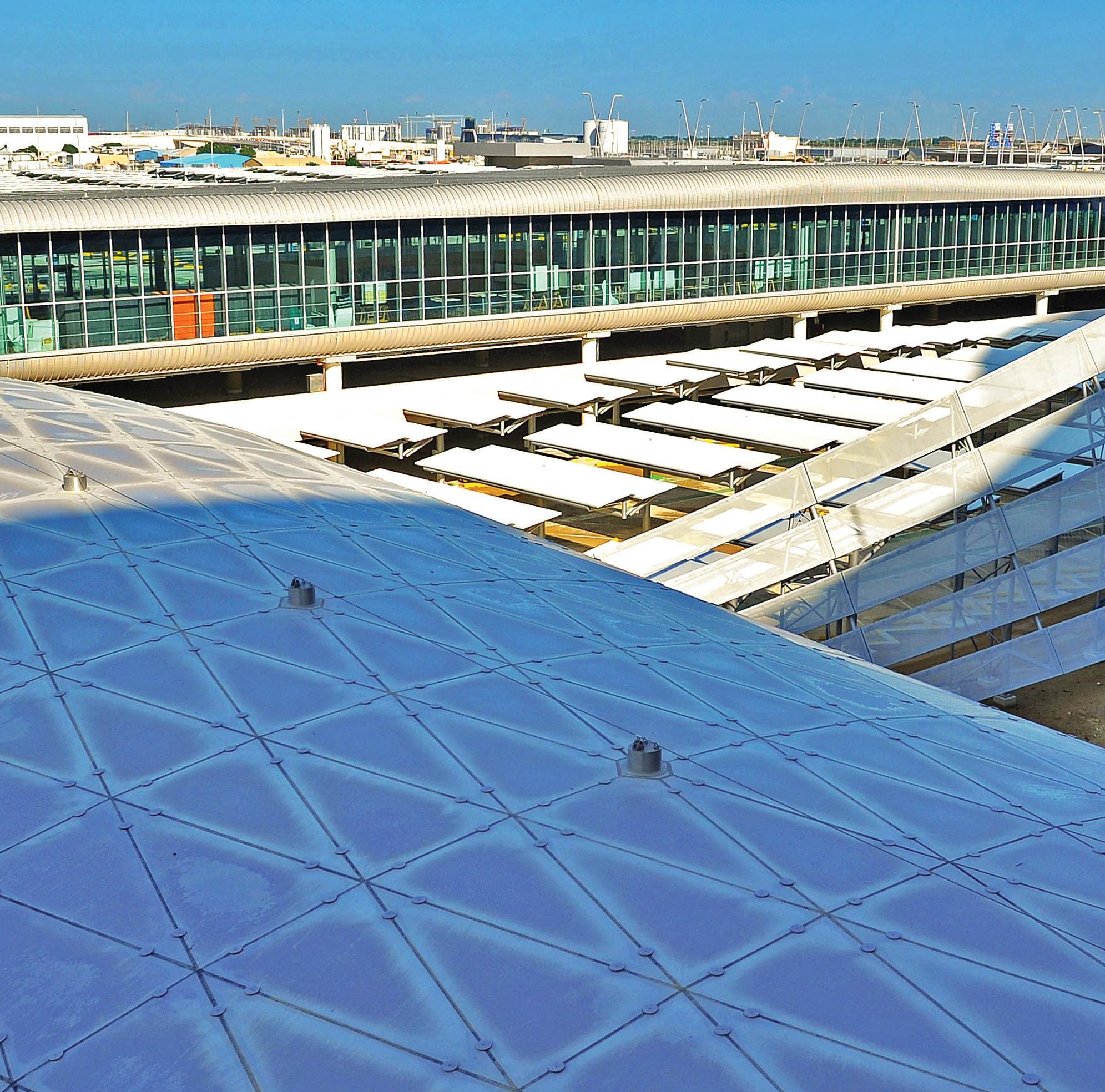
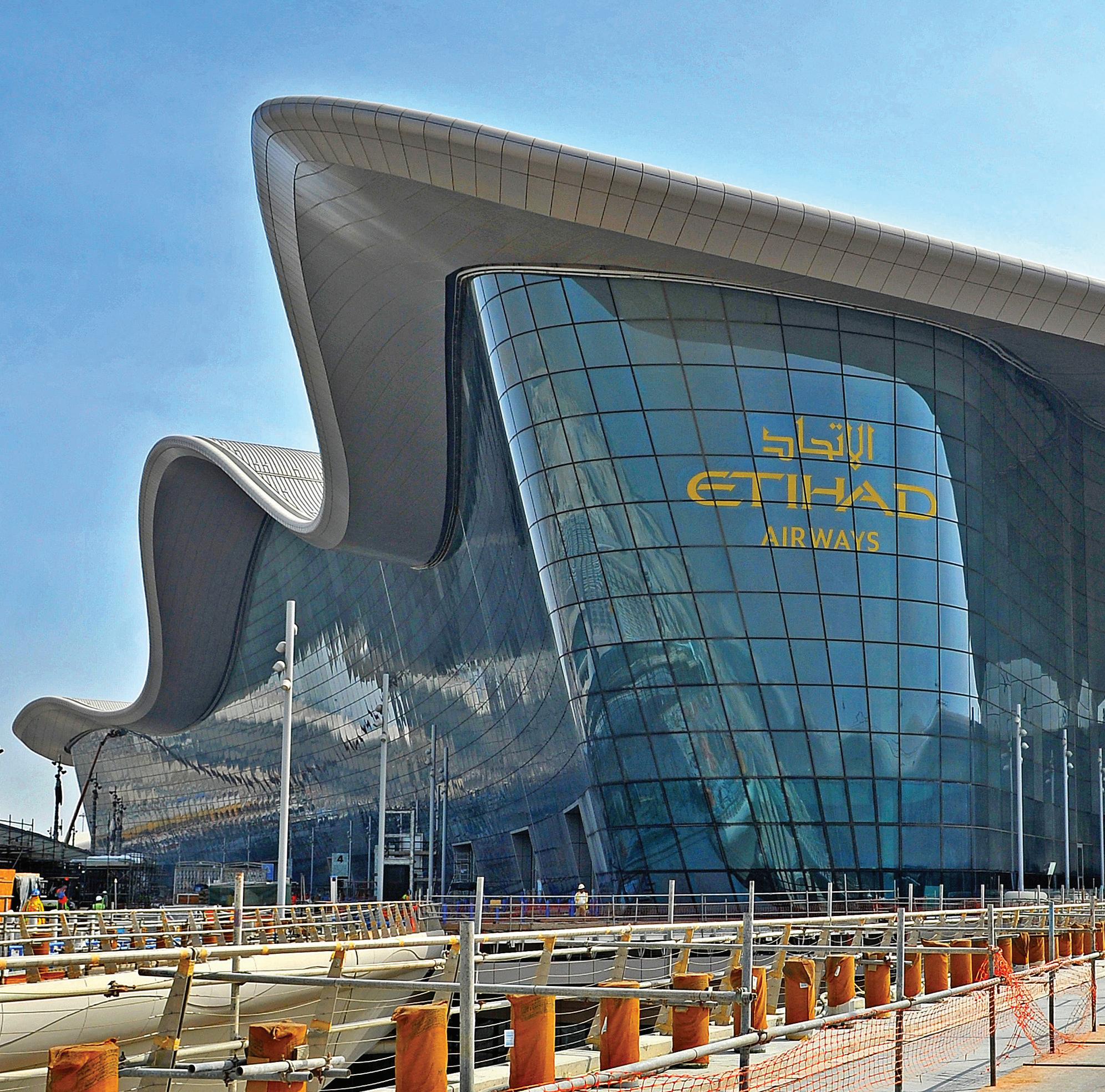
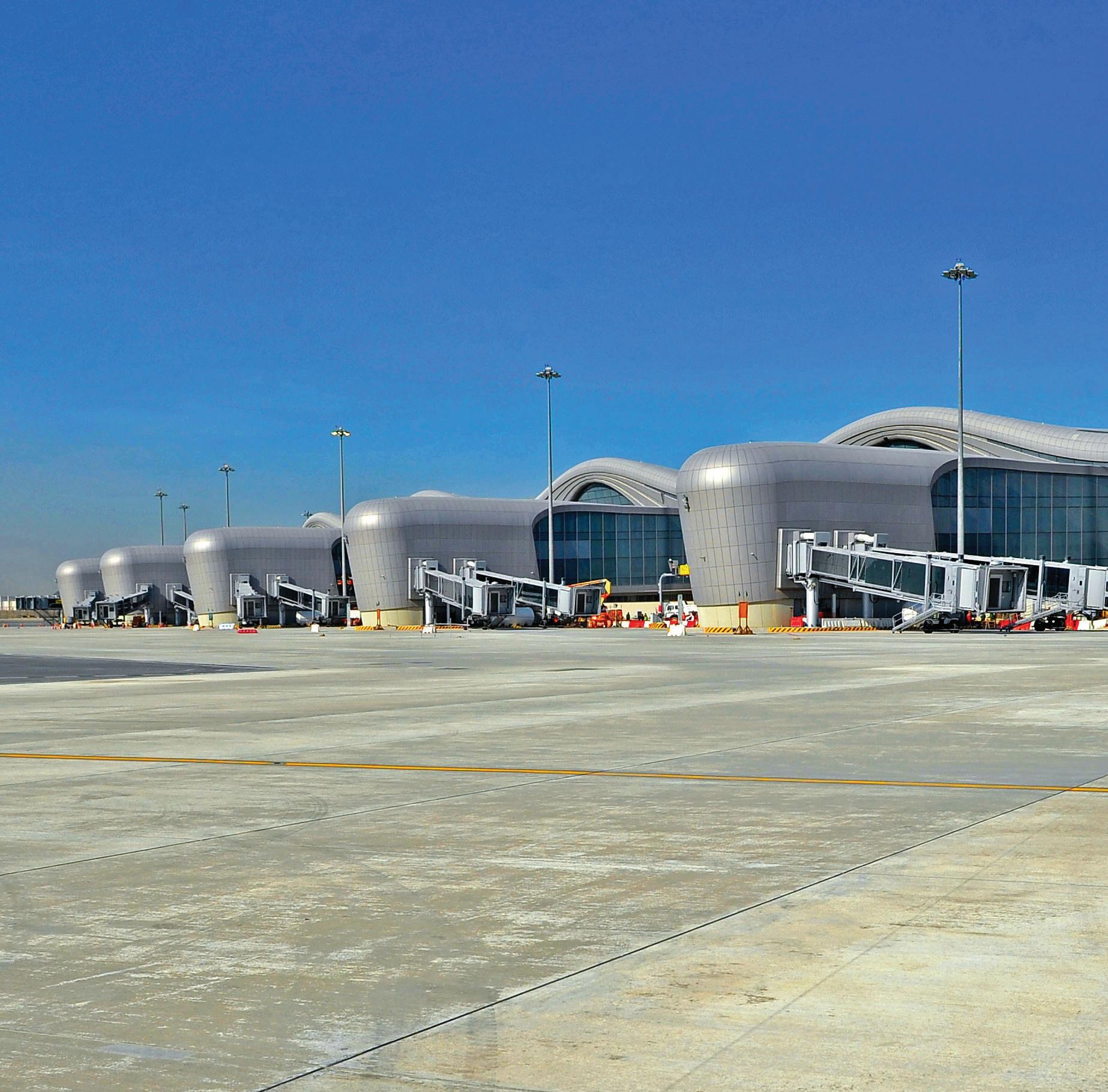
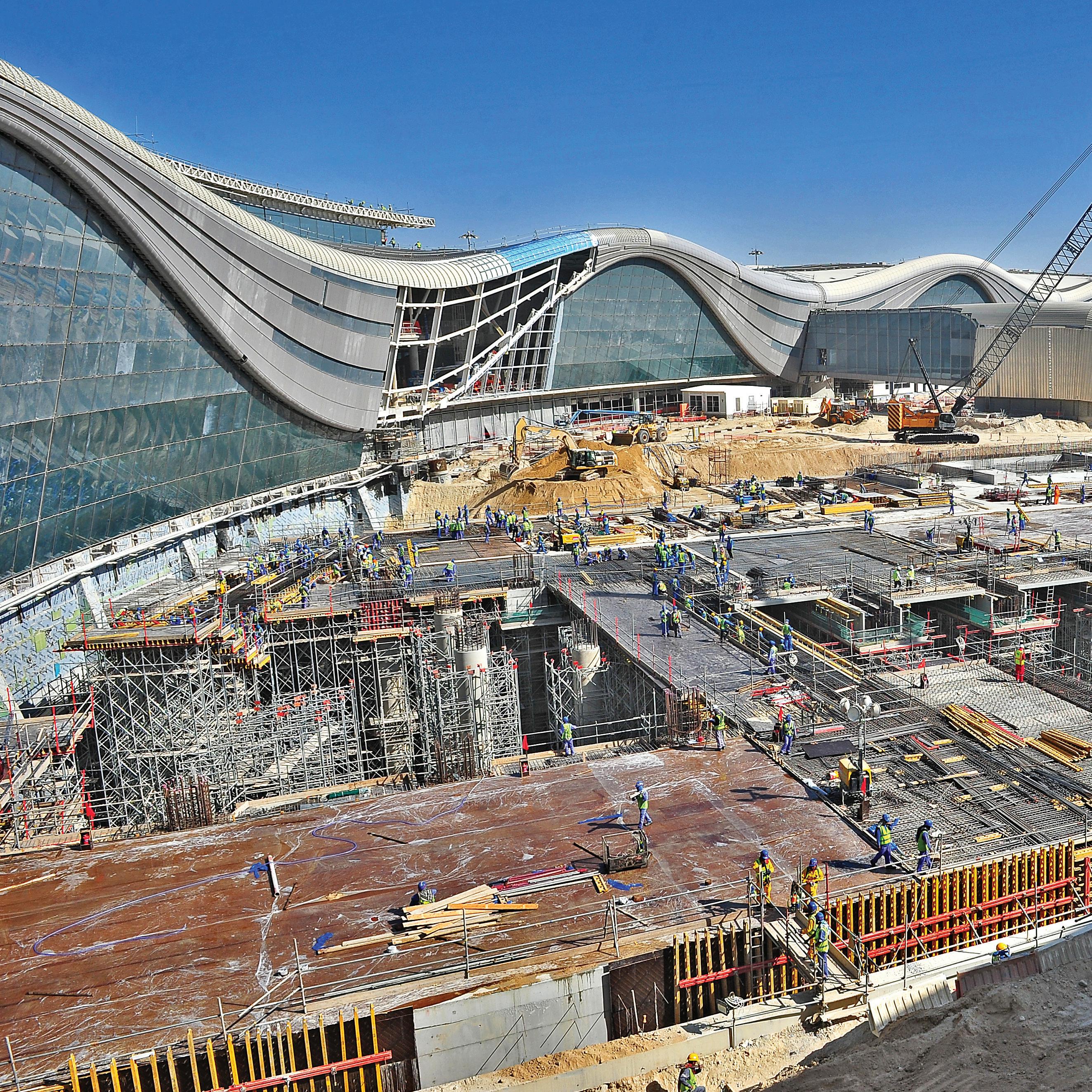
The building’s design features a distinctive undulating roof resembling sand dunes and sea waves thus reflecting the local environment of the UAE. The envelope also includes in excess of 200,000 square metres of high performance glass curtain wall and has been designed to maximise the use of natural light through the grand façade front and through the many skylights on the roof.
The new terminal is designed to minimise passenger walking distance and maximise aircraft parking space. An X-shaped terminal architectural plan was devised following a broad analysis of the needs of the development. In addition, it incorporates options for future expansions, technological modifications, and internal reconfigurations.
STRUCTURAL STEEL
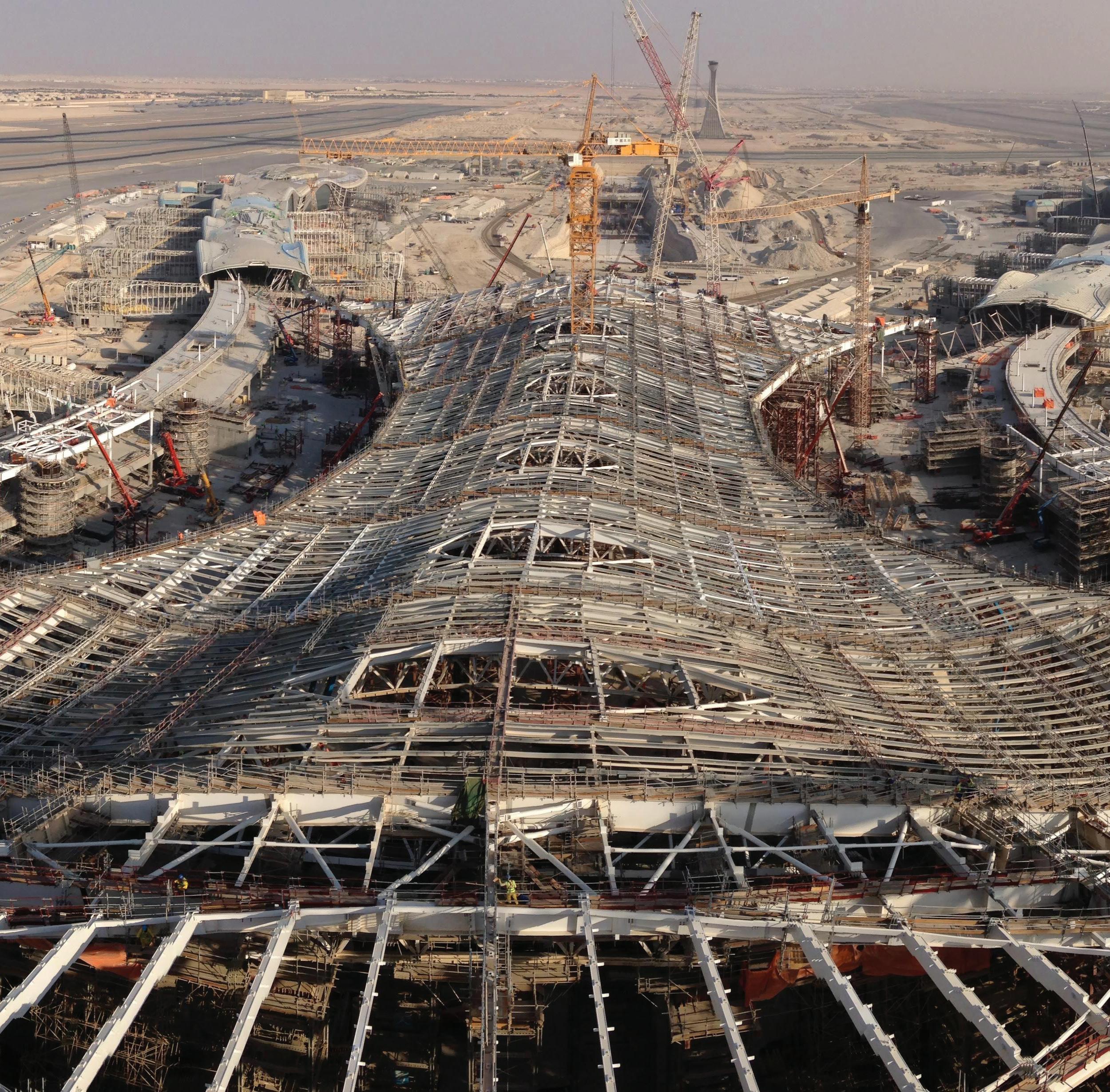
Structural steel has been used extensively in the design and construction of the MTB as it provides a flexible element to construct shapes of difficult and complex designs. Around 75,000 tons of steel have been used to form the basic structure of the building above the basement, the access bridges, the arches, office and hotel buildings and the various pavilions, retail and F&B areas.
The irregular shapes and exceptionally heavy weights of some of the structural steel elements posed various challenges in logistics and installation. CCC prides itself in its expertise and ability to manage such challenges successfully. This landmark project provided CCC and its JV partners the challenge of installing a roof span of 319 metres at its widest point supported by 18 arches giving a broad space without the use of columns thus adding to the exceptional passenger experience this building is set to deliver. The world’s longest
indoor arch at its center has been installed in the building soaring 50 metres at its highest point and reaching 1,000 tons in weight.The new terminal is designed to minimise passenger walking distance and maximise aircraft parking space. An X-shaped terminal architectural plan was devised following a broad analysis of the needs of the development. In addition, it incorporates options for future expansions, technological modifications, and internal reconfigurations.
ARRIVALS, DEPARTURES AND TRANSIT
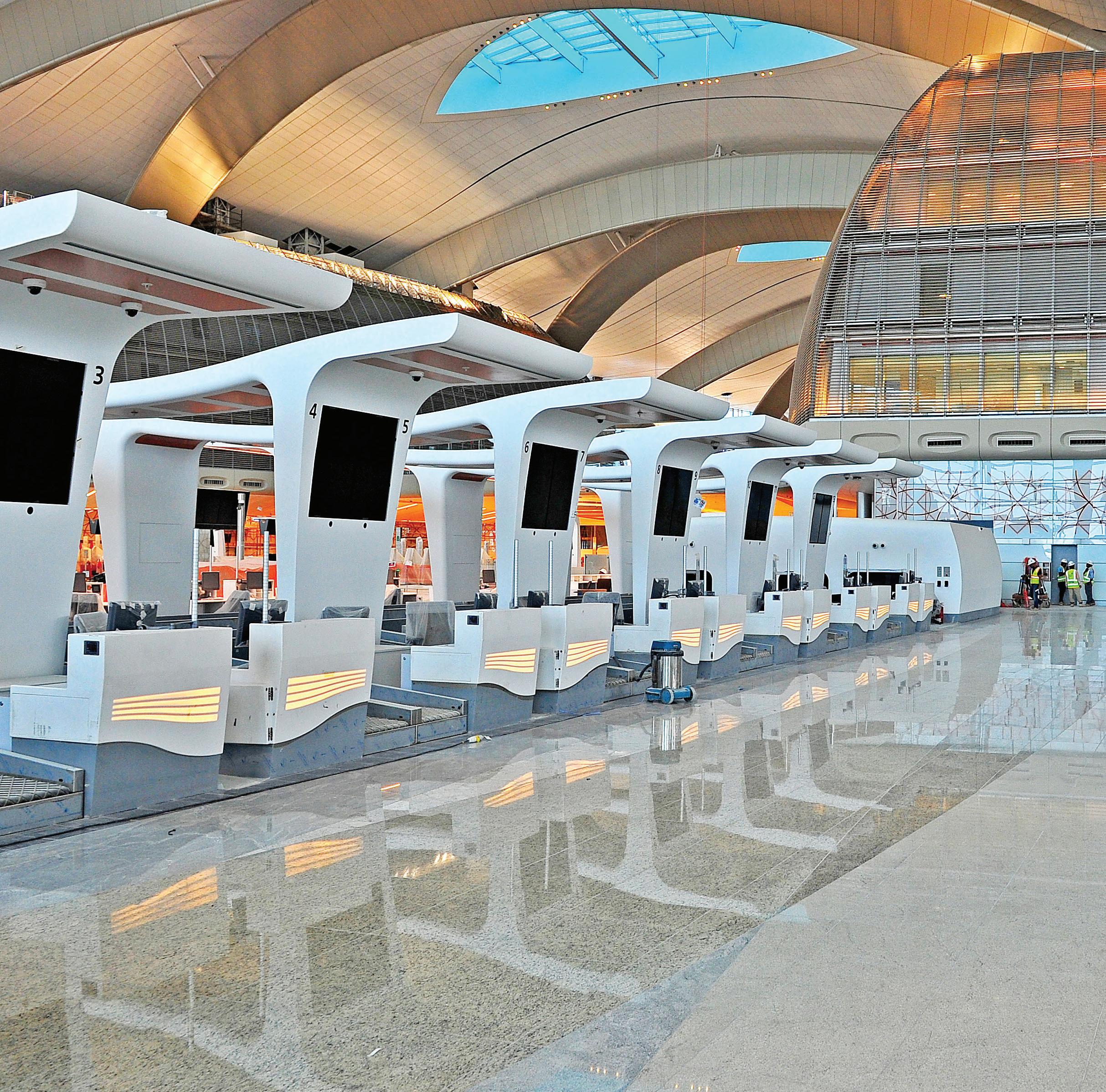
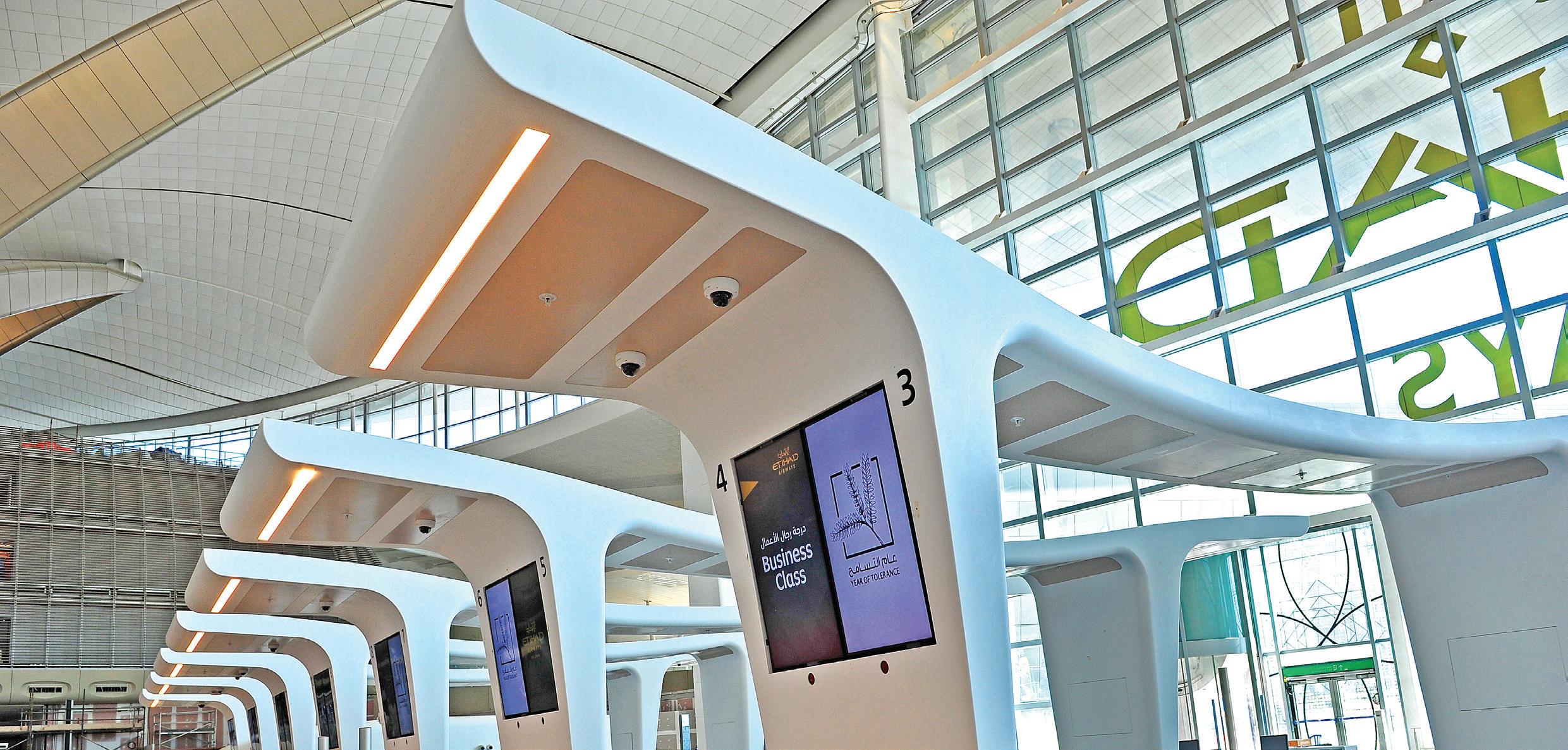
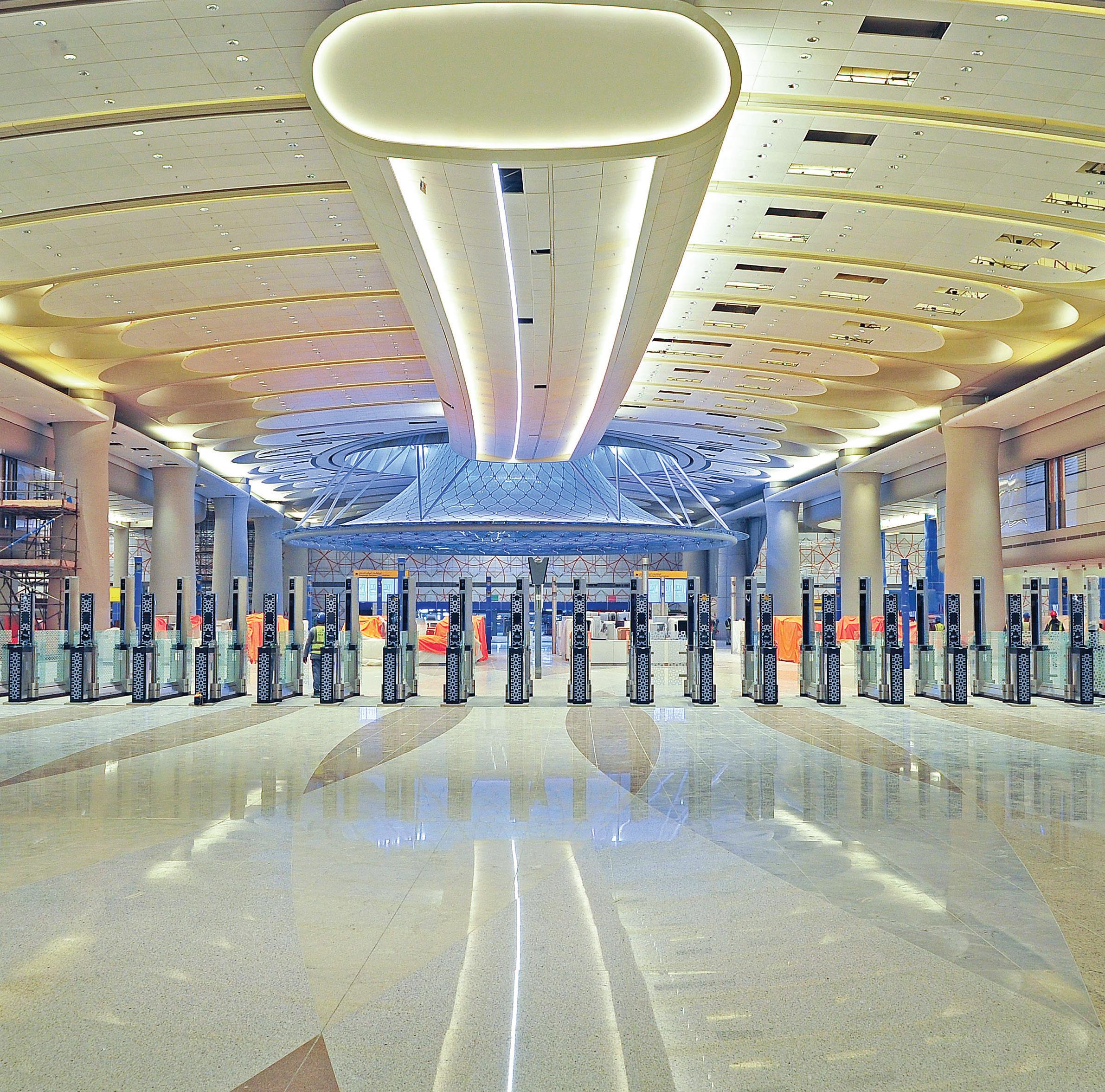
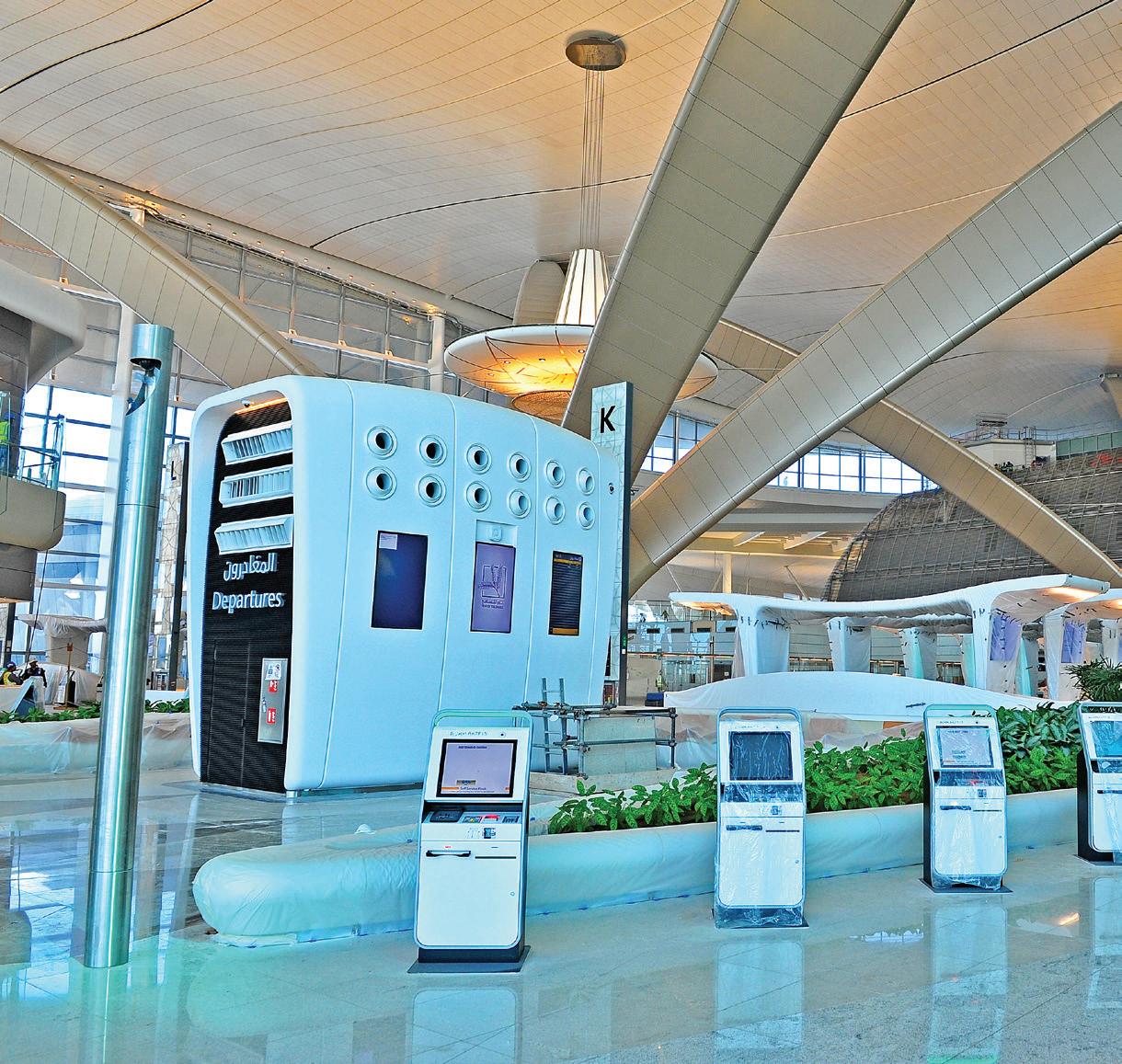
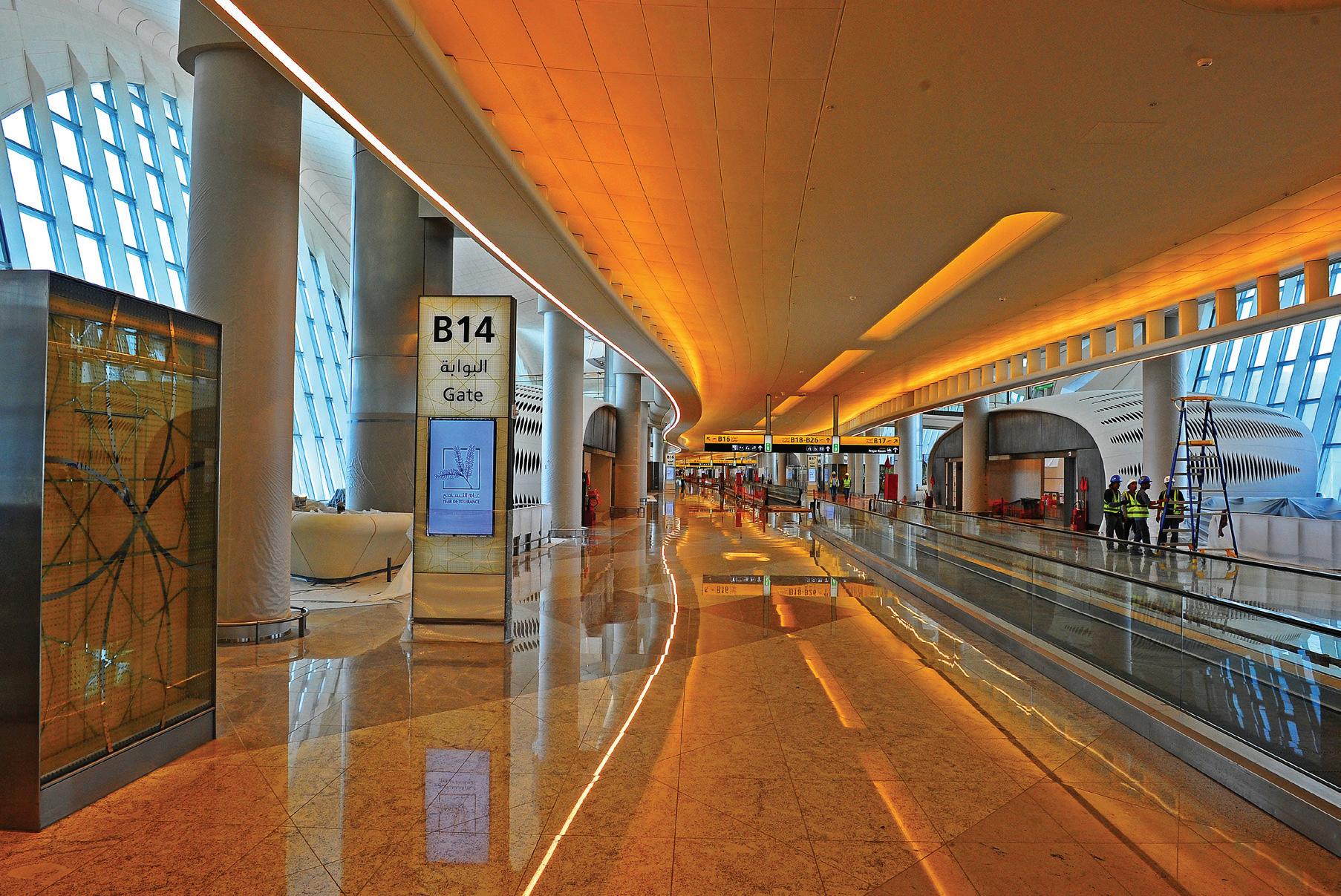
The ultra-modern exterior within MTB is matched by the interior, all created to allow faster turnaround times for airlines, superb duty-free, retail spaces and international cuisine, better customerservice, quicker immigration, and superior check-in and security.
ACCESS BRIDGES
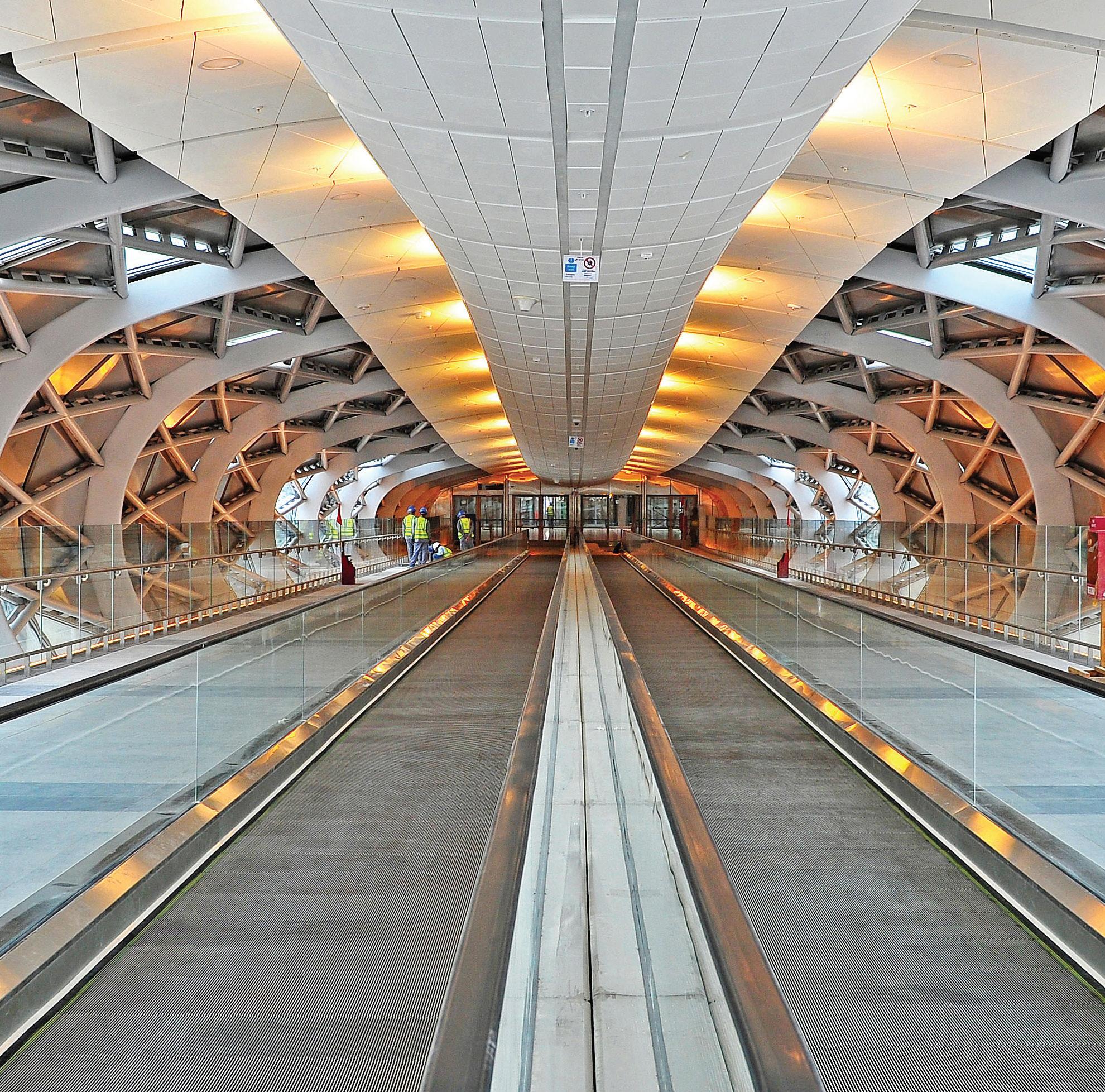
Providing the main approach to the Arrivals and Departure areas, the two Access Bridges at MTB are recognised as major engineering achievements.
Constructed in precast and designed to be blast-proof, the Access Bridges are yet one more aspect of ADIA that unites the three fundamental airport business imperatives of passenger satisfaction, operational excellence, and fiscal success.
Underlining the adoption of the ‘intelligent airport model’, the Access Bridges provide a ‘sense of place’ for passengers, making air travel more accessible and enjoyable than ever before.
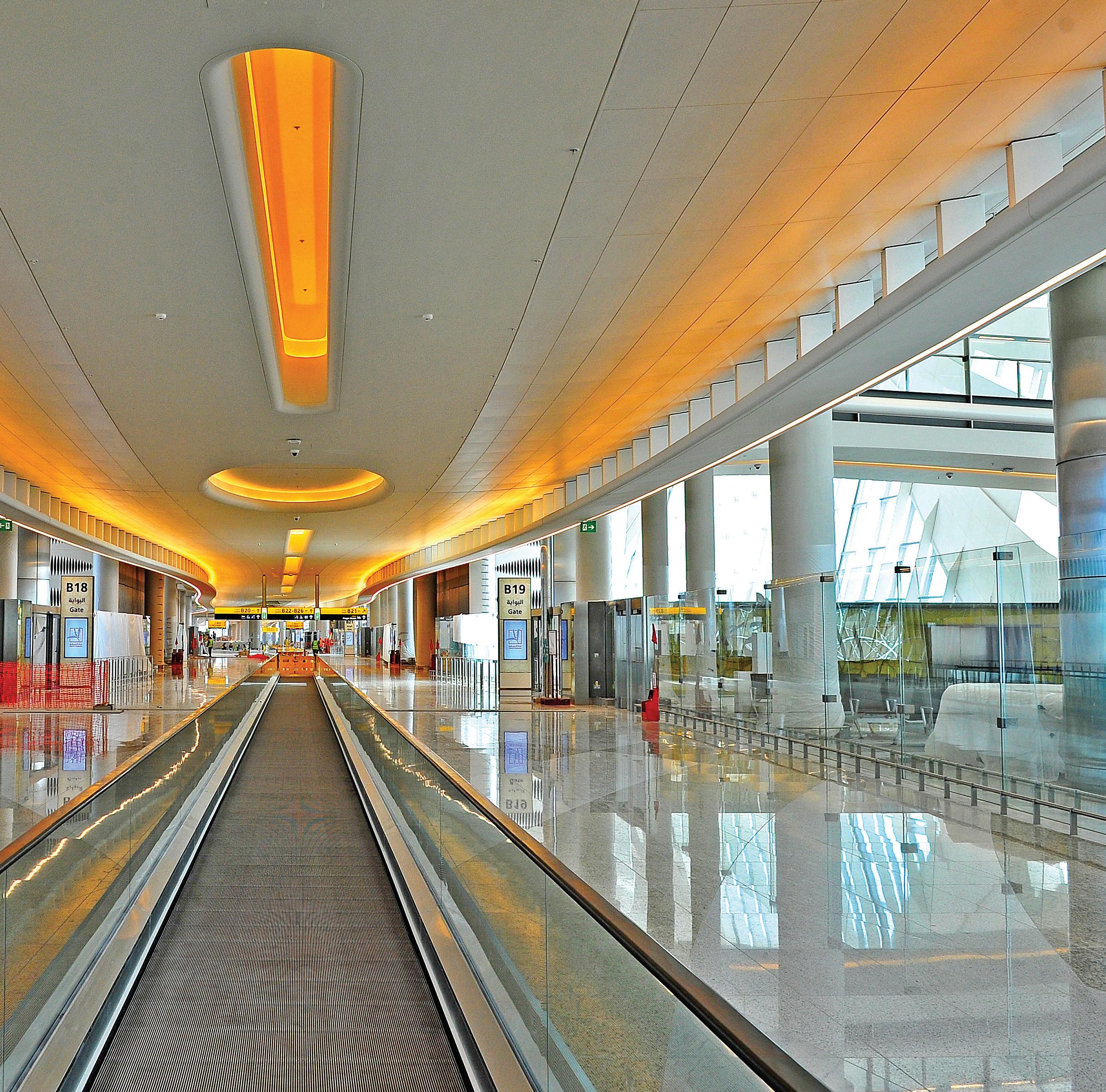
TERMINAL CONCOURSES
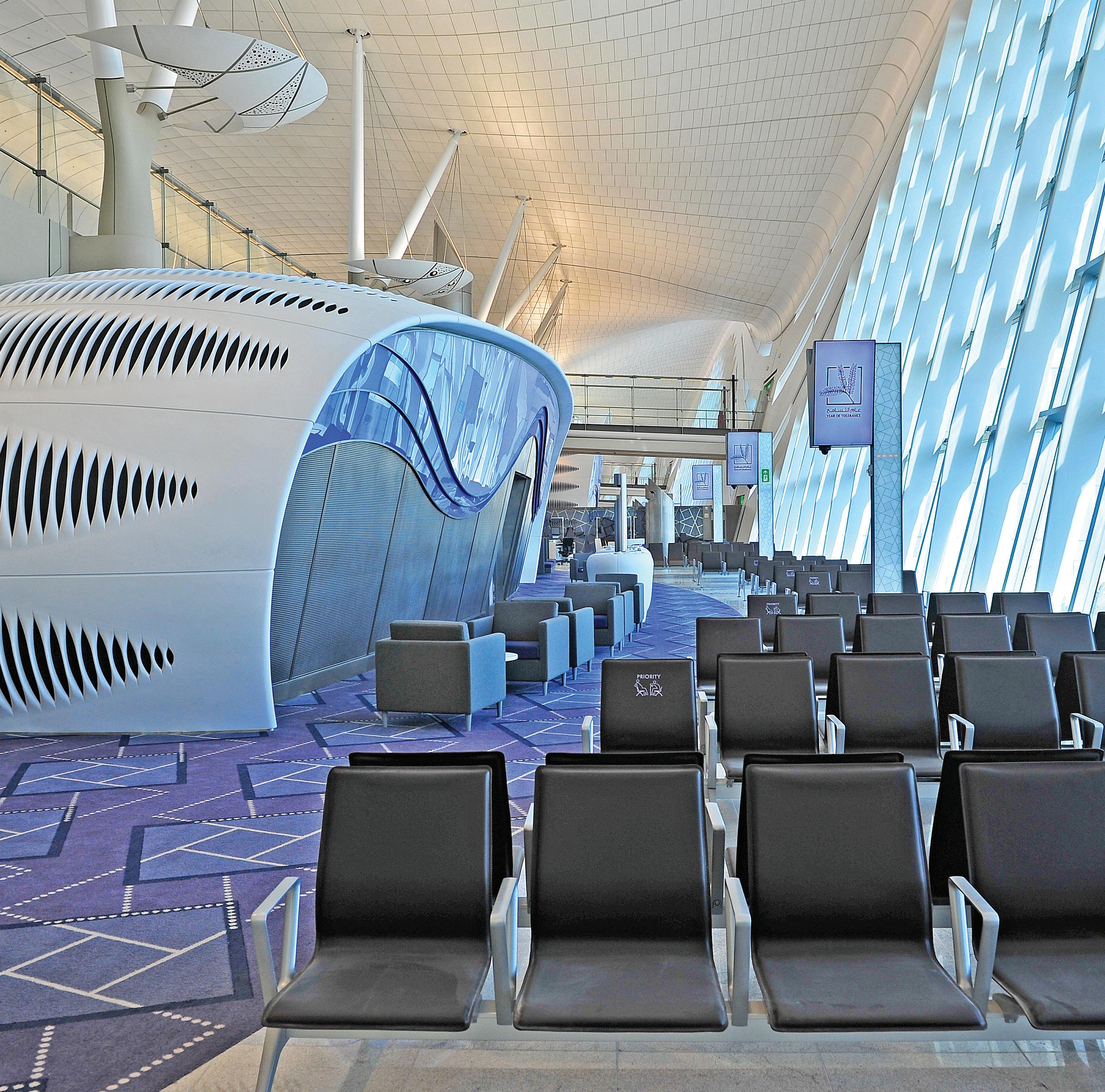
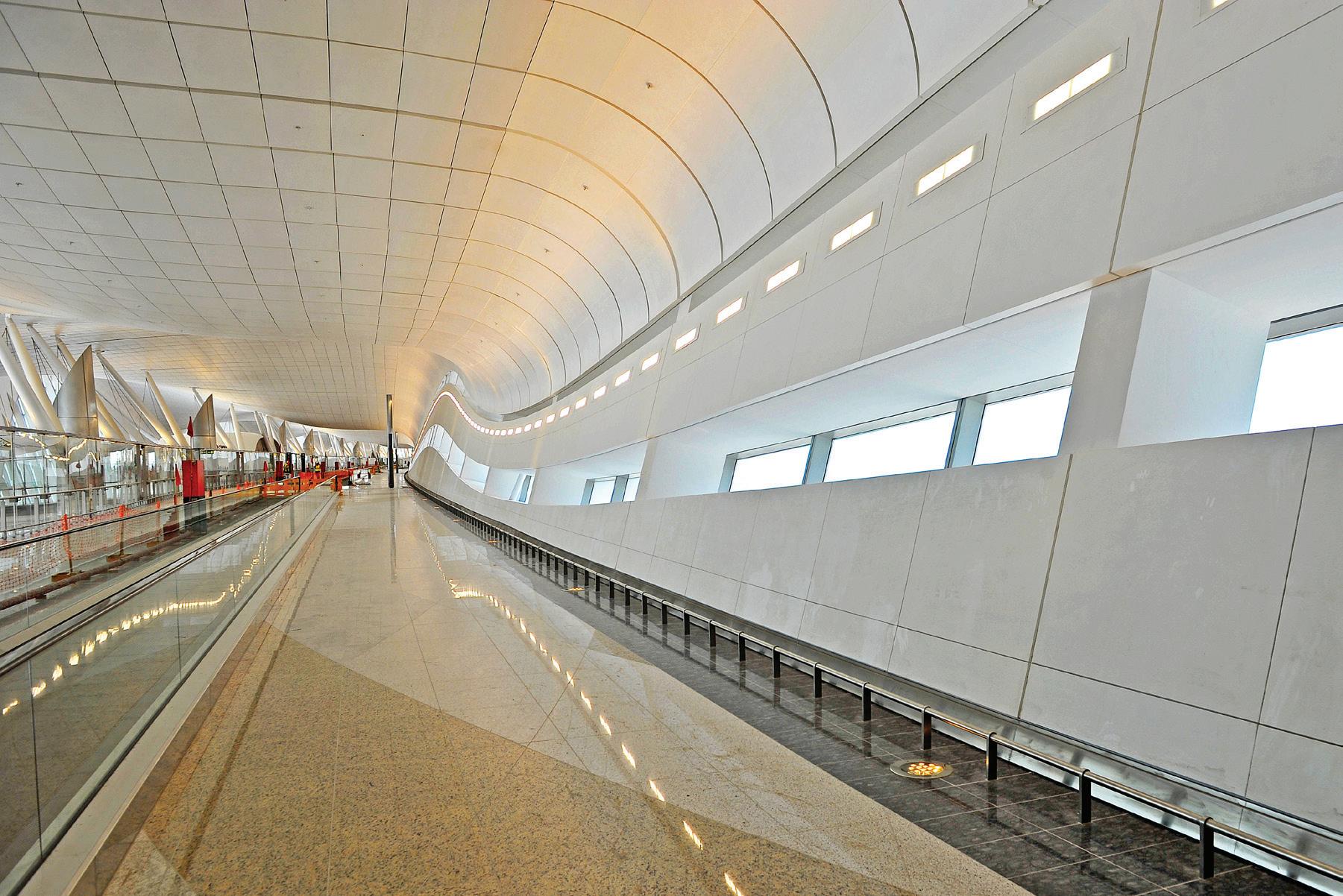
Passengers and airlines can count on a smoother journey thanks to MTB and its state-of-the-art concourses. Huge numbers of people will visit or simply move through MTB, but welcoming so many passengers does not faze the airport, which is committed to ensuring that every single person feels comfortable within ADIA.
In and around the concourses, passengers will find:
TERMINAL GATEHOUSES
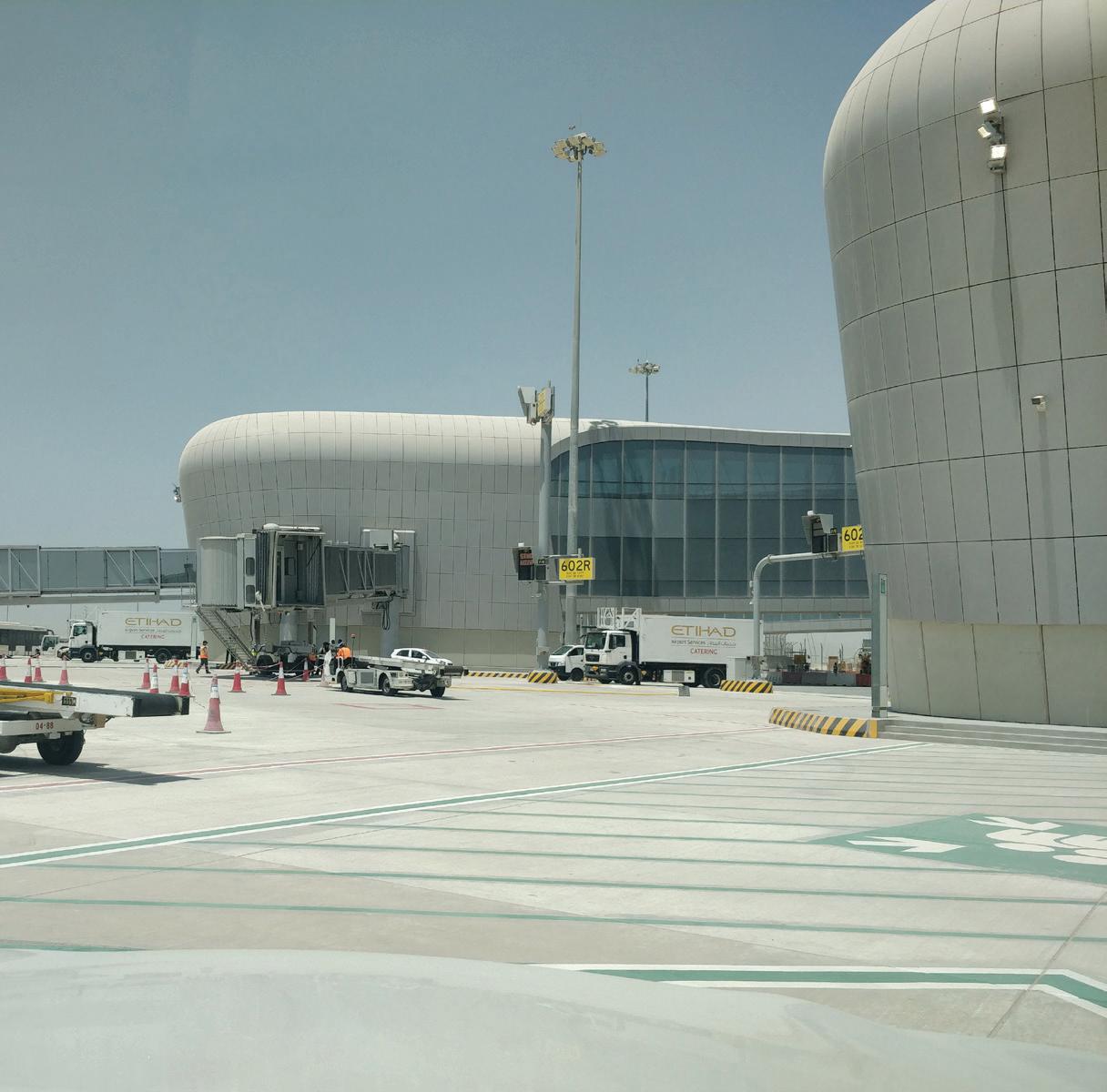
A gate, or gatehouse, is an area of an airport that provides a waiting area for passengers before boarding their flight, giving access between the aircraft and the concourses. Within MTB, the gatehouses are two-storey structures, connected to the concourses via deep truss bridges. The main structure of the gatehouses themselves comprises structural steel columns, which provide support to composite beams and an in-situ composite deck.
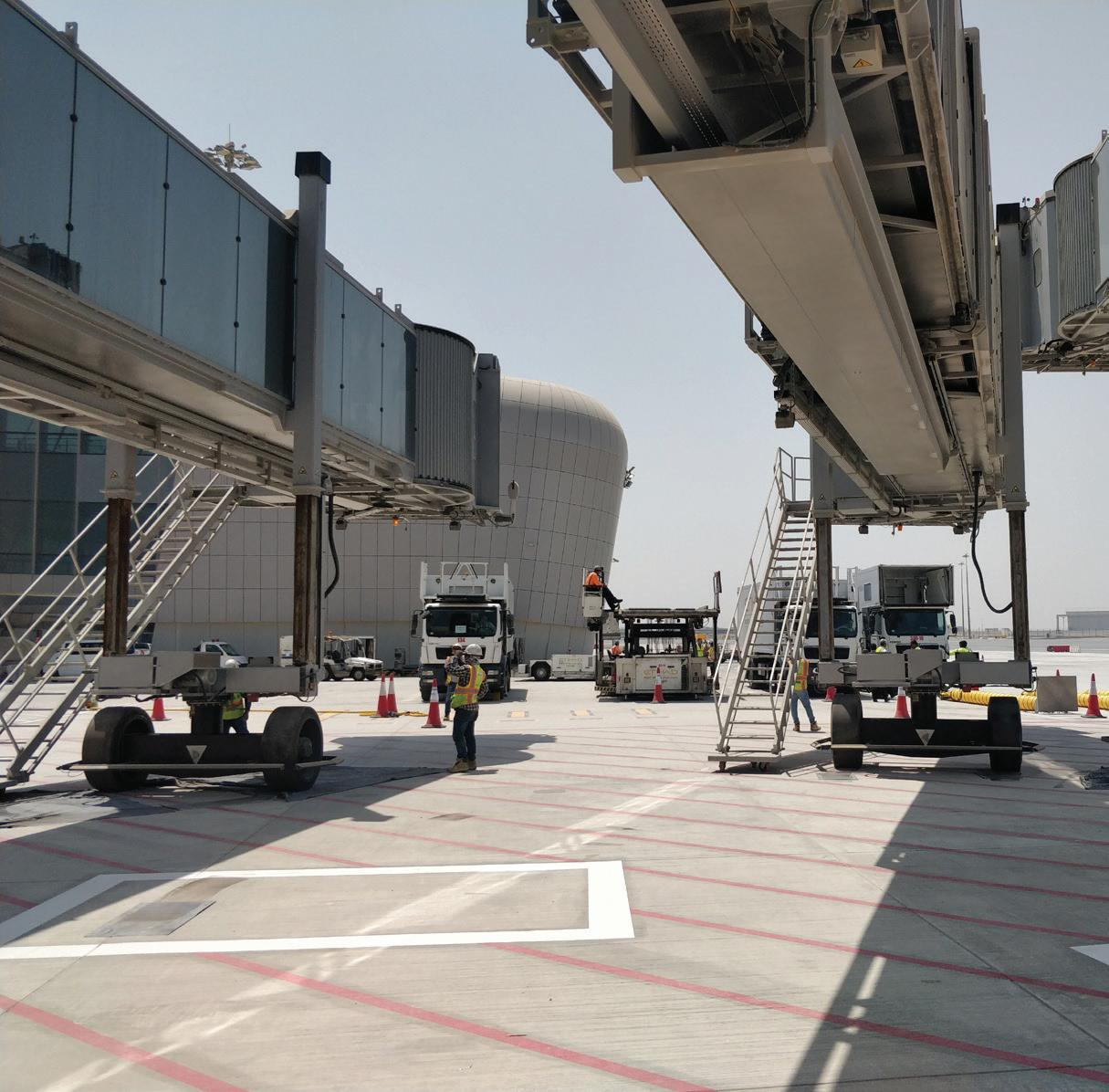
The most up-to-date solutions in smart airport technology are being implemented throughout MTB. Every one of the new passenger boarding bridges will interface with the Visual Docking Guidance Systems, which direct aircraft to their gate parking positions. All of the bridges also have anti-collision sensors to protect aircraft from damage. Aided by this technology, ADIA is confident that it is delivering a product of the highest quality, which can support the operation of a wide variety of aircraft types.
By way of example, eight of the bridges have been specifically designed to serve the upper deck of the Airbus A380, with the longest bridge capable of extending to an impressive 45 metres.
Despite its size, MTB has been designed to be easy to navigate – especially for the many passengers who are simply connecting through Abu Dhabi - with minimum connecting time for international passengers slated to be just 45 minutes from gatehouse to gatehouse.
BAGGAGE HANDLING SYSTEM
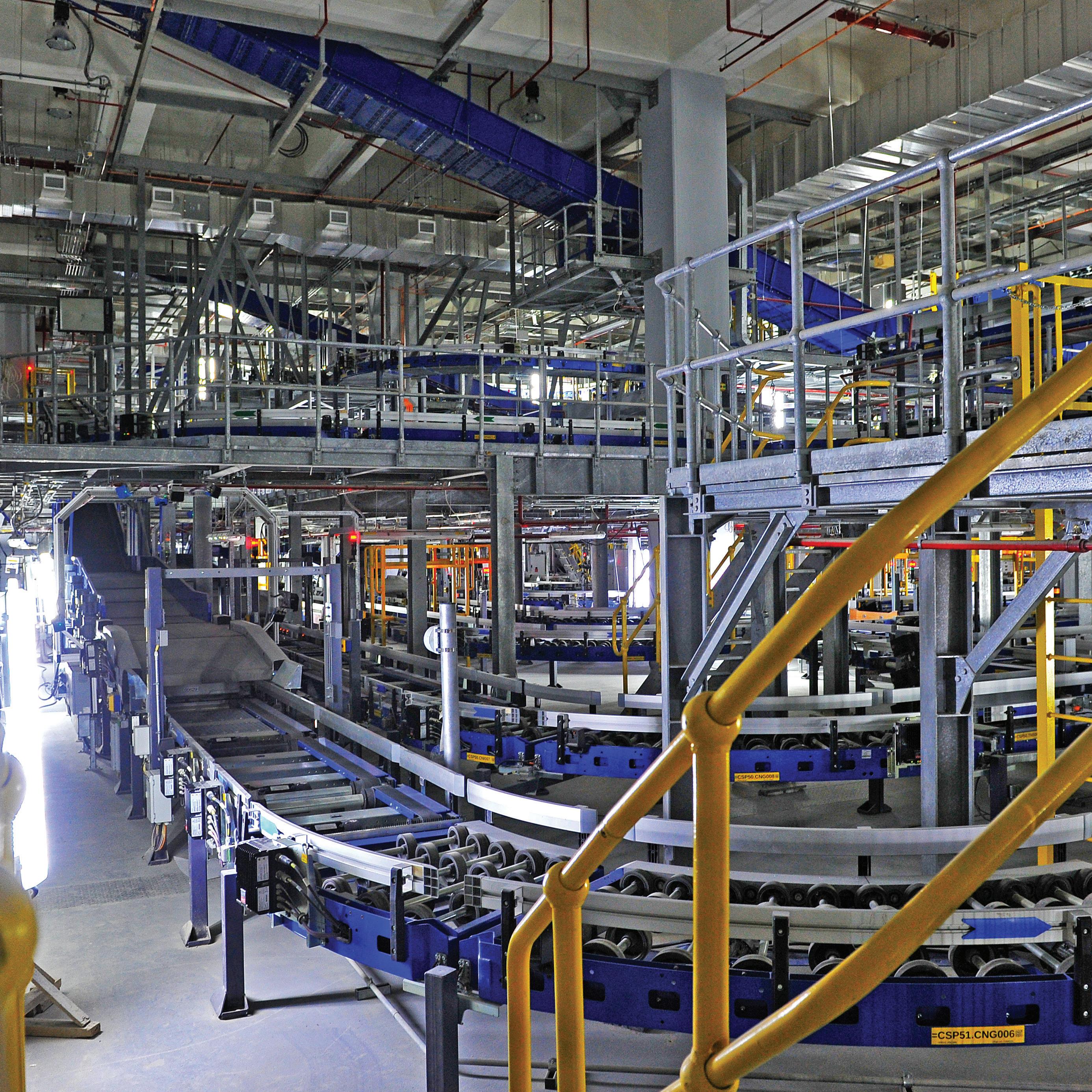
Baggage handling is the process of transporting passenger luggage from a check-in counter at a departure airport onto an aircraft cargo hold, and then to a collection point at an arrival airport. It is designed to count bags, check weights of bags, balance loads, screen suitcases for security reasons, transport bags via an airport conveyor belt system, and read bag information automatically. At MTB, the baggage handling system, the world’s largest, can process almost 500,000 bags each day, which equates to more than 19,000 bags every hour. It has 10 reclaim carousels and 26 kilometres of conveyors.
CONSTRUCTION
The on-site preparation and mobilisation works commenced in the third quarter of 2012 with the primary construction work starting in December 2012. The size of the project meant that large numbers of experienced resources needed to be deployed. CCC, as part of the JV constructing this landmark Project, mobilised its staff and manpower early on in the project to start the concrete works in earnest and continued in mobilising experienced staff to supervise and direct specialist subcontractors efforts to the successful completion of their work scopes.
In October 2013, ADIA announced the placement of MTB’s first steel buttress, one week ahead of schedule. This was followed by the news in February 2014 that the first steel arch had been completed, a significant milestone. Ever since then, the project has moved ahead rapidly, with visible signs of progress apparent on an almost daily basis.
The building has been constructed using approximately 75,000 tons of steel, more than 680,000 cubic metres of concrete, and nearly 500,000 square metres of steel and glass cladding, 135,000 tons of rebar, 360,000 square metres of suspended ceilings, and 325,000 square metres of natural stone flooring.
The 20,000-tonne curved roof is the centrepiece of the MTB project and also the most complex part of its engineering. It features the world’s longest indoor arch at its centre, which is 52 metres tall at its highest point and weighs 1,000 tons. The roof is supported by 18 arches and spans 319 metres at its widest point.
Major works were awarded to local and select international subcontractors and a large number of local suppliers were engaged on this project. This is in line with CCC values to engage the many local partners within the framework of its operations to promote higher engagement of the local commercial and industrial community in the local developments being constructed by the company.