Centre closed to in-person visits shortly after opening in 2020
Colton McKillop staff
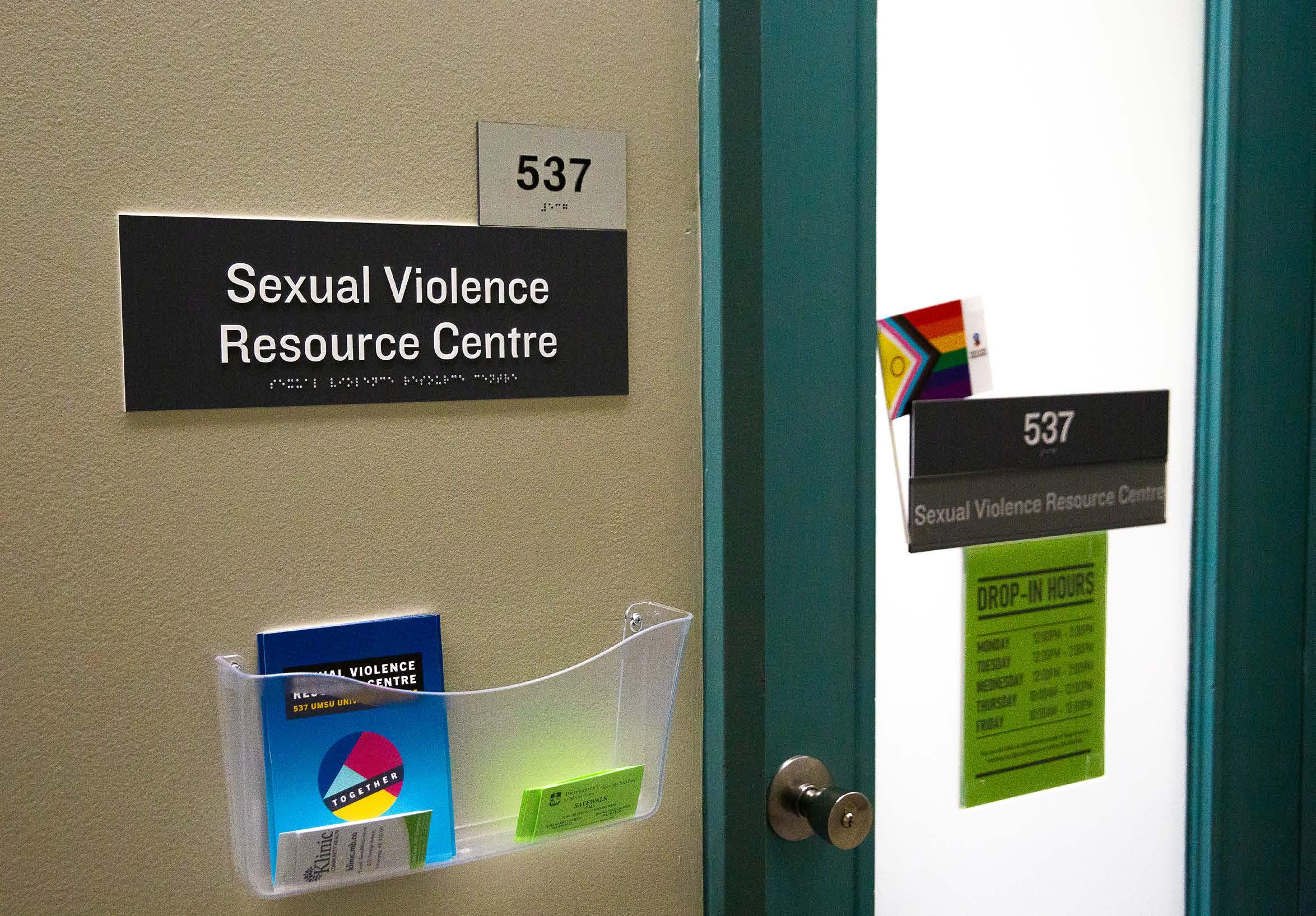
The University of Manitoba’s Sexual Violence Resource Centre (SVRC) is readjusting to the return of in-person activities after two years of remote learning.
The centre opened in January 2020, but was soon forced to shut down in-person services when the COVID-19 pandemic began that March.
SVRC co-ordinator Bre Woligroski said the centre “had to work really fast” to adjust to the rapid transition to remote services.
“We really tried to tell people that we were still available to help, and that we were taking remote appointments by phone or by video,” she said.
Although Woligroski said that the move to online was a “relatively quick switch,” the SVRC faced difficulty “getting the word out to folks” that their services were still available.
The pandemic presented the SVRC with particular challenges, such as increased intimate partner violence due to stay-at-home orders.
“Some people often would leave and go to the house of a friend or family member, but suddenly there was barriers for that because of lockdown and the rules for where you can go, so mobility was affected,” she said.
Woligroski said that economic factors like unemployment prevented people from leaving unsafe partners during the lockdowns as well, as they could not afford new living accommodations.
Additionally, supports like food banks and community centres were shut down at certain points in the pandemic.
Although she said it is “really nice to see” everyone back on campus, Woligroski expressed concern about sexual harassment that may arise at campus parties.
Sexual assault advocacy groups refer to the first few months of university — when numerous parties celebrate the return to campus occur — as the “red zone,” a period when more than half of campus sexual assaults occur.
“
the UMSU street party or the commerce social to be eyes on the ground making sure folks are safe,” Woligroski said.
SSET works at these events
cate students on how they can help if they become aware of incidents of sexual violence.
They can come forward confidentially, they don
Woligroski said that the SVRC has seen an increase in reports of in-person harassment with the return to campus.
’t
have to tell us their name or student number”
The centre also offers a workshop on how to respond if someone discloses that they were a victim of sexual violence.
— Bre Woligroski, Sexual Violence Resource Centre co-ordinator
To combat this, the SVRC started a new program called the Safer Social Event Team (SSET).
“We hired a team of students, about 15 students, to attend events on campus like
to de-escalate conflict, ensure that harassment is handled in a way that respects the survivor and to try to make sure that attendees have safe methods of getting home.
The SVRC also still offers the Bringing in the Bystander program, an initiative to edu-
Some survivors may also struggle with returning to in-person classes and activities with an abuser or assailant who they may have been able to avoid during remote learning.
Woligroski said that although drop-in hours had re-opened this summer, they were under-utilized.
“Even now that Septem-
ber’s started, the drop-in hours haven’t been that utilized,” she said.
“The vast majority of students who want to talk to us, they prefer to set up a personal appointment and to talk to us first by phone call or email.”
“They can come forward confidentially, they don’t have to tell us their name or student number, they can use a fake name, they can use a burner email,” Woligroski continued.
“We just want to get help to the students who need it, so we’re as flexible as we can be for accessibility.”
news@themanitoban.com
photo / Ebunoluwa Akinbo / staff
Research & Technology >
Protein Innovation in the Canadian food industry
Receives funding from Research Manitoba
WElah Ajene, staff
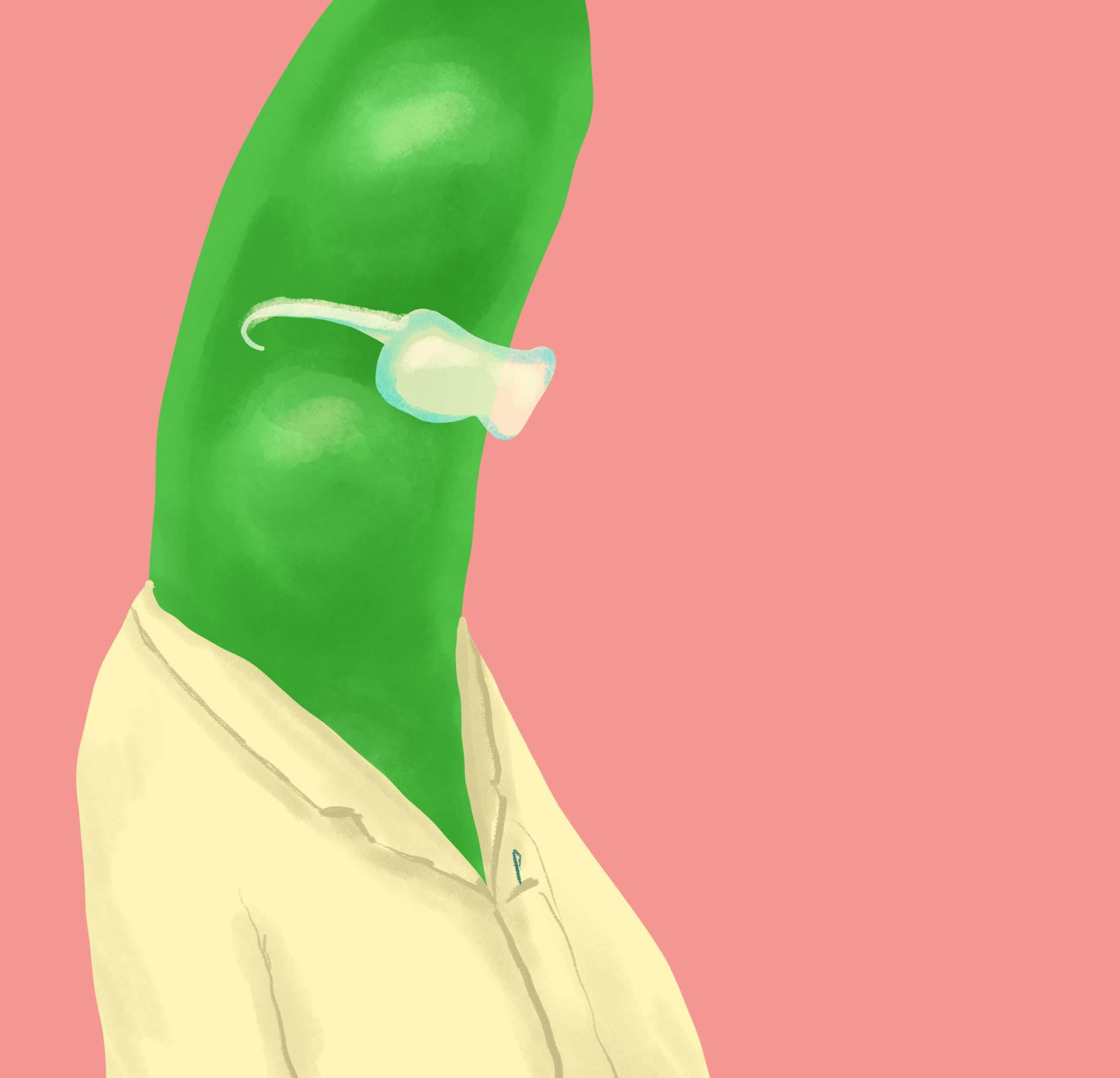
ith Canadian crops becoming more valuable and serving an expanding market, Canada has become one of the world’s largest pea producers, with production estimated at 4.6 million tonnes in 2020 alone.
In 2021, French company Roquette made Manitoba the home of the largest pea protein plant across the globe with the unveiling of its facility in Portage la Prairie.
However, according to University of Manitoba assistant professor and Canada research chair in food proteins and bioproducts Nandika Bandara, the bulk of the protein produced is exported and not processed within Canada.
While Roquette does process protein in Canada, Bandara pointed out that they use a traditional alkaline extraction method in their plant.
Traditional alkaline extraction involves using a high pH to make the protein soluble, followed by a low pH to make it a precipitate. Though this widely used industrial technique is simple and suitable for mass production at low cost, it can decrease protein nutritional value. Bandara explained that this process also damages aspects of the protein’s functionality, such as its thickening ability.
Earlier in September, Bandara received funding through Research Manitoba’s New Investigator Operating Grant Competition for his project “Novel and Sustainable Technologies for Protein Ingredient Development and Functionalization from Canadian Crops.” He plans on expanding protein innovation in the Canadian food industry.
“What we propose in this particular method is a method that we can extract the protein from Canadian crops, without changing pH to extreme temperatures,” Bandara said. “Theoretically, the functional properties should be retained without any changes.”
“The advantage of using, or developing, this method is [that] then we can develop protein ingredients without damaging the protein function,” he added.
Bandara and his research team focus on four major themes in their work. This includes using Canadian-grown crops to develop protein ingredients, modification of proteins and improving its functionality for different food and non-food applications, he explained.
Bandara and his team recently developed a new pro-
“If you can develop highly functional protein ingredients from most commonly grown Canadian crops, that’s an evaluated market”
— Nandika Bandara, assistant professor and Canada research chair in food proteins and bioproducts
tein extraction technology which has not been previously seen in the food industry.
“There was an extraction technology for small molecule compounds for deep eutectic solvents, but it was not used for the large molecules like protein before,” he said.
“So we actually modified that method to suit large molecules with larger size and molecular weight.”
Food packaging applications are the next theme of Bandara’s research. He explained that work is being done on food packaging production using protein and lignocellulosic materials — plant-based materials containing cellulose.
Bandara explained that
when extracting protein — from a pea, for example — there are materials that are left behind. “We use that leftover material, which contains lipids and cellulose mainly, to prepare food packaging tubes,” he said.
Bandara noted that the cellulose is further broken down into nanocellulose, a tiny particle that his team used to enhance the useful properties of the pea protein.
The final two themes of Bandara’s research focus on protein application within the health industry and the development of biomedical materials.
He explained that these proteins are being used to develop nanostructures —
structures ranging between one nanometre to 100 nanometres — that hold and deliver active compounds such as drugs.
Bandara also mentioned that some of the group’s work involves using ultra-feathered keratin — a structurally fibrous protein produced naturally by the body — to develop wound-healing materials aimed at accelerating skin growth. In their research, Bandara and his team apply green technology methods by using reusable materials, reducing waste.
All the materials the team uses are food-grade, non-toxic materials safe for direct food contact.
These novel and sustainable technologies being developed by Bandara and his team can be used in additional food applications, benefiting Canadian farmers and the processing industry and further propelling the Canadian agribusiness scene.
“If you can develop highly functional protein ingredients from most commonly grown Canadian crops, that’s an evaluated market,” Bandara said.
’Toban turntable
Booter — ‘10/10’
Grace Anne Paizen, staff
5/5 Stars
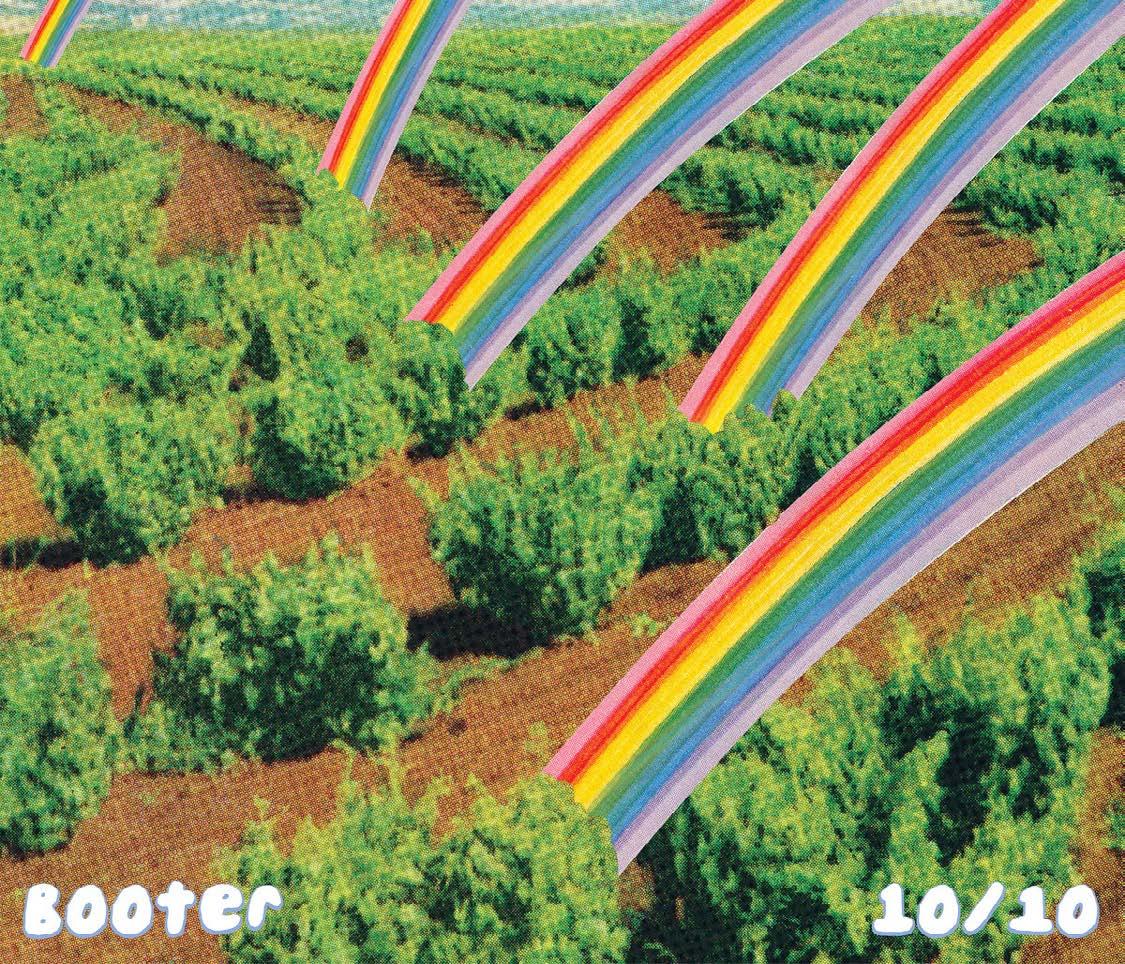
With a 10/10 name that connects its music scene to the prairie experience, local Winnipeg band Booter’s debut album 10/10 is a fantastic first entry.
In a world of overproduced music, Booter is a refreshing return to the simplicity of voice, drums, guitar and bass. Even its guitar solos are not overproduced, but actually sound like guitars — as they should — compared to radio hits where the guitars are so heavily processed, they sound like kazoos.
Every song on 10/10 is so perfectly tempered and crisp in its recording, it almost sounds like a live show was recorded as an album, minus the audience noise.
Most importantly, each song doesn’t outstay its welcome. With songs averaging
just under two-and-a-half minutes a piece, Booter showcases its talent of knowing that the length of a song does not dictate its quality.
Every track on the album compliments the last with a through-vibe of mellow listening.
Vocalist Alannah Walker also has a unique voice in the current climate of music. It stands out as an instrument of its own — as it should — and adds depth in its timbre to the chords beneath it.
Fourth track “Seventeen” is the exception, with guitarist Brendon Yarish on vocals and Walker as backup. However, this does not feel jarring or out of place. Booter’s sound is so consistent, “Seventeen” simply joins the flow of the other tracks.
If anything, it is the lyrics of “Seventeen” that stand out the most as a bittersweet, nostalgic lament of how even
The new Fifty Shades?
though we age, there is a part of all of our lives that we gravitate to as a cemented moment in time.
With lines like “now my best days are behind me” and “I’m trying to remember what it feels like to just forget,” the lyrics of “I will always be seventeen living a nightmare” are the haunting constant of the song, perfectly encapsulating the difficulty of moving forward in our lives.
The namesake of the album, “10/10,” may be the best track, not only because the song is such a bop, but also because it best highlights Booter’s established sound. It’s the type of track where if you heard the opening chords, you could immediately locate them to the band.
Again and most impressively, final track “The Most” has the same energy as opener “In Control,” creating a nice bookend to a truly cohesive
album that never dulls or dips in its track list.
With such a breakthrough performance in a debut album, Booter’s 10/10 is a must listen, and with every listen, the anticipation for what the band will do next grows.
Awkward, icky, accidentally hilarious erotic fiction set at the U of M
Alex Braun, staff
Why Not Sin: In order to change society they must betray everyone is an erotic novel written by Australian sports journalist and former sports editor for the Manitoban, R.G. Chapman. The book follows the winding romance of Greg, an Australian writer and track star, and Cynthia, or “Sin,” a good prairie girl. The two meet at the U of M, fall in love and navigate an on-again-off-again long distance love affair that spans decades.
Why Not Sin is the funniest sort of novel — erotic fiction in first-person from a woman’s perspective, as written by a man. This results in many strange patterns in the writing, like Sin’s obsession with her “small, perky breasts” and their inadequacy when compared against the “big bouncy boobs” that “jocks” prefer.
The writing in general is stunted, awkward and littered with grammatical mistakes. But surprisingly, it is still a rather smooth read — simplistic enough to take down in an afternoon and descriptive in a plain spoken, almost awkwardly direct way.
The novel supposedly draws on bits of Chapman’s life, with Greg seemingly being a self-insert character for Chapman. But, given how much Chapman flatters him-
self through his descriptions of Greg, I would take the realism with a grain of salt.
This autobiographical aspect does mean that U of M and Winnipeg landmarks are namedropped constantly. Much of Sin and Greg’s romance in the early chapters progresses in the Max Bell Centre. The two frequently hang out in the U of M campus bar of the time, Umzoo, or go out for drinks at the Yellow Dog Tavern in the exchange.
The romance between Sin and Greg is incredibly flimsy. Their conversation — like all dialogue in Why Not Sin — is cramped and robotic, and descriptions of their non-sexual outings and activities are kept to a minimum, but it is taken as a given that they are hopelessly and forever devoted to each other.
Largely, the characters’ romance is developed in the numerous graphic sex scenes, written with a leering, lumbering, slightly unsettling horniness. Imagining Chapman writing these explicit scenes from the perspective of an 18-year-old woman is a bit skin crawling.
But what these scenes lack in eroticism, they make up for in hilarity. All of them follow the same path, mostly involving vulgar displays of Greg’s ultimate sexual prowess as he shows Sin untold pleas-
ures with grace and style, and each scene is described using a strange, distinctly unsexy diction.
Greg is presented as a sterling, unblemished genius in virtually all aspects of his life. His career in writing, beginning with his stint at the Manitoban — a job which the book notes made him very attractive to other students — is especially illustrious, culminating in a crazy meta-narrative in which his own autobiographical book titled “Why Not Love: Imagine if sex could actually heal the world” sells nearly 50 million copies and is adapted into a film that generates $687 million at the global box office.
Greg’s only flaw is his emotional demons, which are completely vague and seem to mostly manifest through his propensity to leave Sin at random and sleep with other women, and somehow even that habit endears him to Sin. Sin meanwhile is not developed at all. Somehow her own inner monologue fails the Bechdel Test — she has no thoughts or aspirations other than to love Greg. She eventually strays and marries the hapless, kind cuckold Craig when Greg is deported to Australia, but Chapman makes it very clear that Sin’s undying love for Greg never fades.
If it sounds like I am sim-
ply insulting and piling onto Why Not Sin, let me say that I had the time of my life reading this book. It is one of the most insane things I have ever read, and an absolute thrill ride through the psyche of a strange, egomaniacal, horned-up but ultimately sympathetic man. And as a student at the U of M, its hyper-specific setting really immersed me in the story. It isn’t a “good” book, but it is a great one.
Why Not Sin: In order to change society, they must betray everyone is available on amazon.ca.
arts@themanitoban.com
Booter’s 10/10 is available for streaming on major platforms.
arts@themanitoban.com
UM Campus Lost and Found
E-Scooter found on Fort Garry campus Sept. 21, 2022.
If the item belongs to you, please get in touch with Security Services at 204-474-9312. You will be asked to provide proof of ownership.
All found property turned into Security Services is fully documented and held for 60 days.
image / Ric Chapman / provided
image / Midwest Debris / provided
’Toban tracks — fall vibes
An hour-plus of folk and indie to soundtrack all yr fave fall festivities
Alex Braun staff
F all is perhaps the season with the most distinct, unified vibe. Summer has vibes to be sure, but a multitude of vibes too numerous to encapsulate. Winter in Winnipeg is too long to have a single vibe, especially once the holiday season passes and we are left in a dark limbo. And in my view, spring gets its vibe mostly from its proximity to summer — it’s all in the anticipation.
Fall is just short enough that it can stay unified, but long enough to feel distinct. There are unique worldly characteristics — the falling coloured leaves, brisk temperatures, death and rebirth swirling in one. We start to reflect on the fast-moving summer now firmly behind us, begin a school year anew and start our gradual slowdown to the forced hibernation of winter. It’s transitional, but static.
As such, fall vibes are all about comfiness and warmth, with a slight hint of haunting spookiness or bittersweet nostalgia. Most of this playlist is made up of folk-adjacent music, a palette that I associate pretty heavily with fall. Acoustic guitars just sound like autumn, the crisp strum-
ming with the warm timbral body is like stepping on the crunchy top layer of leaves on a forest trail.
The purest folk songs on here come courtesy of a few Canadian legends — Buffy Sainte-Marie’s gorgeous “The Dream Tree” from her revelatory, hypnotizing psychedelic-folk detour, Illuminations, Gordon Lightfoot’s light and lovely “Approaching Lavender” and Willie Dunn’s starry-eyed “The Dreamer.”
In other places the definition is stretched a bit more. Fog Lake and Alex G’s respective Elliott Smith-indebted indie pop styles still carry a lot of the warmth and sincerity of good folk music. Artists like Dear Nora and meadows take that warmth and apply it to their own fragile, lo-fi recordings.
Beyond the acoustic stuff, there are some other genres that I think have distinct fall vibes, including jangle-pop, soul, dream-pop and alt-country — all very autumnal.
So, take a walk around a forest, jump in a big pile of leaves, go on a wagon ride, explore a corn maze, go bird watching, visit an apple orchard or a pumpkin patch and listen to this playlist while you’re out
’Toban turntable
there. It’s good music!
Hold Me in Your Mind – Living Hour, Someday Is Today
On to September – Dear Nora, The New Year
Sheets of Grey – Ducks Ltd.
Heart Like a Wheel – Kate & Anna McGarrigle, Kate & Anna McGarrigle
Partner – Ada Lea, one hand on the steering wheel the other sewing a garden
Cards – Alex G, Boring Ecstasy
Cooking – Duster, Contemporary Movement
New Partner – Palace Music, Viva Last Blues
Any Other Way – Jackie Shane honeytea – meadows Sunlight Bathed the Golden Glow – Felt, The Strange Idols Pattern and Other Short Stories
The Dream Tree – Buffy Sainte-Marie, Illuminations
Dakota – Fog Lake, Tragedy Reel
Here’s Where The Story Ends – The Sundays, Reading, Writing & Arithmetic
Houses – Elyse Weinberg, Elyse
Beneath the Leaves –Julie Doiron, So Many Days
Status/Non-Status — ‘Surely Travel’
Alex Braun, staff
4/5 Stars
Rock is played out. This is the elephant in the room during any discussion of rock music. Every corner has been explored, and rock’s days of cultural dominance or even relevance are well behind us. All that is left to do is repeat and reimagine rock’s past, applying it to new issues, new emotions and fusing together new combinations of influences.
In the case of most indie rock, this leads to a lot of noncommittal shoulder-shrugging, a sort of embarrassed withdrawal to the margins.
But Status/Non-Status is not embarrassed. In fact, one gets the feeling that the project is still pretty excited to get to work, digging up the best bits of rock’s recent past and blowing them up to stratospheric proportions with an infectious enthusiasm.
Whereas Status/Non-
Status’s last album (not counting this year’s OMBIIGIZI album, a collaboration with Zoon), Warrior Down, was a knotty, difficult, dark album which drew largely from apocalyptic post-rock and blown-out noise rock, its new album, Surely Travel, draws from much more easy-going influences — more Pearl Jam than Sonic Youth or Slint.
Without letting up on the ambition and assertive volume, the band goes about reappropriating the sounds of ’90s alt-rock, grunge and college rock with reckless abandon and tight songcraft.
Opening track “Blown Tire” is a stomping, wideopen power-pop slammer that begins at full-blast and doesn’t let up from there. Singer Adam Sturgeon’s vocal is by turns sincere and snotty, adopting a sort of Billy Corgan-meetsJeff Mangum bleat throughout the album.
Lead single “Mashkiki Sunset” rips pages straight from
the old R.E.M. handbook, with a rollicking sea shanty pace and arpeggiated guitars. But like the entirety of Surely Travel, everything is cranked up loud and given a massive feeling of scope.
Other familiar sounds pop up throughout, with “Mainly Crows” bringing the Tragically Hip to mind, while “When They Were” has the same insane outsider delivery and blown-out dynamics as one of Neutral Milk Hotel’s more hyped-up songs.
Some of Warrior Down’s more experimental tendencies pop back up on the expansive title track, “Surely Travel.” The song is built around a hypnotizing, slowly building middle section, with assured gang vocals delivering the repeated manifestation of “I will surely travel.”
It’s a comforting sentiment to end the album on, encapsulating a hard-won optimism and assurance that runs through all these songs.
/ Dallin Chicoine / staff
The Dreamer – Willie Dunn, The Pacific Approaching Lavender – Gordon Lightfoot, If You Could Read My Mind
Cherry Coke – OMBIIGIZI, Sewn Back Together
Dust – You’ll Never Get to Heaven, Wave Your Moonlight
Hat For The Snowfall Train September Song – Amos the Kid, No More New Ideas Ugly Little Victory –Friendship, Love the Stranger
arts@themanitoban.com
image / Killbeat / provided Surely Travel is a really refreshing listen, circling back on the past with an invigorating joy. The songs are anthemic and strong, and delivered with a kind of pomp and ambition that is hard to come by these days.
Status/Non-Status’s Surely Travel is available on major streaming platforms.
arts@themanitoban.com
graphic
Sports teams’ schedules
U of M Bisons — Women’s Basketball
Bisons @ Cape Breton Capers Sept. 30 — 4 p.m.
Bisons @ UNB Varsity Reds Oct. 1 — 6 p.m.
Bisons @ McGill Martlets Oct. 2 — 10 a.m.
U of M Bisons — Women’s Hockey
Bisons @ Minnesota State University — Mankato Sept. 23 — Final: 1 – 5