COMEOWNITY
Mary-Elizabeth Boatey R’27 & the Indy community

Mary-Elizabeth Boatey R’27 & the Indy community
MANAGING
Sabine Jimenez-Williams
Talia Reiss
Nadia Mazonson
WEEK IN REVIEW
Maria Gomberg
Luca Suarez
ARTS
Riley Gramley
Audrey He
Martina Herman
EPHEMERA
Mekala Kumar
Elliot Stravato
FEATURES
Nahye Lee
Ayla Tosun
Isabel Tribe
LITERARY
Elaina Bayard
Lucas Friedman-Spring
Gabriella Miranda
METRO
Layla Ahmed
Mikayla Kennedy
METABOLICS
Evan Li
Kendall Ricks
Peter Zettl
SCIENCE + TECH
Nan Dickerson
Alex Sayette
Tarini Tipnis
SCHEMA
Tanvi Anand
Selim Kutlu
Sara Parulekar
WORLD
Paulina Gąsiorowska
Emilie Guan
Coby Mulliken
DEAR INDY
Angela Lian
BULLETIN BOARD
Jeffrey Pogue
Lila Rosen
MVP
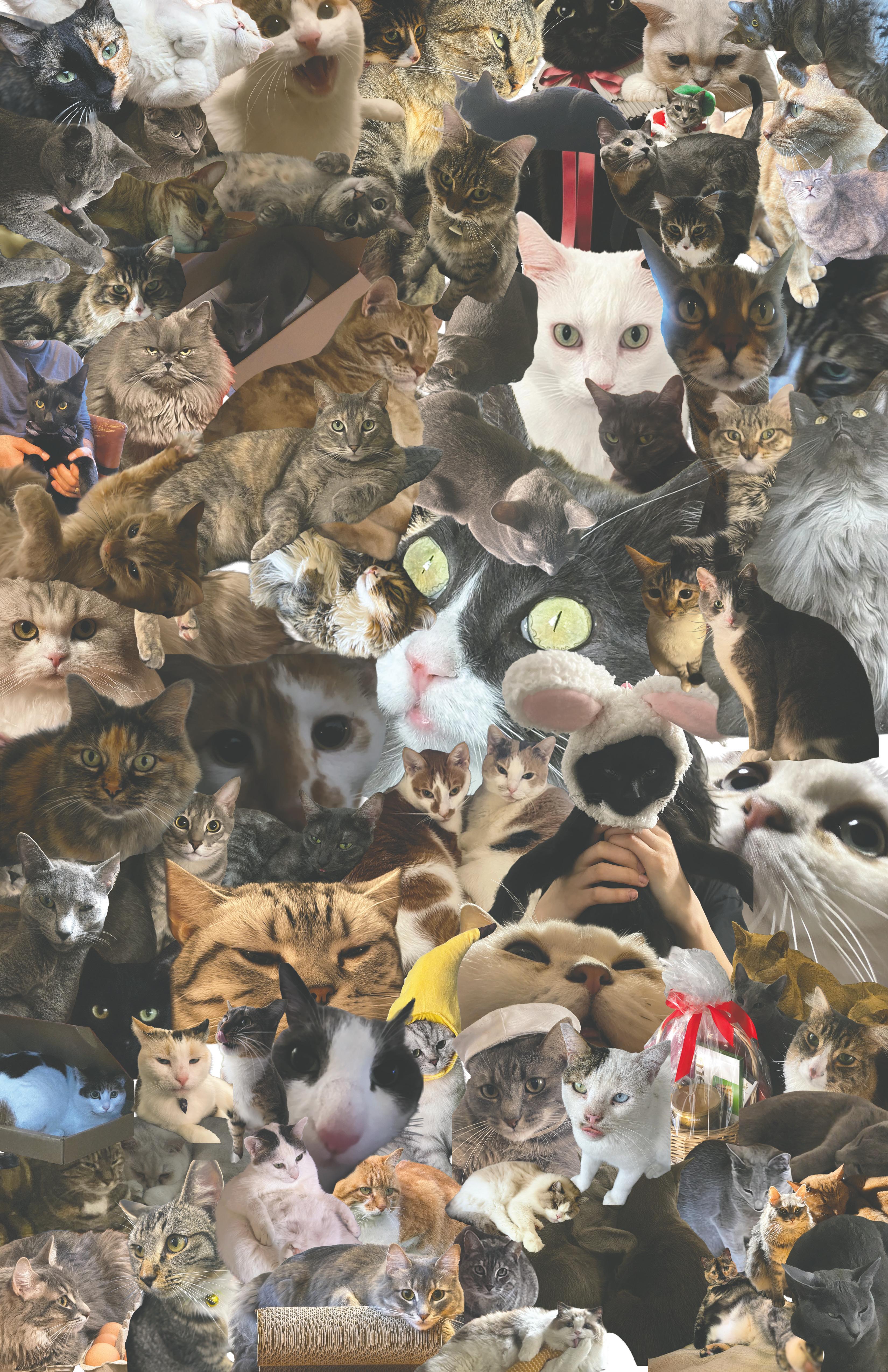
The imagined community of cats whose owners read and write and illustrate and design the Indy
*Our Beloved Staff
DESIGN EDITORS
Mary-Elizabeth Boatey
Kay Kim
Seoyeon Kweon
DESIGNERS
Millie Cheng
Soohyun Iris Lee
Rose Holdbrook
Esoo Kim
Jennifer Kim
Selim Kutlu
Jennie Kwon
Hyunjo Lee
Chelsea Liu
Kayla Randolph
Anaïs Reiss
Caleb Wu
Anna Wang
STAFF WRITERS
Hisham Awartani
Sarya Baran Kılıç
Sebastian Botero
Jackie Dean
Cameron Calonzo
Emma Condon
Lily Ellman
Ben Flaumenhaft
Evan Gray-Williams
Marissa Guadarrama
Oropeza
Maxwell Hawkins
Mohamed Jaouadi
Emily Mansfield
Nathaniel Marko
Daniel Kyte-Zable
Nora Rowe
Andrea Li
Cindy Li
Maira Magwene Muñiz
Kalie Minor
Naomi Nesmith
Alya Nimis-Ibrahim
Emerson Rhodes
Georgia Turman
Ishya Washington
Jodie Yan
Ange Yeung
ALUMNI COORDINATOR
Peter Zettl
SOCIAL CHAIR
Ben Flaumenhaft
DEVELOPMENT
COORDINATOR
Tarini Tipnis
FINANCIAL
COORDINATORS
Constance Wang
Simon Yang
Lila Rosen, Jeffrey Pogue
Here’s the nature of our care structure: we are thrown into being (alive; members of the Indy), and, for some reason, we care. We care so much that we had nightmares. We declared, “I MUST GET MY HANDS ON THAT DESIGN FILE. MEB IS MY ONLY HOPE.” We were thrown into Conmag stressed smart stupid happy sweaty hungry full. We said it would be an hour and it was never an hour and actually it was 12 hours of Lepecki and Minecraft End Poem and anything but actually reading Lacan. It was reading a draft and feeling grateful someone put that feeling into words. I’ll remember Conmag as hair salon, Indy as mind, body, and soul so that it's hard not to compulsively text someone or check the Rundown and it's the first thing I think about in the morning. At 2AM we were so single-minded and brainfuzzy that we almost didn’t care that the next day we’d have to stumble into our 9AMs all blearyeyed and pajama-ed. I watched the Rundown like other people watch TV. It was kind of like writing a thesis, but with 100 new friends and with pictures. We cried when adults read the Indy in coffee shops, when married couples bickered over JP’s crossword clues. To select one word we argued over a dozen alternatives. It was ghosts and Albania and desire and diegesis and illuminated manuscripts and I’m cutting SK’s hair and if you want people to understand then you shouldn’t use words or pictures and who cares about legibility anyway. I merged brains with you all and I was happy to do it.
The content of all News & Publications groups recognized
ILLUSTRATION EDITORS
Lily Yanagimoto
Benjamin Natan
ILLUSTRATORS
Rosemary Brantley
Mia Cheng
Natalia Engdahl
Avari Escobar
Koji Hellman
Mekala Kumar
Paul Li
Jiwon Lim
Yuna Ogiwara
Meri Sanders
Sofia Schreiber
Angelina So
Luna Tobar
Ella Xu
Sapientia Yoonseo Lee
Serena Yu
Yiming Zhang
Faith Zhao
COPY CHIEF
Avery Liu
Eric Ma
COPY EDITORS
Tatiana von Bothmer
Milan Capoor
Jordan Coutts
Raamina Chowdhury
Caiden Demundo
Kendra Eastep
Iza Piatkowski
Ella Vermut
WEB EDITOR
Eleanor Park
WEB DESIGNERS
Casey Gao
Sofia Guarisma
Erin Min
Dominic Park
SOCIAL MEDIA EDITORS
Ivy Montoya
Eurie Seo
SOCIAL MEDIA TEAM
Jolie Barnard
Avery Reinhold
Angela Lian
SENIOR EDITORS
Angela Lian
Jolie Barnard
Luca Suarez
Nan Dickerson
Paulina Gąsiorowska
Plum Luard
The College Hill Independent is a Providence-based publication written, illustrated, designed, and edited by students from Brown University and the Rhode Island School of Design. Our paper is distributed throughout the East Side, Downtown, and online. The Indy also functions as an open, leftist, consciousness-raising workshop for writers and artists, and from this collaborative space we publish 20 pages of politically-engaged and thoughtful content once a week. We want to create work that is generative for and accountable to the Providence community—a commitment that needs consistent and persistent attention.
While the Indy is predominantly financed by Brown, we independently fundraise to support a stipend program to compensate staff who need financial support, which the University refuses to provide. Beyond making both the spaces we occupy and the creation process more accessible, we must also work to make our writing legible and relevant to our readers.
The Indy strives to disrupt dominant narratives of power. We reject content that perpetuates homophobia, transphobia, xenophobia, misogyny, ableism and/ or classism. We aim to produce work that is abolitionist, anti-racist, anti-capitalist, and anti-imperialist, and we want to generate spaces for radical thought, care, and futures. Though these lists are not exhaustive, we challenge each other to be intentional and self-critical within and beyond the workshop setting, and to find beauty and sustenance in creating and working together.
staff.


c Last summer, WiR’s (fictional/speculative) research and data team put out an open call for erotic confessions. Thousands of (fictional/speculative) respondents came forward to recount stories of intimate secrets, sexy encounters, and calls of the booty variety. While some of the entries are too lewd for print, the following listicle gives readers a glimpse into the lives of select (fictional/speculative) Provosexuals. From the sex-less to the sexed up, there were stories begging to be told, and now we (by we I mean me: if you haven’t caught on it’s just me, and I made up all of these – I am so fucked up!!!!) are begging you to read them. Enjoy!
I had a sex dream where I was having an encounter with the big blue bug. He was big and blue and I was just as small as girls like me tend to be.
I lost my virginity at the Textron mega fauna pavilion at the Roger Williams Park Zoo. I was in 11th grade and I worked at the ticket office. He was an enclosure professional. Don’t worry, he was also in 11th grade.
When I worked downtown, I would perform underground table dances at the barcade after my office job. They were wearing suits. I wore nothing. It was fairly fun, but I can’t say that I would do it again.
There is a neighborhood in North Prov called Wanskuck. When I was in college my friends and I joked that it stood for wanking and sucking. Now I live there in a 600 square foot loft that I share with two roommates, and the geese we raise for slaughter. Life is really a box of chocolates.
I am having an affair. It is very cosmopol itan. We met at Machines with Magnets, where they were playing a mandolin—out of tune. We have taken to meeting at the Cumberland Farms off the interstate. Get it? Cum. We have an icee, a quickie, and that’s that. I’ve never felt like this before.
I often wonder if the people I see on my way to work are cruis ing, or if I am just projecting my own desire onto others. God, I am so fucked up. Sometimes I sit on the bench at Fargnoli Park and Splash Pad, right by Knead Donuts, and I swear the looks these strangers exchange are more than just accidental glances—they are purposeful and charged. One day one of them will proposition me, and although I will respectfully deny (obviously), I will know for sure what their deal is.
Somebody who loves me fucked me at the Providence Place mall. It was quick and easy, and we haven’t spoken since.
I went on a third date at Los Andes. He was cheap and a cheat but I stayed for the Bolivian pockets and flan. He had one too many glasses of upsold wine, and on our way out he fell into the indoor water feature and drowned.
There is a Sex Club in Mount Hope, for respectful adults who like to have a good time. I have tried to attend but none of the nights on the website fit my
( TEXT MARIA GOMBERG DESIGN KAY KIM
LILY YANAGIMOTO )
description. Bashful Babes (Blue!)? Polyamorous Professors? Sober Sextuplets? Elderly Entertainers? Oy Vey Jose, Jewish Latina Night? Where do I go if I am none of the above?
I was given head by my landlord (My landlord gave me head?). It knocked off about 30% from my rent. That’s why I tell all my friends to move to Federal Hill and to put a plastic sheet on their bed.
I have been trying to offer up my body at PVD Things, the cooperative, community-sourced, not-for-profit, democratically run lending library for tools and home repair accessories. So far I have no takers. It appears that most people want garden sheers, not girls with big smiles and kind hearts. Have you been to Chilangos? Apparently it’s got the only good tacos around. I wouldn’t know, I’ve never been, but a guy that I kissed offered to take me


out. I haven’t heard from him in a couple of weeks, but I am sure he is just busy at the Stu…He is a noise performer after all.
I am pretty convinced that I was conceived in Providence, RI. My parents went there for their honeymoon vacation, and nine months later I was born wicked smaht!
Many have heard of the term provhead. It is usually deployed in a derogatory manner towards a friend, acquaintance, or ex-girlfriend who chooses to stay in Providence rather than moving to Bushwick with the rest of us. However, it is rare to find somebody using its dirtier homophone of which I would like to make you all aware in the hopes of bringing it back into circulation. Have you ever gotten it nasty and sloppy? It’s not exactly good, but there is something quirky, charming, and strange about the technique if you let yourself think about it a little too much. Well, my friend, I regret to inform you that you might have received what I like to call ProvHead.

Has anyone gone to Frisky Fries? Are they really as frisky as advertised? As spicy and creamy? As soggy and flaccid? I yearn and I crave.
The other day, Samantha, Charlotte, Miranda and I met at Gift Horse for their Weekly Buck-a-Shuck special. One round of Cold War Martinis turned into two, then three, and then more, and soon we were those unbearable thirty-something year old girls making a twenty-something year old ruckus at the bar. It was the first time since I started my new job as a sex columnist for the Providence Journal (25 cents a syllable!), that I had truly laughed in earnest. That’s the power of female friendship! As Sam and Miranda told us about their most providense encounters, I couldn’t help but wonder, how can one get turned on in a city with such expensive utilities, poor road maintenance, and underdeveloped social services? In other words, how can one be broke but not broken?
I hear that the fish shack near empire street converts into a BDSM dungeon during the off season. I am at least a little titilated..
This fictional research team feels warm and wet! (It is raining outside but there is good heat in our fictional/speculative office).
We also feel figuratively warmed up by all of the potential for good sex in this city. We learned that Rhode Islanders are somehow both horny and lonely, that one can fuck pretty much anywhere, and that for the most part, people are not too concerned about stripping down in the biting Providence cold. We also learned that coffee milk and Del’s lemonade are commonly used for their aphrodisiac effects, and that to fuck is to love where you are from. Providence may not be the city of love in the conventional sense (there is no one to date unless you are willing to sleep with your friends) but it is the city of confusingly sexy people at expensive coffee shops, and there is something very beautiful about that I…I mean we…must say.
MARIA GOMBERG B’26 is big and blue and a bug.
c Early on the morning of September 8, 2023, Jayna Brown, then-chair of the Brown Department of Theatre Arts and Performance Studies (TAPS), sent an email to graduate students and faculty with the subject line “Fwd: Brown/Trinity MFA programs: Admissions Pause.” Brown’s email contained two solitary sentences of commentary: “Please see the forwarded message below from Provost Doyle, regarding the Brown/Trinity MFA program. It is impactful, and I anticipate further discussion.”
Provost Francis J. Doyle III’s message delivered shocking news to the faculty and students of the Master of Fine Arts acting and directing program, which is administered jointly by Brown and Trinity Repertory Company (Trinity Rep), a historic nonprofit theater in Providence. “Following extensive discussion and careful consideration, we have decided to pause admission to the programs for this year’s admissions cycle,” he wrote.
Only three months prior, The Hollywood Reporter had ranked Brown/Trinity Rep (B/T) as the fourthbest drama program in the world. But, after the email, which was sent less than a week into the academic year, a gleaming symbol of professionalized art-making’s potential was on deeply uncertain ground.
The formal partnership between Brown and Trinity Rep began in 2002, with the intent of providing students with holistic training from working actors. B/T continues the model of actor training that Trinity Rep instituted with its conservatory, which was originally founded in 1977. Rachael Warren, a Trinity resident company member and current B/T faculty member, described the program’s current iteration as mirroring the “story-driven, actor-driven” process in the resident company. “We start from the text and we start from a strong point of view. It’s really about bodies and words on stage,” she said. Commitment to practice is also reflected in the curriculum: the cohort of ten actors and two directors share classes in acting, playwriting, and movement, and all have to act and understudy in Trinity Rep main stage productions.
For Nicholas Byers MFA’25, the holistic training emphasized in the partnership was one of B/T’s main appeals: “You’re not only in school to become a great actor, you’re at this school to become a great artist and a great collaborator.” Another appeal for Byers was that B/T had been tuition-free since 2018—made possible by the program’s financial support from Brown University.
While the marriage of Brown University and Trinity Rep may have seemed a perfect union, Austyn Williamson MFA’25 compared being in B/T to being “a child of divorced parents.” A fundamental misalignment on what it means to be an art-making institution strained the ideal of a world-class theater combined with a worldclass educational institution. Today, B/T is nearly disassembled, with only the class of 2026 remaining.
In the spring of 2023, B/T underwent an external review: a process typically conducted for graduate acting programs every seven to ten years. Personnel from other reputable MFA programs interview students, administrators, and faculty for their thoughts on the program and any areas for improvement. But the timing of the B/T review was strange: the program had hired a new head of acting less than two years prior, instruction was still not entirely in
person post-pandemic, and the previous external review was only five years earlier.
According to Williamson, students took the opportunity of the external review to give their “thoughts on what the program could do to treat its students better.” In a letter shared by Byers with the College Hill Independent, the B/T ’25 cohort addressed senior leadership of the program and the University, and offered suggestions to improve what they believed to be an “institution that is willing to adapt in service of its students.”
Students wrote that they were “proud and excited to be the most ethnically and racially diverse class that [B/T] has admitted,” yet concerned with the implementation of the Trinity Rep Equity, Diversity, and Inclusion pledge to “create and sustain equitable hiring practices, responsive working environments, and mindful institutional planning.”
The students argued that the program stipends fell “significantly short of being able to afford the average monthly expenses of living as a graduate student in Rhode Island,” according to a separate document they submitted to B/T leadership. The stipend was critical: students were largely unable to earn supplemental income under a demanding and time-intensive schedule. Labor they were expected to perform as part of their education, such as understudying, performing, and ushering, was not being equitably compensated. Many students had to apply for SNAP benefits.
Students also expressed programmatic concerns. Understudy assignments, for example, were communicated to students as professional working opportunities, but they failed to meet professional standards. The document mentioned that students did not feel set up for success in their “professional and creative development” in these assignments, and that many new students operated under a “fear of creating waves” and “didn’t want any form of retaliation” to affect their beginning months at B/T.
Even as the B/T ’25 cohort offered critical insight, they were hopeful that the external review would bring about positive change. In closing their letter addressed to senior leadership, students wrote that they looked forward to a “collaborative process” that would “ensure the financial support of all current and future MFA Acting Candidates.”
But students and many faculty members never got a chance to see the final report on the state of the program delivered to Brown’s administration. Byers said students repeatedly contacted faculty and administrators for a chance to see its contents. “We asked, and we asked, and we asked. We went through every route that we could.”
From the students’ point of view, it remained unclear who had access to the report because, as with “a lot of things with B/T, you go up the chain, the Trinity folks are gonna say it’s Brown, the Brown folks are gonna say it’s Trinity,” Williamson said. Only some leadership at Trinity Rep and Brown would eventually read the report, and fewer still could make administrative decisions based on its contents.
Sophia Skiles, B/T’s current head of acting, described the report as an honest reflection of the views of its participants. “Everyone was very invested in being able to share precisely what was on their mind,” she said. The anonymization of the review, she added, encouraged people to “surface things that are hard to surface because of power dynamics.”
The email from Provost Doyle reasoned that the decision to temporarily pause admissions would allow B/T senior leadership to “carefully examine and identify ways to continue to enhance the artistic landscape and infrastructure on campus.” It noted how the review highlighted the “considerable strengths” of the MFA program, while recommending possible paths toward revising the program as a whole. Although the announcement of the pause was unsettling, Skiles said that communication over the next 16 months “always led me to believe that there was going to be a future.”
But on January 22, 2025, when auditions for next year’s class would typically have taken place, students received another email from Provost Doyle. “Over the past 18 months, based on extensive analysis by and discussion among leaders at Brown and Trinity, and insights from a review of the programs by external experts,” he wrote, “Brown University and Trinity Repertory Company have decided to indefinitely pause admissions for the Brown/Trinity MFA programs.”
“I wish I understood the explanation. I don’t know if I’m even aware of an explanation.”
The decision to completely cease admissions shocked students and faculty alike, even in the context of the initial pause. Aside from surprise, there was “to some degree, anger,” said Skiles, on behalf of students, alumni, and those who had “invested their livelihood and their professional identity in this program.” The decision was also a baffling response to the momentum set forth by the external review. Suddenly, B/T would simply cease to exist altogether by May of 2026. “I wish I understood the explanation,” said Skiles. “I don’t know if I’m even aware of an explanation.”
The language surrounding the closure was muddled. An “indefinite pause” has no timeline, but most people affiliated with the program understood the phrase’s implications. “We haven’t been calling it ‘admission pause,’” said Warren, “we’ve been calling it ‘the program is dead.’” Faculty who only worked with first and second year students are now without a job. The hallways are quieter: “There’s nobody in those rooms except for when there’s class,” she said.
The messy institutional divorce of Brown and Trinity Rep surfaces more questions than answers about the conceit of the partnership. Some viewed B/T as a branding deal, where Brown put their name and funding onto a training program that Trinity Rep grew through its conservatory and previous partnership with Rhode Island College. According to Williamson, “it felt like we were Brown students in name only.” The unceremonious conclusion of Brown’s involvement also marks the cessation of necessary funding for the program—ending the 47-year tradition of theatrical training at Trinity Rep altogether.
While the vacuum left by B/T looms over the future of Trinity Rep, a shift in theatrical training is already underway at Brown.
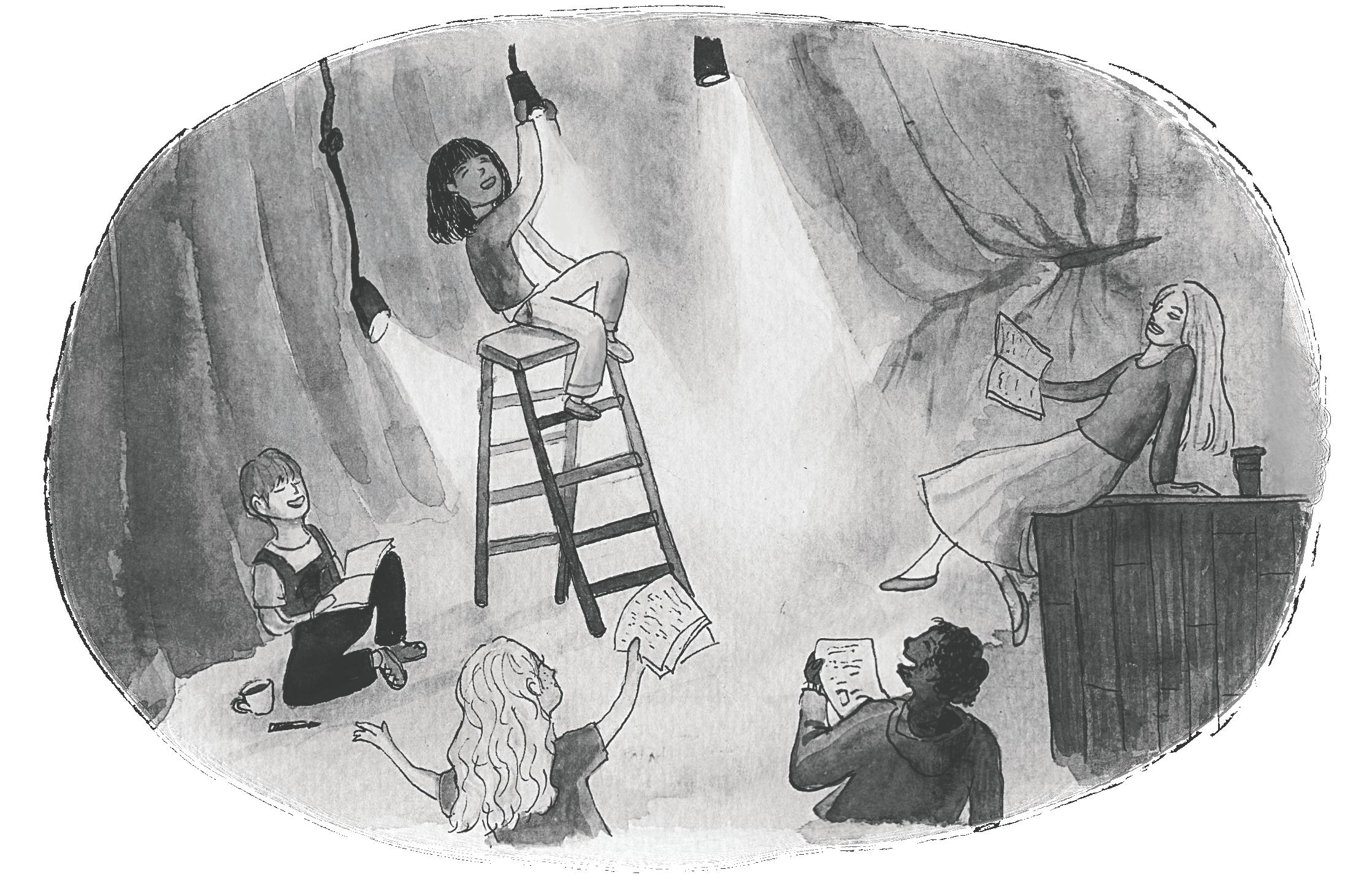
As B/T comes to a close, students have noted a growing sense of disconnect between their training at Trinity Rep and new structures and resources for theatermaking being developed at Brown, in large part by way of the Brown Arts Institute (BAI). Founded in 2021, the BAI describes itself as a “catalyst and incubator for the arts.” For Daniel Shtivelberg MFA‘26, “BAI is very vague.”
Last spring, for the first time since its opening in the fall of 2023, the B/T’ 26 cohort had a class in the University’s Lindemann Performing Arts Center, which is administered by the BAI. Shtivelberg said that a lot of his peers were eager to have class in the Lindemann’s new state-of-the-art rehearsal studios.
But Shtivelberg was never entirely convinced of the Lindemann’s offerings. What everyone came to realize, he said, is “how the shiny new thing is actually not super, super conducive to the kind of work that we do.” He described the more idiosyncratic rehearsal spaces at Trinity Rep as being much more inviting. Shtivelberg even said that the columns that break up Trinity Rep’s two main rehearsal rooms “spark heat” among students by challenging them to think more imaginatively about space.
Byers, on the other hand, had a different impression of the Lindemann. When he toured the brand new building with his cohort, everyone was thoroughly impressed, marveling at “all of this, and all of that,” before finding out that none of their year’s classes or performances would be held there. Although his class didn’t get much use out of the building, Byers expressed gratitude for other resources offered by the BAI, like grants for solo shows and free cameras on loan. Still, he was frustrated by the fact that the BAI’s resources were left “up to the students to kind of just figure out.”
The closure of the B/T program was announced amid this growing sense that the BAI’s resources were either inaccessible or mismatched with student needs. The program’s closure marked the creation of a new group designed to explore the future of graduate acting education at Brown. In an email to the Indy, Brian Clark, the University spokesperson, wrote that the “working group” is tasked with “examining trends, convening discussions to explore the future of the live arts, and proposing professional development models through which Brown and Trinity Rep can partner.”
Sydney Skybetter, the current director of the BAI and a member of the Trinity Rep Board of Trustees, helms the new working group.
Though he did not use the term “working group,” Skybetter wrote in an email to the Indy that he is working with leadership at Trinity Rep and Brown “arts
departments” in a “distributed, constellated fashion.” In an ambiguous first-person plural, Skybetter wrote later, “we’re not rushing to replicate what existed or to simply fill a gap.” Instead, he’s thinking about “deeper questions,” such as what “rigorous artistic training” looks like “in a research university.”
Skybetter’s particular concern about research-oriented artistic training responds to larger structural and financial trends at Brown. At a faculty meeting last November, a little over a year after the initial B/T admissions pause, President Christina Paxson explained that the University’s ongoing budget deficit results from Brown’s longterm shift from a liberal arts academic model toward a research-oriented model. At the same time that the University began the process to shutter the B/T program, it continued to support large-scale research investments, even in the face of a deficit.
The University’s increasing emphasis on research has been reflected in its funding structures for the arts. Although the BAI’s current mission statement emphasizes “audacious interdisciplinary creative research and practice,” artmaking at Brown has not always been envisioned in such lofty terms. The BAI replaced the Brown Arts Initiative in 2021, which itself replaced the Creative Arts Council in 2016. Whereas the BAI seeks to offer “unparalleled resources” and “cutting-edge spaces,” the Creative Arts Council had a more modest task: supporting “the goals of the individual creative art departments and programs.” The context of the research university has brought about flashier expectations for artistic resourcing on campus, turning attention away from students’ particular needs.
In alignment with the broader mission of the BAI, Skybetter’s constellation of interlocutors is thinking about how the performing arts can fit into the framework of the research university. Meanwhile, the faculty and students of the B/T program remain in the dark as to how their training failed to fit the bill.
The Brown/Trinity Rep MFA program was an engagement of coinciding interests between two distinguished institutions. But today, Trinity Rep and Brown’s ideals for the future of art-making are diverging. Trinity Rep continues to favor an holistic style of acting education, while the University moves toward increasingly research-oriented notions of theater. Instead of addressing the misaligned goals of training, Brown opted to stop collaborating altogether.
Brown’s abrupt exit also leaves unaddressed the critiques of disjointed administration surfaced in the external review. Tension is inevitable when varying
ideals for art-making meet the reality of operating institutions. Beyond the parameters of B/T, tension between artistic and institutional growth pervades Trinity Rep. Originally established in 1963 by a community of Rhode Islanders, Trinity Rep is now a multimillion dollar organization, and theatermaking is no longer its sole concern. In 2023, the Friends of Adrian Hall skater group accused Trinity Rep of not acting “in good faith as a neighbor” or upholding their “stated community values” when a proposed expansion to their historic downtown theater would have limited access to the only public skate park in Providence. An agreement was reached in 2025 to preserve the park, but the public debates cemented Trinity Rep as a powerful local decision maker that must also reckon with its place in the Providence community.
B/T, at its best, seemed to capture how institutional resources could build community, and its “loss is really crucial to acknowledge,” said Skiles. But the program’s closure “does not mean it’s a failure. Far from it.” Theatermaking, she said, must be built on collaboration between people, and there is no shortage of B/T alumni who will “continue to make extraordinary theater.”
Faculty members like Warren are also hopeful that professional training will continue at Trinity Rep in the future, with or without the financial support from Brown. “It was always about the people. And that’s where the ethos lives, that’s where the artistic priorities and principles live,” she said. “Those aren’t going to evaporate because we’re under different leadership or because the program ends.”
Institutionalizing art-making is its own balancing act—the stability offered by an institutional structure enables artists to engage deeply with their practice and creates boundaries to push against. Skiles noted the luxuries offered by the institutional framework: “Institutions can make promises. Institutions can offer up space and time and tuition-free environments.”
“But I’m not sure,” she said, of “placing one’s faith in institutions as these perfect containers.” Impressive buildings, grandiose titles, and systems of accreditation are superfluous to the foundations of theatermaking. “We are not meant to stay here forever. But we are meant to work in collaboration with each other for as long as we possibly can. There’s no expiration date to that.”
SEBASTIAN BOTERO B’27, BENJAMIN FLAUMENHAFT B’27, and CINDY LI R’26.5 are still playing Zip Zap Zop.
c Frequently, scrolling the main page of the New York Times, I see the following items all in a row: a photo of a bombing abroad, a headline about American classrooms, and a miscellaneous piece of elder millennial guidance: “What is ‘6-7’?” or “No-Chop, So-Good Peanut Butter Noodles.” Perhaps, to some extent, the form of the newspaper grid has always been a confusing conglomerate of competing genres, but has reporting on unspeakable violence and executive overreach ever cohered so seamlessly with listicles and lukewarm analyses of lifestyle? This is a Times of rather aestheticized reporting.
And, but, then again, the paper of record’s lighthearted approach to fascism can also beget such home runs as “Donald Trump’s Big Gay Government,” the late summer dispatch on the out-and-proud gay guy Republicans who work for the Trump administration. The piece was penned by Shawn McCreesh, a White House correspondent for the Times. (Page Six reports he’s dating Vanity Fair editor Mark Guiducci.)
McCreesh knows a thing or two about journalism, so he opens the piece in medias res. Washington’s most powerful men are gathered at the Ned, a private club near the White House. What follows is something like the setup to a joke: Charles Moran, a high-ranking official at the Department of Energy, is seated in a leather armchair, sipping a dirty martini. Officials and underlings visit Moran on rotation throughout the evening. The gag, we learn, is that Moran is gay.
To be more precise, he’s an “A-Gay,” a label McCreesh has ostensibly plucked from the early aughts. A GQ article from 2008 describes the A-Gay as that kind of gay guy who is “smarter, sexier, and far more successful than you’ll ever be.” A-Gays are found on yachts in Capri, in Gstaad, in Sag Harbor, and at Sundance. McCreesh writes the Republican gays in quite the same idiom: glossy-magazine-scene-report.
The Republican gays frequent the Ned and other elevated eateries: for instance, the Occidental, “a retro-chic chophouse on Pennsylvania Avenue.” They also convene at house parties, rooftop parties, and pool parties all across D.C. “The most coveted invitation for a MAGA gay in Washington,” writes McCreesh, “is to one of the parties that Mr. Thiel, the gay Trump megadonor, has been throwing at his mansion near Embassy Row.”
As McCreesh puts it, the A-Gay lifestyle falls somewhere between that of a statesman and the most laddish circuit gay. These Republican gays are fancy, by which I mean that their lifestyle appears rarefied. Their dining habits lean pricey, their fashion preppy, their social circles elite. They don’t necessarily have good taste, but they certainly look like power.
The liberal gays, by contrast, look a good deal more ordinary: one Democrat is caught “looking rakish in a gray Calvin Klein suit,” another “drinking pinot grigio and eating pigs in a blanket.” In fact, McCreesh’s portrait of this burgeoning gay Republican scene is contrasted with the mean, liberal gays who sow division all about town. The Republican gays are building a network; the liberal gays are bringing conflict.
McCreesh attempts to reveal the Republican gays’ hypocrisy by listing the Trump administration’s generally anti-queer policies: the administration has cut funding for HIV vaccine research and for LGBTQ suicide prevention services. McCreesh expects the
Republican gays’ nonchalant responses to read as self-contradiction. It’s difficult, however, to find hypocrisy in the Republican gays’ support for Trump when the administration’s policies to date are not likely to be so materially harmful for these particular gays. As for this fancy sort of gay man, as in the welloff, cisgender, gay man with politically correct taste, let’s say that Trump very well may be the friendliest Republican that ever has been. It probably isn’t true, but it ultimately doesn’t matter because Trump’s acceptance of the A-Gays doesn’t mean much for gay liberation; acceptance, here, looks more like subsumption under a totalizing whole than genuine accommodation of difference.
The Republican gays argue that the “battle for gay rights has basically already been won,” offering up themselves as evidence. In so doing, they are simply noticing the acceptance of a particular kind of gay lifestyle that was intended, from the start, to be acceptable. It’s why McCreesh’s punchline at the start of his article isn’t funny: it isn’t particularly offensive or surprising to find out that the men fraternizing in a private social club are gay.
Acceptability characterizes many fancy aesthetics adopted by gay men these days. I’m thinking, for instance, about @amuxnii, an Instagram account that assembles photos of really-hot-gay-men-in-glamorous-situations. In one video, we see black shoes in an elevator, a Rolex in a black car, suits on the streets of Manhattan: “He’s a gay man who works at J.P. Morgan.” In another, gay men on the hood of a vintage car, walking hand-in-hand through a gallery, in a marbled atrium: “Gay is normal.” The account puts forth sorts of gay lifestyles that are, at once, rather rarefied and completely normal. Normal, that is, insofar as they adhere to normal notions of masculinity; this is a sort of fanciness whose very aim is acceptability.
The account, to be sure, would put things the other way around: the fanciness is a result of acceptance. Take this text overlay: “Gay love is beautiful because it exists despite everything that tried to silence it.” Note the past tense “tried”; as with the Republican gays, @amunxii, with its fancy aesthetics, puts forth beauty as proof of victory over silencing, of acceptance already won. But one has a hard time thinking of the acceptance of men in suits, in offices, in museums as a particularly new social fact.
Perhaps, in reading McCreesh’s piece alongside @amunxii, you can see more clearly what I mean when I say that the Republican gays’ lifestyle looks rarefied. As far as aesthetics are concerned, I’m interested in McCreesh’s evident investment in the styles of living the Republican gays take on, in how their lives appear. @amunxii presents lifestyles collaged together out of images found online; McCreesh’s dishy profile describes the Republican gays in-scene, and thereby makes their lives appear.
Indeed, McCreesh seems intent on making the Republican gays appear as members of a distinct and coherent scene. He offers some light-handed critique of their politics, but he also seems entirely enthused by what they’ve got. Or, how they look, or where they go, or whom they hang out with. And yet, for all of McCreesh’s detailed suggestions of a particular Republican gay lifestyle, I ultimately can’t quite get past the fact that these Republicans mostly just look
( TEXT BENJAMIN FLAUMENHAFT DESIGN MARY-ELIZABETH
BOATEY ILLUSTRATION ANGELINA SO )
like Republicans. As with the gay aesthetics circulated on @amunxii, the Republican gays’ fanciness is heteronormative. Their social scene can’t exactly be distinguished from the surrounding heterosexual world.
But why does McCreesh portray these gays in distinct community? Why does he cohere their ‘scene’ into a New York Times “Style” piece?
I think, in a number of ways, gays have always been fancy. Or, at least, some gays, some of the time. I’m thinking about Truman Capote, the Fire Island Pines, Oscar Wilde, drag queens, opera, middle school boys in bowties, Broadway, and so on. Gay men are often caught up in generally rarefied aesthetic tendencies. And for all the many tales of gay guy loneliness, such fancy leanings often cohere around circumscribed gay guy groups. Think: yes, a millennial friend group weekending in the Pines; sorry to say, the perennial sophomore twinks; dandyism in general; and the fey, avante-garde poets of the New York School.
Fanciness might be found in a wide variety of objects from limp wrists to the 11 o’clock number, but most importantly fanciness is an aesthetic about hierarchy. Sometimes, fanciness simply speaks hierarchy (as in: I’m fancier than you). In writing and in art, the fancy object might speak down to its reader, rather ostentatiously. In the case of the A-Gays, fanciness is a lifestyle, a bit like, for instance, being “a bohemian.” Or, maybe, it’s like a digital aesthetic: fancy-core.
It seems to me that McCreesh, the legacy media gay that he is, would have at least an inkling of this particular aesthetic category and the sorts of gay groups by which it has been mobilized. He shows us the group of gay guy Republicans in all of their lavish glory, and in so doing, raises the question, doesn’t this look like gay guy community? The parties and dinners of the Republican gays look, perhaps, like a certain kind of historical gay collectivity. However, I see this portrait as a misapprehension, an incorrect historicization, of these Republicans’ plainly assimilated social circle. McCreesh latches onto the A-Gays’ fanciness as evidence of their apparently developing gay scene, but this fanciness, really, has just as much to do with their positions in Washingtion as with their being gay.
But fanciness, I say, really can work differently; there’s something to McCreesh’s inclination that fanciness might be indicative of gay community. The New York School, for instance, looks a good deal more gay in a specifically gay way. I see the fanciness of this mid-century avant-garde, as being, yes, an expression of its poets’ associations with dominant institutions, and, also, as simultaneously serving particularly gay collective ends. The Republican A-Gays are an elite circle of governmental gay men; this foppish group of poets and painters was an elite circle of art world gays. New York School writing was largely resourced by and organized around dominant art world institutions. Perhaps the most salient example of the group’s proximity to power was Frank O’Hara, who worked as a curator at MoMA.
In 1979, the interplay between the overlapping gay and institutional social worlds of the New York School was read into the language of O’Hara’s poetry by Bruce Boone, a fixture of New Narrative, a later
school of gay avant-garde writing. Boone thinks about O’Hara’s poems as sites of “competing language practices—the dominant language practice of the New York art world of the 50s and the oppositional language practice of gay men.” O’Hara’s work is characterized by a general lack of syntax and a taste for colloquialisms. In line with Abstract Expressionism, the dominant art world ideology of the time, critics would frequently read such elements as evidence of a kind of event of poetic composition, akin to Jackson Pollock throwing paint onto the canvas from above. Boone argues there is also a less overt, more oppositional gay aesthetic at play. He reads O’Hara’s leaping, talky, paratactic style as language that addresses gay men in particular while remaining illegible to the outsider. “With this self-defensive measure,” Boone writes of O’Hara’s parataxis, “the community speaks itself for itself, and not others.”
O’Hara’s poetry, then, is marked by his circle’s association with art world institutions, even as it also works to render his circle distinct from said institutions. In order to read this dynamic of fanciness as distinct from the dynamic I read in McCreesh’s profile of the A-Gays, we might think of the A-Gays’ lifestyle as structurally analogous with O’Hara’s poetics; whereas the A-Gays’ fancy lifestyle is simply an expression of heteronormativity, O’Hara’s language at once reveals his institutional connections and speaks specifically to gay men. O’Hara’s language is hierarchical insofar as its style is aligned with Abstract Expressionism. And, but, the opacity of this very style allows his poetry to narrate his circumscribed gay community. For Boone, it is O’Hara’s capacity to narrate or to call upon a community that makes his aesthetics, specifically, gay. We might, therefore, name as specifically gay what I’ve been calling O’Hara’s hierarchical, fancy aesthetic insofar as this fanciness brings about community.
I will say that I’m wary of the double-edge of gay appearances that queer theorist Lee Edelman describes in the eponymous chapter of his book
Homographesis. Edelman writes that “while the cultural enterprise of reading homosexuality must affirm that the homosexual is distinctly and legibly marked, it must also recognize that those markings have been, can be, or can pass as, unremarked and unremarkable.” He warns us, then, against reading a subject as gay without also staying with the possibility of misreading that very subject. Edelman destabilizes the very logic of identity by which the reading of a gay subject might be possible in the first place. This logic of identity sustains the heterosexual insistence on a strict division between sameness and difference.
On the one hand, my reading of fanciness is attentive to Edelman’s destabilization of gay identity. Even as McCreesh takes the A-Gays’ fanciness as indication of gay community, I question whether their fanciness even has to do with their being gay. Fanciness, as a mark of gayness, is hardly hard and fast.
But, then, what follows from Edelman’s deconstruction of identity is a gay politics that is uninterested in community entirely. Edelman argues that the very insistence upon gay community as a means for gay liberation is itself premised on the logic of identity that a gay politics ought to refuse. For gays to gather together as gays, distinct from heterosexuality, each individual must first affirm the self-sameness of his gay identity. However, Edelman unsettles this very notion of self-sameness by bringing to light the difference internal to any supposedly stable identity.
We might then question Boone’s reading of O’Hara’s community-building language as being necessarily oppositional. Boone finds political utility in O’Hara’s poetics of community; by speaking directly to gay men, O’Hara’s poetry might thereby organize these gay men, distinct in their gayness, against the violence of dominant institutions or the threat of total subsumption to heteronormativity. Edelman rejects a gay politics of this sort, of gay men united in their difference.
And yet, I get the sense that gay community still really does matter: real gay community, distinct in its difference. Trump’s systematic deportations (themselves, removals of difference), stoking of anti-trans panic, and general homogenizing impulse are all very

present threats that require organized opposition. Why can’t we have specifically gay collectivity, undone in its very specificity? Why can’t we have community without stable identity? +++
I think there might be more to O’Hara’s fanciness than the community-building Boone points us toward. I’ll begin with “Poem” (1959). O’Hara attributes to his lover Vincent such a fine opinion as “Ionesco is greater / than Beckett.” Later on, the speaker, the poet: “so I get back up / make coffee, and read François Villon, his life.” O’Hara is really quite the reader, and I’m especially interested in the kind of relationship he brings us into when he writes a scene of reading. O’Hara reads François Villon, and I am instantly brought close to the poem’s “I,” for I am also a reader, am reading at this very moment. And then, I’m at a distance as I remember I’m reading Frank O’Hara, not François Villon. Linking this reading to the biographical fact of O’Hara’s erudition, one can see how O’Hara’s scene of reading is about hierarchy. It’s simple: I behold the poet’s impressively glamorous reading habits. Then, or perhaps in the first place, I am brought to even ground with the poet as I remember we are both, at the same time, reading. And yet, upon being acquainted with the poet, I keep with me the feeling of distance, of being below his fancy reading.
O’Hara as bibliophile, as aesthete, writes a hierarchized scene of reading, and in so doing brings the reader into the kind of relationship that models participation in a circumscribed group. That is, the reader is brought into the group, while keeping close the feeling of being outside of the group; he feels the group’s specificity. Or, perhaps, this fluctuation between proximity and distance is closer to Edelman’s imperative to destabilize identity altogether. Even as the reader reads alongside the poet, the two must necessarily be reading different things; I am reading O’Hara, the poet something else. Any apparent identification must also carry a difference with it. I’d like, I think, to take O’Hara’s fancy aesthetic as doing both things at once: bringing the reader into a specific relation while also destabilizing the very notion of identity by which that relation might be thought to be specific.
In “Saint Paul and All That,” the poet puts his own reading above the reading of “you”:
I read what you read you do not read what I read
As with much of O’Hara’s work, the address is intimate, evidently spoken to somebody in particular. We behold the extent of O’Hara’s social scene. But what if I take the “you” as myself? The “you” becomes split: either O’Hara’s friend or me. I feel, at once, the relation of the poem, this relation’s specificity, and the unsettled identity that makes up this relation, the difference internal to “you.”
Reading together, reading apart, reading together all the same; addressed by the “you,” but then, perhaps, not really. The biographical facts of O’Hara’s fancy lifestyle, his reading habits and his extensive social circle, come to bear on his poetry, hierarchizing the relation between poet and reader. The effect of this hierarchy can be read two ways: the formation of a specific relation and the troubling of the terms by which this relation might be thought specific.
Here is the force of a genuine gay fanciness. I’m talking about something different from the assimilable rarefied lifestyle of the A-Gays, and something more than Boone’s notion of a community-building language practice. I’m talking about a way of making gay lives appear, a gay aesthetic, that balances the defining of distinct community with the undoing of identity. Together fancily, which is to say specifically without specificity.
BENJAMIN FLAUMENHAFT B’27 recently realized that y’all does not in fact mean all…it means you all...or does it?


c The opening lines of “Naked Patients,” a song I love by the alt-rock band Happyness, go: “There’s something so funny about a sick body / and the things that it does that it shouldn’t do.” The title itself conveys a sense of absurdity, conjuring images of raving, stircrazy disease victims sprinting disrobed through hospital hallways.
( TEXT CAMERON CALONZO DESIGN ROSE HOLDBROOK ILLUSTRATION MERI SANDERS )
In May of this year, I spent every day, from sunrise to sunset, at Anaheim Regional Hospital in California, accompanying my mom in her various states of unconsciousness, pain, and fear. A meningitis infection was ravaging her, as she had already been immunocompromised from seven years of dialysis treatment for end-stage renal disease. The doctors told us after she had mostly recovered that they didn’t think she would ever make it out of the hospital. But even when she was firmly in the grip of psychosis, she never ran around naked or shouted at the nurses. Her next-door neighbor in the critical care unit did, though. Some days we’d hear him screaming “FUCK GOD” and I’d try to stifle a laugh. Other days I was more somber and empathetic. Even when I did laugh, I never felt any scorn for him, or amusement at his mania. I think that after so many hellish days spent on a stiff chair next to my mother’s limp, machine-breathing body, I was searching for something, anything, to lift my spirits.
+++
Maybe something is lost within you when you’re sick. After about a week on life support, the doctors were finally able to wean my mom off the ventilator. They removed her chest tube, which meant that as soon as her throat readjusted to being empty, she would be able to speak normally again. It took longer than expected for this adjustment to happen—for the first few days, she sounded like a ghost, or a smoker. It wasn’t just her voice that was different either: my mom, a child of the most high God, kept saying things like “I’m in hell!” Or, when I would stand at her bedside and cry, telling her how much I loved her and how strong she was, she would simply roll her eyes and look away. She would thrash about, to the point where the nurses restrained her limbs to stop her from hurting herself or others. Now, she tells me that she thought she was being abducted by aliens, and that’s why she put up such a fight.
+++
In the film Gummo, two scrawny ‘white trash’ rascals break into another boy’s house, planning to get revenge on him for killing some of the cats they were supposed to kill (for money) (it’s a weird movie). Once inside, they realize that the boy isn’t home: all they find are some photos that he’s taken of himself crossdressing and his comatose grandmother hooked up to life support in her bedroom. She’s catatonic, lying with her hands clasped over her chest like a corpse on display at a wake. She has barely any hair on her head, and the loudest sound in the room is her mechanical, uncannily rhythmic breathing. The elder of the two trespassers, Tummler, says this is “no way to live” and pulls the plug: “She’s always been dead.” He has a point. There’s not really any such thing as “brain dead”—without presence of mind, a body is nothing; the heart doesn’t know it needs to pump, the lungs don’t know they need to expand and contract. What about a present mind with a malfunctioning body, then? What do we call that?
+++
In her essay “Illness as Metaphor,” Susan Sontag argues against illness as metaphor. She says, “The
most truthful way of regarding illness—and the healthiest way of being ill—is one most purified of, most resistant to, metaphoric thinking.” Artistic figurations of sickness as other things—as a journey, as a weight on one’s shoulders, as a supernatural force—can be affecting, but they are perhaps the furthest thing from representative. To me, at least, pain does not feel like anything other than pain. While it often lends itself to abstraction in hindsight, in the moment, there is nothing interesting or fantastical about it. It just hurts, until it doesn’t. Metaphor is transmutation—one thing becomes another, more exciting thing. As much as we long to, we cannot transmute our bodies into something different or better. Modern medicine works wonders: it can transport a body from the “kingdom of the sick” to the “kingdom of the well” in a matter of days, hours, even minutes. But what it cannot do is instantaneously turn sickness into something it fundamentally is not. The sickness subsides, and is often eventually eradicated, yet for the moment, it remains.
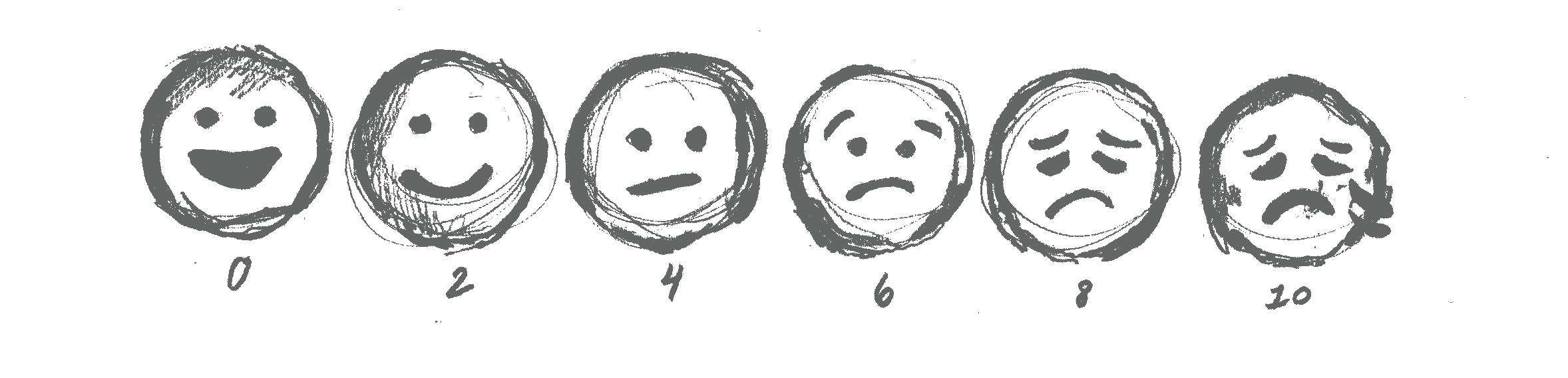
Political prisoners subjected to physical and psychological torture often recount their experiences as contrary to general conceptions of a linear pain response. Instead, political prisoners report that as more violence is inflicted on their bodies, their ability to feel pain diminishes. One man whose tormentors burnt his flesh with a torch attested, “It did not hurt too much because I was so feeble that I did not care.” Another torture victim called beatings ineffective because “after the first few blows, you don’t feel anything.” Many also report that the different variants of pain—burning, freezing, aching, cutting, and so on—often combine to create not a greater sum of suffering, but a reduction in discomfort. After a finger was severed from his left hand, a victim claimed that subsequently losing a finger from his right hand did not double the pain, but instead replaced and relieved the initial pain. Torture as a method of extracting information is predicated on the assumption that the further you push the body, the easier it is to break the brain. However, contrary to what diagrams like the Wong–Baker Faces Pain Rating Scale might lead one to believe, pain does not correspond to some abstract unit of measurement (zero = smiley face = no hurt), and there isn’t necessarily a direct correlation between the amount of discomfort one experiences and the severity of bodily injury.
In his book Feeling Pain and Being in Pain, Serbian philosopher Nikola Grahek articulates two inverse distortions of human pain responses: “pain without painfulness” and “painfulness without pain.” In both cases, pain is not a proportional biological reaction to physical harm, but rather separate and contradictory. This complicates the idea of a “breaking point,” the concrete threshold of injury which the body can endure. Even the ultimate threshold, that of life and death, is malleable. Once she had recovered, my mother described her experience of going into cardiac arrest—her disembodied self approached a river of robed apparitions, one of them my late grandfather, before suddenly being pulled back by Jesus. All this is to say (as is usually the case): maybe things aren’t so binary.
+++
For the past seven years of my life, I’ve gotten these enigmatic fainting episodes every few months. It starts out with some relatively mild abdominal pain, similar to indigestion, which then intensifies over the next 30 minutes until I pass out. I’ve felt that these
episodes send me into an altered state of consciousness. Sometimes I’m snappy, even aggressive towards the people trying to help or comfort me. Other times I’m reduced to sobs, a Jesus-on-the-cross, why hast thou forsaken me kind of desolation. My mind goes to strange places when I’m in this much pain: once, as I was drifting along the shore of consciousness, all I could think about was a memory of eating lunch next to the playground in elementary school, trying to finish as fast as I could so I would have more time to play handball. There was nothing especially distinctive about that day, nor was I reminded of it by anything in particular in my immediate surroundings. It’s important to note that all but one of these episodes happened in the comfort of my home. It was as though the pain, coupled with the familiar environment of my childhood bathroom, had unlocked this one hyper-specific, arbitrary moment in my life. It’s strange, a bit like déjà vu, lacking an identifiable trigger. In the only episode I’ve had in public, I collapsed on the floor of a Vietnamese restaurant while waiting for my takeout pho order, and the EMTs wheeled me out on a gurney.
+++
After my mom’s big health scare last May, I began the long, convoluted process of screening to become a kidney donor. Before all the physiological testing— which included a 48-hour urine collection, 35 tubes of blood, a CT scan, and a 24-hour blood pressure cuff— they gave me an initial psychological evaluation. This seemed to be aimed at identifying any obvious issues which might complicate my viability as a living organ donor and, of course, ensuring I was aware of the numerous risks associated with the procedure and its aftermath. Some real questions they asked me: “How would you feel if your mother’s body rejected your kidney?” “How would you feel if you developed kidney disease after donating?” “How would you feel if your mother died on the operating table?” (to which I deftly responded “Probably really sad”). In the end I was disqualified—apparently the way my arteries are positioned makes it unsafe for them to surgically remove my smaller kidney. Upon learning this, I felt a great deal of grief. I’d been holding out hope for years that when my mother’s end-stage renal disease worsened, I would eventually be able to sacrifice a part of myself to heal her, and it would be a great, selfless decision which made us both better off. Her healthy again, me righteous and heroic. That can’t happen now, but I can’t say a part of me wasn’t relieved. I don’t think I’d be strong enough to handle it all.
CAMERON CALONZO B’28 has an ambulatory electroencephalogram coming up.

( TEXT ELLIE WU
ILLUSTRATION LILY YANAGIMOTO )
c On a sunset walk by the lake, I asked my mother what she appreciated most about moving to the U.S. when she’d left so much behind in China. She told me, staring out at the rippling water, that she loved the nature of our Pacific Northwest—the mountains we’d hike every summer, the tiny wildflowers that sprouted in the spring, the skiing to chase away the wintertime blues.
Although my mom loves being active outdoors, her knees have been crackly since I was a kid, which she attributes to the damage done in her 20s by a blustery Qingdao winter. Lately, the stiffness had been getting worse, coinciding with trouble sleeping and mood swings. My mom was 50-something and going through perimenopause. She decided to go to physical therapy, asking me to come along in case she didn’t understand some of the staff’s English instructions.
The white-haired woman helping my mom with her exercises told me that menopause could cause a 20% loss of bone density, and might be contributing to my mom’s weaker knees. I was shocked, and worried—one/fifth was no small number. The physical therapist recommended Hormone Replacement Therapy (HRT), which could reduce menopausal symptoms including bone loss, sleep disturbances, and irritability. It was a common treatment, she advised us, which many women choose to take in order to combat the effects of aging.
The term menopause was coined in 1821 by the French physician Charles-Pierre-Louis de Gardanne, combining the Greek words men (month) and pausis (cessation). Before Gardanne’s standardization, menopause was commonly referred to as a “critical age” or “women’s hell” by male physicians in France and Britain, reflecting an understanding of menopause as a sort of “crippling disease.” Theories on the possible causes of this ‘affliction’ date back as far as ancient times: In his dialogue Timaeus, Plato proposes the notion of the “wandering womb,” which he describes as an “animal […] desirous of procreating children.” When “remaining unfruitful,” the womb would get “angry” and wander throughout the body, obstructing breathing and “causing all varieties of disease.”

Over 2000 years later, Western thinkers continue to conflate menopause and disease. In 1966, the American gynecologist Robert A. Wilson published his bestselling book Feminine Forever, writing that “[m]any physicians simply refuse to recognize menopause for what it is—a serious, painful and often crippling disease.” However, this “disease” was treatable: Wilson argued that through estrogen therapy (a form of HRT), “every woman alive today has the option of remaining feminine forever.”
In 1942, 25 years before Wilson’s book, the Food and Drug Administration (FDA) had approved the synthetic estrogen Premarin to treat the hot flashes, joint pain, mood swings, and other symptoms that can accompany menopause. However, Premarin, whose name refers to the drug’s extraction from the urine of pregnant mares, did not become popular until shortly after the publication of Feminine Forever. In the decade that followed, Premarin became the fifthmost prescribed drug in the U.S., rising to number one by 1992
These included preventing heart disease and even blindness, which had not been endorsed by the FDA. Wilson’s son even revealed that his father had been paid by Wyeth to promote the drug.
Public opinion on menopausal hormone therapy and other estrogen therapies continues to be contested. Recent data compiled by the FDA suggests that HRT can be administered safely in the shortterm: According to the FDA, starting HRT within 10 years of the onset of menopause can have numerous benefits, which for most women outweigh potential risks. The WHI, on the other hand, cites its previous 2002 study and points out the lack of sufficient research and drug trials to inform decision-making about taking HRT. Currently, Premarin’s website lists the drug’s harmful side effects, noting that they depend on the duration of treatment and their combination with other medications.
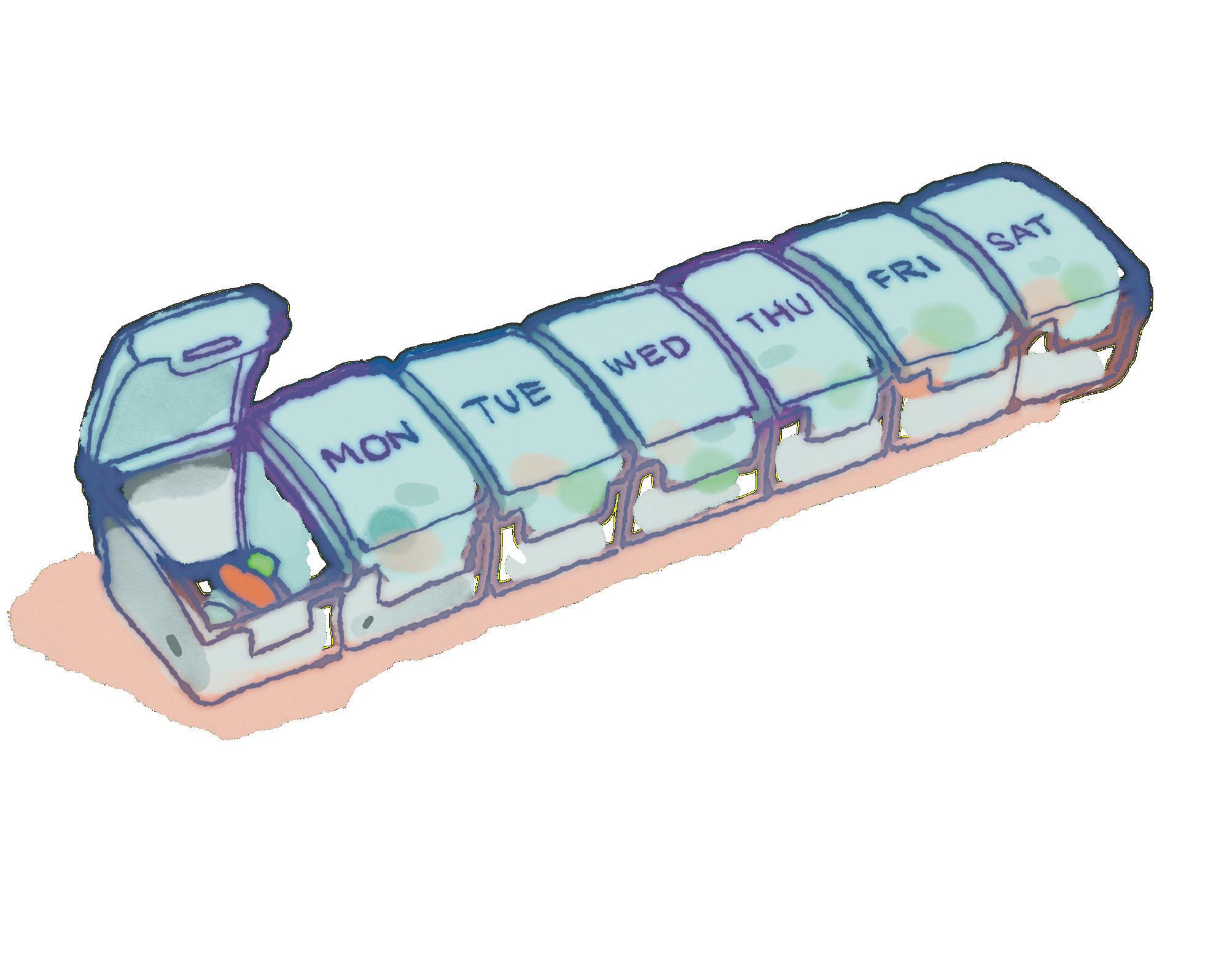
In his promotion of Premarin in Feminine Forever, Wilson described aging women as “flabby,” “shrunken,” “dull-minded,” and “desexed.” To Wilson, being “feminine” was equivalent to being young and sexually appealing to men. If a woman refused HRT, the consequences would be “unthinkable,” since, according to Wilson, “[a]ll post-menopausal women are castrates.” Through this disparaging language, Wilson portrayed the natural process of menopause as a deficiency disease which had to be treated.
Viewing post-menopausal women as diseased stigmatizes the natural process of aging, implying that women are only valuable to society for their youth and attractiveness. Furthermore, this understanding of menopause as a deficiency implies that a woman is not a woman without her reproductive ability. Reducing women to wombs, this view of menopause as a deficiency disease signals that women’s reproductive function is their only value within society.
stress reduction techniques for emotional well-being. Menopause is viewed as the “second spring,” when the female body enters a new stage, shifting from fertility and reproduction to conserving and nourishing the self.
This view of menopause reflects TCM’s holistic approach to healing. The ancient text The Yellow Emperor’s Classic of Internal Medicine, dating to around the second century BCE, posits that diagnosis and treatment for any condition must be predicated on a recognition of environmental and personal factors. TCM continues to practice this philosophy in which health is not only grounded in a healthy body, but also dependent on maintaining balance with nature and one’s surroundings.
In her influential 1991 book “Whose Science? Whose Knowledge?,” the American philosopher Sandra Harding argues that science is not valuefree, but one of the most ideological practices in modern society. Although we may view science as concrete truth, the history of women’s health shows how science is deeply influenced by prevailing patriarchal norms. Terminology, too, is an ideological practice: The term hormone “replacement” therapy itself is revealing, implying that the natural loss of hormones post-menopause must be corrected. It also misleadingly suggests that HRT restores the body to a pre-menopausal state, while HRT simply regulates levels of estrogen and progesterone through a fixed dose in 24-hour intervals. This is to ensure that these hormones activate the relevant receptors to minimize specific menopausal symptoms, rather than mimicking the monthly cycle of estrogen and progesterone fluctuation. But this idealization of the pre-menopausal state necessarily encodes the view of menopause as a disease with ‘symptoms,’ contributing to Western medicine’s pathologization of the female body’s natural changes.

Although TCM was also developed within patriarchal structures, it provides an alternative to the Western biomedical model which separates body from mind and defaults to male anatomy. Aiming to balance energies within an individual, TCM recognizes that each person is different. This emphasis on personalization as key to good health allows TCM to identify menopause as a natural stage in women’s lives, rather than a pathological aberration deviating from the male standard.
Its popularity suddenly plummeted after a 2002 federal study from the Women’s Health Initiative (WHI) revealed that Premarin was associated with increased risk of stroke and breast cancer. Lawsuits against Wyeth, the developer of Premarin (now acquired by Pfizer), identified how the company had advertised Premarin’s supposed greater benefits.
An alternative to this rather antifeminist view exists in traditional Chinese medicine (TCM), which views menopause not as a disease, but as a natural part of a woman’s life cycle. In TCM, menopause stems from shifts in qi, a medical and philosophical concept. Qi is thought of as the invisible, fundamental substance of the universe, which manifests in two complementary and opposing attributes, yin and yang The human body is also believed to be a microcosm of the universe with qi as the lifeforce that circulates throughout, providing energy to organs and protecting them from pathogens, ensuring the smooth function of bodily processes.
TCM theorizes that our lives follow cycles of qi, from early childhood to old age. A woman’s life is divided into seven-year cycles; the beginning of the seventh cycle at the age of 49 marks the onset of menopause. During this process, the qi of the tian gui—a vessel governing reproduction—begins to decline, resulting in an imbalance of yin and yang energies in the body. To restore balance, TCM prescribes herbal medicine to alleviate dryness, foods with cooling qi to counteract excess yang in the body, and
Although I had initially been worried for my mom, I realize now that menopause is simply a natural part of aging, appearing differently for everyone. Over the phone, I found that my mom was actually never afraid of menopause. She told me that she wasn’t even sure if her knees or sleep disturbances were effects of her perimenopause, since she’d always had a bit of trouble sleeping after coming to the U.S.
+++
When my mom and I got home from physical therapy, I told my mom to ask about HRT at her annual medical examination. But her female Chinese American doctor told her that she didn’t need HRT. In fact, she told us that my mom was looking especially good for her age, likely because of all her biking and skiing and pickleball-playing. For her perimenopause, the doctor said it would be okay to just keep doing her knee exercises and following her health regimen—a mix of American pills and Chinese remedies like swallow’s nest soup.
ELLIE WU B’28’s mom’s knees are feeling stronger.
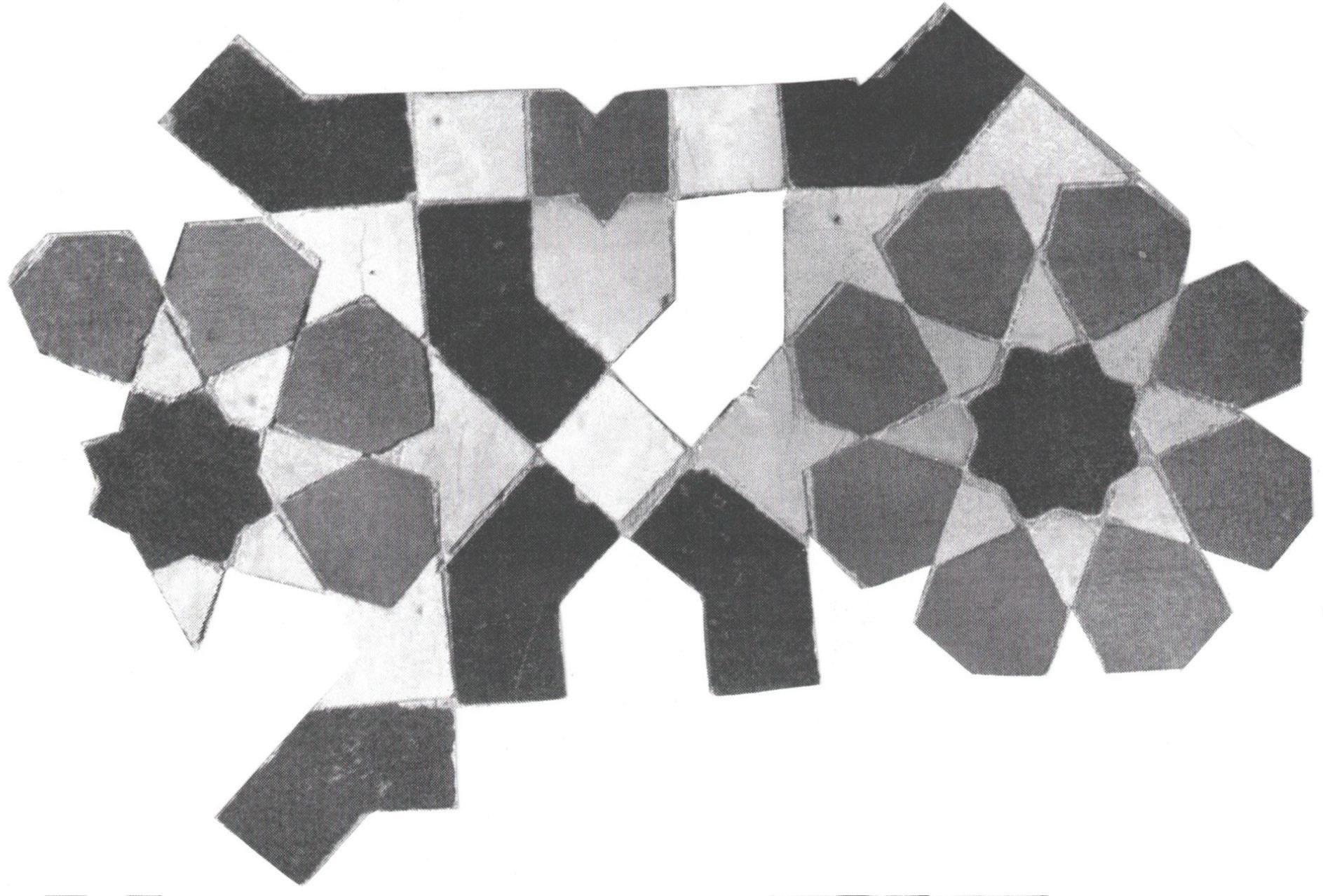
c There is something strange in how we speak of Israel’s destruction of Gaza. I recall the furor unleashed by genocide scholar and Brown historian Omer Bartov’s opinion piece in the New York Times this July, which concluded that Israel’s actions in Gaza constituted a genocide. The Times has, in the past two years, published at least 40 pieces addressing this question, including one from November of 2023 in which Professor Bartov argued the opposite. We—by ‘we’ I mean ‘well-meaning liberals’—ascribe an almost priestly quality to these determinations: If Bartov/the International Court of Justice/[insert your favorite well-respected institution/scholar here] declares that Israel is perpetrating a genocide, then surely someone will do something about it. It is as if we are awaiting an encyclical from the Vatican that will render the atrocities we consume from afar understandable and, consequently, soluble.
I have been thinking, amid this frenzy, about the concept of genocide—about the work that it does, and about the ends that it serves. Polish-Jewish lawyer Raphael Lemkin coined the term genocide in his 1944 book Axis Rule in Occupied Europe, which found wide readership in the United States as World War II drew to a close. “New conceptions,” wrote Lemkin, “require new terms. By ‘genocide’ we mean the destruction of a nation or of an ethnic group.” Novelty mattered to Lemkin; he did not want yet another word for the horrors of war, which had already been treated extensively since World War I. He wanted, rather, a way to describe the essential difference inherent to Nazi Germany’s campaign against Jews, Slavs, and Roma—that difference being its destructive intent, that the mass death of these peoples was not incidental to, but instead the motive for, the plans of Hitler and his cadres.
Lemkin knew of earlier mass killings; his plans for a monograph on the history of genocide contained such chapters as “Genocide against the Aztecs” and “Genocide by the Germans against the Native Africans.” The novelty of genocide, then, was conceptual more than empirical. What Lemkin really introduced was a new kind of naming: a term that could lift certain types of violence out of the ordinary and
place them in an exceptional category, one characterized by civilizational rupture and the total unmaking of a people. Genocide was to describe the forced “disintegration [...] of national groups,” and thus depended on imagining its subject as a kind of ‘world’ whose destruction could be figured as ontological break, rather than mere accumulation of death. By naming this disintegration and therefore exceptionalizing it, he gave the designation the force of judgement: a speechact that would bind reality rather than just recording it.
But to make such a judgement demanded a vantage from beyond the ‘world’ being destroyed—a judge at a remove from the event to be classified. Only a year after Axis Rule’s publication, Soviet soldiers were raising their flag over the Reichstag, and Hitler’s body was being doused with petrol. The Allied victory gave mid-century internationalists exactly this vantage: The 1945–46 Nuremberg trials of Nazi officials were to allow the victors to stand outside history long enough to identify and condemn the alreadyended event, and thus prevent its recurrence. It was to be, in essence, a secular Judgement per above.
That posture was an illusion. The judges’ power to name derived not from their metaphysical removal but rather from the application of sovereign power— the court could speak as final authority only because it spoke for the victors. The pretense of universality (embodied in the charge of “crimes against humanity”) concealed the tribunal’s contingent nature: had Germany won, there would have been no tribunal at all, no humanity to speak in its own name, no ‘event’ to categorize. The extrahistorical stance was possible only because history had already been decided; the pomp and circumstance surrounding the naming of the crime was but decoration atop the total victory that had already been achieved.
+++
My great-grandmother was born in Saaz (now Žatec), a small city in the German-speaking Sudetenland region of Czechoslovakia. She was thirteen in 1938, when Adolf Hitler annexed the region; she and her family left on the last train out of the country. The
( TEXT COBY MULLIKEN DESIGN BENJI NATAN ILLUSTRATION SEOYEON KWEON )
choice was prescient. By May of 1939, more than 20,000 of the roughly 25,000 Sudeten Jews had been deported; few Jews remained by the time Allied forces liberated the Sudetenland from Nazi rule in May of 1945. With the end of the war came reprisals: In 1943, the Czechoslovak government-in-exile had adopted a resolution to deport Germans from recaptured territory, and, as soon as its monopoly on legitimate violence had been restored, took to implementing it. In June of 1945, the reconstituted Czechoslovak military arrived in Saaz and rounded up some 5,000 of its male German residents. Czech forces marched the Germans to the nearby town of Postelberg (now Postoloprty), where 2,000 of them were shot.
The “final solution of the German question,” as put by Czechoslovak president Edvard Beneš in November of the same year, was far from secret. Leaders like Churchill, Beneš, and Stalin openly discussed the expulsions, couched for liberal audiences in the language of security and administrative reality, and, for the war-wearied masses of Eastern Europe, in the language of revenge and collective punishment. Some 12 million Germans would ultimately be displaced—the largest movement of an ethnic group in European history. The explanatory framework for so massive an application of sovereign power was that of the “population transfer,” a term enshrined in the 1945 Potsdam Agreement, which encouraged occupying powers to undertake the “orderly and humane transfer of German populations” into Germany proper.
Population transfer was not a description, but a redescription. In framing the forced transfer—and, in many cases, massacre—of Germans as administrative necessity rather than the unmaking of a world, the victors carved an exception out of the exceptional category (genocide) they were in the process of inaugurating. The deprivation of the ‘human rights’ of Germans and the prosecution of the deprivation of the rights of Germany’s victims were not mutually exclusive but rather mutually reinforcing. Just months after President Truman’s delegation signed off on the mass deportation of Germans at Potsdam, his chief prosecutor Robert Jackson was preparing
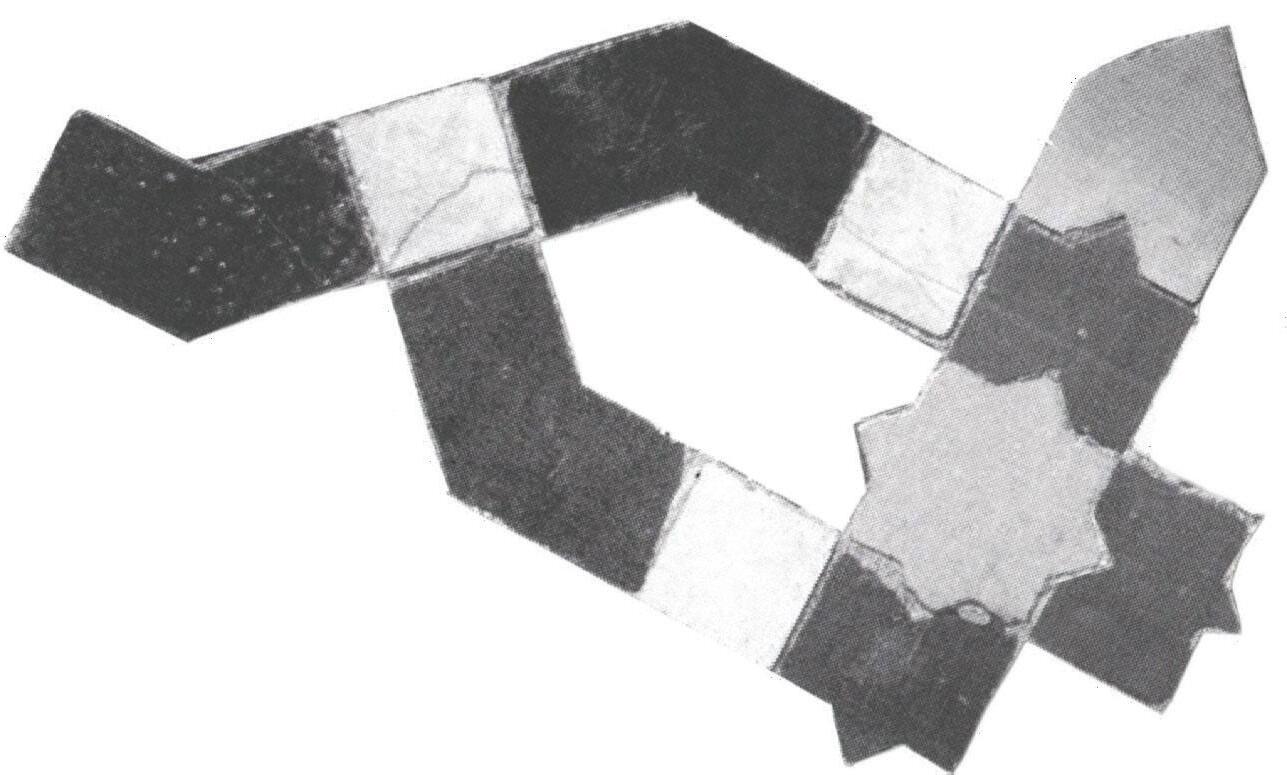
destructions—that is that of World War II’s agressors— were being concurrently named out of universality.
Potsdam and Nuremberg revealed the tenuousness of ‘genocide’ as a clarifying speech-act; the power to name the absolute crime lay with the same sovereign whose ‘power to except’ (and thus justify) violence could produce the very crime it prosecuted. Universal categories (like “crimes against humanity”) appeared, in this light, to be mere fig-leaves for realpolitik; the power to name, rather than enabling absolute clarity, might enable only obfuscation. Such was the prediction of German legal theorist—and Nazi jurist—

Carl Schmitt, who in 1932 warned that a war waged in service of lofty universal ideals like “pacifism” would, ironically, be “unusually intense and inhuman,” since the enemy of such ideals would necessarily be an enemy of humanity, and thus would have to be “not only [...] defeated, but also utterly destroyed.” Indeed, just as Nazis were being deemed enemies of humanity at Nuremberg, analogous violence was being enacted across Central and Eastern Europe.
Key, for Schmitt, was that every political community (even those like ‘humanity’ that claimed universality) concealed a decision: who was friend, and who was foe. Whoever made such a decision was necessarily the sovereign of that community—“Sovereign is he who decides on the exception,” as put in his 1922 treatise Political Theology. The legal order, Schmitt was saying, appeared universal only because it could be suspended; the decision to name one instance of destruction ‘genocide’ and another ‘population trans fer’ would always rest with the sovereign. Genocide, that is, could only be produced alongside that which was not genocide, and vice versa. The sovereign was not so much discovering the distinction between two types of violence as drawing the sovereign had to sit beyond the norms they suspended, and indeed beyond the acts and subjects they judged.
Schmitt saw this position as fundamentally theologi cal. Whereas God had once occupied this ‘place beyond’ (the norm) from which abso lute judgement could be pronounced, the sovereign atop the modern state now filled an analogous role: they would stand outside the legal order, suspending it where necessary, and in turn determining which lives were protected and which lives were marked for destruction. The sovereign, that is, was a sort of secularized God-figure. (Schmitt was not an atheist; he merely observed that Western Europe had ceased to think in terms of theology; that, in a sociological sense, God was dead.) The universal categories at the disposal of this sovereign—humanity and crimes against it— inherited too a theological structure. They presumed an external vantage point from which they could be applied, a subject so authoritative that its use of the
categories (via naming, designation, discernment) would itself constitute a fulfillment of the categories’ prophetic power—one whose indictment of a crime would be equivalent to its prosecution of it.
This is naming at its most powerful: God’s words have force, a transcendental force that remakes rather than describes. And it is this force to which we moderns have aspired in our genocide conventions and international tribunals and haughty opinion pieces.
If we take for granted that naming and action have been divorced from one another—that their apparent alignment at Nuremberg was momentary and inci dental—it would be appealing, amid the impotence of the Western left in the face of Gaza’s destruction, to harken back to a time in which the two were more closely bound. We find such a world in the Hebrew Bible. “Now go and smite Amalek,” Samuel commands King Saul in 1 Samuel 15, “and utterly destroy all that they have.” God has named Amalek, a nation at war with Israel, herem—subject to total destruction. This naming is not a description but an imperative: designating a people for destruction is coterminous with executing that destruc tion. The dutiful Saul immediately carries out God’s will, killing all of the Amalekites save for their king, Agag, and sparing his best livestock—that is, “all that was good.” For this he is reprimanded by Samuel, God’s messenger, who proceeds to “[hew] Agag in pieces.”

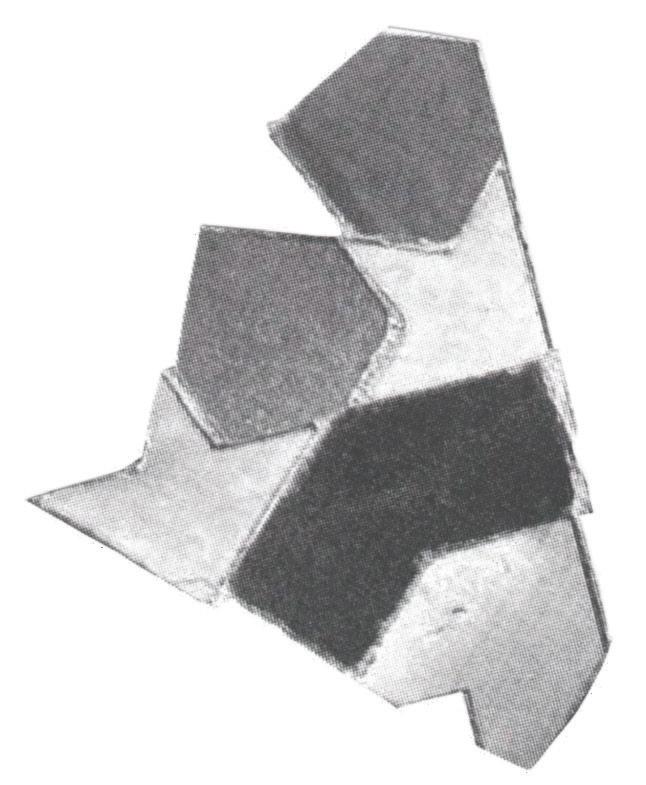
face of a state that says, ‘I will do this because I can,’ is an unsettling reality. Genocide is supposed to be a crime so total that it commands the world; Gaza exposes a world beyond this command.
Prophecy is easiest in retrospect. The Holocaust, the Rwandan Genocide, Srebenica—in each case, genocide, as concept, drew its apparent power from its ability to condemn and constrain after the fact, to produce absolute clarity in the face of absolute rupture. But just as the near-term eschatologies of AM radio pastors (‘The rapture will come this July!’) quickly lose their credibility as their end dates elapse, genocide too loses its power as the evil it names continues. Prime Minister Benjamin Netanyahu, after all, gleefully ignored the ICJ’s 13–2 decision to mandate Israel’s withdrawal from Rafah last May. That decision only underlines how much of the theological remains in our supposedly secular thinking of genocide. We still talk as if an international court can deliver a kind of earthly Last Judgement, but no state is bound to treat it as such— Israel certainly has not. The theological interdiction persists even as its worldly power withers. At worst, some will say, the concept is ineffectual. Even if it cannot produce change on the ground, perhaps it can still create moral clarity in the face of the incessant whinings and denials and distractions of the Ritchie Torreses of the world. We tell ourselves that the word remains intact—that even if it cannot stop the bloodshed, at least it can name it.
What Saul violates is the totality of the designation: to spare even one Amalekite is to undermine the potency of the herem category—to equivocate on a question of absolute good and evil. Herem is not a label that follows the act it describes, but one that names the act into existence; this process of naming is a total one, in that it creates an indivisible whole (Amalek) to be destroyed, in turn dissolving its constituent parts (King Agag, the livestock, and so on). This is naming at its most powerful: God’s words have force, a transcendental force that remakes rather than describes. And it is this force to which we moderns have aspired in our genocide conventions and international tribunals and haughty opinion pieces.
We have, on the surface level, reversed the moral valence of this logic; that which was commanded (the total destruction of a people, à la Amalek) has, per Nuremberg, been prohibited. But we have retained the grammar of herem, with its assumption of an extrahistorical vantage from which judgement can be pronounced and, then, realized.
We would like to find in ‘genocide’ a refuge that is still holy, not yet profaned—one from which judgement might be transformed into salvation— yet we are disappointed. Legacy institutions—the International Court of Justice, Human Rights Watch, B’Tselem—may be unanimous in their judgement, but their prestige is not an army. That our consensuses and dictums and taboos may be toothless in the
But impotence is only half the story. Total categories like ‘genocide’ authorize as much as they prohibit. To name an entity as ‘enemy of humanity’ is to open the possibility of extraordinary violence against that entity, just as the total destruction of Amalek was justified by Amalek’s own aggression towards the Israelites. It is no accident that the Israeli state has framed the October 7 attacks as a thwarted attempt at a second Holocaust, nor that Netanyahu has asked Israelis to “remember what Amalek has done to you.”
The structure is familiar: a total threat, an existential enemy, a destruction grounded in the possibility of its reversal. This is precisely what Schmitt warned against; when an enemy is made universal, bounds on violence against it fade away as the taboos that we assumed would restrain sovereign power become a warrant for it.
A universal category demands a universal judge. If God has died, he has left ‘genocide’ orphaned: vacant enough to ignore, powerful enough to weaponize, nebulous enough to conceal the sovereign power that employs it—a concept toward which we may reach even as the sovereign lifts its fruit from beyond our grasp.
COBY
MULLIKEN B’27 is at Bible study.
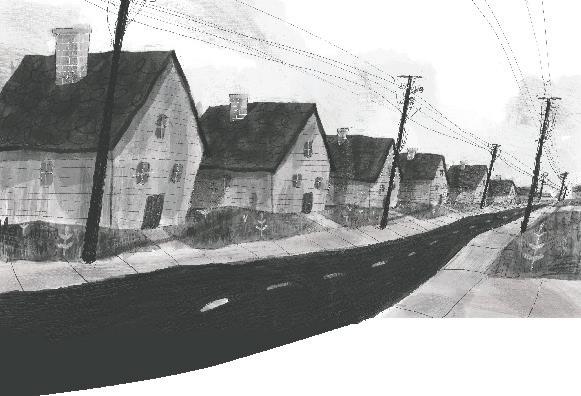
( TEXT EMERSON RHODES DESIGN MARY-ELIZABETH BOATEY ILLUSTRATION YUNA OGIWARA )
the small joy of observation: this car’s bumper sticker, this house behind the trees, these lonely peacocks waiting patiently at the edges of the road.
ACT I
c Mary Moe, to those who knew her best, was an incredible sister, and one day, they said, she would make an incredible wife. Mary was neat and was kind and was diligent. She spoke when spoken to and laughed when appropriate. She had hobbies, too; she did well in school and volunteered when time allowed. This was expected. Mary admired many things about herself: chiefly, her ability to let others tell her what was worth admiring. Right now, she liked that people shook her hand and complimented its softness; she also liked when people described her as “tasteful” or “appropriate.” Her great crowning achievement, as of late, was her sister’s baby shower. To all who came, it was only a few remarkable breaths short of the baby itself.
Secretly, she knew that when it was her turn, she would do something even grander, and so, when her mother put her arms around her and said, “You’re so good to your sister,” she smiled with the smug pride of baby showers both real and imagined. Her sister was one Jane Johnson. There was nothing abnormal about Jane; she went to a lovely college where she obtained a perfectly respectable degree and walked away with a perfectly respectable man. Mary saw a lot of herself in her sister, which is to say, she wished for her life to turn out much in the same way.
In the aftermath of the party, Mary stood in the driveway of the house, waving off the final stragglers. She allowed herself the first real breath of the day, as the sun nestled itself into the shoulder of the mountains.
Mary lived in Ascasubi, California. This was a nowhere town in a something state. Ascasubi bled blue in the sunset. The air was warm, and she could feel a line of sweat slowly speeding down her back. She could feel the heat push through the many layers of pastels of her outfit. It was then that she was reminded to go to the bathroom.
Earlier, in preparation for the day to be about Jane, Mary had swaddled her vagina in enough cotton and fabric that no one would ever be the wiser. Mary
had never been ashamed of her body, but she hadn’t wanted to keep excusing herself to the bathroom, and this was the simple solution. As she had felt the applicator penetrate her, she thought about how happy she would be to spend the whole day celebrating her sister’s new child. Now, when Mary stepped into the bathroom to free herself from the earlier encasing, she was shocked to find a completely clean liner beneath her skirt. Next, she wrapped her finger around the string of her tampon, feeling it cling to her on the way out, only for it to show pristine white with slightly pilled rayon. Almost in shock, Mary spent the next five minutes staring at her pee—a perfectly normal shade of light yellow.
Almost without thinking, as if she had practiced for it her whole life, she grabbed a leftover pregnancy test from the bottom of the medicine drawer, cupped water from the sink to her mouth, and waited. Mary did not need to look at the result. Mary knew what was coming for her. She told Jane she needed some air, stepped outside, dialed Planned Parenthood, and made an appointment for the following day.
It was shameful, really. It was neither tasteful nor appropriate; a crushing weight built up inside her. Mary felt something kick in her stomach. She hesitated. She knew it was psychosomatic, but this didn’t stop her from placing a hand on her stomach and wondering how long it would take to feel a real kick.
Mary Moe was on good behavior. She had a good routine. She would buy a new calendar on the same day each December, promptly marking the day she needed to buy another one next year. Mary was not used to disruptions. She felt guilty for the hassle, the stress, the consequences. With the word pregnant forming in her mouth, Mary turned to make a confession to her sister. It came out as a question, she asked if she liked the baby shower, to which Jane nodded and kissed her on the forehead. “Of course, baby,” she said, holding her sister in her arms, “everything was perfect.” To this, Mary could only nod. It was perfect.
It was the next day. Mary made her way along California’s small excuse for a sidewalk, one foot in front of the other. Facing the cars, she allowed herself
At the crosswalk, she saw a long shadow cast over her. A woman on a brown, speckled horse looked down at her. She let the coolness wash over her, closed her eyes, until the sun hit the back of her neck and she continued forward. She saw the horse melt into the road.
Mary watched the heat start to distort the horizon. It wasn’t that she was growing weary, but rather that she needed the walk to be over. Her stomach hurt. When Mary was younger, Jane used to put the hose on jet and spray her directly in the stomach. Mary laughed; she missed that.
Caught up in fantasies of water, Mary started to become acutely aware of the dry, slightly mealy feel of her own mouth. She ran her tongue over the topography of her inner cheeks. She repeated this again and again, starting from the left cheek, across the roof of her mouth, down to her lower gums. She saw a small man with a large cooler of water around his neck, weaving between the cars waiting at the light. He offered her a bottle of water, and she opened it and drank with eagerness. The man put the cooler down, looked up at the sky, and whistled. He held up a single finger to her. Mary did not know what this meant. He insisted on the finger again. She furrowed her eyebrows. He motioned at the top of the cooler. WATER $1. Embarrassed, Mary reached into her pocket, pulled out a handful of coins, and pushed them into his hand. “Thank you,” she mumbled, walking off, her pace slightly quicker than before. She slowed only when she heard the cars start again.
Just then, a small child, dressed in muddied jeans and cowboy boots, ran out of the hedges of a nearby house, tripped on Mary’s foot, and hurtled into the unprotected street. Mary felt her arm wrap around the young boy’s torso, pulling him toward her. She felt the boy’s back touch her midsection as she held him over the ground. The boy lay limp in her arms for a moment before springing back into action. Shocked, Mary watched the boy start sprinting to the yard he had emerged from, but the boy, pausing before the hedges, turned to face her, beckoning her. Cautiously, Mary followed him. The boy, grabbing her hand, showed her the fur traps made of broken-down cardboard. Then he pulled out a raccoon carcass he was hiding in the back of his parents’ garage.
Mary gave the boy all kinds of compliments: very cool, exciting, you have a bright future. The boy was quiet, but occasionally he would click his boots or toss an easy lasso at some unknown apparition. She liked the boy and liked how he occasionally ran through the sprinklers in the lawn.
She continued to follow the boy into the small thicket of the yard. After continually failing at the lasso, the boy turned to her, eyes reflecting hers, and asked if she wanted to see something. She nodded, unsure if she was being patronizing or not. The boy reached to grab something in his pocket, quickly, as if she had startled him. She watched him make a fist while halfway into his pocket. The boy drew a BB gun. Before she could even begin to start saying “that’s really nice,” the boy closed his pointer finger around the trigger, and a bullet hit her in the knee. Mary collapsed into the fetal position. It hurt, but maybe it didn’t. Mary couldn’t tell, but she felt a small vibration spreading from her knee into her ears. Her skin burned and seared. She coughed out a single syllable—fuck
She lay there, indiscriminate to time; she let her body run its course. The vibration settled to a slow hum. When Mary opened her eyes, she saw her knee wrapped tightly in a bandana. The boy was gone. Suddenly, she was keenly aware that she was lying in a stranger’s backyard. Kids, Mary thought, before returning to the rest of her walk.
The building seemed to swell in the heat. The roof bent upwards, as if it were incapable of holding everything inside of it. Like many things in California, the Planned Parenthood sat remarkably close to the ground, and still, the small pillars surrounding the building stretched impossibly tall. Around Mary, a vacant strip mall of acrylic neon signs: CROWN DRUGS CHEAP TOBACCO SUBWAY.
As Mary approached the Planned Parenthood, she saw a small crowd—four people huddled together, turning their gaze toward her. Covered in sweat and knee slung with a lone bandana, Mary couldn’t even conceptualize why so many people were there. It was a Thursday.
A middle-aged woman clutching a Bible ran to her. “Please consider this,” the woman begged. Mary did her best to ignore her. “Did you know that at five weeks your baby has a heartbeat?” Mary turned over the use of “your” in her head. “It hasn’t been five weeks,” Mary said. She wasn’t sure if she regretted saying it or not. She said sorry anyway.
A man in his midtwenties moved to her next. “Don’t worry, I’m not trying to tell you what to do.” Mary tensed. “Just think,” he said while pushing a small brochure that read, “SAVE DON’T KILL!!!!” Mary slipped it into her back pocket. “Yours is a good fight. Hugs.” He offered her a smile. Mary was tired and went inside.
Like its outside, the inside of the Planned Parenthood was white, clean, a little shitty. Mary approached the desk, fidgeting with the pen until the receptionist got off the phone. There were four other women in the clinic; the youngest was almost definitely underage. Mary started to shake her head, but she had to stop herself. She was one of them. She forced herself to stare at her stomach. She couldn’t tell if her pants felt tighter today. The woman at the front hung up the phone. “Do you have an appointment?”
Mary noticed the lipstick on the woman’s teeth, and she said as such. After wiping it off, the woman typed Mary’s name into the system. Top 40 radio filled the silence. The nurse slid a pee cup across the table. “Go to the bathroom. After that, just go into the room
right behind me, and a nurse will be right with you.” Mary hesitated. The woman looked her up and down and smiled. “I wouldn’t worry at all, sweetie.” She had a perfect valley accent. “You’re barely pregnant.”
After 15 minutes of waiting in the exam room, Mary had counted all of the thumbtacks on the board, picked out all the dirt from under her nails, and decided what she would have for dinner. A nurse entered in a shirt that read “I LOVE MISO.” With a clipboard lodged in her hip, Mary could see her flip through her chart. The nurse spoke, “So you need an abortion?” She said “need” and “abortion” louder for some reason, as if she were declaring Mary the 100,000th customer of this particular clinic. Mary looked at the shirt and asked, “What is miso?” The nurse looked at her. “It’s what you’re gonna take later,” she clarified. “Misoprostol, but after the mifepristol. Remember that order.” Mary just nodded. “It’s a very standard procedure,” the nurse said, not looking up from her clipboard. “We just have to make you aware of some of the risks.” The nurse started reading from the pages next to Mary’s chart. Mary did not hear any of the risks. Mary’s stomach hurt.
The nurse spoke directly to Mary. “It’s medically safe.” Her voice was strong here. “There is a minor chance you might need surgery, but in 99% of cases like yours, pill abortion is effective and safe. If there are any issues at all—abnormal bleeding, suicidal thoughts, or lack of a period—don’t hesitate to call a doctor. Pain is normal.” Mary spoke: “I still want this.” She felt proud of speaking, even though her voice shook. “Before all abortions, we just have to do a quick vaginal examination. Do you want something to calm you down?” the nurse asked. Mary nodded. A few minutes later, a different nurse, an Asian woman with wrinkles at the corners of her eyes, emerged. She tried to hand Mary a small Dixie cup, but Mary missed it by half an inch. There were two pills on the floor now. “I’m so sorry,” the nurse apologized. Mary reassured her. “Do you mind floor Ativan?” the new nurse asked. “It’s fine,” Mary said. “You’re going to need to strip for the exam,” the nurse told her. Mary took the Ativan.
Mary followed the nurse’s instructions, placing her feet on the stirrups. A new nurse came in. “How are you doing?” she asked. Mary nodded. All Mary does is nod. The nurse was methodical in a calming way. Hand sanitizer, then gloves. Then she picked up some small medical instrument. Suddenly, the nurse was facing her vagina. This was the first time Mary realized the nurse had been talking. “This shouldn’t be too invasive, but let me know if there’s any pain and we’ll stop, ok?” Mary laughed at the “we.” Mary was swimming, her hands were like water, and her eyes faced the light. The nurse was staring at her from a little past her navel, eyes poking over her stomach. Mary felt the nurse’s palm reach for her inner thigh: “I’m going to touch your vagina now.”
Mary emerged from her appointment and paid with a Mickey Mouse debit card. Still shaky, she dropped it, and a toddler waddled over, pointed, and said “Mickey!” with the earned enthusiasm of youth. Mary called an Uber.
A man named Baird picked her up in a 2012 Toyota Corolla with a sun-faded “The Future is Female” sticker on the back. Hopped up on pills, Mary watched flitting images of trees pass through the window. These look like electrocardiograms, she thought. Or she said, maybe. Baird turned around to see her curled across all three seats in the back. “Are you ok?” he asked. Mary laughed. It was sweet. Mary truly believed it was funny. Mary’s stomach hurt. Mary’s
stomach hurt from laughing. Mary said, “Did you know my sister’s baby shower was yesterday?” “No,” Baird said. Why would he? He kept his eyes on the road. This was his job.
Three blocks from her house, Mary gripped Baird’s shoulder. “Stop here,” she said, “just right here is fine.” Baird, cautious of hand and mind, slowed into the road before her house. Stumbling up the driveway, the door handle was heavy, and Mary, almost floating, fell inside.
Jane, hearing the door, called out to her. “How was your day?” she asked. “I had a sandwich,” Mary said. “It was good.”
Mary took the misoprostol as soon as she was alone. She needed the whole thing to be over. Three hours later, Mary felt something twist in her lower abdomen. At first, she was almost worried that the pill had induced birth, as if the medication had somehow grown the baby to size and her water had broken.
Mary was hot again, so, so hot. Not like the sun, or the stove, but like candles. She felt herself drip around her body. Floating from her room to the bathroom, she found herself on the cool tile and locked the door. Mary’s stomach hurt. Mary’s stomach hurt so much that she regretted ever complaining about it before. She felt the floor, cold against her skin. Mary could feel her pores contract, like they were attempting to keep everything inside. She pulled a small flap of skin off her chapped lips, letting the blood seep slowly into her mouth, mixing with her saliva. She pushed the blood through the slit between her two front teeth with her tongue. Occasionally, she would tense and untense her vagina. The stop-start sensation amused her; she liked the control. Only when she felt she could stand up, once her body wasn’t trying to fight her, did she assess the damage.
Facing herself in the mirror, she could see the blood caught in her pubic hair. Upon further inspection, some of the small clots of her flesh and loose blood stuck to her thigh. Small red-ripple marks lined the upper part of her thigh. She licked her thumb in an attempt to wipe some of the blood off; it just moved it around on her leg. Mary scraped the flesh off her thighs with the “SAVE DON’T KILL!!!” pamphlet. One of the larger chunks soaked through a colorprinted image of a fetus and broke through the paper, dyeing the tile red. It jiggled as it hit the ground.
For 90 minutes, she scrubbed herself down in the shower, the temperature turned all the way up. Mary felt her skin itch; she scratched herself until she made small craters in her skin. When the water hit the flesh, she assumed she was cooking herself inside out. She lathered her fingers up with body wash and stuck them inside herself. She moved them around, feeling out the ridges of her vagina. For a second, when her knuckles reached the entrance, the bleeding stopped. She let go when she could feel the walls of her vagina burn. She lay under the shower water for some time. The steam opened up her pores, and she let everything fall out.
Leaving a trail of blood on the bath mat, Mary once again diapered herself up in the bathroom, covering the bloodied pamphlet in tampon wrappers. Mary emerged, steam erupting out of the door behind her. She had lost a lot of blood.
Jane, who also happened to be a very good sister, saw Mary leave the bathroom. They held eye contact for too long. “My period came late,” Mary offered. “It can be a little heavier if it’s late,” Jane offered back. “Right.” Mary clutched the bottom of her abdomen. Jane cradled Mary in her arms. “Breathe, baby,” she said while stroking her hair. “This is all part of the process.”
EMERSON RHODES B’28 <3s Miso.
c It’s not easy having a good time. Are you having a good time? Are any of your friends? Let me be direct: what I’m concerned about here is pleasure. Where to find it, how to get it, are other people buying it, is it even worth having at all. Should we look for it in friends? Totally online? Totally offline? In other people’s bodies or our own? Are you willing to be embarrassed on the way to what you desire? How embarrassed?
To be clear, I’m not good at having fun. I’m not even supposed to say that about myself—at least according to my former therapist. She was a psychoanalyst with a shaved head and what seemed to be a mint-condition original Stop Making Sense poster above her desk. I was 15 and repressed. Thank goodness for the past tense! My psychoanalysis-pilled friends tell me about “inexistent sexual rapport,” but I still haven’t read enough Lacan to understand what the hell they’re talking about. I suspect I might still be in the oral stage. So what’s up? Why am I not a liberated 21st-century man? Wasn’t there supposed to have been some kind of sexual revolution?
The coiner of the term sexual revolution and the inventor of the orgone accumulator was one Austrian psychoanalyst and sexologist Wilhelm Reich. He was a disciple of Sigmund Freud in the 1920s, but eventually came to criticize Freud’s exclusion of working-class people from psychoanalytic practice, and acceptance of capitalism as an ultimately ‘civilizing’ Good.
Reich reversed Freud’s idea that we’re all born with nascent tendencies towards repression and neurosis. He thought, instead, that children were born pretty much alright, but being raised into a sexually repressive culture made them into neurotic adults. Reich used this idea to explain popular support of fascism, which he argued arose from stifled sexual desire in the middle classes. He theorized that such repression (and consequent impotence) led them to desire control and totalitarianism. Sexual liberation, therefore, was a possible—and suitable—project to combat fascism. Liberation functions here on two levels: in terms of an un-repressed relationship to one’s own sexual desire, and the way an un-repressed society might function. Reich was also focused on the sexual liberation of the proletariat, which, he believed, needed to experience release to reach a demystified political consciousness and get down to business on the revolution. I promise this isn’t as strange as it sounds.
This is a kind of psychoanalytic project at grand scale. Reich mapped the sexual problems of an individual onto and off their historical and societal contexts, and he eventually would extend that topology as far as it could go: to the soil, to the rain, to the atmosphere.
By the mid-1930s, Reich had been ousted by Freud’s International Psychoanalytical Association
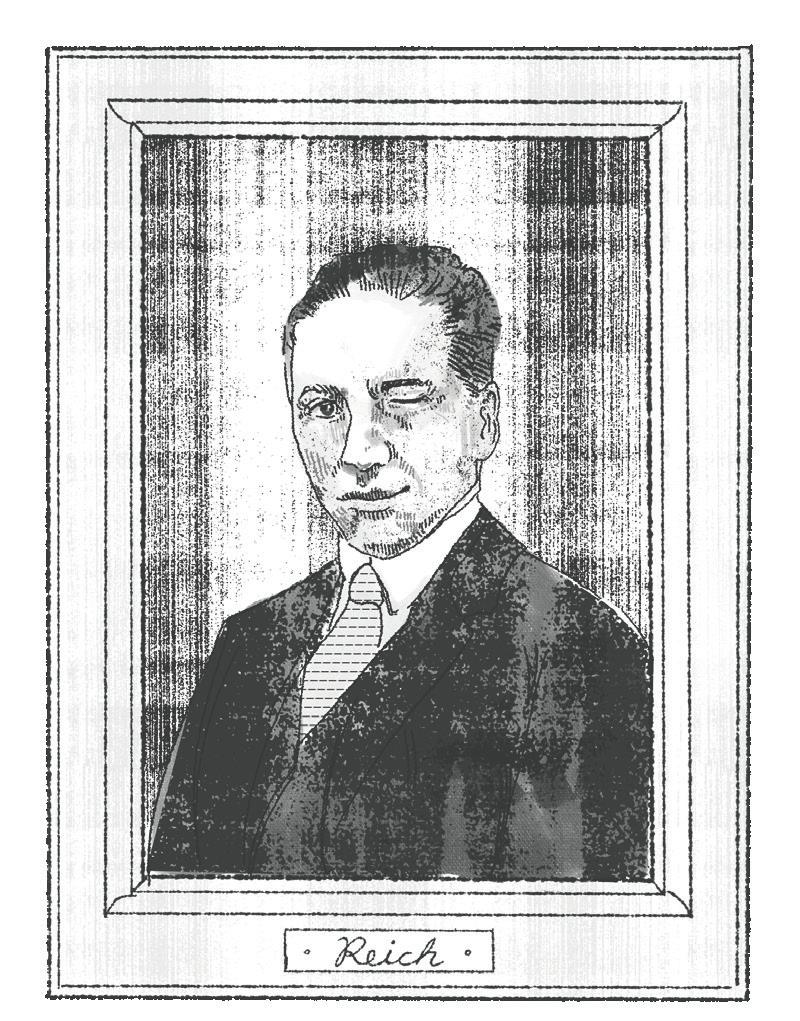
for being too into communism, and ousted by the Austrian Communist Party for being too into sex. More precisely, Reich was interested in sex and sexuality (in fairly literal terms) as fruitful ground for both scientific and political investigation. His contemporaries spread rumors that he was recommending orgies to patients in his clinics. He left Vienna for Norway, and eventually emigrated to the United States in 1939, where he continued his work on sex and sex-related energy.
Reich theorized that sexual desire was coordinated by the flow of a cosmic libidinous energy. He called this baseline, life-giving current orgone energy, a combination of the words ozone and orgasm According to Reich, orgone energy is blue or blue-grey, and it’s visible on Kodachrome film. In a journal entry dated August 4 to 8, 1940, Reich attributes the color of distant mountains to orgone energy, “which absorbs and emits the blue color from light.” In a footnote five years later, he wrote: “People are referring to me as the ‘crazy man who discovered the blue lights.’”
Reich thought sexual desire, neurosis, impotence, cancer, physical pain, muscular tension, unexpected rainstorms, unwanted droughts, and the earth’s magnetic field were all manifestations of either blocked or free-flowing orgone energy. As Reich puts it in the opening remarks of The Function of the Orgasm, his first book published in America: “The immediate cause of many devastating diseases can be traced to the fact that man is the sole species which does not fulfill the natural law of sexuality.” In a person, orgone energy is stopped up by “character armor,” the broad term for one’s psychological and muscular defenses— Reich doesn’t distinguish between the two—against arousal. Such armor is the sum of all attitudes that an individual develops consciously or unconsciously to avoid such “organ sensations” as anxiety, rage and sexual desire. I am quoting from vol 1. no. 2, page 93–4 of the Orgone Energy Bulletin, which provides a glossary of relevant terms. These bulletins, which contain the writing of Reich and many of his acolytes
(medical orgone therapists, heads of psychiatric clinics, a “practical boat builder,” child therapists, educators, and so on), are not digitized anywhere I could find them, but you can peruse a physical copy in the Reading Room at the Hay Library.
One’s mind, one’s body, one’s social relations, one’s planet, and one’s universe are all in consonance within Reich’s blueprint. Reich collapses the mind and the body; he evaluates them as parts of the complicated mechanism that is a human. He wrote “[a]ll of us are merely a specially organized electric machine which is correlated with the energy of the cosmos.” Reich is not using “machine” metaphorically here; he is rearticulating sex in the language of thermodynamics. People exchange and create bio-electric charge— orgone energy. If the body is a kind of machine, then Reich wanted to take the next logical step and get at its wiring.
Perhaps it’s no shock, then, that Reich would build physical machines to interact with the machine of the body. The most famous of these was the orgone accumulator, a metal box intended to stimulate and concentrate orgone energy. If you want to build one at home (please invite me over), Reich gives a helpful sketch of his machine in vol. 3 of the International Journal of Sex-Economy and Orgone-Research: Use iron sheets to build a box, and then surround this box with an organic material (this description uses cotton), held in place with a second exterior box of plywood. You should be able to get in and out by putting a door in the front wall.
The organic material was supposed to absorb energy, while the steel reflected that energy back and forth, causing energy to accumulate inside of the box. A living creature within the accumulator would absorb the energy. This process of orgone therapy was supposed to disintegrate the armor that prevented a patient from being able to give in to orgasm. A successful patient’s free-flowing unrepressed sexual desire (as demonstrated by their ability to orgasm) would clear up any illnesses.
This invention (and claims about its healing properties) landed Reich in trouble with the FDA. Though Reich never claimed he could cure cancer or (as far as I can tell) scammed anyone with his device— in fact he was quite scandalized by the misuse of his therapeutic techniques—he was placed under FDA scrutiny for misleading and fraudulent claims. This fuss about false advertising was most likely a justification after the fact for shutting down the scandalous Reich; nothing he did really demands having a 789-page FBI file. Reich was eventually arrested by the FBI and imprisoned in 1957 despite a series of legal appeals. That same year, Reich died of a heart attack in his prison bed.
Kate Bush fictionalized the details of this final chapter of Reich’s life from the perspective of his son in “Cloudbusting,” the second single from her hit 1985 studio album Hounds of Love Dazed magazine reports that Reich’s extended family was touched. Though Bush’s song (maybe wisely?) makes no mention of orgone energy, the Cloudbuster was another machine
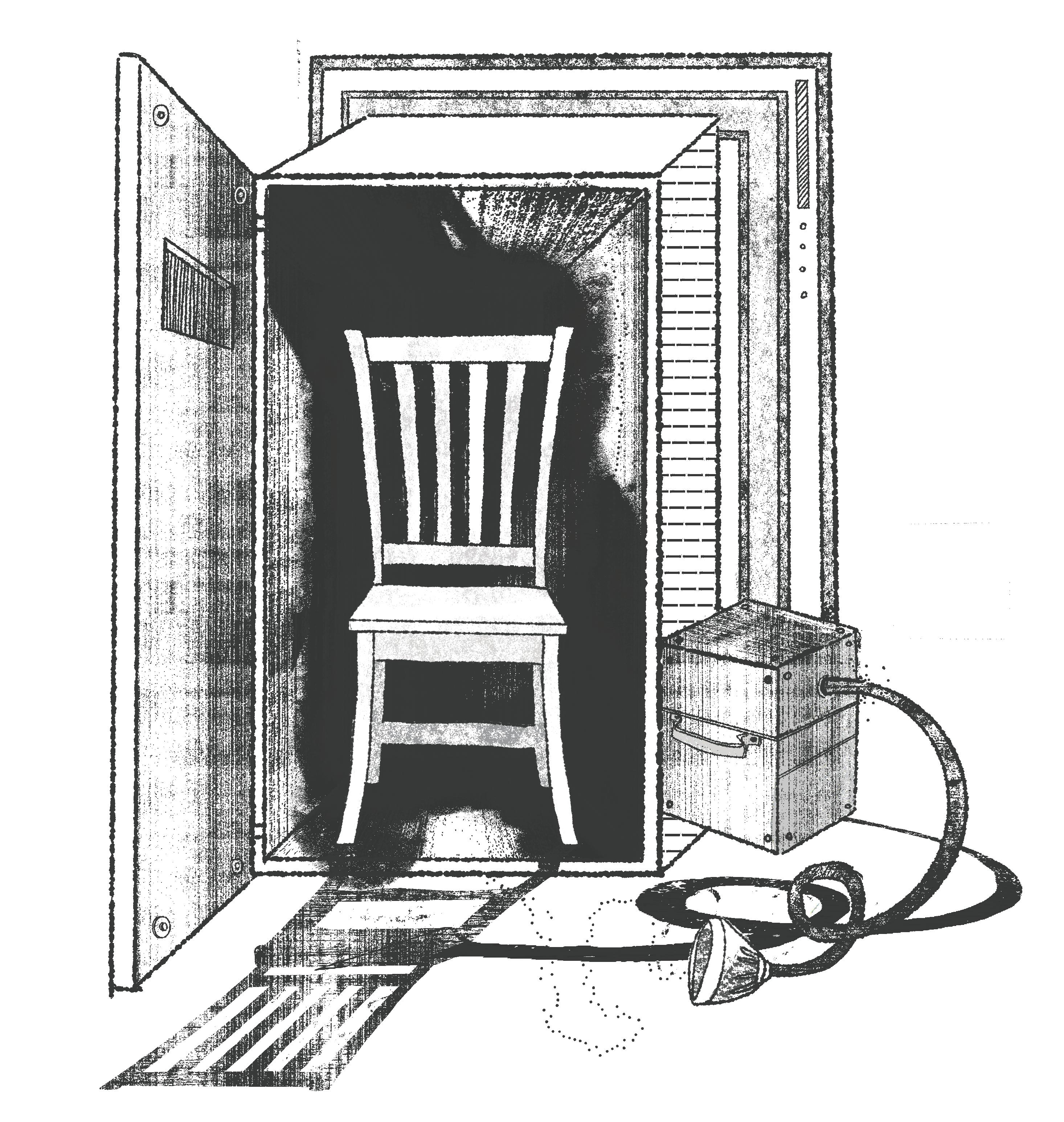
of Reich’s that he claimed could create or dispel rains using the same mystical powers of orgone. This more agriculturally-oriented invention was not as popular as his directly sex-related machines.
The orgone box was a hit with American counterculturalists in the 1940s and ’50s. Jack Kerouac described fellow Beat writer William Burroughs’s use of one in On the Road—inaccurately, according to Burroughs—and J. D. Salinger and Norman Mailer are known to have used the device. Woody Allen (sigh.) included it in his movie Sleeper as the “orgasmatron.” This nickname has stuck, and gives the title to an excellent book on the sexual liberation movement in America: Adventures in the Orgasmatron by Christopher Turner.
The (counter)cultural appropriation of Reich’s terminology of ‘sexual revolution’ was, at best, inaccurate. Reich was talking about the relationship of repressed sexuality to literal liberation, in a Marxist sense. ‘Sexual revolution’ invokes the idea of freelove promiscuity, but that is a result of the hippies redefining Reich’s term. Reich himself was against having sex for the love of the game—he hated promiscuity. The point was to get into a loving heterosexual coupling and let out (through orgasm) your pent-up psychosexual energy. The goal wasn’t pleasure, then, in terms of purely good feeling, but something like release. Orgone therapy was intended to help a patient give in to sexual desire and orgasm, not because that is a pleasurable thing to do, but because it promoted psychological and physical wellbeing. You’re coming for mental health, not for fun.
The counterculturalists who took Reich up didn’t care about how an un-repressed relationship to sexual desire could be politically impactful; they took ‘sex is revolutionary’ and ran with it. In this promiscuous redefinition of Reich, sex is worthwhile because it’s pleasurable, and one should have as much pleasure as possible. Reich’s formula, where repression
must be broken down to reach sexual release, and the way that Reich connected that repression to politics, was swapped for a simplified setup: more sex means more pleasure and less repression. The way the Beats connected this idea to anything about political change is shaky at best. In eschewing the strictures of one generation, did this American sexual revolution even find a more liberated—in either sense of the word—position? As Turner puts it: “What does it tell us about the ironies of the sexual revolution that the symbol of liberation was a box?”
To this point, James Baldwin speaks of the “formula” of the “orgone box” in a passage of his essay “The Lost Generation”:
“There are no formulas for the improvement of the private, or any other, life—certainly not the formula of more and better orgasms. (Who decides?) The people I had been raised among had orgasms all the time, and still chopped each other with razors on Saturday nights.”
Baldwin here challenges the benefit of linking good or more or better sex to political change. Can a formula or a structure for the improvement of sex— let alone one’s private life—help us out at all? Could all this sex talk just be a way of opting into a different, still unliberated position?
The people I know who talk the most about sex are having the least sex. I wonder: are the talking games more fun than the sexual ones? Surely not. If we start with Freud or Reich’s ideas about repression, then the principal question is: why is nobody able to talk about sex? What happens when nobody talks explicitly about sex? Later, Michel Foucault took a hammer to these questions and their attendant assumptions in The History of Sexuality, in which he explains why we should stop talking about sex so damn much. The idea that ‘everything is about sex’ is no longer radical (it’s literally become an aphorism),
and capitulating to the social incitement to talk talk talk about sex means (at least for Foucault) entering a discourse where you will be societally interpellated. Language structures the way we can talk and think about sex, and that language does not come to us free of baggage. Reich, because he chose to work in the language of positivism and science, makes particularly clear the distance between his object of interest (the desiring subject) and his formula (the scientific method). His life work is useful as an extreme example of the distance between embodied sexual desire and the tools we have for addressing it. Reich thinks we can bridge this distance (solving our sexual and political problems) with the formulas of science; he thinks that we can be released from the complicated pain of desire by a good enough invention. He is incorrect. Schematizing desire does not solve the problem of one’s turbulent relationship to desire; formulas can only get us so far.
It’s easy to criticize Reich, first of all for being wrong. In December 1968, a curious gentleman reached out to the Institute for Sex Research with an inquiry about The Function of the Orgasm; he wanted to know if Reich’s claim “that ‘the suppression of genital love on a mass scale is the bio-pathological basis of the Emotional Plague’ ha[d] any credence with members of the Institute,’” and asked if any organizations were “conducting research into the area of sex-economy.” They all but laughed in his face—Paul H. Gebhard, the then-director of the Institute, wrote back: “We do not regard Wilhelm Reich’s work as science and I hope that you are not taking it too seriously.” Well, damn. However well you build your orgone accumulator, results will likely be the same.
It’s easiest to see where Reich was wrong if we look at his own insistence on a scientific process and method—the same method by which we may judge his results as insignificant and his experiments as misguided. His desire to demonstrate orgone energy in photographs or with a geiger counter made him susceptible to disproof by empirical measures. Scientifically, he was persistent, but repeatedly refuted by his peers (and even his own results). One such refutation came from Albert Einstein himself. Reich narrates one of their exchanges in a 1943 letter to a friend: “Before departing, I told him [Einstein] that now he could understand why people were saying that I was crazy. To this he said: ‘I can understand alright.’” In this same letter, published in American Odyssey (a collection of some of his journals and correspondences), Reich says of the Einstein story: “It would be very painful and regrettable if I had to publish it.”
I retain a certain skepticism for the type of scholarly article that insistently puts the “MD” after Reich’s name. These articles are often interested in connecting Reich’s work to modern conceptions of emotion ‘held’ in the body (#bodykeepsthescore moment). Most often, when I’ve found a writer or clinician interested in ‘reassessing’ Reich, they make it clear that his early theory is interesting, but his later orgone energy work is not. This disengagement with Reich’s later work, particularly insofar as it is ‘unscientific,’ returns the reader back to the safe land of scientific falsifiability. It’s difficult, I’d argue, to map the messy matter of sexual desire with such empirical tools and topography. We are being returned again to formulas.
I am not here to laugh it up at Reich’s expense. I am interested in how and why Reich was off the mark about desire, because I think desire is hostile to the project of diagramming or instantiating it in language. I’m drawn to the pseudoscience of his gadgets, then, because they are an extension of Reich’s belief that we should meet the desiring mind on material, embodied
terms (he was a proponent of touching his patients, though not the way you’re thinking). He is trying to attend to the body in space and sexual desire as physically—even mechanically—instantiated. It is no accident that Reich began making gadgets later in his life; to conceive of the body as mechanical, and psychological problems as manifested in physical responses, primes one to think of desire as almost electromagnetic. Reich appeals to me because he thinks of desire as embodied, but he conceives of that embodiment as a mechanical; desire is a signal response. He is so insistent on science as an applicable methodology that he loops back around to a bloodless, abstract notion of sexual desire—as so far from one’s emotional life that infatuation could be rectified with a generator and some re-wiring. Humans, after all, are not simple gadgets; if you could use a little machine to jumpstart a person into a life of sexual liberation, then we wouldn’t have anything to talk about. Reich tries to make the tormentous riddle of painful pleasure (and pleasurable pain) into an engineering problem. The orgone box is an exaggerated example of one man’s failure to make sexual desire cohere to diagrams and description; its failure on a scientific level is reflective of desire’s incompatibility with perfect knowledge or explanation.
It’s difficult, I’d argue, to map the messy matter of sexual desire with such empirical tools and topography. We are being returned again to formulas.
I am neither a (mad) scientist nor a psychologist nor a psychiatrist, but I am eagerly anticipating the receipt of an English degree, and therefore I would like to talk to you about language. This turn towards language in psychoanalysis, if I can make a connection without inviting a comparison, was most notably made by theorist Jacques Lacan. I am paraphrasing here from his lecture “The Rat in The Maze,” paraphrasing because Lacan has a reputation for unreadability—there is a section under the “Criticism” header of Lacan’s Wikipedia page simply titled: “Incomprehensibility.” Lacan is interested in the way failure and moments of inarticulability or impasse structure our relationship to desire.
He argues that love transforms being “into what is only sustained by the fact of missing each other.” To say: missing the mark is the whole game. Lacan understands the obstacles and absences present in desire not as blockages on satisfaction, but as the source of any satisfaction possible. This is the main reason Reich gets things wrong, to me: he thinks that we can have an unobstructed relationship to our own sexual desire, but such an untroubled, easily mended relationship is antithetical to the very structure of desire. He dramatizes this error because of his insistence on science—an insistence that forces him into pseudoscience to get the results he wants—but each one of us makes a version of his mistake when we imagine we can cleanly get what we desire. As Professor Svitlana Matviyenko puts it in an article giving a Lacanian gloss of Reich: “If Reich is a ‘mad scientist,’ his ‘madness’ is ours, and we must not misrecognize it.” Obstacles generate interest and excitement. This is as true with desire as it is with language; for Lacan, both operate in the suspension between what we want and what is possible—what we desire and what we can have, what
we can say and what cannot be articulated in speech. Why can’t I have what I want? Why can’t I give up the wanting? Can anyone help?!
It’s far too easy for me (and maybe you, dear reader) to slide into doomer-pilled thinking. The online-discourse paths are well-trodden—over-trodden—here: ‘Gen Z is having less/no sex.’ ‘Gen Z is scared of everything including themselves and others and therefore of getting laid,’ and so on and so on. I am not here to stake out a position in that exceptionally tired and tiring way of talking. I hope, instead, to suggest an end run around those patterns of thinking. If the it’s-so-over thinking is true (it’s not, but bear with me), what do we do? Can we write our way out of these problems? I’d argue: no, attempts at writing are doomed to be incommensurate with our experiences, but that is precisely why we should try to write about them; writing, as with loving (don’t roll your eyes at me), is about working with and through what is always already failing. Language is a technology too, and can sometimes be as useless as an orgone accumulator. This is why I think it’s appropriate to acknowledge doomer thinking, because one can become pessimistic when it seems like failure is foretold. Pessimism is not the only option.
Can your favorite author write a good sex scene? In my experience, the most talented writers do this by generating interest through obstacles, the practice of not saying, rather than through being perfectly direct. I won’t give this a load-bearing position in my argument, since your experience of any given text is routed through your embodied reactions, which I know nothing about. That, indeed, is my point. At the same time, I can make the same point through literary theorist Roland Barthes, who writes: “[s]o-called erotic books […] represent not so much the erotic scene as the expectation of it, the preparation for it.” In other words, the most interesting thing is not the erotic text itself, but the way that the text is incompatible with (directly!) instantiating sexual pleasure. You might be tempted to say: “Well, that’s because language is too immaterial; we need to return to the body.” But don’t forget Reich so quickly! He is a brilliant example of the way the riddle of sexual desire can never be simply solved, even by attending to the body directly. If we rope Lacan back in, we can’t have pleasure—in the text or in our encounters—without obstacles. Missing the mark is built in from first principles. When counterculturalists were repopularizing the orgone box, it was already clear that orgone energy didn’t really exist; they were opting into failure. The point, then, is to make the attempt.
Why can’t I have what I want? Why can’t I give up the wanting? Can anyone help?!
“But Nan,” the letter to the editor reads, “isn’t this all just cope?” Probably. In fact: yes. The question, then, is how to distinguish between accepting failure as the outcome and giving up (it’s-so-over-ism) versus accepting failure as part of the endless struggle of desire. Try, try again. You may think I’m quoting that old aphorism, but I’m really quoting award-winning poet Nikky Finney, who wrote in her excellent
collection of poems Head Off & Split: “the try try again of love.” You do have to try. I’ve touched plenty of grass, and that wasn’t enough. Get your friends and acquaintances and queer-platonic enemies together and build a doohicky or jalopy of some sort. Build an orgone box.
(By the way, I do know at least one person who’s built an orgone box: My former professor told me they lined a closet in their house with tinfoil for a party, so that people could go in there and have some privacy—salacious! )
That’s not how you build an orgone accumulator, at least according to Reich’s diagrams, but that’s really the point here. The box won’t fix your minor ailments or treat anything (hey, look how careful I’m being of the FDA!), but it might work better on you than you’d expect. Orgone energy does not exist, but the benefits committing to the bit are well-documented. Trying, even in a situation where failure is the only outcome, brings you into the orbit of the thing you desire. You can’t get what you want, but you might be able to get close. Indeed, you might not want what you think you want. You want to keep wanting.
I’ve touched plenty of grass, and that wasn’t enough. Get your friends and acquaintances and queer-platonic enemies together and build a doohicky or jalopy of some sort. Build an orgone box.
There is another important aspect to failure in writing and in desire: the possibility of embarrassment, of humiliation. To enter into a situation where failure is prefigured (building an orgasmatron, writing an Indy piece, falling in love) is to accept not just the reality, but the inevitability of embarrassment—at least, as long as you find failure embarrassing. You have to be willing to be the sucker, to enter into a position where you will not come out unscathed, in order to get anything done at all. Reich is a great example; he kept failing, but he kept building. This is the true beauty of the orgone box; if you go to the trouble of using (or, heaven forbid, making) a useless invention, you’re showing that you’d do anything—even if you know it’ll do nothing. Desire matters that much to you.
In love, you’re always already a sucker, if you know what I mean. I have written over 4,000 words just to explain to you, but obviously to myself, that there are some matters one cannot write or think or engineer one’s way out of. If you want proof, I’ve written about this in the Indy twice already. This is to my point; I’ll probably be writing about this forever, but I can do other things as well. There are some things it is impossible to get better at alone.
NAN DICKERSON B’26
is try, trying again.
c Suppose, one day, the sun becomes a white square, your beautiful face reduces to 64 pixels, and all things material are replaced by their Minecraft¹ equivalents. We’d call the pixelated, mooing, milk-producing creature with the splotchy fur pattern a cow. The yellow and green pixels we’d call a flower. The brown pixelated line, a stick. In general, we refer to Minecraft items by the name of the non-pixelated object they intend to represent.
Now suppose we’re presented with a pixelated bucket containing a pixelated blue substance. The blue substance freezes, it flows indefinitely, you can climb up it, and it can be infinitely generated from two buckets full of it. Given this list of properties, it’s far from evident that these blue pixels should be termed water. So, why do we call this substance water? What does it mean to be water?
Here’s an idea. Since antiquity, philosophers have pondered about identity. What makes one object or concept the same as another object or concept? For example, why are acute triangles and obtuse triangles both triangles? Essentialism, a school of thought tracing back to Plato, views objects and concepts as having essences. In Aristotelian terms, the essence of a thing is the set of necessary properties that make that thing what it is. A triangle is considered a triangle because it is a polygon with three sides. If we were to change the number of sides, or tamper with the polygonality, the triangle would cease to be a triangle. Essentialism has motivated some of the biggest questions in philosophy: What is wisdom? What is justice? What is being? Answering these questions requires uncovering the inherent, fundamental nature of these concepts. Within an essentialist framework, cows have a certain cowness: the essential properties of splotchy fur and udders, for instance. Flowers have a certain flowerness. Pixelated water and H₂O share an essential wateriness constituted by, say, translucence and fluidity. Importantly, these essential properties need not be physical properties, as seen in the triangle example.² Maybe, then, the blue pixels count as water because they possess an essential wateriness. Following this logic, perhaps Minecraft has preserved the essential properties of all its real-world counterparts.
Let’s see what happens when we put this idea into action. Aristotle provides a loose framework for uncovering the essence of water. Through sense experience (experiences of sound, sight, feeling, and so on) and intellectual intuition, we can disregard accidental properties (extraneous properties that a thing could lose without ceasing to be what it is) until we’re left with the essential properties that constitute wateriness. We call the blue substance ‘water’ even though it’s not H₂O, it doesn’t evaporate, and it doesn’t obey the laws of physics. So none of these properties are essential to water. A list of properties, albeit a non-exhaustive one, shared between real-life water and Minecraft water includes: blueness, liquidish behavior, and swimability. And just as any polygon with three sides is a triangle, anything with these properties, assuming they’re essential, should be water. But plenty of things have these properties: blue Gatorade, a copper(II) ion solution, certain Ivy Room smoothies…
The way Minecraft tampers with the properties of water challenges essentialism. This raises an important question: What happens when we
1 In Tarinian terms (see i5 v51), “Minecraft is a sandbox video game developed and published by Mojang in 2009. Players navigate a procedurally-generated, three-dimensional environment composed of rudimentary block-like units. The game blends material logistics, governance, and world-building. As of 2025, it is the best-selling video game of all time.”
2 Maybe one could argue that the number of sides a triangle has is a physical property. Notice, triangles exist in 2D space, meaning that they have no physical properties. They don’t exist in physical space. Instead, the number of sides is a mathematical property.
can’t identify the attributes that make up an essence? Perhaps language becomes so untethered that the term water could refer to anything, even abstracted pixels with strange, unexpected properties. Maybe a visual could help us.

Here’s our beautiful subject: an isolated block of Minecraft water. If you haven’t been conditioned by hundreds of hours of gameplay, the above image might be interpreted as an abstraction of a material by zooming in, or the censoring of an explicit blue image. Either way, the square makes itself vague through pixelation while also dressing itself in such a saturated cobalt blue that it’s hard to believe it’s unsure of itself. It seems that, outside of the context of the game, Minecraft water loses its wateriness: we don’t identify it as water. Our understanding of an image of Minecraft water as ‘water’ is context dependent, just as our understanding of the word water is context-de-

pendent. Naturally, we could ask if the same is true of real-life water. Certainly, water is understood as water in the context of a faucet, a pool, or a water bottle. The same might not be true of water in a red Solo cup in a college dorm, water on the ground of the NYC subway, or a square image of water. I’d argue that wateriness isn’t lost in these scenarios, as is the case with the pixels; instead the context suggests multiple liquids, water being one of them. In the case of a square image of real-life water, it’s debatable whether or not the image appears as water. Nonetheless, our understanding of Minecraft water as ‘water’ relies on a specific context.
To unveil the importance of such a context, imagine the following scenario. Two friends are playing Minecraft in their respective bedrooms. It’s snowing outside; their rooms are warmly lit. The in-game chat reads as follows:
(player2 gives player1 a water bucket)
Notice that player2 doesn’t find it odd that player1 wants to climb up the wall using water, despite ‘climbability’ not being a use of water in the real world. Furthermore, upon being questioned, player2 doesn’t scan her room for a glass of water. player2 knows that in the context of the game, “water” refers to the pixelated kind.
Ludwig Wittgenstein, a 20th century philosopher of language, posited that words acquire meaning by their use in language games, the activities or contexts in which language is employed. These games are dependent on agreed upon social practices and customs. For
( TEXT MAXWELL HAWKINS
DESIGN KAY KIM
ILLUSTRATION YOONSEO LEE )
example, when playing chess, saying “check!” warns the opponent that their king is in danger, whereas at a restaurant, “check!” acts as a demand or expresses a desire. So, “check” has different meanings depending on its use.
In our example, the characters are engaging in language games within the context of playing Minecraft. Hence, “Do u have any water?” poses a question in which “water” takes on the meaning of blue pixels. If the two players were instead in a chemistry lab, “water” would likely mean deionized water. Or, if player2 were a gas station clerk, she’d likely understand “water” to mean a bottle of water. Importantly, in these other language games, stating “I want to climb up the wall” using water is nonsensical (just as, outside the context of Minecraft, calling our blue square “water” is unintuitive).
Suppose, instead, that these two gamers were both in player2’s cozy lamplit room, and player1 said, out loud, “Do you have any water?” Language games snag against each other here. Water could be two distinct things: drinkable or climbable. If meaning is determined by the use of a word in a language game, and if what game we’re in is—as we’ve just seen—not always obvious, we’re pushed to question how we know what language game we’re playing.
Instead of looking for the meaning of a word through its essence, Wittgenstein proposed we should instead track the use of a word through its “complicated network of similarities overlapping and criss-crossing.” So, to get at the meaning of water, we’d examine its usage in various contexts: in Minecraft, in the chemistry lab, as a command, as the answer to a question, and so on. Importantly, these various uses bear a family resemblance. There’s nothing that all of these uses have in common, just as family members don’t share one particular property, but are instead identified by overlapping features such as eye color, temperaments, beliefs, and so on. At this point, maybe it feels as though no real progress has been made. Sure, our usage of “water” in a Minecraft context bears some family resemblance to other usages of water, but we’re still wondering why What is this resemblance? We can settle on the idea that those pixels function roughly in the way that we’d expect pixelated water to. It’s blue, you can swim in it, it puts out fire, among other things. Notice that if we were instead asked to call the pixels “lava,” we’d hesitate. English speakers have agreed to use lava to refer to the hot thing in volcanoes. Hence, we know what the blue pixels don’t resemble. However, if we were told to refer to the blue pixels with a made-up word, say, schmater (rhyming with water), it’s not obvious whether we’d protest and say “Schmater? That’s clearly supposed to be water.” Something to ponder. Ordinary language philosophy (OLP), the school of thought associated with Wittgenstein, sought to demystify many of the big metaphysical questions that had plagued Western philosophy. Proponents of OLP would argue that our question—“what does it mean to be water?”—likely arises from a misunderstanding of language, the same kind of misunderstanding that inspired those big questions. The question isn’t about which properties make water water, but rather about how the word is used in ordinary, everyday language. Our question can be answered by instead asking “how is water used in different language games?”
Under a square sun, we walk along a beach with sand as flat as a marble countertop. Your face is 64 colored pixels, but I still call you by your name. We pause, I look into the pixelated blueness that stretches out into the horizon and, assuming we’re playing the same game, say, “the water looks beautiful today.” You ask, “what water?”
MAXWELL HAWKINS B’27 is climbing up the wall.
c A palette is a painting in process. A palette is a painting of process. It is an object that exists only in the act of painting: with each subsequent use the palette is changed, cleaned, thrown away. It is at once the byproduct and the origin of an artwork. Each palette is like a fingerprint: note the groupings of colors (what colors are used?), the way colors are mixed (with brush? with palette knife?), the transparency, the opacity, the order, the chaos. Every palette makes an artist’s idiosyncrasies physical. Ephemera’s intrepid reporters, Mekala and Elliot, went out into the field to capture some of these moments in time.






















c Thanksgiving is #OVER, which means I’m done being grateful. Something else is a-coming. Something big. Something jolly.
The thing is, I’m “not allowed” to write about Chr*stmas because it’s “an exploitative, late-stage capitalist psyop” and “a simulacral corporatized profit machine that reinscribes the neoliberal subject and performs the commodity fetish under the guise of tradition” (the Managing Editors do Not have a gun to my head). But I can’t help it! I feel the spirit. The nondenominational vague seasonal holiday spirit. And it’s a giving sort of spirit.
Of course, Indie gives year-round. And although I’m positively drowning in that early December rush of having approximately eight trillion things to do before winter break, during which I’m legally not allowed to work because of reasons, I wanted to do just a little bit more giving before Volume 51 comes to an end. How generous of me!
Dearest readers, I’m making a list. I might even be checking it twice. And even though I once gifted an ex literal pieces of coal, I would never ever do that to you, even if you’ve been nothing but naughty all year long. No, for you, I have—what else?—the most valuable gift of them all: advice. So sit in Indie Claus’ lap. Tell me your deepest desires. I can’t grant them, but I can tell you how to make them happen. Listen close.

… a text back
Keep sending em. Keep texting. You’ll get one, trust. Even if it’s “Please stop texting me. It’s over, and it’s been over for nearly three years now, and you need to accept that. I’m blocking your number and changing mine. You seriously need to seek professional help” or something like that… At least you’ll have gotten a text back.
… a job www.linkedin.com
… an effective way to divide chores among the polycule
Make an Excel spreadsheet delegating weekly chores, and hold a very serious household meeting to make it clear that being bisexual with ADHD is, from this point on, no longer a valid excuse for leaving dirty dishes piled in the sink like you’re playing some sick and twisted game of Jenga.
… to stop falling in love with a senior who is graduating
Imagine them:
1. Chewing with their mouth open
2. Slipping cartoonishly on a banana peel
3. Hiccuping
4. Graduating and then hanging around campus for just a little bit too long
5. Wiggling their toes through their socks
6. Trying to do a skateboarding trick on the Main Green and failing
7. Trying to run in water
8. Shoplifting on the Ocean City boardwalk, getting arrested for it, and then posting a Snapchat story of a black screen that says “All y’all who prayed for my downfall won”
If you’re still hung up on them, then you may be beyond help. I’m sorry. Maybe you can make long-distance work lol. Or maybe they will actually hang around campus for a little too long and, since you’re somehow okay with that, it’ll all be okay!
… to be greedy
Just do it! Ask for things. Then ask for more things. Your desire knows no bounds.
… to set up my two gay friends (both of whom are very single and also kind of like each other but don't want to make the first move)
How kind of you to spend your wish on the happiness of others! Keep it simple: set up a cutesy hangout with both of them, then ditch. If it works, it works.
… two girlfriends. Is that too much?
No (I would know). Probably the easiest way to achieve this is by integrating yourself into an established couple conveniently looking for a cool, sexy, well-read third (you). The tricky part is not being the odd partner out, which you can avoid by insisting on sleeping in the middle of the bed.

… a better economy
Why can’t they just print more money again?
… more social capital
• Get boots that clack when you walk. But stop walking like that. That’s not going to help.
• Hang out in the Underground but only when you know there’s going to be a lot of people you know already there so everyone else can see you saying hi to all of them.
• Mention Geese in casual conversation.
• Do an independent concentration (when you inevitably go into private equity, you can at least say you did that instead of studying Econ).
• Whatever new articles of clothing you buy for this purpose, make sure to say you thrifted them in 2021 or earlier.
… five to seven woodland animals to help me with household tasks You cannot seek them out. They have to come to you. But in order for that to happen, you must be soft of heart and pure of soul. Are you?
… a sexy non-American boyfriend to emerge from my spring semester abroad Look confused while stumbling adorably into a local café. Order in your charming American accent. Sit down with your cortado and a copy of a book that will inevitably intrigue some sexy non-American man (see list below for reference). Cross your legs and rest your chin in your hand all cute and coy. Alternatively, cup both hands around your hot drink. When said sexy non-American man walks over and starts talking to you, make sure to give him a Look that says I’m falling in love with you. This can be done with a combination of unwavering eye contact + upward gaze through your lashes + slight lift to the inner half of your eyebrows + near-imperceptible close-lipped smile. If he comments on the Look, act like you don’t know what he’s talking about. He’ll be yours forever. Bon courage!
… 10 books to prompt smart conversation (reading optional)
1. Jacob’s Room, Virginia Woolf
2. Das Kapital, Karl Marx
3. How to Win Friends and Influence People, Dale Carnegie
4. Females, Andrea Long Chu
5.
6.
7.
8.
9.
10. Leaving the Atocha Station, Ben Lerner
… three guys blowing the shofar for me I know a guy who knows a guy. This can be done. Email me.
… true love please dear god
I’ve recently come to the conclusion that I could probably fall in love with anyone if I tried hard enough. The same may be true for you. So, if you simply want to love and be loved and you’re not picky about where it’s coming from, just go to your nearest coffee shop or bar, put on a blindfold, spin around a few times, and point.
I do think, however, that love in its truest form comes when you’re not chasing it. So first: look inward. Why do you so desperately seek romantic love? Second: focus on living a full life on your own, independent of romance. Think about yourself. Would you want to date someone who is fixated on finding a partner? Or would you prefer someone who has a fulfilling job, a rich social life, and a number of cool hobbies—and therefore doesn’t really think about (or have time to think about) seeking out a romantic partner? Right. Be that person, or try your very very best to.
… the abolition of daylight saving time Storm the capital
And with that, The End. Ho ho freaking ho. Go forth into the world, armed with the infinite knowledge and wisdom you’ve collected over the last eight issues, and conquer. Dearest readers, I’ll see you next year.
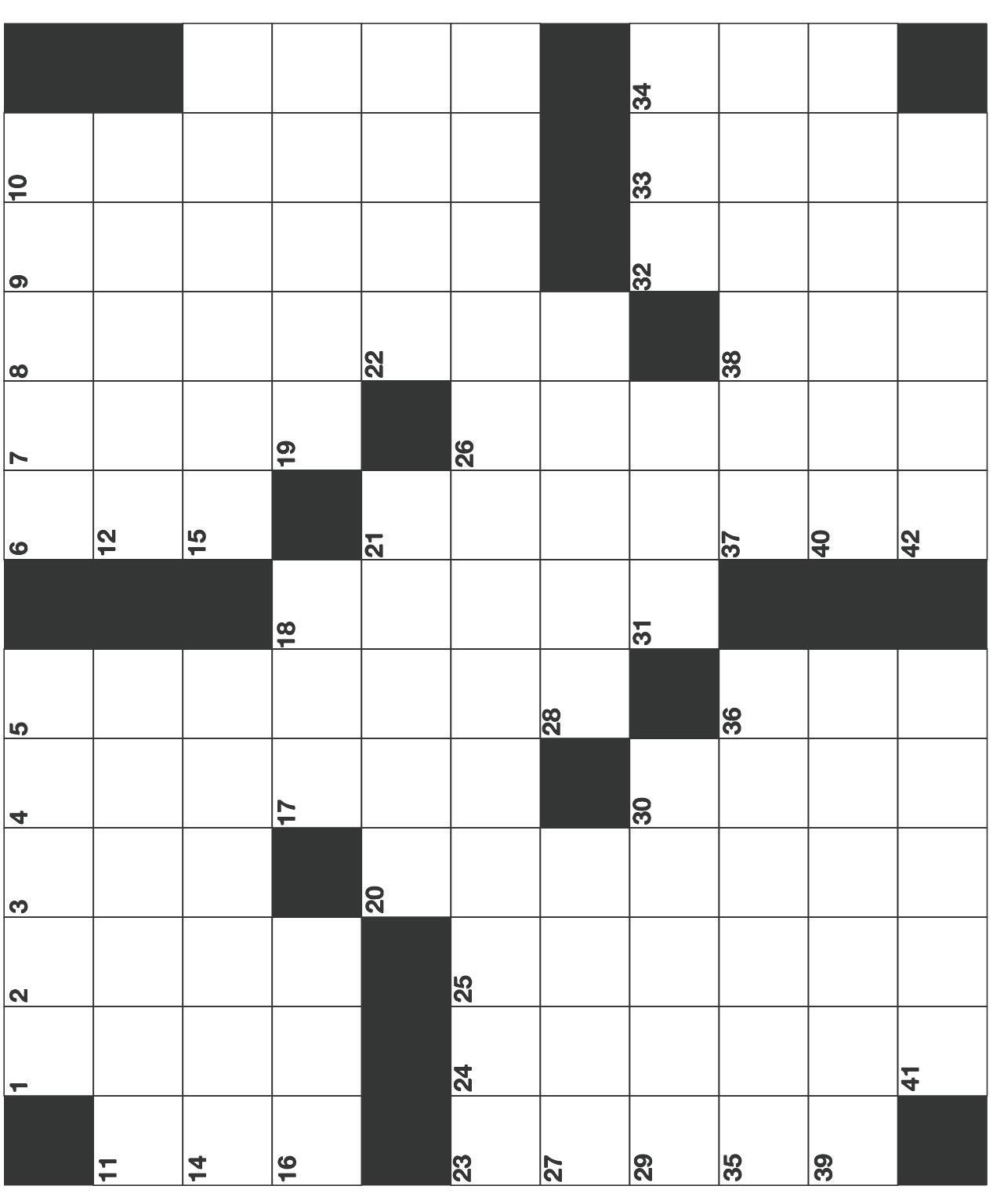


c From the GoFundMe: AMOR is fundraising for Luisa, a single mother from Honduras seeking asylum from violence and death threats. We are raising $10,000 for Luisa, to cover the cost of legal fees for her case and postpartum care.
c Haunting Returns: The Poetry of Pastness, Memory + Self w/ Naimah Zulmadelle Pétigny, Intensive writing workshop w/ LitArtsRI December 11, 6–8 p.m. LitArtsRI, 400 Harris Ave Register online c Discussion and Reading — She Will Last as Long as Stones by kathy wu w/ Katerina Ramos-Jordán and Jhani Randhawa December 11, 7 p.m. Riffraff Bookstore + Bar, 60 Valley St #107A Free c Live acoustic music w/ MAROU December 12, 7 p.m. Symposium Books, 240 Westminster St Free
c From @amornetwork on Instagram: A community member currently in ICE detention needs post-deportation financial support, as he is due to be deported to Barcelona next week. He is from the Dominican Republic and has no family or support network in Spain. We are hoping to raise $4000 to cover rent and food for two months.
Venmo: @mina-bby Paypal: jdeleongill@gmail.com
We’re trudging along to class and suddenly, RG appears in front of us. Dark navy sweater, dark navy jeans, blue Freitag slung across a shoulder. And a smile—or not really a smile, but a face that is ready to smile, always. He’s PUing, of course: it’s* an instance of the mosaic! RG will interrupt his walk to crit, or copy, or the AQR—his favorite spot—just to talk to us longer, like we’re the most important part of his afternoon. RG is never not interesting, or interested. RG has gorgeous translucent clogs (they’re French, he says). RG has left some “lexical, grammatical, syntactical” suggestions for us; they are whip smart and a little late. RG knows a lot of big words—but he never makes us feel small. RG is always one-hundo-pee down to gossip, to dump beans in pasta, or to drink to excess at the func. RG will dig through the bathroom trash to find our lost ring, and he’ll clean the blood off our hands even though he thinks it’s period blood (it’s not, for the record). RG might love us, or he might just be the sweetest person around. As a friend he is endlessly kind and truly good, in the deepest sense of the word. As an editor he is no less kind, but also, somehow, amazingly, rigorous and firm and so, so smart. We wish we were older, or we wish RG was younger, because a year and a half of him isn’t enough. We wish RG would keep appearing out of nowhere forever. Mary, how will we ever Foucarty without you?NM, TR, AH (Feats forever)
* “‘It’ doesn’t have the indexical dexterity you give it here.” –RG to NM , and probably NM to anyone who wrote this semester, as a result.
c Discussion and Reading — All That We See or Seem by Ken Liu December 13, 4–5 p.m. Symposium Books, 240 Westminster St Free c Land Trust Networking Series: Sustainable Funding, Fundraising, and Grant Writing December 16, 6–8 p.m. SKLT Barn, South Kingstown Free c Holiday Hoopla Drag Trivia December 17, doors at 6:30 p.m., trivia at 7 The Black Sheep, 397 Westminster St $100 cash prize for winning team c SNAP assistance open hours w/ Jailine Ortiz, SNAP Outreach Coordinator Knight Memorial Library, 275 Elmwood Ave December 18, 4–6 p.m. Free c Haus of Codec Solstice Market December 21, noon–5 p.m. Angell St Gallery, 324 Angell St Free c Holiday Gift Drive: Sponsor a client w/ Project Weber/RENEW Email holiday@weberrenew.org Each gift is approximately $40
c Experimental Fiber Workshop w/ Justine Chang and the RISD Nature Lab December 5, 3–5:30 p.m. Nature Lab Makerspace, 13 Waterman St Rm 11 Free c Memorial Toy Drive Dinner w/ Guest Speaker David Cicilline December 5, 6–10:30 p.m. Your Neighborhood Food Pantry, 533 Branch Ave Free c Movie screening — Partners: How Starbucks Baristas Started a Labor Revolution December 6, 7 p.m. MacMillan Hall Rm 115 Free c Winter Market December 7, 1–5 p.m. Riffraff Bookstore + Bar, 60 Valley St #107A Free c Discussion and Reading — Bittersweet Lane: Creating Home(s) in the American Affordable Housing Crisis by Jamie Madden w/ incumbent PVD Mayor David Morales December 7, 6 p.m. Riffraff Bookstore + Bar, 60 Valley St #107A Free c Lessons from the Black Panther Party & Developing a Revolutionary Strategy –Political Education Discussion w/ PVD General Assembly December 9, 6–8 p.m. AS220, 95 Empire St Free c Discussion and Reading — Across the Universes by Natan Last w/ Elisa Gabbert December 9, 7 p.m. Riffraff Bookstore + Bar, 60 Valley St #107A Free c Riverwalk Resilience
5:30