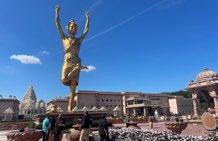
Federal authorities, led by the U.S. Department of Justice, have ended a fouryear-long investigation into alleged human rights violations in the construction of the largest Hindu temple in the United States — an extensive probe that spanned two presidential administrations. No charges were brought against BAPS, the Hindu denomination
The B.C. government says it welcomes the federal government listing the India-based Bishnoi gang as a terrorist entity in the country. Public Safety Minister Gary Anandasangaree announced the designation in a news release Monday, saying it will help Canadian security, intelligence and police agencies.
He said it gives the government the power to seize property, vehicles and money.
RCMP and police agencies in B.C. have linked the Bishnoi gang to extortion threats in South Asian communities in the province, particularly in Surrey. Surrey police confirmed on Monday that they are investigating 48 threats and 29 extortion-related shootings so far this year. Continued on Page 10...
accused of alleged human trafficking and forced labor in the building of the temple. But while the federal probe is closed, years of intense media scrutiny following a very public raid on the temple grounds leave critical questions about government overreach when targeting minority faiths. In the predawn hours of May 11, 2021, 200 or more federal agents from various entities including the FBI stormed what was then a construction site in Robbinsville, New Jersey. The area’s congressman, U.S. Rep. Jeff Van Drew, described the raid as “an aggressive show of force,” with agents “(holding) guns to the faces of swamis — holy men devoted to peace, nonviolence, and prayer; yet they were treated like dangerous criminals.”
Continued on Page 4...
A prominent advocate for a Sikh homeland in India was arrested on firearm charges in Ontario earlier this month, more than two years after his predecessor’s killing led to a significant rift in Canadian-Indian relations.
After fatal crash, Sikh truck drivers in the US fear backlash
Continued on Page 10...
The trucks keep rolling on Highway 99 in California, the route bustling with freight traffic through the Central Valley. And behind the wheel is often a turbaned Sikh man, their cabs adorned with religious symbols, portraits of Sikh Gurus, or posters of Punjabi singers.
The arrest happened a day after Canada’s national security adviser met with her Indian counterpart in New Delhi as part of an effort to reset dealings between the two countries. The former Indian high commissioner to Canada is
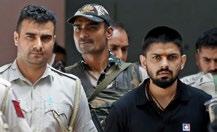
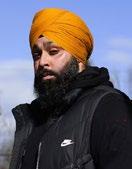
hailing the arrest as an example of a constructive shift in OttawaNew Delhi relations. The arrest was widely covered by Englishlanguage Indian news outlets. However, the federal government says it had nothing to do with the arrest, which was made by the Ontario Provincial Police. Inderjeet Singh Gosal of Caledon, Ont., was arrested Sept. 19 after a traffic stop in Oshawa, Ont.
Continued on Page 6...
Shots were fired at a Surrey, B.C., radio station early Tuesday morning.
Former MLA and Swift 1200 AM host Jinny Sims confirmed that staff arrived at the building on 76 Avenue in Surrey to find evidence of a shooting. Sims told that no one was inside the building at the time.
Sims says she is “shaken” by what happened and said that everyone has the right to have a safe workplace. “Well, this is my workplace,” Sims told.
“I got a phone call to say that gunshots had
been fired at the building. So I’m here right now and the police has arrived and they’re doing their investigation.”
Continued on Page 10...
Project Gaslight shooter who fled to India arrested
A man wanted in connection with three shootings tied to the extortion series known as Project Gaslight in Edmonton has been arrested after fleeing the country.
Arjun Sahnan, 21, was taken into custody at the Edmonton airport after returning from India.
He faces charges of discharging a firearm recklessly (x2) and possession of a prohibited firearm with ammunition (x3) in relation to shootings that took place in late 2023 in Edmonton, Winnipeg and Sherwood Park.
The first shooting occurred on Dec. 21, 2023, in Edmonton’s Cy Becker neighbourhood, where shots were fired at an upstairs bedroom window while the homeowners and four other occupants, including two children, were asleep.
missing occupants. Security cameras captured the incident. In both cases, the homeowners had been extorted and threatened before the shootings.
The final incident occurred on Dec. 29, 2023, in Sherwood Park’s Fountain Creek neighbourhood, where shots were fired at an unoccupied home.
Days later, on Dec. 24, shots were fired at a northwest Winnipeg home occupied by several family members. One bullet passed through a bedroom and an adjoining room, narrowly
One bullet struck a toybox in a children’s playroom. Investigators believe the house was targeted by mistake.
Ballistics confirmed that the same firearm was used in all three drive-by shootings.
Canada-wide warrants were issued for Sahnan’s arrest in April 2024 after he fled to India immediately following the incidents.
Due to a high level of spam content being posted in our comment section below, all comments undergo manual approval by a staff member during regular business hours (Monday - Friday). Your patience is appreciated.
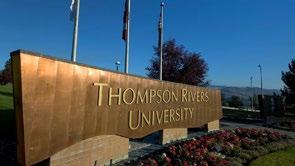
Dozens could be affected by job cuts at Thompson Rivers University
Thompson Rivers University (TRU) in Kamloops, B.C., is facing job cuts that could affect dozens of staff members as it faces a multimilliondollar budget deficit.
In an update last week, TRU said department managers began notifying 65 staff members represented by the Canadian Union of Public Employees (CUPE) of its intention to reduce jobs. When accounting for union bumping, around 40 people in total could be affected, the university said.
The university says it faces a shortfall of $7 million to $10 million this year. Cost-cutting efforts include a number of staff accepting early retirement and vacant positions going unfilled.
A union leader says the cuts would worsen existing staff shortages, and negatively affect the student experience at TRU, which describes itself as the biggest university in B.C.'s Interior.
"What needs to happen is there needs to be an increase in funding from our governments," Rugg said. "A bigger investment into post-secondary education, in all of the institutions, particularly public institutions.
"Because it's an investment in people's futures — in, you know, Canada's future."
TRU president Airini (who uses one name) said that when combined with job cuts across the university that began last year, almost 120
"Many of [our members] have been here for quite a few years and have put a lot of time and effort into supporting the institution," said Lois Rugg, the president of CUPE Local 4879, which represents TRU support staff.
"It's always pretty devastating and, you know, for some, very depressing that this is happening right now."
Rugg said the union was worried about job losses months ago, as universities around Canada continue to grapple with a drop in international enrolment.
That follows a federal government decision to sharply reduce the number of international student permits being given out last year.
Federal officials said the move was aimed at reducing pressure on Canada's housing market, among other things, but which led to turmoil for universities that relied on higher international fees to fund programs.
positions are being affected by ongoing reductions. She said the university had to balance its budget to be sustainable in the future, and no decision has been made yet on whether particular programs could be cut. "If there should be changes, particularly beginning with low enrolment programs, and we do see changes there, current students will be taught out and we will consult fully on final decisions," she told Doug Herbert, guest host of CBC's Daybreak Kamloops.
Airini said the job cuts would take place over the course of multiple months, and that targeted layoffs would be a last resort as it also looks to cut spending in other areas.
A spokesperson for B.C.'s post-secondary education ministry said that universities across the province face significant financial pressures, citing the "unilateral changes" made by the feds over international student permits.
Man, 42, charged in Surrey stabbing that left one in critical condition
A 42-year-old man has been charged after a stabbing in Surrey’s Whalley neighbourhood. Police said the man was found injured in the 10700-block of King George Boulevard at about 2:30 p.m. on Saturday. He was taken to hospital where he remains in critical condition. Other officers arrested a person nearby, canvassed the area for witnesses and collected evidence.
On Sunday, Victor Vi Hoang was charged with aggravated assault causing bodily harm. He is being held in custody until a court appearance on Oct. 2. Anyone who saw the incident or has information and hasn’t spoken to police is asked to call Surrey police at 604-599-0502.
BCGEU president warns strike action will ‘vastly
increase’ within a week
Striking public service workers brought their message to the B.C. legislature Thursday, chanting outside the NDP caucus meeting room ahead of the start of the fall session next week.
“They’re exercising their democratic rights, and that is not something that is new in this province,” said House Leader Mike Farnworth. Five weeks into the strike, it’s hitting certain sectors especially hard. “It has cut off our business completely,” said Davor Kovac, who runs a wine importing business called Dream Wines Corp.
With pickets outside government liquor stores and the liquor distribution branch warehouse, businesses relying on booze are being hurt.
In particular, wine importers whose product comes in and out of the warehouse are being hammered, Kovac said.
“We cannot generate even a cent of sales since
last week, so what’s effectively happening is we are bleeding money without any ability to generate revenue,” he told.
The union’s latest demand is an eight per cent raise over two years. The government has offered a total of five per cent. The BCGEU escalated strike action Thursday, with 1,200 more picketers. It says more disruption is coming soon, in a big way.
“Within the next week, there will be a vastly increased impact on the general public,” said BCGEU president Paul Finch Thursday afternoon. “Unfortunately, that’s unavoidable. Government failed to come back with a reasonable deal.” Public service workers plan to return to the lawns of the legislature Monday to amplify their message to the politicians returning to work there.
BC man gets 13-year sentence for drug offences, trying to bribe prison guard
A man from Chilliwack, B.C., has been sentenced to more than 13 years in prison on drug and weapons charges after being on the run from police for almost three months.
RCMP say William Michael Dow had multiple warrants out for his arrest after failing to appear for sentencing on June 25, before he was ultimately arrested on Sept. 17 in Chilliwack.
Dow had pleaded guilty to several offences prior to the sentencing, including weapons and substance possession charges.
Police say Dow had also tried to bribe an offduty corrections officer at the Kent Institution to smuggle contraband into the prison in October 2020.
The original drug and weapons charges Dow
faced stemmed from an extensive investigation starting in November 2019, which resulted in police seizing fentanyl, cocaine, methamphetamine, and a prohibited handgun from his home.
Police say officers served a second search warrant on Dow after the corrections officer reported the attempted bribe and investigators seized more drugs and another prohibited handgun.
'We can no longer build what people can afford': Warning for Vancouver real estate as 2,500 condos sit unsold
Executives in Vancouver's real estate industry
are warning of a glut of newly built condos sitting unsold and empty throughout the region.
About 2,500 new condos are sitting unsold and empty in Metro Vancouver, according to the Canada Mortgage and Housing Corporation (CMHC). That number is double what it was last year, according to CMHC.
Anne McMullin, president and CEO of Urban Development Institute, says the reason is that condos cost more to build than local residents can afford. "Costs have escalated so much in the last 10 years that to build a unit is out of the price range of 80 per cent of the public in the Metro Vancouver area," McMullin said.
Developers don't want to sell at a loss either, according to McMullin.
"You're not going to build to lose money."
She said the market had been absorbing escalating costs, including rising labour and materials costs, for years as industry professionals sensed prices would continue to rise.
But now she also blames recent government
policies that have increased the cost of building.
"The cost that is associated with policies at all three levels of government has made it that we can no longer build what people can afford," she said. Some developers are now giving deposits back to buyers because they're not meeting pre-sale targets to secure bank financing for new projects.
"There's also some developers that have actually gone into receivership because they had sold or tried to develop … as the prices were escalating."
She said some companies are already laying off staff. "There is a potential storm coming and it's frightening."
She said she hopes cities in the region will review their various policies and requirements, including those for non-market rental housing, energy step codes and public art.
Greg Zayadi, the president of Vancouver-based development company Rennie, said the market slowdown has been happening since March 2022.
"But, yes, over the last year it's gotten very real," Zayadi said.
He said the real estate industry had a really
good 20 years, but the recent decline in sales of new condos will have big ripple effects in the labour market. "The last time we saw this level of developer-owned unsold inventory was 24 years ago."
Zayadi said developers have to understand that people who are spending $800,000 for a condo likely don't want a 450- or 500-square-foot condo.
He said buyers these days are hoping to get 800to 1,500-square-feet for between $800,000 to $1.2 million. "We need to get to a point where we can deliver inventory as an industry, as a province, at $700 to $900 a square foot. That's $200 to $300 above where the market is today."
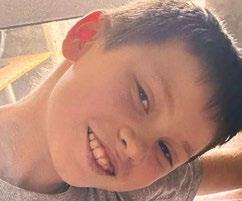
11-year-old boy missing in Metro Vancouver
An 11-year-old boy is missing in Metro Vancouver but the case does not meet the criteria for an Amber Alert, according to authorities.
The investigation into the whereabouts of Kai Pavlovic started nearly a week ago when police were called on to do a well-being check, Burnaby RCMP said in a news release Thursday.
“As part of the investigation, police have spoken to Kai’s family members and have reason to believe Kai is staying with a caretaker who is unknown to police,” the statement from police said. “Over the next few days, various investigational avenues were pursued to try and confirm Kai’s whereabouts but have so far been unsuccessful. Numerous resources have been dedicated to this investigation, and officers are actively working around the clock to locate Kai.”
“Our initial priority was to make people aware Kai was missing and to share his picture with the public,” Burnaby RCMP spokesperson Cpl. Laura Hirst said in the statement.
HAPPY DIWALI!
“Our investigators are making every effort to find Kai, and we are asking for the public’s help as part of those ongoing efforts.”
Anyone who knows where the boy is or who has information that could assist investigators is urged to call their local police department or Crime Stoppers at 1-800-222-8477.
A federal probe into US's largest Hindu temple leaves questions for minority faiths
Continued from Page 1...
The federal investigation into BAPS appears to have been coordinated with law firms that had filed a civil lawsuit in New Jersey on behalf of some who had worked at the temple, alleging low wages and caste-based discrimination.
But the accusations struck anyone familiar with BAPS (the Bochasanwasi Akshar Purushottam Swaminarayan Sanstha). Rooted in the core teachings of Bhagwan Swaminarayan, the founder of the Swaminarayan Hindu tradition, BAPS has long rejected caste hierarchy and upheld the fundamental principle articulated in its central scripture, Satsang Diksha: ‘No one is superior or inferior by birth.
This principle is reflected in the organization’s history, which includes the veneration of leaders from marginalized castes such as the 19th-century guru Bhagatji Maharaj, and in its policy of conducting monastic ordination and congregational governance without regard to caste.
In addition, as in many Hindu traditions, BAPS members consider the building of temples an act of devotion, a means to connect with God through spiritual service. This was reflected in their presence in the United States thanks to R-1 visas, which specifically allow non-immigrant individuals to enter the U.S. to perform volunteer services. As BAPS’ lawyer Paul Fishman noted in a court filing after the raid, federal officials had long authorized the denomination’s use of R-1 visas, and for two decades, federal, state and local government agencies had regularly inspected all of BAPS’ construction projects.
Ph: 604-591-5423
Fax: 604-591-8615
editor@theasianstar.com
Editor: Umendra Singh
Marketing and Sales: Ravi Cheema
604-715-3847
Shamir Doshi 604-649-7827
Harminder Kaur 778-708-0481
Parminder Dhillon 604-902-2858
Pre-Press: Avee Waseer
Production: Ozmo Media
www.theasianstar.com
Publication Mail Agreement No 428336012
Return undeliverable Canadian addresses to Circulation Dept.
# 202 - 8388, 128 St., Surrey, BC V3W 4G2
India’s zero-tolerance turn On cross-border terrorism
By Aritra Banerjee: On 29 September 2016, India’s security doctrine visibly changed course. In the aftermath of the Uri attack that killed 19 soldiers, Indian Special Forces crossed the Line of Control to strike multiple terrorist launch pads. The operation was announced publicly — an unusual choice for a country that had long preferred ambiguity and strategic restraint — and the effect was immediate: New Delhi declared, in practice and in rhetoric, that attacks on Indian soil would be met with concrete, punitive responses.
That press briefing — delivered by the Director General of Military Operations alongside the Ministry of External Affairs — did more than report a raid. It planted the seed of a doctrine that officials and analysts since have described as “zero tolerance”: a willingness to impose costs on state actors that sponsor, harbour, or tolerate terrorist groups that strike India. Within weeks and months, the phrase entered policy discussions and public discourse as shorthand for a more muscular approach to deterrence.
What Changed, and Why It Matters
The shift was neither purely tactical nor simply theatrical. Operationally, the 2016 strikes demonstrated improved joint planning, better intelligence fusion, and the capability to project force across a tightly monitored frontier without provoking instant escalation. Politically, the operation closed a credibility gap that many in New Delhi believed Pakistan’s proxies had exploited: an expectation that India would not respond with forceful retaliation.
Between 2016 and 2025, the pattern of Indian responses steadily evolved. What began as carefully calibrated crossborder raids expanded into a multi-domain toolkit blending precision kinetic action with diplomatic messaging, sanctions, tighter border controls, and enhanced intelligence cooperation. The objective has been consistent: raise the operational costs for groups and states that use terrorism as an instrument of policy, while maintaining legal and political cover for measured reprisals.
The 2025 campaign known as Operation SINDOOR — a nation-level response to the Pahalgam terror attack that killed civilians in April — is in effect the largest test to date of the zero-tolerance doctrine writ large. Over several days, New Delhi used long-range precision fires, aviation platforms, and loitering munitions against what it described as terror infrastructure deep inside Pakistan-administered territory.
Ottawa has updated its official advice for travellers to the United States, warning that permanent residents from Canada could have their status south of the border revoked.
The notice from Global Affairs last week cautioned Canadians settled in the U.S. that they could face a reassessment of their eligibility to remain there, for reasons such as prior criminal convictions.
At the same time, Ottawa is also warning LGBTQ Canadians that they may be affected by U.S. President Donald Trump’s ban on the use of the X gender marker.
The updated advice warns Canadians who are permanent residents of the U.S. that their status “can be terminated,” including after “a reassessment of eligibility, including because of previous criminal convictions” or living outside the U.S. longer than permitted. It also warns that U.S. authorities periodically review visas, which can also be terminated. Canadians can usually stay in the U.S. for up to six months without a visa.
In June, Canadian Johnny Noviello, who was a permanent resident of the U.S., died while in the custody of U.S. Immigration and Customs Enforcement in Florida. He was facing deportation because of several drug-related convictions from 2023.
FBI investigating death of Canadian man detained by ICE in Florida
Mr. Noviello was detained at a Federal Bureau of Prisons detention centre in Miami pending deportation proceedings and was found unresponsive on June 23. Dozens of Canadian citizens have been detained in the U.S. by
immigration enforcement officers.
The travel advice also warns Canadian permanent residents that they may be barred from entry to the U.S. if they came to Canada from certain countries subjected to a complete or partial travel ban enacted by Mr. Trump, including Iran, Libya and Yemen.
In June, Global Affairs updated its advice to warn Canadian residents they could be affected by a travel ban to the U.S.
Mr. Trump introduced a travel ban in June for citizens of 12 countries: Afghanistan, Burma, Chad, Republic of the Congo, Equatorial Guinea, Eritrea, Haiti, Iran, Libya, Somalia, Sudan and Yemen. He also introduced a partial ban on citizens of Burundi, Cuba, Laos, Sierra Leone, Togo, Turkmenistan and Venezuela.
Ottawa’s travel advice warns that this ban could affect Canadian permanent residents, who could be denied entry, although not dual nationals with a Canadian passport.
“Since June 9, 2025, the U.S. proclamation ‘Restricting the Entry of Foreign Nationals to Protect the United States from Foreign Terrorists and Other National Security and Public Safety Threats’ is in effect. It may impact your ability to obtain a visa if your country of citizenship is designated in the proclamation,” the advice says.
In addition, the updated travel advice warns Canadians they may be asked to declare which sex they were assigned at birth, including on applications for visas or Nexus travel cards.
The change follows Mr. Trump’s executive order in January that says the American government will now only recognize the male and female genders. U.S. passports and other identity documents are no longer issued with an X gender marker.
In August, The Globe and Mail reported that Canadians renewing their Nexus travel cards or applying for new ones to make it easier to cross the border to the U.S. must identify themselves as either male or female, even if they are transgender or nonbinary.
Canada issues serious warning in update to USA travel advisory
People in Canada who have trips to the U.S. scheduled may want to check the travel advisory from the federal government.
Canada’s latest advisory update may impact visa holders and 2SLGBTQ+ individuals planning to travel to the U.S. in the near future.
Under the visa section of the notice, the Government of Canada explains that while Canadian visitors can usually stay in the U.S. for six months without a visa, there are some exceptions. It warns those who need a visa about the heightened scrutiny they may face when they arrive at the U.S. border.
“If you do need a visa, be aware that U.S. authorities may periodically review already-issued visas,” reads the travel advisory.
According to the notice, visas can be terminated for a variety of reasons, including a violation of admission terms and reassessment of eligibility, such as due to previous criminal convictions.
It also warns Canadians who are U.S. permanent residents about the possibility of their status being terminated for certain reasons, including living outside the U.S. for longer than permitted and reassessment of eligibility.
Additionally, the travel advisory expands its
guidance for the 2SLGBTQ+ community. “Federal systems in the U.S. are changing to no longer accept markers of gender identity,” it reads.
This is a result of President Donald Trump’s executive order in January, which mandated that the U.S. would only recognize two sexes, “male” and “female,” on government documents such as visas and passports.
The Canadian government warns 2SLGBTQ+ individuals that sex assigned at birth may now be requested by federal forms and processes, including visa applications, Nexus applications, passenger manifests, passport applications, and Social Security applications.
The last major update to the U.S. travel advisory was in April, when the Canadian government added a serious warning about entry and exit requirements.
Khalistani leader arrested as Canada smooths ties with India
Continued from Page 1...
The OPP said Mr. Gosal and two others in the vehicle were each charged with more than 10 firearm-related offences, including possession of a weapon for a dangerous purpose, careless use of a firearm and carrying a concealed weapon.
India silent on how Canada’s terrorist listing of Bishnoi gang will affect warming ties
A day earlier, Canadian national intelligence and security adviser Nathalie Drouin had met in New Delhi with her Indian counterpart, Ajit Doval, during a visit that she framed as a re-establishment of communication channels.
Mr. Verma wrote that the arrest of Mr. Gosal “shortly after the NSA meeting illustrates this emerging new normal.”
He added: “Gosal’s detention on firearms charges followed years of Indian complaints about reactive Canadian enforcement.”
Mr. Gosal, a Canadian, is a member of Sikhs for Justice, a group that advocates for the creation of Khalistan, a separate Sikh homeland in India’s Punjab region. He took over responsibility for organizing an unofficial referendum on the issue among the Sikh diaspora from fellow activist Hardeep Singh Nijjar, according to Sikhs for Justice general counsel Gurpatwant Singh Pannun.
Mr. Nijjar was shot dead in June, 2023, in Surrey, B.C., a slaying that then-prime-minister Justin Trudeau publicly alleged was the work of the Indian government. India denied the accusation, but the charge led to a serious rupture in relations
that saw dozens of Canadian diplomats leave India and later, in 2024, the expulsion of Indian diplomats from Canada.
A year after Hardeep Singh Nijjar’s death, mysteries remain about how he really lived India has long complained that Canada provides a haven for Khalistan advocates. Canada is home to about 770,000 who reported Sikhism as their religion in the most recent census. A small but influential number of these Sikhs support the idea of Khalistan. The Canadian government has frequently responded to India’s complaints by pointing to the Charter of Rights and Freedoms and noting that freedom of expression is protected in Canada.
Reached for comment, Mr. Gosal said he could not talk about the arrest because it’s before the court. However, he said that prior to this, the RCMP had twice warned him his life was in danger and offered him protection, which he had declined because he did not want to abandon work on the referendum.
“The federal government does not get involved in the operational activities of police services,” Simon Lafortune, press secretary for Mr. Anandasangaree, said in an e-mailed statement.
The OPP said in a Sept. 24 statement posted on social media that charges against the three men resulting from the traffic stop also included possession of a firearm obtained by crime, and that no further information would be released about the traffic stop to “protect the integrity of the investigation.”
The City of Surrey is exploring a policy for prefabricated dwellings through a Backyard Housing Initiative study which council instructed city staff to report back on, including related permitting processes and necessary bylaw amendments to make it so.
"I'm really pleased to see this," Mayor Brenda Locke said. "I'm particularly pleased because it just demonstrates that cities are all unique and certainly the city of Surrey is unique."
She remarked that for city staff "to be doing custom designs I think is really important and thank you for that."
Locke asked Ron Gill, Surrey's general manager of planning and development, to explain to council how big a pre-fab garden suite can be on an average 7,000 square foot lot.
"So the prefabs that we've reviewed, they come in a variety of different sizes ranging from 600 square feet-ish up to about 1,200 to 1,400 square feet in both one and two-storey varieties," Gill replied, "so there's lots of opportunity to customize and lots of flexibility there," to which Locke said "that's amazing."
"And can you just tell me, have we got any businesses that are building these prefabs, even in our region, is there anybody building this kind of housing or is this still pretty new?" Locke asked. Gill replied there are "a number" of companies bringing these forward. "In terms of whether they've
been built out of communities I'd have to look to see but certainly one of the big barriers was getting CSA (Canadian Standards Association) approval for the designs; that has been achieved now so there are companies that are moving forward with these and I'm sure Surrey's not alone in looking at the prefabricated options."
Gill in a corporate report that came before council on September 29 noted that in December 2023 Surrey received a Canada Mortgage and Housing Corporation grant under the Housing Accelerator Fund initiative to speed up housing development here. He said federal, provincial and regional government plans have been developed to "support design, affordability, and accelerated delivery of small-scale multi-unit housing" as well as “missing middle” housing that aim to "simplify design, reduce costs and accelerate housing delivery while ensuring local zoning and building code compliance."
Oilpatch execs back push for pipeline to BC coast, but critics warn of ‘multi-decade gamble’
Canadian oilpatch executives say they’re prepared to pin their hopes on Alberta Premier Danielle Smith’s Hail Mary bid to land an oil pipeline on Ottawa’s list of major projects this fall. Smith unveiled plans for Alberta’s government to be the main proponent in an application for an oil pipeline to B.C.’s northwest coast, tapping input from pipeline firms Enbridge Inc., South Bow Corp. and Trans Mountain Corp., as well as Indigenous communities. She hopes to get federal approval as early as November. Still, the strategy appears to have the buy-in of a battle-scarred oilpatch, still smarting from a decade of setbacks on pipeline projects like Northern Gateway, Energy East or Keystone XL, all terminated or abandoned amid staunch opposition.
“In the last few decades, (pipeline companies) have lost billions of dollars in investment in pipelines that could not get the regulatory or political gatekeepers to reach final investment decisions,” Alex Pourbaix, executive chair at Cenovus Energy Inc., said Wednesday.
“You can see the scars on me,” Pourbaix told a packed audience of oil and gas executives and political leaders gathered for the announcement in Calgary.
Pourbaix was previously an executive at what is
now TC Energy Corp., where he worked on the company’s failed bids to build Energy East and Keystone XL. Now, he’s part of a newly formed advisory group, composed of nine other industry stakeholders and experts — along with pipeline companies Enbridge, South Bow and Trans Mountain — that will begin early planning for the project. “Canada is facing great challenges with respect to our economy, affordability, housing — you name it — and we have a revenue problem with our country and with our government,” Pourbaix said. “The world right now really needs energy security, and it needs energy affordability.”
The proposed pipeline would move up to one million barrels per day of Alberta oil to the B.C. coast, where it would be shipped to energyhungry markets in Asia.
Janetta McKenzie, a director at the clean energy think-tank Pembina Institute, called the proposal a “multi-decade gamble,” noting that if a pipeline were profitable, the private sector would have already come forward with a proposal.
“It speaks volumes that after months of pressure from the Alberta government to bring forward a proposal, and offers of concierge service from Ottawa, industry has still refused,” McKenzie said in a statement.
The operator of a medical aesthetics business in Burnaby has been sentenced to 11 years in prison for sexually assaulting clients during “non-surgical vaginal rejuvenation” treatments using a “highintensity focused ultrasound machine.”
A jury convicted Farshad Khojsteh Kashani last year of seven counts of sexual assault, each involving a different client. He was sentenced in B.C. Supreme Court earlier this month, and Justice Lisa A. Warren’s reasons for sentencing were published online Thursday.
The offences occurred between 2019 and 2021, according to a news release issued by Burnaby RCMP in 2022 after two different victims had come forward.
At the time, Khojsteh Kashani had been charged with two counts of sexual assault, but police said they hadn’t ruled out that other people might have
information related to the case, and urged those people to contact them. The women’s identities are protected by a publication ban, and they are referred to in the decision only by initials.
According to the decision, HIFU vaginal rejuvenation treatments, when properly performed, involve gently and slowly inserting a wand that emits “ultrasound energy” into the vagina, with the client lying on their back in “a ‘pap smear’ position.”
“The process involves a single insertion and then the gradual withdrawal of the wand,” the decision reads. “The practitioner is required to touch the vaginal area of the client only to the extent necessary to guide the wand during the initial insertion.” One woman told the court Khojsteh Kashani ordered her to bend over and allow him to insert the wand from behind.
Ontario man convicted of manslaughter in fatal shooting in Surrey
An Ontario man has been convicted in a shooting in Surrey, B.C., that killed a man and injured a woman in February 2022.Homicide investigators in B.C. say Yusuf Kontos was arrested in Richmond Hill, Ont., in January last year and was convicted of manslaughter in B.C. Supreme Court last month. Police say Kontos was also convicted of aggravated assault for the attack on the surviving victim, and has been sentenced to 12 years manslaughter and eight for the assault conviction.
The attack in Surrey happened on a street not far from an elementary school. Police say they found two people with gunshot wounds inside a vehicle.
Twenty-four-year-old Juvraj Jabal died of his injuries after being taken to hospital, while the 20-year-old woman survived.
Kontos, who was 23-year-old when arrested, had been charged with first-degree murder and attempted murder before being convicted of manslaughter and aggravated assault.
2 Chinese crime families, 2 luxury drug labs, and suspicious mortgages on Burnaby’s Ridge Drive
B.C.’s Civil Forfeiture Office has targeted a $3.5 million home on Burnaby’s prestigious Ridge Drive after an RCMP raid uncovered a stunning array of synthetic narcotics, precursor chemicals, pill-pressing machines and dies that indicate a small factory for synthetic drug production and trafficking tied to a Chinese family. Equally alarming, the house sits directly beside a 5,000-square-foot mansion already targeted in a separate civil forfeiture case last year involving six properties and a similar range of narcotics, involving a different Chinese family.
Taken together, the two Ridge Drive files suggest a startling pattern: two alleged Chinese crime families operating side by side on one of Burnaby’s most exclusive streets. Whether the proximity points to a trusted network or is a coincidence remains an open question. But The Bureau’s previous investigation into the 5,000-square-foot drug house found a man not only convicted for narcotics production, but listed as a director in a Guangdong-based community association with deep ties to Beijing’s United Front Work Department, and also British Columbia’s
government. What is clear, however, about the neighbouring Ridge Drive homes targeted by the RCMP — tied to an array of other homes worth $15 million in total — is the latest case implicates suspicious mortgages from some of Canada’s largest banks, according to the forfeiture claim, exposing how mainstream lenders have become financially entangled in high-stakes laundering investigations. The more recent forfeiture claim, filed in B.C. Supreme Court this spring, targets two properties valued at a combined $4.5 million, three vehicles, and relatively modest amounts of cash. At its centre is a seven-bedroom home on Ridge Drive, assessed at nearly $3.5 million, alongside a townhouse on Westminster Highway in Richmond, worth just under $1 million. Also named are a 2015 Land Rover, a 2019 Toyota Prius, and a 2023 Tesla Model 3. The defendants include a father named G.H. Li, his son J. Li, and two other suspects, S. Vong, and P. Vong.
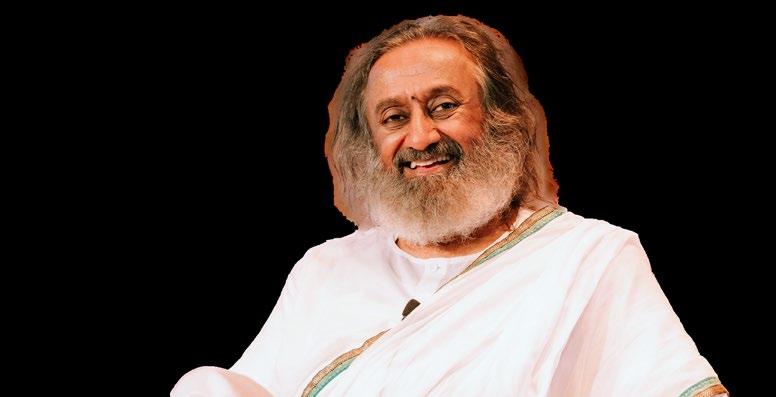
JOURNEY WITHIN
AN EVENING OF MEDITATION, WISDOM & GROWTH
with Gurudev Sri Sri Ravi Shankar
OCT 18
Under surveillance in early October 2024, the RCMP observed the network in motion. On October 6, 2024, S. Vong met with an individual and delivered 19 kilograms of MDMA.
Shots fired at Surrey radio station believed to be extortion-related Sikh truck drivers in the US fear backlash
Continued from Page 1...
Surrey police confirmed they are investigating a shooting at that location, but it is in the early stages. No motive for the shooting has been released at this time.
He said they are still trying to determine what time the shooting happened.
“At this time, we believe the incident to be extortion-related and our Extortion Task Force will be taking over the case,” Houghton added.
“Surrey police and other police agencies have spoken with the business owner in the past and that’s what leads us to believe this is extortionrelated.” Houghton said that, as of Sept. 22, there were 48 reports of extortion-related incidents in the City of Surrey. “It’s very concerning, it’s very concerning,” Sims said.
“This is a media and to make this kind of an
attack on media seems unthinkable to me. And yes, like anybody else, I am shaken that we have people who would do this.”
Sims said she believes this shooting might be connected to the recent string of extortion attempts across Canada. Swift Radio’s most recent segment covered extortion cases and the Bishnoi Gang being declared a terrorist organization with guest Surrey Police Service’s Chief Const. Norm Lipinski. She says she is calling on all levels of government to put an end to the extortion threats.
“This is my workplace that other people have come and shot at.”
In July, Spice Radio rebranded as Swift 1200 AM as owner Shushma Datt and her son Sudhir Datta stepped away from the station.
Swift 1200 AM is led by Devinder Singh Benipal, Nimmi Daula, Sims and Sameer Kaushal.
Continued from Page 1...
Sikhs, a religious minority group from India, have become a large part of America's haulage industry, helping to deliver everything from Californian strawberries to lumber across the country. But a crash in Florida and its aftermath has sent shivers through the Sikh trucking community that could have economic consequences.
There are approximately 750,000 Sikhs in the US, and about 150,000 working in the trucking industry, mostly as drivers. The role they play in this essential industry is evident from the names on their trucks' doors - Singh Trucking, Punjab Trucking - to the curry served at rest stops along the west coast, where approximately 40% of all truck drivers are Sikh, according to the North American Punjabi Trucking Association (NAPTA).
Many have limited English skills but years of driving experience. This has put some drivers in a precarious position, as the Trump administration has moved to tighten language requirements for commercial drivers. In response, many Sikh temples are offering language classes to help drivers pass their language tests.
"Many drivers stayed home out of fear of the new laws. We started the class in mid-July, to help them return to work," said Tejpaul Singh Bainiwal, who volunteers with a Sikh temple in Stockton, California.
At an English class at the temple on Sunday, several drivers practised introductions and reviewed highway signs and regulatory signs. Many drivers felt shy about speaking but were motivated.
Narinder Singh, a 51-year-old driver who has been working in the US for eight years, says he's taking classes at the temple because he thinks it's important to try to be a good citizen and comply with the law.
"Sometimes an individual's actions may cost
the entire community," he said, referencing a fatal crash on the other side of the country that has shone a harsh spotlight on Sikh drivers.
On 12 August, Harjinder Singh, an Indianborn truck driver, made a U-turn on the Florida Turnpike, crashing into a minivan and killing three people.
The Department of Homeland Security (DHS) has claimed he entered the US illegally from Mexico in 2018 and obtained a commercial driver's licence in California, despite having no legal right to be in the US and failing an English proficiency exam.
However, California officials say federal authorities told them he had a legal work permit when the state issued him a driver's licence.
Harjinder now faces manslaughter and vehicular homicide charges in Florida and has been denied bail. His arraignment is slated for the end of September.
Two weeks after the Florida crash, Secretary of State Marco Rubio paused the issuing of work visas for foreigners looking to become commercial truck drivers in the US.
There has also been an increase in harassment against Sikh drivers, industry insiders tell the BBC. Raman Singh Dhillon, chief executive of NAPTA, said many drivers were now afraid about becoming targets.
"Sikh drivers are being harassed at truck stops. In some cases, even local law enforcement has been unresponsive," he says.
While he supports Trump's calls for more regulation of commercial licences and English proficiency requirements, Raman is concerned that harassment and increasingly strict immigration laws will make it harder for Sikhs to work in the industry.
"The trucking industry will soon face a serious driver shortage," he said.
BC government welcomes Canada listing India-based Bishnoi gang as terrorist entity
Continued from Page 1...
“Extortion targeting South Asian community members in Surrey and throughout the Lower Mainland is absolutely unacceptable and the province has taken all steps to help protect communities from these awful threats of violence and intimidation, in some cases, actual acts of violence,” Minister of Public Safety and Solicitor General of British Columbia Nina Krieger told Global News.
“I think this provides important tools to police to go after criminal assets. Extortion is all about money. This designation will allow bank accounts to be frozen and property vehicles and money associated with the criminal enterprise within Canada to be seized.” “Police are working diligently on complex investigations that I’m not able to comment on at this time, but they’re doing everything to build cases that will meet the high
threshold that we have here in B.C.,” Krieger said.
“It’s not only about arrests, it’s about convictions and we want to ensure that the most robust cases, police want to make sure that most robust cases go forward to lead to convictions and hold these criminals to justice.”
There are critics, however, who say B.C. needs to do more to bring people to justice.
“I don’t think any one of us will be taking any victory laps until these thugs and criminals are caught,” Surrey Mayor Brenda Locke said.
“And that’s just plain and simple because I tell you my city is being terrorized right now by these criminals that are shooting at businesses, at homes. This is terrible.
“Can the province do more? Yes, they can. Absolutely. I would love them to and I’ve asked them to assign a special prosecutor to this issue in Surrey.”
Auckland JP and
accountant
Suren Sharma admits role in $1.8m investment scam
A respected JP and accountant has admitted his role in an international fraud that siphoned $1.8 million from 12 investment scam victims.
However, despite the plea, no conviction has been entered because his lawyer says Karaka pensioner Suren Sharma intends to apply for a discharge without conviction.
Sharma worked as a registered Inland Revenue Department (IRD) tax agent and is the director and shareholder of multiple companies.
He has denied wrongdoing since his arrest in January last year and was due to go to trial next week. But Sharma now faces up to seven years in jail after pleading guilty on Friday to money laundering. The justice of the peace declined to comment on his guilty plea when approached by the Herald outside the Auckland District Court today. On whether he had any messages for his victims, Sharma said: “I think that will happen when [I] see the judge the next time”.
The 74-year-old used his bank accounts to help offshore criminals steal nearly $1.8m from a dozen Kiwi investors who believed their money was being secured in term deposits or government-backed bonds.
Sharma claimed he never met the victims, but had received signed contracts and passport details from them via a third party in Australia, authorising him to invest their money in Bitcoin.
Before his arrest, he was caught in a secret recording telling a private investigator his BNZ bank account had been frozen because of “suspicious activity”. But he claimed he did not know the money landing in his account was stolen and insisted he was not a party to any fraud.
“I don’t have the money,” Sharma told the
investigator.
“I can, in all honesty and sincerity, explain to you that I am not involved.” One of Sharma’s victims, Deepak Udhani, lost $100,000 to the scam in June 2023. Although he welcomed Sharma’s guilty plea, describing him as a selfish criminal and “heartless swine”, he was horrified at the indication that Sharma was planning to apply for a discharge without conviction.
“It shows what sort of person this guy is,” Udhani said. “He’s a man of no ethics and moral values.”
He said he prayed that Sharma would live for another “hundred years” so he could see the suffering of Udhani’s family as a result of the offending. Udhani said he had not recovered a single dollar of his life savings and did not believe Sharma would make good with any reparation.
He hoped the judge would send Sharma to jail for the full seven years.
“I have got no trust in this person. Right from day one, he has been a blatant liar.
“He’s a heartless creature. He will put up a [payment] plan and not pay us. I would rather see him behind bars.”
Udhani believed Sharma had stashed the stolen money away “for a rainy day” and said the offending had taken a terrible toll on him and his family.
While glad that Sharma would now face justice, Udhani said he was concerned the man who played a key role in a large-scale fraud had been able to continue working as an accountant and taxation agent, despite facing serious criminal charges.
The Herald asked the IRD whether Sharma was still a taxation agent, but a spokeswoman refused to comment, citing privacy provisions in the Taxation Act. Credit:NZ Herald
Khaiyum, Saneem trial paused for legal consultation
The trial of former acting Prime Minister Aiyaz Sayed-Khaiyum and the ex-supervisor of elections has been stood down so Suva Lawyer Devanesh Sharma can consult his clients about the amended information filed this morning at the High Court in Suva.
Acting DPP Nancy Tikoisuva filed the amended information, which now better particularizes both abuse of office and receiving a corrupt benefit charges.
According to Chief Justice Salesi Temo, the state has the right to amend its information before closing its case.
For count one, Mr Sayed-Khaiyum is alleged to have executed a second Deed of Variation (DoV) and Addendum between the Government of Fiji and Mr Saneem, agreeing to pay or waive Mr Saneem’s additional deductible tax arising out of his backpay processes under the first DoV dated June
30, 2022 without proper approval from the President nor the Constitutional Offices Commission in accordance to Section 136 of the Constitution. The incident allegedly occurred between June 30, 2022, and July 21, the same year. For count two, Mr Saneem is alleged to have, without lawful authority and reasonable excuse, asked for and obtained a benefit for himself that is the approval and payment of a deductible tax relief of $55,944.03 on his backpay from Mr Sayed-Khaiyum, who was acting PM and chair of COC and also the General Secretary of the Fiji First Party pursuant to second DoV dated June 30, 2022 without the endorsement of President nor the COC in accordance with the process as prescribed under Section 136 of the Constitution. The receipt or expectation of the receipt of the benefit would tend to influence Mr Saneem as SoE.
Voreqe’s pay details revealed in court docs
Former Prime Minister Voreqe Bainimarama’s salary rose from $89k in 2007 to $323K in 2020, a court ruling has revealed.
Financial records presented in a court ruling on September 24 have shed light on the significant increase in Mr Bainimarama’s salary over his 15year tenure as PM.
According to official salary documentation tabled as evidence in his recent court case against the Government, Mr Bainimarama’s earnings were revealed as $88,945 from January to September 2007, $96,012.48 from September 2007 to December 2011, $230,000 from 2012 to September 2014, $328,750 from September 2014 to March 2020 and $263,000 from April 2020 to December 2022 (reflecting a 20 per cent COVID-19 pay cut)
The sharpest salary jump occurred in 2012, when his annual pay more than doubled from just over $96,000 to $230,000.
This was followed by another major increase in 2014, taking his salary to $328,750, a figure that remained in place until March 2020.
However, following the onset of the COVID-19 pandemic, Parliament approved a 20 per cent temporary reduction in ministers’ salaries, bringing Mr Bainimarama’s pay down to $263,000.
While this cut was initially intended to last until the end of 2020, no steps were taken to restore the original salary, and Mr Bainimarama continued to receive the reduced rate until his retirement in December 2022.
Testifying in the High Court in Suva recently, Mr Bainimarama admitted under crossexamination that he did not make any formal request to have the full salary reinstated.
His lawsuit against the Government, seeking more than $337,000 in unpaid gratuity and a fortnightly pension of more than $7000 was dismissed by the court last week.
SOUTH ASIA
Eight killed in protests in
At least eight people have been killed in four days of violent protests in Pakistani-occupied Kashmir, Pakistani officials said on Thursday, and Prime Minister Shehbaz Sharif set up a committee of senior officials to resolve the ongoing clashes.
Only limited information has so far reached the outside world about the full extent of the protests, which broke out when thousands of people from nearby towns converged on regional capital Muzaffarabad on Monday.
Authorities have since cut off phone links and internet access to the region, where control is divided between Pakistan and India, which have disputed the territory since the two countries were formed in 1947.
Photos from Muzaffarabad showed riot police firing tear gas on a bridge on Wednesday.
Pakistan-occupied Kashmir
Three policemen and five civilians have been killed so far, two security officials in Islamabad said. The officials said clashes between demonstrators and police had not abated since the protests began on Monday. Businesses, schools and transport went on strike in response to the protests and have been closed in large parts of the region for the past four days, according to the officials and reports on Pakistani TV.
Sharif set up a committee of politicians to investigate the clashes and called on the protesters to enter talks, said a statement from his office.
“The government is always ready to resolve the problems of our Kashmiri brothers,” he said.
A member of the committee, Planning Minister Ahsan Iqbal, said he hoped “that we will resolve all these issues through negotiations”.
POK’s journey back to India has begun
In a bold and resolute statement that has sent shockwaves through Islamabad, Defence Minister Rajnath Singh declared on September 22 that Pakistan-Occupied Kashmir will return to India without any military action. Speaking to the Indian community in Morocco, Singh asserted with confidence that demands for freedom are already rising from within POK itself. “PoK will be ours on its own. Demands have started being made in PoK, you must have heard the sloganeering,” he said, reflecting a ground reality that Pakistan desperately tries to hide. His words acknowledge what has become increasingly apparent—that 78 years after Pakistan’s illegal tribal invasion, the 5.5 million people living in the 85,800 square kilometres of illegally occupied Indian territory are ready to break free from Islamabad’s colonial grip.
Singh’s statement came just days before he addressed the 42nd Indian Coast Guard Commanders’ Conference in New Delhi on September 29, where he outlined India’s
comprehensive security vision. But it was his Morocco declaration—made during the inauguration of Tata Advanced Systems’ defence manufacturing facility—that captured international attention and renewed hope for the oppressed people of POK. Recalling a similar statement he made five years ago at an Indian Army event in Kashmir, Singh said, “I had then said that we will not need to attack and capture PoK, it is anyway ours; PoK itself will say, ‘Main bhi Bharat Hoon’ (I too am India). That day will come.” .
The historical truth is unambiguous. When the British departed the subcontinent in 1947, Maharaja Hari Singh, the legitimate ruler of the princely state of Jammu and Kashmir, chose to accede to India through a legally binding Instrument of Accession signed on October 26, 1947. This makes the entire territory of the former princely state—all 222,000 square kilometres—legally and constitutionally part of India. What happened next was nothing short of armed aggression and illegal occupation.
With 80 FIRs, 109 arrests daily, Punjab sees new ‘high’ in chitta crackdown
Punjab has recorded the highest-ever number of FIRs and arrests under the Narcotic Drugs and Psychotropic Substances (NDPS) Act in the first nine months of this year, with the police attributing the surge to their ‘Yudh Nashiyan Virudh’ campaign.
A total of 22,045 FIRs were lodged at a daily average of 80 cases up to September 30, according to state government data. The police also arrested 29,933 drug smugglers and peddlers during the same period, averaging 109 arrests per day. About 1,566 kg of “chitta” (a synthetic drug made from heroin) was also seized, breaking the previous record of 1,352 kg seized in an entire year in 2023.
The previous highest number of FIRs (14,483) as well as arrests (17,022) in a year under the NDPS Act were recorded in 2014.
Director General of Police Gaurav Yadav said the sharp increase in the arrests and FIRs was due to the statewide crackdown against drugs under the ‘Yudh Nashiyan Virudh’ drive. He said police helplines, counter-intelligence operations, Anti-Narcotics Task Force (ANTF) and district-level operations had contributed to the success.
“Our focus is on breaking the drug-smuggling nexus. We have been successful in pursuing cases against smugglers and this year, Punjab has recorded an 87 per cent conviction rate, which is highest in the country,” said the DGP. He also said the police had established forward and backward linkages of the accused, maintained systematic records, including of voice and photographs, and linked these to investigations in other cases.
Heavy rain forecast on Oct 6-7 has govt on edge
The forecast of heavy rainfall in Punjab and the catchment areas of the Ravi and the Beas in the upper areas of Jammu and Kashmir and Himachal Pradesh on October 6-7 has the Punjab Government on tenterhooks.
Wary, the state government has already started releasing excess water from the reservoirs of Ranjit Sagar dam into the Ravi, while continuing outflows from the Pong dam into the Beas.
With the state having suffered the worst-ever floods in recent history in August-September that devoured 59 human lives and thousands of livestock, damaged thousands of homes and destroyed crops on nearly 5 lakh acres of land, the prediction of the Indian Meteorological Department (IMD) of heavy rainfall in the coming days has officials in the Water Resources Department on the edge.
Rainfall to the tune of 110 mm is predicted in the coming week in Punjab, about 120 mm in the
The top brass of the state Water Resources Department, including chief engineers and technical experts, held a virtual meeting with top officials of the IMD today to discuss and understand the weather pattern and devise a strategy for flood control. Heavy to very heavy rainfall is predicted in Amritsar, Tarn Taran, Gurdaspur, Pathankot, Ropar, Jalandhar, Ludhiana, Moga, Mansa, Barnala and Bathinda on October 6-7, according to the IMD data shared with the state government. It is learnt that even top officials of the Bhakra Beas Management Board have started internal discussions to formulate their own strategy. Though the water level in the Pong dam was below the danger mark, the outflows of 17,171 cusecs would continue from the dam, said an official. The officials also predicted higher water levels in the Sutlej due to the heavy rainfall in the
Himachal Pradesh.
Why Modi is the leader of the ‘Transactional World’
I’m looking at India from outside the country this week and through a different pair of eyes — Pimco Vice Chairman John Studzinski’s. He sees Prime Minister Narendra Modi as “leader of the transactional movement” in a world where tactical alliances will prevail over ideological alignment.
We are in Singapore, meeting on the sidelines of the Milken Institute’s Asia Summit, where Japan’s resurgence and the private markets boom are drawing more attention than US President Donald Trump’s tariffs or the third government shutdown in his two terms. Mentions of India are also few, mostly alongside “IPO” and “exits.” Studzinski is a veteran dealmaker, known for his storied client list at Morgan Stanley, HSBC and then Blackstone, restructuring AIG after the global financial crisis and his famous annual dinners at the World Economic Forum. Davos is where I first met him some two decades ago when Modi was still chief minister of Gujarat. We discussed competitive federalism before it became fashionable in India’s policy circles. So I turned
to John for some end-of-the-year perspective on how to read Trump’s America, the US-China relationship and India’s place in a world being reset by trade and geopolitical disruptions. I’ve been on Wall Street now for 45 years and every time there’s a macroeconomic crisis or big M&A trend you always hear, “we're living in unprecedented times,” “we’ve not seen this before.” I think what's happening now is truly unprecedented because you have not just one or two things confronting each other, you’ve got four or five things all happening simultaneously.
Donald Trump’s been elected twice, so that has told the rest of the world this is not a one-off. So perhaps America is more conservative, perhaps America is more isolationist, perhaps America is more focused on itself than being sort of caretaker of the world. Juxtapose that with the other major world leader, President Xi in China, who continues the extraordinary legacy of the five-year plan that includes transforming infrastructure, digitization of the economy and aggressive AI development.
The police said the accused were identified as Haryana residents Rahul (29) of Panipat and Sahil (37) of Bhiwani. They were given directions from the gang leader, who is living abroad, to shoot Faruqui dead to gain publicity and expand the gang’s influence and terror among celebrities.
The police said the main motive of the gang was to start extorting money after creating fear among celebrities. The same syndicate was behind the firing outside Bollywood actress Disha Patani’s home in Bareilly. Additional Commissioner of Police (Special Cell) Pramod Kushwah said the
Counter-Intelligence Unit had received credible information regarding their presence in the Capital, and a trap was laid on the Kalindi Kunj-Jaitpur Pushta road in south-east Delhi.
The motorcycle-borne duo was intercepted and signalled to stop. However, they opened fire at the team. When the team retaliated, the two accused were injured and rushed to a hospital. Meanwhile, Sahil has been previously involved in multiple cases of financial misconduct, hearing in which are ongoing in Bhiwani and Sirsa courts.
Diversity mustn’t cause division, says Bhagwat as RSS turns 100
Articulating the Sangh's 100-year journey and vision going forward, RSS chief Mohan Bhagwat quoted BR Ambedkar’s “inherent cultural unity of Bharat” remarks to describe Hindu society as a guarantor of unity, one which, he said, stood insulated from "us versus them" binary.
"Hindu ‘rashtriyata’ has always kept us together through acceptance of diversities. We don’t have a conception of a nation state. States form and decline but ‘rashtra’ remains eternal. We should never forget this foundation of our unity," Bhagwat said, adding that Hindu society was accountable for Bharat.
While his message in the customary Vijayadashami address from Sangh headquarters in Nagpur was one of consolidation of Hindus in the centenary year, Bhagwat urged citizens across
faiths to be respectful to each other and avoid provocations. "Despite our distinct identities, we are united as a society and country. We should be careful not to disrespect beliefs, icons and places of worship. Taking the law into one's hands, hitting the streets, engaging in hooliganism on slight provocations -- this grammar of anarchy has to be stopped," he said urging influencers across faiths to heed the challenges caused by "superficial differences of names and forms." In other important remarks, Bhagwat stressed two points -- the value of democratic means to foster change in societies and the need for an alternative development model to offset losses in the form of financial disparity and ecological degradation being perpetrated by the current economic paradigm.
India & China to resume direct flights from October 26
After a five-year gap, India and China have agreed to resume direct air services between designated points from October 26, the Ministry of External Affairs and civil aviation officials said on Thursday, marking a major step toward normalising ties between the two neighbours.
Civil aviation authorities of both countries have been holding technical-level talks since early this year on restarting scheduled passenger services and revising the existing Air Services Agreement.
While IndiGo Airlines has announced it would resume services to mainland China, operating daily non-stop flights between Kolkata and Guangzhou (CAN) from October 26, subject to regulatory approvals, top aviation sources told The Tribune that Air India is also planning to start its flight operations by month-end. The Indigo said it would deploy Airbus A320neo aircraft on the route and
open bookings from October 3 on its website. The carrier also indicated plans to introduce direct services between Delhi and Guangzhou shortly, once approvals and operational arrangements are finalised. The recent breakthrough paves the way for flights to operate in line with the upcoming winter schedule, officials said, though the move remains subject to commercial decisions by designated carriers and fulfilment of operational and regulatory criteria.