FILM Isabelle Cialone (CAS ’27) applauds the experimental direction in 'Die My Love.' B2
FILM 'Keeper' promises as a psychological horror but lacks clarity, says Eliana Kut (CAS ’29). B4
FILM Brad Derfner (CAS ’27) observes the skillful depiction of reality in 'It Was Just an Accident.' B6
NOVEMBER 21, 2025
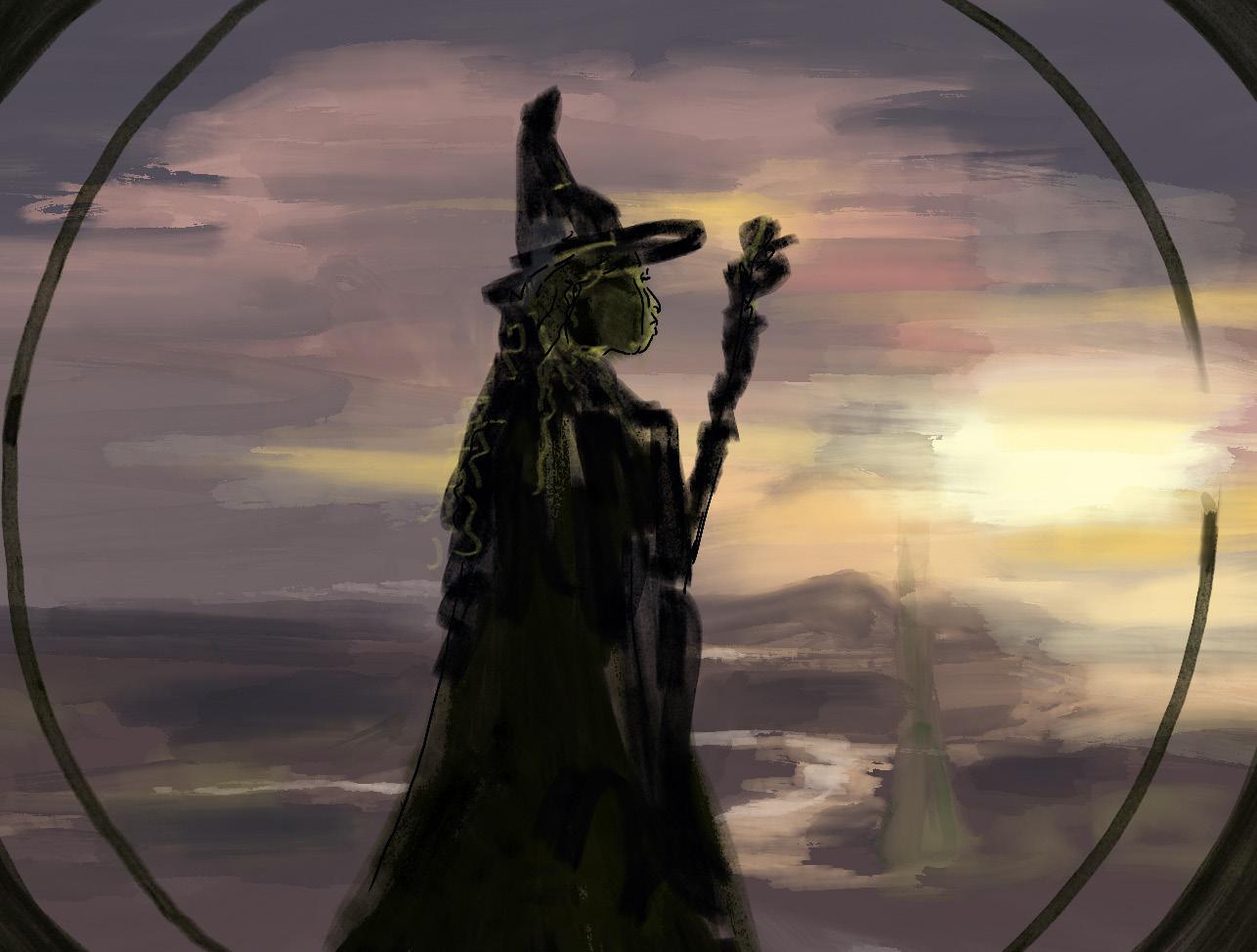
A Wickedly Boring Finale, ‘Wicked: For Good’
“Wicked: For Good” fails to defy gravity and live up to the expecations of its precursor. B3
Grace Ko Senior Guide Editor
‘Die
My Love’ Disrupts Convention, Paints Moving Picture of Postpartum Depression
Isabelle Cialone Deputy Guide Editor
CW: This article references fctitious self-harm and psychosis. Please refer to the end of the article for on- and of-campus resources.
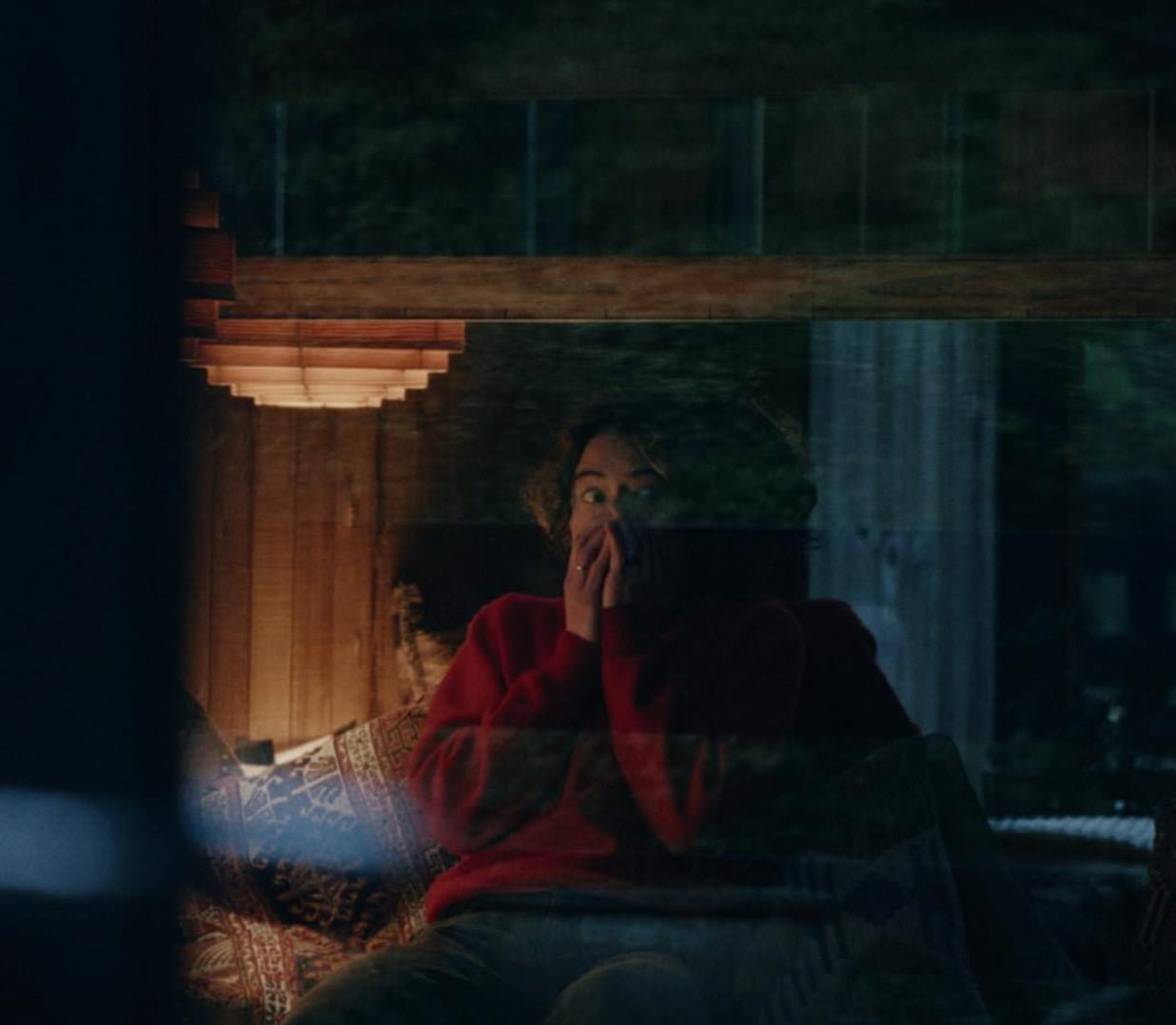
Lynne Ramsay’s “Die My Love,” based on Ariana Harwicz’s 2012 novel, follows Grace (Jennifer Lawrence) and her husband Jackson (Robert Pattinson) as they move into his late uncle’s abandoned home in rural Montana and, soon after, give birth to a baby boy. What is at frst a compatible, sexually-charged and romantically harmonious relationship quickly devolves into torturous loathing as Grace sufers from post-partum depression. Through its stylistic fragmentation and collapsing of objective and subjective realities, “Die My Love” is as erratic and wild as its rapidly disintegrating protagonist. Unfortunately, it ultimately sufocates itself in its commitment to delivering such an artistic sensory experience, leading to occasional incomprehensibility which lessens the commentary’s meaningfulness. Surrounded by creatures — notably, a majestic black horse whose freedom mocks Grace’s smothering imprisonment and an infuriating,
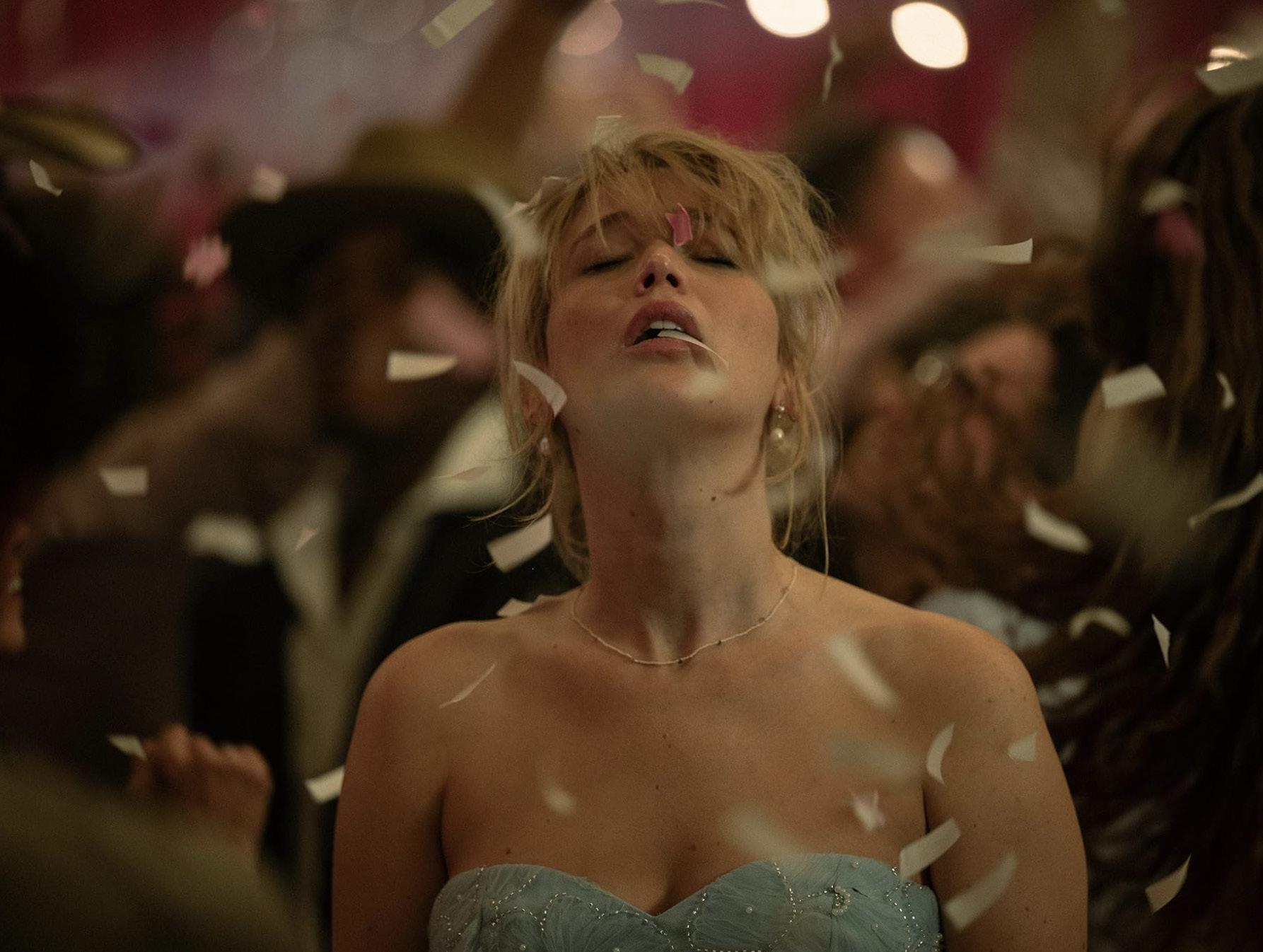
incessantly barking dog — Grace regresses to an animalistic craze, constantly crawling on all fours. While this action perfectly embodies her eroding sense of self, it begins feeling repetitive and meaningless after the third or fourth instance. Similarly, the brief afair Grace entertains with a motorcyclist neighbor (LaKeith Stanfeld) is inexplicable and feels somewhat out of place alongside the more concrete and clear depictions of her struggle and decaying relationship. However, other physical portrayals of Grace’s increasing insanity, like her manic dancing at her wedding, her disembodied destruction of her bathroom and her constant self-harming impulses, are immensely successful and truly heartbreaking.
Beyond Grace’s physical representation of her psychosis, “Die My Love” establishes her loss of identity through its fragmented editing and occasionally confusing chronological circularity. In contrast with the sprawling openness of rural Montana, the flm’s claustrophobic framing constantly closes in on Grace as her domesticity becomes a prison sentence. When she is eventually institutionalized, fuorescent lights loom menacingly overhead, and repeated scenes interposed with Grace’s past and future disrupt the audience’s grasp on reality. While
flms that are distrustful can be frustrating, the lack of clarity is key to understanding Grace’s slipping grasp on normalcy and reality.
Though some scenes are confusing and others entirely unexplainable, the flm is a resplendent, occasionally excessively blue-tinted, visual masterpiece that (almost) never fails to be beautiful. The incontestable beauty of a near-idyllic rural town with starry open skies contrasts with the jarring editing to amplify an overarching feeling of unease. This is supplemented by the script’s periodic ventures into comedic exchanges, which Lawrence and Pattinson navigate deftly.
“Die My Love” also explores the fracturing effects of parenting, as it amplifies and aggravates each fault line that exists between Jackson and Grace. At first overtly sexual, their relationship quickly suffers from Jackson’s ignorance of, or possible unwillingness to satisfy, Grace’s sexual desires. Consistently unfulfilled and dejected, Grace resorts to frequent masturbation to quell her lust, which only exacerbates the distance between the two. Imagination and reality blur as Grace envisions Jackson cheating on her, and Grace seeks out the motorcyclist, though it’s unclear whether he is aware of her unfaithfulness. Similarly, whether the forest fire Grace starts by burning the scrawled beginnings of her
IMDB
“Die My Love” is a harrowing depiction of the horrors of postpartum depression, says Isabelle Cialone (CAS ‘27).
great American novel is real or purely symbolic is somewhat frustratingly unclear. While the confusion created by the film’s structure and its narrative allows the audience to connect with the protagonist’s experience, it often renders the viewing experience more difficult and hard to follow.
The flm also touches on the terrifying and intertwined realities of grief and loneliness as they consume Jackson’s mother, Pam (Sissy Spacek), transforming “Die My Love” into a larger study on the stigma around women’s mental health. After losing her husband, a grief-stricken Pam wallows in her loneliness and begins sleep-walking, always with her late husband’s rife in hand. While Jackson ignores Grace’s fading identity, Pam understands and advocates for Grace, establishing an underlying sense of female empowerment throughout a flm that is largely dominated by stigma-induced misunderstandings.
Grace and Jackson’s tension, sexual at times and hateful at others, is perfectly embodied in Lawrence’s and Pattinson’s tremendous performances. Lawrence impeccably captures the complexities of both the madness and the heartbreaking nature of Grace’s unraveling identity through a deeply vulnerable and committed physical performance, which I hope to see highly praised throughout the upcoming awards season. Pattinson counterbalances Lawrence perfectly, sometimes unflinchingly shouldering her snarkiness and sometimes reacting explosively. Spacek was equally incredible, perfectly embodying her eerily tormented and sweetly maternal character. Overall, while “Die My Love” occasionally loses itself in its frenzied and unruly stylistic choices, it is an important and moving examination of female mental health, highlighting the abysmal efects of implicit stigma toward women as they experience motherhood, depression and grief.
Resources: On-campus resources include Health Education Services (202-687-8949) and Counseling and Psychiatric Service (202-687-6985); additional of-campus resources include the D.C. Rape Crisis Center (202-333-7273) and the D.C. Forensic Nurse Examiner Washington Hospital Center (844-443-5732).
‘Wicked: For Good’ Is Just Not at Good
Grace Ko
Senior Guide Editor
Nearly a year after the massive success of “Wicked,” “Wicked: For Good” returns to complete the tale. Unfortunately, compared to its predecessor, the flm is never truly able to fy.
Adapting the second act of the beloved Broadway musical “Wicked,” the flm focuses on the afterefects of Elphaba’s (Cynthia Erivo) vow to reveal The Wizard’s (Jef Goldblum) deception and free the oppressed animals of Oz. As she clashes with her best friend Glinda (Ariana Grande), now known as the Good Witch, Elphaba reckons with her identity, while struggling to make true change in Oz.
Much like the frst flm, “Wicked: For Good” signifcantly elongates its source material, adding nearly an hour and 17 minutes to the musical’s hour-long second act. While most of these additions are small, the biggest and most welcome change is the decision to further develop Glinda’s character.
Writers Winnie Holzman, the original writer of the musical, and screenwriter Dana
Fox most prominently add a fashback to Glinda’s childhood. This fashback is quite efective in setting up Glinda’s arc throughout the flm, serving to characterize Glinda’s impossible desire to be magical, making her feel inadequate despite the complete adoration and love she receives. Where Grande got the chance to display her comedic ability in “Wicked,” here Grande is able to showcase her dramatic abilities as she deftly captures the heartbreaking tension between Glinda’s public and private personas.
As the flm’s central character, Erivo continues to display her powerhouse vocals and natural charisma. Her rendition of “No Good Deed” was, no doubt, one of the flm’s strongest moments. The sheer power of her voice beautifully delivers the anger and frustration Elphaba feels. It feels as if all of Elphaba’s pent-up exhaustion and bitterness were released in that moment — a complete catharsis that was only achievable through Erivo’s astonishing vocals. While still lacking in color, which was one of the main critiques of the duology’s frst in-
stallment, the flm does feature some beautiful set pieces. The Wizard’s lair, shown in its entirety during the song “Wonderful,” features a variety of whimsical inventions that add to the sequence’s oddball energy, falling into place with the song’s quirky and upbeat instrumentals. Additionally, the aftermath of Glinda’s failed wedding is rich with detail, as crushed fowers, knocked chairs and stone vases nearly fll the entire foor. The mess tragically frames Glinda as she heartbreakingly sings “I’m Not That Girl (Reprise).”
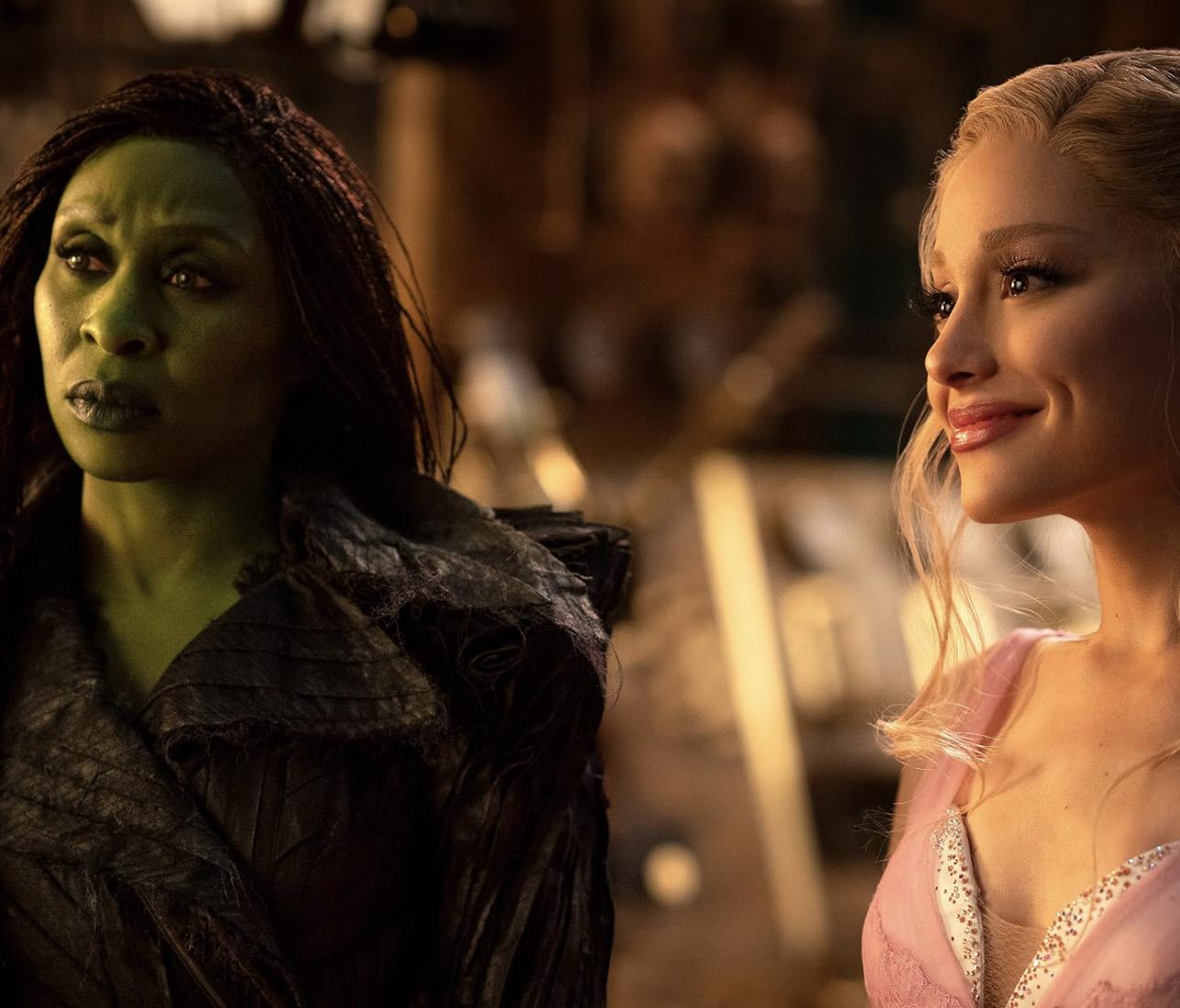
Yet, the flm doesn’t quite hit the mark on all its set designs. Arguably, the flm’s most important moment, its rendition of “For Good,” sadly falls fat due to the empty background behind Elphaba and Glinda. Although the number is situated in an abandoned castle, the setting is so empty that it distracts from what seems to be the flm’s emotional peak. Erivo and Grande were incredible, yet the uninteresting set and dark background felt undeserving of such a beautiful moment.
The flm’s greatest weakness is, unfortunately, its own story. “Wicked: For Good” stays
IMDB Grace Ko (CAS ’27) says “Wicked: For Good” is underwhelming and unable to take off compared to its predecessor.
relatively close to the original musical’s second act, but the flm’s longer runtime lays bare the second act’s weaknesses. For what appears to be a long public battle between Elphaba and Glinda, who becomes the face of the Emerald City, the pair are surprisingly friendly. The pair’s relationship never quite seems to have been impacted greatly by the huge distance between their societal roles. In fact, the biggest confict between them seems not to be their diference in beliefs, but their struggle over Fiyero (Jonathan Bailey). Yes, the confict begins with their argument about Elphaba’s sister Nessarose (Marissa Bode), yet the confict only escalates to a physical fght when it shifts to the subject of Fiyero.
Additionally, the relationship between Fiyero and Elphaba feels surprisingly rushed. The two don’t reunite onscreen until Fiyero’s declaration of loyalty to Elphaba during their confrontation with The Wizard. The lack of any other interaction other than what seems like passing thoughts makes their connection seem unbelievable on the big screen. While the chemistry between Erivo and Bailey helps to bring their love to life, I can’t help but question how it would have appeared without their strong performances.
Many of these issues, though, can be addressed by the nearly year-long gap between the frst and second flm. The staged musical works despite these issues, as there is only a 15-minute intermission that separates the frst and second half of the story. This allows the audience to remain invested in the narrative. With a longer gap, it requires the audience to remember the emotional beats and arcs of other characters in the frst flm, causing “Wicked: For Good” to feel incomplete despite its commitment to the source material.
The magic of “Wicked” certainly returns with “Wicked: For Good,” yet the flm never reaches the frst installment’s highs. However, what saves the flm from falling is the undeniable appreciation for the original musical that inexplicably flls the flm. Sure, “Wicked: For Good” often stays too close to the ground, but it makes an admirable attempt to stay true to the musical’s spirit all the while building on its iconic legacy.
While psychologically and visually terrifying, “Keeper” falls short in comprehensibility, says Eliana Kut (CAS ’29).
‘Keeper’ Didn’t Keep Away Questions for the Concept, Plot
Eliana Kut Hoya Staff Writer
Emerging as an underdog among the dozens of horror movies released this year, “Keeper” is ultimately disappointing, focused on creating signifcant, shocking moments rather than a cohesive storyline. While the flm’s performances and special efects stand out, I was left confused by its structure. However, these shortcomings are compensated by its powerful message about feminist empowerment.
The flm begins with Dr. Malcolm Westbridge (Rossif Sutherland) bringing his girlfriend, Liz (Tatiana Maslany), to his cabin in the woods for a weekend trip. After Westbridge encourages her to eat a strange cake, Liz begins to have visions about bloody women and a pregnant woman identical to herself.
When Malcolm leaves for the day, Liz wanders the house and feels strange creatures following her around. She starts to see ghostly apparitions and a woman with a plastic bag over her head. The cinematography of these
scenes makes reality and apparitions barely distinguishable. Once Malcolm returns, Liz confronts him about the eerie occurrences.
Malcolm reveals to her that 200 years ago, he and his brother, Darren (Kett Turton), shot a pregnant woman trespassing on their property in the leg. When she later gave birth, it was to the strange creatures that Liz had been seeing. Malcolm explains that, in return for granting both him and Darren immortality, the creatures demand that the brothers bring them women as sacrifces. Malcolm then locks Liz in the basement, where she is surrounded by the creatures and the woman with the bag on her head. They embrace her, laughing and screaming with her. When a newly aged Malcolm wakes in the morning, he is suspended upside down from a tree. Liz, who now has the creatures’ black eyes, feeds Malcolm the drugged cake and dunks his head into a jar of honey, leaving him to drown.
The flm serves as both a traditional horror flm and a psychological thriller, simultaneously focusing on the creatures’ haunting appear-
ances and building suspense as Liz is plagued by apparitions and questions Malcolm’s suspicious behavior. The highlight of the flm is in the efectiveness of the jump scares and special efects. The recurring fashes of Malcolm’s previous girlfriends being killed and the creatures in the shadows heighten suspense, creating a truly terrifying experience. Maslany’s portrayal of a haunted woman stands out, despite weak dialogue that limits her potential.
The flm has a distinct lack of clarity; it is unclear if Liz’s resemblance to the woman who frst trespassed the property was purely coincidental or if she is meant to be a reincarnation. Considering the genre, there doesn’t necessarily need to be an explanation, but the ambiguity hindered my ability to appreciate the movie thoroughly. Liz’s end was similarly puzzling — the creatures seem to accept her due to her resemblance to their mother, yet it is unclear whether they somehow make her one of their own or if something else led to her change in appearance.
Despite issues with the flm’s structure, I found its themes of female empowerment
and struggle create an interesting dynamic. As Liz is left on her own for the day, she must cope with her own vulnerability, triggering the psychologically horrifc aspects of the movie. However, in her loneliness, she seems to foster a connection to the visions of the bloodied women. The repetition of her visions parallels Malcolm and Darren’s continued violence against the women. Though the brothers have succeeded in exploiting women for hundreds of years, Liz ultimately reverses the narrative by becoming one with the creatures and reclaiming her power by killing Malcolm. This fnal moment points to women rising against misogyny and establishing their own hierarchy. However, Liz is not truly herself anymore, becoming one of the creatures — hinting at the irreversible harm that physical and psychological violence can cause.
Despite minor faws in structure and clarity, “Keeper” is a powerful movie that harbors undertones of patriarchal power structures while delivering a frightening supernatural drama.
IMDB
‘Orlando’ Is an Ambitious, Clever, Achingly Human Play
Eliza Doty Hoya Staff Writer
“What do you want to be when you grow up?” is one of the first questions posed in “Orlando” to its eponymous character. Young Orlando (Julia Small, CAS ’27) responds, without hesitation, “a poet,” yet he finds himself incapable of writing a single line for hundreds of years. We’ve all been there — speaking into the universe desires we hope will actualize but know will remain nothing more than mere words.
Adapted by Sarah Ruhl from Virginia Woolf’s novel “Orlando: A Biography” is a play about inquiry, uncertainty, love and passion. The story follows young English nobleman Orlando, who mysteriously lives for centuries, travelling the world, only to wake up one day as a woman, living under new rules and identities. At its core, “Orlando” highlights the human hunger for meaning and answers, even those for which we don’t have words. Directed by April E. Brassard, the Davis Performing Arts Center’s “Orlando” turns a famously disorienting story into something digestible yet deeply emotional and intellectual, faithfully capturing Woolf’s original, nuanced message about these age-old questions.
Though the cast is small, the stage never feels bare. The narrators and ensemble — Elle
Marinello (CAS ’28), Minh Phan (CAS ’26), Alex Roberts (CAS ’26) and Alexis Tarumianz (CAS ’26) — each inhabit their roles with clarity and energy, helping the audience follow the complex timeline. They weave in and out of Orlando’s life, evolving with the centuries and disentangling the otherwise complicated story. Their occasional direct engagement with the audience feels inviting rather than disruptive, reminding us that Orlando’s questions are, in some way, our own.
The dual casting of Orlando is the cornerstone of this production, and both actors rise to the challenge with impressive nuance. As the male Orlando, Small brings a spirited optimism to the character’s youth, embracing his boyish idiocy without letting him become onedimensional. There’s a clear emotional arc in Small’s performance: From Orlando’s wide-eyed infatuation to the first cracks of disillusionment and suffering, she balances humor with vulnerability in a way that keeps Orlando sympathetic, even when he is stubbornly naive. When Orlando awakens as a woman, Claire Cable (CAS ’27) seamlessly takes on the role. Her monologues are delivered with a sense of discovery that makes her lines feel lively, not recited. Cable captures Orlando’s growing awareness of the world’s expectations and limitations placed upon her newfound identity. The show concludes with her reaching towards
ON YOUR RADAR
DC HOLIDAY MARKET
The Downtown D.C. Holiday Market on F Street NW opens Friday, Nov. 21, and lasts until Tuesday, Dec. 23. This market, which features over 100 local vendors selling everything from food and jewelry to home decor and clothing, is the perfect place to get ahead on holiday shopping.
the sky, stating that she is about to “understand.” I usually find myself frustrated with ambiguous endings like these, yet this one didn’t leave me as unsatisfied as I might have expected. Perhaps that’s what Woolf intended, because it’s just too easy to have someone else answer the many daunting questions about life for you. Instead, we begin to understand what is important and how we should live by asking ourselves internally. Cable skillfully encapsulates this: the humanness of longing for a past filled with heartache and of fearing a future that is entirely unknown.
As Sasha, Julia Wang (SFS ’27) presents a nuanced portrayal of an unfaithful first love. Instead of becoming a one-note villain, Wang leans into the character’s complexities, allowing the audience to understand why Orlando remains haunted by her memory: It’s because love is rarely rational, and neither are our reactions in the aftermath. Additionally, Teddy Lee’s (CAS ’27) performances as both the Archduchess and Archduke are humorous, offering a brief but welcome break from the play’s heavier existential musings. His comedic timing is sharp, and he maintains a tone that doesn’t mock the material but points to its absurdity.
Though the minimal set and stage props used could have easily made the visuals lackluster, they ultimately succeed. Dynamic lighting and effective sound cues constantly transform the
By Isabelle Cialone
‘HADESTOWN’ ON TOUR
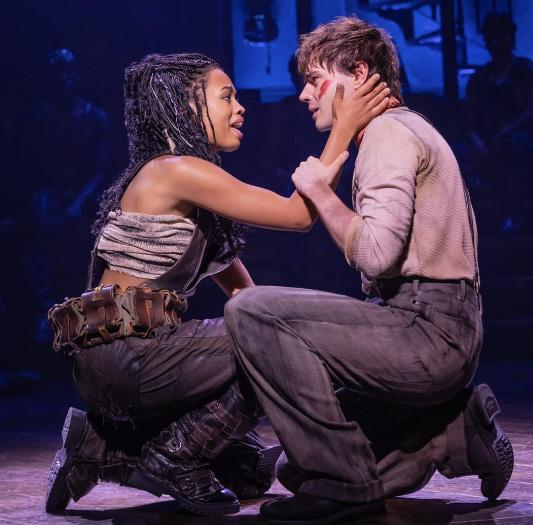
“Hadestown,” the sensational musical recounting the tragic tale of Orpheus and Eurydice alongside the fated love of Hades and Persephone, wraps up in Washington, D.C., this weekend. Catch it at the National Theatre, with several shows between Friday, Nov. 21, and Sunday, Nov. 23. Musical theater lovers and mythology fans alike are sure to revel in this haunting underworld experience.
stage, transporting us from the frosted courts of London to the heat of Constantinople to even bustling docks. The clock motif and sound effects, which are persistent reminders of the inescapable passage of time, are particularly memorable. However, there are moments when the audio approaches overstatement, momentarily pulling the audience out of the narrative. Still, these are rare missteps in an otherwise cohesive experience. To stage “Orlando” is to confront its reputation: slippery, fantastical and famously hard to follow. Yet under Brassard’s impeccable direction, the production leans into that challenge with playfulness. Scenes shift across continents and centuries, but the audience is never lost — a testament to the production’s frm grasp and familiarity with the pacing and tone of the script. Brassard allows the strangeness to breathe without letting confusion disrupt.
“Orlando” lingers with the audience long after the fnal bows. Brassard’s production reminds us that life’s meanings are not handed to us in neat revelations. It is felt in longing, passion, subtleties and in the poetry we have yet to write. Brassard’s clear direction, coupled with the strong performances and thoughtful design, made “Orlando” an engaging adaptation of Woolf’s very human novel, leaving the audience feeling intimate with the questions of love, loss and becoming posed on the stage.
THIS WEEK’S THEME: The End Is in Sight!
THE HOYA GALA
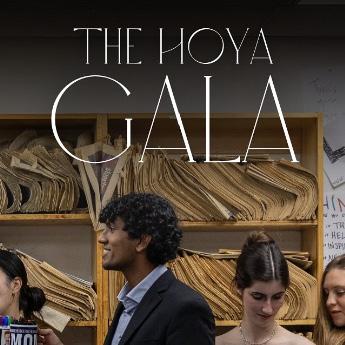
Love reading The Hoya? Come celebrate the paper’s 105-year anniversary this Saturday, Nov. 22 at 9 p.m. at the Planet Word Museum. With a passed hors d’oeuvres reception and a keynote speech by The Hoya graduate and current ABC News White House Correspondent Karen Travers (COL ’00, MA ’03), this black tie-optional gala is the perfect way to honor The Hoya’s history and celebrate another semester in the books.
GEORGETOWN RANGILA
The 31st annual Georgetown Rangila performance will take place this Friday, Nov. 21, and Saturday, Nov. 22 in Gaston Hall. This year, Rangila has partnered with the Hope Foundation for Women and Children of Bangladesh, a charity that provides healthcare in rural Bangladesh. Tickets are available online.
e Quiet Rage of ‘It Was Just an Accident’
Brad Derfner Guide Columnist
Jafar Panahi’s “It Was Just an Accident,” the 2025 Cannes Palme d’Or winner, is a politically charged thriller that feels impossible to separate from its country of origin, Iran, and director. The flm carries an extraordinary amount of risk; it is Panahi’s frst feature made after his seven-month imprisonment and was shot secretly without any permits. Beyond this though, it’s striking how Panahi manages to transform defance into a dust-covered thriller which meditates on cycles of violence and the psychological residue of state brutality. The flm builds tension quietly and methodically before erupting into one of the year’s strongest fnal acts. Despite an uneven middle stretch, where the flm struggles under the weight of repetition, “It Was Just an Accident” concludes as a must-watch.
The film opens with a simple event: a man (Ebrahim Azizi) driving at night with his family accidentally hits a dog, forcing him to pull into a garage on the side of the road. There, Vahid (Vahid Mobasseri), a quiet mechanic, recognizes the man’s voice and squeaky prosthetic knee from his
past life as a prisoner of the Iranian government. Vahid believes the mysterious man to be “Eghbal,” a guard who brutalized him and several other fellow prisoners. Quickly, Vahid kidnaps Eghbal, drags him out to the desert and initiates a morally gray journey to confirm the man’s identity.
Panahi leans heavily into ambiguity from the flm’s start. The man denies Vahid’s claims, even pointing to scars on his knee that didn’t match Eghbal’s. These early sections unfold as a psychological standof, marked by long car rides and Panahi’s realistic cinematography.
When Vahid seeks confrmation from other former prisoners, the flm slows down a bit. Each new character, including photographer Shiva (Mariam Afshari), the engaged couple Goli (Hadis Pakbaten) and Ali (Majid Panahi) and the short-tempered Hamid (Mohamad Ali Elyasmehr), is asked the same question: Is this the man who tortured us? Their answers, like Vahid’s, bounce between absolute certainty and extreme doubt, creating a tension shaped by trauma and blindfolds. Here, Panahi also toys with the diference between justice and revenge. Clearly, the repetition here intends to show how the past’s violence
can corrode certainty and memory. However, the flm’s middle portion loses dramatic feel, circling the same emotional territory even when Panahi attempts to use moments of comedy to mix up the rhythm. The momentum that defnes the opening begins to stall as the flm cycles through variations on essentially the same confrontation, with minimal progress toward resolution.
However, the flm regains its footing once the group becomes entangled in the captive man’s family life, escorting his daughter and pregnant wife to the hospital after a sudden medical emergency. Although I initially saw this shift as strange, the section is emotionally charged and shows that Vahid, unlike Eghbal, has humanity and prioritizes the lives of virtual strangers over reconciling any past he may share with the man. The rush here also helps the story reset itself, placing Vahid and Shiva, the group’s most compelling fgures, back at its center. Shiva, far more controlled but just as wounded as Vahid, serves as a perfect foil to Vahid’s more impulsive nature. This duality forms the backbone of the flm, especially as Hamid, Goli and Ali take a backseat, both in the story and literally in the van.
IMDB
The winner of the Cannes Palme d’Or, “It Was Just An Accident” is a masterfully crafted and important film, says Brad Derfner (CAS ’27).
As the flm reaches the fnal section, a nighttime confrontation between the man, Vahid and Shiva occurs, allowing Panahi to deliver his most distressing work. Here, under a solitary desert tree, the audience is left to consider Eghbal’s identity. The scene lands with uneasy ambiguity, generating a sufocating tension without overselling any emotions. Panahi’s commitment to realism reaches its natural peak here, with long takes and still camerawork. The flm’s fnal moments leave us wondering if Vahid will ever truly be able to move on from the memory of Eghbal and the nightmare of the prison, underscoring the point that “It Was Just an Accident.”
Overall, the craft is intentionally understated. The cinematography keeps the audience embedded in the streets of Tehran without feeling intrusive. The desert sequences are haunting. The performances across the board are strong, although Mobasseri and Afshari clearly stand out as the best. Mobasseri plays Vahid as visibly coiled, but clearly bubbling under the surface. Afshari gives the flm weight, delivering her anger late in the flm with a devastating monologue that lingered with me after I left the theater. Finally, Azizi, limited for most of the runtime due to his being blindfolded, gagged and left unconscious at various points, is chilling in his few moments.
In the awards race, the flm is positioned for a true run. Distributed by NEON, “It Was Just an Accident” is one of a handful of international contenders positioning themselves for a Best Picture run. It’s a shoo-in for a Best International Feature Film nomination at the 98th Academy Awards, with a real possibility of a win. Although acting recognition is unlikely, the flm’s political importance, its wider critical acclaim and Cannes’ top prize should keep it frmly in the conversation throughout the season.
As with many flms emerging from Iran’s underground cinematic sphere, “It Was Just an Accident” is ultimately a flm whose significance extends beyond its faws. Panahi has crafted a flm that is complex in tone and visually grounded in what is undeniably one of the year’s most urgent releases.
‘ e Running Man’ Sprints Too Far With Its Ambitions
Grace Ko Senior Guide Editor
Stephen King has had quite the year on the big screen. In the past year, King’s story “The Life of Chuck” and novel “The Long Walk” have been adapted into well-received flms. Following these projects, “The Running Man” comes at a time when King’s stories have newfound relevance and intrigue. However, “The Running Man” enters the race with two left feet.
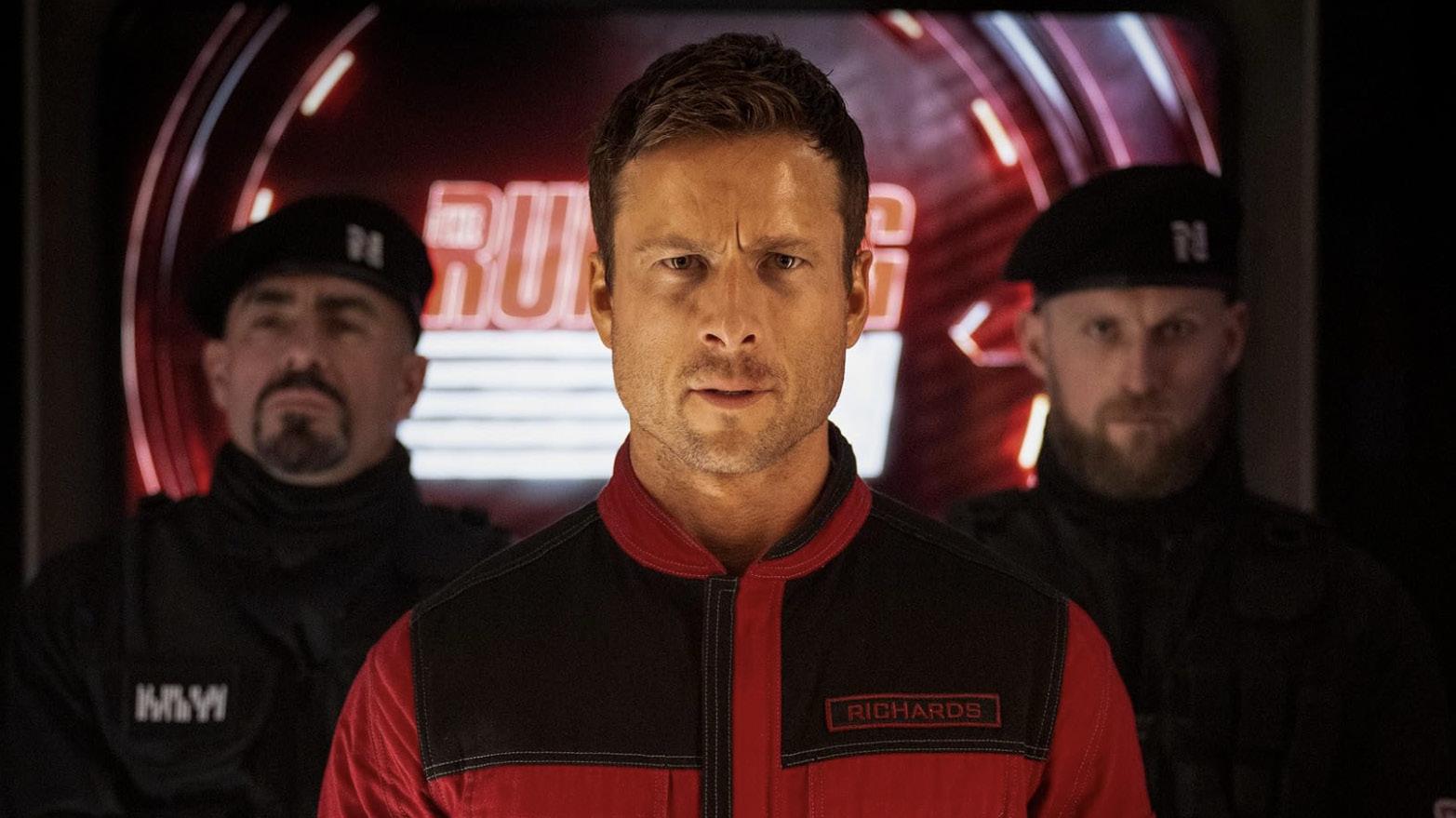
Based on King’s 1982 novel of the same name, “The Running Man” centers around Ben Richards (Glen Powell), a worker from the slums of a dystopian United States. Having been blacklisted from the job market and desperate to support his family, Richards decides to participate in the flm’s titular game show. “The Running Man” is one of the many over-the-top, violent game shows developed by The Network, a corporate entity that has gained governmental control. As he attempts to survive the game’s thirty-day period, Richards’ actions slowly turn into a call for resistance.
There is no denying that “The Running Man” is entertaining. Its action is larger than life, tumbling from one crash to another in rapid succession. A particularly fun sequence takes place at the home of underground revolutionary Elton Perrakis, played by the wonderfully odd Michael Cera. As corporatehired agents invade the house, Perrakis sets of traps, laughing with pure glee as he creates multiple chains of destruction. Director Edgar Wright’s signature brand of chaos appears the most in these moments, a welcome sight in an otherwise by-the-books flm.
It’s the lack of Wright’s distinct controlled chaos that makes “The Running Man” feel all the more trivial. Despite his role as director and one of the writers on the project, there is barely a hint of the usual charm and grandiose fun that characterizes his flmography. Most of the flm’s shots ft into the basic style of Hollywood action movies. The flm is loud, with sound efects, background music and sometimes a messy combination of both in nearly every scene.
The result is a dizzying sequence of events that blur together. Yes, the game in itself is one of chaos, but “The Running Man” often veers too much into the territory of complete disarray.
Within this chaos, the flm is further split by the cast’s uneven performances, particularly Josh Brolin’s Dan Killian, the sinister producer behind the games. Brolin is no stranger to villainous roles, yet Killian falls fat. Relegated to the man behind the desk, Killian often appears only through phone calls and video chats, separate from the rest of the characters, which lessens his impact. Brolin rarely gets to act physically, limiting the punches he can pull as the allpowerful, corrupt corporate man.
Powell, too, feels stifed by the flm, although his charm does come through in bits and pieces in Richards’ unhinged nature. Richards is an incredibly angry man and Powell commits to this anger with such conviction that it’s comical, yet the sincerity of his performance makes the ridiculously furious power walks and squinted glares work.
Above all, the flm’s biggest weakness is its tendency to share its message directly
through the characters. Richards is used most frequently as the moral messenger, with many of his lines in the flm’s fnal act serving to admonish the corruption of corporate entities and the harmful complacency of the public. This direct messaging creates a soapopera-like quality in “The Running Man.” The flm’s fnal shot is an over-dramatic image where Richards, who was presumed dead, returns in a fash of fre, a gun in hand as he returns for retribution against Killian. There is no need for the flm to go to these lengths to deliver its central message — the flm’s premise itself is already a clear critique of the danger of mass corporate-run entertainment.
While a high-energy, fun action fick, “The Running Man” does not fully capture the heart of King’s original work. There are hints of a stronger, more complex story throughout the flm, such as through Richard’s reckoning of his all-consuming anger and Lee Pace’s Evan McCone, a contracted killer who is revealed to have originally been a contestant himself. Yet, the flm gets caught up in its own action. For a flm focused on a rallying cry against the system, “The Running Man” conforms too closely to the standard, making it impossible for it to truly achieve the ambitious goals it sets out to reach.
Cavetown Explores Sound Preceding Album Release
Riya Sundaram Guide Columnist
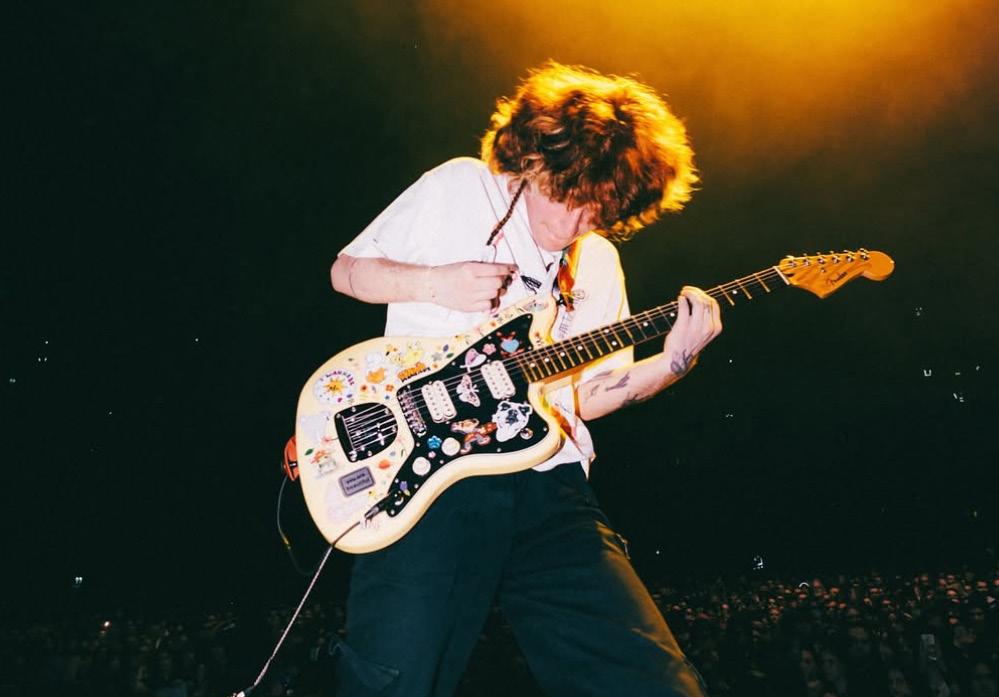
Robin Daniel Skinner — an indie singersongwriter known as Cavetown — released his new single “NPC” Nov. 14. “NPC” marks the fourth single before his newest album, “Running With Scissors.” The album, which will be released Jan. 16, 2026, will consist of 13 songs — including “NPC” and two earlier singles, “Tarmac” and “Rainbow Gal” — and will be Cavetown’s frst album since his 2022 release “worm food.”
While most of Cavetown’s listeners are familiar with his signature pop-folk style, Cavetown said in an interview with Spotify that he hopes to display creative growth on this upcoming project. He added that he is working to bring viewers who know Cavetown from the 2010s along with him. Skinner said growth is a prominent theme he will explore in this upcoming album.
“What happens when you leave that room you grew up in and fnally look yourself square in the eye?” Skinner said.
Based on his most recently released single, it’s clear that his songs are moving in a diferent
direction from his previous work — more mature and with more variation in his songs — but Cavetown has made sure his listeners know they won’t be left behind by maintaining a commitment to authentic songwriting.
“NPC” is by far the catchiest single. The song, which mainly consists of an indie rock sound, has been stuck in my head since I listened to it. In addition to the song’s catchiness, there’s a distortion in Cavetown’s voice and an overall more mature feeling that difers from many of his best known songs.
The most obvious change is that Skinner’s voice is generally deeper than it was in the songs he released ten years ago, and he sings with more of a gravelly voice. Another factor that contributes to this newfound maturity is the song’s content. In the past, Cavetown wrote about parents and school in a way that felt reminiscent of childhood, but “NPC” discusses a heavier topic: what dissociation feels like. Listening to the track, it also felt clear that Cavetown is willing to be louder compared to the soft vocals of his previous work. In general, those songs are all rather understated, but “NPC” features a greater volume distinction and a sense of confdence in his vocal power.
Overall, this song clearly shows the new direction that Cavetown will be moving in.
“Tarmac” and “Rainbow Gal” were both released before “NPC” and share many of the characteristics that diferentiate “NPC” from Cavetown’s older work. “Tarmac” especially highlights the newer thematic and sonic direction of his music, as it touches on the struggles of toxic relationships and uses little moments of static distortion after each chorus that create a contrast and suspense within the song. “Rainbow Gal” also uses more electronic sounds, which were similarly sprinkled into “NPC,” and may signal the types of genres he’s looking to explore in his upcoming album.
That’s not to say everything has changed — these songs still ft into the indie genre, and they still have those quiet moments that made his old songs such a pleasant listening experience. These three songs grouped together are a great way to tease his new album, efectively showing the diversity of tone that Cavetown is clearly looking to delve into. Both “NPC” and “Tarmac” touch on more serious themes, with “Tarmac” leaning more toward complex relationships and “NPC” leaning toward personal, mental
health-related experiences. On the other hand, “Rainbow Gal” has a rather optimistic approach toward love, which makes for a good contrast to his other singles.
Though bittersweet, it’s always nice to see an artist’s songs mature like this, especially when the new direction is just as good as the old one. Evidently, I’m a fan of these new songs, and I am defnitely looking forward to Cavetown’s new album and the exploration of new thematic and musical avenues.
finds new voice prior to album, Riya Sundaram (CAS
MUSIC
IMDB
While fun, “The Running Man” fails to reach the finish line, says Grace Ko (CAS ’27). IMDB Cavetown
’29) says.
Addis follower
Conveys 3. “That’ll do”
Furry freezer treat
Wisconsin’s state rock
El primer mes del año
Skull in Shakespeare play
Off-roading rides, for short
Dustpan’s companion 10. Mycroft’s and Sherlock’s family name