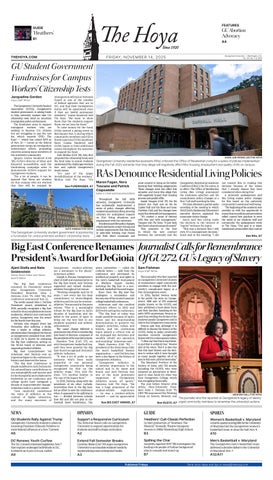
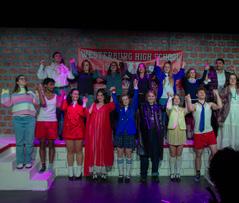
GU Student Government Fundraises for Campus Workers’ Citizenship Tests
Jacqueline Gordon Hoya Staff Writer
The Georgetown University Student Association (GUSA), Georgetown’s student government, is raising funds to help university workers take U.S. citizenship tests amid an uncertain immigration policy environment.
The fundraiser aims to support immigrant workers who are seeking to become U.S. citizens but are struggling to pay the test fee, which exceeds $700. The fund — which has raised $275 as of Nov. 13 — comes as the federal government ramps up immigration enforcement eforts, prompting concerns among many members of the university community.
Ignacio Loaiza Sandoval (CAS ’28), GUSA’s director of labor and fnancial accessibility, said the fundraising campaign aims to demonstrate GUSA’s support for Georgetown workers.
“For a lot of people, it can be ignored that there are workers on this campus who are worried that they will be stopped by
immigration oficials or National Guard or any of the number of federal agencies that are in D.C. and that their immigration status will be questioned even if they are lawful permanent residents,” Loaiza Sandoval told The Hoya. “We want to show them that the students support them; we are here for them.”
To raise money for the fund, GUSA hosted a pieing event in Red Square Nov. 5, during which community members paid $3 to throw a pie into GUSA members’ faces. Loaiza Sandoval said GUSA hopes to hold additional events throughout the semester to expand the fund.
Inés Molina (CAS ’25), who frst proposed the citizenship fund, said the fund aims to ensure students understand the challenges workers face and uphold Georgetown’s Jesuit values.
“It’s part of the larger invisibilization of the workers,” Molina told The Hoya. “It’s See FUNDRAISER, A7
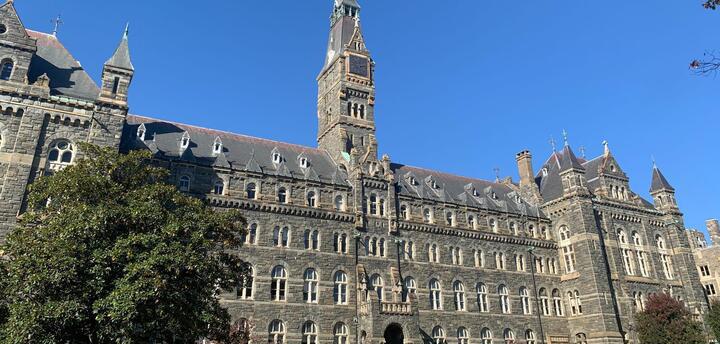
KATE HWANG/THE HOYA
The Georgetown University student government is sponsoring a fundraiser for undocumented workers’ citizenship tests.
FRIDAY, NOVEMBER 14, 2025
RAs Denounce Residential Living Policies
Maren Fagan, Nora
Toscano and Patrick Clapsaddle Editor in Chief and Executive Editors
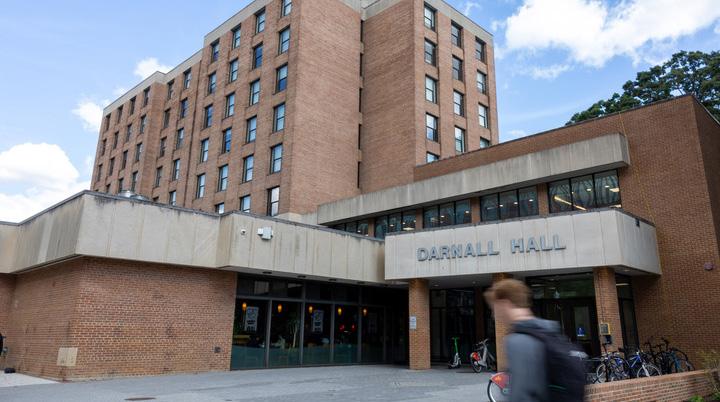
Throughout the Fall 2025 semester, Georgetown University has unilaterally implemented a series of policy changes afecting residential assistants (RAs), drawing criticism for anticipated impacts on RAs’ living situations and employment with the university.
RAs denounced five policy changes, which date back to a Sept. 9 email, and include requirements that RAs living in suite-style housing may choose only their direct roommate and
Big East Conference Renames President’s Award for DeGioia
Ajani Stella and Nate Seidenstein
Senior News Editor and Senior Sports Editor
The Big East conference
renamed its Presidents’ Award after Georgetown University President Emeritus John J. DeGioia (CAS ’79, GRD ’95), the conference announced Nov. 12.
The newly named John J. DeGioia Presidents’ Award, established in 2015, annually recognizes a Big East school for its accomplishments across academics, athletics and community service. Georgetown won the award for the fourth time this year.
DeGioia, who stepped down last November after suffering a stroke, was a leader in college athletics administration throughout his tenure as Georgetown’s president from 2001 to 2024. He is known for reshaping the Big East conference, serving on the NCAA board of directors and supporting student-athletes.
Big East Commissioner Val Ackerman said DeGioia was an important fgure in the conference’s history and deserved the honor.
“The Big East Conference is deeply indebted to Jack DeGioia for his extraordinary contributions to our sustainability and success and for his thoughtful and collaborative leadership as our conference and college sports have navigated a decade of unprecedented change,” Ackerman said in a press release.
“Jack implicitly understood the value of athletics in the context of higher education, and the many successes of
Georgetown student-athletes are a testament to his ideals,”
Ackerman added. Joseph A. Ferrara, Georgetown’s chief of staf and representative to the Big East board, said DeGioia supported and valued studentathletes throughout his tenure.
“Working alongside Jack for 13 years, I saw every day his deep commitment to intercollegiate athletics and his care for studentathletes,” Ferrara said in the press release. “This is a meaningful tribute by the Big East to Jack’s decades of leadership and his belief in the power of sport to bring out the very best in our students’ academic and athletic achievement.”
The name change followed a unanimous vote of the 11-member Big East board of directors, composed of the presidents of the member schools.
Braedon Troy (CAS ’27), an avid Georgetown basketball fan, said they were grateful the Big East board recognized DeGioia’s athletic infuence.
“It was a lot of pride to see someone who’s been really impactful in our personal Georgetown community being recognized for that on the athletic stage,” Troy told The Hoya. “It’s another feather in the cap of his legacy here.”
In 2013, DeGioia, along with the presidents of six other Catholic universities then in the Big East, led an efort to save the conference when it appeared to be splitting in two — divided between schools that did and did not play in the Football Bowl Subdivision. The
seven universities — called the Catholic Seven — split from the conference and purchased its intellectual property and rights to the men’s basketball tournament at Madison Square Garden, restoring the Big East to a nonfootball, basketball-focused league.
Since then, the Big East has undergone a renaissance and become one of the country’s premier college basketball conferences.
Ackerman said she credited DeGioia’s eforts in 2012 and 2013 with saving the conference.
“The Big East of today was made possible because of Jack’s vision and his long-standing determination to preserve the league’s priorities, values and history, and his continuing input played a critical role as we managed key decisions and steadily rebuilt our operation and standing,” Ackerman said.
Mark Guerrera (CAS ’91) — president of the Hoya Hoop Club, the men’s basketball booster organization — said DeGioia has been a key fgure in the history of Georgetown Athletics.
“Georgetown Athletics is of extreme importance to the school and to its name and brand, and Jack DeGioia was one of the most prominent supporters of Georgetown Athletics across all sports,” Guerrera told The Hoya. “He was a huge proponent of the student-athlete experience — he was a student-athlete himself — and he appreciated
See BIG EAST AWARD, A7
must commit to being an RA before learning their building assignments. These changes went into effect this semester, and many RAs allege they will negatively impact their housing process and quality of life.
Isaiah Vasquez (CAS ’27), the RA union’s vice chair and an RA for Copley Hall and Ida Ryan and Isaac Hawkins Hall, said the changes have made RAs distrustful of management.
“It’s created a sense of distrust with RAs and with management,” Vasquez told The Hoya. “It just feels like there’s a loss of a sense of control.”
This semester is the frst in which the new contract between the university and the
Georgetown Residential Assistant Coalition (GRAC), the RA union, is in efect. The Ofice of Residential Living (Res Living) announced the roommate selection and RA commitment policy changes at a Nov. 7 all-staf meeting for RAs.
The Hoya obtained a partial audio recording of the meeting in which Heidi Zeich, Residential Education’s executive director, explained the roommate-choice change.
Zeich said Res Living made the decision in the interest of “equity” without RA input.
“This was a decision that I will own. It’s a management decision,” Zeich said at the meeting. “I did
not consult RAs in making this decision because of the values that I already shared that were considered when doing this.”
A university spokesperson said Res Living makes policy changes for RAs based on the university community’s needs and well-being. “The beginning of the academic year provides us with the opportunity to ensure that our policies and procedures reflect current best practices to serve the needs of our students, staff and community,” the spokesperson wrote to The Hoya. “Our goal is to foster intentional communities that nurture See RAs, A7
Journalist Calls for Remembrance Of GU272, GU’s Legacy of Slavery
Sam Fishman Hoya Staff Writer
The journalist who frst reported on Georgetown University’s history of enslavement urged community members to engage with the university’s complicated legacy at a Nov. 13 Georgetown event.
In 2016, Rachel Swarns broke to the public the story on Georgetown’s 1838 sale of 272 enslaved people, known as the GU272, and later published a book about them and their families. Speaking on the sale’s 187th anniversary, Swarns argued that retelling the stories of the enslaved people Georgetown sold is vital to the Georgetown community.
Swarns said that, although it is difficult to discuss the history of the GU272, doing so helps community members reconcile Georgetown’s history with its contemporary values.
“I often say that this is hard history, and that is certainly true,” Swarns said at the event. “But it is also true that this hard history and the decision to reckon with it have brought so many people together, all of us here in this room, all of us here today.”
The Maryland Province of the Society of Jesus sold 314 people, including the GU272, who were enslaved on plantations in Maryland to raise funds for what was then Georgetown College, which was struggling fnancially.
The year before Swarns’ 2016 article, then-University President John J. DeGioia (CAS ’79, GRD ’95) announced the Working Group on Slavery, Memory and
Men’s Basketball v. Maryland The Georgetown men’s basketball team delivered a decisive defeat to the University of Maryland Nov. 7. A12/A11
HAAN JUN (RYAN) LEE/THE HOYA
Georgetown University residential assistants (RAs) criticized the Office of Residential Living for a series of policies implemented during the Fall 2025 semester that they allege will negatively affect RAs’ housing, employment and quality of life on campus.
MEGHAN HALL/THE HOYA The journalist who first reported on Georgetown’s legacy of slavery urged community members to remember the university’s actions.
EDITORIAL
Ease Creation of New Curriculums
At its core, a university must provide the resources and coursework necessary to help its students achieve their goals. Georgetown University and its academic programming have taken strides to do so.
On Nov. 5, the Georgetown University Edmund A. Walsh School of Foreign Service (SFS) approved a new space studies concentration as part of its science, technology and international afairs (STIA) program. The decision comes after years of student and faculty calls to expand the university’s space studies oferings, including a petition in 2023, viewpoints in The Hoya from undergraduate and graduate students, and a Georgetown University Student Association (GUSA) bill passed in early October.
The Editorial Board is glad that the culmination of student and faculty activism resulted in the creation of a new concentration. At the same time, the program took decades of faculty and student advocacy, potentially showing a rift in the reception of input.
We urge Georgetown to provide faculty with more support to expand minor and certifcate options to accurately refect the breadth of careers this university intends to prepare us for. The Editorial Board further calls on Georgetown to create more transparent pathways for student input on new academic oferings and to encourage the developments of new programs.
The new space studies concentration within STIA is commendable, yet has room to grow to fully elevate Georgetown’s space studies opportunities.
Anna Gale (SFS ’28), a STIA major, said she hopes to see an expansion of the space studies concentration into a minor.
“Though adding a space studies concentration to the STIA major is an admirable show of support, it remains inaccessible to all but a few students in the SFS — which is why the GUSA senate passed a resolution for a minor, not a concentration,” Gale wrote to The Hoya “As a STIA major myself, I think that space studies should also be open to students with technical majors or whomever else may be interested in the feld.”
While we appreciate this program expansion, Georgetown should not stop at space studies.
One clear area for improvement is the university’s oferings in artifcial intelligence (AI).
Reported AI use at work among U.S. employees has almost doubled over the past year, from 21% to 40%. Studies suggest that up to 92% of undergraduate students are now using AI in their studies.
If Georgetown truly wishes to prepare its students for a workforce that is increasingly reliant on AI tools, it must provide support for faculty to greatly expand its AI course oferings, perhaps creating an undergraduate concentration or minor similar to the space studies concentration.
Currently, the closest undergraduate students can get to a major or minor in AI is through the College of Arts & Sciences’ (CAS) tech, ethics and society program. However, this major only tangen-
Since
HOYA HISTORY
tially addresses AI, with no required courses that focus on AI and its developments.
Universities like Carnegie Mellon University and our neighbor American University have begun offering undergraduate degrees in AI. Georgetown students who are interested in AI, by contrast, are left with few academic pathways to pursue their passion.
Ryan Cotzen (SFS ’28), a representative on the SFS Academic Council, said the SFS should center programs in AI. “AI will be key to future change-makers, and the role of AI in international policy and strategy deserves more emphasis in SFS oferings — perhaps through a STIA concentration or a certifcate/minor,” Cotzen wrote to The Hoya. “It would also be benefcial to ofer certifcates or minors with greater specifcity in regional focuses, specifcally ofering more focuses within the Asian and African studies certifcates.”
Faculty lobbied for a space studies concentration for years and even proposed tangible programs in early 2024. The time it took for implementation is an indictment of the tools Georgetown ofers its faculty to create academic oferings. In order to retain its high academic standing, the university must provide more resources and funding to its professors for new curricula.
The lack of these oferings and — until recently — the space studies concentration is additionally endemic of a larger problem.
Students who are passionate about possible changes to the academic curriculum often resort to writing op-eds or petitioning the university without any formal recognition. While students on the SFS and CAS Academic Councils can sit in on their respective curriculum committees, this opportunity is reserved for only those students and there is no formal process for the general student body to submit their ideas. These academic councils — and the university — should better solicit student input, perhaps through polls or monthly town halls, to gauge student interest in new academic areas.
A university spokesperson said Georgetown is receptive to student critiques of the curriculum.
“Deans and academic advisors welcome feedback and engagement with students in their schools throughout the academic year, and the provost’s offce and deans’ ofices closely analyze and consider feedback,” the spokesperson wrote to The Hoya
We appreciate the university’s commitment. We simply ask them to make their solicitation of student feedback clearer and more intentional.
To truly embody the Jesuit value of cura personalis, Georgetown must create academic programming that addresses these gaps and works toward a better future.
The Hoya’s Editorial Board is composed of six students and is haired y the opinion editors. Editorials refe t only the beliefs of a majority of the board and are not representative of The Hoya or any individual member of the board.
its first issue in 1920, The Hoya has served to
inform Georgetown’s campus dialogue. The following article is a glimpse into The Hoya’s rich history, allowing readers to appreciate the evolution of college journalism.
SFS Announces Major Changes to Core Curriculum
March 15, 2018
Signifcant changes to the School of Foreign Service core curriculum are set to go into efect for students entering in fall 2018, including a new mandatory science course and a reduction in the number of required economics courses.
Daniel Byman, senior associate dean for undergraduate afairs, detailed the modifcations in the school’s core requirements in a schoolwide email sent Feb. 28. These changes include the implementation of a mandatory natural science course, a reduction in the number of required major courses to 8 to 10 from 10 to 12, a reduction of the economics requirement to three courses from four and a reduction in the number of three or more-credit courses needed to graduate to 38 from 40. The overall credit requirement will still remain at 121 credits. These changes will not affect current undergraduate students in the SFS and transfer students entering during the 2018-2019 academic year. With the reduced number of required economics classes, SFS students will still have to take “Principles of Macroeconomics” and “Principles of Microeconomics.” “International Finance” and “International Trade”, previously taught as separate courses, will be combined into one class for SFS students. However, students majoring in international economics or global business will be required to take the courses separately for these classes to fulfill their major requirements.
The changes to the curriculum mark the frst time in the school’s nearly 100-year history that SFS
students will be required to take a science course. Previously, only SFS students pursuing the science, technology and international afairs major had a science requirement.
The core curriculum of the SFS will change to now include a science requirement and require students take fewer courses overall. The announcement comes after discussions began last year.
Mark Giordano, the program director for the STIA major in the SFS, said this change has been long overdue.
“Science really is a critical part of international relations and life in general. Making sure our students have the exposure and background to know how to approach science issues after they graduate is our responsibility,” Giordano said. “From a purely practical point of view, you can’t go to an employer and brag that you never took science in college.”
SFS students will be allowed to take any undergraduate science course on campus to fulfill the requirement, according to the dean’s office. SFS also plans to offer new courses with policy related themes, which will be organized around pressing topics rather than traditional academic disciplines. Possible courses include “The Science of Global Infectious Diseases,” “The Science of Weapons of Mass Destruction” and “The Science of Climate Change.”
Byman said these science course oferings will be distinct from current policy classes within the SFS.
“To be literate on a serious policy issue, you have to know the science behind it. The policy is the way of focus-
ing the class’ attention, but we are really trying to make sure this is a science class and not a policy class,” Byman said in an interview with The Hoya
Unlike the College’s science and math requirement, the SFS’s requirement cannot be fulflled by Advanced Placement credit from high school or by Georgetown courses such as statistics or computer science, according to Byman.
Before these changes, the SFS core curriculum consisted of one freshman proseminar, two humanities or writing courses, two theology courses, two engaging diversity courses, two government courses, three history courses, four economic courses, two philosophy courses, a language profciency requirement and the one-credit course “Map of the Modern World.”
Though the new science core course will add an additional requirement for SFS students to fulfll, the net number of courses will drop as a result of the changes in economics and major requirements.
Roopa Mulpuri (SFS ’18), SFS Academic Council President, said the best part of the new core curriculum is the increased fexibility for students to take more courses they are passionate about.
“The decrease to the number of courses for majors across the board I see, in particular, as an advantage,” Mulpuri said. “It gives students more opportunity to try out diferent concentrations in some felds and majors before making a decision.”
Cady Stanton
To truly embody the Jesuit value of cura personalis, Georgetown must create academic programming that addresses these gaps and works toward a better future.
The Editorial Board “Ease Creation of New Curricululms” thehoya.com
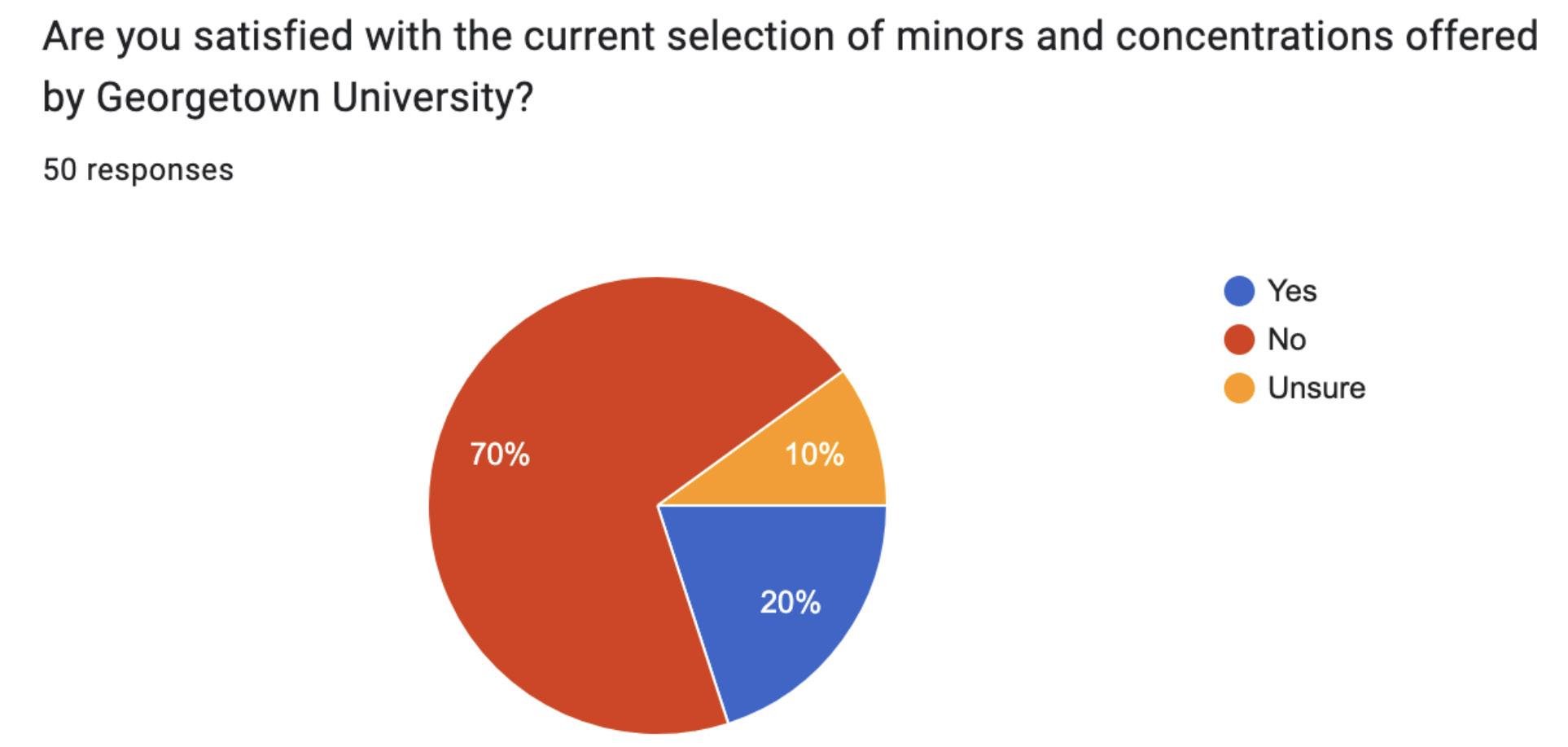
On Nov. 5, the Georgetown University Edmund A. Walsh School of Foreign Service (SFS) approved a new space studies concentration as part of its science, technology and international afairs (STIA) program after years of student and faculty advocacy. This week, the Editorial Board urged Georgetown to create more transparent pathways
for student input on new academic oferings and to encourage the developments of new programs. In order to gauge student opinion, students were asked if they were satisfed with the current selection of minors and concentrations ofered by Georgetown University. Of the 50 respondents, 70% said no, 20% said no and 10% said they were unsure.
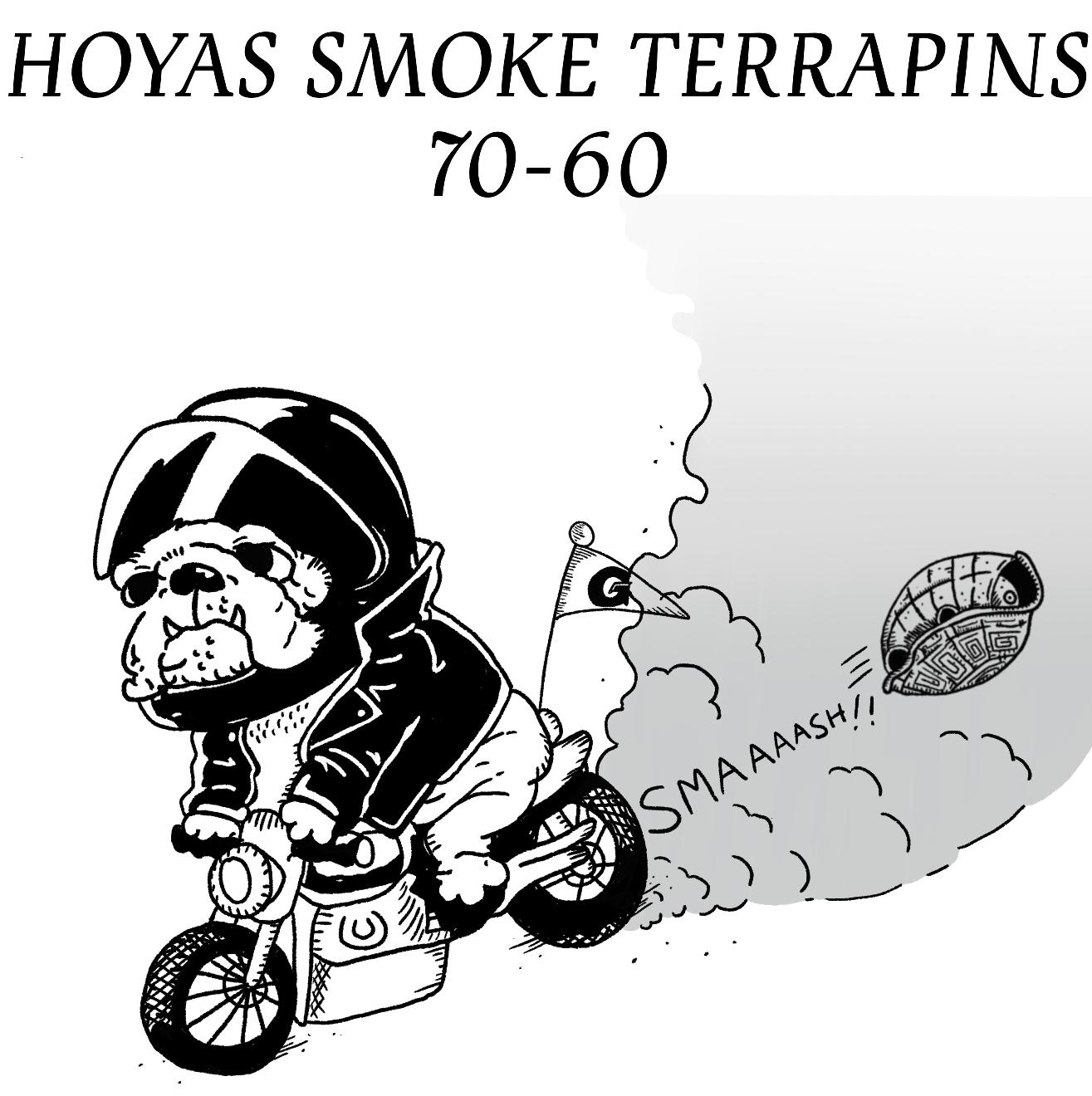
EDITORIAL CARTOON by Ege Alidedeoglu
Founded January 14, 1920
Maren Fagan, Editor in Chief
Patrick Clapsaddle and Nora Toscano, Executive Editors
Maddie Grabow, Managing Editor
Ruth Abramovitz, News Editor
Ajani Stella, News Editor
Sophia Lu, Features Editor
Saroja Ramchandren, Features Editor
Thejas Kumar, Opinion Editor
Ella O’Connor, Opinion Editor
Tanvi Gorripati, Guide Editor
Grace Ko, Guide Editor
Nate Seidenstein, Sports Editor
Madeline Wang, Sports Editor
Angela Lekan, Science Editor
Ruth Noll, Science Editor
Rohini Kudva, Design Editor
Madeleine Ott, Design Editor
Aria Zhu, Design Editor
Caroline Brown, Copy Chief
Evan Ecklund, Copy Chief
Jackson Roberts, Copy Chief
Fallon Wolfley, Blog Editor
Amanda Bloom, Multimedia Editor
Kate Hwang, Multimedia Editor
Meghan Hall, Photo Editor
Haan Jun (Ryan) Lee, Photo Editor
Board of Directors
Patrick Clapsaddle, Chair
Mia Streitberger, Amber Cherry, Ella O’Connor, Bethe Bogrette, Julia Butler, Maddie Grabow
Peter Sloniewsky, General Manager
Sophia Williams, Technology Director
Allow Students a Break
Indigenous Peoples’ weekend, the one Georgetown University deemed a “mid-semester holiday,” efectively counted as our “fall break.” Though many of my friends who live close by returned home to their families that weekend, I, being from Boston, decided that the three days weren’t enough to warrant a fight there and back. I know I was far from alone in that sentiment, since many Georgetown students hail from further than “close by,” or even the East Coast for that matter, with 14% being international.
While I will admit that an extra day of from classes still served as a much-needed “break,” I couldn’t help but be jealous of my many friends at other colleges who got four days — or even a week — of from school and academic obligations. In comparison to other Jesuit universities, Georgetown also gives its students the least amount of time for rest.
Jesuit universities that also operate on a semester system, like Creighton University and the College of the Holy Cross, grant their students an entire week of in October. Xavier University provides students with four days for rest. The same is true for these universities’ winter breaks, which can, in Holy Cross’ case, last for up to fve weeks.
This year, Georgetown’s winter break is 17 days long.
Even though Georgetown’s Thanksgiving break is a similar length to those at other universities, this congruency presumably stems from students at those universities being less desperate for time of, given they’ve been provided it more recently and more frequently.
Meanwhile, at Georgetown, it seems students are in a race to the fnish line of Thanksgiving. Even many Ivy League students are given more rest: Yale University grants its students a week-long October break, Harvard University provides a 36-day winter break, and Princeton University recesses for nine days in the fall. For a community that prides itself on attracting students from all over the world and promoting the Jesuit value of cura personalis, Georgetown’s academic calendar is scant of opportunities for students to really live out this ideal. It lacks the appropriate amount of time to accommodate its students’ travel and hinders their mental health, denying their own motto of care for the whole person. Students’ desire for longer breaks is not a new development. Over the past four years, three articles have been dedicated to the very subject.
Even more articles have called on the administration to make eforts to increase general student wellness, which remains in defcit. Despite all of these calls for change, the administration has failed to respond to students’ needs. The inaction implies either indignation at the inconvenience of reworking the academic calendar or the false presumption that students’ academic performance might falter with more breaks. All of these explanations are poor excuses for the neglect of students. If other universities of similar prestige and academic rigor can accommodate for students’ mental health needs, we can too. What these other institutions seem to understand is that students can’t work forever; there is such a thing as burnout. If anything, allowing students time for rest can improve their academic performance, providing them with the proper time to recharge and refocus their energy. Yes, there is the potential that leaving too much time idle could fracture students’ established routines; though realistically, a few additional days off throughout the fall semester would do more good than harm. The potential for optimal student wellness should outweigh the cons of straying from Georgetown’s traditional calendar.
For frst-year students especially, extending and adding breaks would ease the transition to college life immensely. The majority of frstyears have yet to return home during their frst semester of college until Thanksgiving break, meaning they’ve been in a heightened environment of change for over three months without the support system they are used to. For even the most “well-equipped” or emotionally mature students, this change can prove challenging. Georgetown should look out for these students in their early days; the least they can do is grace the newcomers with a few extra days here and there. As the current calendar stands, Georgetown students are forced to decide whether to prioritize academic coursework or personal development without enough time to balance both. To honor its promise of regional diversity in its student body and the development of every whole person, Georgetown must restrategize its academic calendar to provide longer breaks. I only hope the administration will take this call for action more seriously than they have past ones.
Caroline Blake is a first-year in the College of Arts & Sciences.
VIEWPOINT • GRAHAM
INSTITUTIONS AND THEIR ILLS
Fix What Is Broken, Work to Cure Our Institutions
To the Opinion readers of The Hoya, The last time I thought I was leaving this paper, I also wrote a letter. I wrote about what the Opinion section could do to propel itself forward and become more action-oriented. I suppose my words had an effect: My position was renewed, and I wrote this column for two more semesters, even while serving in student government. That time has now come to an end. I am tired and Georgetown’s challenges demand fresh energy. But “Institutions and their Ills” is not going anywhere. Its next chapter will be written by Zadie Weaver (CAS ’28), a friend and the current chair of the Georgetown University Student Association’s Policy and Advocacy Committee. She has intelligence and empathy in heaps, sorely needed traits in this era of upheaval. She will take this column to new heights.
Before that renewal begins, though, I hope you can forgive the wistfulness and reflection of a departing writer.
It’s now been three semesters of this column. I’ve been published in The Hoya 15 times, each piece on university policy and how we could change that policy to better the lives of students.
I won’t pretend it was the writing itself that did all the work of advocacy and persuasion. Behind each article were mounds of
Bridge Political Divides with Discourse
As a former White House intern this past summer, a common question I felded was what it is like to attend a liberal, selective East Coast university. The insularity of a place like Georgetown University can be cause for intrigue and distrust, thought of as an unpierceable progressive bubble by those outside. However, my experience at Georgetown has not refected this perception. On the contrary, Georgetown, more than any other elite private school, is fertile ground for the Republican Party’s outreach to young people today exhausted with the out-of-touch lethargy in Washington, D.C. politics. There is healthy and productive political discourse on campus, most clearly displayed at the Georgetown University College Republicans (GUCR) and Georgetown University College Democrats (GUCD) Upperclassman Debate. Regardless of party affliation, there are some things that Hoyas of all political persuasions share. They share the desire for renewal both in our nation’s standing around the world and in the dignity of our nation’s politics. It is therefore an obligation upon Hoyas, students at the most political university in the world, to discuss our shared goals pursuing a better common future without the hateful discord so common in politics today. During the debate, GUCR and GUCD speakers frequently agreed on the underlying issues facing our country but disagreed on the appropriate solutions. For example, debating foreign policy, both the GUCD speaker and I agreed on the same goal: peace. Young people of all stripes are tired of foreign entanglements and seek a new role in the world for the United States. The route to peace, and who is better equipped to lead us there, is our source of disagreement.
It is easy to defend the second Trump administration’s foreign policy record. For the first time in years, peace is being brokered in the Middle East, and America is standing up for itself and its allies against terrorist states. And no, President Trump is not some Russian stooge. The administration’s actions show that the president is bringing peace to Ukraine without compromising the country’s sovereignty. This is in stark contrast to Democratic failures in Gaza, Iran and Ukraine. Simultaneously, America’s foreign policy apparatus is evolving to be leaner, more focused and reflective of our true national interest. Those defending the administration have a clear upper hand. We’ve won so much that I am almost tired of winning. Despite this, GUCR is on a perpetual back foot in the opinion of the Georgetown student body. According to data collected by Niche, “very conservative” and “conservative” political identities are the lowest and second lowest common, respectively, at Georgetown. I doubt any of The Hoya’s readers are surprised. And our university has a mixed record on free speech, chilling conservatives’ willingness to speak their minds out of fear of reprisal at the hands of students or administrators. GUCR has been breaking through this tendency towards silence by bringing those of difering opinions at our roundtable events, and I have been encouraged to see some of my most liberal friends be enthusiastic attendees. I would encourage any politically-minded Hoya to come to these conversations and speak their minds publicly. The mixed record on free speech is not for lack of vision by the administration and student clubs to bridge the gap, and the response of the administration to posters earlier this year
celebrating the political murder of Charlie Kirk is commendable if not yet concluded. While there is a mile’s worth of efort to be crossed, these frst steps are moving in the right direction.
The rankings tell of work still to be done in promoting bipartisan, cross-ideological dialogue. And this does not come without hiccups and setbacks, such when I hear GUCD debaters purport that conservatives care about immigration enforcement because of racism rather than a legitimate concern for public safety. For one, Democrats should know better than to deride hawks on the border crisis given how decisively they lost the issue last year. For another, Hoyas should hold ourselves to a higher standard than bad faith. The greatest impediment to meaningful dialogue is holding on to the belief that your opponents are simply hateful. Our Georgetown community still must overcome that hurdle, clearly.
This being said, I remain optimistic. Georgetown has no place for those who celebrate division and violence. The campus reaction to the Charlie Kirk fyers, in spite of the aims of their propagators, was universal scorn. Hoyas know that political polarization is a problem, and forums like the GUCR-GUCD debate are crucial to cutting the siloed clubbiness in which derogatory stereotypes thrive. I am proud of my school and its students for investing time and efort into bridging our gaps, upholding our Jesuit value of “contemplation in action.’’ Now, more than ever, meaningful and productive dialogue is something to be cherished.
Knox Graham is a junior in the School of Foreign Service
tedious work and strategizing. But, there is something special about being forced to make a complete, digestible argument in 750 words. That sharpens you, and for me, this column has sharpened very much: investigations, hours of meetings and an ever-so-close campaign.
I am in debt to this paper. But alas! Despite 15 articles, all of Georgetown’s problems have not been solved. Our systems are still sick, our institutions still ill. And that’s what I want to discuss.
It is no secret that things look bleak. It is painful to watch as the structures that made our country great — whether trade, immigration or separation of powers — burn. Maybe they needed to burn, but it is a chilling thing nonetheless.
The Trump administration has set out to reshape and control higher education, wielding the arsenal of the federal government to devastating effect. But the problem runs deeper than that. Whether you believe universities have become diploma factories that have abandoned the search for truth or inaccessible ivory towers that reproduce elite status and systems of oppression, most of us can tell something is more than a little off.
So why try? Why try to make change in the face of a reckoning very far outside of our control? Many would call this the problem of cynicism. I
think it is more accurately described as the challenge of impotence and the trap of incrementalism.
One can take an incrementalist view and believe that by taking some action (e.g., phone-banking for political candidates, lobbying members of Congress, introducing a petition, etc.), they can make a small contribution to some more important outcome (e.g., the university standing up to the Trump administration). This can be true.
However, it is also true that such a process is crushing. We protest to a government that won’t listen; we help create momentum for a party whose candidates win in a landslide, then watch in horror as that party kills that optimism a week later. I think the incrementalism which Georgetown pushes you towards — be a cog in the machine, serve your time, etc. — is a large reason so many students come here wanting to change the world and leave as consultants. Most of us can tell something has begun to rot. I don’t know if we can reverse that decay.
So what’s the point? Calls for ‘hope’ fall short. They seem phony and saccharine, detached and out of touch with the gravity of the big picture.
But, even if decline and collapse are inevitable, shouldn’t we try to stem it in any way possible? If I’ve learned anything from this column, it’s that there are always symptoms of decline
that you can grasp and individually solve. You can see it as “Fixing the Little Things,” as Sanchez-Sperber did, or “Cracking Down on Crackdowns,” as did Wagner-Missaghi. Stemming decline can be bringing back ice cream to Leo’s or maintaining employee status for Georgetown University Transportation Shuttle (GUTS) bus drivers. Indeed, stemming decline can be helping create record turnout for a GUSA election by engaging the student body, even if you lose. Perhaps we can’t ensure our nation remains a democracy, restore higher education or get the university to respond to our referendums. But especially when an illness is terminal, we have a responsibility not to accelerate it. There is something in your club, class or friend group you can make better. Seize the chance while you still can. For Georgetown, Saahil Rao is a junior in the School of Foreign Service. This is the final installment of his chapter of the column “Institutions and Their Ills.” He is forever in gratitude to his wonderful editors — Peter Sloniewsky, Annikah Mishra, Maya Ristvedt, Thejas Kumar and Ella O’Connor — for improving his writing and giving him this opportunity.
Confront Consequences of Dobbs
In September 2024, I was a sophomore at the University of Miami (UM) and a news writer for The Miami Hurricane. I was writing an article on the Florida abortion referendum when I found that the nearest abortion clinic in a state where abortion was legal and unrestricted by gestational limits was in Danville, Va. — a 12-hour, 850-mile drive from UM. Now at Georgetown University, having witnessed and reflected on the seemingly irreparable partisan and class divides in our country and the hostility and malice that emanates from Washington, D.C., I have come to the following conclusion: If we let it, the decision in Dobbs v. Jackson Women’s Health Organization (Dobbs) will run the notion of America into the ground. Georgetown students must mobilize on this issue in defense of national unity and economic justice.
In 2022, the U.S. Supreme Court issued its Dobbs ruling, overturning its landmark 1973 decision in Roe v. Wade. The Dobbs decision ended federal protection of the right to abortion, invalidating the implicit constitutional right to privacy. Since the ruling, 19 states have banned or restricted the procedure, rendering many women ineligible by the time they discover they are pregnant. Eight states — Alabama, Arkansas, Kentucky, Louisiana, Oklahoma, South Dakota, Tennessee and Texas — have banned abortion with no exceptions for rape or incest.
The United States is in fact divided. The mere fact that a number of Republican-led states have efectively banned elective abortions, while Democratic-led states have largely legally reinforced or enshrined in their constitutions the right to abortion, reaps division along state lines that is truly reminiscent of the antebellum United States.
“Red” and “blue” states are gridlocked in a ridiculous and
unproductive culture war. Attorneys general have abused taxpayer dollars and spent their fnite time and resources suing doctors from other states for prescribing abortion medication across state lines. State legislatures have attempted to pass laws punishing women for traveling to obtain abortions. Governors have defunded organizations that provide prenatal care, ovarian cancer screenings, well-woman exams and other essential health care to women in underserved areas simply because they also provide abortions. It is almost exclusively the leastresourcedU.S.citizenswhoareafflicted by Dobbs. The affluent have the means by which to travel across state lines for reproductive care. Those below the poverty line face the following options: Carry an unwanted child to term, subjecting them to a broken foster care system and the lifelong psychological burden of abandonment; attempt life-threatening self-induced abortion; exacerbate an already dire financial situation to travel out of state for health care; or fundamentally derail one’s life plans to shoulder the obligations of parenthood for the next 18 years. Abortion is therefore not simply a gendered issue but a class issue. I was not materially affected by the heartbeat ban for the duration of the time I lived in Florida solely because I was born into relative wealth. Dobbs is a slap in the face to the working class.
That is, the nature of the Dobbs decision and the U.S. federalist system has created a uniquely unjust situation. In a country founded on the ideal of equal opportunity, abortion is legal only for those with the fnancial means to access it. It is fundamentally antithetical to U.S. values and unacceptable.
This issue illuminates just how out of touch with the lives of ordinary people our political leaders are. Georgetown students must be louder,
more passionate and less willing to accept a status quo that denies them reproductive autonomy. We cannot allow the legacy media, whose content is created by and for the middle-aged, for whom reproductive outcomes have been settled and Dobbs is irrelevant, to be thought leaders on this issue. To those who denounce abortion, I urge you to consider that in postDobbs United States, the upper and middle classes are obtaining abortions at virtually the same, or slightly higher, rates than before. Increases in birth rate are most pronounced among Black, Hispanic and non-college-educated women. The government has created de facto separate categories of law for the haves and the have-nots. We as Georgetown students must levy the Jesuit value of faith that does justice to advocate for law that lays an even hand. Dobbs is a fundamentally unAmerican decision, and its polarizing and divisive effects will reverberate until the day it is overturned. Georgetown students must use our education and voices to advocate for the reinstatement of Roe precedent to protect abortion rights for all people living in the United States. Talk to your neighbors — reject the partisan vitriol that comes out of D.C. and the division that Dobbs sows, practice tolerance and engage in the pursuit of understanding. Know that Dobbs is materially inconsequential for the wealthy and potentially earth-shattering for the poor. Practice corporeal politics — organize, protest on the National Mall, canvass for political candidates you believe in and confront apathy wherever you may find it. Have conviction and do not shy away from this issue, as the democratic experiment that is the United States depends on it.
Melody Royaee is a junior in the College of Arts & Sciences
VIEWPOINT • ROYAEE
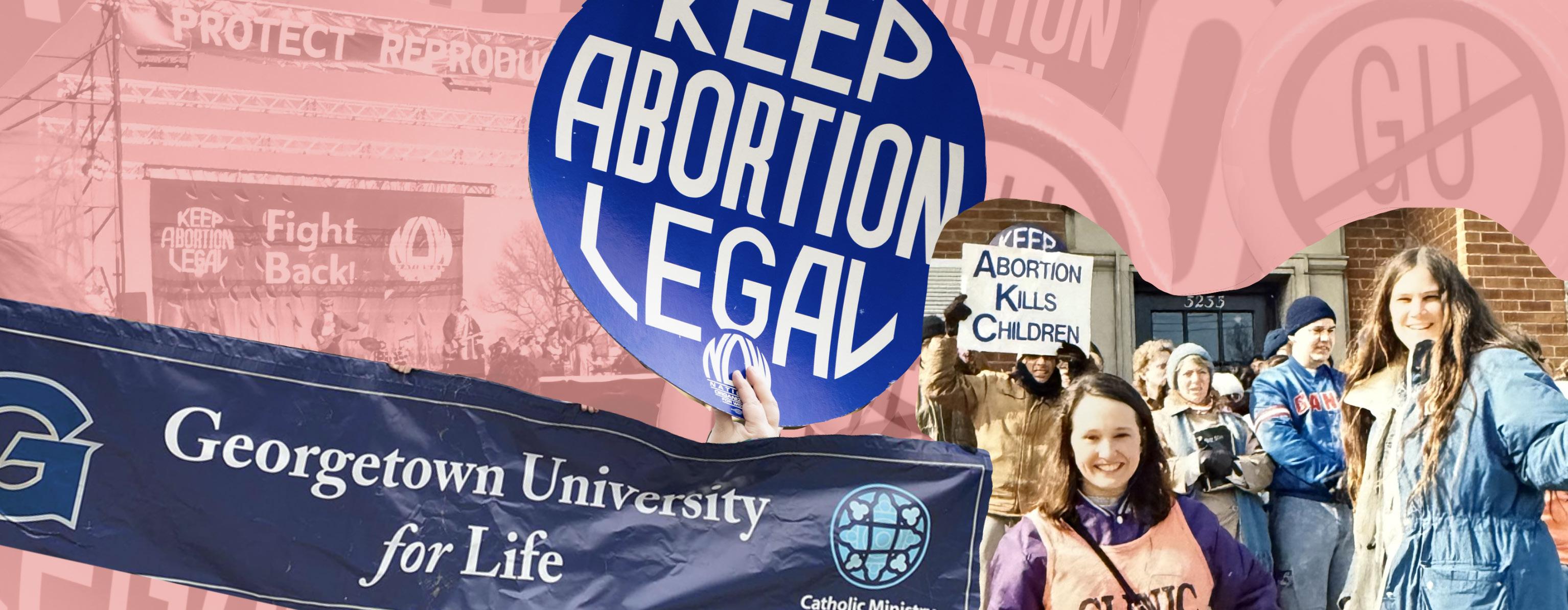
A Difficult Choice: GU Students Face Changing Barriers to Reproductive Advocacy, Education
While universities and national policies have historically supported pro-abortion student groups, momentum is now gathering behind the anti-abortion movement on college campuses.
Saroja Ramchandren, Opal Kendall and Bridget Galibois Senior Features Editor, Deputy Features Editors
In the early 1990s, change felt inevitable for the pro-abortion movement at Georgetown University.
Kelli McTaggart (COL ’92, LAW ’98) — co-founder of GU Choice, a now-defunct pro-abortion rights student group that the university oficially recognized in 1991 — spent her evenings leading student discussions about reproductive care. She said the university’s decision was largely symbolic.
“It was important that the university recognize this group as an important issue that was worthy of formal recognition,” McTaggart told The Hoya. “There were a lot of students who not only supported the issue, but — even more importantly — supported having a discussion about the issue.”
In exchange for access to university benefts, which included student activity funds and the ability to reserve rooms, the group was prohibited from conducting reproductive advocacy due to the university’s Catholic identity, limiting the club to student discussions.
Andi Clark-Ciganek (SFS ’94), an early member of GU Choice, said members worked around advocacy regulations, specifcally concerning clinic defense — escorting patients past anti-abortion protesters attempting to physically block access to abortion clinics.
“We would gavel the meeting in,” Clark-Ciganek told The Hoya. “We would conduct oficial business — where we were a discussion group around abortion and reproductive rights — and then we would gavel out and I would organize everybody to go to clinics and do escorting.”
In 1992, the university rescinded recognition, citing multiple violations of the ban on advocacy.
Darren Rigger (SFS ’91), a member of GU Choice, said that despite the university’s decision, the group felt supported by the student body and national politics.
“Bill Clinton was sweeping into the election, the Democrats won everywhere and took the House and the Senate,” Rigger told The Hoya “He started to codify the idea of choice and protections for abortion clinics. We were defnitely catching the wave. That was the fght. We’re on the right side of the fght.”
Thirty-three years later, following the U.S. Supreme Court’s decision that eliminated the constitutional right to abortion, momentum has shifted in the opposite direction — the number of anti-abortion organizations on college campuses has grown and the federal government has taken steps to limit funding for pro-abortion student groups.
Elizabeth Oliver (CAS ’26) — the president of Georgetown University Right to Life (RTL), a university-recognized organization that opposes abortion, euthanasia and the death penalty — said RTL has gained traction.
“The Right to Life club has more than doubled in size since my freshman year,” Oliver told The Hoya “More people are open to sharing their pro-life views. It’s not always easy in a university to share what you actually believe for fear of what other people might think about you, but more and more people are just saying, ‘Yeah, I am pro-life.’”
RTL has the added beneft of a mission that aligns with oficial university policy, which prohibits Georgetown and its afiliated medical institutions from prescribing birth control for family planning, providing abortions unless medically necessary or teaching health students how to deliver this care.
A university spokesperson said Georgetown’s Jesuit identity drives this policy.
“As the nation’s oldest Catholic and Jesuit university, Georgetown University is proud to be a university that deeply values our faith tradition and that encourages the free exchange of ideas,” the spokesperson wrote to The Hoya. “Individual students are permitted to express their opinions and ideas freely.”
Since the 1990s, pro-abortion student groups have worked to fll gaps in university reproductive care and education. Today, they face pressure to restrict abortion beyond campus boundaries and across the country.
Mind the Gap
H*yas for Choice (HFC), a pro-abortion and reproductive rights organization that is not afiliated with the university, emerged in 1991 as a forum for students to advocate for abortion access.
Miya Yoshida (SFS ’28), HFC’s director of tabling and development, said the group compensates for a lack of university support.
“Our mission is to step in where the university falls short,” Yoshida told The Hoya. “The Jesuit values of Georgetown are a beautiful thing, but at the same time it can disadvantage the student body by not providing adequate resources to keep the students safe.”
The university prohibited previous abortion rights groups, like GU Choice, from this type of organizing in exchange for extending oficial recognition.
McTaggart said university recognition prevented the group from providing campus care — distributing birth control and contraception — as well as community care, such as conducting clinic defense.
“We couldn’t do anything to advocate for the issue,” McTaggart told The Hoya. “We couldn’t really engage in things like going down to abortion clinics to help women who were trying to access those clinics.”
Despite this, the group found informal ways to conduct clinic defense, its primary advocacy effort. Rigger said his role was central to protecting patients’ safety.
“We would get there beforehand, physically use our bodies, lock the doors and then push our way out to create corridors where we can escort women from their cars into the facility for health care,” Rigger said.
Although GU Choice was able to conduct advocacy and discussion with general student support, some students felt GU Choice’s university-recognized status was at odds with Georgetown’s religious values.
Sean Keely (COL ’93) — a member of the Georgetown Ignatian Society, a student organization that opposed university recognition of GU Choice — said GU Choice’s recognized status was antithetical to Georgetown’s Jesuit identity.
“I’d grown up loving Georgetown — always wanted to go there — and
I thought that it was a really special place, in large part because it was an excellent university, but one that was really imbued with the Catholic and Jesuit heritage,” Keely told The Hoya. “The decision to recognize what became GU Choice was entirely inconsistent with that.”
In Oct. 1991, the Georgetown Ignatian Society filed a canon lawsuit with Cardinal James Hickey, the archbishop of Washington, and, eventually, with Pope John Paul II, hoping to get Georgetown’s Catholic status revoked. Keely, the lead student procurator for the lawsuit, said the decision was dificult to make.
“Ultimately, it comes down to truth. It’s not enough to say you’re something, the label needs to be genuine,” Keely said. “Ultimately, it wasn’t taken lightly, the decision to bring the petition, but it seemed thoroughly inconsistent.”
While the Holy See never ruled on the lawsuit, Georgetown ceased recognition of GU Choice in 1992.
For students seeking reproductive care today, RTL provides pamphlets with pregnancy and parenting resources in community spaces. The organization also runs diaper drives and volunteers at crisis pregnancy centers.
Leah Raymond (CAS ’26) — RTL marketing chair and senior director of the Cardinal O’Connor Conference (OCC), the largest student-led anti-abortion conference in the United States — said RTL provides parents with resources after the child is born.
“We’re not there to tell her to keep her baby and then disappear,” Raymond told The Hoya. “We want to be there throughout the pregnancy if she needs something — if she needs transportation somewhere. We have some folks with cars who are willing to take that responsibility on. Once she has the baby, let us know if she needs anything, whether it’s formula or diapers or babysitting.”
Oliver said the larger anti-abortion movement has shifted to focus on providing resources throughout a person’s pregnancy and after birth.
“We need to make sure there’s an abundance of resources for women to help them choose life,” Oliver said. “There’s been an emphasis on building more crisis pregnancy centers, ofering more resources, which I think is a good thing.”
HFC distributes condoms and emergency contraception, coordinates pro-abortion rights speaker events and advocates for reproductive care for Georgetown students.
Kat Scarborough (CAS ’26), HFC’s former co-president, said the group is determined to promote reproductive justice in all forms.
“It can range from anything from providing access to menstrual products on campus, to contraceptives, to talking about health care issues and crises abroad,” Scarborough told The Hoya Faculty and staff are unable to participate in HFC’s advocacy efforts because the group is not university-recognized. Still, university members find ways to remain involved.
Nadia Brown, chair of the women’s and gender studies (WGST) program, said she stores HFC supplies underneath a desk in the WGST program space.
“There are limited things that we can do because we’re a Jesuit institution,” Brown told The Hoya
“Students and the administration have a ‘don’t ask-don’t tell’ understanding of things that student organizations can do that faculty and the administration cannot.”
Educating the Whole Person
Historically, Georgetown’s Jesuit identity has also limited both formal and informal education about reproductive care.
During the height of the AIDS epidemic in the 1980s and ’90s, the university established the Peer Education program, a university-led effort where student representatives taught other students about sexually transmitted infections, sexual assault and contraceptive devices, as well as provided condoms.
Clark-Ciganek, who was also a member of Peer Education, said the university supported the program, allowing them to distribute condoms as a mechanism for disease prevention.
“We had a big budget, we had faculty advisors, we had all kinds of good stuf. One of them was safesex education,” Clark-Ciganek said.
In 1998, after pushback from Hickey and the Committee to Reform Peer Education, a student group concerned by the university’s lack of abstinence education, Georgetown banned Peer Education from demonstrating and distributing condoms.
When it comes to classroom education for medical students at Georgetown today, students say the university’s restrictions are more pronounced. Georgetown University School of Medicine (GUSOM) does not teach miscarriage management, abortion care or hormonal birth control prescription in the pre-clinical years, although the Association of Professors of Gynecology and Obstetrics recommends the content. Other medical schools in the area, such as the George Washington University (GW) School of Medicine and Health Sciences (SMHS), cover these topics.
Dr. G. Kevin Donovan, a GUSOM emeritus professor, said the university has given lectures on abortion and physician-assisted suicide that promoted the Catholic moral view of the issues.
“It was thought to be inappropriate for a Catholic institution, a medical school, to be instructing people to do something that would promote abortion — because instructing people how to do it is certainly a promotion of the act,” Donovan told The Hoya
“What we tried to do was be true, not only to what we thought were the ethics and morals of the profession, but also congruent with those of Georgetown,” Donovan added.
In lieu of receiving reproductive education at Georgetown, GUSOM professors encouraged Sabrina Deleonibus (MED ’27), a third-year medical student interested in specializing in OBGYN, to do her OBGYN clinical rotation at Washington Hospital Center (WHC), another MedStar hospital that offers comprehensive family services. Although she ranked WHC as her first choice location, Deleonibus said a lottery system placed her at the Medstar Georgetown University Hospital.
“It was very clear that abortion was not going to be something that I was going to experience or see or partake in,” Deleonibus told The Hoya
“If you aren’t interested in OBGYN, and you do OB at Georgetown specifcally, you’re defnitely
not getting the full breadth of reproductive education,” Deleonibus added. “I do think that is a detriment.” In response to a lack of abortion medical practice, the unrecognized Georgetown chapter of Medical Students for Choice (MSFC), a nonprofit organization connecting medical students with reproductive education resources, hosts annual papaya workshops. The workshops teach students how to perform manual vacuum aspirations, a procedure used for miscarriage management and first-trimester abortion, on the fruit.
Alexandra Helfand (MED ’28), the current president of MSFC at Georgetown, said medical school is an important opportunity to universally teach reproductive care before students choose their specialties.
“You might see it more in OBGYN, but you never know if you’re an ER physician, and this is something that needs to be urgently done,” Helfand told The Hoya. “It’s a very important skill to have, regardless of the specialty that you’re going into.”
Deleonibus, MSFC’s former co-president, said the systems students have developed to compensate for lacking university resources don’t fully replace traditional classroom education.
“Residents and attendings are kind of aware of this culture at Georgetown, and have systems and ways of not only ensuring that people that are interested in OBGYN have outlets to practice those things, but also that patients get what they need when they need it,” Deleonibus said.
“It’s just unfortunate that you have to basically jump through hoops because of Catholic Jesuit principles.”
In 2019, for example, the university prohibited MSFC from hosting the externally-funded papaya clinics on campus, forcing the group to scramble to find an off-campus location and independent transportation.
To avoid similar situations, MSFC at Georgetown partnered with its peer group at GW, which has access to university benefits, including classroom spaces and faculty support.
Dr. Sara Imershein, the faculty sponsor of GW’s MSFC, said GUSOM students are missing out on a central part of their medical education.
“They are aware that they’re missing something, but they don’t know how much they’re missing,” Imershein told The Hoya
“They don’t even know what exists to refer people, unless they seek out the education themselves,” Imershein added.
Changing Tides With conservatism and anti-abortion sentiment on the rise on college campuses, change feels inevitable once again — but now momentum is behind anti-abortion groups at Georgetown.
Since the Supreme Court’s 2022 decision in Dobbs v. Jackson Women’s Health Organization, 19 states have passed restrictive abortion laws and 12 states have restricted access to abortion entirely. Today, the majority of women in the United States ages 18 to 49 live in states with abortion restrictions.
Anti-abortion rhetoric is also on the rise. President Donald Trump, who was elected in 2024, has repeatedly criticized access to abortion, and conservative politicians
have repeatedly called to limit abortion access. Today, 77% of registered Republicans consider themselves to be anti-abortion, compared to 16% of registered Democrats. Raymond said the presence of a Republican administration has amplifed anti-abortion rhetoric.
“I would say that in terms of momentum, not just in the coalition, but in the general society, is that it ebbs and fows with administration,” Raymond said. “Everybody was excited after Dobbs and all that, but it wasn’t anything crazy. I think more people feel like they’re able to speak their views when with a Republican administration, less so with a Democratic administration.”
Raymond said the political landscape at Georgetown and RTL’s club culture refects these changes.
“I’ve noticed other conservative groups on campus becoming more bold, perhaps with the new administration,” Raymond said.
“The number of freshmen who are interested in joining Right to Life is increasing year by year, and the number of freshmen who stay involved is kind of astounding,” Raymond added. Scarborough said HFC has faced increased opposition on Georgetown’s campus in recent years and cannot rely on university support.
“We had issues with students that had been yelling things or harassing, and it’s a bit of a bummer not to have university support in those sorts of situations,” Scarborough said. The abortion debate is still salient, including within the Philonomosian Society, a Georgetown debate club, which hosted a Nov. 5 debate on the subject with nearly 100 students in attendance.
Oliver said the number of students who attended the debate shows increasing interest in abortion access.
“The fact that there were 100 people willing to be in a room with the other side, as it were, and discuss it, is really important,” Oliver said. “You’re seeing that because it’s become such a topic in the nation, because laws are changing, more people are talking about it, which I think is a good thing.” Keely said that as legal restrictions on abortion have become more prevalent, there has been a cultural shift to emphasize care for the whole person.
“The abortion issue is not just about changing laws,” Keely said. “Ultimately, it’s about people. It’s about making it easier for women to actually support life and have children.”
Brown agreed that reproductive justice meant more than just providing abortion care, but said that federal policies deny many a dignifed life.
“People still don’t have the support they need to live healthy and productive lives,” Brown said.
“They don’t have access to food. There’s still a housing shortage.”
“Post Dobbs, what we’re seeing is that the United States does not support reproductive justice, does not support families, does not support children, does not support women,” Brown added. Brown said activists must be realistic about what these policies mean for abortion rights.
“While the arc of the universe bends towards justice, we have to be clear-eyed about the current political context in which we’re living,” Brown said.
ILLUSTRATION BY ARIA ZHU/THE HOYA, PHOTOS BY RIGHT TO LIFE/FACEBOOK AND DARREN RIGGER
As a Jesuit institution, Georgetown’s policy on reproductive care and education must balance student interests and guidance from the Catholic Church.
Ahead of Memoir, Fauci Emphasizes Medical Advocacy, Global Responses
Kaitlyn Lee
Deputy Science Editor
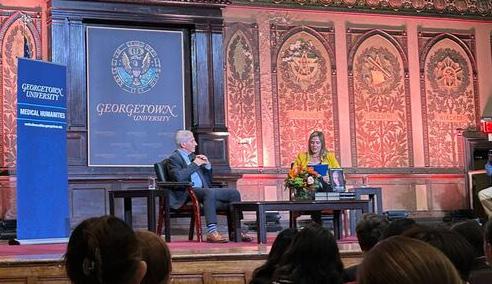
Dr. Anthony Fauci introduced his new memoir, “On Call: A Doctor’s Journey in Public Service,” which refects on his decades of public service and his role in combating major epidemics at a Nov. 6 Georgetown University event.
Fauci, former director of the National Institute of Allergy and Infectious Diseases (NIAID) and current distinguished professor at Georgetown University School of Medicine and the McCourt School of Public Policy, spoke about the evolving relationship between medicine and society to preview his book. The event was led by Emily Mendenhall, the director of the science, technology, and international affairs (STIA) program in the School of Foreign Service (SFS).
At the event, Fauci analyzed how the HIV/AIDS epidemic, which began in 1981, became an important story in the history of patient advocacy. At the time, clinical trials were the only avenue for HIV patients to access therapy. With the FDA approval process taking years and clinically ill patients often projected to have less than a year to live, advocacy from the LGBTQ+ community demanded
faster access to therapies. Fauci said listening to the LGBTQ+ community when addressing the AIDS crisis was one of the greatest decisions in his career.
“I started to listen to what they were saying, put aside the theatrics and the disruptive behavior, and what they were saying made absolutely perfect sense,” Fauci said at the event. “What that opened up was a relationship with the activist community that ultimately led to what we call the parallel track, which was the first foray into compassionate use of drugs, which means that you can do the clinical trial with all of the pristine aspects of it, inclusion and exclusion criteria, but in parallel, you can get the drug to be available to people outside of the clinical trial, so long as they do informed consent, so with all of the disruptions that were done.”
Lizzy Kim (SOH ’28), a human science student who attended the event, said she was inspired by Fauci’s empathy for the advocates and by his role in the parallel track.
“I was very impressed by Dr. Fauci’s ability to rewrite the narrative of health care access, publicly speaking against the FDA’s rigid and impractical practices in entry, exclusion criteria and clinical trial cases in the midst of
an HIV epidemic causing thousands of deaths by the month,” Kim wrote to The Hoya
In 1996, triple-drug therapy was introduced in the United States, transforming HIV care and allowing patients to live relatively normal lives.
However, most infections occurred in sub-Saharan Africa, and Fauci said it was an injustice that life-saving drugs were inaccessible to certain populations due to geography.
“People in the United States, Canada, Australia and the European Union had accessibility to drugs that were completely life-saving, but 67% of all the infections were in sub-Saharan Africa,” Fauci said. “So in my multiple trips to Africa, I became very taken up by the unfairness of the disparity, where the African physicians in the year 2001-2002 were like Tony Fauci in 1983,” Fauci said. Fauci also discussed his work with the U.S. President’s Emergency Plan for AIDS Relief (PEPFAR), a global initiative led by the United States to address HIV/AIDS epidemics in other countries. In 2003, Fauci and former President George W. Bush created PEPFAR to invest over $120 billion in 50 countries, providing lifesaving opportunities to 25 million people.
Fauci said PEPFAR is facing federal cuts, which could be detri-
mental for both developing countries and the United States.
“The PEPFAR program is now under siege, and they’re trying to cut it, which I think would be a really bad mistake, not only a bad humanitarian mistake, but a bad mistake for our country, which is one of the most important manifestations of what we call soft power in the world, where the countries totally respect us for what we’ve done in the developing world,” Fauci said. “It would be terrible to lose that.”
Glasgow Lab Investigates Diseases Using Zebra sh
Jaya Alenghat Science Writer
Researchers in Georgetown University’s Glasgow Lab are using zebrafish as a model to investigate treatments for cancer and aging-related disorders. The lab’s research focuses on using the small fish to better understand how human diseases develop and respond to treatment, bridging the gap between basic genetic studies and clinical applications.
Dr. Eric Glasgow, an assistant professor in the Georgetown University School of Medicine’s department of oncology, said zebrafsh serve as a key vertebrate model for studying human disease.
“The central focus of the lab is really using zebrafsh for a big variety of problems, mainly in the area of cancer, neuroscience and toxicology,” Glasgow told The Hoya. “I once had a colleague who said you have to either focus on a problem or focus on a model. I chose just to focus on the model, which is zebrafsh, and that way I can work on a whole bunch of diferent problems.”
Zebrafish are valuable research organisms due to their optical transparency, rapid development and genetic similarity to humans. Glasgow said that because they are transparent, researchers can visualize how specific genes influence organ formation and disease progression in real time.
“It’s a really good organism for genetics,” Glasgow said. “You can watch all the development. You can see how each cell contributes to a structure, and as I’ve worked with it over the years, I’ve been convinced that it’s actually a really good model for human disease.”
One of the lab’s projects integrates zebrafsh modeling with personalized cancer treatment. The method involves transplanting cancer cells derived from a patient’s biopsy, or a sample of their tissue, into zebrafsh embryos, allowing researchers to test how diferent chemotherapies afect tumor growth.
Glasgow said this project is one of the lab’s most exciting.
“It’s essentially an approach for personalized medicine,” Glasgow said. “You go to your oncologist and they say, ‘Unfortunately, you have pancreatic cancer; we’re going to do a biopsy.’ From that biopsy, we could put that cancer in hundreds of zebrafsh and test those embryos, with your tumor in it, for drugs that your oncologist might be considering giving you — the idea being, ‘What is the most efective treatment for your tumor?’”
Sarah Bernhardt (CAS ’26), a neurobiology major, contributes to the lab’s pancreatic cancer research. Her work focuses on identifying resistance to chemotherapy in different pancreatic cancer cell lines. She injects these cell lines into zebrafsh and treats them with one of two diferent chemotherapies.
By treating various cell lines with diferent amounts of chemotherapy drugs, they can identify which ones are more resistant to treatment than others.
Theoretically, with a certain chemotherapy concentration, you’re going to be able to diferentiate different resistant versus sensitive cell lines,” Bernhardt told The Hoya Lela Skopec (CAS ’28), who joined the lab last year, is studying cellular senescence, the process by which cells stop dividing but remain metabolically active.
Skopec said this phenomenon is linked to cancer and age-related disorders, such as Alzheimer’s, and she is interested in studying these processes further.
“I kind of see this project going more towards the concept of healthy aging,” Skopec told The Hoya “Cellular senescence does play a role in cancer, so maybe once I have a better understanding of what’s going on and why it’s going on, I can apply that to specifc things — but I was more interested in potentially applying that to Alzheimer’s and neurodegenerative diseases.”

Glasgow’s lab also extended its infuence into the classroom through a collaboration with Georgetown’s undergraduate science program. Members from the lab demonstrated how to perform experiments using zebrafsh in “Foundations of Biology I” lab courses, allowing students to observe early developmental processes frsthand.
Glasgow said that zebrafish are an excellent way to visually demonstrate biological processes to students.
“I think zebrafsh are a great model for teaching science,” Glasgow said. “I think teaching is valuable and the fsh give students a real way to actually go in and do experiments with an experimentally accessible system that’s highly visual.”
Beyond research, Glasgow serves as a mentor to researchers in his lab, fostering a collaborative and supportive community. Bernhardt said his mentorship as the lab’s primary investigator (PI) has been a defining part of her undergraduate experience.
“ There’s been so much community, and I’ve developed a really strong relationship with the PI Eric Glasgow,” she said. Glasgow emphasized the importance of this mentorship,
saying he enjoys seeing students’ skills progress throughout their time in the lab.
“I like interacting with students and watching students develop in lab — coming in not knowing how to do stuf and ending up running the thing,” Glasgow said. “Following everyone’s career is so satisfying. I love to see everyone doing really well, so that gives me some satisfaction that students coming out of here are really successful.”
By combining genetic modeling and translational cancer research, the Glasgow Lab demonstrates how zebrafsh can serve as a bridge between foundational biology and clinical innovation, a direction Glasgow said he never predicted.
“ I always considered myself a basic scientist. My interest is how do you go from DNA in a single cell and directing that cell to make an entire person. That’s my fundamental interest — nothing to do with biomedicine,” Glasgow said. “And in that pursuit, I end up with a directly clinically diagnostic oncology project that is strictly just medicine. You really can’t always predict what you’re going to come across.”
FDA Recalls Blood Pressure Medication for Cancer Concerns
Madeline Williams Special to The Hoya
The U.S. Food and Drug Administration (FDA) issued a recall Oct. 24 for prazosin hydrochloride, a popular medication for treating high blood pressure, over concerns of cancer-causing impurities.
The FDA approved the generic version of prazosin hydrochloride for the treatment of high blood pressure, and in certain cases medical providers may prescribe the medication to treat prostate enlargement and post-traumatic stress disorder (PTSD). The recall, classifed by the FDA as Class II, suggests product exposure may cause temporary health consequences, though the probability of long-term adverse health consequences is low.
Dr. Adriane Fugh-Berman, professor of pharmacology and physiology at Georgetown University Medical Center, said prazosin works by blocking the reception of certain neurotransmitters.
“Alpha receptors are found in smooth muscle, including the
lining of blood vessels and various parts of the nervous system,”
Fugh-Berman wrote to The Hoya. “As an alpha-receptor blocker, prazosin relaxes the arteries and helps blood fow more freely through them.”
Caitlin Dixon (MED ’29), a Georgetown School of Medicine student, said alpha blockers are often prescribed to increase blood fow.
“Think of your blood vessels as a garden hose,” Dixon wrote to The Hoya. “When alpha receptors are activated, they ‘squeeze’ the hose, making it narrower and increasing the pressure inside.
An alpha-blocking drug prevents the hose from being squeezed, letting it relax and widen.”
Prazosin is used primarily to treat high blood pressure, but is also used to treat PTSD because prazosin dampens the response of certain receptors that are associated with smooth muscle relaxation, nightmares and sleep disorders, which are common features of PTSD.
Katie Hummel (MED ’25), a researcher in the Conant lab who studies therapeutics of
neuropsychiatric disorders, said researchers have hypothesized that PTSD-induced sleep disturbances may be caused by over-activation of these receptors, which regulate the brain’s fight-orfght system, during sleep.
“Prazosin was shown to be very successful at passing the blood brain barrier and getting into the brain,” Hummel wrote to The Hoya. “While the contamination was identified only in specific manufacturer lot numbers, I believe the recall is significant for all patients who may be taking prazosin, for PTSD or other conditions, especially because of its ability to enter the central nervous system.”
The FDA found that some batches of prazosin contained levels of nitrosamines, potential cancer-causing and gene-altering impurities, which exceeded acceptable quantities.
Fugh-Berman said the FDA has standards for acceptable levels of nitrosamines, which can form during medication production. Nitrosamines appear naturally in certain foods, especially barbecued and smoked meats.
“Nitrosamines are also particularly high in grilled meat, like hot dogs,” Fugh-Berman wrote.
“These batches of drugs were too high in nitrosamines, and that’s why they were recalled.”
Dixon said learning about the underlying mechanisms of a drugs has made her more appreciative of the risks of taking any drug.
“I fnd that seeing the topics we study refected in the headlines helps put our preclinical learning into perspective,” Dixon wrote.
“Current events allow medical students to reframe their understanding and serve as a reminder that what we learn now will directly impact our future patients.”
Hummel said it is important to acknowledge the role of regulatory agencies in protecting patients, given the widespread use of prazosin and other blood pressure medications.
“This recall heavily stresses the importance of regulatory agencies such as the FDA, who are the frst line of defense against manufacturing errors like contamination,” Hummel wrote.
Fauci also addressed the COVID-19 pandemic, saying he felt a public responsibility to be open with the U.S. public about scientific developments, even if it meant contradicting the president.
“I have a great deal of respect for the presidency of the United States, no matter who is in the offce, but I just feel I have a responsibility as a physician and as a scientist to the American public, and when you have a responsibility for the American public, you have to tell the truth,” Fauci said.
THE SINGULARITY
Fauci said ultimately, after leading the NIAID, conducting research and working in public policy, his primary identity is as a physician.
“When I asked myself who I am, I’m fundamentally a physician,” Fauci said. “When you look at global health, the entire population is your patient in a metaphorical way, so you have to have a responsibility for the general public, which is the reason why you do the research or you get involved in policy decisions to make advances to beneft the general public.”
AI Hallucinations in Law
Jay Liu Science Columnist
The use of artifcial intelligence (AI) tools — especially large language models (LLMs) — presents a growing concern in the legal world. The issue stems from the fact that general-purpose models such as ChatGPT can fabricate court decisions or misrepresent existing ones, resulting in false citations, court confusion and unjust trials. There have been numerous cases of lawyers citing nonexistent decisions, including in states like New York and California. In fact, a database organized by a researcher at HEC Paris suggests there have been over 360 cases of AI hallucinations — when a model claims seemingly true information that’s factually incorrect — in court in the United States. AI may give inaccurate information more often than we think. According to a study conducted by Stanford’s RegLab and the Institute for Human-Centered AI, research institutes dedicated to regulation and AI alignment, general-purpose models hallucinate anywhere from 69% to 88% of the time when prompted to answer specifc legal questions. Therefore, while legal technologies utilizing AI undoubtedly can help improve eficiency in law, this eficiency can also bring inaccuracies and deskilling if used incorrectly.
Hallucination is close to inseparable from LLMs. Due to the methodology used to train models, there is almost always a possibility an AI model could misrepresent facts or create false ones altogether. Gaps in training data, as well as reward systems used in reinforcement learning, are among the numerous complicated factors that lead to hallucination. Some techniques reduce rates of AI hallucinations, such as retrieval-augmented generation (RAG), in which the integration of an external dataset allows an LLM to ground its responses and generate answers to prompts based on the dataset. Nonetheless, it’s close to impossible to completely eliminate hallucinations.
Despite their risks, legal technologies can undeniably enhance attorneys’ workfow. New software developments allow attorneys to access a wide range of past decisions in a short amount
of time. The ability of these models to process, compare and diferentiate past precedents promises new possibilities in legal practice and academic research. However, the prominence of hallucinations, especially in general-purpose models, makes AI unsuitable as a primary source of legal information. Even specialized models by LexisNexis and Thomson Reuters — which are backed by industry-trusted legal databases Lexis and Westlaw — hallucinate, albeit at a lower rate, between 17% and 33% of the time, respectively. While those models are older and less developed, and these emerging technologies continue to improve, the risks of hallucination are still too high for these tools to be the only means of gathering and verifying legal information. Much like how the internet redefned legal research, AI tools have the ability to do the same, if not more. However, it’s still crucial to remain vigilant when using these tools. Technology will continue to improve and it’s almost inevitable AI will become integrated into the legal feld. However, even after its use becomes the norm, lawyers and scholars must carefully consider the veracity of AI outputs, especially considering the serious consequences for victims and deep policy implications. U.S. Supreme Court Chief Justice John G. Roberts Jr. warned that “any use of AI requires caution and humility” in his 2023 year-end report on the federal judiciary. Though Roberts acknowledged the positive efects of such technology — for example, how wider access to legal information may allow the justice system to be more accessible to those with fewer resources — he was clear about the harms AI may bring.
Since then, the use of AI in law has only increased. According to Clio, a legal software, in 2024, 79% of law frms had adopted AI in some way. Hallucination persists, as there continue to be new incidents of false citations due to AI. It’s partially up to AI developers to identify ways to mitigate hallucination, but more importantly, individual lawyers must remain alert as to how they’re interacting with these tools. Ultimately, AI models are only tools, and mindful human judgment should prevail over blind trust.

KAITLYN LEE/THE HOYA
Dr. Anthony Fauci introduced his memoir, which reflects on his decades of public service, and spoke about the evolving relationship between medicine and society at a Nov. 6 Georgetown University event.
WIKIMEDIA COMMONS
Researchers in Dr. Eric Glasgow’s lab use zebrafish to study a variety of different diseases, including cancer and age-related disorders.

The science, technology and international affairs (STIA) program in Georgetown University’s School of Foreign Service will include a space studies concentration beginning in Spring 2026 after faculty
At Veterans Day Ceremony, Air Force Secretary Honors Military Service
Sofia Dominguez Zapata Special to The Hoya
Georgetown University honored veterans, service members and their families at a Veterans Day service Nov. 11.
Barbara M. Barrett, the 25th secretary of the U.S. Air Force, who managed both the Air Force and the newly established Space Force, refected on the sacrifces of veterans and their families as the ceremony’s keynote speaker. The Georgetown University Student Veterans Association (GUSVA) and the Georgetown University Military and Veterans’ Resource Center (MAVRC) hosted the event to honor Georgetown’s veterans and military-connected families.
Interim university President Robert M. Groves, MAVRC Director Stephen Murphy and Fr. David Pratt, S.J., the Orthodox Christian chaplain at Georgetown, also spoke at the event.
Barrett said Veterans Day celebrates freedom by honoring the courage of those who served to defend the United States.
“Today is not the day of mourning — that’s the solemn duty of Memorial Day,” Barrett said. “Veterans Day is a day of celebration and gratitude. Veterans Day reminds us that freedom endures, not by accident, but because of the courage, discipline and devotion of those willing to serve something larger than themselves.”
Barrett said Georgetown’s community of veterans demonstrates the importance of service.
“To the Georgetown veterans here today, your example enriches this campus and reminds every Hoya that service is not just a career; it’s a call,” Barrett said. “Their service reminds us that patriotism is a choice made every
GU
JOIN US AT THE HOYA GALA
The Hoya Gala
The Hoya Gala will take place Nov. 22 at the Planet Word Museum, featuring Karen Travel (COL ’00, GRD ’03), a White House correspondant for ABC News, as the keynote speaker. Scan the QR code to donate to support our gala and journalism, and check out CampusGroups to buy tickets in advance. More information is available on CampusGroups and The Hoya’s social media.

day, often in silence by men and women who put duty above self.”
Groves said the university values the unique experiences veterans bring to Georgetown.
“We acknowledge that you carry special burdens and challenges,” Groves said at the event.
“We believe these are challenges to be addressed and opportunities to be embraced because of the unique perspectives that you ofer and the important role that you play here in this community as leaders.”
Murphy said the area around Dahlgren Chapel previously served as a Civil War feld hospital and that the university’s colors — blue and gray — honor the service of all Civil War veterans.
“Around the area where you currently sit, Union soldiers were treated in a makeshift feld hospital in the aftermath of the second battle of Bull Run in 1862,” Murphy said at the event. “Our university colors, the blue and gray, commemorate veterans on both sides of the confict.”
Murphy said the university’s growing number of military-affliated students and graduates is a product of eforts by students, faculty and staf to create a supportive environment.
“Today, Georgetown University has 1,557 military connected students, active duty service members and ROTC,” Murphy said. “This is just a direct result of the collective eforts of faculty, staf and students to ensure the Georgetown community is supportive of those who have shouldered the burden of our collective defense.”
Murphy added that Georgetown maintains memorials like Lauinger Library — which
commemorates Joseph Lauinger (CAS ’67), who was killed in the Vietnam War in 1970 — to pay respect to veterans in the university community.
“This campus is flled with numerous memorials for Hoya veterans who have given the ultimate sacrifce,” Murphy said. “Two examples of which are the memorial to First Lieutenant Lauinger, a Vietnam veteran, in the lobby of the university library, and the World War II memorial located near the McDonough bus turnaround.”
Pratt, who led an invocation and prayer during the ceremony, said the prayer recognized the sacrifces of military service members while asking for guidance toward peace.
“We pause to ask for your blessings upon those who served, those who have sacrifced and their families and their friends,” Pratt said at the event. “And now we ask you also to look favorably upon us, that you would lift us up, that you would put us on to the path of peace and the making of peace.”
Groves said military service refects an ability to give deeply to the surrounding world, connecting it to Georgetown’s values.
“It isn’t about accumulation; it’s a question of depth, of fnding within ourselves that much more of what we are capable of providing the world,” Groves said. “Your commitment to doing more, and serving more, of being more through your military service captures this idea in wonderful ways.”
“Our university has a deep appreciation for the idea of service,” he added. “We are shaped by a tradition that puts service to others at the very core of what we do here.”
Emily Dabre Graduate Desk Editor
An expert in U.S. foreign policy in the Middle East warned against politicizing antisemitism during a Georgetown University event Nov. 10.
Lara Friedman, president of the think tank Foundation for Middle East Peace, examined the rise of antisemitism in the United States in the context of the ongoing Israel-Hamas war.
The Alwaleed Center for Muslim-Christian Understanding (ACMCU), a Georgetown academic group that aims to foster interreligious dialogue, hosted the event as a part of its ongoing Gaza lecture series.
Friedman said debates over defning antisemitism do not negate Jewish people’s experience with antisemitism.
“Jewish people have had this experience across generations that is absolutely unacceptable and has to be stood up to,” Friedman said. “That’s pretty uncontroversial. But shifting to expanding what it means — we’ve all agreed antisemitism is terrible and must be fought, and now we’re going to expand that defnition to also include criticism of a certain area of political thought, use that to shut it down. That’s when we start using words like weaponization.”
“They’re simultaneously saying it’s antisemitic to confate Israel and the Jews, and it’s antisemitic to not confate them,” Friedman added. “So really, you lose either way.”
The International Holocaust Remembrance Alliance (IHRA) defnition of antisemitism, the most commonly used version, de-
fnes antisemitism as hatred toward Jewish people, including 11 examples, seven of which regard criticism of Israel. International, U.S. and Israeli human rights groups have criticized the defnition for improperly confating criticism of Israel with antisemitism. Friedman distinguished between antisemitic views and anti-Israeli views, saying there is a diference between protesting clearly Jewish symbols, such as mezuzahs, and Israeli symbols.
“If you decide you want to come and picket my house because I have a mezuzah on my door, I’m going to say you’re an antisemite,” Friedman said at the event. “You don’t know me. You don’t know my political views. You know nothing about me — all you know is I’m Jewish, so you hate me — that’s not fair. If I have an Israeli fag in my window and you’re out in front, I will say, ‘Okay, maybe you’re coming here because you dislike my political views.’”
ACMCU Director Nader Hashemi said the center hosted Friedman to provide a new perspective on both rising antisemitism and its politicization in media and politics since Hamas attacked Israel on Oct. 7, 2023, and Israel’s subsequent invasion.
“Events since Oct. 7, 2023, in Gaza have generated more incidents of antisemitism globally, and here in the United States, the reliable statistics and data clearly bear this out,” Hashemi said at the event. “At the same time we’ve also seen — as we’ve noticed recently in the context of the New York City mayoral election — the instrumentalization and the politicization charges of antisemitism to attack politicians.”
Zohran Mamdani, who recently won election as mayor of New York City, faced allegations of antisemitism based on his criticism of Israel, hesitancy to condemn the phrase “globalize the intifada” and pro-Palestinian advocacy. Mamdani and his supporters have defended his statements, distinguishing between antisemitism and anti-Israel activism while attempting to demonstrate his support for Jewish people in the United States.
Friedman said labeling boycotts and other forms of non-violent protest against Israel as antisemitic has enabled Israel to dodge critics, citing these strategies as essential in ending apartheid in South Africa in the 1990s.
“You don’t need to make the argument on why not boycott, divestment and sanctions — the three tools which are the gold standard for non-violent protests around the world — which Jewish Americans have rallied around when it comes to South Africa or wherever else,” Friedman said. “We can’t come up with really good substantive arguments for why you shouldn’t allow these tools to be used here. We’ll call them antisemitic, and it’s over.”
Friedman said allegations of antisemitism have been used as a distraction from the humanitarian crisis in Gaza.
“These are efforts to dictate to Palestine activists what language they use in order to create a debate around the language they use and not what Israel is doing on the ground, and it works incredibly well,” Friedman said.
Students Demonstrate, Urge Peñalver to Resist Attacks on Higher Education
Noah Pavell Special to The Hoya Georgetown University students protested Nov. 7 against President Donald Trump’s policies impacting higher education in a demonstration which coincided with the start of similar protests in Washington, D.C., slated for the coming weeks. At least 45 Georgetown students gathered in Red Square to launch a letter campaign urging Eduardo M. Peñalver, the incoming university president, to resist federal infuence over the university. Over 100 protests took place across the country on the same day, led by Students Rise Up, a coalition of student advocacy groups, who called for a national day of action. Emily Han (CAS ’25), who helped organize the letter-signing, said the campaign was the next step in a series of actions aimed at encouraging Peñalver to preserve academic freedom and increase pressure on the Trump administration.
“His vision for higher education is really destructive, and we’re already seeing its efects,” Han told The Hoya. “I know historically students have been at the forefront of a lot of pro-democracy movements. I think it’s our role right now to continue that legacy.”
Full Disclosure: Emily Han served as Graduate Relations Director for the Fall 2024 semester.
In October, Georgetown announced it was projected to lose
$35 million in federal research grants, contributing to the university’s hiring freeze and budget cuts. In addition to the U.S. Department of Homeland Security’s March detention of a Georgetown postdoctoral fellow, former Interim U.S. Attorney for the District of Columbia Ed Martin warned the Georgetown University Law Center that his ofice will not hire students over claims of divisive diversity, equity and inclusion (DEI) policies.
The letter calls for the university to prioritize student afordability and refuse to cooperate with any future U.S. Immigration and Customs Enforcement (ICE) operations on campus. Students signed a large canvas with their name and student status and have opened the letter campaign to online signatories.
The letter also asks the university to protect academic freedom and free speech.
“Georgetown must not retaliate against professors or students for properly exercising their First Amendment rights,” the letter reads. “This applies to classroom discussions, curriculum designs, events protests, and all other aspects of campus life.”
A university spokesperson previously said Georgetown remains committed to protecting community members’ right to free expression and speech on campus.
“We respect the rights of members of our community to express their personal views and are com-
mitted to maintaining the values of academic freedom and serving as a forum for the free exchange of ideas, even when those ideas may be controversial and objectionable to some,” a university spokesperson wrote to The Hoya in September.
“Georgetown is committed to ensuring that all members of our community have a safe and welcoming place to learn and receive the support they need to do so,” the spokesperson added.
Daisy Fynewever (CAS ’26) — a hub coordinator of Georgetown’s chapter of the national Sunrise Movement advocacy group, which is part of the Students Rise Up coalition — said she is hopeful Peñalver will bring meaningful change to Georgetown.
“If he is willing to commit to these before arriving at Georgetown, it will mean a lot to people here at Georgetown,” Fynewever told The Hoya. “I would say that I’m hopeful about President Peñalver.”
Peñalver has criticized the Trump administration’s education policies in his previous role as president of Seattle University, characterizing federal attempts to undermine DEI eforts as a threat to higher education.
The Students Rise Up day of action comes days after the Trump administration proposed some universities, including Georgetown’s peer schools, sign a “compact” of understanding agreeing to align with the administration’s ideology
on admissions, campus neutrality and other issues to unlock millions of dollars of “preferential” federal funding. Only one college nationwide, New College of Florida, has accepted the compact thus far.
Fynewever said the campaign’s objective is to secure a guarantee from Peñalver that Georgetown will not sign the compact.
“The reason why we’re doing this letter is to get an explicit commitment from him upfront, sort of forcing him to take a stance on these issues,” Fynewever said.
Scout Cardillo (CAS ’27), a national coordinator for Students Rise Up who traveled to New York City to join local students’ protests, said the day of action was setting the stage for broader strikes, protests and walkouts scheduled for May Day 2026.
“We’re looking for widespread non-cooperation with the current Trump administration,” Cardillo told The Hoya. “This is going to expand beyond schools to include things like labor, faculty, staff and students.”
The Students Rise Up day of action follows the second series of nationwide “No Kings” protests Oct. 18 and overlaps with near-daily protests in the District.
Fynewever said she remains hopeful about the future.
“I really feel like we’re at an infection point in history,” Fynewever said. “There’s so much bad news every single day, but I think that it’s essential to believe that we can still make change.”

HAAN JUN (RYAN) LEE/THE HOYA
approved it Nov. 5.
NOAH PAVELL/THE HOYA Georgetown University students urged the incoming university President to push back on President Donald Trump’s policies.
GU Student Government Launches
Fund for Workers’ Citizenship Tests
FUNDRAISER, from A1
something that I’ve noticed since I frst got to Georgetown, which is that we are pretty early on conditioned to not recognize the people who are working alongside us as our equals.”
“That’s extremely frustrating and heartbreaking to me, especially because we’re in a school that loves to talk about all these Jesuit values that put them on a moral pedestal but don’t really live up to their mission,” Molina added.
President Donald Trump’s administration has intensified its immigration enforcement efforts over the past 11 months, conducting large-scale raids targeting individuals lacking legal residency status.
During the frst fve months of the Trump administration, U.S. Immigration and Customs Enforcement (ICE) reportedly arrested nearly 40,000 undocumented Mexican immigrants. In September, the U.S. Supreme Court allowed federal immigration agents to stop and question people based partly on race, language or job type, which civil rights groups and the dissenting justices condemned as legalizing racial profling and threatening legal immigrants.
Federal agents have ramped up immigration-related arrests in Washington, D.C. On Georgetown’s campus, agents were twice present, prompting widespread criticism from students.
GUSA President Ethan Henshaw (CAS ʼ26) said showing solidarity with Georgetown’s workers during the Department of Homeland Security’s (DHS) heavier immigration enforcement is important.
“People have seen ICE and DHS on Georgetown’s campus, and ICE raids across the country,” Henshaw told The Hoya. “It’s especially an important time to be in solidarity with people who are very much Americans, who live in America, who have contributed here and have been great people who serve their community for many, many years.”
Elinor Clark (CAS ’27), facilities team lead for the student labor rights group Georgetown Coalition for Workers’ Rights (GCWR), said GUSA’s eforts are important to supporting underrepresented members of the university community.
“It’s really dificult to get people to care about the people who
make this campus run,” Clark told The Hoya. “For the student government, who are elected to represent all of the students at Georgetown, to get behind this worker cause means a lot. They are able to raise awareness and meet with the administration in ways that most students can’t.”
“Being able to provide workers with funding for their citizenship exams helps eliminate a huge barrier for a lot of workers on the Georgetown campus looking to formalize their status in the U.S.,” Clark added.
Anshuraj Pal (CAS ’27), an international student who donated to the pieing fundraiser, said he hopes GUSA will continue to raise awareness and money for the citizenship fund.
“It feels great to see GUSA trying to incorporate and recognize the importance of non-Americans, both workers and students alike,”
Pal wrote to The Hoya. “In addition to that, I believe our workers should be allowed to pursue their lives and dreams without the hanging head of archaic immigration law sending them back to their home countries, some of which are facing active confict and instability.”
Cameran Lane (CAS ’28), the speaker of the senate, said the fundraiser refects students’ growing interest in pushing back against federal immigration policy, citing GUSA Vice President Darius Wagner’s (CAS ’27) recent election as student body president with a platform that included speaking out against Trump.
“One of the biggest voting factors in the executive election
we just had was the extent to which GUSA actions should be oriented towards national issues,”
Lane told The Hoya. “I think this was a great example on the part of the Henshaw and Wagner administration of what activism can look like on issues that are, yes, tied inherently to national issues but do have direct impact on our community here on the Hilltop.”
Pal said the GUSA citizenship fund may open new opportunities for immigrant workers at Georgetown.
“I hope that the workers who apply for citizenship get the chance to remain in this country and do the best for themselves,”
Paj wrote. “Everyone has dreams and aspirations, and this country represents that for millions of people across the world. I sincerely pray that these workers continue to be a part of our community, but as American citizens.”
Henshaw said Georgetown’s workers are essential to the university community, which is why students should show their support.
“These people serve our community day in and day out,” Henshaw said. “Every day they come to Georgetown and they provide, depending on the person, all sorts of services. Perhaps they drive the buses, perhaps they help cook the food, perhaps they help prepare the facilities, all sorts of things for Georgetown students, all the time.”
“They’re very much integral members of the community who make life here possible,” Henshaw added. “So I think it is the obligation of the students to support the people who support us all the time.”
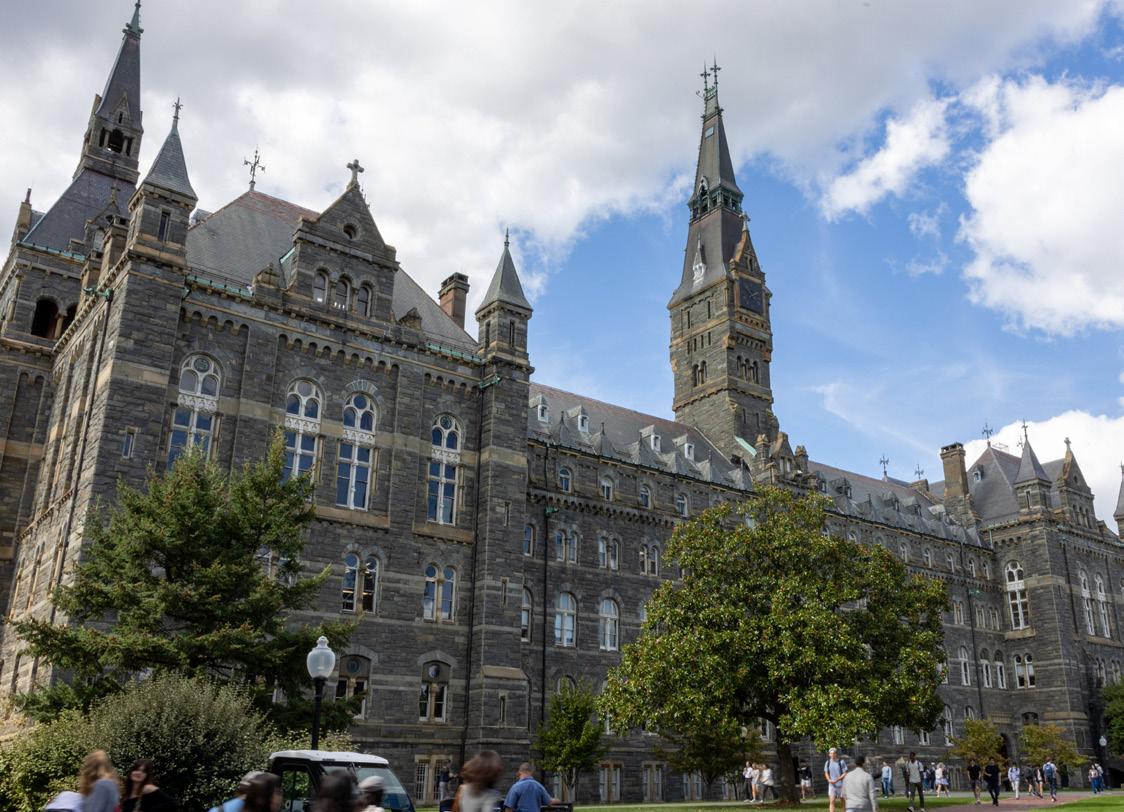
Big East Conference Renames Presidents’ Award After DeGioia
BIG EAST AWARD, from A1 the value that being an athlete adds to the overall development of students at Georgetown.”
Catherine Qiu (CAS ’28), an athlete on the women’s golf team, said she appreciates that the Big East recognized DeGioia’s academic and athletic eforts.
“As a student-athlete, it’s really hard to separate the two because it’s a key part of your identity — particularly at Georgetown because we really strive to be excellent in both aspects,” Qiu told The Hoya. “It’s hard not to be a huge part of your identity because of how much time and efort we invest into it, and we’re grateful for the amount of support that we have at the university in both aspects.”
“I’m excited to see the future of Georgetown’s Athletics and how it will develop with the new leadership, but I’m happy that Georgetown is being recognized by the Big East,” Qiu added.
DeGioia served as the chair of the NCAA’s board of governors, the NCAA’s highest governing body, from 2020 to 2022. He also served on other committees, specifcally overseeing Division I conferences, which include the Big East. During that period, the NCAA oversaw a continuing shift in the college athletics landscape, including relaxations on the rules against studentathlete compensation.
Ackerman will present Georgetown with the newly dedicated award at the men’s basketball game against
Clemson on Nov. 15. Arjun Venkatesh (CAS ’27), another Georgetown sports fan, said the award demonstrates regional recognition of Georgetown’s athletic prowess.
“It’s good. I think people forget about us in the conference, at least over the past fve years,” Venkatesh told The Hoya. “So to have that recognition, people will be like, ‘Okay, we’re back.’”
Troy said the award recognizes the importance of Georgetown Athletics to the campus community.
“It’s a point of community that we all can get behind,” Troy said. “The games are especially really fun to go to. Seeing everyone there and celebrating and feeling the same emotions together at the same time is something that is really special.”
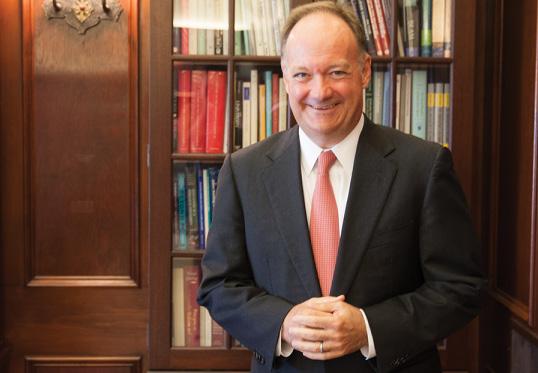
Residential Assistants Confused, Frustrated With Policy Changes
RAs, from A1
individual growth, encourage reflection and promote holistic well-being.”
Izzy Wagener (SFS ’26), GRAC chair and RA for Darnall Hall, said she thinks the policy change is illogical.
“Honestly, I shouldn’t still be surprised by the decisions that have been coming out of management this year, but I think I still was just because the new roommate decision just feels nonsensical in a lot of ways,” Wagener told The Hoya. “I don’t think it even makes sense from a management perspective or from an RA perspective.”
With the policy changes, RAs will not be informed of the specifc room they are in until after Phase 2 of the housing process, when residents are in groups of two.
According to multiple RAs, this change means that even if an RA’s friends attempted to join the suite through the standard housing portal, the RA would not yet have a specifc room assignment.
Previously, RAs selected their suitemates in advance, and Res Living placed the group in a room without the RA entering the housing portal.
A university spokesperson said the university “makes housing assignments that best meet the needs of each of its residential living communities.”
Anna Holk (CAS ’27), a GRAC steward and RA for Nevils Hall, said requiring RAs in suites to live with roommates they did not select may present dificulties.
“Living with people you don’t know is no small thing,” Holk told The Hoya. “I’m gay. I don’t want to live with a group of homophobic girls who are going to make my life hell. A Black RA doesn’t want to live with a racist roommate. People deserve to feel comfortable and safe in their homes, in their private spaces, and a big part of that is knowing who you’re going to live with and consenting to live with that person.”
Peter Sukstorf (SFS ’26), an RA in Ryan Hawkins Hall, said he disagrees with Res Living’s claim that the policy changes make RA experiences more equitable.
“The ideology of making the experience worse for those who currently have a good experience in order to make it equal — rather than making the experience better for those who have currently poor experience — seems very fawed, in my opinion, because it doesn’t really beneft them to make the experience worse for some RAs,” Sukstorf told The Hoya Zeich said RAs’ experiences mediating residents’ concerns could inform potential future conficts among RAs and their roommates.
“As RAs, you often work with other residents who have roommate conficts and concerns
in their room,” Zeich said at the Nov. 7 meeting. “So we understand that, and there’s some skills from those experiences that you can apply to your own living experience.”
“One of the things I talked with a couple of our pro staf with is we can provide the opportunity for folks that are in units with unit mates to come together in the spring, and we can provide some money to facilitate a dinner or a snack opportunity for them to get together and start talking about what relationship they want to have come the next academic year,” Zeich added.
Vasquez said this plan will not work for everyone.
“Sometimes, Residential Living issues cannot be resolved just through mediation,” Vasquez said. “Sometimes it requires escalation, sometimes it requires bias report forms, sometimes it requires room shifts. But the process would need to work completely diferent for RAs; we’re not allowed to move spaces.”
The Sept. 9 email included expectations for RAs not to enter romantic or sexual relationships with any residents in their immediate community, or their direct residential building. Zeich, who wrote the email, explained Res Living established the policy to prevent conficts of interest.
The email also said RAs “are expected to be positive role models 24/7 and should report concerns regarding students, facilities and behaviors regardless of whether or not you are serving in an oficial capacity at that moment.” According to multiple RAs, the new policy requires RAs to report concerns or violations whether or not they are on shift.
The 2024-25 RA manual includes a chart outlining when RAs are and are not acting in their oficial capacity, including examples to guide them through complex situations when living and working in the same space.
The 2025-26 RA manual lists this section in its table of contents, but the guidelines do not exist in the manual’s body.
Holk said last year’s training included a session regarding these distinctions, while this year’s training did not.
“The guidance that was given this year post-RA training, with no mention of this during RA training, was that regardless of whether you’re technically acting in your RA capacity, you should have those types of reporting obligations,” Holk said.
RAs formally voted to unionize April 16, 2024, accepting representation from Local 153 of the Ofice and Professional Employees International Union (OPEIU). The union approved the contract May 9 after seven months of collective bargaining.
According to multiple RAs, the RA holiday stafing procedure has also changed to require all RAs in their immediate community to serve a holiday shift. Previously, one RA volunteered to cover all communities in an extended community, such as Village A, Copley and Ryan Hawkins Hall. The holiday stafing update was intended to address concerns about holiday understafing while classes are not in session. However, RAs have said this policy limits their time during break periods. Vasquez said the new holiday policy impedes RAs’ ability to recuperate during breaks from school.
“If it’s the middle of spring break, obviously you’re not going to be back in D.C. just for your role as an RA,” Vazquez said. “It’s taking away time from RAs to be with their families, to be with their friends, to have the kind of relaxation that is honestly necessary coming out of Georgetown.”
Multiple RAs have said the changes will reduce overall quality of life for RAs on campus, leading to decreased RA retention and disproportionately afecting RAs with lower incomes.
Holk said she expects a number of current RAs not to return in subsequent semesters.
“This makes the RA experience considerably worse, and I think it will lead to a lot of RAs leaving the position, even if they’re really, really talented, quality RAs, solely because their rights as students are being violated,” Holk said. Holk and Sukstorf both said many students choose to become RAs to help ofset Georgetown’s high tuition and housing costs. They added that not allowing RAs to choose their suitemates, while other students can, creates inequities between RAs and other students based on fnancial status. Sukstorf said the new restrictions will limit the pool of potential RAs to those students who rely most on the position’s benefts.
“I think the result of these policies will be that Res Living will have a smaller but more desperate pool of applicants, giving them more power over their RAs, because the only people who will want to be RAs as conditions get worse and worse are the people who absolutely are desperate for fnancial aid, and therefore it gives Res Living more power over those RAs,” Sukstorf said.
Vasquez said RAs plan to pursue means to change the policies.
“I just feel more motivated than ever to fght for fellow RAs,” Vasquez said. “I want this job not only to be fun, educational and a good experience for me but also for other RAs.”
“I am very motivated, very ready to take on whatever the university presents us with after we make our grievance about these changes,” Vasquez added.
Upon Anniversary of GU272 Sale, Journalist Urges Rememberance
GU272, from A1
Reconciliation to investigate the university’s history with slavery.
DeGioia also renamed two buildings that previously honored university administrators who were key to the GU272 sale: Mulledy Hall was renamed Isaac Hawkins Hall after one of the enslaved people part of the GU272, and McSherry Hall was renamed Anne Marie Becraft Hall after a free Black woman who founded a school in Georgetown for Black girls in the 1820s. Isaac Hawkins Hall later became Ida Ryan & Isaac Hawkins Hall, adding the building’s benefactor to its name.
In 2024, the university inaugurated a required frst-year lecture, “Race, Power and Justice at GU,” which interrogates the university’s history, based on the working group’s recommendations.
Swarns said the departure of the “Katherine Jackson,” the ship that carried 130 of the enslaved people who were sold to Louisiana, was a horrifc moment.
“There were elderly people, husbands and wives, children, babies,” Swarns said. “You would have seen the crush of the crowd, parents clinging to their children. Babies wailing. Eyewitnesses describe people falling to their knees, begging for mercy. These were enslaved African Americans, the 272 who had been sold and were about to be shipped to Louisiana, far from the world that they knew and the people that they loved.”
Swarns’ journey covering Black history in the United States began when she reported on thenfrst lady Michelle Obama during her frst year in the White House. Swarns said covering the frst Black frst family was a historic opportunity that signalled a special moment in U.S. history.
“The frst family is typically covered by White House reporters who do bits and pieces when they’re not chasing the president around the briefng room or fying on Air Force One,” Swarns said. “But after that election in 2008, there was a sense in newsrooms around the country that we might want to do things diferently. There was a sense that this family, this frst African American family, in this house, built in part with slave labor, was going to be written about for generations to come.”
“As journalists, we often like to think of ourselves as writing frst drafts of history,” Swarns added. “So when my editors came to me and said, ‘Hey, you want to write about Michelle Obama and the girls for a year?’ I said ‘Sure!”’ Swarns said she knew she wanted to continue studying the history of slavery and Black families when she travelled to Birmingham, Ala., in an attempt to find the tombstone of Michelle Obama’s great-great-grandfather. Here, Swarns said she realized she was unprepared.
“I spent that afternoon going around with my little papers, absolutely unsuccessfully,” Swarns said. “I found nothing, but I felt like I had been struck by lightning. I felt like there was nothing I would rather be doing than digging through the nation’s history in this way.”
Adam Rothman, a history professor who chaired the working group and introduced Swarns, said Swarns’ research is crucial for working towards justice.
“Some stories are published and then perish,” Rothman said at the event. “But this one endured and grew, fueled by Rachel’s quest to dig deeper, and by the hunger for knowledge, truth, reconciliation and justice among the descendants themselves.” Swarns said she hoped that by learning about the GU272+, Georgetown community members would engage with the university’s legacy while grappling with the continued impacts of enslavement.
Avery Hughes-Davis (CAS ’29), who attended Swarns’ lecture, said learning about the GU272+’s history is crucial because it allows Georgetown students to acknowledge and engage with that legacy.
“We need to fgure out how people today are afected by what happened yesterday and in our past to really see where we need to improve and where we need to grow as a university, a society and as individuals,” Hughes-Davis told The Hoya
THE HOYA FILE PHOTOS
The Big East conference is renaming its Presidents’ Award after Georgetown University President Emeritus John J. DeGioia (CAS ’79, GRD ’95), reflecting his legacy of athletic achievements.
HAAN JUN (RYAN) LEE/THE HOYA
The Georgetown University Student Association (GUSA) is raising funds to support workers seeking U.S. citizenship.
Expert Warns of National Security Concerns for Aging Populations
Nico Abreu Events Desk Editor
An expert on East Asian demographics and national security warned about the security challenges that states with aging populations face at a Georgetown University event Nov. 12.
Andrew Oros — author of “Asia’s Aging Security” and Japan program director at the Stimson Center, a nonprofit thinktank focused on national security and global peace — warned about the dangers facing super-aged states at a book talk hosted by Georgetown’s Asian studies program. He argued that these states, where over 20% of the population is aged 65 or older, face shrinking workforces, weak international perception and fewer technological advancements.
Sheila A. Smith, a visiting teaching professor for the Asian studies program, moderated the event aimed to educate students on how the demographic changes in Asia afect U.S. policy and relations.
Oros said that, while most of his prior scholarship had focused on Japan, the growing number of super-aged societies allowed him to take a broader scope in his new book.
“This year, great timing for this book, both South Korea and Taiwan hit super-aged status,” Oros said at the event. “A number of countries in Europe have become super-aged as well. So I thought, ‘Well, this is the overlap.’ A book that won’t have Japan in the title, and a book that will allow me to put the challenges that Japan is facing with its demographics in a context that I think is important.”
In his book, Oros compares 16 states in East Asia, arguing their rapidly-aging populations and
shrinking workforces have become a signifcant factor in their security policy, potentially shaping their strategic behavior in the coming decades. In addition to researching Japanese domestic and foreign policy at the Stimson Center, Oros currently works as director of the international studies program at Washington College in Chestertown, Md.
Oros said other global powers theoretically perceive super-aged states as weaker due to their limited workforce.
“So it’s a theory that other states will treat you differently if you are an aging state, right?” Oros said. “It’s a fact that part of late-stage rapid aging is that your working-age population is going to shrink. That’s going to happen first, and then the total population will begin to shrink next. That’s just an empirical reality.”
“Older states are weaker, but it links to these other three factors: Older states will not be able to afford good militaries; older states will have recruiting challenges; older people will, if you threaten them some more, quickly cave,” Oros added.
Smith said throughout her 17 years of research on Japan as a senior fellow at the Council on Foreign Relations, it seems that the population cares far more about the domestic — rather than international — implications of national aging.
“I have rarely heard a Japanese person argue to me that population decline is a source of weakness vis-a-vis external actors,” Smith said. “Mostly it’s about the ability of society to function, the ability to get access to health care, the ability to shoulder the social consequences of the accel-
Nursing Students Earn Masters’ Scholarship
Liv Sanchez Special to The Hoya
Two graduate students at Georgetown University’s Berkeley School of Nursing (SON) won master’s degree scholarships from a national nursing organization, the university announced Nov. 4. Nurses Educational Funds Inc. (NEF), a New York-based charity organization, awarded the Lucy C. Perry memorial scholarship to Briana Jimerson and the Barbara Tate scholarship to Jennifer Spezza for their dedication to their respective felds. Following the 1910 death of Isabel Hampton Robb, then-nursing superintendent of the John Hopkins School of Nursing, Hampton Robb’s colleagues established the NEF in 1912 to honor her memory and innovative contributions to the feld.
Dr. Sarah Vittone, SON’s senior director of undergraduate studies, said the grant is essential to preparing more nursing graduates to enter the workforce.
“What we really need are more graduate-prepared nurses, because we need more faculty,” Vittone told The Hoya. “So having more scholarships for master’s nurses to go back to school is defnitely important.” Spezza said she valued receiving the Barbara Tate scholarship given Tate’s experience as a University of Rhode Island College of Nursing dean and scholar of nursing ethics.
“My scholarship that I received through the NEF was the Barbara Tate scholarship, and I know that she was a previous president of that organization who really valued education and moving things forward, as far as nursing goes, and innovation,” Spezza told The Hoya. “I was honored to be a recipient of that Barbara Tate scholarship. I think they really look for leaders in the nursing profession who are also passionate about education and nursing innovation, and just nursing in general.” Jimerson said she hopes to create change in midwifery, her area of focus within medicine.
“I do anticipate being a catalyst in society where I can implement change and be a part of it, because as we all know, there is so much changing in the world, from human rights and benefits, healthcare,” Jimerson told The Hoya. “If we as the students, the future providers, are not being conscious of this change, then there could be a lot more consequences than there already are when it comes to maternal mortality and neo-natal mortality.” Jimerson said the grant has already advanced her work and research in nursing.
“The NEF scholarship is a wonderful foundation,” Jimerson said.
“Hopefully in the next few years it will expand, because I plan on giving back too, as I am one of the recipients.”
erated pace of aging. I’ve rarely heard a Japanese colleague or friend worry about the outside world thinking they’re weaker.”
Oros said older societies can dampen the efects of low military recruitment with technological advancements.
“We often associate aging with things like frailty, but we also often associate it with wisdom, wealth accumulation, broader social networks, and these things are very important for security,” Oros said. “So a country that is having a shortfall in military recruiting, if you have the technology to substitute human labor with drones, and you have the money to buy those drones, and you have the wisdom to know how to use them properly or not.”
“These are reasons why I think countries like Japan or South Korea can continue to be very strong, because they have those capabilities,” Oros added. “More youthful countries tend to not be places with a high technology base or wealth.”
Oros said countries must shift their belief that military might comes from manpower and focus more on technological superiority via developing artificial intelligence (AI) models and quantum computing.
“What’s been happening in the United States — and also in Japan, in Korea, in China — is a belief that the way that these countries are going to weather their demographic challenges is having a wider range of people involved in protecting their countries,” Oros said. “It doesn’t matter whether you’re able-bodied or not. It’s how well you can program those drones, how well you can help us compete against China in the critical race with AI and in quantum computing.”
GU
Spezza said she is passionate about wound, ostomy and continence care, a subfeld of nursing that focuses on treating patients with chronic wounds from surgeries.
“There’s only about 2,000 of us in the United States, and I’ve really developed a passion around that,” Spezza said. “I’ve been certifed in wound-ostomy-continence care since 2010 and I’ve led a lot of initiatives to help get that specifc specialized care to rural populations, underserved populations, within the organization that I work for.”
Spezza said wound, ostomy and continence care entails a more personal connection with her patients.
“It’s really about going into patients’ homes that have wounds for a variety of reasons — typically they’re elderly patients, or patients with disabilities who are not mobile, or they have co-morbidities and complicated health conditions that lead to them having more chronic type of wounds, as opposed to surgical wounds, although surgical wounds are part of the care, too,” Spezza said.
Melicia Escobar, an assistant professor and the SON program director, said the NEF grant is a crucial resource to student recipients.
“This scholarship, the NEF, is great because — in our current climate, especially — having funds available for students who want to pursue graduate education is so important,” Escobar told The Hoya Escobar said scholarships such as the NEF relieve pressure on nursing students.
“No matter how large or small the grant, it just takes that much pressure of of students so that they can do a few less shifts and be focusing all of their attention to their education,” Escobar said. “Our students are all adult learners, so many of them are balancing jobs, households, caring for elderly family members, caring for children.”
Spezza said the scholarship means she can focus more on completing her degree instead of worrying about expenses.
“The scholarship was amazing in that it not only helped me fnancially but also allowed me to not have to worry about the fnances so much, so that I could focus on completing this degree in my last semester,” Spezza said. Jimerson said the scholarship’s financial aid has allowed her to allot more focus to her studies and career.
“The scholarship will alleviate the fnancial burden, because when there is a fnancial burden, it’s extra challenging for students to fully commit themselves academically, when they have to worry about fnancial strains,” Jimerson said.
“With the scholarship that I received I was able to focus more on the more intense part of the program with clinical hours that increased.”
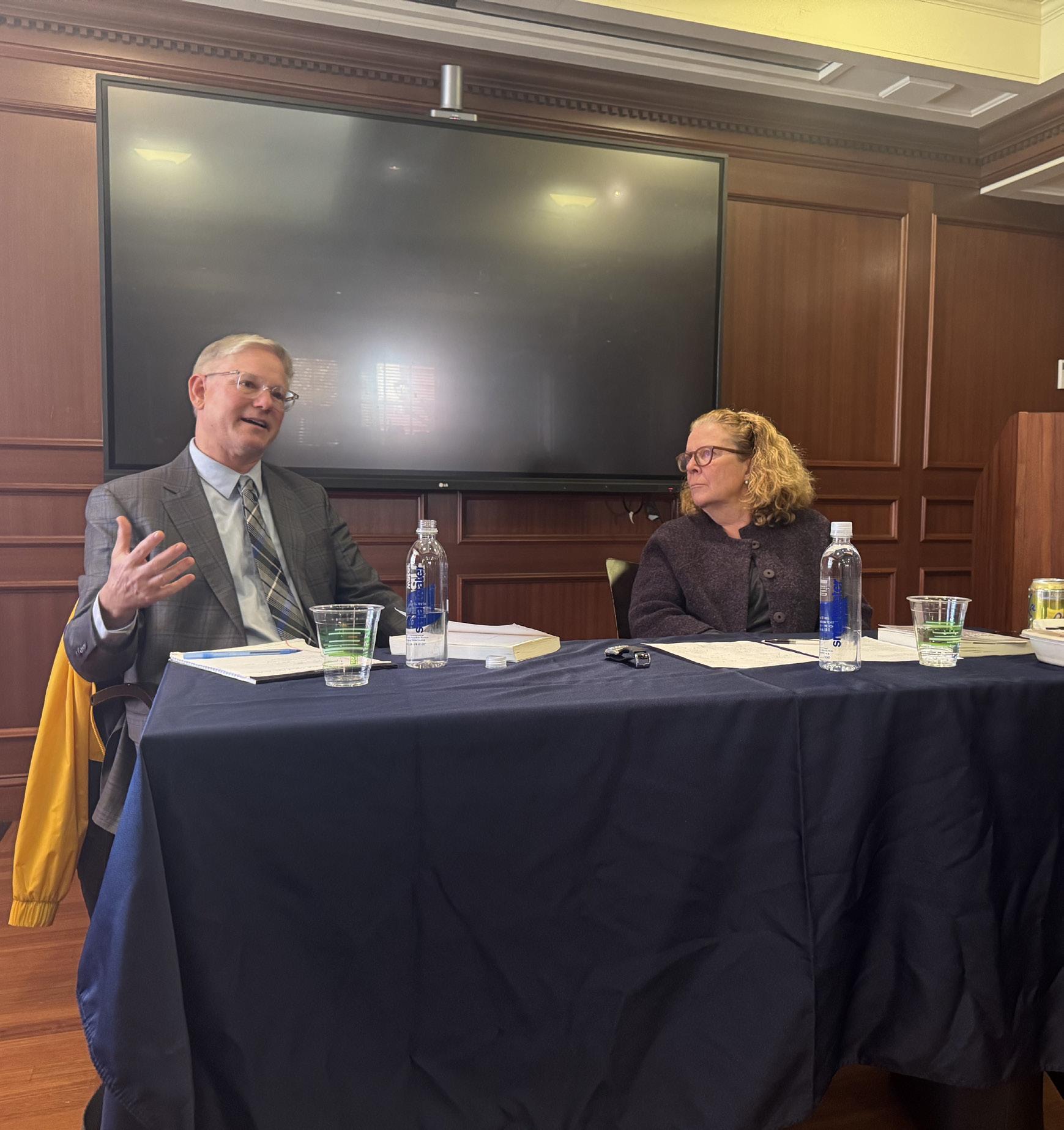
Faith, Policy Forum Urges Boycotts of Amazon During Advent Due to Corporate Consumerism
Mansimar Thakral Special to The Hoya
Georgetown University’s Center on Faith and Justice, a forum for events and workshops on the intersections of faith and policy, announced Nov. 6 that it will participate in a faith-based campaign calling on communities to avoid Amazon purchases.
No Amazon for Advent invites communities to minimize spending or completely boycott Amazon services to refocus the Christian tradition of Advent on faith and refection instead of corporate consumerism. The campaign focuses on Amazon as its main corporate target, citing the multinational technology company’s “exploitative” labor practices, donations to President Donald Trump’s second inauguration, and profteering from government contracts U.S. Immigration and Customs Enforcement (ICE).
Jim Simpson, the Center on Faith and Justice’s executive director, said the campaign comes at a crucial political moment in which corporations such as Amazon play a critical role.
“Historically, we’ve seen that boycotts have been some of the most impactful means of voicing dissent against broken and unjust systems,”
Simpson told The Hoya. “So we were trying to think about how, in this moment, when we are facing the threats of rising authoritarianism and democratic backsliding — where are some of the pillars of support for authoritarianism that we felt we had the ability to put pressure on?”
Simpson said another key purpose of the campaign was to empower individuals to reclaim agency amid a polarizing climate.
“A lot of folks are really struggling — they are seeing the threats we are facing to our democracy and to the lives and livelihoods and safety of people in their communities, and they don’t see a clear way that they can make an impact or stand out in some sort of way,” Simpson said.
“And so we were thinking about what could be a truly impactful opportunity for people to take action.”
Isabella Alvayero (SFS ’29), a frstyear student interested in studying consumerism’s impact on marginalized communities, said she appreciated seeing a commitment to fair labor practices on campus.
“I think the campaign is interesting because it is a campaign meant for students led by a university center, whereas other campaigns on campus like the Starbucks boycott are student-run,” Alvayero wrote to The Hoya. “It’s one of the few move-
ments on campus led by university eforts that seem to truly hold Jesuit values, and I am curious to see if the university will acknowledge the movement taking place in response to Amazon’s exploitation whether it be with its workers or elsewhere.”
The campaign allows individuals to choose to fully boycott Amazon, or engage in a “buycott,” in which they intentionally purchase from alternative businesses to minimize their reliance on Amazon. Other options include donating to organizations on behalf of others and sharing the initiative with friends.
Georgetown students have signed onto the campaign, participating in a variety of forms.
Katie Kolodziej (GRD ’27), a graduate assistant at the Center on Faith and Justice, said she is boycotting Amazon to both reclaim her agency and push back on corporations she fnds unethical.
“I am participating in the boycott because I want to be more intentional about my consumption, especially around the holidays and the Advent season,” Kolodziej wrote to The Hoya “Amazon is the biggest symbol of consumption right now and also participates in many harmful actions that do not align with my values.”
Kolodziej added that, instead of purchasing through Amazon, she
intends to support small businesses in her neighborhood.
“I love having small businesses in my neighborhood and have seen how they can be an important part of the neighborhood community,” Kolodziej said. “So I am instead focusing on redirecting my spending to those community-based small businesses.”
Simpson said he hopes the campaign encourages people to consider alternative forms of purchasing.
“In some ways, more importantly than where we’re not spending our money, I think it’s even more important where we are spending our money,” Simpson said. “We’re really trying to encourage people to pare down their giving to really break out of this consumer-driven cycle — to think about alternative ways and means of gifting things.”
Kolodziej said initiatives such as No Amazon for Advent provide a space for people to unite in collective action.
“Initiatives like these through Georgetown are important,” Kolodziej said. “I’m grateful to have a space to come together with classmates, faculty and other community members to feel empowered to engage in a boycott, practice collective action and make a greater impact.”
Jesuit Advocates Humanitarianism, Defends Migration
Liv Sanchez Special to The Hoya
A researcher and Jesuit priest reflected on his research on humanitarian aid for migrants in Mexico at a Georgetown University event Nov. 11.
Fr. Alejandro Olayo-Mendez, S.J., an assistant professor at the Boston College School of Social Work, presented his recently published book “Humanitarianism from Below: Faith, Welfare and the Role of Casas de Migrantes in Mexico” at the event. Georgetown’s Center for Latin American Studies (CLAS) and the Institute for the Study of International Migration (ISIM), two institutions within the School of Foreign Service that focus on Latin America and migration, respectively, co-hosted the event.
Elizabeth Ferris, an ISIM senior fellow and research professor, moderated the talk.
Olayo-Mendez said “Humanitarianism from Below” centers on compassion, empathy and advocacy, pointing to local Mexican shelters and soup kitchens that ofer aid to migrants he discovered through research and interviews.
“In contrast to classical approaches to humanitarianism, which emphasize neutrality and independence, humanitarianism from below is deeply rooted in
compassion, empathy and con-
cern for the other and also engages in advocacy and brokerage,” Olayo-Mendez said at the event.
To document migrants’ travels through Mexico, Olayo-Mendez traversed the country multiple times over six years of research.
Olayo-Mendez said he traced Mexican migrants’ paths in his research, even when he was not able to board the same trains migrants took due to safety concerns.
“Part of my protocol was: I will go to the places where migrants will board the trains; then, I will take public transportation to the next city on the itinerary where they will arrive and I watch them disembark,” Olayo-Mendez said.
Olayo-Mendez said his book also explores how local Mexican communities support migrants.
“This book is an academic exercise — let’s not deny that — but it’s aimed at understanding the solidarity of local communities in Mexico with migrants,” Olayo-Mendez said.
Olayo-Mendez said the book frames migrant shelters as humanitarian support.
“The book, in a way — and that’s part of the academic contribution — argues that ‘casas de migrantes’ — migrant shelters — are a type of what I call ‘humanitarianism from
below,’” Olayo-Mendez said. “They function as an informal welfare system. Migrants depend on them.”
Olayo-Mendez has conducted extensive ethnographic research throughout Mexico, focusing on the lives and journeys of migrants. In writing his book, Olayo-Mendez relied on interviews with both the migrants themselves and the volunteers running local shelters and soup kitchens.
Olayo-Mendez said migrant shelter employees form connections with transient migrants, governments and international organizations invested in providing humanitarian assistance.
“They perform a critical intermediary role,” Olayo-Mendez said.
“They don’t own all of the resources, but they have an uncanny ability to really connect with the local community, other people, the governments, with local, federal and international organizations and to reach and make diferent resources available for people.”
Olayo-Mendez said that throughout his feldwork, he recognized the importance of community assistance across both local Mexican groups and organizations as well as across the border, such as the Tucson Samaritans in Arizona, a group which provides water, food and aid to migrants just en-
tering the United States.
“In my feldwork, one of the things I saw over and over is really these local responses,” Olayo-Mendez said. “A meal — basic, but it was enough.”
“Other groups will do simple things, like dropping water,” Olayo-Mendez added. “In the mountains and deserts of Arizona, they will go and drop water, just in case some migrants pass so they will have something to drink.”
Olayo-Mendez said local community members feel they need to support migrants who pass through their regions.
“The visible pain of other people moves them — local people — to respond,” he said. “They are compelled to do something. It’s not only the sufering of others, but if you want to talk about it in philosophical terms, it is recognizing the other, seeing the other, that makes people feel compelled to respond.”
Olayo-Mendez said the humanitarianism he observed is often tied to faith-based networks.
“This type of humanitarianism is deeply humane, local and exists within informal and formal structures,” Olayo-Mendez said. “It’s also self-sustained and adaptable. And I think that is, to me, one of the most critical things — often identifed with a faith-based afiliation.”
NICO ABREU/THE HOYA
An expert on East Asian demographics and national security warned about the dangers facing superaged states and the implications for national security at a Nov. 12 Georgetown University event.
DC Council Passes Youth Curfew Law Amid Crime, Public Safety Concerns
Manika Niwas Special to The Hoya
The Council of the District of Columbia voted Nov. 4 to approve emergency legislation reinstating a youth curfew for 90 days.
The curfew originally came into efect Nov. 7 after a series of incidents involving youth violence.
The law requires all people under the age of 18 to observe an 11 p.m. to 6 a.m. curfew and prohibits congregations in groups larger than eight after 8 p.m. The measure, which passed 9-4, refects Washington, D.C.’s growing concern about youth crime and public safety following an incident in Navy Yard Oct. 31 where hundreds of teenagers broke out into fghts, resulting in 10 arrests.
After the Oct. 31 incidents, D.C.
Mayor Muriel Bowser declared a public emergency, which gave the Metropolitan Police Department (MPD) chief the authority to enact a youth curfew from Nov. 1 to 5. The recent vote was to extend the legislation for three more months.
Councilmember Wendell Feder (D-Ward 7), who voted in favor of the extension, said he supports it as a way to protect youth.
“As city leaders, we have a responsibility to protect our residents of all ages, and that includes making the best-informed decisions on behalf of our young folks,” Feder wrote to The Hoya. “I voted in favor of last week’s legislation to extend the emergency curfew because I am confdent it will continue to keep our youth out of harm’s way.” MPD will monitor streets to ensure compliance. Adults knowingly permitting children to violate the curfew can receive fnes up to $500, and minors who break the curfew may have to complete up to 25 hours of community service.
Sienna Shah (CAS, McCourt ’29), who recently turned 18, said she is unsure if this policy is the best way to combat youth crime.
“It doesn’t really make sense because preventing people from gathering in groups doesn’t really change anything,” Shah told The Hoya. The D.C. Council passed the Emergency Amendment Act July 7 in response to gatherings on U Street and in Navy Yard that resulted in youth violence. The act expanded the 1995 Juvenile Curfew Law to 17 year olds and to weekend nights, which was associated with a decrease in youth crime.
Ward 2’s councilmember, Democrat Brooke Pinto (LAW ’17), said the summer’s legislation signifcantly reduced youth crime.
“Over the summer, we had seven juvenile curfew zones designated around the District and MPD had zero curfew violations and zero arrests — which is exactly how it was supposed to work,” Pinto wrote to The Hoya After the initial act’s Oct. 5 expiration, D.C. saw an increase in youth misconduct and violence, according to D.C. oficials. The D.C. Council faced pressure from the mayor to renew the legislation, though opposing lawmakers delayed voting on the act because there had been no public hearing on the issue.
Kayna Aneja (MSB ’29), who has volunteered with youth in underprivileged communities, said the minors she worked with had no intention to be disruptive.
“The children I worked with didn’t want to make trouble, they just wanted more recreational activities to have fun and hangout with their friends,” Aneja told The Hoya. Councilmember Trayon White Sr. (D-Ward 8), who voted
against the legislation, said he was concerned a curfew would not efectively address the issues it aims to solve.
“Instead of focusing solely on enforcement, we should invest in safe and positive spaces for our young people to gather and grow,” White wrote to The Hoya. “At last week’s hearing, we heard directly from youth who told us what they need — more recreation, mentorship, and opportunities to just be kids in a safe way.”
Aneja said that in order to evaluate the extension’s efectiveness, the D.C. Council needs to closely monitor its impact.
“I think that every quarter or so the City Council should analyze if late-night crime rates are decreasing to see if the bill is working,” Aneja said.
The council members plan to implement supplemental programs to continue fghting crime in the District. The curfew bill represents an immediate response to a rise in misconduct.
White said a preventative measure will be more efective in solving the issue.
“I’ll continue working with Ward 8 neighbors, council colleagues and our agency partners to make sure we’re meeting our youth where they are — before there’s a problem — with love, structure and opportunity,” White wrote to The Hoya Shah said she would rather see programs that target the root cause of this issue.
“If I was still 17, I would prefer to have preventative measures to combat these issues,” Shah said. “I think the Council should include more sessions in school about crime and courses to avoid criminal activities by teaching them the consequences of their crimes.”
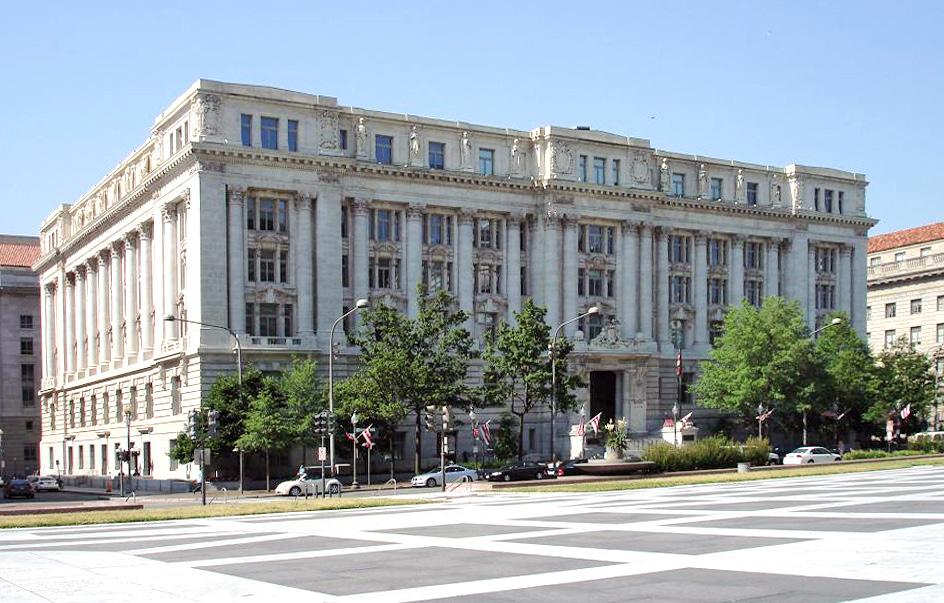
The Council of the District of Columbia voted to pass emergency legislation Nov. 4 reinstating a 90-day youth curfew, which took effect Nov. 7 following a series of youth-related incidents.
New Ikea Pick-Up Store Location Opens
On M Street for Interior Design, Orders
Noah De Haan Hoya Staff Writer
Ikea opened a new pickup store Nov. 5 in the Georgetown neighborhood on M Street near 33rd Street.
The store, a “plan and order point” that does not stock items, allows customers to meet with design specialists and order products directly to their homes. Ikea announced Oct. 17 that a location in Georgetown would replace their existing location in Arlington, Va., which closes Nov. 30, moving the home furnisher closer to Georgetown University students.
Carmen Spínola, Ikea’s area manager for the Washington, D.C.-Maryland-Virginia (DMV) area, said the Georgetown location aims to increase Ikea’s accessibility in the area.
“We’ve heard our customers’ feedback, so we are headed to Georgetown!” Spínola wrote in Ikea’s announcement. “We are thrilled to continue our accessibility journey and meeting our customers in the DMV.”
Yasmin Diallo (CAS, McCourt ’28) said she expects the new location to garner business from Georgetown students.
“With Georgetown being so close, and with upperclassmen having that option of nicer housing where they can decorate their space, I defnitely feel like Ikea will see an infux of students,” Diallo told The Hoya “I think because of proximity, students will at least try to go to this nearby location before going anywhere else.”
Victoria Hickerson (CAS ’29) said she is enthusiastic about
having access to an Ikea in Georgetown, which she didn’t have near her home in South Carolina.
“I’m pretty excited about it because where I’m from we don’t have Ikea,” Hickerson told The Hoya. “I’ve never been to an Ikea, and now I feel like it’s more accessible, even if you don’t get the full experience at this location.”
Diallo said she feels Ikea eases the burden of interior design.
“It defnitely makes things easier for me,” Diallo told The Hoya “It’s always nice to just walk inside and get a sense of what I want. I feel like I can gain a sense of style when it comes to furniture and designing my future housing.”
Hickerson said if the location stays long-term, she plans to use it to order Ikea’s storage products.
“If they stay, I probably will utilize them for storage, because I always need more storage for my clothes,” Hickerson said. “If they don’t, I will probably just use Amazon or something. It doesn’t change my opinion that much, but I like Ikea as a whole.”
In addition to the new Ikea, Georgetown students often furnish their dorms at local branches of home goods and furniture stores such as Random Harvest, T.J. Maxx, Design Within Reach and Manse.
Diallo said that for many Georgetown students, Ikea’s new plan and order format may be inconvenient and potentially undesirable.
“I guess it’s accessible in terms of the physical location, but in terms of shipping, that’s when I feel like it gets a little ify,” Diallo said. “I don’t see how easily it can be accomplished
when it comes to bringing the actual furniture to your dorm.
I think students prefer to see these things in person and get a feel for the actual dimensions.”
“Even though it’s nice to have nearby, I don’t think this is necessarily the most accessible option for students,” Diallo added.
Diallo said she would prefer to shop at the Ikea in College Park, Md., which is a fully in-person and stocked location.
“I would defnitely rather go to the location that’s a little farther in Maryland,” Diallo said. “If I have accessibility to a car, and to people like friends or family who would help me, then I would rather just go to the warehouse.”
Hickerson said she is disappointed the store doesn’t ofer the full Ikea experience, including the store’s Swedish restaurant which serves meatballs and lingonberry jam.
“Someone did point out to me the other day that you can’t get the Swedish meatballs there, so I feel like it’s a win-lose situation,” Hickerson said. “You really don’t get the full experience, since you can’t look at everything.” Diallo said she enjoys shopping at Ikea because the store helps her generate ideas, which she hopes will help her with dorm decor.
“Even if I don’t buy things from Ikea, I just love the vibe,” Diallo said. “It’s so inspiring walking into an Ikea and planning my future furniture, so I am really excited. Even if you have no plans to buy furniture, just go check it out — you’d be surprised at how inspiring a place like Ikea can be.”
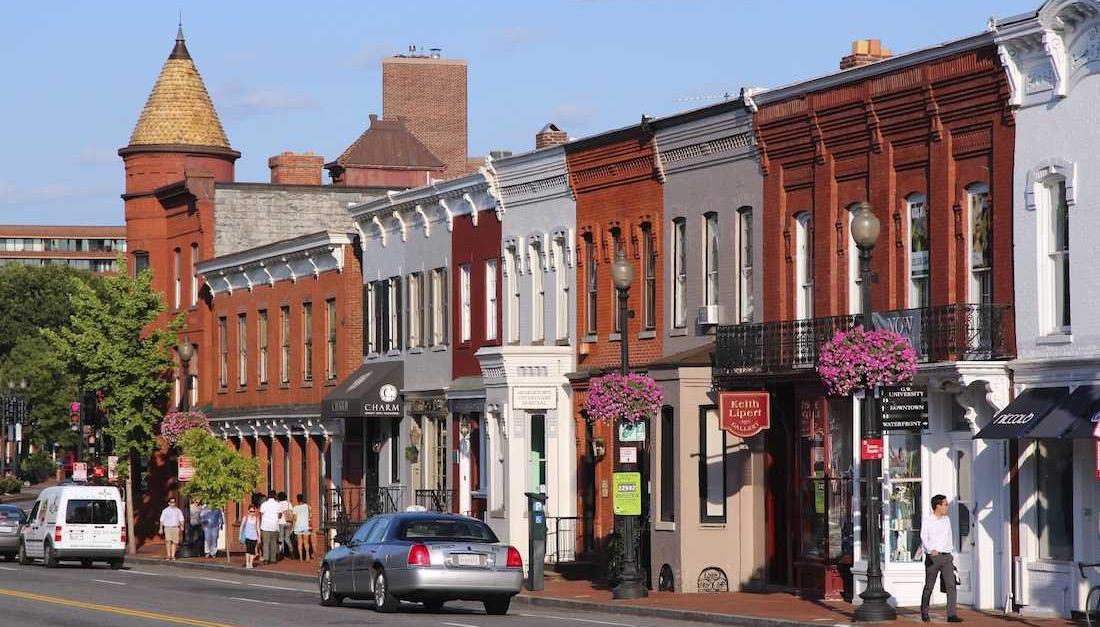
Hoyalytics Club Partners, Expands Member Options With AI Company
Chloe Taft Special to The Hoya
A data analytics club in Georgetown University’s McDonough School of Business (MSB) partnered with a news technology company as a way for its members to gain practical experience for the second consecutive semester in Fall 2025.
Newsmatics uses artifcial intelligence (AI) to operate a news indexing system used by publications for press distribution.
The company, based in Washington, D.C., is one of multiple local clients Hoyalytics partners with each year.
Chris Murphy (CAS ’27), project manager for the team working with Newsmatics, said the project expanded from last semester, implementing new goals.
“This semester, we are trying to help explain gaps in their marketing channels to help advise their 2026 advertising budget, and we can look thoroughly and creatively at the data, supported by their trust in us to propose ideas aligning with their goals,” Murphy wrote to The Hoya
Jakup Leps, Newsmatics’s chief content oficer, organized the initial collaboration with Hoyalytics last spring and has been responsible for the program since.
Leps said he was interested in the insights Hoyalytics could generate when it came to researching business intelligence data.
“We assigned the Hoyalytics team a clearly defned project that involved analyzing real-world business intelligence data that we regularly work with ourselves,” Leps wrote to The
Hoya. “We were interested in the team’s independent insights and were very pleased with their fnal presentation of fndings at the end of the spring semester.”
Murphy said working with an emerging company like Newsmatics has been particularly rewarding.
“One thing that is very unique about working with Newsmatics is the freedom with which they allow us to explore their data,” Murphy wrote. “They don’t overmanage us, and they truly are interested in hearing a new outside perspective on their operations and how we may be able to help them. They view us like interns, people who provide real value to the company.”
Andrew Huang (SFS ’28), who is a data analyst on the team, said working on the project allowed him to gain frsthand experience collaborating with real companies.
“This is probably one of my frst experiences doing any sort of work for a real company, so I think that’s defnitely been interesting,” Huang told The Hoya. “Newsmatics has a lot of data, so it just allows for large-scale data analysis, which is why I was interested.”
Huang said his work with Newsmatics this semester has taught him skills beyond formal data analysis.
“There’s defnitely a presentation or communications skill portion to what I’m learning,” Huang said. “We’ve had to do, for example, midterm presentations to the rest of the club to outline what’s going on. That usually involves trying to explain more complicated data science and technical concepts with more plain language.”
Leps said the company plans to use Hoyalytics’ insights to guide future decision-making.
“We were impressed by the Hoyalytics students’ ability to quickly grasp the task, ask smart and relevant questions about the data we provided, and deliver thoughtful analyses.” Leps wrote. “The collaboration has reinforced our belief that data science and fact-based analytics form the right foundation for many business decisions.” Huang said that, by the end of the semester, the Hoyalytics team hopes to produce a formal analysis of Newsmatics’ revenue and spending.
“The goal is to have some sort of report that outlines where revenue comes from as an advisory document for Newsmatics when they make decisions on how much to spend on ads or how to go about marketing their product,” Huang said.
Leps, who previously studied in a summer program at Georgetown, said working with Hoyalytics has reminded him that even a global company can forge a small community of analysts.
“While we are a Washington, D.C.-based company, we operate globally — and I, for example, am a Czech person living in Prague, Czechia,” Leps wrote. “But I also studied at Georgetown during the summer of 1999, so I’m especially excited to now collaborate with one of the universities where I studied in the past.”
“I think one of the unique aspects of our collaboration is that we ask students to analyze real-time data — so their work is not just an academic exercise in data analysis, but a part of our company’s operations,” Leps added.
MAREK SLUSARCZYK/THE HOYA
Ikea launched a new pickup store in Georgetown Nov. 5, located on M Street near 33rd Street, providing Georgetown University students a new shopping location for dorm decor.
WIKIMEDIA COMMONS
WOMEN’S BASKETBALL
MEN’S BASKETBALL
Hoyas Blow Late Lead to Maryland Despite Poor Defense, Inconsistent Hoyas Take Down Binghamton
The Georgetown University women’s basketball team (1-1) suffered a late-game collapse against the No. 10 University of Maryland Terrapins (3-0), who outscored the Hoyas 32-9 in the fourth quarter, at the Xfinity Center in College Park, Md., Nov. 9 in an 85-66 loss.
The Terrapins started strong, jumping out to a 7-0 lead with 7:06 to go in the first quarter. The next two minutes saw competitive defense from both teams, resulting in a 9-2 lead for the Terps at the next media timeout with 4:57 to go in the first quarter. Maryland came out strong after the break and completed their 13-2 run led by former four-star recruit point guard Addi Mack, who finished with a game-high 23 points. With three minutes left in the first quarter, Georgetown began to crawl back through a suffocating full-court press and converted its trips to the free throw line. By the end of the first quarter, the Hoyas trailed by only 3, 13-16.
The Hoyas started the second quarter strong, with graduate forward Chetanna Nweke scoring a jumper. Shortly after, sophomore guard Khadee Hession made a three-pointer to give the Hoyas their frst lead of the game at 1816. Over the next 3 minutes, both teams traded baskets, and the
Terrapins saw themselves up 26-23 at the next break.
During the next four minutes, Georgetown and Maryland went back and forth, but the Hoyas were able to gain momentum and extend their lead. With 16 seconds left in the second quarter, Hession scored her third three-point jumper of the first half, giving the Hoyas a 36-31 lead entering halftime.
The first five minutes of the third quarter were more of the same, with the Hoyas up 49-40 behind consistent shooting. With just 2:18 left in the third quarter, the Hoyas gained a double-digit lead thanks in part to consecutive three-pointers by sophomore guard Summer Davis and junior guard Khia Miller. Miller ended the game with a teamleading 37 minutes and 18 points. The Terrapins responded well, closing the gap to 6 points, 57-51, by the end of the third quarter.
Maryland opened the fourth quarter with three consecutive and unanswered layups by Mack, tying the game at 57 with 7:50 to go. The Terrapins didn’t stop there; a threepoint jumper by junior guard Oluchi Okananwa concluded a 14-2 run, giving Maryland a 65-59 lead with six minutes left.
During the next two minutes, the Terrapins went on a crucial 9-2 run, capped by a Mack layup with four minutes left. Coming out of a
timeout, the Hoya woes continued, putting the game far out of reach before the final buzzer.
Aside from a standout performance from Miller, Hession was the only other Hoya in double digits, ending with 14 points and shooting 4-6 from three-point range.
Despite getting outrebounded by the Terps, 45-27, forward Cristen Carter secured 6 rebounds and added 6 points of her own.
The Hoyas had a feld goal percentage of 38% (19-50) but allowed the Terrapins to shoot 45.5% (30-66). Georgetown’s defense was a highlight of the matchup that forced 17 turnovers, 6 of them steals.
Georgetown Head Coach Darnell Haney said the loss was disappointing, but the team’s mistakes are something to build of.
“We did a lot of good things today, but we didn’t fnish the job,” Haney told Georgetown Athletics. “We let them hit some shots and start going downhill on us in the fourth. I was proud of our group, we were out there fghting.”
“There were a lot of positives to take away from the game,” Haney added. “It’s early in the season, and it was disappointing not to win, but it’s something we can build of of.”
Georgetown will look ahead to another away matchup on Friday, Nov. 14, against the George Mason University Patriots (2-1).
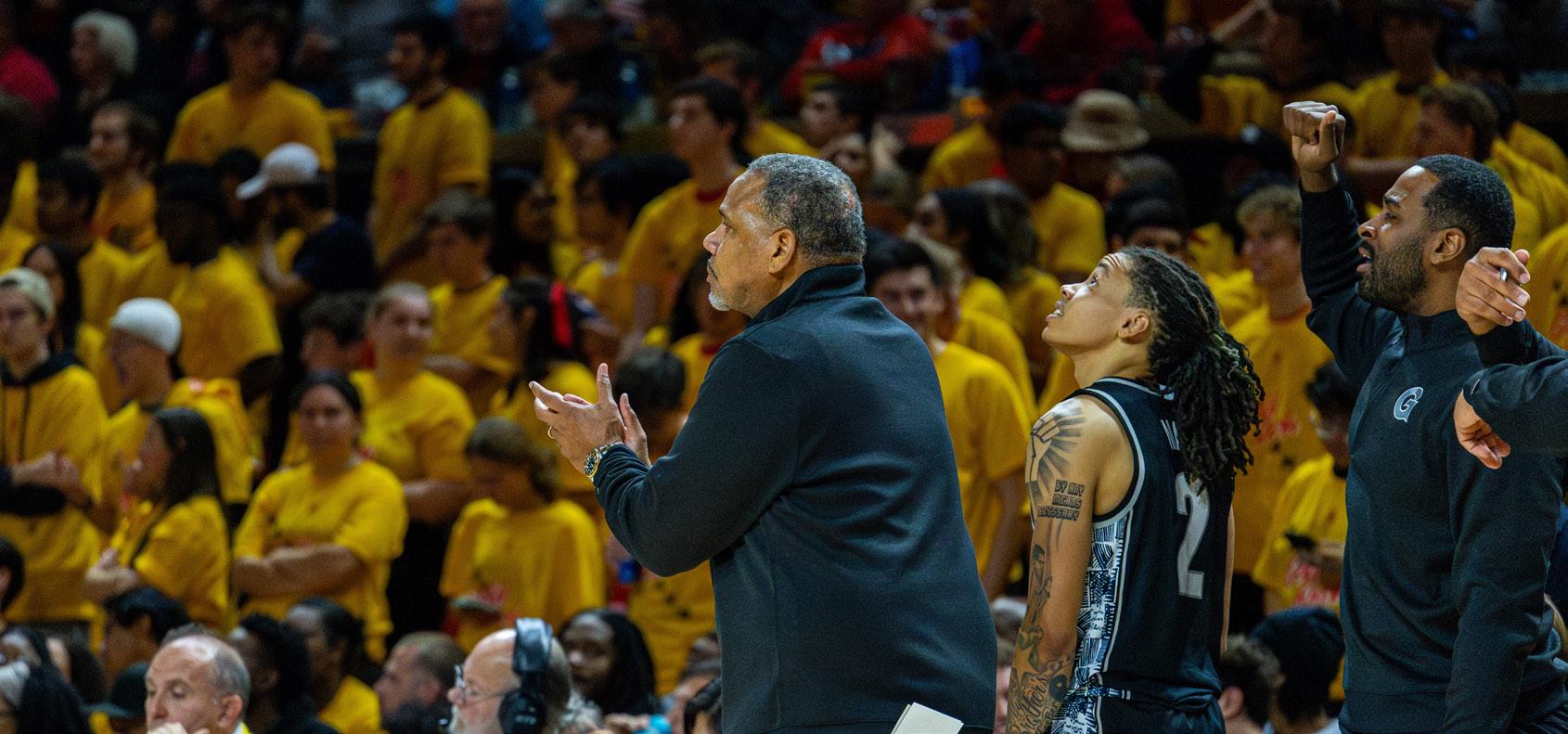
Two Commit, Hoyas Hunt for More
The season, though young, has been a good one for Georgetown University men’s basketball fans. Amid the Hoyas’ 3-0 start to the season, Head Coach Ed Cooley landed arguably his best recruit during his time on the hilltop, Alex Constanza, as well as Brazilian star Gabriel Landeira and four-star Justin Caldwell, and has his sights on more top players. These recruits will have the chance to bring the program back to national contention and build on the improvement shown last year and during this young season.
Constanza, ESPN’s 29th-best player in the class of 2026, is the Hoyas’ highest-ranked recruit since Greg Monroe in 2008. A 6-foot-8, 205-pound small forward from Fort Lauderdale, Fla., Constanza has impressed throughout his high school career.
In his sophomore year at Westminster Academy in Fort Lauderdale, Constanza averaged 20.9 points, 4.9 assists and 9.7 rebounds across 29 games. His scoring exploded in his junior season, when he averaged 29.4 points across 14 games. For his senior season, he transferred to SPIRE Academy in Geneva, Ohio. Constanza’s commitment to Georgetown did not come without competition. The University of Miami, Kansas State University, North Carolina State University, the University of Illinois and Syracuse University were among the schools recruiting Constanza.
In an interview with On3, a recruiting publication, Constanza said he has a variety of strengths on the court.
“I’m versatile. I can score on all three levels, guard and play multiple positions, and make my teammates better,” Constanza told On3. Constanza said Cooley’s honesty and willingness to give him immediate opportunities infuenced his decision to commit to Georgetown.
“Coach Cooley kept it real from day one,” Constanza said.
“I feel like the connection was natural and the opportunity to make an impact right away really stood out.”
Gabriel Landeira, a 21-year-old Brazilian professional player, is the Hoyas’ other recent commit. The 6-foot-6 guard starred against Georgetown in this summer’s GLOBL JAM tournament for the Brazilian national team, scoring 16 points and six assists in a 74-76 loss to the Hoyas in their frst meeting. After adding 13 points and eight assists to beat Georgetown 77-73 in the gold medal game, Landeira was named the MVP of the tournament. While he is not as much of a known quantity in the United States as Constanza, Landeira’s performances against Georgetown this summer suggest he can have an instant impact.
The NCAA’s new eligibility rules have opened up the door for players like Landeira, who have prior professional experience, to remain eligible for collegiate athletics, at least for now. He will enroll during this school year, in time to possibly play in the spring semester or begin his Georgetown career next fall as a redshirt frst-year. In an interview with 247sports, a news and recruiting publication, Landeira said his decision to attend Georgetown was based on his game against them this summer, his relationship with the coaching staf and the school’s academic prestige.
“I chose Georgetown because from the frst time we played against them, I liked their style and how they competed,”
Landeira told 247sports.
“They showed real interest and kept in touch the whole time. I talked with Coach Cooley and Blaney about how I can achieve my goals and be a part of a program that is growing and study at one of the best universities in the United States,” he added.
Like Constanza, Landeira said Cooley and the coaching staf’s sincerity stood out to him.
“I like how honest they are,” Landeira said. “They really care about the players and want to
Ethan Herweck Deputy Sports Editor
The Georgetown University men’s basketball team came away with a strong 83-70 victory against the Binghamton University Bearcats, despite a slow start at Capital One Arena Nov. 12.
The Hoyas (3-0) were streaky the entire game on both ofense and defense. This back-and-forth included a stretch of eight minutes where Georgetown allowed no made feld goals, which was quickly followed by a stretch of 4 made shots by the Bearcats in a row. Junior guard KJ Lewis continued his impressive start to the season, picking up a 20-point double-double.
The Hoyas scored on their frst three possessions, but allowed the Bearcats (1-3) to keep up early in the game. Sophomore center Julius Halaifonua reached the free throw line early and was able to get 4 points in the frst two minutes.
Following a strong start, Georgetown struggled to fnd the net, missing 8 of their next 9 feld goal attempts. The only positive for the Hoyas during this stretch was Georgetown’s defense successfully preventing the Bearcats from completing a feld goal attempt for over eight minutes in the early going.
This poor stretch of shooting from both teams fnally ended with back-to-back 3-pointers for Georgetown, courtesy of sophomore guard Kayvaun Mulready and graduate guard Jeremiah Williams. After those momentum-shifting
MEN’S SOCCER
shots, Georgetown led 16-9.
The Hoyas proceeded to fall apart defensively following their strong start, allowing 3 consecutive made shots and 10 points in four minutes to let the Bearcats get within reach at 22-19.
Both teams seemed unable to avoid fouling. Nearing the end of the frst half, 6 consecutive ofensive possessions ended at the charity stripe. The Hoyas extended their lead slightly during this stretch, moving to 33-28 with 3 minutes left before the halftime break.
Lewis took over for Georgetown at the end of the half, scoring 8 of the Hoyas’ last 10 points of the half. His points included a contested midrange buzzer beater to put the Hoyas up 41-36 heading into the break. Lewis and senior center Vince Iwuchukwu led the Hoyas in scoring and rebounding at the break — each had 13 points and 4 rebounds.
Junior guard Malik Mack got the second half started for the Hoyas, scoring Georgetown’s frst 4 points — his frst of the game. He soon followed with a 3-pointer, giving the Hoyas their frst double-digit lead of the game with a score of 5240 at the under-16 timeout.
Iwuchukwu built on his teammates’ momentum with a powerful slam seven minutes into the second half. Williams continued this momentum with a diving play on defense to gain possession back following Iwuchukwu’s dunk.
Both teams returned to their first half habit of fouling on many possessions, and a flagrant foul on
Mack ended with a Bearcat player laid out on the court. Williams ended the foul streak by grabbing an offensive board and 2 points on the putback to put the Hoyas up 68-55. Lewis finished through a foul with 7 minutes left for an and-one basket that, coupled with the following free throw, put him at 20 points for the night. Shortly after, Lewis grabbed his 10th rebound of the game, earning his first double-double of his career.
The Hoyas’ defense continued to be inconsistent, allowing 4 of 5 shots in the field and then holding the Bearcats to 0 field goals for over five minutes. Regardless, Georgetown was able to maintain a somewhat sizable lead in the final minutes, eventually winning the game by a margin of 83-70. After the game, Head Coach Ed Cooley said the team’s streakiness stemmed from the rotation’s depth.
“That may be the lineup,” Cooley told The Hoya. “Do we have the right personnel on the floor? And is that personnel connected? And again, because we’re playing so many guys, are we getting enough reps in practice where those guys all connected?”
“When you saw we had a lineup out there that I never saw even in practice,” Cooley added. “That’s coaching, so we have to do a better job monitoring that and at the same time develop and continue to develop even more.”
The Hoyas next face a stif challenge, the Clemson University Tigers (3-0), at Capital One Arena Nov. 15 at noon, where Georgetown will have a chance to prove their early-season hype is not just a passing mirage.
Hoyas Draw at Providence to Close Regular Season, Remain Undefeated
Madeline Wang Senior Sports Editor
Backline injuries and an inability to maintain possession led the Georgetown University men’s soccer team to a draw against the Providence College Friars 2-2 on the road Nov. 7, leaving the Hoyas undefeated in conference play.
help everyone get better as a person and as a player. That’s what impressed me the most.”
Cooley’s ability to gain recruits’ trust is becoming a recurring theme.
On top of Constanza and Landeira, KJ Lewis, the Hoyas’ new transfer guard, said Cooley’s transparency contributed to his commitment decision in an October 22 interview with The Hoya
After solely adding transfers for this season, Cooley has refocused on frst-years for next season. Constanza and Landeira are the second and third frstyear recruits of the cycle, joining 4-star power forward Justin Caldwell from Fayetteville, N.C, who committed this summer.
While Constanza, Caldwell and Landeira are not area natives, Cooley has said he sees homegrown talent as crucial to his project at Georgetown.
Other top players receiving recruiting attention from the Hoyas are local. Georgetown is currently chasing guard Jordan Smith Jr., a fve-star and U.S. national team player; forward Baba Oladotun, the No. 7 recruit in the country; and guard Qayden Samuels, Maryland’s No. 2 recruit.
Smith Jr. is being recruited by many other schools, including Duke University, the University of Kentucky and the University of Arkansas. Samuels has the University of Alabama and the University of Connecticut, among others, chasing his signature, but neither has committed yet. Georgetown is competing fercely with the University of Maryland for Oladotun.
Smith Jr. and Samuels have not announced when they will commit. Oladotun took an official visit to Georgetown this fall and was in the crowd when Georgetown beat Maryland in College Park on Friday night. He recently announced he will make his decision at Blake High School in Cloverly, Md. Nov. 19, after narrowing down his list to four schools: the University of Kentucky, the University of Maryland, the University of Arkansas and Georgetown University.
In a battle of the Big East for playoff positioning, the Hoyas (10-3-4, 6-02 Big East) played the Friars (6-6-3, 4-2-2 Big East), Butler University (510-2, 2-4-2 Big East) took on St. John’s University (9-5-4, 3-3-2 Big East); the University of Connecticut (10-3-4, 5-21 Big East) traveled to New Jersey for a matchup with Seton Hall University (7-3-7, 3-1-4 Big East); Villanova University (7-6-5, 2-3-3 Big East) played Marquette University (7-7-2, 1-7 Big East); Xavier University (5-6-4, 1-4-3 Big East) hosted DePaul University (28-7, 0-6-2 Big East); and the University of Akron (11-3-3, 5-2-1 Big East) took on Creighton University (8-4-4, 4-2-2 Big East), all at 7 p.m. Friday, Nov. 7. Heading into the match, the only position in the Big East championship — which switched this year from an eight-team format to a four-team format — that had been decided was the No. 1 position: Georgetown’s. For the other 11 teams in the Big East, Friday’s matches served as proxy quarterfinals, as teams fought for places and positioning in the tournament. Each team’s success would determine the placing of the others, and with all of the games occurring at the same time, every team went in knowing their only clear path to a tournament position was a win.
The Friars entered Friday’s match fervently seeking a win — the only way to guarantee they had a place in the tournament. Providence, celebrating their 10 seniors and graduate students on senior day, were fighting for a chance to continue their season and collegiate careers. The Hoyas faced frigid temperatures, fierce winds and the Friars’ home crowd under significantly less salient circumstances; their spot in the Big East tournament and participation in the NCAA tournament were already guaranteed.
Providence started the match strong, in control of their home turf, picking up 2 corners in the 4th minute — both of which they failed to capitalize off. In the seventh minute, Georgetown got their first opportunity of the night in the form of a set piece, and senior midfielder Zach Zengue sent the ball from the far-left corner into the center of the box and the awaiting Friars’ goalkeeper Ryan Carney’s hands.
The Friars responded with a successful shot attempt in the 13th minute—thefirstofthenight—which bounced into Hoya senior goalkeeper
Tenzing Manske’s outstretched arms. Zengue looked for a shot attempt for Georgetown and found a corner but the team failed to capitalize. Providence sent up 2 shot attempts in the 18th minute, with the second sailing high over the back netting. In the 20th minute, senior midfelder Max Viera received the ball for the Hoyas, dribbled it down the right side of the pitch and was taken to the ground. Georgetown failed to fnd success in the resulting freekick, and Providence midfelder Pearse O’Brien continued the Friars’ defensive onslaught by taking two Georgetown players to the ground.
The Friars maintained possession for the majority of the match.
In the 24th minute, Providence sent up their best attempt of the evening with a service in from the right corner of the box that was headed over.
Georgetown picked up the ball in the 25th minute on the counterattack, and Zengue carried the ball down the middle of the field, swinging it to the outside past a cluster of Friars to find junior midfielder Mateo Ponce Ocampo at the left corner. Ponce Ocampo sent the ball into the box to the awaiting sophomore forward Mitchell Baker, who tapped the ball in for the first goal of the night — and Baker’s ninth goal of the season — to put the Hoyas up 1-0.
The Friars responded with 2 ongoal shot attempts, both of which were easy saves for Manske.
In the 34th minute, the Hoyas found the ball on the counterattack again, and Baker brought the ball up the right side of the pitch and sent the ball to sophomore midfelder David Urrutia on the far corner. Urrutia lined up and took a shot to the near post, which was defected by the Providence goalkeeper, and before Carney had a chance to grab the rebound, Zengue swept in to clean up and put the Hoyas up 2-0.
Providence responded less than 30 seconds later with a goal of their own; Georgetown’s defense looked ill-prepared as midfielder Angelo Ventrella tipped in a shot from the center of the six-yard box. The Hoyas conceded their second goal of the season in conference play and led 2-1 with 10 minutes remaining in the half.
The rest of the half continued with more unsuccessful shots, corners and a near own goal in the 42nd minute as first-year defender Will Caldwell stepped in front of Manske.
Play resumed in the second half with Providence continuing to hold possession and put up shots, and Georgetown continued failing to finish. The Hoyas put up a single shot in the second half as first-year midfielder Charlie Rosenthal received a pass at the top of the goal area from Zengue and hit the left woodwork.
In the 76th minute, a close Manske save awarded the Friars a questionable corner. Providence sent the ball toward the near post and Ventrella headed the ball in for a brace and the equalizer. The rest of the match continued with more Hoya missed opportunities, and neither team found the back of the net again. The match ended in a 2-2 draw, with Georgetown’s only goals coming on the counterattack as Providence held possession. For the frst time this season, the Hoyas were signifcantly outshot. Georgetown put up 6 shots — 3 on goal — to Providence’s 16 shots with 6 on goal. Prior to this match, the Hoyas had hit double digits in shots in every contest this season. The Friars also out-cornered the Hoyas 6 to 2. Despite missing most of their veteran backline due to injury, the Hoyas’ largest weakness in their match against the Friars was their atypical ofensive performance. Zengue, who picked up a goal and an assist Friday, is tied for third in the country in total points. He was also awarded a spot on the Big East weekly honor roll for his performance against Providence. To cap off the regular season, six Hoyas earned Big East postseason awards. Zengue was named the Big East midfielder of the year and was unanimously named to the allBig East first team. Baker was also unanimously named as a first team all-Big East selection, and junior midfielder Eric Howard — a currently injured member of the Hoyas’ backline — rounded out the first team all-Big East selections for Georgetown. Senior midfielder Diego Letayf, a three-year captain and another component of the Hoyas’ stellar backline, was named as a second team all-Big East selection. Manske and junior midfielder Matthew Van Horn were named as third team all-Big East selections. The Georgetown coaching staff, led by Head Coach Brian Wiese, picked up Wiese’s eighth, and the program’s tenth, Big East coaching staff of the year award. Despite not picking up the win against Providence, Wiese said the team performed very well during the regular season, as exemplifed by their mass of accolades.
“Despite our frustration, we won the league and we did it without losing a game, so there is a lot to be proud of,” Wiese told Georgetown Athletics. The Hoyas are now gearing up for the Big East semifinal Thursday, Nov. 13, at 7:30 p.m. at the Maryland SoccerPlex where they will take on Providence for the second time in a week. The defending Big East champions and reigning Big East regular season champions will be looking for a win and a spot in the Sunday, Nov. 16 Big East final.
HAAN JUN (RYAN) LEE/THE HOYA
Both recent first-year commits, Alex Constanza and Gabriel Landiera, cited Georgetown men’s basketball head coach Ed Cooley’s leadership style and the team’s promise in their decisions.
MEN’S BASKETBALL
Julian Brown Special to The Hoya
Sam Fishman Hoya Staff Writer
MEN’S BASKETBALL
A Work Stoppage Would Be Bad News for Baseball Hoya Defense Stifles Terrapins in Battle of the DMV
HERMAN, from A12
minor leaguers. Pessimistically, the next CBA negotiations might just be a fght between the Dodgers, the team who has coasted to consecutive World Series victories through astronomical spending, and the other 29 teams, who are left wondering what else they could have done.
Still, as much as I enjoy complaining about the Dodgers and their disrespectful propensity to ruin baseball, MLB’s current problems are far broader than one team’s greed. League parity is somehow at its highest high and its lowest low. On one hand, the Milwaukee Brewers and Seattle Mariners — who have the 23rd- and 16th-largest payrolls in the league, respectively — made it to each league’s championship series.
On the other hand, the team with the highest payroll ever in North American professional sports won the World Series. This is the same team that scooped up every single Japanese free agent and then some other top free agents for good measure — just because they could. At the same time, working conditions for players are likely to be a sticking point in negotiations. The annual salary minimum for minor league players ranges from $36,590 to as low as $20,430 — barely above the poverty line.
If those minor-leaguers reach the majors, they still must wait six years before reaching free agency. Often, players reach or pass their prime by the time they are able to negotiate their contract on the open market. Further, pitchers are frequently overworked, with teams valuing velocity and innings over player safety.
To top it all of, according to court documents unsealed Nov. 9, two players on the Cleveland Guardians were indicted for
“pitch-rigging.” Federal prosecutors allege, in multiple instances, pitchers Emmanuel Clase and Luis Ortiz took bribes to throw balls instead of strikes as part of a wide-ranging gambling conspiracy. Each pitcher, if convicted, faces up to 65 years in prison for various fraud charges.
Evidently, MLB needs a changeup — perhaps in the form of a salary cap and foor, a less ridiculous playof structure, restrictions on sports betting, increased attention to the rights of minor leaguers or an adjusted free agency system. This is not to mention the need for improved protections for player health and safety, limits on deferred contracts and a rocket launching the Dodgers to Mars.
But there is not a single party who would beneft from a strike or a lockout.
MLB’s national and international viewership is at an all time high. Despite ruining my life, Game 7 of the 2025 World Series averaged 51 million viewers between the United States, Canada and Japan. It was the most-watched MLB game since Game 7 of the 1991 World Series. Viewership during the regular season and playofs was also higher than usual. This attention to the game draws in fans, drives up ticket sales and media revenue for teams and opens doors to sponsorship deals for players.
Nothing would put a damper on MLB’s recent success like a work stoppage or a contentious negotiation period. Baseball has not been this popular in years — but without a productive CBA renegotiation, the league risks pulling an Aaron Judge: striking out when it matters most.
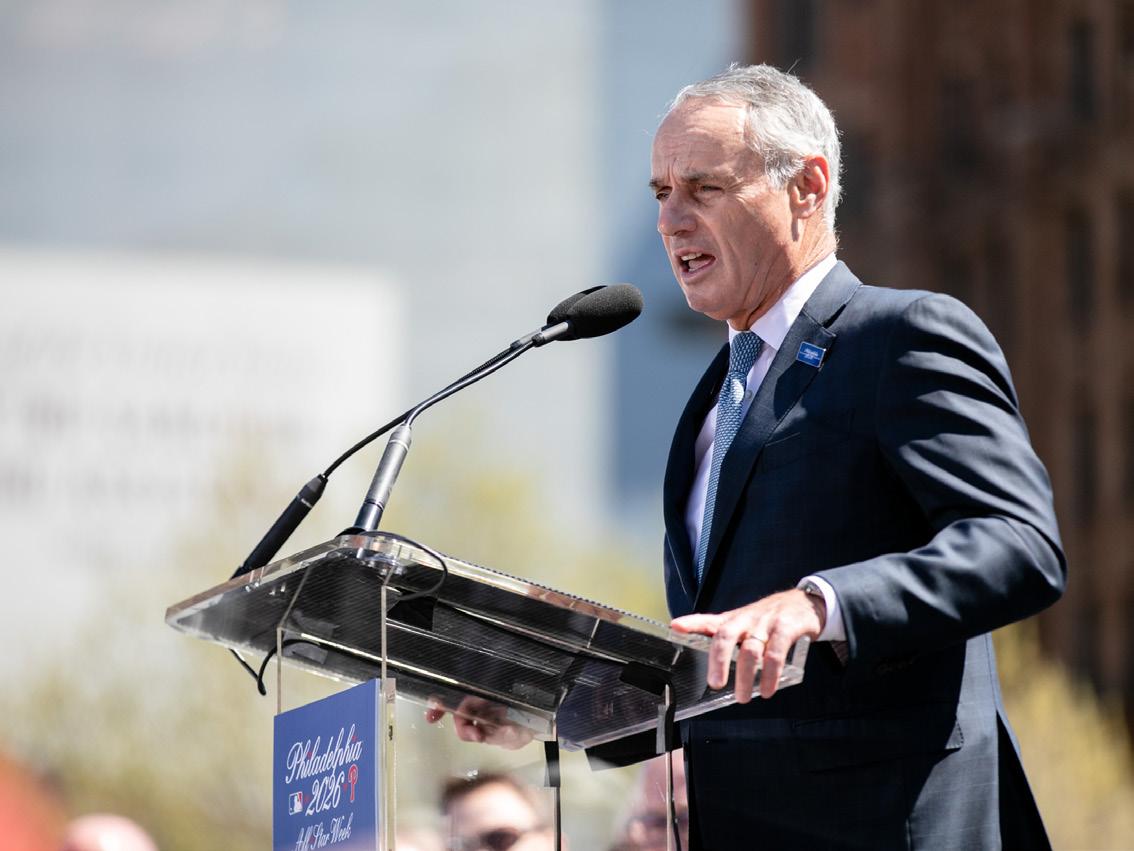

MARYLAND, from A12
down as he ran up the court.
Another Mack three extended the lead back to 10 with under 2 minutes and the fans began to head for the exits and chants of “Hoya Saxa” rang out across the Xfnity Center.
After that three and a made free throw by Caleb Williams, the victory was all but a given.
After the game, Buzz Williams, the Maryland head coach, said Georgetown’s defense disrupted his team’s shotmaking.
“We didn’t handle their physicality well,” Buzz Williams said at the post-game press conference. “We got to the paint and didn’t fnish.”
“What I said at pregame didn’t work, and what I said at halftime didn’t work,” Buzz Williams added.
Cooley said Maryland’s student section created an intense atmosphere that Georgetown took special care to prepare for with preseason scrimmages against George Washington University and Kentucky University.
“I hope Capital One Arena looks like this,” Cooley said.
The Hoyas return to action next week, facing Binghamton University (1-1) Wednesday, Nov. 12, and Clemson University (10), another power conference opponent, Saturday, Nov. 15.

After the game, sophomore forward Caleb Williams waved goodbye
student section, who had showed up en masse for the rivalry game and
Hoyas Defeat Providence 2-0 in Big East Semi nal
PROVIDENCE, from A12
Zengue ran in for the rebound, but Carney managed to secure the ball a split second before Zengue could make contact.
The Hoyas drew their second corner of the night in the 21st minute, and a bobbled clearance almost saw the ball fnd its way into the net. Georgetown continued making offensive attacks throughout the frst half, but Providence — repeating their successful tactics from the week prior — was quick to put their bodies in the way for blocks. Throughout the frst half, the Hoyas sent up 5 shots, with 2 on goal, and the Friars sent up 2, each on goal. The half ended with Georgetown still up 1-0. Entering the second half, the Hoyas continued to dominate. Viera took the frst shot of the second half in the 51st minute, which was blocked by a Providence defender. The Friars responded, sending up 3 shots in the span of a minute, all of which were blocked. Providence picked up a corner in the 56th minute and a free kick in the 57th minute, but failed to capitalize on either one. In the 63rd minute, the Friars had a close miss of another free kick, which the Hoyas barely managed to defend during a short ofensive drought for Georgetown.
The Hoyas’ defensive tide quickly came to an end as Viera drew a corner
in the 65th minute and Baker had a subsequent miss short of the near post. Junior midfielder Matteo Ponce Ocampo found another scoring opportunity for the Hoyas in the 68th minute, but his attempt sailed wide of the right post, failing to arc into the net.
In the 70th minute, Georgetown secured the win. Baker tapped in a Ponce Ocampo assist near the net to put the Hoyas up 2-0 and secure a brace — and his 11th goal this season.
Ponce Ocampo, Baker and Zengue continued the Hoyas’ offensive firepower and racked up multiple near misses. A quick pair of shots from Baker and Zengue in the 82nd minute almost found the back of the net, but Carney was quick to make both saves.
The Friars sent up the last shot of the match in the 86th minute — their second on goal of the half — which Manske tipped outside of the left post. Manske maintained the clean sheet as the match ended with the Hoyas up 2-0, and Georgetown advanced to the Big East fnal.
Georgetown outshot Providence 15-10 and outcornered Providence 6-4, a valiant recovery from last week’s performance.
Wiese said the team efectively adjusted their strategy following their prior match against the Friars.
“They were probably better than us on a lot of aspects of the game last time, and we made a couple of ad-
justments with how we were building our shape and how we were pressing, and I thought it just put us a lot more on the front foot in general,” Wiese said. “The guys scored a couple of great goals, and we could have — should have — scored a couple more good ones too.”
“Overall, for the performance and the setting and for the stakes, the guys showed up and performed really well tonight,” Wiese added. Baker, who scored the Hoyas’ two goals, said the team’s mental fortitude was the paramount factor in the team’s win.
“It felt unreal, but the main thing was winning, and I think the team put in such a good team performance, mentality was unreal,” Baker told The Hoya. “I think that was the difference maker. I think it was a great team performance and really fun.”
The Hoyas now prepare to return to the Maryland SoccerPlex Sunday, Nov. 16, at 12 p.m. to face the University of Connecticut Huskies (11-3-4, 5-2-1 Big East) in the Big East fnal. Georgetown will be looking to repeat its success from last year and capture its seventh Big East title in the past eleven years.
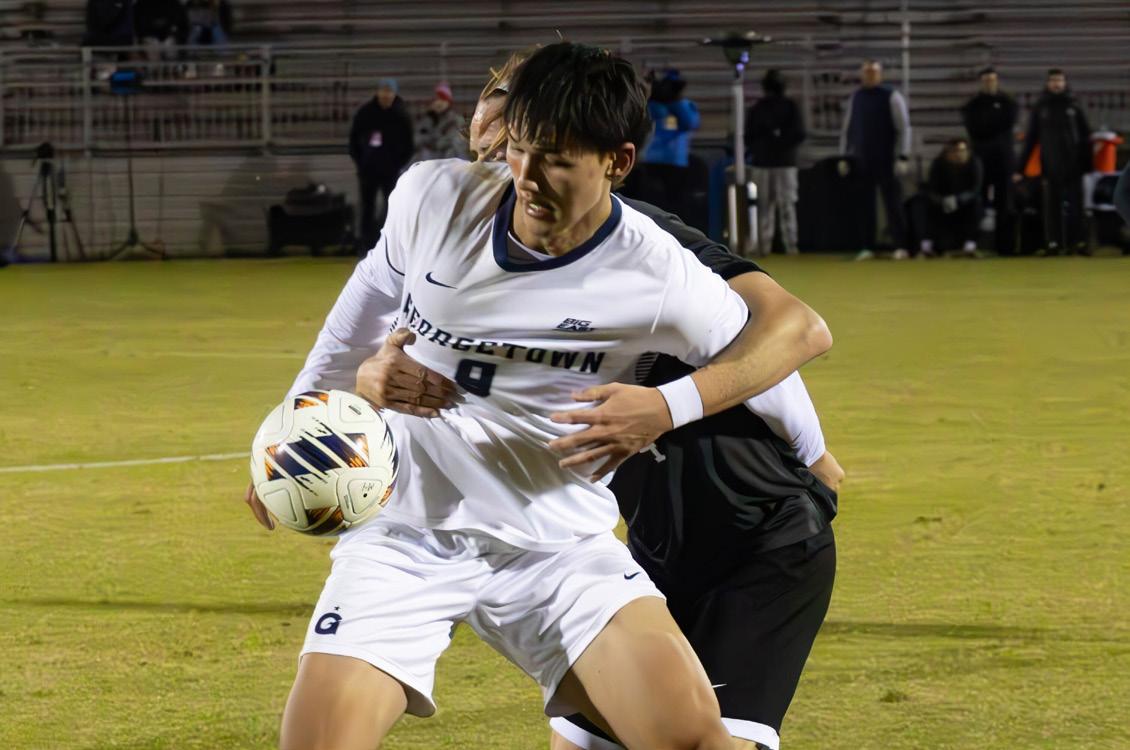
XAVIER, from A12
chance of the game in the 58th minute when Cochran played Lardner a ball behind the Xavier defense. Lardner barreled an angled shot towards the lower right corner, but Galley parried it away and difused the danger. Less than a minute later, Lardner turned at the edge of the box and curled an efort toward the top left corner, but Galley made another great save and pushed it out for a corner.
The game’s intensity only heightened as the second half progressed, with the two teams trading possession and counterattacks in a dramatic endto-end style.
In the 69th minute, the Hoyas’ senior midfelder Shay Montgomery lofted a ball into the box for an onrushing Lardner, but Galley raced of her line and closed the forward down, making an excellent save of of an attempted chip.
Despite Georgetown’s second-half possession domination, Xavier continued to push forward and found an answer against the run of play in the 79th minute. After the Hoyas failed to clear a Musketeers cross, forward Regan Dancer scored from point-blank range to double the Musketeer lead.
Georgetown continued to press forward in the fnal ten minutes, but Galley foiled every attempt to keep the score at 2-0.
After the match, Georgetown head coach Dave Nolan said he was disappointed with the result but proud of the team’s eforts.
“In the second half, I thought we came out and played real-
ly well, put them under a lot of pressure and had some really good moments,” Nolan told Georgetown Athletics.
“But the game turns on moments,” Nolan added. “They made their moments, and we didn’t make ours.”
By securing the Big East title, Xavier receives an automatic bid to the 2025 NCAA tournament, while Georgetown must contend with an unfortunate end to a historic Big East season. In spite of this disappointment, Georgetown secured a second seed in the NCAA tournament and will host Sacred Heart in the first round on Nov. 14 on Shaw Field.
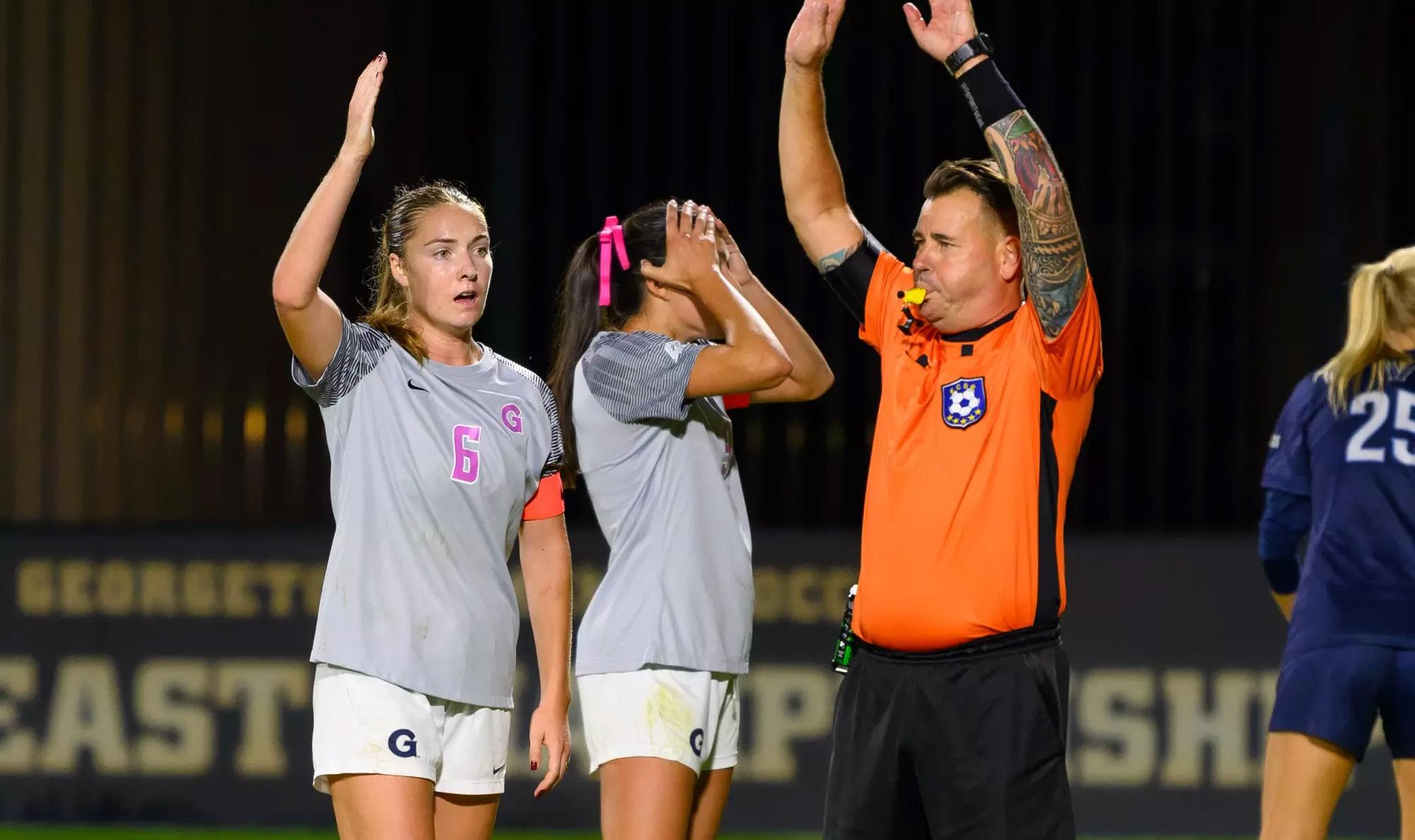
HAAN JUN (RYAN) LEE/THE HOYA
to the sold-out Maryland
“gold rush” theme.
Georgetown women’s soccer went undefeated in regular season conference play and was the sure-fire favorite to win the championship, but fell to Xaiver in the Big East finals.
MATTHEW GASSOSO/THE HOYA
Sophomore forward Mitchell Baker scored a brace to lead the Hoyas past the Friars in a Big East semifinal.

FRIDAY, NOVEMBER 14, 2025

Georgetown vs. Clemson
Nov. 15 @ 12 p.m.
Capital One Arena
WOMEN’S BASKETBALL NUMBERS GAME
The Georgetown University women’s basketball team doubled up Stonehill for a 90-45 win in their home opener.
e Next CBA Renegotiation Will Reshape Pro Baseball
This is my 28th edition of Out of Left Field. I have oficially written more columns than the New York Yankees have won World Series. If they could catch up with me in the near future, I would appreciate it. However, they might not have the opportunity anytime soon.
Major League Baseball’s collective bargaining agreement (CBA) expires Dec. 1, 2026. The CBA is an agreement between the 30 MLB teams and the Players Association (MLBPA), the union representing players, that governs major and minor league baseball contracts, team salary minimums and maximums and revenue sharing between teams. Without a CBA in efect, the league can legally enter a work stoppage: Either the players could strike or the owners could enact a lockout, halting all league operations until a new agreement is reached. The current fve-year agreement took efect on March 10, 2022, after a league-induced lockout that spanned the entire ofseason. Teams could not sign free agents or make trades for three months, and ofseason practice facilities were entirely unavailable to players.
After an agreement was reached, MLB delayed the beginning of the 2022 season from March 31 to April 7, just barely managing to keep the regulation 162-game schedule intact.
In 2027, baseball might not be so lucky.
A CBA is a delicate balance — between owners and players, small-market teams and large-market teams and major leaguers and
See HERMAN, A11
TALKING POINTS
The game turns on moments. They made their moments, and we didn’t make ours.
Women’s Soccer Head Coach Dave Nolan
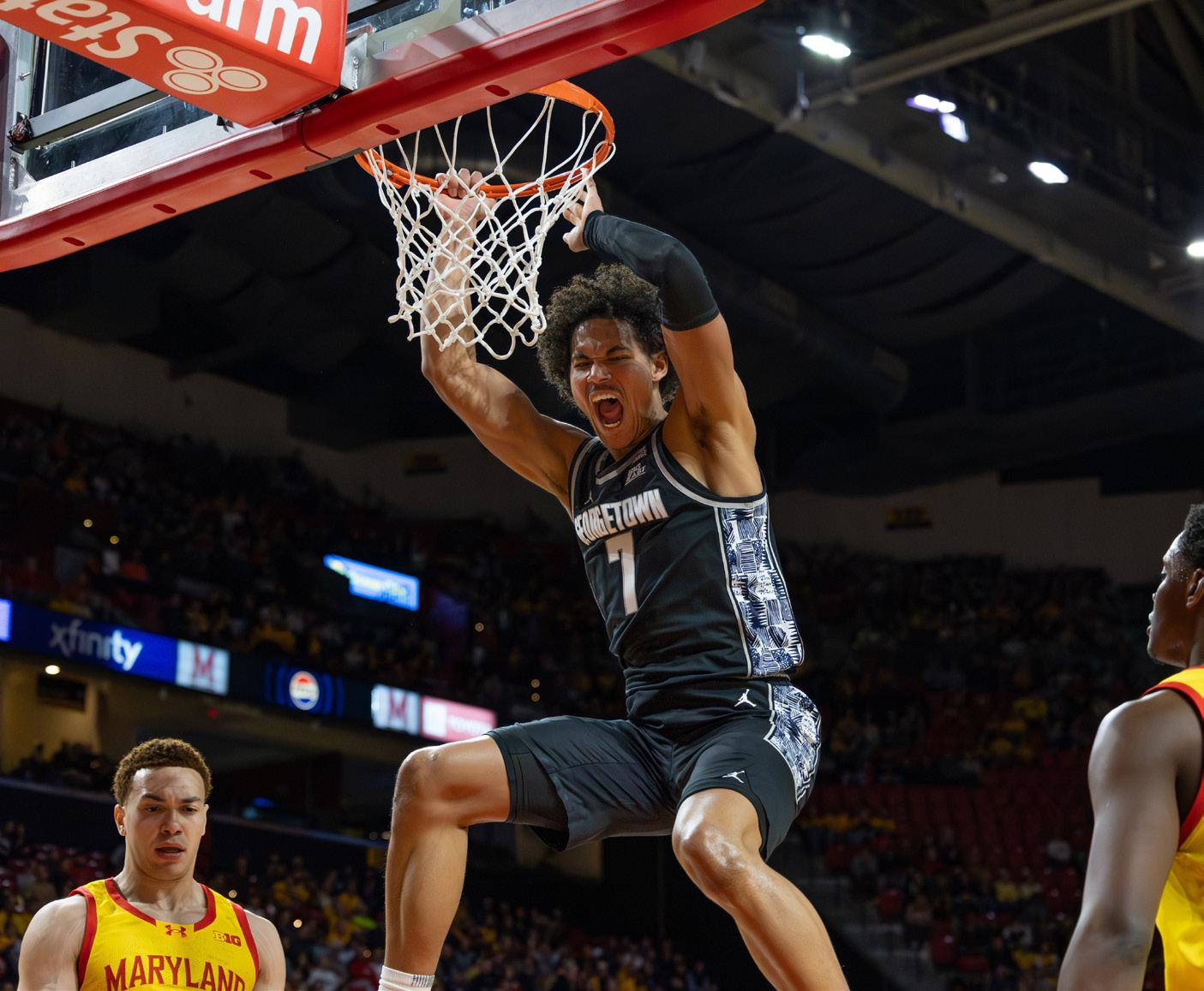
an award-winning
and withdrawing from
Nate Seidenstein Senior Sports Editor Georgetown men’s basketball Head Coach Ed Cooley wanted to make a statement, and he did. The Hoyas marked a new chapter in their rivalry with the University of Maryland Terrapins in a battle for the Washington, D.C.-MarylandVirginia area, immediately opening with an impressive win.
The Georgetown Hoyas (2-0) led the University of Maryland (1-1) every step of the way in a dominating 70-60 win Nov. 7 and frmly announced their return on a nationally broadcast stage. Both teams entered the game facing a big test. Maryland Coach Buzz Williams and his practically all new roster were playing their frst home game in front of a serious opponent. Georgetown, looking to reestablish itself within the area and on the national stage, had a
great chance to do so with a win over a Big Ten opponent.
The Hoyas came out into a hostile Xfnity Center environment, in front of a sold-out student section, and boasted a nearly fawless start. After taking the opening tip, sophomore center Julius Halaifonua drove to the rim, made his shot and drew a foul. Then, junior guard Malik Mack stole the inbound and was fouled on his shot. After making both free throws, Georgetown led by 5. In the frst two minutes, Georgetown established an 11-0 lead, forcing 2 turnovers and drawing 4 fouls. Cooley immediately pressed on the inbound and Maryland struggled to establish any rhythm ofensively.
The strong run forced Terrapins’ head coach Buzz Williams to call for Maryland’s frst timeout before three minutes had elapsed.
Cooley said that run was crucial to the win, and that getting three
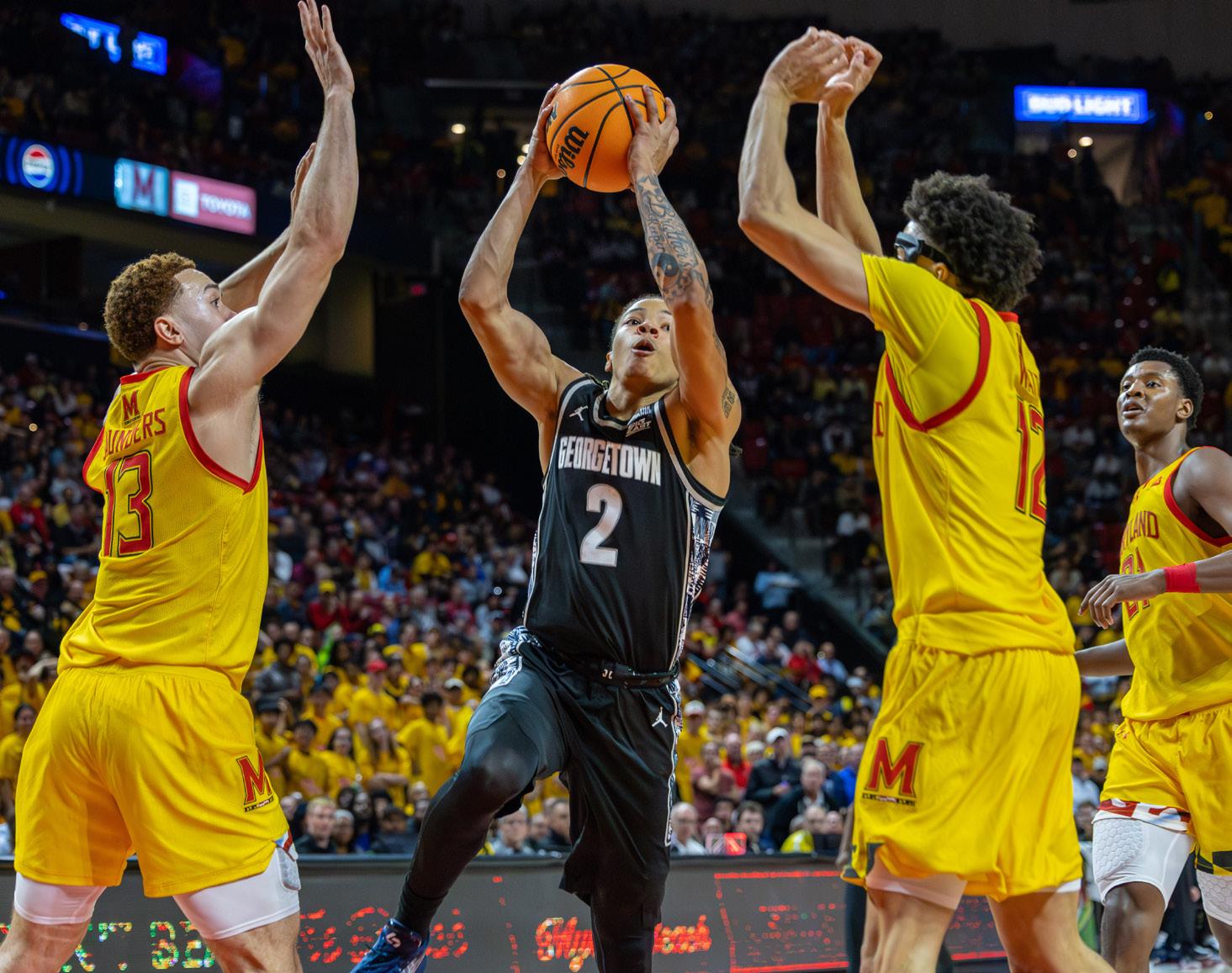
stops in a row is a key analytic he looks to for success.
“On the road, sold-out crowd, I take that all day, every day,” Cooley said after the game. “If we get three stops in a row — we call that a cherry.”
“We have 10 four-minute wars and if we can get a cherry every war, you’re going to be on the winning side,” Cooley added.
When Maryland forward Pharell Payne made two free throws for their frst points of the night, Georgetown junior guard DeShawn Harris Smith — and former Terrapin — checked in for the frst time. He received a chorus of boos and was heckled every time he touched the ball.
The Hoyas continued to pound the paint early, and terrible shooting on Maryland’s part allowed Georgetown to solidify the early lead. By the under-12 timeout, the Hoyas led 15-8. The Terrapins struggled to shoot efectively the whole night — making only 13 feld goals on 52 attempts. Maryland’s real ofensive
Hoyas Advance to Big East Championship
Madeline Wang
Senior Sports Editor
Another dominant Hoya performance, thanks to some returning players and a clutch brace from sophomore forward Mitchell Baker, allowed the No. 11 Georgetown University men’s soccer team to take down the Providence College Friars 2-0 on Nov. 13 to advance to the Big East fnal.
In the second Big East semifnal of the night — and the second matchup between Georgetown and Providence in the past week — the Hoyas (11-3-4, 6-0-2 Big East) shut out the Friars (6-7-3, 4-22 Big East), after a draw in their last game of the regular-season Nov. 7. Players on both teams who were missing from last Friday’s match returned to action, and the Friars had no home-feld advantage — both of which contributed to the Hoyas’ win. On the Friars’ end, forward Bruno Rosa, a second team all-Big East selection and the team’s second leading scorer, came back into contention after a yellow card accumulation kept him out of the last regular season match.
Junior midfelder Eric Howard returned to play for the Hoyas after he missed the last two games of the regular season due to a concussion. Junior defender Oliver Stafford also returned to play on restricted minutes after missing the last month of play with an injury.
Georgetown Head Coach Brian Wiese said both players’ returns increased his defensive line’s maturity and helped the Hoyas secure the shutout.
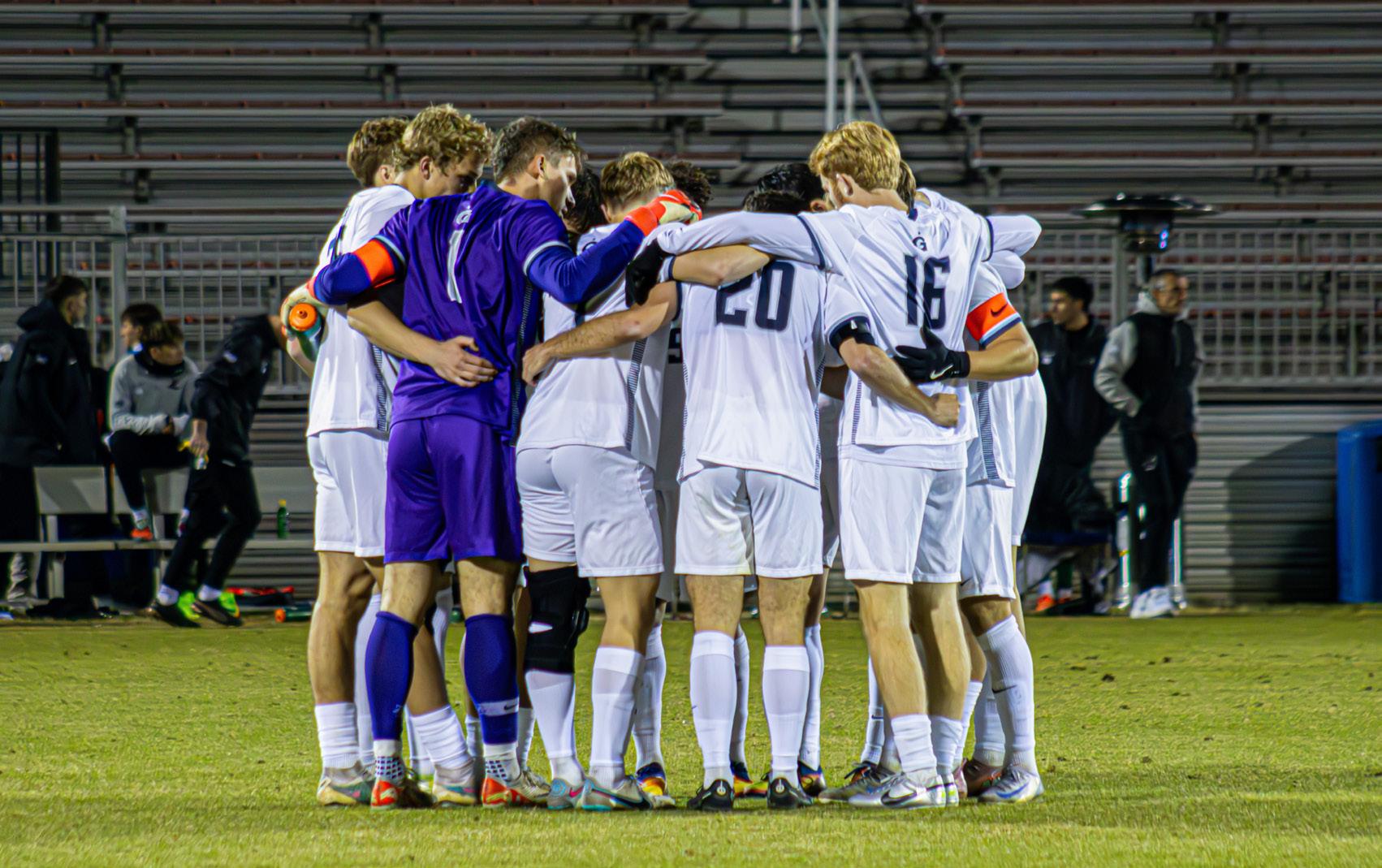
“Eric and Ollie are both juniors, and having that experience back on the feld helps see out our shutout,” Wiese told The Hoya The Hoyas were quick to assert their dominance and stormed into an early lead in the 4th minute. Senior midfelder Zach Zengue earned Georgetown a corner and sent the ball toward the near post. Sophomore forward Mitchell Baker, using his height to his advantage, jumped up and headed the ball neatly into the back of the net, putting the Hoyas up 1-0 early.
Providence quickly responded, seeking an equalizer. In the 6th minute, the Friars earned a free kick, and sent a shot toward the middle of the net where senior goalkeeper Tenzing Manske was waiting to punch the ball out. In the 13th minute, Providence found their frst, albeit very weak, shot attempt of the night. Manske was quick to make the easy catch. Georgetown soon returned to their dominant performance on ofense with a pair of close opportunities in the 16th minute. Ju-
nior midfelder Matthew Helfrich sent up a shot in the 16th minute that sailed outside of the net. The Friars momentarily gained back possession before the Hoyas went on the counterattack.
Senior midfelder Max Viera sent the ball across the box to Zengue before a Providence defender redirected it toward the net. Baker attempted the tip-in, but Providence goalkeeper Ryan Carney was quick to stop the ball.
production came at the free-throw line, and they were in the bonus for the last 10 minutes of the frst half.
For a six-minute stretch, the Hoyas did not concede a single feld goal. The Terrapins got to the line 37 times in the game, and scored 30 of their points from the charity stripe. By the under-8 timeout, Georgetown’s advantage had stabilized around three or four possessions, and at that break they led 23-14. After the timeout, the Terrapins were able to reestablish themselves defensively, and the Hoyas did not make a single feld goal for the rest of the half.
Maryland went on a quick run into the break, and Georgetown’s halftime lead was 32-27. The Hoyas started the second half much the same as the frst. Mack made the frst three of the night for Georgetown, and then another one. After the game Mack said those shots came to him.
“In the frst half, I think I shot an airball in the corner, and I wasn’t
ready to shoot the ball,” Mack said after the game. “So I came out in the second half, and I told myself, ‘I’m going to shoot the ball,’ and they gave me two good looks.” Lewis then added on a layup and the Hoyas had their full advantage back. Williams again retreated with a timeout early in the half, as Georgetown stretched the lead out to 40-20. After the brief huddle, Maryland’s ofense started to respond, cutting the defcit to 42-29. The teams continued to battle, and the Hoyas extended the lead back to 50-33 by the under-12 timeout, but weren’t yet able to fnish it. Maryland went on another run, cutting it to 8 and forcing a Georgetown timeout with 5:24 left. Immediately out of the break, Lewis responded with a drained three-pointer, and gestured at the crowd to calm
Xavier Upsets Hoyas To Win Championship
Char Mone
Special to The Hoya
The No. 10 Georgetown University women’s soccer team lost in a surprising upset to the No. 22 Xavier University Musketeers at the Big East Championship Sunday, Nov. 9. With this victory, the Musketeers (15-3-2, 8-1-1 Big East) broke their three-year losing streak at the championship, upsetting the heavily-favored Hoyas (15-32, 10-0-0 Big East) to claim their frst Big East title since 2019. Georgetown, who had won seven of the last ten Big East soccer tournaments, boasted a perfect conference record going into the fnal. Just eight days before the match, the Hoyas took down Xavier 4-0, dominating the game early on with three goals before halftime. Two of the four Georgetown goals came from corners, an area they struggled to connect with in the championship game.
Xavier dominated possession early in the championship game and drew a penalty in the 9th minute after junior defender Kaya Hanson’s handball in the box. Musketeer forward Samantha Erbach drove the spot-kick into the left corner of the net and gave Xavier an early 1-0 advantage.
Georgetown upped their intensity, searching for an equalizer by sending play through senior forward Natalie Means and
graduate forward Maja Lardner. Despite winning several corners early on, the Hoyas were unable to connect and were left frustrated by the Musketeers’ defense. By the end of the frst half, Georgetown dominated possession and relentlessly pressed forward, but their ofense did not effectively test the well-organized Xavier defense, led by goalkeeper Maria Galley and 2025 Big East defender of the year Natalie Bain. The score at halftime was still 1-0, with Erbach’s penalty the only goal. Both teams brought a higher level of intensity and physicality in the second half, with the championship on the line. In the 51st minute, Means played a dangerous cross to senior midfelder Mary Cochran from the right side. Cochran controlled the ball well, then spun to face the net but failed to get enough power on her shot to get it past Galley. The Musketeers continued to push forward, creating some key chances early on in the half. In the 54th minute, Georgetown goalkeeper Cara Martin made an outstanding save off of Erbach’s looping header, diving back into her goal to claw it off the line. Throughout the half, Martin kept the Hoyas in the game despite heavy pressure from Erbach.
Georgetown had their frst solid
HAAN JUN (RYAN) LEE/THE HOYA
Hoyas
MATTHEW GASSOSO/THE HOYA
College, Head Coach Brian Wiese said.
Eilat Herman Sports Columnist
MEN’S