
Gi Grieco
Gi Grieco
Welcome to The Harrier. This edition will be my final one as Editor, at least for now as being on the SBG committee you tend to volunteer and then, before you know it, you’re hooked! As was the case seven years ago when Eddie Bathgate was working away from home during the week so had to step down as editor. We’d had no luck finding someone to takeover initially, so I volunteered for one edition while the search continued. Well, it took thirty editions of The Harrier until we did! So thanks to John Kornjaca for taking on the role.
We have the second, and final instalment of Steve Piotrowski’s memoirs. Sadly, this was all Steve managed to have recorded – I’m sure all his family and friends will have many stories and fond memories of his other birding exploits. We have a selection of updates from the various SBG projects, each one with a dedicated group of volunteers that are making them a success.
We have a couple of requests, one for submission of photos for a new initiative, Wildlife Wise and the other to support the BTO in their latest survey, Heathland birds. Suffolk is fortunate to still have some remaining heathland habitat and with that, associated bird species. So please contact Mick Wright to volunteer for the survey. Species that are doing much better are birds of prey and David Tomlinson provides a thought on those species that were so scarce and declining previously but are now making a comeback.
We have our usual selection of trip reports – always a great day out and a nice way to meet up with birding friends from the group. The events for 2025 have all been sorted and you’ll find them in the Events Card with this addition – please come along. A big thank you must go out to the leaders on the day who volunteer their time and knowledge. We have the quarterly bird review section - a reminder that Suffolk bird news is reported daily on the SBG website, visit https://www. suffolkbirdgroup.org/latest-bird-sightings.
Finally, a huge thank you to all the contributors over these few last years, without which I wouldn’t have been able to put the magazine together. Thanks to those who have supported me with things such as proof-reading and thanks throughout that time to Lester Bennett from Keith Avis Printers who I have worked with to produce The Harrier. Wishing you all a bird-filled 2025 and look forward to meeting up again at our indoor and outdoor meetings in the new year.
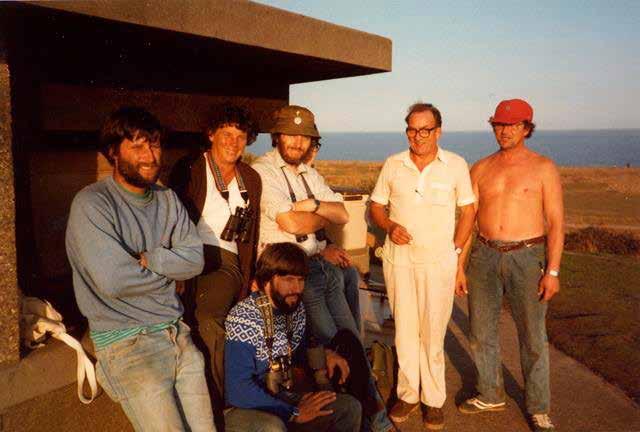
Minsmere
Welcome to Minsmere, our bird sanctuary. I can’t help reminiscing about my very first Minsmere experience. It centred on the merits of modern-day Minsmere compared with that of yesteryear and I’m afraid that I have to admit that, nowadays, I’m one of those who often drive to Minsmere, look in the shop, have a chat with the friendly reserve staff, a cup of tea and then go home without even a thought of a venture to the hides. It’s not always been that way, of course, but do I feel guilty? Most certainly not! It was back in April 1971 and I’d driven my blue Austin Mini to Minsmere, accompanied by my new girlfriend who I was very keen to impress. I intensely remember the kit that I was wearing that day: turquoise needle
cord corduroy trousers with pink inserts to create quite snazzy flares; an orange and white tie-dye tee-shirt and white and blue Adidas trainers. I had very long, shoulder length hair and a Mexican moustache which was so impressive that it made Mexican revolutionary Emiliano Zapata’s moustache look like bum fluff! My girlfriend wore similar attire – not a moustache though! Yes, we were hippies – we were groovy man! We parked in the National Trust car park on Minsmere Cliffs, walked south along the beach and across the North Wall. As we approached the huts, we were met by a formidable gentleman (I later found out that this was none other than the late Bert Axell) who asked us whether he could be of assistance. I proudly announced that we were indeed loyal RSPB members and we
would like to come onto the reserve. “Well young man,” he replied “you will need to write to The Lodge for a permit. You must apply six months in advance and if there are places then you may be lucky and be welcomed onto our fine nature reserve.”
I can’t think why, but Bert had taken an instant dislike to me and quickly sent us packing. There’s a reference in Bert’s book, Minsmere - a Portrait of Nature Reserve, detailing an encounter that he had with two “trespassers” and I have often wondered whether he was referring to us. We left with our tails between our legs and “pompous git” seemed appropriate words for Bert at the time!
However, we weren’t giving up that easy and I led my girlfriend to the track adjacent to the North Marsh. We were prevented from entering the reserve by what is now known as Docwra’s Ditch, but when we reached the woodland the ditch petered out, so we hopped over the rather flimsy fence, stumbled through some scrub and negotiated a way through a small conifer plantation. I checked all the nestboxes and was rather surprised that they nearly all hosted Coal Tits. Well, we were in a conifer wood! We crept alongside Bert’s bungalow –we didn’t know that he lived there with his wife Joan, but luckily no one spotted us. We hadn’t a clue where to go, so together we explored the reserve, taking care to check the fronts of the hides to ensure they were vacant before venturing inside. The reserve was virtually deserted. We checked the old two-tier West Hide and, when safely inside, began scouring The Scrape with my new “Prinz” binoculars, which I had purchased the previous week from Dixons in Ipswich. Just when we thought we were safe, we heard the purring engine of an approaching vehicle (a Reliant Robin!), which stopped outside the hide. The wardens used Reliant Robins to transport themselves around the reserve in those days. Our hearts sank, but
there was no escape, so we had to brazen it out! The hide door swung open and in walked a burly, curly-headed reserve warden who demanded our permits. I said rather sheepishly said that we didn’t think that permits were necessary! I later found out that the warden was the late Dick Briggs, who subsequently became a great friend who helped Suffolk Wildlife Trust to develop Carlton Marshes Nature Reserve, near Lowestoft. In later years I attended many of the annual trust Voluntary Warden’s Conferences when Spratt’s Water and Whitecast Marsh were the only location names that Dick would mention. Again, we were unceremoniously evicted from the reserve. The moral of this story is that if your face fitted such as the likes of baby-faced David Tomlinson, a growling Derek Moore or Lowestoft stalwart Brian Brown you were most welcomed on to the reserve, but if it didn’t, and mine most obviously didn’t, then you had no chance! However, I have heard very strong rumours that David himself had been escorted from the reserve when he tried to sneak in to twitch Suffolk’s first Wilson’s Phalarope in June 1971, only a few weeks after my own personal eviction. Naughty, naughty David!
My early equipment, I bought my first pair of binoculars in 1969. They were Prinz 12x40s, developed more for racecourse watching than birding. I must have been attracted to those neat blue stripes rather than any optical qualities! My first telescope, a Schmidt and Bender didn’t follow until the 1980s. It was a draw-tube ‘scope similar to those used by Nelson at the Battle of Trafalgar! We used to joke about Charles Atlas, a strongman who was hired to advertise chest expanders in Parade Magazine - a titillating publication, very tame by modern-day standards, but undoubtedly the most popular rag to read
in the mess room. I also purchased a Zenith SLR camera. Now, that camera got me into all sorts of trouble. My photography skills were perfected by practicing photographing common birds and clouds of feral hand-fed ducks on the Wilderness Pond in Christchurch Park, Ipswich. To give my wife a break (that was my excuse anyway) I took my toddler son Mark to feed the ducks on the park. He was dressed in his brand new bright red jumpsuit with matching wellies. He carried a massive bag of bread and was busy feeding the ducks on the small pond where several hundreds of the Mallard-type “Daffies” accumulated. I remember having trouble changing my film.
I was concentrating on the camera when, all of a sudden, there was noisy whoosh of wings as an explosion of ducks erupted skywards, blacking out all traces of sunlight as they circled overhead. I paid little attention as I was preoccupied with getting my film into my new camera. I then thought, “Where is Mark?” and, in a moment of sheer panic, noticed his head bobbing in the water! He was fully submerged in the pond. I had to wade in to get him out. Thankfully he was unharmed. Mark seemed quite unperturbed by his experience, being more concerned with his squelchy wellies and two sticks that he had found to play with. I found the park keeper as there was a dangerous hole in the fence. He shrugged his shoulders and simply said “Kids of today!” I hastily marched Mark back home to our apartment in Greyfriars to meet the wrath of my wife and mother-in-law. Needless to say, I was banned from ever taking Mark out alone again. I’m afraid the trust had gone! That camera got me into lots more trouble.
I had often admired the list of heronries that Major Bill Payne listed in this first edition of The Birds of Suffolk, so one early spring day I decided to do my own census
of the heronries in and around Lothingland. I can remember counting heronries at the Wilderness, Herringfleet (a new one) and at Fritton Decoy. The latter was one of the largest and formerly occupied by Cormorants, so I was hopeful. I decided to check out the lakes at Flixton and the one in front of Blundeston Prison and to my surprise found a Sand Martin hawking insects. It was March 16, an incredibly early date. It was my earliest for many years to come. I also noticed a pair of Great Crested Grebes building their nest in the corner of the lake right in front of the prison perimeter fence.
On returning home, I told my friends of my find and said that if we returned to Blundeston that weekend we could get some cracking photographs. They had also bought SLR cameras. So we returned, and walked around the lake to the nest site. Surely, the birds were incubating. You could walk along the bank, but access was blocked by a 12-foot brick wall. We noticed a tree growing up against the wall, so quickly shinned the tree and dropped into the prison grounds. There was a double chain-link fence between the grounds and the lake and the guards didn’t seem perturbed by our presence. Obviously, they thought it was official business. It was more difficult getting out at the end of the wall than in, but we managed it. The problem was that some nosy-parker resident had spotted our lunges over the wall, so reported a prisoner escaping! We stayed in the woods for some time, busily photographing songbird nests. I got some lovely shots.
On reaching the road, we noticed a line of around 60 police officers, guards carrying long sticks, Alsatians, Land Rovers and other police vehicles. We approached the line and asked what was going on. One of the officers said “It’s you ye ol’ bugger – they’re after you!” A sergeant quickly came over and escorted us to an awaiting police car
and carted all three of us off to Lowestoft Police Station where we were arrested and intensely interrogated. The problem to us was that a noble MP (aka as our Postmaster General) was incarcerated in there and the police were convinced that we were part of a master plan to break him out. The long arm of the law was really stretching out now and a cat and mouse game ensued from 5pm until 9.30pm. The Chief Superintendent got involved. He would disappear for a bit and then come back with more carefully constructed questions. “Is a Great Crested Grebe a Schedule 1 Bird” “No,” I would say. “Are there Marsh Harriers nesting at this site “Not that I know of,” I would say –knowingly. And then the breakthrough – well perhaps. The police wanted to confiscate my film as apparently it is an offence to take photographs of prison property. My film contained no property shots, just birds’ nests and, even then, their location had to be proved. Also, I had paid for my Kodak transparency film to be developed in advance, which in those days was quite expensive. I had only taken nine shots, so said that they could buy my film from me, but they couldn’t just take it. I thought I was on sticky ground with this one and that the police could have just taken it as evidence, but my ploy seemed to be working. Maybe, Lowestoft Police were being particularly amenable on that night? Anyway, the argument ensued and to complicate things even further, one of my friends had to collect his wife from Ipswich as they had planned to attend a friend’s wedding reception that evening. I’m a stubborn ol’ sod, so no way was I going to give up my film that easily. So as a compromise, the police agreed to call in a photographer, who took my camera into a darkroom and developed the film. No property shots, so we were free to leave.
Family Holidays and The Isles of Scilly…. (Sadly, this was as far as Steve got with his memoirs. He passed away before he could recount any more of his wonderfully colourful life.)
Sally Nelson
Barn Owl Support Suffolk (BOSS) is an initiative of the Suffolk Bird Group (SBG) and is designed to assist the breeding efforts and population size of one of our most recognizable birds.
Having assembled a small group of committed volunteers, we aim to build nest boxes, install them in suitable nest sites and monitor their usage through the year – thus helping this iconic but threatened species. You can help by sponsoring one of our Barn Owl nest boxes for a year for a minimum donation of only £25.00.
In return, as well as having the satisfaction of knowing that you are helping our Barn Owls to thrive in Suffolk, we shall provide you with:
- A welcome letter highlighting our appreciation
- A digital certificate that may be printed off and displayed
- A Barn Owl fact sheet

- Two news updates on the BOSS project, for each year of your sponsorship
Stuck for an idea for a birthday gift or Christmas present? Why not buy your loved one a Barn Owl nest box sponsorship – an excellent low-cost gift for any nature lover?
All funds that are raised shall go directly to making, repairing and installing nest boxes and the monitoring of our breeding Barn Owl population. Our communications shall be digital and are designed to minimize our use of paper and our costs while maximizing the value of your sponsorship.
Should you wish to sponsor a Barn Owl nest box, or wish for further detail please contact BOSS as follows:
E: barnowls@suffolkbirdgroup.org
T: 07708 141 276
W: www.suffolkbirdgroup.org
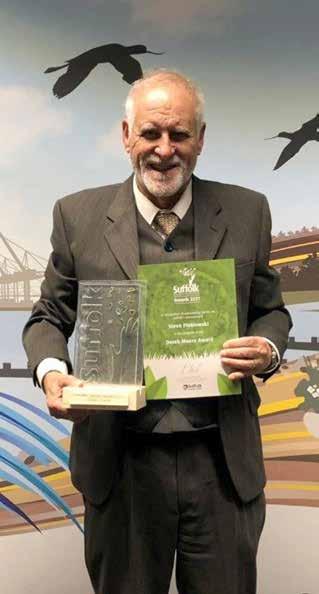
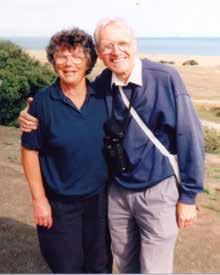
This award was created to celebrate the warm welcome Ken and Jean gave to all – but especially younger – newcomers to SBG. In recognition of this support for younger people, the award is made annually to a young Suffolk-based bird or wildlife enthusiast for their involvement or contribution to birding, conservation or the environment. A nomination form can be entered online on the SBG website - www.suffolkbirdgroup.org/thegarrod-award. The winner will receive a certificate, a SBG T-shirt and a year’s membership of SBG. They’ll also have the opportunity to have an article published in The Harrier about their wildlife experiences. The closing date for nominations is January 19th 2025 and the award will be presented at the SBG AGM.
Eddie Bathgate
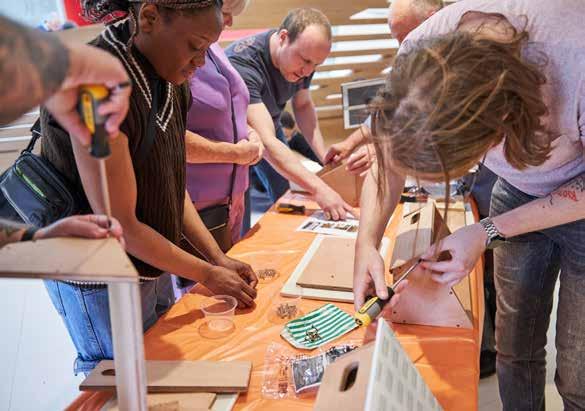
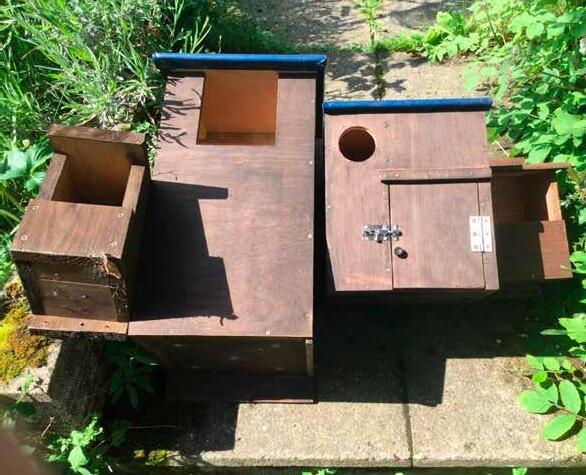
SOSSwifts has received a very generous donation of nest boxes from BUNZL Cleaning and Hygiene Supplies. The company hosted a nest box fabrication team building event for their delegates at their annual conference. 150 Swift boxes plus other bird and bat boxes were made by Simon Evans then disassembled and shrink-wrapped for ease of build. BUNZL have kindly donated 130 of these Swift nest boxes to our project with the remainder having gone to their employees and the venue. Our aim is for these nest boxes to be either donated to locations with existing colonies to help boost the local Swift populations, or added to a 240V call system and distributed as Community Sets to help create new colonies.
Your help
We need your help to achieve this. Do you know of a location close to where Swifts breed that would like a donation of nest boxes to add to the colony, or do you have a contact at a school, shop, pub, etc with a prominent elevation that would like a Swift Community Set; multiple nest boxes and a call system.
Please do get in contactSwifts@SuffolkBirdGroup.org.

Eddie Bathgate
Earlier in the year we granted John Turner with a bursary, as he is kindly donating his time, in order to purchase materials to make specialist nest boxes.
All we wish is that we can recover the cost of the materials when handing the nest boxes out so that we can continually create more valuable nesting space around Suffolk.
Following the Group attending the Woodbridge Harvest Fair, the management company of a Melton estate contacted us and have now ordered a selection of nest boxes including Tawny and Little Owl, Spotted Flycatcher and Nuthatch, all of which have nested there previously.
If you have an idea for a project, or know of a location that would like nest boxes please do get in contact Info@SuffolkBirdGroup.org
Jenny Rawson
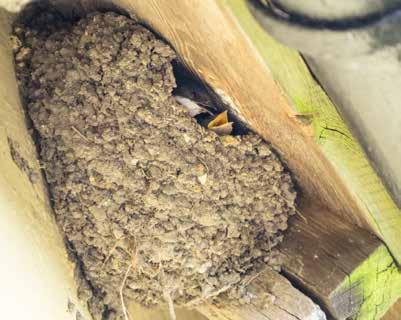
We are very happy to report that our House Martin Support Suffolk (HMSS) project has received generous funding from both of Suffolk’s National Landscapes; Coast and Heaths and Dedham Vale via their Sustainable Development Fund. Part of the funding will be used to obtain a HMSS banner and literature to help with our House Martin talks but the bulk will enable the project to offer free artificial nest cups (ANCs) to locations within or adjacent to existing colonies where house owners are willing to install cups.
We know that local House Martin populations can be boosted by the fitting of ANCs adjacent or close by to an existing colony. Our aim is to get as many of these National Landscapes’ funded cups up prior to the birds’ return next spring and we need your help to do this. Please advise us of House Martin colony locations and contacts of anyone close by who would like nest cups – HouseMartins@ SuffolkBirdGroup.org.
We will happily follow up any lead provided.
The Coast and Heaths National Landscape extends east of the A12 from Kessingland down to Felixstowe including Southwold, Leiston, Aldeburgh, Orford and Woodbridge.
Dedham Vale National Landscape extends

west from Shotley along the Suffolk/Essex border, through Cattawade, Dedham, Stratford St. Mary and west past Stoke-by-Nayland, Polstead and Wissington towards Bures and Boxford. 2025
HMSS will be offering free surveys and advice for locations wanting to help House Martins. There will be more entertaining talks provided by Martin Tickler and we will be building on the 2024 nesting census to generate a baseline for Suffolk’s House Martin population. HMSS will continue the trial of 3D printed nest cups too – we aim to report on this next year at the end of our two-year trial.

For anyone on Bluesky, we have a new account@sbghousemartins.bsky.social
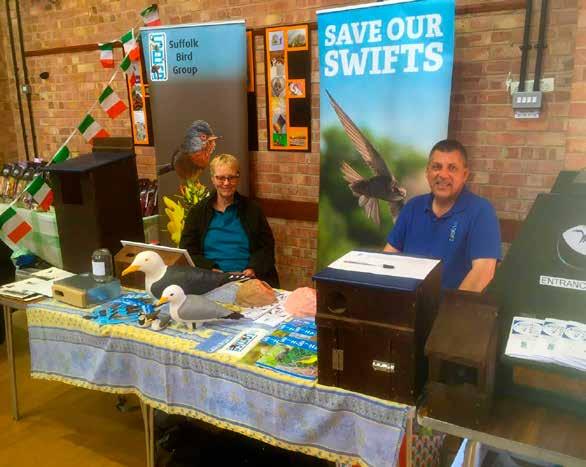
Back in September the group was invited to have a stall at the Woodbridge Harvest Fair, situated in the large Community Hall. The annual Fair was set up by Transition Woodbridge – a community-led group. There were a number of local fruit and veg stalls, honey products, soaps and other craft stalls. SBG displayed nest boxes from our various projects including the new, collapsible display Barn Owl box along with the 3D printed House Martins cups. We also had some of the 3D printed birds used by projects to encourage nesting of some of our threatened gull, tern and wader species. We spoke to members of the public and took people on a guided walk down to the River Deben to view some of the birds to be found there –Avocet, Black-tailed Godwit, Curlew and a fly by Kingfisher among others. It was good to engage with people to explain what the group does and how we help the birds in the county and cooperate with like-minded organisations.
David Tomlinson
It’s all too easy to lament the loss of such birds as Turtle Doves, Lesser Spotted Woodpeckers and Willow Tits, but to forget that although our county has suffered losses in its birdlife, it has also enjoyed some spectacular gains. Take the Marsh Harrier, for example. It’s a standing joke among my birding pals that these harriers are commoner than Bullfinches (BirdTrack reveals that in the first 10 months of 2024 I recorded Marsh Harrier 77 times, but only managed a mere eight sightings of Bullfinches).
When I first visited Suffolk over half a century ago I volunteered at Minsmere, which at the time had the only breeding Marsh Harriers in Britain. We and my fellow vols (as we were called) spent a great deal time watching the harriers, mustered by a lovely old boy called John Denny who supervised harrier watching. Every flight, every food pass, was carefully noted, while John would remind us that Marsh Harriers were much rarer than Golden Eagles (though not, of course, in Suffolk).
These harriers had long been rare birds in Suffolk. Claud Ticehurst, writing in his History of the Birds of Suffolk (1932), notes that “I cannot find any reference which would suggest that it has bred in Suffolk during
the last hundred years, though it certainly must have done so in the dim past when Suffolk marshes were wetter and rougher”. Ticehurst went on to say that “There are few places in Suffolk left where this bird could find sanctuary for nesting; it needs fairly extensive marshlands for hunting over and reed-beds or very tussocky marsh for nesting in; I know of only two or three suitable spots.”
We now know that as long as they’re not persecuted, Marsh Harriers can be remarkably adaptable, and don’t necessarily need large reed beds to breed successfully. The Suffolk Bird Report 2022 reports no fewer than 64 pairs nesting in the county at 20 sites, producing a minimum of 93 chicks. I note the word “pairs” with interest, as this is a bird that is notoriously polygamous, and it’s common for a male to have more than one mate.
Of course, it’s not just the Marsh Harrier that has become a familiar sight: so too has the Buzzard. When Steve Piotrowski wrote his Birds of Suffolk (2003), he described the Buzzard as an “uncommon winter visitor and passage migrant - breeds infrequently”. Now, just a couple of decades later, the Suffolk Bird Report describes it as a “common resident, winter visitor
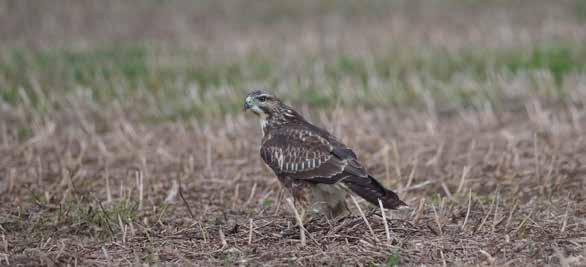
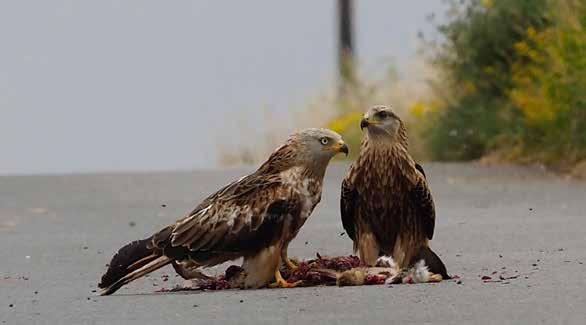
and passage migrant; increasing breeding population”. For most of us it’s now a bird we see at least weekly, if not daily. The same is true of the Red Kite. Ticehurst lamented the loss of the Kite from Suffolk:
“And so this fine bird, lost from Suffolk for ever, is in the whole of Great Britain reduced to a few pairs only, jealously protected when too late”. At its current rate of increase, it might well become our most common bird of prey before too long. I wonder what Ticehurst would make of it.
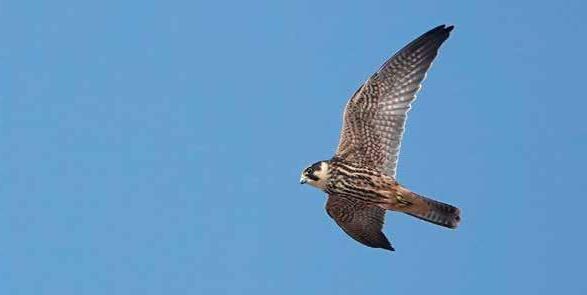
I’m sure that he would be impressed with the number of Hobbies we now see in Suffolk. He wrote that “this little falcon has apparently never been common in Suffolk”: it may not be common now, but it’s a widespread breeding bird, while the spring congregations of dozens of birds at Lakenheath would, I’m sure, amaze him.
Ticehurst could find “no record of the Goshawk’s occurrence during the present century”, but now in the 21st century it’s an uncommon resident, with (in 2022) no fewer than 12 pairs nesting in the Suffolk Brecks. It’s not a bird that’s easy to see, but you can certainly find it if you try hard enough. The chances are good, too, of
seeing an Osprey on passage on the Suffolk coast: in 2022 there were 86 reports from 23 sites, plus three inland. Ticehurst gloomily noted that “decades now pass with only two or three or sometimes fewer records”. How long before we get our first nesting pair?
Peregrines were another lost breeding bird in Suffolk, with no nests recorded, as far as I’m aware, throughout the 20th century. They started breeding again in 2008, and now the number of breeding pairs has probably reached double figures. It’s another fine addition to the list of Suffolk’s breeding birds.
Of course not everything is rosy: Hen Harriers are rarer than they used to be, Merlins remain scarce, while we have almost lost the Montagu’s Harrier. However, thanks to the ambitious Isle of Wight reintroduction programme, White-tailed Eagles are becoming regular visitors to the county, while Pallid Harriers are now birds to look out for. At the turn of the century you thought yourself lucky if you saw any other raptor than a Kestrel during a day’s birding in the county: today four or five species are quite usual. For raptor enthusiasts, Suffolk is now a fine county.
Chris Keeling, SBG Project Officer
The wide sweeping vistas of the Suffolk coast and heaths have always attracted visitors but with the promotion of domestic tourism Suffolk has become an increasingly popular and accessible holiday destination. Access to nature is acknowledged by the medical profession as being essential to our mental health and the physical and emotional development of children. But promoting access to the countryside comes at a cost with recreational disturbance putting increasing pressure on our wildlife with trampling and uncontrolled dogs disturbing ground-nesting birds on our heathlands and beaches, and recreational water craft of every type disturbing birds and seals in our estuaries.
RAMS stands for Recreational Disturbance Avoidance and Mitigation Strategy and as part of their commitment to RAMS East Suffolk Council are launching their new Wildlife Wise website. Wildlife Wise will help East Suffolk Council to reach out to visitors and residents, raising awareness of the wildlife to be found in our county, and the impacts of careless disturbance whether this is high tide roosts in a kayak or letting a dog run loose and out of control on heathlands or on the beach. Sam Kench, the East Suffolk Council’s delivery manager for RAMS, has put out a request for photos of birds and habitats that can be included on the new website helping to reach residents and visitors to reduce recreational disturbance.
Sam is asking for photos of Suffolk wildlife habitats, heathland, beaches with vegetated, and unvegetated shingle, estuaries with sea grass, saltmarsh, mudflats, freshwater wetlands, reedbeds
and saline lagoons and of course the birds and the other animals that these habitats support. Pictures of dogs behaving badly, or any activity disturbing birds and other wildlife will reinforce the message, but please take care to be discrete and avoid any confrontation. Of course, good examples of responsible owners with dogs on a lead are also welcome. If you can annotate your photos with supporting information about plumage, behaviour, and location this will help with filing.
If you take photographs yourself, or you know a friend, colleague, or volunteer who might be willing to share photos of birds and their habitats to be posted on the Wildlife Wise website, and possibly wider (this can be agreed), then please get in touch with Sam who can provide more information at East Suffolk Council. The Wildlife Wise website will soon be going live, you can find out more by e-mailing Sam Kench at Sam. Kench@eastsuffolk.gov.uk
Suffolk
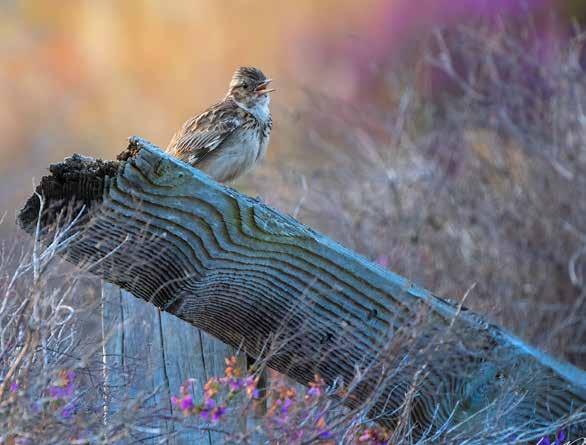
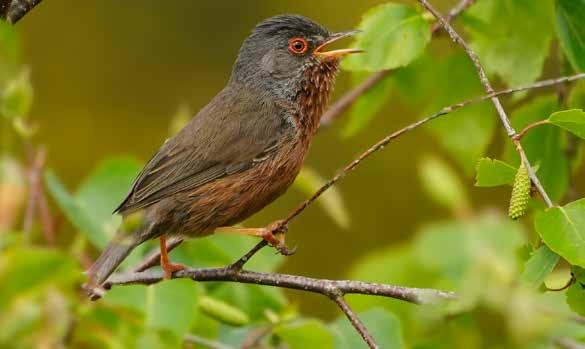
This will be an exciting survey to participate in, distinctive birds in special, wonderful habitat. The BTO needs your help to survey Nightjars, Woodlarks, Dartford Warblers and other important heathland bird species. The survey aims to cover all the main occupied sites as well as surrounding suitable habitats where these species may have expanded more recently.
In the UK, the previous population estimates made for Woodlark, Nightjar and Dartford Warbler are now almost 20 years old, based on data from surveys undertaken at a time when all three species had undergone a substantial increase in both population size and range. Both Woodlark and Dartford Warbler were at their most northerly recorded UK breeding range extents, while Nightjar was regaining ground in northern England and even into Scotland.
• In 2004, the Nightjar population was 4,600 territories (churring males).
• In 2006, Dartford Warblers numbered 3,214 territories and the Woodlark population was 3,064 territories.
The BTO urgently need updated population estimates to assess how breeding numbers and range for each of these species have changed throughout the UK and Channel Islands. We also need to know how birds are faring on the network of protected heathland sites that support most of the populations of these specialist species. The Heathland Birds Survey has been designed to cover the current known distribution of Woodlark, Nightjars and Dartford Warblers, but also to pick up recent range expansion or contraction. The data
collected will be used to calculate up-todate population figures for key protected sites, as well as wider national and regional population estimates. The data may also help with future designations of other important sites for heathland birds. These heathland species are important features of protected sites, including Sites of Special Scientific Interest (SSSIs) and Special Protection Areas (SPAs), which are vulnerable to habitat change and damage such as that caused by fires and extreme weather events. Given the large proportion of Nightjar, Dartford Warbler and Woodlark populations that depend upon these habitats, it is vital that we have updated population estimates to ensure that sites are maintained appropriately and continue to support these rare species. Please take part
The Heathland Birds Survey will open for registration in December, when volunteers will be able to sign up for the survey, request survey sites for each species and access the online data entry system through the online project portal.
• All volunteers must follow BTO’s Guidance for volunteer fieldworkers and the organisation’s Code of Conduct.
To volunteer for the Heathland Birds Survey, you need to be able to identify Nightjar, Woodlark and Dartford Warbler by calls, song and sight. You will be surveying up to three species, using similar survey methods for each of the species. You will also need to record observations of 12 other heathland assemblage bird species:
• Hobby, Long-eared Owl, Cuckoo, Wheatear, Grasshopper Warbler, Stonechat, Tree Pipit, Linnet, Stone-curlew, Snipe, Curlew, Redshank
Volunteers will make between two and four visits for each of the species during the species’ survey periods:
• Woodlark (15 February – 31 May) * – two early morning visits between sunrise and 11 a.m.
• Dartford Warbler (1 April – 30 June) * –two early morning visits between sunrise and 11 a.m.
• Nightjar (25 May – 15 July) – two evening visits covering the two-hour period after sunset, or the two hours prior to sunrise. We recommend a daytime recce visit before the survey is undertaken.
*On sites where both Woodlark and Dartford Warbler occur, volunteers will need to make three visits to cover the survey periods, recording both species on each visit. Volunteers will usually need to spend up to two hours per visit, to survey all the suitable habitat in a single 1-km survey square. However, where small amounts of habitat are present at least two squares could be covered per morning.
Survey sites (1-km squares) for each species include known or recently occupied locations, including some of the larger protected sites (SSSIs and SPAs), as well as a random sample of squares containing potentially suitable habitat nearby. This combination of survey squares allows us to get good coverage of the current known distribution but also pick up recent range expansion and contraction. Volunteers will be able to request a survey site for each species through the Heathland Bird Survey online portal when the survey opens for registration in December.
All observers are reminded of the need to obtain permission to cross any private land in England.
During the survey period, volunteers will need to:
• Record all observations of the three target species including sex, activity and relationships between individuals
• Record basic habitat-use information for each territorial bird observed
• Plot all observations of the three target species on the survey map provided
• Record all observations of an additional 12 ‘heathland assemblage’ species, with a count of the number of pairs/territories found in the survey square
• The known likely suitable habitat will be indicated on the survey map, but volunteers should check the whole square in case of other suitable areas which need to be included.
The Heathland Birds Survey will open for registration in December, when volunteers will be able to sign up for the survey, request survey sites for each species and access the online data entry system through the online project portal.
• Please visit this page in December to sign up.
If you have any questions/problems, please do not hesitate to make contact with me.
Email: Kupe1515@sky.com

Leader: Gi Grieco
Seawatching in Suffolk can be a fickle past time. The county has quite a stretch of coastline, but as it runs in a mostly north south direction, and being on the east coast, it isn’t the best to place for seawatching opportunities. Nevertheless, some of us are always drawn to the distant horizon, hoping to catch some movement offshore, at least close enough in to identify rather than a speck in the distance! Once in a blue moon the winds and prevailing weather patterns mean you can catch the right conditions and encounter a number of species offshore - you have to have lots of patience to seawatch in Suffolk!
It had been a number of years since Ashley had led a similar trip at Southwold, so the keen early birds had the option for a seawatch from 7am and for those who like a lie in, a more leisurely start at 9am congregating at Southwold Pier for a migration walk! With the trip planned months in advance, trying to coincide with a good seawatch day would be like winning the lottery, and some hope was raised as in the preceding days the winds had been optimum and there had been a nice selection – lots of Manx Shearwaters, Cory’s and Balearic Shearwaters, Sabine’s Gull and Skua species had all been recorded. Alas,
by the Sunday, the winds moved round and it was a much quieter affair. Still, for those who hadn’t really done any seawatching previously it gave an idea of a typical such day on the Suffolk coast and for those old timers, a what could have been if only we’d been there two or three days previously!
With the early start, it was pleasing to see a few keen people, but the only real highlight of the morning was a very distant Sooty Shearwater, that unfortunately not everyone saw. Even more unfortunate was a distant shearwater, picked up by local Southwold birder, Brian Small. It was called a probable Cory’s Shearwater based on flight pattern, but with it being so far out and the lack of better detail it had to go down as a maybe. It’s a county rarity so a good description is required to get it accepted by SORC (Suffolk Ornithological Records Committee). By 9am we’d seen some Gannets and some wildfowl and so walked to the pier to meet the rest of the group. We headed up the Easton Bavents paddocks, via the promenade just north of the pier and had some very close Turnstones. The other side of the car park we counted four Stonechats and a single Wheatear. After which, with it being quite a strong westerly wind and further small birds were difficult to find, just a single Chiffchaff was found in the hedge along the track that heads inland. We did bump into Dave Borderick, a regular contributor to the Harrier with his photos, who pointed out a Great Green Bushcricket on a post. It was a fine beast and nearby a Common Lizard was motionless on a block. We retraced our steps, again along the promenade and were pleased to find a species we were hoping to encounter –Purple Sandpiper. It showed nicely, before it and the Turnstones flew up onto the roof of the pier as the tide was coming in. It seemed to drop down the other side but once we got there we could not relocate it.
We decided to move inland a bit, near to the sewage works as a number of passage migrants had been seen and reported there. At least with some shelter we hoped we may encounter some passerines. Around the parking area a Chiffchaff then as we headed down the footpath, first some tit species and Goldfinches, then sharp eyes picked out a Spotted Flycatcher flitting out to catch some insects before moving out of sight. We quietly crept forward so all the group could get a view and with patience found two birds. Other birds in the trees included Chaffinch and Greenfinch. We carried on, then cut in so we were in a bit of a sheltered hollow and could easily scan the rows of bushes and trees. Here we had better views of the Spotted Flycatchers along with a Pied Flycatcher and a brief Willow Warbler. We went further out, this time to scan the grazing marshes but it was very dry so no sign of any waders.
We decided to end the day at Hen Reedbeds. An Osprey had been seen there for a few days, so we crossed over the road from the car park and walked up onto the sea wall. The wind had been strengthening and we found it hard work walking out by the exposed estuary. We passed the hide in order to view up and down river and eventually the Osprey was found, perched on a low post. A number of waders, such as Lapwings and Black-tailed Godwits were along the shore line. Across from us a number of white birds were seen in the saltmarsh and with scopes we counted 13 Spoonbills and some Little Egrets. All the time, we had to make sure to keep hold of the scopes from blowing over in the wind so with that nice finish we decided to call it a day.
Maybe, just maybe, one day the trip and the winds and the seabirds will coincide!
Saturday, September 21st
Leader: Steve Fryett
Birdwatchers always look out for those autumnal “easterlies” coming directly from northern Europe and they were prevalent several days prior to this meeting, however clear nights and no rain reduced the possibility of any significant fall of birds. The sun was shining as the 18 members assembled at the Coastguard Cottages and headed south. Two female Reed Buntings were perched on the fencing of the tennis courts with a number of Goldfinches and Linnets flitting around with two Stonechats also present. Over Oxley Marsh a female Sparrowhawk provided goods views with 37 Curlews also noted. A few Meadow Pipits were recorded but it was the three mobile Whinchats on the marsh that held the most interest. A few Swallows passed overhead heading south, before we arrived in the allotments where a small flock of Long-tailed Tits moved through but it was very quiet here. The bushes along the footpath south held the only warblers noted here today, two Reed Warblers. Stock Doves are often overlooked but we had noted seven so far. The telegraph wires behind the Martello provided a perch for three more Stonechats including a juvenile with a number of Swallows and three Sand Martins. Two Great Spotted
Woodpeckers passed over heading inland with three distant Common Buzzards and three Kestrels circling high above. A Hobby appeared, giving excellent views as it headed north over the houses looking for some unsuspecting hirundines that were now passing through in better numbers. The Hobby appeared again and was noted heading out to sea but was shortly seen over land again, all these sightings probably relate to the same individual. There was a low butterfly count with just Red Admiral and Comma noted.
The second part of the meeting was to have been at Hollesley Marsh but as it was “as dry as a bone” we decided to go to Boyton Marsh, which did have some water. The lefthand scrape held a selection of waders with one Snipe, six Ruff, three Black-tailed Godwits, one Lapwing and an Avocet. Heading west along the river a Water Rail called from the dyke with Bearded Reedling also heard as we looked in vain for the Osprey that had been seen recently. A lone Bar-tailed Godwit was well picked out by one member and two flocks of 75 Avocets flew downstream. A Common Sandpiper was heard calling with a Whimbrel the final species noted for the day.
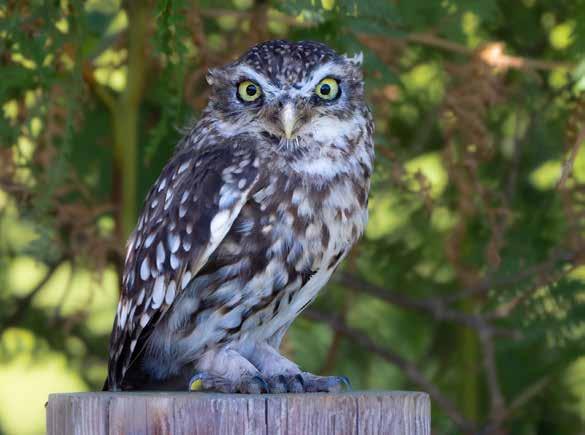
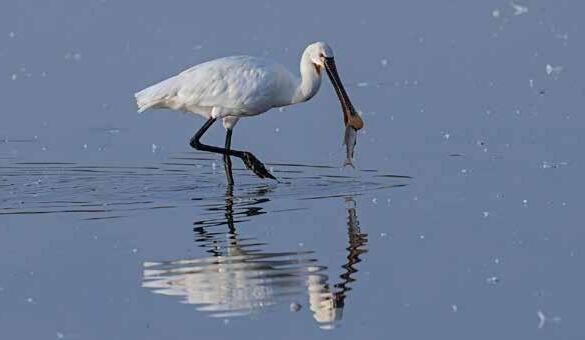
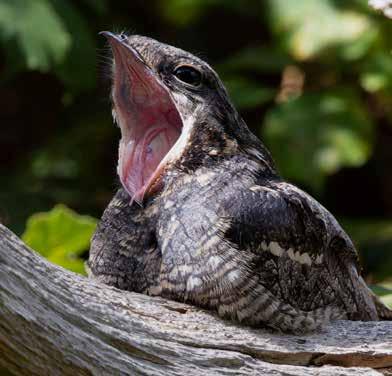
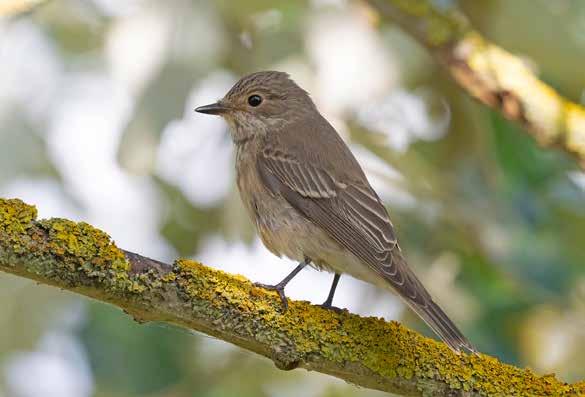
Clockwise...
Top left: Little Owl at Boyton RSPB by John Richardson.
Top right: Nightjar at Minsmere by Chris Darby.
Bottom right: Spotted Flycatcher at Southwold by Andrew Moon.
Bottom left: Spoonbill at Minsmere by Rab King.
Dave Pearsons
October 12th
Leader: Dave Pearsons
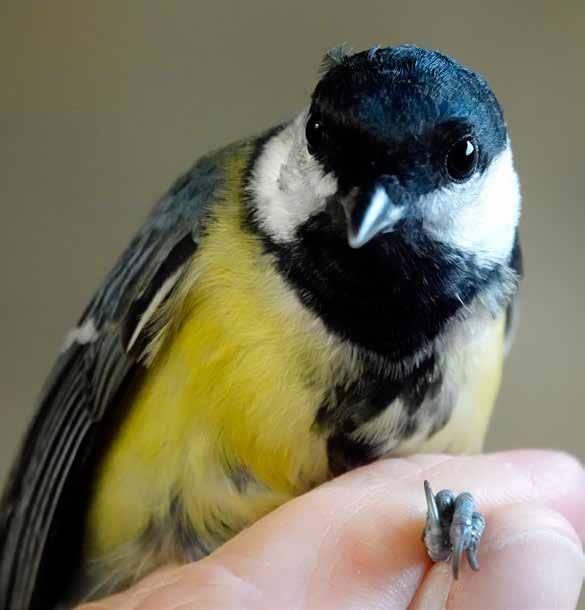
The annual SBG visit to Landguard Bird Observatory (LBO) was a cold one. However, 17 members were present and for many it was their first visit to LBO. Migration started early with seven Redwings and 10 Song Thrushes coming in/off the sea prior to the start of the meeting. A single Common Snipe, three Sanderlings, two Purple Sandpipers and two Ringed Plovers were around the reserve but soon disappeared when the dog walkers arrived. Some of our common birds are taken for granted, so it was nice to see the subtle feathering of both Great Tit and Blackbird during an excellent ringing demonstration by Peter, the observatory’s warden. This was an enjoyable first experience for many present. It is not always easy to get everyone on birds during migration but birds seen during the visit included 19 Swallows, 33 Goldfinches, 10 Meadow Pipits and a Grey Wagtail all going south, the latter briefly landed on one of the Obs buildings before continuing on. Several Cetti’s Warblers have been heard on the reserve this year leading to our first breeding success in the recording area. At least one was heard during the SBG visit. Sparrowhawk, two Kestrels, around 60 Linnets and a Goldcrest were out on the reserve. Movement out at sea included 14 Common Scoters, two Curlews, three Pintail, Tufted Duck, two Gannet, seven Shelduck and a single Red-throated Diver
For some it was the first visit to Landguard, so during the walk round the reserve Nigel pointed out some of the features that are often referred to on social media platforms. This included the “mining station”, the “sea
watch hide”, ”icky ridge” and the “butts”. Nigel also referred to two other activities that LBO is involved in. One is tracking the movement of bats. The Motus tower, used to pick up radio-tagged bats, is located on the roof of the ringing room. The project is operated by the England Bats Motus Project at the University of Sussex. As well as picking up the movement of bats, radio tagged birds are also recorded as they move within range. As part of the project, Jane Harris from the Norfolk Bat Group visited the Observatory (until 0300hrs in the morning) on two occasions to fit tags to Nathusius's Pipistrelle bats that visit the site. The purpose is to track their migration routes. Nigel also pointed out that overseas Blackbird populations were being devastated by Usutu virus, which is likely to have crossed to the UK. LBO is involved in a survey to see how badly UK Blackbirds are affected. As well as the normal BTO ring fitted to Blackbirds, they are also being fitted with a red ring. If anyone finds a Blackbird with a red ring please report the serial number to the Bird Observatory at landguardbo@yahoo.co.uk or call 01394 834696. In respect of the above survey, a vet from the Zoological Society of London recently visited the Bird Observatory and took buccal swabs, blood and feather samples as part of a DEFRA funded Vectorborne Radar study looking at mosquito borne viruses in wild birds and the potential impact on human health.
An informative and enjoyable visit was followed by the traditional tea and biscuits.
Footnote:
LBO is also heavily involved in moth recording and, in the past, have trapped two firsts for the UK. These two are named after the peninsular. Landguard Ochre (normally seen in Mediterranean scrub) and Landguard Curved-ribbon (an accidental importation from eastern Asia – probably ship assisted).
Saturday, October 26th
It was a very still, grey and chilly morning as we met in the car park at Walton-onthe-Naze for some autumnal birding. The air was still, with 100% cloud cover so not ideal autumn migration but as ever the group, with 13 of us in all, were ready and enthusiastic. After a brief talk about the plan for the day and health and safety we made our way along the cliff top towards Stone Point. I had timed it so that we had a falling tide and we could safely walk along the beach taking our time and not having to rush if the birding was good.
The first bird of note was a Great Spotted Woodpecker perched on a dead branch with a Kestrel hovering distantly behind it. In the cliff top scrub there were 20+ Robins seen and heard, many undoubtedly migrants. A Cetti’s Warbler was also heard; its unmistakable song/call was heard in at least five locations with one bird giving a rare glimpse of itself before diving back into cover. Moving slightly inland, the cliff edge path had been eroded away, we entered a denser and taller area of scrub and were soon surrounded by a very large mixed tit flock. The dominant species was Long-tailed Tit with perhaps 50 or more birds present and lesser numbers of Blue Tit and Great Tit, we stood there carefully scrutinising every movement as a flock of this size can often hold something special. It was not long before somebody called out Firecrest and the bird was soon picked up by most of the group. A little further on a smaller flock was found, this time carrying a couple of Goldcrest.
Leaving the scrub area, we carried on until we came to an open area where we could view the foreshore, here we were greeted by a large flock of Brent Geese, 150+, and a lone Curlew. Further along we reached a good vantage point and on the exposed mud were 15 Sanderling, eight Turnstone, nine Ringed Plover, two Bar-Tailed Godwit, 17 Redshank, a Grey Plover and Common Gull. Moving on, at our next stop we had a group of at least eight Meadow Pipits feeding on the beach in amongst the vegetation. We were now at beach level and started to walk out to Stone Point but it was incredibly quiet with very few birds present. Here 22 Grey Plover and two Dunlin flew in to feed on the shoreline, quite a large flock of duck were picked up at a considerable distance, they were probably nearer to Felixstowe than us, and through the murk were considered to be Wigeon. A couple of Little Egrets flew out of the channels further up towards Stone Point but other than that it was dead and, not even a distant raptor, so we headed back picking up at least four showy Rock Pipits which all gave excellent views and a couple of Linnets. As we were leaving to head inland and back towards the car park I picked up a group of six birds flying quite high up and giving a flight call I was not familiar with and called out to Gi to alert him. The gloomy sky did nothing to aid identification but Gi said that he could make out broad white wing bars on the under wing as they flew away and we were at a bit of a loss when another birder approached us and told us that he had just seen 10 Hawfinches. This was the start of a large
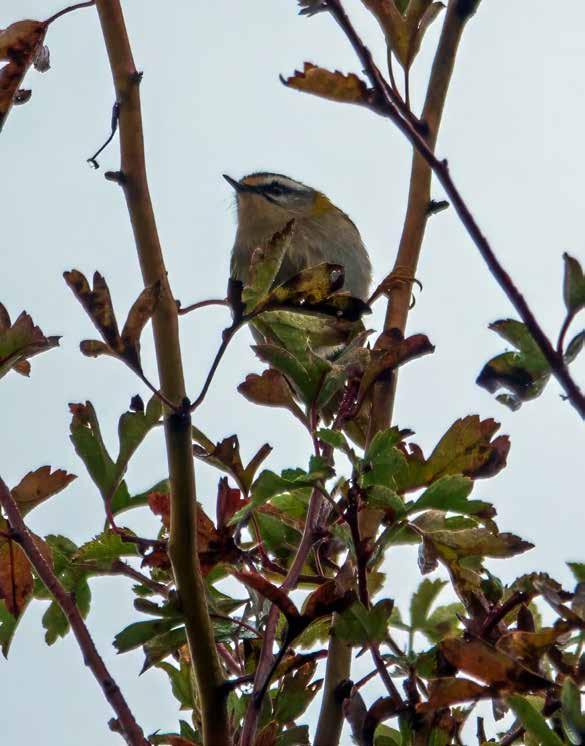
influx of Hawfinch into the country this autumn and shows how a bird out of context can throw you, I later confirmed the call that I had heard using the excellent Xeno-canto website on my phone. The walk back to the car park was very quiet apart from a few more tit flocks and at least three Goldcrest. We then drove to Holland Haven to spend the afternoon there.
Once we had negotiated the dreaded parking machine we headed off to the coast. We were unsuccessful in our quest for Purple Sandpiper around the groins and so we made our way to the hide. The code on the lock had been changed so we headed up hill to view the scrape. This worked in our favour as the extra height made it easier to find the birds, there were 11 Black-tailed
Godwits, 35 Lapwing, 20+ Wigeon, 18 Teal, and a few Shoveler and Shelduck Walking further up the hill to view the sea we had at least four adult Gannets heading north. A distant owl was picked up over the grazing fields, a very mobile Short-eared Owl was quartering the area occasionally dropping down and then re-emerging. At one point a Common Buzzard had a tussle with the owl and a second Buzzard was located perched in some trees. A flock of Curlew came into land in the fields, and we also found a nice pair of Stonechat and a Kestrel. As we headed back to the car park we once again had a look for the Purple Sandpipers but our luck was out and so headed back having had a wonderful day out on the Essex coast.
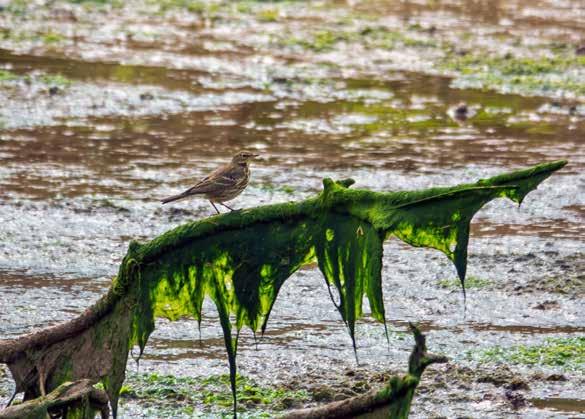
John Kornjaca
The quarterly review section gives a snapshot of birds seen within the county during the period, predominantly from data received by Suffolk BINS. All scarce and rare birds are subject to submission and acceptance by either SORC or BBRC. Updated lists of Accepted and Outstanding Records for previous years can be found on the SBG websitehttp://www.suffolkbirdgroup.org/bird-recording
The weather in July continued cool and rather wet with temperatures across the UK below recorded monthly averages. The first two weeks of the month delivered more rainfall than the monthly average – in the south 129% of average. The third week of the month saw a change and temperatures increased to the high 20’s centigrade with southern areas recording temperatures in the low 30’s.
Much of the region remained cool (2.0c below normal monthly average) and wetter (125% of monthly average) although temperatures climbed in the third week of the month. The fourth week of the month saw temperatures fall back slightly to average temperatures before a highpressure system moved into the south allowing temperatures to rise once again.
Garganey – There were three at Peto’s Marshes, Carlton Marshes (13th). There were two juveniles at Minsmere (21st) and an adult male was present (22nd). A juvenile was at Hollesley Marshes (27th).
Common Crane – There were two birds observed on the Levels at Minsmere (5th).
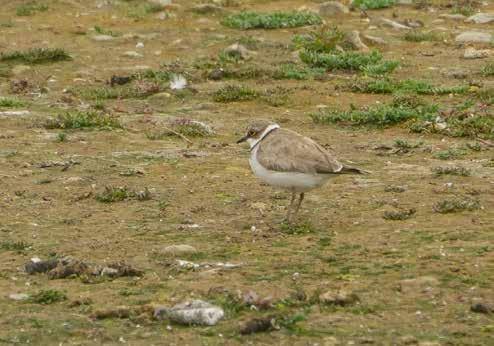
Little Ringed Plover – A pair were seen on the scrape at Hollesley Marshes (4th) and three were at East Scrape, Minsmere (9th).
Black-tailed Godwit (L. l. limosa) – There were several sightings of birds at Minsmere with as many as four (juveniles) on the scrape (25th). Another juvenile was found at Hollesley Marshes among the large flock of 200+ Black-tailed Godwits (islandica) (16th).
Curlew Sandpiper – The first bird of passage was a juvenile seen from the public hide at Minsmere (18th). Hazlewood Marshes held three birds (28th) and six adults (29th) with three remaining (31st).
Little Stint – A bird was found on Peto’s Marsh, Carlton Marshes and another was at Minsmere the same day (29th).
Wood Sandpiper – Several birds were sighted on passage through the month. A single bird found at Hollesley Marshes (3rd) was seen regularly (until 30th), others were seen at Minsmere, Pipps Ford and Aldeburgh Marshes.
Spotted Redshank – There were seventeen on the scrape at Minsmere (1st).
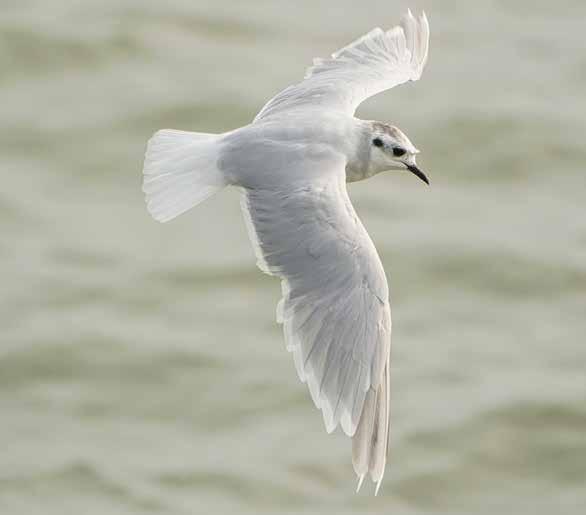
Little Gull – There were as many as nineteen at Minsmere (25th) with lower numbers seen through the month. There were five off Sizewell (18th). The only other record was of a single bird at Breydon Water (26th).

Caspian Gull – A juvenile was seen on the beach at Aldeburgh (9th) and two were seen at the harbour entrance in Walberswick (30th).
Arctic Tern – Minsmere held up to three birds, seen regularly among the tern flock throughout the month.
Black Tern – A single record of a bird at the outfall of Sizewell power station (16th).
Arctic Skua – There were five seen off Sizewell (18th) and a pale phase bird was seen off Minsmere (24th).
Glossy Ibis – Two flew north over East Bergholt (18th).
Eurasian Spoonbill – Regularly seen throughout the month on coastal marshes including nineteen at Hazlewood Marshes (24th). Other groups were seen at Hollesley Marshes (nine birds on 8th), Minsmere (eleven birds on 19th). Others were seen at Iken and Aldeburgh Marshes.
Western Cattle Egret – A single bird was seen from the Reservoir Hide at Trimley Marshes (27th).
Osprey – A bird was seen circling the sewage works at Kessingland (11th) and another was over the Levels on Minsmere (22nd); also Giffords Flash (30th).
Short-eared Owl – A solitary bird was seen
between Shingle Street and East Lane, Bawdsey (28th).
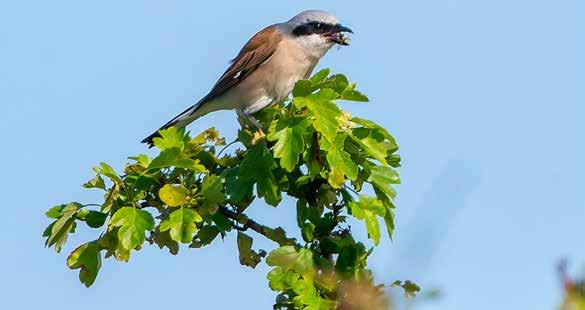
Red-backed Shrike – A smart male was found on Coney Hill at Minsmere (8th), possibly the same bird was seen in the nearby North Bushes on the reserve several times (until 16th). A female was discovered on Cavenham Heath (24th).
Black Redstart – A single bird was seen by the wind turbine at Ness Point, Lowestoft (29th).
Scarce July sightings:
Quail – There were two birds found at St. Margaret St. Elmham (20th).
Roseate Tern – A single bird was found on South Scrape at RSPB Minsmere (2nd) and seen infrequently around the South Scrape (until 8th).
Night Heron – A ‘probable’ flew over Chediston early evening (23rd).
Honey Buzzard – A single bird flying south was sighted over Eastbridge (11th).
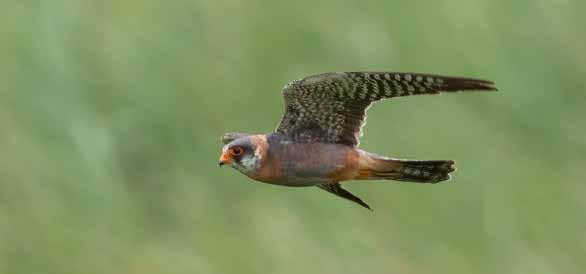
Red-footed Falcon – The immature bird found in June remained at SWT Carlton Marshes (until 13th).
Rose-coloured Starling – A smart adult was observed in gardens in Felixstowe (4th11th)
August began slightly warmer than average with the first two weeks seeing areas in the south and south-east experiencing isolated heavy downpours and some thunderstorms. Across England, temperatures were slightly higher than average (+0.6c) while rainfall was lower (50%) of average for the month. Storm Lilian (22nd and 23rd) caused some disruption in the NW with high winds and heavy rain with localised flooding. Parts of north and west Scotland experienced much
higher rainfall totals through the month (+150%).
The hottest spell of the year (11th and 12th) saw higher than average temperatures (34.8c reported in Cambridgeshire). In general, August was a sunny, drier than average month with some unsettled spells as a series of depressions worked their way across the country.
Garganey – Regularly seen at Minsmere during the month - there were seven birds observed on the scrape (28th). Other birds were spotted less frequently at Carlton Marshes (1st, 10th and 17th).
Little Ringed Plover – There were eight at Minsmere (3rd) and three (11th).
Black-tailed Godwit (L. l. limosa) – There were up to four juveniles at Minsmere (10th) with single birds seen on the reserve infrequently.
Curlew Sandpiper – Frequently observed throughout the month; the first sightings were of three at Bulcamp Marshes and three more at Hazlewood Marshes (2nd). A group of five were at Minsmere (14th). Birds continued to be seen at Hazlewood Marshes and Minsmere for the remainder of the month. Others were seen at Aldeburgh Marshes (13th) and Boyton Marshes (23rd - 29th).
Little Stint – Minsmere was the only site to see birds reported on passage. A single bird (2nd) was joined by another (3rd). Others were spotted at the reserve infrequently over the remainder of the month.
Wood Sandpiper – There were several sightings of passage migrants with three on Share Marsh, Carlton Marsh (7th and 8th). Just a single bird remained (10th) while there were two at Boyton Marshes (13th and 14th).
Little Gull – Recorded at two sites throughout the month - a maximum of 23 were at Minsmere (26th) and 19 at Thorpeness (22nd).
Caspian Gull – A juvenile at Hazlewood Marshes and another at Aldeburgh Marshes (4th). Another juvenile was at Walberswick NNR (20th and 23rd) and another record was of two birds at Great Livermere (20th).
Yellow-legged Gull – There were four at Great Livermere (20th).
Black Tern – There were two birds seen offshore at Southwold (28th) and another at Lowestoft and two at Pakefield (29th). There were four at sea off Minsmere (30th).
Arctic Skua – There were several sightings along the coast, the highlight being eleven birds (including a group of eight) seen heading south off Minsmere (31st). The same group were seen from Sizewell and again from Thorpeness.
Long-tailed Skua – A single bird was seen flying south from Thorpeness (12th). Several birds were observed at sea on the morning of a sea-watch at Lowestoft, Minsmere and Thorpeness (31st).
Sooty Shearwater – As many as 17 were observed at sea (12th) and three more (23rd). Sea-watching picked up several more birds at sea (31st).
Manx Shearwater – A single bird observed from Thorpeness (12th).
Glossy Ibis – There was a single bird on the scrape at Minsmere (1st) while others were seen at Trimley Marshes (3rd), North Warren (4th to 14th) and another was seen high above Long Melford heading west (11th).
Eurasian Spoonbill – Regularly seen in small groups along the coastal marshes. The largest group was that of 20 birds seen at Hazlewood Marshes (9th).
Western Cattle Egret – Regularly seen along coastal sites in small groups - there were 11 at Boyton Marshes (23rd).
Osprey – There were two or three birds frequently seen around the coastal margins throughout the month. A bird was seen regularly on the River Blyth and at Hazlewood Marshes and another was observed on several days fishing at Butley Ferry. A bird seen at Bawdsey was observed flying south out to sea from Felixstowe (25th). Further inland, a bird was seen at Giffords Flash (18th and 26th) and Bury St. Edmunds (26th).
Merlin – A bird on Havergate Island was seen to fly south (27th).
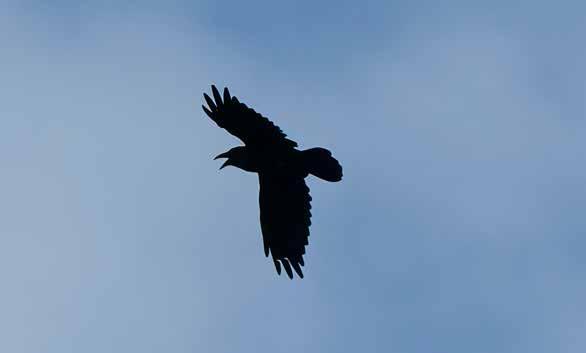
Northern Raven – There were three at Beyton (6th) and two over Nayland (24th). A single bird flew over Wenhaston (28th).
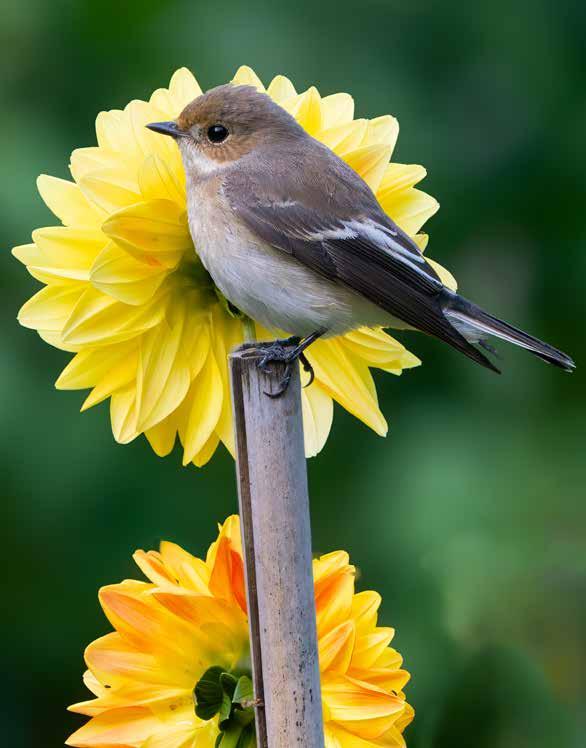
Spotted Flycatcher – Three birds were found at Kessingland (18th) with others at Chantry Park, Ipswich (21st), Giffords Hall (23rd) and Landguard Bird Observatory (28th).
European Pied Flycatcher – There were frequent sightings of this species along the coastal fringes as migration got underway. There were two in Southwold (1st), another at Landguard Bird Observatory compound (2nd - 5th). The highlights were four birds at Shingle Street (18th) with three more at Orford Quay Meadow (13th) and another three at East Lane, Bawdsey (18th).
Black Redstart – There were three at Ness Point, Lowestoft and a single bird at Landguard Common (19th).
Whinchat – A first sighting was recorded at Aldeburgh Marshes (11th). Thereafter, birds were observed at many sites along the coastal marshes with six at Eastbridge (28th) the highest count.
Eurasian Tree Sparrow – A juvenile seen on feeders at Suffolk Sands Holiday Park, Felixstowe (30th).
Pectoral Sandpiper – A bird was found at Boyton Marshes and seen to fly towards Hollesley (11th).
Red-necked Phalarope – A juvenile was seen on South Scrape at Minsmere (12th).
Sabine’s Gull – A bird was seen from Lowestoft beach flying south (12th) and another seen from Minsmere beach flying south (20th).
Ross’s Gull – A ‘possible’ specimen was sighted from Thorpeness beach (16th).
White-billed Diver – A single bird seen flying north at Southwold (31st).
Cory’s Shearwater – Sea-watchers sighted two off Lowestoft with other records from Southwold and East Lane, Bawdsey (31st).
Honey Buzzard – A bird was spotted high over the Levels at Minsmere and then flew out to sea (8th). Possibly the same bird was seen at the same site the following day then heading south over Sizewell (9th).
Eleonora’s Falcon – A ‘possible’ seen at Gorleston (20th).
Marsh Warbler – A bird was trapped and ringed at Kessingland sewage works (3rd).
Corncrake – An unconfirmed sighting of a bird at Snape (22nd).
For some in the south of England, September 2024 was the wettest September recorded while for others in Scotland and N. Ireland the month was one of the driest on record. The UK recorded 25% more than average rainfall for the month while England experienced +95% above average. Several counties in southern England experienced rainfall totals that were 300% above average. Temperatures across the UK for the month were 0.3c below the average despite the warmer start to the month.
East Anglia experienced average monthly temperatures in September 2024 that were +0.5c above the recorded September average and the region was the warmest across the UK for the month with daytime temperatures in the mid-twenties, although significantly cooler close to the coast. Average sunshine was recorded for the region over the month while many parts of England sat under dense rainclouds. East Anglia experienced above average rainfall (+25%) to the west of the region while coastal areas remained largely at normal/average levels.
Pale-bellied Brent Goose – There were two records in the month; one seen at sea from Thorpeness (23rd) and another seen from Minsmere (30th). Both birds were seen to be flying south.
Pink-footed Goose – A sighting of a group of seven at Aldeburgh Marshes (11th).
Garganey – Four birds on Benacre Broad (6th) the highlight, with other singles seen at Minsmere (1st), North Warren (3rd) and again on Benacre Broad (23rd).
Red-crested Pochard – A bird in eclipse plumage was found on Benacre Broad (14th - 16th).
Common Eider – A single bird was found in the harbour at Southwold (6th).
Velvet Scoter – A single record of a northbound bird seen at Southwold (5th).
Black-necked Grebe – A single bird was seen in shore pools at Kessingland (19th22nd).
Curlew Sandpiper – There were up to three juveniles at Hazlewood Marshes (15th and 16th) and two more on the South Scrape at Minsmere (5th).
Purple Sandpiper – Regularly seen along the coast at Landguard Point, East Lane (Bawdsey), Southwold and Walberswick. There were three on the beach at Minsmere (19th).
Little Stint – The first sighting of the month was of a juvenile bird on South Scrape at Minsmere (11th). Thereafter birds were seen at several sites over the remainder of the month with one at Pipps Ford, Needham Market staying for three days (14th - 16th).
Wood Sandpiper – There were two on the summer flood at Trimley Marshes (6th) and another seen at Boyton Marshes (19th).
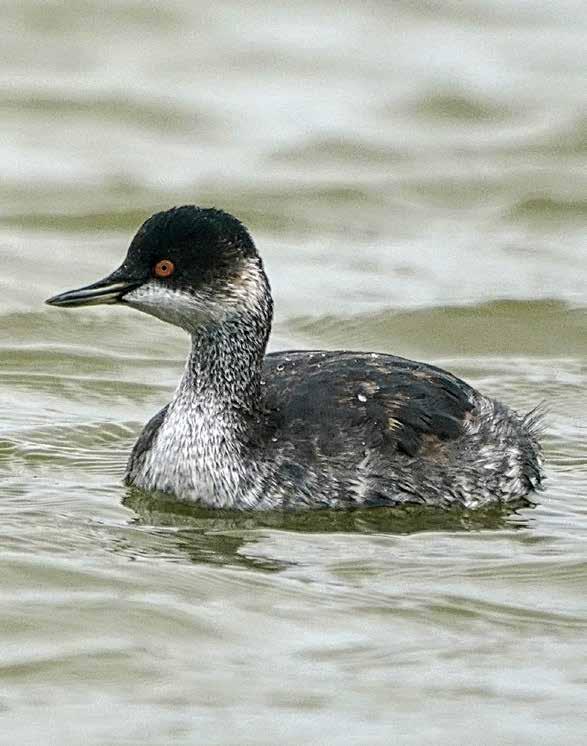
Little Gull – A report of 20 seen off Thorpeness (2nd) with six seen at the outfall of Sizewell power station (20th). Several others seen along the coast through the month.
Caspian Gull – There were two at Southwold in the harbour (1st) and another, a 2CY specimen, at Gorleston the same day. Minsmere held three birds later in the month (27th) and a first-winter the following day (28th).
Arctic Tern – There were two at the outfall of Sizewell power station (27th).
Black Tern – A single bird was roosting on south scrape at Minsmere (3rd). There were three seen flying south at Kessingland (14th). Several others were seen along the coast through the month.
Great Skua – There were a handful of sightings in the month, the first at Southwold (1st) and the final record was of a bird heading north from Thorpeness (28th).
Pomarine Skua – Single birds were seen from Thorpeness (7th), East Lane, Bawdsey (8th) and Aldeburgh (30th).
Arctic Skua – Regularly seen offshore throughout the month. A count of over 20 from Slaughden was recorded on one morning (27th).
Long-tailed Skua – Several records of birds seen at sea. Notably, two birds were observed flying north from Thorpeness (1st) and two were observed at Southwold, flying south (27th).
Great Northern Diver – A bird was seen off Landguard Point flying south (18th).
Leach’s Storm Petrel – A bird heading north was seen off Southwold and then later off Benacre (1st).
Northern Fulmar – A dark-plumaged bird was seen from Covehithe (4th).
Sooty Shearwater – Frequently seen at sea through the first half of the month, the highlight was 15 seen off Southwold (6th).
Manx Shearwater – A count of 41 at Southwold (6th) was the highlight. Others seen offshore from Lowestoft (20+), Thorpeness and Minsmere.
Glossy Ibis – A single bird was seen at Boyton Marshes (16th).
Eurasian Spoonbill – Frequently seen in groups along the coastal marshes, the highlight was that of 22 birds at Hazlewood Marshes (15th).
Western Cattle Egret – There were three at Trimley Marshes and a single at Butley Ferry (22nd). Another single bird was found at Burgh Flats, Breydon (26th).
Osprey – There were many sightings through the month with birds often seen at Hazlewood Marshes, Hen Reedbeds and along the Butley River/River Alde at Boyton Marshes. There were several other sightings of passage birds including one at Gifford’s Flash, Shelley (23rd).
Hen Harrier – A single ringtail was observed from Bittern Hide at Minsmere (11th).
Pallid Harrier or Montagu’s Harrier – A narrow-winged Harrier species was seen flying south from Thorpeness (26th).
White-tailed Eagle – A bird was seen flying over Lackford Lakes (10th).
Eurasian Wryneck – A bird was trapped and ringed at Landguard Bird Observatory (2nd) with another report on the site (4th). Others were seen at Corton (6th), Gunton Warren (7th), Thorpeness (7th), Minsmere (7th, 8th and 13th), Orfordness (8th) and Kirton Creek (22nd).
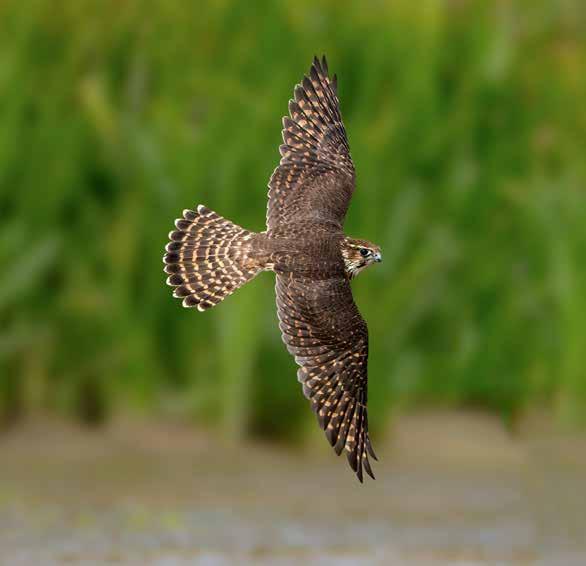
Merlin – There were several sightings of our smallest falcon. A female was regularly seen and photographed as it hunted dragonflies from the islands on the scrape at Boyton Marshes. Others were seen at Orford (6th), Benacre (9th), Westwood Marshes (9th), Hazlewood Marshes (12th) and Dingle Marshes (23rd).
Red-backed Shrike – An immature bird was seen in bushes at the Chapel fields, Minsmere (5th - 7th).
Northern Raven – There were two at Badley church (10th) and two at Stratton Hall Woods, Nacton (19th) and two more over Seckford Hall hotel, Woodbridge (21st). Several other single birds were reported around the county.
Wood Warbler - A bird was trapped and ringed at Landguard Bird Observatory (2nd). A second bird was seen in the sluice bushes at Minsmere (13th).
Yellow-browed Warbler – The first record was that of a bird at Dip Farm, Gunton (21st) with others seen at various sites along the coast thereafter including two in the sluice bushes at Minsmere (28th).
(Caspian) Reed Warbler (sp. fuscus) – A bird resembling the ‘eastern race’ was spotted going to roost at Glebe Marshes, Breydon (26th).
Common Firecrest – A single bird found in a copse at Benacre (20th).
Ring Ouzel – There was a single bird by the white cottages of Shingle Street (18th) and another was seen as it flew over Landguard Common (26th).
Spotted Flycatcher – Regularly seen in the first half of the month - there were six at Southwold (6th) and reports from five other sites on the same day. The final record was of a single bird at Kessingland (21st).
Pied Flycatcher – There were good numbers passing through the county in the first two weeks of the month with highlights being seven seen at Lowestoft (2nd) and another seven at North Warren (3rd). There were six at Southwold (7th). The final record was that of a single bird at Sizewell (22nd).
Common Redstart – The first day of the month saw three at Benacre, two at Southwold, and singles at Aldringham Walks and Corton. Thereafter a single bird was seen at Bawdsey (8th).
Whinchat – Frequently observed along the coast throughout the month. The highlight being nine on Orfordness (8th). Further inland, birds were recorded at the Raydon airfield and disused railway throughout the month.
Eurasian Tree Sparrow – The juvenile bird again returned to feeders at Suffolk Sands Holiday Park, Felixstowe (1st). The
only other report was of four birds seen at Sudbourne (7th).
Blue-headed Wagtail – A single bird was found in the compound at Landguard Bird Observatory (7th).
White Wagtail – A party of eight were seen at Sudbourne (7th).
Tree Pipit – A dozen or so sightings in the first week of the month. The highlight was of four at Kessingland (7th). The final report was of a single bird on Orfordness (8th).
Hawfinch – A single record of a bird found in the north bushes at Minsmere (22nd).
Scarce September sightings:
American Golden Plover or Pacific Golden Plover – A bird flew over Havergate Island (1st) – the observer unable to positively identify if sp. ‘dominica’ or ‘fulva’.
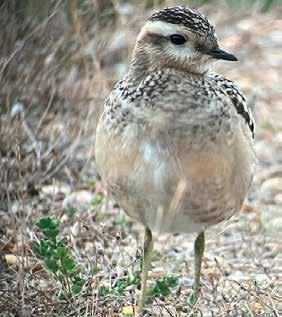
Eurasian Dotterel – A single bird was at Landguard Common (4th and 5th) and one other record from Trimley Marshes (6th).
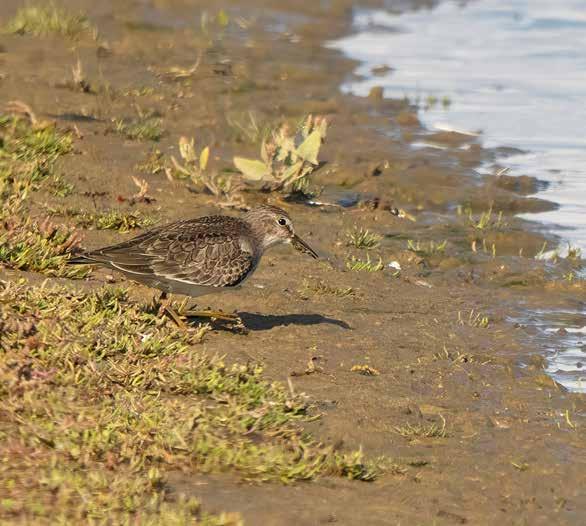
Temminck’s Stint – A solitary bird stayed on the South Scrape at Minsmere (20th - 28th).
Red-necked Phalarope – A single bird was seen at Giffords Flash, Stoke-by-Nayland (23rd) – the first for this site.
Sabine’s Gull – Just the one record of a bird seen from Ness Point, Lowestoft (5th).
Cory’s Shearwater – Sea-watchers sighted birds from Sizewell, Thorpeness
and Lowestoft (6th). There were two off Pakefield (10th).
Balearic Shearwater – Sea-watching produced four birds at Southwold and another from Lowestoft (6th).
Purple Heron – A juvenile was found at Giffords Flash, Stoke-by-Nayland (1st) and remained until (24th). Another bird was located at Carlton Marshes (4th).
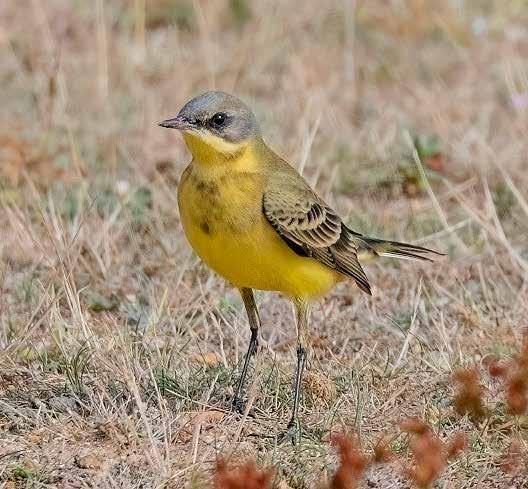
Honey Buzzard – There were three reports; two birds at Orford (1st), a single bird low over Tunstall Forest heading east (8th) and a bird over Falkenham Marshes (12th).
Icterine Warbler – A bird was trapped and ringed at Landguard Bird Observatory (7th) and seen again in bushes (9th).
Barred Warbler – A bird was trapped and ringed at Landguard Bird Observatory (17th) and re-trapped the following week (22nd). Another possible sighting was of a bird at Orford sewage works (27th).
Red-breasted Flycatcher – A bird previously ringed in Denmark was trapped and released at Landguard Bird Observatory (16th).
Grey-headed Wagtail – A bird was found in the compound at Landguard Bird Observatory (7th) and seen on the Common (9th).
Ortolan Bunting – A bird was found on Landguard Common (9th).
Council for 2025
Officers
Chair: Eddie Bathgate
Vice Chair: Chris Keeling
Secretary: Katya Bathgate
Treasurer: Anne Wright
Communications Officer: Adam Faiers
Projects Officer: Chris Keeling
SoSS Project Officer: Eddie Bathgate
Suffolk Bird Report Editor and SORC/SNS Link: Nick Mason
Harrier Editor and Outdoor Events Coordinator: Gi Grieco
Indoor Events Coordinator: Adam Gretton
President John Grant
Members
Sarah Glyde
John Kornjaca
Peter Merchant
Ben Moyes
Sally Nelson
Jenny Rawson
Alex Rafinski
Honorary Vice-Presidents
Andrew Green
Adam Gretton
Robin Hopper
Colin Jakes
Mike Jeanes
Mike Marsh
Roy Marsh
Philip Murphy
Reg Snook
Bird Recorders
North-east Area Recorder: Richard Walden Email: bird-ne@sns.org.uk
South-east Area Recorders: Gi Grieco Tel: 07951 482547 and Steve Fryett Tel: 07593 382082
4, The Street, Melton, Woodbridge, IP12 1PW. Email: bird-se@sns.org.uk
West Area Recorder: Chris Gregory Email: bird-w@sns.org.uk
Memberships
c/o SNS, The Hold, 131 Fore Street, Ipswich, Suffolk, IP4 1LR
Founded in 1973 by a group of Suffolk birdwatchers
Associated with the Suffolk Naturalists’ Society
SBG remains an independent birding group and is a registered charity
A voice for Suffolk birdwatchers
With established links to many naturalist and conservation organisations
Media
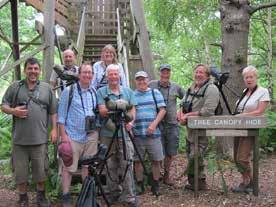
Actively lobbies to protect key Suffolk habitats
Provides a county-wide field force of bird surveyors
Promotes BTO bird surveys and organises special SBG surveys

Strong web presence - www.suffolkbirdgroup.org
Active Twitter feed - @SuffolkBirdGrp
Quarterly magazine - The Harrier
Annual review - Suffolk Birds report
Annually (20+) field trips - ideal for novices or experts and young or old alike
Opportunities to visit hot spots and receive practical ID tips in the field
Programme of talks and presentations - variety of topics (county, national, or international) with quality speakers
Assists with conservation projects to improve breeding success
- Swifts
- Barn Owls
- House Martins
- Peregrines
- Waders
Partners with Suffolk Wildlife Trust and other bird groups
Assists with funding for bird hides and other birding amenities
Contributes to community events, including dawn chorus walks
Provides bursaries for special projects