

Ken and Jean Garrod

Gi Grieco

Gi Grieco
Welcome to The Harrier. This edition brings the sad news of the passing of Jean Garrod, someone who was actively involved with the group over many years and that many members will have met. Jean had specified that she’d like donations to go to Suffolk Bird Group and we’re grateful to those that have done so. The group and its members will miss Jean dearly.
With no field trips during lockdown I’ve included a field trip from 1985 – one of the first trips I went on. Eddie, our Swift project officer, has been active in his Swift duties this year and gives an account of his efforts in Woodbridge. We previously had an interesting article from Chris Ryde when he was the Landguard ranger, when he took an active role to monitor and protect the Ringed Plovers nesting there. He’s now in a new post so it’s good to find out about this project. Some of us went to Georgia last year to witness the amazing spectacle of raptor migration at Batumi. We were ably guided by the excellent Nika and on our tour he talked about his fascinating studies into the remnant population of Velvet Scoter in the Caucasus area. I’m pleased he has written a report for the Harrier on this.
Covid has been a part of our lives these last few months and many of us have been lucky to study the wildlife in their gardens and we have two articles on this subject. Please feel free to email in any of your observations during this period. Finally we have our bird review section for the period – despite the
situation some birding was able to be done and a great selection was encountered in the county.
We were very much hoping we could get back to some semblance of normality by starting our outdoor walks from October, but the Government’s recent introduction of the “rule of six” has made this difficult. The SBG committee have however scheduled an extra meeting in October to discuss ways in which we might be able to safely conduct walks later in the year. Now for some good news. We cannot of course host our indoor talks at the moment, but we can move them online! Information will be communicated via email to those who have provided one or check the web site for details.
Steve Piotrowski
My first meeting with Jean was when leading a Suffolk Ornithologists Group (SOG now SBG) field event at Landguard in August 1978. Jean was there with her husband Ken and, although I had been a keen member since 1976, this was my first as a field event leader. I was a little nervous, but Jean encouraged me and this became the start of a very long and happy friendship with the couple.
The number of events that I was asked to lead grew and grew and it was always a pleasure that Jean and Ken were there to assist. You could only admire Jean’s enthusiasm and how welcoming she was to all. Her personality was infectious and within minutes everyone would be sharing experiences stimulated by Jean’s jovial nature. So imagine my surprise when she told me that it was her young son who had been the first in the family to take a keen interest in birds, with Mum and Dad quickly seeing the pleasure and passion the hobby evokes in so many of us.
Initially SOG was managed as two branches, east and west, with separate officers assigned to each area. But, as SOG grew the Committee quickly recognised that Field Events Officers were needed for each branch so a joint programme card could be distributed to members. Jean’s name was at the top of my list and she took on the role for the East Branch with Dora Berry looking after the west. Jean carried out this task with great gusto and it wasn’t long before she was looking after the whole county, meticulously planning events for us all to enjoy. As Chairman of the group, I was summoned by Jean, almost on a weekly basis, to answer queries. On arrival at her Foxhall Road home, Jean would dispatch Ken to make the tea and then say “now where’s my list” and she would produce a sheet of paper with a long
list of queries that she ticked off one-by-one over a cup of tea and a Kit-Kat. Discussions centred on numerous topics ranging from latest sightings to foreign holidays. We had some very enjoyable afternoons together.
Jean and Ken were loyal supporters of Landguard Bird Observatory and together we fought hard to obtain a secure tenure for the Bird Observatory. Jean christened me “The Lion of Landguard” a title which made me feel proud.
During those halcyon days at Fagbury Cliff in the mid-1990s, when thousands of migrant birds were drawn in by the dock lights, Jean and Ken became regular attendees. Each Friday evening, the ringing team would put up mist-nets ready for trapping the next morning. Jean and Ken were collected en route and were driven down the track to our ringing site. Once the nets were up, we then moved on to view Trimley Marshes Nature Reserve where we were joined by Eddie Marsh who brought cheese rolls from his work’s canteen to share with us all for tea.
Jean’s dedication and popularity resulted in her being asked to take on the role of Vice Chairman. Fortunately, she accepted and Jean regularly attended indoor and outdoor events
LBO September 1st 1984
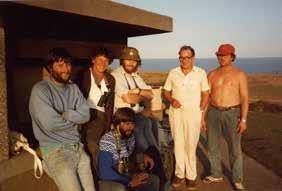
with Ken. As old age crept on, some of the more strenuous events, such as our annual trip to Orfordness, became too much for them both, but Jean would always ring the leaders to ensure everything was in order.
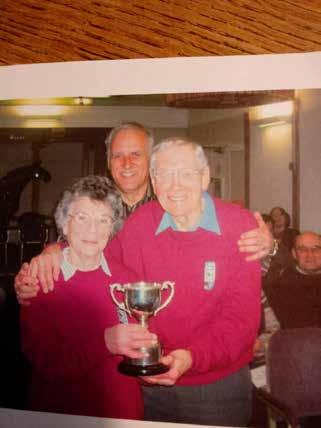
Jean and Ken were elected as Life Vice Presidents of SOG. Sadly Ken passed away some years back, but Jean continued with her support for the group. She acknowledged that SOG had played a huge part of their lives and she wanted to mark these feelings in a special way. So a trophy was commissioned
to honour his memory and their joint commitment and loyalty that they both had given to the group for so many years. It is called the Garrod Award and Jean was keen that it should be presented annually to the most inspiring up and coming young birder. Jean has since been present at every AGM
Gi Grieco
For anyone connected to the Suffolk Ornithologists’ Group there was one person that was synonymous with the group, and that was Jean. A friendly face, an organiser and a driving force, Jean was a stalwart of the group and the group meant everything to Jean. She was the outdoor events organiser for nearly 30 years and, along with husband Ken, attended many of these. Even when age precluded her from attending, she would always ring up the leaders on the day to make sure all was well, ask who was attending and to wish everyone a good day. When she was present on such trips, Jean would always be the first to welcome any new attendees and make them feel included. This friendliness and sociability has been a key factor of the group to this day – a great way to enjoy the birds and meet up with friends. Similarly at the indoor meetings, Jean would take names at the door, greet everybody and have a chat. Even in recent
Ken
meetings; although this could make her feel tired the next day, she still loved coming along. This was because everybody wanted to catch up with her and we’d leave late! A very memorable evening last year was the talk on the Birds of Kenya by Ellie and Dan Zantboer (our youngest ever speakers, at 16 and 12). She relished seeing the delight and enthusiasm of the next generation of Suffolk birders.
From a personal point I was one of those people who were made to feel welcome by Jean. As a 15 year old on my first trip, to Cley, not really knowing anyone in the group, I was grateful for her kindness and from that day I have enjoyed the group ever since. Back in those days I would ring up to speak to Jean and Ken, have a catch up and find out the latest bird news. As many others have also found over the years, Jean could have a persuasive manner, despite her diminutive size. Back in 2007 Jean persuaded me to lead my first trip for the group followed a year later by an invitation to join Council – you couldn’t really say no! In recent years I’d pop round for a chat with her and Ken, have a cup of tea and go through old trip photos – these were kindly lent so they could be scanned as part of the history of the group. She dearly missed Ken, her soulmate, when he passed away five years ago, he had been her birding partner for both SOG trips and birding
excursions abroad – a passion they enjoyed together.
She was highly thought of by birders around the county and beyond. Her friendliness and sociability would mean she would chat to all whether on a trip or a twitch – she would often go up to people and say “do I know you?” or “you should join SOG”! Jean will be sadly missed by the birding community of Suffolk.
Both Jean and Ken were SOG/SBG through and through, they encouraged young birders as I can attest, and this is why the group with Jean, wanted to establish the Garrod trophy five years ago to recognise the next generation of bird and wildlife enthusiasts for their contribution to birds and wildlife recording/monitoring. We’ll all miss Jean, and Ken, but the Garrod Award will mean we won’t forget them, their passion for birds, the group and their friendship.

Jean Garrod
After a cold wet week 34 members gathered at Sutton Heath car park expecting the worst of weather and agreeing that any bird seen would be a bonus.
Nightjars were our main quarry but as our leader had neither seen or heard any on his “reccy” the evening before our hopes were not very high. In fact he had only managed a single moth so the Nightjars could not really be blamed for not making themselves evident.
We set off in waterproofs with an enterprising male member arming himself with an enormous golfing umbrella. The ladies were assured of shelter in the event of a downpour: To everyone’s amazement the sun shone in a blue sky and although the evening was cool the rain held off.
A Great Spotted Woodpecker was seen by a sharp eyed member to fly into a sunlit tree. Good views were had by all as the bird pecked and probed in the bark. It flew off, returning almost immediately to the same spot and continued to feed.
Turtle Doves called and one perched on a telegraph wire close to a Collared Dove. The difference in size was apparent and the colourful plumage of the Turtle Dove was very marked in the clear evening light.
A Green Woodpecker flew over the field but did not give its usual “yaffle” call.
We could fine nothing but Mallard, Moorhen and Coot on the ponds but a pair of Shelduck did fly in as we watched.
A little light relief was given by a three legged dog which ably ran amongst the heather and which won a deserved round of applause, even though it should have been on a lead!
We drew a blank at the Sewage Farm but as we walked up the incline two Woodlarks were seen feeding close at hand. We were able to study their lovely plumage and to see how the bold white supercillia met on the nape of the birds. After a while they silently flew away joined by a third bird which had been partially hidden.
The sun set and it became very cold with a mist developing as we set off for the appointed area.
A Woodcock obligingly flew straight in front of us in roding display, giving its thin high pitched squeak.
By now the mist had well and truly gathered over the heath and we realised that we would be lucky to have a sighting at all. A Nightjar did call and showed itself briefly. Another bird called in competition but was not seen. There were no moths flying and it was more like a November night instead of a mid June evening.
As we all became gradually colder and realised that we couldn’t expect any more activity we decided to call it a day.
Grateful thanks to Barrie Lawson for leading and to everyone for turning up and making it an enjoyable evening after a miserable week. Better luck next year, perhaps ….
Eddie Bathgate
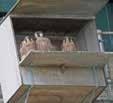
My journey with Swift nest boxes started with leaking gutters four years ago. Replacing the gutters unintentionally prevented Swifts from accessing their eaves nest site when they returned the following May. One bird’s loss was another bird’s gain, however, and this time it was House Sparrows which benefited, taking over the void in the eaves and breeding there for two years.
Whilst I was happy to house both Starlings and House Sparrows, I wanted to encourage the Swifts to return, and SBG member Ivan Lockwood solved the problem by installing two nest boxes on the front of our house. I played the calls and the following year saw Swifts going in and out of one of the boxes, though their discreet comings and goings meant that I could not be sure if they had actually bred. Last year, however, they
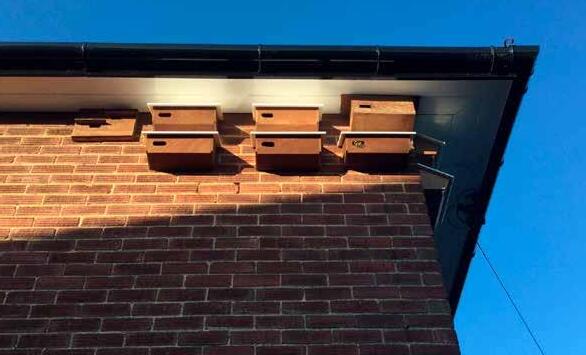
successfully fledged two young and another pair were investigating a second box, so up went two more nest boxes on the side and two on the rear, making a grand total of six nest boxes on three sides of our semi. The observation from the family was that six was more than generous to our Suffolk Swifts, but I felt we could do more. I decided that the house needed painting! Ivan duly returned – this time with his brushes and a rock-solid pretext. My family were a little surprised therefore to return home to see not only gleaming paintwork, but also a further eight nest boxes up under the eaves, and Ivan knocking out two redundant air vents to enable double Swift bricks to be slotted in.
An eyebrow was raised. We now had 14 nest boxes and four nest bricks and the wait for ‘my’ Swifts to return this year commenced.
Things went slightly awry before they arrived. Starlings, unable to get into the Swift boxes, managed to squeeze into the eaves void and turfed out the House Sparrows. The House Sparrows then moved into the Swift boxes, spreading themselves out, breeding in two boxes and occupying a further six, before the Swifts had even arrived.
May 11th was the day of the Swifts’ first arrival this year, three days earlier than last year. An adult went into the box below last year’s breeding site and ejected the House Sparrows, ignoring the latter’s furious chirping from the wires above, and pushing their nesting material out of the hole. The male Sparrow even tried to pull a Swift out of the box by its tail feathers, but the Swift stuck firmly inside and roosted overnight. The next day, however, it was gone again and the House Sparrows were back tentatively exploring the box, the male guarding the entrance hole, while they settled back in.
I saw no Swifts again until May 20th, when two birds returned and took the box back from the House Sparrows once again, this time for good, forcing the Sparrows to rehome themselves in the box above.
Swift numbers built up over the next weeks, attracted by the frequently played call system so beloved of my family, rewarding us with screaming fly-pasts and ‘banging’ as they investigated the various boxes. By June 20th, I had Swifts regularly in and out of four boxes and the House Sparrow occupancy had been reduced to just two boxes.
Their screaming behaviour ramped up midJune with the arrival of the last wave of nonbreeding birds, putting on impressive displays around the house until the end of July. Sometimes the activity started as early as 04:15 and the latest screaming party I heard was at 22:15, 30 minutes after sunset. Swift numbers fluctuated over Woodbridge during
June and July. Drops in numbers happened at least four times after bad weather resulted in the dispersal of non-breeders; but peaks occurred notably on June 13th and July 2nd coinciding with more settled weather. The breeding birds continued in and out of the boxes, sometimes very quietly without fuss. Their style was to swoop up and hit the box entrance, pulling themselves in, manoeuvring their wings around inside the box and then remaining inside for long periods, before appearing at the entrance, listening to other birds screaming by, and suddenly launching themselves out of the box, towards the ground and joyfully away.
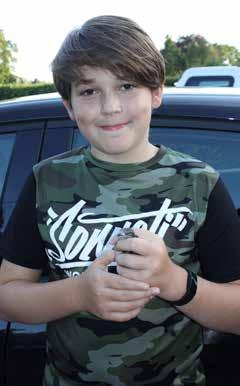
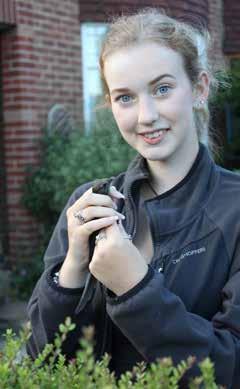
On July 11th Chris Bridge and James Booty from the local ringing group examined my nest boxes. Slightly disappointingly, despite all the activity, only one box had evidence of breeding. Two chicks were present, one larger and better developed than the other. It was assessed that they would be of the required size for ringing on July 18th. On that evening a party of eight ringers and photographers socially-distanced on our drive. We waited until the chicks had been fed and the adults had departed before socking up the entrance and opening the nest box to ring the chicks. We then waited for an adult to return and feed the young before setting up a mist net to catch it exiting the box. The adult Swift was successfully ringed and released into the wind by Ellie Zantboer, where it immediately joined up with a low-level screaming party: a truly magical moment for everyone present.
The first chick fledged just before August 2nd, without fuss. The second, smaller one left the box on August 2nd and instantly crashed onto the driveway. It is quite common for a first flight to be unsuccessful. Adults provide no support and trials have shown that if unsuccessful chicks are put back into the
nest box, they will simply crash out again. Similarly, if they are ‘thrown’ into the air, they will again crash and risk injury. Downed birds will die if not cared for, and providing the care they need is a specialist task. Suffolk is lucky to have two such specialists in Alan and Christine Collett of Aldeburgh’s Amazing Swifts. Alan and Christine take in Swifts from across East Anglia and provide the support and care they need to fledge successfully. Fortunately, I had seen my chick crash and was able to capture it in a shoe box and whisk it straight to them. It was both under-weight and short in the wing and needed 10 days
being fed on brown crickets and waxworm caterpillars, cleared up after and allowed to exercise in a children’s play pen to strengthen its wings. This year so far, the Colletts have successfully cared for 23 birds and have five more ‘under their wing’ until mid-September. My youngster was released on August 12th. Its leg ring may eventually tell us if it returns to its release site of Aldeburgh or its nest site here in Woodbridge to breed.
I would encourage anyone with an interest in this enigmatic and rewarding bird to start a new colony or increase an existing one with boxes and a call system.
For advice and assistance, please email Swifts@SuffolkBirdGroup. com. Save Our Suffolk Swifts are now planning for 2021.
Look out for details of events – walks and talks – early next year. You can log your nest sites and sightings using the convenient SwiftMapper smartphone app.

Chris Ryde
Woods Meadow Country Park is currently a 48.8 acre blank canvas, following the last crop which was harvested from the land in 2017. Last year the eternally wet conditions prevented it being cultivated so we are holding fingers crossed for this Autumn. The land was originally purchased by Persimmon Homes to build homes over 3 phases. The land for the Country Park, with money to establish it and maintain it for ten years, was handed over by Persimmon Homes to East Suffolk Council in 2019.
I took a little longer than intended in tearing myself away from my Landguard Ranger post in order to properly begin applying myself to
the allotted 2.5 days on the Woods Meadow project. This means that I am now fully employed by East Suffolk Norse, which has made my life simpler. How could anyone that enjoys practical habitat management turn down a chance to create something from such a baseline and it will be sure to provide challenges and rewards in equal measure.
A plan on how the Park could be designed was handed over by Persimmon Homes. I noticed that there were several hills included. Why were these included, I scratched my head, all they seemed to do is block the natural view across this wonderful landscape. Then someone told me that the hills would
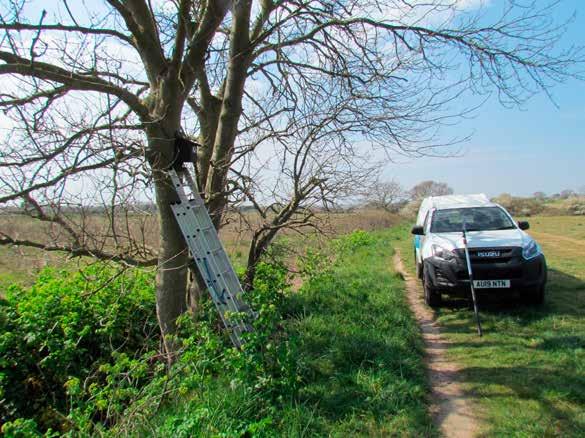
be made from all the excavated soil that goes with house building and would be far cheaper for them to leave it on site. In the end I suggested that the soil could be spread evenly all over the site and then cultivated, which is the point we are essentially at now. The Park is located in Oulton Parish not far from Broads Authority land and Suffolk Wildlife Trust reserves, Oulton Marshes, Carlton Marshes and North Cove, that lie consecutively to the south west. Much of the areas mentioned are covered by the European designation Special Protection Areas (SPA). Woods Meadow will eventually provide good habitats for some birds spilling over from these areas - already we have hunting Barn Owls and hopefully with the inclusion of nest boxes we will get breeding Barn Owls on site.
At present we have plans going ahead with the Woodland Trust for the creation of a 14
acre woodland. I won’t be around to see it in its maturity but will be very satisfied to get 6000 trees established over the next six years or so. And I won’t be around to hear the early Spring drumming by Great Spotted Woodpeckers, but it doesn’t stop me from gaining deep satisfaction by knowing that others will.
I have been very keen from the outset to include a large area of continuous scrub. A habitat maligned and scorned by the ecologically uneducated. One of the best things about scrub is that it prevents people and most dogs from penetrating it, so it creates its own mini wilderness and incredibly good nesting and feeding opportunities for birds like Whitethroats, Blackcaps etc., the list goes on. I’m sure that anyone reading the Harrier knows exactly what I am describing. Over three acres will be left to form scrub through various transitional stages, where different
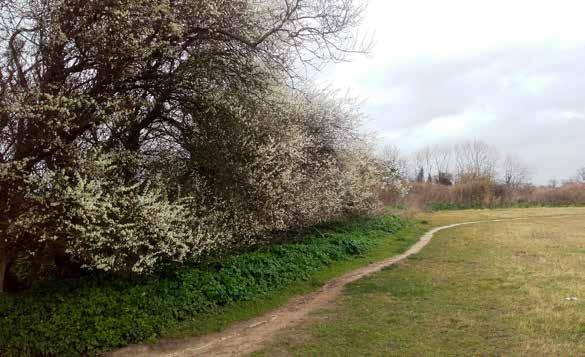
species will find a niche for a period. Then when shrubs and trees become too leggy it can be coppiced in different areas to create a variety of ages, maximising its biological diversity.
A large hay-field which will be cut late, baled and taken away, providing continuing nesting habitat for the 6 or 7 pairs of Skylarks that have nested on the site since I have been recording them. Disturbance by the increased footfall that will inevitably come when the Persimmon phase 2 and 3 developments are completed should be successfully tackled by installing an inner fence to this field. Visitors will be confined to a wide outer track until the crop is harvested and then will be allowed in the field until the end of February. Without this measure, Skylark breeding success at Woods Meadow would, I’m sure, be drastically reduced and probably better in the previous arable fields, as at least they would have offered less disturbance.
A good size wildflower meadow will also be developed providing nectar and foodplants in abundance. This area has already been topped
Nika Paposhvili
twice since the sites last harvest and as the volunteer arable crops and fertilisers subside, more arable weeds.… I mean wildflowers will proliferate. A Sustainable Urban Drainage System ( SUDS ) is installed in the Park to take away surface water and prevent flooding. Thing is, it’s on clay and doesn’t drain away and in fact holds a reasonable amount of water through the Summer. It is turning out to have huge wildlife benefits with Swallows and House Martins collecting mud from its edges and drinking from it. I found several large Emperor Dragonfly cases by the pipe inlet and it was noticeable how many were on the wing this year.
All in all, Woods Meadow Country Park will provide a wonderful place for anyone, but especially the local community, to go and relax, walk the dog and generally get away from it all. For the birder that gets sight of a probable Roller, flying north east from Carlton Marshes, it might be worth checking out Woods Meadow in the future. Only yesterday I managed a site tick for Pied Flycatcher, not really surprising, as so many have turned up on Suffolk’s east coast this month.
The fauna and flora of the Anatolian plateau in the Caucasus have many similarities to the tundra’s fauna and flora in the north. Moreover, as in the tundra, shallow lakes, swamps, and moist meadows abound in the Anatolian plateau, attracting many waterfowl like the tundra. No matter how surprising, some species of tundra are also found in the Caucasus. Among them is the vulnerable species, the Velvet Scoter Melanitta fusca, who probably did not return to his native north after the glaciation and formed an isolated population in the Caucasus.
Information on the breeding population of the Velvet Scoter in the Caucasus is poor. In the second half of the twentieth century, there were about 1,500 Velvet Scoter individuals in Turkey, Georgia, and Armenia, although their numbers have declined catastrophically in recent years (Wetlands International 2018). Moreover, a rapid drop in the water level of Lake Sevan led to the loss of the Velvet Scoter nesting area, resulting in the extinction of the species in Armenia (Adamian & Klem 1997). As a result, of habitat loss, disturbance by humans and global warming the Velvet
Scoter is also considered an endangered species in Turkey (Kirwan et al. 2014; Boyla et al. 2019).
At the end of the twentieth century the Velvet Scoter nested on almost all large lakes on the Javakheti plateau of south Georgia (Janashvili et al. 1960; Kutubidze 1985; Jordania et al. 1999; Macharashvili et al. 2004; Gavashelishvili et al. 2005). Nevertheless, with the influence of various factors by humans (direct habitat degradation
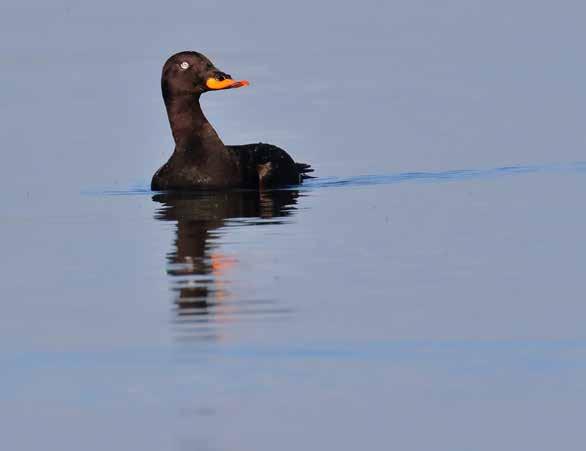
through water abstraction to irrigate adjacent agriculture land; hay cutting on peninsulas and islands in the lakes and collecting eggs which cause loss and disturbance to the nesting sites of this species; eutrophication/ pollution caused by agricultural intensification and waste water; overfishing and illegal hunting), the nesting area of the Velvet Scoter has rapidly decreased in recent years and the breeding population of the Velvet Scoter has remained only on Tabatskuri Lake (25-35 pairs) in Georgia (Paposhvili 2018).
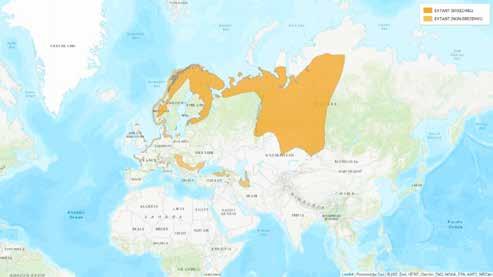
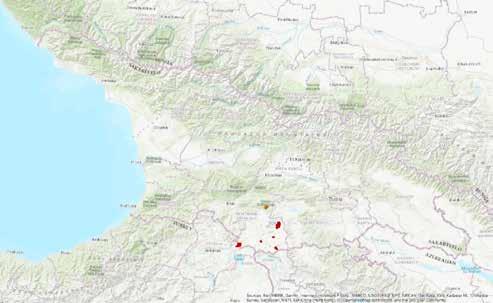
Figure 2. The map showing the extent of the known historical breeding range of the Velvet Scoter in Georgia. Orange is Lake Tabatskuri – the last breeding place in the Caucasus.
The last known breeding of the Velvet Scoter in Georgia was from 1960. According to the existing old Georgian literature, at the end of the twentieth century (1960-1990) the Velvet Scoter nested in southern Georgia, on the lakes of Paravani, Saghamo, Tabatskuri, Khanchali, Kartsakhi, Bughdasheni and Madatapa in the Javakheti Plateau (Janashvili et al. 1960; Kutubidze 1985; Jordania et al. 1999). At the beginning of the twenty-first century (2000-2005), several individuals (1020 pairs) of Velvet Scoter were still nesting in the lakes of Khanchali, Madatapa and Bughdasheni (Gavashelishvili et al. 2005; Matcharashvili et al. 2004). During the same period (2000-2005), according to BirdLife International, 20-50 pairs of Velvet Scoter nested on the Javakheti Plateau in Georgia (BirdLife International 2004). After that, there are no data on Velvet Scoter breeding in Georgia during 2005-2015. It was thought that the bird was extinct from Georgia. In August 2016, the existence of Velvet Scoter on Tabatskuri Lake was confirmed by me.
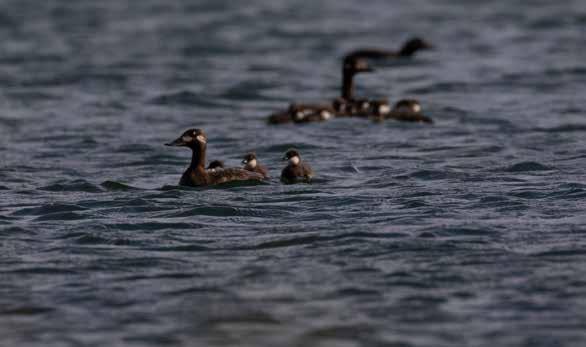
Subsequently, the first in-depth survey was conducted in 2017-2018 under the CLP/ Rufford grant to support the conservation of Velvet Scoter by increasing our knowledge of the population status of Velvet Scoter, and raising the awareness of Velvet Scoter with the community. The study revealed that 2535 pairs of Velvet Scoters are present only at Lake Tabatskuri in Georgia. Nesting only occurred on the one island in Tabatskuri Lake. The northern part of the lake, (2025%), around the breeding island, is used predominantly by the nesting pairs and brood-rearing females. The northeast corner was used by the males during moult.
In spite of 25-35 pairs of Velvet Scoters existing on Tabatskuri Lake, substantially fewer pairs actually nest at the lake. One of the main reasons, as it turned out, was the collection of eggs by the local fishermen. For whatever reason, in 2017 only six females were able to hide their eggs from the local fishermen and successfully nested. With the
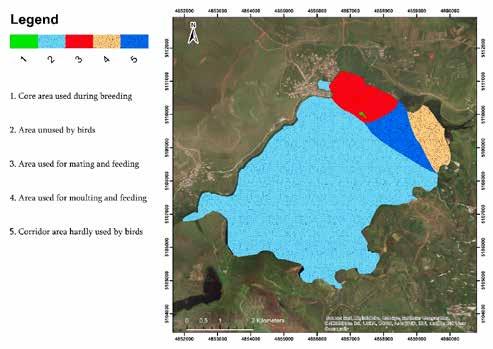
help of local awareness and cooperation along with Tabatskuri Managed Reserve rangers, after 2017 the bird eggs are no longer collected on the island (though fishermen continue to fish in close proximity to the island which increases the risks of Velvet Scoter drowning in nets). As a result, in 2018 twenty-three females were able to nest successfully, in 2019 - thirty-one. Despite the successful nest/hatching rate (65% of eggs successfully hatched in 2017, 51% in 2018, 41% in 2019), fledging success was relatively poor (29% of hatched ducklings survived to fledge in 2017, 6.4% in 2018, 5% in 2019). According to the study, the Scoters’ poor reproductive success may be caused by predation, human disturbance, lack of food and adverse weather. As it turned out from the newest study, predation is one of
the biggest threats. The main predator of ducklings on Tabatskuri Lake is the Armenian Gull and its rapid population growth has had a great impact on an already endangered species. Consequently, gull population control can have a positive impact on the Scoters’ reproductive success. However, detailed study is still needed before making this decision.
The systematic detailed survey is currently underway to assess the direct causes of the Velvet Scoters’ poor reproductive success. In parallel, work is underway to develop a long-term action plan to safeguard future generations of this small, isolated population at its last location in the Caucasus. The isolation level of the Caucasian population of Velvet Scoter and the status of wintering in the Caucasus will also be known soon.
Determining the status of Tabatskuri’s population was very significant. Nevertheless, it only reminds us of the next huge task to come and it will take several years before we can be confident how we can save the Scoter successfully. There is a long way to go and there will be many setbacks along the way,
Acknowledgements
The work would not have been possible without support from the Conservation Leadership Programme, The Rufford Foundation and the Institute of Ecology, Ilia State University. Thanks also go to all the people who were involved in the implementation of the project and contributed to these great works.
References
Adamian M. S. & Klan D. 1997. Birds of Armenia. Published by the American University of Armenia. Yerevan, Armenia. BirdLife International 2004. Birds in Europe Population Estimates, Trends and Conservation Status. BirdLife International, Cambridge, UK
BirdLife International. 2018. Melanitta fusca. The IUCN Red List of Threatened Species 2018: e.T22724836A132654594. https:// dx.doi.org/10.2305/IUCN.UK.20182.RLTS. T22724836A132654594.en. Downloaded on 20 May 2020
BirdLife International and Handbook of the Birds of the World (2016) 2013. Melanitta fusca. The IUCN Red List of Threatened Species. Version 2020-2 Boyla, K.A., Sinav, L. ve Dizdaroglu D.E. (2019). Türkiye Üreyen Kus Atlası. WWF-Türkiye, Dogal Hayatı Koruma Vakfı. Istanbul
but major milestones have been achieved in the last few years.
Nika Paposhvili
Institute of Ecology, Ilia State University, K. Cholokashvili Ave. 3/5, Tbilisi 0162, Georgia.
E-mail: nika.paposhvili.1@iliauni.edu.ge
Gavashelishvili, L., Gokhelashvili, R., Javakhishvili, Z. & Tarknishvili, D. 2005. A Birdwatching Guide to Georgia, with Information on Other Wildlife. Georgian Center for the Conservation of Wildlife and Buneba Print Publications, Tbilisi, Georgia.
Janashvili A., Kutubidze L., Zarkua D. 1960. Georgian Bird Mirror, Tbilisi University Press.
Jordania R., Boeme R., Kuznetsov A. 1999. Birds of Georgia, Tbilisi.
Kirwan G.M, Özen M., Ertuhan M., & Atahan A. 2014. Turkey Bird Report 2007–2011. Sandgrouse 36: 146-175
Kutubidze, M.E. 1985. The Guide to the Birds of Georgia. Tbilisi State University, Tbilisi, Georgia.
Matcharashvili, I., Arabuli, G., Darchiashvili, G. & Gorgadze, G. 2004. Javakheti Wetlands: Biodiversity and Conservation. NACRES, Tbilisi, Georgia
Paposhvili. N 2018. The status of Velvet Scoter Melanitta fusca breeding in Georgia. Wildfowl 68: 183-192
Wetlands International 2018. Waterbird Population Estimates. Available at wpe.wetlands.org (last accessed 6 August 2018).
Jonathan Lawley
Our property in Earl Stonham, including the first house built in Forward Green more than five hundred years ago, has a lawn with a variety of fruit trees surrounding the house, a four acre undrained meadow and an old orchard with two ponds. We have owned it since 1968 and manage it for wildlife. We have planted a lot of trees including three Black Poplars; we mow round the Primroses, Snowdrops, Aconites and Meadow Saxifrage on the lawn and leave the surrounding vegetation alone and cut the meadow late for hay then try to arrange for sheep to graze it but don’t always succeed.
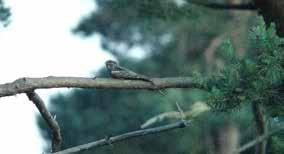
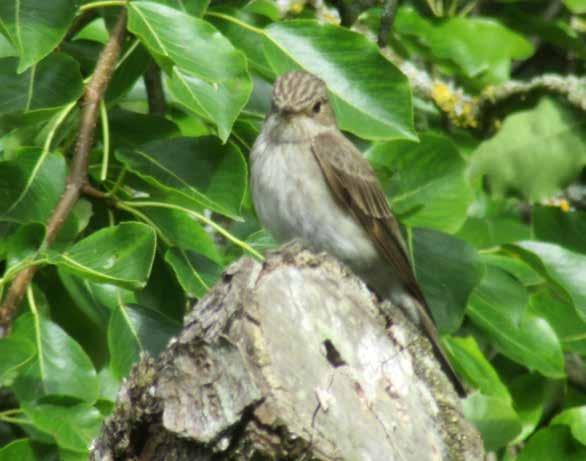
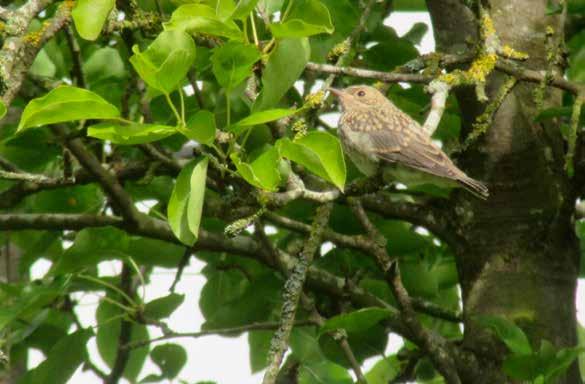
About ten years ago we noticed the arrival of a pair of Spotted Flycatchers in early summer. The first year they nested amongst climbing roses under a bathroom window, the next year in an old Blackbird’s nest in a Plum tree against a wall, then in Ivy on a tree beside the kitchen window, then for two years in the Ivy of a Bog Cyprus beside the meadow where three years later they were predated by the Grey Squirrels. No Flycatchers arrived in 2019.
This year it was the end of May and the Flycatchers were back and behaving as if they had never left. After two days, to
our great disappointment, they left but then they reappeared two days later to our joy - although we feared for them as the Squirrels were visiting our Cherry tree.
Time passed and we thought the birds were building a nest behind Ivy in an old Greengage tree. Two days passed and clearly no nest could be detected there and David Gordon, a former Director of the RSPB, came to see the birds and to try to pinpoint the nest. By now they were concentrating on an area of Hawthorn and Blackthorn scrub and trees beyond the garage. Then the next day on 27th June Sarah saw a young bird being fed. It had no doubt fledged a day or two before. We took to sitting beside a window in the living room and watching the adult birds flitting around the garden sometimes doing somersaults in pursuit of prey and returning
frequently to a tree stump only about ten feet away. A day or two later the garden seemed to be full of Flycatchers. Then on the 2nd July we thought they had gone but it turned out that the fledglings were ranging more widely particularly to the hedge round the meadow and the next day the family was back in the garden with our last sighting on July 5th. We remained unsure how many young there are, though we saw at least two were being fed at the same time on the Pear tree behind the stump, but there could have possibly been up to four. Now as I write we are on the lookout for more young birds and hope that the family which has given us such excitement and pleasure will stay for another week or two before starting back on the long return journey to Africa. We trust that it found a fruitful and welcoming environment with us and will come again next year.
Richard Attenborrow
As I write this, we’re still in lockdown, although there have been some relaxations. As we don’t have a car or bikes and still aren’t allowed on public transport, everything we’ve seen between mid-March and the end of June has been within walking distance of the centre of Ipswich, where we live, and mostly within the Borough boundary. It has been fascinating what’s been about to be
seen and even though I’m still a bit envious of the exotic species coming through on BINS, it’s been an education in many ways. I’ve been much more aware of animal behaviour and also looking for invertebrates much more carefully. I thought it might be interesting to share some of these observations with you. I’ve set them out month by month, but otherwise in no particular order.
This was a time of full lockdown, so permitted walks were less than an hour in duration. Because of this, Christchurch Park got several visits which produced Mandarins in varying numbers, Tawny Owl (Mabel/Matilda?) and a very obliging Treecreeper on the 27th. Over the garden we had a recognisable Common Buzzard with missing primaries, which displayed and hunted several times - very exciting for us as we’ve never had a “local” bird before, only flyovers. We also had a fine pale Fox walk across the school field and a large bat species (probably Noctule) and a Pipistrelle, both of which did flypasts during the 8 o’clock applause for the NHS. Early bees were Bufftailed Bumble Bee and Common Carder Bee. Buff-tailed is our default bee, so that wasn’t at all surprising.
Our policy of going for walks at 6am to avoid other people gave us some real highlights. The first was a real surprise: a Great Grey Shrike on Valley Road, which gave good views before flying into a private garden. In the same area, we were delighted to hear and see a Nightingale in scrub at the back of the Broom Hill swimming pool, having just seen our first Lesser Whitethroat of the year. Another early morning walk to the dock was just as surprising. We met a man who was working on a boat, who told us to look out for a Grey Seal, which we soon saw, but, even better, as we walked past the Steamboat Tavern, Jean saw an Otter which performed nicely. Certainly the first one we’ve seen so near to the Town centre. A further early morning delight was a fine male Sparrowhawk sitting on a wall opposite The Greyhound. Insect highlights in the garden were our first ever Large Red Damselfly and several Bee-flies. Holly Blues were in evidence the whole month and Buff-tailed Bumble Bees were joined by Red-tailed, White-tailed and Tree. The month in the garden was brought to a close with a flyover Peregrine.
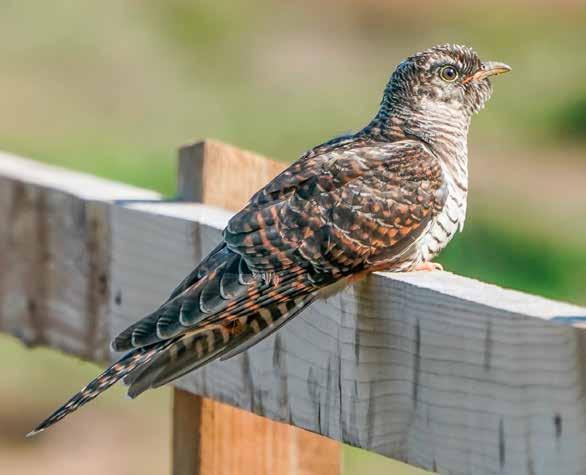
The start of the month was raptor time for us. The local Buzzards continued to display and hunt, up to three birds at a time. The local Sparrowhawks were much in evidence and, on the 2nd, a real local highlight in the form of a Hobby. Bird of the month was a large flyover, but not a raptor. It turned out to be a Common Crane; a cause of much excitement in the Attenborrow household. It came on the 4th, the same day as the first (and only) Swallow, which zoomed away as if glad to get away from us. Indeed we never see hirundines. Meanwhile, the Broom Hill Nightingale was still enlivening our early morning walks in the early part of the month. As a treat, we’d decided to go further afield than usual and walk round Bourne Park, reed bed and Bobbit’s Lane area on the 15th. This proved to be a timely decision. Even before we entered the reed bed we saw and heard a Cuckoo. This was a great treat for me as I can’t usually hear them (but I can hear Goldcrest, now why is that?). By the time we’d heard Cetti’s Warbler and seen Garden Warbler, a pair of Kingfishers and a pair of Grey Wagtails, we were well pleased. The Kingfishers and Wagtails may both have had young as the Kingfishers kept disappearing into a hole and the Grey Wagtails gave out loud and angry alarm calls as we walked along the path. Meanwhile in the garden, the Magpies which had nested two doors down, exhibited an interesting piece of behaviour. I was sat in the garden when I noticed one of the pair fly in with a piece of dry bread which it dunked in our birdbath and then took away. Now that’s quite an intelligent thing to do, but it then put a piece in and left it for five minutes before fetching it. It was presumably deliberate, because, when a Wood Pigeon approached the bread, the Magpie chased it off immediately. It went through the same process at least five times with more bread. Late in the month, one of several visits to the Old Cemetery produced Rose-ringed
Parakeet. We saw this one, but beware! A few days later we heard one in Christchurch Park, only to look into the tree and see a Jackdaw doing a perfect imitation. Probably more exciting for us than the real thing. The last interesting walk of the month was along the River Gipping, where we saw and heard at least ten Whitethroats in a short stretch as well as an unusually obliging Reed Warbler, an expectedly obliging Reed Bunting, Lesser Whitethroat and a pair of Mute Swans with eight cygnets. It was quite warm, so we had our first damselflies in numbers; Banded Demoiselles, Common Emerald and Large Red-eyed on the lily pads. We have also had some interesting invertebrates in the garden, including Common Zebra Spider and a handsome green spider, Nigma walckenoeri. May ended with two Foxes seen on my early morning run through the Millennium Cemetery. It’s certainly true about urban Foxes as all four of the animals I’ve seen have been completely unconcerned by me (not a threat and not enough meat on me to make a good meal).
On the 2nd we walked over to Bourne Park again, this time to meet David Walsh and have a tour of his patch. We arrived at our rendezvous point of Bourne Bridge a little before David and while leaning on the bridge we were amazed to see a very large dog Otter in the water. He was quite surprised to see us as well, submerged, surfaced a few feet away, looked at us for a minute and disappeared only to run like the clappers along the path and into the channel by the reed bed. David managed to see it just as it was swimming away, so a great sighting for all three of us. Then an expertly guided tour produced Sedge and Cetti’s Warbler, Lesser Whitethroat, Broadbodied Chaser, Four-spotted Chaser,
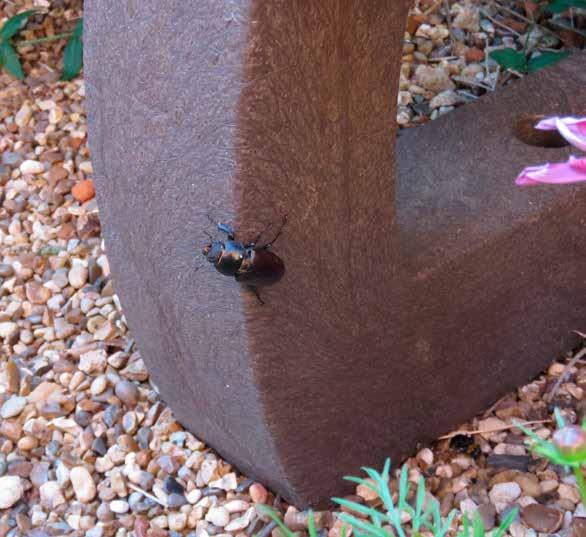
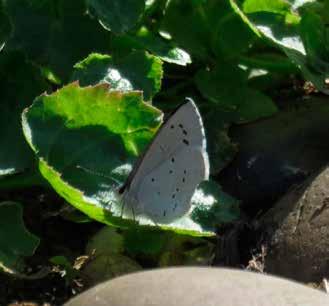
Emperor and Hairy Dragonfly as well as Small Copper and Common Blue butterflies. Midmonth, we managed to complete our tour of the large parks in the town with a visit to Holywells - another pair of Kingfishers, Little Egret and three Emperor Dragonflies here. As the month went on and got hotter, the supply of interesting birds dried up a bit with the only highlight a Garden Warbler singing in the open at the Millennium cemetery, which was to produce four or five Purple Hairstreaks later in the month. However, there’s always something to look at and, for the first time I’ve noticed Field and Forest Cuckoo Bees and Rose Chafer in the garden and two very welcome female Stag Beetles on the 22nd and 26th.
So, what conclusions can be drawn from “the little bit (two inches wide) of ivory” on which we’ve worked to paraphrase Jane Austen? There’s certainly a lot to look at, even in a seemingly unsympathetic urban environment in Ipswich. To find it you have to keep looking up, keep listening and investigate beneath your feet and you’ll uncover wonders galore.
Tony Gdula
The quarterly review section gives a snapshot of birds seen within the county during the period and is compiled by Tony Gdula, predominately from data received by Suffolk BINS. All scarce and rare birds are subject to submission and acceptance by either SORC or BBRC. Updated lists on Accepted and Outstanding Records for previous years can be found on the SBG website - http://www.suffolkbirdgroup.org/bird-recording.
May was a continuation of the weather from April – warm temperatures and little rain. Throughout the month there were 16 days with temperatures over 20C, the highest being 26C on the 21st. Generally nighttime temperatures were cool, many nights in single figures, and ranging from -1C on the 12th to 13C on both the 21st and 22nd. Rainfall only totalled 2.2 mm all month, over four days with 1.3mm on the 1st. There were some periods of high winds, gusting up to 45mph on the 10th and 11th.
Unsurprisingly, this was another quiet month for sightings...nevertheless a Quail was heard on the Alde Estuary on the 23rd. A late Eurasian White-fronted Goose was at Covehithe on the 21st. There were two Garganey noted at Minsmere on the 4th with one later in the month at North Warren on the 23rd and 24th. A Turtle Dove was seen south over Elmham St. Margaret on the 8th and one by the entrance to Levington Creek on the 14th. A Common Crane was noted west over the centre at Ipswich on the 4th and two high, north-east over the golf course at Aldeburgh on the 25th. The Alde estuary
had a good selection of waders during the month that included approximately 250 Tundra Ringed Plovers noted on the 10th, three Sanderlings on the 17th and four Curlew Sandpipers on the 10th with fewer again on the 17th, 19th and 22nd including some very smart summer-plumaged birds. A Temminck’s Stint was seen at Trimley on the 6th and another seen on White Horse Marsh, Brantham early evening of the 16th before flying towards Cattawade. There were 21 Whimbrel recorded at Felixstowe Ferry on the 1st. At Hollesley Marsh three Wood Sandpipers on the 1st with one heard over Pipps Ford during the early hours of the 21st.
A Little Gull was at Loompit Lake on the 16th and 17th and four were seen at Minsmere on the 31st. An Arctic Tern noted on the Deben Estuary on the 20th, three Little Terns along the beach at Kessingland on the 9th and a Black Tern seen at Minsmere on the 31st. Three Pomarine Skuas were seen offshore at Thorpeness on the 5th as was a Manx Shearwater heading north. A Glossy Ibis flew north-west over Lavenham on the 3rd, with one on Peto’s Marsh on the 21st and 22nd. Up to 6 Spoonbill noted along the coast throughout the month; principally at Hollesley Marsh and Hazlewood Marsh as well as Minsmere, North Warren, Peto’s Marsh and Southwold Town Marsh. Great Egret sightings came from North Warren on the 8th
and 23rd, Southwold on the 9th and Shingle Street on the 29th. Three Cattle Egrets flew over Worlingham Marsh on the 20th heading towards Carlton Marsh with one at Minsmere south levels on the 22nd. Red Kites were again seen – either singly or in pairs - across the county, but only up until the 18th. A ringtail Hen Harrier flew over the south levels of Minsmere on the 10th. Further unidentified ring-tail Harriers were noted at Sizewell on the 2nd, over Huntingfield on the 8th (likely a Montagu’s Harrier), Walberswick on the 9th and at Stutton Mill on the 11th. Ospreys were recorded along the coast throughout the month.
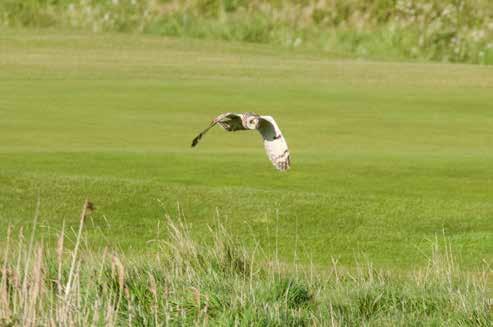
Short-eared Owls were seen at Felixstowe Ferry on the 1st and 3rd, Shingle Street on the 14th and at Falkenham Marshes on the 16th and 20th. Around the county on the 2nd there were several Hobby sightings. There were four Ring-necked Parakeets seen in Ipswich on the 6th with one on the 23rd. A Red-backed Shrike was at Thorpeness old caravan park on the 22nd and a female along the Tomline Wall at Felixstowe Ferry on the 28th. Up to four Ravens seen at Melton on the 2nd plus noted at Bucklesham (8th), Chillesford (12th), Needham Market (15th) and Woodbridge (22nd). A Grasshopper Warbler was reeling at Martlesham Creek on the 19th. A Firecrest was noted at Hollesley on the 6th. A male Ring Ouzel was noted
at Westleton Heath on the 1st. There were three Spotted Flycatchers at Long Melford on the 7th. A female Pied Flycatcher was by Southwold sewage works on the 9th. Black Redstarts were noted at Lowestoft on the 14th and four at Sizewell on the 15th. A single Common Redstart noted at Landguard on the 5th. Three Whinchats were on Landguard Common on the 6th and one at Walberswick on the 14th. Six Common Crossbills flew north-east over Melton on the 30th.
2nd - Hooded Crow reported by Dunwich shore pools and one over Minsmere south levels and landed in Sizewell pines on the 7th.
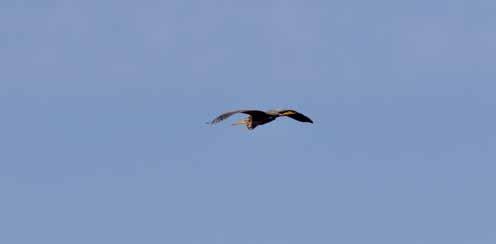
6th - Purple Heron was seen at Kingsfleet early morning and one high west over Peto’s Marsh on the 27th.
7th - a Black Kite was found soaring over the Alde Estuary and possibly the same bird later on flying north over Wenhaston and the Alde Estuary. A possible seen over Levington on the 24th.
9th - a possible Honey Buzzard was noted over the golf course at Aldeburgh plus one
south over Felixstowe on the 16th and one over Westleton Heath on the 18th and the nearby village on the 24th.
9th - there were four White-winged Black Terns found at Southwold Town Marshes early morning and were seen to fly north and were then relocated at Peto’s Marsh.
9th - a Great Reed Warbler was found singing at Carlton Marshes in the evening.
15th - a brief Short-toed Lark was at Landguard Common before flying high south. 17th - a Caspian Tern was reported over Newbourne heading towards Martlesham Creek.
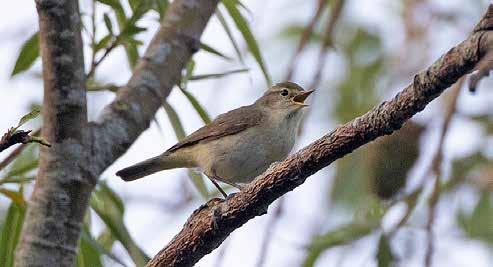
18th - a singing Iberian Chiffchaff was at Minsmere along the road to Eastbridge and remained throughout the month (it was first found on April 19th).
21st - a singing Marsh Warbler was present for one day at Belstead Brook Park.
24th - a Golden Oriole was heard in Blaxhall village with another heard singing by Scott’s Hall, Minsmere on the 29th and a female at Redgrave Fen on the 31st.
A warm start to the month with temperatures around 23C and 24C and it remained like that for most of the month with 19 days of 20C and over. The maximum was 28C between the 24th and 26th. Similarly nighttime temperatures were mild and ranged from 4C to 17C. Compared to recent months there was significantly more rainfall, with over half the days in the month receiving some rain. The peak was 24.9mm on the 10th and 21.1mm on the 18th.
As you would expect at this time of year, given the luxurious foliage, many birds were heard but not seen. Concentrating on the sightings; drake Garganeys showed up at Botany Marsh (1st), North Warren (16th) and Minsmere (21st). Common Swifts were seen in big numbers; an amazing sight with over four thousand south over Hopton on the 27th,
which was eclipsed two days later with 17500 south over the harbour mouth at Southwold – a Suffolk day record count. Two Common Cranes flew over Carlton Marshes on the 3rd. Curlew Sandpipers were seen on Trimley Marshes (1st), Walberswick (8/9th) and Lakenheath Fen (13th). Spotted Redshanks were on the Alde Estuary (19th), Hollesley Marsh (20th), Minsmere (21st and 24th), Trimley Marsh (25th) and at Ramsholt Lodge Farm meadows (29th). Wood Sandpipers were seen at Hollesley Marsh between the 11th and 15th and from the 20th to 22nd and at Minsmere on the 30th.
Four Little Gulls were present at Minsmere on the 1st, 5th, 6th and 13th then a single on the 17th and 19th. A Caspian Gull was at Pipps Ford on the 9th. Three Roseate Terns were present at Minsmere between the 7th and 24th, one north offshore at Thorpeness
on the 8th and two south past the coastguard cottages at Dunwich on the 15th, likely heading to Minsmere. A Glossy Ibis was seen at Botany Marsh on the 1st. Spoonbills were seen almost daily throughout the month at Hollesley Marsh and other coastal sites. Cattle Egrets were noted over the golf course at Aldeburgh on both the 2nd and 14th, at Carlton Marsh on the 2nd and 3rd and flying along the River Waveney at Homersfield on the 20th. Great Egrets were recorded at Blythburgh (5th), Carlton Marshes (7th), Botany Marshes (10th) and on Hazlewood Marshes (22nd).
A Hen Harrier was sighted at North Warren on the 9th and Knodishall on the 16th. Singles of Osprey noted at Playford (6th), Thorpeness (8th), Shingle Street (17th), Castle Marsh North Cove (23rd) and over the Deben Estuary and Minsmere, both on the 30th. A single Lesser Spotted Woodpecker was noted at Kersey Tye on the 23rd. A female Red-backed Shrike was in Walberswick on the 2nd, another female in roadside hedges between Hollesley and Shingle Street on the 8th and a male on Westleton Common on the 11th. Ravens featured again, with all three sightings - at Hollesley, Great Blakenham and
three at Needham Market - recorded on the same day, the 14th. A reeling Grasshopper Warbler was heard by the Alde Estuary on the 13th. A Firecrest was seen in the Holm Oaks at Landguard Bird Observatory on the 5th. A singing Black Redstart was at Woodbridge on the 24th and one in the dunes at Minsmere the next day. There were two Spotted Flycatchers at the old caravan park at Thorpeness on the 5th.
Scarcer June Sightings
1st - A probable Honey Buzzard was seen to come in off at Bawdsey cliffs and head south. One south over Minsmere on the 14th and a dark phase bird drifted over Kirton on the same day.
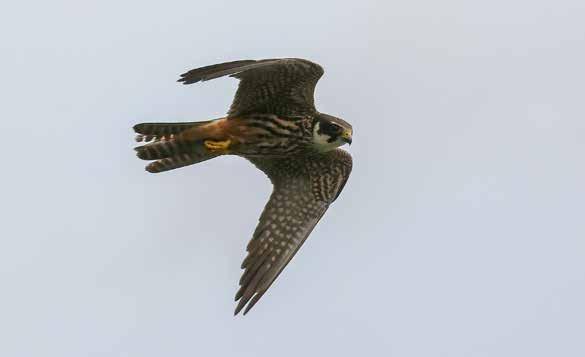
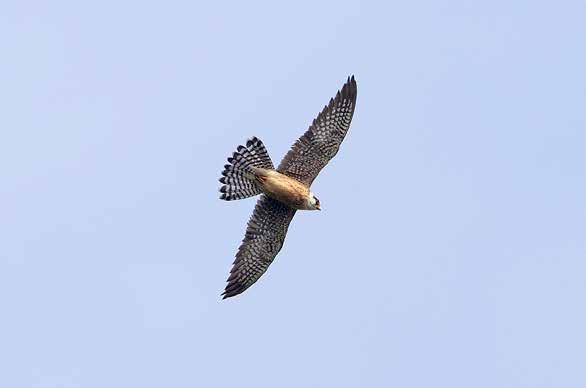
1st - A first-summer male Red-footed Falcon flew south over Breydon Water south wall. One flew south over Slaughden yacht club on the 16th, a first-summer female was present over the reedbeds at North Warren between the 16th and 18th, one east over St. Olaves on the 25th and a first-summer male at Minsmere on the 29th.
2nd - a Marsh Warbler was found singing by the pond on Landguard Common and on the same day one at Long Melford. A probable bird was heard singing at Stowmarket on the 3rd. Two birds were found in suitable breeding habitat around Southwold on 8th and were last seen on the 12th. One was at Minsmere on the 14th and a singing male on private land on the Alde Estuary on the 16th.
2nd - a Common Rosefinch was trapped and ringed at LBO and remained in the compound throughout the day.
2nd - at Worlingworth a Golden Oriole noted, one singing early morning at North Warren on the 9th, a first-summer male at Hollesley RSPB on the 14th and one singing at Minsmere on the 23rd.
2nd - a Great Reed Warbler was singing at Carlton Marshes.
3rd - a male Grey-headed Wagtail was found around the sheep paddocks at Easton Bavents.
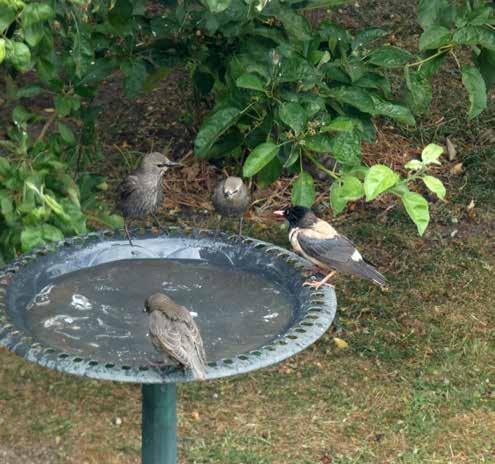
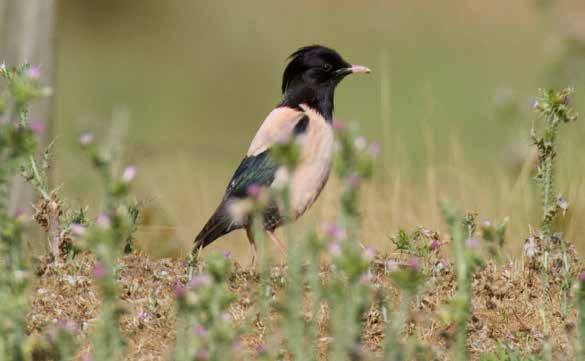
4th - a Rose-coloured Starling was seen in an Ipswich garden in the Stoke Park area. One was in Southwold on the 8th with one the following day at Landguard Point, another in a garden at Mendlesham on the 13th and two reported in the churchyard at Stoke-byNayland on the 19th.
5th - the singing Iberian Chiffchaff remained at Minsmere throughout the month.
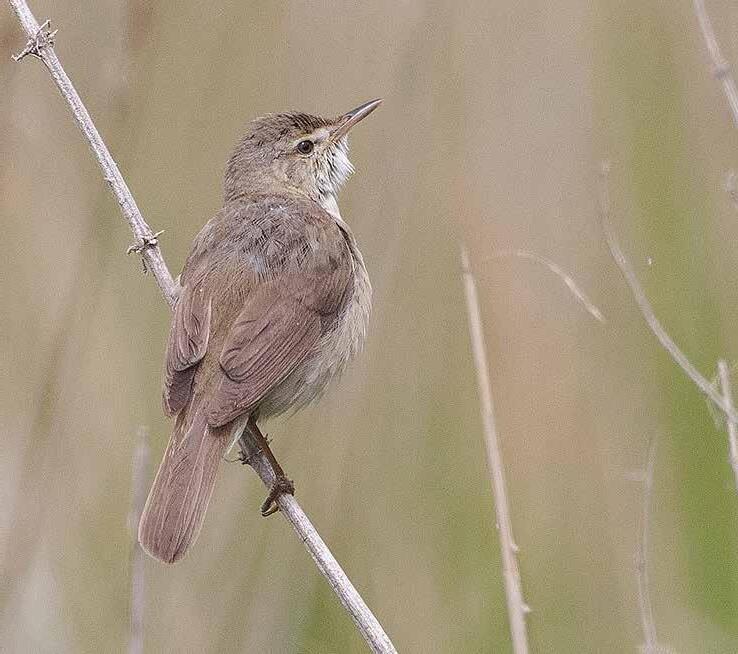
6th - an elusive Blyth’s Reed Warbler was found at North Warren. A much more confiding bird was present by the boating lake at Southwold between the 7th and 9th.
7th - a Savi’s Warbler was present at North Warren until the 10th.
7th - a Black-winged Stilt was on Dingle shore pools, Dunwich and one north over Hollesley Marsh on the 13th.
13th - a White Stork flew over Chelmondiston.
13th - European Bee-eater was heard over Aldeburgh Town Marshes.
19th - a White-tailed Eagle flew over Elmsett early afternoon.
There were generally warm temperatures throughout the month with only seven days below 20C. It reached a peak of 31C on the 31st. This date had the highest night time temperature also, at 16C. There was significantly more rainfall than we’d experienced for some time, with some rainfall on almost half of the days in the month. There was 18.3mm of rainfall on the 12th with 12.2mm the following day and 8.1mm on the 25th.
Another quiet but interesting month; up to 3 Garganey were seen at Botany Marsh between the 13th and 20th. Two Common
Cranes were seen over Minsmere on the 23rd. Little Ringed Plovers showed at Ramsholt Lodge Marsh on the 14th, 19th and 21st and up to four at Minsmere on the 21st and 27th. At Benacre Broad six Sanderling were present on the 21st. An adult Curlew Sandpiper was on Ramsholt Lodge Marsh from the 28th to the 30th. Spotted Redshanks were seen at Ramsholt Lodge Marsh (up to 2), Minsmere (up to 15) and Trimley Marsh throughout the month. Wood Sandpipers were seen throughout the month regularly at Minsmere, Ramsholt Lodge Marsh and at Botany Marsh. A Sooty Shearwater was seen off Thorpeness on the 29th.
Spoonbill were evident throughout the month at Ramsholt Lodge Marsh (up to 16
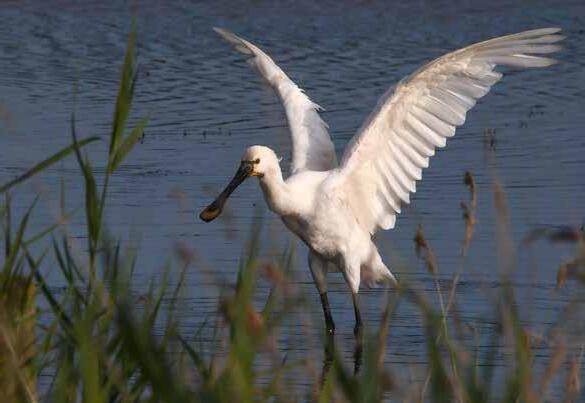
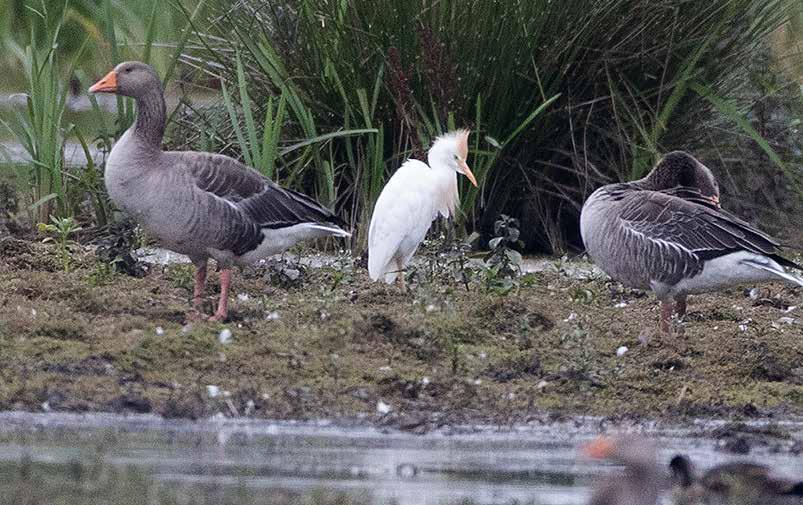
- including a Dutch-ringed individual on the 28th) and also noted at Southwold, Minsmere, Covehithe, Trimley, the Alde Estuary, Orford, Boyton, Hollesley and a group of seven at Benacre at the end of the month. Great Egrets were seen throughout the month at Carlton Marsh, Gromford, Lakenheath Fen, Botany Marsh, Trimley Marsh, Minsmere, Boyton Marsh and Dingle Marsh. A Cattle Egret was found on Botany Marsh on the 19th and remained until the 27th. There were five at Boyton on the 28th - some excitement here as this was the highest number seen together in Suffolk...only to be overtaken with six the next day!
Red Kites were again widespread over the month. One Osprey flew south over Lowestoft on the 1st, one south over Boyton on the 6th, one south over Beccles on the 10th with likely the same bird seen shortly after at Wolsey Creek on the Blyth estuary
and finally one south over the Deben Estuary on the 17th. A Short-eared Owl was noted at Felixstowe, in fields off Gulpher Road, on the 15th. A Ring-necked Parakeet was seen north over Oulton on the 16th. Two Ravens were seen at Long Melford on the 26th. A Wood Warbler was trapped at Landguard Bird Observatory on the 24th with a second trapped at the site on the 26th and one was seen briefly in Alderton on the 29th. Up to three Black Redstarts were seen throughout the month at Landguard. A Whinchat was seen at Martlesham on the 7th. A movement of Crossbills noted during the month; at Landguard Bird Observatory eight south on the 1st, 15 over on the 5th and a further 11 over on the 28th. Some further passage with 15 birds south over Aldeburgh on the 7th and two over the Blyth Estuary on the 16th. A solitary Hawfinch was seen at Hadleigh on the 16th.
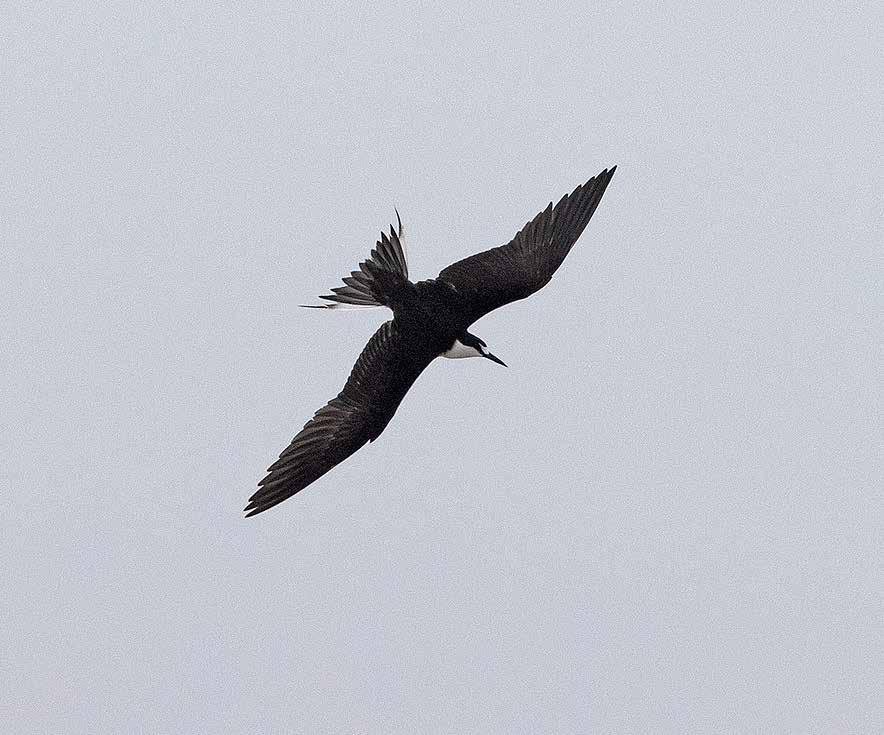
Sooty Tern
1st - the long-staying Iberian Chiffchaff continued to be present at Minsmere and was last reported on the 18th.
2nd - a Serin was at Landguard and seen again subsequently on both the 6th and 9th.
6th - a Night Heron was seen in flight over Carlton Marsh in the evening.
6th - a Black Kite flew south past Hopton cliffs.
8th - a great Suffolk record - a Sooty Tern was seen at Sizewell rigs having earlier flown south over Minsmere and though to be either Sooty or Bridled Tern.
10th - an adult Caspian Tern flew north over Minsmere scrape.
15th - a Honey Buzzard was reported south over Carlton Marshes. One flew southeast over Butley on the 17th and one was reported in off at Lowestoft North Denes and continued inland on the 31st.
17th - at a private ringing site in Hollesley a Marsh Warbler was trapped and ringed.
29th - another great tern record, this time Gull-billed Tern was seen at Alton Water.
31st - a male Red-footed Falcon was seen around Bromeswell.
Council for 2020
Officers
Chair: Chris Courtney
Vice Chair: Justin Zantboer
Secretary: Chris Keeling
Treasurer: Anne Wright
Communications Officer: Alex Rafinski
Projects Officer: Chris Keeling
Suffolk Bird Report Editor and SORC Link: Nick Mason
Harrier Editor and Outdoor Events Coordinator: Gi Grieco
Indoor Events Coordinator: Adam Gretton
President
John Grant
Members
Eddie Bathgate
Peter Merchant
Jamie Everett
Roy Marsh
Matthew Deans
Edward Jackson
Adam Faiers
Honorary Vice-Presidents
Jean Garrod
Robin Hopper
Mike Jeanes
Mike Marsh
Philip Murphy
Reg Snook
Steve Piotrowski
Bird Recorders
North-east Area Recorder: Andrew Green, 17 Cherrywood, HARLESTON, Norfolk IP20 9LP Tel: 07766 900063 Email: bird-ne@sns.org.uk
South-east Area Recorders: Gi Grieco Tel: 07951 482547 and Steve Fryett Tel: 07593 382082 4, The Street, Melton, Woodbridge, IP12 1PW. Email: bird-se@sns.org.uk
West Area Recorder: Colin Jakes, 7 Maltwood Avenue, BURY ST EDMUNDS IP33 3XN Tel: 01284 702215 Email: bird-w@sns.org.uk
c/o SNS, The Museum, High Street, Ipswich, Suffolk IP1 3QH
Founded in 1973 by a group of Suffolk birdwatchers
Associated with the Suffolk Naturalists’ Society
SBG remains an independent birding group and is a registered charity
A voice for Suffolk birdwatchers
With established links to many naturalist and conservation organisations
Media
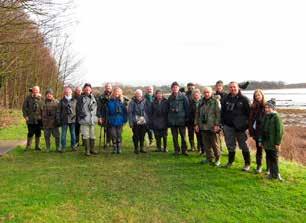
Actively lobbies to protect key Suffolk habitats
Provides a county-wide field force of bird surveyors
Promotes BTO bird surveys and organises special SBG surveys

Strong web presence - www.suffolkbirdgroup.org
Active Twitter feed - @suffolkbirds1
Quarterly magazine - The Harrier
Annual review - Suffolk Birds report
Annually (20+) field trips - ideal for novices or experts and young or old alike
Opportunities to visit hot spots and receive practical ID tips in the field
Programme of talks and presentations - variety of topics (county, national, or international) with quality speakers
Assists with conservation projects to improve breeding success
- Swifts
- Barn Owls
- Peregrines
- Waders
Partners with Suffolk Wildlife Trust and other bird groups
Assists with funding for bird hides and other birding amenities
Contributes to community events, including dawn chorus walks
Provides bursaries for special projects