
Gi Grieco
Gi Grieco
Welcome to The Harrier. I wrote in the previous editorial that it was a big year for SBG and the 50th anniversary meeting in October was a great way to celebrate such a momentous occasion. I was sad to miss it (due to Covid), the first indoor meeting I’ve not attended for some time, but pleased to find out about the evening in the write up from SBG Project Officer, Chris ‘Camo’ Keeling. Chris participates, along with other SBG members, in a variety of projects and one such, the Shotley nesting project, has an update on its progress within. In other SBG news we ask you to please nominate for the Garrod Award and we have a report from a project that SBG has funded through a bursary. With Golden Pheasant all but gone from the Suffolk Brecks it is interesting to see what this study revealed.
Talking of species, we have an article that will hopefully provoke some thought and discussion, from Steve Noble. A recent SBG indoor meeting had talks on the successful re-introductions of Osprey, White-tailed Eagle and, more locally, Peregrine. Can this be extended to other species? The article also references some of the species that are known to impact some of our woodland species. This is something covered previously within The Harrier, from Scrub Up Britain. There are current payments for culling for deer and squirrel control as part of woodland management grants from the Forestry Commission
It is always pleasing to receive articles from SBG members, of the wildlife they enjoy and the activities they are involved in. This issue includes two, one from long-standing member Jonathan Lawley on an important bit of habitat at his home and from Rasik Bhadresa on bird-ringing activities. The group often supports other organisations, such as the BTO and there are details of a new survey to get involved in. We have the usual selection of trip reports and the quarterly bird review – many thanks to John Kornjaca for taking this on.
Finally, a big thank you to all the contributors throughout the year, to receive such interesting articles and a plethora of superb photos, makes the magazine a pleasure to put together. A thank you also to Lester and Jason of PFP Print for their work in producing the magazine
Wishing you all a bird-filled 2024.
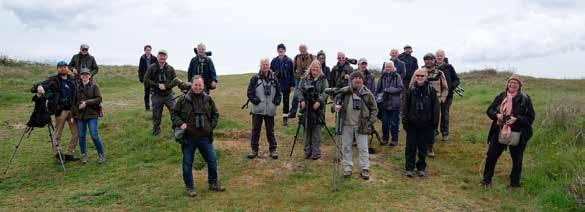
The group has had another year with a great variety of trips; we had some of our favourite and regular ones along with a selection of areas we only visit occasionally. It was nice to visit Kings Forest, somewhere we hadn’t visited for some years and it turned out to be a very successful trip. We like to explore as much of the county as possible throughout the year along with visiting places further afield - since Ashley Gooding moved to Colchester we’ve continued to have a few trips in Essex and we again went further afield to stay to Sandwich Bay in Kent.
It is only possible thanks to all those that attend but especially to all the leaders that volunteer their time to guide members
Eddie Bathgate, SBG Chair
around these trips. I’d like to express my thanks to the following: Dave Pearsons, Ashley Gooding, Steve Fryett, Richard Smith, David Walsh, Adam Faiers, Val and Ivan Lockwood, Nigel Odin and Eddie Bathgate.
The outdoors trips are always good fun, are a friendly, social gathering of members and it’s been great to see a number of newer members regularly attend. I have asked attendees on where they would like to visit and we have a new site to visit in 2024. A number do car share to attend the meetings and we would ask, where possible if members, continue to do so.
I look forward to seeing many of you on these walks next year.
We are pleased to announced that our subscription rates will not be increased for 2024. SNS are keeping their rates at their 2023 levels too.
Our biggest outlays are the production of The Harrier and the room hire and speakers for indoor talks, although we are fortunate

that many in-house speakers do not charge a fee. There is also insurance, computer and website costs. Council have worked very hard to control our costs and to ensure we receive the best value for money as we realise that the current cost of living crisis is affecting us all.
This award was created to celebrate the warm welcome Ken and Jean gave to all – but especially younger – newcomers to SBG. In recognition of this support for younger people, the award is made annually to a young Suffolk-based bird or wildlife enthusiast for their involvement or contribution to birding, conservation or the environment.
A nomination form can be entered online on the SBG website - www. suffolkbirdgroup.org/the-garrodaward. The winner will receive a certificate, a SBG T-shirt and a year’s membership of SBG. They’ll also have the opportunity to have an article published in The Harrier about their wildlife experiences. The closing date for nominations is January 14th 2024 and the award will be presented at the SBG AGM.
Chris Keeling
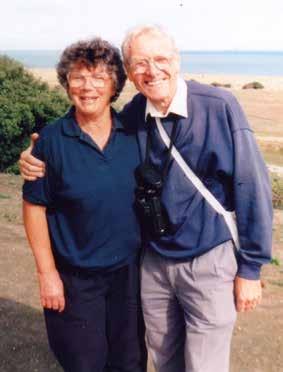
Jean and Ken at Landguard 1996
On Thursday 19th October 190 people packed Woodbridge Community Hall for a joint event with the Suffolk Wildlife Trust to celebrate the 50th Birthday of the Suffolk Bird Group and a talk by Mark Cocker. An entrance fee of £5 was payable on the door with under 25’s free of charge. Raffle tickets were also available to purchase before the start of the talk although the entrance fee also included a ticket for the evenings raffle; which included amongst the prizes a pair of binoculars kindly donated by Viking Optical Centres and a signed copy of Mark Cockers new book ‘One Midsummer’s Day’. Mark was also on hand to personally
sign copies for members of the audience. Teas and Coffees were also available at the interval, with cakes to add to the birthday celebrations!
After arriving early to help set out the seating it was fantastic to see that almost every seat was taken in a packed hall, with many founding members present, to hear SBG President John Grant describe how it all began when a series of lectures by Bill Payn titled ‘The Birds of Suffolk’ encouraged Ivor Murrell, Malcolm Bowling, Robin Hopper and the late Ken Carlisle to find out more about birds and birding in Suffolk. The legacy of those first meetings in east and west
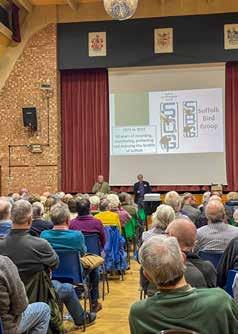
Suffolk lives on today as in 2021 when the SOG council agreed to choose a new name for the group to reflect its inclusivity and to encourage new members. Whether novice, passionate birder, dedicated twitcher, or helping with surveys and projects, all are welcome.
Members of SBG receive a copy of group’s quarterly magazine The Harrier today while members of SBG and Suffolk Naturalists’ Society also receive a copy of the Suffolk Bird Report. A massive thank you here to Gi Grieco, editor of the Harrier and Nick Mason for compiling the annual bird report. It was fitting that the theme of Mark’s new book, the Common Swift should carry the news advertising his talk and SBG’s 50th Anniversary. The huge success of SOS Swifts – a joint project between SWT and SBG – in raising awareness of Swifts and the threats they face in a changing world is an excellent example of joint working and community engagement. Swift Groups now operate in communities across Suffolk with groups
in Aldeburgh, Ipswich, Southwold and Felixstowe amongst several others. Mark took his audience on a journey with Swifts on their migration through continents and our place in the web of life with almost 600 slides from his travels over many years. In Mark’s words: ‘It takes a whole universe to make just one small black bird’. Although acutely aware of the pressure the natural world is under (e.g. 10g of neonicotinoid theoretically can kill 2.5 billion bees) Mark described his book as a celebration, not a lament, but as a reminder that we are all utterly dependent on healthy ecosystems at every trophic level, whether in our gardens, countryside, the oceans that surround our islands or the sky above – where we look for returning Swifts every spring, eagerly awaiting the screaming heralds of summer.
A lively Q&A session followed with a wide range of questions. Roy Marsh asked what is the best thing we can do to make a difference to the current biodiversity crisis. Mark mentioned a number of areas, but suggested finding one small action that makes a difference – ‘everything we do is connected to the whole of life’. He then went on to question whether the UK really is a ‘nation of nature lovers’ as so often claimed given the sales of garden pesticides and artificial grass. He called for unity among the many environmental organisations noting that 74 environmental bodies united to oppose the more extreme anti-green proposals put forward by Liz Truss last year while praising the joint working of Suffolk Bird Group and the Suffolk Wildlife Trust’s Woodbridge group, thanking them both for organising and publicising the evenings event.
As we celebrate 50 years of Suffolk Ornithologists’ Group / Suffolk Bird Group, the name might have changed but the legacy lives on as we continue to engage with individuals, groups and communities to support conservation projects that have secured excellent outcomes.
• Helping to return breeding Peregrines to Suffolk after 200 years - Peter Merchant showed photographs and supporting information about his work with Peregrines in Suffolk
• Reversing the county’s declining Barn Owl population.
• Encouraging focused Farmland Birds work.
• Assisting in the BTO Atlas and other surveys.
• Supporting the Swift nest box programme - SBG Chair Eddie Bathgate brought a collection of nest boxes and supporting information about the work of SOSSwifts
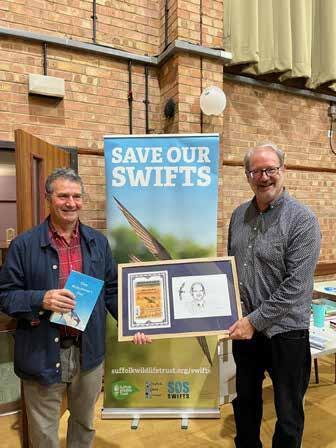
Given the evenings ‘Swift’ theme the celebrations also provided a wonderfully serendipitous opportunity to honour a long-standing member of SBG council, Adam Gretton. Adam has been on SBG Council for 26 years, assisting in a number of roles, providing proof-reading support for The Harrier for a lot of that period. Adam has been the Indoor Events Coordinator since 2005 and has also served terms as both Secretary and Chair. While thanking Adam for all his hard work arranging the anniversary and the talk by Mark Cocker there could not have been a better opportunity to award him with an Honorary VicePresidency and a certificate that included a sketch by Ed Keeble - of Adam and a White-throated Needletail (a first for the Hebrides and eighth for the UK) that was found by Adam and Mark
Cocker on the island of Harris in 2013.
A big thank you to Adam and to everyone who arrived early to help set up the chairs and tables for exhibits and to the volunteer caterers who did sterling service providing tea, coffee and cakes to a packed hall. I don’t know who the bakers were but the Great British Bake Off should certainly come to Woodbridge! And finally, a massive thank you to the 190 people who packed the Woodbridge Community Hall for the evening because with your help, SBG and SWT raised £408 each not only from tickets at the door but also raffle tickets and donations. Thank you everyone and a Happy 50th Anniversary to Suffolk Bird Group.
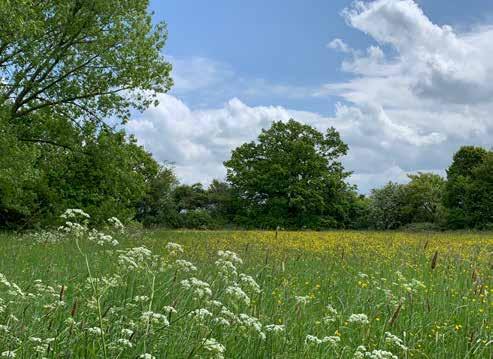
Jonathan Lawley PhD
It was the summer of 1968 when Sarah and I were on leave from Overseas Civil Service in Africa and on our way to look at a cottage opposite Leiston Abbey which was for sale. On our way through Forward Green we saw a notice saying ‘Tudor cottage for sale with land’. We stopped to view the house and the land, five acres in all and within an hour we had bought the property and within few weeks had returned to Zambia.
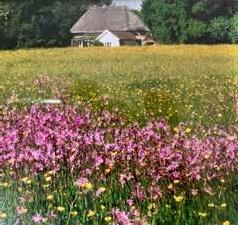
When in the following year we came back to England to occupy our new home, we learned that it was the oldest in the village, known originally as Forrold Green. Our house was Forrold Cottage, thus reflecting the fact that the four-acre meadow had been the gathering place for the village sheep in the late 15th Century when they made a fold to protect the sheep from the wolves. We also found the meadow covered in a great variety of wild flowers growing in the damp soil. We
had bought an undrained meadow which had never been cultivated. In the middle was a pond which a local old-timer, the blacksmith, told us had originally served as the village water supply.
We settled happily into our new home for more than a year before being tempted to return to Africa for nearly 2 years. Before leaving Suffolk we agreed with a local farmer that he could make use of the meadow provided he did not disturb the ancient hedge containing many species including rare Bullace trees. When we returned home after another two years he greeted us with the words ‘I have cleaned up your meadow for you!’ He had applied weed killer so now it was a uniform green.
At this point we were befriended by a stalwart, Edgar Milne-Redhead of the Suffolk Wildlife Trust, who had formally worked in
Zambia and combined sympathy with expert advice. He also gave us three Black Poplar seedlings, now giant trees. That was 1973 and ever since then we have followed his recommended regime of a late cut for hay followed by grazing by sheep. This led to a recovery and the return of many species including various orchids, Snake’s-head Fritillaries, Yellow Rattle and Ragged Robin.
Before returning to Africa we had been delighted with the regular patrolling of the meadow by Barn Owls occupying our very old barn as well as Snipe which in the winter fed in wetter parts of the meadow near the cottage. In winter too came large numbers of Lapwings and hundreds of both Redwings and Fieldfares. We were particularly delighted with the Snipe until a local farmer subsidized by the EU drained the wet meadows down stream of our church along the banks of what we call the Jordan, a tributary of the Gipping. Last winter we saw none of these birds.
It was that period after 1973 that my interest in local birds arose and grew. It started with the beauty of my first Goldfinch which so impressed me. I phoned up the RSPB to be enlightened and continued with the various migrants including a Hoopoe on the meadow - all the way from Zambia, we imagined. Beyond the Chiffchaffs and Blackcaps there were Spotted Flycatchers nesting in bushes on pipes against the house or in ivy in nearby trees. They have been annual visitors until last year. Encouraged at first by a local resident Ms Mortimer, I came to recognise and rejoice in the presence of other birds including the Marsh Tits and Willow Tits nesting in the thick vegetation beside a small pond outside the kitchen window. Then there were the Linnets which arrived every year in late summer to feed on the Sorrel. One autumn I spotted a passing female Pied Flycatcher. Another treat was seeing a pair of Redstarts on our front lawn. More recently came the Tree Sparrows which nested first in a hole in our ancient
apple tree and then a total of five pairs were happy to take to nest boxes around the garden until about ten years ago when they suddenly abandoned us. Most recently we were saddened by a pair of Turtle Doves being taken by a Sparrowhawk; they reminded me of the African bush. We have seen none of these species for years. Most recently and very sadly has come the disappearance of the Song Thrushes which existed in numbers around the garden and used to feed on worms as Sarah dug in the garden close by. They had become increasingly shy before disappearing altogether.
How can this catastrophic decline be explained? It is surely due principally to the disappearance of insects of all sorts, which until recently existed in vast numbers and great variety as we were reminded of ten years ago when we left the light on and the door open in our new conservatory and they appeared in their hundreds if not thousands. Is this due at least in part to pesticides? It is also surely explained in part by the visits of local cats. Perhaps they should all be fitted with bells or other warning devices around their necks. Meanwhile, we continue to manage our meadow unchanged, in hope of the early return of the birds and insects for which until recently we have been a rare local haven.
Rasik Bhadresa
On 22 July, Flatford Mill Field Centre ran their annual free drop-in event, the BioBlitz, aimed to appreciate nature and to count as many different species encountered on the day. Run by centre staff and invited naturalists, the day was packed with all sorts of activities from pond dipping, mini-beast hunting, a twilight bat walk, moth trapping, flower folklore to tree trail, to name but a few.
I decided I would indulge in the early morning bird-ringing session so at 7 in the morning I made my way to the paddock area beyond Willy Lott’s House. Cyril Burton, a qualified bird-ringer, was sitting at a table ready to record the morning’s finds. He had set-up two mist nets in the secluded wooded scrub habitat (TM078330) earlier. On his left was a stand with white soft drawstring cloth bags,
ready for collecting the birds in. At around 7.15 hrs his helpers Maureen and Clare were ready to venture out to examine the nets, and as a special favour, allowed me to join them. They picked up a few ‘bags’ and we were off. A hundred yards later, we came to the first mist net and there was nothing. However, on the second one further up to our right, we spied four small birds caught up in the fold of the net. To reduce undue stress on the birds, I stayed as far back as I could while Maureen (who was BTO-qualified to handle the birds) and Clare went to extricate the birds, one at a time. Carefully and gently, Maureen untangled each bird from the net (a Wren, a Blue Tit and two Dunnocks) and placed them in individual bags for examination and ‘ring’ back at base.
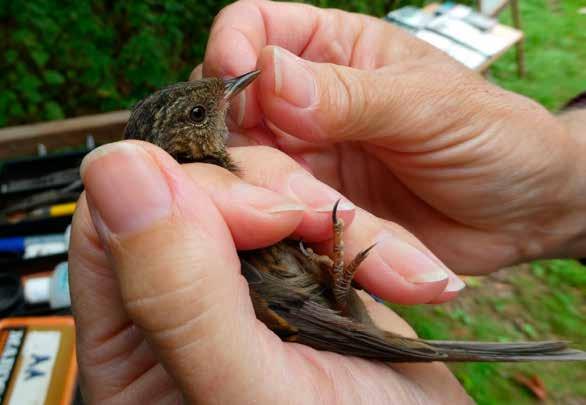
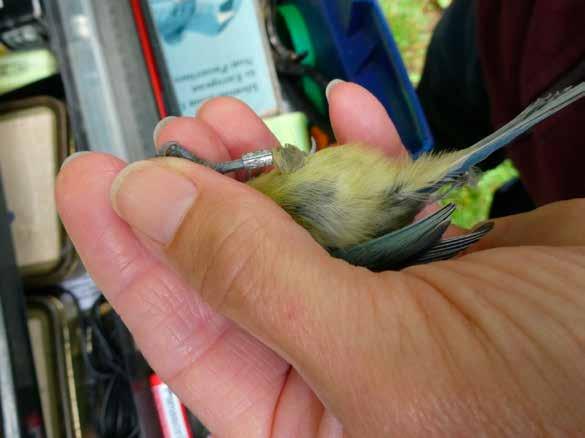
The bird-ringing process began with a Dunnock (photo 1). Recording: first the species, then the gender (not always possible if juvenile), age, wingspan and weight. And finally placing a ring with a unique reference (TJ93161 for this Dunnock) round a leg using a special pair of pliers (photo 5). For release, Maureen passed the bird into my cupped hands. Thinking it would simply fly off as soon as I lifted my top hand, this bird was actually quite happy just to stay there. I had to give it a nudge for ‘lift-off’! None the worse for wear, the process was repeated delicately with all the other birds (Blue Tit next, see photo 2). There was by now quite a sizeable crowd of onlookers. Maureen and Clare disappeared three more
times (last ‘collection’ 09.30 hrs) to fetch the birds. And Cyril fittingly recorded the details. This morning session produced a total of 19 birds and included Wren (5), Chiffchaff (1), Treecreeper (1), Blue Tit (1) Blackcap (1), Coal Tit (1), Chaffinch (2), Dunnock (5), Great Tit (1) and Robin (1). It was wonderful to see the birds at such close quarters. So, I would whole-heartedly suggest, if ever you have a chance to watch any bird-ringing, just take it, you won’t be disappointed!
Thanks to everyone who took part, the BioBlitz day produced a staggering total of 190 species identified and recorded. And thank you, Flatford Mill Field Centre, for hosting the event.
Steve Noble
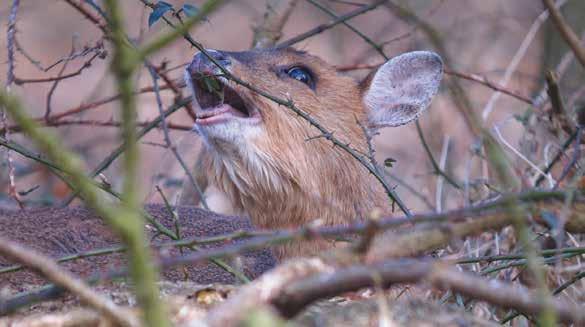
Earlier this year, I visited a local Suffolk nature reserve at dawn, well before most people are about. I saw one or two interesting things, but the most striking feature was the large numbers of Grey Squirrels and Muntjac that were visible (I am talking well into double figures on a site of only a few acres). Bearing in mind that human observers will necessarily only see a proportion of the actual population, the impact of these alien species on the environment must be considerable. So, is there a serious plan out there to deal with these interlopers? Not that I am aware of.
We know that the presence of Muntjac has a significant effect on woodland ground vegetation (and, by extension, bird life), and yet apart from fencing a few particularly special sites, nothing is done. Controlling by shooting is supposedly difficult due to animal welfare issues, but the alternative seems to be to wring our hands impotently while the population balloons. I like Muntjac as much as any other nature lover, but unless we start
releasing Lynx (not very likely), there needs to be a serious and long-lasting shooting campaign to reduce Muntjac numbers to much lower levels. Those who find this emotionally unacceptable need to reflect on the fact that doing nothing will only exacerbate the UK’s nature depleted state.
I would be just as radical with Grey Squirrels. Isn’t it great that Pine Martens are munching their way through the Grey Squirrels of the Forest of Dean—but are we seriously going to wait for decades for the martens to spread across the country to Suffolk? We need to reintroduce Pine Martens into Thetford Forest or the Sandlings now! Yes, there may be some adverse impacts on other species, but the martens belong here by right, and will at least act as a brake on squirrel populations.
The fact is, the UK is hardly a world leader when it comes to species reintroduction, and, apart from some large showy species of birds, has done very little. What about Suffolk? If
Black-tailed Godwits can be hand-reared on the Cambridgeshire washes why not do the same in a large, fenced area on the coast in Suffolk? The birds could initially be sourced from a captive-bred population or from Europe. Then there is the Ruff. These used to breed in Suffolk, but we persecuted them out of existence. There is no chance of a natural population re-establishing itself—the numbers just aren’t there. Why not then keep captive-bred birds in a large, caged area in a remote spot and release any progeny into the surrounding area? It might not work, but is it not worth a try? Historically, Savi’s warbler also used to breed in East Anglia, and although they have tried to establish a toehold again in recent decades, the numbers are also not there for a successful re-colonisation. Could our conservation bodies source say 100 eggs each year from eastern Europe that could be
placed in the nest of a commoner relative? Not as glamorous as importing Kites or relocating Ospreys but surely just as worthy! And how are Willow Tits going to get back to Suffolk even if we manage to get the habitat right again for them? Surely, we should be captive breeding them now in readiness. I am as eager to explore sea-eagle releases as much as anybody, but they are now only a short glide away in Holland and will likely get here under their own steam. We shouldn’t forget the little birds that don’t have that ability!
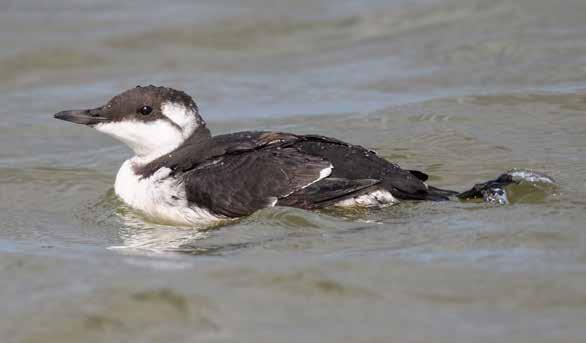
A final thought. If Sizewell C goes ahead, why not press the energy supplier to put up some ledges and plastic decoys on the outflow so that we can get Shag and Fulmar (perhaps even Guillemot) nesting in Suffolk?! A little bit of payback …
Chris Keeling- SBG Projects Officer
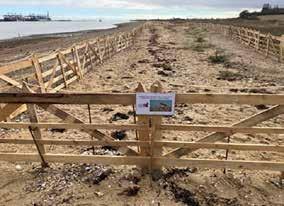
Alex Moore, the AONB Nature Recovery Officer, e-mailed on April 13th with great news that one of our volunteers Phil Price had seen a Ringed Plover sitting on eggs. A pair of Oystercatchers were also reported as likely to be nesting. The pair of Ringed Plovers were also later observed performing their courtship display and mating within the fenced area during the month.
I am now very pleased to report that in August, three Ringed Plover chicks were seen and photographed in the largest of the dog proof enclosures.
This is a crucial turning point for the project and we hope to expand the trials to a second site in the Stour next season at Wrabness, subject to discussions with the landowner.
The fencing was taken down on the 29th September and placed in storage in out buildings on a neighbouring farm. Alex and I hope to write up a full report in due course.
Emma Caulfield, WinGS Network Organiser
You may be aware that the British Trust for Ornithology are relaunching the Winter Gull Roost Survey after a gap of 20 years. We are looking for volunteers that enjoy counting gulls at roost and that are interested in collecting wintering gull data. This information will aid us in vital monitoring efforts to assess population changes and provide data for the designated of protected wintering sites.
The Winter Gull Survey collects information about our wintering gull populations, through the coordinated effort of volunteer surveyors across the UK. In winter, gulls flock together to roost communally on lakes, reservoirs and estuaries, in groups that can reach the thousands.
The Winter Gull Survey (WinGS) will run over the winters of 2023/24 and 2024/25 to collect updated information on the numbers and distributions of these wintering gulls in the UK, the Channel Islands and the Isle of Man.
WinGS volunteers visit gull roost sites, counting six key species: Black-headed Gull, Common Gull, Mediterranean Gull, Lesser Black-backed Gull, Herring Gull and Great Black-backed Gull. These gulls are all of conservation concern, and their breeding
populations are either Amber- or Red-listed in the UK.
Gathering more detailed information about wintering populations, and which roost sites they rely on, will help us protect them and develop more effective conservation strategies.
The survey will involve visits to key gull roosts and random samples across inland and coastal sites in January. Supplementary count data at key roost sites in Autumn is also encouraged to monitor seasonal differences in gull numbers.
For more information and to sign up for the survey please visit www.bto.org/wings. There is information on taking part with a link to where you can find available sites in your area.
If you have any questions don’t hesitate to contact wings@bto.org.


Will Smith
Britain’s Golden Pheasants (Chrysolophus pictus) can evoke strong reactions from birders. These range from derision as ‘plastic’ additions to our avifauna, to fond memories of long waits to catch a glimpse of red plumage at well-known sites such as Wolferton, Mayday Farm, or Wayland Woods. Golden Pheasants are native to China, but are common aviary birds around the world. Only in the UK did potentially naturalised (self-sustaining) populations persist for more than a few decades (with the largest populations existing in the middle of the previous century). Despite this, little was done to record or study their presence, even as numbers began to drop. A radio-tracking study (Balmer et al., 1996) identified that they had very small territories of only a few hundred square metres – perhaps explaining why they never seemed to spread far from centres of introduction – even at sites with higher numbers (such as Breckland and Galloway Forest Park).
Britain’s Golden Pheasants have been steadily declining in number in recent decades. ‘Self-sustaining’ British populations of their close relative, the Lady Amherst’s Pheasant (Chrysolophus amherstiae) died out completely around 2016. Whilst the history of the latter species in Britain, and the factors underpinning its fate, were discussed in an informative 2005 British Birds article (Nightingale, 2005), the Golden Pheasant’s UK story had not received such treatment.
Supported by a grant from Suffolk Bird Group, I carried out a project aiming to outline the Golden Pheasant’s history and contemporary status in the UK. This involved a combination of three activities:
- A status review, involving books and local bird reports as well as eBird/ BirdTrack reports. This enables us to highlight the history of the Golden Pheasant in Britain, and to discuss recent sightings.
- Personal communications with landowners, staff, birders, and other interested parties, to gather information about specific sites (to understand when and where illegal releases from captivity have occurred recently).
- A field study focussed on a small Suffolk population in Breckland. This population is occasionally claimed to descend from the original naturalised population, and was suggested to consist of 20-30 individuals. We carried out a markrecapture study (under BTO ringing permits and with special permission to target this species) coupled with camera trapping, in order to estimate population size.
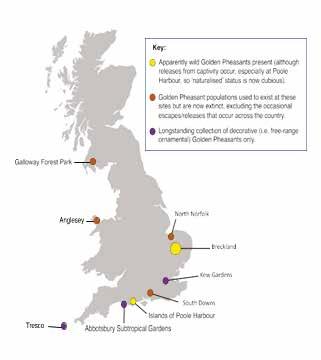
The existing literature, coupled with eBird/ BirdTrack data and personal communications with various stakeholders, highlights a sustained decline across their British range. By 2020, Golden Pheasants had been lost from previous haunts in the South Downs, Galloway Forest Park, Anglesey, and Wolferton in Norfolk. The species is still reported frequently on Tresco, Abbotsbury Subtropical Gardens, Kew Gardens and Strathdearn, Highland – but these are released individuals – sometimes even fitted with avicultural rings. Lady Amherst’s Pheasants, Reeve’s Pheasants (Syrmaticus reevesii), or Peafowl (Pavo cristatus) also often turn up at such locations, confirming local interest in releasing exotic gamebirds. Only in the islands of Poole Harbour
(especially Furzey Island) and at a single site in Breckland do potential ‘wild’ populations persist. Despite this, releases have occurred at both sites, and the pheasants also receive supplementary feeding. The Poole Harbour population is more obviously ‘managed’, with introductions being fairly regular. In Breckland, there are still occasional claims that the birds there today might descend from the ‘original’ naturalised population which peaked in size during the midtwentieth century. These claims relate to a Suffolk location claimed to have 20-30 individuals. We call this place ‘Site A’ for the purposes of our research, because it is on private land and the birds are very sensitive to disturbance. Other than this, single Golden Pheasants continue to turn up, from time to time, in various sites around Breckland.
These will inevitably be newly released birds, and there is no evidence of any other ‘populations’ excluding that of Site A.
With permission from the landowners, and the involvement of Michal Jezierski (a University of Oxford doctoral student) and Dawn Balmer of the BTO (an author of the 1996 Golden Pheasant radio-tracking paper), we set about to try and estimate the population size at Site A. Michal and I visited the site for a recce in February and early June 2022, and saw just one male pheasant. Nevertheless, we returned in late June and early July for the first round of live trapping. We caught two birds. One was an adult male, and the other a second-year male. Both were ringed, had biometrics taken, were photographed, and then released.
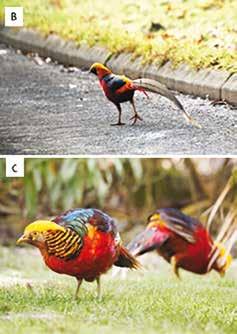
Fig. 1 A. A map showing sites known for Golden Pheasants in Britain, and their 2022 status at each location. B. The presumed final Golden Pheasant of the North Norfolk population —at Wolferton (in 2012). This adult male was often seen by the side of the road adjacent to an area of Rhododendron.
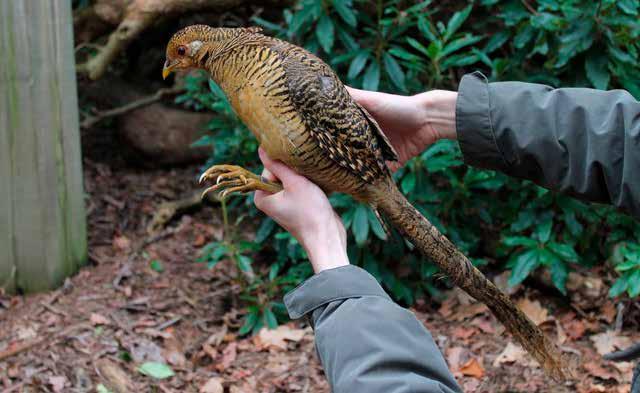
For the second round of trapping, in January/February 2023, we doubled the number of traps, and also deployed two camera traps. This allowed us to assess how many unringed birds were around. We live-trapped another two new birds – a female and an adult male. The camera traps, after the fourth bird had been ringed, only detected ringed birds. Given that we subsequently had multiple sightings of each of the four ringed individuals, and the camera traps were moved around the area of suitable habitat multiple times, it is very likely that there only these four birds remain. For certain, previous reports of 2030 are not correct (although this may have been the case as recently as 10-20 years ago).
Counting the Poole Harbour birds, plus the 4-7 individuals at Site A, this gives a UK ‘population size’ of 37-40. However, many (if not all) of these individuals will have hatched in captivity. Depending on how strict your definition of ‘naturalised’ is, and to what extent any ancestry from the ‘original’ population remains in today’s individuals, the ‘actual’ UK Golden Pheasant population could be in the single figures, or indeed zero. The Site A population,
benefitting from intense predator control, supplementary feeding, and optimal habitat, was unable to persist. It therefore seems that releases, to a large extent, were keeping the UK’s Golden Pheasant population afloat. Now that such releases are much rarer (they are now illegal), the population is in terminal decline. If the number of Golden Pheasants at Site A increased substantially in the future, this would almost certainly signify a new release regime rather than a sudden increase in the population size. Despite this, one of our camera traps caught a male displaying to the female, which means Golden Pheasants might hang on at the site for a few more years!
Much of the scientific study of non-native species, understandably, focusses on those which become invasive (ecologically and economically damaging). To understand the processes underlying the success or failure of biological invasions, we must also carry out research focussed on the many species which fail to sustain non-native populations in the long term. Our Golden Pheasant project provides an avian example of this. I am very grateful to the Suffolk Bird Group for their support.
Sunday, August 20th
Leader: Gi Grieco
In recent years the area around the Aldeburgh Marshes has regularly held water during the start of the return wader passage. This despite elsewhere lacking in water due to low rainfall and hot weather. As such, it was decided to have a walk around the area at this time of year hoping to connect with some nice waders – previously we’ve headed around the area during winter months for geese and wildfowl.
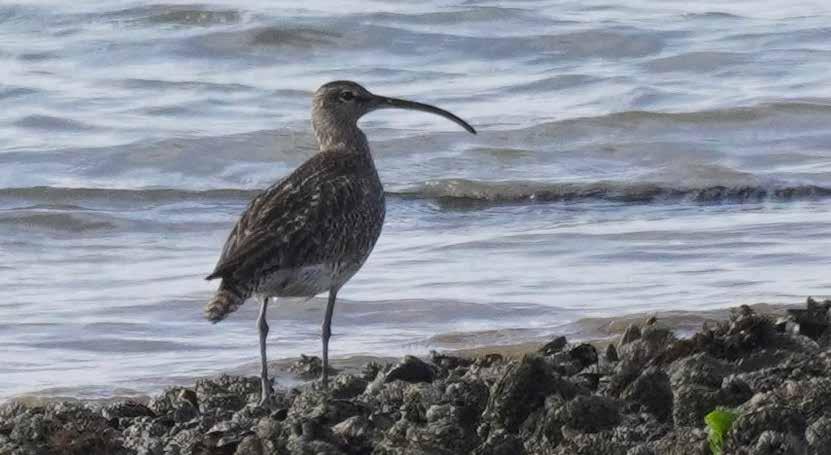
With the meeting starting at 08:30 I decided to get to Slaughden for first light for a bit of seawatching prior to the start. I was joined by Matt Whitcombe, someone who is known as a keen seawatcher! We had a group of c.20 Common Scoter fly in and land on the sea, five Gannets in total, two Sandwich and 11 Common Terns south plus two Little Gulls. Waders also flying included one Whimbrel and four Oystercatcher and we heard a
Greenshank high up that dropped onto the saltmarsh behind us. Another bird we heard was Yellow Wagtail, which dropped onto the shingle beach, with some Pied Wagtails, before continuing on inland.
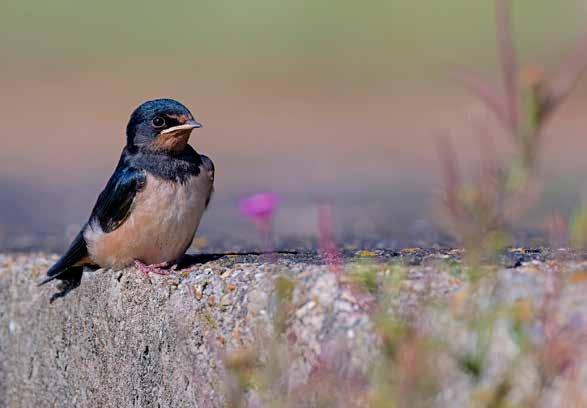
As the other members arrived and we prepared to start the walk we noted a large number of Swallows around the boatyard. We followed the footpath along the river and initially saw Avocet and Curlew then further along, a Whimbrel that showed well on the waters edge. Out on the river, two fishing Common Terns patrolled up and down. Looking back towards Aldeburgh we noted two Stonechats and then the call went up that further along there were two Whinchats – scopes were soon set up to allow everyone a view. We cut across the marsh and moved slowly to scan the first of the pools in order to not flush any waders.
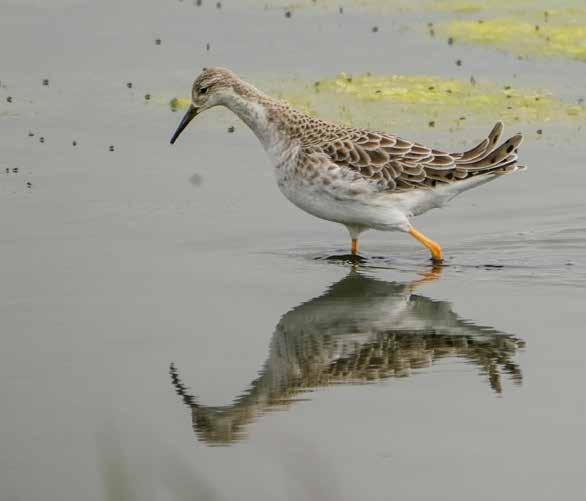
Due to the reeds in the dyke blocking the view only a number of us could view through a suitable gap at a time, therefore we had to take turns to view. Birds included little Ringed Plover, Ruff, several Lapwing and a single Golden Plover. Further out onto the marsh were at least 15 Curlew and whilst scanning another shout by Dave Pearsons that a Glossy Ibis was flying across. Unfortunately, it was too brief to get everyone to see it so we hoped that on the planned walk round we’d get better views. We carried on up the track with some Swifts, Swallows and Sand Martins above. A few Bearded Tits were heard in the reeds and then five Yellow Wagtails flew over.
As we got up towards the river wall again, this time that overlooks the river to Hazlewood Marshes, we noted a bird flit into the hedgerow, this turned out to be a female Common Redstart. With patience most got views of the bird and in the same area a Chiffchaff was also present. From the river wall, looking across to the other shore we found a sole Spoonbill and several Avocets.
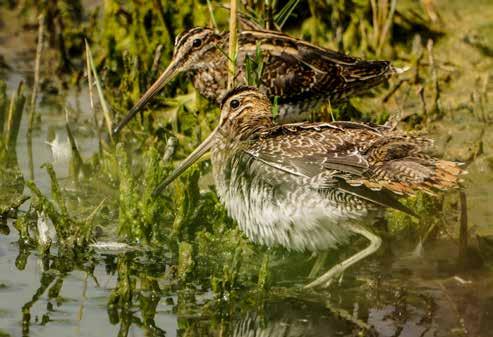
We followed the path back around and with a big group had split up a bit with people looking at different things including yet again the briefest of views of Glossy Ibis in the distance. In the water flashes there were a number of waders and here we found Wood Sandpipers, several Ruff, Snipe, Greenshank and Green Sandpiper. Those further back were communicated with by phone to alert them of the sightings. On the basis of this, SBG has subsequently purchased a set of walkie-talkies which will be useful and quicker to use in such circumstances.
On the final stretch back we continued to scan out on the marsh, knowing the Ibis were out there somewhere. Just when we thought we may have missed them, a brief sighting of a head amongst vegetation in a dyke brought some relief. We moved a bit further along for better views, also helped by birds coming more out into the open. This was great for Jamie Thornton, being a new species for him. We completed the loop back to the cars, having had an enjoyable morning.
Having done a pre-trip recce, I found that the water levels in the reservoir were far too high this year for any mud to be exposed and consequently no waders. This was a blow as this end of the reservoir, from the car park at Abberton church, is a lot quieter than the main causeways and it is where the group were meeting!
I explained this to the group and suggested that we should still have a short walk so that they could familiarise themselves with the area and know where to go in the future. This turned out to be quite beneficial as not only did we have some good birds but also lots of big juicy blackberries. The first bird of note was a Buzzard, perched on a fence post some way off and we also heard Chiffchaff calling and also Great Spotted Woodpecker. Moving on we also had a Kestrel perched on a telegraph pole and in the same area
a very large corvid on one of the electric cables, which on closer inspection, turned out to be a Crow, wishful thinking perhaps as Raven are often seen in the area. A Sparrowhawk was picked up in flight and was soon relocated on a dead tree, although somewhat distant for a good view. There was very little on the water apart from a Little Egret and a few Mallard, this area can also be very good in the winter for Divers, Grebes and wildfowl. As we were looking over the reservoir a few Stock Dove flew over. Time was moving on so we started heading back but we hadn’t gone very far when one of the group called a Whitethroat, as we were watching this another bird flew from a branch and back again, a lovely Spotted Flycatcher. It took a while to get everybody on to it as it was very mobile but it eventually sat for a while on an overhead cable and everybody saw it. We also
had several Swallows and heard a Green Woodpecker before reaching the car park.
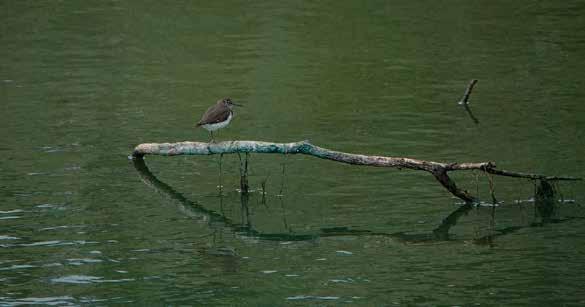
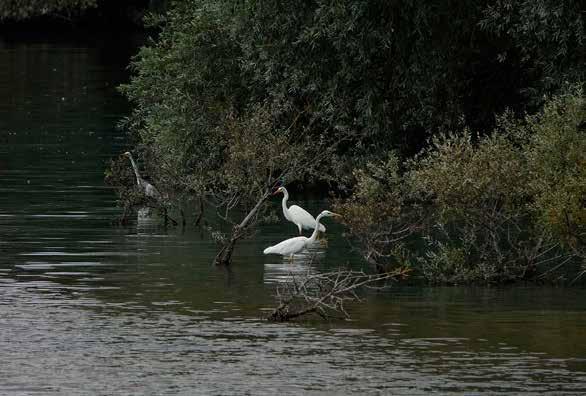
We left here and made our way to the visitor centre so that we could use the facilities and then take a walk along the Layer de le Haye causeway to Billets farm. The water to our left was quite quiet with just a few Mallard, Teal and Lapwing but the right hand side was far more productive. There were five Great White Egrets in the water amongst the overhanging trees and many Little Egrets further away higher up. An active Kingfisher was reasonably close but difficult to get everybody on to and soon flew the width of the reservoir and out of view. A very obliging Common Sandpiper was perched on a branch coming out of the water and would have made an excellent photograph with the right equipment. The
only Cetti’s Warbler was heard very faintly and a rough count of the Cormorants from Eddie Bathgate was 350 in the trees where they nest every year, and I counted at least 80 Great Crested Grebes. We carried on over the causeway and then onto Billets Farm. There is a viewing screen here, but again with the water levels being so high there was very little exposed mud and so wader numbers were very low with just three Ruff and we also found a few Pintail, Teal, three Wigeon and 11 Yellow Wagtails flew over. Lunch was eaten back at the reserve car park and then it was on to Old Hall Marshes.
Once again I was able to get permission for the group to park in a paddock opposite the church in the village and we had barely got ourselves together when a very high Peregrine, probably a female as it was
very large, was picked up over the church and then two Buzzards were also located, a good omen, and a few House Martins as we walked through the village. The tide was so high that I hardly recognised the area, as many of the familiar land marks were under water, and had pushed a lot of the waders to parts of the estuary that we could not view. The first bird of note was a Common Sandpiper and there were forty plus Grey Plover, some still in their stunning breeding plumage and many Redshank. On the opposite side of the estuary the grazing meadow was very overgrown but this was to our advantage as at least three Whinchat were using the tall plants as look out posts, dropping onto prey items and then sitting back on top again. We walked further along the bank until we reached an area called Bale Field, this is a series shallow pools and grazing areas managed by the RSPB and is one of the more productive areas on the reserve. We did not have to wait long before we were calling birds out - Marsh Harrier, both male and female, were very active and a small egret flying away from was soon identified as Cattle Egret. One of the Harriers must have put up a large flock of Curlew,
at least 120 and also many Lapwing. I also got a fleeting glimpse of a Green Sandpiper disappearing up a narrow channel. One of the more distant pools held seven Ruff and two Little Ringed Plovers. Scanning over the estuary I picked up a Red Kite that was giving a Kestrel a hard time, both of which were pulling off some incredible manoeuvres.
Moving further around the reserve we were almost knocked over by the stench of an unseen carcass but fortunately the wind was light so it did not bother us for too long. We were now looking across Bale Field from a different angle and added eighteen Black-tailed Godwits, three Avocets and a few more Yellow Wagtails and at least two Bearded Tits. Moving back to the estuary and walking back to the car park the tide had dropped considerably and on the exposed mud were a group of thirty-one Little Egrets, a Cattle Egret and further up were eight Spoonbills. These were the four adults that had bred again at Abberton this year and their four offspring.
Many thanks to all who attended and made for a very enjoyable day.
Eddie Bathgate, SBG Chair
We are very happy to announce that John Turner has been awarded a £250 bursary to purchase materials to make nest boxes for Suffolk Bird Group.
John already volunteers his time making SOSSwifts’ boxes and the aim of this bursary is to provide discounted nest boxes for us. Creating more space for nature in our crowded environment is very important to us.
Please do get in contact if you have a project requiring nest boxes. Open-fronted ones for Redstart and Spotted Flycatchers for instance, larger boxes for Little and Tawny Owls or maybe Grey Wagtail boxes for bridges for instance.
We will be showing a selection of nest boxes at the back of the room at indoor talks. Please do come along and enquire.
Saturday 9th September 2023
Leader: Steve Fryett
Having led field meetings for more than 20 years this meeting was a first in terms of having to issue a “hot weather” warning in my health and safety blurb. We were in the midst of a September heatwave and by 9.00am at the Coastguard Cottages we already had reached 25 degrees. The assembled 11 members ensured water bottles were full and hats were on.
A very obliging Whinchat was the first bird of the day, close to the car park on Oxley Marsh. A Stonechat and Meadow Pipit were also noted with Common Buzzard
over the Marshes. As we approached the tennis courts a decent passage of House Martin and Swallow passed overhead with Lesser Whitethroat and Chiffchaff noted in the scrub. South of the allotment Blackcap, Stonechat and Cetti’s Warbler were noted. A Kingfisher made a brief appearance from the pools to the twin banks which was missed by some. A Common Lizard out in the sun on the concrete bunker soon disappeared as several pairs of boots approached. Completing the loop round to the last garden in Shingle Street, a flock of 30 Goldfinch was noteworthy with further sightings of
Stonechat (2) and a Common Whitethroat. Continuing back to the car park we also noted Small Copper, Small Heath and Large White butterflies.
We moved on to Hollesley Marsh with temperatures now approaching 29 degrees. First bird was a Kingfisher which provided better views than the one at Shingle Street. Looking out from the hide there were plenty of waders to look through with the most prominent being Black-tailed Godwit although a trio of Sandpipers - Common,
Green and Wood were most interesting. A Water Rail called as we left the hide and walked to the river wall to view back over the marsh. Here we found a few more species of wader with at least two Ruff, two Common Snipe and five Dunlin with a Marsh Harrier also noted. We could not find either of the Garganey still present but did record a few early Wigeon. Finally, a Sandwich Tern was seen feeding close by on the River Ore as we agreed to close the meeting with the heat still unrelenting.
Saturday 21st October 2023
Leader: Nigel Odin
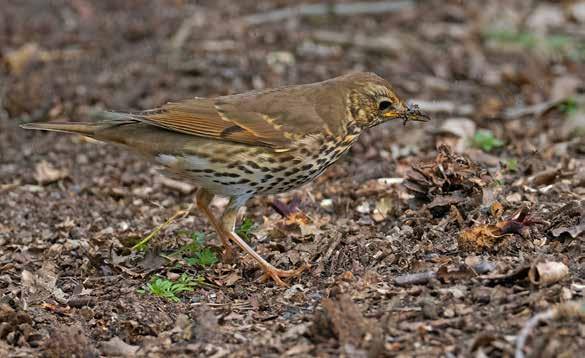
The conditions didn’t look good for our visit to Landguard, but despite this, 17 members turned up for what was a very nice social occasion. Unfortunately flooding due to Storm Babet meant that members in Framlingham were unable to get out of their town. The wind meant that many nets needed to be closed to protect any trapped birds, however enough nets were open for members to be treated to a ringing demonstration including Blackbird, Song Thrush and Goldcrest - these lovely little birds are always great to study in the hand.
Birds recorded from the Observatory on the day included the following:
Sooty Shearwater (passing by just before we arrived), Woodcock, 11 distant Little
Gull, 178 Brent Geese going south, Common Tern, Chiffchaff, 9 Gannet, 2 Swallow, Red-throated Diver, 3 Med Gulls, 5 Knot, 2 Goldcrest and Common Scoter.
Out on the nature reserve, birds included Wheatear, Willow Warbler, 45 Starling, 5 Song Thrush, 4 Pied Wagtail, 10 Linnet, 15 Goldfinch and a Sparrowhawk.
There had been up to 5 Cetti’s Warbler on the reserve but the conditions did not make for happy songsters.
It was difficult getting everyone onto the recorded birds but LBO did manage to get everyone a cup of coffee or tea together with a selection of biscuits.
Footnote: Motus Detections
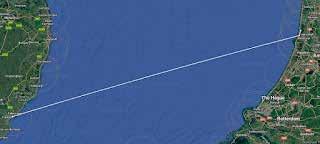
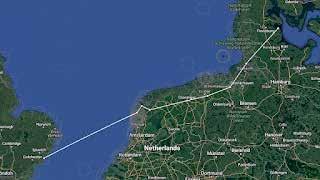
The Observatory is involved with a project set up by a Dutch university where LBO have an aerial set up to track birds radio tagged in and around the Netherlands. There have been two recent interesting detections:
A German tagged Blackcap, tagged September 27th 2023, was noted passing several Dutch towers leaving Der Helder Vuutoren on October 17th and travelled the
257 km to LBO in 4 hours 2mins passing over at 02:20hrs on October 18th.
A Dutch tagged Yellow-browed Warbler left the Dutch coast at Heemskerk infiltratiegebied Kietftewvak on the October 16th and travelled 232km to LBO in 4 hrs passing over the Observatory just before midnight.
John Kornjaca
The quarterly review section gives a snapshot of birds seen within the county during the period, predominantly from data received by Suffolk BINS. All scarce and rare birds are subject to submission and acceptance by either SORC or BBRC. Updated lists on Accepted and Outstanding Records for previous years can be found on the SBG websitehttp://www.suffolkbirdgroup.org/bird-recording
UK WEATHER:
August continued in the same vein as July with a series of Atlantic depressions crossing the UK, resulting in a generally cool, wet, and windy month, with just a couple of brief periods of settled and warmer conditions.
WEATHER FOR EAST ANGLIA:
Near-average temperatures (-0.2°C) peaking 10th/11th August at approx. 25°C. Slightly drier than average (93%).
Near-average sunshine (103%).
NB. Wattisham recorded 112mm (186% of its average rainfall).
Garganey – seen at various sites around the county throughout the month. RSPB Minsmere (1st), Bakers Mill (3rd to 7th), Alde Estuary (10th), four at SWT Carlton Marshes (13th and 14th), SWT Lackford Lakes (18th and 25th), 5 at SWT Carlton Marshes (28th) and RSPB Hollesley (28th & 29th).
Long-tailed Duck – an unseasonal single bird was at Benacre Broad (8th) and RSPB Minsmere (9th).
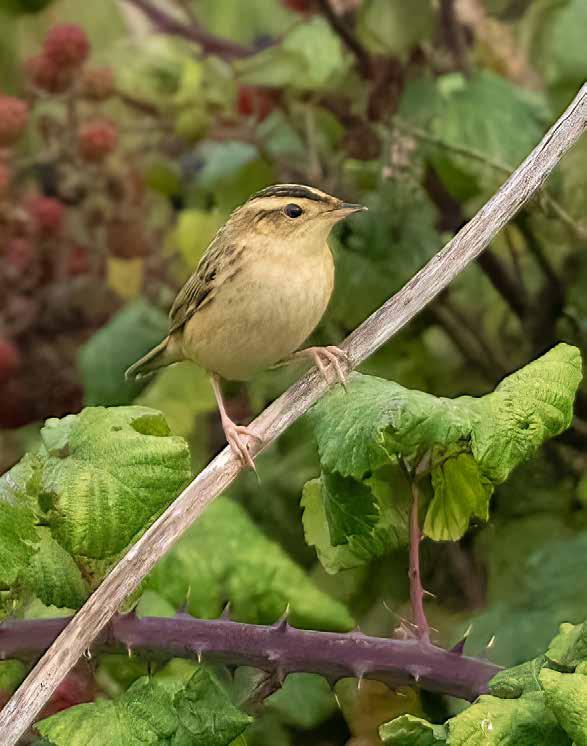
Little Ringed Plover – several sightings throughout the month, notably six birds on Aldeburgh Marshes (22nd-23rd) and five on the Alde Estuary (29th).
Black-tailed Godwit (limosa) – RSPB Minsmere (1st) a first-winter bird seen on the Alde Estuary (13th).
Little Stint – seen regularly through the month with a peak of six birds at RSPB Minsmere (18th – 22nd) and four at RSPB Hollesley (7th).
Wood Sandpiper – a single bird at SWT Carlton Marshes (10th), two birds seen at RSPB Hollesley (13th and 14th).
Arctic Tern – small groups of southbound birds seen offshore (3rd – 6th) while two juveniles were at RSPB Minsmere (9th) and possibly the same birds at Sizewell (11th and 13th).
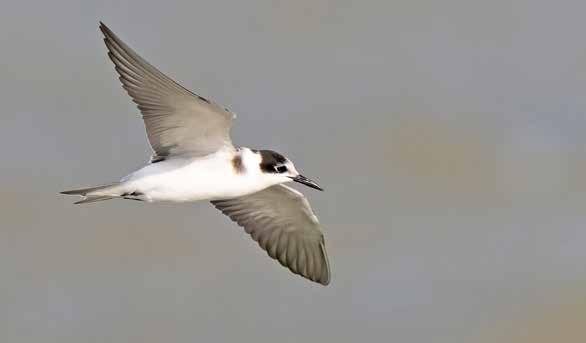
Black Tern – RSPB Hollesley Marshes held three birds (9th), a single was seen at Thorpeness (10th) and another remained at the Sizewell Power Station outfall (11th –17th). A group of three birds were observed feeding off Landguard Bird Observatory at the end of the month (28th).
Pomarine Skua – a southbound bird seen off Corton (8th).
Arctic Skua – birds were observed offshore (3rd) one at Bawdsey, three from Southwold, two from Dunwich and two from RSPB Minsmere.
Long-tailed Skua – two juveniles were observed off Thorpeness early morning (7th).
Manx Shearwater – four birds seen off Southwold (3rd).
Glossy Ibis – observed regularly - a pair were seen for much of the month on Aldeburgh Marshes.
Spoonbill – frequently observed on the
coastal marshes. Notably RSPB Havergate Island recorded 33 birds (27th), rising to 42 (28th).
Cattle Egret – single birds seen (7th) at SWT Trimley Marshes and (13th-16th) at SWT Carlton Marshes.
Osprey – several sightings over the course of the month the first at Shottisham (16th) with others seen at Boyton (22nd), Felixstowe (23rd), the Stour Estuary (24th), Ness Point and RSPB Minsmere (26th), Felixstowe (28th) and RSPB Boyton Marshes (31st).
Short-eared Owl – occasionally seen with single birds were observed as followsSouthwold (8th), RSPB Minsmere (15th), Boyton (20th), Landguard Bird Observatory (20th) and Shingle Street (28th).
Bee-eater – a single bird seen in Felixstowe (20th).
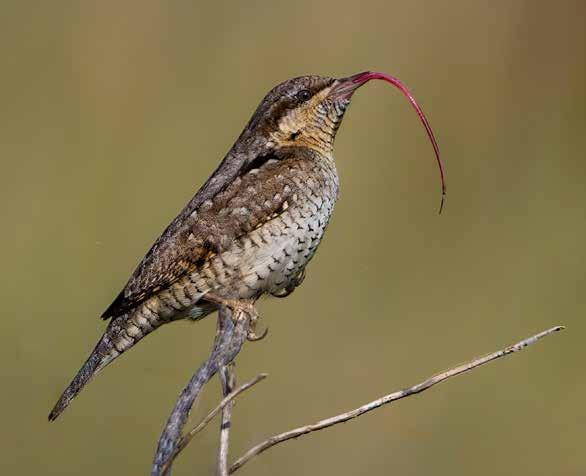
Wryneck – several birds seen through the second half of the month including Minsmere along the North Wall (17th), Easton Bavents (18th), LBO (19th – 21st), Kessingland (24th) and by the beach huts at Walberswick (31st).
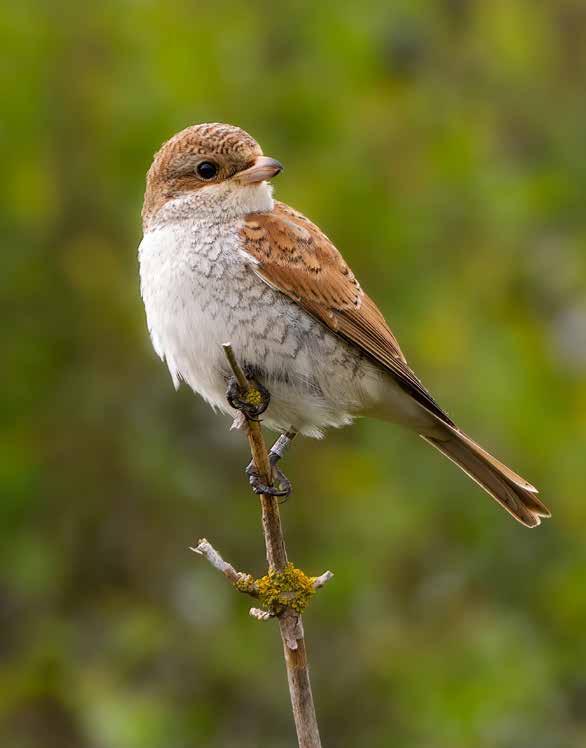
Red-backed Shrike – an immature bird was observed at Corton sewage works (19th and 20th).
Wood Warbler – two birds were found at the Landguard Bird Observatory (4th).
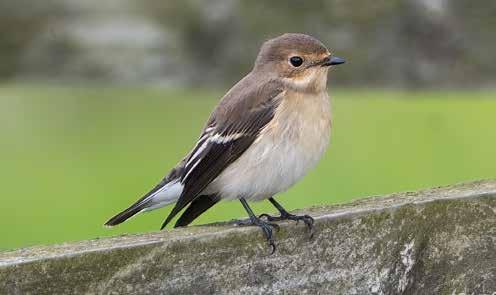
Pied Flycatcher – Spotted regularly through the middle of the month. Three birds at the allotments of Shingle Street. There were twelve at Landguard Bird Observatory (18th) and ten at the sewage works in Southwold (19th).
Tree Sparrow – a single sighting in Benacre (22nd).
Tree Pipit – a single bird at Landguard Bird Observatory (16th).
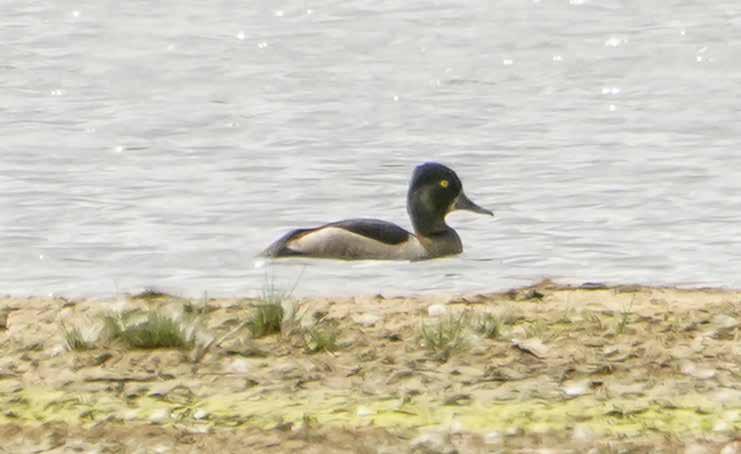
Ring-necked Duck – the long staying drake remained on Peto’s Marsh at SWT Carlton Marshes until the 23rd.
Pectoral Sandpiper – a juvenile was seen (13th) on Aldeburgh Marshes.
Red-necked Phalarope – a juvenile was found on the scrape (26th) at RSPB Hollesley Marshes and remained until the month end.
Black Stork – two birds were sighted through the month. The first in flight heading over Wantisden (9th) and the second bird over Woodbridge in the morning (20th).
Squacco Heron – found early evening on the island of Livermere Lake (15th) and remained until dusk.
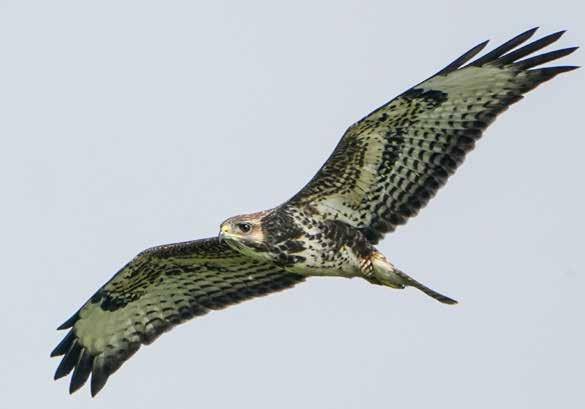
Honey-buzzard – one flew over RSPB Hollesley Marshes (6th) towards RSPB Boyton Marshes having been observed coming in off the sea. Another was sighted over Bury St Edmunds on the afternoon
(10th). Late morning (21st) provided a third sighting with a bird observed flying south over the Blyth river seen from Buss Creek viewpoint.
Eleonora’s Falcon – a pale morph adult was seen briefly (16th) along the Breydon South Wall - then drifted off in a south easterly direction.
Aquatic Warbler – a juvenile was discovered mid-afternoon at Landguard Common (30th). The bird remained well into the evening. (The last record of this species in the county was a juvenile bird trapped on Orfordness on 9th Aug 2015).
Booted Warbler – discovered at the southern end of the Landguard Bird Observatory compound though elusive (18th).
Ortolan Bunting – two birds were found during the morning at Thorpeness (19th). The first on Thorpeness Common at 09:38 and the second seen on the beach, just south of Haven Hose at 10:10.
UK WEATHER:
September was warmer than all three summer months — this has only happened twice before, in 1890 and 1929 (with records going back to 1884).
WEATHER FOR EAST ANGLIA:
Warmest September on record (+3.0C).
Near-average rainfall (98% of average rainfall).
Sunniest September since 2003 (120%).
Garganey – RSPB Hollesley Marshes held three birds at various stages up until the middle of the month – last seen on the site (16th).
Little Stint – seen regularly on marshlands along the coastal margins throughout the month.
Wood Sandpiper – a bird was found on RSPB Hollesley Marshes (1st) and was joined by others, with up to three birds on site (13th). Other birds were seen at RSPB Boyton Marshes with the last sighting of the month at RSPB Minsmere (14th).
Arctic Tern – a solitary bird was seen at RSPB Minsmere (4th) while two juveniles were observed at the power station outfall, off Sizewell beach (27th-28th)
Black Tern – seven birds were seen at RSPB Minsmere (19th), others were seen feeding around the outfall off Sizewell beach. A single bird was seen off Southwold (24th) while RSPB Lakenheath Fen had another single bird (25th).
Pomarine Skua – a single bird off both Southwold and Landguard Point (1st), another bird off Southwold (3rd) and offshore from LBO (12th).
Arctic Skua – sea-watching revealed nine birds off Southwold (1st) and eight (17th) with other occasional passage sightings toward the end of the month.
Long-tailed Skua – a good passage of birds during the month, starting (2nd) with sightings included one south off Benacre, four off Southwold, one south off Minsmere and the same bird off Thorpeness with three offshore further down the coast at Hollesley Marsh and Bawdsey. Four birds were seen off Southwold (13th), an adult south off East Lane (17th), one north past Ness Point and one south Minsmere (18th) with a juvenile south off the latter site the following day. Another north off Southwold (24th) and finally one off Minsmere (27th).
Razorbill – thirty-seven birds were seen on the sea off Southwold (12th).
Manx Shearwater – there was a close bird north off Hollesley (17th), two flew north off Slaughden and one south off LBO (20th), one north off Dunwich (24th) and north off Minsmere (27th).
Glossy Ibis – occasionally seen in the east of the county including a pair that stayed for much of the month on Aldeburgh Marshes.
Spoonbill – a group of seven birds were seen on SWT Hazlewood Marshes (1st) while six immature birds flew over RSPB Minsmere (25th). There were six birds on SWT Hazlewood Marshes (21st).
Cattle Egret – seen frequently and in increasing numbers across the county throughout the month. Highlights being fifteen birds seen at SWT Trimley Marshes (11th) with thirteen birds at SWT Lackford Lakes later that day. There were sixteen birds at SWT Trimley Marshes (13th). RSPB North Warren held ten birds (22nd) while RSPB Minsmere had nine birds on the same day.
Osprey – regularly seen throughout the month. A single bird was often seen in and around the Alde Estuary/Hazlewood Marshes in the first half of the month.
Short-eared Owl – RSPB Minsmere revealed the first bird of the month (1st), another at Aldeburgh Marshes (12th) while a third sighting was of a bird that flew south over Benacre Pits (21st).
Wryneck – there were a handful of sightings along the coast with a bird at around Benacre Sluice notable (27th – 30th).
Red-backed Shrike – A single bird was present in scrub just north of Ness Point at Ness Park (9th) while Landguard Bird Observatory compound held a bird towards the end of the month (21st – 29th).
Pied Flycatcher – there were several sightings through the first half of the month with two birds ringed at Landguard Bird Observatory (8th). Three birds spotted at Southwold (21st) were the final records of the month.
Tree Sparrow – a single bird seen at Landguard Bird Observatory (19th).
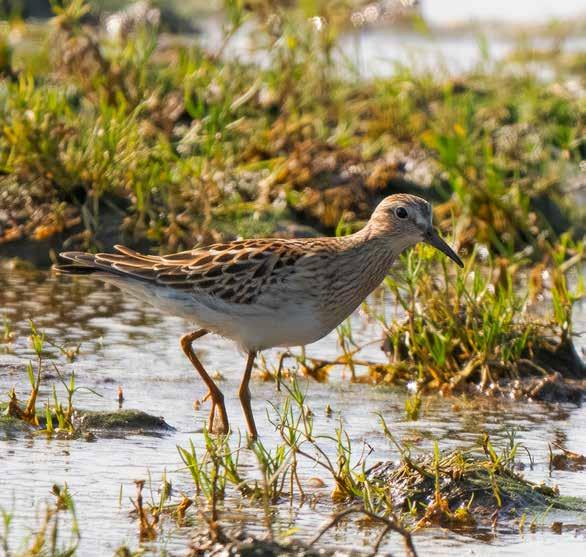
Buff-breasted Sandpiper – a mobile juvenile was regularly seen on the south scrape at RSPB Minsmere (11th – 14th).
Pectoral Sandpiper – the Alde Estuary/ Aldeburgh Marshes area hosted a number of bird; the first an adult (2nd – 5th) and then up to three juveniles (14th - 21st). Other birds were seen at RSPB Boyton Marshes (9th – 16th) and RSPB Hollesley Marshes (16th).
Red-necked Phalarope – the juvenile bird, found at the end of August, stayed at RSPB Hollesley Marshes (until 5th).
Sabine’s Gull – a juvenile was seen flying south off RSPB Minsmere (19th).
Fea’s Petrel – a probable sighting early morning (17th) of a bird heading north off Thorpeness.
Cory’s Shearwater – one was seen at sea off Landguard Point (17th).
Great Shearwater – a single bird seen heading north from Thorpeness (17th).
Balearic Shearwater – several birds were observed along the coast (17th). Sightings were a possible bird north at Est Lane and another possible bird at Slaughden. Three north off Thorpeness, one of which was then seen at Minsmere and Southwold, with a
second bird also north off the latter site. Two flew south off Southwold (19th), one north off Thorpeness (24th), one south off Southwold (25th), two off East Lane (26th) and finally the same bird flying north off both Minsmere and Southwold.
Honey-buzzard – One was seen flying south over Landguard Bird Observatory (3rd) and a juvenile was seen over RSPB Minsmere (6th).
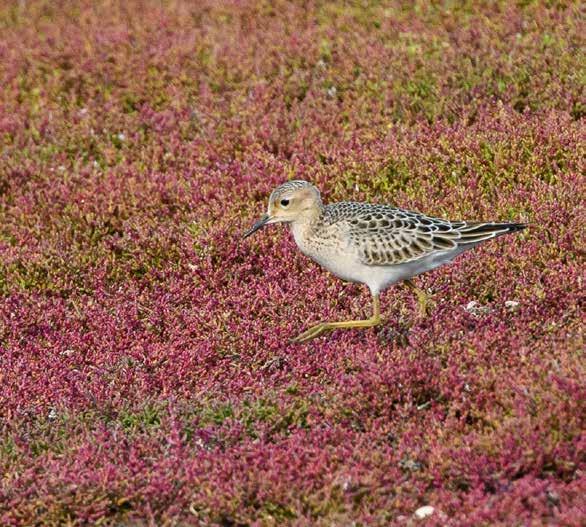
Greenish Warbler – a single sighting (3rd) was of a bird along the Dingle Marsh track near Dunwich.
Icterine Warbler – a single bird was seen briefly at Landguard Common (2nd).
Isabelline Wheatear – a sighting in the paddocks, north of the Southwold Pier (26th).

Council for 2024
Officers
Chair: Eddie Bathgate
Vice Chair: Chris Keeling
Secretary: Katya Bathgate
Treasurer: Anne Wright
Communications Officer: Adam Faiers
Projects Officer: Chris Keeling
SoSS Project Officer: Eddie Bathgate
Suffolk Bird Report Editor and SORC/SNS Link: Nick Mason
Harrier Editor and Outdoor Events Coordinator: Gi Grieco
Indoor Events Coordinator: Adam Gretton
President John Grant
Members
Sarah Glyde
John Kornjaca
Peter Merchant
Ben Moyes
Sally Nelson
Jenny Rawson
Alex Rafinski
Honorary Vice-Presidents
Andrew Green
Adam Gretton
Robin Hopper
Colin Jakes
Mike Jeanes
Mike Marsh
Roy Marsh
Philip Murphy
Reg Snook
Steve Piotrowski
Bird Recorders
North-east Area Recorder: Richard Walden Email: bird-ne@sns.org.uk
South-east Area Recorders: Gi Grieco Tel: 07951 482547 and Steve Fryett Tel: 07593 382082 4, The Street, Melton, Woodbridge, IP12 1PW. Email: bird-se@sns.org.uk
West Area Recorder: Chris Gregory Email: bird-w@sns.org.uk
Memberships
c/o SNS, The Hold, 131 Fore Street, Ipswich, Suffolk, IP4 1LR
Founded in 1973 by a group of Suffolk birdwatchers
Associated with the Suffolk Naturalists’ Society
SBG remains an independent birding group and is a registered charity
A voice for Suffolk birdwatchers
With established links to many naturalist and conservation organisations
Media
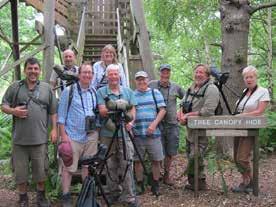
Actively lobbies to protect key Suffolk habitats
Provides a county-wide field force of bird surveyors
Promotes BTO bird surveys and organises special SBG surveys

Strong web presence - www.suffolkbirdgroup.org
Active Twitter feed - @SuffolkBirdGrp
Quarterly magazine - The Harrier
Annual review - Suffolk Birds report
Annually (20+) field trips - ideal for novices or experts and young or old alike
Opportunities to visit hot spots and receive practical ID tips in the field
Programme of talks and presentations - variety of topics (county, national, or international) with quality speakers
Assists with conservation projects to improve breeding success
- Swifts
- Barn Owls
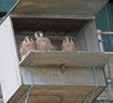
- Peregrines
- Waders
Partners with Suffolk Wildlife Trust and other bird groups
Assists with funding for bird hides and other birding amenities
Contributes to community events, including dawn chorus walks
Provides bursaries for special projects