

Gi Grieco
Gi Grieco
Welcome to The Harrier. I mentioned in the last editorial that there would be information on submitting bird records for the Suffolk Bird Report (SBR) and an article within contains details on this process. SBR consistently has interesting papers included and we’re always pleased to receive notes and observations for The Harrier – this time from Nigel Odin on Cuckoos at LBO and from Andrew Moon on Brent Geese on passage this Autumn.
We have a request to participate in the SBG rookery survey in 2023 and to submit nominations for The Garrod Award. This
award looks to encourage the upcoming generation who will be the future of our Suffolk birding and conservation. We’ve been able to look into contributors from the past thanks to Patrick Armstrong, fascinating to get a glimpse of names some may have come across previously – there will be another instalment in the next edition.
We are pleased to include another poem from Stephanie Robertson – we’re always keen to receive poems for inclusion. We also have a number of trip report write ups along with the quarterly bird review. Finally, good luck with the wordsearch!
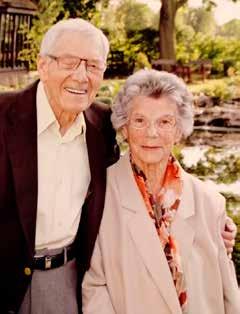
This award was created to celebrate the warm welcome Ken and Jean gave to all –but especially younger – newcomers to SBG. In recognition of this support for younger people, the award is made annually to a young Suffolk-based bird or wildlife enthusiast for their involvement or contribution to birding, conservation or the environment.
A nomination form can be entered online on the SBG website - www.suffolkbirdgroup. org/the-garrod-award. The winner will receive a certificate, a SBG T-shirt and a year’s membership of SBG. They’ll also have the opportunity to have an article published in The Harrier about their wildlife experiences. The closing date for nominations is January 12th 2023 and the award will be presented at the SBG AGM.
There have been some great field trips and super indoor meetings this year. The publications the group are involved in and help produce, The Harrier and Suffolk Bird Report, continue to be informative and of a high standard. All these activities and events are down to a lot of people volunteering their time and support, from the leaders of trips, speakers at events, project support volunteers, the editors, writers and photographers for the publications, not forgetting the three county recorders and the committee of SORC as well as SBG. Last, but not least, all the members who continue to be involved in the group, so a big thank you to all. Wishing you all a bird-filled 2023 and look forward to meeting up again at our indoor and outdoor meetings in the new year.

We established the SBG Rookery Survey in 2019 with a plan to record all the rookeries in Suffolk over the next three years. The results of the survey were to be incorporated into a SBG publication once the fieldwork had taken place. Unfortunately, due to Covid and restrictions in movement, recording has been hampered during the principal breeding period for two years. As such, we’d like to complete the survey next year. The prime time for counting rookery nests is just before leaf-burst during February and March. We do have funds to pay for fuel – details will be on the SBG web site.
The easy-to-use rookery survey webpage, hosted by the Suffolk Biodiversity Information Service, allows the number of nests in each rookery to be recorded, with location mapping down to an accuracy level of 10 metres. The survey page to enter details can be found here –https://www.suffolkbis.org.uk/rookerysurvey.
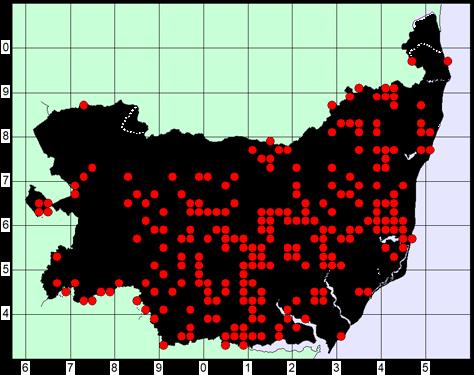
If you’ve submitted details of a rookery previously, but since noted a change then please record it. Below is a map of rookeries recorded to date. As can be seen, there are some areas with gaps present that can be targeted for surveying.
Nick Mason and Gi Grieco
The foundation stone of any report is the data upon which it is based. Unless we all submit our records diligently, and in a usable form, then the Suffolk Bird Report will not be a comprehensive account of the birds recorded in Suffolk.
The recording of the county’s avifauna is the responsibility of the Suffolk Naturalists’ Society (SNS), working in close co-operation with the Suffolk Bird Group (SBG). The linchpins of the system are the Recorders, who are the initial point of contact for all records. Because of the volume of records in Suffolk the county has been divided into three areas – north-east, south-east and west. Observers are reminded that Suffolk works to Watsonian vice-county boundaries (VC25 and VC26), taking in areas that are now administered as Norfolk, Cambridgeshire or Essex. The most significant area affected is that of Lothingland, the northern limits of which follow the River Yare and include the south side of Breydon Water. We have retained these original boundaries as we feel that sensible comparison of data can only be made from year to year if the recording area is kept constant.
All observers are requested to submit their records monthly. The deadline for submission is January 31st of the following year. Details of species, location, date, sex/age, abundance and other relevant comments. A spreadsheet is available for submitting records and can be downloaded from the SBG website. This can be sent electronically to the Recorders.
The other method is to use the BTO BirdTrack system – these records are passed on to each area recorder.
All records come under the scrutiny of the Suffolk Ornithological Records Committee (SORC) and for rare or scarce species, verification is sought – i.e. photographs, field sketches, witnesses, sound recordings (for calling or singing birds) and (most importantly) written descriptions. The SORC’s policy for vagrants, classified as national rarities, is clear; records should be channelled through the County Recorder to be considered by the British Birds Rarities Committee (BBRC), whose decisions are accepted by SORC. Species are categorised as below – with the species list and corresponding number found on the SBG web site. The committee may also request further details regarding any other species that, in the opinion of the committee, is out of context in terms of season, habitat or numbers.
Key:
1 National Rarity – detailed description required.
2 County Rarity – notes detailing observation will always be required.
3 All records requested – supporting notes may be requested.
4 Specific records – records of breeding, large counts, earliest/latest dates, unusual inland records or migration/ weather-related movements requested.
My first birding trip to Suffolk was, to the best of my knowledge, in the spring of 1946, when I was about four-and-a-half years old, and the family had borrowed a cottage from one of my father’s parishioners. My father, an ornithologist, sometimes thought of himself as ‘the last of the English parsonnaturalists’, although he wasn’t quite the last, and he was Irish. After a curacy in an industrial town in the North of England, he was for a couple of years at St Mary’s, Stoke, Ipswich, before working in other parishes in Yorkshire, the east of England and overseas. He returned to Suffolk frequently throughout much of his life.
It would have been while he was in Ipswich (1927-1929) that my father would have got to know pioneer Suffolk bird photographer George Bird and they evidently saw quite a lot of each other on birding expeditions throughout East Anglia. In his book Birds of the Grey Wind (1940) my father wrote:
Mr George Bird, my appropriately named companion in ornithological rambles in this interesting part of East Anglia (Breckland), ringed a young stone-curlew in 1929 and was able to record, in a fine series of photographs that in 1930 and 1933 it nested on the exact nest site where it had been hatched.
The friendship between my ornithologist father, Edward Allworthy Armstrong (19001978) and George, the eponymous bird man, continued, and George’s photographs were
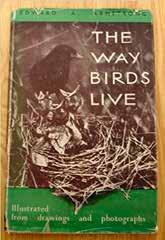
used in several of my father’s books on birds: one of the Chaffinch appeared in Grey Wind, with one those of the Stone-curlew and one of a Goldfinch at the nest in The Way Birds Live (1943).
But to return to the rather late, cold spring of 1946: George had an elderly car and actually drove it across the bridge over the River Blyth, between the Southwold and Walberswick sides. Even in those days this was probably illegal and to say my Mum’s heart was in her mouth would be an understatement!
Another Suffolk birder who became a firm family friend was Peter Westall, a Suffolk country doctor.
A letter appeared in British Birds, in January 1950, above Peter Westall’s name:
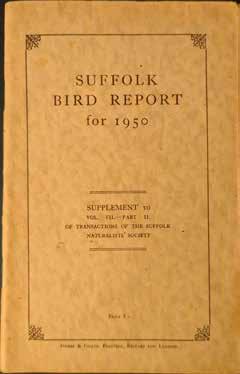
SIRS,--An annual bird report for the County of Suffolk is to be published, beginning with 1950, and I would be grateful if any of your readers who may have records of observations made in Suffolk in this or subsequent years.
And so the Suffolk Bird Report was born.
Peter was very much the traditional country
doctor, and drove around East Suffolk in a robust-looking LandRover. He initially lived in, and edited the Bird Report from, a house with the attractive name of Boxbush in Walberswick, later moving to ‘The Old Vicarage’ in a village near Beccles.
I recall Peter as being extremely friendly, whether in his capacity as a physician or in his relationship with fellow birders. He went with my father to northern Sweden on an expedition, amongst other things, to investigate the behaviour of birds in the ‘perpetual daylight’ of the Arctic. Anything but a dilettante, he wrote several papers on birds in well-known ornithological journals. I recall him very much as an all-round naturalist: he also knew his wildflowers.
heronry at Blythburgh and at Minsmere. He was particularly encouraging to young birders – like me - I remember at one stage I had an enthusiasm for taxidermy, and he sent me a specimen of a Little Auk that had been found dead on the Suffolk coast.
Peter must have been looking for something that being a country doctor and an enthusiastic birdwatcher could not provide, as in the later 1950s he undertook theological training and was ordained. Sadly, he died not long after becoming the Revd. Dr Peter Westall.
Peter Westall edited the Bird Reports until 1954; assistant editor during this time was George Brownlow Benson. George remained on the editorial committee for many years. An outstanding field ornithologist, I recall going birdwatching with him and my father along the shore on the heaths at Walberswick, at the
George Benson was a teacher, teaching in a school in Southwold before the War, later moving to the Sir John Leman Grammar School in Beccles. Even after this move he continued to live in South Green, Southwold. His main subject was English. I recall him saying, when asked to give a series of talks on ‘natural history’, that he would not do this: ‘English Literature or Birds: anyone who has studied botany could floor me at once’. Despite this there would be many young people who developed their interest in birding, and natural history generally, through knowing George Benson.
George had served in the Army, and remained extremely fit. He is said to have played cricket for the Southwold XI at one stage, but later took up golf. There is a story that his favourite brand of golf-ball was a Dunlop Blue Flash. He attracted the nickname ‘Blue Flash’. The Suffolk coast was extremely badly affected by the North Sea Floods of January 31st – February 1st 1953. George Benson took an important role in some of the rescues that followed the highly destructive storm surge.
Harry [Henry Millican] Cleminson (1885-1970) was described as ‘solicitor, parliamentary agent and chairman and general manager of the Chamber of Shipping’: he retired to Whitebarn, Walberswick and took an important part in the affairs of the village, and indeed Suffolk. A keen birdwatcher, I recall him accompanied by several of his young relatives returning, bearing a simply enormous pair of binoculars, from a walk along the shore pools at Walberswick. He also owned a ‘Dragon Class’ yacht, which sometimes lay in Southwold harbour. Harry, although he loved his birdwatching on the marshes and heaths of the Suffolk coast, was perhaps as interested in the arts as the sciences, although he was always alert to conservation and amenity issues in his district. He too was most generous in his support of young people.
His wife Hester (1887-1945) died before I knew the family: she was Canadian and a very distinguished sculptress. I believe that she too was a member of the Suffolk Naturalists’ Society.
In nearly eighty years the Suffolk countryside has changed, and with it the birds. One of the most significant land use changes is the decline of the heaths, both in their area and character. In the mid-1940s large areas of the Sandlings country were open heaths, dominated by the two species of heather and to a lesser extent Bracken. Post-war agricultural changes (summer irrigation, subsidies, fertiliser and pesticide use, and the solution of trace-element problems) resulted in large areas being ploughed. Myxomatosis, which spread through much of Suffolk in the summer of 1953, reduced grazing pressure on heathland vegetation and resulted in invasion of the heaths by tree and scrub species. I can recall large flocks of Stone-curlew on the coastal heaths, and Nightjars churring
in numbers on heaths around Blythburgh and Walberswick. Red-backed Shrikes and stonechats bred. These declined from loss of habitat, although the first two species seem recently to have recovered somewhat.
I remember Bearded Tits, Marsh Harriers and booming Bitterns being pointed out to me as a young lad on those long walks across the marshes in those early summers, and according to recent Bird Reports they are still around: they have benefited from conservation efforts. But the Bythburgh heronry, once a-clamour with dozens of nesting birds is, I understand, now deserted.
On some Suffolk beaches in the mid1940s one could regularly find a number of Ringed Plover nests: I remember my father photographing these attractive little birds at the nest quite close to Southwold. Increased visitor pressure has resulted in increased disturbance, and I gather the species is now much rarer.
The countryside of high Suffolk, with its mosaic of farmland, hedgerows and woodland was good Cuckoo habitat. I remember my father had the knack of blowing into his cupped hands in a particular way and producing an uncanny imitation of the call. In one East Anglian wood in springtime he had half a dozen frantically circling just above the treetops! Turtle Doves are another species that I recall occurring in large flocks in Suffolk farming country: a pair once nested within a few metres of our family’s campsite in the early 1950s. Both species are now quite scarce.
But against the declines and losses, the Avocet has benefited from conservation, and the Collared Dove and a couple of species of egret are now not uncommon sights. All were unknown in my young day.
Nigel Odin
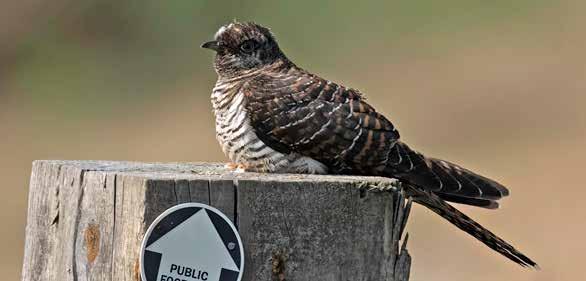
The Cuckoo Cuculus canorus at Landguard Bird Observatory, Suffolk
This article reviews LBO’s Cuckoo records, going back almost 40 years. The earliest and latest Cuckoo sightings at Landguard are 2nd April 2000 and 7th October 1984. Spring records peak in early May with passage continuing into June. It is possible that the later spring migrants might be heading further north and many may be inexperienced oneyear olds returning for the first time. Autumn passage of adults gets underway in June before all the summer visitors have finished
This article reviews LBO’s Cuckoo records, going back almost 40 years. The earliest and latest Cuckoo sightings at Landguard are 2nd April 2000 and 7th October 1984. Spring records peak in early May with passage continuing into June. It is possible that the later spring migrants might be heading further north and many may be inexperienced one-year olds returning for the first time. Autumn passage of adults gets underway in June before all the summer visitors have finished arriving, peaking at the month’s end, then continues throughout July with occasional laggards in early August. The bulk of adults have migrated south before the passage of youngsters gets underway. The earliest dispersing autumn juvenile has been noted on July 1st with the bulk of youngsters having left by the third week of August although odd individuals are still passing through the reedbed towards the railway line in early October.
arriving, peaking at the month’s end, then continues throughout July with occasional laggards in early August. The bulk of adults have migrated south before the passage of youngsters gets underway. The earliest dispersing autumn juvenile has been noted on July 1st with the bulk of youngsters having left by the third week of August although odd individuals are still passing through the reedbed towards the railway line in early October.
Cuckoo Bird-day totals at Landguard 1983-2022 (By 5-day periods)
CUCKOO - Bird - day totals at Landguard 1983 - 2022 (by 5 - day periods)
Annual bird-day totals have been variable last century but have plummeted since 2001 with none seen in 2018. The species now almost elicits an excited response when seen in recent years.
Nationally the decline in England started in the mid 1960s as evidenced by the BTO Common Bird Census & Breeding Bird Survey for England. The acute decline is biased to south-east and eastern England. Numbers in Wales are apparently recovering after a decline and numbers in Scotland are increasing. Suggested reasons for the decline include reduced survival rates on migration and less food on the breeding grounds (Woodward et al 2020). Cuckoos are now on the UK Red List of Birds of Conservation Concern as a result of declining numbers.
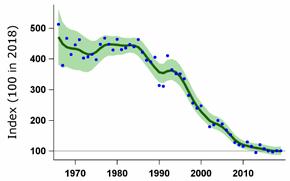
Nationally the decline in England started in the mid 1960s as evidenced by the BTO Common Bird Census & Breeding Bird Survey for England. The acute decline is biased to south-east and eastern England. Numbers in Wales are apparently recovering after a decline and numbers in Scotland are increasing. Suggested reasons for the decline include reduced survival rates on migration and less food on the breeding grounds (Woodward et al 2020). Cuckoos are now on the UK Red List of Birds of Conservation Concern as a result of declining numbers.
In over a hundred years of ringing Cuckoos throughout the UK very little has been learnt as to the wintering grounds and migration routes of different populations. 44 have been ringed at Landguard with one trapped on 19th May 1985 which killed itself flying into a window at Littlebourne, Kent on 13th June 1987, our only recovery. In recent years, GPS tracking of a few individuals by the BTO has revolutionised the knowledge of these birds with a shed load of fascinating continuously updated tracking information on https://www. bto.org/our-science/projects/cuckootracking-project
Will all this extra knowledge help reverse the declining English populations or are future generations going to have to visit other areas further afield, such as Scotland, to enjoy this once ubiquitous species that us older observers took for granted in our childhood?
Acknowledgement:
Many thanks to Mike Marsh for help with the graphs and comments on the above.
Nigel Odin, Landguard Bird Observatory, View Point Road, Felixstowe, Suffolk, IP11 3TW
References:
Woodward, I.D., Massimino, D., Hammond, M.J., Barber, L., Barimore, C., Harris, S.J., Leech, D.I., Noble, D.G., Walker, R.H., Baillie, S.R. & Robinson, R.A. (2020) BirdTrends 2020: trends in numbers, breeding success and survival for UK breeding birds. BTO Research Report 732. BTO, Thetford. www.bto.org/birdtrends” www.bto.org/birdtrends
Andrew Moon
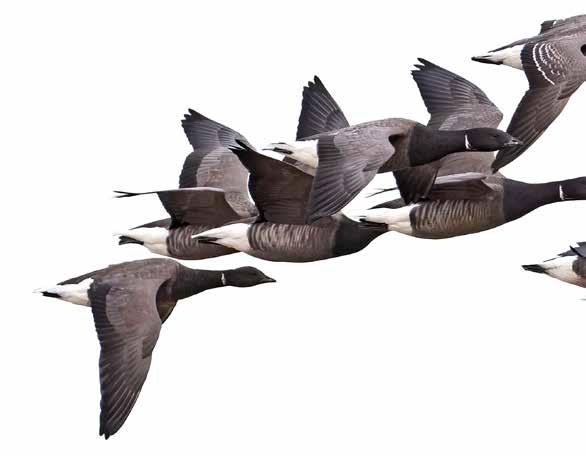
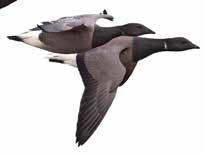
The Brent Goose that we see in Suffolk is primarily the dark-bellied race, Branta bernicla bernicla, although the palebellied race (B.b.hrota) and Black Brant (B.b.nigricans) are occasionally seen. The dark-bellied race breeds in northern arctic Russia, primarily on the vast Taimyr peninsula in Siberia and winters exclusively on the coasts of western Europe, although mainly along the English Channel coasts (both French and English estuaries), as well as the North Sea coasts of Essex, Kent, the Netherlands and the Wadden Sea.
Recent population estimates of the world population have estimated that there are about 300,000 Brent Geese worldwide, of which 100,000 come to the UK, although to be fair it is difficult to come up with accurate recent statistics. This race migrates in pretty much a straight line from their breeding areas in northern Russia (c2,500 miles away) via the White Sea, the Baltic Sea and then the North Sea and English Channel coasts. The overall population has fluctuated hugely over the years and reached a low point in the
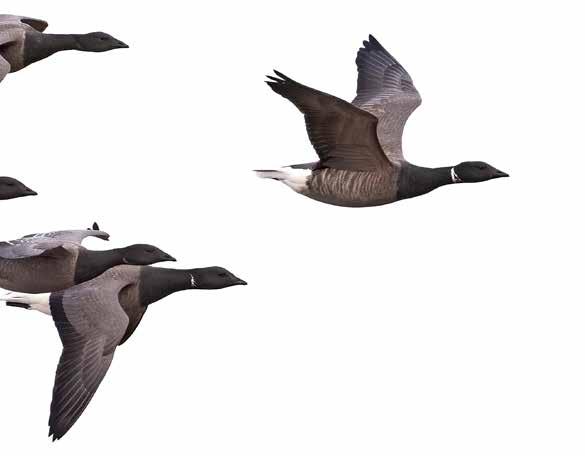
mid 1950s when there were estimated to be as few as 16,500 birds worldwide, this was mainly because of persecution (shooting, along with the collection of eggs on their breeding grounds). There was a suggestion that one reason for the decline was because of failure of Zostera marina, a kind of seagrass that is their favoured food on the wintering grounds due to a fungal disease, but this has been questioned in recent years. Nowadays they seem to be very adaptable and happily feed on cultivated crops, such as wheat, oilseed rape and barley.
It is well known that the breeding success of Brent Goose tends to fluctuate from year to year and seems to be linked to the three-year breeding cycle of the Lemming in the Arctic. In poor years when Lemmings are in short
supply, Arctic Foxes which normally feed on these rodents, will then target the Brent Geese, in particular the eggs and young. Although some species of goose seem to have been badly affected by avian flu, in particular Barnacle Geese, this population of Brent Goose would seem to have been largely untouched, so far. With some adults living well beyond 20 years of age, they are known to be long-lived, which is a major advantage when breeding success is poor, as they can make up for poor breeding seasons reasonably quickly over subsequent years.
The autumn migration for Brent Geese begins when they leave their breeding grounds in mid-August to early September, passing through the Baltic in mid-September to early October. In Suffolk, the first birds usually appear in late September, with the southbound passage reaching a peak from mid-October to mid-November. The first birds that I saw in autumn 2022 were on 22nd September off Southwold, rising to 1,249 birds off there in just under 2 hours on 19th October. Although the numbers of birds during the autumn were not exceptional, the peak count (that I know of) was 3,295 off Minsmere on 13th November, then 970 in 4 hours on 19th November. These are trifling totals compared with the peak Suffolk daily totals of 15,000 off Pakefield in November 1982 and 16,000 off Landguard in November 1983!
Nevertheless, it is inevitable that numbers fluctuate from year to year due to a variety of reasons, primarily the weather they encounter on the way, predation, disease, as well as the availability of food en route.
It was apparent to me, assisted considerably by modern photographic equipment, that a higher proportion than usual of juvenile birds were heading south with their parents. Although many flocks were too far out to accurately assess the ageing structure, it becomes relatively straightforward for groups that track along close to the coastline. The first flocks that I was able to ascertain the proportion of juveniles to adults was on 9th October off Minsmere, where 4 flocks of 25 birds contained 13 juveniles (52% breeding success rate). This continued with 1 flock of 8 birds off Minsmere containing 4 juveniles on 12th (50%), and 7 flocks of 43 birds off Southwold containing 15 juveniles (34.8%) on 19th October. November totals were 4 flocks of 31 birds with 15 juveniles (48.3%) off Minsmere on 16th and 6 flocks of 38 birds with 19 juveniles (50%) on 17th off Southwold.
The conclusion that can be drawn from these totals suggests that it has been an exceptionally good breeding season for this population of Brent Goose. The samples are clearly very small, given the vast number of birds heading south, but the results from the close flocks that I assessed was utterly consistent – all of them had a high proportion of juveniles amongst them. Some further proof of their success can be gleaned from the ‘make up’ of the flock, since the families stick together for the whole of their first autumn and winter. At least two flocks consisted of 6 birds with 4 youngsters, suggesting that these pairs raised 4 juveniles successfully, similarly there were four flocks of 8 birds with 4 youngsters, which might be construed as comprising two pairs with 2 juveniles each, although that of course is pure conjecture.
The most recent Wetland Bird Survey results concern the winter of 2020/21 when 20,827 birds were assessed by age in a zone spreading from The Solent in Hampshire all along the coastline right up to the Lincolnshire. The overall percentage of young during that winter was 9.1%, which was considered to be a ‘below average’ breeding season. Totals for all but two years from 1985/86 to 2020/21 (35 years) ranged from above 30% in 1991/92, down to as low as 1-2% in others, illustrating well the fluctuations year on year. Prior to that the peak years from the 1960s to 1980s reached totals of close to 50%.
October 9th:
Minsmere
25 birds in 4 flocks (13 juveniles)
52%
October 12th:
Minsmere
1 flock of 1 flock of 8 birds (4 juveniles)
50%
October 19th:
Southwold
7 flocks of 43 birds (15 juveniles)
34.8%
November 16th:
Minsmere
31 birds in 4 flocks (15 juveniles)
48.3%
November 17th.
Southwold
6 flocks of 38 birds (19 juveniles)
50%

early morning my breath billows winter has sprinkled glitter along the riverbank
clusters of frosty goblets spiky with crackled white crystals rise high above the hedgerow poised on slender stems
top heavy like overfed dormice ruffled and pudgy propped upside down on tails for stilts
shimmering spider webs hang like highways of tinsel that loop into the meadow and back again
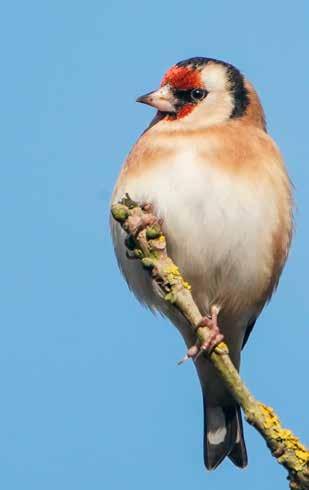
a charm of goldfinch with faces of red white and black flash yellow brazen against the hushed silver air
with liquid twittering they fidget upon the rimy thistles I watch their beaks delve insistently into the prickles
I think of how they feed in loose flocks and seem to shun solitude like us they prefer the company of others
swathed in ginger spice with buff wings they bristle they bob and sway from side to side on the teasel
Stephanie Robertson Sept 2022
Leader: Gi Grieco
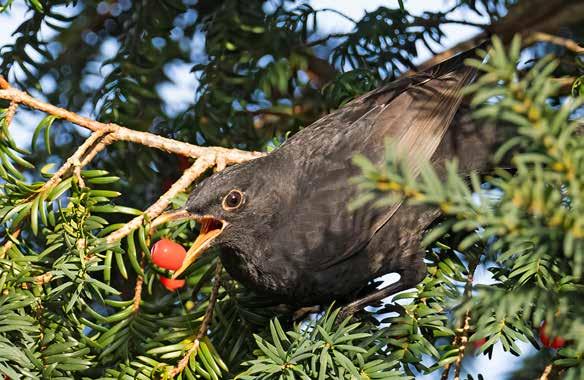
It had been many years since the group had had a field meeting at this excellent Suffolk Wildlife Trust reserve, so it was exciting to visit again. I recall trips in the past, hearing Nightingale and seeing roding Woodcock. I’d done voluntary woodland work there when I lived in nearby Stowmarket as a teenager, so was looking forward to a return. This trip was planned as one of our short walks and the idea was to find some woodland birds along with a variety of butterflies.
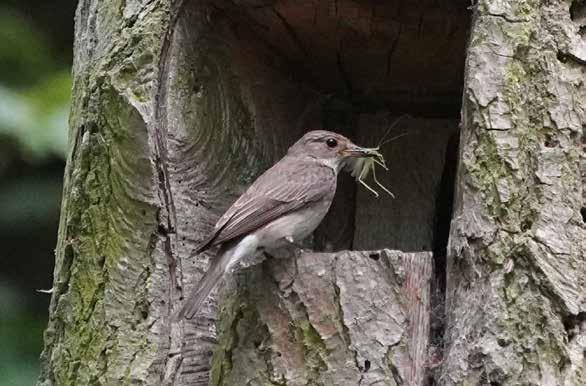
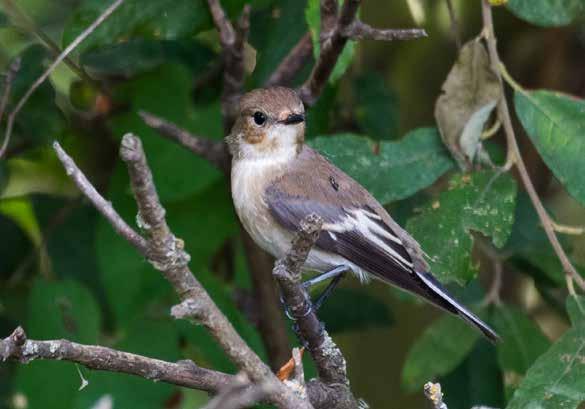
It was great to see many people attend and I started with an introduction about this ancient woodland, its history and management. We hadn’t walked far when we scanned an area where Spotted Flycatchers were breeding.
It didn’t take long before we saw a bird in the tree canopy, catching insects with its characteristic style. Everyone admired the Spotted Flycatcher as it made its sorties and we could set up scopes to view it as it returned to the nest site. We pulled ourselves away from the flycatchers and followed one of the coloured routes – I’d chosen the medium route as we wouldn’t have had time to cover the long route. This time of year the foliage is thick but we did view some warblers – Blackcap and Chiffchaff. We saw the odd Blue and Great Tit and some of the group saw a Goldcrest. While looking at some Meadow Browns along the track we heard Nuthatch behind us but unfortunately it remained hidden in the thick foliage.
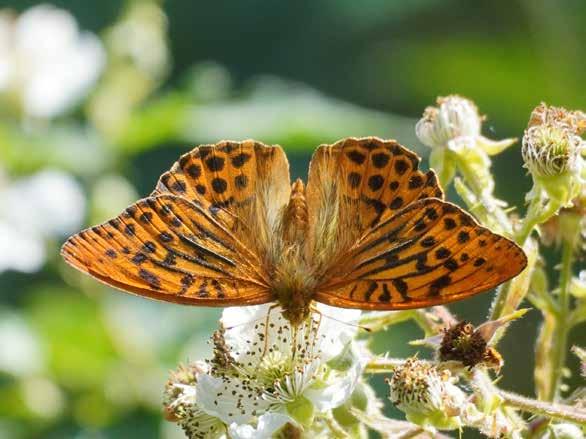
On reaching an open area I talked about the coppicing regime of the woodland and the protection put in place to prevent damage of regrowth from deer. In Spring these open areas become flush with woodland flora. We were too late to witness this but we did note some woodland flora species on our walk such as Enchanter’s Nightshade and Dog’s Mercury. We heard, then saw Great Spotted Woodpecker fly across the area. On one of the woodland rides, that was bathed in sunlight, we saw some spectacular butterflies - White Admiral and Silver-washed Fritillary. Further along we came to one of the butterfly glades and had good views of further Silver-washed Fritillaries along with Peacock and numerous insects such as Yellow and Black Longhorn Beetle.
We headed back to the centre hoping to see one other special butterfly, Purple Emperor as well as White-letter Hairstreak. Unfortunately, we had no luck with those species but did add Purple Hairstreak to the butterfly list. We lingered again to watch the Spotted Flycatchers, all agreeing that it was a privilege to see this declining species and one member made the witty comment, that we all chuckled at, that we needn’t have walked around and just stayed to watch the flycatchers as they were the highlight! In reality, all agreed it was a pleasant walk, in fact thankful to be in the woodland shade with the heatwave that was the prevalent weather throughout the month, and we had seen some great wildlife with the flycatchers the icing on the cake.
Sunday, August 21st
Leader:
Gi Grieco
This was one of our short walk trips, so was a planned two hour walk along the River Deben at Melton. This was my old patch for fourteen years when I worked in the village so it was good to be back (I still get drawn back every now and then – even selecting the tetrad to participate in the RSPB National Turtle Dove survey in 2021!). It was another hot summers day, one of many this year and, as we assembled in the car park, numbers kept growing and eventually reached 31 members – one of the largest I can remember. Thankfully Steve and Eddie stepped in to assist with the leading of the trip.
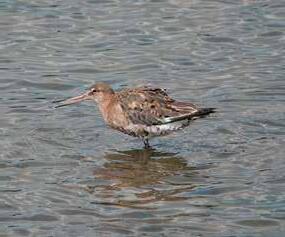
I started by giving a bit of an overview of the area before we walked through the picnic site area where we first heard, then saw, two Chiffchaffs. Up on to the river wall footpath, we scanned and initially picked up two Common Sandpipers, then realised more were further down river and eventually counted five in total. We progressed along the path towards Woodbridge there was a Little Egret in one of the closer dead trees. These dead trees are in the section known as the ‘breached area’. Further across were a number of Cormorants in more dead trees. There were a number of Black-headed Gulls, that included a few juvenile birds. I mentioned how I noted that there was a correlation between the build-up of these gulls on the river which coincided when the breeding birds at Minsmere dispersed and so must come from there. Further waders seen were a Spotted Redshank, Redshanks, a handful of Black-tailed Godwits, up to six Ringer Plovers along with a number of Teal.
We passed Larkman’s Yard, to overlook the river and breached area with the reedbed towards the railway line behind us. Some
briefly saw Whitethroat in the scrub. I talked about the breached area – how that is was formed due to a bomb dropping on the sea wall in WWII and so the grazing marsh became saltmarsh and an important area for roosting birds during high tide, as well as a feeding area, especially as there is no public access on the other side of the river and therefore no disturbance. In recent years the saltmarsh has receded due to further erosion of the river wall and so a plan was put in place by the Deben Partnership to repair some of it. It would be interesting to see how successful it has been but I do know at the time, with work being carried out in October/ November 2010, that it disturbed a lot of the wintering birds there. There had been both over-wintering Little Stint and Curlew Sandpiper along that stretch of the river, having returned for a couple of winters. With the work they moved on and never returned.
We admired the Black-tailed Godwits, some still showing their summer colours plus one had a selection of colour-rings; Orange, Green, Red – Orange, Lime, Orange. There was also at least two Greenshanks about and several Lapwings. On the way back we noted an increase in the Ringed Plovers and final consensus was 16 birds present. We headed back, keen to have some shade and some drinks. It was an enjoyable walk and a place I will continue to visit.
Steve Fryett
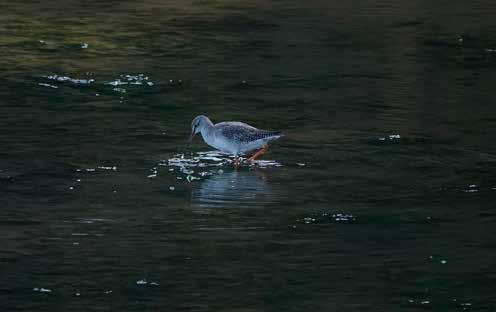
Another excellent turnout of 19 members met for a walk around the south side of Martlesham Creek. Starting from the church we headed off back along the road, noting several Pied Wagtails in the ploughed field and down through the woodland to Martlesham sluice. Here we quickly found a Ruff in winter plumage, quite likely to be “Rupert” who has been present for several weeks in the area. “Rupert” has been returning to winter on the middle Deben for a number of years. Two Greenshank was also seen along with good views of a Kingfisher, first sighted perched, before flying past us and up the reeded part of the Creek. Two Spotted Redshank were noted, one calling and one sighted in the lagoon. One was a very obliging bird that allowed all members to get very good views of this wader in winter plumage. Slightly
larger and more elegant than a Redshank with a striking white fore supercilium and almost white underparts. Little Grebes totalled seven in the lagoon with several more noted further downstream.
Heading towards the main River Deben at least six Grey Plover were recorded along with Black-tailed Godwit and Curlew with a brief glimpse of a Common Buzzard. Opposite Kyson Point we scanned the main river noting a couple of Ringed Plover, Redshank and a distant Dunlin. A few Wigeon and Teal were also noted. Returning across the marshes and along the side of the carrot fields many Lapwing together with a few Curlew were feeding in the furrows. Other local birds remained largely absent so it was a very much a wader day with ten species noted.
Dave Pearsons
The SBG outdoor meetings have been really well attended during 2022 and the meeting at Landguard Bird Observatory was no exception with 22 members gathering in the car park.
As has been the norm for Suffolk this autumn the weather was not good for sea watching or migration, however there was still much for the group to enjoy.
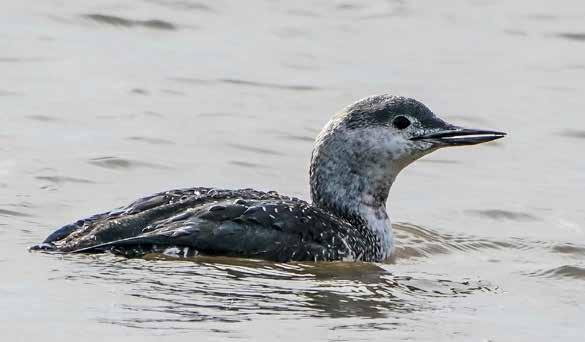
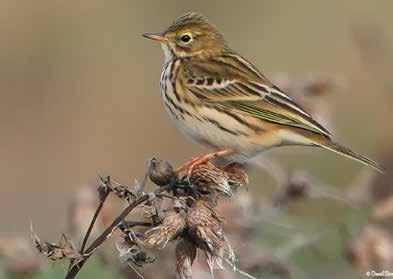
Even though the winds were not conducive for migration, birds need to get on the move, and 197 Goldfinch, 62 Linnet, 17 Skylark, 31 Meadow Pipit, 4 Swallow and a Grey Wagtail went south while we were there. Out at sea 48 Brent Geese, 7 Shelduck, 2 Red-throated Diver and a Curlew were also moving south. One of the Divers, in winter plumage, landed on the sea to give the group very close views.
Thrush species leave the continent and cross the North Sea in their thousands at this time of the year. We were lucky to see seven Redwing feeding on the reserve before continuing their journey inland. Blackbird and Song Thrush joined in with the migration too.
News of a Short-eared Owl flying near the River Deben caused some excitement especially when a large raptor was picked up over the back of the Obs. This turned out to be a Marsh Harrier, a relatively common bird for Landguard unlike the Red-legged
Partridges that have recently made the place their home. Six were seen on the day, but there have been up to 11 on site.
Other birds seen on the day included two Mediterranean Gulls, Kittiwake and Great Black-backed Gull.
Perhaps the highlight for many was seeing a number of birds in the hand all sporting new individually numbered rings, including a Blackbird, Song Thrush, Robin and a Wren. That little brown job skulking in the scrub is so wonderfully marked. Next time you see a Wren just take some time to study the plumage.
My thanks go to Nigel for his usual good guiding, to those who supplied the tea and biscuits and to Anne for making the tea and coffee.
Following the meeting about half the group decided to check out the Tomline Wall and Felixstowe Ferry. Goldcrest, Song Thrush and various waders were seen. However, the day ended with some frustration, Gi picked up an unusual Swift species flying overhead. It was seen only very briefly by Gi and two other observers and a positive ID could not be made. It turned out to be even more frustrating when a couple of Pallid Swifts was spotted in the county the next day and another one two days later at Landguard.
The quarterly review section gives a snapshot of birds seen within the county during the period, predominantly from data received by Suffolk BINS. All scarce and rare birds are subject to submission and acceptance by either SORC or BBRC. Updated lists on Accepted and Outstanding Records for previous years can be found on the SBG website - http://www.suffolkbirdgroup.org/ bird-recording
August is a month where migration starts to pick up with many sightings of Pied Flycatchers and Whinchats, plus skuas and shearwaters offshore. The weather continued to be very hot and dry – it was the second hottest August recorded and the third sunniest in East Anglia, and the
summer overall was the hottest ever since records began.
Garganey – one at Carlton Marsh (17th and 19th), two at Trimley Marsh (26th) and a drake at the site (29th) and one on Aldeburgh Marsh (31st).
Whooper Swan – one on Island Mere (21st).
Temminck’s Stint – one at Trimley Marsh (25th-28th).
Wood Sandpiper – noted at a number of sites in the month including at Aldeburgh Marsh, Trimley Marsh, Walberswick shore pools, Hollesley Marsh, Carlton Marsh and one south over Lowestoft North Denes (13th).
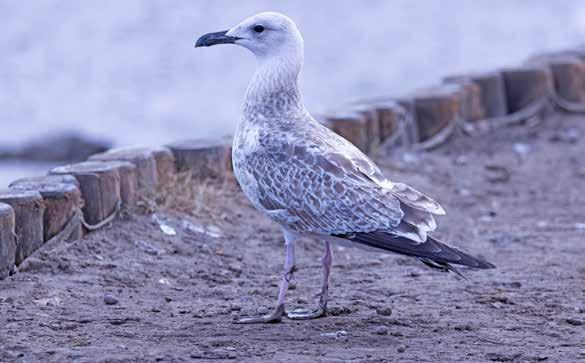
Caspian Gull – up to four in the Southwold harbour area (15th to 20th).
Arctic Tern – a juvenile at Benacre (16th), an adult on the Alde Estuary (19th), a juvenile off LBO (23rd) and a juvenile in the river mouth off Hollesley Marsh (25th).
Black Tern – at Minsmere, 12 offshore and at least 13 by the river mouth at Shingle Street (15th). One at East Lane (16th), two south off Southwold (18th), five off Links Hill, Lowestoft (22nd). One north in the morning and 13 south in the evening past Denes Oval, one off Southwold, for south off Aldeburgh and three offshore at LBO (23rd). One offshore at Bawdsey (27th) and one at Lackford Lakes (29th-30th).
Arctic Skua – one north past Denes Oval (10th), two close inshore at Shingle Street (15th), one off LBO (23rd), six off Lowestoft including a group of five and a dark-phased
bird off Slaughden (30th), nine south off Lowestoft and four south off Thorpeness (31st).
Long-tailed Skua – sightings off Lowestoft, Benacre, Covehithe, Southwold, Minsmere, Thorpeness and East Lane (31st).
Sooty Shearwater – one north past Lowestoft north beach and one north off Minsmere (15th). One north off both Minsmere and Southwold (18th). One north off both Covehithe and Denes Oval (28th). One north off Southwold (30th). One north off Thorpeness, two north off Minsmere and one north off Southwold (31st).
Manx Shearwater – one north off Ness Point (29th).
Glossy Ibis – two on North Warren south marsh (10th).
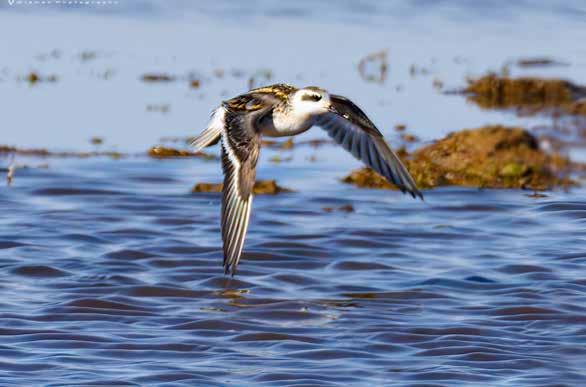
Osprey – the bird on the Blyth Estuary, often viewed from Hen Reedbeds remained throughout the month. One flew east over Southwold (15th), one on the Deben Estuary between Waldringfield and Hemley (25th) and one west over West Stow (30th).
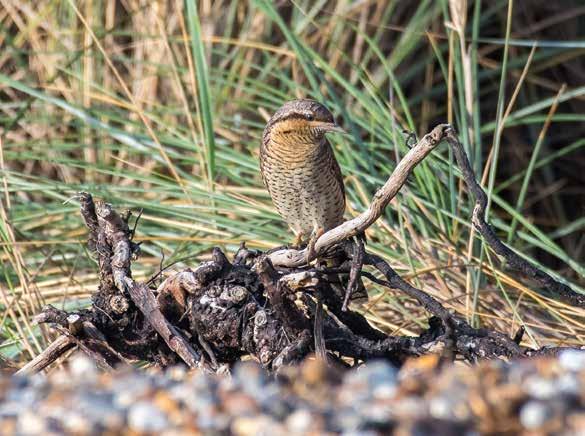
Wryneck – one caught and ringed at LBO (19th-20th). One in the grounds of Mollett’s Farm, Saxmundham (25th) and one at Dunwich Heath, north of the coastguard cottages (27th).
Ring-necked Parakeet – one south over LBO (22nd).
Raven – one over the Redgrave and Lopham Fen visitor centre (20th).
Wood Warbler – two noted in trees by the old pump house adjacent to Aldeburgh Marsh (4th). One trapped and ringed at the allotments at Shingle Street (5th) and one seen in a garden at Alderton (16th).
Pied Flycatcher – good numbers in the county, mainly at coastal sites. An impressive 57 were noted between Hopton and Kessingland (19th).
Red-necked Phalarope – one on the flash on Aldeburgh Marsh (31st).
Caspian Tern – one was present in the evening roost at Breydon Water (15th).
Cory’s Shearwater – one south off Southwold (31st).
Balearic Shearwater – one south past Minsmere, that was seen shortly after off Thorpeness (31st).
Purple Heron – the first-summer bird noted last month was seen again at Lakenheath Fen (1st).
Harrier sp. – a ringtail Harrier species, either Montagu’s or Pallid, flew south of Potton Hall at Westleton (7th).
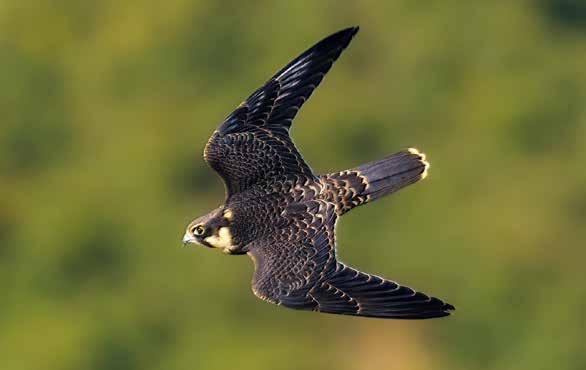
Red-footed Falcon – an immature came in off the sea at Southwold (31st).
Bee-eater – four flew south over the North Wall at Minsmere (14th).
Blyth’s Reed Warbler – one trapped at a ringing site in Hollesley (30th).
A continuation of the warm, dry weather with September being slightly warmer and drier than average. The first of the winter species started to arrive and it is during this time of the year when the sea bird passage comes to the fore, with a nice selection of rare and scarce species being seen.
Pink-footed Goose – eight on Aldeburgh Marsh, then flew north (16th), 15 on Lucky Pool, Minsmere (17th), 27 flew high, north over the Blyth Estuary (18th) and eight on Hollesley Marsh (19th-23rd).
Whooper Swan – at Botany Marsh (19th23rd) and on Island Mere, Minsmere (21st).
Garganey – one at North Warren (16th) and Minsmere (20th).
Black-necked Grebe – a moulting adult seen from Levington Creek on the Orwell (30th).
Curlew Sandpiper – up to 16 on Aldeburgh Marsh flash (4th-5th).
Temminck’s Stint – one at Trimley Marshes (3rd-4th).
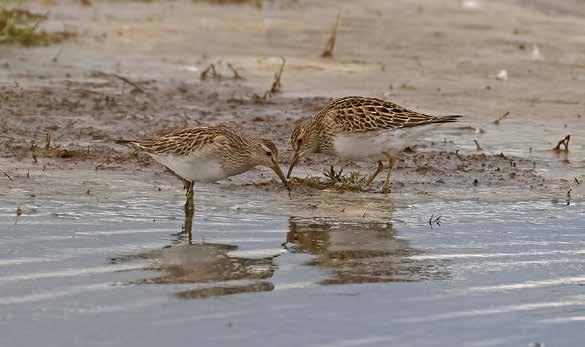
Pectoral Sandpiper – up to two juveniles on Aldeburgh Marsh (14th-21st) and one at Trimley Marsh (28th).
Wood Sandpiper – one noted at Aldeburgh Marsh (4th, 6th, 15th and 20th) and one on south scrape, Minsmere (11th).
Caspian Gull – a first-winter bird at Southwold harbour (18th and 21st)
Arctic Tern – a juvenile offshore at Covehithe (3rd) and two south off Minsmere (28th).
Black Tern – one at Sizewell (8th-9th), a juvenile on the Alde Estuary (10th) and one south offshore at Southwold (12th).
Pomarine Skua – one Southwold (6th), one south Bawdsey (9th), two off Ness Point (17th and 19th), one off Lowestoft (18th) and two off Minsmere (30th).
Arctic Skua – two off Ness Point and Southwold (1st), four south off Sizewell (2nd), Ness Point (19th) and Minsmere (24th).
Long-tailed Skua – several sightings along the coast at Ness Point, Covehithe, Southwold, Sizewell, Slaughden and East Lane (1st-7th). Further birds at Ness Point (17th, 19th and 24th), Slaughden (19th), East Lane (24th) and Corton (25th).
Great Northern Diver – one south offshore at Southwold (17th), one south off Slaughden (19th) and one north off Kessingland (21st).
Sooty Shearwater – one off Covehithe, three off Southwold and one off Sizewell (1st). Southwold (16th) and north off Slaughden (20th).
Manx Shearwater – one south of East Lane (1st), Southwold (10th) and Ness Point (19th).
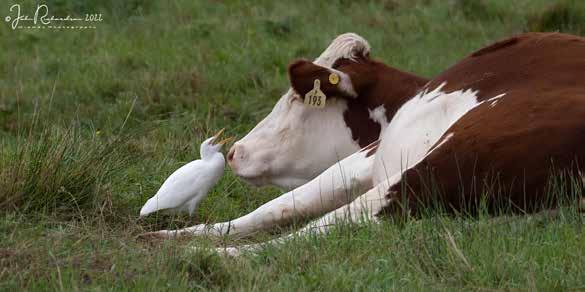
Cattle Egret – one on south marsh, North Warren (13th-21st).
Osprey – several sightings throughout the month from the Alde Estuary, Deben Estuary, Minsmere, Blyth Estuary, Hollesley Marsh, Carlton Marsh, Benacre, Lakenheath Fen, Havergate, Thorpeness and Boyton Marsh.
Hen Harrier – a sub-adult male south over LBO (10th).
Short-eared Owl – one in off, then south at Thorpeness (8th), one at Holbrook (11th) and one at Minsmere (28th).
Wryneck – one at Benacre near Beach Farm (2nd-4th), one near Link’s Hill car park, Lowestoft (4th), one at Westleton, along the approach to Minsmere (6th), one along the beach at Minsmere (10th-19th). One near the sluice cottage, North Warren (13th), one along the track to the Bailey Bridge, Walberswick (14th) and one Trimley Marsh (18th and 20th).
Merlin – a juvenile on Aldeburgh Marsh (5th-6th) and two came in off the sea at Bawdsey (15th).
Ring-necked Parakeet – one in Long Melford (9th).
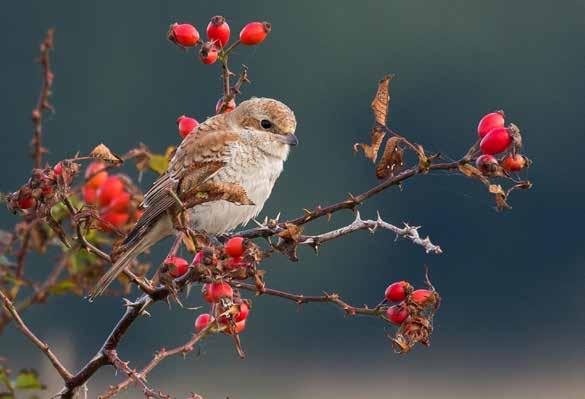
Red-backed Shrike – one by Benacre sluice (10th-11th), one at Shingle Street (14th-15th), one south of the Bailey Bridge, Walberswick (14th-22nd).
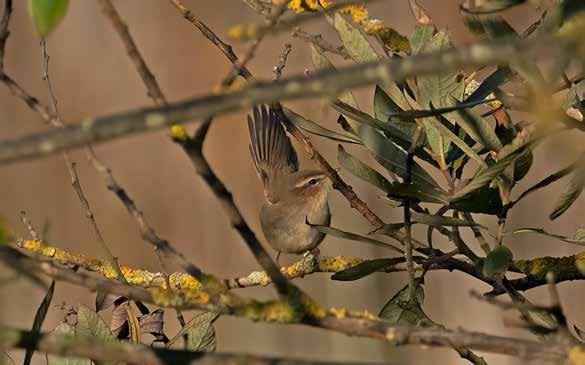
Yellow-browed Warbler – one near Sizewell Hall (19th), Corton (21st and 25th-28th), Southwold (25th), up to two at Benacre (25th-30th) with singles at Hollesley Marsh and Orford (29th).
Ring Ouzel – one at Southwold (9th and 30th), LBO (29th) and Orford (30th).
Pied Flycatcher – birds noted throughout the month at various sites along the coast.
Snow Bunting – one noted at Kessingland (16th and 24th), on the beach at Minsmere
(17th), one flew north over Flycatcher Alley, Lowestoft (18th) and up to four at Walberswick, by the beach huts (20th-22nd).
Scarce September sightings
Corncrake – one flushed and seen along a track at Tinkers Marsh, Walberswick (25th).
Lesser Golden Plover sp. – either an American or a Pacific Golden Plover on Aldeburgh Marsh (5th).
Red-necked Phalarope – one again on the flash on Aldeburgh Marshes (1st).
Grey Phalarope – a first-winter bird on south marsh, North Warren (27th-30th) and a first-winter on the sea at Benacre before flying south (29th).
European Storm Petrel – one flew north past Corton (19th).
Cory’s Shearwater – one south off Southwold (6th).
Purple Heron – the juvenile again by the Little Ouse River, west of Lakenheath Fen between Botany Bay and Redmere (3rd).
Honey Buzzard – a pale phase bird was found sitting in a field at Trimley (2nd), one over Minsmere levels (2nd), one south at Huntingfield (4th) and one south over Shingle Street and then Felixstowe Ferry (10th). Four over Carlton Colville (27th).
Red-footed Falcon – one flew south over Landguard Point (2nd).
Bee-eater – eight flew south over the West Hide at Minsmere (9th) and one south over Aldeburgh Marsh (15th).
Hoopoe – one in a field near Leverett’s Lane, Walberswick before flying north (14th).
Radde’s Warbler – one was trapped and ringed at Kessingland sewage works (29th) and one in a copse at Beach Farm, Benacre (30th).
East Anglia had the both the fourth warmest and sunniest October on record, although rainfall was typical for the month. Typical wintering species started to arrive and there was still some good sea passage seen – the highlight being the Fea’s/Desertas Petrel. On land, the Alpine Accentor was much appreciated and showed really well at times.
Tundra Bean Goose – one over fields near Beach Farm, Benacre and one seen in flight over Carlton Marshes (29th).
Greater White-fronted Goose – 13 over Minsmere (29th) and a single bird on North Warren (30th).
Whooper Swan – a juvenile over Westleton Heath (27th).
Goosander – one on Island Mere, Minsmere (18th) and one on Thorpeness Meare (28th and 30th).
Red-necked Grebe – one south off Southwold and likely the same bird also seen off Slaughden (20th).
Black-necked Grebe – one on the River Alde viewable from Snape (19th).
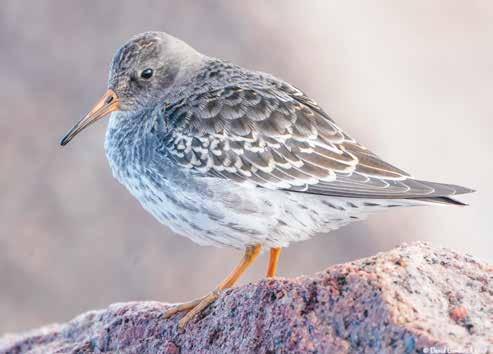
Purple Sandpiper – one south off Slaughden (19th) and on the sea defences (28th-29th) and one by the sluice at Minsmere (20th),
Pectoral Sandpiper – one on Corporation Marsh, Walberswick (1st) and one at Trimley Marshes (5th).
Jack Snipe – up to two showed well from the viewing screen, near the Sluice Cottage, North Warren (20th-29th), one Carlton Marsh (25th) and two on the West Scrape, Minsmere (30th).
Caspian Gull – at Southwold harbour (1st and 21st-22nd), one at Lowestoft (1st and 3rd), Blyth River (16th) and Hollesley Marsh (23rd).
Great Skua – one at Lowestoft, one offshore at Benacre, five off Southwold and one off Minsmere (19th).
Pomarine Skua – one north off Orfordness and three off Southwold (9th), singles off Southwold, Minsmere, Thorpeness and Slaughden (19th), one north off Southwold (23rd) and at Dunwich and East Lane (24th).
Arctic Skua – one off Minsmere (5th, 9th, 19th), Slaughden (6th, 19th), 24 off East Lane (19th), Lowestoft and Thorpeness (19th), Southwold (19th and 23rd).
Long-tailed Skua – one off Southwold (9th).
Great Northern Diver – one south off LBO (1st), one on the sea at Slaughden before flying south (23rd) and one on the River Alde viewed from Aldeburgh Marshes (26th).
Sooty Shearwater – two off Southwold (9th) then Lowestoft, Southwold three off Minsmere, Thorpeness, Slaughden and three at East Lane (19th).
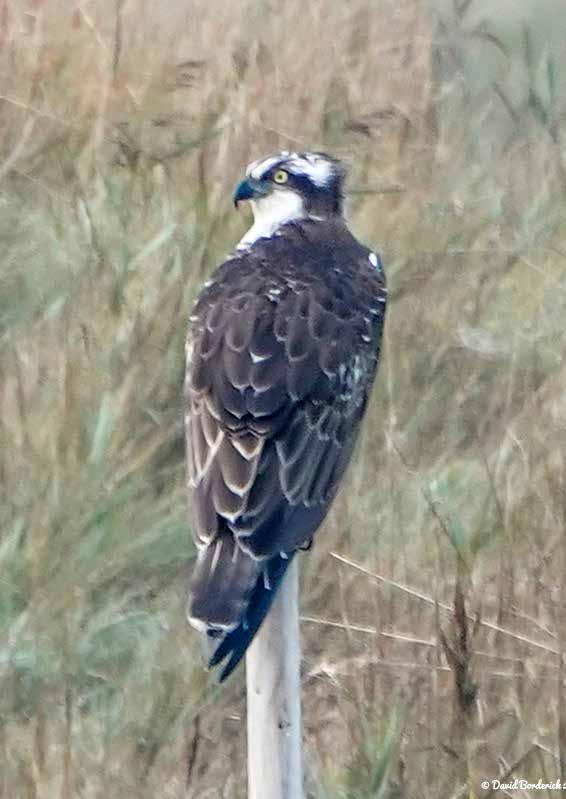
Manx Shearwater – one Southwold (9th and 19th), one south off Denes Oval, Lowestoft (15th) and one north off Pakefield (19th).
Glossy Ibis – one at Carlton Marshes (9th18th), Minsmere (18th and 20th), one North Warren and one over Thorpeness OCP (19th), one south over Benacre Broad then south over Southwold pier car park (22nd), one North Warren (23rd-25th) and one south over Breydon east end and south over Southwold (26th).
Cattle Egret – up to two at Glebe Marsh by Burgh Castle (2nd-3rd) and one by Beach Farm, Benacre (24th).
Osprey – one seen from Fritton Lake heading towards Lound Waterworks (7th), one at Seafield Bay, River Stour (11th) and one on the Alde Estuary (15th, 22nd, 28th-29th).
Hen Harrier – a ring-tail at Hollesley and a ring-tail seen from the Minsmere to Eastbridge footpath (1st), one south along the beach at Walberswick (14th),
Short-eared Owl – birds encountered at Kessingland, Slaughden, Minsmere, three at Southwold, Easton Bavents, Felixstowe Ferry and Gedgrave Marshes.
Merlin – two on Orfordness (9th), at Westwood Marsh (14th), Minsmere (20th), two over Lantern Marshes (22nd), Thorpeness, by the allotments, (23rd) and one Slaughden (27th).
Great Grey Shrike – one by the sheep paddocks at Southwold (7th).
Yellow-browed Warbler – a number found throughout the month including at Benacre, Corton, Hollesley, Orford, Kessingland, Breydon south wall, Shingle Street, Bawdsey, two along the Sailor’s Path between Snape and Aldeburgh, Thorpeness, Southwold, Aldeburgh, Walberswick and Minsmere.
Ring Ouzel – two at LBO (1st and 20th), one flew from the A14/A140 roundabout near Pipps Ford (11th), one on Aldeburgh Marshes (21st) and three at Benacre (23rd).
Water Pipit – two at Hen Reedbeds (22nd), two at North Warren (23rd and 29th), Aldeburgh Marsh (26th and 29th).
Hawfinch – one in Wrentham cemetery (22nd).
Common Redpoll – one trapped and ring at LBO (26th).
Lapland Bunting – one, calling, south over LBO (4th) and two briefly in a field north of Thorpeness old caravan park.
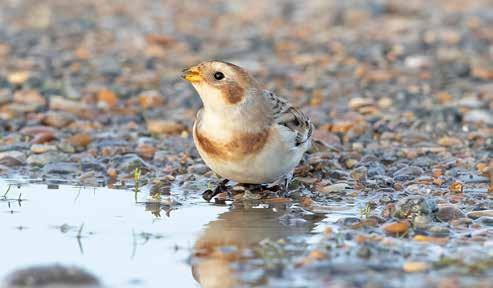
Snow Bunting – a number of sightings through the month, seen at Dunwich, Walberswick, Kessingland, Felixstowe Ferry, Sizewell and Easton Bavents.
Pallid Swift – as part of a large influx into the UK a number of birds were encountered in Suffolk. One seen over the sea at Lowestoft, near the Birds Eye factory, and remained until dusk when it went to roost on the wind turbine. It was seen again the following day in the area (24th-25th). One at Covehithe, then noted later at Benacre (24th), one over LBO and Felixstowe docks (25th) and a probable over Minsmere (29th).
Grey Phalarope – the first-winter bird remained on North Warren (1st-3rd) and south, close inshore, at East Lane (9th).
Sabine’s Gull – one north off Southwold (19th) and a juvenile south offshore at Aldeburgh (20th).
Puffin – singles off Minsmere, Thorpeness and Slaughden (19th), one close inshore by Southwold pier (20th) and one on the sea off Ness Point (22nd).
Black-throated Diver – one south off Southwold early morning, one north off Sizewell early evening and one south off East Lane late morning (19th).
Fea’s or Desertas Petrel – one of the Pterodroma Petrels was seen north off Southwold, then subsequently further up the coast at Ness Point and then Corton (9th).
Leach’s Petrel – one landed on the sea at East Lane (9th) and one north off LBO (12th).
Honey Buzzard – a juvenile low, south over Kessingland cliffs (4th), one over Hen Reedbeds (7th) and one low over Lowestoft (8th).
Rough-legged Buzzard – one over Hollesley Marshes (21st).
Pallas’s Warbler – one at LBO and in Aldeburgh churchyard (20th) and, one at Walberswick (23rd).
Dusky Warbler – one near the boating lake, Southwold (20th-28th).
Barred Warbler – one along the Tomline Wall at Felixstowe Ferry (18th and 21st) and one at Benacre, near Beach Farm (23rd).
Rose-coloured Starling – a juvenile was present with a Starling flock by Benacre sluice (17th).
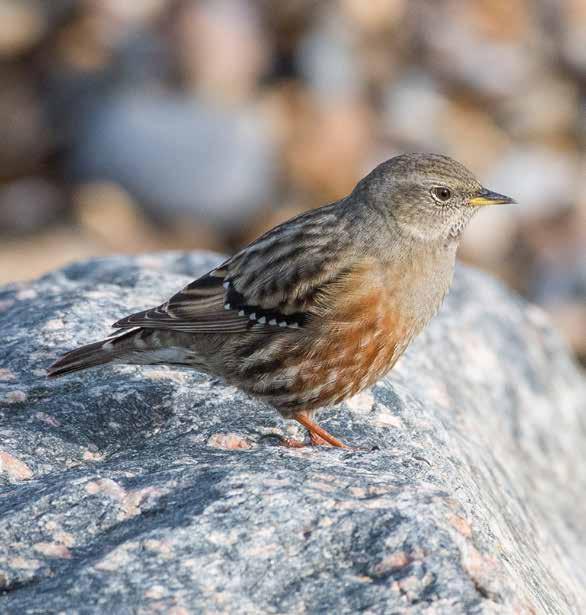
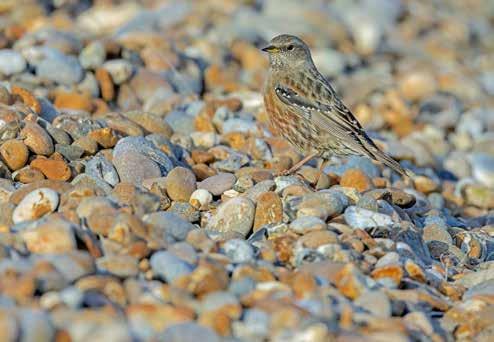
Alpine Accentor – the third Suffolk record, with previous records in 2000 and 2002, was found south of the Martello Tower at Slaughden. It roosted in a pipe on the tower and remained in the area all the following day, before roosting again. The following morning it left the roost and flew high south-west and not seen again (27th-29th).
Little Bunting – one seen at Sizewell beach car park, then flew south (19th).
Within the Wordsearch are a number of habitats and their corresponding birds. The remaining letters reveal one further habitat and a bird species special to Suffolk.
Please email in the answers to harrier@suffolkbirdgroup.org or call/text to 07951 482547.
The first name ‘out of the hat’ will win a signed copy of The Consolation of Nature: Spring in the Time of Coronavirus by Jeremy Mynott, Michael McCarthy and Peter Marren.
Council for 2023
Officers
Chair: Chris Courtney
Vice Chair: Gi Grieco (temporary until AGM)
Secretary: Eddie Bathgate
Treasurer: Anne Wright
Communications Officer: Adam Faiers
Projects Officer: Chris Keeling
Suffolk Bird Report Editor and SORC/SNS Link: Nick Mason
Harrier Editor and Outdoor Events Coordinator: Gi Grieco
Indoor Events Coordinator: Adam Gretton
President
John Grant
Members
Peter Merchant
Jamie Everett
Ben Moyes
John Kornjaca
Honorary Vice-Presidents
Andrew Green
Robin Hopper
Colin Jakes
Mike Jeanes
Mike Marsh
Roy Marsh
Philip Murphy
Reg Snook
Steve Piotrowski
Bird Recorders
North-east Area Recorder: Richard Walden Email: bird-ne@sns.org.uk
South-east Area Recorders: Gi Grieco Tel: 07951 482547 and Steve Fryett Tel: 07593 382082 4, The Street, Melton, Woodbridge, IP12 1PW. Email: bird-se@sns.org.uk
West Area Recorder: Chris Gregory Email: bird-w@sns.org.uk
Memberships
c/o SNS, The Hold, 131 Fore Street, Ipswich, Suffolk, IP4 1LR
Founded in 1973 by a group of Suffolk birdwatchers
Associated with the Suffolk Naturalists’ Society
SBG remains an independent birding group and is a registered charity
A voice for Suffolk birdwatchers
With established links to many naturalist and conservation organisations
Media
Actively lobbies to protect key Suffolk habitats
Provides a county-wide field force of bird surveyors
Promotes BTO bird surveys and organises special SBG surveys

Strong web presence - www.suffolkbirdgroup.org
Active Twitter feed - @SuffolkBirdGrp
Quarterly magazine - The Harrier
Annual review - Suffolk Birds report
Annually (20+) field trips - ideal for novices or experts and young or old alike
Opportunities to visit hot spots and receive practical ID tips in the field
Programme of talks and presentations - variety of topics (county, national, or international) with quality speakers
Assists with conservation projects to improve breeding success
- Swifts
- Barn Owls
- Peregrines
- Waders
Partners with Suffolk Wildlife Trust and other bird groups
Assists with funding for bird hides and other birding amenities
Contributes to community events, including dawn chorus walks
Provides bursaries for special projects