
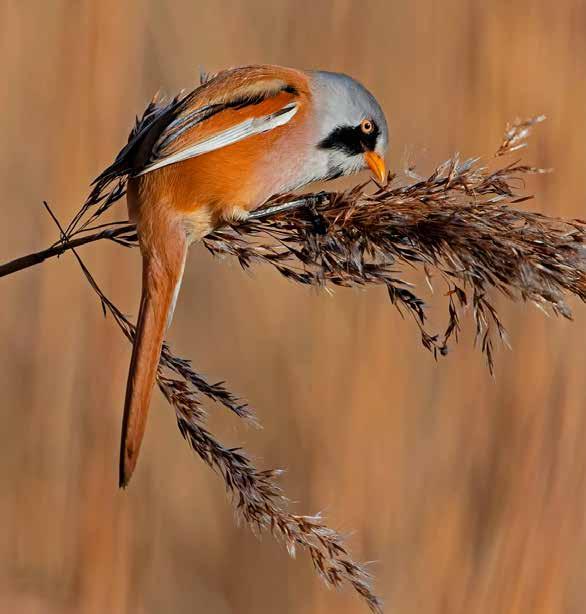

Gi Grieco
Gi Grieco
Welcome to The Harrier. It’s been great to have such a selection of articles submitted for this edition. We have a whole section on the numerous projects the Group is involved in, from an update on the successful Save our Suffolk Swifts to the involvement in other projects such as the Green Light Trust and Farmland Bird Survey. Another section covers some of our most vulnerable species and I’ve included the Turtle Dove article again: apologies to Nigel at LBO, as the accompanying graph dropped off between proof-reading and printing. David Walsh has done remarkable surveying to get a wonderful picture of Nightingale in his patch area.
In the last couple of years many of us have assessed how we go birding and Rachel and Robin have detailed their birding by bike in the period. A follow up article to cover 2021 will be in the next edition. SBG President, John, has written a powerful piece on how areas and landmarks are a part of our birding landscape and the feeling when such areas get needlessly destroyed. I’m sure many of us can relate to having these landscape markers – I always remember some old trees used as drying posts for Cormorants along the River Gipping between Needham and Baylham that I used to encounter as a teenager. These trees have long since succumbed, by old age rather than deliberate destruction, but I still fondly recall them whenever I walk that route.
Photo: John Richardson
There are a couple of short notes on observations – these always make for an interesting read and are always welcome for inclusion in the magazine. With the work being done around the country to assist Swifts a similar project is up and running to do likewise for House Martins – another species sadly declining greatly. We finish with a selection of outdoor field trips and the bird review - as mentioned in the last Harrier, the regular quarterly bird review has undergone a change of format. I would be grateful to have some feedback on this style compared to previous and if there is any preference.
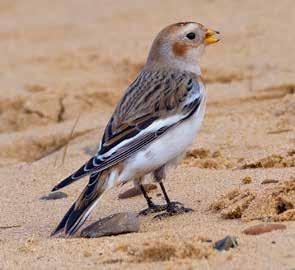
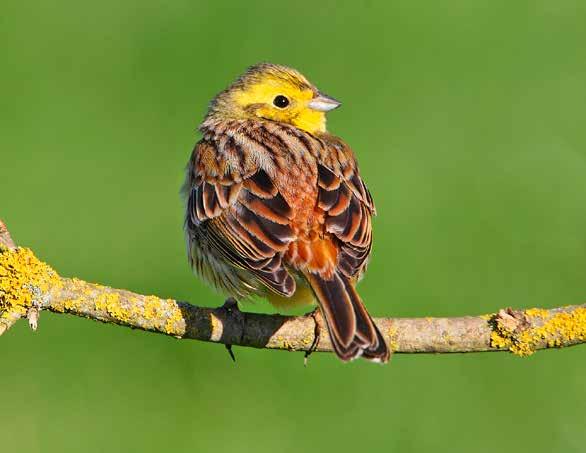
Bunting
Edward Jackson – SNS/SBG Membership Link
Since New Year 24 new individual and family members have joined SBG – that’s already more than the total for 2020 and 2021 combined! Please do keep spreading the word about the benefits of SBG membership and that it’s now very simple to join using a card or PayPal via the new Suffolk Naturalists’ Society website: https://sns.org.uk/join/
A small number of you may have forgotten to renew their subscriptions for 2022, so I’ll be in contact shortly if you haven’t already heard from me! A gentle reminder to them and anyone who has also not returned their 2022 Membership and Gift Aid form to SNS to please do so as soon as possible.
However, SNS was unfortunately given the wrong postcode for their new office at The Hold in Ipswich. It’s now been corrected from IP4 1LN to IP4 1LR. We’ve amended this on the forms you can download from both the SBG and SNS websites. However, if you wish to use the paper form we sent out with the Winter 2021 Harrier, please can you make sure you use the new postcode on the envelope. Thanks.
Eddie Bathgate
Swifts were generally 7-10 days late arriving at their nest sites this year, according to the reports I received. It is thought that persistent cool northerly winds at the end of April and early May held them back, with reports of large numbers over southern France at that time.
The importance of calls
Once they were here and breeding, it was good to hear that pairs at natural nest sites were present and that there were increasing numbers of nest boxes occupied too. Stutton, Ipswich, Melton, Debenham, Capel St. Mary and Woodbridge all reported newly-occupied nest boxes with only one location reporting fewer pairs nesting than in 2020. It has become increasingly apparent that playing Swift calls is an instrumental factor in speeding up the occupancy process. Anecdotally, locations where no calls were played, such as Woodbridge Swimming Pool, tended to remain unoccupied this year. Surprising success has been reported by people who have played calls to advertise boxes on new sites. In contrast, where boxes have been installed but calls have not been played I am not aware of a single successful

occupancy this year. If anyone has feedback on the efficacy or otherwise of call systems in attracting Swifts, please get in touch. Similarly, if you have unoccupied nest boxes and need advice on playing calls, please do get in contact: we can help.
We have also raised funds in order to supply Swift Community Sets comprising a number of nest boxes along with a call system. Schools in Occold, Debenham, Otley, West Bergholt and Holbrook all received free sets as did The Red Gables hub in Stowmarket, The Cut Theatre in Halesworth, Pakenham Mill, the Museum of East Anglian Life and the Clare Country Park Museum.
SOSSwifts hosted a number of well-attended walks and talks around the county. Barrow, Westleton and Nayland had Swift Talks this year. Felixstowe, Woodbridge, Wickham
Market, Leiston, Middleton and Thorpeness had Swift Walks. As well as raising awareness, these events resulted in nest boxes being installed and calls being played. We also provided free nest boxes to boost existing colonies where young Swifts had been found on the ground. Tuddenham St Mary, Little Bealings, Snape and Wickham Market have benefited. This year saw the establishment of two more rehabilitation centres in Thetford and Framlingham, adding to Alan and Christine’s long-standing and highly efficient ‘Aldeburgh Amazing Swifts’ setup. In total, 50 downed Swifts were successfully rehabilitated across the three sites by these dedicated volunteers, ably supported by drivers, who collected and dropped off the Swift patients and occasionally took a turn in feeding the birds. A fantastic example of volunteer teamwork of which Judith Wakelam, Suffolk’s pioneer Swift rehabilitator, who passed in 2021, would have been proud.
A welcome boost to the cause of Swifts came from Suffolk’s AONBs, which declared Swifts a Flagship Species and provided significant resources to help Swifts in both their Coasts and Heaths and their Dedham Vale areas. Twenty-three Community Sets (comprising 138 nest boxes and 23 call systems) were distributed to suitable locations early in 2021 and it is fantastic to hear that some of these nest boxes have already seen Swift occupancy. As well as this funding, Leiston, Thorpeness and Middleton have also benefited from a grant from the Galloper Wind Farm Fund. Following Swift walks and talks in these locations, a further 18 community sets have been distributed, totalling over 100 nest boxes.
Further funding has resulted in an additional 400 nest boxes with 100 call systems being available for locations within or adjacent to both AONB areas. If you or your family, friends or colleagues live within or close to any of the AONB boundaries and wish to help Swift conservation then free Swift Community Sets are still available from them for you to fit on suitable elevations.
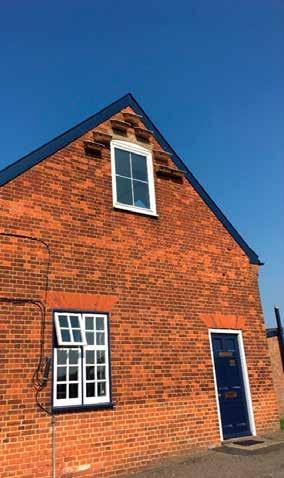
Finally, looking ahead to 2022, if you are involved in a local wildlife group and would like a Swift Talk during the year, or a Swift Walk during late June or early July, then please get in contact. Talks are already planned for Tuddenham St Mary, Framlingham and Brundish. SOSSwifts can also provide generic articles for you to adapt for your local free publication or Facebook page.
SOSSwifts have more Community Sets available too thanks to fund raising. Our preference is more prominent elevations of public buildings in locations where Swift conservation is a priority. Please do contact us if you want a set.
Save Our Suffolk Swifts are here to help you help Swifts.
Chris Keeling, SBG Projects Officer
Bird surveys, moth trapping evenings and butterfly transects at Rushmere Common –surveying for biodiversity gain in Ipswich
The Green Light Trust is an established and successful environmental education charity which uses the Power of Nature to transform lives. Since its formation in 1989 the Trust has helped thousands of people, both children and adults from diverse and challenged backgrounds, using nature to build health and hope through conservation projects at locations around East Anglia.
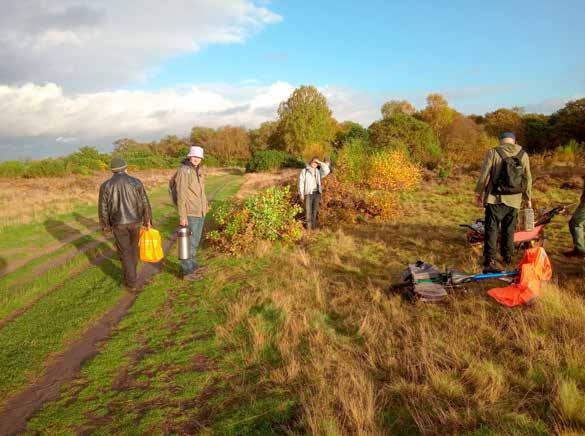
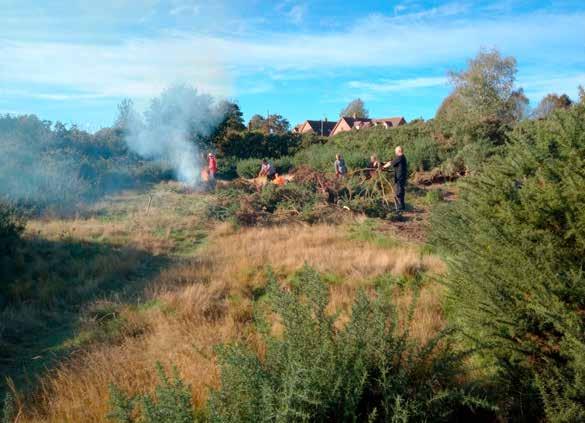
Green Light Trust volunteers are clearing gorse scrub on Rushmere Common, but the days of ‘scrub bashing’ belong in the past. Scrub is an important wildlife habitat and if managed

properly can form a living fence around more vulnerable habitats, creating safe, sheltered areas for butterflies and reptiles. The Green Light Trust is keen to undertake scrub management in a way that creates a mosaic of heather and acid grassland, opening clearings in the gorse scrub rather than wholesale scrub clearance. But we need to undertake baseline surveys to record and monitor species across the site and identify which areas can be opened up or cut back, while monitoring and recording changes as the work progresses.
The call for volunteer surveyors first went out in 2020, but as we all know the COVID restrictions made getting out and about and joining projects a real challenge for many of us. We are still looking for volunteers for Spring 2022,
but please note the contact details for the Green Light Trust have changed. So if you have already tried to contact the Trust and haven’t heard back, please don’t be discouraged and do try again.
If you can help with bird surveys, butterfly transects or moth trapping evenings please e-mail Peter Foster at the Green Light Trust at peter@greenlighttrust.org and/or Dave Pearsons representing the Suffolk Bird Group at davepearsons204@btinternet.com.
The COVID pandemic has highlighted the vulnerability of all of us to mental health issues and the importance of nature in healing and restoring our sense of wellbeing. This is an opportunity for SBG members to help people of all ages and backgrounds engage with nature, while at the same time enhancing wildlife
habitats around Ipswich. We really hope you can spare some time to support the Green Light Trust in developing the links between people and nature, while restoring our fractured heathland habitats. We look forward to hearing from you.
As SBG Projects Officer I have agreed to act as liaison between the SBG and the Rushmere Heath Project. Please can I ask that you copy me in when contacting Peter Foster or Dave Pearsons so that we can coordinate surveys and survey data. We need to ensure that management - including scrub clearanceis targeted appropriately and that Suffolk Biodiversity Information Service records are regularly updated.
Chris.keeling@icloud.com
Suffolk Wildlife Trust (SWT) Farm Advice Team are looking for SBG volunteers who are confident at identifying farmland birds, to undertake farm bird surveys at host farms to help chart changes in farmland bird populations in Suffolk. These farms have been advised by SWT on wildlife friendly farming and changes in management such as wild bird seed provision, supplementary feeding and sympathetic hedgerow management. Records will be shared with Suffolk Bird Group and Suffolk Biodiversity Information Service. SWT will then provide advice and recommendations to landowners on farmland birds.
If you are interested in helping out or would like to find out more, please contact Jenny Rawson – jenny.rawson@suffolkwildlifetrust.org
This will be similar to BBS methodology, involve two visits during the breeding season (AprilJuly). Farm visits will be repeated every 3 years, to track changes in populations and enable SWT to inform on management recommendations.

As The Harrier goes to print it is still time to participate in the SBG Rookery Survey this Spring. Gaps in records are mainly in the western and northern sections of the county –the map was published in the last edition.
The easy-to-use rookery survey webpage, hosted by the Suffolk Biodiversity Information Service, allows the number of nests in each rookery to be recorded, with location mapping down to an accuracy level of 10 metres. The survey page to enter details can be found here – https://www.suffolkbis.org.uk/ rookerysurvey.
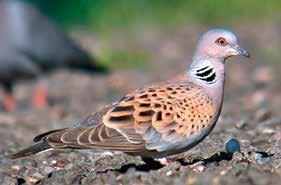
I shouldn’t do it and those with a nervous disposition should look away now, but the prognosis for this species is not good. The UK population of Turtle Dove Streptopelia turtur has declined by 98% over the past 50 years (Woodward et al 2020). Data collected by Landguard Bird Observatory over the last 40 years clearly shows this depressing situation, to the point that LBO regulars now get excited when a Turtle Dove is sighted. In the early days of the observatory this species was so common in Suffolk that observers often didn’t even bother noting them and never believed that this decline would occur, so were lackadaisical
about recording common species and, as such, more were undoubtedly seen than logged! The causes of the population decline are strongly linked to agricultural intensification and pesticide use with many recent scientific studies not giving much cause for optimism. The situation is not helped by the fact that levels of legal hunting in Europe are likely to be unsustainable (Lormee et al 2019). Current population trends suggest that Turtle Doves will be extinct as a breeding species in the UK by the middle of this century with future birders treating them as rare visitors.
TURTLE DOVE - Annual bird-day totals at Landguard 1983 - 2021
Number per year 5-year mean
Observers throughout Suffolk are requested to send all Turtle Dove sightings to the county recorder or log them on BirdTrack birdtrack.net. Any historical sightings languishing in old notebooks should also be logged onto BirdTrack. If nothing else this data will help future generations appreciate the declines (even if it won’t save the species).
Acknowledgements:
Many thanks to Mike Marsh for support with data mapping and comments.
References:
Lormee, H., Barbraud, C., Peach, W., Carboneras, C., Leberton, J.D., Moreno-Zarate, L., Bacon, L. & Eraud, C. (2019) Assessing the sustainability of harvest of the European Turtle-dove along the European western flyway https://www.cambridge.org/core/journals/bird-conservation-international/article/ assessing-the-sustainability-of-harvest-of-the-european-turtledove-along-the-european-western-flyway/ CB52250C297472526586AAD12CBF61D8
Woodward, I.D., Massimino, D., Hammond, M.J., Barber, L., Barimore, C., Harris, S.J., Leech, D.I., Noble, D.G., Walker, R.H., Baillie, S.R. & Robinson, R.A. (2020) BirdTrends 2020: trends in numbers, breeding success and survival for UK breeding birds. Research Report 732. BTO, Thetford. www.bto.org/birdtrends
Dave Pearsons
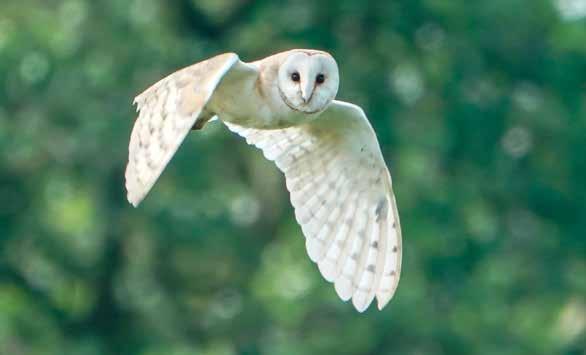
In summary it was one of the most protracted seasons ever for Barn Owls with some pairs on eggs in March, before the dreadfully chilly spring set in. A few of these early nesters would have raised their broods and fledged, but others deserted due to a shortage of food. Short-tailed Vole numbers appeared to have picked up in late summer when many boxes were again hosting Barn Owls. It is suspected that these birds were now incubating a replacement clutch rather than a second brood after fledging their first. Barn Owls were still feeding their chicks during the first week of November and it is likely that some were still in the boxes at Christmas.
Monitoring
Coverage was well down on previous years with results received from only 690 of our 1,863 boxes. Further chasing may result in a few more. We have lost some of our very prolific monitors, mostly due to old age, so
Michael Crawford has put an appeal on the Barn Owl WhatsApp to see if we can recruit more monitors. If you would like to become involved with Barn Owl conservation please do get in contact, SBG can put you in contact with your local monitoring group.
In summary, the 2021 results are as follows: Total no of boxes 1,863 Boxes checked
Boxes occupied (all species)
Occupancy by Barn Owls
hosting adult BOs
hosting BO chicks
David Walsh
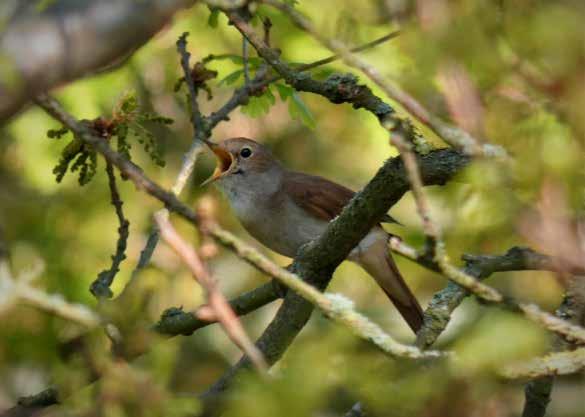
The Winter 2020 edition of The Harrier included a piece about the impressive number of Nightingales I had found within walking distance of my home in the spring of that year. I ended by writing: “I will redouble my efforts to look for Nightingales in the areas surveyed this year, and those a little further afield, given the knowledge that the area is significant not just in Suffolk terms but perhaps nationally too. It will be fascinating to see if the high numbers in spring 2020 are sustained and how widely this local hotspot extends.” This article outlines the surveys which took place on the Shotley peninsula during 2021 to try and answer the two questions posed.
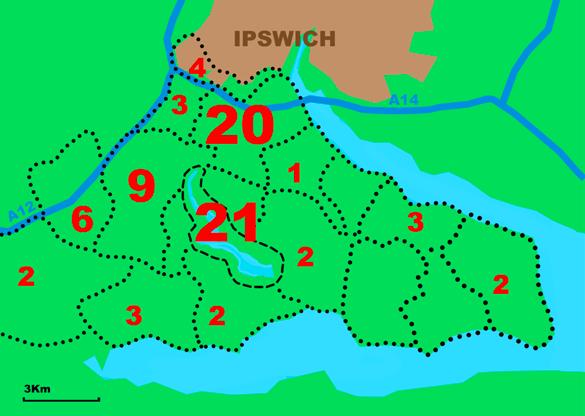
My focus in 2020 had been on the Nightingales in Wherstead, Belstead and Pinewood parishes but, in the last two weeks of May following the end of the strict lockdown, attempts were made to find territories further south, towards Bentley and East Bergholt. This provided the impetus to survey more thoroughly in 2021. So, in April, contributors to the Stour Estuary Bird News WhatsApp group were asked to send me their Nightingale records, with six figure grid references where possible. For the purpose of the survey, the Shotley peninsula was defined as the area south of Ipswich, east of the A12, and in Suffolk. Data was received from a number of observers, and to this I added
reports from the specific annual count made around Alton Water.
The table below shows the number of territories found within each parish. Those found around Alton Water are tallied separately and excluded from the parish totals. None were found in Tattingstone (excluding the Alton birds), Erwarton, Harkstead and Woolverstone.
In my December 2020 article, I wrote: “It seems possible that there may be as many as 40-60 territories in suitable habitat within this area of approximately 50 square kilometres south of Ipswich, a remarkably significant population….” The results of our 2021 survey suggest that this was an underestimate, making the population even more important than I had thought.
Whilst it is undoubtedly very heartening that parts of the Shotley peninsula remain a real hotspot for Nightingales, it is worth noting that populations of species in rapid decline do tend to contract to core areas, so it is important not to be distracted by the high core counts and also to take note of the declines in outlying areas. Further, within the recording area, Nightingales were not found in several places adjacent to the main concentrations when, based on habitat and history, one might have expected birds to be found. Examples would be the Stour Valley from Cattawade to Flatford and Stratford St. Mary and the Sanford Brook Valley east of Dodnash towards Stutton.
A small number of Nightingales known to be present for one day only were excluded from the figures in order to avoid recording migrants as breeders. The majority of the records included involved birds present for at least a week at consistent locations, indicating ‘probable breeding’ using the BTO definition. It should be noted that some of these birds would have been unpaired males; they may well sing for a more extended period than paired birds, so are very likely to be detected, and it has been suggested that as a species declines the proportion of unpaired birds increases. One target for a follow up study in the core areas would be to try to get a better understanding of the proportion of males which are paired.
The distribution on the peninsula, with most birds in the north and west of the area as well as around Alton Water, broadly mirrors that published in the Suffolk Bird Atlas from 2008-11, both in terms of presence/absence and relative abundance. Although surveying in 2021 was undoubtedly less intensive towards the south-east of the peninsula, it seems unlikely that many birds were missed; however, a second target for follow up surveys would be to confirm this.
Beyond the issue of trying to extend the survey area, my second question was whether the high counts in 2020 were a ‘one-off’, perhaps due to the excellent spring weather or because of increased observer coverage of local areas during the lockdown. This does not appear to have been the case. If anything, the number of singing males in Wherstead/Belstead/ Pinewood increased slightly between 2020 and 2021 and, from a conversation I had with Richard Drew, this trend was matched in the Westleton area, another Nightingale hotspot.
To give further context to the figures, Fingringhoe, Friday Wood and Danbury Common in Essex are three known hotspots with 20-30 pairs each. Nationally the best site is thought to be Lodge Hill in Kent with as many as 80 territories in some recent years; it was designated as an SSSI because of the Nightingales.
I mentioned in the 2020 article that the parish of Wherstead was currently writing a Neighbourhood Plan. These plans have social, economic and environmental policies. Identifying and recording such an important population of Nightingales in this plan would potentially provide an enhanced level of protection for their habitat. It is very good to know that since that article was published, the data has been shared with the relevant authorities within the parish.
Thanks to:
Those who contributed their records via the Stour Estuary group and as part of the Alton Water survey
Ed Keeble for producing the parish map and for his comments on the drafts of this article
Richard Drew for his comments on the Westleton area
Suffolk Bird Atlas: http://suffolkbis.org.uk/sites/default/files/ Bird%20Atlas%20New/SuffBirdAtlas.html
Rachel and Robin Harvey
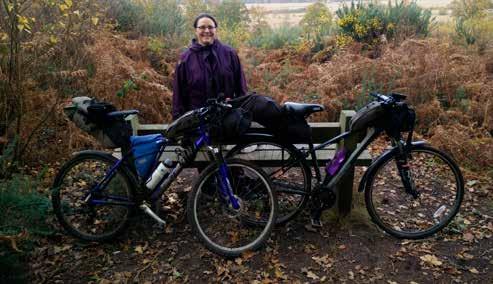
Life changed dramatically for everyone during the first Covid lockdown in March 2020 with the instruction that we were only permitted to leave the house for limited daily exercise. But what do you do when birding is in your blood? We, like many other Suffolk birders, started our lockdown list, finding comfort in the nature around us, watching nature from our gardens and on our daily exercise walks. Little did we know that the pandemic would be the catalyst for a return to Rob’s birding roots, when, in the days before he had a car, the norm was birding on foot and by bike.
Carrying the “bins” on the daily exercise walks seemed to be acceptable and we began to explore the local area around our home village of Bramfield in a way that we had never done before. Early success came with a White-tailed Eagle on 4th April, just a mile from home, a majestic sight as it circled with five Common Buzzards then drifted off north. A bonus was that this proved to be a wild-fledged bird, not one of the Isle-of-Wight reintroductions. Our only regret was that we were not carrying a camera! Other local highlights in April included a luminous male Yellow Wagtail on a ploughed field, three Ring Ouzels chacking in a hedge, a Wheatear in one of the village horse paddocks, and our closest ever Firecrest to the house.
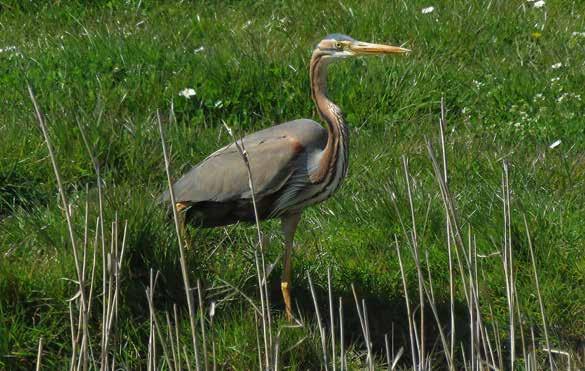
As restrictions gradually eased, a yearning for the coast and a desire to increase the species list quickly led to bikes being dusted off and we started to venture further afield. With this came the logistical challenge of carrying the equipment needed for a day’s birding. Our mini travel scope and tripod became the norm, and there were daily decisions regarding which clothes to take (the unpredictable British weather demanding preparation for everything from sun to monsoon). A variety of new bike bags were purchased to enable us to transport everything but the kitchen sink! Memorable spring rarities seen whilst on the bikes included a confiding adult Purple Heron at Southwold, a majestic Common Crane at Dingle Marshes, an Iberian Chiffchaff holding territory at Minsmere and a stunning male Red-backed Shrike near Westleton. Rob also managed a Honey Buzzard during a rare day working on the reserve and to “twitch” a first summer female Red-footed Falcon found by Rachel and her dad at North Warren (they had driven that day!). There was a supporting cast of Suffolk specialities too of course, including Stone-curlew, Turtle Dove, Nightjar and Dartford Warbler. And one of the great pleasures of 2020 was being within walking distance of Woodlarks and Nightingales at Wenhaston.
Although driving was permitted again, we had no great desire to make a full return to it, having got used to the slower pace of birding by bike and the pleasures of finding birds easily missed when encapsulated in a car. We continued to do most of our birding on foot and by bike, enjoying both the physical and mental benefits. Wanting a new challenge, and stuck on 99 “on foot” species since the lockdown started, we planned our first ever walk to the coast in May. Ironically, we added our 100th species from the front door as we left the house with a Spotted Flycatcher singing from our Sycamore. The 16-mile round trip to Dingle on a brilliant sunny spring day brought 17 new “on foot” species including Great White Egret, five Velvet Scoters, Hobby and Little Tern. The total for the day was 96 species, four short of the big 100, with the Dingle pony pools letting us down with some (unusually) missing duck and goose species, but we did finally add Coot! With Rob making a gradual return to work in the Minsmere office rather than at home, he was in the right place at the right time when John Grant discovered a Sooty Tern flying south over the reserve on 8th July. The news that it
has been rediscovered at Sizewell led to a very wet cycle down the dunes. The panic of missing a mega reserve tick was replaced by relief when it gave great views as it flew around the rigs (with limited time, Rachel did not risk the cycle from home that day so missed a “green tick” but was just relieved to catch up with it before its premature departure!).
The autumn was good for birds, but the mostly terrible weather and family commitments meant that we did not cycle much in September and October. The term “dirty” for birds seen by car was born. So “dirty” Radde’s and Dusky Warblers and Rustic Bunting were some of the ones that got away (Lowestoft would probably have been a step too far on the bikes at that time anyway!). We did attempt to see a Radde’s Warbler at Southwold the day it disappeared but standing in a sea of mud, dipping, whilst being shouted at by a particularly unpleasant caravan park resident was definitely the low point of the year.
The weather in November was better and produced a cracking triple in the form of two Eastern Yellow Wagtails and a Greater Yellowlegs at Dingle and a Pallas’s Warbler in
the Sluice Bushes at Minsmere. More mundane, was finally adding Pochard to the year list! December highlights included Long-tailed Duck at Covehithe and an excellent flock of Tundra Bean Geese within walking distance at Wenhaston.
Rob ended the year on 198 species, and had cycled over 1600 miles, a reasonable achievement given that we had only started the “green list” on 24th March. Rachel was a little behind on both counts having been more restricted by full-time working from home. With the magic 200 so close, we had already decided to complete a full year to 23rd March 2021, and so it continued! January got off to a great start with Hawfinch at Sotterley and a long-staying Red-necked Grebe on the Minsmere Scrape. The latter was also a longawaited reserve tick, typically found when we were both back working from home! Other winter specialities included the very unexpected Taiga Bean Goose at Hen Reedbeds, a hard-won
John Grant
Pink-footed Goose at Southwold and a redhead Smew at Minsmere. A pair of drake Pochard on the Blyth, found on a day we had walked there, was also another “local patch gold” moment (as you can tell, Pochard has become a bit of a green-listing obsession!).
The full year had produced 205 species for Rob (including 134 on foot) and Rachel finished on 189. It had not been just about the birds, with other “green” species totals of 22 mammals, five reptiles/amphibians, 30 butterflies, 375 moths and 19 dragon/damselflies.
So, now time for a rest? Well, it was hard to resist the temptation to complete a full calendar year so we had already started a new list from the 1st Jan 2021. Rachel was keen to hit the magic 200 species and we both wanted to see what could be achieved with 100% commitment! For Part 2, The Big “Green” Birding Year, and the continuation of our green birding adventures, please see the next edition of The Harrier.
Travelling the highways and byways, the tracks and the trails of east Suffolk over the decades, certain distinctive trees have become so familiar to me that they seem like old friends. Each time they are passed they radiate a kind of comfort, a reassurance that they still stand, that is so palpable that I almost feel like saying ‘Hello’ to them.
There’s a skeletal, leafless hulk beside the A12 in the grounds of Glemham Hall. Leafless, but far from lifeless, it leans in such a way as to give it a sense of movement. It appears to march across the parkland, having bounded straight out of the pages of The Lord of the Rings. There’s an almost white, shiny and barkless wonder on the western edge of Minsmere Levels whose contortions make it appear for all the world like a giant, silvery corkscrew pointing to the heavens, dazzling as it catches the sunlight. There’s a towering Wellingtonia
that rises majestically above the geometric flatness of the Kenton Hills skyline and the gentle arc of Ash Wood that I can see from almost every room in my north Leiston house. When I’m birding at my beloved Minsmere, I use it in some sort of strange triangulation to ‘fix’ the position of my home in my mind’s eye. When I’m at home I use it to ‘fix’ the position of various points around the hallowed reserve.
And then there’s the Sizewell Sycamores. Or, rather, there used to be.
There can be few Suffolk birders who haven’t stood and stared at this clump, perhaps twitching a rare warbler. There have been plenty of those over the decades, such as Yellow-broweds, Pallas’s, or even 2020’s Booted, and don’t forget 2021’s Pied Wheatear that was last seen flying behind them. But we’ve marvelled too at many more common migrants that have flitted from palmate leaf to palmate leaf snapping up the plentiful insect life that always seemed, almost literally, on hand.
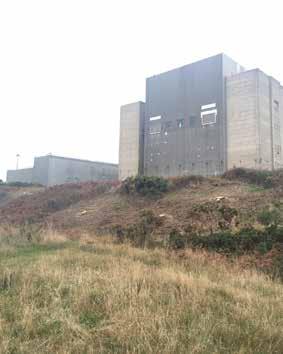
These Sycamores justifiably gained a place in Suffolk birders’ hearts. They certainly did with me. Isolated along the earthen bank immediately to the east of the Sizewell A nuclear power station, they not only were a magnet for migratory birds. They also softened the view of the irredeemably ugly, Brutalist monolithic slab that the redundant structure indisputably is. Now they are simply stumps just a few inches high. Like gravestones, the stumps are upsetting reminders of the healthy, mature trees that so many enjoyed. They are reminders too of all the wonderful species that made them their home, even if for just a few, important, re-fuelling hours on migratory journeys that are among the myriad wonders of the world.
I simply haven’t the words to describe the sense of loss I felt when I first witnessed the carnage shortly before Christmas. I felt physically sick. There was outrage. Anger. But, above all, there was an overwhelming sense of grief. I was determined to get an answer as to why the felling had been deemed necessary. In an email to me, EDF’s Sizewell C Project
Team said: “EDF is required to maintain sea defence structures to withstand 1 in 10,000year coastal storm around its power stations. Unfortunately, it was necessary to take down four trees that had self-propagated in the primary 10m sea defence. If left, these could have negatively affected the performance of the structure under an extreme storm.”
I was left asking myself a few questions. If the integrity of the primary sea defence for a nuclear installation could be ‘negatively affected’ by a few Sycamore trees - in a way that EDF did not describe - what does that say about the strength of the defence in the first place? Such apparent flimsiness doesn’t inspire much faith in the structure does it?
And does EDF’s justifiable fear of ‘extreme storm’ bode well for Sizewell C, should the absurd monstrosity ever be built? That, obviously, is a rhetorical question!
I was also left fearing that such obliteration is really only a portent of things to come. If the ominous threat of C becomes reality, far more widespread devastation will take place and the impact on our wonderful Suffolk Coast and Heaths Area of Outstanding Natural Beauty and our universally loved RSPB Minsmere would be totally unforgivable.
I’ve never been taken in by EDF’s delusion that Sizewell C will deliver a 19% Biodiversity Net Gain. The claim would be laughable were it not so deceitful. It is an ecological accounting scam based on a highly questionable and widely debunked system of metrics involving deliberate misclassifying of habitats. The qualities of alleged compensatory habitat are blatantly overstated (‘heathland’ at Aldhurst Farm, anyone?) and those of existing habitats threatened with destruction are seriously downplayed.
I’m left fearing the worst over Sizewell C. And I’m also left mourning the loss of those lovely Sizewell Sycamores. Old friends gone. Just stumps, and fond memories, remain.
Mark Solomons and Bob Flindall
Last summer we floated the idea of a bird race to try and alert the wider birding community to the threat of Sizewell C on the local environment. We’re afraid that having floated the idea, it’s now sunk. Although we had the support of some notable birders, both from Suffolk and beyond, and words of encouragement from local organisations, the overall response was not sufficient to make the event a guaranteed success.
It’s understandable in many ways. The delays in decisions over Sizewell C, the ongoing fight against it in other quarters and the time and effort needed may well have put some off getting involved, even if they supported the cause. So reluctantly we have decided not to proceed with the bird race at this time. But that does not mean it is time to give up the campaign against Sizewell C. There are many fronts to fight on. Highlighting the environmental damage, including to national treasures like Minsmere, risks from coastal change, landscape damage in particular to the Suffolk Coast and Heaths Area of Outstanding Natural Beauty, damage to the local visitor economy and the limited contribution to solving the climate emergency ought to be
the major factors in preventing a nuclear power station of this size on our doorstep. Of major concern is the lack of a guarantee to the long term water supply. The argument remains that this development is proposed in the wrong place and at the wrong time –as highlighted by many, inc. RSPB and SWT.
There are other stumbling blocks that opponents of the proposal should seize upon, such as the huge gap that exists in the proposed funding of the project, the strides made by cheaper and cleaner energy technology which would be a better option, the potential damage and disruption caused by thousands of lorries roaring through quiet rural villages and thousands of workers needing to be accommodated during the ten years or more of construction.
There is plenty more we, as a birding community, can do, whether it is taking part in protests or writing to our MP. It is worth looking at the Stop Sizewell C website at www.stopsizewellc. org for more and at the Planning Inspectorate site at www.bit.ly/SizewellCVisuals (from page 4) for the sobering visualisation of what the future might look like.

Richard Attenborrow
Andrew Gregory, Roger Holt, Robin Burrough and I went to Minsmere for our weekly birding trip on Friday 21st January, mostly to see if the Lesser Yellowlegs was there. We got very good views of that and of a flock of eight Bearded Tits feeding in the sun, so we went into West Hide happy with what we’d seen. There were lots of waterfowl there and a few Dunlin and Avocets. Andrew called our attention to a wader that disappeared behind a small island, but not before he’d had a flying view of its white rump. When it reappeared his initial thoughts of Curlew Sandpiper were confirmed and I managed to get a couple of photos. We thought this was quite an interesting record as the only other January sighting we could remember was one at Woodbridge/Melton in 2009. In many ways this was a more interesting sighting than the Yellowlegs.
Andrew Gregory
On February 3 2022 I noticed a young Cormorant surfacing inside Shotley Marina with a sizeable flatfish in its mouth. It was being attended by two young Shags which were darting towards the Cormorant and attempting to snatch the fish as the young bird struggled to swallow its prey. The Cormorant responded by flying away a few yards. The Shags followed but had no success. Eventually the Shags went under water some 30 yards from the Cormorant and surfaced simultaneously from under the Cormorant with one of them snatching the fish from the cormorant. In the ensuing kerfuffle the fish was dropped and escaped. Undoubtedly a well-developed adult Cormorant would have swallowed the fish relatively quickly and not been bothered by the upstarts.
Katy Bowman
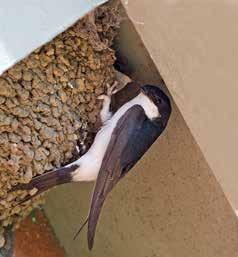
We are a newly formed conservation charity dedicated to the care and protection of the House Martin. Our aim as a charity is to try and highlight some of the key issues that these birds face. From late March to early April House Martins will begin to arrive in the UK after their long journey back from Africa, to spend the summer here raising their chicks. You may have noticed their mud nests on your home from previous years.
How you can help
You can attract House Martins to nest on your house by putting up artificial nest cups to give them a permanent home year after year. Encourage others to do this too by helping your community understand the problems that House Martins face. If you have to remove nests to do renovation work please make sure it is outside of the nesting season (it is illegal to remove or disturb an active nest of any bird in the UK). Replacing the removed nests with artificial ones will encourage returning birds to stay and continue to breed. If you don’t have any suitable eaves you could fix a weatherproof wooden board at least 200mm deep to create an overhang for nests.
House Martins leave droppings which can be an issue for some households but they are easily removed with a hosepipe or brush. Flower pots can be placed on the ground beneath the nests or a droppings board can be placed at least 2 metres below the nest cups. Ponds attract lots of insects for House Martins to feed on and a muddy edge can provide nest building material too.
Working with Andy Mellon, our local Green Party Councillor, we managed to get nest cups installed on a new development in Badwell Ash. Badwell Ash has an active colony of birds returning every year, so this was a really great result and shows it is always worth talking to your district council or parish to try and get improvements for wildlife.
During the Summer 2021 we took part in a survey with Anglian Water at their water tower in Stowlangtoft. We discovered possibly the biggest colony of nesting martins in midSuffolk ever recorded, with over 80 active nests which was really exciting. The sky was full of House Martins, flying over the fields catching insects and returning to their natural nests on the tower – it was an incredible sight.
This highlights that we are in a key area where we can help support these birds in our surrounding villages by installing nest cups and also improving the local environment. They feed while flying so a supply of invertebrates is essential; ponds or other water sources are always appreciated as this also supplies them with the wet mud they need to build their own nests.
Sadly, as of late last year, House Martins were added to the red list, meaning that they really need all the help they can get. We have lots of free resources such as down-loadable flyers and guides on nest cups and lots more information on our website if you would like to find out how you can help.
www.housemartinconservation.com

Val Lockwood
Sunday, November 28th
The weather forecast for a bright, breezy and very cold day was correct, once we were on the A14 we commented on what appeared to be frost-covered verges. A little further along the journey we began to encounter vehicles travelling on the other carriageway covered with snow and it became apparent that the first sprinkling of snow had fallen in the west of the county. Before reaching Thetford we saw four Red Kites overhead which raised our spirits in anticipation of the day’s birding ahead of us.
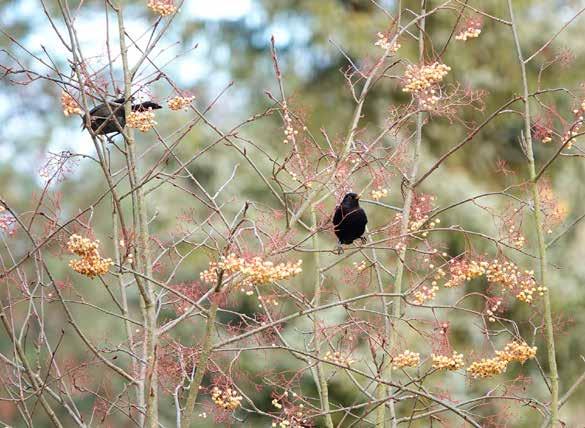
We arrived early in the car park at Lynford and were greeted by the call of a Nuthatch, with sightings of a Goldcrest and two Treecreepers and were soon joined by the rest of the group. Extra layers of clothing were donned and in the process Long-tailed, Great, Blue and Coal Tits were spotted along with a Greater Spotted Woodpecker. After Ivan ran through health and safety and the plan for the morning we headed towards the paddock. A small number of Blackbirds feeding in a Rowan tree made a nice sight. We picked up a mixed flock of Siskins, Lesser Redpolls and Chaffinches in the Ash trees and whilst following their flight, a group of six slightly larger finches were seen and identified as Hawfinches. Several of the group hadn’t managed to get on the Hawfinches and, as they were a new species to a few members and the target bird for the day, we were eager to try to relocate them and hoped to get better views. A flash of iridescent blue
was observed by a few members walking at the head of the group as we crossed the bridge, adding Kingfisher to our list of observations. As we walked on, eager eyes looked upwards and were rewarded with a further sighting of the Hawfinches, which appeared to fly towards the paddock. On reaching the paddock we found ourselves an area which enabled us to have good views to the trees in the middle of the paddocks where the Hawfinches have been seen in previous years. We spent what seemed an age (probably because of the extreme cold) trying to re-find them and moved along a few times, as much as anything to keep warm. Whilst spotting a few Blackbirds and admiring a flock of Redwing (the first of the season for several of the group), we eventually spotted two Hawfinches in the crown of a tree at the end of the paddock, giving great views to all. We moved on around the perimeter of the paddock to the far corner, which was bathed in sunlight, hoping to thaw out our frozen fingers and toes and in the hope of being able to identify a small flock of birds that had very briefly been seen to land in the ditch in the middle of the paddock. As the only birds that revealed themselves were Blackbirds we carried on as planned into the forest, heading for an area of tree-lined track with a large open area of rough grass and scrub. A Buzzard flew over the rough pasture and whilst we were scanning the tree tops for other possible raptor sightings a Raven was seen perched in the conifers. We returned
to the path alongside the paddock and encountered a group of Norfolk birdwatchers who were watching a Hawfinch - they very kindly helped us get onto the bird and we exchanged info about what we had seen and enjoyed some friendly banter with them.
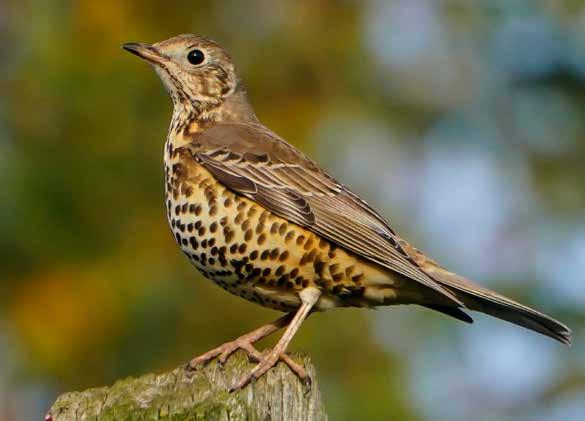
Returning back by the river a Song Thrush, which was rather elusively perched, was seen in an Oak and it took several minutes before everyone managed to pick it out in their binoculars. This caused quite a buzz and we marvelled as to how difficult it can be at times to see a bird amongst twigs and branches, even when there are no leaves to obscure the view. We also saw a Marsh Tit and a flock of Siskins along the way, as well as several species of duck and four muchphotographed Little Grebes, which looked resplendent in the sunshine. We returned to our cars and headed to Santon Downham.
After lunch we regrouped and headed towards the river, stopping to observe a selection of finches, a Nuthatch and a Great Spotted Woodpecker that were on feeders in a local garden. We turned off to the left at the bridge and began to follow the towpath. A short distance along we stopped to look for a Siskin flock which had been heard and on closer inspection some stunning Brambling were also seen. Continuing along the path a Marsh Tit was picked up, closely followed by a Kingfisher, which was perched on vegetation overhanging the river. We walked along to the area of trees where Lesser Spotted Woodpeckers are quite regularly seen, but on this occasion the only birds we saw were a Nuthatch and Siskins. We decided to return back to the bridge as time was pressing on. As we retraced our steps a strange, unrecognised call was heard and we stopped
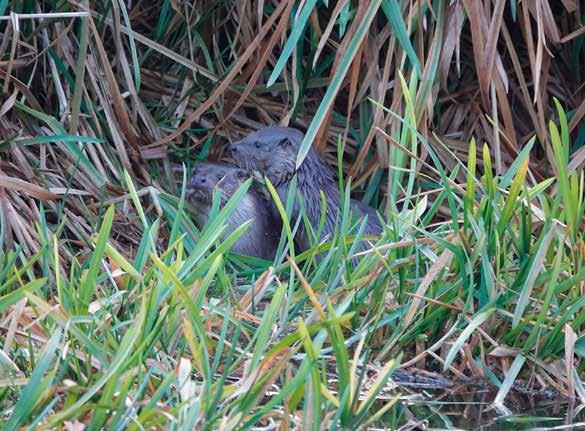
to listen. Suddenly a small head popped up in the river just in front of us: it was amongst the lower branches of a tree which was half submerged by the river. We were all thrilled to have such close views of an Otter. Then a second, larger Otter was spotted and it became clear that the call we had heard was the warning call of the adult trying to protect her kit. We had amazing views of the Otters for several minutes before they began to make their way along the bank further upstream. On the far bank it was interesting to note the alarm call was more strident when a herd of cattle passed by in the adjacent field. We decided to carry on towards the bridge so that the Otters were left undisturbed.
We crossed over the road at the bridge and walked along the river path hoping to see a Grey Wagtail before dusk. We were not disappointed, as both a Grey Wagtail plus another Kingfisher were picked up virtually at the same time within a few minutes. As the light was fading and the temperature was dropping we decided to end the meeting and return to the relative warmth of our cars. Our SBG trip to the Brecks had been very rewarding. If the Hawfinches were considered to be the icing on the cake, then the Otters had to be the cherry on top! Thanks to everyone who supported the trip.
Gi Grieco
It was a rather gloomy December day that greeted the ten assembled members ready to embark on a foray around the south side of Martlesham Creek. Starting from the Church we headed along the road and descended through the woods and out to the sluice at the head of the Creek. With the tide almost at high-water, waders were few but a lone Grey Plover was in the lagoon and a dozen or so Black-tailed Godwits were noted holding on to the last bit of uncovered mud in the Creek. The nearby wet meadows were surprisingly bereft of birds except a few Teal and also a Muntjac. Plenty of Teal were present in the Creek along with the first of many Little Grebes as we made our way east along the creek. A few Wigeon, a small flock of Goldfinches and a very briefly singing Cetti’s Warbler were noted but it was generally
quiet until we reached the confluence with the River Deben.
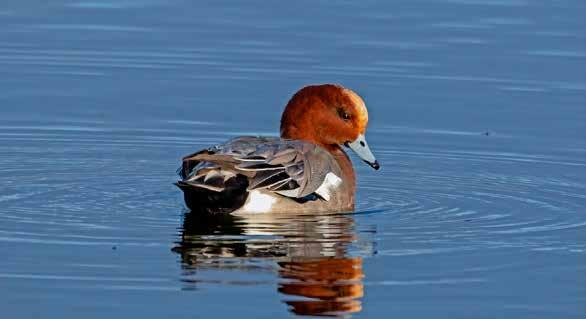
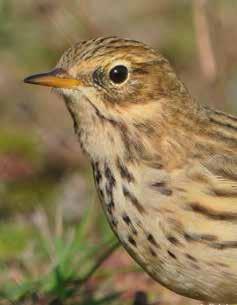
Here several Redshank were seen jostling for the last roosting place at Kyson Point and a number of wader flocks could be seen swirling around the Sutton side also looking for roosting spots. One observant member noted a rather large duck mid river in the Deben amongst Little Grebes which was quickly identified as a Common Eider. As the sun came out we could establish it was a firstwinter male, quite a rare find this far up river. A Common Buzzard was seen before we left the Creek and headed back inland. A cleared ditch provided plenty of food for several Pied Wagtails and a splendid male Stonechat. An old bare carrot field attracted twenty plus Meadow Pipits with one possible Rock Pipit noted, difficult to count in the furrows, there
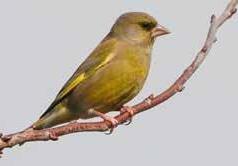
may well have been considerably more. A field opposite the church yielded several Eurasian Curlew and Northern Lapwing amongst the corvids and gulls. Finally, back at the churchyard we noted a Kestrel, two Greenfinches and two very noisy Mistle Thrushes that were probably keeping other thrushes out of their territory, to end the meeting.
Gooding
Having changed the meeting date for a week later to coincide with a more favourable tide I wished I had left it well alone as we were greeted with the most awful day weather wise, you could barely see Bradwell power station across the river through the murk and there was a steady misty drizzle all day. But the SBG members are made of sterner stuff. If you have been on some of my previous walks in the past you will know what I mean and the nine of us soon had our ‘scopes set up along the verge and were locating birds out on the Blackwater estuary.
Great Crested Grebe were relatively easy to locate as there were several about, but the Great Northern Diver that was constantly diving for food was not so easy to locate.
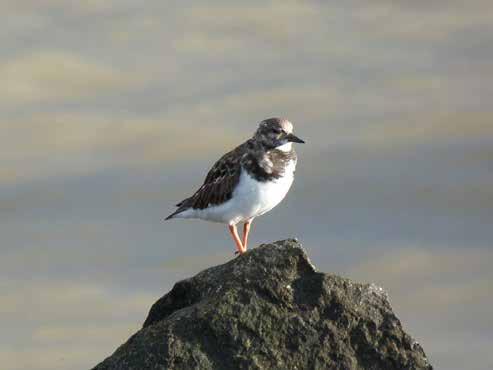
The drizzle had got worse and the bird kept resurfacing a long way from where it had dived, but we all managed to see it eventually. We then walked down to the beach and along towards Cob Marsh and scanned the estuary, picking up one or two Turnstones and Sanderlings along the way. Out on the water another Great Northern Diver was found, again regularly diving. The weather had lifted a bit and the diver gradually came towards us and was seen to catch a small flat fish and a crab. Too many dog walkers on the beach meant that any waders that normally use the shingle as a roost were not about, but a scan of the gulls on the roof tops produced a cracking adult Mediterranean Gull.
We turned around and followed the coastal path heading East and made our way to Waldgraves Farm. We picked up two more members en-route, due to a mix up with meeting times on the website and stopped near one of the many caravan parks in the area. From here we found a Little Egret and Redshank in the caravan park pond and the shingle island just offshore held 42 Oystercatchers, 48 Sanderlings, Dunlin and a few Cormorants. At Waldgraves Farm there was a nice flock of Brent Geese, 190 in total, but we could not find the Black Brant or Palebellied Brent that had been recorded in the surrounding area recently. We did however find another two adult Mediterranean Gulls, the beauty of which was lost on one member - you know who you are! Our path any further was blocked by coastal erosion, so we headed back to our vehicles making use of the limited facilities available at this time of year.
Our next stop was at Coopers beach. We had lunch at the parking area near the church and then made our way towards the coast, through another caravan park. The weather showed no sign of letting up as we set our ‘scopes up and scanned the intertidal area. I had found this location on a previous visit to the island, noting that it was not disturbed and good numbers of birds used it for roosting and feeding. Picking out birds through the drizzle was difficult especially as most were over the far side, but we found 26 Ringed Plovers, 73 Curlews, 36 Wigeon, 2 Little Egrets, a few more Brent and many Redshanks.
At this point I suggested to the group that as the weather was still very poor and parking from now on would be difficult it may be as well to finish the meeting. Having got back to the car parking area and some members leaving for other commitments we decided to carry on and were lucky enough to get the few remaining cars parked in Ivy Lane on the far east of the island. Walking down the lane to the river wall we passed a flock of 170 very confiding Wigeon feeding in a horse paddock, together with several Teal and six pairs of Shovelers in the bordering dyke. We then walked to Stone Point, from where we had good views of a Red-throated Diver. Now that the tide was on the way out good numbers of waders were present, including Golden Plover, Knot, Dunlin, Turnstone, Grey Plover, Oystercatcher, Sanderling and Avocet. By now we were losing the light so we made our way back to the car park. I will definitely do this trip again at some point as the whole area has a lot of potential, including a littleknown raptor roost and many good birds have been reported recently.
Many thanks to all who came along and for their perseverance on such a horrible day.
Dave Pearsons
Leader: Dave Pearsons
The first outside meeting of the year normally takes place on a Saturday, so Gi must be psychic in choosing a Sunday for 2022 as it chucked it down all day on the Saturday. Sunday was a beautiful but muddy day. It was good to meet people that I haven’t met before in the 20 members present. As I started the pre-walk briefing I was interrupted by a flock of Long-tailed Tits, one of my favourite birds, but unfortunately no other species accompanied them.
The start of the walk was through a small wood by Levington Marina. This revealed a numbers of passerines like Great and Blue Tits, Wren and a nice Song Thrush. Both Green and Great Spotted Woodpeckers were spotted, the highlight of which being the sound of the latter drumming, with a distant one replying.
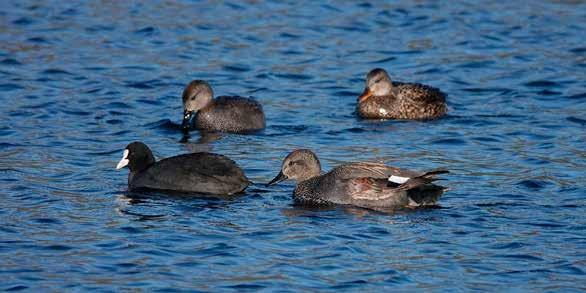
On to Loompit Pit where a selection of ducks was seen including Pochard, Tufted Duck,
Gadwall and Teal, plus a single Shoveler. It was from here that Matt Whitcome picked up a Black-throated Diver, which wasn’t easy to locate without a scope. Unfortunately, SBG Covid measures meant that those with scopes could not share with those without one but with a bit of ingenuity a mobile phone was placed on a scope to use as a screen to allow viewing.
Suddenly Matt cried ‘I have an auk on the river!’ He was on fire - Gi got on it and immediately called Razorbill. Various waders were feeding on the mud including Curlew, Turnstone, Dunlin and Knot, but strangely no Black-tailed Godwits (none were seen during the meeting). On the river Red-breasted Mergansers, Wigeon, Shelduck, Shoveler, Goldeneye, Brent Geese, Great Crested and Little Grebes were all present in numbers.
A stop on the cliff overlooking the river revealed similar species and Gi picked up a
Razorbill again. I got on it, but noticed that Gi was looking in a different direction to me, so we now had two Razorbills on the river! No one in the group had seen that species on the river before, let alone two. We had expected Guillemot as one had been seen on the river recently. What a start to the walk. Next stop Trimley Retreat, where the target bird was Jack Snipe. Skylark and Meadow Pipit were seen with a brief glimpse of a Common Snipe. Eventually a Jack Snipe did reveal itself, but the sighting was all too brief. So it was back to the cars for lunch, picking up Little Egret on the way.
With lunch finished we took the very muddy walk to Levington Creek: where securing good footing was more important than looking for birds. However, once we reached solid ground we were able to see good numbers of waders including Knot, Dunlin, Grey and Golden Plover. The Dunlin treated us to the wonderful winter sight of them
twisting and turning in flight. I never tire of witnessing such a display. On the river Pintail were added to our list of ducks. On Levington Lagoon a single Avocet was present and in a distant field a Grey Heron and two Buzzards, the latter we noted were hunting for worms. Most of us then returned to our cars, but five intrepid members remained and walked round on the path to Nacton Shore. They had excellent views of the Black-throated Diver and as dusk fell added three Rock Pipits and a Water Pipit to the list.
A brilliant start to the 2022 outdoor programme.
Footnote: While at the creek Gi picked up one of the Razorbills again and we knew that David Walsh was looking for the bird too. We could see David on the other side (Shotley) of the river. It was great that with Gi’s directions David was able to get good views of the bird. Teamwork!
The quarterly review section gives a snapshot of birds seen within the county during the period, predominantly from data received by Suffolk BINS. All scarce and rare birds are subject to submission and acceptance by either SORC or BBRC. Updated lists on Accepted and Outstanding Records for previous years can be found on the SBG website - http://www.suffolkbirdgroup. org/bird-recording.
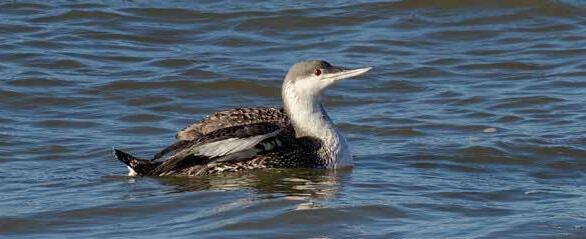
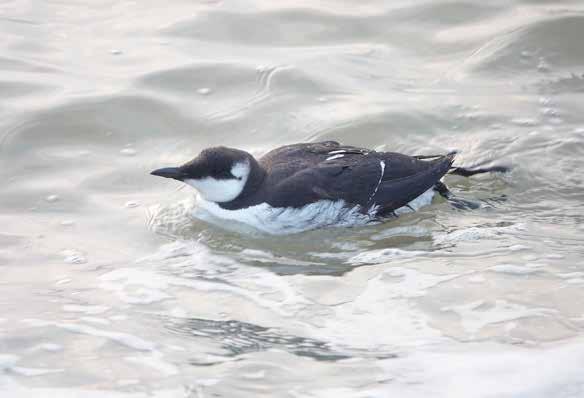
One of the notable aspects during the Autumn was the sightings of auk species offshore. Good numbers of Puffin and Little Auk were sighted, but it was mostly Guillemot and the occasional Razorbill that got observers’ attention with many noted close into the tideline. Similarly, Redthroated Divers were also recorded close to the beach on many occasions, including on a SBG trip to Orfordness. There were many reports of dead auks found along the coasts of north-east England and Scotland and this was also mirrored on the continent along the coasts of The Netherlands, Belgium, Denmark, Sweden and particularly Norway. Data collected showed that the mortality of these auks was primarily in juveniles from the UK, with the primary cause being starvation.
Little Auks were recorded throughout the month, from Felixstowe to Lowestoft. At Southwold one was on the river by the Harbour Inn pub (12th). The peak day was November 22nd with several sightings, including six off Southwold. Puffins were recorded in good numbers – a greater number of sightings compared to recent years. A bird was close inshore off Lowestoft North Denes (9th), with records on a further six dates at various places along the coast, including five off Southwold (22nd) and others also noted at Bawdsey, Slaughden, Minsmere, Benacre and Lowestoft the same day.
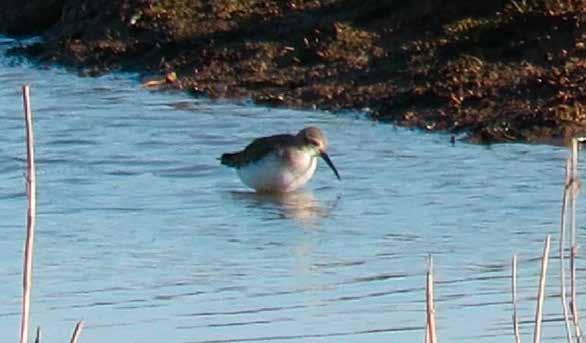
Dotterel – the bird present from the previous month was again noted along the Deben estuary at Falkenham Marshes associating with Golden Plovers, but it could be elusive (1st-2nd).
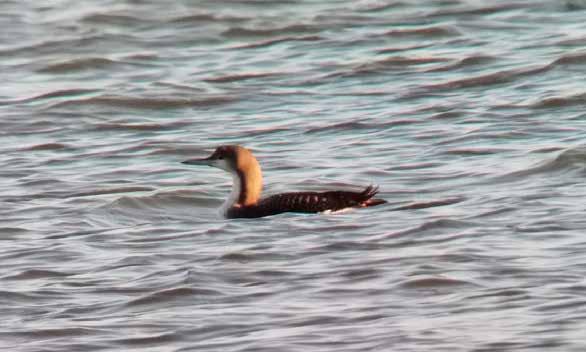
Black-throated Diver – one flew south off LBO (6th), then one was present on the River Orwell and remained throughout the month. Initially seen off Levington Creek (9th), it was regularly seen off there or from Clamphouse Marsh, Chelmondiston. What was likely the same bird was also seen from Shotley Gate on the Stour estuary (25th). Other records came from passing birds offshore: north off Thorpeness (14th and 22nd) and one north off Southwold (29th).
Night Heron – an immature bird was heard and seen as it flew low over Landguard Bird Observatory just prior to dawn (25th). This was the site’s second record.
Goshawk – one flew inland along Smere Marshes, Reydon (12th).
White-tailed Eagle – one was seen circling just north of Thetford mid-morning (13th).
Rough-legged Buzzard – one was seen distantly over the Orfordness NT reserve (16th).
Hume’s Warbler – one was present for a few days, although often elusive, in a small copse by Beach Farm, Benacre (25th-29th). It sometimes associated with both a tit flock and a Siberian Chiffchaff.
Dusky Warbler – a probable was seen briefly in scrub close to Benacre Pits (14th). Another was heard calling at Lakenheath Fen RSPB (24th).
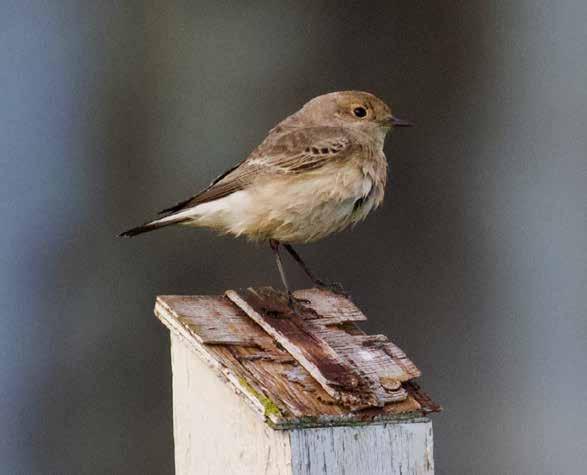
Siberian Chiffchaff – a few records of this sub-species. One present in sallows by Might’s Bridge, Southwold (14th); one reported along the north wall at Minsmere (16th); one in willows by the campsite at Southwold (21st) and up to two in the copse at Beach Farm, Benacre (25th-29th).
Pied Wheatear – only the fourth record for Suffolk. Only those nearby or quick off the mark got to see this bird as it was only present for around an hour on the grassland in front of Sizewell A power station. It flew into the complex and was not seen again (14th). Previous records have been Fagbury (October 24th to 27th 1994), Shingle Street (October 19th 2009) and Landguard (November 2nd to 3rd 2015).
What was noticeable was the numbers of Shag noted offshore. Typically, this species is more often seen on the rivers, such as the Orwell and Stour or at Lake Lothing. Birds were seen at various locations along the coast, sometimes noted in the company of Cormorants. A peak day was December 5th with birds moving south off Southwold (eight), Minsmere (four), North Warren (including a green-ringed individual), Slaughden (two), Shingle Street (one), plus three immature birds in the river mouth off Bawdsey Manor. Just the one Little Auk, this time a confiding bird on Oulton Broad (5th and 6th).
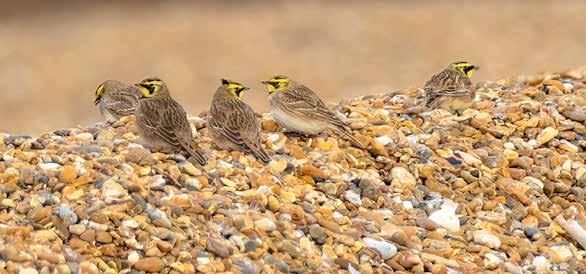
Shorelarks are always an anticipated wintering bird and during the first two weeks of the month there were five present along the shingle around the northern part of Shingle Street and on Orfordness as viewed from Hollesley Marsh.
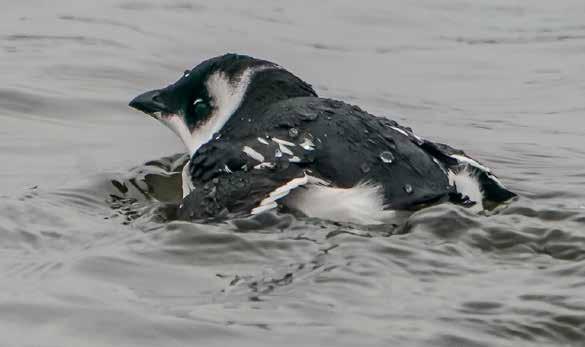
Black Guillemot – one was seen flying north offshore at Southwold (5th).
Black-throated Diver – as with the previous month, one was noted regularly on the River Orwell along the stretch near Levington.
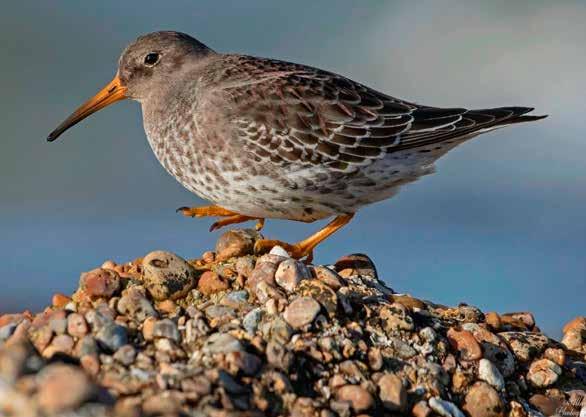
Additionally, birds were noted off Landguard Bird Observatory – one on the river that flew towards Dovercourt (7th) and one close inshore before flying into the river mouth. Mostly likely it was the same individual present on the river, ranging further afield.
Hume’s Warbler – the second record for the year: one present along the disused rail track at Aldeburgh, off Church Farm Road (26th and 27th).
Siberian Chiffchaff – up to two birds were seen at Leathes Ham, Lowestoft (19th and 21st), two seen at Lakenheath Fen (21st) between the visitor centre and river wall and one at Carlton Marshes (28th to 31st).
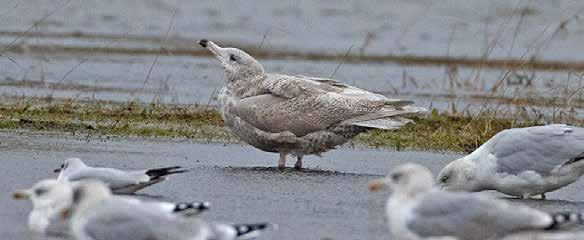
In recent years, with milder winters, those species of gull we refer to as winter visitors – Iceland and Glaucous – tend to be less frequently observed. The winter of 2021/2022 kept to this recent pattern and during the month there were just a couple of records, although they both remained at their same respective locations over a number of days. The Iceland Gull, a secondwinter bird, came into roost at Lowestoft Harbour late afternoon on five days, but was also seen at a few other locations in the area: Leathes Ham, Oulton Broad and at Carlton Marshes on a flooded field to the north-west of the visitor centre. A juvenile Glaucous Gull was on Minsmere scrape before flying south over the levels (2nd). All remaining sightings were of a second-winter individual that was regularly seen on the Blyth estuary at Hen Reedbeds.
Lesser Yellowlegs – one was discovered on ‘Lucky Pool’ just south of the sluice at Minsmere (16th). It remained present throughout the month, but could be mobile and elusive if it ventured onto the south levels. This is the 14th Suffolk record: the last record was one at Shingle Street and Hollesley Marshes in October 2018. Since then, due to the number of UK records in recent years, the species is now classed as a county rarity as it is no longer considered by the British Birds Rarities Committee.
Black-throated Diver – the over-wintering bird was still present on the River Orwell until January 23rd. It ranged from off Levington Marina to Wherstead Strand.
White-tailed Eagle – one was seen flying low early morning (29th), heading south before being recorded roosting by Iken church on the Alde estuary. The following day the bird was seen over Minsmere and then tracked over other nearby sites such as Dunwich and Walberswick. The last sighting of the bird was when it left its roost at Westleton early morning (31st).
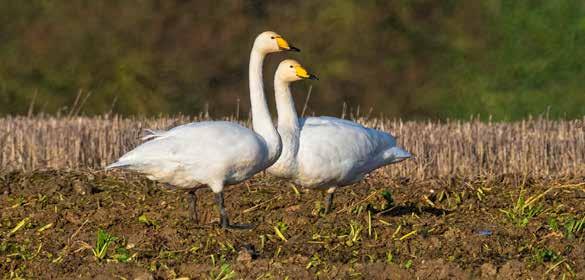
This individual was tracked as G463, part of the Isle of Wight re-introduction scheme. This scheme started in 2019 and a number of birds have since been released including G463, released as a juvenile in 2020. There have been numerous sightings of these birds wandering around the UK, including Suffolk, with G463 known to be the first bird from the project to cross over onto mainland Europe in April 2020, travelling through France, Germany, Denmark, Netherlands and Belgium.
Siberian Chiffchaff – there was quite an influx into the UK this winter with many records in Suffolk. There were numerous sightings throughout the month:
• Carlton Marshes by Spratts Water (1st and 2nd)
• Up to two at Leathes Ham, near the tennis courts (1st to 13th)
• Up to two at Melton, by the sewage works (1st to 18th)
• Brantham, by the sewage works (5th and 10th)
• Trapped and ringed at Kessingland sewage works (15th)
• Bawdsey picnic site (17th)
• Belstead Brook Park (26th to 28th)
• Two at Thorpeness, by the sewage works along with 10+ Common Chiffchaff (29th and 30th)
Council for 2022
Officers
Chair: Chris Courtney
Vice Chair: Edward Jackson
Secretary: Eddie Bathgate
Treasurer: Anne Wright
Communications Officer: Adam Faiers
Projects Officer: Chris Keeling
Suffolk Bird Report Editor and SORC Link: Nick Mason
Harrier Editor and Outdoor Events Coordinator: Gi Grieco
Indoor Events Coordinator: Adam Gretton
President
John Grant
Members
Peter Merchant
Jamie Everett
Ben Moyes
Michael Gavin
Tony Gdula
John Kornjaca
Honorary Vice-Presidents
Andrew Green
Robin Hopper
Colin Jakes
Mike Jeanes
Mike Marsh
Roy Marsh
Philip Murphy
Reg Snook
Steve Piotrowski
Bird Recorders
North-east Area Recorder: TBA Email: bird-ne@sns.org.uk
South-east Area Recorders: Gi Grieco Tel: 07951 482547 and Steve Fryett Tel: 07593 382082 4, The Street, Melton, Woodbridge, IP12 1PW. Email: bird-se@sns.org.uk
West Area Recorder: TBA
Email: bird-w@sns.org.uk Memberships
c/o SNS, The Hold, 131 Fore Street, Ipswich, Suffolk, IP4 1LR
Founded in 1973 by a group of Suffolk birdwatchers
Associated with the Suffolk Naturalists’ Society
SBG remains an independent birding group and is a registered charity
A voice for Suffolk birdwatchers
With established links to many naturalist and conservation organisations
Media
Actively lobbies to protect key Suffolk habitats
Provides a county-wide field force of bird surveyors
Promotes BTO bird surveys and organises special SBG surveys

Strong web presence - www.suffolkbirdgroup.org
Active Twitter feed - @SuffolkBirdGrp
Quarterly magazine - The Harrier
Annual review - Suffolk Birds report
Annually (20+) field trips - ideal for novices or experts and young or old alike
Opportunities to visit hot spots and receive practical ID tips in the field
Programme of talks and presentations - variety of topics (county, national, or international) with quality speakers
Assists with conservation projects to improve breeding success
- Swifts
- Barn Owls
- Peregrines
- Waders
Partners with Suffolk Wildlife Trust and other bird groups
Assists with funding for bird hides and other birding amenities
Contributes to community events, including dawn chorus walks
Provides bursaries for special projects