


Gi Grieco
Gi Grieco
Welcome to The Harrier. I managed to do some more birding this Autumn having gone out very little during the Spring and Summer – apart from some great SBG outdoor trips (within are a nice selection of reports from these trips). What I did note was a seeming lack of migratory birds such as hardly any warblers like Blackcap and Whitethroat. As I write this, the latest Birds of Conservation Concern has just been published and sadly shows an increase in the number of species added to the Red List. Following on from last month’s species report from Nigel at LBO, he has put another article together on a species that has declined dramatically – Turtle Dove. Regular recording over many years at a site such as LBO help record and detail these declines.
We are kick-starting the SBG rookery survey again and hope many of you can submit records. Details of another survey, one I’m quite interested in as I write up the geese section in the Suffolk Bird Report, is a colourringed Barnacle Geese project. We always welcome observation articles from our members and are pleased to include two in this edition; one from an Ipswich garden and one from further afield in Europe. Our regular quarterly bird review has again been compiled by Tony. There is still some discussion on a new format of this section, including at the most recent Council meeting.
As always please feel free to send in your thoughts on the articles within and we always welcome pieces to include.
Edward Jackson, SBG/SNS Membership Link
Some good news! Total SBG membership has risen from 375 in 2020 to over 400 by the end of 2021, meeting the target we set a couple of years ago. So many thanks to all you new and existing members for supporting us and spreading the word. Please continue to encourage other birders to join us and enjoy the benefits of membership. It’s a great gift for a family member or friend, especially those who may be relatively new to birding.
Enclosed with this edition of The Harrier is the 2022 Membership Renewal Form, for use by our subscribing members. (If you’re an honorary member or an institution receiving the magazine, please do pass it onto someone else who may wish to join).
In recognition of the unprecedented times we have all experienced in 2020 and 2021, both Suffolk Bird Group and Suffolk Naturalists’ Society have once again held subscriptions for 2022 at the same rates as for 2019.
Your renewal is of course important to us – as is receipt of your completed form, since it acts as our official record of your membership. Mindful of the fact that some of our members do not have internet access, we ask that everyone fills in the forms each year, makes payment using the method that best suits you and posts the form as soon as possible and by 31 January at the latest please.
If you joined us for the first time after 1 September 2021, your subscription includes membership for 2022 as well, but it will still be very helpful to receive your form - just write on a note to explain this.
As you will know, our membership is administered by SNS, which until recently was based c/o Ipswich Museum. This office has now moved to The Hold, the new location for the Suffolk Archives service opposite the University of Suffolk. Please be sure to use the new address given on the Membership Form.
If you choose to pay by Direct Debit (the most cost-effective method for us) this should be to SNS (not SBG). You should receive notification in the New Year that the subscription will be debited from your account.
If you prefer to pay annually by card or PayPal, it’s also now much easier to join and re-subscribe online through the new SNS website: https://sns.org.uk

Our Gift Aid form is also on the reverse of the Membership Form. As a registered charity, each year SBG currently receives around £1,500 of additional ‘free’ income, courtesy of this HMRC scheme. This is a great help in keeping our subscriptions as low as possible and also supporting our Indoor Events. If you are a taxpayer and haven’t yet signed a Gift Aid declaration, please consider doing so now.
In order to keep the membership admin as simple as possible, this article is your reminder to renew!
If we have not received your Renewal Form and payment by the end of January, we may assume you no longer wish to be a member or continue to be on the mailing list for future editions of The Harrier
Thanks - we look forward to hearing from you!
As part of our commitment to meeting our charitable objectives, we are pleased to announce that a Bursary Fund designed to support small-scale projects within the county has been reestablished for 2022 onwards. Subject to sufficient finance being available, grants of up to £500 can be awarded to projects that in the opinion of Council meet the Award Criteria.
An Application Form with full details of how to apply can be downloaded from the Information section of the SBG website: https://www.suffolkbirdgroup.org/
Here’s a summary of the Award Criteria:
• Projects must have a focus on birds and be based in Suffolk
• Project aims, objectives and expected outcomes must contribute to the knowledge and understanding of:
o either: an individual bird species or a habitat supporting a recognised bird community
o or: the conservation of an individual bird species or habitat
o or: a combination of the above
• Research on Red List species, Priority Species or Priority Habitats is particularly encouraged
• Projects minimising the carbon footprint of the research work will be viewed favourably
• Awards can cover the full costs of the project or contribute to match funding sought or obtained from other sources
• Claims may be made for some of or all the following:
o Field equipment and materials specific to the outdoor elements of the project
o Transport to and from the project site or sites (up to a maximum of 50% of the total award)
o Other materials specific to the completion of the final report
• Applicants are expected to act as volunteers, so claims for research time are not admissible
• Projects are to be completed to an agreed timescale of between 1 and 5 years.
• On completion, a written summary of the project and its outcomes should be submitted to Council, who will consider it for publication in either The Harrier or Suffolk Bird Report, whichever is more appropriate
We hope these criteria are broad and flexible enough to encourage you to consider interesting and valuable projects on any aspect of Suffolk’s birdlife. We look forward to receiving applications and sharing the outcomes in due course.
This award was created to celebrate the warm welcome Ken and Jean gave to all – but especially younger – newcomers to SBG. In recognition of this support for younger people, the award is made annually to a young Suffolk-based bird or wildlife enthusiast for their involvement or contribution to birding, conservation or the environment.
A nomination form can be entered online on the SBG website - www.suffolkbirdgroup.org/ the-garrod-award. The winner will receive a certificate, a SBG T-shirt and a year’s membership of SBG. They’ll also have the opportunity to have an article published in The Harrier about their wildlife experiences. The closing date for nominations is January 16th 2022 and the award will be presented at the SBG AGM.
Gi Grieco
We established the SBG Rookery Survey in 2019 with a plan to record all the rookeries in Suffolk over the next three years. The results of the survey were to be incorporated into a SBG publication once the fieldwork had taken place. Unfortunately, due to Covid and restrictions in movement in the last two years, recording has been hampered during the principal breeding period. As such, we’d like to complete the survey over the next two years.
The easy-to-use rookery survey webpage, hosted by the Suffolk Biodiversity Information Service, allows the number of nests in each rookery to be recorded, with location mapping down to an accuracy level of 10 metres. The survey page to enter details can be found here –https://www.suffolkbis.org.uk/ rookerysurvey.
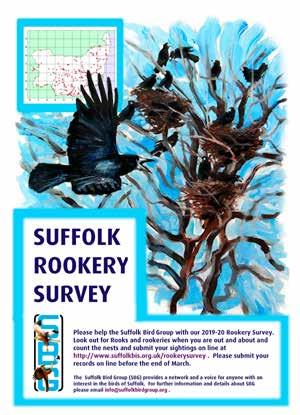
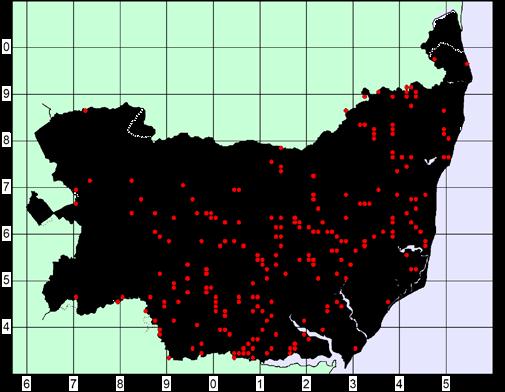
If you’ve submitted details of a rookery previously, but since noted a change then please record it. Below is a map of rookeries recorded to date. As can be seen, there are some areas with gaps present that can be targeted for surveying.
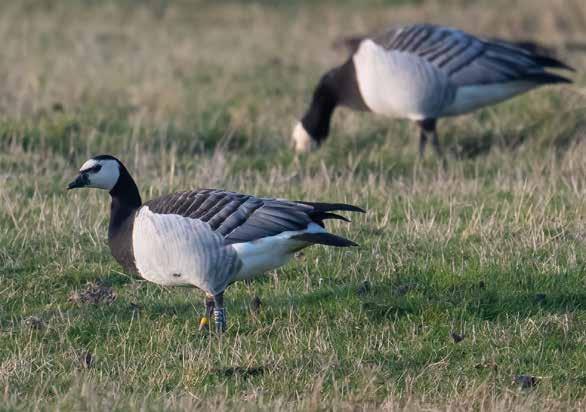
Britain hosts three populations of Barnacle Geese Branta leucopsis, two of which are entirely migratory, spending the winter on our shores from Greenland and Svalbard. Those migrating from Greenland tend to winter on the west coast of Scotland and Ireland, with the bulk of the population wintering on the Isle of Islay, whilst those migrating from Svalbard winter chiefly on the Solway Firth, with smaller groups occasionally wintering on the coast of northeast Britain. The smallest of the
three populations is that of the naturalised population, which occurs all year round and also breeds in Britain. Most of this population is found in England and Wales, with smaller numbers occurring in Scotland. Presumably originating from a mixture of once captive stock, immigrants from the Dutch/Russian population or injured birds that no longer migrate, the naturalised population is estimated by the Wetland Bird Survey (WeBS) to number around 4,000 birds (Frost et al 2021).
The conservation status of the three migratory Barnacle Goose populations in Europe (Greenland, Svalbard and Russian) has, over the last half century, dramatically changed and, because of this, there are concerns regarding its potential impact on other flora and fauna, especially on Arctic ecosystems (Jensen et al. 2018). In some Range States, the species is causing increasing damage to agriculture and is also posing increasing risk to air safety. The development of an International Single Species Management Plan (ISSMP) was identified as a priority and undertaken by the Agreement on the Conservation of African-Eurasian Migratory Waterbirds (AEWA).
Given future management of the wild migratory populations, it would be advantageous to better understand any connectivity that occurs between the migratory and naturalised populations, as is being studied in other European countries. As demonstrated by Mitchell et al. 2021, confirmation already exists that Scottishhatched Barnacle Geese are mixing with migratory flocks. Over the water in The Netherlands, intensive ringing has shown birds from the Russian population having stopped migrating altogether and expanding their breeding range, with once migratory birds now breeding in The Netherlands (which is still the wintering area for most birds) and resident all year round. Is this a
glimpse into the future of how other goose species may react to increasing populations and food availability? Furthermore, colourmarked birds from the Dutch naturalised population have already been sighted in Britain.
Despite flocks being found at sites across Britain, much still remains unknown about the movements and demography of this naturalised population. The absence of such fundamental information, such as data on movements, survival and mortality has hindered efforts to understand the demographic causes of the observed increase in population size.
Not surprisingly the capture and ringing of Barnacle Geese in Britain and Ireland has mainly been concentrated on the two migratory populations, with both populations having been intensively studied over the years, the Svalbard population since 1973! Principally cannon-netting has been used on the wintering grounds to place colour-marked individuals into the flyways and twinned with captures on the breeding grounds (mainly on Svalbard) where large numbers can be rounded up when flightless during their annual moult, these have bolstered the number colour-marked.
To date, the naturalised population has received little attention by way of colourmarking on a large scale. Individual projects in Scotland, Wales and in Bedfordshire, England have, over the years, provided fascinating glimpses into the movements of our so-called resident population. Colour-marking has shown birds marked at Ynys-Hir in Wales to be linked with the breeding population in the Lake District, with birds moving c.230km each spring to Cumbria (Dodd et al. 2017). Those marked in Bedfordshire have been known to cross
the English Channel, with sightings received from France (M Reed pers. comm.), whilst goslings hatched and raised in Scotland have been sighted in Norway and Iceland, seemingly having joined their wild migratory counterparts (Mitchell et al. 2021).
To deliver up-to-date information on this population, volunteers from the Waterbird Colour-marking Group have embarked on a new colour-marking project, with the aims of i) better understanding movements between naturalised sub-populations in Britain, ii) assessing whether connectivity between our naturalised population and other populations in Europe occurs and to what degree this happens and iii) producing the first survival estimate of this population.
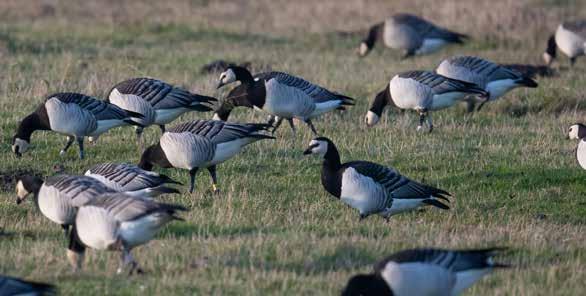
As wildfowl species undergo a complete moult which renders them flightless for several weeks each year, it’s during this time that large numbers of geese can be rounded up, caught and ringed to allow further study. July 2021 saw the first of the roundups, which we hope will span several years at sites across England and Wales. All birds have been colour-marked with an engraved blue ring with an alpha-numeric code in white lettering (i.e., A96). On the opposite leg the birds are ringed with a metal ring, along with a plain colour-ring, either above or below the metal ring to denote the ringing site.
Catches during 2021 have been a great success with some 800 birds having already been caught and ringed, including birds caught at Holkham and Pensthorpe Natural Park, catching 431 and 106 birds respectively. Re-sightings received of these birds since ringing have shown a high proportion currently in Suffolk, providing evidence of movement between Suffolk and Norfolk for moulting.
As we intend to catch and colour-mark birds for a number of years, we are looking to expand catching effort, to incorporate other sites in areas where naturalised Barnacle geese occur. We are asking people when encountering a flock of Barnacles to check any birds for colour rings. Of course, sightings of colour-marked birds are most welcome and to help with the expected volume of re-sightings as the project grows, we have created an online re-sightings/histories feedback portal www. waterbirdcolourmarking.org/barnaclegoose/, sightings can also be sent directly to Kane at kanebrides@gmail.com. Sightings received so far from within Suffolk have mainly come from the Southwold and Minsmere areas. If you know of a flock of free-flying Barnacle Geese that could potentially be suitable for capture and ringing, it would be great to hear from you!
Dodd, S.G. 2017. Colour-ring resightings and flock counts link the increasing Welsh wintering Barnacle Goose Branta leucopsis flock to a naturalised breeding population in the Lake District, Ringing & Migration, 32:1, 54-57, DOI: 10.1080/03078698.2017.1323997
Frost, T.M., Calbrade, N.A., Birtles, G.A., Hall, C., Robinson, A.E., Wotton, S.R., Balmer, D.E. and Austin, G.E. 2021. Waterbirds in the UK 2019/20: The Wetland Bird Survey. BTO/ RSPB/JNCC. Thetford. Jensen, G.H., Madsen, J., Nagy, S., Lewis M. (Compilers) 2018. AEWA International Single Species Management Plan for the Barnacle Goose (Branta leucopsis) - Russia/Germany & Netherlands population, East Greenland/ Scotland & Ireland population, Svalbard/ South-west Scotland population. AEWA Technical Series No. 70. Bonn, Germany. Mitchell, C., Macdonald, D., Bates, B and Pink. R. 2021. Movements of naturalised Barnacle Geese ringed in Strathspey. Scottish Birds, 41:1, 3-9.
Nigel Odin, Landguard Bird Observatory
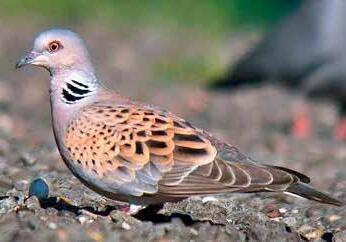
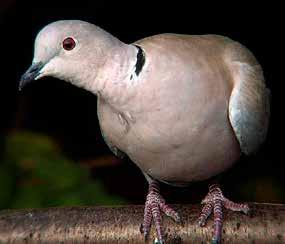
I shouldn’t do it and those with a nervous disposition should look away now, but the prognosis for this species is not good. The UK population of Turtle Dove Streptopelia turtur has declined by 98% over the past 50 years (Woodward et al 2020). Data collected by Landguard Bird Observatory over the last 40 years clearly shows this depressing situation, to the point that LBO regulars now get excited when a Turtle Dove is sighted. In the early days of the observatory this species was so common in Suffolk that observers often didn’t even bother noting them and never believed that this decline would occur, so were lackadaisical about recording common species and, as such, more were undoubtedly seen than logged! The causes of the population decline are strongly linked to agricultural intensification and pesticide use with many recent scientific studies not giving much cause for optimism.
Acknowledgements:
The situation is not helped by the fact that levels of legal hunting in Europe are likely to be unsustainable (Lormee et al 2019). Current population trends suggest that Turtle Doves will be extinct as a breeding species in the UK by the middle of this century with future birders treating them as rare visitors.
Observers throughout Suffolk are requested to send all Turtle Dove sightings to the county recorder or log them on BirdTrack birdtrack.net. Any historical sightings languishing in old notebooks should also be logged onto BirdTrack. If nothing else this data will help future generations appreciate the declines (even if it won’t save the species).
Many thanks to Mike Marsh for support with data mapping and comments.
References:
Lormee, H., Barbraud, C., Peach, W., Carboneras, C., Leberton, J.D., Moreno-Zarate, L., Bacon, L. & Eraud, C. (2019) Assessing the sustainability of harvest of the European Turtle-dove along the European western flyway https://www.cambridge.org/core/journals/bird-conservation-international/article/ assessing-the-sustainability-of-harvest-of-the-european-turtledove-along-the-european-western-flyway/ CB52250C297472526586AAD12CBF61D8
Woodward, I.D., Massimino, D., Hammond, M.J., Barber, L., Barimore, C., Harris, S.J., Leech, D.I., Noble, D.G., Walker, R.H., Baillie, S.R. & Robinson, R.A. (2020) BirdTrends 2020: trends in numbers, breeding success and survival for UK breeding birds. Research Report 732. BTO, Thetford. www.bto.org/birdtrends
David Walsh
I live on the Stoke Park estate in south-west Ipswich. This article details an unprecedented influx of Reed Buntings into my garden during the early months of 2021.
Although surrounded by other houses and flats, my house is only 300 metres from the ponds and surrounding reeds in Bobbits Meadows to the south-west. Bourne Park reedbeds are 400 metres to the south-east, both areas being part of Belstead Brook Park.
My small back garden measures 8 metres by 10 metres. I have one small tree, a Golden Hornet, as well as shrubs which provide cover. I have the usual bird feeders – sunflower hearts, fat balls, peanuts – but also sprinkle seed liberally on the grass,
particularly in the winter. For the latter I source the food at Gladwells (Copdock Mill). They provide a variety of seed and the two I use are ‘Superior’ and ‘Wheat Free’, both of which contain White Millet, Red Millet, Cut Maize, Superior Oats and Canary Seed.
The garden is often alive with birds and seems to provide a relatively safe environment, which is undoubtedly a reason why unusual visitors have appeared from time to time, most notably a Wryneck in August 2006 and a Rose-coloured Starling in June 2020, as well as birds from the local area which aren’t usually associated with gardens, including both Common and Lesser Whitethroats this autumn.
I first noted a Reed Bunting in late February 2009; in that year, as well as 2010 and 2012, sightings followed what I considered the expected pattern in late winter as food supplies dried up in the countryside.
2013 was very different. The first Reed Bunting was seen in late January, and numbers built up steadily to a maximum of ten on February 18th. I continued to see the species into the early summer, and on June 16th a female was clearly gathering food, so presumably a local breeder. I wrote these events up in a Field note for the 2013 Suffolk Bird Report (page 153).
From 2014 to 2020, sightings largely reverted to the pattern of 2009-12, and the species was absent in 2018.
2013 had been exceptional at the time, but it was trumped by 2021. With circumstances meaning that I was at home much more of the time, I was able to document my sightings in detail. Many photographs were taken, allowing me to identify specific males, all of which had subtly different plumages being in various stages of moult.
The first birds appeared on 22nd, with daily sightings of up to four males and one female.
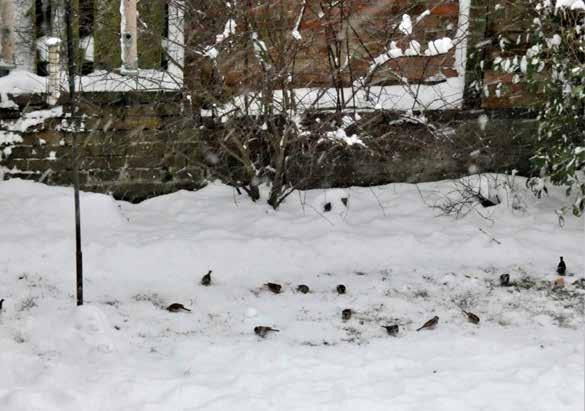
Seen daily, with at least 15 and perhaps up to 20 different individuals involved. During the snowy period 12 were seen together on 8th, 13 on 11th then 15 together on 12th, my highest ever day count and a remarkable sight on a snowy lawn. Around two-thirds were males.
March
High counts continued for the first three weeks, with up to eight males and five females. Numbers diminished in the last week, but still four males and two females.
April
Birds continued to visit daily, with a total of six males and one female seen.
Up to three males were seen on and off throughout the month, along with 1-2 females.
At least five birds, three males and two females, were noted, with a maximum day count of four on 28th. On 11th a male was seen collecting food.
A female was seen on 1st and 4th. An unringed male appeared on 3rd, 4th and 7th, with a ringed male seen on 8th being the last sighting of the year.
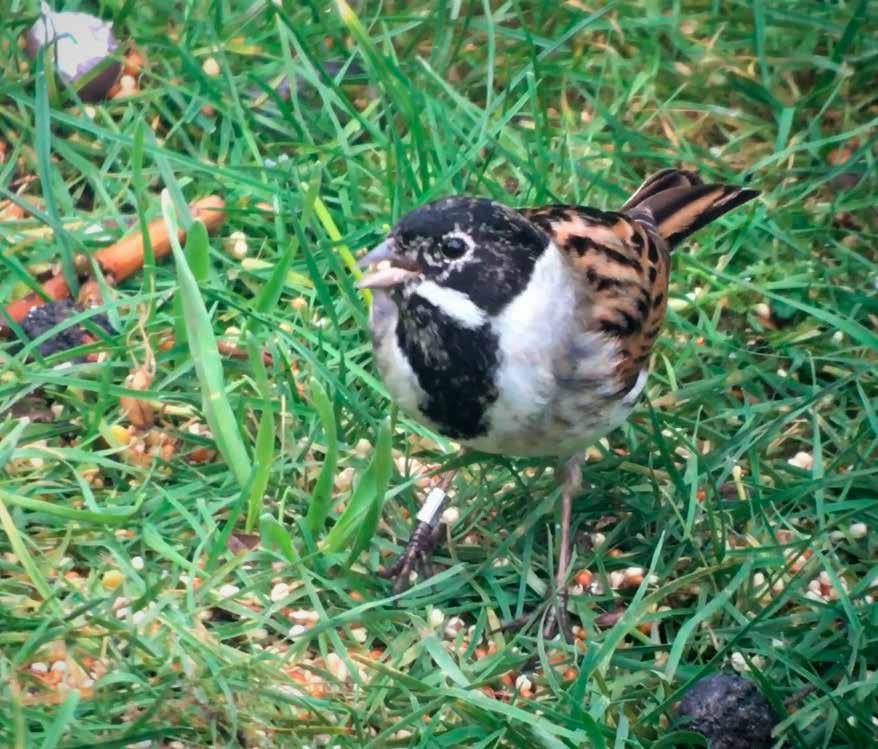
One especially exciting feature of the sightings was the fact that two of the males were ringed. It took many hours, but eventually scope views allowed me to read the full combinations.
ALD8895 was ringed by Simon Cox as a 1CY male on October 3rd 2019 at Holland Haven Country Park, 15 miles from my garden. I first saw it on January 30th and it remained a regular visitor until July 8th so was presumably one of the local breeders.
ARJ7689 was ringed by Dan Zantboer as a 1CY male on October 20th 2019 at Trimley Marshes, 8 miles from my garden. I saw it on February 2nd and again on 3rd.
Discussion
The ring readings provide a neat demonstration of the way in which nature reserves on the Suffolk and Essex coast support wildlife in a wider hinterland well beyond their boundaries.
It’s interesting to speculate on how the birds found my garden; the fact that they appeared first thing in the morning, presumably direct from a local roost, points to the fact that ‘new’ individuals followed those who knew where the food was!
Prior to the cold snap the birds only appeared a few at a time, but I was confident from the plumages that there were a large number of different birds involved. During the snowy weather they arrived en masse which confirmed my suspicions.
It was good to see at least one bird collecting food for a nearby nest, indicating that local breeding birds were part of the original influx.
In summary, the Reed Buntings kept me thoroughly occupied and entertained throughout the extended lockdown and beyond. I wonder whether they will return in 2022?
David Gibbs
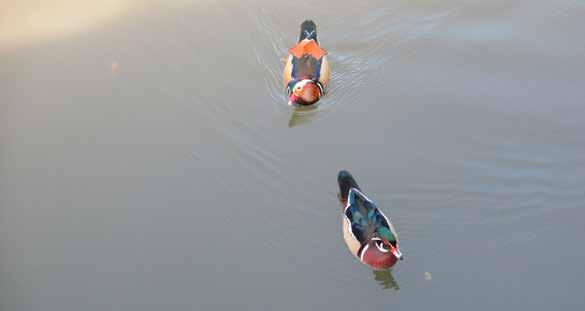
I have been a member of SBG for many years and rarely contribute. Although living in Martlesham, most of my bird watching (time restraints) is in the Netherlands, and over many years I have seen changes there before the same change occurred in Suffolk, such as the advance of Great White Egret. I thought the attached photo might be of interest. The photo was taken ‘in the wild’ although in a rather urban setting from a bridge over the river Geul in the far south of the Netherlands in Limburg—Valkenburg on 27th October 2021.
I have found the occasional Mandarin Duck in rural locations on the Rhine in Germany in recent years. These two were the only two I found with some Mallards; but look closely; the forward of the two is of course not a Mandarin but a Colorado Duck as pointed out by my Dutch relative who has recorded (almost every two weeks) bird populations in and around Amsterdam for nearly 60 years! The river Geul flooded in extreme earlier this year and much damage was done.
Editor’s Note:
The BOU maintains the British List and Mandarin is classed as Category C1. Category C are species that, although introduced, now derive from the resulting self-sustaining populations with C1 being naturalized introduced species – species that have occurred only as a result of introduction. https://bou.org.uk/britishlist/. Carolina Duck, or Wood Duck, has always been classed as an escapee without a self-sustaining population.
In the Netherlands there has previously been a change in the classification with the Dutch Avifauna only recognising a (A-) list. Introduced species that were in a Category C, such as Mandarin, that have viable breeding populations of which all individuals or their ancestors certainly originate from captivity are no longer countable. https://www.dutchavifauna. nl/
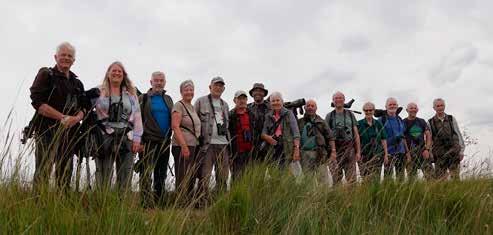
Oh how wonderful it was to meet the other 15 members at the allotted meeting point, some of whom I had not seen for fifteen months or more due to the constraints of Covid. A few months previous to the meeting date, the RSPB, in their wisdom, decided to close the reserve car park at weekends giving me a major headache, and I am sure the local residents also, as I now needed to find suitable parking for an unknown number of attendees in the local area. To cut a long story short I managed to find the owner of a paddock in Salcott-cum-Virley who was willing to allow us to park there for the day with no charge, phew.
Once we had finished all our greetings and gone through the health and safety stuff we moved off having already noted many House Martins and Swallows feeding around the buildings of the turf farm and Great Spotted Woodpecker and Sparrowhawk from the car park. The weather was excellent - cloudy with a light breeze so no heat haze interfered with visibility as often the birds here can be
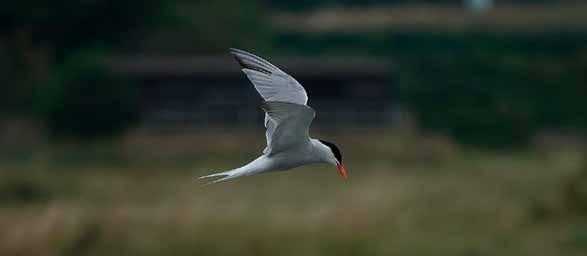
quite distant. Having made our way to the reserve from the village we walked along the river wall to view the grazing marshes - at least four Kestrels were present, including juveniles and there were also several Stock Doves feeding in the short grass. Moving along we also found an area favoured by Yellow Wagtails again with many juveniles; this is a good breeding area and stopping off point for migrants as well. A large flock of Lapwings, at least 70 birds, flew over as we moved further along the bank, where we also encountering two Common Terns.
I had chosen today as the tide would be rising and pushing the waders up river towards us and eventually onto the reserve. Our first stop to view the far bank where the waders were feeding produced 21 Black-tailed Godwits, 6 Curlews and 2 Whimbrels. Moving on we located 17 Bar-tailed Godwits intermingled with some more Black-taileds giving us the opportunity for discussion on separating the two species and what to look for on solitary birds in the field. This was then followed up
by a similar discussion when three Spotted Redshanks were located amongst the large numbers of Redshanks present. For me, the stars of the wader ‘fest’ were the numbers of absolutely pristine Grey Plovers in with the 120 or so moulting adults; there is just something about the plumage of black and white birds that really appeals to me.
Moving on we turned our attention back to the grazing marsh, viewing the remnants of the fresh water on the scrape. Here we saw two Green Sandpipers, five Ruff, Wheatear and a very unseasonal Brent Goose plus singles of Little Ringed Plover, Avocet and Snipe flew over. Making our way around the reserve we came to another scrape, Iron Gate, which was obviously the place where the waders roosted whilst the tide covered their feeding grounds. Here I counted 170+ Black-tailed Godwits, 12 Spotted Redshanks, 3 Ruff and 3 Greenshanks. There were also 3 Bearded Tits, Sedge Warbler and also a Water Rail heard calling from the reeds as we made our way to a vantage point overlooking another part of the reserve. This elevated bank gives a wonderful view over the rest of the reserve and from here we had Marsh Harrier, Hobby, Buzzard, Sparrowhawk and very frustrating views of at least two Cattle Egrets often getting lost in the haze or between the legs
of the cattle they were feeding amongst on McClure’s marsh. Cattle Egrets are now often seen from here and roosting at Abberton reservoir where they bred for the first time in 2020. By now the tide was very high with the majority of waders having flown to higher ground, the walk back to the starting point produced a very brief Common Sandpiper, 35 Golden Plover over and a Barn Owl sat on a fence post for all to admire.
Lunch was eaten at Abberton reservoir car park and then we walked from there as far as Wigborough Bay taking in Billets Farm and then driving to the Layer Breton Causeway. As this is a quiet time at the reservoir, other than the usual wildfowl it was hard work but we did find some nice birds; 3 Common Sandpipers, 2 Green Sandpipers, Little Ringed Plover, 2 Great Egrets, 6 Red Crested Pochards and 3 Spoonbills made up of 2 Juveniles and an adult - they bred here for the first time this year. As a reminder that the year was moving on, there were many Swallows at Billets Farm on the overhead wires chattering away in preparation for their long journey to Africa, and it was also time for us to depart. Many thanks to all who attended and made for such an enjoyable day in Essex.
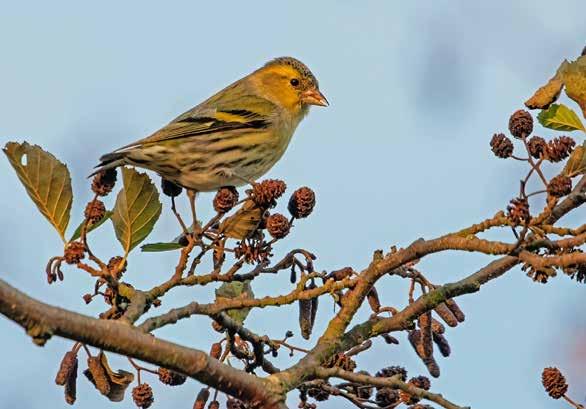
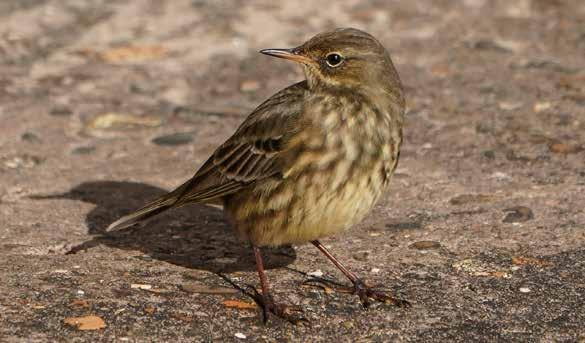
Clockwise...
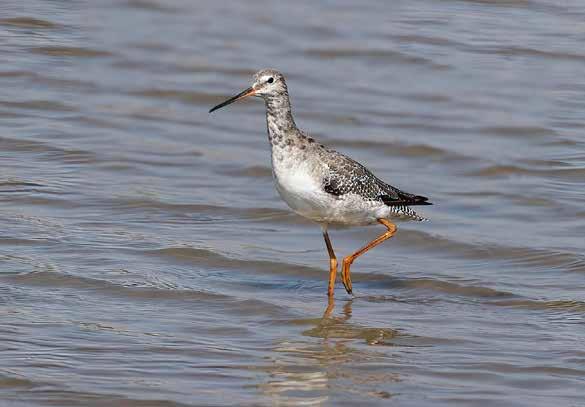
Bottom
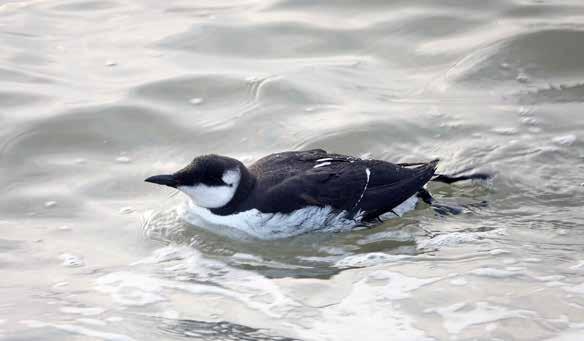
Saturday, September 18th
A pleasant autumn morning greeted the nine members assembled in the Coastguards Carpark Shingle Street. Heading south we spent some time surveying the tennis court area where Stonechats were noted with a significant flock of at least 76 Goldfinches settling on the overhead wires. The Goldfinches were clearly feeding in this area but became a little agitated by the local Kestrel. A skein of 54 Canada Geese headed north over the cottages with 20 Wigeon heading south over Oxley Marsh. Two Common Whitethroats popped up in the Elders next to the courts with a female Reed Bunting nearby as two Barn Swallows headed south. The Stonechats had moved over to Oxley Marsh and now totalled seven. Passing through the allotments and then south we could see that Meadow Pipit
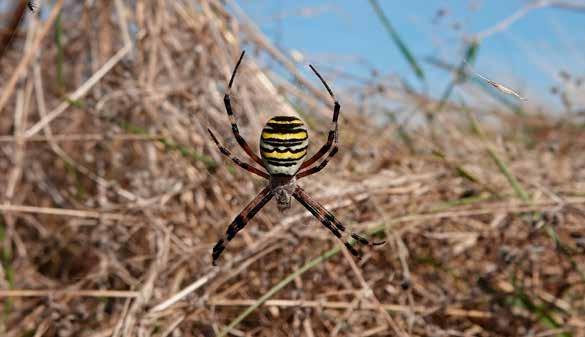
migration was taking place. On the beach we had a sea watch which produced quite a few species; heading south were plenty of Sandwich Terns in small groups with several flocks of Brent Geese also noted, the largest flock totalled 27. A flock of 22 Teal, three Wigeon, a single Gannet, a Common Scoter, four Oystercatchers and a very distant Great Crested Grebe were also recorded. Heading back to the car park we observed a small tit flock in one of the gardens noting several Long-tailed Tits plus a single Chiffchaff. A Hobby over the houses and a Sparrowhawk over Oxley Marsh were both brief and not seen by all the group. The second part of the meeting took place at a very quiet and dry RSPB Hollesley Marsh where just three Northern Wheatears were noted and some amazing Wasp Spiders to end the meeting.
Saturday 16th and Sunday 17th October 2021
It was great to be able to visit Orfordness again after the trip was cancelled last year. We always look forward to this trip, the site having its own unique feel and experience, that feeling of remoteness and getting away. We had initially planned to visit the previous week but as the Rangers were engaged in surveying we pushed it back a week – the latest we’ve ever been across in the Autumn.
As in recent years some of us were to stay over on the Saturday night, which just adds to the experience. We arranged to start at 4pm as, with the later date, we’d have less light to bird in. We met at Orford quay and took the boat across the Ore and walked up to the accommodation while one of the site Rangers, Glen, took our bags ahead. One of the first birds we noted was a Stonechat atop
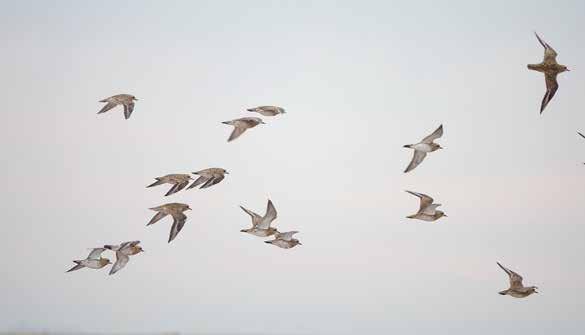
some scrub – somewhere we see the species most years. On the airfields there was a good amount of water and we noted on the far side that management had been undertaken with mounds of earth having been scraped out. On the scrapes themselves was a lovely flock of Golden Plovers with more flying in as we watched. We followed the path to get better views and to take a count – over 100 birds present, with Lapwing and Redshank mixed in. On the pools on the other side of the track we also had one or two Snipe fly up, a few Black-tailed Godwits with some Mallard, Teal and Shoveler present. Orfordness has always been a haven for raptors and it didn’t take us long to rack up a list; at least three Kestrels, Marsh Harrier and a distant Buzzard. Highlight though went to a Merlin that zipped through low.
We saw the first two Chinese Water Deer towards the river wall back towards the Ore but when we looked across the channel to scan the area towards the coast we were amazed to count a further 49, some right out on the shingle feeding, others clustered almost in small groups despite this species of deer not known to congregate in herds. It was a bit late by the time we walked through the scrub and brambly area but we did note Song Thrush and Wren. We settled into the accommodation, chose our bunks and unpacked our food. We spoke to another Ranger, Sam, who went through the layout and we discussed the number of Chinese Water Deer seen. Sam said that there has been a bit of a population explosion, the number of deer likely growing to over 300 with a planned drone survey to do an accurate count and, from that, they will plan a management strategy. He said they were having an impact
on some of the specialist shingle vegetation like Sea Pea and that the behaviour of grouping was unusual but possibly a product of the number present. After our evening meal we did our usual walk, listening to the sounds of the site in the dark. Unfortunately, the wind had increased so only Curlews and Redshanks were heard. I had planned to set up my sound recording equipment to do some nocturnal migration ‘nocmig’ recording but annoyingly found that the battery was dead on the microphone I used. Next time, I must check it all beforehand!
The following morning, after a cup of tea and breakfast, we walked down to the quay to meet the rest of the group arriving for the day. Having seen some Chinese Water Deer again we saw a Hare running down the track with a Short-tailed Field Vole scampering across, the latter is why there are always good numbers of Kestrels about. A number
of Cormorants had been noted flying down to the mouth of the estuary. That area is a known congregation point for this species as a feeding area. As we started the walk we had flyover Skylark, the Stonechat briefly again, and new member Pat, on her first trip, pointed out a flying Great Egret – I’m sure the first time we’ve noted this increasing species on our trips to Orfordness. We all admired the Golden Plover flock, this time the light better to see the shimmering golden feathers. The Kestrels were again hovering around the grasslands and the Merlin did another fly through, this time coming through extremely close, but so quick it shot through before we all got good views! Ahead, an adult Gannet was seen flying north, likely following the creek. The scrub area was again quiet, as has sadly been the case this autumn on the coast, with a real lack of passage birds such as warblers. We did see one or two Redwings in our search. We paused for a cuppa at the accommodation and to show around those who were on their first visit to the site. We continued on to the coast, the skyline different to previous visits with the lighthouse now dismantled and removed. We settled down to scan the sea whilst having
Dave Pearsons
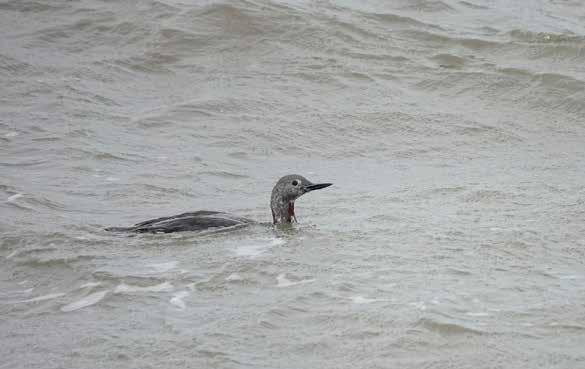
lunch. We managed to get a bit of shelter from the strong winds and occasional shower. Seawatching proved good and we counted a number of Gannets, some southbound movement of Dark-bellied Brent Geese, Wigeon and Teal. A few Common Scoters were also seen and a number of Red-throated Divers including two close inshore. Dunlin and two Sanderlings flew south and we watched a number of passerines either coming in off or heading south; species identified were Chaffinches, Starlings and Meadow Pipits. We also watched a Sparrowhawk heading into the wind relatively low over the waves. For the mammal list we also added Harbour Porpoise and Grey Seal. This part of the trip had been the most productive but it was time to head back. We climbed the Bomb Ballistic Building to scan across, although this was difficult in the wind. On the large pool a number of Cormorants, gulls and ducks but no Spoonbills we’ve seen there previously – maybe due to the later visiting time. The walk back was generally quiet but was nice to chat with members. We boarded the boat back to ‘civilisation’ with our kit, said our thanks to the ranger Sam and agreed it was an enjoyable trip once again.
Saturday, October 23rd
The weather did not look conducive for good birding for the SBG visit to Landguard Bird Observatory but that has been the story all over Suffolk throughout 2021. However, it was great to see many new faces in the group of almost 20 who assembled in the car park. As I have said before, the benefit of these meetings, apart from the social aspect, is that we learn from each other. Certainly as an inexperienced birder when I first joined
SBG (SOG) I learnt an awful lot from others and still do.
There was a buzz within the group because a Shorelark had been seen on the beach for several days before our meeting. Sadly, despite a search by many other visiting birders and ourselves it was not seen and had presumably departed overnight. Despite conditions not being ideal there was some
reasonable “vismig” of passerines together with a bit of movement over the sea. As we assembled, a few flocks of Woodpigeons passed over. Good numbers of Chaffinch, Goldfinch, Greenfinch, Linnets and Meadow Pipits were recorded, with 7 Brambling, 23 Siskin, 15 Redpoll, 3 Rock Pipits and 5 Woodlark being the pick of the bunch. Starlings continued their recent escape from the continent with 1,142 being recorded coming in/off from the sea.
Other movements over the sea included Brent Geese, Red-breasted Merganser, Common Scoter, Gannet, Curlew and Great Crested Grebe with Purple Sandpiper, Scaup and Goosander, which most of us missed as we were out on the reserve, being the highlights.
Out on the reserve there were reports of two Ring Ouzels floating about but despite our efforts they remained hidden. Maybe the Sparrowhawk seen hunting over Icky Ridge resulted in them keeping their heads down. It was seen later from the Observatory when those who had remained had good views of a male “Rouzel” together with a lovely Fieldfare.
There were over 50 species recorded on the day and members were lucky enough to see a good number of them. Ringing totals have been low this Autumn at the Observatory but we did see a delightful Lesser Redpoll in the hand together with a female Blackcap. Finally, my thanks go to Nigel Odin who gave his usual interesting commentary and to Ann and Gi who saved me the job of washing up after our tea stop.
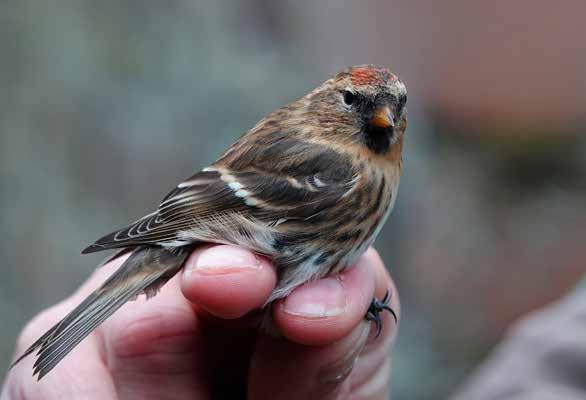
Tony Gdula
The quarterly review section gives a snapshot of birds seen within the county during the period and is compiled by Tony Gdula, predominantly from data received by Suffolk BINS. All scarce and rare birds are subject to submission and acceptance by either SORC or BBRC. Updated lists on Accepted and Outstanding Records for previous years can be found on the SBG websitehttp://www.suffolkbirdgroup.org/bird-recording.
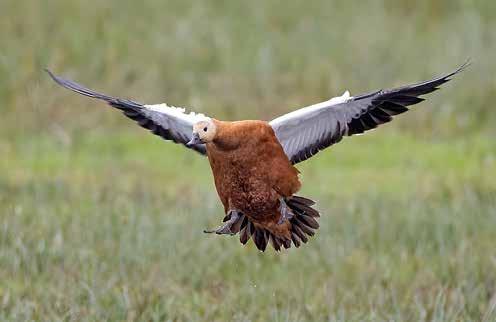
On the southern tip of Havergate Island there were six Pale-bellied Brent Geese on the 30th. An un-ringed and fully-winged Ruddy Shelduck appeared at Southwold golf course and Town Marsh on the 22nd and 23rd. Garganey were present in ones and twos at Minsmere, Botany Marsh and Carlton Marsh up to the middle of the month, then at Hollesley, Boyton and Covehithe later on. A single Goosander was noted at Benacre on the 29th. Some early Velvet Scoters offshore with two flying north at Slaughden on the 26th and three off Thorpeness the following day.
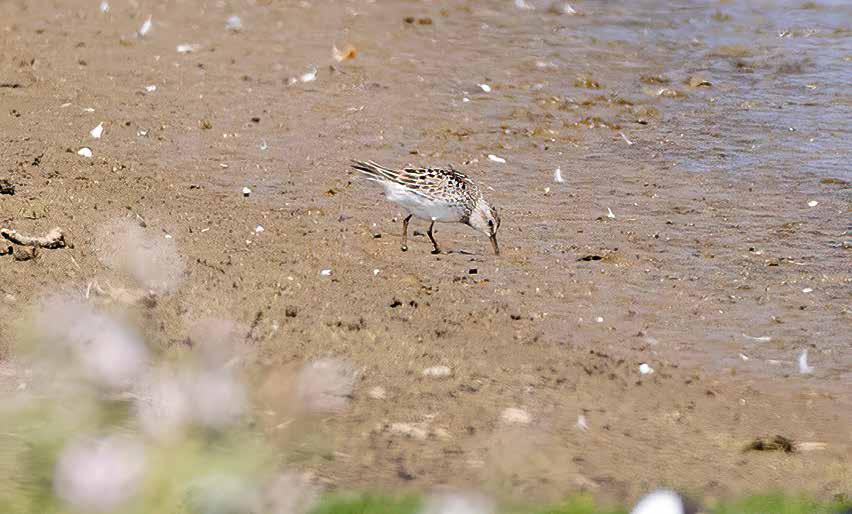
There were two Stone-curlews on the Alde Estuary on the 27th and two juvenile Little Ringed Plovers at Botany Marsh on the 29th. A feast of sandpipers in the month; a Pectoral Sandpiper was at Minsmere between the 1st and 15th, up to three Curlew Sandpipers were at Minsmere up to the 25th, with one on the Alde Estuary that same day. Purple Sandpipers were first seen on the 17th at Aldeburgh, then Minsmere (26th and 31st) and LBO (30th). Wood Sandpipers were widely recorded with up to three at various coastal sites throughout August. Little Stints showed at Minsmere (19th, 22nd and 28th31st), the Alde Estuary (22nd and 27th/28th),
Lakenheath (three on the 23rd, then 28th and 30th), Snape (two 27th-31st) and up to nine at Walberswick (30th/31st). There were two limosa Black-tailed Godwits this month at Minsmere on the 3rd. Spotted Redshanks were seen around the coasts and estuaries in good numbers including nine at Minsmere (3rd/4th), seven at Blythburgh (30th) and six at Southwold (also 30th).
A Glaucous Gull was seen on the Blyth estuary on the 21st. Fifteen Yellow-legged Gulls were seen on pig fields at Hinton on the 16th as was a Caspian Gull. Further Caspian Gulls were seen at Havergate (4th), then Walberswick (15th), Melton (17th), and Benacre (29th). There were 194 Mediterranean Gulls counted at Corton new sewage works (18th). Little Gulls were first noted at Minsmere (14 on the 2nd), then Thorpeness (11th), Sizewell (24th) and Walberswick and Southwold (both 30th). A Roseate Tern was seen at Havergate (1st), then Minsmere (2nd) and Waveney (31st);
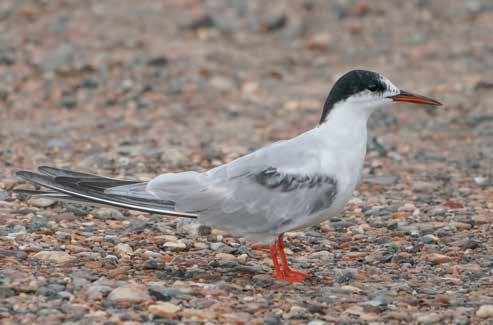
a sole sighting of 6 Common Terns north off Ness Point (31st). A single Arctic Tern at Havergate (1st), then on groynes at Links Hill (16th), Minsmere (22nd), Thorpeness and Southwold (both 28th), Benacre (29th) and Walberswick (30th) with the high count being 10 off Kessingland on the 28th. Counts of one to six Black Terns during the month; first seen at Havergate (4th), then Minsmere (7th), Lowestoft north beach (20th), Hollesley and LBO (both 22nd), Thorpeness (28th) and Lackford (31st).
Skuas start appearing off the coast during this month and four Arctic Skuas were first noted at Kessingland (14th), then Southwold (the highest count of 14 on the 28th), LBO, Thorpeness and Benacre. Two to three Longtailed Skuas were first seen at Minsmere and Southwold (both 26th) and then at Thorpeness, Shingle Street and Corton. Great Skuas were first recorded at Southwold (17th), then Thorpeness (four on the 27th) and Lowestoft (27th). A single Storm
Petrel showed off Thorpeness on the 23rd. Singles of Sooty Shearwaters were seen from Thorpeness to Corton from the middle to the end of August. A Glossy Ibis was at Walberswick on the 13th, then likely the same bird at Minsmere the following day and remained until the 20th when it was seen to fly out to sea. One at Botany Marsh from the 23rd to the 31st. Up to 34 Spoonbill were on the Alde Estuary throughout the month with a pair at Hollesley and Walberswick early in the month. There were two Cattle Egrets on Ramsholt Lodge Marsh on the 1st. There were up to three Great Egrets noted throughout the month from LBO to Carlton Marsh.
Osprey was first noted at Thorington Street reservoir on the 11th with further sightings along the coast and on the Alde and Stour estuaries through the month. A Wryneck was found at Gunton Warren on the 22nd and one noted along the river wall path by Hollesley Marsh on the 27th and 28th. Ravens continue
to be noted, with two at Woodbridge (11th), two in Grundisburgh (22nd), Little Stonham (30th) and two at Trimley St. Martin (31st). A Wood Warbler was seen at Bawdsey quay picnic site on the 25th and 26th while one was trapped and ringed at Trimley Marsh on the latter day. A single passage Spotted Flycatcher at LBO on the 24th. There were rather more Pied Flycatchers; with ones and twos in Aldringham, Gunton, Kessingland and Southwold from the 21st, later joined by sightings in LBO, Minsmere, Benacre, Shingle Street and Thorpeness. Common Redstarts showed in Lowestoft, LBO and Southwold. Whinchat were seen in ones and twos at Needham Market, the Alde Estuary and Lowestoft from the 22nd before being sighted at many locations – including 10 on the Alde Estuary. A lone Tree Sparrow was at LBO on the 23rd. Tree Pipits were noted on passage at LBO with one on the 23rd and three a week later.
1st – a Marsh Warbler was trapped and ringed in Hollesley.
1st – a White-rumped Sandpiper was at Minsmere until the 10th.
2nd – a Purple Heron was at Carlton Marsh and again present the following day.
2nd – a Rose-coloured Starling was reported from Gorleston.
3rd – a probable Booted Eagle over Carlton Marsh visitor centre plus another probable over the A12 at Martlesham on the 7th.
4th – a Red-necked Phalarope on Havergate Island.
12th – a Black Stork was seen flying north over Snape Maltings. On the 14th, what was likely the same bird two days previously, was
tracked down the coast - Lowestoft-BenacreAlde Estuary-Gedgrave-Boyton-FelixstoweShotley and then the following day at Holbrook.
13th – an Icterine Warbler reported in the dunes at Minsmere.
14th – a Honey Buzzard north over Kessingland.
16th – a White Stork over Lakenheath Fen.
18th – a European Bee-eater over Minsmere.
19th – an elusive Spotted Crake was found at Botany Marsh.
23rd – Balearic Shearwater was seen south off Minsmere and north off Thorpeness.
24th – a Caspian Tern was seen fishing offshore at Southwold.
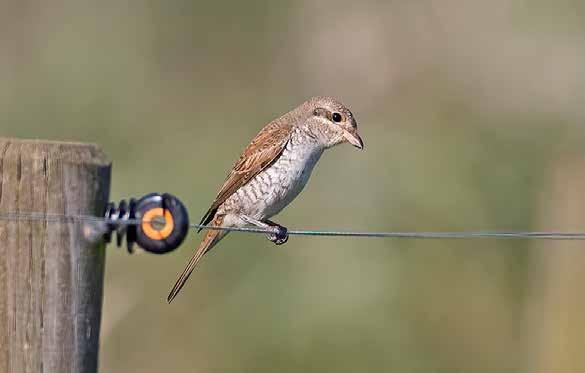
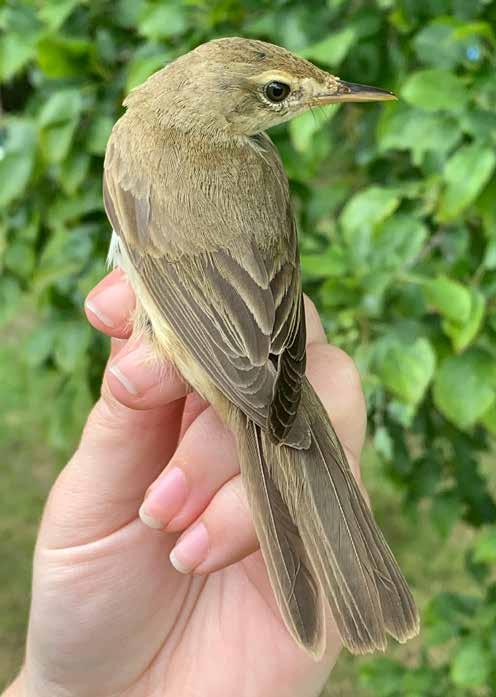
A Pale-bellied Brent Goose was on East Scrape at Minsmere on the 13th and offshore at Thorpeness on the 19th. A Garganey was noted at Carlton Marsh and Minsmere over the early days of the month with one at Boyton Marsh from the 8th to the 22nd. A Redbreasted Merganser was at Benacre through the final week of September. Two Rednecked Grebes were seen off Thorpeness on a seawatch on the 9th. A Little Ringed Plover showed at Botany Marsh (6th), then two on the Alde Estuary (9th-16th). A juvenile Pectoral Sandpiper was seen at Minsmere throughout the second half of the month with additional sightings at Carlton Marsh and Trimley Marsh. Curlew Sandpipers were seen early in the month on the Alde Estuary on a few dates plus a sighting at Minsmere. Purple Sandpipers were seen throughout September at Minsmere and Southwold and at Landguard Point on the 4th.
Wood Sandpipers were noted at Lakenheath (1st-3rd) and Bawdsey (20th). Little Stints were around throughout the month on the Alde Estuary and Minsmere with additional sightings at Carlton Marsh, Kessingland, Walberswick (with 6 on the 5th) and Bawdsey. A Grey Phalarope was noted on the Alde Estuary (30th).
Many sightings of Little Gulls this month with the highest counts of 16 at Thorpeness (6th) and over 20 off Sizewell (16th). Caspian Gulls were seen during the latter half of September on the Blyth Estuary, three at Minsmere plus at Southwold and Lowestoft. Arctic Terns at Walberswick (3 on 1st), Slaughden (3 on 4th) and Sizewell (1 on 5th). A Black Tern was noted at Lackford (1st), Thorpeness (3rd), Felixstowe (4th) and Minsmere (5th). A Pomarine Skua was off Thorpeness (19th). Three Arctic Skuas off Minsmere on the 3rd then six off Thorpeness the following day and finally one off East Lane on the 27th. Long-tailed Skuas were
seen off Lowestoft (2nd), Southwold (3rd and 27th), two from Thorpeness up to Covehithe on the 14th, East Lane (19th and 27th) and Minsmere (27th). Single Great Skuas off Thorpeness (14th) and Bawdsey (27th). A full summer-plumaged Red-throated Diver was seen on the Alde Estuary on the 19th. Sooty Shearwaters were noted along the coast throughout the month and peak days were 3rd and 14th with sightings at several coastal locations. Manx Shearwaters offshore at Southwold and East Lane on the 26th and again at the latter site the following day. A single immature Gannet was seen over the inland village of Huntingfield on the 22nd. A solitary Shag at Shotley Marina on the 15th.
An immature Glossy Ibis showed at Botany Marsh on the 1st. Spoonbills were noted throughout the month on the Alde Estuary, with numbers peaking at 38. Two Cattle Egrets were at Cattawade on the 28th and one at Lakenheath Fen the following day. Great Egrets were seen at Botany Marsh (1st/2nd), Lackford (3rd) and North Warren and East Lane (both 15th). A ring-tail Harrier species was seen at Shingle Street on the 23rd. Ospreys were sighted along the coast throughout the month and regularly on the Blyth and Alde Estuaries – where numbers rose to three. Two Wrynecks were trapped and ringed in Hollesley on the 4th plus another at LBO on the same day and seen there until the 7th, with one also in Hadleigh on the 6th. A Merlin was noted at North Warren on the 8th. A Ring-necked Parakeet was seen south over LBO (22nd).
A Red-backed Shrike was seen at Minsmere between the 22nd and 25th. Ravens again at Sutton, Helmingham and Needham Market (four on the 28th).
An early Shorelark was reported at Minsmere (21st). A Wood Warbler in Dunwich (12th). A sole Spotted Flycatcher passage sighting - three in Southwold on the 4th. Pied
Flycatchers however, were seen regularly and frequently (including four trapped and ringed in Kessingland on the 4th). Black Redstarts were in Kessingland (5th) and up to three in Felixstowe (16th/17th).
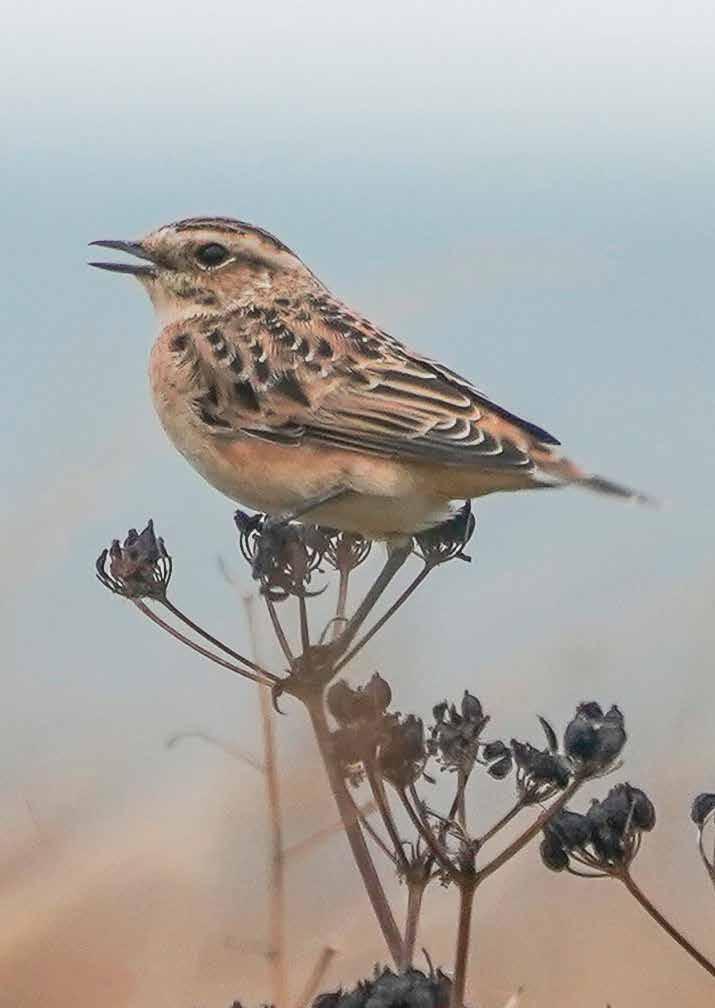
Common Redstarts were regularly seen at coastal sites during the first half of the month. Whinchats were seen regularly and frequently throughout the month including one near Bourne Park, Ipswich on the 6th. Tree Pipits were noted in Southwold (4th), Benacre (15th) and LBO (20th).
1st – a Cory’s Shearwater off Minsmere plus sightings between Thorpeness and Covehithe on the 14th.
2nd – the White Stork was seen again at Lakenheath and on further dates until the
20th. Probably the same bird over Brantham on the 23rd and Alton Water on the 26th.
2nd – a Greenish Warbler reported at the old caravan park at Thorpeness.
3rd – a juvenile Sabine’s Gull seen initially north off Minsmere was then tracked up the coast at Southwold, Kessingland and Southwold.
6th – a possible Honey Buzzard was seen within a passage count of 72 Common Buzzards at Kessingland. One at North Warren on the 7th and 28th with a palemorph over Stowmarket on the 14th.
13th – a Lesser Yellowlegs was on Gifford’s Flash, Hadleigh and remained until the 24th.
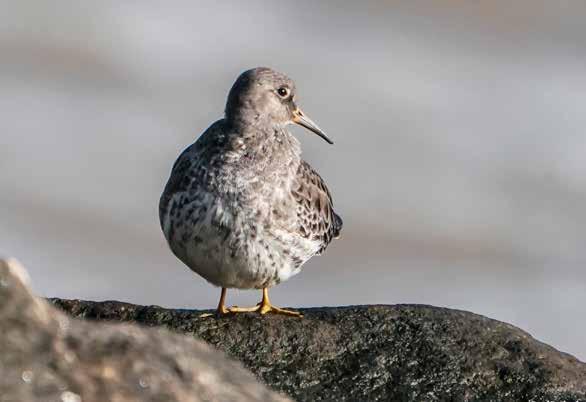
A single Tundra Bean Goose south off North Denes, Lowestoft (10th) and a large flock of Pink-footed Geese arrived - around 300 over Blackheath, Wenhaston (14th) and 500 in off and south at Lowestoft the next day. Two Whooper Swans were seen at Hollesley Marsh and nine high north-west over Carlton Marsh – both sightings on the 22nd. Two Greater Scaup south offshore at Slaughden (29th). A Velvet Scoter was off Dunwich (15th) and two south off LBO (24th). The Red-breasted Merganser from the previous month was still present on Benacre Broad (3rd). A Smew was at Minsmere (31st). A Goosander turned up at Minsmere (26th) with nine on Thorpeness Meare (31st). A Slavonian Grebe was found on an irrigation pool on Aldringham Walks (16th). A Pectoral Sandpiper was seen at Carlton Marsh (10th – 17th). Purple Sandpipers were noted over the month at both Southwold and Ness Point. Three Little Stints were spotted at Hollesley Marsh (22nd). A Jack Snipe flew in off at LBO (24th). A Grey Phalarope flew south off LBO (3rd). A Glaucous Gull was seen at Reydon (5th) and a hybrid-type at Minsmere
(27th). Two Caspian Gulls were at Minsmere (17th and 26th) and a first-winter bird at Sizewell outfalls (20th). There were 12 Little Gulls observed off Thorpeness (3rd), two at Dunwich (12th), Sizewell (14th and 20th) and four off Slaughden (31st).
A Pomarine Skua north off Bawdsey (21st). Single Arctic Skuas noted off Thorpeness (3rd) and Slaughden (31st). A Long-tailed Skua off Lowestoft (23rd) as well as a Great Skua and the latter also off Slaughden (27th). A few sightings of Little Auks on the 23rd coming from Hollesley, Sizewell, Southwold and Lowestoft and one close inshore at Benacre on the 26th. A single Puffin south off LBO on the 21st. A Great Northern Diver off Benacre (27th). A Leach’s Petrel south off LBO (2nd). Sooty Shearwaters were seen at Minsmere, Landguard and Bawdsey on the 2nd and 3rd plus off Southwold (12th and 15th). A Manx Shearwater was off Lowestoft (23rd). A Shag was sighted off Benacre (27th) and at Shotley (28th). Spoonbills were sighted early in the month, with up to eight on the Alde Estuary and 13 south at Bawdsey and, later on, one over Minsmere. Up to four Great Egrets were seen throughout the month at coastal sites.
Single Cattle Egrets were regularly seen at Botany Marsh and at Minsmere/Eastbridge.
A ringtail Harrier species flew over BTO Nunnery Lakes on the 25th. Ospreys were around Alton Water and the Alde Estuary throughout the month (with three on the 3rd at the latter site). Birds also seen on the Deben between Woodbridge and Ramsholt and one north over Bawdsey. Short-eared Owl sightings were plentiful, featuring at Southwold, Hollesley (2), Kessingland and Bawdsey with a few coming in off the sea. Sightings of Merlin also appeared regularly including birds at North Warren, Bawdsey, the Alde Estuary and Felixstowe. Two Ringnecked Parakeets were seen in Melton (26th). Single Shorelarks were at Hopton (11th) and Landguard Common (20th-22nd).
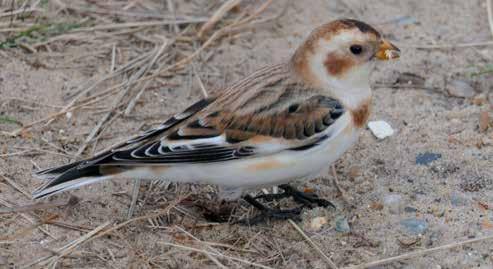
A scattering of Yellow-browed Warbler sightings - initially one at Gunton on the 6th then at various sites including LBO, Orford, Thorpeness, Southwold, Kessingland and Lowestoft. Just one Firecrest sighting, at Bawdsey on the 9th. Ring Ouzels were seen first on the Alde Estuary, then a pair at Landguard towards the end of October. Black Redstarts were again seen regularly throughout the month, with up to six spotted in Lowestoft early in the month. A lone Water Pipit seen on the Alde Estuary (28th). There were sightings of Hawfinch around Minsmere, Snape and Hollesley early in the month – then at Combs Ford at the close. Up to seven Snow Buntings were around Minsmere towards the end of the month and a pair of Lapland Buntings flew over Aldringham Walks (16th) and one at Kessingland (26th).
Scarcer October sightings
3rd – a Red-necked Phalarope at Fornham St. Martin and present the next day.
3rd – an adult ‘Lesser’ Golden Plover species on the Alde Estuary.
9th – a Radde’s Warbler along North Denes
and present the next day. One at Shingle Street allotments (23rd).
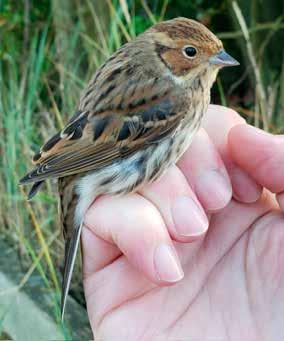
10th – a Little Bunting was trapped and ringed at Trimley Marshes.
13th – a Siberian Chiffchaff along North Denes.
16th – a reported White-tailed Eagle over Henham woods.
17th – a Richard’s Pipit near Bawdsey picnic site.
18th – a Rough-legged Buzzard over Sudbourne Marsh.
23rd – a probable first-winter Eastern Yellow Wagtail at Carlton Marsh.
24th – a Pallas’s Warbler at Pakefield in a gulley by the coastguard tower.
30th – a Dotterel between Kingsfleet and Falkenham among a flock of 400 Golden Plovers and present again the following day.
Council for 2021
Officers
Chair: Chris Courtney
Vice Chair: Edward Jackson
Secretary: Chris Keeling
Treasurer: Anne Wright
Communications Officer: Alex Rafinski
Projects Officer: Chris Keeling
Suffolk Bird Report Editor and SORC Link: Nick Mason
Harrier Editor and Outdoor Events Coordinator: Gi Grieco
Indoor Events Coordinator: Adam Gretton
President
John Grant
Members
Eddie Bathgate
Peter Merchant
Jamie Everett
Roy Marsh
Matthew Deans
Adam Faiers
Justin Zantboer
Honorary Vice-Presidents
Andrew Green
Robin Hopper
Colin Jakes
Mike Jeanes
Mike Marsh
Philip Murphy
Reg Snook
Steve Piotrowski
Bird Recorders
North-east Area Recorder: TBA Email: bird-ne@sns.org.uk
South-east Area Recorders: Gi Grieco Tel: 07951 482547 and Steve Fryett Tel: 07593 382082 4, The Street, Melton, Woodbridge, IP12 1PW. Email: bird-se@sns.org.uk
West Area Recorder: TBA
Email: bird-w@sns.org.uk Memberships
c/o SNS, The Hold, 131 Fore Street, Ipswich, Suffolk, IP4 1LN
Founded in 1973 by a group of Suffolk birdwatchers
Associated with the Suffolk Naturalists’ Society
SBG remains an independent birding group and is a registered charity
A voice for Suffolk birdwatchers
With established links to many naturalist and conservation organisations
Media
Actively lobbies to protect key Suffolk habitats
Provides a county-wide field force of bird surveyors
Promotes BTO bird surveys and organises special SBG surveys

Strong web presence - www.suffolkbirdgroup.org
Active Twitter feed - @SuffolkBirdGrp
Quarterly magazine - The Harrier
Annual review - Suffolk Birds report
Annually (20+) field trips - ideal for novices or experts and young or old alike
Opportunities to visit hot spots and receive practical ID tips in the field
Programme of talks and presentations - variety of topics (county, national, or international) with quality speakers
Assists with conservation projects to improve breeding success
- Swifts
- Barn Owls
- Peregrines
- Waders
Partners with Suffolk Wildlife Trust and other bird groups
Assists with funding for bird hides and other birding amenities
Contributes to community events, including dawn chorus walks
Provides bursaries for special projects
