
Gi Grieco
Gi Grieco
Welcome to The Harrier. Having had our first trip report in the previous edition it is great to include several more in this one, always a nice record of the group’s activities.
We had the excellent article from Simon in Harrier #205 and we have a write up of the award ceremony where Simon, Jamie and Andrew were honoured. At the same event we were able to remember Jean and Ken with their family members. As well as the bench at LBO, Jane and Simon have also had a bench installed at RSPB Boyton Marsh.
We have Tony Juniper write about the importance of recording and this is very pertinent at present in Suffolk as detailed by Brian Small, SORC Chair. We currently have two area recorders stepping down and there is a need to replace both Andrew and Colin. Chris, SBG project officer, has also written a piece on a community project that SBG are liaising with and to ask for some volunteers to assist with it.
We have another bird species project report from Nigel at LBO, an area where constant study helps with our knowledge of the county’s birds. There is a follow up article on the importance of scrub that was detailed in the last edition. Our regular quarterly bird review has again been compiled by Tony. I have had some feedback on the format of this section so we’ll consider this and may make changes in future editions.
As always please feel free to send in your thoughts on the articles within and we always welcome pieces to include.
There are two changes to trips later in the year, one rearranged due to surveying being undertaken and the other as a reminder of an update that was published in the previous edition.
• Orfordness. Change of date to Saturday, October 16th and Sunday, October 17th. Please contact Gi Grieco 07951482547 to book a place.
• Mersea Island. Change of date to Saturday, December 18th.
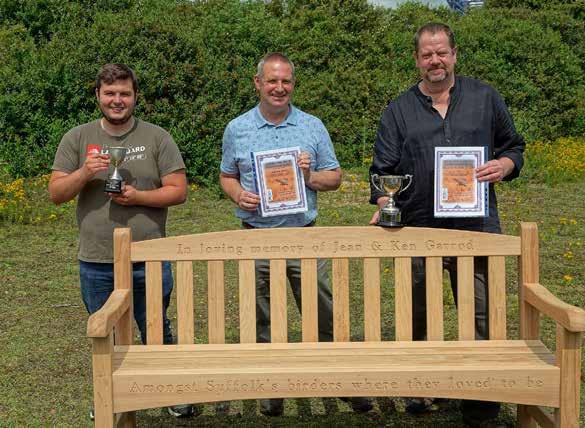
Chris Courtney, SBG Chair
Following several days of cloud and drizzle the sun shone brightly and warmly on proceedings at Landguard Bird Observatory on Sunday July 11th.
A good turnout of SBG members had come together along with some special family guests in remembrance of the much loved and universally popular Jean Garrod. Together with her husband Ken, they had been among the most well-known faces of the Suffolk birding scene for the preceding half century. Jean in particular having for many years been coordinator of Group field meetings, she is no doubt best remembered for her infectious enthusiasm, approachability and especially
for the encouragement she gave to the many young people whose first interest in the hobby, and subsequent involvement in Suffolk wildlife, was sparked by her.
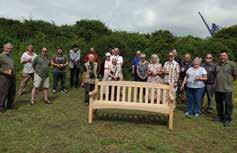
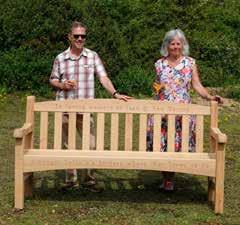
The new bench commissioned by SBG from Orwell Mencap was unveiled, engraved with the dedication “In loving memory of Jean and Ken Garrod; Amongst Suffolk’s Birders where they loved to be”. It was especially pleasing to have Jean and Ken’s children, Jane and Simon, present at the unveiling.
Following on from this, came the presentation of our Annual Awards, postponed from the AGM due to Covid.
Most appropriately first up was the Garrod Award, established by Jean in 2016 in memory of Ken.
Recognising outstanding achievements made by someone representing the next generation of Suffolk Birders and conservationists, this year’s worthy recipient, is Jamie Everett. A familiar figure to many of us, Jamie is a SBG Council member and a final-year student on the Wildlife, Ecology and Conservation Science course at Suffolk University. He has been integral to a number of recent projects, including the pioneering use of sound and computer technology to remotely identify species - trialled at Minsmere in collaboration with the RSPB, SBG and Suffolk University.
In 2019 Jamie participated in the Incredible Oceans Project and Aldeburgh Sirens Festival which forged a combination of the arts and sciences to help raise awareness among young people of the threats to our seas
from climate change, overfishing, plastic and pollution.
Currently, Jamie is engaged in his final year dissertation, comprising of a study to rigorously evaluate the feeding behaviours of Suffolk’s only breeding colony of great cormorants at Loompit Lake SSSI. His studies will also investigate non-lethal dispersal methods in an attempt to better inform concerns raised by the Suffolk Fly Fisher’s Club who currently apply each year for a lethal control licence from Natural England.
Presentation of the Denis Ockelton Award in recognition of a lifetime’s contribution to Suffolk ornithology and conservation was also made. This year’s recipient, Simon Evans, has, since boyhood, nurtured a fascination with raptors and has throughout his adult life dedicated a great proportion of his free time to the conservation, monitoring and ringing of some of our most charismatic Suffolk birds, such as Peregrines, Goshawks, Buzzards, Red Kites, Long-eared and especially Barn Owls. Simon’s contribution to the Suffolk Community Barn Owl Project, especially in the west of the county, helped in no small measure to the highly successful increase in the population of this species in Suffolk.
And last but not least, Andrew Green was made an Honorary Vice President and given a lifetime SBG membership, following his dedicated service of 15 years as the Northeast Suffolk Bird Recorder.
Andrew was thanked for bringing his great knowledge and experience to this role, in which he has meticulously processed and collated all ornithological records from his designated section of the County for the past decade and a half, in addition to his significant contribution to the production of the Suffolk Bird Report.
Getting together for the first time in over a year and half, for this socially distanced but uplifting and very special occasion, which with a glass of bubbly in our hands and some tasty snacks was just the tonic most of us needed!
Tony Juniper, Chair of Natural England
“Conservation in Britain has relied on amateur records accumulated through natural history societies operating not only nationally but also locally. This includes the network of county bird groups and clubs, that have between them accumulated the most astonishing and detailed archive. These are invaluable for both our understanding of Nature and also our on-going efforts to conserve it. Publications such as The Harrier and Suffolk Birds are the backbone of that local effort and as we not only seek to conserve what remains of the natural world, but to begin the gargantuan task of fostering its recovery, then that local effort will remain of vital importance.”
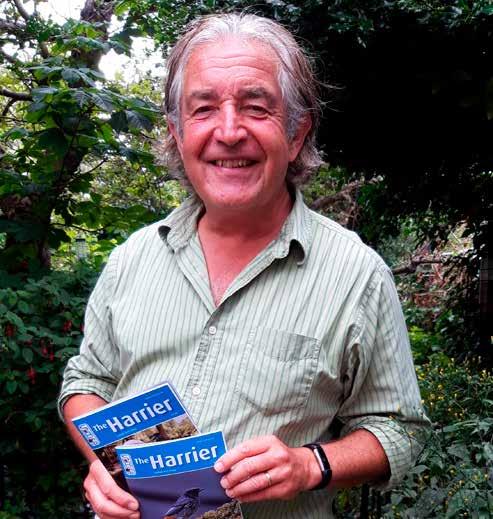
Brian Small, SORC Chairman
The value of an accurate system for recording data about wildlife has perhaps never been more important. On local, national and international levels, historical data is now showing patterns, both negative and positive, which illustrate how environmental change is affecting the occurrence, abundance and distribution of wildlife. Birds, being so dynamic in their movements, are very sensitive to changes in climate, farming practises, etc., and by examining records that go back many decades we can accurately picture rises and falls, patterns which mere anecdotal evidence fail to show.
In Suffolk, we have been very lucky over the years to have had a team of dedicated area recorders, who input all of the submitted records from observers throughout the county. The information received is saved as part of the historical database, housed at The Hold, and also forms the basis for the annual Suffolk Bird Report, compiled by a team of section writers under the guiding hand of Nick Mason, the editor. However, though the starting point is the observers that send in their personal records, we would be nowhere without the efforts of the recorders that collate and ‘make sense’ of them all.
Sadly, two long-serving area recorders have decided that their ‘time is up’. Andrew Green, the Northeast Suffolk Recorder, and Colin Jakes, the West Suffolk Recorder, both feel that they need a well-earned rest from the role.
Andrew started as recorder in 2006 and over the past 15 years has overseen and been a driver in the modernisation of inputting bird record data. Colin Jakes has served twice as long, joining the team as West Suffolk Recorder in 1991: this was not long after I began my first stint on the SORC, and I believe
we first met at a meeting in Saxmundham –a meeting blessed by some of the ‘Suffolk birding greats’ such as Derek Moore, Steve Piotrowski, David Pearson, Gerald Jobson, Brian Brown and Cliff Waller. Andrew’s 15 years is a great effort, but Colin’s 30 years is herculean; we owe them both a huge debt of gratitude for their hard work over those years and we sincerely thank them both and wish them well.
The SORC and bird recording in Suffolk are now left with a couple of pairs of very sizeable shoes to fill and we are making a special request for anyone that has the time, the skills and the inclination to take over from Andrew and Colin to contact the SORC as soon as possible. There is no doubt that the recording of wildlife is changing and nowadays we depend almost exclusively upon spreadsheets and digital recording, so a good knowledge of how to use these is certainly essential. The SORC is striving to find ways to lighten the workload of recorders, which we hope will make the task more attractive.
RAS (Retrapping Adults for Survival project) is a bird ringing project aiming to generate annual survival rate estimates for adult birds, focusing primarily on species not encountered in large numbers during standard mist netting activities. In total, 192 RAS projects were active nationally in 2019. Data from historical projects and active projects that have been running successfully for five or more years are included in the analyses of the national results.
The RAS analyses generate two parameters: survival rates and re-encounter rates. The survival rates indicate the proportion of birds that survive and return to the site to breed each year, while the re-encounter rates provide a measure of the probability of a bird’s presence being detected should it have survived and returned; the higher the reencounter rate, the more precise the survival estimate.
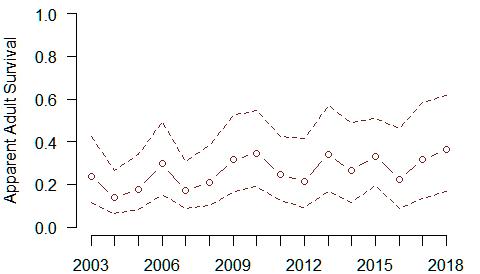
The graph below presents the mean adult survival rate since 2003.
Notes
* You may have noticed the graphs end at 2018; this is because the RAS programmes calculate survival between years, so the last point is the survival from 2018 to 2019.
* The graphs show “Apparent Adult Survival”, defined as the probability that an adult bird alive in the previous year survives and returns to the study area. The analysis accounts for the fact that birds which are present may not be seen every season, but birds permanently emigrating from the study area will be presumed dead, thus the true survival rate may be slightly higher than the figures presented here.
* The dotted lines show the upper and lower 95% confidence limits around the average estimate (solid line and points). The closer these lines are to the solid line the more confidence we have in the accuracy of the survival rates.
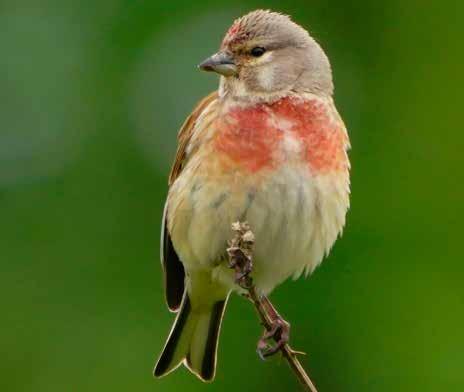
Estimate of average adult survival across all Linnet projects:
Male annual adult survival rate: 35%
Female annual adult survival rate: 28%
Estimate of average adult survival from Landguard:
Male annual adult survival rate: 29%
Female annual adult survival rate: 25%
Estimate of the average annual recapture probability:
Male recapture probability: 36%
Female recapture probability: 38%
Trend Analysis
Landguard is one of three active projects for Linnet. The national trend is generated from two current projects. The national trend has fluctuated somewhat however it remains


Further information: www.bto.org/ras
Acknowledgements –Many thanks to the BTO RAS staff.
Nigel Odin, Landguard Bird Observatory, View Point Road, Felixstowe, IP11 3TW
E-mail: landguardbo@yahoo.co.uk
relatively stable, which is good for a red listed species. On average the survival rate for males is higher (35%) than females (28%).
The Landguard project is the longest running active Linnet RAS project. The trend hints at a slight increase in survival in recent years, with increases in the last two years and is the highest rate since the project began.
RAS is supported by a partnership between the BTO and the Joint Nature Conservation Committee (JNCC) on behalf of the country agencies (Natural England, Natural Resources Wales, Scottish Natural Heritage and the Department of Agriculture, Environment and Rural Affairs, Northern Ireland). It is also part of the BTO Ringing Scheme which is funded by the BTO/JNCC Partnership, The National Parks and Wildlife Service (Ireland) and the ringers themselves.
Chris Keeling, SBG Projects’ Officer
The Green Light Trust is an established and successful environmental education charity which uses the power of nature to transform lives. Since its formation in 1989 the trust has helped thousands of people, both children and adults from diverse and challenged backgrounds, by using nature to build health and hope with conservation projects at locations around East Anglia.
Craig Spence has contacted Suffolk Bird Group on behalf of the Greenlight Trust’s Rushmere Heath project where volunteers are working to restore heathland by opening up areas of gorse scrub, and seeding cleared areas with heather. I joined Steve Fryett of SBG to meet Craig and discuss what they hoped to achieve through working with the SBG. I had been invited by Steve to join the meeting with my
SBG Projects’ Officer hat on, and also because of my previous experience of heathland management and restoration projects with English Nature and Natural England.
Craig and his volunteers are keen to know how best to approach scrub management and maintain a balance between scrub and open areas as a mosaic of heather and acid grassland. Steve and I emphasised the importance of surveys to identify species presence and distribution across the site and to provide a baseline to monitor change as management progresses. Craig has e-mailed to say that there is a great deal of enthusiasm among the Rushmere Heath volunteers since our meeting and the binoculars and bird books have been very much in evidence.
If you would like to help with bird surveys it’s entirely up to you which standard survey methodology you adopt - whether you choose to carry out breeding bird transects, point counts or simply recording casual observations is entirely up to you. But most importantly, if you are happy to share your knowledge and field skills with the Green Light Trust volunteers please do give some thought to coordinating your visit to days when the volunteers are working on the heath. We need surveys in both the summer and the winter as we need to know which species make use of the heath in both seasons.
And it’s not just bird surveyors that we need, but also anyone who can give their time to carrying out butterfly transects and perhaps introduce the Rushmere volunteers to moths with moth trapping evenings. If there are any SBG members (particularly those who live in or near Ipswich) who would be willing to give some of their time to help with bird surveys, butterfly transects, and perhaps moth trapping evenings please contact Craig Spence at craig@greenlighttrust.org while also copying me in at chris.keeling@icloud. com
As SBG Projects’ Officer, I have agreed to act as liaison between the SBG and the Rushmere Heath Project. Please can I ask that you copy me in when contacting Craig so that if necessary we can coordinate surveys and survey data to ensure that management including scrub clearance is targeted appropriately. Please also remember to send your records to both Craig Spence at the above e-mail address and also Steve Fryett at steve.fryett36@gmail.com
Craig is also asking if there are members of SBG who would be interested in helping with surveys at Castan Woods which is their main Ipswich site behind Martlesham park and ride. Craig describes Castan Woods as mostly secondary mixed deciduous and coniferous woodland, predominantly birch, sweet chestnut, sycamore and oak with some pines. Each year Craig and his volunteers complete some coppicing while in other areas they have also carried out some re-planting. There are groups of volunteers there every week day, and lots of opportunity to undertake surveys that will inform appropriate and beneficial management.
The COVID pandemic has highlighted the vulnerability of all of us to mental health issues and the importance of nature in healing and restoring our sense of wellbeing. This is an opportunity for SBG members to help people of all ages and backgrounds to engage with nature while helping to restore and enhance wildlife habitats around Ipswich.
We really hope you can spare the time to help the Green Light Trust to restore the link between people and nature, while helping to restore a link in our fractured heathland habitats. We look forward to hearing from you.

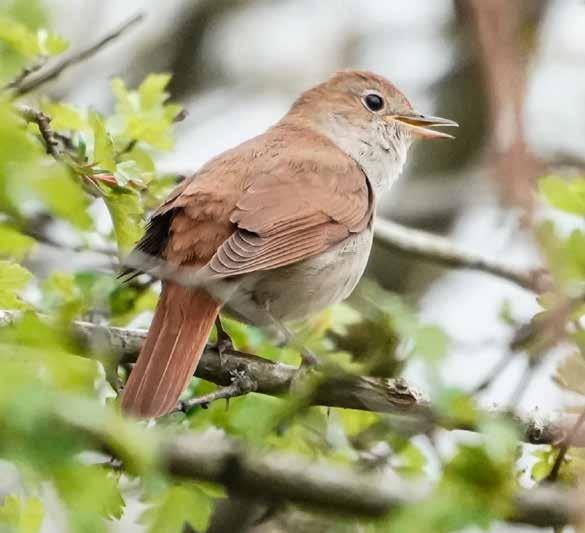
For many years I worked at Melton and part of my patch included Bromeswell. I would cycle down Common Lane early morning in Spring hoping to hear my first Nightingale of the season. The lane was flanked in patches by thick scrub and bramble sections including around the Suffolk Wildlife Trust reserve of Bromeswell Green and it has always been a favoured place for the species; at least five on territory. On a couple of occasions, I have led
SBG trips to the area for a dawn chorus where we have listened to the wonderful sounds of Nightingale. One early morning I had a magical experience – I was in the middle of the lane with a Nightingale either side, both just feet away and in full territorial song! For a long time, my mobile ring tone has been a recording of one of these Nightingales –recorded by video on a camera and the audio extracted.
Although I haven’t worked in the area for many years I still like to visit but, due to lockdown in the Spring of 2020, it wasn’t until the end of May that I could visit and I did hear just one bird in partial song but it was late in the season. In 2021 I was able to visit in late April and, as I came down Common Lane at sunrise, the first wildlife I saw were two Muntjacs. I spent a bit of time going up and down and eventually had one singing Nightingale – further up the lane towards the Orford road rather than their previously favoured area around the reserve. This area had been partially degraded a few years previously when a lot of scrub was cleared under the power lines that go through the reserve but the most noticeable thing now was the area near the car park. This section was always a thicket of Blackthorn and
bramble, being dense it was difficult to see through as well as being able to pick up the Nightingales within. Now it was much more open with obvious tracks riddled through the area, a consequence of the Muntjacs that occur in the area.
In the previous issue of the Harrier, Rob Duncan, part of ScrubUpBritain, outlined the importance and need for scrub in the countryside and the impact deer species have on this habitat. I could see for myself that an area where Nightingales were a delight to hear and see that the local population has declined due to loss of habitat – I just hope that they don’t disappear completely from there or I’ll only have my wonderful encounters and a phone ring tone as a reminder of them.
David Walsh
David Walsh
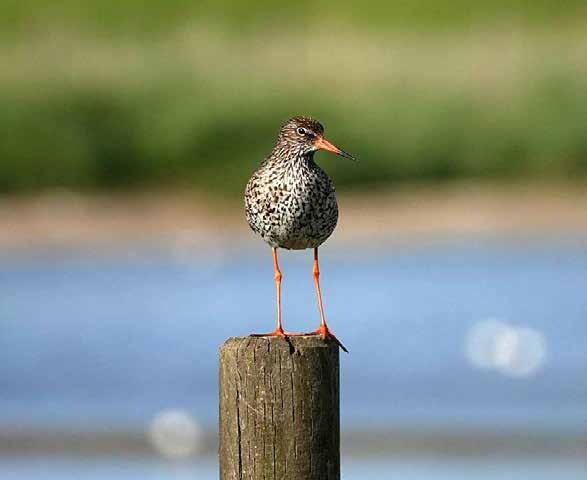
On June 20th, six SBG members met at 8am in the car park at Lakenheath Fen RSPB and, over the next four hours, we completed an anti-clockwise circuit of the reserve. The first bird of note was a Reed Bunting actually perching on a seed feeder by the visitor centre; this species was seen in numbers throughout the morning, the males singing relentlessly out in the open and clearly undeterred by the gloomy conditions. The weather actually helped us in one way with the Swifts, Swallows, Sand and House Martins all feeding low to the ground in numbers.
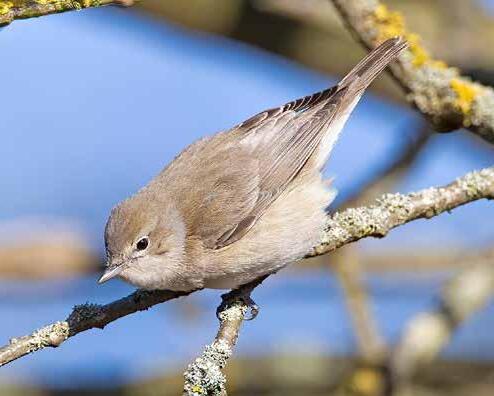
As we strolled towards the river, a Garden Warbler was found singing from deep in a bush; despite it being late in the season, we tallied eight warbler species in song and with perseverance managed to see at least half of them! On the washland we found Redshanks with young and counted 14 Avocets and 11 Black-tailed Godwits, but were unable to locate any Garganey amongst the moulting ducks.
Having negotiated the docile cattle on the riverside path, we located two Common Terns feeding and had close views of a Great Crested Grebe before further scanning produced a flighty male Stonechat. Over Middle Fen we watched a pair of Marsh Harriers and enjoyed the first of three excellent Bittern fly-pasts; this species was undoubtedly Bird of the Day with no Cranes or Hobbies showing themselves.
Having reached Joist Fen, we carried on for a while along the river, and were rewarded with a close flight view of one of the four Cuckoos we had heard singing at regular intervals. A Little Egret flew past and, as we returned to the shelter of the lookout, a Kingfisher was glimpsed by a lucky few. With drizzle having set in, we were pleased to pause and regroup before beginning our return journey.
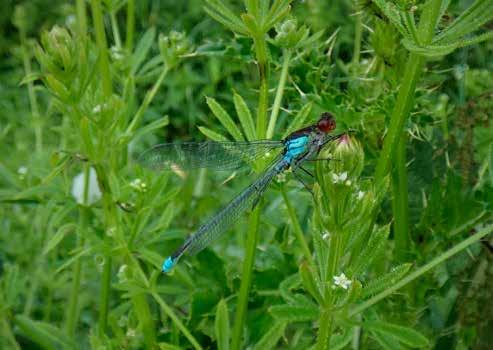
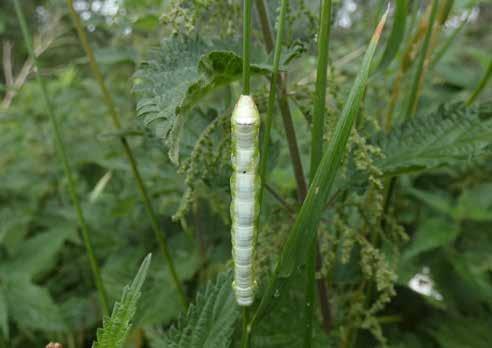
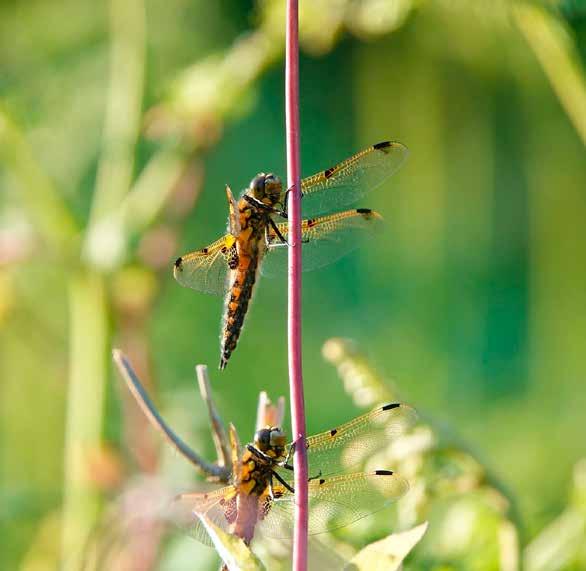
Five species of damselfly were found resting in the wet grass alongside the path near West Wood. We would much prefer to have had sunshine and a chance to see them behaving normally, but today we did at least have exceptionally close observations of Azure and Variable Damselflies and, most unusually, eye level looks at Red-eyed Damselfly! A single Four-spotted Chaser was suitably photogenic, then one of our eagle-eyed spotters found a Ruddy Darter, a first of the year for all of us. A mystery caterpillar proved to be Swallow Prominent, with Richard Lewington no less to thank for its identification!
In total we recorded 63 species of bird on our walk, an impressive tally. Thanks to everyone who made the journey west; it was a real shame that the weather meant we didn’t have a chance to enjoy the reserve at its best. We will hope for better luck in 2022.
Friday, June 11th
Leader: Paul Gowen
Ten members joined the leader on the annual Nightjar evening at Minsmere on a warm and pleasant evening. Despite the attraction of an elusive Roseate Tern on South Scrape the group started the visit with a leisurely walk to Island Mere hide via Whin Hill. Few birds were seen or heard but thousands of midges were providing supper for hundreds
of dragonflies; Four-spotted Chasers and Norfolk Hawkers were amongst the feeding foray. Eight Crossbills flew over as we crossed Whin Hill, a Common Buzzard was mobbed by a Jay and a persistently calling Cuckoo finally settled in a bare tree for all to see. Island Mere was very quiet with just “booming” Bitterns and darting Bearded Tits to keep
our interest. On the way back to the carpark a stop off was made at Bittern Hide where at least four fleeting views of Bittern were observed and good views for some of Cetti’s Warbler.
The group reconvened at 9:20 pm for the walk up to Dunwich Heath and were
rewarded by three Nightjars flying close by within a few minutes. Further views and churring continued until 10:00 pm. A few mosquitoes were their usual nuisance before members departed for home, well satisfied by the Nightjar sightings.
Four-spotted Chasers
Leader: Gi Grieco
Having previously had requests for shorter walks and also for some to have a later start, I added two events to the calendar in 2020 based on this. Unfortunately, due to Covid, these had to be cancelled. Planning for 2021 allowed one to carry over and this was to walk along the River Gipping from Needham Market. This area I knew well from my teenage years when it was part of my birding along the Gipping valley, either walking from Stowmarket along the river path or cycling to Needham to head towards Baylham and Barham.
Despite the grey, drizzly weather ten of us met at the lake car park, including young member Samson along on his first trip with dad, Adam. We started by scanning the lake and saw a number of Greylag and Canada Geese. A family of Mute Swans and Great
Crested Grebe further out. A high-pitched ‘ti-zic’ call and a flash of a bit of colour as a Grey Wagtail flew past and onto the shore further up so all of us could admire this smart species. We crossed the bridge over the river and walked beside Bosmere Mill, noting a nice selection of insects – Banded Demoiselles, several Peacock caterpillars and a large hoverfly species, Volucella pellucens. We continued across the road going past Alderson Lake, the area having changed with extensive fencing around the site and by the river. This, apparently, is to deter Otters, a species not present when I used to visit the area but the Coypus that were have long since gone. We were hoping to see Spotted Flycatchers that had been in the area previously, no luck this time. A number of Pyramidal Orchids provided some colour and out on the lake a Great Crested Grebe family.
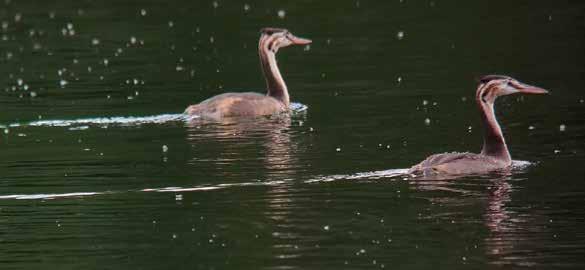
At this point we said goodbye to some members and continued towards Baylham. Towards Pipps Ford, those of us at the front heard a Kingfisher call away around a river bend. Despite quietly walking forward we didn’t see it again. Taking a side track, we got to a viewpoint overlooking the wetland of Pipps Ford, the remnants of gravel workings along the river. A selection of duck species including a family of Tufted Ducks, the ‘whinnying’ calls of Little Grebe could be heard before we actually saw it and Lapwing on the far bank. Inland, Skylark singing and a distant Buzzard. At this point the sun started to come out, gladly welcomed although making it a bit too uncomfortable for those in full waterproof gear! Backtracking to the river, as we continued and with the warmer weather even more odonata were about - wonderful clouds of Banded Demoiselle, several Azure Damselflies and a few male Scarce Chasers. A Blue-bordered Carpet moth was new for all of us. A selection of warblers included Blackcap,
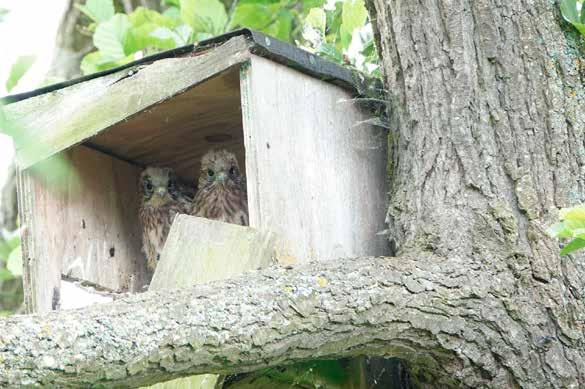
Whitethroat and Reed Warbler; the latter coming off the waterway vegetation and catching insects amongst the plants up on the bank above us. Although planned as a short walk people had been happy to continue but it was time to return. On the way back we saw a Kestrel flying around and in a tree a nest box with two juvenile Kestrels, almost ready to fledge, were a treat to see. At this stage we realised Marion and Carole were heading back at quite a pace – was it because they knew there was a rarity back at the lake or that it had gone past lunchtime and they were desperate for a cup of tea?! No, as it turned it out it was due to being aware of the onset of bad weather and fortunately we all got back just as the heavens opened.
It was nice to visit one of my original patches and to reminisce on sightings from days gone by. It was also nice for the group to visit somewhere different allowing some to explore a new area.
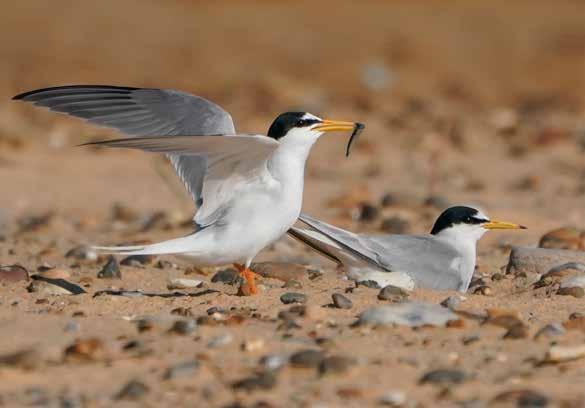
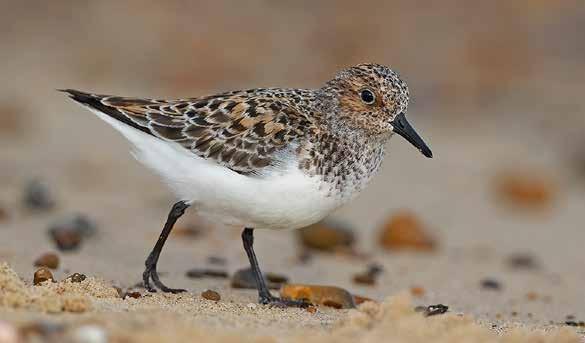
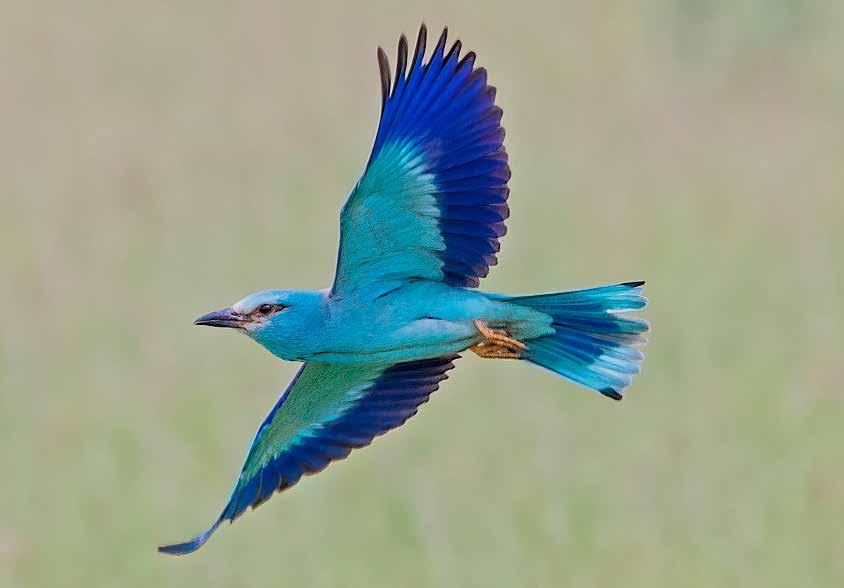
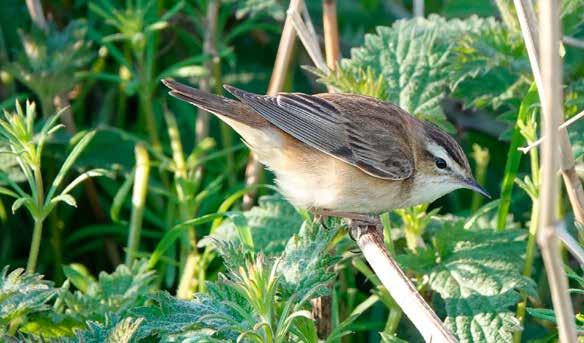
Clockwise...
Top left: Little Tern by David Borderick
Top right: Roller by Rab King
Bottom right: Sedge Warbler by Gi Grieco
Bottom left: Sanderling by Andrew Moon
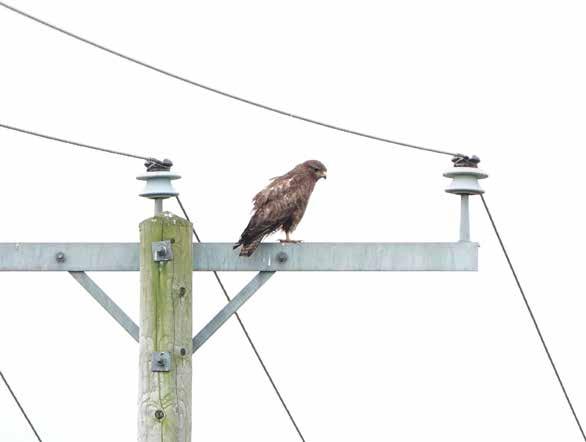
Buzzard
Adam Faiers
Saturday 23rd and Sunday 24th July 2021
Leader: Adam Faiers
At various outdoor meetings I had attended, the subject of an out of county trip a bit further than Essex or Norfolk had often come up. With various suggestions banded around I put forward an offer to Gi to lead my first SBG outdoor meeting in 2020 to a couple of sites that I regularly enjoyed visiting during the 10 years I spent living in Kent. After a bit of discussion, it was decided we would plan a day trip visiting my old patch at Sandwich Bay and over recent years Kent’s premier wader site at Oare Marshes, and so
a July trip was decided on to coincide with the start of the return wader passage. Myself and a few people who confirmed attendance early, decided rather than an early start on the Sunday morning, to check the availability of rooms at Sandwich Bay Bird Observatory. Fortunately there were rooms available so we booked very reasonably priced rooms to stay the Saturday night before the trip. Sadly however, with the events of 2020, the trip was delayed until this year. With the easing of restrictions confirmed for the planned
weekend, Steffan the Warden at SBBOT confirmed that the accommodation would be reopening the weekend of our visit and carried forward our booking to the 24th July. With the lack of trips that had been possible over the previous 16 months, the 8 of us that had originally booked on the trip made plans to make a weekend of it deciding on an 8.30/9am start at Stodmarsh and Grove Ferry, then moving on to Sandwich Bay for an afternoon walk. We went on to meet others who were joining just for the Sunday walk around another area of the Sandwich Bay recording area, then moving on to Oare Marshes for the Sunday afternoon high tide to scan through the flocks of waders that assemble on the east flood there.
In the days running up to the trip, the weather forecast was not painting a pretty picture with talk of thunder storms and exceptionally heavy rain that was threatening to turn the weekend into a bit of a wash out. However, as the day arrived, the forecast had seemed to turn slightly better and we set off from Suffolk just after 6am in the dry. Travelling down, as we went over the Dartford Crossing the dark damp skies before us started getting us thinking that maybe the original forecasts had been correct and the quantity of waterproofs that had been packed would be needed. We drove down the M2 into Kent passing through heavy squally showers, accompanied with flashes of lightning. Arriving at Stodmarsh car park just before 8.30am we were confined in the car waiting for everyone while another thunder storm passed overhead. Shortly before 9am, with everyone there, the rain stopped and the lightning had passed over so a few of us braved disturbing the nesting bees to use the toilet block and then we set off to walk a lap of the Stodmarsh and Grove Ferry circuit. We stopped at the first hide from the car park, the Reedbed Hide, and spent a while in here observing nesting Common Terns on the main lake, still feeding some late young
on the purpose-built tern rafts. From here we also saw Marsh Harriers quartering the reedbed, Sedge Warblers flitting in the reeds, Bearded Tits were heard pinging and Great Crested Grebes gracefully floated backwards and forwards across the lake. During our time in the hide the sky cleared somewhat, the sun came out and the temperature rose and after another quick check of the forecast the decision was made for some of the group to pop back to cars to drop off waterproofs, as they wouldn’t be needed and as they went a Hobby was seen whizzing over. We then continued on our loop around the reserve, hearing Water Rail, young Sedge Warblers and Cetti’s Warblers, as we crossed the Lampern Wall and headed alongside the River Stour. This part of the reserve was a bit of a shadow of its former self, the ‘water meadow’ was now dry leaving no muddy areas for the hoped-for returning waders. The river banks were carefully scrutinized looking for any signs of the Stour’s latest returning mammal, the Beaver, although none of the felled or gnawed trees were seen by us, although both Sparrowhawk and another Hobby were seen. As we reached the Grove Ferry end of the reserve it was disappointing to not see or hear any of the Turtle Dove that had held territory over the summer in the thick scrub of the paddocks, but a very confiding Common Lizard was seen by all of the group beside the path. On arriving at the viewing ramp for a bit of a break, sitting on the benches overlooking the very full pool, a Greenshank was soon picked up calling and flying around but on finding nowhere suitable to land it soon headed off down the valley. We then headed off in the opposite direction across the marsh back towards Stodmarsh, more Bearded Tits were heard and seen by a few, and we then stopped at the newly rebuilt Marsh Hide. Here there were a couple of Lapwing and Little Egrets and after a few scans through the ducks one moved slightly and revealed itself to be an eclipse Garganey.
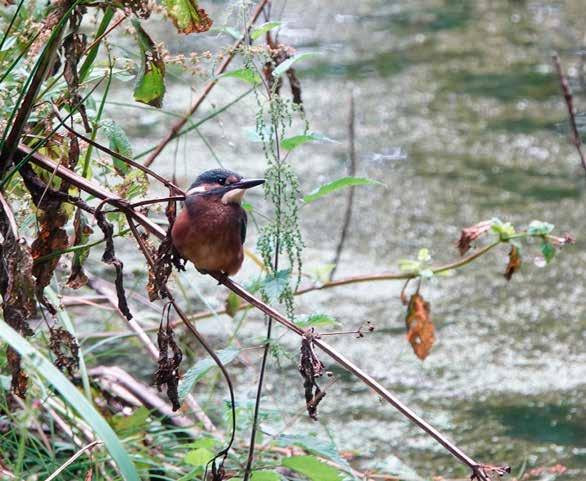
In the hide we spoke to a local birdwatcher that was hoping to see and photograph one of the resident Kingfishers but none were seen here. After watching the Garganey for a bit longer we headed off and after drawing a blank looking for the Little Owls that frequent the barns beside the reserve, we caught back up with the lady from the hide who was watching a Kingfisher perched patiently on reeds in a small drainage ditch, a few feet from the path and it stayed for a while allowing us all good close views. Shortly after, we arrived back at the car park to enjoy superb cheese scones and cake brought along by members of the group, a total of 43 bird species had been seen and about 6 miles walked.
We then headed off to Sandwich Bay, a bit of a diversion due to a closed road meant that a couple of us saw and heard a Corn Bunting on wires near Seaton Gravel Pits. After a quick stop for supplies at the local Co-op we were soon at the Bird Observatory, unloading our things into our rooms for the night and making use of the excellent kitchen facilities to store our food and enjoy a cup of tea. We then headed off on another walk to explore Worth Marshes and the new scrapes. These have been developed over the last ten or so years by the RSPB as part of their Lydden Valley project. I led the group off with the promise of (everyone) seeing Corn Bunting, Turtle Dove, Grey Partridge and some waders. The promise of Corn Bunting haunted me for
much of the weekend as it proved a bit of a harder task than it normally is at Sandwich Bay as it did for most of the targets. A number of common birds were seen as we headed down the track towards the scrapes including large numbers of Woodpigeons and corvids around the sheep fields. As we neared the scrapes, we soon found that viewing some areas of them were certainly easier for the taller members of the group, due to the height of the vegetation along the riverbank. However, we soon spotted four Green Sandpipers on the first scrape we came to and could hear a young Hobby calling in the small wood behind it. The next couple of scrapes were a bit easier to view and we saw Grey Heron, Little Egrets, Avocets (with a well grown youngster), Oystercatchers, Lapwings, Redshank and Reed Warbler. We decided to carry on into the village of Worth to make our walk into a large loop, still ever hopeful of our targets, especially Turtle Dove at the farm on the edge of the village although this sadly drew a blank, as did our check of every fence line for Corn Bunting. We did, however, add a Ring-necked Parakeet in the village and a few Collared Doves and a mix of hirundines and Swifts hawking overhead. As we made our way back towards the Observatory one of the targets was finally ticked off as we flushed a pair of Grey Partridge from the path ahead of us a couple of times, allowing everyone to see this evermore declining farmland bird before we arrived back at the Observatory. After the many thousands of steps and fair few miles walked, we enjoyed a very good Italian takeaway collected from nearby Deal and a few drinks as we waited for darkness and a chance to look and listen for owls. It didn’t take long before the resident Little Owls from the nearby farm buildings started to call, although they remained unseen, as did a Tawny Owl that called a few times either side of where we were sat. Then we were finally treated to a brief view of a couple of Barn Owls that flew close by us,
helpfully illuminated by the moth trap being run in the car park ending a very good first day of our trip.
The next morning, we planned to start at around 8.30am, as another group of 3 were traveling down from Suffolk to join just for the day. A couple of us rose very early and after a coffee and a look at the moth trap, seeing a Tree Lichen Beauty sat on the outside, we headed off for a short walk down the track beside the observatory. As we walked down, we only really observed large numbers of corvids and pigeons again, but as we turned and headed back, we spotted a slim looking dove on wires crossing one of the sheep fields. Before we could get closer for better views, it flew off towards the estate, clearly showing the distinctive tail pattern of Turtle Dove. A Buzzard then showed nicely perched atop a pole near to where the dove had been. This proved to be our only sighting of the weekend although we headed back to the observatory and collected a few others of the group, who were up and about and headed off to check the area the dove had flown towards. We also had a walk around a small copse known as the Elms which was quiet but did provide some shelter as the first shower of the day passed through, before heading back to assemble the group and greet the others who had arrived for the day. We then set off for a walk around the Sandwich Bay estate, following roughly what was my old patch walk when I lived there. We headed towards the beach first checking the Haven and Oasis bushes; these are usually used by the ringers but due to the dire weather forecast that had been given they were not ringing that day, even though actual conditions were reasonably pleasant. The bushes were however quiet, but as we then crossed the golf course (that had been very busy with the Open having been held at Sandwich Bay the week before), a number of Meadow Pipits were seen. A walk along the top of the beach held no Wheatears but
a number of Linnets were seen including some smart males and then a scan of the sea added us a lone Common Scoter and a fly over Whimbrel. We then turned and scanned the fences around the edge of the golf course ever hopeful for Corn Bunting or some chat. This again proved fruitless and my very confident promise to those that hadn’t seen the bird near Stodmarsh, that they would definitely be seeing Corn Bunting at Sandwich was still haunting me. Our walk continued down to the recently extended and improved Restharrow Scrapethanks to lottery funding and fundraising the Observatory had been able to buy the land when their lease ran out and have extended the scrape and built a second hide. As we approached the hide a couple of Stonechats were seen beside the path to the hides and then thankfully for me (and the rest of the
group) the jangly keys call of Corn Bunting was heard. The bird was quickly located on a fence post and was soon seen by everyone. As we walked round to the new second hide another Corn Bunting was seen and heard and three more Whimbrel flew over. Inside the hide, we viewed the scrape where we saw Little Grebe and Green Sandpipers, a small wader flew over towards Worth, but frustratingly none of us got good enough views for a confident ID. It was approaching lunchtime and with grey clouds overhead, we walked back to the Observatory to collect our things before heading to Oare Marshes to coincide with high tide. This brought to an end a very enjoyable time at Sandwich Bay, where we were made very welcome by Steffan the warden and I cannot recommend enough the stay there for the good facilities, value for money and location!
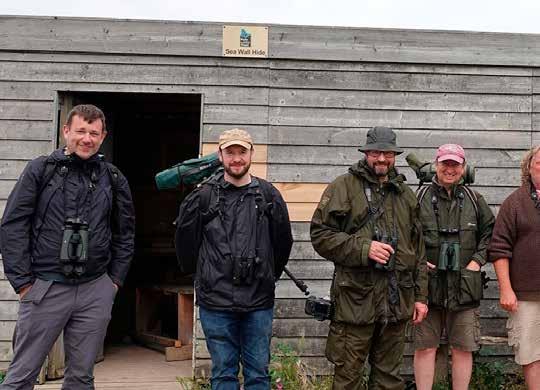
The drive to Oare was a wet one as the forecast heavy rain seemed to arrive, and although the worst of it passed and seemed to be inland of Oare it was still raining slightly as we arrived. We headed back down the road from the car park to view the East Scrape. The scrape was the wettest I had ever seen it with nearly all of the islands submerged, meaning very little mud or areas for the waders to roost so numbers were the lowest I had ever seen there in July, with just a few Black-tailed Godwits and Redshank and a few Black-headed Gulls, but not the hoped-for Bonaparte’s Gull, which had recently returned to complete its moult for, I think, its 9th year. A couple of the Godwits were colour-ringed, which added a bit of interest but we were soon off heading around towards the hide. From here we could view the group of birds from another angle and see out the last of the rain. We then completed a lap of the scrape, adding
Mediterranean Gull and Little Terns in the mouth of Faversham Creek. Although every gull was closely scrutinized, we still couldn’t find the Bonaparte’s. Bearded Tits were heard pinging and seen by some moving through the reeds and a number of Pied Wagtails were picking through the debris at the top of the tide line. As we arrived back at the car park, those of us that had been in Kent for the weekend decided to call it a day. We had walked well over 10 miles, seen 83 species of bird and a very good weekend was had by us all! We were already talking about running another trip to the area next year, so look out for it on the events card next year if you would like to join us! Also, just to finish, the 3 day trippers stayed on at Oare for a bit longer and as the tide began to fall, just 35 minutes after the rest of us left, the Bonaparte’s Gull appeared on the exposed mud and showed very well for them.
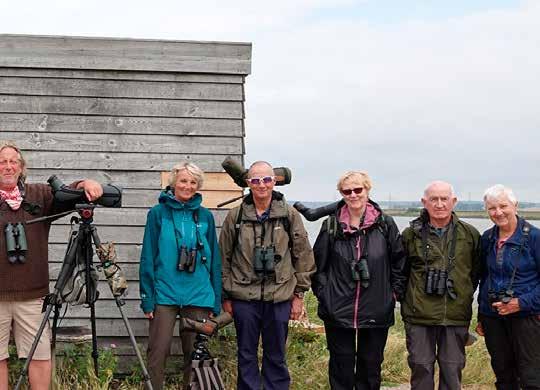
Tony Gdula
The quarterly review section gives a snapshot of birds seen within the county during the period and is compiled by Tony Gdula, predominantly from data received by Suffolk BINS. All scarce and rare birds are subject to submission and acceptance by either SORC or BBRC. Updated lists on Accepted and Outstanding Records for previous years can be found on the SBG websitehttp://www.suffolkbirdgroup.org/bird-recording.
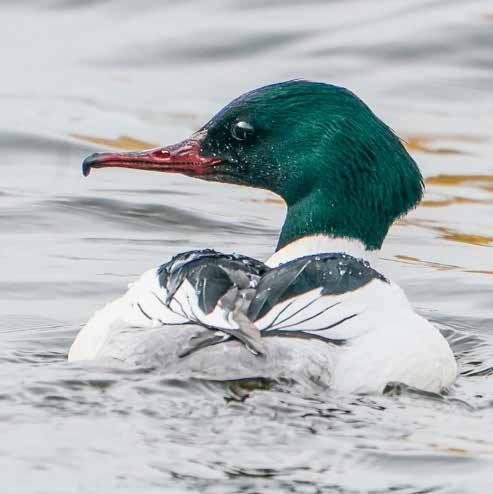
A lone Pink-footed Goose was at Hen Reedbeds on the 22nd. Garganey were noted at Lakenheath Fen on the 2nd and 11th, two at Trimley Marsh on the 3rd and one on the 18th, up to two at Minsmere on the 14th/15th and at Boyton Marsh on the 20th and 23rd/24th. One Greater Scaup south off LBO on the 4th. The Goosander was still present on Oulton Broad from the previous month on the 3rd and a drake was on Hollesley Marsh on the 20th. A Turtle Dove flew north over Landguard Bird Observatory on the 25th. From one to six Common Cranes were noted several times over the month in the county, at sites including Dunwich, Walberswick, Kessingland, Westleton and Reydon. A Little Ringed Plover was on Peto’s Marsh on the 6th and 9th. Numerous records of single Curlew Sandpipers along the coast but also one of a summer-plumaged bird at Alton Water on the 1st. Wood Sandpipers were noted at a few sites with a maximum of five at Carlton Marshes and six at White Horse Marsh. Two Temminck’s Stints were seen on Trimley Marshes from the 1st to the 9th and again on the 18th. Single Little Gulls were seen on the Alde Estuary (9th), Minsmere (19th-28th), Dunwich (25th) and Peto’s Marsh (28th). A Roseate Tern flew north off LBO on the 23rd. Good numbers of Arctic Terns at LBO, that came out of the estuary and flew north with 13 on the 9th and 17 on the 12th. A Black Tern showed at Lakenheath on the 2nd. A Pomarine Skua was noted off Thorpeness on the 8th and a Great Skua off Dunwich on the 21st.
A Puffin made appearances offshore at both Dunwich and Southwold on the 22nd. Manx Shearwaters made a brief appearance on the 21st with four off Dunwich and five off LBO and up to three again at Dunwich and Southwold the next day. Singles of Glossy Ibis were seen at Ramsholt water meadows on the 2nd and 7th, Havergate (3rd), Iken (6th) and Trimley (9th/10th). Spoonbill were seen regularly throughout the month, usually in ones and twos, but with a high of six at North Warren on the 29th. A single Cattle Egret sighting - one at Carlton Marshes on the 25th. Up to two Great Egrets noted at North Warren (1st), Trimley (19th-22nd), Minsmere (26th) and Peto’s Marsh (31st).
A Hen Harrier was seen at Aldeburgh on the 6th and at Falkenham on the 16th. An Osprey was observed over West Row (5th), at Martlesham Creek (11th) on the Alde Estuary (15th-18th), Minsmere (25th) and North Warren (26th). A Short-eared Owl was at Thorpeness old caravan park on the 5th, one on Tinkers Marsh on the 13th and 19th and one offshore at Southwold on the 22nd.
A Wryneck was around Kessingland Denes on the 9th. Ravens were again seen through the month; in Needham Market, Melton, Woodbridge and Stonham (two). A Grasshopper Warbler was at the Alde Estuary on the 9th. A singing Wood Warbler was at Southwold sewage works on the 15th. Ring Ouzels were seen early on in the month, with three on Worlingham Marsh and singles at Trimley, Blythburgh, Bawdsey, Hollesley and North Warren. A late Redwing was on Aldringham Walks on the 5th. An arrival of
Spotted Flycatchers occurred on the 9th with sightings at Felixstowe Ferry, Thorpeness Old Caravan Park, Aldeburgh and Long Melford. Further passage birds noted at Minsmere, LBO and East Lane in the month. A female Pied Flycatcher was in the sluice bushes at Minsmere on the 3rd. Black Redstarts were again seen in small numbers regularly throughout the month along the coast, most notably in Felixstowe where a Common Redstart was also noted on the 5th and 16th. Whinchats were seen along the coast up to the 16th at a number of sites with peak
passage on the 9th; noted at Ness Point and Link’s Hill in Lowestoft, two at East Lane and one at Levington Creek. Two Blue-headed Wagtails were at Carlton Marshes on the 5th and 6th. A sole Tree Pipit in Southwold on the 11th. A Corn Bunting was on Landguard Point on the 12th.
1st – the Hoopoe was still present near the visitor centre at Carlton Marshes. One was seen at Woodbridge airbase on the 14th, with another at Gazeley the following day.
2nd – a Black Kite was seen flying east at Reydon. Later one was seen over Carlton Marsh and was again noted the following day. One was over Minsmere on the 5th.
3rd – the Iberian Chiffchaff present from last month remained at Foxhall Heath throughout the month.
3rd – a Kentish Plover was found on the Alde Estuary at Iken and was present again the next day.
5th – a Broad-billed Sandpiper was on the Alde Estuary at Iken and was present again the next day.
6th – a Buff-breasted Sandpiper was on Carlton Marsh and was present again the next day.
7th – a Red-rumped Swallow was at Hollesley Marsh.
8th – there were Dotterels (m & 2f) at Lakenheath.
8th –a Bluethroat was reported at Gorleston.
10th – a Red-footed Falcon over Trimley Marshes.
11th – a female Golden Oriole was seen at Lakenheath Fen on the 11th with a male at the site on the 14th and again on the 25th and 26th. One was at Minsmere on the 17th and again on the 25th and 26th. One was at the picnic site at Bawdsey on the 25th and one was heard singing near Trimley Retreat on the 29th.
11th – a Grey-headed Wagtail was on Southwold Town Marsh and again on the 16th.
13th – a Honey Buzzard over Minsmere was also seen later over Eastbridge and Aldeburgh. One also seen at Dunwich on the 14th and at North Warren on the 26th.
14th – a Caspian Tern was found on the Alde Estuary at Iken and seen again early the next morning.
18th – a Pectoral Sandpiper was on south scrape, Minsmere before flying north.
20th – a singing Siberian Chiffchaff on Alde Town Marshes.
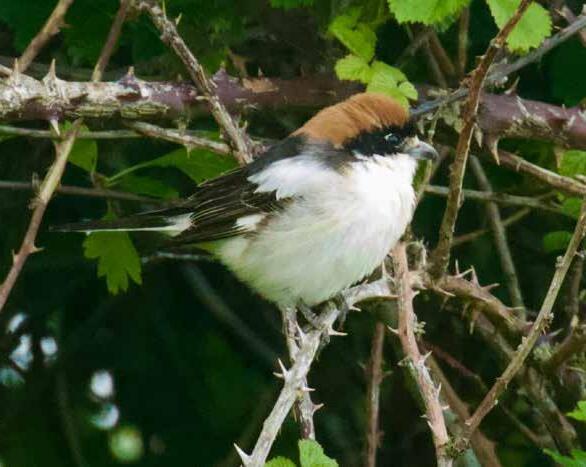
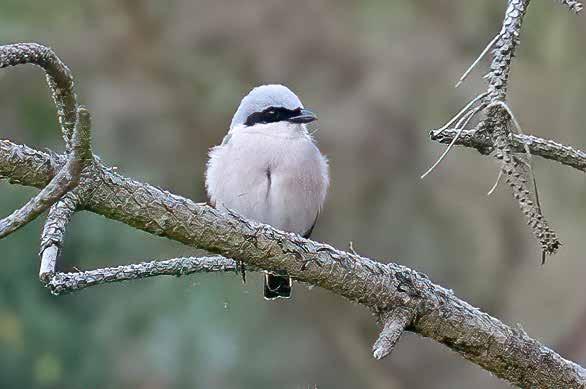
23rd – a male Woodchat Shrike was at East Lane. Another was found by Kessingland sluice on the 28th.
23rd – a White-tailed Eagle was seen over between Kessingland and Benacre.
25th – a ringtail Montagu’s Harrier was seen over Tinkers Marsh.
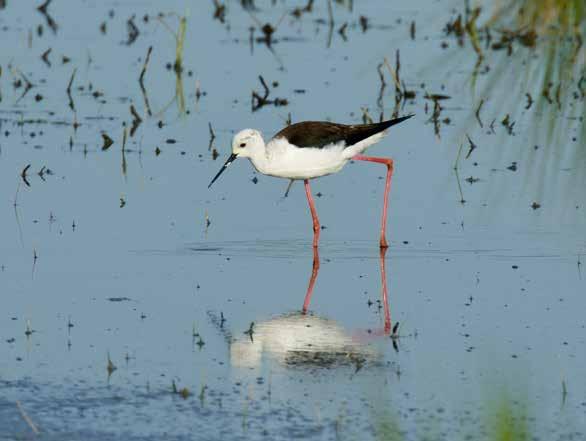
28th - two Black-winged Stilts were at Trimley Marshes and remained until the end of the month.
31st – a singing Marsh Warbler at Southwold.
A single Ruddy Shelduck was reported at Great Livermere on the 19th and 20th. There were up to three Garganey noted through the month, most regularly at Minsmere. A flurry of Common Crane sightings along the coast – but only during the first week of the month including six over Reydon along with three over Ipswich. A lone Little Ringed Plover was present at Trimley on the 1st. A Curlew Sandpiper was seen at Minsmere on the 5th and at Trimley Marshes on the 9th. A Wood Sandpiper was also noted at Carlton Marsh on the 12th. Two Little Gulls were at Minsmere (16th and 30th). An unseasonal Glaucous Gull was at Hollesley Marsh on the 11th. A Caspian Gull was seen at Minsmere (17th) and Great Livermere (19th) – which also hosted 10 Yellow-legged Gulls that day. Tern sightings were all confined to Minsmere; a ringed Roseate Tern was present (7th –13th), then up to five from the 19th until the end of the month that included two ringed birds. A single Arctic Tern was present over the month and there was a sole appearance of a Black Tern on the 25th.
A juvenile Glossy Ibis was present at Lackford throughout the month. Up to three Spoonbills were noted through the month at coastal sites and estuaries. A Great Egret was noted on the Alde Estuary (6th), Wenhaston (9th) and up to three at Peto’s Marsh (16th to 18th). An Osprey was seen at Dunwich (4th) and Lakenheath (29th). A Short-eared Owl showed on Trimley Marshes (19th). A Redbacked Shrike was in Dunwich (5th). Ravens continue to show - one over Flixton park on the 4th and up to six around Woodbridge. One Pied Flycatcher was at Landguard on the 2nd. Black Redstarts were around again, this time throughout the month at LBO (up to three, before numbers swelled with juveniles). A lone Whinchat showed in Southwold on the 2nd. A Blue-headed Wagtail seen at Hollesley Marsh on the 6th. A solitary Hawfinch was noted at Sizewell on the 24th.
Scarcer June sightings
1st – the two Black-winged Stilts from the previous month were again at Trimley Marshes.
2nd – a Serin flew south over Felixstowe.
3rd – a Black Kite flew over Fynn Valley golf course, Witnesham. One was also reported over north-west Ipswich on the 14th.
5th – the Iberian Chiffchaff continued to be seen at Foxhall Heath and was also noted on the 16th and 22nd.
5th – a male Golden Oriole flew over Minsmere.
5th – a first-summer male Red-footed Falcon was found over Westwood Marshes, Walberswick and present for the following two days.
5th – an adult Purple Heron was found at Walberswick and remained up until the 9th. A first-summer bird was on Peto’s Marsh on the 5th and one at Minsmere 6th and then from the 24th to the 29th.
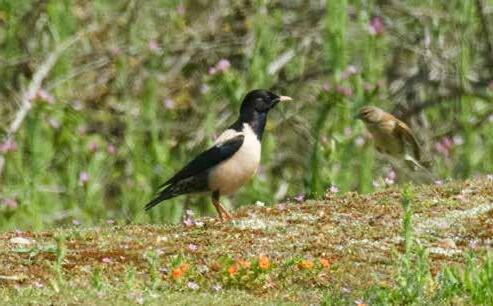
6th – a Rose-coloured Starling was at LBO from the 7th to the 9th and again on the 15th. Another was at Hamilton Dock, Lowestoft on the 10th and an adult in Tunstall on the 15th.
6th – three White Storks flew over Reydon Smear.
7th – a singing male Common Rosefinch was briefly by Southwold boating lake.
10th - a Marsh Warbler was found singing at Landguard along the Butts.
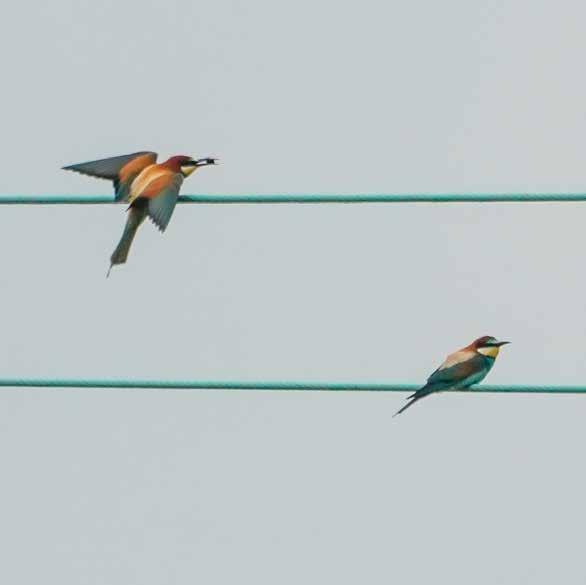
12th – three Bee-eaters were seen over Aldeburgh. At least nine flew over Carlton Marsh on the 13th then nine were present near Great Yarmouth on the 21st and 22nd.
12th – a Collared Pratincole flew over Minsmere early morning before being seen initially at Southwold and then on Peto’s Marsh.
13th – a Honey Buzzard flew north over Minsmere.
14th – a Savi’s Warbler was reported at Lakenheath and was present for three weeks at the site.
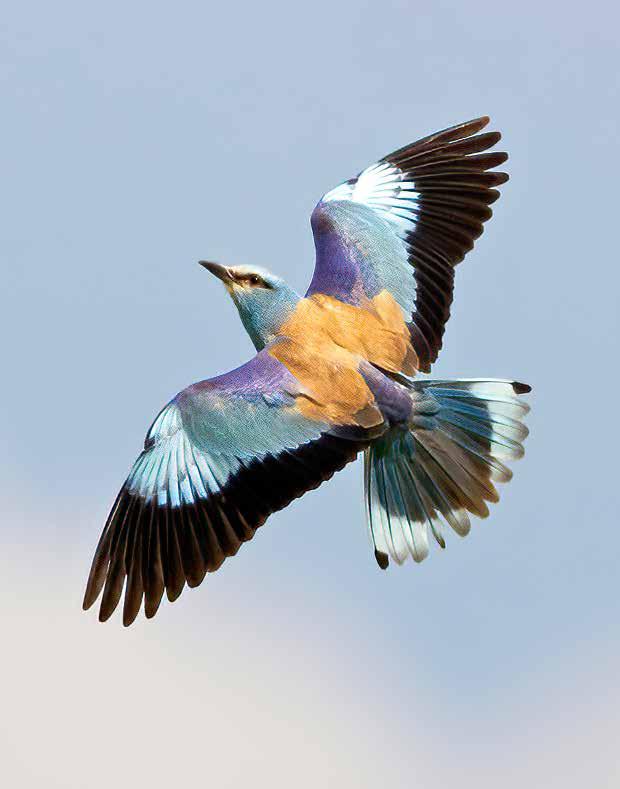
23rd – a spectacular adult Roller was initially found at Lackford before relocating to Icklingham where it remained until the end of the month. Another was also seen at Newmarket on the 25th.
30th – a Red-necked Phalarope was at Minsmere.
Ruddy Shelduck made fleeting appearances at Great Livermere again with two on the 2nd and one on the 28th. A Garganey was noted at Carlton Marsh on the 3rd and 5th with a juvenile at the site on the 27th along with two at Lakenheath on the 14th. A pair of Greater Scaup were at Benacre in the early days of the month and on the Alde Estuary at the close.
Little Ringed Plovers increasingly made themselves known, beginning with three at Minsmere (16th), then four rising to 14 at Hollesley (28th-31st) and a couple on the Alde Estuary (28th). A Pectoral Sandpiper was at Minsmere (31st); Curlew Sandpipers
were at Kirton Creek (8th), two at Minsmere (23rd-27th) and Blythburgh (30th). Wood Sandpipers were noted in ones and twos throughout the month with a maximum of five at Hollesley Marsh on the 28th and 30th. One Little Stint was seen at Minsmere on the 11th. Two limosa Black-tailed Godwits were seen at Minsmere from the 16th to the 30th. Little Gulls were seen at Minsmere throughout the month with numbers peaking at 14 on the 29th. A juvenile Glaucous Gull sighting at Blythburgh on the 16th. A German-ringed Caspian Gull was at Great Livermere on the 14th, accompanied by 18 Yellow-legged Gulls.
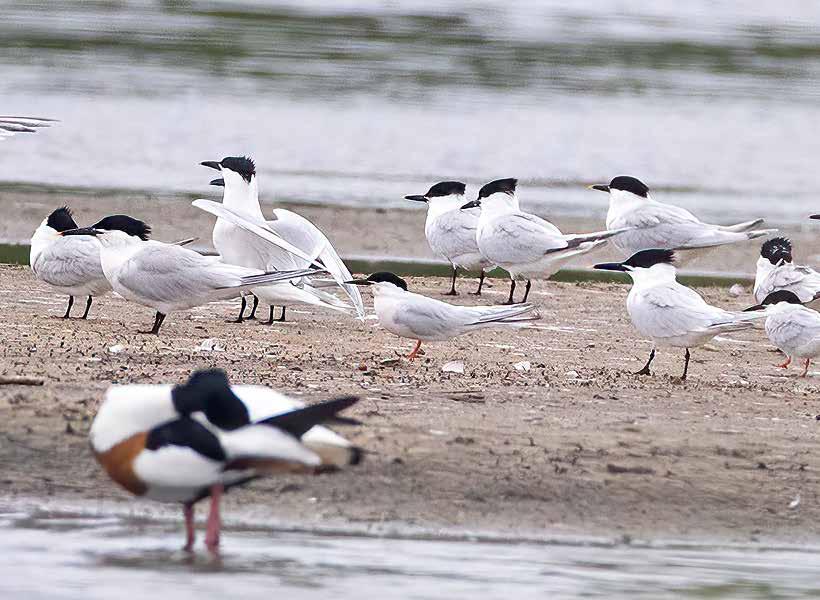
Two Roseate Terns off Lowestoft north beach on the 1st. One off LBO on the 19th and up to two at Minsmere. There were one to two Arctic Terns seen at Minsmere in the first half of the month. At Minsmere there was a single Black Tern on the 8th and then three on the 20th plus one off Thorpeness on the 30th. An Arctic Skua showed at Southwold on the 30th. A Sooty Shearwater was seen off Minsmere on the 30th while two Manx Shearwater were at Southwold that same day. Spoonbill were also seen regularly and frequently, notably at Boyton and Hollesley Marshes – where 15 were seen on the 16th. There were single Cattle Egrets at Minsmere (1st and 18th), Peto’s Marsh (3rd), Boyton and North Warren (both 6th) and Sizewell (20th). Up to four Great Egrets showed on the coast and estuaries throughout the month.
A single Osprey was seen at the Alde Estuary during the first half of the month. Ravens were seen at Needham Market (1st), Woodbridge (17th) and six at Barking on the 20th. A Wood Warbler was trapped and
ringed at Hollesley on the 20th. A Whinchat was noted at Wetherden on the 7th.
Scarcer July sightings
1st – the much-admired Roller was still at Icklingham.
1st – a Red-necked Phalarope was at Minsmere.
2nd – two Bee-eaters flew over Iken cliff plus there were also 3+ at Bentley on the 14th.
4th – a White-tailed Eagle flew south over Bradwell.
13th – a Black Kite was seen over Wangford.
19th – an adult White-rumped Sandpiper was found at Minsmere and remained until the 23rd.
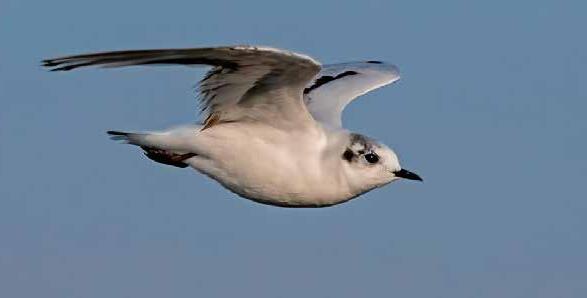
20th – a Gull-billed Tern was around Minsmere in the morning before turning up at Peto’s Marsh in the afternoon.
31st – a Purple Heron was seen to fly over Share Marsh, Carlton Marsh reserve.
I have decided to sell the following bird watching equipment, all of which are good quality and well cared for. Any interested buyer can view the equipment.
1 Opticron Spotting scope; High Resolution: model AA64 - 60s. (£50 o.n.o)
2 Opticron 40862 HDFT Zoom eyepiece (additional eyepiece to fit the above scope). (£100 o.n.o)
3 Cullman Clamp Magic (table clamp tripod still in box). (£35 o.n.o)
Contact: revgriffiths@icloud.com
Paul E Griffiths
Council for 2021 Officers
Chair: Chris Courtney
Vice Chair: Edward Jackson
Secretary: Chris Keeling
Treasurer: Anne Wright
Communications Officer: Alex Rafinski
Projects Officer: Chris Keeling
Suffolk Bird Report Editor and SORC Link: Nick Mason
Harrier Editor and Outdoor Events Coordinator: Gi Grieco
Indoor Events Coordinator: Adam Gretton
President
John Grant
Members
Eddie Bathgate
Peter Merchant
Jamie Everett
Roy Marsh
Matthew Deans
Adam Faiers
Justin Zantboer
Honorary Vice-Presidents
Robin Hopper
Colin Jakes
Mike Jeanes
Mike Marsh
Philip Murphy
Reg Snook
Steve Piotrowski
Bird Recorders
North-east Area Recorder: TBA Email: bird-ne@sns.org.uk
South-east Area Recorders: Gi Grieco Tel: 07951 482547 and Steve Fryett Tel: 07593 382082 4, The Street, Melton, Woodbridge, IP12 1PW. Email: bird-se@sns.org.uk
West Area Recorder: TBA
Email: bird-w@sns.org.uk Memberships c/o SNS, The Museum, High Street, Ipswich, Suffolk IP1 3QH
Founded in 1973 by a group of Suffolk birdwatchers
Associated with the Suffolk Naturalists’ Society
SBG remains an independent birding group and is a registered charity
A voice for Suffolk birdwatchers
With established links to many naturalist and conservation organisations
Media
Actively lobbies to protect key Suffolk habitats
Provides a county-wide field force of bird surveyors
Promotes BTO bird surveys and organises special SBG surveys

Strong web presence - www.suffolkbirdgroup.org
Active Twitter feed - @SuffolkBirdGrp
Quarterly magazine - The Harrier
Annual review - Suffolk Birds report
Annually (20+) field trips - ideal for novices or experts and young or old alike
Opportunities to visit hot spots and receive practical ID tips in the field
Programme of talks and presentations - variety of topics (county, national, or international) with quality speakers
Assists with conservation projects to improve breeding success
- Swifts
- Barn Owls
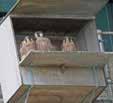
- Peregrines
- Waders
Partners with Suffolk Wildlife Trust and other bird groups
Assists with funding for bird hides and other birding amenities
Contributes to community events, including dawn chorus walks
Provides bursaries for special projects