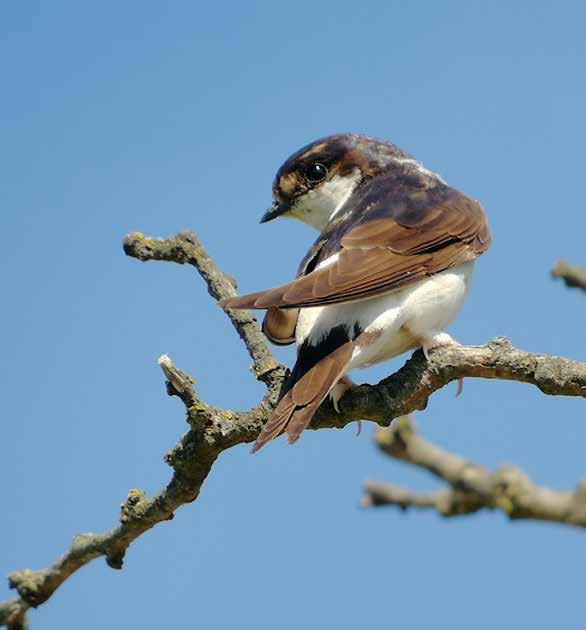
Cover photograph: House Martin ( Delichon urbicum ) by Gi Grieco.

Contact email for articles, photographs, notes and observations is: harrier@suffolkbirdgroup.org
All material for the Spring Harrier should be received by March 1st please.
Gi Grieco
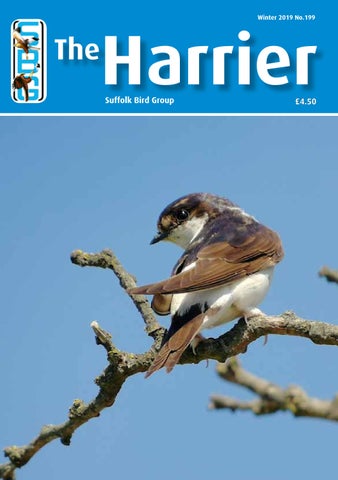
Cover photograph: House Martin ( Delichon urbicum ) by Gi Grieco.
Contact email for articles, photographs, notes and observations is: harrier@suffolkbirdgroup.org
All material for the Spring Harrier should be received by March 1st please.
Gi Grieco
Welcome to this edition of The Harrier. We have a jam-packed edition and I’m grateful to all those that have written articles. We have an update from Edward Jackson, SBG Chair, with a look at the group’s activities in the coming new year. One of the founders of the group, Reg Snook, has written an obituary on Michael Hall, the first Chairman of the group. We have updated the health and safety information for field trips as it was previously published in The Harrier issue 128 and is included in this edition for reference. It’s been a busy summer and autumn of field trips for the group and many are printed within. We do not often have many indoor talks written up but we’re pleased to include one regarding two of our younger members, Ellie and Dan, who gave an enjoyable and absolutely engaging talk of their family wildlife trip to Kenya.
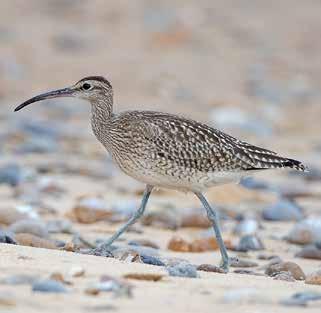
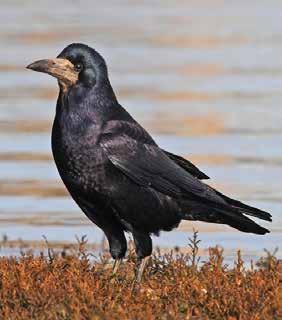
With the first year of the SBG rookery survey over, details of the survey have been compiled within an article. We now have a new volunteer in the compiling of the bird
review section and Tony Gdula has done a great job putting together the Autumn Bird Review. As usual, a great selection of photos to accompany the review, were provided by Andrew Moon, David Borderick along with a couple from Sean Nixon and John Richardson. The latter’s cracking photo of Northern Long-tailed Tit is of one of a group that was present at East Lane and a report of the finding of these smart birds has been written up for the magazine. Finally we have another short article about this magazine’s travels abroad.
Edward Jackson, SBG Chair
Writing this as autumn officially turns to winter (at least meteorologically!), I see from BINS that the Rough-legged Buzzards have joined the Waxwings, Redwings and Fieldfares again, along with several possible Sibes too. So it’s a good time to report on various actions Council has taken on your behalf in the autumn months.
On 16 November, Nick Mason and I organised what turned out to be a very useful review of our flagship annual report, Suffolk Birds. No less than 18 people involved in the data collection, writing and editing processes gathered at the Ipswich Hotel, Copdock – and several more who unfortunately couldn’t join us on the day shared their views via a questionnaire sent out beforehand.
Nick told us that Suffolk Birds 2018 will be out very shortly – now in full colour throughout! We thanked all involved for the significant amount of volunteer time they give to make sure publication happens. We then concentrated on understanding how the various elements and timescales need to come together, identified some of the pressure points and agreed a series of actions that should help everyone work more efficiently next year as we compile Suffolk Birds 2019.
Every SBG member can help to keep this publication as a comprehensive and valuable record of birds in our county. Please ensure that you forward your most interesting and significant sightings for 2019 as soon as possible in the New Year – and by 31 January at the latest. We really need records from individual observers to be in by this date, so that the collation process
can begin on time. So do use these long winter evenings to sort through and submit your records! Interesting observations and unusual counts of more common species are just as important as sightings of scarce and rare birds. Any short Field Notes you can offer to Nick will be most welcome as well.
As you’ll see on the inside back cover of each Harrier, we currently divide the County into three recording Areas for birds: West, North East and South East. We’re also extremely grateful for the volunteer time given over many years by Colin Jakes, Andrew Green and Scott Mayson as the three respective Area Recorders.
All three have the task of collating the bird sightings in their area for the past year and then handing it over to the systematic list Section Writers. The SBG website has useful information on ‘Suffolk Bird Recording’ under the Bird Recording tab. The best way you can help the Recorders is to use the standard Excel spreadsheet available to download from this section. Please set out your records in Species Order according to the latest IOC/ BOU list: www.bou.org.uk/british-list/ and then in Date Order within each species.
Although the Recorders have personal emails, depending on which area your records are for please can you use one or more of the three email addresses ending in ‘……@sns.org.uk’ given on the inside back cover. Then your submission will automatically be forwarded on to the correct person.
If you only enter your bird records via BTO BirdTrack, they do make their way eventually to the Area Recorders. However, they are really only of value as a county record (in addition to a personal one) if you
share at least where the sighting was (i.e. more precisely than just the 10km or even 1km square), plus ideally as much other relevant information as well. To do this, press the Optional ‘+’ button as you enter your data for each species on BirdTrack and include the location by using the ‘Pinpoint’ tab, plus additional information via other tabs too.
Please note that since historically SBG (SOG) was once part of Suffolk Naturalists’ Society, you will only receive Suffolk Birds automatically if you are a joint member of SNS as well as SBG. Copies at £10 (current price) are also available throughout the year at Ipswich Museum and at Nature Reserves with a shop, such as RSPB Minsmere. However, to be a joint member of SNS as well as SBG is only an extra £13, which we feel is the safest option to make sure you receive this important report.
The 2020 Membership Form is enclosed with this copy of The Harrier. Both SBG and SNS have held our subscriptions at the same rates as 2019. If you choose to pay by Direct Debit (and we do urge you to do this as the most cost-effective way for us) this should be to SNS (not SBG), as they administer your membership for us. You should receive notification that the subscription will be debited from your account in the New Year. However, please do use the Membership Form if you wish to make any change to your personal details (address, email address etc) or your type of membership (SBG only to joint SBG/SNS, Individual to Household or vice-versa) - or to change the way you pay.
As small charities, we don’t have a comprehensive online service for administering memberships and the paper form is currently the only secure way we can ensure your personal membership details are kept up to date. If there is no change
to your details, please pass the form on to another potential member.
Our Gift Aid form is also enclosed. Each year SBG currently receives around £800 - £900 of extra ‘free’ income from HMRC, which is a great help in keeping our subscriptions as low as possible and also supporting our Indoor Events. So please, if you are a taxpayer and haven’t yet signed a Gift Aid declaration, please do consider doing so this time.
Maybe that should read ‘Charity Cards’, but you’ll find two of these attractive new cards with the 2020 Programme Card. Please do keep them in your wallet. One can be your informal membership card and the other is to give to a friend or fellow birder and encourage them to join SBG too. Our membership has been relatively steady at around 370 - 380 for some time, but there must be quite a few more Suffolk birders out there who could share the enjoyment and benefits of membership – maybe as a festive season gift? Please help us achieve our new target of 400+ members by the end of 2020.
Council has been considering whether and how to give you the option of receiving this quarterly members’ magazine as a .pdf download. Quite a few of you have expressed an interest in this method as an alternative to the printed copy, though be reassured we have no plans to take The Harrier completely online!
Access to the download would be via a password we would give you to use on the SBG website. This will protect the magazine as a membership benefit. I hope to have more information about this for you in time for the Spring edition - a very special one as this will be Number 200!
And finally, thank you…
…to all of you for your continued support as Suffolk Bird Group members and for helping to keep Suffolk birding on the map. My personal thanks also to our President John Grant and to all the members of Council for your commitment, support and encouragement in my first year as your Chair. It is much appreciated.
SBG Council

Please read this information carefully.
We look forward to welcoming you on our Outdoor Events!
• The 2020 list of Outdoor Events (Field Meetings) can be found on the Programme Card enclosed with the Winter 2019 copy of The Harrier (#199) - and also on the SBG website.
• Prior booking for most of these events is not necessary and you should assemble at the time and meeting place described on the Programme Card.
• Booking is required for certain events with restrictions on numbers or with other particular circumstances. You are asked to contact either the Leader or the Outdoor Events Organiser beforehand. Those meetings requiring pre-booking are clearly indicated on the Programme Card, along with relevant phone numbers.
• Please Note. If the weather forecast for the day of the event appears particularly poor and potentially unsafe, the Leader reserves the right to cancel the event. If you think this is likely to happen, you should contact the Leader by phone the evening before to check whether or not the event will be run.
Participation
• SBG Outdoor Events are led by one or more of our members on an amateur basis.
• Young people are very welcome to attend, but those under 18 must be accompanied by a parent or guardian - or a responsible adult well known to the young person, who formally assumes responsibility for them.
• Dogs, except guide dogs, are not permitted to accompany you.
Our Preparation for an Event
• Leaders will be familiar with the routes to be taken and will conduct a Risk Assessment.
• The main safety issues in relation to the event will be shared with you at the start and may be revised if conditions change significantly.
Your Preparation for an Event
• Please take sensible precautions to ensure your own safety and that of others attending events.
• Do not attempt a walk unless you are fit and able to do so. Walks often cover several miles and you must expect at least the kind of hazards occasionally encountered on public footpaths in the countryside of lowland England.
• Wear appropriate clothing, weatherproof clothing and footwear. Walking boots or at least stout shoes are a minimum footwear requirement for all walks.
• Be aware of forecast weather conditions and come appropriately prepared for hot, dry days (sunhats, sunscreen etc), as well as cold, wet ones (weatherproofs, hats, gloves etc).
• In many areas, ticks are present as potential vectors of Lyme Disease. To minimise the risk of exposure, you are strongly advised to wear long shirtsleeves and long trousers and tuck the bottoms into your socks. You should undertake a personal check for any ticks on returning home and remove them immediately using a ‘tick hook’.
• Ensure your tetanus vaccination is up to date. Keep all sores and wounds covered.
• You should not assume that contact to emergency services will be immediately available, as meetings may take place out of mobile phone range.
• If you have a particular condition that may give rise to a medical emergency (e.g. severe reaction to bee or wasp stings, asthma, diabetes, tendency to blackouts etc) please contact the Leader so we can discuss whether it is appropriate for you to participate.
• Bring your own picnic lunch and drink(s), plus your own wipes or water to clean your hands before eating and drinking.
• It is expected that you will make every effort to draw the Leader’s attention to any member of the group in distress.
• Take sensible precautions to avoid natural hazards. Stay away from the top or base of cliffs and water edges, particularly where there are sloping banks etc.
• Avoid skin contact with water.
• Where a walk includes a section of public highway, follow the recommendations in the Highway Code to pedestrians.
• Toilets and other personal facilities may not be available during a walk, but the Leader will be aware of the location of those nearest to the route.
• If you decide to leave an event early, you must advise the Leader of your departure from the group.
• It is not a requirement for a Leader to be a qualified first aider or to be expected to administer first aid.
• You should carry your own portable first aid kit and any personal medication.
• Unless otherwise arranged by the Leader, you should make your own way to and from the meeting point for the event.
• It is sometimes necessary to move between sites by vehicle during an event. In instances where participants do not have a vehicle of their own, there is normally somebody with a spare seat who is willing to convey them. In these circumstances, such travel arrangements take place solely by agreement between the driver and potential passenger.
This information is downloadable as a .pdf on the SBG website: www.suffolkbirdgroup.org
Recording for the first year has been completed with recorded data and map supplied by Martin Sanford of Suffolk Biodiversity Information Service, who have hosted the online recording system. We hope everyone has been able to use this system; instructions were set out in a previous Harrier (#196) on the steps to do this but please get in contact if you require any help or are unable to get online. The survey page is still availablehttp://www.suffolkbis.org.uk/rookerysurvey - so that records can still be input as I have been told that some recorded rookeries from earlier in the year are still to be added! Many thanks to all those that have participated so far; in total 42 people have added rookeries for the survey. SBG Project Officer, Chris Keeling, wrote an article for the last Harrier on a rookery surveying road trip and this was great fun exploring parts of Suffolk rarely ventured into or never before before. As can be seen from the map below there has been a spread of records across Suffolk although there are less records from the 10Km tetrads along the western and northern edges of the county with hardly any records from the north-west.
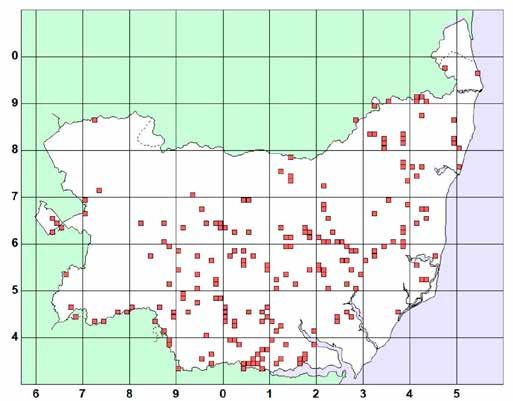
The total number of 1Km tetrads where rookeries have been recorded is 204. These are listed below. 1Km tetrads
The total number of rookery records for 2019 is 245 which are split between the two vicecounties in Suffolk, with 88 records in VC26 and 157 records in VC25. From the 245 rookeries there has been a total of 5062 nests counted and as per the division in rookery records total is much higher in VC25 which has a total of 3289 nests whereas VC26 has a total of 1773 nests.
The distribution of rookeries by size is shown in Table 1 and shows that the smaller rookeries are most numerous with the smallest category of 1 to 25 nests making up over threequarters of the records.
Table 1. Distribution of rookeries by size
The distribution of quantity of rook nests by size of rookery is shown in Table 2 and shows that the range of 1 to 25 of rook nests per rookery had the highest group size with almost 50% of the nests recorded in 2019.
Table 2. Distribution of quantity of rook nests by size of rookery
Once the survey is complete, analysing the data will allow us to see if there have been any changes in numbers and pattern in rookeries from previous surveys undertaken. We aim to have a planning meeting in early 2020 to assess how to proceed for the coming season. With the list of tetrads we can compare where rookeries have been recorded in previous surveys and where needs to be targeted along with any gaps to see if any new colonies have appeared. A full assessment will then be done at the end of next season to ascertain if a final year of surveying is required to ensure as much of the county is covered as possible. We will have this report on the Suffolk Bird Group web site –www.suffolkbirdgroup.org – as well as tetrads/sites that need to be surveyed. Please continue to record rookeries in 2020.
John Grant, SBG President
Ellie Zantboer spent a lot of time looking at her phone during her holiday in Kenya in April 2018. Just like pretty much every other teenager would have done. Except that Ellie isn’t just like every other teenager. Ellie is wonderfully different in one wonderful way. Unlike a depressing and worrying number of young people of similar age, Ellie is deeply connected to nature. So too is her younger brother Dan. Their love of wildlife is a refreshing reminder to us old’uns that there is indeed hope for the future of nature conservation. The reason Ellie looked at her phone so much on her African adventure was that she and Dan were consulting a bird identification app, as they explained to their enthralled audience of Suffolk Bird Group members at their double-act talk about their trip at the University of Suffolk in November.
Ellie, now 16, and Dan, now 12, were engaging, knowledgeable and entirely endearing speakers - surely the youngest ever to give a talk to the group. It was a tour de force, filled with breathtaking photos, tales of stunning encounters with many of Kenya’s iconic bird and mammal species, and laced with laughs. The young Ipswich naturalists proved to be natural communicators, holding their audience spellbound. They recounted their lifeaffirming East African experience with an ease of delivery that most adults would struggle to achieve.
Ellie and Dan went to Kenya with their parents, long-time group members Justin and Paula. This nature-loving family, wellknown to many in our group through their birdwatching, bird-ringing and mothing activities, visited Paula’s friend Tracey Russell who had moved from the UK to
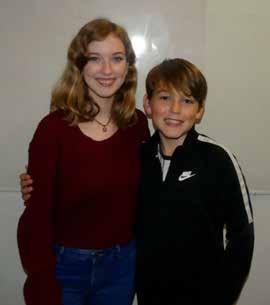
Ellie and Dan Zantboer
teach in Mombassa on the Kenyan coast. Previously, Paula had been Tracey’s Year Six teaching assistant at Whitehouse Primary School in Ipswich. While in Kenya, the Zantboers visited the famous mangrovelined wader hotspot of Mida Creek and traversed the even more famous red soil of Tsavo East and West - being rewarded with wildlife memories that will last their lifetimes.
For the audience at Ellie and Dan’s talk, the memories will also last a lifetime. Paula and Justin looked on with memorable - and justifiable - pride. Witnessing two siblings, so young and yet so confident, so respectful of wildlife and so in tune with nature, was something that made a lasting impression on all who were there. The Zantboers’ trip to Kenya was unforgettable for them. So too was Ellie and Dan’s talk for their audience.
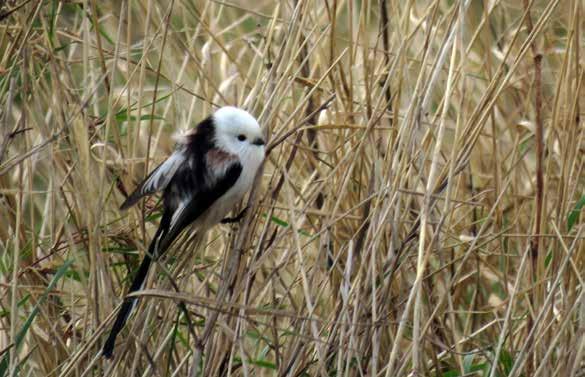
Andrew Gregory and I were having a quiet morning sea watching at East Lane admiring the few passing Brent Geese and Wigeon, when I saw a group of six small black and white birds coming in off the sea. Could it be the hoped for Snow Buntings? Then I raised my bins and saw the tiny bodies and long tails and thought “Ah well, just Long-tailed Tits”, but I told Andrew that they’d landed in a field of maize stubble and we might as well have a look at them. Andrew picked them up partially hidden by the crop and suggested I put my scope on them. After searching around in vain, Andrew said to find the largest line of stalks. I did and immediately shouted “They’ve got
white heads!” I was looking at the snow white heads of the North European race caudatus. Andrew looked straightaway and confirmed this and fetched Steve Abbott who was nearby. Andrew then saw them fly to some nearby brambles and bushes to feed, where Steve and I eventually got some photographs. Andrew’s opinion is that, as they landed in a dip between stalks, they were drinking there and, having flown across the North Sea, were exhausted and very thirsty. They then flew to the vegetation to feed properly. Pleasingly, several other people were able to connect with them later in the day.
I was very excited by the whole episode, as birds of this race are very unusual in Britain and to find a flock of six was quite something (It could well be the largest flock ever seen in Suffolk). In fact, I was so excited that I was e-mailing photos to birding friends all over the country as soon as I got home. Andrew suggested that I write this article, but it wasn’t until I started looking through a few books and bird reports that I realised how unusual an occurrence this was. There was no entry in the Suffolk Bird Report since 2011 and this was recorded as the ninth Suffolk record, all but one of which have been in this century (one trapped at Rendlesham in 1983 being the other according to Steve Piotrowski’s Birds of Suffolk). In 2004 the flock of five at Westleton was described as “One of the events of the year”. Simon Wood’s Birds of Essex (2007) lists 5 records of one or two individuals between 1912 and 2004.
One of the most telling references was this from the Migration Atlas:
“Despite the periodic large scale eruptive movements of Fennoscandian Long-tailed Tits there have been no recoveries in Great
Britain and Ireland of birds ringed abroad and there have been just a few records of caudatus in southern and eastern coastal counties. The relatively weak flight of Longtailed Tits probably restricts their ability to cross large water bodies.” You can say that again - it’s about 600 miles across the North Sea and to think of these tiny balls of fluff flying across it is quite amazing. Another point of interest is that the birds gave the impression of being larger than those we usually see, partly because the pure white heads give the illusion of greater size, but also because of Bergman’s Rule which states that species tend to be larger in cooler climates, borne out by the Handbook of Western Palaearctic birds as follows: caudatus length.14.5 – 15.5cm wingspan 6269 mm rosaceus 13.5-15, 60-64.
To sum up, it was just one of those episodes that makes you realise just why you enjoy birding so much. Seeing them come in off the sea, then drinking, then feeding on the bushes, it had everything. It was even more satisfying, because I’d been to Finland and North Norway earlier in the year and not seen a single one. Isn’t life strange?
It is with deep sorrow that I learnt of the death of Mike Hall on 11 November 2019 at the age of 83. Mike was our first Chairman and conducted our meetings with both authority and humour. I was at school with Mike and from an early age he developed a deep interest in all aspects of nature becoming a much respected teacher of biology. It was whilst on a winter walk on the banks of the River Deben that Mike and I discussed the possibility of a united Suffolk front on collating records of bird sightings in our county. Luckily, in the west of Suffolk, there were also like-minded ornithologists. I suppose the rest is history (over 40 years of it). From those somewhat humble and chaotic beginnings, when the original bulletins were produced on my once pristine Ercol dining table, with Mike Jeanes, Robin Hopper, Mike Hall and me and with the help of many others trying to avoid being covered in printing ink from a somewhat leaky Gestetner, it is gratifying that the SBG (formerly SOG) has grown into such a well-respected organisation and is still going from strength to strength. Mike will be sorely missed – yet another birder ‘ticking off’ stuff in the heavens.
Tony Gdula
The quarterly records section gives a snapshot of birds seen within the county during the period and is compiled by Tony Gdula, predominately from data received by Suffolk BINS. All scarce and rare birds are subject to submission and acceptance by either SORC or BBRC. Updated lists on Accepted and Outstanding Records for 2017 and 2018 can be found on the SBG website - http://www.suffolkbirdgroup.org/birdrecording.
Weather:-
August was an extremely warm and dry month; it had 23 days with no rainfall. There was only one day with rain in double figures, this being 11mm on the 14th and the only other worthwhile amounts were 9mm on the 9th and 7mm on the 10th and the month’s total being 45mm. The month’s daytime temperatures had 28 days of 20C
or above and three days at 18C. The highest day temperatures were 30C on the 25th and 26th and 31C on the 27th. Only four nights dropped out of double figures, the coldest being 8C on the 13th and 20th and 9C on the 12th and 21st. The average temperature for the month was a whopping 18C.
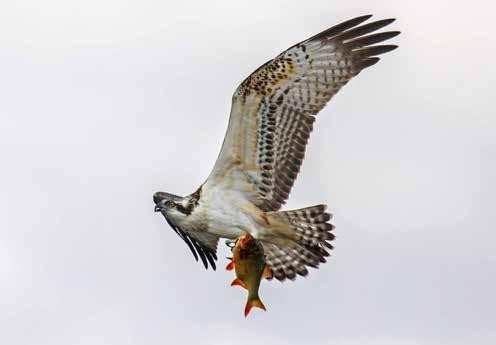
A Ruddy Shelduck of unknown origin was recorded at Great Livermere on the 1st and 2nd. There was a juvenile Garganey at Covehithe on 24th, while on the 27th there was one at both North Warren and Minsmere. Great Egrets were recorded at Minsmere on 3rd and 4th, at Walberswick on 22nd, Cavenham from 18th to 24th and two at Kessingland on 25th. Spoonbill were present at Benacre and Covehithe on the 1st, likely the same bird, with between two and nine on the Alde Estuary throughout the month. There were a number of Osprey
sightings starting with one at Carlton Marshes on the 17th, Felixstowe on the 18th and Sudbury the 19th, Halesworth the morning of the 22nd and Walberswick in the afternoon, at Leiston, Reydon and the Alde Estuary late afternoon on the 27th, Lackford on the 29th, with two there on the 30th and 31st and two at the Alde Estuary on the 30th.
A Stone-curlew was at Minsmere on 13th and another at Benacre Broad on the 24th. This was a good month for sandpipers, especially Wood Sandpipers that were recorded daily between 1st to 16th August with usually around six per record, covering the Alde Estuary, Benacre, Boyton Marshes, Carlton Marshes, Covehithe, Felixstowe Ferry, Herringfleet, Lackford Lakes, Livermere Lake and even Southwold Boating Lake! Curlew Sandpipers occurred in twos and threes; on the Alde Estuary 3rd to 11th inclusive and then 15th and 28th, at Minsmere on 2nd, 7th, 19th and 26th to 29th, Benacre 10th, 11th and 26th to 30th. Little Stint at Covehithe on 1st and the Alde Estuary on the 6th and 7th. Two early returning Purple Sandpipers at Landguard on the 20th.
A count of eight Caspian Gulls were at Great Livermere on the 10th and four at Westleton on the 11th with two also at Cavenham on the same day. A juvenile at Walberswick on the 18th and another the same day at Trimley Marshes and one at Southwold Harbour on the 31st. There were up to 14
Little Gulls at Benacre from 2nd to 8th and 36 at Minsmere, rising to 42 from the 3rd to the 10th, before ending the month with around 25. On the 31st 20 seen off Sizewell. Four Sandwich Terns at Cavenham on the 24th and an Arctic Tern at Thorpeness on the 7th. Two Arctic Terns at Benacre on the 6th and a juvenile at the site on the 10th. One Black Tern at Covehithe Cliffs on the 3rd. An Arctic Skua south off Thorpeness on the 7th. A Turtle Dove was seen at Landguard Bird Observatory on the 22nd where a Wood Warbler was trapped on the same day.
August is a prime month for Whinchats and these were seen in rising numbers with location sightings at Lowestoft, Kessingland, North Denes, Minsmere, Tunstall, at the Alde Estuary, Shingle Street, Bawdsey, Deben Estuary, Felixstowe and Stonham. The highest counts were 10 at Kessingland on the 29th and 11 at Shingle Street on the 31st. Similarly for Pied Flycatchers, these were first recorded at Felixstowe Landguard on the 4th with sightings also at Lowestoft, Southwold, Minsmere, Westleton, Thorpeness, Hollesley and Bawdsey.
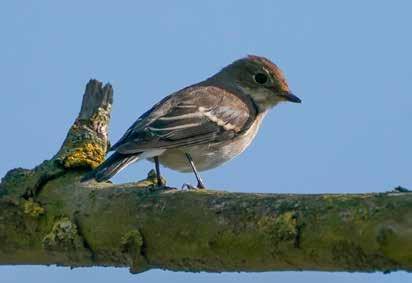
A Common Redstart was at Landguard on the 24th and at Gunton on the 26th. There were three Tree Pipits south over Landguard on the 19th with a further two south over the site the following day.
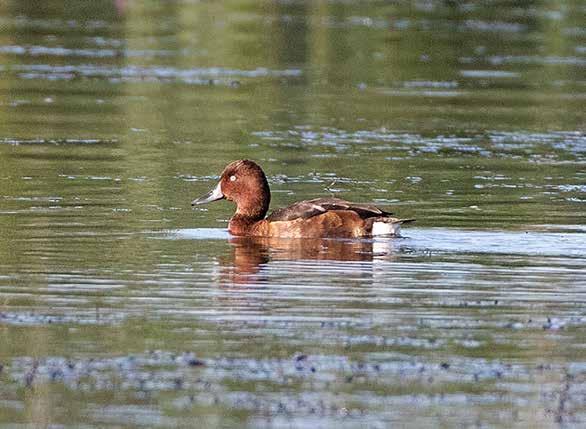
A Ferruginous Duck was found on pools (South Girder) behind South Hide, Minsmere on the 20th and was present again on the 22nd. On the 31st a drake Ferruginous Duck was present at a site with no general access on the Alde Estuary. A Quail was heard singing at Ramsholt on the 13th and then calling near Felixstowe Ferry on the 18th. A Balearic Shearwater flew north close offshore on the 23rd at Landguard.
A juvenile Purple Heron was reported at Homersfield, then flushed from a bank of the River Waveney and then flew south on the 6th. A Cattle Egret was recorded on the south levels at Minsmere on the 21st. There were five Glossy Ibis south over Ness Point on the 12th. A swift species with a white rump, a possible Pacific Swift, was reporting over the boating lake at Southwold on the 15th before drifting over nearby houses.
A Wryneck was found in scrub at Gunton Warren the morning of 29th and another at the Alde Estuary that evening. At Landguard there was an unconfirmed Aquatic Warbler on the 16th. A Serin flew south over LBO on the 13th.
September was overall a warm and dry month with 17 days of no rain and temperatures of 20C or above; high temperature days were 24C on the 12th, 15th and 24th. The month had 13 days where there was rainfall, with only 3 being in double figures; 10mm on the 4th, 14mm on the 24th and 17mm on the 30th with the total rainfall for the month being 67mm. September had 13 nights of single figure low temperatures and the lowest surprisingly being 5C on the 2nd.
A Garganey seen at Trimley on the 17th and 19th. A Great Northern Diver was seen off Thorpeness on the 18th. Sooty Shearwaters were spotted off Covehithe on the 6th, Southwold on the 8th and Lowestoft on the 17th, two were off Bawdsey on the 20th and one again at Covehithe on the 24th. A Manx Shearwater seen off Lowestoft on the 7th and Southwold on the 24th. A Leach’s Petrel off Southwold heading north on the morning of 21st with likely the same bird north past Ness Point Lowestoft later on. Great Egrets seen regularly throughout the month at a number of sites including Carlton Marshes, Southwold, Minsmere (which had the highest group of three on the 27th), Botany Marsh, Snape and Lakenheath. Spoonbills were once again present in good numbers, from mid-teens to midtwenties, throughout the month on the Alde Estuary and singly on Trimley Marshes and Boyton at the month’s close. One sighting of a Red Kite over the Deben Estuary on the 15th. Ring-tail Hen Harrier seen over Walberswick on the 12th and over Shingle Street pumping station on the 30th. Regular Osprey sightings throughout the month; usually in ones, but occasionally twos, from the Stour Estuary up to Reydon, but most often at Lackford Lake SWT.
Curlew Sandpipers were regularly seen at Minsmere throughout the month and additionally at Havergate (1st), Benacre (4th and 10th), Trimley (4th, 5th and 10th) and the Deben Estuary (15th, 28th and 30th). A Purple Sandpiper at Landguard on the 21st. Little Stint seen at Havergate on the 1st and Benacre on the 2nd (both juvenile), Trimley on the 5th and Minsmere on the 7th and 8th, then regularly from the 12th onwards at Minsmere, with up to two present. A juvenile Caspian Gull seen at Southwold Harbour on the 1st and 2nd. Little Gulls seen at Minsmere on the 1st and a juvenile at Lowestoft on the 2nd, up to 35 seen off Sizewell rigs on the 6th and around 30 again on the 20th. A Black Tern off Minsmere on the 25th. Four Arctic Skuas seen off Slaughden on the 26th, two Longtailed Skuas off Southwold Harbour on the 5th, with another off Bawdsey on the 20th and one off Thorpeness on the 18th. On the same day there were also two Great Skuas. Other Great Skua sightings include 10 seen off Southwold on the 7th and three off Gunton that same day. A Short-eared Owl was seen at Thorpeness on the 10th and at Slaughden, then one later in the month at Kessingland Sluice on the 22nd. A Wryneck was trapped at the Orfordness NT reserve on the 1st with another there on the 8th. A Hobby seen offshore at Slaughden on the 26th. Ravens noted at Snape on the 6th, two at Stonham on the 7th and 14th, two at Stutton on the 17th, two at Willisham on the 19th and 27th and one at Levington on the 28th.
A Yellow-browed Warbler heard at Southwold on the 25th. Firecrests sighted at Felixstowe on the 6th and 22nd, Aldeburgh on the 22nd and Bawdsey on the 27th and 30th. One Ring Ouzel, briefly, on Trimley Marshes on the 30th and a Fieldfare at Boyton on the 23rd. A good turnout of flycatchers; Spotted Flycatcher at Felixstowe on 4th, Thorpeness 15th
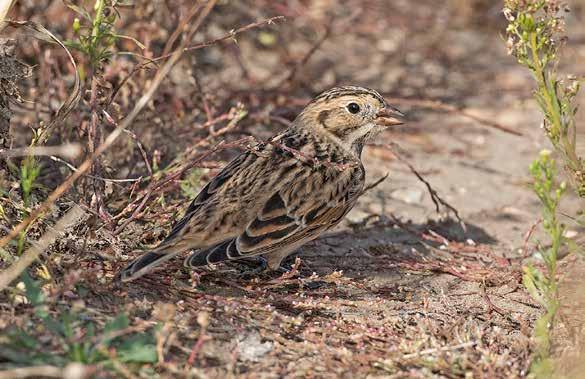
and Bawdsey on 28th and 30th. Pied Flycatchers seen at Lowestoft, Minsmere and Felixstowe on a number of dates. Common Redstart in pairs at Lowestoft (1st), Felixstowe (8th & 9th) and then three there on the 11th. Further sightings at Felixstowe, Covehithe and Reydon. An abundance of Whinchats; from two at Boyton, eight at Shingle Street and nine on the Alde Estuary on the 1st with repeated sightings at these sites plus Benacre and Lowestoft over the next days and Reydon and Southwold by the 12th onwards. Three Tree Sparrows seen at Landguard on the 6th, one on the 9th and three again on the 13th. The first Lapland Bunting of the season at Minsmere on the 13th with a confiding bird at Easton Bavents on the 18th and 19th.
A European Storm Petrel was seen close offshore at Landguard on the 20th. Cattle Egret are becoming more frequent; sightings
include three south over the Minsmere reserve before settling on South levels on the 2nd with one at the site on the 3rd and from 10th to 14th. A Cattle Egret was noted high over Carlton Marshes then over Oulton Broad on the 8th. Another was present on north marsh, Southwold on the morning of the 26th. Finally one on Hockwold Washes, Lakenheath on the 28th. A Red-necked Phalarope was at Minsmere on the 8th with
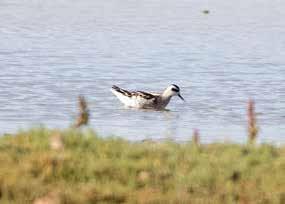
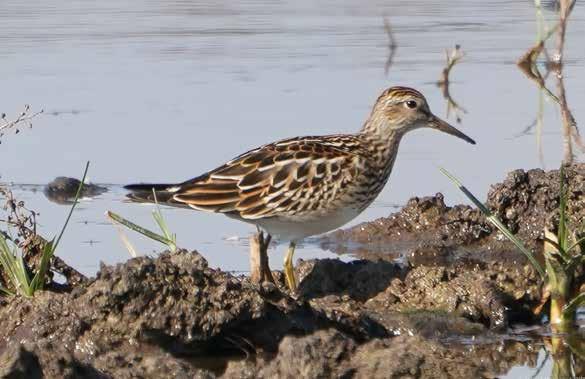
a Pacific Golden Plover there the following day. A juvenile Pectoral Sandpiper was recorded at Minsmere from the 12th to 25th and an adult on the Stour Estuary, near the A137 White Bridge, on the 14th. A juvenile Sabine’s Gull at Havergate Island on the 8th before flying north. A Puffin north at Bawdsey on the 20th. A juvenile Redfooted Falcon seen over LBO on the 13th before drifting off north and may have been seen at Shottisham later that afternoon. A Barred Warbler was trapped at Orfordness NT reserve on the 20th. A first-winter Redbreasted Flycatcher was trapped, ringed and released at Landguard Bird Observatory on the 22nd. At Minsmere on the 7th a firstwinter Citrine Wagtail.
2019
Across the month the temperature for October was typical with day time temperatures ranging from 11C to 19C with the last five the
lowest at 11C. Nighttime temperature dipped to 1C on the 28th and there were only three nights in double figures, the highest 11C on the night of the 11th. Rainfall occurred on 17 days and there were two exceptionally wet days; 23mm on the 1st and 62mm on the 6th.
The first Whooper Swan of the autumn was one west over the heath at Westleton on the 1st, then five at Minsmere and two off LBO on the 27th, four on the Deben Estuary on the 30th and two over Blythburgh on the 31st. A late Garganey was seen at Minsmere on the 13th and 25th. Greater Scaup seen frequently throughout October, mainly at both Minsmere and Bawdsey. A Long-tailed Duck was recorded at Bawdsey on the 28th and past LBO the next day. Velvet Scoter seen at Felixstowe and amongst 20 Common Scoter at Dunwich on the 17th and again the following day. Goosanders were recorded at Dunwich, Hollesley and Bawdsey. A Great Northern
Diver south off Thorpeness on the 30th with a Manx Shearwater off there the same day. At the same site there were two Sooty Shearwaters north on the 2nd and two again on the 11th plus one off Slaughden on the 23rd. A Slavonian Grebe was seen on the Alde Estuary on the 23rd.
Great Egrets again noted with some regularity; most days at Minsmere and Dunwich and also Lakenheath, North Warren, Lower Holbrook and Lowestoft. There was a Spoonbill seen offshore at Landguard on the 17th. Two Common Cranes seen at Dunwich on the 20th, with two at Carlton Marshes on the 22nd and one again on the 27th and 31st. A Hen Harrier was seen at Worlingham on the 17th and Minsmere on the 25th and 31st. Another good month for Osprey with one present and showing well at Alton Water between the 12th and 20th and one at Haverhill on the 27th. Purple Sandpipers were at Ness Point on a few dates and at Landguard on the 5th. A Little Stint at Felixstowe on the 10th and a juvenile at Hollesley on the 19th and Havergate on the 25th. A Grey Phalarope was seen at Dunwich on the 28th and one at the eastern end of Breydon Water on the 29th and 30th.
A juvenile Black Tern seen at Lackford Lakes on the 2nd. There were two Pomarine Skuas offshore at Thorpeness on the 30th with Long-tailed Skuas seen there on both the 2nd and 11th and one at Minsmere on the 5th. A Little Auk noted at Bawdsey on the 22nd and 31st, one north off Ness Point on the 25th and one on the sea at Southwold on the 29th.
A Long-eared Owl seen at Trimley on both the 17th and 19th, one trapped and ringed at LBO on the 18th and one at Needham Market heard calling at night on the 23rd. Short-eared Owl seen on a few dates at a number of sites including Covehithe, Dunwich, Minsmere, Shingle Street, Bawdsey and Landguard. A moribund nightjar was rescued at Felixstowe on the 19th although it sadly succumbed while a more sprightly one was seen at Bawdsey on the 23rd. Singles of Great Grey Shrike at Landguard on the 22nd and the Stour Estuary on the 31st. Two Ravens seen at Elmsett on the 29th. An influx of Shore Lark starting with an obliging one at Ness Point from the 8th to the 14th, a great inland record at Great Livermere on the 13th with other records at Minsmere, Dunwich, Landguard and Easton.
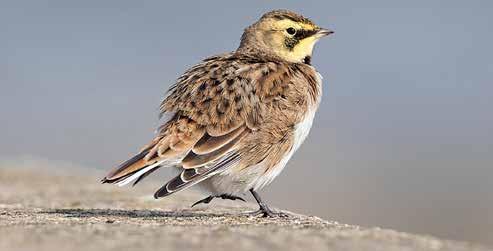
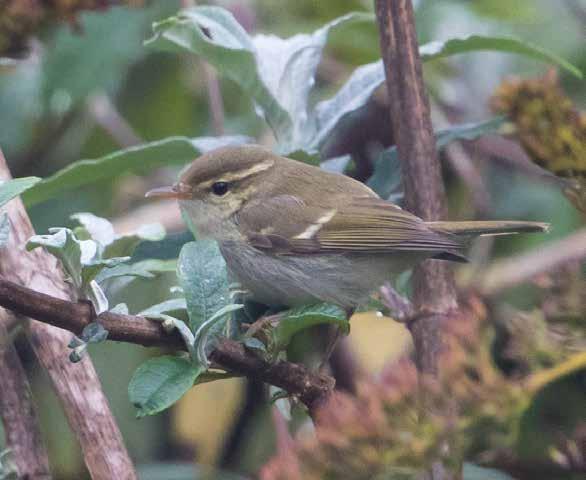
Yellow-browed Warblers were recorded regularly and frequently along the coast throughout the month. Firecrest also seen regularly from Felixstowe to Lowestoft. Plentiful Ring Ouzel sightings, beginning in the Felixstowe area on the 3rd and then up the coast to Lowestoft throughout the month. Numerous and frequent Black Redstart sightings through the month along the coast from Lowestoft to Felixstowe. Common Redstart at Landguard and Whinchat at Orford, Landguard, Shingle Street, Westleton and Lowestoft. A Yellow Wagtail at Dunwich on the 28th that became the focus of attention in November. Twite were seen in good numbers at Dunwich on the 19th, 27th & 30th.
A Hawfinch at Felixstowe on the 21st. Snow Buntings at Dunwich on the 17th and 19th, at Covehithe on the 29th, Aldeburgh 30th and Easton from 30th and 31st. A Lapland Bunting over Thorpeness on the 8th, at Havergate on the 20th and 25th and at Dunwich between the 27th and 29th.
A Quail was recorded at Thorpeness on the 25th. A probable Cory’s Shearwater was off East Lane, Bawdsey on the 29th. A Blackthroated Diver was at Holbrook Creek on the Stour Estuary on the 30th. A Hoopoe was present briefly at Needham Market on the 24th.
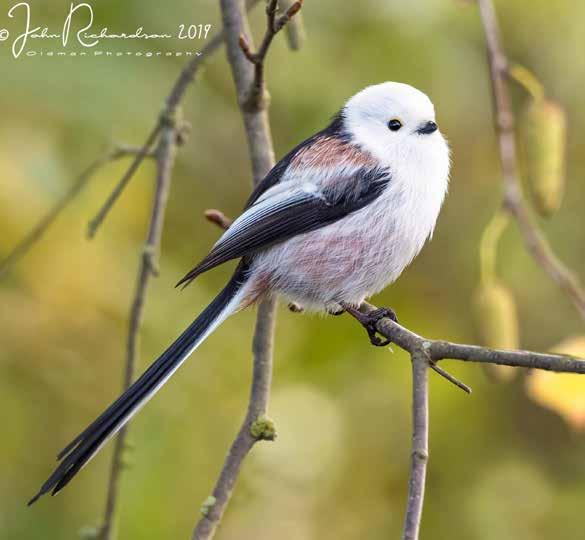
Six superb looking Northern Long-tailed Tits were present at East Lane, Bawdsey for a few hours on the 31st. Autumn is a time when scarcer warblers occur and in 2019 there was a nice selection including a first for the county. A Pallas’s Warbler at Minsmere on the 5th was the earliest ever autumn record. A Two-barred Warbler was found at Orford on the 13th; a nice addition to the county list. 20th A Siberian Chiffchaff was along the entrance track to the sewage works at Orford on the 20th. A Barred Warbler at Southwold was seen between
the 12th and 17th, typically elusive although for some lucky observers it showed very well at times. There was a possible Dusky Warbler at Landguard, near Icky Ridge, on the 14th. A Radde’s Warbler was found near the golf club entrance at Southwold on the 29th. A first-winter Red-breasted Flycatcher was seen near to Sizewell Hall entrance on the 7th. An Olive-backed Pipit was seen in Tamarisk bushes at Dunwich before flying towards the Coastguard Cottages on the last day of the month.
Gi Grieco
The group has had another year with a great variety of trips; some popular, regular ones along with a selection of areas we only visit occasionally. The aim is to explore as much of the county as possible throughout the year along with visiting places further afield. This is only possible thanks to all those that attend but especially to all the leaders that volunteer their time to guide members around these trips. I’d like to express my thanks to the following: Ellie Zantboer, Justin Zantboer, Ashley Gooding, Steve Fryett, Richard Smith, David Walsh, Paul Gowen, Val and Ivan Lockwood, Nigel Odin, Dave Pearsons and Eddie Bathgate. Again in 2019 we have had some new members join us on these walks and it’s been great they have been made so welcome.
For 2020, we again have a great selection of trips including one further afield to Kent to visit the Oare Marshes area. We’ve the return of the boat trip on the Deben, last undertaken a few years ago and a great way to experience the river and it’s bird life. Additionally, we have taken on some comments to have some shorter walks or that do not start so early in the morning, so two are planned where we can have a couple of hours in areas where parking and exploring are easy.
I look forward to seeing many of you on these walks next year.
Leader: David Walsh
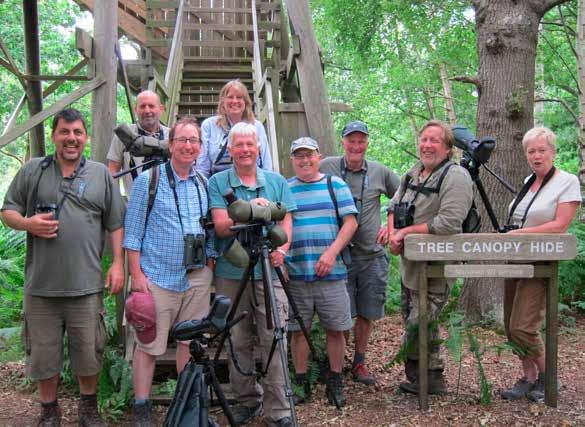
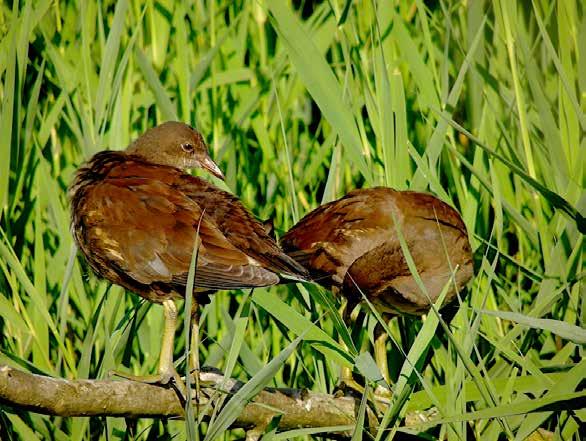
On a Sunday at the end June, a dozen SBG members met at 8am in the car park at Lakenheath Fen RSPB. Most of the group had been there before but some hadn’t, so I gave a brief history of the reserve before we began our walk. On the pool by the visitor centre there were a couple of juvenile Moorhens sitting on a branch with Reed Bunting noted.
We decided to walk along the path from the visitor centre parallel to the railway on
our way out. The end of June proved to be a rather quiet period for birds but excellent for dragonflies; we saw a total of 12 species including some fine Scarce Chasers and numerous emerging Ruddy Darters. I thoroughly enjoy enthusing about dragonflies and encouraging those who haven’t looked at them before to ‘give it a go’; on this walk we had the chance to compare male Azure and Variable Damselflies at close range. We took the path to Mere Hide, which some members had not visited before, where
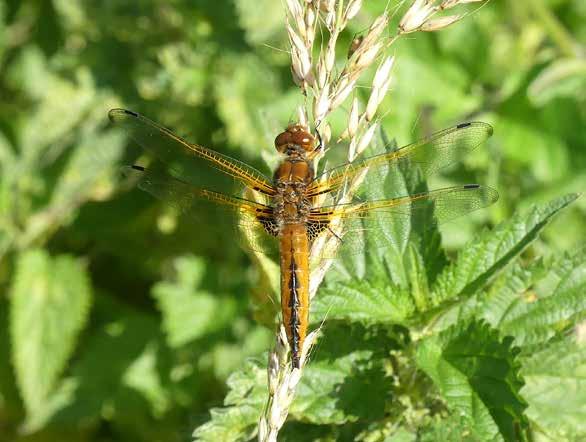
there were several Red-eyed Damselflies including a few pairs in tandem. There were fewer butterfly species but the highlight was a Ringlet, the first of the season for many. Gi Grieco was in his element as we continued to enjoy the insects and showed us Goldenbloomed Grey Longhorn Beetle, Black-andyellow Longhorn Beetle and Swollen-thighed Flower Beetle, species many of us had never previously heard of!
On the bird front, we were able to compare the songs of Reed and Sedge Warbler, and eventually saw both Hobby and Marsh Harrier. Unsurprisingly, the best sighting was a Bittern; we had no luck from the hide, but did see one well in flight from the Joist Fen viewpoint. On the way back we used the river wall; it was much quieter although a couple of Buzzards were seen across the
river. The flashes were, sadly, dry; we hoped they would have water in once more when we returned. It was great to see some new faces join the regulars as we strolled around this superb reserve.
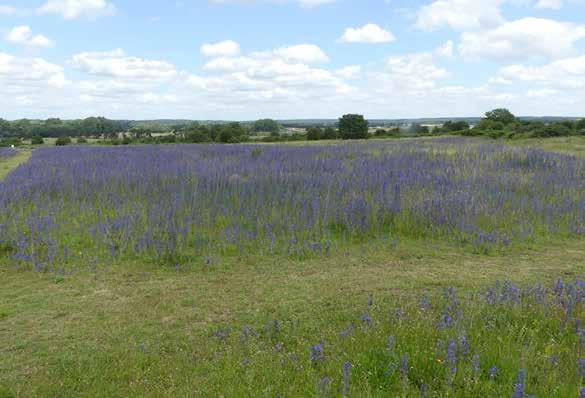
With the main meeting over some members decided to visit a site nearby many had never been before, Maidscross Hill Nature Reserve on the edge of Lakenheath. It is a Local Nature Reserve and SSSI being an area with old chalk and gravel workings with interesting plant life. A carpet of Viper’s Bugloss across one whole area was a beautiful spectacle and around the site we saw many butterflies including several Common Blues. Further colour came in the form of some Yellowhammers and lots of Cinnabar moth caterpillars feeding on Ragwort.
Shortly after arrival at the car park the leaders were made aware that a few members had initially gone to the small parking area at the other end of the heath and had been advised by one of the group members to drive to the correct meeting place, so we waited a little longer for everyone to arrive before Ivan ran through health and safety and the plan for the day. The first bird, a male Blackcap, was seen from the car park, where we also heard Stone-curlew and picked up a Green Sandpiper which flew overhead. As we made our way through to the main path we saw Grayling and Gatekeeper butterflies
and a Common Darter. The heath was at its best, an amazing sea of purple Heather that stretched out before us, as far as the eye could see and in the early morning sunlight it was truly a joy to behold. I made a detour to the small parking area to check that there were no late arrivals who had gone there in error, before rejoining the group on the main path. By this time the group were looking and listening for Dartford Warblers, which at that point remained elusive. We added Bullfinch, Yellowhammer and Buzzards to our bird list and Painted Ladies and Red Admirals to our butterfly list before moving on. We carried on along the main
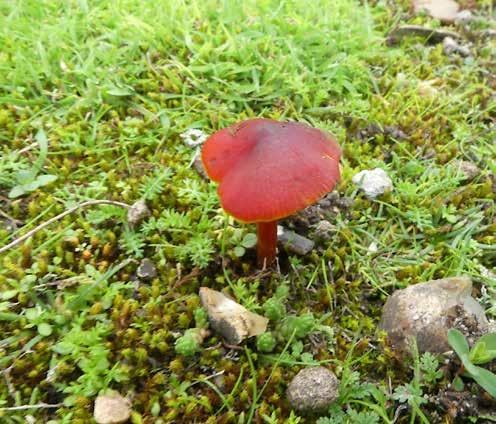
track picking up a Chiffchaff calling in the canopy above and we also saw a Ringlet butterfly, Great Spotted Woodpecker and an Ink Cap was noted as the first toadstool of the day.
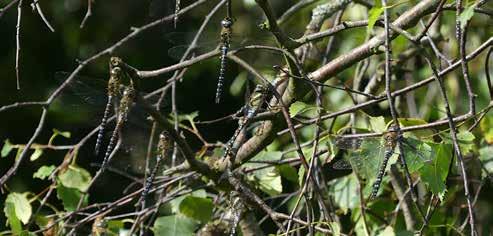
Further along we made a slight detour down a side track as there were several Small Copper butterflies nectaring on the Heather and a Ruddy Darter had been seen. This detour paid dividends, as we were rewarded with an amazing spectacle of at least 17 Migrant Hawker dragonflies that had alighted in a couple of bushes with others flying around too. We could only marvel at there being so many of them in such close proximity and think that this was because they were taking advantage of the warm sunshine on this side track, which was unhindered by taller trees. When those of us with cameras could be torn away from photographing this amazing bounty of Migrant Hawkers, (which could be likened to an adorned Christmas tree with the dragonflies’ translucent wings glistening in the sunlight), we returned to the main track.
As we proceeded we disturbed a Muntjac which, in its haste to disappear into the depths of the wood, alarmed a Green Woodpecker. As we made our way along
the track towards Dunwich village we saw mixed tit flocks, a Treecreeper, Jays and a Swallow and a single Comma was seen on the Buddleia bushes along with several Red Admirals and Painted Ladies.
On arrival at Dunwich beach car park we decided to buck the trend of most Suffolk Bird Group meetings and have an ice-cream stop and take advantage of the warm sunshine. Although the plan was to take the footpath which leads to Dunwich cliffs and Greyfriars wood we couldn’t resist walking to the beach for a brief sea watch, where we saw six Knot and an Oystercatcher fly past. The beach was busy but unfortunately the bird watching wasn’t, so we decided to press on towards Greyfriars Wood and the plan was to have another sea watch away from the crowds on the beach. Unfortunately the wood, like the sea watch, was quiet although we did add Sand Martin and Common Scoter to our bird list (in fact there were 31 Common Scoters) - unfortunately there were no Velvet Scoters seen, despite us trying very hard! We were very grateful to see Long-winged Conehead, Roesel’s Bush-cricket and Speckled Bush-crickets by the footpath, Marsh Tit in the wood along with Speckled Wood and Meadow Brown butterflies on the heath.
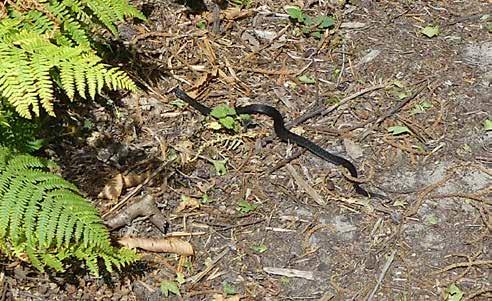
After observing a Blue-tailed Damselfly, a Brown Hawker and a Large Skipper we pressed on along the main path heading towards Mount Pleasant Farm. As we walked along I had my eyes fixed on the edges of the path looking for butterflies and could hardly believe my eyes when I spotted a black Adder basking in the sunshine a foot or so from Gi’s approaching boots. It was all I could do to get the words “black adder” out in time for others so see it before it slithered stealthily away into the undergrowth and out of sight. After the excitement of seeing the black Adder, a first for some, and satisfying ourselves that it really wasn’t going to put in another appearance, we made our way towards the car park and lunch, adding Goldfinches, a Dunnock, Small White, Large White, and Holly Blue butterflies to the day’s species list.
After lunch we headed across the road and were rewarded with very good views of a family of Dartford Warblers, three Stonechats and a Buzzard along with a few other bird species and could clearly hear Stone-curlews calling although unfortunately none were seen. We then headed back to our cars. A few members decided that it was too early to finish for the day so we
headed to Minsmere; target species being Wood Sandpiper. There were a good number of waders including Common and Spotted Redshank, Greenshank, Knot, Avocets, Blacktailed Godwits, Common Sandpiper, Dunlins and Ringed Plover. We walked towards the konik field picking up Reed Buntings and Bearded Tits in the reed beds along the way. The two Wood Sandpipers were thankfully still present along with a juvenile Water Rail, a Snipe, a Little Egret and three further Common Sandpipers.
Along the coast towards the north wall, we saw more Common Scoters, singles of Turnstone, Grey Plover and Kittiwake, 12 Oystercatchers and two Sandwich Terns. Back at the cars we all agreed it had been a very good and interesting day, the memory of the sight of the amazing black Adder will stay with me for a very long time! Thanks to everyone who attended the meeting.
Sunday, August 25th
Leader: Gi Grieco
I got to East Lane early to watch the sun rise ready for the day ahead. It was a beautiful, bright and clear morning although the winds had been westerly. As the first members arrived some Yellow Wagtails flew over and a Sparrowhawk was getting mobbed by some Carrion Crows in some nearby trees but the Sparrowhawk retaliated by chasing them back. This went on for a further two occasions until the Sparrowhawk eventually flew off. Once all assembled we headed out to look for some migrant warblers. Initially it was quiet but as it got a bit warmer we saw
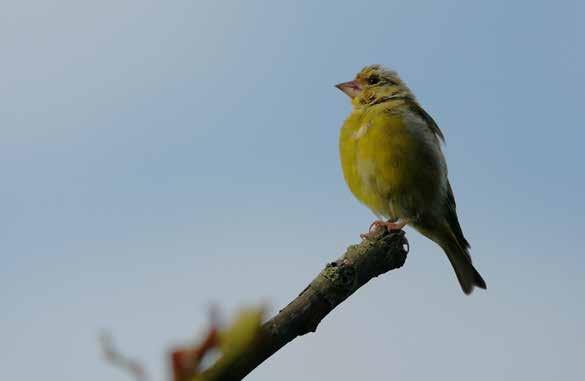
some Common Whitethroats and Blackcaps along a hedgerow but generally few birds present. We moved on to the track and as we did Matt heard some high-pitched squeaking from nearby, at times coming from almost below our feet. We eventually realised that there were some voles hidden in the grass along the bank although we never glimpsed them. With a bit of searching online for the call we determined they were likely to be Bank Voles. A smart male Greenfinch showed well on top of a bush.
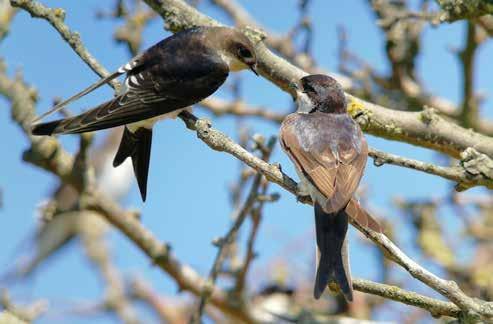
We took the path towards the Martello Tower and we were wowed by the amazing spectacle of hundreds of House Martins and Swallows. These we’d already seen from the car park and we watched from close quarters as many were on the tower itself but also on some of the trees in the area. We watched them fly up in a large mass a few times but always returning back. We had superb views of House Martins and in total there were around a thousand hirundines in the area. On the rocks we saw a Wheatear and inland a couple Buzzards. Returning back we scanned down the track and some further sound attracted out attention, this time a sub-song of Sedge Warbler and as we picked it up we also found Reed Warbler moving through feeding. Walking along we noted the odd Blue Tit, then Tom picked up a Pied Flycatcher, a species we were hoping to find. With patience we all got good views of it. Additional birds seen were Chiffchaff and Blackcap.
We stopped for a drinks break before heading along the path past the lagoons. These held the usual Little Grebes, Mute Swans and Tufted Ducks. Several butterflies
were on the lower track such as Common Blues and some Clouded Yellows; the area always being a good spot to see this species in mid-Summer. Walking along the sea wall path we saw up to three Stonechats in the bramble below along with a single Whinchat. On the other side of the farm track Reed Warblers could be seen flitting in and out of the maize crop. A Wheatear was seen on a post but as the temperature had been rising it was hazy to watch in the distance. As it was getting so hot we decided to stop and return to the cars for further refreshments. We decided to keep in the area but this time walk further past the Martello Tower and south towards Bawdsey cliffs. The edge of the cliff had a strip of wild plants with swathes of Creeping Thistle and this attracted lots of Painted Lady butterflies and a few Silver-Y moths, both migrant species. A couple of Whitethroats threaded their way along the vegetation ahead of us. As it was quiet bird-wise and getting very hot we returned to the track at East Lane and were rewarded with finding a second Pied Flycatcher which made a fitting end to the trip.
Saturday, September 14th
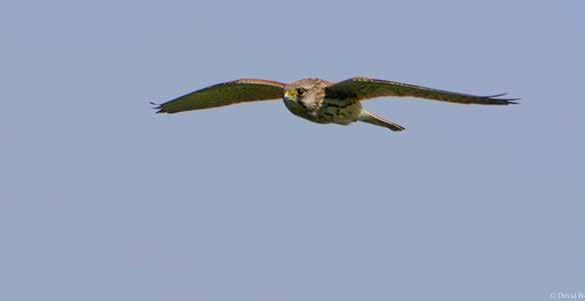
A warm sunny day greeted us at Shingle Street as we embarked on a quest for autumnal migrants. Heading south we soon noted a female Marsh Harrier over Oxley Marsh and plenty of Linnets around the tennis courts with a single Lesser Whitethroat showing well in a nearby bush. Oxley Marsh held at least 40 Eurasian Curlews with a Common Buzzard causing the abundant corvids to get restless. A Common Whitethroat was noted on the northern side of the allotments, but distantly. Heading over the houses a female Sparrowhawk gave only brief views but the local Kestrels were more obliging with at least three noted at this site. Unfortunately, the growth of the trees and undergrowth on the south side of the allotments has reached the point where little can be seen, although it continues to provide excellent feeding and protection for the birds. Whinchat, one of the species we did expect was finally located in the reedy edge of Oxley Marsh where two were noted. The seaward pools held a Common Sandpiper which did not really want to show much and finally took flight. An influx of Meadow Pipits had clearly taken place much earlier in the day with a yonder drilled field full of feeding pipits. With such a sunny day
butterflies noted were two Small Coppers, Small Heath, Comma and a rather worn Grayling. We returned to the car park with no further new species reported. Because there was no water at RSPB Hollesley Marsh we decided it would be worthwhile going to RSPB Boyton instead.
At Boyton a singing Chiffchaff was noted along with a Reed Warbler also singing in a quieter sub-song amongst the reeds. There was still some water on the main flash to provide some feeding for three juvenile Ruff, two juvenile Avocets and one Common Snipe. A few Mallard and Teal were also present. Common Buzzards provided a number of sightings whilst at this venue there were four noted together. Walking along the river footpath to the main marsh a considerable number of Canada Geese were present but no waders due to lack of water. One surprising migrant was a Northern Wheatear found sitting on a gate. We returned noting at least three Grey Herons flying around the reserve and a group of 15 Black-tailed Godwits that had just landed on the flash. The meeting ended with the final species of the day, a Great Spotted Woodpecker seen and heard on a dead Alder tree.
Leader: Nigel Odin
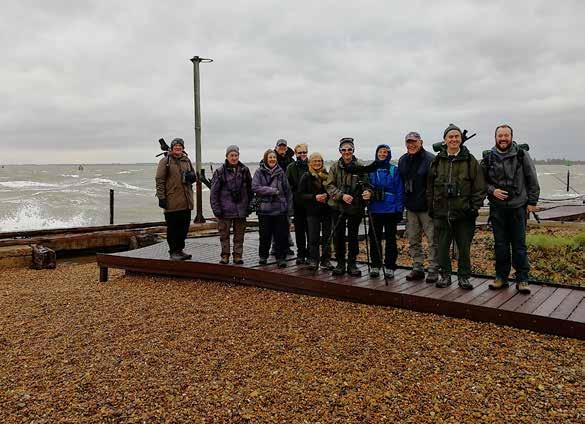
The weather forecast did not look good for the annual SBG visit to Landguard Bird Observatory. Despite this and the lure of England playing New Zealand in the rugby world cup semi-final, 15 members turned up. We were greeted by cloudy skies and a strong south westerly wind. Oh how sadly familiar these south westerlies are this autumn.
However we were quickly on to one of my favourite birds, my hearing aid in the shape of Gi quickly picked up the call of a
Bullfinch. Two were then seen by the group at the back of the compound. We were soon in for another treat, a male Sparrowhawk was caught in the nets. Nigel Odin gave an excellent demonstration of processing this bird, highlighting its beautiful plumage. It was a real treat for those not familiar with ringing, they were also fortunate enough to see the ringing of a Chiffchaff and a young male Blackbird. The strong winds meant that only sheltered nets were open so the opportunity to see good numbers of birds in the hand was not good.
Conditions were not ideal for searching for migrants or for sea-watching either, however the migrants on site included six Goldcrests (we saw at least two), one Firecrest, a first-winter Black Redstart, several Blackbirds and Song Thrushes with 3 Swallows flying south. I am always amazed how these birds can fly into such strong winds when I found it difficult to walk south up to the point on the common.
Movements offshore were very limited but we were treated to the sight of hundreds of gulls, including good numbers of Great Black-backed Gulls, following ships into port.
Three Gannets joined in with the fun as two Grey Plover headed south and into the river.
The Cormorants, over 400, that we had seen
going out to their feeding grounds first thing were beginning to return with full bellies long before the meeting was over. In Suffolk it is hard to think that these are threatened birds with the Shag being far more common in the UK.
SBG meetings are always nice social events but more importantly, as I found and still find, they are ideal opportunities for the less experienced birder to gain knowledge from those more experienced. Don’t be shy, we hope to see you at a meeting very soon.
Our thanks go to Nigel Odin, Gi and those who maintain the supply of tea and biscuits at LBO.
Gi Grieco
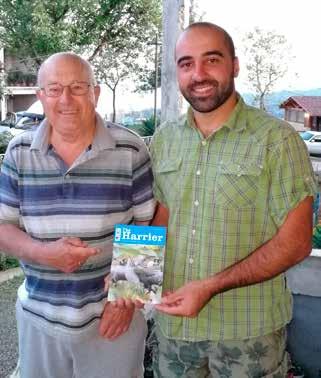
The Harrier appeared abroad in this magazine previously, being presented to guides in China and Morocco. A group of eight of us went to Georgia in September to watch the amazing spectacle of migration. I’d been inspired to go after a fascinating talk by Richard Stace at a SBG indoor talk three years ago. I’d always wanted to witness large scale migration and had often thought of visiting the Bosphorus in Turkey or the Tarifa area in southern Spain but the possibility of seeing such high numbers of raptors as outlined in Richard’s talk lured myself and others to Georgia. We used a local Georgian tour company, Birding Caucasus, staying with a local family just below one of the main raptor watchpoints, Saghalvasho. This watchpoint and on another hill, Shuamta, are used by Batumi Raptor Count, a group of volunteers whose aim is to monitor and promote the Batumi bottleneck where over one million raptors pass each autumn. We had an excellent guide, Nika, who is pictured with SBG member, Keith Freeman and a recent issue of The Harrier. We had a fantastic time, seeing a huge amount of raptors. If any other SBG members have photos of The Harrier in other parts of the world then we’d love to receive them. Please email harrier@suffolkbirdgroup.org
Free to a good home! A 24” professional, quality Parabolic Reflector for sound recording. Contact John Turner on 01473 310635 or jama.turner@btopenworld.com
Council for 2020 Officers
President: John Grant
Chair: Edward Jackson
Vice Chair: Chris Courtney
Secretary: Eddie Bathgate
Treasurer: Anne Wright
Communications Officer: Alex Rafinski
Projects Officer: Chris Keeling
Suffolk Bird Report Editor and SORC Link: Nick Mason
Harrier Editor and Outdoor Events Coordinator: Gi Grieco
Indoor Events Coordinator: Adam Gretton
Advisory Officer: Ed Keeble
Members
Justin Zantboer
Peter Merchant
Jamie Everett
Roy Marsh
Matthew Deans
Honorary Vice-Presidents
Jean Garrod
Robin Hopper
Mike Jeanes
Mike Marsh
Philip Murphy
Reg Snook
Steve Piotrowski
Bird Recorders
North-east Area Recorder: Andrew Green, 17 Cherrywood, HARLESTON, Norfolk IP20 9LP Tel: 07766 900063 Email: bird-ne@sns.org.uk
South-east Area Recorders: Gi Grieco Tel: 07951 482547 and Steve Fryett Tel: 07593 382082 4, The Street, Melton, Woodbridge, IP12 1PW. Email: bird-se@sns.org.uk
West Area Recorder: Colin Jakes, 7 Maltwood Avenue, BURY ST EDMUNDS IP33 3XN Tel: 01284 702215 Email: bird-w@sns.org.uk
c/o SNS, The Museum, High Street, Ipswich, Suffolk IP1 3QH
Founded in 1973 by a group of Suffolk birdwatchers
Associated with the Suffolk Naturalists’ Society
SBG remains an independent birding group and is a registered charity
A voice for Suffolk birdwatchers
With established links to many naturalist and conservation organisations
Media
Actively lobbies to protect key Suffolk habitats
Provides a county-wide field force of bird surveyors
Promotes BTO bird surveys and organises special SBG surveys

Strong web presence - www.suffolkbirdgroup.org
Active Twitter feed - @suffolkbirds1
Quarterly magazine - The Harrier
Annual review - Suffolk Birds report
Annually (20+) field trips - ideal for novices or experts and young or old alike
Opportunities to visit hot spots and receive practical ID tips in the field
Programme of talks and presentations - variety of topics (county, national, or international) with quality speakers
Assists with conservation projects to improve breeding success
- Swifts
- Barn Owls
- Peregrines
- Waders
Partners with Suffolk Wildlife Trust and other bird groups
Assists with funding for bird hides and other birding amenities
Contributes to community events, including dawn chorus walks
Provides bursaries for special projects