

Gi Grieco
Welcome to this edition of The Harrier. As promised we have included a write up of the AGM plus current Chair, Edward Jackson, has written an article on how the group has been doing this year plus details on the name change for the group.
I’m pleased to include a fascinating article on a study regarding waders on the Stour and their distribution with the tide cycle. My previous patch, which I do miss a lot, was based mainly along the River Deben at Melton and over the 14 years of birding there I got to know where to find species depending on the tide and the time of year, so this study makes interesting reading. Thanks to Eddie Marsh for covering this edition of the Summer Bird Review, it’s been a very productive Spring and Summer and once again we have some great photos to accompany it. I’m pleased to say we’ve found a replacement for Eddie to cover this section from now on, so once again many thanks to Eddie for all his work.
We’ve had some super field trips over the last few months and it’s been great to see some new faces
and my highlight must be the trip to see Nightjars led by Paul; probably one of my best experiences with this special Suffolk species. Thanks to Chris Keeling for his piece on the SBG radio experience who, despite his nervousness, did really well - we were grateful to BBC Suffolk Radio for the invitation.
Regarding the AGM article, I made mention of how we’ve endeavoured to listen to members and take on board their suggestions. Council are always willing to have feedback or suggestions so please email info@suffolkbirdgroup.org or speak to one of us if you have any.
Edward Jackson
Unfortunately, family circumstances meant I wasn’t able to attend this year’s AGM in February. However, I much appreciate the support of members voting for me to become your new Chair, taking over from Gi Grieco. Over the past four years, Gi has not only guided us skillfully through our regular Council meetings, but he’s also organised the wide-ranging annual programmes of Outdoor Meetings and from Autumn 2017
has been Editor of The Harrier as well! I wish I could have seen his face when his name was announced as this year’s recipient of the Denis Ockelton Award for special service to our charity. Thanks Gi – this was very well deserved. I have to confess there was a bit of subterfuge going on at Council meetings last autumn to throw you off the scent – and it seemed to have worked very well!
Council has promoted two significant changes over the past half year and both appear to be making good progress. Since many of you are Suffolk Naturalists’ Society members as well, from January onwards SNS has been looking after our membership administration, alongside its own. Martin Sanford has created a new joint membership database and Rosemary Milner has been handling all the membership subscriptions and Gift Aid contributions for us. Although there has been the odd glitch here and there, things have generally run pretty smoothly and we’re now in the process of contacting just a few members who appear not have renewed their 2019 subscriptions. If you are reading this, thank you for rejoining!
There was a good debate at the AGM on the motion that Gi and I put forward for a change to our charity name, from Suffolk Ornithologists’ Group to Suffolk Bird Group. Council was pleased that members gave a virtually unanimous vote in favour - and that the numbers required by the Constitution were present on the night!
Of course, that decision then prompted a series of other actions. Our Treasurer Anne Wright has altered the names of our charity bank accounts and three Council members are now formally registered as signatories for internet banking. Ed Keeble and Jamie Everett have helped to create new SBG logos, still based on our skydancing Marsh Harriers. Alex Rafinski has also been doing lots of work behind the scenes updating our website and email addresses to reflect the name change. Thank you to everyone helping with all of this: I think we are nearly at the end of the process now!
Nick Mason and the team of Area Recorders and Section Writers have also been busy through the summer working on Suffolk Birds 2018, our annual SBG/SNS flagship publication. I’m sure all of us who are SNS
members as well are looking forward to receiving our copies around the year end. Verifiable records of common, scarce and rare birds are obviously the foundation of a successful and authoritative county report. With newer ways of submitting records online such as BTO BirdTrack, the task facing the Suffolk Birds team has become more complex and Council is actively considering how we can better support them in this process.
My own birding this year has been rather put on hold until recently, but I’ve been enjoying the regular ping of daily sightings from across the county on the BINS WhatsApp group and, closer to home, on our local Stour Estuary Bird News group. By the time you read this, the autumn passage migration may have peaked and we’ll be welcoming the winter visitors again. So good birding for the rest of the year and do join us for as many of our autumn Outdoor and Indoor Meetings as you can……and if you’re wondering what to buy your family member or friend as a festive season present, a new SBG/SNS joint membership subscription may well be just the thing!
Thanks to Eddie Bathgate for the AGM minutes of which this report is based upon.
It was a change of venue for this year’s SOG AGM and was at Best Western Hotel, Copdock on February 28th. It was an excellent turn out, with snacks and nibbles provided thanks to members and feedback afterwards was that the venue was a very good choice.
It was up to SOG President John Grant to start proceedings and he welcomed all to the AGM. He explained that as well as the important AGM business, we would be looking back at the 2018 birding year in Suffolk and recognising special people with the SOG and BINS awards. Apologies for absence were received from Council members who could not attend.
Officers then presented reports for 2018 and Eddie Bathgate, as Secretary, reported on the administrative aspects of SOG activities including the responsibility of Council as Trustees of the charity. He informed those present that in addition to the 2018 AGM, Council met five times last year, either at Ipswich School or the Minsmere Work Centre, and SOG was very grateful to both for allowing us to meet at these venues free of charge. Attendances were good; we always had a quorum, with a wide range of matters discussed. He also outlined that in accordance with best practice for charitable organisations, SOG operates a Risk Management policy and a formal Risk Register, which are reviewed annually in September.
I, in my fourth year as Chair, detailed activities of the group from the last 12 months starting with the AGM where we
welcomed John Grant as President and congratulated David Pearsons for winning the Denis Ockelton Award and Laura Raven the Garrod Award. Steve Piotrowski had stepped down as Honorary President and been elected, along with Reg Snook, as an Honorary Member. The year had seen the Save Our Suffolk Swifts campaign blossom, with boxes going up or due to go up at the University of Suffolk, Ipswich Ports and Farlingaye High School – amongst others. Three community talks had taken place during 2018 and the SoSS sub-committee met four times. I thanked all those from SWT and SOG who are working hard with volunteers on this project. I detailed how Council had taken on suggestions from members such as moving to the current location for meetings and having Indoor Meetings finish earlier for those that live further afield. We also liked the idea that Outdoor Meetings should have some shorter walks as well as visiting sites in other counties. Members’ suggestions are always welcome.
As magazine editor I said it had been published four times during the year and was thankful to all of those who had contributed articles and photographs and helped make The Harrier the wonderful publication that it is. Suffolk Birds 2017 had also been published with huge thanks going to Nick Mason and his team of section writers, contributors and photographers. I thanked Adam Gretton for organising seven Indoor Meetings with a broad group of knowledgeable and enthusiastic speakers, covering a wide range of diverse and interesting topics. No fewer than 21 Outdoor Meetings had gone ahead during
the year and I thanked all their leaders, who had conducted the trips in a safe and thoughtful manner and whose knowledge and fieldcraft had allowed the participants to see a fantastic range of birds. I was grateful for the hard work being put in at SNS to take on managing the SOG membership. This streamlining will be helpful for SOG’s management of its membership and finances in the future and lastly I thanked all the Council members for their hard work and persistence in resolving the many issues involved in running a charity.
In Matthew Deans’ absence, I covered the Treasurer’s report and confirmed that all monies had now been received and banked from SNS. SOG’s share of joint subscriptions (with SNS) had previously been forwarded from SNS, but not banked. Going forward I reported again that SNS was now administering SOG membership, plus SOG is still trying to resolve the delay in receiving previous years’ Gift Aid contributions from HMRC. The SOG balance as per cashbook on 31st December 2018 was £8,056.11, including a re-issued cheque cashed post year end. The balance for the separate Suffolk Community Barn Owl Project account as per cashbook on 31st December was £9,952.85. Special thanks were given to Terry Lock, who once again independently verified the accounts. The adoption of the 2018 accounts was proposed by Adam Faiers and seconded by Nick Mason, and unanimously endorsed. I thanked Matthew for all his work carried out on behalf of Council.
John Grant then asked members present to consider the Special Resolution, distributed to all present on arrival and published in a previous edition of The Harrier: that the formal name of this charity (registered number 801466) be changed from Suffolk Ornithologists’ Group to Suffolk Bird Group and that Council be directed to take all
appropriate steps to register this change and bring it into effect. The Resolution was proposed by Edward Jackson and seconded by myself. John confirmed that Council had debated the change and considered several alternative names before settling on Suffolk Bird Group and he confirmed that Council were unanimously in favour. He emphasised that the reason for the proposed change was in order to welcome a wide range of people united by a common interest in birds and birding, whilst not discouraging possible members, who might see ‘ornithologists’ as purely academic. After lengthy discussion ranging over previous standardisation of wildlife groups’ names, stationery, logo and website, the resolution was voted upon and passed with three abstentions and only one vote against. Both Jamie Everett and Alex Rafinski confirmed that they would be reviewing the website in the light of the new domain name.
It was then time for the election of Council members where I retired from Chair having completed my four-year term and Edward Jackson offered himself for election as Chair. John Grant continued in his role as President and we had some changes in Officers and Ordinary Members. Matt Deans retired as Treasurer and Anne Wright offered herself for this role. Kevin Verlander retired as Membership Secretary as the role of Membership Secretary is no longer required under the new collaborative system with SNS and John thanked Kevin Verlander for his service. Two other members, Samantha Lee and Robin Harvey, both retired from Council and John also thanked them for their service. Other Officers and Ordinary Members continued in their current roles and Jamie Everett also offered to join Council in 2019. All these new roles were proposed en bloc by Jean Garrod and seconded by David Pearsons and were voted on and agreed unanimously. John welcomed Jamie Everett and Anne Wright onto Council.
With the AGM formalities completed it was then time for a break where we could have a chat, get some refreshments including the snacks and last minute purchasing of raffle tickets before the next section of presentations and awards. This started with Lee Woods who presented the 2018 Suffolk BINS review, which ranged from the low of the ‘Beast from the East’ to the highs of significant rarities including American Bittern, American Golden Plover and Pacific Golden Plover. The BINS Bird of the Year was the Semi-palmated Sandpiper and the trophy was awarded to Ali Riseborough for its discovery. John thanked Roy Marsh and Lee Woods for the great service they provide to Suffolk birders. He then introduced The Garrod Award, created in memory of Ken Garrod by his wife Jean. Inspired by his family, who have fostered his love of nature, this year’s young winner, James Porter, has become a talented birder. His local patch is Belstead Brook, where he has self-found a Siberian Chiffchaff and Spotted Flycatcher, as well as Orange-tip butterfly eggs. James thanked Justin Zantboer and David Walsh for their support and encouragement.
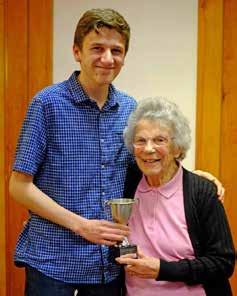
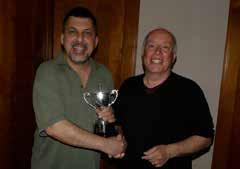
John Grant then presented the Denis Ockelton Trophy, which is awarded annually for outstanding services to Suffolk birding and its birding community. As John was detailing the reasons for this it was dawning on me that it didn’t fit the person we had put forward at the last Council meeting, before the penny finally dropped and I realised it was to be presented to me! I was totally taken aback and found out afterwards that some clever subterfuge and planning had taken place to put me off the scent. I was extremely honoured to receive the award. John detailed how I had first become a SOG member in 1985 and in recent years served on Council in various roles. These have included being Website Co-ordinator, Projects Officer, Outdoor Meetings Coordinator, Editor of The Harrier and immediate past Chair. I had also led Outdoor Meetings each year and been a section writer for the Suffolk Birds report for 10 years. I was completed lost for words and could only thank everyone and to say how honoured I was. Being 2019, this is my 40 years birding anniversary as my grandad, Felix, gave me my first pair of binoculars in 1979, although I had been interested in wildlife prior to then. So it felt special to receive this award in 2019 and was touched by those present showing much appreciation to me for this award.
The raffle raised £75 for the newly named SBG general funds. John Grant thanked those who provided prizes and everyone for attending. He also commented on the positive feedback received during the evening about the new venue.
J. Kay and A. Hood
Abstract
This short paper explores the importance and use of intertidal mudflats by Blacktailed Godwits (Limosa limosa islandica), Redshank (Tringa totanus) and Shelduck (Tadorna tadorna) between low and high tides on the Stour Estuary. Surveys were conducted in a set study site during a rising or falling tide, observing bird species present on the mudflat. It was found that there were a range of species using the mudflats during the rising or falling of the tide, with the greatest presence occurring when there was a higher percentage exposure of mud, as well as when there was freshly exposed mud.
Background
Most non-breeding waterbird data in the UK is collected by the Wetland Bird Survey (WeBS). This is a systematic count which in 2017/18 was undertaken at 2,847 sites (Frost et al., 2018). At coastal locations these surveys are conducted at high tide when mudflats are inundated. Sites are normally counted from September to March, but on the Stour estuary these counts are conducted between August and April as internationally important numbers of Blacktailed Godwits (Limosa limosa islandica) and Redshank (Tringa totanus) are present at the extremes of this period. This important information demonstrates where waterbirds roost – normally saltmarshes or inside the seawall on arable or grazing marshes. WeBS counts do not demonstrate the importance of intertidal mudflats.
The Stour Estuary is part of the Stour and Orwell Estuaries Special Protection Area
(SPA); it is the 24th most important site in the UK for wintering waterbirds. The most recent data shows that it supports a five year mean of 47,251 birds (2013/142017/18; Frost et al., 2018).
Intertidal mudflats are of critical importance for waterbirds, which includes SPA (Special Protected Area) species. Importance is highlighted around the feeding benefits that mudflats provide for Black-tailed Godwits and Dunlin (Calidris alpina; Kelsey and Hassall, 1989; Gill et al., 2007). These areas are increasingly becoming more important for feeding with the loss of salt marshes and land use changes within hinterlands (Luis et al., 2002; Ausden et al., 2010), it is therefore important that we do not lose these areas that a large number of species rely upon. It has been found that in areas where mudflats have been disturbed (e.g. an increase in water depth) waterbird densities decreased due to the drop in prey density (Smith, 1975; Goss-Custard et al., 1977; Bryant and Leng, 1975). Some SPA species have very fixed feeding ecology, including Shelduck (Tadorna tadorna), making them highly vulnerable to any habitat disturbance (Olney, 1965). Disturbance towards these species and their habitats would most likely have a severe detrimental effect (Burton et al., 2002; dit Durell et al., 2006), making intertidal mudflat regions areas that should be prioritised more highly. It has been found that even small amounts of recreational pressure can cause localised disturbance of birds (Lake, 2010); this disturbance could be as small as dog walkers on a beach scaring the birds into flight, which could
take away from the birds vital feeding time during certain tidal times (i.e. when the tidal waters have exposed fresh mud). An increasing pressure from tourism and public presence along the margins of intertidal feeding grounds has the potential to cause a large amount of disturbance if not taken into account and managed suitably.
In addition to WeBS counts, important sites across the country are also periodically counted at low water. The Stour estuary has received more low water coverage than many sites since the early-2000s as part of a mitigation and monitoring package following a capital dredge of the main shipping channel in the late 1990s.
There is an absence of any meaningful data that shows how mudflats are used by waterbirds between low and high water. The findings of this survey will provide useful information on the importance of mudflats through the tidal cycle and promote further study.
The area surveyed during this pilot study was at Mistley Walls (51.946435°N, 1.076836°E), during November and December 2018. Each survey was conducted in the same area of mudflat along the shoreline (Figure A1), to allow for accurate identification and counting of species. Only those species within the allocated study area were counted within the sightline of observers from within the designated location of the shelter.
Surveys were conducted either on a rising or falling tide. Only those tides situated during daylight hours were used to ensure constant visibility over the entire study site. Surveys started two hours after high or low tide and were carried out for three hours with counts occurring every 30 minutes; a total of seven counts per survey period.
At the start of a count every bird within the study area, excluding gulls (Laridae), were identified and counted. Binoculars and a telescope were used to aid in the accuracy of identification and counts. All counts were conducted in the same location in front of the shelter, using a standardised survey form (Table A1).
The results found in this study indicate the importance of mudflats during the rising or falling of a tide, with high numbers of birds across a range of species using the mudflats to feed (Table A2). The largest activity of species on the mudflats generally occurred when there was a higher percentage of mud exposure, with birds following the fall/rise of the tide. There were generally constant large numbers of waterfowl, whilst the numbers of waders were dictated by the water levels (Figure 2). This demonstrates the importance of rising/falling tides on water bird assemblages on mud flats, in that high numbers of birds are frequenting them regularly in order to find sufficient food to survive.
Dunlin were clearly observed in this study to be using the intertidal regions of mudflats in large numbers as the tide fell in order to feed on the freshly exposed mud (Figure 1). Redshank and Black-tailed Godwit followed this general trend as well, except that they generally stayed on the freshly exposed mudflats longer due to their difference in feeding compared to Dunlin.
Shelduck were generally consistently observed in the study area, which differs to that of other SPA species observed. This difference could be because of the channel located in the study site (used as one of the borders), providing a constant source of water, with the Shelduck, being waterfowl, located in the general vicinity of that channel. Although, Shelduck are honorary
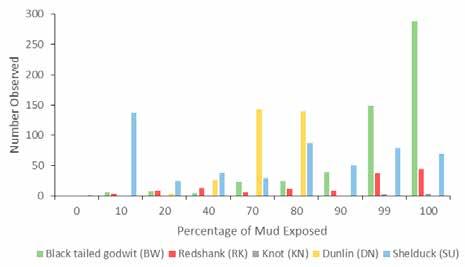
Figure 1. The total number of individual birds observed for the species of interest (Black-tailed Godwit [Limosa limosa islandica], Redshank [Tringa totanus], Knot [Calidris canutus], Dunlin [Calidris alpina], Shelduck [Tadorna tadorna]) in this pilot study, during the rising (N = 1) and falling (N = 3) tide along the Stour Estuary. The percentage of mud exposed across the study area at the start of each count (0 = 0%; 10 = 1%-10%; 20 = 11%-20%; 40 = 31%-40%; 70 = 61%-70%; 80 = 71%-80%; 90 = 81%-90%; 99 = 91%-99%; 100 = 100%).
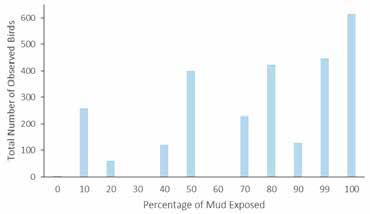
Figure 2. The total number of individual birds observed for all species during the pilot study, during the rising (N = 1) and falling (N = 3) tide along the Stour Estuary. The percentage of mud exposed across the study area at the start of each count (0 = 0%; 10 = 1%-10%; 20 = 11%-20%; 30 = 21%-30%; 40 = 31%-40%; 50 = 41%-50%; 60 = 51%-60%; 70 = 61%-70%; 80 = 71%-80%; 90 = 81%-90%; 99 = 91%-99%; 100 = 100%). For those percentages of mud exposure where no observations are present (30 and 60) the timings of counts did not coincide with that amount of exposure.
waders as they feed on hydrobia like Dunlin and Knot (Bryant and Leng, 1975), they might be using this area of mudflat during the rise/fall of the tide for other purposes than feeding. Further surveys should be carried out in other areas to determine the full influences of intertidal areas on Shelduck.
During the data collection of this study it was observed several times that whenever a person, or dog, went on the small shingle beach at the forefront of the study site that a large majority of the birds (even those next to the far channel, Figure A1) would be disturbed and take flight. This demonstrates the effects that recreational pressure could be having on waterbirds, however, studies need to be conducted in order to quantify and fully investigate these effects. Overall, this pilot study has found the beginnings of trends in waterbirds, including those on the SPA list, using freshly exposed mudflats in intertidal regions; demonstrating their importance in the survival of those species. Further data should be collected, to build upon this pilot study to accurately determine the importance that the tidal cycle has on waterbird distribution.
Study Limitations
Information was only gathered from four surveys on a readily accessible site with an easily distinguished border. At extremes of the tide inaccuracy in counts could have occurred, with birds potentially being out of
References
site on the sloping mudflat at low tide; or at high tide the edge of the study site was harder to define when determining if a bird was within or outside of the study site.
For future studies building upon this pilot, we recommend a two or more person observer team to ensure accuracy of counts (especially during high traffic times), as well as the need for a telescope to ensure all birds are correctly identified and counted. It should also be noted that the freshwater outlet area attracts a high quantity of birds that cannot always be seen from the observer position, so the observer should ensure they check the edge of the channel where it meets the shore.
For small scale data collection the study site and methodology for data collection is adequate, and trends of bird movement and usage of the intertidal mudflats can be observed. However, to accurately determine and use the project at a large scale, either a larger study site or multiple sites of the same size should be implemented to get an accurate picture of how the mudflats are being used across the Stour.
Acknowledgements
Thanks to Mark Nowers at the RSPB Stour Office for the conception of and guidance on this study, along with the loaning of a telescope to be used for it. Thanks also to the rest of the team at the RSPB office.
Ausden, M., Rowlands, A., Sutherland, W., et al. (2010). Diet of breeding lapwing Vanellus vanellus and redshank Tringa tetanus on coastal grazing marsh and implications for habitat management. Bird Study, 50, 285-293.
Bryant, D. and Leng, J. (1975). Feeding distribution and behaviour of shelduck in relation to food supply. Wildfowl, 26, 20-30.
Burton, N., Rehfisch, M. and Clark, N. (2002). Impacts of disturbance from construction work on the densities and feeding behaviour of waterbirds using the intertidal mudflats of Cardiff Bay, UK. Environmental Management, 30, 865-871.
dit Durell, S., Stillman, R, Caldow, R., et al. (2006). Modelling the effect of environmental change on shorebirds: a case study on Poole Harbour, UK. Biological Conservation, 131, 459-473.
Frost, T. M., Austin, G. E., Calbrade, N. A., et al. (2019). Waterbirds in the UK 2017/18: The Wetland Bird Survey. BTO, RSPB and JNCC, in association with WWT. British Trust for Ornithology, Thetford.
Gill, J., Langston, R., Alves, J., et al. (2007). Contrasting trends in two black-tailed godwit populations: a review of causes and recommendations. Wader Study Group Bulletin, 114, 43-50.
Goss-Custard, J., Kay, D. and Blindell, R. (1977). The density of migratory and overwintering redshank, Tringa tetanus (L.) and curlew, Numenius arquata (L.), in relation to the density and their prey in southeast England. Estuarine and Coastal Marine Science, 5, 497-510.
Kelsey, M. and Hassall, M. (1989). Patch selection by dunlin on a heterogeneous mudflat. Ornis Scandinavica, 20, 250-254.
Lake, S. (2010). An assessment of recreational impacts at Dawlish Warren SAC. Footprint Ecology. Luis, A., Goss-Custard, J. and Moreira, M. (2002). The feeding strategy of the dunlin (Calidris alpina L.) in artificial and non-artificial habitats at Ria de Aveiro, Portugal. Nutrients and Eutrophication in Estuaries and Coastal Waters, 335-343.
Olney, P. (1965). The food and feeding habits of shelduck (Tadorna tadorna). Ibis, 107, 527-532.
Smith, P. (1975). A study on the winter feeding ecology and behaviour of the bar-tailed godwit (Limosa lapponica). Doctoral Thesis, Durham University.
Appendix
Figure A1. Study area of the inter-tidal mudflat counts at Mistley Walls. Counts were conducted from the same location of the shelter, with a barrier on the eastern side of the study area ensuring consistency.
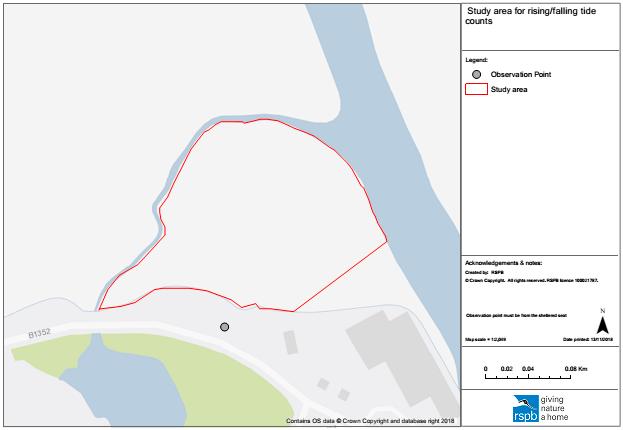
Table A1. Standardised survey form to be used for each data collection period.
Date (dd/mm/yy): Time of low / high water at Mistley: Surveyor name(s):
Start time: Rising / falling tide (delete as appropriate)
End time: Weather conditions: (rain, wind speed & direction, visibility)
Additional Information:
Time:
Estimate % Mud Exposed
Mute Swan
Dark-bellied Brent Goose
Shelduck
Little Egret
Wigeon
Pintail
Black tailed Godwit
Redshank Knot
Dunlin
Oystercatcher
Curlew
Cormorant
Canada Goose
Greylag Goose
Table A2. The total number of individual birds observed across all species during the pilot study, during the rising (N = 1) and falling (N = 3) tide along the Stour Estuary. The percentage of mud exposed across the study area at the start of each count (0 = 0%; 10 = 1%-10%; 20 = 11%-20%; 30 = 21%-30%; 40 = 31%-40%; 50 = 41%-50%; 60 = 51%-60%; 70 = 61%-70%; 80 = 71%-80%; 90 = 81%-90%; 99 = 91%-99%; 100 = 100%). For those percentages of mud exposure where no observations are present (30 and 60) the timings of counts did not coincide with that amount of exposure.
Brent Goose (Branta bernicla)
(Anas Penelope)
(Calidris alpina)
Eddie Marsh
The quarterly records section gives a snapshot of birds seen within the county during the period and is compiled by Eddie Marsh, predominately from data received by Suffolk BINS. All scarce and rare birds are subject to submission and acceptance by either SORC or BBRC. Updated lists on Accepted and Outstanding Records for 2017 and 2018 can be found on the SBG website - http://www. suffolkbirdgroup.org/bird-recording.
Weather: May seemed an indifferent month weather-wise; we had 15 days where no rain fell and 11 daytime temperatures reaching
18C plus the month’s high temperature was 23C on the 26th. Nighttime temperatures only produced 2 nights in double figures these being 10C on the 25th and 11C on the 30th, so generally chilly nights. The lowest temperature of the month was 1C on the 6th. Rain fell on 16 days of the month, but only 2 days produced double figures, these being the 8th where 31mm fell and the 28th where 10mm fell. Actual rainfall being 71mm, Actual High being 16C and Actual Low being 6C.
May Birds 2019: Plenty of common summer visitors arrive now in May, with lots of sightings reported to BINS, just too many species to be listed as individual sightings.
Lots of Garganey reports throughout Suffolk with the highest count of three drakes and one female at Hollesley RSPB. Other summer migrants were Hobby, Little Ringed Plover, Sandwich Tern, Common Tern, Swifts, Swallow, House Martin, Sand Martin, Yellow Wagtail, White Wagtail, Nightingale, Black Redstart, Common Redstart, Grasshopper Warbler, Blackcap, Whitethroat, Sedge Warbler and Reed Warbler, Willow Warbler, Chiffchaff, Firecrest, Whinchat, Turtle Dove and Cuckoo.
Great Egret is a common species now in Suffolk so we will no longer list all sightings although we maybe include high counts in the future. Plenty of Spoonbills around again this month; the highest count came from Hollesley RSPB with eight on the 30th. Offshore at Minsmere RSPB a 100 flock of Common Scoters noted on the 1st. A late Great Northern Diver was seen offshore at LBO on the 7th. Ringtail Hen Harriers were recorded at Aldeburgh Town Marshes on the 5th, Hollesley RSPB on the 14th and finally Shingle Street on the 25th with a cracking male on the 25th at Hollesley. Good numbers of Osprey sightings, all reports of single birds; Minsmere RSPB on the 1st, 3rd and 16th, Hazlewood on the 4th and 16th, Martlesham Creek on the 5th, North Warren RSPB on the 7th and 9th, Woodbridge over the Town on the 9th, Aldeburgh on the 11th and Town Marshes on the 30th and Bawdsey Marshes on the 27th.
A Little Stint was reported from Minsmere RSPB on the 10th, then two on the 11th and one on the 31st, at Hazlewood SWT two adults on the 17th. A little flurry of Temminck’s Stint with one at Trimley SWT on the 8th and 9th, two were seen on the 10th and one found on the pool viewed from Washland Viewpoint at Lakenheath RSPB on the 24th. Wood Sandpiper sightings came from Hollesley RSPB with one on the 3rd, 5th, two on the 14th and three on the 17th, three
at Herringfleet Marshes on the 5th, five on the 7th and one on the 14th and 15th, two Botany RSPB on the 7th and 10th, one Trimley SWT on the 7th, three on the 12th and one on the 16th, one on Tinkers on the 9th and 23rd, one Lakenheath RSPB on the 10th and finally one at Minsmere RSPB on the 31st. At Hazlewood SWT 11 Sanderlings reported on the 17th. A nice summer-plumaged Curlew Sandpiper at Tinkers Marsh on the 24th with another two on the 26th at Hazlewood SWT. A few Little Gulls reported passing through north this month with a high count LBO with 20 north on the 5th. A nice trickle of Arctic Terns during the month with the highest count of 40 passing through Alton Water on the 7th. May was also good for Black Terns, Alton Water again with a high count of 10 on the 7th and 20 off LBO on the 8th. At LBO two Pomarine Skuas were noted offshore on the 2nd and another on the 22nd going north off Minsmere RSPB. On the 5th an Arctic Skua was going north off LBO. Still a few reports of Short-eared Owls along the coast this month.
It’s very sad but the only Tree Pipit reported into BINS this month was from LBO on the 26th, I remember through the 90’s it was no trouble to find this lovely pipit in Suffolk. Ring Ouzel passage slowed down in May with one Minsmere RSPB on the 1st, one at Westleton on the 2nd and one on the 3rd and 4th at the caravan park at Lowestoft and one at Corton Old Sewage Works on the 10th. The first Spotted Flycatcher arrived at LBO on the 3rd. Nice to see a handful of Pied Flycatcher sightings in May; a single at LBO on the 2nd, a female at Maltsters Score, Lowestoft on the 9th, at the same location a nice male on the 10th and 11th, a female at Corton Old Sewage Works on the 18th and another single bird on the disused railway line at Corton on the 19th.
Scarcer May Sightings: At Great Livermere Lake on the 22nd a drake Ring-necked Duck
bearing a metal ring was found at mid-day. The bird had also been seen at Bowers Marsh and has a long record of sightings from Abberton Reservoir Essex. It remained until the 27th. On the 19th a Quail was reported singing throughout the afternoon on the race course at Newmarket. A male Little Bittern was found on the Nunnery Lakes on the Suffolk/Norfolk border on the 12th and showed well. It showed again on the evening of the 13th and its last appearance was from the BTO Nunnery Lakes viewable from Barnhamcross Common on the 14th. A Glossy Ibis was at North Warren early morning then over the Thorpeness Meare at 09.46hrs, presumed the same bird at Herringfleet Marshes late afternoon on the 18th. Seems a bit odd as it was sighted again at North Warren on the evening of the 19th; therefore possibly two birds or the same bird returning?
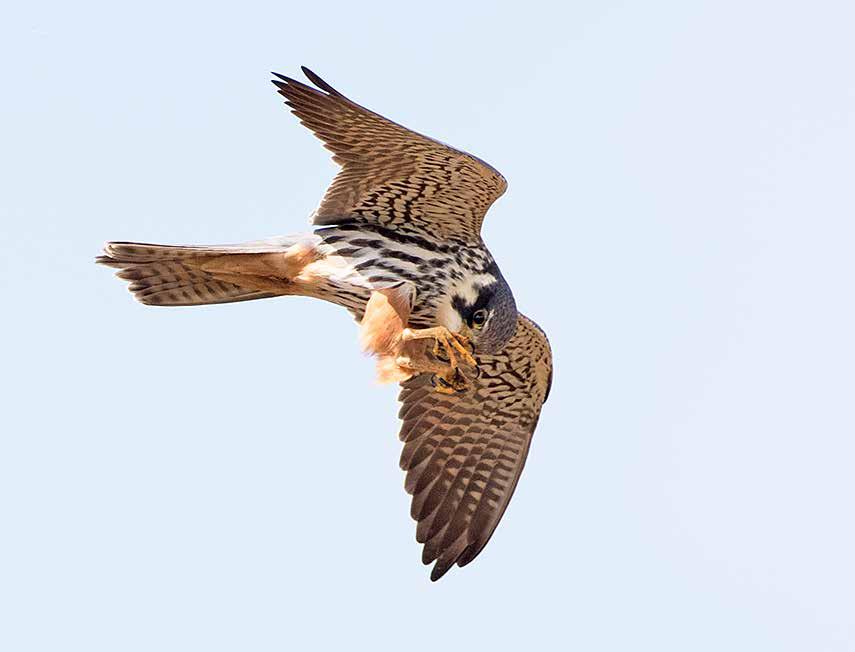
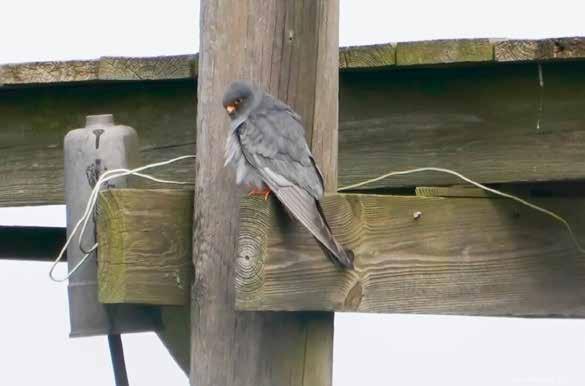
It was last seen at North Warren on the 22nd. The White-tailed Eagle was seen again in May and was sighted at Benacre Broad on the 1st then flew NE out to sea. A Black Kite was seen going south over Herringfleet Marshes on the 7th. Honey Buzzards were reported on the 1st from Benacre Broad, one over Herringfleet Marshes on the 5th and on the 31st and one at Westleton circling northeast over the rutting fields where the heath meets the common. A ringtail Montagu’s Harrier was seen over Trimley Marshes SWT on the 27th and near the Orwell Bridge on the 28th. The cracking male Red-footed Falcon remained around the landing lights at the end of the runway at Woodbridge Air Base between the 1st and 6th. It was still being viewed from the Rendlesham Forestry Commission Road and where it continued to give excellent views.
Two Common Cranes over Southwold on the 1st and 2nd and a single bird over Covehithe also on the 2nd. There were seven on the 9th over Carlton Colville, also five Westwood Marsh and singles over Eastbridge, Thorpeness and Aldeburgh Town Marshes; possibly all the same birds? A male Kentish Plover was on Breydon Water on the 17th only. A Dotterel was found on the beach opposite Kessingland Caravan Park at 20.15hrs on the 21st and remained till dusk. It was still there at 06.19hrs on the 22nd, when it flew off NW only to return at southern end of Denes at around 07.30hrs, then no further reports. On the 16th a Roseate Tern was noted going north off Dunwich Cliffs and another bird was seen on south scrape Minsmere RSPB on the 30th.
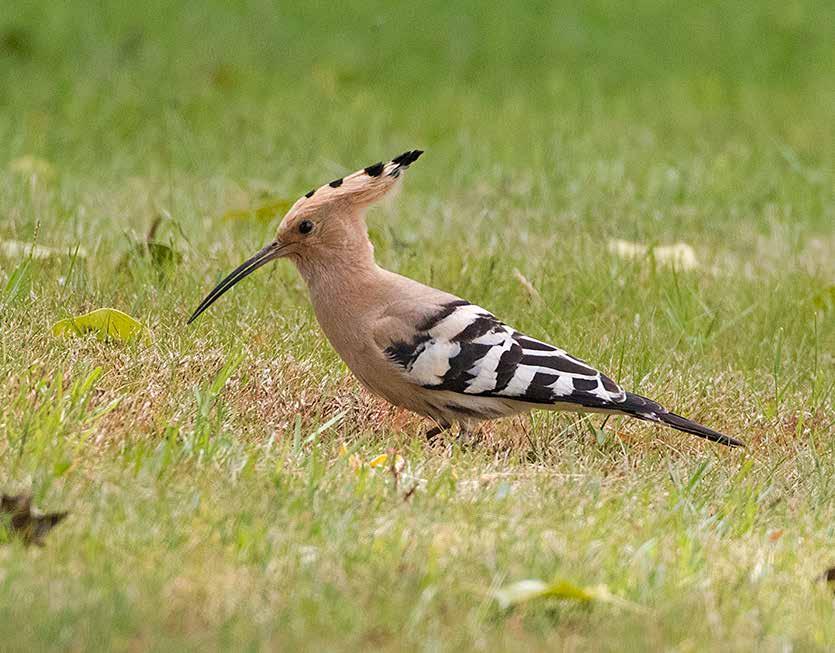
On the 22nd a Bee-eater was heard going south over Lowestoft North Denes at 07.20hrs. On the 18th a Alpine Swift was reported flying over Felixstowe Town. A nice Hoopoe was found at Aldringham Walks in the garden of the Almhouse on the 31st. Two Red-rumped Swallows were reported low, south over the rugby pitch and towards the north-east corner of Southwold Town Marsh on the 2nd. Along the Butts at LBO a female Bluethroat was found late morning on the 20th, it remained till early evening though very elusive at times. An Eastern Stonechat species arrived early evening at Southwold on the northern footpath of North Marsh on the 14th. A Subalpine Warbler (probable western) was trapped and ringed on Orfordness National Trust reserve on the
7th. Savi’s Warbler still present this month from Island Mere, Minsmere with a single singing and occasionally seen until the 30th, then on the 31st two birds heard singing again. At Carlton Marshes SWT one was heard and seen on the 11th and was last reported on the 21st. Then a fourth one made an appearance at Trimley SWT reserve on the 16th, but no sign on the 17th. Only two Wood Warbler sightings in Suffolk this month, one at LBO on the 20th and one near Gunton Hall on the 23rd. Suffolk’s third record of Iberian Chiffchaff appeared singing below the Dunwich Coast Guard Cottages in silver
birches by the track that leads to the beach on the 27th and was to remain singing and showing well to the 31st.
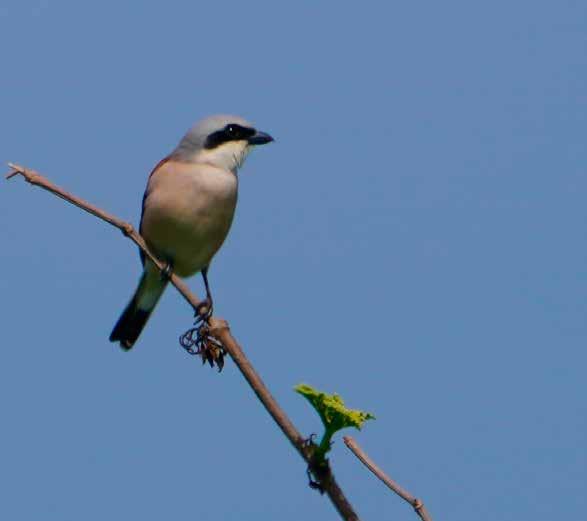
A cracking male Red-backed Shrike was found just north of Kessingland Sluice early morning of the 23rd and remained all day. At Minsmere RSPB a nice Golden Oriole was found singing along the approach road to the reserve on the 27th. It was heard again on the 28th but only prior to 06.00hrs. What a shame this gorgeous bird no longer breeds in Suffolk as it’s sadly missed. A seasonal Serin flying over LBO at 09.50 on the 9th, then relocated at southern end of common where
it remained till 10.30hrs when it flew towards the dock complex. At Southwold a Common Rosefinch was heard singing from the sheep paddocks at Gun Hill prior to 08.30hrs only on the 5th. Chaos on the 31st when a bunting species was seen briefly in the dunes near the public screen platform at RSPB Minsmere at around 12.10hrs before it flew south. It was thought to be an Ortolan Bunting and word soon got out and Suffolk birders who were on site searched hard to relocate the bird with no success and still no sign by late afternoon. Then around 18.24hrs a Minsmere volunteer re-found the bird in gorse bushes near the sluice where he obtained pictures, but sadly no news came out until after dark. That evening it was identified from the photos on the internet as a female Cretzschmar’s Bunting; this being a first for Suffolk and the UK mainland. From what I have gathered no serious Suffolk listers or twitchers managed to see the bird and they were all sweating it would still be in the dunes the next day. Raven sightings reported this month include one over Sutton Hoo on the 2nd, one Bredfield Road, Woodbridge heading east mid-afternoon on the 10th, one north over Great Blakenham on the 11th and one northeast over Elmsett on the 13th.
Weather: June was a very wet month, but also a very warm one. We had 14 days of 20C or above temperatures and the highest for June was 27C on the 2nd and 29th. The month produced 7 nights of single figure temperatures with lowest being 7C on the 9th and 8C on the 6th, 8th and 21st. Rainfall occurred on 14 days with double figures on 3 days; 32mm on the 10th, 15mm on the 11th and 17mm on the 25th and there were also five days where between 8mm and 9mm fell. The Actual High was 20C with the Norm 18C, the Actual Low 11C with the Norm 10C and the Actual Rainfall 128mm with the Norm 60mm.
June Birds 2019: Garganey sightings continued much as they were in the May sightings list. Lots of Spoonbill around again this month with too many sightings to list every one; high counts came from Hollesley RSPB with eight on the 4th, nine on the 5th and seven on the 10th. There was also an odd inland record of one flying east over Denston Park, Newmarket on the 11th. Osprey sightings included one over Hazlewood on the 13th and one over Botany Marshes RSPB flying east on the 15th. Wood Sandpiper sightings came from Hollesley RSPB with two on the 19th and one on the 20th. The only Curlew Sandpiper sighting this month came from Minsmere RSPB with one on the 7th and 8th only. There was only one record of Caspian Gull reported into BINS, this being from Minsmere RSPB on the 10th. On the Alde Estuary on the 13th five adult Little Gulls on Town Marshes and two first summer birds at Benacre on the 28th. Only one Arctic Tern reported, a 1st summer at Minsmere RSPB South Scrape on the 14th. In Nelson Road area of Ipswich four Ringnecked Parakeets were observed on the 20th. A singing Firecrest was found in Tesco car park at Saxmundham on the 22nd.
Scarcer June Sightings: At Southwold on the 8th a Cattle Egret was seen to fly west along the harbour at 21.00hrs. A possible Purple Heron was seen from Dunwich Coastguard Cottages on the 9th and appeared to land in the marshes. A Honey Buzzard was reported being mobbed by a Crow over Westleton Heath on the 26th and another bird reported over Black Boys Meadow, Beccles on the 29th. On the 5th a ringtail Montagu’s Harrier, present apparently for its second day at Falkenham Marshes and Kingsfleet area and it was present again on the 6th. Then on the 9th probably the same bird seen at Shingle Street at 11.20hrs, then later seen flying south over Orfordness NT, then sighted over Havergate RSPB at 14.48hrs.
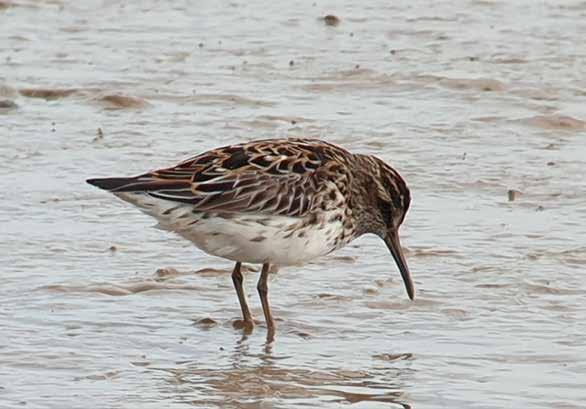
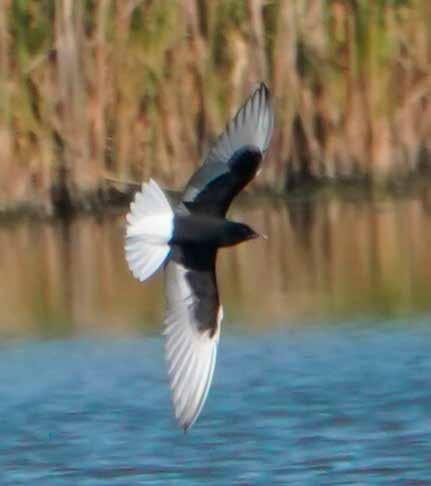
On the 1st a Broad-billed Sandpiper was seen to fly in off at Minsmere RSPB, it landed on Lucky Pool briefly and then moved to Chapel Pool at 06.40hrs where it remained till 08.39hrs, it then flew high south. At 09.49hrs the adult Broad-billed Sandpiper was seen on the river from the seawall at Hollesley RSPB. Then later that morning it was re-located on Orfordness NT reserve on the airfield at 11.45hrs. On the 2nd it was present on the river north of Orford Quay on the Orfordness side of the river and then later on the airfield on the NT Reserve before returning back onto the river early evening. On the 3rd it frequented the river north of the quay and the airfield as it had done the previous day. On the 29th a cracking full summer plumaged White-winged Black Tern arrived at Minsmere RSPB on South Scrape and it was generally very mobile but remained all day and it remained until midafternoon of the 30th.
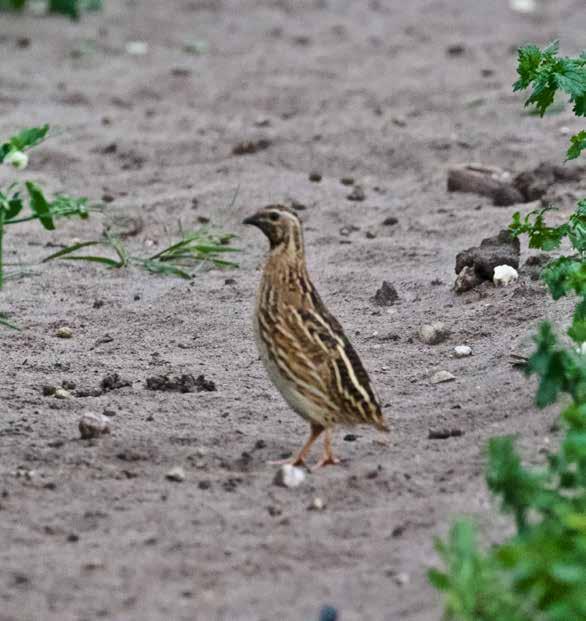
A good summer for Quails in Suffolk; on the 7th one was singing from a meadow along the footpath leading to Hazlewood Marshes SWT reserve. On the 9th and 10th it was heard and seen very well along the path from the last cottage with a good photograph taken. On the 11th it was again seen and heard as it was commuting between the meadow and
pea field then not again until the 16th when two birds were reported on the common and then one on the 17th. A bird was also flushed along Aldringham Walks on the 9th and one singing on old railway track at North Warren RSPB on the 18th and 21st and the last report being a singing bird at Lakenheath RSPB by Joist Fen on the 20th.
On the 24th two Bee-eaters south over LBO at 10.25hrs and what were presumed the same two birds were noted over Dungeness Kent at 15.50hrs. On the 29th another record of one heard over Minsmere RSPB visitor centre and another heard at Corton at 15.35hrs. There were also two seen going south over Walberswick Common at 12.20hrs and probably the same two birds north-east over Aldeburgh mid-afternoon. Another nice Hoopoe was found this month at the sea watching hide at LBO on the 23rd but only remained briefly when it was seen flying off high south towards the Dovercourt area in Essex.
The two Savi’s Warbler remained at Island Mere, Minsmere and then only one heard from the 15th until the end of the month. There was a report of a single bird at Carlton Marshes SWT on the 29th. On the 5th a Marsh Warbler was singing Oulton Marshes SWT from an area of no general access for just the one day. On the 6th another or the
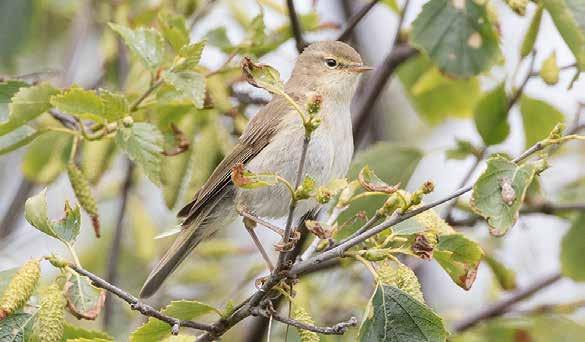
same bird was singing south of the railway line at Fishers Row, Oulton. Another rare Warbler was found on the 7th, this being a Greenish Warbler at Bond’s Meadow, Oulton Broad. Suffolk’s only third record of Iberian Chiffchaff continued singing and showing well into June below the Dunwich Coast Guard Cottages at Centenary Pond from the 1st to the 19th at least. Another nice male Red-backed Shrike was found at Westleton Heath in the afternoon of the 15th and was viewable west of the north-east car park. On the 9th a female Woodchat Shrike was found mid-morning in bushes 200yds south of the Heathlands Caravan Park, Kessingland where it remained until mid-afternoon of the 10th, then no further sightings. The only Raven sightings were three seen over Pipps Ford Gravel Pits on the 25th.
Note: after an intense search by Suffolk’s keenest birders on the 1st the Cretzschmar’s Bunting could not be re-found; a shame such a mega bird should slip through the net!
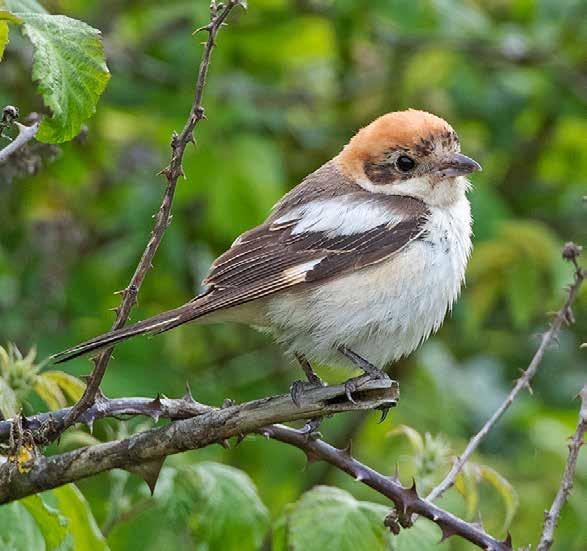
Woodchat Shrike
Weather: July became a very hot month especially towards the end of the month when temperatures reached 30C for a couple of days. There were 19 days that were totally dry during the month and 25 days where temperatures were 20C or above and the highest for the month of 34C was on the 25th. There were 12 days of rain, with three days being double figures, 16mm on the 20th, 13mm on the 27th and 22mm on the 28th. The highest night-time temperature
was 21C on the 25th and lowest being 8C on the 4th. Actual High was 23C the Norm 21C, Actual Low 13C the Norm 12C and rainfall 81mm the Norm 46mm, so nearly double the normal July total.
July Birds 2019: Garganey sightings at Minsmere were a juvenile on the 23rd and a pair seen to come in off on the 28th. Still lots of Spoonbills around again during July, too many sightings to list them all but the highest count came from Havergate with 32 counted on the 20th.
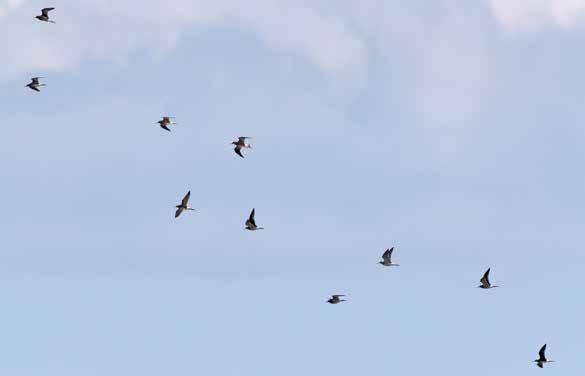
It’s been a fantastic July for Wood Sandpiper sightings and it must be one of the best that Suffolk has had in recent years. There was a nice trickle from the beginning of the month but it really took off from Saturday 27th when there was some good disturbance in the weather. The highest counts from a selection of sites are as follows: 23 at Minsmere on the 30th, 17 at Boyton on the 28th, 13 on the Alde Estuary on the 31st, 11 at Herringfleet Marshes on the 29th, up to 11 at Carlton on the 28th, nine at Dunwich shore pools on the 30th, four at Covehithe Broad on the 28th and three at Trimley SWT on the 31st. Adding up the sightings reported into BINS for every day of July my total came to 185 Wood Sandpipers reported in for the month and Lee did a day high count of 53 on the 30th; what an amazing Wood Sandpiper feast for Suffolk! Some Curlew Sandpipers on passage this month with high counts of four summer-plumaged birds at Hazelwood Marshes on the 20th, seven on Havergate RSPB also the 20th, nine at Minsmere on the
28th and five at Benacre Broad on the 31st. A few Little Stint sightings at Minsmere RSPB with three on the 25th the largest group and the only other report was one at Covehithe on the 28th.
An increase of Little Gulls throughout July with double-figure counts reached from two Suffolk locations; up to 42 at Benacre Broad on the 29th and 13 at Minsmere on the 6th. The only Arctic Tern sighting for the month came from Benacre on the 28th. Sightings of Black Terns were two at Trimley SWT on the 24th, two at Benacre on the 28th and 18 distantly offshore at Southwold on the 28th. There was just one Short-eared Owl record for the month, one at Walberswick on the 6th. Some passerine migration noted at LBO with a Black Redstart on the 16th, Common Redstart from the 28th to the 31st at least and on the last day of the month one Pied Flycatcher trapped and ringed with another found in the sluice bushes at Minsmere the same day.
Scarcer July Sightings: A Purple Heron was seen from Bittern Hide at Minsmere on the 15th and then again on the 20th flying towards the Konik Field. On the Blyth Estuary, viewed from the Hen Reed Beds, two Common Cranes were seen on the 19th and 20th with a single bird seen from Tinkers Marsh on the 22nd.
At Breydon Water on the 18th an adult Pacific Golden Plover was found early morning along the South Wall before it flew north-west towards Berney Marshes before returning again in the evening when it flew to a field south-west of the metal wind pump. It was viewable again from the South Wall on the evening of the 19th and remained to show on and off in this general area up to the 22nd. Another adult Pacific Golden Plover was found at Hollesley RSPB at 09.25hrs on the 19th, before disappearing into deep vegetation and not seen again despite several birders searching into the afternoon. On the 10th an unexpected Marsh Sandpiper was found on East Scrape at Minsmere RSPB around 15.19hrs before
relocating to a pool behind the old ruined chapel and remained there for the rest of the day and was present there the next day also. It was good to see reports of the Limosa race of Black-tailed Godwits with a juvenile at Minsmere and two juveniles at Boyton RSPB with both reported on the 25th.
A Quail was flushed from the Kessingland Dunes opposite the Heathlands on the 2nd and another seen at Shingle Street also the 2nd. One was heard singing along the Lark Valley footpath at West Stow on the 7th with two singing along the Icknield Way at West Stow on the 8th. On Orfordness on the 19th a second-year colour-ringed Baltic Gull was noted. There were only two reports of the long staying Savi’s Warbler this month from Bittern Hide, RSPB Minsmere, the bird was singing intermittently on the 9th and 10th only. A female Red-backed Shrike was found on Havergate RSPB on the 3rd. Raven sightings reported were three seen over Hintlesham Great Wood on the 8th and two over Stowmarket on the 29th.
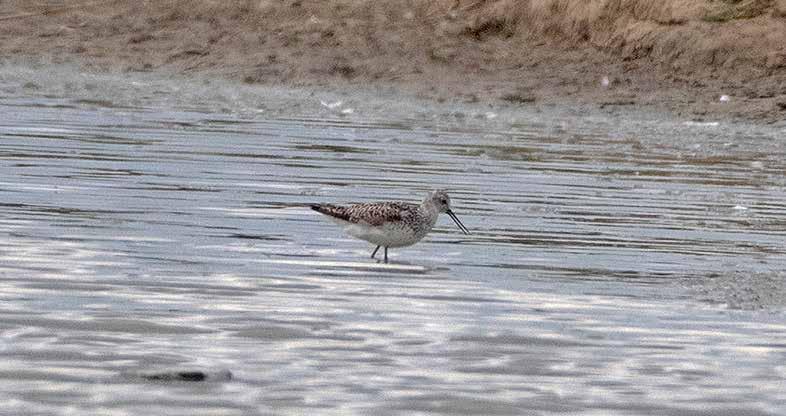
Marsh Sandpiper
We still have a number of field trips remaining in the year plus some fascinating indoor talks of which we hope to you at.
Thursday, September 26th
‘BIRDING IN BHUTAN & SNOW LEOPARDS IN LADAKH’
Andrew Raine
Please note venue: The Cedars Hotel, Needham Road, Stowmarket, IP14 2AJ
Saturday, October 19th
& Sunday, October 20th
ORFORDNESS (NATIONAL TRUST) RESERVE
Some places available to stay overnight on Saturday in self-catering dormitories. Current entrance fees will apply.
Map Ref: TM425495.
For further details and to reserve your place, contact Gi Grieco. Tel. 07951 482547.
Leaders: Gi Grieco and Eddie Bathgate.
Saturday, October 26th
AUTUMN OPEN MORNING AT LANDGUARD BIRD OBSERVATORY
Meet at main car park, View Point Road, Felixstowe at 8.00 am.
Map Ref: TM284319.
Leader: Nigel Odin. For details contact Gi Grieco. Tel. 07951 482547.
Thursday, October 31st
‘BIRDS OF KENYA’
Ellie & Dan Zantboer
University of Suffolk, Waterfront Building, Neptune Quay, Ipswich IP4 1QJ

Sunday, November 10th
DINGLE MARSHES, DUNWICH
Meet at Dunwich beach car park at 8.30 am.
Map Ref: TM479707.
Leader: Gi Grieco. Tel. 07951 482547.
Thursday, November 28th
‘ANOTHER TIME, ANOTHER PLACE: BIRDS IN THE ANCIENT WORLD’
Jeremy Mynott
University of Suffolk, Waterfront Building, Neptune Quay, Ipswich IP4 1QJ
Saturday, December 7th
ABBERTON RESERVOIR
Meet at visitor centre car park at 9.00 am.
Map Ref: TL965179.
Leader: Ashley Gooding. Tel. 07808 044611.
Saturday, December 14th
MARTLESHAM CREEK
Meet at Martlesham church car park, at 9.30 am.
(Long walk possible).
Map Ref: TM261469.
Leader: Steve Fryett. Tel. 01394 383413.
Saturday, May 4th 2019
This relatively small reserve run by Essex Wildlife Trust is a gem at any time of year and more so now with the intertidal area adding extra interest as a feeding and roosting area for wading birds. At this time of year it is the scrubby woodland that is the focus as it is very attractive for nesting warblers and good numbers of Nightingale.
Nine others were already in the car park when I arrived with Nightingale being the first bird I heard as I drove down the entrance track. Once we had sorted ourselves out the main conversation was about how cold it was, 6 degrees with a strong north-west wind and the goodies that were at Abberton Reservoir, more of which later. I had already
missed a Cuckoo that was heard from the car park and so without further ado we set off passing, the large pond where there were four Little Egrets roosting in the trees with several Chiffchaff singing and a few Swallows overhead. Due to the cold windy weather the warblers were keeping their heads down but it was not stopping them from singing and as we walked along a few of the many rides we were treated to Blackcap, Chiffchaff, Lesser Whitethroat and Whitethroat in addition to many Nightingales; later we were told at the reception that there were at least twenty on the reserve. Surprisingly we did not hear Willow Warbler.
Entering the hide overlooking the managed retreat, the tide was out and it looked as though it was the preserve of gulls. On closer inspection though we did start to find some waders, a flock of ten Black-tailed Godwits flew up river and three Oystercatchers and a single Curlew were busy probing the mud. A single Whimbrel flew in with a small snail in its bill with three Black-headed Gulls in hot pursuit, while at least two more Whimbrel were located showing the distinctive head pattern through the ‘scope. The tide was now on the move and the creeks were slowly filling up; thirteen Bar-tailed Godwits flew up river with another two settling on the mud including one in full summer plumage. A female Marsh Harrier was located some way off, quartering the salt marsh as nine Common Terns moved up river. Having waited for one of the many squalls of the day to pass over we made our way back to the car park encountering Reed Warbler and a pair of duelling male Lesser Whitethroats singing against each other. Other wildlife of note were Peacock, Green Hairstreak, Small Copper and Green-veined White butterflies, Gorse Shield Bug and an Adder seen by Ivan.
After lunch we drove to Abberton Reservoir and managed to squeeze ourselves into the overflowing car park as there were some
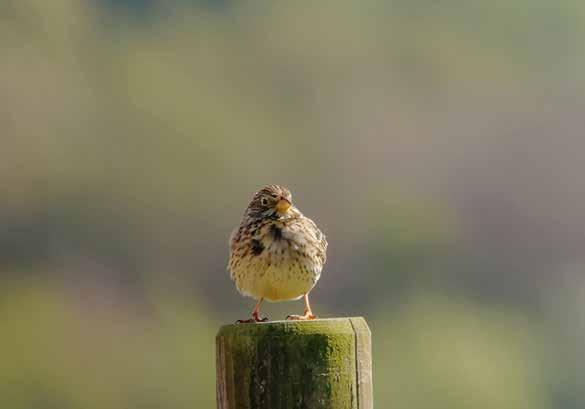
good rarities to be seen. Once through reception we literally battled our way to Island hide, such was the strength of the ice cold wind and rain. The hide was heaving and so after a while we decided to find our quarry, Bonaparte’s Gull, out in the elements. We were soon put on to the bird by a fellow birder but it was a long way off and viewing conditions poor. We then moved around the reservoir and found a relatively sheltered spot and relocated the Bonaparte’s Gull feeding distantly amongst a large group of Black-headed Gulls. The bird was very active and at times difficult to identify but the light was good and the ‘bubble gum’ pink legs, dark bill and hood and paler underwing could be picked out on this first summer bird. We then turned our attention to the many terns, again distantly feeding over the very rough water, in order to relocate the White-winged Terns we had briefly seen from Island hide. We found not one but five superb summerplumaged adults amongst the Common Terns but could not find any of the Arctic Terns reported in the morning. The spectacle did not end there, there were hundreds, if not thousands, of hirundines and Swifts very low over the surface of the water feeding, probably forced down by the heavy rains. We then headed out along the Layer de la Haye causeway finding two Greenshank, two Little Ringed Plover, six Yellow Wagtail, many Tufted Duck and Great Crested Grebe. At Billets Farm viewing screen after another heavy shower there were many Swallows drying off in the bank-side trees as was a Hare along a track and we had a male Corn Bunting giving ‘scope filling views singing from a nearby fence post. As we walked back to the cars a Whimbrel was heard calling very high overhead.
Many thanks to all who attended, in at times challenging conditions, but we were very well rewarded for our efforts.
David Walsh
14 SBG members met at Eastbridge at 7am for our annual clockwise walk around Minsmere. A Cuckoo was in fine voice as we set off through the woods, where we noted Marsh Tit and Treecreeper before making haste for a more open area. As last year, it was good to hear a Garden Warbler singing at close range and compare it with Blackcap. A Bittern was booming in the distance. We then had a magical hour watching a pair of Stone-curlews and their two chicks, a point blank Woodlark and a singing Redstart perched high in a tree; we heard two others as we headed on through the woods, with several of the group pleased to listen to the song and try to learn it.
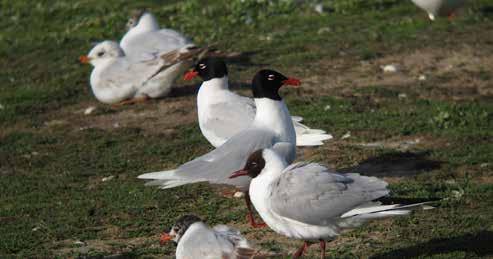
Dartford Warblers obliged on the heath before we made a pit stop at the Coastguard Cottages. The Common Scoter flock offshore numbered over 100 but was distant. Despite having spent longer than usual on the first part of our walk we still arrived at East Hide before it got busy. The first of two Little Gulls was feeding in front of us, then we watched the rather gory sight of an adult Mediterranean Gull eating a Black-headed
Gull chick. Migrant waders were thin on the ground, although on south scrape we found three Knots and totted up a grand total of four Dunlins. We were pleased to see four Little Terns although perhaps unfortunate not to see the bigger numbers present both the previous day and subsequently.
The weather turned from bright and calm to dull and windy all too quickly, which hampered our efforts to see butterflies and dragonflies; Small Coppers were scant reward. The final leg of our stroll, from the sluice to Eastbridge, was very quiet, although we were pleased to see Hobbies. The flora took centre stage for some, with Gi patiently identifying the species we saw with species such as Common Stork’s-bill, Dove’s-foot Crane’s-bill and Wild Radish. We arrived back at our vehicles around 12.15pm with the Cuckoo perched up for us to see.
As always, the walk was enjoyable and productive, with an impressive species total. Those who lingered at Minsmere for the afternoon were privileged to see two Black Terns feeding over east scrape.
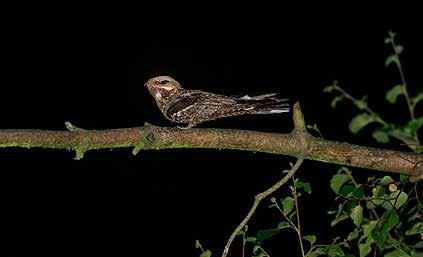
Leader: Paul Gowen
Fifteen members joined the leader on the annual Nightjar evening at Minsmere. Again it was good to see some new faces on a meeting that dates back over 30 years. The weather preceding the meeting had been a week of unseasonably heavy rain and wind so a cool but sunny evening bode well for the trip. The pre-amble before the Nightjars was a slow walk to Island Mere and Bittern hides. The Savi’s Warbler(s) had been quiet all week so the calls from across the Mere were a pleasant surprise to those whose hearing was able to pick up the faint “reeling”. After much scanning of the small bushes a bird was spotted singing and flitting between the bushes giving those that could not hear it good views. In addition to the warbler both Bittern and Barn Owl were seen before we
moved on to the heath for the Nightjars. The SBG members were joined by six visitors from London who had made earlier contact asking if they could come along. The walk up the slope to the heath was uneventful but as soon as we reached the designated watching spot a pair of Nightjars flew over and around us with the male making his sharp “coo-ik” calls and clapping his wings. This was the prelude to 15 to 20 minutes of calls and views of at least two pairs and another bird to the delight of all in attendance. It was the best views at this site for many years and the SBG members and the visitors from London were able to walk back to their cars in relative daylight pleased with good views and mosquito free.
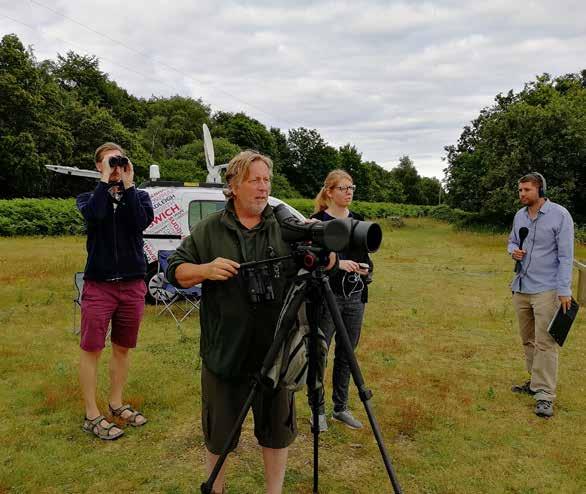
I wonder how many of you were tuning into BBC Radio Suffolk on the evening of the 3rd July listening to Jon Wright’s live broadcast from Minsmere with Gi Grieco and Chris Keeling - two of Suffolk’s newest DJ’s. I can’t speak for Gi but when we arrived at the Whin Hill viewpoint I was feeling something like mild stage fright tending to full flight. I had rehearsed what I might say on air and what questions might we
be asked in a vain and hopeless attempt to prepare myself and continued to do so as we drove to Minsmere after meeting Gi at Martlesham. How I envied Gi, his stoic calm and his choice of music for the intervals between the live chat. We had been asked to submit a selection of our musical tastes which is probably as close as you can come to baring your soul on live radio.
On arrival we were met by Nanette Aldous, BBC Radio Suffolk Assistant Editor who quickly put us at our ease before introducing us to Jon Wright the host of the show and Ian Barthorpe the RSPB’s Visitor Experience Officer at Minsmere who would be joining us at the view point. Jon provided an outline for the evening and then we were away as Jon launched straight into the introductions. Almost immediately a Chiffchaff and a Blackcap sang briefly from the woodland prompting the first question of the evening ‘what sound does a Chiffchaff make?’ Thankfully I regained my composure sufficiently to describe the song, and as they say, the clue is in the name.
A Green Woodpecker flew across the open ground to an oak tree as Gi, Ian and I eagerly scanned the mere and reedbed with scopes and bins describing what we could see or hear. The Red Deer at the edge of the reed bed, a pair of hunting Barn Owls, a Marsh Harrier and a Bittern flying over the reed bed and Little Grebes on the mere. A Mediterranean Gull called somewhere on the reserve, its soft ‘houw’ call carrying the distance to Whin Hill even before it flew into view. We watched a large Fox track a Muntjac through the long grass in the sloping field behind the mere, the Fox following the Muntjacs every move, either close behind or almost side by side. When the Muntjac paused to feed the Fox stood very still, its attention seemingly focused on the deer. Then without any noticeable interaction the two parted company. The interaction between Deer and Fox was intriguing but it was no less fascinating to be part of a live radio broadcast.
The unflappable Jon Wright talking through his headset to a studio crew in Ipswich to introduce the next record from our eclectic music selection, which included Imarhan, a Moroccan band, that Gi had first heard in the wilds of Morocco on a tour guide’s car radio. It certainly impressed Jon who said it evoked images of adventurers driving off into the desert. I couldn’t help thinking that my choice of ‘one day like this’ by Elbow which was used so effectively in the film The Big Year was decidedly tame in comparison. In the intervals between the music Jon asked for our personal views on nature and wildlife. Gi took the opportunity to talk about the Suffolk Bird Group and ongoing projects helping Swifts and Peregrine Falcons and our Suffolk Rook survey. Ian talked about the work of the RSPB and I was surprised to find myself reciting a quote by my hero the American ecologist Aldo Leopold which at the moment was the only thing I had rehearsed that I could actually remember on the night.
Despite any stage fright nerves at the outset, the professionalism of the programme’s host Jon Wright and the BBC Suffolk assistant editor Nanette Aldous made for a thoroughly enjoyable foray into live radio. But the greatest acknowledgement should be reserved for the wildlife of Suffolk and an especially big thank you to that iconic and often elusive denizen of Minsmere’s reed beds - the Bittern. What better time could that single Bittern have chosen to take flight over the reeds and while utterly unscientific, it is very tempting to speculate, just what was that Fox thinking?
A collection of British Birds magazine - every issue from 1939 to the present issue. Many of the early years are bound the later years loose, all with indexes. Price - £40 Cash on collection (located near Colchester). Contact Peter Goldsbrough 07811 456239
Council for 2019
Officers
President: John Grant
Chair: Edward Jackson
Vice Chair: Chris Courtney
Secretary: Eddie Bathgate
Treasurer: Anne Wright
Communications Officer: Alex Rafinski
Projects Officer: Chris Keeling
Suffolk Bird Report Editor and SORC Link: Nick Mason
Harrier Editor and Outdoor Events Coordinator: Gi Grieco
Indoor Events Coordinator: Adam Gretton
Advisory Officer: Ed Keeble
Members
Justin Zantboer
Peter Merchant
Jamie Everett
Roy Marsh
Matthew Deans
Honorary Vice-Presidents
Jean Garrod
Mike Hall
Robin Hopper
Mike Jeanes
Mike Marsh
Philip Murphy
Reg Snook
Steve Piotrowski
Bird Recorders
North-east Area Recorder: Andrew Green, 17 Cherrywood, HARLESTON, Norfolk IP20 9LP Tel: 07766 900063 Email: bird-ne@sns.org.uk
South-east Area Recorder: Scott Mayson, 8 St Edmunds Close, Springfields, WOODBRIDGE IP12 4UY Tel: 01394 385595 Email: bird-se@sns.org.uk
West Area Recorder:
Colin Jakes, 7 Maltwood Avenue, BURY ST EDMUNDS IP33 3XN Tel: 01284 702215 Email: bird-w@sns.org.uk
Memberships
c/o SNS, The Museum, High Street, Ipswich, Suffolk IP1 3QH
Founded in 1973 by a group of Suffolk birdwatchers
Associated with the Suffolk Naturalists’ Society
SBG remains an independent birding group and is a registered charity
A voice for Suffolk birdwatchers
With established links to many naturalist and conservation organisations
Media
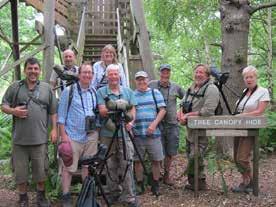
Actively lobbies to protect key Suffolk habitats
Provides a county-wide field force of bird surveyors
Promotes BTO bird surveys and organises special SBG surveys

Strong web presence - www.suffolkbirdgroup.org
Active Twitter feed - @suffolkbirds1
Quarterly magazine - The Harrier
Annual review - Suffolk Birds report
Annually (20+) field trips - ideal for novices or experts and young or old alike
Opportunities to visit hot spots and receive practical ID tips in the field
Programme of talks and presentations - variety of topics (county, national, or international) with quality speakers
Assists with conservation projects to improve breeding success
- Swifts
- Barn Owls
- Peregrines
- Waders
Partners with Suffolk Wildlife Trust and other bird groups
Assists with funding for bird hides and other birding amenities
Contributes to community events, including dawn chorus walks
Provides bursaries for special projects