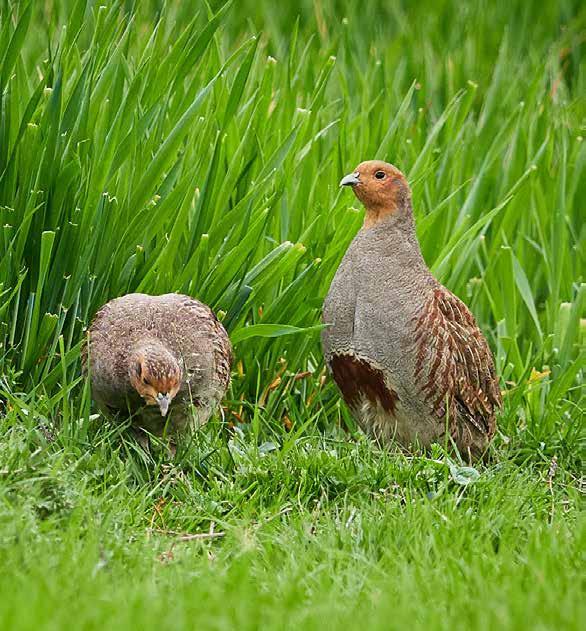
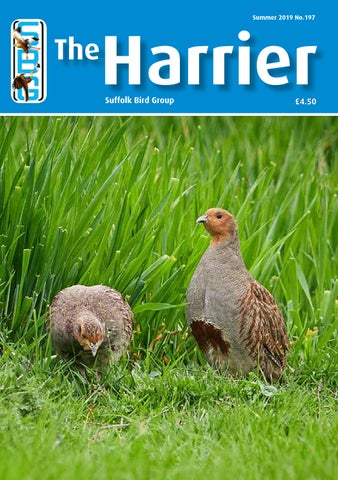
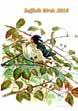
Cover photograph: Grey Partridges (Perdix perdix) by Hedley Wright.
Cover photograph: Grey Partridges (Perdix perdix) by Hedley Wright.
Welcome to this edition of The Harrier.
We intended to have details of the AGM and group name change in this edition of the Harrier but with constraints of space due to receiving some great articles this will now be present in the next edition. Following the inclusion of details on submitting records for the Rookery survey we have had a great input of records for the first year. There’s a piece on some of the surveyors from this year on one of their ‘legendary’ surveying road trips. Following the same format is the annual recording of Swifts, part of the joint SBG/SWT Save our Suffolk Swifts aim is to promote the recording of Swifts nest sites. So this is a reminder for everyone to log their records of Swifts on the Suffolk Swift Survey website – https://www.suffolkbis.org/uk/ swift.
Red Kite sightings are now a feature of the Suffolk countryside, being more regularly encountered and, as the article from David suggests, it’s always worth scrutinising them in case it has come from a ringing project. There is a great article from Patrick Barker, one of the ‘Barker Boys’ and the fantastic work they do on their farm for wildlife, showing how both a working farm and wildlife can coexist. With excellent management a superb variety of wildlife, including some greatly declining species such as Grey Partridge, can prosper. We hope to have a field trip to the farm to see this great work next year. We too often see news of wildlife crime, particularly
raptor persecution on grouse moors, where birds are found to be shot or poisoned or satellite-tagged birds completely disappear from their territories. Such crimes do occur in Suffolk too, along with other types of wildlife crime so it’s good to have an article from the Suffolk Rural Crime team on the work they do.
We have our regular quarterly bird news section, mostly gleaned from the excellent Suffolk BINS, who amazingly have been providing news for the county since 2008. Eddie Marsh has done sterling work these last few years in producing the report after taking over from Lee Woods of BINS. He’d like to step down now so we’re looking for someone to carry on producing the report for the Harrier. Please email harrier@suffolkbirdgroup. org if you are interested. Finally we have a selection of recent field trips; it’s always nice to have a record of these and I occasionally like to reminisce by reading reports from trips I attended in the mid-80s in old editions of the Harrier.
Eddie Bathgate
One of the benefits of being a charity is the ability to tap businesses and the government for additional funds. You can help a lot with little effort in two ways.
If you ever use the internet to shop, then log into ‘Give as you Live’ and select Suffolk Bird Group number 801446 as your beneficiary. Participating retailers will then donate a percentage of each purchase you make to SBG. It quickly adds up, especially on large goods, holidays and flights.
Second, if you are a UK tax payer, please complete and sign a Gift Aid form (available to download on the website) and send it to us. There will be forms available at upcoming walks and talks, please ask. Gift Aid allows SBG to claim the tax back from your subscription.

Our funds go directly into helping Suffolk birds. Recently SBG has supported a Swift rehabilitation project and part funded up-to-date technology for compilers of the bird report.
Eddie Bathgate
With the Easter school holidays on-going, kids to be chauffeured, and lawns and hedges waiting to be cut, there was actually only one thing to do. Road-trip!
‘Camo’ Chris Keeling (off-side spotter), Gi Grieco (near-side spotter, navigator and recorder) and I (driver) had previously surveyed the periphery of Suffolk during 2015, when we logged the location and size of almost 50 rookeries. Now, with preparation required for the up-coming book on Rooks in Suffolk, it was time to ‘put the band back together’ for another day out, surveying a carefully chosen route and looking for tell-tale signs of Rooks, although slightly later in the year than planned due to family and work commitments. There was a competitive edge in the SBG-mobile as we searched. Woe-betide anyone in the car who misidentified a distant clump of mistletoe: reputations were at stake.
Gi had used data from the previous survey and from the Suffolk Biodiversity Information Service website to identify ‘black hole’ areas where no rookery records had been logged. The route also allowed us to re-survey ones in between to check for any increases or decreases in size. Anyone can enter data via the link on the SBG website – it’s simple and quick to do.
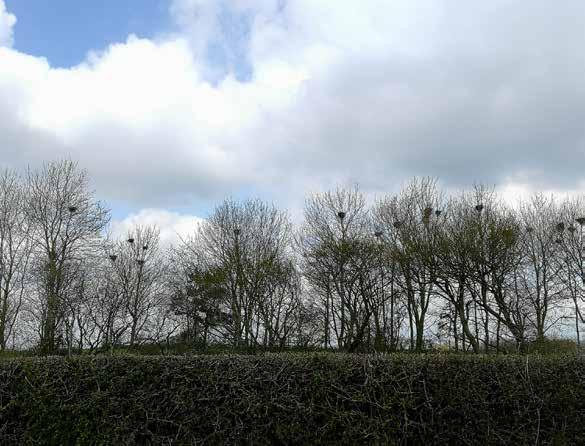
Prior to leaf burst, rookeries in deciduous trees are visible from some distance away as many large nests grouped together within a copse, woodland or stand of trees. Obvious examples include those by the A12 at Glemham, the A14 at Creeting St. Mary and around the Fornham area north of Bury St. Edmunds. The number of nests increases dramatically during February and March prior to breeding, and they are best counted just before the trees bud and leaves obscure the view. Rooks also nest in pine trees, although
such rookeries are much more difficult to both find and count than ones in deciduous trees. Sometimes the only obvious clue to their existence is the presence of Rooks feeding in surrounding farmland.
Counting itself involves walking along, around or through the tree belt before agreeing the final total and logging the exact position and type of tree. This isn’t easy if access is not available or if traffic is busy, so ‘best guess’ after a slow drive past is definitely permitted.
Final surveys will take place during April 2020 although there could be an option to add an additional year if any gaps are still needed to be visited. It would be great to have more
records – you don’t even have to register as a volunteer – anyone can add records of their local rookery to the website – it is helpful to have a record of changes during the build-up to breeding. And if anyone would like to plan a road-trip of their own, please email in for a ‘black hole’ area to survey.
The road trip was a great success with over 40 rookeries counted including finding some new ones. Site locations were logged on a handy phone app that gives the grid reference to help with the recording. All three of us will be looking forward to getting back together next year for another road trip to cover more parts of Suffolk.
In the February 2009 (No.156) edition of The Harrier I wrote an article titled “HLS – A Positive Plan for Wildlife” setting out the plans for our next 8 years of Environmental Stewardship scheme work, hopes and targets. Ten years on, the scheme has finished and we are into another one. Agriculture is facing increasingly uncertain times but, despite what you might read in some areas of the press about modern farming, the farm is full of wildlife and more productive than it was 10 years ago. The HLS scheme funded the creation and restoration of many excellent habitats and allowed us to work them into one big ecosystem. New hedges were planted, wildflower meadows created from arable fields and new ponds dug. Overgrown and silted-up ponds have been cleaned out, hedges managed with cutting only every two or three years in most places and well positioned rotational in-field options such as Wild Bird seed mix annually
rotated around the farm. Our ‘Big 3’ became the point of reference each year where we provide all year round food, safe nesting and brood rearing habitat and protection from predators, people, weather etc. We felt very early in the scheme that going forwards we would need to justify where the public money goes and what the benefits are, so: beginning with the 2007 Bird Atlas and BTO’s Nest Box Challenge we started learning and recording. This has progressed on to contributing data to over 30 projects and with some, such as GWCT’s Partridge Count Scheme, BTO’s Nest Record Scheme and the Suffolk Community Barn Owl Project we are into our 13th year of contributing data. The Waveney Ringing Group started ringing at the farm on the last day of 2008 and I found it so interesting that I trained as a ringer myself. We have now ringed over 11,000 birds of 58 species including over 2,000 yellowhammers.
In 2018 we entered a new Countryside Stewardship scheme with a Higher Tier agreement and last year, not satisfied with my own notebooks of data recording, we started much more thorough surveying of our farmland wildlife. We now have a number of volunteers recording dragonflies, mammals, butterflies and moths as well as the recording and bird ringing that I do myself. Hedley Wright and Mike Rae have spent many hours recording and photographing our farmland wildlife and see the benefits of what we do on every visit. Having more sets of eyes on the farm meant that we were able to add three species of dragonfly to our farm records this summer taking the total to nineteen species. Willow Emerald Damselfly, Scarce Emerald Damselfly and Small Red-eyed Damselfly are all welcome additions demonstrating that funded pond restoration works not only to benefit the ever increasing population of Great Crested Newts but many other species as well. We
have maintained a large population of Great Crested Newts at one farm and have another rapidly expanding population on the other. Wild Flower meadows that were arable fields ten years ago now support over seventy species of wild flora and twenty two species of Butterfly. These meadows in turn support Barn Owl, Tawny Owl, Little Owl and Kestrel with high populations of small mammals and 2018 saw our most successful breeding season for Grey Partridges for decades. From 2007 to 2017 it approximately increased from 2/3 pairs to 4/6 and we felt quite disappointed with the slow progress. By the autumn of 2018 we counted over 80 birds with a single covey of 44 birds on 3rd October. With a long, hot summer, maturing insectrich wildflower meadows and grass margins, appropriate fox control and probably some underestimations of breeding pairs created a long overdue perfect storm of Grey Partridge breeding and with no one releasing any birds for a considerable distance in any direction,
I am confident that the population increase was a natural one. This spring we have best estimated 12 breeding pairs and hope for favourable conditions once more.
There have been increases, declines, fluctuations, winners and losers in the past 12 years. We have dramatically increased our wintering numbers of Yellowhammers, Reed Bunting and Linnet whilst seeing far less Chaffinch and Lapwing. We have gained Barn Owl as a breeding bird and previously unrecorded Badgers and Buzzards whilst losing Kingfishers from the farm completely. Turtle Doves have reduced dramatically in spite of breeding habitat management and targeted supplementary feeding and the population of Brown Hares has peaked and troughed a number of times in that period. Swallows and Pied Wagtails have returned as breeding birds for the first time since we ceased pig production but House Martins,
House Sparrows and Starling do not venture as far as the farm, choosing to remain in the village. Generally the fluctuations are due to weather and I am confident in the knowledge that by consistently providing the required habitat, many species will take full advantage given the right conditions.
Joining up a whole year using the ‘Big 3’ principle has given all of our farmland species greater opportunity to increase and as well as habitat management the scheme options of supplementary winter feeding and specifically grown plots of bird seed mixes has resulted in there being in excess of a thousand Yellowhammers over both of the farms over the winter. I spent the winter feeding six sites 50kg of wheat, red millet, white millet, red dari and oil seed rape seed per week for 20 weeks (this was actually double what I should have been doing as I did not read the guidelines properly) but
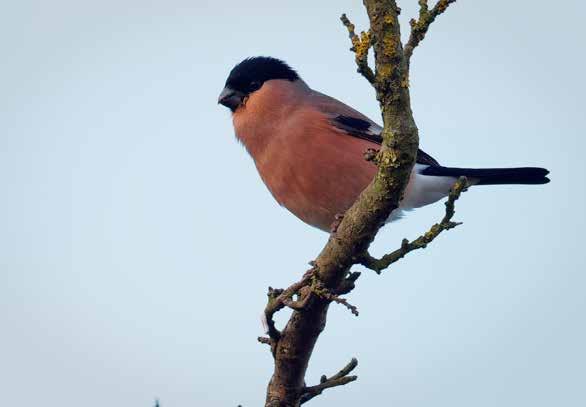
over the course of each 7 days all the food was completely consumed. We ringed twice as many Reed Bunting this winter than in all the winters of the previous decade combined and one bird has already been re-caught at Lackford Lakes this spring. Numbers of Bullfinch and Linnet caught are way up on previous years as well. By feeding these species through the winter we are preparing them for the breeding season in much better condition than they would be otherwise and our ringing data shows that we are catching more and more first year birds as a result.
Sadly the same cannot be said for a number of our neighbours. We are bordered by an arable desert on one side where a 1970s mindset and modern machinery meet; this combined with an unerring desire to tidy and mow through the summer means it is not difficult to see why many species struggle given the lack of anything other than soil and thick crops constantly for a 12 month rolling rotation. For every farm like us there is plenty
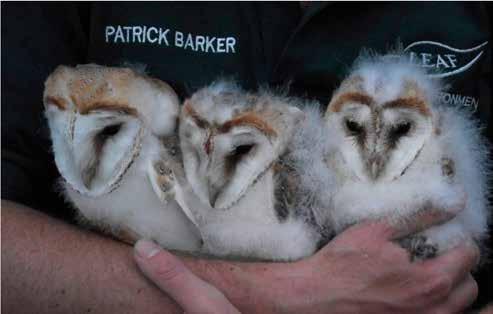
like them. I am heartened that a number of our other neighbours have developed a keener interest in their own farmland wildlife as time has gone on. This is for a number of reasons: financial, emotional and forced upon them; but the most satisfying for me are the people who have developed an interest themselves because there is a deep rooted desire to do the right thing. The Barn Owl project has been an important hook in this area and I know of at least half a dozen farmers whom I have visited to ring Barn Owl chicks, which has led to more and more conservation work being done once they can see a simple success story working in practice. I am always keen to reinforce to landowners that the Barn Owl chick they are cuddling is a result of them installing a box and that their habitat management has led to this success. It is amazing how as a result of one positive, often more positives quickly follow. There is certainly a lesson here for the outdoor and keyboard naturalists.
The times are changing in a number of ways but time will tell as to how our industry, our wildlife and our food are affected. Agriculture is going to be one of the industries that will see the greatest changes as a result of leaving the EU (assuming that we do) and we will all have to adapt to new policy quite quickly if we are going to survive as businesses. The (current) Secretary of State has set out a plan for ‘Public Money for Public Goods’ and also stated publically that he wants a ‘Green Brexit’ and biodiversity, habitats and landscape should be at the heart of this. We feel that we have been delivering public goods with public money for a decade and have a blueprint for a lean and green agricultural business going forwards. We started with a concept of farming the farmed area as hard as possible and working the remaining 5-8% as hard for farm wildlife. This worked well but did not give much margin for error when factors out of our control struck such as bird food plots failing, Great Crested Newt breeding ponds drying out due to a lack of rainfall or extended periods of summer rainfall causing chick food shortages for tits, owls and partridges all of which caused failures in some years. A much more holistic approach to the way we manage the whole farm has created a far more robust ecosystem. The idea to convert to a more Conservation Agriculture based system was taken in 2014 and meant changing from a plough based system to a vastly reduced tillage system and drilling directly into previous crop stubbles. Now the soil biology is preserved and nurtured rather than turned on its head each autumn. Earthworms do the hard work and moisture is retained in the soil. The move to a reduced tillage system has seen around 5 million tonnes of soil now not being moved annually and a 45% saving of diesel used over the year. A key component of this system is winter cover crops which are primarily being grown to take up residual nitrogen from the soil and then release it back for use by the
next crop. However we are seeing a range of other benefits including increased earthworm numbers, nitrogen free water running from the field drains as opposed to from stubble and less standing water in wet areas, cover for a range of mammals and birds and a food source for flocks of sheep. A seed mixture generally containing mustard, vetches, oil radish, fodder radish etc is sown straight into wheat stubble after combining in August and left to grow until it is either grazed off, desiccated, rolled flat or killed off by frost in the winter months. These winter cover crops are excellent cover for Brown Hares, Skylark, Snipe, Jack Snipe, Grey Partridges and a valuable late flowering nectar source for late autumn insects. Sheep grazing provides another wide range of birds and insects and the moment sheep arrive, Meadow Pipits appear as well.
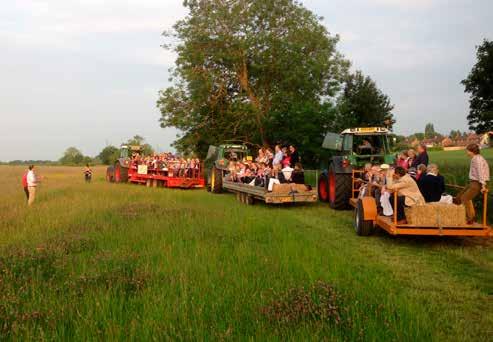
Since 2007 we have been involved with over 250 events showcasing what we do. We have hosted visits, spoken to groups, presented at conferences and appeared on TV, Radio and in the written press numerous times, won awards and written many articles. I feel that as a family and a business we have a model that works and with the right support can deliver on a number of levels. This is all done against the backdrop of running a farm that is progressive, productive and fit for the future whatever that may bring. We are able to demonstrate that by managing our farmland wildlife we are using public money for an important and appreciated public good.
David Tomlinson
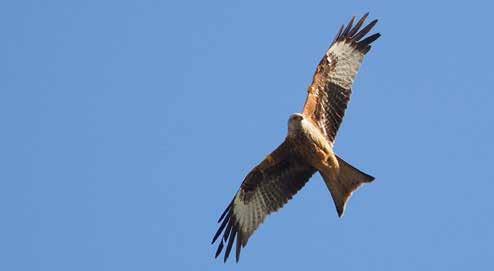
Though I see Red Kites occasionally around my house at Bowbeck, near Bardwell on the edge of the Brecks, they are sufficiently scarce to be noteworthy. Records have slowly increased in recent years since my first in 2009. In 2015 two were seen together in March; in 2016 there were three records, in May, July and August; in 2017 just one, in March; but in 2018 five, in February, March, April, May and June. Records have always been in late winter, spring and summer, with none in the autumn or early winter. Quite why this should be so is unclear, but young birds do wander widely in the spring.
This year my first sighting was on 31 March, a brilliantly sunny but cool day. I was photographing a spaniel in my field to illustrate an article I had written, but though I had a camera with a long lens I didn’t have binoculars with me. I spotted the Kite soaring some distance away, and took a few record shots, but carried on concentrating getting the retrieving photographs I was after. However, Kites are curious birds, and this individual flew much closer as if to see what I was doing, so I was able to take a second series of shots before it soared away south.
It was only after I had downloaded my photographs I noticed that the bird was tagged, with a yellow tag 4F in each wing. A quick search on the Internet revealed that Red Kite 4F had been tagged at Benington in North Hertfordshire in August 2018. I posted my record with the Southern Colour Ringing Group, and within an hour had received a reply from the group’s Paul Roper telling me that this was the first sighting of one of the group’s tagged kites outside Hertfordshire, adding that “this was a bird caught in a spring trap in August so potentially a wandering bird that had been bred elsewhere. It was ringed by one of my trainees and he will be very pleased it has been seen such a distance away”. It was the first reported sighting of 4F since it was tagged 7 months and 27 days before, and it had travelled 82km NE. More details and photographs can be seen on the Southern Colour Ringing Group website.
The moral of this story is that if you see a Kite in Suffolk, try and photograph it or check it for wing tags. I will be keeping a sharp eye open for 4F to see if it makes a return visit.
Brian Calver
Suffolk Constabulary’s Rural Crime Team was set up in its current format in September 2017, with a Sergeant and two constables, overseen by an Inspector. The Rural Crime Strategy for Suffolk focuses on prevention, intelligence, enforcement and reassurance. The work involved is wide and varied, ranging from thefts from farms and smallholdings to Church roof attacks, along with other heritage crimes, including night hawking (illegal metal detecting). The team work closely with many partners and charities to target rural crime and to educate the public on the sort of things to look out for, as well as offering crime
prevention advice and gathering intelligence, with a view to targeting those that engage in rural criminality. All the officers on the team are Wildlife Crime Officers (WCOs) and have undertaken the national Wildlife Crime Training Course. In addition to this, they are trained in CITES, which is legislation controlling the trade in endangered species worldwide.
Suffolk has a wide range of flora and fauna, with many annual visitors arriving to add to this diverse range of wildlife. The officers receive reports of a wide range of wildlife crimes, much of which has seasonal trends.
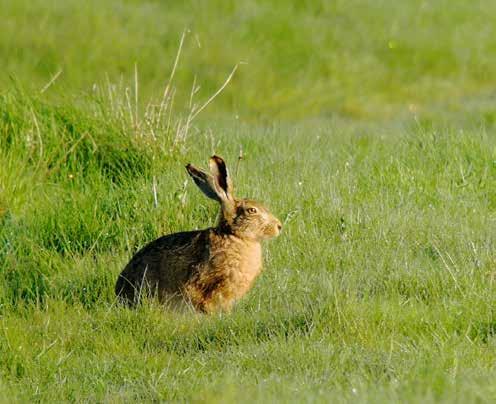
Much of the time in the autumn/winter months is spent dealing with the cruelty and criminality surrounding Hare Coursing. There was a blanket ban imposed on this despicable pastime as a result of the Hunting Act, 2004. Many criminals travel substantial distances in groups to carry out these acts, often in vehicles which are not road legal. They will scour the countryside, looking for Brown Hares, often by driving over cropped fields and once the quarry is identified, the dogs will be literally dropped out of the vehicle to chase the Hare. Historically this was predominantly a gambling pastime, with no intention of killing Hares but we have seen a change in tactics by those taking part. It’s clear from evidence obtained from mobile phone footage that they are gaining great pleasure from not only the chase but by seeing the Hares killed. Once the Hare has been killed, the offenders will often capture a “trophy” shot on their mobile phones, showing the dead Hare being held up against the dog that caught it.
Once done, they will head off to the next area, searching for more Hares, leaving a trail of damage and destruction behind them. If seen by farmers or police, they will often drive at great speeds to get away, with no regards for the safety of anyone or anything in their way.
With this in mind, those that witness Hare Coursing taking place are advised to dial 999 and try to discreetly obtain as much evidence as they can regarding details of those involved, including descriptions, numbers, clothing, dogs and vehicles. If images or video evidence can be obtained, this can be used to secure a conviction against those brought to justice. We share the information gleaned with neighbouring forces and the host force where the individuals live with a view to developing a bigger picture and using whatever legislation we can to frustrate their activities and enforce the law. It’s well known that the persons involved in this offending are intrinsically linked with many other forms of criminality including thefts and drugs offences.
They will often be involved in deer poaching too, which is another common issue throughout the winter months. We have a large deer population in Suffolk and this in turn attracts criminals from afar to target them. The deer poaching has two distinct offending groups; those that seek some kind of sick pleasure in much the same way as Hare Coursers do, by way of using dogs and vehicles to target their quarry which is often chased in a terrifying fashion before being subjected to a brutal death.
Then there are those that seek to make financial gain from taking deer. These are almost without exception taken during the hours of darkness, which is a crime itself under the Deer Act 1991, but those that engage in this activity have no regard for legalities. In addition to the unlawful killing of the deer there’s the issue of public safety. Many of these deer are shot with high powered rifles, with no regards for the safety of others. Any missed shots could continue over huge distances with the possibility that a dog walker may well be out on a footpath after dark and suffer the devastating consequences of this.
Suffolk also has a huge Badger population, which despite being highly protected under the Protection of Badgers Act 1992, often suffer at the hands of those that during their day to day activities come into conflict with their natural instincts. Badgers are very good at digging, often making substantial setts, with many entrance holes. There are many offences that can be committed against the Badgers and their setts but the most common we deal with are sett blocking and disturbance. If there’s a lawful activity that needs to be carried out, which will come into conflict with a sett, a licence may be applied for via Natural England to enable activities to take place but this wouldn’t include blocking setts up to prevent other animals from entering them as a result of other country pursuits. Neither is it legal to allow a dog to enter an active sett at any time. If you are carrying out lawful country pursuits which involve placing a dog below ground, if there’s any doubt, DO NOT allow your dog to enter the hole. Just because there’s not a large spoil heap and numerous entrance holes doesn’t mean it’s not a sett as some Badgers will occupy outlying setts.
Another common issue we receive reports of is nest disturbance, which is also clearly a seasonal issue. All birds are protected
by law, with some being afforded greater protection as a result of their conservation status. Equally, whilst active, their nests are protected from disturbance, damage or destruction. As readers will know, the nests of three of our most impressive birds, the Golden Eagle, White-tailed Sea Eagle and the Osprey are fully protected all year round but none of these are an issue in Suffolk at this time.
Many of the calls we receive relate to the cutting of hedgerows during the nesting season. There are many misunderstandings, predominantly surrounding hedgerows and the cutting of them during the nesting season. There’s no law preventing the cutting of hedgerows during this period but there are guidelines and penalties in relation to hedgerows associated with agricultural land and the cutting of them between 1st March and 1st September, under EU rules enforced by DEFRA. Farmers are very aware of this and it’s extremely unlikely you will see this taking place. There are Hedgerow Regulations which cover those that are predominantly associated with agricultural land too, mainly covering the issue of removal and this is enforced by the local authority. Local authority websites can be referred to for greater detail regarding this, as these are not a police matter.
As long as you are careful and you’re not disturbing a Schedule 1 bird, it is perfectly lawful to cut a domestic hedgerow and in fact many of the hedgerows we receive reports of turn out to have very few if any active nests within them. Obviously, best practice would be to leave the hedge alone during the period from March to August and if you need to trim it, to ensure you take great care so as not to disturb any nesting birds. If you are aware of an active nest within the hedge, the best thing would be to leave it alone completely as having knowledge of the presence could be construed as intentional disturbance. Hand shears are advised also as they clearly
cause less disturbance. People may see birds entering hedgerows but that doesn’t mean they are nesting in them. We would urge anybody that is aware of nesting birds being deliberately disturbed to carefully record evidence of the presence of the active nest and if possible the disturbance, as without the evidence of presence and disturbance, we have little to go on.
Nesting birds also come into conflict with humans as a result of their ability to be creative as to where they nest and if you end up with a bird nesting in an ongoing building project or engine bay of a car you’re working on for example, you have no choice other than to leave it alone until it’s no longer in use. Once use has ceased, it’s perfectly lawful to dispose of the nest, if necessary, but I would urge people to ensure it’s definitely no longer in use before taking such action.
Despite it being a less common hobby these days, we still see the menace of egg theft taking place from time to time. Those that partake in this often target rarer species, thus having a greater impact upon those species. They can often have vast, clandestine collections with detailed records of where they’ve been taken from and the species. In addition to this there are those that seek financial gain from stealing young birds from the nest such as Peregrine Falcons. These fetch vast sums of money if exported to some of the Arab countries where such magnificent birds are a status symbol, fetching higher prices for those that are wild bred.
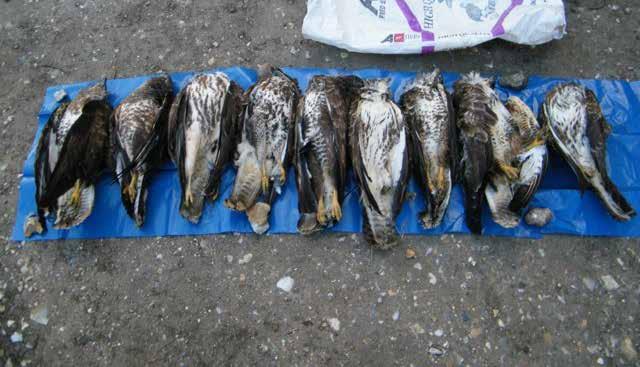
On the subject of birds, one of the most unpleasant issues we deal with is the persecution of birds of prey by way of poisoning and trapping. Thankfully these are on the whole rare events, which quite frankly
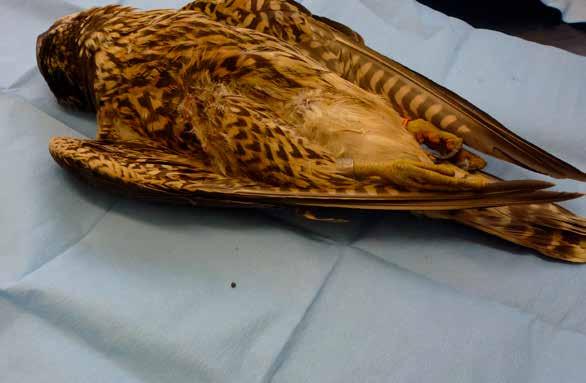
should be banished to the history books but sadly there are those that still feel the need to carry out such wicked acts.
The main signs surrounding poisoning cases are multiple dead birds and/or animals within a short distance of the baited carcass as well as dead flies which will have also been affected by the poison. The poison used is commonly a banned pesticide. Members of the public discovering such a scene should not touch anything and keep pets away as they will be equally affected by the poison, which often kills within a very short period of time. We would urge members of the public to photograph such a scene and call the police immediately, in order to secure best evidence.
We work closely with the National Wildlife Crime Unit to tackle such organised criminality and will share intelligence with partners, with a view to ensuring that such offenders are brought to justice. Equally important in this quest is the need to educate the public as to the fact these activities still take place, in order to heighten awareness and increase reporting. It was as a result of such awareness and quick reporting that resulted in the arrest and conviction of Daniel Lingham from Norfolk in 2018 where he was found to have stolen in excess of 5,000 eggs, leading to his imprisonment.
Amongst other wildlife offences we deal with are those against European Protected Species (EPS). Many of these species are present in Suffolk and receive a high level of protection for both themselves and their habitats, including resting places. As a result of their conservation status and specialist habitat requirements, many of these animals are susceptible to human interference. These include Dormice, Bats, Otters and Great Crested Newts. As with many wildlife crimes, these are often committed as a result of human inhabitation and development
coming into conflict with their habitats. We would urge developers and homeowners considering any future projects to ensure they consult an experienced Ecologist and heed any advice given, with a view to preventing those from falling foul of the law and receiving a hefty penalty, as well as to ensure that any species effected have their bespoke needs catered for, thus protecting and enhancing their habitats.
There are many more species and offences but this is just a flavour of the commonest issues we deal with.
Wildlife crimes are recognised as serious matters by police and as such, we will investigate offences using the same levels of detail to attention and utilising forensics as we would any other crime scene. This includes swabbing birds, animals and traps for traces of human DNA as well as comparing saliva samples from dogs that may have been used to kill or injure wildlife. This science is developing all the time and we’ll continue to develop with it, in an effort to keep one step ahead of criminals that choose to target our wildlife.
In a modern world where humans are taking over more and more of the land space it’s even more important that we do all we can to protect nature. The public are becoming ever more alert to this, which can only be a positive thing and this in turn can have a huge benefit both economically in the form of ecotourism and in terms of general health and wellbeing as people appreciate what they have around them.
We would urge the public to report any suspected wildlife crimes to us and if they are in any doubt, we are happy to receive enquiries with a view to ensuring that people aren’t breaking the law and in turn preserving our precious wildlife for generations to come.
Eddie Marsh
The quarterly records section gives a snapshot of birds seen within the county during the period and is compiled by Eddie Bathgate and Eddie Marsh, predominately from data received by Suffolk BINS. All scarce and rare birds are subject to submission and acceptance by either SORC or BBRC. Updated lists on Accepted and Outstanding Records for 2017 and 2018 can be found on the SBG website - http://www.suffolkbirdgroup.org/ bird-recording.
Weather: February was overall a dry month and very mild and there were 20 days with double figure temperatures. There were 11 days where it was 13C or above and the highs were 17C on the 25th and 18C on the 26th and 27th. Rainfall on 11 days, but only 2 days in double figures these being 10mm on the 4th and 11mm on 10th. There was 1 day of snow on the 1st with 2.5cm falling.
Night time lows of 0C or below only occurred on 5 nights and only 3 below zero, these being -4C on the 3rd, -2C the 5th and -1 the 11th. The Actual high for the month being 11C, Actual Low being 3C. Total rainfall for the month being 40mm.
Only a handful of Whooper Swans reported during February; one Sudbury on the 2nd, eight at Minsmere RSPB reported on the 6th and 17th and two at Hollesley RSPB on the 10th. The single bird that was at Boyton near Butley Farm in January was reported again on the 26th February. The 11 Bewick’s Swans from January (nine adults and two juveniles) flew over Southwold on the 3rd then seen over Minsmere RSPB on the 6th and still at Leiston on the 8th and then increased to 13 on the 9th and 10th. A large flock of 50 flew
north over Walberswick early morning on the 11th. Lingering Tundra Bean Geese with six on Aldeburgh Town Marshes on the 3rd and two at Trimley SWT between the 9th and 12th. Pink-footed Geese recorded at Trimley SWT with a single on the 9th and four at Boyton Marsh. Greater White-fronted Geese highest counts again came from North Warren with 188 on the 2nd and still 128 on the 28th. A count of 40 Red-breasted Mergansers reported on the Orwell Estuary on the 1st and good numbers still present on the 21st. Still plenty of Goosanders were being reported from Thorpeness Mere; the highest counts being 17 on the 23rd. There were also up to three seen on Alton Water during the month. A redhead Smew arrived at Minsmere RSPB on the 1st and still there on the 24th, it was then joined by a drake on the 24th and then another Redhead on the 25th. Three Greater Scaup off Minsmere on the 4th, these being the only ones reported in this month. A single Great Northern Diver on Alton Water on the 1st and 2nd, then possibly the same bird on the 26th. Also at Alton Water a Red-throated Diver arrived on the 2nd and remained until the 26th, often showing very well, especially around the Lemon’s Hill Bridge area.
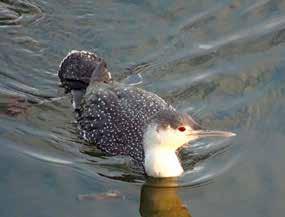
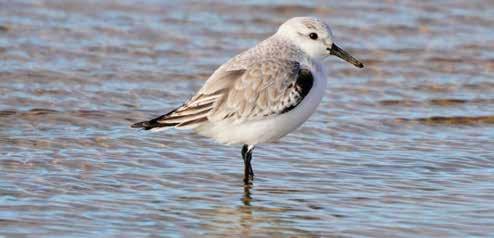
A Slavonian Grebe on Alton Water on the 24th.
Sightings of Great White Egrets: sites with counts of more than one bird came from Lakenheath RSPB three, Dunwich Shore pools three and North Warren three. Up to three Spoonbills present at both Havergate RSPB and North Warren. Locations of ringtail Hen Harriers sighted during month; two at Westleton Heath, Levington Creek and Wrentham while the only male was seen at Tunstall Common on the 9th. Again only one Merlin report this month, from Little Blakenham on the 2nd. A wintering Curlew Sandpiper was found on the Orwell Estuary between Levington Marina and Loompit Lake
on the 5th and remained until the 16th. Reports of Jack Snipe this month came from Dunwich, Trimley Managed Retreat, Belstead Brook and Botany RSPB. Only two records of Purple Sandpiper this month, one from LBO on the 10th and one from East Lane Bawdsey on the 15th, and 16th. A smart, winterplumaged Sanderling was at Kessingland on the 11th. Fewer Caspian Gulls reported this month - Beccles Recycling Centre, RSPB Minsmere, Hollesley RSPB and a high count of 10 on the 8th at Lackford SWT. At Sizewell the Iceland Gull was seen off the “B” Rig on between the 7th and 14th. A nice Razorbill on Lake Lothing, Lowestoft from the 3rd to the 17th, often showing very well.
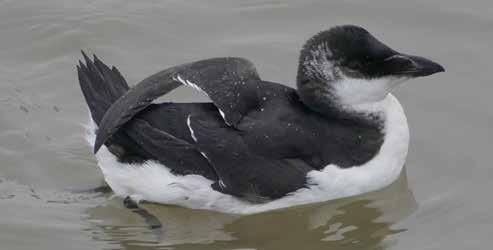
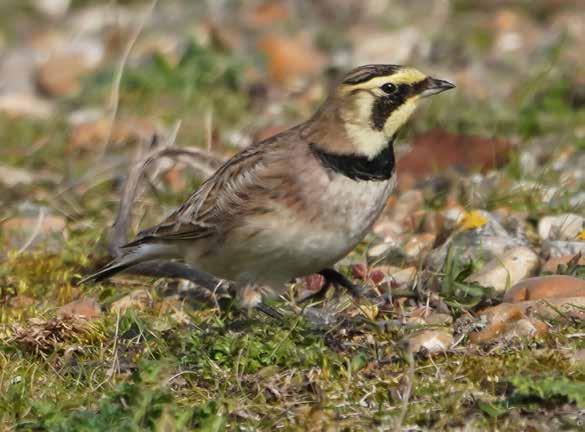
Shorelark
The only Short-eared Owl sightings came from Orfordness with two being seen on the 23rd.
Good to hear the Lesser Spotted Woodpeckers were seen during most of February at Santon Downham with up to three being seen on and off. The four Shorelarks continued the whole month at East Lane, Bawdsey on the beach between the Martello Tower and the saline beach lagoon still giving exceptional views. It seemed to be a mega winter for Water Pipit, records of double figure reports were 10 at North Warren on the 2nd, 18 at Herringfleet Marshes on the 23rd, with 22 there on the 23rd and 19 on the 28th, I cannot ever remember counts this high in Suffolk. Of note a very early Barn Swallow was reported from Sudbourne Marshes on the 17th. Waxwings still continued to be in Suffolk during February, reported mostly
from sites in Ipswich and Bury St Edmunds; a maximum of 24 at the former location and up to seven at the latter around Tavern Lane area. A singing Firecrest reported from Greyfriars, Dunwich on the 17th. In the Brecks the Great Grey Shrike continued to be present Santon Downham near Railway Line half a mile NW of road up to the 8th with possibly a second bird at Mayday Farm on the 4th. Then one present in Thetford Forest, in a clearing off ride 7, between the 15th and 27th. The only double figure count of Twite this month being 20 at Dunwich Shore Pools on the 7th. On the Snow Bunting front it was a very poor month; two at Dunwich on the 7th and three seen in flight at Walberswick on the 12th. The Corn Buntings still present near the Ewarton Queens Head Pub with nine on the 2nd and 21 on the 9th. Two present at East Lane, Bawdsey on the 15th.
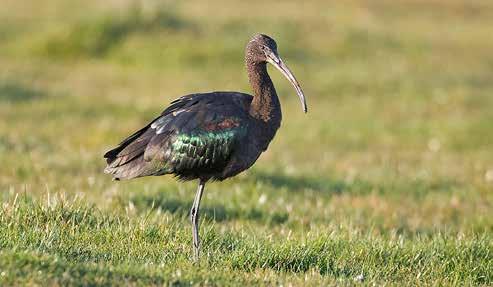
The Black Brant continued into February in the Kingsfleet/Falkenham/Felixstowe Ferry area from the 1st to the 21st. A Pale-bellied Brent was at Deben Estuary on the 2nd. A Green-winged Teal was discovered at Herringfleet Marsh on the 26th and remained until the month’s end; possibly the bird at Dunwich in January. Scarce in Suffolk in winter these days are Black-throated Diver, one noted off Minsmere Sluice on the 6th, another was discovered on the River Orwell along the Strand on the 17th, it remained faithful along this stretch especially from the Stoke Sailing Club and remained until the 24th. Then probably the same bird from Alton Water, off Larchwood, on the 25th, this being the last sighting for the month. Cattle Egret seen between the 17th and 21st, leaving roost at dawn from Carlton Marshes SWT Reserve and seen to head towards Walnut Tree Farm, Benacre, returning in the evening. A brief visit of a Glossy Ibis at Hazlewood Marshes on the 19th only. A Common Crane was reported in the Brecks on the 26th, seen flying over A11 near Red Lodge early morning. A presumed Kumlien’s Gull was found in the gull roost at Lackford SWT on the 2nd, (race of Iceland Gull) this being Suffolk’s second record, the first being at Minsmere. It was aged as a third calendar year bird and it was last seen to roost on the 24th. A Rough-legged Buzzard continued to be reported from Orfordness/Sudbourne Marshes area. The only other report came with one flying over the Blyth Estuary on the 2nd and thought to have landed on Tinkers. On the 22nd a large female Goshawk was circling over Westleton Common at 15.30hrs before heading north. Raven sightings this month came from Santon Downham, Walberswick, two at Elmsett, Needham Market area and Minsmere RSPB.
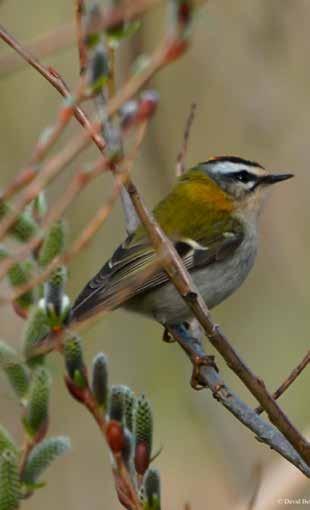
Weather: March was another very mild month overall and there was a massive 26 days of double-figure temperatures, although none reached the high of 18C in February. There were only 2 days where temperatures reached frost conditions these being 0C on the 8th and -1C the 26th. Rain occurred on 17 days, the 14th being the only day of double figures with 11mm falling. Actual High was 12C, the normal being 9C. Actual Low was 4C, the normal being 3C. Total rainfall for the month being 61mm.
Birds March 2019:
Sign of spring with summer passerine migrants arriving, too many for numbers, locations and dates, so just a list of arrivals:- Sand Martin, House Martin, Black Redstart, Swallow, Wheatear, White Wagtail, Sedge Warbler, Whinchat, and a very early Whitethroat in the Lowestoft area on the 23rd. A Cuckoo reported in Boxford village on the 21st. There were Firecrest everywhere during March - a very good movement through Suffolk. High Counts above two:- Minsmere RSPB three on the 9th, five at LBO on the 19th, five Felixstowe, three at LBO and two at Peewit Hill on the 20th, four at Southwold on the 24th and three on the 30th.
A few Whooper Swan sightings in March; up to a maximum of five at Minsmere RSPB
up to the 27th and three near Hall Farm, Boyton on the 8th. A single Bewick’s Swan present at Trimley Marshes SWT on the 19th. Two Tundra Bean Geese still at Trimley SWT on the 9th was the only report all month. The five long staying Pink-footed Geese at Boyton RSPB were seen on the 5th and reported during the month. A Pale-bellied Brent Goose was on Havergate RSPB on the 21st. Arrival of summer visiting Garganey showed up towards the end of the month; a drake at Lakenheath RSPB on the 24th with a pair on the 31st, a pair in the Lowestoft area, three at Hollesley Marsh including two drakes on the 28th, a pair remained on the 29th and 30th while the drake from Hollesley moved Boyton RSPB to the end of the month.
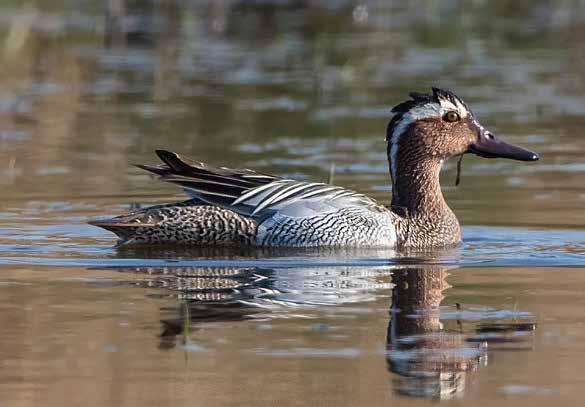
Up to 16 Goosanders at Thorpeness Mere until the 10th and from Alton Water four on the 4th and three the 17th. The Smew continued to be present throughout the month at Minsmere while the drake on the Stour from behind the Co-op at Manningtree was reported again on the 2nd.
Sightings of Great White Egrets came from Carlton Marshes SWT, Botany RSPB, North Warren RSPB, Blythburgh, Thorpeness Mere, Trimley Marshes SWT, Dunwich Shore Pools, Lakenheath RSPB, Hollesley RSPB and Orfordness;, the highest count being at
Thorpeness with five on the 12th, the 19th and 22nd. Spoonbill sightings came from North Warren, Minsmere, Havergate, Boyton Marsh, Botany Marshes and Tinkers Marsh on the 28th. Short-eared Owl sightings this month came from Herringfleet Marshes, Carlton Marshes SWT and Shingle Street.
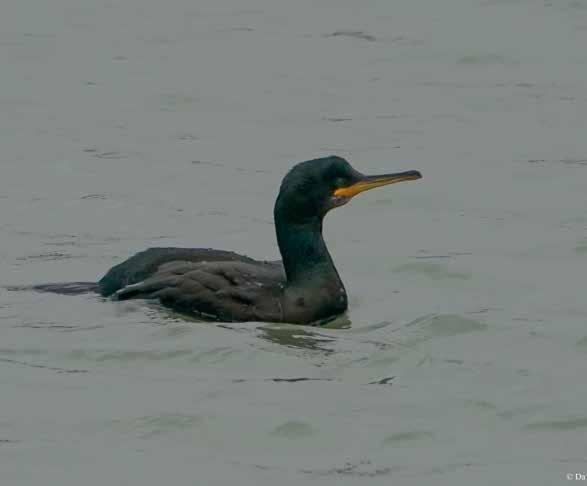
The Red-throated Diver continued to be present at Alton Water around the Lemons Hill Bridge area on the 1st and remained until the 8th, often showing very well. A Great Northern Diver off LBO on the 17th with another south on the 22nd. Records of Shags
continued with up to three birds on the River Orwell along the Strand early part of the month, then two again on the 21st and 22nd plus one on Lake Lothing, Lowestoft on the 2nd and 8th and one at Sizewell on the 14th.
Little Ringed Plovers seen at Minsmere, Micklemere and on Southwold Town Marshes. A colour-ringed Limosa Black-tailed Godwit on the flash at Southwold Town Marshes on the 24th.
A few Hen Harrier sightings this month; a nice male seen at Chillesford Lodge on the 2nd, ringtails at Sudbourne Marshes on the 8th, at Westleton Common on the 22nd, on Havergate RSPB on the 23rd, two on Orfordness on the 24th, at Shingle Street on the 26th and East Lane, Bawdsey on the 28th. A couple of Osprey sightings, with a single on Havergate RSPB on the 23rd and another north over Minsmere RSPB on the 24th. Again only a single Merlin reported this month, from Willisham on the 21st.
Caspian Gulls reported at Minsmere, North Warren, Cavenham Pits, Sizewell, Southwold, Havergate RSPB and Micklemere. A Great Skua was seen offshore at LBO on the 13th, two on the 15th with another single the 17th.
The four Shorelark amazingly continued for yet another full month at East Lane, Bawdsey being faithful to the same area of beach between the Martello Tower and the saline beach lagoon. They arrived in November 2018 and were still giving exceptional views. Water Pipits continued to present in good numbers again this month, with a maximum of 27 at Herringfleet Marshes being a great count. Waxwings still present during March; up to 20 at both Bixley Road and Heath Road in Ipswich and up to six at Risbygate Street and Tavern Lane, Bury St Edmunds. On the 29th, 30 present on Upper Hollesley Common. On the 18th a Ring Ouzel was reported on private land near Martlesham Police Headquarters and had been present since mid-January and was reported again on
the 31st. The Great Grey Shrike continued to be seen in Thetford Forest in a clearing off ride 7 up to the 17th.
The only Twites this month were four on Walberswick saltings on the 28th.
The Green-winged Teal continued to be present at Herringfleet Marshes from the 1st and remained until the month’s end. At Carlton Marshes SWT Reserve two Cattle Egrets on the 2nd and a single early morning on the 3rd. One flying south in the Lowestoft area on the 8th, a single noted at Upper Abbey Farm, Leiston on the 22nd and possibly the same bird at Eastbridge Farm on the 27th. A Glossy Ibis appeared on Walberswick Marshes at 16.00hrs then flew south at 16.45hrs on the 8th, probably the same bird again in field south of the harbour on the 17th then in this general area until the 25th. On the 25th at Walberswick the Glossy Ibis present early morning, then at Minsmere RSPB briefly and North Warren RSPB at 1245hrs then flying back north at 13.40hrs, strangely the Ibis was not seen again. Eight Common Cranes flew north/north-west over Fen Park, Lowestoft at 07.45 on the 1st, two at Lakenheath RSPB also the 1st and a single over Minsmere RSPB on the 29th. A Whitetailed Eagle was seen flying over Peterhouse Crescent, Woodbridge at 13.55hrs on the 19th heading towards the River Deben; it had been seen at Wivenhoe, Essex at 13.05hrs. It ventured into Suffolk airspace again on the 23rd at Peto’s Marsh Carlton Marshes SWT at 10.00hrs then drifted back north. The single Rough-legged Buzzard continued to be present in the Orfordness/Sudbourne Marshes area, though only reported on the 5th, the 8th and the 24th plus another was noted at Heveningham flying west on the 31st. The 3CY Kumlien’s Gull relocated from Lackford Lakes SWT to Micklemere gull roost on the 9th and was seen on and off in the roost in the evenings until the 30th.
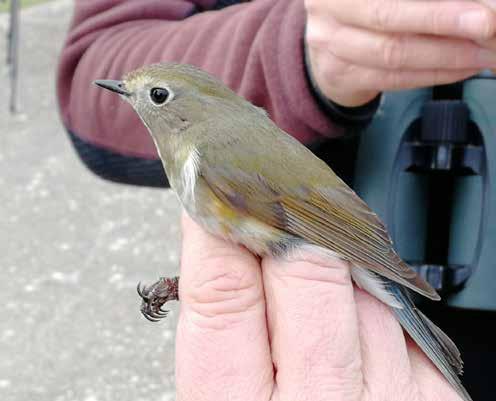
A bolt out of the blue arrived at LBO on the 23rd in the form of a Red-flanked Bluetail
It was ringed and released and only showed very briefly on the seaward side of the compound; the bird being a first spring record for Suffolk.
A nice Siberian Chiffchaff was found near the tennis courts at Leathes Ham, Lowestoft on the 26th. It was singing and remained until the 31st, although more elusive during its last two days. Raven sightings came from Loompit Lake on the 1st, Baylham on the 5th, Icklingham on the 18th, a single northeast over Woodbridge on the 20th, a single at Great Finborough on the 26th and another single over Stonham on the 30th. A Hooded Crow was seen distantly over Eastbridge on the 15th.
Weather: April turned out to be an extremely dry month with 22 days without any rainfall and with daytime temperatures being in double figures for 24 days. From the 16th to the 30th daytime temperatures ranged from 13C to 23C. Rainfall only occurred on 8 days with no more than 2mm on 7 of those days and the highest being 4mm on the 25th. There were 4 nights in row when temperatures got below freezing, -1C on the 11th, 12th, 13th and -2 on the 14th. The Actual high for the month being 13C, Actual low for the month being 4C and rainfall totalled 15mm.
The five long-staying Pink-footed Geese at Boyton RSPB were only reported on the 3rd and 5th.
The long-staying Smew remained at Minsmere until mid-month. A number of Garganey sightings from Hollesley RSPB, Boyton RSPB, Lakenheath RSPB, Trimley SWT and Great Livermere. A Velvet Scoter flew north at LBO on the 25th. Lots of Great White Egrets reported with sightings from Carlton Marshes SWT, Botany RSPB, North Warren RSPB, Shingle Street, Playford, Trimley Marshes SWT and the highest counts from Walberswick with four on the 17th and Lakenheath RSPB four on the 1st.
Spoonbills seen at a number of sites including one over Aldeburgh town on the 8th, single over Bawdsey on the 9th, three south over Minsmere RSPB on the 10th, single the 27th,
two the 29th, single on Trimley SWT on the 16th and 17th, single south over North Warren RSPB on the 21st, one Kessingland Sluice the 27th, single Tinkers on the 28th, single Southwold Flash on the 30th and single Boyton RSPB the 22nd and 30th. A near full summer-plumaged Slavonian Grebe put in an appearance at Alton Water on the 9th then re-appeared at Lemon Hills Bridge on the 17th and 18th.
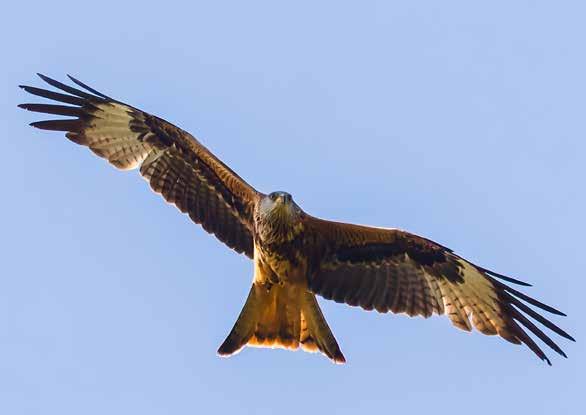
Eight Red Kites reported through Suffolk during April. The Rough-legged Buzzard from the Orfordness/Sudbourne Marshes area was reported on the 13th only. Another bird was reported from Breydon Water on the 19th.
Hen Harrier sightings came from Levington Marina, Hollesley Marshes RSPB, Havergate RSPB, Shingle Street, Broadwater Lake Livermere, Cavenham Heath, Minsmere RSPB, Boyton RSPB, and Carlton Marshes SWT. A number of Osprey reports; a single at St. Cross South Elmham on the 8th, a single Somerleyton on the 20th and Corton on the 21st. A Stone-curlew was on the beach at LBO on the 3rd. An early Temminck’s Stint was found on the scrape at Micklemere on the 19th. Wood Sandpiper sightings came from Herringfleet Marshes on the 23rd and 25th, Southwold 28th and Minsmere RSPB the 29th. Two Purple Sandpipers crept into April; they were spotted on the point at LBO on the 1st. Not many Caspian Gulls reported this month, these came from Hollesley RSPB, five at Great Livermere gull roost on the 14th and Havergate RSPB. Two Black Terns were seen at Bramford Water Park on the 19th, two at Lackford SWT on the 20th and three at Livermere Lake also the 20th.
The four Shorelarks continued into April, tending to range further between Bawdsey lagoon and the Battery Cottage area at Shingle Street, with the last sighting reported on the 4th - what amazing pleasure these birds gave birders and photographers all winter. Five Waxwings seen at a bus stop in Bury St. Edmunds on the 3rd, these being the only report for April. It has been a good winter for Water Pipits and records continued into April with a full summer-plumaged at Alton Water on the 2nd, still good numbers at Herringfleet Marshes, seven were counted a Hollesley RSPB on the 11th and a late one at LBO on the 21st briefly, plus odd records from other locations. Up to 25+ Ring Ouzels reported during the month, with an estimated 11 at Minsmere, five at LBO, two on Westleton Heath and singles at Corton, Lowestoft, Sutton Heath, Woodbridge RAF Base, Dunwich Heath and Tinkers Marshes. There were a few Whinchat sightings; from Southwold on the 24th a male, two at LBO
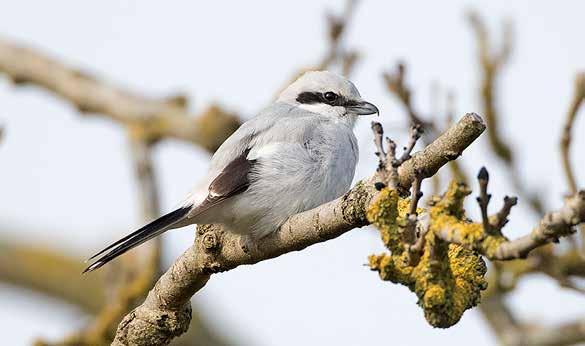
also 24th with singles on the 25th and 26th and a male at Boyton RSPB on the 29th. Single Turtle Doves arrived back at Westleton on the 21st, two on the 28th, one in Lowestoft area the 26th and two at Minsmere RSPB also the 26th and one on the 30th. Only two Pied Flycatcher records for April; a single at Shingle Street on the 24th and a nice male at Orford on the 30th. A Great Grey Shrike was present south-east of Blackheath village on the 12th and nearby Thorington on the 13th and 14th. An unusual spring sighting was a Yellow-browed Warbler found singing at Gunton Wood/Churchyard on the 23rd and again on the 24th. Two late staying Twite present on Tinkers Marsh on the 5th and 7th, then a single bird again on the 14th and 24th. A late, smart-looking Snow Bunting showed all day at the Hollies in the Lowestoft area on the 2nd.
The long staying Green-winged Teal continued its stay at Herringfleet Marshes and remained until the 23rd at least. A White Stork flew low over Sizewell Belts at 10.40hrs on the 11th and probably the same bird bearing a green ring circled Minsmere at 11.10hrs. On the 21st another was seen going south over Ipswich Hospital at 11.47hrs
and presumably the same bird south-east over Martlesham at mid-day. A few Common Crane sightings this month from the west and north of the county; the highest count was five at Somerleyton on the 18th. The Glossy Ibis was seen again on Walberswick Marshes and was reported on the 5th and 8th only.
White-tailed Eagles were seen again in April, often tracked at a number of sites. On the 11th a bird was first sighted east over the Blyth at 09.27hrs, then north over Reydon Church at 10.11hrs, north over Covehithe at 10.32hrs and finally north over Rookery Close, Oulton Broad at 11.10hrs. Then on the 30th an adult bird was seen south over Carlton Marshes SWT just prior to 14.00hrs, later drifting north-east over Covehithe area between 17.05hrs to 17.37hrs. A Black Kite was seen at Walberswick on the 12th, another going north over Westleton Heath on the 19th and one going south over Felixstowe Ferry on the 22nd. A Honey Buzzard was reported over Saxon Way, Saxmundham at 15.00hrs on the 20th. A nice Goshawk was seen and photographed on Upper Hollesley Common on the morning of the 19th and from the photos it supported a metal and a dark blue darvic ring and seems the bird is from a ringing scheme in the Brecks.
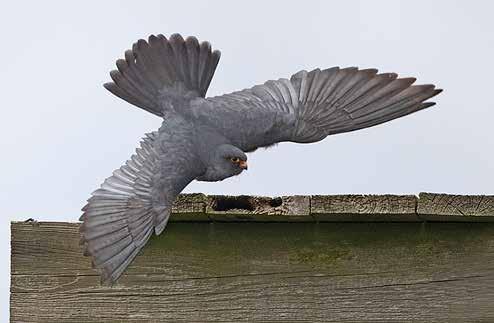
A cracking male Red-footed Falcon was found around the landing lights at the end of the runway at Woodbridge Air Base on the 27th and viewed from the Rendlesham Forestry Commission Road. It continued to give excellent views and still showed well up to the 30th.
On the Alde Estuary on the 26th a Dotterel was found at an undisclosed site. A nice male Kentish Plover was found on Havergate RSPB. A nice arrival of two Black-winged Stilts at Minsmere RSPB on the 22nd and present the whole day, both birds still there the next day but very mobile and then just one individual seen late afternoon on the 24th. The presumed Kumlien’s Gull from March was only seen once during April and was seen at Great Livermere on the 14th in the evening gull roost. A Quail was reported flying east over the A12 at Frostenden at 08.20hrs on the 28th.
On the 27th an Alpine Swift entered Suffolk airspace, from Norfolk, at Corton flying low south at 09.40hrs and seen again just offshore at Links Hill at 09.50 still going south. A Red-rumped Swallow was reported over the north wall at Minsmere on the
26th. A Tawny Pipit was seen flying over Southwold Town Marshes early morning then ditched into field by derelict windmill on the north side of the river, it was seen again in flight still on the north side of the Blyth heading towards Hen Reedbed. A nice male White-spotted Bluethroat was found on Herringfleet Marshes on the 6th and seen again on the 7th, although it was generally very elusive. A Subalpine Warbler species was photographed on Westleton Heath on the 18th only, but totally conclusive ID was not possible. A Savi’s Warbler was heard reeling from Island Mere, Minsmere throughout the month with a second bird from the 24th. Suffolk’s second record of Iberian Chiffchaff appeared on the slopes of North Denes, Lowestoft on the 22nd. It was in trees near the oval cricket pitch/tennis courts area where it sang and showed well until 15.00hrs but then no further sign. The Siberian Chiffchaff remained near the tennis courts at Leathes Ham, Lowestoft from the 1st to the 4th. Raven sightings reported from Elmsett with a single on the 1st and 24th, two at Upper Hollesley Common on the 18th. The only Hooded Crow record this month was from North Denes, Lowestoft on the 18th.

This field meeting took place in the midst of a very warm spell of weather for Februarycast your mind back to this time last year and the Beast from the East had set in. A group of 15 members assembled at the southern end of Aldeburgh then headed out west along the River Alde footpath noting Redshank, Turnstone, Black-tailed Godwit and Curlew with a couple of Rock Pipits. We then turned south-westerly heading for the Town Marsh lagoons. There were few birds about, just four Brent Geese and a few Greylag Geese with nothing on the lagoons. We now turned
off the river footpath heading north inland through the marsh. The marsh held several flashes of water where pipits flitted about feeding. We picked out a paler plumaged Water Pipit, several Meadow and Rock Pipits. There may well have been more Water Pipits as this flock took flight shortly after we arrived. [I note that it has been a very good winter in Suffolk for Water Pipit]. A female Stonechat and lots of Reed Buntings made up the rest of the sightings at this point. Heading towards Aldeburgh allotments we noted two Egyptian Geese, Grey Heron and Little Egret.
A Moorhen sitting in a bramble bush in an allotment caused some amusement as we continued our loop back to the starting point. For the afternoon we decided to give North Warren’s Church Farm Marshes a look, meeting at the “Shell” carpark. Using the public hides overlooking the marsh, a selection of ducks were present including Wigeon, Shoveler, Gadwall and a lot of Pintail. Three Spoonbill were a good addition to the list with two on the left in a usual pose of “head underwing” whilst the third one to the right was out on the marsh feeding. The first raptors of the day were noted with Marsh Harrier and Common
Buzzard, although distant. We walked further along to the north marshes looking for any wintering geese. Flocks of birds rose from the marsh as a Peregrine Falcon zipped through heading south. The geese are always very wary keeping as far from footpaths as possible thus creating long distance viewing. However, a lot of geese were present including a few Barnacles, Greylags and a count of 95 Greater White-fronted Geese. Whilst checking the marsh geese we noted another Peregrine sitting on a gate, this juvenile was definitely the second of the day. On that fitting note we ended the meeting.

Chris Keeling
We met at Santon Downham car park at 7:30 on a chilly March morning wondering if forecasts of localised downpours would prove to be anything more than fake news, but more importantly, as with any visit to Santon Downham, were reports of Lesser Spotted Woodpecker. Siskin and Lesser Redpoll flitted between the trees at the edge of the car park while Nuthatch, Song Thrush and Stock Dove could be heard if not seen. All helped to focus and tune eyes and ears.
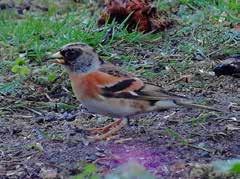
Our optimism rose with reports of Brambling flocking to feeders in a garden by the road leading to the bridge. After Gi had delivered the customary health and safety talk it wasn’t long before we reached the garden viewable from the road where half dozen very obliging Bramblings jostled for space with Chaffinches and Greenfinches at an array of bird feeders.
Eventually we managed to make some progress to the steps leading down to the river. The tracery of boot prints in the muddy path told their own story of how popular this location is with birders and photographers, but for now, for the most part we had the river and the corridor of woodland and fen to ourselves. The youngest member of our
group, 12 year old Tom Rafinski, was the first to spot Mandarin Duck as these colourful tree ducks put in their first appearance only to be lost in a puzzle of riverside trees. The woodland and fen between the river and railway embankment yielded Marsh Tit, Reed Bunting, Treecreeper and Jay while the steady beat of a drumming Great Spotted Woodpecker mocked our attempts to locate Lesser Spots. No one was keeping a measure of our progress but we must have walked a good kilometre and more before the lighter tin drum of a Lesser Spotted Woodpecker was gratefully acknowledged, but only by those briefly at the front of the group, and added to the day’s list. Three very vocal Great Spotted Woodpeckers kept chasing each other amongst the trees and we wondered if this was why their smaller relative was not as visible as recent reports had suggested.
By the time we had made the decision to walk back along the river we met members of the Waveney Bird Group who in their turn were joined by dog walkers and photographers watching a pair of Otters (possibly a mother and cub) who both appeared completely unconcerned by the gathering crowd on the
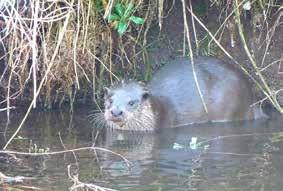
river bank. I have seen Otters behave like this before, and in my experience, they are never so shy as described in books published up to the 1970’s and 1980’s when even dedicated observers struggled to observe what were at the time reclusive survivors in a near extinct population. The behaviour of these 21st Century Otters appeared to this observer to be comparable with Seals that follow you along the shore utterly confident in their ability to be lost from sight in an instant. With our Otters that instant was as unexpected as their appearance. I envied their ability to slip away as the riverbank was starting to feel a little too busy as we returned to walk back to the car park and lunch. A last look for Lesser Spots found a Goshawk briefly joining a hovering Kestrel and Buzzards above the tree line, followed by Grey Wagtail and Water Rail as we crossed the bridge back to the cottages and another look at those very obliging Bramblings.
Our next stop after lunch was to head to Thetford Forest were we convened at a small parking area at the entrance to a forest ride where a Great Grey Shrike had been reported. As we approached a fenced area of scattered conifer and gorse scrub a pair of Stonechats were quickly added to the day’s list along with Skylarks, Meadow Pipits and Yellowhammers while Crossbills and Siskins could be heard and briefly seen overhead between stands of conifer. Looking to the open ground we were able to locate Woodlarks by their up and down yodelling song as they flew between patches of scrub revealing their shorter tails, and white supercilium almost encircling the head like a pale monk’s tonsure. It wasn’t long before we located the Shrike, alert and watchful, still-hunting with minimal effort. Long bouts of inactivity were frequently interrupted by a sudden burst of movement, and the Shrike would disappear in the heather. Lizards carried back to its favoured look-out post appeared to be the most available prey and were quickly swallowed
whole. Our attention was then suddenly focused on the forest beyond the clearing when another Goshawk, flying low against a background of conifers, gave excellent views. As we enjoyed our second Goshawk of the day it was tempting to speculate that, like the Otter, they may one day abandon their guerrilla existence of hide and seek to occupy centre stage.
Our next stop was Cavenham Heath where an obliging Wheatear was followed by an even more obliging quartet of Stone-curlew. All four occupied a rabbit-grazed dome of turf as if having only recently arrived and were scrutinising the surrounding heath for suitable nesting sites. A pair of Egyptian Geese with seven goslings had evidently successfully accomplished that task but they will need to be vigilant. A Marsh Harrier joined Buzzards and a hovering Kestrel, Jackdaws and Rooks as we crossed a narrow river to a reed-fringed mere where Sand Martins were gathering over the heads of wildfowl and gulls, the first hirundines of the year for many. Greylag Goose, Little Grebe, Tufted Duck and Mallard were feeding and roosting with Lesser Blackbacked, Black-headed and Common Gulls as the clouds began to darken with rain and we set off for the Suffolk Wildlife Trust’s Lackford Lakes reserve.
Lesser Redpoll and Siskin were feeding in the Alders as we walked to the lake-side hides where Reed Bunting flashed white tail feathers between reeds and willow scrub and a Cetti’s Warbler fired off its machine gun rattle song. Gadwall, Shoveler, Teal, Pintail, Pochard, Shelduck and Egyptian Geese fed and roosted on the lake and its islands while Great Crested Grebe in full breeding finery gave an occasional flick of the head ever alert for a suitable partner. A Grey Heron waded the lake shore while Lapwing and Snipe fed in the muddy margins. The clouds that had promised rain all day gave in to a strengthening wind that beat the
lake with hailstones with such force that the Snipe quickly retreated to the cover of reeds and sedges while gulls and Greylag Geese roosting on the islands raised their heads to face directly into the storm, as if to present a more streamlined profile and protect vulnerable skulls from the painful hail stones. The storm passed and the Snipe returned to feed on the mud. The break in the weather seemed a good time to walk back to the visitor centre and car park. The timing was fortuitous as Gi was the first to spot a Red Kite over the sailing club lake that we might have missed if we had stayed in the hide.
For most of our group the Red Kite was a final triumphant note to the day, but some of us decided that the day would not be complete if we passed up a chance to catch up with the Kumlien’s Gull reported to be roosting at Micklemere. On arrival at the hide we found good numbers of Black-headed, Herring and
Lesser Black-backed Gulls. Our hopes were raised when regular gull watchers joining us in the hide advised that the Kumlien’s had been seen at or about the same hour all through the week. We watched and waited as Shoveler, Gadwall, Teal and Shelduck yielded the mere to more and more gulls spreading across the open water while Redshank and Oystercatcher foraged in the shallows with Little Egret and Shelduck. Our hopes rose as more and more gulls began to appear flying in from the east to join the roost in a noisy riot before settling on the mere with minimal fuss and bother. A Sparrowhawk dashed through low and fast as if trying to hide behind its own shadow, our sixth raptor species of the day. As the appointed hour drifted by with still no sign of a white-winged gull and fewer birds joining the roost it was time to call an end to an enjoyable and eventful day and head for home.
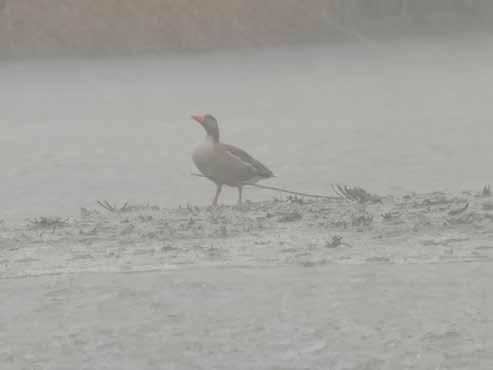
Steve Fryett
Saturday, 27th April 2019
Shingle Street was cold, overcast and windy as Storm Hannah passed through. Despite the “yellow” weather warning there were still 13 members attending what was going to be a very difficult day for watching birds. Heading south we found a few Goldfinches, Linnets and a Skylark. A couple of Lapwings on Oxley Marsh were noted amongst the corvids with a Common Buzzard sitting on a post. With less wind around the allotments one might expect a few more birds but alas we only had singing Common Whitethroat and Blackcap. Deciding not to go any further south we turned back and walked on the seaward side. Looking out to a roaring sea, from the comfort of the footpath, we noted five Common Scoter bobbing about very close inshore. The only other sighting of note was a female Wheatear which made only a very brief appearance.
We decided to head off to Hollesley Marsh where the chance of shelter from the wind was possible in the hide. Here we noted good numbers of Swallow and Sand Martin with at least two House Martin. On the marsh there was an excellent count of 31 Avocet but the only other waders were just one Redshank and a pair of Oystercatchers. Ducks were well represented by the usual species; Teal, a few Wigeon, Gadwall and a single male Pintail. On the raptor front we noted a single Common Buzzard and a single male Marsh Harrier. As we left, a Sedge Warbler was heard singing from the reeds.
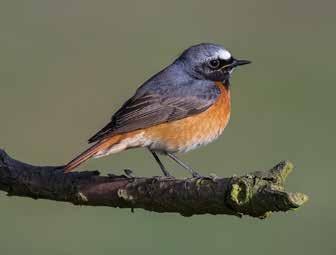
Moving on to Upper Hollesley Common a Chiffchaff was singing in the carpark as we had a lunch break. At least two Yellowhammers were heard singing as we made our way onto the Common. It was still windy, and very noisy near conifers when trying to locate birds by song/call, therefore locating a pair of Common Redstarts was amazing in these conditions with good views obtained. A pair of Buzzards overhead and a lone Kestrel made up the sightings here with a third Redstart heard singing.
Crossing the road on to Sutton Heath a pair of Woodlark were located with food. Another male Common Redstart was seen on the southern perimeter fence line with a very colourful Yellowhammer. We were able to watch the Woodlark in flight showing the diagnostic short tail very well with just binoculars. Given the windy conditions we managed to see more than I expected.
Council for 2019
Officers
President: John Grant
Chair: Edward Jackson
Vice Chair: Chris Courtney
Secretary: Eddie Bathgate
Treasurer: Anne Wright
Communications Officer: Alex Rafinski
Projects Officer: Chris Keeling
Suffolk Bird Report Editor and SORC Link: Nick Mason
Harrier Editor and Outdoor Events Coordinator: Gi Grieco
Indoor Events Coordinator: Adam Gretton
Advisory Officer: Ed Keeble
Members
Justin Zantboer
Peter Merchant
Jamie Everett
Roy Marsh
Matthew Deans
Honorary Vice-Presidents
Jean Garrod
Mike Hall
Robin Hopper
Mike Jeanes
Mike Marsh
Philip Murphy
Reg Snook
Steve Piotrowski
Bird Recorders
North-east Area Recorder: Andrew Green, 17 Cherrywood, HARLESTON, Norfolk IP20 9LP Tel: 07766 900063 Email: bird-ne@sns.org.uk
South-east Area Recorder: Scott Mayson, 8 St Edmunds Close, Springfields, WOODBRIDGE IP12 4UY Tel: 01394 385595 Email: bird-se@sns.org.uk
West Area Recorder:
Colin Jakes, 7 Maltwood Avenue, BURY ST EDMUNDS IP33 3XN Tel: 01284 702215 Email: bird-w@sns.org.uk
Memberships
c/o SNS, The Museum, High Street, Ipswich, Suffolk IP1 3QH
Founded in 1973 by a group of Suffolk birdwatchers
Associated with the Suffolk Naturalists’ Society
SBG remains an independent birding group and is a registered charity
A voice for Suffolk birdwatchers
With established links to many naturalist and conservation organisations
Media
Actively lobbies to protect habitats and birding amenities
Provides a county-wide field force of bird surveyors (50+)
Organises and promotes bird surveys
Inspires and undertakes conservation projects
Bursaries available
Numerous conservation achievements:

Strong web presence - www.suffolkbirdgroup.org
Active Twitter feed - @suffolkbirds1
Quarterly magazine - The Harrier
Annual review - Suffolk Birds report
Annually (20+) field trips - ideal for novices or experts and young or old alike
Opportunities to visit hot spots and receive practical ID tips in the field
Programme of talks and presentations - variety of topics (county, national, or international) with quality speakers
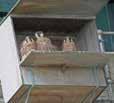
- Contributed to several species breeding successes (Barn Owls, Peregrines, etc.)
- Undertakes monitoring and ringing
- Involvement on community and education projects
- Organises and hosts dawn chorus walks
- Assists with fund-raising for bird hides
- On-going participation in key bird surveys for the BTO, such as BBS, the Bird Atlas, various species surveys and WeBS
- Provides surveys for commercial organisations, such as environmental waste companies etc.
SBG Registered Charity No. 801446