Construction taking place at COVID-19 facility in Interbay
Elliott Avenue shelter set to open in late April
By Jessica Keller QA&Mag News editor
Construction work is currently taking place at a piece of property in Interbay that will be used for COVID-19 shelter.
In response to the coronavirus pandemic, King County announced various locations throughout the county would be designated shelters for people in quarantine, isolation or in recovery. When complete, the Interbay site, 531 Elliott Ave. W., will have 14 buildings with modular housing that can serve up to 72 people.
Queen Anne &Magn Queen gnolia Queen Anne &Magnolia

Construction workers are currently installing utilities and ramps and other features at the site of a future COVID-19 shelter on Elliott Avenue in Interbay. The facility, which is supposed to be turned over to the county April 27, will likely house people recovering from COVID-19.

At a weekly phone meeting for Seattle stakeholders and King County representatives April 1, Calli Knight, deputy director of external relations
for the Office of King County Executive Dow Constantine, said the trailers have been all been built and shipped from to Seattle. The site will be turned over for operations April 27.
Currently, construction
workers are hooking up the trailers to utilities and creating ramps to the buildings. She said, unlike at other locations, the site has not been dedicated for a certain use yet. Instead, city staff are conducting daily
assessments about what the county’s needs are as the virus spreads.
“At this point, we’re thinking it’s going to be an assessment
INTERBAY, Page 8
Seattle-area pet-service providers launch new program aimed at protecting employees, clients
By Jessica Keller QA&Mag News editor
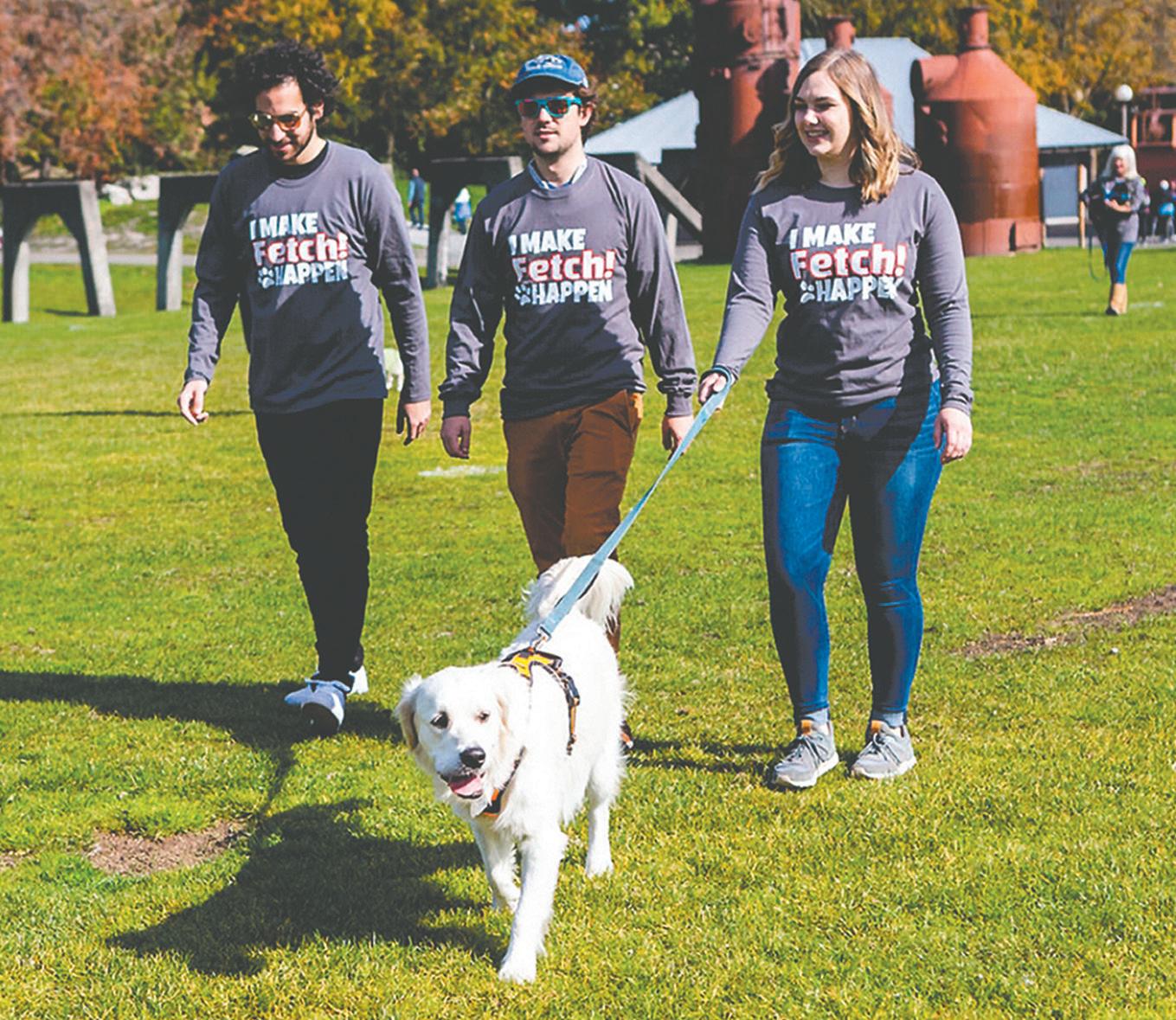
Even though their business has been impacted by the closures mandated by Gov. Jay Inslee in a state-wide effort to reduce COVID-19 closures, Tamara Bean and Cameron Thompson are making the best of the situation.
While the Seattle-area Fetch! Pet Care franchise owners and regional partners normally offer a range of animal services, the pair are now focusing on a new program designed to keep pet sitters and clients safe.
Bean said she thought of the Fetch and Go program when coronavirus cases first started to be reported in the area. It employs a series of procedures that eliminate contact between pet sitters and clients. First, clients have sanitation stations by their front doors. Pet sitters also carry their own leashes for dogs, and owners leave collars and harnesses on their pets. All the dog walkers have to do is wash their hands when
they arrive, put the leash on the dog, and wipe everything they touch with pet-friendly disinfecting products upon returning.
As well, if a client is medical personnel, pet sitters won’t go into their homes until they have been at work for a minimum of three hours.
“I’d rather us air on the side of safety than otherwise,” Bean said.
Thompson agrees the focus is on everyone’s safety.
“We’ve done everything we can except put a bubble around us,” he said.
Bean said, with the governor’s mandates, 90 percent of their professional pet care services are closed. Instead, they are concentrating on dog walking for customers who cannot leave their homes or are working at essential businesses, such as medical personnel.
Bean said one of her clients in Ballard has been working the overnight shift at a hospital, and her dog walker comes between 11 p.m. and 2 a.m.

“We are doing whatever we can to help, even if that means coming in late at night,” Bean said.
Providing for their senior clients is an important service, Thompson said, because with-
out their dog walking services, some of their more elderly customers would not be able to exercise their dogs.
“At the end of the day, we
Photo by Jessica Keller
Photo courtesy Tamara Bean Tamara Bean and Cameron Thompson, regional partners and Fetch! Pet franchise owners, recently started a new program, Fetch and Go, which implemented new safety procedures to keep dog walkers and clients safe during the coronavirus pandemic.

seattleschoolofjazz@gmail.com www.seattleschoolofjazz.com 206-283-5928 voice or text Now accepting students online via Skype, Zoom or your favorite portal







House www.hilltophouse.info

Only Living 62 and over (206) 624-5704
Subsidized Units Available
Rate Discounts for




Some people get nervous when they go to the doctor. Maybe you’re one of them. You may not enjoy all of the visit, but you understand the doctor wants to help you. (And that a treat might await you at the end.)
But if an elephant gets sick, they can’t understand a doctor’s words. They may get confused and scared, until it’s too dangerous to help them.
That’s why sleeping darts — also known as tranquilizer darts — help so much.
“It’s safer for both the humans and the elephant because the humans aren’t right next to a wild animal, and the animal isn’t being chased to try to catch it,” Dr. Tamara Grubb said.
She is a veterinarian at Washington State University who specializes in anesthesiology, drugs that make animals calm, sleepy or unable to feel pain.
Veterinarians and other scientists use sleeping darts to safely handle wild animals, including sick or injured creatures. Depending on what needs to be done, darts contain different kinds of calming drugs. Different drugs have different effects on the body and brain.
Tranquilizers help animals become less excited, while still awake. If the animal just needs to stay calm, the dart will contain tranquilizers.
But if the animal needs to be completely still and unable to feel pain, the dart will also have anesthetics. Anesthetics cause animals to sleep long enough for people to handle them.
Darts look similar to a needle and syringe, like your doctor uses. A chamber for liquid holds the drug. A plunger

pushes that drug into the needle.
But the veterinarian can’t inject the drug from far away. So darts have a builtin device to do this, usually a container of tightly packed air.
“The dart flies through the air, meets resistance and stops,” Grubb said. “When it meets resistance, the plunger makes that little charger go,” Grubb said. “It’s just like the doctor pushing the plunger on the syringe, except the doctor isn’t there.”
Once the drug enters the elephant’s muscle, changes begin. Their blood carries the drug to the brain.
Within the brain, chemicals send signals to the rest of the body. Some of those chemicals send messages that keep the elephant awake. Sleeping drugs work by shutting those chemicals off for a while.
The drug causes changes in the brain similar to a nap, but much deeper. The


animal won’t have dreams, but they’ll be completely unaware. Within 15 minutes, they’re fully asleep.
Veterinarians might have only 30 minutes before the elephant wakes up, so they work quickly. They help the elephant into a safe, comfortable position, often with ropes.
“It can be very complicated to support a big elephant. It takes a lot of work and a lot of people,” Grubb said.
Once the work is done, veterinarians give another drug to wake the elephant. They watch from a distance to be sure the elephant stays safe.
And the elephant wanders away, perhaps a bit confused, from the strangest nap they’ve ever had.
Sincerely, Dr. Universe

It's definitely not business as usual....... however in the 10 days following the Stay at Home order, the following has occurred on Queen Anne:
New SF homes Listed: 14
SF homes that went Pending: 3
SF homes that Closed: 8
New condos Listed: 7
Condos that went Pending: 1 Condos that Closed: 8
The BEST news is that the Governor's office is now allowing showings by Buyers / Agents, moving in/out to occur, professional photography for new listings. (Staging remains a grey area.) So while it's by no means an ideal time to sell your home, it could be ideal to be purchasing as there's plenty of inventory. Once life returns to normal, we anticipate very busy time for both Buyers and Sellers.
Please take care of yourself first and foremost. Just know I'm available to talk you thru options whenever you're up to it.



Gardening is definitely open
This is a strange time for all of us, and it may seem an even stranger time to start a garden column, in the middle of a global pandemic. Here’s why it’s not.
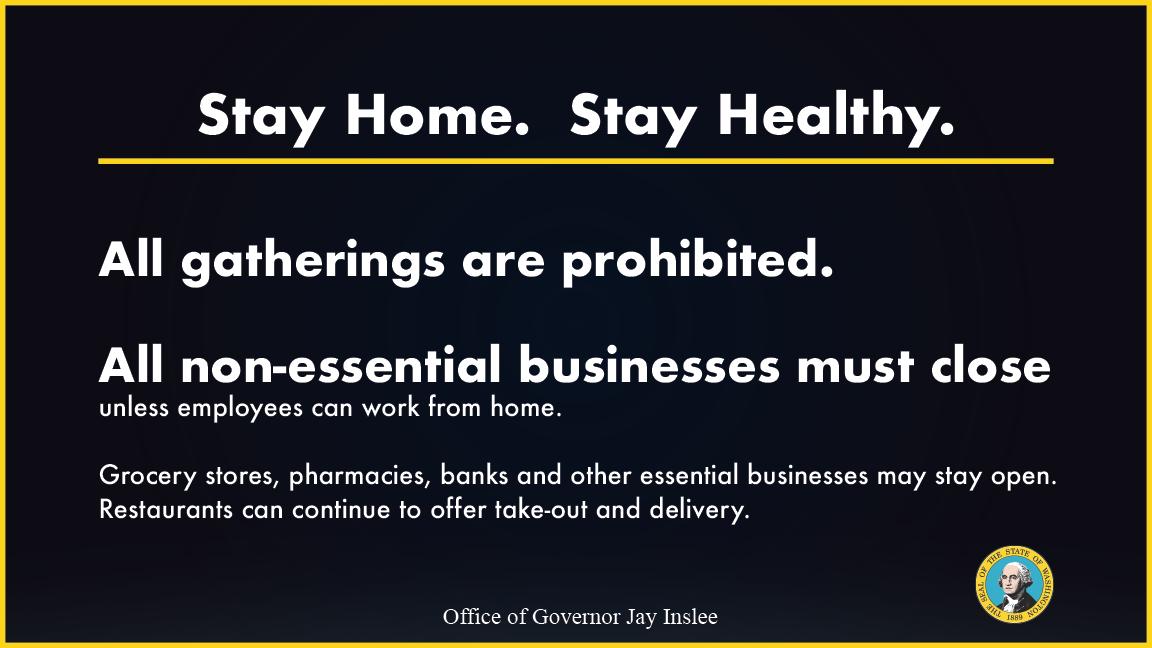
Even if you’ve never planted a seed, it might be the best time ever to garden. The state declared landscaping and agriculture “essential” industries on March 23, allowing them to stay open during Gov. Jay Inslee’s “Stay Home, Stay Healthy” mandate to help curb COVID-19, and I couldn’t agree more.
Gardening is good for your immune system on many levels: Research has shown that being outside delivers the vitamin D so many Americans are deficient in; exercise burns calories and keeps your lymphatic system tuned; being in nature lowers depression and anxiety; and breathing in beneficial microbes in dirt powers up your immune system and may also help your mood.
That’s not even mentioning the heart-expanding benefits of tending living things, creating something larger than yourself, teaching a child how to grow snap peas or sunflowers, or growing an extra row of veggies to share with neighbors or a food bank.
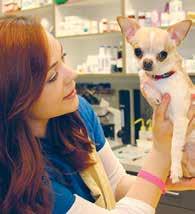
Gardening just feels good.
Or if you just want to glam up your yard, grow fresh nutritious veggies or keep the kids busy with a no-tech activity, fear not, there’s help.
Since the stay-athome order, some nurseries have closed outright and are focusing on new ways to be of service.
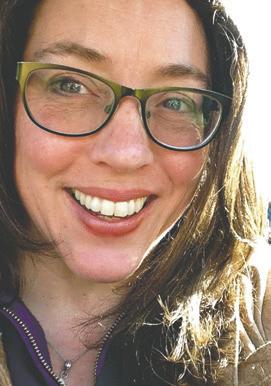
City People’s Garden Store in Madison Park is closed, but is creating educational videos to help people learn about gardening. Urban Earth Nursery in Fremont is offering virtual plant consultations — $20 per 15 minutes, and has abbreviated online shopping for herbs, seeds and DIY planting kits, bit.ly/ShopUrbanEarth.
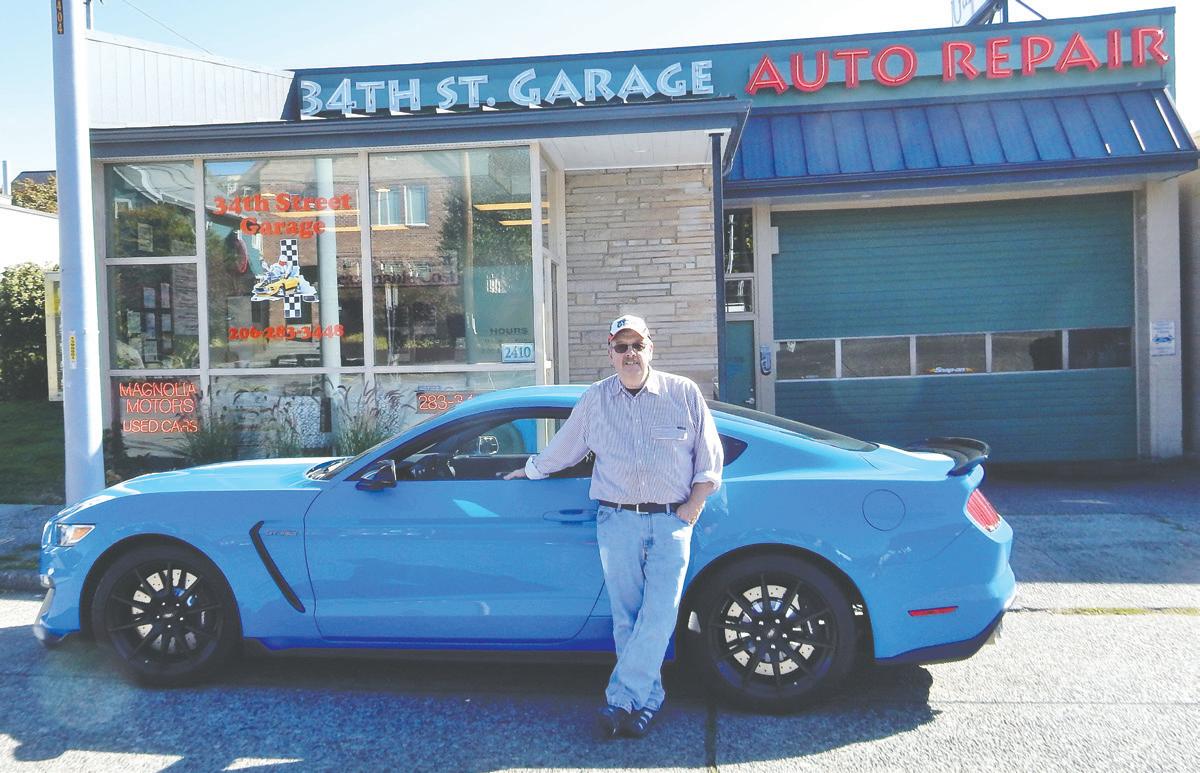
Magnolia Garden Center has also pivoted to offer remote ordering and curb side pick-up but with a full range of offerings manned with half their typical staff, manager Jenna Magee said.
What are people buying?
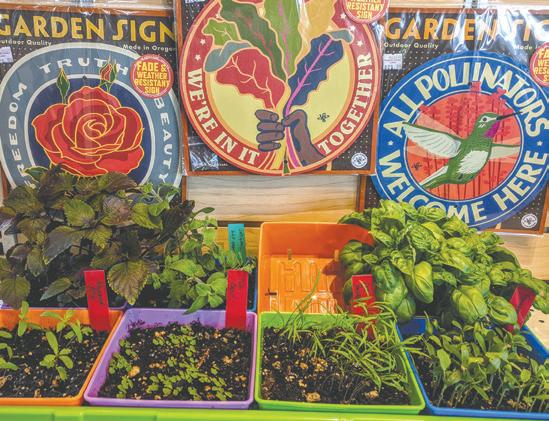
“There’s been a huge interest in vegetable gardening,” Magee said. “We’ve been selling tons of vegetable starts, seeds and equipment like trays and
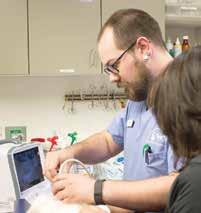


seed-starting planting mix.”
Many of the callers are first-time gardeners, with questions about what to plant and how, which is a “little challenging” in the current set up via phone and email, but she’s happy to do it.
“Everyone wants to grow tomatoes, but it’s not the time,” Magee said.
America’s favorite veggie to grow, heat-loving tomatoes need to wait until May. Tomato seeds can be started under lights indoors now, but plants need night-time temperatures over 50 degrees to thrive outside.
Magee said the garden center is selling through such supplies much faster than usual, even for the usually frenzied first weeks of spring. One seed vendor has already told her that stock is sold out — smaller nurseries often get their orders filled last, after the larger ones.
Magee thinks the swell in garden interest may be a combination of people seeking a back-up food supply to the grocery store and people want-
We have entered an interesting but scary time in world history, with the novel coronavirus sweeping us all off our schedules and out of our comfort zones. Such being the case, this may be a good opportunity to review current thoughts on the virus, and to lay out current thoughts on how the virus interacts with our pets.
COVID-19 (also referred to as SARS-COV-2 in some circles) causes fever, shortness of breath, and/or coughing in people. According to the CDC, transmission of the virus is primarily from person to person, via respiratory droplets produced when an infected person coughs or sneezes. Those showing symptoms are the main transmitters of the virus, though spread may be possible before the onset of symptoms. It is possible for transmission to occur from a person touching something that has the virus on it (such as a pet), then touching their mouth, nose or eyes, but this is not thought to be the main mode of transmission.
A recent National Institute of Health study published in the New England Journal of
ing to connect with their kids in the garden.
Herbs, dwarf fruit trees, berry bushes suitable for container planting and bare-root rhubarb and asparagus are also hot items, Magee said.
In contrast, general tree and shrub sales have cooled, she said, perhaps because the landscape construction industry, not deemed “essential” by the state except for emergency repairs, is currently on hold.
Landscape maintenance for the health of plants, such as lawn care, integrated pest management, irrigation and food cultivation is permitted, but “routine maintenance” is not, according to the Washington State Nursery and Landscape Association. Single-owner landscape design businesses are permitted to operate within safety guidelines, though many are choosing to stop work during this time.
Since design is allowed but not new construction, “I have lots of clients interested in help, but I cannot comply,” said Michelle Meyer, of GardeningGaga!, www.gardeninggaga.com, which designs and maintains gardens in Magnolia and throughout Seattle.
“I started gardening profes-
Medicine showed that the virus can survive for up to 24 hours on cardboard and for 2-3 days on plastic and stainless steel surfaces. The greater survival

time on plastic and stainless steel is thought to be associated with the virus staying moist longer on the latter surfaces. More importantly, the study showed that the virus can survive in respiratory droplets for up to 3 hours after being coughed out into the air, and that the finer droplets can remain airborne for several hours in still air.
sionally because it is a therapeutic activity,” Meyer said. “I find it immensely satisfying both physically and artistically, and I highly recommend going out in your own garden now for that outlet alone.
“You can either pick up where your gardener left off or try your hand at growing veg this summer,” she added. “It’s a perfect opportunity, and the nurseries would be so grateful and attentive in helping you.”
The best vegetables for planting now are greens like lettuces, chards, kale and spinach, as well as beets and all the brassica family, which includes broccoli and cauliflower.
Even if you lack outdoor space, Magee said you can grow microgreens or bean sprouts on a partly sunny windowsill. Magnolia Garden Center carries seeds for all of those, as well as a heavy-duty line of trays and liners that come in a range of fun colors.
According to Magnolia Garden Center’s home page: “Through all of time, people have retreated to the garden for solace, support and sustenance. This Spring can be no exception.”
Hear, hear.
— A lifelong gardener, Erica holds a Certificate in Landscape Design from The New York Botanical Garden, works at Ravenna Gardens, and grew 45 tomato plants last year.
With respect to pets, though two dogs in Hong Kong have tested positive, none in the US have tested positive to date. Two large, commercial labs in the US (Antech and Idexx) have been testing samples submitted for respiratory PCRs (a test run primarily in coughing and/or sneezing dogs) for COVID-19. However, dogs with infected owners are not being tested in the US, since infected owners and those who interact with them should self-quarantine per current recommendations. Neither of the positive Hong Kong dogs showed any symptoms associated with the virus and it is not clear why they were tested, but they were thought to have picked up the virus from their infected owners. The virus is not thought to be capable of replicating in dogs and a complete virus has not yet been isolated from the saliva of a dog. As such, dogs should not be capable of transmitting the virus to people. A lot is unknown about the virus but as our knowledge evolves, we will try to keep our clients (and other readers) updated as to what is being discovered.
Erica Grivas Get Growing


206.852.6107 hring@windermere.com holleyring.com






206/284-4040 www.mrmagnolia.com homes@mrmagnolia.com
Corey 206/818-3386
Dawn 206/948-4340








Direct (206) 396-3396 Office (206) 448-6400
GinaArd1@gmail.com www.GinaArdHomes.com








carmen@windermere.com carmengayton.withwre.com @carmenrealestatebroker (206) 226-2229











Too late to hide
It’s true that I was one of the “selfish Seattle people” who went outside to enjoy that glorious spring Saturday back in March.

I know it’s no excuse, but I was worried and afraid. These feelings drove me out the door, out onto the streets, which seemed less dangerous than the anxiety within the walls of my home. I dressed quickly, never taking my eyes off the light of day, moving in a different direction than the one I was supposed to follow.
Lou Sanelli Falling Awake
I solemnly pledged to keep my social distance.
Seattle in its earliest days of spring is like a gift extended for surviving winter. There is just something about the
warming days that makes life feel good. No matter how bad the news is. No matter if my sister, a nurse in New York City, tested positive and needed the help of an inhaler, antibiotics and steroids to see her way through. She is feeling better now. But we worried. Oh, how we worried.
For one thing, she had rheumatic fever as a child. For another, she’s a smoker. The wine is poured, the cigarette is lit. The conversation intensifies, the next cig is lit. And so on and so on. For as far back as I can remember.
Before she got sick, we poopooed the hysteria. We called the word corona “a new chew toy for the media.” Laughing,
we said how we, together, were the perfect storm of epicenters: “We are Italian. You live in New York. I live in Seattle. We’ll be shunned.”
We compared the nation’s numbers as if they proved something: 68,000 dead of opioid overdoses in 2018; some 30,000 dead annually of other flu viruses; 15,000 dead by gunshot in 2019; 700,000 people with AIDS who have died since the beginning of the epidemic.
I think the funniest thing I said to my sister, and by that I mean when were still provoking the kind of laughter that made us feel righteous, is what I said after she cried, “You would think I’d be more afraid of the virus. But I’m more afraid of the men running this country!” And I said, “You would think there is a correlation between sheltering in place and sex, but there is not.”
We said these things. We meant these things. We didn’t
know what was what, and we felt it was our duty to question everything. It is our duty to question everything. I’ve never been all that good at believing the 24-hour news cycle.
But after contracting the virus, my sister had serious trouble breathing. And like the streets around us, our doubts grew increasingly silent and empty. So when the sun finally came out, a lump formed in my throat. I had to get out. As soon as I was in open air, my body seemed to relax one nerve at a time.
I crossed through Seattle Center and hiked up to Queen Anne until I found what I was looking for: earth — green, irresistible earth.
“You can’t know how good it feels to get out of my tiny Belltown condo,” I said to the first man I saw standing in his yard.
“Yes I can,” he said in a tone that convinced me this was a subject he knew well.
We purposely did not talk about the virus. This I could sense in the way we talked about anything else. But avoiding a subject and ignoring it are two different things, as we all know.
For another minute, I just stood thinking that years down the road we will look back at these months as another time in history when the delicate balance between questioning and resigning, patience and panic, freedom and restriction, life and mortality had been upended. When everything got too quiet too fast, and it was too late to hide, and the world completely changed.
And with that, I said goodbye. I thought of popping by Trader Joe’s just to see and hear other people, but I was fine with my one blessed interaction. I felt better. More grounded.
Blessed, better, grounded.
This is what makes for happiness now.






























































Mary
INTERBAY, from Page 1
and recovery center,” Knight said.
According to King County fact sheets, assessment and recovery centers differ from isolation and quarantine sites because they are for people recovering from COVID-19 who do not need to be hospitalized but need a safe place to recover. Assessment/recovery centers will be supervised by medical and other professionals. Basic health care will be provided, but people requiring acute medical care will be taken to hospitals. By having assessment and recovery centers, hospitals will have a place to send “non-serious COVID cases” and free up hospital beds for acute cases, according to King County information. People who may occupy the site include first responders and health care workers, travelers, people who can’t safely recover at home or the homeless.
A security guard will ensure that people are safely transported in and out of the facility, and that food and other supplies are delivered safely. The security guard does not have the authority to keep people there if they want to leave, however.
Ellen Monrad, Queen Anne Community Council executive chairman, said she thinks the Elliott Avenue location is perfect for an assessment/ recovery center. The facility will be situated on county
FETCH, from Page 1
are providing a service that allows them to have their friends and maintain their way of life,” he said.
Pet sitters will also run errands for clients if requested. Recently, a pet sitter took an elderly client’s dog to the veterinarian for vaccinations and a quick check up.
“These are things we typi-
“To read more of this and the other stories in today’s newspaper, go to www. queenannenews. com.”
property that is next to an operational wastewater outlet facility. Not many employees work nearby, Monrad said, and the property backs up onto the railroad tracks. It is across the street from a parking lot and a vacant restaurant.
“It’s as isolated a spot you can find in the city of Seattle,” Monrad said.
While the county has not decided what the other COVID-19 shelter facilities will be used for after the pandemic, the Elliott Avenue site was already intended to serve as housing for the homeless. Monrad said it was scheduled to open last May, but the project encountered problems getting the necessary building permits from the city.
“So this is just fast-tracking the existing plans,” she said.
King County has currently designated 9 locations as COVID-19 shelter sites. Isolation and quarantine facilities are already open in Kent and Issaquah and Harborview Hall and Aurora in Seattle, with another planned to open in White Center.
Other assessment/recovery centers are set to open in SoDo, Eastgate in Bellevue and Shoreline.
cally provide, but at this time, they’re even more significant to people,” Thompson said.
He said while his pet sitters will deliver pet supplies to clients upon occasion, because of the pandemic, he has arranged for them to take other necessities, as well.
“This is something we want to do to keep our clients happy,” he said. “We’re all in this together.”
To promote communication and positivity during this trying time, Bean created the
The King County Council approved $15.8 million to pay for the Elliott Bay, White Center, Aurora and Kent facilities. Appropriations for the other locations will be included in subsequent budget appropriation requests, according to county information.
In addition to the Elliott Avenue shelter, Monrad is also following progress about the city’s plans to turn Fisher Pavilion at the Seattle Center into a temporary homeless shelter.
According to a fact sheet from King County, the proposed move will “de-intensify” crowded homeless shelters and create additional space for social distancing by moving people to other locations.
Fisher Pavilion is a stand-alone building at the Seattle Center, and the 12,500-square-foot space is typically rented out for wedding receptions, galas and corporate events, according to its website.
It is currently closed, which is why it is being proposed as a temporary homeless shelter.
Monrad said she is concerned the city does not intend to provide food for people staying at Fisher Pavilion. She volunteers at the Queen Anne Food Bank at Sacred Heart, which is already serving more people in need than usual, and fears a large number of people coming to the food bank from Fisher Pavilion will strain its resources further.
Monrad said she is still waiting to hear from city officials about plans for Fisher Pavilion.
Raise a Paw to Pets Facebook page, where people can share funny and thoughtful stories about their pets.
“A pet’s purpose is to share and spread love, so we created this movement to follow their example,” Bean said in an email. “The least we can do is tell their stories.”
Fetch! Pet Care is a national provider of professional dog walking and pet sitting services. For more information, go to www.FetchPetCare.com, or call 866-FETCH-ME.