The Queen Anne & Magnolia News is looking for a Outside Advertising Representative in the Queen Anne & Magnolia markets. Do you enjoy developing relationships with your neighbors and helping them market their business to our local readers? This job is perfect for someone who wants to work in the community they live in. Contact Tammy at 206-461-1322 for
Queen Anne &Magnolia
SLIDE STAYS IN THE PICTURE
By Brandon Macz QA&Mag News editor
Seattle Parks and Recreation is changing course on its plans for 12th West & West Howe Park in Queen Anne. Rather than restore it as a natural area, as had been announced last summer, SPR is using what’s left of its $100,000 budget
SDOT adjusts parking rates
SDOT has made its switch to new 2020 on-street parking rates, with about half of its 92 parking areas remaining unchanged.
The Uptown Core area will stay at 50 cents per hour in the morning, decrease to $1 an hour midday and $1.50 in the evening. The Uptown Edge area will see no change while the Uptown Triangle will increase to $2 an hour midday.
There is no paid parking in Queen Anne or Magnolia.
Rates are adjusted every year based on a parking supply and demand assessment with the goal of making one or two spaces available on each block throughout the day.
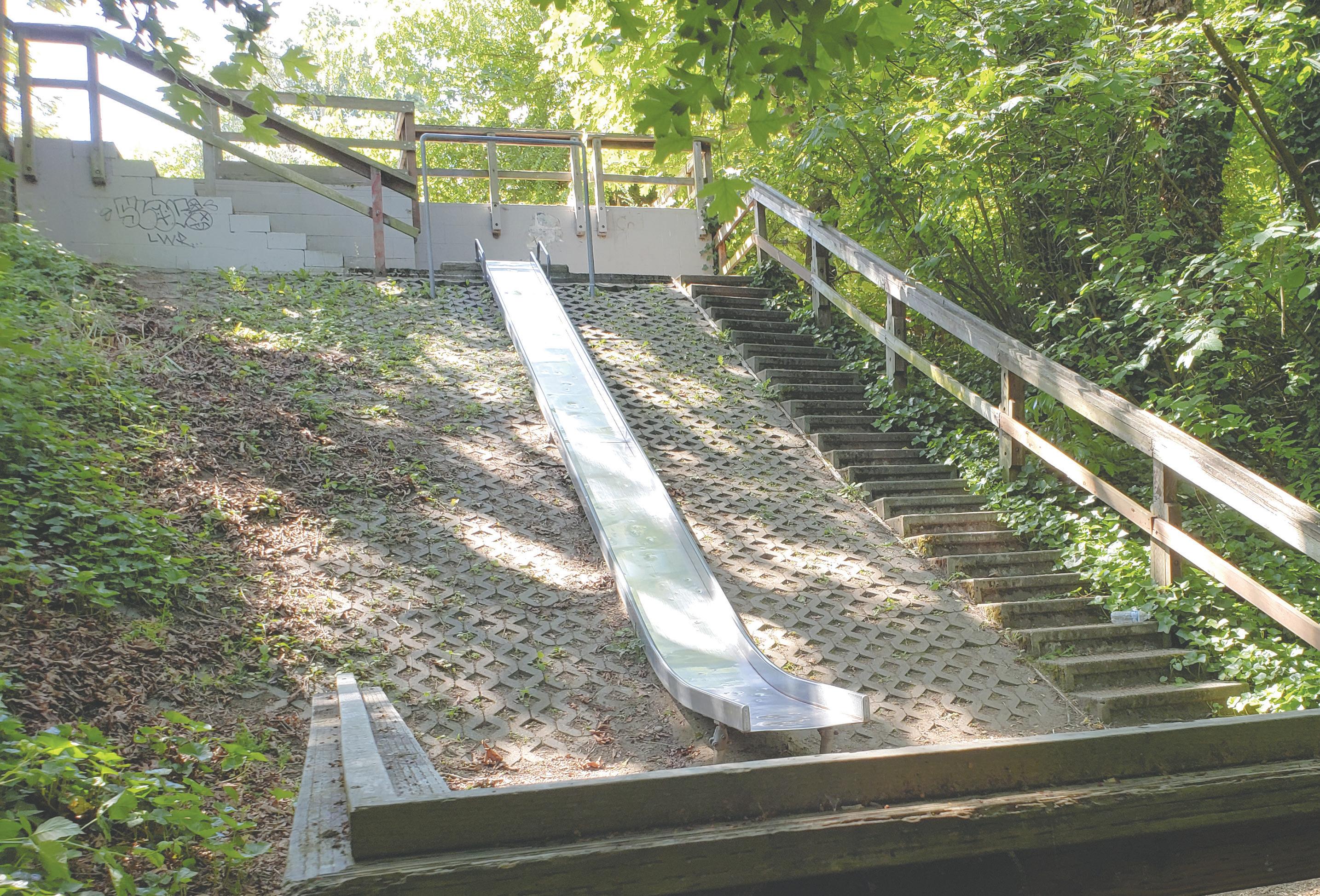
to improve safety and access around the park’s signature embankment slide.
“We’re refocusing and looking at this in a different way this year,” said SPR capital projects planner Libby Hudson.
Hudson faced the ire of Queen Anne residents during last year’s public outreach for the original project proposal, which was to remove the embankment slide,
sand pits and concrete, and then incorporate the site into the Southwest Queen Anne Greenbelt.
The decision was based on landslide concerns for the sloped site, which is a documented critical area, and the fact the aging metal embankment slide does not
West Howe Street Bridge work on pause until parts arrive
By Brandon Macz QA&Mag News editor
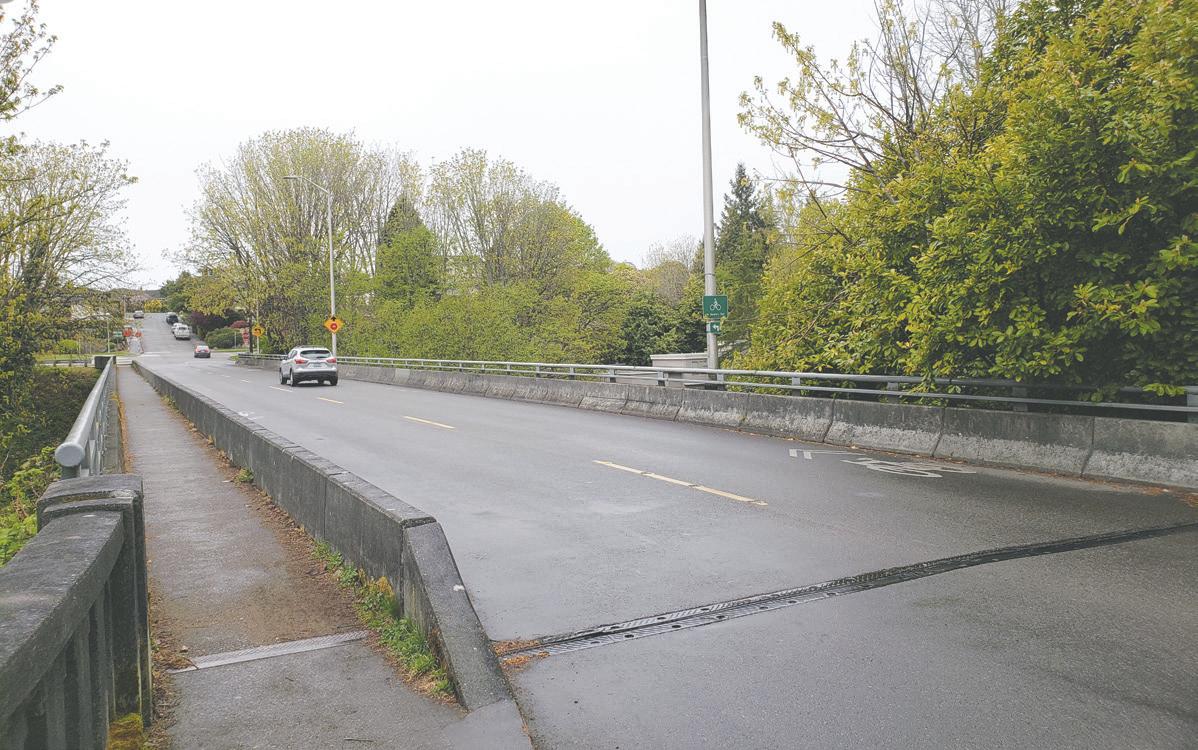
SDOT reports work on the West Howe Street Bridge has been paused while new bridge gusset plates are being fabricated for the seismic retrofit project.
Work began under the 73-year-old concrete and steel structure in December, getting a late start due to the decision to add painting the bridge to the project scope for the bidding process.
Have a New Listing You would like to get Front & Center Exposure? For only $150 each week! (Reg $200) You can be on the front page in this space!! Contact Tammy for availability & reservation 206-461-1322
BRIDGE, Page 3
Photo by Brandon Macz
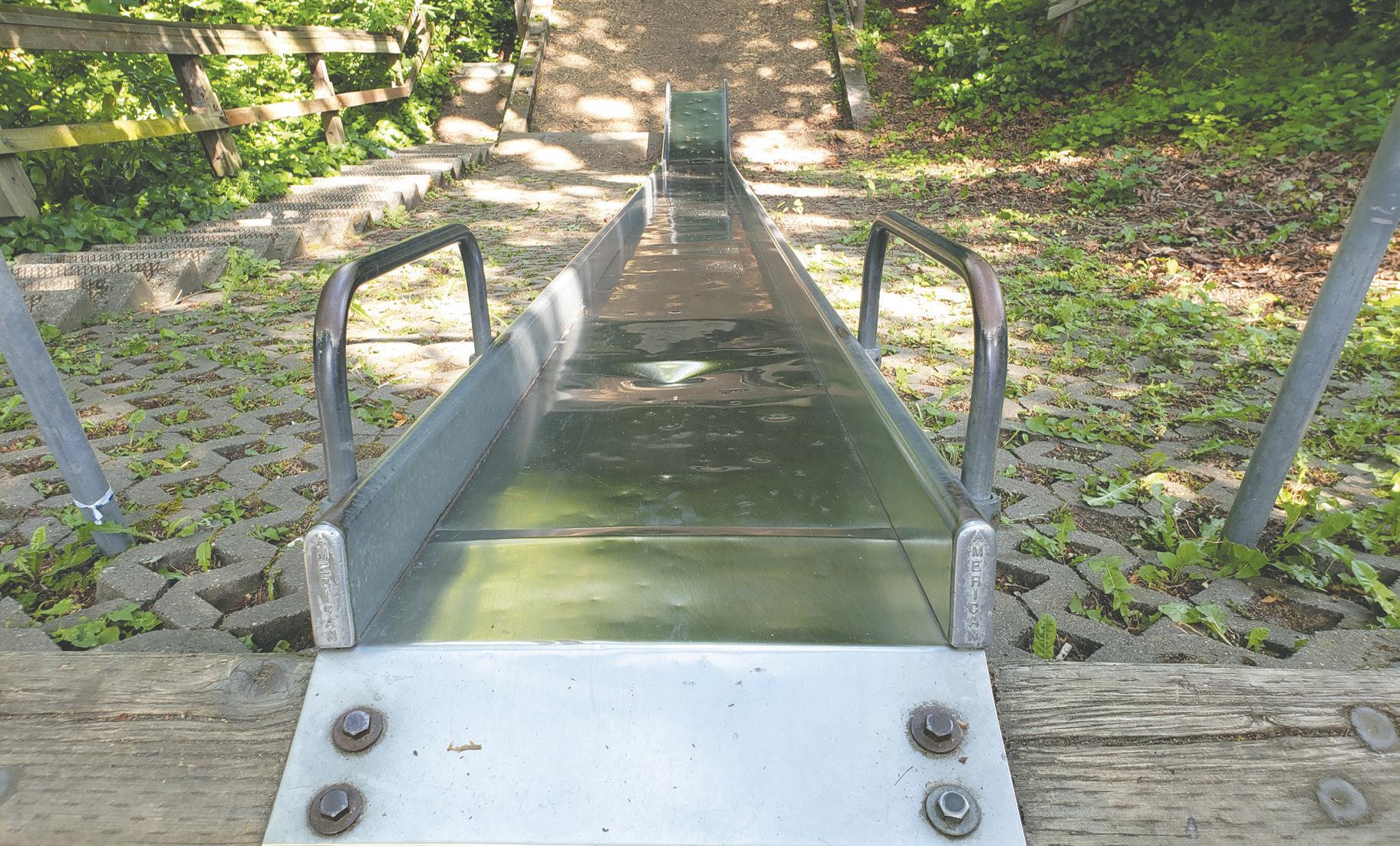
Following community pushback, Seattle Parks and Recreation has scrapped plans to remove the embankment slide at 12th West & West Howe Park.
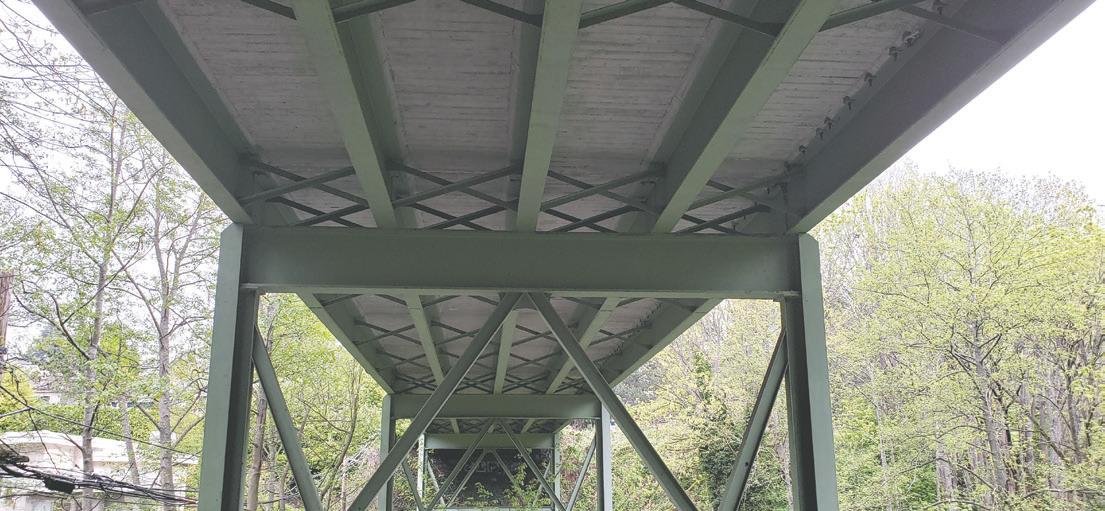
There are three spans under the bridge, which crosses over 32nd Avenue West and provides a connection
to the southwest edge of Magnolia. Most work will
SLIDE, Page 10
Photo by Brandon Macz
SDOT reports work on a seismic retrofit of the West Howe Street Bridge is on hold and will restart in March.
Senators hear pitch for Interbay Community Preservation and Development Authority
Ways and Means Committee considering requests tied to National Guard relocation, redeveloping 25-acre armory
By Brandon Macz QA&Mag News editor
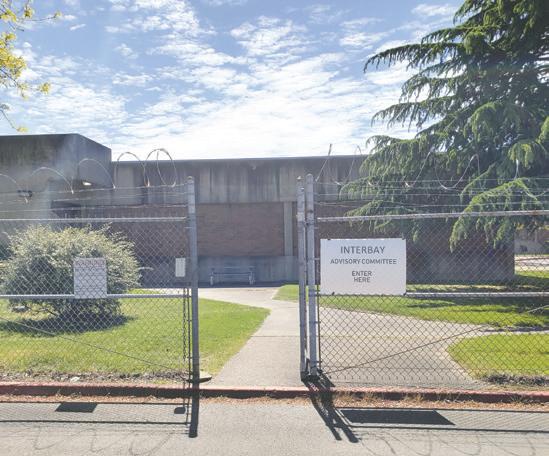
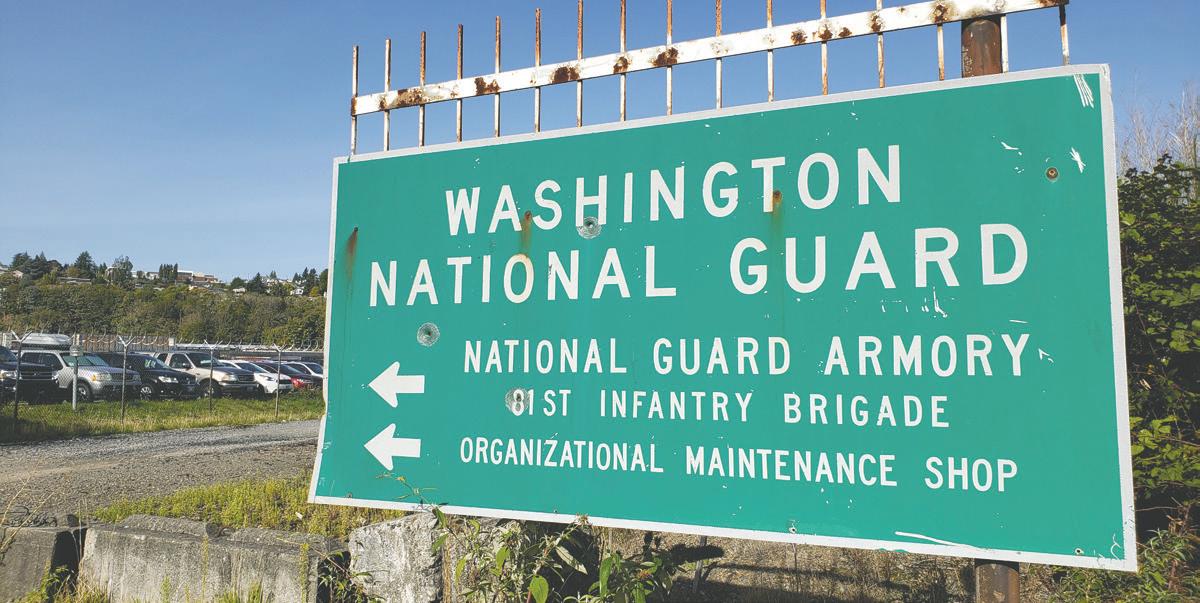
Washington 36th District Rep. Gael Tarleton has introduced legislation in the House to create an Interbay Community Preservation and Development Authority that would take over the National Guard’s armory property and manage its redevelopment.
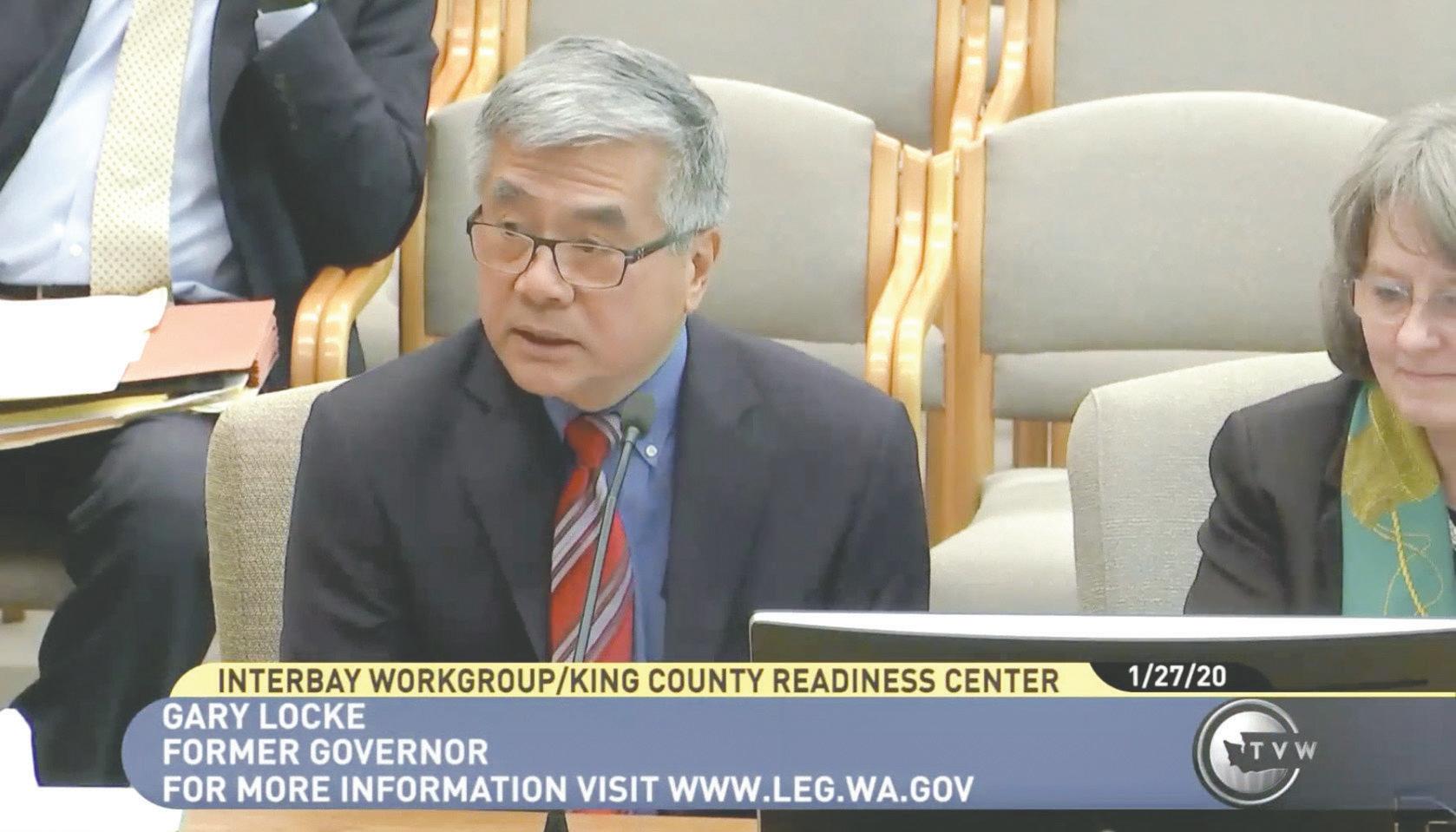
Tarleton was joined by former governor Gary Locke in supporting the creation of the new agency during the Jan. 27 session of the Washington Senate Ways and Means Committee.
Locke and Tarleton chaired an advisory committee last year that explored how to maximize public benefits through the redevelopment of the 25-acre site, which will only occur if the Washington National Guard is fully funded to relocate to North Bend and build a $100 million readiness center there.
“That’s the worst location for a National Guard armory,” Locke said of the Interbay property, where the facility has existed since 1974, “because in case of a natural disaster, a major earthquake, that site would be inaccessible. A lot of freeways leading into Seattle and servicing the surface roads would be impassible. That whole area is tidal area and subject to liquefaction. The facility itself would probably be destroyed.”
Washington Army National Guard Col. Adam Iwaszuk, who is director of construction and facilities, told senators relocating operations to North
Bend was being talked about back in 1993, but a lack of federal funding has persisted to this day.
The Legislature approved $6.6 million during its last session toward the purchase of a 25-acre North Bend property from Puget Western, Inc. Locke said the process for acquiring the site is now in the due diligence phase.
The former governor said the Interbay armory site, which is currently zoned for industrial use, has been appraised at around $50 million. The Interbay
Community Preservation and Development Authority (ICPDA) would be able to work with the City of Seattle and other local government agencies to acquire any additional funding and potential rezoning to maximize the value of the property. Whether it’s sold off in pieces or held in public ownership with longterm ground leases, the proceeds would need to be used to reimburse the cost of the National Guard’s
occur underneath, adding more steel to strengthen the columns and support beams. The bridge bearings at both ends of the bridge will also be replaced. The bridge had joint repairs in 1975, resurfacing in 1976 and a rail replacement in 1987, which was up to code at the time.
SDOT reports the debris and vegetation under the bridge was also cleared recently.
Seismically retrofitting the bridge will take 6-8 months, and then another four months will be spent painting the
Work on the West Howe Street Bridge is expected to ramp up in March. BRIDGE, from Page 1
structure, which had previously been scheduled to take place in 2022. Project manager Kit Loo told the Magnolia Community Council last April that it made more sense to add that to the
project now, as well as the removal of invasive vegetation under the bridge.
Image courtesy of TVW
Former Washington Gov. Gary Locke and 36th District Rep. Gael Tarleton talk about redeveloping the state National Guard’s Interbay armory site with the Senate Ways and Means Committee on Monday, Jan. 27.
INTERBAY, Page 12
Photo by Brandon Macz
The West Howe Street Bridge was constructed in 1946.
CROSSWORD
1. Indicates number of days
6. When you hope to get there
9. Hairstyle
13. Black (Spanish)
14. Expresses pleasure
15. Away from wind
16. Tech pros organization
17. Wile E. Coyote is familiar with it
18. Clean
19. Saints’ signal caller
21. A way to hunt
22. Poetries
23. Automobile
1. __ Blyton, children’s author
2. Colleague
3. “The African Queen” writer 4. Crater on the moon
5. Toward
6. Overhang
7. Identifies something close
24. Secondary school (abbr.)
25. Indicates before 28. Male parent
29. Short-billed rails
31. It pays to keep yours
33. On occasion
36. David __, US playwright
38. Slang for cigarette
39. Vaccine developer
41. Returned to health
44. Toni Morrison novel
45. Period between eclipses
46. Veterans battleground
48. Gang
17. Long song for a solo
20. Barrels per day (abbr.)
21. City of Lights
23. A place to sleep
25. Advanced degree (abbr.)
26. The back
27. Furniture-makers Charles and “Ray”
29. Songs to a lover
30. Gland secretion
32. 10 meters
34. Disfigure
35. Stores grain
37. Sacred book of Judaism
40. Catch
49. A radio band
51. Jaws of a voracious animal
52. Elaborate garments
54. Chinese province
56. Checks
60. Horizontal passage
61. Steep hillsides
62. Fertility god
63. Dried-up
64. Signs a name
65. __ Winger, actress
66. German river
67. Gov’t lawyers
68. Take something somewhere
42. Promise 43. Challenges 47. Russian space station 49. Banking giant 50. Served as an omen 52. Drenches
53. Type of sword 55. Minor planet
56. Messenger ribonucleic acid 57. Japanese ankle sock
58. Obtain in return for services
59. Waste matter
SUBSCRIPTION FORM
Why does the wind blow?
When the wind blows, it can do all kinds of things. It can help pick up tiny seeds and carry them away, so plants and flowers can grow in new places. It can push a big sailboat across an ocean. We can even harness the wind to make clean energy to power our homes and schools.
That’s what I found out from my friend Gordon Taub, an engineer at Washington State University. He is very curious about wind energy and told me more about why the wind blows.
Whether it’s a breeze, a gust, or a gale, winds are blowing in our atmosphere all the time. When the sun heats the earth, it doesn’t actually heat the earth evenly.
Part of the reason the Earth doesn’t heat up evenly is because it is tilted at an angle toward the sun. That means the sun’s rays hit most directly and intensely at the Earth’s equator. Earth is a sphere, so the sun’s rays spread out over a wider area closer to the poles. Where the rays hit directly, the air is warmer; where they reach Earth at more of an angle, the air is cooler. The Earth is also full of different kinds of surfaces that heat and cool at different rates – mountains and valleys, areas with and without water.
This means there are pockets of warmer and cooler air all over the Earth. Winds arise when cool and warm air meet.
When the air at the equator warms up, it expands, Gordon reminded me. Things start cycling around as cooler, highpressure air moves in to places where
there is warmer, low-pressure air. This mixing and movement of air at different temperatures and pressures is what gives us our winds.
The wind holds a lot of energy, too.
Wind turbines can help take the kinetic or motion energy of wind and turn it into electrical energy that can power our world.
Taub’s students are actually working on a wind turbine project of their own this year and will debut it at a national competition in 2020. If you are curious about wind, maybe one day you’ll join students at WSU to investigate wind power, too.
Maybe you’ve also seen some wind turbines if you’ve traveled across our state. Taub said wind turbines usually start spinning when the wind is blowing about 11 m.p.h. They usually shut down when winds reach speeds of about 44
m.p.h., so the blades don’t get busted up.
You know, we have some pretty strong winds on planet Earth: for example, winds of over 230 mph on Mt. Washington in New Hampshire. But that’s nothing compared to other planets. Neptune’s winds are the fastest in the solar system, reaching 1,600 mph—even faster than a fighter jet.
On earth, wind can also help us stay cool on hot days. I think I’m going to make my very own wind-powered pinwheel this summer. You can try to make one of your own, too. We’ll need some scissors, paper, a wooden stick, and a brass fastener. Find all the instructions here and then watch your creation spin in the wind.
Sincerely,
Dr. Universe
Washington State Transportation Commission recommends gradually replacing gas tax
Senate Bill 6586 would be first road usage charge legislation, replacing flat fees applied to hybrid, electric vehicles
By Brandon Macz QA&Mag News editor
The Washington Legislature has sold a number of bonds to fund major transportation projects that will leave the state dependent on gas tax revenues for more than a decade.
At the same time, gas tax revenue continues to decline, due partly to newer vehicles being more fuel efficient and, in the case of electric cars, skirting the pump entirely.
The Legislature has increased the gas tax three times since 2000, more than doubling the per-gallon rate, which means drivers with older vehicles that get fewer miles per gallon are paying more at the pump.
The Washington State Transportation Commission projects a 45 percent decline in per-mile-driven revenue by 2040, which is a hole that could be filled by increasing the gas tax by 1.5 cents per gallon every year. However, electric vehicle ownership is expected to increase heavily in the next 20 years, so preserving transportation funding could mean pumping the gas tax even higher.
After seven years of study and a year-long pilot project that included more than 2,000 drivers, the Washington State Transportation Commission has released a report and its recommendation that lawmakers consider phasing out the gas tax while transitioning in a per-mile road usage charge (RUC).
WSTC executive director Reema Griffith shared findings in the report to the House Transportation Committee on Jan. 23, and the Senate Transportation Committee discussed legislation on Wednesday that would implement an RUC on electric and hybrid vehicles at 3.5 cents per mile, which is higher than the 2.4 cents recommended by the WSTC. The transportation commission suggests spending 10 to 25 years transitioning to an RUC, which would allow the state to settle the bonds it’s already sold and pledged to gas tax revenue.
Griffith tells Queen Anne News it is possible to eventually replace the gas tax revenue with a new source to resolve those bonds, but the revenue would need to be generating billions of dollars.
“It’s just the scale of dollars that, as we ramp up road charges, it’s going to take 10-15 years at the pace the Legislature sets,” she said, adding that could happen once 50-60 percent of the fleet changes over to an RUC. “We expect by then we will be seeing the gas tax revenue drop in real terms.”
WSTC forecasts 74 percent of Washington’s motor vehicle fuel tax (MVFT) will be going toward debt payments by 2028.
The one-year RUC pilot started in January 2018, with 2,000 Washington drivers from around the state and a few from neighboring states, and explored a number of options for capturing how many miles they traveled to determine what they would pay; no actual cash transactions took place, except for Oregon drivers who are already paying into that state’s RUC program.
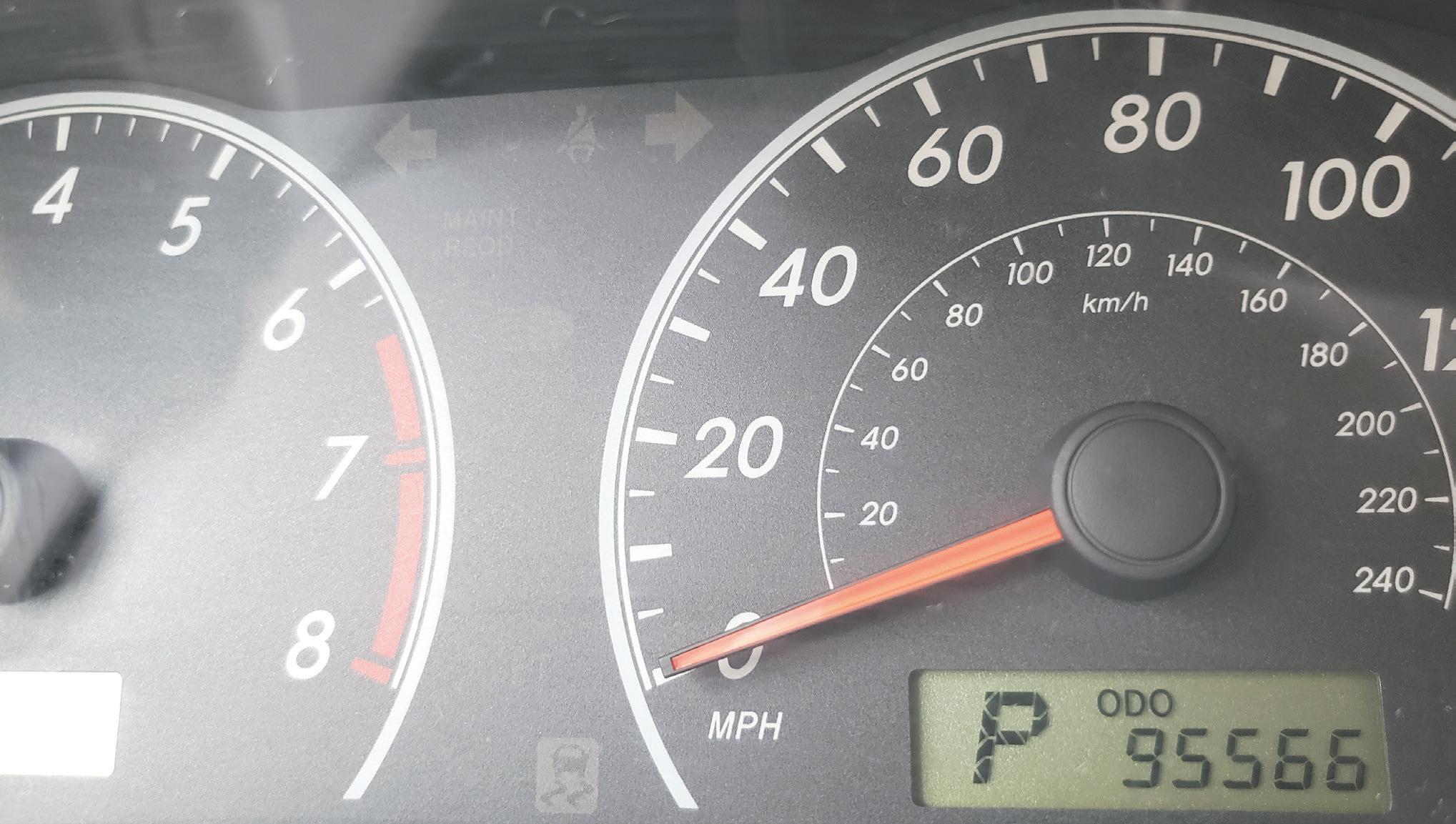
Options tested included self-reporting, where a driver verified their odometer, pre-purchasing a block of miles, a plug-in device for a vehicle’s on-board diagnostic port and a smartphone MileMapper app created in partnership with the University of Washington.
Each option had its advantages and challenges. Griffith said concerns about people using a selfreporting option and providing fake odometer photos are unwarranted, as insurance companies already have software that can tell if an image matches the correct make and model of a vehicle.
A plug-in device would be easier, because it automatically generates and sends mileage reports to an accounting system for billing. Fifty-six percent
of drivers in the RUC pilot chose the plug-in option, but not all opted to use the GPS feature, some concerned about privacy and having their movements documented. Not opting for the GPS function, however, means the plug-in device doesn’t account for off-road driving, which are miles that wouldn’t factor into a road usage charge. Griffith said drivers would also want to have GPS activated when traveling out of state and particularly into other states with an RUC, such as Oregon. Forty-seven percent of drivers in the pilot chose not to use GPS.
Fourteen percent of pilot subjects used the MileMapper app, which Griffith said had to be capped because it was just a beta version.
“It tested really well,” she said, “and the key thing about this app is it had GPS that you could turn on and off like a little toggle switch.”
Only 1 percent of pilot subjects chose to buy blocks of miles, which also required submitting photos of their odometer and dashboard using an app developed for insurance companies.
The pilot was successful in assessing an RUC and determining a gas tax reimbursement, so drivers were not paying for both. With technology changes, Griffith said she expects to see bluetooth-enabled smart pumps within the next decade, making it possible for vehicles and pumps to communicate and factor in an RUC.
The Transportation Choices Coalition responded to the Road Usage Charge Assessment Report in early January, but none of its recommendations carried over to what the WSTC delivered to the Legislature, said TCC advocacy director Kelsey Mesher.
TCC is pushing for a Transportation for All bill that would add more transparency to how money is spent on transportation and update state goals to include climate equity, environmental justice and health.
The coalition requested the WSTC’s road usage charge recommendation not restrict revenue to highway purposes, and instead make it possible to use RUC funds to support multimodal investments.
Whether a $30 cap on car-tab fees approved by voters in 2019 is constitutional is still being litigated. If Initiative 976 is upheld, it would be a major blow to local, regional and state transportation coffers.
“Obviously 976 is very likely going to have negative impacts on especially multimodal transportation projects,” Mesher said, “and we are advocating to preserve as much of that funding as possible. But, at the same time, it’s really making legislators and leaders rethink how are we spending and making money on construction, and how do we make things more sustainable.”
TCC also encouraged the transportation commission to consider a progressive rate structure;
one that considers impacts to communities of color, low-income households, rural communities and other vulnerable populations. Mesher said one issue that needs to be studied further is how to implement an RUC that doesn’t negatively impact immigrants and their privacy concerns.
The coalition also requested WSTC consider how a road usage charge could be used to advance environmental goals and account for greater impacts from larger vehicles on roads.
Administering a new RUC program will be expensive, Mesher said, and if the state is going to go through the trouble, it should look at maximizing a number of policy goals in the process.
“For example, could you charge more if you’re going to be driving through a polluted community?” she said. “Could you charge different rates for a differently polluting vehicle?”
Griffith said the WSTC did consider vehicle impacts on the road, but highways are built to handle semi-trucks that weigh more than 20,000 pounds, which provide more wear and tear than lighter weight private vehicles.
Senate Bill 6586
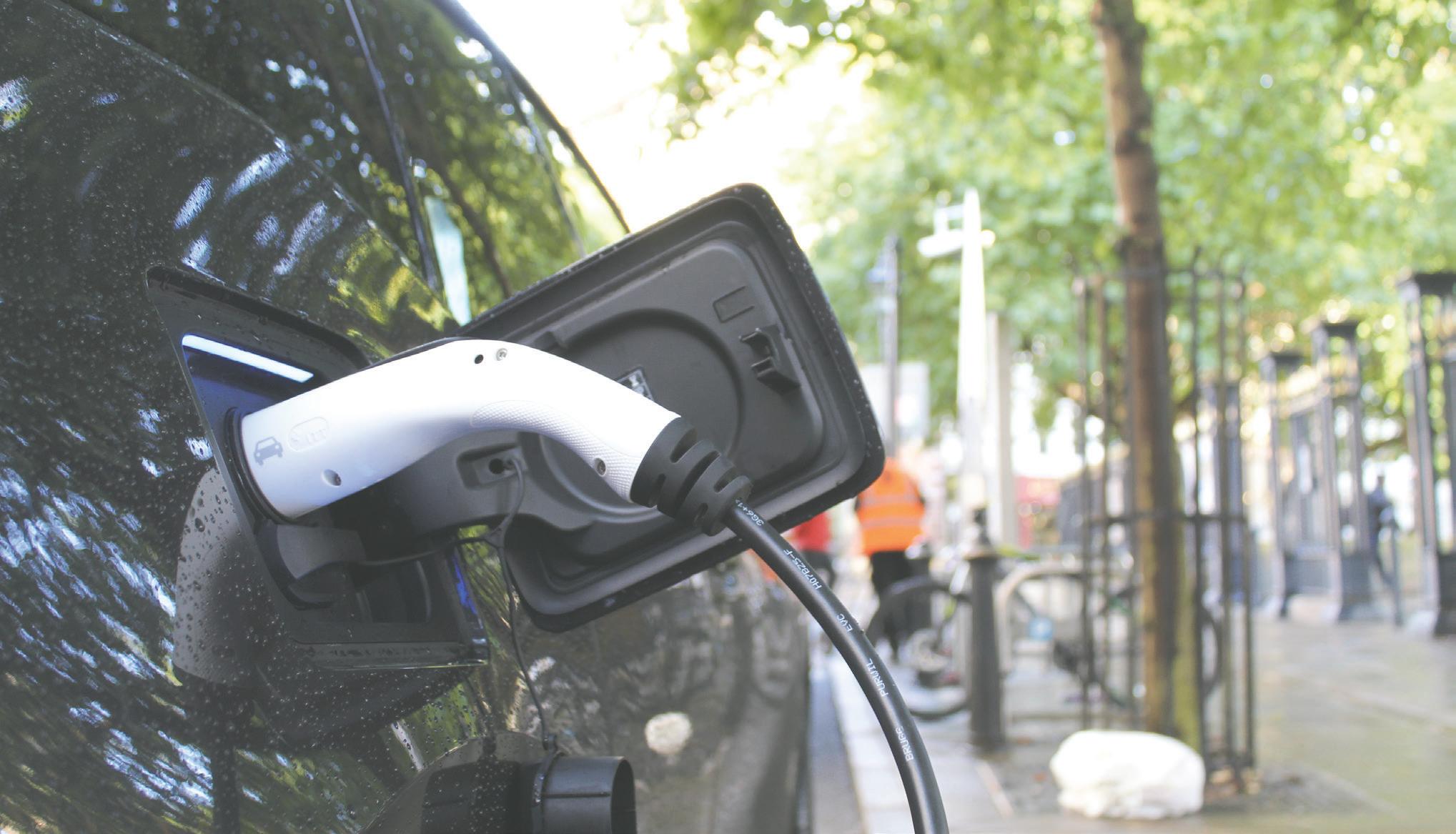
The Washington Department of Licensing already charges hybrid-vehicle owners an annual $75 cartab fee, which started last October and is being used to build out more electric-vehicle charging stations. Electric-vehicle owners also pay this electrification fee, on top of a $150 fee in lieu of gas taxes, which goes toward the state roads funds.
Griffith tells Queen Anne News replacing these flat fees with a road usage charge could save drivers money, if they drive less than 12,000 miles a year.
Legislation proposed by Democratic Sen. Rebecca Saldaña would replace these flat fees with an RUC, however, the per-mile rate would be set at 3.5 cents, which is higher than the 2.4 cents the WSTC recommended, because it’s closer to what drivers pay per mile under the gas tax. EV and hybrid vehicles would need to be able to travel at least 30 miles on a battery, while a per-mile fee of 2 cents would apply to a hybrid vehicle that uses electrical and an internal combustion engine. Revenue would be deposited in the motor vehicle fund for road preservation projects. Under Senate Bill 6586, the RUC would take effect on July 1, 2024.
Saldaña said the RUC proposed is a starting point for ensuring everyone pays their fair share, increasing climate resiliency, and maintaining current infrastructure while being able to build future projects as gas tax revenue declines.
Photo by Brandon Macz
he Washington State Transportation Commission recommends the Legislature spend 10 to 25 years transitioning away from a gas tax toward a per-mile road usage charge that will be a more sustainable revenue source in the future.
Democratic-controlled house passes clean fuels bill
Proponents say the law would help the environment and create new jobs; Opponents believe it could raise gas prices, impact rural communities more
By Cameron Sheppard WNPA News Service
People will be asked to use a lot less gasoline and to convert to alternative clean fuels in the next 15 years if a proposal before the Legislature becomes law.
After lengthy debate, Engrossed Second Substitute House Bill 1110 passed 54-44 in the House despite bipartisan opposition. Five Democratic lawmakers voted no.
If it becomes law, the measure would direct the Department of Ecology to adopt a clean fuels program with the goal of limiting greenhouse gas emissions per unit of fuel to 20 percent of 2017 levels by the year 2035.
Clean fuel advocates believe the policy could reduce emissions and pollution and give incentives for the innovation and adoption of new clean and renewable fuels to be used within the state. Opponents worry the proposed law would increase energy costs for consumers and businesses.
Rep. Mike Chapman, D-Port Angeles, said Renewable Energy Group produces 100 million gallons of renewable biodiesel in his district. He said 90 percent of that fuel is sold out-of-state.
Chapman added that promising economic potential exists in the use of lumber and logging waste for biofuel production.
He said the bill is about, “a lot more than protecting the environment. This is a bill about jobs.”
However, many were concerned that the legislation would lead to an increase in gas prices, causing dis-
proportionate economic burden to rural and agricultural communities.
A report that analyzed transportation fuels in the Puget Sound Region estimated a 22 to 57 cent increase in cost per gallon of gas by 2030 under a clean fuel standard similar to what is proposed by this legislation. The report estimated a 24 to 63 cent per gallon increase for diesel for the same timeframe.
Rep. Alex Ybarra, R-Quincy, urged his colleagues to vote no on the bill, testifying that people in his district have to drive long distances on a daily basis. He said people may have to drive more than 30 miles one-way just to commute to work, buy groceries or even to attend school.
Rep. Tom Dent, R-Moses Lake, said on his ranch, fuel is the second largest expense behind fertilizer. He said an increase in fuel cost would also cause the
to a stairway and the landings.
from Page 1
meet current ADA or safety compliance standards.
Issues that need to be addressed include a new landing at the bottom, which will be engineered wood fiber rather than sand, the top grip bar of the slide, a trip hazard at the top of the slide, and the wood railing along the stairway from the top to bottom of the slide.
“Because the budget’s so tiny, we probably can’t do all that removal that we talked about before,” Libby said, referring to old infrastructure tied to other areas in the park that once had play equipment.
The slide is all that’s left of the playground equipment installed in the ‘90s, the rest having to be removed due to wood rot.
Also factoring into the original $100,000 budget — minus the cost of last summer’s outreach efforts — is an in-house hazardous tree study, Libby said.
SPR will continue working with Green Seattle Partnership as had originally been planned, Libby said, to provide new plantings and restoration work at the park.
“We’ll just work with them on what we can do, with the focus on maintaining the slide and making it safe,” she said.
Libby said there is no current timeline for wrapping up planning, but it’s likely there will be an on-site open house when revised designs for 12th West & West Howe Park are complete.
price of fertilizer to rise. He argued many ranchers would not be able to afford this kind of increase in expenditures.
The Puget Sound transportation fuels report also projected that the maximum achievable reduction in carbon intensity in the region resulting from a similar clean fuel standard is 26 percent among transportation fuels by 2030, with an estimated 10 percent as the minimum reduction.
Rep. Kelly Chambers, R-Puyallup, urged against passage, claiming environmental benefits would not be worth the economic costs. She argued it is not equitable for the bill to make exemptions for airline companies, but then place the burdens of these regulations on industries such as agriculture.
The bill’s companion, Senate Bill 5412, is still in committee.
Photo by Brandon Macz
Keeping the 12th West & West Howe Park embankment slide will require making safety improvements to the structure, as well as
INTERBAY, from Page 3
relocation, and nothing can happen until the North Bend readiness center is operational.
Locke said he’s spoken with Gov. Jay Inslee, who was amenable to fully funding the relocation costs all at once, rather than staggering appropriations from design to construction.
“We cannot redevelop this property until the National Guard has actually moved out into a new, completed facility,” Locke said.
Iwaszuk joined Locke and Tarleton in pushing for the state to fully fund the National Guard’s relocation costs, as any scenario relying on federal dollars would push completion to 2035-36.
The new Readiness Center would be used by 800 soldiers, Iwaszuk said, 150 of which would come from a facility at Boeing Field, which is owned by the King County International Airport.
“We’ve been for 10 years trying to get that license renewed,” Iwaszuk said, “and we’ve been unsuccessful, so there’s a cliff out there.”
The National Guard’s license at Boeing Field expires on June 30, 2023.
Washington Sen. Bob Hasegawa asked Iwaszuk why the airport was declining to renew the license. The colonel said previous discussions had been positive during the economic downturn, but now the county has better options for the property.
The readiness center is estimated to cost $77.5 million and the other $23.5 million would be for a new maintenance shop.
The ICPDA would have to assess the multiple future redevelopment scenarios the
advisory committee left on the table when it approved its findings and recommendations in late September. That includes leaving the site zoned industrial, housing and commercial models, and a hybrid industrial/residential concept.
The advisory committee also envisioned a civic building and outdoor public spaces in each scenario. The ICPDA would also need legislative and financial support from the Legislature to get started.
Tarleton emphasized the Interbay neighborhood’s fast-paced growth over the last decade to the Ways and Means Committee.
“We are overwhelmed and under-infrastructured, and that is perhaps a new word, but we don’t have sufficient infrastructure,” Tarleton said, “whether it’s housing or transportation, access to health and human services, located in an area where the needs of the people are growing at an exponential rate.”
A public development authority would allow the state to maintain a stake in maximizing public benefits for the armory site, she said, adding it would take time for the authority to establish itself.
Creating a PDA now would also allow its members to engage with the City of Seattle as it considers rezones as part of its comprehensive plan amendments, said Matt Hoffman, senior planner at Maul Foster Alongi. The planning firm was hired by the Wash-
ington Department of Commerce to assist the Interbay Public Development Advisory Committee in crafting a final report and redevelopment recommendations for the armory site.
Hoffman outlined for senators some of the challenges for redeveloping the property, including Sound Transit’s plans for light rail expansion to Ballard requiring acquisition of a portion of the armory site near the train tracks to the west. There is also only one access point for the site at West Armory Way, through an easement with a private property.
Even if the site were rezoned to accommodate any of the redevelopment options the advisory committee recommended for further consideration, land sale revenue would not fully cover the National Guard’s relocation costs, Hoffman said.
Sen. David Frockt, Ways and Means Committee vice chair, also served on the Interbay Public Development Advisory Committee. He encouraged his fellow senators to be mindful of the many moving parts in play, including the inability to do anything with the armory site until the Department of Defense clears the North Bend readiness center as operational.
“I think clearly we need to try to maximize the value of the property and what goes on in terms of leases and things like that,” Frockt said.
Queen Anne Retirement Community
Valentine’s Day Dance
Break out your dancing shoes and get ready to swing and sway along with Dina Blade & Singing in the Rain
Tuesday February 11th 2020 2:00pm to 4:00pm in the Dining Room
805 4th Ave N, Seattle WA 98109 206 284-0055
USAGE, from Page 7
Senate Transportation Committee chair Steve Hobbs acknowledged a predicted $67 million shortfall in gas tax revenue this year during a Jan. 29 committee meeting. That’s because of increased fuel efficiency and electric vehicles, he said, which is good for the planet, “however, that doesn’t change the fact that our roads still have to be maintained.”
The Senate Transportation Committee heard testimony for and against the legislation on Wednesday.
Puget Sound Clean Air Agency director Craig Kenworthy said an Uber driver currently pays $860 in gas tax annually, but claimed the proposed RUC would cost them $1,750, creating a disincentive for ride-hailing drivers to switch to electric vehicles. Kenworthy encouraged lawmakers to make polluters pay, and not drivers trying to do the right thing. He acknowledged electric vehicle owners do receive $7,500 in federal rebates, but didn’t expect that program to exist by 2024.
Bryce Yadon, a lobbyist with Transportation Choices Coalition, said revenue should not be solely dedicated to the motor vehicle fund, citing a lack of funding for transit. He also said it was important to consider how rates affect low-income residents and communities of color, and also how to collect fees when people don’t have a bank account or smartphone.
Tom Gaetz with the Washington Asphalt Pavement Association and Jerry Vanderwood with the Associated General Contractors expressed support for the legislation, as long as a clause is added ensuring 18th Amendment protections; the amendment restricts gas tax and vehicle license fees in the motor vehicle fund to highway expenses.
Climate Solutions transportation policy manager Leah Missick said the road usage charge is not a fuel tax, so it does not require 18th Amendment protections, nor should revenue be restricted to highway expenditures when increased transit use lowers impacts on roads. She encouraged tiered rates based on vehicle class, with larger vehicles paying more.
Griffith said she appreciates the legislation as a first step in what will be a longterm work in progress, and asked that lawmakers also consider applying an RUC to 12,000 vehicles in the state’s fleet, which includes EVs, as it would enhance the data set to be studied by the WSTC in the future.