
1
southernsheeting.co.uk WHITE PAPER
A new breed of home improvers: Analysing Britain’s DIY pandemic boom
July 2021

2 contents introduction ........................................................................................................................................................... 3 chapter one 4 unlocking the truth about Britain’s new DIY market .............................................................. 5 analysing sales and trends ............................................................................................................................... 7 market research 8 chapter two 11 case study one: Shoreditch-style garden bar and hot tub in Surrey ................... 12 case study two: shepherd’s hut created from a farm trailer 15 case study three: retirement houseboat in Shoreham 18 advice and tips: what to think about when building a garden office ............... 21 laying a deck: composite or timber?................................................................................................... 23 chapter three 25 conclusion: what does it all mean for the DIY sector and for builders’ merchants? ..................................................................................................................................................................... 26
Has a year of pandemic and lockdowns extended the DIY market in Britain and left enthusiasts with better home improvement skills than ever before?
Those are the questions we set out to answer after noticing an increased demand for DIY products since Covid-19 arrived in the UK, and a rise in enquiries about how to take on increasingly complex projects.
A range of tactics were used in a bid to find the answers. These included analysis of Google Trends, polling the public about their DIY habits, speaking to home improvers and seeking insight from sales and website data.
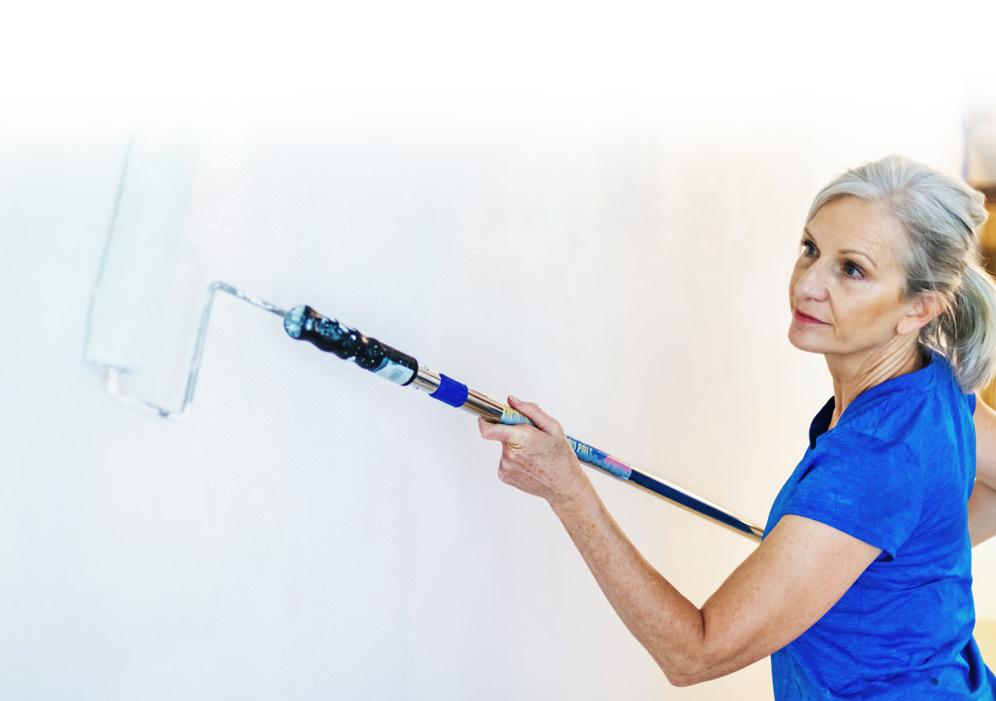
The results of that research took the investigation to a new level. They showed not only that lockdowns have tempted people to tackle more DIY projects than in the past but also that new groups are joining the market – including a greater number of women and young professionals.
The next three chapters will analyse what that means for the DIY industry, what opportunities the revolution provides for those who want to make their own home improvements – and for those who supply products and provide advice for them.
The products behind the boom will also be revealed and tips provided for DIY enthusiasts aiming to further expand their skills as lockdown finally comes to an end.
3
Here we present that evidence, which helps to paint a picture of what the market looks like and how it is changing…
introduction
chapter one
Unlocking the truth about Britain’s new DIY market
4
chapter one
Unlocking the truth about Britain’s new DIY market
Searching for evidence of a pandemic boom in the DIY market quickly brought significant and meaningful results.
1. Measuring Google Trends
The growing popularity of researching products and projects online before undertaking home improvements means the internet is one of the best places to look for statistics which might indicate new trends.
With so many people working from home over the last year, and many more either on furlough or shielding, it is only natural that more DIYers took to the internet to plan their next home improvements.
What is interesting, though, is just how many people did so in comparison to previous years, with some DIY search terms reaching peaks never seen before.
Here we take a look at some of the most popular searches: Search term: GARDEN OFFICE
Four times as many people were searching for information about a garden office in August 2020 as they were in January before the pandemic arrived. In fact, the number of searches was even higher in March 2021, emphasising how the trend has continued - with media picking up on the trend and featuring garden offices on their property pages.
There was a huge peak for ‘garden office planning permission’ in the same period – showing the searches were not just about dreaming but about making a project happen.
DIYers also typed in ‘how to build a garden office’ more than ever before on YouTube, with the largest spike coming just as the first lockdown was mooted. Further spikes were seen in May and August. The same term hit a five-year peak on Google in July and September 2020, and again in January 2021 – once again showing that DIYers were determined to manage the project themselves.

5
chapter one
Search term: HOME IMPROVEMENTS
This search term reached a peak in July 2020 when interest was five times higher than in December 2019 and almost twice as high as the previous summer. Interestingly, the term was searched more often per capita in Wales than in Scotland or England. Looking over a longer period, the July peak was 25% higher than the previous record set in May 2016.
Search term: DIY
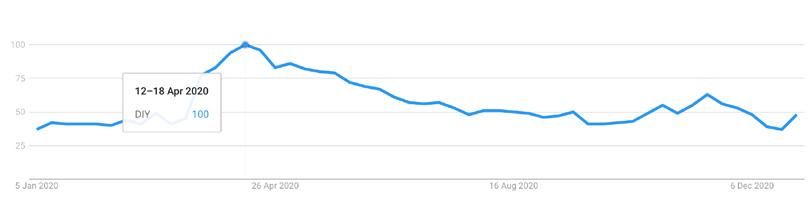
Searches for the term ‘DIY’ reached a 10-year peak in April 2020, not long after the first lockdown was put in place – and just in time for Easter. This is always a popular time of year for DIY projects, but the spike was almost twice as high than in previous Easter holidays.
Other search terms which saw major spikes included ‘outdoor kitchen’, which reached a peak in April 2020 on YouTube and in April 2021 on Google.
A search for ‘roofing products’ hit a five-year high in October 2020 whilst ‘how to install decking’ was the highest for five years in March 2021 - and continues to rank highly. On YouTube, searches for decking peaked in April 2020, during lockdown.

6
chapter one
2. Analysing sales and trends
It is not only online evidence which suggests Britain has experienced a DIY boom, because rising product sales are flagging it up, too.
Tony Hobbs, managing director of Southern Sheeting, said:

“We have had an incredibly busy year serving with customers aiming to carry out lockdown home improvement projects, with sales rising far higher than we anticipated.
“Garden decking was a runaway success in lockdown with sales of our ranges of Trex Composite Decking increasing by almost 140 per cent as people spent more time in their gardens and less money on holidays, going to the pub or eating out. This compared to a 19 per cent increase the previous year.
“Sales of products such as Cedral Weatherboard Cladding, to give homes a fresh look, also rose dramatically, as did Scandinavian style RoofArt Metal rainwater system.
Stats in 2020:
Online sales were also up, perhaps not surprising when so many customers were shopping at home instead of visiting us in person
7
“ 33% growth in sales revenue year on year 45% jump in the volume of orders from the previous quarter since UK went into the second lockdown in November 2020 40% drop in average order value, indicating that a lot more smaller DIY projects were taking place 127% increase in website traffic year on year 84% increase year on year in revenue from domestic retail compared to 16% in trade professionals 33% 45% 40% 127% 45% 84% 33% 45% 40% 127% 45% 84% 33% 45% 40% 127% 45% 84% 33% 45% 40% 127% 45% 84% 33% 45% 40% 127% 45% 84%
Fastest growing DIY
* higher than previous year Composite Decking – up 140%* Cedral Cladding – up 40%* RoofArt Steel Guttering up 25%* Steel roofing sheets 50% up on budget Roofing insulated panels 140% up Onduline roofing 60% up Fibre cement roofing 45% up Dark green steel sheets: 36,000m in 2019, 50,000m in 2020
Top products in 2020:
products: Fastest growing construction products:
chapter one
3. Market research
There is no better way to take the pulse of public opinion than to simply ask them directly.
A Censuswide poll of 1500 members of the public, covering all demographics, asked: Have you completed more home improvement projects since the first lockdown began than in previous years?
The results painted a fascinating picture of Britain’s new breed of DIYers. Some of the key results include:
38% 45%
84%
More than a third (34%) of Brits say they have completed more home improvement projects since the first lockdown began than in previous years.
More women (38%) than men (30%) reported completing more home improvement projects than before.
The survey also asked participants:
There were also significant regional differences, with residents in the North West the most likely to have attempted more projects than before at 38%. Compare that to only 24% in Wales.
To what extent do you agree or disagree with the following statement: my home improvement skills have improved since lockdown began?
Young people aged 16-24 were most likely to have attempted more DIY projects than in previous years – in fact nearly half of them said so at 45%. The figure was significantly less for the Over 55s, at 25%.
Once again, the results provided real insight into the fast-growing DIY market, emphasising that new consumer groups are coming to the fore.
1 in 5
4 in 10
31% 55% 84%
Almost a third (31%) of Brits agreed that their home improvement skills have improved since lockdown begun, with 11% ‘strongly’ agreeing.
Only 1 in 5 (21%) said their skills have not improved since lockdown begun.
Nearly 4 in 10 (37%) of women agreed that their home improvement skills have improved since lockdown begun.
More than half (55%) of 16-24-year-olds said their skills have improved, too.
There were significant regional differences with Londoners showing the most improved skills – 38% in the capital say they are more confident in their DIY ability after a year of pandemic.
In Brighton, 65 miles away on the south coast, the figure was even higher at 40%. Compare those figures to 27% in the East of England, 22% in the East Midlands and just 16% in Nottingham.
8
34% 45% 84% 38% 45% 24% 38% 34% 45% 84% 38% 45% 24% 38% 34% 45% 84% 38% 45% 24% 38%
31% 55%
1
31% 55%
4
1
31% 55%
4
1
84% 4 in 10
in 5
84%
in 10
in 5
84%
in 10
in
34% 45%
24% 38%
chapter one
Does the DIY industry need to re-evaluate its customer targets?
The evidence gathered suggests that the average DIY enthusiast in Britain is changing – challenging an old-fashioned view of a middle-aged man being the primary consumer target.
In another poll commissioned by Southern Sheeting we asked how people rated their DIY skills, and it is clear the skills gap between men and women is minimal.
When asked to rate their DIY skills, 49% of men said excellent or good, compared to 37% for women. But when you add in the numbers who said their skills are ‘fair’ the gap shrinks.
The total number of competent DIYers is 83% for men and 78% for women - extremely high figures which should be a boost to the industry and a wake-up call for anyone who thinks DIY is a male-dominated passion.
DIY Skills
The statistics in detail: How would you rate your DIY skills?
Overall:
Excellent or good: 42% Fair: 38%
Poor or terrible: 20%
For men:
Excellent or good: 49% Fair: 34%
Poor or terrible: 17%
For women:
Excellent or good: 37% Fair: 41%
Poor or terrible: 22%
The difference in responses between age group is also interesting, appearing to show that younger age ranges are increasingly competent in DIY - and growing in confidence, too.
Almost half, 49%, of those aged 16-29 rated their DIY skills as excellent or good, far higher than those aged 45-59 who returned figures of 35%.
Older generations, and in particular the over 60s, were far more likely to rate their DIY skills as poor or terrible. But it’s worth pointing out that across all age ranges, British DIYers have plenty of confidence in themselves; good news for the sector going forward.
9
Men
42% 38% 20%
Men Women 49% 34% 17% DIY
Men Women 41% 37% 22%
Women
DIY Skills
Skills
chapter one
The statistics in detail: How would you rate your DIY skills?
Best results by age:
Excellent or good: 16-29: 49%
Fair: 30-44: 40%
Poor or terrible 16-29: 13%
Worst results by age:
Excellent or good: 45-29: 35%
Fair: 60+ 34%
Poor or terrible: 60+ 31%
Building a picture of what the 2021 DIYer looks like Based on results from both surveys we can put together a picture of what the new breed of DIY enthusiast looks like and where they live.
SUSSEX ALPHA
Sex: Female
Aged: 16-24
Lives: Brighton, East Sussex
DEFINING STATS:
45% of 16-24-year-olds have taken on more projects during lockdown, 37% of women say their DIY skills have improved, 39% of Brighton DIYers describe their skills as good or excellent, 40% of Brightonians say their skills have improved – the highest in the country.



YORKSHIRE ZOOMER
Sex: Male
Aged: 25-34
Lives: Sheffield, South Yorkshire
DEFINING STATS:
53% of Sheffield DIYers completed more projects than usual during lockdown, the highest figure in the country; 38% say their skills have improved, the second best in the country.
LONDON
IMPROVERS
Sex: Male and female
Aged: 16-34
Lives: Greater London
DEFINING STATS:
38% of Londoners say their DIY skills have improved during lockdown and 51% describe their skills as good or excellent –that’s the best in Britain.
MANCHESTER MILLENNIALS
Sex: Male and female
Aged: 35-44
Lives: Greater Manchester

DEFINING STATS: 39% in Manchester say they completed more DIY projects in lockdown, with the same figure saying their skills have improved. Some of the best results in Britain.

THE SOUTH WEST SKILL SET
Sex: Male and female
Aged: 16-29
Live: Plymouth
DEFINING STAT:
Plymouth is home to some of the most competent DIYers in Britain - 49% say their skills are good or excellent.
10
Here are some pen pictures of Britain’s up-and-coming DIYers, many of them inspired by the pandemic and lockdowns to test out their skills…
chapter two
Case studies
11
chapter two
A Shoreditch-style garden bar and hot tub in Surrey
Case study 1

12
case study one
1: A Shoreditch-style garden bar and hot tub in Surrey
The vision:
When Jon Ansell bought a run-down 1970s house in Surrey, he already had a vision of turning it into a modern family home. Lockdown not only accelerated the project but made it more ambitious, too.
He wanted to transform the front garden into a space for entertaining his friends and the back garden into a safe area for children to play in.
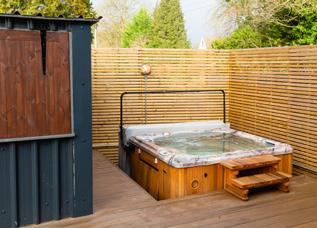
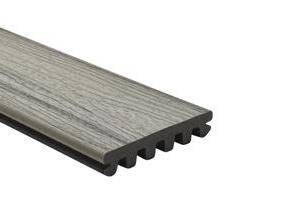
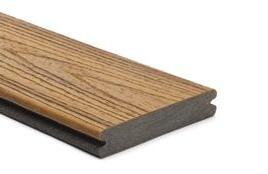
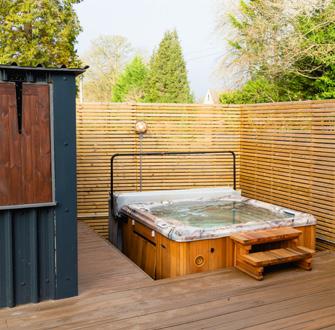
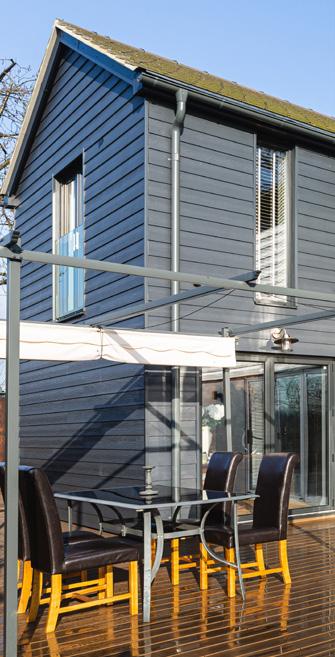
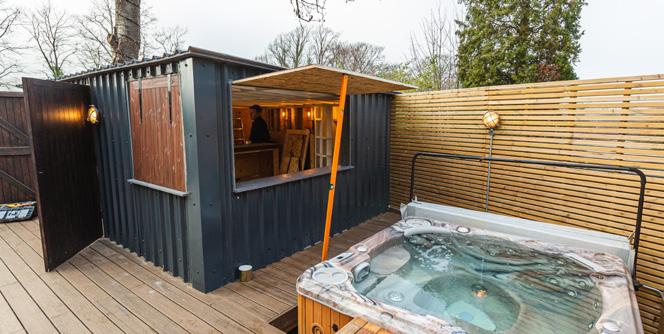
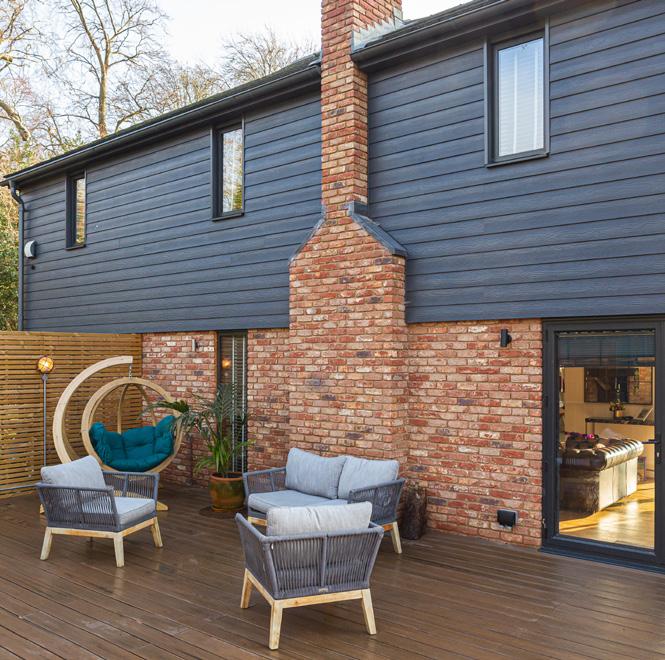
Now the front garden boasts a 1970s style pink and grey marble hot tub and an outdoor bar. Trex Composite Decking also wraps around the house in Chipstead to create a show stopping outdoor entertaining space.
About the DIYer
Jon Ansell bought his house five years ago and started work on an extension, adding Cedral Cladding to the house for his first project.
He began buying building materials when he was researching cladding for his home and discovered Southern Sheeting on the internet. The company supplied him with cladding for the top of the house to give it a more modern feel. This stage of the development also included adding RoofArt galvanised steel guttering, which is very popular in Scandinavia and Europe so creates real stand out in Surrey.
The products
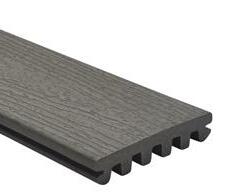
Wood Composite Plastic decking, otherwise known as WPC, looks like real wood, but is longer lasting and less slippery when wet than real timber. It also only needs minimal care to keep it looking good unlike a wooden deck.
I was going for that Shoreditch outdoor bar look. I’m so pleased with the results - it’s created an area where our friends can visit and have fun.
The story
Jon Ansell said: “During lockdown I got so bored and I needed a creative outlet. I had always wanted to create a space for the parents to hang out and one for the children. As going to the pub was impossible and the pandemic just made it harder to socialise in the ways we used to, it gave me the incentive to get cracking.
“The garden looks over the railway line so you can see the trains coming up Chipstead Valley which is really restful.
“I was going for that Shoreditch outdoor bar look. I’m so pleased with the results - it’s created an area where our friends can visit and have fun. The pandemic has been challenging for everyone but having a project to focus on and being able to create a space to spend time together and unwind has been so rewarding.”
The project took about a month to complete.
13
“
Jon created a show stopping modern outdoor entertaining space with our products including RoofArt, composite decking and cladding
14
“
chapter two
A shepherd’s hut created from a farm trailer

Case study 2
15
case study two
2: A shepherd’s hut created from a farm trailer
The vision:
Ian Stevens of East Sussex fixes tractors for a living and likes to take his vintage tractors to country shows. But with lockdown making staying in hotels or B&Bs complicated, he wanted somewhere for his family to stay when on the road.

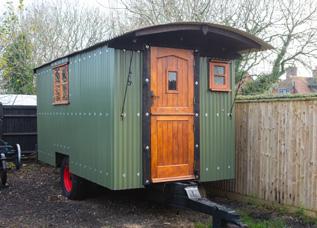
The answer? Build a mobile shepherds hut which can be towed and utilised anywhere.
About the DIYer
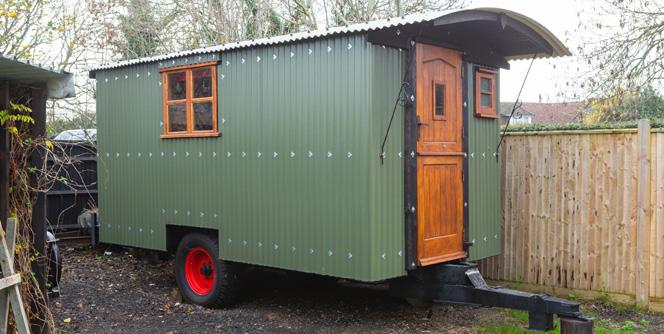
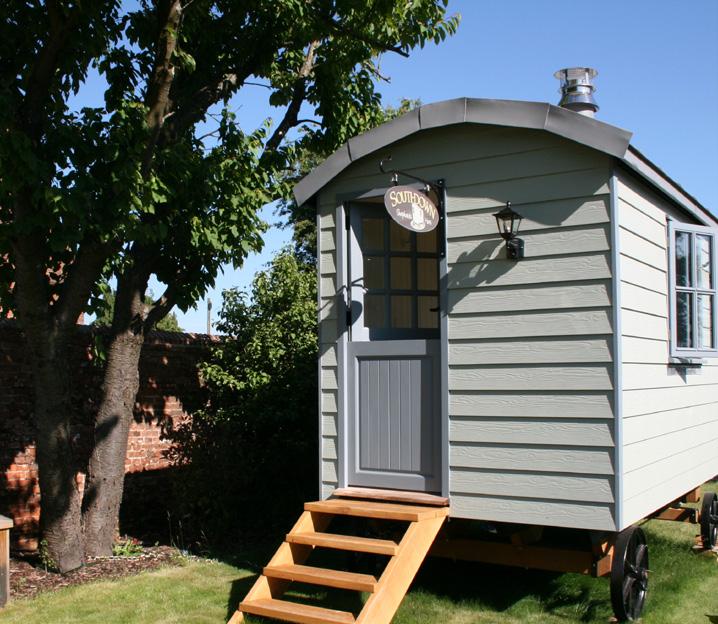
Ian had a clear design in mind before starting the project; he wanted to build from scratch a hut based on a 1960s farm trailer and towed by a 1960s tractor.
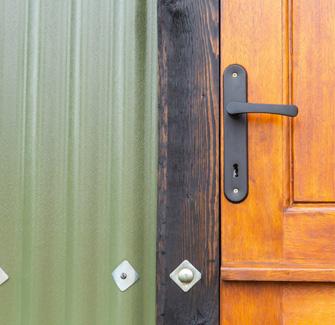
Ian turned to Southern Sheeting top help him source materials. They calculated the radius required from the dimensions he provided, curved sheets for the rolled arch in olive green and all the corrugated side cladding, plus fixings and other ancillaries.
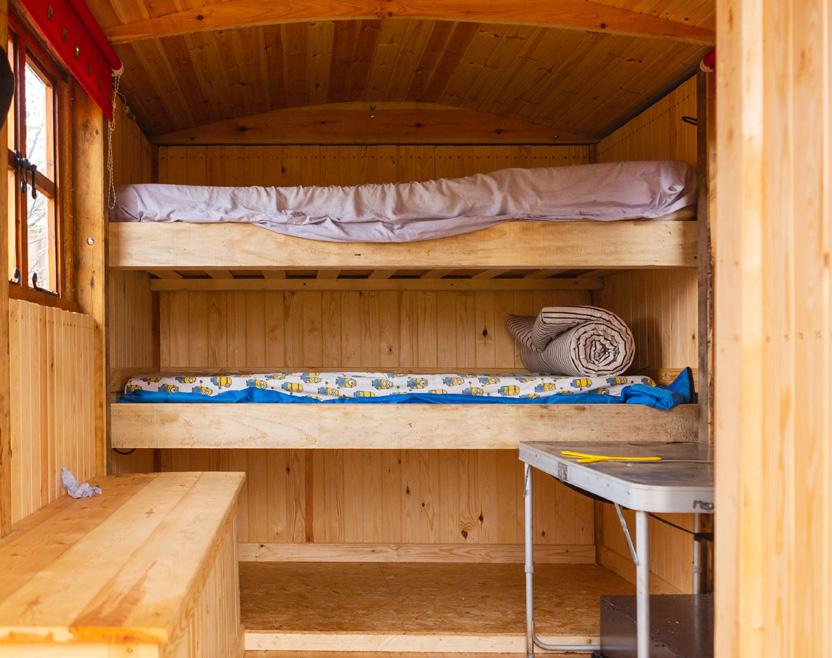
Ian put the finishing touches to the hut during the pandemic and although most tractor shows were cancelled, it provided a welcome relief for the family when parked in the garden or when used for short visits to see friends. It boasts three double bunk beds at the back, sleeping six, a toilet, worktop and seats.
In the future, Ian will stay in the shepherd’s hut when he displays his collection of vintage tractors at country shows. His collection dates from 1943 to 1968 and the shepherd’s hut will sit perfectly alongside his vintage tractors.
The products
Curved corrugated steel sheets, plastic coated in olive green Fixings, foam fillers, mastics

The ongoing trend
Other DIYers are building shepherd’s huts as a summer house or a garden office without the associated need for planning permission. The market for them in the glamping business is also booming as staycations are an easier option for holidaymakers when travel is restricted.
16
“
The Shepherd’s hut provided a welcome relief for additional space and short visits for the family during the pandemic
Ian had a clear design in mind before starting the project and turned to Southern Sheeting top help him source materials

17
“
chapter two
A retirement houseboat in Shoreham
Case study 3

18
case study three
3: A retirement houseboat in Shoreham
The vision:
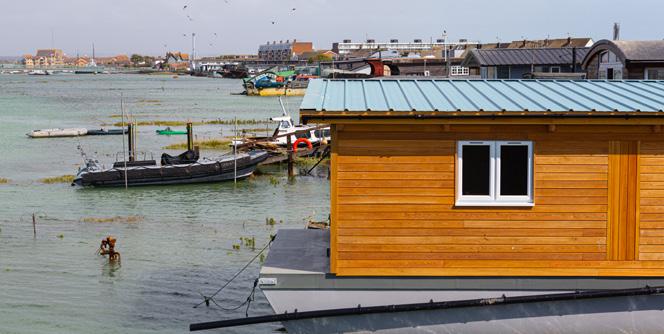
The Shoreham Houseboat community has been called “Britain’s wackiest street,” with more than 40 houseboats, ranging from a converted post-war German torpedo boat to a British gunboat which saw action at the D-Day landings, moored on the banks of the River Adur in West Sussex.
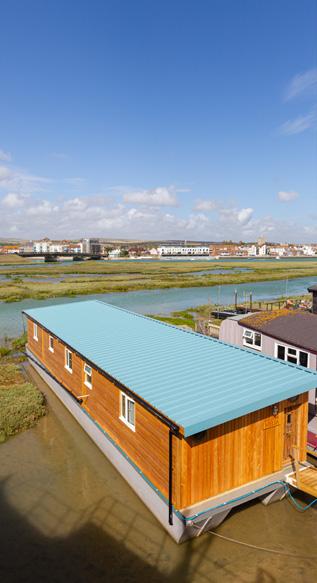
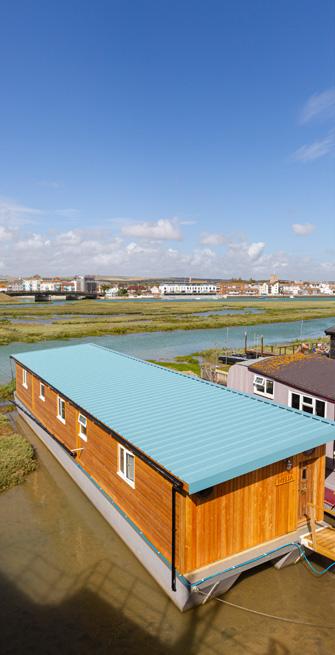
Yet its most recent addition built by Lee Bennett, is far from wacky – instead, it’s a future-proof boat designed as an affordable retirement home for a neighbour.
The DIYer and the products
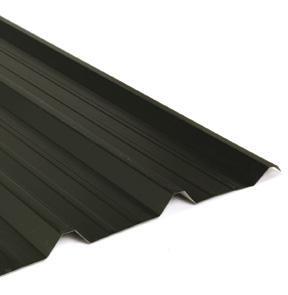
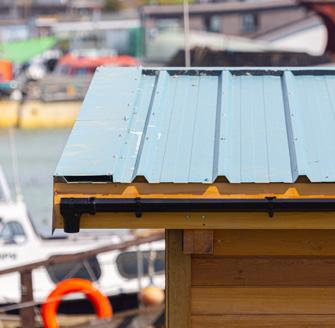
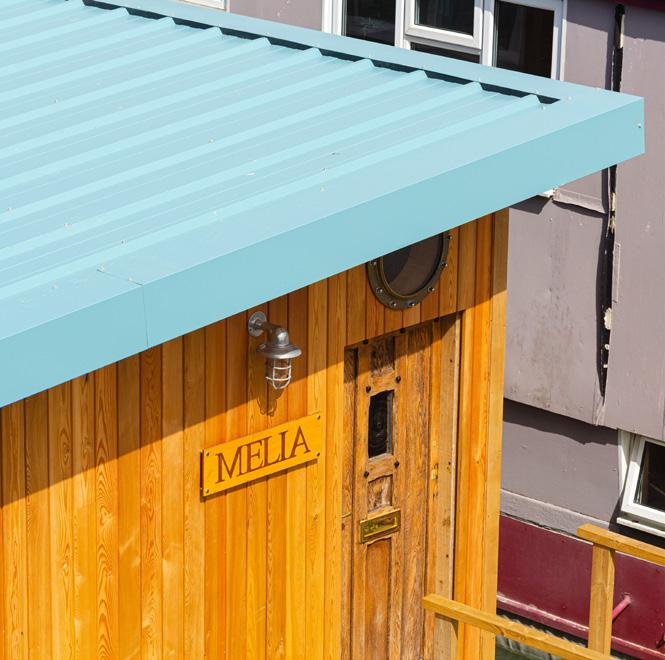
Lee used Tata Composite Insulated Panels for the roofing system. It’s the same roofing system he’s used on all of his previous boat projects which have included a music studio, converting a Royal Naval training barge and rebuilding a Thames Lighter.
He first discovered the roofing system when he was working on building classrooms at a refugee camp in Dunkirk, France, for international humanitarian medical NGO Médecins Sans Frontières and was impressed with the product.
He said: “Tata Composite Insulated Panels are very strong, low maintenance and have a long lifespan. The product is just fantastic. If you need to put up a roof quickly and you want your project to be cost effective, this is the perfect roofing system for you.
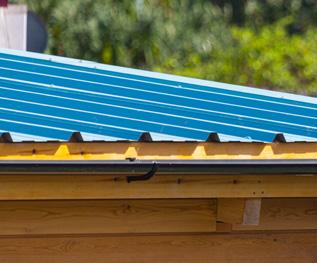

“It took six of us a day to put up the roof on the boat, so it saved a huge amount of money in terms of labour. Also, if you’re eager to move into your new home quickly it means less of a wait before the all-important roof goes on.”
The product is just fantastic. If you need to put up a roof quickly and you want your project to be cost effective, this is the perfect roofing system for you.
19
“
Tata Composite Insulated Panels are very strong, low maintenance and have a long lifespan. The product is just fantastic.
20
“
advice and tips
What to think about when building a garden office
By Duncan Kingston
Q Do I need planning permission and do I need to meet building regulations to build a garden office?
Assuming you are not in a conservation area, a National Park or within the grounds of a listed building, there are three main factors when considering the planning permission aspect of your garden office:
To construct under permitted development rights and to avoid the need to comply with building regulations, a garden office must be under 30m² internally. It can only take up half the garden space. If it eats up more than this, you will need planning permission. The height of the building is also an important factor. The maximum height of 2.5m is widely acceptable on a mono pitch. For dual pitched roofs the eaves can’t be greater than 2.5m and the ridge height no greater than 4m without planning.
Garden buildings to the rear or the side of the house do not require planning permission, assuming they are further away from the road or public highway than the main home. Taller garden buildings must be located at least 2m from the boundary without planning permission. Lower buildings (up to 2.5m tall) can be closer than 2m from the boundary but any side within 1m of the boundary must be suitably treated so that it is non-combustible. The ideal material for this is Cedral Cladding.
3. USE
Should you want to run a business full time from your garden building you may well need to apply for garden office planning permission.

Planning permission is often a straightforward process for garden buildings, so it’s not worth compromising the build to avoid seeking planning permission.
There’s also no point in building something that does not comply with planning and then have to take it all down. If in doubt you should always contact your Local Authority for advice.
21
1. SIZE
2. LOCATION
The advantages of Cedral Fibre cement Weatherboard are that it is extremely low maintenance, does not rot,
“
advice and tips
Q Can I convert my current shed or summer house?
Yes, this is often possible. You may need to insulate the building further to stay warm and to prevent condensation and damp from affecting any computers, equipment or paperwork. You may also want to reinforce the structure and add more substantial cladding as many standard sheds are made from very thin timbers.
Q How do I get power to my garden office?
Whilst it is possible to get some power to your office via the use of solar panels, this will not be sufficient to power computers, appliances, lighting and heating. Ideally, you’ll need to run a dedicated power supply from your house to the garden office.
Power cables should ideally be buried underground and then run through a consumer unit at the outbuilding. Whilst you are allowed to carry out this work yourself, your work must be signed off by a qualified electrician. We would always recommend that other than digging the trench, you get a qualified electrician to carry out the wiring part of the project from start to finish.
Q How do I get connected online in my garden office?
If you are running an underground power cable, it would be advisable to run an ethernet cable at the same time from your house to the garden office. This will give you the most reliable hardwired connection and offer another more localised point for Wi-Fi within the office. There are however other ways to get internet access either through your powerline or via Wi-Fi extenders.
Q What can I use to clad my garden office?
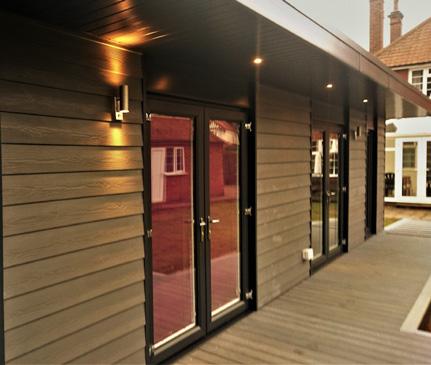
There are several side-cladding options for garden offices made of timber, corrugated steel, PVC or the increasingly popular Fibre Cement Weatherboard. The advantages of Cedral Fibre cement Weatherboard are that it is extremely low maintenance, does not rot, warp or fade, is non-combustible and comes in a variety of 23 painted wood effect colours.
Q What can I use on the roof of my garden office?
There are many options for roofing garden offices. But for easy and speedy installation whilst offering some insulation, we would advise buying insulated composite panels. These are a sandwich type panel with an external hard-wearing outer steel sheet, available in various colours. They come with a high performance fire rated foam insulation core, available in different thicknesses and a bright white internal liner sheet. These sheets can be made to order according to your desired length and act as the ceiling of your building. So, there’s no need to add extra insulation, plaster or paint.
22
advice and tips
Laying a deck: composite or timber?
By Dan Hill
Q What’s better, composite or timber decking?
This is a subjective matter because traditionalists still enjoy the look of real timber, which can be re-varnished or re-painted if a change of style is needed and is often more suited to older houses.
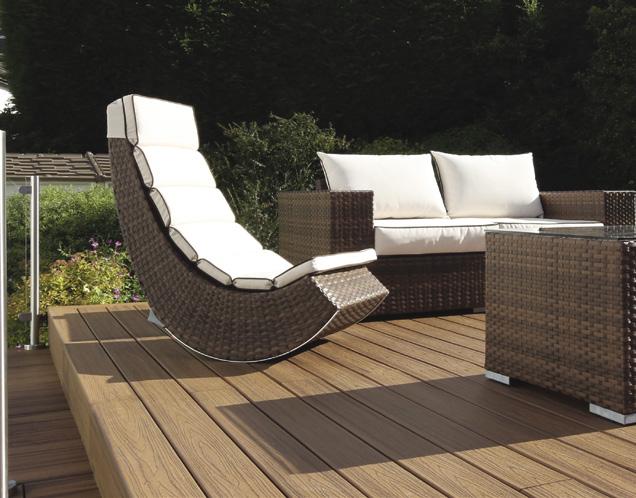
Composite decking has an increasing appeal, however, and maintains its good looks for longer and with less effort. It is also less slippery (which may be especially relevant if you have children or elderly people using the deck) more weather resistant and comes in a greater range of colours. In many cases it’s so realistic that you’d be hard pushed to tell it from timber.
Q Is composite decking cheaper than timber?
Timber decking is typically cheaper to lay initially, especially if soft wood is used. However, it will need far more maintenance – for instance annual treatments of sealant or varnish to keep it watertight, plus treatments to prevent mould and rot.
Therefore, over time, composite decking becomes the cheaper choice.
Q How long does a composite or timber deck last?
A timber deck, depending on the type of wood used, has an average life span of around 10-15 years.
Composite deck can often last twice as long. Trex composite decking, the most weather resistant on the market, is guaranteed for 25 years in residential use.
Composite decking has an increasing appeal, however, and maintains its good looks for longer and with less effort.
It is also less slippery and more weather resistant and comes in a greater range of colours.
Southern Sheeting strongly advises that you seek professional advice or services for any aspect of a DIY build that you are not confident about whether that be planning, building regulations or the need for a qualified/skilled tradesperson.

23
“
advice and tips
Q How do you lay composite decking? Is it easier than laying timber?
It can be laid the same way as a timber deck. So, anyone with regular carpentry skills can lay it, and there are no new skills required.
You should, however, check the manufacturer’s website or ask an expert for specific details on what gaps to leave for expansion and contraction. There can be variations in guidance depending on the product used.
Once laid, the composite boards do not require staining or painting. They are also fade, stain, mould and scratch resistant, meaning they will stay looking good for far longer.
Q Does all composite decking look the same?
One of the great benefits of composite decking is that it is customisable. It can be laid in different patterns and configurations – and different colours can be used in the design.
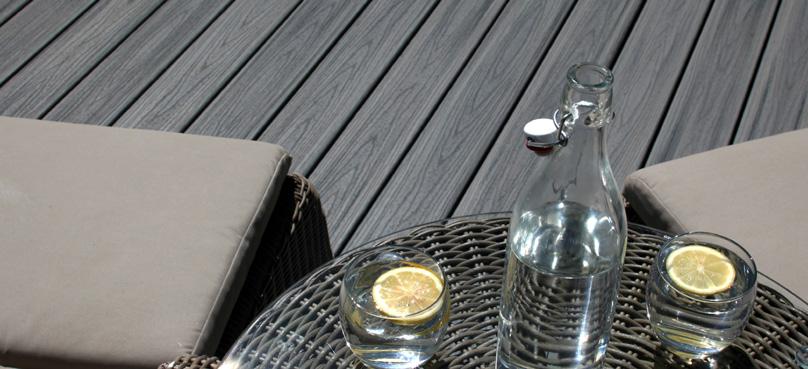
For instance, using a perimeter board in a different colour to ‘picture frame’ the deck is easily done and extremely effective.
With a timber deck, it would be necessary to buy two lots of paint to achieve the same effect.
Q What are the eco credentials of composite and timber decking?
Timber decking sourced from sustainable forests clearly has strong eco credentials. However, some composite decking can be equally green.
Trex composite, made of plastic and wood, uses 95 per cent recycled materials - including thousands of recycled plastic bags plus reclaimed wood from timber mills. It also does not require chemicals or detergents to clean it or to protect it from rotting once laid.
24
chapter three
What does it all mean for the DIY sector and for builders’ merchants?
25
chapter three
What does it all mean for the DIY sector and for builders’ merchants?
The bottom line is that increased interest in DIY during the pandemic is proven by the stats
People are taking on more DIY projects, increasing their DIY skills, sourcing more products, and searching more often for online advice.
This has already led to increased sales for the industry and bodes well for the future.
As people return to work, they now have greater confidence in completing projects themselves – and are more knowledgeable about what products they want when employing a tradesman to do it for them.
The big question, however, is how can the sector maximise opportunities provided by the boom and ensure there isn’t a postpandemic drop in sales?
The key here is in listening to the evidence of new audiences – and thinking about how to reach them.
Taking advantage of the boom in female DIYers
Although stats suggest more women are interested in DIY and more feel they have strong DIY skills than ever before, there appears to be a reality gap when it comes to how many are in store.
Tony Hobbs, managing director at Southern Sheeting, said: “The interesting thing about the growing number of women interested in DIY is that we’re not experiencing it at the coal face yet.

“We’re hearing it from colleagues across the industry, we’re seeing stats that support it and we’re even seeing it on our website. But it hasn’t led to noticeably more women visiting our stores.
“For me, the question to think about is if we’re experiencing more women looking at our website but we’re not seeing feet on the ground, why is that? What do we need to do to change it?
Making DIY more female-friendly
“Do women still find builders’ merchants intimidating places to visit? If so, maybe they are doing the research online but sending other people in to buy the product – or maybe they are put off altogether.
not experiencing it at the coal face yet.
26
The interesting thing about the growing number of women interested in DIY is that we’re
“
Tony Hobbs, managing director at Southern Sheeting
chapter three
“If that is the case then it’s something that we, and our industry, needs to address.”
Tony’s point is born out by evidence from online analysis in his own company.
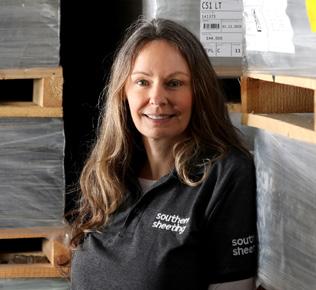
Jo Morfield, ecommerce manager, said: “When it comes to a rise in women being interested in DIY, I’m definitely seeing that verified from a data point of view on the website. More women than ever before are coming through. We’re seeing a shift in our demographics and analytics.”
The same applies to survey evidence which shows that younger people took on more DIY projects during lockdown and are increasingly interested in the sector.
It would be easy to presume that the average client for a builders’ merchant or DIY retail store is a middle-aged home owner. After all, property owners are surely the prime target?
But the survey results show even 16-24-year-olds are increasingly interested in DIY projects - and are the audience of the future.
Attracting a younger audience
Tony admits that Southern Sheeting very rarely sees visitors in their 20s buying products on site, but that doesn’t tell the whole story.
Jo added: “The experience online is certainly different. We’ve found 25-34-year-olds are about 20% of all traffic coming to the site. That’s only really beaten by those aged 45-54.”
Building ecommerce to reach new audiences
Businesses across the sector are focusing on ecommerce to increase audience and sales figures in the post-pandemic era.
Tony said: “Ecommerce is not just another sales channel for us but the future of buying building materials. It’s how the younger generations buy everything now, from clothes to holidays and cars. Why should building materials be any different?
“It’s something we are accelerating with an eye to the future. We have even started to think about what lies beyond ecommerce? Even ecommerce in its current guise will have a life expectancy. You have to think about what’s ahead and how your audience might change.”
When it comes to a rise in women being interested in DIY, I’m definitely seeing that verified from a data point of view on the website. More women than ever before are coming through. We’re seeing a shift in our demographics
and analytics
Jo Morfield, ecommerce manager at Southern Sheeting
27
“
Faster deliveries – and products which save the consumer time
One of the key factors to consider is the expectation of younger consumers to want goods delivered quickly when bought online.
“That’s now a focus for us,” Tony said. “All retail is being driven by the Amazon experience of three or four clicks and then it arrives next day. The next generation will not see building supplies being any different to a pair of shoes, they will want products quickly and easily.
“But we’re also seeing evidence that the new generation may be less price sensitive and more experience sensitive than older buyers. They are happy to pay more for a quality product, especially if it provides low maintenance.
“Increasingly, people are more conscious of their time and are looking for time-saving products. If a product only has to be hosed down once a year, that’s far better for them than having to spend a whole day rubbing it down, staining it, varnishing it – even though that would have been cheaper.”
What we learned
Investigating the evolution of DIY during pandemic has led not only to answers about a growing audience in the sector but also to insights about how the consumer market is evolving.
Interest in DIY projects has never been higher and the opportunity to take advantage and reach more consumers is there to be grasped.
Tony concluded: “The process has been a fascinating one. We knew that sales were increasing but the investigation has provided real insight into who the new consumers are and what they need.
“As a business and as an industry we have some real thinking to do. How can we change and evolve to keep these new customers and to increase our potential customer base further in future?
“Do we need to think differently about the way we do things to ensure women and younger people in particular connect with us and feel considered? Do we need to bolster our ecommerce model?
“In the long term as DIY audiences continue to evolve, these are important things to consider.
“This pandemic DIY boom has been a welcome boost in what has been a difficult time in so many industries and in the lives of so many people. So, we need to work hard to keep those new customers on board and be awake to the new DIY market.”
As a business and as an industry we have some real thinking to do. How can we change and evolve to keep these new customers and to increase our potential customer base further in future?
Tony Hobbs, managing director at Southern Sheeting

28
conclusion
“
