KIDS, TEENS + YOUNG


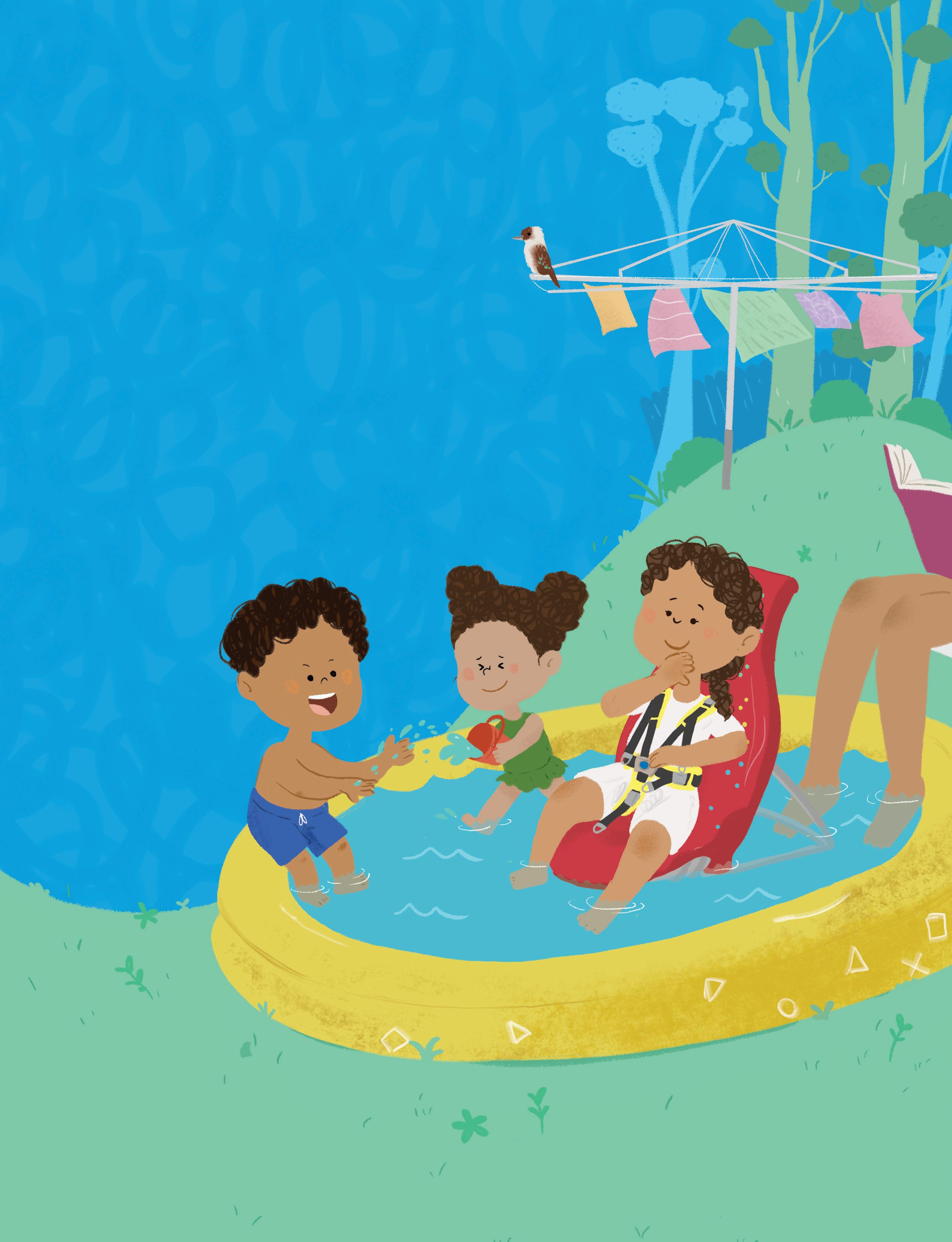
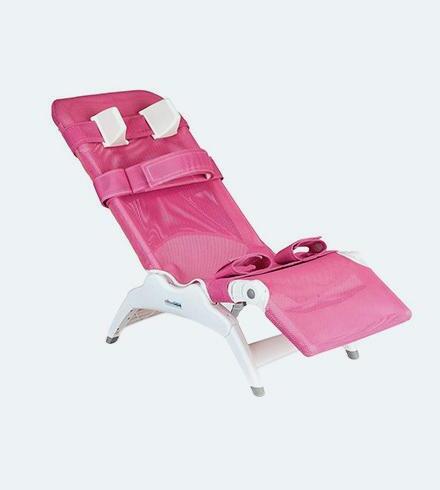
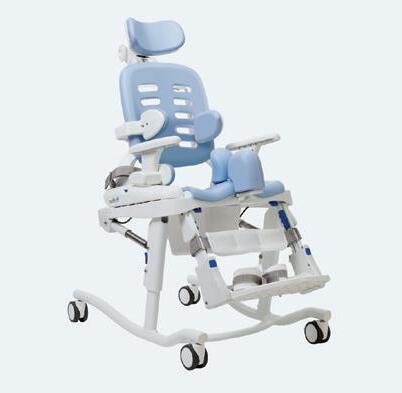
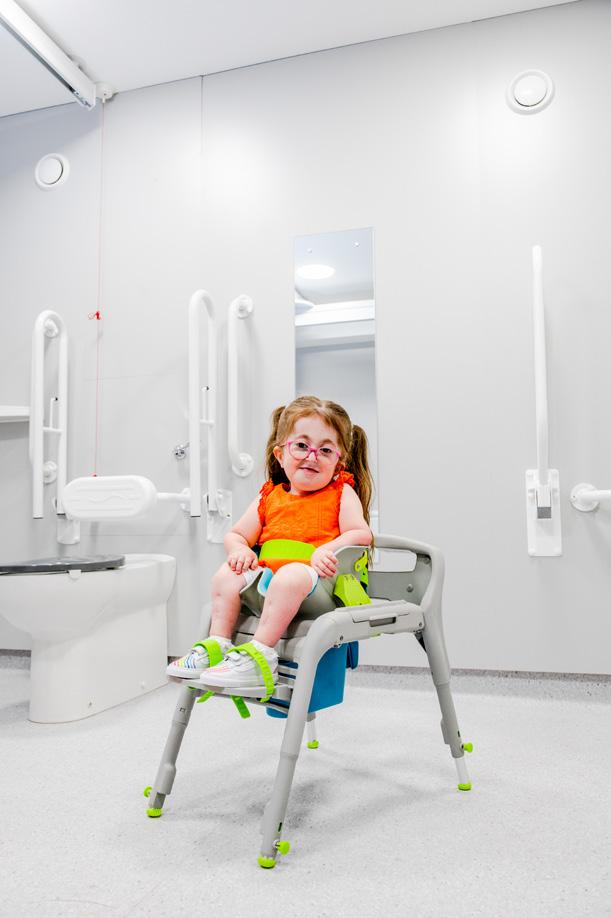
Splashy is a supportive, portable seat for water play, bathing or relaxing outdoors. It’s lightweight, quick-drying and easy to use in the bath, at the beach or in the paddling pool, giving families more ways to enjoy summer together.
With two sizes available, there’s a perfect fit for younger kids through to teens. Adjustable supports help every child feel secure and comfortable, while the easy-clean design reduces stress for parents and carers.
And with the ILS Kids team ready to guide you, making summer more inclusive is easy.
Ready for a splash of summer fun?
Explore the Splashy range today
As we close out the year and step into the long, warm days of summer, I want to say a heartfelt thank you for being part of the Source community. Your continued support and engagement throughout the year are what allow us to keep creating resources that inform, connect, and celebrate families across Australia.
This Summer edition is centred on accessibility and participation and ensuring that all kids, teens and young adults have the chance to play, move, explore and belong. Inside, we dive into the joy that comes from being included, whether that’s stepping into a dance class designed for everyone, heading outdoors to play in spaces that truly welcome wheelchair users, or joining a sport where everyone can participate.
We speak to the team behind AllPlay Dance who are using research, movement and music to open up new pathways for autistic and disabled children. We also explore how imaginative thinking is helping transform community play spaces, and how supported decision making can empower children to have a voice in the activities they choose.
And as we approach the festive season, you’ll find a range of Christmas content designed with inclusion in mind, from sensory-friendly celebrations to fun products, decorations and gift ideas that make the season accessible for all.
Thank you for reading, for sharing Source within your networks, and for continuing to champion inclusion in your own communities. We look forward to bringing you even more stories and support in 2026.
Wishing you and your family a wonderful Christmas and a bright and joyful New Year.


CONTENT EDITOR
Nicole Davis
HEAD OF SALES & BUSINESS DEVELOPMENT
Matthew Rainsford, matthew@sourcekids.com.au
0409 418 362
HEAD OF EVENTS
Naomi Sirianni, naomi@sourcekids.com.au
0447 755 043
GRAPHIC DESIGN
Emma Henderson
PUBLISHER/CEO
Emma Price
Bent the Sloth is a cuddly, weighted companion that delivers soothing tactile and sensory stimulation with every hug. From gentle pressure to soft, calming textures, he’s perfect for kids or adults seeking comfort, calm, and a sense of security — available in four sizes to suit every need. @avantinnovations | avantinnovations.com.au


Encourage your little chefs with the KiddiKutter grater. Specially designed for small hands, it makes kitchen adventures fun, safer, and worry-free — no more grated knuckles! @kiddikutter kiddikutter.com.au

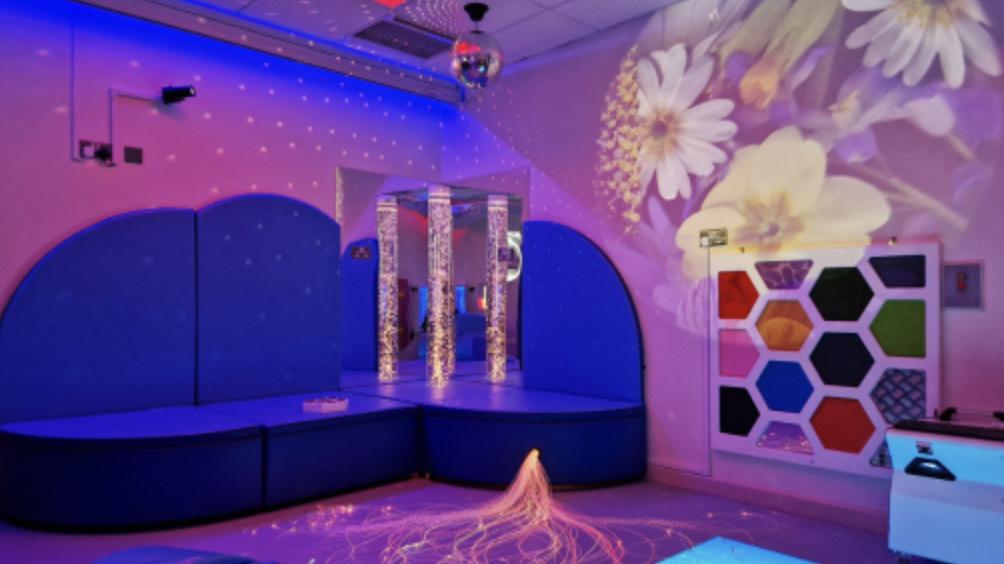
Sensotec’s multi-sensory rooms create a calm, inclusive space to relax, self-regulate, and explore the senses. Perfect for all ages and abilities, their products turn any room into a sensory wonderland. @sensotecmultisensory, sensotec.com.au

A treasured son. A rare condition. A memoir of loss, joy, and everything in between. On a Melbourne afternoon during the early pandemic, Jordan and Gary Ablett discovered why their baby boy, Levi, wasn’t reaching typical milestones. In One Day at a Time, Jordan shares her journey of raising a child with a disability while caring for her mother through her final stages of cancer. A story of courage, love, and unexpected challenges. amazon.com.au
LiveBig delivers support at home, in the community, at school or via telehealth and is a registered Early Childhood Early Intervention (ECEI) provider.
Occupational Therapy
Speech Pathology
Positive Behaviour Support
Social Work
Psychology
Physiotherapy
Call us on 1300 390 222 or visit
livebig.com.au



Every twist you can’t open or swipe you can’t control is a reminder the world wasn’t built for you, but ByStorm is here to change that. Their adaptive beauty tools snap onto your favourite products, giving comfort, stability, and confidence so you can get ready feeling powerful, not frustrated. @bystorm.beauty | bystormbeauty.com

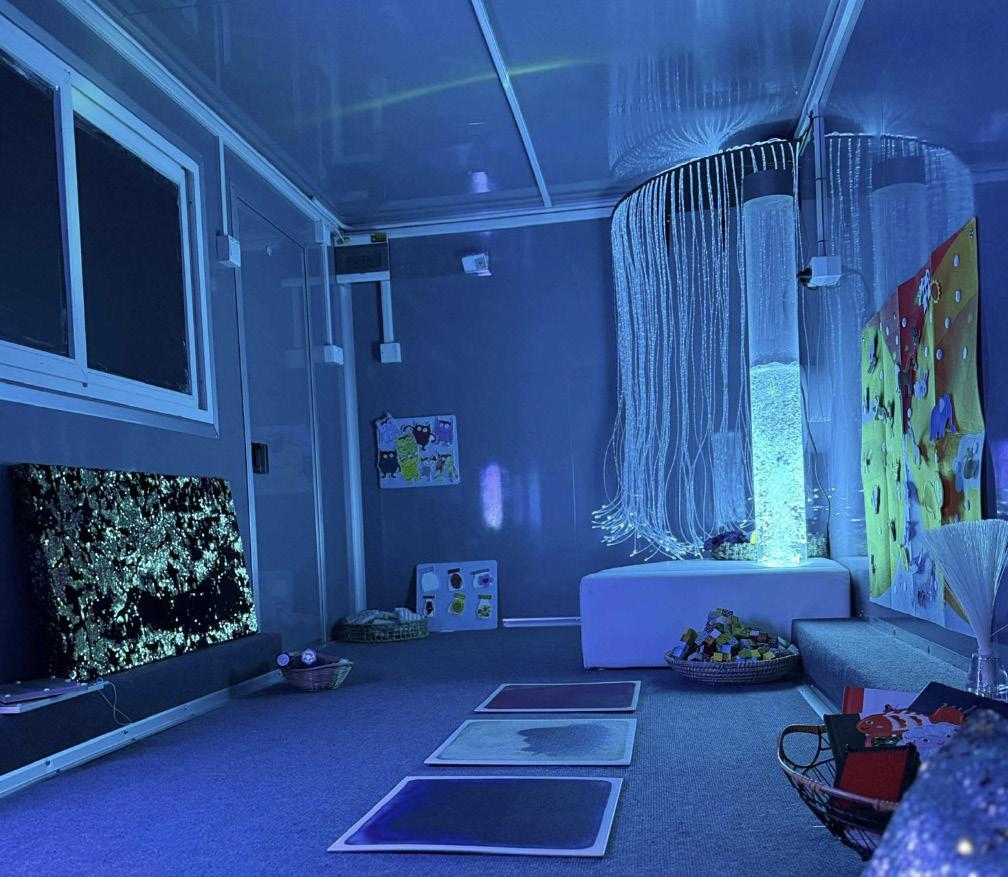
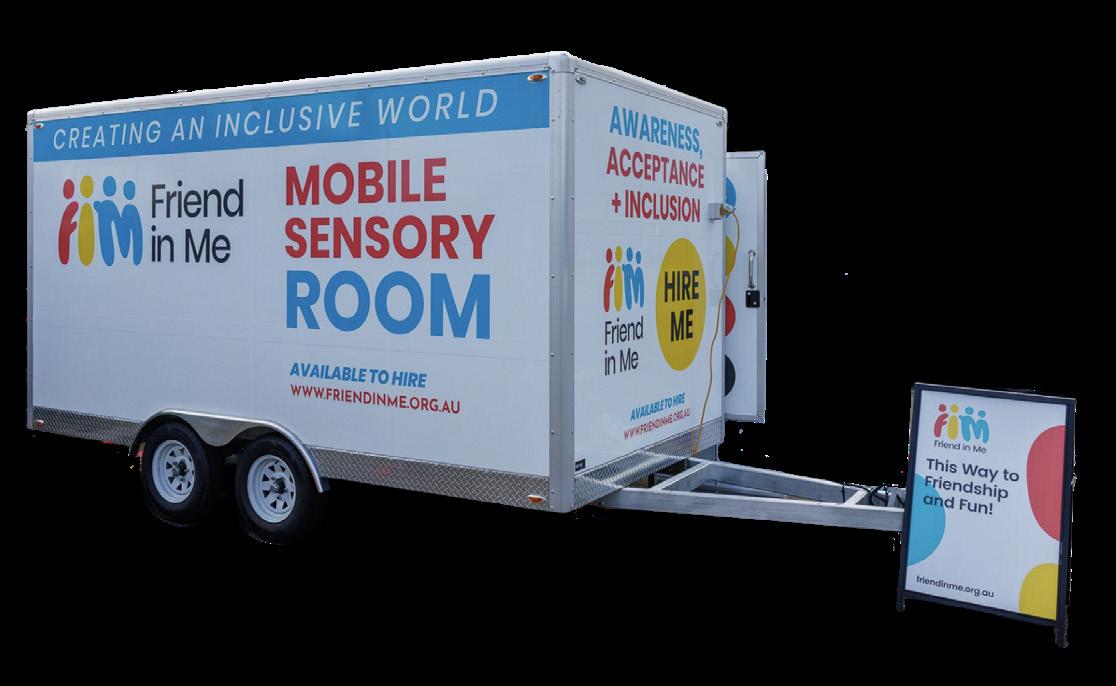
Melbourne-based Friend in Me brings calm to any event with their mobile sensory trailer - a cosy, welcoming space where kids (and grown-ups) can pause, regulate, and recharge. Perfect for birthdays, school fairs or festivals, it helps everyone join the fun at their own pace. Get in touch to check availability for your party or event. @friendinme18 | friendinme.org.au

A cosy hug on the go! This 2.3kg blanket keeps its weight evenly distributed and feels super soft against the skin; perfect for kids on the couch, in the car, or anywhere they need a little extra comfort. weightedblankets.au




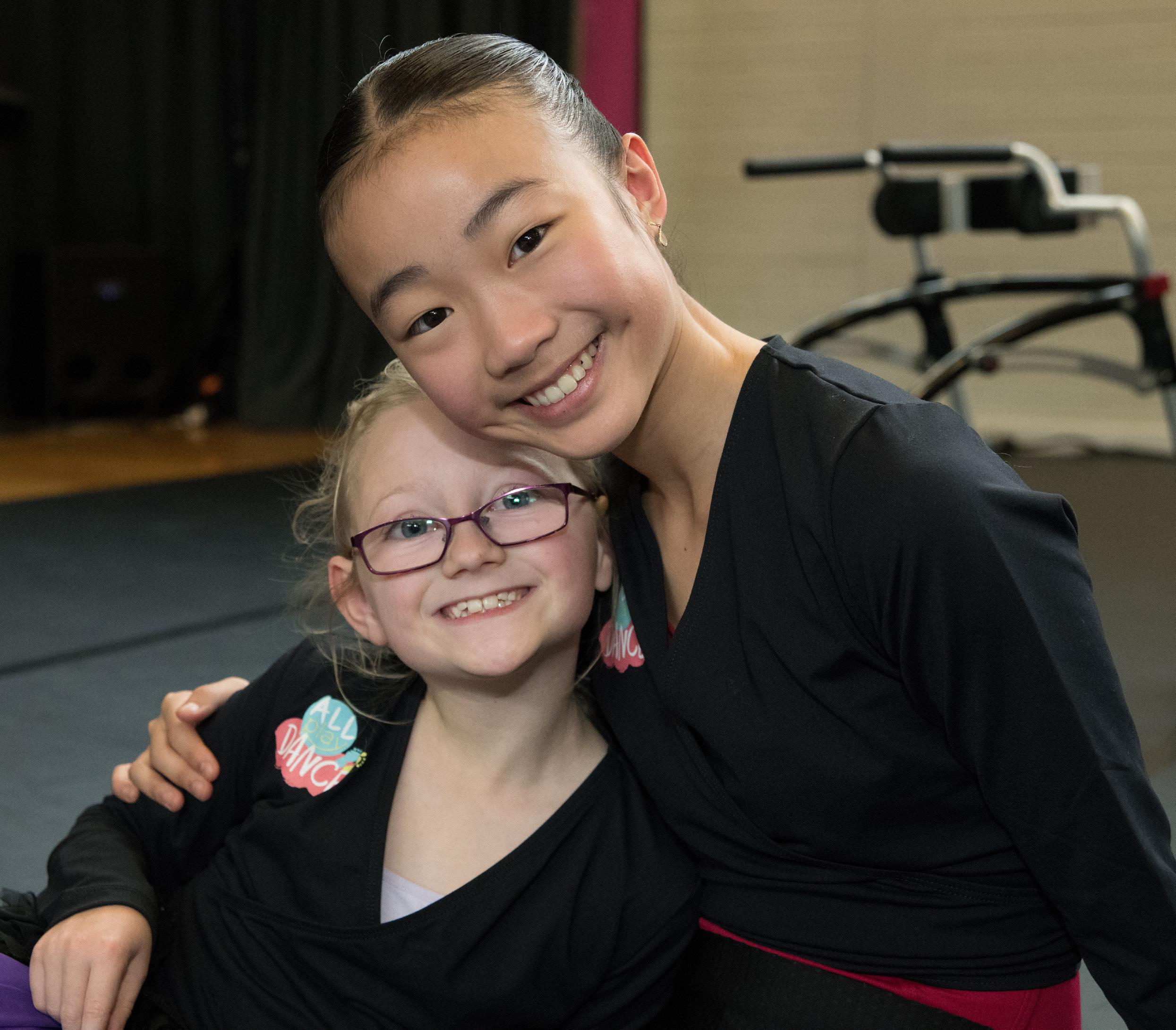
AllPlay Dance fuses research and rhythm, reimagining movement for autistic and disabled children, says Katherine Granich.
At first glance, AllPlay Dance looks like any other children’s dance class. Music plays, laughter fills the studio, and young dancers move in their own unique ways. But look closer and you’ll see something remarkable: a program intentionally designed so every child can belong.
Created by Professor Nicole Rinehart, a clinical psychologist in Monash University’s School of Psychological Sciences, AllPlay Dance turns research into real-world inclusion. Drawing on years of clinical expertise and co-design with families, educators, and professional dance companies, it helps children with autism and other disabilities participate in movement, learning, and play.
As a psychologist and academic, Nicole spent years in hospitals and labs studying child development. But when she became a parent, she saw a huge gap between what research showed helped children thrive and what was happening in the community.
“We talk a lot about social and communication skills,” Nicole says, “but movement
is fundamental. It’s the foundation for how we engage with the world.”
Back in 2013, when the NDIS was just beginning, disabled children were rarely included in mainstream sport or recreation. “Once I saw that kind of exclusion, I couldn’t unsee it,” she says. “I became determined to change things.”
“We’re not trying to change the child. We’re changing the world around them so that it fits,” says Nicole. “It’s not about fixing the child; it’s about fixing the system.”
So one day, while her kids were playing footy, Nicole walked across the oval and started chatting with the coaches about how they could make the game more accessible. That conversation was the start of AllPlay Footy, founded in 2015 –the first in the AllPlay series of programs translating research into inclusion.
Over the past decade, AllPlay has grown into AllPlay Life, AllPlay Learn,




and AllPlay Move, which includes AllPlay Footy and now AllPlay Dance. But the focus remains the same: turning evidence into everyday opportunities.
“Nothing happens in AllPlay without a research study,” says Nicole. “Everything we do is evidence-based – that’s our promise to families.”
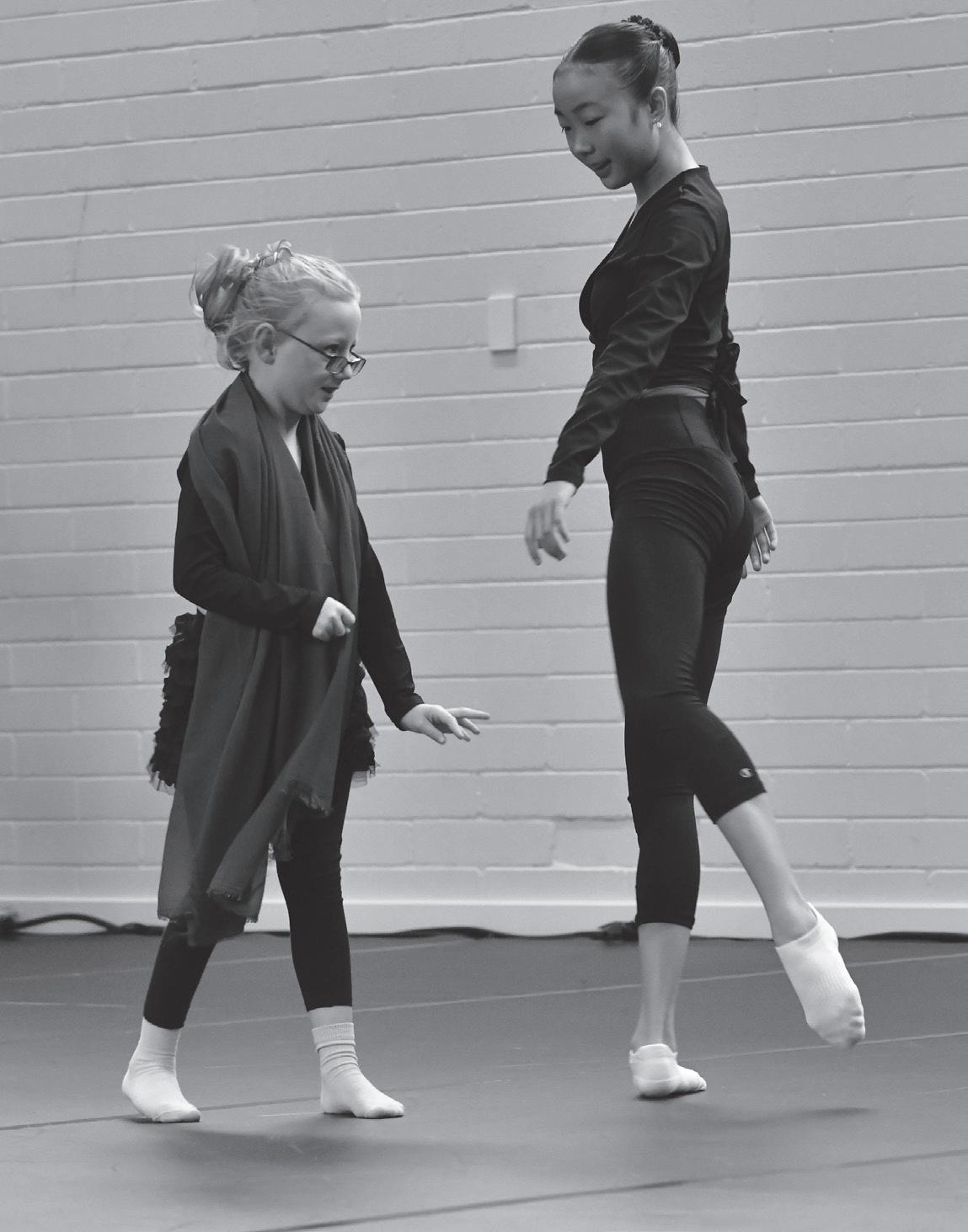
In an AllPlay Dance class, research hides in plain sight. Children are paired with older “buddies” – often elite or pre-professional dancers – who model movements, encourage, and help co-create
routines. For the children, it’s a dance class. For Nicole’s team, it’s a randomised controlled trial measuring how inclusive dance builds motor skills, confidence, and participation.
“You can’t ask a child to be brave before they feel safe,” Nicole says. “So we build safety first – through music, repetition, familiarity, and friendship. Once they feel safe, the bravery follows naturally.”
Some children begin straight away, others later, as part of the study design. This helps the team understand what works best, ensuring inclusion is both evidence-based and supportive.
“It’s about designing environments that
work for all children from the beginning, instead of retrofitting inclusion later,” Nicole explains.


AllPlay Dance may look effortless, but every step is guided by data. The program’s studies show measurable improvements in neuromotor skills – balance, rhythm, coordination –which feed directly into confidence, communication, and independence.
“We talk a lot about social and communication skills,” Nicole says, “but movement is fundamental. It’s the

“We want a world where inclusion is just how things are done,” she says. “When that happens, AllPlay will have done its job.”

foundation for how we engage with the world.”
Parents often notice changes far beyond the studio. Children who start out standing quietly at the edge of the room often end up dancing with peers, smiling, or initiating play at home. “It happens organically,” Nicole says. “Children grow because they’re enjoying themselves.”
And it’s not only the children who change. Parents, teachers, therapists, and dancers describe the program as transformative. “One of the directors told me, ‘You’ve made our dancers better people,’” Nicole recalls.
Every AllPlay Dance class is different, because every group of children is different. One child might move freely from the start; another might take weeks to join in. Both are equally celebrated.
AllPlay Dance co-founder Dr Olivia Millard, Senior Lecturer in Dance and Associate Head of School (Teaching & Learning) at Deakin University, guides the child-led, co-designed process. “Children and their buddies explore movement together over 10 weeks, and it all comes together in a final performance,” Nicole says.
The model also has a strong equity focus. Girls with disabilities are often under-represented in community sport and the performing arts, so the team works to ensure they are equally visible and supported. The program also partners with First Nations communities, CALD
populations, and families in regional and remote areas to ensure cultural safety and representation.
Across every setting, the message is the same: every child deserves to dance.
AllPlay Dance is currently running a randomised controlled trial for autistic children aged 7 to 12, with the first cohort recently completed. For many families, the impact was immediate – children who began shyly on the edge of the studio were dancing with confidence by the end. One parent, moved by their child’s transformation, even offered to pay out-ofpocket to keep it going.
Through a generous $1.7 million donation from long-standing philanthropic partner Manny Stul and the Moose Happy Kids Foundation, AllPlay Dance will be scaled up to reach even more children and families.
“As an innovative, global organisation, we are constantly looking for partners that share our vision to create a positive difference in the lives of children. As the seed funder, The Moose Happy Kids Foundation invested in AllPlay from the beginning because we could clearly see the vision to create a ‘first of its kind’
program,” says Manny Stul, Executive Chairman and Co-Owner of Moose Toys. “Witnessing the progress now extended to other countries, including China, makes us as proud as ever to partner with AllPlay Dance to improve mental and physical health outcomes for children around the world.”
In 2024, that partnership helped launch a collaboration with the Beijing Dance Academy – extending AllPlay’s inclusive approach beyond Australia. Nicole’s next goal is to establish a National AllPlay Child and Family Centre at Monash University to support programs nationwide.
“We want a world where inclusion is just how things are done,” she says. “When that happens, AllPlay will have done its job.”
AllPlay Dance is currently running a free national research trial of dance classes for autistic children aged 7 to 12. Families can register their interest in taking part hereredcap.link/AllPlayDanceRCT, and find more information on the program at allplay.org.au
By Katherine Granich


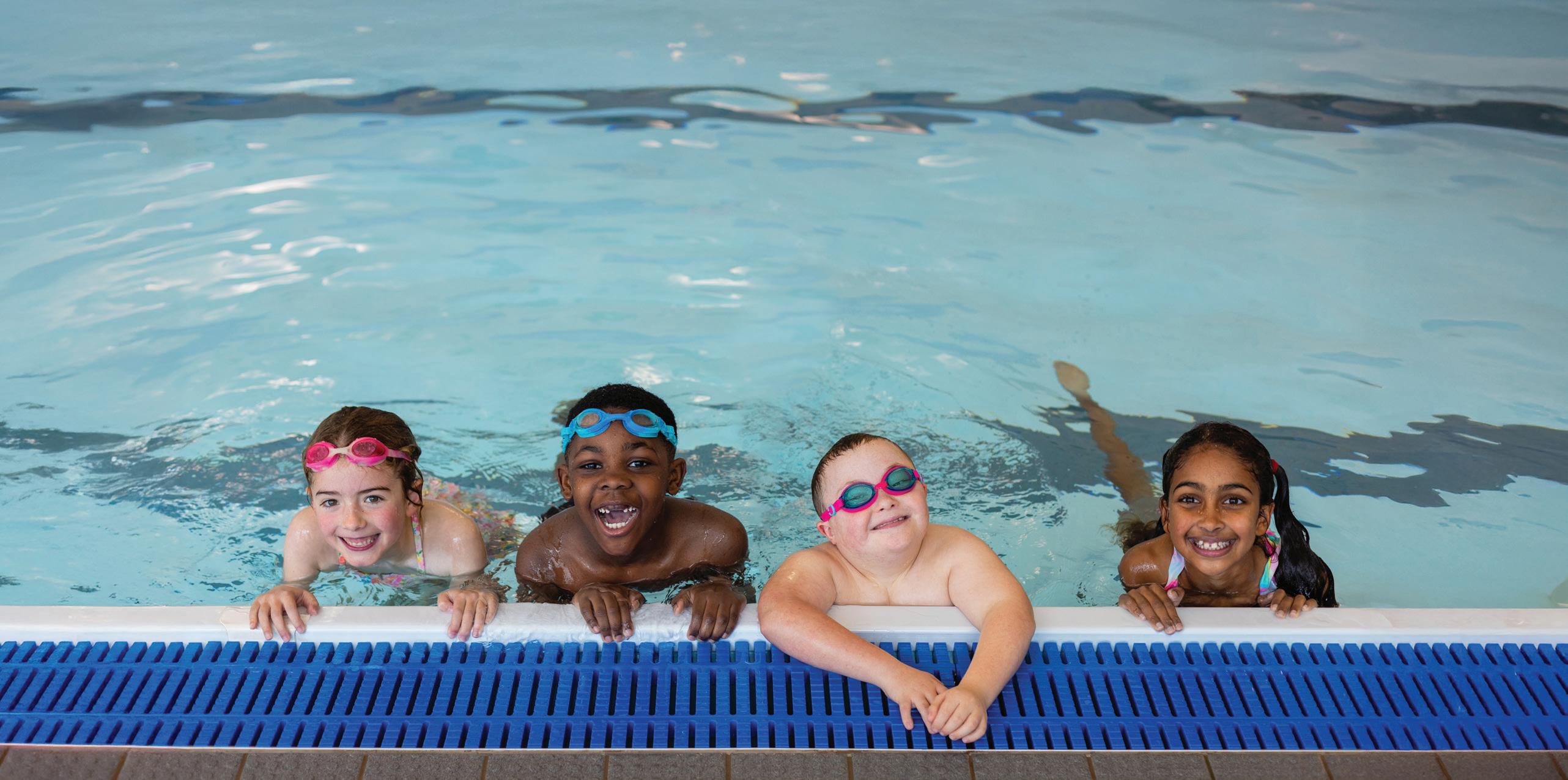
Every child deserves to feel confident when the summer fun begins. For families managing continence needs, finding the right products can make all the difference. Summer is all about creating happy memories – and with the right care, nothing should stand in the way of laughter and play. That’s why at Atlas McNeil Healthcare Community, we offer personalised services, tailored solutions, and trusted medical supplies to support overall wellbeing. Let our expertise help you make the most of every season.

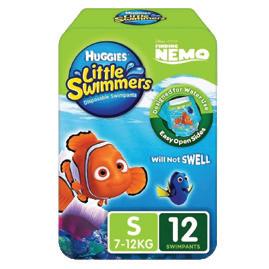
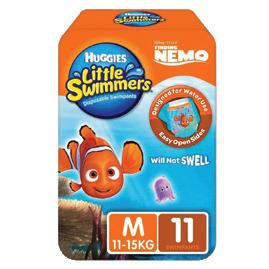
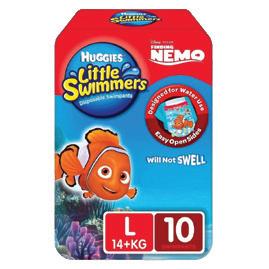
We talk to Clayton McIntosh about how he’s bringing play and imagination to community spaces for every child whatever their ability

Can you tell us about your business, Crocodile Crocodile, and what’s behind the playful name?
Crocodile Crocodile is my creative passion project where design meets inclusion. It’s my freelance design business focused on playful, imaginative work, often centred on kids and community spaces. I love creating practical, creative ideas that make things more inclusive and engaging. My work spans graphic design, illustration, video, and branding, with a growing interest in making public spaces more welcoming through simple, clever ideas rather than expensive upgrades.
The name comes from a playground game, similar to Red Rover, with the chant: “Crocodile Crocodile, can we cross the golden river? If not, why not? What’s your favourite colour?” It loosely explores inclusion – someone decides who can cross – and the questions mirror creativity and design. The repeated name also hints at two individuals, two crocodiles, each with different needs.
Your daughter’s experience sparked this whole journey. What does play look like for her – and what’s often missing in mainstream playgrounds?
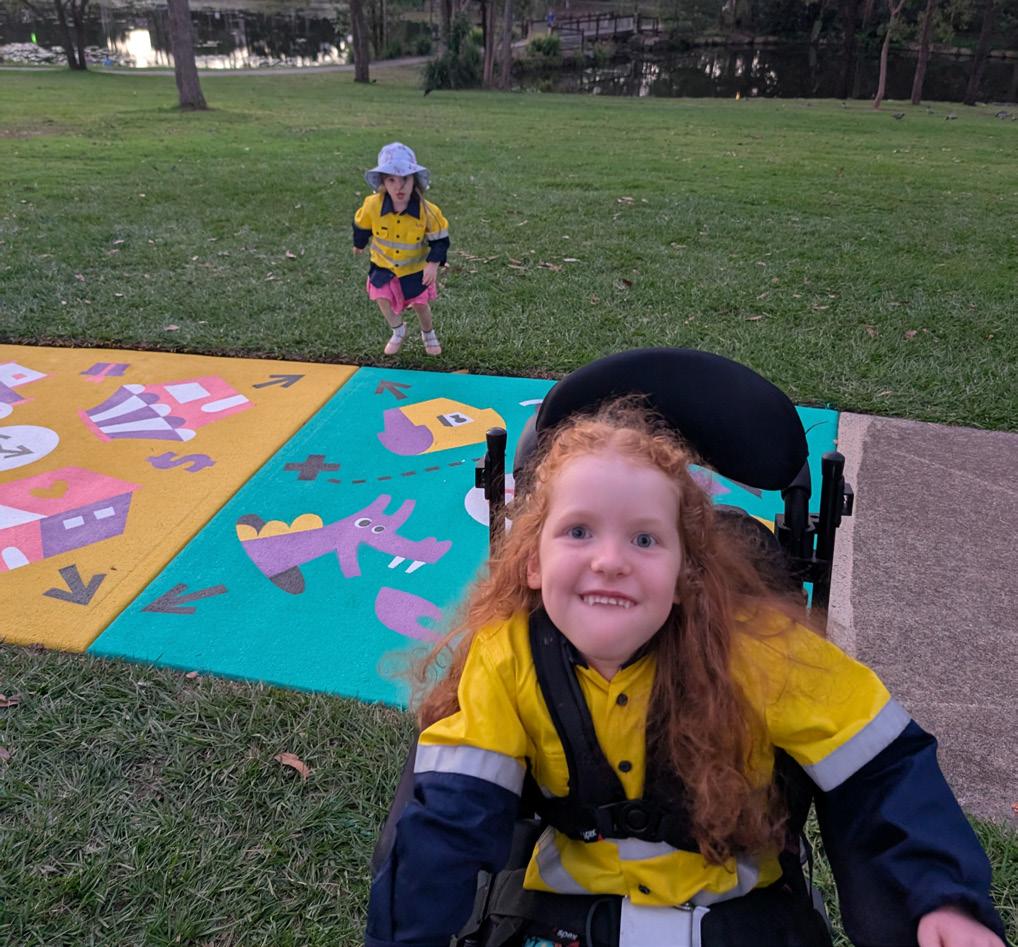
I have three kids. My six-year-old daughter has Spinal Muscular Atrophy and uses a wheelchair. Most parks are inaccessible, covered in woodchips and filled with swings, climbing frames, and slides. Even “accessible” equipment often means lifting your child in for a very short play and rarely feels designed for kids with disabilities or their carers. Many accessible options feel more about playground companies’ profits than real inclusion. Meanwhile, my three-year-old loves climbing, and our baby is just starting to explore. Yet most parks remain dull and repetitive – swing, slide, wobbly bridge, tictac-toe. Has anyone ever played tic-tac-toe at a park for more than 30 seconds?
How has your background as a designer – and the community around you – helped bring this vision to life?
You came up with Playful Pathways as a response to inaccessible playgrounds. How did the footpath mural come about – and why imaginary play?
With parks often inaccessible or dull, we had to find other ways to play, like paths or picnic shelters. Imaginary play works brilliantly for kids of all abilities: it can be solo or in groups, is open-ended, and adapts to any situation. With creativity and storytelling, “playing house” or “playing shops” becomes magical worlds. But kids and adults often struggle to invent games – prompts help.
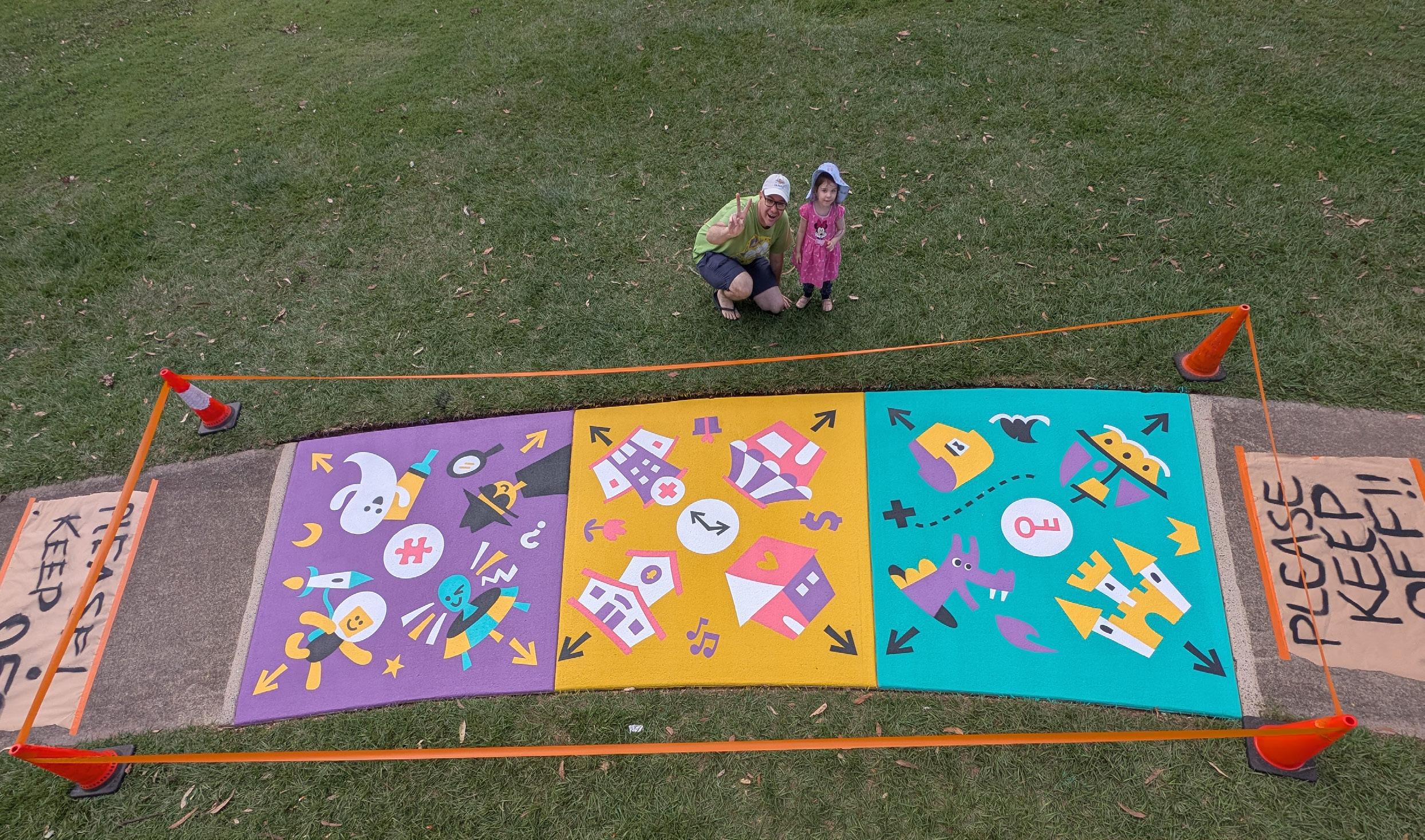
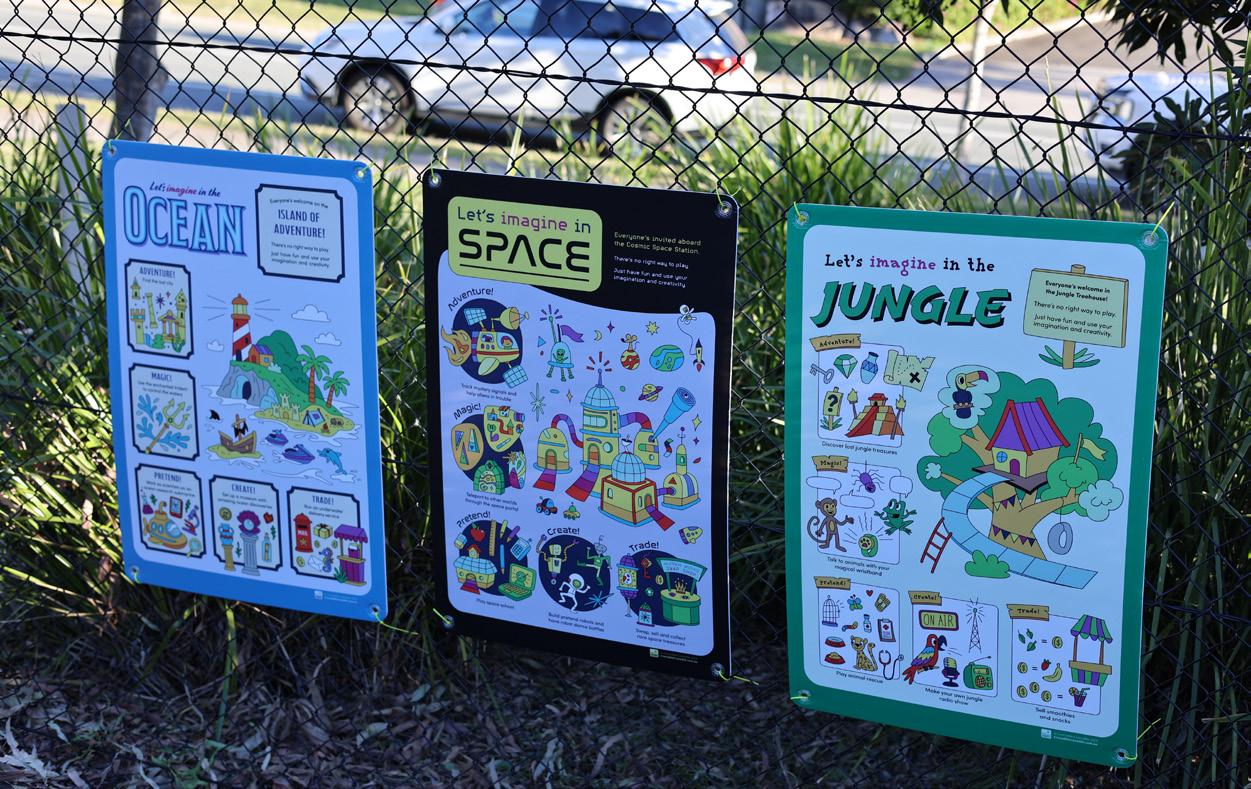
Talking with councils, teachers, therapists, and business owners, everyone agreed playgrounds aren’t ideal for kids in wheelchairs. Budgets are limited, and solutions are expensive. Small, low-cost ideas can go a long way. This led to Playful Pathways for All. Supported by Ipswich City Council and Arts Queensland, I designed a path section with simple illustrations and story prompts – castles, dragons, astronauts, detectives – open for anyone to explore, respond to, and play however they like. There are no instructions, and the project has been warmly received, even by those not using it for imaginary play.
Building connections and getting others to see the value of inclusive play was essential.
I’ve worked in education design, from textbooks to magazines and comics, which taught me the value of play and designing for kids. Many projects focused on accessibility, and I’ve been influenced by Universal Design (UD) and Universal Design for Learning (UDL), which prioritise inclusion from the start. Playful Pathways is essentially a graphic design project in a public space, thinking about inclusion from day one.
The community has also been hugely influential. Many people are shocked by how inaccessible parks are. Hearing carers’ and disabled people’s experiences helps me see different perspectives. For example, after sharing my observations on Instagram, parents asked me to advocate for fenced playgrounds, something I hadn’t encountered before. Everyone agrees, too many playgrounds aren’t serving their communities.
What else did it take to make this project a reality?
Making Playful Pathways happen has taken patience and persistence. I was warned early on that projects like this often take longer than expected and may not be possible in public spaces. It took a couple of years to get off the ground.
Practical challenges included approvals from multiple council departments and addressing safety and legal considerations. Support from staff who believed in the project made a huge difference. Building connections and getting others to see the value of inclusive play was essential. I’ve learned that the design is just a small part of these projects. I have other similar projects underway, but like this one, they’ll take time to come to life.
What’s next for Crocodile Crocodile? What’s the dream? Next is growing the business and bringing more creative projects to life. I take on playful design work – graphic design, murals, illustrations, videos, campaigns, and brand projects – all with inclusion and imagination at the heart.
I’m keen to collaborate with councils, schools, and other organisations on simple creative ideas for inclusive public spaces. I’m also continuing advocacy for children with disabilities, creating video content, and releasing fun t-shirts with messages of inclusion.
The dream is to grow Crocodile Crocodile into a thriving design company known for creativity and inclusion, designing low-tech, high-impact playgrounds for the whole community. Based in South East Queensland, I’m also excited to contribute to inclusive projects leading up to the Olympic and Paralympic Games.
If any of this resonates, visit crocodilecrocodile.com.au or follow @crocodile_crocodile_au.
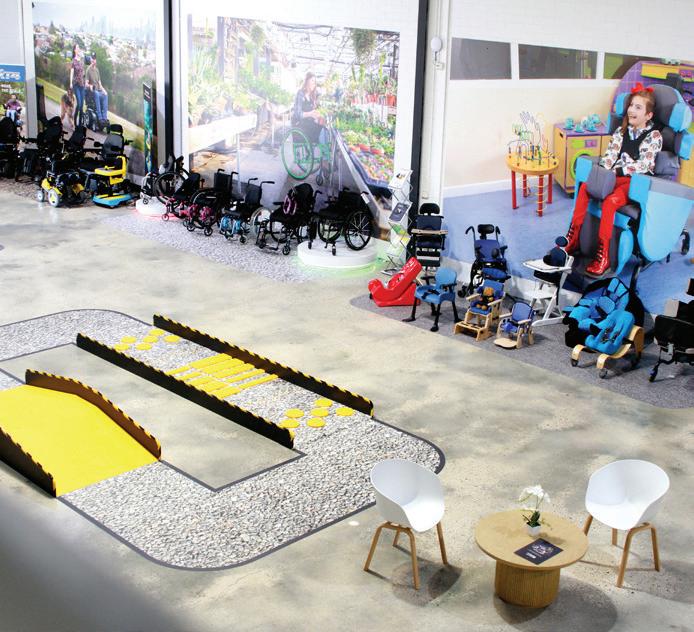
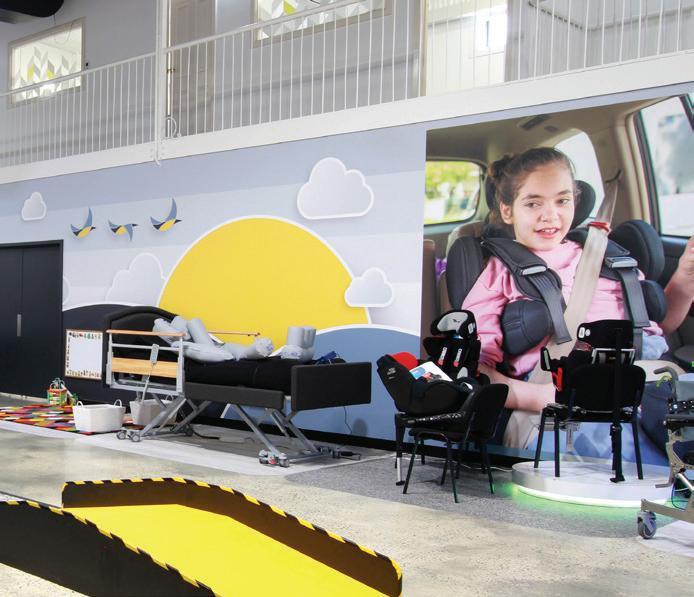

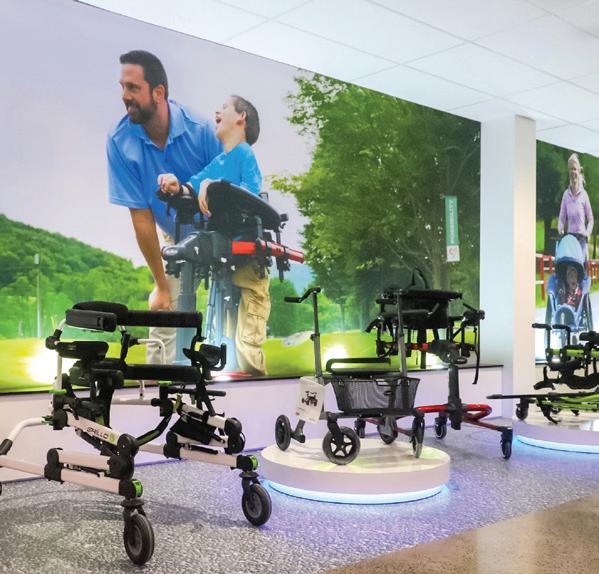
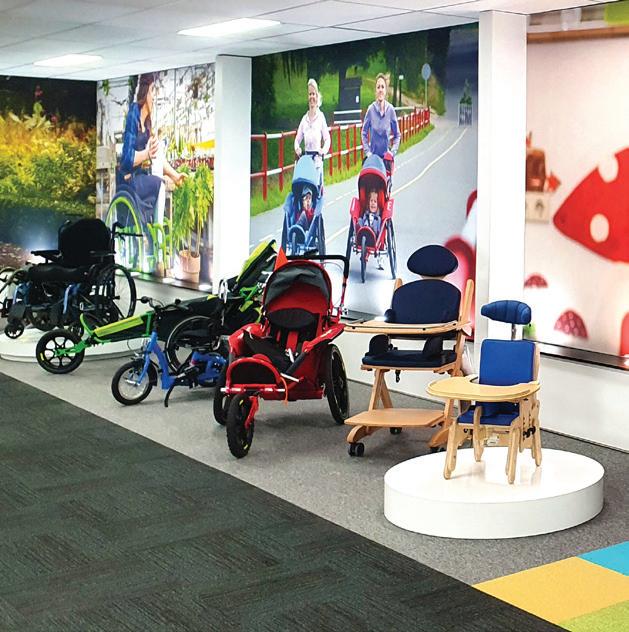

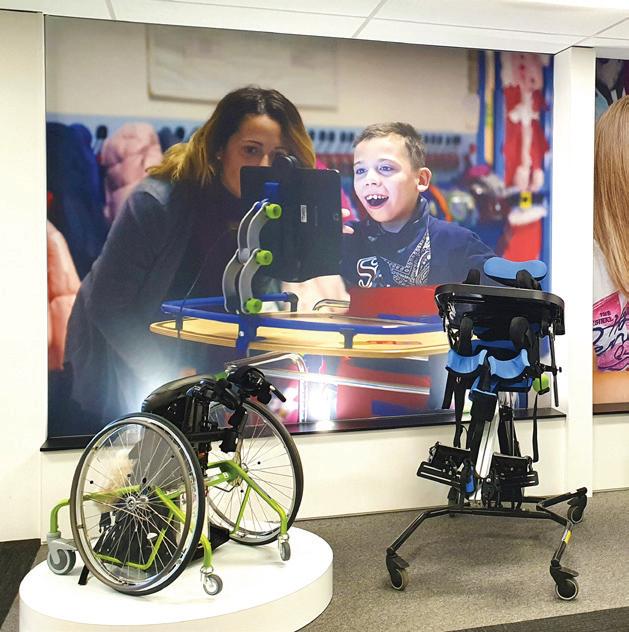
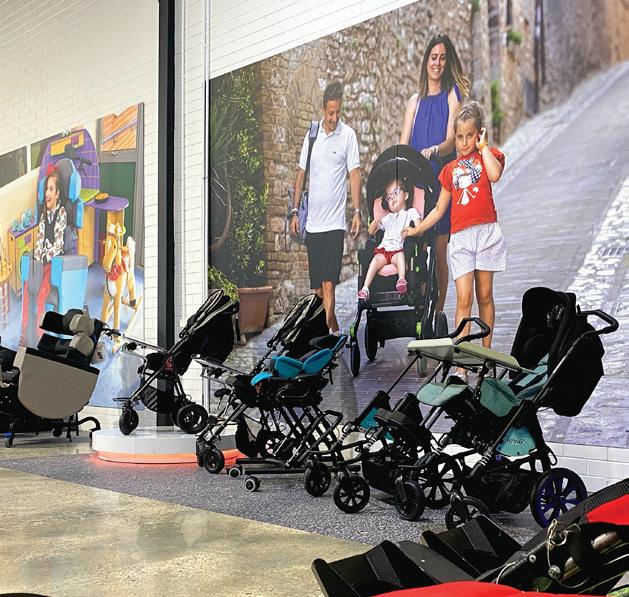
Discover the freedom to live life your way with Astris PME – Australia’s leading provider of customised Assistive Technology. From power and manual wheelchairs to hygiene supports, activity chairs, standers, and sleep systems, our solutions are designed to empower independence 24 hours a day.
Visit one of our welcoming, family-friendly showrooms across NSW, ACT, VIC, QLD, WA, and TAS to explore our extensive range. Each location features clinic rooms for scripted trials and ample space for wheelchair testing. Prefer us to come to you? Our specialist consultants can visit your home, school, or clinic for a free trial, offering expert advice and personalised support.
Experience mobility made easy – at your place or ours.
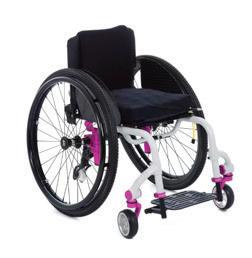
























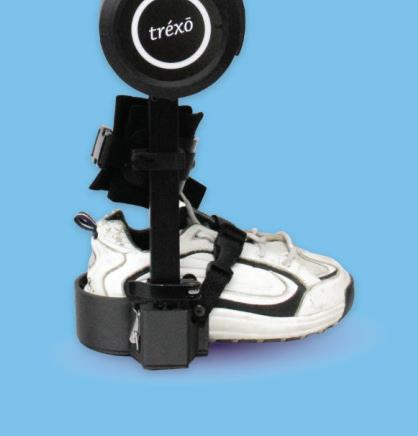
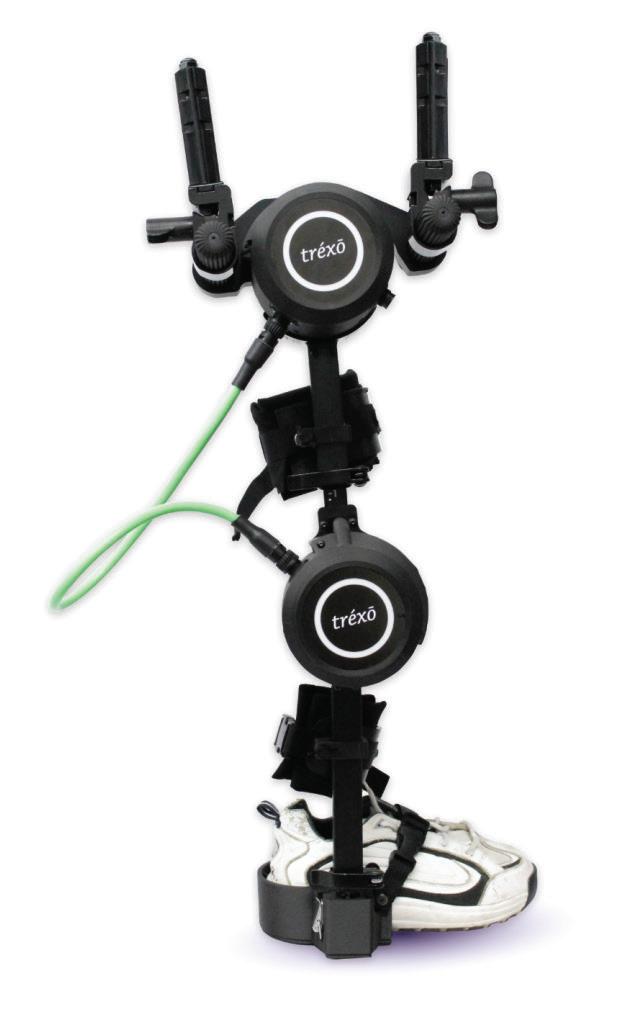

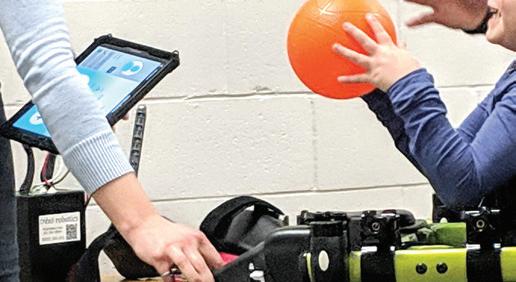
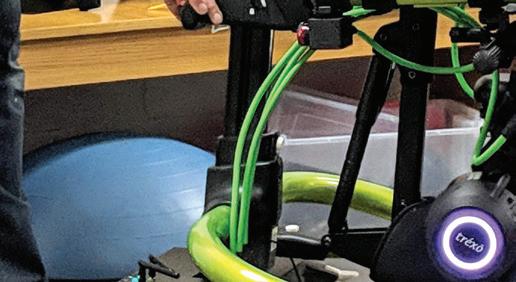
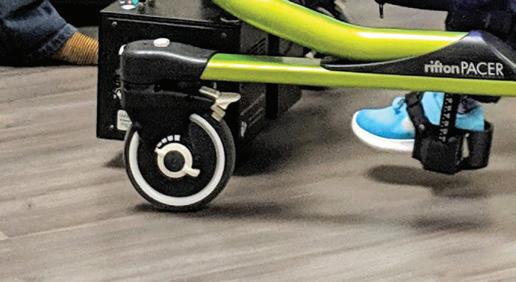
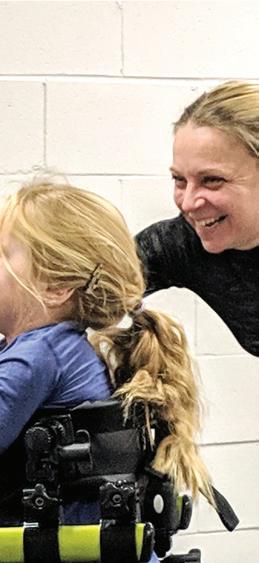
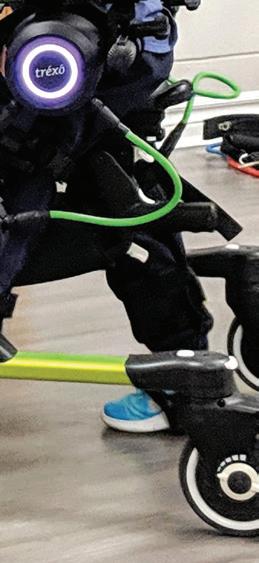

The Trexo Robotic Gait Trainer gives children and young adults with mobility challenges the opportunity to walk, explore, and move with confidence. It supports upright, overground walking — helping users stay active, build strength, and experience the joy of movement.
• Robotic-powered legs for dynamic gait training
• Allows children to initiate, taking focused and intentional steps
• Adjustable and customisable to each child’s needs
• Promotes play, confidence, and inclusion
• Backed by therapists. Loved by families

Contact APEX Mobility to learn more about the Trexo and book a trial
Is Trexo right for your child? Take the Quiz









In sport, the real learning doesn’t happen on the bench – it happens in play. Every decision a player makes –whether to pass, shoot, hold, or pivot – helps them grow. But there’s one person standing just off the field, shaping that growth every step of the way: the coach. Coaches guide, instruct, and support – but they don’t play the game. The players do. Supported Decision Making (SDM) works the same way. It’s not about taking over. It’s about being your child’s coach and preparing them to make their own calls, with guidance, space, and trust. You help them understand the choices, support them through wins and setbacks, and encourage them to lead. But the play? That’s theirs to make.
Supported Decision Making is recognised by the NDIS – and by advocates across the disability space – as a rightsbased approach that empowers people with disability to make their own informed choices, with guidance from trusted supporters like parents, carers, teachers, and professionals.

It’s about doing with, not doing for Rather than assuming what a child wants or needs, SDM creates a structure around decision-making where a child is actively involved. Even if they need help to communicate, process, or follow through, they are still at the centre of the choice.
There’s a big difference between watching from the sidelines and stepping onto the field.
Every child has the right to make decisions, regardless of disability.
All communication matters – whether verbal, visual, behavioural, or assisted.
Children’s preferences should be respected, not just overridden by what others believe is best.
Support must keep children safe – from harm, coercion, or pressure.
IT’S NOT JUST ABOUT WHAT YOUR CHILD CAN DO NOW – IT’S ABOUT INVESTING IN WHAT THEY CAN LEARN, WITH THE RIGHT SUPPORT.


You don’t need a toolkit to get started – just a shift in mindset. These five steps, adapted from the Make Decisions Real project, can help bring SDM into everyday parenting:
Let’s name it – this is one of the most important questions when it comes to SDM:
What if my child doesn’t speak?
Too often, children who don’t use conventional speech are left out of decision-making – not because they don’t have preferences, but because we haven’t learned how to hear them.
But every child communicates. And every child deserves to be heard. Whether it’s through eye gaze, gestures, body language, behaviour, images, or assistive tech – your child has a language. Our job is to learn it. This is where speech pathologists can be powerful allies. While many people associate “speech therapy” with talking, a good speechy supports all forms of communication. They can help decode your child’s communication style, build tools to enhance it, and give you the strategies to use it confidently at home.
Supported Decision Making isn’t just for verbal kids. In fact, it’s even more important for kids whose communication style is misunderstood or underestimated. Because once they’re heard, they’re included – not just in choices, but in life.
Whether it’s sport, art, drama, cooking, or something else entirely –extracurricular choices are about more than hobbies. They help shape identity, confidence, and connection. When children are included in decisions – about what activity to try, who they want to be around, or when they’re ready to start something new – they learn that their voice has power.
When Supported Decision Making is part of their day-to-day, kids build:
• Self-awareness
• Resilience
• Optimism
• Social confidence
And maybe most importantly: they learn they don’t have to get it perfect to get it right.
The little things count. Whether it’s choosing the uniform colour, picking who to sit with, or deciding what role they want to try this week – these “small” choices help kids understand they are in charge of their own lives.
You’re not just helping them choose a sport. You’re helping them build a lifelong sense of agency.
SET THE DECISION
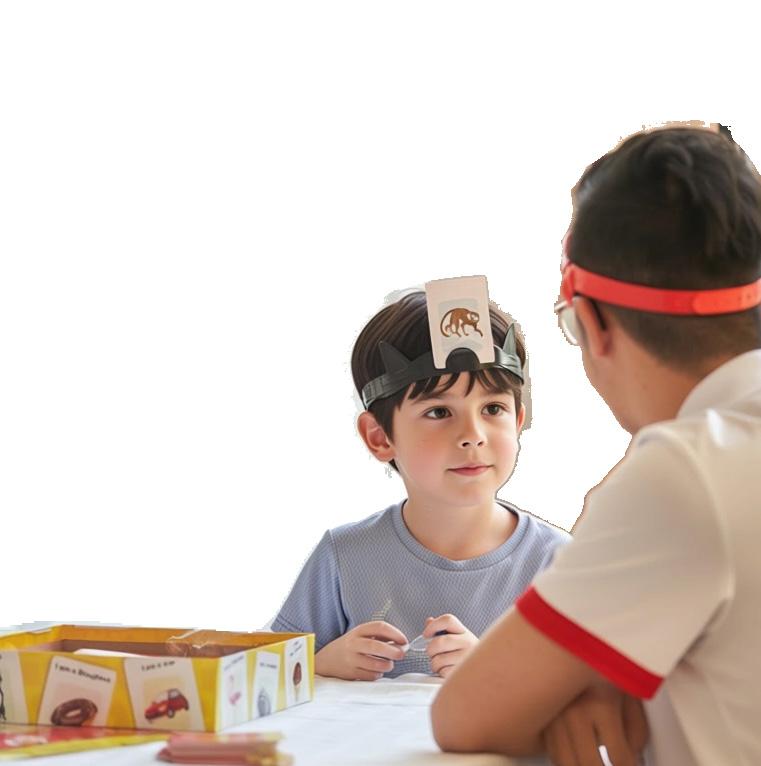
Frame the choice clearly: “Do you want to try soccer, dance, or swimming this term?” or “Do you want to bring your snack or eat it after the game?”
2. LISTEN UP
Pay attention to words, actions, reactions, facial expressions, or mood. Use pictures, videos, or AAC (augmentative and alternative communication) if needed.
3. EXPLORE THE OPTIONS TOGETHER
Try a trial class. Watch a video. Drive past the centre. The more real the options feel, the more your child can connect to what they want.
4. SUPPORT THE NEXT STEP
Once they choose, help them follow through – enrolling, packing their bag, or showing up on the day.
5. REFLECT AND REVISE
Talk about what worked, what didn’t, and what they might choose differently next time. Reflection builds better decisions over time.
Like any great coach, your role is to prepare, support, and then step back. Supported Decision Making isn’t about controlling the play – it’s about raising confident players. Children who know their choices matter. Children who believe they belong in the game. Whether your child communicates with words or gestures, drawings or devices – they deserve the chance to lead. Because in sport, in play, and in life, every child deserves to hold the ball. Make the call. Learn from the play. Celebrate the win – in whatever form it takes.
By Monique Power. RippleAbility is a paediatric specific disability provider, helping families navigate complex systems of support and build their capacity to advocate for appropriate supports and services for their child. rippleability.org
Email: monique@rippleability.org
Some of our favourite sporty gear and active play equipment that keep kids moving
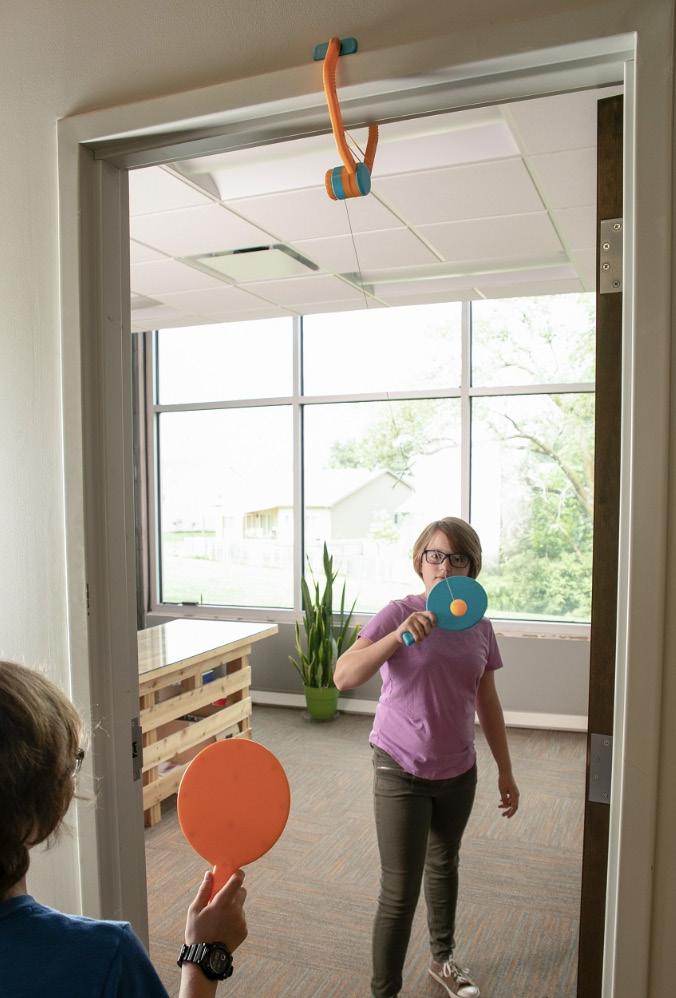
Too hot to play outside? Door pong brings the fun of ping pong indoors! Clamp it to any doorway, adjust the string, and see how long you can keep the ball in play; it’s perfect for boosting coordination, reflexes and concentration.
RRP: $36.95 // thetherapystore.com.au
LUNGE, GRAB & DODGE!
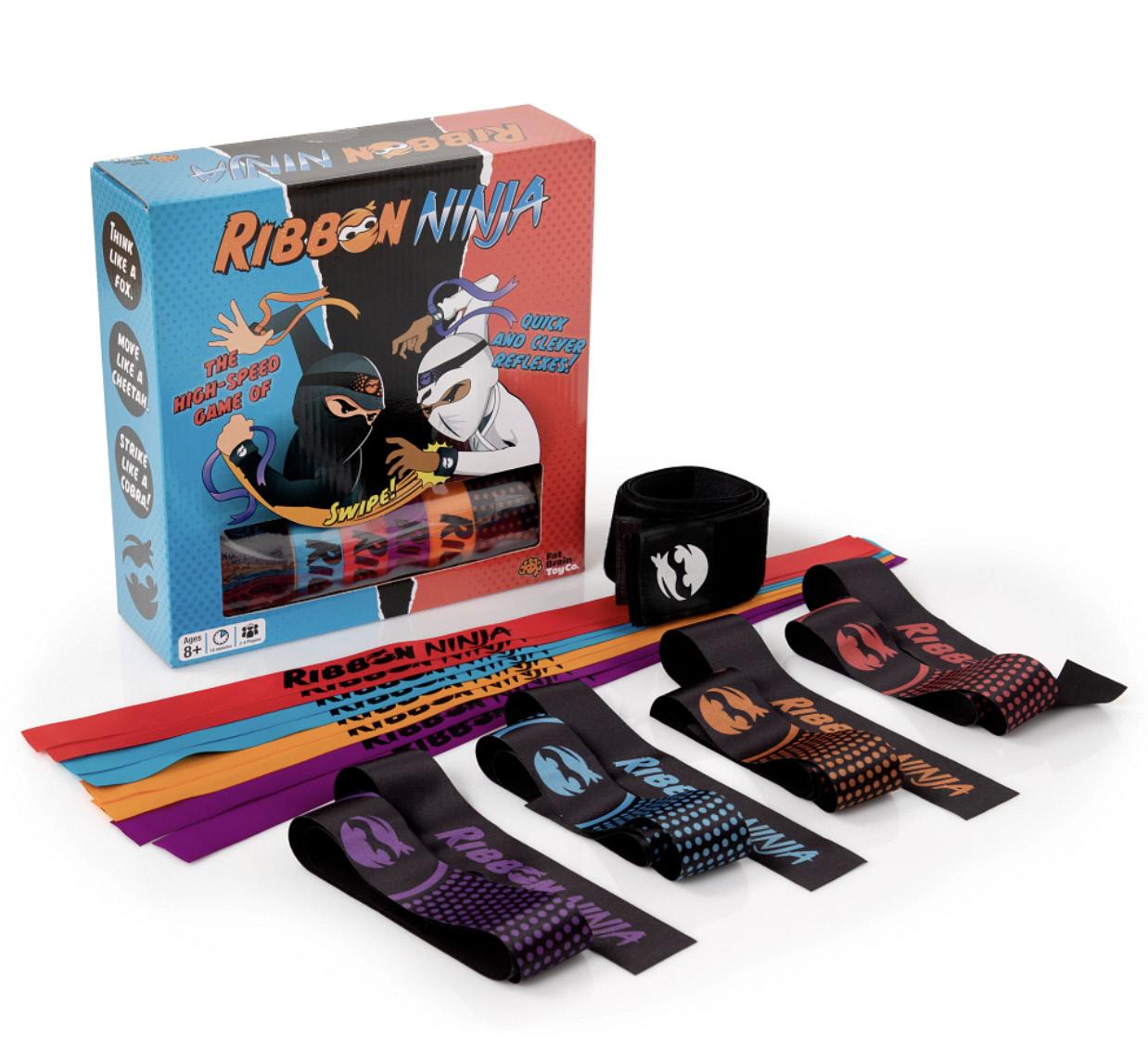
Ribbon Ninja is fast, fun and full of movement. Each player wears three ribbons on their wrist and the aim is simple – grab your opponents’ before they grab yours. It’s a great way to build agility, coordination and gross motor skills, and you could even play from a wheelchair. RRP: $24.95 thetherapystore.com.au

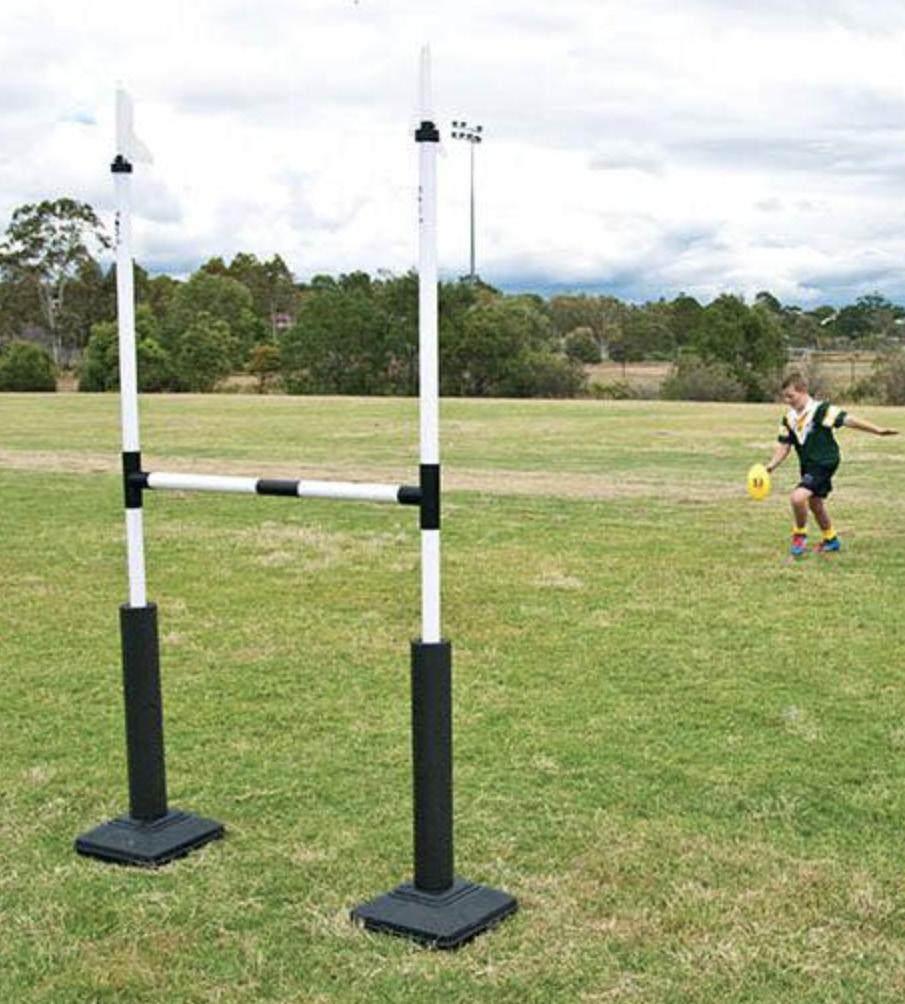
This set from Hart Sport is fun for everyone – backyard kickabouts, park matches, or schoolyard challenges. Quick to set up and easy to use, it gets kids moving, practicing coordination, and playing together.
RRP: $169 //hartsport.com.au
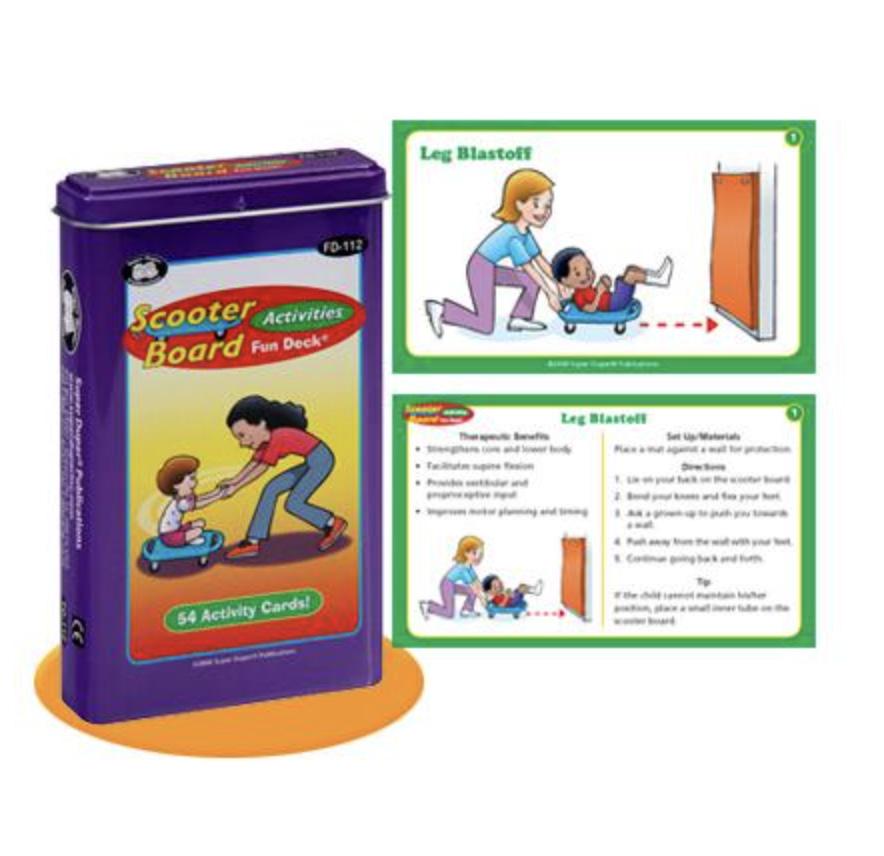
The Scooter Board Activities
Fun Deck turns therapy into play with 54 hands-on challenges. Physios and OTs love scooterboards for building core strength, balance, coordination, and sensory skills. Fully illustrated and colour-coded for supine, prone and sitting/ kneeling activities, it’s easy to pick the perfect move for every child. RRP: $29.95 skillbuilders.com.au
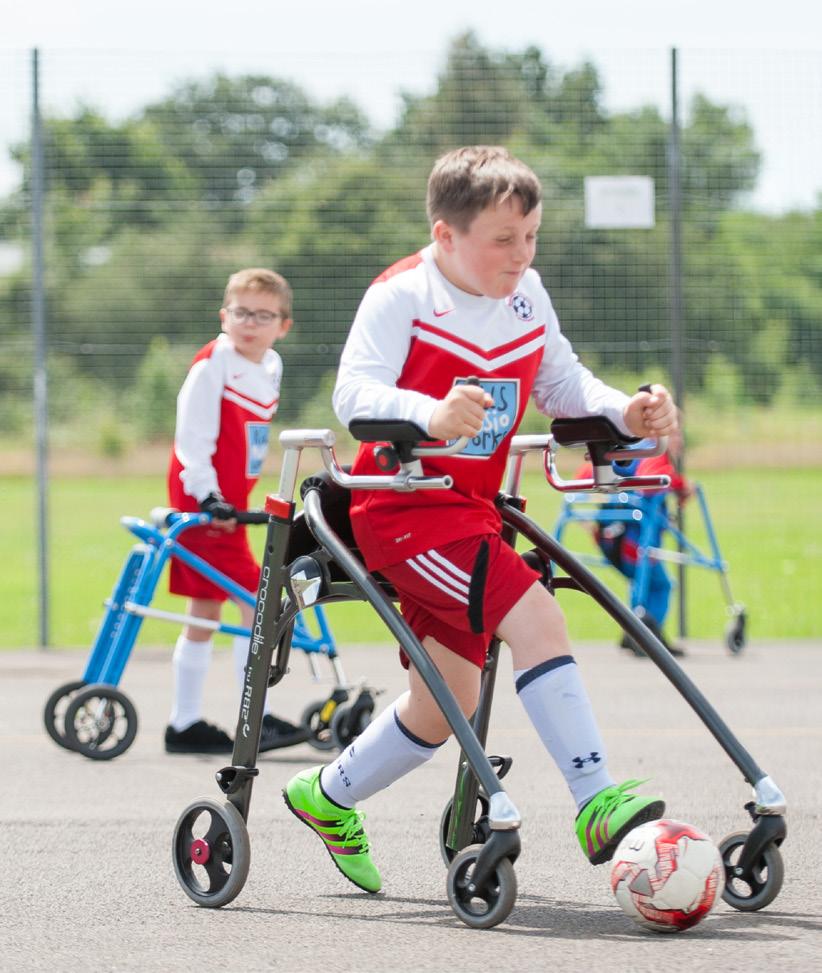
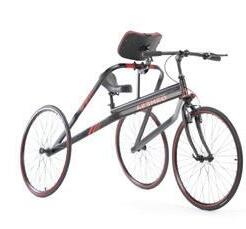
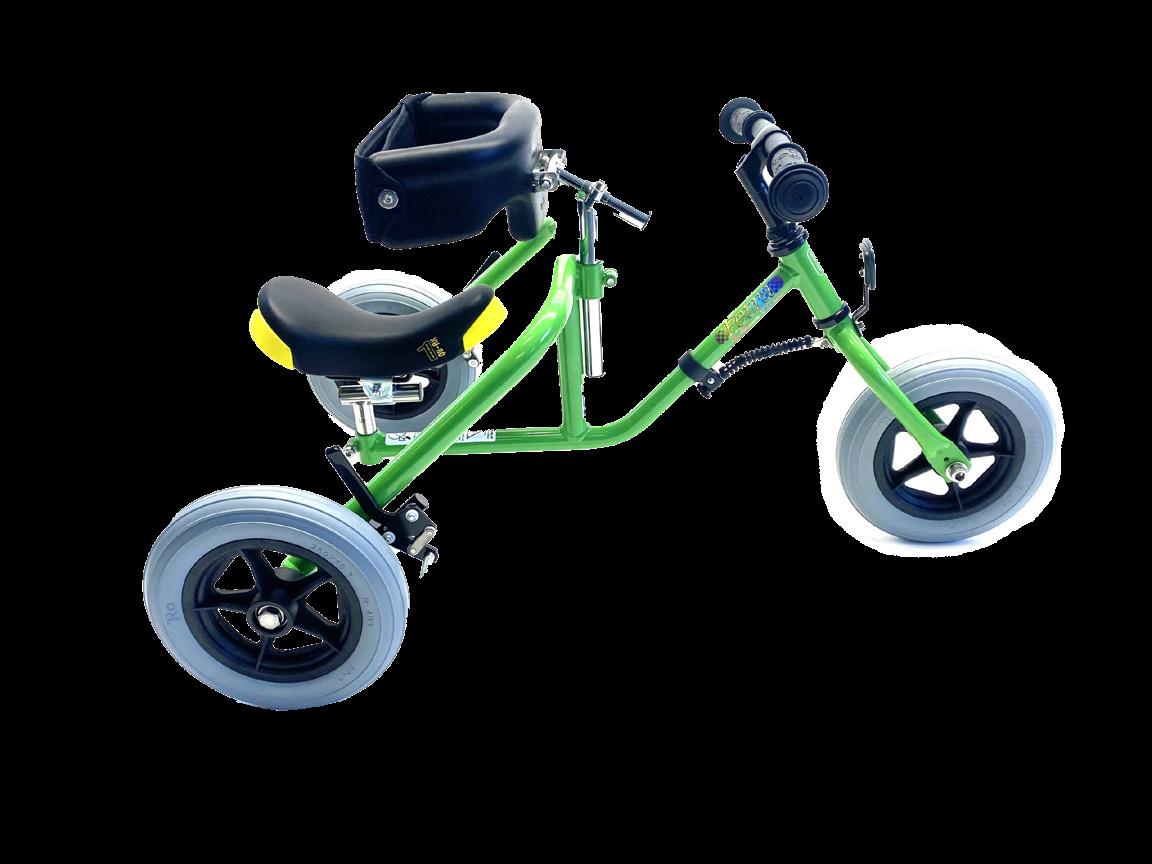
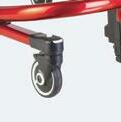
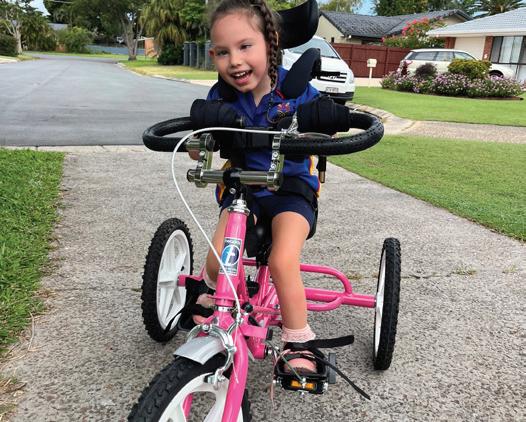
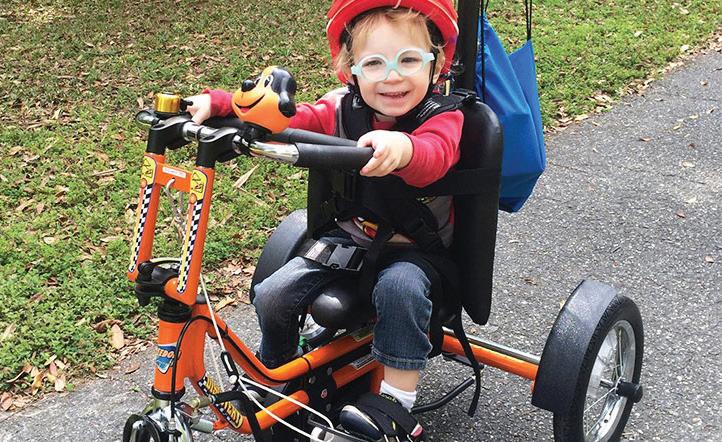
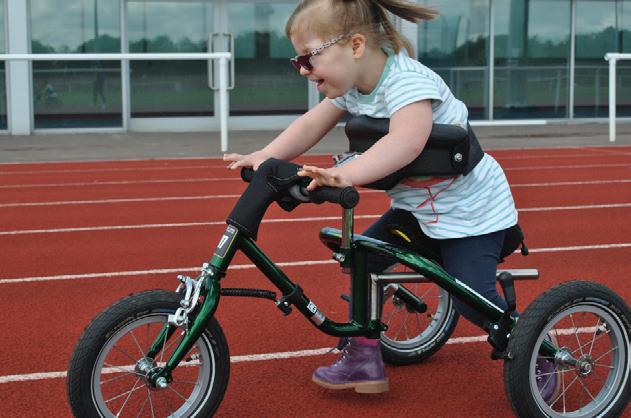
The PETRA Frame Runner™ gives kids with disabilities like cerebral palsy, muscular dystrophy, or amputations the chance to run, play and explore outdoors. Whether it’s on the track, a park path or just around the neighbourhood, it builds strength, confidence and endurance – while giving that simple joy of moving fast. The kids’ version comes in three sizes: Baby PETRA
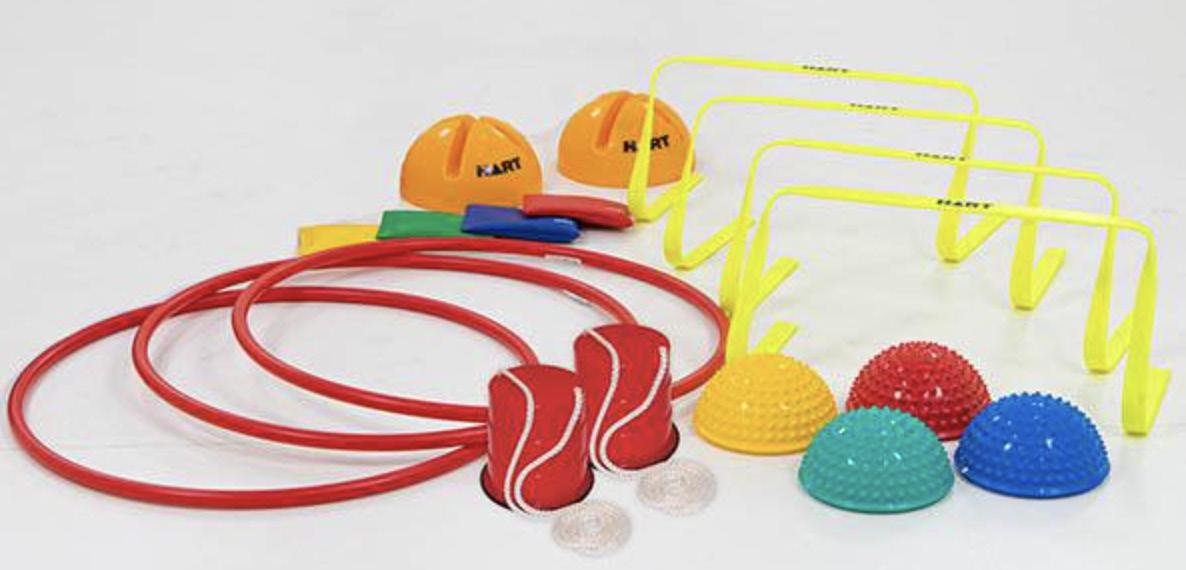
can create a variety of stations – from targets to climb-through obstacles. RRP: $135 // hartsport.com.au
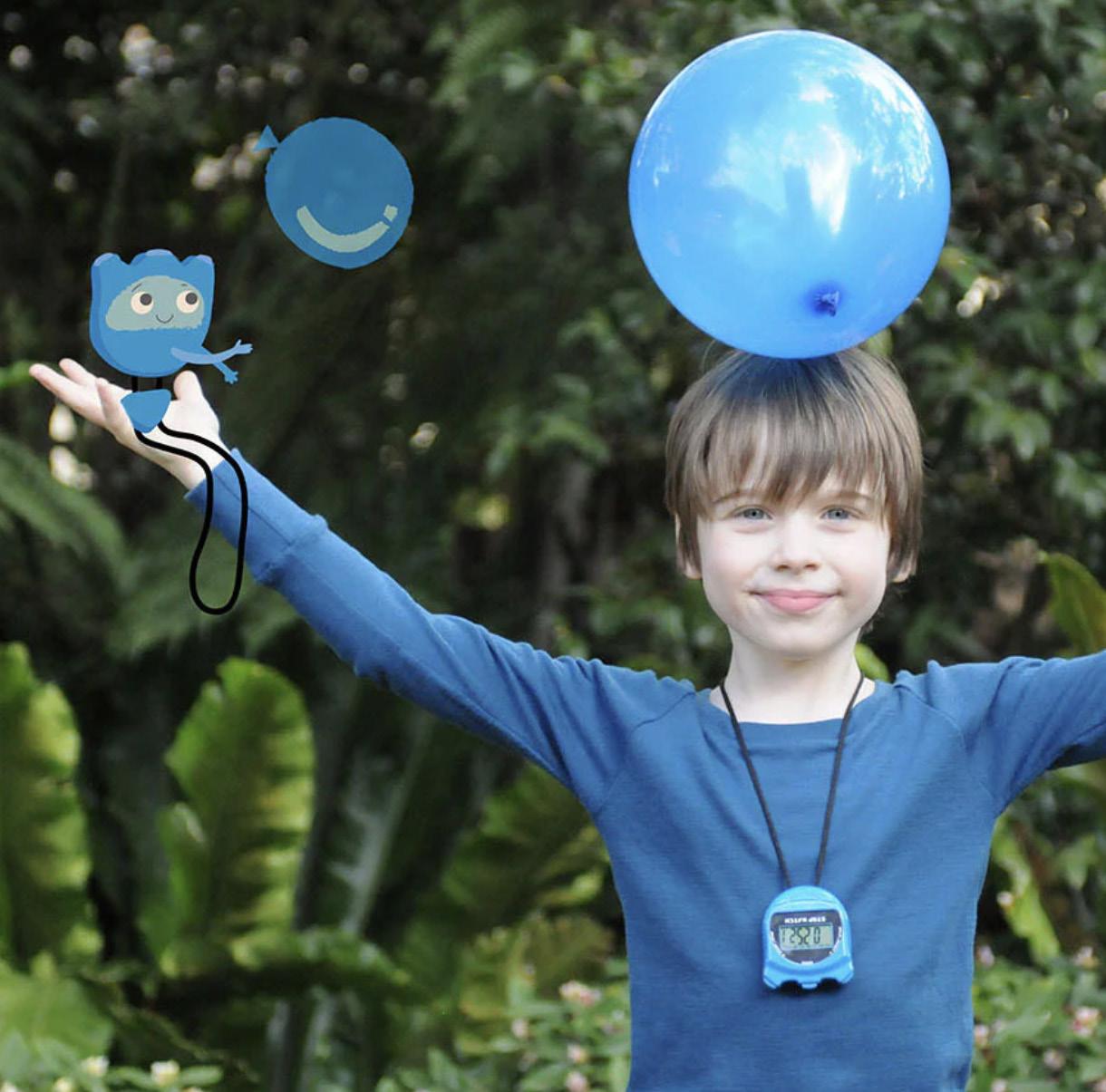
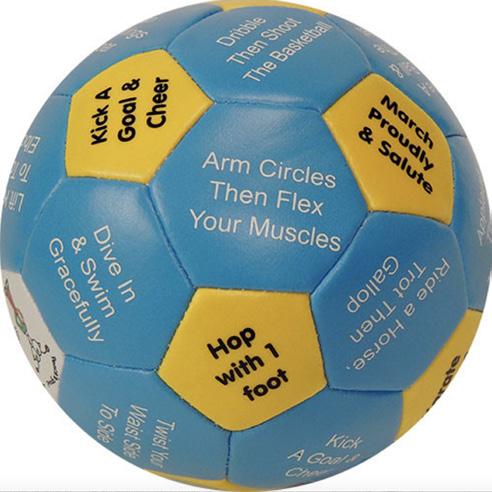
Throw it. Catch it. Respond to the panel under your thumb. Increase physical activity by acting out the movements used in sports, hobbies or exercises. It helps enhance coordination and activates muscle groups, and can be used sitting in a chair, standing up, or for full-body expression in the gym.
RRP: $28.95 funstuff.com.au
This fun set is all about fast, fun challenges that are easy to adapt based on everyone’s abilities. Keep balloons in the air, race around the block, or time your everyday tasks –perfect for solo play or with friends. Each set comes with a stopwatch, challenge book, balloons, pencil and storage box, so the fun can start straight away.
RRP: $27.50 tigertribe.com.au

The game that turns movement into fun. Spin, pose and race to collect a yoga card in every colour. It’s a playful mix of balance, gross motor skills and a bit of luck – perfect for solo or team play, and great for kids of all abilities. RRP: $30.99 // kidsneststore.com.au

Tennis Australia is rethinking how the sport is played and who gets to play it. Their All Abilities Tennis program is making a difference, reports Katherine Granich.
Tennis is more than a game, it’s a space to move, connect, and belong.” These words describe All Abilities, the inclusive program run by Tennis Australia – and they’re not just lip service. Tennis isn’t just a sport, it’s a community, and being part of a community is incredibly important for disabled people and their families.

Dr Danielle Gescheit, Head of Players with Disability and Program Optimisation at Tennis Australia, says that’s one of the reasons the All Abilities Tennis program is so impactful. “We love seeing kids and parents connect with a whole new community. Yes, it’s about tennis, but it’s also about building those vital connections that help everyone feel like they belong.”
At its heart, the All Abilities Tennis program is about making sure everyone, of every ability, can experience the fun, fitness, and connection the sport brings.
“Wheelchair tennis is where it started for us,” Danielle says. Turns out Australia is something of a world leader in wheelchair tennis. First developed in 1976, wheelchair tennis was demonstrated in the Seoul 1988 Summer Paralympics, and debuted in Australia soon after, where it quickly became popular. By 2000, the sport’s visibility increased significantly during the


Sydney Paralympics, leading to its inclusion in all four Grand Slam tournaments –and at the 2002 Australian Open, competitive wheelchair tennis took place at the same time and in the same venue at a Grand Slam for the first time.
Wheelchair tennis might be the most well-known form of inclusive tennis, and the most lucrative for professional players (the prize pool in 2024 for wheelchair events at the Australian Open exceeded $1 million). And it’s served as a springboard for the All Abilities program, which Tennis Australia launched in 2017.
Besides wheelchair tennis, All Abilities offers pathways for children and young people with a range of disabilities: Deaf and hard of hearing, intellectual disability and autism, blind and low vision, and the newest stream, para-standing tennis for players with short stature or limb difference.
Adaptations to play and to rules are tailored for the players’ level of classification – although core rules are similar, some formats use modified scoring, coaching support, or visual cues. For example, blind and low vision tennis players use special “audible” balls which are larger than regulation-sized tennis balls, and contain a rattling or jingling device inside so that players can track it by hearing. They also use tactile court lines and have bounce rules based on their classification. Deaf and hard of hearing players use the same rules as mainstream tennis, but use visual cues such as hand signals, gestures, and facial expressions, as well as inbuilt “pause points” in the game when sound isn’t perceived. These are only some of the ways Tennis Australia has thoughtfully adapted the game to serve – pun intended – people from across the spectrum of disabilities. And they don’t stop here.
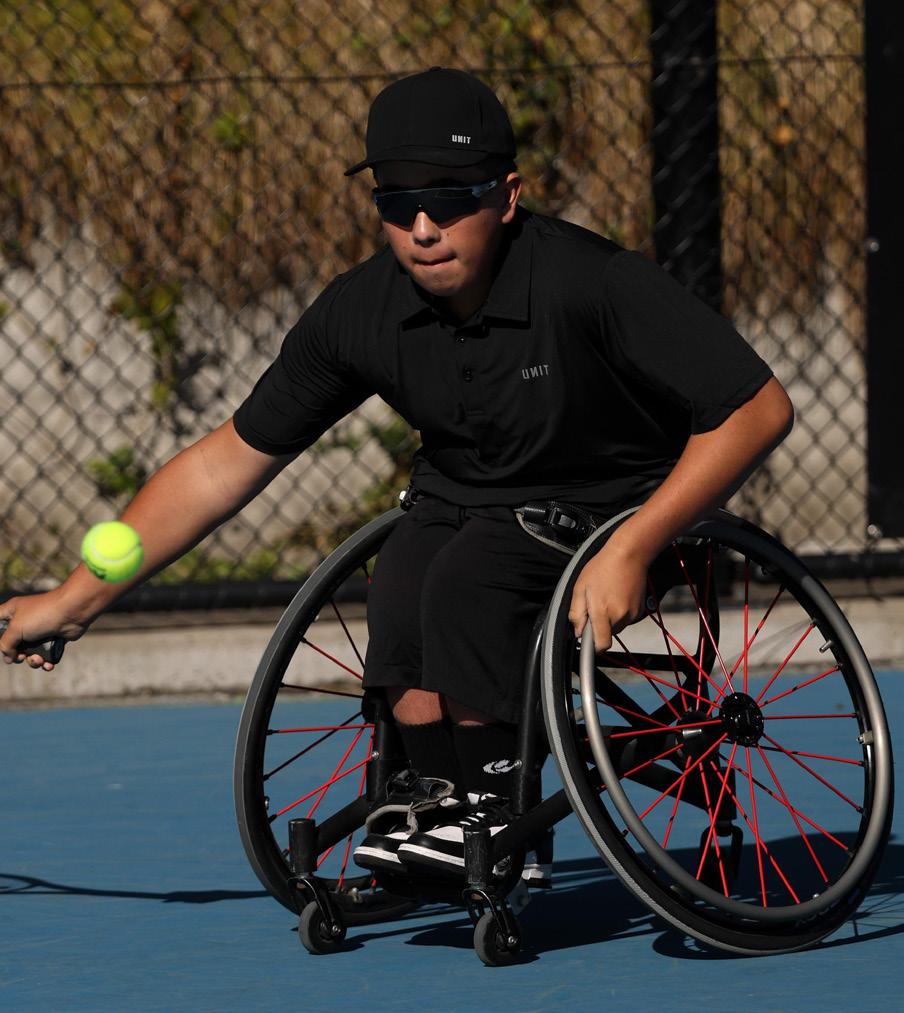
“Our programs go from entry level squad or group-based training, all the way through to international representation where our players represent Australia overseas,” Danielle explains. “Our goal is to offer the most opportunities to the most players with disability, across the board. It’s very comprehensive.”
Despite its growth, the path hasn’t always been straightforward. Danielle acknowledges that “finding the front door” can be challenging at times. “We want to make it as easy as possible for people to get involved, so we’re working on overcoming some of the hurdles they might face.”
This means liaising with local clubs to ensure venues are suitable and accessible, and working with coaches and volunteers to ensure personnel are trained and confident. “Professional development is key, because some coaches might be keen to get involved but are a little apprehensive about what it entails,” Danielle admits. “So we work hand-in-glove with coaches who are already successful in this space, and we hero those coaches who are doing great – to let them know we value them, and to offer upskilling when and where it’s appropriate.”
It’s a perception change – getting clubs to realise that offering inclusive tennis adds value. “To be able to say you’re an inclusive club, and that anyone who comes through the doors will be able to get on court and get playing, is immensely attractive to


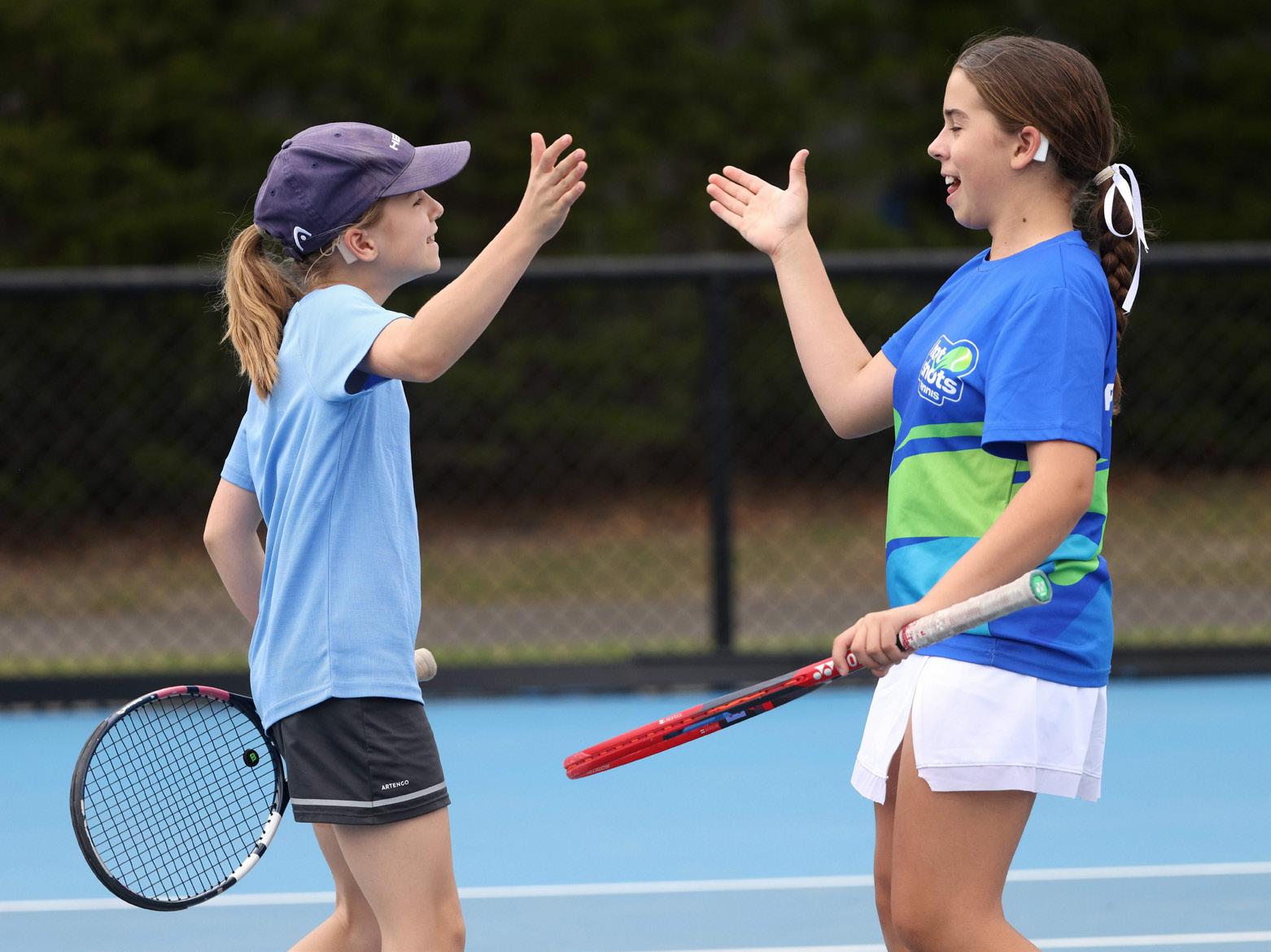
potential members and to the community,” Danielle says.
It’s important that disabled players, especially children, have a good first experience so they don’t feel discouraged. “We know that a shaky start can put families off sport,” Danielle says. “So we want children to feel welcome and included from the beginning, and we keep supporting them and their families as they move along the pathway.”
Danielle encourages families to begin online at the All Abilities page (tennis. com.au/play/inclusive-tennis/all-abilities), where you can find out more about each inclusive program and get in touch to be connected with a club and coach suited to your needs. Equipment support is also in place, including wheelchair loans, ensuring gear is not a barrier.
Tennis Australia also runs parent education sessions throughout the year. “A recent one was for parents whose children were going overseas to compete for the first time,” Danielle recalls. “We know parents are nervous, so we held a session explaining how the trip will work, how the players will be supported, what parents can expect, how we’re going to communicate while the players are away.
“We want parents to know we’re on the journey with them. We’re on the same side. We’re here to support you, and to work collaboratively with you, so your child has the best experience with tennis.” This emphasis on support is about much more than just getting on court. It’s about helping children and their families find a space where they feel safe, valued, and included.
For many families, joining All Abilities tennis is about so much more than learning to play. Perhaps the most rewarding part for the team is watching the journey unfold – from tentative beginnings to fullfledged representation. “We’ve seen kids start as five year-olds and end up representing Australia internationally. It’s incredible to see their journeys,” Danielle says. Ultimately, though, “The real win is seeing kids and families move from isolation to connection, where they’re suddenly part of something life-changing, and knowing we’ve helped open that door.”
To learn more about Tennis Australia’s All Abilities programs head to tennis.com.au/play/inclusivetennis/all-abilities

At Leap in!, we’re sharing real-life stories from our Members about their disability and their experiences with the NDIS. These stories highlight different journeys, disability types and the ways members use their NDIS funding to support their goals. Today, we’re sharing Shannon* and Lily's* story. Shannon talks openly about Lily’s diagnosis, their journey with the NDIS and how they use her funding to best support her needs and goals.
Getting the right support early. Shannon and Lily’s story.
When Lily was around 18 months old, Shannon started noticing that her daughter wasn’t picking up language in the way she expected. Despite passing the newborn hearing test, Lily still wasn’t talking much. Shannon was told by her GP to try ear drops, but the delays continued.
By the time they saw an ENT and completed more hearing tests, the cause became clear. “They said that she had pretty significant hearing impairment, which has more than likely led to the lack of language development. Looking back, those initial six months were critical, Shannon says. “We were stuck in a cycle of trying things that weren’t helping, when that’s such an important age for speech development.”
Once Lily had grommets inserted, Shannon noticed improvement. “Her language has improved a lot. We were doing speech therapy privately a little bit within health insurance limits, but the cost of it is just enormous.”


Shannon hesitated about applying for the NDIS at first. Even her paediatrician wasn’t sure Lily would be eligible. “I thought ‘no, it’s not for my kid, she’s just a little bit delayed. She doesn’t need it.’”
But the difference in Lily’s development became more obvious. “I know you’re not supposed to compare, but other kids could come up and ask for a packet of chips or something, whereas Lily would have just pointed.”
Encouraged by her speech therapist, Shannon contacted Uniting Care’s early childhood team. “The early childhood partner was fabulous, but it did take a long time. It took months and months until we finally had a face-to-face meeting with them.”

➜ Improve and enhance communication skills
➜ Improve and enhance social skills in a variety of settings and situations
➜ Build independent self-care skills
➜ Improve and enhance cognitive development
➜ Improve and enhance emotional development in a variety of settings and situations.
Shannon’s biggest advice for other families is to start early, even if you’re unsure. “My regret was the first time that I got told that we needed NDIS, I said, ‘No, that’s not me, it’s not my kid,’ because I had that stereotype of what it is and that bias of what is a disability. So my advice to everyone would be, even if you're not sure, just get your name on the list.”
Lily’s NDIS plan was approved four and a half months after they met with Uniting. “The phone call came out of nowhere,” Shannon recalls. “Someone from the NDIS called and said the plan was approved and read out all the budgets. At the end of that phone call when I hung up, I had no idea what I was doing.”
Fortunately, the early childhood partner followed up and helped explain the plan and the available options. Shannon chose plan management and got supports in place quickly.
Lily now has regular speech and occupational therapy sessions, both delivered at daycare. That setup means Shannon can keep working full-time while Lily gets the help she needs.
“It’s made such a difference. Her therapists know her well and she feels
comfortable with them. We’re focusing on emotional regulation, transitions, sensory needs and her language.”
Lily has made progress with her vocabulary, although her receptive language is still catching up. OT is helping with areas like sitting still, attention and self-care.
Shannon says it’s not always straightforward. Understanding what the funding covers can be tricky, especially in the consumables budget. “Some things I assumed would be covered weren’t, and others that seemed less essential were. It can be hard to know what’s okay to claim.”
Shannon also worries about what the future might bring. “There’s lots of changes… what happens if that just suddenly gets cut off or if the goalposts change and then all of a sudden she’s not captured. It is a worry.”
Still, she’s focused on Lily’s development. “I just want her to be at a level with her peers. I don’t want her starting school behind. I’m so blessed that my kid’s getting the support and childcare they need while I’m still working and providing for them.”
*Shannon’s and her daughter’s names have been changed to protect their identity. Shannon and Lily are Leap in! members, and no photographs have been included to safeguard their privacy.
Beat the summer-break literacy slide with these seasonal reading & writing ideas.
Reading doesn’t have to mean sitting still with a chapter book. It can be spoken, listened to, watched, drawn, cooked, acted out, or even sung. Whether your child loves sensory play, storytelling, or simply sharing time with you, there are so many ways to bring language and literacy into your summer and Christmas celebrations.

Set up a little summer reading nook – under a tree in the backyard, inside a tent or cubby, or in an airconditioned room with fairy lights and soft cushions. Add a sensory-friendly touch like a weighted blanket, noise-cancelling headphones, or fidget tools if your child uses them. This space can become a safe, familiar place for stories to unfold.

Wrap up 12 books – new, borrowed, second-hand or already on your shelf – and let your child unwrap one each day. Include a mix of formats (picture books, audio stories, tactile books, graphic novels), and don’t be afraid to repeat favourites.

Help your child write or create a letter to Santa or a loved one, teacher, pet, or favourite character. This can be done with words, drawings, symbols, or assistive communication devices. It’s a great way to practise writing, expressing wishes, and using descriptive language.
Gather photos, magazine clippings, stickers, wrapping paper, and drawings, and create a holidaythemed scrapbook together. Use it to tell the story of your summer or create an imagined Christmas adventure.


and interactive. Add in sound effects, puppets, or actions if your child enjoys sensory input.
Try reading or creating simple festive poems – like acrostic poems using your child’s name (e.g., A is for angel, L is for lights...), or silly rhymes about the Christmas tree or Santa’s elves. Rhyming is great for language development, and poems can be short and fun for kids who have limited attention spans.
Use toys, food, or decorations to explore alliteration (repeating the same starting sound). For example: Sizzling sausages sizzle on Santa’s surfboard! Turn it into a game, eg – how many silly “S” or “J” words can you find in the house? This supports phonemic awareness and creativity in a playful way.
Audiobooks are a great option for children who find reading difficult or tiring. You can borrow them from libraries or find festive stories online. Reading aloud together, taking turns or listening to a narrator also makes stories more accessible
Choose a simple, illustrated holiday recipe; gingerbread, icy poles, or reindeer snacks, and read through the instructions together. Help your child follow the steps and talk about the ingredients, measurements, and textures. It’s a great way to combine literacy, sensory learning, and festive fun.
Many libraries run inclusive summer holiday programs with storytimes, craft sessions, or sensory-friendly events. These can be a great way to enjoy stories in a social setting, especially if your child enjoys routines or benefits from structured outings.
Most importantly, follow your child’s lead. Some days they might only manage five minutes with a book, and that’s okay. Other days they might be ready to read the same story three times in a row. Focus on connection and enjoyment more than ticking off learning goals.





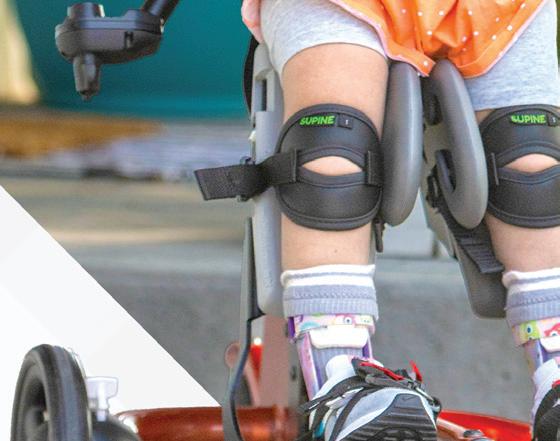
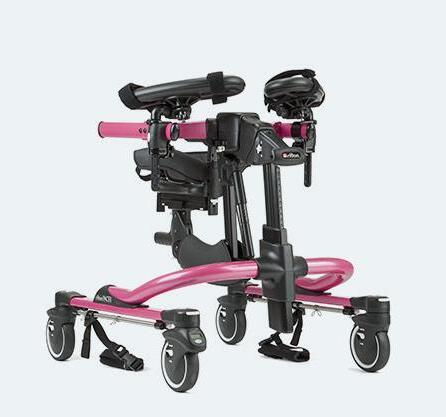
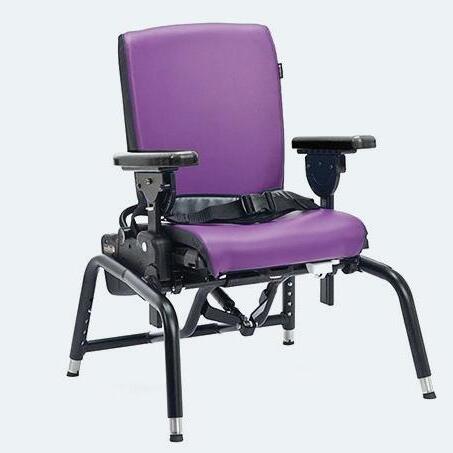
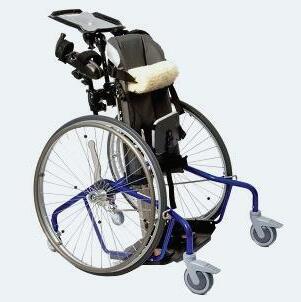
Rifton is celebrated worldwide for creating innovative adaptive and mobility equipment that transforms the lives of children and adults with disabilities. Thoughtfully designed with input from therapists, every Rifton product is built to meet real-life needs with comfort, function, and flexibility in mind.


At APEX Mobility, we’re proud to offer an extensive range of Rifton solutions — from trusted favourites like the Rifton Pacer, Activity Chair, and HTS to exciting innovations such as the updated Trike and the new Multistander, now available in three sizes.


Contact APEX Mobility today to connect with your nearest dealer.















































It’s the most wonderful time of the year, so the classic song goes, but for families with kids & young people with disability, the silly season brings with it a whole load of stress and extra challenges to deal with. Christmas parties and end-of-year gatherings? They can be a minefield.
Anoisy, crowded space might be overwhelming for a child with sensory sensitivities. Physically demanding games or activities might leave a child with mobility challenges left out. And for kids who use AAC devices, chatting with Santa or joining in on party games can feel tough.
If you’ve ever hesitated before saying yes to a party invite - or paused before sending one out – you’re not alone. Honestly, we’ve been there (multiple times)!
The thing is, it doesn’t take a complete party overhaul to make a difference. A few thoughtful tweaks can help make Christmas gatherings more comfortable, more accessible, and more fun for all involved.
Here’s how.

Every child is different. What lights one up might overwhelm another. Some need room to move, others a quiet nook to retreat to. Some need help with food, others with communication.
Consider these:
• Can kids using wheelchairs or walkers get around easily?
• How can non-speaking kids or AAC users join games or conversations?
• Will loud music or flashing lights be too much? Is there a calm space?
• Are activities doable for kids with different physical abilities?
• Are there safe food options for allergies, feeding tubes, or sensory preferences?
• No one expects a perfect party – just one where everyone feels welcome.
It’s easy to get caught up in fairy lights and food, but Christmas is about connection. When kids with disabilities join in, they build confidence and belong. Their mates learn empathy and flexibility. Inclusion benefits everyone. And you know, it’s a basic human right, right?

A quick chat with parents or carers can smooth out a lot of wrinkles. Try asking:
• “Anything we should know to help [child’s name] have fun?”
• “Is it okay if we bring some food for our child?”
• “Is the venue wheelchair accessible?”
• Most parents appreciate being asked and will happily share what works.
Not all party places work for every kid. Keep an eye on:
• Ramps or step-free access
• Noise levels – can music be turned down?
• Comfy spots to rest
• Indoor/outdoor options for different needs
• Small changes like moving furniture or dimming lights can go a long way.
Some traditional games don’t fit all abilities. Instead of pass-the-parcel or musical statues, try:
• Craft tables to decorate ornaments or cookies
• Calm play areas with soft toys
• Photo booths with props (Santa hats, anyone?)
• Storytime or singalongs
And if kids use AAC devices, prepping phrases like “Merry Christmas!” or “Can I join in?” can help them join the fun.
Christmas can hit the senses hard. A quiet corner with soft lighting, beanbags, noise-cancelling headphones, and calming activities like colouring books can give partygoers a break when they need it.
There’s always food around at Christmas, but not everyone can eat the same things. Offer a mix of textures and allergyfriendly options, label ingredients clearly, and be chill about parents bringing their own food.
Use visuals and communication tools
For kids who use AAC or other visuals, think about:
• Visual schedules or cue cards for activities
• Easy-to-access phrases on devices or printed cards
• Games that use gestures or pictures
These small things make a big difference to feeling included.
No party will tick every box – that’s fine. What matters is the effort to make everyone feel welcome.

The festive season sparkles with joy and magic, but when someone you care for has sensory issues, all that sparkle sometimes comes with a side of overwhelm. The lights, the noise, the crowds, the change in routine – all of it can tip the balance from joy to overload quicker than Santa can say ho ho, oh no!
There are ways you can keep the magic alive however while dialling down the stress. It might mean swapping flashing lights for gentle glows, trading loud carols for soft jingles, or finding ways to make decorations a treat for the hands as well as the eyes.
Try these activity ideas to help you strike the right balance between excitement and comfort.
Use a mix of textures to create decorations your child can explore – soft fabric ornaments, smooth glass baubles, or tactile wreaths. If your child is okay with scents,
try adding a touch of cinnamon or pine to create a multi-sensory atmosphere that feels warm and inviting.
Forget the chocolate – craft a personalised countdown calendar filled with little treats or activities chosen to suit your child’s likes. It’s a great way to build anticipation without overwhelm.
Pick quiet moments during the season for “silent nights.” Switch off noisy decorations and electronics, dim the lights, and enjoy calm sensory activities like reading festive stories, puzzles, or gentle breathing exercises.
Reimagine caroling by using sensoryfriendly instruments such as jingle bells or hand chimes. Let your child join in at their own pace – singing, clapping, or playing along however feels best.

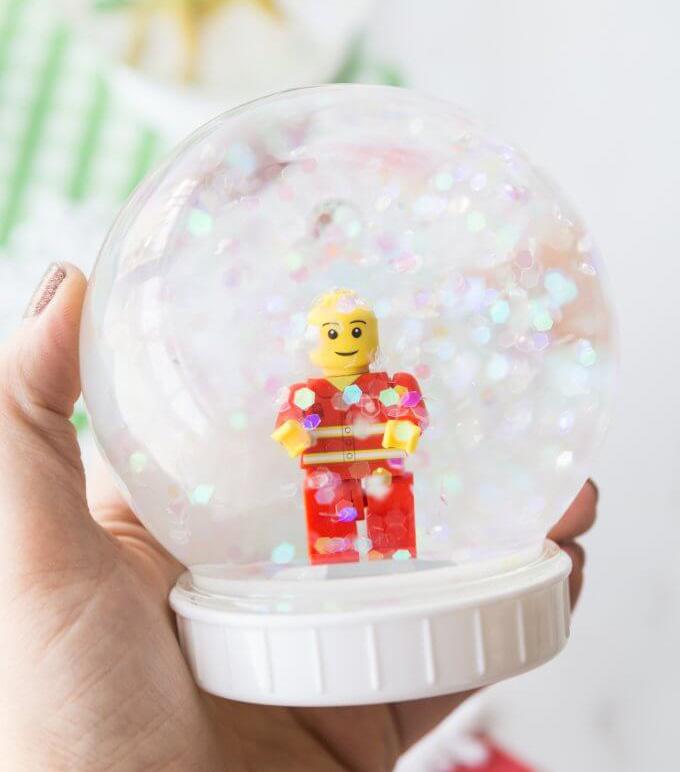
DIY sensory snow globes are a hit. Clear jars filled with water, glitter, and tiny holiday figurines provide a calming, mesmerising experience that kids love to
Make gift wrapping part of the sensory fun by choosing papers, ribbons, and bows with different textures. Let your child touch and explore the materials as you wrap together.
Organise a scavenger hunt with a sensory twist – searching for soft Santa hats, textured fidgets, or the jingle of bells around your home or nearby park.
Set up a calming space with soft pillows, weighted blankets, and soothing sensory toys; a quiet retreat for when the holiday bustle becomes too much.
Bring stories to life by adding props, scents, or tactile elements related to your holiday tale. It’s an engaging way to make storytelling interactive and memorable.
Visit local light displays during off-peak hours to avoid crowds and noise. Bring along sensory tools like flashlights or glow sticks to create a personalised light show experience.
Adapt these ideas to suit your child’s individual sensory profile and preferences. The holidays don’t have to be stressful or exhausting – with a few tweaks, they can be joyful, inclusive, and just right.
Where will your BeMe take you this summer?
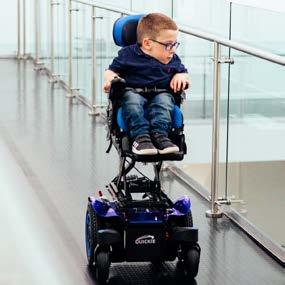
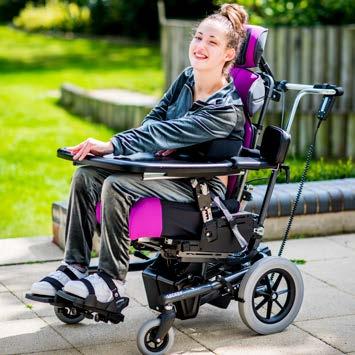
BeMe Family Brochure
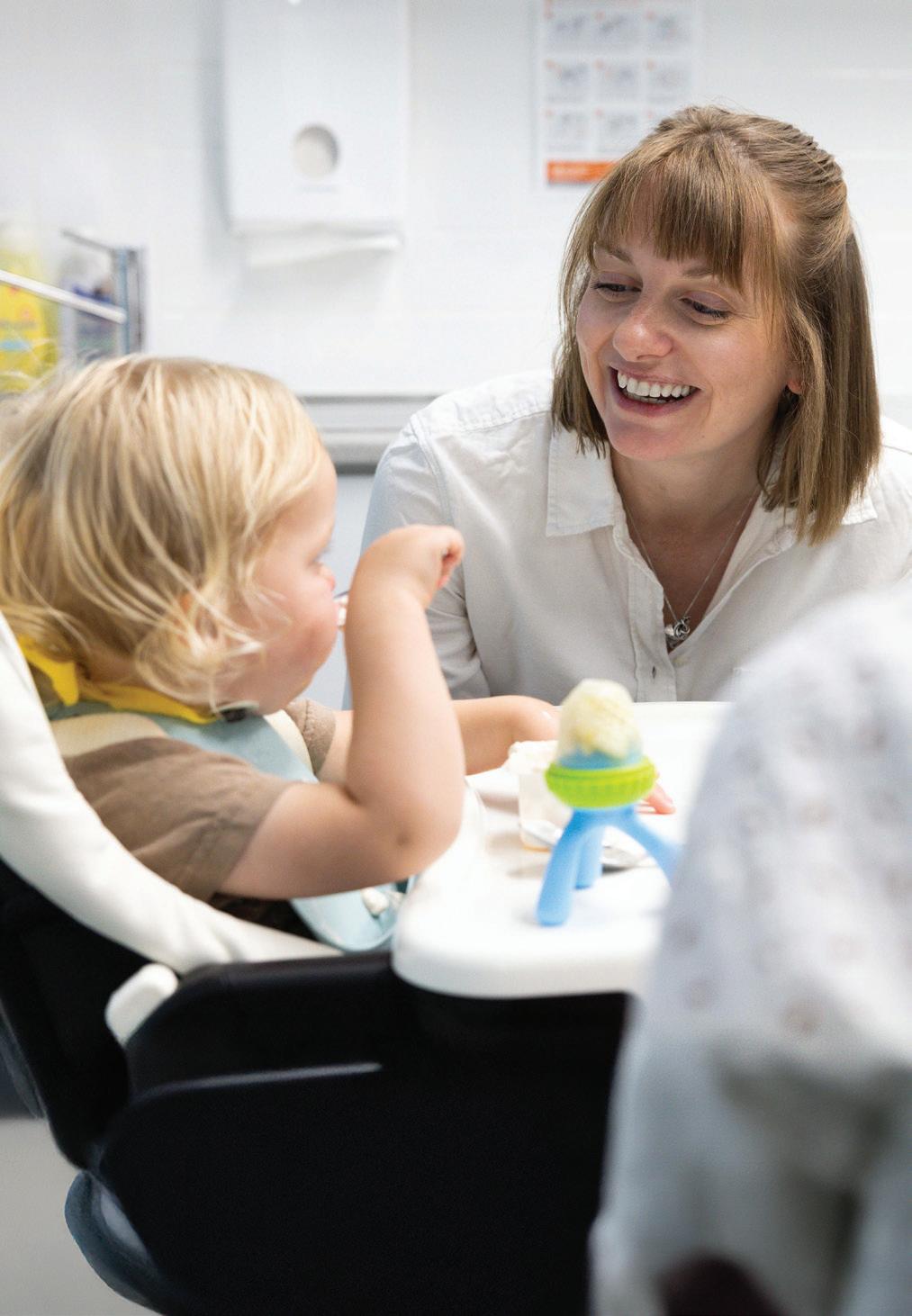

Amplify your effort, accelerate your progress, and achieve your goals sooner with CPA Intensive Therapies.
• Intensive Dysphagia Therapy
• HABIT-ILE
• Mighty Kids

• Bodyweight Supported Treadmill Training
• Powered Mobility Group
• Connect & Communicate Day Out
Like to get started? It’s easy! Request a call from our friendly team. 1300 888 378
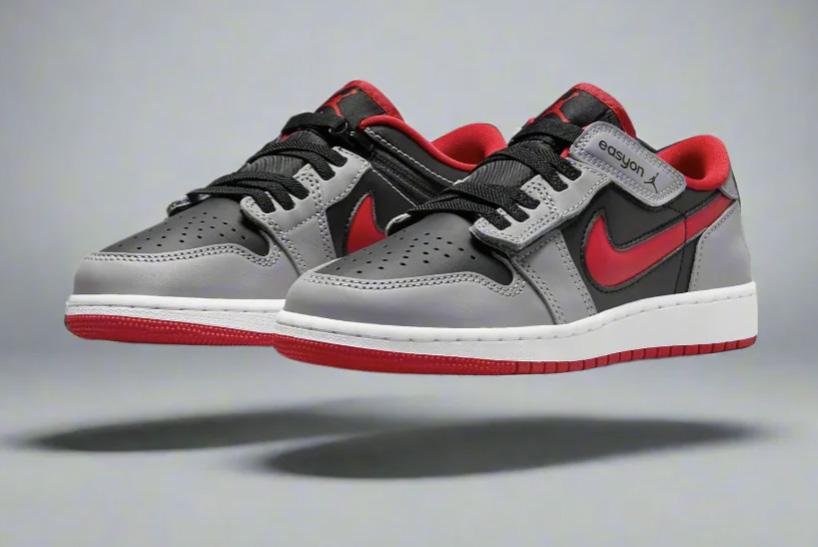
Nike Air Jordan 1 Low FlyEase makes getting dressed easy and stylish. FlyEase closures let kids slip them on and off in seconds – even with AFOs – while Nike Air cushioning keeps every step comfy, and the rubber outsole grips everywhere. Classic style, ultimate comfort, zero fuss.
RRP: $240 // incaresupports.com.au

This classic masculine - style linen shirt takes the hard work out of looking good using magnetic closures instead of buttons. Available in white and olive.
RRP: $99 // jamthelabel.com

Bring Bluey to life with your own hands! This Hey Clay set lets young artists sculpt, play, and display their very own Bluey using soft, colourful, and non-toxic modeling clay. With 5 vibrant cans, easy-tofollow instructions, and no mess, it’s the perfect creative activity for

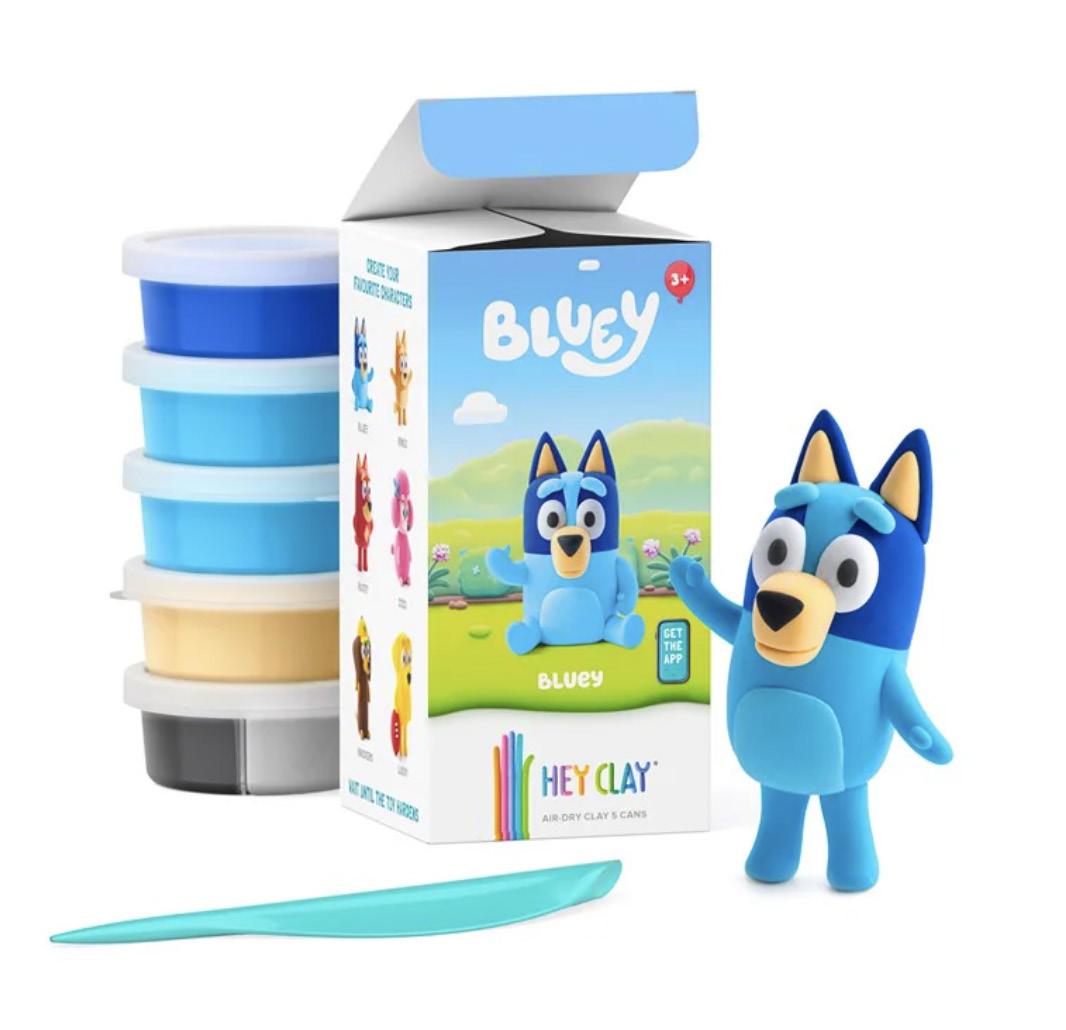
Need some Christmas gift inspiration? Check out our merry mix of ideas for all ages, abilities and interests.

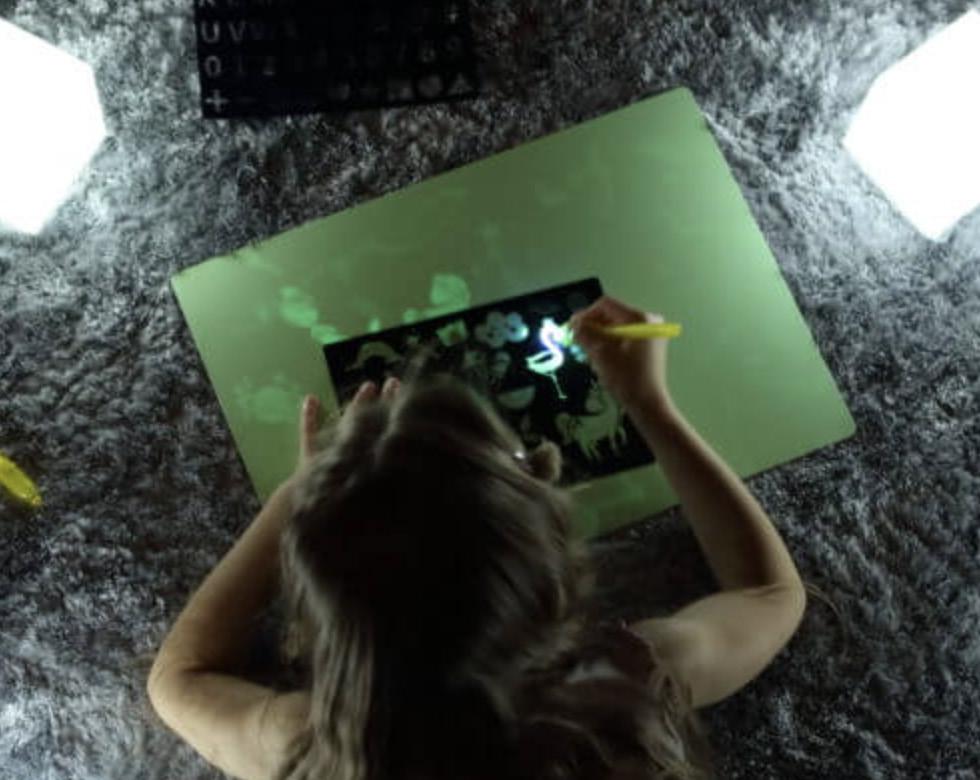
These light up drawing boards are sure to capture the imagination and creativity of anyone who uses them. We love these boards as they are a fun and motivating way to encourage even the most reluctant of writers to pick up a pen and have a go.


RRP: $29.95 mydiffability.com.au
Do you wanna dance? This colourful, fun sunflower, which can be controlled by a connected switch device, will play and dance to 24 different songs.
RRP: $95 // avantinnovations.com.au


Upgrade their style. These Tommy Hilfiger adaptive jeans are as practical as they are pretty. Easy velcro closures, faux buttons, and a sweet floral print make getting dressed simple, and stylish, every day.
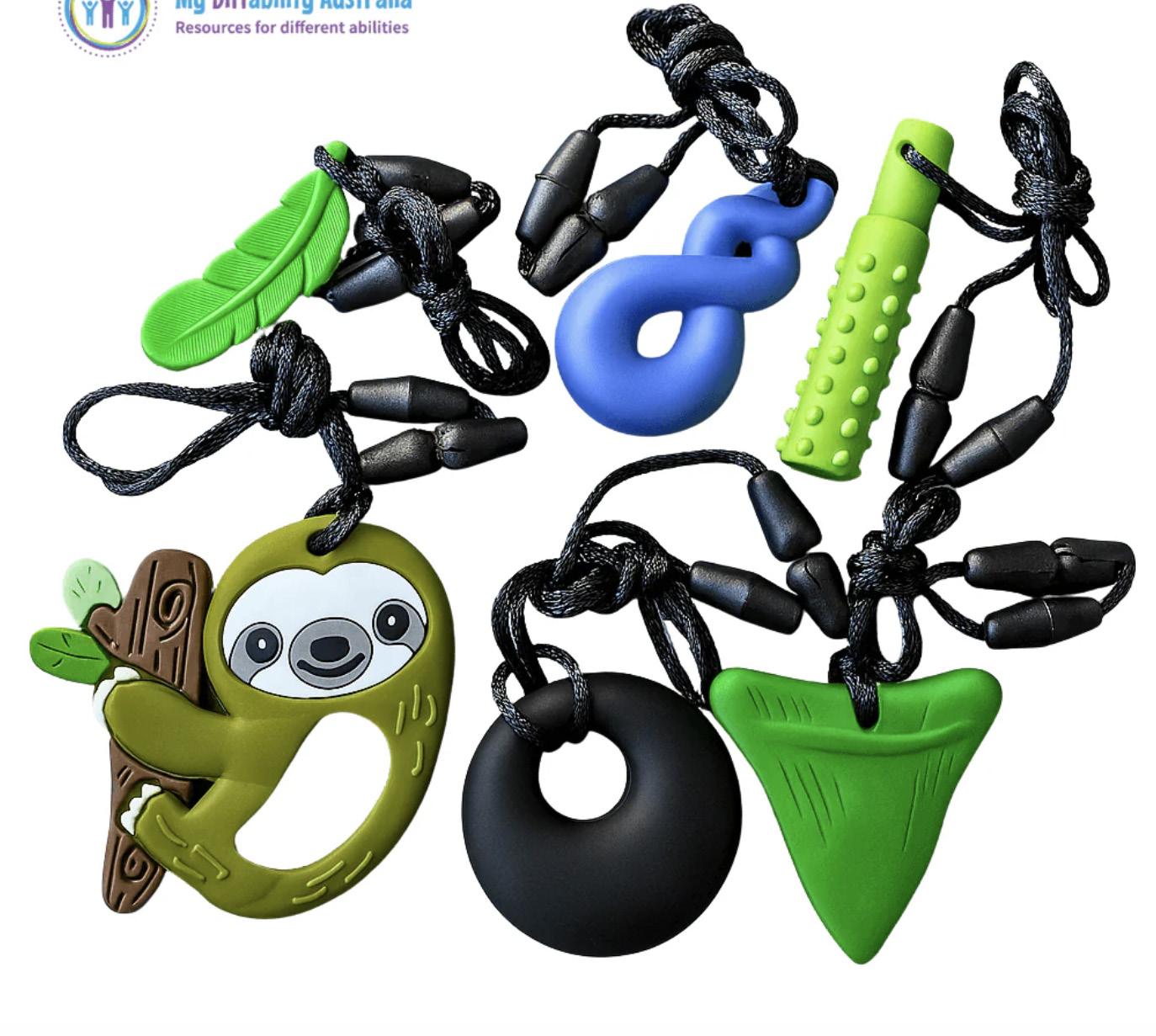
Meet the ultimate chewy crew! This sensory chew variety pack of chewy pendants is bursting with personality, colour, and texture. It’s perfect for those who love to

RRP: $119 // everyhuman.com.au

Transform your child’s wheelchair into a vibrant solar system with these ‘Planetary’ wheel covers. Designed specifically for young explorers, this captivating design features brightly colored planets orbiting around a radiant sun at the centre.
Take a look at all the other amazing designs on the Colour My Wheels website.
RRP: $289 per pair
colourmywheels.com.au
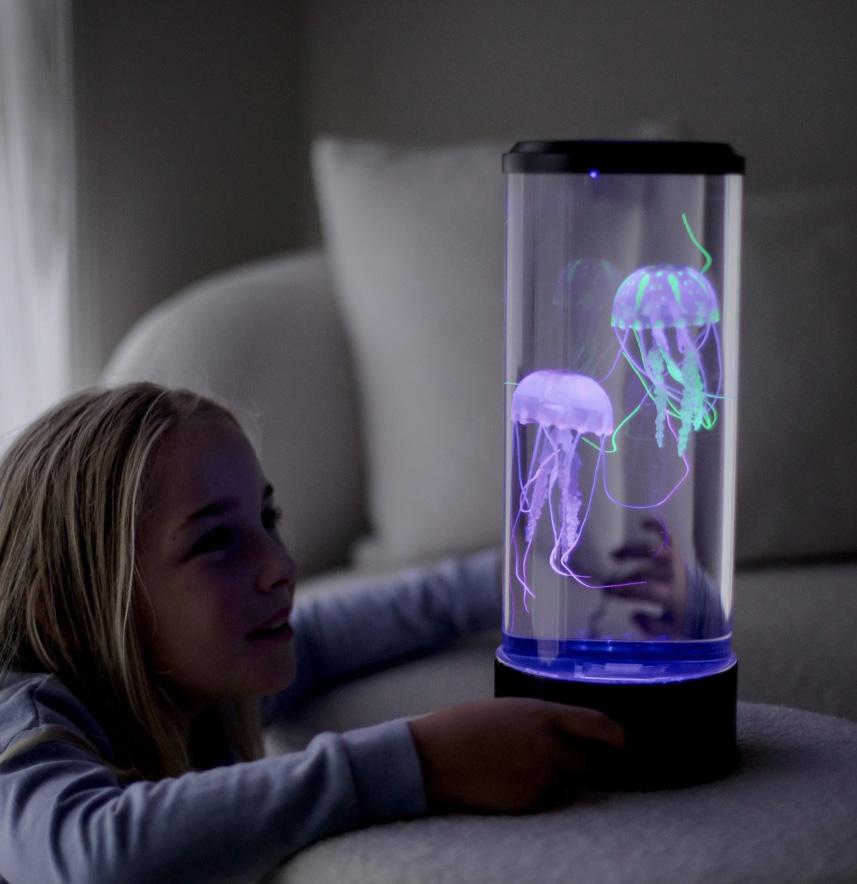
The jellyfish lamp creates a soothing sensory experience for kids and adults alike. At 36cm tall, it gently lights up the room in calming colours while lifelike jellyfish drift inside. Perfect for sensory regulation, anxiety, or winding down at the end of the day, it’s a peaceful addition to any space. The lamp is particularly beneficial for those with autism, adhd or sensory processing disorders, providing a calming and familiar environment that can help to regulate their senses.

RRP: $179.99 // sensorypoodle.com.au
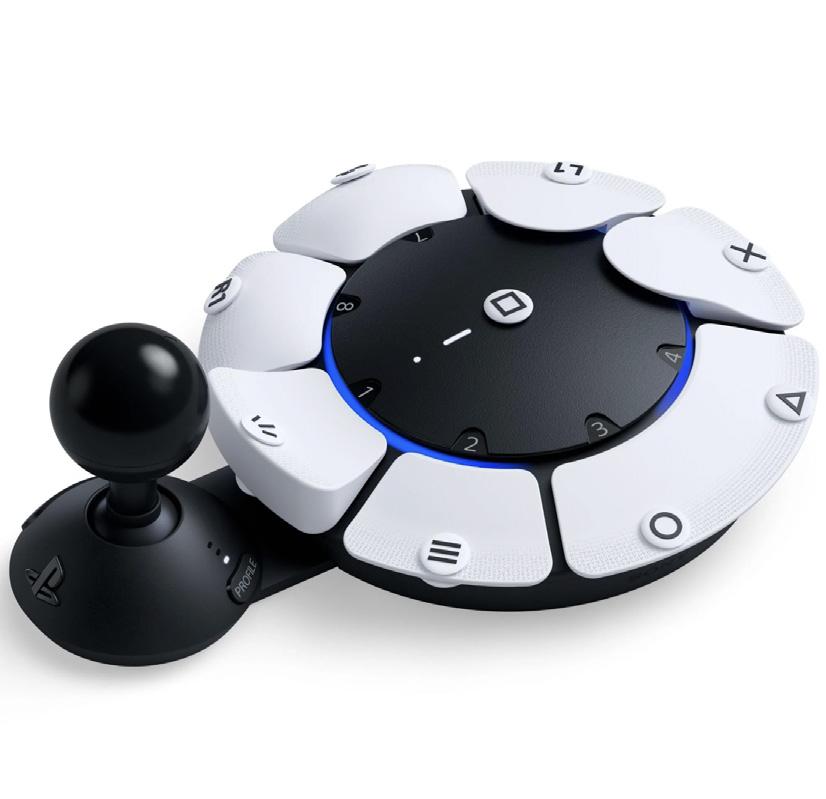
Your gamer can game their way with adaptive controllers like the Xbox Adaptive Controller and PlayStation Access Controller. Customisable buttons, switches, and joysticks let players of all abilities set up a controller that works for them, whether they use one hand, a foot, or another assistive device – making gaming fun, inclusive, and fully in their control.
RRP: $139 PS5 Access Controller, xbox.com
RRP: $129 Xbox Adaptive Controller, jbhifi.com.au Inclusive and fully in their control!
Dig it, mould it, build it, and smash it!

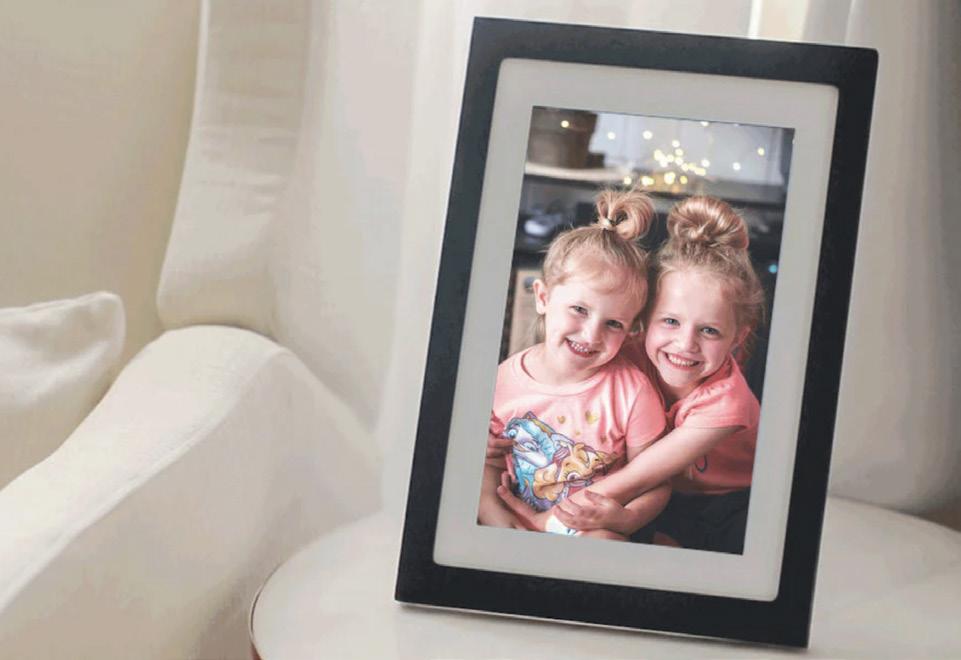
From the moment it’s unwrapped, the Skylight Frame brings favourite memories to life. Preload photos with gift mode and they’ll be greeted with a slideshow of special moments ready to view, share and smile at again and again. RRP: $249 au.myskylight.com

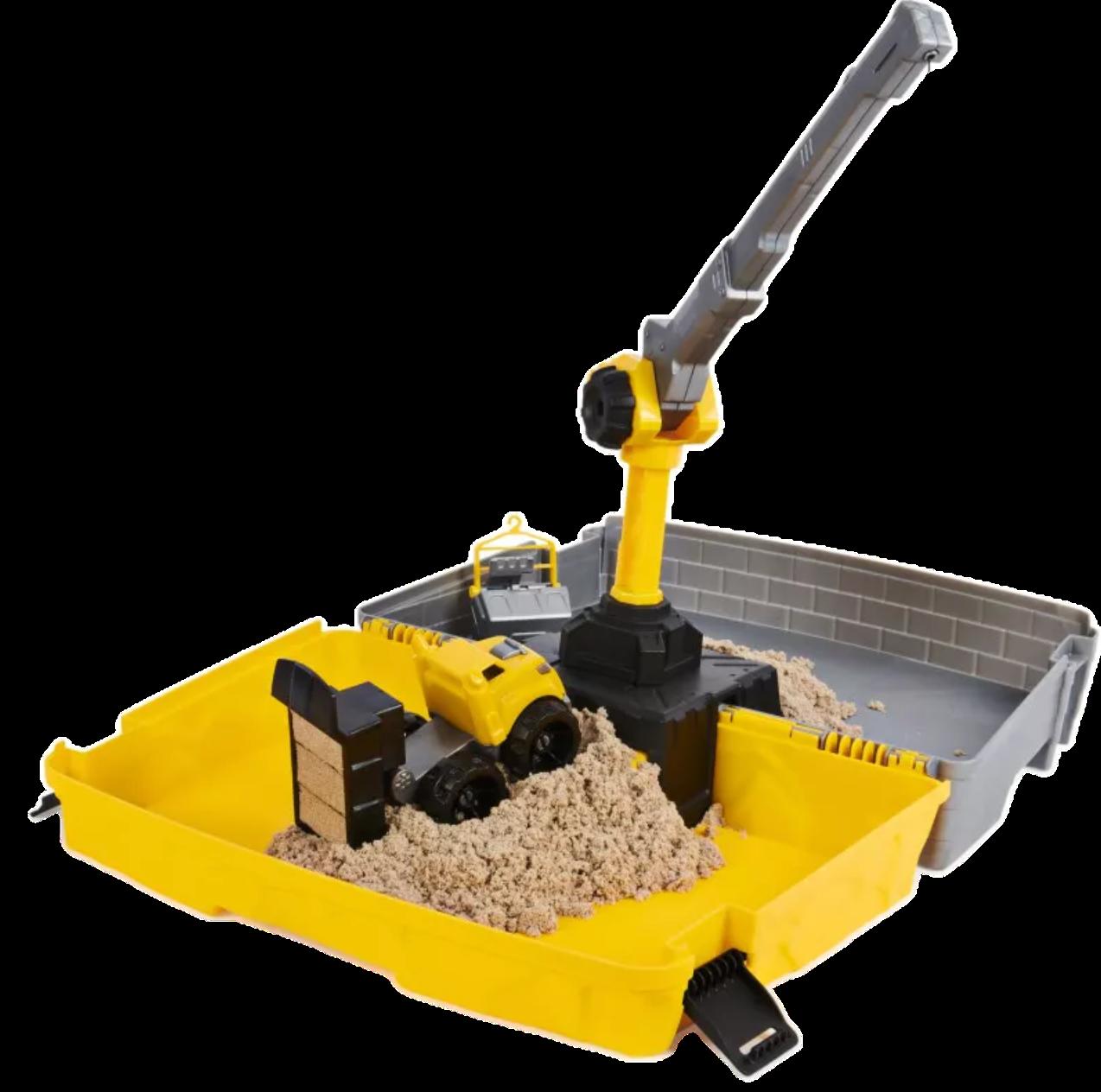
Dig it, mould it, smash it – and do it all again! Kinetic sand never dries out, so the fun never ends. It’s the ultimate sensory and fine motor play, and with this construction site set, kids can dig, mould, build, and smash with the crane and dump truck, then pack it all away for easy storage or on-the-go play. RRP: $59.99 // mrtoys.com.au

Bring a touch of magic to bedtime with the Unicorn Lil Dreamers Lumi-Go-Round Rotating Projector Light. This enchanting night light creates a calming, captivating atmosphere, helping little ones drift off surrounded by unicorn magic. Designed with sensory needs in mind, it provides a soothing, grounding experience for a peaceful night’s sleep.
Get kids excited about gardening with this cute gardening set. This easy-to-use kit helps children grow their own veggies and fruit – perfect



The JBL Junior 470NC headphones bring big sound safely to little ears. Volume is capped at 85dB, with active noise-cancelling to keep things calm and clear. Parents can manage settings and listening time through the JBL app, while comfy earcups and chunky controls make them perfect for kids on the go.
RRP: $129.95 assistivetech.com.au
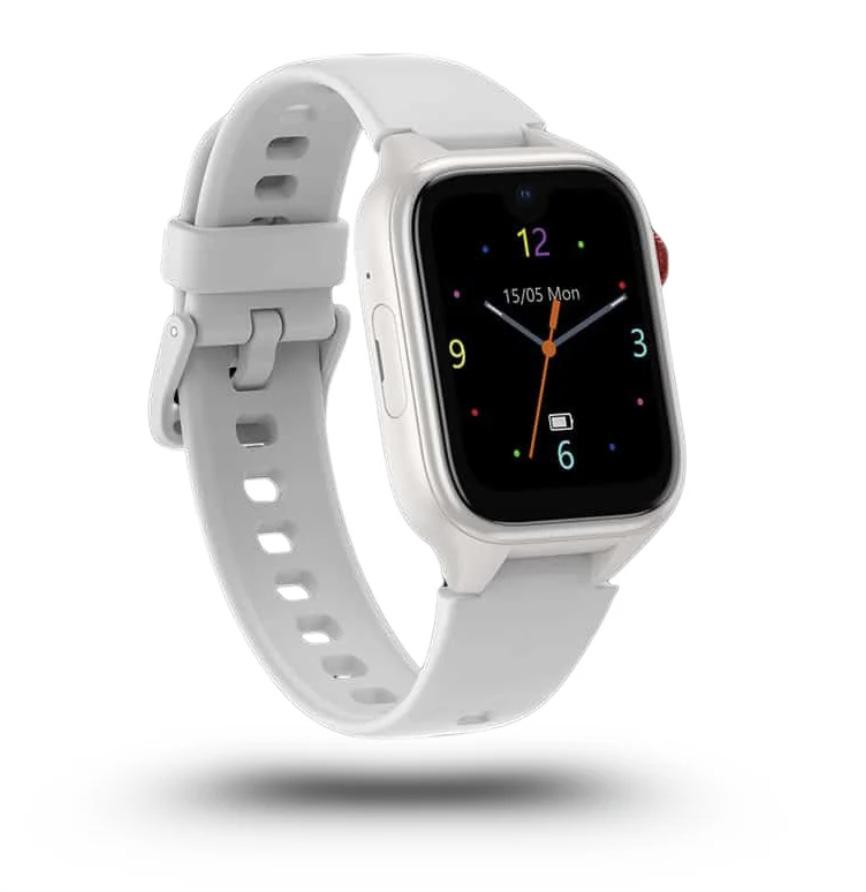
Keep in touch with video and audio calls, messages, emojis, and photos, while tracking steps, heart rate, and SpO2 through the app. Kids can enjoy puzzles, games, and weather updates, while parents manage safe zones, screen time, and location. Slim, splashresistant, and comfy to wear, it’s a smartwatch designed for fun, learning, and peace of mind.
RRP: $239.95 // kidsoclock.com.au
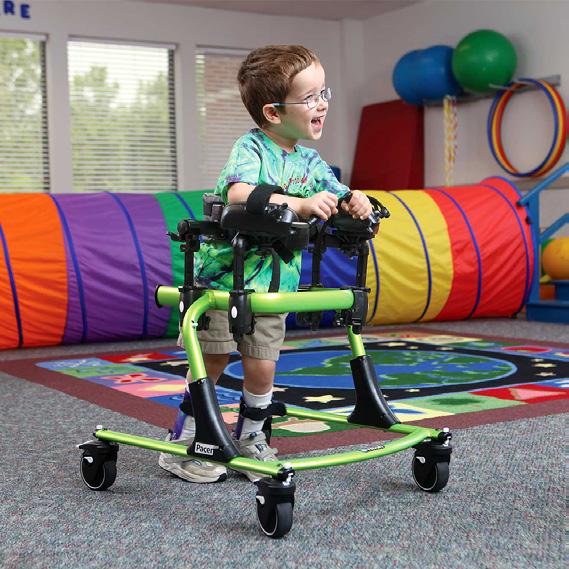
Whether its big adventures or little everyday steps, RTD walkers help kids move, play and shine


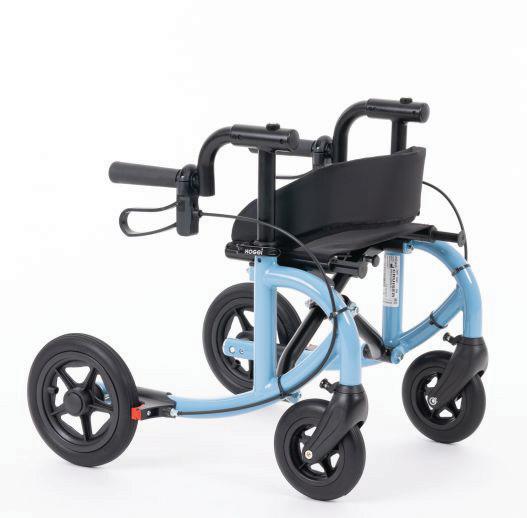
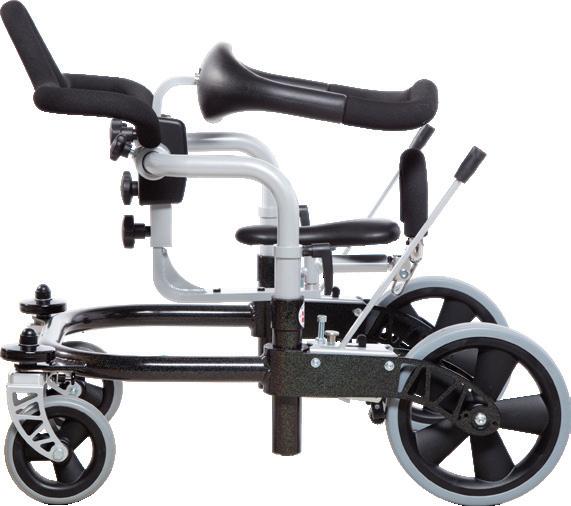
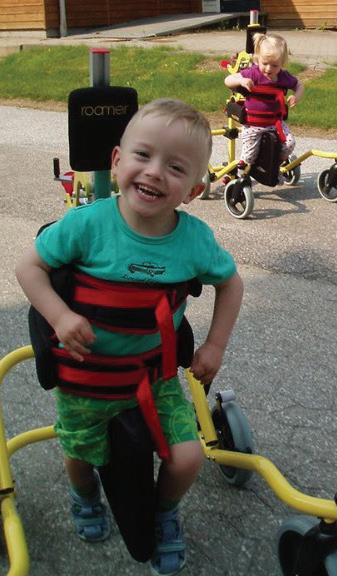
RTD – Rehab Technology Distributors is a family-owned Australian business supplying high-quality rehabilitation and mobility equipment across Australia and New Zealand. We partner with leading global brands to deliver innovative, reliable assistive technology through our trusted dealer network. Working closely with healthcare professionals, we’re committed to empowering independence, participation, and improved quality of life.

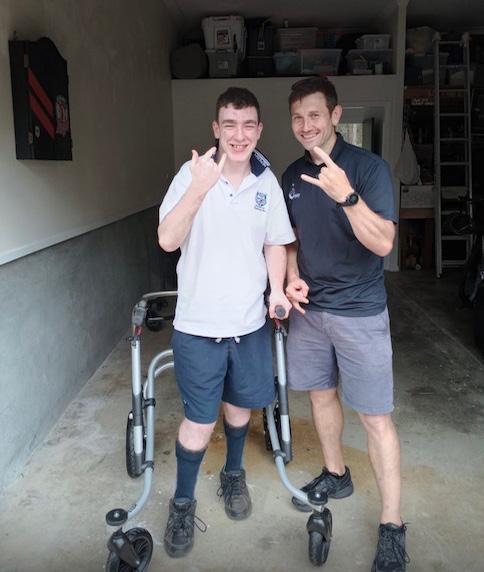

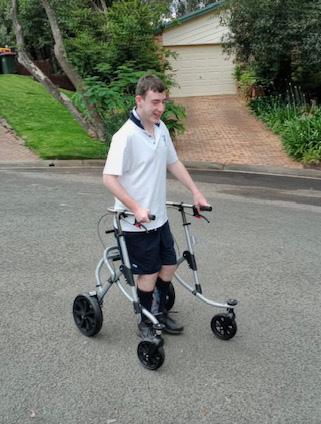
At 18, Harry’s life is full of energy. He’s just finished school, but the world outside those classroom walls is where he really comes alive. You’ll often find him at concerts, musicals, or any live performance that captures his imagination – live recordings of Australian Idol and The Voice, for example! Music isn’t just background noise; it’s a passion, something he throws himself into with the same intensity he brings to everything else.
“He’s just so confident and strong and tall,” says his mum, Holly. That confidence isn’t something that magically appears – it’s something he carries into every corner of his life, from performances to everyday adventures.
One place that confidence really shines is at the I’Mpossible Gym in Penrith. Harry trains there under the guidance of coach Eddie Palaci, who remembers the first time they met. “I’ll never forget how nervous Harry was at first,” he says. “But then he settled in, and all I can remember was his smile – the smile of a person who felt included, who was supported and could feel
Hoggi Flux is built to keep him upright and moving naturally, making the most of the strength he already has
this was the right place for him.” From that moment on, Harry wasn’t just a participant; he became a part of the gym community. Since that first session, he has thrown himself into every aspect of the program. His workouts span a wide range of machines – the rower, treadmill, ski erg, and recumbent bike – and he tackles strength exercises like squats, push-ups, core work, and sled pushes with determination. But the gym isn’t just about routines and machines. It’s about challenge, creativity, and pushing boundaries, both physically and mentally. And Harry thrives on it.
His favourite challenge? “The best exercise we get Harry to do is a farmer’s carry – except he carries his walker,” Eddie says. “That’s right, Harry is the first human that carries his walker whilst walking. It’s


the best.” It’s a feat that perfectly sums up his determination, his sense of fun, and his refusal to let anything hold him back.
At the heart of Harry’s independence is his customised Hoggi Flux walker from Dejay. Lightweight yet incredibly strong, the Hoggi Flux is built to keep him upright and moving naturally, making the most of the strength he already has. The reinforced frame gives him confidence on uneven surfaces, whether at the gym, around the neighbourhood, or at a concert. “Dejay reinforced the walker to make it safer for Harry as he is adult size and very strong,” Holly explains. “It also helped him walk on more uneven surfaces.”
The impact of the walker – and Harry and Holly’s relationship with Dejay –reaches far beyond exercise and AT equipment. Harry is a music lover and performer, and the Dejay team even 3D printed him a speaker box so he can take his music out and about with him. “Harry is the life and soul of any party,” Holly says. “Having these cool Dejay customs enables him to have more fun.”
Dejay. Together, these tools give him the freedom to choose how he moves depending on the situation – whether he’s racing on a track, navigating crowded spaces, or heading to a show. With smart design, clever customisation, and a team who genuinely think outside the box, Harry can participate fully in community life without compromise.
Harry can participate fully in community life without compromise
Leon Gibb, Harry’s rehab equipment consultant at Dejay, says seeing Harry in action is what makes his work so rewarding. “Kids and young adults like Harry make my job worth it. Seeing the freedom he gets from our Dejay customisations is unreal,” he says. “Harry’s got this beautiful spirit – and his parents, Holly and Josh, are incredible at enabling him to do so much. I love that he sends me heaps of music for our shared playlist – it keeps me feeling young! And seeing how his walker helps legends like Eddie keep him fit and moving just brings it all full circle. Any time I get to hang out with Harry, he’s got the best stories and somehow always makes your day better.”
improved with the Hoggi Flux,” Eddie notes. “When something is customised and supported by such an amazing organisation like Dejay, it’s immediately evident how Harry’s confidence improves.”
For Holly, the difference is practical, visible, and emotional all at once. “It just means that he is safer and more confident in the community with his walker,” she says. “Harry wouldn’t be able to participate in community activities without the walking aides or wheelchair. They make him feel safe and secure, and that then makes him have a great time doing what he loves to do.”
She’s quick to praise the Dejay team for their approach. “They think outside the box and cater to each individual need rather than a stock standard approach. Their after-sales service is outstanding.”
And for Eddie, it all comes down to the young man himself. “Harry, H, Styles, H2 – he goes by many names,” he says with a grin. “But what stands out is his smile and his willingness to give everything a go.”
Harry also dabbles in frame running, and he has an Ottobock wheelchair through
The results speak for themselves. “His agility and speed have definitely
A grin that sums up the life he’s building: confident, strong, and living at full tilt –walker firmly in hand, music blasting, and ready for whatever comes next.





In September, an independent review, led by Dr Stephen Duckett, provided new guidance on NDIS pricing, qualifications and how art and music therapy will be delivered in the future.
The review confirmed that art and music therapy can be beneficial when delivered by qualified professionals and directly linked to a participant’s disability-related needs and goals.
Here’s what we know so far.
The review considered:
• Whether art and music therapy are effective and beneficial for people with disability
• The qualifications therapists should hold
• How much the NDIS should pay for these therapies
• How to make sure people on the NDIS are supported by the right people in the right way.
More than 600 people with disability, families, carers and providers contributed their experiences.
For many participants, art and music therapy are essential supports that can improve mental health.


The NDIA accepted all 15 recommendations from the review that apply to the NDIS. The biggest changes are:
• New price limit. From 24 November 2025, the maximum hourly rate will be $156.16. This aligns with counselling services and replaces the old rate of $193.99.
• Qualified therapists only. Art therapy must be delivered by therapists registered with the Australian, New Zealand and Asian Creative Arts Therapy Association (ANZACATA). Music therapy must be delivered by therapists registered with the Australian Music Therapy Association (AMTA).
• Therapeutic vs non-therapeutic activities. NDIS funding is available for therapy delivered by qualified therapists. It will not pay for general art or music classes.
• Evidence-based support. The NDIS Evidence Advisory Committee will continue to review the research and provide guidance. New operational guidelines will be released in late 2025.
In the ABC article, ‘New NDIS price cap for ‘life-changing’ music and art therapy revealed’, Dr Duckett stated, “It is clear that art and music therapies can be effective and even life-changing for some people with disability.”
According to the review, 6,788 NDIS participants accessed art therapy in 202324, while 7,217 accessed music therapy. For many participants, art and music therapy are essential supports that can improve mental health, build communication skills and encourage meaningful engagement.
If you currently have art or music therapy in your NDIS Plan:
• You can keep accessing it as usual from Capacity Building – Improved Daily Living under the relevant Therapy Supports line item code
• From November 2025, the hourly rate changes to $156.16
• Current group therapy rules are likely to apply. For example, if a qualified therapist is providing support to three participants, each person would pay a third of the total hourly rate of $156.16.

Art and music therapy cannot be claimed under ‘other professional’.
• General art or music classes without a therapeutic focus
• Activities led by people who are not members of AMTA or ANZACATA
• Materials, instruments or lessons.
The NDIS Pricing Arrangements and Price Limits (PAPL) will be updated in late 2025 to reflect the new price limit. A new Therapy Supports Operational Guideline will also be released to clarify how these supports should be claimed.
If you’re unsure whether art or music therapy is included in your NDIS Plan, or if you’d like help understanding your options, the Leap in! Crew is here for you. Call 1300 05 78 78 to find out more.











In September, the government announced a new tool to assess the needs of people with disability for the NDIS.
Instead of a having to gather and submit medical reports, new applicants and existing participants being reassessed will have an interview with an National Disability Insurance Agency (NDIA) assessor.
The government says the new process will make support planning simpler, fairer and more accessible.
But the announcement has left important questions unanswered. Most notably, how will the outcome of these assessments determine the level of support someone gets? And what evidence will be used in place of doctors’ reports?
professionals can be time-consuming, due to long wait times for appointments. Appointments can also be expensive.
As a result, those with the ability and means to collect or purchase additional information are favoured in this process. It also means the scheme often focuses on medical diagnosis and not on the functional impairments that arise from these diagnoses.
From mid-2026, participants aged over 16 will have their needs assessed by an NDIA assessor. This shifts the role of gathering and interpreting information to the agency.
The review argued a participant should get one overall budget they can use across all their needs.
With minimal consultation so far and little transparency, confidence in the new system is already low.
The independent NDIS review reported to the federal government in December 2023 and recommended a raft of reforms. It found current processes for assessing people for the NDIS supports are unfair and inefficient. Gathering evidence from treating doctors and allied health
Assessors will be an allied health professional, such as an occupational therapist or social worker, who will use an assessment tool called the Instrument for the Classification and Assessment of Support Needs version 6, or I-CAN.
I-CAN measures support needs across 12 areas of daily life, including mobility, self-care, communication, relationships, and physical and mental health. Each area is scored on two scales: how often support is needed, and the intensity of the support required.
The assessment, based on self-reported information, is expected to take around three hours.

With medical reports no longer required, it’s unclear what kinds of evidence, beyond the information collected through the assessment, will inform the planning process.
The other big unknown is how the I-CAN assessment will translate into setting a budget for participants. This is crucial, as a person’s budget determines the supports they can access. And this shapes their ability to live independently and pursue their goals.
Currently, budget size is determined by identifying the range of supports a person needs and is built line by line. But the NDIS review recommended more flexibility. Instead of getting separate amounts for therapy, equipment and support workers, the review argued a participant should get one overall budget they can use across all their needs. While the idea of flexibility sounds promising, it means little without an adequate budget.
Potential conflicts also arise when the NDIA both judges need and allocates funding, but has an incentive to contain costs.
Recent reforms to operational rules about what should be included as an NDIS support will also constrain this flexibility.
These changes are partly aimed at controlling NDIS spending through a more standardised and efficient planning process.
They echo the Morrison government’s failed attempt in 2021 to introduce “independent assessments”. Disability groups, the Labor opposition, and state and territory ministers rejected the move, and the government abandoned the plan. There is a risk the new approach could reduce support and fail to expand choice. Rather than providing the flexibility participants seek, rigid assessments and points-based formulas can easily be
repurposed to cap budgets.
The United Kingdom’s experience suggests this is a very real possibility for individualised funding schemes such as the NDIS.
In recent months, a number of NDIS participants have already had their eligibility for the scheme re-assessed or their funding reduced. The concern is that unless this new process is carefully co-designed and implemented, we may see more cuts.
Disability groups also fear that if aspects of the planning process are automated, algorithms could turn nuanced support needs into rigid calculations. Campaign groups have called on the government to halt the use of algorithms, which are already being used in NDIS support planning.
As George Taleporos, the independent chair of Every Australian Counts, has stressed:
The NDIS must never reduce us to data points in a secret algorithm – people with
disability are not numbers, we are human beings, and our rights must remain at the heart of the Scheme.
The new framework was developed without meaningful input from NDIS participants, families and carers, and advocacy groups are concerned the tool may not be fit for purpose for some groups.
A self-report tool such as I-CAN poses particular risks for autistic people with complex communication needs, high support requirements, and those who rely on masking to navigate social situations. Each of these factors raises the risk the tool won’t capture real support needs.
For culturally and linguistically diverse communities and First Nations people with disability, these issues are compounded by language, cultural and accessibility barriers.
A three-hour-long interview will place a heavy cognitive and emotional load on all NDIS participants. It’s possible this could compromise the accuracy of responses.
Some people in the disability community have called for the ability for participants to be able to bring additional evidence from the professionals who know them well to the assessment process, so it doesn’t miss important information about them.
While we await more detail, it’s crucial the government consults closely with the disability community to ensure people with disability are not left worse off.
By Georgia van Toorn, Research Fellow,
ARC Centre of Excellence for Automated Decision-Making and Society, UNSW Sydney and Helen Dickenson, Professor, Public Service Research, UNSW Sydney.
This article is republished from The Conversation under a Creative Commons license. You can read the original version here: theconversation.com/how-people-areassessed-for-the-ndis-is-changing-hereswhat-you-need-to-know-266255




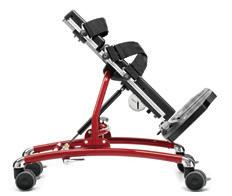
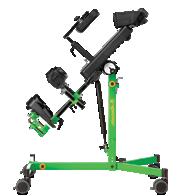
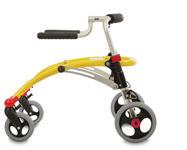
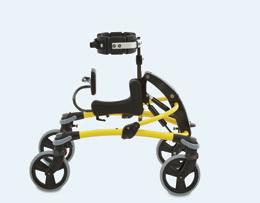
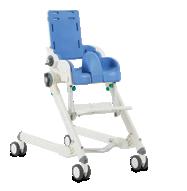
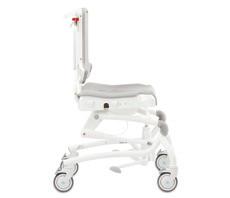
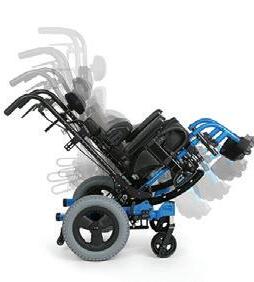
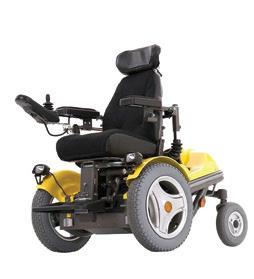
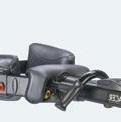
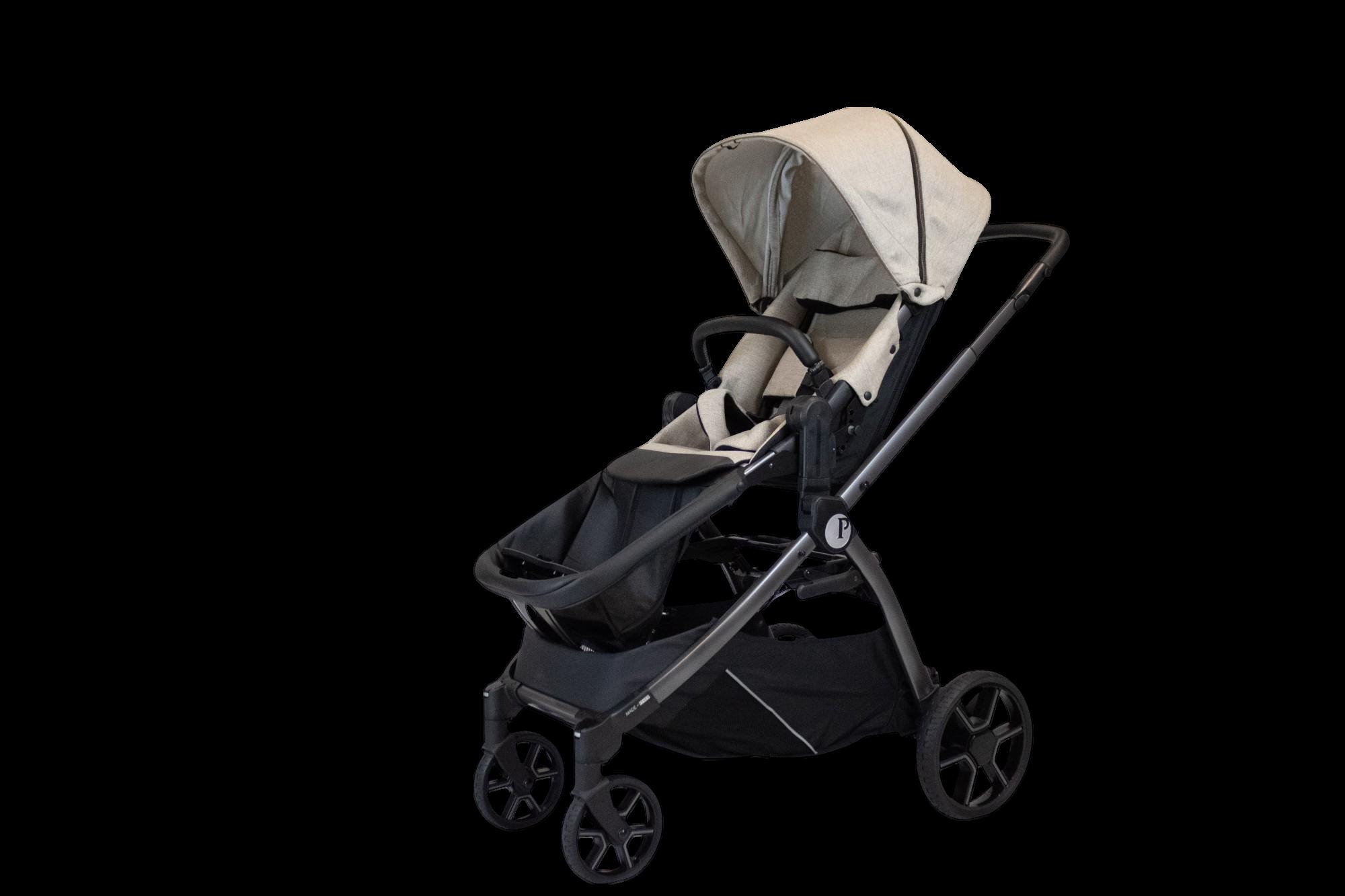
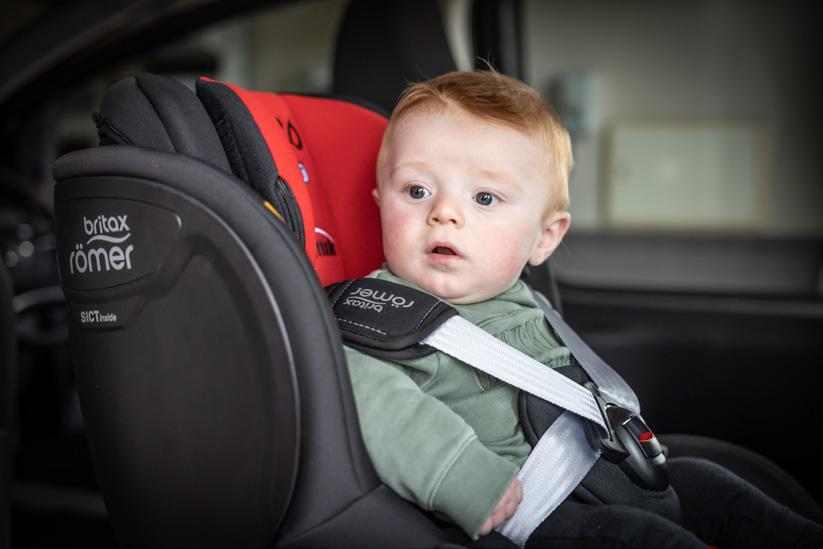
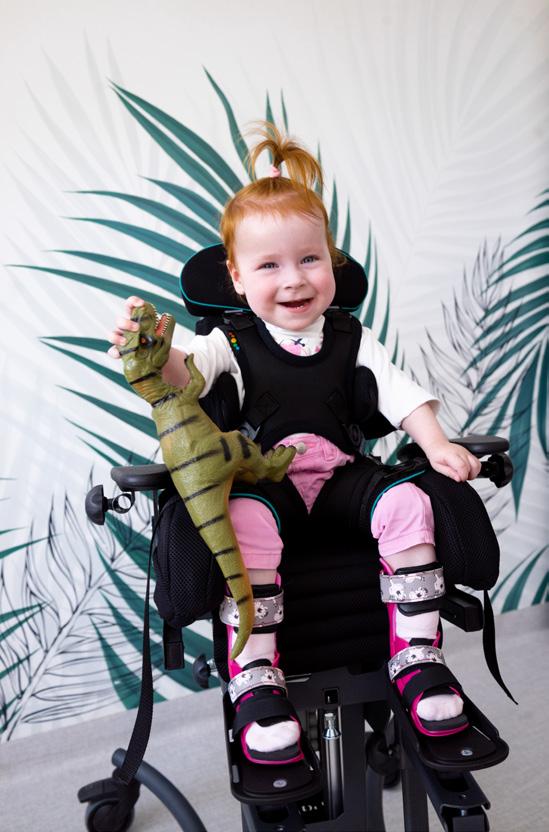
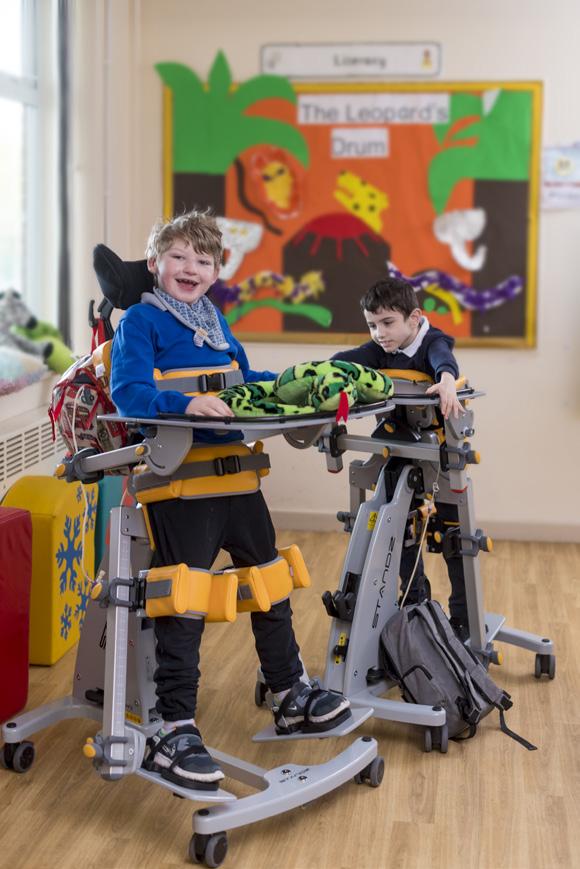
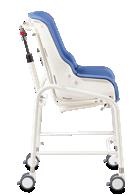
Innovative paediatric assistive devices adapted to individual needs, providing suppor t and encouraging par ticipation in daily activities.

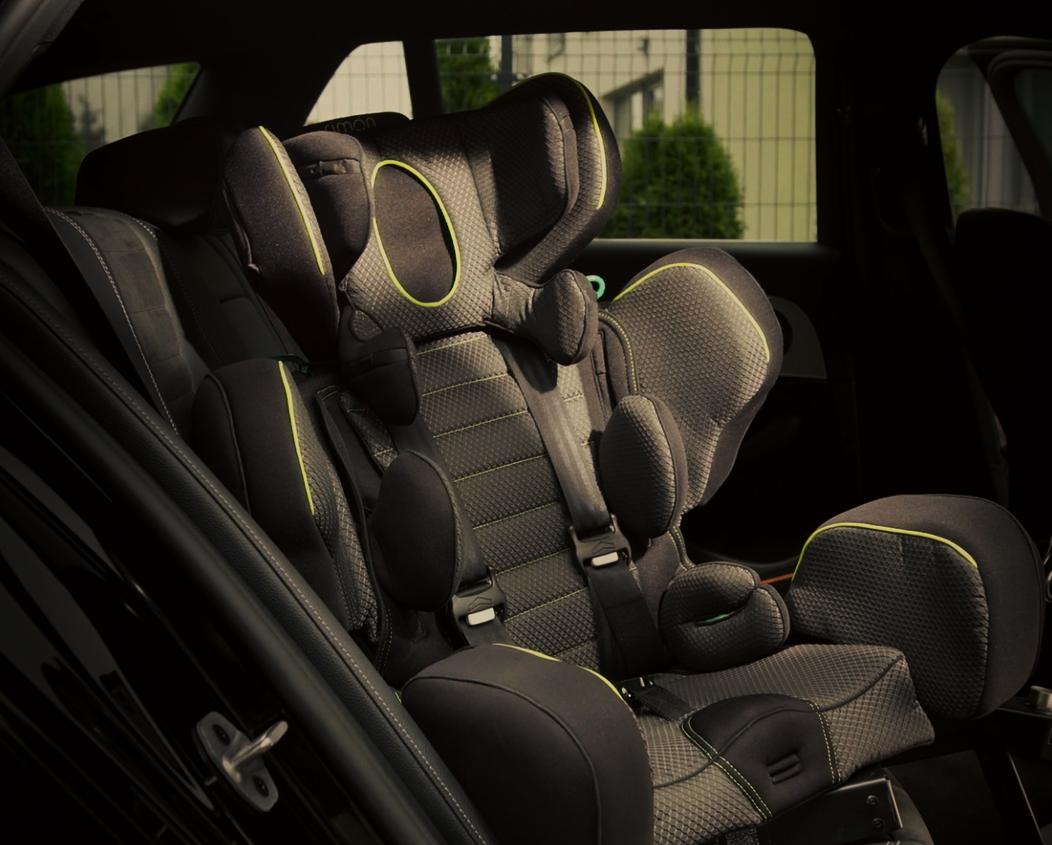
The C onvaid C oas ter Scout make s holiday travel ef for tle s s, and at the s ame time provide s long- term comfor t and suppor t for children of all age s It is ready for road trip s and s afe vehicle transpor t, and when it ’s time to pack up, it is easy to s tow in the c ar, SU V or c amper van.
From beache s to bush tracks to bus tling holiday parks, the C oas ter Scout keep s family adventure s rolling smoothly
Highlight s:
• Lig ht weight folding s troller for travel
• Fixed tilt options: 10°, 20°, 30°
• Seat depth grow th in ever y size
• Available in 12”, 14”, 16”, 18” widths

Summer here in Australia is a full-on sensory experience. The cicadas hum. The sun beats down. The sand scorches your feet on the way to the water, and every park seems to come with a bonus heat shimmer. For many families, it’s a time of beach days, holidays, and ice blocks on the back step. But for parents of children with sensory processing challengesparticularly those who struggle with heat sensitivity - summer can feel like a battleground.
Because when your child reacts to heat like it’s an attack, summer isn’t just sticky and uncomfortable. It’s overwhelming, distressing, and sometimes utterly unmanageable.
For children with sensory processing differences in temperature changes can be more than just unpleasant, they can be deeply dysregulating.
Some kids are hypersensitive to heat, meaning their nervous systems register temperature much more intensely. Others
might struggle to recognise or respond to their body’s signals - so they don’t realise they’re overheating until it’s too late. Add in common co-occurring challenges like difficulty with hydration, aversion to sunscreen or hats, and the unpredictability of summer outings, and you’ve got the makings of a meltdown. And, not the ice cream kind.
But there are ways to make things easier. Maybe not perfect and not meltdownfree, but at least a little calmer and more manageable.
Let’s talk tools, tactics, and a bit of planning ahead.

Here are a few tried-andtested tools that many families swear by:
Cooling towels – these stay damp and cool for hours and can go around your child’s neck or head.
Portable fans or misting bottles – great for car rides or long queues.
Pop-up beach tents or UV shelters – to create a calm, shady retreat.
Noise-cancelling headphones – invaluable for fireworks, festivals, and echoey swimming pools.
UV-protective clothing –lightweight long sleeves mean fewer sunscreen battles.
Crocs or water shoes – protect sensitive feet from hot sand or paths.
A favourite sensory tool –something familiar and grounding to hold, chew, or fidget with.
Winging it is rarely a winning strategy when sensory needs meet 36-degree heat. As with so many things, summer just works better when it comes with a plan. That might mean gently declining spontaneous invites (“We’ll catch the next one, thanks!”), doing a drive-by before an event to check for shade and crowd levels, or having a Plan B (and C) ready in your back pocket.
Here’s how to take some of the unpredictability out of the equation :
• Use a visual calendar or schedule: Knowing what’s coming up, especially if it’s written down or pictured can make summer less stressful for everyone. Stick to activities with clear start and finish times where you can build in “rest days” between big outings.
• Avoid surprises where possible: If you’re heading to an event or outing, share details ahead of time. Talk about what it might sound like, feel like, how long it’ll last, and where the quiet spots are if they need a break. Social stories, simple maps, or even showing pictures of
the venue ahead of time can help reduce anxiety and sensory overwhelm.
• Do a test run: If it’s somewhere new (or likely to be a sensory minefield), try a low-pressure visit when it’s quiet and cool. Let your child explore on their terms.
• Build a sensory kit: Your summer go-bag is your secret weapon. Pack it with cooling towels, chewy jewellery, sunscreen they can tolerate, noisecancelling headphones, fidgets, sunglasses, water spray bottleswhatever helps your child regulate.
• Try pre-exposure strategies: Some occupational therapists recommend desensitisation ahead of time. You might use a sensory bin with warm sand, play with warm water, or introduce sunscreen slowly over days or weeks. Pair it with positive reinforcement and give them control i.e., “You choose where I put the sunscreen first.”
• Pre-warn and prep: Even if it’s a familiar place, a quick “first-then” rundown helps: “First we swim, then we have watermelon in the shade”
• Know your exits: Always have a way out. Scope out the shady tree, the quiet bench, the car with air-con.
• Time it right: Go early or go late. Avoid peak heat hours if you can, and aim for quieter times when there’s less sensory chaos to contend with.
Some kids, especially those with sensory differences or poor interoception, won’t realise they’re overheating until their body is already in distress. So it’s important for adults to be the early-warning system. Look for:
• Flushed cheeks or ears
• Unusual agitation, anxiety or irritability
• Rapid breathing or heart rate
• Zoning out or seeming “slow” or unresponsive
• Excessive sweating (or no sweating at all)
• Headaches, nausea, or looking pale
• Refusal to move, speak, or engage If you spot these signs, don’t wait. Get them out of the sun, help them cool down
(cold drink, fan, cooling towel), and reassure them gently. Prevention is much easier than recovery.
Between the sand, sun, and sunscreen, the beach can feel like a sensory assault course. One parent we spoke to, whose son has autism, said the trick was treating the beach like a military operation: “We get there early, bring a huge shade tent, and stay for 90 minutes max.”
Exciting? Sure. But for many kids, also loud, crowded, and overstimulating. If your child wants to go but struggles with the full experience, consider watching from the car or a quieter distance. Or, embrace the joy of a backyard sparkler session with a few close friends instead.
Some children can’t stand the feeling of open-toe shoes or greasy lotion. Fragrance-free roll-on sunscreens can be easier to tolerate, or try UV long sleeve swim shirts and long shorts to reduce the surface area needing lotion. Let kids choose their own summer clothes where possible - it gives them a sense of control over what’s going on their body.
Not every family will be at the beach, in the pool, or at the carols this year. And that’s okay.
You might find your summer rhythm looks like early morning walks, air-conditioned museums, home-based water play, or just quiet days in front of the fan. That doesn’t mean your child is missing out. It means you’re simply building a season around their needs.

Planning a holiday can be exciting and a little overwhelming too. If your child, teen or young adult has NDIS supports, you might be wondering what can be included while you're away. Here are some of the questions we’re asked most often and how the NDIS may be able to help.

Ask a plan manager: Experienced Leap in! plan manager, Minell, shares advice for using your NDIS Plan when travelling with your child or young person with disability.
Will the NDIS pay for our family holiday?
Not the holiday itself. The NDIS does not fund general travel expenses like flights, hotels, meals or entry to attractions. These are considered everyday living costs.
What it may fund is the disabilityrelated support your child usually receives at home. If your child has funded support through their Core Supports budget, it may be possible to continue these supports while travelling.
What can be funded while we are away?
Support worker hours are the most common funded item. This might include help with:
• Personal care, mobility or communication
• Accessing the community in an unfamiliar place
• Maintaining regular routines. Some families also continue therapies such as speech or physio using telehealth, or arrange short-term equipment hire at their destination, such as a hoist, shower chair or bed.
The NDIS is unlikely to fund additional support hours just because you're travelling. Supports must already be included in your child's plan and considered reasonable and necessary in a holiday setting. For children, funding for support workers is assessed based on the level of support typically required for their age. High levels of funded support are usually only provided for children with complex needs.
Can a support worker travel with us?
Yes – if it's necessary for your child to have a support worker to travel safely or participate in the holiday. Alternatively, you may be able to engage a support worker at your destination. The NDIS may cover the worker’s:
• Support hours
• Travel time and kilometres when delivering support. But you will need to cover their personal travel costs, including:
• Flights or transport
• Accommodation
• Meals.
Before booking, agree on expectations. Discuss how many hours the worker will support your child each day, what they’ll help with, and who is paying for what. A written agreement can help make things clearer.
The NDIS will not pay for:
• Flights, accommodation or meals for family members
• Entry to tourist attractions or holiday activities
• General transport like taxis or car hire
• Anything not directly related to disability support needs.
QHow to know if a support is reasonable and necessary?
Supports must meet the NDIS funding criteria and be linked to goals in your child’s NDIS Plan. Ask yourself:
• Does my child already receive this support at home?
• Would we need this support whether we are travelling or not? If the answer is yes, it may be considered reasonable and necessary. For example, a support worker helping with morning routines while on holiday may be justified by a goal around building independence or accessing the community.
• Staying somewhere new? Call ahead to confirm you’ve booked an accessible room and check it includes the features you need.
• Flying? Contact the airline early to arrange boarding assistance, accessible seating or mobility aids. Most have dedicated support teams.
• Help your child prepare. Use photos to show where you’re going, how you’ll get there and who you’ll see. A simple picture schedule can make the trip feel more familiar.
Leap in! is a two-time winner of the Most Outstanding Plan Management Award (2023 and 2024) and a finalist in the 2025 Customer Service Excellence Awards. Speak to us about how we can support your NDIS journey. Call 1300 05 78 78 or email crew@leapin.com.au to learn more about Leap in! plan management.
















We support you to navigate the NDIS with confidence, armed with the knowledge you need to get the most from your child’s plan. And, we take care of NDIS admin and paying invoices to give you more time to focus on the things that matter to you and your family.























Summer holidays. Six (or more!) long weeks of no school run, endless snack requests, and the constant background hum of “I’m bored.” A family day out can break the monotony, but if we’re being honest when you have disability in the family, this comes with its own set of hurdles; checking wheelchair access, wondering if sensory needs are catered for, if the Companion Card will be accepted, or if there’s a quiet spot to retreat to when it all gets too intense.
That’s why we’ve done the legwork for you. This guide pulls together accessible family day-out ideas across Australia.* We can’t stop the meltdowns or turn down the sun, but at least you won’t be short on inspiration.
Please check the venues to ensure that your individual accessibility requirements are catered for.

Bungarribee


This newer zoo in Western Sydney is built for accessibility, with flat pathways (no stairs in the entire zoo!), accessible amenities, and inclusive signage. They also offer sensory maps and social stories on request. It’s not too massive, so it’s manageable for kids with fatigue or sensory overwhelm. sydneyzoo.com
Sydney CBD
They always run diverse program of interactive workshops during the school holidays, and keep an eye out for quiet times and sensory-friendly mornings. And of course, dinosaurs are always a hit. For wheelchair users there are ramps throughout the exhibitions and two lifts to take you between all floors. All doors are automatic. australian.museum
Parkes – January school holidays
It might sound unlikely, but this regional festival is surprisingly inclusive. There’s a dedicated accessible viewing area and inclusive activities for kids, which makes it a good pick for music-loving families. parkeselvisfestival.com.au




Blue Mountains
The Skyway and Cableway rides are wheelchair accessible, and the staff are trained in disability inclusion. The boardwalk rainforest walk is also accessible. For a calmer experience, go early to avoid crowds and heat. scenicworld.com.au
Penrith
This is kid heaven with fire trucks galore and a strong focus on interactive learning. Many exhibits are at wheelchair height and touch-friendly. All computers are fitted out for accessibility access, with touch screens and switch adapted mice with trackballs. It’s air conditioned, a manageable size, and has easy parking. museumoffire.net
Interactive, sensory-rich exhibits make this a hit for kids and teens, with plenty of hands-on fun. It’s fully wheelchair accessible and social scripts and maps of high and low sensory spaces are available for neurodivergent visitors. You can even borrow a sensory bag containing earmuffs, fidget tools and a communication card. It can get busy, so early morning or later in the afternoon is quieter, and the planetarium is perfect for some calm downtime. museumsvictoria.com.au/ scienceworks
Australian Centre for the Moving Image, Fed Square
Perfect for film-loving or tech-curious kids and teens, ACMI is wheelchair accessible, with visual stories and sensory maps available. School holiday workshops and hands-on digital exhibits often make it a bonus creative space to explore. Plus, if you have a gaming fan in the family, the awesome Game Worlds exhibition is running until February. acmi net au

Moorooduc, Mornington Peninsula
A working farm with animal encounters, tractor rides, and a splash park. Paths are wide and accessible, and staff are happy to accommodate specific needs if contacted in advance. thebiggoose.com.au
The waterpark is well set up for wheelchair users, with accessible parking, family changing areas, accessible toilets, and Companion Card entry pricing. Some rides aren’t suitable for all mobility needs, but the lazy river and water play areas are inclusive wins. There is also provision for those who may find waiting in long lines difficult. adventurepark.com.au/ water-park
Marr, Melbourne
ArtPlay offers creative programs specifically designed with, for and by children and families. Children (from babies to 13 years) collaborate with artists to express themselves in a playful exchange. They sometimes have workshops run by neurodivergent artists or in collaboration with disability-led organisations. School holiday sessions book fast, but they’re usually free or low-cost and specifically designed to be inclusive. melbourne.vic.gov.au/artplay



KURANDA SCENIC
RAILWAY & SKYRAIL
RAINFOREST CABLEWAY
Cairns
A stunning, slow-paced sensory experience with full wheelchair access.
The cableway can be slowed or stopped to allow for easy, stress-free access onto and off the Skyrail gondolas, with assistance from a friendly Skyrail operator. skyrail.com.au
Brisbane
Fully wheelchair accessible and airconditioned - a blessing in a Queensland summer. SparkLab offers sensory-friendly sessions in its interactive science zone, with ear defenders available and plenty of hands-on exhibits for kids who learn by doing. It does get busy so very early or late sessions might be quieter. museumofbrisbane.com.au/
COBB+CO MUSEUM
Toowoomba
A low-key winner with hands-on exhibits, old-fashioned transport displays, and a calm, structured layout. Its quiet regional location makes it ideal for sensory-sensitive kids. Plus they provide sensory kits, sensory sessions in the school holidays and a sensory-friendly map. museum.qld. gov.au/cobb-and-co
Bargara/Bundaberg
From November to March, you can witness turtles nesting or hatching - an incredible and often quiet experience. The visitor centre is fully accessible, with paved paths to the beach and limited beach wheelchair access. Night tours are lowlight and calm, ideal for kids who thrive in structured but gentle environments. Bookings are essential. parks.qld.gov. au/parks/mon-repos/attractions/monrepos-turtle-centre

We have some awesome accessible playspaces around our states, and some of the best of them are Livvi’s Places. Find one near you heretouchedbyolivia.com.au/livvis-places
This combination appeals to a wide age range. The gardens are peaceful and accessible, with smooth paths, a miniature train ride that’s wheelchair-friendly, and duck ponds. Hinkler Hall offers interactive displays, accessible toilets, and is Companion Card-friendly. Being mostly indoors and air-conditioned, it’s calmer than a big city museum. bundaberg.qld. gov.au/Community/Things-to-seeand-do/Hinkler-Hall-of-Aviation
Fully wheelchair accessible with lifts, accessible toilets, and quiet zones. Sensory maps and visual stories are available for neurodivergent visitors. It’s massive, modern, and air-conditioned - perfect for a full day out in summer. visit.museum.wa.gov.au/boolabardip
Wide, flat paths, accessible enclosures, clear signage, and Companion Card acceptance make it a solid all-rounder. Social stories and sensory kits are available on request. Mornings are quieter, and a calm native garden loop offers a great spot to regroup. perthzoo.wa.gov.au/
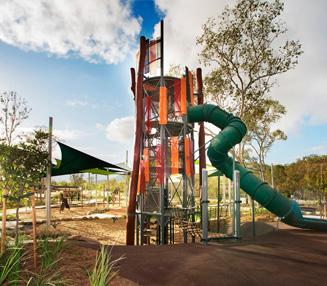



West Perth
An interactive indoor STEM space with tactile exhibits, calm zones, and occasional quiet sessions for neurodivergent kids. Fully wheelchair accessible, airconditioned, and staffed by friendly, adaptable team members. scitech.org.au
Completely fenced and fully inclusive, with a splash pad, all-abilities swings, accessible BBQs, water fountains, and lots of shade. One of the best-designed inclusive parks in the country – perfect for mixed-ability siblings or groups. kwinana.wa.gov.au/ city-life/facilities-and-public-spaces/ the-adventure-park
Adelaide
This futuristic science and art museum is designed for young people between 15 & 25. Fully wheelchair accessible, low cost (often free), and thoughtfully laid out for neurodivergent visitors, it’s literally and metaphorically cool. Lighting is low and calming, and while some exhibits are interactive, the overall vibe is more chill than chaotic. Social stories, sensory toys, sensory maps and headphones are all on hand for visitors. mod.org.au/
Flat pathways, accessible enclosures, and Companion Card acceptance make this a solid choice. Zoo maps consider sensory needs. Mornings or late afternoons are best to avoid school holiday crowds, and a quiet garden with shaded rest zones offers a good regroup spot. adelaidezoo.com.au

Accessible and air-conditioned, both spaces offer tactile exhibits in the Discovery Centre and occasional quiet sessions during school holidays. Noisereducing headphones can be borrowed, and social stories are available online. Sensory backpacks are available for loan upon request at the front desk. Each backpack contains a pair of noise cancelling headphones, a soft toy, a fidget toy, and some communication cards. samuseum.sa.gov.au
The jetty has a fully accessible loop design with guard rails and wide pathways, ideal for prams and wheelchairs. The adjacent splash pad is inclusive, and you can spot dolphins from the jetty or enjoy shaded grass for picnics. whyalla.com/whyallajetty
A low-key regional gem run by welcoming volunteers. Flat paths and sensoryfriendly train rides make it great for train enthusiasts or for a slower, structured day out . eprps.org.au

Murray Bridge
One of the world’s largest open-range zoos, surprisingly accessible with wheelchairfriendly shuttle buses and viewing platforms with ramps. Wide open spaces, minimal visual clutter, and a calm sensory experience - but plan toilet stops, as they’re spaced out. Also, note that assistance animals are not allowed at the park due to animal management and biosecurity quarantine requirements. monartosafari.com.au
Darwin
Wheelchair accessible throughout and air-conditioned - essential in a Darwin summer. Usually quieter than capital-city museums, it’s calm, open, and relaxed. A highlight for kids is “Sweetheart,” the giant crocodile and low-key NT celebrity. The doors of MAGNT open at 9.00am on the first Friday of every month to offer a dedicated low sensory session. magnt.net.au
The Sensory Garden is designed for inclusive exploration, with textured paths, fragrant plants, and sound-based elements. While some broader garden paths are steep, the sensory section and main loop are fully wheelchair-friendly. nt.gov.au/parks/find-a-park/georgebrown-darwin-botanic-gardens/whatto-see-and-do
Darwin
A modern, accessible pool featuring hoist access, ramp entry, shaded toddler areas, and fully accessible change facilities including a Changing Places bathroom. darwin.nt.gov.au/community/ community-facilities/parap-pool

Hobart

Fully accessible and air-conditioned, TMAG is beautifully curated with kids in mind. Sensory maps and visual stories are available. The ‘mystery’ and science-based galleries feature tactile exhibits, and quiet nooks and low-light zones are scattered throughout for calm exploration. tmag.tas.gov.au
Brighton
Flat gravel paths, accessible facilities, and friendly staff make this a smaller, less overwhelming alternative to a zoo. Kids can hand-feed kangaroos and meet rescue animals in a calm, sensory-friendly setting. A lovely option is the Bonorong Night Tour - a group feeding tour with a guide just for your group. Group sizes are kept small to ensure every participant has plenty of opportunity to interact with the critters. bonorong.com.au
Launceston
Wheelchair accessible and Companion Card-friendly, with calm, interactive exhibits including dinosaurs, natural history, and old machinery. Rarely crowded, and social stories are available online for preparation. qvmag.tas.gov.au

Public Libraries
Launceston
Natural beauty meets accessibility with wheelchair-friendly paths, accessible toilets, and a free chairlift (with ramp access for smaller wheelchairs—check ahead). The area offers visual interest, shade, and plenty of space to move without sensory overload. launceston.tas.gov. au/Parks-Gardens-Active-Recreation/ Parks-and-Gardens/Cataract-GorgeReserve-First-Basin
A ‘zoo without cages’ offering wildlife interactions with native species, wheelchair-friendly paths, and flexible entry for families needing extra time. Calm and natural, with plenty of visual variety but not loud or crowded, it’s a unique sensory-friendly experience. tasmaniandevilunzoo.com.au
Fully wheelchair accessible with Companion Card acceptance, Questacon is legendary for its inclusive approach. Sensory maps, visual stories, and quiet spaces help visitors who may need support in its stimulating and active spaces. Start early and skip the earthquake simulator if your child is sensitive to noise or vibration. The “Mini Q” zone is perfect for younger kids. questacon.edu.au
Free and inclusive local libraries offer storytime, craft, or LEGO sessions during school holidays. Check your local listings.
Accessible, autism-friendly, and designed for calm exploration. Wide, open spaces with ramps and lifts, sensory kits, and visual stories help kids engage without feeling overwhelmed. Low lighting in many areas and space to move make it ideal for those sensitive to crowds or sensory input. The Museum offers quiet hours sessions on the first Tuesday of the month for visitors who prefer reduced noise and lighting and a quieter experience. nma.gov.au
Flat paths, sensory-friendly encounters, and a smaller scale make it a winner for families. Quieter tours and animal experiences can be booked. Mobility maps, accessible parking, and toilets are available, and the treehouse area is perfect for sensory-seeking kids. nationalzoo.com.au
Wide-open galleries, peaceful atmosphere, and accessible toilets and paths. Quiet mornings or art activities are occasionally offered. Ideal for older kids or teens who enjoy visual learning and calming environments. portrait.gov.au

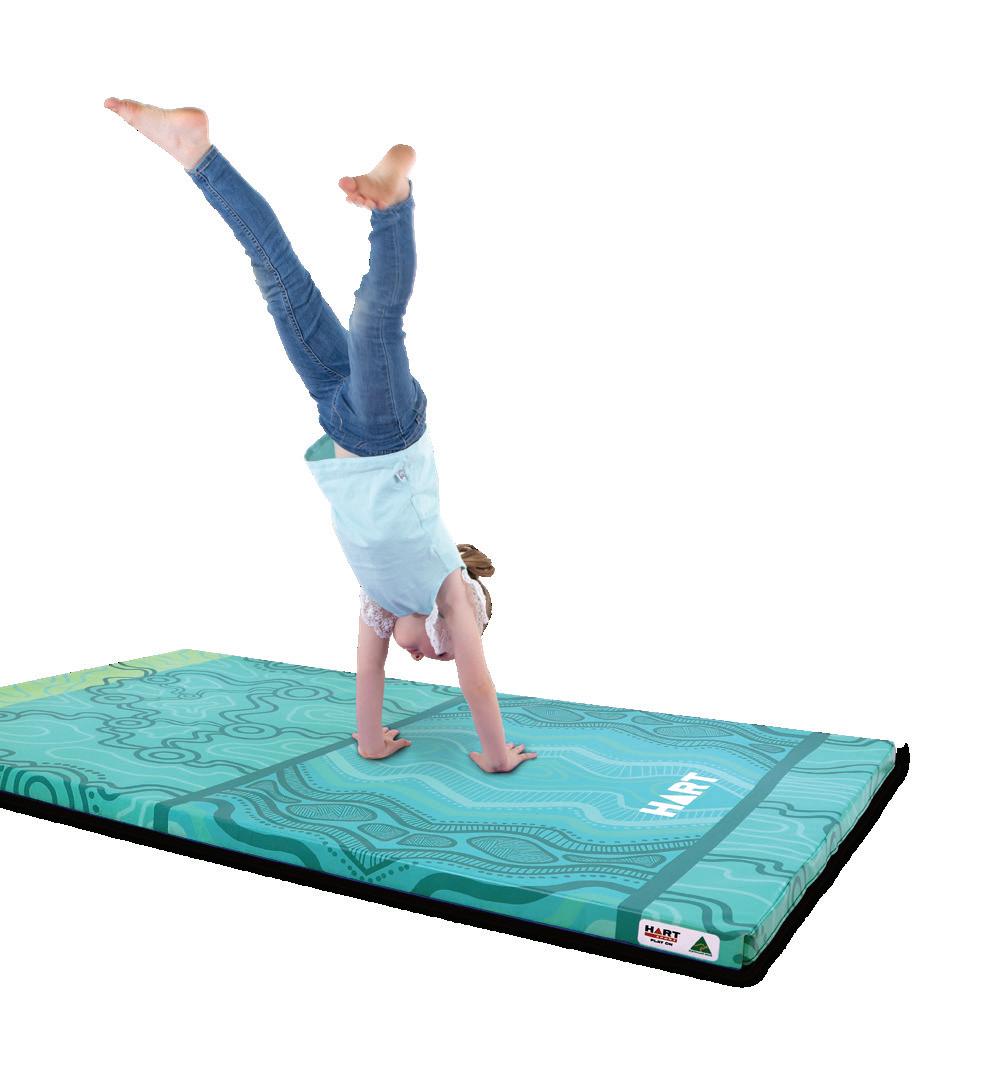

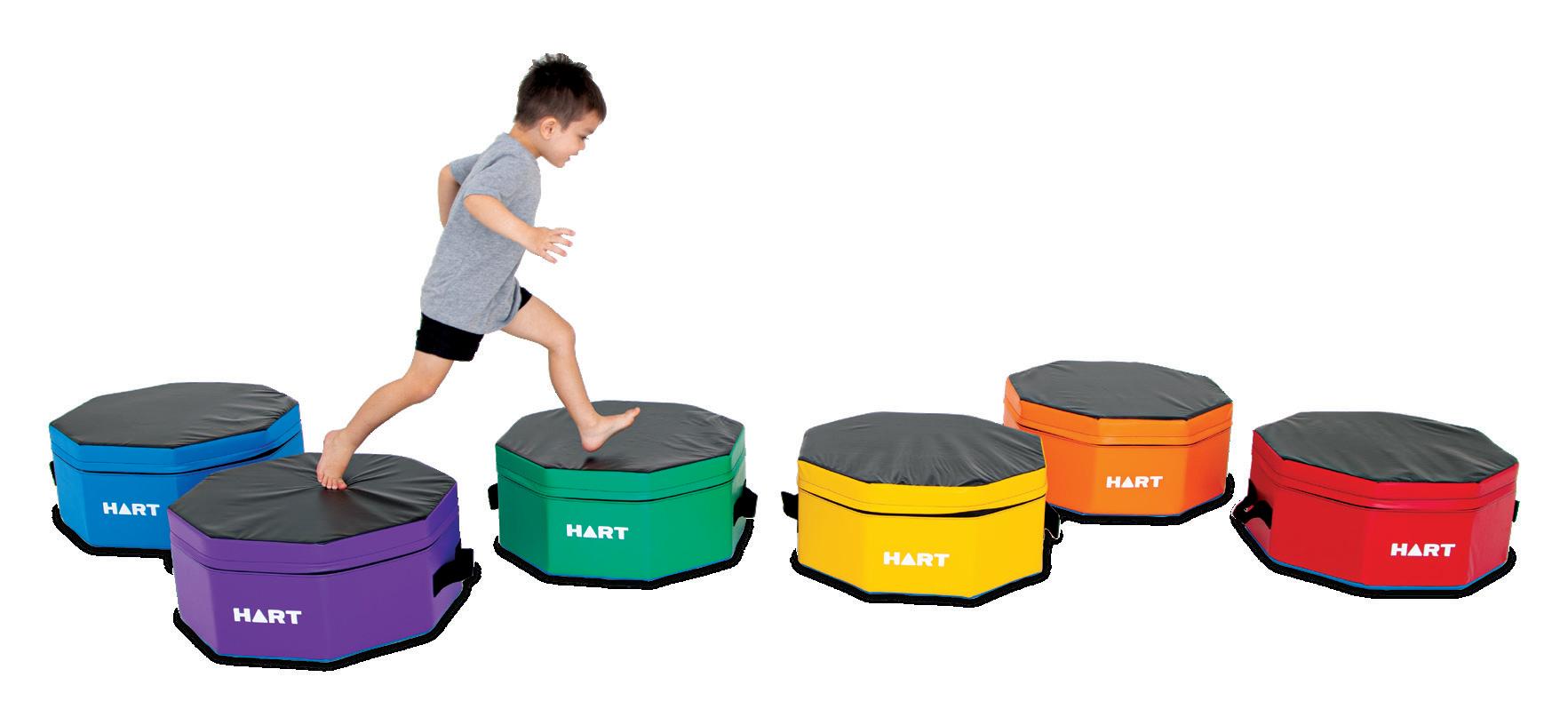
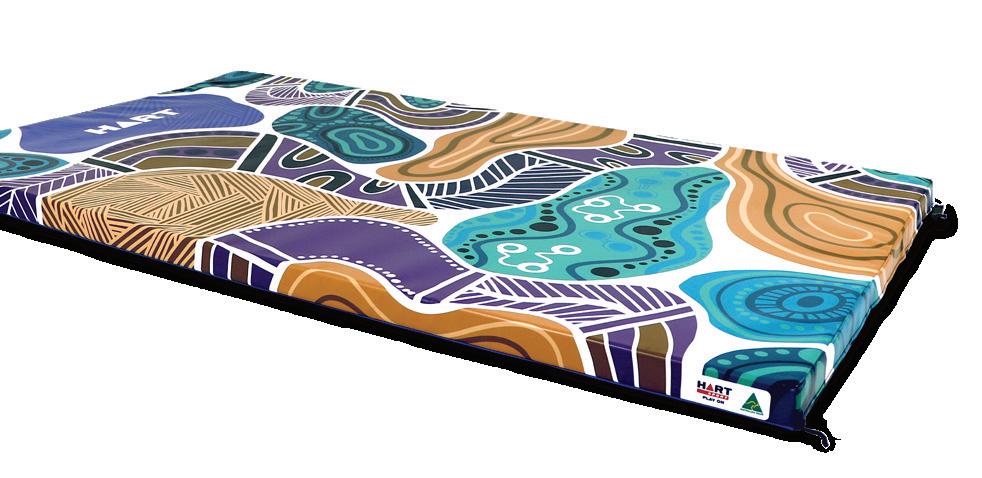


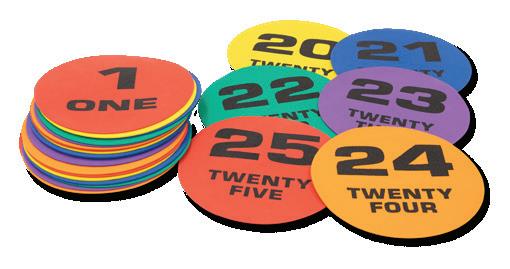
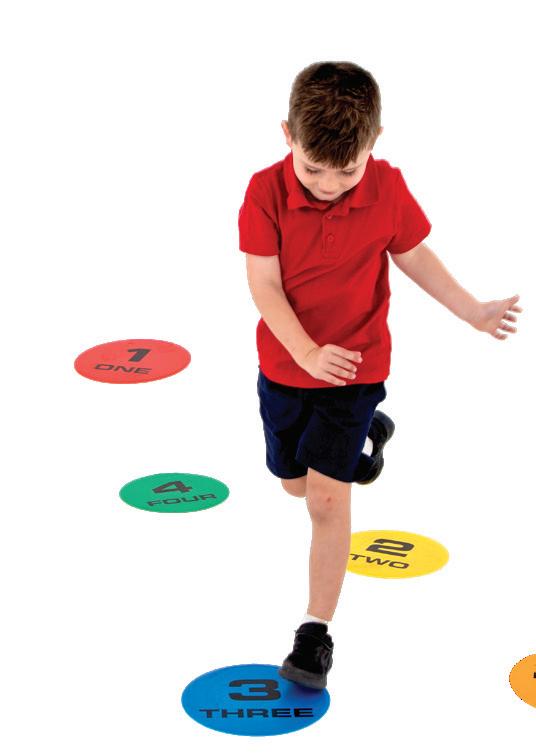

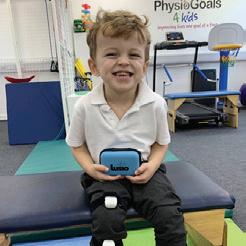

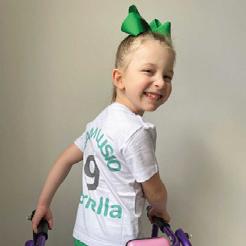


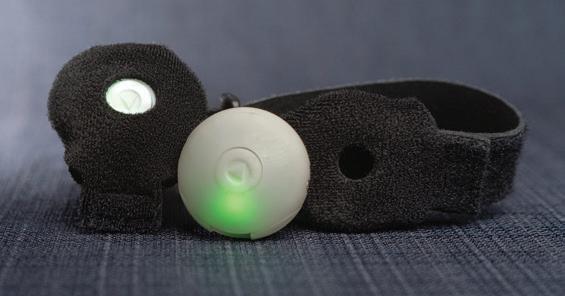

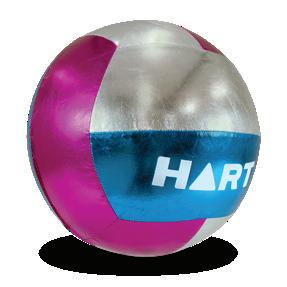
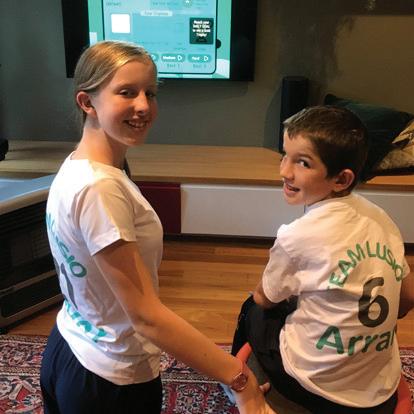
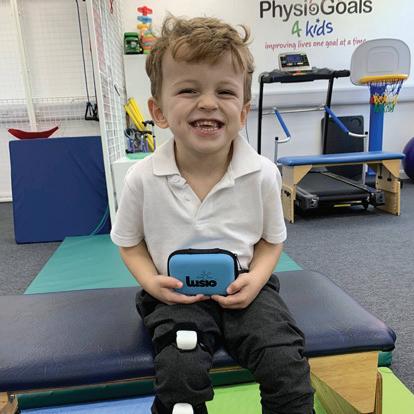
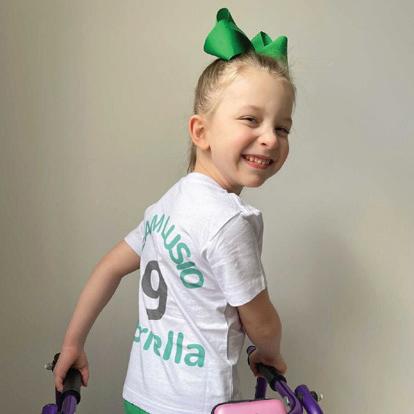
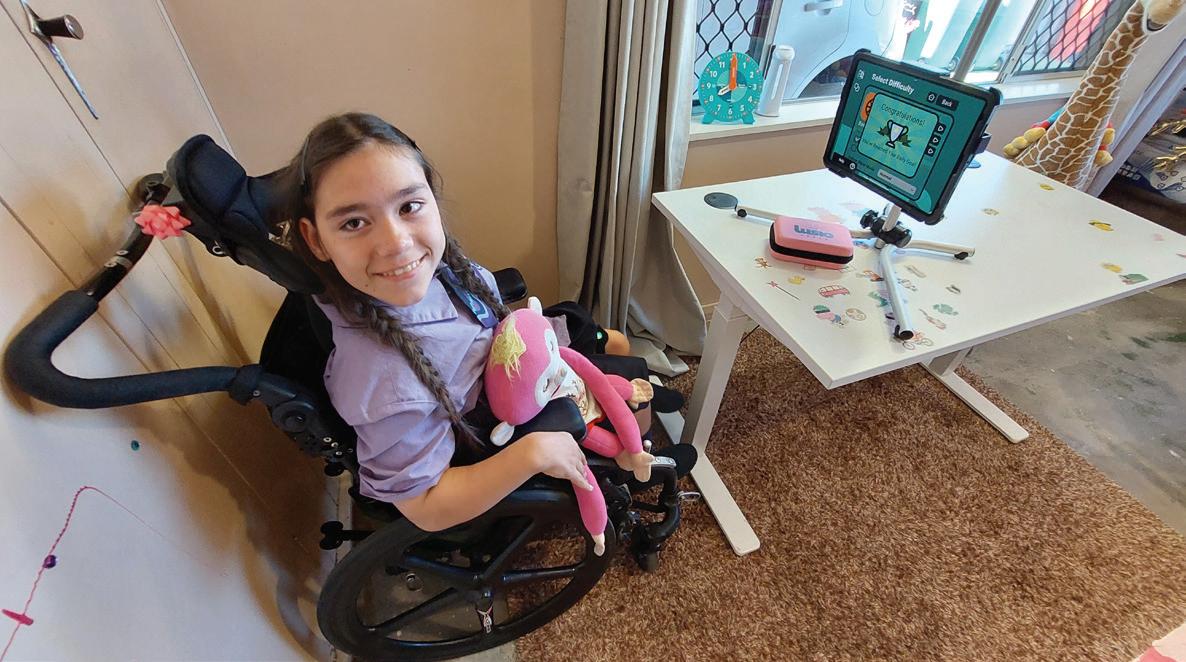
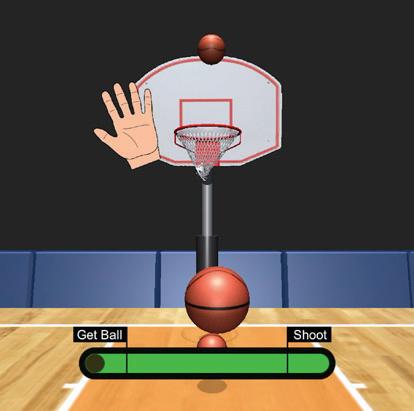

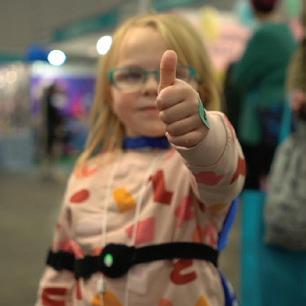

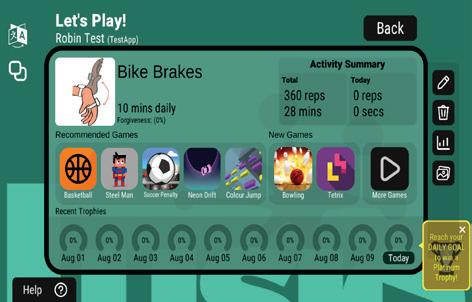
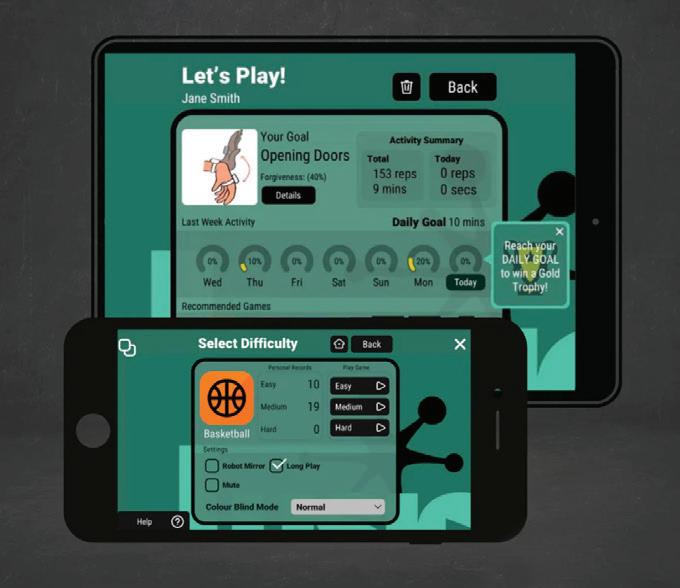



What’s the deal with the MLAK? A simple tool making public spaces more accessible
It doesn’t look like much. Just a standard silver key, the sort that rattles around at the bottom of every bag. But for people with disability – and the families and carers who travel with them – this one opens doors that are too often closed.
The MLAK, short for Master Locksmiths Access Key, has been part of the landscape in Australia since the 1990s. Councils brought it in after realising that locking accessible facilities – toilets in parks, playground equipment like Liberty swings, lifts in shopping centres – kept out the vandals but also shut out the very people they were built for. The MLAK was the compromise: hand it to the people who need it, keep the locks in place for everyone else.
and add another key to the ring. If your goals allow, you may also be able to fund the key through your NDIS plan.
Does the key solve everything? Not quite. There’s no national rule saying every locked accessible toilet or piece of equipment has to use the MLAK system, and some places still rely on staff with a spare key. But there are tools to make things easier. The National Public Toilet Map includes many MLAK-enabled bathrooms and is surprisingly handy when you’re planning ahead.
The MLAK system has lasted three decades for a reason: it works.
It’s not flashy, and it’s not free. To get one, you need to apply through the Master Locksmiths Association, usually with a form signed off by a doctor or disability organisation. From July 2025, the price is $64 (plus GST). In some places, there are workarounds: Companion Card holders in Victoria and South Australia can get one free, and a handful of councils cover the cost for residents. But in most cases, it’s down to you to order it, wait for the post,
Some councils also publish their own lists, and out in the wild you can usually spot a facility by the small blue-and-white MLAK logo on the door.
The MLAK system has lasted three decades for a reason: it works. Parents talk about it saving them when their child suddenly needs the toilet and there’s no staff in sight. Wheelchair users say it gives them a sliver of independence – no need to explain, no need to wait. It doesn’t break down barriers on its own, but in a world where locked doors are still a daily reality, it helps chip away at them.
It’s only a key. But sometimes that’s all it takes.
What it is: The Master Locksmiths Access Key (MLAK) unlocks a range of public facilities across Australia, including:
• Accessible toilets in parks, shopping centres, and transport hubs
• Changing Places bathrooms
• Liberty swings and other inclusive playground equipment
• Accessible lifts in public buildings and shopping centres
• Some mobility scooter storage and charging areas
• Accessible picnic shelters or seating areas in parks
Why it exists : Many accessible amenities are locked to prevent vandalism. The MLAK system gives people with disability (and carers) independent access without needing staff.
Who can get one: People with disability and their carers. You’ll need to complete a form confirming eligibility (usually with a doctor or disability organisation).
Cost: $64 (excl. GST) from 1 July 2025. Some councils subsidise keys. Companion Card holders in SA and VIC may be eligible for a free key.
Where to apply: Through the Master Locksmiths Association of Australasia. masterlocksmiths.com.au/mlak
How to spot facilities: Look for the MLAK symbol on doors, or check the National Public Toilet Map and some council websites that publish their own MLAK lists.


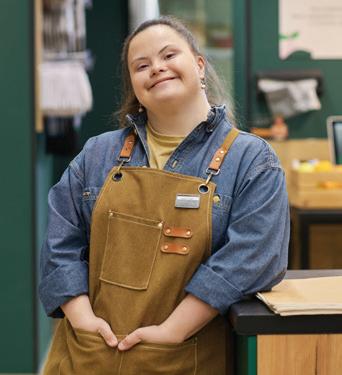











Helping parents and allied health providers choose the best wheelchairs, strollers, bikes and trikes, walkers, standers, beds and seating, to suit their unique needs.
Reader-friendly, informative and brimming with the latest products on the market
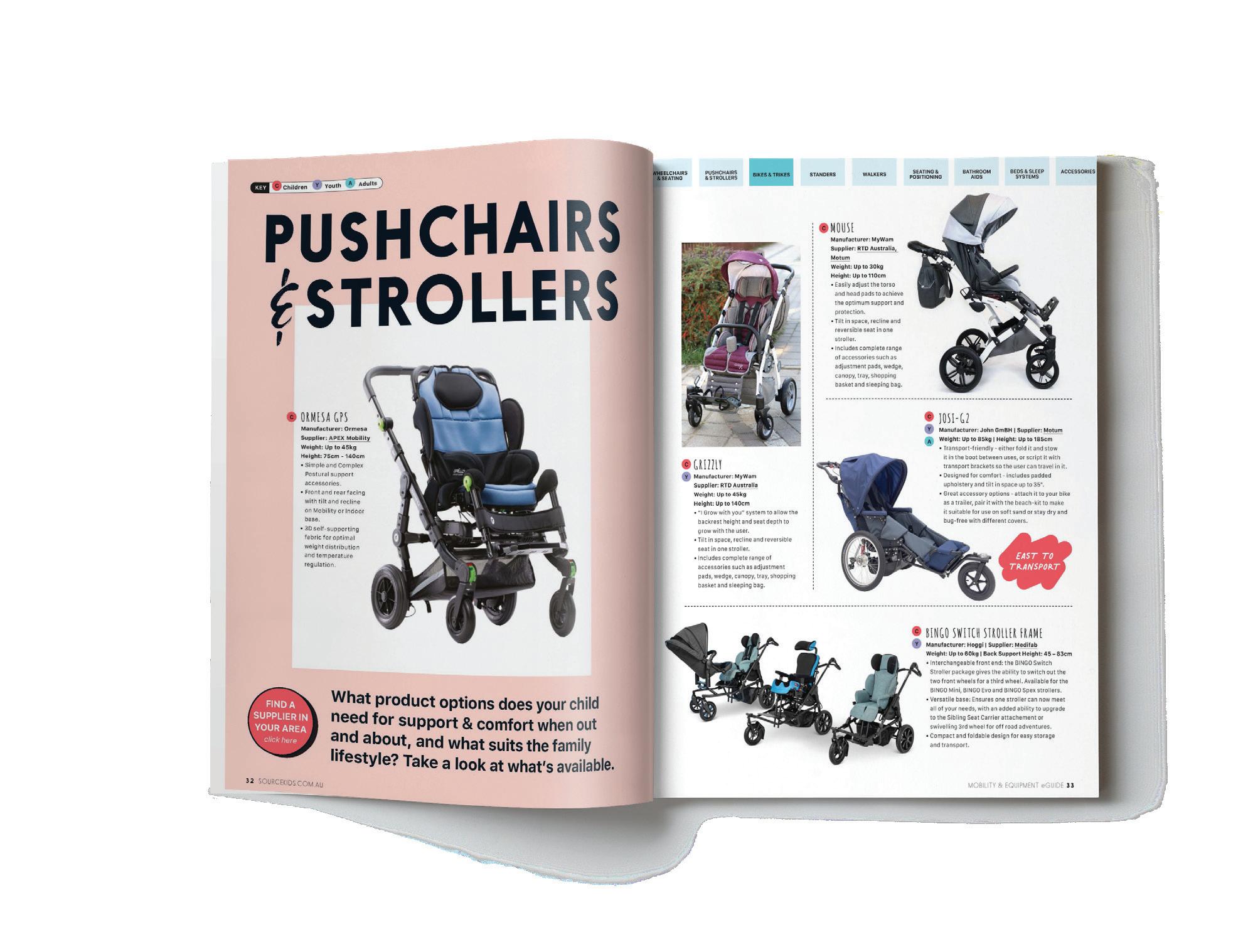


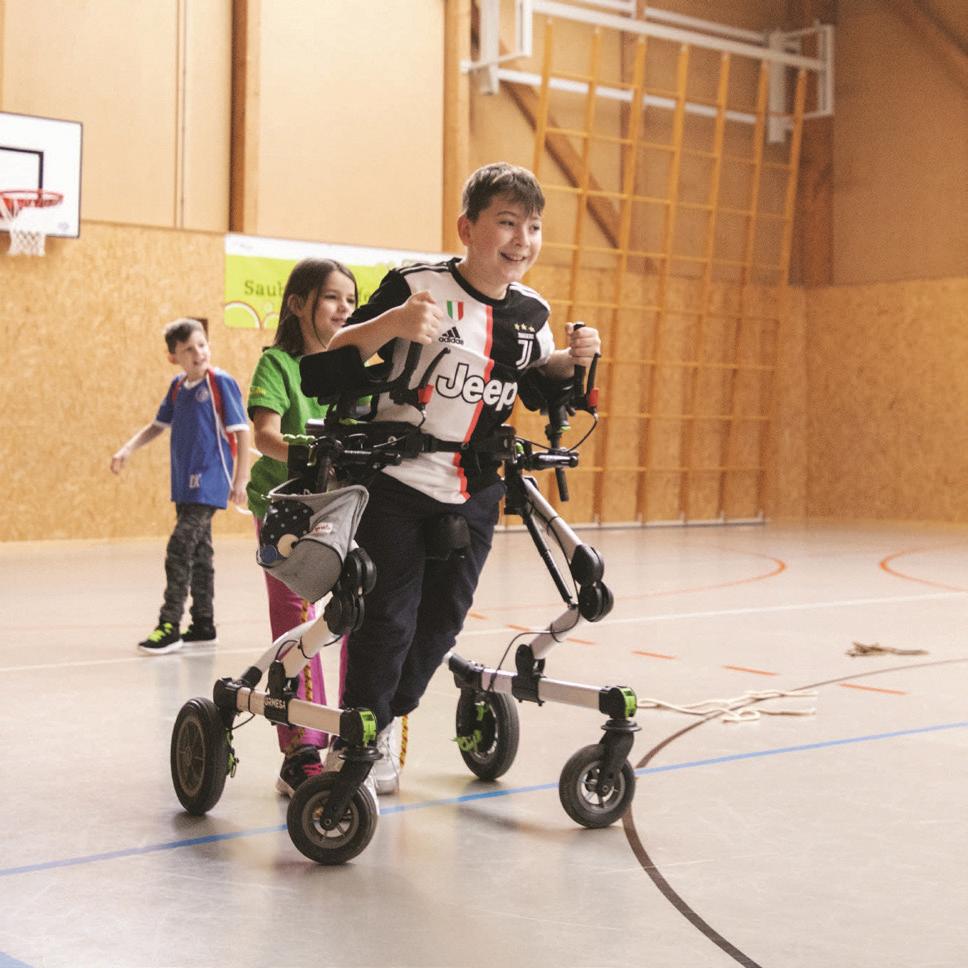


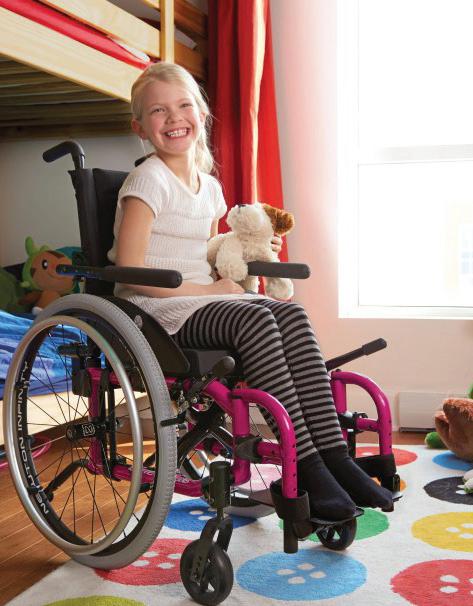

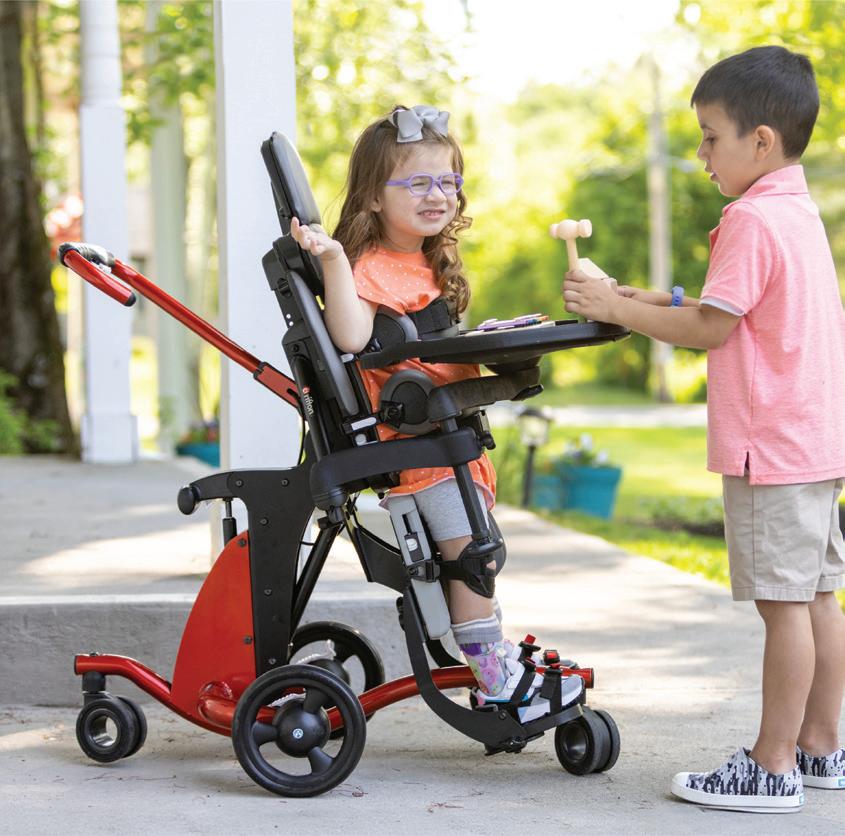
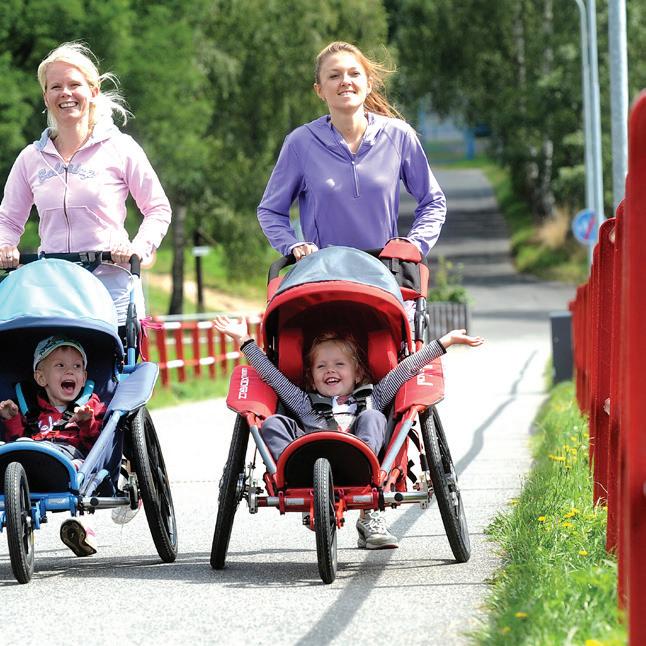
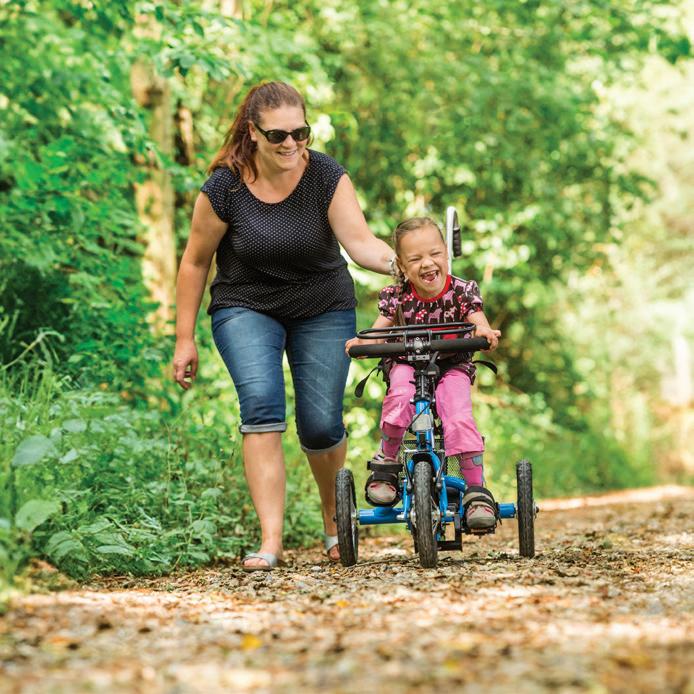

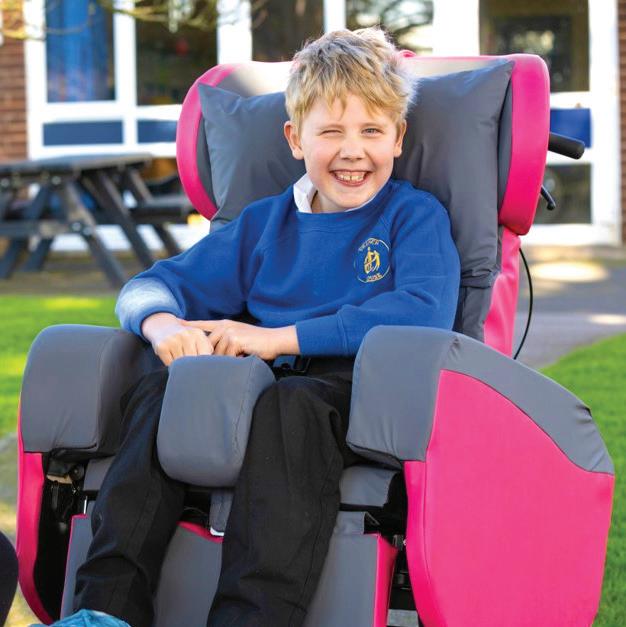
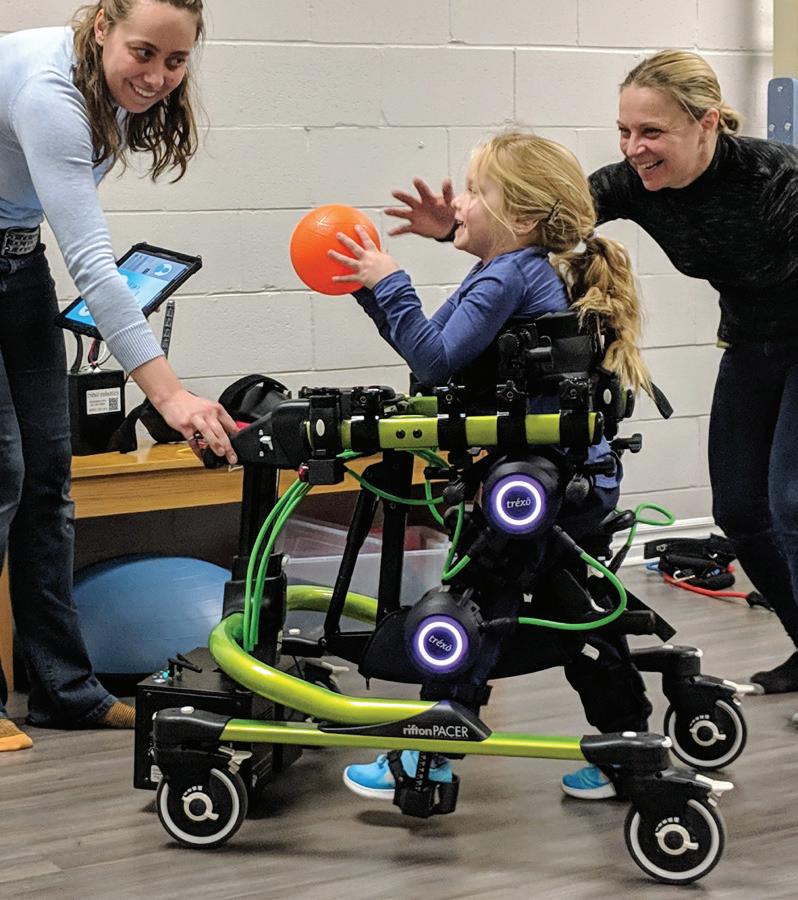








By Fiona Bridger, Achieve Australia Researcher and Writer
Travelling is a passion that transcends boundaries, whether geographical or physical. For those of us who use wheelchairs, the desire to explore new places, soak in different cultures, and enjoy the beauty of the world remains as strong as ever. However, it requires thoughtful planning, meticulous research, and a focus on accessibility. My journey to finding the ideal holiday as a wheelchair user is one filled with challenges and triumphs, yet has taught me valuable lessons about preparation and the joy of discovery.
I have always loved travelling, both overseas and locally. The thrill of discovering new destinations, cultures, and the unique vibes of various cities keeps my spirit of adventure alive. However, travelling with a wheelchair adds a layer of complexity. It’s not just about choosing a destination; it’s about ensuring that the entire experience is accessible and enjoyable.
When planning a holiday, whether a beach getaway or urban escape, each comes with its own set of planning and requirements.
There’s nothing like the feeling of the sun on your face and the sound of waves crashing onto the shore. The ideal beach destination should offer wheelchairaccessible hotel rooms and facilities as well as boardwalks and beach mats. For instance, when I choose a beach holiday, I look for destinations that prioritise accessibility. I research hotels that offer roll-in showers, ramps, and other accessible features. Additionally, I seek out beaches with accessible paths leading to the water, so I can fully enjoy the experience.
Wheelchair users know a cultural holiday is generally easier to access. I turn to


cities that are known for their accessibility features. Cities like Canberra, Cairns, Surfers Paradise, and Adelaide stand out as accessible urban destinations. These cities offer a blend of dining, shopping and sightseeing, all with accessible public transportation and attractions.
I’ve had wonderful experiences exploring Canberra’s museums and galleries, where accessible entrances and elevators make it easy to immerse myself in the city’s rich offerings.
Finding accessible accommodation includes booking hotels with wheelchairaccessible rooms, roll-in showers and ramps. Many travel websites offer filters for accessibility, making planning easier. Additionally, vacation rental platforms like Airbnb, Booking.com, and Tripadvisor provide detailed information on accessibility features, allowing me to choose appropriate properties.


researching accessible travel gathering recommendations and tips. Before booking, I always contact hotels, attractions, and transportation providers to confirm their accessibility features.
Accessible transportation is another critical aspect of any trip. Destinations with wheelchair-friendly transportation options, whether it’s taxis, ubers, buses, or trains are a must to plan. For instance, not all London Underground stations are wheelchair accessible, thus thorough research and planning is essential.
When it comes to activities, I seek out cultural experiences like museums, theatres, and historical sites that offer accessibility features. Checking ahead to confirm accessible entrances and amenities is crucial. Recreational activities are a key part of my holidays, and I look for options that are wheelchair-friendly such as boat tours with ramps that allow me to enjoy water activities like diving and snorkelling.
Planning and preparation are the cornerstones of a successful
One of my most memorable holidays was a trip to the Gold Coast. I was thrilled to discover how accessible and easy it was to navigate this vibrant city. The promenade by the beach, which stretches for kilometres, offers stunning views that I could enjoy from my wheelchair. My accommodation provided spectacular vistas, and I immersed myself in local art and culture visiting the HOTA gallery, where the Italian Renaissance exhibition left me inspired.
The Gold Coast proved to be an ideal destination, combining accessibility with a rich cultural experience. If you’ve never been, I highly recommend it – you might just fall in love with the warm weather and welcoming atmosphere, just as I did.
Travelling with a disability does come with its challenges, but with the right planning and mindset, those challenges can be overcome. Checking with the NDIS for assistance with travel expenses, hiring adaptive equipment, and choosing accessible accommodation are all steps that can make a significant difference.
Finding the ideal holiday as a wheelchair user is all about careful planning, considering accessibility, comfort, and personal interests. I’ve been able to enjoy travelling both locally and overseas. For anyone in a similar situation, I encourage you to take your time to plan your trip, research options, and embrace the joy of exploration. With the right preparation, the world is ours.
Achieve Australia is a for-purpose organisation that has supported people with disability since 1952. An NDIS-registered provider, it delivers expert, person-centred services across Greater Sydney, the Northern Rivers, and South East Queensland. Learn more at achieveaustralia.org.au


ADELAIDE * 28 FEBRUARY - 1 MARCH MELBOURNE * 17-18 APRIL BRISBANE * 3-4 JULY
SYDNEY * 17-18 OCTOBER
PERTH * 7-8 NOVEMBER

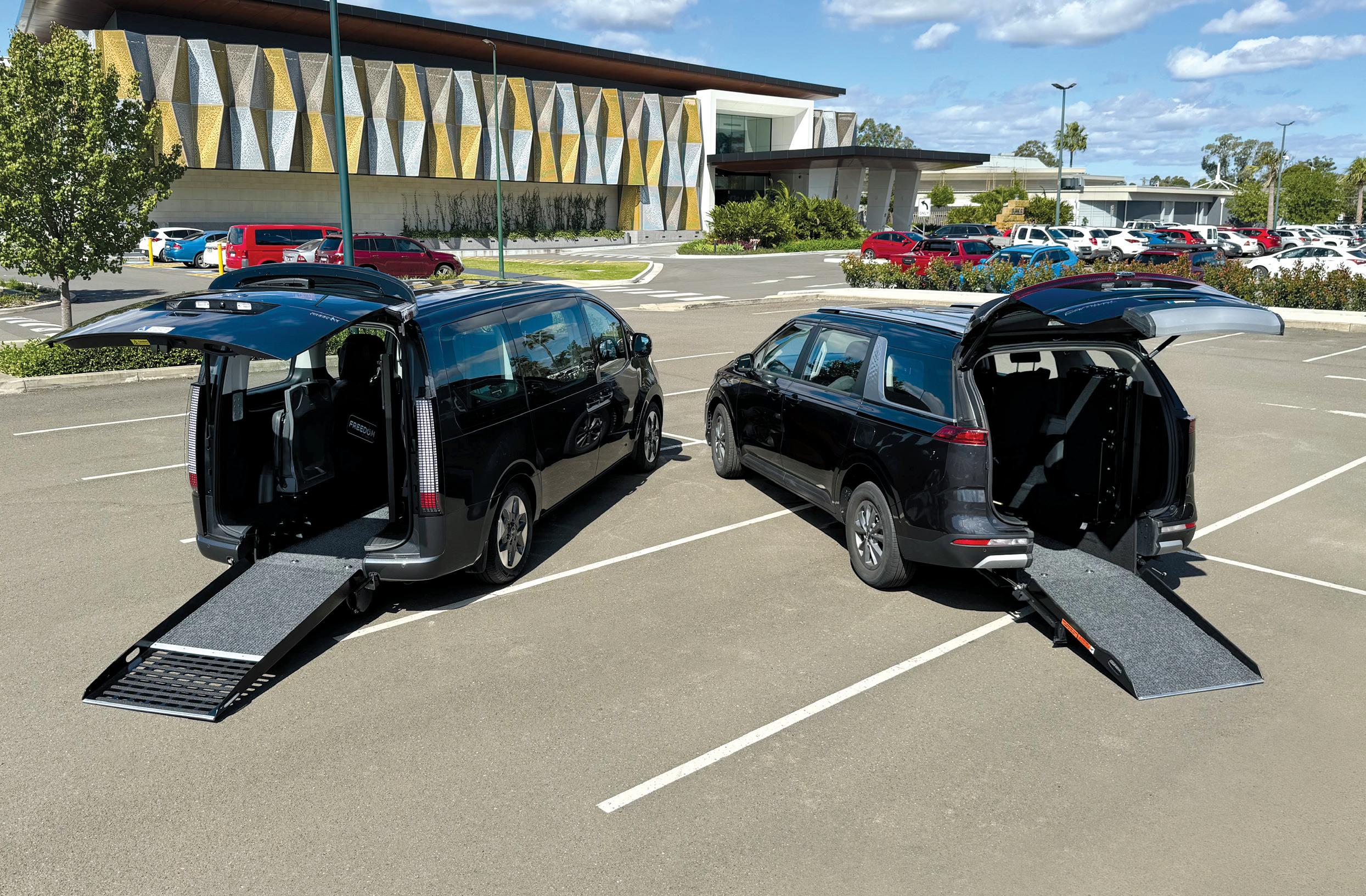
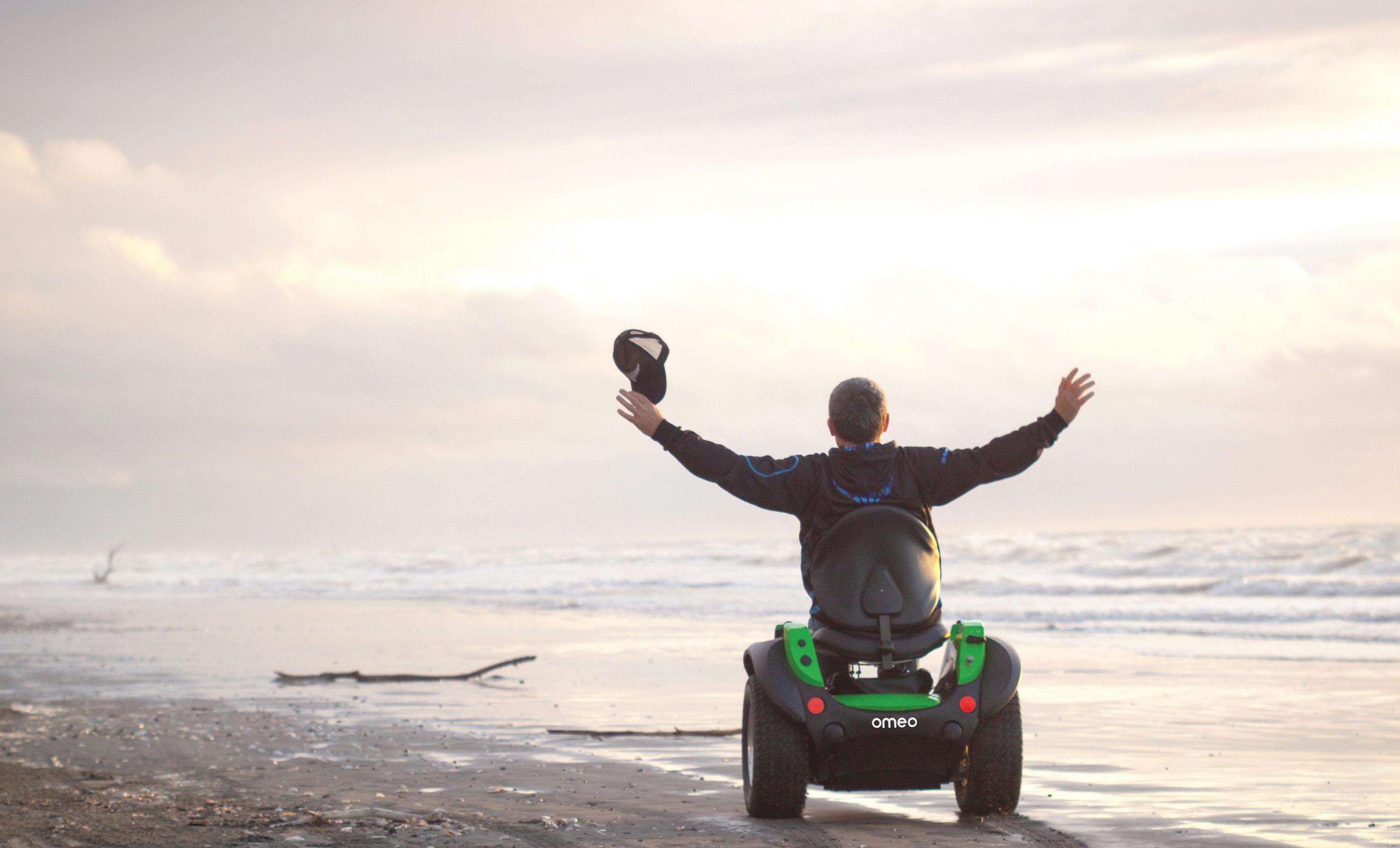


“I’m boooored”
Few phrases strike such dread into the heart of a parent. For those of us raising children with disability, the words can feel especially loaded because we know what can follow. Boredom has a way of spiralling: from whining to frustration, into dysregulation, sometimes straight to full meltdown. No wonder so many of us leap in with a solution: a favourite show, a predictable activity, the comfort of routine.
And don’t get us wrong – those things matter! Routines keep the day steady. Screens can be soothing and regulating; portals to worlds our kids often don’t have access to. This is not about guilt. It’s about balance. Because if every moment of emptiness is filled, our children lose something precious: the space to be bored. Boredom has become almost taboo in modern parenting. We treat it like a failure of imagination or a problem to be solved, rather than what it really is: part of being human. Researchers have even called boredom a “functional emotion” –uncomfortable, yes, but useful, nudging us towards curiosity and new ideas. Our lives, and our children’s, are full of instant fixes. Hungry? Delivery. Curious? Google. Overstimulated? Scroll. It takes seconds to find relief, which makes those moments of “nothingness” feel intolerable. The brain is hooked on the quick hit of dopamine, and waiting has become a lost art.
But what
is not the enemy? What if it is a doorway?
Because here’s what often happens when we resist the urge to swoop in: our children find something of their own. Maybe it looks messy, improvised, unexpected. Maybe it’s stacking blocks in a way no one taught them, humming the same sound until it turns into a tune, or inventing an elaborate story with a handful of toy cars. Psychologists talk about this as “autonomous play” - the kind that sparks

Try a “no-plan pocket” in the day — just 10 minutes where nothing is scheduled.

Swap ready-made toys for openended ones: blocks, art supplies, cardboard.

Make waiting visible: “We’re waiting for the bus. Let’s just see what happens.”
Resist the first request: when you hear “I’m bored,” give it a few minutes before offering help.
creativity, problem-solving, and resilience. That spark - the one that comes not from us, not from a device, but from within them, is where those qualities begin.
Children with disability are so often told what to do, when to do it, and how. Appointments, therapy schedules, routines: all important, but tightly structured. Boredom, in contrast, is unstructured space. It says: I trust you. You get to decide. That freedom can feel unsettling at first, but it is also profoundly empowering.
This doesn’t mean throwing away the iPad or abandoning routines. It doesn’t mean pushing children into distress for the sake of “character-building.” It means maybe tolerating – just for a while – the discomfort of nothingness. It means letting the silence hang a little longer before we fill it.
Of course, it’s not always pretty. Boredom can be noisy, messy, uncomfortable for everyone in the house. But sometimes, out of that irritation comes something new: a game, a thought, a rhythm, an idea. Studies have found that even adults, when left without devices, will often invent mental games to cope; proof that our brains are wired to create when nothing else is on offer. Kids are no different.
And maybe that’s the point. In giving them room to be bored, we are also giving them room to be themselves.
Routines and screens aren’t the enemy. They’re essential supportsboredom is an addition, not a replacement.
Discomfort is normal. Boredom often starts with whining or frustration. That’s part of the process. Start small. Even tiny doses of unstructured time help build tolerance. Notice the wins. Point out what your child invents or discovers: “Look what you

Simple supplies, big possibilities. These aren’t activities to “keep kids busy” — they’re raw materials that spark imagination.
BUSY BOX
A shoebox with random bits: ribbons, plastic cups, cardboard tubes. Swap items every week for a fresh surprise.
ART GRAB-BAG
Washable paints, chunky chalk, masking tape, stickers, giant paper. Think big tools for big play.
SENSORY TRAY
A shallow box of rice, beans, or pasta with scoops and containers. Hide a few “treasures” inside for discovery.
BOX WORLD
Cardboard boxes, bubble wrap, egg cartons. Today a rocket, tomorrow a shop, the next day a drum kit.
NATURE BASKET
Pinecones, shells, smooth stones collected on a walk. Kids will sort, stack, or tell stories with them.
LOOSE PARTS
Buttons, beads, fabric scraps, scarves, wooden spoons. Open-ended objects that invite inventing.
DIY PUPPET THEATRE
A cereal box, some socks or paper bags, and pens. Let the kids run the show.

Keep these in labelled baskets or crates. Sometimes just choosing a basket is the boredom-buster.


Navigating the NDIS can feel like learning a new language. There’s a lot to take in, and it’s normal to feel unsure We sat down with our very own subject matter specialist Charmaine Fraser to get her top five tips for starting strong with your NDIS plan
Charmaine is a parent of a participant, and a former support coordination business owner and trainer, who has worked with participants and their support networks since the very beginning of the NDIS Drawing on her professional expertise and personal experience, she shares five practical tips to help you feel more confident and in control as you navigate the NDIS
1. Get to know your plan
“Understanding your NDIS plan is the key to making the most of your funding,” says Charmaine. “But the NDIS is complicated and can seem like a whole new language Take time to understand the key sections, the wording the NDIS uses and any changes like how funding periods work. Knowing what’s in your plan puts you in the driver’s seat ”
2. Understand what you can and can’t buy “Following recent legislation changes, participants can only use their funding to purchase NDIS supports. Guidance lists that explain what are and are not NDIS supports are available on the NDIS website,” explains Charmaine. “There is also a process to apply for replacement supports in specific circumstances If you’re unsure, ask your plan manager or support coordinator before making a purchase.”
3. Choose providers that meet your needs
Charmaine reiterates that “one of the core principles of the NDIS is choice and control. Plan managed participants have a broad choice of providers, including both registered and unregistered providers Do your research, ask questions and make sure the provider has the right experience, skills and availability to suit your needs.”
4. Use the tools already available to you “There are plenty of resources to help you feel more confident,” says Charmaine. “nib Thrive has created quickreference tools like the Pocket Price Guide, a glossary of common NDIS terms, and a step-by-step guide for adding or switching to plan management. These are designed to make the process easier.”
Charmaine Fraser, Senior Manager Compliance and Capability Development at nib Thrive.
5. Get support from a plan manager

“You don’t have to figure it all out on your own. A plan manager can help you understand your plan, explain what you can spend funding on and help you track your budget.” Charmaine explains, “Having a plan manager on your team gives you more time to focus on the supports that matter most.”
nib Thrive regularly runs free webinars for NDIS participants, parents and carers, covering everything from budgeting basics to building confidence in using your plan. Hosted by Charmaine and informed by her wealth of experience, the webinars are designed to provide general guidance and assist participants in gaining a clearer understanding of their NDIS plans and the range of available supports
Check out our upcoming sessions and reserve your spot at: nibthrive.eventbrite.com

Welcome to Source Pro In Converstation, the powerful new video series that explores the real stories, emotions and insights behind the world of disability, therapy and care.

Welcome to Source Pro In Conversation with Emma Price and Caleb Rixon
Going Beyond Therapy and Honing in on Collaborative Care with Melissa Locke and Clare MacFarlane
Supporting Siblings: Understanding the Impact of Disability with Jacqueline de Mamiel and Lindsay Laskus

From Diagnosis to Carer Burnout with Rebecca Glover and Christine Cronin

Raising the Bar: Innovation & Engagement in Allied Health & Education with Ali Gebhardt, Robert Norman, Julie Taylor and Dimitra Baveas
Ask A Plan Manager with Rachel Elleray
Empowering Families: Advocacy & System Navigation with Fiona Lawton

Neurodiversity Affirming Practice with Children & Young People with Monique Mitchelson

Creating the Extraordinary with Caleb Rixon






LONG SLEEVE LEG SUIT
• 1.5 Tog Rating.
• Two way zip, fold over cuff on the sleeve and leg.
• Zip cover and top tab with a stud.
• Sizes 04 to 16
LONG SLEEVE SLEEPING BAG
• 0.5, 1.5 or 2.5 Tog Rating.
• Two way zip, fold over cuff on the sleeve.
• 100% cotton outer and lining.
• Sizes 06 to 14


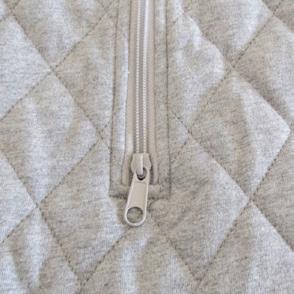



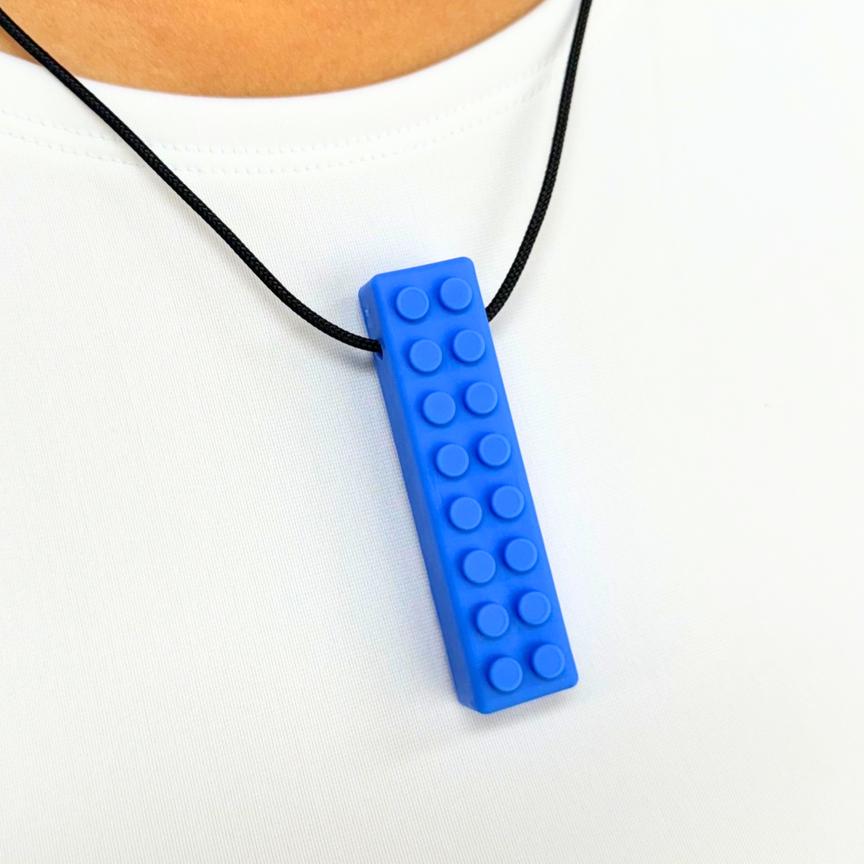

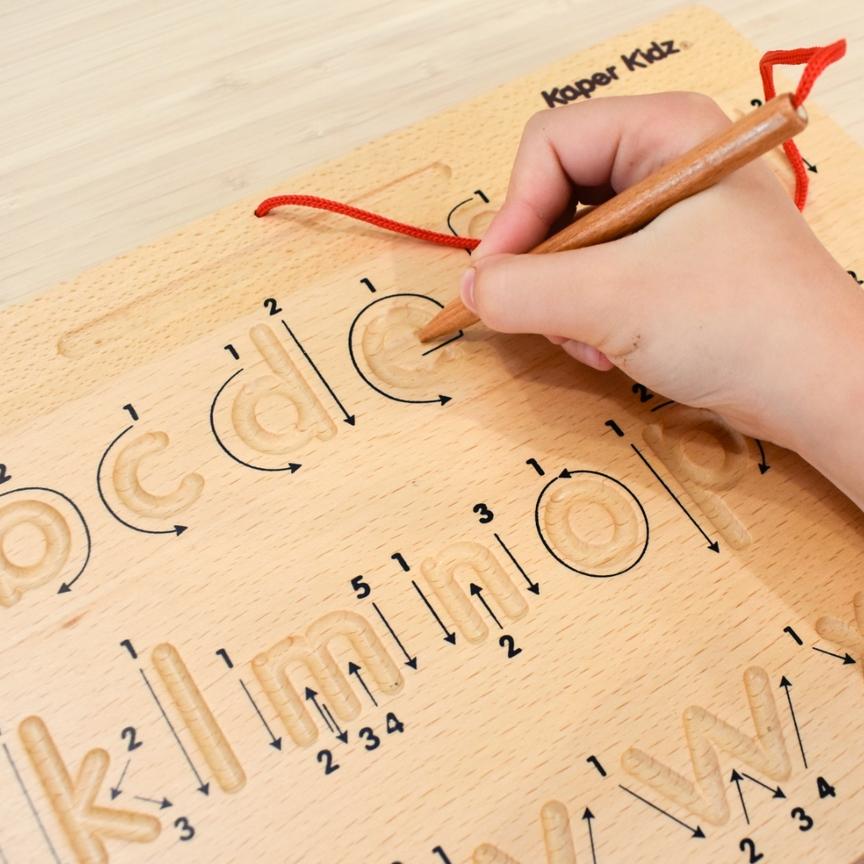


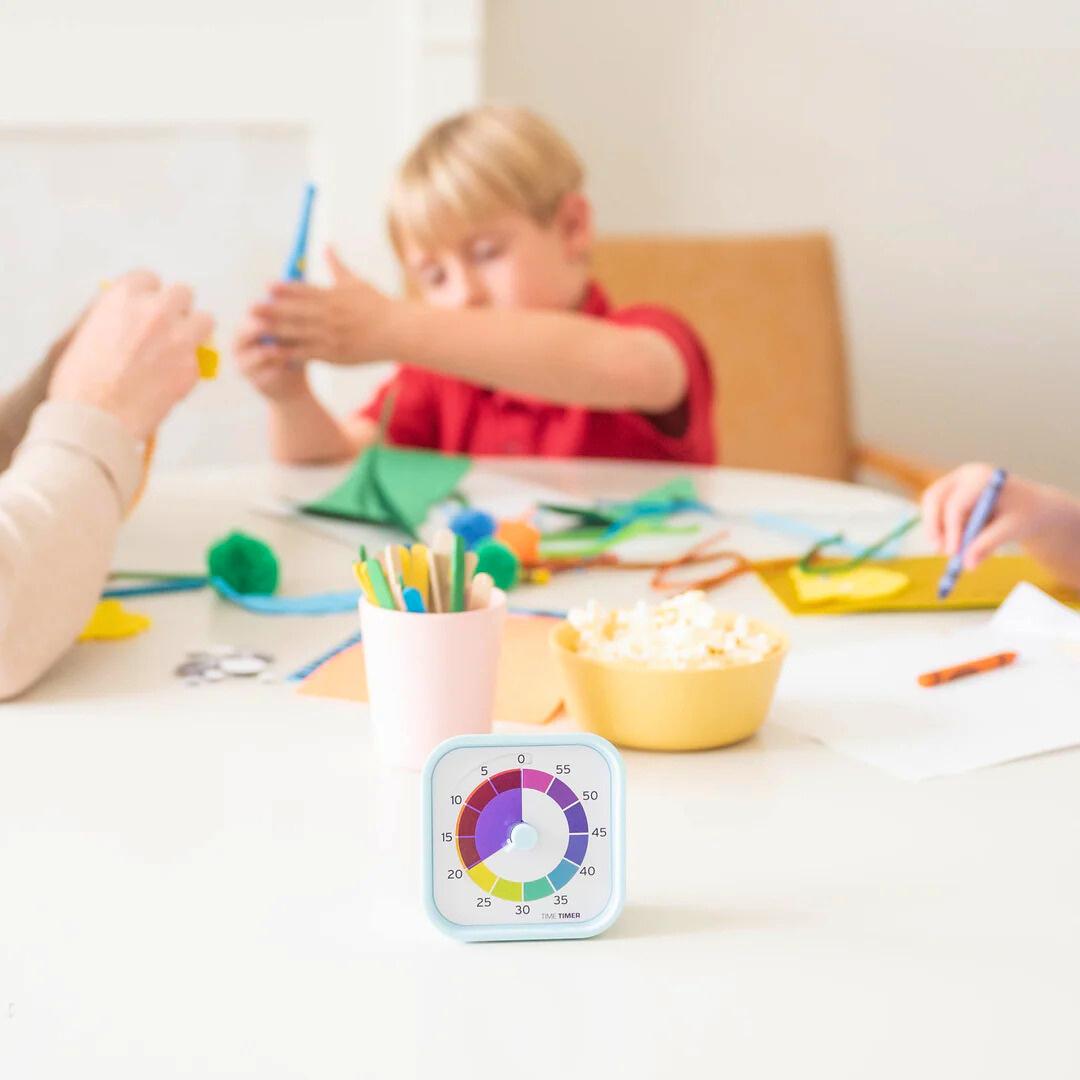
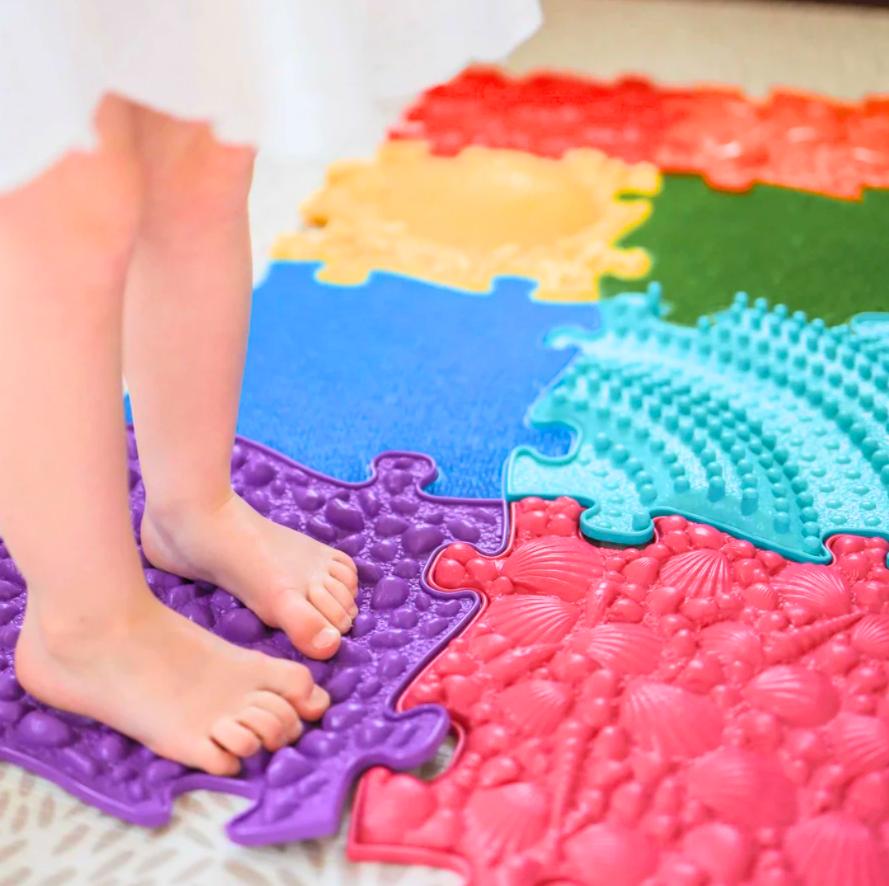


Unearth valuable first-hand tips about how to best support your child as they transition to life after school.

The post-school transition is often challenging. For people with disability, and their parents, this change can be even more daunting. But it does not need to be so intimidating. With adequate preparation, the transition to life after school can be smooth – or at least as smooth as possible.
Also, this planning can help to maximise the value of NDIS funding.
Endeavour spoke with a group of parents of people with disability who have ‘been there, done that’ when it comes to supporting their children as they prepare to begin a new life chapter.
They share crucial advice about how to best navigate this important period.
PREPARE AS SOON AS POSSIBLE
Life is already hectic enough, so it can be tempting to put post-graduation plans in the ‘too hard basket’.
But it really does pay to be prepared –and to prepare early.
It starts with creating a life plan with your son or daughter. Think about their likes and dislikes, including the activities they enjoy participating in at school. Reread school reports for insights.
Ask those around you for their thoughts, especially teachers, friends and family members. They are sure to have opinions.
Remember, though, that the most important opinion is that of your son or daughter.
Preparing for your child’s future benefits their NDIS plan, too.
Although the entire process can be overwhelming, doing your research and making plans is sure to pay off in the long run.
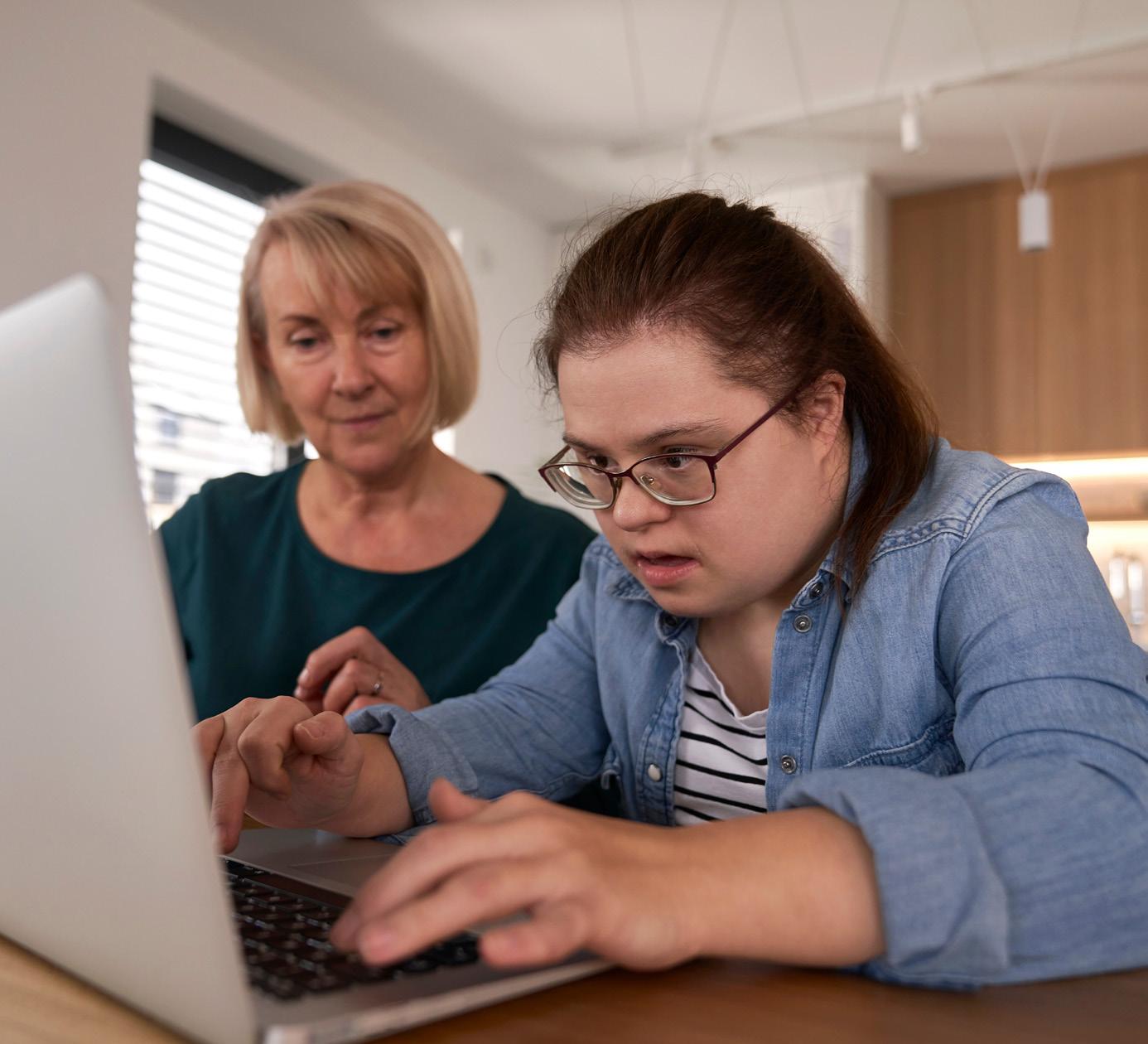
Chances are, you have a solid weekly routine down pat.
Once school finishes, that routine is likely to change significantly. This can be overwhelming.
To help adapt to a new routine, try out services in the final year of your child’s schooling that you think might benefit them after they graduate. Most service providers are open to trial runs.
This way, when the time comes to change routine, the leap into the ‘great unknown’ is far less intimidating.
The NDIS exists to help participants achieve their individual goals, not decide what those goals are.
So, the best thing you can do is work with your child to define their post-school goals and then determine how the NDIS can help to achieve them. This clear, targeted approach is more likely to lead to positive outcomes with the NDIS.
Let’s say Oliver loves flowers, and his goal is to start up his own floristry micro business, delivering fresh flowers to local businesses.
It is much easier for the NDIS to support Oliver with this vision than if his goal was simply to ‘get a job’.
Regardless of whether your child has a disability or not, encourage them to embrace different activities and experiences and consider various pathways in the lead-up to graduating. This can help your child to work towards a future that is most appealing to them.
While the post-school transition is a challenging time, it can be exciting and rewarding.
It is easy to get swept up in the endless to-do lists and anxieties that manifest before any big life change. But it is important to enjoy and celebrate all the fun, rewarding and empowering opportunities along the way, too.
Pause to celebrate the wins big and small.
There is no denying it – your child is no longer a child. They are rapidly becoming an adult.
And your relationship with your child will likely change as they do.
Rather than viewing this as a negative, think of it as a positive.
Often, it means your child is becoming more independent and empowered. This can be a sign of a job well done by you.
The nature of your child’s disability will likely mean they still need extra support. But you may find that you take a step back in caring duties and a step forward moulding an adult friendship.
Post-school, friendships can be harder to maintain – but it is at this time that they are more important than ever.
When your child no longer automatically sees their peers every day, loneliness can quickly creep in. And that can lead to other issues.
Encourage your child to maintain their existing friendships and make new ones, as the benefits of social interaction are many and varied.
NDIS funding is available for social and community participation, where applicable.
Overwhelmed. Excited. Confused. Anxious. If any of these feelings are relatable, it is comforting to know you are far from alone.
Your child’s post-school transition is an intense time, and you can be sure many parents are experiencing similar feelings and emotions to yours.
Reach out and lean on your support network. It can do wonders.
This article was originally published online at endeavour.com.au. Scan the QR code to view the original article. Endeavour Foundation helps people with disability reach their potential through quality, person-centred supports and tailored NDIS guidance to achieve the best outcomes. Find out more and get in touch at endeavour.com.au

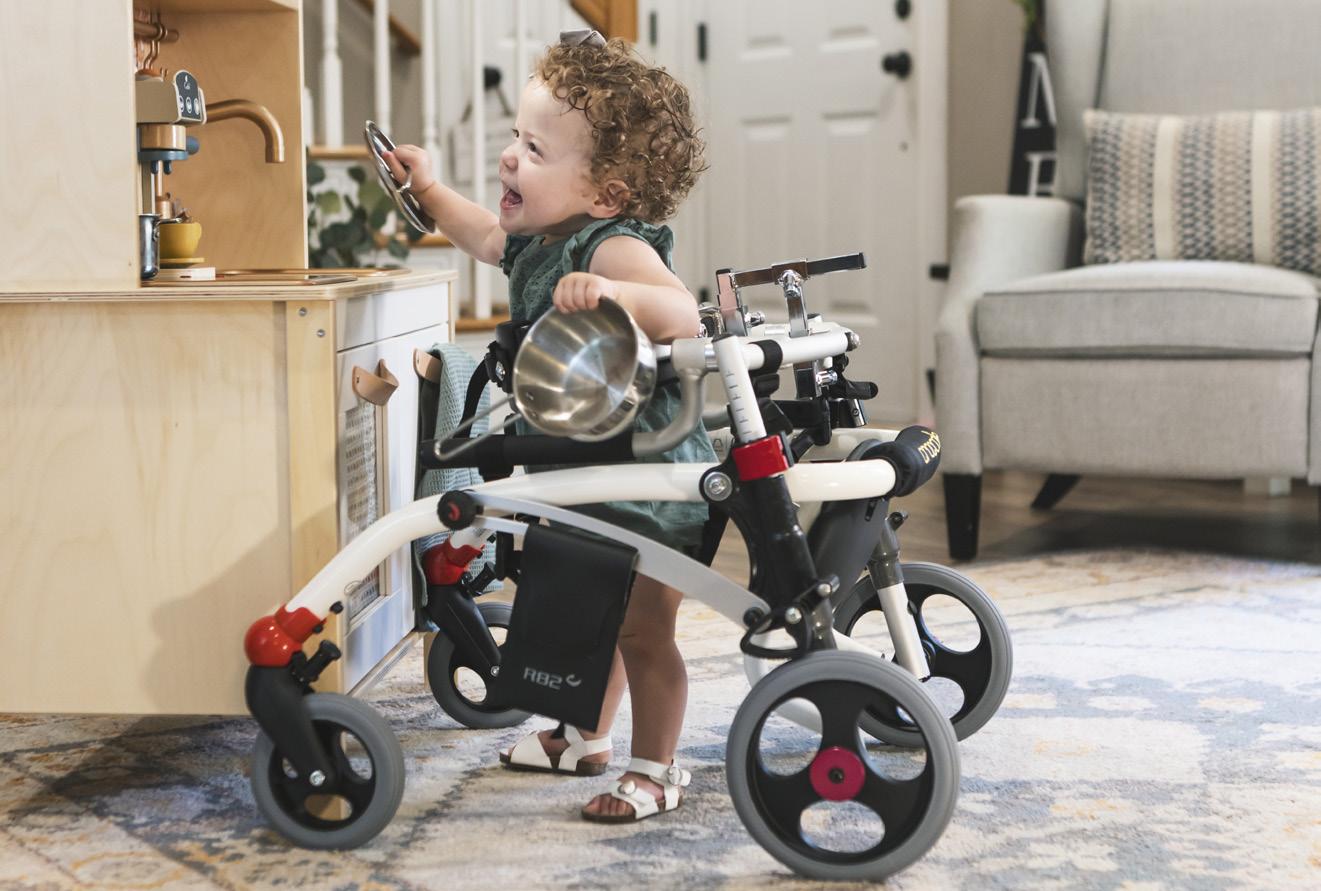
When it comes to finding the right piece of equipment for your child, whether that’s an indoor seating system, stroller, or standing frame, it truly takes a team. Occupational therapists, physiotherapists, and speech pathologists each bring their professional expertise, but there’s another key part of this team: your equipment supplier and Product Specialist.
Think of us as an extra set of hands (and eyes!) in your child’s multidisciplinary support network. We work closely with therapists and families to help identify, fit, and script the right equipment to meet your child’s unique needs and goals. Our role is not only about understanding the technical
details like measurements, adjustments, and accessories but also about learning what really matters to you and your child in everyday life.
As Product Specialists, we see ourselves as partners alongside your therapy team. While your OT might focus on functional sitting and participation, and your physiotherapist might look more at movement, our role is to bring product knowledge and practical experience to the table.
After all, the right equipment isn’t just about sitting, standing, or moving it’s about living.
We understand how different pieces of equipment can support a child’s therapy goals, how they can be adjusted for growth, and how to make sure they’re comfortable, safe, and easy to use.
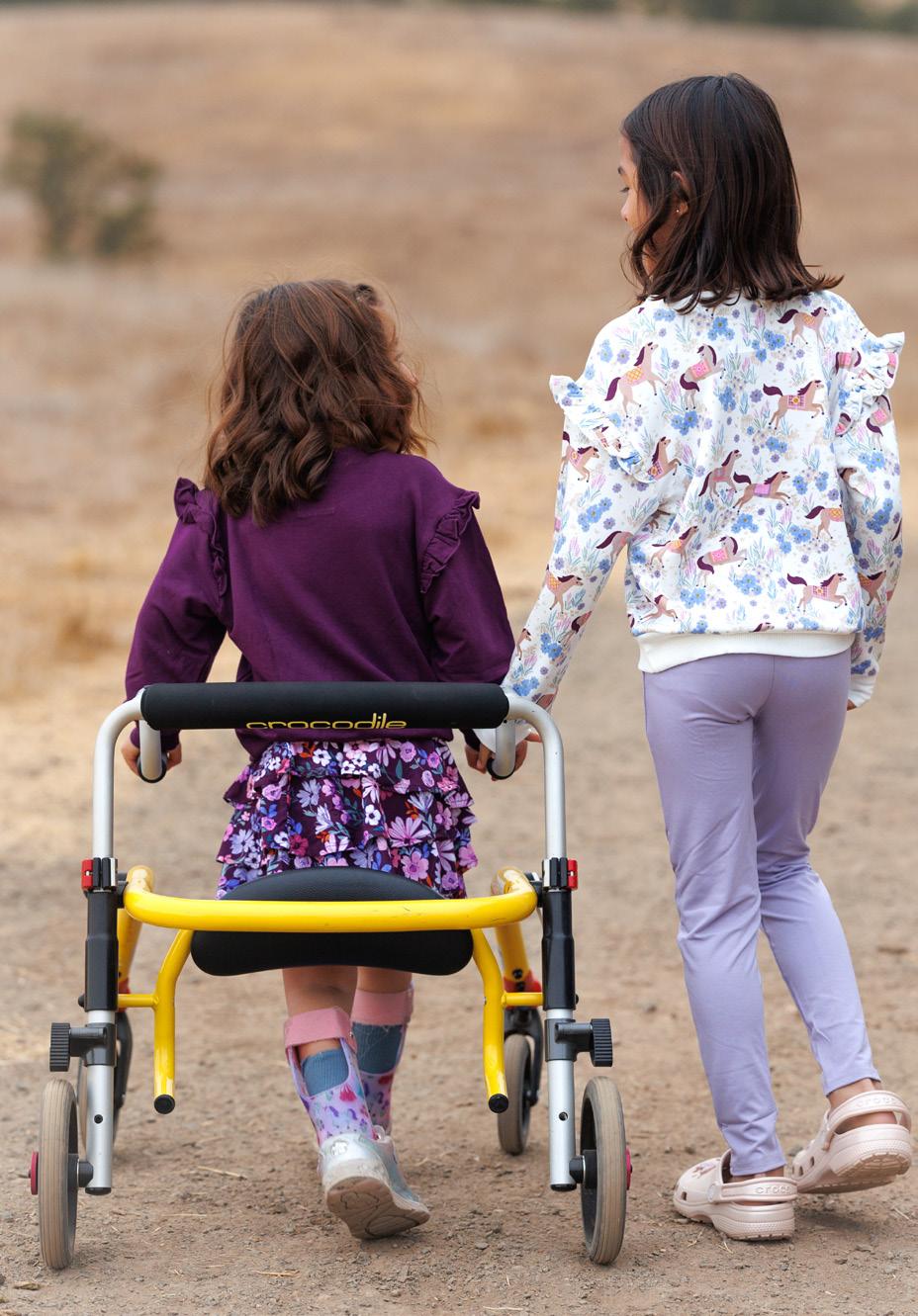

By working together, we can make sure the equipment fits your child’s needs, your therapy goals, and your family’s lifestyle. Equipment isn’t just a tool it’s something your child uses every day to participate, play, learn, and explore. That’s why the process works best when everyone, therapists, parents, carers, and product specialists, are working together toward shared goals.
Before your appointment or equipment trial, it really helps us to know a bit about your family and how the equipment will be used day to day. These details help us select and prepare the best possible options for your child to try.
Here are a few things we love to learn about before we visit:
• Where will the equipment be used most? Indoors, outdoors, at home, at school or all of the above?
• Who will be using or helping

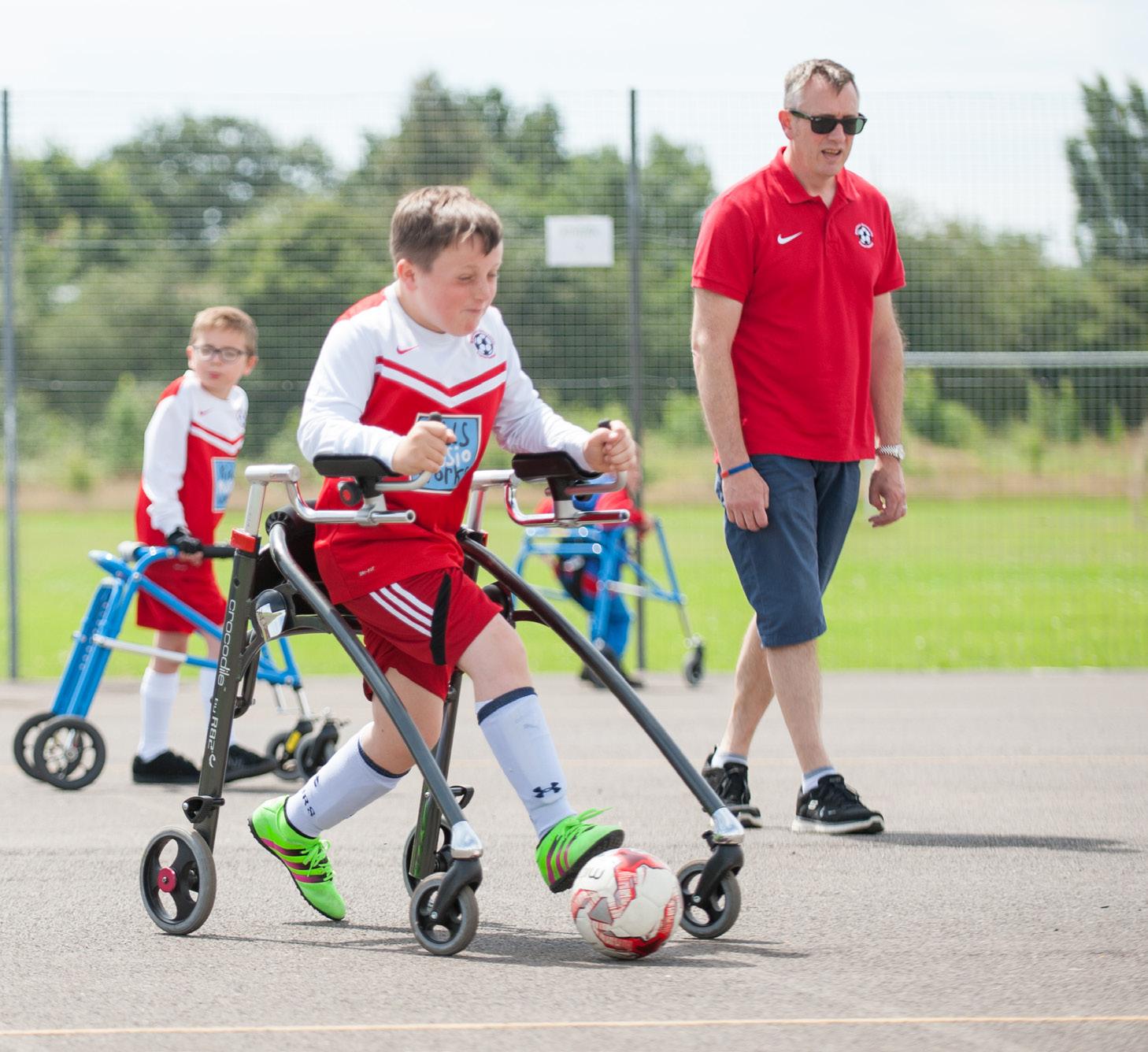
with the equipment? Parents, carers, therapists, or support workers?
• What activities will your child be using it for? Feeding, learning, play, or mobility?
• Does it need to go into a vehicle or be folded for transport?
• Will you take it travelling or between multiple environments?
• What are your goals for this piece of equipment?
Understanding your short-term and long-term goals helps us guide you toward the right options. Maybe your shortterm goal is for your child to sit more comfortably and safely at mealtimes, and your long-term goal is to support better posture for independent feeding. Knowing this means we can recommend products that will adapt and grow along the way. Just like your child does!
One of the most helpful things you can provide before a trial are your child’s key



measurements. This ensures that we can bring the right size of equipment, pre-set it, and focus on the most important part of the process, the trial itself.
For example, if you’re trialling a stroller such as the R82 Chilla or a Convaid Cruiser, we’ll usually ask for the following measurements:
• Seat depth - from the back of the pelvis to the back of the knee.
• Seat width - the widest part of your child’s hips or thighs.
• Back height - from the seat to the top of the shoulders or head.
• Lower leg length - from the back of the knee to the bottom of the foot.
• Chest width - across the chest at its widest point.
Having these details ready means we can set up the equipment in advance so that your appointment feels like a true trial and not a fitting session full of adjustments. It saves time, helps your child feel more comfortable, and gives everyone a clearer idea of how the equipment will work in real life.
Every family and every child is unique and that’s exactly how it should be. We’re not just here to deliver a product; we’re here to learn about your child’s personality, what they enjoy, what helps them feel calm and supported, and what’s most important to your family.
Whether you’re exploring an activity chair like the R82 Wombat Living, a mobility option like a Convaid Cruiser, or an indoor seating system such as the R82 x:panda shape, our goal is always the same. To find the best possible solution that supports your child’s comfort, participation, and independence.
By sharing your insights, experiences, and aspirations, you help us tailor our approach to your child’s world. When we work together as part of the multidisciplinary team, we can make sure each piece of equipment truly supports your child to thrive.
After all, the right equipment isn’t just about sitting, standing, or moving it’s about living..
By James Haigh. James Haigh is the Education & Product Manager at Etac Australia. With over a decade of experience in paediatric assistive technology, he works closely with therapists and families to help children across Australia find the right postural and mobility solutions to support their growth, comfort, and participation.
To learn more about Etac’s Paediatric product range please visit etac-au.com
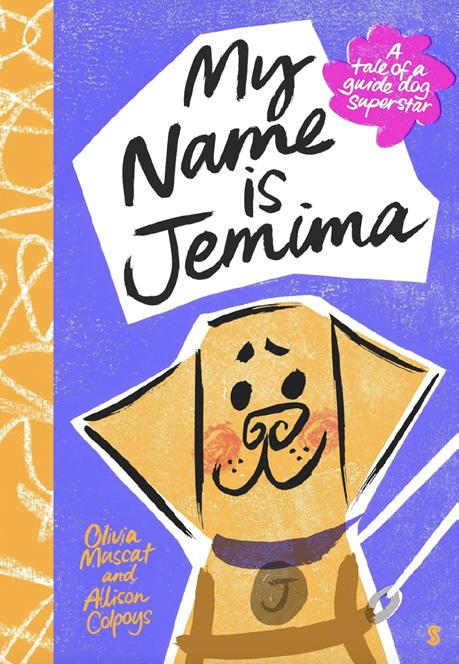
Jemima might adore her yellow bone and a good cuddle, but she’s also a fully trained guide dog who helps her handler move through the world with confidence. Through playful moments and heartfelt adventures, we see how she balances her goofy side with the focus and dedication of a true working dog.
Written by blind disability activist and guide dog user Olivia Muscat, and illustrated by awardwinning artist Allison Colpoys, this picture book offers an insider’s view of the bond between handler and dog, complete with an audio version narrated by the author. amazon.com.au
• unisex onesies to help keep wandering hands out of nappies & pants
• deters inappropriate undressing & other challenging behaviour
• range includes back-zips & tummy access styles for tube feeding
• available in sizes for kids & adults (great for aged care)
• soft fabric & tag-free to minimise irriation
• adaptive swimwear, bibs, bandanas, sensory socks & bedding protection also available
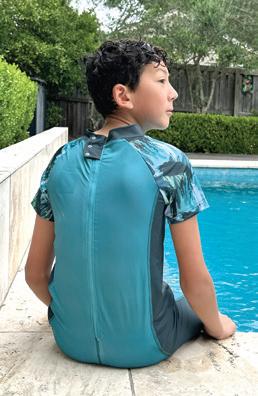



Fizzy & Suds follows two bubble siblings who float into the real world and chase whatever sparks their imagination, jumping from penguins to tugboats to fossils with gloriously sideways, divergent thinking. The show champions curiosity in all its messy, unexpected forms, inviting kids to explore ideas from every angle rather than follow a single path. It also weaves in authentic representation of neurodiversity and disability, reflecting the many ways children play, learn and experience the world. Warm, witty and wonderfully inclusive, it’s a celebration of creative minds and boundless wonder. Season 2 is currently available to view on iview.abc.net.au



Felix loves the playground but wonders what his mates get up to when they’re off playing on their own. With a little help from Mum, he launches Mission Friendship to discover what makes each child’s playtime unique. Written by Paralympian and disability advocate Ellie Cole, this picture book celebrates the magic that disability and difference bring to the playground. amazon.com.au
In this honest and open account of life with her PDA daughter, Sasha, Steph Curtis reveals the everyday struggles and explores the milestones of raising a child diagnosed with Pathological Demand Avoidance. amazon.com.au

The Long Road Podcast shares the real stories of Australian families navigating life after a child’s life-changing injury or diagnosis. Hosted by Lisa McKelvey from Goondiwindi, who created the show after her son Beau became a paraplegic at twelve, it offers the lived-experience wisdom she struggled to find during her own family’s upheaval. Through honest conversations with parents who’ve walked similar paths, the podcast provides connection, practical insight and a sense of community for anyone facing the long road of medical challenges with a child. thelongroad.au
Leggero REACH
• A stroller that can be used as a secondary chair.
• It is an excellent chair for children who do not have complex positioning needs.
• Available in 3 frame sizes: 12”, 14” and 16” seat widths and allows for some degree of adjustment.
• Available colours; Big Sky Blue, Rosso Red, Snowberry Pink Huckleberry Purple and Galaxy Purple.
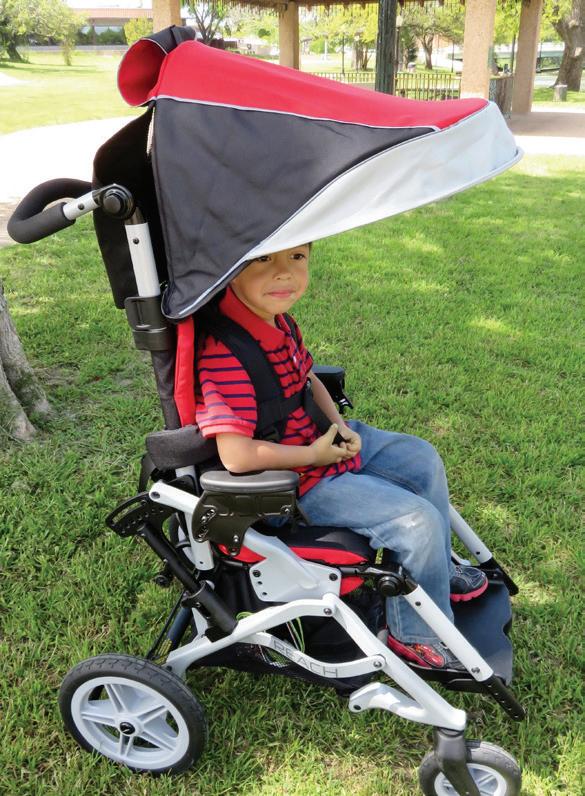






Go where you want, how you want with these powered chair options.
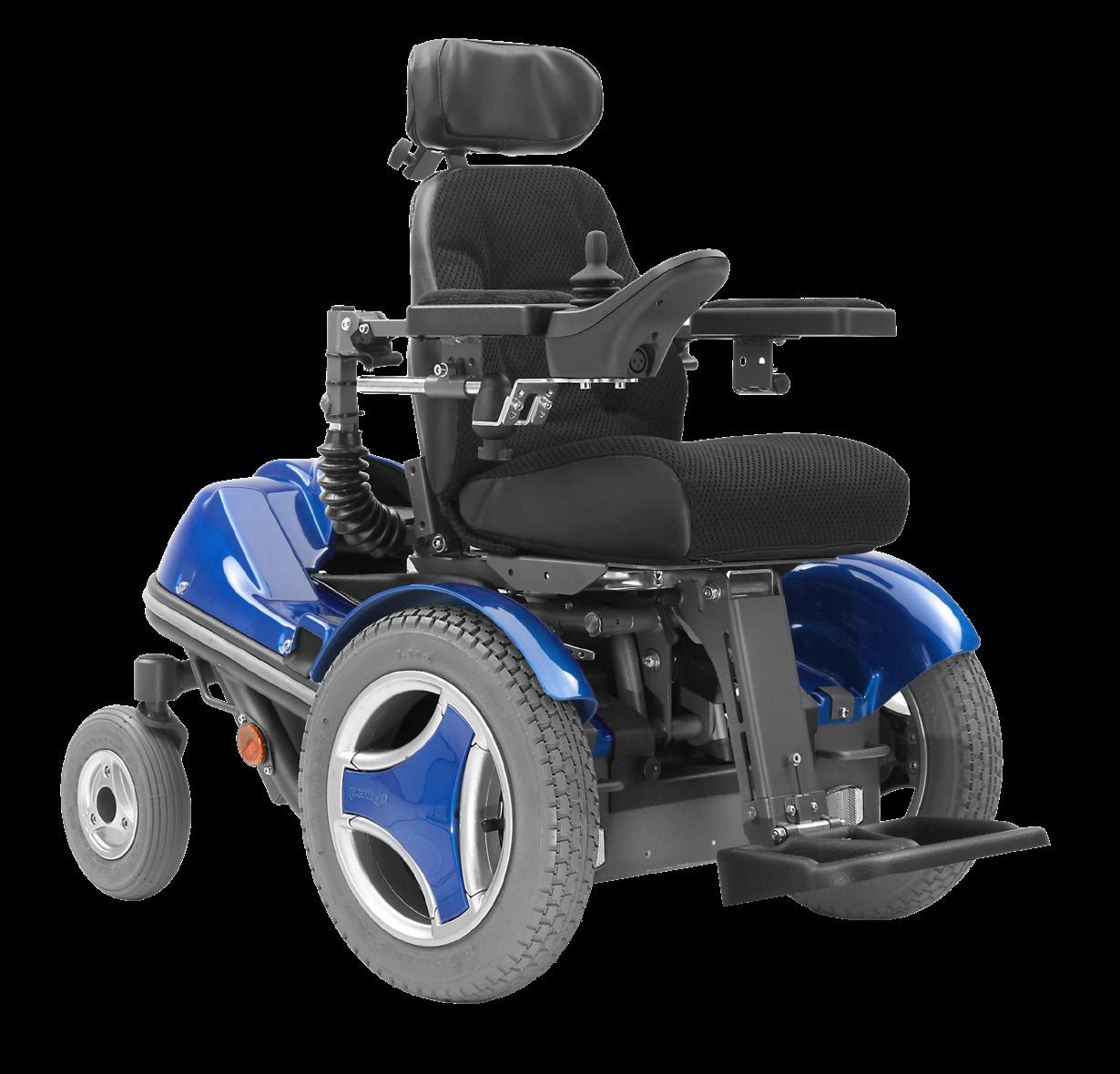
Manufacturer: Permobil
Supplier: Permobil Australia
Weight: Up to 35kg | Height: N/A
• Low seat-to-floor height: allows little users to interact at the same height as their peers, and the integrated elevation provides them with easy access to a variety of surface heights such as tables and desks.
• R-Net electronics: Provides programmability to tailor the wheelchair to the individual user.
• Optional Remote Stop System: Allows a parent or carer to remotely stop the wheelchair if needed.
Manufacturer: Method Mobility
Supplier: Paragon Mobility
Weight: Up to 136kg | Height: N/A
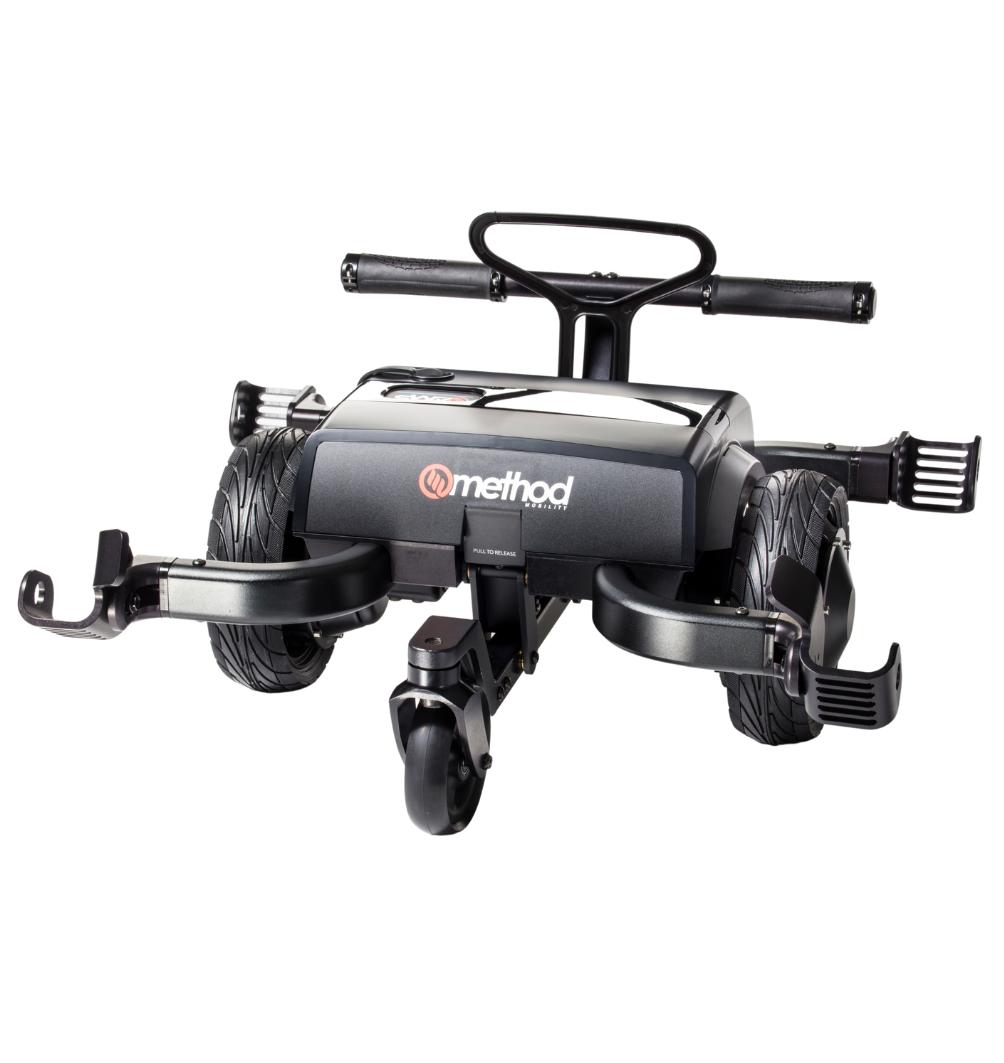
• Simply Roll-on or Roll-out the AMP to turn your wheelchair into a Powerchair.
• Use your wheelchair handrims to navigate your surroundings or the optional joystick.
• Protects your shoulders, wrists and hands with its simple operation and gives a helping hand as required.
• Roll-on to leave the classroom and enjoy lunchtime or head home for the day.
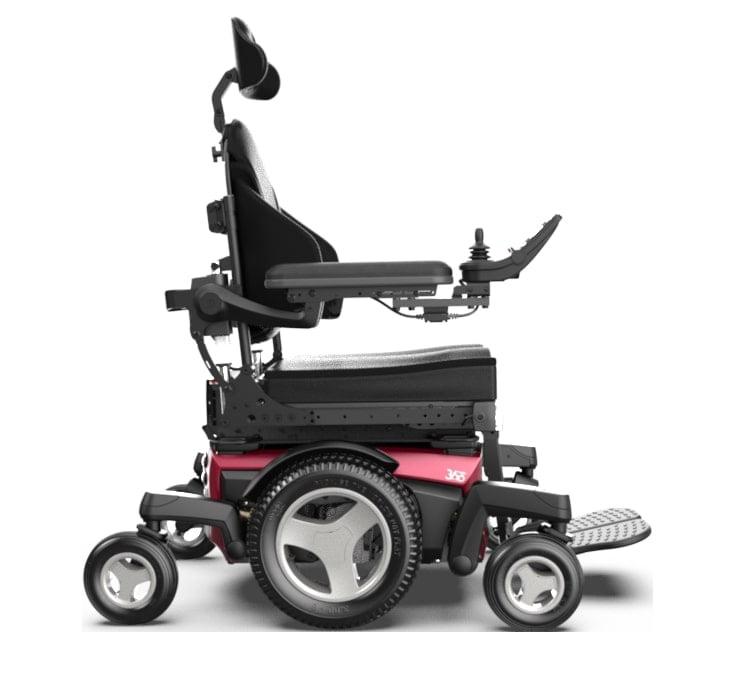
Manufacturer: Magic Mobility | Supplier:
Magic Mobility
Weight: Up to 160kg
Height: N/A
• Compact body responds to off-road challenges and indoor obstacles.
• Three easy change drive wheel options – Urban, Crossover and Off-road.
• Highly customisable. Magic 360 is the perfect chair for active users, from children up to urban young professionals.
Manufacturer: Motion Concepts
Supplier: Invacare
Weight: Up to 136kg
Height: N/A
• Narrow base width and low seat to floor height.
• Dedicated paediatric seat sizes starting from 28cm. Can accommodate a wide variety of control options depending on the user’s abilities.
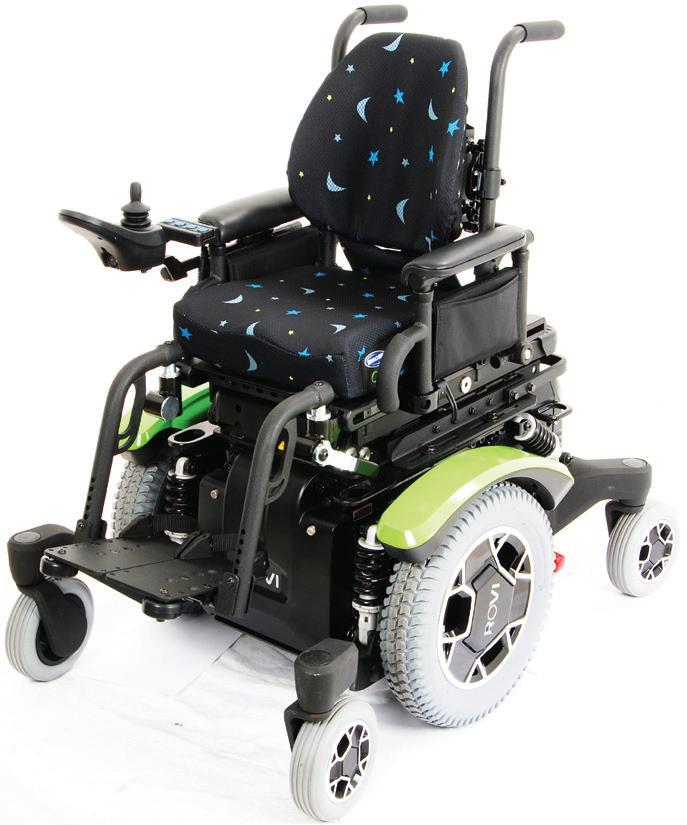
Manufacturer: Permobil
Supplier: Permobil Australia
Weight: Up to 50kg | Height: N/A
• The Explorer Mini encourages movement and early exploration for young children.
• Multiple weight-bearing surfaces to help promote safe and stable upright postures.
• Provides opportunities to improve strength, endurance and postural control.
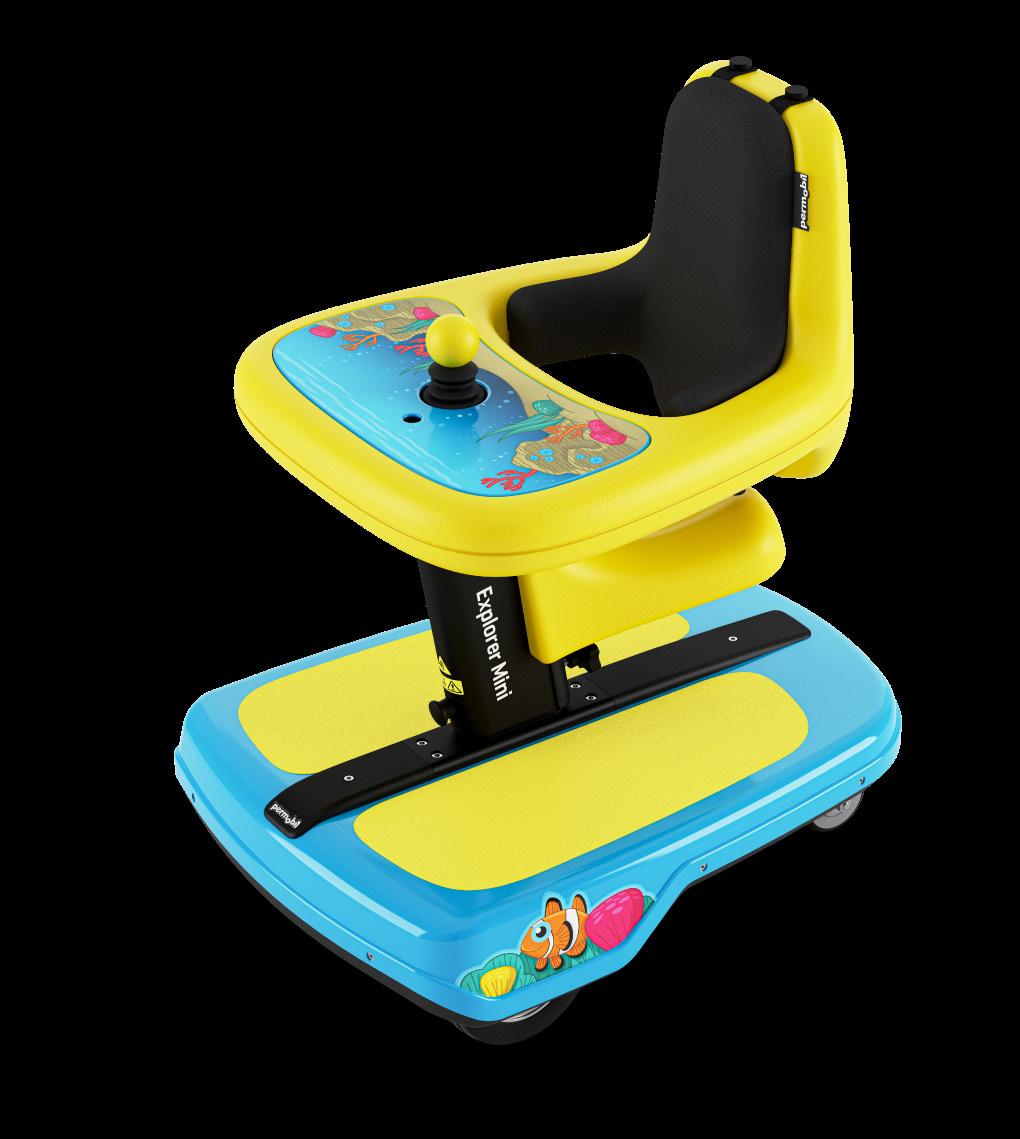
Manufacturer: Ottobock
Supplier: Ottobock
Weight: Up to 50kg
Height: Up to 130cm
• Optimal adaptation to user height with adjustable seat depth and width as well as leg position and angle.
• In just a few easy steps the Skippy can be taken apart for transport, fitting into the boot of a standard size car.
• Numerous additional options are available that can make everyday life much easier for the individual.
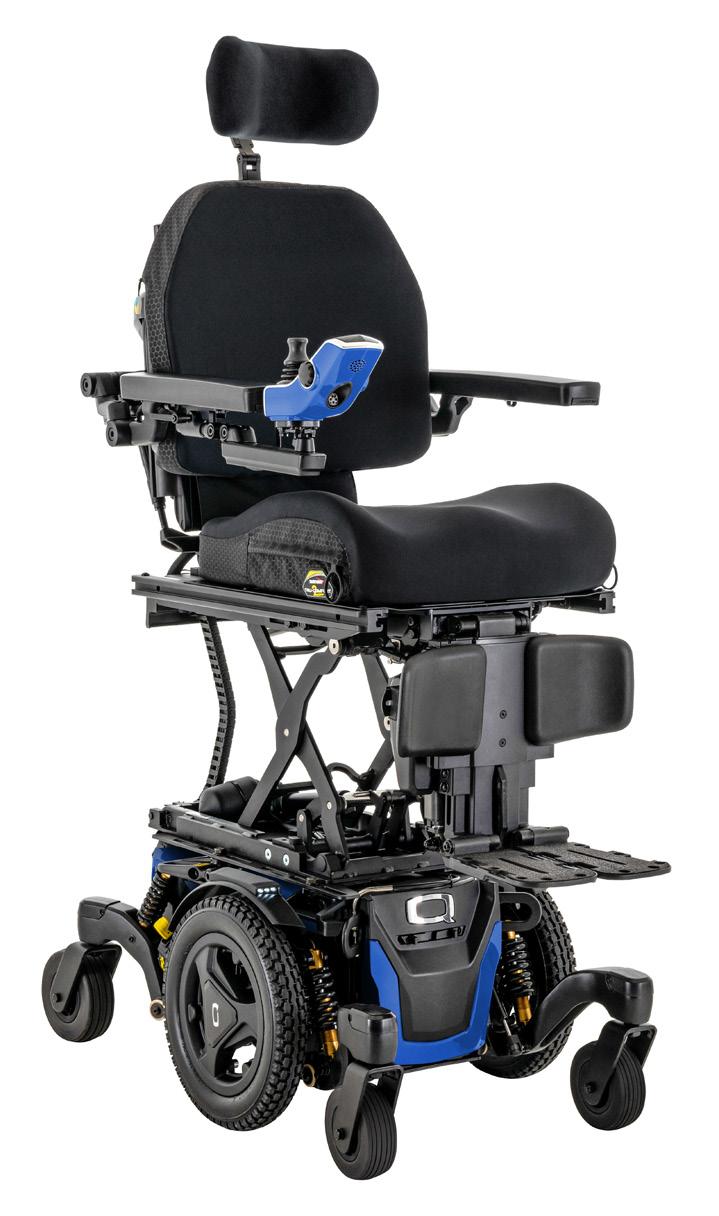
Manufacturer: Glide
Supplier: Glide
Weight: Up to 150kg
Height: N/A
• Rear-wheel-drive powered chair is constructed with lightweight aluminium and is easily transportable.
• Customisable seating platform allows for tailored cushioning.
• Differing seat width and depth dimensions and are also offered with the fitment of 22cm pneumatic castors.
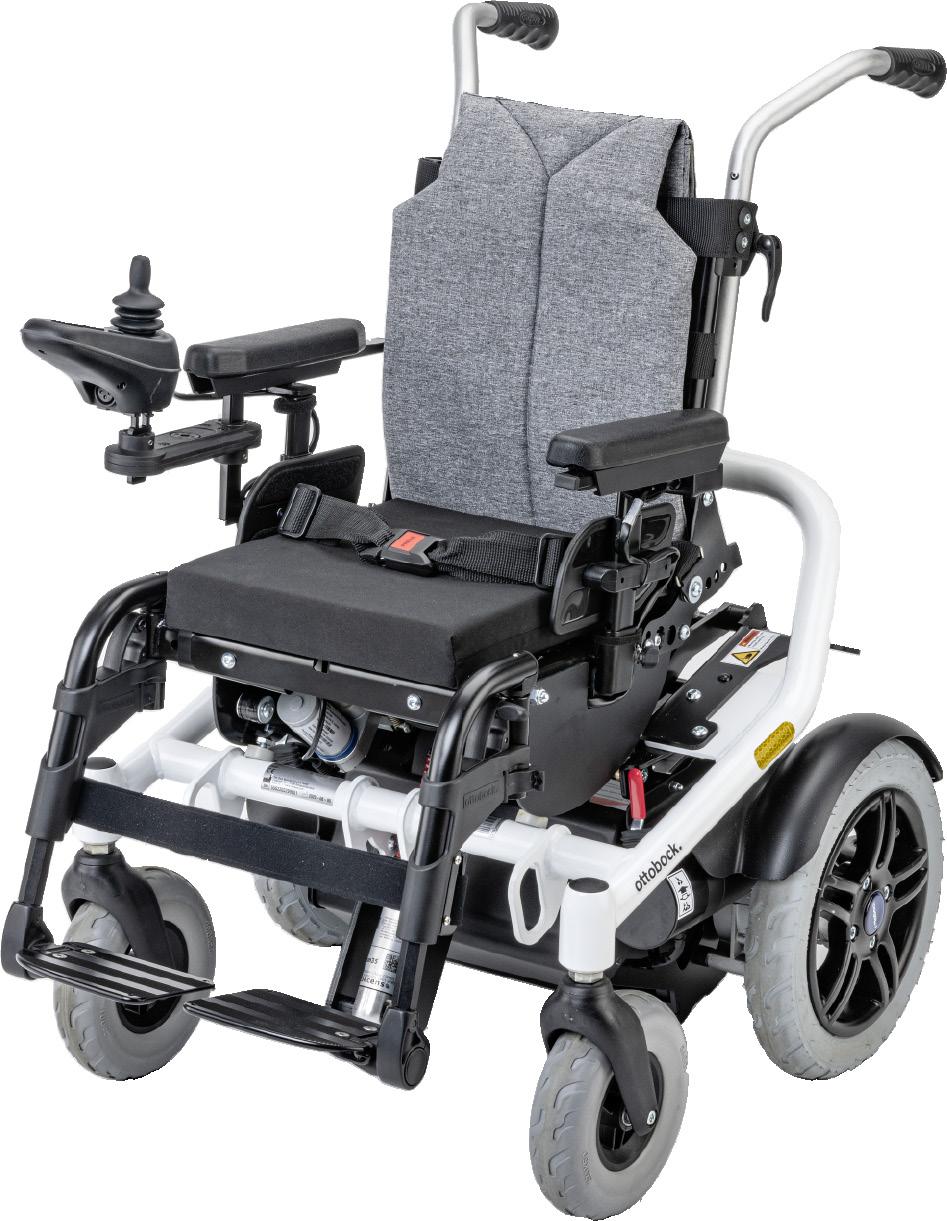
For a full list of suppliers - scan QR code

Manufacturer: Quantum Rehab
Supplier: Quantum Rehab
Weight: Up to 136kg
Height: N/A
• Narrow width for outstanding manoeuvrability.
• Independent SRS (Smooth Ride Suspension).
• iLevel option available with up to 30.5cm of seat elevation at walking speed (up to 5.6 km/h).

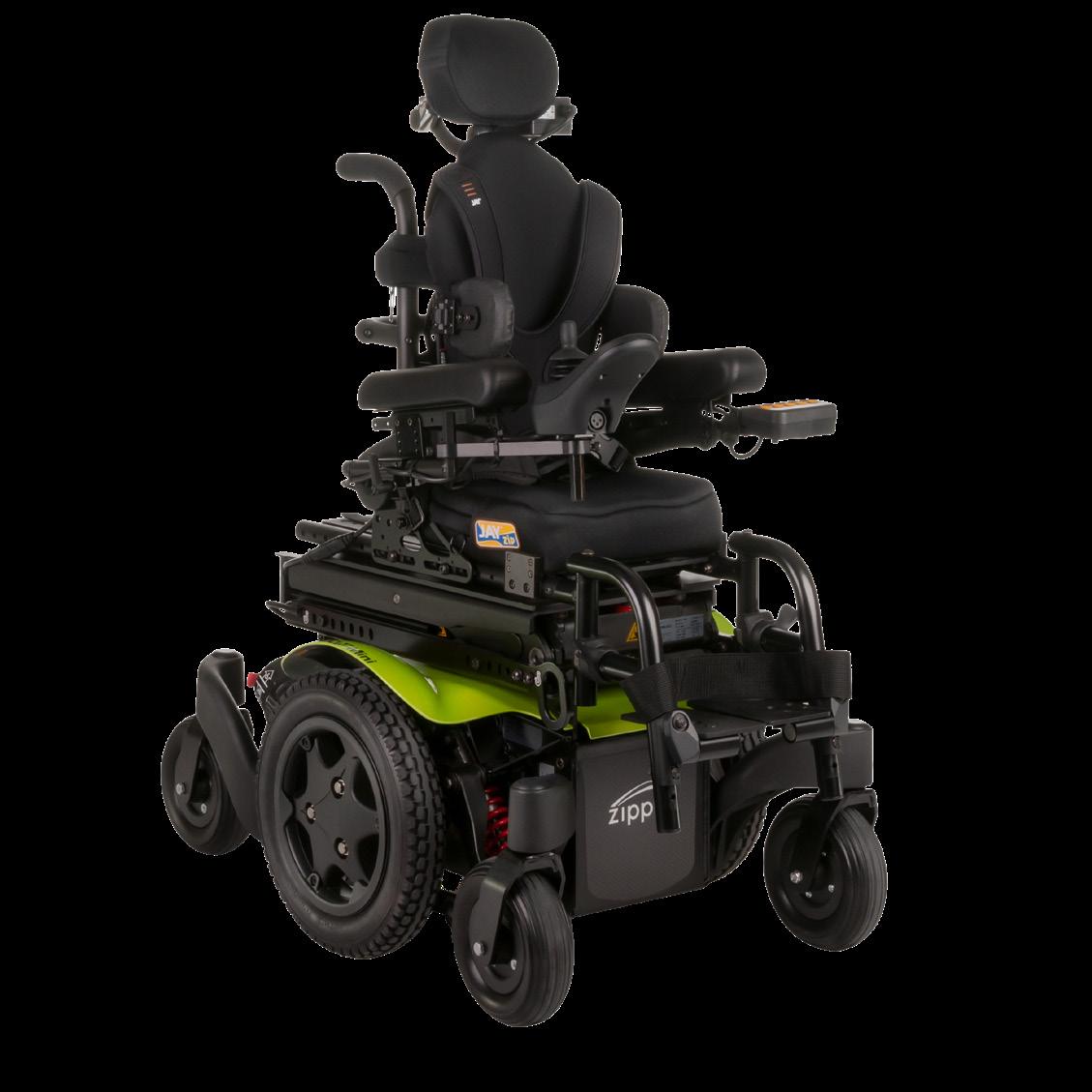
Manufacturer: Magic Mobility | Supplier: Magic Mobility
Weight: Up to 182kg | Height: N/A
• With its 4x4 drive mode, the Extreme X8 is your partner to almost any destination; sand, snow and every terrain you can throw at it.
• Four independent, high speed, high torque and high efficiency motors: A top speed of 10 km/h (6.2 mph), the motors provide more than just speed. Four high torque, powerful motors, enable you to confidently ascend a wide variety of challenging terrain. These highly efficient motors help maximise battery life providing you the confidence to really get adventurous.
• Articulating front frame with low pressure knobby tyres: Exceptional suspension keeps all four driving wheels on the ground, giving you an ultra-smooth and jolt-free ride. Combined with low-pressure off-road knobby tyres you’ll experience the
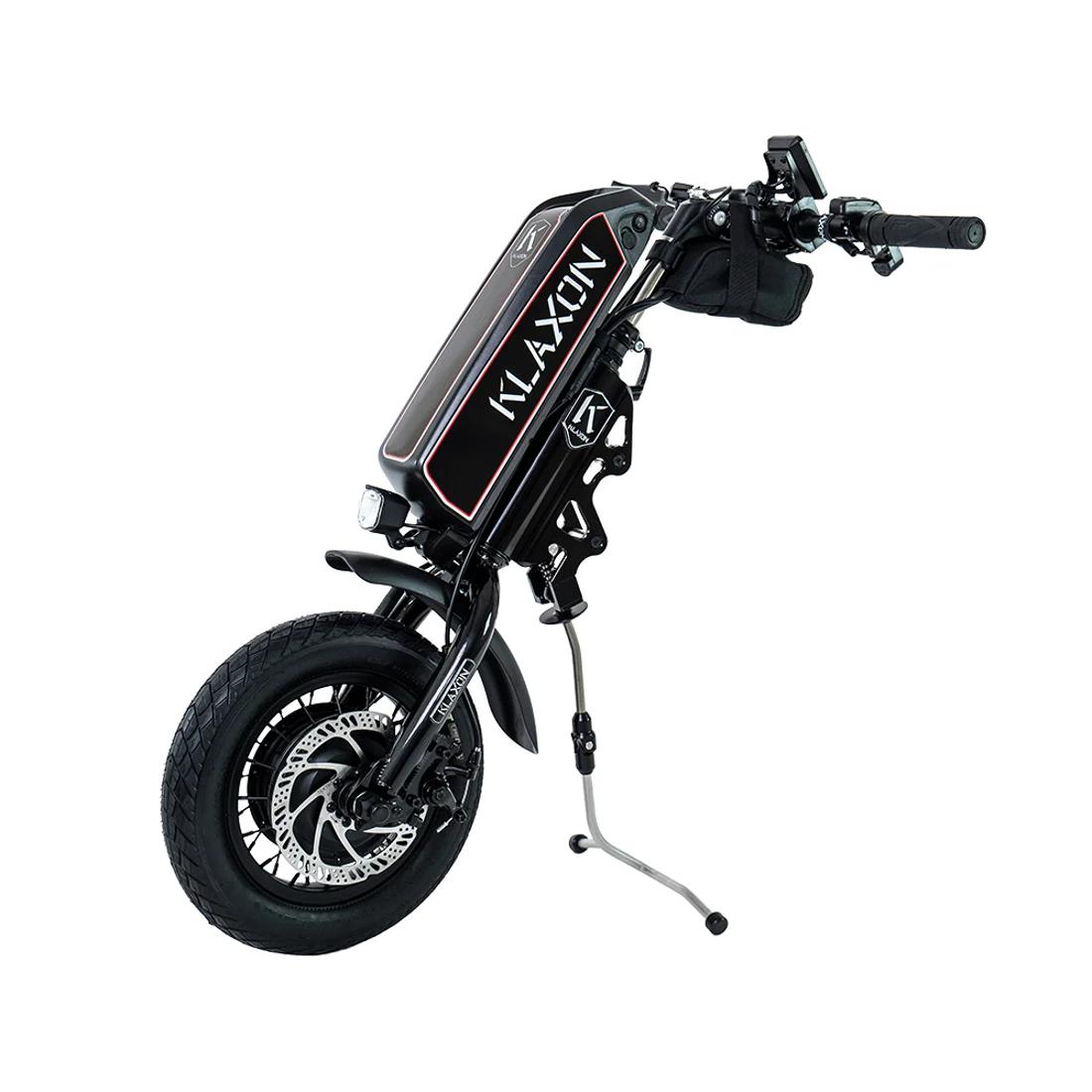
Manufacturer: Sunrise Medical
Supplier: Sunrise Medical Weight: Up to 136kg Height: N/A
• Z-500 combines ultra compact wheelchair with highly adjustable and personalised seating with built in growth.
• Intuitive and easy to learn to drive mid-wheel drive powerchair allowing kids to participate and explore.
Manufacturer: AceKare
Supplier: Alivat
Weight: Up to 150kg
• Paediatric seat sizes ranging from 25cm x 25cm to 40cm and 48cm, and it adjusts to accommodate growth.
Height: N/A
• The Yomper+ is compatible with most rigid or folding frame wheelchairs.
• The Yomper+ has an attendant power assist option.
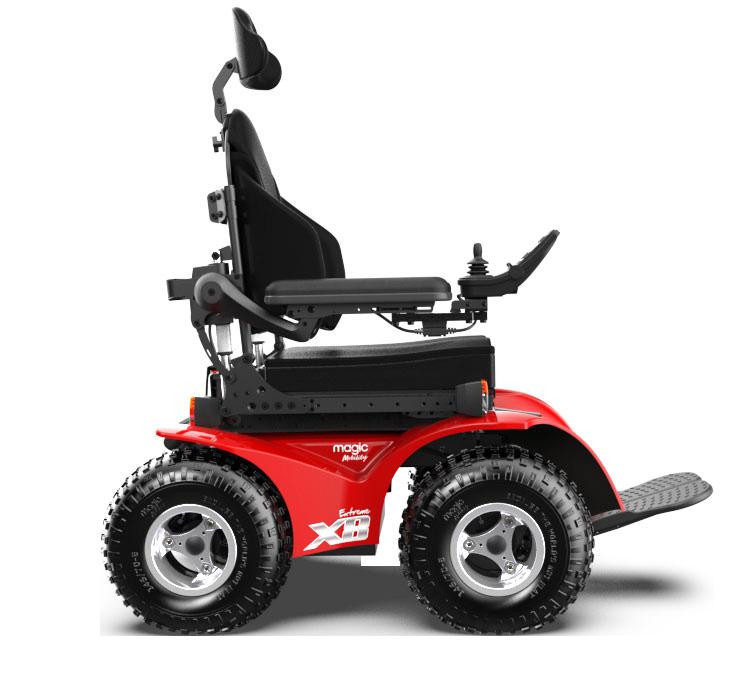
Manufacturer: Klaxon | Supplier: APEX Mobility Weight: Up to 140kg (but must not exceed the SWL of the manual wheelchair) | Height: N/A
At only 8.8kg, Klick Light is ideal for teens, adults with limited upper body strength and those needing a compact size and low weight. Programmable advanced electronics for speed control, braking and motion control. Comes with patented Klick Linking system for effortless use.
• The combination of its innovative positioning in the axis of the wheelchair and its ability to freewheel allows you to perfectly maintain the dynamics of your wheelchair. Yomper+, the French electric assistance for manual wheelchairs with rigid or foldable frames. It is simple to use, and easy to install. Yomper+ is the perfect travelling companion as it's small and mighty.
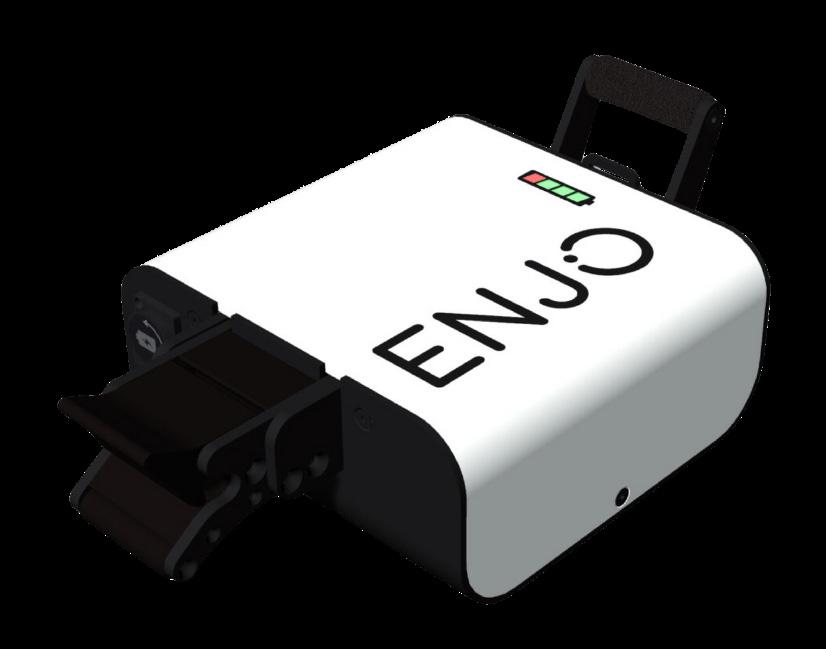
Manufacturer: AceKare
Supplier: Alivat
Weight: Up to 150kg | Height: N/A
• Fits under most manual wheelchairs.
• Compact and lightweight.
• Easy to install and remove.
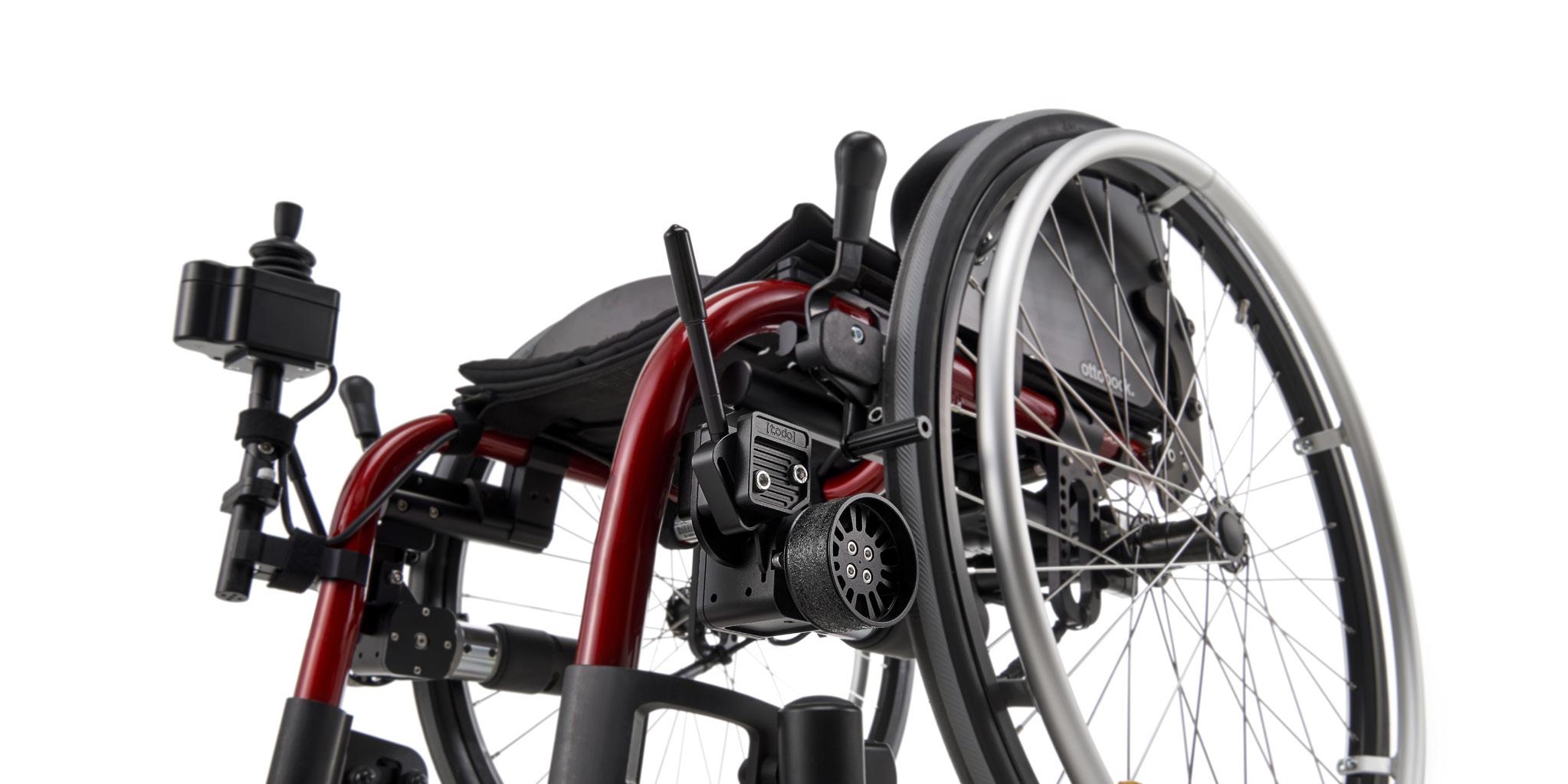
Manufacturer: Motion Concepts | Supplier: Invacare
Weight: Up to 35kg | Height: N/A
• Up to 50° tilt, 163° recline, and power seat elevation.
• Unique chassis design and narrow footprint for smaller users.
• Stand-up function, with a huge range of accessories and options to suit your exact needs.
Rovi standing powerchair is perfect for the mobility needs of children with its small design and ARC suspension, offering optimum performance for active kids.
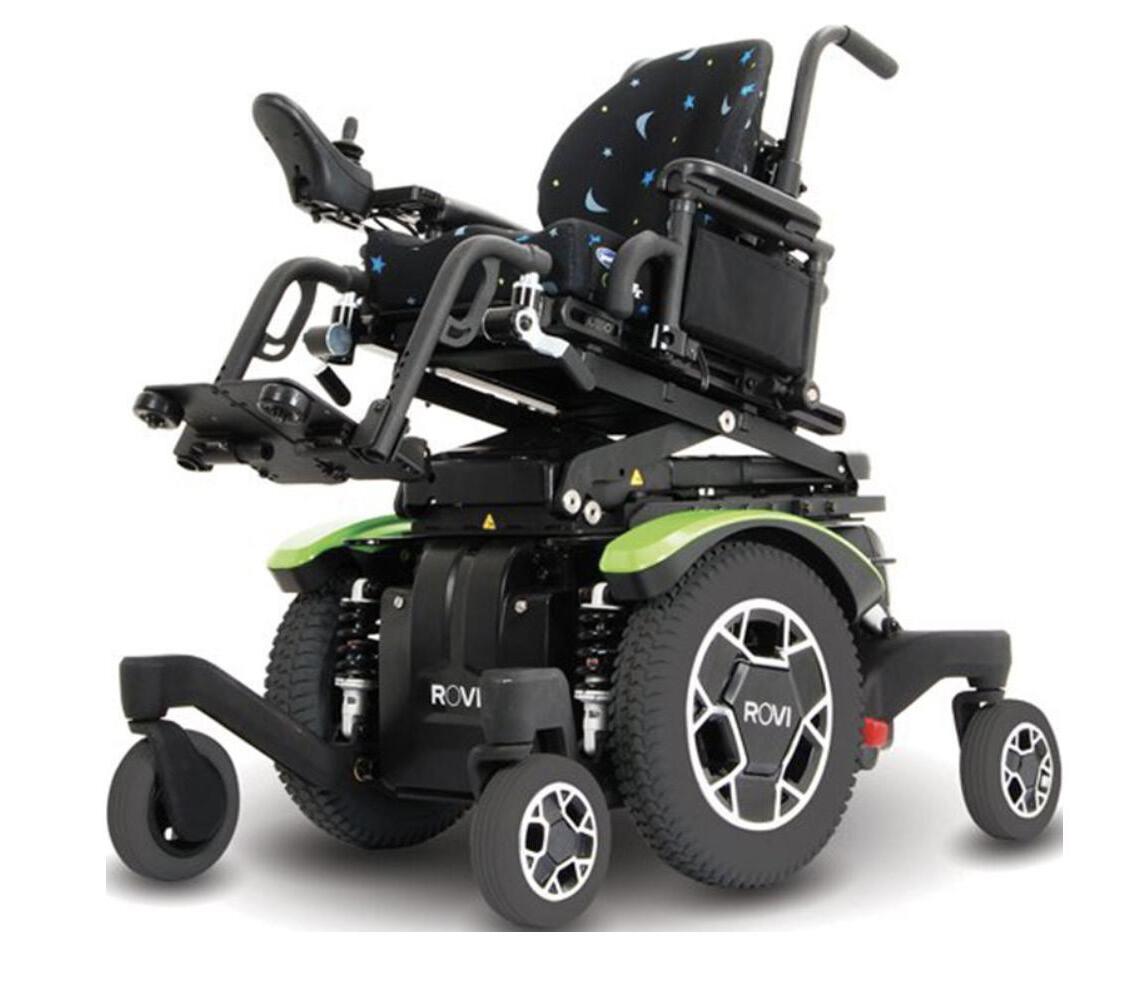
C
Y
Manufacturer: Todo Works
Supplier: APEX Mobility
Weight: Up to 90kg | Height: N/A
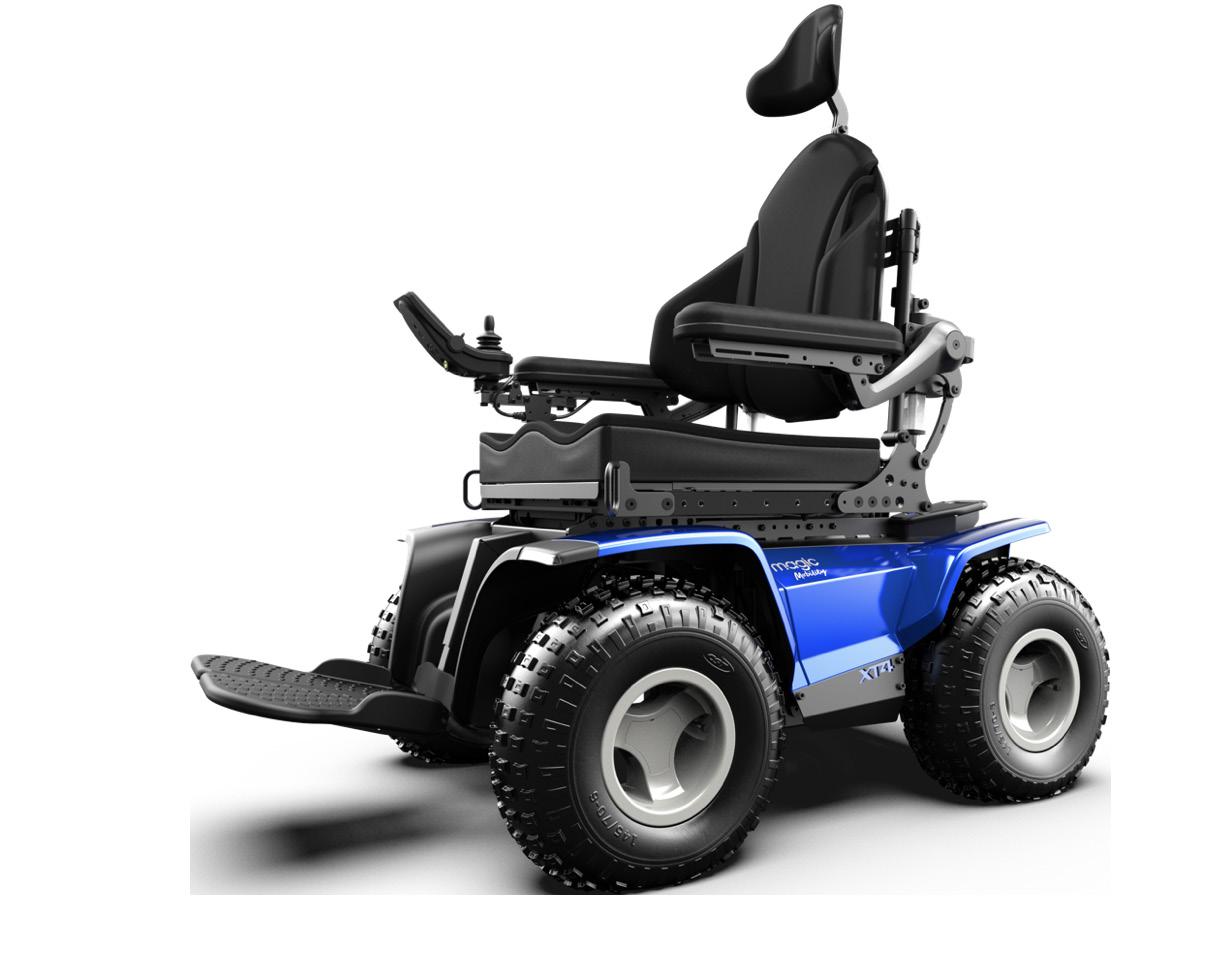
Manufacturer: Magic Mobility
Supplier: Magic Mobility
Weight: Up to 182kg / 400lb fixed frame, 160kg / 350lbs with lift & tilt
Height: N/A
• Each of the XT4’s four knobby off-road tyres are driven by high efficiency, high-torque 700 watt motors.
• Front and rear wheels are mounted on their own pivoting arms that adjust independently to follow the contours of the terrain.
• The XT4 steers using a combination of differential wheel speeds and an industry-leading servo steering module.
• One of the lightest power add-on units available – packed with high tech features and functionality.
• Has a range of 7km and best used for getting around on level grounds.
• Can calibrate and control the unit with a smartphone app.

Helping children and families feel safe, confident and supported - every step of the way.
We understand that every child is unique - with their own dreams, strengths, and challenges. That’s why we take the time to get to know each child and family we support, creating care that is personal, consistent, and built on genuine connection.
Whether your child needs help at home, at school, or in the community, our qualified, experienced and dedicated team works alongside families, carers, educators and health professionals to make each day a little easierand a lot more empowering.
We’re here for children and young people with a wide range of needs, offering support that’s flexible, reliable and always person-centred. From daily care to complex supports, everything we do is designed to help families feel supported and children grow in confidence, connection and independence.
Our supports include:
Complex and 24/7 Care
Positive Behaviour Support (PBS) In-home, School & Community Assistance
Transition & Hospital-to-Home Support
Community Nursing & High-Intensity Supports
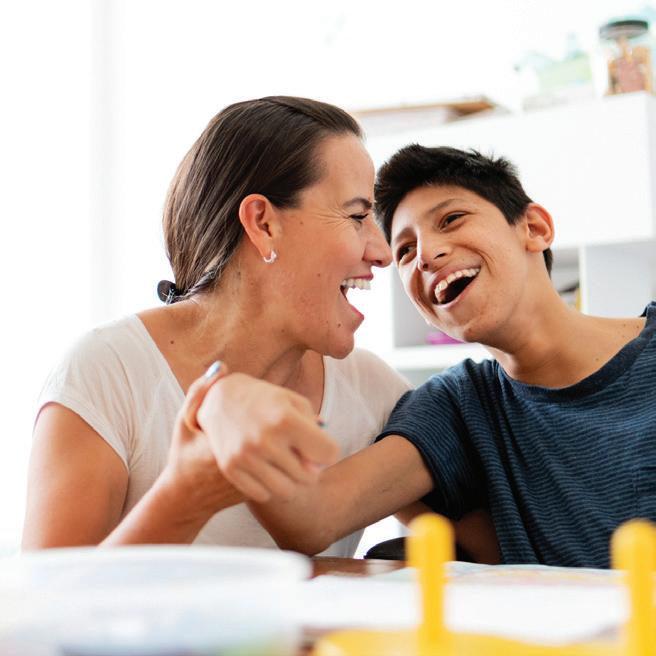
With more than 18 years of experience, CareChoice is a trusted registered NDIS provider, helping children and young people thrive and live happy and connected lives - with the right supports, at the right time.
For more information, call our friendly team on 1300 737 942 or find out more at carechoice.com.au


the switch
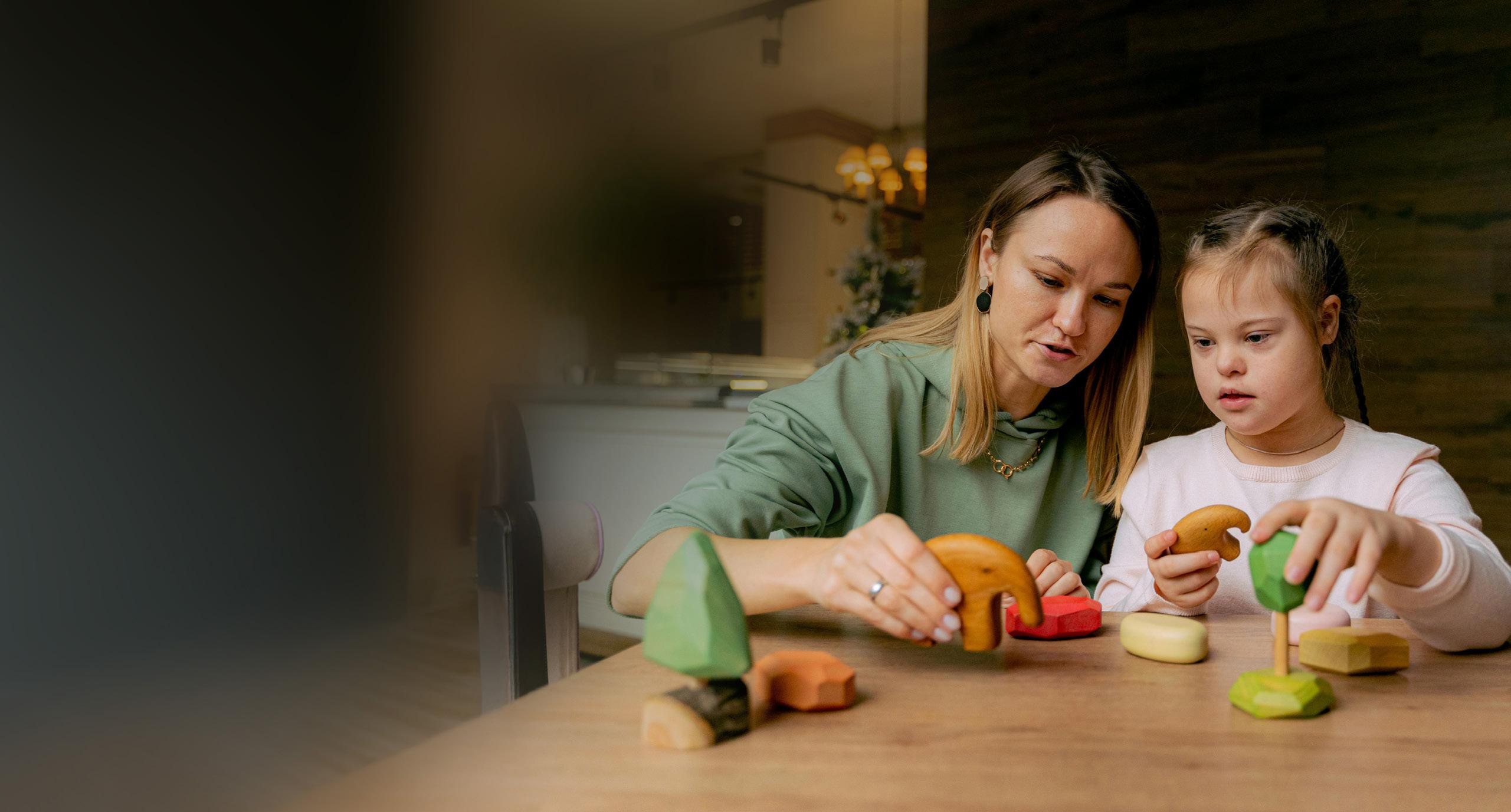
At Windermere, we understand what it takes to support your child. That's why our Plan Management service is designed to make life simpler, freeing you to focus on what really matters.
� Real people, not call centres – you’ll know your plan manager by name
� Fast and accurate payments – no delays, no confusion
� Clear communication – we explain everything in plain language
� Local and dedicated – we live in your community and understand your needs
� Trusted by families – because we treat every plan like it’s our own
Our plan manager is very caring. She’ll send a text to touch base and see if I have any questions or concerns. Over the years, she has been a backbone for me.
Kerry Parent of NDIS participant