SGN February 1, 2026 - Section 1

Page 1


Polyamory advocates fight for anti-discrimination laws in Olympia and Seattle

A new Queer civil rights movement emerges

Jessa Davis is a Transgender woman and local Queer activist who, when she’s not volunteering as a member of Seattle’s LGBTQ Commission, advocates for legal protections for polyamorous people and alternative families in Washington state.

On January 13, Davis’s organization, the Seattle Coalition for Family and Relationship Equity (SCFRE), alongside the Organization for Polyamory and Ethical Non-monogamy (OPEN), successfully put forward a bill to the Olympia City Council that would add “family or relationship structure” to the language of the city’s antidiscrimination laws. The council voted unanimously to bring it to a vote, which is slated for February 9.

Inspired by the work of OPEN and others, like the Harvard LGBTQ+ Advocacy Clinic, that helped pass similar legislation in Oakland, California, two years ago and Cambridge, Massachusetts, five years ago, Davis founded SCFRE as a way for Washington’s polyamorous practitioners to finally protect themselves legally against discrimination in employment, housing, and healthcare.

Now that the bill’s chances of passage in Olympia are looking strong according to Davis, she told the SGN that her organization’s next step will be to replicate the process — but this time at Seattle City Hall.

Polyamory in America

In recent years, there has been a growing cultural trend toward “nonmonogamous” forms of companionship in the US. The Polyamory Legal Advocacy Coalition (PLAC), created in 2020 and composed of a psychologist and five lawyers who focus on LGBTQ+ issues, estimates the number of “consensual nonmonogamous” relationships at about 4-5% of the US population.

OPEN’s 2025 Community Survey Report claimed that nearly 6,000 respondents from 65 countries and 52 US states and territories participated. The survey asked respondents questions regarding their demographics, relationship practices, openness with others, and experiences with discrimination. Sixty-five percent of participants were based in the US, of which 8% were Washington residents (the second largest figure

behind California)

Some of its key findings included the following:

66.8% of respondents had practiced nonmonogamy for at least four years

44.6% identified as Bisexual or Pansexual; 23.8% identified as heterosexual/ straight

61% reported experiencing discrimination on the basis of their nonmonogamous identity over their lifetime (consistent with previous years’ findings); over 40% reported discrimination in the last 12 months

a majority of respondents on a scale of 1-5 were (5) definitely not out or (4) mostly not out to their work peers (56.9%) and extended family (65.8%), while also being (5) definitely not out to members of their religious community (56.1%), work supervisors (57.1%), religious leaders (64.3%),

and landlords (69.5%).

The group also claimed that, now in its fourth iteration, the 2025 survey “represents the largest dataset of nonmonogamous experiences compiled to date.”

The rise in popularity of dating apps like Feeld, built on a philosophy of romantic “openness,” and many others that allow users to choose between “monogamous” and “nonmonogamous” labels may indicate that the country’s views on relationships are shifting. And with literature like Ethical Non-Monogamy: A Practical Guide and also More Than Two: A Practical Guide to Ethical Polyamory, as well as TV shows like White Lotus and Succession, polyamory has steadily been entering the US cultural mainstream; it has even become the subject of nationwide conversation and critique in large, mainstream publications like The Atlantic, New York

Times, and The New Yorker.

But over the years, there’s still been one element of society that polyamory hasn’t caught up with yet: the law and legal protections.

Building a coalition Davis, who lives in her Beacon Hill home with three other Trans women and two toddlers, related how she had practiced polyamory for several years and had been active in the community before she got involved with the legislative aspect. Her journey began while doing some research into the topic of protections for polyamorous people, after one of her partners experienced discrimination. She told the SGN that her partner was fired from their job in the medical field for being polyamorous, reportedly having been told by their supervisor that it was inappropriate for them in their position to have a sex-craved lifestyle.”

“This is illegal — there should be something done about this!” was how Davis recalled her partner lamenting about the experience, and having already looked into its legality, she had no choice but to reply: “Well, technically, it’s not illegal.”

In the time since Davis founded SCFRE, the group has made a lot of progress in a short period of time. She explained how the organization has partnered with OPEN and works in coordination with other local affiliated groups, like the Poly Under 40 Meetup group and Evergreen Hearts, to help bring the various people who practice nonmonogamy in Washington state together.

On October 4, SCFRE held its first “Liberating Love Festival” in West Seattle, which featured a discussion panel, and provided prewritten letters requesting nondiscrimination laws for attendees to take, sign, and mail to their district representatives. Davis reported that around 80 people showed up and that it seemed that “people have been really craving this kind of community.”

In November, the event’s discussion panel was released as an episode of the Seattlebased Mistakes Were Made podcast, which is about “nonmonogamy for imperfect people.” The co-hosts, Alex and Sarah, were joined by Davis and other guests as they

talked about antidiscrimination laws and the importance of building societal acceptance for polyamorous people. Elizabeth Cunningham, a life coach in the greater Seattle area who works with LGBTQIA+ people, brought up the importance of how social change works off of social networking, and that being openly polyamorous can have a “ripple effect” toward building allies and support for the movement. Conversely, Davis warned the audience how “the siloing of our communities and identities saps our collective power.”

Olympia bill

“Fifteen months ago, I did not think we’d be this far with this,” Davis reflected, as she related the story of how SCFRE ended up persuading the Olympia City Council to vote on the legislation, which would add nondiscrimination language to Olympia’s municipal code. Davis said that since the bill doesn’t look to add an entire new code or repeal one, that has helped immensely in convincing the city councilmembers to sign on. The SCFRE bill was able to garner support from several key players, including City Councilmember Robert Vanderpool as the bill’s sponsor; it also received endorsements from the Washington Human Rights Commission and Tacoma Democratic Socialists of America. She pointed out that even the bureaucratic process of getting the bill heard was fairly straightforward: “It was an email and two Zoom meetings, and now we have a bill being [considered],” she said with a laugh of surprise at its success so far.

Councilmember Vanderpool, in an interview with KOMO, spoke to why the

protections were important: “With issues like this, you constantly find that — not that folks are underground but it’s hard for folks to come forward about these things, because it is a very private thing, and we want them to feel welcome in our community and not ostracized,” adding that “the biggest thing that comes up is housing. Folks that are in polyamorous relationships or nonmonogamous, or even chosen families — it’s hard in a chosen family to put someone on their mortgage.”

At the January 13 city council meeting, Davis described how even though a few people who gave public comment were opposed to the bill, the council was unanimous in its mindset on the issue. According to her, Olympia Mayor Dante Pain even responded to one commenter who accused polyamorous people of wanting to abolish monogamy and traditional marriage with “you’re wrong.” She also alluded to knowing somebody on the Olympia city council that is nonmonogamous but did not want to disclose their identity on the record for the sake of their safety.

Seattle strategy

As a Seattle resident with partners and children, Davis is keen on now bringing the fight for antidiscrimination protections to Seattle City Hall. Back in December, the Seattle LGBTQ Commission cosigned a recommendation forwarded by the Seattle Human Rights Commission to the Mayor’s Office and City Council, urging that they introduce “family and relationship structure” terminology to existing city nondiscrimination codes. Davis said that SFCRE will now start reaching out to all Seattle’s

city councilmembers with letters of recommendation from the HRC and Harvard Medical Center, a legal review from PLAC, and fact sheets about Olympia’s bill.

Davis explained that the reason why SCFRE had waited to pursue this up until now was in part because of November’s election, in case politicians less likely to support the bill were going to be voted out. Now that Seattle has elected a new progressive mayor and several new progressive city councilmembers, she reported feeling a lot more optimistic. But unlike Olympia, she said that if a vote in the Seattle City Council were to happen, it probably wouldn’t be unanimously supported.

For Seattle, the changes would require an addendum to already existing city policies around family and parental rights. Davis’s proposed legislation would also coincidentally include adding protective language for Asexual and Aromatic people.

Back in 1986, Seattle was the sixth US city to recognize gender identity as a legally protected status. Davis pointed out that if Seattle were to do the same now for polyamorous people after Olympia, the city would again become the sixth in the US to do so.

Long-term goals

Davis seemed positive overall about the prospect of a nondiscrimination ordinance in Seattle, and that her long-term goal with SCFRE would be to take the fight to other cities and eventually the state. She cited that the biggest struggle of getting legislation passed was “not a question of political resources but [of] people [having] the time and will to pass it.”

Nearing the end of the conversation, she again drew attention to the risks nonmonogamous people face in everyday life.

“Imagine you call SPD about a domestic violence situation, and you have to describe what a polycule is,” she offered as a potential scenario where polyamorous Seattleites might not have protection under the law.

“A soccer mom in Bellevue shouldn’t be kicked off the PTA for being in an open marriage,” she stated, pointing out the absurdity of people who could lose their jobs, homes, services, and positions solely on the basis of their private romantic practices.

“People shouldn’t have to live their lives in fear,” Davis affirmed.

Another reason Davis felt strongly about organizing for local legislation was that, to her, the federal government under President Trump could no longer be trusted to protect people, and that Washington state law had an obligation to fill in the gaps. “I lived in red states before moving to Seattle. They are regulating the shit out of our private lives,” she said, reflecting on the anti-Trans and anti-Queer legislation that has become all too common in states like Florida and Texas.

There were also a few other tangential issues Davis said SCFRE would also be fighting for in the future. Confirmatory adoption is a legal process that allows another parent, whose partner already is the legal adoptive parent of their child, to also become that child’s legal guardian. She pointed out that secondary adoptions can cost tens of thousands of dollars and gunk up the court system. This adoption process, if enacted in Washington state, would significantly benefit both unmarried LGBTQIA+ and polyamorous couples, while also streamlining things. She noted that New Mexico passed it in 2025.

Another potential focus for SCFRE, according to Davis, would be Indigo’s Law, drafted after the death of Trans woman Alice “Indigo” Greene, to address the lack of legal rights in Washington state for unmarried romantic partners after their partner passes away.

One thing SCFRE does not seek to work on right away, though, is amending marriage laws. “We are currently not pushing for plural marriage. Some in the community want this, and see it in the same terms of Obergefell v. Hodges,” Davis explained, referencing the landmark Supreme Court decision in 2015 to legalize marriage equality nationwide.

But in the meantime, she feels excited about her work, and that of other nonmonogamous people across the country.

Information about SCFRE can be founded on its Linktree at https://linktr.ee/ seattlecoalition#536639792; it is also collecting signatures for a petition to Seattle City Council for the antidiscrimination ordinance, which can be found at www. open-love.org/legislativeadvocacy/washington/seattle/scripts

Through books and clubs, Seattle’s Aces and Aros stay connected through community

“Okay, so my roommate got me to do this before I could talk myself out of it,” wrote No_Detective776 to the members of the r/ Seattle subreddit last April. “How on earth does a North Seattle aro/ace girl meet other aro/aces not in like… Tacoma? I feel like I can’t be the only outdoorsy, nerdy ace person north of the Space Needle.” Finding a community, especially one that matches your sexuality, is easier for some than others. If you’re a Gay man in the city, there’s likely a local bar or club that’s explicitly for you. Lesbians in Seattle are great at organizing their own events, as last year’s performative competitions in Cal Anderson Park taught us.

If you’re Aromantic (Aro) and/or Asexual (Ace), however, you likely have fewer options to meet more specific needs. Bars and clubs may not appeal to you, especially if it feels like there’s pressure to hook up. Given that Aces and Aros make up just 0.1% of the US population, one-ninth of the estimated number of Transgender Americans, it might feel impossible to find someone like you, just by naturally navigating the world.

“Many ace people don’t share the fact that they are ace with others, in their dayto-day lives,” wrote loveburp2k16, an outdoorsy ace person who offered to go on a hike with No_Detective776. “I’m often frustrated by the term asexual. When I use that term to describe my sexuality, wellintentioned people genuinely don’t know what it means.”

The barriers grow even higher when you consider dating. Some in the community are genuinely searching for a partner, often for companionship, but this often conflicts with misconceptions that all Aces and Aros are inherently deterred from all forms of sex and romance, or that they’re perfectly comfortable being forever single.

“To be completely honest, using dating apps as an ace person has, at best, been a waste of time and, at worst, left me feeling dehumanized and completely demoralized,” write loveburp2k16. “I am an open book, but having to regularly justify my existence is a chore.”

That’s why, repeatedly, the Aces we spoke with mentioned the value of the internet in their lives. For all their faults, websites like Facebook, Tumblr, and Red-

dit are meant for finding people like you and for discussing hobbies and fixations. Unlike the real world, you can easily find Queer folks proudly presenting their identities for others to see. Finding another Ace and/or Aro person like yourself is just a click away.

“Of all places, I’ve strangely had the most success dating through the Seattle subreddit,” loveburp2k16 told the SGN. “Last year, I met another ace who I did end up regularly going on dates with for around six months. I’m very grateful to have had that experience! I was able to both learn and deconstruct so many things about my identity as an ace person during that time.”

“I think it was 2014 or ’15 when I came across information [on asexuality] on a Tumblr blog,” said Sara Darlington, who founded and leads a book club for the

“Seattle Aces & Aros” Facebook group. “Having the opportunity to read other people’s personal experiences really helped me put things together about my own experiences.”

Seattle Aces & Aros has been an easy, accessible bridge for those looking for Aces

like themselves. You’ll find them hanging out around town, most memorably when they collaborated with the Seattle Pan & Bi Alliance during Pride for a booth called “The All or Nothing Lounge.” But options like Darlington’s book club, which takes place on Zoom, offers community for Aces who may not yet be comfortable with big, in-person affairs.

The club’s members have gone through every nonfiction book on asexuality and aromanticism out there, and they’re now dipping their toes into fictional stories starring Ace and Aro characters. When asked why the club focuses on Ace-specific stories over other books, Darlington said it can be a gateway to meaningful conversations.

“We like to discuss ace/aro representation when it appears. How well do we think it was done? Did any of us feel connected to it?,” said Darlington. “The book gives us a starting point for discussions about queerplatonic relationships, or the way a character’s physical transformation ties into someone’s feelings about gender.”

When one feels ready for those big, inperson interactions, Aces and Aros have

a lot of great options out there. Multiple Aces in Seattle have mentioned their love for hiking and the outdoors, and one night at the Seattle Center Armory, some spent time as padawans (Jedi apprentices) for the Kamino Temple, a guild of Star Wars cosplayers who teach dance-like choreography for reenacting light-saber duels.

The sound of clanking plastic filled the room, as groups went through simulated battles in which they learned how to dualwield two light-sabers at once.

“My friend had been in Star Wars clubs for a couple of years, but I hadn’t quite yet got the courage to be in a new group of people,” said Megan, an Ace who has rekindled their love of performance through the guild. “Once I was in the meeting though? I had such a blast!”

The Seattle’s Aces & Aros Facebook group is always welcoming new members, who can then RSVP for future events. As for the Saber Guild, they’re also on Facebook, and you can see them perform at this year’s Emerald City Comic Con, March 5–8.

CALVIN JAY EMERSON

Rejection,

self-acceptance, and the pre-op

blues: A Trans-feminine story of navigating modern romance

Genitals — perhaps no other part of the body dictates our desires, capacities, and identities more as people on this earth. And from a very young age, we are conditioned — whether through family, friends, the media, the public education system, religions, etc. — to believe that our most intimate bits, no matter what we inherit, will immutably define who we can be and who we can love, for the remainder of our lives. Despite decades of efforts by the feminist and LGBTQIA+ movements to expand the narrow definitions of what it means to be a man, woman, or somebody that subverts the mold altogether, in 2026 we are still in many ways constrained by these gendered expectations in both our public and private lives.

As a Transgender woman, I have spent 28 years of life, so far, getting very familiar with that fact. From childhood, a lot of my actions, mannerisms, and appearances did not sit well with the expectations put upon me as a “boy.” At ten years old, I snuck spare clothing out of my sister’s closet and wore it while lying in bed, resentfully crying to God for not making me a “girl.” In middle school, I began to grow out my hair, shave my legs, and wear more feminine clothing — I was particularly proud of my Joan Jett & The Black Hearts band tee that I’d usually pair with Converses and black skinny jeans (naturally).

It was the late 2000s: Obama had just been elected president, and the winds of social change were picking up. However, my conservative Christian hometown in Eastern Washington would remain hostileto-Queers territory for the rest of my formative years, and I was constantly pressured by family, teachers, and peers to conform more to what I was supposed to “be” and “look like.” It would take until I went to university to discover that the dormant, Queer femininity I had yearned to release from within for so long had a name (Transgender woman) and an associated process I could act upon (gender transition or “transitioning”).

What I’ve learned since then, from dating as part of this country’s now greatly contested gender minority, is that intimacy is inextricably tied to identity and social hierarchy, whether we realize it or not. Restrictions on the kinds of love that can be pursued — and what people will accept as

“legitimate” — affect everybody in some capacity; however, they hits the Trans community especially hard.

And from it all, what I’ve gathered — over years of app-based courtships, heartbreaks, and a long journey toward selfacceptance — is that by choosing to not let myself be stuck in predetermined roles and not following people’s assumptions about who I’m supposed to go to bed with and how, I free myself to seek more fulfilling sexual and romantic possibilities.

Trans turns mainstream

Trans people, and Trans women in particular, were never supposed to be coveted as objects of sexual or romantic desire, nor deserving of love and respect. That was, and mostly still is, the taboo we’re all culturally expected to uphold. It has been long expressed in our movies, music, and stand-up routines (in spite of outliers like Lou Reed, who famously dated Mexican Transgender woman Rachel Humphreys, whom he attributed as being an inspiration for much of his songs). Even the most well-known romance flick associated with our city, the 1993 classic Sleepless in Seattle, has a scene in which Meg Ryan’s friend strongly warns her that Tom Hanks’ character — who inadvertently courts her all the way from Baltimore by sharing his romantic woes publicly on national radio — might secretly be a dangerous drug addict or worse: a “transvestite.”

But over the last decade, due to hardworking Queer activists, Trans exclusion in society has slowly been eroded — dating included. Apps like OKCupid have expanded gender labels and pronouns for people to choose from. Sapphic and WLW events in Seattle regularly make it a point to include Trans and Nonbinary people. Celebrities lend support by wearing Trans flag and “Protect the Dolls” T-shirts, while shows centering Trans stories, like FX’s Pose and Euphoria, have become smash hits.

But with greater inclusion have also unfortunately come conservative politicians, who have cynically fostered resentments among their supporters toward these hard-fought changes. In this day and age, it is strange as a Gen Z Trans person to experience this dichotomy between broader social acknowledgement and a still-linger-

ing (but significant) lack of understanding by others.

Flash-forward to 2019, when I left my comphet (compulsory heterosexual) relationship in college and started to date again. In my first year of transition, I began to benefit from what in the Trans community is called “early passing privilege,” as I experienced for the first time what it was like to be treated as a woman by others.

As much as it felt great to finally receive gender validation, it also came along with harassment and misunderstanding. I started getting catcalled, creeped on by older men, and even followed home from the bus stop. At my summertime miningcamp job, a closeted Trans-masc coworker warned me about “covering up” more, so as to not evoke unwanted attention from the men in camp, despite going out of my way to wear only what I thought of already as “conservative” clothing.

And despite the clear “Trans Woman” label on my dating profiles, cis men would still match with me and go through entire conversations before realizing who they were talking to — and the same went down during in-person encounters. Similarly, in WLW spaces, flirty first impressions often led to discomfort and difficult conversations.

In both instances, romantic interactions with cis people would almost always seem to boil down to what I was currently packing “down there.” In those early years, dealing with people’s disappointment after initially seeming so interested in me took a particularly hard toll on my psyche. After experiencing all this, I now understand why so many Trans people often embrace a solely “T4T”-style dating philosophy, where that is not so likely to be an issue. Some of my most rewarding romantic runins have been with other Trans people, but I have also had my fair share of cisgender lovers too.

Fetishization

Pornhub, the world’s most popular pornographic video website, with nearly four billion monthly visits, releases its user statistics every year. In 2025, the “Transgender” category had risen to the secondmost searched category on the platform, an increase of 58% compared to 2024. Above it, “Lesbian” was the most searched, with

other LGBTQIA+ terms, like “Queer” and “Bisexual,” also making major strides. While the “Lesbian” category had been at the top before, the “Transgender” category had never been so widely searched. However, to take a more pragmatic view of these results, Trans and Queer bodies have long been fetishized and sexually exploited in the adult entertainment industry as well as in sex work, and the recent increase may not necessarily correlate to increased acceptance overall. A common experience for Trans women, especially those attracted to men, is dealing with “DL” cis men who will pursue Trans women behind closed doors but are afraid of being publicly shamed for it by their peers. Often, this dynamic is what informs the “Trans panic” response of men who assault, and sometimes even murder, the same Trans women they pursue.

In my first year of transition, I read for the first time an autobiography of another Trans woman’s life: Janet Mock’s Redefining Realness. She wrote about her journey coming out as a Trans youth in Hawaii raised by a single mother. She was also forced, through poverty and as a Trans woman of color, to pursue sex work as a

means to not only make her way through college but also obtain gender-affirming surgery in Thailand. Of the men who employed her services, she explained that many would explicitly seek her and other Trans women out to play out their fantasies of “sex goddesses” with “something extra.”

People (usually men) who engage in this behavior are called “chasers,” who pursue Trans bodies as a fetish rather than as human beings. Lou Reed (mentioned earlier) was infamous for not treating his Trans partner well. The story goes that when she decided to pursue gender-affirming surgery, his opposition supposedly led to their break-up. Mock comes to the conclusion, after reflecting on those times that “as long as trans women are seen as less desirable, illegitimate, devalued women, then men will continue to frame their attraction to us as secret, shameful, and stigmatized, limiting their sexual interactions with trans women to pornography and prostitution.”

Regarding her poignant observation, I can say that my own dating struggles also align with it. The idea of commitment is discarded as a possibility altogether when there is still so much shame put upon those who pursue Trans partnerships. And if this past year has been any indication, there is still so much stigma left to break down — for those who are attracted to Trans people, the people in their communities that seek to shame them, and Trans people themselves who are just trying to live their best lives.

Pre-op blues

It is difficult to convey to non-Trans people what it’s like to have woken up one morning to realize everything you’d ever been taught about yourself, from birth, was wrong. To have lived years of your life with this vague but unshakable sense of being uncomfortable in your own body without knowing why. To catch a glance of yourself nude in the bathroom mirror, then completely dissociate from what you had just seen immediately afterward.

My epiphany finally came one January morning in the aftermath of an emotional breakdown I had while experiencing the faltering intimacy of my high school sweetheart turned comphet relationship. Quiet contemplation led to frenzied internet searches, and after staying up all night (my mind racing) looking for the answers I had always longed for, there was only one question left lingering in my head: “Have I been a woman this entire time without even realizing it?”

A flood of memories and emotions that I was previously unable to quantify began pouring out, forming into a torrent of truth that flushed my mind and became unmistakable. And three months later, on my 22nd birthday, only five days away from ingesting my first tablet of estradiol, I walked the streets of Capitol Hill for the first time. Accompanied by my ex-girlfriend, who tacitly supported me through the awkward motions of my early transition, we perused the neighborhood as I bought my first dysphoria hoodie from Out of the Closet (which I then proceeded to wear for weeks on end, like a bad affliction). I lamented to her about how it felt not being gendered correctly by the people we interacted with, as we walked down Pike Street above I-5. She comforted me, saying that someday it would all change. But it was also difficult for her to accept the reality of my transition, and she expressed reservations about how I lacked the collective traumatic experiences of being raised “female” to know what it was truly like being a woman.

There is something unique about the position of being on the same wavelength romantically with somebody — but not having the right kind of “hardware” to reciprocate. Out of high school, we dated for over four years through our undergrad studies. Every Sunday morning, I would make her homemade waffles with strawberries, as we’d lie in bed, lazily watching YouTube makeup tutorials and Olympic women’s gymnastics competitions.

When I came out to her as Trans, I followed up my explanation by saying she was under no obligation to continue the relationship. She began to sob while staring into my eyes, then pulled me into an embrace and muttered, “I just want you to be happy.”

But it turned out that the root of our failing intimacy was also because she too had been experiencing a Queer epiphany all her own: she did not feel sexual attraction toward men and penises. Months went by as we both finished college and I steadily made changes to my life. But the perceived lack of speed in my transition began to

frustrate her. She asked in a car ride once if I ever planned on getting “the surgery” and how long that would take. She was additionally very uncomfortable with the fact I had come out as pansexual, having shared with her how I felt attraction toward all types of people. But overall, it ended up being her discomfort with my body and transition that ultimately led to our eventual drifting apart.

The obsession with genitalia in some cis-Queer spaces is often alienating and off-putting to me. Lesbians have used terms like “vagitarian” to describe themselves while hitting on me. A cis Gay friend once told me that the only reason why he felt any attraction toward men at all was because he “loves dick,” not quite understanding the irony of the straight men and Queer women who are constantly attracted to me in spite of my own

But ultimately, I think the real reason why it all makes me feel so uncomfortable is that subconsciously it feeds into the insecurity and discomfort I still feel deep down toward my own body. Men will use misogynistic language to dehumanize women, referring to them purely by their body parts, perhaps even only valuing their existence in this world because of them. In

romantic situations where I’m dismissed for not having the one thing seemingly of value to people, it similarly hurts deeply knowing that it will still take me years before I can finally obtain it through surgical means.

Self-acceptance

But in the meantime, I will try my best to live life with the maximum amount of Trans joy possible. Dating while openly and unapologetically Trans has become as much a triumphant act of defiance as anything else Queer and wonderful worth seeking out in this world.

I think often about the years of my life that were lost spent waiting for “the surgery” that will finally allow me to have intimacy the way I want it. However, I don’t want other people’s pity. Rather, I think it is time we all advocate for a more openminded approach toward one another that says, “We are all continuously in a state of flux, molding ourselves every day into the people we wish to see reflected back at us in the mirror. We are all on a journey toward becoming more ourselves, and just because some are still working on overcoming obstacles on their path, that doesn’t mean they should be completely discounted.”

HIKING TRIP WITH EX GIRLFRIEND IN 2017 MADISON JONES
SUMMERS

Queer love in Seattle: A celebration of relationships

Love is one of the most foundational human emotions. We are born to crave love from those around us, and spend all our lives seeking, grasping, or letting go of great loves. For many in the LGBTQIA+ community, real love stories don’t always look like the movies we grew up with; there isn’t a swelling of violins or an epic kiss at the airport, but there are small moments that mean more than words, pictures, or music could ever capture.

There is also so much love in the act of celebrating everyday Queer friends and their partners, whose relationships have continued to inspired and brighten people’s lives with their joy, tenacity, and presence. Here is a snapshot of the relationships of a few wonderfully Queer friends, acquaintances, and former colleagues whom I’ve had the pleasure of getting to know over all these years.

Jenna and Jess

When Jenna met Jess, it wasn’t a romcom moment. She was just sitting at home, scrolling through the apps, when she came across a witty profile. “Jess had a joke about babkas on their profile that made me laugh out loud,” Jenna recalled. “They were also hot, so I had to message them.”

“We exchanged a handful of fun messages before meeting IRL,” Jess added. “My breath absolutely got caught in my throat the first time we made eye contact. My first impression when I saw her was instant terror, because I thought she was so beautiful.”

Like so many Queer relationships, Jenna and Jess started hanging out and just never stopped. “My favorite thing about our relationship is that I never get tired of spending time together. I miss them when we’re asleep,” Jenna said. “It’s humiliating.”

For the last two years, Jenna and Jess have grown together and built a relationship founded on joy and laughter. “My favorite thing about our relationship is how much we make each other laugh,” Jess said. “Even when we are talking about serious

things, there is always space for a silly joke that makes whatever hard thing we’re talking about feel less intimidating.”

It was during the hard moments, when Jess’s positivity and support grounded Jenna, that she realized she was in love.

“I realized I wanted Jess to be present for vulnerable moments. I wanted them around when I failed at things or felt sad or uncertain,” Jenna said. “Once I had to go to the hospital, and Jess read me Wikipedia articles to pass the time. They have written many sticky notes to help me not forget things, and I collect them on my fridge. Jess makes people feel safe and special.”

It was through the safe space Jess provides that Jenna was able to further explore her identity as a Queer person. “This is my first Queer relationship, and I had some patterns from heteronormative days past to unlearn,” Jenna explained. “Jess was very patient with me. Exploring my queerness through my relationship with Jess has helped me become more communicative, expressive, and attuned to my emotions and needs. I feel so much joy and ease in being Queer together. For me, this has outweighed the challenges imposed by straight society.”

Being with someone who came out later in life never held Jess back. “We have different levels of experience being out, and it never felt like it created a power imbalance in our relationship,” they said. “Jenna has less baggage about being Queer than I do, and being with her has helped me work through some of that. I’ve never been with someone who feels so comfortable with casual PDA, and it’s made me realize that I still felt some shame and discomfort around being Queer even though I’ve been out for nearly two decades. She makes me feel so safe and loved, and I’m so grateful to be with her.”

Billie and Rosey

For over a decade, Billie and Rosey have been each other’s constant in life, even when life has been anything but consistent.

JENNA AND JESS
BILLIE AND ROSEY

The two have gone from college sweethearts to living in multiple cities, and have gone through one transition together, only to find that their love is even stronger now.

Billie and Rosey met way back in 2013 at a noisy Halloween party, while they were both undergrads. “I was fairly drunk. Rosey remarked to a friend after the first meeting ‘Well, hopefully I never have to see that jackass again,” Billie recalled.

“Admittedly, my first impression wasn’t extremely flattering,” Rosey added. “Billie was experiencing the ‘college freshman trying to be the coolest person in the room’ phase, and I was in my ‘very cliquey and judgmental of other people’ phase as well. But… I did note that they were very cute, with very pretty hair, and that stuck with me until we got a better opportunity to get to know each other later that year.”

Luckily, after their less-than-ideal meetcute, Billie and Rosey hit it off. “We later got a reintroduction through a LARPing group at our college, where we were both huge nerds pretending to be vampires in the basement of the admin building,” Billie said. “There, we learned we were both nerds, and I learned I love making Rosey laugh.”

They dated casually for a couple of months but made it official once both realized they’d found someone who made them truly happy.

For both Rosey and Billie, falling in love happened in the small moments, like the time Billie won Rosey a prize at the local carnival. “I won her a rainbow dolphin from a game,” Billie recalled. “Something about seeing her smile as she held it just made me know I wanted to be with her.”

For Rosey, it was seeing how Billie would keep showing up for her. “Billie mentioned a carnival where she won me a toy — named Smooches the Rainbow Dolphin — but what she didn’t mention is that not long after that moment, I got a call from my mother telling me that my cat had gotten out of the house and was lost.” While some partners might bounce during such a stressful moment, Billie leapt into action. “[She] took me home and helped me and my family search for the cat for hours… no question, just doing what she could to help.”

As for the cat? “She was the one to find the cat and bring her home,” Rosey said.

While lost cats and carnival games may sound trivial, Rosey found that Billie was willing to stand with her during the really heavy stuff a few years later.

“About eight years ago, I got the news that my mother had suddenly died — it shattered my family and me,” Rosey recalled. Billie and Rosey immediately flew back to Rosey’s hometown to be close to family. “Billie was not only there for me every single moment but for my family. She made sure we ate when we didn’t want to, kept us occupied, and helped us go through Mom’s things. To this day, my dad still says, ‘I don’t know how we’d have gotten through this without Billie.’ I say the same thing.”

Rosey has also supported Billie through life’s ups and downs. “Rosey has seen me through so many changes in my life, namely my transition,” Billie said. “She started dating a boy, married a man, supported her husband, and became her wife. She’s been my greatest cheerleader throughout my journey, and loves me more each and every day.”

“I am thankful to have a Bisexual wife, whose love has only grown as I’ve come into my own as a Transgender woman,” Billie added. “She’s my greatest proponent, helping me learn things from makeup to fashion to the importance of bike shorts on a hot summer day. The world definitely looks at us [differently] than when I thought I was a man, but frankly, the love we share makes that the least of my concerns.”

From the beginning, Rosey and Billie’s relationship was rooted in queerness, so accepting the outward changes wasn’t too difficult for Rosey. “There’s always been a lack of pretense in our relationship, a discarding of heteronormative performances and gender roles that helps both of us feel free, open, and communicative,” Rosey added. “Billie’s journey in her transition has been such a unique and fantastic thing to get to witness and be a part of; I wouldn’t

trade that for the world. Imagine getting to watch the person you love more than anything evolve into the most wonderful, happiest version of themself before your very eyes!”

Jody and Ashton

Love and neurodivergence can sometimes be a challenge, as Jody realized when they showed up at the wrong location for their first date with Ashton (he/ they). After meeting “the old-fashioned way,” on OkCupid, the two decided to meet up at the Add-A-Ball arcade, although the suggestion of the Ice Box Arcade had been thrown out there. “I’m a space cadet and could only remember Ice Box, so on the day of our date, we went to completely different places,” Jody recalled. “When we finally figured out what happened, I biked over to Add-A-Ball as fast as I could to meet them, worried I had ruined our first date.”

Luckily for Jody, Ashton has a good sense of humor and laughed the whole thing off. “It was honestly such a great way to meet them,” Jody said, “because I’d previously been with people who would have been really upset by what was ultimately an honest mistake, but Ashton was so chill.”

Jody and Ashton’s relationship is founded on healthy communication, give-and-take, and authenticity. They’ve been together for two years, but time feels meaningless to Queer people in love. “It often feels like I met him about two months ago and also like I’ve known him my whole life,” Jody admitted.

“I think what I love best about our rela-

tionship is how willing we both are to make it work,” Jody added. “I feel like in nearly every relationship I’ve been in, I would give 100% of myself, but I wouldn’t always get that in return. This is the first time I feel like I’ve been with someone who is trying as hard as I am every day to be vulnerable and who wants us both to be happy the way I do. We are both very committed to being authentic and good people, and it feels so wonderful to share that with someone.”

Jody and Ashton built their relationship through Discord gaming dates, playing Civilization VI. Their souls connected early on, and Ashton believes it was love at first hug. “[Ashton] will often talk about the first real hug we shared on our second date and what it felt like,” Jody said. “When I think about that moment, it honestly feels like the first time we both loved each other.”

Ashton often shows his love to Jody with handmade gifts. Right now, he’s working on crocheting Jody a cardigan. “Whenever I’ve tried it on so he can see how it’s fitting, I’ll literally start crying, because I can feel how much love he’s put into it,” Jody admitted.

One of the reasons Jody and Ashton connect so well is that they share similar Queer identities — both are Nonbinary. “It means we share a real understanding of the sorts of struggles, both internal and external, we face,” Jody said. “We both share a real desire to understand the other person more deeply, and I feel like that’s partly because as Queer people we’ve had to do so much work to understand ourselves.”

Being in a relationship with Ashton has

taught Jody more about love than they ever could have imagined. It has also opened their eyes to what love is and isn’t as they observe others around them. “I feel like way too many people settle when they shouldn’t,” Jody said. “You should be with someone who is willing to meet you where you’re at and also who you genuinely like. I think everyone deserves to be with someone who feels like they’ve got a person in their corner. I’m just lucky mine is Ashton.” Queer love is sometimes messy, sometimes unconventional, and sometimes the greatest thing that can happen to someone. Queer love is navigating new identities with a partner to lean on, missing the other person when they’re still in the same room, or falling in love with them through a computer screen. Queer love deserves to be celebrated, now, more than ever.

While all of these couples have experienced their own challenges, some unique to their gender identities and sexualities, they also face pressing issues due to national attacks on LGBTQIA+ rights. “Society isn’t really set up for Queer love,” Jody said. “We don’t get to have the correct gender on legal documents; this current administration doesn’t want either of us to exist, so there’s definitely a level of stress there that I imagine cis-het people don’t have to deal with.”

Despite the mounting obstacles, Queer love has always existed, and will continue to, so long as people like Jenna and Jess, Rosey and Billie, and Jody and Ashton continue to find happiness in one another.

JODY AND ASHTON

Trans art show “Sweethearts” celebrates the joys of T4T romance, friendship, and community

Al Pastries is an artist and curator who has long been part of Seattle’s Trans art spaces. A former board member of Ingersoll Gender Center and collector of artwork, Pastries founded the collective Queer Agenda Dot Gay on Capitol Hill as a way to help curate and support other Trans artists. Along with Jennifer Spector of Collective Motion, another Capitol Hill–based Trans arts collective, Pastries has brought over 50 local Trans artists as part of the “Sweethearts: a T4T art show” kicking off on February 13, for Valentine’s Day — including a 10-foot “Saint Mosaic” by the same artist that did Hot Rat Summer

Pastries spoke with the SGN about the upcoming show, their thoughts on supporting other Trans artists, and T4T love, artistry, and community.

Queer Agenda Dot Gay

Pastries told the SGN that their collective Queer Agenda Dot Gay had done one other event like this before. Last summer at The Factory, the group’s “t4t” show on June 12 brought together 31 local Trans artists, whose works spanned a large variety of mediums, from paintings and sculptures to glass and mosaics.

“Our collective views Trans joy as an act of revolution in itself,” Pastries explained. Attendees were greeted first by Madeline’s The Banquet, which offered roses to those who were Trans or wished to be. Pastries pointed out how roses have been an important symbol in the collective’s artwork. Rats were also mentioned as a major theme, as the show also showcased another version of the Hot Rat Summer mural, made with carpet fibers instead of glass mosaic.

Various themes of the Trans experience were put on display. June September created a set of “Gender Reassignment” cards, while Molly Vaughan’s T4T Intimacy showcased various scenes of Trans bodies and sexuality in a watercolor painting.

“I think the last show was very respectful,” Pastries said when asked how people outside of the Trans community responded to it, adding that “there were allies who showed up in good faith to love, understand, and celebrate us.”

“Sweethearts” & T4T

As for the upcoming “Sweethearts” art show and how it ties into Valentine’s Day, Pastries said that although there would indeed be some romantic themes in the artworks, the event plans to take a more all-encompassing approach to the idea of

“T4T.” A statement the collectives wrote on how they view “T4T” as a philosophy says, “T4T is an emotional safety net. It’s where we feel seen in a world that wishes to erase us. It’s trans people loving one another despite the hate that’s frequently directed our way. It’s trans people centering each other, in contrast to the marginalization we face. T4T is an amplification of pure trans joy — a celebration of trans community, where we are stronger together.”

Pastries also excitedly shared their lineup of local Trans artists the show has in store: Oli Lommen Anderson Bigley, who also had work at the group’s “t4t” June show, featuring romantic Trans couples; Maria Dolores Matianzo, who does mixed media sound art; and Siobhan Teahan, who designs textiles and owns the fashion brand New Affection.

"T4T INTIMACY" BY MOLLY VAUGHAN AT T4T SHOW ON JUNE 12

Two harrowing sagas of abusive relationships with Cis men

Editor’s note: This article shares the lived experiences of survivors who chose to speak out publicly about alleged abuse. The SGN offered all those referenced the opportunity to comment, and sought to verify all available factual information, including court records, wherever possible.

Some details are presented as the interviewees’ accounts and could not be independently confirmed. We publish these stories to center survivor voices, examine patterns of harm, and encourage community awareness and support.

If you or someone you know is experiencing intimate-partner violence or abuse, confidential help is available through the National Domestic Violence Hotline at 1-800-799-7233 or www.thehotline.org

A culture of impunity is often how victims of abuse at the hands of male romantic partners describe their experiences. And in the last few years of the post-#MeToo era, there has arguably been a lot of leeway for men of status, from Donald Trump to Joe Biden to all the prominent men in between, who’ve continued to not face proper repercussions for their actions. It seems that in the US today, more than ever, society’s message toward men is: “You can get away with anything as long as you’re rich and powerful enough.” The social expectation is that victims of abuse and mistreatment should just endure it, or meet an incredibly difficult standard of proof in order to see some consequences and obtain justice.

This year, for the SGN ’s Queer Love "Love on the Margins” issue, we are taking a look at two harrowing stories of Queer people who have endeavored to come out publicly with their truth.

Alexis Rose (she/they)

Alexis Rose (Instagram @travelingnursealex/TikTok @travelingnurse) is an online content creator and former ICU nurse turned activist, whose story of alleged abuse by her ex-boyfriend went viral in 2021 after it was shared online. Now out as Queer, she has since gone on to become a strong public advocate for both LGBTQIA+ and women’s rights.

In October 2025, Rose posted about her ex, warning others that he is now running a business in Snohomish, WA In the post, she also mentioned several other alleged victims of his that have not since been served justice.

In an interview with the SGN, Rose told her story of how the two came to meet, their alleged abusive relationship, his behavior with other women (including her friend), his trial, going viral with her story, and the aftermath.

Rose explained that, when they met, she was splitting her time between her

Colorado college town and her work at a ski resort up in Aspen, where he had also worked. “We were both from the … Seattle area. He’s from Bothell. I’m from Issaquah,” she said.

The relationship reportedly started with him pursuing her online. “It was like very heavily manipulative love bombing,” she recalled.

The relationship went on for about nine months, according to her, and in that time she remembered that “the frequency of the violence just kept increasing. And it would take very small things to set him off.”

Rose recounted several alleged instances of abuse and threats of violence during their relationship. On one road trip, “he would pull off the car on the side of the road in Idaho and be like, ‘You know if I left you out here, no one would ever fucking find you.’” At other times, she said, “he would make verbal threats of: ‘I’m going to fucking kill you.’”

She also claimed she suffered physical abuse and rape at his hand as well.

When she was finally able to break things off, he moved on to dating her friend Adrianna, she said. She suspected that he’d done this in order to get revenge on her for leaving him. About a month later, she received a FaceTime request from her friend — whom he had put in the hospital.

The trial

At first, Rose reportedly thought the FaceTime call was just her ex trying to reach her through her friend’s phone. She

told the SGN she denied the request and blocked the number immediately. But when the friend reached out via email and wrote “you need to see what he did to me,” she began to understand the situation.

As Adrianna’s court case against him was underway, Rose explained, the two worked together to build the legal case against him, and reached out to another ex-girlfriend, Kelsey. “The girl he dated before me is the one [with whom] he had deliberately crashed a car into a line of trees, with them both inside,” Rose pointed out. And from their three examples of abuse, they helped the DA demonstrate “a clear pattern of increasingly violent behavior.”

During the trial, he pleaded guilty to second-degree kidnapping and was sentenced to 90 days in prison. But Rose noted that he only ended up serving 30 days, for good behavior. When asked what she thought of this, she said, “Obviously he got the shortest possible sentencing because he’s a wealthy white man.”

Going viral

Although the conviction was in 2018, Rose reported being cautious for years about speaking out publicly against her ex, out of concern for her family’s safety in Washington. She stated that he had allegedly threatened to harm both her mother and grandmother if she ever said anything critical, claiming to know where they lived and worked. However, after her family moved out of state to Arizona in 2021 and she knew they’d be safe, “I went kind of

scorched earth,” she said.

That came when she posted on Twitter the testimony she gave to the DA during the trial, alongside a photo of him, warning others to be cautious. She recalled the attention the post got at the time, and how quickly it spread all over the internet. As she remembered, “it went viral on, like, all these local Seattle pages.”

She explained how several people reached out to her during that time, claiming they may also have been victims of his. One was a Black woman who thought she might have been stalked by him, and that he might have also pretended to be a repair person to get into her apartment Her description of the man and his silver truck closely matched Rose’s memory, as, according to her, his vehicle was a distinct make and model. (Rose said that the woman filed a report with the Seattle Police Department; however, the SGN was unable to find the alleged report.) Rose was able to share with the SGN screenshots of the conversation, but she reported having lost contact with the woman over the years.

Rose also claimed his old high school schoolmates had reached out during that time. They allegedly told her that he had gotten expelled from their private school for violent behavior (the SGN has requested his academic records from Lakeside Academy to verify the claim), and that they’d supposedly watched him assault his own mother in the school parking lot. “It’s just really sad, because his mom’s like an angel,” Rose said. “His mom was a very sweet woman. She’s an insurance broker. I’m sure that’s why he’s now in the insurance industry.”

Rose also said that after deleting her X.com account last year, her original 2021 post and the contacts she had made through it have since been lost.

Rose added that one of her main reasons for going so public was because of how concerningly narcissistic her ex's behavior was. “I remember one time he brought up Chris Brown and was like, ‘See, no one would even believe you, and even if they did, my life is always going to be fine, because I’m a highly successful person.’”

She laughed at the memory, and said it felt ironic for him to say, since she claimed he was kicked out of Western Washington University for selling cocaine, as well as for abusing another ex-girlfriend, and that this was why he ended up moving to Aspen in the first place.

Although the SGN was able to confirm that he did attend the college during the time frame given, had a police record, and did not graduate, our investigation could not independently verify the claim.

Rose’s ex-boyfriend did not respond to the SGN ’s request for comment.

ALEXIS ROSE
CHRISTIAN BLAKE

The aftermath Rose told the SGN that in the time since going viral, she has continuously felt an obligation to help keep other women safe. She expressed an overall pessimism with the criminal justice system’s ability to punish abusers but lauded the power of social media as a tool for women to warn and keep each other safe: “If the courts won’t do it, you can turn that motherfucker into a hashtag, because when women go to look him up — when he meets someone and they look him up on Instagram — they’ll see your story instead.”

She emphasized the societal danger of not holding alleged abusers like her ex accountable, saying, “The reality of the situation is that men like this have a behavioral pattern, and they don’t just wake up and kill someone one day. These are the types of men that we have to look out for, and by giving them sweetheart deals and minimal sentences, you just embolden them further... The justice system does not exist to keep women and children safe. It exists to uphold the white male patriarchy and ensure that men never actually face consequences.”

Asked why she thought other media outlets hadn’t taken up her story over the years, she responded, “Unfortunately in our society, no one wants to lift a finger to address men with behavioral patterns like this until a woman is dead, and then they’ll make documentaries, podcasts, and whatever about the case, romanticizing it.”

Rose did say she found solace in that her abuser would never be able to become an influencer like she had, adding that he had always wanted to be one: “It’s like the worst-case scenario for him: the girl you beat the fuck out of ended up with half a million followers on Instagram.”

Breezy (fae/faer)

In a TikTok video posted on January 10, a user by the name of Breezy (@b_donielle) warned others about experiences with an ex-boyfriend, who is the founder and front man of a local alt-rock band. On camera, Breezy spoke about how discouraging it was to see him so highly platformed in the community, for example, as one of the speakers at the vigil for Renee Nicole Good at Pier 58 on January 8. “He’s a super manipulative abusive human being,” Breezy claimed, lamenting how he had gotten away with hiding his “true” personality so far.

Breezy shared the story of how they met, their relationship, his family, and what he had done, saying that the ex “is a very scary human being” and that his family were powerful people with a lot of reach. His mother, is an entertainment lawyer and former owner of a famous record label, a

fact that inhibited Breezy from going public with the story of their relationship in the two years since the breakup. But since recovering from the experience and going to therapy, Breezy said, it now felt wrong to indirectly protect someone “who’s abused so many people categorically.”

Breezy talked about being brought up in a military household having moved several times as a child before the family settled in Yelm, WA. They are currently estranged from each other, due to Breezy’s coming out as Nonbinary and working as an adult entertainer. Breezy explained where the idea to use fae/faer pronouns came from, having learned about the gender-nonconforming Radical Faeries group: “I first learned about Radical Faeries when learning about the Queer liberation movement. Specifically in, like, the ’60s and ’70s, there were people that were, like, ‘Man, fuck this heteronormativity.’ The baseline is not the binary.... It really is a spiritual way of radically accepting queerness and living queerness in our lives.”

Breezy explained that working as an erotic dancer at strip clubs around Seattle paid okay, but it was also soul crushing, adding that it would be nice to transition into working for more Queer erotic spaces, like go-go dancing, having danced at a few events like Babe Night, but that breaking in was difficult. As a Queer performer often dancing for a straight male clientele, Breezy described the experience of trying to appeal to the male gaze: “I definitely view it as a drag performance of being a cis woman whenever I’m there. I try to play the role, and sometimes don’t do it well. But you know sometimes, I get really lucky with other Queer customers and don’t have to.”

Summer concerts

Breezy recalled first meeting this exboyfriend after attending one of his concerts in Tacoma in the summer of 2022. Having come to see another artist, Breezy was planning to leave when he came up and asked faer to stay. At the time, Breezy explained, “We didn’t talk much the first time, but I kind of got really into [his band], and went back to another show later that summer.”

That is when the two reportedly started chatting and exchanged Instagram profiles, according to Breezy, and in the span of a few months, he began DMing and commenting on Breezy’s posts. Breezy said he seemed to be super charismatic and psyched about his band, but also a little different. He had also given Breezy a lot of compliments during their first interaction, and at the time Breezy interpreted it as him being forward and direct, thinking back then, “That’s cool. I kind of appreciate that in people.”

After grabbing tacos with friends near one of the band's shows in Fremont, they began to go on dates. Breezy described one of those: “He seemed very intriguing. he just was, like, very overpowering,” adding that within the first two months, “I felt as though there was, like, an air of arrogance with just his entitlement to my space and time.”

Breezy recalled how aggressively forward he was when dating, despite attempts to set boundaries within the first month: “I had to let him know: if you come over, you’re not spending the night, like, don’t think that you’re just gonna spend the night.”

But in a conversation three months into dating about what kind of relationship they might want, he allegedly told Breezy that “he didn’t have capacity for relationships.”

“I was so confused why he would say so many things about, even that week, … wanting to be together,” Breezy said. Those mixed signals were also further complicated by the fact that he reportedly introduced Breezy to his mother early on in their dating, at one of his concerts.

He had also been very supportive of Breezy’s gender identity from the first date onward: “[It] was definitely something that made me feel more seen than most people in my life, which I definitely didn’t want to give up,” Breezy said.

But Breezy also felt being led on romantically and thought, “Is he playing me?”

Nonexclusive to exclusive

Looking back on that moment now, Breezy said fae probably wouldn’t have continued engaging with him if it were today, but admitted to being “very bad at being assertive and standing on business back then.”

Breezy claimed they had tentatively agreed to keep the relationship between them “nonexclusive” up until October 2023, a form of “friends with benefits.”

But the dynamic during that period still remained ambiguous, as Breezy pointed out how, when they were together, “the verbiage was that I was his whenever he was engaging with me.” But then on the other hand, “he knew also that I wasn’t actively seeking out other people to be with.”

The unbalanced dynamic and lack of clarity about his true feelings made Breezy feet like “it was a lot of mind games, I guess, with what he was telling me, what he actually meant, and what he didn’t.”

There were other red flags too that Breezy mentioned: “There were things, like, with the sex that, from the very first day, was aggressive and very just not okay.”

But despite holding these reservations, Breezy said the couple decided to try making things “exclusive” in October 2023.

Pretty much immediately, things between them became toxic. During their period of nonexclusivity, Breezy noticed he had another person he was messaging and hooking up with. “He hung out with someone that he was, like, kind of in a friendwith-benefits situation earlier that summer. But he saw her when we were exclusive,” Breezy said, adding that “he didn’t really come forward with what they were doing and how they were hanging out.”

Breezy began work as a dancer at that time as well, which ended up being the final straw for the relationship. The ex-boyfriend reportedly did not like that. While working on a project in the studio that November with some “uncles,” he told Breezy that one of the older gentleman had supposedly found the club fae worked at, liked Breezy’s dancer profile, and talked about wanting to take the group to go watch Breezy perform, not knowing the two were dating.

He had seemed to Breezy very anxious about working with the men in the studio, and decided to hold off on addressing it until two months later, since they supposedly kept bringing it up in conversation. Breezy expressed doubt as to whether the story he told was true: “I don’t know what to believe from him anymore. I don’t even know if this story that he told me is real. I’m assuming it was, because of how big of a deal it was to him.”

Breezy said he eventually decided to tell the men they were dating, and that he claimed to have received harsh criticism from the group: “‘Why are you with a girl who’s for the streets? Like, we thought you were a real man — what are you doing with someone like that?’ He told me that he [physically] fought them.”

The questioning of his manhood by his elders is what Breezy thinks finally pushed him over the edge, and shortly afterward they broke up.

His mother also supposedly did not approve of Breezy’s interest in dancing either. After reportedly picking Breezy up from work, she allegedly said, “Oh no, we have got to get you out of there.” The next day, he had a conversation about it with Breezy who was blunt with him, saying “I, like, from the jump have been wanting to get into the burlesque and go-go scene here in Seattle.“

According to Breezy, he responded in the same way: “We need to get you out.”

Recovery

In the end, Breezy knew things between them were through and that “because I was a dancer, ultimately, that’s why he said that he just couldn’t be with me.”

Fae noticed how his behavior negatively changed toward after Breezy got into dancing: “He would get violent toward me,” Breezy said, mentioning that “it kind of reveled a side of him that reminded me a lot of my abusive father.”

Breezy also explained the overall toxicity of the relationship: “I was scared. I didn’t know how to get away from him. Because, for a while, anytime I did try and be like, ‘I’m done — I don’t want to talk to you anymore,’ he’d, like, talk to me for hours on end, asking for forgiveness, asking me, you know, just, like, let him back into my life.”

Once he had finally decided to cut things off for good, that made it all the more devastating for Breezy. Another reason Breezy thinks he might have finally become motivated to end things was the friend with benefits he had on the side that he could move on with: “He had someone else to talk to at that point that he liked, so I definitely think it was easier for him to discard me.”

After going no-contact with him, he had left an apology letter at Breezy’s door, but “in the letter, it was a lot of like deflection, but [with] him, like, I can’t even call it really an apology letter.”

In the two years since their break-up, Breezy has regularly gone to therapy, which has helped overcome the trauma of their relationship, and has also since taken up emulsion art as a form of healing and self-expression.

Breezy's ex-boyfriend and his mother also did not respond to the SGN ’s request for comment as of press time.

BREEZY'S "UNTITLED" ARTWORK FOR PRIDE IN THE PARK 2025

Lovestruck in Seattle: Romance bookstore in Wedgwood celebrates inclusion

In the residential neighborhood of Wedgwood sits Lovestruck in Seattle, a bookstore specializing in romance novels. This makes it unique in Seattle, as it’s one of the only brick-and-mortar businesses to focus exclusively on one genre.

Upon entering, your eyes are immediately drawn to the dulcet tones of pink and white, reminiscent of sakura petals, with odes and tales of romance lining bubblegum-pink shelves. Of the many love stories, there is an extensive selection of subgenres to choose from, including the LGBTQIA+ section celebrating nonheteronormative slice-of-life ballads. The store’s owner, McKenna Rain, identifies as Queer and wanted to highlight LGBTQIA+ books and authors, and originally thought about

shelving them among other sections before deciding on giving them their own section.

One of these books is Late Bloomer by Mazey Eddings, a Sapphic romantic comedy about an artist who acquires a floriculture farm in search of solitude — only to find the property is already occupied by its previous owners.

Currently, Lovestruck in Seattle is running a preorder campaign for Unrivaled by Rachel Reid, the latest book in the author’s Gay sports romance series “Game Changers,” which has been recently adapted into the popular HBO series Heated Rivalry (Along with selling the other books in the series, Lovestruck created a section dedicated to other hockey romance novels, such as Elle Kennedy’s The Deal.) Rain

describes herself as a fan of the show and said it has helped many bookstores, including hers, find new customers. Rain confirmed that Reid’s series is currently the bestseller this month and was the month before as well.

The store originally began as a pop-up in July 2025, around the time Rain noticed romantic bookstores becoming more popular across the US. She started it with the help of Seattle Restored to test if there could be a market for one in the city. On the first day, there was a queue of over 500 customers, confirming the store’s market viability. Rain then created a Kickstarter to secure the capital needed to rent a permanent space, with a goal of $35,000. The campaign raised $36,129. When visiting

the store, you’ll see plastic pastel plaques on the bookshelves naming the sponsors, people who donated $250 or more to the Kickstarter, including romantasy author Dana Evyn, creator of “The Mirrored” trilogy.

Lovestruck in Seattle is a cozy space that showcases the diversity in the romance genre, which is versatile due to is its ability to be adapted to other genres, such as mystery, science fiction, and fantasy, to name a few. If you’re ever in Wedgwood and have time to spare, this place is worth visiting. Even if you’re not particularly invested in romance or much of a reader, there’s no doubt you’ll find the right book with the help of the friendly staff.

ARIN WALLER
ARIN WALLER
ARIN WALLER

The Ink Drinker: Cocktails, books, and Pride

When it opened its doors in October, The Ink Drinker signaled to book lovers across Seattle that if they need a place to read a book or sip a literary-inspired cocktail, it was the place to go. Located in the heart of Ballard, the literary bar screams dark academia, with its tall bookshelves, black leather chairs, dark blue walls, and low lighting. Whether meeting for a first date, catching up with friends, or simply curling up on the couch with a romance novel, it is a come-as-you-are kind of place.

That was the goal for owner Shelle Yusuf, when she first got the idea for The Ink Drinker. An avid reader herself, Yusuf recognized that there is a stigma around people who go to bars alone, especially with a

book in tow. It can be easy to feel shame about walking into a place like that alone. Yusuf wanted visitors to come into the Ink Drinker and not feel judged for coming solo.

Aside from monthly reading parties at venues like the Hotel Sorrento in downtown Seattle and bookstore cafés, the city didn’t have a spot where people could order an alcoholic beverage while also browsing bookshelves or reading a novel.

“Before I opened up the bar, I remember going to a place and trying to read. Then some guy started bothering me,” Yusuf said. “Like, I’m actually reading because I want to read and have a drink.”

Being a member of the LGBTQIA+ com-

munity, Yusuf also wanted people to feel safe when they walk into the bar, thus the prominent Pride flags in the space. The Ink Drinker showcases the diversity of Seattle with its Queer staff members and visitors.

“We are a spot for Queer dating. I see a lot of first Lesbian dates,” Yusuf said. “I see a lot of returning Lesbian dates, and I see a lot of Trans folks on dates. It is really cool.” For Valentine’s Day, Yusuf is working to coordinate a ticketed, dark romance–themed event with Swoon City Books and local authors. The date and time are still to be determined, with more information to be put on the business’s website and social media.

The Ink Drinker features a wide variety

of food and drinks, the latter with a literary twist. There are alcoholic options like the Lonely Immigrant and nonalcoholic ones like the Grapefruits of Wrath, to name a couple. The former, by the way, is a tribute to Yusuf’s father and the book of poems he wrote in the 1970s at university after leaving Guyana.

Looking back at the first couple of days of opening, Yusuf was pleasantly surprised by the number of people who came in. The kitchen could not keep up, running out of supplies and having to close early on the second day. Overall, Yusuf is shocked by how popular the bar has become, but excited to have created a space where bookworms can just be.

Wander through more than 20 beautiful Garden Displays and shop the Plant Market for one-

COURTESY THE INK DRINKER

Matters

Sophie Lucido Johnson embraces possibilities with new book on nontraditional families

Long before Sophie Lucido Johnson was an award-winning cartoonist for The New Yorker, back before she could ever even imagine herself as a published writer, she was a teacher in the New Orleans public school system, where her love of drawing seemed like more of a pastime than a potential career.

“I never thought I could make art. I think I believed that I wasn’t good enough at it to be allowed to make it,” she said. “About 15 years ago, I went through a breakup with an artist, and I felt so sad that his art would no longer be in my life that I decided to say, ‘Screw it!’ and make it myself. What an amazing decision.”

Eventually, she decided to return to school to study art and writing. “It took two years to come to believe that I was capable of making comics and cartoons,” she said, “but I’m so grateful I let go of whatever cruel little voice was telling me I couldn’t.”

Once she let go of her self-doubt, the sky was the limit, and Johnson started drawing the clouds. “In December of 2018, in the bath,” Johnson recalled, “I was reading The New Yorker’s Puzzles and Cartoons issue and thought, ‘I want to be a New Yorker cartoonist. That is what I want my job to be.”

In 2019, she put her dreams to action and reached out to humorist and friend Sammi Skolmoski, and the two began collaborating. She taught herself to draw in The New Yorker style, and together they submitted ten cartoons to the paper. None were published.

Johnson didn’t let the rejection get her down. Instead, she took the feedback and continued to work on her craft. “I definitely drew more than a hundred cartoons before one was accepted,” she said. “When we finally got an OK, it was early in the pandemic, so I sat alone on my roof and drank a homemade gin and tonic and cried tears of joy.”

As a lover of “weird animals” — espe-

cially pigeons — Johnson’s work tends to focus on whimsy and visual realism. “It usually includes at least one bird and/or one cat and/or one echidna and/or similar,” she said. “I lean in particularly aggressively toward pigeons. A combination of Lynda Barry’s and Chris Ware’s philosophies was my greatest artistic influence, and I think about them every day. I even have them tattooed on my arm.”

Johnson also likes to use her work to focus on themes of found family and collective care. “I truly believe that we’re all living lives that are unnecessarily hard and isolated, because we have a distorted idea of what a family is supposed to be,” she said. “Through my work, I’ve talked to so many people who are living their lives differently, in vast ecosystems of love and care, and I can see possibilities for the ease and joy and meaning that so many of us are longing for. I want everyone to consider possibilities that we don’t see on TV yet.”

Different ways of family

Her newest published book, Kin, takes a unique look into the different ways families can be. Johnson describes it as a “self-help book for people who are spread too thin, at their wits’ ends, scrambling to figure out how to do all the things they are supposed to do under late-stage capitalism to survive.” The book is inspired by her experiences during the pandemic, when Johnson and her partner lived with another couple. Both couples ended up experiencing pregnancy at the same time, and having a closeknit unit to help navigate the twists and turns of both journeys opened Johnson’s eyes to the unlimited capacity humans have for family.

“[We] were struck by how profound and great it was to be able to share things — including, eventually, our pregnancy journeys,” Johnson said. “Everything about cohabitating made our lives easier. Building on work I’d done in the past around

polyamory and queerplatonic partnerships, I wanted to create a guide for people to find a version of the thing we all found.”

Kin dares readers to ask, “What does family look like to me?” and offers a radical answer. “It proposes a future outside of the nuclear family,” Johnson said, “based on close-knit connections among people who exist somewhere between ‘friend’ and ‘family’ — and it offers strategies for building intentionality around those relationships. It’s hopeful and practical.” The book also builds off of Johnson’s past work, centering polyamory and queerplatonic partnerships.

As a nonfiction author, Johnson devoted countless hours to research, devouring studies on relationships, cohabitation, and community. “My research taught me lots of new and surprising things!” she said. “Two statistics I find myself repeating a lot [are]: half of your close friendships turn over every seven years; and it takes more than 200 hours for someone to evolve into a close friend. Friendship takes time, and there are no shortcuts; and simultaneously, friendships shift and change over time, so you shouldn’t expect all of them to stay the same amount of close forever.”

The biggest struggle Johnson faced when working on Kin was finding families willing to speak candidly about their nontraditional structures. “Sadly, polyamorous family configurations are still not recognized as valid by so many people and groups,” she said, “and lots of poly folks worry (I think rightly) that they threaten their employability and livelihood when they come out in a widespread way.”

Still, Johnson hopes books like Kin will not only help raise awareness of the many forms family can take but also introduce people to the idea that family and friend dynamics don’t have to be as traditional as we’ve been taught. “I hope [readers] will be able to create ease in areas of life where they currently feel spread too thin

or stretched to capacity,” she said. “I hope they not only understand but deeply believe that they do not have to be alone, emotionally or actively. And I hope they’ll have the tools to create extended networks of care and love that will move them safely and comfortably through whatever lies ahead.”

Just as Johnson once thought a life as a cartoonist wasn’t possible for her, many people limit themselves when they fail to open their minds to the possibilities of what can be. Kin is a book for people who are open to the idea that the traditional paths — whether starting a family, purchasing a home, or pursuing a new career — aren’t the only ways forward. If there’s one thing Johnson hopes people can learn from her, it’s to take chances and not let a desire for perfection hold you back.

“As children, we are not afraid of an image that doesn’t match the one in our heads; that’s a weird, grown-up thing that we learn over time,” she said. “If you’re interested in making art, make art. Life is short, and art is hot.”

COURTESY SOPHIE LUCIDO JOHNSON
SOPHIE LUCIDO JOHNSON

A Valentine’s Day list of 21st-century Queer cinematic romances

SGN STAFF WRITER

Last Valentine’s Day, I had a bit of fun writing about ten LGBTQIA+ “romances” that I enjoy watching — not just in February but pretty much whenever the opportunity arises. This was a fun, eclectic, and wildly divisive list filled with idiosyncratic choices ranging from 1936’s Dracula’s Daughter to 1992’s Orlando to 2019’s Bit none of which exactly fit the definition of your traditional love story.

This year, I’m offering up ten Queer cinematic romances that are far more conventional (at least in their central relationships), with each one receiving a release (either in theaters or via streaming) during the 21st century. These are delectable delights that bring a smile to my face. Some are bona fide modern classics, while others most assuredly are not. But each makes me happy, and that’s honestly what I feel matters most this time of year.

A few simple ground rules: First, any film I mentioned last year will not appear this time. Sorry, Weekend, Love Is Strange, and Boy Meets Girl (but you should still watch them). Additionally, I’m going to try to stay away from the romantic tragedies (emphasis on “try”). Yes, Ang Lee’s Brokeback Mountain, Todd Haynes’s Carol, and Luca Guadagnino’s Call Me by Your Name are borderline masterpieces, but, as magical as they may be, they can be something of an emotional downer.

I’m also limiting myself to one film per filmmaker. That means some noteworthy titles, like Céline Sciamma’s earth-shattering Portrait of a Lady on Fire, do not appear, as I tried to spotlight lesser-known works whenever possible. (There’s one notable exception, but more on that later.)

Finally, a few honorable mentions didn’t make the cut, not because they aren’t awesome (they are), but more due to their Queer elements not being central to the overall story. Chief among these is Christopher Guest’s remarkable 2000 mockumentary Best in Show. While no one would ever peg this canine-loving feature as being your customary Gay romance, you can’t tell me that the relationship between Michael McKean and John Michael Higgins isn’t one of the great depictions of male love ever put to film. It’s magnificent.

I also want to spotlight the dynamic duo of John Cameron Mitchell’s groundbreaking 2001 punk rock, Transgender musical Hedwig and the Angry Inch and his sex-positive 2006 follow-up, Shortbus. This is an outstanding double-whammy, and both remain revolutionary stories of Queer romance, longing, lust, and sex that are as timeless as they are necessary. Watch them at once.

A few other pictures that I considered but failed to make the cut: Thomas Bezucha’s Big Eden, Harry Dodge and Silas Howard’s

By Hook or by Crook, Angela Robinson’s

D.E.B.S., Pawel Pawlikowski’s My Summer of Love, Ian Iqbal Rashid’s Touch of Pink, Ol Parker’s Imagine Me & You, Yann Gonzalez’s Knife+Heart, Greg Berlanti’s Love, Simon, Jessica Swale’s Summerland, Halina Reijn’s Bodies Bodies Bodies Jimmy Chin and Elizabeth Chai Vasarhelyi’s Nyad, Rose Glass’s Love Lies Bleeding, and a pair of Andrew Ahn favorites, Fire Island and The Wedding Banquet. All are outrageously different from one another. Give each a look.

Without further ado, and presented in the order of their initial year of release, here are ten 21st-century LGBTQIA+ romances I think are perfect for Valentine’s Day.

Kissing Jessica Stein (2001) (Charles Herman-Wurmfeld)

Written by and starring the supremely talented Heather Juergensen and Jennifer Westfeldt, Kissing Jessica Stein is your typical girl-goes-looking-for-the-perfectman-but-finds-the-perfect-girl-instead romantic comedy, and, even though it’s the first entry, it’s still possibly the most vital example of that particular trope. Funny, full of life, and overflowing in joy, this sublime slice of instantaneous attraction and its almost otherworldly magic remains every bit as divine today as it was when first released a full quarter century ago.

Yossi & Jagger (2002) (Eytan Fox)

Based on a true story, this powerful drama from the acclaimed filmmaker is one of the few tragedies to make this list. But it does so for a reason, as this penetrating, exquisitely intimate romance between two Israeli soldiers on the Lebanese border achieves a level of introspective truthfulness that’s strangely hopeful. Even though events ominously move to their foregone conclusion, the idea that intimate bliss is still achievable even in the most extreme and impossible of circumstances is not to be devalued. A titanic, if criminally underseen, work of poetical genius.

Water Lilies (2007) (Céline Sciamma)

Before knocking the world’s socks off with the quadruple whammy of Tomboy, Girlhood, Portrait of a Lady on Fire, and Petite Maman, esteemed filmmaker Sciamma made her impressive featurelength debut with this beguiling and poignant Lesbian coming-of-age love story. Though it’s shockingly quiet and movingly meditative, Pauline Acquart and Adèle Haenel still achieve an electrifying synchronicity that jumps off the screen. An early insight into a director who would quickly go on to make a bona fide modern masterpiece a dozen years later.

The Ballad of Genesis and Lady Jaye (2011) (Marie Losier)

While it’s hardly a great documentary, and undeniably the most problematic entry on this list (for some, if not so much for me), there is still an ebullient grace to this examination of two performance artists purposefully transforming into one another that I find magnificent. Seeing Genesis P-Orridge and Lady Jaye go to such extreme lengths to make a fantastical conceptual idea into a plastic surgery–aided reality is rather haunting (and semi-disturbing), while their deep, overwhelming love for one another breaks every barrier (gender, sexuality, morality — you name it).

Moonlight (2016) (Barry Jenkins)

For all of the caterwauling about which nominees were “most deserving” of the Academy Award for Best Picture, there are far more outstanding films that have won than subpar ones, and Jenkins’s tremendous Moonlight is one of the all-time greatest of those. This decade-spanning look at a child’s evolution into manhood — facing hardships and roadblocks unfathomable to most but a living nightmare for far too many — remains a resilient triumph of found father figures, broken families, internalized traumas, and lost (and subsequently rediscovered) loves that boggles the mind. Unforgettable.

God’s Own Country (2017) (Francis Lee)

This stunning, breathlessly intoxicating drama of sexual longing and emotional catharsis between a young Yorkshire farmer and a Romanian migrant worker is one of the most explosive, captivating, and downright mesmerizing debuts of any filmmaker in the 21st century. Writerdirector Lee creates an invigorating landscape of catharsis, need, and understanding that smashes through cultural barriers to become something universally affecting, going well beyond stereotypical gender and romantic clichés in the process. A cinematic miracle deserving of greater recognition.

Lingua Franca (2019) (Isabel Sandoval)

Writer, director, and star Sandoval’s elegant, melancholically tender drama of an undocumented Filipina Brooklynite falling in and out of love (and maybe back in again) with the prickly grandson (Eamon Farren) of the elderly Olga (Lynn Cohen), who is suffering from dementia, is simply marvelous. Each step is authentic. Every movement is an organic extension of the one that came before. Equal parts heartbreaking and therapeutically optimistic, this drama is a purifying balm to a weary soul for all viewers, Trans and cis alike.

Here is when I break my own rule of one film per director. But when the trilogy is this awesome and this intimately connected, rules get thrown out the window (or, in this case, maybe shoved head-first through the bread slicer). Janiak’s foray into author R.L. Stine’s terrified town of Shadyside is nothing short of miraculous. Not only does the filmmaker craft a cohesive, overarching tale of generational subjugation, misogyny, sexism, and economic duress, she also craftily slips in one of the great young-adult romantic hero’s journeys I’ve ever seen. The love blossoming between Deena Johnson (Kiana Madeira) and Sam Fraser (Olivia Scott Welch) while under the threat of impossible, centuriesspanning circumstances is the stuff of legends, making their eventual triumph over patriarchal terror all the more spectacular. Better, it makes it essential.

Bottoms (2023) (Emma Seligman)

Bottoms is the funniest film of the past decade, maybe the entire 21st century. It slyly conceals rapturous kernels of teenage truth among all of its absurdist, vulgar, and goofily hyperviolent layers. A cagey sex comedy of two high school Lesbians starting an all-girl fight club in the hopes of eventually getting laid, the film quickly ascends to a level of Heathers-meets-Mean Girls-meets-Superbad bedlam that must be seen to be believed. Yet, at its heart, this is a story of Queer resilience, survival, and self-acceptance that goes far beyond the fisticuffs, four-letter-word putdowns, and fiery explosions, with stars Rachel Sennott and Ayo Edebiri fearlessly going for broke as they give their characters unexpected complexity and depth.

Red, White & Royal Blue (2023) (Matthew López)

A candy-coated Gay romance that purposefully traffics in several romantic comedy conventions — only to devilishly subvert them as it moves along to its heartwarming conclusion — this adaptation of Casey McQuiston’s best-selling book is the textbook definition of a “crowd pleaser.” Though not particularly deep and hardly groundbreaking, the movie is so gosh darn entertaining that none of that remotely matters. No wonder Amazon MGM Studios is moving forward with a sequel, set for release in 2027. Here’s hoping that opens in theaters, and not only on a streaming service.

Fear Street: Part One – 1994; Fear Street: Part Two – 1978; Fear Street: Part Three – 1666 (2021) (Leigh Janiak)
SARA MICHELLE FETTERS
KISSING JESSICA STEIN
YOSSI JAGGER
BALLAD OF GENESIS AND LADY JAYE
WATER LILIES
GOD'S OWN COUNTRY
MOONLIGHT
FEAR STREET PART ONE
LINGUA FRANCA
RED, WHITE & ROYAL BLUE
BOTTOMS

Aquarius

(January 20–February 18)

You’re going to have a hot, wet, spicy evening with your man on Valentine’s Day… And by that we mean your boyfriend’s going to convince you that Buffalo Wild Wings is an acceptable date spot, yet those mango habanero wings actually sound pretty good, and you think you can handle your spice. Unfortunately, your acid reflux thinks otherwise.

Pisces

(February 19–March 20)

The arrival of Mercury in your celestial cycle is making you feel daring. It’s time to get out there! Speed dating! Matchmaking! You’re back on all the apps! That being said, all these interactions with strangers will soon deplete your inner spirit, and by Mercury’s descent, you’ll have spent a weekend crashed out on your couch binging 2000s reality shows on Netflix. The Seattle Freeze is a myth, but your social battery is very real.

Aries

(March 21–April 20)

I’m sorry to tell you this, but your standards in a partner will be lowered, then irreversibly damaged, over the coming month. You’ll give the girl who lives in the trashed studio a shot. You’ll text back that one guy without a profile pic on Grindr — why not? You can change your mind later, but the things you’ve seen? Those stay with you forever.

Taurus

(April 21–May 21)

A few solar years may have passed, but you still have time to win your ex back. Sure, you may not have changed much since then, and the only self-reflection you know is your own bathroom mirror, but hey! Despite what your friends tell you, they haven’t changed much either. Marriage, schmarriage!

Gemini

(May 22–June 21)

Heed this warning: you need to stop giving Sephora so much of your money. No matter what her friends Elle, Kora, and Maybelline tell you. If you’re motivated by empowerment, remember that while makeup is a beautiful art, it should never come at the cost of your comfort with your own body. You are always enough to be loved. If you’re motivated by fear, however, just check your bank account.

Cancer

(June 22–July 22)

You’re going to awkwardly walk into a sex toy store. You’ll just as quickly leave that sex toy store. The prostate massager that could have changed your life will go unpurchased.

Leo

(July 23–August 22)

You’re going to meet a goth girl in her late twenties and a disaster Bisexual in a Hawaiian shirt. They saw you across the bar, and they’ll tell you that they “love your vibe.” If you lack the proper selfpreservation skills, you’ll soon experience the worst threesome of your life.

Virgo

(August 23–September 22)

Looks like someone’s going to be single pringle again! Hope this revelation doesn’t bum you out, but you should have seen this coming. After all, you do know what Virgo means in Latin, right?

Libra

(September 23–October 22)

Tides of uncertainty have you concerned about being seen as performative. You pause briefly before ordering that strawberry matcha latte. You second-guess your collection of tote bags. Maybe you should just pick up your groceries by the handful, like a real man? No, fuck that. You’re only really being performative when you keep hiding the journals, houseplants, and Lorde albums around your place, just to meet some social standard. Live your truest self, you wonderfully basic bitch!

Scorpio

(October 23–November 21)

So, just because you watched Heated Rivalry, you really think you’re ready to play varsity hockey? Get checked against the plexiglass by a 250-pound Canadian bear once, then tell me if you’re in the mood for a blowjob. Sex won’t be the reason you’ll feel sore in the morning, idiot.

Sagittarius

(November 22–December 21)

Things are actually looking up for you, Sagittarius! You’ll be the belle of the ball. You’ll go out, hit the clubs, make some great memories over the coming weeks. You’ll have a lot of kinky fun in the bedroom, for sure Though, in an ironic twist, you’ll realize that the thing you wanted most was simply the company of someone you love, and that you can actually live without much excitement for a little while, at least until Pride. You’ll also pick up a nasty cocaine habit.

Capricorn

(December 22–January 20)

This month, you’ll finally discover Victoria’s Secret: she’s a 49ers fan. You’ll be disappointed in her life choices, and this will inspire you to finally toss that old bra in your closet with the fraying underwire.

The Adventures of Platrick the Queer Platypus - Ezra Mezcal

Turn static files into dynamic content formats.
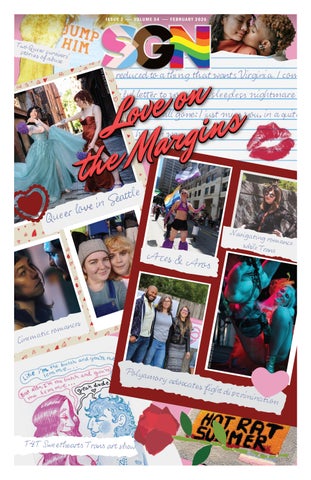
Create a flipbook