Here to Stay: Promoting Financial Security and Economic Opportunity for
Immigrants
California Reinvestment Coalition February 2019 Table of Contents Executive Summary 1 Introduction 3 Research Process and Methodology 5 Findings 5 1.Immigrants face barriers to financial products and services 7 2.Immigrants face economic insecurity and barriers to wealth-building resources 10 3. Immigrants face other exploitive practices due to citizenship status 13 Recommendations 16 Conclusion 18
in California
Executive Summary
Immediately following the 2016 election, the California Reinvestment Coalition (CRC) began hearing concerns from our members about their immigrant clients’ fears resulting from the hostile anti-immigrant political environment under the new Trump administration. CRC surveyed our members to better understand the main barriers facing our clients and potential approaches to tackling those obstacles.
We found that immigrants, despite having a strong desire to build family and community wealth, face unique barriers to financial security and economic opportunity. These obstacles take many forms and stem from a variety of sources, including discrimination by banks and a lack of access to loans for small businesses, affordable housing and home ownership options, and access to safety-net programs. Immigrants also face unique financial challenges because of their status, such as higher levels of wage theft and fears of what will happen to their assets if they are deported.
CRC’s Here to Stay campaign emerged from our initial research, and is designed to engage immigrant leaders to advocate for legislative and corporate reforms that promote economic equity, community wealth-building, and financial security for immigrants in California. Our goal is to engage immigrant families in advocacy and connect them to resources they need to overcome financial insecurities.
This report focuses on the first phase of the campaign, the research and community engagement phase. CRC partnered with dozens of organizations and met with approximately 200 Bay Area immigrants and their families to better understand the unique impediments to financial security and economic opportunity that immigrants face.
Findings
Barriers to financial products and services
Our findings show that most immigrant consumers distrust traditional banks because they feel unwelcomed, and regularly face discrimination by banks. Similarly, many immigrant families shared that they want to build assets, but they do not have access to safe, affordable financial resources. Most people we interviewed said that banks should invest in ensuring the financial well-being of immigrant small business owners by increasing their access to credit, loans, and safe banking options. Immigrants in less densely populated areas told us that accessing financial resources such as local bank branches, public benefits, and legal resources can be challenging for those who do not have cars or easy access to transportation.
1
Economic insecurity and barriers to wealth-building resources
One of the most pressing issues for immigrant families in the Bay Area is the lack of affordable rental housing. Many immigrant respondents with little or no credit histories mentioned that it is difficult to rent an apartment or apply for a mortgage, especially when they do not have a cosigner. Undocumented families do not qualify to receive safety-net programs and public benefits, such as the California Earned Income Tax Credit (CalEITC). Undocumented immigrant seniors do not qualify for social security benefits and have limited options to save for retirement.
Exploitive practices due to citizenship status
Documented and undocumented immigrants worry about what will happen to their assets if the government deports them. Immigrants not sure how to protect their assets in the case of an unexpected ICE raid. Many immigrant workers also face wage theft and abusive working conditions due to their legal status. Trying to navigate the U.S. immigration system is very complex, and the lack of safe, accessible legal services in some communities makes it even more difficult. Respondents noted that the federal administration’s anti-immigrant rhetoric and proposed changes related to the public charge rule will only further harm immigrants.
Policy Recommendations
CRC’s Here to Stay campaign coalition suggests that the following should be priorities for public policies and corporate practices to increase immigrant financial security and economic opportunity.
1. Push for safe banking and equitable access to small business lending, mortgages, accessible retirement systems, and public benefits for ITIN holders.
2. Work collectively with housing partners to promote affordable housing and homeownership for immigrant families along with identifying opportunities to mitigate displacement in the Bay Area.
3. Promote access to safe and affordable banking accounts for immigrant youth.
4. Advocate for corporate policies and investments that address financial barriers to long-term asset building in immigrant communities, such as increased access to small business ownership and home ownership.
5. Support allies on initiatives that address abusive work conditions, wage theft, and lack of work benefits.
Immigrants overwhelmingly want to achieve their American Dream; policymakers must prioritize the needs of immigrants by introducing legislation that promotes financial security for immigrants and creates greater economic opportunity.
2
Introduction
Throughout its history, California has been the destination for people searching for a new home and a better way of life. Each successive generation of immigrants has contributed to the rich cultural and economic diversity of the state. With 10 million immigrant residents, California is currently home to about a quarter of the foreign-born population in the U.S. In 2016, the most current year of data, 27% of California’s population was foreign-born, about twice the national percentage.1
Immigrants have long battled complex rules and private sector practices that restrict their ability to earn income, build family wealth and respond to financial emergencies. Now, hateful federal actions and rhetoric have made many families even more worried about their safety, cut off from work opportunities, and afraid to access safety net programs, legal services, and other resources they qualify for, need, and deserve. These anti-immigrant policies fly in the face of California’s long-standing values of fairness, opportunity, and inclusion.
CRC’s Here to Stay is focused on uplifting the community
Immediately following the 2016 election, CRC heard concerns from our members about their immigrant clients’ fears resulting from the hostile anti-immigrant political environment under the new Trump administration. According to our report “Hiding in Plain Sight: How Rhetoric and Policies are Hurting California’s Immigrant Communities and Families,” social service providers were concerned that clients who may have accessed various services were instead going “underground” to avoid scrutiny and possible deportation for themselves or people in their families.
CRC’s Here to Stay campaign engages and empowers immigrant leaders to identify and push for legislative and corporate reforms to create economic equity, community wealth-building and self-determination for immigrant families in California. The Here to Stay campaign works strategically in low- and moderate-income communities to empower and advance immigrants. Through a dynamic ecosystem approach, the campaign leverages partnerships and allies to combat economic inequity, social injustice, and political attacks; and to build wealth and power now and for future generations.
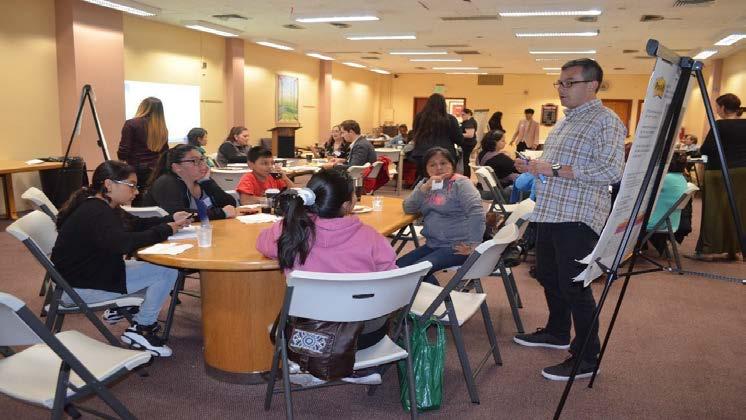
Community visioning workshops were essential in identifying priorities
In the first year of the Here to Stay campaign, CRC has focused on immigrant communities in the San Francisco Bay Area, with input from immigrants in other regions. Immigrant leaders have been essential in defining the direction of the campaign and of the research that informs
1 Public Policy Institute of California. “Just the Facts: Immigrants in California.” https://www.ppic.org/publication/immigrants-in-california/
3
the campaign’s strategic priorities. Through a collaborative approach, community members and nonprofits partnered to develop a vision for potential reforms to boost financial security for immigrant youth and families, such as through greater access to safe banking products and affordable credit.
We connected immigrant families to financial resources
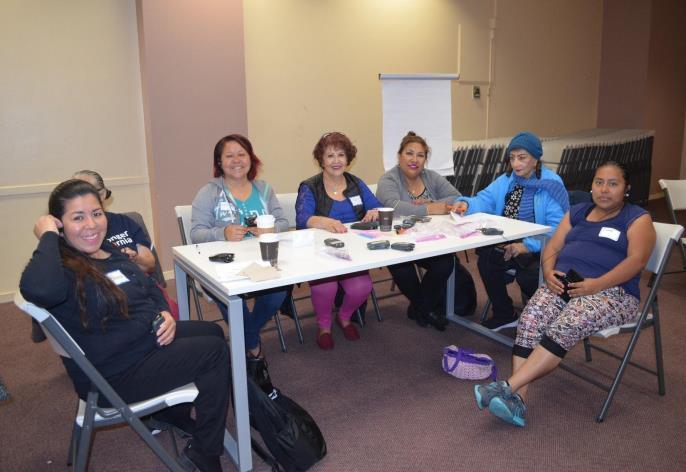

In the process of engaging immigrant community members, we have connected families with financial resources and provided opportunities for leadership and leadership development. Participating organizations have provided various services for immigrant clients, such as free Volunteer Income Tax Assistance (VITA) tax preparation, small business planning, financial capability programs, first-time homebuyers programs, savings platforms, lending circles, youth financial education, and early childhood education support.
This report is designed for community members, nonprofit and philanthropic leaders, executives in the financial services sector, and policymakers who are interested in better understanding the barriers that prevent immigrants from accessing economic and financial resources. It provides personal stories of how immigrants are dealing with a political system and economic climate that is often overtly hostile to them and their interests, and it provides recommendations from impacted immigrant community members themselves on how to address these barriers. While focused on the Bay Area, the findings and recommendations have implications throughout California and to other states as well.
4
Research Process and Methodology
The purpose of this research was to hear directly from Bay Area immigrants about what impedes their ability to achieve economic security and to hear their insights on how to address those impediments. We worked closely with more than 30 organizational members and allies in the Bay Area to develop a multi-faceted approach of focus groups, interviews, surveys, one-on-one meetings and community visioning workshops. We settled on a participatory community research model in which participants took the lead and highlighted issues they thought were most impactful for them as a community. We used aliases to protect the identity of participants and ensure that they felt safe to disclose their stories.
In the first phase of the campaign, we worked with dozens of organizations and met with approximately 200 immigrants and their families to understand the impediments to financial security and economic opportunity that they face. We worked with immigrants and organizations in San Francisco, Alameda, Salinas, and in Contra Costa and Santa Clara Counties. We spoke with people with various levels of documentation status, including foreign-born U.S. citizens, U.S. permanent residents (“Green Card” holders), people with Individual Tax Identification Numbers (ITIN holders), Deferred Action for Childhood Arrivals (DACA) recipients, victims of crime living in the U.S. with U non-immigration status (U-Visa holders), people with no documentation, mixed-status families, and the children of immigrant parents. We initiated most discussions with a general question about the barriers they faced when they first arrived in the U.S. The most impacted immigrants framed the research and how we proceeded with data collection.
Findings
We initiated interviews by asking participants to describe the barriers they faced as immigrants to this country. Many respondents spoke of a language barrier; difficulty in understanding a new system; culture shock; not knowing where to get medical care; adapting to the unknown; being away from family members and friends; and not knowing exactly where to get basic needs met. This question was helpful to start the conversation in a way that bonded participants in a shared experience.
Secondly, we asked people how they define financial stability. Respondents spoke of:
● Making ends meet, including permanent and living wage jobs
● Access to safe banking products, like personal and business loans for ITIN holders
● Affordable rent and homeownership
● Starting a small business and the ability to attain alternative income
● Youth accessibility to savings platforms and access to safe banking products
● College education and accessible loans for (un)documented students
● Affordable childcare services
5
We heard many accounts of how different economic factors intersect. For example, many people spoke of the cascading impact of the high cost of housing in the Bay Area. They stated that unreasonable housing costs drive people to work extremely long hours, often at two or three jobs. They also said that high housing costs force people to accumulate excessively expensive, often predatory, debt to remain in their communities where they have a sense of belonging. Some of the survival mechanisms that people mentioned include having a credit card that they use for cash advances or taking out payday loans to pay rent. Both of these short-term borrowing strategies can lead to cycles of vicious debt and worsening poverty.
Participants said immigrants are highly susceptible to being paid below the minimum wage and face labor exploitation. Undocumented immigrants have additional barriers because it is harder to find a stable job, so they often end up working wherever they can just to earn income for their survival. Recently arrived immigrants alluded to how they are more likely to face higher levels of labor exploitation than workers that have resided in the U.S. longer. The language barrier and lack of knowledge of worker rights law make it more difficult for immigrants to advocate for their rights.
“The most important thing is to get a good job. It’s more important than learning English. I want a good job that offers health insurance. But how am I supposed to learn [the necessary skills] if I have to take care of the kids all day? … We don’t want to depend on government benefits but the limits for qualifying for help are too low, and by themselves, they aren’t enough to make it. My husband got a new job that doesn’t pay great, but now we don’t qualify.” -
Alejandra
Immigrant stories framed the research
The immigrants we spoke with shared many different stories of the barriers that they faced in achieving financial security and accessing economic opportunity, but several consistent themes emerged. Three overarching concerns were revealed:
1. Immigrants face barriers to financial products and service
2. Immigrants face economic insecurity and barriers to wealth-building resources
3. Immigrants face other exploitive practices due to citizenship status
During their discussions with us, many immigrants spoke of additional challenges and difficulties, such as fears of being deported, detained, or separated from their families, and the toll that living under these stressful conditions take on individuals and their families. While the focus of this research is on financial and economic issues, it is important to note that these broader issues of immigrant security and safety are directly interconnected. The heightened pressures facing immigrant communities stem from the current administration through new, regressive anti-immigrant policies; heightened enforcement of U.S. immigration laws that unfairly punish foreign-born residents, especially people of color; and an unending stream of toxic, racist rhetoric coming directly from the White House.
6
1. Immigrants face barriers to financial products and services
Checking and Savings Accounts
85% of respondents said they had faced discrimination by financial institutions in some way. Many people we interviewed who have tried to open bank accounts at traditional retail banks believe they were denied accounts because they do not have permanent residency or citizenship.
“When I went to open an account at Wells Fargo in San Jose, the bank tellers refused to approve it. They said I would have to wait three months to see if they could let me open a bank account. They did not provide a clear explanation as to why they did not let me open checking and savings accounts.” - Ana
Lucia
The demand for safe, affordable banking products already exists; 92% of respondents said immigrants need greater access to safe banking options. Yet many immigrants we interviewed reported that bank tellers had asked them about their citizenship or asked where they got cash to open an account, and that this was evidence of discrimination and sowed mistrust. Many of the nonprofit service providers who work with immigrants indicated that banks had taken advantage of their clients, trying to sell bank products and add-on products without clearly explaining interest rates, fees, and other terms. Often contracts are only offered in English rather than in an immigrant’s native language.
Providing marketing materials and contracts in languages other than English and treating immigrants with dignity and respect are initial steps that encourage immigrant consumers to open bank accounts. Financial institutions must also provide training for bank tellers on how to best serve immigrant clients.
Banks should refrain from asking new or existing customers about their citizenship status. Questions that specifically inquire about citizenship status marginalize immigrants, are intrusive and unnecessary, and lead immigrants to further distrust banks. When a customer wants to open a new account, there are several forms of government-issued ID they can use. Some acceptable forms of identification include: green cards, state-issued identification cards, social security or ITIN numbers, and passports. If banks feel they need to confirm a customer's account, these same documents can be used to verify identity.
This unmet need for safe banking options forces immigrants to turn to alternative financial services. 98% of respondents expressed that it is easier to access payday loans with highinterest rates than safe banking products due to the discriminatory treatment that they receive from banks. In less densely populated areas, immigrants struggle even to access safe, affordable financial resources. Many immigrant families reported driving 20-30 minutes to locate a bank, only to feel discriminated against when they arrive to do business.
7
Credit for small businesses
95% of the respondents said immigrants need better access to credit and capital to start a business.
Maria, a business owner in San Jose, shared her story about how challenging it was to launch her own business. “As immigrants, we come with the goal of making the American Dream a reality for our families,” she said. “I wanted to become a business owner to help my daughter pay for college. I couldn’t get traditional loans. I almost fell for predatory lending, but luckily, I was able to get loans from friends and family members. It was a struggle because I had to wait longer to launch my business.”
Maria’s story illustrates the stories of many immigrant families who are working hard to start and expand their own businesses to make ends meet. They are looking for opportunities to grow their businesses. Yet they often face systemic barriers that further marginalize them and make them less likely to achieve financial security.
Additional barriers to accessing small business loans and lines of credit that immigrants reported include: general distrust toward banks, the absence of having an established credit history, inadequate technical support for launching or expanding a new enterprise, a lack of access to seed capital, and a lack of interest from banks in lending to small business borrowers. Many CRC member organizations provide small business loans or small business consulting services to immigrant entrepreneurs. However, the demand for these services exceeds the capacity of the the community-based organizations that provide them. Financial institutions must build partnerships with non-profit organizations and reinvest in low- to moderateincome communities.
“Since I do not have a Social Security, I have many barriers. I already have my own house cleaning company; I employ about 10-15 workers. I would like to expand my business eventually, but I do not have a credit history to qualify for some loans to hire more works and sustain my business.” - Yang
When immigrants have access to small business capital, they are more likely to start a business, expand their enterprises, hire more workers, pay and earn living-wage salaries, and expand community wealth.
Credit for homeownership
98% of respondents aspire to homeownership but need better access to affordable mortgages.
Access to capital is a significant barrier to homeownership for many residents. Many ITIN holders who are first time home buyers reported that they struggle to find affordable mortgages. While studies show that ITIN borrowers have lower rates of default than traditional
8
borrowers2, there currently exists no secondary market for ITIN mortgages. Yet 24% of undocumented immigrants nationwide own a home3, and collectively, undocumented immigrants nationwide pay an estimated total of $3.6 billion in property taxes annually.4
Moderate-income clients are more likely to consider homeownership, starting a business and savings. However, they still face financial barriers because they need to build their credit. Some have a strong credit score but have limited alternatives to qualify for a mortgage due to their legal status. Even documented immigrants affirmed that they experienced a level of discrimination when they applied for a mortgage.
"My monthly rent is $3,400, with that amount I can afford to pay for a mortgage. My neighbor had to pay higher interest rates because she used an ITIN. The main reason, we immigrated to the United States was because we wanted homeownership and to make the American Dream a reality for our family.” - Jane
The lack of access to credit limits immigrants’ chances of homeownership. Policy makers and financial institutions should promote public-private partnerships to expand access to affordable loans for first-time home buyers who are ITIN holders.
Financial products and financial education for youth
85% Immigrant youth have limited access to financial capability opportunities.
Immigrant youth lack access to the financial education and tools needed to support their family’s needs. 75% of immigrant youth that participated in the research expressed that due to a lack of language access, they have to interpret bank reports and translate bank documents to ensure their parents understand them. They explained the importance of youth having access to safe banking and financial education so they can support their parents.
“My parents brought me [to the U.S.] when I was 12; I remember they struggled to find housing because they did not have a credit history. We were homeless for almost eight years due to our inability to find housing. My school introduced me to a program that was focused on financial capability for youth, after concluding the program I was more prepared to support my family. My point is that when you provide financial literacy and banking access for youth, they are more prepared to learn better habits and support their parents.” - Andrew
2Marketplace. “The American Dream: How undocumetned immigrants buy homes in the U.S.”
“https://www.marketplace.org/2017/09/08/economy/american-dream-how-undocumented-immigrants-buy-homes-us
3 Migration Policy Institute. “Profile of the Unauthorized Population of the United States.”
https://www.migrationpolicy.org/data/unauthorized-immigrant-population/state/US
4 Institute for Taxation and Economic Policy. “Undocumented Immigrants’ State & Local Tax Contributions. https://itep.org/undocumented-immigrants-state-local-tax-contributions-2/
9
Youth under 18 also face barriers when trying to open their own accounts. Despite being old enough to work, they are not allowed to manage their money on their own. Although no federal or state regulation prevents youth from having their own bank accounts, young people are required to have a parent or guardian open a bank account on their behalf. Additionally, youth or families who do not have a social security number and other documents required by financial institutions cannot open accounts, making it impossible for them to bank. Because of these barriers, youth are often pushed to use predatory check cashers and pay exorbitant fees to access their own money. Using a check casher at a young age can set up a lifelong pattern of seeing check cashers and payday loans shops as their de facto banks of first resort.
2. Immigrants face economic insecurity and barriers to wealth-building resources
Access to Housing
The lack of affordable rental housing is one of the most pressing issues for immigrant families
“I have lived in Chinatown for more than 15 years. I am only able to afford to live in San Francisco because I reside in a rent-controlled unit. I am deeply concerned about the Chinese Community. This is the only place we belong and have access to services in our language.” - Amaya
More than 80% of families we spoke with spend over half of their salary on rent. Many are struggling with the high cost of rent and are living in crowded homes with two or three families in a one-bedroom apartment. In rapidly gentrifying neighborhoods, many feel the pressure of increasing rents as they compete with higher income neighbors. Some individuals work two or three jobs to stay in San Francisco. Undocumented immigrants struggle to find housing because most landlords require new tenants to have a strong credit history, and many have little to no credit history. This results in some immigrants seeking predatory loans to pay rent that would allow them to stay in communities where they feel a sense of belonging.
Families in Silicon Valley are concerned about where they will go if tech companies continue to displace them. They are uncertain whether they will be able to find housing in the same community if they are evicted. Some families are caught in an affordable housing trap: If they increase their income, even by a small margin, they may no longer qualify for public housing, along with losing subsidized child care or other benefits.
10
Oliver, who is undocumented, came to the U.S. as a child with his parents from an Englishspeaking country and currently lives in San Jose. He’s worried about what will happen to his family. “Where are we going?” he asks. “This is a neighborhood where most residents are immigrants; we are highly concerned about the near future. My family easily assimilated because we spoke the language and looked like the typical American. Now, I can’t get hired because I don’t have documents. If I was a citizen, I wouldn’t be treated that way.”
“I live in a one-bedroom apartment with two other families because I do not make sufficient income to make ends meet. If I had additional income, I would be able to move to another place with my two kids. As a single mother, it is extremely difficult to raise two kids and manage to pay rent. Eventually, I would like to start my own tamales business so I can provide a more comfortable life for my kids.” Kelly
Public Benefits
ITIN holders have less access to resources and struggle to make ends meet.
Nora, a community leader and DACA recipient, states the urgency to extend California’s earned income tax credit program (CalEITC) to immigrants who use ITINs to ensure they have access to an additional income in case of an emergency.
“It is an issue of equity,” she says. “Immigrants contribute billions of dollars to the economy, and yet they are left out of accessing many services, including the CalEITC. While immigrants

11
are a labor power force, they are also disproportionately low-income, so they would greatly benefit from accessing a program like this.”
ITIN holders file their taxes, contribute to the economy, and yet they do not qualify for CalEITC benefits. Many families that struggle to make ends meet due to the cost of rent, childcare and healthcare would benefit from CalEITC.
Retirement Savings and Benefits
Undocumented immigrant seniors do not qualify for social security benefits and have limited options to save for retirement. To stay afloat, some immigrants that have hard jobs work well into their seventies and still face challenges to saving due to the high cost of living in the Bay Area. Many of the respondents suggest that immigrant advocates should push for equitable, affordable retirement systems for undocumented immigrants both young and old.
“I am a business owner in the East Bay, I am financially stable and have been able to save for an emergency. However, I am an ITIN holder. I would like to plan for my retirement, due to my status, I am unable to prepare for the future when I get older. I know there is 401K. We need something more sustainable because not everyone can afford to invest in a 401k plan.” -
Kimberly
“Saving for retirement is the main concern for low-income families, especially if you are undocumented. My husband had a 401k with a company; he lost all his funds after they closed. Immigrants are afraid to appeal and fight for their rights. Fear is a barrier because many times we do not feel safe in sharing information.” - Elena
12
3. Immigrants face other exploitive practices due to citizenship status
Financial Security
Undocumented immigrants worry about what will happen to their assets if the government deports them.
Of the more than 200 immigrants that we spoke with, 52% are undocumented. They all worry about their assets if they are deported, which adds to their existing stress and anxiety.
Anabel worries about what would happen to her business if there were an ICE raid. She and both of her parents are small-business owners, and they are all undocumented.
“I think the hardest thing has been preserving our businesses while fearing threats of ICE raids,” she says. “Of course, the fact is that my parents could be deported. My mom and I own a hair salon business together, and if anyone finds out about our situation, the risk of an ICE raid increases. Financially, we are doing pretty well. My parents have savings, but what scares me are unexpected raids.”
The criminalization of immigrant communities negatively impacts the local economies that depend on immigrant economic participation and immigrant-owned businesses. When ICE raids terrorize immigrant communities, a large percentage of business owners are afraid to open their businesses. Immigrant business owners are great contributors to local, state and national economies. They pay taxes and not affording them protections hurts not only them, but the local economy.
In immigrant communities closer to the border, parents are afraid to take their kids to school. Members of mixed-status families worry that if one of the parents is deported, the family will lose that person’s income, increasing the family’s poverty and marginalization. In other cases, immigrants are afraid to deposit their money in the bank because they are concerned about how they could potentially lose their money in the case of deportation.
Public Charge
Immigrants are worried about the potential impact of the proposed changes to the “public charge” rule.
The Trump administration has proposed expanding the types of assistance that could be used to determine an immigrant’s likelihood of becoming a “public charge” – primarily dependent on the government for subsistence. On October 10, 2018, the Department of Homeland Security (“DHS”) issued a notice of proposed rulemaking further defining the term “Public Charge” as interpreted by DHS in inadmissibility determinations affecting immigrant communities across the United States. As a result, “there is a chilling effect likely to stretch beyond
13
immigrants themselves to affect U.S.-citizen children whose parents may disenroll them from services for fear of immigration consequences.”5
Under the proposed rule, past and current use of Medicaid, the Supplemental Nutrition Assistance Program (SNAP, formerly known as Food Stamps), Section 8 housing assistance, the Low-Income Subsidy for the Medicare Part D prescription drug benefit - and even a person’s credit rating - can be used as evidence that a green card or visa applicant is inadmissible under the public charge ground. Immigrant families would be forced to make an impossible choice between meeting basic needs and keeping their families together in this country.
“When my parents were undocumented, they never wanted to apply for Calfresh [California’s food stamps program] for my brother, who is a citizen, because they thought it would affect their ability to adjust their status, and also as a matter of pride, they didn't want to rely on the government for assistance.”- Isabel
Fear of using safety net programs further marginalizes low-income immigrants. Any policy that forces millions of families to choose between the fate of their legal status and food, housing assistance, or health care will exacerbate serious problems, such as hunger, unmet health needs, poverty, and homelessness. If implemented, these heightened restrictions on accessing safety-net services will have lasting consequences for the well-being and long-term success of families and communities.
Access to Legal Services
Immigrant communities struggle to navigate the legal system and find safe legal advice, especially in areas where services are not as accessible.
Many families seeking legal advice raised the issue of fraud. According to the National Consumer Law Center, immigration consultant fraud largely results from a lack of affordable legal assistance.6 We heard about the struggles families face in navigating the legal system and the lack of safe legal advice available in their communities.
Immigrant neighborhoods are often targeted by “notarios” who use marketing strategies to deceive and target the most vulnerable residents. While a notary public in the U.S. is authorized only to witness the signature of forms, a notary public in many Latin American (and European) countries refers to an individual who has received the equivalent of a law license and who is authorized to represent others before the government.
In many instances, these U.S. notarios charge thousands or tens of thousands of dollars to immigrants who rely on their legal “expertise.” They take advantage of vulnerable immigrants who are desperate for legal advice. In reality, they are not legal experts. Fraudulent legal
5 Chilling Effects: The Expected Public Charge Rule and Its Impact on Legal Immigrant Families' Public Benefits Use. Jeanne Batalova-Michael Fix-Mark Greenberg - https://www.migrationpolicy.org/research/chilling-effects-expected-public-charge-rule-impact-legal-immigrant-families
6 Guide to consumer rights for immigrants. Deanne Loonin-Chi Wu - The Center - 2002
14
advice can have serious implications for immigrants. The work performed by such individuals can result in missed deadlines, the filing of incorrect or incomplete forms, missed opportunities to obtain legal residency, and even unnecessary deportation or detainment on criminal charges for filing fraudulent paperwork. Legislators must strive to protect immigrant consumers and introduce state measures that tackle solutions that address legal malpractice in immigrant communities.
Additionally, immigrant business owners face challenges in navigating the legal system due to the bureaucracy that is unfriendly to monolingual small business owners. Many spend hours at city hall trying to get important documents, such as business licenses and often need additional assistance navigating the process. Information available online is often vague, and taxes and paperwork vary from city to city, adding stress to an already intimidating process. Some service providers report that notaries assisting with paperwork often charge additional fees and expose clients to financial abuse.
Wage Theft and Exploitation at Work
Nearly every immigrant has experienced, or has a family member who experienced, wage theft by their employer.
Most of the domestic workers we spoke with have experienced wage theft or have dealt with abusive work environments, such as being forced to work long hours without a break, because their employers know they are undocumented. Wage theft takes different forms, including paying workers less than agreed to or not at all, paying with a bad check and refusal to pay overtime.
Ying, who works at a cleaning company, says, “I work full time, but they want to pay me as an independent contractor. My employer discriminates against me because he knows I am not fluent in English. He thinks I am intimidated and afraid to report him. I have been asking my friends; they told me to report him. Even though I am a citizen, I still feel unsure if I should report him, because I don’t want to lose my job. If I lose my job, my kids will suffer the consequences.”
Domestic workers work long hours without a break and continue to face barriers such as harassment and wage theft in the workplace. Abusive work environments and wage theft create more incentives for worker exploitation and financial insecurity. Domestic workers who receive less than they are supposed to get paid cannot afford housing, food, and other monthly expenses. More proactive investigations of high-risk industries, better tools to go after lawbreaking employers, and more resources to inform workers of their rights and help them pursue justice will help to curb these practices.
15
Recommendations
Informed by this research, the Here to Stay Steering Committee held a series of community visioning sessions and strategy discussions to arrive at a series of recommendations for the campaign moving forward. In some cases, the Here to Stay campaign will lead efforts and in others support current efforts that are already underway.
1. Push for safe banking and equitable access to small business lending, mortgages, accessible retirement systems, and public benefits for ITIN holders.
Immigrant families overwhelmingly expressed an interest in starting a business, buying a home, and accessing resources to overcome financial barriers. As a result of our communitybased research, the Here to Stay campaign coalition recommends that financial institutions provide access to safe banking and lending to immigrant families including ITIN holders. Community-driven solutions must also be proposed to protect undocumented immigrants who rely on public benefits.
The CRC Here to Stay campaign will prioritize and play a lead role in advocating for equitable access for immigrants with regard to financial benefits, services, products, and systems. Respondents overwhelmingly expressed that even naturalized immigrants face numerous barriers and discrimination within the American financial ecosystem. Equitable access indicates that all immigrants, regardless of documentation status, including social security number or ITIN identification, are eligible for all opportunities available to non-immigrants. These opportunities include, but are not limited to: public benefits, tax credits, mainstream banking, retirement plans, and various financial subsidies (i.e. housing). Immigrants are key contributors to the United States economy through our tax payments, entrepreneurship, and spending; and, they deserve the same rewards as our non-immigrant counterparts.
2. Work collectively with housing partners to promote affordable housing and homeownership for immigrant families along with identifying opportunities to mitigate displacement in the Bay Area.
The current housing crisis has negatively impacted immigrant families, leading to displacement and unstable housing situations. Immigrant families indicated they have a more difficult time to find stable housing due to the high cost of rent. They also expressed that they are more likely to face financial barriers when applying for a mortgage. Policymakers and community partners should work collectively on solutions-driven policies to increase access to mortgage loans for immigrant families including ITIN holders. Affordable housing must be a priority for policymakers to ensure immigrants are not further displaced from their communities.
16
3. Promote access to banking accounts for immigrant youth.
Our research shows that immigrant youth are essential in supporting their parents in opening a bank account and understanding financial systems, because young people are often the ones who translate documents for their parents. Immigrant youth expressed that in order to understand credit and attain financial stability, they need access to a bank account before they turn 18. Legislators and financial institutions should create a pathway for immigrant youth to open their own bank accounts before turning 18, so young people have more tools to manage their cash and learn about credit. Having a quality place to save and safely manage money gives youth a financial head start early in life. Because there is a gap between the age of when youth can work vs. when they can legally bank on their own, this lack of access to the financial mainstream pushes youth to depend upon predatory, expensive check cashing services.
4. Advocate for corporate policies and investments that address financial barriers to longterm asset building in immigrant communities, such as increased access to small business ownership and home ownership.
The data has shown that a significant percentage of immigrant families struggle to find small business lending due to the lack of investment in their communities. The Community Reinvestment Act (CRA) is an essential tool to push for more small business lending in those communities. CRC’s Here to Stay campaign coalition recommends to engage immigrant communities in advocacy because their participation is essential in advocating for more equitable investment. Immigrant access to small business lending strengthens the economy and creates job opportunities for communities in California.
5. Support allies on initiatives that address abusive work conditions, wage theft, and lack of work benefits.
Given that much work performed by immigrants (domestic work, day labor, food workers, etc.) takes place in a largely informal sector of the labor market in which workers lack contracts and other legal protections, wage theft and other abuses are widespread. Immigrant workers overwhelmingly expressed the need to advocate for better working conditions, especially for domestic and food workers who are more likely to encounter exploitative labor conditions. Organizations such as Colectiva, National Domestic Workers Alliance, UFCW, and California Domestic Workers Coalition are taking in active role in addressing exploitation of immigrants in the labor market, including the Domestic Workers Bill of Rights in California.
17
Conclusion
CRC’s Here to Stay campaign prioritizes the voices of impacted immigrant communities in California and is building a leadership platform for immigrants to advocate for their needs. Through this research, we have engaged community members and identified opportunities for leadership development. CRC seeks to expand the Here to Stay campaign efforts to other regions in California, such as the Central Valley and Southern California. Nonprofit agencies, community groups, and financial institutions should work together to remove the financial barriers experienced by immigrant families. As a coalition, CRC strives to continue organizing immigrant leaders and provide platforms for leadership development to make sure that immigrants are at the forefront of issues that directly impact them and have a seat at the table when potential legislative and corporate reforms are being discussed.
Immigrants overwhelmingly want to achieve their American Dream; they see entrepreneurship and homeownership as opportunities to asset building and economic empowerment. Policymakers must prioritize the needs of immigrants by introducing legislation that promotes financial security for immigrants in California.
18