TMU’S NEW MEDICAL SCHOOL BRIDGES LEARNING WITH INDIGENOUS DESIGN AND COMMUNITY CARE
BRINGING FM TO THE TABLE DURING CAPITAL PROJECT PLANNING IS YOUR JOB FULFILLING? 8 QUESTIONS TO ASK
A SEAT AT THE TABLE
The value of FM
MANAGING MORE, WITH LESS
How automation, AI and data-driven tools are helping managers tackle rising demands.
A DOSE OF INNOVATION
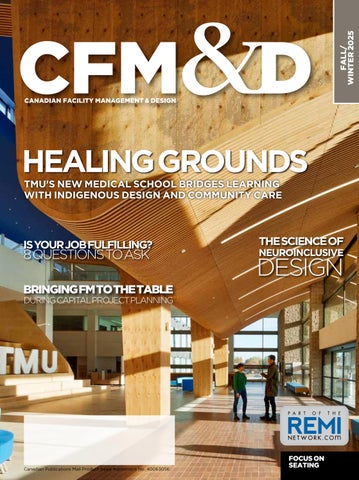
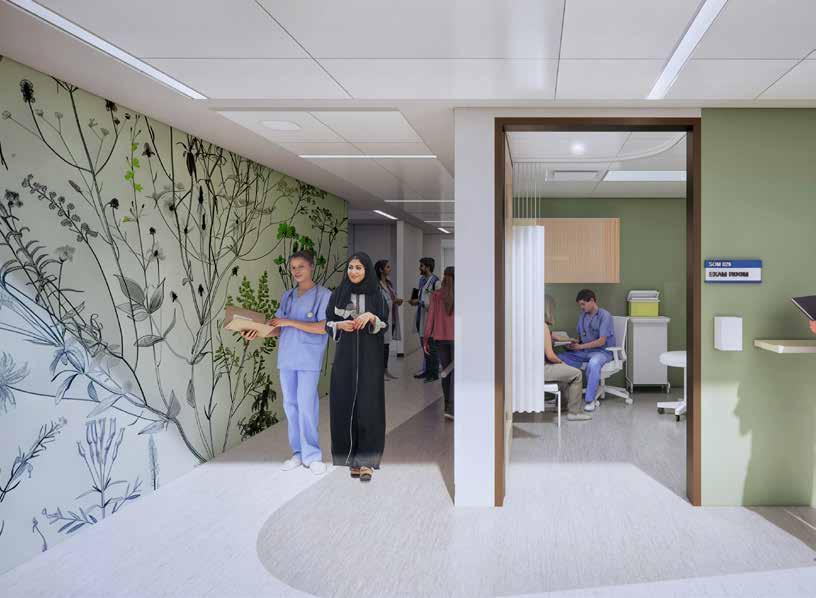
Toronto Metropolitan University’s new medical school transforms a former civic centre into a vibrant hub for education, healthcare, and community.
DESIGNING FOR EVERY BRAIN
Neurodivergent employees are gaining a deeper understanding of their own needs. Workplaces that embrace these differences can drive innovation and inclusive design.
32 U VIC’S NEW CENTRE FOR INDIGENOUS LAW
The new wing hosts the world’s first program combining Indigenous and non-Indigenous legal studies.
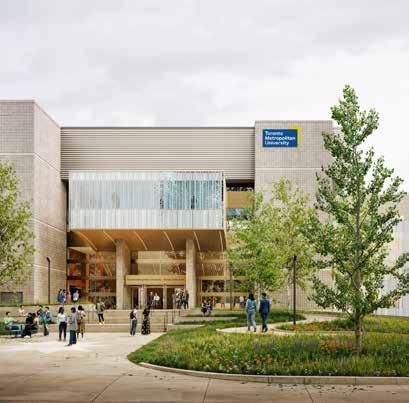
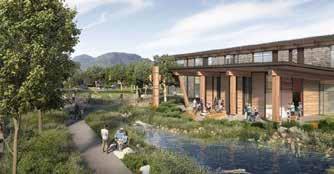
The exterior of TMU’s School of Medicine in Brampton, Ontario.
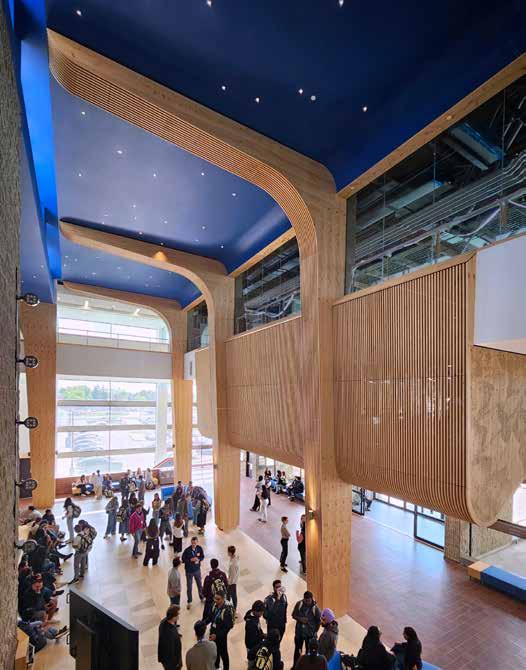
On the cover:TMU School of Medicine Atrium. Photo by Tom Arban Photography.
DISMANTLING BOUNDARIES
Across Canada, the boundaries that separate institutions, communities, industries, and the people within them are increasingly being questioned. The stories in our new issue reflect this shift in thinking, where inclusivity and innovation are coming together to create spaces for everyone.
At Toronto Metropolitan University’s new School of Medicine (our cover story), this means transforming a civic building into a hub that trains doctors while addressing critical healthcare needs in a region facing shortages. The project shows how higher education can engage with its surrounding community in meaningful ways.
In the workplace, a similar transformation is happening as designers recognize the value of neurodivergent employees. A more inclusive approach to talent— one that supports a range of neurological identities—can drive both innovation and productivity. But inclusion requires intentional design in the way offices, policies, and systems are built to accommodate these diverse cognitive needs.
Within facilities management, inclusive hygiene is pushing facility leaders to rethink spaces that many people take for granted, like public restrooms. Amid evolving user expectations, there is a growing focus on making them truly accessible.
We also take a closer look at the role of facility managers throughout a building’s lifecycle. Their expertise is often overlooked during the early phases of a capital project. But the need to proactively include FM is becoming clearer, as they understand how spaces will function in the long term. Acknowledging FM’s invaluable insight in this way exemplifies how inclusion leads to progress and builds connection within the industry.
Society itself is inherently built upon connection. Whether it’s between institutions and their communities, employers and their employees, or between design and its users, the FM industry is heading into 2026, working to break down barriers one step at a time.
REBECCA MELNYK
EDITOR, CANADIAN FACILITY MANAGEMENT & DESIGN REBECCAM@MEDIAEDGE.CA
FALL/WINTER 2025 Volume 40, Issue No.1
PUBLISHER: Ron Guerra rong@mediaedge.ca
EDITOR: Rebecca Melnyk rebeccam@mediaedge.ca
ART DIRECTOR: Annette Carlucci annettec@mediaedge.ca
CONTRIBUTORS: Katrin Ferge, Richard Henzie, Marcia O’Connor, and Cheryl Mah.
CIRCULATION: Adrian Holland circulation@mediaedge.ca
PRESIDENT: Kevin Brown kevinb@mediaedge.ca
GROUP PUBLISHER: Sean Foley seanf@mediaedge.ca
Canadian Facility Management & Design (CFM&D) magazine is published two times a year by MediaEdge Communications Inc., 251 Consumers Road, Suite 1020, Toronto, Ontario M2J 4R3 Tel (416) 512-8186; Fax 416-512-8344 email: circulation@mediaedge.ca
SUBSCRIPTIONS
Canada 1 yr $25* 2 yr $45*
USA 1 yr $40* 2 yr $70*
Int 1 yr $50* 2 yr $90*
Single Copy Sales Canada $15*
* Plus applicable taxes.
Authors: CFM&D magazine accepts unsolicited query letters and article suggestions. Manufacturers: Those wishing to have their products reviewed should contact the publisher or send information to the attention of the editor. Sworn Statement of Circulation: Available from the publisher upon written request. Although Canadian Facility Management & Design makes every effort to ensure the accuracy of the information published, we cannot be held liable for any errors or omissions, however caused. Printed in Canada.
Copyright 2025
Canada Post Canadian Publications Mail Sales Product Agreement no. 40063056 ISSN 1193-7505
Return undeliverable Canadian addresses to: MediaEdge Communications Inc., 251 Consumers Road, Suite 1020 | Toronto, Ontario M2J 4R3
[ foundations ]
SALMON-SAFE HOSPITAL
The Cowichan District Hospital Replacement Project (CDHRP) has become the first hospital in B.C. to achieve SalmonSafe certification, recognizing efforts to protect wetland ecosystems, reduce water use, and manage stormwater. Located on the traditional lands of Cowichan Tribes within the S’amunu watershed, the project includes green infrastructure like bioretention swales, rain gardens, a green roof, and enhanced wetlands. The site will feature native plants, a therapeutic garden, and accessible wellness paths.
In addition to Salmon-Safe, the hospital is also pursuing Zero Carbon Building Design and LEED Gold v4 certifications. It will be the first fully electric hospital in B.C., with solar panels and improved energy and water efficiency, reducing greenhouse gas emissions by 75 per cent. The project team includes EllisDon and Parkin Architects.
UPSKILLING FINANCIAL LITERACY
MODERNIZING THE MCMICHAEL
The McMichael Canadian Art Collection has revealed renderings for its major redevelopment, led by Hariri Pontarini Architects (HPA). The project aims to modernize the museum for the 21st century with a focus on accessibility, sustainability, and artistic excellence. Originally built in the 1950s as the home of founders Robert and Signe McMichael, the site has become a nationally significant institution.
The $75 million project will add space for exhibitions, education, conservation, and public programming, along with new classrooms, studios, and performance spaces. Designed to CAGBC Zero Carbon Design Standards, the project will integrate modernist architecture with the surrounding Humber River Valley, emphasizing the connection between nature and art.
BOMA Canada has introduced a set of online crash courses to help property and facilities managers, both new and seasoned, build essential financial skills. The micro-credentials focus on topics like budgeting, accounting, and revenue administration. Each micro-credential includes five self-paced, two-hour courses, with the option to earn a digital badge upon completion. The courses are flexible, allowing learners to tackle the areas they need, and can count toward a Real Property Administrator or Facilities Management Administrator designation.
The micro-credentials are expected to support career growth and give employers flexibility to hire strong candidates with skill gaps.
WORLD WORKPLACE UNITES
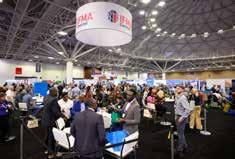
Nearly 4,000 facility management (FM) professionals from across the globe gathered for World Workplace 2025, marking the event’s 30th year and celebrating the 45th anniversary of the International Facility Management Association (IFMA).
This year’s conference, which took place in Minneapolis, Minnesota, honoured outstanding individuals advancing FM, including the induction of Laurie Gilmer, Benjamin Goudy and Frank Ngoh as IFMA Fellows the association’s highest honour. Recipients of IFMA’s Awards of Excellence were also recognized for advancing knowledge, demonstrating volunteer leadership and driving professional growth across the industry.
“World Workplace brought the global FM community together like never before,” said Michael V. Geary, CAE, president and CEO of IFMA. “The energy and optimism reflected both where our profession stands today and where we’re heading. Whether you were a first-time attendee or a long-time member, your experience was a powerful reminder of the value of professional connection, knowledge-sharing and celebration.”
IFMA is already gearing up for World Workplace 2026, taking place November 18 to 20, 2026, in Anaheim, California.
Validate your FM skills and mastery with the CFM®
Stand out as an industry leader with the Certified Facility Manager® (CFM®) credential, the gold standard of FM.
Showcase your mastery of the globally recognized FM body of knowledge
Gain credibility in your professional network
Empower your career
Did you know that no coursework is required to take the CFM? Because you're tested on your ability to apply FM knowledge, your eligibility is based on your experience and education.
Everything you need to prep for the exam is available through IFMA’s learning portal, fm.training:
Take a practice exam and experience the methodology
Brush up on a specific subject with our Core Competency Courses
Check your knowledge with our exam prep resource
Enroll in one of our exam prep workshops
• Offered virtually and in-person
Prepare, apply, pass and get recognized for your expertise. Learn more and prep:
BY MARCIA O’CONNOR
FINDING FULFILLMENT IN FM: ARE YOU HAPPY?
Transitioning from a paycheck-driven mindset to a focus on true purpose can lead to greater satisfaction.
Job satisfaction in facilities management is rarely discussed, yet it has never been more important, especially given the essential nature of the work involved.
FM professionals today aren’t just after a steady paycheck or predictable routine—they want to take pride in their work, feel supported by their teams, and be recognized for the value they contribute every single day.
Job satisfaction tends to peak in environments where meaning is embedded in the work itself, leadership is both competent and communicative, and the surrounding culture encourages collaboration, mutual respect and a sense of shared purpose. People thrive when they’re trusted, when their ideas are genuinely heard, and when their contributions are acknowledged—not just during performance reviews but in the everyday moments that shape the work experience.
Workload balance is also becoming a priority. FM professionals are increasingly expected to do more with less—a pace that isn’t sustainable without the right support. Forward-thinking organizations are responding by investing in smart technologies, cross-functional training, and setting realistic expectations to help their team thrive without burning out.
Whether overseeing a portfolio of properties or managing the day-today of a single site, work deserves recognition. When that impact is acknowledged and appreciated, it fuels motivation and loyalty.
There is a shared responsibility, not just among leaders but among peers, to create environments where FM professionals can grow, feel valued, and find purpose in their work. That means listening, mentoring, and championing workplaces that bring out the best in everyone.
Facilities management is more than a job—it’s a career grounded in problem solving, service, and an often-overlooked ethic of care. When professionals in the field support one another, the whole industry rises.
How can you tell if you’re genuinely happy in your current job? It’s not always obvious, especially in a field where perseverance and problem-solving are part of the daily grind. Still, certain indicators can help you gauge where you really stand. Start by asking:
• Do I feel energized or drained at the end of most workdays?
• Am I learning, growing, and being challenged in ways that excite me?
• Do I feel respected and supported by my manager and team?
• Is my workload manageable, or am I constantly overwhelmed?
• Do I see a future for myself here, professionally and personally?
• Am I recognized for my contributions in meaningful ways?
• Does the company’s culture align with my values?
• Do I feel proud to tell others what I do and where I work?
If most of your answers lean toward “yes,” you’re likely in a role that fits. If not, it might be worth pausing to reflect what else is out there. This could mean opening up a dialogue with your manager, seeking guidance from a mentor, or exploring new opportunities that better align with your goals.
There’s no one-size-fits-all answer, but every FM professional deserves to feel fulfilled, respected, and inspired by the work they do. Sometimes the right support or a new challenge is all it takes to reignite your passion.
Building careers that feel meaningful—not just impressive on paper—is essential. When we thrive, our teams
thrive. That’s how the entire industry moves forward. | CFM&D
Marcia O’Connor is president of AM FM Consulting Group, Chair of Membership & Education for IFMA’s Greater Toronto and South Central Ontario and lead instructor for the University of Toronto School of Continued Studies, Facility Management Certificate Program. She is a strategic-minded leader with more than 20-plus years of progressive experience in corporate real estate, asset management, and integrated facilities management. Marcia has a passion for mentoring young professionals and helping people, teams, and organizations see their potential.
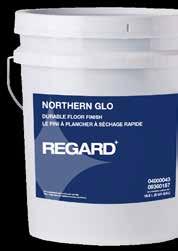
MORE FOR YOUR FLOOR!
Your floors take a beating, but with REGARD® Canadian-made floor care, they don’t have to show it.
From sealers to finishes and specialty solutions, our full lineup brings out the best in every floor. Pair our bottles or heavy-duty tubs with high-performance floor pads for a shine that lasts and protection you can count on.
Get superior results.
Schedule a clinic and our floor care experts will walk you through the right steps to extend the life of your floors and keep them clean.
BY REBECCA MELNYK
A SEAT AT THE TABLE: THE CASE FOR EARLY FM INPUT
Insights from a global study reveal that FM engagement during planning and procurement ensures efficiency, maintainability, and long-term savings.
Facility managers are often brought into capital projects during commissioning or post-occupancy—after critical decisions affecting long-term operations have already been made. A new study emphasizes the need to involve them much earlier in a project’s development to better influence design, procurement, and construction choices.
The report, The Value of Early Facility Manager Involvement in Capital Projects, gleaned insight from interviews with 27 FM professionals across 13 countries, including Canada, and various sectors such as healthcare, education, government, and corporate workplaces. The report was presented during an event hosted by the International Facility Management Association this past fall.
Although a building’s operations and maintenance phase accounts for about 80 per cent of its total lifecycle cost, FM input is often excluded from the earlier stages, participants noted. This omission can lead to poor maintainability, escalating costs that surpass construction budgets, operational challenges, and dissatisfied end-users. Proactive input creates opportunities to design infrastructure for longterm efficiency and performance, said
Dr. Jake Smithwick, research lead and professor at the University of North Carolina and associate at Simplar, a global procurement and management consultancy.
UNCOVERING THE BENEFITS OF EARLY FM INVOLVEMENT
Facility management draws on broad expertise that can identify issues and prevent costly mistakes. Ibilola Ogundare, graduate research assistant and civil engineering student at the University of Kansas, explained that FMs can shape the planning phase by assessing project specifications, operational feasibility, site conditions, and integration requirements with other facilities.
“This is a phase where operational needs, staffing requirements, and longterm costs can be built into the project strategy rather than have them patched in later on,” she said. “A FM also brings a long-term perspective that other stakeholders might overlook— on how the building would be used and maintained over time.”
In the procurement phase, FM input is increasingly vital amid economic pressures and vendor workload challenges. “A key part of our value function as facility professionals is to identify and find expert vendors that can work inside of our organizations,” said Smithwick. “We certainly shouldn’t minimize that because, when we do, we focus on low-bid cost. . . which leads to all sorts of other challenges.”
At this stage, FMs can review RFPs, guide vendor selection, and ensure that equipment, parts, and warranties are practical and maintainable—reducing the risk of incompatible or costly systems.
During design and pre-construction, FMs can review plans and drawings to reflect real-world conditions, advocate for standardized systems for operational consistency, influence material selection, and plan for long-term use. FMs can identify what materials will maintain durability in local climates or how
“A FM also brings a long-term perspective that other stakeholders might overlook.”
layouts will best suit future occupants.
Once construction begins, FMs can assist with change orders, quality control, and site visits. “There have been instances where access panels were blocked or equipment was installed in a way that would make it inaccessible for servicing,” noted Ogundare.
At the commissioning stage, FMs can validate performance, confirm warranties, and ensure systems comply with other standards. “Based on what the interviewees said, when FMs are actively engaged in the early planning phases. . . it makes the handover process smoother,” said Ogundare. “They
Fragmented project delivery also hinders participation. Embedding FM checkpoints in contracts could mean adding clauses that require FMs to review schematic designs, construction documents, and commissioning reports—improving outcomes like reduced rework and smoother handovers.
Short-term cost focus is another obstacle. “Many projects prioritize the lowest upfront cost, even if that leads to much higher operating expenses, which makes it really hard for FMs to recommend better systems or materials,” said Ogundare. “A very practical way to address this would be through life-cycle cost analysis. Demonstrating our ROI in real-dollar terms or in years is one of the strongest ways to shift mindset and help re-orientate clients and project stakeholders.”
To strengthen their role, FMs also need ongoing technical training in areas like BIM, commissioning, and energy modeling. Research has shown that credentialed professionals consistently show higher performance, satisfaction, and productivity.
FRAMEWORK BRINGS ADDED CLARITY
know the building because they have been part of the process and are better prepared to manage it from day one.”
CATCHING SMALL ERRORS
Real-world examples underscore the value of early FM involvement. In Canada, an 800-seat theatre project excluded FMs until closure—after firefighting pipes froze and burst, causing $2 million in damage and years of legal disputes. The case highlights how FM input from procurement to commissioning can prevent small oversights from escalating into multimillion-dollar failures.
MOVING BEYOND BARRIERS
A subtle bias persists during project
development that prevents FMs from being viewed as valuable contributors.
“They are seen as people who just fix things after the facility is handed over and this misconception actually limits their seat at the table,” said Ogundare. “One practical solution to overcome this barrier would be to position FM as strategic partners.”
Involving them in steering committees, with voting rights and design sign-offs, allows FMs to share case studies, illustrating how design flaws affect long-term operations. In some universities and healthcare settings, FMs are increasingly being invited to early planning meetings as owners recognize these impacts.
The study proposes using the RACI framework—Responsible, Accountable, Consulted, and Informed—to define FM roles across project phases. For example, during planning, the FM might be “responsible” for defining operational needs, “consulted” on budgeting and lifecycle analysis, and “informed” about project approval meetings.
This tool helps clarify responsibilities, align FM activities with project goals, and support mentorship and training. New FMs can see where to upskill, while senior managers can guide them accordingly.
“Early decisions affect long-term cost,” Ogundare concluded. “The FM should be brought on earlier so that their input, based on experience, can help maximize the project. FMs are strategic partners and not just maintainers. They should have a seat at the table.” | CFM&D
[ operations & maintenance ]
ELEVATING OFFICE AIR QUALITY
Health Canada unveils new guidance for managing contaminants, improving ventilation, and resolving IAQ issues in office buildings.
New guidance from Health Canada presents a compilation of best practices for assessing and maintaining indoor air quality (IAQ) in office buildings. That includes considerations for contaminant mitigation, ventilation, operational stewardship, resolving IAQ issues and engaging professional services. It also comes with sample checklists and a companion document with more details about specific contaminants and procedures for detecting them.
“The quality of the air in an office building is the result of the complex interactions between the ventilation system (if present), the building (i.e., age, condition, component materials, structure and envelope), the climate, the quality of the outdoor air, the furnishings and products present, the work processes, and the occupants and their activities,” states the introduction to the guidance, which Health Can-
ada’s Safe Environments Directorate released in mid-September. “Good operational practices can prevent many indoor air quality issues. However, when issues do arise, they can be addressed by implementing corrective actions after identifying the potential cause(s).”
The guidance begins with 10 broad recommendations then drills more deeply into how each might be achieved. Collectively, suggested best practices encompass a mix of: technical/mechanical measures related to ventilation, filtration/air cleaning and humidity control; rigorous scrutiny to detect and quickly address potential sources of mould; and policies to help prevent undue contaminants associated with housekeeping practices, procurement of building products and furnishings, or renovation and fit-out projects.
Various negative impacts on IAQ are tallied, including: insufficient air exchange; moisture penetration; emissions from problematic building materials; permeating soil-based haz-
ards such as radon or environmental contaminants; compromised outdoor air supply; and the activity and density of building occupants. Generally, building and facilities managers are striving to control such factors, while also maintaining the temperature in the range of 20 to 23.5⁰ Celsius in the winter or 23 to 26⁰ C in the summer and keeping relative humidity below 50 per cent.
TECHNICAL/MECHANICAL MEASURES
The guidance references some ASHRAE standards as a baseline for expected performance, including: Standard 55, Thermal Environmental Conditions for Human Occupancy; Standard 62.1, Ventilation and Acceptable Indoor Air Quality; and Standard 241, Control of Infectious Aerosols. It also highlights ASHRAE’s framework for responding to wildfire smoke and potential heightened levels of particulate matter, released last year as Guideline 44-2024.
A MERV 13 air filter is recom -
mended as the minimum for buildings with return air systems. However, the guidance acknowledges this may not be practically feasible for all ventilation systems, and that gains in the ability to capture particulate and pathogens must be balanced against the increased pressure required to move air through the filter.
Alternatively, or additionally, portable air cleaners are identified as an option to either augment existing building ventilation or in scenarios where there is no mechanical ventilation. Prospective purchasers are advised to choose certified devices that employ a HEPA filter and to pay attention to the product specifications indicating the room size for which it is best suited and the clean air delivery rate (CADR), which indicates its proficiency for removing particulate such as dust, pollen, viruses and tobacco smoke. That comes with a reminder that portable air cleaners are ineffectual against gases, like carbon dioxide (CO2) or carbon monoxide (CO).
The guidance also addresses other ventilation-related topics such as CO2 monitoring, HVAC zone controls, devices that emit UV radiation for infection control and preventative system maintenance. As well, it recommends a risk assessment to examine how the HVAC system might make the building vulnerable to cybersecurity attacks or to accidental or deliberate dissemination of chemical/biological/environmental toxins.
OPERATIONAL STEWARDSHIP
Another section of the guidance focuses on tasks and functions related to building maintenance, space design, procurement and housekeeping. These are characterized as “stewardship” when there is a conscious effort to consider how they can influence indoor air quality.
“Stewardship includes the day-today proactive upkeep and maintenance of the building and building envelope. By promptly identifying and addressing issues, operators or employers will be able to eliminate or reduce the
“Sloppy plant watering can likewise turn carpets into mould repositories.”
causes of poor air quality, ideally before the issue becomes serious,” the guidance states. “Building operators should develop and maintain good communication with occupants, and educate employers, custodians, maintenance staff and occupants about the importance of air quality and good practices to follow.”
Building staff should be trained and encouraged to become moisture police. The guidance recommends regular inspection of the building envelope and plumbing piping to check for deterioration or deficiencies that could allow water or air penetration. Staff should be able to spot, and have a process to report, evidence such as condensate around windows, water pipes and exterior walls, efflorescence on brick or concrete, or damage and discoloured walls, floors or ceiling tiles. As well, buildings should be routinely inspected after heavy rainstorms, when accumulated snow melts rapidly or during extreme heat events.
Moisture and potential excess humidity are also flagged as housekeeping concerns. In particular, it’s important for carpet cleaning technicians to maximize water extraction from the carpet material. The task should also be scheduled for times when building occupancy is low and, ideally, avoided during highly humid periods in summer months.
Sloppy plant watering can likewise turn carpets into mould repositories. Plants should always be placed on a stand or in a container that holds runoff rather than directly on the carpet surface.
The guidance includes several other recommendations related to housekeeping practices and special ventilation requirements for construction projects within buildings. Procurement policies figure in both cases, with an emphasis on controlling the intro -
duction of building materials, furnishings and products that emit gases that could have negative environmental and/or health consequences.
OUTREACH TO OCCUPANTS
Occupant activity may present a more daunting challenge for property and facilities managers. The 10 overarching best practices set out in the introduction to the guidance include recommendations to:
• maintain protocols to reduce viral and bacterial transmission among building occupants;
• ensure occupants follow workplace procedures related to the use of scents and cleaning products; and
• assess any potential mismatches of intended space and occupant activities, in the context of renovation, fit-out and expansion projects.
These imply something of an enforcer role for building management or employers, with an associated potential for landlord-tenant or manager-worker tensions.
Although it does not specifically address such scenarios, the guidance does extensively outline recommended processes for assessing and resolving IAQ issues. It also acknowledges some of the human emotions that may come into play, and highlights the importance of training, science-based evidence and educational outreach.
“Training should be relevant to the audience and can include how to identify a potential indoor air quality issue and how to report concerns,” the guidance advises. “Occupants should also be made aware of issues unrelated to indoor air, such as ergonomic and psychosocial risk factors (e.g., relationships with co-workers, control over workload), as they can affect perceptions of indoor air quality.” | CFM&D
BY RICHARD HENZIE
THE SMART SHIFT
Future-proofing aging retail buildings through tech-driven retrofits.
Canada’s retail sector is at a turning point. Aging buildings, once the backbone of bustling commercial districts, are now environmental and financial liabilities. As climate risks
intensify and operating costs climb, retail landlords, tenants, and facility managers face a critical question: how to adapt for the future?
The answer is increasingly clear. Retrofitting outdated retail facilities with smart technology isn’t just a sustainability play—it’s a strategic ad-
vantage. With government incentives making upgrades more accessible than ever, the time to act is now.
THE HIDDEN COST OF AGING INFRASTRUCTURE
Canada’s buildings are showing their age. Many were built decades ago, long before energy efficiency and climate resilience were top priorities. Today, these structures are vulnerable to extreme weather, rising insurance premiums, and ballooning energy bills. According to the Canada Climate Law Initiative, climate-related risks are becoming critically important for retail assets, threatening both physical infrastructure and long-term profitability.
Upgrading retail spaces is becoming a smart opportunity—not just for sustainability, but for long-term competitiveness. Retailers and landlords who embrace improvements can unlock efficiencies, enhance occupant well-being, and position themselves as leaders in a market that increasingly values innovation and environmental responsibility.
RETROFIT VS. REBUILD: THE SMARTER PATH FORWARD
While new construction may seem like a fresh start, it’s often the more expensive and less sustainable route. Retrofitting existing buildings offers a smarter alternative—one that reduces both operational and embodied carbon while preserving valuable real estate assets. Recent studies show that commercial retrofits deliver long-term
ROI through energy savings, improved tenant retention, and increased asset value. In high-demand markets like downtown Toronto, these benefits are amplified by growing consumer and investor expectations around sustainability.
Moreover, retrofits are faster to implement and less disruptive to occupants, making them a practical choice for landlords looking to modernize without starting from scratch.
INCENTIVES THAT MAKE IT POSSIBLE
Thanks to federal programs, the financial case for retrofits has never been stronger. The Canada Infrastructure Bank (CIB) has committed $100 million to help small and medium-sized buildings reduce emissions, including retail and mixed-use properties. In B.C. and Ontario alone, CIB-backed projects are achieving emissions reductions more than 90 per cent.
For retail property owners, this is a rare window of opportunity to modernize aging infrastructure with substantial financial support.
SMART TECH: THE COMPETITIVE EDGE
Retrofitting today extends beyond upgrades like insulation and LED lighting to include the use of smart technologies that improve how buildings function. Internet of Things (IoT) systems can link building components such as HVAC, lighting, security, and energy management to software platforms that enable real-time monitoring and performance optimization. These tools
allow building operators to analyze data, automate processes, and identify opportunities to extend system lifespans, lower emissions, and reduce operating costs.
WHY NOW?
Construction costs in Canada remain elevated, influenced by material cost fluctuations and ongoing skilled labour shortages. As a result, new builds are becoming increasingly expensive compared to retrofit projects. At the same time, consumers are placing greater value on visible sustainability efforts from retailers, viewing environmental performance as part of brand reputation. Green buildings are steadily becoming the standard rather than the exception.
Investors are also reinforcing this shift. ESG considerations continue to shape capital decisions, and properties that align with sustainability benchmarks tend to attract stronger interest and long-term value. For retailers and retail landlords, retrofitting is not only a pathway to compliance—it’s an opportunity to strengthen operational resilience and competitive positioning.
A CALL TO ACTION
Canadian retail property owners are well-positioned to benefit from smart retrofits. With supportive government incentives, strong evidence of return on investment, and advanced technologies readily available, the opportunity to enhance efficiency and sustainability has never been clearer. | CFM&D
Richard Henzie is the Director of the Smart Buildings Division at Schneider Electric Canada. He is a global business leader specializing in energy management and automation. Based in Victoria, Canada, he directs the Digital Energy Division at Schneider Electric, focusing on advanced building systems and sustainability. With 21 years at the company, he has held leadership roles in digital solutions, business development, and marketing, overseeing operations across Canada, Europe, and the USA. A graduate of the University of British Columbia, Richard combines his expertise in commerce and technology to drive innovation and growth. He is extremely passionate about smart building design and operation, focusing on how digitization of systems and processes can help building owners and operators achieve more sustainable, resilient, hyper-efficient, and people-centric buildings.
A DOSE OF INNOVATION
Toronto Metropolitan University’s newly completed medical school in Brampton, Ontario, offers a glimpse into how academic institutions are reimagining their role as integral parts of the urban and social fabric.
BY REBECCA MELNYK
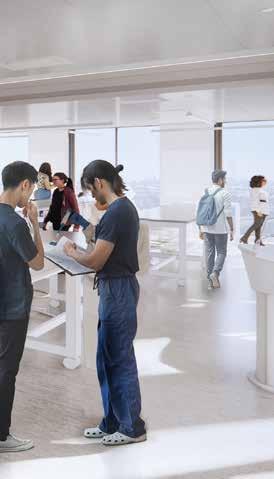
TMU SCHOOL OF MEDICINE HYBRID ANATOMY.
RENDERING
BY DIAMOND SCHMITT.
Universities have traditionally remained secluded behind gates and walls, but many are increasingly opening their doors to the cities around them, offering campuses where academia and community life coexist.
Toronto Metropolitan University’s (TMU) newly completed School of Medicine in Brampton, Ontario— housed within the repurposed Bramalea Civic Centre—is an example of how higher education can intertwine with the public realm.
In this case, that relationship is especially important in a city of more than
600,000 people, one hospital, and a shortage of family doctors. TMU’s first campus outside downtown Toronto, which welcomed its first cohort this fall, is not only training the next generation of physicians but addressing a critical healthcare gap in the wider Peel region.
Dennis Giobbe, senior associate at Diamond Schmitt, the architecture firm behind the project, describes the new building as a catalyst for connection. The design integrates research, education, and hands-on practice, with a prominently placed clinic serving as its most visible feature. Students, in turn, can engage directly with real patients in a workplace setting.
The building’s civic purpose is further realized as medical students and theatre-goers cross paths. Behind the central atrium, the city’s Lester B. Pearson Memorial Theatre continues operating.
A MEDICAL SCHOOL AS PUBLIC INFRASTRUCTURE
Converting a 1970s-era brutalist structure into a modern medical school required coordination across several disciplines. Marant Construction was procured for construction management, while TMU’s facility management and development division (FMD) played a central role from the beginning.
“The success of this project relied
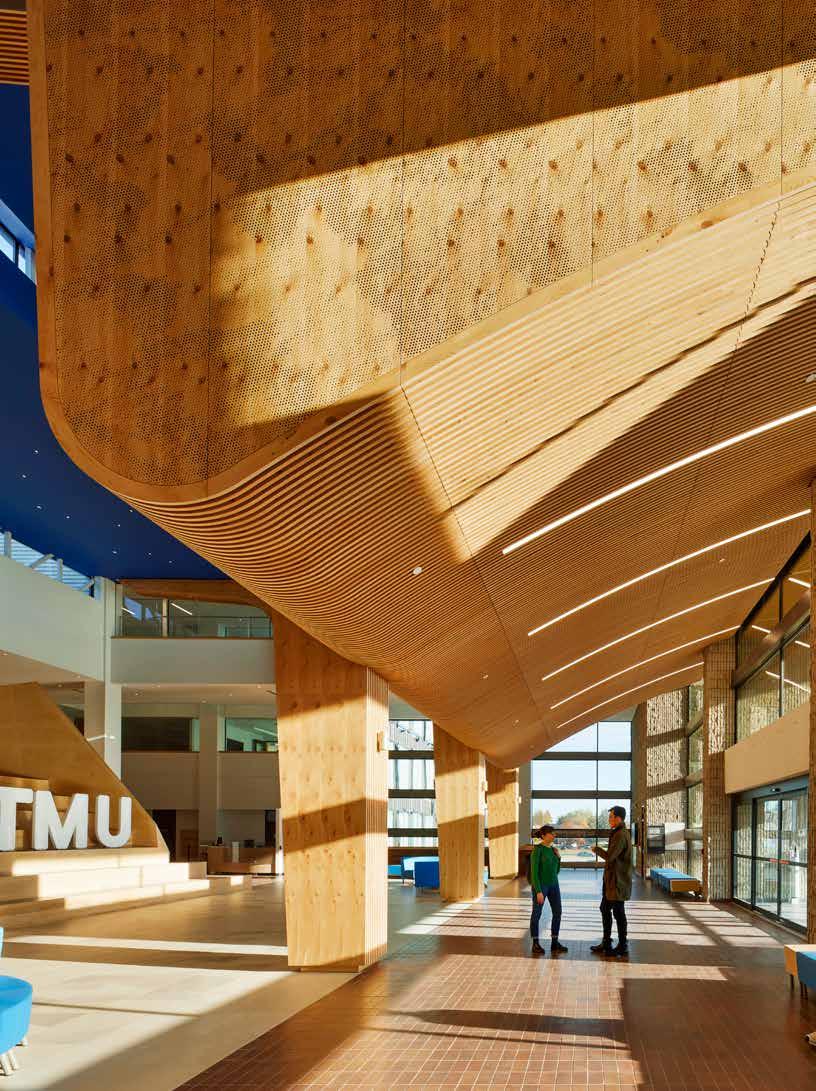
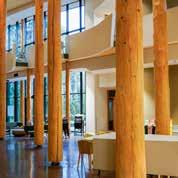
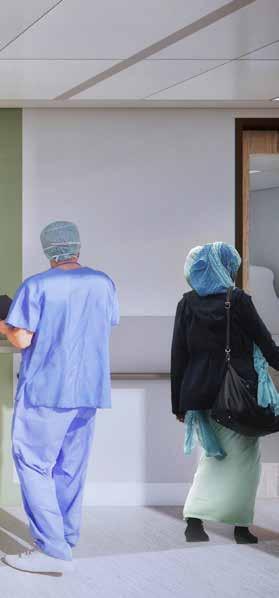
FROM LEFT: TMU SCHOOL OF MEDICINE HEALTH CLINIC. RENDERING BY DIAMOND SCHMITT; INSIDE THE ATRIUM. PHOTO BY TOM ARBAN PHOTOGRAPHY.
heavily on a very collaborative process with input from multiple stakeholders and building partners,” explains Jule Mycan, the department’s project manager. “FMD was embedded in the project and process from the initial idea and feasibility stage to implementation.”
The first phase, which primarily includes the atrium and learning spaces, came together on an exceptionally tight timeline—less than two years from design to fit-out. “Achieving this milestone required every project member to stay laser-focused, aligned with university priorities and working collaboratively to resolve challenges quickly,” he adds.
Building on that success, phase two of
the project, now under construction and set to open in August 2026, will feature a library, administrative offices, research spaces and a larger student lounge.
Beyond bricks and mortar, a more ambitious vision is to expand equitable access to both education and care. Mycan says the Integrated Health Centre will offer immersive teaching opportunities, open the doors to doctors, nurses and other healthcare professionals, but also drive leading-edge research for improving healthcare delivery across the region.
Mark Dettweiler, executive director of campus development, points out this is the university’s first project to integrate TMU’s Indigenous Design Guidelines.
“The atrium’s starry night lighting references the celestial sky as a guiding beacon for the school’s mission as a place for learning, care and community.”
“The transformation of the former Bramalea Civic Centre into a modern, welcoming environment reflects this vision of placemaking,” he says, prioritizing community and belonging by creating spaces to gather, learn and engage.”
INDIGENOUS VISION GUIDES HEALING AND BELONGING
As the concrete shell was reimagined, Indigenous firm Two Row Architect brought healing, nature and cultural storytelling to the design.
“Working alongside the university’s Indigenous Space Sub-Working Group, we developed Design Guidelines that informed the entire building and landscape, ensuring the architecture reflects values of belonging, connection to nature, and respect for the land,” said Erik Skouris, Ojibwe architect and studio director at Two Row Architect. “Together with Diamond Schmitt and community, these principles were fully embraced, resulting in a space where the stories of the place are seamlessly woven into the fabric of healthcare education.”
Just a block north of the site runs
the Chinguacousy Trail—a roughly nine-kilometre green corridor that inspires both the exterior landscape and interior atrium. Chinguacousy—the historic township name for Brampton— means “Land of Tall Pines” in Ojibwe. “When we first heard that we started thinking of the imagery and what it would feel like to be under a tree canopy looking up at the night sky,” says Haley Zhou, a senior associate at Diamond Schmitt.
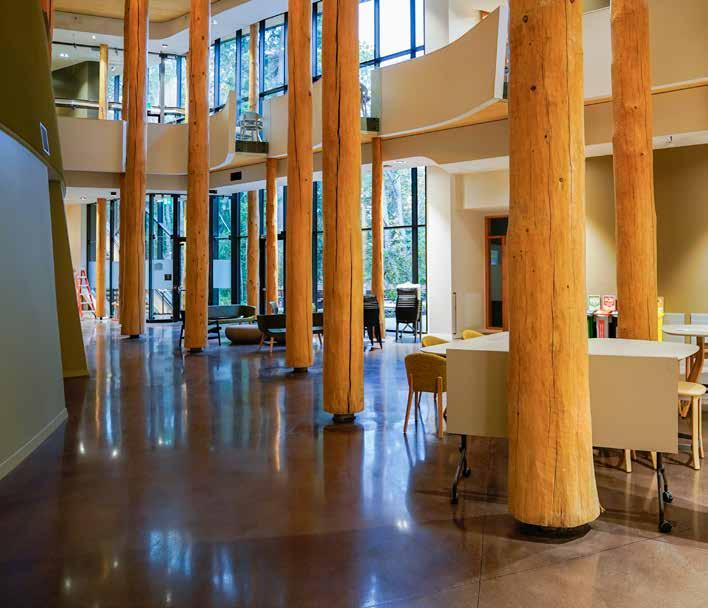
That concept flows into the multi-storey atrium, where a sweeping wooden soffit draws people inside. Wood-clad columns, evoking pine trunks, add warmth to soften the previously cold concrete and metal surfaces.
On the ceiling above is a replication of an Ojibwe star map. Designers isolated individual stars and overlaid them to create a continuous expanse. “The atrium’s starry night lighting references the celestial sky as a guiding beacon for the school’s mission as a place for learning, care and community,” explains Dettweiler.
Another guiding symbol is the wampum belt, a traditional form of trea-
ty-making and record-keeping, which speaks to reconciliation between European settlers and Indigenous peoples. That motif now wraps around the atrium in a four-part collage of rich colours and textures.
Further discussions with Indigenous partners led to designing a space that wasn’t part of the original program: a communal kitchen rooted in cultural exchange.
The idea of incorporating medicinal plants into the landscape evolved into the concept of a student-led indoor herb garden. “We began thinking about the broader range of cultures that would be coming together in the building,” says Giobbe. “Food could be used as a way to teach about those cultures.”
The hope is that through cooking, students, particularly those who spend extended time in the building, can further nurture community.
CONNECTING WITH LOCAL ECOSYSTEMS
Nature plays a significant role in the retrofit, specifically through three local ecosystems that shape the unique identity of
A MULTI-PURPOSE SIMULATION LAB. RENDERING BY DIAMOND SCHMITT.
different areas in the building. Meadows, wetlands and woodlands guide various colour and material palettes.
Active learning spaces, for instance, are reminiscent of a meadow—warm and energizing—with green, mustard yellow and wood tones found in accent walls, seating, and tabletops.
In the north wing, wetlands inspired the faculty offices and library, with cool pinks and dark greens for quiet and introspective work. In the atrium, student lounge and informal areas like the kitchen, woodlands are reflected through natural materials such as eastern hemlock and earthy wood and terracotta tones that balance with deep navy blue and greys for an inviting yet grounded feel.
ECO IMPACT MEETS INCLUSIVE DESIGN
As part of TMU’s wider sustainability goals, the project was designed to meet LEED standards and reduce both operational and embodied carbon.
A new hybrid HVAC system runs on cleaner power, complemented by double-glazed windows and photovoltaic cladding panels that were installed on the
facility’s south side to generate electricity for on-site use.
“Just with the mechanical system itself we worked really hard to reduce the amount of carbon, so there was a real push to not have gas-fired equipment,” said Giobbe. “The majority of equipment is electric.”
Rather than building from scratch, repurposing an existing structure further reduces the construction footprint and minimizes energy and greenhouse gas emissions.
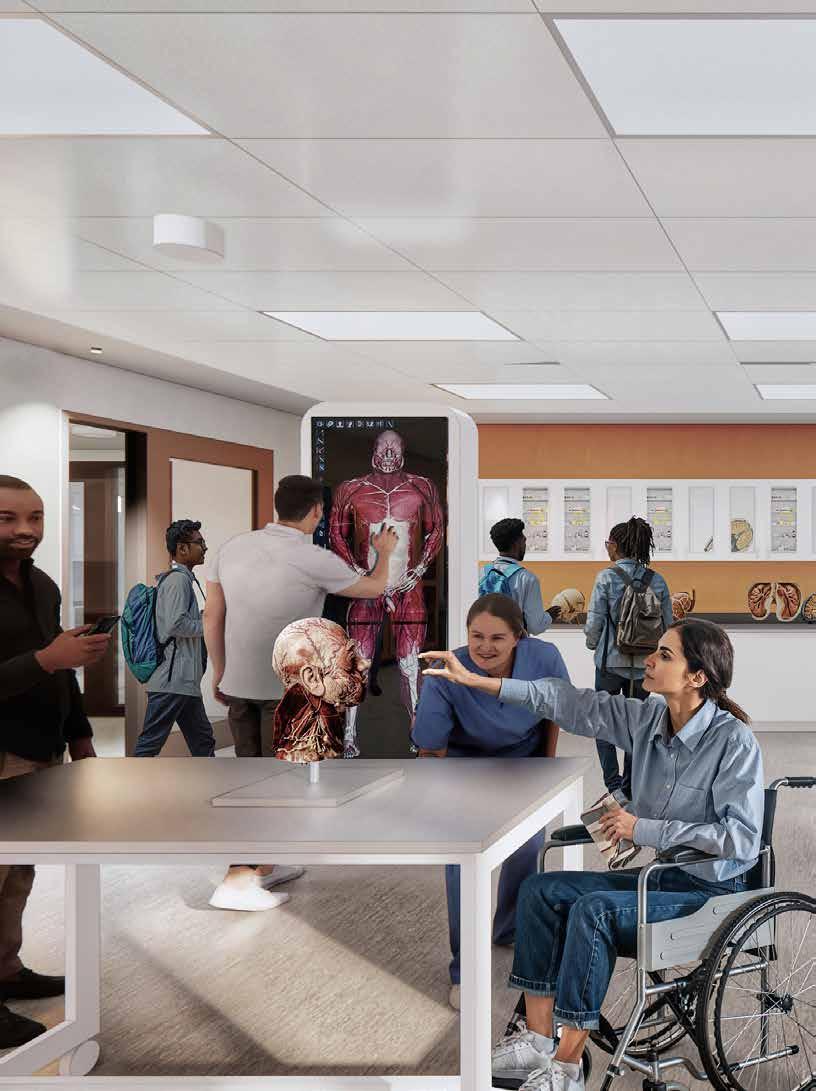
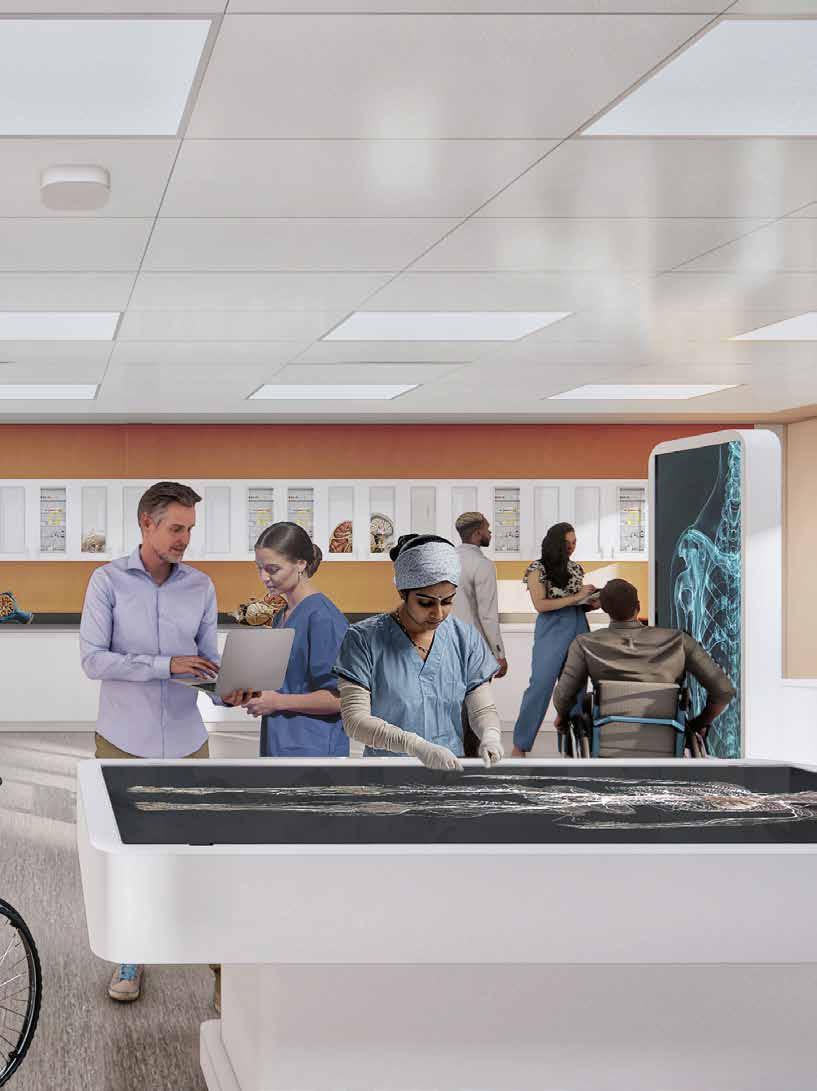
Alongside sustainability efforts, inclusion is another main focus. With anatomy forming a core part of the curriculum, interactive learning spaces feature digital anatomy tables that can be reoriented vertically for wheelchair accessibility.
A prominent elevated structure that juts out from the facade— once home to the council chambers—has been reimagined as a student lounge. By integrating a ramping system into traditional tiered steps, the entire area is now fully accessible.
Inclusive space-making also extends to cultural and mental wellbeing, offering a prayer room, a dedicated round space for TMU’s Black Student Association, an Indigenous counseling room to support culturally safe conversations and talking circles, and a general counseling space on the lower floor for the wider student body.
OVERCOMING FIXED ARCHITECTURE
Since the building is more than 50 years old, much care went into locating various aspects of the program in the most appropriate spots. With a fixed floorplate and floor-to-floor heights, designers worked within tight constraints to reuse existing service routes.
Large classrooms are purposely situated within a column-free layout on the ground floor. Teaching labs and other student spaces can be found on higher floors, separating them from public areas for an extra level of security.
“When you look at it before it was a bit of a maze. and there were real concerns about way finding,” says Giobbe. “But the way we programmed the building, having all the education spaces in the south wing, makes moving through the building more intuitive.
Program spaces are wrapped around the perimeter to bring in natural light and exterior views. Added glazing allows people in the hallways to see through to rooms and even across floors. Each level now follows a race-track corridor layout. “It’s tremendously different from what it was before,” adds Giobbe, “where you could really get lost trying to navigate from north to south.”
TWENTY-FIRST CENTURY LEARNING
Medical education is evolving to meet the complexities of modern healthcare. In the 21st century, this extends to digital technology and flexible design.
Among the innovations at TMU are simulation exam rooms to mirror hands-on clinical practice. Hybrid anatomy labs blend plastinated specimens, digital anatomy tables and imaging correlation resources for mastering human anatomy.
A high-fidelity simulation suite boosts immersive training with advanced patient simulators that mimic real-world clinical scenarios.
The idea of flexibility was another strong mandate. A multi-purpose simulation lab designed for skills-based teaching and procedural workshops, can be used as one large active learning classroom, divided in half, or further divided down.
Such is an overall trend within pedagogy that isn’t unique to TMU. “Most institutions are moving away from larger classes and more focused on smaller group work so it’s more engaged,” explains Zhou.
Lecture halls that once held 100 students are being replaced by mobile tables designed to seat groups of six to 10. “Information these days is so easy to find online; it’s not about learning information from a lecture or instructor, it’s about what it means to collaborate with other people,” he adds. “You can have a larger setting, but then break up into smaller groups, present to each other, and discuss learnings from your peers as well as from the instructor.”
By transforming this aging civic landmark into an active hub for learning and community, designers are showing how medicine is more than an educational journey or profession; it’s a shared public commitment. | CFM&D
IT’S YOUR CLEANDOM.
Defend every inch of it with CloroxPro™.
Actor portrayal
Cold & flu season is here. Are you following disinfection best practices?
Did you know? Last season, over 25,000 influenza-associated hospitalizations were reported in Canada.
Respiratory viruses can wreak havoc in schools and shared workspaces , causing costly missed days of work and learning, or worse. While seasonal influenza vaccination is the best way to protect ourselves, it’s also critical to use Health Canada-registered disinfectant cleaners with an influenza virus kill claim, and make sure surfaces stay visibly wet for the correct contact time.*
Scan for more best practices during cold & flu season from CloroxPro™
More employees self-identify as neurodivergent. How can workplaces adapt to the various ways people experience the world?
As workplaces respond to evolving employee preferences, attention is turning to an overlooked source of talent: neurodivergent employees. Research shows that organizations that actively embrace diversity, including neurological differences, tend to be more innovative and productive. In fact, a report from the De-
loitte Center for Integrated Research last year found that neurodiversity may be one of the most untapped assets for generating breakthrough ideas and business strategies.
An estimated 15 to 20 per cent of people in North America are neurodivergent, but this figure likely underestimates the true scope. “We often think of conditions like autism, ADHD and dyslexia, but it’s so much broader than that; it’s about the
different ways that our brains process and respond to the world,” Jennifer Nye, chief marketing and creative officer with Momentum Textiles and Wallcovering, conveyed during a recent discussion hosted by BIFMA.
Studies show that people spend about 92 per cent of their time indoors. Yet the built environment is often riddled with sensory stimuli that can feel overwhelming, which becomes especially apparent in the workplace.
People fall somewhere along a sensory threshold, from those who are hypersensitive (sensory avoiders) to those who are hyposensitive (sensory seekers), with neurotypicals (sensory neutral) in the middle. However, Kay Sargent, senior principal and director of thought leadership at HOK, believes designing with these factors in mind doesn’t just benefit a few. “This is about everyone,” she said. “I don’t know anybody that is immune to being impacted by light, sound, temperature, proximity— all of those things in the built environment.”
Tara Cunningham, CEO of Beyond-Impact, said the goal is to inhabit a space where you can ebb and flow— moving into a hyposensitive area when you need to, but also retreating to quiet, restorative environments. Designers should create workplaces where people don’t have to hide in the bathroom during stressful moments—whether they’re navigating a divorce, menopause, or a difficult interaction with a co-worker.
“We are all operating on different brainwaves at any given moment,” she said. “There is no neurotypical; there is no normal. Every day we come into the world differently. Our spaces, policies, processes and organizations should be fluid to allow people to be in a space that makes them feel comfortable and bring their best self to work.”
This vision aligns with Sargent’s perspective that people perceive and process the world in different ways, making sensory processing and cognitive well-being essential considerations in design. Not everyone, however, is neurodivergent.
“We often think of conditions like autism, ADHD and dyslexia, but it’s so much broader than that.”
rules, and how things operate. Even basic design elements—like wayfinding signage or windows with adjustable blinds—can make expectations more visible and help people feel comfortable and confident in their surroundings.
Facilities are slowly beginning to take note. The Museum of Fine Arts in Boston, for example, introduced a sensory room at its front entrance to offer visitors a place to regulate if feeling overwhelmed, whether due to lighting, visually intense exhibits, or other sensory triggers. Most public spaces, however, are ill-equipped to meet the needs of neurodivergent occupants, let alone the workplace.
As she clarified, neurodivergence refers to natural variations in thinking, feeling, communicating, and interacting that deviate from conventional expectations. “Our research is showing this is far more prevalent,” she noted. “There is a much higher percentage of the younger population who were raised with an understanding about what their neurotype is and consider themselves to be neurodivergent.”
Such is an understanding that extends beyond any single generation. Even among Generation X, roughly 52 per cent identify as neurodivergent. To support them, offices and HR teams must create systems and environments that accommodate these differences, while honouring an evolving self-awareness.
CHALLENGES OF NEURODIVERGENCE IN THE WORKPLACE
The built environment can be a profound source of stress, particularly for neurodivergent individuals. Key factors like sound, temperature, lighting, crowd density, confined spaces, and the proximity of others can accumulate into sensory overload, Cunningham explained.
Janet Roche, CEO and co-founder of the Trauma-Informed Design Society, said that simple design features can mitigate some of this stress by promoting trust and transparency. When people enter a new office or begin a new job, they often face uncertainty about policies, unspoken
“We have probably over standardized most workplaces to be fairly consistent,” said Sargent. “It’s about designing for the average person doing the average thing and I don’t think that person exists anymore. We need to create spaces that have options, choices and a little bit of control.”
EVIDENCE-BASED DESIGN PRINCIPLES
Over the years, HOK has compiled a list of 161 design considerations. From that extensive list, the team identified 40 they considered most critical and tested them across surveys and multiple research initiatives. Thirteen of these considerations consistently emerged at the top, revealing the factors that matter most in creating thoughtful, human-centred spaces.
Among the leading principles are those that might be expected: creating spaces that allow for movement or fidgeting, offering choices about where to work, and providing dedicated areas. Low-traffic work points, quiet rooms, and environments that reduce visual clutter all rank highly, as do screens that dampen noise, adjustable lighting, ergonomic furniture, and the inclusion of natural elements.
Roche cautioned that organizations are often quick to check these boxes without truly understanding the people who will inhabit these spaces. The reality is far more nuanced when it comes to neurodivergence and also trauma, which includes conditions like Post Traumatic Stress Disorder.
BUILDING INCLUSIVITY INTO CONCEP-
TUAL DESIGN
“There is this whole notion of ‘nothing about us without us,’” said Sargent. “Not everybody is going to perceive things the same way that you do.” The idea, she ex-
plains, is to understand how people experience space differently—and to design with those differences in mind.
From decades of research, her team has identified “six modalities of work”: deep concentration, contemplation, commu-
nal solo work, creation, congregation, and socializing. There should be enough spaces that align with the nature of work being done. This includes accommodating hyper- and hypo-sensitive individuals. “Someone who is hyposensitive might not want to go into a small box to concentrate because they might get overwhelmed or feel boxed in.”
Spatial sequencing is another important design aspect—one that isn’t always executed effectively. “The open plan often gets a bad rap. Done well, it can be really effective. Done poorly; it’s a disaster,” said Sargent.
Too often, designers drop gathering areas haphazardly in the middle of spaces meant for focused work, then line the windows with so-called quiet zones just a couple feet away from where people gather. The result, she said, is a kind of architectural purée—everything blended together, and nothing functioning quite as it should.
Quiet spaces should truly feel quiet— lower lighting, calming tones, and struc-
ture—while social spaces can be vibrant and lively, with pops of colour. “Even if you’re hypersensitive, nobody wants boring spaces,” she said. “They just want structure and control. They want those pops in their day, of interest and delight, but just don’t want to be subjected to it all day long.”
THE THREE-LEGGED STOOL OF INCLUSION
Creating an inclusive workplace extends far beyond space and design; it requires rethinking culture, processes, policies, and everyday practices, and ensuring they can be operationalized across the organization.
As Cunningham explained, job descriptions often contain corporate jargon and acronyms that can discourage neurodivergent women, people of colour, and individuals from underrepresented communities from applying. Solutions could entail writing in plain text, and focusing on what the job requires, the strengths missing from the team, and how the role supports the company’s larger strategy.
boarding process should continue this clarity. Cunningham recommends creating an acronym dictionary on the company intranet. It becomes one of the most coveted tools for new hires, helping to dismantle what she calls the hidden curriculum of workplace norms that are often assumed but rarely explained.
Policies and procedures should be equally transparent. If someone works late, they should know they can start later the next morning. Some employees can work from home—sometimes due to disabilities they may not be able to disclose; however, when those arrangements aren’t clear, resentment can build, and remote workers often become the first targets in layoffs. Communicating policies clearly ensures everyone understands expectations and feels they are being treated fairly.
Internal education is also crucial. An organization must convey how its workplace is evolving, which includes how success is measured. If communication
Once people are hired, the on25_010742_Canadian_Facility_Mgmt_and_Design_FALL_WNTR_CN
accounts for 20 per cent of performance evaluation, for example, that metric may disadvantage people on the autism spectrum who are not natural communicators.
These factors tie back to what Sargent described as the “three-legged stool” approach—balancing operations, environment, and personal adjustments. Operations extend to things like recruiting, onboarding and training. The environment involves designing spaces that are inclusive, while personal adjustments translate to accommodations for preferences and needs, as well as access to tools like noise-cancelling headphones.
“We need to really revise the way things work,” said Cunningham. “If you’re in a space that is not conducive, an environment that does not allow for adaptability [and] personal adjustments, it just isn’t going to happen. One leg of a stool isn’t going to keep you standing or sitting up.” | CFM&D
BY CHERYL MAH
DESIGNING FOR RECONCILIATION: THE CENTRE FOR INDIGENOUS LAWS
A new wing at the University of Victoria integrates Indigenous knowledge with modern architecture to educate, inspire and heal.
TREES FELLED WERE BLESSED BY LOCAL ELDERS TO HONOUR THEIR SIGNIFICANCE TO THE LAND BEFORE BEING REUSED AS MASS TIMBER COLUMNS. PHOTO BY UVIC PHOTO SERVICES.
The Centre for Indigenous Laws (CIL) at the University of Victoria is a groundbreaking project. Opened in September 2025, the building – formerly known as the National Centre for Indigenous Laws – sets a benchmark for how thoughtful design and construction can bring the truth and legacies of Indigenous peoples to life.
Spanning 26,000 square feet, the new wing of the Fraser Building is culturally significant – built in the spirit of truth and reconciliation principles to house the world’s first joint degree in Indigenous legal orders and Canadian common law. The CIL will serve as a hub for critical engagement, debate, learning, public education, and partnerships centred on Indigenous legal traditions while also addressing legacies of past injustices. The design honours Indigenous values while using modern prefabricated building practices.
Chandos Construction worked closely with the university and the consultant team to reflect its Indigenous Plan in the design and construction of the building.
“There’s a purpose behind every detail of this building, which is dedicated to the study and practice of Indigenous laws,” says Tim Laronde, national director, Indigenous Strategies, Chandos Construction. “The team focused on inclusivity, sustainability and local needs to create a project that benefits the community now and in the future.”
The project prioritized collaboration with local Indigenous communities, including the Esquimalt, Songhees, and W_SÁNEC Nations; hiring Indigenous contractors and incorporating sustainable practices that align with the Truth and Reconciliation Commission’s calls to action. Indigenous perspectives were integrated at every stage through extensive consultation.
The building incorporates mass timber construction, including exposed cross-laminated timber (CLT) panels
“We have worked to create a structure that, like the natural world, offers guidance, stories and lessons to those who enter.”
and Douglas-fir glue-laminated timber beams. Trees felled were blessed by local Elders to honour their significance and connection to the land before being reused as mass timber columns for the building. Yellow cedar, western red cedar and Douglas-fir are used extensively in detailing and millwork.
To execute the complicated hybrid mass timber and steel structure, Chandos used BIM tools to identify any conflicts ahead of time to avoid delays. For example, OpenSpace, a 360-degree photo documentation tool, allowed remote consultants to track progress and resolve issues quickly.
For the erection process, Chandos developed a comprehensive moisture management plan to mitigate water ingress or moisture issues.
“The hybrid mass timber and steel structure required precision and innovation, and tools like BIM and OpenSpace allowed us to address challenges early, ensuring the project stayed on track,” says Thomas Oster, senior project manager at Chandos Construction. “From moisture management plans for mass timber to designing ventilation systems for smudging ceremonies, every technical decision was made with care to honour the building’s purpose and the community it serves.” says Thomas Oster, senior project manager, Chandos Construction.
The design team of Two Row Architect, in partnership with Teeple Architects and Low Hammond Rowe Architects, played a large role in ensuring the project respected Indigenous knowledge and traditions.
The building features a prominent, double-storey atrium that connects to the existing Fraser Building, creating a cohesive flow and integrated environment. There are public lecture theatres, faculty offices, classrooms, meeting spaces, a creation space, a sky classroom, a 150-seat lecture hall, an Elder’s room, and large gathering spaces. The exposed timber structure and sloping roof mimics the height of the surrounding forest, connecting the building to its natural context while minimizing environmental impact.
The importance of honouring the land where the building is situated was at the forefront of all design decisions.
“As Indigenous leadership at UVic instructed us, ‘The building has to be a teacher; it has to be one of the professors.’ This building is already teaching, not only through its form, materials, and relationship to the land, but also through the collaborative process that brought it into being,” says Brian Porter, principal, Two Row Architect.
The project is targeting LEED Gold certification, reflecting the university’s commitment to building sustainably on campus. Features include: rain gardens, stormwater management, maximizing solar orientation, utilizing below slab HVAC, and ensuring the building uses 100 per cent electric energy. Additional energy savings are achieved through a high-performance building envelope and highly efficient mechanical and electrical systems. Chandos also diverted 83 per cent of waste from this project.
Another special feature is the building’s ventilation that has been designed to accommodate smudging ceremonies. It offers integrated controls with equipment designed to allow for quick filtration of smudging fumes following these ceremonies. The atrium space also offers natural ventilation.
“We have worked to create a structure
that, like the natural world, offers guidance, stories and lessons to those who enter,” says Porter. “Seeing the design principles from those first conversations now realized in construction is a powerful reminder that buildings can be living expressions of Indigenous knowledge, and that true collaboration — grounded in respect and reciprocity, is itself a form of learning and teaching.”
The project is an example of what can be achieved through meaningful Indigenous engagement and community partnerships, and an important step towards calls to action.
It has already been recognized with an industry award, earning a 2023 Canadian Architect Award of Excellence for its Coast Salish design elements and focus on bringing the surrounding forest into the building. CIL also earned an Honourable Mention in the 2024 Architecture MasterPrize. | CFM&D
Cheryl Mah is the editor of Construction Business and Design Quarterly magazines
IN A CLASSROOM, STUDENTS CAN EARN THE WORLD’S FIRST JOINT DEGREE IN INDIGENOUS LEGAL ORDERS AND CANADIAN COMMON LAW. PHOTO BY UVIC PHOTO SERVICES.
REASONS
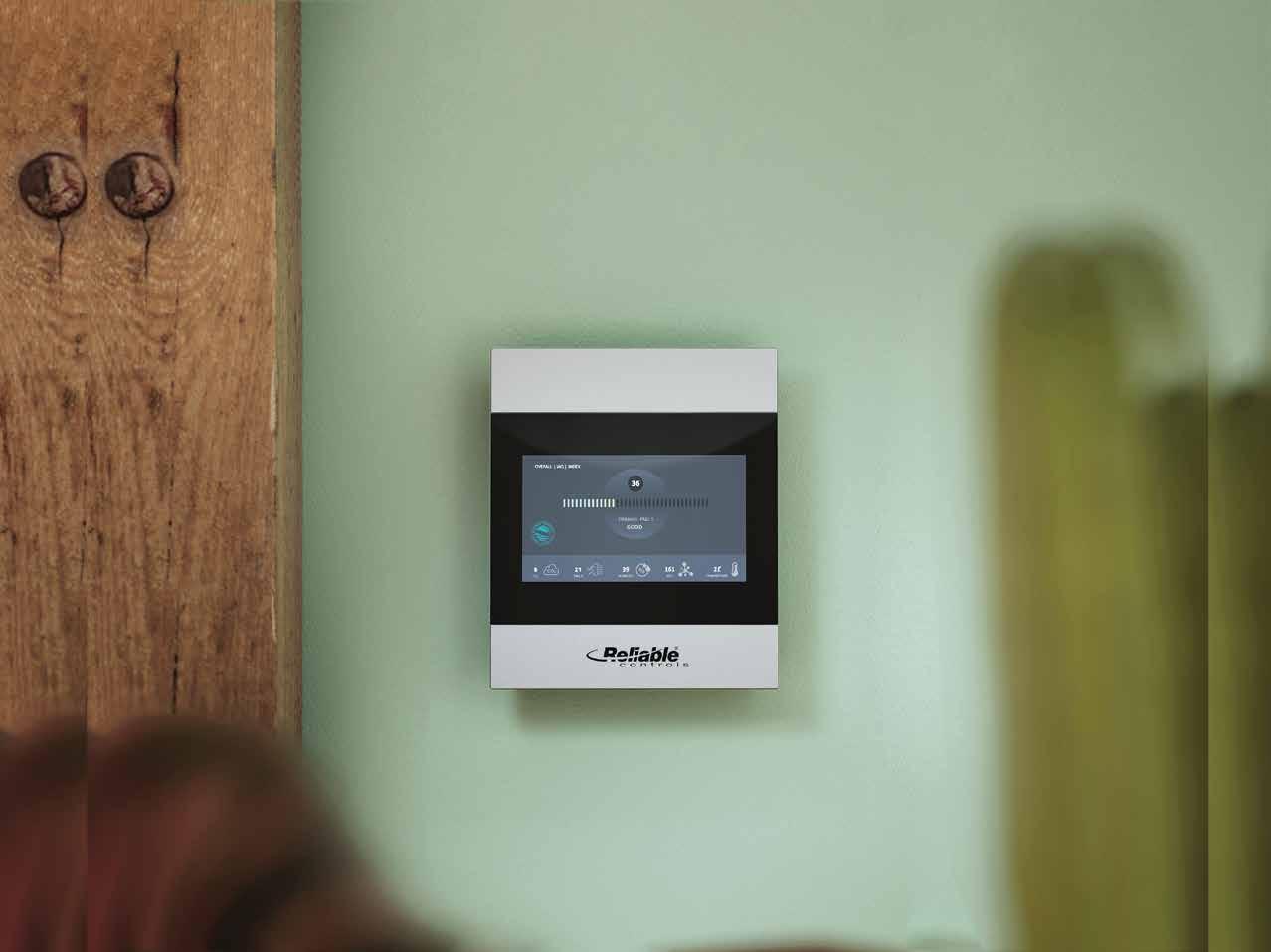
TO MONITOR YOUR INDOOR AIR QUALITY
According to the World Green Building Council, we spend 90 percent of our time indoors. Given that statistic, it’s clear the quality of the air we breathe in buildings can dramatically impact our health and well-being. At Reliable Controls we believe sustainable buildings are a key component to reducing the health and environmental impacts of indoor and outdoor air pollution.
Improve comfort and productivity.
Volatile organic compounds (VOCs) form a large group of chemicals commonly found in indoor air. According to Health Canada, exposures to VOCs may affect your health, depending on which VOCs are present, the levels present, and how long you're exposed.
In addition, while you can’t yet monitor the presence of a virus like COVID-19 in the air, you can measure a number of factors that affect the risk of viral transmission: temperature, humidity, and CO2. These air-quality measures are also linked to workplace well-being and productivity, so the better the air in your building, the better your occupants are likely to feel—and perform.
1 2 3 Spot problems.
Save energy.
Excessive ventilation wastes energy. Ideally, a building’s ventilation system provides just the right amount of air. Many ventilation systems, especially older ones, are based on constant air volume, which means they always operate at full capacity. By converting to a variable air volume system, you can optimize your energy efficiency with demand-controlled ventilation. Studies show that a ventilation upgrade from constant air volume to variable air volume can achieve annual energy savings of 10 to 21 percent. Beyond that, with air-quality sensors, you have access to real-time data that informs when and where to efficiently deploy air filtration and temperature control.
Identify trends.
Integrating IAQ sensing technology into your building automation system means you can collect building data that helps you perform preventative maintenance and avoid system failures. By tracking pollutant levels continuously over time, for example, you can easily identify where and when to address changes in air-quality parameters. Long-term trends are almost impossible to detect with periodic spot sampling, which provides only a snapshot of data points at a particular time.
4
Most people know IAQ sensors can warn building managers about safety issues like smoke or carbon monoxide. Did you know they can also tell you how much particulate matter is in the air? Or how many harmful volatile organic compounds are circulating in your space? IAQ data can help you determine where to focus cleaning, when to service equipment, when to change filters, and when to increase or decrease ventilation.
5
Earn building certifications.
IAQ monitoring is essential to achieving healthy building certifications like LEED and WELL. Around the world, certification programs set minimum IAQ standards to protect occupant well-being, preserve ventilation system performance, and uphold comfort in both mechanically and naturally ventilated spaces
You can depend on Canadian-made technologies from Reliable Controls to easily monitor the indoor air quality in your facilities. Learn more reliablecontrols.com/IAQ
MANAGING MORE, WITH LESS
A new report from JLL looks at how digital tools can help facility managers cope with reduced resources and heavier workloads.
As facility managers face growing workloads, shrinking budgets and fewer skilled workers, many are turning to technology to fill the gaps. From automation software to predictive maintenance and artificial intelligence (AI), digital tools are increasingly seen as critical to managing modern buildings efficiently.
JLL’s latest State of Facilities Management Technology report outlines how facility leaders are seeking greater visibility, data-driven insights and streamlined operations across an expanding range of properties. Among the nearly 300 professionals surveyed, most said they need clearer understanding of completed work and more actionable data to guide decisions. At the same time, they are navigating heightened risks, compliance demands and an uncertain economy that continues to disrupt workplaces.
“There is so much more we need to do and we are all being forced to do that with less,” said Tim Bernardez, global head of workplace management technologies at JLL.
A WORKFORCE UNDER PRESSURE
FMs say pressure is most acute for dayto-day operations. Jason Noorian, vice president of asset management at Brinker International, said turnover during the pandemic left teams with fewer experienced managers and a harder time creating what he called an “operations ownership mindset.”
“It has also been tricky obtaining good vendors who are often overworked,” he said. “Sourcing new equipment also takes longer, so being proactive to reduce operational disruption is key.”
The consequences reach into routine
decision-making. “We need to be experts in the facilities so we can train and ensure our operators know about the equipment,” Noorian said. “Some of them have anxiety about touching a piece of equipment or changing a filter—things that maybe in the past were common knowledge are not there and the fear of breaking something keeps them more paralyzed.”
AUTOMATION POWERING EFFICIENCY
As budgets tighten, automation is becoming essential. “You need to have a growth mindset and think about facilities as a profit generator not only a cost to the business,” Noorian said. “We have over 6000 preventative maintenance tickets that go out every three months. Having someone do that by themselves would take an army of people. Because we have a system that is automated we can put the scope and detail on there with one person clicking a button and getting that out to everyone.”
Automation, he added, also offers visibility into vendor performance.
Max Serrao, owner and chief operating officer of CFM Associates Inc., said sourcing both service providers and in-house technicians has become more difficult, but digital tools have helped make jobs more manageable. Automatic notifications for reactive and preventive work orders, for example, help prioritize projects by urgency.
According to JLL’s report, facility professionals said the most valuable outcomes from automation software include eliminating repetitive tasks, improving analytics and compliance, and providing technicians with powerful mobile tools to complete work efficiently. The top areas identified for automation were work order tracking, invoice and payment approvals, and reporting.
Data captured through computerized maintenance systems has become essential for financial decisions, particularly when weighing whether to repair or replace equipment. “With my current system, I am able to see the repair history, its asset life and if the equipment is under
warranty to prevent wasteful spending,” said Noorian.
THE RISE OF ASSET TAGGING
Another emerging trend is asset tagging — the digital labeling of equipment to track maintenance, history and performance in real time.“I think it’s something we’re going to ultimately adopt and everyone will,” said Serrao. Noorian added that tagging eliminates inefficiencies that stem from traditional communication between vendors and managers. “Sometimes it might take three back-and-forths between a vendor and a manager to get the right serial number and model number, to take pictures they can actually see so the tradesperson can have the right equipment or part to help repair,” he said. “Asset tagging takes all that out of the question. We also want to make sure we are being better with repair versus replace decisions.The tag has all the history where the manager, in real time, can understand the best route to take.”
Bernardez said asset tagging is most effective when tied to a clear strategy. “There are some really cool technologies that can augment the data you collect from asset tagging where you can begin to use AI to pull back manuals and all sorts of relevant information to help those who are working on the asset be more proficient [and] have more knowledge.”
AI DRIVING INSIGHTS
Many facility managers wish to explore artificial intellingence (AI); however, while some are actively implementing solutions, many others haven’t seriously considered it. Many cannot figure out how to buy-in as an organization and use AI to change the trajectory of their business.
More than 59 per cent of survey respondents said they have no AI strategy but are keen to learn more. Nearly 16 per cent were skeptical about its infancy state, while about 10 per cent were already using AI on a regular basis. A smaller group doesn’t see any value at all in facilities management.
Scott Boekweg, product management lead at JLL, talked about how AI can be
leveraged to automate and streamline key processes in FM operations, particularly with predictive maintenance and work order scheduling.
“With AI power-driven predictive maintenance you can anticipate when equipment failures are going to happen,” he said. “This not only reduces the downtime but it also prevents the overspending on unnecessary maintenance.”
Boekweg noted that one global elevator company has reduced downtime by as much as 50 per cent by using AI-powered predictive systems that collect and analyze sensor data.
AI is also being used to optimize scheduling. “It’s like having a super efficient dispatcher working 24/7,” he added, citing one university campus that reduced its response times by 20 per cent through AI scheduling systems.
Another emerging technology is AI vision — tools that can identify equipment through photos and videos, enabling technicians to tag and locate assets virtually using smartphones. “We’ve seen this really take flight in some adjacent industries such as warehousing where they’re using computer vision AI to identify and categorize millions of items rather quickly instead of having to barcode and do manual data entry,” he said. “I suspect we’ll see more of that as we continue to leverage AI.”
AI chatbots are also beginning to serve as digital assistants for facility teams, capable of interpreting technical language, analyzing sensor data, and monitoring vendor performance.“It really helps FMs to interact with their asset management system, to analyze real-time sensor data, maintenance records, and equipment specifications to provide the insights on the asset help and also look at vendor performance,” Boekweg said.
While AI is reshaping how facilities are managed, Boekweg emphasized that technology will not replace human expertise.“It will help them do more with less, but there’s still the critical human skills—you need to be able to talk to customers and those doing work orders, and also do some complex problem solving.AI is not perfect, so you still need to know what is really going on in the facility.”| CFM&D
INCLUSIVE EDGE
The modern workplace is no longer one-size-fits-all. Thoughtful design now honours culture and reconciliation, welcomes pets, balances privacy with collaboration, and supports health and comfort. Today’s solutions aren’t just functional; they adapt to people, reflect values, and create spaces where everyone can do their best work.
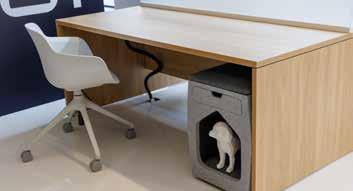
Teknion introduced Advanced Concepts 2.0, a program exploring the evolving workplace. The initial phase features three concepts (not for sale) by Dubbeldam Architecture + Design, including the PetPod Nearly 30% of remote workers would return to the office if pets were welcome. PetPod combines a removable bed, storage for toys and treats, and a cushioned top for visitors. With HEPA filtration for an allergenfriendly environment, it accommodates pets of all sizes and temperaments while fitting under most desks—providing a secure space that keeps pets happy without disrupting the office.
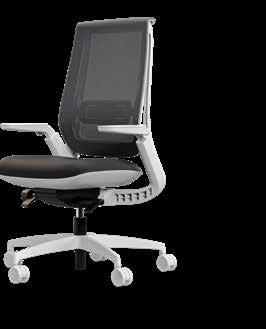
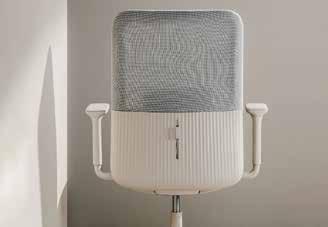
Allseating launched Equation, a fully integrated task chair designed for maximum support with minimal adjustments. Built to reduce the effects of prolonged sitting and meet the demands of hybrid, in-office, and remote work, it suits a variety of environments. The chair includes guided ergonomic resources, patented back/ lumbar angle adjustment with three easy settings, integrated seat slider for custom comfort, and a choice of weight-activated or synchro tilt mechanisms. Its versatile design comes in black or birch frames, with an optional polished aluminum base and three breathable mesh patterns.
Carnegie Acoustics Solutions’ Xorel Artform Flute 3D Panel combines sculptural design with high-performance sound absorption. Inspired by musical dynamics, the panels create a rhythmic play of light and shadow while delivering NRCs of 0.70 and 0.80. Made from 60% post-consumer recycled PET, each 30-inch x 72-inch panel can be wrapped in Xorel or Biobased Xorel fabrics, with over 350 colours, textures, and patterns for a customizable, sustainable solution where style meets acoustics.
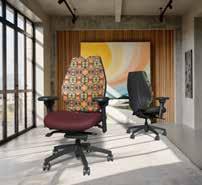
ergoCentric introduced the Waaban Chair — Canada’s first Indigenous-inspired, Canadian-made ergonomic office chair. Designed with eSupply Canada, a 100% Indigenous-owned distributor, it brings Indigenous culture into spaces where decisions are made. Featuring artwork by Mi’gmaq artist Tracey Metallic, whose designs weave traditional motifs with contemporary form, the chair embodies both heritage and modernity. “It’s about making space for Indigenous presence in the places where our voices and contributions matter,” said Metallic. “To know that our art, our identity, our stories will live in these rooms—it means everything.” Named after Waaban, meaning “the morning light” in Anishinaabemowin, it signals a shift toward inclusion and reconciliation. Each purchase contributes $20 to Indspire to support the next generation of Indigenous leaders.
The Hazel collection by HBF combines comfort, style, and craftsmanship for modern work and social spaces. Built with solid ash frames in 15 finishes, Hazel supports longer sit times with comfort-forward ergonomics. It comes available in five models with single, dual, or multifabric options, offering designers a versatile canvas. Wrapped arms, a draped centre runner, and careful upholstery provide a clean, polished look, while the upright pitch and supportive back encourage good posture.
Keilhauer won a NeoCon Gold this year for Unifi. The lounge chair features a four-leg base with casters and optional tablet. It adapts to however a workday flows, shifting from individual seats to communal benches with a versatile, mid-century-inspired design, soft upholstered seat and industrial metal frame.
Davis Furniture’s Unio collection, designed by Archirivolto, features a sculptural die-cast aluminum base and a slim, minimalist seat. Winning a Gold award at Neocon, it comes available in polypropylene, veneer, or fully upholstered versions with curated colours and finishes. Ideal for contract or hospitality spaces, it offers discreet stacking protectors, a mobile trolley option, and extensive customization.
KFI Studios has expanded its Dotti Lounge Collection with a new lounge chair featuring an upholstered back. The lowback chair can be specified with or without a high or low wood surround, creating looks that range from open and inviting to subtly private. An optional swivel base with auto-return adds flexibility and movement, making it ideal for collaborative and lounge areas.
A Gold winner at NeoCon, Velo by Andreu World redefines ergonomic design with fluid form and intuitive function. Designed for hybrid work, it suits offices, coworking spaces, and home setups. The contoured backrest in mesh or upholstery provides support, while a weight-activated tilt and seat-depth adjustment enhance comfort. Optional 4D armrests and lumbar support complete its adaptable design. Lightweight, affordable, and easily disassembled at end of life, Velo unites performance and sustainability.
BY KATRIN FERGE
CLEAN FOR ALL
Meeting the diverse hygiene needs of today’s facility users.
Public restrooms may be the most used spaces in a building, but they’re often the most underestimated.While cleanliness and functionality have long been the benchmarks of restroom management,a growing body of research suggests that these standards fall short of what today’s users actually need.For facility leaders across Canada, the next frontier is inclusive hygiene:designing and maintaining restrooms that consider the full range of individual abilities and circumstances, so hygiene is truly accessible to all.
THE UNSEEN MAJORITY
Recent research reveals that 59 per cent of Canadians contend with some form of physical or cognitive challenge that can impact how they experience public restrooms. Many face barriers to hygiene in restrooms, some that are visible and others that are not.
Barriers might include loud air dryers that overwhelm auditory and neuro sensitivities, paper towel dispensers out of reach for small children or requiring fine motor controls to use, or harsh soaps that affect skin sensitivities. These barriers have real consequences for users and for the businesses they visit:
• 44 per cent of people feel anxious about using public restrooms, often planning their day around access;
• 38 per cent avoid eating or drinking to limit restroom use; and
• 52 per cent have changed behaviour after a poor restroom experience, including eating or drinking less to avoid using the restroom or filing a complaint. These behaviours don’t just reflect discomfort; they impact business performance, public trust, and facility reputation.
INCLUSIVE HYGIENE: BEYOND ACCESSIBILITY
Facility managers are familiar with Canada’s Accessible Canada Act, which sets important standards for physical accessibility. But inclusive hygiene goes even further than that. It’s about recognizing that many barriers are not visible, and that hygiene expe-
riences are shaped by greater context—not just compliance.
Inclusive hygiene asks:
• Does the restroom feel safe and clean?
• Does it offer privacy and comfort?
• Does it reflect care and consideration for all users?
The answers to these questions can help determine whether a restroom can act as a business asset that drives repeat visits, stronger satisfaction scores, and fewer complaints.
THREE DESIGN PRINCIPLES
The Inclusive Hygiene Playbook is a research-informed guide based on interviews with restroom users, cleaners, and facility managers across 20 cities in North America, including Toronto. From this work, three key design principles have emerged to guide facility leaders.
A clean and safe environment is paramount: Cleanliness is not just about sanitation – it’s about how safe a space feels.Overflowing trash, exposed toilet paper rolls, and damp handles signal contamination.Today, only one in five restrooms meets cleanliness expectations.
Canadian facilities can improve perceived safety by:
• Installing no-touch fixtures to reduce contact points;
• Providing paper hand towels and toilet seat covers;
• Placing trash bins at exits to support hygienic behaviour; and
• Using durable finishes that resist streaks and wear.
These changes reduce contamination risk and foster trust, especially among users who rely on visual cues to assess safety. Put the rest back in restroom: Restrooms should offer relief – not added stress. Yet many users report feeling overwhelmed by
harsh lighting, unpleasant odours, and lack of privacy. In fact, 23 per cent of people avoid restrooms due to unpleasant smells[3], and many feel exposed due to stall gaps and poor layout.
Design strategies include:
• Replacing fluorescent lighting with warm, ambient alternatives;
• Installing floor-to-ceiling stalls or privacy gap covers;
• Playing calming music to mask unwanted sounds;
• Providing changing tables, hooks, and space for mobility aids.
The restroom should feel cared for:Restrooms are a reflection of a facility’s values.Generic signage, unclear cleaning protocols, and inaccessible fixtures can make users feel unwelcome or confused.Thoughtful communication and design signal care and community.
Create this sense of care by:
• Using on-brand, personality-driven signage that educates and welcomes;
• Displaying cleaning schedules and protocols prominently;
• Enabling feedback via QR codes or comment cards; and
• Highlighting sustainability and accessibility practices.
A CANADIAN LENS ON INCLUSIVE HYGIENE
Canada’s diversity, spanning age, ability, culture, and language,makes inclusive hygiene essential. Facilities across the country—from urban centers like Toronto,Vancouver, and Montreal to suburban and rural areas—serve populations with a wide range of needs.
Canadian legislation and public sentiment are also moving toward greater accountability in accessibility.Inclusive hygiene offers a proactive way for facility leaders to align with these values while improving user experience..
Essity.
Katrin “Kat” Ferge is the North American Regional Marketing Manager for Professional Hygiene –Commercial segment at
A SOLUTION FOR EVERY SURFACE LUTION
PRODUCTS AVAILABLE AT:
YOUR LOCAL INDUSTRIAL DISTRIBUTOR VISIT: RUST-OLEUM CA/INDUSTRIAL FOR FURTHER DETAILS