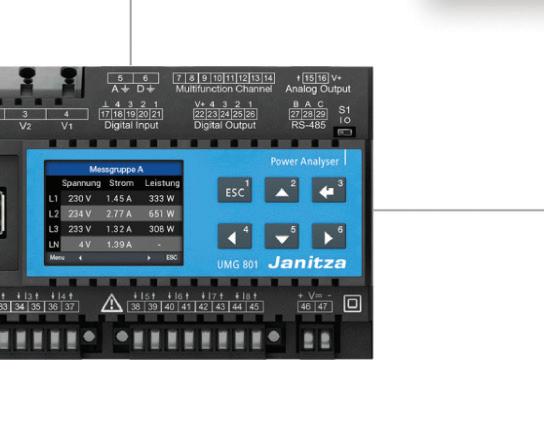
31 Modular power monitoring that scales with your data centre
TOOLS & WORKWEAR
32 Workwear working overtime
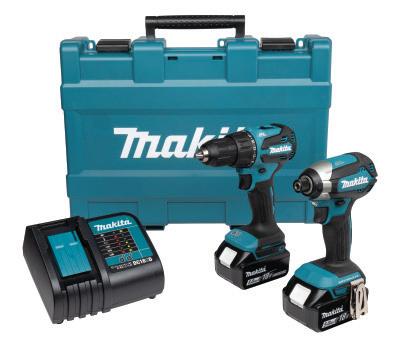
34 Light work
10 Innovation, accuracy and unrivalled support for professionals
Contractor Corner
12 The six big challenges facing UK trades in 2026
13 Predictions for the 2026 energy transition
Features SUSTAINABILITY
20 A new era for the industry: What installers need to know
22 Surge protection and sustainability
24 AC will power the commercial EV revolution
TEST & MEASUREMENT
26 Modern testing strategies for fibre optic cables
28 The hidden dangers of phenolic breakdown
30 Five key testers
Editor Lisa Peake lisa.peake@purplems.com Sales manager Haydon Rainsford haydon.rainsford@purplems.com
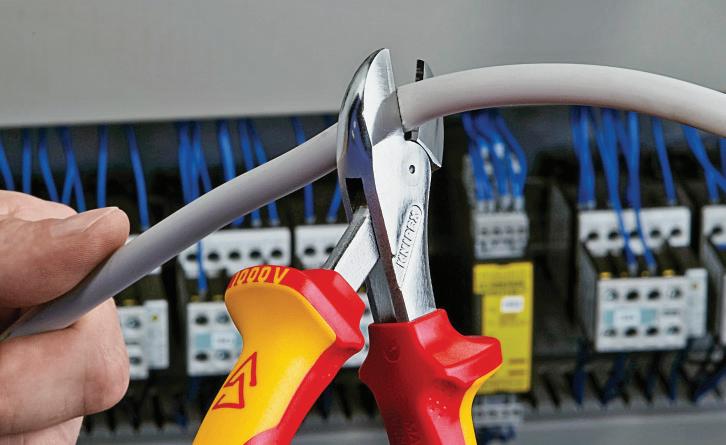
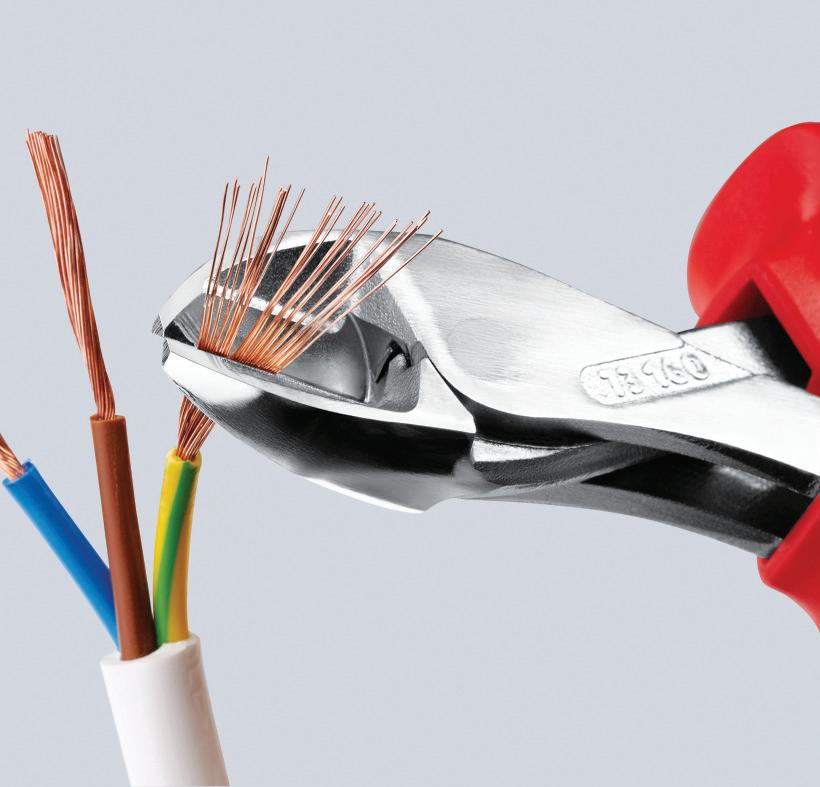
35 Cutting made easy: Big bite, small size!
Bonus Articles
18 Exporting Earth
36 Winter considerations for battery energy storage
37 Adapting to change
Q&As
Last month brought two significant developments that underline the pace of change across the electrical and wider energy sector. The publication of Amendment 4 to the 18th Edition of the Wiring Regulations marks another important step in ensuring standards keep pace with rapidly evolving technologies. The update reflects the realities of modern installations and the growing integration of low-carbon and digital systems.
16 Elliott Rothon shares how installer led design shaped the awardwinning COMBI 310
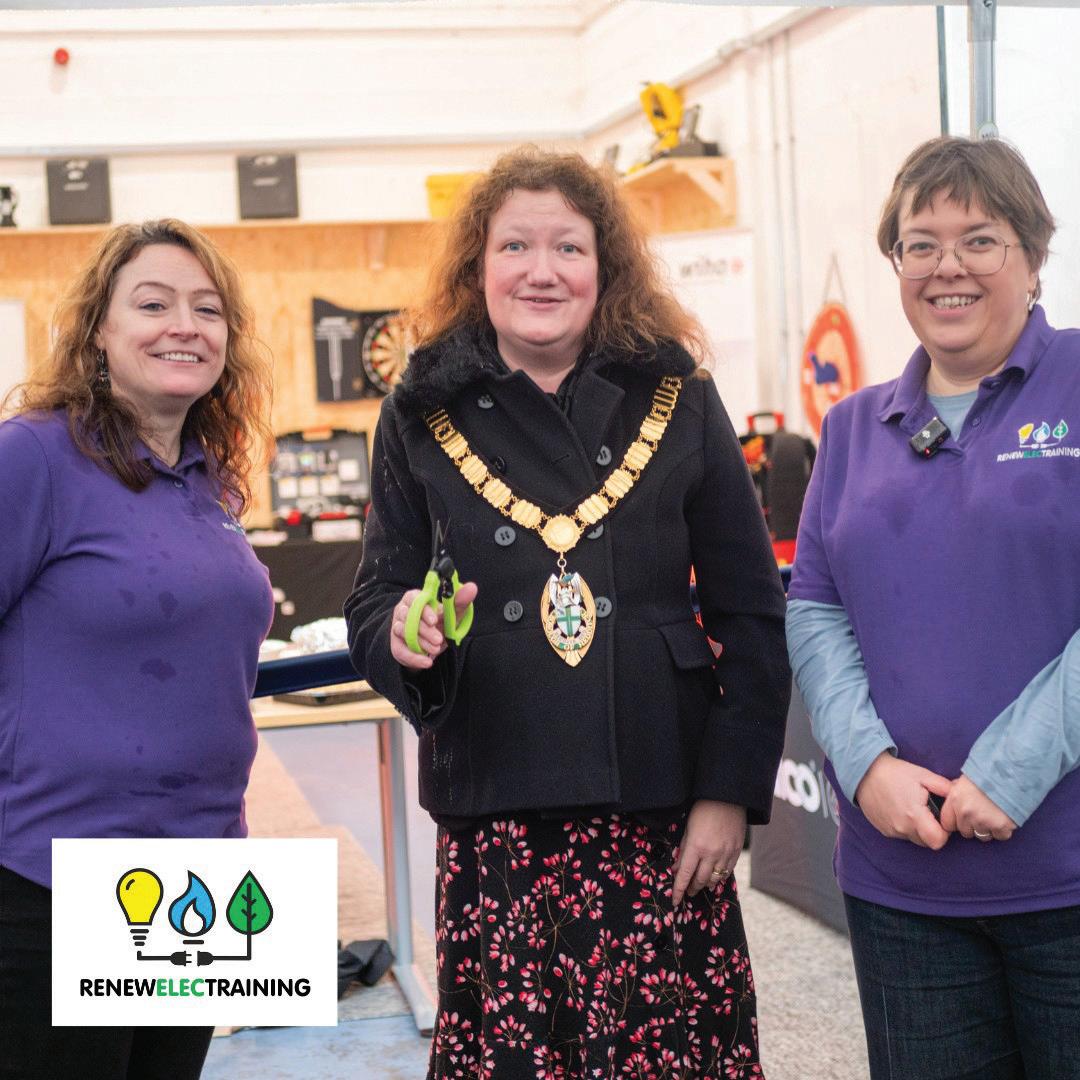
38 Sam Lawler, RenewElec Training
Switching
Off
40 Testing limits: taking on Mount Snowdon after dark Closing argument 42 Digital innovation is key
Alongside this, the Government’s Warm Homes Plan represents a clear statement of intent on upgrading the UK’s housing stock at scale. The level of investment announced has the potential to transform millions of homes, accelerate the rollout of renewable technologies and reduce energy bills, while also creating sustained demand for skilled and competent installers.
Taken together, these announcements highlight a critical moment for the industry. As ambition turns into delivery, technical competence, up-to-date knowledge and a well-supported workforce will be essential. For electrical contractors, staying informed and prepared has never been more important.
Lisa Peake, EDITOR, lisa.peake@purplems.com
@electricaltimes
Appointments
Key Integrated Services, a leading mechanical and electrical engineering company, has appointed former Bouygues Energies & Services deputy managing director, Adeel Aslam, as chief operating officer (COO). The high-profile appointment has been made as the company looks to build on its success to date and continue its growth through a focus on delivering worldclass capabilities across existing and high opportunity sectors.
ERA’s new Customer Service and Internal Sales Director has stressed the importance of taking a customer first approach into 2026 as she moves into the role.
Sheena Kotecha, who brings more than 15 years of experience across commercial operations and customer success, working across UK, UAE and global markets, has taken on the position following the brand’s acquisition by Quanex.
The Building Controls Industry Association (BCIA) has added exceptional experience to its Management Committee as it continues to lead the Building Energy Management Systems (BEMS) sector towards a more sustainable future. In a strong year for Management Committee nominations, Andy Thorn, Managing Director at Synapsys Solutions and Oli Barker, Engineering Director at Lloret, join the committee, while Graeme Rees, Global EcoXpert Leader - Building Automation & Security at Schneider Electric, has been re-elected for a further three-year term.
Breathing Buildings has announced the return of Huw Poppy in his new role as Operations Director. Huw, who originally joined Breathing Buildings in 2011 and previously held the position of Sales Director, brings 20 years of experience in the ventilation sector. He returns with extensive expertise across low-energy ventilation design, project delivery and on-site technical support.
Heating manufacturer acquired by family investment firm in deal backed by FDC
Consort Equipment Products has been acquired by family-owned investment firm Lifeboat Capital. The deal was backed by a sevenfigure debt funding package from Frontier Development Capital (FDC) and other investors.
Consort, which is based in Milford Haven, supplies heaters to electrical wholesalers nationwide under the Consort and Claudgen brands, and manufactures own-brand products for leading suppliers. Following the acquisition, the current management team headed by Managing Director, Gareth Davies, will continue to lead the growth of the business.
The deal will enable the former Managing Director, Edward Spankie, and Materials
Director, Chris Baggs, to realise their investment in the business though they will continue in a consultancy role. It will also provide additional investment to fund the growth of the business.
Dr Taha Afshar, Chief Investment Officer at Lifeboat, said: “Lifeboat is committed to strengthening British manufacturing businesses and supporting the transition to a low-carbon future. With its efficient electric heating solutions and a track record for quality and innovation, Consort aligns strongly with our values and goals. The company will continue to operate as an independent business, and with the benefit of additional investment to support its long-term growth.”
NAPIT EXPO Roadshow is back
for 2026
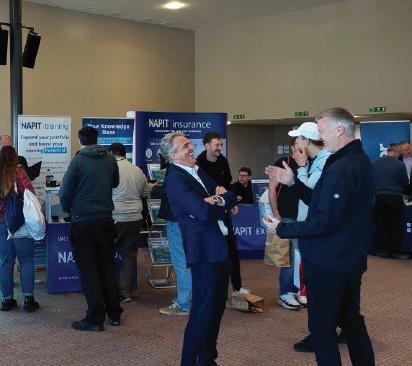
The NAPIT EXPO Roadshows return with a brand-new series of events to cover the impact of Amendment 4 of the IET Wiring Regulations. Across four venues, the event will bring together electrical professionals, technical experts and industry partners.
This set of events promises expert insights, hands-on learning and valuable CPD opportunities for every attendee. It is designed to provide knowledge, networking and the latest regulatory updates with a focus on mastering Amendment 4.
The roadshows will kick off in Southampton on April 21 at the Utilita Bowl, before heading north to Leeds, Elland Road Stadium on May 1, continuing to Bristol’s Ashton Gate Stadium on May 8, and wrapping up at Coventry’s CBS Arena on May 12. Each event is held from 8am until 1pm, with breakfast rolls and refreshments provided.
At each EXPO, the NAPIT technical experts will deliver Amendment 4 Masterclasses. These sessions will break down the key changes, practical implications and best practices, helping attendees stay ahead of the curve as the industry evolves. Every attendee will receive a copy of the brand-new Wiring Regulations Book, providing an essential reference for ongoing learning and compliance. Combined with CPD earned from the masterclasses, attendees will leave the event better equipped to adapt to Amendment 4 with confidence.
Frank Bertie, NAPIT Managing Director, said: “We look forward to welcoming attendees to the NAPIT EXPO Roadshows for 2026. Together, we will explore key updates and share knowledge to continue delivering the highest professional standards.”
Secure Your Tickets at https://www.napit.org.uk/
Multi million pound datacentre electrical infrastructure upgrade completed at Heathrow
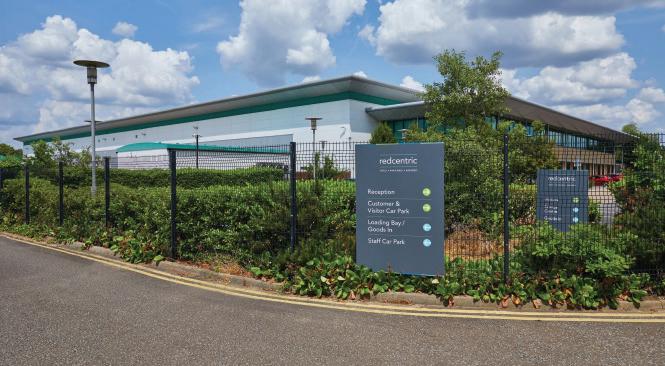
Managed IT service provider, Redcentric has completed a multi-million pound electrical infrastructure upgrade as part of a wider datacentre refurbishment project at its facility located at Heathrow’s Corporate Park in London. The project that included a UPS replacement was Part funded through The Industrial Energy Transformation Fund (IETF). As part of Redcentric’s high profile project, leading UPS manufacturer CENTIEL has delivered equipment to protect an existing 7 Megawatts of critical load through its multi-award winning, highly efficient true modular uninterruptable power supply (UPS) StratusPower. The deployment of this modular UPS technology enables Redcentric
to scale to 10.5 Megawatts without the need for any further infrastructure change.
The facility is now seeing UPS efficiency improvements from below 90 per cent to above 97 per cent efficiency since the upgrade. This represents the potential to reduce more than 8,000 tonnes of CO2 emissions over the next 15 years, supporting ESG compliance for both Redcentric and its household name clients.
Aaron Oddy, sales manager Centiel says: “The legacy equipment was replaced by Centiel’s StratusPower UPS system, featuring 14x500kW Modular UPS Systems. This delivered a significant reduction in physical size, while delivering greater resilience, as a
direct result of StratusPower’s award-winning, unique architecture.
“StratusPower provides an unprecedented level of resilience and availability guaranteeing near-zero system downtime, ensuring the data centre can offer its clients the highest standard of power protection. Standardising with this design across the site enables UPS modules to be seamlessly redeployed between systems, ensuring maximum asset utilisation and operational agility.”
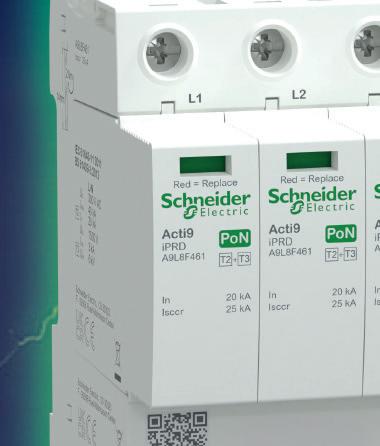
Unleash the new all-in-one Surge Protection Device.
The new game changing, best in class surge protection device from Schneider Electric has arrived!
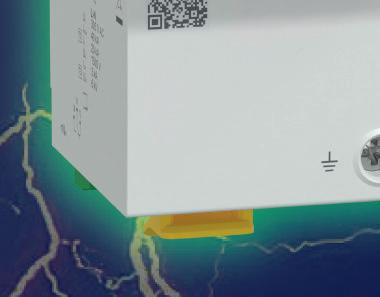
The all-in-one iPRD Type 2+3 is compatible with the Acti9 Isobar P and KQ Loadcentre distribution boards. This compact device fits within the board with no need for an upstream external disconnector, just plug in and protect.
Scan to find out more.
To find out about our new Acti9 offers including Triple Split Distribution boards, TransferPacT Switches and further information on our new SPD’s check out the webpage now!
Appointments
TLW Global has set out its next phase of growth as it enters its 30th year, reinforcing its commitment to the electrical trade with the appointment of Nigel Hall as Managing Director. The move signals a renewed focus on supporting contractors and electrical professionals through expanded product ranges, improved availability and closer trade partnerships.
With a strong heritage in bespoke LED lighting, TLW is investing to meet growing demand from the electrical market for reliable, specification-led solutions.
BSRIA has appointed Kim Burgess as Director of Professional Services.
With over 20 years of experience in marketing technology businesses, Burgess brings extensive customer success experience (CX) in scaling customer success operations, creating innovative CX value propositions, and improving retention and satisfaction. Her proven track record in driving CX-centric transformation makes her ideally positioned to elevate BSRIA’s professional services and deliver exceptional value to customers and members.
Excitation system specialists Excitation & Engineering Services (EES) has expanded its team with the appointment of five new engineers, increasing workforce by 20 per cent and supporting the company’s continued growth across the UK. Three of the new starters will be based at its newly opened Inverness office, bolstering local capacity and expertise in Scotland’s power generation sector, while the rest join the head office in Tamworth. The new additions will strengthen the company’s ability to support key customers in the power sector.
Following a highly successful year of innovation, awards, and a product expansion, Diffusion has appointed Matthew Cooper as Sales Director, marking a significant step in the company’s next phase of growth.
Matthew joins Diffusion with over 20 years’ experience in the building services and construction industry, bringing extensive knowledge of working closely with consultants, contractors and architects.
RenEnergy UK Ltd has announced a series of strategic organisational changes.
Damian Baker, who founded RenEnergy in 2006 and has served as Managing Director for 20 years, will move into the newly created role of Chairman, where he will continue to influence the company’s strategic direction.
Keith Hobbs assumed the role of Managing Director for RenEnergy from 1 January 2026. Keith brings extensive experience across the full lifecycle of renewable energy projects.
NICEIC responds to Warm Homes Plan
NICEIC has welcomed the UK Government’s newly announced £15 billion Warm Homes Plan. The government anticipates the measures announced will cut household energy bills and accelerate the rollout of clean energy technologies.
Up to five million homes could benefit from upgrades including heat pumps, solar panels, and home batteries. The plan also outlines stronger protections for renters in both the private and social rented sectors.
Paul Collins, Technical Director at NICEIC, commented: “We welcome the government’s Warm Homes Plan, which brings much needed certainty for householders, installers, and the wider industry. Investment at this scale will boost demand for high quality renewable installations, creating significant opportunities for skilled and qualified installers. It also gives those seeking to upskill the confidence to invest in their future – a crucial enabler for delivering the plan at scale.
As the focus shifts from policy to delivery, building a sufficiently skilled and competent workforce will be essential to meeting demand. We are eager to see more detail on the support available for apprenticeships and the upskilling of the current workforce.
NICEIC certified businesses will play an integral role in delivering the Warm Homes Plan. We will continue to support them through certification and training, helping them to demonstrate their technical competence, and uphold the highest professional standards as the sector scales up.”
Morson set to deliver energy infrastructure supply chain capacity boost with two strategic acquisitions
The Morson Group has completed two acquisitions that will enable it to significantly grow its interests in the energy sector while supporting the capacity, skills and rapid scaling urgently required for the UK’s energy resilience. Grosvenor Power Group (GPG) and Aurora Power Consulting Ltd have both been acquired by Morson Group in two separate deals. The acquisitions form part of a cohesive strategy to scale the group’s capabilities across the energy infrastructure delivery chain. Both businesses will sit within Morson Praxis, Morson Group’s technical consultancy business, with support and integration across Morson Vital, the group’s
skilled workforce deployment business, and Morson Nexus, the group’s training division.
Chris Burke, CEO of Morson Praxis added: “The UK is entering a period of monumental change in how electricity is generated, moved, and consumed, and that is driving a sharp and sustained increase in demand across the transmission and distribution network. The talented Grosvenor and Aurora teams bring a wealth of valuable expertise and experience in the energy sector, strengthening the Morson Group’s ability to support critical national infrastructure programmes and our Tier 1 partners with the right people, skills and delivery capability as they respond at pace.”
Building Heroes and The Worshipful Company of Constructors launch support military personnel
Building Heroes Education Foundation has announced the launch of a three-year Sponsoring Partnership with The Worshipful Company of Constructors Charitable Trust.
This partnership marks a new chapter in a longstanding dedication to supporting Armed Forces Service Leavers, Veterans and Reservists into rewarding civilian careers.
The Worshipful Company of Constructors has stood beside Building Heroes for many years through donations, advocacy and continuous support. This formal Academy Sponsorship now deepens that commitment, providing the financial security to underpin the charity’s longest-running academy at Reaseheath College and University Centre in Cheshire, and ensuring the continuation of vital skills training for the military community in the North West.
This sponsorship will enable Building Heroes to sustain and grow its Reaseheath Construction Skills Academy, giving Service Leavers, Veterans and the wider military community access to high-quality training, practical skills development, industry exposure and tailored employability support, and crucially, the confidence to build successful second careers in the construction and built environment sector.
Make UK Executive Director praises Ideal Heating as
leading light of British manufacturing
Make UK’s new Executive Director, Rt Hon Robert Halfon, former Minister for Skills, Apprenticeships and Higher Education, visited Ideal Heating’s headquarters in Hull, praising it as a shining example of British manufacturing Mr Halfon met with Ideal apprentices who have progressed through the company’s comprehensive training programmes, saw production facilities for both boilers and heat pumps, and visited the site of the industry-leading UK Technology Centre (UKTC), which is set to open this year.
Mr Halfon said: “The media often say we’re a service economy, but they could not be more wrong. We’re actually a manufacturing economy. Manufacturing is worth billions to the UK economy and supports millions of jobs.
“Ideal Heating is a true exemplar of what British manufacturing can achieve. What is really impressive, and very important to me as a former Skills Minister, is their huge investment in skills and apprenticeships.
“But it’s not just skills. Ideal is also leading the way in innovation and investment in advanced manufacturing technologies, particularly in low-carbon heating solutions. This combination makes Ideal an outstanding example of the future of UK manufacturing.”
Mr Halfon’s tour concluded with a roundtable discussion on critical issues facing UK manufacturing, including energy policy and home standards.
Mr Halfon was accompanied by Make UK representatives Annette Hobson, and Dawn Huntrod. He met with senior Ideal leaders including Helen Villamuera, John Cook and Andrew Johnson.
UK Power Networks crowned number one for customer service
UK Power Networks has been named the UK’s best performer for customer service in the utilities sector. The company which delivers electricity to 8.5 million homes and businesses across London, the East and South East, was named number one utility in the UK Customer Satisfaction Index (January 2026). The Institute of Customer Service which publishes the Index twice a year, found customer satisfaction was improving across the utilities sector.
UK Power Networks scored 83.8 (out of 100), assessed on the five dimensions of customer satisfaction: customer experience, complaint handling, customer ethos, emotional connection and ethics. This compares to an all-sector average of 78.2 for UK companies which customers were surveyed about, and 73.1 for utilities.
The company was ranked top among utilities across all five dimensions, and leads the industry in terms of speed of service and expertise of staff, as well as caring about its customers. Head of customer change Hannah Ngoma said: “We are delighted to have been named as the top utility company. This reflects the ongoing continuous improvement and unity of our culture. In 2025 we achieved our best-ever customer satisfaction results based on customer surveys, and also from staff grading the service they received from colleagues within the company. We have focused on company-wide teamwork and care, making it easier and providing the right support to our customers, particularly the people who need us most. It’s all about doing the right thing for our customers and we prioritise improvement actions and innovations based on data and insight from their feedback.”
Panasonic selected for Procure Plus Framework
Panasonic Heating and Cooling UK announce its successful appointment to the four-year Procure Plus framework, designed in support of supplying low and zero-carbon heating, hot water and smart control technologies to social housing providers and public sector organisations across the UK.
Through the Procure Plus framework, Panasonic will provide its wide range of Aquarea air source heat pumps, high-performance hot water cylinders, and advanced smart controls designed to support large-scale retrofitting, energy efficiency improvements and help with the decarbonisations of existing building stock in the UK.
This appointment reinforces Panasonic’s commitment to delivering innovative, renewable heating solutions that help organisations meet evolving sustainability targets, reduce carbon emissions, and provide residents with reliable, cost-effective comfort.
Panasonic’s Social Housing team works in close partnership with clients to contribute meaningful social value, providing ongoing tangible benefits to partners with tenant engagement and education initiatives.
Instantaneous water heaters built for hard water
Our bare wire technology means longer product life and better sustained performance even in hard water areas. With a range from 3-27kW we have every job covered.
Faster heat up time Can take pre-heated water
Resistant to limescale = better sustained performance and longer product life
Faster to react to changes in water pressure and voltage to maintain constant water temperatures
Highly compact and efficient
Example product video www.stiebel-eltron.co.uk/instant
sales@stiebel-eltron.co.uk | 0151 346 2300
18th Edition
NAPIT welcomes Amendment 4
BS 7671:2018+A4:2026 will be the second, full consolidated amendment to the BS 7671:2018 18th Edition IET Wiring Regulations, which was first published in 2018.
This essential update to the IET Wiring Regulations will form the UK national standard for:
• all new low voltage electrical installations
• additions and alterations to existing installations
• periodic inspection and testing of existing installations
NAPIT encourage all electrical professionals to ensure they become familiar with the changes when published.
NAPIT is launching a new set of NAPIT EXPO Technical Roadshows with Amendment 4 CPD masterclasses in Southampton, Leeds, Bristol and Coventry, starting April 2026, open to all. Here you’ll have access to faceto-face technical training and membership
advice, as well as free gifts, discounts, and refreshments.
Frank Bertie, Managing Director at NAPIT, JPEL/64 member and deputy chair of Sub Committee A, said: “This Amendment is an essential update and is the result of years of work by the JPEL/64 committee, the committee responsible for BS 7671, with which NAPIT have had strong representation on for over 25 years. It’s important that our electrical members keep up to date with the ever-changing technologies and ways of working to ensure they are working to the safest standards, and they can do that by viewing our webinars, attending our events and within our updated publications.”
Keep up to date with NAPIT, to see all our events, webinars, NAPIT and IET publications visit https://www.napit.org.uk/
See IET press release at https://www.theiet. org/media/press-releases
IET & BSI publish Amendment 4 (2026) to BS 7671:2018 (IET Wiring Regulations)
ECA (Electrical Contractors’ Association) welcomes the announcement that the IET (Institution of Engineering and Technology) and the BSI (British Standards Institute) are finalising Amendment 4 to BS 7671:2018, which will be known as the ‘orange book’.
The Amendment continues the thread of embracing new technologies and the inclusion of a new section on Stationary Secondary Batteries is an exciting step into the future of renewable sources of energy and their integration into our lives.
A dedicated Amendment 4 webpage will be published in April, which will include guidance from ECA plus other support materials.
Mike Smith, Director of Technical and Safety, Health & Environment at ECA, said: “The latest update to the UK’s national electrical safety regulations brings several important changes designed to improve safety, reliability, and clarity for everyone who
uses or manages electrical systems. These changes reflect the industry’s commitment to continual improvement and keeping pace with new technologies.”
Darren Crannis, Technical Manager at ECA (pictured) said:“New guidance and updated Standards improve electrical safety across multiple areas: battery storage systems must meet strict installation requirements; IT and communications equipment now benefit from better protection and reliability; clear advice is provided for safely using Power over Ethernet (PoE); and medical settings have enhanced rules, including recording of important safety tests, to ensure the highest levels of protection.”
“The ECA technical team are looking forward to helping Members understand the importance and impact of the changes and will be actively engaging with Members.”
For more information, visit: eca.co.uk
SELECT welcomes Amendment 4 and encourages Members to get up to speed
The IET and BSI have announced the completion of work on Amendment 4 (2026) to BS 7671:2018, AKA the 18th Edition of the IET Wiring Regulations. Set for release in April, changes include:
• A new chapter on stationary secondary batteries for electrical storage and supply of electrical installations
• A new section on functional earthing and functional equipotential bonding for information and communication technology (ICT) equipment and systems
• A new section on Power over Ethernet (PoE)
• A major revision of Section 710, Medical Locations, and the inclusion of a schedule of test results for recording the resistance of supplementary protective equipotential bonding conductors.
Robert McGoogan, SELECT’s Director of Technical Services Designate, added: “BS 7671 underpins safe, modern electrical infrastructure and is essential for delivering the electrification needed to meet net zero ambitions.
”Amendment 4 is an essential update to these regulations and will form the UK national standard for all-new low voltage electrical installations, additions and alterations to existing installations and periodic inspection and testing of existing installations.
“As the electrification of society continues, it is therefore essential for contractors to keep abreast of the latest updates and we would encourage all members to familiarise themselves with Amendment 4 and its implications when it becomes available in April.”
To support members, SELECT will be discussing Amendment 4 and its implications for contractors at its upcoming Toolbox Talks, sponsored by Aico, which will visit 13 venues across Scotland in May, June and July.
The association is also currently reviewing its wide range of training courses to ensure they are updated in line with BS 7671:2018 +A4:2026. Contractors wishing to learn more about training packages should contact training@select.org.uk.
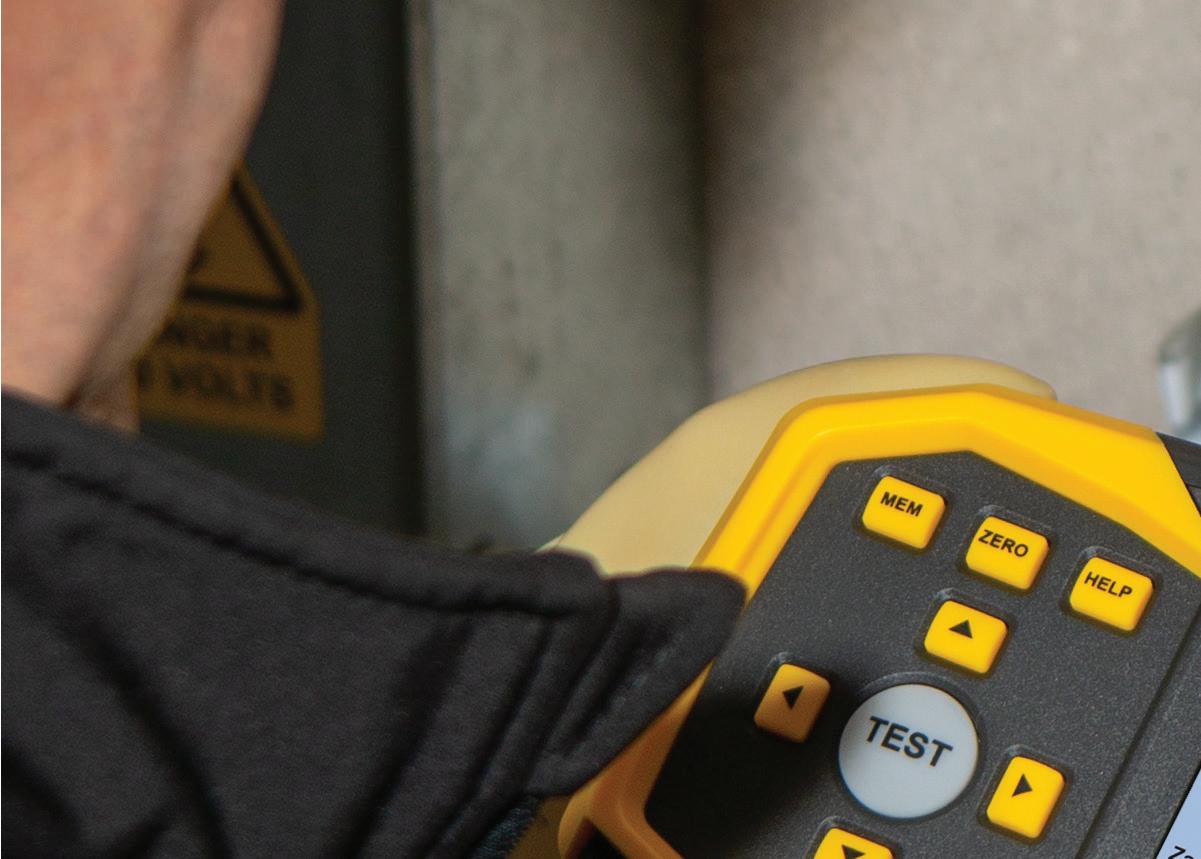
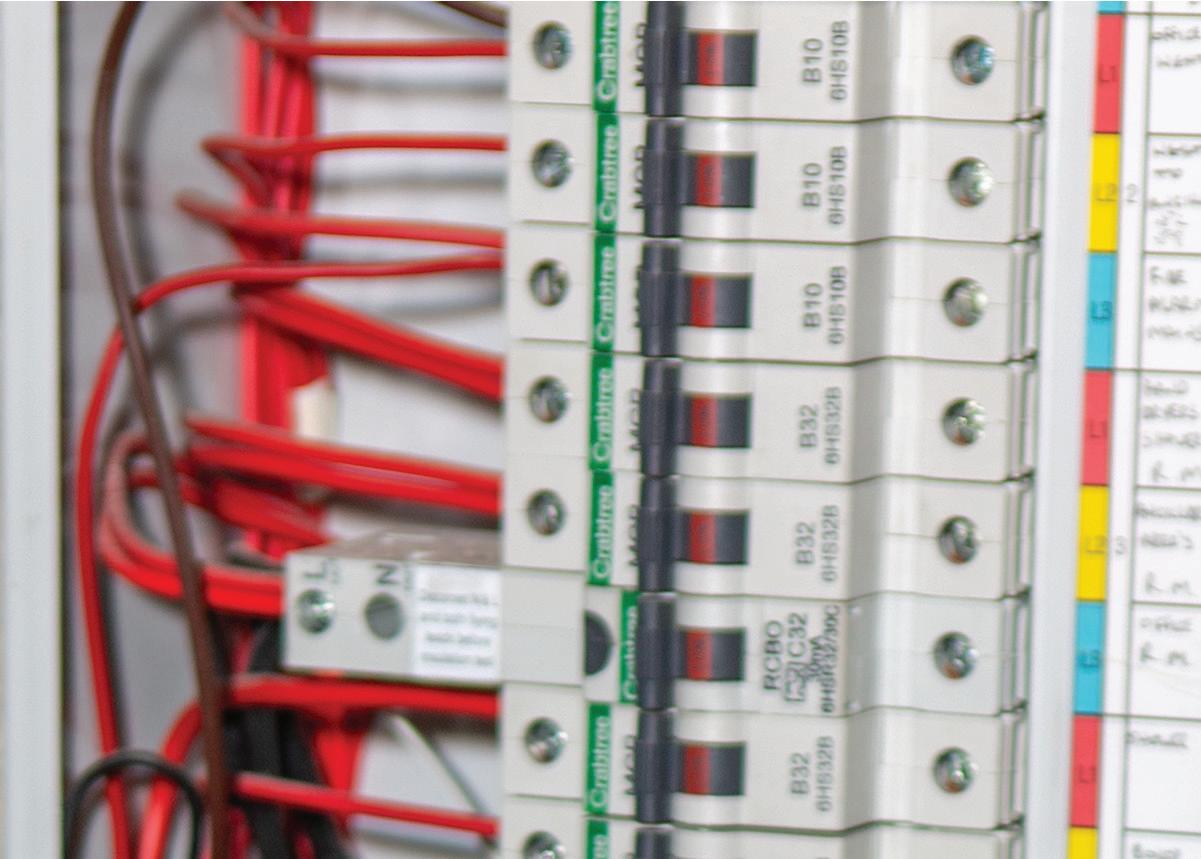
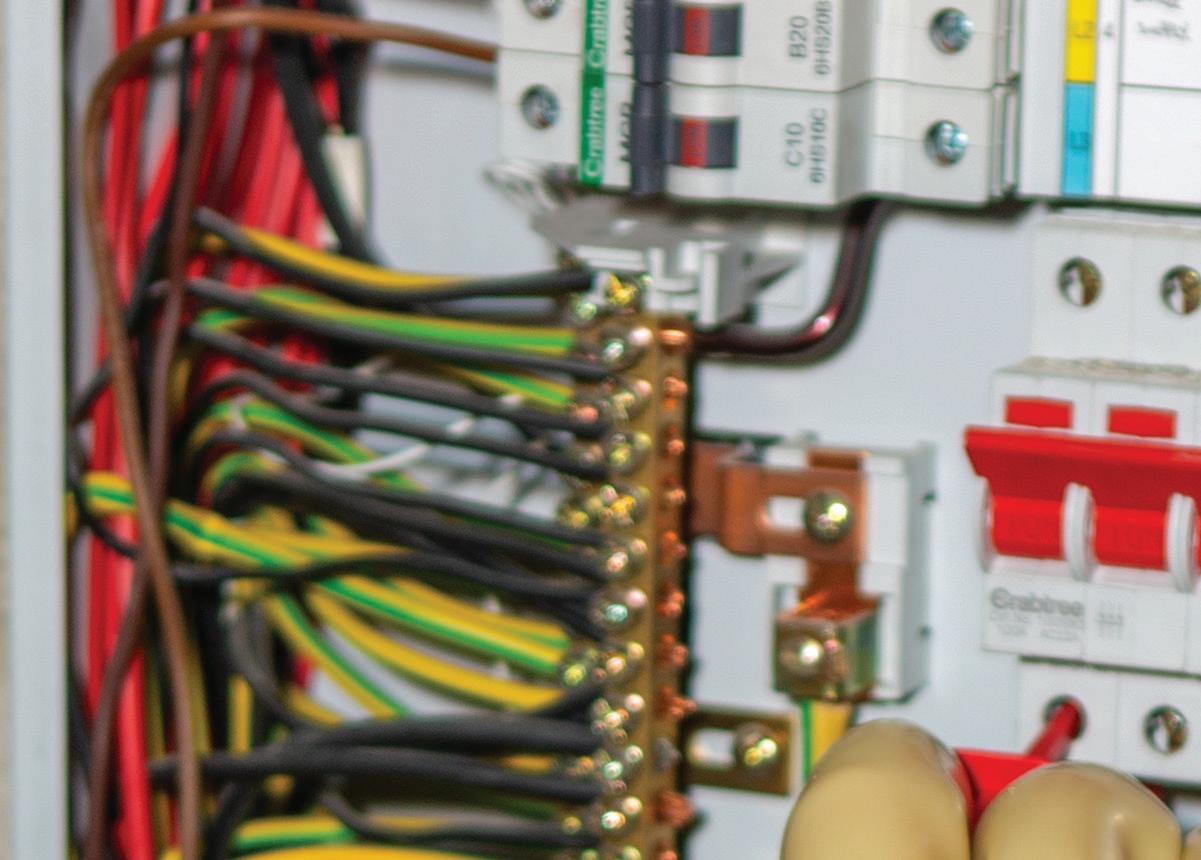
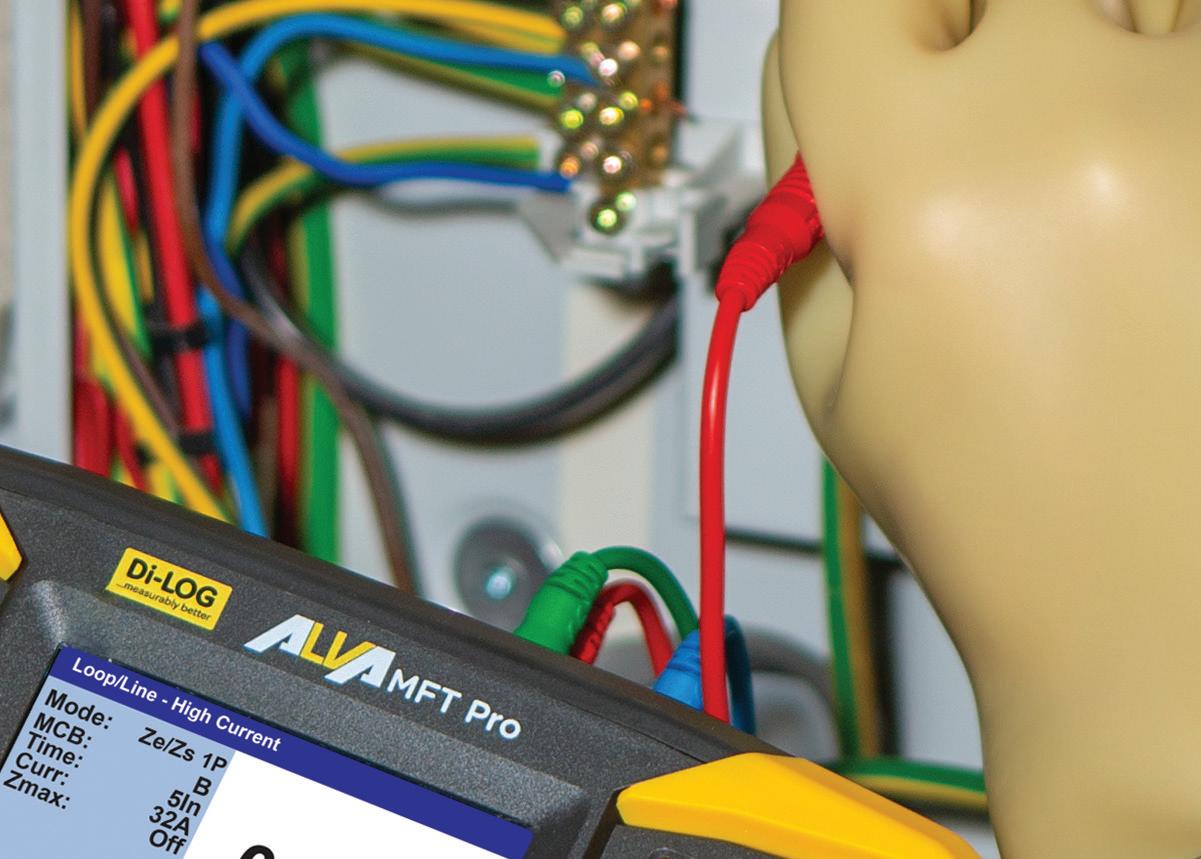
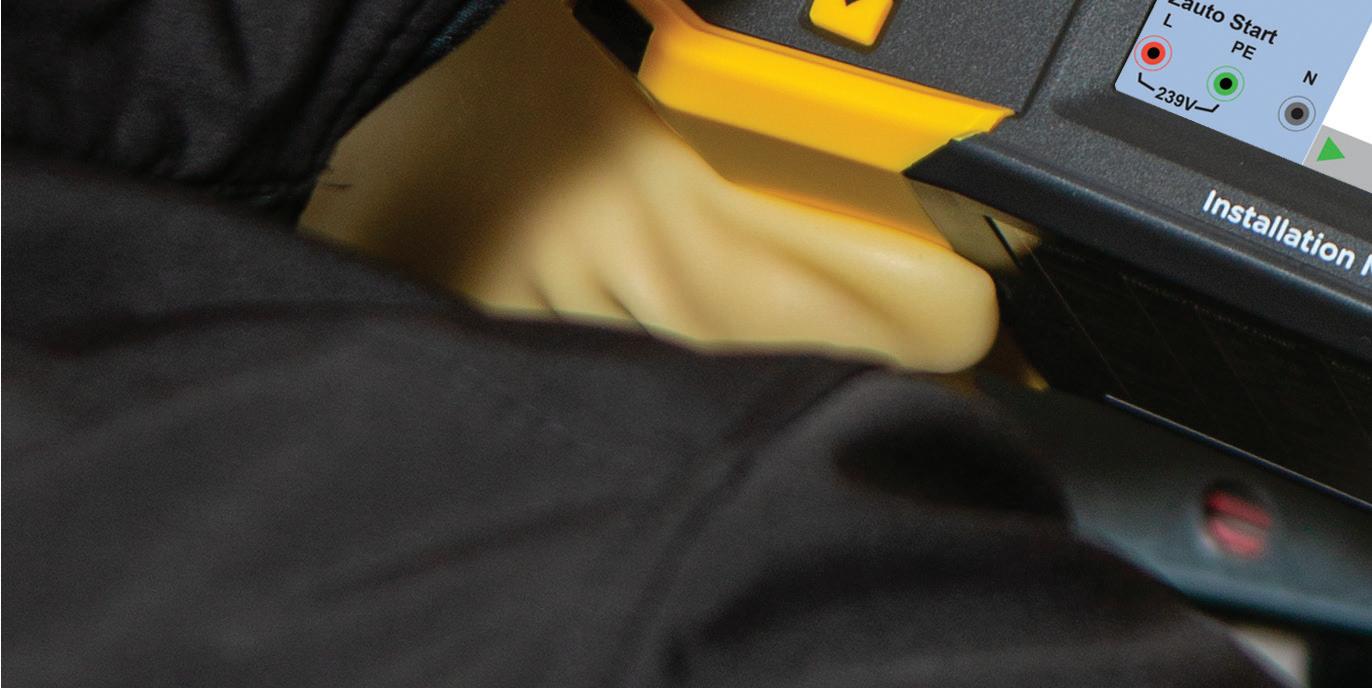
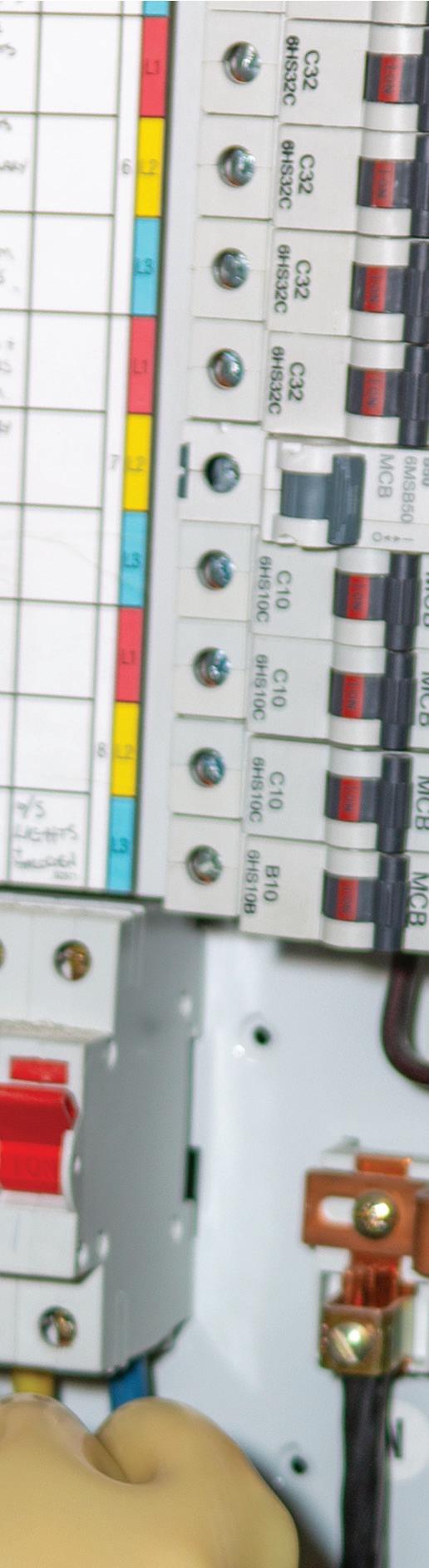
Testing redefined: ALVA intelligence meets real world performance
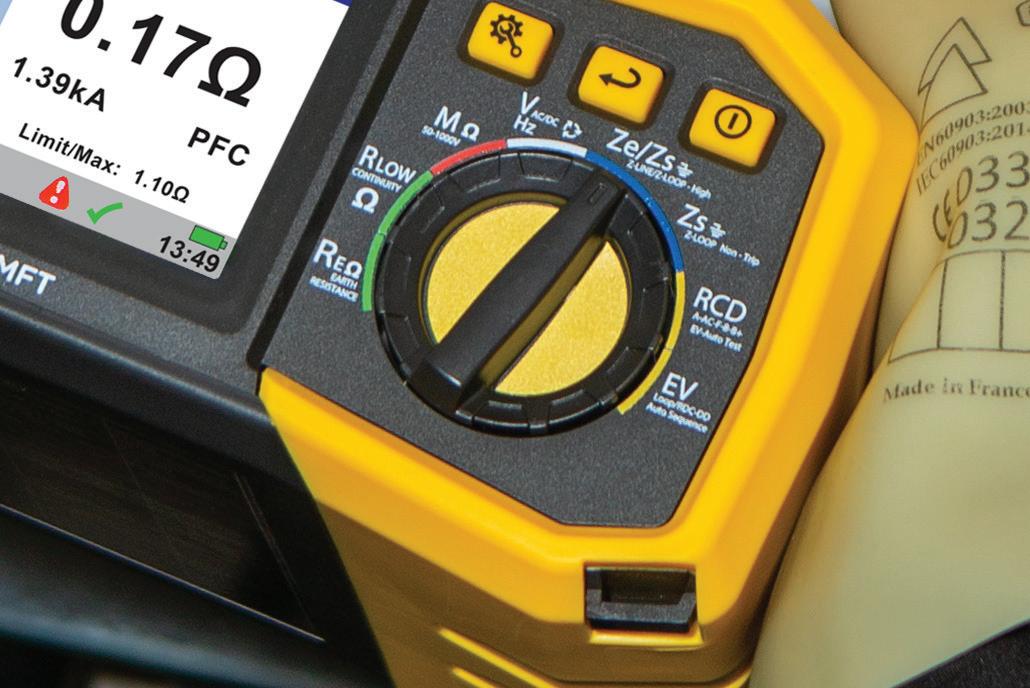
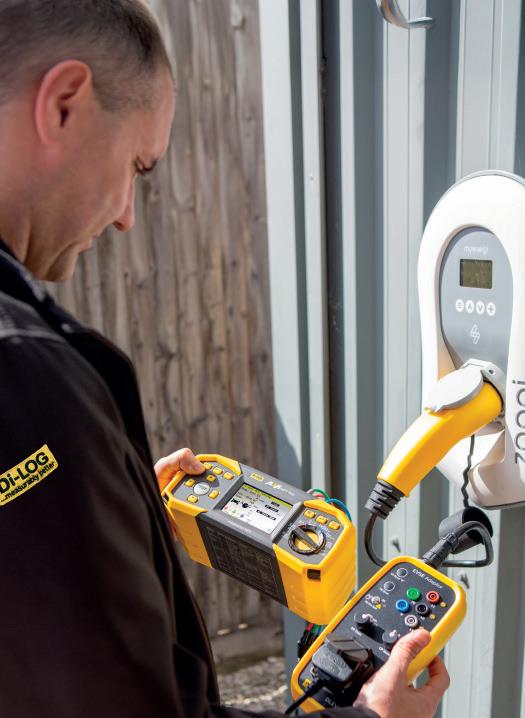
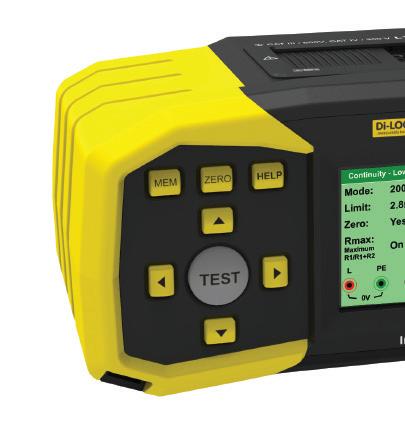
Electrical professionals demand tools that deliver precision, reliability, and efficiency. Enter the Di-LOG ALVA Series Multifunction Tester, built to exceed expectations with next-generation testing technology, intuitive usability, and the industry’s first comprehensive support package
Designed to comply with the 18th Edition, the ALVA MFT, ALVA MFT Pro, and ALVA MFT Pro EV raise the bar for electrical safety, EV charge point verification, and site testing.
Next-generation testing with ALVA Intelligence
The ALVA Series boasts a full-colour TFT display and intuitive ALVA UI, making results crystal clear and guiding users through testing procedures with ease. Its extensive RCD compatibility includes types; AC, A, EV, F, B, B+, General and Selective, ensuring it meets modern installation requirements, specifically when fault finding.
The ALVA Series streamlines testing with intelligent features like fully protected Auto Start 200mA Continuity and the new RCD-LOC+ Auto Start Loop Testing with variable test current. The new Loop Technology automatically identify 2- and 3-wire connections for Ze Testing with the option to increase the testing current dependent on the RCD Nominal value.
To minimise disruption, a NiMH rechargeable battery system with integrated charging is standard across the range. For the standard ALVA MFT, an additional battery and charger pack are required to enable this in-built charging capability. EVSE testing is standard across the range, complete with 6mA RDC-MD/PD verification, safeguarding compliance on every EV installation.
ALVA MFT Pro: Smarter diagnostics and enhanced functionality
Engineered for professionals who need deeper insight, the ALVA MFT Pro delivers advanced diagnostics and verification: Rmax (R2/R1+R2) highlights high-resistance points, aiding in detecting your maximum continuity measurement and verifying conductor integrity.
Zmax (Zs) measures maximum earth fault loop impedance, confirming disconnection times and ensuring protective devices respond correctly. Imax (PSC) identifies the maximum prospective short-circuit current on a 3-phase supply, which is vital for selecting appropriately rated circuit protection. Ideal for fault-finding and compliance checking, this model also introduces USB connectivity and onboard memory for storing test data, perfect for certification and record-keeping.
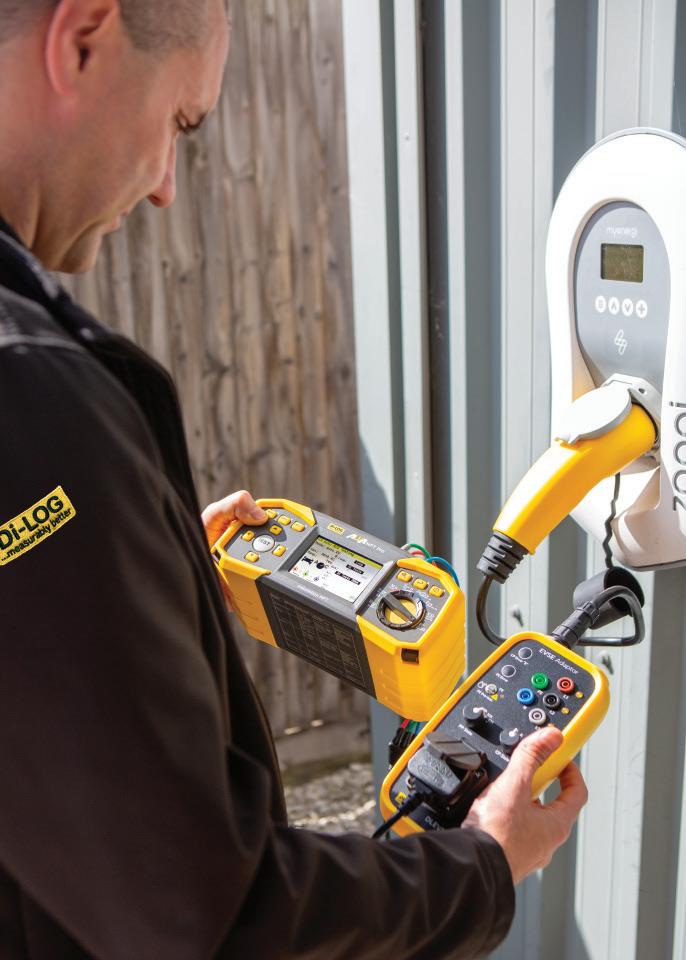
Its standout feature? EV Auto EVSE verification, combining Non-Trip Earth Loop, 6mA RDC-MD/PD, and 30mA AC tests into a single, fast, and reliable process, completely verifying the safety features designed within the EV charger. The optional Earth Resistance testing via 3 or 4-pole kits makes it ideal for full site assessments where earth resistance or earth resistivity measurement is required.
ALVA MFT Pro EV: Ultimate EV testing solution
As EV charging infrastructure expands, the ALVA MFT Pro EV is a key player. Building on the Pro model, it includes automated EVSE verification for efficient charger testing, all enhanced by the exclusive DLEV1 EVSE Adaptor included in the kit.
This one-stop solution combines every critical test needed to meet compliance and safety standards in one sequence, making it essential for modern EV installations.
Industry-first ALVA support package
Di-LOG introduces the optional ALVA Support Package, a service plan offering up to five years of calibration, warranty, and a fixed price accidental damage cover. It’s the only solution of its kind, delivering long-term confidence and cost control.
Optional support package benefits:
• ALVA CALIBRATION – Annual five-year calibration with service and firmware updates, returned within 72 hours.
• ALVA WARRANTY – Five-year parts and labour protection for component failure.
• ALVA TEST LEADS – Auto-shipped replacement test leads in years two and four.
• ALVA ACCIDENT – Accidental damage is covered for a fixed fee of £175 + VAT.
• Flexible payment plans ensure affordability, no hidden costs, just peace of mind.
Why choose the Di-LOG ALVA Series MFT?
• Full-colour TFT display with ALVA UI for intuitive, guided testing
• Auto Start features for rapid continuity and loop testing
• Wide RCD compatibility across all models
• Rechargeable NiMH battery with in-built charging (optional on ALVA MFT)
• Advanced EV Auto verification with DLEV1 in the Pro EV
• Earth Resistance testing (optional)
• Exclusive five-year ALVA Support Package available
• Fully compliant with BS EN 61557
With precision engineering, EV readiness, and unmatched aftercare, the ALVA Series MFT doesn’t just meet professional expectations, it redefines them.
Discover more at: www.dilog.co.uk/ALVA
The six big challenges facing UK trades in 2026
By Lucie Levesley, director at Jackson Woodturners
There is high business confidence among UK tradespeople for the year ahead. This is despite a challenging 2025, facing rising costs, customer cancellations and a prevalent mental health strain on workers.
A new “UK State of the Trades Report” has been released, following a survey of 500 UK tradespeople by Jackson Woodturners, revealing that 90 per cent of tradespeople have experienced disruptions to their work last year. However, looking ahead, business confidence is running high as we move into 2026. The areas with the highest confidence rates include: the availability of work (60 per cent), business finances (53 per cent) and confidence adapting to new technologies at work (50 per cent).
Despite ongoing economic uncertainty and disruption over the past few years, Brits are continuing to invest in their homes. Most tradespeople expect steady demand in the year ahead and are preparing to raise prices to reflect increasing costs and customer demand. But while optimism remains strong, the report highlights that 2026 will also bring challenges for those in the industry, from cost pressures and regulatory red tape, to burnout and skill shortages.
Rising material and operating costs
Rising material costs have caused noteworthy disruption for 43 per cent of tradespeople in 2025 and over a quarter are worried about this spilling over into 2026. Tradespeople are responding with average price hikes expected to be around 9.5 per cent in 2026.
The key to successful increases in day rates is to communicate clearly with new and existing clients. Be transparent about price increases and the reasons for them. To help reduce the impact of rising costs further, now is a great time of year to review supplier contracts and bulk-buy essentials.
Customer pressure to lower quotes
The majority, 85 per cent of tradespeople, have been asked to reduce prices over the past year, which can be frustrating for hardworking, highly skilled workers. The cost of living is impacting everyone, but this includes tradespeople themselves and their businesses. So whilst it’s understandable that everyone wants to save money, tradespeople shouldn’t feel pressured to do so. Especially when confidence around the availability of work in 2026 is high (survey
figures revealed that the majority of respondents are confident about this area, 60 per cent). When facing these conversations, be understanding but firm, and emphasise your value and workmanship. Perhaps offer tiered pricing options for the work, reducing the scope of the project alongside the price, instead of offering “discounts”.
Mental health, loneliness and burnout
9 in 10 tradespeople have felt stressed in 2025, with over a third (36 per cent) feeling stress on a daily or weekly basis. What’s more, 82 per cent also admitted to feeling burnt out at some point. Stress and burnout aren’t the only mental health issues facing tradespeople; loneliness has impacted almost three-quarters of tradespeople last year, with a fifth feeling lonely on a daily or weekly basis.
Regarding symptoms of depression, two-thirds have also experienced these symptoms at some point in the last year. These figures are concerning, given that trades in the construction space are the industry most at risk of suicide. Whilst there is no easy solution to these health issues, mental health expert Dr Luke Sullivan, Clinical Psychologist and Founder at Men’s Minds Matter, has shared guidance which can support mental health in the workplace within the wider State of the Trades report. These include learning to spot early warning signals; assessing your load, not your limits; redistributing rather than internalising; protecting your boundaries; and talking before you tip!
Shortage of skilled labour
Confidence in finding reliable contractors remains below 50 per cent, a challenge which has been hitting the industry for a number of years. Again, there is no silver-bullet solution, but tradespeople can face the issue head-on by investing in apprenticeships and training, looking to build long-term local partnerships with schools and colleges around the country. The best place to start is to speak with other tradespeople who have implemented apprenticeship schemes, or visit the government website for guidance.
Regulation and red tape
One in six cited regulation and red tape as a disruption for their business in 2025, suggesting that it is not just the practical challenges that cause tradespeople headaches.
2025 conversation around a range of regulations, including things like the Future Homes Standard and Renter’s Rights Bill, has often caused confusing communication and difficulty planning within the sector. It can be difficult to keep up and in 2026, further regulations may come into play with possible changes to things like business and personal taxation hitting the headlines recently.
Keeping informed through trade associations, compliance software, and ongoing training is essential to remain compliant - avoiding project delays or possible fines.
Technology and digitalisation
Technology is moving fast, making it hard to keep up, and whilst 50 per cent of tradespeople feel confident with this, many still lag behind in digital adoption - one in six are concerned about how it may impact their work in the year ahead. The headlines are filled with talk about how AI is replacing people, however, there are many positives that modern technology can bring to the job. It’s about finding the right tools to support you and your business. Let it take some of the stress out the the job, particularly any tools which support marketing, finance and admin tasks.
The challenge is knowing where to start and which will be the most impactful for your business. A few popular digital tools within the trade space include: site safety apps such as, Safety Culture and SiteDiary; tool tracking apps like ShareMyTools; and marketing and design apps like Canva.
Lucie adds: “There’s a real sense of optimism among tradespeople as we head into 2026. Many have weathered a tough few years and are now entering a period of more stable demand, with growing confidence in work availability, business finances, and technology. But this optimism is cautious; higher operating costs, customer pressure to keep prices low, and ongoing financial uncertainty continue to challenge profitability across the sector.”
“Behind the numbers, there’s also a human story. Many tradespeople are feeling the strain, with widespread reports of stress, burnout and fatigue after another demanding year. Looking ahead, 2026 needs to be about balance, with fair pricing and smarter systems that protect both business and personal wellbeing.”
Read the survey at: jacksonwoodturners.co.uk/ blog/post/uk-state-of-the-trades-a-report-onthe-current-uk-trade-landscape
TPredictions for the 2026 energy transition
Kelly Becker, President at Schneider Electric, UK & Ireland
he UK’s net zero economy could be worth up to £1 trillion in by 2030, highlighting the major opportunity for growth, innovation and job creation. Electrification is pivotal, but businesses need long term stability and policy clarity to enable them to make investment decisions that shift the UK to a more sustainable future.
Increased water shortages will drive real change in future-proofing
Increased demand and the threat of climate change make water management one of the biggest challenges for UK industry in 2026. The UK experienced the driest start to the year in nearly four decades in 2025. Meanwhile, data centre operators are accelerating adoption of liquid cooling systems as AI use booms – with 28 planned sites located in areas served by Thames Water alone. Together, these factors are increasing the likelihood and frequency of water shortages – a real threat especially for manufacturers, which use significant amounts. As scrutiny increases over UK water leakage and failing infrastructure, in 2026 expect to see drastic steps taken by UK industry to modernise water management. Digital technologies not only help conserve water but also reduce the energy required for treatment, distribution, and cooling processes. But water operators and planners still face compatibility challenges with ageing infrastructure. Increased use of software-defined automation - shifting machine intelligence from the hardware layer to the software level - will help to unlock even greater flexibility, efficiency and scalability, meaning plants can scale more rapidly and effectively. By prioritising innovation and collaboration, UK industry can turn water management challenges into opportunities for long-term resilience and sustainable growth.
Fastest growth cycle of AI infrastructure ever seen in the UK 2026 will usher in the UK’s most rapid phase of digital infrastructure expansion to date. With almost 100 new data centres in the pipeline, representing a 20 per cent increase by 2030, and major investments from Big Tech giants such as Microsoft and Google, the year ahead is set to mark a decisive shift to high density, AI-first digital capability across the country. Already the third largest market for data centres globally, planned sites across the UK
will signal a shift to smarter and strategically distributed capacity. Scotland will emerge as a key hub thanks to unparallelled access to renewable energy from wind and hydro.
This all points to energy at the centre of operational strategy in 2026 – with data centres estimated to drive up to 71 TWh of additional demand over the next 25 years. Focus on diversified, distributed power will increase as regions look to incorporate battery energy storage systems, microgrids, private wire integration and advanced liquid-cooling technologies to meet power demand.
Investment into AI growth zones will drive significant economic expansion, spurring regeneration in local communities and supporting the creation of thousands of jobs in 2026 and beyond.
Electrification of UK transport hubs continues to stall
In 2026, the electrification of UK transport will remain a complex challenge. Domestic transport accounts for 29 per cent of harmful emissions in the UK. The solution lies in electrifying operations at the UK’s ports and airports, while providing an expansive and reliable, nationwide charging network for EVs.
The UK’s ports can play a key role in reducing carbon emissions and providing a more sustainable power network by becoming hubs capable of producing their own renewable energy, equipped to charge electric vessels.
Schneider Electric is already working with UK ports to establish green shipping corridors and decarbonise operations. These models can be replicated across other transport hubs, laying the groundwork for a broader transition to cleaner transport.
But the Government needs to provide clearer direction on its transport decarbonisation targets and actively support new energy use cases and the growing charging infrastructure supply chain. Persistent issues related to accessing grid connections and securing planning permission for new microgrids will continue to slow the momentum of the UK’s energy transition. Despite these challenges, significant moves in building out essential infrastructure will continue into 2026.
Electrification and digitalisation will recharge UK industry
The UK Government’s 2025 Industrial Strategy marked an important policy milestone,
acknowledging energy costs as a key barrier to UK industrial growth.
In 2026 we’ll see measures such as increasing the discount on electricity network charges for energy-intensive industries helping to bolster UK industrial competitiveness. National Grid’s £35 billion investment from 2026 through to 2031 sparks a transformative step toward urgent electricity grid upgrades – critical to meeting increased demand as more sectors electrify their operations. Carefully managed upgrades will add resilience to the grid, secure energy independence and bring down the cost of electricity.
Meanwhile, technologies like softwaredefined automation, edge computing, and industrial AI can lead to measurable gains in productivity, efficiency, safety and sustainability - setting new benchmarks. In 2026, the real differentiator for UK industry will be the strategic selection of scalable and fit-for-context technologies, facilitated by trusted partners who can simplify integration and execution.
Together, electrification and digitalisation will be the twin engines powering UK industry’s next phase of growth and competitiveness. This is reflected by our own study that shows Europe can save €250 billion per year by 2040 through accelerated electrification.
Digitally enabled and energy efficient buildings will cut emissions
In 2026, a massive overhaul of UK buildings will become a defining force in achieving the UK’s net zero ambitions. With buildings currently responsible for around 25 per cent of the UK’s carbon emissions, the pressure to transform commercial and industrial spaces will intensify. We anticipate a surge in digitalisation and energy efficiency measures as businesses respond to persistent high energy prices.
Digital monitoring tools connected to IOT sensors will become more widely adopted, empowering building operators to monitor and optimise energy use, occupancy, and environmental conditions in real time, in new and existing buildings. Increased use of AI to create energy efficiencies – such as dynamically adjusting lighting, temperature, and air quality based on occupancy and external weather patterns – will help to cut costs and emissions.
The future of UK buildings points to a new era: intelligent, adaptable, and electrified spaces that actively support a low-carbon energy system. 2026 is poised to be the year when digitalisation moves from optional to essential.
Switched On
Acrospire delivers seamless heritage lighting upgrade on Bath’s North Parade Bridge
Acrospire has supported Bath & North East Somerset Council in retrofitting heritage lighting on the Grade II listed North Parade Bridge, one of the city’s historic gateways. The upgrade forms part of a wider programme to modernise lighting assets across the World Heritage Site, improving energy efficiency and enabling CMS connectivity while preserving the bridge’s original character.
With the bridge’s listed status and highly sensitive visual setting, the challenge was to deliver a low-glare lighting solution that blended in seamlessly and preserved the historic character of the structure.
Working with Bath & North East Somerset Council, Acrospire refurbished the four heritage-style lanterns, restoring the original housings and integrating new 40W 2,700K COB (Chip on Board) LED units with T3 optics. Each lantern was finished in black with a traditional gold finial, ensuring the appearance remained in keeping with the bridge’s historic context and Bath’s wider heritage lighting scheme.
By refurbishing and reusing the original lanterns rather than replacing them entirely, the project supports circular economy principles, extending the lifespan of existing assets, reducing material waste, and preserving the unique character of the site.
In addition, the lanterns were made fully compatible with the council’s Central Management System (CMS), allowing for dimming schedules that reduce light levels during off-peak times. This approach cuts energy use while maintaining safety and visual comfort for pedestrians.
The result is an upgrade so subtle, most people haven’t noticed the difference — except when it comes to reduced energy consumption. The client commented, “Everyone at Acrospire is really helpful and will do whatever it takes to get the job done properly. It’s such a good job that no one’s noticed the difference since the switch, apart from the energy savings, which is always the best result in my books.”
Read the full case study here: https://acrospire.co/case-studies-and-projects/northparade-bridge/
OSRAM named in Auto Express’s Top Products of Year 2025
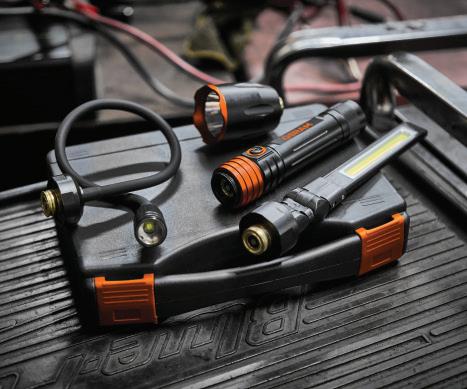
Now a multi award winner, OSRAM’s LEDinspect 3-in-1 inspection light kit (LEDIL417) was launched in 2025 and is the first of its kind in the OSRAM portfolio.
Included with the
product are three attachments for the lamp: a standard torch attachment, a thin inspection lamp attachment; with two hinge positions, which rotate 180° and 230° respectively, and a gooseneck light attachment, that can bend and twist to illuminate hard-to-see locations.
The same handle base is used for each of the three attachments, with each having four lighting modes, high, medium, low and flash. There is a magnet on the handle base for hands-free working and the end of the gooseneck light attachment is also magnetic, which is helpful if the user needs to retrieve screws or small objects in hard-to-reach places.
Marketing Manager for OSRAM, Terri Clark, commented: “We are absolutely thrilled to to be recognised by Auto Express, which reflects the fact that the product has become extremely popular with the public and mechanics alike, so we’re honoured to be included in this.
“We launched this kit less than a year ago and within the past month, it has not only been included in Auto Express’ Product of the Year, but it has also won an IAAF Award for Product of the Year, so with these endorsements, and the time and effort put into its design and function, we’re sure this product will continue to thrive.”
Zumtobel and Thorn transform Sacred Heart University Dingle Campus
Combining Zumtobel’s precision engineering with Thorn’s outdoor architectural luminaires, the €8 million refurbishment of Sacred Heart University’s Dingle campus honours its 19thcentury heritage while creating sustainable, future-proof learning environments.
Early in the design phase, the Zumtobel Group team was asked to switch the proposed recessed SLOTLIGHT infinity II to a surfacemounted system for value engineering.
In the classrooms and seminar rooms, Beta 3, Chalice 3, and IQ Wave luminaires have been carefully selected to provide uniform, glare-free illumination ideal for learning environments. To accentuate the heritage stonework within the interior, VIVO track-mounted spotlights subtly highlight the original features, offering a visual reminder of the building’s storied past. In the open areas of the new modern extension, custom-made SLOTLIGHT infinity II Round pendants in bold red, a nod to Sacred Heart’s corporate colours, serve as striking focal
points. These are complemented by recessed SLOTLIGHT infinity II fittings that deliver clean, contemporary general lighting.
Meanwhile, in the stairwells, the same red Slot pendants create an architectural feature, partnered with Novaline wall luminaires to ensure safe, well-lit circulation spaces.
All interior luminaires are equipped with absence and daylight sensors that automatically adjust output to match occupancy and natural light, ensuring an energy-efficient, well-lit environment.
Given Dingle’s coastal location, Thorn’s outdoor luminaires were specified with C5 corrosion-resistant finishes. Urba Bollards were retrofitted with power outlets to support future campus events. Raze floodlights, Isaro Pro and Urba lanterns, Piazza luminaires, Contrast architectural floodlights, and Eroa façade uplights were all selected for their durability and refined aesthetic to complete the exterior scheme.
Internally, the lighting design balances warmth and focus: communal areas are specified at 3000 K to foster a welcoming ambience while teaching rooms and offices use 4000 K to promote alertness and concentration.
Today, the SHU Dingle campus boasts a highly energy-efficient, low-maintenance lighting scheme.
For more information about the respective products, please visit www.thornlighting.co.uk or www.zumtobel.co.uk
CU Phosco announces Zhaga-D4i Certification
CU Phosco is pleased to announce that its P86x and E95x luminaire ranges have officially achieved Zhaga-D4i certification, an internationally recognised benchmark for interoperable, future-ready smart lighting.
The accreditation confirms compliance with Zhaga Book 18 (Edition 4.0) and D4i requirements, ensuring the luminaires meet global standards for communication, data exchange, and smart driver functionality in outdoor lighting applications.
Zhaga-D4i certification gives local authorities, asset owners, and specifiers confidence that luminaires and sensing or communication modules are truly plug-and-play, regardless of manufacturer.
Standardised interfaces reduce the risk of vendor lock-in, simplify long-term maintenance planning, and support responsible public procurement, a growing priority for operators balancing capital and operational pressures.
The certification verifies the mechanical, electrical, and digital compatibility required for smart devices without modification. The P86x and E95x ranges provide:
• A certified Zhaga interface for sensing and communication modules
• Verified DALI-based data exchange for energy and diagnostics
• Auxiliary power provision (where applicable) D4i is founded on the principle that luminaires should communicate useful operational data including energy usage, failure modes, driver performance, and asset ID. Access to structured, standardised data enables:
• Improved maintenance planning
• Fewer site visits and reduced carbon impact
• Longer asset life through proactive intervention
• Support for sustainability reporting
• A foundation for predictive maintenance
As the industry continues to prioritise whole-life value and carbon performance, Zhaga-D4i plays an increasingly important role. Zhaga-D4i certification supports more than today’s control systems; it provides a stable platform aligned to the future of highways digitisation, adaptive lighting, environmental monitoring, and connected city services.
By ensuring luminaires remain adaptable assets, CU Phosco is supporting operators to build infrastructure that evolves, not ages.
For more information, visit: https://www.cuphosco.com/products/category/road-lighting
Pharos to highlight seamless integration capabilities of lighting control solutions at ISE 2026
As part of its international programme of exhibitions for 2026, lighting control specialist Pharos Architectural Controls will be exhibiting at Integrated Systems Europe (ISE), taking place from 3 - 6 February.
Held at Fira Barcelona, Gran Via, ISE remains the world’s leading exhibition for the systems integration and audio-visual industry.
The Pharos team will be located on stand 2F800, where they will be showcasing the latest developments across their lighting control portfolio and demonstrating how Pharos solutions can integrate seamlessly into almost any environment or wider control ecosystem.
Visitors to the stand will be able to explore the Pharos Expert and Pharos Designer controller ranges, both designed to offer flexible, multi-protocol control supporting DMX, eDMX and DALI. With open, robust integration options, Pharos solutions are widely specified for projects where lighting needs to work in harmony with everything from building management and AV systems to show control, automation platforms and bespoke third-party technologies.
ISE 2026 will provide an opportunity to experience Pharos Expert live, with demonstrations showing how its built-in intelligence supports a smooth and efficient commissioning process. Developed as an accessible yet powerful architectural lighting control solution, Expert enables dynamic control of DMX and DALI fixtures in a cost-effective and intuitive way, while remaining highly adaptable to a wide range of project requirements.
Pharos will also be highlighting the latest release of Expert and the latest developments across the Pharos Designer range.
NVC Lighting revives sports centre with dynamic lighting
The UK’s largest indoor cricket academy has now opened at the University of Brighton, featuring high-quality, energy-efficient LED lighting supplied by NVC Lighting. The state-of-the-art complex is a groundbreaking partnership between the university and Square One Cricket ltd.
Located within the university’s new Brighton Sport and Health Complex, the academy ranks as the world’s second-largest indoor cricket facility. It provides dynamic, high-quality training environments for cricketers of every age, gender, background, and ability, extending far beyond the student community.
As part of the project to transform the site into an innovative and cutting-edge complex, TJ Electrical worked in partnership with NVC Lighting and Rexel to specify NVC Lighting’s Saturn luminaire, a highoutput, rectangular shaped high-bay with sensor and dimming options.
Ian Marsh, Contracts Manager at TJ Electrical, who oversaw the project, commented: “Getting the lighting just right was complex, so we worked with a Rexel engineer and NVC Lighting to plan the lighting design to ensure we were able to meet professional cricket lighting standards.”
The standards mandate 1,500 lux – light intensity – for sports facilities, a leap from the standard 500 lux required for office spaces. Uniformity, the measurement of how evenly light is distributed across an area, was also an important factor as the cricket centre would need to have a uniformity of 0.9. Commercial offices are required to have a uniformity of 0.6.
Rexel’s completed design utilised 120 Saturn light fittings, which were then installed by Ian and his team. The luminaires were chosen for their reliability, flexibility and efficiency. With selectable power and CCT, the panels are non-corrosive and boast NVC Lighting’s trusted seven-year warranty to give additional peace of mind.
Providing up to 193 lumens per circuit watt, it has a high efficiency rating which is further enhanced by the lights’ choice of 100W, 150W and 200W selectable wattage outputs, and 4,000K, 5,000K and 6,500K selectable CCT.
Ian continued: “Once the lighting design was complete, it was really simple to install the lights themselves. NVC Lighting is a company that’s easy to work with, from speedy communication, firstclass products at competitive prices and strong technical expertise.”
For more information, visit www.nvcuk.com.
Winner Q&A
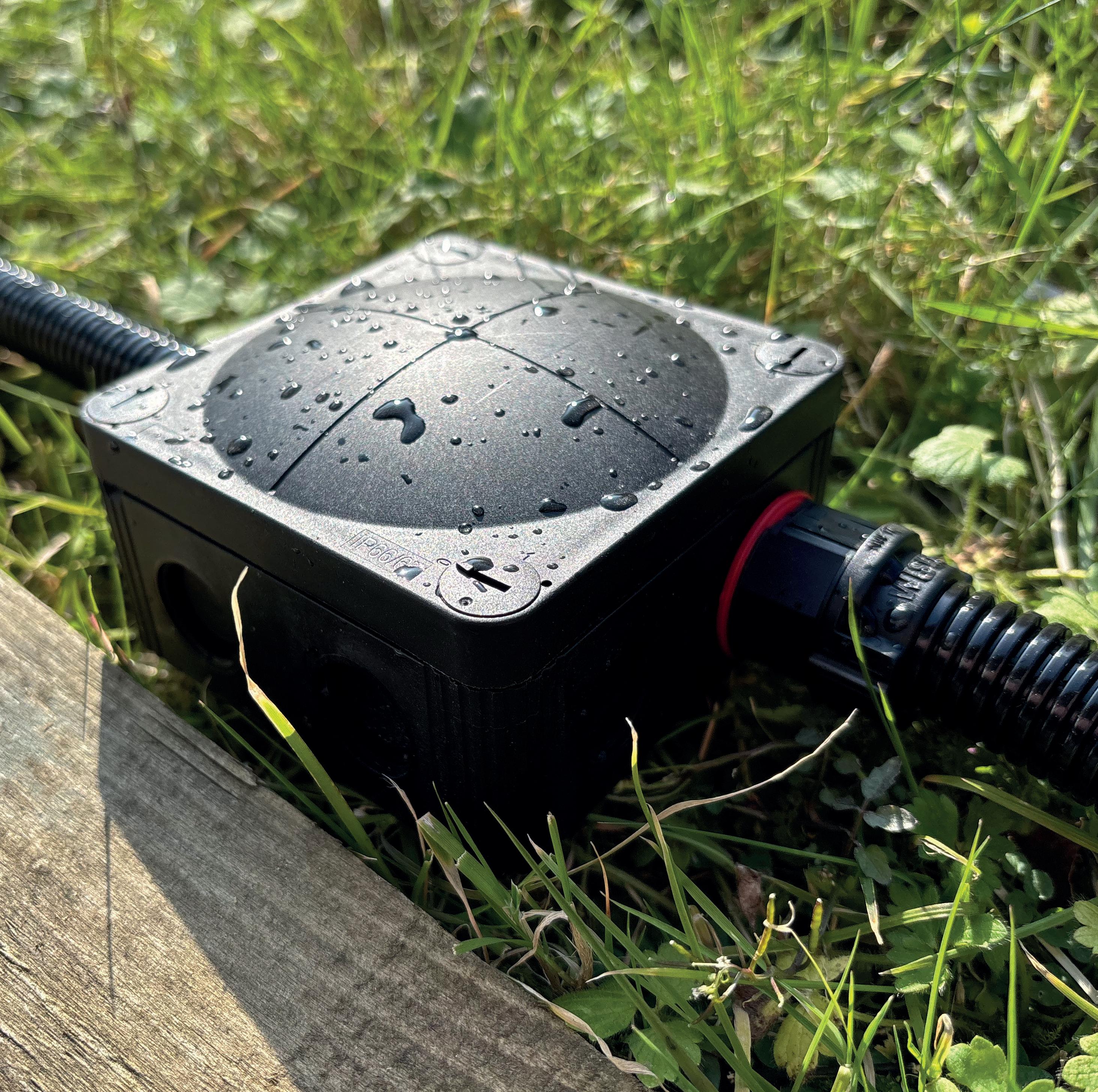
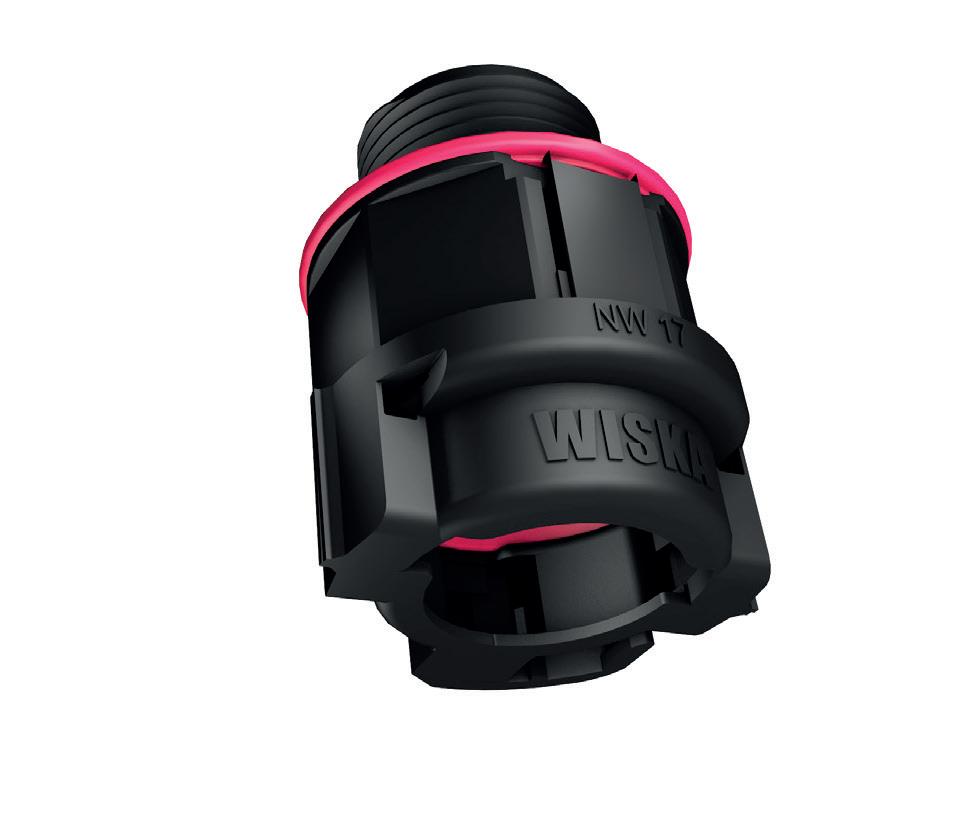
At the Electrical Industry Awards 2025, WISKA was named Residential/Domestic Product of the Year. Elliott Rothon shares how installer-led design shaped the award-winning COMBI® 310, why industry recognition matters, and what’s next for the company as it continues to focus on practical innovation and collaboration with electricians
Congratulations on your win!
What was your team’s initial reaction to being named Residential/Domestic Product of the Year?
We were genuinely thrilled. The whole team was incredibly proud, because this award represents a lot of hard work and close collaboration with installers. The COMBI® 310 was developed directly from real feedback, so to see that approach recognised by the industry was hugely rewarding for everyone involved.
What does this recognition from Electrical Industry Awards mean to WISKA as an organisation?
Industry awards provide an independent benchmark for quality and innovation. For us, they offer an opportunity to showcase installer-focused design to a wider audience and to celebrate the people behind the products. Participating also opens up valuable conversations across the industry and helps reinforce trust with customers who rely on proven, award-winning solutions.
was developed and what sets it apart from other products on the market? The COMBI® 310 was born directly from conversations with electricians who told us they needed a better solution for looping connections, particularly for outdoor lighting installations. The standout feature is its unique configuration of three M20 threaded membrane side entries, which gives far greater flexibility for cable routing. Combined with IP66/67 protection, generous internal space, and robust materials, it offers a level of versatility and ease of installation that simply isn’t available elsewhere.
Where do you think installers gain the biggest benefits when using this product?
Can you tell us more about how the COMBI® 310
Installers benefit most from the time-saving and flexibility aspects. The side-entry configuration makes looping far easier, the internal space reduces frustration when making connections, and features like the quarter-turn, self-retaining lid screws speed up installation. Whether
it’s domestic outdoor lighting, commercial applications, or more demanding environments, the COMBI® 310 helps installers work faster and with confidence.
What specific design features do you think impressed the awards judges most?
The judges were particularly impressed by how installer feedback translated directly into design. The three-sided M20 entry layout, compact footprint with increased internal space, high IP rating, and overall build quality all demonstrate a product that has been carefully engineered for real-world use. It’s not innovation for the sake of it — it’s practical, usable innovation.
What did attending the Winners Reception mean to your team, and how valuable are events like this for celebrating success and connecting with peers across the industry?
Attending the Winners Reception was a fantastic. It gave us the chance to properly pause and celebrate the achievement together, which is something that can easily get lost in the day-today pace of the industry. Being in the room with other award winners and industry peers made the recognition feel even more meaningful. Events like this are incredibly
valuable, not just for celebrating success, but for building relationships and sharing ideas across the sector. They create space for open conversations, collaboration, and learning from others who are equally passionate about raising standards in the electrical industry. For us, it reinforced the sense of community within the industry and reminded us why recognition like this really matters.
WISKA also decided to sponsor a category at the Awards in 2025. How important is it for WISKA to support events like The Electrical Industry Awards?
Supporting events like the Electrical Industry Awards is incredibly important to us. They celebrate excellence across the sector and shine a spotlight on the people, products, and businesses driving the industry forward. Sponsoring a category is our way of giving back, supporting innovation, and helping to recognise the achievements of others within the electrical community.
What’s next for WISKA?
We’ll continue doing what we do best — listening to installers and developing high-quality, reliable solutions that solve real problems on site. There are exciting additions planned across our product ranges, with a continued focus on innovation, durability, and ease of installation. The success of the COMBI® 310 sets a strong benchmark for what’s to come.
Exporting Earth
Steve Humphreys, Technical Commercial Manager at NAPIT, highlights the risks of using PME for outbuildings and explains when switching to a TT system is the safer option
BS 7671 prohibits the use of Protective Multiple Earthing (PME) for certain locations, such as caravan parks and marinas, due to requirements under the Electricity Safety, Quality and Continuity Regulations (ESQCR) which prohibit the connection of PME facilities to any metalwork in a leisure accommodation vehicle. Further conditions regarding PME apply to many Part 7 sections within BS 7671 for special installations or locations.
PME and outbuildings
Generally, BS 7671 permits the use of PME in outbuildings. Where no extraneous-conductiveparts are present, there is no requirement for main protective bonding to be provided in the outbuilding. However, while BS 7671 does not specifically prohibit PME in these cases, other issues with PME supplies should be considered.
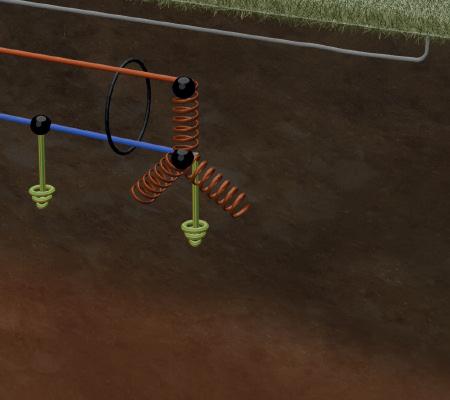
PME is a TN-C-S system where the neutral and earth functions are combined into a single conductor (the PEN conductor) on the supply side of the installation. The PEN conductor is referenced to Earth in multiple positions with earth electrodes.
For overhead supply cables, this is carried out at the transformers and several utility poles between the transformer and installation.
Underground cables are generally earthed along the length of run with electrodes.
Historically PME systems also benefitted from fortuitous earthing via metallic pipes and other infrastructure that are connected to the network via nearby installations protective bonding, consequently providing a form of supplementary earthing.
Though this accidental connection is not a reliable safety measure, it does play a considerable part in PME systems.
Whilst the neutral and earth are separated within the installation, PME characteristics can cause issues when using PME outside of an installation, one issue is known as a perceived shock.
Perceived shock
A perceived shock occurs when someone touches metal connected to the PME system of the main building, such as an item of Class I equipment, whilst being in contact with true Earth. For example, in an outbuilding, a potential difference can arise between the true Earth and the earth exported from the main building due to voltage drop in the PEN conductor under normal operating conditions. This issue is made worse when body resistance is low.
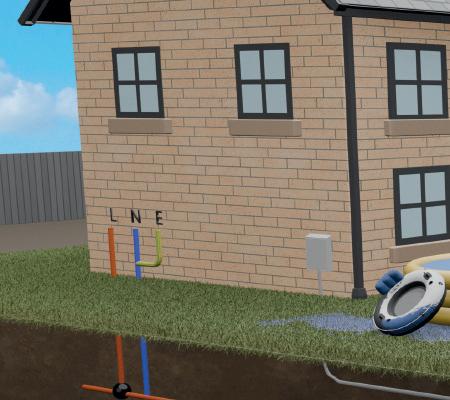
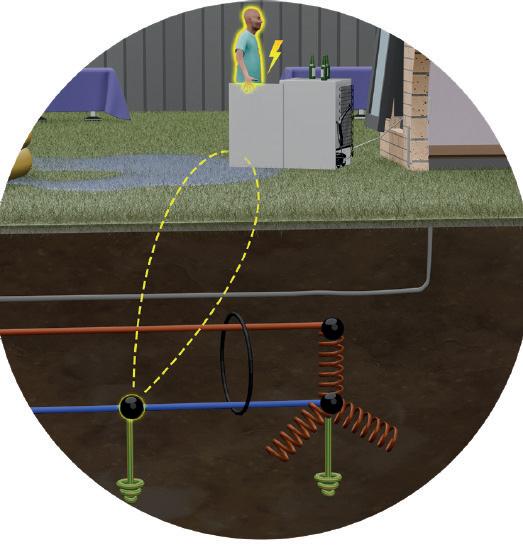
Imagine having a garden party where children are in and out of a pool playing barefoot on wet grass, and a temporary fridge plugged into the outbuilding is touched.
Stray earth leakage could result in an unpleasant tingle as the current takes the path of least resistance through the wet body back to a nearby earthed position, which is not necessarily the installations earth, just one on the system, see Fig 1.
Fig 1: An example of perceived shock risk from a temporary outdoor refrigerator contacting excess water spilled from a paddling pool
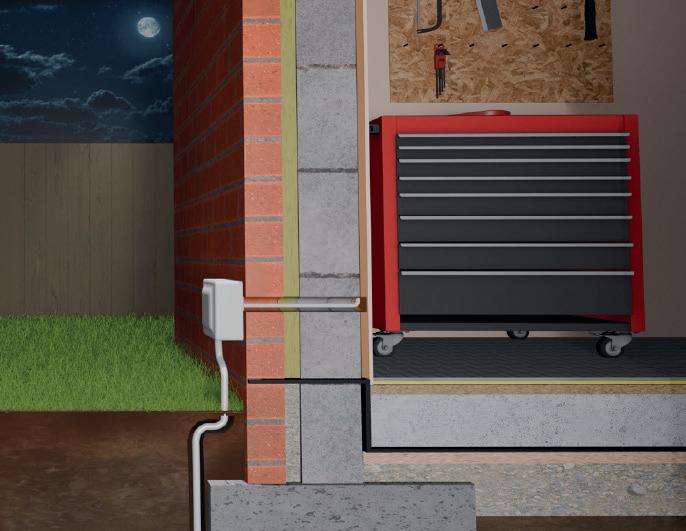
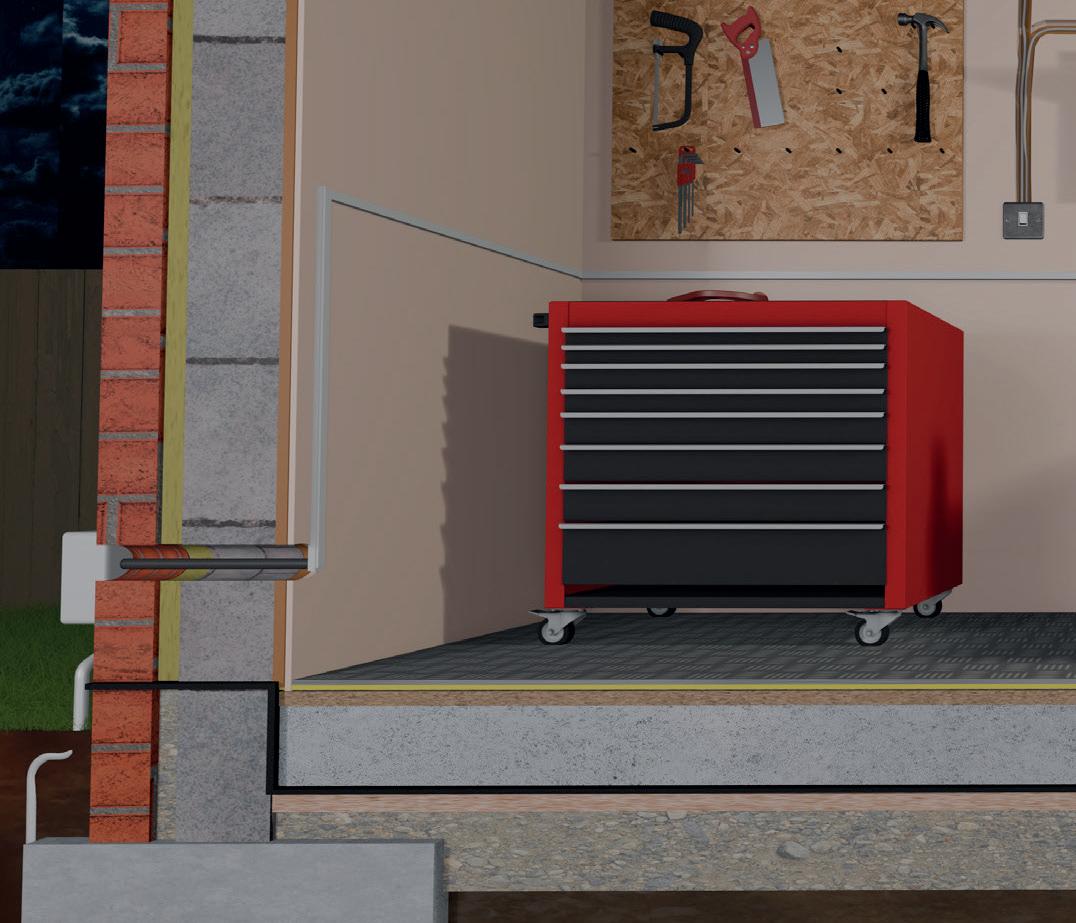
Fig 2: Domestic property where PME is disconnected from the outbuilding (workshop) using an insulated adaptable box
Broken PEN conductor
A more serious risk arises if the PEN conductor is lost, often due to a breakdown of an underground cable joint or disconnection of the neutral on an overhead supply, for example, on a utility pole by a falling tree.
The problem is, if the line conductor remains connected, the returning load current will not be able to return to source due to the loss of neutral, and because both the neutral and earth are connected at the service head, the load current will now seek an alternative return.
Consequently, all exposed-conductive-parts and extraneous-conductive-parts connected to the PME installation will rise in potential, creating an electric shock risk. Protective equipotential bonding will limit the effects inside the equipotential zone. However, outside poses a significant shock hazard.
Mitigating risks
Electricians must make an engineering judgement on the likelihood of potential issues based on the specific circumstances presented to them on the job. For example:
• Low Risk
A wooden shed with plastic fittings and no conductive parts is unlikely to pose a problem
• Higher Risk
A shed with socket-outlets that could be used for outdoor equipment or conductive parts increases the risk of issues
It should be noted that accidents relating to the loss of a PEN conductor are few and far between.
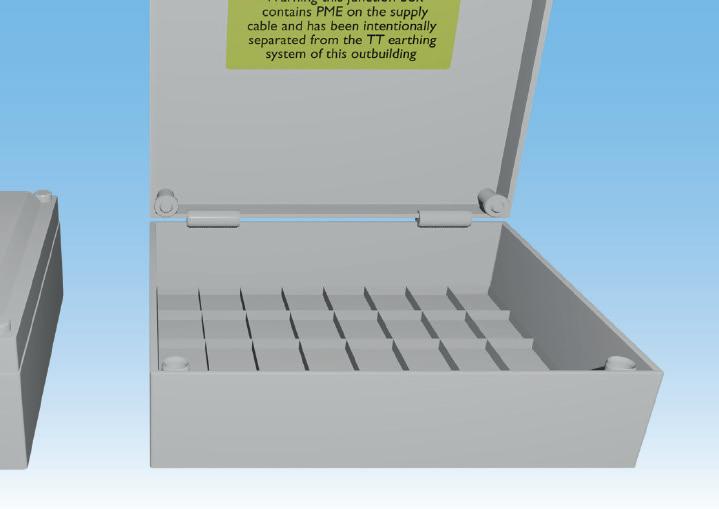
Warning this junction box contains PME on the supply cable and has been intentionally separated from the TT earthing system of this outbuilding
In fact, the same shock hazard will apply to any PME installation where the supply neutral has been lost and there is a metal outside tap that is connected to the earthing arrangement by means of protective bonding.
For any outside installations where extending the PME supply from the main building raises concern, it is advised to convert the outbuilding to a TT system.
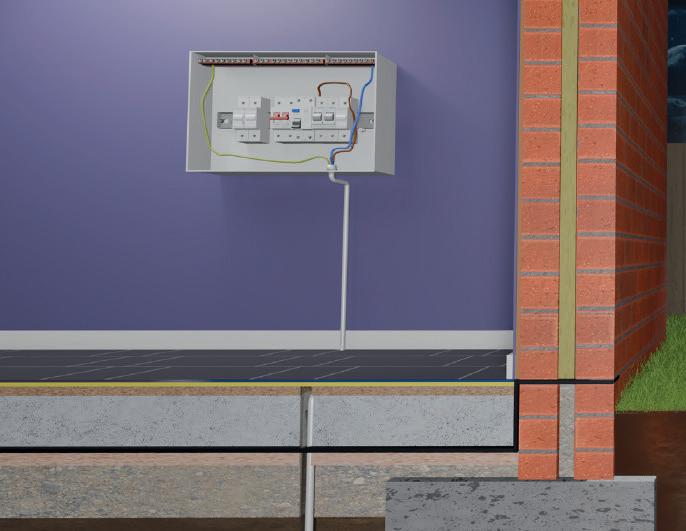
This involves disconnecting the PME at the outbuilding, which can be done using an insulated adaptable box, or an insulating gland to separate earthing systems as shown in Fig 2. It is worth labelling the inside of the adaptable box to ensure this intentional separation of earthing systems is not reconnected in the future by a less experienced electrician, see Fig 3.
Converting the outbuilding to a TT installation
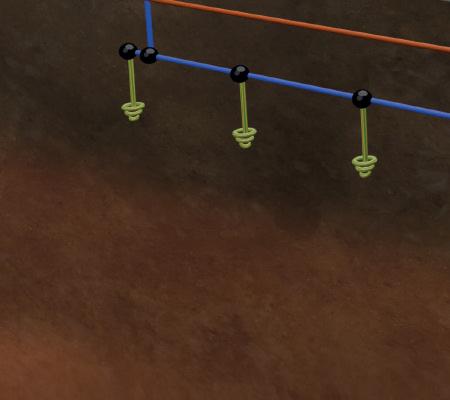
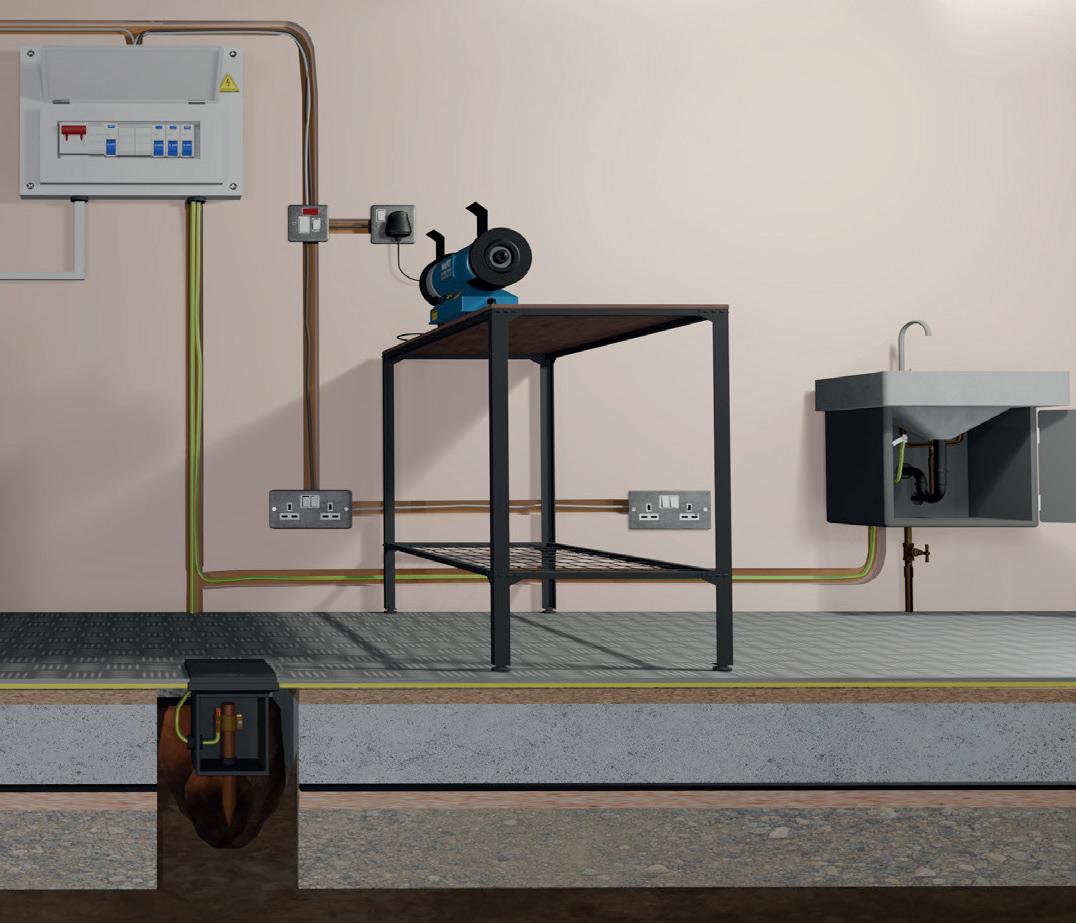
involves the use of a local earth electrode instead of relying on the earth from the main building. This allows the overcurrent protective device in the main building to operate if a line-to-earth fault should occur on the supply cable.
Additionally, a local RCD provides fault protection for the circuits within the outbuilding, see Fig 4.
Conclusion
Although regulations do not prohibit exporting PME to an outbuilding, careful consideration is essential, especially where the outbuilding has extraneous/exposed conductive parts or socket outlets that could be used externally.
Be mindful however, some Distribution Network Operators (DNOs) may forbid their PME being exported from the supplied building.
Fig 3: Example warning label for PME earthing separation
Fig 4: Detached outbuilding, used as a workshop, with a TT earthing arrangement
WORKSHOP
A new era for the industry: What installers need to know
MCS (Microgeneration Certification Scheme), the UK’s quality mark for small-scale renewables like solar panels and battery storage, has officially entered the transition phase for its Redeveloped Installer Scheme. Alex Hughes, Head of Scheme at MCS, outlines everything installers can expect in the rollout year, and how they can get prepared to transition
The UK renewables industry is growing quicker than ever. To date, there have been more than 2.3 million certified installations – spanning solar panels, heat pumps, battery storage systems, and more – with 2025 smashing the record for installations in a single year by mid-November. As the government looks to accelerate the deployment of renewable energy in the push towards net-zero, confidence across the supply chain is crucial.
Time for change
In 2023, we saw an opportunity to improve our Scheme by simplifying requirements and putting consumer protection and quality at its heart, making the journey to certified renewable energy more accessible for everyone. In close consultation with the industry, we redeveloped our Installer Scheme, published the core documents in January 2025, and are now excited to roll it out throughout 2026 and beyond. The core documents for installers are available on the MCS website and include:
• Installer Operating Requirements: This is the guide for how installers achieve and maintain MCS certification.
• Customer Commitment: This document outlines an installer’s responsibility to protect consumers and adhere to consumer protection laws.
• MCS Installation Standards: The technical Standards for how systems should be designed and installed.
• Pre-sale Information System Performance Estimate Standards: The documents outline how to carry out system performance estimates and the pre-sale information that must be provided to a customer for an installation.
The value for installers
The redeveloped Scheme has been designed with installers in mind, acknowledging their position at the forefront of the renewables industry, by making certification simpler and more rewarding – but just as robust.
With consumer protection at the heart of the redeveloped Scheme and new requirements for financial protection products set out,
the redeveloped Scheme provides stronger safeguards for consumers and will boost confidence in an installer’s business, making it a powerful route for growth.
We listened to our installer community and have built a Scheme that puts an emphasis on the actual outcomes achieved for customers, rather than too much emphasis on administrative requirements. A new risk-based model will reward consistently compliant installers with fewer assessments and installers that fall short will be assessed more frequently.
MCS is also improving its transparency, accountability, and accessibility. Under the redeveloped Scheme, every certified installer will be assigned an MCS account manager who will guide them through onboarding and achieving MCS certification, while supporting them to improve their customer experience and service quality as a certified installer. This direct partnership will be underpinned by the signed Installer Agreement, which will help us to work together to address issues promptly and maintain high standards across the sector.
Next steps
Installers that are currently MCS certified can prepare to transition to the redeveloped Scheme now, following the steps below:
1. Understand the new structure: The first thing installers should do is get familiar with the new Scheme structure and documents. The core scheme documents installers will operate under
are the Installer Operating Requirements and the Customer Commitment.
2. Familiarise yourself with the standards: The technical standards themselves haven’t changed but have been restructured and streamlined – so that they are split into Pre-sale Information and System Performance Estimate Standards and Installation Standards.
3. Identify MCS roles within your business: Under the redeveloped Scheme, you will need to assign a Main Contact and a Licensee, and Technical Supervisor(s) that will be assigned to installations.
4. Assess your business size and complexity: In the Installer Operating Requirements, MCS has outlined scenarios tailored to different business sizes and complexities, which will help you understand how to update your processes and controls.
5. Understand the changes to administration: These include changes to the certificate creation window and the new requirement to purchase an approved financial protection product.
6. Maintain communication with your certification body: Your certification body will be responsible for managing your transition and will keep you informed of the next steps for your business.
For installers not yet MCS certified, the timeline for getting certification to offer the redeveloped Scheme is dependent on your chosen certification body. We encourage you to speak with them about your next steps.
Looking ahead
Confidence in home-grown energy has never been more vital in the push towards net-zero, and the redeveloped Scheme has been designed with this in mind. MCS is committed to working with the wider industry to deliver a Scheme that works for everyone, and we look forward to the year ahead as a crucial period of growth for the renewables sector.
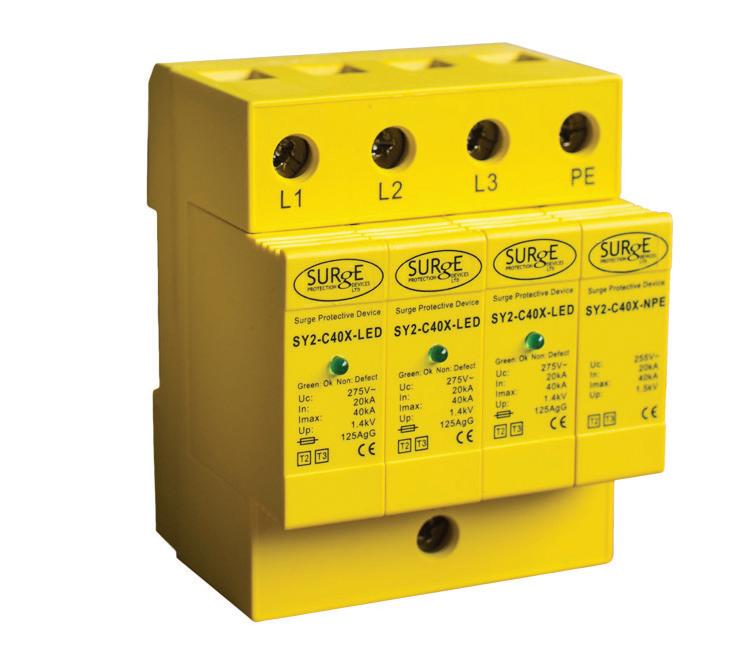
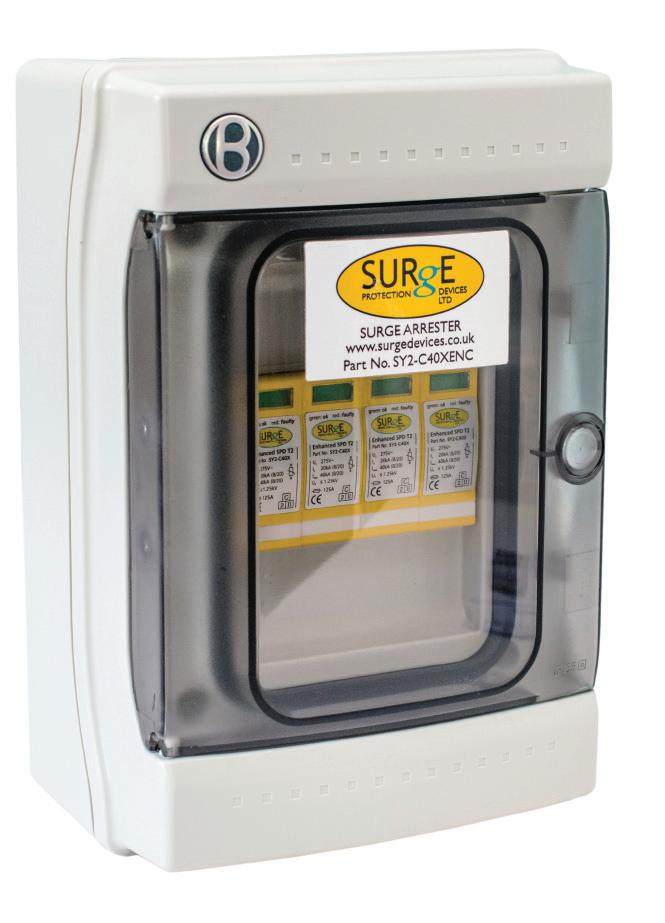
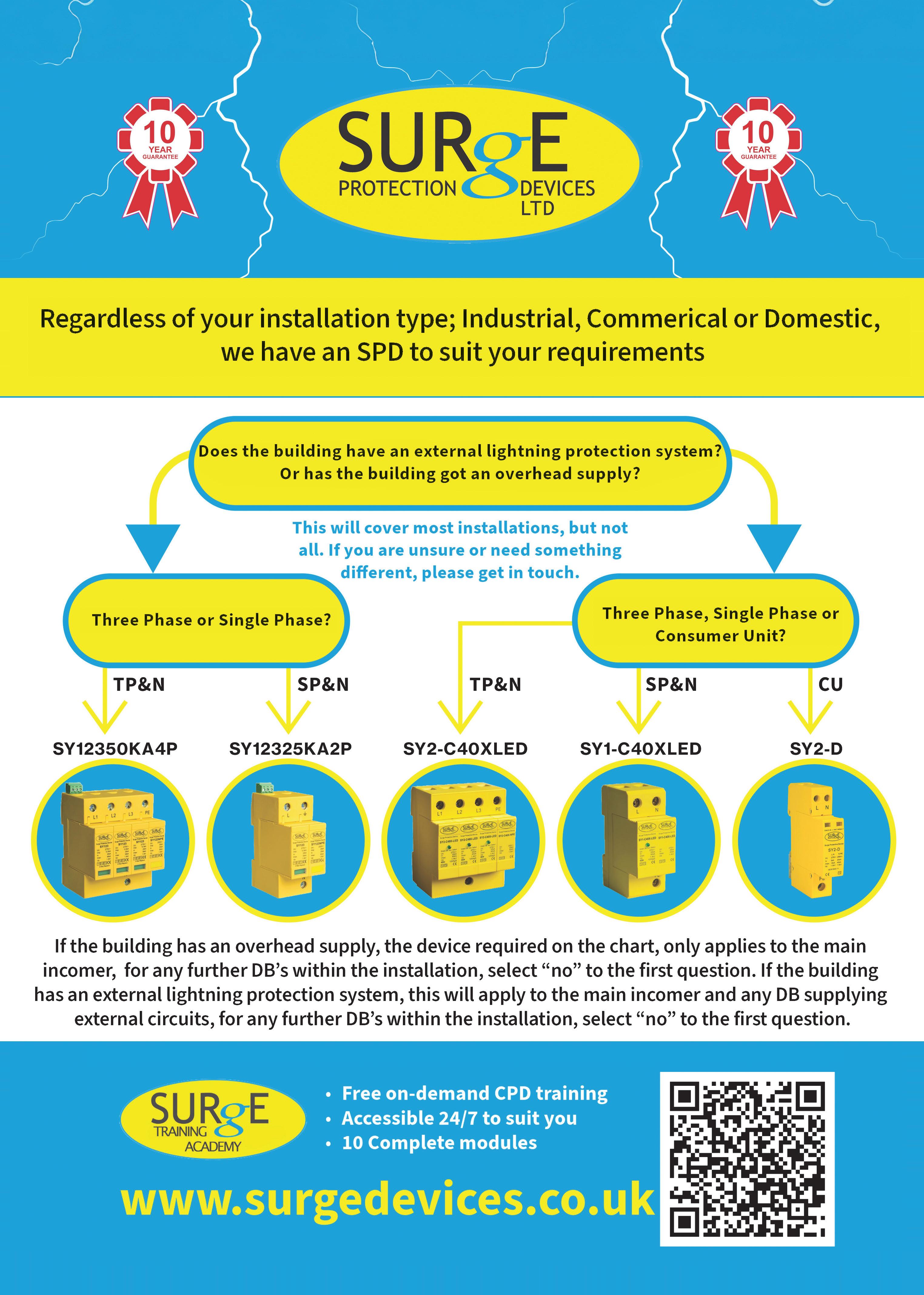
Surge protection devices are usually discussed in terms of compliance and risk, but their role in extending the life of electrical equipment is often overlooked. Kirsty Johnson, Technical Director at Surge Protection Devices Ltd, explains how SPDs reduce everyday damage from switching surges, cut waste, and support a more sustainable approach to our growing reliance on electrical and electronic equipment
By this point, I should imagine that you are quite familiar with the term SPD (surge protection device) and while there are still so many questions surrounding the use and application of surge protection devices, one aspect of the use of surge protection that does not get discussed often, is the use of SPDs to increase sustainability.
How surge protection devices work
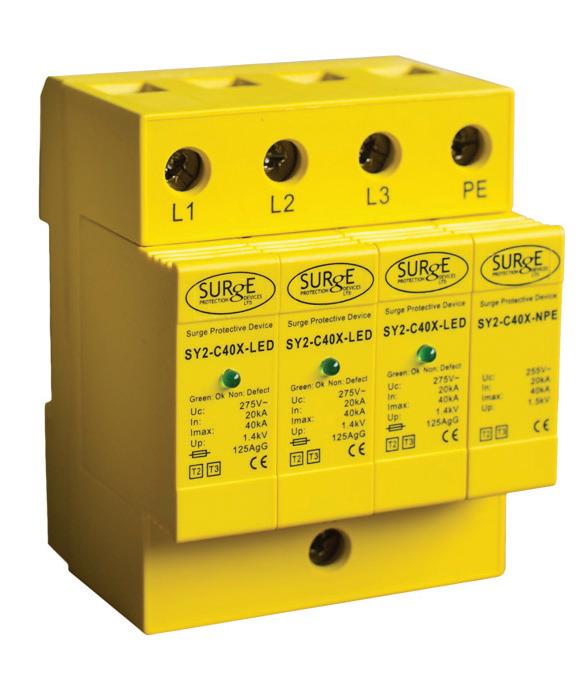
Surge protection devices are designed to protect sensitive electrical components by diverting any excess voltage to earth. This is fundamental in prolonging the lifespan of the electrical goods we use day to day.
The growing scale of electrical equipment consumption
In 2024 (as I write this article the data has not been finalised for 2025) UK consumers spent approximately £50.4 billion on electrical and electronic equipment – a figure that is predicted to increase to £62.2 billion by 2030. This is just for non-commercial electrical equipment, so it does not include industrial electrical equipment or shop equipment. Instead, this massive figure is made up of the electrical equipment we use on a day-to-day basis such as smartphones, household appliances and computers.
External and internal sources of overvoltages
These types of electrical equipment are susceptible to damage from overvoltages, both from outside of the electrical installation, in the
form of distribution fluctuations and nearby lightning events, and from internal switching events, often referred to as switching surges.
Why switching surges matter more than you think
A switching surge is a sudden, temporary increase in voltage that occurs when an electrical circuit is opened or closed. While lightning strikes are the most famous cause of power surges, switching surges are far more common. In a typical electrical installation, switching surges happen multiple times a day as equipment cycles on and off. In a domestic household for instance, refrigerators cycle in and out to maintain temperature, along with appliances such as washing machines, which may be cycled periodically when required.
Switching surges are at a much lower magnitude than we would expect from lightning surges, but are much more frequent. This means that the damage may not instantly show as we would expect, instead it will cause degradation overtime to the electrical components within the equipment.
Smarter, smaller, more vulnerable electrical equipment
As we make any electrical equipment smarter, smaller, or more energy efficient, we make it more sensitive to damage from overvoltages. Our consumer market is not only spending the money on the electrical equipment; it is also what is driving the increase in sensitivity of the equipment itself.
Surge protection devices play a key role in supporting the longevity of our electrical equipment, not just from a commercial point of view, but also for the goals we have in moving towards a more sustainable culture.
Surge protection and sustainability
We hope this information has been useful to you, if you wish to discuss this further, or for further information on the use of surge protection devices contact the surge protection experts on 01484 851747, or email us at: info@ surgedevices.co.uk.
Surge protection devices are designed to protect sensitive electrical components by diverting any excess voltage to earth. This is fundamental in prolonging the lifespan of the electrical goods we use day to day. In 2024 (as I write this article the data has not been finalised for 2025 yet) UK consumers spent approximately £50.4 billion on electrical and electronic equipment – a figure that is predicted to increase to £62.2 billion by 2030.
AC charging will power the commercial EV revolution
By Daniel Forsberg, Marketing Manager EVSE at CTEK
Electrification of commercial transport is gaining serious momentum across Europe, with overnight AC charging of electric vans and trucks the most practical and affordable way to power growing EV fleets.
A new report by the International Council on Clean Transportation predicts Battery Electric Trucks (BETs) in the EU will need 150,000175,000 private chargers and 60,000-80,000 public chargers by 2030. The report, entitled Charging infrastructure needs for battery electric trucks in the European Union by 2030, says overnight charging is expected to be the primary charging mode.
Operators of commercial EVs are building depot charging as their preferred solution to starting each working day with a fully charged fleet. Most electric vans and trucks are expected to charge where they return to at the end of the day, not at public stations.
Overnight charging, when electricity is often cheapest, aligns perfectly with how most fleets actually operate. Vehicles used in delivery, logistics, municipal services and regional transport are typically parked overnight for 12 to 14 hours at a time. That window gives operators ample opportunity to cover their daily energy needs without relying on expensive high-power charging.
A 22kW AC setup is more than capable of handling the required load for medium Battery Electric Trucks (BETs) and lighter commercial vehicles without stressing the grid. Early EV adoption is strongest among light vans and medium-duty trucks in last-mile and postal operations. Those vehicles follow predictable routes and return to the same location every evening, making consistent overnight AC charging far more useful than rapid charging en route.
AC beats DC on cost and rollout DC charging has a role to play when quick top-ups are needed during daytime operation. However, the cost difference is considerable. DC installations require far higher investment and far more complex groundwork, while AC infrastructure can be rolled out in stages with minimal disruption. Many European grids cannot easily support locally large numbers of high-power DC chargers, whereas AC can be deployed incrementally as fleets transition. For depots looking to electrify dozens of vehicles, AC provides the ability to scale without
overspending or overengineering. Total cost of ownership and practical deployment both favour AC as the foundation.
Electrification is accelerating across fleets
Market forecasts show the fastest shift towards electric vehicles in three key fleet segments:
• Last-mile delivery vans
• Urban and regional trucks
• Service and municipal vehicles
These vehicles depend on centralised parking and fixed scheduling. As a result, most fleet charging energy will come from depots rather than roadside networks. Battery Electric Trucks are already designed to charge at 22kW AC overnight, so there is no need to build infrastructure beyond what the daily duty cycle requires.
Charging built for depot environments
Operators should be looking for charging hardware which can power commercial EVs that charge at up to 22kW using threephase electricity. Charge points, like CTEK’s CHARGESTORM CONNECTED 3 (CC3), should also have the connectivity of the latest Open Charge Point Protocol (OCPP) version 2.0.1, load management and durability that depot environments demand. Hardware should support different vehicle types, work with depots’ energy management systems and be installable without major structural changes.
V2G to create additional value
Another advantage of charge points such as CC3 is that they support Vehicle-to-Grid (V2G) technology. Depots will be able to generate income by feeding electricity back into the grid during parked hours of peak electricity demand, such as early evenings. Given that many vehicles are stationary for half a day or more, this creates a clear commercial upside beyond operational savings.
This is already happening in practice. CTEK is involved in three depot projects at Gothenburg in Sweden, alongside PEPP (Public EV Power Pilots), using CC3 chargers in daily operations while preparing for bi-directional energy flow. These projects demonstrate how AC charging can deliver immediate benefits and open the door to future revenue models.
Strategic choice, not a compromise
A blended approach that uses AC for everyday charging and a limited number of DC units for urgent cases is becoming standard for commercial EV fleets. AC will deliver the majority of charging sessions and energy because it follows fleet routines and keeps costs under control.
As electrification accelerates over the coming years, AC depot charging will not play a secondary role - it will form the core of the transition. With CC3, CTEK offers an AC solution that is commercially viable, future proof, operationally proven and ready for the regulatory and energy frameworks shaping the market.
Meet
the All in One
2: More Power. More Flexibility. More Future.
GivEnergy’s All In One 2 is here, making energy storage simpler than ever.
With a powerful 12 kW inverter and 13.5 kWh capacity as standard, it’s designed for fast, hassle-free installation, with a modular design that makes handling and setup effortless.
Perfect for all homes with or without solar panels, the All in One 2 allows users to store off-peak grid energy to save money, reduce reliance on non renewable energy, and future-proof their homes.
Streamlined for installers. Trusted by contractors. Ready for tomorrow’s energy needs.
Backed by a 15-year warranty as standard, and offering optional whole-home backup and six-string solar MPPT integration, the All-in-One 2 sets a new benchmark for British battery storage. The new and improved GivInstaller app
Faster commissioning, smoother installs, real-time validation. Your installs made simple.
Every system you install counts. Earn rewards and every quarter be in with a chance to win a VW ID buzz.
Modern testing strategies for fibre optic cables
To overcome the challenges of installing and maintaining the ever-growing amount of fibre optic connections in data centres, technicians and project managers need modern tools, equipment and processes, says Nigel Hedges, Application and Technical Specialist at Fluke Networks
There are over 12,000 data centres globally, with the U.S. leading significantly, holding nearly half the world’s facilities, followed by Germany (530) and the UK (520). These numbers are constantly growing, driven by ongoing digital transformation, and more recently, the trend of AI. As the amount of data is increasing, data centres have shifted to more optical fibre, as it allows for higher bandwidth capacity and longer distances; but this poses many challenges for technicians and project managers who must install, test, maintain and repair that a growing number of connections.
Fibre optics offer more bandwidth and distance
In a world that increasingly values data and speed, fibre optics are the logical solution to overcome the network limitations of twisted copper cables. MPO (Multi-Fiber Push-On) is the current standard for high-density networking, particularly for 40G, 100G, 400G, and the emerging 800G speeds used in AI data centres. To reach those speeds, MPO connectors bundle multiple fibre strands into a single interface. A single MPO connector can hold anywhere from 8 to 72 fibres in a single rectangular plug, but the high density of fibre optic cables has a downside.
Installing and maintaining optical fibre cables
Compared to copper, fibre optics are significantly more sensitive to mechanical stress and react more sensitively to contamination on connectors and end faces. Cleaning a 12-fiber MPO is much harder than cleaning a single fibre, because the fibre ends can’t just be wiped with a cloth. The guide pins on male connectors get in the way, and the recessed female ports are hard to reach.
To clean MPO fibre connections, technicians must use a complex workflow including inspection, dry and wet cleaning with specialised tools, and re-inspection to make sure the cleaning was successful. With installation and maintenance of fibre optics being much more demanding and time consuming than traditional copper cables, technicians must be much more diligent than what they are used to.
To overcome those challenges, onsite technicians need solutions that help them not only with testing copper and fibre connections, but also clean contaminated connections with the correct tools.
Modern testers ensure consistent measurement procedures
The current generation of cable testers already offers many important features for installation, maintenance and troubleshooting. Most testers can check the functionality and reliability of different types of network cables, such as Ethernet, coaxial and fibre optic cables. However, unlike copper cables, a simple continuity test is not sufficient for fibre optics. This means that technicians need measuring devices that can perform both optical loss tests (OLTS) and OTDR measurements, as well as enabling reliable inspection of the connector surfaces with cameras. Modern fibre optic testers combine these three functions in a single device. This not only reduces the number of testers required but also ensures consistent measurement procedures.
Always up to date – even offsite However, the challenges go far beyond the capabilities of testers. Modern testing equipment does not only help to simplify the time-consuming manual work of initial
installation, maintenance and troubleshooting. The latest generation are connected to integrated cloud services, allowing project managers to access the test results remotely and contribute their extensive knowledge in a timely manner during all phases of the project, even if they are not on site.
The test devices themselves can be configured remotely with precision, so that technicians on site do not have to make any changes themselves. Project managers can define standards, limits, ID conventions, connector types and test procedures in advance and deploy them uniformly. All results are available immediately and precise documentation of project progress can be created.
New testing solutions reduce risks and save time
Whether it’s a high-speed copper backbone or a comprehensive fibre optic installation on a sprawling corporate campus, the crucial groundwork is laid long before the first cable is connected. With the increasing challenges of high density MPO cables and connections, there is little room for error.
More powerful tools are available today than ever before, while consistent standardisation of setup processes and the use of versatile, userfriendly cable testers reduce risks, save valuable time and enable a reliable infrastructure.
Install it Fast Move On Faster
Introducing WISKA’s Brace Contractor kits. Providing IP69 protection, our Contractor Kits have everything you need for your installation. This is a complete ready-to-go solution, each kit comes complete with 10m flexible conduit, 10x BraceFITTINGS and 10x locknuts. Our one-piece design offers superior protection, ease of use and works seamlessly with our iconic COMBI Junction Boxes. Available in black or white in sizes M20, M25 and M32.
The hidden dangers of phenolic breakdown
Kewtech warn of a potentially lethal touch voltage risk associated with thermosetting plastics arising from phenolic breakdown in resin-based materials commonly used in older electrical accessories
Back in the late 1960s through to the early 1990s, phenolic resin, a thermosetting plastic, was the go-to material for electrical accessories. When new, they form a strong, heat-resistant and stable barrier that prevents electrical arcing and protects users from live parts. Fast forward a few decades, and those same components could be hiding a serious hazard.
Phenolic materials don’t always age gracefully. Over time, heat from loose connections or overloaded circuits can cause them to crack, become brittle, and even carbonise. And carbonised phenolic can become conductive. That means what was once a safety barrier can turn into a live path for electricity. Although most installations will have been upgraded since the early 1990’s, the area that remains is the DNO intake “cut-outs”. These older units can be identified by their dark brown/ black colour. Which in some cases can become live due to this condition.
Why is phenolic breakdown dangerous?
1. Electrical arcing: Carbonised or cracked phenolic components can allow arcing between conductors or between live parts and earth. Arcing generates heat and can rapidly escalate into fire.
2. Loss of insulation: The deteriorated material may allow electricity to escape its intended path, potentially energising metal enclosures or exposed parts. This presents a risk of electric shock.
3. Component failure: Switchgear, fuse carriers, and terminal housings may fail mechanically, preventing safe isolation, secure connections, or correct operation of protective devices.
4. Increased fire hazard: Overheated and carbonised phenolic components can act as ignition points. Many electrical fires in older installations have been linked to degraded phenolic materials.
For these reasons, you must remain alert for signs of phenolic breakdown, such as scorching, cracking, a burnt smell, or brittle components, particularly when inspecting or testing older installations.
Helping to identify phenolic breakdown
While phenolic breakdown is a physical condition best detected visually, electrical test instruments such as the KT1700 from Kewtech can reveal symptoms of the underlying problem.
The KT1700 is a single-pole contact voltage tester designed to give a first-level indication of dangerous live voltage (AC voltages between 50V and 600V) on conductive surfaces or metalwork.
Why this matters for phenolic breakdown
Although the KT1700 doesn’t tell you directly that phenolic plastic has degraded, it does help identify some of the electrical symptoms that often accompany phenolic breakdown. When phenolic components carbonise or crack, nearby metalwork (like enclosure backs, screws, earth bonds and other conductive parts) can become energised through leakage or arcing. Using the KT1700, you can safely make contact with those metal parts to check if voltage is present before touching, acting as a first-line warning of irregular conductivity in the board or surrounding hardware. Remember to ‘Test Before you Touch’!
The KT1700 provides a critical warning of the presence of lethal voltage, however, it does not provide a full diagnostic, and the correct safe isolation procedure should always be followed in any further investigation to verify that the circuit is dead.
Warning: It is imperative, and a legal requirement in the UK under the Electricity at Work Regulations (EAWR), that you follow correct safe isolation procedure to ensure that electrical equipment or circuits are completely de-energised before work begins.
Bottom line
Phenolic breakdown remains a common issue in ageing electrical systems and can pose serious risks if left undetected. Through a combination of visual inspection and professional testing tools such as Kewtech’s KT1700 single-pole tester, electricians can reliably identify deterioration and ensure installations remain safe and compliant. The KT1700 helps you quickly and safely establish whether voltage is present or restored and supports (not replaces) your legally required safe isolation practices. It is, therefore, an excellent first-line safety tool that helps you spot unexpected surface voltage on metalwork and any phenolic plastic breakdown before you proceed. This makes subsequent, more detailed testing safer and more effective when investigating potential phenolic breakdown scenarios in older installations.
Find out more at: www.kewtechcorp.com
Remain vigilant – Test before you touch!
Five key testers
Electrical contractors rely on test equipment every day to keep installations safe, compliant and error free. Steve Dunning, Managing Director at Martindale, explains the five essential pieces of kit and how they are evolving
Electrical testing isn’t just a regulatory requirement; it’s a vital part of keeping people and structures safe. Whether it’s verifying that a socket is wired correctly or proving a circuit is dead before work begins, the right tester gives electricians and contractors confidence on the job.
With rapidly advancing technology, keeping up means investing in reliable testing tools that meet the latest standards. Here are five of the most in-demand and trusted pieces of electrical test equipment, and how they are developing to support safer working practices.
Multifunction Testers (MFTs)
electrical equipment that could cause injury is kept in a safe condition.
Multifunction testers are indispensable for performing continuity tests, insulation resistance tests, earth fault low impedance tests, and wiring polarity, testing to the 18th edition wiring regulations. By cutting out the need to swap between different devices, MFTs are also real time savers and can make a significant difference on larger projects or jobs where deadlines are tight.
There are currently two common developments with this type of tester. The addition of an EVSE test capability and the automation of results and result reporting. Some modern testers are supplied with EV charger testing capability and associated connection hardware. With the future in mind, a tester with EV future proofing should always be considered. For example, some testers support EV testing with add on accessories which can be purchased at a later date if cost is an issue. Care should be taken to really assess how much automation is needed for result reporting and a tester purchased to fit the process rather than changing an established process to suit the tester.
PAT testing is an important part of electrical safety in the workplace and for good reason. The Health and Safety Executive (HSE) reports that a quarter of all reportable electrical accidents involve portable appliances. The Electricity at Work Regulations (1989) states employers are required to ensure that any
A good modern PAT tester should be light, compact and easily portable - as most tests will be performed on site rather than in a workshop. The tester should have a clear pass/ fail indication, ideal for quick on-the-go testing, while straightforward menus and inbuilt autotest sequences are also very useful, especially for those new to PAT testing.
Socket Testers
A socket tester is a first-line indicator to identify potentially unsafe installations and wiring faults. All socket testers will confirm that fundamental connections like earth, live and neutral are correctly established. The more advanced modern testers can add a raft of additional useful checks including voltage level, RCD tripping and earth loop impedance checks to help verify the quality of the earth.
There are many testers to choose from, but the Electrical Safety-First guidance note Best Practice Guide 8 (version 2) “Selection and Use of Plug In Socket Testing Devices” is an excellent source of information.
Voltage Indicators
With the current industry focus on safe isolation procedures to prevent accidents, there is also a focus on ensuring the right tools are used for proving dead. Multimeters and similar devices are not suitable, it is too easy to select the wrong range. Non-contact voltage testers are also not suitable, as they can be triggered by stray signals, such as static electricity, making them unreliable for verifying de-energised circuits. While these tools can detect live wires,
they should never be relied upon for proving a circuit is safe to work on. Dedicated fully compliant voltage indicators (VIs) are an essential tool for electricians, contractors and engineers working with electricity. To be compliant the VI should meet all the regulatory requirements and essentially function without a battery. If the battery is flat, a false ‘dead’ reading could be made on a live circuit. The VI is a critical tool for verifying the presence or absence of voltage in a circuit.
Proving Units
Incorporating voltage indicators and voltage testers into your electrical safety practices makes for a strong and reliable safe isolation procedure. But to truly ensure a circuit is not live, it’s crucial to check voltage indicators (VI) with a known source, such as a proving unit, both before and after the circuit is tested. This doublecheck confirms the VI is working correctly.
With the proliferation of DC voltages related to renewable sources the latest proving units offer the ability to prove a voltage indicator functions fully by sourcing both AC and DC voltages at the required levels.
These five pieces of test equipment help ensure safety and compliance. They give the electrician or contractor the essential tools required for increased regulatory requirements and supports safer electrical practices, whatever the type and scale of the work in hand.
Visit: https://martindale-electric.co.uk/
Modular power monitoring that scales with your data centre
Data centre power monitoring systems typically face a binary choice: over specify capacity from day one, or face disruptive replacements as infrastructure grows. The UMG 801 modularly expandable power analyser from Janitza eliminates this compromise, expanding from eight to 92 current measuring channels without system downtime
Ideal for space-constrained cabinets, a fully expanded UMG 801 analyser using lowpower current transformer modules will occupy up to one metre less DIN rail space than conventional solutions that require transformer disconnect terminals. Each low power current measuring module adds eight measuring channels in a single sub-unit versus the traditional transformer modules requiring four sub-units.
The core unit’s 10 virtual module slots accommodate any combination of Janitza’s plug and play modules. These include, for example, conventional transformer modules (800-CT8-A), low-power modules (800-CT8-LP), and digital input modules (800-DI14), with bridge modules connecting measurement points up to 100 metres apart without consuming slots. This elimination of transformer disconnect terminals and minimising of installation complexity also delivers up to 40 per cent cost savings.
Precision and integration
The UMG 801 samples voltage at 51.2 kHz, achieving Class 0.2 accuracy across voltage, current and energy measurements, essential for calculating PUE to two decimal places or identifying harmonic distortion affecting UPS performance. Voltage harmonic measurement extends to the 127th order, whilst transient detection captures events as brief as 18 microseconds. The 4GB of integrated memory maintains measurement continuity during network outages.
Meeting ISO 50001 energy management requirements, the UMG 801 features two simultaneously usable Ethernet interfaces for direct wiring and data transmission support redundant communication paths, and the native OPC UA standard with integrated security mechanisms enables direct data exchange with energy management and DCIM platforms without middleware. Modbus TCP/ IP whitelisting restricts access to authorised systems whilst maintaining backwards compatibility with legacy SCADA infrastructure through the RS-485 interface.
Deployment advantage
Initial configuration occurs via the integrated web server without proprietary software, with
an optional remote display enabling monitoring and configuration without opening cabinets during live operations.
Typical deployment begins with base unit installation to monitor primary distribution and can be followed by incremental module add-ons as requirements expand over time. This eliminates the capital barrier of over-specifying capacity whilst avoiding operational disruption of system replacements, critical for facilities where downtime windows don’t exist.
To further enhance usability and real-time monitoring, the Janitza RD 96 remote display seamlessly integrates with the UMG 801 to provide convenient, real-time visualisation of all measured values and module data directly on the switchboard cabinet, without opening the cabinet door. The 96 × 96 mm front panel design enables straightforward installation, while intuitive push-button operation ensures easy navigation through all parameters. Connected via USB, the RD 96 mirrors the UMG 801 interface and offers full access to configuration and module views. This delivers a complete, user-friendly solution for measurement, monitoring, and system transparency at the installation site.
Summary
The Janitza UMG 801 is a modular, highprecision power analyser designed to grow seamlessly with data centre infrastructure,
combining scalability, accuracy, and integration efficiency in a compact, cost-effective format.
• Scalable: Expands from 8 to 92 current channels without downtime
• Compact: Saves up to one metre of DIN rail space; ideal for tight cabinets
• Flexible: Mix of CT, low-power, and digital input modules; bridge modules span 100 m
• Cost-Efficient: Simplified installation cuts costs by up to 40 per cent
• Accurate: 51.2 kHz sampling; Class 0.2 precision; harmonics to 127th order; 18 µs transient capture
• Reliable: 4GB memory maintains data during outages
Janitza offers energy measurement technology that helps customers to increase energy efficiency and monitor power supply reliability. The company, headquartered in Germany, provides a portfolio of versatile measuring devices and the matching GridVis Power Grid Monitoring software – complemented by highquality system components.
For more information, visit: www.janitza.com
Workwear working overtime
When it comes to clothing, comfort and performance are no longer separate choices. Carhartt looks at how workwear is evolving to suit life on site and beyond the working day
The days of changing out of workwear the second you get home are fading fast. For many electricians, what they wear on site now needs to fit around the rest of the day as well. Clothes still have to stand up to site work, but they also need to feel comfortable enough to wear straight through to the wholesaler, the pub or the weekend.
Rather than choosing between something tough or something comfortable, expectations have shifted towards clothing that quietly does both. Manufacturers are adapting traditional workwear fabrics and technologies so they perform on site without looking or feeling out of place once the tools are down.
Flexible comfort
Comfort is no longer a ‘nice to have’. It’s become part of what electricians expect from decent workwear, especially when the job involves constant movement.
Climbing ladders, kneeling on floors and working overhead all day puts pressure on clothing, and fabrics that fight back only make the day harder than it needs to be.
Carhartt’s Rugged Flex technology is one example of how stretch has been built into hard-wearing clothing. By adding flexibility where it’s needed most, wearers can kneel, bend, crouch and climb without clothing pulling or restricting movement. On site, that means less
While comfort has moved up the priority list, performance remains non-negotiable. Electricians still expect workwear to cope with physical tasks, changing weather and long days. What’s changed is the assumption that clothing should stop being comfortable once work finishes.
fatigue. Off site, it means clothing that doesn’t feel stiff or awkward once the working day ends. Take denim. Long valued for toughness, classic denim could feel stiff and unforgiving.
Carhartt’s jeans range however, incorporates Rugged Flex so you have denim that keeps its resistance to snags, tears and abrasions but with added stretch that changes how it feels to wear. For electricians, that means jeans that cope with rough installs during the day yet still pass as everyday wear once the job’s done.
Duck canvas follows a similar pattern. Known for resisting abrasion, tearing and wind, duck has long been a workwear staple. Add Rugged Flex and you have a stretch that softens the rigid feel, making jackets and trousers easier to move in on site and more comfortable to live in afterwards, without losing their hard-wearing reputation.
Lighten up
Demand for lighter, more breathable workwear continues to grow, particularly in women’s
ranges. There’s a clear push for clothing that doesn’t feel bulky or heavy but still looks and performs like proper workwear.
Carhartt’s Tencel Fibre Series for women reflects that change. Using Tencel Lyocell fibres, the range is made up of clothing that is light, soft and strong. Each item is breathable to keep you comfortable through physical work while the softer handle makes pieces easier to wear away from site. Lightweight T-shirts, overshirts and joggers blur the line between workwear and everyday clothing, which is exactly what many trades are asking for.
Performance that lasts
While comfort has moved up the priority list, performance remains non-negotiable. Electricians still expect workwear to cope with physical tasks, changing weather and long days. What’s changed is the assumption that clothing should stop being comfortable once work finishes.
Moisture management plays a big role here. Fabrics that wick sweat away, dry quickly and help control odour keep clothing feeling fresher for longer. Carhartt Force, for example, is designed to fight sweat and dry fast keeping you cool and comfortable. The material actively pulls moisture away from the body and helps reduce odour build-up, which means a T-shirt worn on site doesn’t feel spent by the time the evening rolls around.
Waterproofing is another area where expectations have shifted. A jacket that keeps rain out is always useful in the damp British spring, but if it traps sweat it soon becomes uncomfortable during active work. Breathable waterproof fabrics allow moisture vapour to escape, helping wearers stay dry without that cold, clammy feeling. That balance makes the difference between a jacket you want to take off immediately and one you’re happy to keep wearing afterwards.
Choosing warmth
Choosing the right level of warmth is also key. In the UK, where the weather can turn quickly, electricians need jackets that strike a balance between warmth, movement and wearability. Lighter insulated jackets come into their own when a sweatshirt isn’t enough but anything heavier would leave you overheating during physical work. Styles such as the Carhartt Detroit Jacket is made of cotton duck and blanket lined to keep you warm. The Gilliam Jacket is another lightweight option with polyester insulation and a quilted outer shell that looks and feels good on site and off.
For colder conditions that don’t quite justify a heavyweight coat, Carhartt’s sherpa-lined jackets offer a step up in warmth without adding bulk. They provide insulation that feels reassuring outdoors but are flexible enough to wear when you’re no longer on the tools, making them a practical choice for long days that don’t end at the site gate.
When the weather really turns, heavier-duty jackets come into play. The Washed Duck Sierra Jacket is built for wind, cold and long hours outside, while options such as the Montana Insulated Jacket use advanced insulation like Syncloud Loft to handle more extreme conditions. These jackets are designed to move comfortably and look natural away from work, so warmth doesn’t come at the cost of wearability off site.
The line between workwear and everyday clothing continues to blur. Electricians want kit that earns its place during the working day but doesn’t demand a change the moment the tools are packed away. By combining stretch, breathability, moisture control and adaptable warmth, today’s workwear reflects how trades actually live and work, on site, off site and everywhere in between.
To view the Carhartt range visit carhartt.com
Light work
With shorter days and longer nights, it’s the season for proper lighting. Advances in LED and battery technology now give electricians brighter, tougher and more adaptable handheld lights. Jefferson Tools shares what to consider when choosing the right one.
In the winter months, getting set up with reliable lighting becomes essential, but it’s easy to overlook until it’s suddenly missing.
On darker jobs or late finishes, good site lighting isn’t just about visibility; it’s about safety, precision and keeping work on schedule. Fortunately, the latest generation of handheld and portable lights makes it easier than ever to create the right setup for every situation.
Advances in LED and battery technology mean compact designs now deliver powerful, energy-efficient light that lasts. Rechargeable lithium-ion batteries, faster Type-C charging and impact-resistant housings have turned what used to be basic torches into professional-grade tools designed for trade life.
From beam type and mounting options to durability, brightness control and charging performance, there’s a lot to consider when choosing a work light.
LED or COB?
Not all LED designs perform in the same way. Standard single-diode LEDs are often used for focused spotlights, producing a narrow beam that’s ideal for inspection or testing. COB (Chip on Board) LEDs by contrast, combine multiple diodes on a single substrate, creating a broader, more even spread of light with fewer shadows and hotspots.
Jefferson Tools’ 10,000 Lumens COB LED Torch shows how powerful modern COB technology has become, lighting large areas evenly with a 50° beam. In contrast, the 1,500 Lumens CREE LED Spotlight delivers a concentrated 530m range, giving pinpoint accuracy for distant inspection or outdoor work. Both produce bright, consistent light, but their design and beam pattern make them suited to different environments.
Mounting options
Hands-free lighting can make a big difference when working on electrical boards, under cabinets or inside control panels. Today’s lamps come with a variety of mounting choices. Some have clips and others have larger clamps or magnets that can stick to magnetic surfaces. Lights like these can be very efficient and safe when you need both hands on the tools. Jefferson Tools’ 1,500 Lumens Clip Light is a
In the winter months, getting set up with reliable lighting becomes essential, but it’s easy to overlook until it’s suddenly missing. On darker jobs or late finishes, good site lighting isn’t just about visibility; it’s about safety, precision and keeping work on schedule.
great example here. It combines a sturdy clamp with a 360° ball joint swivel head and an angled beam, so users can attach the lamp to a nearby surface and then direct the light exactly where it’s needed. Four built-in magnets also hold the light firm on metallic surfaces, freeing up hands for work. For smaller, more focused tasks, the 500 Lumens Mini Work Light provides similar versatility, with a compact design, magnetic base and clip so it’s ideal for close-up work in confined spaces.
Adjustable focus and beam control
Lighting needs can shift from one job to the next and electricians often move between tight inspection work and broader general tasks. Adjustable focus allows you to switch from a wide beam for lighting up a workspace to a narrow, concentrated beam for precision
checks inside panels, sockets or enclosures. This level of control helps prevent glare from reflective surfaces, improves visibility of wiring colours and markings and conserves battery life when full brightness isn’t needed.
The 450 Lumens HyperBeam Pen Light is a great example, using a rotating aluminium bezel to fine-tune the beam from wide to narrow. It’s small enough to fit in a pocket but powerful enough to illuminate panels and junction boxes clearly. Rugged and waterproof, it’s designed to handle everyday use on site.
Durability and protection ratings
Work sites are rarely gentle on equipment. Lighting that can withstand drops, dust and damp conditions will last longer and perform more reliably. When choosing a work light, it’s worth paying attention to its IP (Ingress Protection) rating, which indicates how well it’s sealed against solid particles and moisture. The first number rates protection from dust and debris (from 0–6), while the second covers resistance to water (from 0–9).
For example, IP54 means protection against limited dust ingress and splashing water, perfectly suited to indoor and semi-outdoor use. Jefferson Tools Mini Work Light, with its IP54 rating and 1m impact resistance, is a solid
choice for everyday electrical work in homes, workshops or sheltered areas. For tougher environments such as outdoor maintenance or construction sites, a higher rating is essential. The COB LED Torch, rated to IP67, offers complete dust protection and can withstand temporary immersion in water.
Power, performance and practicality
When it comes to portable lighting, runtime and usability matter just as much as brightness. Rechargeable lithium-ion batteries have revolutionised handheld lights, delivering long lasting, reliable power. Faster, universal Type-C charging ports also mean tools can now be topped up using the same cable as a smartphone which is ideal for electricians on the move.
It’s tempting to think that the brightest light is automatically the best, but output alone doesn’t guarantee comfort or clarity. What really matters is how evenly light is distributed and how easily it can be adjusted for the task. Too much brightness in a confined space can cause glare, while lower settings often provide better visibility and extend battery life.
The 1,000 Lumens COB LED 3-in-1 Pop Up Light brings all these elements together. Its lithium-ion battery offers up to 20 hours of use and features overcharge and discharge protection for long-term reliability. Three distinct lighting modes (inspection light, diffused
bar light and dimmable main light) make it adaptable for almost any situation. Strong magnetic and hook mounts allow hands-free positioning and its quick Type-C recharge keeps downtime to a minimum.
The rise of high-lumen handhelds has given electricians a new level of control over their
working environment. Adjustable beams, magnetic mounts, weatherproof housings and intelligent power management make work lights as essential to a toolkit as testers or cutters, especially when operating in the darker months.
For more ion Jefferson Tools and to download the latest catalogue visit: jeffersontools.com
Cutting made easy: Big bite, small size!
The KNIPEX X-Cut, built to handle delicate strands and heavy-duty cable, offers serious strength in a compact tool
The beginning of the year usually brings a quieter spell, giving you some breathing space to review the tools you rely on every day. Cutters tend to be one of those items you don’t think much about until you pick up a cutter that performs properly; that’s when you may suddenly realise how much effort you’ve been wasting.
The KNIPEX X-Cut (73 06 160) is a compact, high-transmission diagonal cutter that delivers
serious cutting power. Weighing just 175g and measuring only 160mm, what sets the X-Cut apart is the way the cutting edge geometry and transmission ratio work together, allowing it to slice through everything from fine copper strands to nails and thick multicore cable up to 12mm in diameter. Even piano wire, so often the test of any cutter’s limits, is handled cleanly thanks to induction-hardened edges rated to around 62 HRC.
The X-Cut is a universal tool. It cuts precisely along the full length of the blade which is especially useful for delicate work on softer conductors where crushing must be avoided. You also need to use around 40 percent less force compared to standard diagonal cutters of the same length, which means less strain during repetitive work or when cutting stubborn materials.
The X-Cut has a box-joint design with a joint axle supported on both sides which keeps
everything steady without adding extra bulk or weight. It stays aligned even when you’re putting pressure on it. The chrome finish helps prevent rust and makes it easy to wipe clean, handy if your tools live in a van or you’re often working in damp conditions. The insulated, multi-component handles give you a solid, comfortable grip and are VDE tested for safe use around live parts.
Compact, strong and impressively versatile, the X-Cut shows how much capability can be built into a small tool. For anyone who needs a cutter that can handle fine work and heavy-duty materials with equal confidence, the X-Cut makes for a solid upgrade to your toolkit.
To find out more about the KNIPEX X-Cut visit https://www.knipex.com/en-uk/products/ cutting-pliers/
Winter considerations for battery energy storage systems
OIt is crucial to consider how cold ambient temperatures impact the performance of installed systems. Giulio Stangarone MIET, Technical Engineer at Segen UK explores how cold conditions impact battery energy storage systems, and shares practical tips for installers to ensure customers’ systems operate reliably throughout the season
ver the past year, Segen has seen a major surge in demand for battery energy storage systems, as installers increasingly include batteries as standard in their projects. As adoption grows, so does the need to understand how these systems behave in real-world conditions, especially during the winter months.
How cold temperatures affect lithium batteries
For lithium iron phosphate (LiFePO4, or LFP) batteries, cold temperatures are far from ideal, a fact made clear by the spike of enquiries to our technical support helpline in recent weeks. The cold snap didn’t just chill rooftops; it highlighted how temperature can directly affect battery behaviour.
Why weather affects performance
The behaviour of lithium batteries during cold weather is dictated by chemistry and protection systems. When temperatures drop, the internal chemical reactions that allow charging and discharging to occur slow down. If a battery is charged too quickly while cold, it can lead to lithium plating, a process where lithium deposits on the anode as a metallic layer. Over time, this can form dendrites, needle-like structures that could create internal short circuits and permanently damage the battery.
To prevent this, the Battery Management System (BMS) automatically reduces charging current in cold conditions. Customers may notice slower charging or limited capacity during the winter. This is a protective measure, not a fault, and installers should set expectations during onboarding. Explaining these behaviours helps customers to understand the system’s safeguards and maintain confidence in their battery’s performance.
Some modern battery systems include internal heaters or “winter modes” that raise cell temperature during charging. These features can mitigate performance loss in very cold climates, but below-freezing temperatures will still cause some reduction in charging speed.
Location matters
Beyond setting customer expectations, what else can installers do to help battery systems perform optimally in cold conditions? While much of a battery’s behaviour in low temperatures is ultimately out of the installer’s hands, dictated by chemistry and controlled by the BMS, there are practical steps that can make a real difference. This starts right at the beginning: during design and installation.
Careful siting of the battery system is the first consideration. Selecting an appropriate location is a delicate balance: installers must satisfy the customer’s preferences while meeting the technical requirements for safe, efficient operation. In residential installations, lofts are a common choice for storage units, but they bring their own engineering challenges. Pronounced seasonal temperature variations can expose equipment to extreme heat or cold, making careful assessment essential to protect longterm performance and system reliability.
While an external garage, carport or outbuilding might seem like a perfect outof-the-way alternative location, prolonged exposure to low temperatures can degrade battery performance. IP (Ingress Protection) ratings often add to the confusion. Although an IP rating defines a product’s resistance to dust and moisture, it is frequently misconstrued as a measure of suitability for all outdoor conditions.
A battery rated at IP65, for instance, may be robust against environmental ingress, yet its performance can still be compromised by extreme ambient temperatures.
Although adding extra insulation around a battery may appear beneficial, it rarely results in a meaningful performance improvement. In most cases, a sheltered indoor location, such as a utility room, is the optimal choice. Where outdoor installation is unavoidable, careful positioning becomes essential. Locating the battery away from direct exposure to wind, rain and snow can help reduce stress and support more stable operating conditions and overall performance. For more information on protecting electrical battery systems installed in
dwellings, installers are advised to refer to BSI PAS 63100 .
Educating users on winter operation
In addition to careful system placement, battery performance in cold conditions is also influenced by how the system is operated. While installers typically do not control day-to-day settings, they play an important role in educating customers on how operational choices affect battery behaviour.
Regular use of the battery should be encouraged, as normal charging and discharging generates internal heat that helps prevent excessively low temperatures. Ahead of an expected cold period, it can also be beneficial to increase the battery’s minimum state of charge (SOC). A higher minimum SOC prompts the system to draw from the grid more frequently, keeping the battery active and maintaining internal warmth.
This approach also has another benefit. Battery voltage, and therefore the SOC, is temperature dependent. A sudden drop in ambient temperature can cause the displayed SOC to fall unexpectedly, which can trigger communication faults. Advising system owners to raise the minimum SOC before a cold snap and demonstrating how to adjust it via the battery’s app can further help to maximise system reliability and prevent unexpected issues.
Minimising issues, maximising trust Winter presents unique challenges for battery energy storage systems, but with careful planning and proactive guidance, installers can turn potential problems into opportunities. By selecting optimal locations and educating homeowners on operational best practices, installers can minimise underperformance issues and reduce customer complaints. This not only protects system reliability but also builds trust with homeowners, strengthening the installer’s reputation and laying the foundation for future business. In short, informed installation and clear communication can help ensure both seasonal resilience and long-term success.
For more information, visit segen.co.uk/info
Adapting to change: The key trends
defining the UK pump industry
Driven by sustainability goals, evolving regulation, skills challenges and accelerating digitalisation, the UK pump industry is being reshaped in ways that demand adaptability and collaboration. Wayne Rose, Chief Executive of the British Pump Manufacturers Association, outlines how the BPMA is supporting manufacturers to navigate this landscape and position the UK pump sector for long-term resilience and growth
The UK pump industry is operating at a pivotal moment. Long recognised as a critical enabler of sectors ranging from water and energy to manufacturing and building services, the industry is now being reshaped by powerful forces including sustainability, regulation, skills shortages, and digital transformation. While these trends present challenges, they also create opportunities for innovation and growth.
As the industry’s trade body, the British Pump Manufacturers Association (BPMA) works closely with its members to help navigate this evolving landscape and to ensure the UK pump sector remains competitive, resilient, and future-ready.
Energy efficiency and sustainability as strategic priorities
Energy efficiency continues to sit firmly at the top of the industry agenda. Pumping systems account for a significant share of global electricity consumption, meaning even modest efficiency gains can have a substantial impact on operating costs and carbon emissions.
Manufacturers are responding through innovation by improving hydraulic performance, integrating intelligent controls and focusing on system-level optimisation rather than standalone components. At the same time, decarbonisation measures such as the Carbon Border Adjustment Mechanism (CBAM) are advancing rapidly, reinforcing the need for demonstrable environmental performance and transparency throughout the supply chain.
Sustainability is no longer simply a matter of regulatory compliance. For many customers, it has become a key purchasing criterion, making energy-efficient, low-carbon solutions a source of competitive advantage for UK manufacturers and electrical wholesalers.
Managing regulatory complexity
Alongside sustainability, regulation remains a defining issue. The European Union is progressing the Ecodesign for Sustainable
Energy efficiency continues to sit firmly at the top of the industry agenda. Pumping systems account for a significant share of global electricity consumption, meaning even modest efficiency gains can have a substantial impact on operating costs and carbon emissions.
Products Regulation (ESPR), a wide-ranging framework that will influence how products are designed, documented, and placed on the market. Its scope extends beyond energy efficiency to include durability, reparability, data transparency, and lifecycle considerations.
In the UK, the Government is considering legal alignment with aspects of ESPR through an extension of CE recognition. While alignment can reduce barriers to trade, it also introduces complexity for manufacturers operating across multiple markets.
The BPMA continues to play an active advocacy role in this area, engaging with UK policymakers and working at a European level through Europump. Our focus is on ensuring that regulation is proportionate, practical, and supportive of innovation, while providing manufacturers with the clarity and certainty they need to invest for the long term.
Addressing skills and talent challenges
The pump industry, like much of UK engineering, faces an ongoing shortage of skilled personnel. An ageing workforce,
combined with intense competition for engineering talent, means attracting and retaining new entrants is a growing concern.
Throughout 2026 and beyond, the BPMA will place increased emphasis on careers, skills and training through its Recruitment Committee and the continued development of its comprehensive training programme. These initiatives are designed to upskill the existing workforce while promoting the pump industry as a modern, technology-driven sector offering long-term career opportunities. Sustained collaboration between industry, education providers and government will be essential to building a robust talent pipeline capable of supporting future growth.
Digitisation and the rise of data-driven manufacturing
Digitisation is accelerating across the pump sector. Under ESPR, manufacturers will see increasing requirements for digital product information, leading to electronic nameplates and Digital Product Passports. These tools will improve traceability, compliance, and access to product data across the entire lifecycle.
Beyond regulatory drivers, digital technologies, including artificial intelligence, are being adopted to improve design, manufacturing, predictive maintenance, and business decision-making. When implemented effectively, these technologies can enhance efficiency, quality, and competitiveness in both domestic and global markets.
A sector looking forward
The trends shaping the UK pump industry are significant, but they point towards a sector that is adaptable, innovative, and increasingly strategic in its role. With the right support, skills and regulatory frameworks, the industry is well positioned to contribute to the UK’s industrial resilience and net zero ambitions.
The BPMA remains committed to supporting its members through leadership, advocacy, and practical guidance, ensuring the UK pump industry is not just responding to change, but helping to shape it.
Sam Lawler, co-founder of RenewElec Training
Can you talk us through the journey from running an educational TikTok channel to opening a fully operational LCL Awards-approved training centre?
A:
Prior to RenewElec, Alex (Tranter –co-founder) was teaching in colleges, often as a substitute tutor for apprentices nearing their completion dates. At this crucial point in their learning journey they needed support to reinforce classroom learning. The idea of a TikTok channel came from one of her learners who wouldn’t check his college portal when working away, but was happy to engage with TikTok all the time. It became clear that TikTok could be used as a learning tool which apprentices were more likely to look at.
Once Alex set-up the channel it quickly became very popular, with users asking which courses she delivered. After a while Alex managed to convince me that we should set-up our own centre – we’ve both run centres for other people and knew a lot about the qualifications on offer. LCL Awards was one of our first choices for awarding body as they provide the add on courses that are needed by the industry.
What makes Renew Elec Training different from other electrical training centres?
Alex and I are both Gold Card electricians with years of on-site and teaching experience. We think this is a good mix that helps to embed learning in reality. We are also focussed on inclusivity and keen to open-up electrical training to as many people as possible.
As the first female-only run LCL Awards centre, what does this milestone mean to you?
We hope that our story will encourage not only more women into the industry, but more people in general. We get a lot of incredibly positive engagement on TikTok and Instagram from men and women alike. If what we’re doing contributes in any way to levelling the playing field for electricians from all backgrounds, then that can only benefit the sector. There is so much opportunity, we want as many people as possible to access the electrical industry and feel comfortable doing so.
How has social media shaped your training approach or the kinds of learners you attract?
Social media has allowed us to open-up our training provision to a much wider audience; different types of people from a much larger geographical area. Candidates are travelling from far and wide to come and learn the train with us - this makes us feel really proud!
Q: Q: Q: Q: A: Q: A: Q: A: Q: A:
We are more surprised than anything! Until Sam and I met when we were teaching together, we hadn’t worked with any other female electricians on site. While we’re proud to be the first, we hope there will be many more female owned training centres in the future.
We want to create a safe space for learning, where you won’t get judged for needing a bit more time on maths, or wanting to revise science more, for example. Our social media posts are largely built around lessons that can be re-watched over and over; they are the ultimate learner led resource
What gaps in the market or specific learner needs motivated you to open a physical training centre?
just a training centre. We want to support electricians throughout their career, and this includes their wider health and wellbeing.
Our plan is to set up a database of electricians, including people we have trained at the centre and employers/apprentices we have helped through our own work, in order to offer a ‘match and network’ service so our learners can get the work experience they need, while connecting with other electricians for guidance and advice. We also support ex-Armed Forces personnel and their families into employment.
As mentioned, we’re passionate about opening-up the electrical space to as many people as possible. We plan to join LCL Awards’ Inclusivity Charter and are members of INclusive Worcestershire Leaders, a voluntary programme designed to enhance inclusivity in our community.
A: Q: A:
How do you hope to influence opportunities and perceptions of women in trades?
We are starting to build relationships with manufacturers and wholesalers, so we can become more than
You’re supported by local suppliers and awarding bodies. How important have these partnerships been, and what do they bring to the learner?
Having the support of local suppliers and awarding bodies has meant we can give our learners guidance for the lifetime of their career; not just the latest course on offer.
What courses or qualifications will you be offering initially, and are there plans to expand?
As the requirements of the industry change we will be adapting our courses accordingly; having a good relationship with awarding organisations helps a lot. LCL Awards, for example, is always at the forefront of developing the latest qualifications building services trades people need to take advantage of new markets.
Current plans include offering the full range of qualifications required to become a new entrant into the electrical industry, as well as courses designed to formalise the skills of experienced workers.
We also plan to build our CPD provision in renewable technologies - this is a passion project for us. Solar photovoltaics, electrical energy storage systems and electric vehicle charging equipment will all soon be available at our centre.
Q:
How do you hope Renew Elec will support apprentices and working electricians in the Midlands specifically?
A:
We want to build better links with employers to try to move level two entrants into positions where they can gain hands-on experience. The best teacher in the world can only do so much in the workshop. Real life is where putting study into practice starts to take shape and make sense. We would love to be a one stop shop to help electricians stay compliant, offering bespoke packages suited to their particular requirements and career journey.
Q:
What advice would you give to other electricians who are considering starting their own training or education initiatives?
A:
Getting into teaching isn’t for everyone but it’s a nice second career when you come off the tools. I would say get the experience of working for someone else first and don’t be afraid to go for it! Electricians are hugely in demand, we need many more skilled workers to keep the industry moving forward and realise Net Zero, becoming a trainer, therefore, is a good career move.
Find RenewElec on TikTok: https://www. tiktok.com/@renewelectraining
Simple testing of fire and carbon monoxide (CO) alarms with the new Kidde alarm control switch
Kidde Safety Europe's new Fire and CO Alarm Control Switch enables remote testing and silencing of interconnected Kidde FIREX hardwired alarms, providing a practical solution where alarms are difficult to access or require regular inspection.
This is particularly valuable for elderly or disabled individuals and in properties with high ceilings. It also enhances safety and compliance where alarms are installed in non-occupied areas, such as lofts with photovoltaic (solar) equipment. The solution aligns with BS 5839-6:2019, the British Standard for domestic fire detection systems, which highlights the importance of providing remote testing capability for alarms installed in inaccessible locations.
The new control unit features separate visual indicators for fire and carbon monoxide detection to provide a quick and clear identification of the hazard. For simplicity, it also has a single multifunction button. To test the system, users simply press the button, and all the alarms will sound. In the event of an activation, pressing the Test/Hush button will silence all alarms in the system except the initiating device – this allows for easy and convenient alarm source indication.
The Fire and CO Alarm Control Switch can be connected into any part of a new or existing Kidde FIREX hardwired alarm installation and can support up to 24 interconnected devices. The switch, which fits into a standard wall back box or standard surface mounted electrical box, should be mounted to a wall in an easily accessible, central location such as a hallway or landing space. It is supplied with a 10-year warranty for long-term reliability.
“The safety of residents depends on fire and carbon monoxide alarms being in full working order, and it is imperative that they are tested regularly,” said Brad Taylor, General Manager at Kidde and a 20-year veteran firefighter. “Landlords have a duty to ensure their properties remain compliant, and our new alarm control switch simplifies this process across all Kidde FIREX hardwired alarms, supporting more effective management of life safety devices.”
www.kidde.com/fire-safety/en/uk/
A dynamic duo: Makita launches new two piece LXT combo kit
Makita has launched the new DLX2537ST 18V LXT Brushless Combo Kit, which includes a DHP490 Combi Drill, a DTD153 Impact Driver, as well as two BL1850B 5.0Ah LXT Batteries and a DC18SD Battery Charger. All of this comes packed in the popular 821551-8 Makpac Type 3 Carry Case for easy transportation.
With an efficient motor and a lightweight design optimised for user comfort, the DHP490 Combi Drill Brushless LXT provides the ideal blend of power and practicality. Weighing just 1.7kg with a battery, the drill’s compact design reduces fatigue and aids manoeuvrability. Combined with 65Nm of maximum torque, two mechanical speeds and variable speed controlled through the trigger, the DHP490 offers professionals a great all-round solution.
The DTD153 Impact Driver also balances power output and user comfort. With a maximum fastening torque of 170Nm, it provides ample power for driving screws and fixings into a range of different materials. However, its rubberised, ergonomic grip and light weight of just 1.6kg with battery means that the tool is comfortable and easy to hold for extended periods.
Both tools in the kit also utilise Makita’s brushless motor, which reduces the need for maintenance and helps improve the longevity of the tool. The drill and impact driver are both compatible with the BL1850B 5.0Ah batteries, which feature a handy charge indicator display and can be used with any of Makita’s LXT lineup, which features over 300 tools.
“We are very pleased to introduce the new DLX2537ST 18V LXT Combo Kit to customers,” commented Kevin Brannigan Marketing Manager at Makita UK. “Our kits provide a great way for customers to get everything they need in one place, giving you all the tools you need to get the job done properly.”
www.makitauk.com
EMAIL lisa.peake@purplems.com TO SHARE YOUR HOBBY
Testing limits: taking on Mount Snowdon after dark
Lisa Peake talks to Kyle Lindsay, Laboratory Engineer at The LIA, about stepping far outside his day-to-day world of product testing and compliance to take on the challenge of climbing Snowdon through the night. Drawn by the chance to support a worthy charity, Kyle experienced the mountain in its quietest and most dramatic hours
Iam a Laboratory Engineer at The LIA and my day-to-day responsibilities consist mostly of testing products that our members send in. This includes everything from doing IP testing to flammability, as well as checking certification and populating the TRF’s (Testing Report Forms) our clients receive.
I have been with The LIA for just over a year, and what drew me to the company was the breadth of knowledge within the lighting industry and the wide range of opportunities for career growth.
It is rewarding to know that what we do helps keep products compliant and, ultimately, keeps people safe.
From the lab to the mountain Climbing Mount Snowdon with colleagues at The LIA was a great opportunity to do some good in support of the The Electrical Industries Charity (EIC), an amazing charity for the electrical trade. It was something I had wanted to do for some time, and the opportunity to take Snowdon on at night made the challenge even more captivating.
I had never done any hiking before, but it was something I had always wanted to try. I was
particularly looking forward to the views at the summit and the sense of peace that comes with reaching the top, as though you were the only person in the world. I already went to the gym and enjoyed running, so I felt confident I could take on this challenge.
Physically, I felt more than capable of completing the climb, having built up my cardio through my other hobbies. Mentally, I didn’t overthink it. Once I was there, I knew I just had to get on with it.
Testing moments on the ascent
Around an hour from the summit we veered off the path without realising, so we had to scramble up some rocks to find our way back to the path. In that moment, I was incredibly thankful for the emergency light, which helped us avoid injury and safely rejoin the route.
I had some issues with my chest in the days leading up to the climb, and it flared up a few times during the ascent. When that happened, all I could do was focus on how incredible the view would be at the top.
Sharing our plans for the rest of the weekend helped lift everyone’s mood and ease any exhaustion. It created a positive atmosphere, with everyone looking forward to getting home and relaxing. Throughout the climb, we all offered a helping hand whenever it was needed and shared words of encouragement to keep each other going.
The challenge took place in mid March, and I didn’t find the weather too bad. Wearing several layers helped, although it also meant I was constantly switching between feeling too hot and too cold. At the summit, the wind chill was harsh and affected everyone, regardless of experience. Overall, I thoroughly enjoyed the challenge, and the weather did not detract from it at all.
Reaching the summit together
When we reached the peak, I felt a rush of pride and a real sense of fulfilment, as it was the first time I had ever done anything like it. The views were phenomenal and left me completely speechless, and I couldn’t stop taking photos to relive the moment.
I was so focused on the hike that I didn’t have many opportunities to speak to everyone, but I did learn how much the team gets along, how seamlessly we work together, and that we all share a strong dislike of the cold!
These sorts of events are great as they bring the wider industry together in support of a good cause and this one was particularly special because it has brought awareness to just how important emergency lighting is. I would love to take part in future challenges in support of charity. Climbing Ben Nevis is next on my list, and with so many possibilities for events, I will be ready whenever the next charity challenge comes along.
To find out more about The EIC, visit: https:// electricalcharity.org/
Digital innovation is key to meeting modern M&E engineering demand
Sim Sharphouse, Operations Manager at engineering specialist firm, Salko UK, discusses the importance of leveraging digital innovation across R&D on site and in planning to meet modern mechanical and electrical demands
With pressure rising on Mechanical & Electrical (M&E) firms to deliver smarter, faster and more sustainably, now is the time for the industry to utilise digital tools and innovation to amplify research and development.
Complex builds, sustainability targets and rising client expectations are challenging traditional methods. To stay ahead, M&E firms must go beyond tools and embrace digital transformation.
The role of digital innovation in R&D Digital innovation plays a huge role in research and development by enabling collaboration across teams, enhancing supply chains to encourage faster development cycles, improving product quality, and developing intelligent systems that meet evolving market demands.
In the electrical industry, digital twins and artificial intelligence (AI) are increasingly being used to enhance project management and operations. These technologies allow teams to communicate remotely, monitor progress and conduct diagnostics virtually, which saves both travel time and costs. Digital twins enable project managers to identify potential issues from a distance before they arise, preventing expensive reworks and mistakes.
The impact of AI
An example of innovation with AI comes from Immingham Power Station, where Salko UK has implemented the Safety Shield, an AI-driven human-form recognition and collision avoidance system designed to significantly improve overall safety around heavy machinery in engineering and manufacturing environments. Salko UK is also commissioned to complete the full mechanical scope for the construction of a coveted, new Open Cycle Gas Turbine (OCGT) facility at the site.
Using camera-based technology, the Safety Shield employs AI to detect people within the danger zones of moving equipment. This AI system is installed on mobile cranes operated by subcontractors at the site. While it is a new addition, it is encouraging that observation
Complex builds, sustainability targets and rising client expectations are challenging traditional methods. To stay ahead, M&E firms must go beyond tools and embrace digital transformation.
reporting indicates no negative incidents directly relating to mobile plant versus pedestrian interface, where the human recognition system is installed on the vehicle.
Looking to the future, we can expect AI to become essential in improving processes and overall operations, streamlining Health & Safety management to ensure efficiency on site and completing contracts to deadlines and budgets.
Leveraging digital innovation for testing and measurement
Precision testing equipment is absolutely paramount - not only does the testing process allow for the verification of system integrity during and after installation, but it also serves as the frontline defense in ongoing maintenance strategies. Regular diagnostics with calibrated instruments enable teams to detect wear, deterioration or irregularities before they develop into significant failures.
One compelling example of the critical nature of testing equipment can be found
at the Woodsmith Project, where Salko UK completed the electrical installation at two of the deepest commercial mineshafts in Europe - the production shaft, reaching 1,594 metres and the service shaft, reaching 1,565 metres.
Salko UK deployed a highly skilled, 80-strong team to deliver EC&I, pipework, ventilation, shaft services and critical power systems through strategic installation, planning, EHS and quality compliance services.
Located within the North York Moors National Park, Woodsmith Mine has been designed to extract polyhalite, a naturally occurring, low-carbon fertiliser that will support sustainable agriculture.
To guarantee the optimal performance of this critical installation, Salko UK implemented a comprehensive testing protocol. This involved the use of advanced instruments to verify the capacity, integrity and continuity of the electrical distribution network. Equipment included low resistance ohmmeters, insulation resistance testers, multifunction testers, proving units and approved voltage indicators - all of which are calibrated annually to ensure the accuracy and validity of test results.
Ensuring robust digital testing and measurement gives contractors and engineering firms the opportunity to review regular data points and assess next steps, identifying issues early and overcoming challenges on a proactive basis to reduce downtime.
Looking ahead: The future of digital in M&E engineering
As we look toward the future of M&E engineering, sustainability and net zero goals are becoming increasingly important. Emerging trends such as AI-driven design, robotics and smart monitoring will play a crucial role in enabling project managers to operate sites virtually, allowing them to allocate time to other essential tasks. This shift to digitalisation reduces pressure on the stretched workforce, as well as assisting in meeting sustainability targets through early identification of challenges to streamline resources - from manpower to materials.
For more information about Salko, please visit: www.salko.co.uk.
Click Scolmore powers up with new Twin Type C USB Socket Outlets
Click Scolmore has launched the 13A 1 and 2 Gang Safety Shutter Socket Outlets featuring twin USB Type-C Power Delivery (PD) fast-charge ports.
The new socket outlets combine reliable 13A power with advanced USB-C PD technology, allowing fast and efficient charging of modern devices such as smartphones, tablets, and laptops - without the need for additional adapters.
Click Scolmore has fully integrated USB-PD fast-charging technology into its socket outlets, offering contractors and installers a future-proof solution that delivers performance, safety, and convenience in one product.
Both the 1 Gang and 2 Gang variants incorporate integral safety shutters to help prevent accidental contact with live components, making them suitable for residential and commercial installations. The sockets are fully compliant with relevant UK standards.
US-PD can charge smartphones/tablets up to 70 per cent faster than a standard USB charger that only offers 5 watts of power. The USB-C PD specification is universally adopted, making it easy for users to connect a wide range of devices.
For more information, visit the website or download the Scolmore Group app. www.scolmore.com
Unicrimp Q-Nect IP Weatherproof Junction Box
The Q-Nect range of junction boxes and connectors from Unicrimp provides installers with secure and efficient connections for a range of residential, commercial, and industrial environments.
A key product, the Q-Nect IP weatherproof junction box, is designed to make installations quicker and more efficient. It can house four of the 3 Port Lever Connectors using the 3600 detachable cradle. The IP Box also utilises a curved lid, providing additional space for wires. The lid is locked using quarter turn fasteners, which allows for quick opening and closing. Key features include enhanced protection, with the IP66 rating and self-sealing membranes offering superior resistance to dust, dirt, and water. Protection is further improved through 10 membrane entry points, as the self-sealing membranes provide faster and more secure cable entry while maintaining the IP66 rating. The enclosure supports up to eight M20 glands, with threaded entries and membranes ensuring the IP rating is maintained without the need for additional tools. Multiple fixing options are available, allowing the IP Box to be fixed directly to a wall using four screws into the pre-moulded holes or installed using the detachable wall clip. Semitransparent lids take the IP Box to the next level, enabling installers to view internal connections without compromise, and are available in black or anthracite grey finishes.
The anthracite grey and finish is designed to match the Click Scolmore Aquip66 weatherproof socket and switch enclosures, which are also available with semi-transparent lids. www.unicrimp.com
Inceptor Milli family of fire-rated downlights from Ovia
The Inceptor Milli Adjustable is the latest addition to Ovia’s growing Milli family of fire-rated domestic downlights. Designed with the same innovation, fire-rated safety and ease of installation as the standard Milli, the adjustable version offers a seamless 360° rotation and 20° tilt capability to deliver total directional lighting control.
Complementing the Inceptor Milli Fixed and Inceptor Milli Baffle versions, Inceptor Milli Adjustable brings unparalleled flexibility, performance and aesthetic appeal for domestic applications.
The Inceptor Milli[KP1.1] downlight range has the option to seamlessly switch between power outputs and colour temperatures.
What sets the Milli apart is its rotatable insulation cover, which allows safe installation under insulation while providing an extra 5mm of
Reliable fire detection with Espire Heat Alarms
ESP sets high standards in specialist fire detection with its Espire Heat Alarm range. Designed for kitchens, garages, and dusty environments, these provide essential protection where traditional smoke alarms may be prone to false triggering. These alarms utilise a thermistor, which acts as a heat sensor, capable of detecting temperature fluctuations. The Espire Heat Alarm activates at 58°C and offers optimal performance in spaces where smoke or particles from cooking or work machinery might interfere with optical detection. A compact and contemporary design with a secure lock-in base ensures a streamlined installation and tamper protection.
Key features across the range include auto sensor testing, a 24-hour memory function, RFlink compatibility for wireless alarm integration, and three power options to suit varying project requirements:
• Powered by mains with a sealed tamper-proof 10-year lithium battery.
• Powered by mains with 9v replaceable battery.
• Powered by a sealed tamper-proof 10-year lithium battery.
The Espire Heat Alarms are to be installed in accordance with BS 5839-6. All models are tested to BS 5446-2 and certified by LPCB (mains powered options) and TUV (battery option) for safety assurance.
ESP has also committed to recyclable packaging and low energy designs throughout the Espire collection. More information can be found on the Espire website and the Scolmore Group app. www.espireuk.com
adjustable clearance. On the adjustable and fixed Milli downlights, the cover can be twisted up or down and still fit within a 60mm void. The baffle version also fits a 60mm void when the cover is down and the plasterboard is at least 12.5mm thick. All three versions – Standard, Baffle and now Adjustable – are IP65-rated. With a broad cut-out range of 64mm to 75mm, the Milli can be installed in a wide range of existing ceiling downlight cutouts. The fittings are supplied pre-wired with a Fast-Fit, 3-Pole & Loop Flow connector, and a loose push-fit Flow connector is also supplied in the box which ensures a quick and easy installation process.
Five bezel finishes are available, with a choice of White, Black, Chrome, Satin Chrome and Antique Brass. www.oviauk.com
Elucian expands its consumer unit range with IP65 EV Boards
Elucian has recently added new IP65-rated EV boards to its popular consumer unit range, providing electricians with a robust solution tailored for the growing demand in electric vehicle charging installations.
These specialist consumer units are designed to manage the unique electrical requirements of EV chargers, including high current loads, isolation, surge protection, and compliance with the latest wiring regulations. A purpose-built EV board not only ensures safety for homeowners and installers but also simplifies installation, reducing the risk of errors and downtime.
The Elucian EV Boards, from Click Scolmore, are available in multiple configurations, with protective devices - RCDs or RCBOs, and surge protection devices (SPDs) pre-fitted - allowing installers to complete projects faster while
ensuring full compliance with UK wiring regulations. The units also include a free way for additional circuits, offering flexibility for future upgrades.
The full range comprises: 5 Way IP65 EV Unit with 100A Mains Switch, SPD and 32A B Curve RCBO; 5 Way IP65 EV Unit with 100A Mains Switch, SPD and 40A B Curve RCBO; 5 Way IP65 EV Unit with 63A 30mA Type A RCD, SPD and 40A B Curve MCB; and 5 Way IP65 EV Unit with 63A 30mA Type B RCD and 40A B Curve MCB
Available in a white or anthracite grey finish, the EV units feature multiple gland knockouts and come with a pre-fitted lock that provides safety from interference. For more information, visit the website or download the Scolmore Group app. www.elucianuk.com