The watch staff would love to give a big thanks to those who helped out with this semester’s issue, especially:
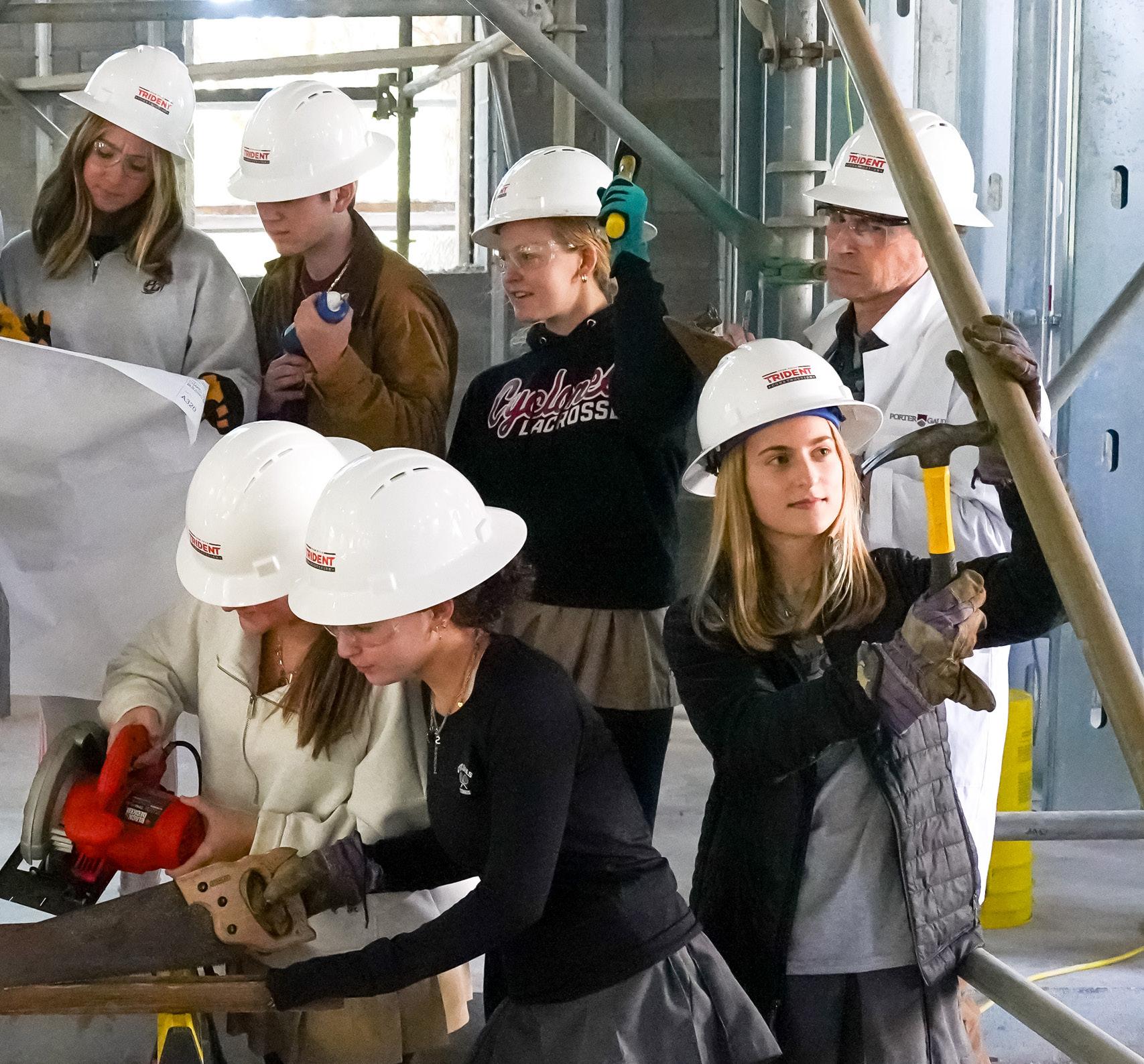
Mr. Brink Norton, Mr. Patrick Hession, Griffin Lewis, Arielle Poole, Owen Donahue, Penelope Snider, McCallum Calvert, Connor Doherty, Alice Graham Hock, Trident Superintendent Tanner Swayne and all at Trident Construction.
We could not publish our magazine without your involvement and appreciate all that you have contributed!
Sincerely, watch Staff of 2025-26
PORTER-GAUD SCHOOL
The watch magazine is a student-run publication and is produced as part of the educational process. The views and opinions expressed here are strictly those of the authors and do not reflect the official policy or position of the school, its Board of Trustees, administration, faculty, staff, or the student body as a whole.
Table Of Contents
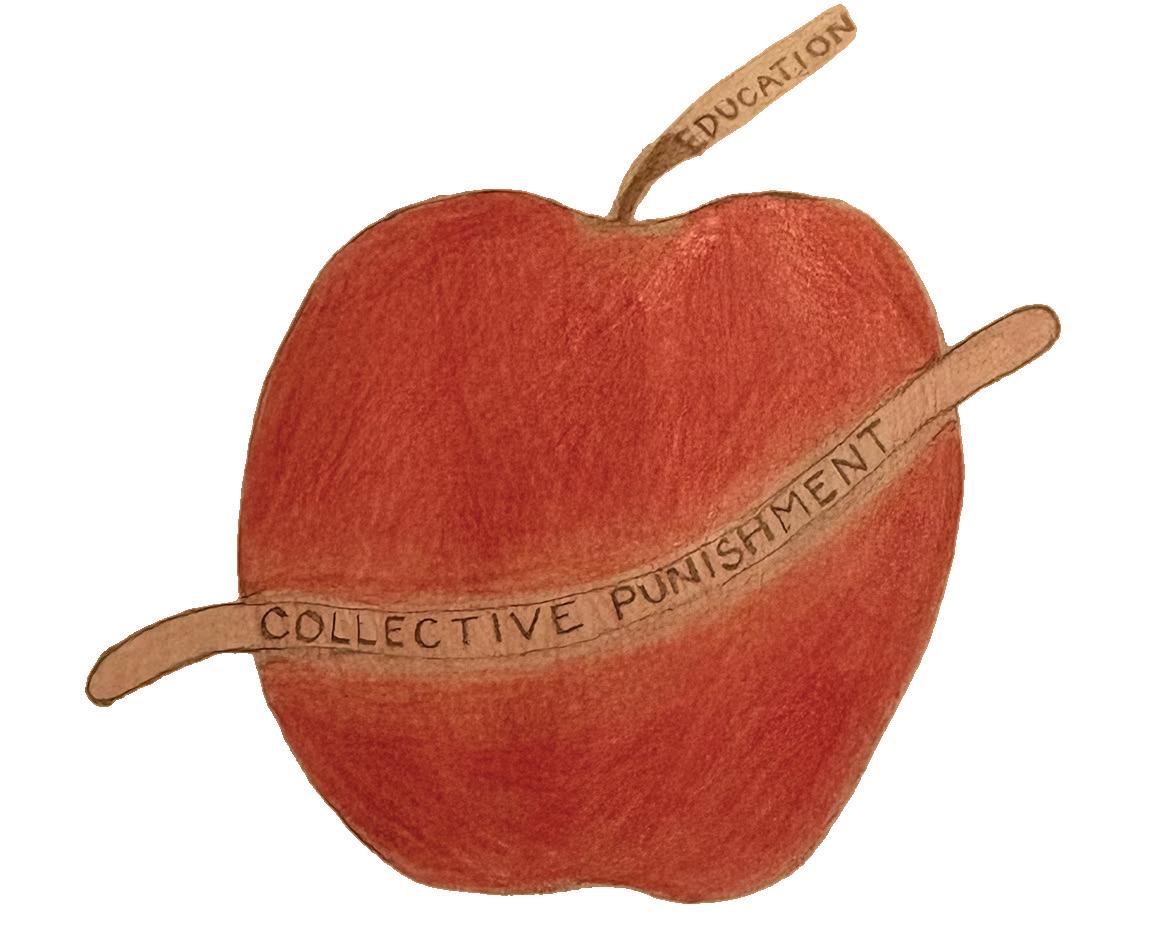
“But it wasn’t me!”
What happens when one bad apple spoils the bunch?
Lily Snider
do title before next monday and subheader too...
Robert Wey (on Procrastination)
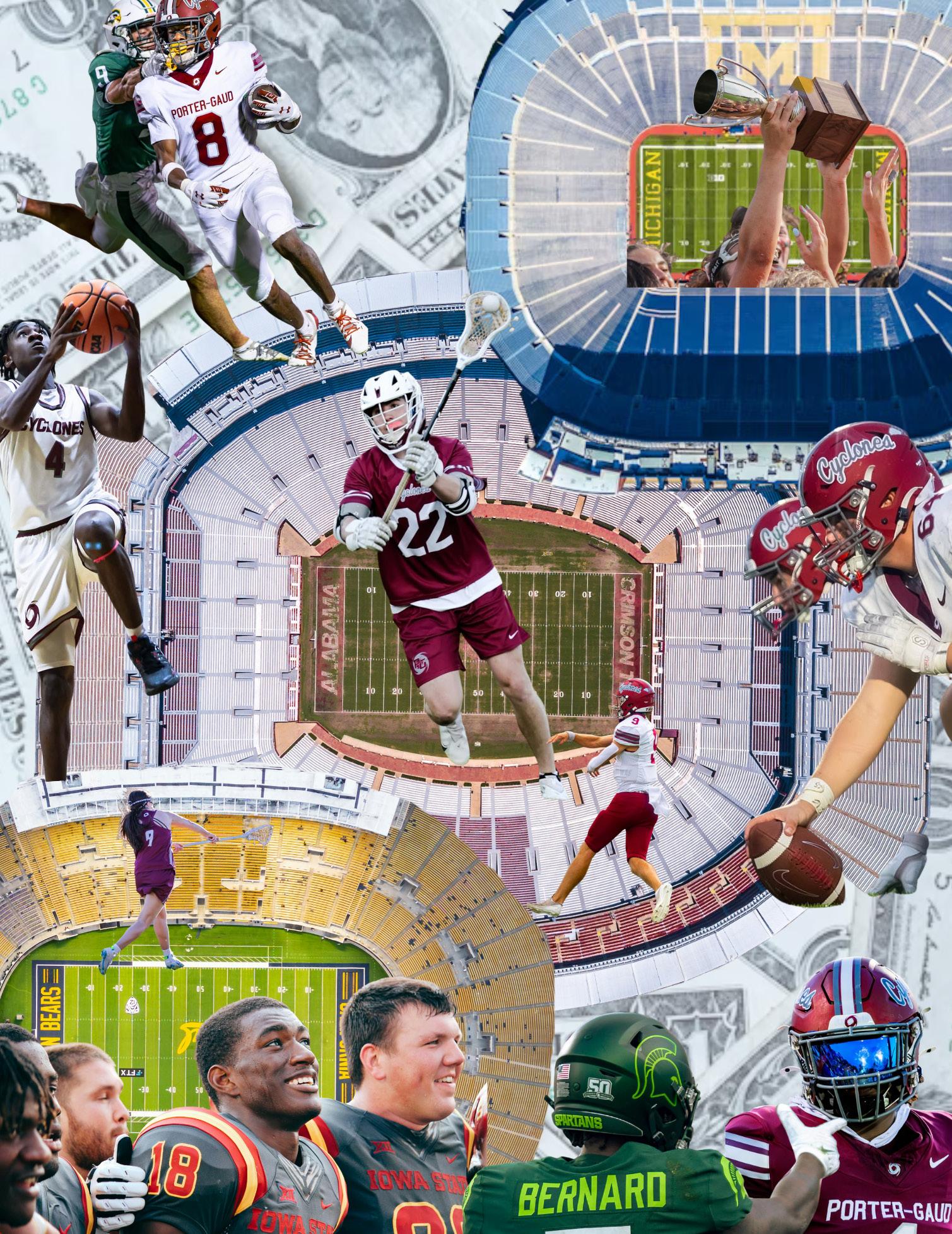
Class, Practice... Paycheck?
College Sports: Is the pay-for-play system sustainable?
Molly Hilpert
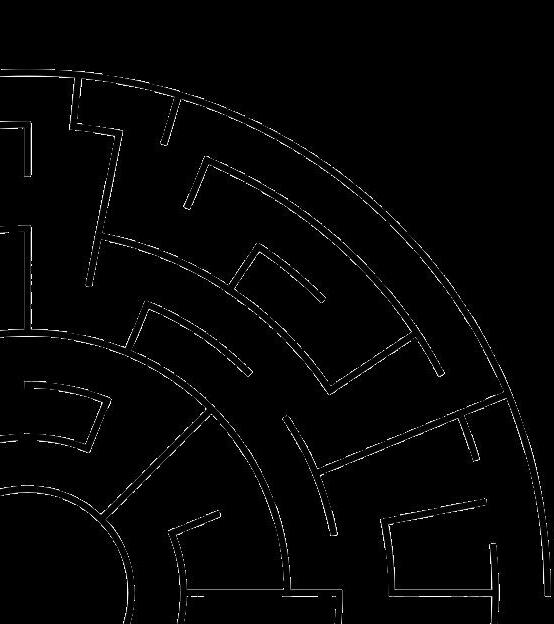
watch Maze: Winter Edition
Not all those who wander are lost? Let’s see...
Tessa Sidney
Before TikTok, There Was Tic-Tac-Toe
Too simple to lose, right? Prove it.
Tessa Sidney
Are You In or Are You Out?
Why our neurological disconnect with others is harmful.
Samantha Star
The Fracturing Fourth Pillar of Democracy
Reinforcing the power of the press, one article at a time.
Lucia Spiotta
Charming—or Alarming?
Has Charleston’s boom evoked disharmony?
Allison Kulka
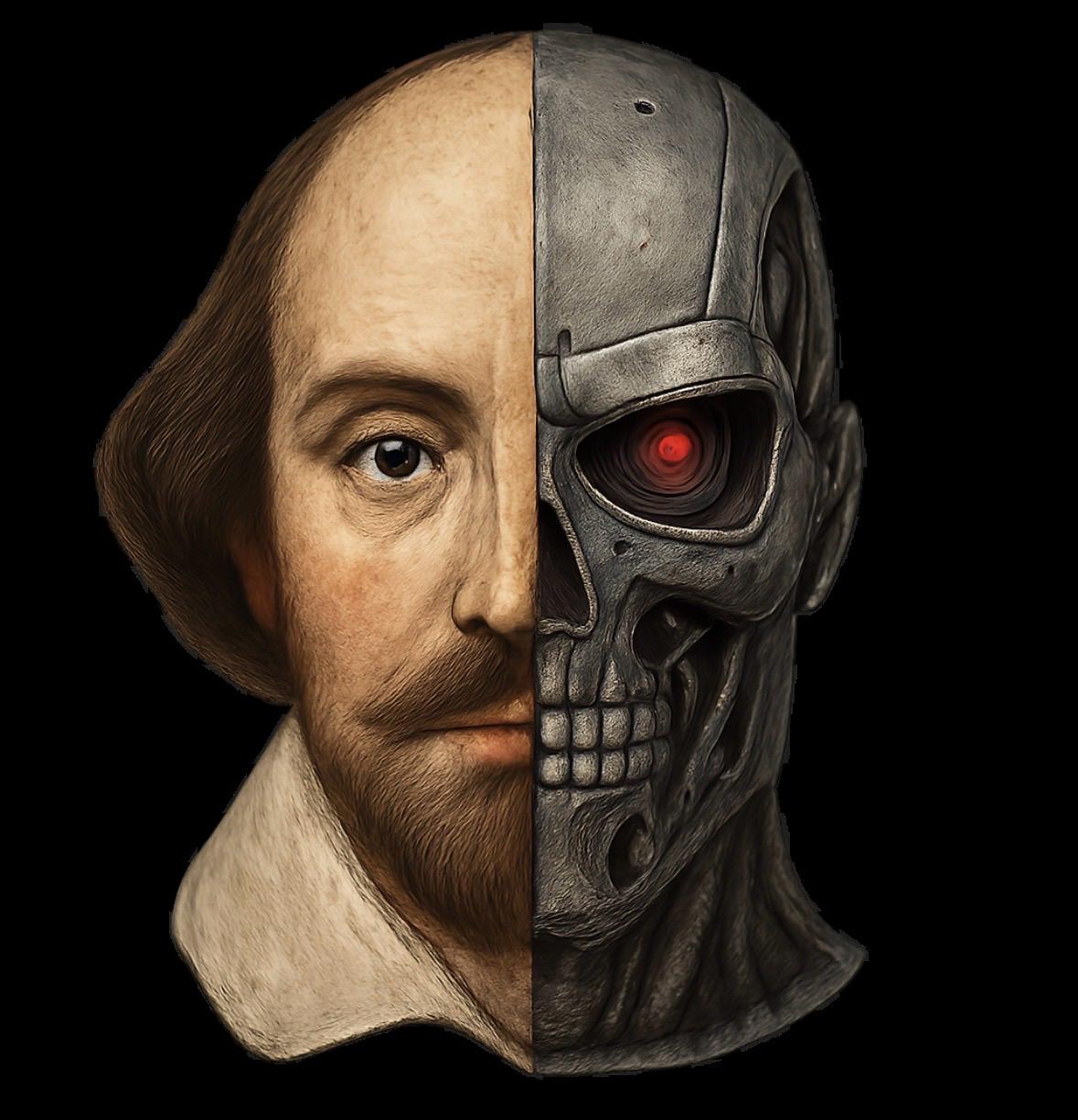
watch Quiz: To Be, or BOT to Be?
Is it Shakespeare—or AI?
Wright Ghegan
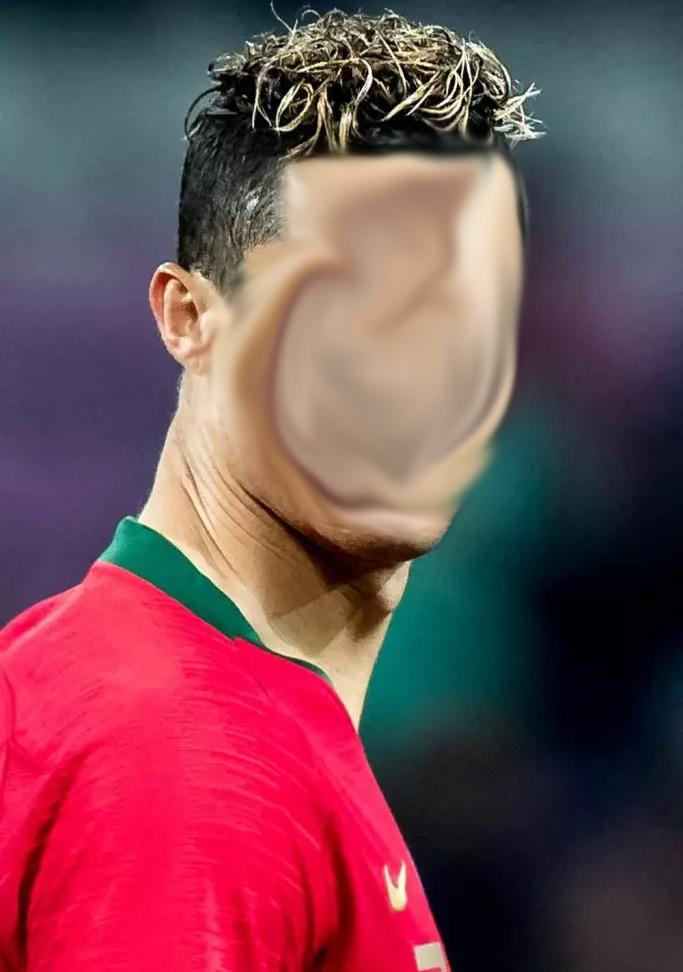
watch Quiz: Hollywood Hair Edition
Any guesses on these famous tresses?
Graham Winterfield
Political Polarization: An Endless Cycle
How to escape this climate of divisiveness?
Griffin Lewis, Guest Contributor
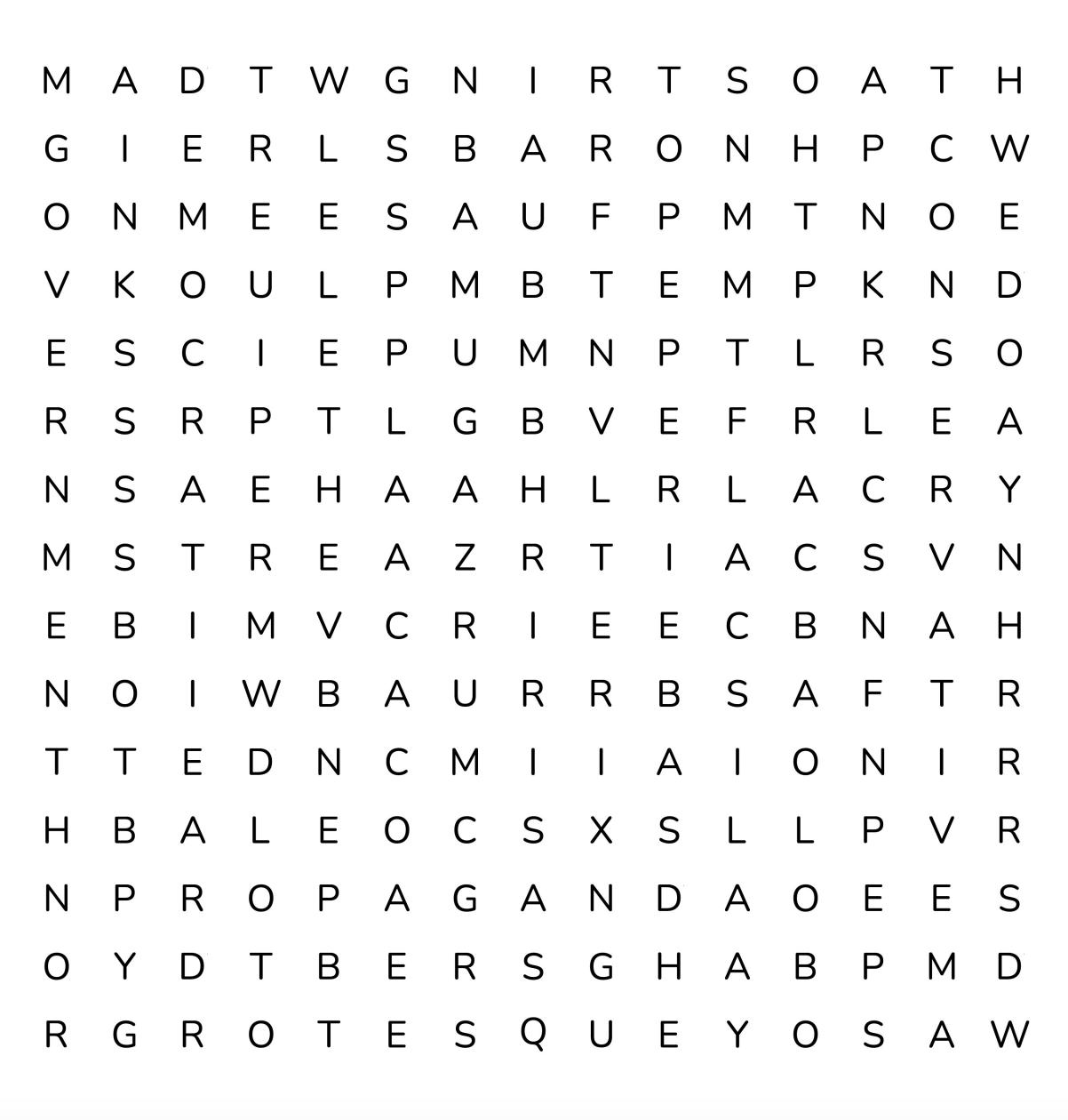
watch WordSearch
Find these key words from the previous article.
Evie Shearer
We Need YOU [Educated]!
Why high schoolers should get schooled in politics too.
Kat Burke
Is the Alt-Right All-right?
Why wielding empathy is our greatest defense.
Legare Sowder
Selfie—Old Style
Draw your own self-portrait.
Evie Shearer
watch Sudoku
Let’s get sequential.
Evie Shearer
Introducing InstaGaud!
Get to know our newest faculty faces.
Our Staff:
Legare Sowder - Managing Editor
Lily Snider - Managing Editor
Lucia Spiotta - Art Director
Charlie Sidney - Head Publisher
Tessa Sidney - Publisher
Graham Winterfield - Publisher
Wright Ghegan - Publisher
Evie Shearer - Publisher
Robert Wey - Staff Writer
Kat Burke - Staff Writer
Allison Kulka - Staff Writer
Samantha Star - Staff Writer
Molly Hilpert - Staff Writer
Ms. Sarah Romano - Faculty Advisor
Mr. Childs Smith - Faculty Advisor
Mrs. Jenny Albright - Faculty Advisor
Photograph by Patrick Hession
“But It Wasn’t Me!” What happens when one bad apple spoils the bunch?
By Lily Snider
My elementary school teachers ruled like malevolent dictators. We would cower on their colorful carpet as they doled out assessments and punishments to all of the pigtailed girls and dirt-laden boys.
Well, they were actually sweet, middle-aged, Southern women who let us braid their hair as they read us stories. But when it came to their rules, they expected nothing less than pure obedience. So what happened when one of us inevitably didn’t obey, you ask? We were all punished.
Picture it: Eight-year-old Lily—bright-eyed, precocious, perfect (of course)—sitting in her third grade classroom, listening intently as her teacher describes the function of fractions. In fact, most of the other eight-year-olds surrounding me were also quiet and wellbehaved.
Except for one. Because there is always one. He-Who-ShallRemain-Nameless was talking. Excessively. It wasn’t a word here
or there. It wasn’t because his best friend was sitting right next to him. It certainly wasn’t because he had anything important to say. His incessant babbling sentenced the entire class of Mrs. Latt’s Cats to walk around and around and around the basketball court for fifteen minutes at the start of recess—in utter silence.
Little Lily was furious. Not only did she miss out on one of the only times in her school day when she wouldn’t get in trouble for talking with her friends, but by the time the punishment was finished, the good swings were occupied, the soccer ball was taken, and the boys had already claimed the pinnacle of the jungle-gym.
I wish I could say that was the last time something like this happened to me, but school-sanctioned group punishment pervaded my adolescence. Whether running sprints after a few teammates were late to practice or suffering through a pop quiz after an unproductive class, each time I bottled my fury, waiting for the day when I could write this very article.
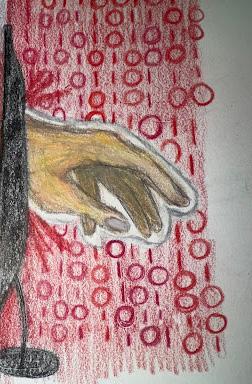
Art by Penelope Snider
Though this could seem like a humble brag—a subtle way to highlight my polite behavior contrasted to that of a few of my less conscientious classmates—the tense dynamics of collective punishment is a topic that has been thoroughly studied.
According to the U.S. Naval Institute, this practice was first documented in the Classical Age when the Roman army used decimation to punish an unruly unit, killing every tenth man, regardless if they were the offenders or not. Similarly, during the Middle Ages in Korea, China, Vietnam, and Germany, the concept of “kin liability” meant that family members could be punished for a crime committed by one individual in their family. Fear is a powerful detractor. Therefore, further uses of collective punishment have been implemented from the Revolutionary War to World War II. It is a tactic of intimidation, of fear, of genocide.
School-sanctioned grouppervadedpunishment my adolescence.
Such punishment by proxy can also be rooted in discrimination and racism as it often stereotypes entire ethnicities and cultures. During World War II, entire races were blamed for something they did not do: The Holocaust and Japanese Internment are both examples of this. Notably, the 1949 Geneva Conventions deemed collective punishment illegal in international humanitarian law, though vestiges of the practice continue to haunt us to this day.
Indeed, group punishment permeates American society. School punishments, raising taxes, sobriety checkpoints, and racial profiling all seem necessary to some in order to curb social ills. And teachers, for example, might feel they need to water down a collective punishment to avoid being overly harsh toward students who did not misbehave while ensuring that ne’er-do-wells learn their lessons. What does this approach teach the class? That misbehavior may not merit a fitting punishment.
Ever since I was little, I have been strongly against collective punishment, especially in school. If our educational system is geared specifically to teaching future generations how to navigate the world (academically, professionally, and socially), then collective punishment fails us all.
When I am punished for something I did not do—when I am found guilty by association—it makes me 1) less likely to inform an adult of future wrongdoings committed by my peers, and 2) more inclined to break rules; if I’m going to get punished anyway, I may as well enjoy scoffing a law.
Let’s go back to my tragic third-grade experience: If Mrs. Latt had singled out my chatty classmate and made him dizzy himself around the court all alone with his guilt, not only would it have dissuaded him from future disruptions, but it also would have likely reinforced to the rest of us that our behavior is preferred. We would be incentivized to continue following the rules, and our loquacious schoolfellow would, too. Instead, that gabby boy
is somewhere out in the world right now, probably disturbing the peace of another classroom or boorishly interrupting an authority figure, never having learned his lesson.
The truth is that this system of collective punishment does not teach respect or comportment. Rather, it instills a great fear of getting caught—a fear of punishment itself. Education systems that implement these coarse consequences are raising children who distrust authority, whose moral compasses are rigged, who look for the quickest way out—not the most ethical.
Proponents of group punishment say that it encourages correction amongst peers, that it embraces the positives of peer-pressure, but this is not viable in a school setting. This isn’t a Roman army military unit—this is an eclectic cross-section of kids from all walks of life. In schools, punishments should be as individual as the students who are enrolled.
Fundamentally, the education system is intended to prepare us for the world of adulthood. In school, we learn content in a variety of disciplines, and we learn the discipline of upholding shared values—the set of ethics our society needs to function and succeed in social situations. It is required by law that students attend school to learn the content, so it is pertinent that, if they learn anything from their experience, they are valuable life lessons such as individual responsibility and respect for authority, uplifting society overall.
Consider the opposite: rewarding everyone in the same way regardless of personal success. Recognizing all students for an individual’s talent or achievement. Participation trophies, for example, the kind doled out to every player on a mediocre first-grade soccer team, while conceptually beneficial, encourage complacency. They cement and perpetuate perceived intellectual and athletic standings and exacerbate existing feelings of inferiority. If I’m going to get a trophy just for showing up, why put in the work to strengthen and improve? Conversely, if I’m going to get punished even though I’m demonstrating strength and improvement, why put in the work?
In schools, punishments should be as individual as the students who are enrolled.
Especially now with students relying more and more on artificial intelligence, school systems need all the more to endorse personal accountability to ensure that future generations are aware of their unique role in shaping the world. Such an emphasis, though, should ensure that each individual is being rightfully judged, not judged en masse. If we instill a greater moral compass that transcends authority figures, then we can alter what notions of accountability mean instead of continuing to punish all to the detriment of our society.
do title before next monday and subheader too...
By Robert Wey
fat zero across the top of your most recent assignment. The one that was due yesterday (not today, yesterday!). You had ample time to complete it—an entirely free schedule on Sunday—but alas, now it’s Monday, the assignment is late, the damage done.
So where did Sunday go? To a friend’s house, playing College Football 26, followed by some driveway basketball, conveniently ignorant of the assignment’s impending due date (worth 70% of your grade, by the way). It was assigned two weeks ago, only to gather dust. Sunday night, you get home, greet your parents, and open up the essay prompt (minimum requirement: 10 pages). Now you realize why you have been given two weeks. You are—for lack of a better word—cooked.
Why do so many of us do this? Our parents and teachers might say it’s because we’re lazy or lack initiative, or that our attention spans have been fried by social media. Actually, the real answer is far deeper and more timeless than that. Or should I say, timefull, as I’m describing how we choose to fill our time: procrastination, productivity’s worst nightmare.
In 2024, Forbes media company surveyed people in every state and found that 99% of Americans admit to procrastinating. Now, I don’t know about you, but personally, I have yet to meet anyone in that one percent. As for the rest of us slackers, we face a substantial problem.
The word procrastination itself comes from the Latin “procrastinare,” which means “deferred until tomorrow,” and the Greek “akrasia,” meaning “acting against one’s better judgment.” It seems noteworthy that the word itself suggests an active—rather than passive—process: You choose to defer the task at hand, knowing that its delay will cause you future suffering.
But do people actually consciously choose to procrastinate? Factors like social media have exacerbated the issue through elevated opportunities for distractions, causing us to procrastinate without even realizing it. I struggle to agree with any definition of procrastination that implies a deliberate choice because, as much as the action of delaying work seems intentional, perhaps it’s more like second nature. And the more assignments I put off, the more this second nature slides into first; procrastination dominates over productivity. Researchers at IE University (Universidad Instituto de Empresa) have also concluded that “procrastinators recognize the harmful effects of putting tasks off, but can’t overcome the emotional urge of a diversion.” For me at least, this is a much more relatable definition; the procrastinator understands the consequences, yet is incapable of escaping their self-inflicted harm.
To fully understand procrastination, we turn to science. Eric Jaffe with the Association for Psychological Science (APS) sums it up well, explaining that from
Art by Owen Donahue
Theunderstandsprocrastinator the consequences, yet is incapable of escaping their selfinflicted harm.
a biological standpoint, procrastination arises from a clash between two parts of your brain: the limbic system and the prefrontal cortex. In layman’s terms, the limbic system is the emotional hub of the brain, which engages in activities responsible for immediate releases of dopamine—a hormone that makes us feel good. The prefrontal cortex, as the name would imply, is located at the front of your brain and is responsible for decisionmaking, impulse control, and planning all attributes meant to help humans develop and achieve long-term goals.
When you procrastinate, the prefrontal cortex struggles to override the short-term emotional impulses of the limbic system. Avoiding tasks temporarily reduces that looming stress, but, as the deadline approaches, it comes back to bite you. And as any procrastinator will admit, the bite is severe. After enough procrastinating, the stress has continued piling up into a mountain of work, and we are left cowering under its looming shadow. This sort of repeated procrastination strengthens the neural pathways associated with avoidance, eventually solidifying into a treacherous habit. IE University describes procrastination as “a practice of ‘habitual hesitation’ that has plagued humans since the beginning of time.” So, although we may like to consider that this is a new phenomenon due our depleted attention spans, drowning in distracting devices, in truth, procrastination has always functioned as the little devil perched on the shoulder of humanity.
In fact, examples of procrastination have been uncovered from as early as 700 BCE. For me, at least, this provides some relief we are not unique in our recklessness. In an article from the digital media brand Mental Floss on a brief history of procrastination, author Sarah Stodola points out that “Roman emperor Marcus Aurelius reminded himself to ‘stop letting your emotions override what your mind tells you,’ suggesting that the Romans had insight into the causes of procrastination that psychologists are studying today.” The stoics probed the topic intellectually because they too procrastinated. Further, in a Greek poem titled “Work and Days” written in 700 BCE, Hesiod urges his brother to “not put your work off till to-morrow and the day after” because “a man who puts off work is always at hand-grips with ruin.” And further still, many scholars think Chaucer originally planned to compose 100 Canterbury Tales, yet had only completed 24 by his death. We may never know the fate of those 76 elusive tales, or whether their exclusion was purposeful, but maybe Chaucer just like you and just like me simply put off the other 76 for some later date.
These days, this historical precedent comes second to the significance of social media, the main modern perpetrator of this widespread issue. Without a doubt, its existence has allowed procrastination to perpetuate with unprecedented proclivity. In an article on academic
After procrastinating,enoughthe stress has continued piling up into a mountain of work, and we are left cowering under its looming shadow.
procrastination and internet addiction, The National Institute of Health concluded that “Students view the internet as a pleasure-seeking mechanism and use it uncontrollably, thereby skipping their academic-related activities” a sentiment certainly exacerbated after the Covid-19 pandemic. When the pandemic and virtual school disrupted our learning practices, we became unprepared to reenter the harsh reality of a heavy work load. As a result, for many of us, procrastination became a coping method.
Today, after every completed homework assignment, we tell ourselves we’ve earned time to doomscroll, and before we know it, we have wasted ten minutes, then 30, now an hour rappelling down a rabbit hole of distraction we never intended to jump into in the first place. Of course, this wouldn’t be possible without social media platforms, which have a financial incentive to keep our eyes glued to their platforms, blocking any chance of productivity.
Chronic victims of this social-media-driven procrastination have become commonplace today. They walk among us here at Porter-Gaud. In fact, the APS cautions that “to tell the chronic procrastinator to ‘just do it’ would be like saying to a clinically depressed person, ‘cheer up.’” You do not procrastinate; you are a procrastinator.
Though procrastination is often attributed to adolescence, in reality, it is a lifelong habit afflicting people of all ages. A study from Dr. Itamar Schatz–providing scientific-based solutions on a website called Solving Procrastination found that 94% of people surveyed attested that this condition had a significantly negative impact on their lives. Though they realize the harsh reality of this wasteful habit, they were unable to make significant changes to mitigate its effects.
Procrastination is an endless cycle of avoidance–one that will likely follow you into adulthood. Although it may take on new forms or levels of extremity, at its center, it will always haunt your potential, limiting you throughout your career.
But now the good news: Despite the fact that procrastination is often no longer a conscious decision, you can harness the power of positive thinking another psychological phenomenon. If you convince yourself something is true, it can become so. Therefore, tell yourself you are not a procrastinator. Sure, you could go home, relax, lie on the couch, scroll the night (and
your grades) away, or you could actually complete your homework at a reasonable time, get some sleep, and put yourself on a track to success. Before highschool slips through your fingers, you should make the decision to be more productive…or, you know, you could just do it later.
You do not procrastinate; you area procrastinator. time spent:
Class, Pratice…Paycheck?
College Sports: Is the pay-for-play system sustainable?
By Molly Hilpert
HowmuchmoneywillImake?
It’s a question that most college applicants never think to ask themselves when applying to our nation’s notoriously costly colleges. Asking oneself how much money will I make after college has always been universal, but aiming to receive a substantial payout whileat school has become a new norm for college athletes. In the wake of many lawsuits around the new collegiate Name, Image, and Likeness policies (NIL) and similarly, revenue sharing, this question has become urgent. For many athletes, their college decisions today are greatly determined by the money involved rather than the pursuit of a quality education or an enjoyable student life.
College sports have become increasingly similar to a business enterprise rather than entertainment—each game presenting opportunities for media deals, each recruit becoming an asset. The industry has undergone its most revolutionary period of change ever, causing many tenured fans to be skeptical of such extreme changes. The focus of these sports has entirely shifted, making fans, players, and coaches question if it’s altered the game they once loved.
The revolution began in 2021 with the implementation of market-based NIL payments from universities and companies to the athletes from whom they profit. For instance, now, whenever you’re at a school like Clemson, and you purchase a Cade Klubnik jersey at the bookstore, instead of purely funding the bookstore, a significant portion of the money directly funds Klubnik himself. As ESPN reported, thanks to the Supreme Court’s unanimous decision that college sports should be treated “less like an education-based endeavor and more like a lucrative entertainment industry,” athletes are finally being compensated (in addition to the valuable scholarships they receive). As a result, according to On3 Sports, athletes today— like famed Texas Longhorns quarterback Arch Manning who will earn $5.5 million this year, and one-time Heisman hopeful LaNorris Sellers, Quarterback at South Carolina who will earn $3.7 million—are able to demonstrate the extensive changes for athletes who previously were prohibited from earning money.
What’s known as “Collectives” are ways for boosters— traditionally wealthy alumni—to sponsor athletes without extensively profiting off of their name, image or likeness. Therefore, boosters can directly pay athletes to come to their
schools without having true qualifications of a NIL deal.
During the early craziness of Collectives in 2021 and 2022, they were able to recruit and retain athletes for their respective schools with millions of unregulated alumni dollars. All of these payments were aside from the massive NIL payments many received.
For instance, the universities of Florida and Miami respectively were notorious for their unethical—yet legal—Collectives, consistently pouncing on transfer recruits with multi-million dollar offers. Miami’s Canes Connection, for instance, had a goal of investing at least $10 million per year.
The now-disbanded Gator Collective once had a similar approach as cited by the On3 NIL database, but its experience —and lawsuit—can serve as a warning around how hazardous these Collectives can be.
Consider the infamous deal with Jaden Rashada, one of the most highly recruited quarterbacks in the Class of 2023, who originally committed to the University of Miami. Despite Rashada’s commitment, the University of Florida persisted by dangling $13.85 million over his head, luring him to reconsider. Consequently this interest caused Rashada to sign his national letter of intent to the UF, flipping his prior commitment from Miami and allegedly receiving $1 million that same day. When the money never materialized, despite former Florida coach Napier’s guarantees after months of stress and broken promises, Rashada knew he had fallen for a lie. The money he was promised did not exist. Demoralized, Rashada decommitted from Florida, choosing instead to attend Arizona State. Then, in 2024, Rashada sued Florida and its Collective in a major lawsuit; its resolution is still pending. Today, Rashada plays for Sacramento State, a final chapter to his disappointing college career.
Corrupt deals like Rashada’s showed everyone that change was necessary, leading to a monumental settlement: schools are now able to directly pay players in a way similar to employees—as determined by the Supreme Court on June 6, 2025. Previously, college athletes were seen as amateurs within their sports, resulting in many settlements around worker’s compensation long before this ruling. The NCAA (National Collegiate Athletic Association) previously wanted absolutely nothing to do with athletes being considered workers due to the high amount of workers compensation settlements that could
Some photos by Connor Doherty; Art by Molly Hilpert
be filed with the high risk of serious injury in intercollegiate athletics. With this settlement, schools are able to pay players across all sports up to $20.5 million directly from their athletic departments starting on July 1, 2025. It has transformed college athlete’s rags into riches, forever changing their lives and the sport.
This ruling was also intended to directly limit the unrestrained power of Collectives; schools can now directly fund their athletes from their athletic departments, not unregulated third parties. In addition, NIL deals will have to go through an accreditation system. This system will result in deals created with NCAA athletes to be checked for if they are actually profiting from their name, image, and likeness.
Schools have tended to use a model in which the schools’ athletic funds are divided so that 75% goes towards football, 15% goes towards men’s basketball, 5% goes towards women’s basketball, and 5% goes towards every other single sport. Despite this model skewing heavily towards football programs, the average individual basketball player would make proportionately more on their average roster of 15, compared to football’s average of 105, yet this does not hold true at all schools.
While this model has worked with schools with a constant cash flow, schools who cannot afford to pay this money now struggle to recruit. Many schools will not be able to afford it if players unionize, which has been a concern of the NCAA in the past.
For many fans each change feels as if college sports are getting further and further away from what it used to be. For recruited athletes, the stakes feel higher, each recruit has to prove their monetary worth game after game while still figuring out the convoluted world of college. Money has changed college sports in every aspect, changing each game, and even each school.
Both the Georgia Bulldogs and the Michigan Wolverines have greatly profited from this ruling. Georgia has closed their NIL Collective, fully leaning into the landscape of revenue sharing by paying their football team $13.2 million—almost exactly 75% of their $18 million revenue sharing budget. Much of their recent success has been based on accumulating 4- and 5-star recruits, which make up 84% of their roster, according to The Athletic. These schools are able to compete with serious revenue sharing offers, allowing them to continue as national championship contenders by bringing in top-tier talent year after year.
Michigan self-reports that they are devoting nearly $27 million this year in scholarships and revenue sharing across all sports to continue as an athletic powerhouse capable of winning when it matters most. For example, The Athletic reports that
the school was able to successfully recruit Bryce Underwood, a 5-star quarterback, who will likely earn between $10-15 million during his college career. These astronomical numbers have been made possible by the Champions Collective that negotiates with players for their NIL rights and then makes endorsement deals for them while players make social media posts and sign autographs, making themselves marketable. Deals like these, along with direct revenue sharing, allow players to earn large amounts of money before playing professional sports, changing the landscape as we know it.
In the effort to finally achieve a national championship, Texas Tech, for example, seems to be taking a more aggressive and dominant approach than anyone would ever expect. Texas Tech is pledging the full $20.5 million to revenue sharing with $14 million of that coming as donations to the school’s athletic department from their alumni boosters. They are following the general breakdown for schools with 74%—$15 million— going towards football, 17% going towards basketball, and 3% going towards every other sport. Within days of the settlement, Texas Tech signed 5-star fullback Felix Ojo with a $2.3 million revenue sharing agreement over four years. Also, Texas Tech’s Collective pledged $1 million to Nijaree Canaday, the first softball player to sign a contract of that size.
Money has changed college sports in every aspect, changing each game, and even each school.
Texas Tech’s devotion to making their athletics top tier has yielded results. Their football team is appearing in the Big 12 championship game for the first time to cap off a 11-1 regular season and will likely make an appearance in this year’s college football playoff. Also, the softball team had a run in this year’s college softball world series championship. Texas Tech’s aggressive strategy has elevated them to a national championship contender this season and beyond.
Texas Tech, Georgia, and Michigan represent shining examples of how Power 4 conferences have adapted to these rulings; however, college football is not just purely composed of the four Power conferences. Schools like Wofford, who are in what could be referred to as second-tier conferences (also commonly known as the Group of 5—composed of 5 “lesser” conferences competing for national championships with the “greater” Power 4) have different ways to deal with this massive change. They
don’t have the money to compete with these other schools; their athletics and TV partnerships don’t provide the same amount of revenue as schools in power conferences.
To address this disadvantage, these schools had the choice to opt in or out of the decision. Wofford chose to opt out. They did this for the larger roster limit, yet there will not be revenue sharing with student athletes. This decision makes recruiting bigger names and retaining players who have the skill to transfer to a power conference even more difficult. Many athletes want to play for these larger schools and reap the NIL and revenue sharing benefits, regardless of the monetary size of the contracts. Even though there is one spot for a Group of 5 school in the playoffs, will there ever be a Group of 5 national champion?
In basketball, however, there seems to be a much clearer path for these teams to succeed with the numerous “Cinderellas” in each year’s March Madness (like Saint Peter’s in 2022); yet, as we saw last year with a Final Four full of 1-seeds, such Cinderella teams seem to be just that—a fairytale—making us wonder if college sports has changed forever as a result of integration of revenue sharing and NIL.
While NIL and revenue sharing have reformed the landscape of college football and basketball, its lack of impact within virtually every other sport is almost more noteworthy than the sports it has affected. According to Alabama’s Athletic Director, Greg Byrne, Alabama only makes a financial gain from men’s basketball and football; all other sports are losing revenue. Many schools have been urged to prioritize football and basketball due to the immense revenue they bring in, which leads to talk of budget cuts for other sports that generate less income for the school. Therefore, schools like Stanford (36 varsity teams) and Ohio State (33) have more to consider: How to equitably share this revenue and how to continue to make room in their athletic budgets for these revenue-losing sports?
Coaching has also been hit hard by this ruling. Coaches are expected to build programs quickly now that they have the ability to attract high caliber talent through these contracts and agreements. Former New England Patriots coach, Bill Belichick, is now coaching the North Carolina Tar Heels earning $10.1 million. This has caused the team to bring in 70 new players—aiming to build a new system. So far, this has not yielded results as the team finished 4-8 on the season. On the other hand, Miami basketball coach, Jim Larrañaga, abruptly left after last season, citing NIL as his main reason. Also, coach firings have become more common with over ten power conference coaches being fired this year. The constant turnover and struggle for player retention has upset many coaches and fans used to the more traditional style with dominant players returning every year.
Right now, Congress is waiting to vote on a bill called the Score Act which is meant to create a law requiring schools to have at least 16 varsity teams. This new policy would ensure that schools focus on the goals of college athletics aside from revenue such as training future Olympians and giving students the ability to compete at a high level. Without implementing regulations like this, however, schools are still very likely to cut sports, resulting in fewer athletic scholarships and opportunities for talented individuals who will eventually represent our country in many Olympics to come.
As we saw last year with a Final Four full of 1-seeds, such Cinderella teams seem to be just that—a fairytale— making us wonder if college sports has changed forever.
Beyond sports, universities’ academics and student life for athletes have been greatly impacted due to the immense time required to play at a high level. TV rights deals have led conference realignment—causing Power 5 to become Power 4—resulting in schools like USC and UCLA to join the predominantly east coast BIG 10 to sustain the revenue to fuel athletics in the NIL era. The UCLA football team, for example, travelled 22,226 miles last year, resulting in lost classroom time. The aim to make college athletics profitable makes colleges sacrifice time for academics. These schools who pride themselves on offering elite academics must confront this growing conflict. What do we value more: academics or athletics?
Meanwhile, athletes continue to put their utmost effort into their sports. Yet, deals have not been determined by the raw effort of these athletes but their respective sports and skill within them. A star quarterback leading his team is probably earning millions, able to have a comfortable life after college even if his career doesn’t continue. His equal on the lacrosse field, however, might have to get a job—on top of being an athlete and a student—to get by in college. These athletes are both motivated by the same thing: their love for the sport. Unfortunately, for some that does not always translate to monetary success.
All of which begs the question: When will all college atheletes gain their fair share of rights?
Winter Maze
Help
the snowman find his carrot nose!
T I C T A C T O E
Are You In or Are You Out?
Why our neurological disconnect with others is harmful.
By Samantha Star
What could throw our society into a survival-of-the-fittest frenzy if we lost it?
I’ll give you a hint: It’s the emotion evoked with the timeworn statement to “put yourself in someone else’s shoes.”
If you haven’t guessed yet, it’s empathy. You can see it on the inspirational posters on teachers’ walls or guidance counselors’ desks. Ironically, it has become so deeply interwoven into the fabric of society that it is beginning to lose all meaning. And yet the concept is so integral to our shared humanity that some say it may be the one feature that separates us from other species.
Humans
will neurologically feel more
empathy for people in their “in-group,” or people with whom they have something in common.
But is empathy even possible? The comfortable answer would be “of course it is,” but then again, I’m not so sure, especially if you associate the term with the need to respect individuals’ basic human rights. Certain people’s rights have consistently been denigrated throughout history. For example, the United States government didn’t even recognize Black people as full human beings until the nineteenth century. If we as humans are supposedly so empathetic, then how could this have happened?
Every interaction we have with other living things is shaped by our emotional biases (both those we are cognizant of and those we aren’t), and yet somehow, we’ve misconstrued these biases as empathy. Socially speaking, those similar to us evoke in us greater empathy.
Studies show that humans will neurologically feel more empathy for people in their “in-group,” the people with whom they have something in common. For instance, according to a study in the Association for Psychological Sciences, the brain shows greater activity in the amygdala— where we experience emotions—when bad things happen to our own race. Conversely, it experiences less activation
in the ACC (anterior cingulate cortex)—where we regulate emotions, when bad things happen to a race different from our own.
So, is it empathy if it only applies to people with whom we identify?
As a concept, empathy is as subjective as the emotion itself as each of our brains are unique. Therefore, it makes sense that people, neurologically speaking, tend to feel less empathy for those with whom they cannot relate. This, in turn, has the potential to engender dehumanization and discrimination. When we lose sight of one’s humanity, when we lose our interpersonal connections, we lose our compassion.
Michelle Maiese, a grad student majoring in philosophy at the University of Colorado, published an article explaining that “once certain groups are stigmatized as evil, morally inferior, and not fully human, the persecution of those groups becomes more psychologically acceptable. Restraints against aggression and violence begin to disappear.”
We feel these divisive tensions in our society today; are contemporary brains feeling less empathy as a result?
Psychologically, the dehumanization of others starts with our primal need for a tribe, meaning that the “in-group” and “outgroup” is likely linked to our age-old survival and adaptation instincts. If early humans felt enough empathy to care for their respective tribes, they survived, but if that empathy extended to all, they would never have made it. While this sounds counterintuitive, empathy within communities likely developed because of our evolution in a survival-of-thefittest world.
These Darwinian concepts can make us uncomfortable: Humans have transcended the era in which the physically strong prevail and the weak die off, partly owed to our social infrastructures like hospitals which care for the physically and mentally ill. Such institutions incorporate Maslow’s Hierarchy of Needs. According to SimplyPsychology, Maslow’s theorem argues that once individuals obtain the necessities for survival, they are no longer burdened by a need to fend for their lives; empathy, then, overcomes their competitive nature. This then negates the need for a dog-eatdog society.
From Darwin and Maslow, we learn that cave-man ruthlessness gave way to tribal cooperation and eventually to communal empathy. So, the question is, are people high enough on the hierarchy still capable of doing terrible things? Though there will always be outliers, like psychopaths who are unable to feel empathy, people who lack empathy for those outside of their “tribe” may be too low on the Hierarchy of Needs to express empathy. Essentially, if you don’t feel love and belonging yourself, it’s much harder to offer it to someone else.
And once this phenomenon occurs in large groups of people, society crumbles. This is because people tend to go along with the masses, disillusioned by the groupthink mentality, where the masses think with one mind. This is how racism, bigotry, anti-semitism, and hate of all kinds cultivates in individuals. Dehumanization is not a lack of acknowledging them as humans, but a lack of empathy for their humanity.
For example, only eighty (short) years ago, the Nazi party was able to exterminate an estimated six million Jewish
executed not by a small handful of Third Reich commanders but by thousands of Nazis through the wide-spread dehumanization of the Jewish people. And even though many following Hitler still considered Jews human beings, his acrimonious hate speech severely distorted this view, rendering empathy far less likely.
Dehumanization is not a lack of acknowledging them as humans, but a lack of empathy for their humanity.
We can see such complex in-group and out-group dynamics within our own political climate. You would think that the American in-group would be people in our own country, and it is, sort of.
Throughout U.S. history, we frequently separated ourselves into political factions that aligned with our personal beliefs
Today, though, that gap seems to be more of an uncrossable chasm, indelibly dividing our country. Societal connections have been skewered, even as we work towards the same goal, trying to develop a better country for all. Opposing sides have different views on how to make that happen, and because of one another more than ever.
On their own, these societal tensions are worrisome, but with new generations growing up immersed in social media, what will happen to the brains of our youngest as they interact with their phones more than with each other? For all we know right now, our brains are being rewired to feel empathy in different ways, but what if they’re not? What
One fact seems obvious: In-person connection is integral to feeling empathy. If we become so far separated from other people, be it by our biases or by our phones, we may completely lose that biological connection. And, if that ever happens, will our brains become too far gone to revert back to how it was meant to be, somewhere
Charming–or Alarming?
Has Charleston’s boom evoked more disharmony than unity?
By Allison Kulka
Pineapples are around every corner here. Each one—on fireplace mantels, archways, iron gates, and doorways—depicts an international symbol of hospitality. Simultaneously, they belt towards our desirable city, “Welcome!”
To many, Charleston has long seemed the picture-perfect epitome of Southern charm. Its attractive cobblestone streets, emphasis on sociability, and characteristically pleasant Southern accents all perfectly align with our city’s ideals. This makes it one of the most iconic places in the south, evidenced by Charleston’s twelve-year tenure as Travel + Leisure’s #1 city for “Southern Charm.”
This popularity, though, brings an ever-increasing number of visitors and new residents to our community. Although excellent for expanding our city’s demographics, population growth coincides with alarming social concerns. Specifically, many “locals”— self-proclaimed Charleston natives—consider a great influx of newcomers a detriment to their way of life. This concern stems from a need to protect the small city near and dear to all of our hearts from overpopulation. The question then is if too many people live here, does Charleston lose the very appeal that attracted these people in the first place?
Hospitality has always been rooted in our city’s maritime history. Charleston is—and has been—a major port city, welcoming a variety of goods, and therefore, people into the harbor. Historically, these sailors were received with gracious manners and open arms, making the city famous for its inclusivity.
to simply let a fellow resident merge. Beyond just driving, Charlestonians seem to be losing the ability to say “please” and “thank you.” In this post-pandemic and socially strained world, we seem to be losing a basic human function: kindness.
One of our city’s major attributes has always been the people. People who hold the door. People who respond with “yes sir” and “yes ma’am.” They strive to maintain perfect social etiquette, always helping others. But if we are losing this intrinsic good-hearted nature, Charlestonians—and therefore Charleston as a whole—may be losing a lot its of charm.
If too many people live here, does Charleston lose the very appeal that attracted people to it in the first place?
Many believe that this diversion from the alleged-utopian Charleston simply stems from the fact that it is growing. This growth is occurring in two ways: overall population and urban sprawl. Just thirty years ago, Kiawah, Johns Island, James Island, Mount Pleasant, and Daniel Island were nowhere near as established as they are today. The City of Charleston census tells us that Daniel Island, for example, experienced an 88% population increase just between 2010 and 2020. Charleston’s culture has always depended on being a relatively small city where everyone seemingly knew
people move here. Over the course of a year, that is 15,330, with many of these newcomers arriving from bigger cities.
Major cities are known for, and even take some pride in, their headsdown frowns-on bustle. Though Charleston’s streets are similarly busy, they have also always been friendly. You are more likely to have a stranger smile at you than avoid eye contact, something unheard of in an average metropolis downtown area. Small nuances in big versus small city cultures demonstrate the disparity between Charleston and the cities many new residents are coming from, and some fear that such big-city types will transform the small city charm into big city repugnance. And what have local Charlestonians always feared most? Becoming a nondescript, big city.
What have local Charlestonians always feared most? Becoming a nondescript, big city.
This differentiation between locals fearing the loss of Charlestonian charm and newcomers optimistically hoping to find the professed Charleston charm creates a polarizing tension: locals against outsiders. The line between these groups is a relatively blurry one, though. For instance, a resident of five years could be considered new blood in some crowds, whereas someone who has lived here only a few months can seem local. True locals then are only the ones who have lived here their whole lives with ancestors dating back to the colonial era (or so some claim). But, if this is the hardfast rule, the ratio of locals to outsiders is extraordinarily disproportionate. Rather than focusing on the influx of newcomers, this population must put emphasis on sharing the joy of our charming Charleston, not rejecting others from joining it. As Junior Robert Wey, a life-long local, says, “As much as I hate when it takes me 30 plus minutes to get to school, this issue isn’t going to change anytime soon.”
we can continue to allow our city to thrive.” The housing problem may be extremely complicated, but it impacts us all—local or transplant—so we must handle it together. By attending public council meetings and staying educated on local issues we can have constructive discussions without sacrificing small city charm for inhospitality. Feel free to be passionate about your opinions, but make sure to also take the effort to hear the opposing perspectives.
Charleston, as a whole, is getting better at being a growing city.
Mr. Thom Cianciola, an English teacher new to Porter-Gaud this year, recently moved to Charleston from Northshore, a suburb of the New Orleans area, and is able validate this trend. Having lived in Louisiana for significant time, he was already familiar with Southern culture but found Charleston’s to be especially “unique.” Mr. Cianciola claims that Charleston is simply more “naturally welcoming.” In Louisiana, it was unusual to find someone who hadn’t grown up there. If you were asked what high school you went to and it wasn’t local, you felt like an outcast. He believes this to be far from the case in Charleston.
One fact is certain: our city is running out of space.
One of the beautiful things about Charleston’s Southern charm is its emphasis on promoting genuine comfort for everyone, not just treating locals with superficial etiquette. Small acts like offering to take a new neighbor out for coffee or introducing them to new people are all that is necessary to help them feel settled and welcomed. If we start to find ourselves separating the population between locals and newcomers, Charleston’s foundational ideals—the very ones that make it so appealing in the first place—are in danger.
In the end, our city is built around a giant pineapple fountain. Situated in central downtown Charleston, this fruitful symbol must remain a constant reminder of how Charleston residents
To be, or BOT to be?
Can you identify Shakespeare’s real verse from AI? Circle your answers next to each of his respective plays. (Answer key is found below)
1) “Blood to bind and night to keep, / let fate awaken what once dared to sleep.”
1) “There is nothing either good or bad, / but thinking makes it so.”
Macbeth
Hamlet
2) “Stars, hide your fires; / Let not light see my black and deep desires.”
2) “The mind makes phantoms of its grief, / And in their whispering we learn how frail we are.”
1) “My bounty is as boundless as the sea, / My love as deep.”
1) “Jealousy carves its truths from shadows, / and leaves the heart to bleed for ghosts.”
1) “A crown may rest upon the brow, / yet heavy lies the storm it summons forth.”
Romeo and Juliet
Othello
Julius Caesar
2) “Love, like dawn, breaks soft upon the heart, / Yet leaves long shadows where it cannot stay.”
2) “O, beware, my lord, of jealousy; / It is the green- ey’d monster which doth mock The meat it feeds on.”
2) “Cowards die many times before their deaths; / The valiant never taste of death but once.”
Whose Hollywood Hair? Any guesses on these famous tresses?
Celebrity #1
Celebrity #2
Celebrity #4
Celebrity #5
Celebrity #3
Celebrity #6
Answer Key: 1: Elvis Presley, 2: Taylor Swift, 3: Brad Pitt, 4: Rihanna, 5: Cristiano Ronaldo, 6: Marylin Monroe
Political Polarization: An Endless Cycle
How to escape such a climate of divisiveness and dishonesty.
By Griffin Lewis
Last September’s presidential debate between Kamala Harris and Donald Trump, as you might remember, was full of name-calling, low-blows, and, frankly, lies. Disappointed by this glorified mudslinging competition, I decided to take a look at some past presidential debates and was surprised to learn that they were far more civil. Sure enough, America wasn’t always as polarized as it is right now.
A study by Stanford University concluded that in 1981, “the average value positions of Democrats and Republicans were almost indistinguishable,” but in 2025, according to Pew Research, “Eight in ten U.S. adults say that when it comes to important issues facing the country, Republican and Democratic voters not only disagree on plans and policies, but also cannot agree on basic facts.”
I am 15. I have lived my whole life in today’s fractious political climate, so it is virtually impossible for me to imagine a time when politicians from opposite sides of the aisle regularly agreed with each other. But even to me, it seems that political polarization is as particularly dangerous in contemporary America due to the rise of misinformation, a significant shift in political messaging, and the downstream effect of divisive rhetoric on media reporting. This problem can only be solved by a fundamental change in the way politicians, the media, and the citizenry speak about the issues that matter most.
Political “polarization” isn’t just some buzzword politicians throw around to stoke division; it is a real problem. Politically active people of differing parties and, at the very least our top-level politicians, seem to actively dislike each other. In 1960, according to Facing History & Ourselves, just 4% of both Democrats and Republicans said that they would be displeased if their child got married to someone who supported the opposing party. As of 2019, however, 45% of Democrats and 35% of Republicans said that they would be displeased.
Sadly, this statistic signifies that partisans are no longer just disagreeing with one another about politics and the accompanying policies. They are discrediting each other’s personhood.
The disparaging language politicians use to describe each other has pervaded into the citizenry, creating a fissure deeper than mere political discontent. In fact, it has become normal for politicians to thoughtlessly cast words such as “radical” or “fascist.” For example, in August, the current White House
Deputy Chief of Staff, Stephen Miller, stated “the Democrat Party isn’t a political party, it is a domestic extremist organization.” Similarly, Democratic Representatives AnaMariá Rodríguez Ramos and Jasmine Crockett have called Trump “Temu Hitler,” conflating Trump with a low-quality version (hence the reference to Temu) of the heinous dictator Adolf Hitler.
Despite political affiliations, it is easy (hopefully) to agree that the Democratic party isn’t a domestic extremist organization and that Trump isn’t Hitler. It is obvious that this type of rhetoric does nothing to reduce polarization—it only makes it worse. In a time when people are already increasingly partisan, framing the opposing party as a nearterrorist organization, or likening your opponent to History’s Worst Villain only fans the flames of incendiary political climate.
As recently as last month, we witnessed another example of grotesque rhetoric. A coalition of Democratic legislators released a video addressed to members of the military reminding them of their rights, with one of the lawmakers saying that they “must refuse illegal orders.” In response, President Trump exasperated his critics by reposting on Truth Social: “HANG THEM GEORGE WASHINGTON WOULD.”
Every day political polarization gets worse. The president of the United States is now seemingly supporting an execution of Democratic lawmakers. In fact, days after he published this post out to his millions of followers, he said that he wasn’t calling on the death of anybody, but, to me, reposting “HANG THEM” doesn’t leave much to the imagination.
The President issued these comments because he believes that they engaged in “seditious behavior.” Except, seditious conspiracy isn’t punishable by death—and under the US Military Code of Justice, service members are permitted to defy “a patently illegal order, such as one that directs the commission of a crime.” Additionally, seditious conspiracy is essentially the act of trying to overthrow the government (or commit any similar action) by force.
Once again, the “seditious” act in question was a TikTok video about codified law. I can hardly see how the video is a forceful attempt at overthrowing the government, much less how it warrants hangings.
Art by Legare Sowder
Political polarization isn’t just coming from our politicians; it’s also coming from the media. According to the aforementioned Pew Research study, Americans aren’t just ideologically separated, but factually divided as well. If Republicans and Democrats can’t even agree on facts— what’s true versus what’s not—how can we expect them to not be polarized?
As political polarization has risen, so has the demand for biased news. With this need came the emergence of MS NOW (formerly MSNBC), which leans heavily liberal, and Fox News, its conservative counterpart. According to the University of California, Santa Barbara’s Undergrad Journal of History, “Fox News reported 81% negative towards Democrats, and MSNBC broadcast 85% negative towards Republicans.” This highly politicized media only deepens ideological division, and as the two parties become further divorced from each other, so does the reporting, leading to—as UCSB’s Journal of History describes—an “endless cycle of political polarization.”
Successful problem solvers, of course, would all suggest finding the root of the problem and fixing it from there, but there isn’t an easily definable “root” of polarization. The previously mentioned factors are all interlinked. As people become more divided, so too do media and political figureheads. In response to incendiary propaganda, constituents become more divided, a constant loop of division.
And polarization isn’t just a concept that your family talks about (or avoids) over Thanksgiving dinner; it provokes actual violence. Just this year, Pennsylvania Governor Josh Shapiro’s residence was set ablaze (while he and his family slept within); two Minnesota lawmakers—Melissa Hortman and John Hoffman—were shot (alongside their respective spouses); Michigan’s Governor, Gretchen Whitmer, was threatened with an attempted kidnapping; and media personality and political activist Charlie Kirk was gruesomely murdered in front of hundreds.
Just. This. Year.
Every day, these tragic events become slightly less shocking. Why are Americans becoming slowly desensitized to these attacks for their political opinions? And perhaps the more urgent question: how do we cool this current climate?
Maintaining hope, Stanford University’s Deliberative Democracy Lab recently conducted an experiment with around 200 people in one of the most contested states in the country: Pennsylvania. In this experiment, participants “spent four days engaging in informed, respectful conversations
about some of the most pressing policy issues of our time: immigration, the economy, healthcare, and democracy.” What they found sparked a flicker of hope amongst smoldering discourse. After these discussions, participants were measurably more aligned on some of the country’s most divisive issues: support for visas for low-skill workers doubled; there was a 13% increase in people who supported zero-emission policies; and support for free college tuition dropped by 14%. These are promising results that may fan the flames of hope. In just four days, 200 people, once divided by party lines united. They learned each other’s names, they spent time together, they held eye contact, and they talked. In short, they revealed the power of civil discourse.
If Republicans and Democrats can’t even agree on facts—what’s true versus what’s not—how can we expect them to not be polarized?
Let this be our answer, then. As we move forward, we must learn about and discuss issues in a measured way. The Democracy Lab study shows us that, while America remains incredibly polarized, it isn’t permanent. We can change and heal. However, this long, arduous mission to re-civilize must start from the top. When political violence occurs it is imperative that our politicians—our elected leaders— don’t just blame the other party but call for a decrease in temperature on all sides.
This type of change also requires civil debate between competing politicians, a type of debate antithetical to the most recent presidential debates. Americans will never be able to make informed decisions on policies to improve our nation if discourse continues to spiral into fiery namecalling.
Additionally, cable news channels have become so absorbed in driving polarization and opinionated stories that they have forgotten what journalism is supposed to be. First and foremost, the news should provide the facts in an honest and thoughtful way. Of course, news sources are going to have some bias, but partisan bend has become factual bend, and the media needs to start giving Americans the truth. In a healthy democracy, facts should be the priority, not ratings.
Finally, once these changes are made, the responsibility is ours. We need to talk to each other again. Once we do, I think we will quickly find that we can agree on a surprising amount of issues. After all, as Americans, we all want the best for the country, so we should listen to one another’s opinions on how to get there.
Key words from this article are in the word search. Can you find them?
We Need YOU [Educated]!
Whyhighschoolersshouldgetschooledinpoliticstoo.
By Kat Burke
An extremely pressing issue exists within our country— and, believe it or not, you might be part of the problem. As high school students, we tend to spend most of our day worrying about the math quiz we have Tuesday or perhaps wondering how we are ever going to be able to finish that English reading? We’re distracted by mid-season Fantasy Football trades (is the Colts’ defense overhyped?) or the status of Taylor Swift’s new album (I wonder what special-edition color vinyl “Ms. Capitalism” will announce on her Instagram story today?). We wonder what plans our friends have been concocting for this weekend, and what concerts will be at Credit One. And, of course, the most exhilarating part of every teenager’s routine: reading up on politics.
No? Okay.
Most teenagers have grown to abhor even the word “politics.” Since middle school, we’ve seen it as taboo–a subject one ought not discuss at family gatherings. Sadly, our current culture has created a stigma around certain conversations (even productive ones) which on a large scale can lead to compromise and increased collaboration between party members. As a result, many young Americans view current political events within our country as something that they don’t need to get involved in.
Not staying up to date on topical events and political issues has led to less understanding and connection to our country’s democracy. To quote David C. Wilson, a renowned political scientist and professor at UC Berkeley, “The basic premise is that in order for people to see the value and the faith and the nuance of democracy, they have to have a psychological connection with it. It’s just like any other relationship. If you can’t find a way to understand it and be connected with it, then it’s more difficult to care about its fate.”
So, why is it so challenging to develop a relationship with politics early on? Teenagers constantly monitor pop culture and sports—all of it entertaining—but tend to neglect what arguably has the largest impact on their lives.
Even those who stay up-to-date with current events may be absorbing biased, hyperbolic, or fabricated information depending on their sources. When asked about where they get their news, many of my fellow Porter-Gaud students admitted that they rely primarily on social media platforms like Instagram and TikTok, platforms that have become notorious for being forums of misinformation and hyperbole. Not only that, but it becomes much easier to believe exaggerated news or false information when your algorithm is suddenly flooded with farcical posts produced by histrionic creators, each one more dramatically distorted than the last.
Despite our misgivings about ever-terrifying technology, social media can be a valuable source for exploring political issues; however, with this access to an interminable algorithm of diverse perspectives comes the great responsibility of being aware of possible biases when exploring different posts. The same applies for more credible sources. Instead of relying on one sole source for all information, we must consider looking at media from multiple sides of a conflict in order to form an educated opinion.
That said, bias is not inherently bad; it can be valuable. America was built upon a foundation of contrasting opinions and political parties have existed since the earliest stages of our democracy— other people’s points of view can be extremely worthwhile. The important part is to be able to discern the bias among all that
Art by Alice Graham Hock
frequently appears in the media. Media literacy is a crucial skill that is only developed when you actively exercise it. And like every skill, media literacy must be practiced.
These days, more and more news gets filtered through politics. Extremely important legislation is being drafted every day by our representatives and senators. However, most high schoolers are likely to roll their eyes at such, presuming that a bill about taxes is snooze-worthy old people stuff that will not directly affect them.
And yet, it does. In fact, this is precisely why it is essential to stay aware and involved in politics. For instance, the so-called Big Beautiful Bill that recently passed contains the tax policies to facilitate part of President Trump’s second-term agenda. In accordance with this new bill, graduate students’ borrowing will be capped at $20,500 a year with a lifetime graduate school loan limit of $100,000–a significant drop from the previous cap of $138,500. Each year, 17 million students fill out a Free Application for Student Aid (FAFSA) in search of funds to afford advanced degrees; around 42.5 million people today owe money in student loans.
Currently, there are about 18.4 million students enrolled in college and grad school. So, how is it possible for there to be 42.5 million people who owe student loans money? These loans don’t just disappear. According to CNBC, most people do not fully repay their student loans until they are 45 years old.
Every student who applies for FAFSA funds will encounter the limits enacted by the Big Beautiful Bill, and, as we know, the price of college is extremely high. With the new caps on amounts students can receive from the federal government, many first-generation students and students who need assistance in paying for an education will be particularly hurt by this bill.
Our generation—you, me, and your lunch table—will take a strong hit from the Big Beautiful Bill and its new caps on student loans. Policy like that entailed in the BBB will have effects on the rest of our lives, not just now. It also reduces other welfare programs, like the Supplemental Nutrition Assistance Program (SNAP) and will cause millions of Americans to lose their Medicaid coverage. Even if you personally are not impacted by this new legislation, your friends, family, classmates, and teachers might be.
One of the most ubiquitous clichés young people hear is that “we are the future.” However, cliches capture truth, and sometimes in ways we don’t expect; for
example, baby boomers are reportedly dying at a rate of around 7,000 people per year. This decrease in voter participation of older generations shifts the power into the hands of younger generations. So from now on, the voting is up to us. It’s time to shape our country into what we want it to be, and as the historic changemaker Mahatma Gandhi reminded us, be the change we want to see. It is imperative, then, that we take a stand and vote for the policies and people we wish to see in office now.
What can you do as a student to learn and get involved? The easy part is learning: Just watch the news! Actual news, by the way, not some random ragebaiter on TikTok. Read articles! (And no, the comment sections do not count.)
The easy part is learning: Just watch the news!
Everyone’s vote counts the same, but not everyone’s opinion should if they are uninformed. There are numerous reliable news agencies available at the click of a keyboard. It is possible to explore aspects of our country without dying of boredom. Policy ranges from economics, to human rights, to environmental concerns. If you are willing to look, you will find something that will pique your interest. Create and keep re-creating a country in which people are free to express their ideas. In such a digital, isolated society, coming together is a rare occurrence, but it’s something that should be valued and cherished—something that the survival of our democracy could depend upon.
Regardless of your opinion of the current administration, you should continue to stay up-to-date with the political happenings in our country. If you disagree with the current state of our country, consider all the ways you could change it. For those who agree with it, consider at least the opinions of others who may not and ways you could continue to advocate for topics you are passionate about. And regardless, before you make an excuse in your head as to why you can’t read the news, consider the amount of time you spend (waste) on your phone throughout the day. Taking just 10 minutes a day to get informed can make a dramatic impact on your media literacy and your ability to stay involved with and knowledgeable about policies that directly affect the lives of everyone in our country. Do yourself—and everyone—a favor: get informed.
Is the Alt-Right All-Right?
Why wielding empathy is our greatest defense against extremism.
By Legare Sowder
“The truth is that while those on the left—particularly the far left—claim to be tolerant and welcoming of diversity, in reality, many are quite intolerant of anyone not embracing their radical views,” claimed Charlie Kirk, the conservative media personality recently assassinated in a deplorable display of political violence. While I believe there is much to say about Kirk’s legacy of inflammatory rhetoric, his statement here unveils an alarming truth about the polarity of American civil discourse, leaving nonconforming outliers to feel like “misfit toys” in politics.
But in such a culture of ostracization tending toward extremism, many find themselves slipping down the perilous alt-right pipeline.
At its core, the alt-right is a rebranding of White Christian Nationalism and, according to the Anti-Defamation League (ADL), strays from traditional conservatism in its unilateral “[rejection of] egalitarianism, democracy, universalism and multiculturalism.” In fact, while seemingly popularized by conservatives, the alt-right shares virtually nothing with its more moderate ideology, distorting its rational approaches to promote extremist dogma. After all, it is the alternative platform for those disillusioned by ignorance: whitesupremacists, anti-semites, homophobes, xenophobes, racists, chauvinists—the list goes on.
Though the alternative right has amassed a significant following in the States, it is a symptom of a widespread rise of facism. For context, the ADL identifies French Indentitarianism, centered around preserving the white European identity, as an inspiration for the alt-right. Furthering on this, The Southern Poverty Law Center (SPLC)—historically significant for countering the KKK during the Civil Rights Era—attributes the coining of the term “alternative right” to Richard Bertrand Spencer, the selfproclaimed Identitarian editor of TheAmerican Conservative and Taki’sMagazine, as well as the founder of the Alternative Right blog and head of the National Policy Institute (an online journal that lobbies for the creation of a white ethnostate). Spencer, along with other alt-right pioneers, ensured the movement’s meteoric rise by diversifying its platform, infusing podcasts, online forums, social media, print news, and just about any other resource with their incendiary views.
In recent years, the ominous online network of the alt-right pipeline has engendered a less-extreme offshoot, the “alt-lite” which, as its namesake suggests, attracts viewers through subtler means. According to the ADL, while the alt-lite emulates its predecessor’s xenophobia, misogyny, and disdain of political correctness, it rejects the alt-right’s explicitly white supremacist messaging. However, that has not stopped it from inspiring hateful organizations. Probably its most notorious collective would be the Proud Boys, a group guided by “Western chauvinism”—the belief in the superiority of western civilizations (i.e. Europe and Christianity)—and a desire for the return of “traditional masculinity” (patriarchal, heteronormative gender roles).
Although diverse, accumulating a jumble of reactionary,
capitalist, libertarian, and anti-establishment ideals, the altright’s and alt-lite’s internet subcultures of “ragebait” and sardonic humor is a common through line.
One such pocket of alt-right sub-culture is concentrated in the so-called “Manosphere.” As UNWomen defines it, the Manosphere describes the online community of gamers, podcasters, and fitness influencers who appeal to the youth through a peculiar mix of misogyny, get-rich quick schemes, fitness tips—“idyllic” (and archaic) depictions of manhood. And while their empowerment of young men is something to be appreciated, the Manosphere promotes the kind of faux self-esteem that is only gained by dragging down others. For instance, if you’ve ever perused the content of Andrew Tate, Jordan Peterson, or Adin Ross, you’d have a sense of the movement’s objectification, diminution, and vitriolic valuation of women and minorities.
It is important to note that while alt-right rhetoric is perpetuated through what may seem like mere pixels on a screen, it has inspired immense violence. In fact, on June 17, 2015, our own Mother Emmanuel Church—a historically Black congregation— tragically became victim to whitesupremacy, as a racially-motivated mass shooting claimed the lives of nine Charlestonians. According to the SPLC, the shooter, Dylann Roof, was radicalized by a website claiming that “whites are the forgotten majority, [...] an ‘Alt-Right’ ideology of white nationalism that has now crept into mainstream politics.”
So no, the alt-right is not just some benign political organization to be left to its own auspices; it constitutes a potential danger that must be addressed.
Naturally, the question that arises is: What is the appeal of the alt-right and, more importantly, why?
To some extent, as does everything, this issue boils down to the current state of American socio-economics. Specifically, Jean Rhodes of the ChronicleofEvidence-basedMentoring reported that while the male labor force participation rate is declining, the female rate is steadily increasing; a related statistic reveals that 20% of men still live with their parents as opposed to the 12% of females in the same situation. Rhodes attributes this male economic decline to globalization, which weakened America’s domestic manufacturing sector, reducing the availability of industrial jobs and subsequently altering traditional gender roles. In essence, while women struggled their way into gaining greater economic, professional, and financial freedoms, men began falling behind. As Richard Reeves, the president of the American Institute of Boys and Men, contends “the sense a lot of young men have is not being sure that they are needed or that they are going to be needed by their families, by their communities, by society.”
This economic downturn has exasperated the “male loneliness epidemic,” with young men spending 20% more time alone in 2023 than in 2019 and increasingly dying from “deaths of despair” — suicide, drug overdose (particularly on opiods), and alcohol-related dieseases.
As these statistics imply, America is failing its young men. That’s where right-wing media comes into play, sweeping up disenchanted young men in a resounding echo-chamber of projected insecurity.
That is to say that part of the alt-right’s success owes to its psychological appeal. Consider the now-famous Hierarchy of Needs developed back in 1943 by psychologist Abraham Maslow: a five-tier psychological theory that outlines the characteristics of a fulfilling life. Moving from bottom (the essentials of basic survival) to top (the requisites for achievement) are physiological needs, followed upwards by safety needs, love and belonging, esteem, and, lastly, self-actualization. Applying such a paradigm to the alt-right network, this movement provides an outlet for individuals to obtain the purpose and the support system that has been missing from their lives thus far.
For some, this community offers a place of refuge where lonesome internet surfers can ride the wave together, building on their core personal values, aspirations, and anxieties through their exuberant discussions of the everconfounding political climate.
For others, though, it’s become the place to brood over years of pent-up rage and frustration.
Aidan Scully—a journalist and previous adherent of the alt-right—published an op-ed for the Harvard Political Review that deconstructed the insidious nature of the aforementioned alt-lite community. Scully’s criticism is not only backed by fact but by personal experience as he was once an impressionable, curious teenager who found himself compelled to the dark corners of the internet. He sheds a light on what he calls a forgotten “fatal element” of the alt-right’s allure: “not male rage, but self-doubt.”
Specifically, Scully mentions his adolescent insecurities, perceived lack of belonging, desire to fit-in, and absence of identity as motivating factors for his participation in the culture. What started for him as perusing Dave Rubin’s YouTube channel—rife with right-wing commentary— devolved into a “months-long tumble down the alt-right pipeline.” Although Scully initially denied his allegiance to the alt-right, claiming to be merely gaining a more “nuanced” understanding of the world, the ideology gradually pervaded his thought processes. So effective was this rhetoric that Scully, a “neutral viewer,” began to internalize the alt-right’s platform of fear and anger, growing hostile toward the unknowns that were supposedly imminent threats to his whiteness and masculinity. Essentially, the alt-right’s antagonizing and paranoiainducing talking points provided Scully a cynical worldview that exempted him from developing his own. As he concludes, the ideology preys on people’s most profound trepidations, engendering a perpetual state of isolation that can only be transcended once individuals unplug themselves from the alt-right delusion and embrace the diverse external world beyond the screen.
Ultimately, the key to addressing the alt-right lies in empathy. After all, as humans we crave to be heard, to be understood, and to be valued. We craft the norms that discern the in-groups from the out-groups, desperate to ensure that we never fall outside the bounds and lose the human connection that anchors us.
So, while it’s easy to chastise alt-right adherents for their bigoted ideology, what’s harder, but undoubtedly more effective, is grace. As has become evident, their caustic rhetoric belies an effort to cope with the ever-advancing modern world and the vast uncertainty that lies ahead of us all. Therefore, we must call in, rather than call out, the altright’s misdirected aggression, offering our fellow human beings the respect, the civil discourse, and the compassion to which they are entitled.
After all, if we’ve learned anything from this year, political polarization and extremism (on both ends of the spectrum) have become all too common, manifesting in truly terrifying acts of violence. So, rather than reject those opposite to ourselves—those that challenge us to reconsider our values — let’s remember the one and only thing that can remedy our most gripping societal ills: unity.
Art by Legare Sowder
Selfie—Oldstyle
Honestly, how are you feeling right now? Draw yourself and your emotions in the frame above.
Sudoku
Fill each square box with digits 1-9, so that in every 3x3 box, the digits do not repeat in either each column or in each row.
Dream
We’re mixing things up in the magazine this year!
We used to run “Teacher Features,” which was a fun, if traditional, way to learn about new staff members.
Mrs. Jenny Albright
This year, we’re introducing “InstaGaud,” a PG-themed tribute to—what else?!—that’s packed with fun facts, pictures, and more, offering a fresh new look at our community.
Job: Professional Panda Bear Snuggler
Dream City: Oxford, England
Favorite Football Team: Georgia Bulldogs
Hobbies
Improv Mahjong Jogging Sleeping
Grades: 9, 10
Mrs. Paula Weder
Dream Job: Doggie Daycare manager
Dream City: Santa Barbara, Maui, or San Diego
Recently Read: My Name is Barbra by Barbra Streisand
Ms. Madeline Deitrich
Quidquid Latine dictum sit profundum videtur.
Hobbies
Camping Crafting Rafting True Crime
Grades:
Hobbies
Reading Equestrian Skiing Escape Rooms
Grades:
Memorie Hagan Stelter
Ms. Memorie Stelter
Dream Job: Teach Economics all day!
Ideal Place to Live: Hawaii
Authors I have read recently: Nora Roberts, Anne Rivers Siddon, Danielle Steel
Yard-work
DanLovesHistory
Dream Job: Travel Writer
Ideal Place to Live: Anywhere on the beach
Books Read Recently: The Infernal Machine, Never Let Me Go, and So Far Gone
Shows Watched Recently: The White Lotus and The Paper.
Mr. David Carlson
Dream job - Beachfront Luxury Bed & Breakfast Owner
Ideal place to live - Saint-Martin or Key West
Shows you’ve been watching - Lupin, La legge di Lidia Poët, 48 Hours
Dream job: Travel blogger
Ideal place to live: Hawaii
Kate Brown
Shows you’ve been watching: The Summer I Turned Pretty and We Were Liars