Summer 2024
Capture up to 99% of your low-carbon hydrogen production emissions.
Unleash your full blue potential.


With our new ATR technology powered by Casale and Technip Energies expanding our extensive range of proprietary SMR technologies, BlueH₂ by T.EN™ now delivers tailored, largecapacity, ultra-blue solutions with up to 99% emissions capture.
Unleash low-carbon hydrogen at any scale or type of plant with minimum carbon footprint for the lowest levelized cost now.
technipenergies.com
03 Comment
04 First mover problem delays US progress
Geoff Tuff, Deloitte Consulting LLP, explains some of the holdups in the US clean hydrogen economy and how companies can begin moving forward.
11 Hydrogen innovation odyssey: from business model to technology
Florence Carlot, Arthur D. Little, Belgium, outlines why harnessing innovation will boost the potential of the green hydrogen economy.
17 No easy switch
Krzysztof Koziol, Cranfield University, UK, discusses the challenges associated with the switch to zero-carbon fuels and the importance of material research in the energy transition.
21 TRL: turbomachinery readiness for liquefaction
Daniel Patrick, Atlas Copco, USA, considers the technology readiness level of turbomachinery for large-scale hydrogen liquefaction.
27 Methanol-to-hydrogen for distributed electrical power generation
Dave Edlund, Element 1 Corp., outlines the potential of methanol-to-hydrogen generators in the development of the hydrogen economy.
32 The evolving future of hydrogen transport
Laura Chemler, Emerson, USA, explains some of the challenges related to delivering hydrogen where and when it is needed.
37 Real-time quality measurement
Antonella Colucci, Endress+Hauser, Germany, explores the importance of optical analysis technologies in safely and reliably determining hydrogen purity.
41 Mitigating embrittlement, maximising safety
Specifying the right components for fluid and fuels systems can aid proper function and protect operators and the environment from accidental gas leaks. Buddy Damm, Swagelok, presents hydrogen handling best practices.
45 Accelerating hydrogen mobility in Wales
Allan Rushforth, First Hydrogen, UK, explains what the creation of a hydrogen vehicle ecosystem with gas distribution network, Wales & West Utilities (WWU), means for hydrogen mobility.
50 Advancing sustainable construction
Mathias Kurras, Maximator Hydrogen, Germany, explores the use of hydrogen as a fuel for construction machinery and the role of mobile hydrogen refuellers on construction sites.
53 Pioneering sustainable aviation
Ekaterina Skorobogatova and Kai Murtagh, Aerodelft, the Netherlands, discuss the steps that a student team is taking to pioneer the development of hydrogen-powered aircraft.
57 Another bite of the energy elephant
Greg Arnold, Whessoe Engineering Ltd, UK, discusses the transition to a hydrogen economy and important design considerations for large-scale liquid hydrogen storage.
61 Decarbonising the energy ecosystem
Juan Ruiz, Carlos Ruiz and Michelle Wicmandy, KBC (A Yokogawa Company), explain the real-world impact of energy management systems for green hydrogen on cost, emissions, and efficiency.
67 Less risk, more reward
Peter Wilson, Hexagon, considers four key ways digital technologies can help de-risk green hydrogen projects
71 Future-proofing the UK’s gas data system
John Elsegood, Xoserve, UK, outlines how the UK’s gas network will have to adapt for use with hydrogen and alternative fuels in order to reach net-zero goals.
Emerson has decades of hydrogen industry experience providing advanced solutions crucial for hydrogen production, transportation, storage, and distribution. As a global technology and software company, Emerson offers innovative solutions for various end markets, helping process, hybrid, and discrete manufacturers optimise operations, protect personnel, reduce emissions, and improve sustainability.


Copyright© Palladian Publications Ltd 2024. All rights reserved. No part of this publication may be reproduced, stored in a retrieval system, or transmitted in any form or by any means, electronic, mechanical, recording or otherwise, without the prior permission of the copyright owner. All views expressed in this journal are those of the respective contributors and are not necessarily the opinions of the publisher, neither do the publishers endorse any of the claims made in the articles or the advertisements. Printed in the UK.
Join the conversation @HydrogenReview like join Global Hydrogen Review @Hydrogen_Review follow Summer 2024 Volume 3 Number 2 ISSN 2977-1927 CBP019982
The case for blue hydrogen is clear. Topsoe is ready to help you scale up and bring emissions down using natural gas resources. Achieve the lowest energy consumption to ultralow carbon intensity hydrogen with Topsoe’s industry-leading SynCOR™ autothermal reforming technology and integrated carbon capture. Find out how: topsoe.com/bluehydrogen MORE BUSINESS LESS CARBON NATURAL GAS, FUTURE READY.
 Callum O'Reilly Senior Editor
Managing Editor James Little james.little@palladianpublications.com
Senior Editor Callum O'Reilly callum.oreilly@palladianpublications.com
Editorial Assistant Poppy Clements poppy.clements@palladianpublications.com
Sales Director Rod Hardy rod.hardy@palladianpublications.com
Sales Manager Chris Atkin chris.atkin@palladianpublications.com
Sales Executive Sophie Birss sophie.birss@palladianpublications.com
Production Manager Kyla Waller kyla.waller@palladianpublications.com
Events Manager Louise Cameron louise.cameron@palladianpublications.com
Digital Events Coordinator Merili Jurivete merili.jurivete@palladianpublications.com
Digital Content Assistant Kristian Ilasko kristian.ilasko@palladianpublications.com
Digital Administrator Nicole Harman-Smith nicole.harman-smith@palladianpublications.com
Admin Manager Laura White laura.white@palladianpublications.com
2024 has been touted as the ‘year of elections’, with more than 50 countries around the world taking to the polls. As I write this, the results are just coming in from the general election in India, where Narendra Modi’s Bharatiya Janata Party (BJP) has lost its parliamentary majority, forcing the Prime Minister to negotiate with coalition partners in order to return to power. Although the result was a shock – Modi’s party had been expected to win by a landslide – the BJP has sufficient support from its political allies to form a majority government. This is potentially good news for the country’s hydrogen sector, as it should ensure the continuation of the BJP’s ‘National Green Hydrogen Mission’, which aspires to position the country as a global hub for green hydrogen production, utilisation and export. The mission targets a green hydrogen production capacity of 5 million tpy, as well as the addition of 125 GW of renewable energy capacity, by 2030. This will result in the abatement of nearly 50 million tpy of greenhouse gas emissions by the end of this decade.
Turning our attention from the world’s most populous country to the world’s most powerful economy, election season is also heating up in the US. A potential Trump presidency could have significant implications for the country’s green hydrogen sector, if his administration chooses to prioritise traditional energy as it did during his first term in office (in the run-up to this election, Donald Trump has summarised his energy policy with the slogan “drill, baby, drill”). During his previous term, Trump also rolled back a number of environmental regulations. His re-election would leave question marks surrounding Joe Biden’s signature Inflation Reduction Act (IRA), which includes substantial incentives for clean energy and hydrogen projects. Although a full repeal of the IRA is unlikely due to significant investments in Republican states, it remains to be seen what aspects of the policy would be at risk under a Trump presidency.
Meanwhile, here in the UK, a shock summer general election was called for 4 July. Both of the country’s main political parties have made the transition to renewable and low carbon sources of energy a key part of their pitches to voters. However, if opinion polls are to be believed, it is likely the UK will have a new Labour government in power following the election, and the party has pledged to set up a publicly-owned company, Great British Energy, to invest in clean and renewable energy. As part of this plan, the Labour party has said that it will double the current government’s target on green hydrogen, with 10 GW of production for use in flexible power generation, storage and industries like green steel.
Editorial/advertisement offices: Palladian Publications
15 South Street, Farnham, Surrey GU9 7QU, UK
Tel: +44 (0) 1252 718 999 www.globalhydrogenreview.com
This issue of Global Hydrogen Review includes a regional report from Deloitte Consulting exploring the US clean hydrogen economy, as well as a number of articles looking at current hydrogen initiatives in the UK. On p. 45, First Hydrogen details the results of a trial to create a hydrogen vehicle ecosystem in Wales, while Xoserve considers how to future-proof the UK’s gas data system (starting on p. 71). This issue also includes an interesting article written by Krzysztof Koziol, Professor of Composites Engineering and Head of Composites and Advanced Materials Centre at the UK’s Cranfield University. This piece details some of the university’s work into material research and development for a future hydrogen economy.
Geoff Tuff, Deloitte Consulting LLP, explains some of the holdups in the US clean hydrogen economy and how companies can begin moving forward.
With climate effects and reports ever more alarming, US government and industry are moving forward with decarbonisation initiatives based, in part, on low-carbon hydrogen. The programmes are backed by funding, attention, and current policy initiatives. But there is still far to go before functioning markets emerge.
Thus far, US climate efforts have largely focused on electrification and adding renewable energy to power grids; solar and wind power are expanding even in states that traditionally promote and produce fossil fuels. At a consumer level, electric vehicle production, sales, and use have drawn the lion’s share of coverage. Only recently has much attention turned to the thorny problem of decarbonising so-called

hard-to-abate industries, collectively responsible for the majority of greenhouse gas emissions: aviation, chemicals, steel, heavy transport, and food. And that has contributed to making hydrogen a major part of the conversation about how to move forward.
US industry currently uses hydrogen extensively, primarily in oil refining and ammonia production. But production is predominantly grey – dirty and energy-intensive, powered by fossil fuels – rather than blue, green, pink, turquoise, or other types of lower-emissions production. While many see green hydrogen (producing the element by electrolysis using renewable energy) as the ideal, the ultimate goal is, simply, producing affordable low-carbon hydrogen at scale, no matter the method or colour.
4

A US hydrogen market
The US has lagged behind Europe and India in initiating low- and zero-carbon projects, and that should change: to help slow further climate impacts, government and industry have roles to play in creating a functioning US hydrogen market as soon as possible. Deloitte anticipates that achieving global climate neutrality by 2050 requires a clean hydrogen market producing 170 million t of equivalent hydrogen in 2030 and 600 million t of equivalent hydrogen in 2050, with North America playing a major role as both exporter and user. Globally, Deloitte anticipates the clean hydrogen market growing rapidly and steadily, from US$642 billion in annual revenue in 2030 to US$1.4 trillion in 2050.
5
But creating a market in the US, with its extensive industrial and heavy transportation industries built on fossil fuel infrastructure, requires overcoming more challenges than in some other nations. So, in an effort to help catch up or even leapfrog other regions, the US government has put forth various decarbonisation incentives: for consumers considering solar panels or electric vehicles, for companies willing to invest in reducing their production’s carbon footprint, and for public and private organisations looking to be the foundation of a clean hydrogen market.
Toward a national network
In October 2023, the US Department of Energy (DOE) advanced its Regional Clean Hydrogen Hubs Program by announcing that seven regional hubs – out of 79 original applicants – had been selected to work toward creating functional markets and, eventually, form a nationwide network. The hubs, authorised by the 2021 Federal Infrastructure Investment and Jobs Act, each use a unique blend of energy sources – from renewables to natural gas
with carbon capture – along with existing and new infrastructure; they will cover 17 states.
The goal: to catalyse US$40 billion in private investment and kickstart ‘a national hydrogen economy’, eliminating 25 million tpy of CO 2 emissions from end uses.
But in the months since the announcement, it has become clear the extent to which these regional hubs are very much works in progress. Project developers are still ironing out the details of working with the DOE, much less with other hubs or even other companies in their hubs. Companies and investors are waiting for further Treasury Department guidance and clarification on 45V hydrogen tax credits. With community benefits and equity key elements of the proposals and planning, developers will need to earn a ‘social licence to operate’, since the funding – up to US$1.2 billion per hub – is conditional on standards being met. (It is worth noting that some of the proposed hubs that the DOE programme did not select for funding are moving forward regardless, albeit subject to the same delays and hesitancy.)
Who will make the first move?
With enthusiasm, planetary urgency and funding pouring in, one might expect a national hydrogen economy to emerge imminently. It may not be that simple, as those that are part of a clean hydrogen market likely know. The difficulty is especially acute with regard to desirable green hydrogen, which is far more expensive than hydrogen produced using fossil fuels.
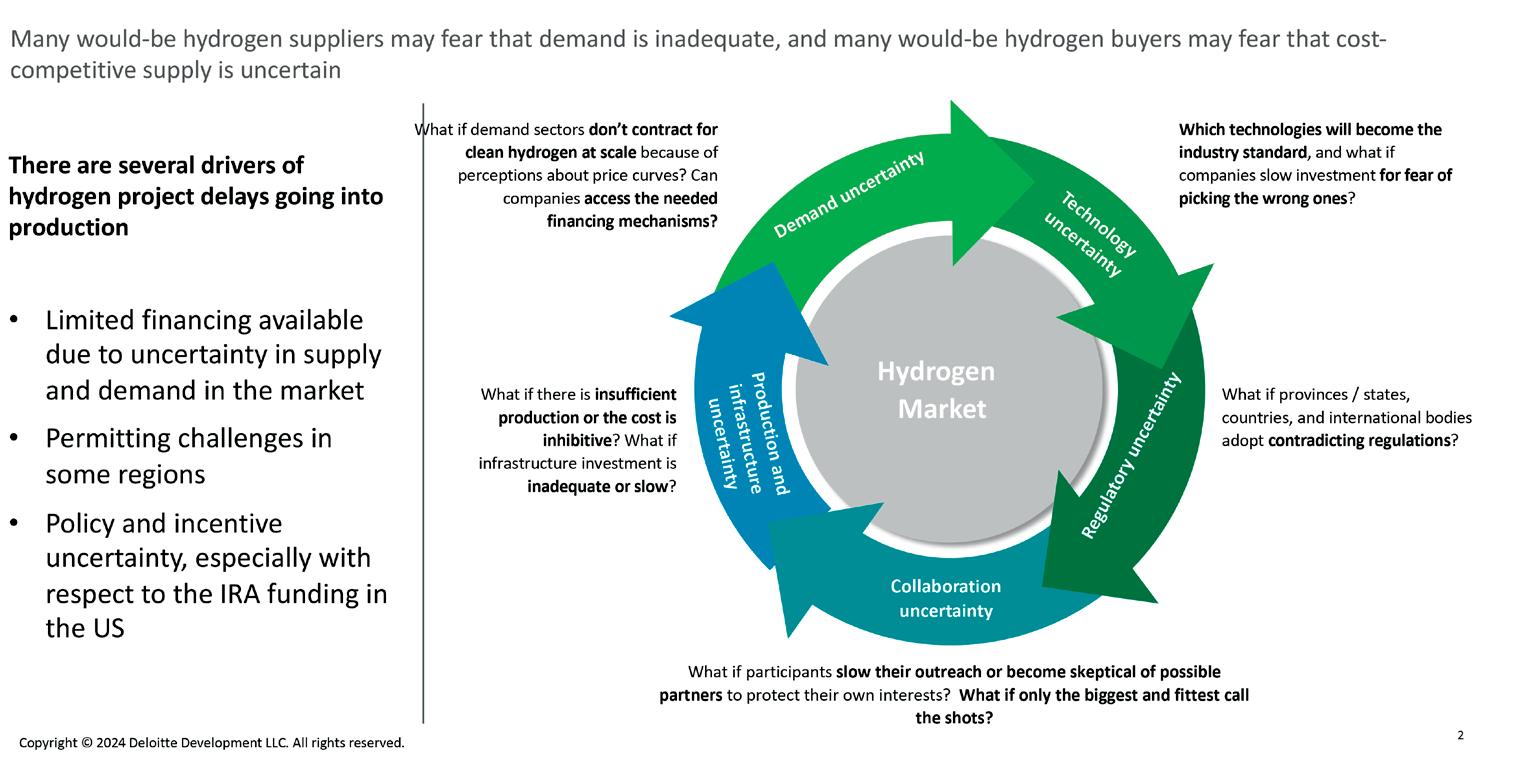
First-mover hesitancy is paralysing the system. Many companies are interested in developing low-carbon hydrogen supply, which at scale would bring down the price, but they cannot get funding for those capital projects until demand is certain. And with the price level still high, few, if any, will sign on to long-term uptake agreements at scale. With no one agreeing to purchase green hydrogen at scale, no manufacturer is yet producing it at scale. That is why a North American market does not currently
6 Summer 2024 GlobalHydrogenReview.com
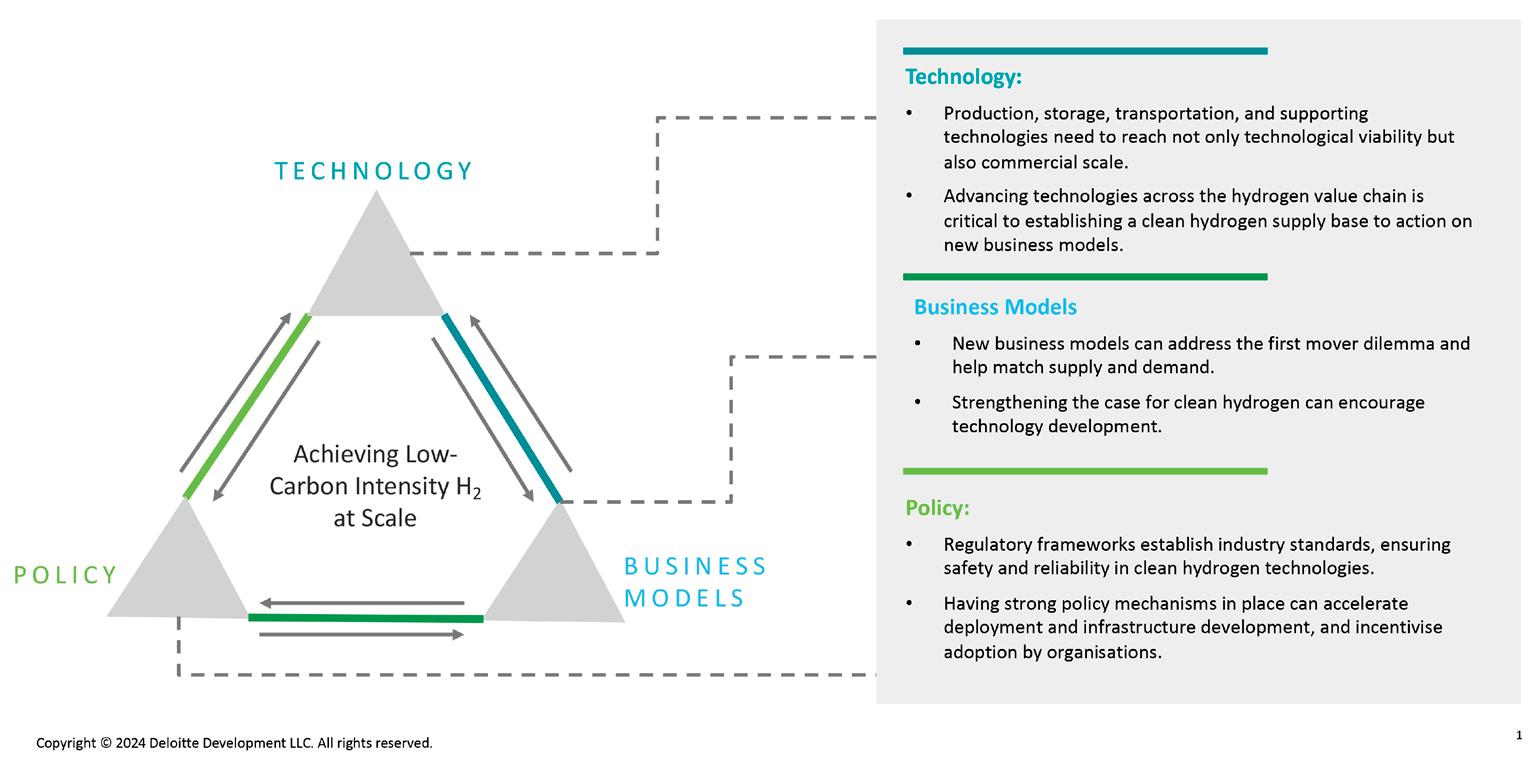
Figure 1. Achieving clean hydrogen at scale requires advanced existing and new technologies.
Figure 2. The investment dilemma is rooted in five key uncertainties present in today’s clean hydrogen market.
Sustainable Solutions for Hydrogen Production

From site selection to technology processes, sustainable solutions play a critical role in the future of hydrogen production. Taking an integrated approach, Black & Veatch works with developers to plan, design and build systems that enable business growth while reducing carbon footprints and improving resilience. Scan to learn four water resiliency tips for hydrogen production.

exist – because, for practical purposes, neither does green hydrogen.
Hundreds of global capital projects in green hydrogen are in the works – production facilities, storage infrastructure, transportation, etc. – with upbeat announcements and updates. But virtually none of those projects have made it from the front-end stages to the final investment decision stage. No one is yet putting in the necessary capital, and without long-term commitments, banks are not approving construction.
Uncertainties do not end with supply and demand. Technologies are largely untested; regulations remain in flux. A working market system depends on factories churning out gigawatts of hydrogen capacity, and no such
factories are in operation. In short, the economics do not yet make green hydrogen bankable.
Making the maths work
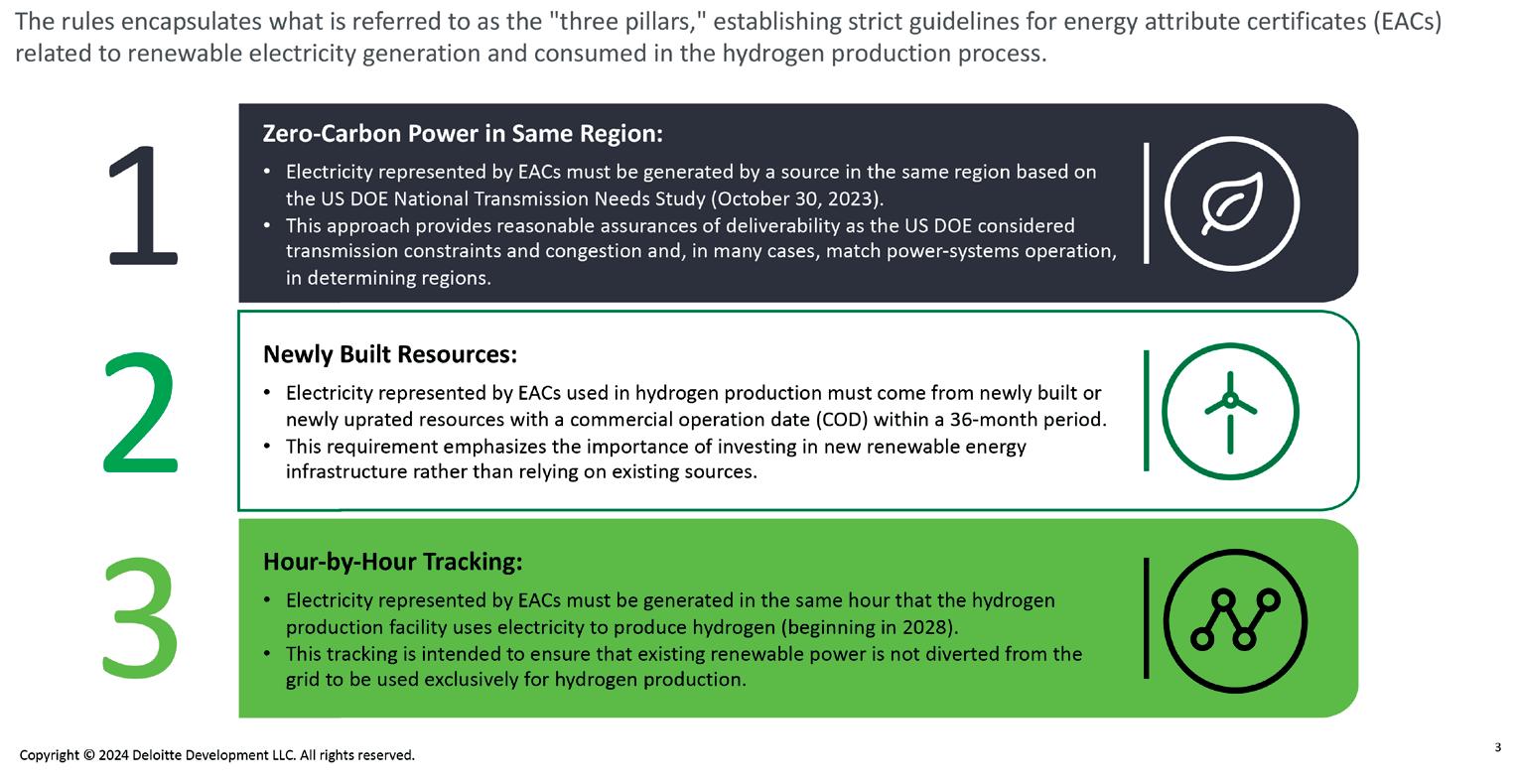
The Inflation Reduction Act (IRA) attempts to shift the economics for clean hydrogen and other renewable energy generators and end-use products through a variety of incentives. The law aims to increase the supply of clean energy, encouraging producers with incentives for clean inputs at every stage, from the energy necessary to cleanly manufacture the infrastructure (electrolysers, etc.) to the transmission equipment. But for hydrogen production –green hydrogen in particular, which the IRA incentivises most – the momentum these tax credits have created is tempered by guidelines and restrictions that, pending further Treasury guidance, some in the industry see as somewhat stringent, but that many insist are necessary to ensure the hydrogen market actually reduces emissions.
The federal government is not the only entity working to promote clean hydrogen. At state level, California is explicitly making hydrogen part of its efforts to deploy statewide infrastructure for the entire range of zero-emission vehicles, creating what the
8 Summer 2024 GlobalHydrogenReview.com
Figure 3. Proposed rules for the 45V clean hydrogen production tax credit provide new guidance with significant considerations for green hydrogen production.
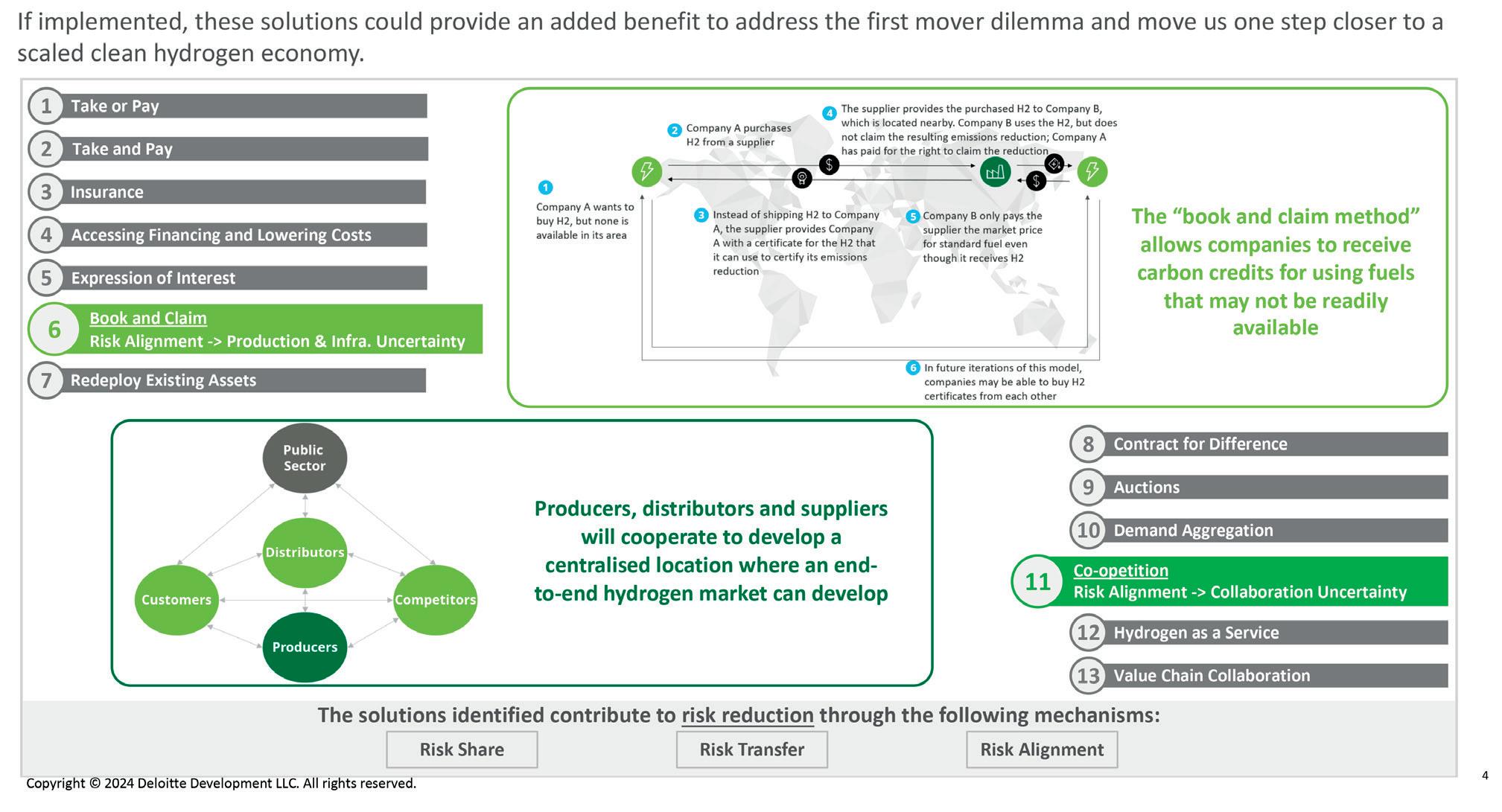
Figure 4. A collection of emerging business models to break the ‘chicken and egg’ problem.

The Emerson logo is a trademark and a service mark of Emerson Electric Co. © 2022 Emerson Electric Co. Choose Emerson as your trusted partner and advisor in the hydrogen industry. With the most comprehensive portfolio of control, isolation, relief valves, regulators, and actuators, we offer advanced solutions crucial for the success of blue hydrogen production. Go blue hydrogen. Learn more: Emerson.com/BlueH2Valves
California Energy Commission calls ‘the most extensive charging and hydrogen refuelling network in the country.’
The 2023-27 US$1.9 billion funding plan includes US$1 billion earmarked for zero-emission truck and bus infrastructure, covering vehicles powered by both battery-electric and hydrogen fuel cells. When green hydrogen fuel cells become available for buses and trucks ready for them, California drivers can expect to have refuelling sites.
New business models
Forward-thinking US business leaders can move ahead with clean hydrogen – whether as a producer or a consumer, driving demand or supply – without allowing government incentives to show the way. The question is how to solve the first-mover (or, if you prefer, chicken-and-egg) problem: the fact that traditional investment and accounting models are waiting for prices to dramatically fall. That may take a while – the federal government is offering up to a US$3/kg incentive for hydrogen production, but even that might not adequately level the playing field.
But there may be a solution that could get market participants at least partway there. With companies already rethinking their business models as digital transformation and supply chain chaos force a reconsideration, leaders can look to a set of emerging business models as potential ways to introduce clean hydrogen into processes. If a handful of companies try different models with demonstrated success, other leaders
should recognise the possibilities of other viable ways to do business.
What’s next for US hydrogen?
New business models offer a path for corporate leaders to move forward while waiting for regional hubs to come online and markets to materialise. But a mindset shift for regulators and other policymakers whose work thus far prioritises and incentivises the production of zero-carbon green hydrogen should also be considered.
Realistically, even with new accounting methods, companies, industries, and government agencies are unlikely to be able to scale up green hydrogen quickly enough to decarbonise the hard-to-abate sectors as urgently as overall climate strategies demand. At a time of climate crisis, the ‘perfect’ should not be the enemy of the ‘good’; low-carbon hydrogen can make a huge difference. The regional hubs, some of which plan to use hydrogen made with carbon capture or nuclear power, are a step in the right direction.
Deloitte fully expects the US to eventually have a fully functioning clean hydrogen market as part of a global network, contributing strongly to efforts to decarbonise the planet. Until then, business and government leaders should consider moving forward as firmly as possible.
Bibliography
1. A full bibliography is available at https://www. globalhydrogenreview.com/hydrogen/01042024/first-moverproblem-delays-us-progress--bibliography/


from business model to technology
Florence Carlot, Arthur D. Little, Belgium, outlines why harnessing innovation will boost the potential of the green hydrogen economy.
While global hydrogen use increased in 2022, green hydrogen still makes up less than 1% of total production volumes, according to the IEA.1
This leaves a mountain to climb – production will need to grow more than 100 times by 2030 to achieve the 2050 Net Zero Emission (NZE) scenario.
While there has been considerable interest in green hydrogen, it faces considerable challenges to its wider adoption. Innovation is therefore required across business models, technologies, financing, regulation, and cross-sector collaboration if hydrogen is to deliver on its potential to underpin progress to net zero emissions. Looking at these dimensions individually, how can innovation boost hydrogen development?
Transforming business models to drive demand at scale
Unlocking demand for green hydrogen is critical to driving greater downstream customer usage. While many green hydrogen projects have been announced or launched, the majority focus on dedicated participants, with demand concentrated on industry and refining, rather than delivering wide availability of green hydrogen to new applications and customers. The cost of building and maintaining infrastructure for customers remains a major hurdle to adoption.
Innovative new business models can help to overcome these challenges, particularly by harnessing leasing or service-based concepts to reduce upfront customer costs and stimulate demand.
11
These provide peace of mind, remove infrastructure overheads for customers and, importantly, enable them to meet pressing regulatory requirements to decarbonise.
Hydrogen-as-a-Service
For example, Hydrogen-as-a-Service (HaaS) models involve producers supplying green hydrogen as a fuel or feedstock, managing the end-to-end process without customers having to invest in infrastructure or build internal capabilities, and simply paying a fixed fee. This delivers greater customer confidence, flexibility, and scalability, and provides potential opportunities for customer-facing gas suppliers.
Demonstrating this approach, in transport, vehicle company Nikola is now producing hydrogen-powered trucks, while also supplying hydrogen to customers through its HYLA energy business. Working with partners including Renault, ACCIONA and SK Group, Plug Power is building an end-to-end green hydrogen ecosystem, from production, storage, and delivery to energy generation, offering customers a complete service around fuel cells for forklift trucks, stationary power, and on-road applications.
Power purchase agreements
Power purchase agreements (PPAs) provide a further approach to reduce risk and uncertainty, for both customers and suppliers as they deliver longer-term, fixed fee contracts. Traditionally used within the energy generation sector, they are now being applied to green hydrogen projects.
For example, Ørsted, a Danish renewable energy company, has signed a green PPA with fertilizer producer Yara to supply green hydrogen for ammonia production, using renewable energy from its offshore wind farms. However, given the current immaturity of green hydrogen technologies, prices are likely to drop over the medium-term, leading to a risk of PPA customers being locked in to higher, fixed costs.
Co-investment
Co-investment between customers and suppliers delivers a further business model option, with green hydrogen equipment built at a customer site/complex and excess production supplied to other nearby companies. This works particularly well in industrial clusters around ports linked to offshore renewable power grids.
Across all these options, players in the hydrogen ecosystem have to innovate their operations and offerings. This will require the development of new skills, capabilities, and structures to support a successful green hydrogen ecosystem.
Focusing on increasing technology maturity and lowering costs
Innovation is also required to bring down the cost and increase the efficiency of green hydrogen technologies across production, storage, transport, and applications.
Production technology

On the production side, electrolysers are mature as a technology but remain expensive in terms of capital cost, due to traditionally small production volumes and the rising cost of key materials such as iridium and platinum. Advances in the maturity of new electrolyser technologies, such as solid oxide electrolysis (SOEC) and anion exchange, should increase hydrogen production efficiency, while global manufacturing capacity for electrolysers grew by nearly 25% between 2021 and 2022 in reaction to increased demand. If all announced electrolyser production increases come to fruition, global capacity could reach more than 130 GW/yr by 2030 according to the IEA.
Storage and transport
Innovation is also required to optimise hydrogen storage and transport, particularly around the challenges of hydrogen’s low volumetric density and high risk of leakage at normal pressure/temperature conditions. Advances in areas such as cryocompressed hydrogen storage are required, along with scaling the use of liquid organic hydrogen carriers (LOHCs) such as ammonia for transport over long distances beyond pilots, especially when it comes to reducing
12 Summer 2024 GlobalHydrogenReview.com
Figure 1. Hydrogen production by technology, 2020 - 2022.
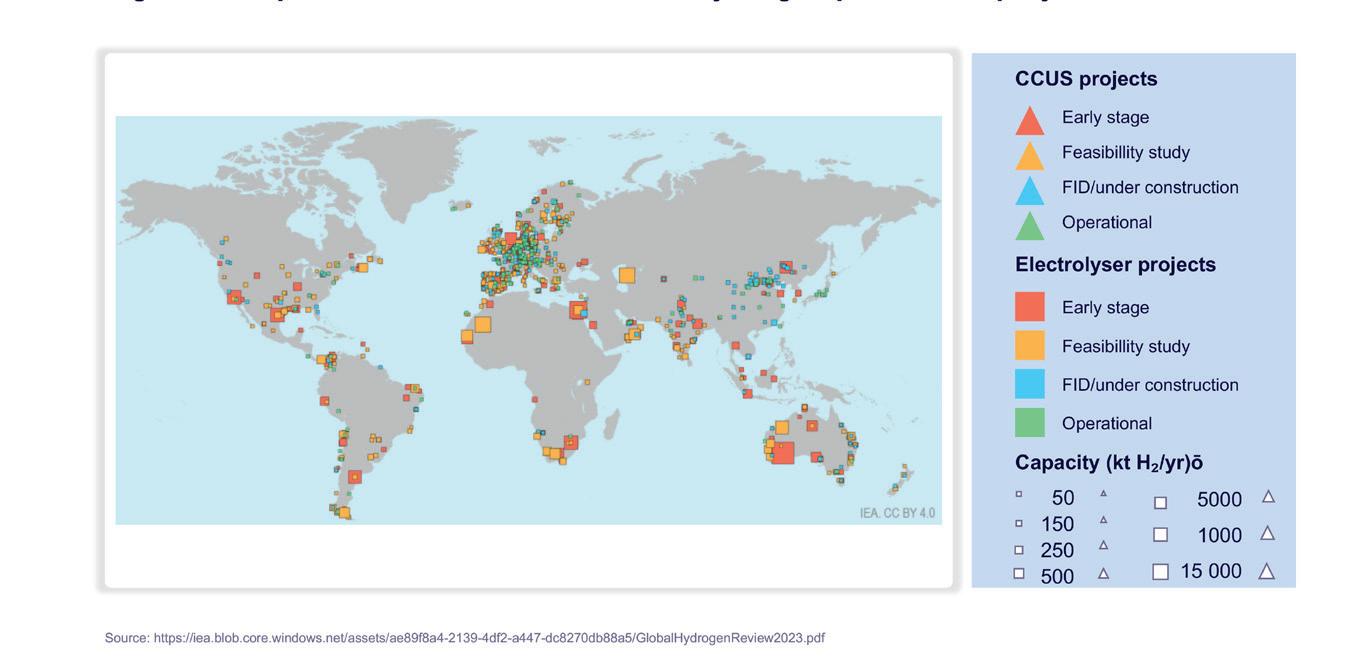
Figure 2. Map of announced low-emissions hydrogen projects.
Hydrogen Compression

Elliott’s Flex-Op® Hydrogen Compressor features flexible, configurable, and economical compression options for hydrogen applications. Designed with proven Elliott compressor technology, the Flex-Op’s compact arrangement of four compressors on a single gearbox maximizes compression capability with enough flexibility to run in series, in parallel, or both. Who will you turn to?
n Learn more at www.elliott-turbo.com
COMPRESSORS | TURBINES | PUMPS | GLOBAL SERVICE
Turn To Ebara Elliott Energy for operational flexibility in hydrogen applications.
transport costs. This would unlock the potential to create green hydrogen in regions with plentiful renewable energy (such as the Middle East, Australia, and Morocco) and then ship it cost-effectively to where it is required.
Application technology
Application technology is also advancing, with the growth of hydrogen-powered vehicles (particularly in the heavy-duty transport segment, where electric batteries reduce range/carrying capacity). Further innovation is required to grow demand by reducing costs, such as of hydrogen-powered trucks and buses. On the industrial side, the need to decarbonise should drive greater use of green hydrogen for both feedstock and thermal processes.
Adopting more innovative funding methods to unlock capital
At its core, green hydrogen faces two interlinked financial challenges. Firstly, it is currently not cost-competitive with fossil fuel-produced equivalents, due to factors such as immature/expensive technologies and, in particular, the cost and availability of renewable energy sources. According to BloombergNEF, while the cost of green hydrogen fell by 40% between 2015 and 2020, it is still currently around three times higher than hydrogen produced with natural gas.2 Secondly, projects, whether production, distribution, or renewables, require significant capital investment and time to build, making them a risk without securing customer demand.
Addressing the funding gap
Finance is therefore needed to increase technology innovation – making it more mature and therefore cheaper and more scalable – to build new infrastructure and underpin new business models within the ecosystem. Total costs for establishing a green hydrogen economy vary – analysis from the Financial Times puts the figure for creating an industry capable of producing 500 million tpy of hydrogen by 2050 at US$20 trillion.3
By comparison, the 1000 projects already announced globally require investment of US$320 billion according to the Hydrogen Council.4 Showing the funding gap, just US$29 billion has been committed to them so far.
The importance of sustainable finance
As they look to fund green projects, a growing number of organisations are looking to environmental, social and governance (ESG) bonds, a market which could reach US$4.5 trillion/yr by 2025. These bonds tap into the growing investor demand for greener investments, moving ESG beyond equities to financing specific projects in areas such as green hydrogen. As they are directly linked to sustainable projects, green/ESG bonds normally provide better terms for issuers as well as increasing investor confidence.
The government dimension
Innovative funding methods are therefore required to both finance new projects and bring down the current price of green hydrogen to stimulate demand. Given its importance to decarbonisation, governments are particularly active in creating policy frameworks and providing funding sources in both areas. Globally, almost US$30 billion of government funding for hydrogen has been announced as part of national/regional hydrogen strategies.
In the US, the Inflation Reduction Act provides US$260 billion in tax credits to boost investment in the development of renewable energy, including renewable hydrogen, while the US Department of Energy is spending US$1.5 billion to increase innovation in electrolyser and other technologies. The aim is to cut the cost of green hydrogen from its current US$5/kg to under US$2/kg by 2026.
Across the Atlantic, the EU plans to invest US$500 billion over 10 years in green hydrogen, along with providing tax credits for green hydrogen producers. The UK has announced funding of £2 billion over 15 years and confirmed suppliers will receive a guaranteed price for energy generated from green hydrogen. Initiatives such as these help to create a favourable environment that stimulates private investment in hydrogen projects.
14 Summer 2024 GlobalHydrogenReview.com
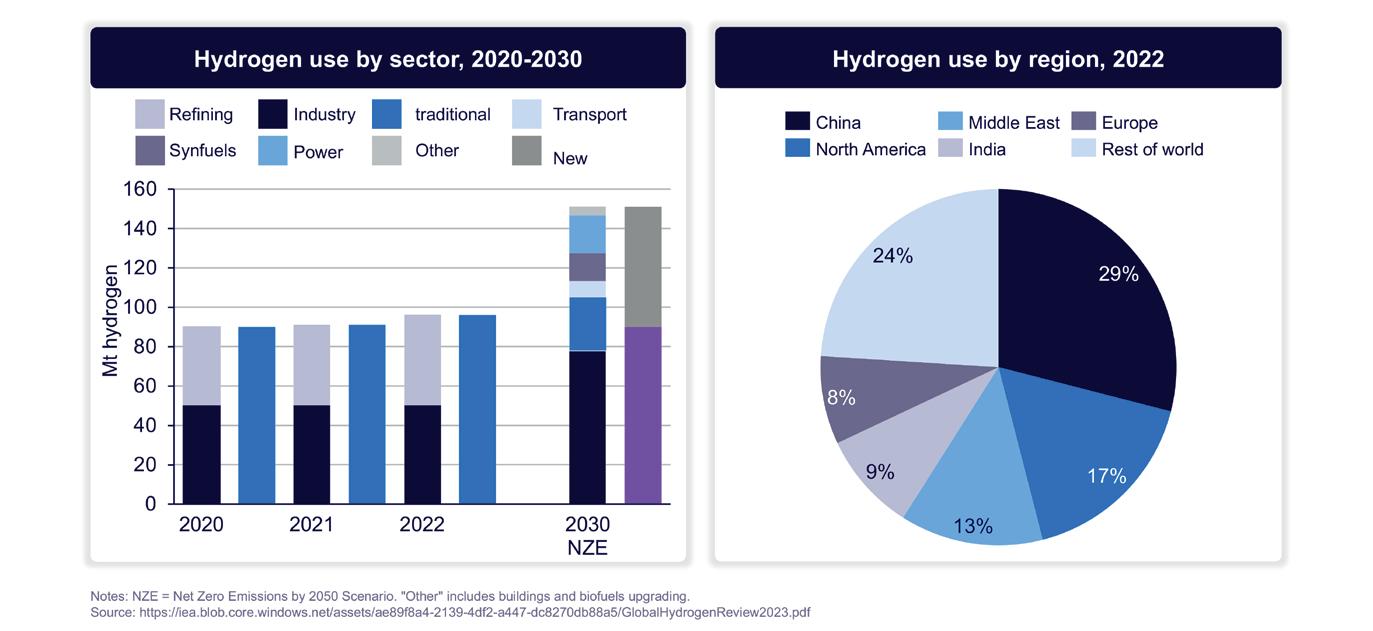
Figure 3. Hydrogen use by sector and region.
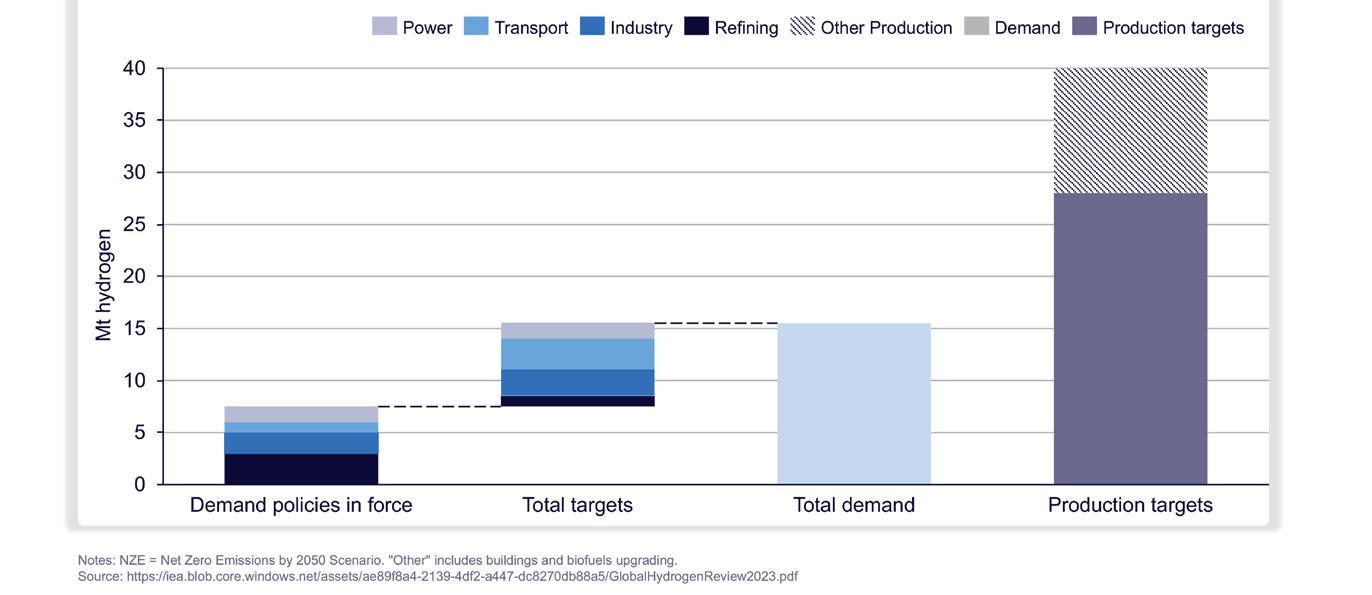
Figure 4. Potential demand for low-emission hydrogen created by implemented policies and government targets, and production targeted by governments, 2030.
Power Independence with Element 1
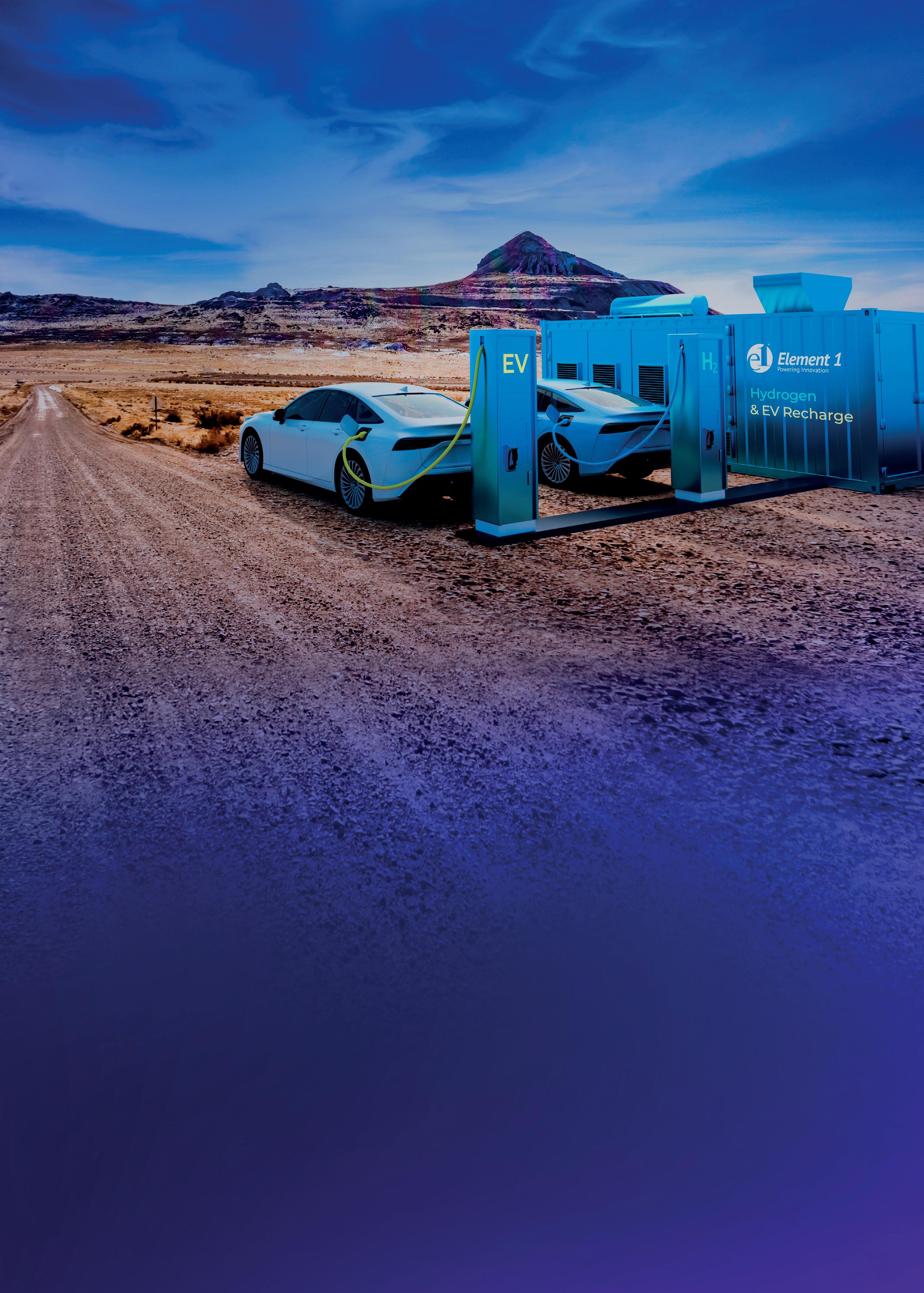
The future of sustainable energy is Containerised Hydrogen Generators
Element 1 Corporation CEO, Dave Edlund, discusses high efficiency, low cost, off-grid power generation technology in this month’s featured article – hydrogen generators that transform methanol into clean, efficient hydrogen and electric power. Perfect for charging stations and remote power needs, offering a reliable alternative to the traditional grid:
• High Efficiency: Our systems use minimal electricity to generate hydrogen, significantly cutting energy costs.
• Portable Solutions: Easily transported and installed, ideal for diverse settings, from urban centers to isolated areas.
• Cost-Effective Feedstock: Methanol is a readily available and economical carrier for hydrogen, offering substantial savings in transport and conversion costs.
• Reduced Emissions: Utilizing green methanol, our generators lower carbon footprints, supporting your eco-friendly initiatives.
Redefine your energy approach. Visit www.e1na.com to learn more.
Explore more about our technology and its benefits in Dave Edlund’s article in this issue.
The importance of subsidies
Governments are also looking to bridge the current gap between the production costs of green hydrogen and fossil fuel-generated equivalents. For example, the German government has committed €900 million over 10 years to compensate providers taking part in auctions of green hydrogen and its derivatives organised by the H2Global Foundation.
Innovative ideas to reduce investment needs are also being put into practice. Given that substantial OPEX finance will be required for hydrogen pipeline transportation (US$3.6 billion/yr in Europe alone), many countries are establishing regional hydrogen hubs to minimise the cost of infrastructure construction and operation.
The energy security risk
Following the supply shocks to the gas market caused by sanctions on Russia, government investment in local facilities, including renewables, also enables energy security as well as decarbonisation. Given that electrolysis-based green hydrogen production typically requires 4000 - 5000 hours of electricity per year, ensuring there is sufficient cost-effective renewable capacity will be a challenge in regions such as Europe and Asia. For example, by 2030 the LCOH in key South East Asian countries is predicted to be between US$3.5 - 4.3/kg, compared to under US$2.5 in the US, Spain, and the Middle East. Without access to renewable energy, there is a risk that economies will swap a reliance on Russian gas with reliance on hydrogen from countries within the Middle East and North Africa, creating new dependencies.
Supporting transformation through regulation
Alongside funding technology advances, infrastructure and subsidies, governments also need to innovate in two other areas. They need to provide regulatory penalties and incentives to force industries away from fossil fuel-produced hydrogen, and to standardise certification of green hydrogen internationally. For example, by generating hydrogen without emitting carbon, companies will be able to earn carbon credits, which can be sold or used to offset emissions across their wider operations, providing a further financial incentive for hydrogen investment. Stronger certification will increase customer confidence that they are buying and using genuinely green hydrogen, enabling them to meet their decarbonisation targets and justify current price premiums. The COP28 summit in 2023 saw progress
on certification, with announced initiatives including a new ISO methodology for assessing the emissions of hydrogen production and a declaration of intent by 37 countries that they will work towards mutual recognition of each other’s certification schemes around renewable/low-carbon hydrogen production. Continuing innovation in this area will create a truly global green hydrogen industry, delivering common standards that underpin confident investment.
Increasing collaboration to create a green hydrogen ecosystem
As well as advances within generation, storage and transport innovation, hydrogen’s versatility will enable multiple sectors to innovate, create synergies and optimise energy systems. Building this green hydrogen ecosystem will require inventive new partnerships that span traditionally separate industries and stretch around the globe. These can provide a more stable environment for hydrogen projects, reducing political and regulatory risks that might deter investors.
For example, data centres could switch from diesel to hydrogen for back-up power, generating and storing it on site. Energy companies could leverage excess renewable energy to produce hydrogen, rather than relying on battery storage. Existing hydrogen suppliers should look to collaborate with companies using solar power to create hydrogen in regions such as the Middle East and Australia, as well as forming joint venture agreements with worldwide customers to guarantee large-scale, stable demand.
Partnerships between the public and private sector will drive change. One example is the establishment of Thailand Hydrogen Group, initiated by oil and gas company PTT, which aims to engage public and private sector players to promote the development and adoption of hydrogen in Thailand.
Building a green hydrogen economy based on innovation
A stronger focus on innovation is crucial if green hydrogen is to meet ambitious objectives around decarbonisation. Harnessing innovation will be a driving force in making hydrogen initiatives more financially viable, reducing risk, and attracting diverse sources of investment. Whether through technological advancements, business model innovation, or policy frameworks, embracing innovation is essential for unlocking the full potential of green hydrogen as a sustainable energy carrier.
References
1. https://www.iea.org/reports/breakthroughagenda-report-2023/hydrogen
2. ‘‘Hydrogen Economy’ Offers Promising Path to Decarbonization’, BloombergNEF, https:// about.bnef.com/blog/hydrogen-economyoffers-promising-path-to-decarbonization/, (March 2020).
3. ‘Lex in depth: the staggering cost of a green hydrogen economy, Financial Times, https:// www.ft.com/content/6e22930b-a007-4729951f-78d6685a7514.
4. ‘Hydrogen Insights 2023’, Hydrogen Council, https://hydrogencouncil.com/en/ hydrogen-insights-global-project-funnelgains-momentum-across-value-chain-andgeographies/#:~:text=The%20report%20 tracks%201%2C040%20projects,20%25)%20 related%20to%20mobility, (May 2023).
16 Summer 2024 GlobalHydrogenReview.com
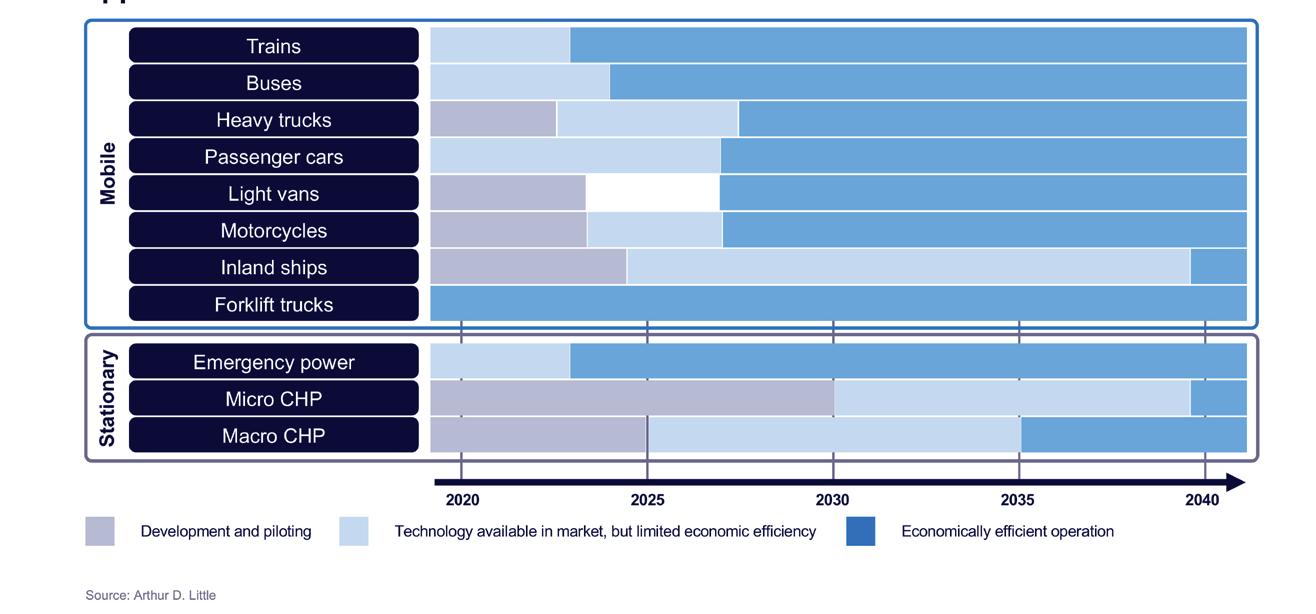
Figure 5. Technology maturity and economic efficiency of major hydrogen applications.
Krzysztof Koziol, Cranfield University, UK, discusses the challenges associated with the switch to zero-carbon fuels and the importance of material research in the energy transition.
There is no easy switch to new fuels – particularly when it comes to hydrogen and the need for networks of storage, transport and supply pipelines that can cope with different behaviours and qualities.
When using traditional metals – for example, steel or aluminium – hydrogen works its way into the lattice of the metal and causes it to become brittle over time, leading to cracking. And with polymers – using a glass-fibre tank with a coating inside – the hydrogen will penetrate through the lining with the constant emptying and filling of the tank and the coating will buckle.

Full hydrogen delivery systems will rely on pressurised tank storage, liquefaction tank storage and salt caverns, each with the potential to involve loss through pressurisation, depressurisation, permeation leakage, and accidents. The expected loss of hydrogen across the life-cycle from transportation and storage systems is estimated at 2%, according to a US Department of Energy study in 2022.1 The scaling up of a hydrogen network is expected to lead to much larger issues: the International Energy Agency has predicted a 5.6% economy-wide leakage rate by 2050 (based on an annual supply of 528 million t).2 Scenario modelling by the Environmental Defense Fund has suggested that
17
continuous emissions of hydrogen over a 10 year period would have a 100x stronger global warming effect than CO2
Cranfield University has been researching hydrogen for decades, and in response to the growing body of evidence supporting the potential applications, now has a hydrogen research network which spans work into forms of hydrogen production with ultra-low carbon emissions, hydrogen storage, operations and propulsion. An underlying element of the work is materials, assessing the potential, the scope for wholly new combinations and configurations that make hydrogen a viable option.
Replacing natural gas pipelines
The most obvious challenge around replacing natural gas with hydrogen is around the existing network of pipelines in the UK, made up of around 7600 km of pipes. National Gas Transmission, the UK’s gas network operator, has made a commitment to upgrading the full network to allow for a switch to hydrogen, and has an objective of connecting up with continental Europe’s network of hydrogen-ready pipelines by the early 2030s.
Cranfield University has been tasked with improving the performance of the most common form of mild steel pipelines (low-carbon, so they are more ductile and weldable) to ensure there is no hydrogen diffusion or containment failures. The issue here is not only the risks from diffusion of the much smaller molecules of hydrogen compared with natural gas, but also the potential for impurities in natural gas (such as hydrogen sulfide) which can accelerate damage to materials in the gas blending

environment. While natural gas does not have moisture issues, it is very important to make sure that hydrogen – particularly that coming from electrolysis – is separated from any moisture as its addition to the pipeline will, again, accelerate the internal pipe damage through corrosion leading to accelerated hydrogen diffusion into the steel lattice and cracking.
National Gas Transmission has required a solution that is both low cost and is net zero in terms of carbon. Digging up long stretches of pipeline would have a huge carbon footprint and undermine the efforts to move to a more environmentally-friendly system from the outset. Cranfield, in partnership with Levidian Nanosystems, has developed a graphene-based paint which can be used to secure pipelines for safe hydrogen use. Graphene itself is a simple material made solely from a single layer of carbon atoms, assembled in a hexagonal pattern. The simplicity of the structure means it is easy to anticipate how it will behave – as well as being incredibly strong (estimated to be 200 times stronger than steel).
The effectiveness of the new paint has been validated in the laboratory environment following National Gas standards. The next step is for large-scale production of the graphene paint, expected to begin this year, leading to general market availability for industry. The graphene itself will come from a new, scalable process developed by Levidian Nanosystems. The company makes use of greenhouse gases such as methane as a feedstock, diverting a stream of gases away from the environment; methane into graphene processes are already being used with sources such as organic wastes from agriculture and the venting and flaring release of natural gas.
Hydrogen aviation
Other industries face even more complex and difficult challenges in switching to zero carbon fuels. In aviation, the hydrogen option provides a long-term solution to the need for a sustainable basis for the industry. In the short to medium-term, the sector continues to focus on sustainable aviation fuels (SAFs), but the production processes and burning of SAFs only involves a reduction in CO2 emissions, an interim solution while sustainable technologies are developed.
The introduction of a new world of hydrogen flight means a full re-design of aircraft and the fuelling infrastructure of supplies and storage on the ground. While hydrogen gas can be used for short haul flights, longer distance flights will need a higher energy density, meaning the storage on-board of liquid hydrogen. Liquid hydrogen has a higher energy density than conventional aviation fuels and offers a much leaner combustion than any hydrocarbon fuel, as well as ultra-low nitrogen oxide emissions. However, the future viability of liquid hydrogen flight is dependent on safe storage on-board. Storage tanks need to be able to withstand extreme variations in temperature: between -253°C and room temperature. Given the nature of temperatures involved, an incorrect selection of materials or issues with the cryogenic system would lead to a catastrophic failure. The design of tanks needs to involve lightweight materials to minimise overall aircraft weight and fuel demands. Stainless steel tanks might provide safety, but are unrealistic in terms of added tonnage.
Over the past year, Cranfield University has been working on developing the most efficient aircraft designs, hydrogen combustion systems and workable materials for next generation fuel tanks. This is part of the Airbus driven project to develop
18 Summer 2024 GlobalHydrogenReview.com
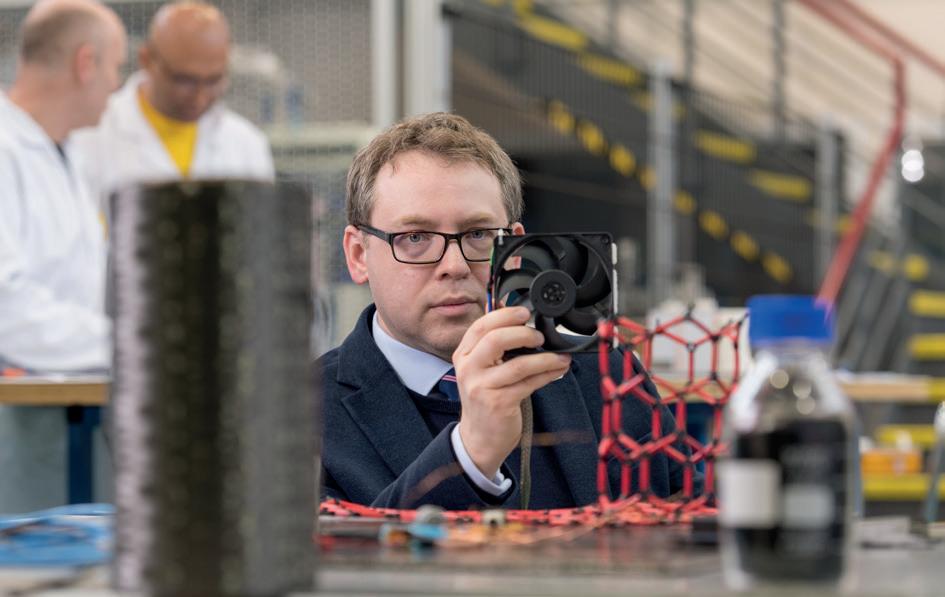
Figure 1. Professor Krzysztof Koziol in the Composites and Advanced Materials Centre labs, Cranfield University.
Figure 2. The hexagonal composition of graphene.
Chart’s HLH2 vehicle fuel systems provide greater range and payload advantages using liquid hydrogen storage and an integrated heat exchanger for Fuel Cell Electric Trucks (FCETs).
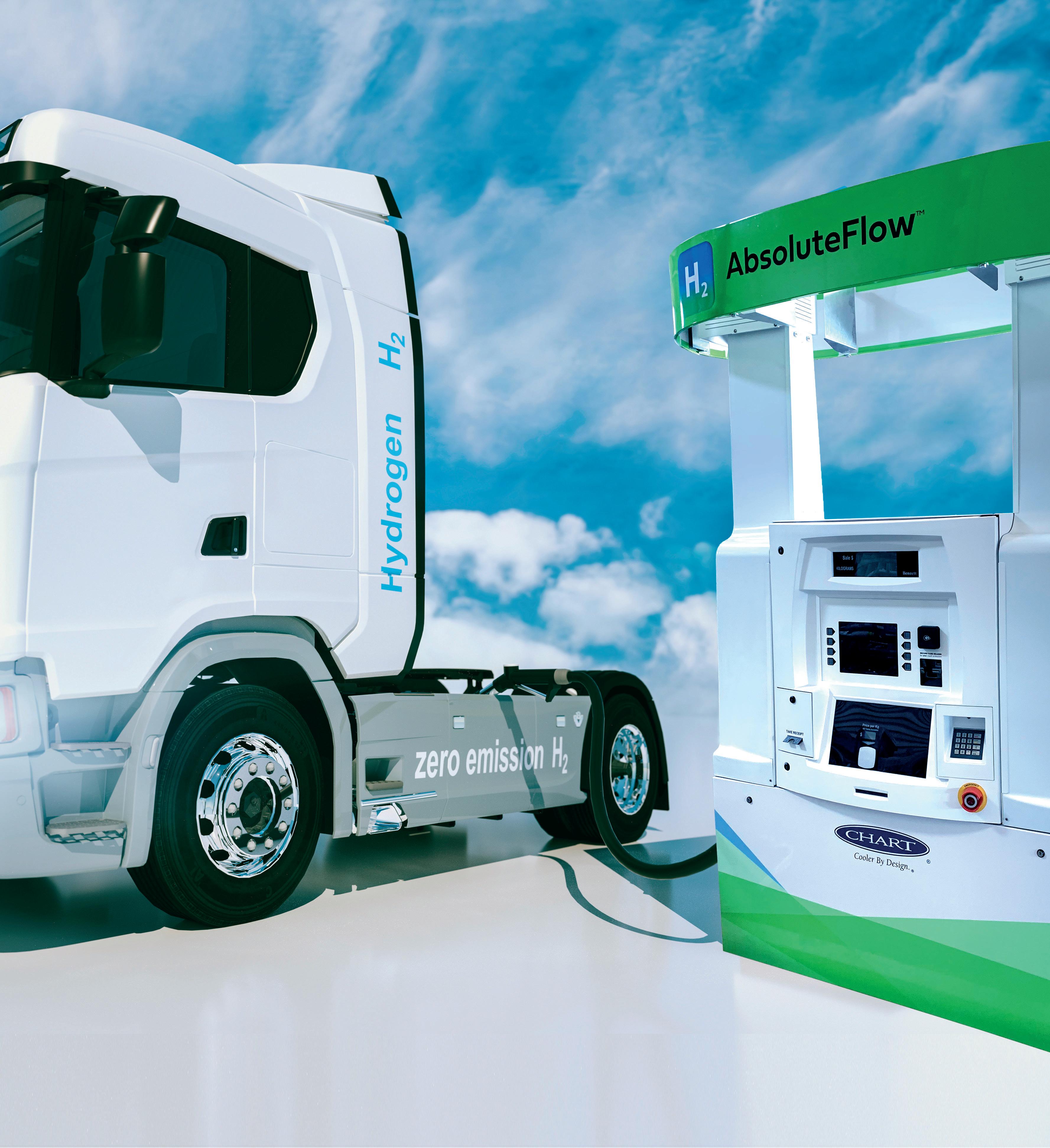
Chart’s liquid hydrogen fuel stations allow for quicker fueling of vehicles with more dense liquid hydrogen, using simpler equipment and requiring less infrastructure investment.
HLH2 vs. H35/H70
• Lighter Weight
• Smaller Footprint
• Easier to Install
• Faster Fill Times
• Customized Integration with Truck Manufacturer’s Fuel Cell Engine
www.ChartIndustries.com/Hydrogen hydrogen@chartindustries.com
Americas: +1 800 400 4683
Germany: +49 (0)2823 328 224 China: +86 519 8596 6000
Scan to download our brochure
the world’s first commercial hydrogen aircraft by 2035. The streams of research and development, jointly funded by the UK government’s Aerospace Technology Institute (ATI), are based around the company’s new Zero Emission Development Centre (ZEDC) for hydrogen technologies in Filton, Bristol, UK.
Cryogenic tanks
In order to use hydrogen as fuel in the skies, there is the need for a design of a type VI cryogenic tank. This involves a new bill of materials and deployment of three levels of safety features –each one of which means exploring new generations of materials. The first level is ensuring that the hydrogen is kept at the right temperature; the second that there is the guarantee that even if the energy input and active cooling or other systems fail, the materials being used will keep the liquid hydrogen at a safe temperature and pressure environment for long enough for the aircraft to land and the issues to be resolved. The third is that if there is an unforeseen and uncontrollable event, the fuel or the tank itself can be disposed of safely – and the aircraft still has enough fuel to land.
One type of material under development is based around a new form of self-healing polymers. To minimise safety concerns, there is the need for a material that is capable of both self-diagnosis and self-healing of damage caused to its structure. A self-healing polymer is particularly effective in repairing minor cracks and avoiding a worsening of the damage. The next critical material for the tank is made up of high performance, lightweight insulators like aerogels: the synthetic porous ultralight materials
derived from a gel which retain their form even when the liquid element is replaced with a gas. The nature of the materials makes them the lightest possible material yet created. Finally, a two-dimensional graphene layer is being used to maximise the reduction of hydrogen leaks and to take the mechanical stability of the overall structure to another level.
Extensive work is ongoing at Cranfield around the material development and molecular tuning to achieve the levels of performance required, as well as the use of different combinations in order to find the optimal mix of tank materials for performance and safety. The very first prototype of the type VI cryogenic hydrogen tank will be tested over the coming year, with flight testing (possibly from Cranfield airport) expected to start in 2026, and a system in use between 2030-35.
Electric energy still has the greatest potential for delivering a low-carbon world, but it has its limitations when it comes to storage from renewable sources like wind and solar, as well as a lack of energy density for heavy industries. Hydrogen can play a crucial role in the mix of sustainable energy supplies – especially when it comes to transforming aviation and for decarbonising industry – and materials research is going to be essential for ensuring it continues to be a practical solution.
References
1. ‘DOE Technical Targets for Hydrogen Delivery’, US Department of Energy, https://www.energy.gov/eere/ fuelcells/doe-technical-targetshydrogen-delivery, (2022).
2. ‘Global Hydrogen Review 2021’, International Energy Agency, https://doi.org/10.1787/39351842-en, (October 2021).




VIRTUAL CONFERENCE 5 SEPTEMBER 2024 Join us for an interactive virtual conference exploring innovative decarbonisation technologies and solutions that are driving the transition to a low-carbon energy future. Register for free

Daniel Patrick, Atlas Copco, USA, considers the technology readiness level of turbomachinery for large-scale hydrogen liquefaction.
Yes, yes, TRL actually stands for ‘technology readiness levels’, but the alternate acronym in the title has a nice ring to it. Technology readiness levels is an important topic in emerging markets like hydrogen. These days, in just about every hydrogen sales presentation, the slide deck will include shiny models of new equipment with attractive features. The designs may look great, but how many have been built and are in operation? Often, especially in the hydrogen market, the equipment is in the pilot phase. That low TRL is partially because there is plenty of new technology in development for the emerging hydrogen market, and partially because the demand for large-scale hydrogen production has not previously existed. This article will explore the maturity of turbomachinery technology for one of the crucial aspects of the emerging hydrogen infrastructure: large-scale hydrogen liquefaction. Simultaneous to the challenge of technology readiness, a universally understood requirement in the hydrogen market is the need to scale production to help reach lower costs. From scaling electrolyser manufacturing to increasing truck payload, and from storage tank size
21
to larger fuel cell stacks, bigger seems to be better, and maybe even necessary, for hydrogen to be economically viable against the incumbents. This issue of scale applies to liquefaction technology as well. As production capacities increase, so too will that of liquefiers. As of today, hydrogen liquefaction trains seem to have plateaued around the 30 tpd capacity range. This is a not an insignificant growth from the previous status quo of 5 - 10 tpd liquefiers, but it is clear that larger-scale liquefaction capacity is needed to effectively transport the large volumes of hydrogen required to support the demand from the ever-growing hydrogen mobility market, not to mention the future liquid hydrogen (LH2) export terminals for international trade. Let us put the 30 tpd capacity into perspective. A single 30 tpd liquefier can distribute enough hydrogen for approximately 300 heavy duty trucks per day (assuming an average fuel-tank capacity of 100 kg per truck). Considering 400 000 heavy duty fuel-cell electric vehicle (FCEV) trucks are expected to be deployed globally by 2030 (according to the International Energy Agency’s ‘Energy Technology Perspectives 2023’ report1) – and according to that same report, the majority of these FCEV trucks will rely on liquid hydrogen distribution to refuelling stations – it is clear that hydrogen liquefier
capacities will need to scale significantly to 60 tpd, 100 tpd, 200 tpd and larger in order to meet demand.
Liquefaction machinery
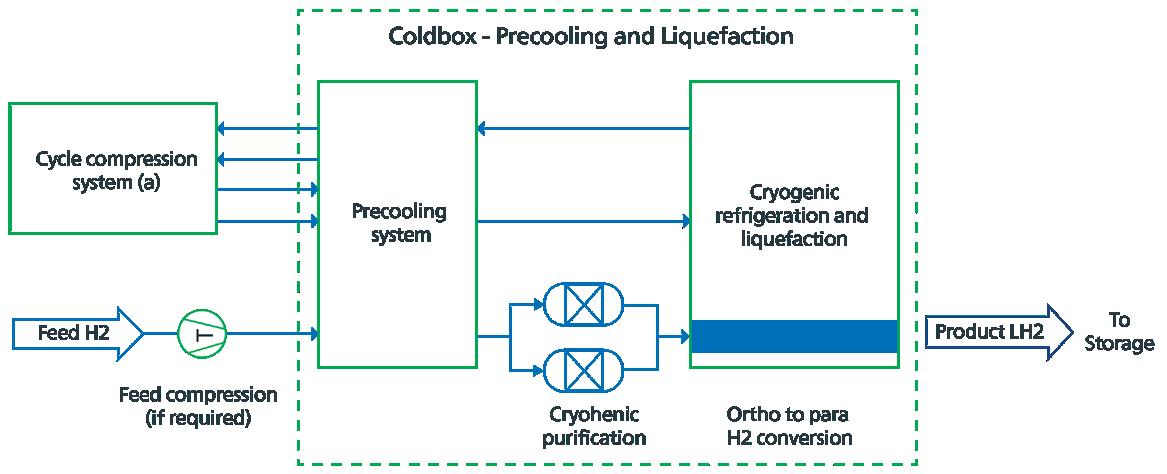
Hydrogen liquefaction involves one or more refrigeration cycles to cool the hydrogen gas to below -253°C, when it liquefies. Key components to the liquefier include refrigeration compressors, cryogenic turboexpanders (also known as expansion turbines), and braised aluminium heat exchanger(s) (BAHX) located inside a coldbox. Figure 1 provides a simplified hydrogen liquefier schematic.
Hydrogen liquefaction is energy-intensive, especially on a small-scale. Therefore, a variety of process configurations have been built or conceptually proposed for large-scale applications using different refrigerants and refrigeration cycles. The main goal of optimising a liquefier design is to improve two main key performance indicators (KPIs): specific energy consumption (SEC), (KWh/KgH2) and specific liquefaction cost (SLC), which includes capital, operation, and maintenance costs. Larger-scale liquefiers improve both of these KPIs. The first benefit of scale is an improved cost basis (lower SLC), which is largely attributable to the turbomachinery’s ability to scale without the need for additional units. Turbomachinery size simply scales around the volumetric flow of the process and is often quantified by a manufacturer’s frame size (or wheel diameter). For example, scaling a turboexpander from a 30 tpd capacity to a 60 tpd capacity does not double the machine cost. Instead, only a marginal cost increase is expected due to the larger frame size requiring marginally more raw material.
The second benefit is the increased performance, meaning more liquid hydrogen produced per kilowatt-hour. High-capacity liquefaction enables significant reduction in the specific energy consumption (SEC) of the liquefier. Again, focusing on the turbomachinery, as the machinery scales to higher flows, the secondary losses are proportionally lower, enabling higher efficiency and better overall performance. It is also common to run into mechanical speed limits on small-scale liquefier capacities, especially when considering integrally geared or magnetic-bearing turboexpander designs. The aerodynamic designer needs to make some sacrifices when designing an impeller for a non-optimum (slower) speed, which has a negative impact on performance. As flow increases with larger-scale liquefiers, this allows the machine to run at slower speeds, and avoid mechanical speed limitations. The ability to run at an ideal speed enables optimum aerodynamic performance – another point for large-scale liquefaction. Lastly, large-scale liquefaction opens up new opportunities for turboexpander power to be recovered via a compressor or generator. Energy recovery has a direct impact on specific energy consumption, making the liquefaction process more efficient.
22 Summer 2024 GlobalHydrogenReview.com
Figure 1. Simplified process configuration for hydrogen liquefaction (Cardella 2018).
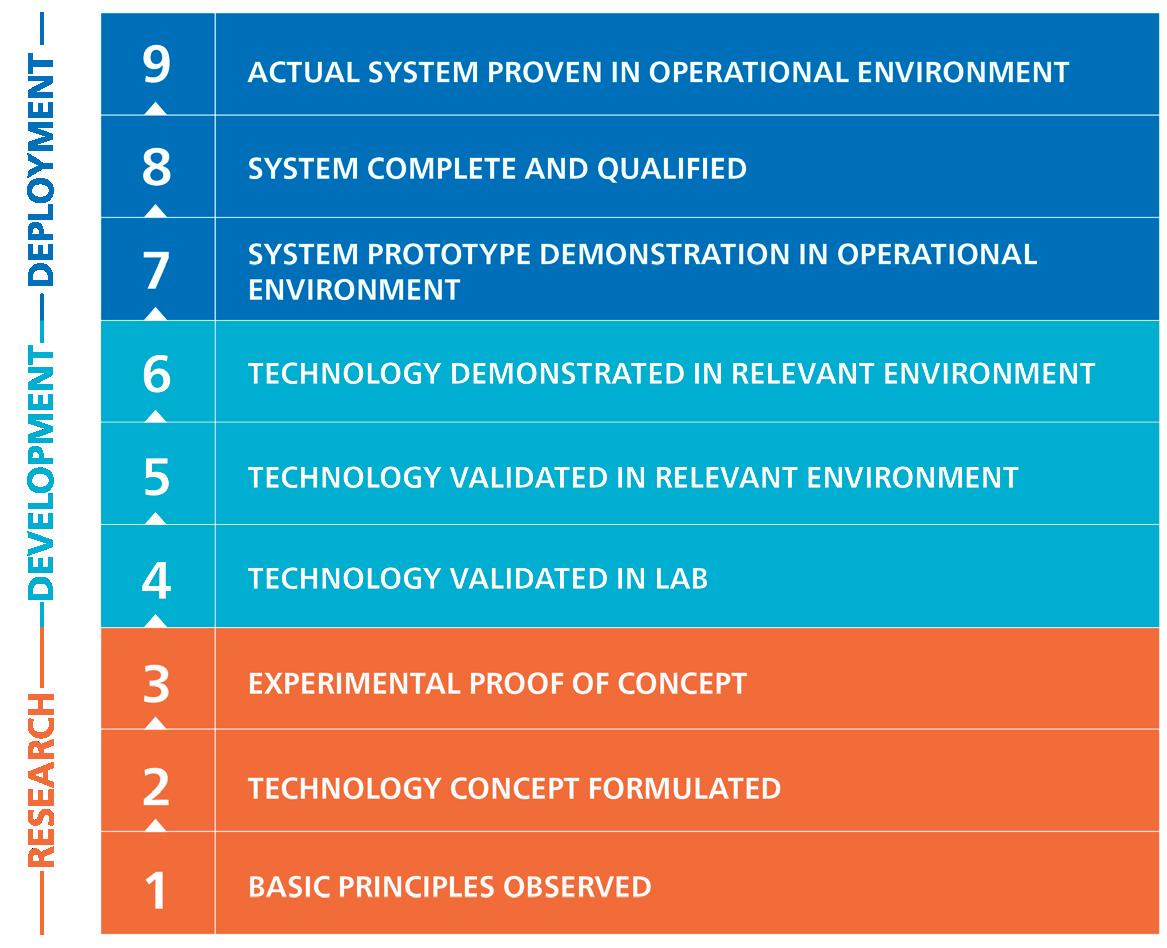
Figure 2. Simplified definitions of technology readiness levels (image source: TWI-global).

COMMITTED TO A BETTER FUTURE
Optimizing combustion for a greener tomorrow WE’RE
There has never been a greater need to decarbonize fired equipment, produce cleaner energy sources, and operate in a more environmentally responsible way.
Optimized combustion and enhanced predictive analytics are key to reducing plant emissions and ensuring equipment uptime. Designed for safety systems, our Thermox® WDG-V combustion analyzer leads the way, monitoring and controlling combustion with unparalleled precision.
Setting the industry standard for more than 50 years, AMETEK process analyzers are a solution you can rely on. Let’s decarbonize tomorrow together by ensuring tighter emission control, efficient operations, and enhanced process safety for a greener future.
AMETEKPI.COM/CLEANENERGY
What is TRL?
Technology readiness levels is an approach for estimating the maturity of an emerging technology. The 9-point scale was developed by NASA in the 1970s to demonstrate where a particular machinery or system stood in its development life, with TRL 1 being the least mature, and TRL 9 being the most mature (see Figure 2 for a basic definition of the nine TRLs). The TRL approach is widely used because it provides a common understanding of technology status and risk management. This enables informed decision making, but its definitions do not always apply to a particular product-system operational environment, so it sometimes requires interpretation, or even alternate methods.
Experience and references have long served as cornerstones in all sorts of technology applications – and a highly engineered product like turbomachinery is no different. Purchasers have long valued the assurance they get when they buy from an original equipment manufacturer (OEM) that has proven experience. It is no surprise that buyers want the same thing in the hydrogen industry. But therein lies the crux – the hydrogen industry is entering uncharted territory in regard to scale. No one has the experience above 30 tpd train capacities. Therefore, companies need to take a bit of a calculated leap, leveraging all of the experience from similar applications.
Turbomachinery readiness
By examining a few similar turbomachinery applications, it may be possible to glean some TRL points from that experience. The refrigeration compressors that drive these cycles operate in the warm sections of the process and are generally unaffected by the temperature needs of the process (except by the refrigerant selection and size). Turboexpanders operate in the cryogenic portion of the cycle and are directly affected by the feed-gas boiling point (or liquefaction temperature), so this example will focus on them for the following TRL analysis. Natural gas liquefaction occurs at -162°C. Not quite the -253°C boiling point of hydrogen, but the cryogenic expertise and design practices developed from the LNG industry are a great foundation for the requirements of hydrogen liquefaction. In fact, the LNG process designs, including both the nitrogen Brayton cycle and mixed refrigerant cycles, can be directly applied to the pre-cooling process of a large-scale hydrogen liquefaction plant (1 point for technology readiness).
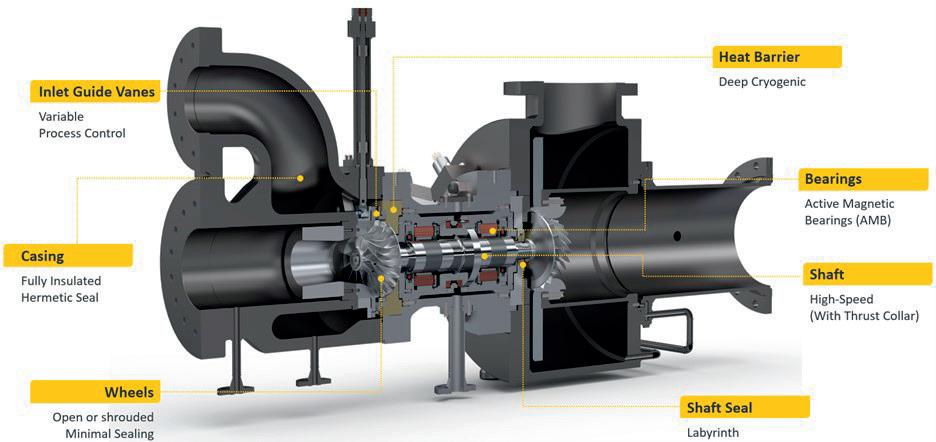
Nevertheless, there is more than LNG experience alone behind the high TRL for the turboexpander design. One can also take a look at some other applications from the petrochemical industry that provide the hydrogen experience. Turboexpanders applied in ethylene and propane dehydrogenation (PDH) processing operate in the cryogenic portion of the plant where the hydrogen-rich process gas can reach levels up to 96% hydrogen by mole fraction. It is known from this cryogenic hydrogen experience that industrial-scale flow rates (high-capacity petrochemical production) directly translate to the large-scale hydrogen liquefaction application. Even better, different turboexpander configurations are deployed in each of these applications –expander-compressors with active magnetic bearings (AMB) are typically applied in ethylene applications. The compressor-loaded configuration provides energy recovery to the process to reduce the tail-gas compressor load. Conversely, in PDH applications, integrally geared expander-generator configurations have historically been applied. This provides the cryogenic hydrogen experience with some additional design features from this configuration, such as dry gas seals and high-speed gearbox pinion designs.
Still not convinced? Ok, let us look at direct experience in hydrogen liquefaction, where turbomachinery has been supplied up to 30 tpd. Like the other applications, this example will focus on cryogenic turboexpanders. Similar to ethylene applications, the heat exchanger and vacuum coldbox of a hydrogen liquefaction plant are extremely sensitive to oil contamination and therefore, oil-free machinery is preferred for this application. While dynamic gas bearings provide an oil-free solution, they lack the ability to scale due to limitations in radial and axial load capacity, meaning turboexpanders with AMBs are the preferred oil-free solution for the large scale liquefiers. AMBs have no permanent magnets and are fully
24 Summer 2024 GlobalHydrogenReview.com
Figure 3. Active magnetic bearing turboexpander with power recovery via compressor load.
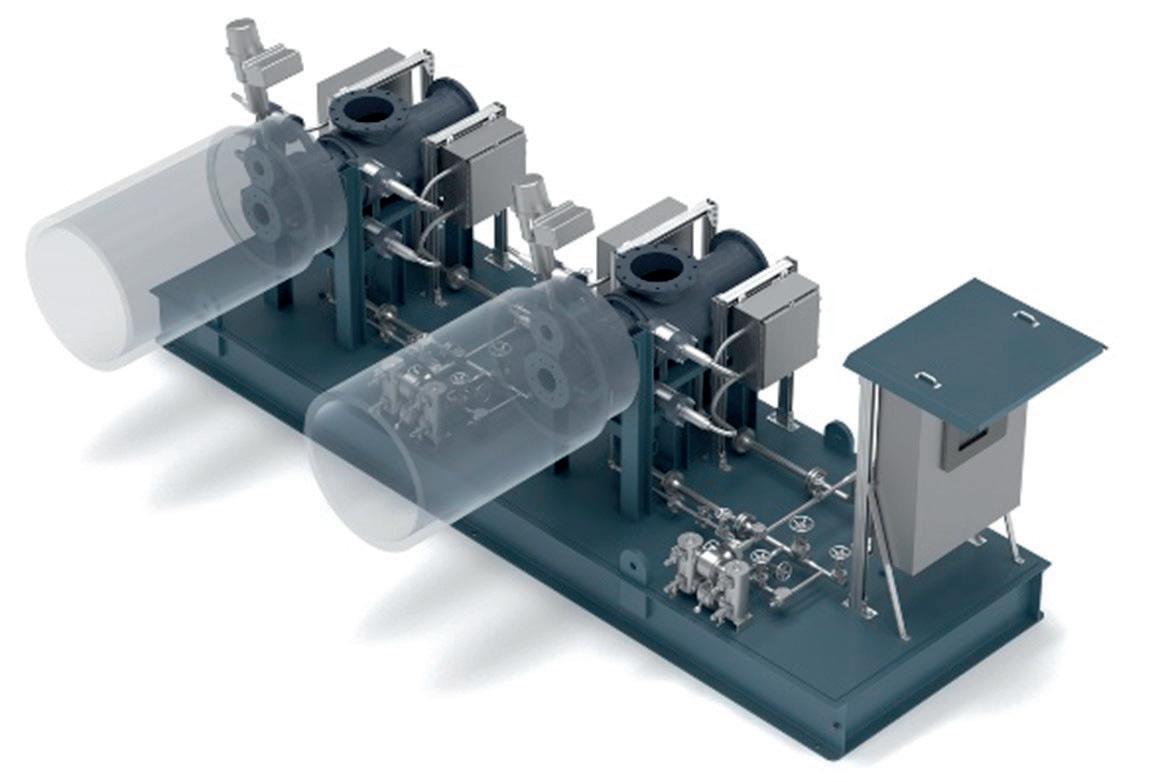
Figure 4. Turboexpander package for hydrogen liquefaction.

Scaling the Hydrogen Ecosystem
Reduce your carbon footprint and advance to net zero

Decarbonize today with our groundbreaking solutions for clean hydrogen production and usage. Our advanced technologies enable lowering carbon footprints, contributing to a sustainable future, and running a profitable enterprise. By working together, we can build a successful, environmentally friendly hydrogen economy advancing us on the path toward net zero.
yokogawa.com
compatible with hydrogen service. As previously mentioned, turboexpanders with ABMs have been used in hydrogen-rich service for more than 30 years in the petrochemical industry, so this is a mature technology.
Path to maturity (TRL 9)
To achieve the desired TRL 9, the equipment needs to be operated commercially in the actual environment. This means that someone will need to take the risk of being the first to deploy the turbomachinery in a large-scale liquefier. But how much ‘risk’ are we really talking about? Considering the previously mentioned experience in relevant environments from LNG, petrochemical, and medium-scale (up to 30 tpd) hydrogen liquefaction applications, the resulting technology readiness is already well into the ‘deployment’ stage. One might argue that the turbomachinery stands around a TRL 8 (as we are already past the prototype stage mentioned in level 7). No technical barrier stands in the way. The turbomachinery technology is just waiting for the opportunity to be deployed in a large-scale liquefier. In the past few decades, the majority of turbomachines in the traditional energy industry (oil and gas) were placed in a ‘new’ operating environment with little to no review of TRL. Design practices at turbomachinery OEM’s like Atlas Copco Gas and Process are well suited to accommodate this dilemma. It is normal practice for custom-engineered machinery to be pushing the limits where process designs are constantly optimised and performance is key. One may dare to say that turbomachinery OEMs thrive on advancing the technology to accommodate
requirements of new applications. Large-scale hydrogen liquefaction is not the first time we have pushed the design limits to enter an emerging market, and it is unlikely to be the last.
Conclusion
The maturity of turbomachinery for large-scale hydrogen liquefaction is vital to improve hydrogen supply chains and achieve cost parity with traditional fuels. Thankfully, turbomachinery is already a well-established technology with a high TRL from similar operating environments. By striving for higher TRL levels in emerging markets like hydrogen, companies are not just advancing machinery, but paving the way for a more sustainable future. The collaboration between hydrogen project developers, EPC companies, and the innovative spirit of turbomachinery OEMs offer promising solutions to meet the growing demand to create large-scale hydrogen infrastructure. Ultimately, the goal is not just technological advancements around turbomachinery and hydrogen liquefiers, but economic viability and ensuring that hydrogen becomes a competitive alternative to traditional fuels. This convergence of technology, experience, and sustainability will shape the future energy mix as the world continues to decarbonise.
Reference
1. ‘Energy Technology Perspectives 2023’, International Energy Agency (IEA), Paris, France, https://www.iea.org/reports/ energy-technology-perspectives-2023, Licence: CC BY 4.0, (2023).
Global Hydrogen Review Online


Visit our website today: www.globalhydrogenreview.com Home to the latest hydrogen news, analysis and events
Dave Edlund, Element 1 Corp., outlines the potential of methanol-to-hydrogen generators in the development of the hydrogen economy.
With a global population of more than 8 billion people, the demand for electrical power is enormous and growing at a rapid pace. Factors driving growth in electricity demand include electrification of regions that have insufficient supply of electricity; exponential growth in data storage and e-commerce; and adoption of battery

electric vehicles (BEVs) including personal automobiles, light duty delivery vans and trucks, buses, and medium/heavy duty trucks.
Historically, electricity has been generated at centralised facilities connected by a network of wires for distribution, often over long distances, to local consumers. This so-called electrical grid represents a dynamic balance
27
between electricity generation and electricity consumption. A correctly functioning electric grid may be taken for granted; but expansion of large grids is not an easy task and involves large investments of both time and money, as well as disruption within urban centres, ports, and industrial zones.
However, when looking at the history of telecommunications, another model for electrification that minimises the use of wires can be seen. Just as telephones used to all be interconnected with copper wire, only to be displaced over the past several decades by wireless cell phones, a parallel approach can be implemented for new electrification projects and grid capacity expansion. Large, centralised power generation and distribution via wires can be replaced with local microgrids based on distributed electricity generation very close to the point of use.
Of course, this is not a new idea – diesel-electric generators have been, and still are, used in this capacity to electrify remote villages and outposts. But with a desire to reduce greenhouse gas (GHG) emissions, as well as other toxic pollution from diesel engines, hydrogen fuel cells have a unique opportunity to play an important role in this space.
Methanol as a practical hydrogen carrier
The single biggest barrier to the wide-spread commercial adoption of hydrogen as an energy vector is cost. At the point of use, hydrogen is often three- to ten-times more expensive than gasoline (for an equivalent amount of energy) based on US pump prices. Most hydrogen, whether compressed gas or liquid, is transported from the manufacturing location to the point of use by heavy-duty trucks. It costs about US$1 to transport 1 kg of compressed hydrogen a distance of 100 km. Liquid hydrogen is more affordable to move by truck, but it is disfavoured by boil-off losses, high energy requirement to liquefy hydrogen, and general lack of liquefaction facilities around the world.
In contrast, liquid methanol is transported using the same infrastructure that today delivers gasoline, diesel, and aviation fuels to pumps and airports globally. In comparison, the cost of transporting methanol by truck is more than 20-times less expensive (on a US$/kg hydrogen basis) compared to transporting compressed hydrogen.
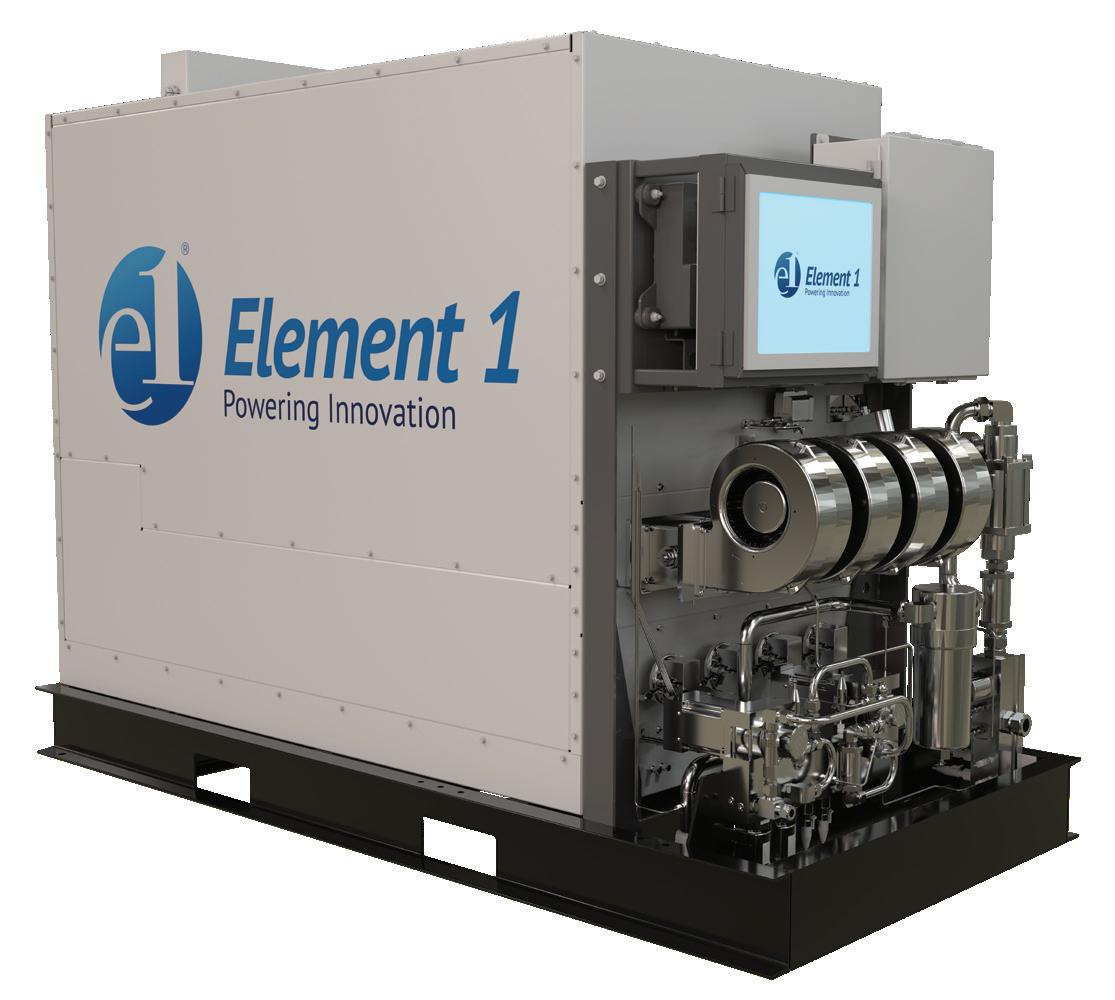
Element 1 Corp. has developed a methanol-to-hydrogen generator that is being sold for commercial applications and is offered by several licensed manufacturing partners in Europe and North America.
Of course, methanol is not the only hydrogen carrier, or hydrogen precursor, proposed to overcome the high cost of hydrogen produced at centralised facilities and transported to the point of use. All processes for making hydrogen from a precursor (e.g., methanol, natural gas, water, ammonia) result in an impure product stream in which the hydrogen is mixed with other gases and hydrogen purification is required. As examples, natural gas reforming and methanol reforming result in a product stream that is predominantly hydrogen with varying amounts of carbon dioxide, carbon monoxide, methane, and water vapour (generically called syngas). Hydrogen from water electrolysis is contaminated with traces of nitrogen as well as water vapour, and ammonia cracking results in hydrogen contaminated with nitrogen and ammonia.
Although many contaminants are not harmful to low-temperature PEM fuel cells (PEMFCs), some gases –especially carbon monoxide and ammonia – will chemically react with the electrocatalyst or the electrolyte within the PEMFC, causing a decline in output power. ISO 14687, the international hydrogen purity specification for fuel cell applications, limits carbon monoxide contamination in product hydrogen to less than 0.2 ppm, whereas ammonia is a more severe fuel cell poison, with a maximum allowable concentration of 0.1 ppm. A further important distinction between carbon monoxide and ammonia contamination in hydrogen is that carbon monoxide effects on PEMFCs are reversible, whereas ammonia has a non-reversible and cumulative adverse impact on fuel cell output power.
For the above reasons – as well as the fact that methanol is being adopted as a motor fuel in China and the International Maritime Organization (IMO) views methanol as a preferred future fuel for ships – methanol is the ideal precursor for most on-site hydrogen generation deployments. The most efficient and cost-effective method for separating high-purity hydrogen from syngas is to utilise
28 Summer 2024 GlobalHydrogenReview.com
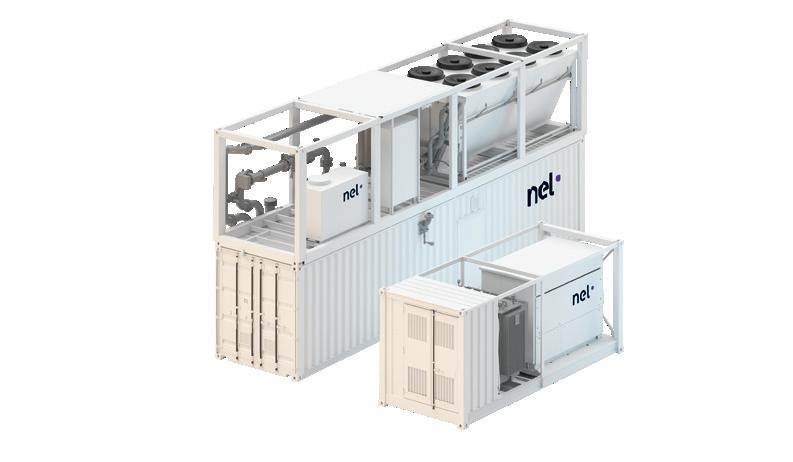
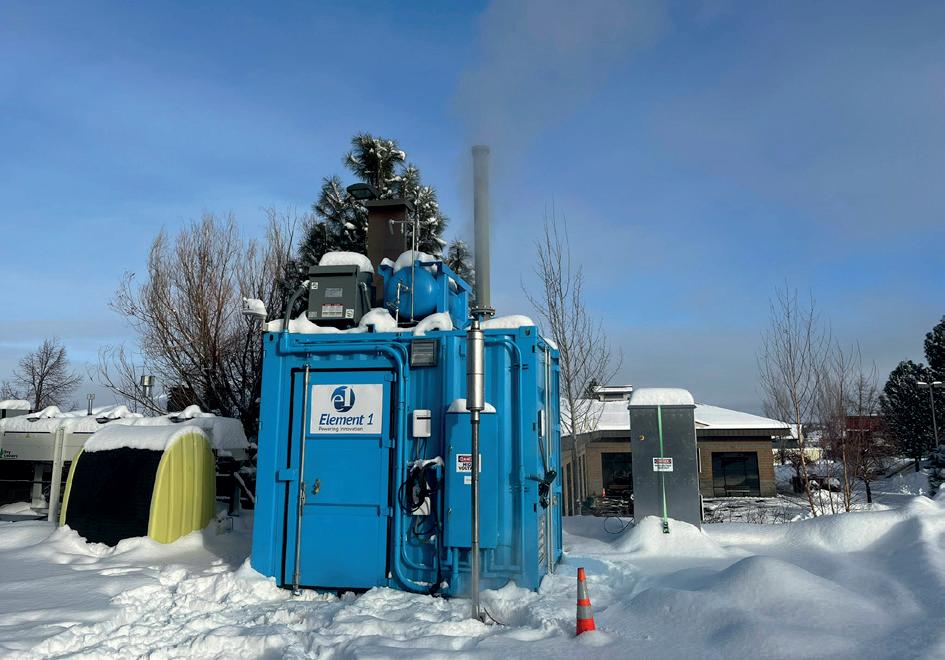
Figure 1. Containerised power generator (10 ft shipping container) rated to deliver nominal 140 kW at the fuel cell (image courtesy of Element 1 Corp.).
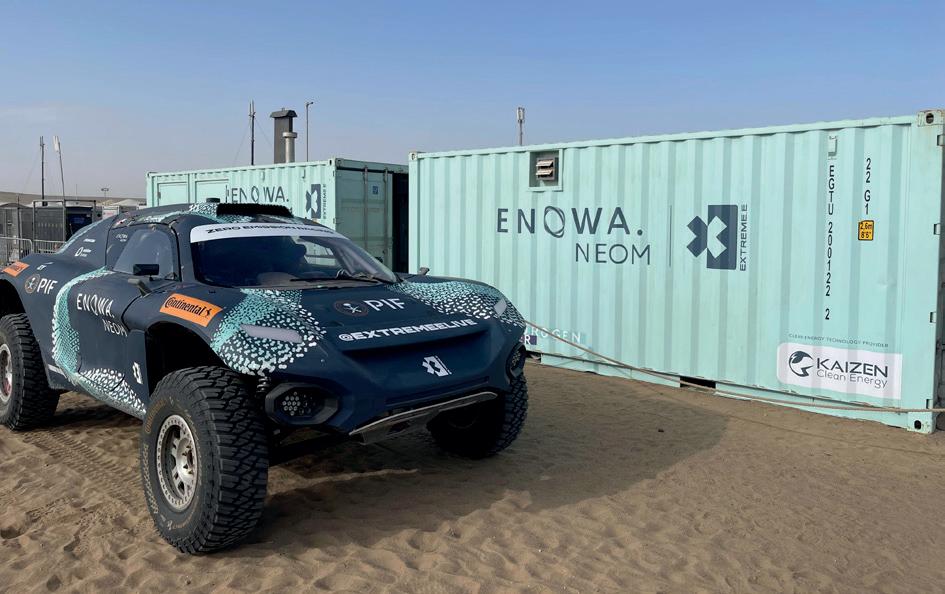
Figure 2. Nominal 140 kW power generator energising a microgrid to charge Extreme E battery-electric race cars. (image courtesy of Kaizen Clean Energy).
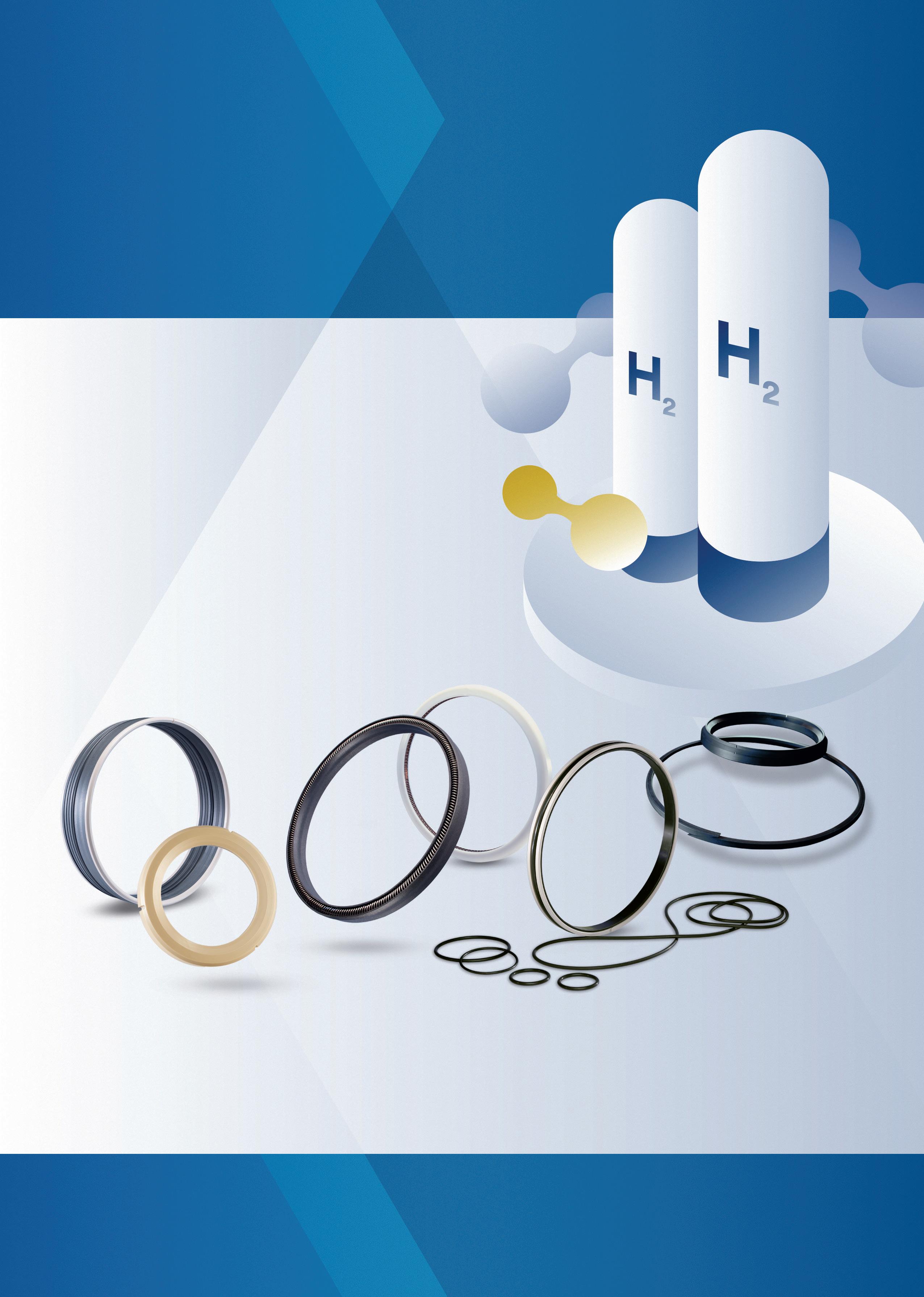
Significant investments in modern technologies, materials and infrastructure are enabling hydrogen to gain momentum and scale as one of the most promising alternative fuel source towards global sustainability targets.
Greene Tweed experts developed a range of new materials and sealing solutions to address hydrogen’s most critical challenges throughout the supply chain:
• Permeability
• Low lubricity
• Extreme temperatures
• High pressures
ARE
READY FOR THE FUTURE OF HYDROGEN?
YOU
Learn more at gtweed.com/h2sealsolutions HYDROGEN APPLICATIONS ELECTROLYSERS | FUEL CELLS | VALVES | COMPRESSORS gtweed.com
a high-temperature, hydrogen-selective metal membrane. This membrane process is pressure-driven and integrates directly with the temperature limits used in reforming methanol so that no interstage heat transfer is required prior to hydrogen purification. Currently, state-of-the-art hydrogen purification membrane modules deliver product
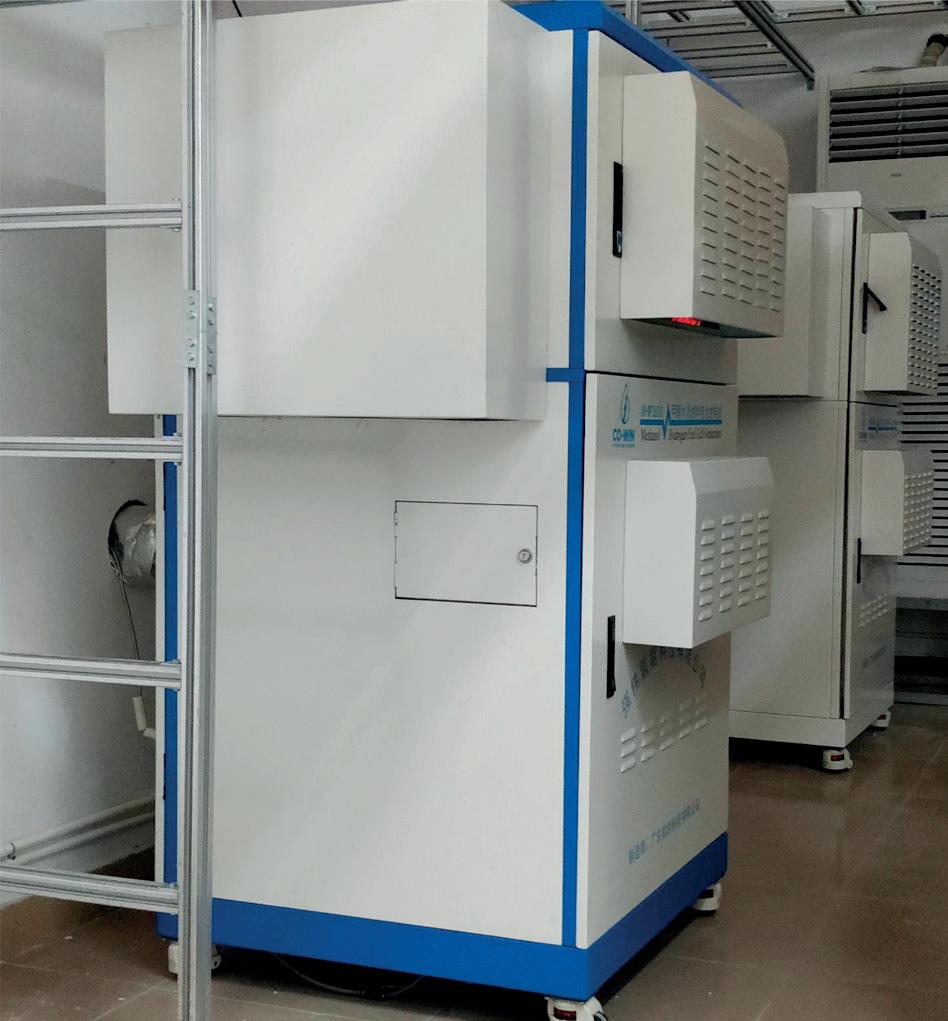
Figure 3. Backup 10 kW power system combining a small methanol-to-hydrogen generator with a PEMFC for telecom applications (image courtesy of Co-Win Hydrogen Power Ltd).
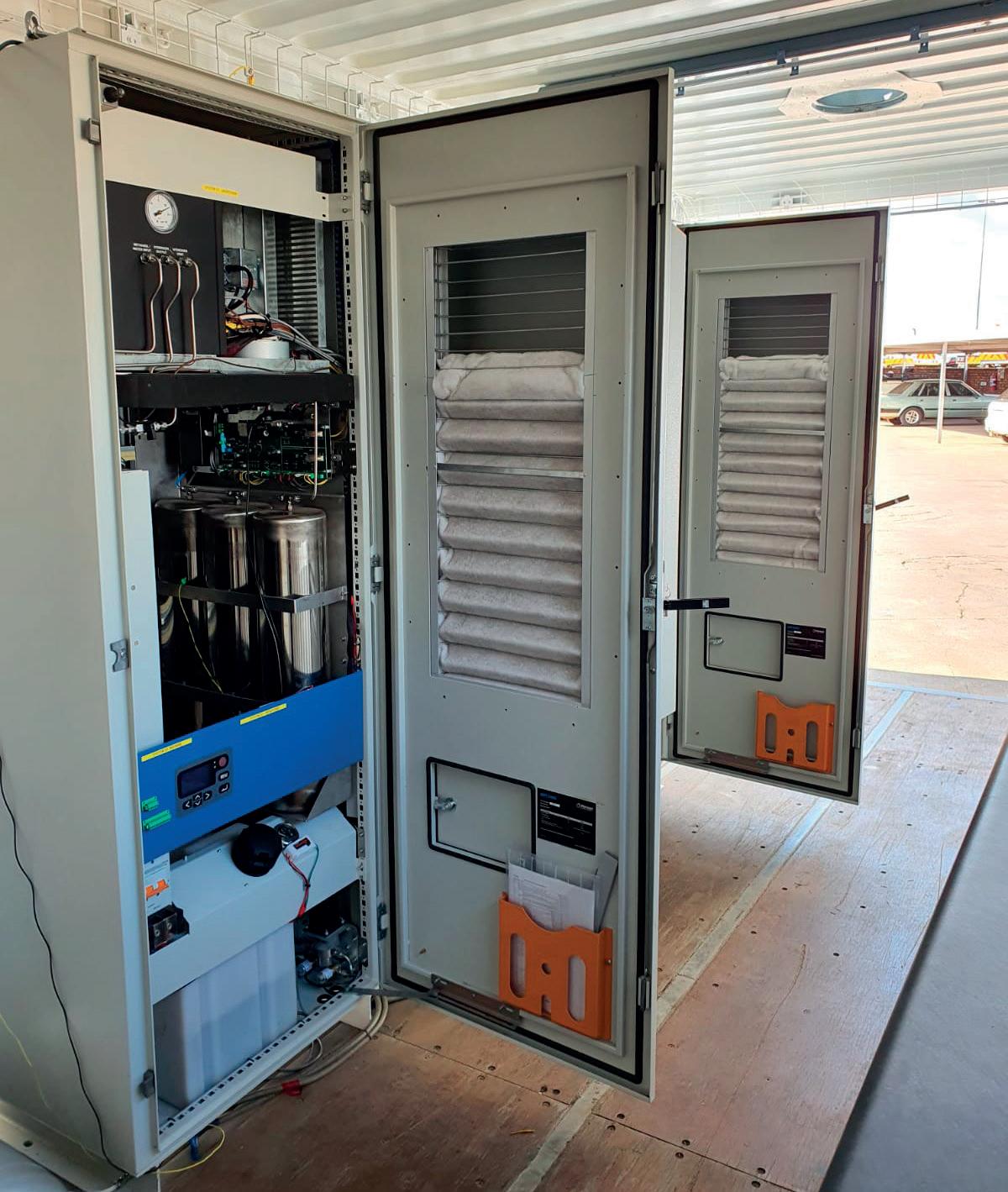
Figure 4. Backup power system using a 5 kW Horizon PEM fuel cell – the methanol-to-hydrogen generator is at the top of the cabinet (image courtesy of Bambili Energy Systems).
hydrogen exceeding 99.99% purity with less than 0.1 ppm of carbon monoxide.
Although fuel cells are most often paired with methanol-to-hydrogen generators to deliver electricity for a range of loads, in the near future, hydrogen could also be consumed by internal combustion engines. Engines burning hydrogen offer advantages for decarbonising transportation and could also provide a cleaner alternative to diesel engine gensets.
Water electrolysis is a well-known process for generating hydrogen. However, it requires large amounts of electricity – approximately 50 kWh per kg of product hydrogen – and the resulting hydrogen is only as green as the electricity consumed in the process. Since electricity is the most valuable form of energy produced and consumed, hydrogen made by electrolysis is expensive unless very low-cost electricity is used. This may be possible in limited cases, but is certainly not a widespread solution. Additionally, water electrolysis requires about 10 kg of water to make 1 kg of product hydrogen; another drawback in regions where water is in limited supply. The water must also be pure.
In comparison, methanol/steam reforming uses less than 0.1 kWh of electricity to make 1 kg of hydrogen because the process is thermochemical – not electrochemical – in nature. This is 500-times less electricity consumed per kg of hydrogen produced. Also, methanol/steam reforming requires less than 5 kg of water to make 1 kg of product hydrogen – a significant advantage in arid regions. Furthermore, water electrolysers are at least three times more expensive than methanol-to-hydrogen generators of equivalent hydrogen output, and many times larger in physical size.
Significant greenhouse gas reductions
Methanol is an alcohol with a single carbon atom; the molecular formula is CH3OH. 1 m3 of methanol, liquid under normal conditions, contains 98.8 kg of hydrogen, whereas 1 m3 of liquid hydrogen contains only 70.8 kg of hydrogen. Conversion of methanol to molecular hydrogen necessarily results in the release of 69 g CO2/MJ of methanol. However, if synthesised from renewable feedstocks, methanol is considered ‘green’ with well-to-wheel emissions that are below the US Clean Hydrogen Standard (2 kg CO2eq/kg hydrogen). With many biogenic feedstocks, or flare gas as a feedstock, the resulting methanol has negative carbon intensity, largely due to avoided methane emissions. In comparison to combustion engines, the emission profile of methanol-to-hydrogen conversion is appealing.
A diesel genset (US EPA Tier 3) has a carbon intensity of approximately 800 g CO2eq/kWh (combined CO2 and nitrogen oxide emissions). In contrast, when using grey methanol to hydrogen, the carbon intensity is lower at 590 g CO2eq/kWh and when using green methanol, the carbon intensity is only 150 g CO2eq/kWh (assuming green methanol at 16.7 g CO2eq/MJ). It is also important to note that methanol conversion to hydrogen does not result in emissions of other harmful pollutants – including nitrogen oxides, sulfur oxides and particulate matter – and carbon monoxide emissions are close to zero.
30 Summer 2024 GlobalHydrogenReview.com
Commercial applications
An immediate commercial opportunity is presented by the advent of BEV earth moving machinery in the construction and mining sectors. These vehicles require large amounts of electricity to recharge the onboard batteries once or twice daily. A single excavator or front loader will use 500 kWh or more each day.
Likewise, public and private charging stations are needed to support the growing deployment of BEV automobiles and BEV delivery vans. Expanding grid infrastructure to charge fleet vehicles is challenging, and deployment of power generators using methanol and hydrogen fuel cells can provide immediate benefits in terms of taking a short time to deploy and a short payback time.
Figure 1 shows a nominal 140 kW power generator incorporating a low-temperature PEM fuel cell (PEMFC) and a single methanol-to-hydrogen generator (235 kg hydrogen per day), plus battery bank and power inverters. This system has been in operation at Element 1 Corp. since mid-2023 and has logged over 5000 operating hours, producing more than 35 MWh of electricity (480 VAC / 3 phase). This pre-commercial demonstration system has performed reliably even during cold winter periods when temperatures dropped to -21°C.
Kaisen Clean Energy (Houston, Texas, US) has contracted electricity production with Extreme E racing to support charging of BEV race cars at remote locations including Sardinia, Chile, and Saudi Arabia. Figure 2 shows a containerised power generator including a single methanol-to-hydrogen generator, single low-temperature
PEMFC, power electronics and related equipment, all within a modified 20 ft shipping container, to deliver nominal 140 kW of clean power to a micro grid. The race vehicles are charged from the micro grid. Green, or renewable, methanol is converted first into hydrogen and then to electricity, resulting in a very low carbon intensity for the generated power. More than 10 MWh of electrical power have been generated to recharge the off-road race cars.
Another application, perhaps less exciting than off-road racing but more important, is primary and backup electrical power for cellular communications. In Asia, Co-Win Hydrogen Power Ltd (Guangzhou, China) is pairing smaller methanol-to-hydrogen generators with 10 kW PEMFCs, plus batteries and power electronics as a replacement for battery-only, or battery plus diesel generator, power systems (see Figure 3). The adoption of 5G cellular technology requires the towers to be located closer to each other and therefore a large number of new towers are required, all needing secure power to maintain communications even during local disruptions due to weather and other natural events such as earthquakes and floods. In South Africa, multiple 5 kW fuel cell systems utilising the methanol-to-hydrogen generator have been deployed at a military hospital to provide backup power without the toxic emissions from operating diesel generators (Figure 4).
As society grapples with satisfying the enormous demand for electricity while also reducing harmful air pollutants, there is an opportunity for many different solutions relying on hydrogen, and methanol-to-hydrogen will certainly play a vital role.

The premier source of technical and analytical information for the renewable energy industry Register for free at www.energyglobal.com
The world’s sources of energy are not always conveniently located next to energy consumers – which is why there are tens-of-thousands of kilometres of oil and natural gas pipelines around the world, and fleets of oil and LNG tankers crossing our oceans.
Hydrogen will be no exception as it grows in use as a low carbon means of energy, but to properly utilise hydrogen it is essential to understand it:
� Hydrogen is created by breaking down a larger molecule, typically methane (CH4) through steam methane reforming, or water (H2O) through electrolysis.
� Hydrogen is the smallest molecule in the universe and tends to permeate through molecular lattice structures, creating hydrogen embrittlement. This makes material compatibility essential for hydrogen infrastructure, especially at high temperatures and pressures.

� Hydrogen has a low energy density, meaning ambient temperature hydrogen will take up a much larger volume than the equivalent energy potential of natural gas. This is why hydrogen is compressed to pressures or liquified at cryogenic temperatures to increase its energy density.
� Hydrogen’s energy potential can be released through chemical reactions in a hydrogen fuel cell or burned in a combustion process, as with diesel or natural gas.
� Hydrogen can self-ignite, so hydrogen leaks are a serious safety concern, as well as a product loss issue.
� Fortunately, hydrogen is also very light and disperses readily in open air environments.
Hydrogen production has been around for decades. Most existing industrial-scale hydrogen production is based on reforming natural gas and is associated with ammonia
32
producers, refineries, and chemical plants. Hydrogen produced through steam methane reformation is known as grey hydrogen. When the carbon emissions are captured and stored to reduce the carbon footprint, it becomes blue hydrogen.
Hydrogen made from an electrolyser using highly purified water and renewable electricity is known as green hydrogen. There are different types of electrolysers, but for the most part, electrolysers can be installed almost anywhere there is a renewable energy source and water. The unique thing about electrolysers is their scalability – their modular designs mean they can be easily scaled up to meet demand.
The challenge today is that the number of hydrogen consumers is growing rapidly, and they are widely dispersed geographically. This means more hydrogen must be transported from and to more places, while maintaining high levels of operational safety, reliability, efficiency, and accountability
Laura Chemler, Emerson, USA, explains some of the challenges related to delivering hydrogen where and when it is needed.

(Figure 1). While a lot of the hydrogen market feels new, it is important to remember that the industry can build upon and learn from the experience of refineries and natural gas infrastructure development.
Moving hydrogen
There are significant challenges around the extreme pressures of compressed hydrogen (750 bar/10 873 psi) and the extreme temperatures of liquified hydrogen (-253°C/ -423° F). These challenges are one driving force behind the model of hydrogen valleys in Europe and hydrogen hubs in the US, where both producers and consumers can benefit from economies of scale. Everywhere else, eyes are on electrolysers that can be deployed near hydrogen consumers to cut down on transportation logistics. Regardless of proximity, hydrogen must be transported from producer to off-taker and accounted for properly.
33
The practicality of different hydrogen transport methods changes based on the volume and distance:
y Local: from a large warehouse with a roof-mounted photovoltaic system and electrolyser, to one or more nearby hydrogen vehicle fuelling stations via trucks. Hydrogen tanker trucks can provide both transport and mobile hydrogen storage. Trucks are ideal for quick deployment or intermediate usage, and they can distribute compressed hydrogen or liquified hydrogen.
y Intracontinental: dedicated hydrogen pipelines or blending hydrogen into the natural gas network are means of moving hydrogen across larger land-based distances. Hydrogen pipelines are highly efficient once established but require a significant investment cost. Pipelines will be more common around hydrogen hubs and valleys, and between high volume producers and off-takers that are regionally close.
y Intercontinental: for longer distances where space is at a premium, liquified hydrogen on a tanker makes the most sense, especially over oceans. For example, from a cluster of electrolyser plants in west Australia supported by a regional wind turbine park, to a green ammonia production plant in Japan.
Every operation is different, but all share the need to maintain operational safety, reliability, efficiency, and accountability to navigate the reality of working with and moving hydrogen.
Let us look at the mechanics of these processes, and how various types of instrumentation can be used to protect each distribution chain, while ensuring minimum loss of valuable product.
Custody transfer
At hydrogen transfer locations, either between transport methods or between legal entities, accountability is essential. At those points, it is necessary to determine how much hydrogen has been moved for accounting purposes and accurate payments. Both the buyer and seller must agree, hence the need for precision.
Precise measurements at transfer points can also help detect the presence of leaks in the upstream process, indicated by an unexpected change in the hydrogen total. Keeping tabs on the hydrogen total throughout the process will also increase the ability to troubleshoot and correct issues as they arise.
Since the volume of hydrogen changes drastically based on temperature and pressure, it can be helpful to reference totals in terms of mass density. The mass is either calculated based on the volume and density, or measured directly with a mass meter. Depending on how density is determined, that too may be a calculation. To reduce the degrees of freedom and error tolerance, a direct mass measurement is preferred for these types of custody transfer applications.
The most widely used technology for direct mass flow measurement are Coriolis meters, known for their high accuracy and wide turn-down range. It is a preferred method for custody transfer measurements on a large scale for all manner of hydrocarbons, chemicals, and gases. It is important to find purpose-built Coriolis meters that can handle the higher pressures and utilise appropriate materials since high pressure hydrogen is where permeation is most probable.
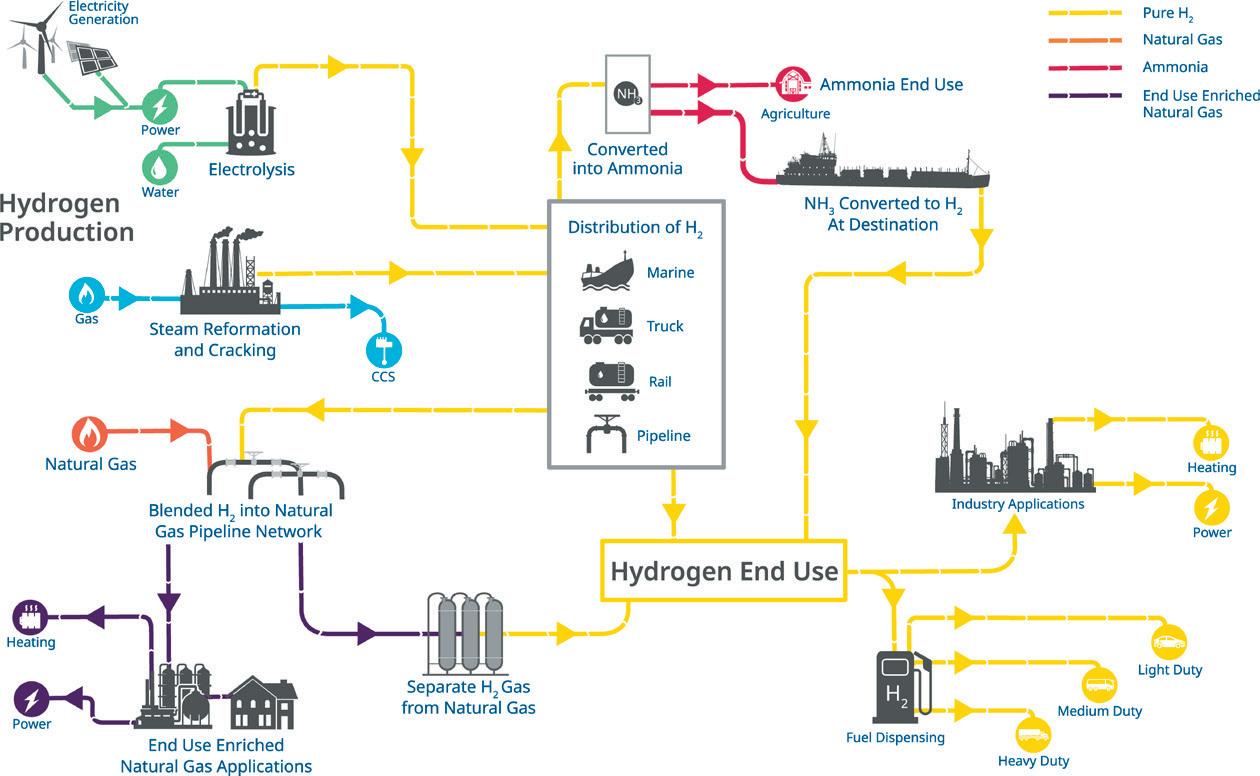
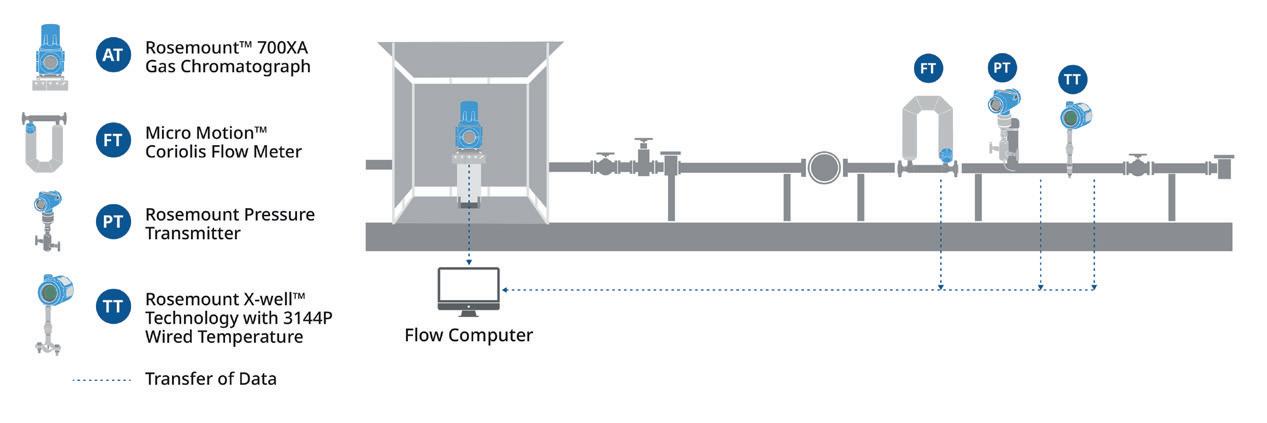
Custody transfer sites (Figure 2) for compressed hydrogen generally use a group of instruments to provide a highly accurate picture of a batch or continuous flow. In addition to pressure, temperature and flow measurements to account for the exact amount of hydrogen that passes through transfer points, there is also a need to measure gas purity. A gas chromatograph evaluates the chemical composition and ensures no ballast gases or contaminants are present, and it also ensures the correct molecular composition and, therefore, energy density is being transferred to ensure any agreed specifications are met.
Hydrogen pipelines
From short distances to a dispensing station or storage cylinder, to longer distances between towns or across countries, hydrogen pipelines are the backbone of the hydrogen infrastructure. Extensive pipeline systems totalling over 4600 km already exist across North America and Europe, with more
34 Summer 2024 GlobalHydrogenReview.com
Figure 1. The overall hydrogen production and distribution system is complex due to the range of sources and uses.
Figure 2. Adding a pressure and temperature instrument verifies the validity of the mass flow reading from the Coriolis flow meter.
In a world fueled by connections, why should your instrumentation devices be any different? Limit personnel exposure to hazardous environments and ease the pains of remote operations. Select the connectivity protocol best suited to meet your unique hydrogen needs. Emerson offers the industry’s broadest range of devices and helps take your business to bold new heights.
Learn more at www.Emerson.com/MeasurementInstrumentation
Go safely.
networks in progress. These pipelines are purpose-built, because the flow velocities associated with pure hydrogen are considerably higher than traditional natural gas, and therefore all components in the system need to be designed accordingly.
Hydrogen can also be moved by injecting hydrogen directly into existing natural gas pipelines (Figure 3), creating a hydrogen blended natural gas fuel that can then be combusted similarly to natural gas. At injection points, it is important to account for any existing hydrogen already blended into the natural gas before injecting any additional hydrogen to ensure compliance and end use performance.
Truck loading, unloading, and refuelling
With hydrogen’s low energy density, high pressure compression is required to increase the energy density and force the greatest volume of hydrogen into the least space. This can be done at a variety of pressures based on need, but the two most common are 350 and 750 bar (5075 and 10 875 psi). On a hydrogen transport truck, the hydrogen is stored in an array of short cylinders vertically, or long cylinders horizontally, each capable of handling more than 750 bar.
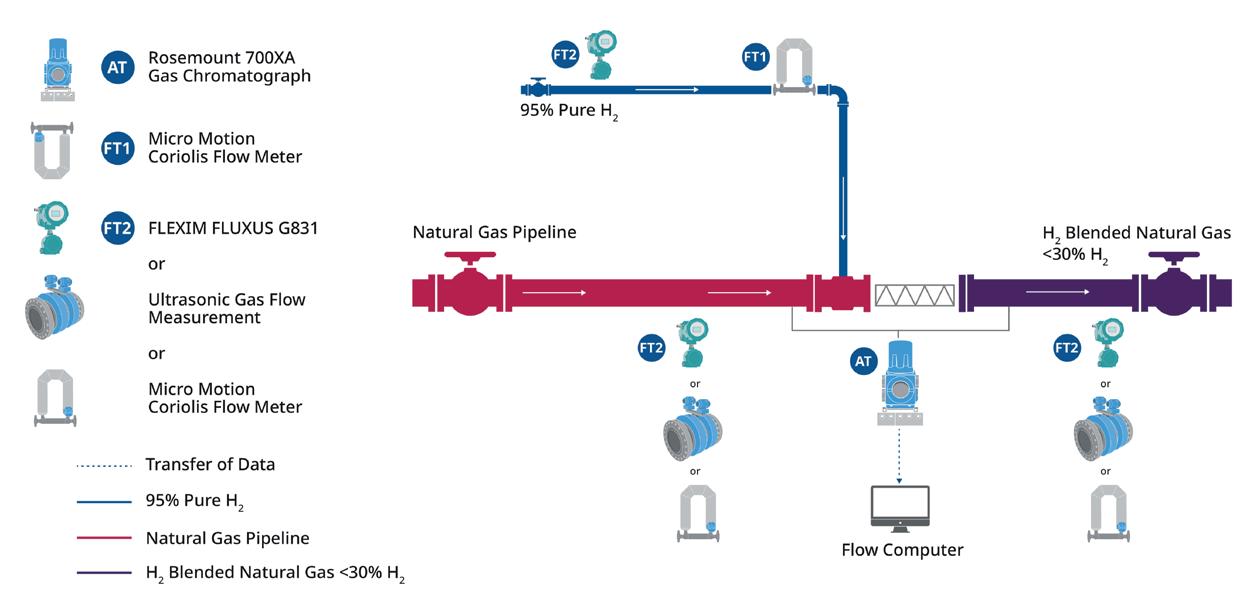
Hydrogen tube trailers are remarkably flexible in use and destination, making them a fast-growing method for hydrogen land-based distribution. Tube trailers can be used to deliver hydrogen to end users and fill their on-site storage, or they can be used as an all-in-one mobile hydrogen storage solution. Regardless of the ultimate use, truck loading and unloading is a metering point. As discussed under the ‘Custody Transfer’ section of this article, direct mass measurement of hydrogen provides the most accurate hydrogen total possible. The same functional concepts apply (Figure 4), calling for leak detection, flame detection, and precise volume measurement of highly compressed hydrogen, typically at 750 bar. These sites require particular attention to leaks and fires since transfer connections will be made and broken many times each day.
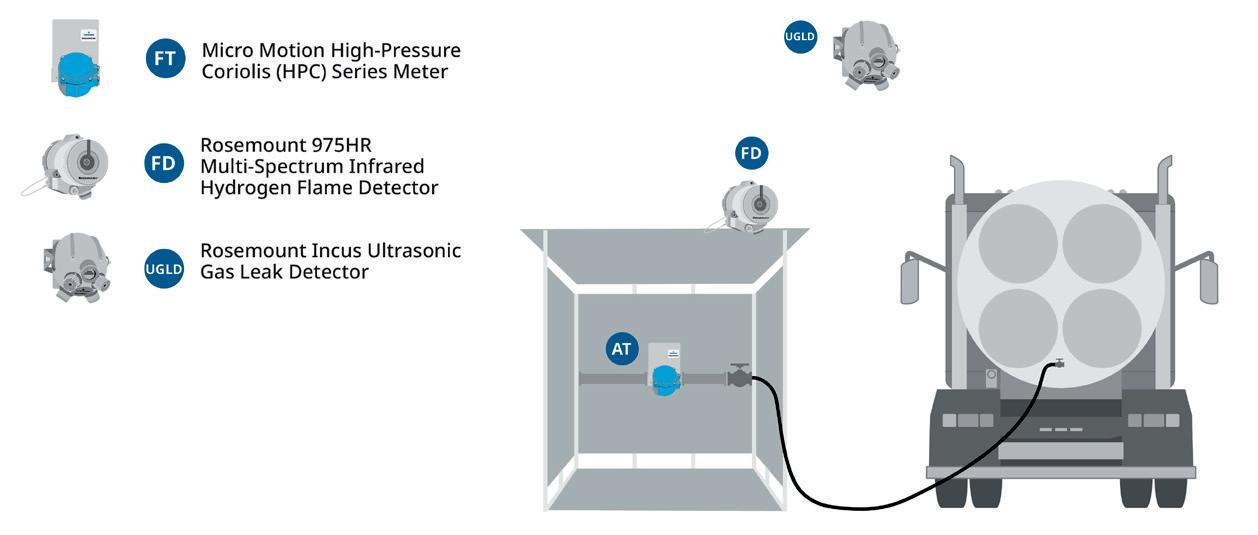
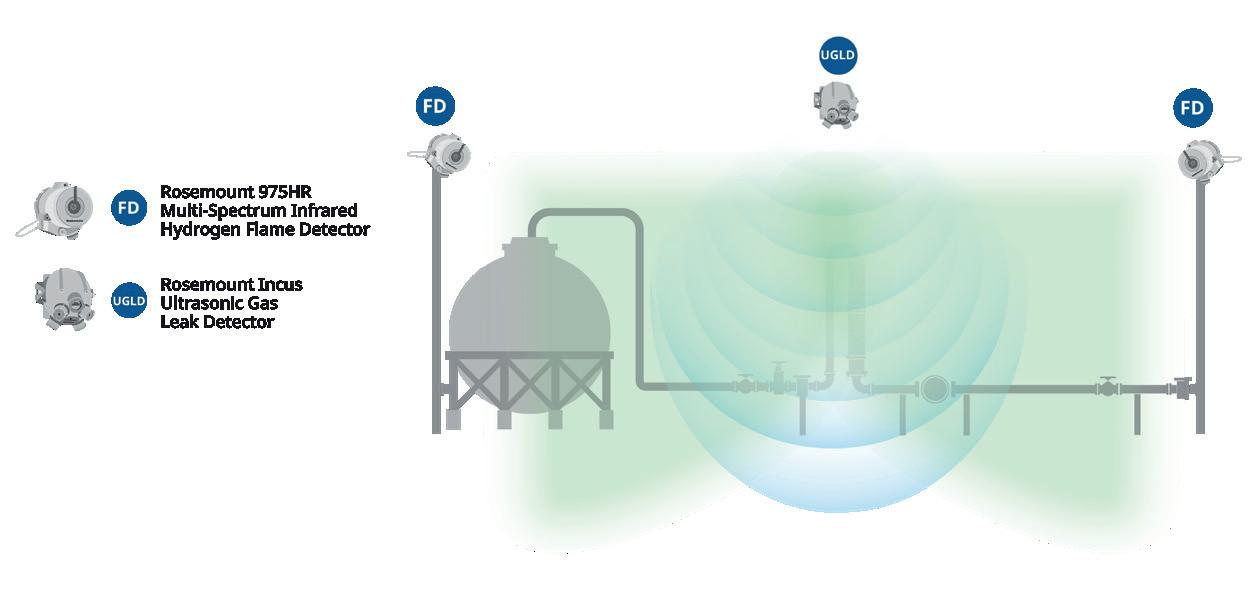
Hydrogen safety
At such high pressures and given hydrogen’s characteristics, the potential for leakage is constant. Where there is leakage there is a safety risk, as well as product loss, so it is critical to minimise these conditions. While it is not practical to automate leak detection across the full length of a pipeline, it is important at valve clusters, transfer sites, and around storage tanks (Figure 5).
Hydrogen flames are invisible to the naked eye and hydrogen will disperse readily in open air environments, making it harder to maintain a safe environment. To overcome the invisible flame problem, some hydrogen operators walk with a broom in front of them to check for flames. The modern alternative is an infrared hydrogen flame detector that can alert users to a potential safety concern remotely, before entering the area. Ideally, leaks are detected before they self-ignite though. In high pressure environments, like those seen with compressed hydrogen, it is possible to hear the characteristic hissing of escaping gas produced in ultrasonic frequencies to detect leaks.
Hydrogen industry expertise
In this rapidly evolving industry, reliable experts and partners are critical to success. As hydrogen demand calls for new strategies and solutions, it is important to work with a partner that strengthens your position and provides a long-lasting competitive advantage.
36 Summer 2024 GlobalHydrogenReview.com
Figure 3. It is important to take upstream and downstream measurements to ensure the target hydrogen blend percentage is reached.
Figure 4. Hydrogen truck loading and unloading sites are critical metering points for quantity verification, plus they have many opportunities for leaks, so safety is especially important.
Figure 5. Where there are clusters of equipment, such as storage and transfer sites, it is critical to monitor for leaks and the potential for fire.
Antonella Colucci, Endress+Hauser, Germany, explores the importance of optical analysis technologies in safely and reliably determining hydrogen purity.
As the world grapples with climate change and global warming, action must be taken to reduce or avoid greenhouse gas (GHG) emissions and to drive the energy transition forward. This particularly affects heavy industry, as the chemical, refinery and steel sectors, among others, are responsible for most

GHG emissions. The energy transition presents all industries with the enormous task of converting entire value chains. In the search for alternative and cleaner fuel sources, hydrogen is considered one of the most promising clean energy sources of the future and is seen as one of the key elements of the energy transition. Since the hydrogen currently
37
used in industrial processes such as oil refining, methanol production and steel production comes mainly from fossil fuels, a switch to clean hydrogen can significantly reduce emissions.
As a highly flexible energy carrier and storage medium, green hydrogen offers a holistic, clean, integrated, and cross-sectoral system approach that can make a decisive contribution to the decarbonisation of many sectors.
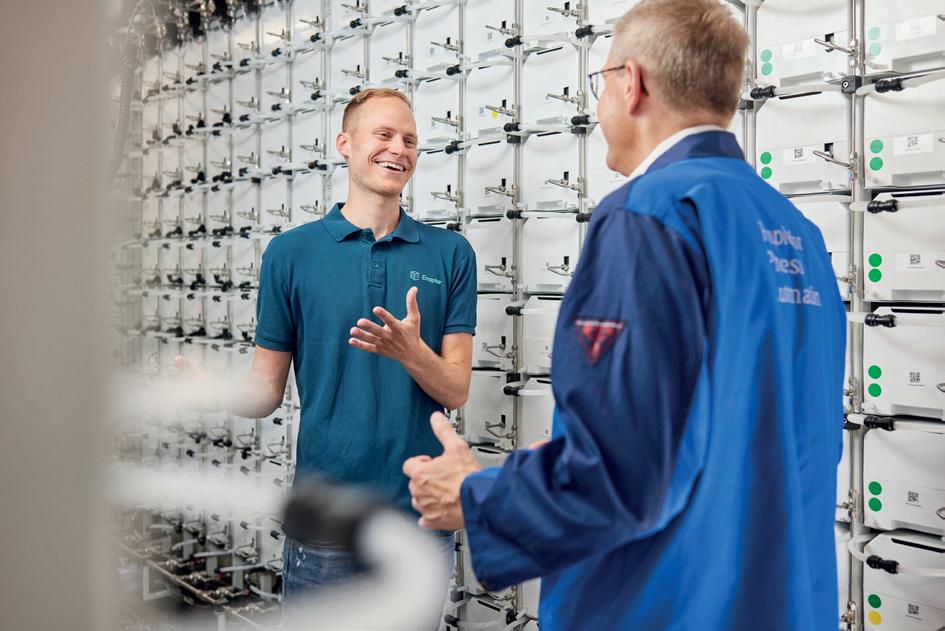
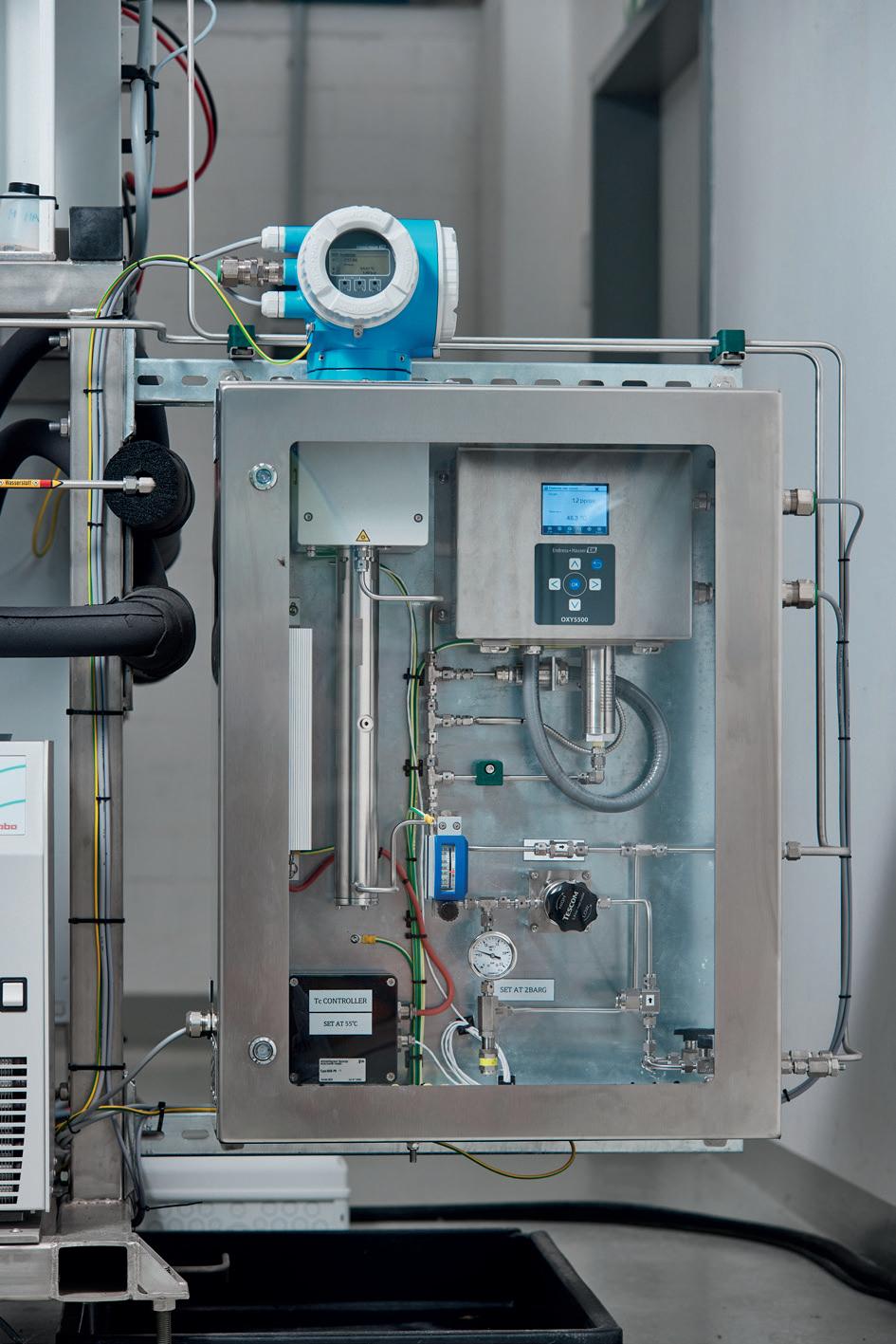
Power-to-gas, the central coupling element between electricity and gas infrastructure, converts electricity from renewable energy sources into hydrogen and feeds it into the gas infrastructure or uses it directly in various industrial sectors. In this way, electricity can be stored, distributed, and made available for various usage scenarios.
This applies in particular to green hydrogen produced by electrolysis using renewable energy. Electrolysers, such as alkaline (AEL) or polymer electrolyte membrane (PEM) electrolysers, can be used to convert electricity surplus into hydrogen for further use or to produce green hydrogen directly from renewable energy sources such as water, wind, or photovoltaics. However, the highest safety requirements must be met along the entire hydrogen value chain – from production to the end consumer. In addition, the infrastructure required for the large-scale production and use of hydrogen is currently still under construction – as are numerous legal requirements.
Measurement challenges
In addition to the known challenges when it comes to the technical possibilities and mature technologies available today, as well as the existing infrastructure and the scalability of production to meet the growing demand for hydrogen, there are also strict requirements for the processes and the equipment used.
The purity of the hydrogen must be measured with high accuracy during production, especially with regard to its further use, e.g. in fuel cells. Oxygen and residual moisture can influence the chemical reactivity when hydrogen is used as a raw material or carrier gas. Impurities can lead to undesirable side reactions, inefficient processes, damage to systems and safety risks. Proof of the gas quality ensures that the hydrogen produced meets the required specifications and that the process works faultlessly.
Fuel cell membranes are highly sensitive to moisture levels. Therefore, hydrogen must have low moisture content to prevent membrane flooding, for example, which can impair fuel cell performance and durability. The fuel quality requirements that apply to the use of hydrogen for PEM fuel cells in road vehicles are high: for example, the H2O content must not be higher than 5 μmol/mol (in accordance with ISO 14687). The purity is measured indirectly by calculating the level of contamination by trace moisture and trace oxygen, which are only present in the ppm range in the medium. This poses a significant challenge to the process measuring technology used.
AEM electrolysers with scalable capacity
With a facility in Saerbeck, North Rhine-Westphalia, Germany, Italian-German company Enapter has specialised in the production of anion exchange membrane (AEM) electrolysers for the decentralised production of hydrogen. The unique feature of the very compact device modules is that users can operate individual devices on a small scale, each with an AEM stack. However, if larger production capacities are required, these stacks are mounted in strings. Enapter’s AEM Nexus multi-core electrolyser comprises up to 42 strings operating in parallel, yielding a capacity in the
38 Summer 2024 GlobalHydrogenReview.com
Figure 1. Hannes Klus, Enapter, and Klaus-Dieter Ebeling, Endress+Hauser, in front of Enapter’s modular electrolysers combined to strings.
Figure 2. Measuring the purity of the produced hydrogen to ensure highest quality.
Baker Hughes is looking to the future of hydrogen applications
Any process that moves or stores hydrogen requires a valve.
Rest assured that when designing systems for hydrogen production, transportation or storage you’ve got the best and safest in control and pressure relief.
Face new challenges with confidence with Baker
Hughes Valves

© Copyright Baker Hughes company. All rights reserved
megawatt range. The systems can therefore be adapted flexibly to meet the requirements. Enapter’s AEM Nexus can be used in conjunction with small photovoltaic systems for applications in the private and commercial sector, but can also cover capacities on an industrial scale. The AEM electrolysers can therefore be used to produce green hydrogen on site that is adapted to the specific generation capacities, from wind or solar parks for example.
Purity measurement in the test system
Enapter set up a hydrogen production test system to evaluate the process used in the AEM electroylsers. Quality assurance of the hydrogen produced is of central importance in this test system. This is because the purity of 99.999% hydrogen required in various applications must be measured as impurities can impair the quality and performance of the gas. Oxygen and residual moisture in particular can influence the chemical reactivity if hydrogen is used as a raw material or carrier gas. Impurities can cause adverse secondary reactions, inefficient processes, damage to systems and safety hazards. Verification of the gas quality ensures that the hydrogen produced complies with the required specifications and that the method used by Enapter works.
Determining residual moisture and trace oxygen
The required measurement accuracy poses a considerable challenge to the measuring technology used. The devices used for gas analysis must be able to reliably detect minimum
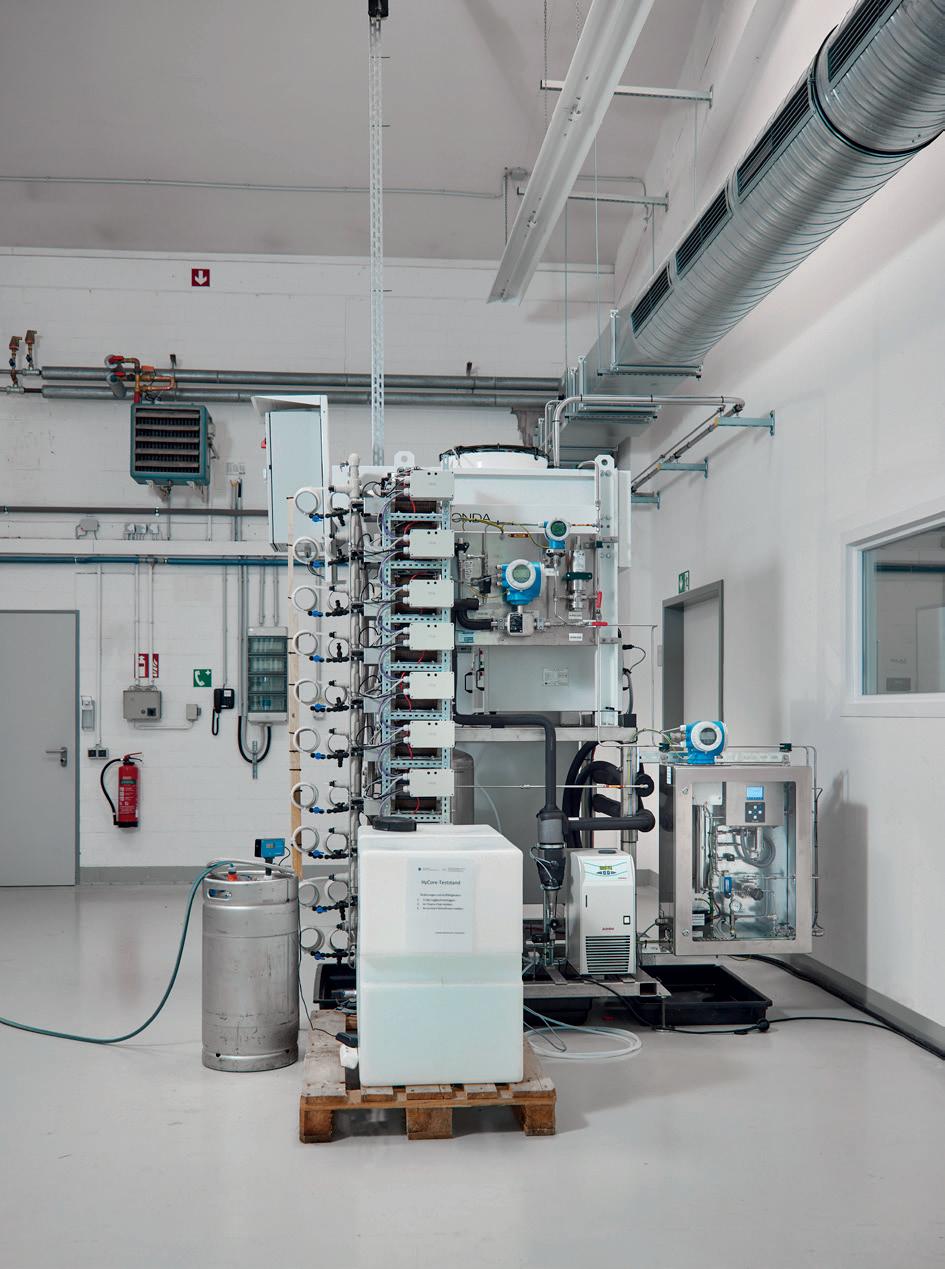
levels of impurity. Here, Enapter uses Endress+Hauser’s optical analysis measuring technology to determine hydrogen purity. Enapter opted for a solution to measure the purity since the instrumentation and automation supplier not only provides the measuring technology but also the relevant expertise to develop the solution. The core component of the quality measurement consists of a combined solution with the J22 TDLAS gas analyser and OXY5500 oxygen analyser, with a shared sample conditioning system to determine trace moisture and trace oxygen. For optimised process control, the quality measurement should be performed very quickly, if possible, in real time, which was taken into account during the planning and development phase. To implement the measurement with the required accuracy, the solution was developed in collaboration with the Endress+Hauser centre of competence for gas analysis in Lyon, France, and tailored to meet Enapter’s requirements.
Seamless interaction between all measuring points
A number of other measuring points for the pressure, conductivity, temperature and flow parameters are also installed in the test plant. Endress+Hauser devices were selected for these measuring points to ensure optimum interaction with the analytical measuring technology and automation technology used. The demands on the measuring technology are not only high for the hydrogen quality measurements – the other measuring points are also subject to the highest quality standards. A number of the measuring devices are in direct contact with the medium of hydrogen, placing very specific requirements on the design of the instruments and selection of materials. For example, the Cerabar pressure transmitter is fitted with a gold membrane to prevent hydrogen from diffusing through it and to protect the membrane from stress corrosion cracking. To accurately measure the flow rate, a single-tube Promass Coriolis flowmeter was selected to guarantee reliable and high-precision measurement of the lowest flow rates of hydrogen.
Driving the energy transition together
In conclusion, it is very important to be able to rely on a partner who can provide support beyond gas analysis at all measuring points in order to ensure perfect interaction between all system components. The sensor technology discussed was developed and optimised in close cooperation and has proven results. Now that Enapter has had the opportunity to evaluate its test system and verify that the implemented process works, the megawatt-class AEM electrolyser, with a production capacity of up to 450 kg/d of green hydrogen, will be fitted with Endress+Hauser’s gas analysis solution to measure the hydrogen quality. Although the AEM electrolysis systems are still undergoing final tests, Enapter’s pre-series production is already underway. The single-core electrolysers are currently being built in Italy, while the multi-core systems are being assembled in Germany. With the completion of the production facility for AEM electrolysers in Saerbeck, Germany, the overall production capacity will then be significantly expanded.
40 Summer 2024 GlobalHydrogenReview.com
Figure 3. Panel solutions can determine trace moisture and oxygen in real time.
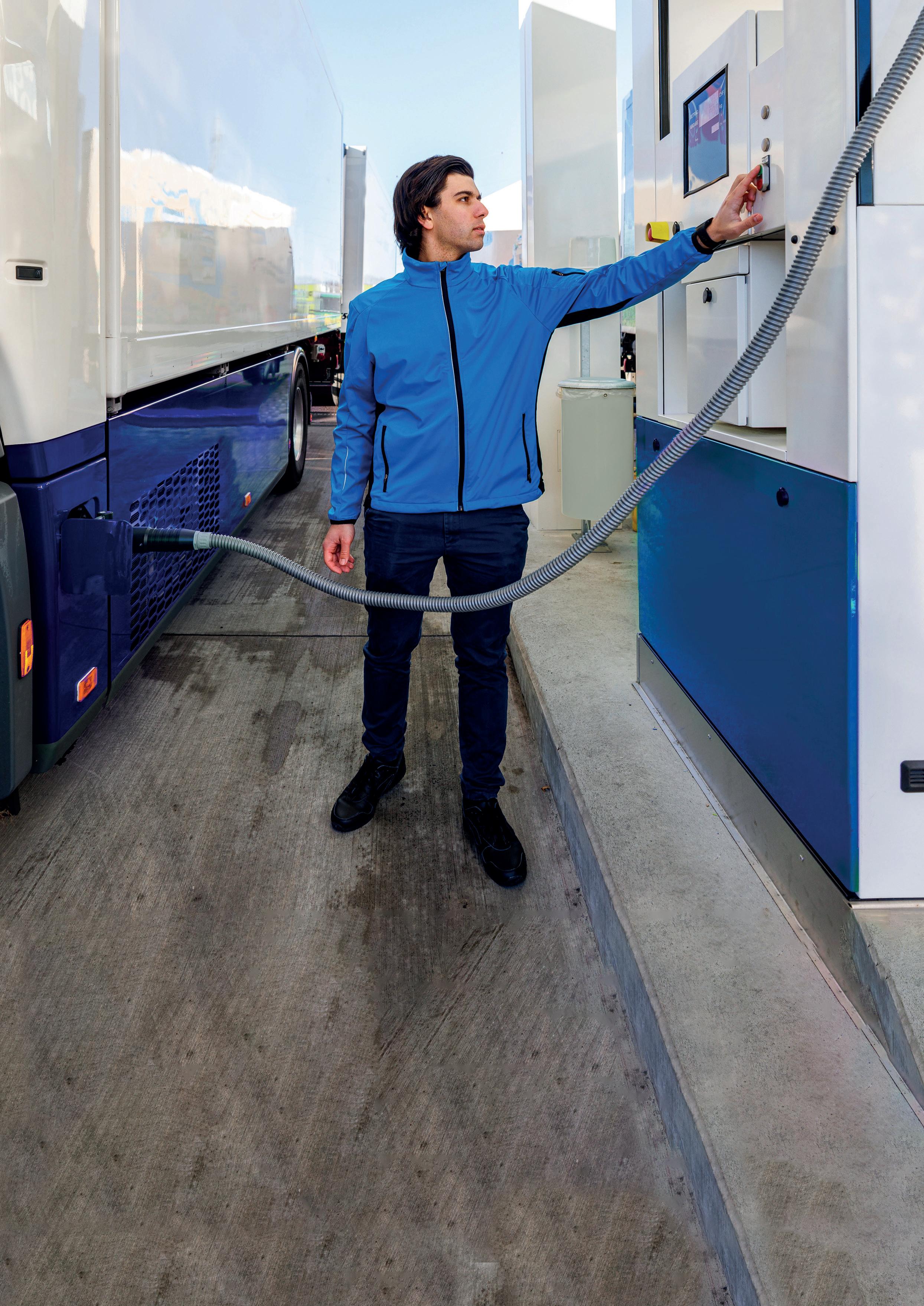
Specifying the right components for fluid and fuels systems can aid proper function and protect operators and the environment from accidental gas leaks. Buddy Damm, Swagelok, presents hydrogen handling best practices.
The focus on hydrogen as an alternative fuel source for vehicles has renewed the conversation surrounding how best to handle this promising solution (Figure 1). In both transportation and industrial settings, plant managers and fuel station owners who deal with hydrogen must educate themselves on the effects it has on components.
Hydrogen fuel requires safe and reliable handling from production to dispensing, using a robust system designed with operator safety in mind. Overcoming its unique challenges is essential to maximising the potential use of this versatile gas.
41
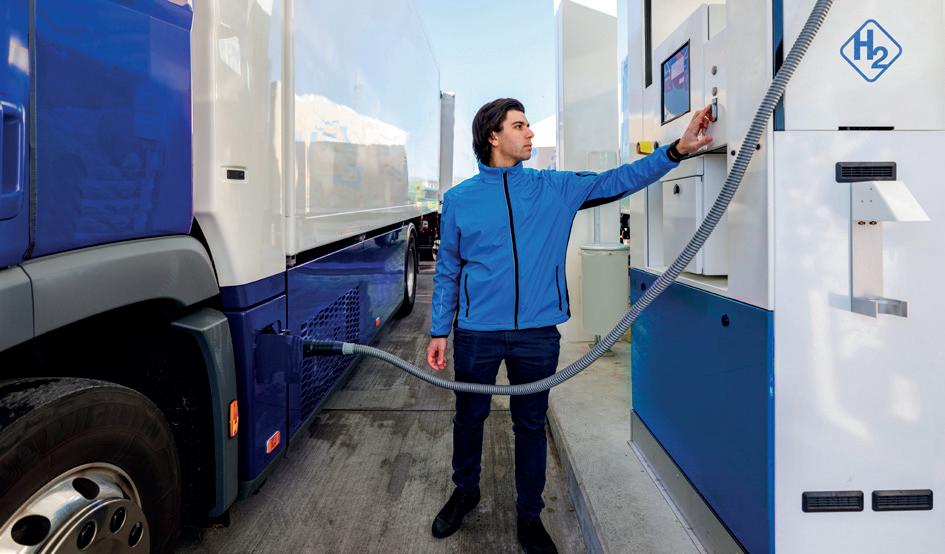
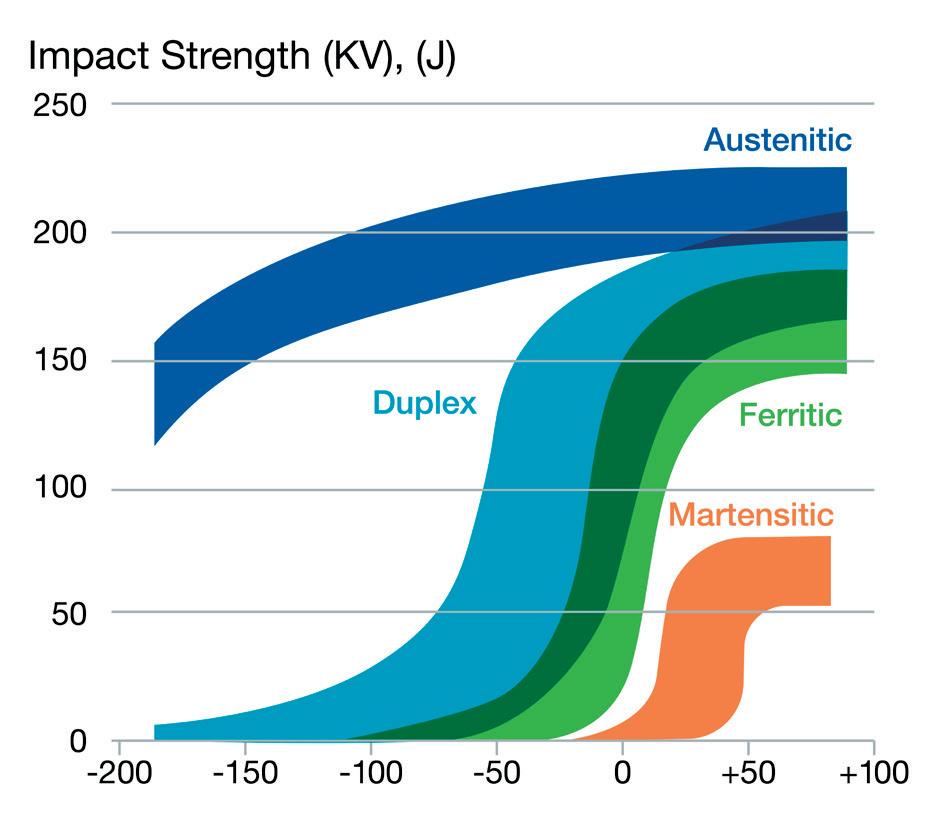
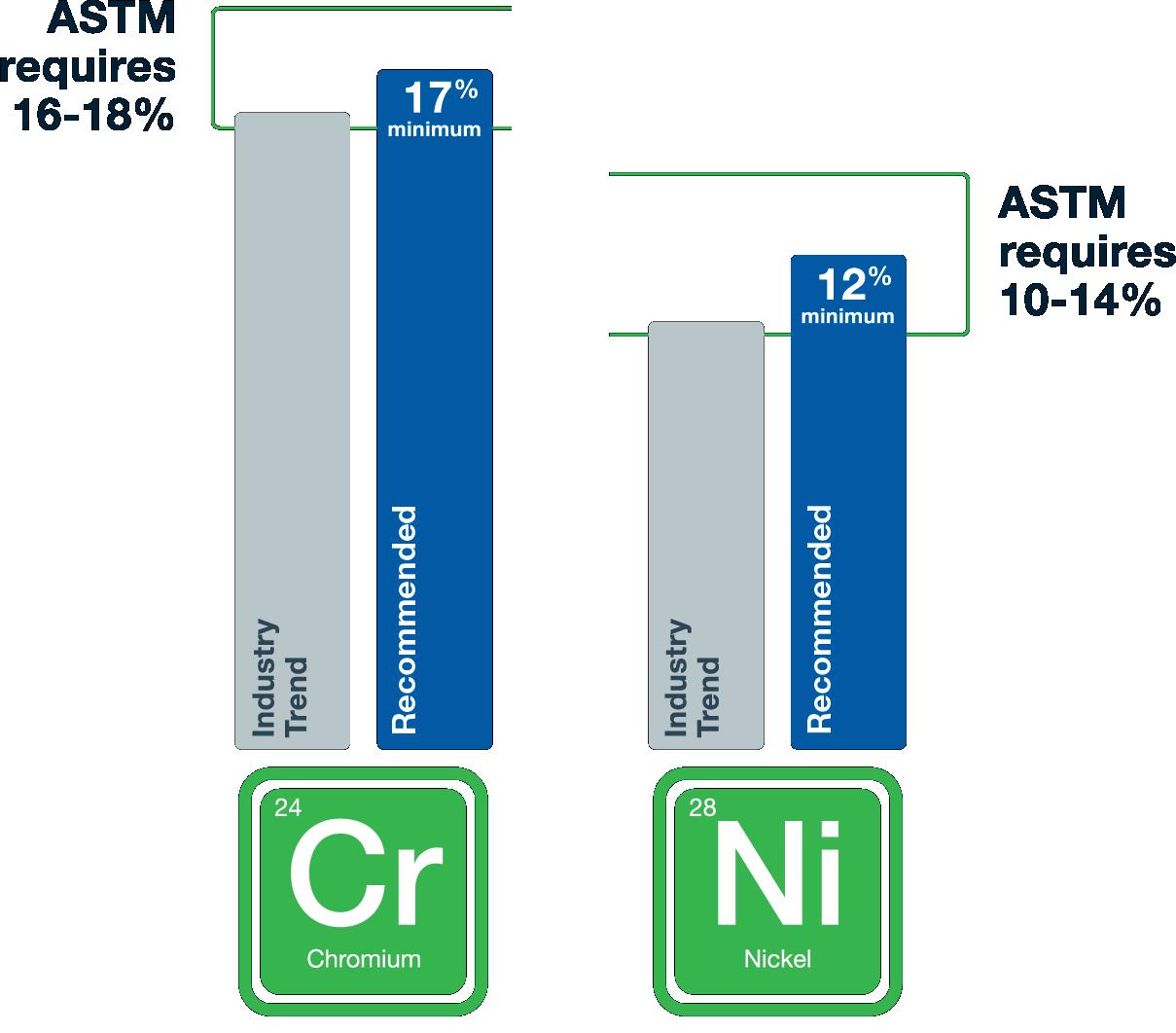
How hydrogen can reduce performance of fluid system components
As the hydrogen economy develops, operators must understand how to handle both liquid and gaseous forms of the atom, which liquifies at -253°C. Liquid hydrogen is approximately 140 times denser than its gaseous counterpart, making it an efficient form to transport and store. Hydrogen is used as an energy source in the gaseous state. In each scenario, hydrogen can cause embrittlement, or the reduction of fracture and fatigue resistance. System failure from embrittlement can put operators and equipment at risk, cause extended downtimes, and cost facilities significant money in maintenance and repairs.
Two types of embrittlement can impact metals used in liquid hydrogen systems:
y Low-temperature embrittlement: this is the reduction in fracture resistance of metal components as the temperature decreases. Alloys with a body-centred cubic crystal structure (low alloy steel, martensitic, duplex and ferritic stainless steels) exhibit a transition from ductile to brittle failure as temperature drops. Conversely, face-centred cubic alloys, like 316L austenitic stainless steel, exhibit ductile failure and only mild loss of fracture resistance with decreased temperature (Figure 2) making them an excellent choice for low-temperature applications.
y Hydrogen embrittlement: this occurs when atomic hydrogen is present in the metallic crystal and the structure is subjected to tensile stress. All metals suffer some degree of hydrogen embrittlement, but some are much more resistant than others. Higher strength materials suffer more severe hydrogen embrittlement. Austenitic stainless steels are characterised by their face-centred cubic (FCC) crystal structure, moderate strength, and naturally high ductility, and are generally more compatible with hydrogen than many other metals, making them an excellent choice for gaseous hydrogen service.
Both types of embrittlement can result in costly failures and unnecessary risks, so designing fluid systems with high-quality stainless steels that can resist both low-temperature and hydrogen embrittlement is critical.
Designing components for optimal performance
Hydrogen embrittlement results in a reduction in fatigue resistance of the metals used to construct these systems. Understanding the nature and magnitude of this reduction helps guide product designs. Computational analysis to simulate service loading helps to identify optimal design and manufacturing processes to manage cyclic stresses to maximise component life.
How to identify a high-quality stainless steel
Research on the effect of alloy content in 316L austenitic stainless steels shows that increased Ni and Cr improves the materials resistance to hydrogen embrittlement. A 316L alloy with mid-to-upper range Cr and Ni of the ASTM standard (Figure 3) significantly improves hydrogen performance. Some components like actuators or diaphragms may require higher strength than what 316L offers. Similarly, some components may require enhanced corrosion resistance if
42 Summer 2024 GlobalHydrogenReview.com
Figure 1. As the search for viable clean fuel alternatives intensifies, hydrogen has emerged as a leading contender to replace fossil fuels in some applications.
Figure 2. Austenitic stainless steels are much more resistant to embrittlement than traditional ferritic components.
Figure 3. Stainless steels with higher nickel content provide much more protection from hydrogen embrittlement than lower-nickel stainless steels.
INDUSTRIAL EMITTERS
Your roadmap to Low Carbon H2
DEHYDROGENATION STEAM REFORMER
HYDROGENATION
PURIFICATION
MOBILITY SAF E-FUELS
H2
H2
CO2
H2
POWER
(TOLUENE)
(MCH) H2 ELECTROLYZER DAM CO2 CO2 CO2 CO2 H2 H2 H2 H2 H2 CO2 STORAGE CO INDUSTRY CHEMICALS FEEDSTOCK SUPPLY Click here
CARBON CAPTURE
PURIFICATION
PURIFICATION
UNDERGROUND STORAGE
GENERATION LOHC
LOHC
Discover Axens Solutions for the Production, Transport & Storage and Purification of Hydrogen
How hydrogen penetrates metals
Hydrogen molecules (H2, blue) can dissociate to atomic hydrogen (H, red) and penetrate a metal. Hydrogen atoms accumulate at stress concentrations such as cracked tips or microstructural features like grain boundaries, inclusions, or precipitates (Figure 4). Hydrogen atoms affect the deformation processes within the microstructure causing hydrogen embrittlement.
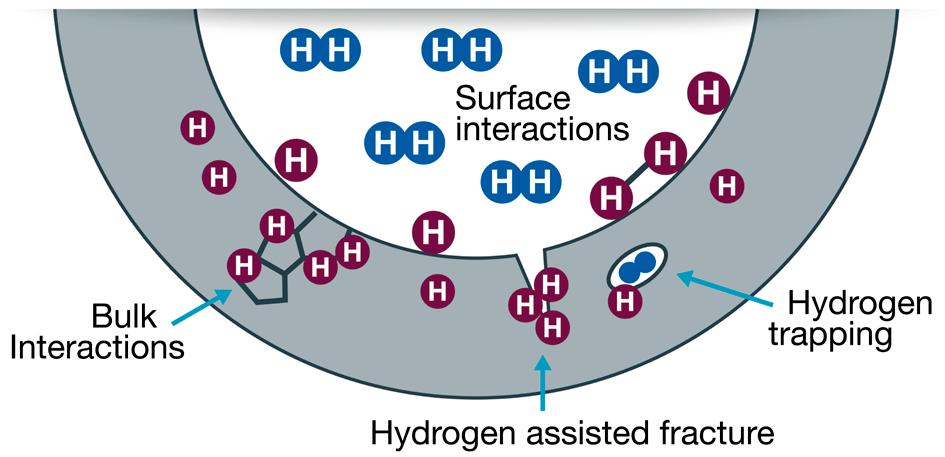
Figure 4. When hydrogen atoms embed themselves in system components, it can lead to fractures and fatigue in the components, which could produce premature failures.
they are exposed to more aggressive environments. Careful selection of higher strength or corrosion-resistant alloys, design considerations, and appropriate preventative maintenance schedules help manage hydrogen embrittlement risks, improve uptime, and optimise cost structure.
Why high-performance stainless steel hydrogen valves matter
Hydrogen valves are often subject to gruelling operating conditions, so selecting the proper valves for the application is key. Some considerations include:
y Pressures: to achieve desired density, hydrogen must be stored in on-vehicle tanks at 350 - 700 bar.
y Stress and vibration: systems must be able to withstand fast speeds, bumpy roads, and inclement weather conditions.
y Safety: consumers must be able to safely operate refuelling stations.
y Maintenance: operators must be able to easily remake leak-tight joints during servicing.
To operate effectively, hydrogen valves should incorporate all the requirements listed. Additionally, leak-tight performance at the connection point or shutoff (regulation) point is essential. Finally, hydrogen valves must withstand the challenging operating conditions that occur in typical hydrogen applications. The following are three types of hydrogen valves to consider.
Hydrogen ball valves
Hydrogen systems often contain ball valves that regulate the flow of hydrogen from one direction to the next. Valves with stem-seal designs that resist wear are valuable in these applications, and it may make sense to deploy a trunnion-style ball with a direct-load design. Such ball valves encourage leak-tight performance each time the valve engages. Additionally, a bottom-loaded stem design
often prevents stem blowouts, which keeps system operators safer over time.
If any doubt exists about which ball valve to use, reputable suppliers should have the expertise to offer advice. Some ball valves offer two or three-way functionality, different flow coefficients, and various mounting options that can be customised to meet specific configurations and needs. Finally, ensure the ball valves are compatible with the fittings and are specifically designed for hydrogen systems.
Hydrogen needle valves
Unlike ball valves, needle valves provide the ability to make finer adjustments to hydrogen flows. The more precise the needle valve, the more careful operators must be when specifying them, particularly in hydrogen systems. Their all-metal nature requires significant force to close properly, which could deform the needle and the seat. Such deformation could create potential hazardous leaks and require expensive maintenance. Additionally, large air actuators with sufficient force to open and close these valves are used, which can mean up to a two-minute delay in the process.
Needle valves constructed with high-quality 316 stainless steel reduce deformation over long periods of use. Operators should also verify that the valves’ pressure ratings allow them to withstand the pressure exerted in common hydrogen applications (350 - 700 bar). Those substantial pressures could damage improperly rated valves, leading to leaks. Lastly, the needle valves must be compatible with other hydrogen-qualified components in the system.
Hydrogen check valves
Check valves perform essential safety functions in hydrogen compressors in refuelling systems, controlling excess backflow to protect the end user. Compared with general service applications, hydrogen check valves must contend with a few things.
Most check valves incorporate springs – components that are typically made with strain-hardened material that can be more susceptible to hydrogen embrittlement than high-quality 316 stainless steel. Additionally, vehicle fuelling applications subject such valves to drastic, fast changes in temperature and pressure, creating elevated stress on the valves’ elastomer seals. With these things in mind, ball check valves are a more suitable option for hydrogen compressors. It is also important to consider material integrity and compatibility with other hydrogen components.
The bottom line
As hydrogen fuel applications become more prominent, plant managers should educate themselves on how to select the optimal materials to handle this complex element. Improper specification of hydrogen components can have long-term consequences, especially in applications involving inexperienced end users. Furthermore, poorly performing components could ultimately damage hydrogen’s reputation as a reliable and viable clean fuel source.
Choosing suppliers with an in-depth understanding of the material science behind hydrogen component construction is essential to building a successful hydrogen processing system. Reputable suppliers have specialists on hand who can answer any questions and guide operators to making the right decisions for their specific needs.
44 Summer 2024 GlobalHydrogenReview.com
Allan Rushforth, First Hydrogen, UK, explains what the creation of a hydrogen vehicle ecosystem with gas distribution network, Wales & West Utilities (WWU), means for hydrogen mobility.
Traditional hydrogen mobility focuses on the decarbonisation of large vehicles such as trucks and buses. However, this technology can also be deployed in lighter, long-range vehicles.
This article will introduce a fuel cell electric vehicle (FCEV) that has been designed to support commercial vehicle owners that require longer range, higher payloads, and a faster refuelling switch to zero emission vehicles. Part of a demonstrator programme, the vehicle will show proof-of-concept for hydrogen transport in the 3.5 t vehicle weight class. The ultimate aim is to drive the development of zero emission vehicles and the refuelling ecosystem to accelerate hydrogen mobility adoption globally.
In late January 2024, First Hydrogen started a four-week trial with Wales & West Utilities (WWU) to give the utility business

first-hand experience of using hydrogen-powered vehicles in daily operations. Importantly, the partnership offered an opportunity to prove that hydrogen mobility is still possible for fleet operators without access to fixed hydrogen refuelling infrastructure. The trials were supported by Protium Green Solutions, who provided green hydrogen to fuel the vehicle, and Hyppo Hydrogen Solutions, who supplied a re-deployable hydrogen refuelling unit, creating a hydrogen vehicle ecosystem.
The UK FCEV trials allow First Hydrogen to work with potential customers and show the advantages of hydrogen-powered vehicles within their business. The trials also enable critical information to be collected about the vehicle’s use and performance, and allow total cost of ownership (TCO) projections to be developed, which highlight the performance benefits and economic viability of the FCEVs.
45
Why hydrogen?
WWU is already planning for a hydrogen transition to meet UK net zero targets. The business operates a fleet of approximately 1400 vans and, as part of its mission to decarbonise, is exploring zero emission vehicle technology.
“We are confident that hydrogen will play a fundamental role in delivering low-cost green energy as we move away from fossil fuels. Hydrogen can be produced from renewables in the UK and supplied through many of the gas pipelines that we already use. We are already paving the way for the role of hydrogen in heating homes and powering industry so using hydrogen fuel to decarbonise our fleets is a logical step,” said Stephen Offley, Transport Manager at WWU.
Today’s light commercial electric vehicle market – which is estimated to be worth US$676.49 billion1 – does not offer a full solution for the operational needs of WWU and similar businesses. With concerns that battery electric vehicles (BEVs) cannot support the journeys and uses or ‘duty cycles’ that WWU drivers undertake, the business submitted evidence to the House of Lords Climate Change Committee enquiry into Electric Vehicles in September 2023. The document explained the factors – including recharging network availability, limited range and no capability for towing or onboard power – that make BEVs unsuitable for WWU’s operations, and which apply to similar businesses. First Hydrogen’s FCEV trials gave WWU an opportunity to understand whether hydrogen technology offers a suitable zero emission solution for its operations.
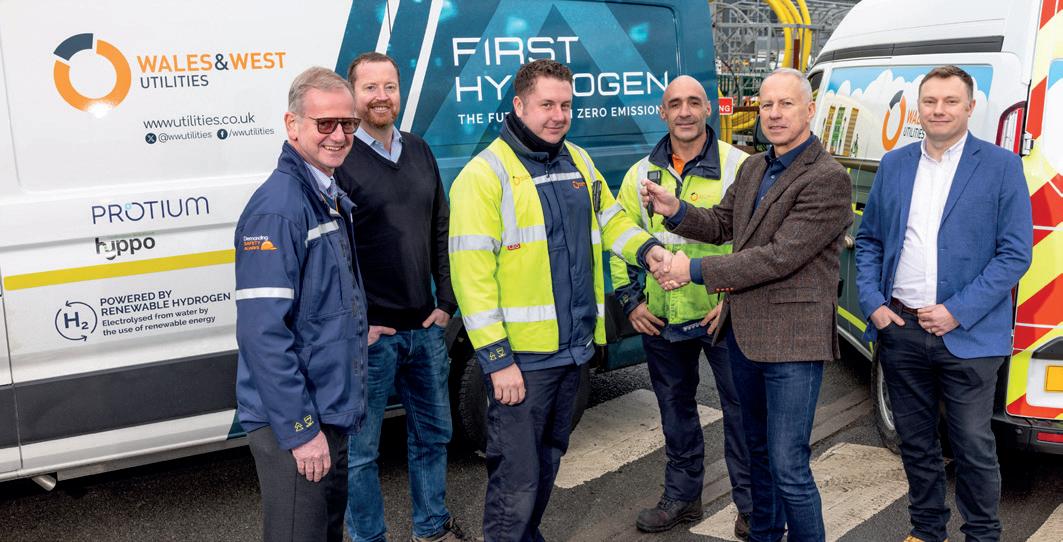
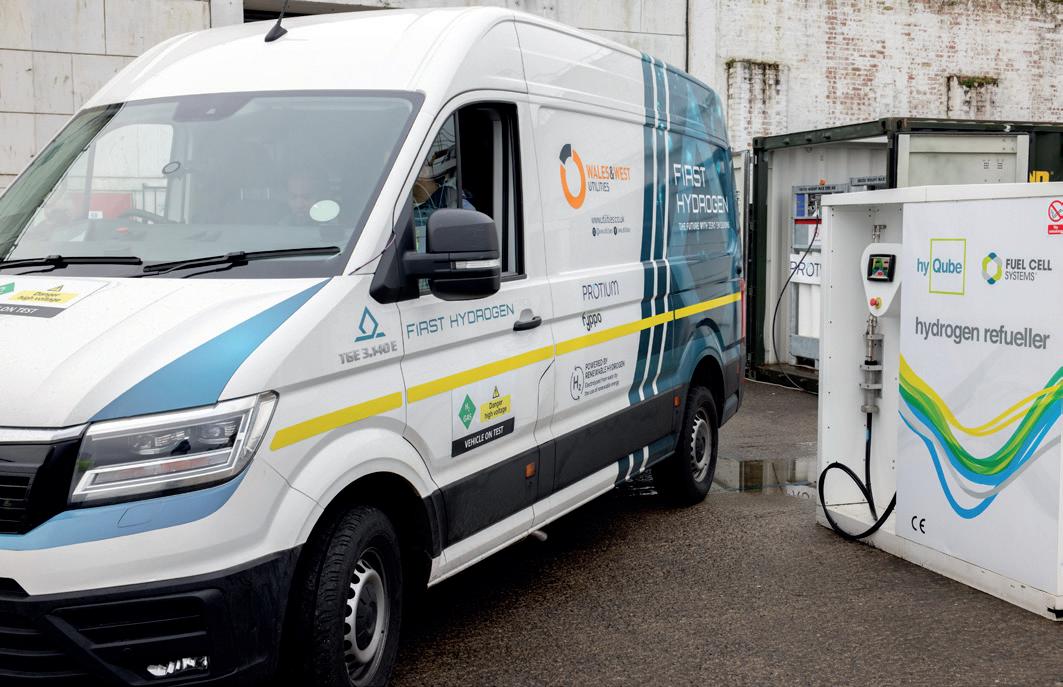
Creating a hydrogen vehicle ecosystem
Some of the main barriers to hydrogen vehicle adoption are fuel availability and under-developed refuelling infrastructure in suitable locations. First Hydrogen has previously run vehicle trials with fleet management specialists, Rivus, and energy provider, SSE. However, until now, these road tests have been located near existing hydrogen fuel stations.
First Hydrogen’s FCEV is the first-of-its kind to be deployed in Wales and these trials demonstrated how partnerships can develop refuelling in areas that lack infrastructure. Using Hyppo Hydrogen Solutions’ Fuel Cell Systems HyQube re-deployable refueller, drivers could refuel close to WWU’s depot in Swansea, rather than travelling for miles to a public station.
The green hydrogen used to fuel the vehicle was supplied from Protium’s Pioneer 1 site in Wales and was produced by electrolysis using renewable power. Pioneer 1 has been operational since early 2023 and the hydrogen it produces has already been used in several transport trials. Protium’s Pioneer 2, a second, significantly larger electrolyser, will be operational later in 2024 to meet the growing demand for green hydrogen in Wales and beyond.
Through the partnership, First Hydrogen has learnt a lot about moveable and depot-based refuelling solutions and how this technology could help bridge gaps in the UK’s refuelling infrastructure network. Ultimately, the company aims to offer fleet operators Hydrogen-as-a-Service, which provides a vehicle, access to refuelling technology, and a guaranteed supply of green hydrogen. Working with partners such as Protium and Hyppo Hydrogen Solutions will strengthen this service and accelerate hydrogen mobility adoption.
Handing the vehicle to WWU
The FCEV was shared by two drivers from WWU’s Network Emergency & Metering Services team. WWU serves more than 7.5 million customers across Wales and the south west of England. Most of the vehicle’s journeys were travelling to customer call outs, averaging five to six visits per day. The team has to respond quickly to calls and often covers long distances while transporting the bulky equipment needed for repairs.
The trials commenced with training for WWU’s drivers, enabling them to safely operate the vehicle and understand its technical differences. While completing First Hydrogen’s Driver Training accreditation scheme, WWU’s drivers performed manoeuvres with the vehicle and completed a call out to a customer’s residence. Importantly, the drivers also practiced refuelling the vehicle with green hydrogen.
The drivers that took part in the trial were particularly impressed by the fact that the vehicles could be refuelled quickly (rather than charged-up overnight), as they occasionally need to respond to calls from their homes in the middle of the night.
Trial findings
Over the four-week trial, the van completed more than 2000 km (>1200 miles), travelling up to 189 km/d (117 miles/d) on mostly urban roads and highways in some of south Wales’ coldest conditions.
The trials took place during winter. Not only is this WWU’s busiest period for emergency gas call outs, but it also tested the vehicle’s performance in cooler conditions.
46 Summer 2024 GlobalHydrogenReview.com
Figure 1. First Hydrogen FCEV handover to WWU for vehicle trials supported by Protium and Hyppo Hydrogen Solutions.
Figure 2. FCEV refuelling at Hyppo Hydrogen Solutions with Protium green hydrogen for WWU trials.
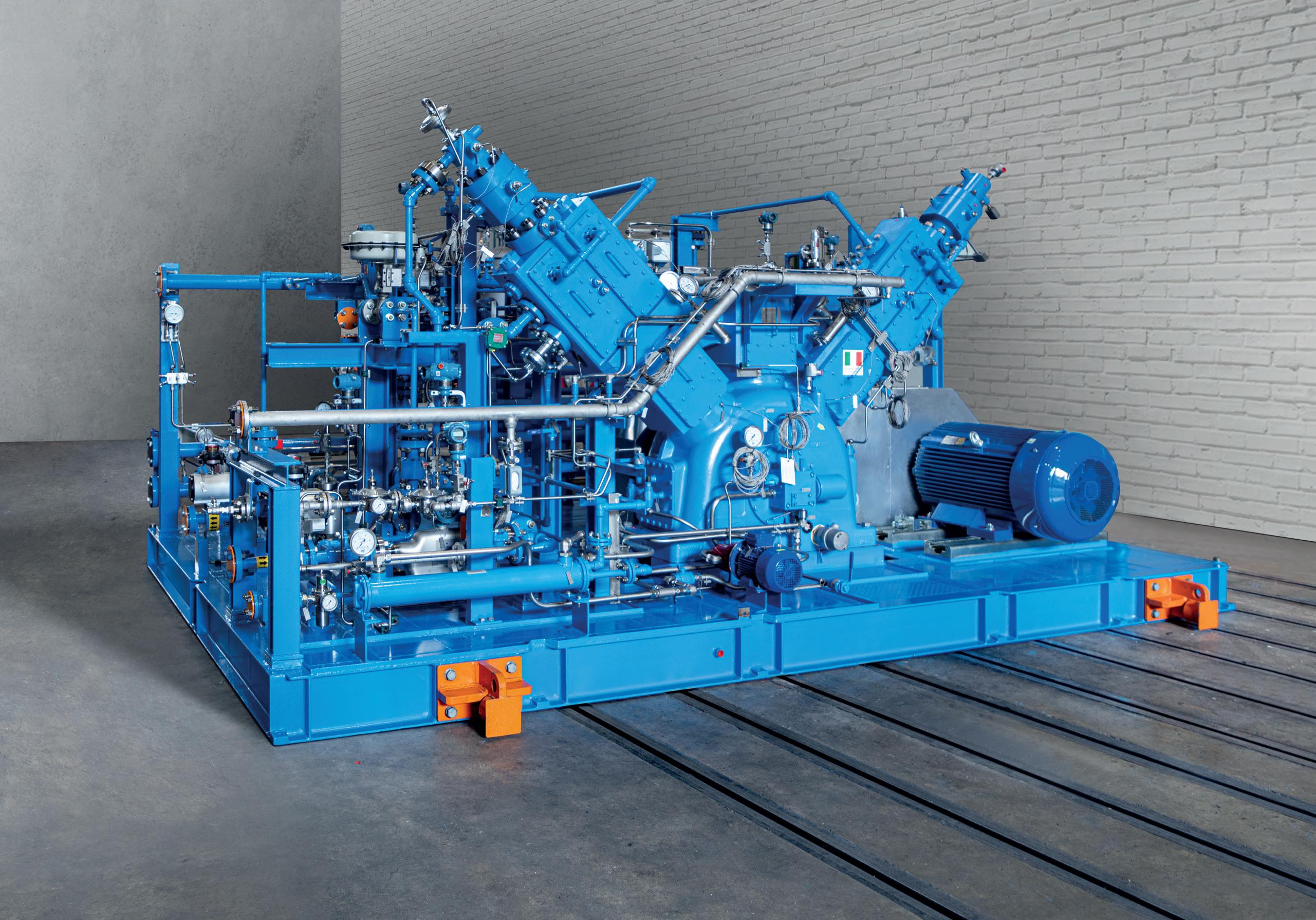

This is a key performance indicator (KPI) for many fleet operators exploring zero emissions vehicle solutions as temperature can affect performance. BEVs notably suffer with battery degradation in cooler or hotter climates. A 2023 study by the Norwegian Automobile Federation showed that BEVs running in colder weather dropped an average of 20% from the Worldwide Harmonised Light Vehicle Test Procedure (WLTP) range – which is calculated from the vehicle operating at 23°C without auxiliaries such as heating or air conditioning turned on.2 This can increase to a 40% drop for vehicles with older batteries or when heating or air conditioning are operating.
Such variation in range makes it challenging for fleet operators to effectively deploy BEVs over certain duty cycles. For many organisations operating in cooler regions, relying on predictable range expectations is business critical. During the WWU trials,
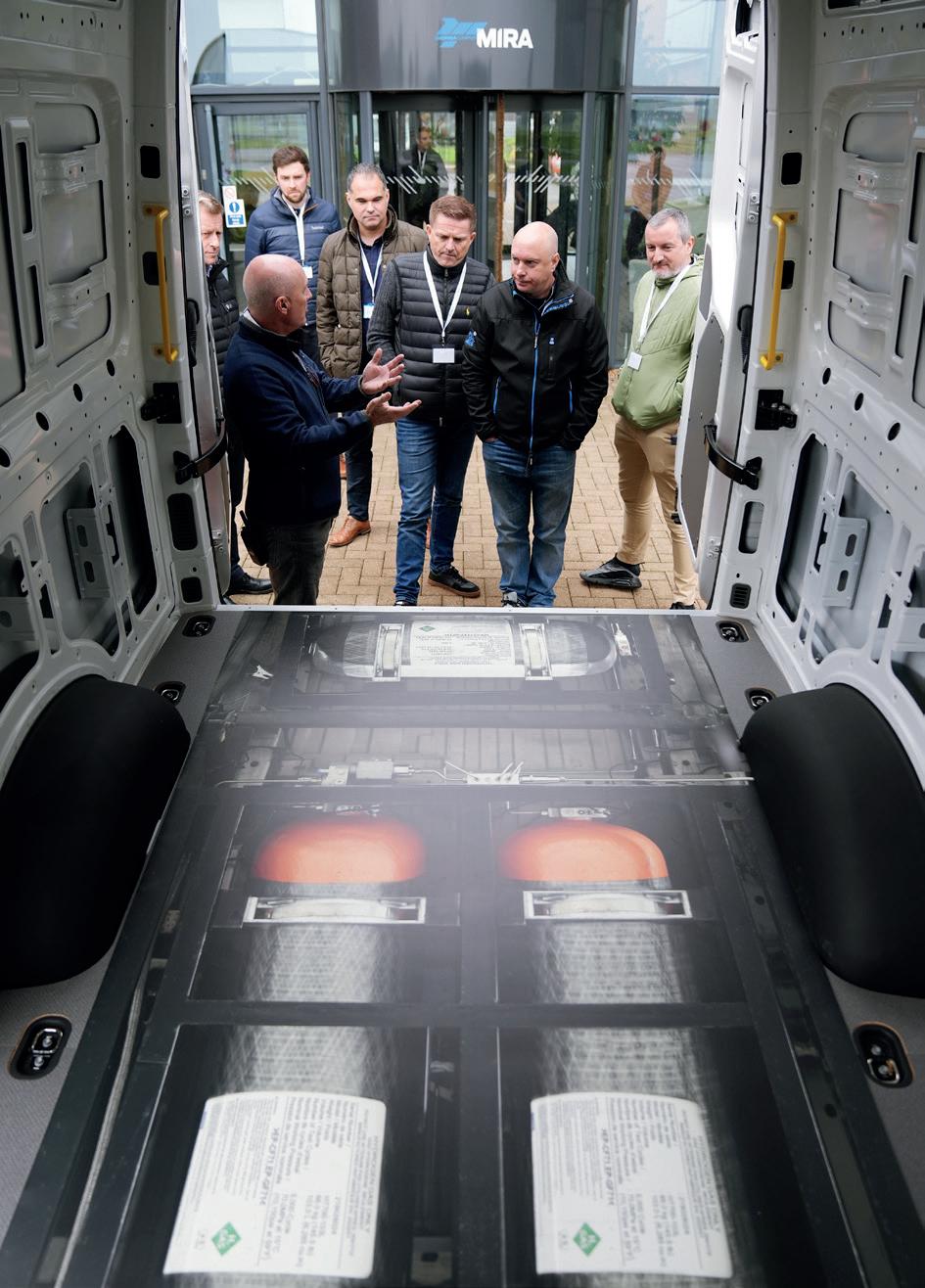
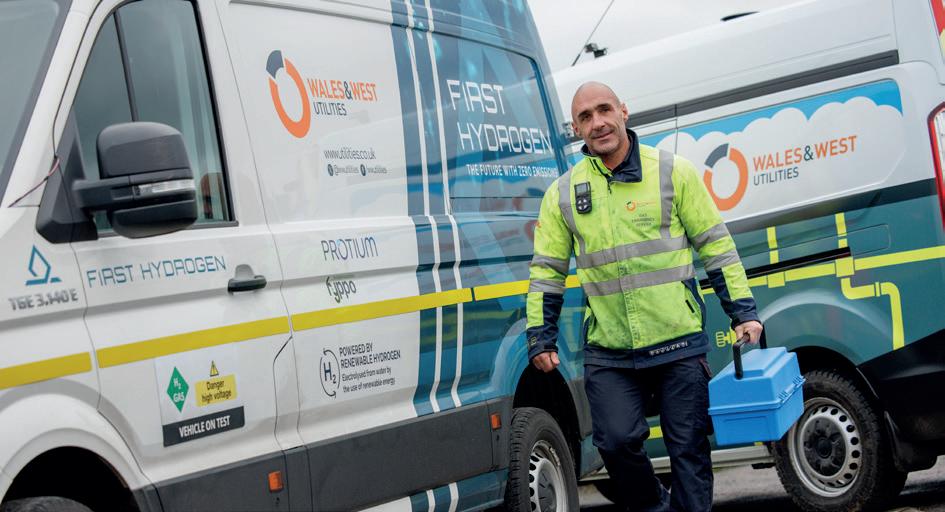
the vehicle operated for between six and seven hours per day in temperatures of between 2°C and 17°C, without showing any impact on range.
Around 75% of WWU’s fleet is equipped to tow, yet few BEVs have such capability. Current BEVs are also less suited to the installation of ‘on board power’ to power pneumatic equipment and high-current electric tools on site, which are vital for engineers to complete repairs and updates to the network. Range limitations also pose a challenge. Hydrogen-powered vehicles could be the zero-emission solution that will meet these fleets’ future needs.
In previous road trials, the FCEV has achieved more than 630 km (> 400 miles) on a single refuelling. Data collected from onboard telematics during the WWU trials verified how the fuel cell’s powertrain delivers power, when needed, achieving outputs of 60 kW in transient accelerations. This indicates that the vehicle can manage more demanding duties for WWU, such as carrying heavier payloads, driving over hilly terrain, or powering auxiliary equipment (onboard power).
“We are impressed with how the van operates and its overall performance – particularly as this is a prototype vehicle and we were breaking new ground by creating our own hydrogen vehicle ecosystem. Testing the vehicle with our first call operatives meant we could demonstrate its use in a front-line service role and provide credible findings for us to share with our stakeholders and other fleet managers. The data generated from the trials also gives us a case to push for fixed hydrogen infrastructure in the area so we can benefit from faster refuelling and operational simplicity,” explained Stephen Offley, Transport Manager at WWU.
Next steps
The global market for hydrogen fuel cell vehicles is projected to grow from US$2.2 billion (£1.7 billion) in 2023 to US$82.1 billion (£64.2 billion) by 2032, at 49.1% CAGR.3 Fleet operators, such as WWU, are predicted to drive zero emission vehicle sales – which includes hydrogen fuel cell commercial vehicles – as they strive to decarbonise in line with zero-emission vehicle mandates to phase out fossil fuel vehicles by 2035.
Insights generated from the WWU trials are informing First Hydrogen’s TCO projections, which the company is sharing with other fleet operators, notably those in the utilities and construction sectors. The WWU board has responded positively to the vehicle performance data and is keen to progress with next steps.
To accelerate hydrogen mobility adoption, fleets require reassurance that they can support vehicle investment with access to a hydrogen vehicle ecosystem. For automotive developers, the challenge is to establish the economic and logistical viability of hydrogen mobility as well as support fleets to overcome infrastructure barriers with help from partners and governments. This trial has created a model for a hydrogen vehicle ecosystem that can be replicated in other areas.
The initiative with WWU delivered more than deployment of technology: it also provided a model upon which to build public confidence in hydrogen as a safe and valuable regional asset.
References
1. ‘Light Commercial Vehicle Global Market Report 2024’, The Business Research Company, (November 2023).
2. ‘El Prix, The world’s largest electric car test’, Norwegian Automobile Federation (NAF), (31 January 2024).
3. ‘Hydrogen Fuel Cell Vehicle Market to Reach USD 82.1 Billion by 2032’, Data Horizzon Research, (February 2024).
48 Summer 2024 GlobalHydrogenReview.com
Figure 3. First Hydrogen van under the cargo area demonstration at MIRA.
Figure 4. WWU driver, Alun Jones, on operations with the FCEV.


SBW Group Seven Decades of Progress
Working for a Greener Planet
SBW compressors for low-carbon solutions
• Same assured SBW quality
• Same proven SBW designs
• Same commitment to continuous improvement
• New applications
• New optimised stage designs
1979 – Olefin plant compressors (115 000 tpy)
• New cooperations with Licensors & Contractors
1982 – Ammonia/urea plant (520 000 tpy)
Current applications include:

In 1960, SBW manufactured their first own-design centrifugal compressor in the original Shenyang factory (background image). New milestones regularly followed, across key process sectors .
1989 – Hydrocracker compressor (800 000 tpy)
• Blue & green hydrogen projects
• Green ammonia projects
2003 – Axial/centrifugal ASU compressor (40 000 nm
• Energy storage projects
2010 – First PTA plant compressor (600 000 tpy)
• Mechanical Vapour Recompression
Aerial photo (background):
Compressed air energy storage in Jiangsu Salt Caverns, China
First commercial-scale installation in China
Figure 1:
2011 – High-thrust reciprocating compressor (125 t thrust)
2017 – Air separation for 100 000 nm /hr oxygen
BCL barrel-type compressor:
SBW are supplying units for a trial-scale green ammonia project in the Middle East
• Centrifugal SynGas compressors (barrel-type) ca. 135 bar discharge pressure, ca. 4 MW shaft power
• Centrifugal Refrigerant compressors (horizontally-split) ca. 1.5 MW shaft power
Figure 2:

Packaged integrally-geared compressor: The preferred compressor selection for most MVR applications
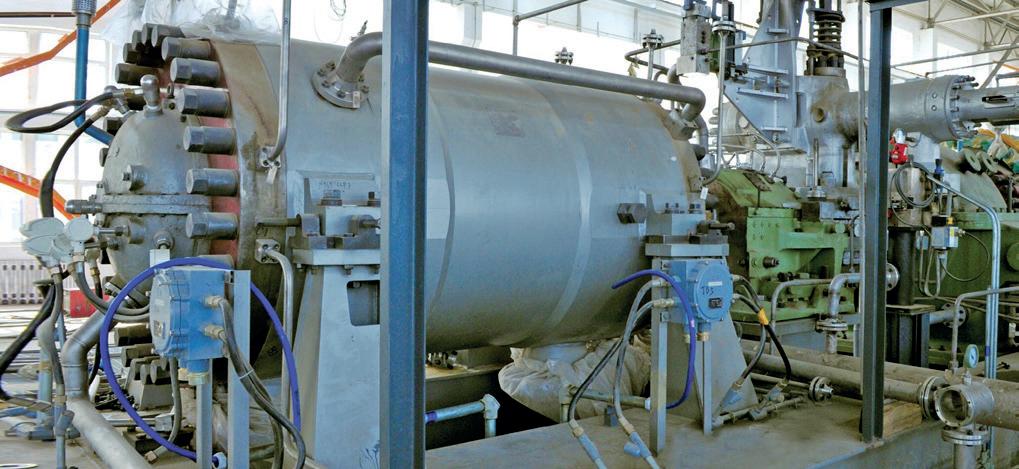



2021 – first 1.4 million tpy Olefin plant (74 MW cracked gas; 39 MW propylene; 24 MW ethylene) CNPC Guangdong
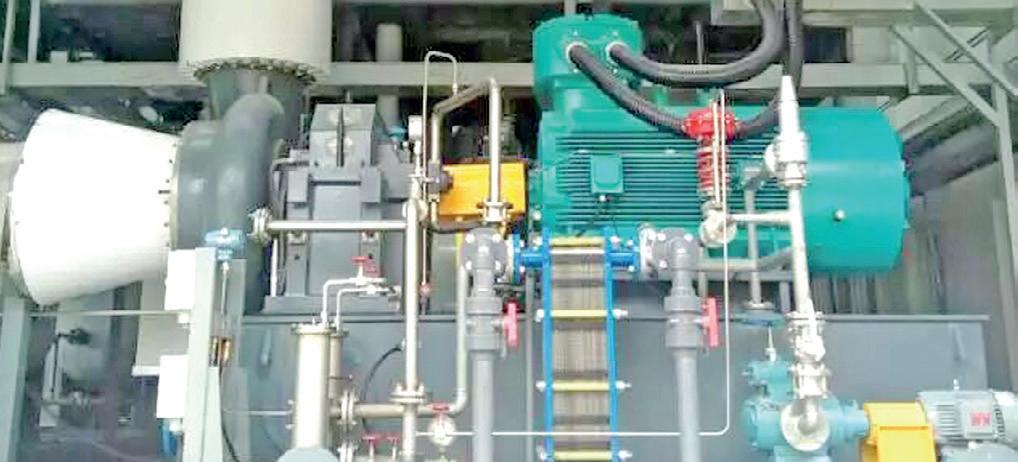
For more information, visit our website www.sbw-turbo.com, scan QR for our brochure, or contact:
For more information, visit our website www.sbw-turbo.com, scan QR for our brochure, or contact:
... your reliable partner for rotating equipment
… your reliable partner for rotating equipment . . .
... your reliable partner for rotating equipment
Head Office & Manufacturing: Shenyang, China www.sbw-turbo.com qiming.chen@sbw-turbo.com (Europe & Middle East) Abu Dhabi, UAE tony.parish@sbw-turbo.com (Europe & Middle East) London, UK anding.xiang@sbw-turbo.com (USA & Americas) Charlotte (NC), USA
Head office & Manufacturing: Shenyang, China www.sbw-turbo.com Global Sales Director: qiming.chen@sbw-intl.com Europe: tony.parish@sbw-intl.com ; USA/Americas: anding.xiang@sbw-intl.com Middle East: yang.yang@sbw-intl.com ; India & S. Asia: liusong@sbw-intl.com
Head Office & Manufacturing: Shenyang, China www.sbw-turbo.com qiming.chen@sbw-turbo.com (Europe & Middle East) Abu Dhabi, UAE tony.parish@sbw-turbo.com (Europe & Middle East) London, UK anding.xiang@sbw-turbo.com (USA & Americas) Charlotte (NC), USA

Figure 1 Figure 2

Mathias Kurras, Maximator Hydrogen, Germany, explores the use of hydrogen as a fuel for construction machinery and the role of mobile hydrogen refuellers on construction sites.
50
With a global share of 38%, the construction sector is one of the largest carbon dioxide (CO2) emitters of all, according to the 2020 Global Status Report for Buildings and Construction commissioned by the United Nations (UN).1 The majority of emissions are caused by the utilisation and operation of the buildings. The construction itself accounts for 10%.2 In order to reduce the immense CO2 emissions, the industry is pursuing various approaches for more ecological sustainability in the technologies and materials used, as well as in the area of mobility and logistics.
Low-emission construction machinery for sustainable work
For many years, manufacturers of heavy construction vehicles such as excavators, trucks and wheel loaders have been working on reducing emissions. The aim is usually to reduce fuel consumption through more efficient engines for diesel and petrol-powered vehicles. However, alternative drives such as hydrogen are also becoming increasingly important. The advantages of these construction machines are obvious: they

do not emit any CO2 during operation and are quieter than diesel or petrol-powered vehicles. This means that construction companies not only protect the environment, but also their employees, who are often exposed to high levels of noise pollution and poor air quality on construction sites. Lower maintenance costs also help to offset the currently higher acquisition costs in the medium and long-term. This means that investing in the new technology can already be an ecologically and economically sensible investment.
Hydrogen for heavy-duty vehicles
Hydrogen is particularly suitable for operating heavy construction vehicles, especially in contrast to electric drives, which quickly reach their limits on construction sites. This is particularly ideal for small machines such as mini-excavators, with narrowly defined areas of application and manageable operating phases. One battery charge is usually sufficient for a whole day for the continuously available power of these machines. In the evening, the mini-excavator is simply plugged into the socket and is ready for use again the next morning.
51
However, large and expensive machines are often used in concentrated and intensive performance phases so that they can be utilised efficiently. They require a lot of energy and therefore need to be regularly refuelled. Similar to petrol or diesel, hydrogen can be refuelled quickly and easily within a few minutes. This a critical success factor in the tightly scheduled construction industry, where any kind of delay can set a project back significantly.
However, current hydrogen infrastructure presents construction companies with challenges when using hydrogen-powered machines. This is because heavy construction machinery is often used in places where there is no hydrogen refuelling station in sight. As construction sites are temporary facilities, it is not worth building stationary refuelling stations. In addition, normal refuelling stations are often not suitable for heavy equipment such as excavators or wheel loaders. Together with the construction vehicle manufacturer, Liebherr, Maximator Hydrogen has recognised this problem and developed a mobile hydrogen refuelling station, the MAX Mobile Refueler.
On-site hydrogen supply
The refuelling station brings the fuel directly to the construction site by truck so that the vehicles can be refuelled quickly. This means that they are fully available again just minutes after refuelling. As a result of the regular refuelling option, it is also not necessary to enlarge the tanks of the vehicles in order to have enough hydrogen fuel available for the efficient and flexible use of the machines, even during intensive project phases.
The refueller has a modular design and can be transported to the refuelling site in different ways, either as a trailer or as a unit on a truck bed. It is filled with 700 bar hydrogen at a hydrogen refuelling station and then driven to the construction
site. The refueller only needs to carry the required amount of hydrogen and nothing additional. This is because a specially developed fluid, which is allowed to come into contact with hydrogen, ensures that the entire tank of the refuelling vehicle can be emptied. The fluid is pumped into the refuelling vehicle and pushes the hydrogen out and into the construction machine. This is particularly efficient, as no hydrogen is wasted. This means that the charging and refuelling capacity is fully utilised.
The refueller can be used individually, as the system is modularly expandable. In its smallest version, it can transport 40 kg of hydrogen (at 700 bar and 15°C).
Advancing change in the construction industry
By switching to sustainable drives, construction companies are counteracting another problem: the skills shortage. Increasing numbers of employees are looking at their employer’s innovative strength and sustainability strategy when choosing their employer. In addition, the use of low-emission drives also benefits the health of employees.
In addition to battery or hydrogen-powered heavy-duty machines, many vehicle manufacturers are also researching the use of alternative fuels such as e-fuels or hydrotreated vegetable oils, which are made from cooking oil waste. These have the advantage that the vehicles are compatible with many conventional machines, as the fuels can be processed by the engine that is already installed and therefore only require minor conversion.
In addition to low-emission mobility, construction companies are also focusing on numerous other measures to reduce CO2 emissions. The focus here is particularly on resource-saving raw and construction materials in the construction of buildings, roads and bridges. Concrete, in particular, plays a central role here. By using high-quality additives such as limestone powder, for example, the environmental balance of a cubic metre of cement can be significantly improved. New technologies are also being used. For example, ground freezing technology is used to stabilise the subsoil through frost so that work can be carried out safely even under difficult conditions. As no residue remains in the ground when this method is used, it is also considered to be environmentally friendly.
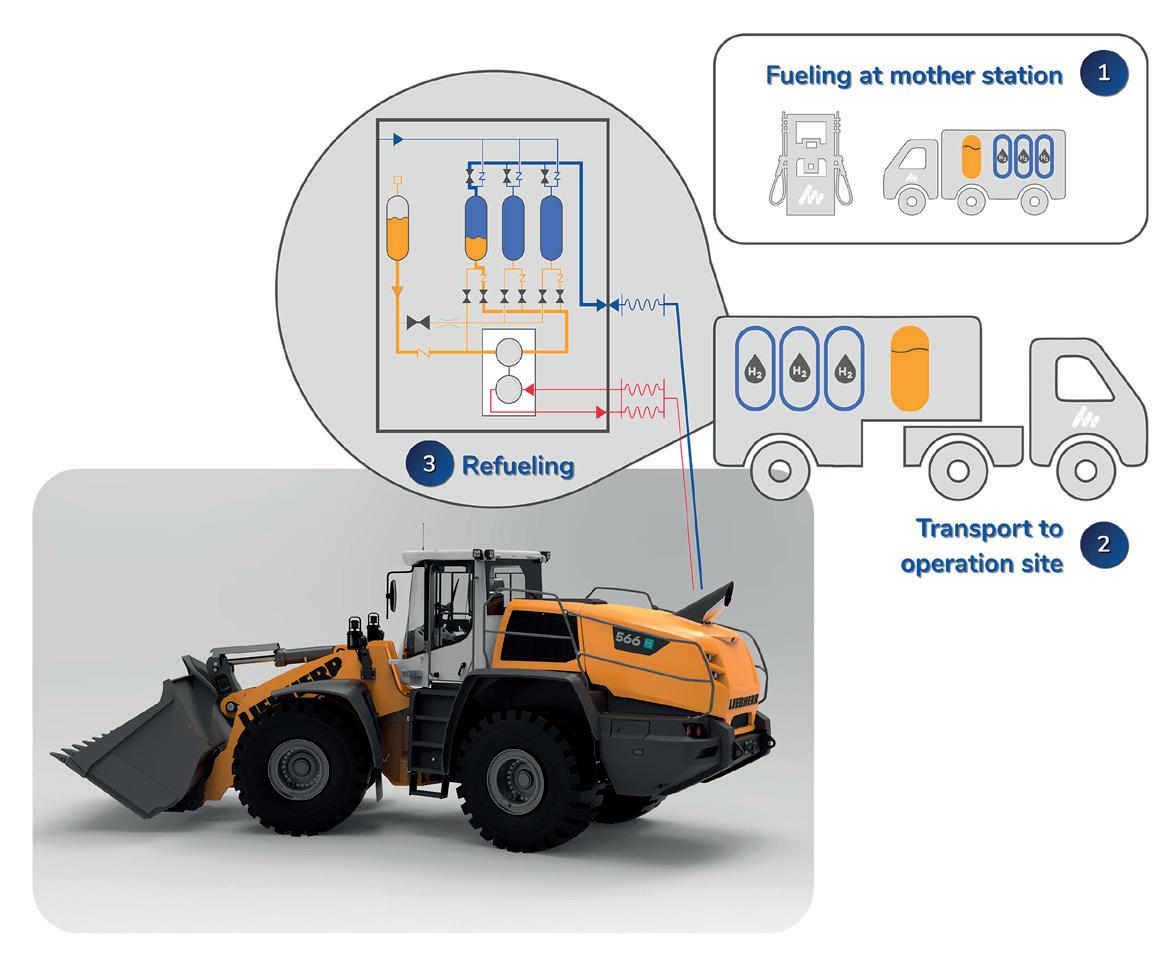
1. A truck equipped with hydrogen tanks fills up with hydrogen at a hydrogen refuelling station and transports it directly to the construction site. Once at the site, a specially developed fluid is pumped into the tanks, which presses the hydrogen out of the tanks and into the vehicle being refuelled.
Increasing potential for lower emissions
The many different approaches outlined prove that a lot is happening in the construction industry when it comes to sustainability. The decarbonisation of mobility and logistics offers great potential for CO2 reduction. Hydrogen as a drive optimally fulfils the diverse requirements of companies in terms of efficiency, performance and operating time. This makes hydrogen construction machinery a low-emission alternative to petrol or diesel – with the same performance. The fast refuelling times and compact tank sizes also represent an advantage over electric vehicles. By using mobile refuelling solutions, companies ensure constant availability of the machines and therefore increase the efficiency of the construction site.
52 Summer 2024 GlobalHydrogenReview.com
Figure
Ekaterina Skorobogatova and Kai Murtagh, Aerodelft, the Netherlands, discuss the steps that a student team is taking to pioneer the development of hydrogen-powered aircraft.
In the midst of the pandemic in 2020, the aviation industry still contributed to 1.7% of global carbon dioxide (CO2) emissions.1
Furthermore, research shows that aviation has a climate change impact attributed to emissions other than CO2 that can be almost as bad as the CO2 impact itself, making up over 47% of the net aviation impact on climate change.2 This impact accounts for the emissions of nitrous oxides, methane and water vapour when emitted at high altitude. Aviation is also the least sustainable form of transport when compared on the basis of CO2 emissions per passenger per km, with a net negative impact at least three times greater than trains.2
The aviation market has been experiencing exponential growth for decades, and this is expected to continue, which will result in a continued rise in the sector’s emissions in the absence of technological development. Aviation’s share of global emissions will grow at a faster rate as other industries implement emission reduction plans. The automotive industry can switch to batteries or hydrogen, the shipping industry

has a range of alternative clean fuels to choose from, and the energy industry is investing in wind, solar and nuclear sources. While other industries are reducing their CO2 emissions, the aviation industry is still debating on suitable candidates to replace kerosene. This is especially critical given that the design cycle of an aeroplane takes at least five years to complete, with the Boeing 777 holding the record in the commercial aviation market.3
A different fuel would pose new requirements, new challenges, and demand novel solutions, and therefore a much longer development time would be needed. Bringing a completely new concept from conception to production would likely take well over a decade. The aviation industry is known for being notoriously hard to steer. Airlines plan their fleets years ahead, manufacturers plan production lines over a decade ahead, and aircraft often have lifespans well beyond 20 - 30 years. This means that the aviation industry is falling behind in the race to reduce CO2 emissions, and in a couple of decades, aviation
53
may well become one of the main industry contributors to CO2 emissions. The EU has already included aviation in the Emissions Trading System, meaning that airlines in Europe have to purchase an allowance for CO2 emissions.4 It is expected that further economic measures will be taken to restrict aviation emissions, posing a threat to the expanding aviation market in the future. Change is required today to ensure a sustainable future for aviation.
Alternatives to kerosene
The aviation industry currently has four main compelling alternatives to conventional kerosene: batteries, sustainable aviation fuel (SAF), hydrogen combustion, and fuel cells.
Batteries
Batteries may first appear as a perfect solution: no CO2 emissions, no non-CO2 global warming impact and available infrastructure. However, there is a technological challenge that batteries cannot overcome: they have a low gravimetric energy density. This means that for a reasonable fuel mass, aircraft on batteries would have a much shorter range compared to conventional fuel. This makes current battery technology only suitable for short range, small aircraft.
SAF
The second option is SAF. Firstly, it is worth noting that the sustainability of SAF is a controversial topic. With current SAF production technology, if all long-haul flights and 50% of

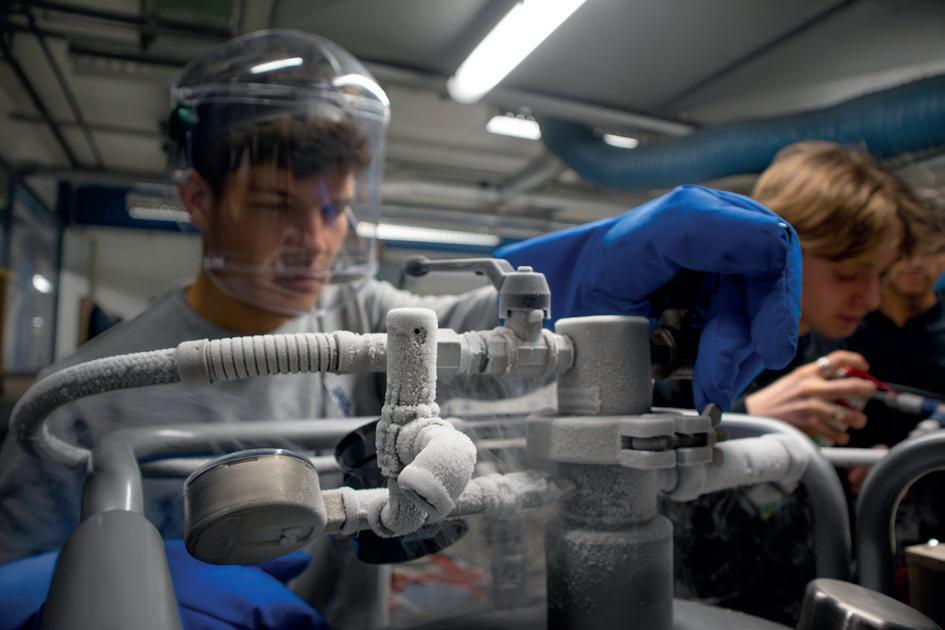
short and medium-haul flights were to fly on SAF by 2050, it would require 75% of the total land area of the EU to be dedicated solely to agriculture for producing SAF, just for the aviation industry. This raises serious scalability concerns.5 SAF, however, offers many benefits that make it a viable option for the future of sustainable aviation. It is nearly identical to current aviation fuels and can therefore be used on existing fleets. It requires little investment into infrastructure and it is a procurable alternative today for airlines. Moreover, there is no other alternative available for long-haul flights. This means that long-haul flights will almost certainly fly on SAF in the future, but due to aforementioned concerns, aviation cannot solely rely on it. Although SAF is CO2 neutral, it still possesses the same non-CO2 climate impact, just as conventional fuel. At this point, an important note should be made about this non-CO2 impact. The majority of it is attributed to the formation of long-lasting contrails, and contrails formation can rather easily be avoided with conventional fuel, SAF, and hydrogen by altering flight paths. Research is being done on it and technologies are in the testing and development phase.1 It is expected that the technology will be fully in use in the next decade.
Hydrogen combustion
The third option is hydrogen combustion. Hydrogen can be produced with water electrolysis using cheap electricity from renewable sources. One of the main issues is that there is no infrastructure to deliver hydrogen to aircraft in the majority of airports. Large investments would be required from airports to facilitate hydrogen aircraft before airlines would be willing to purchase aircraft that can only run on hydrogen. Hydrogen combustion itself has another disadvantage: it produces even more nitrous oxides than conventional fuel, which would facilitate long lasting contrails. As mentioned, this can be avoided by altering flight path. However, the key disadvantage of hydrogen is its low volumetric energy density. This means that the necessary amount of fuel for long-haul flights would simply not reasonably fit inside the aircraft, which limits its use case to short and medium-haul flights.
Fuel cells
The last option, fuel cells, work by combining oxygen and hydrogen to generate electricity, which rotates the propeller. The fuel cell has an anode and a cathode side, separated by a proton exchange membrane (PEM). The hydrogen comes in through the anode, it is then broken up by a catalyst into hydrogen ions (protons) and electrons. The membrane, separating the anode from the cathode, only allows the protons to pass through, whilst the electrons go through an external circuit – which will power a motor. The electrons combine with protons and oxygen on the cathode side, which leads to the end product: water. The fuel cell only produces water as a by-product, which can be condensed in the aircraft and released at lower altitude without forming contrails. Alternatively, earlier mentioned methods of contrail mitigation can be applied. The fuel cell also does not release nitrous oxide or methane, which essentially means that this technology has no impact on global warming as long as the hydrogen is sustainably produced. Although the fuel cell is more efficient when compared to burning hydrogen, it still possesses the same implementation disadvantages as burning hydrogen – namely
54 Summer 2024 GlobalHydrogenReview.com
Figure 2. AeroDelft liquid hydrogen engineers testing a prototype set up with liquid nitrogen.
Figure 1. AeroDelft team with the Sling 4 aircraft that is being modified.
www.zwick-armaturen.de *acc. to DIN EN 12266-1 100 % cOntrOL VaLVe 100 % tiGHt* tri-SHark
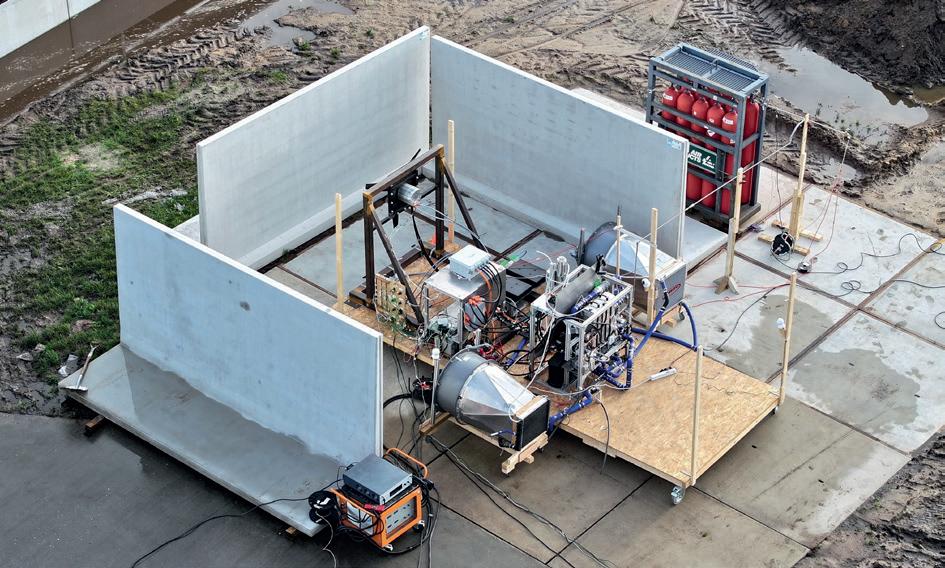
a lack of infrastructure and low volumetric energy density. This makes fuel cells well suited for the short and medium-haul flight market, but far from ideal for long haul flights.
A new approach
A team of students from the Delft University of Technology (TU Delft) in the Netherlands established AeroDelft in 2018, with the aim of offering a solution to the aviation industry’s environmental challenges.
AeroDelft believes that fuel cell hydrogen propulsion is the most sustainable alternative to conventional fuel, which can fill the niche of short and medium-haul flights. Its goal is to prove and promote liquid hydrogen as an alternative to conventional fuel. To do this, the team has launched Project Phoenix, which aims to modify a four-seater Sling 4 aircraft by retrofitting it with a fuel cell liquid hydrogen propulsion system. Using liquid hydrogen allows a better volumetric energy density when compared to gaseous hydrogen, minimising its main disadvantage. It also allows the use of a lighter tank than pressurised hydrogen, which allows it to take on more fuel for a longer range.
AeroDelft has its own design philosophy and uses custom designed and an in-house built liquid hydrogen set up. The first distinct feature is the material of the powertrain, which includes the tank and all of the piping for hydrogen. Unlike most of the liquid hydrogen set ups in other industries, the team uses aluminium instead of steel to allow for weight savings. This requires many custom-made components: the tank, pipes and even the nuts are unique.
Another distinctive feature utilised in AeroDelft’s liquid hydrogen set up is the hydrogen boil-off system, which is located directly inside the tank. The fuel cell requires gaseous hydrogen to operate, which demands certain temperature and pressure ranges to operate. Therefore, the right amount of hydrogen is first boiled off and then brought to the correct temperature. Two proportional-integral-derivative controllers (PIDs) are used for this purpose. The first one commands the heat tapes inside the tank, supplying them with the right amount of energy to boil off the necessary quantity of hydrogen. The second PID controller controls the heating element located just outside the tank, and is used to start up the fuel cell. It brings the temperature of liquid hydrogen from -253°C to room temperature. During the flight, the cryogenic hydrogen is heated up with the excess heat from the fuel cell. The excess
heat is transferred from the fuel cell to the hydrogen via a liquid coolant loop.
A boil-off system directly in the tank is uncommon in other industries and AeroDelft is one of the pioneers in this novel concept. Project Phoenix is essentially the testground for several innovative technologies. A lot of valuable research is being carried out into liquid hydrogen propulsion systems and the findings are shared with industry partners. However, to prepare a liquid hydrogen propulsion system, first the gaseous hydrogen propulsion system must be built. The liquid and gaseous hydrogen propulsion system share the majority of components. For instance, in order to facilitate hydrogen propulsion, a new motor needs to be fitted. This is the case regardless of the way in which the hydrogen is stored in the tank, and the motor requires a redesign of the entire nose of the aircraft. Essentially, the gaseous hydrogen set up allows AeroDelft to test the entire hydrogen propulsion system on board the aircraft: the fuel cell, thermal management system, cathode loop, motor, structural modifications, electronics, and other crucial subsystems before the liquid hydrogen is on board. So, whilst the liquid hydrogen department is developing the boil-off system in the tank and the heating of hydrogen, the gaseous hydrogen department and other departments are working on all the above subsystems.
AeroDelft has performed its first full-scale hydrogen propulsion system run, powering a propeller with electricity generated with hydrogen. During this run, the propulsion system was built on a platform, allowing for full access to all sides of the system. The hydrogen was supplied from an external pack of hydrogen cylinders, which was connected to the inlet of the fuel cell’s anode loop. The power produced by the fuel cell goes through a power distribution unit and junction box to power the propeller. Some of the power from the fuel cell is then used to power other systems on the aircraft, such as the thermal management system that cools down all the components, including the fuel cell. The entire system was tested alongside individual components, which gave confidence in the electronics system. This testing was a proof of concept demonstrating that the hydrogen propulsion system was designed correctly and all of the components were integrated correctly.
Currently, AeroDelft is integrating the powertrain into a mock-up structure of the actual aircraft. The propulsion system will then be tested before Project Phoenix takes off for the first time in 2025. In parallel, the liquid hydrogen department at AeroDelft is testing the scaled down prototype of the propulsion system for the first time. It plans to fly on liquid hydrogen in 2026.
References
1. FRIEDRICH, J., ‘World Greenhouse Gas Emissions: 2020 | World Resources Institute’, World Resources Institute, (25 October 2023), https://www.wri.org/data/world-greenhouse-gas-emissions-2020?_gl=1
2. ‘UK Government GHG Conversion Factors for Company Reporting’, Department for Business, Energy & Industrial Strategy, (2019), https:// www.gov.uk/government/publications/greenhouse-gas-reportingconversion-factors-2019
3. SABBAGH, K., ‘21st Century Jet’, 1st edition, Scribner Book Company, (1996).
4. ‘EU Emissions Trading System’, EASA Eco, https://www.easa.europa.eu/ eco/eaer/topics/market-based-measures/eu-emissions-trading-system, accessed 7 March 2024.
5. RITCHIE, H., ‘How Much Biofuel Would We Need to Decarbonise Aviation?’, (29 September 2023), https://www.sustainabilitybynumbers.com/p/aviation-part-two
6. https://news.aa.com/news/news-details/2023/American-Airlinesparticipates-in-first-of-its-kind-research-on-contrail-avoidance-CORPOTH-08/default.aspx
56 Summer 2024 GlobalHydrogenReview.com
Figure 3. AeroDelft’s gaseous hydrogen powertrain on the day of its first start up.

Greg Arnold, Whessoe Engineering Ltd, UK, discusses the transition to a hydrogen economy and important design considerations for large-scale liquid hydrogen storage.
Transition and change are hard. The global collective drive for change has so many blockers, it is no wonder that progress can be slow. By contrast, the primary driving force behind the Apollo moon missions of the 1960s was firmly rooted in politics with scientific research somewhat only a secondary consideration. The technological transition achieved by NASA allowed the US to catch up with, and even surpass, the Soviet space programme. The timescale to achieve the technological transition to place a man on the moon was less than 10 years, more a testament to the political driving force than the shear ingenuity of the engineering. It was 1972 when John Sawyer published his paper entitled ‘Man-made Carbon Dioxide and the Greenhouse Effect’.1 After 52 years, the global political will for energy transition still appears to be lagging behind. For example, the use of coal for power generation is still increasing. However, there is not cause for total apathy. Even the World Economic Forum declares that significant progress has been made in the last decade with investment into renewable energy now exceeding the investment into fossil fuels.2 It states that the average energy

transition index has increased in the last decade with the “geopolitical balance of energy shifting significantly”. The global energy transition journey has certainly begun. So why is progress still so slow?
Both the question and answer regarding why the driving force or political will for energy transition has appeared to lack urgency is exceedingly complex. However, at risk of major over-simplification, could the answer simply be cost?
In the past, when renewables used to cost more than gas-fired power, this could have been true. However, this is surely not the case today, when, according to IRENA,3 the cost of electricity generation is now cheaper for renewables when compared to all fossil fuels across the G20 countries – a view that is supported by the United Nations.4 This is where a major problem becomes more apparent: it is not the cost of electricity generation, but the cost of energy transportation – including any required energy conversation – that is now the main obstacle. For any given location, if a wind turbine or solar panel could be installed and the electricity generated could be used there and then, it would be. However, the wind does not always blow and
57
the sun does not always shine, and the electricity is not always required in the exact spot where it is generated. Many ideas from batteries to liquefied air with heat recovery can help to store spare renewable electricity, and these ideas will most certainly help. But there is always going to be a need to transport the energy so that it can be used where and when it is required. Such is the huge significance of this problem that it seems that everyone from governments and energy giants to small engineering contractors and environmental scientists continue to study the costs involved and the best technology to use to transport the energy. The available data changes almost weekly, but unfortunately it is clear that the transportation of hydrogen, whether it is liquefied as green ammonia or on the back of an organic carrier, is still significantly more expensive than transporting energy as fossil fuels. This brings
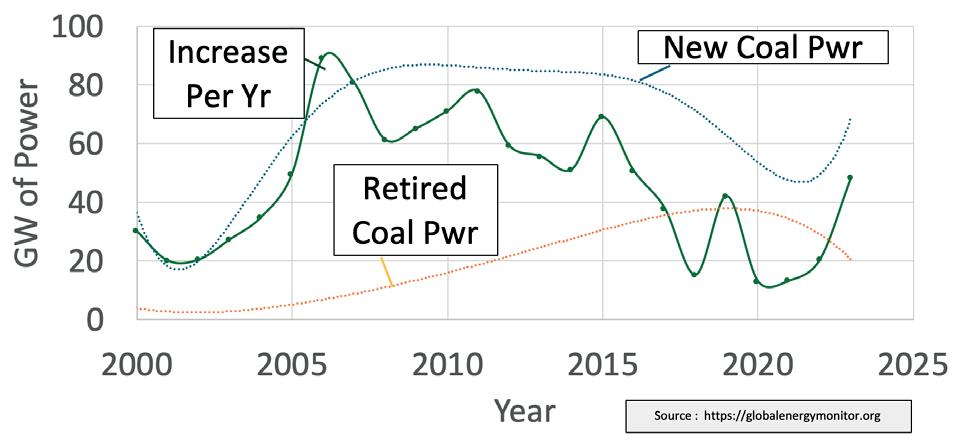
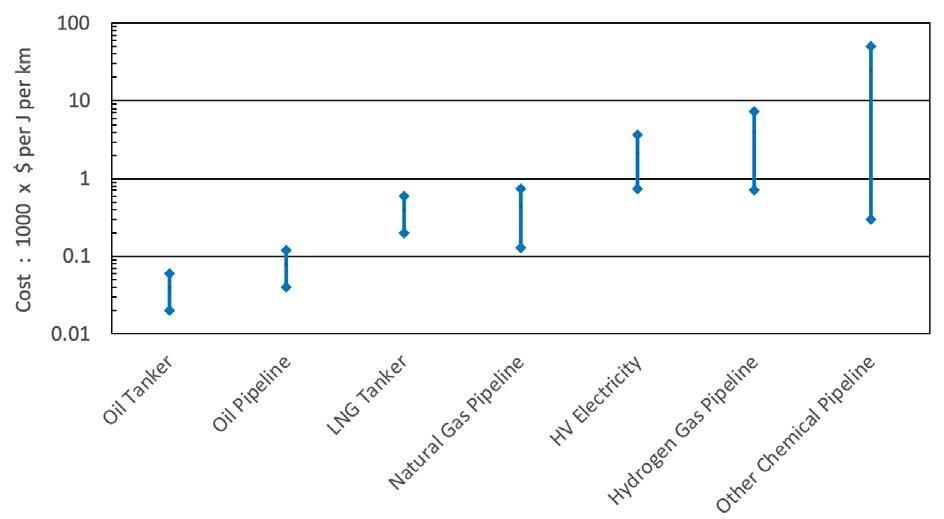
us back to the simplification of cost being the main blocker. Is it the case that across the globe not enough people are prepared to pay significantly more for their energy, and hence politicians will not force it? Governments are rarely inclined to make their country less cost competitive than a neighbouring country, and if they do it is often unpopular at home. Analysis by Corbyn shows that “swift action by politicians is the single most important factor in limiting global warming.”8 Thankfully, industry is progressing when it comes to exploring the best ways to transport energy regardless of economics. Each energy company needs to be prepared to be part of the green energy chain, ready for when the politics really catch up and there is no alternative. Hence, a race of different technologies trying to dominate is now materialising – although it should be considered that all the different energy transportation paths will most likely play some future part, depending on scale. When considering hydrogen transportation, options include liquid organic hydrogen carriers (LOHC), liquid ammonia, liquefied hydrogen itself, or compressed gas pipelines. Each has its own advantages and drawbacks. For example, supplying the energy for cracking ammonia into its separate components of hydrogen and nitrogen requires the equivalent of burning approximately 22% of the ammonia to be cracked. Some technologies such as membrane systems can improve on this percentage, but their capacity can be limiting. This is compared to the energy lost in liquefying hydrogen which is akin to losing 30% of the energy stored. But again, there are no air separation stages nor catalyst reconversion steps for liquefied hydrogen. By the end of this decade, technology for liquefied hydrogen (LH2) tankers is anticipated to provide commercial service with transport costs in the range of US$2.0 - 3.7/kg H2 for a 5000 mile distance. According to the IEA, repurposed hydrogen gas pipelines would cost even less than LH2, ammonia or LOHC, certainly for short distances. But for longer distances, or where pipelines do not already exist, the higher density energy transfer of the liquid formats is advantageous for storage.
Whessoe has been designing and commissioning cryogenic storage for LNG and ammonia since the early 1960s and aims to utilise this experience to open up the green hydrogen chain by working on liquid hydrogen storage. When examining the IEA data, the large relative cost for LH2 storage appears a good place to start to looking for improvements.
The current largest liquefied hydrogen storage vessel, located at NASA’s Kennedy Space Centre, has a usable capacity of 4732 m3 This was designed for long-term storage of hydrogen without any regular turnover of inventory. Pushing the boundaries of sphere design and taking maximum advantage of the economies of scale, Whessoe’s new accredited LH2 storage design has a capacity of 40 000 m3. Although still based on a similar sphere-in-sphere approach, the main difference – other than the sheer size – is that the NASA tank makes use of an internal refrigerated heat exchanger to reduce boil-off, while the Whessoe design restricts boil-off to 0.1% by mass without the need for an internal helium refrigeration exchanger. Continuous inventory change out in an energy chain is in some ways advantageous as this does not always mean the boil-off needs to be kept to zero, albeit still possible with recirculation sub-cooling (ex-tank).
An understanding of the potential upset cases for LH2 storage is essential. For example, two concerns are: y The relatively large changes in liquid hydrogen density for only small changes in temperature. If the liquid hydrogen heats up
58 Summer 2024 GlobalHydrogenReview.com
Type of energy 2009 2019 % change Onshore wind 135 41 -70 Solar photovoltaic 359 40 -89 Gas (combined cycle) 83 56 -33 Coal 111 109 -2 Nuclear 123 155 26 Gas (peaker plant) 275 175 -36
Table 1. Levelised cost of energy (US$/MWh)7
Figure 1. Global new and retired coal fired power stations since 2000.5
Figure 2. Energy transport costs.6
WE MAKE ENERGY TRANSITION HAPPEN
We support the energy transition by finding synergies between cutting-edge technology, engineering and research, thereby transforming natural resources into innovative products.


Visit us at GASTECH 17-20 September Hydrogen zone, booth D625
due to a possible refrigeration system failure, then tight control of the liquid level is required. Essentially, density changes require an ullage and for any given gross tank size, this ullage reduces tank capacity. Therefore, optimising control vs too big an ullage is a key parameter.
y In export terminals where the LH2 has just been produced, management of excessive percentages of ortho-hydrogen (o-H2) is required. The upset condition is where the upstream liquefaction process does not have the use of multistage ortho to para conversion reactors. Where greater than 1% o-H2 is sent to storage, restrictions to rundown flow rate would be expected in order to stay within boil-off gas compressor capacities. This would only be able to typically cover up to 2% o-H2. Whessoe’s research indicates that beyond 2% o-H2, the storage boil-off gas system becomes uneconomical to design, given the larger upstream liquefaction systems. Thankfully, this corresponds to liquefaction specifications that claim to achieve only 1% o-H2 remaining.
During the process of achieving an accredited design, Whessoe also carried out specific research into the method of producing a vacuum through the insulation. A cold vacuum pressure of less than 1 millitorr can be achieved with the Whessoe design, improving the insulation performance. One issue has been the time required to produce such a vacuum – it took over 5 months for the existing smaller tank design. If similar systems are to be used for the 40 000 m3 tank design, the time required to
produce the vacuum could be years. However, designs have been developed which aim to produce the vacuum in a reasonable timeframe, optimising the three-way balance between boil-off affecting heat bridges (outer to inner tank), the time to produce the vacuum and the cost of the vacuum system.
Developing the LH2 tank in parallel with considering the requirements of both import and export terminal process design has also led to better understanding of instrumentation and control in and around the storage tank. Designs for import terminals have affected the optimisation of the storage tank design. An understanding of the construction process also helps to shape the time required for welding.
Conclusion
The use of ‘another bite’ in the title of this article relates to one more step on a long journey of technology development occurring before a fully developed market is in place. It is reassuring to see industry leading with multiple projects and ideas, marking a clear investment in time. As seen with the vast improvements in solar power costs, the more development work that is undertaken, the more economical that processes can become. When the politics catches up and the possibility of a carbon tax begins to bite, it is encouraging to know that global engineering is already on the path to achieving the ultimate goal of clean energy, as well as the stepping stones of transition along the way.
Whessoe intends to continue its developments and urges others to keep pushing. Developments to date have certainly improved LH2 storage costs and development work for liquefied hydrogen storage tanks for onboard shipping and even bigger flat bottomed on-shore tanks – similar to LNG tank sizes of 160 000 m3 – is already underway.
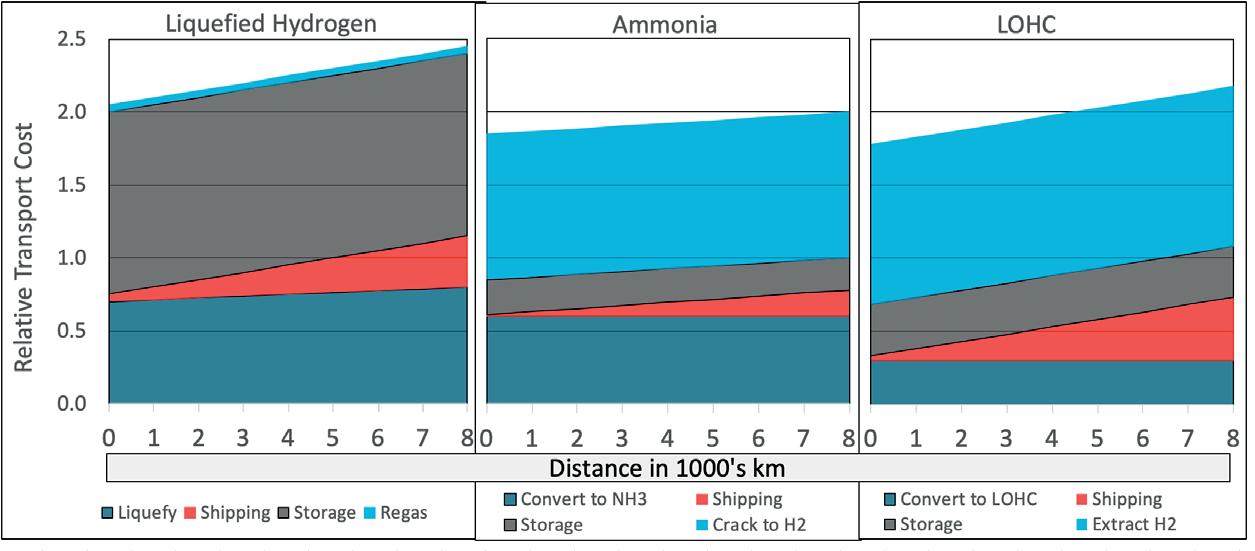
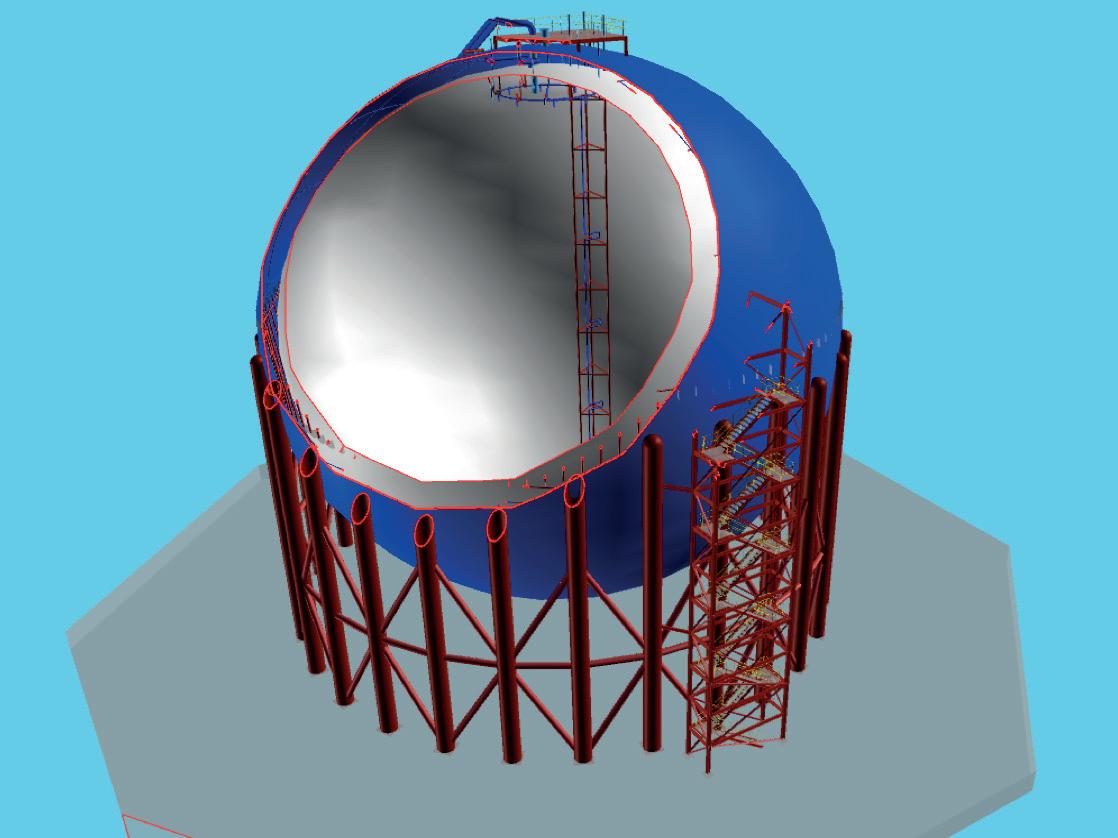
Figure 4. A cut-away 3D model of the Whessoe 40 000 m³ liquefied hydrogen tank design.
Regardless of which energy path any future project takes, or how governmental energy strategies shape the techno-commercial choices of the energy chain, although change is hard, the goal at the end is worth it. Every small step counts.
References
1. SAWYER, J. S., ‘Man-made CarbonDioxide and the Greenhouse Effect’, Nature, 239 (5366) pp. 23 - 26, (1972).
2. ‘Fostering Effective Energy Transition’, World Economic Forum, (14th Edition), Cologny, Switzerland, (2023).
3. ‘Renewable Power Generation Costs in 2022’, International Renewable Energy Agency, Masdar City, Abu Dhabi: IRENA ISBN: 978-92-9260-544-5, (2020).
4. ‘Renewables: Cheapest Form of Power’, United Nations, retrieved from https://www.un.org/en/climatechange/renewables-cheapestform-power.
5. ‘Global Coal Plant Tracker’, Global Energy Monitor Organisation, (2024), retrieved from https://globalenergymonitor.org/projects/ global-coal-plant-tracker/summary-tables/.
6. SAADI, F. H., LEWIS, N. S., and MCFARLAND, E. W., ‘Relative Costs of Transporting Electrical and Chemical Energy’, Energy Environ, Sci., 11, pp. 469 - 475, (2018).
7. ROSER, M., ‘Cheap Renewables Growth’, retrieved from https:// ourworldindata.org/cheap-renewables-growth.
8. CORBYN, Z., ‘Politics is biggest factor in climate uncertainty,’ Nature, (2013), https://doi.org/10.1038/nature.2013.12138.
9. COLLINS, L., ‘IEA : Ammonia & LOHC will be cheaper options for shipping hydrogen than liquefied H2 even with reconversions costs’, HydrogenInsight, (2023).
60 Summer 2024 GlobalHydrogenReview.com
Figure 3. Relative hydrogen transportation costs as a liquid.9

Juan Ruiz, Carlos Ruiz and Michelle Wicmandy, KBC (A Yokogawa Company), explain the real-world impact of energy management systems for green hydrogen on cost, emissions, and efficiency.
In the face of escalating global concerns surrounding greenhouse gas (GHG) emissions, the energy sector is facing a critical juncture, driven by a pressing need for change. According to the World Economic Forum, fossil fuel emissions now exceed 34 billion tpy, up from 22 billion tpy in 1990.1
A shift is underway as companies acknowledge the profound implications of energy on emissions and costs alike. As the world struggles with this environmental issue, S&P Global Commodity Insights predicts a bold future for clean energy technology (CET) investments. Its forecast anticipates CET investments will approach US$800 billion in 2024 and US$1 trillion by 2030.2
61
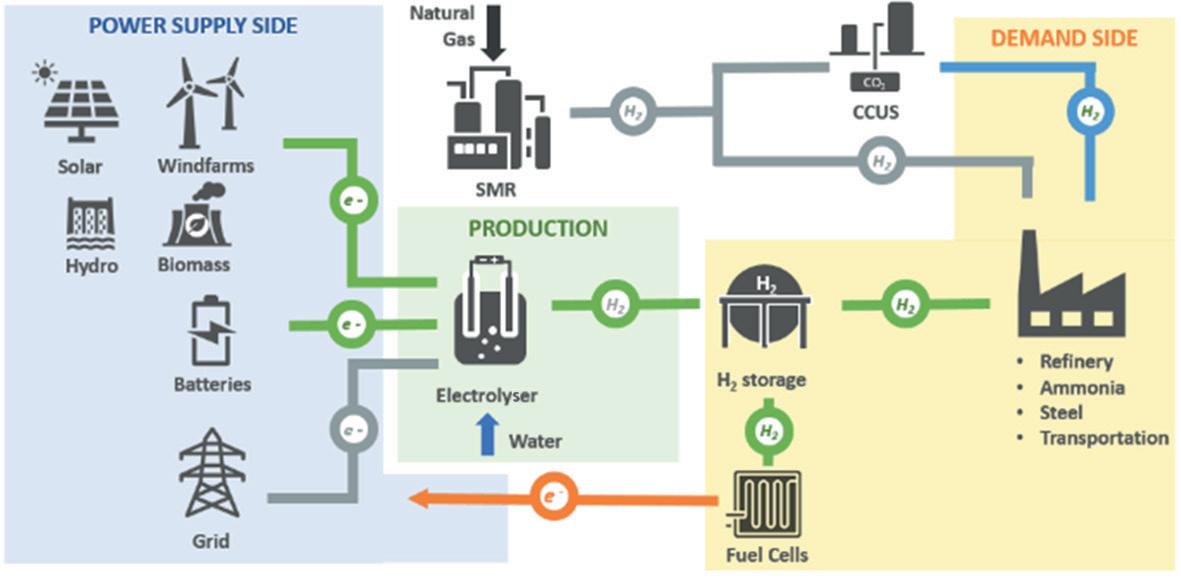
Challenges and opportunities
Although renewable energy sources such as solar and wind power hold great promise to reduce carbon emissions when satisfying electric power needs, they cannot be considered as the sole solution to decarbonise the economy for several reasons. First, the variability and uncertainty of electric power generation arising from these sources pose challenges that affect reliability. This issue directly impacts decision making, which may produce suboptimal solutions or impractical recommendations and lead to economic losses. Second, energy in the form of electric power accounts for only a small fraction of all energy needs. The majority of CO2 emissions arise from industrial processes that generate steam in boilers, which consume fossil fuels.2
Finding ways to electrify these systems is still under research.3 Several challenges must be overcome before electric power can fully replace steam generation processes or steam used as an energy transporter.
Several energy storage technologies have been proposed to tackle the variability of renewable energy sources, such as the use of battery energy storage systems (BESS). However, their cost and required finite resources like lithium may still present obstacles. To address improved energy storage needs and alternatives to heating methods, green hydrogen has emerged as a key enabling component.
Hydrogen as a change enabler
Hydrogen can play an important role towards decarbonisation in a wide variety of sectors, including the process and power sector, along with the transportation and agriculture sector. It provides an alternative way to store energy, an alternative clean fuel source, as well as feedstock for several industries, as shown in Figure 1.
Moreover, incorporating renewable resources and green hydrogen into the pool of energy vectors in the industrial environment has significant potential to reduce costs –particularly if it is well integrated with the existing, traditional, hydrocarbon-based systems. However, achieving a high level of integration requires higher investment and leads to a greater complexity in managing and operating these mixed energy systems.
At a real-time, operational level, decisions on how much and when to use cogenerations or fossil fuel sources, which usually depends on power prices and fuel prices, will now be directly affected by the predictions of weather conditions such as
wind speed or solar intensity. Moreover, when to store hydrogen, use it as feedstock or to produce electricity via fuel cells will be driven by expected market conditions. All these factors lead to a great challenge to the person or group in charge of managing these energy systems.
Green hydrogen is one example of a low-carbon emission energy vector that can help decarbonise the economy with the aid of advanced technologies.
These tools need to meet the following requirements to make this complex set of decisions feasible:
� Integrated model: considers not only individual pieces of equipment or subsystems often encountered in traditional energy systems (fuel, steam, electricity), but also incorporates elements related to renewable energy, to be managed all-in-one.
y Forecasting capabilities: handles the site’s future conditions and its environmental conditions such as weather, market conditions, and energy demand.
y Performance analysis: analyses both current and past energy efficiency and performance of the site through effective monitoring.
y Energy inventory management support tools: facilitate management of energy inventory to ensure efficient tracking and use of resources.
y Automating generation of recommendations: generates optimal recommendations to relieve operators from complex and time-consuming activities to foster efficiency.
y Autonomous operation: streamlines processes and overall system efficiency in both the short- and long-term scenarios.
y Flexible interfaces: accommodates different information providers and stakeholders, including plant information system, aggregators, forecasters, and more.
Energy management system for green hydrogen systems
An energy management system (EMS) is an integrated suite for monitoring, optimal scheduling, real-time optimisation and GHG accounting of various energy system components such as electrolysers, gas turbines, boilers, and renewable energy subsystems such as solar panels, wind turbines, and BESS. The EMS addresses the full spectrum of energy system activities related to past, present, and future information. This enables real-time monitoring, optimisation, and optimal multi-period scheduling for ongoing operations at the lowest economic cost and within emission constraints.
An effective EMS is crucial to reduce costs and emissions during the current energy transition while adapting to evolving circumstances. This involves continuous process improvement programmes, as well as seamlessly incorporating renewable energy vectors, energy storage devices, decentralised assets, and GHG emissions reporting needs. The system delivers faster and more informed operational decisions to provide actionable insights for energy planning, scheduling, and trading. Real-time actions can be taken in either open-loop (advisory mode) or closed-loop (acting directly on the control system set-points or advanced process control targets) scenarios that align with the optimal schedule.
62 Summer 2024 GlobalHydrogenReview.com
Figure 1. Hydrogen generation network.
Our valve solutions for Hydrogen applications are meticulously engineered and field-proven to ensure your seamless plant operations.
(9 Series) Pressure Relief Valve
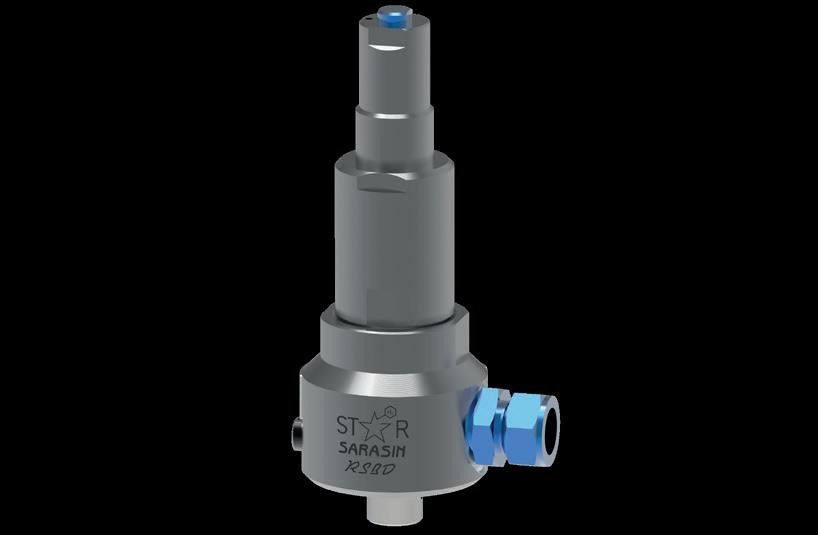
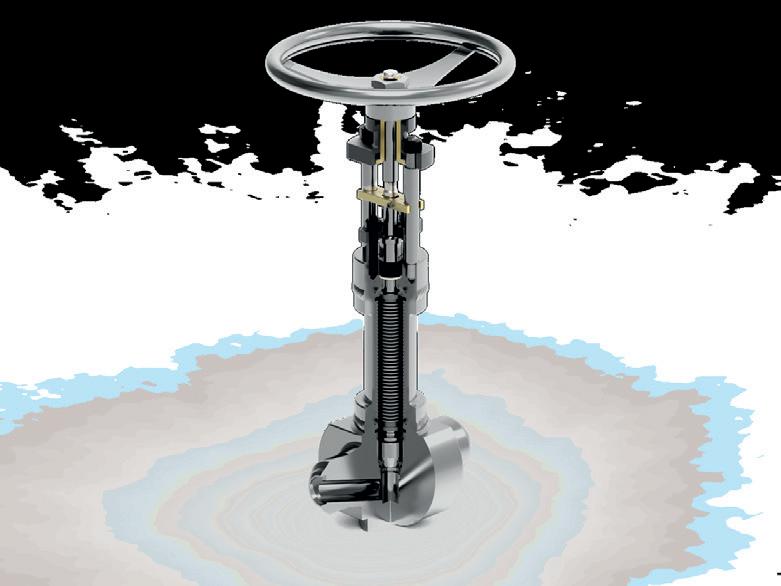
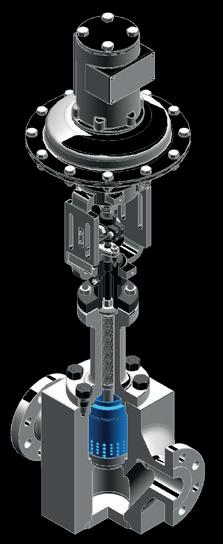







PERFORMANCE, ENGINEERED. trilliumflow.com/ghr-hydrogen SARASIN-RSBD®
RED POINT®
BLAKEBOROUGH® BV 500 Forged Control Valve with Bellows Bonnet
H2Star
Bellow Seal Globe Valve
Within the system, the digital twin can model, monitor, schedule, optimise, and track and report energy systems and their GHG emissions across various complexities – from single units to entire sites and regions.
This digital twin decision support tool relies on integrated, holistic models to manage and optimise both conventional energy systems and renewable energy sources. With integrated models, interactions between the subsystems are understood and costs and emissions of any optimisation actions can be assessed.4,5,6
Key capabilities of these tools include:
y Integration with multiple data sources.
y Data validation.
y Support forecasting.
y Analysis of current and past energy efficiency and performance.
y Optimal energy schedule calculation.
y Automated optimal schedule generation.
y Track GHG emissions.
y Multi-objective optimisation.
y Support autonomous operation in the short- and medium-term.
By leveraging these capabilities, companies can move from manual or semi-automatic and reactive energy and emissions management to a fully automated and proactive approach. This shift allows engineers to save time, prioritise higher-value
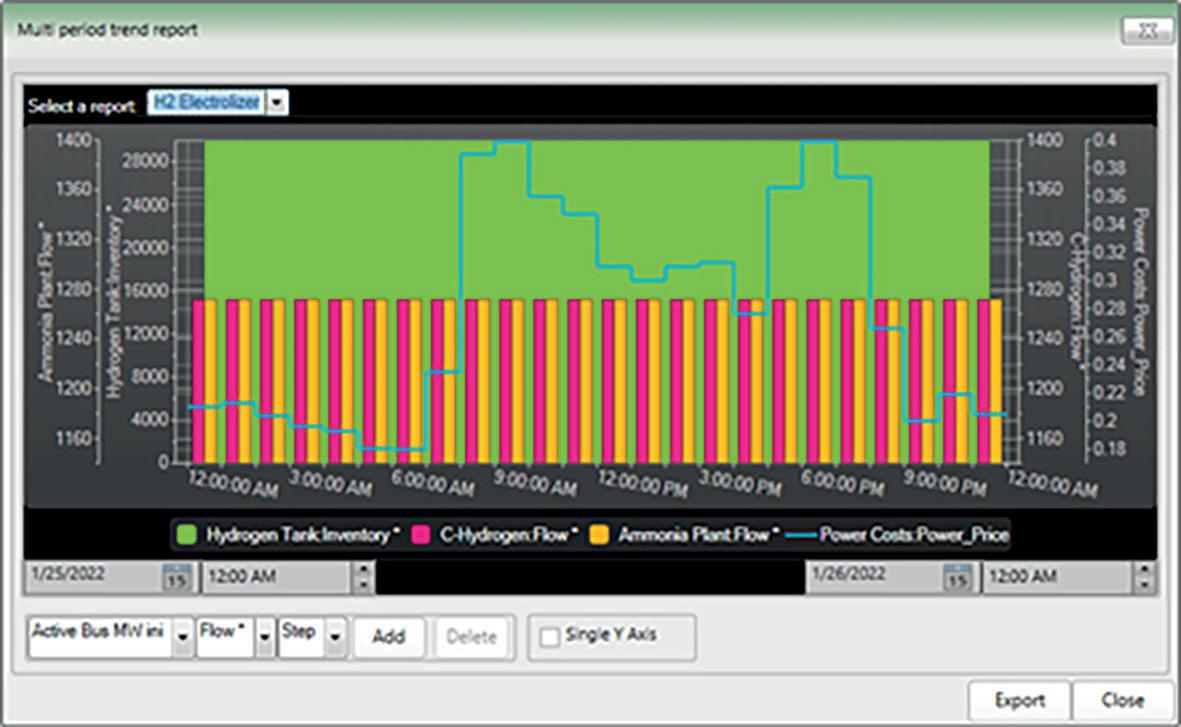
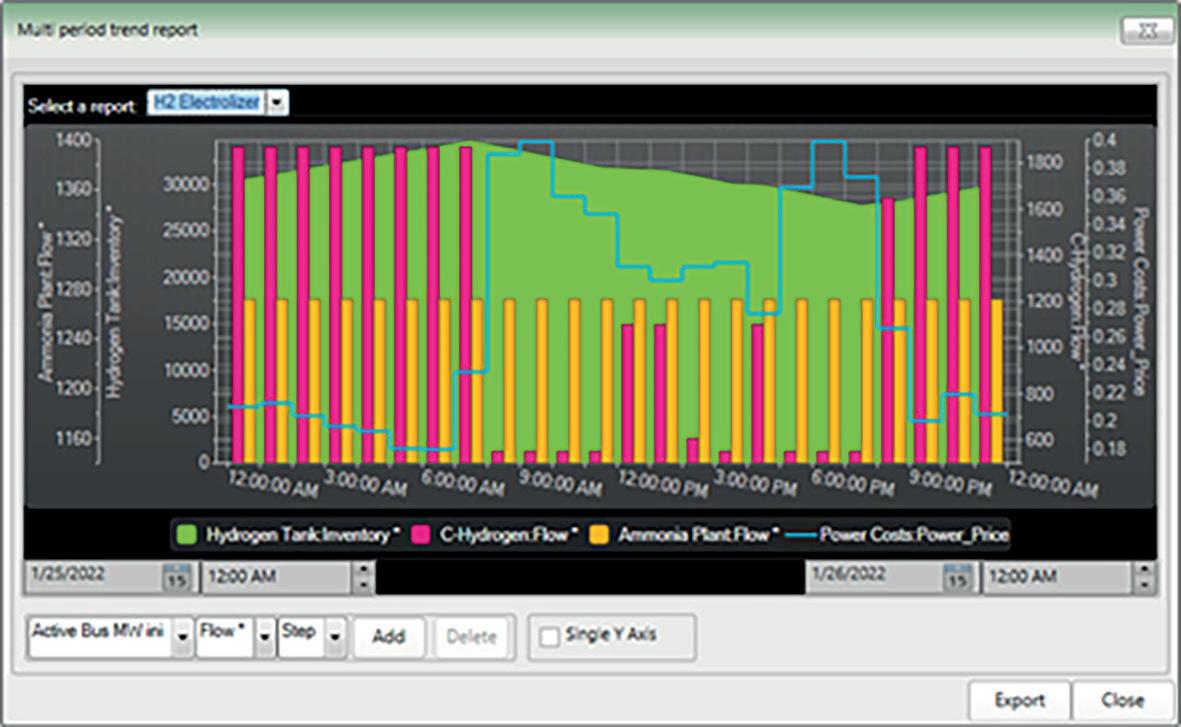
tasks, and be more proactive in energy and GHG emissions management.
Additionally, the EMS suite provides remote accessibility for effective information sharing among various stakeholders.
Transformative impact of energy management systems
The two use cases that follow show how the entire EMS reduces costs and emissions, and simplifies the lives of engineers, planners, and operators.
Case study 1: management of hydrogen production for ammonia process plant
This case study highlights the use of an EMS to efficiently manage a 100 MW electrolyser system under the Dutch electric market grid. The key challenge for the electrolyser operator is to determine the optimal allocation of hydrogen generation and storage, considering expected power prices and hydrogen demands from an ammonia plant.
In Figure 2 and Figure 3, an optimally managed vs an unmanaged operation case are compared and contrasted.
Under an unmanaged operation, as depicted in Figure 2, the production of hydrogen is solely based on meeting the ammonia plant’s demand without considering electricity prices. While this operation will satisfy demand and system requirements, it may not be the most effective or cost-effective method and lead to higher hydrogen production costs.
When the operation is managed by an EMS (shown in Figure 3), the system will optimally account for the power price variability, storage capacity, constraints, and electrolyser operating point efficiencies, to determine the best times to produce hydrogen while satisfying demand. The crucial aspect in this system lies in the proper management of the hydrogen inventory as shown in the green area in Figure 2 and Figure 3. As expected, the EMS identifies the economic benefits of hydrogen production (red bars) during periods of low electric prices, as indicated by the light blue curve, and recommends proper usage of the storage tank. However, determining the optimal production quantity is complex considering factors such as storage capacity, electrolyser efficiencies, demand forecasts, renewables, and more. The EMS can autonomously navigate this complexity by using a first principles model of the system tied to the real-time data. This model is frequently updated to reflect current plant conditions (e.g., current hydrogen storage level, electrolyser efficiency, ambient temperature, and more) and considers the latest forecasts, over a rolling horizon, such as power grid price and hydrogen demand to ensure an informed decision-making process.
Comparing the operational scenarios with and without an EMS, the EMS reduced energy costs by 10% based on the author’s experience. This reduction in energy costs directly translates to a substantial decrease in the total cost of the system. In the unmanaged case, the total cost of the system is €488 620/d. However, the total cost decreased to €439 860/d in the optimally managed case. Therefore, by implementing an EMS, daily savings of approximately €50 000 +, or €18 million/yr can be achieved. Ultimately, using an EMS ensures effective and efficient use of energy, which is crucial for sustainability and environmental impact.
64 Summer 2024 GlobalHydrogenReview.com
Figure 2. Unmanaged hydrogen production.
Figure 3. Managed hydrogen production.
HIGH PRESSURE HYDROGEN COMPRESSION TECHNOLOGY
HIGH PRESSURE HYDROGEN COMPRESSION TECHNOLOGY
HIGH PRESSURE HYDROGEN COMPRESSION TECHNOLOGY
Advanced reciprocating piston compression technlogy of up to 500 - 1,000 bar
Advanced reciprocating piston compression technlogy of up to 500 - 1,000 bar
Advanced reciprocating piston compression technlogy of up to 500 - 1,000 bar
Oil Free design compressors, with 0% to 100%
Oil Free design compressors, with a complete turndown: 0% to 100%
Modular and scalable design that can include one or two compressors
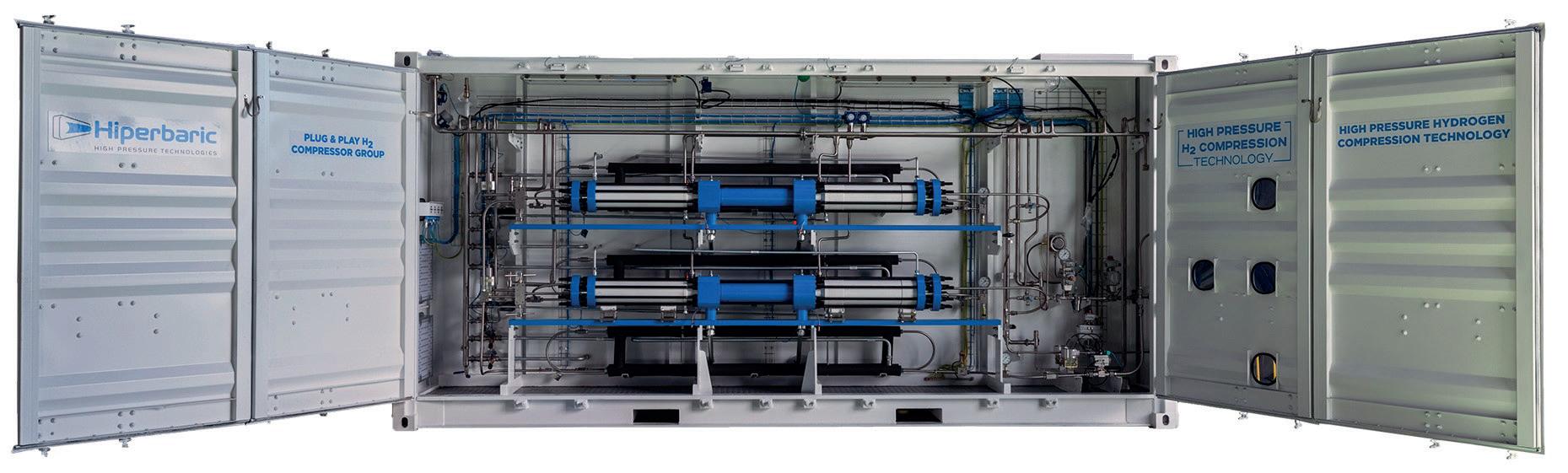
Oil Free design compressors, with 0% to 100%

Modular and scalable design that can include one or two compressors
Modular and scalable design that can include one or two compressors
24/7 Aftersales service for installation and start-up, supply and manteinance
24/7 Aftersales service for installation and start-up, supply and manteinance
24/7 Aftersales service for installation and start-up, supply and manteinance
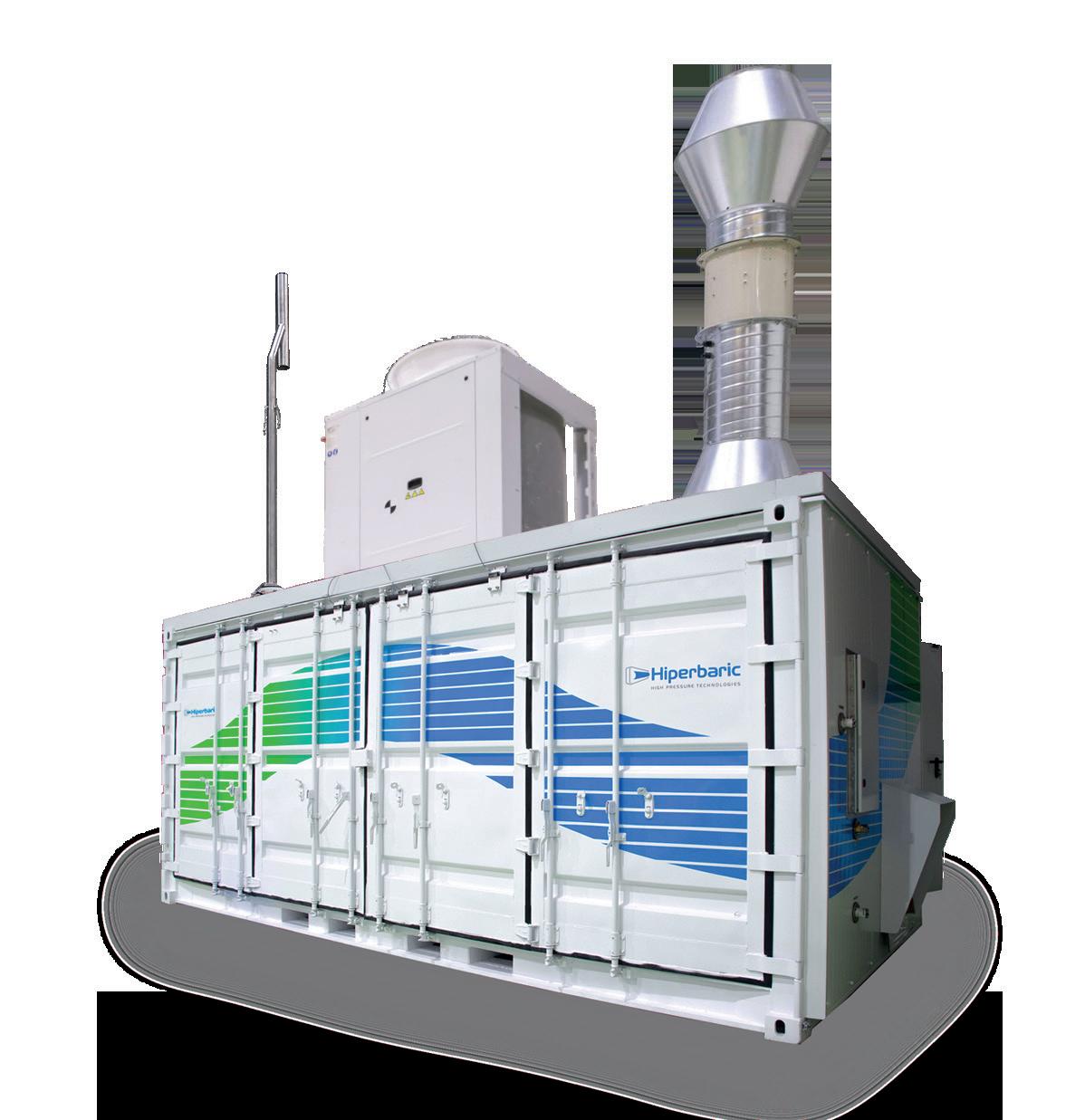

In June 2024, Hiperbaric has more than 30 H2compressor groups sold, and 10 H2 compressor groups installed for 10 customers
In June 2024, Hiperbaric has more than 30 H2compressor groups sold, and 10 H2 compressor groups installed for 10 customers
In June 2024, Hiperbaric has more than 30 H2compressor groups sold, and 10 H2 compressor groups installed for 10 customers








HIGH PRESSURE HYDROGEN COMPRESSION TECHNOLOGY









Advanced reciprocating piston compression technlogy of up to 500 - 1,000 bar



GLOBAL LEADER IN
GLOBAL LEADER IN
M Y CM MY CY CMY K
C
GLOBAL LEADER IN
C M Y CM MY CY CMY K
Visit us at Hydrogen Technology Expo North America | Booth 564
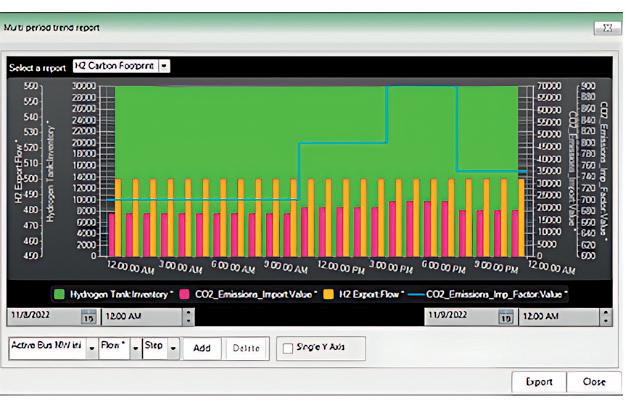
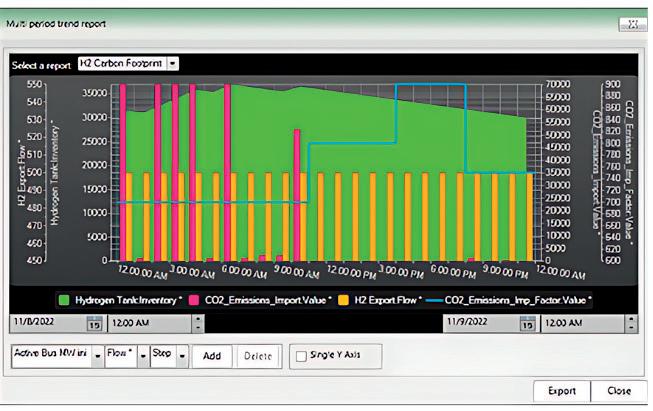
Case study 2: carbon reduction via energy management
The EMS facilitates real-time monitoring and tracking of the carbon footprint associated with hydrogen systems.
This footprint is affected by a variety of assets in different ways. The emissions incurred by building and transporting wind turbines and solar panels, for instance, carry a carbon footprint when used to generate electric power for an electrolyser to produce hydrogen.
Alternatively, demineralised water used in the electrolysers can be produced via reverse osmosis or multi-flash evaporators. Like the former, which relies mainly on electricity to operate, the latter uses steam, too. Therefore, the steam generation’s carbon footprint must also be considered. Moreover, electricity imported from the grid also has a carbon footprint that needs to be considered.
By using an effective EMS, the hydrogen/power generation process can track and report individual carbon footprints for each asset or subsystem.
The EMS offers more than monitoring capabilities. It reduces the carbon footprint by offering real-time recommendations for optimising the use of energy sources, ensuring optimal hydrogen production while minimising environmental impact and still meeting the demand. To minimise the carbon footprint across each time horizon, forecasts of imported electric power costs updated automatically, in real-time over a given time horizon, can be used to manage hydrogen production and storage.
Figure 4 and Figure 5 show how the site’s carbon footprint will be affected with and without management. CO2 emissions are represented by pink bars, hydrogen export is represented by yellow bars, the carbon intensity of imported electricity is indicated by blue lines, and H2 storage tank inventories are represented by green areas.
The production plant that exports 500 kg/h of hydrogen without proper management has a carbon footprint of 458 490 lb/d (207.9 tpd) CO2. However, with optimal management, the carbon footprint drops to 411 770 lb/d (186.8 tpd). Leading to a significant 10% reduction in GHG emissions. Assuming a constant electricity price, this reduction does not compromise hydrogen export rates or operating costs.
The optimiser/system uses the storage tank capacity to determine over-production of hydrogen during periods of low-carbon intensity of electrical power (i.e., accumulating excess hydrogen in the storage tank) and under-production during periods of high-carbon intensity of electrical power (exporting hydrogen from the storage tank). Therefore, the net carbon footprint is reduced.
Conclusion: charting a sustainable energy future
The energy sector is at a crucial turning point, driven by the urgent need to address escalating GHG emissions. With fossil fuel emissions surpassing 34 billion tpy, companies are recognising the imperative to transition towards cleaner energy sources.
While renewable energy shows promise, it cannot be the sole solution due to its variability and limited contribution to overall energy needs. To effectively decarbonise the economy, incorporating renewable resources and green hydrogen into the industrial energy mix is crucial. However, this integration requires higher investment and complex management systems.
Advanced technologies like EMS and digital twins play a vital role in enabling proactive energy management and optimising both conventional and renewable energy systems.
The case studies presented in this article have demonstrated the transformative impact of EMS, including significant cost reductions and carbon footprint reductions without compromising production rates or operating costs. By adopting these advanced technologies, companies can navigate the complexity of the energy landscape and contribute to decarbonise the energy ecosystem.
References
1. https://www.weforum.org/agenda/2022/11/visualizing-changescarbon-dioxide-emissions-since-1900/#:~:text=However%2C%20 with%20the%20increased%20use,tonnes%20of%20 CO%E2%82%82%20each%20year.
2. https://press.spglobal.com/2024-01-22-TOP-10-Trends-in-CleanEnergy-Technology-in-2024-S-P-Global-Commodity-Insights
3. RUIZ, J., and RUIZ, C., ‘Optimal energy and emissions management during energy transition’, https://decarbonisationtechnology.com/ article/29/optimal-energy-and-emissions-management-during-energytransition, (2022).
4. https://betterbuildingssolutioncenter.energy.gov/sites/default/files/ attachments/Renewable%20Energy%20Guidance%20Document%20 -%20September%202021.pdf
5. RUIZ, J. P., ‘Decision-Making Tool for the Optimal Planning and Scheduling of Utility Assets’, AICHE Spring Meeting, San Antonio, Texas, US, (2017).
6. AEGERTER, R., LAM, J., ADARME, R., MAMPRIN, J., RUIZ, C., and MONTAGNA, P., (KBC), ‘Online Monitoring and Optimization of the Energy System at Motiva Port Arthur Refinery’, Industrial Energy Technology Conference (IETC), New Orleans, US, (2018).
66 Summer 2024 GlobalHydrogenReview.com
Figure 4. Hourly carbon footprint in the production of H2 without management.
Figure 5. Hourly carbon footprint in the production of H2 with management.

Peter Wilson, Hexagon, considers four key ways digital technologies can help de-risk green hydrogen projects
The coming decade will be decisive in determining whether green hydrogen can play a central role in the world’s energy transition. After several false starts, the development of green hydrogen production facilities and infrastructure is now firmly on the agenda, boosted by the urgent need to cut greenhouse gas emissions.
67
Promising use cases have emerged, most notably in transportation and heavy industries, such as steel or cement, that are difficult to decarbonise through electrification alone. In their wake, several countries have unveiled major investments to boost their domestic production and transportation networks, such as the SoutH2 Corridor, a 3300 km pipeline that would connect Germany to Tunisia.
Today, with several projects already operational, the question is no longer whether green hydrogen works, but whether it can scale to become a major energy source. And, with an estimated US$380 billion in investment required by the end of the decade to reach that point, the answer may have less to do with chemistry than with macroeconomics.
Why green hydrogen needs a faster, safer path to profitability
After a decade of record-low interest rates, central banks have abruptly corrected course in an effort to control inflation. The resulting series of hikes has left investors and governments with less money to invest and a reduced appetite for risk, making it more difficult for companies in the hydrogen space to raise money.
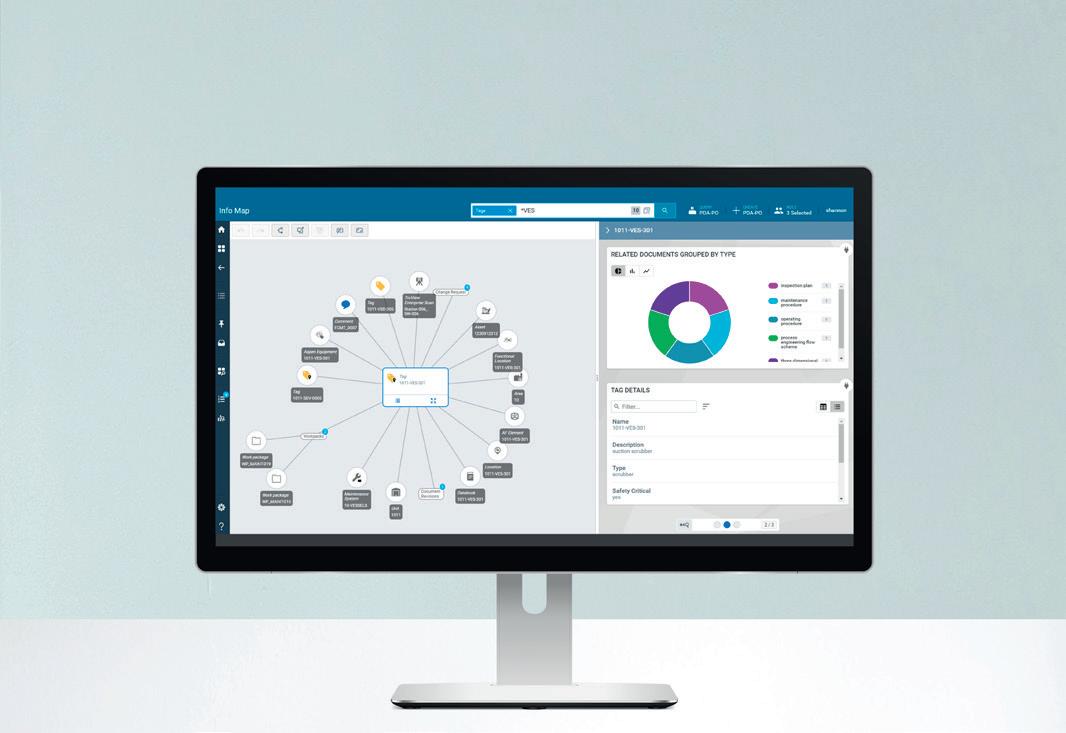
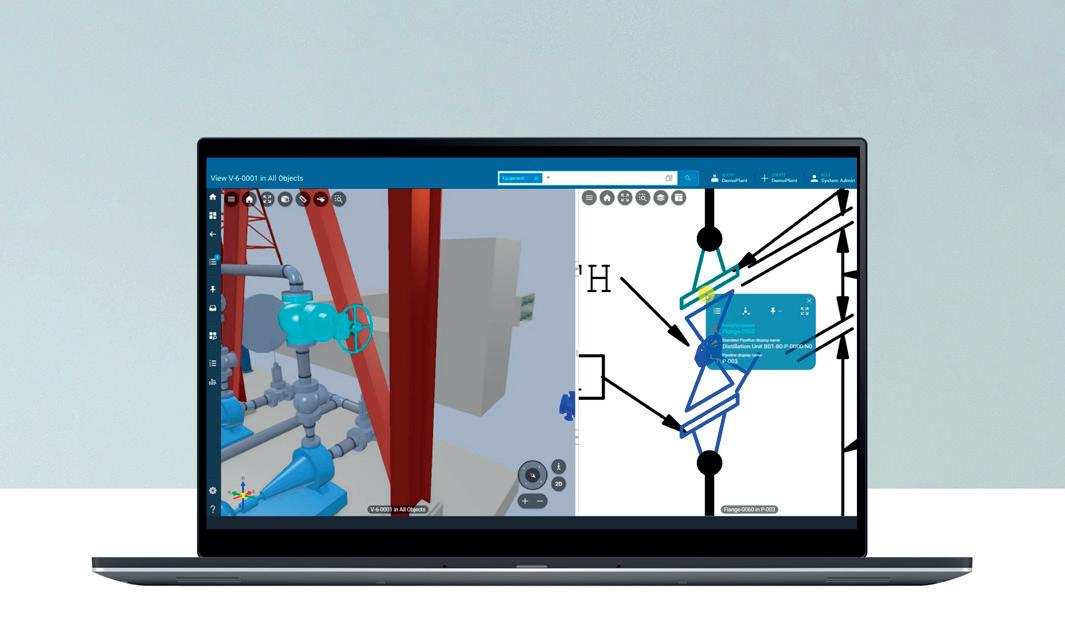
This reversal could prove crucial, as only 5% of low-emission hydrogen projects among the 1000 currently underway worldwide have reached a final investment decision (FID). 320 of these projects have been announced in the past year alone.
This new context will make two issues central when deciding which projects are allowed to receive investments: time to market and capital intensity.
Saddled by large public debts after the COVID-19 crisis, policymakers are looking for solutions that can be rapidly operational and reach profitability without the need for large tax credits and subsidies. Investors, who are already expressing concerns about a potential hydrogen investment bubble, are likely to pressure firms to chart a clear path to financial returns.
Governments and investors are also favouring projects that require reasonable start-up investments and provide a risk-free path to profitability.
A particular challenge for green hydrogen, in that respect, is that it competes not only against more established sources of energy, but also against other modes of production of hydrogen, such as blue or grey hydrogen, which have a lesser impact in terms of emissions reduction but a clearer path to economic viability.
Therefore, the question is not just whether hydrogen can be a viable source of energy, but whether it can do so quickly, assuredly and efficiently enough to displace other investment options and modes of production.
To meet these challenges, the hydrogen economy can take a page from smart factories and embrace digitalisation and automation for greater efficiency, safety and certainty. In particular, it can borrow some of the technologies that help modern factories get off the ground more quickly and be smart and reconfigurable to adapt to changes in conditions or demand. This article presents four areas in which technologies will play a key role in helping companies succeed.
Automating the design phase for faster go-to-market
A primary way to accelerate time to market is to adopt high quality design software that can automate 3D modelling, stress analysis and fabrication while eliminating the risk of human error.
Mahler AGS, a company that designs and manufactures hydrogen generation plants, managed to design a new plant within five months by leveraging intelligent 3D plant models via two integrated software applications, CAESAR II and CADWorx.
This integration offers many advantages, such as enhanced precision in design and the ability to simulate various operational scenarios. It also accelerates the engineering process by allowing for simultaneous workflows, where different aspects of the design can be worked on in parallel rather than sequentially.
68 Summer 2024 GlobalHydrogenReview.com
Figure 1. Digital Twin solution interface (SDx). Hexagon’s Asset Lifecycle Intelligence.

the latest actuation technology from Rotork, you can improve efficiency, reduce emissions, minimise your environmental impact and ensure safety. We are experts in the movement, storage and transportation of liquified and gaseous hydrogen, delivering flow control solutions with the highest levels of safety and reliability. Contact us to find out more or speak to one of our expert advisors. +44 (0)1225 733200 | mail@rotork.com | rotork.com
Delivering future-focused intelligent flow control With
The use of intelligent 3D models facilitates better collaboration among different teams, as changes can be updated and viewed in real-time, ensuring all stakeholders are working with the most current information. Additionally, by reducing the reliance on manual calculations and interventions, the software minimises the potential for costly errors and rework, thereby improving overall project efficiency and reducing time to completion.
The company credits this strategy with cutting 15% of the project work hours, and 30% on specialised tasks such as stress calculations, by requiring fewer model revisions throughout the design process, regardless of the amount of overall changes.
Using digital twins to streamline projects and operations
These 3D plant models then serve as the foundation for a digital twin that will deliver operational efficiencies and improve information management across the plant’s full lifecycle.
For example, recent mega-projects such as the Eyre Peninsula Gateway in South Australia, developed in partnership by H2U and Hexagon’s Asset Lifecycle Intelligence division, have fully digitised their plant construction process: an integrated digital twin platform centralises all information, from engineering and design to finance, construction and operation.
This integration offers a range of benefits, including enhanced accuracy in project execution, optimisation of resource allocation, and the ability to anticipate, simulate and mitigate potential operational issues before they escalate. It streamlines compliance with regulatory standards and improves safety by providing detailed insights into all aspects of plant operations.
During the operation phase, the digital twin can then provide a ‘single source of truth’ and a backbone for industry 4.0 technologies – using international standards for data exchange such as ISO 15926 and the CFIHOS specification.
Leveraging IoT and analytics for flexibility and compliance
By centralising data from sensors and connected devices across the hydrogen value chain, this backbone will help reap a range of operational benefits by enabling predictive maintenance, reducing downtime or facilitating scenario planning.
It also offers two advantages that are particularly crucial for the hydrogen industry.
Firstly, it eases the rising costs and burden of certification and compliance that policymakers impose to ensure hydrogen’s safety and sustainability. In the EU, for instance, hydrogen qualifies as renewable energy only if it meets specific criteria, such as supply chain traceability and a demonstrable 70% reduction in greenhouse gas emissions compared to the energy sources it replaces.
As compliance demands intensify, having a detailed and auditable operational data record is therefore crucial.
Secondly, the simulation capabilities of digital twins, enhanced by real-time sensor data, offer unique flexibility and reactivity in hydrogen production. Applications include optimising water electrolysis conditions and improving component operations, such as electrodes, membranes, or pumps, as well as determining the most efficient methods for conditioning, storage, and transport.
Adopting the high levels of autonomy and adaptability found in smart factories could provide a unique competitive advantage in rapidly transforming sectors like green hydrogen that will present fluctuating demand and supply scenarios, requiring agile responses to market conditions and technological innovations.
Elevating cybersecurity as part of an all-hazard approach
State-of-the-art plants will typically present a high level of interconnection between their IT and OT systems to allow for better control and optimisation of their production processes. This interconnectedness leads to increased efficiency and reduced downtime, but it also means that a cyber-attack on the IT side can have a significant impact on industrial operations.
As hydrogen moves from a chemical product to a utility, governments worldwide are increasingly requiring companies in the field to strengthen their cyber defences and adopt comprehensive risk management policies.
In the EU, the NIS2 directive, which is due to take effect in 2024, categorises companies that produce, store and transport hydrogen as ‘essential entities’. With this new status comes the obligation to adopt comprehensive risk management measures, including incident handling, supply chain security, and disaster recovery. Companies should also report grave breaches within 24 hours and provide a full report on the breach within a month.
The label comes with stringent requirements, including the adoption of comprehensive risk management measures that cover incident handling, supply chain security and disaster recovery, among others. Companies are also expected to report data breaches within 24 hours and provide a full report within a month which, for many, will require bolstering their detection capabilities.
These new obligations will mean that companies in the field will have to invest in three directions. First, they will have to audit their current policies and cybersecurity strategies to ensure that they are adequate. Secondly, they will need to obtain a complete view of their industrial operations to identify vulnerabilities in their operational technology (OT). Lastly, they will have to work to unify asset integrity and cybersecurity to develop the ‘all-hazards’, holistic view of risk that the directive requires.
While these requirements can seem like a massive burden on hydrogen companies, they should also be perceived as a necessary step. The future of hydrogen as an energy source hinges on the ability to prove that it represents a risk-free alternative from a technical, financial and operational standpoint.
70 Summer 2024 GlobalHydrogenReview.com

John Elsegood, Xoserve, UK, outlines how the UK’s gas network will have to adapt for use with hydrogen and alternative fuels in order to reach net-zero goals.
Governments across the globe are facing one of the most significant dilemmas of our time – achieving zero emissions by 2050. In the UK, domestic heating and electricity generation are the two largest gas-consuming sectors, accounting for 32% and 33% of demand, respectively. With 85% of households relying on natural gas for heating, finding the best route for decarbonising heat poses one of the biggest challenges for policymakers and the gas industry.
To address this challenge, the UK government and the gas industry are exploring the possibility of creating a hydrogen economy. This could facilitate the decarbonisation of the UK’s gas networks over the next two decades, and support renewable power with seasonal storage.
Hydrogen’s role in domestic heating is still under consideration. Nevertheless, while waiting for the government to make a final decision, the gas industry must prepare for the possibility that hydrogen could form part of the future energy mix. By leveraging low-carbon hydrogen, the UK could ensure that its residents and businesses continue to receive access to on-demand heat while significantly reducing their carbon footprint. For example, blending up to 20% hydrogen with existing natural gas into the gas grid could save around 6 million tpy of carbon dioxide emissions –the equivalent of taking 2.5 million cars off the road.
71
Over the next decade, the energy landscape for power and heating will change significantly as fossil fuels begin to be rightly phased out in favour of green energy. Exactly what that future might look like is still unknown, but one thing is certain – electrification alone cannot meet the UK’s energy demands and take the country to net zero. A multi-fuel approach is required that combines low-carbon gases, such as green hydrogen and renewable electricity.
Xoserve serves as the central data services provider (CDSP) for the gas market in the UK, ensuring the balance of gas supply and demand in the network. The company maintains the central register containing details of all premises with a gas supply through advanced computer networks and data products. As the energy landscape evolves and industry explores new low-carbon gas markets to decarbonise heat and power, Xoserve and the gas industry must future-proof the data systems that underpin the gas industry. This will ensure the UK is ready for every scenario and can support in migrating consumers from natural gas to an alternative solution.
The future of energy
Maximising the use of low-carbon gases, even as a temporary solution, can ensure fuel is readily available for the 24 million meter points connected to a gas supply while phasing out natural gas. One way to use low-carbon hydrogen to decarbonise the gas network is to introduce hydrogen-methane blends, with the ultimate aim of distributing 100% hydrogen where suitable. The government has announced its support for blending up to 20% hydrogen by volume in the gas distribution networks, which could commence next year, pending health and safety assessments.
To help policymakers, investors, the energy industry and researchers target focus areas for net zero development, the National Grid ESO has produced its Future Energy Scenarios (FES) report. This is a document which outlined four credible scenarios for what the future of energy might look like over the next 26 years. Each of the four scenarios is based on varying levels of change and engagement from consumers and the energy industry, backed by government policy.
The data teams at Xoserve have analysed the low-carbon gas resources included in the three successful net zero scenarios published by the National Grid ESO and identified
commonalities. This analysis will help the gas industry to prepare production, infrastructure and processes for the potential realities outlined in the report. The information provided is subject to change as new developments and further trials emerge, but for the time being, this is a reliable indication of what the future of energy may look like.
Within the three successful scenarios, green hydrogen (produced from renewable sources such as solar and wind) and blue hydrogen (produced from natural gas with carbon capture) play a vital role in heating or electricity generation. To meet the nation’s energy demands on the route to zero emissions, gases such as hydrogen, biomethane, natural gas, and propane might all be present in the gas network at various points in the day over the next 10 years.
Critical issues for a multi-gas system
The challenge of facilitating a multi-gas network is that gases, particularly hydrogen, produce different levels of energy content when burned – referred to as calorific values (CVs). Unfortunately, the current billing methodology does not allow for CVs to vary within a day in the settlement systems. If no changes are made, this could result in higher energy bills, as a lower CV means that more energy is needed to perform tasks such as heating at home or cooking food.
Currently, consumers are billed based on their usage and the average CV of the gas product in a given charging area, known as the flow-weighted average CV (FWACV). As CV is used within customer billing calculation, there are regulations around the process for determining the energy content of gas entering the network. These regulations limit the allowed value for the billing CV to 1 MJ/m3 above the lowest CV in that zone.
Today, the domestic gas market is mainly composed of natural gas and some biomethane. For areas receiving biomethane, a gas with a lower energy content than natural gas, producers usually enrich the biomethane with propane, which has a higher CV, to ensure the FWACV is within the limits and that customers are billed fairly. The problem with using propane is that this gas contains three times the carbon content of biomethane, reducing the latter’s green credentials. An alternative is to facilitate the blending of biomethane without propanation, but doing this would require changes to the current billing methodology.
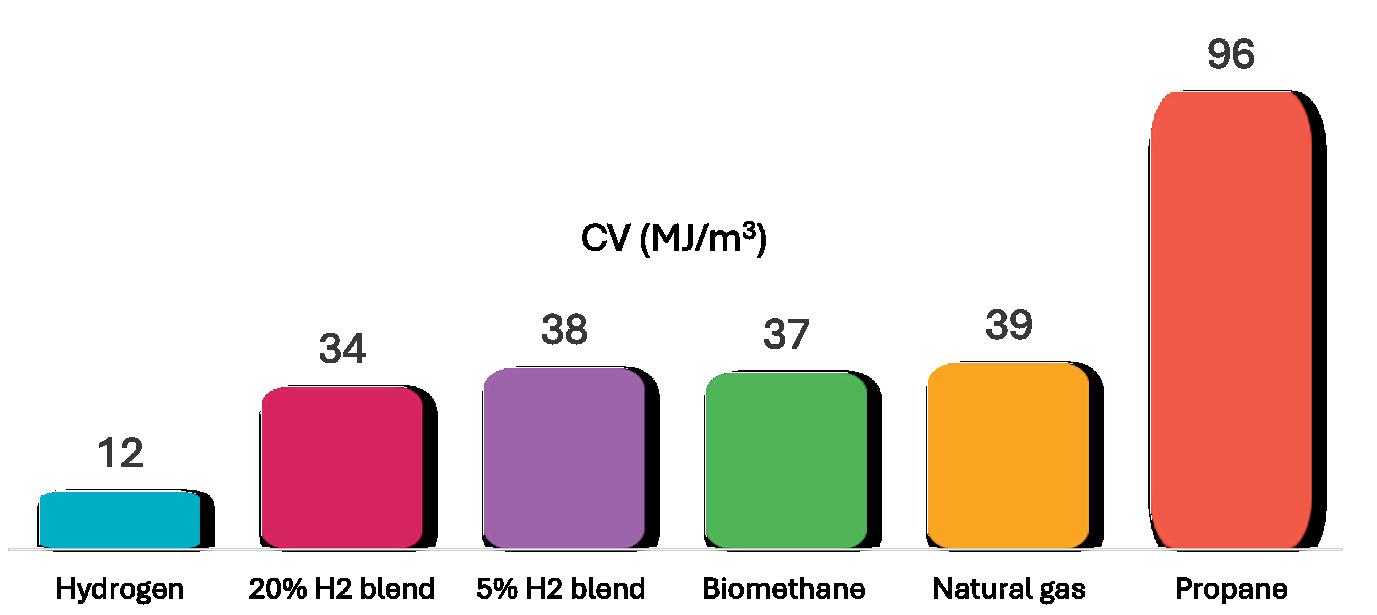
The National Grid ESO’s FES highlights that as the UK transitions to zero emissions, it will likely encounter a scenario whereby customers will receive different gas blends – such as a 20% hydrogen blend – or even possibly a switch to 100% hydrogen. As the current billing methodology does not allow for differing CVs, a new methodology may be required. This would allow gas companies to apply the appropriate CV for billing purposes, reflecting energy usage and ensuring that customer bills remain fair and equitable in the face of a changing gas mix.
72 Summer 2024 GlobalHydrogenReview.com
Figure 1. Different calorific values of hydrogen, hydrogen blends, biomethane, natural gas and propane.
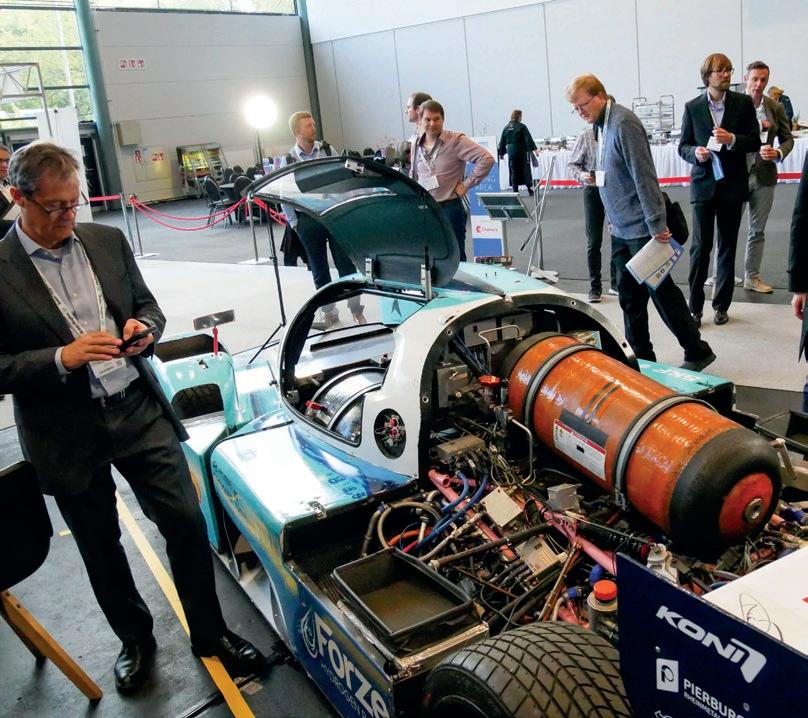

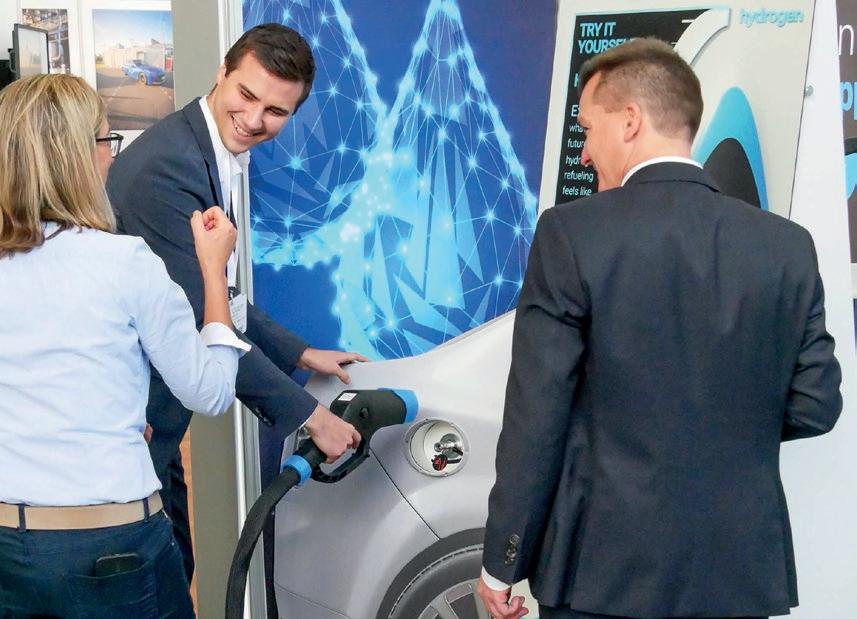

IN PARTNERSHIP WITH: 23-24 October 2024 Messe Hamburg Germany The World’s Largest Hydrogen & Fuel Cell Trade Fair hydrogen-worldexpo.com 650+ EXHIBITORS 35,000m2 EXHIBITION SPACE 300+ SPEAKERS 15,000+ ATTENDEES 5 CONFERENCE TRACKS FREE TO ATTEND REGISTER NOW
must-attend
exclusively dedicated to discussing advanced technologies for the hydrogen and fuel cell industry.
entire hydrogen value chain to
developing solutions and innovations for low-carbon hydrogen production, efficient storage and distribution as well
stationary and mobile applications. 2023 WINNER Multi-Award Winning Show
Hydrogen Technology Expo Europe is the
conference and exhibition that is
The event will bring together the
focus on
as applications in a variety of
Factoring in consumer locations
When alternative gases are introduced into the network, the FWACV will vary depending on the amounts of each gas present in the mixture. An element to consider in this ratio is the location of the consumer to injection points. Billing variance can occur due to a customer’s proximity to different gas inputs. The FWACV enforces a uniform CV cap across the network regardless of the gas mixture. When this average CV is applied to a customer closer to a hydrogen input, they would require larger quantities of the gas to achieve a similar output to natural gas, which will be reflected in their bills. Contrarily, a customer close to a natural gas input will receive a higher content of energy than they are billed for.
Seasonal changes would also affect demand and green gas production – and therefore billing. For example, in the summer there is naturally less demand for gas and more availability of biomethane and blended hydrogen. In the winter, there is reduced feedstock for biomethane and increased demand for heat, resulting in the need for natural gas to fill the gap. These fluctuations in demand and supply can also apply to daily changes.
As the country advances further into the transition to net zero, those who cannot afford to move on to alternative solutions, such as heat pumps, will remain on the gas network the longest. These households are more likely to receive a blended gas product or multiple low-carbon gases through the transitional stages and, if hydrogen forms part of the future energy mix, could start to receive 100% hydrogen in a free market.
Policymakers and the energy industry must ensure that those who will remain on the gas the longest, especially vulnerable customers, are billed in a way that is fair and consistent. With the National Grid ESO predicting the need to use multiple low-carbon gases – and the current challenge of ensuring gas blending meets billing regulations – a new billing methodology is likely to be required.
Case study: real-time settlement methodology
As the CDSP for the UK’s gas market, Xoserve and the gas networks must ensure they can cost-effectively settle blended hydrogen, biomethane, 100% hydrogen and natural gas to support a wider-scale transition to an energy future that includes low-carbon gases. That is why the gas industry is
devising a new methodology that enables the settlement and billing processes of a multi-energy system to include variable CVs across the gas network.
From 2024 to 2026, the real-time settlement methodology (RTSM) will build on a previous project, future billing methodology (FBM). The FBM project discussed how to approach billing as hydrogen and biomethane are introduced at a larger scale into the gas networks – including the implications of their variable CVs. From the discussion, the project aimed to identify possible solutions to managing data flows in a way that makes consumer billing clear, effective and fair.
The RTSM will be delivered in three phases, and the initial phase will be completed this year. It will explore current modelling solutions used in gas networks, develop modelling solutions suitable for a multi-energy system, and assess the proposed solutions on their suitability to satisfy fundamental requirements such as regulatory, technical, economic, scheduling, and operations aspects. This phase will include the development of a roadmap for the most optimal solution. Towards the end of the year, the project will have identified risk factors associated with a 12 month demonstration of RTSM before sharing findings with the wider energy industry.
If successful, the RTSM will be a flexible and credible settlement methodology that is both technically and economically feasible and aligns with the nation’s net zero objectives. The solution will effectively address the evolving needs of the network, the market, and customers, facilitating the injection of low-carbon gases into the gas network and revolutionising the future of the gas industry.
The need for firm policy decisions
The reality is that the UK is unlikely to transition to net zero by migrating all 24 million gas consumers onto a green fuel quickly. Instead, the gas system will go through transitional stages before completely decarbonising. These phases will likely include the use of multiple gases of various CVs, as the UK trials hydrogen blending, 100% hydrogen, and biomethane before scaling up to facilitate a nationwide rollout where necessary for meeting net zero. Hydrogen may form only part of the strategy to reduce domestic heating emissions and work as an interim solution before the country moves to an all-electrified heating system. Nevertheless, creating a new billing process is a necessary step. Without adaptations to the current system, any scenario which include multiple gases will not function efficiently or reliably.
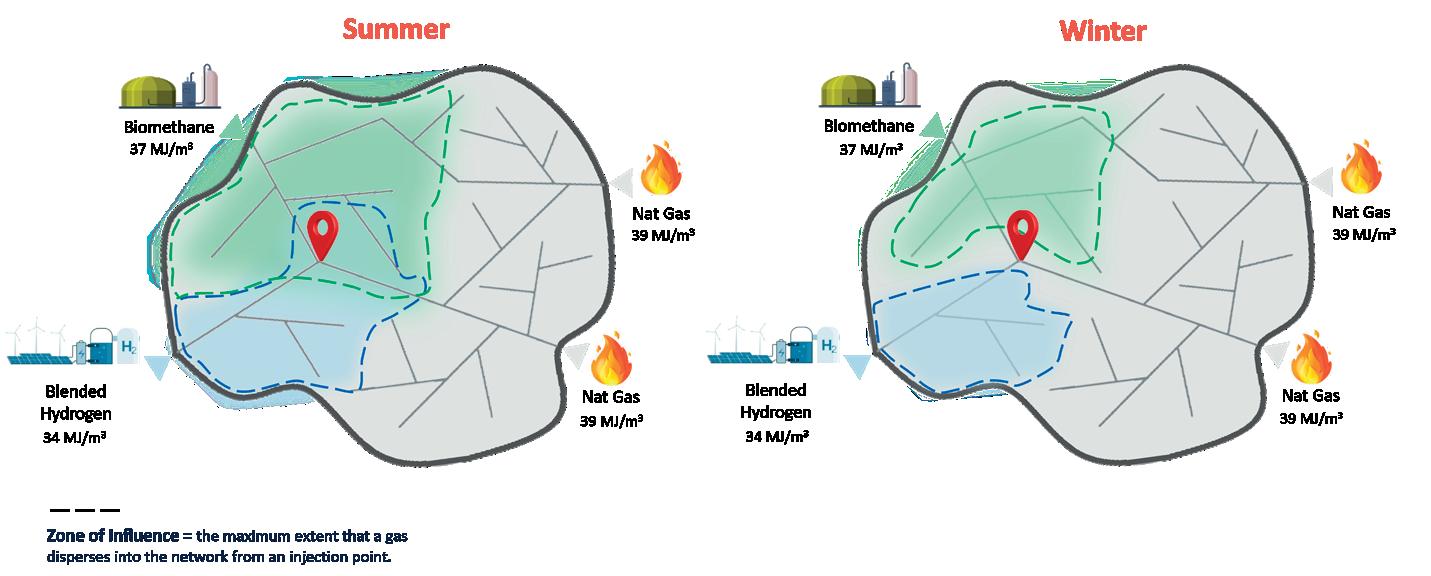
For now, the gas industry will continue to operate with the information available, which includes using low-carbon gases with the potential to transition households from natural gas to a green gas alternative. Without firm decisions from the government on the role of hydrogen and other low-carbon gases, companies will not be best placed to make the necessary changes to the data systems that will lay the foundations of our energy future.
74 Summer 2024 GlobalHydrogenReview.com
Figure 2. Map showing the extent that different gases disperse into the gas network (summer vs winter).



Black & Veatch
Chart Industries
Element 1 Corp. OFC, 09, 35 Emerson
Gastech
Greene Tweed
Hiperbaric
73 Hydrogen Technology Expo Europe OBC, 59 MAIRE 10 Nel Hydrogen 26, 31, 76, IBC Palladian Publications 69 Rotork 49 SBW Group 47 SIAD Macchine Impianti
IFC Technip Energies 02 Topsoe 63 Trillium Flow Technologies™
Yokogawa 55 Zwick Armaturen GmbH
Page Number Advertiser 23
43
39
07
19
13
15
75
29
65
AMETEK Process Instruments
Axens
Baker Hughes
Ebara Elliott Energy
25


2O NOVEMBER 2024
Join us for the latest edition of the Global Hydrogen Conference. This interactive virtual conference will showcase innovative technology and solutions that are advancing the hydrogen revolution worldwide.
• In-depth presentations from leading experts
• Network with industry professionals and hold online meetings
• Engage with industry experts during live Q&A sessions
• Visit our virtual exhibition

REGISTER
www.accelevents.com/e/ghc2024
HYDROGEN CONFERENCE 24
FOR FREE
CONFERENCE
VIRTUAL
WE MAKE ENERGY TRANSITION HAPPEN
We support the energy transition by finding synergies between cutting-edge technology, engineering and research, thereby transforming natural resources into innovative products.


Visit us at GASTECH 17-20 September Hydrogen zone, booth D625
