MARINELABS CEO Eyes the global market


MARINELABS CEO Eyes the global market
Local businesses navigate the risks, rewards, regulations of digital currencies
SUBSCRIPTION MODELS The power of predictable revenue
GOOD TAX HABITS: Better Plan, Better Outcome





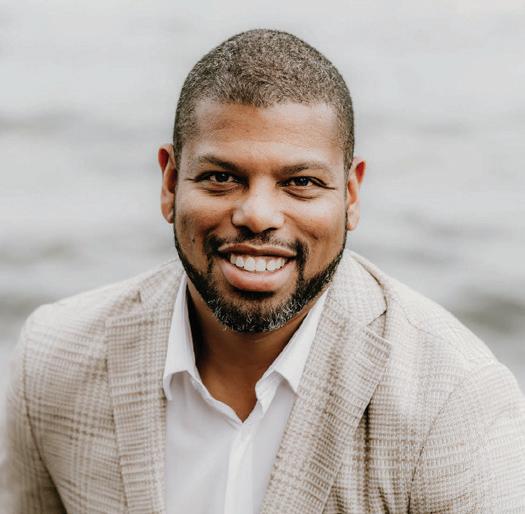








Scott Beatty’s high-tech MarineLabs is making waves in the blue economy.
BY DAVID LENNAM
18
Weighing the risks, rewards and regulations around bitcoin, through those who have experience with it.
BY SHANNON MONEO
30
Subscription- and membership-based revenue models are being increasingly utilized by businesses to foster more customer engagement and increase long-term profits.
BY JULIEN JOHNSTON-BREW
36
Let’s take the following steps for putting your business on solid financial footing — and keeping the CRA at bay.



6
9 IN THE KNOW
How ArtLifting showcases the work of disabled artists in corporate offices; Roy Group cofounder Ian Chisholm shares mentoring lessons in his new book Quiet Champions. Also: Camosun College’s new socially responsible management degree program; streamlining Saanich’s services; a new freight port designed to ease congestion; Industry, Arts and Innovation District inches closer to reality; Hotel Zed founder gets an A as a national business leader; Victoria’s booming charitable sector.
40 INTEL
40 THE HIDDEN COST OF MISCOMMUNICATION
Ensuring the best ideas don’t stall comes down to developing communication strategies for making the perfect pitch.
BY NEIL THOMPSON
42 ORGANIZATIONS SERVE AS INCUBATORS OF DEMOCRACY

Collaborative decision making, holding leaders accountable, transparency and nurturing workplace connections are key components of a healthy, profitable business.
BY CLEMENS RETTICH
Tips for building a polished, mixable work wardrobe; the Oura Ring has its finger on healthy living; local charcuterie plates that offer up
DID YOU KNOW
So where do our V-Day dollars go? After all, February 14 is not just a day for the heart.






MONEY: We save it, we spend it and we strategize about how to save and spend it.
It shapes the choices we make long before we even make a decision. It influences which risks we take, which ideas we pursue and which innovations reach scale. In this sense, money can mean possibility. Understanding how those possibilities are created or constrained is essential for anyone building, investing or leading in today’s economy.
Money can be a deeply personal subject, and our relationship with it is as varied as the businesses that earn it. From a founder bootstrapping a startup in the garage or a business landing its initial investment to a team closing its first deal.
We adapt as we go with the hope of building more momentum. Whether it’s through an emerging business model built around recurring revenue streams, experimenting with bitcoin and other alternative financial tools or learning practical insights to get you jazzed for tax season. Some ideas may feel familiar and others challenge long-held beliefs about how value is created and exchanged.
C.P. (Chuck) McNaughton, PFP
Senior Wealth Advisor
250.654.3342 charles.mcnaughton@scotiawealth.com themcnaughtongroup.ca
For two decades, we’ve been asking the questions, telling the stories and trying to gain more understanding of our Island economy that never stops evolving.
As Douglas magazine marks its 20th year of publication covering Victoria’s business community, we’ve seen the full spectrum of outcomes first-hand and we celebrate what has worked, what hasn’t and what still matters.
For two decades, we’ve been asking the questions, telling the stories and trying to gain more understanding of our Island economy that never stops evolving. As we mark our anniversary we will be finding ways to celebrate what has come before and what is still ahead.
Whether you see money as a tool or a mirror, a meaning or a choice, we hope this year we can all pocket, save, raise or spread around a little more of it.
Tammy Schuster Douglas Editor editor@douglasmagazine.com

The Mercedes-Benz GLE is a vehicle that complements life rather than competes with it. It’s for those who appreciate journeys with meaning; long morning drives through coastal light, afternoons spent discovering hidden coves and evenings with friends where the conversation lasts as long as the sunset. With its intuitive design, refined presence and effortless composure, the GLE doesn’t just adapt to your life, it enhances it. Here, luxury is about the details you feel, the ease you experience and the way every journey becomes unmistakably your own. Come and experience the GLE for yourself, and see how naturally it fits with the rhythm of Vancouver Island living.
GLE 350 4MATIC SUV
Available from $89,395†
Also available as a plug-in hybrid.
From growing your business to planning for retirement, we can provide you with customized advice that covers your entire �inancial life. Working together, we will build a tailored plan that incorporates today’s priorities while keeping your future in focus.
We would be pleased to meet with you to provide comprehensive advice to help you achieve your �inancial goals.
Contact us to get started today.




Brian Young, PFP Financial Planner
Scotia Financial Planning™
Scotia Securities Inc.
250.216.8159
brianjp.young@scotiabank.com




Riyad Elarid Business Advisor
250.953.5561 x4451 riyad.elarid@scotiabank.com
® Registered trademark of The Bank of Nova Scotia, used under licence. ™ Trademark of The Bank of Nova Scotia, used under licence. Scotia Financial Planning™ is a business name used by Scotia Securities Inc. Scotiabank includes The Bank of Nova Scotia and its subsidiaries and af�iliates, including Scotia Securities Inc. Scotia Securities Inc. is a Member of the Canadian Investment Regulatory Organization.

VOLUME 20 NUMBER 1
PUBLISHERS Lise Gyorkos, Georgina Camilleri
EDITOR IN CHIEF Joanne Sasvari
DOUGLAS EDITOR Tammy Schuster
ASSISTANT EDITOR Lionel Wild
DIRECTOR OF PHOTOGRAPHY Jeffrey Bosdet
LEAD GRAPHIC DESIGNER Kelly Hamilton
ASSOCIATE GRAPHIC DESIGNER Janice Hildybrant
ADVERTISING CONSULTANTS Deana Brown, Jennifer Dean Van Tol, Cynthia Hanischuk, Brenda Knapik, Ieva Sakalauskaite
ADVERTISING CO-ORDINATOR Rebecca Juetten
MARKETING & EVENTS
CO-ORDINATOR Lauren Ingle
EDITORIAL ASSISTANT Julien Johnston-Brew
CONTRIBUTING WRITERS Julien Johnston-Brew, David Lennam, Shannon Moneo, Clemens Rettich, Tammy Schuster, Neil Thompson
CONTRIBUTING PHOTOGRAPHERS Jesse Holland, James Jones
CONTRIBUTING AGENCIES Getty Images p. 36, 37, 44
GENERAL INQUIRIES info@douglasmagazine.com
SEND PRESS RELEASES TO editor@douglasmagazine.com
LETTERS TO THE EDITOR letters@douglasmagazine.com TO SUBSCRIBE TO DOUGLAS subscriptions@ douglasmagazine.com
ADVERTISING INQUIRIES marketinginfo@douglasmagazine.com
ONLINE douglasmagazine.com
FACEBOOK DouglasMagazineVictoria INSTAGRAM @douglas_magazine
COVER Joanna and Aaron Twa, owners of Victoria Kayak Tours & Rentals
Photo by Jeffrey Bosdet
Published by
PAGE ONE PUBLISHING
580 Ardersier Road, Victoria, B.C. V8Z 1C7 T: 250.595.7243 E: info@pageonepublishing.ca pageonepublishing.ca
Printed in British Columbia by Mitchell Press
Ideas and opinions expressed within this publication do not necessarily reflect the views of Page One Publishing Inc. or its affiliates; no official endorsement should be inferred. The publisher does not assume any responsibility for the contents of any advertisement and any and all representations or warranties made in such advertising are those of the advertiser and not the publisher. No part of this magazine may be reproduced, in all or part, in any form printed or electronic without the express written permission of the publisher. The publisher cannot be held responsible for unsolicited manuscripts and photographs.
Canadian Publications Mail Product Sales Agreement #41295544
Undeliverable mail should be directed to Page One Publishing Inc. 580 Ardersier Road, Victoria, B.C. V8Z 1C7 Douglas magazine is a registered trademark of Page One Publishing Inc.
ADVERTISE IN DOUGLAS!
Douglas is a premium magazine dedicated to innovation, leadership and business lifestyle. Established in 2006, Douglas is the first choice for business leaders and achievers. Align your business with Douglas For more information or to request a media kit, please call us at 250.595.7243 or email us at marketinginfo@douglasmagazine.com.

How ArtLifting helps corporate offices showcase works by artists with disabilities.
commissioned work, rotating installations, applied wall coverings, hand-painted murals, sculptural work, personalized acoustic paneling and an art-licensing program to use artwork for marketing and products.
A U.S.-based organization that’s worked with over 500 corporate clients and 200 artists, ArtLifting expanded operations into Canada last May, and currently features six Canadian artists including Freedman. Its corporate clients in Canada include Major League Baseball’s Toronto Blue Jays, Amazon, BlueRock Therapeutics and the Windmill Development Group.
“One thing that we have learned in the corporate art market is that there is a craving for connection,” says Michael Korcek, ArtLifting’s marketing director. He says art is one way for corporations to visibly represent brand values and spark dialogue within a workspace. “Companies are looking for ways to make the space inviting, to have amenities that speak beyond just what the amenity is.”
As a full-time artist, Freedman has travelled across North America for art festivals and residencies, but the onset of persistent dizziness and sensitivities to pain, balance, motion and light made such a lifestyle unsustainable. “As my disability progressed, I realized, OK, the art world is not set up for artists with disabilities,” says Freedman, who was diagnosed with Ehlers-Danlos syndrome and chronic vestibular migraines. She notes that extended periods of standing and sitting exacerbate her symptoms, and that fatigue makes art galleries’ typical production timelines unachievable. “That’s just not a reality for me any more.”
With ArtLifting’s support, Freedman is able to continue her art career in a way that has allowed her to prioritize her health. Her work utilizes organic shapes and materials to create vibrant, abstract designs that represent healing, transformation and decay. Outside of ArtLifting, Freedman sells original and printed works from her website (jessicaruthfreedman.com).
Organizations interested in exploring ArtLifting’s artists and programs can reach out via their website’s contact form (artlifting.com).
Ian
BY JULIEN JOHNSTON-BREW

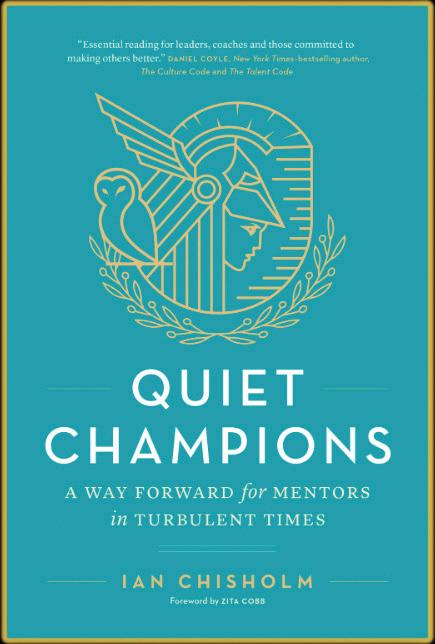
In a world rife with all manner of divisions, finding ways to meaningfully connect with others is imperative for building a strong future. Ian Chisholm, cofounder of the Victoria-based Roy Group, emphasizes the importance of community bonds in mentorship, a conviction woven through his debut book Quiet Champions: A Way Forward for Mentors in Turbulent Times.
Chisholm distills 30 years of leadership experience into 276 pages for the benefit of leaders CEOs, teachers, coaches and parents alike. “I wanted this book to be helpful to as wide a group as possible,” says Chisholm, whose life’s work revolves around fostering meaningful connections between experienced figures and developing leaders. “Mentorship is that focus. Like, it’s the thing I’ve noticed
since I was a little kid. It’s my favourite part of movies, it’s my favourite part of books. It’s my favourite part of life to watch when it looks like this might be a mentorship relationship. It gives me great comfort.”
Leading by example is a great way to model personal and company values, but Chisholm asserts that being a mentor is a hands-on role
that involves engagement, direct feedback and ongoing commitment with mentees to encourage their growth as future leaders. Though Quiet Champions’ lessons closely align with the Roy Group’s leadership development work, the book is a standalone text. “We wanted Quiet Champions to have its own life, so its own brand, different colours, like, all those sorts of choices,” says Chisholm. That being said, the publication is intended to be used as a textbook of sorts for Roy Group’s leadership development with senior leaders. “Quiet Champions really informed that service offering, and the service offering knew what it needed Quiet Champions to be.… It’s separate, but connected.”
Chisholm isn’t currently inclined to write another book, but has considered the merit of a companion

Camosun College to offer a degree in socially responsible management.
Starting next September, Camosun College’s School of Business will begin its first intake of its newly announced bachelor of business administration degree in socially responsible management.
With an emphasis on applied, community-engaged learning, the degree major focuses on how businesses and organizations can create real impact in social enterprise, not-forprofit, public sector and entrepreneurial ventures.

business students to manage and lead organizations with a focus on sustainability and social responsibility. It also includes applied portions of the United Nations-supported initiative Principles for Responsible Management Education, bringing awareness and understanding of global efforts for sustainable development goals.
learning options where they may choose to study full- or part-time, complete a twoyear diploma, gain work experience and return to finish the degree, or complete the full four-year degree with the option for a co-op work term.
to Quiet Champions “It would be interesting to ask mentors to talk about what makes a great mentee,” says Chisholm, “because it’s half the equation.”
An Interactive Launch Quiet Champions’ book launch was a dedicated communitycentred affair complete with food, music and breakout groups. “It was super interactive,” says Chisholm, noting that attendees were encouraged to talk with one another about their own mentors. “It would have been more than a faux pas if somebody wrote a book that was advocating, like, being the kind of leader who creates space for other people, and then run an event where you take up all that space yourself,” says Chisholm. “Surely the point of a book [launch] is to give people a taste of what it feels like when everything that’s in the book is in play.”
“Students are looking for this type of education,” says Carl Everitt, associate dean in the School of Business. “There’s no longer the old-school way of thinking that business is purely about profit.”
The program is designed to educate and empower

“Over the past 15 years, there’s been a shift toward seeing business as a force for good, and students entering business programs are bringing these values with them,” says Everitt. “This is why we’ve created this degree program.”
Like many of Camosun’s business administration programs, students studying socially responsible management will have flexible
“The SRM program introduces a diverse, Indigenized, environmentally conscious and sustainable approach to an industry that once felt fixed to me,” says Arden Haseltine, a business student engaged in the program’s final review. “Seeing the learning outcomes and course plan makes me feel that I have finally found a career path meant for me.”
Applications for the bachelor of business administration degree in socially responsible management are open now.
Tony Joe recognized for championing the downtown business community.
Each year, the Greater Victoria Chamber of Commerce honours a member who volunteers and actively engages with the Chamber while building community relationships and supporting local businesses; 2026’s standout member is none other than Realtor rockstar Tony Joe.
As a licensed real estate agent, Joe is dedicated to helping
revitalize Victoria’s downtown core — a commitment reflected in the relocation of his RE/MAX Sabre Realty Victoria brokerage to the Inner Harbour. Joe is also a member of the Chamber’s Public Policy and Advocacy committee, which identifies advocacy priorities for businesses and meets with community leaders to advance such priorities.
A $22-million investment on the Lower Mainland is expected to both reduce congestion on BC Ferries and get goods on and off the Island more efficiently.
Port operator DP World’s new, ultramodern Salish Sea Gateway facility will offer dedicated freight services linking Vancouver to Vancouver Island. The facility will enable cargo to move more efficiently across the Georgia Strait via dedicated vessels, connecting road and rail networks with global ocean carrier services. At the same time, it will reduce exposure to seasonal bottlenecks that affect road-and-ferry routes.
In combination with the Duke Point Terminal expansion to be completed in 2027, the project is expected to reduce thousands of truck-and-ferry trips each year and provide greater reliability for importers, exporters and domestic shippers.
The Salish Sea Gateway is expected to be completed by mid-2026.
Ever since downtown Victoria’s original Capital Iron stores closed in December 2022 after nearly 90 years in business, their lands have beckoned with entrepreneurial potential. Now that potential is nearing reality.
In April 2024, Reliance Properties put forward an ambitious plan to redevelop the properties on Store and Chatham streets as an Industry, Arts and Innovation District. After a number of amendments to the original proposal, it unanimously passed third reading in council this January.
Now all that’s left is adoption of the plan, which will be held at a future date.
The first phase of the project is expected to comprise a public plaza and new home for the Art Gallery of Greater Victoria. Eventually, it will be home to rental and owned housing, cultural initiatives and marine, light industrial, retail and other businesses.

Mandy Farmer’s award-winning hospitality brands are built on playful rebellion, offering guests and employees a culture of care, trust and humour.
In an industry often defined by sameness, Mandy Farmer has made standing out her signature.
President and CEO of Accent Inns, founder of Hotel Zed and ROAR restaurant in Tofino, Farmer has added two new feathers to her stylish cap. Farmer has been newly appointed as chair of the Hotel Association of Canada. As the second female to hold the title of the national association, she plans to approach her new role with the same commitment and vigour that she has been recognised for throughout the industry. “I’m stoked and fired up to work alongside our members and Board colleagues to support the industry’s growth, strong teams, and vibrant communities across Canada. Let’s go!!”
At the end of 2025, Farmer was named Business Leader of the Year by the Canadian Queer Chamber of Commerce. It’s recognition of a local leader whose career has been defined by employee empowerment and the radical idea that hospitality should actually feel hospitable.
Under Farmer’s leadership since 2008, the family-owned Accent Inns brand has grown into a beloved B.C. institution with five properties located across the province
known for their humour, heart and genuine care for guests and team members. Plus the complimentary rubber duckies guests are encouraged to take with them upon checkout add to the charm.
Farmer is also the visionary behind Hotel Zed, a colourful, cheeky, retro-chic hotel that began in Victoria and expanded to Kelowna and Tofino. From groovy hotel vans to hidden arcades and an onsite retro-fitted Airstream trailer, it’s a place where nostalgia meets playfulness and boredom is not on the itinerary.
Recognition for her brand has followed. Accent Inns was named Tourism Employer of the Year at the Tourism Industry Association of Canada (TIAC) in 2024. Farmer herself received the RBC Women of Influence Entrepreneur of the Year in 2020, the TIAC Business of the Year in 2018 and was named Hotelier of the Year by Hotelier magazine in 2017.
Guided by a philosophy she calls “leading with love,” Farmer’s approach prioritizes inclusive spaces for guests and staff, creating workplaces where people can thrive and communities feel the ripple effects long after checkout.
Study puts economic impact of growing charitable sector on par with tech.
For a business, participating in charitable giving goes a long way toward creating a sense of belonging in a community. But the impact is much bigger than you may think.
The total economic impact of the capital region’s charitable sector has grown to $5.4 billion, an increase of $1.4 billion since 2018, according to the 2025/2026 “Architects of Belonging” report recently released by the Victoria Foundation, CIFAL Victoria (the International Training Centre for Authorities and Leaders) and the University of Victoria.
Add in the multiplier effect of charitable giving — in which initial donations are magnified through activities such as matching donations, sharing expert guidance and leveraging funds — and the economic activity is actually closer to $8.7 billion.
That puts the charitable sector on the same level as Victoria’s tech sector.
“In a community where the impact of government, technology and tourism are seen as key economic drivers, the charitable sector should also be seen as a significant contributor to the local economy,” says J. Brock Smith, a professor in UVic’s Gustavson School of Business and one of the three researchers on the report.
The report also shows that the charitable sector supports 60,600 jobs in the region; with the multiplier effect, that’s the equivalent of 110,000 jobs.
“The work of charitable organizations in our community is broad in scope, and impacts all of us.” says Victoria Foundation CEO Sandra Richardson. “It is critical to have a sustainable, strong sector to continue creating a sense of belonging for all in Greater Victoria.”
























For the last 20 years, Page One Publishing has been bringing Douglas magazine to Victoria, following the ideas and people that shape how business gets done here.
A lot has changed since we began the Douglas journey in 2006. We have changed the way we do business, the way we shop and the way we communicate. Our city has grown denser and busier. We’ve seen the beginning of the blue economy era, the evolution of the tech sector era and sadly said goodbye to The Hudson’s Bay era. And somewhere along the line most of us traded our flip phones for smartphones.
Through every shift, we have been part of a community that supports its own. Supporting local businesses drives our city’s success and strengthens our business community through the networks and relationships we have built together.
For two decades, Douglas has
had the privilege of telling the stories about the innovators, builders, risk-takers and quiet operators doing really cool things. We’ve shared the highs and lows alongside you, all the big wins and the hard lessons. Through our annual 10 to Watch awards, we’ve helped shine a spotlight on emerging businesses and leaders at significant moments in their careers.
At its core, Douglas exists to help people do business better. We strive to make business ideas interesting, impactful and worthy of attention.
Our 20th anniversary year will come with some special coverage and a few surprises along the way. We’re proud to celebrate this milestone with you and even more excited about what comes next as we continue to support and connect Vancouver Island’s business community.
Here’s to another 20 great years!
Helping people do business better.


BY DAVID LENNAM
Scott Beatty has turned his love of the ocean into a cutting-edge marine intelligence technology that is creating a powerful current in the blue economy industry.
Surfing and waves. Scott Beatty has made his passion for both his life’s work.
Growing up on the endlessly wide beaches of Parksville-Qualicum, the ocean was both teacher and mystery. Enough to make him begin asking the questions that would eventually lead to studies in mechanical engineering at UBC and both a masters degree and PhD from UVic, working on ocean wave energy.
A “born tinkerer,” he was always taking things apart and creating his own little machines, fascinated with motors, rockets, aircraft and radio-control cars.
“All that stuff. I couldn’t get enough of it. I’d always had this, ‘you might be an engineer one day’ voice from my parents, family friends, and that story just kept on building.”
The now 45-year-old founded Victoria’s MarineLabs in 2017, creating tech that produces real-time and predictive coastal intelligence necessary information for shipping, for ports and for monitoring climate change via a floating sensor network providing a machine learning-based forecast that’s super accurate and immediate.
With 30 staff, MarineLabs, and its CoastAware technology, are already surfing their own big swell of opportunity.
Douglas: You once said MarineLabs is like Google Maps for ports and marine pilots. How does that work?
Beatty: I described it that way to try to explain the paradigm shift in the before and after of having this technology. Think of driving through a foreign city in 1990. You don’t have Google Maps, you might have a map book that you’ve studied … and you’re going through roundabouts and you’re on the wrong side of the road. With MarineLabs CoastAware [subscription service], we’re putting data along the approaches to ports where they’ve never had it before and giving them forecasting that’s a lot more accurate than they’ve ever had.
who knows the local waters and currents and waves to bring it in. So they use our weather data for all of the times they have to climb on rope ladders up a ship and navigate a ship.
Douglas: A $4.5-million investment in seed money came in Year 7 of the company. Another $4 million arrived in the fall of 2025. You’ve said that equity investments are challenging for companies in Victoria with hardware as part of the package. How have you made it work?
Beatty: Most companies raise a seed in Year 1 and 2, but we were able to bootstrap through a combination of sales and grants to get to where we were. At that point we realized that this is a much larger business that has a higher impact so we’re going to raise money. I was actively raising money, and we were able to raise $8.5 million of equity financing, but alongside that we’ve had over $10 million of grant funding to date and an equal amount of sales. We see sales as the predominant way of funding our ambitions moving forward.
revenue offers all kinds of benefits in terms of being able to access capital for our company. But there’s other great reasons. If we own and operate [our tech] out on the ocean we can choose when it needs to be swapped or fixed or maintained. And we don’t have to worry about the warranty repair cycle or the selling volumes of widgets. We get to focus on quality. And for us the promise to the customer is the most reliable and accurate data.
Douglas: Why is the data so valuable?
Beatty: The harbourmaster of a port needs to make calls on whether ships can come in and out of the port every day. If the harbourmaster is looking at weather data that is incorrect and they make a call on a ship, the ship can arrive at the terminal and not be allowed to unload because the cranes won’t operate above, say, 25 or 30 knots wind.
Douglas: How do you inspire your team?

Beatty: I try to be as authentic as I can with everybody. If I’m feeling not so good about something, everyone can usually see it and I will talk about it and we’ll address things head on.
Douglas: Did you receive good mentorship?
Douglas: MarineLabs clients include tugboat operators, ferry services, coastal engineering projects and the ports themselves. They also include marine pilots why is that significant?
Beatty: Every ship that comes into ports in the developed world requires a pilot
Douglas: In 2022 you had deployed 26 sensor buoys. How many are out there now?
Beatty: This year we have about 65 and they are located from Prince Rupert down the B.C. coast, Halifax and Saint John. We’re in the Texas Gulf and we’re also in Oregon and California.
Douglas: You opted for a data subscription service rather than selling the tech itself. Why?
Beatty: Business model-wise, having recurring revenue is superior. The
Beatty: If you’re going to be an entrepreneur, the only way is to surround yourself with mentors. One mentor that stands out is Josh McKenty, a very successful software developer based in Victoria now, but has been involved with all kinds of amazing projects in Silicon Valley and NASA. I crossed paths with him when I was finishing my PhD and I had this business idea for MarineLabs. He said, “You should do that. That’s exciting. Go for it.” And I needed that push. I probably wouldn’t have done this without that push.
Douglas: What’s the future look like for MarineLabs?
Beatty: By the next time you and I talk we’ll be operating on other continents, which is exciting. And we see a massive opportunity to get many, many of our sensor nodes out on coastlines. I would love to be able to tell you we’ll have thousands of units in the water by next year. I can’t commit to that. But we’re being that ambitious.
As businesses begin to cautiously accept Bitcoin, they must weigh its risks, rewards and regulations in a financial system still adapting to the technology. It’s not for the timid.
BY SHANNON MONEO | PHOTO BY JEFFREY BOSDET
The world of cryptocurrency is in its relative infancy and uncertain of whether adulthood will be healthy or languishing. Hard to understand and a victim of rumour and hype, digital currencies are not getting quick uptake among local businesses. But some trailblazers are stepping forward.
In 2021, Victoria Kayak Tours & Rentals began accepting bitcoin after owners Aaron and Joanna Twa went down the rabbit hole of crypto research. After coming up for air, the couple decided bitcoin was a hedge on the future and a better investment than traditional choices. “We use bitcoin as a way to save and protect ourselves from inflation,” says Aaron Twa. “We also want to try and educate people.”
The couple started their tourism-friendly business in 2012 with the goal to pay employees a living wage. After COVID-19 and the temporary flood of government money which the Twas saw as distorting the economy, contributing to runaway inflation and sending home prices soaring they figured there had to be a better way to sustain a profitable business while ensuring staff earned enough to live comfortably.

“ WE USE BITCOIN AS A WAY TO SAVE AND PROTECT OURSELVES FROM INFLATION.”
Aaron Twa, Victoria Kayak Tours & Rentals, with wife and co-owner Joanna Twa

For the Twas, bitcoin seemed like a safe haven, with an over 40-per-cent annual compound growth. “No one has ever lost money by buying bitcoin if they wait four years,” Twa claims.
But almost five years later, fewer than one per cent of Victoria Kayak’s clients, primarily millennials or 30-something males, pay with bitcoin. “Why isn’t there more uptake?” Twa asks. “It’s because the financial system in Canada generally works.” It’s typically when systems fail that crypto becomes more appealing.
Canadian banks stay afloat via a strong regulatory system while the threat of violent instability is almost incomprehensible. Twa compares Canada’s financial sector to those in volatile countries like Nigeria, Venezuela and Turkey, where money carries a different meaning and where cryptocurrencies are more popular.
The appeal of crypto changes dramatically depending on where you live. In Nigeria, one-third of the adults don’t use a bank, inflation is over 20 per cent and citizens are very digitally active. Bitcoin has become a way to store value, access foreign exchange and move money across borders. In 2021, El Salvador became the world’s first country to make bitcoin legal tender. But uptake has been slow and in January, legal-tender status was scrapped.
Part of the hesitance to embrace crypto in Canada may be the cryptic nature of cryptocurrency. “How is it that something not tangible can have value?” says Twa, who’s been spending about two hours per day for five years learning about crypto in relation to global financial systems. “It’s amazing how many directions it goes. It’s everything you don’t understand about money and everything you don’t understand about computers,” he says.
While acknowledging there is still more to explore, he’s adamant about the difference between cryptocurrencies. For the Twas, bitcoin is king. There are hundreds of other cryptocurrencies including Ethereum, Tether, Solana and Dogecoin, but bitcoin is the one that’s decentralized, without a board of directors or head office. “All the others have a control point of contact,” Twa says, which means someone is overseeing the asset.
Bitcoin’s supremacy is that it’s free and open and anyone with even a small amount of money can own a piece of it. To understand why the Twas put their faith in bitcoin, it helps to look at where it came from.
“CANADA HAS A ROBUST REGULATORY REGIME FOR CRYPTO AND OUR NATIONAL NETWORK HAS STAFF DEDICATED TO HELPING BUSINESSES UNDERSTAND INNOVATIONS SUCH AS CRYPTO.”
John
Wilson, CEO, Greater Victoria Chamber of Commerce

So why is bitcoin that different and where did it, and later the imitators, come from? Twa says digital currency started in the mid-1970s with computer programmers, later moving into the realm of cryptography. Next came the collision of the World Wide Web and cyberpunks in the early 1990s, followed by Nick Szabo’s work on time-stamped databases.
When Lehman Brothers filed for bankruptcy in September 2008, triggering a worldwide financial meltdown, Satoshi Nakamoto released the paper, “Bitcoin: A Peer-to-Peer Electronic Cash System.” No one knows who Nakamoto is or where the person, or group of people, live. By January 2009, bitcoin was launched.
It took more than a year for the firstever bitcoin transaction to occur. On May 18, 2010, Laszlo Hanyecz, an early bitcoin miner, offered 10,000 bitcoins (worth about CDN$55) to have two pizzas delivered to his Florida home. Those 10,000 bitcoin would be worth about $1.3-billion Canadian 15 years later.
How did bitcoin’s value hit the stratosphere? It all comes to scarcity. There will never be more than 21 million bitcoin in existence. In midNovember, there were approximately 19.95-million bitcoins that have been mined, and crypto experts expect the last bitcoin will be mined around 2140.
Kyle Mackenzie, founding partner and chief crypto officer at Metrics Chartered Professional Accounting, got his first bite, and byte, of cryptocurrency in
2016, when he attended a Vancouver conference. “I was fascinated. I learned that bitcoin couldn’t be touched by a bank. It’s a form of stored value that cannot be modified or changed by government,” he says.
Bitcoin mining is a bit of an esoteric activity. It begins with the blockchain, which is a shared, immutable (cannot be changed) digital ledger that records transactions and tracks assets, generating an indisputable result. “Anything put into it cannot be reversed,” says Mackenzie. As well, additional information can be added to the blockchain to strengthen its existence.
“Mining” is when powerful computers solve complex mathematical problems to validate the multitude of transactions on the bitcoin network. When a miner successfully adds a new block to the blockchain through the validation process, they receive a fixed number of bitcoins as a reward.
The massive energy consumption is due to Proof-of-Work (PoW) mining that requires powerful computers to solve the complicated mathematical problems that validate the transactions. Competition among the miners, all over the world, and increasing complexity of the transactions drives the energy demand. If you own bitcoin, it’s not tangible, like fiat money (government-issued currency, like the US dollar or euro, that isn’t backed by a physical commodity such as gold). You instead own a “key” that allows you to move a record to another person.
At the Greater Victoria Chamber of Commerce, CEO John Wilson notes that the chamber has discussed cryptocurrency at chamber seminars. “Any business that is looking to educate themselves on crypto or anything affecting their business is encouraged to contact us. With any new technology it’s good to have a healthy dose of skepticism while also being open to potential opportunities,” he says. “Canada has a robust regulatory regime for crypto and our national network has staff dedicated to helping businesses understand innovations such as crypto.” Still, he attributes the slow uptake to uncertain times caused by trade disruptions and ballooning government deficits. “Many businesses are struggling to reduce costs and increase revenue, so, who knows, maybe crypto will have a role to play in that?”
A snapshot of the cryptocurrency market (as of January 14, 2026) shows bitcoin at the top by market value. Other major digital currencies, including Ethereum and BNB, have also posted substantial long-term growth, helping explain why some businesses may consider crypto, particularly bitcoin, as a payment option.



Finding a Victoria business that deals in crypto was not easy. While city businesses have been lagging when it comes to cryptocurrency, Victoria Kayak’s Aaron Twa says Vancouver businesses are active and Comox business owners have been making inroads with its Bitcoin Comox Valley Meetup Group. In Greater Victoria, the Victoria Cryptocurrency Group held its last event in May.
If you own bitcoin and want to use it to pay for goods or services, the website btcmap.org shows where one can spend “sats,” wherever they happen to be. “Sats” (named after the above-mentioned Satoshi Nakamoto) are the smallest monetary pieces of bitcoin, representing one-hundred-millionth of a bitcoin (0.00000001). In comparison, one dollar is made up of 100 pennies, while one bitcoin is made up of 100,000,000 sats.
Even for businesses curious about crypto, understanding the risks is half the battle.
Regan McGrath, a chartered professional accountant, founding partner and CEO at Metrics, says businesses may be holding back from accepting crypto for payment, but alternatively some are investing in digital currency to benefit the company for long-term planning.
“You have to know what you’re doing when accepting bitcoin,” she says. “If you don’t feel confident, use an intermediary.” Companies like Coinbase or Kraken will help you buy, sell and manage crypto assets. “They will offset risks and are a trusted custodian. They also help with record-keeping,” says McGrath.
Some of Metrics’s clients accept crypto funds for payments, avoiding the payment of fees to the middleman. “On a $2,000 invoice, it can be directly paid and held in bitcoin,” says Mackenzie. Another advantage is when it comes to transferring very large dollar amounts. If several million dollars are in play, they can be transferred in bitcoin for far less than with traditional financial institutions.
Jumping into the crypto pool without a full understanding carries risks. Fraud is an ever-lurking possibility, as shown by a B.C. Supreme Court decision in October that found NDAX Canada (a
“ I WAS FASCINATED. I LEARNED THAT BITCOIN COULDN’T BE TOUCHED BY A BANK. IT’S A FORM OF STORED VALU E THAT CANNOT BE MODIFIED OR CHANGED BY GOVERNMENT.”

Kyle Mackenzie, CPA, Metrics Chartered Professional Accounting
crypto trading platform) was not liable for the $671,000 loss sustained by Yan Li Xu, a Victoria accountant. NDAX had warned Xu she was being scammed, but Xu continued to transfer Ethereum after being promised high returns.
The B.C. Securities Commission notes that businesses are free to use crypto, but it doesn’t recommend its use. The BCSC does not regulate the digital asset, which it considers a commodity. But it does regulate the distribution outlets and trading platforms, like Coinbase.
The second big consideration is dealing with the Canada Revenue Agency. “Tax planning is a critical first move,” notes McGrath. In the early days of crypto, individuals who bought bitcoins at $700 apiece soon saw the price rise to $25,000.
By 2019, the CRA was subpoenaing data from trading companies like Coinsquare. “Lots of people got audited,” Mackenzie says. “The CRA will find a way to get the information.” Despite it being non-fiat money, gains have to be reported for tax purposes, Mackenzie says. The CRA considers crypto a commodity so it is subject to income tax or capital gains tax. Worth noting, the CRA has an almost 90-percent conviction rate for tax evasion cases.
Mackenzie has tips for crypto newbies to keep the CRA and scammers at bay: • Set up a wallet on your own.
Don’t use one set up by someone else.
• If you plan to hold crypto, a cold storage wallet is advisable a small physical piece of hardware that can look similar to a USB drive. The wallet securely stores the public and private keys needed to send, receive and manage the currency; it does not hold any actual cryptocurrency.
• To keep your funds secure, use a private key or seed phrase (which grants you access to your crypto) and never reveal it.
• Keep a record of all transactions for at least two years, in case of an audit.
• Never fall for promises of unusually high returns on investments. If it sounds too good to be true even for crypto you know how the rest of the saying goes.
Bitcoin isn’t the revolution some had hoped for, and it’s not the threat others feared. But it has carved out a niche within the financial ecosystem, especially for those who plan to use it as a tool and not an exciting gamble.
For Twa, bitcoin represents a peaceful protest against fiat currency and outside control while putting up a strong fight against inflation. “Keep an open mind,” he says.




Big news! Waypoint and SeaFirst Insurance are now operating under one name: Navacord Insurance
Services British Columbia Inc. While the name has changed, our people haven’t — nor has our commitment to the community we serve. This evolution reflects where we’re headed, not a departure from who we’ve always been.
At Navacord, we’re not about one-sizefits-all solutions or transactional advice. We have always believed that insurance should feel personal. That’s why we believe in understanding what matters most to our clients and offering advice that reflects their lives and businesses. That approach remains at the core of what we do. It’s how we build long-term relationships, not just policies.
Over the past few years, we’ve proudly been part of Navacord. Our move to a unified national brand simply strengthens what is already in place. It expands our access to
a national network of expertise, tools and resources, while keeping us firmly rooted in the communities we serve. You’ll continue to work with the same trusted team, benefit from the same deep local knowledge and receive the same hands-on support, now backed by even greater national strength. This means more specialized insight, broader capabilities and added value for our clients — without losing the personal service they rely on.
Our connection to the community runs deep. We live here, work here and show up. Whether supporting local businesses, attending community events or helping families protect what matters most, we are there. Moving to a unified Navacord brand allows us to do even more, with greater reach, resources and support — all while staying local at heart. It’s about growing responsibly, with our communities always at the centre.
At the heart of our work, genuine partnerships are built on listening, trust and
consistency. Our philosophy hasn’t changed. What’s new is the ability to pair our hands-on, local approach with the scale and expertise of a national organization so that our clients can get the best of both worlds.
We’re still your local team, just with more ways to support you. Same people, same care. Bigger possibilities. We’re proud to be Navacord and proud to continue serving our communities.






Has there ever been a more crucial time for Islanders to connect?
Through connection we find common purpose, shared goals and new ideas, and form the relationships that get real things done during challenging times — and right now, collaboration is not a nice-tohave but a competitive advantage.
It’s why the Vancouver Island Economic Alliance (VIEA) exists. The member-based non-profit, non-governmental organization works at a regional scale, connecting Vancouver Island and the rural islands and allowing local priorities to inform the conversations that keep economic development grounded in place and relationships. Entering its 20th year, VIEA continues to respond to the churn of change while staying anchored in its core purpose: building connection, confidence and capacity across the Island.
At the heart of VIEA’s visibility is the State of the Island Economic Summit, also celebrating its 20th anniversary in 2026, October 2123. The Summit has become the region’s
most trusted forum for business leaders, entrepreneurs, Indigenous leadership, elected officials and community builders. With roughly 600 participants each year, it is the place where conversations lead to real projects, partnerships and policy momentum long after the event concludes.
Beyond the Summit, VIEA convenes and connects year-round through a focused suite of initiatives. Island Good, VIEA’s social enterprise, champions locally made products, strengthens procurement pathways and offers expanded membership opportunities for partners. In 2026, Island Good enters its next phase with Coastal Community Credit Union as its presenting sponsor and Array as a continued partner for brand development.
VIEA also leads the Economic Dashboard in partnership with MNP, providing accessible, regionwide economic data to support informed decision-making across sectors. Looking further ahead, VIEA convenes longerterm dialogue through Vision 2050, delivered in partnership with Wirk Consulting, to explore what a resilient, inclusive and
thriving Vancouver Island economy could look like over the next 25 years, while staying grounded in today’s urgent realities around productivity, housing, labour, reconciliation and climate resilience.
Balancing immediate pressures with generational planning is central to VIEA’s vision, and here is your invitation to be part of it: Become a member, participate in the State of the Island Economic Summit and celebrate 20 years of working together this October. Engage with fellow members, partners and regional leaders through VIEA & Island Good Member + Friends Receptions taking place in communities across Vancouver Island this spring.
julie@viea.ca | viea.ca

Breanne’s husband always had the entrepreneurial spark. She, on the other hand, never saw herself going down that road. During an entrepreneurship class at Camosun, she vividly remembers learning that 75 per cent of startups fail within five years. Her immediate reaction? “No thanks.”
Eventually, Breanne joined Chinook as the marketing director, spending four years deep in the world of buying and selling businesses. Translating owners’ stories into compelling marketing materials became second nature, all under the guidance of some of the most creative, intelligent and hilarious mentors she’d ever known. While the inspiration was constant, owning a business herself was never part of the plan.
That changed during a weekly team meeting when the company Lizzy Lee & Me came up. Breanne had been a client since 2021 and already knew how special the brand was. So, when asked — despite not being a broker — if
she’d help co-broker the deal, she jumped in without hesitation. She interviewed the seller (special thanks to Dave, the husband of the previous owner, who left a lasting impression), created the marketing package and opted to write a heartfelt note about the brand’s magic instead of a generic owner’s letter.
Six months later, the deal was nearly done. But just four days before closing, the buyer backed out for personal reasons. Breanne felt devastated for Dave. That night, she poured her heart out to her husband. His response? “Why don’t we buy it?”
Chinook had already structured a brilliant, tailored buyout plan. Suddenly, the idea felt real. Breanne barely slept for two days. She turned to her mentor, Mike Lenz, to talk it through. They dug into the financials, considered the risks and had the hard conversation: Could she really leave Chinook?
The answer was yes.
Buying an established business meant skipping the chaos of startup life. Pricing,
products and systems were already fine-tuned. From day one, it paid her. Sure, tweaks were needed, but the foundation worked.
Now, eight months later, Breanne is bursting with pride — record-breaking sales, a loyal and growing client base, a 114-per-cent spike in social following, renovations underway and most importantly, more intentional family time.
It’s been surreal, deeply meaningful — and proof that this path is more possible than most people think.
Changing lives, one sold business at a time.

On Vancouver Island, Walker Technical was growing quickly. As projects increased, owner Ben Walker found that administrative demands were starting to compete with time in the field and pulling focus away from the work itself.
When Ben connected with MNP’s Victoria office, Partner Emma Miller focused on where he wanted the business to go next. Pricing and project costs were becoming harder to track, and the effort going in was no longer lining up with the results coming out. “I’m not here to look at your history,” Emma says. “I’m here to look at your future, and I want to be part of the change that you want, and that you need.”
To help Ben step back and see the full picture, the team introduced MNP’s Innovation Workshop, supported by Consulting Senior Manager Carlee Yukes. The workshop gives owners a dedicated space to reflect on what is working, where pressure is building and what needs attention first.
“Business owners often don’t have a space to talk through these challenges,” says Carlee. “Having the right expertise in the room becomes incredibly valuable.”
Through those conversations, everyday
operational and financial considerations came into sharper focus for Ben, including cashflow visibility, margins and job tracking.
“Many small and mid-sized business owners don’t have the time or the tools to build these systems on their own,” says Carlee. “That’s where we can help put the right structure in place.”
The team helped develop practical tools Ben could use immediately, including a cashflow model to support planning and decision-making. With a clearer roadmap in place, implementation followed. Cloud bookkeeping through MNP’s ease service helped keep financial information current and introduced simple automation for payroll and receipt capture, reducing manual work and improving reporting.
From the client’s perspective, the relationship stood out for its accessibility. “It never felt faceless or corporate,” Ben says. “There’s always someone you can call, and that expertise matters.”
As Emma notes, “Having national resources behind us means we can take a tailored approach for every client. Our Victoria team leads the relationship, and when a business
MNP’s Victoria partner team supports clients through growth, complexity and change.
“It never felt faceless or corporate. There’s always someone you can call, and that expertise matters.”
— Ben Walker, owner, Walker Technical
needs deeper or specialized support, we can draw on colleagues across Canada to strengthen the work we do locally.”
Today, Walker Technical is operating with stronger systems and a better view of what’s driving performance, after gaining clarity through MNP’s Innovation Workshop — showing how the right support can make the next step more manageable, wherever business takes you.
100–655
Tyee Road | mnp.ca

Ocean Wealth of Harbourfront Wealth Management continues to evolve its client-centred practice with the addition of Carmen Atwood, CPA, whose background in public accounting and wealth advisory brings a thoughtful, tax-focused dimension to the firm’s long-term approach to wealth management. Carmen’s experience strengthens Ocean Wealth’s ability to deliver integrated advice in an increasingly complex financial environment, while remaining grounded in clarity, discipline and personal connection.
Carmen began her career in public accounting with PwC, where she worked in Global Mobility Services specializing in personal tax preparation for high-net-worth individuals. She also brings audit experience from KPMG, giving her a strong technical foundation and a disciplined understanding of financial structure, compliance and risk. This background allows her to approach financial
planning with a high level of precision— particularly where tax strategy, long-term decision-making and coordinated planning are essential.
At Ocean Wealth, Carmen applies this expertise to the design and execution of customized wealth strategies for business owners, professionals and retirees. Her work supports the firm’s broader objective: helping clients make informed decisions by aligning tax planning with investment strategy, estate considerations and evolving life goals. Known for her collaborative and thoughtful style, Carmen works closely with clients who value transparency, intentional planning and long-term discipline. Her focus remains on helping individuals and families achieve financial independence and peace of mind, whether through tax efficiency, intergenerational planning or comprehensive wealth coordination.
Ocean Wealth’s philosophy is built on the understanding that every client’s financial
story is unique. The team takes time to listen, to understand personal goals and business ambitions and to develop strategies that can adapt as circumstances change. Their approach to investment management emphasizes well-designed model portfolios that balance risk control, consistency and accountability, supported by ongoing governance and review.
Beyond investments, Ocean Wealth provides integrated guidance across financial planning, tax-efficient strategies, risk management and estate planning. Rooted in the Vancouver Island community, the team combines local perspective with broad expertise, supporting clients through growth, transition and retirement.
With Carmen Atwood joining the team, Ocean Wealth reinforces its commitment to delivering high-quality, values-driven advice—designed not for short-term trends, but for enduring confidence and long-term success.



Imagine having a full IT department without the full IT payroll. That idea is what led David Webb to found Westcom after witnessing an industry that often lacked strong customer service, approachability and in-person support. Businesses were overwhelmed by complex, unreliable systems and remote-only help. Westcom took a different approach — by simplifying IT with elegant, dependable solutions and friendly technicians who show up when it matters. By partnering with Westcom for a simple, predictable monthly fee, you will experience smoother operations and fewer tech headaches. Call today!
Alitis Investment Counsel (“Alitis”) has been helping investors achieve their financial goals since 2009. The firm offers a suite of investment products designed to provide investors with access to a broad range of asset classes and investment styles in order to generate solid returns with a lower level of risk. The team at Alitis is dedicated to delivering innovative solutions, thought-provoking advice and exceptional service while navigating market volatility. We are a trusted partner of business owners, professionals and active wealth builders who aspire to create lasting legacies. With Alitis, clarity and confidence aren’t just goals — they’re outcomes.


More money, steadier revenue, better brand loyalty: Why your businesses should consider adopting a subscription model.
BY JULIEN JOHNSTON-BREW
Laura Gair, director of food security and resource development for CR-FAIR, sorts through produce at FarmHub, which takes inspiration for its subscription model from communitysupported agriculture.

Subscriptions and memberships have come a long way from newspaper deliveries, trades guilds and gentlemen’s clubs. Nowadays, recurring revenue models have been integrated into various industries, including streaming platforms, meal kits, gyms, wine clubs and coworking spaces.
“Recurring revenue definitely has a bigger impact, a better impact overall than one-off [sales],” says Mia Maki, the associate dean of external and outreach at the University of Victoria’s Gustavson School of Business. “Unless you’re very, very good at curating and driving people to your bricks and mortar location or your online store or both.”
Returning customers offset the frequency of customer-acquisition costs. “When a customer comes to my door and [makes] purchases, I’ve already spent money to get them in the door, even just by being there, even just by paying rent,” says Maki. “It costs money to acquire your customers, and so recurring revenue makes more sense.”
Here are a few things to consider before kick-starting a recurring goods and/ or services model for your business:
Maki adds: “It doesn’t work for every business, but when it does work, it’s powerful.”
Recurring revenue models also provide businesses with the opportunity to regularly engage customers, receive steady feedback about products and services and, of course, generate consistent income. Many Victoria businesses have been reaping the rewards of these models, either on their own or in conjunction with other goods and services delivery styles.
Shared coworking spaces isn’t a new concept, but gained traction with the rise of remote and hybrid working arrangements, combining flexibility with the familiar perks of a typical office setting. Tessa McLoughlin, founder and CEO of KWENCH, opened her coworking space on Store Street in 2017 after executing a strategy that helped her secure bank funding.
“ It doesn’t work for every business, but when it does work, it’s powerful.”
Mia Maki, University of Victoria’s Gustavson School of Business
“When you’re starting up a location, it’s really good if you can have a membership sign-up already,” says McLoughlin, whose first clients were familiar with her work building up the Watershed Victoria (another coworking space). “You can go to the bank and say, ‘Look, this is how many customers that we will have when
PROVIDE OPTIONS. Broaden customer/client reach by offering a few choices for price points, benefits and usage frequencies — but not too many. Excessive moving parts can make management unwieldy.
COMMUNICATE CHANGES. Though subscriptions have an inherent level of surprise, drastically changing offerings without an appropriate heads-up may leave customers feeling ripped off.
OFFER EXCLUSIVE PERKS. Providing unique offerings (either regularly or occasionally) incentivizes customers to both try and
maintain a subscription to indulge in otherwise unavailable benefits.
ALLOW PAUSES. Life happens, and sometimes customers need to take a break for any number of reasons. Making breaks easily accessible builds trust with customers to rejoin when they’re able.
LEARN AS YOU GO. These models work best when tailored to customer needs and feedback. Though it might seem obvious, keep on top of tweaking offerings if they aren’t well-received and nourish popular benefits so customers can continue to enjoy them.
we open, so if you give me the money to do this, build out, then I’m going to have the customers to be OK.’ … That recurring revenue, obviously, it’s massive for finding investment.”
KWENCH also offers space-booking options for non-members, though memberships make up roughly 80 per cent of business. “We’re definitely trying to boost the drop-ins,” says McLoughlin. “I mean, those are the people that then, hopefully, convert to recurring [members].”
In terms of product delivery, one subscription-adjacent style is CommunitySupported Agriculture (CSA), a directmarketing model that focuses on community involvement in local farms. Community members individually pledge financial support to a farm in return for shared benefits and risks of plentiful and lean produce seasons.
South Island FarmHub takes inspiration from CSA, but expands the scope so multiple suppliers contribute to weekly deliveries. “People would traditionally subscribe to one farm and get whatever that farm is growing for the whole season,” says Laura Gair, director of food security and resource development for Capital Region Food and Agriculture Initiatives Roundtable (CR-FAIR). “[FarmHub]’s taking everything that’s in seasonal abundance.… That’s what shows up at doors.” These subscription boxes provide weekly deliveries of either local produce and meat, both available in organic or non-organic selections. Throughout the year, more than 80 farms, fisheries and other producers contribute to subscription offerings, the majority being from the South Island.
Not only does this initiative provide subscribers with local, fresh ingredients, it also supports the local agriculture industry. “We’re able to take the logistical and administrative burden off of farmers,” says Colleen Popyk, general manager of South Island FarmHub. “Then farmers can focus on actually working their fields and not have to be on the computer.”
Memberships come in varying levels of accessibility, depending on intended audiences and goals. Season passes, offered by most professional sports teams, are available for anyone and everyone looking to support their favourite local teams, but the Western Hockey League’s Victoria Royals broaden this traditional format. Royals season memberships include member-exclusive events and giveaways, priority access to playoffs tickets and discounts to various Victoria businesses.
“We wanted to utilize a lot of our great partners that we have,” says Justin Samra, the Royals’ senior manager of ticketing. Leveraging partners beyond sponsorships




Here are some off-theshelf options that help with managing subscriptions/ memberships, for both administration and customer relations:
17HATS:
An all-in-one management software intended for small businesses to organize deadlines, communications, invoicing, reports, scheduling and more. Payments for this software can be made monthly, annually or biannually. 17hats.com
BOLD COMMERCE:
Used by various businesses in town, this platform works alongside Shopify with various functionalities, from subscriptions and memberships to synchronizing info with QuickBooks and Xero. boldcommerce.com
OPTIX:
A Vancouver-based, automation-first software for shared professional spaces. Tools for customer relationship and member engagement management are compatible with various apps for scheduling, accounting, payments, access control, sales, communications and more. optixapp.com
YARDI KUBE:
An all-in-one coworking space management platform with multiple tiers of services, such as added Wi-Fi and tech support. Integrated tools also support businesses with several locations of operation. yardikube.com
LOCAL FOOD MARKETPLACE:
A website-building platform intended for food sales and distribution with recurring model tools catered toward food hubs, farms, CSAs and markets. home.localfoodmarketplace.com
WORDPRESS:
A popular website builder with various plug-ins available to piece together a subscription/membership format, though it may take trial and error to figure out which add-ons work best. wordpress.com/plugins
GOOGLE FORMS:
A free option for those willing to put in a bit of elbow grease to manage collected information. Questionnaires can be linked with Google Sheets to automatically fill out data for better organization. docsgoogle.com/forms
promotes community engagement while members enjoy the benefits of savings. “Having an affordable family event that they can do and be part of the community is our biggest touch point.”
Some memberships, meanwhile, focus on industry-specific interests and needs. Art studios are known for offering hands-on classes for amateurs alongside purchasable pieces made by skilled artists. Touci Ceramic Studio, in addition to the standard art studio format, taps into the trades guild of old with memberships intended for dedicated potters.
Touci offers three tiers for its membership, dubbed the Throwing Club: Greenware, Bisqueware and Glazeware. Pricing for these tiers vary, depending on when members want to access studio space, and each requires a minimum three-month commitment. To determine interested parties’ suitability for the membership, applicants must answer screening questions and attend a dedicated studio orientation.
“Every studio like at home they have different kinds of rules, or they have different standards,” says Claudia Lau, a pottery instructor at Touci. Studio staff emphasize sustainable practices to minimize clay, glaze and energy waste throughout the pottery process. Throwing Club members are also expected to keep the studio clean out of consideration for other members using the space. “We want to implement all these values into people, too. We are here for quality, not the quantity.”
when we started running Monday to Friday in addition to the weekend, and that was how we were basically able to give our staff the hours they wanted.”
Since moving from a commissary kitchen in the Victoria Public Market, This Week’s Lunch has opened its own kitchen on Yates Street, partnering with Mile Zero Coffee and Cakes Etc. to provide drinks and snacks alongside ready-to-eat lunches made in house. “It’s really about giving people a chance to have some ‘fast food’ that’s healthy,” says Potter. “It’s tasty, and it’s actually going to make their body feel good.”

Though subscriptions and memberships can be great sources of steady revenue, they aren’t always one-size-fits-all models.
This Week’s Lunch, a Douglas magazine 10 to Watch winner from 2024, began with weekly subscriptions for kids’ lunches. However, since most of the hands-on work for the subscription is completed over weekends (because lunches are delivered on Sundays), full-time hours weren’t available for staff during the first few years.
“We found some good staff and they were wanting proper full-time hours, which makes perfect sense, right?” says founder Jason Potter. As a result, the company reached out to local schools and daycares to provide these same lunches on behalf of child-care providers. “That’s
Another facet of This Week’s Lunch’s revenue involves renting their kitchen out to The Spice Delight after staff close up shop for the day. “We spent a bit of time finding somebody that we trusted,” says Potter. “We are a lunch company, so we’re done by two o’clock … and then we rent to him from 2 p.m. to 2 a.m. Having one other person in here is very manageable.”
A jack-of-all-trades approach to business is a common approach for many. VI Plant Shop, on top of being a plant retailer, has seen great success with monthly subscription boxes of rotating potted plants.
“We have a plant of the month, essentially,” says founder Beth Garant. “Then we also have an option with an accessory, so that can be plant care, plant décor or some sort of plant-adjacent lifestyle item. It’s a surprise every month. And we have the option for both tiers for a pet safe option as well.”
After offering the subscription option for five years, Garant has been able to fine-tune the model for utmost
You can’t just be doing one thing. You need to be making money, like, all kinds of ways.”
Beth Garant, VI Plant Shop
manageability. The plant subscription is a closed-cart model with certain sign-up periods throughout the year. “That makes buying and logistics so much easier so that you can know your numbers a few months out,” says Garant. VI Plant Shop’s subscription used to be open year-round, but the constantly changing subscriber count made ordering supplies for the boxes a hassle. “You just have to overbuy … and then you have to figure it out afterwards.”
On top of retail and subscription sales, VI Plant Shop also provides bulk plant gift packages, community workshops, office plant upkeep and plant rentals for special events. “You can’t just be doing one thing,” says Garant. “You need to be making money, like, all kinds of ways.”
User feedback is important for all forms of business to tailor products and services, but always comes with mixed messages especially with clients from broad demographics. “For us it’s a double-edged sword sometimes,” says McLoughlin, who’s seen KWENCH’s offerings shift over the years as a result of member feedback, including a brief stint with punch passes that didn’t see consistent use. “People would buy it and then just not use it,” says McLoughlin, who theorizes that pass holders may have held out using punches to make the most of each usage. “It’s like, ‘Oh, well, I could just work from home today and not spend that $35 or $40.’ But then what it meant for us was that we were paying for these members on our software, and then they wouldn’t come in for a year or two.”
McLoughlin adds: “Something we have to keep reminding ourselves is, like, we are running a business. We do need to break even. We need to pull in a profit. That’s the only way we can keep maintaining things and hiring the staff and improving.”
Another subscription prospect with unique considerations is ice cream. Local craft ice-cream maker 49 Below owes its success to the subscribers who supported
its humble beginnings.
“We just used social media and kind of word of mouth to spread the word about our subscription,” says founder Dan Edler. “I was, at that time, working for the government, so this was kind of a side project for me. Very quickly we got 30 subscribers, and then grew that to 80 subscribers very quickly.”
Edler’s background of managing mapping systems helped improve pint deliveries. This was especially helpful since Edler’s most pressing question, while faced with (rapidly) perishable cargo, was: “How can I improve getting the product to people?”
Establishing more pickup locations helped ease the strain of fulfilling the steadily growing amount of subscriptions, but eventually the number of orders became overwhelming.
“It just grew too big to be sustainable, especially with a time-sensitive product,” says Edler. The sheer number of orders added too much time to delivery routes, and keeping track of missed deliveries created back-end complications. With ice cream’s tendency to melt sooner rather than later, the whole process became a logistical headache.
“It was a really tough decision for me,” says Edler. “I had a hard time letting go since the subscription was my baby.” Ultimately, Edler’s resolve was set after confiding with an in-store regular about his dilemma. “She said, point blank, ‘It’s OK to let it go.’ ”
Though the subscription hasn’t been available for some time, Edler has considered reviving it on a smaller, more manageable scale. “It would be limited to pickup only,” says Edler. “There are always weird flavours we want to try.” Certain experimental ingredients would make bulk ice cream batches too expensive, especially since such experiments may not be as successful on a long-term basis. However, smaller portions open up the opportunity to offer limited, niche flavours.
But whether they are designed to testdrive a new product, attract new customers or retain older ones, subscriptions and memberships have become popular, widely recognized models that provide consistent revenue, customer engagement and valuable feedback. But making these models work requires a hands-on approach to manage the finer details. Thoughtful onboarding, streamlined deliveries (both digital and physical) and regular adjustments to your offerings based on customer feedback are necessary to keep subscription models fresh and relevant while ensuring customers continue to click the subscribe button.

From Feb. 27 – March 20, proceeds from the sale of specially marked plant pots at participating grocers will help support the new BC Cancer – Nanaimo.






BY SHANNON MONEO
To keep the CRA at bay, a business needs healthy fiscal habits that run the lifetime of its operations.
The significance of taxes for a business didn’t hit home until I was waiting in a Service Canada office. A very upset man was at the counter because the Canada Revenue Agency was breathing down his neck. Exasperated and looking for advice and answers, he eventually left, leaving a trail of expletives.
Accurate, on-time payments to the government need to be a priority for business owners, but it’s not always easy to comply. In October, Canada’s auditorgeneral revealed that only 18 per cent of taxpayer calls to the CRA got a prompt answer (15 minutes or less) and questions about individual tax matters yielded a troubling 17-per-cent accuracy rate. While
“Retroactive tax planning is not allowed…But you can rewrite the story going forward.”
those figures may not reflect corporate inquiries, relying on the CRA for advice is debatable.
Your best option, or the safest, includes incorporating good habits and having a team of professionals to turn to for questions, concerns and peace of mind.
“If businesses don’t file or pay on time, they dig themselves into a hole and it becomes really hard to fix,” says Renee Robinson, a managing partner at Padgett Business Services.
The “hole” story usually follows a predictable, almost cliché, trajectory. Entrepreneurs are focused on starting and growing their business. While they’re tending to customers or dealing with staff, business owners will often stick their heads in the sand and hope for the best. “Accounting and taxes are not their thing,” says Robinson.
At Padgett, about 25 per cent of its new clients show up for help because they are a few years behind on either corporate or personal tax filings. The consequences they face for missed deadlines are steep, Robinson says. If it’s a repeat situation, penalties can become substantial. But on the flip side, the CRA has programs like the Voluntary Disclosures Program, where businesses that voluntarily come forward to fix errors or omissions are granted relief.
Compliance is only one part of the strategy. When taxes are treated as an afterthought, businesses can miss valuable opportunities.
Regan McGrath has been a chartered professional accountant since 2014 and is a founding partner and CEO at Metrics Chartered Professional Accounting in
Victoria. When attention to taxes takes a back seat, costly tax mistakes can lead to missed opportunities. “I’ve seen first-hand how taxes can make or break a business. The consequences of ignoring taxes can be severe,” McGrath says. “I’ve seen it in large and small businesses.”
McGrath explains that if a business hasn’t filed taxes for a few years, an accountant can address income and expenses and file past taxes. It can be heartbreaking to realize, after the fact, that if a company had incorporated a few years ago, it could have saved $50,000. But do-overs are a no-go. “Retroactive tax planning is not allowed. You can’t go back and rewrite the story,” McGrath says. “The saddest part of our job is uncovering issues we could have dealt with. But you can rewrite the story going forward.”
Some top issues include whether to incorporate or not, how an owner pays compensation to themselves as an employee and when major transactions, such as selling the business or making an asset purchase, are handled. McGrath notes that paying for an accountant’s expertise is often offset by tax savings.
A good opening move for a business is to purchase a reliable online bookkeeping program, with some now including built-in AI. The software can help businesses stay on top of daily transactions and serve as a barometer of the business’s health and cash-flow status.
Still, there may come a time where an online program doesn’t keep up with a business’s growth. “I always tell CEOs, ‘You have to know your numbers,’ ” McGrath says. “A good CRA explains it to you. We look at business statements all day long. It’s our job. Just filing taxes is the tip of the iceberg.”
Audits are timeconsuming, stressful and disruptive for your business. Some audits are simply the result of random selection, and there’s no way around that. And while staying on top of these issues won’t guarantee you will avoid an audit, it could significantly improve your chances.
Common audit triggers include:
• Inconsistent revenue reporting or big income change across tax years.
• Unusually large or unproven deductions, especially if they are not in line with your business practice.
• Frequent business losses year after year.
• Discrepancies in tax slips compared to what was reported.
• Failure to remit GST/HST or payroll deductions.
• Cash-heavy operations (such as restaurants or the construction industry) that make transactions more difficult to verify.


Collecting and submitting the GST, HST, payroll deductions like CPP and EI are all mandatory. A business needs to acknowledge and follow deadlines to avoid the taxman’s wrath. Saying it did not know is not an excuse, McGrath says.
There are other hazards. If a business doesn’t have supporting paperwork or records or has been doing business on a cash basis and cannot show where the money came from, McGrath warns that the CRA is incredibly powerful. At the CRA, one is guilty until proven innocent. If needed, the agency can access all records, including bank accounts and registered assets like boats, vehicles and property, that relate to the business owner. CRA uses a net assets test, which examines whether a business owner can afford assets with his or her reported income.
“If they see holes, it can trigger a review, which can lead to an audit,” McGrath says.
Reviews may require the owner to information such as top 10 GST preliminary paperwork passes an audit is unlikely. As freeze bank accounts. recommends taking real-time and other financial so provides a running great habit to acquire. As CRA requirement is to financial information, is valuable.



fan of real-time Tipton, a CPA and Grant Thornton in years of accounting come in with bad data, work,” she says. with organization. mileage and meal separating corporate and examples. As well, should be known. business tax a priority, Tipton oversights might corporation buys a second second partner, it’s accountant know. corporation could lead
to excessive investment income which in turn can affect the capital gains exemption. With a new partner, there may be two accountants working for their clients and they need to communicate, Tipton says.
Tax credits, and the leverage they afford, can be another domain that’s overlooked. One example is the Scientific Research and Experimental Development tax incentive, which is intended to encourage businesses to conduct research and development in Canada.
Another area would be charitable donations. And rules are constantly in flux. One instance is the federal government’s changes to the excessive interest and financing expenses limitation (EIFEL) rules which can reduce the amount of deductible interest. “The information is very specific and complicated,” says Tipton.
As she explains it, tax legislation is created to deal with specific issues and that legislation has to interact with Take
• Stay current on filing and payments: GST/HST, payroll, corporate tax and instalments.
• Use bookkeeping software and mobile apps to track spending: receipts, mileage and meals.
• Separate business and personal finances to avoid CRA flags and accountant cleanup.
• Look for applicable credits and stay aware of changing tax rules.
• Maintain clean information so your accountant isn’t fixing avoidable errors.
• Consult with your accountant FIRST before making any big decisions: incorporating, buying assets, selling the business or adding partners.
• Keep all financial records for a period of seven years.
• Meet with your accountant/ bookkeeper every two months to stay organized and ahead.
existing legislation. “Every time legislation changes, it’s all a web,” she says.
An astute business plan is to have an automated bookkeeping system working in tandem with a skilled bookkeeper who meets with an accountant roughly every two months. “These are things an owner can do to increase the value of their business,” Tipton says.



Neil Thompson is the founder of Teach the Geek, helping technical experts turn complex ideas into clear, actionable communication that drives results. An engineer, he’s an avid writer, trainer and speaker on the topic. You can find him at teachthegeek.com
A business idea is only as good as its pitch. If you are unable to clearly describe the benefits of a product or service, opportunities are lost.
Throughout Greater Victoria and across Vancouver Island, startups and tech firms rely on engineers, scientists and IT specialists to drive innovation. Yet even the best ideas can stall, not because they lack technical merit, but because they are not communicated effectively to managers, investors or other stakeholders. The hidden cost of this communication gap can be high, affecting project success, innovation and leadership development.
One common consequence is project delay or even project non-approval. A team might develop a new software feature, but if it cannot clearly explain its benefits to the operations team, implementation may stall while managers wait for clarification. When technical staff struggle to explain their work to non-technical colleagues, misunderstandings arise. Confusion slows decision-making, stalls action and increases costs.
Technical experts often assume they are clear, while others hesitate to admit they do not understand. Over time, this creates a feedback loop of silence and disengagement. Breaking it requires empathy on both sides. Non-technical stakeholders need to feel safe saying, “I do not understand,” and technical professionals must adjust how they explain their work.
Karolina Valente, CEO and CSO of Voxcell BioInnovation, recalls that early in the company’s history her team focused on developing standardized tissue models. Scientifically, this made sense because standardization ensures reproducibility. Yet potential customers valued customization more. “The lack of early communication with non-technical stakeholders led us to initially frame our value proposition around the wrong differentiator,” she says.
“Once we shifted our focus to collaboration and tailored model development, our discussions with pharmaceutical and contract research partners became much more productive and aligned with their goals.”
Chris Lichty, vice-president at Rainhouse Manufacturing Canada, has seen similar challenges. When a technical team proposes a
new tool or machine that improves efficiency but comes at a high cost, ideas often fail if explained only in technical terms. “If the idea is communicated only in technical terms, such as specifications or features, without connecting it to measurable business outcomes like cost savings per unit or reduced setup time, it can fail to gain traction,” he says. “Framing the value in financial or operational impact terms often makes the difference between a good idea and an investment worth pursuing.”
The lesson is clear: Linking technical work to business outcomes increases understanding and buy-in. By connecting proposals to operational or strategic impact, decision makers are more likely to approve projects.
Communication also influences leadership development. Many technical professionals may be poised for leadership, but poor communication can hold them back. If they cannot explain complex concepts clearly, they are less likely to be considered for leadership roles. Organizations then hire externally, which is costly and slows team cohesion.
Leadership relies on influence, persuasion and clarity as much as technical skill. A talented engineer may design innovative solutions, yet when asked to present progress to senior management and the presentation instead focuses on technical details rather than business impact, their leadership potential can go unnoticed.
Whether it’s project delays, project nonapprovals or doubts in leadership ability, addressing these challenges can start with learning by example. At VoxCell, presentation decks used with investors are openly shared so the team can see how complex science is translated into strategic language. Engineers and scientists also observe management interactions with investors, advisers and collaborators. “We encourage team members to attend conferences, present posters and interact with the public. This builds confidence and helps them refine how they communicate their work to diverse audiences,” says Valente.
Communication also influences leadership development. Many technical professionals may be poised for leadership, but poor communication can hold them back.
Practical exercises reinforce learning.
Lunch and learn sessions, internal presentations and conference talks give technical staff opportunities to practise and receive feedback. For example, a data scientist might practise explaining a machine learning model during an internal lunch session. Feedback from colleagues helps them simplify complex terms and highlight practical outcomes, making future presentations more effective.
Feedback confirms whether presentations are understandable and actionable. Assumptions about clarity can hide gaps, but honest input identifies areas for improvement. Representing the company publicly, whether at industry events or on podcasts, further develops clarity and confidence.
Structured tools also help. At Rainhouse Manufacturing, templates guide technical staff to translate proposals into business terms. “An ROI or CapEx justification form shows how the tool or machine contributes to company goals rather than just describing its technical capabilities,” says Lichty.
At VoxCell, visualization and storytelling make complex biology, software and engineering concepts more intuitive. Cross-functional reviews ensure proposals are framed for both feasibility and market relevance.
Victoria and Vancouver Island have thriving tech and resource sectors filled with talented experts. For these industries to grow, communication must be treated as a strategic skill.
Projects that are clearly communicated move faster, attract support and deliver results. By bridging the gap between technical and non-technical worlds, organizations can unlock innovation, reduce costly misunderstandings and build stronger leaders.


Illustrated journals from Roger la Borde, London. These stylish and sturdy journals are as practical as they are pretty, with hardback covers, brightly coloured page edges, patterned end-papers and a strong elastic closure.
Proudly protecting Island life for generations.
Canadian-owned and locally led, we’re employee-owners dedicated to the communities we’ve been serving for decades.


Clemens Rettich is an organizational consultant with Beaton Rettich Waters. Once and always a musician and an educator, he has spent over 30 years practising the art of management. Rettich also shares his passion for leadership and organizational behaviour with his students at the Gustavson School of Business at the University of Victoria.
Democratic habits are shaped in the workplace in team meetings, daily operations and leadership decisions. How businesses can get it right.
A modern democracy weakening or drifting toward more rigid forms of power is no longer unthinkable. Public figures openly use polarizing, authoritarian language. Even in Canada, we can see how misinformation and rising tensions undermine our institutions, while social and political views grow more extreme.
In The Origins of Totalitarianism, Hannah Arendt describes how the roots of totalitarianism take decades to mature. They grow in the willingness of ordinary people, facing complexity and powerlessness, to retreat into silence and obedience.
But the end of this story remains unwritten. And I think our human organizations are a key part of it. Our organizations, our workplaces, can incubate comfort with arbitrary top-down power, or they can build the intelligence and practices required to support a healthy democracy.
In systems thinking, leverage points are places where the least effort yields the greatest change.
I think it is the scale of organizations that makes them effective leverage points. They sit between the limits of individual action and the inert mass of the nation-state. Whether a 50-person business or a 5,000-person public institution, they are small enough for individual voices to matter, yet large enough to shape cultures.
Rigid hierarchies, suppressed dissent and workers reduced to interchangeable units of efficiency reinforced through surveillance software, arbitrary rewards or terminations and the dismantling of DEI (diversity, equity and inclusion) policies can all habituate people to authoritarian norms.
But that script can be flipped.
Collaborative decision-making, transparency, holding leaders accountable and nurturing human connection in our organizations all give us daily practice in the skills and behaviours that support democracy.
Combining these possibilities with the “Goldilocks scale” of most organizations creates a powerful leverage point. Canada has 1.4 million
employers. About 38,000 employ 50 to 99 people, and over 28,000 employ 100 or more. Each represents a possible site of democratic practice. Millions of employees participating daily in the work of nurturing agency and accountability can be vectors for positive change in society.
To make our organizations intentional democratic workplaces where people can thrive, three elements matter the most:
1. Accountability
We must start with accountability and consequences. That means transparent audits, consequences for abuse and protections for whistleblowers. Leaders must answer to employees and communities as well as shareholders.
2. Visibility
Democracy requires that inequities be seen. Pioneering organizational theorist Mary Parker Follett wrote: “Unity, not uniformity, must be our aim. We attain unity only through variety. Differences must be integrated, not annihilated, nor absorbed.” Data and lived experience must both guide conversations about compensation, advancement and authority.
3. Structural (Re)design
Democratic practice must be baked into the system: how we hire, evaluate and delegate. This means examining hidden incentives and designing intentional communication norms and decision-making frameworks.
This braid is imperfect, but in my 30 years working with organizations, consequences, visibility and systemic design are non-negotiable as a place to start.
Structures are necessary but not sufficient. Democracy is human. It requires leaders to show up as compassionate, curious and fallible. We are seeing what happens when leaders believe they’re the only ones who can solve our problems.
We also need managers empowered to pause, ask tough questions and speak up when efficiency tips into pathology and the machine threatens to absorb the human. Our managers must be in a position to question orders that are opaque or illogical.
Democracy flourishes when managers work in a transparent information ecosystem, exercising judgment rooted in evidence, fairness and accountability. It flourishes when we don’t lose sight of the power of unique experience and voices.
Follett argued the best leaders develop other leaders. This not only supports democratic practice, it ensures organizational sustainability. By actively ensuring our own redundancy, we also ensure our organizations thrive after we depart.
Our job as leaders is to confirm and resource strategies aligned with values and community, and then step back. We must empower and trust our people to metabolize those values into everyday practice. The work of democracy is slow, distributed and messy. As leaders, it is our job to signal that this is exactly the work we want to do.
We can wring our hands about extremism as though it were some alien condition. Yet one of its seedbeds lies in plain sight: our own organizations. If we train people to obey without agency, to submit to surveillance and to stay silent in the face of dysfunction, we should not be surprised by the outcome. We did this.
But if we nurture organizations messily alive with deliberation, debate, accountability, distributed communication and decision-making as well as safely bounded conflict, then our workplaces can become those powerful vectors for democracy.



In this time when we feel like we are sitting on a knife’s edge, the choices we make about how we lead our organizations are more consequential than ever. But they are choices. 2
ST. MARGARET’S SCHOOL
All Girls’ IB school. JK— Grade 12. Day and boarding.
Open Houses March 4 or April 17.
RSVP
admissions@stmarg.ca (250) 479-7171

As spring starts swinging into view, some of us might be looking at our closets and thinking, “I have nothing to wear.” If you’re craving a wardrobe refresh but don’t know where to start (or stop), a simple solution gaining traction on social media is the capsule wardrobe: intentional simplicity with fewer pieces, more combinations and zero stress.
There are many methods to creating a capsule wardrobe, but the easiest way to build one is by using the Rule of Threes. Three gives you a good variety of options without clutter, keeping your wardrobe balanced, cohesive and mixable.
Think of this as your foundation once the basics are in place, you can layer in more personality and style.
With these items you can create dozens of combinations without teetering on decision fatigue save the big decisions for shoes and accessories where you can personalize your looks.
Even with a simple capsule, everything is meant to match by design, giving you a tightly curated wardrobe that looks polished, professional and effortless with no more “what am I going to wear?” panics at 7:59 a.m.
Choose pieces you can layer, dress up or down, or wear on their own:
• classic button-down (white, light blue or striped)
• elevated knit or shell (merino, silk or modal)
• versatile shirt (patterned or satin blouse, or a polo-type style shirt)
With foundation pieces, fit matters more than trend. Choose cuts that fit well and suit the dress code of your workplace:
• tailored trousers
• skirt or second trouser option
• work-appropriate denim
Layers instantly make your outfit more dynamic and should work well over all three tops and bottoms:
• blazer (neutral colour)
• cardigan or jacket alternative (think vest, shacket or shawl)
• coat or trench (one for each season)
A capsule wardrobe works because everything should pair together effortlessly, so choose three core colours: a base neutral (black, navy, charcoal, camel), a secondary neutral (cream, grey, taupe) and any accent colours you love (forest green, rich burgundy, dusty blue, blushing pink).
An easy three-step formula for building a polished, mixable work wardrobe.


Oura Rings come in titanium and ceramic models and range from $469.99 to $649.99 and require a sizing kit or an in-store fitting. The monthly membership fee is $7.99 (or $89.99 a year) and is compatible with both Android and iOS.
Better health and wellness wrapped around your finger.
In a time of step counts, fitness stats and constant alerts, one of the most important indicators for your health is still the most simple: how well you sleep.
As research continues to show, sleep quality influences everything from mood and energy to illness and recovery. The Finland-made Oura Ring is a tiny piece of wearable tech that focuses on the health signals that matter most with deeper insight into what’s happening in your body, day and night.
The ring monitors a range of biometrics such as sleep quality, heart rate, body temperature, heart-rate variability, respiration rate and movement. Through the correlating Oura app, this raw data gives personalized recommendations, from optimal bedtimes and recovery cues to spotting trends tied to habits like alcohol, stress and mealtimes. It can even flag early signs of sickness.
If you’ve ever been to a hospital (or seen one on TV), you may recall that monitors are attached to the finger. It turns out that your finger is not only a powerful tool for
Looking to increase attendance and engagement at your next meeting? Our advice: add cheese.
Whether your team is brainstorming, celebrating a milestone or welcoming new members, elevate your next meeting with a charcuterie platter. An effortlessly elegant spread of artisanal cheeses, cured meats, pâtés, fruits, nuts and crackers turns a meeting into an experience. They are a convenient and visually appealing option and make a different kind of impact than a tray of sandwiches. Charcuterie spreads can cater to diverse tastes with vegetarian, vegan and gluten-free options when needed.
pointing, poking or flashing the peace sign. The mighty finger (as painter Bob Ross refers to it) is one of the most accurate places on the body to measure over 30 biometrics as blood vessels are dense and close to the skin’s surface.
Unlike other devices, the Oura Ring isn’t trying to be your over-enthusiastic, judgmental workout buddy. Its strength lies in sleep analysis, recovery tracking and understanding how your body responds to daily habits. For those looking to improve overall well-being rather than chase fitness targets, it’s a very comprehensive tool that fits in the palm of your hand (several times over).
Made from lightweight titanium and just a few millimetres thick, the Oura Ring was made to be worn 24/7, which means it must be comfortable. Unlike the bulkier wrist trackers or smartwatches, it’s slim, sleek, waterproof and has a days-long battery life.
If the eyes are the window to the soul, your finger may be the key to your body’s health.
VICTORIA CHARCUTERIE CO. victoriacharcuterieco.square.site Some top spots specializing in standout charcuterie options
KITH & KIN CHARCUTERIE kithkincharcuterie.com SPOON & SPADE spoonandspade.ca THE HUNGRY HUMMINGBIRD hungryhummingbird.ca

… and in cash registers, too.
BY DOUGLAS STAFF
Handwritten declarations of love are all well and fine, but Valentine’s Day is also one of the most commercially significant events of the year. The romantic celebration has become a multibillion-dollar industry right across Canada, supporting restaurants, retailers, hotels, florists and many, many other industries. In 2025, more than a third of Canadians (37 per cent) were planning to spend money on Valentine’s Day, and most of them were both planning to spend more than the year before and to do their shopping in person, in stores, rather than online. Here’s a snapshot of how February 14 affects business in this country, according to a consumer study by Caddle in partnership with the Retail Council of Canada.
of shoppers are looking for eco-friendly packaging or sustainable products prefer to shop at a local or independent retailer of purchases were inspired by products seen in stores were inspired by flyers were inspired by social media
Day shopping
Canadians
to spend the same or more than the year before

ALMOST 75% OF CANADIANS PREFER IN-STORE SHOPPING FOR VALENTINE’S DAY NEEDS
Research” – Caddle & RCC
Valentine’s Day aside, Victoria has long been considered among Canada’s most romantic destinations, year after year vying with Quebec City for top spot.
It is among the country’s favourite places to honeymoon — indeed, Vancouver Island as a whole was recently named “North America’s Leading Honeymoon Destination” for 2025 by the World Travel Awards.
It’s also a popular place for weddings: Coming out of the pandemic,
in the first half of 2022 more weddings were held in Victoria than any other B.C. city, with a 60.7-per-cent increase over 2021, according to the comparison platform HelloSafe. And not only can you find an impressive collection of homegrown chocolatiers and florists in Victoria, things get naughty here, too: Hotel Zed recently introduced The Love Nest, Canada’s first hotel room intentionally designed for sex.